[Video: A French bulldog puppy rolls around on its back trying to flip over]
If you’re not feeling this time of year, this is your place to commiserate with others. I am not sure I’m getting to any more “holiday” questions this month, so you may want to post the short version here instead for others’ feedback.
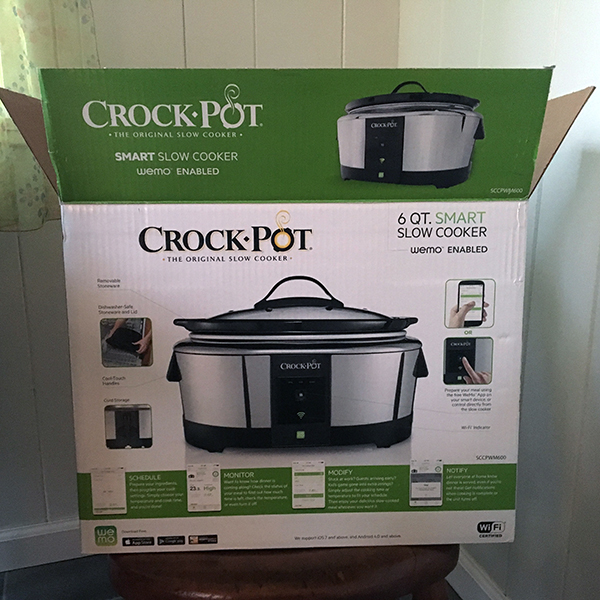
Last year my mom got me the coolest Crock Pot. It is wifi enabled! I connected it to our home wifi and then downloaded the wemo app which allows me to communicate with the Crock Pot remotely. I can schedule the cooking, check in on it, change the settings and get notifications.
Crock Pot season is here and Aaron was hungry for pot roast so I used a combination of a recipe from my Betty Crocker cookbook and the Crock Pot booklet. You can see how I was able to check in on the pot roast during the day. Aaron kept texting me - "How is the pot roast?!"
The pot roast was perfect when I got home. What you see here is the topping of spices and horseradish on top.
I am hooked! There are lots of recipes on the Crock Pot website that I can't wait to try.
Seriously, I don’t think the bedwetting about Muslims has been this bad in a very long time, which is saying something, and the panic on Syrian refugees is particularly ridiculous. Here’s a nice, juicy quote from a just released essay on the subject:
Of the 859,629 refugees admitted from 2001 onwards, only three have been convicted of planning terrorist attacks on targets outside of the United States and none was successfully carried out. That is one terrorism-planning conviction for a refugee for every 286,543 of them who have been admitted. To put that in perspective, about 1 in every 22,541 Americans committed murder in 2014. The terrorist threat from Syrian refugees in the United States is hyperbolically over-exaggerated and we have very little to fear from them because the refugee vetting system is so thorough…
The security threat posed by refugees in the United States is insignificant. Halting America’s processing of refugees due to a terrorist attack in another country that may have had one asylum-seeker as a co-plotter would be an extremely expensive overreaction to very minor threat.
What horrifyingly liberal commie soviet came up with this load of codswallop? The Cato Institute, the libertarian think tank co-founded by Charles Koch, i.e., the fellow who with his brother is currently trying to buy the entire right side of the political spectrum for his own personal ends. When the Cato Institute is telling you to maybe take down the pearl-clutching over the Syrian refugees a notch or two, it’s an indication that you’ve lost all perspective.
It’s been particularly embarrassing how the mostly-but-not-exclusively (and thankfully not all-encompassing) GOP/conservative politician freakout about the Syrian refugees points out that, why, hello, bigotry really is a thing, still. From small-town mayors declaring that FDR had it right when he put all those US citizens of Japanese descent into camps to presidential candidates alluding that might not actually be a bad idea to make special IDs exclusively for Muslims here in the US, to the House of Representatives passing a bill to piss on the Syrian refugees, it’s been a banner week for bigotry here in the US, enough so that the United States Holocaust Memorial Museum took the extraordinary step of issuing a statement of concern with reference to the Syrian refugees. And as many have noted, there is irony in the freakout about Syrian refugees coming into a season which celebrates a notable middle eastern family who famously were refugees at one point in their history, according to some tales.
But as this asshole politician said this week, “Mary and Jesus didn’t have suicide bomb vests strapped on them, and these folks do.” Well, no, they don’t. Leaving aside that the perpetrators on the attacks in Paris all appeared to live in Europe to begin with, the actual process for placing refugees in new countries is so long and arduous and so selective, with just 1% of applicants being placed, that (as the Cato Institute astutely notes) there’s a vanishingly small chance that someone with ill intent will make it through the process at all — and an even smaller chance that they would be assigned to the US when all the vetting is done. To worry about terrorists in the refugee pool is, flatly, stupid — no terrorist organization is going to pour resources into an avenue with such a small chance of success, especially when it’s easier to apply for a friggin’ visa and get on a plane (they can buy their guns when they get here, don’t you know). The reasons why so many people are voiding their bowels about it are simple: Ignorance, racism, xenophobia and bigotry.
“But people are scared!” Okay, and? Being scared may be the excuse for abandoning all sense and reason in the moment one is actively under attack; it’s not even close to a reasonable excuse for, thousands of miles away from an attack and with no immediate threat on the horizon, vilifying innocent co-religionists of the attackers and plotting to slam the door on refugees running from the very people who claimed responsibility for the Paris attacks. Taking the Paris attacks out on Syrian refugees is security theater — it doesn’t make us safer, it’ll just make the most ignorant among us feel safer. It’s the TSA of solutions to the Daesh/ISIS problem.
This has been a bad week for the United States, folks. France was directly attacked by terrorists and its response was to promise to house 30,000 Syrian refugees; we weren’t and one branch of our government fell over itself to put the brakes on accepting a third of that number. France is defying the very organization that attacked it while we, on the other hand, are doing exactly what that organization hoped we would do. We’re being the cowardly bigots they hoped we would be, and as loudly as possible.
So congratulations, America. We’ve successfully wrested the title of “cheese-eating surrender monkeys” from France. Enjoy it.
On Thursday, presidential candidate Donald Trump provided the clearest evidence yet of his disregard for religious liberty, tellingYahoo News that if elected he would target Muslims with a previously unthinkable degree of intrusion. “We’re going to have to do things that we never did before. And some people are going to be upset about it, but I think that now everybody is feeling that security is going to rule,” he said. “Certain things will be done that we never thought would happen in this country in terms of information and learning about the enemy. And so we’re going to have to do certain things that were frankly unthinkable a year ago.”
Asked if he would consider “registering Muslims in a database or giving them a form of special identification that noted their religion,” a tactic reminiscent of the treatment of Jews in 1930s Europe, he would not rule it out. He put it this way to Yahoo: “We’re going to have to—we’re going to have to look at a lot of things very closely.”
Over the last several years, Christians in the United States have become increasingly alarmed about threats to religious liberty. Among other things, they don’t want their nonprofits forced to provide contraception to their employees or their believers forced to provide services like photography or baking for same-sex unions. Even the people most invested in those fights should see that positions held by Trump would pose a far greater threat to their religious liberty were he elected.
The forced registration of any faith group is so abhorrent that it can only be described by words we generally avoid to preserve their integrity for moments like this: Trump’s position is nakedly prejudiced, proto-fascist, and un-American. It would be troubling even if he expressed his views off-the-cuff, without having thought them through. It is more worrisome in the context of a previous interview where he declared that “we’re going to have no choice” but to shut down some mosques in the United States, and a town hall in which he failed to challenge––and arguably encouraged––a voter who asked him about getting rid of Muslims in the United States.
This record ought to make Trump anathema to anyone who has concerns about religious liberty in America. Had he aimed his remarks at any Christian denomination, his candidacy would effectively be over because of the backlash. The fact that his positions pose a stark threat to the religious liberty of Muslim Americans ought to be enough to provoke a backlash. Insofar as it leaves some Christians unmoved, they might reflect on how much damage would be done to their religious liberty if a president of the United States successfully set a precedent for a religious registry or empowered the government to shut down places of worship.
...getting the federal government involved in tracking and labeling citizens’ religious affiliations is abhorrent on the merits and a huge invitation to profound mischief down the road. Creating databases on all members of any religion is a terrible idea as well. I don’t mind “monitoring mosques,” if there is intelligence suggesting that a specific one needs to be monitored. But a blanket policy of monitoring all mosques strikes me as a major assault on religious liberty — and a spectacular waste of resources. Trump is right — or at least may be right — when he says that some mosques may need to be shut down when “some bad things happen” — if those bad things were plotted or advanced by those mosques. I’m all for cutting through the PC platitudes about how Islamic extremism isn’t Islamic. But I have little interest in going so far the other way that we actually resemble the straw men the Left has been screaming about all along.
The current leader in the Republican Party’s presidential primary is now unambiguously on record with positions incompatible with religious freedom in America. How many voters will cast ballots for a man like that? The answer will go some way toward telling us if claims about pervasive anti-Muslim prejudice are a straw man or not, and how willing religious groups are to stand up for the rights of other denominations. Once again, Trump has failed one of the most basic tests of leadership.
Last year, when Twisty the Clown was terrorizing the town on Jupiter on American Horror Story: Freak Show, I wrote about how clowns went from lovable children’s entertainers to horrifying monsters toward the end of the 20th century. There are a number of reasons why this happened—Poltergeist, Ronald McDonald, the fact that the notorious serial killer John Wayne Gacy regularly dressed up as a clown on weekends—but for me, the thing that ruined clowns forever was the 1990 TV adaptation of Stephen King’s IT.
The two-part miniseries debuted 20 years ago today on ABC, and starred Tim Curry as Pennywise the Clown, a shapeshifting presence that emerges every 30 years in the town of Derry to feast on small children. Curry is one of the most efficiently creepy actors of the last 50 years, imbuing even his more ridiculous roles (Rooster in Annie springs to mind) with equal parts menace and smarm, but his Pennywise is something different altogether. He speaks in a kind of singsongy, guttural growl, his teeth are sharp fangs, and the contrast between his comical yellow dungarees and his penchant for ripping off children’s limbs is fairly stark.
The scariest thing about Pennywise, though, is how he preys on children’s deepest fears, manifesting the monsters they’re most petrified by (something J.K. Rowling would later emulate with boggarts). He appears to one child as a werewolf, to another as a mummy, and to Bill, the hero of the piece, as Georgie, the brother Pennywise murdered a few years ago. In that sense, Pennywise isn’t so far removed from regular clowns, who’ve made a living for decades by mimicking the thing that almost everyone fears—being seen as ridiculous.
IT is currently being remade, although not by Cary Fukunaga, who dropped out of the project earlier this year after writing a two-part script. He explained why to The Hollywood Reporter:
In the first movie, what I was trying to do was an elevated horror film with actual characters. They didn’t want any characters. They wanted archetypes and scares. I wrote the script. They wanted me to make a much more inoffensive, conventional script. But I don’t think you can do proper Stephen King and make it inoffensive.
Until the project finds a new director, here’s a supercut of Pennywise from 1990, reminding children that laundry, paper boats, and old photo albums will never not be scary again.
Clathrus archeri, also known as devil's fingers, has a gelatinous egg stage from which the fruitbody arises, its four to eight reddish arms each coated with dark, foul-smelling tissue. [...] Clathrus archeri is one of the phalloid fungi (Phallales) and is related to the common stinkhorn (Phallus impudicus), a well-known woodland fungus in Britain. It similarly produces a sticky spore-bearing tissue designed to attract flies which are the agents of spore dispersal. Like other phalloids, C. archeri accumulates manganese in the egg-stage, apparently important chemically in producing the sugars and odorous substances found in the fertile tissue.
A time-lapse to haunt your dreams:
Here’s a guide to get rid of them (without having to resort to a flamethrower).
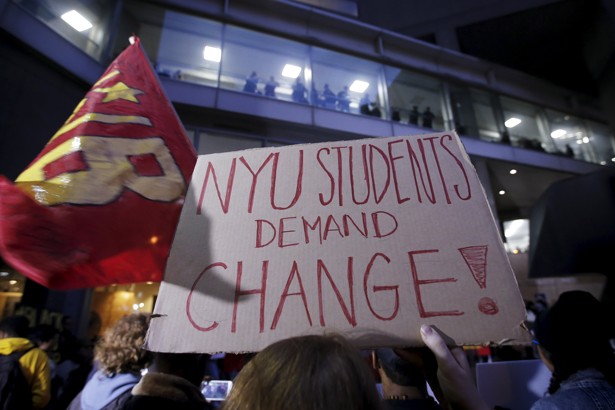
Rob had a really great post this morning asking why American college students don’t strike the way students at universities around the world sometimes do. There are a variety of theories—you should read the piece—but I was struck by this quote from Angus Johnston, a professor at the City University of New York who researches student activism:
“Students in the United States today are living in conditions of economic precarity that didn’t exist in the 1960s,” he said. “As students have gotten poorer on average, tuition has gone up. And so they’re getting squeezed on both sides. They have a lot less ability to withstand the effects of … losing a semester, because if that happens, they’re gonna be screwed.”
That rings true, but I think it undersells the effects of rising tuition on campus, and what that might do to student activism. It’s not just that students have to pay more, which makes them more nervous about losing money. As tuition rates have risen—and particularly as state governments have drawn down funding for public universities—public and private universities have both increasingly come to look at students as sources of revenue. (For-profit universities just take this idea to its logical conclusion.)
That means that students come to be seen as “customers” by college administrators, and in turn they start to see themselves that way too. That has radical effects for how they interact with the university. Instead of being part of a bigger community, composed of scholars, teachers, learners, and others—a sort of “academical village,” to borrow Thomas Jefferson’s phrase—students show up, get the service for which they’ve paid, and leave with a diploma. Doing that leads to inevitable economic decisions: prioritizing fancy dorms, high-quality facilities, and popular eating options over faculty hiring, for example. Professors complain that students feel entitled and comfortable asking for better grades.
But it also makes it harder to see why you’d go on strike. Striking only makes sense if you see yourself as part of the integrated community, where the university’s direction is determined by a negotiation between adminstrators, faculty, students, and staff. If you’re a customer, though? Even leaving aside what you can afford, paying tuition, and then going on strike seems less sensible if you think classes are a product that you’ve purchased. It’s like going to Chipotle, paying for your burrito, then refusing to eat it.
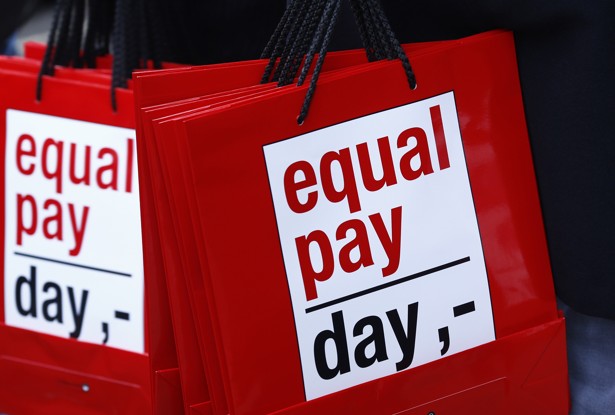
One company has decided on a more direct approach: just pay women more.
In a panel at a conference organized by Fortune last week, Marc Benioff, the CEO of the cloud-based software company Salesforce, said that he recently ordered a review of all 17,000 employees’ salaries to see if female employees’ pay was in line with those of male employees doing similar jobs. According to Fortune, Benioff said that the company is spending about $3 million extra this year on its payroll to make these adjustments. “We can say we pay women the same that we pay men,” he said the conference. “We looked at every single salary.”
What prompted this review was the allegation, made earlier this summer by Salesforce employees Cindy Robbins and Leyla Seka, that women at the company likely weren’t being paid as much as men. Benioff said he was initially skeptical, but commissioned an internal review anyway. Data on the compensation of employees in all departments at all levels of tenure apparently revealed Robbins and Seka’s suspicions to be warranted.
Salesforce has declined to clarify the $3 million figure or provide further details—the size of the average adjustment, how many employees saw their salaries changed, and how they reacted—but is going to put out a report with more information next year.
One aspect of gender parity at Salesforce, though, needs no further data collection: Overall, the company is 70 percent men and 30 percent women. Among leadership positions, it’s 81 percent male. The preliminary details of Salesforce’s salary revisions sound promising, but the shortage of women throughout the company, and particularly at the top, indicates the scale of the work remaining.
Further, while pay equality is being instituted at Salesforce, it’s just one company. “Salesforce has set a strong precedent, but we can’t rely on the good graces of every single employer in America to conduct this same kind of review and adjustment,” said Vivien Labaton from Make It Work, a campaign that pushes for equal pay. “We need a national standard.”
I need to learn how to list my allergies like this, so it's funny instead of making people back away slowly.
Ah, November. The leaves are dropping, the weather's all over the place (40 degrees! No, 60 ! Sun! Rain! More rain! Here's some wind! Now get those shorts back out cuz it's going up to 80 for some reason!)...and of course, everybody's sick.
We're passing around a mostly symptom-less fever thing right now, most likely the flu because I lost the consent forms for them to get vaccinated at school and then the Target flu clinic was out of the mist when we went and then the next day Ezra complained of a headache and went to bed for three days. Then he was fine and Noah suddenly wasn't.
(Go get ur flu shots ppl it's real and it's happening and it's COMING FOR YOU.)
I feel fine so far, unless you count the fact that I am horribly, violently allergic to the ENTIRE WORLD UP HERE. Since we moved, my previously mild seasonal allergies are now like, major and not very seasonal, since I was allergic to everything in the summer and now it's fall and I'm still sneezing my head off.
If I keep a constant, steady dose of allergy meds in my body I'm okay. Not great, but okay. If I miss a dose or take it even a few hours late, I go from one sneeze to a full-on stay-in-bed-worthy hay fever, with a headache and watery eyes and sneezing/coughing/sinuses from hell. It's really sexy, OBVIOUSLY.
So if you're keeping track, my current list of allergies has expanded to include:
1) Antibiotics, almost all the life-saving ones and definitely the best ones for treating UTIs
4) Raw onions, like my eyes don't just water, they leak copiously, turn bright red and burn-y, and then my sinuses freak out and my nose runs and my eyelids and lips swell and one time my throat started to close up and I had trouble breathing and THAT, my friends, was the last time I ever chopped a raw onion.
5) Mosquitoes, who specifically target me (and Ezra) because we swell up so comically and itch for days afterwards.
Honorable mentions of suspicion include the carpet and curtains in my bedroom, maybe my pillow, or my hair, or something else but dear God if I wake up at 3 am one more time thinking "huh I feel sniffly shit did I take my medicine oh no get up get up go take it aw fuck too late here comes the onslaught" I'm going to burn it all down.
Or probably just vacuum and dust everything. AGAIN.
In other news, please enjoy trying to wrap your head around the proportions in the following photos:
The standard first-trimester screen for Down syndrome, called the combined test, uses three numbers in an algorithm to assess the chance that the fetus has the genetic disorder: markers from the mother’s blood; ultrasound measurements of the fetus’s nuchal fold, an area of tissue at the back of the neck; and the mother’s age.
This last one is perhaps the most well-known risk factor among parents and parents-to-be—it’s common knowledge that as a woman’s age increases, so does her chance of having a baby with a genetic abnormality. Down syndrome occurs when the egg contains an extra copy of chromosome 21. This kind of error is more likely to happen in older eggs, due in part to the decay of proteins within the egg over time.
Here’s what the algorithm doesn’t account for: Extra genetic material can also attach itself to chromosome 21 in the sperm. Scientists agree that Down syndrome can be attributed to the father in 5 to 10 percent of cases, and some believe that number may be as high as 20 percent. As men age, their risk of fathering a child with Down syndrome may increase—the older the man, the more likely that the process of spermatogenesis, or sperm production will go awry, leading to sperm that contain errors like an extra chromosome. In 2003, a study examining New York State health records found that for parents over 40, paternal contribution to Down syndrome could be as high as 50 percent.
“For genetic abnormalities, it’s not just a woman’s problem anymore,” says Harry Fisch, a professor of urology at Weill Cornell Medical College and the study’s lead author. “The fact that couples are waiting longer to have children makes this very significant.”
But the combined test takes only maternal age into consideration, in part because paternal age hasn’t yet been studied enough for it to be accurately used as a risk factor. A father’s age has long been recognized as a factor in relatively rare genetic conditions like Klinefelter syndrome and achondroplasia, or dwarfism—but it’s only in the last 15 years or so that it’s started to receive more research attention, as studies have shown that it may also play a role in better-known conditions like autism and schizophrenia.
“The question is, why aren’t more people looking into this? There’s still much more interest in maternal issues than paternal issues. It takes a long time for a paradigm shift in the way we think,” Fisch says.
“It’s not a maternal issue, it’s not a paternal issue. It’s a parental issue.”
While women who have children at age 35 or older are considered to be of “advanced maternal age,” the medical community has yet to define “advanced paternal age,” according to the geneticists Helga Toriello and Jeanne Meck, who co-authored a guideline for genetic counseling for older fathers. “Some studies look at [men] over 40, some over 50, some over 35,” Toriello says. Though research suggests that the paternal-age effect is most significant for fathers over 40, younger fathers may also face an increased risk, possibly because spermatogenesis in very young fathers is more likely to result in the same mutations seen in older fathers. A recent study suggests that a 20-year-old father doubles the chance of Down syndrome as compared to one who’s 40.
But until more is known about the effect of paternal age, it’s difficult to know the true accuracy of the current combined test for Down syndrome. A woman who’s 49 has a one-in-nine chance of having a baby with Down syndrome—but the test doesn’t account for fluctuations in that number based on whether her partner is 24 or 64. And because women often partner with men older than they are, it’s also not clear now much paternal age may have already silently influenced the risk that the combined test assigns to each additional year of a mother’s life.
“You would need to take those 49-year-old women and those that have a 20-something-year-old partner and those that have a 30-year-old partner [and so on] and see what the differences might be,” Toriello says. Fisch’s study comes the closest, but no one has replicated that study with a bigger sample size.
The most accurate risk assessment would take both the maternal and paternal contribution into account, adjusted for the combined age of the mother and the father. “It’s not a maternal issue, it’s not a paternal issue. It’s a parental issue,” Fisch says. “It’s no longer one or the other.”
“The bottom line is that we don’t have a good direction for how to counsel for the effect of paternal age on the mother’s risk,” says Toriello. And the medical professionals who conduct screening tests and interpret the results for patients may not understand the role of paternal age, either. “I think there’s a lot of ignorance in the field,” says Meck. “A lot of OBGYNs don’t understand a lot about prenatal screening. The physicians don’t have the time and they don’t have the full range of knowledge. Those offices that do the best are the ones that have genetic counselors in them.”
But in recent years, some doctors have begun to abandon the combined test and other invasive screening techniques in favor of a newer, noninvasive prenatal test, which uses placental cells floating in the mother’s blood to check for chromosomal abnormalities in the fetus. As this type of testing becomes more widely available, age-based risk assessments may become outmoded. Noninvasive prenatal testing is more accurate than the combined test—with a 93 percent detection rate, as opposed to 82 to 87 percent—and can be performed as early as 10 weeks into pregnancy. Most importantly, noninvasive prenatal testing, which doesn’t rely on any algorithm to assess risk, takes both maternal and paternal age out of the picture. (In the U.S., noninvasive prenatal testing may be offered as an alternative to the combined test, though it may not be covered by insurance.)
Still, outdated beliefs about the egg and the sperm persist in standard clinical practices like the combined test for Down syndrome. When a screening test takes only maternal age into account, it creates the false impression that only maternal age matters for genetic abnormalities—that a woman’s eggs go bad over time, as if they were sitting on a supermarket shelf, while a man continues to produce fresh, robust sperm into old age.
Research has contradicted that idea, showing that while men do produce sperm into old age, their sperm carries more mutations and there’s less of it. “There are a lot of changes that compromise spermatogenesis,” says Patricia Hunt, a reproductive biologist at Washington State University. “It’s like a machine that gets rusty with age.”
In the meantime, scientists are only beginning to understand the effect of paternal age on sperm. “I think we’re just at the tip of the iceberg,” Fisch says. “We have no idea what other paternal-age effects there are.”
A reader revives the thread of women telling personal stories of how their painful health condition went undetected or misunderstood by medical officials:
I read Joe Fassler’s piece last month, and just heard his interview on NPR. My circumstances 11 years ago were slightly different and I nearly died, and I say that with absolutely no exaggeration. It infuriates me to hear this is all too common.
In 2004, I recently moved back to my hometown (Kansas City) and started a new job. On a Saturday night I was getting ready to go out and meet friends for drinks. Shortly before I left my apartment, I doubled over in indescribable pain.
Initially, I laid down on my bed hoping for it to subside enough before I could drive myself to a hospital. The pain only got worse, so I knew that I needed to call an ambulance. It took me to a hospital where they seemed to question my claims that I had insurance because I could not provide them with a card or name or policy number. I had just started my new job that week and had not received that information. I am fairly sure that my lack of insurance information, coupled with my dress (more appropriate for a mid-20s young woman joining friends for a Saturday night out drinking than a hospital) influenced the level of care, or more accurately lack of care that I received at that hospital. I arrived at the hospital around 10 PM.
In an ER exam room, the male nurse went through standard health related questions. Was I pregnant? Not that I knew. Had I ever been pregnant? Yes, once and it was an ectopic pregnancy and I had surgery before my fallopian tube ruptured.
Alone, I did my best to answer questions even though I was in excruciating pain and was becoming disoriented. The nurse wanted to do a pregnancy test (seemed smart), but I was completely incapable of urinating, something that annoyed the male nurse greatly. Meanwhile, I was asking for something—anything—for the pain, which they refused until they could confirm that I was not pregnant.
I was showing signs that I recognized as signs of internal bleeding (shoulder pain, etc), which I also told the ER nurse. Finally, after making me attempt to urinate three times, they decided to insert a catheter. Up until the pregnancy test came back positive, I was sure that I had appendicitis; it seemed like the only thing that made sense.
With a positive pregnancy test, I was certain that I had another ectopic pregnancy, but it became clear that neither the doctor nor the nurse shared my concern. At this point, I had been at the hospital for a few hours and it was past midnight. Any slight movement was painful. The ER physician came in to talk to me, and made it clear they would not give me any drugs that would harm the “baby.”
I quickly got the impression that I was being treated like a “drug-seeker.” I told the doctor, again, that I had an ectopic pregnancy before. I knew the symptoms of a ruptured ectopic pregnancy because of my first one about six years before. I pointed out to the ER physician that my shoulder pain was a sign of internal bleeding because of blood pooling in my abdomen. The ER physician disagreed and was pretty sure that I just had an ovarian cyst rupture, but that it was not serious.
I made it clear that if the pregnancy was viable (although I was certain that it was not) that I had no intentions of remaining pregnant. I begged for some sort of pain relief, which they gave me sometime between 1:00 and 6:00 AM. I asked for an ultrasound, but I was told that they did not have anyone on staff at that time at night on Saturday.
Sometime before 6:00 AM, the nurse informed me that I needed to leave since they were not going to admit me. I either needed to have someone pick me up or they would call me a cab. At this point I was incapable of arguing or doing much of anything. I called my older brother, who came to pick me up. The doctor explained that I likely had a cyst rupture. He wrote a prescription for pain medication and told my brother that I should probably eat something. When I left, the jeans that I came in would no longer button or zip up because my abdomen had swollen so much during the eight hours I was at the hospital.
My older brother dropped me off at home. Although he did not think I looked well, he trusted that the doctors knew what they were talking about. In my apartment, alone, I laid in my bed and drifted in and out of consciousness, only to wake enough occasionally to vomit. My mother, who lived out of state, called about every hour, but she became worried as I became less coherent. At some point my mother called my younger brother and asked that he take me to a different hospital.
Around 3:00 PM that Sunday, my younger brother rushed me to a different hospital. As soon as the people working in admitting saw my condition, I was quickly rushed into a room and I tried to give them details about my condition starting from the night before. Within a matter of 15 minutes, I was getting an ultrasound, and they immediately began prepping me for surgery while wheeling me to the operating room. The last words I heard right before the anesthesia took effect was the anesthesiologist telling me “honey, you are going to feel so much better when you wake up.”
I required multiple blood transfusions during surgery and I was about as close to dead as you can be and still recover. In fact, with as much blood as I lost, I really should not have survived. As painful as surgery is, the anesthesiologist was right; I woke up just over 24 hours after my fallopian tube ruptured feeling so relieved that I was not in pain like I was before.
An ectopic pregnancy occurs when a fertilized egg implants outside of the uterus, most commonly in the fallopian tube. The fertilized egg will continue to develop, eventually threatening the structure that it is attached to, particularly the fallopian tube. A ruptured ectopic pregnancy is a medical emergency. It is also one of the most common pregnancy complications. A woman who has had one ectopic pregnancy is much more likely to have another ectopic pregnancy.
You do not have to be an MD to know that if a pregnant woman presents at the ER with a sudden onset of extreme pain, with abdominal swelling and shoulder pain, you do not send her home without at least doing an ultrasound.
My employer was amazing, and my insurance covered my medical costs. Once I was home and recovering, I became increasingly furious. I decided to file a complaint with the Missouri Board of Healing Arts. I wrote a letter, very similar to what I described here, and I mailed it to BHA. I also sent a copy to the CEO of the first hospital. I included a cover letter saying that if I was a CEO of a company that is about to be the subject of a complaint to a regulating agency of my business, that I would want to know and I would want to find out what happened as soon as possible.
I received a carefully worded letter from the CEO’s office apologizing that my condition changed after I left their hospital (which is not true—my tube ruptured before I arrived there by ambulance). Eventually, the complaint proceeded and I met with an investigator for Board of Health Arts. The investigator followed up with me later and told me that although she could not give me the specifics, considerable changes were made at the hospital and those directives came from the top of the organization as the result of my letter to the CEO.
I have never really been satisfied with the conclusion. At the time I did speak with attorneys and I received exactly the same response that I just heard Joe discuss on NPR. I was told that unless I could prove irreparable harm, there was not much that could be done. Apparently, almost dying is not enough, but if I had died, my family would have had one heck of a case.
Everything about this whole shit-show pisses me off
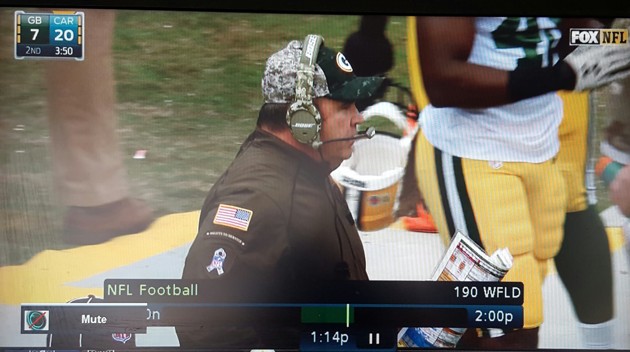
TV screenshot sent in by a reader, November 8, 2015.
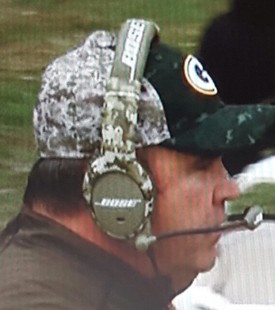
In the context of this past week’s “Paid Patriotism” report by Senators John McCain and Jeff Flake, about the way the Pentagon has been paying pro sports teams for patriotic on-field displays, a reader sends a screenshot from one of today’s games:
Sorry for the interruption, but I had to send this from the game on now. All of the coaches are dressed in camouflage!
Yes it's Veterans Day Wednesday, but during the years when I lived in England, where people really know about the horrors of war, no one would even think of dressing up like that. If you wanted to honor vets you wore a red poppy.
And of course red poppies on the lapel are very widespread Remembrance Day tributes in the U.K., Canada, Australia, etc. It’s worth noting that the camo theme in today’s U.S. football games applies not simply to the caps but even to the Bose headsets, as you see here.
The significant point, I think, is that the American public has seen things like this so often that we barely notice any more. The re-themed Bose headsets are another detail that Ben Fountain might have worked into Billy Lynn’s Long Halftime Walk, though perhaps he was worried about making the satire a little too broad.
***
Update Thanks to a reader for pointing out that in a special salute to the troops, the NFL’s online shop is offering a full 15% off list price to veterans and service members.
Then twitter came to my rescue and throughout the night thousands of you shared your own cringey moments, which were so awesome that hotel security had to do a welfare check on me because I was laughing so hard the people next door thought I was dying. I tried to convince them I was fine but I had tears running down my face and they were like, “Are you sure you don’t need help? Is someone hurting you?” and I was like, “No, this is what I look like when I’m happy” and they left, as confused as most people who deal with me are. I tried to storify the tweets to share them with you but there were too many and it kept crashing so instead I just decided to do a bunch of screenshots and share them here. I waited until after 5 because you cannot read these at work. You will hurt yourself. In a good way.
Thank you, amazing people for reminding us all how stupid and adorable and ridiculous mankind is, especially as the rest of the world screams “ME TOO” at your mortifying confessions. Also, if you don’t laugh in recognition of doing at least a quarter of these yourself you are probably in the wrong place or just haven’t lived long enough. Just saying.
UPDATED: This is not the end because mortification is the gift that never ends. Links to more here.
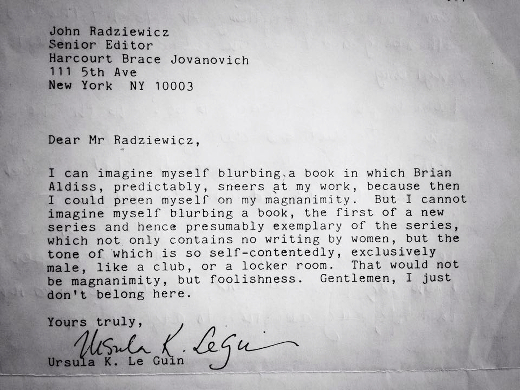
In 1987, multi-award winning author Ursula K. Le Guin was asked to supply a blurb for Synergy: New Science Fiction, Volume 1, the first in a new four-part series of anthologies edited by George Zebrowski which intended to showcase science fiction stories from authors both established and up-and-coming. For Ursula K. Le Guin, however, the book was notable not for its stories but for its complete absence of women’s voices. She reacted by way of this brief letter.
John Radziewicz Senior Editor Harcourt Brace Jovanovich 111 5th Ave New York NY 10003
Dear Mr Radziewicz,
I can imagine myself blurbing a book in which Brian Aldiss, predictably, sneers at my work, because then I could preen myself on my magnanimity. But I cannot imagine myself blurbing a book, the first of the series, which not only contains no writing by women, but the tone of which is so self-contentedly, exclusively male, like a club, or a locker room. That would not be magnanimity, but foolishness. Gentlemen, I just don’t belong here.
… is this big takedown by Kurt Eichenwald, in Newsweek, about the phony nature of the whole inquiry. (For my previous installment on the fraudulence of this committee, and how the press has allowed itself to be used, please check here.)
Two bits of factual-comparison data from the story. First, on the proportionality of the numerous Congressional hearings on the Benghazi case:
Congress convened 22 hearings about the 9/11 attack that killed almost 3,000 citizens working in the World Trade Center in downtown Manhattan; this week, Congress will be holding its 21st hearing about an attack that killed four people working in Libya, with many more sessions left to come…
In fact, no previous assault on a diplomatic outpost has received this kind of relentless expression of congressional outrage. There weren’t investigations that were anything on this scale about the attack on the U.S. Embassy in Beirut in 1983 (63 killed), on the U.S. Embassy annex northeast of Beirut in 1984 (24 killed) or on the U.S. Embassy in Sanaa, Yemen, in 2008 (18 killed)….
Benghazi was just one of 21 major assaults on an American diplomatic facility in the last 20 years; the personnel murdered there were among about 90 other Americans hired by the government to work in diplomatic outposts who were killed in terrorist attacks from 1998 through 2012, according to a State Department report.
Then, on the signs of the committee’s real interest:
Since March, the committee has issued almost 30 press releases related to Clinton; only five have been put out on every other topic combined. Then there is the committee’s interim report from this past May. The word Obama—who cannot run for commander-in-chief again [JF note: and who, after all, was president during this episode]—is not mentioned. Neither is the word president. Or Ansar al-Sharia, the group suspected of engineering the attack. White House makes only 13 appearances. Imagine an investigation on 9/11 that did not mention Al-Qaeda, Osama bin Laden or President Bush; that is what has been done with the Benghazi committee’s first public report….
The name Ahmed Abu Khatalla, the man arrested as the mastermind of the attack, shows up once. The word terrorist appears only 10 times. As for references to Clinton, the leading candidate for the Democratic nomination? Those show up 36 times in just 13 pages, an astonishing number given that the word Benghazi appears only 38 times. But the winner for the most mentions is the 39 references to emails from Clinton and the State Department.
This summing-up of the piece might sound intemperate, taken on its own. But in context of the evidence Eichenwald offers, it seems fair enough:
It is impossible to review what the Benghazi committee has done as anything other than taxpayer-funded political research of the opposing party’s leading candidate for president…. But the modern McCarthys of the Benghazi committee cannot perform this political theater on their own—they depend on reporters to aid in the attempts to use government for the purpose of destroying others with bogus “scoops” ladled out by members of Congress and their staffs.
Worth reading before Hillary Clinton and Rep. Gowdy’s committee face off a few hours from now. Or for that matter, after her appearance.
"I think you know that your parents are unlikely to give you an apology for how they’ve treated you and you are unlikely to have any kind of real accountability or reconciliation. It is very difficult to call people who have abused you to account, because their narcissism (or whatever the hell is going on) prevents them from seeing themselves as the bad guy in any situation and their highly selective memories will remember everything you did wrong with complete clarity while deleting their own bad behavior entirely from the record. You come ready to finally hash out all The Stuff and they act like The Stuff literally never happened and that you are crazy/too sensitive/vindictive/evil/petty/unreliable for thinking that it did. Gaslighting like this can make you feel even worse than a visit where they pretend not to be assholes, and if you are already feeling vulnerable it can be devastating. A fake pretend Fun Family Getaway might be a slightly preferable first step toward Family Glasnost than using this trip to sort out all The Stuff."
Plus all of the responses the friend could give.
Hi Captain
My best friend, “Toby” has been living in my city for about a year now and over that time he’s gone from being homeless and alcoholic to having a sweet flat and ten months of sobriety under his belt. I’m trying to be as engaged in his recovery and support as possible because he doesn’t really have much of a support network around him – the mental health system in this country is a joke and he hasn’t ever received the help he really needs for his STPD, anxiety disorders, alcoholism and BPD, he has only a few other friends in town none of which he knows as well as me and his other closest friend and sister live across the country and overseas, respectively.
He and his sister “Jackie” were raised in a horribly abusive household – less violent than psychological, verbal and financial – rich parents who had children for appearances and ignored them to the point of neglect when they weren’t belittling them or loudly expressing their anger at both children being gay, as well as things such as encouraging the eating disorder that has been dominating his life for a long time and having family pets put down once they began to bond with the kids. Jackie bore the brunt of the abuse and has not talked to them for years and has been written out of their will etc, but Toby was the preferred kid and despite being loudly and aggressively disowned by them last year still says he hasn’t made up his mind about them and brings up things like “well, they bought me a car, so they must love me”.
He’s currently in a psych ward on a short stay and got a call from his parents out of the blue. They want him to come up to his hometown to stay with them for a week next month (with the potential to stay longer) and seem to think that they can play happy families and ignore both a lifetime of abuse and a year of no contact despite hearing second hand about his homelessness (during which time the mother volunteered for the Salvation Army and refused to contact him), alcoholism and a near-death experience at the beginning of the year. During that time they were telling the rest of the family to never mention the fact that they had children and had changed all their phone numbers so Toby and Jackie could not contact them. Now they say that they have changed their names and have distanced themselves from the rest of the family and want to make amends – though their phone call contained no outright apologies and skimmed over the major problems in their relationship with Toby and Jackie.
Recently I was with Toby when he ran into his uncle (his mother’s brother) in a store so we think they may have heard about that from him. He is considering going up to visit but I’m not sure what their motivations are and I’m very worried. These people have shown themselves to have only his worst interests at heart and I’m not sure anyone else other than me is in a good position to give him advice or keep an eye on what happens. He recently got out of a very physically and mentally abusive relationship as well and I’m worried that he will transfer his dependence back to his parents which will undermine his recovery and – generally – stable mental health.
I’d like to give him some scripts to take to his parents once he is up there because we both at least agree that they shouldn’t be allowed to to treat the visit as a Fun Family Getaway if he takes their offer of a plane ticket.
– Worried and suspicious
Dear Worried and Suspicious:
This is for Toby:
Dear Toby,
If you want to visit your family, then you are the only one who can make that decision. Your friend the LW and I can be all “BAD IDEA JEANS!” and throw ourselves in front of you in slow motion saying “nooooooooooooooooo this is not the tiiiiiiiiiiiiiiime,” but don’t beat yourself up for having an open heart and wanting love and a place in your family, even if it seems impossible, even if it is impossible. If being back in touch with them is a mistake, you’ll figure it out quickly enough. You have all the information that you need to make a good decision about how to handle your family. You’ve survived everything they’ve ever thrown at you or withheld from you, and you will survive them again if you need to.
EDITED TO ADD: Planes, roads, and phones work both ways and your parents could come visit YOU instead of summoning you home to their turf on their terms. Think about it. [/edit]
From what your friend tells me, I think you know that your parents are unlikely to give you an apology for how they’ve treated you and you are unlikely to have any kind of real accountability or reconciliation. It is very difficult to call people who have abused you to account, because their narcissism (or whatever the hell is going on) prevents them from seeing themselves as the bad guy in any situation and their highly selective memories will remember everything you did wrong with complete clarity while deleting their own bad behavior entirely from the record. You come ready to finally hash out all The Stuff and they act like The Stuff literally never happened and that you are crazy/too sensitive/vindictive/evil/petty/unreliable for thinking that it did. Gaslighting like this can make you feel even worse than a visit where they pretend not to be assholes, and if you are already feeling vulnerable it can be devastating. A fake pretend Fun Family Getaway might be a slightly preferable first step toward Family Glasnost than using this trip to sort out all The Stuff.
My hope is that you’ll your expectations low and not take your cue from movies where dysfunctional families work it all out in some big dramatic scene with hugging and crying and speechifying. Look at the Peanuts comics where Lucy yanks the football away from Charlie Brown if you need a visual “keep your expectations low” reminder. Above all, remember, you are not the one who needs to be forgiven right now. You are not the one who needs to make amends for homophobia, for abuse, for neglect, or for cutting off contact and expressing public shame about you and your life. If your parents behave badly, it is not about you, and you didn’t cause it. Maybe your mantra can be “I am responsible for me and what I do, and I know that I am living with as much integrity and grace as I can in a difficult situation. I am not responsible for them and what they do.” Sometimes being able to know that you tried your very best and gave people every chance to rise to the occasion is a powerful tool in finding peace and closure with a difficult situation.
If you do visit, stay in a hotel/AirBnB or with nice, trusted friends or relatives or friends to give yourself a little distance and privacy. See your parents in smaller doses. Consider driving instead of flying, or consider renting a car when you are there if that is possible so that you always, always have your own escape route and can’t be stranded. Also, if you do a 12-step program for addiction, I think it’s important to find a meeting nearby and to go every day (and even more often than that, if you need to) so that you can be among people who aren’t your folks and to get frequent support and reality checks. Always keep your cell phone charged and with you, plan breaks where you get out of the house for solo time (running errands, taking walks) and some privacy to check in with your sister/friends/sponsor/counselor. I’m told the forums at friendsofcaptainawkward.com sometimes have threads for peer support and recovering addicts and abuse survivors, so check in there from time to time if you need a sanity check or some kindness from strangers.
There is a non-zero risk that your parents will try to use the visit to have some weird intervention and/or forcibly check you back into a hospital or rehab facility or otherwise try to control your life. If your parents tell you that they want to “help”, it more than okay to ask for the kind of help you actually want and need and to reject “help” that doesn’t meet your needs. It’s also okay to say, “I don’t want help from you, I just want to spend a little time with you.” Struggling in some areas of your life doesn’t mean you have to automatically accept the role of lost sheep who needs help.
For example, if your folks offer you any ‘help’ that carries a condition of coming back under their roof and their control or if they try to persuade you to sign anything or do anything or agree to anything, be very, very skeptical, ask for time to think, and NOPE THE HELL OUT of there if you start to feel unsafe. Scripts could be “Thank you, I’ll think about what you said” or “Thank you, can I think about it and let you know?” or “Thank you, let me have my lawyer look at it/let me talk it over with my counselor/friend” or “Thanks, let me go back home and think it over. When do I need to let you know?” If they challenge you on this, like, Why would you need time to think? or What is there to think about? or Don’t you trust us? or Come on, no need for that, we’re family, that is bad. If your request for time and outside review unleashes a recitation of your perceived failings and wrongs or threats of consequences, be afraid. You have a right to think about big decisions at your own pace. Someone with your best interests at heart would want you to take your time and to have whatever advice and support you need.
Try to remember that your parents had the opportunity to be a kind and positive part of your life and that they *often,* *repeatedly,* made different choices. Please don’t ever assume that their money and age and fancy house or status as parents means that they know what’s best for you or that they can tell you anything about your current life. You are the boss of your own life, and you deserve credit for the way you’ve taken care of yourself and turned your life around. You’ve been able to be sober for an incredible 10 months (congratulations!), you’ve escaped from a bad relationship recently (that is so hard to do, and you did it!), you’ve found a good place to live (how fortunate!), and you have a caring friend in the LW and in others who love and support and value you. You are healing, so above all be very kind and gentle with yourself and do things at your own pace.
Letter Writer, this is for you.
You can’t save Toby or fix this for him. You can love him, you can be his friend, but you can’t save him. Your love can’t prevent a relapse in his sobriety, it can’t prevent unhealthy family and relationship dynamics, it can’t save him from abusive people. If visiting his parents is a mistake, then it will be his mistake. If he is going to relapse, then it is his relapse, and there is nothing you can do or could have done to prevent it.
I say this because when I read sentences like “I’m trying to be as engaged in his recovery and support as possible…” and “I’m not sure anyone else other than me is in a good position to give him advice or keep an eye on what happens,” that may be true, but it’s revealing of how much of your well-being and identity has been invested in helping Toby. In addition, hearing that you’re “the only one who understands” or “the one totally indispensable person who gets it and always comes through” can feel good when it’s someone you love and even provide an ego boost, like, “I have my shit together enough that I can help my friends out and I am being a good friend, go me!” It can also be a red flag for dependency or codependency if it’s a self-designation or a role that you become attached to because if you are always the helper than something must always be wrong for you to feel/be important and that can get really fucked up over time. If Toby were to say “I don’t know what I’d do without you” or “You’re the only one I can count on” that’s a heartfelt and wonderful thing to express in terms of gratitude, but on another level, it’s not *really* a compliment as much as it is a statement of need. In my opinion, some healthy answers to “You’re the only one” or “I super-need you above all others” or “What would I do without you?” statements from Toby are:
“Well, I don’t know what I’d do without you. You’re a great friend!”
“I’m so glad you moved closer to me and that I get to see you all the time now.”
“Fortunately you live here now so we don’t have to find out! You would figure it out, though. I believe in you.”
“I am rich in friends, and so are you. We’re lucky to have each other.”
“Plus I’m freaking delightful and gorgeous, as are you. Let’s take a walk outside so that other people can envy us.”
In other words, affirm your affection for him vs. the role of #1 helper.
Please also make sure that you are taking care of yourself and that you are giving and receiving love and support and attention and time from other friends. Please make sure that you are caring for your own housing situation, your own job/career/education situation, your own family relationships, your own romantic life (if that’s a thing you care about), and your own health. Crisis/Caregiver Fatigue is a thing, it’s especially a thing with addiction and recovery, it’s still a thing even if the person you are helping is lovely and wonderful and doing the very best they can. If this whole thing with Toby’s family turns into the shitshow that you fear, I don’t want your life to go sideways if the wheels come out from under his for a while.
You probably deserve a ton of credit for how well Toby is doing right now, and Toby probably legit needs a shitload of all kinds of help and has benefited greatly from your support all this time as he goes through truly hard stuff. As you transition out of crisis management mode (hopefully) and into friend maintenance mode (hopefully!), it’s important that your conversations with Toby don’t immediately become “You poor thing! How can I help?” conversations and also that you don’t cast yourself as an authority on his life…even if you think you know better…even if he is fragile and not making great decisions or is too close to the situation and you actually do (objectively speaking) know better…even if it his expectation that you will immediately offer help and that is the established habit of your dynamic together.
Furthermore, if he makes a decision about his life that you think is unwise or unsafe, it’s going to be essential to your well-being and to your friendship that you NOT take it personally. For an empath like yourself that is going to be the hardest thing in the world and it’s why helping professionals a) go through years of training b) are available for small, scheduled sessions with set beginning and end times and c) have mentoring and peer support so that they can offload their own feelings somewhere that’s safe to the patient. Toby is your friend, not your patient or your child or your ward, and even if you have the proper training you would be ethically prohibited from being his [insert chosen variation of social worker/helping professional]. You can be totally right, he can make the wrong decision, and it’s still not your job to prevent it or fix it or your responsibility to convince him otherwise or put his pieces back together. Some other scripts for you in speaking with Toby might be:
“Your parents, really? What do you think you’ll do?”
“That sounds like a terrible idea to me based on what you’ve told me, but you can handle it.”
“How do you want to handle it?”
“It sounds like you are handling this beautifully.”
“I hope the visit is everything you want it to be. If you need me, I’m a text or a phone call away.”
“What do you think/how do you feel about [their offer][that plan you are thinking about][your next steps]?”
“Wanna run through the Escape Plan again? Does Shaking The Dust Of This Godforsaken Town From Your Feet come before or after hiring the skywriter to scrawl ‘EVERYONE KNOWS WHAT SHITTY PARENTS YOU ARE, FIRSTNAMES LASTNAMES” across the sky above their house?”
“That was unexpected. Do you think it’s sincere?”
“That escalated quickly. What do you want to do?”
“That could have gone better, but it could have gone worse. How are you holding up?”
“That sucks. Are you able to go to a meeting today?”
“That sucks. What does your counselor/doctor/therapist/sponsor say?”
“That sucks. What do you think you’ll do?”
“Do you want my opinion/advice, or do you just need to vent?”
“Now is not a good time for me to talk. Can I text you tomorrow/later?”
“I’m in the middle of something. What’s a good time to call you back?”
“Wow, stressful. My day was also a doozy, let me tell you about it!”
Yep, you read those last couple of scripts right. The comfort in-dump out principle applies, especially just now when your friend is in hospital, but a stable, reciprocal friendship sometimes means that you sometimes ask Toby for things that you need, within reason. “I’m happy to make those phone calls for you about your [thing you need]. Can we Skype on Saturday and you can help me choose a Halloween costume?” When friends are down, we sometimes worry about over-burdening them, but being asked to contribute can feel really good and remind your friends how much they are valued. I know that when my boyfriend got out of the psych hospital, he needed support and love, and he also needed to not be treated like a patient.
All love to you and to Toby. May his family take a break from sucking so very hard, may his recovery continue, and may your friendship transition beautifully.
My self-care today involves saying “no” to involved comment moderation, so, no comments this time.
Above: British and German troops meet during the truce
On Christmas Eve of 1914, five months into World War I, something amazing happened: thousands of British and German troops on the Western Front decided to put down their weapons, rise from the trenches, and greet each other peacefully. In fact, for the next few days, close to 100,000 men, British and German, chatted, exchanged gifts, sang carols and played football. Most importantly, they were even able to bury their dead without fearing for their own safety. On the evening of December 24th, the first day of the truce, Captain ‘Jack’ Armes of the 1st Battalion North Staffordshire Regiment wrote to his wife and described this incredible occurrence. Armes did return home to his family after the war; he died in 1948.
This letter, along with 121 other fascinating pieces of correspondence, can be found in More Letters of Note, the follow-up to the bestselling Letters of Note book. More info here.
Full transcript follows. Photo above via Wikipedia.
Transcript
24/12/14
I have just been through one of the most extraordinary scenes imaginable. To-night is Xmas Eve and I came up into the trenches this evening for my tour of duty in them. Firing was going on all the time and the enemy's machine guns were at it hard, firing at us. Then about seven the firing stopped.
I was in my dug-out reading a paper and the mail was being dished out. It was reported that the Germans had lighted their trenches up all along our front. We had been calling to one another for some time Xmas wishes and other things. I went out and they shouted "no shooting" and then somehow the scene became a peaceful one. All our men got out of their trenches and sat on the parapet, the Germans did the same, and they talked to one another in English and broken English. I got on top of the trench and talked German and asked them to sing a German Volkslied, which they did, then our men sang quite well and each side clapped and cheered the other.
I asked a German who sang a solo to sing one of Schumann's songs, so he sang The Two Grenadiers splendidly. Our men were a good audience and really enjoyed his singing.
Then Pope and I walked across and held a conversation with the German officer in command.
One of his men introduced us properly, he asked my name and then presented me to his officer. I gave the latter permission to bury some German dead who are lying in between us, and we agreed to have no shooting until 12 midnight to-morrow. We talked together, 10 or more Germans gathered round. I was almost in their lines within a yard or so. We saluted each other, he thanked me for permission to bury his dead, and we fixed up how many men were to do it, and that otherwise both sides must remain in their trenches.
Then we wished one another goodnight and a good night's rest, and a happy Xmas and parted with a salute. I got back to the trench. The Germans sang Die Wacht Am Rhein it sounded well. Then our men sang quite well Christians Awake, it sounded so well, and with a goodnight we all got back into our trenches. It was a curious scene, a lovely moonlit night, the German trenches with small lights on them, and the men on both sides gathered in groups on the parapets.
At times we heard the guns in the distance and an occasional rifle shot. I can hear them now, but about us is absolute quiet. I allowed one or two men to go out and meet a German or two half way. They exchanged cigars, a smoke and talked. The officer I spoke to hopes we shall do the same on New Year's Day, I said "yes, if I am here". I felt I must sit down and write the story of this Xmas Eve before I went to lie down. Of course no precautions are relaxed, but I think they mean to play the game. All the same, I think I shall be awake all night so as to be on the safe side. It is weird to think that to-morrow night we shall be at it hard again. If one gets through this show it will be an Xmas time to live in one's memory. The German who sang had a really fine voice.
Am just off for a walk around the trenches to see all is well. Goodnight.
Xmas Day.
We had an absolutely quiet night in front of us though just to our right and left there was sniping going on. In my trenches and in those of the enemy opposite to us were only nice big fires blazing and occasional songs and conversation. This morning at the Reveille the Germans sent out parties to bury their dead. Our men went out to help, and then we all on both sides met in the middle, and in groups began to talk and exchange gifts of tobacco, etc. All this morning we have been fraternising, singing songs. I have been within a yard in fact to their trenches, have spoken to and exchanged greetings with a Colonel, Staff Officers and several Company Officers. All were very nice and we fixed up that the men should not go near their opponents trenches, but remain about midway between the lines. The whole thing is extraordinary. The men were all so natural and friendly. Several photos were taken, a group of German officers, a German officer and myself, and a group of British and German soldiers.
The Germans are Saxons, a good looking lot, only wishing for peace in a manly way, and they seem in no way at their last gasp. I was astonished at the easy way in which our men and theirs got on with each other.
We have just knocked off for dinner, and have arranged to meet again afterwards until dusk when we go in again and have [illegible] until 9pm, when War begins again. I wonder who will start the shooting! They say "Fire in the air and we will", and such things, but of course it will start and tomorrow we shall be at it hard killing one another. It is an extraordinary state of affairs which allows of a "Peace Day". I have never seen men so pleased to have a day off as both sides.
Their opera singer is going to give us a song or two tonight and perhaps I may give them one. Try and imagine two lines of trenches in peace, only 50 yards apart, the men of either side have never seen each other except perhaps a head now and again, and have never been outside in front of their trenches. Then suddenly one day men stream out and nest in friendly talk in the middle. One fellow, a married man, wanted so much a photo of Betty and Nancy in bed, which I had, and I gave him it as I had two: It seems he showed it all round, as several Germans told me afterwards about it. He gave me a photo of himself and family taken the other day which he had just got.
Well must finish now so as to get this off to-day. Have just finished dinner. Pork chop. Plum pudding. Mince pies. Ginger, and bottle of Wine and a cigar, and have drunk to all at home and especially to you my darling one. Must go outside now to supervise the meetings of the men and the Germans.
Will try and write more in a day or two. Keep this letter carefully and send copies to all. I think they will be interested. It did feel funny walking over alone towards the enemy's trenches to meet someone half-way, and then to arrange a Xmas peace. It will be a thing to remember all one's life.
Kiss the babies and give them my love. Write me a long letter and tell me all the news. I hope the photos come out all-right. Probably you will see them in some paper.
Yours, Jake
RSS Feed proudly sponsored by TinyLetter, a simple newsletter service for people with something to say.
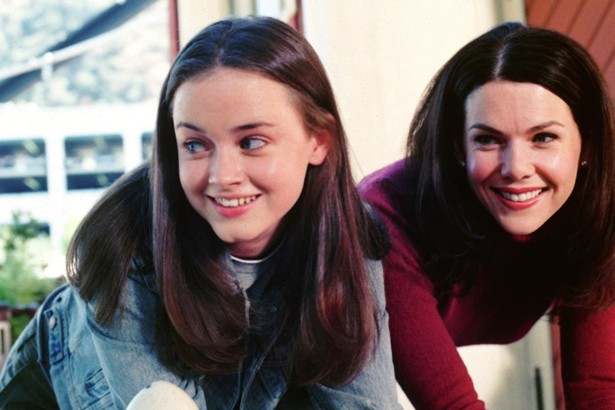
Gilmore Girls is one of the great triumphs of modern TV—a sharp, endlessly rewatchable dramedy that holds up better than most new television, with a Netflix fanbase as wide as its original audience on the (now-defunct) WB network. It also had one of the worst goodbyes in TV history, airing a tragically bad seventh season without the involvement of its creator Amy Sherman-Palladino. So Netflix is reportedly riding to the rescue, ordering a limited-series revival of the show, written by Sherman-Palladino and starring Lauren Graham, Alexis Bledel, and all the other cast favorites.
Netflix long ago began branding itself as some super-powered take on Nick at Nite, airing classic shows and bringing them back to life with new seasons. In Arrested Development’s case, it felt like an obvious move. A planned revival of Full House felt more cynical. The return of Wet Hot American Summer was unexpected and somewhat bizarre. But Gilmore Girls feels the most karmically appropriate of them all: a chance for Sherman-Palladino, who exited the show after its sixth and penultimate season because of a contract dispute, to right the wrongs done in her absence.
Not that Netflix cares one bit for karma. No doubt its internal algorithms have made the case for new Gilmore Girls episodes very clear. But the chance for redemption is a fun bonus storyline, and Gilmore Girls fans are an intense bunch. Michael Ausiello, who broke reports of Gilmore’s return at TVLine, has long stoked the fires for a revival, hanging on Sherman-Palladino’s comment that she’d written a series finale ending with four words that never aired after she left the show (his record as a reporter and sources within the show make the news all the more likely, though Netflix hasn’t confirmed it yet). When Gilmore Girls wrapped up in 2007, the concept of a revival, or even a goodbye movie, seemed ludicrous. With the rise of Netflix’s nostalgia machine, it became inevitable.
Apparently all the “major players” will be back—Graham and Bledel as the mother-daughter team Lorelai and Rory Gilmore, Kelly Bishop as Lorelai’s mother, Emily, and Scott Patterson as Lorelai’s chief love interest, Luke. The tragic loss of Edward Herrmann, who played Lorelai’s father, Richard, will have to be addressed, and who knows if the now-Oscar-nominated Melissa McCarthy (who played the ever-cheerful chef, Sookie) will be able to clear her schedule for the four 90-minute episodes being planned. But these are just details. What really matters: If Gilmore Girls is coming back, that’s plenty to be excited about.
I’ve been with my boyfriend for 3 years. We are both in our early thirties. When I first met him, I thought he was very attractive, and I still do. I like skinny dudes and he was skinny when I met him. About seven months into our relationship he put on about 15-20 pounds, which I found less attractive. His stomach was no longer flat and he carried weight around his middle in general. I expected him to lose it quickly, but he didn’t. Eventually I brought it up and he said I should have just said so and that he hadn’t really noticed, and that he would start a diet and exercise more.
It didn’t stick for long and since then every few months I ask him if he is still on his diet (which is all I do, I don’t bother him about it otherwise) and he gets upset and says yes (and sometimes no) and we had a fight about it recently where he said he wants me to stop asking.
I have stayed the same size, and I know he would not be super happy if I put on weight, since his preference is strongly skewed toward very thin women. I feel that while I do maintain my weight for my own sake, I also do it because I know he likes the way I look and I want him to be maximum attracted to me. That it’s been over 2 years makes me feel that it doesn’t matter to him if I am maximum attracted to him.
I am having a hard time distancing myself from this and figuring out what is right. I am a very goal-oriented person and also a “pusher,” one of those best/worst qualities — on the one hand, I always try my hardest at everything and I’ve accomplished some good things because of that, but on the other hand I also find it difficult to just let other people go at a slower pace and not micromanage. I try to rein this in, but I can’t tell if it applies in this situation. I want my boyfriend to stay in (reasonable) shape as we get older, but when I looked in the archives, particularly at #284, I saw people calling this mentality terrible and controlling (although I don’t think I’m like that guy, who sounds like he wants a different girlfriend. I don’t want a different boyfriend, I just want him to look a little more like he did when we met). Should I just deal with it, or is there a better way to approach this issue?
Thank you.
– sad, possibly a jerk
Dear Sad, Possibly A Jerk,
Watch (or rewatch) the movie Vertigo sometime. Scottie, played by Jimmy Stewart, becomes obsessed with a woman named Madeleine, played by Kim Novak. Things don’t work out between them. Later, he runs into a woman named Judy (also played by Kim Novak), who looks exactly like Madeleine except, not. Madeleine was blond and coiffed and wealthy and dressed in upscale, tasteful, elegant, “classy” clothes. She wore just the ‘right’ amount of makeup. Judy is “a tawdry redhead” and dresses in brassy, “cheap,” bright colors and wears very heavy makeup. Scottie sees Judy’s resemblance to Madeleine, who conformed utterly to a certain kind of beauty standard, and he’s haunted by that potential and the memory of Madeleine. So he buys Judy new clothes and a makeover and pressures her to dress like and do her hair like Madeleine, to become his Madeleine. There are many examples of vertigo as a paralyzing fear of and attraction to heights in the film, but this makeover sequence and the way Scottie browbeats Judy creates a different kind of emotional vertigo for the audience. Like Scottie, we are curious, and we want to see Judy’s transformation into Madeline so badly that we’re complicit in the horrific emotional abuse and destruction of “Judy” for the sake of even a glimpse of Madeline. Lots of movies have makeover montages, but director Alfred Hitchcock and costume designer Edith Head mix the pleasurable, aspirational aspects of transformation with the oppressiveness and destruction that comes with having this imposed by others. For audiences, especially audiences at the time, there is a perversity in Judy’s refusal to conform to the beauty standard because she’s so very close to it, like, if you could choose to look like Madeline why on earth wouldn’t you? Judy loves Scottie, so why wouldn’t she want to be “maximum attractive” to him?
My advice to you, Sad, is to make sure that you are not hurting the man you love in order to chase a memory or a status symbol. He is not a project or raw material to be sculpted (nor are you), he is a being and a universe entire. Bodies change with time, and if this becomes a lifelong relationship both of you are going to go through many changes in looks and abilities. What if you could decide to enjoy and love your body and your boyfriend’s body to the fullest extent that you can? Have sex as often and as joyfully as you can. Touch his body and your own with love and awe for the things it can do. Revel in its solidness and strength and in the miracle of his warm skin under your hands. If you like to dance, then dance. Someday you are going to be very old and you are going to look at pictures from this time in your life and think “why did I waste a single minute hating our bodies when we were so goddamn beautiful.”
One very concrete thing you can do is to practice saying only kind things about your boyfriend’s body and your own and about all the bodies that you see. Ask him to do the same, and refuse to tolerate any double standard that makes you feel dissatisfied with your own body. Having a preference about who you’re attracted to is one thing (though let’s not pretend that these preferences just spontaneously develop independent of the bombardment of idealized images of thin people and damaging shaming and denigration of not-thin people), mentioning and proclaiming and reinforcing that preference as a way to police the bodies of people in your life is quite another. If you and your boyfriend can wean yourselves off of negative self-talk, stop pointing out “figure flaws” on your own or other people’s bodies, let go entirely of the idea of what people should and should not wear or show on their own bodies, stop bonding over negative body talk and shame, and phase out consumption of magazines and other media that talk about bodies as a collection of “problem areas,” these things will go a long way toward increasing self- and mutual acceptance and joy that can last you both through all sorts of physical changes.
If your boyfriend can’t agree to try out a “no negative body talk” practice, and if he insists that your body needs to look a certain way but rebels against that standard for himself, then you’ll know what to do. But if he’s just asking to be left alone about his diet and not scrutinized about his weight, and all else is light and love between you? Turn your ambition and your goal-setting energy to your own life instead of toward sabotaging something that makes you happy.
One grand boulevard with trees
with one grand cafe in sun
with strong black coffee in very small cups.
One not necessarily very beautiful
man or woman who loves you.
One fine day.
Please read the comments policy before adding your input. We have a strict “no-weight loss talk, no mention of specific weights, no promotion of dieting, no insulting your own or other people’s bodies” thing going on here and I’d like to keep it that way.
My comment derailing bingo card filled early today. We’ll try this another time.
Maggie Sunseri was a middle-school student in Versailles, Kentucky, when she first noticed a major difference in the way her school’s dress code treated males and females. Girls were disciplined disproportionately, she says, a trend she’s seen continue over the years. At first Sunseri simply found this disparity unfair, but upon realizing administrators’ troubling rationale behind the dress code—that certain articles of girls’ attire should be prohibited because they “distract” boys—she decided to take action.
“I’ve never seen a boy called out for his attire even though they also break the rules,” says Sunseri, who last summer produced Shame: A Documentary on School Dress Code, a film featuring interviews with dozens of her classmates and her school principal, that explores the negative impact biased rules can have on girls’ confidence and sense of self. The documentary now has tens of thousands of YouTube views, while a post about the dress-code policy at her high school—Woodford County High—has been circulated more than 45,000 times on the Internet.
Meanwhile, gender non-conforming and transgender students have also clashed with such policies on the grounds that they rigidly dictate how kids express their identities. Transgender students have been sent home for wearing clothing different than what’s expected of their legal sex, while others have been excluded from yearbooks. Male students, using traditionally female accessories that fell within the bounds of standard dress code rules, and vice versa, have been nonetheless disciplined for their fashion choices. These cases are prompting their own backlash.
Dress codes—given the power they entrust school authorities to regulate student identity—can, according to students, ultimately establish discriminatory standards as the norm. The prevalence and convergence of today’s protests suggest that schools not only need to update their policies—they also have to recognize and address the latent biases that go into creating them.
* * *
At Woodford County High, the dress code bans skirts and shorts that fall higher than the knee and shirts that extend below the collarbone. Recently, a photo of a female student at the school who was sent home after wearing a seemingly appropriate outfit that nonetheless showed collarbone—went viral on Reddit and Twitter.
The restrictions and severity of dress codes vary widely across states, 22 of which have some form of law granting local districts the power to establish these rules, according to the Education Commission of the States. In the U.S., over half of public schools have a dress code, which frequently outline gender-specific policies. Some administrators see these distinctions as necessary because of the different ways in which girls and boys dress. In many cases, however, female-specific policies account for a disproportionate number of the attire rules included in school handbooks. Arkansas’s statewide dress code, for example, exclusively applies to females. Passed in 2011, the law “requires districts to prohibit the wearing of clothing that exposes underwear, buttocks, or the breast of a female student.” These are certainly reasonable provisions, yet the rule makes no mention of male students revealing similar body parts.
Depending on administrators and school boards, some places are more relaxed, while others take a hard line. Policies also tend to fluctuate, according to the University of Maryland American-studies professor and fashion historian Jo Paoletti, who described dress-code adaptations as very “reactionary” to whatever happens to be popular at the time—whether it’s white go-go boots or yoga pants. Jere Hochman, the superintendent of New York’s Bedford Central School District echoes Paoletti in explaining that officials revisit his district’s policy, which has been in place “for years and years and years,” “on an informal basis.” “It’s likely an annual conversation, he notes, “based on the times and what’s changed and fads.”
While research on dress codes remains inconclusive regarding the correlation between their implementation with students’ academic outcomes, many educators agree that they can serve an important purpose: helping insure a safe and comfortable learning environment, banning T-shirts with offensive racial epithets, for example. When students break the rules by wearing something deemed inappropriate, administrators must, of course, enforce school policies.
The process of defining what’s considered “offensive” and “inappropriate,” however, can get quite murky. Schools may promote prejudiced policies, even if those biases are unintentional. For students who attend schools with particularly harsh rules like that at Woodford, one of the key concerns is the implication that women should be hypercognizant about their physical identity and how the world responds to it. “The dress code makes girls feel self-conscious, ashamed, and uncomfortable in their own bodies,” says Sunseri.
Yet Sunseri emphasizes that this isn’t where she and other students take the most issue. “It's not really the formal dress code by itself that is so discriminatory, it’s the message behind the dress code,” she says, “My principal constantly says that the main reason for [it] is to create a ‘distraction-free learning zone’ for our male counterparts.” Woodford County is one of many districts across the country to justify female-specific rules with that logic, and effectively, to place the onus on girls to prevent inappropriate reactions from their male classmates. (Woodford County High has not responded to multiple requests for comment.)
“These are not girls who are battling for the right to come to school in their bikinis—it’s a principle.”
“To me, that’s not a girl’s problem, that’s a guy’s problem,” says Anna Huffman, who recently graduated from Western Alamance High School in Elon, North Carolina, and helped organize a protest involving hundreds of participants. Further north, a group of high-school girls from South Orange, New Jersey, similarly launched a campaign last fall, #IAmMoreThanADistraction, which exploded into a trending topic on Twitter and gleaned thousands of responses from girls sharing their own experiences.
Educators and sociologists, too, have argued that dress codes grounded in such logic amplify a broader societal expectation: that women are the ones who need to protect themselves from unwanted attention and that those wearing what could be considered sexy clothing are “asking for” a response. “Often they report hearing phrases like, ‘boys will be boys,’ from teachers,” says Laura Bates, a co-founder of The Everyday Sexism Project. “There’s a real culture being built up through some of these dress codes where girls are receiving very clear messages that male behavior, male entitlement to your body in public space is socially acceptable, but you will be punished.”
“These are not girls who are battling for the right to come to school in their bikinis—it’s a principle,” she says.
There’s also the disruption and humiliation that enforcing the attire rules can pose during school. Frequently, students are openly called out in the middle of class, told to leave and change, and sometimes, to go home and find a more appropriate outfit. In some instances, girls must wear brightly colored shirts that can exacerbate the embarrassment, emblazoned with words like, “Dress Code Violator.” Some students contend this is a bigger detractor from learning than the allegedly disruptive outfit was in the first place. “That’s crazy that they’re caring more about two more inches of a girl’s thigh being shown than them being in class,” says Huffman. These interruptions can also be detrimental to peers given the time taken out from learning in order for teachers to address the issue, as Barbara Cruz, author of School Dress Codes: A Pro/Con Issue, points out.
Dress-code battles can also take place at events outside of the classroom, such as prom. At Cierra Gregersen’s homecoming dance at Bingham High School in South Jordan, Utah, administrators asked female students to sit against the wall, touch their toes, and lift their arms to determine whether their outfits were appropriate. “Girls were outside the dance crying hysterically,” says Gregersen, commenting on the public nature of the inspections and the lack of clarity around the policy. “We should not have to be treated like sexual objects because that was what it felt like.” The incident prompted Gregersen to create a popular Change.org petition and stage a walkout with more than 100 classmates, but she says she never heard back from administration. (Bingham High School has not responded to multiple requests for comment.)
* * *
Every year, Strawberry Crest High School in Dover, Florida, holds a Spirit Week right around Halloween, during which students wear outfits in accordance with each day’s theme. One of the themes last year was Throwback Thursday, enabling students to dress up in ways reminiscent of a previous decade. Peter Finucane-Terlop, a junior at the time who identifies as gay, decided to come to school in drag as a 1950s housewife.
Wearing a knee-length, baby-blue strapless dress, a button-up on top, a wig, and some make-up, Finucane-Terlop’s outfit, he says, wasn’t only accepted by his peers—it also complied with all the school’s dress-code rules: His shoulders and chest were covered, and his dress was an appropriate length.
But sometimes the ways that schools regulate attire have little to do with explicit policies. According to Finucane-Terlop, a school official commented on his outfit in the middle of the courtyard during lunch that day. Finucane-Terlop recalls him saying, “Why are you dressed like that?” and “You shouldn’t do that. You’re a boy—dress like it. What if little kids saw you?”
Finucane-Terlop says he mentioned the incident to his school counselor right after it took place but didn’t end up getting a response from administrators. April Langston, Finucane-Terlop’s counselor, and David Brown, his principal at Strawberry Crest, however, do not recall talking about or hearing of such an incident.
“This isn’t occasional; this isn’t just some students. This is something that happens quite regularly.”
Beyond this specific case, Emily Greytak, the research director at GLSEN (the Gay, Lesbian, and Straight Education Network), says the organization has noticed that incidents like the one Finucane-Terlop described are becoming more frequent, when LGBT students are discriminated against either verbally, or via disciplinary action, for clothing choices that don’t fall in line with either a dress code or dress expectations that starkly demarcate different rules based on gender. According to a recent GLSEN study, 19 percent of LGBT students were prevented from wearing clothes that were thought to be from another gender and that number was even higher for transgender students, nearly 32 percent of whom have been prevented from wearing clothes that differed from those designated for their legal sex.
“This isn’t occasional; this isn’t just some students. This is something that happens quite regularly,” Greytak says. The discipline is sometimes informed by teachers’ personal biases while in other cases, school policies discriminate against transgender or gender non-conforming students expressions of their gender identity.
As Emery Vela, a sophomore, demonstrates, eventually some students manage to navigate and help reform the policies. Vela, a transgender student who attends a charter school in Denver, Colorado, dealt with this issue when looking for footwear to match his uniform in middle school, which had different requirements for boys and girls and suspended students if they broke the rule. Despite some initial pushback, the school adjusted the policy after he spoke with administrators.
“While they’re trying to achieve this goal of having a learning environment that supports learning, it’s really disadvantaging transgender and gender non-conforming students when they have to wear something that doesn’t match their identity,” Vela says.
* * *
Dress codes trace back to the 1920s and ‘30s, and conflicts over the rules have been around ever since, says Paoletti, the fashion historian: “Dress has been an issue in public schools as long as teenagers have been interested in fashion.” Several cases, including Tinker vs. Des Moines Independent Community School District in 1969, in which students alleged that wearing black armbands at school to protest the Vietnam War constituted free speech, have even gone all the way up to the Supreme Court.
The subjectivity inherent to many of these judgment calls—like the dress-code cases contending that boys with long hair would be society’s downfall—is often what ignites conflict. As with the kinds of protests staged by Sunseri and Huffman, many of the larger movements to resist school attire regulations today echo a broader momentum for women’s rights, pushing back against existing attitudes and practices. “We’ve seen a real resurgence in the popularity of feminism and feminist activism, particularly among young people and particularly in an international sense, facilitated by social media,” says Bates, who sees dress code protests as one key everyday impact of such trends. “I think that one of the striking elements of this new wave of activism is a sense of our entitlement and our courage to tackle the forms of sexism that are very subtle, that previously it was very difficult to stand up to, because you would be accused of overreacting, of making a fuss out of nothing.”
Similarly, Greytak says these conflicts are also an indicator that LGBT students are feeling safer in their school environments and able to criticize them: “It’s very possible that we are hearing more and seeing more about these cases because before less students would even feel comfortable being and expressing themselves.”
As this issue has gained exposure and traction, students have also derived inspiration from the actions of their peers, including Sunseri, who’s now in the process of negotiating changes to the dress code with her school administration, “If high-schoolers across the country were standing up for what they believed was right, why shouldn’t I?”
* * *
According to students, the best solutions for remedying these issues entail more inclusive policymaking and raising awareness about the subject. And students and administrators tend to agree that schools should involve students early on in the rule-creation process to prevent conflicts from popping up. By developing a system like this, they have a stake in the decision and are significantly more likely to both adhere and respect the final verdict.
This also helps reduce some of the subjectivity that shapes the rules and acknowledges how touchy the topic can be for all stakeholders. “It’s sensitive for the students, it’s sensitive for the parents, it’s sensitive for the teachers,” says Matt Montgomery, the superintendent of Revere Local Schools in Richfield, Ohio. “You’re in a tough position when you’re a principal evaluating the fashion sense of a 15- or 16-year-old female. Principals are doing things like engaging female counselors and other staff members to make sure that everything is okay.”
Schools should involve students early on to prevent conflicts from popping up.
Similarly, when conflicts do arise, maintaining an open dialogue is critical. “I always tell administrators to not be on the defensive, to hear students out, to hear families out, and then to have a well-reasoned explanation and if at all possible, to look at some of the research and be able to cite some of that,” says Cruz, the author. “Most of the time, school administrators are basing their decisions more on anecdotal evidence rather than empirical research. They need to be able to explain their rationale.”
Huffman, too, highlighted the importance of student involvement.“Adults aren’t going to be shopping at American Eagle or Forever 21,” she says, “They don’t know that it’s not even possible to buy a dress that goes to your knees.” Like Huffman, Kate Brown, a senior at Montclair High School, in Montclair, New Jersey, met with school administrators after organizing a protest, helping secure many of the policy changes her campaign had sought: removing words like “distracting.”
After all, teachers and administration don’t always realize that their policies are offensive—and this is where more education comes in. “Even for a lot of teachers in 2015, they have never had a trans student or a gender-nonconforming student where they’ve had to deal with this,” Finucane-Terlop says. “It’s new to them, so I understand that they might not know how to react.”
Ultimately, such rules could be the wrong way to handle some of the issues that they purport to cover. Since so many have previously been used to address the potential of sexual harassment in schools regarding male students paying inappropriate attention to female students, it’s clear other practices, like courses on respect and harassment, may be needed to fill this gap. These initiatives would shift the focus of school policies. “Is it possible that we can educate our boys to not be "distracted" by their peers and not engage in misogyny and objectification of women's bodies?” asks Riddhi Sandhil, a psychologist and co-founder of the Sexuality, Women and Gender Project at Teachers College at Columbia University.
“I think we live in a culture that’s so used to looking at issues of harassment and assault through the wrong end of the telescope,” Bates says, “that it would be really refreshing to see somebody turn it around and focus on the kind of behavior that is directed at girls rather than to police girls’ own clothing.”
There’s a growing interest in making dress codes as gender-neutral as possible as a means of reducing sexism and LGBT discrimination. But even beyond policy changes, students say there needs to be a fundamental shift in admitting that teachers and administrators come in with their own set of biases, which they may bring to creating and enforcing school rules. “I feel like there’s this misconception...that you can separate your prejudice from your profession, because so often prejudice is unconscious,” says Vela. “The biggest piece of advice I can offer is to recognize that.”
In order to combat latent prejudices, schools must first acknowledge that they exist.
A 3D face scanner designed to register details about individuals at the Siemens Airport Center in Germany, 2007. Michaela Rehle / Reuters
It might not be until something seems off that you realize you’re paying attention to the tiniest twitches and scrunches of another person’s face.
Humans are hardwired to catalogue and interpret minuscule clues about emotion this way. We find meaning in broken eye contact, a passing brow crinkle, the pause that goes on a beat too long.
But how good are people, generally, at discerning how others feel based on the faces they’re making?
In 1872, Charles Darwin laid out a case for the universality of key facial expressions in his book, The Expression of Emotions in Man and Animals. “Of all parts of the body,” Darwin wrote, “the face is most considered and regarded, as is natural from its being the chief seat of expression and the source of the voice... The face, therefore, will have been subjected during many generations to much closer and more earnest self-attention than any other part of the body.”
Scientists have found lots of evidence to back up the idea that some facial expressions are innate, but there are many layers of social and cultural complexities to consider. One 2012 study found that Westerners demonstrated distinct facial expressions in conjunction with six main emotional states (happiness, sadness, surprise, fear, disgust, and anger), whereas Easterners were more likely to use dynamic eye expressions.
Today, machine learning is giving scientists a new way to interpret the subtle movements of the face. Researchers at Carnegie Mellon, for instance, are using a multi-modal algorithm to analyze facial expression based on 68 separate points on the face, including the eyebrows, eye corners, mouth, and nose.
A new system called MultiSense can also track in real-time a person’s head position, the direction of that person’s gaze, and the person’s body orientation. This level of detail can be surprisingly revealing. Looking at what a person’s nose and eyebrows are doing can differentiate between a happy smile and an angry smile, for example, or a smile that’s triggered by a social situation rather than an actual emotion. “So a lot of time what we see [on a person’s face] is the social norm,” says Louis-Philippe Morency, an assistant professor in Carnegie Mellon’s School of Computer Science. “Someone is smiling to smile back, so the dynamics of that smile would be different because of different emotional states and social states.”
Morency and his colleagues are particularly interested in using machine learning to trace connections between facial expressions and emotional state among depressed people. And what they’ve found so far is unexpected. For one thing, depressed people and non-depressed people smile with the same frequency. But the kinds of smiling they did were different. So while depressed people smiled as often as non-depressed people, the depressed people’s smiles lasted for a shorter period of time. (In addition to tracking smile duration, the sensor platform tracks smile intensity on a 100-point scale.)
There was also a pronounced gender difference in facial expressions among depressed people. In one University of Southern California study, Morency and three other researchers found that depressed men frown more often then non-depressed men, but observed the opposite effect among women: Depressed women frowned less frequently than non-depressed women.
“The really interesting next part,” Morency says, “is to see how [these findings are] aligned with social norms.” For instance, many women have had the experience of being told to smile. “Is it related to culture? Is it local? National? International? Or is there even another factor—social, cultural, physiological—that we don’t know yet?”
The implications of this technology, from a health-care perspective, could mean machine learning will help human doctors track their patients’s well being over time—and do so using objective, quantifiable data. In the short term, Morency believes MultiSense’s abilities are on par with an expert clinician. (“I think expert clinicians do see these cues,” he said. “They may not even realize it.”)
There are other implications for this kind of technology. It’s no surprise, for instance, that the U.S. military has funded much of the research into reading facial expressions. The Defense Department is interested in using facial-recognition platforms for treating people suffering from PTSD. It also has a longstanding goal of using such sensors as a way to understand and predict behaviors. Decades ago, the Department of Defense began amassing a huge database of facial expressions for this purpose.
Morency is excited by the surge in research, but he also urges caution, stressing that these tools are best suited to ongoing care for a patient with depression—and not as a diagnostic tool. Humans, it turns out, already pick up a number of these cues, but they do so in a subtle, less quantifiable way. And unlike machines, they balance their judgments against ethical considerations, about patient care, for instance.
“I personally would much prefer this technology as a decision-support tool, but not as a decision-making tool,” Morency said. “When we start talking about decision-making, this brings a large number of ethical issues that need to be addressed.”
This female reader wants women to fight back—literally:
I’ve argued with many newer feminists when debating the notion of self defense. Self defense and resistance as rape prevention are real and effective solutions supported by research[*]. Yet many newer feminists view even the very idea as victim blaming. I think this is a problem within many social movements today. In the interest of maintaining a united front, all nuance and subtlety is ignored!
And it completely ignores the historical significance of self defense in feminism from the ‘70s and ‘80s.
As young girls in the ‘80s, many of us had our first encounters with feminism through self-defense classes we took with our classmates and mothers. At the time, it was one of the most visible aspects of the movement, because the notion that a woman could protect herself, and was not dependent on a man for safety, was entirely subversive. After all, with increased freedom comes increased responsibility—and responsibility is not the same as blame.
New feminists, in my opinion, ignore this at the risk of becoming hypocrites and splintering the movement (all of the freedom, none of the responsibility). There is also an issue of choice at play here. As an autonomous, free-thinking woman, shouldn’t I be able to choose how I wish to respond to my own attack?!
And yet, the issue of rape culture still needs to be addressed. All things being equal, it should only be necessary to talk about the ways women can protect themselves in the rare instance when a crazed and violent perpetrator seeks to assault them.
We live in a society in which rape is ignored, victims are shamed and silenced, and a general climate persists in which otherwise normal young men and women are becoming perpetrators and victims because their view of consent and sexual agency is so incredibly skewed. Young men don’t know what they’re doing is rape, or feel so much pressure they don’t care. And young women don’t know they can say no and are afraid to speak up about assault if they do.
So society itself also needs to be addressed. I guess the full analysis leaves room for both aspects of the discussion.
* Below is some data to back up the assertion that “self defense and resistance as rape prevention are real and effective solutions.” From the National Institute of Justice:
In a 2005 report commissioned by NIJ, researchers examined a variety of sexual assaults and other physical assaults against women. The study did not focus specifically on college students. The researchers found that potential rape victims who resisted their attackers physically and verbally significantly reduced the probability that a rape would be completed and did not significantly increase the risk of serious injury.
Most self-protective actions significantly reduce the risk that a rape will be completed. In particular, certain actions reduce the risk of rape more than 80 percent compared to nonresistance. The most effective actions, according to victims, are attacking or struggling against their attacker, running away, and verbally warning the attacker.
In assaults against women, most self-protective tactics reduced the risk of injury compared to nonresistance. According to the researchers, the only self-protective tactics that appear to increase the risk of injury significantly were those that are ambiguous and not forceful. These included stalling, cooperating and screaming from pain or fear.
A separate study found that even when a rape was completed, women who used some form of resistance had better mental health outcomes than those who did not resist.[1]
A caveat:
Law enforcement officials, however, counsel caution against automatically using violence or other forms of resistance. People who are assaulted are advised to assess the situation and trust their own judgment about the best way to respond.
A UO sociologist finds that women who took a ten-week self-defense training were significantly less likely to experience unwanted sexual contact than those who didn’t. … Jocelyn Hollander [looked] at the outcomes for 117 college students who received this self-defense training versus a control group of 169 students who did not. Of those, seventy-five from the first group and 108 from the second agreed to take part in a follow-up survey or interview.
The results are clear: a much lower percentage of the women who took the self-defense class reported incidents of unwanted sexual contact than the women who did not take the class (see chart).
Something to add to the discussion? Drop me an email. And thanks for all the great ones so far, including the ones that don’t get posted because of space and pace.