Shared posts

26 Jan 00:24

How to Quit Shampoo Without Becoming Disgusting

by Lauren ONeal

Are you cheap? Lazy? Vaguely and perhaps unjustifiably paranoid about slathering your body with chemicals on a daily basis? Then perhaps you’d like to join the “no-poo movement”? It is more than just a hair-care revolution—it’s also the perfect way to trick others into using the term “poo”! But from here on out I’m just going to call it quitting shampoo, because it doesn’t actually involve laxatives, and it’s less a “movement” than a “beauty tip.”

Why would you want to quit shampoo? Well, there are plenty of people who will tell you that the chemicals in shampoo like methylisothiazolinone and diethanolamine can give you terrifying health problems like nerve damage and Alzheimer’s disease. But those people are probably not correct; while it might not be good to literally bathe in that stuff, the small amounts in shampoo likely will not hurt you. What is true is that certain chemicals in shampoo, especially foaming agents like sodium lauryl sulfate (SLS, for short), can irritate your scalp and hair, as well as the skin that your hair touches, meaning you and your hair don’t look as healthy as you could.

So, let’s review: quitting shampoo will clear up your complexion and make your hair look awesome, plus it will save you time and money. Also it’s better for the environment to use fewer plastic bottles and wash less poison down the drain. And there’s I guess a tiny chance it will also save you from some combination of cancer and let’s go with…epilepsy. Ready to give it a try?

Here’s how you do it:

Step 1: Switch from shampoo to baking soda and vinegar

-To make your new “shampoo,” slowly add water to baking soda until it’s just slightly gooey. You can make as much or as little as you like to start. The exact proportions aren’t really that important, but it’s best to err on the side of adding too little water. Once you’ve got it to a consistency you like, store it one of those little travel bottles or a jar and keep it handy in your shower.

-Next, make the “conditioner.” Add 1–2 tablespoons of apple cider vinegar—NOT white vinegar—to about a cup of water. Again, the measurements don’t have to be precise, but in this case, it’s better to have to little vinegar than too much. Store this in your shower as well.

-Now it’s time to implement your new hair-washing routine. First, rub the baking soda all over your wet hair, particularly into the roots. Scrub it in there the best you can, let it sit for one minute, and then rinse your hair thoroughly. Next, pour the vinegar conditioner on your hair, rub it in, this time paying more attention to the ends of your hair than the roots, and then rinse.

-Use the baking soda and vinegar in place of shampoo and conditioner for at least two weeks. I promise, your head will not become a science-fair volcano. (Note: I’ve heard from no less authoritative a source than The Internet that if your hair ends up too frizzy, you should use less baking soda, and if it’s too greasy, cut down on vinegar. This has never been a problem for me, so I don’t know for certain, but I’m sure you can trust The Internet.)

Step 2: Switch from baking soda and vinegar to just water

At this point, all you need do is massage your scalp under running water in the shower. You can gradually taper off the baking soda or just go cold turkey.

Your hair will become quite greasy, but only for a little while. For me, Peak Grease was reached on Day 4. On that day, I was obliged to go to my boyfriend’s band’s performance at a gallery show featuring paintings of naked men. I wore a hat. But so okay: shampoo strips your hair of its natural oils, which makes your scalp overproduce more oil to compensate. After you stop shampooing, it takes some time for your scalp to recalibrate and reduce oil production. But don’t worry, after about a week without shampoo, your hair will get closer to reaching its natural balance, and you’ll no longer look like you’re in the throes of puberty.

After the first week, you’ll still have a little more waiting it out to do. Your hair will continue to be greasier than usual for four or five weeks. If you have bangs, ask yourself this: is it a cute, sassy style to have grease all over your forehead for a month and get a bad breakout and have sticky little shreds of hair instead of bangs? If your answer is no, then pin your bangs back for the time being. Aside from that, your hair might look a little dirty, but probably no one else will notice.

One of the biggest sacrifices you’ll have to make during this whole process is that you can’t use any mousse, gel, or other styling product during this stage, because they’ll mess up the whole “hair finding its natural balance of oils” deal. If you’re hella stressing, you can put a tiny bit of baking soda along your part and comb it into your hair to absorb excess grease, but seriously, after the first week, no one will think you look weird unless you’re just a weird-looking person generally.

The main thing you want to do is brush brush brush your hair—it’ll scrape some of the grease out from your roots. I assume this is why old-style ladies of yore did the “brush your hair 100 strokes” thing; it was probably the easiest way to keep your hair clean before bathing was invented. Don’t actually brush your hair 100 strokes, though. You’ll give yourself split ends and look mildly to moderately OCD. (Note: Do clean clean clean your brush. Sorry if you look OCD on this one, but it’s mandatory to get rid of all the grease. Maybe do it in private? I don’t know. I believe in you.)

Step 3: Add the baking soda and vinegar back in, once a week

After you’ve gotten through the waiting game, you’ll be looking lovely and your hair will be perfect and soft. Now all you need to maintain that healthy glow is to wash once a week with baking soda and vinegar. That should be enough to keep your hair clean now that it isn’t constantly overcompensating. Depending on your hair, you might want to bump it up to twice a week or down to once every ten days.

If you still need styling products, go for SLS-free stuff from brands like Aubrey Organics or Suncoat. No commercial products are going to be completely “natural” (whatever that even means), but the fewer polysyllabic chemical names on the label, the better. For hippie bonus points, make your own hair products at home from ingredients like flaxseed and lemon juice. (Google has plenty of recipes.) There’s a good chance you won’t even need any product at all, though. The only thing I use is a dryer with a finger diffuser, and my hair usually stays curly or at least wavy until I get in the shower again.

See it doesn’t seem so bad, does it? Just think how good you’ll feel about all the money you’ve saved, all the chemicals you’ve avoided — not to mention how you single-handedly rescued Mother Nature. So go on and get rid of poo, in your hair and in your life!

See also: What I’ve Learned From Three Years Without Shampoo

Lauren O’Neal grew up near Berkeley, California, but didn’t become a dirty hippie until after moving to Texas.

06 Jan 22:50

Can’t Tell Me Nothing

by Maggeh

Currently enjoying the work of Yes Stitch Yes (via Design Crush). Pieces run from $12 to about $35, which is a proper bargain friends.

WEARINGLESS

HUNDREDMOTHERS

LIKINGWHISKEY

ABUNDANTDICK

The post Can’t Tell Me Nothing appeared first on Mighty Girl.
05 Jan 14:41

The Part Where He Flies Away

by Maggeh

dolebananaguy

Gif from a Dole commercial. Happy New Year, you guys.

The post The Part Where He Flies Away appeared first on Mighty Girl.

04 Jan 23:10

Face Swap Live

by swissmiss

Want to see your kids giggle their heads off? Download Face Swap Live and swap your face with your kid. I haven’t laughed this much in a while.

(via Cesar)

04 Jan 22:09

Year to Year update for 2016

by ljc

I just updated our Year to Year page with our 2016 photos.

Some notes:

• I didn't realized my hair was so similar or I would have got it cut before New Years!

• Once again Stewie has the best photo.

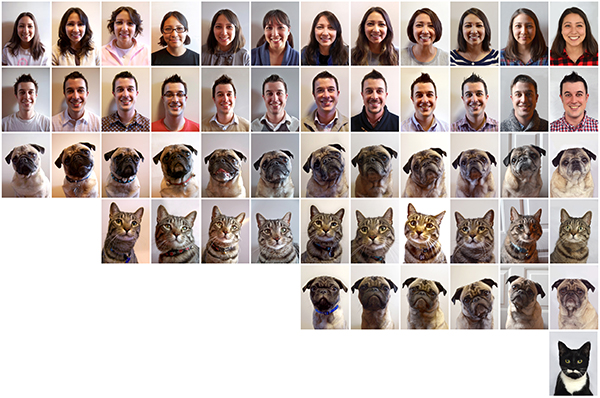
• Wyatt is not as easy to photograph "I'm a KITTEN!" but we finally got him for his first New Year's Day photo.

• I added images of our Christmas cards starting with 2002. I wanted a place that had them all together so there you go.

02 Jan 23:57

Sharon Jones & The Dap-Kings: Tiny Desk Concert

by Bob Boilen

The soul star and her Dap-Kings throw a holiday soul party with "Silent Night" and two spirited originals: one for Christmas and one for Hanukkah.

02 Jan 14:19

The Best of 2015's Best of Lists

by Katharine Schwab
Evan Agostini / Invision / AP

2015 Pop Culture Time Capsule | Vox
“Either you saw a black-and-blue dress, a gold-and-white dress, or a useless exercise that represented all the worst the Internet has to offer. Scientific explanations came forward, conspiracy theories loomed large, and Twitter became a hivemind devoted to the sole task of figuring this puzzle out. It was a wacky time, but it will be difficult to explain to future generations why, exactly, anyone ever cared at all.”

16 Best Pop Culture Characters of 2015 | Slate
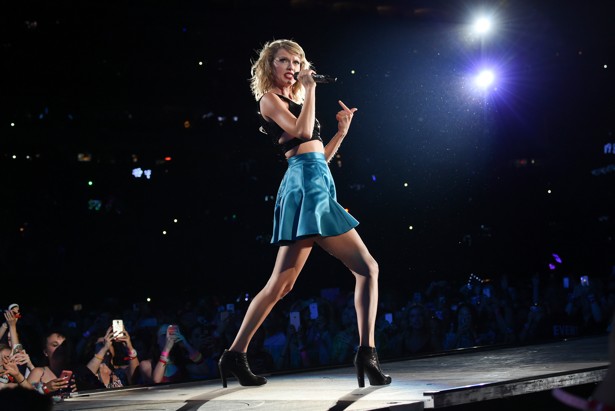
“This was the year when the princess of contemporary hitmaking completed her transformation from Taylor Swift to ‘Taylor Swift’ … Each time the jumbotron zoomed in on her face, she delivered a wink so crisp and crowd-pleasing that it could have been CGI’d. Even her hair seemed to have learned the choreography.”

Book Concierge | NPR
“Tom McCarthy himself writes in the novel (parenthetically, how else?): ‘(events! If you want those, you'd best stop reading now).’ So it’s not a page-turner, but it is a mind-turner, and sometimes that kind of book hits the spot.”

Best Book Covers of 2015 | The New York Times
“When considering the book as a whole, I prefer that the interiors contain answers and the covers ask questions. To the extent that my favorite reading experiences empower me to confront uncomfortable truths and honest answers about people, societies and the greater universe, the covers that lure me into the pages often do so by posing questions that I don’t want to ignore.”

10 Best Memes of 2015 | Vulture
“There have been countless Drake memes throughout 2015, but none was bigger than those birthed from the ‘Hotline Bling’ music video. Drake knows the internet, and he made that music video specifically for the it—because he knows that being in on the joke pays dividends.”

76 Viral Images From 2015 That Were Totally Fake | Gizmodo
“This photo may seem like one of those that’s so absurd, no one could ever believe it deals. But people do. And they keep sharing it far and wide across social media. Like a cockroach scurrying around during Nuclear Winter, the image just won’t die. But yes, it’s a fake.”

100 Most Bullseye Things That Happened This Year | EW
“In a year punctuated by strange quarterly decisions from Shia LaBeouf (including #AllMyMovies in November and that time he yelled a motivational speech at you in August), his simple, disgusting, Elsa-from-Frozen haircut was his most offensive choice of 2015.”

The 15 Weirdest and Wildest Art Stories of 2015 | Artnet
“An art and design collective made a black-and-white striped bouncy castle with Nicolas Cage’s face on it (Cage in a cage, get it?), and it’s kind of terrifying.”

20 Biggest Breakouts of 2015 | Rolling Stone
“This year, Fetty Wap put Paterson on the map with ‘Trap Queen,’ his surprisingly sweet tale of pie-slinging romance—then scored two more ultra-catchy Top 10 hits, ‘679’ and ‘My Way.’ And that was all before Fetty dropped his self-titled album in September.”

16 of the Best Jeopardy, Family Feud, and Wheel of Fortune Moments of 2015 | Buzzfeed
“When a Jeopardy contestant got Alex Trebek to say ‘Turd Ferguson’: Sure, Talia Lavin might have lost the game, but she won at the game of trolling Alex Trebek.”

Top 11 Moments for Women in Pop Culture in 2015 | Time
“It’s rare for a children’s movie to star a girl, rarer still for that girl not to be a princess … And yet Pixar broke the record for best opening of an original film (not based on a book, TV show, etc.) with a movie about a girl’s emotions and thoughts in an industry that has repeatedly demonstrated to young girls that it doesn’t care what’s inside their heads.”

The Top 100 New York Times Stories of 2015, by Total Time Spent | The New York Times
“We ranked the top 100 favorite Times articles of 2015 in a new way — by the total combined time readers have spent looking at them. The result is a mix of ambitious investigative projects, big breaking news, features and service journalism. You can see the big themes of the year, like race, terrorism and technology—but also the things we all found captivating.”

The Best Television of 2015 | NPR
“Aziz Ansari nails modern love, modern families and cultural assimilation in a potent comedy that often camouflages its depth with Ansari’s quick wit and snappy patter. At a time when America is tempted to turn its back on immigrants, he uncorks an episode on the struggle pampered first generation kids can face connecting with their immigrant parents’ hardscrabble origins.”

Best of 2015: Essays and Criticism | Longreads
“ ‘There is no good answer to being a woman; the art may instead lie in how we refuse the question,’ writes Rebecca Solnit, neatly packaging a manifesto’s worth of logic into 20 words. She’s talking about the persistent idea that a woman’s life can be morally dictated, and I’ve never been one for slogans, but I would readily get that sentence tattooed.”

Top 10 Architecture and Design Trends of 2015 | Dezeen
“Ocean plastic, created by harvesting and melting down waste from the world's seas, was the breakthrough material of 2015. Sports brand Adidas created trainers from the recycled material, while Pharrell Williams’s third collection with fashion brand G-Star RAW included ocean plastic clothes.”


31 Dec 12:42

Why Is the Smithsonian Still Standing Behind Bill Cosby?

by Kriston Capps

Bill Cosby will be arraigned today over a 2004 charge for allegedly drugging and sexually assaulting a woman at his home near Philadelphia. This is the first criminal charge that the comedian and TV star will face, after similar accusations from nearly three dozen women.

That’s twice as many as a year ago, when Cosby’s career began to fall apart. Since then, networks stopped airing reruns of The Cosby Show, his agency dropped him, and venues around the country canceled his comedy tour appearances.

All along, though, one major cultural organization has stood by Cosby’s side: the Smithsonian Institution. Cosby’s art collection remains on display at the National Museum of African Art in an exhibition, “Conversations,” that the comedian and his wife Camille helped fund. This is a problem, as I wrote in November 2014:

In a two-sentence statement, the Smithsonian made clear that it is standing behind Cosby, without saying as much. “Conversations” will remain on view through the start of 2016. That’s the end of the conversation from the museum’s perspective. But it should be the start of one. The National Museum of African Art had no business hanging Cosby’s art collection in the first place. But now, with serious questions about Cosby’s past finally coming to light, the Smithsonian must reconsider its own role in framing the one conversation that matters most right now.

Today’s arraignment comes around a month before the show closes. It’s become a lightning rod for the Smithsonian over the last year, but despite pressure from art critics and others, the institution has never addressed what it means to carry water for a collector who’s been accused of crimes of such magnitude.

The National Museum of African Art posted a sign clarifying its support for the Cosbys in July of this year, and the newly installed Secretary of the Smithsonian, David Skorton, lent his support to the exhibit upon his arrival. But no one has explained why a show of Cosby’s collection (alongside museum pieces), presented in a way that emphasizes the Cosby’s love of family, should have been mounted in the first place. (“Memory, Family, and the Domestic Sphere,” one of the umbrella categories in the show, seems cruelly ironic, given the near-universal prevalence of Quaaludes in the accounts of Cosby’s accusers.)

Cosby’s last friend standing may be Johnnetta Cole, the director of the National Museum of African Art. Cole was the Spelman College president who landed the $20 million gift from the Cosbys in 1988: at the time, the largest gift ever given to a black university. Spelman has since cut ties with Cosby, terminating a professorship endowed in his name—a more serious gesture than those of the many universities that have canceled Cosby’s honorary degrees. Writing for The Root in August, Cole defended the decision to keep the show up on the grounds that it’s the art, not the context, that matters.

But context counts, too, and in an exhibition paid for by the Cosbys (to the tune of $716,000), in which Cosby’s name appears on the walls dozens of times, there’s nowhere to hide. The Smithsonian should acknowledge its role in buttressing Cosby. And it shouldn’t wait until until January 24 to take down the show.


30 Dec 23:16

On the Question of Dog Pants

by Robinson Meyer
Utopian Raspberry - Modern Oasis Machine / Facebook

The picture above has attracted tens of thousands of retweets in the past day. Many of those retweets have come from people who argue in favor of the image on the right-hand side. Those people are wrong.  

To explain why, it’s easiest to start with this anecdote, which I'd always heard attributed to Abraham Lincoln:

A boy goes up to his father and asks, “Father, how many legs would this calf have, calling the tail a leg?”

‘Why five, my son,’ says the father.

‘No, father, he can not. He would have only four,’ replies the son.

‘Why, calling the tail a leg, you said, my boy.’

‘Ah father! But calling the tail a leg, does not make it so, you know,’ says the son.

Turns out Lincoln didn’t say it (at least in a place that would be transcribed), though many abolitionists did. Good for Abe, then. This is a silly story. The father is totally in the right here, and his son is a smartass.

Words mean things. If tails were also called legs, the definition of legs would not be “the things that get stood on.” It would be, rather, “the things that stick out of the torso.” But in our world, legs are actually the things that get stood on, and dogs have four of them.

Many writers, like Jay Hathaway at New York, see the picture above and insist that only the diagram on the right shows the true doggy pants.

“Every dog ever seen in pants has sported the two-legged variety,” Hathaway writes. “Try to imagine the four-leg garment on a human, or question how it would even stay up without suspenders. Unless you’re contemplating it at 3 a.m., like the original artist, it is absurd.”

But pants cover all your legs. That’s what pants do. Humans wear two-legged pants because we have two legs. Dogs, on the other hand, have four legs. Ergo, dogs should wear four-legged pants. The left image is correct, and Hathaway is wrong.

We have in fact already named the garment that covers some of your legs and also your butt, as the right-hand image does for the dog. That garment is called shorts. The right-hand image should be correctly termed doggy shorts. Only the left-hand image depicts the true pants. Quod erat demonstrandum.

Now, some critics will allege that since I’ve already conceded that two-legged doggy pants are called pants, aren’t they just, you know, actually pants? Since words mean things and all. To this I respond: These people are dangerous reactionaries who are afraid to shift their internal definitions to meet the challenges of a changing world.


30 Dec 17:25

What Makes a Country Legalize Abortion?

by Heather Horn
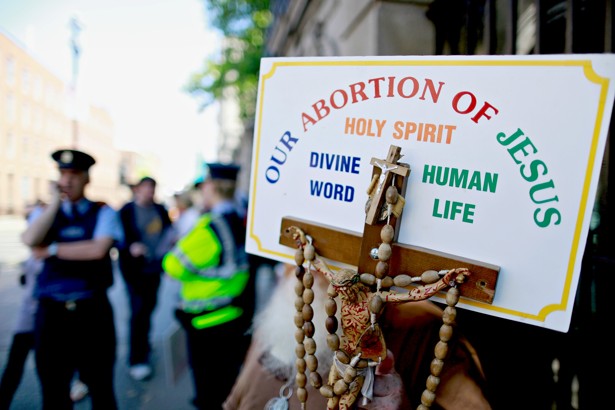
A pro-life campaigner demonstrates outside the Irish Parliament ahead of a vote in 2013 to allow abortion in limited cases. Cathal McNaughton / Reuters

What leads a country to legalize abortion? What’s the tipping point?

It’s a pertinent question now that a debate over abortion policy is ramping up in Ireland, ahead of an election there this spring. Since the 2012 case of a mother dying after being denied a termination for a miscarriage in progress, the near-absolute ban on abortion in the predominantly Catholic country has come under increased scrutiny. In 2013, a law was passed stipulating that an exception allowing abortions in cases of threat to the mother’s life should include situations in which the mother is suicidal. Last December, Ireland’s high court ruled that a brain-dead woman who was 18 weeks pregnant could be removed from life support, instead of kept alive for a Cesarean delivery.


Related Story

Why One of the World's Most Catholic Countries Might Approve Gay Marriage


This summer, a poll by Amnesty International found that 81 percent of respondents in Ireland supported “significantly widening the grounds for legal abortion access,” whether for rape cases, fetal abnormalities, or some other condition. And some polls suggest the number has been that high for years. In the past year, reproductive-rights groups, prominent Irish artists, several Irish politicians, and even the actor Liam Neeson have called for a referendum to repeal the Eighth Amendment of Ireland’s constitution, which was adopted following a similar referendum in 1983. The amendment enshrines a commitment to the “right to life of the unborn,” albeit “with due regard to the equal right to life of the mother,” translating to abortion only being permitted where the life of the mother is clearly at risk. The painter Eithne Jordan, a signatory of a petition from hundreds of Irish artists to abolish the amendment, told The Irish Times that the group has no particular vision for the conditions under which abortion should be legal: “We are not lawyers, we are not doctors. But I think [the amendment] definitely has to be repealed before a real conversation happens.”

If the vast majority of the electorate wants change, why is that change taking so long to materialize?

In fact, this kind of political paradox is not unusual. It has to do with the unique position abortion occupies in the realm of public opinion, according to the Temple University political-science professor Kevin Arceneaux.

One of the remarkable lessons about abortion gleaned from the United States, said Arceneaux, is that unlike other divisive social issues such as gay marriage (which Ireland legalized via referendum in May), “when you look at public-opinion polls there’s not been that much movement over time.” In the U.S., “if you ask people specifics about the circumstances under which abortion can happen you will see some differences. But if you just want to ask the question in general—‘Is this a moral thing?’—on that I think opinions have been pretty stable.” This has to do, he said, with the extent to which abortion is a visceral issue, involving a person’s intuition about what constitutes taking a life.

Abortion rights are not the type of thing to be legislated quietly.

These gut feelings also mean that the wheeling and dealing politicians typically employ on other policy issues doesn’t work when it comes to abortion. Theoretically, Arceneaux observed, “you could have a party that had more people in it that were opposed to abortion but maybe they’re indifferent about it in some respects or there are other things they care way more about. The party could then logroll on that issue. They could say, ‘Well, the Labor Party really cares about abortion. Our voters don’t really care about abortion but they care about tax policy. We’ll give the Labor Party what they want on abortion and we’ll get what we want on tax policy.’”

But abortion isn’t tax policy. “The problem with abortion is that it’s a very difficult issue to logroll on. It’s difficult to compromise on,” Arceneaux said. Some policies with less public support than legalizing abortion may become law through ordinary political give-and-take, but abortion rights are not the type of thing to be legislated quietly. Which means that however much abortion might seem like a religious issue similar to gay marriage, the discourse about it winds up being more like the U.S. gun-control debate. “Organized interests play an outsized role,” because when you can’t do much to change minds, you need to mobilize the voters for whom this is the deciding factor in which candidate they vote for. In other words, you play to priorities.

“If you’re a politician, it would be suicide in many [U.S.] districts to support any gun-control legislation. You only need 10 to 15 percent of the district to say, ‘I’m going to vote for anybody else but you because of that,’” Arceneaux noted. Changing a public-opinion poll by 5 percent generally doesn’t matter much. Finding 5 percent of the electorate who will show up to the polls every time, and vote on a given issue every time, does.

One dynamic that appears repeatedly is the role of special-interest groups, and particularly the strength of a country’s women’s rights movement.

In the United States, abortion was legalized through a court decision—a relatively rare occurrence among Western countries. In the United Kingdom, Germany, France, and Italy, to name just a few examples, abortion has been legalized primarily through legislation, although in Germany and Italy judicial rulings on cases that showed a lack of clarity in existing law have provided the impetus for change.

What factors are behind these decisions to legalize abortion? One dynamic that appears repeatedly in political-science research is the role of special-interest groups and particularly, although not exclusively, the strength of a country’s women’s rights movement. Reviewing the paths to abortion liberalization in Europe in a study this past year, the German political scientists Kerstin Nebel and Steffen Hurka concluded that public advocacy by women’s movements, in addition to “women vot[ing] with their feet, travelling to other countries where abortions were legal, or alternatively obtaining their abortion illegally in their home country,” were frequently decisive—not least because women obtaining abortions one way or another “in turn activated the courts, which increasingly found themselves under pressure to clarify the legal situation,” which in turn “paved the way for governments (and more importantly parliaments) to reform their countries’ abortion laws, which were considered hopelessly outdated.” But additionally, a country’s specific political system could exert a profound influence on how quickly pressure resulted in change.

In Ireland’s case, the structure of political parties and special interests might make it more resistant to change in this area than other countries are. In a 1992 paper, the University of Essex government professor Vicky Randall laid out a number of ways that the politics of abortion in Ireland have been unique among European countries. While left-wing parties elsewhere in Europe have tended to channel support for abortion reform into a broader interest group with political clout, Ireland’s left-wing parties have historically been fairly weak—in part because, when they were founded, their identities had more to do with the extent of their nationalism, rather than some working-class or socialist platform that would provide the basis for strong identity politics going forward. And while medical doctors have tended to lead the charge for decriminalizing abortion in the United States and Europe, in Ireland, “prominent members of the medical elite led the Pro-Life Amendment Campaign.” Ireland’s feminist movement got a late start, and just didn’t have the firepower to push for abortion liberalization in an organized fashion that would translate into votes.

Reproductive-rights groups estimate that around 5,000 women in Ireland travel abroad each year for abortions.

Nor was the feminist movement maneuvering what guns it had into battle formation, according to Evelyn Mahon, a researcher at Trinity College Dublin’s School of Social Work and Social Policy. Looking in 2001 at how Ireland differed from other European states, she pointed out that “abortion has been a marginal rather than a central feature of the women’s movement,” which tended to focus on “generat[ing] empathy and understanding for women who have abortions” rather than legislative lobbying. “Demands for abortion law reform have divided rather than unified the movement,” she wrote.

Activists in Ireland aren’t as pessimistic about changing minds as political scientists might be. “For so long,” said Janet Ní Shuilleabhían, a spokesperson for the Abortion Rights Campaign, “health care and reproductive care were something that wasn’t spoken about. So terminations, people coming forward talking about having to travel for terminations—the idea that somebody would want an abortion, ask for an abortion has really been quite radical in this country.” (Reproductive-rights groups estimate that around 5,000 women in Ireland travel abroad each year for abortions.) Ní Shuilleabhían thinks that as information spreads, opinions might change.

Other campaigners point to ignorance about the current abortion law as further evidence that minds can be changed. The Amnesty International poll in August showed that not even one in 10 respondents were “aware of the correct criminal penalty for abortion when the life of the mother is not at risk [up to 14 years in prison], with two thirds unaware that it carries any criminal penalty.” Once informed of the legal penalty, nearly nine in 10 thought it was unreasonable. Sixty percent said they strongly agreed that abortion should be decriminalized, with an additional 7 percent saying they slightly agreed.

But does “strongly agreed” mean “I will vote on it”? Even if abortion policy turns out not to be a major factor in the election results, the recent work of abortion-rights groups could still have an impact, just not quite in the way they think: De-stigmatizing the discussion of abortion issues could lead to more court cases, which could in turn put pressure on politicians to make the law more consistent and enforceable. In spite of the 2013 law permitting abortion for suicidal mothers, an immigrant woman last year was denied an abortion eight weeks into her pregnancy even after being diagnosed as suicidal, and was forced by court order to undergo a Cesarean section at 25 weeks once she went on a hunger strike. That’s the sort of story that could push lawmakers to rethink abortion policy, if only for the sake of clarity. Equally, the more uncertain the law seems to be, the more doctors and health-care providers may push for reform. As one Irish obstetrician told Amnesty International in June, “Under the [current law] we must wait until women become sick enough before we can intervene. How close to death do you have to be? There is no answer to that.”


18 Dec 20:43

Cold Medicine

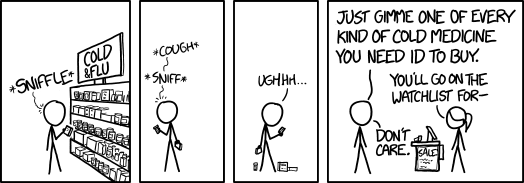
Seriously considering buying some illegal drugs to try to turn them back into cold medicine.
17 Dec 21:12

Yohan Kim: Michael Jackson – Bad (Piano Cover)

by Endswell
A.N

just made me smile-nothing special other than a kid being awesome

13-year-old Yohan Kim’s piano cover of Michael Jackson’s “Bad” goes from good to great.

Yohan Kim

17 Dec 17:51

Gravlax for the Holidays or For Other Times When Gravlax Is Called For

by BenBirdy1
Guys, I'm responding individually to comments on the give-away post. Please check that out, if you asked for something.
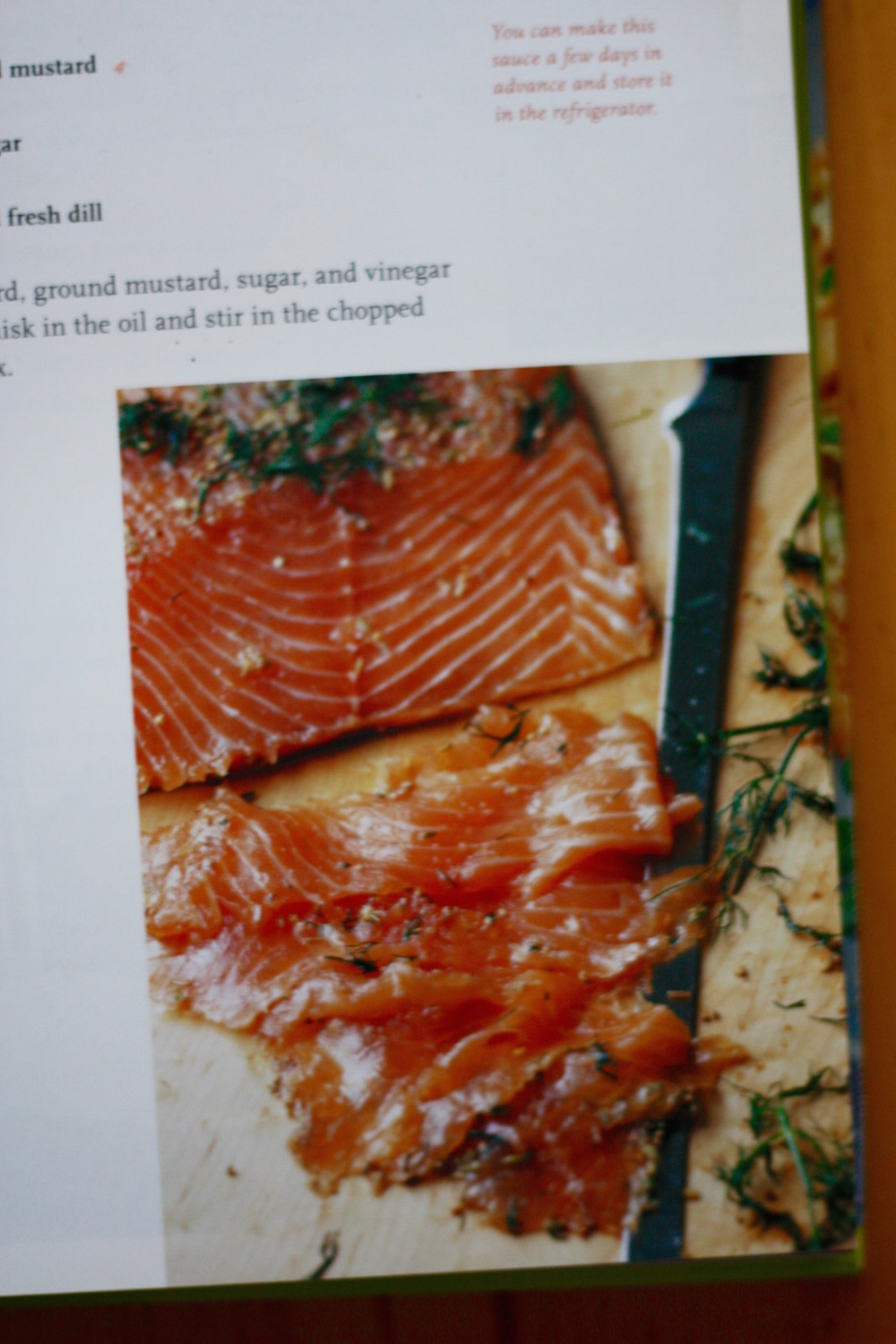
This is the photo from the Barefoot Contessa book. Because I never remember to take photos of holiday food. Because I am too excited, and too busy eating it and also drinking, to think of it. However, I did take photos of making the gravlax, which you will find below. (Note: it ends up looking just like this.) 
But here's this. Gravlax.

The ingredients are few.
Gravlax is a magic trick. After a day or so of happy contact with a simple salt-and-sugar curing mixture, raw salmon turns dense and silky, like the best smoked salmon you ever tasted, only not smoky. 
I crush the pepper in a mortar and pestle, but a heavy can works fine.
It takes well to seasonings, and in the recipe below, those seasonings include black pepper, dill, and lemon zest. You can be creative with this part, though. 

It will seem like a lot of salt and sugar, but most of it ends up in the liquid that comes out of the fish, which you will discard.
If you Google around, you’ll see lots of ideas about flavoring: grapefruit, aquavit, all kinds of spices. But if you’re new to curing salmon, try this very basic recipe first. You will not believe how easy it is—the salmon will be safely curing in the fridge five minutes after you unwrap it—and nobody will believe you made it, even if you’ve been making it every Christmas or whatever holiday for ten years. 


One year, right after I said to Michael, “Maybe I’ll skip the gravlax this year,” my mom called to ascertain, on my father’s behalf, that I was making the gravlax, and yes I was! Then again, I am the same person who found myself making latkes this year not a full ten minutes after saying, “I’m not making latkes this year.” Sigh. Happy everything, my loves.


Gravlax with Mustard Sauce
I follow the Barefoot Contessa’s basic recipe and method, but I use black pepper instead of white pepper, I omit the tablespoon of fennel seeds, and I add lemon zest (I have flavored it with crushed juniper berries instead of the lemon, which is also good). I use a little less sugar. I serve it very thinly sliced, in a big heap (although it usually gets eaten as quickly as I can slice it) with very thinly sliced cucumbers and (sometimes) fresh pumpernickel bread, which I make in skinny loaves following this ridiculously elaborate recipe from this book (Google “Artisan Bread caramel color” for the recipe for that maddening ingredient). That weird, damp brown pumpernickel cocktail bread would work fine, I bet, and another thing I’ve done is thinly slice pumpernickel bagels, not the usual way, but top to bottom into narrow, skinny slices. You could also serve the gravlax on a plate, with just a wedge of lemon, and skip the bread and mustard sauce. I’m sorry this is such a long and micromanaging headnote.


Gravlax

2 (1 1/2-pound) pieces center-cut very, very fresh salmon fillet
½ cup kosher salt

4 tablespoons sugar

2 tablespoons black peppercorns, crushed

1 large bunch of fresh dill, plus extra for the sauce 

The zest of one large lemon, shaved off in strips
Pumpernickel bread and thinly sliced cucumbers, for serving


Place one piece of salmon in a deep dish, skin side down. Combine the salt, sugar, and peppercorn in a small bowl and sprinkle half of it evenly over the salmon. Wash and shake dry the dill and arrange it over the fish. Top the dill with the lemon zest and sprinkle the remaining spice mixture over it. Place the other piece of salmon over the dill and spices, skin side up. Cover the dish with plastic wrap or aluminum foil. Place a smaller dish on top of the plastic wrap and weight it with heavy cans (I find this easiest if I first put a small baking sheet on top of the salmon; the salmon will lose a lot of bulk as the liquid is pulled out of it by the salt, so if it flattens below the rim of the dish it’s in, lose the baking sheet.

The Contessa’s next instructions are this: “Refrigerate the salmon for at least 2 to 3 days, turning it every 12 hours and basting it with the liquid that collects.” But, except for turning it roughly every 12 hours, that’s not what I do. I do the same thing every year: I make it mid-day on the 23rd, and on Christmas eve, we bring half of it to a friend’s house. I leave the other half in the fridge, with the dill and spices still, and we eat that one on Christmas day. But some of us think that the first night, when it’s only been curing for a day and a half, is when it’s best. Also, I don’t baste it.


To serve, lay the salmon fillets flat on a cutting board and scrape off most of the dill and spices. Slice with a long, thin, very sharp knife, at an angle across the grain. Arrange the slices in a heap on a platter, with the bread, cukes, and sauce, and let people help themselves.


Mustard Sauce

½ cup Dijon mustard

2 teaspoons dry ground mustard (I use Coleman’s)

6 tablespoons sugar

¼ cup white wine vinegar

2/3 cup neutral-tasting vegetable oil (she uses olive oil, but I think it’s too strong)

6 tablespoons chopped fresh dill (my mum swears that if you cut it with a knife instead of properly snipping it with scissors, it tastes bitter, and I am an obedient child)


Combine the mustard, ground mustard, sugar, and vinegar in a small bowl. Slowly whisk in the oil and stir in the chopped dill. Serve with the gravlax.

16 Dec 19:53

The Failure of the Phrase 'Work-Life Balance'

by Anne-Marie Slaughter
Eduardo Munoz / Reuters

How people think and talk about an issue matters. Every time people say “working mother” but don’t say “working father,” every time people talk about parental issues (or caregiving issues generally) as “women’s issues,”—together these small failures continually reinforce the assumption that it is up to women to raise children and care for elders, even though most people now accept that it is up to both women and men to earn a living. That assumption, in turn, enables male-female inequality to persist.

Another common idiom—that of “work-life balance”—does a disservice to women at the bottom of the income scale, implying that people have some control over this situation. The notion of “balance” summons an image of a see-saw or a scale, a stable equilibrium in which people have the right amounts of different things that they want. It is the ultimate expression of “having it all”—just enough of this and just enough of that.

The majority of American women who have caregiving obligations are persevering in the face of seemingly impossible conflicting pressures—how to get their jobs done and be at their children’s sports games and organize weekend activities and help with homework and take their mothers to the doctor and cook for or at least take dinner to a friend with cancer and and and. Or worse still, how to work two or three jobs to put food on the table and pay the rent and still have any time for children or parents at all?

Instead of balance, a better approach is to talk more simply and straightforwardly about making room for care, a concept I  explore in my new book Unfinished Business. Begin from the proposition that we cannot survive, as individuals or as a nation, without caring for one another. George Halvorson, former head of Kaiser Permanente, recently wrote: “The biggest single public health deficit and failure in America today is the fact that almost no parents of newborn children have been told or taught that they can improve their child's learning abilities significantly by exercising their baby's brain in the first three years of life.” Caring for children properly, and valuing the unpaid and paid work of those who undertake this vital job, will determine America’s future competitiveness, security, equality, and the wellbeing of its citizens. And at the other end of life, who are we if we do not care for those who cared for us?

Making room for care is dependent on one thing: valuing it, economically. Yet instead of valuing care as the indispensable work that it is, society as a whole free rides on the labor of family caregivers, who are not compensated for their work. Ann Crittenden, author of The Price of Motherhood, cites studies estimating a mother’s worth as somewhere between $100,000 and $500,000 a year, depending on whether the measure is the replacement value of each of the services she is expected to provide or what we could expect to have to pay one individual to provide a combination of those services. But none of those goods and services is ever counted in the U.S. GDP.

They could be. Plenty of economists have shown how. Bringing together much of this work, Riane Eisler is leading over 100 organizations in the Caring Economy Campaign, which has put together a set of Social Wealth Indicators specifically designed to track the value of caring for others and to measure where the U.S. stands on these measures versus other advanced industrial countries.

If society valued care, it would be accounted for in measurements of the economy and assessments of the country’s health and wealth. If society valued care, workplaces would adopt an entire set of new practices, from a right to request flexible work to the routine creation of work coverage plans for every worker, on the expectation that all workers must make room for caring for someone in their lives at some point in their lives. And if society valued care, the roles of teacher, lead parent, coach, nurse, therapist, or any other caring profession would have a degree of prestige and compensation that reflect the enormous importance of the work these people do.

“Balance” is a luxury, something only the very luckiest can ever attain. Equality—of the activities that are equally necessary for our survival and flourishing—is a better framework, as it demonstrates why care is something everybody needs to do and everybody needs access to. That’s not about balancing work and life. That’s about valuing all the activities that society needs for humans to flourish.


16 Dec 16:50

Clinical Genetics Has a Big Problem That's Affecting People's Lives

by Ed Yong
Cheryl Ravelo / Reuters

For Heidi Rehm, it looked like a straightforward case. Her lab at Partners Healthcare offers tests for genetic diseases. They had received a blood sample from a fetus after a doctor conducting an ultrasound spotted signs of Noonan syndrome—an inherited disorder involving heart problems and stunted growth. The fetus turned out to have a mutation in PTPN11, a gene that affects the risk of Noonan syndrome.

Rehm found that another team of scientists had published on that very same mutation before. (Not every mutation of PTPN11 increases the rick of Noonan syndrome.) They found that it was more common among Noonan patients than in healthy people, and had billed it as “pathogenic”—that is, likely to cause disease. Rehm reported it as such to the doctor who sent her the sample.

Sometime later, she was listening to a talk by a colleague who had found the same mutation in a patient with Noonan syndrome and, based on the same published study, had also classified it as pathogenic. But this time, the patient—an adult—had contacted the researchers behind the paper. And they had admitted that their conclusions were wrong. In later work, they had found that the mutation is so common in certain ethnic groups that it couldn’t possibly be responsible for a rare disease like Noonan syndrome. It wasn’t pathogenic after all.

“I immediately contacted the physician to find out the story with that baby,” Rehm says. “And that’s when I found out that the parents had terminated it.”

This story is unusual only in that Rehm is uncommonly open about it. Many geneticists have similar tales where mistakes in the scientific literature have led to wrong—and sometimes harmful—diagnoses.

In one study, Stephen Kingsmore at the National Center for Genome Resources in Santa Fe found that a quarter of mutations that have been linked to childhood genetic diseases are debatable. In some cases, the claims were based on papers that contained extremely weak evidence. In other cases, the claims were plain wrong: The mutations turned out to be common, like the one in Rehm’s anecdote, and couldn’t possibly cause rare diseases.

Daniel MacArthur at Massachusetts General Hospital found a similar trend in a study of over 60,000 people, the results of which have been uploaded to a pre-print server. On average, each of these volunteers is walking around with 53 gene variants that are classified as “pathogenic” in two widely-used databases. When the team took a closer look at 200 of these variants, they found enough evidence to classify just nine of them as pathogenic.

This is an absurd situation, especially given the stakes. Over the last decade, there’s been a lot of talk about reproducibility problems in science—about published results that turn out to be false alarms. In fields like psychology, neuroscience, and cell biology, these errors can send scientists down unproductive paths, waste time and money, and pollute headlines with misleading claims. “But I get much more exercised about reproducibility problems in clinical genetics, because those have massive and real-time consequences for thousands of families,” says MacArthur.

People get abortions on the basis of mutations that are linked to severe congenital diseases. They get mastectomies on the basis of mutations in breast-cancer genes. They get monitoring devices surgically implanted in their chests on the basis of mutations in heart-disease genes. “This is absolutely an issue, and it’s led to all sorts of problematic decision-making,” says Rehm.

How did things get so bad? Everyone I spoke to said that studies used to hew to lower standards. Even just a decade ago, scientists would classify a variant as pathogenic if they found it in a handful of patients with a disease but not in, say, 100 healthy peers. “That’s sooooo not sufficient evidence,” says Rehm. A study that small just won’t tell you how common the variant in question really is in the general population.

“I think none of us really appreciated just how many rare, nasty-looking genetic variants exist in everyone's genome,” admits MacArthur. That only became clear once geneticists acquired enough money, technological power, and collaborative will to do really big sequencing projects, like the 1,000 Genomes Project. Then, “it became abundantly clear that every single one of us is walking around with hundreds of genetic changes that look like they should cause disease, but actually don't. This means that every genome has ‘narrative potential’—material that you could use to tell a story about diseases.”

It didn’t help that many older studies focused on people of European ancestry. A particular variant might be rare in those populations, but very common in other ethnic groups. It couldn’t be responsible for rare diseases, but you’d never know if you only sequenced white people.

“Reproducibility problems in clinical genetics ... have massive and real-time consequences for thousands of families.”

These problems are understandable in a historical light, but they are still around today. Just last year, one paper linked to a severe recessive genetic disease to a variant that’s carried by 70 percent of the people in large genetics databases. “That’s just egregiously wrong,” says MacArthur. “There’s absolutely no excuse.”

It’s now very easy to cross-check any patient’s variants to see how common or rare they are. Just use the ExAc Consortium, a collection of comprehensive genetic data from over 90,000 people, from a wide range of ethnicities. Geneticists certainly are making use of it: It had 2.5 million page views in the last year alone. “It’s arguably one of the most useful resources for variant assessment that has ever existed,” says Rehm.

It’s also getting easier to do laboratory experiments that would actually confirm if a variant causes disease. As I reported last month, some scientists are developing ways of introducing every possible variant into a given gene, and working out exactly what they do. With precise gene-editing tools like CRISPR, these kinds of studies will become even easier.

Raising awareness of the problem is crucial, and not just among geneticists but among peer reviewers and journal editors. “Journals that focus on specific areas of medicine need to be particularly cautious,” says Sharon Plon from Baylor College of Medicine. “I am very likely to reject a genetics article if it’s in a journal that doesn't publish a lot of genetics.”

That would prevent future errors, but it won’t clean up the years of accumulated garbage in existing journals. Nothing much will—it’s hard enough to publish contradictory information, let alone correct or retract misleading information that’s already been published. “Even after you remove all the obvious errors from the databases, there’s still a long tail of wrongness,” says MacArthur.

Rehm says that the solution is for clinical geneticists to move away from published papers as their main source of information. “The primary literature is just what someone said at one portion in time,” she says. “I’d rather rely on well-curated databases.”

She is leading the development of ClinVar, an open database of genetic variants that Nature has billed as a “one-stop shop for disease genes.” It includes information from existing papers, but also from other databases and genetic-testing labs. And it provides a place for researchers to enter information about the variants they find, under strictest of standards. Increasingly, when geneticists see a new variant and want to learn more about it, they search ClinVar first.

Meanwhile, the team behind a related initiative called ClinGen is slowly going through important genes, such as those involved in cystic fibrosis and breast cancer, and reassessing each variant based on the latest databases. They have also implemented a rating system to show how strongly any particular variant has been linked to a particular disease. They’ve created a measure of trust for genetic results.

“Here’s what things will look like in ten years,” says MacArthur. “We find a variant in a baby born with a severe disease, and within seconds we can show that this variant has never been seen in 10 million healthy controls, but has been observed in 12 cases of the same disease. And just in case that’s not enough, we can look in another database for which a researcher has generated every possible variant in that gene and tested its effect, and shown that this specific variant has a catastrophic one. Boom: There’s no ambiguity here.”

“All we need to do to get there is convince researchers around the world to share their data, build the world's largest repository of genetic and clinical information, and develop functional tests for every gene in the human genome,” he adds. “Easy.”


15 Dec 16:11

Home Alone: Beloved Holiday Torture Porn

by Megan Garber
20th Century Fox

Here is an incomplete list of the physical traumas that befall the burglars Harry and Marv in Home Alone:

  • Harry grabs a white-hot doorknob, resulting in a red and blistering and probably-third-degree burn on his right palm
  • Harry gets shot in the groin with a BB gun
  • Marv gets shot in the forehead with a BB gun
  • Harry’s hat, hair, and head-flesh get singed with a blue-flamed blowtorch that’s been rigged to trigger when he opens a door  
  • Marv gets a hot iron to the face (the iron has fallen on him from the floor above)
  • Marv, his shoes having been forcibly removed by an attempt to climb stairs that have been coated in hot tar, impales his foot on a metal file folder prong
  • Marv, barefoot on account of the tar-stairs, cuts the soles of his feet on shattered Christmas ornaments
  • Harry slips on a set of iced stairs, flipping onto his back (twice)
  • Marv slips on a different set of icy stairs, landing on his back and sliding down the entire staircase
  • Marv gets a tarantula placed on his face
  • Both men slip on Micro Machines that have been scattered around the floor, flailing and landing on their backs
  • Both get hit in the face with full paint cans—with a force so hard, in Harry’s case, that it knocks out his gold tooth

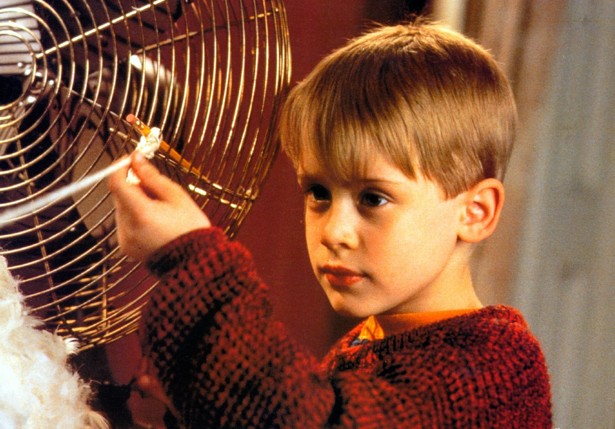
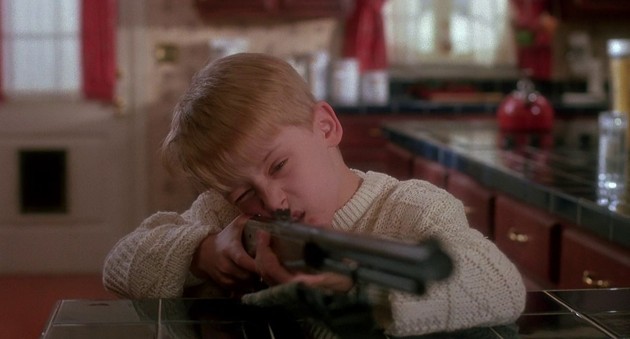
Home Alone, which was released in 1990 and has since become an It’s a Wonderful Life-caliber Christmas classic, is on the whole a heartwarming object lesson about the sanctity of the home, the value of family, and the power of forgiveness. (That scene at the end! When the old man hugs his granddaughter in the snow! As “Somewhere in My Memory” plays! I’m tearing up just thinking about it!) But here is the other thing—the awkward thing—about Home Alone: It is weirdly violent. Actually pretty sadistically violent. And the agent of all the mayhem is an adorable 8-year-old named Kevin McCallister. Who, yes, may have been forced, by wacky circumstance, to defend his house against two bumbling thieves—but who defends that house, again and again, in pretty much the cruelest, grossest ways possible. That foot, impaled. That scalp, burned. That face, tarantula-ed.


Related Story

How Home Alone Ruined John Hughes

Home Alone, overall, is a John Hughes movie that reads like a Tarantino: Its violence is artful, and theatrical, and extravagant, and unapologetic. It delights in the punishments it doles out to its villains by way of its pint-sized protagonist. Its plot points verge into full-on torture porn. Kevin carries his BB gun slung, over a single shoulder, like a rifle. He grins at the men he shoots with it. He taunts them. (“I’m down here, you big horse’s ass,” he yells at Harry. “Come get me before I call the police!”) His traps are designed not just to injure Harry and Marv, but to humiliate them.

One of those traps covers a scald-headed Harry (by way of a glue-covered piece of plastic wrap, a jury-rigged fan, and the contents of a down pillow rigged) in feathers. There is precisely no logistical point to this; it’s a tar-and-feathering joke meant only to add insult to injury. And when Kevin’s fun-house of horrors baits the burglars into venturing out on the zipline he’s strung from his attic to his treehouse, Kevin—rather than taking advantage of the thieves being caught in midair to get a head start in running away from them—decides instead to mock them again. “Hey, guys, check this out!” Kevin yells at them, flashing a taunting grin. He looks down dramatically at the pair of hedge-clippers he holds in his hand. Then he cuts the rope.

This kind of thing—Kevin taking sadistic delight in the traps he has set for his intruders—becomes a refrain throughout the movie. “Have you had enough?” he asks the burglars he has shot/stabbed/scalded, as yet another sly smile spreads across his face. “Or ya thirsty for more?”

20th Century Fox

All of this—the 8-year-old, fending off the criminals!—is meant, in the moral terrain of Home Alone, to be ironic and dramatic and hilarious and, all in all, justified. (The movie suggests that Kevin doesn’t do the obvious—call the police—because of some combination of his house’s phone lines being down and his not wanting outsiders to know that he is, in fact, home alone. The real reason, of course, is that a 911 call would negate the need for Home Alone to exist in the first place.) The film, throughout its proceedings, walks a tightrope that is approximately as thick as Kevin’s zipline: It’s a story whose plot revolves around shootings and stabbings and scaldings, but that presents itself as light-hearted comedy. A holiday romp! With probably-third-degree burns.

Home Alone walks that line—and downplays its own violence—in part through its upbeat music (“White Christmas,” “Run, Run, Rudolph,” “Jingle Bell Rock”) and its many chipper interludes (its iconic after-shave scene, Kevin’s Christmas Eve blessing of “this highly nutritious microwavable macaroni and cheese dinner and the people who sold it on sale”) and, in general, the precocious charisma of Macaulay Culkin. It also engages in some ends-justifying-the-means stuff by emphasizing Kevin’s status as an underdog. Home Alone is a classic story of David and Goliath, except here the power discrepancy comes down to “kid versus adult.” Everyone in the movie—parents, siblings, cousins, grocery store clerks—underestimates Kevin, not just on the grounds of his Kevin-ness (“you’re what the French call les incompé​tent”), but also on the grounds of his kid-ness. “He’s so little and helpless,” Kevin’s sister, Megan, reminds their brother, Buzz, when Buzz fails to see why they should cancel their Paris trip to retrieve him.

Everyone in the film underestimates Kevin, not just on the grounds of his particular Kevin-ness, but also on the grounds of his general kid-ness.

The thieves, too, fall victim to a kind of ageism, and to the assumptions of a culture that thinks extremely little of children and their abilities. Their “he’s just a kid” thinking forms another refrain in the movie. “We’re getting scammed by a kindie-gartener,” Harry tells Marv, when he realizes Kevin’s home-alone status. “He’s a kid,” Marv reminds Harry, later on in the proceedings, adding: “Kids are stupid.” Later, Marv will reemphasize the point: “He’s only a kid, Harry,” he reminds his partner, concluding, confidently: “We can take him.”

We get it, John Hughes, we get it. Kid power! The problem is, though, that being an underdog, morally, only gets you so far. Kevin’s decidedly un-avuncular Uncle Frank, early in Home Alone, yells at his young nephew, “Look what you did, you little jerk!” This outburst is the trigger for pretty much everything that follows in the movie. And yet, at a certain point (that point probably being the Marv’s-foot-impaled-by-a-MacGyvered-nail scene), Uncle Frank’s admonishment starts to seem downright prophetic—and downright generous. As Grantland’s Jason Concepcion put it last year, tongue only slightly in cheek: “I can say with certainty that Home Alone is in actuality the origin story of Jigsaw, né John Kramer (obviously an alias), the infamous serial killer and mentor to serial killers from the Saw movie series.” This was on the grounds that “throughout Home Alone and Home Alone 2: Lost in New York, Kevin displays anger-control issues, a proclivity for violent fantasies, and voyeuristic tendencies, combined with a fetish for recorded video.”

Yes. And! Kevin’s sadism, it’s worth noting, isn’t limited to Home Alone’s criminals. Remember when Kevin orders himself a pizza (“a lovely cheese pizza, just for me”) from Little Nero’s? The delivery guy comes. Kevin blares Angels With Filthy Souls—the part with the line “now leave it on the doorstep, and get the hell out of here”—so the delivery guy can hear it. Kevin could easily leave it at that: a transaction with an outsider that doesn’t reveal his status as, you know, home alone. He also could leave things at the line “keep the change, ya filthy animal.” But he doesn’t. Instead, he escalates. He continues playing the tape—the part with the threat that the speaker will “pump your guts full of lead.” Shots ring out. The delivery guy runs. The delivery guy thinks he might actually get shot by a machine gun.

Kevin, at all this, grins. Again. Ugh.

This is all quite a turn for a movie that is nominally about the magic of Christmas and the inconveniences of international air travel.

Home Alone does not question any of this. Home Alone, instead, simply delights in all the things its chronically underestimated kid is able to accomplish once he decides that “I’m the man of the house.” The irony of the whole thing, though, is that, if Kevin is ever in any danger at all, it’s danger he has brought on himself—by way of his own jerkiness. Harry and Marv, after all, are non-violent criminals, interested in nothing but TVs and stereos and jewelry. Once subjected to Kevin’s house of horrors, however, they undergo a kind of moral conversion: They transform from petty thieves into violent ones, from would-be robbers into (maybe even?) would-be murderers. Kevin’s sadism begets their sadism. Until: “I’m gonna rip his head off!” Harry, burned and shot and covered in feathers and glue, announces. “I’m gonna kill that kid!” a battered Marv declares. Later, Harry yells at Kevin, “You pound me with one more can, kid, and I’ll snap off your cajones and boil them in motor oil!”

Things escalate to the extent that, when criminals and kid finally meet each other, the robbers thinking they have the upper hand, Harry announces the punishment he intends to dole out to his 8-year-old abuser:

Marv: “What are we gonna do to him?”

Harry: “Do exactly what he did to us. We're gonna burn his head with a blowtorch.”

Marv: “Smash his face with an iron!”

Harry: “Slap him right in the face with a paint can, maybe.”

Marv: “Drive a nail right through his foot.”

This is extreme. It is also, of course, just as Harry says, everything Kevin has done to them. The sadism here is cyclical: It escalates, unnecessarily. And then, finally: “The first thing I’m gonna do,” Harry informs Kevin, having cornered him and hung him by his sweater on a hook in a doorway, “is bite off every one of these fingers, one at a time.”

Which is, uh, quite a turn for a movie that is nominally about the magic of Christmas and the inconveniences of international air travel. And yet, coming as it does off of the tortures Kevin his inflicted on his intruders in the name of underdoggery and stand-your-ground morality, it makes perfect sense. It’s fitting that Kevin spends so much of Home Alone obsessed with his house’s basement, a place of furnaces and shadows and things best kept hidden from public view: The movie has its own dark underbelly. Home Alone, festive and twinkly and brightly lit and enduring beloved, never bothers to treat its central accusation as a central question: Look what you did, you little jerk.


15 Dec 15:54

A Surprising New Use for Drones: Obscuring Nudity

by Robinson Meyer

Quadcopters hovered back into the news on Monday, as the Federal Aviation Administration announced that most civilian-owned drones would need to be registered with the U.S. government by the middle of February 2016.  

In Japan, quadcopters hovered into the news this weekend too—but for a very different reason.

The retailer BUYMA released a TV ad in that country that, well, wouldn’t have made it to air if there weren’t drones.

Buyma

The ad, titled “A Kind Drone,” features two nude dancers who leap and pirouette. The ballerinas are censored—and thus permitted to air on Japanese television—only because of the crafty work of several quad-copters, which whirr and whoosh into perfectly pixelating positions.

Spoon Tamago notes that the ad ends a year where drones have played an outsize role in Japan’s culture: “Memorable incidents include a drone landing on the roof of the Prime Minister’s residence, drone deregulation that would allow companies like Amazon to fly packages to customers, and anti-drone police drones.”

Buyma’s ad—which only aired on TV once, so the company is no doubt loving all the viral attention—is below.

(Hat tip: Spoon Tamago)


15 Dec 14:29

Stylish Dog Apparel from Long Dog Clothing

by Capree Kimball

Stylish Dog Apparel from Long Dog Clothing

Attention dogs with endearingly long bodies: there’s finally an apparel company for you! Aptly named, Long Dog Clothing creates high-quality clothing for dogs who need a little extra in the length department. Traditional doggy clothing can cinch armpits, run comically short and, more often than not, fail to accommodate a long dog’s deep chest. Fortunately, LDC is here to offer stylish options to these uniquely shaped pups in the form of reversible tees and tanks all handmade in the USA.

Stylish Dog Apparel from Long Dog Clothing

Stylish Dog Apparel from Long Dog Clothing

Check out longdogclothing.com to learn more and shop available styles.


Share This: Twitter | Facebook | Don't forget that you can follow Dog Milk on Twitter and Facebook.
© 2015 Dog Milk | Posted by capree in Clothing | Permalink | No comments
14 Dec 20:39

This Is Why You Don’t Sell the One Copy of Your Album for $2 Million

by Spencer Kornhaber
John Shearer / AP

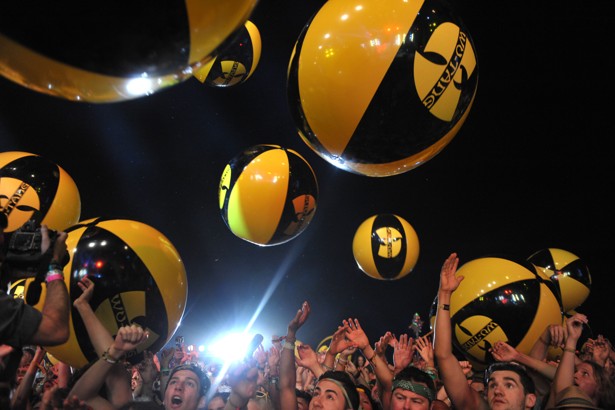
The news that Wu-Tang Clan had recorded an album of which there would only be one copy, sold for millions of dollars at auction, with the stipulation that it couldn’t be resold, has inspired debate for more than a year. Some people, like RZA, have argued that the plan is a radical statement on behalf of the value of music and the album format. Others have argued that it’s an insult to fans, a capitulation to traditional ideas about exclusivity and power that rap once railed against, and a demonstration of how capitalism can hurt art.

The debate is now settled. Wu-Tang has made a horrible mistake.

Once Upon a Time in Shaolin​ has been sold to Martin Shkreli, the 32-year-old pharmaceutical executive who triggered outrage worldwide earlier this year when his company increased the price of a drug used to treat some AIDS sufferers by 5000 percent—from $13.50 to $750 a tablet. He recently said he wished he’d raised it more. He appears to have bought this album in hopes of scoring dates, and for now, he does not seem interested in letting the public hear it.

The Bloomberg Businessweek article that broke the news of Shkreli’s winning bidquotes him as saying he has not yet listened to the album, even though the deal—for a rumored $2 million—closed months ago. He did delegate to an employee the task of confirming that all the songs were there. So why buy it? He said he made his final decision once the auction-house representative told him that doing so would give him “the opportunity to rub shoulders with celebrities and rappers who would want to hear it.”

Remedying loneliness with property is an ongoing part of his narrative. When the public anger toward “Pharma Bro” erupted in September, a certain amount of attention went to his dating profiles; our James Hamblin offered a close reading of his OK Cupid page, where Shkreli listed his income at more than a million dollars. The Bloomberg story mentions that on Twitter, he’d joked about buying Katy Perry’s guitar to get a date with her. And it quotes him as saying he could be convinced to listen to Shaolin “if Taylor Swift wants to hear it or something like that.” Barring that, he’s saving it “for a rainy day.”

Maybe he’s just trolling. After the news broke he’d bought the album, he tweeted out a YouTube link: “Live streaming. Talking music, drugs and stuff. May play something special.” In the time I’ve been tuning in, he’s just played emo metal on Spotify while looking into the camera with an expression that could be used to illustrate the word “smug.” Some of the commenters appear to be Wu-Tang fans, begging him to leak Once Upon a Time in Shaolin or at least play a song. “Album is in a vault,” he replied. “I probably won't listen to it for years.” On Twitter, he also wrote, “If there is a curious gap in your favorite artist’s discography, well, now you know why.”

Breaking: On the livestream, he’s started a list of bands he’d hire to make “a record that I would pay the artist to release that would be just for me.”

YouTube

It doesn’t seem that this was the ideal outcome, at least from Wu-Tang Clan’s perspective. “The sale of Once Upon a Time in Shaolin was agreed upon in May, well before Martin Skhreli’s [sic] business practices came to light,” RZA emailed to Businessweek. “We decided to give a significant portion of the proceeds to charity.”


14 Dec 16:57

Shopify - When you choose “Canada” as your location, the “About”...


Shopify - When you choose “Canada” as your location, the “About” page is replaced with an “Aboot” page.

11 Dec 18:53

How to Stop a Bird-Murdering Cat

by Conor Gearin
Adrees Latif / Reuters

Here’s an alarming but little-known figure—stray cats and pet cats allowed outdoors kill 3.6 million birds every day on average in the United States, for a total of at least 1.3 billion birds per year. That’s most likely a sizable chunk out of the U.S. land-bird population, which the Smithsonian Migratory Bird Center estimates is around 10-20 billion. While habitat loss and climate change pose long-term dangers to birds in this country, recent research shows that outdoor cats currently kill more of them than any other threat caused by humans.

It’s not just a problem in the U.S. A 2011 study found that domestic cats have directly contributed to extinctions of 22 bird species on islands around the world, and threatened dozens more. Researchers in the United Kingdom estimated that 55 million birds fall prey to domestic cats there each year; in Australia, threats to endangered species led government officials to announce plans for euthanizing 2 million feral cats.

Cat predation of wildlife, in other words, is a worldwide issue. But here’s something else that stretches across borders: People love cats.  In the U.S., there are about 84 million pet cats, and around 46 million of them are allowed to roam outside. An estimated 30-80 million more live as strays. That’s a lot of cats, and many spend their days doing what they’ve done since the first cats were domesticated more than 9,000 years ago: hunting small animals. Humans originally used domesticated cats as efficient predators, protecting stores of food from vermin. But there’s little need for working cats anymore; these days, most people just think of them as gentle companions and Internet memes. But their instincts haven’t caught up to our evolving needs—cats are still highly effective stealth hunters. And our having them around in such numbers means trouble for birds.

Some cat owners aren’t aware of the problem; some are, but feel that the companionship they receive from their pet outweighs their small contribution to a broader issue. But some cat lovers are also bird lovers. Two of them, a birdwatcher named Nancy Brennan and a bird biologist named Susan Willson, have developed what they believe is a solution.

Brennan, 57, spent much of her career in conservation and environmental planning. She  grew up in rural New England, where cats lived indoors and outdoors; she and her husband, who live in the Vermont woodlands near Green Mountain National Forest, took the same approach with their cat George. But hunting opportunities near their home are abundant, and for months after they moved in Brennan became increasingly frustrated as George dragged bird after bird into the house.

That’s a lot of cats, and many spend their days doing what cats have done since they were first domesticated: hunting small animals.

The breaking point, Brennan recalls, happened on the first spring-like day of 2008, when she heard “a ruckus” coming from just outside the house. It was George, struggling to pull a ruffed grouse, a gamebird the size of a small chicken, through the cat door. That morning, she vowed to either find a way to stop George’s hunting habits or bring him to the Humane Society.

Brennan already knew George couldn’t become an indoor cat, but her past attempts to keep him away from birds had failed. She had tried tying extra bells on his collar, but it seemed the cat moved too stealthily for the bells to have any sort of warning effect on his prey.

Then she recalled something she’d read about birds—they have excellent color vision. Birds have four color pigments in their eyes, compared to three in primates and just two in other mammals. While this adaptation helps birds find food and choose brightly colored mates, Brennan realized she might be able to put it to another use. She took up her sewing tools and gathered some multi-patterned fabric, piecing together something that resembled a ruffled Elizabethan collar with a bright color scheme. She fastened it as a cover over George’s usual collar and let him outside.

Sure enough, George returned home later that day without any birds—and none the next few days, either. As spring and summer passed without a single bird, she began to believe that she might be on to something that could work for other cat owners, too. She began tinkering with the prototype and created a website to sell the collar, which she named Birdbesafe. Over the next few years, she used customer feedback to zero in on which colors and patterns worked best.

The collars began to sell steadily, but they still remained scientifically unproven until 2013, when Willson, who studies tropical birds at St. Lawrence University stumbled upon the Birdbesafe website while looking for a way to rein in the hunting habits of her cat Gorilla. Soon after she brought him home, Gorilla began presenting Willson with dead birds, generally about two each week—a behavioral remnant, she believes, of his time as a stray, when he survived by catching and eating birds. “I’m a bird biologist. That was not a good thing, that was horrifying,” she said. Intrigued by the anecdotal evidence on the Birdbesafe site, she ordered a collar cover. Gorilla was beaten at last—he still caught voles, but he stopped bringing home birds altogether.

Intrigued by the collar’s success, Willson contacted Brennan and explained her idea for an experiment. She enlisted a group of cat owners near her home in Canton, New York, all of whom were dealing with bird-hunting pets of their own. She divided the cats into two groups, one that wore collars and one that didn’t; every two weeks, the Birdbesafe group and the control group switched places. Over the course of that fall, the cats brought home 3.4 times fewer birds while wearing Birdbesafe collars. The following spring, the collar covers made an even bigger difference—the cats killed 19 times as many birds while in the control group than while wearing Birdsbesafe.

“It was spectacular,” Willson said. She speculates that the difference was larger in the spring because birds are distracted from watching for predators at that time of the year, when high levels of hormones like testosterone cause them to focus on breeding behavior. The collar cover gave birds extra warning during the season when they’re least watchful.

Willson’s study was published earlier this year in the journal Global Ecology and Conservation. A few weeks after it came out, Australian researchers published a similar study in the journal Applied Animal Behaviour. This second paper found that Birdbesafe wasn’t just effective for birds—compared to control animals, cats wearing the collar killed 47 percent fewer animals with good color vision, a group that also includes reptiles.

For now, Birdsbesafe is available in scattered pet stores and bird-supply shops in 16 U.S. states and four other countries. Brennan says that since the scientific papers came out, sales have been greater than in all past years combined.

But some animal experts remain skeptical that the collar can be a large-scale solution to the problem of cat predation. “There’s some value to it,” said John Carroll, a biologist at the University of Nebraska who has studied the issue, “but it doesn’t get to the root of the problem” of the environmental damage caused by free-range cats. This goes beyond simply killing things—by competing with native predators for food, carrying diseases to other species, causing stress in birds and other prey animals, and mating with native wildcats, domestic cats can cause wide-ranging harm in fragile ecosystems. The Australian researchers that tested Birdsbesafe also concluded that while it helped save birds, it was not appropriate for protecting endangered mammals, which rely on smell and don’t pick out bright colors.

Brennan said she doesn’t see her collars as a pass for pet owners to let their animals live largely outdoors. Instead, she sees Birdsbesafe as an answer for people with cats that are unmanageable indoors. “This is another solution so we can keep chipping away at that problem,” she said.

Willson believes that Birdsbesafe collars could be used in feral-cat colonies as well. Feral cats kill more birds than owned cats do, she said, and their numbers are huge. Currently, Willson is preparing to test Birdsbesafe in France and at a handful of other sites around the world. New Zealand biologists just announced plans to test the collar covers as well.

In the meantime, on a much smaller scale, the collar has managed to solve at least one problem: Brennan’s cat “started sleeping in” instead of stalking wildlife.

“Some of them just retire,” Brennan said. “He had never missed a dawn hunting until he had been wearing my contraption for about a year. He was just like, ‘Oh, forget it.’”


10 Dec 23:53

'Affirmative Action Seemed to Tarnish My Achievements'

by Chris Bodenner

The most compelling email I’ve seen in our discussion so far:

I am a black student who went to an Ivy League School for undergrad and now applying to graduate school. I am very split about affirmative action. On one hand, I hate it. I am never recognized for any of my accomplishments, never given the respect I feel is due because of affirmative action. When I got into my Ivy League undergrad (and unlike Abigail Fisher, I was actually in the top 10 percent of my class when I was applying to college). I took the second hardest course load in my school, had a 2250 SAT, and pretty much knocked the Verbal section out of the park by getting a cool 800.

But the same classmates I went to school with, spoke to, and beat in competitions grumbled behind my back: “It was affirmative action.” That cut me deeply in a way that I have never forgiven them.

I do believe that even without affirmative action, I, and many other smart black students, would have had a good chance of getting into a top school. Instead, affirmative action seemed to tarnish my achievements like a black mark. More than that, some students I went to school with underperformed because they “had AA” or were told to rely on “AA.” So I’d like to see AA go.

On the same hand, I do not want to see AA go. Why? Because our college system is not fair. At my Ivy, I met some very dumb people who were legacy admits (why should you go to school because your father or mother went there?), development admits (mom and dad gave the school money), prep students who play obscure sports (polo, squash, sailing, horseback riding, etc.) and mediocre sons of professors, famous people, or CEOs.

Yet there is no outcry over that. No one cries over precious school spots going to Bobby Goldberg from Andover who plays squash for Yale. But a black girl whose race was the tipping factor? Cue the cries of unfairness.

Email hello@theatlantic.com to join the discussion


07 Dec 13:23

Colds

The contagious period ends right around when you start to sound sick over the phone, which is probably evidence of cold viruses evolving to spread optimally in the workplace.
07 Dec 11:08

Obama the Analyst

by James Fallows
Pool Photographer / Reuters

Sunday evening’s speech about terrorism distilled what people like, and don’t, about President Obama’s leadership style. I liked the logic he laid out and the realities he tried to convey. But I understand that the aspects I found most impressive will seem the gravest weaknesses to some other people.

From my point of view, the crucial fact about the speech is that Obama understands how terrorism works, and how its effects can best be minimized and blunted.

Note “minimize,” rather than eliminate. There are evils and forms of damage that societies can reduce, without imagining that they can be brought to zero. In the 50 years since Unsafe at Any Speed and the 35 years since the debut of MADD, traffic death rates have gone way down. But still nearly 100 Americans die each day in crashes. In the 50+ years since the Surgeon General’s report, smoking rates have gone way down. But every day, nearly 500 Americans die of lung cancer. Similar societies work to drive down the rates of murder, domestic violence, and other evils, knowing they can’t fully eliminate them.

The same is true of terrorism. No society, not even a fully totalitarian state, can guarantee that all its members will always be safe against a renegade bomber, shooter, knifer, etc. Protection and resilience, yes. Perfect safety, no. In any society, some terrorist attacks will succeed, and people and leaders need to steel themselves to that fact, and decide in advance how they will react to inevitable failures and outrages , so as to avoid vastly magnifying the terrorists’ effects.

* * *

This distinction matters because of the fundamental logic of terrorism. The damage attackers do is never through the initial attack itself. That is true even for attacks as gravely damaging as those on 9/11, or as brutally inhuman as the most recent ones in Paris or San Bernardino. The attacks themselves, even the most grievous, are the feint.

The gravest damage always comes from the response they evoke, from what the target society does to itself  when attacked. The United States lost thousands of its own (and other countries’) people, and hundreds of billions of dollars, on 9/11. It lost incomparably more—in lives, treasure, values and integrity, long-term strategic harm—through the self-inflicted damage of deciding to invade Iraq. Thus the goal of an attack is only incidentally to kill. Its real ambition is to terrorize—to provoke, to disorient, to tempt a society or government to lose sight of its long-term values and interests. (The most famous example is the way the assassination of two people, in Sarajevo, ended up triggering a war in which great empires came to their end and tens of millions of people died.)

Archduke Franz Ferdinand and his wife Sophie just before the assassination in Sarajevo that eventually led to World War I. (Wikipedia)

You can read the full-length version of this argument in a cover story I did nearly 10 years ago. It’s a logic that is fully accepted, even obvious, within the anti-terrorist world. And the logic is embedded in what Obama said just now. For instance (emphasis added):

We should not be drawn once more into a long and costly ground war in Iraq or Syria. That's what groups like ISIL want. They know they can't defeat us on the battlefield. ISIL fighters were part of the insurgency that we faced in Iraq, but they also know that if we occupy foreign lands, they can maintain insurgencies for years, killing thousands of our troops and draining our resources, and using our presence to draw new recruits.

In other words, the United States does its best to prevent these horrible attacks. But if it fails, as sooner or later any society will, it should be brave and sane enough not to compound the problem by going crazy.

* * *

Obama’s lucidity about confronting an evil, and working strategically against it without taking its bait, is something I greatly respect in him. But this same bloodless-seeming logic is the trait that led to the post-speech complaints about his coldness, his dispassion, his inability to offer something new. If you like him, you see his self-possession as a sign of temperamental maturity. If you don’t, you see one more sign of his “weakness” and “failure.” I don’t know whether Obama might sound different if he had to run again. I’m guessing not; this is his nature. (Update: See Matt Yglesias on a similar theme. Also see this informative Tweet-stream by Rukmini Callimachi of The New York Times, and this assessment by Fred Kaplan of Slate. I had not seen any of these when writing my item and am glad to see that we’re making complementary points. Michael Tomasky also makes good points about the different audiences the president was addressing, and about the importance of his challenge to Muslim Americans to speak up more actively on the anti-ISIS front.)

I recognize that, for all of Obama’s rhetorical gifts in certain situations (for instance, his “Amazing Grace” speech after the Charleston massacre), he may not be the ideal messenger for this message of strength-through-reserve. Some hypothesized other leader—maybe FDR? maybe Lincoln?—might be able to sound fierce and passionate and resolute—“strong,” in the language of the cable-TV commentators—even while presenting policies as disciplined as Obama’s. To put it another way, Obama’s real message boils down to: Our plan isn’t very good, but it’s the least-damaging one available. He presented that as a grim, logical reality. Maybe someone else could make it sound uplifting. Maybe.

But if I have to choose between a leader who follows the sane course, though sounding grim about it, and a leader who sounds peppier while rolling the dice on policy, I’ll take the first. That was the man we heard tonight. Since politics and leadership are only partly about logic, others will choose otherwise.

* * *

Two extra points.

Congressional accountability. President Obama made the following point almost in passing, but it is of fundamental importance:

Finally, if Congress believes, as I do, that we are at war with ISIL, it should go ahead and vote to authorize the continued use of military force against these terrorists. For over a year, I have ordered our military to take thousands of air strikes against ISIL targets. I think it's time for Congress to vote to demonstrate that the American people are united and committed to this fight.

As a matter of small-r republican virtues, the United States now has the worst of all worlds: members of Congress either calling for, or warning against, military actions, without putting themselves on the line with a vote. There is no way to force Congress to face an issue it wants to avoid. But at least reporters could press the main presidential candidates to say how they would vote (and ask the Senators why they’re not advocating one).

Stagecraft: The podium-in-front-of-a-desk staging for the speech was flat-out bizarre. Mercifully, the camera’s framing soon closed in to make it look as if it were an ordinary podium speech. But in the initial wide shot, and in photos like the one at the top of this post, you had two visually familiar elements—the Oval Office itself with its iconic Resolute desk, and the presidential-seal lectern—combined into a weird centaur- or turducken-style hybrid.

I can understand the president’s preference to speak while standing rather than seated, and also his desire to speak from the Oval Office. But this was a compromise solution that I am confident we will never see duplicated. This doesn't “matter” in any substantive sense, but it was a noticeable enough departure from past practice to bear mentioning.


05 Dec 04:39

The Bleak Future of College Football

by Michael Baumann
USA Today Sports / Reuters

Football can be a force for good. The University of Missouri’s football team proved it earlier this month when student athletes took a facet of campus life that’s often decried—the cultural and economic dominance of college football—and turned it into a powerful leverage point in the pursuit of social justice. Football can build a sense of community for players and fans alike, and serve as a welcome escape from the pressures of ordinary life. The sport cuts across distinctions of race, class, geography, and religion in a way few other U.S. institutions do, and everyone who participates reaps the benefits.

But not everyone—particularly at the amateur level—takes on an equal share of the risk. College football in particular seems headed toward a future in which it’s consumed by people born into privilege while the sport consumes people born without it. In a 2010 piece in The Awl, Cord Jefferson wrote, “Where some see the Super Bowl, I see young black men risking their bodies, minds, and futures for the joy and wealth of old white men.” This vision sounds dystopian but is quickly becoming an undeniable reality, given new statistics about how education affects awareness about brain-injury risk, as well as the racial makeup of Division I rosters and coaching staffs. The future of college football indeed looks a lot like what Jefferson called “glorified servitude,” and even as information comes to light about the dangers and injustices of football, nothing is currently being done to steer the sport away from that path.

The football-consuming public has only recently started to grapple with the magnitude of the dangers inherent in playing football—traumatic brain injury and painkiller addiction chief among them—and to understand that you don’t need to play 10 years in the NFL to suffer permanent physical, psychological, or neurological damage. Though football’s dangers compound over time, they manifest right away, even at the lowest levels. Therefore, as more information comes out, more and more parents are hesitating to let their sons play organized football. An NBC/Wall Street Journal poll from January found that 37 percent of respondents would prefer that their children play any other sport, which seems understandable—what parent wouldn’t protect his or her children from unnecessary risk?

Unfortunately, the degree to which children are protected from the risks of playing football is very much related to the level of privilege—racial, economic, and social—the child experiences while growing up. That same NBC/Wall Street Journal poll found that while 50 percent of respondents with postgraduate degrees would prefer their children not play football, only 31 percent of people with a high-school education or less would say the same.

There’s a good reason for that disparity—better-educated and wealthier people have more access to information about football’s concussion crisis. A 2013 poll conducted by HBO and Marist found that 63 percent of college graduates and 66 percent of people making more than $50,000 per year said they’d heard “a good amount” about football causing concussions, compared to 47 percent of those who made less than $50,000 per year and half of those without a college degree.

In other words, children are being put in danger not because of their own carelessness, or a difference in parenting style, or even because poorer, less privileged kids have fewer ways to climb the class ladder. It’s because many of their parents—especially those who earn less or who haven’t attained as much education—aren’t getting the information they need to make the best decisions for their families.

College football players participate in America’s longest and most brutal unpaid internship.

Of course, any discussion of privilege in the power dynamics of football has to contend with racial privilege as well. In college football, where coaches and administrators are paid six- or seven-figure salaries while players are paid nothing, who has the power? Who bears the risk? A handy tool from the NCAA called the Sport Sponsorship, Participation, and Demographics Search offers some illuminating data. In the 1999-2000 school year, 51.3 percent of Division I football players were white, and 39.5 percent were black. By 2007-2008, those numbers had evened out (46.6 percent white, 46.4 percent black), and in 2014-15, 40.2 percent of DI football players are white, and 47.1 percent are black.

Compare that to the university employees who profit most directly from football: coaches and administrators. In 2014-15, 81.6 percent of Division I athletic directors were white—87.4 percent if you don’t count HBCUs. The numbers skew even farther if you include all three divisions. The NCAA reports 1,081 member schools that aren’t HBCUs, and among those a little over 90 percent have a white athletic director. The numbers are about the same for coaches: 82.8 percent of Division I head coaches and 81.5 percent of coordinators are white, while 15.2 percent of head coaches and 15.6 percent of coordinators are black.

While the head coach and coordinator numbers more or less represent the population of the U.S. as a whole, there are two bits of context worth noting. First, the population of college-football participants gets whiter the farther up the chain of power you go: from players, to graduate assistants and position coaches, to coordinators and head coaches, to administrators. Second, the racial dynamics of the head-coaching ranks don’t come close to matching the makeup of the body of players from which coaches are almost universally drawn.

In short: In the world of college football, the more privileged a person’s background, the more power he (sometimes she, but usually he) has, and the less risk he assumes. And if those survey numbers about parents holding their kids out of football wind up reflecting the future, that imbalance is not only going to increase, but it’s going to be reflected significantly along class lines as well as racial lines.

Not that any of this comes as a particular shock. But unless something changes, college football is going to reach a point where the distribution of risk and profit in college football is so grotesquely unfair, and the ethical ramifications (ideally) or the optics (probably) of unpaid poor and/or black men destroying themselves for the profit and amusement of white men will make the sport, as it exists now, unsustainable.

So what, if anything, can be done?

There’s a growing belief that football is so dangerous it’s unethical to contribute to its hegemony in American culture by consuming it, publicizing it, or contributing to it financially. Every minute passed discussing the sport adds to its cultural importance; every dollar spent on tickets or apparel feeds the machine that turns healthy boys into broken men, and along the way produces toxic levels of sexism, militarism, retrograde masculinity, and corporate greed. The only way to stop the dangerous chokehold football has on American culture, then, is to deprive it of the attention and money that make it work.

But while the urge to boycott is understandable, it’s so far been ineffective as a tactic for enacting change. The most direct impact of football’s brain-injury crisis has been the proliferation of thinkpieces calling for concerned consumers to boycott the NFL, a movement that’s gained steam as the league bungled domestic-abuse investigations against Ray Rice and Greg Hardy. But the league posted $7.2 billion in revenue in 2014—more than double what it pulled in in 2010. Last May, Keith Olbermann called for viewers to boycott the NFL draft and the Pacquiao-Mayweather fight, in response to inaction by the governing bodies of both football and boxing to confront their athletes’ high-profile predilection for intimate-partner violence. The draft’s ratings dropped significantly from 2014 (though it’s unclear how much of that is due to the influence of Olbermann and others like him), but it was still the third-highest-rated draft ever. The Pacquiao-Mayweather fight took in $400 million from 4.4 million pay-per-view buys in the U.S. alone. If a boycott of football could bring about real change, it hasn’t happened yet.

Football is supposed to build a sense of community, and true communities look out for everyone’s kids.

It’s possible that football is such big business it almost can’t be starved, even as universities spend self-destructively in pursuit of on-field success. So until and unless such a mass defection can be organized, the best avenue for reform runs through the existing fan and media structure, not by opting out. A football community only composed of people unconcerned about player safety and workers’ rights would never pursue reform on its own. But by remaining part of the conversation and within the community, empathetic fans and media members can exert pressure on the power structure to diversify its own ranks and ensure better treatment for players.

The NFL has made small steps toward improving player safety and minority hiring, but concussion protocols and the Rooney Rule, which mandates that NFL teams interview minority candidates for head coaching jobs, didn’t come about under threat of boycott. They were the result of an internal push from players, fans, and media who remained involved with the game. The next step is to pursue some evolution in the rules or technological breakthrough that could reduce the risk of playing tackle football. If that’s not feasible, then it’s worth fighting to ensure that players are compensated according to the risk they’re undertaking.

Refusing to participate in college football—or to let your kids participate—because you're horrified by its nature won't compel the people with power over how the game operates to make it safer, or its economic structure less exploitative. Ignoring a problem doesn’t make it go away, and it doesn’t cease to be a problem just because it doesn’t affect your kids anymore. Seven high-schoolers have died playing football this year, and tens of thousands of college players have performed for millions of fans, for free and at great personal risk. Football is supposed to build a sense of community, and true communities look out for everyone’s kids—not out of self-interest, but because it’s the right thing to do.


04 Dec 11:50

Artistic Books for Kids

by Maggeh

My friend Laura has a son a little younger than Hank and a gift for choosing children’s books with sweet messages and lovely illustrations. So with this new baby in the mix, I asked for her list of books for our home library. Every one I’ve bought has been amazing, so I asked her to share her list with you here. Thanks, Laura!

I’ve been meaning to put this list together for way too long. Here is the abridged version. I left out the more obvious choices – like Richard Scarry, Dr. Seuss, and all the mythology/fairy tale books. Those are all necessary and lovely, but those just show up.

I think I have a kid’s book addiction, I love them so much.

Must
Pemba Sherpa by Olga Cossi, Gary Bernard
Shadow by Suzy Lee
Who Will Comfort Toffle?: A Tale of Moomin Valley by Tove Jansson
In the Night Kitchen (Caldecott Collection) by Maurice Sendak
Flotsam (Caldecott Medal Book) by David Wiesner
The Country Bunny and the Little Gold Shoes by Dubose Heyward
In the Town All Year ‘Round by Rotraut Susanne Berner
A Giraffe and a Half by Shel Silverstein
The Story of Ferdinand by Munro Leaf

Littles
Little Pea, Little Hoot, Little Oink by Amy Krouse Rosenthal
My Friends by Taro Gomi
Gossie by Olivier Dunrea
Alphablock by Christopher Franceschelli
Hippopposites by Janik Coat
Wave by Suzy Lee
Giraffes Can’t Dance by Giles Andreae and Guy Parker-Rees

Toddler
Adèle & Simon by Barbara McClintock
A Book of Sleep by Il Sung Na (Author)
Otis by Loren Long (Author, Illustrator)
You Are Stardust by Elin Kelsey (Author), Soyeon Kim (Illustrator)
A Balloon for Blunderbuss by Alistair Reid (Author), Bob Gill (Illustrator)
The Girl Who Loved the Wind by Jane Yolen (Author), Ed Young (Illustrator)
The Water Dragon: A Chinese Legend – English and Chinese bilingual text by Li Jian
Animus by Seonna Hong and Shenne Hahn
Around the World with Mouk by Marc Boutavant
Ballad by Blexbolex
Mr. Wuffles! by David Wiesner
Extra Yarn by Mac Barnett
I Know a Lot of Things by Ann Rand (Author), Paul Rand (Author, Illustrator)
House Held Up by Trees by Ted Kooser (Author), Jon Klassen (Illustrator)
The Funny Little Woman by Arlene Mosel (Author), Blair Lent (Author)
The Poems and Drawings of Shel Silverstein Box Set
The Lion & the Mouse by Jerry Pinkney

Bigs
The Red Balloon by Albert Lamorisse
The Matchbox Diary by Paul Fleischman (Author), Bagram Ibatoulline (Illustrator)
Drawing from the City by Teju Behan
Ramayana: Divine Loophole by Sanjay Patel
A Street Through Time by Anne Millard and Steve Noon
Chi’s Sweet Home (11 Book Series) by Konami Kanata

Thanks again, Laura!

The post Artistic Books for Kids appeared first on Mighty Girl.

04 Dec 03:33

Fat-Shaming on the London Underground

by Cari Romm
Dylan Martinez / Reuters

They come every year around this time, as reliably as the chilling of the air and the preponderance of red coffee cups: the public-relations pitches, bedecked in exclamation points and cheer, offering expert tips on how to fight the holiday weight, or win the battle of the bulge, or stay svelte through New Year’s. If I had a nickel for every email in my inbox right now exhorting me to put down the pie, I’d have enough money to buy myself several more pies. Not the grocery-store brand, either. The fancy bakery kind.

‘Tis the season, in other words, to make some strangers feel bad about their bodies. Over the weekend, some people in London, purportedly from a group called Overweight Haters Ltd., took that to heart:

@kflorish pic.twitter.com/gBIvj69WQ1

— Kara Florish (@kflorish) November 28, 2015

Kara Florish, an employee of the U.K.’s National Health Service, tweeted on Saturday that someone had handed her the card while she was riding the London Underground.

Here’s the back:

@kflorish pic.twitter.com/O2hTyTpD0D

— Kara Florish (@kflorish) November 28, 2015

According to the BBC, London Transport is encouraging any riders who see the cards being distributed to notify the police.

There are many, many reasons why this is gross. An easier and more productive exercise than engaging with those reasons may be to point out why it’s also misguided. Research has shown that fat-shaming doesn’t actually work—as far as strategies to curb obesity go, it’s ineffective at best, and downright counterproductive at worst.

Last year, a survey tracking 3,000 people in the U.K. found that those who reported weight discrimination gained an average of two pounds over the study’s four-year window; those who hadn’t experienced weight discrimination lost an average of a pound and a half over the same time period. A similar study out of the Florida College of Medicine, published in 2013, also tracked people over four years, and found that people who reported weight discrimination at the beginning of the study were 2.5 times more likely to be obese by the end of it. And in 2012, researchers from Yale University found that people rated anti-obesity campaigns with negative or accusatory messages as less motivating than ones with more neutral slogans, like “Let’s Move.”

“The most positively rated were campaigns that focused on encouraging specific health behaviors or actions, like eating fruits and vegetables every day or engaging in physical activity,” the Yale study’s lead author, Rebecca Puhl, told The Atlantic at the time. “And the most motivating were the ones that made no mention of obesity or weight at all.”

Nevertheless, the idea of social ostracism as an effective weight-loss tool remains a pervasive one, even among some health researchers. In 2013, the bioethicist Daniel Callahan published an editorial in the journal The Hastings Center Report calling for “stigmatization lite,” a sort of mild shaming campaign to pressure overweight people into slimming down.

Shortly thereafter, the same journal published a collection of letters from psychologists around the country calling Callahan’s idea “a failed and ethically dubious strategy” and “a burden of social change [placed] on individuals already at society’s margins.” As one letter put it, “if shaming reduced obesity, there would be no fat people.”

Anecdotal evidence suggests this is true in a wide variety of contexts. After all, if shaming worked, there'd be no jerks handing out those cards on the subway, either.


02 Dec 15:31

The Deadliest County for Police Killings in America

by Conor Friedersdorf
Jonathan Alcorn / Reuters

Last month, almost 200 people gathered on a street in Bakersfield, California, to protest the police killing of James De La Rosa, who was not carrying a weapon when tased and shot by four police officers. Cops shooting a man dead didn’t surprise locals. Several months ago, I reported that law enforcement in Kern County, where Bakersfield is located, kill more people per capita than anywhere else in California, citing an ACLU analysis of data collected over six years ending in 2014.

But it turns out that there is much more to this story.

While attempting to track every police killing in the United States during 2015, journalists at The Guardian discovered that cops in Kern County aren’t just the deadliest force in the state relative to the population, they are the deadliest in the nation. “In all, 13 people have been killed so far this year by law enforcement officers in Kern County, which has a population of just under 875,000,” the newspaper has just reported. “During the same period, nine people were killed by the NYPD across the five counties of New York City, where almost 10 times as many people live and about 23 times as many sworn law-enforcement officers patrol.”

This is due in part to the fact that Bakersfield and other spots in Kern County are extremely high-crime areas, afflicted by gang violence, epidemic poverty, and drug addiction: “The city’s murder rate is 75% higher than the national average and its robbery rate is 79% higher. Bakersfield’s burglary rate is more than twice that of the US average and its rate of motor vehicle theft is more than three times as high. In 2014 an assault or robbery involving a firearm occurred at a rate of just under once a day.”

Even so, The Guardian unearthed many alarming facts about local law enforcement in a place where all 54 fatal shootings over the last decade appear to have been ruled justified by police organizations that essentially oversee themselves. Some findings are jaw-dropping, and they suggest a little remarked upon failure.

Let’s start with some of what Guardian journalists Jon Swaine, Oliver Laughland, and Mae Ryan found.

After police killed the unarmed De La Rosa, a couple who witnessed the shooting as bystanders said that he had his hands up and was not reaching for his waistband. Later, while his corpse was under a sheet on a hospital gurney, a police officer lifted the sheet, began playing with his toes, and made a joke about rigor mortis.

The police officer then said, “I love playing with dead bodies.”

A different Bakersfield police officer, Rick Wimbish, “has been involved in at least four fatal shootings in two years, including that of De La Rosa, during which Wimbish deployed his taser. None of the four men killed in these confrontations were armed with a deadly firearm themselves. One, a violent criminal, had a BB gun; another was holding a tire iron.” Shooting the guy with the BB gun struck me as clearly justified after I read the description of the incident. But during one of his other killings, Wimbish and other officers opened fire on an unarmed confidential informant of their own department during a planned operation after the guy he was with––the criminal he was helping cops to catch that very moment––pulled out a gun.

And the “tire-iron” case involving Wimbish could hardly be more suspicious:

Jason Alderman’s family refuse to believe it, but police say he was trying to rob a closed Subway restaurant one Saturday evening in August. He was confronted abruptly by Bakersfield officers Wimbish and Garrett ... The pair was responding to an unrelated call-out when they spotted Alderman, according to police records.

Garrett, who was the passenger in the patrol car, is said to have got out and shot Alderman dead, firing “several rounds.” After days of vague and confusing statements the department eventually said Alderman, 29, had been carrying a black tire-iron and held it towards Garrett as if it were a gun. A photograph of the iron, helpfully laid out in the approximate shape of a rifle, was released. But unfortunately, police said, only one person apart from Alderman had seen what happened: Garrett himself. No surveillance footage existed; the sandwich restaurant’s cameras had stopped filming earlier in the night.

“To our knowledge there is no video,” a police spokesman said at the time, “has never been video, and we certainly don’t have any video in evidence.”

Five days after the shooting, however, investigators working for Alderman’s family made a discovery. There was, in fact, some surveillance footage of the incident. The police had quietly seized it from the Subway manager, who had been asked not to disclose what it showed. Police refuse to release the recording. Sergeant Joe Grubbs, then the Bakersfield PD spokesman, said the shooting would be “highly scrutinised” and said: “We want to be scrutinised.” But within a month, Garrett and Wimbish had been cleared of wrongdoing by the department itself...

Remarkably, another Bakersfield police officer, Timothy Berchtold, “shot and killed three people in the span of less than two months in 2010,” The Guardian added. “Two of those he shot were unarmed and accused of a strikingly similar offence—reversing a car they were driving towards Berchtold. One of them, Traveon Avila, was a 15-year-old boy.”

Perhaps these two police officers are just unlucky, and it is an unfortunate coincidence, not incompetence or worse, that explains why they’re so frequently involved in deadly encounters in one of America’s most deadly police departments. But surely the facts that The Guardian has reported about the shootings they’ve participated in and other goings on in Bakersfield warrant an investigation by state or federal overseers, who are responsible for safeguarding the rights of citizens. Surely there are enough red flags to warrant at least taking a closer look.

And that brings us to the little remarked upon failure.

Lots of jurisdictions in America started collecting data on police killings only recently. But the data about Kern County as a place where the cops shoot and kill such an aberrant number of people has been collected by the State of California for more than a decade. It has been a public record, and thus available to the federal government, too, for all that time. So why is it that only The Guardian, after gathering its own data, thought, “Hey, Kern County cops kill wildly more people per capita than other jurisdictions––let’s send some investigators to look more closely”?

Part of the story of the police protests roiling American cities is the abject failure of state and federal officials to fulfill their most basic oversight duties. Thus far, Kern County hasn’t been an object of national attention. Perhaps that’s partly because the Black Lives Matter narrative has dominated press coverage of police misconduct—in Kern County, most of the victims are Latino. But the issues raised by the Black Lives Matter movement affect a variety of communities, even if that’s not always acknowledged in the media.

Guided by data, The Guardian has done important work in Bakersfield to correct that oversight. Now state or federal overseers should launch an overdue investigation. There can be no question that something is very wrong in Kern County. What exactly that is remains to be seen. Meanwhile, the entire Guardian story, only parts of which I’ve touched on, is worth the time of anyone interested in policing.


30 Nov 19:24

Kid Gift Idea: Trading Coins for Games

by Maggeh

coinsforgames

Last year, I made Hank this fancy box with ten chocolate coins inside, and told him he could trade each one for a new iPad game (under $5, but he only ended up choosing free ones). When he traded it in, he also got to eat the chocolate. The gift lasted for six months, because he kept forgetting he had the coins and then remembering in a fit of ecstatic glory.

cointrade

This year, I got one of these Super Mario Bros. chocolate coin tins, because hilarious, and I’ll adjust the coins inside. If you have a tablet-obsessed kid, try it.

The post Kid Gift Idea: Trading Coins for Games appeared first on Mighty Girl.

30 Nov 16:11

Gift Guide 2015

by BenBirdy1
Thank goodness I'm not sentimental, or these little faces would really kill me!
My loves. I want to say the obvious, before launching into the catalogue of things to buy, buy BUY! and it's this: touch a match to some candles, set out a bowl of nuts and a nutcracker, put on some croonery Christmas carols, write a check to Planned Parenthood and Partners in Health, and participate as little as you like in the consumer end of things. We have actually stopped giving the kids birthday things (we give them experiences instead, like concert tickets or ziplining), but we still wrap up material gifts at the holidays. But I am all for not doing that. Or for making everything yourself. Or for whatever tradition you can come up with that distills the spirit of the season back to light in the darkness rather than a black hole where your wallet used to be. 

But. For buying things, here's a little culled list of ideas for games and books and other happy-making things that will ideally either have remarkable longevity or get nice and used up (rather than languishing unloved in your life and home).

Last year's gift ideas are here.

The year before, here

And the year before that, here.

As always, the master list of games is here.

For starters: Animal Upon Animal, Small and Yet Great!


Our coffee table continues to be covered in white paper, and this continues to be a great thing.
You are going to think this is a German little-kid game that's been awkwardly translated, and you are going to be right. But oh, it is so strangely wonderful. I first laid eyes on it in a Facebook post by Jessica Lahey (who also wrote a fantastic piece about games for the Atlantic), and it has been a favorite ever since: a simple, maddening, tiny, aesthetically divine, fabulous stacking game. There are other versions of this game, including the original big one, and we've never played any of them because this one is so perfect. I keep it in a little mint tin in my bag, and it is our go-to restaurant game for that awkward stretch of time when the chicken wings still haven't come out.

A brand-new favorite is Rolling America, which is like a slightly more complex version of the always-terrific Qwixx, but with similar game play and materials. You roll dice and fill in numbers (the whole country/state thing is kind of a red herring, in terms of strategy), and you need to put certain numbers next to others, and no two whatevers can be next to something else, and men with knitted woolen ties can't sit next to women drinking tea, so how would you arrange the luncheon buffet? No, it's not like the GREs. It's just dice and numbers. And it's an excellent game. 
If you play on a dirty carpet in bad light, it will look more like this.
Plus, relatively simple, inexpensive, quick to play, and portable. LOVE it.


I lifted this photo from BoardGameGeek.
Splendor was our new big game of 2015. We played it a lot. It's kind of a classic accumulate-resources-to-get-more-resources game, as many strategy games are, but it's a lot faster, easier, and quicker to learn than, say, my beloved Agricola or Catan. Plus, there's a jewel theme, which is appealing, and the jewel chips are weighted in a lovely way that makes the game feel well-crafted. I have to paste this, though, from their own description, because what? "As a wealthy Renaissance merchant, acquire mines and transportation, hire artisans and woo the nobility. Create the most fantastic jewelry to become the best-known merchant of them all! Acquire precious stones to trade them for development cards. Use development cards to acquire more gem stones. Use your gems and gold to create the most fantastic jewelry, and appeal to the nobles to gain the prestige you need to win." Who knew!

Next up, a pair of games that we got last Christmas, and that we play regularly. We are learning about ourselves, as a game-playing family, that the more attractive a game is, the more we want to play it. Call us shallow design snobs, but there it is.
Machi Koro is an awesome city-building card game that I'm pretty sure one of *you* recommended to us! (Thank you.) I'm linking to the deluxe edition here because it includes both the Harbor and Millionaire's Row expansions, which we have and love, but you could also give the original, which is smaller and less expensive, and then you can save the expansions to give separately when birthdays come around! Right? 

It also happens to have really great graphics and colors. It's your kind of classic--say it with me--get-resources-so-you-can-get-more-resources game, and, as with most good games, every time we play, the wheel in my brain turns another notch, and I think: Aha! That's how you play! 


Takenoko is a full-on game, with awesome panda graphics, Catan-style tiles, a cool die, and colorful wooden pieces. 


You are growing bamboo to feed a giant panda, and it's got a little of the Catan juggling-goals flavor, but definitely refracted through, like, the cheerful feeling of Totoro. That is, it is appealing to younger players, and while there are a number of rules, it is not hideously impossible to learn. Plus: totally adorable.


I have gotten in the habit of getting our family a White Mountain puzzle every year, and this time it's the junk-food one. As far as I'm concerned, White Mountain makes the perfect puzzle: fun themes, interlocking pieces, and plenty of individual areas for people to work on in the kind of parallel-play puzzle-doing apart togetherness that I love. I won't put this under the tree. My mom and I will open it (and some other things, like bottles of wine) on Christmas eve. 


I mentioned them over the summer, I know, but these watercolors would make a perfect holiday gift. They're compact and of very high quality: the hues are as vivid or washed as you want them to be, and the colors themselves are simply thrilling. We use them all the time. The pad you see in the picture above is the fabulous Poppin Jumbo Writing Pad that used to be called "The Analog Tablet," which made me laugh. I have given this pad as a gift to at least a dozen kids, including my own, and everybody loves it. The paper is thick and white and square, and edged attractively in green and blue. Plus, the pad is just so appealingly thick and chunky. 


I am also rementioning this wonderful coloring book. The whole series is great (we got this one too), and the pages are sturdy enough to handle the paints. This would be fun to get, no matter who you were, except if you were my dad, so I won't be getting it for him.


I also got my kids some ridiculously expensive pencils this year.


They're Blackwings, and our friend Corn, who I trust in all things, made me feel like we had to have to them. Putting pencils in the kids' stockings reminds me of Ben's fourth birthday, when our friend Daniel asked him if anything special had happened yet and Ben said, with his excited little eyes glittering, "Well, Daniel. Yes. I got juice without any water in it!" "Juice without any water in it!" Daniel said. "You are living the dream."

Okay, are you ready for the slightly more random portion of the gift guide? It's these four things, and then after that, some not-random books. 
This weird plastic stuff: Fix That Thing Mouldable Glue. I confess to having an ulterior motive in putting it in the kids' stockings this year: there are some broken things I'm hoping they'll repair, including a shower handle, a pair of kitchen scissors, and a window latch. Merry Christmas! (But it really looks cool--like Silly Putty, only purposeful.)

This Swedish Fireknife, but sign the waiver first, okay? Because this is not for the faint of heart. We gave it to a friend for his eleventh birthday (after clearing it with his parents, I swear), and he did manage to give himself a small(ish) cut. So. There's that. But he loves it, and I love it as a gift for older kids because it is so real and useful, and the fire starting--which involves striking a steel with the knife--requires practice but is so incredibly cool. We are giving it to Birdy for Christmas, along with this book. (Read the reviews and it will become clear that, in the Venn diagram, this is where I overlap with conservative survivalists.)


This bubble bath, which I mentioned last week too. It's something we actually had when I was a child, so it's true that the aromatic nostalgia factor is high for me. Still, it is gorgeous. Not at all car-freshenery. Just clean, real, pure foresty heaven, and a little goes a long way. I got a few bottles to give as adult gifts (why does that sound like porn?), and I can't think of anyone who wouldn't want it.


This cider syrup. Okay, yes, our dear friends make it, so are we biased? 

Cider makers! (aka "Ava's parents.")
No we are not. I would love it no matter what--for cocktails, for waffles, for braising pork and glazing ham. It is my go-to sweetener for savory dishes, and the New York Times wrote, praising it highly, "The depth of flavor that can be teased from apples is evident in a dark cider syrup that suggests caramel."

And a couple of books, below, but for other books that would make great gifts (or to read yourself while you're hiding out from the holidays), including the fabulous new children's classic, Rad American Women A to Z, please see this post. Note: I am starting to think that All My Puny Sorrows may be the best novel I have ever read. Oh, and The Green Road--get it for yourself and/or anybody who is lucky enough not to have read it yet. Oh, oh, and The Last September. Okay. I'm moving onto the giftier books now, I swear.


Brandon Stanton's Humans of New York, which, coincidentally, our cider-making friends gave us last year. The book is a lot like the blog: photographs of vibrant, wacky, beautiful, struggling people, with provocative, funny, life-affirming captions that make you think and laugh and--listen closely!--that creak open your heart a few notches. Plus, it is lovely to sit with your children and a real book, rather than calling everyone to gather round a device. This is also a great book to give teenagers, who can find themselves in a strange vortex of difficulty, with respect to gifts: halfway between LEGO and scotch. It is edgily wholesome in all the right ways.


Okay, this which I'm pasting from an earlier post: the latest Unbored book: Unbored Adventure, which I had the deep honor of contributing to, and which Birdy has named "The best Unbored book yet!" (Huge praise.) This is a chock-a-block book, filled with crazy, thoughtful, well-tested ideas that range from the immediately doable to the profoundly inspirational and aspirational. Birdy read the book cover to cover, then promptly spent the day sewing something called a "Ditty Bag," which thrilled her no end. "What are you going to do next from it?" I asked her, and she looked thoughtful, then said, "Purify drinking water using nesting bowls and evaporation." We have already given many copies of this as gifts, sometimes accompanied by an adventurous accessory, like a headlamp or a Swiss Army Knife or the Swedish Fireknife above.


We (i.e. I) got Ben 101 Things I Learned in Engineering School and 101 Things I Learned in Architecture School. These are crazily attractive little hardback books that are simply full of interesting stuff. Plus, again, for the halfway-between-LEGO-and-scotch crowd, just perfect. Or, I'm hoping. Because I haven't given them yet. But we saw them for sale at the MIT gift shop, so I have a good feeling about them. There are more in the series, too, depending on the interests of your person: cooking, business, law. Oh my god, are they all written by men? I think they are. Sigh. Sexist gift alert. #bastards


Last year, I gave Birdy Just Between Us: A No-Stress No-Rules Journal for Girls and Their Moms, not sure if it mightn't be too gimmicky to be her exact cuppa--and she has absolutely loved it. We both did. Do still. Basically, you each answer the same questions or set of prompts, and it's a way to communicate and share that's totally low-key and free-form. Sometimes we sit together and fill it out; sometimes we leave it on the other person's pillow to find and respond to--from the basic "Favorite Word," "Favorite Book," kinds of questions, to the meatier, "Something I'd do if I knew I'd never fail" or "I believe in." I think it would be a good gift for kids 8 and up. I'm not sure why it's gendered like this, but there it is.

Happy, merry, all of it, all the time. xo