The students are back in town, surviving off happy hour specials and scavenging the street for free furniture. They come from all corners of the world to savor the excitement of Washington DC. In a few short years most will be gone, but some will stay in a slow evolution from dorm to English basement to shared rowhouse, eventually scattering to the furthest ends of the metro line.
Georgetown’s Old Stone House on 3051 M Street NW has seen it all. Built in 1765, it is Washington’s oldest standing house. If the bricks could speak, what stories would it tell of the generations that have passed by, bright-eyed and bushy-tailed, about to begin this next chapter of their lives?
—
*Postcards from Washington DC is a personal challenge to produce a weekly illustration that highlights life in the capital.
—
This week you will be able to buy postcards at Maketto’s vending machines. Follow the guys of Guerilla Vending for more details.
Hunter S. Thomcat does this thing where he sits next to me in my office and stretches out his arms wildly until someone holds his hand. You might think he’s just stretching but he won’t stop or open his eyes … Continue reading →
Dog art that’s cute or classically “beautiful” is certainly great (we feature a ton of it right here on this blog), but I think there’s something maybe a little extra special about art that manages to capture the imperfect nature of our canine friends — after all, so much of what makes dogs so endearing, I think, is their (very human-like) imperfect-ness. It’s why the illustrations of Faye Moorhouse speak so strongly to me. The dogs Moorhouse depicts are generally not conventionally “cute” or “beautiful” — Moorhouse herself calls them “hideous” and “wonky” — and yet despite the abstraction of Moorhouse’s illustrations, her dogs somehow seem so much more real. Check out Moorhouse’s work on her website, Tumblr (including her project Dogs A-Z), and Instagram, and find prints over at her Etsy shop.
I’ve found the Khizr Khan vs. Donald Trump clash exhilarating. It’s the closest thing Americans have yet seen to the famed “Have you no sense of decency, sir,” riposte that helped doomed Joseph McCarthy. But it’s disturbing, too. If it proves that America can overcome the bigotry and ignorance that Trump represents, it also shows how much Trump has already set America back.
Start with the Democratic Party’s decision to feature Khan at its convention in the first place. The Clinton campaign understandably wanted to showcase someone who could rebut Trump’s slander that Muslims cheered 9/11 and should be temporarily banned from the United States. And in the story of Captain Humayun Khan, and the figure of his father and mother, the party had a potent counter-narrative. The problem is that in choosing a family that had displayed such extraordinary patriotism and sacrifice, Democrats sent the implicit message that Muslims must show extraordinary patriotism and sacrifice in order to deserve the same rights and respect as everyone else. The Democratic Party, after all, did not require that the African American, Latino, female and LGBT speakers at the Wells Fargo Center earn their right to demand equal protection of law by losing a child.
For all his eloquence and dignity, Khizr Khan himself accentuated this double standard when, in the opening sentence of his speech, he described himself and his wife as “patriotic American Muslims—with undivided loyalty to our country.” (Earlier in the week, Bill Clinton had said something similar, declaring that, “If you’re a Muslim and you love America and freedom and you hate terror, stay here and help us win and make a future together.”)
I haven’t reviewed the transcript of every convention speech. But I strongly doubt that the Clinton campaign asked any Mexican American, Jewish American, Asian American, Irish American, or Italian American speakers to declare their love for America and to disavow their connection a foreign power. Imagine, for instance, the furor that would have ensued had the Clinton campaign asked Debbie Wasserman Schultz to declare her “undivided loyalty to our country.”
I’m not naïve. Obviously, Khan included those words because his faith is now the object of public suspicion, just as John F. Kennedy’s was when he declared in 1960 that he believed in an America “where no public official either requests or accepts instructions on public policy from the Pope.” What’s depressing is that such a declaration is more politically necessary today than in 2004, 2008, or 2012—because in the years since 9/11, Islamophobia has not subsided. It has increased.
What has happened in the days since Khan’s speech has been inspiring and disturbing too. Trump has attacked Khan, and been roundly repudiated for doing so. But most of the outrage, from both politicians and pundits, has centered on Trump’s criticism of a Gold Star family. That misses the point. There’s nothing inherently wrong with openly disagreeing with someone who has lost a child in battle. If a Gold Star father became a prominent crusader against gay marriage, those of us who support gay marriage would have every right to publicly challenge him, the magnitude of his personal loss notwithstanding.
What made Trump’s attack odious was not that he criticized a father and mother who have lost a son in war. It’s that by suggesting that Ghazala Khan was not “allowed” to speak, he recapitulated the anti-Muslim bigotry that made her convention appearance necessary in the first place. The reason politicians and pundits should embrace the Khans and repudiate Trump is not because they are Gold Star parents and he is not. It’s because they are defending religious liberty while he is menacing it.
Celebrating Khizr Khan as a Gold Star father is easy because it’s apolitical. Every American politician and pundit, no matter their ideological bent, pays homage to military families. Celebrating Khizr Khan as a champion of Muslim rights, by contrast, is harder. After all, some of the same conservatives who salute the Khans for their wartime sacrifice simultaneously demand a ban on Muslim refugees and warn about the imposition of Sharia law in the United States.
Hopefully, this is merely a passing phase in American history. Seventy-five years ago, Japanese and African Americans also needed to go to war to “prove” that they deserved full citizenship. Khizr Khan is an inspiration. But I look forward to the day when an American Muslim father whose son protested the war in Iraq, rather than dying it, can also ascend a convention stage and demand the equal rights that he and his family deserve.
Remembering Tasha Tudor’s illustrated ‘The Lord Is My Shepherd’
At some point in the last few years, my mother solemnly handed my childhood mementos over to me in a large archival box. Inside it I found, among my little drawings and ceramic hearts, a book version of the 23rd Psalm called The Lord is My Shepherd, illustrated by Tasha Tudor. I was expecting a child myself and scrambling to assemble edifying books to read to her. While I’m not particularly religious and couldn’t in any case picture intoning the 23rd Psalm to an infant, I remembered the book as an old friend from my childhood shelf, keeping company with a small number of Christian-themed books for children, like Tomie DePaola’s Parables of Jesus, and later, The Chronicles of Narnia. I wouldn’t baptize my daughter, and it was unlikely that I would take her to church, but I liked the idea of having a few tasteful religious texts around the place.
I was baptized and confirmed; I was taken to church and sent to choir. I have lost the habit of religion, though I am occasionally surprised by the residue it leaves on my life. I admire faithful people, believing still that religious practice is some mark of virtue. I experience the customary reverent shivers in cathedrals and mosques and other holy places, if they are beautiful. I pray when it is expeditious, in a manner that has more to do with fear and a compulsive streak than with God — secret mantras and gestures learned not from the Episcopal Church, but devised in the childhood dark or on scary airplanes.
I had the baby and forgot about the book for a while, dutifully holding board books with black and white pictures in front of her blurred eyes as I had been instructed by the child development treatises. By God, this five-day-old is going to get her proper start in life, I thought, until I realized she was a sleeping peanut and I could watch television for most of the day. Now the baby is eighteen months old and opinionated. She’s obsessed with books that have flaps and wheels and things that pop out, and she likes to abandon stories mid-way through to pick up another book we’ve read thirty times that week. But sometimes she takes a book from the shelf and pads over to me and smacks my knee to pull her onto my lap and we arrange the book and her sippy cup just so, and she leans back and nestles her head under my chin and drinks her milk and sits through the whole story.
A few weeks ago, she padded over to me holding The Lord is My Shepherd. The book has that satisfying slightly loose spine of a book 30 years old or more, and firm, flexible, almost unctuous-feeling pages. “The Lord is my shepherd,” I read, feeling unaccountably embarrassed and weird, as though my child would judge me for reading to her about God. “Daggy,” she said, because the first illustration is a little girl watched over by a little corgi dog. “I shall not want,” I read. “Daggy,” the baby said: the little girl eats breakfast; a mother corgi gloats over her litter.
The 23rd Psalm as illustrated by Tasha Tudor is absolutely teeming with corgis. Corgis in green pastures; corgis beside the still waters; corgis in the shadow of death (represented by country graveyard and a circling hawk). The baby was delighted; but I had begun tearing up at verse 2, “He maketh me to lie down in green pastures” (corgis in a meadow, with cow). I was bawling by “Thou anointest my head with oil,” which shows the girl and the corgi sweetly embracing. “Daggy,” the baby said cheerily, while I blew my nose on my sleeve. At the last verse, “Surely goodness and mercy shall follow me all the days of my life: and I will dwell in the house of the Lord for ever,” the girl and her corgi sit on a hill at twilight, looking up at the stars.
The second time we read the book, a few weeks later, I wept again.
One summer weekday I wandered into the church I used to attend and sat down in a pew, where I promptly burst into tears; obviously, encounters with forgotten but familiar Christian places and rituals cause an upswell of subterranean sentiment in me. But there is something particularly affecting about Tasha Tudor’s imagining of the old psalm. The little girl lives in a bucolic setting with beehives and fresh bread and small packs of happy-looking livestock. She romps barefoot through the forest with no fear, delighting in streams and sunbeams. A corgi is her “mostly companion,” as her city-dwelling counterpart Eloise might say. The world is good and clean and sweet-smelling and self-sustaining. Even the evil is naturalistic and part of the order of things: a hawk with its eye on a field mouse. There is no climate change, no civil war, no refugee crisis, no electoral politics. The lord is with her indeed.
This was evidently the defining feature of Tudor’s work; her 2008 New York Times obituary describes a delightfully eccentric person who believed she was a reincarnated ship captain’s wife from the nineteenth century. Tudor, whose given name was Starling Burgess, raised her four children on a homestead where she went barefoot and made clothing from home-grown flax, accompanied by up to 14 corgis at a time. (She could “play the dulcimer and handle a gun” and “find a four-leaf clover within five minutes.”) The illustrations from the book are so powerful, maybe, because they were animated by her personal vision of the good life, a life she evidently tried very hard to live.
But Tudor also finds the opioid root of the psalm itself, which encapsulates all the comforts of religion without any of its complications, its challenges to serve. The 23rd Psalm is about sheep and a shepherd, if you parse the metaphor, and sheep have it pretty good, assuming their shepherd is nice and their pastures are green. They just have to be themselves and go where they’re led. The optimism of the psalm seems both necessary and cruel now, when the year, the decade, has been marked with human suffering, drowned children, things that should be our responsibility to fix. “Everything is going to be okay,” the psalm says; never is the impossibility — the hubris — of that promise more obvious than when you become a parent. But I was a child when I was religious and thus my religion is that of a child’s. So I let the book tell my uncomprehending baby that everything will be okay, and I try to believe it myself.
Lydia Kiesling is the editor of The Millions. Read more of her writing here.
MetroPaws has brought their popular Smear Campaign waste bags back for the 2016 election! (Longtime readers may remember the 2012 edition.) Whether as a gift or a gag, Democrap or Repooplican, these bags are sure to make a statement! Available online from MetroPaws.
All this week, Elaine—who writes our Politics & Policy Daily newsletter—has been soliciting reader responses to the question, “What song should Donald Trump come out to when he walks on stage Thursday night at the Republican National Convention?” Scores of you have written in, and Elaine will be announcing the top picks tomorrow, but right now, before The Donald struts out (or maybe flies out?) to the podium tonight, here’s an over-the-top entry from Susie that I couldn’t resist posting as a note, namely to publish the words “carnelian-red dripping maw”:
Trump’s walk-out melody at the RNC should be “Toccata and Fugue in D Minor.” Costume and staging matter, too. His entrance will be preceded by a veritable battalion of marching, naked-but-draped, blonde bombshells (literally). His profligately gilt-edged children—clearly branded TRUMP on their foreheads, and with all their strings and the master puppeteer visible by over-head projection—will also join the procession, dropping tiny-but-very-white redneck effigies along his walkway (to mark his path of retreat).
Trump enters with a dark and crookedly flowing cape sporting stripes pulsing in neon yellow. The papier mâché wall following him is decorated in pesos-stuffed piñatas and bordered in the blood of migrants. The music will abruptly stop on a loud and jarring note immediately upon him reaching the podium and just after the crowd-circulated collection plates have been gathered into his grasping hands. Photo op: His orange face will outshine his yellow pulsing stripes, and the green of Republican dollars falling from his blistered hands into the black hole of his drooling, carnelian-red dripping maw will sparkle in the light of a purple Lucifer’s welcoming embrace.
That’s not what Ben Carson had in mind. Or Boehner.
(Submit a song via hello@. Track of the Day archive here. Pre-Notes archive here.)
(God and the Archangel Michael, ironing out some last details about humanity)
The Archangel Michael: Dear God, how do we inform women that it's time to stop procreating?
God: What do you mean, "time to stop"?
Michael: Well, they can’t do it when they’re 80, right? Their bones would break.
God: Oh, they’ll certainly be dead by 50. Look how many diseases I made up. (Points to diseases.)
Michael: But let’s say they figure out to wash their hands. Once they invent soap someone’s going to live longer than that, King of Kings.
God: "Soap?" Christ. Okay, so we end things. Let's say, 40, they're done. No, 55.
Michael: You said they’d be dead by…
God: Somewhere between 40 and 55. Leave it up to them.
Michael: Leave it up to… ?
God: Their bodies or whatever. Their bodies are temples, right? Didn’t I make that up?
Michael: And how will they become aware this is happening?
God: Cause their menses to cease, obviously. I COMMAND CESSATION!
Michael: It’s just us, All Knowing One. You don’t have to blow out my eardrums.
God: Sorry, sorry.
Michael: So it just … doesn’t come back? That seems rude.
God: You think they need a warning? You’re right, they need a warning.
Michael: I mean, it might be nice—
God: Hot flashes.
Michael: Excuse?
God: Yea, their bodies shall verily heat from within, as if an inner fire rages.
Michael: So they heat up, and then they know the childbearing years are over?
God: It happens just, like, from time to time, for a while.
Michael: What does a while mean?
God: Between 1 and 10 years! You know I hate details, Michael.
Michael: Got it. Some hot flashes for ... a while.
God: Also mood swings. We’re going to make them angry. And then freaked out. And then angry again. And hot!
Michael: You already said hot.
God: It's such an important part of the process. For some reason.
(Michael begins backing out of room)
God: Also! Their menses shall be royally fucked for a good long while. One cycle might be 15 days, the next one 96. Just really all over the fucking place. So that when it does go away, they’re nothing but pleased.
Michael: (stares at Him)
God: Isn’t that nice? Isn’t that a nice thing I’m doing? They’re not thinking about mortality when their bodies are going haywire.
Michael: I mean—
God: Wait! And pimples. They’re going to break out like they’re teenagers.
Angel: God, why—
God: That’ll teach them to live that long.
Michael: Okay, well. Good job, My Lord. I think we have a good long list now, so...
God: Oh, I’m just getting started.
Michael: (sighs, takes out notepad again)
God: Look, this is just for fun. We both know they’re never going to learn to wash their hands.
It’s not an exaggeration: It really is getting harder to move up in America. Those who make very little money in their first jobs will probably still be making very little decades later, and those who start off making middle-class wages have similarly limited paths. Only those who start out at the top are likely to continue making good money throughout their working lives.
That’s the conclusion of a new paper by Michael D. Carr and Emily E. Wiemers, two economists at the University of Massachusetts in Boston. In the paper, Carr and Wiemers used earnings data to measure how fluidly people move up and down the income ladder over the course of their careers. “It is increasingly the case that no matter what your educational background is, where you start has become increasingly important for where you end,” Carr told me. “The general amount of movement around the distribution has decreased by a statistically significant amount.”
Carr and Wiemers used data from the Census Bureau’s Survey of Income and Program Participation, which tracks individual workers’ earnings, to examine how earnings mobility changed between 1981 and 2008. They ranked people into deciles, meaning that one group fell below the 10th percentile of earnings, another between the 10th and 20th, and so on; then they measured someone’s chances of moving from one decile to another. But the researchers wanted to see not just the probability of moving to a different income bracket over the course of a career, but also how that probability has changed over time. So they measured a given worker’s chances of moving between deciles during two periods, one from 1981 to 1996 and another from 1993 to 2008.
They found quite a disparity. “The probability of ending where you start has gone up, and the probability of moving up from where you start has gone down,” Carr said. For instance, the chance that someone starting in the bottom 10 percent would move above the 40th percentile decreased by 16 percent. The chance that someone starting in the middle of the earnings distribution would reach one of the top two earnings deciles decreased by 20 percent. Yet people who started in the seventh decile are 12 percent more likely to end up in the fifth or sixth decile—a drop in earnings—than they used to be.
Overall, the probability of someone starting and ending their career in the same decile has gone up for every income rank. “For whatever reason, there was a path upward in the earnings distribution that has been blocked for some people, or is not as steep as it used to be,” Carr said.
Carr and Wiemers’ findings highlight a defining aspect of being middle class today, says Elisabeth Jacobs, the senior director for policy and academic programs at the Washington Center for Equitable Growth, the left-leaning think tank that published Carr and Wiemers’ paper. “If you’re in the middle, you’re stuck in the middle, which means there’s less space for others to move into the middle,” she said. “That suggests there’s just a whole bunch of insecurity going on in terms of what it means to be a worker. You can’t educate your way up.”
This lack of mobility holds even for people with a college degree, the researchers found. Many college-educated workers started their careers at higher earnings deciles than those before them did, but also tended to end their careers in a lower decile than their predecessors. Women with college degrees also started off their careers earning at a higher decile than they used to, and the presence of more college-educated women in the workforce could be making it harder for men to move up the ranks.
Carr and Wiemers aren’t sure exactly why the American economy has become less conducive to economic mobility. The decline in unions may play a role: Organized labor was once better able to negotiate pay raises for their members, whatever their career stage. Carr and Wiemers also cite the work of the economist David Autor, who has found that the number of jobs at the bottom and the top of the pay scale is increasing, while the number of jobs in the middle isn’t. If there were more employment growth in the middle, those who start out at the bottom might have a better shot at moving up.
Increasing income inequality may play a role, too. Carr and Wiemers found that the earnings of the people in the top decile are much higher than they used to be, compared to the overall population. That means it is increasingly harder to reach those top ranks. “In the presence of increasing inequality,” they conclude, “falling mobility implies that as the rungs of the ladder have moved farther apart, moving between them has become more difficult.”
Her weight was never a topic of discussion on “Gilmore Girls.”
Everyone has that one favorite TV show that came along at the right time with the perfect storyline and characters to leave them totally devoted, defending it from detractors and rewatching until whole episodes are memorized. Some were all over “The West Wing” when it debuted. For me, it was Gilmore Girls.
It’s obvious that I’m not alone. Between the breaking-news-bulletins over the announcement that the series would be revived by Netflix and the popular podcast Gilmore Guys, it’s managed to remain relevant in pop culture even almost ten years after it went off the air. Some of the jokes haven’t aged well and references are laughable now for how dated they are (never forget that Howard Dean moment in season four). Even so, for me, the show is like a warm bowl of homemade soup, comfortable and familiar. I’ve watched an episode or two after scary movies to make myself feel better. Sure, no one in real life talks in quips and casual pop culture references — at least no one who isn’t trying to talk like a fictional character — but that just makes me love my escape to Stars Hollow even more.
I was the same age as Rory when the series started and now that I’m nearly the same age as Lorelai, I see the show from a new perspective. Still, my favorite character has remained the same: the funny, sunny, talented Sookie St. James, played by Melissa McCarthy (Kelly Bishop as the matriarch Emily Gilmore is a close second). Her character was the rare positive appearance of a fat person on television. Almost all other characters, especially at the time, were in the Fat Monica vein: cheap jokes and stereotypes. I’m convinced after living through the early aughts as a fat teenager, the age of low-rise jeans and bellybutton rings, that I can survive anything. My personality is more in line with the showy, outgoing Lorelai than the quiet, serious Rory, and I was still years away from any sort of self-acceptance. Seeing a character on screen who looked like the grown up version of myself, living her life without any hangups about her appearance was not a small thing, even if I wasn’t fully aware of it at the time.
Credit must go to the show creator Amy Sherman-Palladino for no subplots about Sookie trying to lose weight or side comments from Sookie wishing she could change her body. Her weight was never a topic of discussion at all. An early characteristic of Sookie was exaggerated clumsiness. In the pilot, before we ever see Melissa McCarthy on screen, we hear her. To be accurate, it wasn’t quite her so much as a clatter of pots and pans from a commotion she caused in the kitchen. Sookie cheerfully moves on, a clumsy-person cliché. Thankfully, this klutziness didn’t stick. Instead, the running jokes became more about Sookie’s obsessive attention to detail and the pride she takes in her work. When Lorelai and Sookie have their first major fight over possibly going into business together, Sookie holds her own and makes the flighty, emotional Lorelai promise that she’ll stick with their plan. Throughout the series, it wasn’t Lorelai with the stable family life, but Sookie, and it depended on her income.
The best lesson I learned from Sookie was about love. There’s a moment halfway through the first season where Lorelai, in a moment of annoyance, says to Sookie, “When did you become a relationship expert? You haven’t been in a relationship in years.” Lorelai immediately apologizes and Sookie forgives her, but it was obviously a painful remark. It also inspires her to do something about it. Later in the episode, Sookie asks her produce man, Jackson, if he’d like to go to dinner with her and he accepts. Rejection was far and away my number one fear as a teenager. Teased by my classmates, I felt constantly rejected and unwanted, but that’s not the same thing as actual rejection. The thought of being brave in this way terrified me. It wasn’t until years later, as I got closer to Sookie’s age, that taking the initiative lost its terror and became empowering. It feels good to take control of your destiny.
Watching Sookie’s relationship with Jackson flourish was like the universe telling me, “Relationships are possible! Just hang in there, kid!” My favorite episode of the whole series is the season two finale, “I Can’t Get Started.” It has everything: the Rory and Jess kiss (!), Lorelai and Christopher’s reunion then heartbreak, and the great wannabe-catchphrase “Oy with the poodles already.”
The best part for me, though, was the scene in the kitchen. Lorelai walks in on Sookie in her wedding dress redecorating her own cake in a fit of night-before-nervousness. A bad dream had her trying on her dress and veil before zooming down to make adjustments to her wedding cake. The two friends have a touching moment as Lorelai calms her down. Before leaving the kitchen, Lorelai says, “Hey Sookie.” “Yeah?” her friend responds. “You’re in your wedding dress.” Sookie looks down at herself almost as if just realizing she was wearing it. “I am.” “You’re beautiful,” Lorelai says, while Sookie beams. It’s such a funny, sweet, real moment that never makes the joke about Sookie getting married, the kind of scene that even in a state of teenage anxiety could make me think I might possibly meet my own Jackson someday. That imperfect, chubby me might get married someday and it wouldn’t be a punchline.
It’s been more than fifteen years since “Gilmore Girls” debuted and there hasn’t been a character quite like Sookie, even if her role lessened toward the end of the series. The British program “My Mad Fat Diary” is great, and definitely a big step forward, but what made Sookie special was that she was an adult, someone who wasn’t still going through a struggle of self-acceptance. I’m sure this whole thing has be strange for Melissa McCarthy herself, whose own weight yo-yo-ed during the series. She’s opened up in recent interviews about losing fifty pounds for the upcoming Ghostbusters movie while at the same time, Elle magazine chooses to use a close-up photograph for her cover. It has be weird for McCarthy to go back to the Stars Hollow set, but this fan is glad she’s doing it.
Andrea Laurion is a writer and comedian from Pittsburgh. She’s probably drinking coffee right now.
You were up late drinking with clients. Your head is pounding, and all you want to do is to take an Advil and go back to bed. But you’re on a deadline. If you’re a believer in modern-day elixirs, it’s time to press the “whoops button” and get your day back with IV vitamins.
Celebrities have been touting them for years, citing vague life affirming and energy-boosting effects. “We got nuffffin but love & vittys in our veinzzzz #vitaminpush,” reads Miley Cyrus’s Instagram caption for a photo of the cringing singer with tubes taped to her tattooed arm. Now registered nurses from boutique clinics will show up at your office, home, or hotel room and hook you up to an IV bag full of fluids and nutrients for around $500. In a number of cities, IV vitamin clinic buses trawl the streets for clients.
The trouble is, there’s no evidence it works.
With names like The Hangover Club, VitaSquad, and The Drip Room, dozens of IV vitamin providers fall into the high-end alternative medicine sector, with no support from peer-reviewed studies. They all use Lactated Ringer’s Injection, a solution for fluid and electrolyte recovery, and various cocktails containing trace elements and an alphabet of vitamins.
Some even include the local anesthetic lidocaine, which can provoke life-threatening reactions, as well as the anti-oxidant glutathione, which has not been approved by the FDA as an IV product. Treatments last anywhere between 30 minutes and two hours depending on the volume of the cocktail and the size of your veins.
The moment a nutrient like magnesium or Vitamin C is formulated for injection, it becomes a prescription drug, because of all the ways it could go wrong. Done incorrectly the IV can cause a severe bloodstream infection, and any undissolved crystals can clog up capillaries in the lungs.
If these were the only drawbacks to vitamin IVs, it might be worth letting individuals make their own decisions about whether to use them. But these treatments have another cost. Some people with damaged intestines and preterm babies—whose digestive systems are not yet developed—receive all of their nutrition from intravenous drips.
"It's not a free ride. We see lots of infections, but people have been kept alive for decades that way," says Dr. David Seres, director of medical nutrition at Columbia University Medical Center’s Institute of Human Nutrition.
Unfortunately the United States suffers from a shortage of the very IV drugs and nutrients sold in vitamin therapy clinics. Since 2011, 90% of American hospitals have reported shortages in these products, and nutrients like calcium, fat, and vitamins have often been omitted from nutrition products for intravenously fed patients.
In that time, there has not been a single period when every nutritional component was readily available at once. In 2014, the FDA even temporarily allowed the import of saline from Europe to alleviate the constricted supply.
Unless you have some sort of intestinal problem that prevents you from absorbing nutrients, all of this water and all of these vitamins are just as easily taken up as part of your diet. And even then, the balance of evidence suggests taking vitamin supplements is a bad idea.
“I don’t think there’s a single vitamin that doesn’t have some toxicity associated with too much,” says Seres. “Just because something is a nutrient—a vitamin or an antioxidant—doesn’t mean that more is better.”
Indeed, randomized controlled studies show the wrong kind of correlation between vitamin supplements and some diseases, such as Beta-Carotene and lung cancer, calcium and heart disease, or vitamin E and prostate cancer. The “goldilocks rule” applies to most aspects of nutrition, and the recommended doses are a happy medium for healthy people.
It may come as a disappointment to fans of radical intervention, but the best cure for hangovers is temperance and the best source of vitamins is food.
Pokémon GO has exploded all over my life. My friends are playing it at work, others are boasting finds in my Facebook feed– this morning I watched a young family catch something outside my gate on their way to the farmer’s market. But I can’t stop thinking about this essay I read: Pokémon GO is a Death Sentence if you are a Black Man..
I have never been as aware of my white-based public safety as the time we were playing an Amazing Race-style game that required us to stop strangers in downtown Los Angeles and ask them if they had something for us. At one point we were even running toward Union Station, one of us yelling, “We have to do it now, we’re running out of time!”
My brain kept whispering, “Nobody is even batting an eye, while you’re running past people who would be detained, if not flat-out shot for doing what you’re doing.”
My friend was sure she’d found one of the “informants” who had our next clue. She called me over and told me she’d asked him if he had something, and he said that depended on if she could tell him what train you take to Hollywood. “This is how we get our next clue! Tell him, tell him!” The only problem was he was now being questioned by two bike cops who assumed he was harassing us.
This is where I mention he was black.
“I’m just going to give him directions,” I said.
“Ma’am, you don’t have to do that,” the officers said as they talked in code over the receivers near their shoulders.
“I want to,” I said. I was pretty sure he was the informant, but my friend was getting nervous, and it was getting tense around us. What am I supposed to say to the officers— “We’re okay here?” I didn’t summon them, they were already bothering him when I walked up, and I was frustrated that they thought they were interrupting either a drug deal or a panhandler — both of which were entirely race-based assumptions.
As officers again told us we should just walk away, I instead told the informant how to get to Hollywood. He opened up a folder from his messenger bag, and handed me my next clue.
He then turned to the bike cops. “It’s a GAME,” he said. After the officers left, I was feeling so shitty.
“I’m sorry,” I said. “All of that sucked.”
“You guys are the only ones with the clue, by the way,” he said. “None of these other people have even once come up to me.”
I would never play Pokémon GO — especially at night — because it sounds like the perfect way to get hit by a car, followed, or mugged. The things I have to think about when I walk alone out there are for who/what I am and what has happened to me. But it’s an entirely different thing to realize you can’t play a kid game because it makes you behave in a way that gets racists and profilers feeling antsy. Or maybe it isn’t different at all. Whatever it is, it’s definitely not a game.
In an almost entirely unprecedented moment, Donald Trump, the presumptive Republican nominee for president, suggested in interviews Monday morning that President Obama may have somehow been involved in Sunday’s massacre in Orlando.
Trump’s suggestion came by implication, but the message unmistakable: The president may have somehow known about or been involved in the shooting.
“He doesn’t get it or he gets it better than anybody understands—it’s one or the other and either one is unacceptable,” Trump said on Fox News. He had already called in a statement Sunday for Obama to resign from office. Trump added on Monday:
Look, we’re led by a man that either is not tough, not smart, or he’s got something else in mind. And the something else in mind—you know, people can’t believe it. People cannot, they cannot believe that President Obama is acting the way he acts and can’t even mention the words “radical Islamic terrorism.” There’s something going on. It’s inconceivable. There’s something going on.
During an interview on NBC’s Today show, Trump offered a slightly softer version of the accusation, suggesting Obama was willfully blind: “There are a lot of people that think maybe he doesn’t want to get it.”
The idea the president is a Manchurian candidate, a mole or agent for jihadism is a stunning accusation, even by the standard of a presidential campaign in which Trump has delivered a series of breathtaking statements, from comparing a rival to a child molester to being unable and unwilling to differentiate one of his policy ideas from Nazi policies.
Such conspiratorial beliefs are not unheard of in American politics, but they are typically banished to the margins. For example, some “Truthers” argued that President George W. Bush was either involved in or turned a blind eye to the 9/11 attacks. There’s no substantiation for those claims, and the people who hold them are generally viewed with derision. So, too, are those who have claimed that mass-shooting events such as the Sandy Hook massacre are “false flag” attacks, designed to drum up support for gun-control measures. The fringe radio host Alex Jones has already labeled Orlando a false flag, offering a sense of who Trump’s allies are on this issue.
What is unprecedented here is that the claims are coming from a major party’s presumptive nominee for president, but unhinged beliefs about Obama are not especially new, nor are they nearly so fringe. The conservative writer Andrew McCarthy argued in a 2010 book that Obama was part of a conspiracy with radical Islamists to subvert the U.S. government. More banally, many people have claimed that Obama is a Manchurian candidate (or a Manchurian president, perhaps), a non-U.S. citizen who is ineligible for the presidency. That claim, too, is bogus, contradicted by a raft of evidence, including Obama’s birth certificate and contemporaneous birth announcements in Hawaii newspapers. Nonetheless, polls as recently as this year have found a majority of Republicans questioning Obama’s citizenship.
These “Birthers” have been encouraged by supporters in upper echelons of politics. In 2011, for example, a prominent businessman began voicing doubts about Obama’s citizenship. He even said he had bankrolled investigators, sending them to Hawaii to look into the matter. (Whether he really did is unclear.) He even claimed that they’d turned up incriminating information. In the end, of course, no such evidence turned up, although the pressure did apparently convince Obama to release his “long-form” birth certificate, a white whale for birthers. Despite what might have been a discrediting experience for the businessman in the eyes of the public, he didn’t slink away and stay quiet. Instead, he ran for president in 2016, and he’s now the GOP nominee: Donald Trump.
If you’ve been reading here you already know that I’ve been in a weird spot lately and (as usual) the darkness in my head jumpstarts my Impulse Control Disorder which (in short) means my hands try to destroy me. So last … Continue reading →
In 1939, the National Academy of Sciences awarded a grant to the Suicide Squad, a group of three students experimenting with rockets at Caltech, now more formally known as the GALCIT (Guggenheim Aeronautical Laboratory at the California Institute of Technology) Rocket Research Project.
It came just in time.
Until then, the group, comprised of Frank Malina, Jack Parsons, and Ed Forman, had no way to fund the rockets they were working on, and was on the verge of disbanding. That first award, $1,000, rescued the group, bringing them back together. When they were awarded a second grant the next year for ten times as much, it was life-changing. It was the U.S. government’s first investment in rocket research. In deference to the Army Air Corps, which had proposed the funding, they changed their name to the Air Corps Jet Propulsion Research Project. Their goal was clear: Develop a rocket plane. The risky project was the beginning of what would become the Jet Propulsion Laboratory.
Knowing they would need skilled mathematicians, Frank approached his two friends, Barbara (Barby) and Richard Canright. Barby knew the job would be far from a sure thing. She wondered if she could depend on the longevity of the reckless group. She and Richard would be leaving good jobs to work for men who were not known for their reliability. Yet the offer was tempting.
If she accepted, Barby would once again be the only woman in a group of men. It was a job she hadn’t expected, yet one she was eminently qualified for. Math was a comfortable second skin. She would always feel more at home with a pencil in her hand than at a typewriter. In addition, the position held prestige, allowed her to work alongside her husband, and paid twice what she made as a typist. More than the money, it offered her the opportunity to use her neglected math skills.
It wasn’t just the rocket research group that Barby was becoming a member of. She was joining an exclusive group whose contributions spanned centuries. Before Apple, before IBM, and before our modern definition of a central processing unit partnered with memory, the word computer referred simply to a person who computes. Using only paper, a pencil, and their minds, these computers tackled complex mathematical equations.
Early astronomers needed computers in the 1700s to predict the return of Halley’s Comet. During World War I, groups of men and women worked as “ballistic computers,” calculating the range of rifles, machine guns, and mortars on the battlefield. During the Depression era, 450 people worked for the U.S. government as computers, 76 of them women. These computers, meagerly paid as part of the Works Progress Administration, created something special. They filled twenty-eight volumes with rows and rows of numbers, eventually published by the Columbia University Press as the plainly named Mathematical Tables Project series. What they couldn’t know was that these books, filled to the brim with logarithms, exponential functions, and trigonometry, would one day be critical to our first steps into space.
The dream of space exploration was what initially tugged at the Suicide Squad. They worked on engines during the day, but at night they talked about the limits of the universe.
At the time, rockets were considered fringe science, and the people who worked on them weren’t taken seriously. When Frank asked one of his professors at Caltech, Fritz Zwicky, for his help on a problem, the teacher told him, “You’re a bloody fool. You’re trying to do something impossible. Rockets can’t work in space.” In fact, the word rocket was in such bad repute that the group purposely omitted it when they formed their institute, the Jet Propulsion Laboratory. Some scientists at the sister Guggenheim Aeronautical Laboratory at the Massachusetts Institute of Technology snickered at them, while Vannevar Bush, an engineering professor at MIT, derisively said, “I don’t understand how a serious scientist or engineer can play around with rockets.”
* * *
The Canrights were enjoying a quiet Sunday afternoon on December 7, 1941. Barby was in the kitchen, cooking and listening to the radio, when the announcer interrupted the program with breaking news. The Japanese had attacked Pearl Harbor. Barby fell to the kitchen floor, tears streaming down her cheeks. The war had hit home. Hawaii suddenly seemed very close to California. Barby and Richard were glued to the radio for the rest of the evening. Barby knew that their work would now take on a new importance. Going in to the lab the next day, they might have been talking about Pearl Harbor, but they were thinking about the rocket plane. The army needed to lift a fourteen-thousand-pound bomber into the air.
In one month, Barby filled more than twenty notebooks with rows of neatly printed numbers. Each column represented a value from the experiment, plugged into lines of exquisitely complex equations. One of the key computations Barby was responsible for was the thrust-to-weight ratio, an equation that allowed the group to compare the performance of the engines under different conditions. She repeated the calculation many times, sliding the numbers into the equation with the ease of slipping on a pair of shoes.
It was all building to one singular achievement.
It took just a year for the JPL rockets to boost the Douglas A-20A bomber into the air. They experimentally fired the JATO units on the heavy bomber forty-four times, the rockets needing only minor fixes. The project was a success.
All JPL needed now was more employees. Barby was excited when Frank told her he was hiring two more computers, a man and a woman, Freeman Kincaid and Melba Nead. Until then, Barby and Frank’s secretary had been the only two women at the institute. Barby, who didn’t spend much time with the secretary, had felt the lack of female companionship.
Barby’s husband was promoted to engineer. It was what Richard had always hoped for. Although Barby’s experience was similar to his, she was not promoted and hadn’t expected to be. It was simply one of the limits of being female. Although she loved her work, with Richard’s promotion and subsequent added income, she was thinking about starting a family.
Not long after Richard’s promotion, JPL hired two more women, Virginia Prettyman and Macie Roberts, rounding out the computer room to a team of five: four women and one man. The new recruits didn’t seem promising at first. Virginia and Macie, or Ginny and Bobby, as they soon became known, had never heard of a computer before. They answered the want ad with little idea of what they were getting themselves into. Despite the newcomers’ naïveté, the computers immediately became good friends. They spent every day working together, sweating over their calculations, observing experiments in the test pits, and chatting with the engineers.
Macie Roberts's computing group circa 1955. Roberts is standing on the far right of the image, conferring with one of the other women. Barbara Paulson is on the telephone (standing, back left). Helen Ling is at the second desk in the left row. (NASA / JPL-Caltech)
The computer room worked as seamlessly as a machine, notebooks passed from desk to desk as the five colleagues spent their days transforming raw numbers into meaningful data. Their prize possession was a single Friden calculator. It looked nothing like the modern, sleek devices we’re used to today that can perform hundreds of functions and sit in the palm of our hand. Instead, the calculator was the size of a bread box and heavy. When they first received the Friden, Barby was excited to be in command of a machine that so few people knew how to use. It was the latest technology and much faster than a slide rule, though it could only add, subtract, multiply, and divide. It was a dull gray and looked like a typewriter, but instead of letters, the keyboard held rows of repeating numbers, from 0 to 9.
Melba, Macie, Virginia, Freeman, and Barby were responsible for calculating the potential of rocket propellants. During a conversation one day, Barby noted, “I hear Jack has an idea for a new one. …You’re not going to believe what it’s made of—asphalt.”
As crazy as it sounded to use the heavy asphalt that paved roads, no one knew what would best make rockets fly, so everything was fair game. At JPL, the team tested a wide range of solid, liquid, and gas options. They loaded the fuel and oxidizers into rocket motors that were housed in the test pits in a dirt field. These were directly adjacent to a handful of permanent buildings and the row of tarpaper shacks that made up the lab. Then they fired them.
The calculation the engineers and computers were most interested in was the specific impulse, the change in force that accumulates as a rocket uses fuel. Specific impulse indicates roughly how much momentum builds up as the propellant is being thrown out the back of the rocket. The faster the propellant is thrown, the faster the rocket can travel. Having a high specific impulse means less fuel is needed to go farther. This calculation is the simplest way to compare the effectiveness of different propellants. It took four different equations for the computers to get to the specific-impulse equation. They had to compute thrust and velocity first. They would then plug these numbers into a formula that calculated the thrust per unit mass flow of each propellant.
These calculations could not be done quickly, since they were all done by hand. It took only seconds for a rocket engine to be fired, but analyzing that one experiment could take a week or more for the human computers. Notebooks quickly accumulated, often six to eight of them for each experiment. Barby liked to stack them on her desk, forming a wall of paper. As the notebooks piled up, so did her feeling of accomplishment. Then, at the end of the experiment, after the final report was written up, she’d clear the notebooks off her desk.
The new propellant that Barby and Macie were excited about was a unique mixture of liquefied asphalt with a potassium perchlorate oxidizer. The computers still had to figure out what proportions of fuel and oxidizer were needed to work in a rocket. The best mixture, they calculated, was 70 percent Texaco No. 18 asphalt combined with 30 percent Union Oil lubricating oil. The technicians liquefied the asphalt-oil combination by heating it to 275 degrees Fahrenheit and then added crushed potassium perchlorate. The propellant was mixed and allowed to cool, becoming a solid round block, a cake of rocket-blasting power. They called it Jack’s cake..
The computers found that Jack’s unusual propellant had a specific impulse of 186 and an exhaust velocity of 5,900 feet per second. It delivered a formidable 200 pounds of thrust. It was exactly the kind of fuel the military needed, because it was powerful yet used common (and cheap) ingredients that could be stored at a wide range of temperatures. Almost immediately Barby saw her work finding its way into rockets owned by the U.S. Navy.
Over time, as Macie was rose in the ranks of JPL, Barby saw her future at the institute faltering. She was pregnant. It was getting harder and harder to conceal her growing belly at work, and she knew that soon she’d have to quit. There was no such thing as maternity leave. She was thrilled to be having a baby but sad to say good-bye to the group she’d been a part of since its birth.
Macie would go on to lead a team of young women who were about to leave the lives expected of them. Each would go from being an oddity in school, one of only a few girls who flourished in calculus and chemistry classes, to joining a unique group of women at JPL. The careers they were about to launch would be unlike any other.
Want to see something adorable and heartwarming? Check out Jacob Frey‘s animated short “The Present.” The film, which was created as part of a film-school graduation project, has garnered a trunkful of accolades and awards at film festivals across the world and is now taking the internet by storm. Maybe it’s just the thing to brighten your week.
This is doubtless uncomfortable for the Clintons, especially given Hillary Clinton’s recent statement that all accusers should be believed. But it seems to me that Trump supporters should find this turn in the campaign uncomfortable, too.
Think about it. There are only two possibilities.
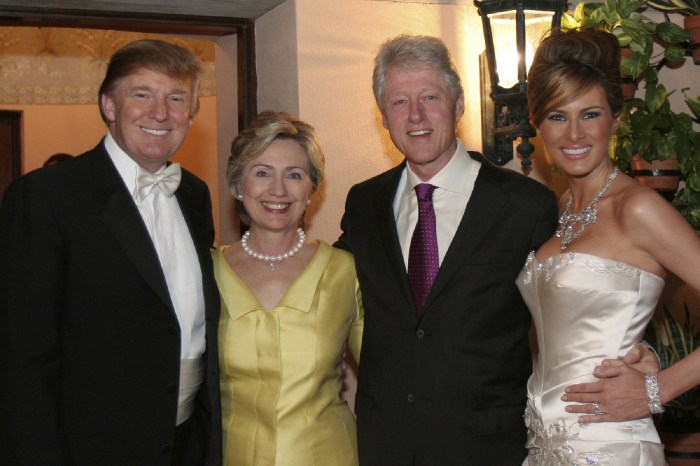
Perhaps Donald Trump truly believes that Bill Clinton is a rapist, or at best “one of the worst abusers of women” in U.S. history, as he said. And therefore, Trump invited a man he believes to be a rapist to his wedding, where Trump had his new wife pose beside the ostensible abuser, Trump smiling as the man he believed to be a sexual predator posed with his arm encircling his new bride’s waist.
And don’t miss this one either. Later, Trump went on Fox and said of Hillary Clinton and the man he believes to be a rapist, “I’ve known her and her husband for years and I really like them both a lot.” He even chatted on the phone with Bill Clinton before getting in the race. In this telling, Trump has a deeply weird attitude toward rapists, abusers of women, and the sorts of photos one takes at one’s wedding.
Or maybe Trump doesn’t actually believe that Bill Clinton is a rapist, or one of the worst abusers of women in history. Rather, he is cynically and falsely publicizing a rape accusation, knowing the accused may well be innocent, because spreading it will help Trump to win power. A frivolous or disingenuous rape accusation would typically make Trump supporters apoplectic. It’s the sort of thing they accuse the liberal media, lying politicians, and “social justice warriors” of perpetrating. They regard false rape accusations as serious if not unforgivable transgressions. Yet in this telling, Trump is engaged in that behavior for pure political benefit.
There’s no way to determine what Donald Trump truly believes.
But it’s got to be one or the other, and either option ought to make him look bad in the eyes of many of his supporters, given their own beliefs. So why doesn’t this bother Trump supporters? Even apart from Bill Clinton’s history with women, whatever it really entails, I understand why they’re so averse to Hillary Clinton.
I am too. I promise. For so many reasons. But there are other options if you hate typical politicians or want to tell the establishment to go to hell. So why aren’t they similarly averse to Trump?
Hey boos! This one is kind of going to be a bummer, OK? We’re going to talk about what you should do when something really bad happens to someone you care about. I’m specifically talking about the Care and Feeding of Grieving People, but I think a lot of these things also hold true when someone receives really bad news of most any kind. (Except the one about going to the funeral, but there are other ways to show up for people, so maybe even that one counts.) It’s hard to know what to do when someone we love is facing something awful. We don’t want to do the wrong thing or get in the way, or we want to help but don’t know how to, or we face a huge flood of fear and sadness that feels hard to push away long enough to be supportive, or they don’t seem to want or need help. But there are some ways that you can be present and supportive. (This poem, “What I Learned from My Mother,” is totally the jam on this subject.)
I always write from my own experience, so I know you might not agree. That’s okay! But here are five things to consider when you’re faced with the challenge of graciously supporting a loved one.
1. It’s totally fine to say “I’m sorry,” even if that’s all you know to say.
I know that “I’m so sorry” feels pretty contrived at this point, but it works. Maybe steer clear of trying to make them feel better, because as much as you want to, you probably can’t. There really isn’t a right, perfect thing to say. Isn’t that terrible? Isn’t that sort of the worst part? You can’t fix it. No one can.
So trying to say something else will probably fall flatter than “I’m sorry” ever would. Avoid making comparisons to your own experience, too. It’s hard not to do that, but there are very few situations where it’s really appropriate or comforting. For a long time I had a huge chip on my shoulder — and no, I’m not proud of this, but it’s part of what grieving has been for me — about what it would mean to be understood. I was not really interested in hearing from anyone who had not lost a parent when they were young. It just didn’t help me, as well-meant as it was. Just say you’re sorry, listen, and validate. Nothing more is needed.
2. You should send a card to someone who’s grieving. You might want to buy some not-ugly ones to keep on hand.
Sympathy cards might feel weird to send, but I promise you they’re almost always appreciated. You don’t have to write something long. Something like “Dear Simone, I was so sorry to hear about your mom’s death. I’m sending you all of my good wishes for gentle comfort in the days and weeks to come. Love, Simone.” You don’t have to try to understand, and you don’t have to offer a shitty platitude about the universe or about how things happened. If you want, you can write to me and I will help you draft a note!
And you don’t have to settle for the butt-ugly cards that Hallmark sells. I like ones that don’t say much other than “with sympathy.” Because being a li’l orphan has given me a kind of morbid (?) mindset, I actually buy nice sympathy cards when I see them so I can send something thoughtful when I need to. Here, I foundafewforyou. Nice blank cards or notepaper are fine, too. I just find the Greeting Card Industrial Complex ones to be really cloying.
3. Ask how you can help, but be prepared to just do something without being directed.
This is so tricky, because your instinct will be to say something like, “Please let me know if I can help,” and you’ll totally mean it but there’s a really good chance that your grieving friend is not capable of telling you what you could do to help. On the other hand, you also don’t want to do something not helpful (like send a lovely bouquet to someone with mad flower allergies). There are things that you can do, though, without being asked, which will probably be appreciated. Anything that helps a grieving person take care of herself — literally take care of her person — is a winner.
A gift certificate for meal delivery service or a gift card to a place with prepared foods (Whole Foods?) is really nice. I actually had people bring me bags of groceries a couple times — healthy stuff AND treats — which was good because I was subsisting on cigarettes and Diet Coke. I’m sort of obsessed with Edible Arrangements because if someone had sent me a basket of pre-cut fruit when I was sulking around in my dead mother’s muumuu, I probably would have eaten a little better.
Offering to clean a room or rooms in their home or to run a load of laundry or to walk their dog can also be really helpful. Offering to spend low-key time with them — going for a walk, having a cup of tea — in a specific, time-limited way can also be good. Being specific matters — offer a specific day/time or a couple options. When you’re in a crisis it can be so hard to make decisions about little things.
4. You should probably go to the funeral.
Put some nice clothes on and go to visiting hours or shiva or the funeral. That you did so will be remembered, I promise. I can imagine some folks who really can’t do this — really, really can’t — and that’s fine, but if there is any way you can gather up all your courage to go, it helps. It helps a lot for someone to turn around and see a community of people behind them on what might be one of the worst days they’ll ever have. If you’re nervous because you don’t know enough about whatever religious ritual you might have to participate in, do a little research first. I promise you you won’t embarrass yourself, though.
5. Don’t disappear.
Sometimes stepping back after the immediate events that follow a death or crisis makes sense — you’re not gonna get up in your HR manager’s grill a couple months after her mom dies, you know? But if we’re talking about a friend, don’t disappear. They may not know how to respond in a gratifying way for a while, but they need you. It never bothered me when someone left me a message saying “HAY GIRL, just thinkin’ of you, you don’t have to call me back unless you feel like it.” And sometimes someone offering to take me for a walk was an almost-literal lifesaver. Grief is very lonely, even if we all face it — it feels very, very singular and very alienating. Lots of crises do, actually. And if you can keep reaching out, you can help make it feel a little less lonely.
While visiting my friend in Charlottesville last week I noticed her wrapping her cheese in this super design-y Cheese Storage Paper by Formaticum. The two-ply paper allows cheese to breathe while maintaining optimal humidity preventing the cheese from drying out. Love that they include a video on how to perfectly wrap your cheese on their product page:
Shakespeare: Oh, I have not a stinking clue by what means I create or recreate these adventures that live inside my soul. I stare at these cursed pages and think, who-ever told me I should compose even the dung-heaps of words such as I have done? Once in a fit of despair I ate all the Shrewsbury cakes Anne had but recently baked. They did not assist me.
•••
James Joyce: Portrait of the Artist as a Young Man? I worked for five years on a novel about that moo-cow. I thought that was the story! [Chuckles.] I still think that had some of my best work. Ah, but that moo-cow, he well and truly lived.
•••
Interviewer: Do you ever experience self-doubt about your work?
Kurt Vonnegut: Many times I've attempted to drown myself in my bathtub because who in blazes would care about my weird time-traveling spacey fiction? I can't ever do it, though, you tried doing that? Self-drowning, I mean. Harder than it looks. So I towel off and call an old pal—yeah, I've got a couple of those, but only a couple—and we go out to a hole in the wall and drink all the Scotch and he's like, "Remember Slaughterhouse-Five? You've done this before, now stop whining like a little girl." And I'm all, "You're right, ol' pal." But secretly I'm like, "Oh, shit." [Sighs deeply, which turns into a hacking cough.]
•••
Emily Dickinson: It’s like I forget how to put words together sometimes, you know? Like, do these even make sense anymore? So I think, fuck it, I’ll add a shit-ton of dashes. And now it’s, like, my thing. Someone's going to figure out that I don't know what I'm doing at some point, right?
•••
Interviewer: What’s your typical writing day like?
Eudora Welty: Oh, my, let me think. I invariably begin my day by Googling “what if I have no more good ideas and there's no point in my writing.” Then I spend a good two hours gazing at the latest draft of a story. I will dislike it, sometimes violently. Then I’ll recall a music video I used to enjoy, perhaps that one by Heart, and I have simply no choice but to find it on Youtube. Finally, I spend about fifteen minutes laying words down slowly and painfully, like a bricklayer who’s plumb forgotten how to lay bricks. And then I take a lovely nap right on my keyboard. [Chuckles delicately] Right on it!
In celebration of his exit from the 2016 presidential race, and by request, here is a more-or-less complete collection of all the horrible ways I’ve described Ted Cruz during the campaign (plus a couple bonus bits from 2013, when Whatever readers awarded him the title of Asshole of the Year, besting other luminaries such as Rob Ford, Justin Bieber, and, yes, Barack Obama).
Ted Cruz is:
a malignant teratoma with a law degree
a shambling assemblage of skin tabs and ego
a gross and despicable avulsion that yet managed to sprout opposable thumbs
a jowly gobbet of tubercular phlegm
the Platonic ideal of an asshole
a necrotic self-regarding blight on the face of American politics
an odious fistula that walks the earth in a human skin
Newt Gingrich minus the charm or political savvy
the final obnoxious form of a college dorm “Devil’s Advocate”
a bipedal mound of pig offal that yet manages to form words
an overripe pustule of hateful need who deserves to be dropkicked into historical oblivion
a political dead man walking
Goddamn, I will miss him. But not enough to want him back. Ever.
Update: It’s been noted I forgot I also called Cruz an “ambulatory cloacal splotch.” Duly noted!
8:30 am Me: [opening up laptop] The Internet: You should check me before you start writing. Me: We’ve been over this. First I write, then I check you. There’s no emergency happening. T.I.: That you know of. Me: Someone would have called me. T.I.: Unless they’re all dead. I mean probably they’re not all dead. It’s fine if you don’t check first. Maybe. Me: Just give me an hour, Internet. A lousy hour.
8:35 am T.I.: I don’t see why it would hurt if you check your email, at least. Me: Jesus. T.I.: Because let’s say one of your friends had an emotional crisis at 3 am and sent you a heartfelt note and all they want is some confirmation from you that they’re as loved as they secretly fear they’re not, and your silence is just making them worse and worse and who knows what’ll happen next? Me: I…I’m neglecting my loved ones with my selfish wordsmithing? T.I.: You said that. For the record, I never said that. Me: FINE.
10:00 am T.I.: Anything important going on there? Me: You know perfectly well that I got a Zara sales email and then I went onto the Zara site and fell down a wormhole of trying to find the saddest-looking Zara model I could find and also I remembered that they had some bad labor practices so I had to look that up too. T.I.: So: not a waste of time, then. You could use that for something in the future. Me: What in holy hell are you on, Internet. T.I.: I’m just saying, it’s all material. Everything is material. Didn’t some writer say that? I bet you could find that quote on — Me: You shut up now. You shut right up.
10:07 am T.I.: DONALD TRUMP IS DOING SOMETHING Me: … T.I.: PROBABLY. PROBABLY DONALD TRUMP IS DOING SOMETHING YOU NEED TO KNOW ABOUT Me: It can wait. T.I.: CAN IT? Listen: you think the story you’re writing is terrible and I’m not saying you’re right but you’re probably right and also you could write a funny tweet about Donald Trump and then you could check and recheck to see how many people liked it and you wouldn’t feel so tiny and insignificant in this world with your dumb stories that no one is reading because you keep them in a folder on your laptop and you don’t put them on meeee Me: Get a hold of yourself.
10:15 am T.I.: You’ll Never Believe What’s In Your Water Bottle (And It’s Not BPA!) Me: What? T.I.: You’re not going to believe it Me: Would you lay off? I’ve written 75 words. My daily quota is 2,000. T.I.: That’s fine, writing is more important than life and well-being and stuff. You only gave your kid the same water bottle oh and you’re definitely going to forget all about this in five minutes and you’ll never remember to find out about the Secret Ingredient That Could Kill You All, oh and guess who's a secret twin, and have you seen that video of the mangy kitten being rescued by a bear who's on a dolphin's — Me: [turns off wifi]
10:35 am T.I.: Psst. Me: What the hell? T.I.: Over here. Me: I turned you off, you sick— T.I.: Your phone, baby. I’m still on your phone. LTE. Me: Oh god. T.I.: How many words you write? 378? That’s an amazing number! That’s almost 20% of your daily quota, and the day has barely begun. See? You don’t need to get rid of me forever, just for a few minutes. I bet there are tons of writers who write for like 15 minutes and then spend a couple of hours checking me out and then go back to writing for another maybe 10 minutes and BAM look at that, they wrote a bestseller. Me: I sincerely doubt— T.I.: Google it. Me: I don’t need to— T.I.: You won’t because you know I’m right. Google it google it googlegooglegoogle Me: You’re killing me. I’m moving to a cave. T.I. Ooh, good idea! Let’s look up “writing caves.” Me: [rage-Googles “writing caves” and “writers who live in caves” and “how to write despite the Internet”]
6:00 pm Me: [looking up] What the hell…? T.I.: You should really manage your time better. Oh by the way here’s your Facebook wall, covered with news about your friends who are all publishing their ninth bestsellers. It's too bad you're not doing that.
Me: I hate you so much. T.I.: There, there. Here, look at this celebrity who ate a vegetable all weird.
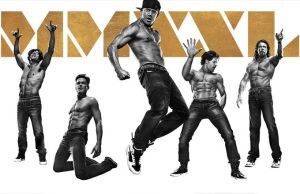
It’s early March, and I know I’m super late to the party talking about the best movies of last year (although the Oscars were just last weekend), but I wanted to say a bit about my favorite movie of 2015 – Magic Mike XXL.
This may seem a strange choice for me, given that I love classic literature and Golden Age British mysteries, and have never been to a strip club in my life. I should be more into Far from the Madding Crowd, or The Danish Girl, or some historical drama, right? (Note: I might like these two movies, if I’d seen them, which I haven’t.)
I saw Magic Mike last July when the rest of my family was traveling in Europe. Many of my online friends had raved about it, so I went to see it just before Independence Day weekend to see what all the fuss was about. The theater was packed with women of all ages, a few of them with husbands or boyfriends in tow. I didn’t really know what to expect.
And…it was magical. Very little actually *happens* in this movie – it’s just a road trip from Tampa to Myrtle Beach for a group of ex-male strippers, intent on giving their last hurrah at a stripping convention before they move on with their lives. But it showed a world in which guys could be honest and vulnerable with each other, in which straight guys could be accepting of queer and trans people.
It also portrayed a world with minimal misogyny. The group of soon-to-be-ex-strippers don’t despise the women who come to watch them dance and shower them with dollar bills, they love and respect them. Women of all shapes, colors and sizes are shown enjoying themselves, and none of them are held up for ridicule. It’s OK that women have desires and needs.
There’s a poignant scene in the middle of movie when the guys are being driven from Savannah to Charleston by an employee of another strip club.
Donald Glover talks about all the girls he meets every day “for free,” and you think he’s going to boast about how many he picks up. But no, he then turns and starts talking about how many guys just don’t even listen to their women, and he does, and it’s good for them. “We’re like healers, man,” he says, which may be a bit of an overstatement, but it emphasizes how easy it is to be good to women…and how many guys just don’t even bother.
The entire movie is like this – when the main character (Channing Tatum) talks about his ex-girlfriend, he doesn’t slag her off, he just expresses how sad he is that they wanted different things. And when he meets a sad woman on the beach at the beginning of their road trip (and later in Charleston), he doesn’t try to pick her up, he just befriends her and tries to make her smile.
I can’t even tell you what relief it was to watch this movie. It made me realize how much misogyny we experience every day, how much it’s ingrained in our culture to the extent that we only realize the extent when it’s not there.
This makes me sad…and angry. I don’t want my daughter to grow up in a world where hating herself, hating other women, or needing validation from men to feel whole is par for the course. She should honor and love and respect herself as much as this movie does. Maybe it’s time for us to demand that from our entertainment, and from our society, by supporting those things that remind us of our intrinsic worth and rejecting those that seek to belittle us and make us feel inferior.
Dreaming of that new world, you guys…let’s work to make it happen.








 Hey boos! This one is kind of going to be a bummer, OK? We’re going to talk about what you should do when something really bad happens to someone you care about. I’m specifically talking about the Care and Feeding of Grieving People, but I think a lot of these things also hold true when someone receives really bad news of most any kind. (Except the one about going to the funeral, but there are other ways to show up for people, so maybe even that one counts.) It’s hard to know what to do when someone we love is facing something awful. We don’t want to do the wrong thing or get in the way, or we want to help but don’t know how to, or we face a huge flood of fear and sadness that feels hard to push away long enough to be supportive, or they don’t seem to want or need help. But there are some ways that you can be present and supportive. (This poem, “




 to see what all the fuss was about. The theater was packed with women of all ages, a few of them with husbands or boyfriends in tow. I didn’t really know what to expect.