Why am I so lazy? As long as I can remember, I’ve always done as little as possible to still get the job done, to still get the A, to get the extra credit and be the teacher’s pet. I have always procrastinated everything from homework, cleaning, and...More »
The fish market at the Wharf is the last remnant of a rapidly changing neighborhood undergoing a $3 billion redevelopment. Around 20 restaurants and shops are opening, with more grand openings and celebrations planned for other businesses well into next year. Opened in 1805, Maine Avenue Fish Market is the oldest continuously operating open-air fish market in the U.S.
Is there something wrong with me that this looks really stupid to me?
I understand that most people, normal people, can outline phases of their lives through jobs or photo albums or even where they lived; I apparently can do it through endive salads I was obsessed with at the time. In 2005, there was one from Nigella Lawson in the New York Times with toasted hazelnuts, grain mustard, lime and orange and sesame oil. My husband and I were a relatively new thing at the time and he wasn’t terribly into endive but he ate it politely for weeks and weeks, and eventually came around, or caved. Same thing, right?
We’re all pros already.
1) We show up every day
2) We show up no matter what
3) We stay on the job all day
4) We are committed over the long haul
5) The stakes for us are high and real
6) We accept remuneration for our labor
7) We do not overidentify with our jobs
8) We master the technique of our jobs
9) We have a sense of humor about our jobs
10) We receive praise or blame in the real world
― Steven Pressfield
I feel like someone needs to make this into a poster.
Thank you Alexandra Franzen for these 100+ questions to ask your friends, family and dinner companions. She shared these because the U.S. is having Thanksgiving family gatherings coming up this week. These conversation starters come in handy anytime:
Are there any household chores you secretly enjoy? Which ones — and why?
Are there any laws or social rules that completely baffle you?
Are you a starter or a finisher?
Are you afraid of flying in airplanes? (How come?)
Are you living your life purpose — or still searching?
Are you useful in a crisis?
Can you tell when someone is lying?
Can you tell when someone is telling the truth?
Do you believe in magic? When have you felt it?
Do you believe that everyone deserves forgiveness?
Do you believe that people deserve to be happy?
Do you ever hunt for answers or omens in dreams?
Do you ever yearn for your life, before Facebook?
Do you have a morning ritual?
Do you have any habits you wish you could erase?
Do you have any irrational fears?
Do you have any personal rituals for the end of the year?
Do you have any physical features that you try to cloak or hide? How come?
Do you like to be saved — or do the saving?
Do you secretly miss Polaroid cameras?
Do you think everyone has the capacity to be a leader?
Do you think we should live like we’re dying?
Do you think we’re designed for monogamy? (Why or why not?)
Do you think you’re currently operating at 100% capacity?
Ever fantasize about being in a rock band? What would your group be called?
Has a teacher ever changed your life? How so?
Have you ever (actually) kept a New Year’s Resolution?
Have you ever been genuinely afraid for your physical safety?
Have you ever dreamed about starting a business? (Or if you’ve already got one — a new business?)
Have you ever fantasized about changing your first name? To what?
Have you ever fantasized about writing an advice column? What’s the first question you’d like to answer?
Have you ever had a psychic reading? Did you believe it? Was it accurate?
Have you ever had to make a public apology? (How come?)
Have you ever met one of your heroes?
Have you ever met someone who was genuinely evil?
Have you ever pushed your body further than you dreamed possible?
Have you ever screamed at someone? (How come?)
Have you ever set two friends up on a date? (How did it go?)
Have you ever stolen anything? (Money, candy, hearts, time?)
Have you ever unplugged from the Internet for more than a week?
Have you ever won an award? What was it for?
How do you engage with panhandlers on the street?
How do you reign in self-critical voices?
How long can you go without checking your emails or texts?
How would you fix the economy?
If a mysterious benefactor wrote you a check for $5,000 and said, “Help me solve a problem — any problem!” … what would you do with him or her?
If social media didn’t exist, how would your life be different?
If you could choose your own life obstacles, would you keep the ones you have?
If you could custom blend a perfume or cologne, what would it include?
If you could enroll in a PhD program, with your tuition paid in full by a mysterious benefactor, what would you study — and why?
If you could have tea with one fictional character, who would it be?
If you could master any instrument on earth, what would it be?
If you could save one endangered species from extinction, which would you choose?
If you could sit down with your 15-year old self, what would you tell him or her?
If you had an extra $100 to spend on yourself every week, what would you do?
If you were heading out on a road trip right this minute, what would you pack?
If you were searching through an online dating website, what’s the #1 quality / trait that would attract you to someone’s profile?
If you were to die three hours from now, what would you regret most?
If you wrote romance novels or erotic fiction, what would your “pen name” be?
Is there something that people consistently ask you for help with? What is it?
Is war a necessary evil?
What are you an expert on? Is it because of training, lived experience, or both?
What are you bored of?
What are you devoted to creating, in the New Year?
What are you freakishly good at?
What are you starving for?
What do you value most: free time, recognition, or money?
What is your spirit animal?
What was the best kiss of your entire life?
What was the best part of your day, so far?
What was the most agonizing hour of your life?
What was your proudest moment from the past twelve months?
What was your very first job?
What was your worst haircut / hairstyle of all time?
What’s going to be carved on your (hypothetical) tombstone?
What’s in your fridge, right this moment?
What’s in your pocket (or purse, or man-purse) right now?
What’s one dream that you’ve tucked away for the moment? How come?
What’s one mistake you keep repeating (and repeating)?
What’s one thing you’re deeply proud of — but would never put on your résumé?
What’s something you’ve tried, that you’ll never, ever try again?
What’s the best birthday cake you ever ate?
What’s the best compliment you’ve ever received?
What’s the hardest thing you ever had to write — and why?
What’s the last book that you couldn’t put down?
What’s the most out-of-character choice you’ve ever made?
What’s the strangest date you’ve ever been on?
What’s the title of your future memoir?
What’s the worst piece of advice you’ve ever been given?
What’s your definition of an ideal houseguest?
What’s your guiltiest of guilty pleasures?
What’s your most urgent priority for the rest of the year?
What’s your personal anthem or theme song?
What’s your recipe for recuperating from extreme heartbreak?
When was the last time you astonished yourself?
When was the last time you got stuck in a rut? How did you get out of it?
When was the last time you saw an animal in the wild?
When you see peers / competitors getting things you want, how do you react?
Where & when do you get your best ideas?
Who is the last person that deeply disappointed you? (What happened?)
Would you consider yourself an introvert, extrovert, or ambivert?
Would you like to write a book? (About what?)
Would you rather be a lonely genius, or a sociable idiot?
Would you rather have a live-in massage therapist, or a live-in chef?
Would you rather have an extra $200 a day, or an extra 2 hours a day?
And of course…
What are you most grateful for, right now, in this moment?
Today is #worldprematurityday and just typing that hashtag made me start to cry. It's so emotional to reflect back on Adeline's birth, the struggle, the triumphs, and her journey that didn't end when we left the NICU.
Premature birth is the leading cause of death in children under the age of five worldwide. Babies born too early may have more health issues than babies born on time, and may face long-term health problems that affect the brain, the lungs, hearing or vision.
— March of Dimes
World Prematurity Day, on November 17, raises awareness of this serious health crisis. Throughout this month we have tried to draw attention to this crisis by sharing our story, other family's stories, information about preemie babies, and through our Grateful Guts project. Now, we are so excited to be partnering with Pampers who is giving back to this community and to the March of Dimes with through their Pampers #LittlestFighters Campaign. Just in time for Prematurity Awareness Month, Pampers has introduced the first-ever flat diaper, specifically designed for premature babies. Sometimes a traditional diaper doesn't work for the tiny babies in the NICU so Pampers created a diaper with no elastic or tape which could help babies with jaundice, skin breakdown, abdominal defects, surgeries, and extremely low birth weight.
Preterm birth is a national health crisis. 1 in 10 babies are born premature and this statistic has continued to increase for the second year in a row.
— World Health Organization
What is pamper's Doing for Preemies?
In honor of World Prematurity month, they're donating a box of diapers to every NICU across the country and up to $300,000 to the March of Dimes.
What can you do?
Share Your Story Share your story about the first time you were inspired by your baby’s fighting spirit on Facebook, Twitter, or Instagram on November 17th. Each time the #LittlestFighters hashtag is used, Pampers will donate $5 to the March of Dimes. Also make sure to tag @PampersUS in your post.
Wear Purple. That includes wearing purple to represent the March of Dimes and prematurity awareness, lighting your home or office purple and getting creative to inspire others to raise awareness by going purple.
Donate to the March of Dimes.
The U.S. preterm birth rate rose from 2 percent to 9.8 percent in 2016 — equating to approximately 8,000 additional babies being born premature.
— Pampers US
I am sharing one of my stories on Instagram and Facebook about the first time I was inspired by my #LittlestFighter and I hope you do the same so we can raise some monies!!!
These images below can also be used to for your social media and tag us if you can!!
I LOVE Jourdan and her family. We met via social media over two years ago when our kids were born prematurely about one month apart. We connected immediately, text each other, email, DM, and are so supportive of each other's journey. She is one of my dearest preemie Mama friends, understands how I feel more than most, and I only wish we lived closer. Jourdan's story to motherhood is quite complex as she had her babies via embryo adoption and then the gift of surrogacy from a good friend. As if their journey to pregnancy was not complex enough, they had twins, and at 23 weeks!! The odds were stacked against this family to have children and against these babies to survive. But just like their parents, Cadence Grace and Jackson Brave defied all the odds and continue to do so. You need to be following this family on Instagram and Facebook as they openly chronicle their unconventional journey to parenthood and their life after the NICU. Something that is often reported throughout the preemie community and even media is that the premature baby "overcame" their early birth and are "completely fine" and you "would never know they were born prematurely" ! But for my family and Jourdan's family. that is not the case. Life after the NICU has been a struggle, with setbacks, successes, and a lot of hard work. She felt this was a topic worth talking about and although awkward and tough, it needs to be said. Before writing, Jourdan interviewed up to 50 other preemie mamas to learn more about the biggest struggles they had and how they would have liked to have been supported. Some of the quotes from these preemie Mama's are scattered throughout the article below. Thank your Jourdan for the time and effort you put in this piece and we are honored you wrote for us. - Stephanie
What?! Doesn't preemie life end the day the baby graduates from the NICU and goes home? Doesn't preemie life end once the baby outgrows "preemie" size clothes and grows into the "newborn" size? For those parenting preemies, especially micro-preemies (those born under 1 lb 12 ounces or younger than 26 weeks gestation), the event of premature birth has lingering effects which may last months, years, or a lifetime.
The purpose of this article is not to gain pity, sympathy, or vent about my personal obstacles. My hope is to educate our non-preemie community about what support is useful and to provide preemie families with the comfort of hearing, “You are not alone.” NICU (neonatal intensive care unit) parents have a deep appreciation for the life of their child, so we are hesitant to complain about our obstacles. During my children’s 98 day NICU stay, I witnessed three babies near me pass away one by one. Those vivid memories haunt me every day and make me realize just how blessed and lucky we were to bring our babies home.
Life after a long NICU stay can be isolating and lonely.
— Jourdan
However, it is important to share that life after a long NICU stay can be isolating and lonely. Parents are busy and exhausted tending to the special needs of the preemie at home. We typically reduce public exposure to prevent sickness or complications and we often are struggling from PTSD (Post-Traumatic Stress Disorder), anxiety, and depression, which create isolation and loneliness. An unexpected lingering effect is an unwanted distance and separation from some of our most cherished relationships. Why? Because parents, (myself included), struggling with these mental health symptoms, are not the best at nurturing the relationships outside of the constant demands of their high needs child(ren). Additionally, the relationships around them are often unable to relate to or understand what they are going through. This distance is tragic and my biggest regret looking back on my own journey.
But how do you overcome these struggles when forecasting them is practically impossible for all parties involved? No one plans in advance to have a preemie or micro-preemie child. No one is prepared for pre-term labor and NICU life. My hope is that by bringing awareness to these obstacles, I can help others navigate the unplanned journey of raising preemies at home after the NICU. Here are 7 challenges we (preemies) face every day. A disclaimer is that these experiences may not be true for all preemie parents, however, I have interviewed over 50 preemie parents before writing this article and most all of them, especially micro-preemie parents, related to 6 or 7 of the challenges below.
7 Lingering Obstacles Preemie Face After the NICU
1. Our immune systems and lungs are still weak
Most of us have been diagnosed with Chronic Lung Disease among other diagnoses. When we pick up a simple cold (rhinovirus) or flu (influenza) it often leads to RSV (Respiratory Syncytial Virus) or other serious infections. These can drag on for weeks or even months, leading to hospitalizations and set-backs to our progress. This can cause delays with weight gain, developmental milestones, and our parents’ ability to work, sleep, care for other children, etc. When these hospitalizations occur it can often split up our families, literally causing couples to sleep in different locations and parents to be away from other children in the household.
Due to their weak immune systems and breathing challenges while in the NICU, we kept a very low profile until flu season was over (which was several months). We didn’t go to stores, places with crowds, or large family gatherings. Several people close to us said that we were overreacting by keeping them so protected (especially during the holidays). That is probably one of the worst things you can say to a preemie parent. As parents, our main goal is to protect our children.
— Preemie Mama
2. We are still small for our age
For the first two years of preemie life, doctors assess our growth on a chart adjusted for our corrected gestational age. (For example: my twins were due January 14th 2016, but born September 23rd 2015 (four months early) so when they were 12 months old, we assessed their growth compared to children at eight months of age, adjusting for the four months of prematurity). Growth in the early months directly correlates with brain development so this is a major stress point for preemie families. Not all preemies catch up by the age of two. My children are 25 months old, wearing 12 month clothing. One of the mothers that was interviewed mentioned that her nine-year-old was wearing a size 6. Our parents work very hard to keep us nurtured, yet stunted growth can be a lingering obstacle.
(One of my biggest challenges after the NICU was) trying to get my daughter to gain weight while also encouraging learning to eat by mouth, stimulating hunger, and trying to get a lot of calories without the bulk since she can’t handle to much volume with out projectile puking everything back up.”
— Preemie Mama
3. We are developmentally delayed
The adjusted gestational age mentioned in obstacle two also affects our social and developmental milestones. Additional hospitalizations after the NICU and time spent combating serious medical conditions (rather than exploring and playing the way babies should) causes further set-backs. (For example: when my twins turned one they still were not able to sit up unassisted. Now they are two and my daughter doesn’t walk and my son has only found 5 words.) Countless hours of dedicated speech therapy, physical therapy and occupational therapy are often involved which makes these delays disheartening to parents who work so hard towards basic goals.
Certain beeps still can send me into a blind panic. They remind me of the alarms for when my daughter flatlined on all monitors. Or when they stopped breathing.
— Preemie Mama
4.) We have lots of appointments.
A few months after our homecoming from the NICU I counted 21 appointments on our calendar in a one month period. This is time away from work, rest, self-care, play dates, normal family life, socialization with friends, etc. Some of the specialists we visited after the NICU included: pediatrician, dietician, optometrist, pulmonologist, gastroenterologist, craniofacial, developmental specialist, speech therapist, early intervention, feeding therapist, orthotics, occupational therapist, physical therapist, endocrinologist, audiology, dermatologist and cardiologist.
And because she isn’t small anymore people seem confused when I tell them she was a preemie and needs some extra time to do things.
— Preemie Mama
5.) We have lots of equipment.
Parents of preemies, especially micro-preemies, must learn nursing skills as they leave the 24/7 support of a full NICU medical team and come home. Some of this equipment may include: oxygen generators, feeding pumps and tubes, heart monitors, oxygen saturation monitors, nebulizers, suction machines, tracheas, ankle braces, helmets, medical walkers, wheelchairs and more. Simple pleasures like walking around with the baby in a carrier become difficult when you have to drag oxygen cords and feeding pumps around with you. For months my spouse and I couldn’t cross paths when holding and feeding babies without getting all the wires and cords tangled. At one point I had to request a handicap permit because I could not carry all the equipment in and out of doctor’s offices on my own without major difficulties. The equipment makes leaving the house or sometimes even one room in the house a challenging hurdle.
To this day I never really consider her to have been born, only to have been delivered. The overwhelming feeling of her being taken from my body, from her nourishing life force, to battle alone against the odds still rattles me.
— Preemie Mama
6.) Our parents have PTSD.
Post-Traumatic Stress Disorder from the NICU days when parents watched their baby fight for their life is a common and lasting effect. Anxiety and depression are common, leading to seclusion and loneliness. Certain sounds like beeping alarms and specific smells still trigger awful internal reactions for many. Parents are mourning the loss of a normal full-term pregnancy, the loss of a normal delivery, and the loss of a healthy baby and all the hopes and dreams they had of that process.
I have really struggled the past few months with flashbacks, visions of the boys dying and depression over how nothing was how I wanted it.
— Preemie Mama
7.) We have special diets & feeding needs
In most cases special diets (such as: high calorie, reflux-sensitive, thickened liquids) and special feeding needs are a daily obstacle. My children are a result of the selfless gift of surrogacy and embryo adoption, so I obviously never produced breast milk. However, many interviewed mothers mentioned that breast feeding may not be possible and pumping is challenging under extreme stress. Many preemies struggle with gastrointestinal issues, aspiration, reflux, and/or oral aversion, making feeding particularly challenging. Struggles with weight gain in addition to feeding issues are a stressful combination.
To those preemie parents facing these obstacles, please know you are not alone.
— Jourdan
It is likely that none of the parents in your immediate circle are able to relate to most of these challenges, but the preemie community is out there and I encourage you to find, reach out, and connect with them. It’s important not to walk this journey alone. Although it can be uncomfortable, please take the time to educate your friends, family and immediate support system about the unique challenges you face. Most likely, they want to support you but they just don’t know how. Use this article as a resource!
To those non-preemie parents, thank you for taking the time to read this article!
— Jourdan
Thank you for making an effort to become aware and educated about the challenges of those around you. Your friendship and sensitivity towards the preemie families around you is priceless and cherished. What can you do to help?
An often undiscovered treasure is that we have an astonishing story to tell. Most that are willing to listen will come out believing in miracles and feel changed by our story. I sincerely view my abrupt intro to motherhood as an honor. I have witnessed a miracle take place in slow motion right before my eyes. I began bonding with my adopted children months before their due date. I would not wish pre-term birth on anyone. Yet, I have concluded that this journey has been a true honor. I am blessed to have been chosen to parent these two micro-preemie kiddos and I wouldn’t trade them in for the world!
Nineteen fifty-nine was a year of soft amusements for children. Dr. Seuss’s zany Happy Birthday to You! arrived in bookstores and Mattel introduced Americans to the Barbie doll and her frozen plastic gaze. On TV, suburban comedies like Father Knows Best and Dennis the Menace administered doses of mild humor laced with bland moral guidance.
But the Caldecott Medal, the premier American award for picture books, registered a note of dissent. It recognized Chanticleer and the Fox, the first picture book written by a young illustrator named Barbara Cooney. Adapted from the salty Middle English of TheCanterbury Tales, the book tells the story of a proud rooster, Chanticleer, who falls prey to a fox’s flattery. Just as the fox is about to devour him, the rooster turns the tables, tricks the fox into opening his mouth, and escapes. The book ends with the rooster and the fox conversing, each ruing his own foolishness and impulsiveness.
In her acceptance speech for the award, the small blond author, gesturing with her long hands, conceded the anomaly of her book. “Much of what I put into my pictures,” she admitted, “will not be understood.” But she had chosen to write it because she thought that the “children in this country need a more robust literary diet than they are getting.” “It does not hurt them,” Cooney insisted before her audience of senior librarians and educators, to hear about the real stuff of life, about “good and evil, love and hate, life and death.” (She did not say so that evening, but she had already experienced a good bit of each.) She vowed that she would never “talk down to—or draw down to—children.”
Children’s books are more than just entertainment. They reflect how a society sees its young and itself. By shaping the attitudes and aspirations of children, they help shape the world those children will grow up to inherit. Barbara Cooney went on to have a long and celebrated career in American picture books. She illustrated or wrote some 100, including modern classics such as Miss Rumphius and Ox-Cart Man (which garnered her another Caldecott Medal, in 1980). Her books are still beloved, nearly two decades after her death, by readers who admire their visual charm and rich historical storytelling. But Cooney’s greatest gifts, manifest in her work from the start, are more profound. Her singular vision of young Americans and her unique ideas about how to write for them make her books more relevant to Americans today—and perhaps more necessary—than ever before.
I first discovered Cooney when a friend gave my 3-year-old daughter a copy of Miss Rumphius (1982). As happens with some children and some books, Suzanne demanded to hear it over and over. The deceptively simple story follows Alice Rumphius through the arc of her life. The book begins with the young girl listening to her immigrant grandfather’s “stories of faraway places.” She declares that she, too, will travel and then return to live in a home by the sea. Her grandfather likes her idea, but adds that she must also “make the world more beautiful.” “All right,” Alice says, and for the rest of the book she strives toward her three goals. On the next-to-last page, we see the circle of her life completed as Alice’s niece—also named Alice—has the same conversation with her now-aged namesake in her home by the sea.
As the readings multiplied, instead of becoming tired of the book I found myself more and more immersed. There is much to like in Miss Rumphius. Cooney’s pictures, in rich colors with a spare, faux-naïf flatness that evokes American folk painting, are filled with fine details that catch the eye. Alice’s journey to “make the world more beautiful” is touching. The cyclical, generational architecture of the story, in which the young girl of the first pages is an old woman by the end, is very satisfying.
Still, the story pulled at something more in me, something deeper. Cooney draws the portrait of a rare kind of person: someone with an inner compass who allows herself to be guided by it even when the course it charts is not so easy. Miss Rumphius never marries and has no family of her own. (Cooney leaves unstated that this decision would have made her highly unusual in the book’s early-20th-century setting.) Alice encounters obstacles and setbacks on her path, as we all do, but she remains absolutely steady, absorbing the judgments of others and her physical failings with equanimity. Without the slightest hint of preaching, Cooney models for her young readers how they can live an intentional life, one in which they imagine a future for themselves and go toward it without fear.
What impressed me most about this portrait was Cooney’s refusal to sugarcoat it. Following her own course, Alice lives a solitary life. Cooney explores with unsparing frankness the loneliness enlaced with her protagonist’s self-possession. Though Alice makes “friends she would never forget” everywhere along her journey, Cooney dwells visually on her moments of solitude. There she stands alone beside her house by the sea; there she goes, accompanied only by a cat, scattering lupine seeds to make the world more beautiful. After she starts her sowing, the people of her town dismiss her as “That Crazy Old Lady.” Don’t think it’s easy, Cooney seems to whisper to her readers, to live such a self-directed life.
Barbara Cooney knew what it meant to be lonely. She was born 100 years ago, in 1917 in Brooklyn, to a prosperous German Irish family. Both sides of her family had risen from immigrant roots to wealth and social prominence by the turn of the 20th century. Cooney’s father went to Yale, her mother attended the elite Packer Collegiate Institute in Brooklyn, and Cooney herself matriculated at Smith College.
Cooney was the odd one out in her family. Her father, Russell, playing the conservative patriarch, favored her three male siblings. The slight, unconventional girl found her greatest happiness during summers at the family’s compound in Waldoboro, Maine. The little New England town settled by Germans in the 18th century had a comfortable feeling for Cooney and her mother.
After finishing college, in 1938, she returned to New York hoping to write for children. She had little formal artistic training, and her career got off to a spluttering start. The small but prestigious publisher Farrar & Rinehart issued three charming chapter books, all set on the Maine coast, which she wrote and illustrated in plain black and white. None of them had great success.
Soon after her first book appeared, Cooney met and quickly married Guy Murchie, a tall and worldly writer, and a son of one of Theodore Roosevelt’s Rough Riders. Within the space of three years they had two children, whom Cooney named Gretel and Barnaby, after characters in classic fables. But the marriage did not last. Cooney discovered that Murchie was a “cad” and a “womanizer,” as her children later put it. Having suffered through several painful years, she decided to move out.
At a time when divorced single parenthood was exceedingly rare, striking out on her own cannot have been simple. Cooney’s father and twin brother had disapproved of her marriage and disowned her. She supported her family by setting aside her own writing and turning full-time to illustration. She took on seemingly every project she was offered, including a collection of folk songs for children and several progressive educational tracts, with titles like Teacher Listen, the Children Speak. She integrated her small family into her work, setting up an antique drafting table in the living room and using her children as models.
In 1949, Cooney remarried and settled in Pepperell, Massachusetts. She and her new husband, the town physician, Charles Talbot Porter, had two more children. In spite of their newfound stability, though, Cooney and her family stood out. In a town where almost no women of her class had a career, she regularly put in six-hour days at her desk, illustrating as many as half a dozen books a year. Just as unusual, Cooney interacted with her children as though they were not simply her charges but her friends. She eagerly encouraged their creative impulses. They built canoes, tried to mine for coal in the yard, and put on a circus complete with a lion tamer and a high-wire act. And every night, the whole family came together for long discussions over a late, candlelit dinner.
Barnaby, the main character of The Little Juggler (1961), the second picture book Cooney wrote, might have been at home in the Porter household of the 1950s. He is an orphaned tumbler living in medieval France. In Cooney’s version of the often retold French legend, the penniless boy is chagrined that he has no Christmas gift to offer the Virgin Mary. Even without possessions, though, he realizes that he still has his tricks. On Christmas Eve, he sneaks into a chapel and performs before a statue of the Virgin until he collapses. Two monks are scandalized by what they take to be his levity. But when the Virgin appears and revives the little tumbler, they realize their error and allow him to stay with them.
Cooney’s Barnaby is unlike the Barnaby that one finds in most other versions of the tale. In her hands, the story is not about the naive wisdom of a child or a simpleton. Cooney reimagines Barnaby as the equal of any adult. He suffers real penury and makes deliberate decisions that lead to his offering in dance. The Virgin’s rebuke of the monks and her embrace of the child serve as supernatural confirmation of the child’s natural parity with his elders.
Barnaby, wittingly or not, is part of a very old argument about the nature of children, which Americans have been having both in and out of books since long before there was a United States. Are children basically like adults, or are they essentially different from us? In premodern times, the French scholar Philippe Ariès famously argued, there was no childhood in the sense that we understand it. Children were imagined as little adults, just the way that they were depicted in many paintings. Books for them were made to match. When New England children studied the alphabet in The New England Primer, for instance, they learned that they had to choose whether they would be sinners or saints, whether they wanted to live or die.
In the early 19th century, a “Romantic vision of childhood” (as the historian Steven Mintz calls it) supplanted these earlier ideas. Middle-class Victorians reconceived of childhood as an idyll, free from worry and fears of all kinds. They thought that it had to be so, because they imagined their children as fragile and incapable beings. To enjoy this period of life, children had to be shielded from the discomfiting realities of grown-up existence. It is no surprise that Victorian books for children skewed toward sanitized fairy tales, tame fantasies, and anachronistic histories. More than a century later, these notions continue to echo in the vast number of children’s books that paint a rosy, untroubled picture of the world, as though that were all young minds were able to bear.
For Cooney, the Victorian vision of children made no sense. Influenced by her experiences as a child and as a parent, she thought that children were moral and intellectual agents—and should be taught to see themselves as such. (Her encounters with progressive education may have also encouraged this belief.) Like Alice Rumphius, Barnaby the tumbler has a kind of moral seriousness and resourcefulness about him, which makes him more reminiscent of the hardy offspring of Puritans than the innocent babes of Victorian fantasy.
The moral gravity of her child characters lends Cooney’s stories an old-fashioned air. But the view of children’s capacities that she embraced has come to seem rather prescient. Experiments in child psychology over the past 30 years have revealed that children are far more morally and intellectually sophisticated than many people once believed. Toddlers engage in inductive reasoning. From a very young age, children can distinguish right from wrong. Indeed, in some ways, children draw more readily on their abilities than we do on ours. They are quicker than adults, for instance, to learn and generalize from their experiences. Cooney didn’t know about this research. But she came to similar conclusions on her own and wove her respect for children’s minds into all her books.
The success of Chanticleer and the Fox gave Cooney a wider berth than she had had before to pursue her vision. She had always been deeply interested in folktales and fables from around the world. Publishers now associated her with that genre and offered her a regular stream of them to illustrate. During the 1960s and early ’70s, she made pictures for more than a dozen books based on folktales. As she had with Chanticleer, she aimed to meticulously reconstruct each story’s historical setting. She began to do research abroad. Cooney traveled extensively over several decades, including to France, Spain, Greece, North Africa, Mexico, and Oceania. She returned from each trip with notebooks full of interlaced text and images, as well as hundreds of photographs and boxes of reference books.
The ’60s engrossed Cooney. She had never been overtly political, and she remained more of an observer than an active participant. What really interested her about politics was its human drama: how it revealed the “struggles” of individuals, as her daughter-in-law put it, to make their way in life. There was now a great deal of such drama to watch, even in Pepperell. Cooney eagerly followed the progress of the civil-rights movement, supported John F. Kennedy and George McGovern, and swam along with the feminist movement. She read Simone de Beauvoir, perhaps in the original French, and became more vocal about her long-held belief in women’s rights.
Cooney started experimenting with new visual forms. Until the early ’60s, she had worked largely in scratchboard (a technique that involves using a stylus on a specially prepared board). Now freed from the obligation to work in cheap-to-print media, she began using colored pencils and acrylic and oil paints. Even as she shifted to different ways of illustrating, though, she retained the flatness and sharp contours that had become a hallmark of her pictures during the decades of work in scratchboard.
Her new style had fully matured by the time she illustrated Ox-Cart Man, the 1979 book that won Cooney a second Caldecott Medal. The rhythmic, nearly hypnotic text by the poet Donald Hall depicts the cycle of a premodern New England family’s life. It starts with the family loading a cart in the fall with goods to take to market. By the end, we are in late spring, watching the family accumulate the exact same set of goods for another year. This is a book in which, by a certain measure, nothing really happens at all.
Cooney’s pictures, though period-appropriate to a tee, transform the story into a meditation on love and loss. At the center of the book, she devotes a full page to a single line of Hall’s text: The farmer “sold his ox, and kissed him good-bye on his nose.” Cooney shows the farmer, his hands gently embracing the ox’s head and his face serious, about to put his lips to his companion’s pink muzzle. The only other presences in the picture are a skeletal tree and a carpet of fallen leaves. Half a dozen pages later, though, the sprightly tail and hindquarters of an ox calf in the barn assure us that the cycle is recommencing.
Like Miss Rumphius, which appeared in print three years later, Ox-Cart Man is about change and stability, the two poles of a small child’s life (and of any life). The genius of both of these books is how they use the stability of cycles to steady the destabilizing reality of change. A cycle, whether of seasons or generations, is after all just a form of change that promises continuity and return. The loneliness of Alice Rumphius and the passing of the years on the farm are subsumed, each in turn, by the reassuring thrum of the larger rhythms of life.
Miss Rumphius and Ox-Cart Man both appeared as the conservative movement’s triumph brought a close to liberalism’s long postwar reign. Ronald Reagan and the movement’s other storytellers fueled their assault on the liberal consensus with a vivid and nostalgic retelling of the national past, celebrating cultural homogeneity, hierarchy, and an up-by-the-bootstraps ethos of success. It is surely no coincidence that just as this narrative spread, Cooney, an avowed liberal, began for the first time in her long career to create her own American myth. In a string of books that are among her finest, including three that she wrote and illustrated—Island Boy (1988), Hattie and the Wild Waves (1990), and Eleanor (1996)—she sketched an alternative vision of the American past.
Cooney’s books from these years set one of her habitual outsider figures—immigrants, loners, people guided by an inner light—at the center of an unmistakably American story. Island Boy, which echoes Miss Rumphius at several points, tells the story of Matthais Tibbetts, a boy living off the Maine coast in the 19th century. Hattie is a lightly fictionalized biography of Cooney’s mother and her upbringing in turn-of-the-century immigrant Brooklyn. Eleanor is the story of Eleanor Roosevelt’s childhood. Each protagonist’s life offers a counterpoint to the Reaganite fantasy: an American history built on moral precocity, empathy, and an abiding concern for others.
Matthais and Hattie share the self-awareness of Alice Rumphius. Like her, both declare their intentions for the future at a young age. Little Matthais longs to be useful around the farm, in spite of his older brothers’ scornful dismissal. Hattie announces to her skeptical family her plan to become a painter. They share Alice’s occasional lonesomeness, too. On the second page of Island Boy, baby Matthais is already alone, sleeping apart from his many brothers and sisters. And when his brothers give him the brush-off, he goes to sit by himself “under the red astrakhan apple tree” beneath which, many pages later, he will be buried. An “island boy” indeed.
The child protagonists of these three books have an extraordinary empathy for other outcasts and strangers. Eleanor always thinks about “people less fortunate—about the newsboys and the people of Hell’s Kitchen.” The boy Matthais, in perhaps the most affecting passage of a moving book, adopts a baby seagull he finds orphaned on the “Egg Rock.” He cares for it, feeding it seafood and “pie and doughnuts,” and the little bird follows him everywhere. Eventually he teaches it to fly and sends it “home.” Matthais’s empathy helps make him into something of a feminist avant la lettre. When he and his wife, Hannah, return to the island and have three girls, his brothers again scoff—“A farmer needs sons for the heavy work”—but Matthais ignores them. “Women and girls can work mighty hard too,” says Hannah, and her husband seems to agree.
In Eleanor, completed just a few years before her death in 2000, Cooney made her most insistent statement about the attributes that make a great American. The book took shape while Cooney was working on a never-completed project that was to be the story of a male artist’s childhood. Like most of Cooney’s protagonists, Eleanor is lonely. Unlike most of them, she has her isolation thrust on her by others. “From the beginning,” the book opens with a punch, “the baby was a disappointment to her mother.” (Who but Cooney would dare begin a book for children with such dark words?) Things immediately go from bad to worse. Little Eleanor is spurned by much of her family and orphaned at the age of 9. But though she is shy and awkward, she shows glints of that steely Cooney steadiness; she always tries to be brave.
Eleanor’s luck finally starts to turn when she goes away at 15 to boarding school in England. With the help of the school’s headmistress, the “sad young girl” soon finds her footing. She discovers her strengths, learns to “think for herself,” and in short order becomes a mentor to other “lonely girls.” She returns home to America “poised and confident, brave, loyal, and true.” The book’s epilogue, which telegraphically recaps her later life, concludes with Adlai Stevenson’s eulogy to the United Nations General Assembly: “She would rather light candles than curse the darkness.” The line never fails to leave me with tears starting in my eyes.
Like so much of Cooney’s work, these late books have an oddly timely quality. What it means to be an American is in question now as much as it was several decades ago, when they first appeared in print. The civic virtues that they model are no less under threat. To read Island Boy or Eleanor, or even Miss Rumphius, today is to encounter a vision of America as a nation shaped by those who are on the outside, the oddballs and the introverts. These are the people, Cooney suggests, who know themselves and their minds and who have the steady self-knowledge to build a society. These books, these characters, offer an idealized reflection of an America that could be, a country whose culture values empathy and patience—two qualities that seem now to be in short supply.
Children born today will face no small amount of uncertainty as the future unfolds. Cooney’s characters, by exhibiting the virtues of foresight and moral courage, might be able to help. I can well imagine a child today sitting on a grandparent’s knee, just as Alice Rumphius did, and declaring an intention to make the world better. Cooney would certainly have wanted that. For her, as she said in her 1980 Caldecott Medal acceptance speech, the point was not to make “picture books for children.” The point was to make them “for people.”
My daughter, I have to admit, is getting a bit too old for Barbara Cooney’s books. The excitement Suzanne used to feel in hearing them over and over has dimmed. When she sees them on my desk now, she jokes that they are my books. I feel a little sad about that. But in a funny way, Cooney predicted that this would happen and so robbed the moment of its sting. Life and time, in her world, always move in circles. And so in Suzanne’s loss of interest, I can already begin to see the turning of the wheel: the first increment in the long rotation by which she will go from the child, listening with rapt attention, to the adult who will read them to a daughter or son of her own.
Late Sunday night, the comedian Billy Eichner wrote on Twitter, “Kevin Spacey has just invented something that has never existed before: a bad time to come out.”
After years of declining to talk about his sexual orientation, Spacey hurled it out in no uncertain terms as part of a public statement: “I choose now to live as a gay man.”
Eyebrows may have been raised by the contentious phrasing—the history of the idea of choice in sexual orientation being loaded. But many eyebrows were already fully raised by the fact that this sentence came after a half-apology for an alleged 1986 child molestation.
The incident involved actor Anthony Rapp, then 14 years old. BuzzFeed published the allegation Sunday night, and Spacey’s statement followed less than three hours later. He claimed no recollection of the evening in question, but wrote, “I owe [Rapp] the sincerest apology for what would have been deeply inappropriate drunken behavior.”
Spacey there again dropped a treacherous implication—that drunkenness might excuse climbing on top of a child in bed and “making a sexual advance,” as BuzzFeed reported the allegation. Still the primary issue with the statement was the recurrence of a trope: A powerful person who is charged with abuse claims a marginalized status.
The recent parallel is Harvey Weinstein’s reported claims of “sex addiction.”
Adopting a marginalized identity in a moment like this does more than bleed the meaning out of an apology. It sucker-punches the entire marginalized group. It sets back fights for civil rights—in these cases, respectively, non-heterosexual people and mentally ill people, burdened for generations by baseless stereotypes pertaining to pedophilia and violence. As writer Shanelle Little saw it, “Kevin Spacey willfully harmed a child and then turned and painted a target on the gay community’s back.”
Writer Dan Savage went further, suggesting opportunism in Spacey’s plea: “I’m sorry, Mr. Spacey, but your application to join the gay community at this time has been denied.”
Given the timing of the news story and the actor’s subsequent statement, some readers offered that Spacey may have simply spoken recklessly in a moment of fear. But as The Daily Beast writer Ira Madison III reasoned, “Y’all, Kevin Spacey didn’t just whip up that statement. He knew it was coming. You don't report this without reaching out for a response.” Indeed, BuzzFeed editor Shani Hilton confirmed that Spacey had been contacted repeatedly, and that reporter Adam Vary “sent over a detailed letter with allegation prior to publication.”
It is unlikely that after decades of refusing to identify as gay, Spacey would do so in a dashed-off statement. It is more likely a move to redirect the focus of the attention, as is often the tactic of powerful people.
In this case it worked. Multiple news outlets reported the story not as one of alleged child molestation, but as one of a famous actor being gay. At Reuters, the headline was “Actor Kevin Spacey Declares He Lives Life as a Gay Man.” The New York Daily News went with “Kevin Spacey Comes Out as Gay.” ABC News ran “Kevin Spacey Comes Out in Emotional Tweet.”
When a person hints at admitting to allegations of child molestation, the subject of sexual orientation is not the headline. In this case, it is not the first, second, or third most important part of this story. (Reuters has since updated the headline to “Kevin Spacey Apologizes After Actor Describes Sexual Advance at 14.”)
Even without litigating the alleged events of 1986, at least two transgressions here are significant. First is the conflation of child molestation and homosexuality, which are not related. This is a narrative that has been cultivated—and continues to be—to paint gay people as deviant. It stretches from religion to medicine, from Biblical scripture to the American Psychiatric Association’s Diagnostic and Statistical Manual, which included homosexuality as a disease until 1973.
Second is the recurring act of appropriating marginalized status at a time when Spacey stands accused of abusing power. The alleged abuse feeds the delegitimizing narrative used to keep the group marginalized. He closed his note with, “I want to deal with this honestly and openly and that starts with examining my own behavior,” but this appears to be honesty of convenience, the rare bad time to come out.
Instead his statement put himself ahead of that community, with which he chose not to identify—not to support and empower from his high vantage—until it served him, and he risks dragging it backward.
This article contains spoilers through the entirety of Stranger Things 2.
One of the most horrifying moments in Stranger Things 2 comes toward the end of the third episode. Will (Noah Schnapp) is at school, helping his friends look for D’Artagnan, a sentient blob Dustin (Gaten Matarazzo) found in his trashcan. Will peeks inside a bathroom stall. The word EVIL is scrawled on the wall, as if to foreshadow what’s about to happen. D’Artagnan, hiding behind the toilet, hisses, and the sound triggers Will, shifting his reality back into the Upside Down. Seeing a dark shape manifest in the hallway, Will runs outside, but then turns to face it. The gargantuan black form invades his body, entering his eyes, ears, nose, and mouth, enveloping him whole.
The scene is visually and aurally jarring. The sound effects—a combination of thunder, growling, and robotic beeping—crescendo, as Will is overpowered by the Shadow Monster, the major antagonist of Stranger Things 2. It’s terrifying, but also disturbing simply becauseit’sso obvious that Will is being violated. And in the following episode, as Will returns to reality and tells Joyce (Winona Ryder) what happened, his language echoes words used by survivors of assault. At first, he pretends he can’t remember. Then, pressed, he tries to explain. “I don’t know, it came for me,” he says, crying. “And I tried. I tried to make it go away, but it got me, Mom. I felt it everywhere. Everywhere. And I still feel it.”
This isn’t the first time that Stranger Things has explored the effects of trauma. The first eight episodes, released in the summer of 2016, were praised by some writers and psychotherapists for their depiction of Eleven (Millie Bobby Brown), and how her behavior seemed to stem from her having grown up in a particularly tortured environment. The show, set in the fictional town of Hawkins, Indiana, during the early ’80s, was an homage to the cultural hallmarks of that era—The Goonies, Close Encounters of the Third Kind, E.T., John Hughes. But it was also rooted in horror, notably the stories of Stephen King. Eleven, like the young protagonist of Firestarter, was given strange powers by a government experiment involving hallucinogens, and gets nosebleeds when she wields them.
Few horror authors are as informed by trauma as King, or as attuned to the ways in which it affects children. Throughout King’s books, the academic Roger Luckhurst has written, childhood trauma is associated with supernatural capacities, but it also tends to reverberate into adulthood and manifest in other ways. Stranger Things 2,which is much darker than the first season, leans fully into King’s exploration of emotional damage and the unknown. Virtually every character in Hawkins is wounded in some way. And the thoughtfulness with which the show’s creators, the Duffer Brothers, portray their experiences is what most distinguishes Stranger Things from its source material.
One of the most maddening tropes within disaster movies is how characters who’ve endured extreme trauma tend to instantly recover as soon as they’re rescued (picture the survivors of Jurassic Park smiling serenely in the helicopter at the end). Stranger Things was guilty of this to some extent in its first season, as my colleague Lenika Cruz pointed out—when Will first wakes up in the hospital, his friends babble excitedly about how rad Eleven was, and what crazy powers she had, without any real acknowledgment that she’s also very much, to their knowledge, gone. Stranger Things 2, though, is inflected from the start with the sense that, even a year later, its characters are still deeply altered by what happened to them.
Most obviously, there’s Will, who’s returned physically from the Upside Down, but who still flickers intermittently back into that dimension. His doctor at the Hawkins government lab (Paul Reiser) assures Joyce that these after-effects are a kind of post-traumatic stress disorder, and that the upcoming one-year anniversary of Will’s disappearance is exacerbating them. This gives little comfort to Joyce, who’s suffering through her own delayed responses to losing her son—fighting extreme panic any time he’s out of her sight.
The loss of Barb is also profoundly felt in the first episode. Nancy (Natalia Dyer) weeps in the bathroom when she visits Barb’s parents, who are dealing with their own loss by denying it, selling their house to give money to a “journalist” who assures them he can find Barb. In the library, Nancy freezes when she sees a girl with red hair, and then lashes out at Steve (Joe Keery), her boyfriend. “It’s like everybody forgot,” she tells him. “It’s like nobody cares.”
In the same way that Will’s friends use Dungeons & Dragons as a framework to understand what’s happening in Hawkins, Stranger Things 2 employs its supernatural storylines to explore trauma in the real world. Some events, like losing a friend or a child, need little translation. Others, like what happens to Will in Season 2, stand as analogies. The treatment of his “episodes” mirrors real manifestations of PTSD: They’re not “nightmares,” Chief Hopper (David Harbour) tells Joyce, they’re flashbacks, which is why they feel so real to him in the moment. And Joyce experiences them too to a degree, freezing when the phone rings. Meanwhile Will, unable to efficiently verbalize what he’s feeling, finds some solace in art therapy, using his crayons to draw countless dark, jagged pictures of the feelings he can’t explain.
Eleven, absent from her friends for almost all of the second season, has her own painful progress, and her relationship with Chief Hopper is one of the most intriguing elements of her storyline. Hopper, who was revealed in the first Stranger Things to have lost his daughter to a fatal illness, begins to see Eleven as a replacement. Like Joyce with her son, his instincts are to keep her confined in order to keep her safe from the government operatives who are searching for her. But this chafes with Eleven’s own psychological trauma from being imprisoned for so long by the man she called Papa (Matthew Modine). Inevitably, she erupts with frustration at being kept apart from her friends, and with Hopper gone all day. “Nothing happens!” she shrieks. “Nothing happens and you stay safe,” he counters. “You’re just like Papa,” she tells him, before shattering the windows in a psychic outburst of rage.
In the final episode of the second season, Hopper acknowledges his own mistakes, and compares his grief to a black hole. “She left us,” he tells Eleven of his daughter. “The black hole. It got her. And somehow, I’ve just been scared, you know? I’ve just been scared that it would take you too.” It’s a moment that heals some of the discord between them, and addresses the conflict between each of their needs. Other families in the series aren’t so lucky.
Like King does in It and Gerald’s Game, Stranger Things 2 explores the heritage of trauma, and how it can be passed from one person to another. This is most clearly embodied by Billy (Dacre Montgomery), an archetypal bully and the older stepbrother to Max (Sadie Sink). For most of the second season, Billy is purely a jerk, screaming at Max, pushing around Steve on the basketball court, and warning Max to stay away from Lucas (Caleb McLaughlin). But in the eighth episode, the show reveals that Billy is tyrannized by his own father, physically beaten, emotionally abused, and forced to repeat what his father wants him to say. It’s behavior that he in turn inflicts on Max.
The canon of ’80 movies Stranger Things draws on isn’t always so textured with its treatment of bullies, who are usually one-dimensionally cruel. King goes deeper with Henry Bowers, one of the antagonists in It, who’s abused by his father, a mentally ill former Marine. Violence, King emphasizes, is generally a learned behavior rather than an instinctual one. Stranger Things 2 echoes this insight by emphasizing that Billy uses his aggression to relieve the trauma he experiences at home, but also that it reverberates through Max. “My stepbrother’s always been a dick, but now he’s just angry all the time,” she tells Lucas. “And well, he can’t take it out on my mom. … I guess I’m angry, too.”
The use of anger as a tool for traumatized kids is similarly depicted in the breakaway seventh episode, when Eleven travels to Chicago to find Kali (Linnea Berthelsen), her “sister.” Kali, who was also imprisoned in the Hawkins lab by Modine’s Dr. Brenner, has recovered as a teenager by adopting a group of misfits who’ve also been damaged by society, and seeking revenge against everyone who’s harmed her. Her anger, she tells Eleven, “festered. It spread. Until finally I confronted my pain, and I began to heal.” But the show argues that Kali’s empowerment through action harms others, particularly the children of the people she pursues, perpetuating a cycle of violence that even Eleven can see isn’t as positive as Kali attests.
Horror stories, King has written in Danse Macabre, are appealing because they offer a way of communicating what can’t always be said out loud. They provide a chance to experiment with “emotions which society demands we keep closely in hand.” But they’re also intangible fears made literal—indistinct kinds of anxiety channeled into vanquishable enemies. King writes that monsters are often metaphors (or analogies, as Lucas points out) for real suffering, and real trauma. And Stranger Things 2, for all its comedic moments and ’80s-movie tropes, understands this better than any of its predecessors. The darkness, it explains, is always there, in this dimension and in others. But it also presents a more honest path to surviving it—not an instant fix, but a slow, difficult path toward recovery.
Having a child with complex medical needs is never the plan, but rather something into which you’re thrown, head first. When you have a child like Addie, it’s important that you advocate for her ferociously. My role as an advocate for her started in the NICU - when Adeline was constantly getting sick, with regularity, every 10 days. She’d start to have feeding intolerance, her belly would blow up, and she’d start excessively vomiting. The doctors would say that she had a C-Papp belly, or that she was just a "happy spitter". I heard their words, but I knew something wasn’t right. Each time it occurred, the treatment was the same. NPO and gut rest until she baselined. But when we reintroduced feeds, the cycle would repeat. It was the first time I really thought that I needed to question the plan. These professionals weren’t seeing what I was seeing. I needed to voice my concerns. I was with her all day long and there was nothing "happy" about her spitting. It was at that moment I stepped into the role as mother AND advocate, and I haven’t stepped out since!
She was on a journey that required her to be FIERCE. She was up for the task
— Unknown
Learn Everything
You need to learn everything about your child’s diagnosis, their strengths, their specific needs, and the challenges they currently face or that they will face. Make sure to read reputable sources and not trust every available source. It’s also important to keep learning; the medical world is constantly changing and evolving and you must be prepared to move at its pace.
Research
Research treatment options, procedures, doctors, and hospitals. Figure out the best people and places for your child’s specific needs. A doctor who may have been a perfect fit for another child may not be a perfect fit for yours. Don’t rest on your laurels, either. While you may find a team or an institution that seems to fit at first, don’t take for granted that they’re the only or best available.
Listen
It’s important to gain other perspectives on the issue, diagnosis, and treatment plan. I often have the same conversation with many providers so I can get varying opinions from the different team members; surgery, GI, nutrition, NP, etc. Don’t be afraid to break down the ego barriers that exist in many medical establishments – and recognize that no single person has all the answers.
Ask the “What’s Next?” Questions
“If this test is negative, then what does it mean? What will we do next?” or “If this test is positive, what is the treatment?” I’ve had experiences with providers saying not to get ahead of myself and to wait, but it can help you to better prepare yourself if you know what could possibly be next.
Don’t Assume and Don’t Wait
Don’t assume everyone will make the best decision for your child’s rare disease and don’t wait for someone to recognize what you need or expect others to advocate for you. Doctors and medical providers are human, they make mistakes, they don’t know everything, and you are the only constant in your child’s life. You need to take control of your child’s medical treatment and be their voice.
Be Prepared
Your time with doctors during an appointment and rounds in the hospital is limited, so always be ready and prepared. Have questions prepared, and if possible send them in advance. While in-patient, no matter how tired I am, I make sure I’m awake and have had my coffee before the doctors come around in the morning, usually before rounds. This gives me some extra one-on-one time with them. And if you can, always participate in rounds. It’s one of the only times in a hospital stay that you’ll get the entire team together at once.
Ask Questions, Voice Concerns
I try to ask questions during every conversation I have with a member with Adeline’s medical team. I ask the same questions to multiple people. I also always voice my concerns about every step of the process and share with the team my priorities for her. Sometimes, the questions may be to check my own comprehension, “What I am hearing you say is that this is the current plan and these are the reasons we decided on this plan, did I miss anything?”
Prioritize Quality of Life
One thing your team may not always be thinking about is your child’s quality of life. Have they gotten enough sleep? How can you normalize their day as much as possible? How can you make sure they’re as comfortable as possible? Doctors and medical professionals have a tendency to focus on the specific, acute problem at-hand, sometimes losing sight of the bigger picture that is your child’s life. During our most recent in-patient stay, they weighed Adeline at 7pm, did vitals at 8pm, medications at 8:30 pm, and hung her PN at 10pm. This was not convenient for a toddler and interfered with her bedtime, so I spoke to the team about clustering her cares and doing as much as possible all at the same time. It was a small thing, but when she’s dealing with other things, interrupted sleep doesn’t need to be an add-on.
Maintain Your Own Records
It’s essential to maintain your own records (to a point). Make sure to have a list of all your child’s medications (not just the dosage, the strength), recipes for formula or in our case, her TPN. If your child has a medical device, know the size, brand, and carry a repair kit or any specific, hard-to-get supplies as every hospital may not carry what you need. In my diaper bag, I carry an emergency medical kit with all the items she might need. For example, during our last in-patient stay the floor did not have the right GJ tube connectors she needed, so my extra set came in handy!
Understand Benefits
It’s important that you fully understand your current health insurance plan. It can help you make decisions about which doctors to use, and what therapies your child needs. For example, we had a cap on how many OT, SLP, and PT sessions we could have in a year. I knew we couldn’t have every therapy every week or it would cost us 1000’s per month so we had to prioritize what she needed most, and how much of each type of therapy she would need. It’s also you important you review medical bills, as up to 8/10 medical bills can have errors. Sometimes, these errors can lead to denial of care and if caught, you can often appeal their decision.
Collaborate
Having partners goes a long way, so making the extra effort to befriend nurses, secretaries, and your medical team will only benefit you and your child in the long-run. Be willing to compromise, but only when it doesn’t impact your child’s safety, health, and overall well-being. When teams disagree, ask for a parent meeting with everyone present. Whenever possible, take advantage of any patient liaison/advocate services offered by your providers’ institution(s).
Handle Disagreements, Like a Boss
Say what’s on your mind, but try to do it in a way that doesn’t place blame or hurt anyone else. Try to control your emotions and avoid getting angry or defensive. Be brave enough to say, I don’t agree with you. Don’t give up because of red tape, typical protocols, or recent defeats. The journey of a complex medical kiddo is often uphill, and the only way to succeed is to push on.
Know When It's Time
You need to know when it’s time for a second opinion, even if it’s just to give you peace of mind. Also know when it’s time to move on to a new doctor or hospital. As I said before, medicine is ever-changing and constantly evolving. Find a place that evolves at or above the going rate. If you feel them dragging their feet or heading in the wrong direction, course correction doesn’t always work. Sometimes, you’ve got to find a new team that’s willing to try something new, something better, something that will move your child forward.
Forgive Yourself
You’re going to lose your sh@t sometimes, let your temper get the best of you, make mistakes, feel guilty, and have regret. Accept responsibility, learn from it, and forgive yourself quickly, because there is someone who needs the best version of you. That best version isn’t the person feeling sorry for themselves or wallowing in their own self-pity.
Do you have more ideas on how to be a fierce medical advocate??
Just before 7 p.m. on Halloween, Donald Trump Jr. posted a tweet of his daughter tilting her orange bucket of candy toward the camera, and staring up forlornly at the photographer. Appended to the darling photo was a lesson, or an attempt at a lesson, by the father:
I’m going to take half of Chloe’s candy tonight & give it to some kid who sat at home. It’s never to early to teach her about socialism. pic.twitter.com/3ie9C0jv2G
The tweet immediately garnered fierce blowback, with replies informing Trump Jr. that, for example, Chloe Trump might not want to be a lifelong poster child for the lesson that sharing is bad. The tweet was both a ham-fisted attempt to politicize Halloween and a wrongheaded civics lesson.
First, on the point of Halloween, it’s bizarre to build a case for free-market orthodoxy on Halloween, since the holiday’s main activity is the antithesis of a market: It’s all handouts. Halloween is a hilariously bad object lesson on the merits of the free market and the moral dangers of freebies. Even if one insists that dressing up as a werewolf is a form of “labor,” there is a lot of daylight between redistribution—which is what Trump Jr. is actually criticizing in this tweet—and full-blown socialism, which would imply something far stranger, like federal ownership of Twizzler factories and government mandates on M&M distribution. (As it turns out Halloween is a far better metaphor for inheritance—with which Trump Jr. has some familiarity. Dressing up in clothes purchased by one’s parents, following them around on business, smiling hopefully as they make introductions to wealthy friends, and reaping the considerable bounty of their affluence and social networks is pretty much exactly what inheritance is all about.)
Second, who are these kids who just “sat at home” that Trump Jr. finds mockable? A great deal of them are sick children who rely on candy donations to children’s hospitals. Some programs, like Ronald McDonald House Charities, drop off candy for severely ill kids receiving treatment at home. Other children with curtailed trick-or-treating opportunities might include those living in higher-crime neighborhoods. The simple fact is that most kids want to walk outside with their friends in a funny costume and get free candy: Halloween is extremely fun, and not remotely hard labor. But Trump Jr., thinking of how charity or taxes feel to the well-off, seems to have little thought for the less fortunate humans on the other side of the taxation equation. A donation or a tax, to him, feels like a pure loss that might accidentally reward indolence. Of course, this isn’t merely a joke: The idea that the country would be better off if rich families contributed less of their income to the public support of sick and poor is the basis for the GOP tax and health-care plans.
Finally, Trump Jr.’s snark is a crystal clear example of the wealth gospel, the belief (which has arguably been enshrined as a secular American myth) that prosperity is automatic evidence of virtue and righteousness—and poverty is evidence of the opposite. The idea that the rich and poor inherently deserve their outcomes is a powerful assumption behind the conservative aversion to redistributive taxation—the sharing of winnings among rich and poor. Trump Jr. is arguing that the sharing of wealth is inherently wrong, since young Chloe worked hard for her Reese’s Cups. I have no doubt that she did. But even hard work cannot be infinite justification for selfishness.
High on the list of awkward social interactions is the moment when a dentist or a coworker shows off her young child’s nonsensical art. A bystander might think the art—or at least the fact of its existence—is cute. Or she might think it’s ridiculous or downright terrifying. In either case, a common reaction is to smile and ask, “What’s it supposed to be?”
After all, these creations rarely look like anything fully recognizable or “real.” I uncovered a host of idiosyncrasies after asking parents about their kids’ art. There was a sideways house (or was it a knife?); a giant tooth resembling candy corn; a supposed self-portrait consisting of an oval with some jagged lines in the middle. Observers tend to laugh these sorts of things off as a kid’s erratic artistic process. If the drawing seems angry or dark, they might worry about what it means.
But experts say these responses rely on an outdated understanding of children’s drawing. Starting in the 20th century, psychologists tended to assume that a kid had reached a high level of drawing development if she could depict something realistically. They argued that when a child drew something simple-looking, like a human figure in the “tadpole” style—a sort of circle-head with arms and legs jutting out of it (and, usually, no torso) that’s common in kids’ drawing—it was because of the child’s misconception of how, say, the human body is organized. A drawing with abstractions or quirks? That meant a child didn’t quite understand the object she was trying to depict. Or, according to later theories, it simply meant she didn’t know how to represent things realistically (even if she did understand how the thing looked in the real world). But today, a growing number of psychologists suggest that it’s a mistake to see any drawing that doesn’t look “real” as inferior or wrong.
Theo, age 5
While observers tend to agree that there’s a stage at which most children strive for realistic depiction in their drawing, many psychologists argue that at their earlier stages of drawing, children aren’t thinking about realism. Take, for example, the way kids tend to scatter objects in awkward places in their drawings; they might draw a house on the left corner of the page and then a road that somehow stands above it. But that doesn’t mean they don’t understand how these scenes look in the real world, some experts say; instead, the child is more concerned about achieving a kind of visual balance between the objects. Their goal, ultimately, is to create something that’ll make sense to the person they show it to.
“They are trying to draw a visual equivalent, something that is readable, something that somebody else will understand,” said Ellen Winner, a psychology professor at Boston College who also works with Harvard Graduate School of Education’s Project Zero, a research group that focuses on arts education.
In fact, sometimes children prefer to draw something a certain way even when they know it “should” look different, or even when they’re well able to draw the object more realistically. Winner once heard about a preschool-aged girl who was drawing a “tadpole” human figure; when her father asked her about it, she said something along the lines of “I know they don’t look like this, but this is the way I like to draw them.” David Pariser, a professor of art education at Concordia University in Montreal, added that sometimes children may draw tadpoles simply “because they’re in a hurry and want to do a bunch of them.”
Lily, age 3
In recent decades, scholars have found that children’s drawing development can lead toward myriad destinations—including forms of “non-realistic” depiction like maps, charts, and symbols. And these destinations can vary across cultures.
Pariser points to a 1930s account by the Australian anthropologist Charles P. Mountford of an Australian Aboriginal child who was raised by European settlers and grew up drawing culturally familiar objects like houses and trains; once he reunited with his Aboriginal community, though, he began drawing using symbols such as circles and squares, which were common cultural forms of expression in his community. If Mountford’s account is accurate, Pariser argues, then what might look to an observer like a move from more-sophisticated to less-sophisticated drawing is actually just a case of the child taking inspiration from a different set of cultural symbols, and perhaps also a different set of expectations from the adults in his life on what counted as good art. “There is nothing inevitable about either style as an endpoint to drawing development,” Pariser told me. In one culture, realistic depiction is the goal; in the other, it’s abstraction.
Theories as to just how culturally constructed kids’ drawing habits really are vary extensively, but experts agree that subtle cultural differences have been found in kids’ art across the world. Japanese children, for example, have been found to draw human figures with heart-shaped faces and big eyes in recent years, which some say is thanks to the influence of mangacomics.
A parent might place his daughter’s tadpole drawing on the fridge out of a love for his child rather than for the funky-looking image, but for many people, that tadpole art is actually quite exquisite. In fact, adult abstract artists such as Robert Motherwell and Paul Klee were inspired by children’s drawing. Observers have found similar patterns in modern abstract art and kids’ drawing; one example is the “X-ray” drawing, or a drawing in which the “inside” of a person is made visible (like a baby shown inside a woman’s stomach). For the museum-goers out there who tend to point to a piece of modern art and say, “My kid could have made that!” it’s worth remembering that often, that’s actually just what the artist had in mind.
All this suggests that kids’ shapes and figures aren’t all that simplistic after all—what’s dismissed as simplicity may instead be a degree of mental freedom that many abstract artists long to recreate. Children might be more open to playing with representation of invisible things like sound and emotion, Concordia’s Pariser has argued, because they aren’t yet limited by the constraint of depicting only visible subjects that’s characteristic of traditional Western art.
Of course, young children’s artistic absurdities often come down to the fact that they are kids, that their technical abilities aren’t well-advanced. Many scholars warn against overestimating kids’ artistic sophistication; any similarities to the work of brilliant abstract artists are just lucky accidents, they say.
Edith, age 3
Lucky accident or artistic prodigy, acknowledging that young kids aren’t as intent on producing a realistic rendering helps demonstrate what the drawing experience means to them. For many kids, drawing is exhilarating not because of the final product it leads to, but because they can live completely in the world of their drawing for a few minutes (and then promptly forget about it a few minutes later). Adults may find it hard to relate to this sort of full-body, fleeting experience. But the opportunities for self-expression that drawing provide have important, even therapeutic, value for kids.
Even simple scribbles are meaningful. While it was once thought that kids only scribbled to experience the physical sensation of moving their arm along the page, “now it’s been shown that when children are scribbling … they’re representing through action, not through pictures,” said Boston College’s Winner. “For example, a child might draw a truck by making a line fast across the page and going ‘zoom, zoom,’ and so it doesn’t look like a truck when the child is done, but if you watch the process, what the child says and the noises and motion he makes when he’s drawing, you can see that he is trying to represent a truck through action,” she said. “And in a way you have drawing fused with symbolic play.”
Liane Alves, a prekindergarten teacher at Inspired Teaching Demonstration Public Charter School in D.C., told me about a student who presented her with a drawing featuring a single straight line across the page. Alves assumed the child hadn’t given too much thought to the drawing until he proceeded to explain that the line was one of the mattresses from The Princess and the Pea, one of the fairy tales they read in class. The student, however, may have offered a different explanation at another point in time. Maureen Ingram, who’s a preschool teacher at the same school, said her students often tell different stories about a given piece of art depending on the day, perhaps because they weren’t sure what they intended to draw when they started the picture. “We as adults will often say, ‘I’m going to draw a horse,’ and we set out ... and get frustrated when we can’t do it,” Ingram said. “They seem to take a much more sane approach, where they just draw, and then they realize, ‘it is a horse.’”
Violet, age 5
Ultimately, what may be most revealing about kids’ art isn’t the art itself but what they say during the drawing process. They’re often telling stories that offer a much clearer window into their world than does the final product. Asking them what their drawing is “supposed to be” wouldn’t yield as many answers, either; some have even argued that kids might be naming their work because they’re used to the ritual of their teachers asking them to describe their drawing and then writing a short title on the piece of paper. Studies suggest that kids will create an elaborate narrative while drawing, but when telling adults about their work they’ll simply name the items or characters in the image.
And what about those odd or scary-looking drawings? Does that mean kids are telling themselves stories that are odd or scary?
It’s hard to say, but it’s rarely a good idea to over-interpret it. Winner pointed to parents who worry when their kid draws a child the same size as the adults, wondering whether she’s suffering from, say, a feeling of impotence—a desire to feel as powerful as older people. But the likely reason is that the child hasn’t yet learned how to differentiate size in his or her representation; the easiest solution is to just make all the figures the same size. As another example, Winner noted that psychologists used to try to match the use of particular colors to children’s personalities—until a study showed that kids were often using colors in the order in which they were laid out along the easel (from left to right or vice versa).
What’s most important to remember is that “children’s art has its own logic,” Winner said. “Children are not being crazy.”
“You know, when I was a kid growing up, a lot of things were sacred in our country,” White House Chief of Staff John Kelly said Thursday. Among those were Gold Star families: “I just thought—the selfless devotion that brings a man or woman to die on the battlefield, I just thought that that might be sacred.”
But Kelly acknowledged that might no longer be true: “Gold Star families, I think that left in the convention over the summer.”
Then on Monday morning, Kelly’s boss decided to prolong a feud with the widow of a fallen American soldier:
I had a very respectful conversation with the widow of Sgt. La David Johnson, and spoke his name from beginning, without hesitation!
Trump’s peculiarly self-contradictory tweet—I was totally respectful, he said as he called the widow a liar—came in response to a brief interview Myeshia Johnson gave to Good Morning America Monday morning. Trump called Johnson Tuesday night, after being questioned about his reticence on the deaths of four Special Forces soldiers in Niger in early October, and boasting that he offered better condolences than his predecessors. (As my colleagues Lena Felton and Taylor Hosking report, the White House then mounted a hasty effort to make Trump’s statements true.)
The call didn’t go well. According to Representative Frederica Wilson, a Democrat, Trump said that Sergeant Johnson knew what he was signing up for when enlisting in the Army; she also said Trump didn’t use Johnson’s name, seeming to forget it, and had left the Johnson family crying. La David Johnson’s mother Cowanda Jones-Johnson confirmed the story, but Myeshia Johnson had not spoken to the press. It was Wilson’s public comments that aroused Kelly’s fury, including an attack on the congresswoman that turned out to be factually wrong.
Kelly, in addition to attacking Wilson, offered a plausible account of what had happened: Kelly, a retired four-star general, told Trump about how General Joe Dunford, now the chairman of the Joint Chiefs of Staff, had consoled Kelly after his son Robert Kelly was killed in Afghanistan. Dunford told Kelly that his son had died doing what he wanted to do, alongside his friends. Trump seems to have delivered that message with less finesse (never mind that such a conversation between two generals is different than a conversation between a grieving widow and a draft-avoiding president), but offering condolences is hard. Kelly presented a version that made Trump seem well-intentioned if clumsy.
The president said that he knew what he signed up for, but it hurts anyway. And it made me cry ’cause I was very angry at the tone of his voice and how he said he couldn’t remember my husband’s name. The only way he remembered my husband's name is because he told me he had my husband’s report in front of him and that’s when he actually said La David. I heard him stumbling on trying to remember my husband’s name and that’s what hurt me the most, because if my husband is out here fighting for our country and he risked his life for our country why can’t you remember his name. And that’s what made me upset and cry even more because my husband was an awesome soldier.
Shortly after that interview, Trump tweeted his claim that she was not telling the truth.
This is not, as John Kelly implied with his remarks about the convention, the first time that Trump has feuded with a Gold Star family. After a dramatic appearance by Khizr and Ghazala Khan, whose son Army Captain Humayun Khan was killed in Iraq in 2004, at the Democratic National Convention, Trump traded blows with the Khans for days. The sight of a presidential candidate going after a Gold Star family shocked the nation, and many analysts believed it would hurt Trump’s campaign.
To see President Trump, now the commander in chief, wage a rhetorical fight with a Gold Star widow today falls into the ever-growing category of Trump actions that are shocking but not surprising. (Notably, both cases involve soldiers and families of color.) This is another case of Trump refusing to let anything go. With Kelly’s justification in hand, the president could have apologized for any misunderstanding, insisted he meant well, and moved on. Time and again—from his falling out with FBI Director James Comey to his claims that Barack Obama “wiretapped” him to his exaggerated claims about condolences—Trump’s insistence on never letting go has gotten him into trouble. Because he refuses to back down, making the debate about his bruised ego, he has forfeited the benefit of the doubt about his intentions in the call with the Johnson family.
Did Myeshia Johnson make herself a legitimate target for Trump’s political attacks when she granted the interview to Good Morning America? There will be Trump defenders who argue she did, much as Khizr Khan did by appearing at the DNC. Yet such a pat statement ignores complications. For one thing, Johnson had watched as the president, his chief of staff, and press secretary fiercely attacked Frederica Wilson, a family friend, for dishonesty; it’s understandable that Myeshia Johnson wanted to set the record straight. “Whatever Ms. Wilson said was not fabricated. What she said was 100 percent correct,” she told Stephanopoulos.
Besides, Johnson had already been thrust into the political spotlight through no choice of her own besides marrying a brave man. Moreover, she is a pregnant mother who has just lost her husband in service of his country, and has been told she cannot even see his body. Grieving family members are often angry, and common politeness holds that they be granted some leeway to express that anger, even when that involves contradicting the president publicly (and, yes, perhaps even when they appear at the opposing party’s convention). That’s especially true when her husband died serving as a United States soldier, the sacred act that John Kelly invoked last week.
Trump evidently has little interest in the norm Kelly sought to defend, which is little surprise, since he is the one who turned a question about a botched military operation into a referendum on consoling Gold Star families. If the administration’s accusations of politicization were somewhat hypocritical before, the president’s tweet has shown how utterly empty they are.
Last month, the NBC sitcom The Good Place returned for its second year after a first season that was widely praised as “surreal and high-concept” and “ambitious and uniquely satisfying.” In the two-part pilot, the show introduced a woman named Eleanor (Kristen Bell) who dies and finds herself in a non-denominational heaven by mistake—and who decides to learn how to become a better person in order to earnher spot in the afterlife. With that premise, The Good Place revealed what would eventually become the show’s most important theme: ethics. To avoid being sent to The Bad Place, Eleanor enlists her assigned “soul mate,” a former professor of moral philosophy named Chidi (William Jackson Harper), to teach her how to change her selfish ways.
Many TV critics have acknowledged the show’s unconventional embrace of ethics. But few have delved into what makes The Good Place’s depiction of the discipline so refreshing, yet effective, as both comedy and an informal educational tool. As a bioethicist who teaches a class on ethics and pop culture at Fordham University, I’ve integrated clips from the series into my lectures for a few reasons. While other shows have discussed moral principles, The Good Place stands out for dramatizing actual ethics classes onscreen, without watering down the concepts being described, and while still managing to be entertaining. By spending multiple episodes building on the subject, the sitcom offers a thoughtful and humorous survey of a wide range of concepts that rarely get explored before a mainstream audience.
Most episodes in Season 1 feature, at some point, Chidi rolling out a chalkboard. He breaks down complex ethical frameworks for Eleanor, gives her reading assignments about Immanuel Kant’s categorical imperative and Thomas Scanlon’s book on contractualism, What We Owe to Each Other, and encourages her to take the needs of others, instead of just her own, into account. Fortunately, the show has only grown more confident in Season 2. After the twist in the Season 1 finale—where Eleanor and Chidi find out they’re actually in a version of The Bad Place cleverly designed by the celestial architect, Michael (Ted Danson)—it seemed like the ethics lessons might wane, if not stop altogether.
In fact, the opposite happened, and Chidi finds himself with a new student: Michael, the immortal demon whose goal is to find creative ways to torture “bad” souls, but who claims he now wants to help his victims get into the real Good Place. The newest episode, which aired Thursday, may be the most revealing example yet of how The Good Place keeps deepening the way ethics gets portrayed in pop culture. Despite its emphasis on morality, The Good Place waited until its second year to even address the most famous, and perhaps overused, thought experiment in the field: the trolley problem.
* * *
You don’t have to be an ethicist to have heard of the following hypothetical conundrum: You’re riding a trolley that’s barreling toward five people on the tracks. Doing nothing will result in their deaths. Alternatively, you could pull a lever, diverting the vehicle to another set of tracks, killing one person instead of five. What do you do? As Lauren Cassani Davis wrote for The Atlantic in 2015, “Puzzling, ridiculous, and oddly irresistible, this imaginary scenario has profoundly shaped our understanding of right and wrong” over the last 40 years.
It’s no surprise the trolley problem has become a fixture in ethics intro classes. The experiment helps newcomers to the field examine two important ethical theories: utilitarianism (taking the action that results in the greatest amount of good for the largest number of people) and deontology (tryingto do as much good as possible, though the actions you take to get there matter more than the actual results). But the trolley problem and itsspinoffs work on a more intuitive level; they don’t require you to dig into more abstract concepts like what it actually means to do the “most good” or weighing “intrinsic versus instrumental” value.
Netflix is particularly fond of the trolley experiment, which was featured in the most recent seasons of two of its original shows this past summer. In the penultimate episode of Unbreakable Kimmy Schmidt’s third season, the protagonist Kimmy takes a college philosophy class, learns about the trolley problem, and becomes obsessed with utilitarianism. Similarly, in a Season 5 episode of Orange Is the New Black—not so subtly titled “Tied to the Tracks”—a character uses the trolley problem to explain the “classic deontological dilemma” of whether to sacrifice one woman for the greater good.
Where other shows’ direct discussion of ethics might begin and endwith the trolley problem, The Good Place notably refrained from using this pedagogical crutch for the entire first season. After the finale aired, Maureen Ryan at Variety suggested that the show’s first 13 episodes comprise an extended exploration of the thought experiment. This may be an oversimplification of the series, but Ryan’s observation demonstrates how the dilemma has become virtually synonymous with ethics as a whole.
In Thursday’s episode, “The Trolley Problem,” The Good Place finally did tackle the famous scenario.As usual, Chidi is at a blackboard explaining the experiment to his students, citing the work of the philosopher Philippa Foot, along with a few variations. Less predictably, Michael later transports Eleanor and Chidi onto an actual trolley careening toward humans on the tracks to see how Chidi would react in real time. At another point, Michael takes the duo on a trip to an operating theater, where Chidi lives out the so-called “transplant thought experiment” (in whicha doctor has to determine whether to kill one person—in this case, Eleanor—in order to use her organs to save the lives of five other people). Michael insists the aim of these simulations is to help him relate to humans’ ethical decision-making, but Eleanor realizes he’s just manipulating Chidi, finding new ways to torture him.
“The Trolley Problem” allows the experiment to surface in multiple forms, helpfully reinforcing the notion that there is, in fact, no single correct answer, and many ways of thinking through the question. The episode starts with the classroom scene, complete with a model trolley, before literalizing the experiment and making Chidi steer an actual trolley to hilariously bloody effect. But the episode references the problem in more subtle ways, too. In true Good Place fashion, a split-second visual gag during a real-trolley scene involves a movie marquee that reads “Strangers Under a Train” and “Bend It Like Bentham.” Eventually, Chidi is faced with another conflict: After learning Michael might not really care about ethics, Chidi realizes he’ll be tortured whatever decision he makes. He can continue to teach Michael and keep participating in distressing scenarios, or refuse and be sent to the real Bad Place. Chidi ultimately chooses to suffer at Michael’s hand rather than select that outcome himself—essentially deciding not to take action and pull the metaphorical trolley lever.
While the trolley experiment isn’t novel or inherently funny, it would be unthinkable for a show like The Good Place to ignore it completely. So the episode opts to squeeze the basics of the dilemma into a two-minute cold open padded with some jokes about Michael’s total lack of humanity (by way of a solution, he proposes an elaborate method to kill everyone on the tracks). In fact, “The Trolley Problem” gets plenty of comedic mileage out of Michael’s obtuseness. In an assigned essay about the ethics of Les Misérables, Michael rambles about how everyone in the novel is terrible, and that he knows Victor Hugo ends up in The Bad Place, like most French people do. With Michael playing the role of a more depraved Eleanor from Season 1, Chidi doubles down on his beleaguered, nerdy professor persona, forcing Michael to repeatedly scrawl “People=Good,” Bart Simpson-style, on the chalkboard. Early on, Eleanor mocks Chidi for writing a Hamilton-esque rap musical about the Danish philosopher Søren Kierkegaard to teach in class (“My name is Kierkegaard, and my writing is impeccable / check out my teleological suspension of the ethical”).
Much of what makes The Good Place’s lessons so realistic is the interplay between a completely inexperienced student and a teacher who has devoted his life to the discipline. Chidi attempts to break down difficult concepts into morsels Eleanor and her classmates can wrap their heads around, prompting responses the audience may find relatable. The show’s creator, Michael Schur, told me he envisioned Eleanor as a stand-in for viewers, who can process these new ideas alongside her. Schur even drew on his own experience when crafting Eleanor’s initial reaction to learning about utilitarianism in Season 1. She’s immediately satisfied by the approach, questioning why anyone would bother with the other theories—something my students tend to think as well.
A sitcom may seem like an unlikely vehicle for serious discussions about moral philosophy, which viewers might expect to find in medical and legal dramas (albeit in less literal, didactic forms). But the subject and medium are surprisingly compatible. A comedy can broach otherwise tedious-sounding ideas with levity and self-awareness, and has more leeway to use contrived or exaggerated scenarios to bring concepts to life (like showing Chidi’s terror at repeatedly allowing the trolley to kill someone on the tracks, spraying their blood in his face and mouth). In The Good Place, the classroom scenes are not there to be preachy; they’re plot devices, sandwiched between jokes. When Chidi is discussing Aristotle in Season 1, Eleanor asks facetiously, “Who died and left Aristotle in charge of ethics?” “Plato!” a frustrated Chidi yells, pointing to the philosophy family tree on the board behind him.
There are practical upsides to a well-crafted, ethically curious show like The Good Place being on network TV. As The Atlantic’s Julie Beck pointed out last December, morality has become a justification fueling seemingly intractable divides between groups—a dynamic that’s especially visible in today’s polarized American political climate. Part of the appeal of “ethics classroom” episodes may be that people are interested in getting back to basics, to try and figure out how others think and reach decisions that may be very different from their own.
In this light, bringing digestible ethics lessons to the masses can be seen as a moral act, ensuring that those who don’t spend hours poring over Kant and Judith Jarvis Thomson are also privy to what’s gained from understanding how people think. If consuming the works of moral philosophers were the key to living a good life, “then the only nice, thoughtful people would be these hermitic, obsessive readers,” The Good Place’s Kristen Bell told me. “We can’t have that—we have to make it accessible. If you’re making people laugh while you’re teaching them, it’s the best way to do it.”
Indeed, The Good Place’s focus on ethics wouldn’t mean as much if it weren’t also remarkable in other ways—the performances, the top-notch writing, the wordplay and pun-laden jokes, the willingness to formally experiment with the sitcom genre. “I don’t expect or necessarily even believe that the average person is as interested in [ethics] as I am,” Schur told me. “While we’re discussing the issues that I want to discuss, I also know that I have a responsibility to the audience to tell a story. The goal is not to change the world; the goal of this is to make a high-quality, entertaining show that has good-quality acting.” On that front, Season 2 has certainly succeeded—but Schur still promised I’ll have plenty of new clips to show my students this semester.
Thirteen days after Sergeant La David Johnson was killed in Niger, and a day after Donald Trump boasted about his actions to console grieving families in contrast to his predecessors, the president called Johnson’s family Tuesday night.
It didn’t go well.
Representative Frederica Wilson, a Florida Democrat, was with widow Myeshia Johnson when Trump called. “She was crying the whole time, and when she hung up the phone, she looked at me and said, ‘He didn’t even remember his name.’ That’s the hurting part,” Wilson told MSNBC.
“He said, ‘Well, I guess you knew’—something to the effect that ‘he knew what he was getting into when he signed up, but I guess it hurts anyway.’ You know, just matter-of-factly, that this is what happens, anyone who is signing up for military duty is signing up to die. That’s the way we interpreted it. It was horrible. It was insensitive. It was absolutely crazy, unnecessary. I was livid.”
Trump disputed that account in a morning tweet, claiming he had proof that Wilson was not telling the truth:
Democrat Congresswoman totally fabricated what I said to the wife of a soldier who died in action (and I have proof). Sad!
Trump did not say what his proof was; on several occasions, he has promised to produce recordings of conversations, only to fail to do so or admit he had none.
But Johnson’s mother Cowanda Jones-Johnson, who was also in the car, told The Washington Post, “President Trump did disrespect my son and my daughter and also me and my husband.” She declined to elaborate but told the Post that Wilson’s account was accurate.
In Trump’s defense, comforting people who have just lost a family member is difficult. They are, reasonably, upset and angry. (Dana Perino tells a story of George W. Bush being moved to tears by an angry mother.) Perhaps the president intended to say something about the sense of duty soldiers feel, and it was simply taken the wrong way.
But it’s difficult to give Trump too much benefit of the doubt, or to take seriously the White House’s statement that “the president’s conversations with the families of American heroes who have made the ultimate sacrifice are private.” By taking a question on Monday about his response to the Niger attacks as an invitation to brag about his outreach to military families, the president chose a fight about his methods of consolation, and chose to make it a public one.
On Monday, Trump told reporters he had written letters to the families of the four men who were killed in Niger, and that he intended to call them. He explained the delay, saying, “I'm going to be calling them. I want a little time to pass.”
Trump also claimed that his predecessors hadn’t done anything like that. “If you look at President Obama and other presidents, most of them didn't make calls, a lot of them didn't make calls,” he said. Later in the press conference, he backed off a little. “President Obama I think probably did sometimes, and maybe sometimes he didn't. I don't know. That's what I was told. All I can do—all I can do is ask my generals. Other presidents did not call. They’d write letters. And some presidents didn't do anything,” he said.
On Tuesday, Trump returned to the fight, saying Obama had not called John Kelly, then a Marine general and now White House chief of staff, after Kelly’s son Robert was killed in Afghanistan. “I think I’ve called every family of someone who’s died,” Trump said.
It is not just that Trump claimed, falsely, that his predecessors had insufficiently consoled grieving families of servicemembers. He also spent most of the last month wrapping himself in the flag while waging a fight with NFL players and other athletes who have kneeled or undertaken other protests during the National Anthem. The athletes say these protests are a way of bringing attention to police violence and racism. But Trump has insisted that the kneeling “has nothing to do with race. It is about respect for our Country, Flag and National Anthem.” The president has used his powerful Twitter account to pass along the idea that players who kneel are slighting the American military.
Even as he insists that NFL players are disrespecting the military, Trump did not make any public comment about the deaths in Niger until he was asked about it at a public press conference. Only after this prodding, and his bragging that he called every family he could, did Trump make a call to La David Johnson’s family. And when he did, he botched the call badly enough that he left Johnson’s widow in tears and his mother feeling disrespected. The president cannot be both the foremost patriot and the utmost consoler while at the same time dragging his feet on calls and angering military families.
What’s more, the Associated Press reports that despite Trump’s claims, he has not actually called the family of every fallen servicemember. In some cases, he has been very attentive. During a speech to a joint session of Congress in February, Trump celebrated Carryn Owens, widow of slain Navy SEAL Williams Owens, in a widely praised moment. Aldene Lee told the AP she had a touching call with Trump after her son Weston Lee was killed in Iraq.
But not everyone had that experience, the AP found:
After her Army son died in an armored vehicle rollover in Syria in May, Sheila Murphy says, she got no call or letter from President Donald Trump, even as she waited months for his condolences and wrote him that “some days I don’t want to live.”… The Associated Press found relatives of two soldiers who died overseas during Trump’s presidency who said they never received a call or a letter from him, as well as relatives of a third who did not get a call.
In summary, Trump spent weeks portraying himself as the defender of the flag and the military, then dragged his feet on responding to the deaths of soldiers, then lied about how he handles deaths, and then offended the family of a slain soldier. Meanwhile, intentionally or not, Trump has entirely derailed any conversation about the mission the soldiers were conducting in Niger.
Having decided to push his line on Tuesday and then attacked Wilson on Wednesday, the president now has a choice on whether to escalate or to try to calm matters. Trump has picked a fight with Gold Star families before, after Khizr Khan’s dramatic speech at the Democratic National Convention. (Notably, one common thread between the Khan and Johnson cases is that both cases involve families of color.) At the time, that seemed like political suicide, and Trump was the target of widespread bipartisan condemnation. Yet a few months later, he was elected president. And now, serving as commander in chief, the AP revelations and the Johnson family’s anger suggest he may soon again be feuding with the families of servicemembers killed in action.
During last year’s election—back before Washington Republicans awoke to the dangers of an erratic and impulsive commander-in-chief tweeting his way into “World War III”—there was a common argument deployed by party loyalists in defense of Donald Trump: He’ll behave himself once he’s in office.
GOP leaders generally acknowledged (on and off the record) that their nominee’s reckless campaign-trail persona was not suitable for the leader of the free world—but they insisted there would be a difference between Candidate Trump and President Trump. He would surround himself with competent advisers; lean on the good judgment of his running-mate Mike Pence; and mellow out as he confronted the full burdens of the office.
Pay no attention to the nervous nellies fretting about Trump’s temperament, said Senate Majority Leader Mitch McConnell at the time: “I think Donald Trump will understand when he’s sworn in the limits of his authority. He’ll have a White House counsel. There will be others who point out there’s certain things you can do and you can’t do. And it’s not quite like, you know, making a speech before a big audience and entertaining people. And I think he’s a smart guy, and I think he’s going to figure that out. So I’m not worried about it.”
Don’t get hung up on the frivolous personality issues, said House Speaker Paul Ryan: “It’s not just a choice of two people, but two visions for America”—and Republicans needed a president who would sign their conservative legislation.
Ironically, this sentiment was perhaps best articulated by Tennessee Senator Bob Corker—the Republican chairman of the Senate foreign relations committee who has emerged in recent days as the leading Republican voice sounding the alarm about the president’s volatility and incompetence. In a 2016 interview with the Tennessean newspaper, Corker dismissed what he called the “caricature” of Trump as an impetuous man who should be allowed nowhere near the nuclear football.
“Once you come into the Oval Office, and you understand the tremendous decisions that you have to make and the magnitude of those and the effect that it’s going to have on the world,” Corker said, “I think that there’s a tremendous soberness and typically when you go in, you can end with lots of very highly qualified people around you.”
Only now, nine months into the Trump presidency, are Republicans like Corker admitting how badly they misread the situation—and just how catastrophic the consequences to their wrongness could be.
“For many within the party, there was still a belief that once Trump became president, the weight of the job would cause some changes,” said Doug Heye, a Capitol Hill veteran who worked for House Majority Leader Eric Cantor. “This is not necessarily misguided—the presidency has, in one way or another, changed every previous inhabitant.”
Like many of his Republican friends in Washington, Heye said he was “swept up in Inaugural enthusiasm” at the outset of Trump’s term—convinced that the conservative administration the president was assembling would work with the GOP-controlled Congress to push through major policy victories. Instead, the Republican legislative agenda has all but ground to a halt, and the White House has remained in a near-constant state of chaos as a rotating cast of beleaguered aides tries and fails to rein in the mercurial commander-in-chief.
These days, Heye told me, he’s feeling less sanguine: “I’ve never forgotten what one House member privately told me on the day before the Inauguration: ‘This won’t end well.’”
One of the main reasons so many Capitol Hill Republicans were confident that Trump would settle down and conform to the conventions of the office was that they had followed similar trajectories themselves. In the years since the Tea Party wave of 2010, scores of conservative lawmakers have arrived in Washington fresh off campaigns in which they gave provocative (and sometimes racially charged) stump speeches, made outlandish promises to their grassroots constituents, and generally pledged to act as anti-establishment insurgents hell-bent on disrupting the D.C. status quo.
They attempted to make good on those promises, at least for a while, with dramatic filibusters, government shutdowns, and fiscal-cliff brinksmanship. But over time, many of those same lawmakers have found themselves conforming to the conventions of Washington. They’ve realized that the responsibilities of their office—like constituent services, and dull committee hearings—do not lend themselves to the kind of constant drain-the-swamp revolution that they had campaigned on. And so, they’ve adapted.
“The Tea Partiers came to Congress and assimilated into the customs and norms of the body,” a senior Senate GOP aide told me. “They aren’t ‘go along, get along’ by any stretch of the imagination, but they generally act within the norms of the office. President Trump hasn’t assimilated from reality-show TV to the norms and traditions of the presidency.”
“You can argue that’s good; you can argue it’s bad,” the aide added, but “it puts a lot of people on edge … and that can be said for friend and foe alike.”
Not everyone in the party is buying this, of course. Nick Everhart, a Republican consultant who has advised many Tea Party candidates over the years, told me anyone who watched the 2016 election unfold and thought Trump could emerge as a paragon of presidential restraint once in office was fooling themselves all along.
“Very few people ever really change,” Everhart said. “And if they do, it takes an enormous amount of self-awareness and an acceptance of fault or responsibility. I mean, come on … there was no way anyone could believe they were going to get a different version of Donald Trump. There is only one version.”
You kids don’t understand. You could never understand.
You walk around in habitats of text, pop-up cathedrals of social language whose cornerstone is the rectangle in your pocket. The words and the alert sounds swirl around you and you know how to read them and hear them because our culture—that we made—taught you how. We were the first generation to spend two hours typing at our closest friends instead of finishing our homework, parsing and analyzing and worrying over “u were so funny in class today” or “nah lol youre pretty cool.”
That thing you know how to do, that cerebellum-wracking attentiveness to every character of the text message and what it might mean—we invented that. But when we invented it, we didn’t have text messages, we didn’t have Snapchat, we didn’t have group chats or Instagram DMs or school-provided Gmail accounts. We had AIM. We had AOL Instant Messenger.
“How did AIM work?” you ask. It was like Gchat or iMessage, but you could only do it from a desktop computer. (Since we didn’t have smartphones back then, its desktop-delimited-ness was self-explanatory.) You could set lengthy status messages with animated icons in them. And iconic alert noises played at certain actions: the door-opening squeak when someone logged on, the door-closing click when they logged off, the boodleoop for every new message.
“Those status messages,” you say. “What were they like?” As thunderous piano-accompanied art songs were to the sad young men of Romantic Germany, so were status messages to us. They might have a succinct description of our emotional state. Often they consisted of the quotation of vitally important song lyrics: from The Postal Service, from Dashboard Confessional, from blink-182, from Green Day, from The Beatles (only after Across the Universe came out), from RENT and Spring Awakening and The Last Five Years.(We didn’t have Hamilton back then—I shudder to imagine what 2008 would’ve been like if we had.) From Brand New or Taking Back Sunday if you were pissed at your crush.
And then there were, sometimes concurrently with the song lyrics, the pained, cryptic, and egocentric recountings of the emotional trials of the day. Our parents wronged us. Our best friend wronged us. Our chemistry teacher wronged us. But we never actually said that outright; instead, we hinted at their sins and petty slights through suggestion and understatement. That’s right: AIM was so fertile and life-giving that we invented subtweeting to use it. (Gen X-ers: Don’t @ me about how you all proto-subtweeted on CompuServe or Usenet or ENIAC or whatever.)
But status messages were just the golden filigree of the gorgeous AIM tapestry. AIM was everything to us. I really mean that: As 9/11-jittered American parents were restricting access to the places where we could meet in public—the sociologist danah boyd writes about this in her book, It’s Complicated—we had to turn to AIM. So AIM became the original public-private space. AIM was the mall. AIM was the study carrel. AIM was our best friend’s finished basement. AIM was the side of the library where everyone smoked. AIM was the club (see, Hobbes, Calvin and) and da club (see Cent, Fifty). AIM was the original dark social.
We didn’t ask for someone’s number, at least not then—an errant month of texting in 2005 could still cost $45, an exorbitant figure to the teenage mind—so we asked for their AIM. Or we got their AIM from someone else. (We usually had to tread carefully around the ask.) And over a couple months, we assembled buddy lists of our friends and teammates and crushes and classmates. Their away lights twinkled in a constellation of teenage social possibility.
“What did you even talk about?” All the same stuff you text about now. We asked if they had copied down the math problem sets. We asked how far you were supposed to read tonight in Gatsby. (Then we didn’t do the reading.) We complained about how Mr. O’Brien was mean to freshmen. We talked about the high-school musical, about the ending of Donnie Darko, about God and religion. We used lol to stand in not only for laughter or humor, but for any inarticulable mass of any emotion at all. We talked about who had sex with who. We talked a lot about love. We felt the world shiver and transform when our crush logged on and—boodleoop—started messaging us.
We made our first attempts, on AIM, of transfiguring our mysterious and unpredictable thoughts into lively and personable textual performances. We were witty and dramatic. We invented our online selves—we invented ourselves.
We got bored. Myspace and Xanga helped us set up temporary and ramshackle museums of our tastes. Then Facebook came along, with all the frisson of “only college students use it,” and we drifted there. Its pseudo-maturity and time-delayed interactions allured us. Our AIM status messages went to Facebook instead: It was where we mourned the end of the field-hockey season or the final showing of the winter musical. We posted photos of each other on Facebook and liked them and commented on them—but sometimes still chatted about them on AIM. We asked homework questions via each other’s walls. We wrote subtweety openings as our Facebook status, hoping our crush would comment there instead. Eventually Facebook had its own chat product too, and it made more sense to use that, or Gchat, or to just text.
And then we graduated from high school, and some of us moved far away, and as mobile semi-adults spread across campus, AIM didn’t make logistical sense anymore. Our usernames, laden with Harry Potter and Hot Topic references, were kind of embarrassing anyway. We got bored with the sweet and secret internet of our youth, and we began the hard adult work of building our personal brands, watching prestige television, and purchasing different forms of financial insurance (renter’s, medical, dental, life).
But for years AIM was still there—simply, silently, warmly beckoning for anyone to return. You didn’t hear it. Youtexted instead, or made Instagram stories. We texted instead, too. It’s how we navigate our lives now.
So now, on December 15, AIM will leave us forever. “AIM is signing off for the last time,” said the product team in a tweet on Friday. “Thanks to our buddies for making chat history with us!”
AIM showed us how to live online, for good and for ill. We all live our whole lives in text chains and group threads now. We plan every hangout, we send every news article, we proclaim every relationship in the river of text it taught us to sail. Honestly, that river has been a little scary lately. Instant messaging, once a special thrill, now sets the texture of our common life. But AIM taught us how to live online first. So AIM, my old buddy, don’t feel bad if you see us shedding a tear. We know what you have to do. For we’ll see you waving from such great heights—
On the corner of Washington and Decatur streets in Montgomery, Alabama, a visitor can feel history pressing in from every side. Just down the street is the church where Martin Luther King Jr. and others planned the Montgomery bus boycott. Two blocks away sits the First White House of the Confederacy, where Jefferson Davis once lived. But although the city is crowded with historical markers—including, by one count, 59 Confederate memorials, and a similar number devoted to the civil-rights movement—you won’t find many markers of the racial violence following Reconstruction.
1EJI (Rendering)
Soon, however, on a six-acre site overlooking Montgomery’s Cottage Hill neighborhood, just a stone’s throw from the Rosa Parks Museum, the Memorial to Peace and Justice [1] will serve as a national monument to the victims of lynchings. It will be the first such memorial in the U.S., and, its founders hope, it will show how lynchings of black people were essential to maintaining white power in the Jim Crow South.
The memorial is the brainchild of Bryan Stevenson, a lawyer who directs the Equal Justice Initiative, a Montgomery-based legal-advocacy organization. Two years ago, EJI completed an ambitious tally of the black Americans hanged, burned alive, shot, drowned, beaten, or otherwise murdered by white mobs from 1877 to 1950. EJI’s original report identified 4,075 victims, a sizable increase from previous estimates. Since then, the list of killings has continued to grow; it now stands at 4,384.
2EJI
Stevenson felt that it was crucial to find a way to incorporate this history into what he describes as a landscape “littered with the iconography of the Confederacy.” Conceived by mass Design Group, a Boston architecture firm, the memorial’s design comprises 816 suspended columns, each representing a U.S. county in which EJI has documented lynchings, with the names of that county’s known victims inscribed [2]. The columns will be made of Corten steel, a material that oxidizes when exposed to weather; over time, rust may bleed onto nearby surfaces. (The metal was used to great effect in the Barclays Center in Brooklyn.) Viewers walking through the pavilion will gradually descend. As they do, the rust-colored columns will hang above them [3], a frank suggestion of dangling corpses.
3EJI (Rendering)
Bordering the memorial will be replicas of the columns; EJI is challenging counties to come and claim theirs—a takeaway memorial to erect at home. The hope is that one day, the perimeter of the monument will be empty, the replicas dispersed across 20 states ranging from the Deep South to Utah, Minnesota, and California.
4Caleb Chancey / EJI5Caleb Chancey / EJI
Construction on the memorial is already under way, with an opening planned for next spring. EJI is also creating a museum called From Enslavement to Mass Incarceration, which seeks to connect the history of slavery with the racial violence of the 20th century. One exhibit will feature hundreds, perhaps eventually thousands, of jars of soil [4] [5] from the sites of documented lynchings, collected by community volunteers [6].
6EJI
The Apartheid Museum in Johannesburg, the Kigali Genocide Memorial in Rwanda, and the Memorial to the Murdered Jews of Europe in Berlin are among the models for the new memorial and museum, Stevenson told me. America’s original sin predates the atrocities that prompted those memorials, but he believes it’s not too late for the country to come to terms with the violence that has supported white supremacy across centuries. “I think we do need truth and reconciliation in America,” he said. “But truth and reconciliation are sequential. You can’t get to reconciliation until you first tell the truth.”
It’s tempting to talk of writing—the art of it, the craft of it, the lifestyle of it—as a kind of romance. Writers of serious literature (according to, at least, many writers of serious literature) do not simply type stark words onto blank pages; instead, they stare into an abyss and reach into their souls and find, if they are fortunate, the swirling fires of Prometheus. “We write to taste life twice, in the moment and in retrospect,” Anaïs Nin said, which is beautiful and true and also objectively incorrect: Writing is delicious work, but it is for the most part simply work. It’s often lonely. It’s rarely romantic. (I am not a writer of serious literature, but I am a writer, and I am writing this while sipping stale coffee from a mug that’s in bad need of a wash.) Writing is a craft in the way that carpentry is a craft: There’s art to it, sure, and a certain inspiration required of it, definitely, but for the most part you’re just sawing and sanding and getting dust in your eyes.
Because of all that, it’s refreshing—and it is also a profound public service— when writers of literature use their public platforms not just to celebrate literature, but also to put the creation of literature in its place. And it’s especially refreshing when writers at the highest levels of the field do that. One of them has been Kazuo Ishiguro, the British novelist and the latest winner of the Nobel Prize.
On Thursday, the Nobel Committee announced that Ishiguro is its 2017 laureate for literature—a decision, the Committee noted in its citation, that came in part because the author, “in novels of great emotional force, has uncovered the abyss beneath our illusory sense of connection with the world.” Almost immediately after the announcement was made, a story from The Guardian, written by Ishiguro himself and published in December of 2014, began circulating on social media. The piece is headlined, “Kazuo Ishiguro: How I Wrote The Remains of the Day in Four Weeks.” And it outlines, in great detail, how, indeed, the author overcame writer’s block—made worse by the banal demands of life itself—to summon the words that would become the novel that remains Ishiguro’s most famous contribution to the literary world.
A little bit Draft No. 4 and a little bit The 4-Hour Workweek, Ishiguro’s essay is, just as his fiction, at once spare and revealing. It outlines the period after Ishiguro’s second novel was published—a time that found the 32-year-old flailing professionally and having trouble being productive. So Ishiguro and his wife, Lorna, hatched a plan to jump-start his creativity:
I would, for a four-week period, ruthlessly clear my diary and go on what we somewhat mysteriously called a “Crash.” During the Crash, I would do nothing but write from 9 a.m. to 10:30 p.m., Monday through Saturday. I’d get one hour off for lunch and two for dinner. I’d not see, let alone answer, any mail, and would not go near the phone. No one would come to the house. Lorna, despite her own busy schedule, would for this period do my share of the cooking and housework. In this way, so we hoped, I’d not only complete more work quantitively, but reach a mental state in which my fictional world was more real to me than the actual one.
The goal was method writing, essentially: to create an environment, through force of will, in which the author and his story might be merged into one. It was a plan that demanded intentionally de-romanticizing the act of writing: “Throughout the Crash,” Ishiguro notes, “I wrote free-hand, not caring about the style or if something I wrote in the afternoon contradicted something I’d established in the story that morning. The priority was simply to get the ideas surfacing and growing. Awful sentences, hideous dialogue, scenes that went nowhere—I let them remain and ploughed on.”
It worked. Four weeks later, Ishiguro had a draft of The Remains of the Day. He tinkered with it still, yes. He added and trimmed and honed. For the most part, though, he had, in a concentrated month, completed a masterpiece. He’d spent his year of unproductivity, he notes, doing the background work of the writing—he’d read books by and about British servants, and histories, and “The Danger of Being a Gentleman”—and the Crash came at a time when Ishiguro knew what he needed to know to write what he wanted to write. All that was required was to sit down and do the work. (There’s a German word for that, and that word is Sitzfleisch.)
It’s a helpful reminder to writers of literature both serious and less so—and to anyone who might be intimidated by talk of writing’s metaphysical properties. “If you mix Jane Austen and Franz Kafka then you have Kazuo Ishiguro in a nutshell, but you have to add a little bit of Marcel Proust into the mix,” said Sara Danius, the permanent secretary of The Swedish Academy, explaining the Committee’s choice of Ishiguro. “Then you stir, but not too much, then you have his writings.”
It’s high, and accurate, praise—but it came only after Ishiguro was dedicated enough to sit down, put pen to page, and create those awful sentences, hideous dialogue, and scenes that went nowhere. The author, for four weeks, gave himself the freedom to be terrible—and now he has a Nobel Prize to show for it.
At about 3 p.m. on Friday, February 3, Tim Piazza, a sophomore at Penn State University, arrived at Hershey Medical Center by helicopter. Eighteen hours earlier, he had been in the kind of raging good health that only teenagers enjoy. He was a handsome, redheaded kid with a shy smile, a hometown girlfriend, and a family who loved him very much. Now he had a lacerated spleen, an abdomen full of blood, and multiple traumatic brain injuries. He had fallen down a flight of stairs during a hazing event at his fraternity, Beta Theta Pi, but the members had waited nearly 12 hours before calling 911, relenting only when their pledge “looked fucking dead.” Tim underwent surgery shortly after arriving at Hershey, but it was too late. He died early the next morning.
Every year or so brings another such death, another healthy young college man a victim of hazing at the hands of one of the nation’s storied social fraternities. And with each new death, the various stakeholders perform in ways that are so ritualized, it’s almost as though they are completing the second half of the same hazing rite that killed the boy.
The fraternity enters a “period of reflection”; it may appoint a “blue-ribbon panel.” It will announce reforms that look significant to anyone outside the system, but that are essentially cosmetic. Its most dramatic act will be to shut down the chapter, and the house will stand empty for a time, its legend growing ever more thrilling to students who walk past and talk of a fraternity so off the chain that it killed a guy. In short order it will “recolonize” on the campus, and in a few years the house will be back in business.
The president of the college or university where the tragedy occurred will make bold statements about ensuring there is never another fraternity death at his institution. But he knows—or will soon discover—that fraternity executives do not serve at the pleasure of college presidents. He will be forced into announcing his own set of limp reforms. He may “ban” the fraternity from campus, but since the fraternity will have probably closed the chapter already, he will be revealed as weak.
The media will feast on the story, which provides an excuse to pay an unwarranted amount of attention to something viewers are always interested in: the death of a relatively affluent white suburban kid. Because the culprits are also relatively affluent white suburban kids, there is no need to fear pandering to the racial bias that favors stories about this type of victim. The story is ultimately about the callousness and even cruelty of white men.
The grieving parents will appear on television. In their anger and sorrow, they will hope to press criminal charges. Usually they will also sue the fraternity, at which point they will discover how thoroughly these organizations have indemnified themselves against culpability in such deaths. The parents will try to turn their grief into meaningful purpose, but they will discover how intractable a system they are up against, and how draining the process of chipping away at it is. They will be worn down by the endless civil case that forces them to relive their son’s passing over and over. The ritual will begin to slow down, but then a brand-new pair of parents—filled with the energy and outrage of early grief—will emerge, and the cycle will begin again.
Tim Piazza was a sophomore at Penn State when he pledged Beta Theta Pi. (Greg Kahn)
Tim Piazza’s case, however, has something we’ve never seen before. This time the dead student left a final testimony, a vivid, horrifying, and inescapable account of what happened to him and why. The house where he was so savagely treated had been outfitted with security cameras, which recorded his long ordeal. Put together with the texts and group chats of the fraternity brothers as they delayed seeking medical treatment and then cleaned up any traces of a wild party—and with the 65-page report released by a Centre County grand jury, which recommended 1,098 criminal charges against 18 former members and against the fraternity itself—the footage reveals a more complete picture of certain dark realities than we have previously had.
Once again, a student is dead and a family is shattered. And all of us are co-authors of these grim facts, as we grant both the fraternities and their host institutions tax-exempt status and allow them to carry on year after year with little change. Is it time we reconsidered what we’re doing?
In 2004, a Penn State alumnus from the class of 1970 named Donald Abbey visited his old fraternity house, Beta Theta Pi. He had been a star fullback in the early years of the Joe Paterno era, and gone on to become a billionaire real-estate investor and builder in California who remembered the Beta house as a central part of his college experience. But when he visited, he was shocked—it was, he recalled, “repulsive,” and he felt compelled to bring his experience in “repositioning properties” to bear on 220 North Burrowes Road. He would spend a total of $8.5 million on what would be the most extensive renovation of an American fraternity house in history.
Abbey’s taste does not run to the economic or the practical. One of the mansions he built for himself in California, in the San Gabriel Valley, has an underground firing range; a million-gallon, temperature-controlled trout pond; an oak-paneled elevator; and “Venetian plaster masterpieces throughout.” Similarly, his vision for the refurbished Beta house was like something out of a movie about college. (Exterior: the frat where the rich bastards live.) The bathrooms had heated floors, the two kitchens had copper ceilings, the tables were hand-carved mahogany imported from Colombia. At the entrances were biometric fingerprint scanners.
Abbey seems not to have considered why the house might have become so “repulsive” in the first place. A simple trip through the archives of The Daily Collegian might have revealed to him that the Alpha Upsilon chapter of Beta Theta Pi was hardly the Garrick Club. This was an outfit in which a warm day might bring the sight of a brother sitting, with his pants pulled down, on the edge of a balcony, while a pledge stood on the ground below, his hands raised as though to catch the other man’s feces. At the very least, this might not have been the crowd for anything requiring a fingerprint.
The renovations were largely complete by the winter of 2007, and almost immediately the members began to trash the house. Abbey was justly furious, and at some point he had at least 14 security cameras installed throughout the public rooms, an astonishing and perhaps unprecedented step. The cameras were in no way secret, and yet the brothers continued to engage in a variety of forbidden acts, including hazing, in clear view of them. In late January 2009, the national fraternity put the chapter on probation. But the young men continued to break the rules. A few weeks later, the chapter’s probation was converted to the more serious “interim suspension.” Incredibly, with the pressure on and the cameras still recording, the behavior continued. By the end of February, the chapter had been disbanded.
The public often interprets the “closing” of a fraternity as a decisive action. In fact, it is really more of a “reopening under new management” kind of process. The national organization grooms a new set of brothers—a “colony”—and trains them carefully so that the bad behavior of the previous group will not be replicated. The first few years typically go very well. Indeed, not two years after the Penn State chapter of Beta Theta Pi reopened in the fall of 2010, it won a Sisson Award, one of the highest honors the national fraternity can confer. But just as typically, the chapter reverts to its previous behavior. Alumni visit their old house and explain how things ought to be done; private Facebook groups and GroupMe chats are initiated among brothers of different chapters, and information about secret hazing rituals is exchanged. This time, when the brothers of the newly reconstituted Beta chapter reverted to type and started hazing, the national organization did not intervene.
I wanted to learn more about the cameras, and also about something called the “Shep Test,” so in June I called the North-American Interfraternity Conference, the trade association for social fraternities, which is located in Carmel, Indiana. I asked to schedule an interview with the CEO, Jud Horras, who was also a Beta, a former assistant secretary of the fraternity’s national organization, and someone who had been intimately involved in the disbanding and recolonization of the Penn State chapter.
In 1998, a year after Tim Piazza was born, Beta Theta Pi launched something it called Men of Principle, intended to be a “culture-reversing initiative.” What culture was it seeking to reverse? This was best answered in the four planks of the campaign. The first was administrative: create “a five-person trained and active advisory team.” The other three were the crux of the matter: commit “to a 100% hazing-free pledge program,” institute “alcohol-free recruitment,” and eliminate the “Shep Test,” which it described as “the rogue National Test.”
The last one caught my attention, so I Googled around to find out what it was. Most fraternity secrets—their handshakes and members’ manuals and rituals—have gone the way of everything else in the time of the internet, and even those customs that members want to hide aren’t too hard to track down. But there really wasn’t anything at all about the Shep Test—except for this, from the national Beta organization:
Some chapters conduct the “Shep Test.” If Francis W. Shepardson, Denison 1882, one of the greatest leaders in our great and good fraternity knew that this practice was named after him he would be disgraced. This act is in direct violation of our third principle and second and third obligations. It contradicts everything Beta Theta Pi stands for.
It seemed to me—based on the fact that I could find nothing else about it—that the Shep Test had truly been eliminated. Or so I thought, until I read the grand jury’s presentment of the Piazza case. Text messages from members’ cellphones had been entered into evidence, and included this exchange between two brothers at the time of the fall 2016 initiation:
casey: We were setting up torrye: Setting what up? casey: Like the shep test and the fake branding torrye: Ohh casey: I in charge of administering the shep test torrye: What happens first casey: Fake branding
And from the next night:
casey: It starting … We have them wait in the boiler room after the shep test until we set up paddling
As people have since explained it to me, the Shep Test itself is little more than a quiz about Beta Theta Pi history, but it’s one part of a night of mind games and physical punishments. A former Beta told me that pledges were held down on a table as a red-hot poker was brought close to their bare feet and they were told they were going to be branded. With pillowcases over their heads, they were paddled, leaving bruises and, on at least one occasion, breaking the skin. They were forced to eat and drink disgusting things, denied sleep, and terrorized in a variety of other ways.
Jud Horras called me back and proposed something surprising: He would fly to Los Angeles for a day to meet with me in the lobby of an airport hotel. I said it was a pity to come all that way and not see the beach, so I would pick him up and take him to breakfast at Hermosa Beach, where he couldn’t shake me if my questions got too difficult. He was coming out to show that he had nothing to hide, but I knew he was not prepared for the hardest question I had for him, which I would return to over and over again: Why hadn’t Beta Theta Pi taken the simple, obvious steps that would have saved Tim Piazza’s life?
Jud Horras is a young man with a wife and a small son and daughter, and if Tim Piazza were alive and well—if he’d gone home to his apartment that night plastered but with a story to tell—I would have fully enjoyed my time with him. He grew up in Ames, Iowa, and spent summers working on a farm—rare for fraternity members, who are more often suburban kids of relative affluence. His parents divorced, and he lived with his father and brother; by his own estimation, he “made mistakes” in high school. When he began at Iowa State, he was a lost young man, arrogant and insecure. But Beta Theta Pi turned his life around. He learned—via, of all things, a college fraternity—how to exert self-control. Mentors—among them Senator Richard Lugar, a fellow Beta, who brought him to Washington as an intern the summer before his senior year—took him under their wing, and Horras’s gratitude to these men is immense. He loves his fraternity the way some men love their church or their country.*
Horras was eager to walk me through a list of talking points that he had written on a yellow legal pad during his flight. He wanted me to understand that changes were coming to the fraternity industry, that the wild drinking could not go on indefinitely. In many regards, our conversation was like other such conversations I’ve had with fraternity executives over the years. He was willing to acknowledge problems in the fraternity, but not to connect certain of its customs to any particular death. At the national level, all fraternities vehemently prohibit hazing, and spend tremendous energy and money trying to combat it. But according to the most comprehensive study of college hazing, published in 2008 by a University of Maine professor named Elizabeth Allan, a full 80 percent of fraternity members report being hazed. It’s not an aberration; it’s the norm.
I asked Horras why no one at Beta Theta Pi had done anything about all the bad behavior those cameras must have recorded over the years since the reopening of the chapter. He said that no one could be expected to watch every single minute of film. He said that at some point, you have to trust young men to make the right decisions. What Beta Theta Pi had done for him as a young man, he suggested, was allow him to make some poor decisions until he started to turn around and become the man he wanted to be. Giving members the freedom to do that was part of what the fraternity was about. If they screwed up and got caught—well, that was on them. As for the death of Tim Piazza, while it constituted “a tragedy for him and his family,” it would provide the industry with the impetus needed to make some necessary reforms. In fact, his death was a “golden opportunity.”
Then I asked Horras about the Shep Test, and why it endured, despite the effort that had gone into eradicating it. He interrupted me: “Wait a minute. That test doesn’t happen anymore. We have testimonials instead, where pledges can—”
“But it’s in the presentment,” I said, and he looked at me, baffled. “One kid asks where the pledges were, and the other one says they’re waiting in the boiler room after the Shep Test.”
It was clear in that moment—and as he affirmed in a later email—that Horras hadn’t read the presentment very closely.
In my notebook, I wrote:
Long pause
Long pause—
Long pause
Finally he said, with consummate feeling, “I’m fucking mad that that stuff is going on.”
And then I realized why Horras was able to see the torture and death of a 19-year-old kid as a golden opportunity: He didn’t really know that much about it. I started to ask him another question, but for a few moments he seemed lost.
“Am I just fighting for a bunch of idiots?” he asked.
I visited Jim and Evelyn Piazza on a lush New Jersey evening in July, when a summer rain was falling on the wide lawns and large houses of their neighborhood in Hunterdon County, one of the wealthiest areas in the United States.
Jim and Evelyn, who are both accountants, had been at work. Jim is tall and balding and was still dressed for the office, in shirtsleeves and trousers. Evelyn, who is petite and has long, ringleted hair—a lighter shade of red than Tim’s—was in shorts and a T‑shirt. Their house, where Tim had grown up since the age of six months, was silent and immaculate. We sat around their kitchen table with bottles of cold water and talked.
Tim Piazza’s bedroom (Greg Kahn)
A fraternity death is, in some ways, like any other traumatic death of a young person. There is the horrifying telephone call, the race to the hospital, the stunned inability to comprehend basic information. (During cellphone calls on the two-hour drive, the doctor kept telling Evelyn that her son was “a very sick boy.”) But a fraternity death also brings multiple other levels of shock: The young person was killed because of something his friends did to him; his own university quickly backs away from any responsibility for his death; his parents become pariahs to the other members’ parents as they seek justice for their lost son.
In an effort to learn more about fraternities, the Piazzas— who had not taken part in Greek life when they were college students—had attended an information session while at a Penn State parents’ weekend in the fall of 2014 for their older son, Mike, who was then a freshman. Evelyn recalled that a university official told the crowd of parents that there was no hazing at the university. An uncomfortable silence followed, until one by one, parents informed the man that their sons were currently being hazed.
When I tried to confirm this incident with Penn State, the university denied, in a series of baffling phone calls and emails, that it could have happened. “We don’t doubt the Piazzas’ sincerity,” one of the exchanges begins, before heaping doubt on their assertion. I brought up all of this at the Piazzas’ table.
“We got a letter from another parent who was there,” Jim said. “He remembered it just the way we did.” I now have a copy of that letter, and have spoken with the parent who wrote it; the account verifies everything the Piazzas remember and identifies the man who made the remarks as the university’s then-head of Greek life, Roy Baker.
This is what the past nine months have been like for the Piazzas as they try to get justice for their son: simple requests for information and action on their part, the strangled responses of a massive, inelegant, and transparently self-protecting bureaucracy in reply. When Jim Piazza met with Penn State President Eric Barron a week after Tim’s death, he slid the program from his son’s funeral across the desk: “Since no one had the time to come,” he said.
The Piazzas are still easily unraveled by memories of their son. When I asked whether a spare car in the driveway had been Tim’s, Jim said yes and then suddenly struggled for composure; he had driven it back to the house after Tim’s death. Evelyn told me about a time, not long before Tim died, when the two of them were alone in the house at dinnertime, and he suggested that they go to a restaurant. They did, and they had a typically fun time together; when the check came, Tim reached over and picked it up. “I thought he was kidding around,” Evelyn told me. “But he said, ‘I think I can afford to take my mother out to dinner.’ ”
The Piazzas and I talked for close to an hour. As they walked me out, I thought of the Catholic funeral that Evelyn had so carefully planned for her son, and the grace with which both had withstood this horror.
Jim and Evelyn Piazza at their home in New Jersey (Greg Kahn)
“You must have a very strong faith,” I said, and Jim winced a little and glanced at his wife.
“They stole my son,” she said. “And they stole my faith.”
Jim opened the front door for me. It was full night now, and the rain had stopped. The leaves and grass were wet, and soft lights illuminated the trees. I walked out onto the porch, and then Jim took a sudden step toward me. I thought he was going to ask me something, or tell me one last thing.
“Be careful on the street,” he said. At my puzzled look, he explained that there were deer in the area and that they were hard to see at night. And then I got in my car, armed with a father’s good counsel about avoiding the dangers that hid in an ordinary night.
When I talked with people about Tim Piazza’s death, many brought up an earlier Penn State crisis, the Jerry Sandusky scandal, in which the longtime assistant football coach was convicted for a decades-long practice of sexually abusing young boys, and the university’s head coach, Joe Paterno, was abruptly fired. Both cases gestured to a common theme: that of dark events that had taken place on or near the campus for years, with some kind of tacit knowledge on the part of the university. There is also the sense that at Penn State, both the fraternities and the football team operate as they please. To the extent that this is true, the person responsible is Joe Paterno.
It’s hard to think of a single person with a greater influence on a modern university than Paterno, who died in 2012. Because of his football team—which he coached for half a century—Penn State went from an institution best known as a regional agricultural school to a vast university with a national reputation. He was Catholic, old-school, elaborately respectful of players’ mothers—and eager to wrest their sons away and turn them into men, via the time-honored, noncoddling, masculine processes of football.
To say he was a beloved figure doesn’t begin to suggest the role he played on campus. He was Heaney at Harvard, Chomsky at MIT. That he was not a scholar but a football coach and yet was the final authority on almost every aspect of Penn State life says a great deal about the institution. He was also a proud Delta Kappa Epsilon man and a tremendous booster of the fraternity system, and—as was typical for men of his generation—he understood hazing to be an accepted part of Greek life.
Penn State’s campus (Greg Kahn)
In 2007, he gave the practice his implicit endorsement. Photographs had surfaced of some members of the wrestling team apparently being hazed: They were in their underwear with 40-ounce beer bottles duct-taped to their hands. “What’d they do?” he asked during an open football practice that week. “When I was in college, when you got in a fraternity house, they hazed you. They made you stay up all night and played records until you went nuts, and you woke in the morning and all of a sudden they got you before a tribunal and question you as to whether you have the credentials to be a fraternity brother. I didn’t even know where I was. That was hazing. I don’t know what hazing is today.” He wasn’t upset that the wrestlers had engaged in hazing; he was scornful of them for doing it wrong.
Looking back at the past two decades at Penn State, we see a university grappling with its fraternity problem in ways that pitted concerned administrators against a powerful system, and achieving little change. In 1997, five members of a fraternity showed up at University Health Services with what the physician there strongly suspected were hazing injuries; in the ominous phrase of the director of Health Services, the injuries had been caused by “something that someone else was doing to them.” The president of the university at the time, Graham Spanier (who is currently fighting a jail sentence resulting from his role in the Sandusky scandal), became involved. “We will not tolerate hazing at Penn State,” he said. Yet an investigation into the fraternity resulted in its complete exoneration, most likely because the pledges refused to report what the brothers had done to them, which is typical. The episode, which was covered in the student newspaper, reinforced a message that would have tragic consequences for Tim Piazza: that seeking medical help for an injured pledge invites scrutiny and perhaps serious trouble.
In 2004, the university initiated a program it called Greek Pride: A Return to Glory, which was intended “to eliminate negative behavior within Greek organizations.” Many meetings were held, but nothing much seems to have come of them. Then, in 2009, after a freshman named Joseph Dado got so drunk at a fraternity party that he fell down a set of concrete stairs and died, the university’s student-run Interfraternity Council made what seemed to be a game-changing decision. It contracted with an outside security firm called St. Moritz. The firm would send employees to fraternity parties for unscheduled checks to make sure that they were in compliance with various safety policies. It was a system that should have saved Tim Piazza’s life. Two checkers arrived minutes before he fell down the stairs, and inspected a house rife with policy violations, yet no alarm was raised, and the night raged on.
Who were these checkers, and how could they have missed the obvious violations that were taking place? The IFC claims that neither it nor St. Moritz retains any records from that night. Nor will it comment on a fact that TheDaily Collegian reported: that the checkers were not full-time security guards, but Penn State kids who were working part-time for St. Moritz. (The company declined to comment.) In the words of Stacy Parks Miller, the district attorney who brought the charges against the Beta brothers, the whole system was an elaborate “sham,” one that was exposed only after Tim Piazza died.
In 2015, a former pledge of Kappa Delta Rho’s Penn State chapter, James Vivenzio, made national news. He told police that his fraternity had kept a secret Facebook page where members could post naked pictures of female students, some of whom were unconscious or being sexually assaulted. He also said that he had been severely hazed two years earlier, and had reported the hazing to the Office of Student Conduct. Danny Shaha, the head of that office, took the report seriously enough to visit Vivenzio in his Virginia home. Tellingly, his fraternity was the same one that had been investigated after the five injured students went to Health Services 18 years earlier. Yet Vivenzio claims that Student Conduct did not investigate his allegations until he went to the police.
Vivenzio is currently suing both the fraternity and the university. His suit describes the hazing he endured: cigarette burns; “late-night line-ups that featured force-feeding bucketfuls of liquor mixed with urine, vomit, hot sauce and other liquid and semi-solid ingredients”; being told to “guzzle hard liquor without stopping until vomiting was induced.” (Penn State claims that it could not address Vivenzio’s hazing because he declined to provide documentation or pursue a formal disciplinary process, an assertion Vivenzio’s attorney disputes. After he went to the police, the university suspended the fraternity for three years.)
Another piece of ongoing Penn State litigation involves a student at the Altoona campus named Marquise Braham, who pledged Phi Sigma Kappa as a freshman in 2013. His parents’ civil suit describes what he experienced:
Among other things, being forced to consume gross amounts of alcohol, chug bottles of Listerine, swallow live fish, fight fellow pledges; being burned with candle wax, deprived of sleep for 89 hours, locked in a room with other pledges, alcohol, and a trashcan to catch their vomit; having a gun held to his head; and being forced to kill, gut, and skin animals.
Braham had texted with his residence-hall adviser, a young woman, desperately seeking help in understanding what was happening to him, but she only endorsed the system. “Yes it will get worse,” she wrote. “I’m sorry to say hahaha but it will.”
He made it through the hazing, but the next semester he was expected to haze other pledges, which broke him. He went home to New York for spring break, saying that he needed to see a priest. At lunch with his mother the day before he was to return, he excused himself from the table, climbed to the top of a nearby building, and jumped to his death. A grand jury found no link between his death and the hazing he had endured. Penn State suspended Phi Sigma Kappa’s charter for six years.
After Tim Piazza fell, four fraternity brothers carried him, unconscious, to a couch. He was in obvious need of medical attention, yet the fraternity brothers treated him with a callousness bordering on the sadistic. They slapped and punched him, threw his shoes at him, poured beer on him, sat two abreast on his twitching legs. Precious minutes and hours passed by, the difference between Tim’s life and death.
Two hours into the nightmarish security footage, something extraordinary happens. A young man walks into the frame and approaches the couch where Tim is lying, still unconscious. This is Kordel Davis, a recently initiated freshman brother and the chapter’s only black member at the time. According to the presentment, he “leans over Timothy’s head. Davis then turns to the Beta brothers near Timothy and becomes very animated, again pointing at his head and then at Tim.”
The presentment states that when the brothers told Davis that Tim had fallen down the basement stairs, he became
even more concerned—now for Timothy’s life. He stressed to them that Timothy needed to go to the hospital since he could have a concussion. Davis told them that if Tim was sleeping they needed to wake him up and call 911 immediately. He screamed at them to get help. In response [Beta brother] Jonah Neuman rose from the couch and shoved Davis into the opposite wall. Neuman instructed Davis to leave and that they had it under control.
Davis then sought out Ed Gilmartin, the vice president of the chapter: “The camera captures Davis gesturing once more, referring repeatedly to his head and pointing at Timothy.” Davis testified that Gilmartin told him he was crazy and “claimed the other brothers were kinesiology and biology majors,” so Davis’s word “meant nothing to him when compared to theirs.”
Kordel Davis pleaded with his fraternity brothers to get help for Tim Piazza. (Greg Kahn)
I sat with Kordel Davis this summer in the cacophonous food court in Philadelphia’s Reading Terminal Market, and we talked about that moment. “They made you doubt yourself,” I said, and—in as pure an expression of teenage-male anguish as I’ve ever seen, tears welling in his eyes—he said, “Like I’ve doubted myself my whole life.”
Kordel was born to a 16-year-old single mother in Reading, Pennsylvania, and was removed from her care and placed in two successive foster homes. At age 3, he was adopted by a white couple who had already adopted 9-year-old white twins from foster care, and who would adopt a black infant the next year; they divorced soon after that, at which point family life was further complicated by frequent moves, and the eventual introduction of new stepparents and stepsiblings. Kordel attended a majority-white high school, where he made good friends and had many caring teachers, and where he found a mentor in the football coach. Yet he also says that he was hazed as a freshman on that team, including by an older white player who beat him in front of others, and that he was called a racist nickname by his teammates. When the nickname came to the attention of a teacher and his coach, the other players claimed that it was meant to be affectionate.
“After all that,” I asked him, “why would you join an all-white fraternity with these privileged kids?”
“Because I’ve been around kids like that all my life,” he said. “I know how to handle them.”
Or at least he thought he did.
The story of black members of historically white fraternities is a complex one. Although the clubs started opening their ranks to African Americans in the 1950s and ’60s, they have few black members; nationally, only 3 percent of Beta Theta Pi’s members are black, for example. There is reason to believe that official membership policy and actual practice diverge. In 2015, cellphone video of some Sigma Alpha Epsilon members from the University of Oklahoma singing a fraternity song became public:
There will never be a n— SAE
There will never be a n— SAE
You can hang him from a tree
But he’ll never sing with me
There will never be a n— SAE
Any hope that this was the local custom of one rogue chapter disappeared when authorities discovered where the brothers had learned the lyrics: on a 2011 “national leadership cruise” that brought together hundreds of active and alumni members.
When Kordel Davis was interviewed by a police detective after Tim Piazza’s death, he had a scar on his forehead, which was still there when I met with him over the summer. It was from an injury sustained during his own bid-acceptance night the previous semester, when he, too, had fallen after drinking heavily. “My shirt, my phone—they were covered in so much blood,” he told me. His fraternity brothers put him to bed, he survived the night, and the next morning they took him for medical care—at a privately owned urgent-care clinic instead of University Health Services, where hazing might have been suspected. Keeping that incident secret was one of the costs of membership. Yet after Kordel was initiated, he did not seem to have the full measure of brotherhood that the others enjoyed. Once, he brought some friends to a party—to which other brothers had also brought guests—but was told he was not allowed to have guests, and so he had to leave, embarrassed, with his friends.
Kordel seemed rootless when I talked with him over the summer. “I lost my future,” he told me. He was seized by remorse over what had happened to Tim, and he had decided not to return to Penn State, although he had loved it there and had been awarded a significant financial-aid package. He’d read enough on online message boards to know what fraternity members on campus thought of him: that he had ratted out his brothers by talking so openly to the police, and thereby ruined Greek life for everyone.
I thought about the summons he had received from the police department, about the day he had gone there, alone, a 19-year-old black kid in a county that is 90 percent white, to report on events surrounding the death of a white college student. Still, the police were kind to him. They had a nickname for him, based on his actions on the tape: the Good Samaritan.
When I dropped Kordel off at his father’s home, I wondered whether this experience would indeed cost him his future. But he is resilient, incredibly so. By summer’s end he had been accepted at Rutgers, and had taken out student loans to pay his tuition. Perhaps he won’t have to pay them back himself. I asked a lawyer with extensive knowledge of fraternity litigation whether Kordel might have his own civil claim against Beta Theta Pi, and he affirmed that—given the hazing he had experienced as well as the scarring—he could indeed have a “deep-six-figure claim.”
In late May, shortly after the grand jury’s harrowing presentment was released to the public, Jud Horras appeared on CBS This Morning. In a conversation with Gayle King, Charlie Rose, and Norah O’Donnell, he was measured, calm, and so ungraspable—always separating the thugs of one rogue chapter from the larger entity of the fraternity industry—that midway through the interview, O’Donnell lost her patience and interrupted him.
“There have been 60 deaths over eight years involving fraternity activities,” she said angrily. “There should be zero tolerance. There should be immediate action on this. It is unacceptable. This is murder.”
Her sentiment was one shared by many people when they learned about what had happened to Tim Piazza, but it revealed a common misunderstanding: Fraternities do have a zero-tolerance policy regarding hazing. And that’s probably one of the reasons Tim Piazza is dead.
For most of their long history, fraternities pretty much did as they pleased. But in the 1980s, parents of injured and dead children began to fight back: They sued the organizations and began to recover huge sums in damages. Insurance companies dropped fraternities en masse. Because of this crisis, the modern fraternity industry was born, one that is essentially self-insured, with fraternities pooling their money to create a fund from which damages are paid.
The executives realized that even if they couldn’t change members’ behavior, they had to indemnify themselves against it, which they did by creating an incredibly strict set of rules, named for a term of art in the insurance industry: risk-management policies. These policies forbid not just the egregious behaviors of hazing and sexual assault, but also a vast range of activities that comprise normal fraternity life in the majority of chapters. You can’t play beer pong in a fraternity house. You can’t have a sip of alcohol if you’re under the age of 21, or allow anyone else who’s underage to have a sip of alcohol. During a party, alcohol consumption must be tightly regulated. Either the chapter can hire a third-party vendor to sell drinks—and to assume all liability for what happens after guests consume them—or members and guests may each bring a small amount of alcohol for personal use and hand it over to a monitor who labels it, and then metes it back to the owner in a slow trickle.
In an emergency, when the police and an ambulance show up, the national organization will easily be able to prove that the members were in violation of its policies, and will therefore be able to cut them loose and deny them any of the benefits—including the payment of attorneys’ fees and damages—that come with the fraternity insurance the members themselves have paid for.
Fraternity members live under the shadow of giant sanctions and lawsuits that can result even from what seem like minor incidents. The strict policies promote a culture of secrecy, and when something really does go terribly wrong, the young men usually start scrambling to protect themselves. Doug Fierberg, a Washington, D.C., lawyer whose practice is built on representing plaintiffs in fraternity lawsuits, told me that “in virtually every hazing death, there is a critical three or four hours after the injury when the brothers try to figure out what to do. It is during those hours that many victims pass the point of no return.”
All of these dynamics came into play the night Tim Piazza was fatally injured. The chapter president, Brendan Young, was—get this—majoring in risk management. He fully understood that officers of the fraternity face greater liability than do regular members. He became the president in November 2016, and shortly before rush began, in January 2017, he texted Daniel Casey, the pledge master: “I know you know this. If anything goes wrong with the pledges this semester then both of us are fucked.” He wasn’t suggesting they scrap hazing; he was reminding his subordinate that they had better not get caught doing it. (Young’s lawyer declined to comment.)
Brendan Young, the former president of Beta Theta Pi’s Penn State chapter, arrives at the courthouse for a pretrial hearing. (Dan Gleiter / PennLive.com / AP)
Even a full day after Tim died, some members were, amazingly, still focused on the consequences that could befall them. “Between you and me,” a member texted Young, “what are the chances the house gets shut down?”
“I think very high,” Young replied. “I just hope none of us get into any lawsuits.”
“You think they are going to sue?” asked the brother, to which Young responded in a way that is chilling and that reveals a sophisticated knowledge of how such events play out: “It depends if they want to go through with it, or just distance themselves from us all together.”
In fact, Jim and Evelyn Piazza have not chosen to distance themselves from the men who hazed their late son and left him to a fate that Jim compares to a crucifixion. They attended every day of the pretrial hearings that determined which of the charges against the brothers would go to trial, a grueling process that—with its many continuances and breaks—lasted the entire summer.
It ended, finally, with what looked like a significant defeat: The most-serious charges—of involuntary manslaughter and aggravated assault—were dropped. In the courtroom, the 16 fraternity brothers (two had waived their right to a preliminary hearing) backslapped one another and exchanged fist bumps. The Piazzas quietly left.
Still, 14 of the Beta brothers will face a total of 328 criminal charges—jury selection is scheduled to begin in December—and the Piazzas also plan to file a civil suit after the trial ends. (When asked for comment, the national Beta fraternity stated that members of the Penn State chapter had not met its “expectations of friendship and brotherhood” and that it had “moved to close the chapter in February and expel men charged in the case.” An attorney for the chapter did not respond to a request for comment.)
The university has responded to the crisis with some significant steps: It has wrested discipline of the fraternities from the IFC, a group run entirely by frat brothers, and put it firmly in the hands of the Office of Student Conduct; checks on fraternity parties will be conducted not by St. Moritz, but by university employees. It has also permanently banned Beta Theta Pi from campus. The motivation behind these changes may lie as much in an earnest desire for reform as in a panicked need to contain what could become an ever-widening scandal, one with the potential to be as newsworthy as the Sandusky scandal.
At the end of the Piazza presentment, the grand jury issues a stunning condemnation of Penn State’s fraternity culture:
The Penn State Greek community nurtured an environment so permissive of excessive drinking and hazing that it emboldened its members to repeatedly act with reckless disregard to human life … Timothy Piazza died as a direct result of the extremely reckless conduct of members of the Beta Fraternity who operated within the permissive atmosphere fostered by the Pennsylvania State University Interfraternity Council.
The grand jury is now investigating the broader issue of hazing at Penn State and may recommend criminal charges. It is also reviewing the James Vivenzio and Marquise Braham cases. The presentment that could emanate from those horrific cases will surely be the subject of intense media scrutiny.
As for the university’s permanent ban of Beta Theta Pi from campus, a week after the most-serious charges against the former brothers were dropped, Beta alumni received an email inviting them to stay at their beloved house during football weekends this fall.
The Greek system has powerful allies at Penn State. After Tim Piazza’s death, several prominent trustees of the university vouched for fraternities, which they felt should be reformed but not hobbled. Their logic was sometimes tortured. William Oldsey told The Philadelphia Inquirer in May that the story of Tim Piazza—whose parents he pitied mightily—offered not an indictment but an endorsement of Greek life: “This is a good-enough system that it attracted a kid of the high caliber and character of Tim Piazza.”
So let us now imagine all the forces arrayed against 19-year-old Tim Piazza as he gets dressed in his jacket and tie, preparing to go to his new chapter house and accept the bid the brothers have offered him.
He is up against a university that has allowed hazing to go on for decades; a fraternity chapter that has hazed pledge classes at least twice in the previous 12 months; a set of rules that so harshly punishes hazing that the brothers will think it better to take a chance with his life than to face the consequences of having made him get drunk; and a “checking system” provided by a security firm that is, in many regards, a sham. He thinks he is going to join a club that his college endorses, and that is true. But it is also true that he is setting off to get jumped by a gang, and he won’t survive.
Tim Piazza’s high-school letterman jacket (Greg Kahn)
So here is Tim, reaching for his good jacket—in a closet that his mother will soon visit to select the clothes he will wear in his coffin—a little bit excited and a little bit nervous.
“They’re going to get me fucked up,” he texts his girlfriend, and then he pulls closed the door of his college apartment for the last time.
He has been told to show up at exactly 9:07. Inside, the 14 pledges are lined up, each with his right hand on the right shoulder of the one in front of him, and taken into the living room, where they are welcomed into the fraternity with songs and skits. And then it is time for the first act of hazing in their pledge period: quickly drinking a massive amount of alcohol in an obstacle course, the “gauntlet.” Court documents and the security footage provide excruciating detail about what comes next.
About an hour after the gauntlet begins, the pledges return to the living room, all of them showing signs of drunkenness. At 10:40, Tim appears on one of the security cameras, assisted by one of the brothers. The forensic pathologist will later describe his level of intoxication at this point as “stuporous.” He is staggering, hunched over, and he sits down heavily on the couch and doesn’t want to get up. But the brother encourages him to stand and walks him through the dining room and kitchen and back to the living room, where he sits down again on the couch. And then Tim tries to do something that could have saved his life.
He stands up, uncertainly, and heads toward the front door. If he makes it through that door, he may get out to the street, may find a place to sit or lie down, may come to the attention of someone who can help him—at the very least by getting him back to his apartment and away from the fraternity. He reaches the front door, but the mechanism to open it proves too complicated in his drunken state, so he turns around and staggers toward another door. Perhaps he is hoping that this door will be easier to open; perhaps he is hoping that it also leads out of the fraternity house. But it is the door to the basement, and when he opens it—perhaps expecting his foot to land on level ground—he takes a catastrophic fall.
On the security footage, a fraternity brother named Luke Visser points toward the stairs in an agitated way. Greg Rizzo clearly hears the fall and goes to the top of the steps to see what’s happened. Later, he will tell the police that he saw Tim “facedown, at the bottom of the steps.” Jonah Neuman will tell the police that he saw Tim lying facedown with his legs on the stairs.
Rizzo sends a group text: “Tim Piazza might actually be a problem. He fell 15 feet down a flight of steps, hair-first, going to need help.” (Rizzo, who was not charged with any crimes, told the police that he later advocated for calling an ambulance.)
Four of the brothers carry Tim up the stairs. By now he has somehow lost his jacket and tie, and his white shirt has ridden up, revealing a strange, dark bruise on his torso. This is from his lacerated spleen, which has begun spilling blood into his abdomen. The brothers put him on a couch, and Rizzo performs a sternum rub—a test for consciousness used by EMTs—but Tim does not respond. Another brother throws beer in his face, but he does not respond. Someone throws his shoes at him, hard. Someone lifts his arm and it falls back, deadweight, to his chest.
At this point, the brothers have performed a series of tests to determine whether Tim is merely drunk or seriously injured. He has failed all their tests. The next day, Tim’s father will ask the surgeon who delivers the terrible news of Tim’s prognosis whether the outcome would have been different if Tim had gotten help earlier, and the surgeon will say—unequivocally—that yes, it would have been different. That “earlier” is right now, while Tim is lying here, unresponsive to the sternum rub, the beer poured on him, the dropped arm.
A brother named Ryan Foster rolls Tim on his side, but has to catch him because he almost rolls onto the floor. Jonah Neuman straps a backpack full of books to him to keep him from rolling over and aspirating vomit. Two brothers sit on Tim’s legs to keep him from moving.
This is the moment when Kordel Davis arrives and attempts to save Tim’s life, only to be thrown against the wall by Neuman. Davis disappears from the video, in search of an officer of the club. By now Tim is “thrashing and making weird movements,” according to the grand-jury presentment.
Daniel Casey comes into the room, looks at Tim, and slaps him in the face three times. Tim does not respond. Two other brothers wrestle near the couch and end up slamming on top of Tim, whose spleen is still pouring blood into his abdomen. Tim begins to twitch and vomit.
At this point, Joseph Ems appears “frustrated” by Tim, according to the grand jury. With an open hand, he strikes the unconscious boy hard, on the abdomen, where the bruise has bloomed. This blow may be one of the reasons the forensic pathologist will find that Tim’s spleen was not just lacerated, but “shattered.” (Ems was originally charged with recklessly endangering another person, but that charge—the only one brought against him—has been dropped.) Still, Tim does not wake up.
Forty-five minutes later, Tim rolls onto the floor. The heavy backpack is still strapped to him. He rolls around, his legs moving. He attempts to stand up, and manages to free himself from the backpack, which falls to the floor. But the effort is too much, and he falls backwards, banging his head on the hardwood floor. A fraternity member shakes him, gets no response, and walks away.
At 3:46 in the morning, Tim is on the floor, curled up in the fetal position. At home in New Jersey, his parents are sleeping. Across campus, his older brother, Mike, has no idea that Tim is not safely in his bed.
At 3:49 a.m., Tim wakes up and struggles to his knees, cradling his head in his hands; he falls again to the hardwood floor. An hour later, he manages to stand up, and staggers toward the front door, but within seconds he falls, headfirst, into an iron railing and then onto the floor. On some level he must know: I am dying. He stands once again and tries to get to the door. His only hope is to get out of this house, but he falls headfirst once again.
At 5:08 a.m., Tim is on his knees, his wounded head buried in his hands. Around campus, people are beginning to wake up. The cafeteria workers are brewing coffee; athletes are rising for early practices. It’s cold and still dark, but the day is beginning. Tim is dying inside the Beta house, steps away from the door he has been trying all night to open.
Around 7 o’clock, another pledge wanders into the living room, where Tim is now lying on the couch groaning, and the pledge watches as he rolls off the couch and onto the floor, and again lifts himself to his knees and cradles his head in his hands, “as if he had a really bad headache.” The pledge lifts his cellphone, records Tim’s anguish on Snapchat, and then—while Tim is rocking back and forth on the floor—leaves the house. A few minutes later, Tim stands and staggers toward the basement steps, and disappears from the cameras’ view.
The house begins to stir. Some fraternity members head off to class, and in the fullness of time they return. And then, at about 10 a.m., a brother named Kyle Pecci (who was not charged) arrives and asks a pledge, Daniel Erickson (who was also not charged), a question that seems to both of them a casual one: Whatever happened to that pledge who fell down the stairs at the party? They come across Tim’s shoes, and realize that Tim must still be somewhere in the house, so they look for him. The search reveals him collapsed behind one of the bars in the basement. He is lying on his back, with his arms tight at his sides and his hands gripped in fists. His face is bloody and his breathing is labored. His eyes are half open; his skin is cold to the touch; he is unnaturally pale. Three men carry him upstairs and put him on the couch, but no one calls 911.
Fraternity brothers with garbage bags appear in the footage and start cleaning up the evidence. Brothers try to prop Tim up on the couch and dress him, but his limbs are too stiff and they can’t do it. Someone wipes the blood off his face, and someone else tries, without luck, to pry open his clenched fingers. Clearly the brothers are trying to make this terrible situation appear a little bit better for when the authorities arrive. But they do not use their many cellphones to call 911. Instead one brother uses his phone to do a series of internet searches for terms such as cold extremities in drunk person and binge drinking, alcohol, bruising or discoloration, cold feet and cold hands.
Where is Tim right now, as his body lies on the couch? Are his soul and self still here, in the room, or have they already slipped away? He has put up a valiant, almost incredible fight for his life, but by now he has lost that fight. When he was a little boy, he used to make people laugh because he got so frustrated with board games; he didn’t like playing those games, with their rules and tricks. He loved sports, and running, and playing with his friends at the beach. But his body is cold now, his legs and arms unbending.
Finally, at 10:48 a.m., a brother calls 911—perhaps realizing that it would be best to do so while the pledge is still technically alive—and Tim is delivered from the charnel house. Soon his parents will race toward him, and so will his frantic brother, who has been searching for him. They will be reunited for the few hours they have left with this redheaded boy they have loved so well, and at least it can be said that Tim did not die alone, or in the company of the men who tortured him.
On February 7, the Facebook page of the Beta Theta Pi national organization will report that “Tim Piazza, a sophomore at Penn State who had recently accepted an invitation to join the Fraternity, has passed due to injuries sustained from an accidental fall in the chapter house.” Flags at the fraternity’s administrative offices in Oxford, Ohio, will fly at half-mast for eight days, “representative of the eight young men of Tim’s same age who founded the Fraternity.” The Facebook post will encourage collegiate members around the country to “conduct Beta’s official Burial Service” on Friday evening, from 4 to 8 o’clock. And with those final rituals of the fraternity, Tim Piazza’s 28-hour membership in Beta Theta Pi will come to an end. “Rest in peace, Tim Piazza,” ends the post. “Rest in peace.”
*The print version of this article incorrectly identified Senator Lugar as an Iowan. We regret the error.
(I always feel the need to hedge Posts Like This [mundane, complain-y, privileged AF] during Times Like These [seriously, how many national emergencies/tragedies/horrors do we have deal with right now?] and be like: I know. I know! I'm really upset and distressed about it all too in real life. But here is where I come to try and be kind of funny on the Internet. So Imma do that. Hugs for everybody.)
Once upon a time, several blog posts ago, I revealed the secret shame of the demogorgon shower sludge, and our less-than-super-adult approach to doing anything about it. (At least anything that would cost us more than a tube of Denial Caulk.) But finally we had a plan and an contractor and things started happening:
Demolish-y things!
Gateway to the demonscape things!
We decided to bump the shower out to the edge of the wall and tile up to the ceiling, and replace the shower basin with a mosaic tile floor.
We had three and half boxes of tile leftover from our kitchen/foyer remodel, which wasn't going to be quite enough. Which at first was a big old ARGH because we'd bought discontinued tile (discounted to only $1.50 a square foot)...but then we walked into the tile store and there it still was, not discontinued at all. It was now full price at a whopping $3 a square foot, but...um. Fine? That's still really fine.
The mosaic tile looked mossy green-ish in the store, but in our bathroom it is very decidedly more of a blue. That tile store was basically made of lies, but it looks nice and didn't cost much so I ain't mad at anybody.
My pretty shelves that it physically pains me to clutter up with all my shower crap.
Ta-da! All done! Except...
"Babe, we have some extra paint for the master bath around here somewhere, right?"
Goddammit. The remains of the demon sludge scored one final point, as no, we did NOT have any of the paint, nor did we have any idea was brand or color was used and hahahaha you assholes have to paint.
And so painting has predictably spiraled this one bathroom project into like, seventeen, as we are completely incapable of simply picking out a single paint color and just like...painting a room. By the time we left the paint store our to-do list had grown to:
1) Paint the bathroom, lose battle with husband over making vague guesses at the existing color and agree on a more neutral palette or idk i'm bored let's gooooo
2) Also paint the walls around the tub which is technically a separate room but you know, it needs to flow
3) Also let's do an accent wall behind the tub, in blue, but like, a totally slightly different blue than the one we're getting rid of
4) OOH OOH let's paint the linen closet in the main bathroom that accent color too cuz we crazy
5) Also we really need to replace that ugly Hollywood lighting
6) And then we're gonna Pinterest the shit outta how to convert builder's grade mirrors and medicine cabinets into something less blah
8) THE OUTLETS AND SWITCHPLATES AND DOOR PULLS ARE ALL THE WRONG FINISH THIS CANNOT STAND
9) SHELVES SHELVES SHELVES
10) And while the previous owners actually did a really nice job painting the vanity cabinets and the color still kind of works, I'm on a full DIY bender and you just KNOW I'm gonna suggest re-painting that shit white.
(At some point Jason also added "build a new custom marble tile countertop all by myself and get new sinks" but after what happened next he's decided to scale back for now and focus on the shelves.)
We are definitely not done with our list yet. Here's where things stand now:
Man, do I know how to stage aspirational lifestyle photos for my blog or WHAT.
(On the bright side, I just spent 10 minutes wandering around looking for my coffee mug before noticing it in this photo.)
(Shame I can't say the same about the toothpaste, which has been missing since yesterday.)
Exhibit A of the super tricky lighting in this area (walls are taupe and the blue from the closet door, and not really that shiny). This led to the previous paint color -- a rich chocolate brown, is what I assume they were going for -- taking on an unfortunate...greenish tone at certain times of day. Which then had the effect of turning the entire room into a visual representation of the one question every parent has asked of a young child: Is that chocolate or poop?
(So long, poop walls!)
On Sunday night I decided to tackle the cabinets. Now, if you've never repainted a painted cabinet before, here are the important steps you should follow:
1) Send your husband back out to the store for the white paint and mini rollers, which you of course forgot to buy.
2) Remove the doors, scrub everything down, sand off any rough edges or drips from the previous paint job.
3) Start painting.
4) Express mild surprise at how poorly the paint is covering, blame husband for buying Behr instead of yr boi Benjamin Moore.
5) Keep painting.
6) Start cursing.
7) DRINK!
8) Three coats later, survey your handiwork: A blotchy, drippy, streaky mess that looks 1,000% worse that it did before.
9) Realize you just wasted hours of your life attempting to paint over an oil-based paint with latex without priming it first, hahaha you dumb shit you.
10) DRINK!
So it looked like we might have to rip out the cabinets/counters/sinks and replace all that stuff after all, all because I couldn't resist the DIY siren call of PAINT IT WHITE!!1! Most of the paint peeled right off in sheets, and Jason attempted to sand the rest of it but quickly determined that was making it even worse. We stared, we sighed, we debated stealing cabinet doors from our children's bathroom, before finally I asked Jason to indulge me and try a coat or two of the Benjamin Moore white paint that I'd sent him out to procure for all the trim.
It worked! I don't know exactly how or why (we probably ruined enough of the original finish with the peeling/sanding so the new paint could adhere), but it worked. The cabinet and doors are now properly, boringly white and I found a box of extra handles and pulls from the kitchen remodel that should properly distract the eye that yeah, it's a cheap damn builder's grade cabinet with like 400 coats of paint on it, you wanna fight or something?
Most people, when they remember the film Alien, remember the dinner scene. When it was filmed, the director Ridley Scott refused to tell the actors exactly what was going to happen; they knew that the character of Kane, played by John Hurt, had been impregnated by an alien, and that an alien would explode from his chest when, choking, he was laid out on the table—but they did not know it would happen with exploding bags of blood. It all happens very quickly. First red swells on his shirt, then there is a tearing of fabric. The actors scream, stepping back; blood spattering their faces and the room. Their looks of shock aren’t feigned. The alien sticking out of Hurt’s chest looks like an erect bloody penis; it has an exaggerated cranium and sharp little teeth, and looks very aware, even comically so. It turns, slowly and deliberately from side to side, surveying the room—then darts out of Hurt’s body and off the table as if it’s late for an appointment. Even if the scene mimics a birth, this baby is a prick in more ways than one.
When I was younger, and had the luxury of ambivalence about whether I would have child or not, my go-to analogy for pregnancy and birth was Alien. I’d remember the look of stunned shock on Hurt’s face, and the creature’s mewling cry of triumph, and think, Yup. Here is a creature that is not you, inside of you, growing. Its birth is a death—at least for the way you lived before. But I didn’t say any of this out loud. I knew I was wrong: society told me so. Giving birth was supposed to be magical. It was natural. My body would know what to do. If there was ever a time to tap into a wellspring of female instinct, this was it—and I certainly shouldn’t think that a horror film made by a bunch of men offered anything more than a reflection of their own anxiety about impregnation.
After all, there is considerable evidence of such “horrors” throughout the film. The alien that hatches (the Chestbuster) grows inside the human host after introduction via the esophagus by the Facehugger: a skeletal flesh-colored hand-cum-horseshoe-crab, with a long, whipping tail. It scuttles with terrifying speed and when turned over, looks like nothing more so than a vagina, with fluttering folds of whitish pinkish flesh and a touch of grey. But this vagina is not a soft, delicate flower. It is a tough monster looking to rape you by mouth. In two separate films, there are shots of men delicately probing dead Facehuggers’ undersides with surgical instruments, pulling the folds away like curtains. The innards glisten like oysters. The men are obviously both fascinated and grossed out.
Alien has some mixed signals to send about women. On the one hand, signs of the female dominate in the film: the operating system of the ship is called Mother and the men in the crew aren’t macho at all. Nor are the women particularly feminine. The sole survivor is a woman called Ripley, played by Sigourney Weaver, who is tall, striking and very capable. She’s often cited as one of the first female action heroes in twentieth century cinema. ((The proof? Even when she is struck still by the horror of the alien, she keeps on strategizing. Her dash for the ship at the end is panic-stricken, but also calculated.) Ripley’s gender is such an exception that that Alien is often understood as upending the casual misogyny and gender dynamics in many horror and action films. And yet Weaver’s casting was a last minute choice; writers, producers and Scott had all thought she would be male. The aliens’ physiology was also a decision after the fact; the Swiss surrealist artist H.R. Giger had been drawing their eroticized shapes for years before filming began, and Scott’s genius was in importing Giger’s creepy grace rather than creating it from scratch.
Rather than Scott deliberately undermining a rather narrow definition of hetero-normative gender function (which seems a tad too conscious), what seems more central to the film’s horror is how the alien contains and absorbs any sexuality at all. In Alien, sex isn’t a function of gender. Penetration is an alien thing; the fully mature grown creatures contain a head of teeth within a head of larger teeth, which, extending at the moment of imminent death, are both dick and dentata. They contain all the tumescence the film needs. All told, if Scott had any explicitly radical ideology of his own, it seems more accurately located in the class dynamics of the Nostromo’s crew. Space isn’t a place for knight errants; when the crew wake prematurely from hyper-sleep, they are mostly concerned by what it means for their paycheck. Their employer also considers them utterly expendable. There is more than one kind of alienation at work here.
In other words, it’s difficult to spin Alien as a feminist film, even if many (myself included) want to. And though there are a few women who have described their fetus as an alien in prose, they do so in passing. They do not linger on the analogy. It would appear they feel guilty for doing so.
****
Then I actually fell pregnant. Falling is not the right verb for it. I crawled, or climbed, or inched my way into pregnancy. And because I live in the United States and it is 2016, I googled every step of the way.
The online celebration of the mystery of life is very amiable. You don’t even have to mention the word “pregnancy” in the search bar for the algorithm to guess that when you write n weeks (13 weeks, 26 weeks), you are talking about growing a human being. There are seemingly hundreds of websites each giving you weekly updates on your fetus’s development. She is as big as a blueberry, cherry, apricot, melon. She has fingerprints. She is hiccuping. She is learning to swallow, to open her eyes, to clench and unclench her fingers. She is learning how to suck, to latch, to breathe. She can recognize your voice over the pounding of your heart and the rushing of your organs, which must sound like the incessant white noise of a plane’s cabin.
If you select “images” with the same search terms, you’ll see photos that hundreds of mothers have posted of their baby bump. This is what sixteen weeks looks like on another body. This is what thirty-two does. They pose side-on, excited and alarmed, in front of chalkboards and poster paper that list fun facts. They are generally white, and often dressed in yoga gear. They have to-do lists and can’t wait to meet their little one. I did not realize you could be this upbeat and organized about pregnancy until the internet taught me. The illustrations of fetuses I saw were inevitably done in soft shades of pink. The fetus always floated very calmly in space. It did not thrash or tumble, it was not squished or covered in goo, it was not fish-like or primate-like or alien-like. It did not remind me of anything other than a baby: cleaned and camera ready. It appeared my fetus was a fruit, and the only gestures it would make were neotenous ones.
Yet as she grew, I also grew less sure. When she was about twenty-four or twenty-five weeks old, I started to see her movements beneath my skin. My stomach would look visibly lopsided when she settled to the right or the left. Sometimes she moved in two different directions, stretching her legs and arms or head, arching her back—and everything on the surface twisted, like a cloth is being wrung out, or a wave deep in the ocean, far from shore. I couldn’t stop recalling the bulging movements in Alien. Other times, there were short, soft knocks. She moved as people do in bed, sleeping, strangely intent on a world even further in, inside of her. She was looking at her own big bang, and I was on the outskirts of her universe, moving further and further away. I went to work, meet friends, watched films, and waited for her to hatch.
I did not recognize this as cuteness. She did not feel like “my” daughter. I knew from the sonogram that she had hair on her back, that she was covered with a thick layer of vernix and encased in a caul, squashed and held close by my body—crammed in the same way that Giger’s drawings are, body parts and organs penetrated and penetrating each other without end. I didn’t like it his images, but I couldn’t deny his obsessive skill. He was interested in an ecstatic agony I found embarrassing.
Her heartbeat was eerily regular at my weekly appointments at the hospital, and the nurse regularly had to poke my stomach to get her to move. She was in her own time zone. I drank cold water and listened to the amplified thwack of her heart in the room, the jostling noises as she turned left or right. It was not that I was scared of her or birth, but she was definitely other, and that was no small thing. She felt like an animal, which shouldn’t have been surprising. The beginning of John Ashbery’s poem “At North Farm” kept on coming to mind:
Somewhere someone is traveling furiously toward you,
At incredible speed, traveling day and night,
Through blizzards and desert heat, across torrents, through narrow passes.
But will he know where to find you,
Recognize you when he sees you,
Give you the thing he has for you?
Inside of me, there was a being I didn’t know that was traveling toward me, growing week by week. She was in hyperspace. She was going to change the civilization of my life, but this was all in the future. Despite the belly, pregnancy was, on some level, an abstraction. This baby was a long-awaited stranger, a relative I had never met. I kept on waiting for the cat-mother-gut-wisdom that so many women talked about to show up. It never really did. I did not feel more female. I felt mortal.
****
In each Alien film, there is always a moment when an unsuspecting human steps on a bit of alien goo, and, as they slowly lift their feet or hands away, the camera lingers on the slow stretch of mucus, the way it glistens in the light. It is both liquid and solid, a transitive property in the flesh. The person looks down in horror, but also with a kind of ignorance that makes you hit your forehead with your hand. This is the equivalent of hesitating at the top of the basement stairs in other horror films. The alien is near; it is so near, it has already been where you are. And it might choose to turn around.
In film in general, mucus is treated as a metonym for grossness. It is biological byproduct of the stage of being alive, a sign of the monster that you have yet to kill. It shows the creature is thriving. It is a symbol of desire, of excessive embodiment, because we are used to controlling and hiding our own mucus secretions. It’s no surprise that although a different director made each of the four Alien films—Ridley Scott, James Cameron, David Fincher and Jean-Pierre Jeunet, each with a different idea of what the alien meant or wanted—none could resist this mucous money shot. The stuff is employed with wanton abandon throughout all the films; it drips from alien jaws and air vents, cocoons unfortunate human hosts, and festoons the parting lips of alien egg pods. On each of the Alien shoots, someone had to have become a mucus aficionado, had to have examined the feel and look of bulldog spittle, insect traps or novelty toys.
This mucus was often made of methocel, which is short for methylcellulose, a powder made from wood pulp to which you simply add water and coloring. It can mimic all kinds of liquids—slime, oil, blood, saliva and sweat—and can be ingested with no ill effect. It even turns up in foods like ice cream as an emulsifier. It is a beloved substance for special effects designers, because it is often far more effective to add methocel rather than rely on digital post-production; the patterns of light on the liquid are much more complex than what could be added digitally. Methocel is analogue otherness—except for the fact that it is also so privately human. Any pregnant woman, for example, knows that her vaginal discharge increases throughout pregnancy, and not in a pornographic welcoming wetness, but in an animal-kingdom binding protein kind-of way. Women might talk about it furtively online, but not necessarily with their friends or their partners.
Slightly better known—but still taboo—is the loss in pre-labor of what’s called the mucus plug. It is exactly what it sounds like, and it forms when you’re first pregnant to block the cervix from bacteria that might enter through the vagina. When the cervix starts dilating, slowly expanding to eventually accommodate the baby’s head, the plug is dislodged, and it can either come out in one piece or in multiple pieces, appearing on the toilet paper when you wipe in glue-like long trails, tinted pink with a little blood. My plug appeared five days before I gave birth, and when I wiped, I felt like one of those characters in Alien. The movement of mucus itself mimics the dawning realization, a slow Oh. The baby is near; it is so near that my body had started to shed parts of itself. But I did not report this in the way that I reported sonogram statistics or the fetus’s movements to others. It seemed unnecessary—though that was hardly the case in the Alien films.
****
In those last few weeks of pregnancy, I re-watched all four films. If Scott sets up the cosmology of the Alien films—Ripley’s tenaciousness, the alien’s physiological transformations, the alignment of science and state indifference to human suffering—it was Cameron, directing the second film, who turned Weaver’s casting into a more explicitly feminist mythology. Her compadres in his film are a group of comically hyper-masculine marines, who cradle their guns and spit and swear—and who are promptly decimated by the aliens. The only beings to survive are women, androids, and the single marine who listens to Ripley and spends the least time flexing his biceps.
It is also Cameron’s film that embroiders upon maternal authority. One of the first scenes in the film is of Ripley in a hospital bed, waking up from fifty-eight years of hyper sleep. Jones, her tabby cat, who she went to great lengths to rescue in the first film, has survived. When he starts hissing at her, we know she’s in trouble—and sure enough, as she bolts upright in bed, clutching at her chest, an alien bursts forth. She wakes up. Ripley isn’t dreaming of dismemberment or the other deaths of the crew that dominated the first film, but of her own alien pregnancy. Her fear directs ours, as does her desire.
When she returns to the alien planet, she quickly focuses with obsessive attention on the sole survivor of a human colony, a young girl called Newt. Weaver’s face softens. She tenderly washes the girl’s face, offers her hot chocolate, cuddles her. (Newt mothers her own doll (Charley) in turn.) The last twenty minutes of the film is a standoff between Ripley and an alien queen who is laying eggs by the dozen through a gigantic, tent-like abdomen. It’s this scene that cements, very clearly, the sense that Ripley is not an accidental survivor, partly because it’s the first time in the two films we have a POV shot from the alien. We see Ripley from the alien’s vast height, looking up, clutching Newt to her. The alien understands Ripley as a mother. She also understands that Ripley sees her as a mother; when male drones begin to advance, Ripley threatens the eggs with a flamethrower, and the alien queen has them back off.
This is the first exchange between the two species that isn’t about consumption, but the moment quickly passes. Ripley, for no rational reason, reneges on the deal, and goes to town with her machine gun/flame thrower/grenade launcher, destroying not only the field of eggs but the queen’s abdomen. When the queen pursues her through the colony complex, freed from her reproductive burden (it rips away, a little like a velcro ad-on), we know that things have suddenly gotten personal. This alien wants Ripley, very particularly, dead. She wants to kill Newt. She understands revenge. In the final face-off, she issues little grunts of rage. This is quite different from the alien’s motivation in Scott’s film, which is pure efficiency of procreation and death. The alien has become more emotional, and Ripley in turn becomes less human, strapping herself into a large mechanical moving suit for the final face-off.
I don’t remember these scenes as well as Hurt’s death, but they do more to recast the maternal impulse as violent and anti-human than most other films I’ve seen. When I was younger, and uneasy about giving birth, I was uneasy about how I would be destroyed. Cameron’s film proposes a view of motherhood that is both nurturing and enormously aggressive. Ripley and the alien queen are creators and destroyers of worlds. I didn’t see it as a child, but I saw it decades later, eight months pregnant, huge and sweating in the early New York summer. It was weirdly comforting that men made the Alien films because it spoke to a shared anxiety rather than one that only women could understand or recreate. Scott had set up a series of ideological mad libs, and the subsequent directors had found themselves confronting the question of progeny in ways they might never have directly addressed otherwise.
****
My due date came and went. One day, two days. Three days. This baby showed no sign of descending or arriving. It was only at 4am on the fifth day that I woke to feel my insides pulling in and twisting quite convulsively, but also quite bearably. The movement was reflexive in the same way an orgasm is; you cannot help but let go. I had breakfast with a friend, went for a walk, sat in a terrible café reading a good novel. But toward the evening and after a second walk, the contractions became closer together, and more painful. They developed peaks and valleys of intensity, and at their height, I began to moan involuntarily from the pain. By ten in the evening, as I lay on the sofa, it hurt enough that each time, I started to instinctively reach my arm up to the sky, as if grabbing for a rope that would pull me out of my body. Three hours later, when we drove to the hospital, I was groaning constantly, hanging over the back seat, looking at the empty Manhattan Bridge receding behind me. My vision was slowly closing down; by the time we made it into the hot tub at the hospital’s birthing center, I opened my eyes only for brief moments, could not stand or sit, and had devolved to a crouch, slow rocking motions, and loud groaning. Now that I have a baby, I see how all of these movements and behaviors are those of an infant.
It was absurdly comforting to hold my partner and doula’s hands. I lost track of many things, but I knew instinctively whose hands they were, and that I was not alone. I don’t think I let go of more than one hand for hours. Every so often, the midwife would inspect my cervix to see how much it had dilated, and when they did, I could feel hands wiping liquids away from me. They spotted dark green meconium (her feces), which indicated she was in distress, and so they inserted an IV into my arm, and started a constant monitoring of her heartbeat
By five a.m., the terror was not in the pain of one convulsion, but in the knowledge that I would have to do this for an unspecified period of time; this could last one, two, even three hours, but as it became seven and eight, panic set in. I began to shake uncontrollably. My contractions were about a minute apart, and had been that way for hours. As each one arrived, I would moan and writhe, holding onto the bars of the bed with such force that my arms ached for two days afterward. Looking back, I cannot resurrect the actual sensation of the pain, but I can construct the image of my body on the bed in my mind, even though my eyes were closed. I remember thinking that this was the closest I was going to come to dying before death itself. I was skating close to the cessation of consciousness. I now think of John Hurt on the Nostromo’s dining table. When I was told to push, the pain increased to the point where I felt flesh tearing. It didn’t feel right or natural to hurt myself that way; the sensation was akin to trying to break one arm with the other. Yes, my body wanted to push, but not with an almost audible ripping sound.
Then I was fully dilated, and it was time to actually push. I had not reflected on what it would feel like to lie on your back, bend and open your legs as wide as they could go, and be asked to hold onto the back of your own thighs—in other words, to be primarily responsible for a humiliating vulnerability. (There is a very similar yoga pose called Happy Baby, which now seems like a very bad joke.) Multiple people hovered over me, chanting, cheering me on. Decades of bladder control and social training were pushed aside with one brusque shove. With each contraction, I squeezed with all my energy. “Harder!” they cried. “Harder!” I could not go harder.
And then it happened very quickly—a slithering feeling that could have been a noise or a sensation, a long string of something passing through me, and they called for me to open my eyes. “You have a baby,” they said. “You did it.” They took her away immediately to aspirate her, to remove the meconium from her mouth and nose, but she was yelling before they even reached the table. I saw her grey body being carried aloft, all head and a long torso like a tadpole, and I thought that is a baby. That is my baby.
****
They cleaned her up before giving her to me. I wished I had seen her as she was inside my body, covered in my liquids. She had a little hat on. She lay on my chest and fell asleep almost immediately, exhausted. I looked at her face. It was true that I did not recognize her, but I could not stop looking at her, trying to engrave her face in my neural cortex. While all of this was happening I birthed the placenta, which simply felt like a mass of material moving through me. Then the midwife began to stitch me up. I could feel pain from the needle passing through me, the tug of the thread against my skin, but it felt like nothing next to what had come before.
Of the four Alien films, the French director Jean-Pierre Jeunet’s take in Alien: Resurrection has been most roundly criticized. It’s probably because he is more interested in the conditions of Ripley’s resurrection than in creating an action film. Backstory predominates: it’s two hundred years later, and socially awkward scientists have cloned Ripley from blood taken during the third film.
The Ripley of the fourth film is not Ripley; her DNA, altered by her impregnation by an alien queen (in the third film), has been fundamentally changed. We watch the birth of the alien queen from her, as well as Ripley’s own birth—or at least, her growing awareness of what she is: she learns to speak, to reason, to tolerate her captors. Birth is figured as a horror, as a vacuum of meaning. The scientists see her as part meat-byproduct, part pet, a curiosity that should’ve died when her daughter was harvested. Weaver is not entirely human; she is incredibly strong, has acidic blood, and some kind of empathic ESP with the aliens (particularly her alien daughter queen). It’s not clear for some time whether Ripley will pledge loyalty to the humans when the aliens start running amok.
The action sequences, when they come, are inventive enough (underwater aliens!), but fans felt cheated by the last twenty minutes of the film, which seem baroquely fixated on a seemingly unnecessary plot point. We are told that Ripley’s alien queen, initially giving birth to 12 eggs (which, hosted by twelve humans, produced twelve aliens) is now giving birth like a mammal for her second cycle, growing an alien inside her that hatches from her giant abdomen fully-formed, a seven foot adolescent. This creature is called the Newborn. Just as Ripley is part alien, this alien is part human, a throwback to Ripley’s own DNA, made of gelatinous white bone, with rounded eyes-sockets and a snub nose. Its skull is recognizably hominoid. It is horrified by its own “purely” alien mother, and within seconds, rips her face off. But it loves Ripley, and pursues her, through the ship, imprinting like a duckling.
All of this makes no sense, even by the film’s internal logic. The Newborn is not scary in the way the aliens are. It is grotesque rather than terrifying; we are repelled by its need, rather than its aggression. It is also barely alive for ten minutes before it is sucked, piece-by-piece, out of a hole in a window that Ripley has made with her own blood. It squeals piteously, clearly shocked by its (grand)mother’s betrayal. The gulf between human and alien in Scott’s first film has collapsed, inverted. The Newborn’s death is the negative of Ripley’s original nightmare; rather than death by addition through the chest, this is death by subtraction, the hole beginning at its back, then expanding outward. Its innards collapse with a terrible sucking sound, its body disappearing into space like a scarf pulled backwards until finally, it is just a face—and then with a whoompf, even its skull vanishes.
This reverse symmetry appears to have been an irritant to many rather than a pleasure. Jeunet has turned the basic horror of the franchise inside out, and now we see the lining of our own initial fascination, which was to be penetrated by something profoundly non-human. Our disappointment is revealing. The Newborn is too much like a newborn—or at least, like the newborns we have come to idealize. The horror it invokes is the excessive truth of an ideal stretched beyond our implicit expectation.
After I gave birth, I was wheeled to the recovery ward and my nurse, Gigi, explained how to assemble a pad to absorb all of the blood I was about to dispel from my body. It was the sanitary pad system to end all menstrual events, a battleship composed of disposable mesh panties, a liner sheet folded in half, three fat menstrual pads, and witch-hazel circles of cloth that soothe and cool. My body was so confused that I could not actually will myself to piss, and Gigi had to stand and watch me squirt water onto my labia with a squeeze bottle. In sympathetic response, I urinated—a little, then a little more. I was told to use a pain relief spray that settled like a white dusting of snow. I walked as if I’d been kicked more than once in the crotch. Climbing up onto the bed took effort. I felt beaten up.
Eating my first solid food since the labor began, more twenty-four hours ago, I started to realize I had passed through the eye of the needle. I had survived. Being fit and strong, I had not realized it would be such a debatable matter. Any euphoria came from pure relief. I did not feel like a hero, but a survivor. We both dozed, exhausted. I was still seeing double from tiredness.
Later, Gigi came and took my breast in hand and squeezed. Bright yellow drops oozed out of the nipple. “Good,” she said approvingly. This was colostrum, high protein power food for my baby, designed to hold her over until my milk arrived in a day or two. Gigi held my breast, molding it, showing me how to direct the nipple and areole into my baby’s mouth. When the baby began to suck, and the latch was good, it felt as if she was pulling on strings anchored deep in my breastbone.
I felt intensely grateful for Gigi, and asked her question after question. How do you burp? How do you hold the head up? How warm does she need to be? How does this car seat work? I may have been all instinct, but I was also no training. Gigi patiently answered everything. Every day bought another set of dazed women into her ward. Each one had just crested a peak and was now fast sliding down the other side into motherhood. Some must have known what they were doing—they were on their second or third child, or had younger siblings to look after when they were young. But this was also New York. There were a lot of women who had put off having children until they were well into their thirties. In the lactation class the next morning, we all sat in stunned silence, all first-time parents, our babies in Plexiglas basinets at our sides. The consultant squeezed a knitted woolen breast she had bought on Etsy. It was no longer cute. Our progeny lay beside us, caught fish, occasionally twitching, running nowhere.
Days later, we visited the pediatrician for the first time. When asked to undress her and put her on the scales, we discovered an almighty shit in her diaper. We cheered. This was evidence that her digestive system was working well; it was literally a shit for the record books. Shahzad went about wiping her ass, and as he methodically made his way frontward, he eventually reached the labial folds, and the tiny slit inside. A new wipe was needed—and what came out of her vagina was a long white string of viscous mucous, gel-white and unmistakably whole. If you had flung it like a piece of spaghetti against the fridge, it would have stuck fast.
“What is that,” Shahzad said, and we all watched it stretch, impossibly large for that tiny entrance. “It’s just discharge,” I said casually, amazed that he didn’t know. He had watched the whole birth, had seen her inch her way out of me—had seen more even than I would ever know—but I hadn’t talked to him about mucus. My hormones, via the colostrum, were entering her body. Our doula mentioned that she might even have a tiny period. We could see her nipples were inflamed. All of my living in her: all of my desire embodied in this excess. My own reproductive patterning was already showing up in her and she wasn’t even a week old. I felt ashamed. Up until now, I had felt her growing in me as an imposition. Now I could see the reverse was also true.
My internal organs had to migrate back to their pre-pregnancy dimensions and positions; my abdomen, which had felt as tight and as firm as a basketball, was now a squishy, obviously partially filled sac. As a friend put it, I had an Off Track Betting belly. It subsided almost visibly with each day. When I breastfed, I felt a dull cramping, which turned out to be my uterus shrinking; it needed to descend from my bellybutton into my pelvis, dropping in weight from 1kg to about 50g. This whole process was called autolysis and involution, which sounded like two characters in a sci-fi apocalyptic novel. As the uterus sank, it shed blood cells and tissue, and pinched off blood vessels at the site where the placenta had been, which was essentially a dinner-plate sized open wound. The blood changed hue according to which cells were self-digesting or shedding.
I was disintegrating, piece-by-piece, back towards my old body, the cells absorbing what they could, sending the rest out into space. When I walked to the corner store three days later, I marveled that no one seemed to notice. I was Jeunet’s Newborn, which appears to be decomposing even ten minutes after birth, its flesh not smooth or taut, but composed of chunks of gelatinous white bone. I could not stop the liquids seeping, could not hold myself back, or draw a distinction between myself and the world around me. I felt some panic. I was melting. My stomach jostled with each movement. I spent hours everyday trying to pour myself into another human being. Her little jaw worked furiously as she took in the milk.
No one had told me that my body odor would suddenly increase, all the better for my daughter to recognize me. In the weeks after, she learned to clutch at me, to hold on. I learned to hold her, to gauge the bobbing weight of her head against my hand as we walk. I clean her of fluids, give her new ones, learn to live with the nightmare of dissolving boundaries. We named her Anika. A& I. We are two characters spinning through space, living far beyond the civilization of my life before. When she sleeps, she sometimes shivers, trembles as if she is dreaming: her own internal big bang receding, receding, in her mind.
–Jenni Quilter teaches at NYU. Her most recent book is New York School Painters and Poets (Rizzoli)
Video description: The Bangles cover Big Star’s September Gurls in Pittsburgh in 1986.
It’s time for the monthly thing where we answer the things people typed into search engines as if they are actual questions. This feature is generously funded by Patreon supporters.
1 “How to stop a neighbour and hubby putting me down every time I walk past .”
Ugh, your husband is being a giant asshole, and it’s time to tell him straight up to knock this behavior off. “Stop doing that. It’s rude, disrespectful, and it hurts my feelings.” If he won’t, you’ve got Husband-problems more than you have Neighbor-problems.
2 “What does it mean when a girl says focusing on school right now after you say your feelings .”
It means she did not enthusiastically say “Yes, I feel the same way, let’s definitely date each other!” It means she’d rather focus on school than go out with you. Interpret it as “No.”
3 “Anonymous STD notification letter.”
National treasure website Scarleteen recommends InSpot for sending an anonymous e-card and has a good how-to guide on doing this kind of notification. Australia has a service called Better To Know that lets you notify partners of possible Sexually Transmitted Infections (STI) anonymously via text or email. In both cases, you enter info, the person gets a message that lets them know that they may have been exposed to an STI (+ there’s a way for you to enter which ones) and should get tested. There’s a good roundup of similar services in this article.
If you’re feeling blue and alone in this, the Netflix show formerly known as “Scrotal Recall” (now renamed Lovesick) is a romantic comedy about a man who must notify past sexual partners about possible chlamydia exposure.
If you don’t want to go anonymous, a simple text or phone call that says “Hey [Sex Friend] I recently tested positive for ________. You should get checked out, too” is a very kind and ethical thing to send. The more we all remove stigma and shame around STIs, the better job everyone can do taking care of ourselves and each other.
4 “My boyfriend mom prophesied that we are not meant to be together.”
Translation: Your boyfriend’s mom does not want you to be together.
What do you and your boyfriend want?
5 “When some knocks on door and says the Lord compelled them to stop and talk to you.”
Translation: The someone wanted to stop and talk to you.
What do you want?
6 “How to decline a neighbor asking us over .”
“How nice of you to think of us, but no thank you.”
7 “What to do when your friend sets you up on a blind date and the guy’s interested in her.”
Acknowledge the awkwardness, have a good laugh together, tell the guy “good luck, dude, tell her how you feel and maybe we can avoid this sitcom nonsense next time” and go home with your dignity. You didn’t do anything weird.
8 “Should you invite girls of interest to your party .”
Throwing a party is a great reason to invite someone that you might be interested in romantically over. That person can meet your friends, see your place, everyone can see how everyone gets on together, you can get to know each other better without having it be a DATE date, etc. Why not?
Now, girl(s) plural is an advanced move, but again, why not?
9 “What do you do when your daughter owes you money and is not paying you back but takes vacations and spends a lot .”
Ugh, this is a hard one. Here are some steps for dealing with friends and family members who are not good/prompt/conscientious about paying back loans,
a) Assume that you won’t ever be repaid. Take whatever steps you need to shore up your own financial well-being so that you’re not depending on that money. If you do manage to collect it it will be a happy thing.
b) Ask the person to repay you what they owe. If you bring up fancy vacations or their other spending they will get automatically defensive, so skip that part in your request (even if it is relevant to the issue). Why skip it? You don’t need the story about how she bought the tickets long ago or how they were really a gift from a friend and you don’t want to give her a reason to feel judged and aggrieved (even if judgment is warranted). The vacation money is spent. It’s not coming back. She knows that you know that she knows that she owes you money. Just be simple and direct and ask for what you need:
Script: “Daughter, you still owe me $______. When can we expect repayment?” or “Daughter, you still owe me $_______. Can you repay me by (date)?” Brace yourself for the wave of defensiveness and excuses that is coming. Do not, I repeat, do not get into the details of her spending or her excuses or reasons. Just repeat the question. “Okay, so, when can you get the money to me?“
c) Don’t lend this person any more money. You may or may not ever get the money back, but you can definitely control whether you lend them more. You now have a lot of information about how they’ll behave when you lend them money and you both have a hard, awkward lesson. Past behavior is the best predictor of future behavior here, and “I’m sorry, Daughter, I don’t feel comfortable lending you money since you didn’t pay me back” is a situation your daughter created, not you.
I hope you get a good result. Also, general thought, if you are going to lend money to friends or family, it’s a good idea to put something in writing: How much, what it’s for, when & how will it be paid back. Your script can be “Let’s just write it down so we all know what the agreement is and I never have to bug you about paying me back.”
10 “Etiquette of peeing when surfing.”
We are people of action and lies do not become us: In the unlikely comedy of errors that lands me on an actual surfboard in an actual body of water, there is no way on earth my enthusiastic and prolific middle-aged bladder is gonna be able to wait until I swim to shore, find a land-based bathroom, and peel off my wetsuit in time to pee decorously in a toilet. This seems like a “it’s a big ocean” and “that’s between you and your wetsuit” issue to me, but maybe an actual surfer has insight?
11 “How to make girlfriend move out to Colorado.”
You do not make. You ask, and then she either moves or she doesn’t.
12 “I have to leave the Midwest or I will die but my husband thinks it’s all in my head.”
Ok, this seems like a REALLY specific situation and we are DEFINITELY missing context here but what if I said “Even if it were in your head, is your need to go so great and so urgent and so necessary that it’s worth going alone, even if that’s a difficult & sad decision?”
13 “Dating female academic awful .”
It certainly can be, since the prospect of relocation is always hanging over the whole deal.
14 “He said he wants to do his own thing and maybe see other people.”
Translation: “I am planning to see other people and have less energy/focus/time/interest for a relationship with you.”
It’s a prelude to a breakup, possibly one where “he” either wants you to be the bad guy and actually do the breaking up or where he’d like you to stick around in his life but in background/low-priority mode.
15 “My 23 year old son looks so unattractive, but he won’t shave or cut his hair .”
[Bad Advisor] Well, it’s definitely 100% his job to make sure his face and body look attractive and acceptable to you, his parent, at all times so definitely be sure to bring this up as often as possible! Your concern, constantly expressed, will only bring you closer together as a fellow adult human strives to please you in all things, including and especially the hair that is growing on his personal face and body where he lives and you do not.
Also, to be on the safe side, hide all of your copies of the musical about this very question, lest he get ideas about fur vests, naked dancing or protesting the Vietnam War.
It is not only your business but your duty to set this young man straight. [/Bad Advisor]
16 “What does it mean if you ask for a guy’s phone number and his response is he is antisocial .”
He did not want to give you his phone number, or, if he does/did, he is warning you that he doesn’t want to actually hang out. Try again, another dude, another day.
19 “Angry that my husband allows his parents to come whenever they want .”
This would make me angry, too. His family may have a drop-in culture or agreement and expectations, but you do not, and therefore the family that you and your husband make together does not. There are several conversations/actions that need to happen if they haven’t already (and maybe they have and need to happen again):
a) “Husband, I want your folks to feel and be welcome in our house, but to make that happen I need some advance notice. Please ask them to call first and ask if we’re free, and please check with me before you say yes.”
b) “In-Laws, I really want you to be and feel welcome in our house, but I need more advance notice than you’re accustomed to providing. Just dropping by, even when I’m happy to see you, really stresses me out. I know this is different from how you do things in your family, but I need you to call first and ask if I’m free or if now is a good time. Thanks!”
c) “Husband, I know I’m somewhat ‘changing the rules’ on your family, but I really need some consideration here. Back me up.”
d) When they just drop by anyway and your husband isn’t home try: “Oh, too bad this isn’t a good time, I’m just stepping out” + LEAVE (go to the library or run errands or something, just take a drive around the block on principle). Btw if they have keys and are in the habit of just letting themselves in, put the chain on when you’re home alone. Teach them that you won’t drop everything because they came over.
e) When they just drop by anyway and your husband is home, “Oh, too bad, this isn’t a good time, I was just about to take a nap” + HIDE (in your bedroom with the door shut – keep books handy – and let him do whatever work of entertaining them). Risk seeming unwelcoming and unfriendly. You ARE unwelcoming…to people who invite themselves over.
This didn’t start overnight and won’t go away overnight but in my opinion it’s a battle worth picking.
20 “How to agree a girl for fucking if she dislikes doing it.”
Find someone else to fuck. Someone who likes doing it. Someone who enthusiastically likes doing it with you.
What the fuck, people.
21 “Got an apology from my ex after 15 years .”
That had to feel weird.
Whether this was welcome or unwelcome contact, there’s one important thing you should know:
It doesn’t obligate you to do anything or feel anything or re-open any kind of contact with this person. If you want to talk to them, ok? You could say “Thanks for the apology, I forgive you and wish you well” if that is true of how you feel.
But if you’d rather let the past stay in the past, you can 100% delete the weird Facebook message or whatever and go on with your life.
22 “Did the date go good or bad?”
This is a great question. You can’t control whether another person will like you, so after a date ask yourself:
Did I enjoy myself?
Was I relaxed and comfortable with this person?
Could I be myself around this person?
Did the conversation flow?
Did I feel like the other person was on my team, helping the date go smoothly and laughing gently at any awkward moments? Or did the awkward silences turn into awkward chasms on the edge of the awkward abyss?
Did the other person seem at ease and comfortable with me?
Was the actual time we spent together fun/enjoyable/comfortable/pleasurable?
Was it as good as spending time alone doing something enjoyable or with a good friend or do I wish I’d just spent the evening at home?
Was I bored? Checked out? Apprehensive?
Was it easy to make plans?
Do I feel like the person was listening/paying attention/engaged?
(If kissing is a thing you’re interested in) Can I picture myself kissing them?
Am I looking forward to hanging out again?
Were there any red flags?*
If the date went well for you, where you enjoyed yourself and felt good, ask the person for another date. The rest is up to the other person.
If you can get in the habit of checking in with yourself about your own comfort and enjoyment levels during and after dates, even a “meh” date can be useful because you’ll know more about yourself and what you’re looking for.
*Bonus list of some of my personal First Date red flags from back in the day when I bravely put on clean shirts and lip gloss and met strangers from the Internet for drinks:
Was the person I was meeting generally congruent with the person presented on the dating site and during any prior conversations? If you’re “single” on the dating site and suddenly “planning to get divorced btw we still live together and no one at work knows we’re separated so I’d appreciate your discretion” when we meet, if you’re 28 in all your dating site photos and 58 in person…it was not going to work.
Did the person monologue the whole time?
Did I feel like I was monologuing the whole time at someone who just shyly stared at me and nodded? (The Silent Type is a great type and it may be your type but experience tells me it was not mine).
Did I feel like I was an unpaid nonconsensual therapist while someone shared everything about their life?
Did the person constantly talk about their ex & exes?
Was literally everything they said a complaint about someone or something?
Were these complaints at least funny and entertaining?
In these complaints was nothing ever their responsibility? Was it just a long list of Ways I Have Been Wronged By Others with a subtext of Surely You Have A Duty To Not Disappoint Me Like Everyone Else Has (Now That You Know My Tale of Woe)?
Ugh, mansplaining, especially politics or philosophy, how movies get made, the “authenticity” of whatever food we were eating, the makeup & history of the neighborhood where I lived and they did not (for example when I failed to pick the “most authentic” taco place in Pilsen or Little Village), telling me why everything I liked was actually overrated.
Talking during movies. No.
Taking me to some sort of performance and then critiquing how much it sucks into my ear in real time. No.
Overfamiliarity, over-investment. “I can’t wait to introduce you to my son, he’s going to love you!” Ok but u just met me I am still wearing my coat slow down friend.
Overdoing innuendo & sex talk too soon, like, “I just got a new bed, it’s very comfortable, you’ll have to come test it out with me later heh heh.” Ok but u just met me I am still wearing my coat slow down friend.
Overdoing it with the touching. If dinner and a movie remind me of how my cat likes to constantly crawl all over me and make annoying biscuits everywhere it’s too much touching!
Negging of all sorts, especially “I don’t usually date ________, but you seem really cool.” (Bonus Nope!!!!! if the blank includes fat people, feminists, “women who seem really smart”)
Constant contact, expecting constant texts/calls/emails before we’ve even met in person, all up in my social media biz, “liking” every single photo/comment going back through the archives. It feels good to be seen and not so good to be surveilled.
Neediness – We literally just met, so, surely there is someone else in your life who can drive you home from dental surgery or hold your hand while you put your dog to sleep or fly home with you to your father’s funeral or weigh in with you about whether you should accept this job offer? (All true stories of actual things actual men wanted me to do after a few emails and one hour-long bar or coffee date). I will move mountains to take care of people I love, when, you know, I have had a chance to figure out if love them.
Casual, “ironic” sexist or racist comments, dropping code sentences like “I hate all the political correctness these days, I feel like I can’t say anything.“
Bringing your feature screenplay to the date for me to read.
Your Mileage May Vary, as the great saying goes. My list doesn’t look like anyone else’s and I may have had stuff on there that is not necessarily a problem in itself or not a problem for you, or where there are exceptions to be made (I did drive the guy home from dental surgery as a human favor for a fellow human being, I just didn’t date him more) or that are just differences in styles and interest levels. It’s not meant to be universal and it’s about compatibility with you vs. any one thing being Good or Bad.
I’m including the list because I developed it over time by paying attention to what made me feel good, comfortable, safe, relaxed, happy, excited and what made me feel the opposite.I stopped asking people “Is this normal/cool/okay thing when you date?” and started asking “Am I good with this?” and “Am I delighted by this?” Those experiences (and the decision to be picky about second and third dates) helped me avoid some entanglements that would have been fleeting at best and draining at worst, and it helped me know “Just Right” when I saw it.
We focus so much on the auditioning aspect of dating – Am I good enough? Does the other person like me back? – that our own comfort and needs and pleasure can get lost right when we need them most. It was a good date if you enjoyed yourself and felt good and did your best to be kind and considerate. It was a bad date if you didn’t enjoy yourself. Whether a good date will lead to another one is up to more than just you.





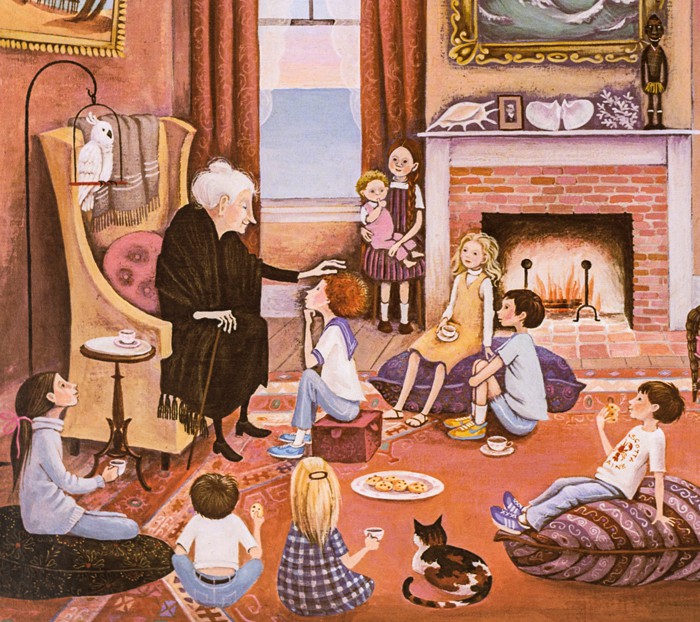






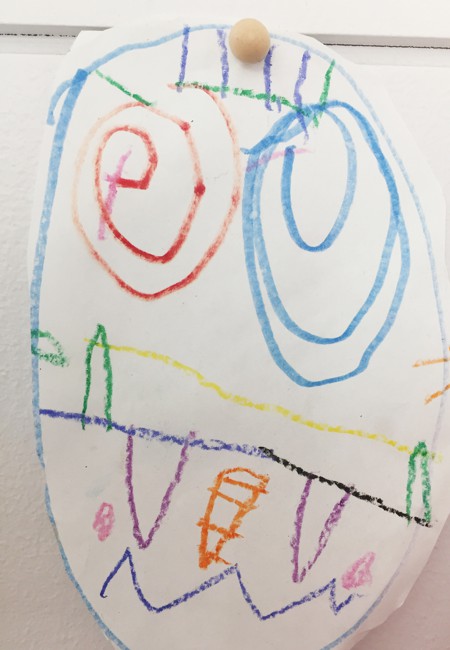
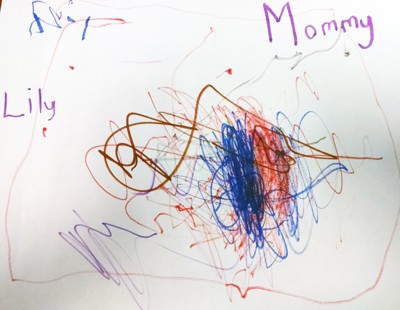
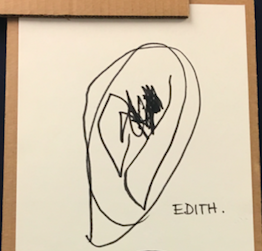
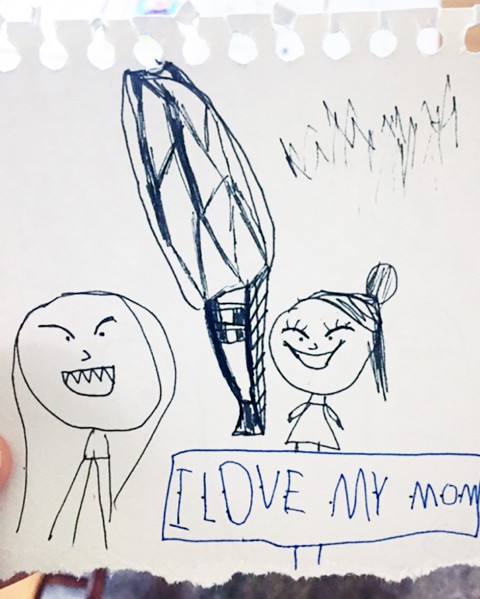









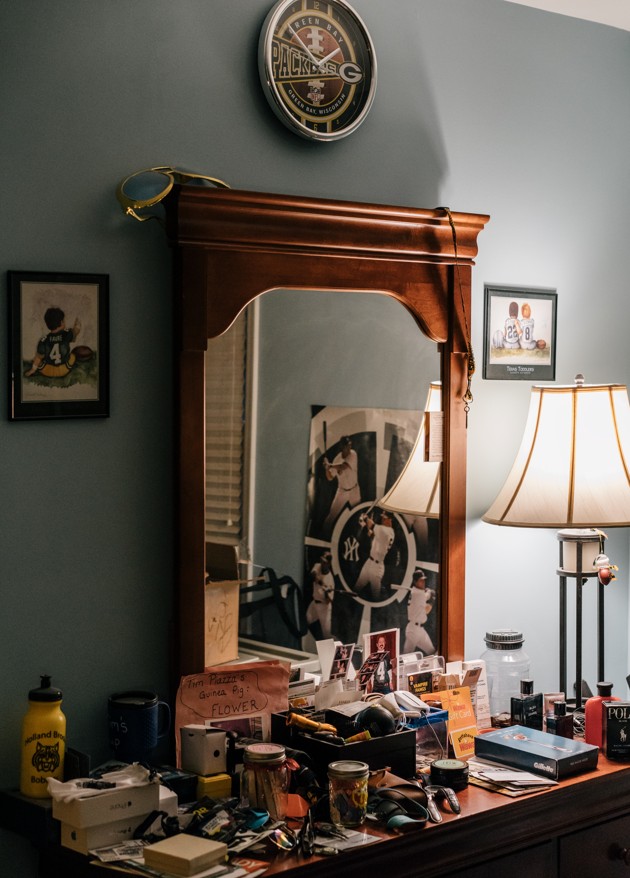
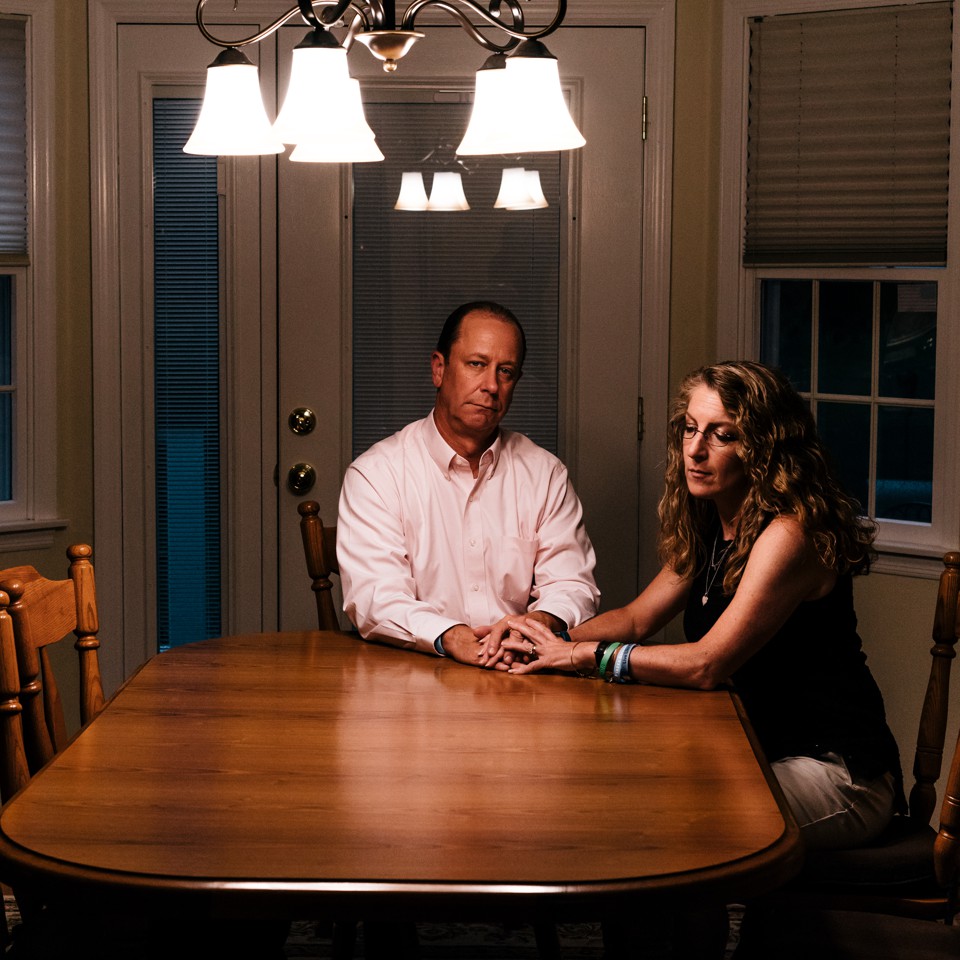



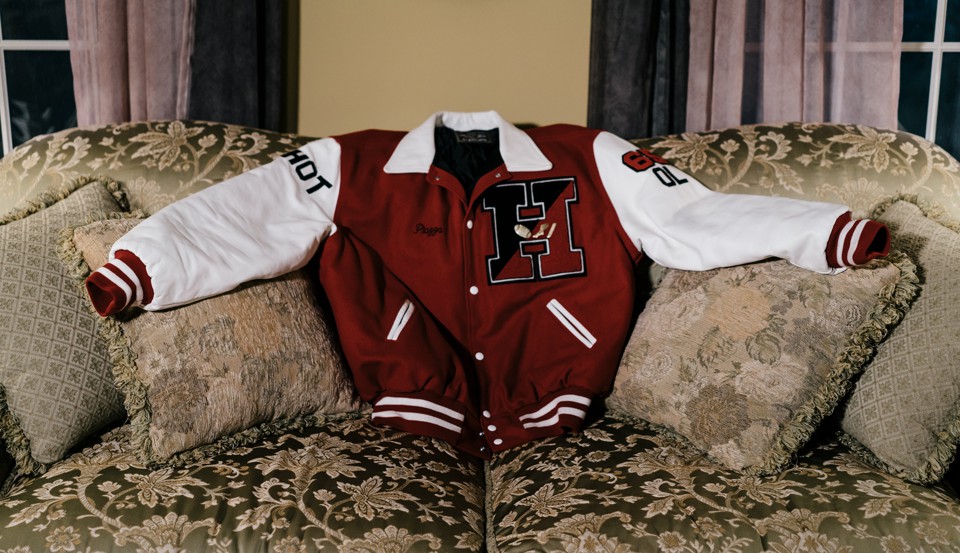
 When I was younger, and had the luxury of ambivalence about whether I would have child or not, my go-to analogy for pregnancy and birth was Alien. I’d remember the look of stunned shock on Hurt’s face, and the creature’s mewling cry of triumph, and think, Yup. Here is a creature that is not you, inside of you, growing. Its birth is a death—at least for the way you lived before. But I didn’t say any of this out loud. I knew I was wrong: society told me so. Giving birth was supposed to be magical. It was natural. My body would know what to do. If there was ever a time to tap into a wellspring of female instinct, this was it—and I certainly shouldn’t think that a horror film made by a bunch of men offered anything more than a reflection of their own anxiety about impregnation.