Complexity | ©Duncan George (Dartmoor National Park, Devon, England)
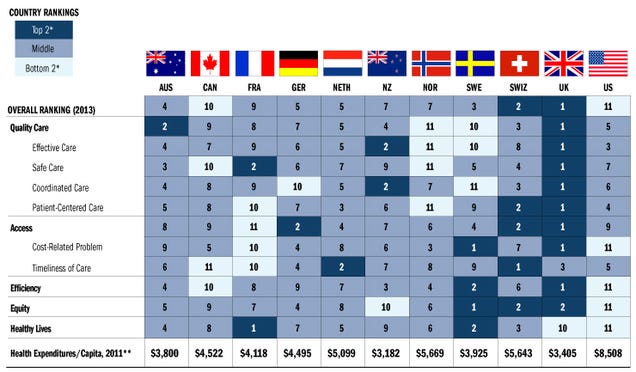
A survey released today by the Commonwealth Fund ranks the United States dead last in the quality of its healthcare system compared to ten other developed nations. At the same time, it's also the most expensive in the world.


On today’s edition of “Unnecessarily Gendered Products”
not gonna lie I would pick the one on the right every damn time

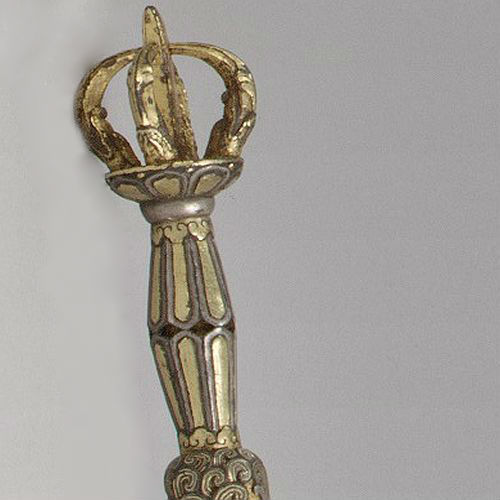
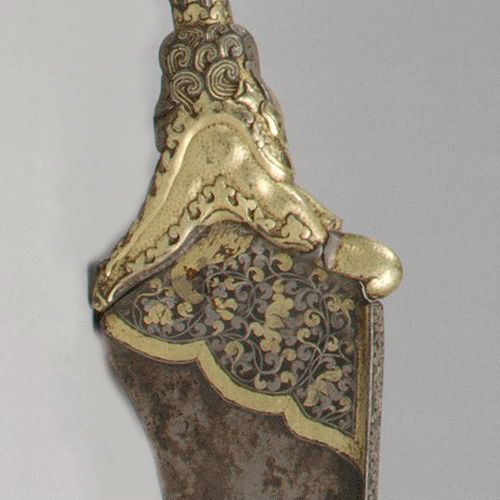

Vajra Flaying Knife
This flaying knife (Tibetan: triguk; Sanskrit: kartrika) is styled in the Indian manner—with a long, hooked steel blade for both butchering and flaying. A vajra, symbol par excellence of Tibetan Vajrayana Buddhism, forms the handle.
The lower “thunderbolt” emblem metamorphoses into a wide-jawed sea monster (makara), from which issues the blade, finely damascened with gold and silver and displaying an interlacing floral design.
Workshops in the region of Derge, Kham Province, in eastern Tibet, excelled in such fine metalworking techniques, providing the probable source for this knife.

Merry Christmas from the Briggs Family


Losing yourself in a labyrinth
Here is something special I happened upon by coincidence in a French database today. These unique drawings are found in a handwritten book from 1611 produced by Nicolas de Rély, a monk from Corbie. We know little about the author and the book is relatively unknown in scholarship, which is kind of amazing considering its topic: a study of medieval labyrinths. These large objects were mazes of up to 40 feet in diameter, built into the floor of cathedrals of twelfth and thirteenth-century Europe (see Chartres Cathedral, lower image). Church visitors, which included a lot of pilgrims, had to undertake a journey to its centre - the latter on their knees, by means of repentance. The labyrinth is also an intellectual exercise, of creating an object of perfect harmony, of balance and calculation, like the Gothic cathedrals which housed them. The monk in the early 17th century was so fascinated by them that he devoted a study to their shapes and routes, replicating them in detail: what a beautiful way to lose yourself!
Pic: Amiens, Bibliothèque municipale, MS 405 (dated 1611). More images and some more information here. More information of labyrinths here and in this PDF. More about the Amiens labyrinth here.

Repoussé iron burgonet helmet. Italian school.
From Les monstres dans l’art (Monsters in art), by Edmond Valton, Paris, 1905.
(Source: archive.org)


European Dagger
The dagger has a bronze handle ornate with a nude feminine figure. The steel blade is engraved with scrollwork, located Tolède and dated 1861.
Source: Copyright © 2014 Expertissim

Todd Lockwood's animated dragon would surely eat us, because we'd be too busy watching the perfect ripple of its wings to fight it.


Multiple videos have been posted online showing what uploaders described as hockey fans destroying a Los Angeles Police Department drone outside the Staples Center Friday night after the LA Kings won the NHL’s Stanley Cup.
Riot police were called in to break up what the LA Times described as a “melee” outside the arena following the King’s victory over the New York Rangers.
In one clip posted online, a drone can be seen hovering over the crowd of hockey fans before it was knocked out of the sky by people throwing shoes and clothing.
[…]
Hockey fans can be heard chanting, “We got the drone! We got the drone!”
And that’s how you take out a drone.
over a crowd of people to maximize the amount of damage a falling chunk of metal will cause?
yes

Baroque architecture inside the Margravial Opera House in Bayreuth, Germany, built 1740s
aaaaaaaaaaaa

It's one of the most iconic celestial images in astronomy — the eye-like Helix Nebula. Ironically, the incredibly harsh conditions within this dying Sun-like star are producing a molecule integral for the formation of water, a process that could be repeated across the cosmos.

If you enjoyed the sweet Gundam by Micah Berkoff (Arkov.) yesterday, prepare for its adorable little brother, the Chibi Gundam by Patrick Biggs. Both employ similar techniques, so the scale difference makes them fun to look at side-by-side.


Colosso dell’Appennino, 1580, by Giambologna (1529-1608), at Villa Demidoff Park, Tuscany, Italy

Soviet cosmonaut Valentina Tereshkova poster via Bruce.
Soviet cosmonaut Valentina Tereshkova, the first woman in space is depicted in this poster from 1967.
Translation: Our women – our pride!

Princess Aurora of Disney’s Sleeping Beauty has one the most striking princess gowns (the blue version is best), and cosplayer Dessi-Desu recently decided to design and make her own take on the dress. She kept the basic shape seen in the animated film, but she added texture by including different fabrics – one has a floral motif and another has gold vines. She used the Simplicity 5006 pattern for the corset, added piping details, and then used a stretch fabric for the sleeves to it would fit closely to her arms. To make the costume more her own, she also embellished the collar with pearl trim and appliques and a brooch.
She made the crown and choker too:
Sleeping Beauty has a ton of visual language in the dialogue. I decided to play up on the rose motif used to describe Aurora, and add some roses to my crown and necklace. The crown still needs the rhinestones added on, but other than that it’s done! Pieces were made with worbla, flourishes from the scrapbooking department, and the roses are beads.
See more photos at Dessi-Desu’s Facebook page.


via Geek x Girls, top photo by Kreation Studios

Martín De Pasquale is an expert digital retoucher based out of Argentina. His work is super weird and surreal- really awesome! Via Boing Boing.


 Every Tuesday is Art Tuesday here at Adafruit! Today we celebrate artists and makers from around the world who are designing innovative and creative works using technology, science, electronics and more. You can start your own career as an artist today with Adafruit’s conductive paints, art-related electronics kits, LEDs, wearables, 3D printers and more! Make your most imaginative designs come to life with our helpful tutorials from the Adafruit Learning System. And don’t forget to check in every Art Tuesday for more artistic inspiration here on the Adafruit Blog!
Tie tying robot (video).
cross posted from Dissent Blog
Thomas Piketty’s Capital in the Twenty-First Century merits ongoing praise for the renewed attention it has drawn to the challenge of American inequality. The decade of collaborative and comparative work on the trajectory of top incomes that it represents, as well as the new measures of wealth inequality it details, are invaluable. (The findings for the United States are summarized here.)
Needless to say, the book has incurred its share of criticism—some substantive, some silly. But of all the theoretical and methodological issues with Piketty’s sweeping account that reviewers have raised, I think the singular lingering weakness is this: the political and institutional sources of American inequality (and of American exceptionalism) are given short shrift. Piketty devotes surprisingly little attention to the policy shifts that unshackled incomes at the top and destroyed bargaining power at the bottom. “It’s like saying slavery is an inequality of assets between slaves and slaveholders,” as Suresh Naidu put it in Jacobin,“without describing the plantation.”
The starting point for such a description is not wealth or income, but wages—the trajectory of earnings for ordinary Americans. The Economic Policy Institute’s Raising America’s Payproject draws together the best recent work on this, highlighting the yawning gap between productivity and compensation, the last decade of flat wage growth, and the crushing weight of persistent unemployment and underemployment.
The graphic below takes a longer view, tracing real (inflation-adjusted) wages in key productive sectors since the 1930s and 1940s. The sectors covered here, like meatpacking or automobiles, are those for which decent wage data can be assembled for this full sweep of over seventy years. Importantly, they are also those sectors that we have historically relied upon for living-wage employment. Into the 1970s, as the uniform growth in real wages suggests, jobs in these industries were a ticket to the middle class. Since the late 1970s, however, wages in these industries have flattened at best—and in some cases fallen off substantially.


Bunker.jordanI want these. Please.