me 2 seconds into the previews

It’s almost like pro choicers were right all along about birth control being the best way to reduce abortion rates…. go figure.
-Lemon
It’s almost like if you make is really easy for people who don’t want to get pregnant to, in fact, not get pregnant, then you get fewer unwanted pregnancies and, thus, fewer people trying to end unwanted pregnancies.
Like god damn witchcraft.

Real satellite imagery from NASA
We are killing out planet.
No
That’s just the united stated photoshopped on the moon.no thats our dying planet have some respect
I like how there’s just a straight line on the borders with Canada and Mexico, like they somehow just vanished or something.
that’s what global warming has done, dude

Astronomers have detected an ancient stellar remnant that's 10 times fainter than the dimmest white dwarf ever discovered. Fortuitously orbited by a pulsar, this cold and collapsed star consists of crystallized carbon — essentially making it an Earth-sized diamond in space.

My previous post was about "Zulma, La Charmeuse de Serpent" (Zulma, The Snake-Charmer) created by Gaston Decamps around 1907. VERITAS Art Auctioneers in Lisbon, Portugal will be auctioning off this rare automaton today, June 24th 2014 .
Here is video footage of the piece in question. Just incredible!
Contact information for VERITAS Art Auctioneers:
Address: Av. Elias Garcia, 157 A/B 1050-099 Lisboa, Portugal
Phone: +351 21 794 8000
Email: info@veritasleiloes.com
Web: http://veritasleiloes.com
[ Thanks Falk! ]
Whether it’s the demise of small nursery rhyme characters or even the occasional case of poultricide, British builder Barney Main has always had a flair for creating darkly humorous LEGO scenes that read like cartoon panels (often with fully brick-built backgrounds). So who better to interpret that classic animal-centric cartoon series The Far Side in LEGO than Barney?


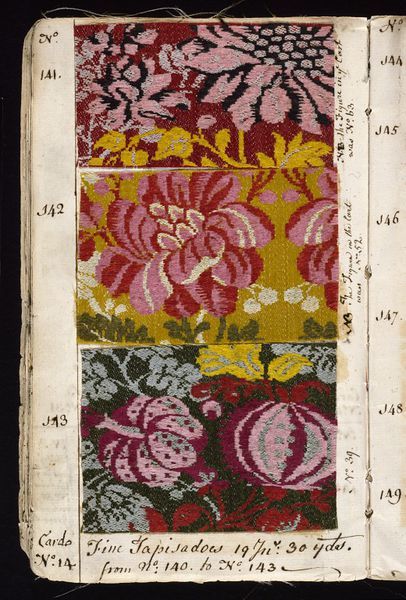
Norwich pattern books
These happy-looking books from the 18th century contain records. Not your regular historical records - who had died or was born, or how much was spent on bread and beer - but a record of cloth patterns available for purchase by customers. They survive from cloth producers in Norwich, England, and they are truly one of a kind: a showcase of cloth slips with handwritten numbers next to them for easy reference. The two lower images are from a pattern book of the Norwich cloth manufacturer John Kelly, who had such copies shipped to overseas customers in the 1760s. Hundreds of these beautiful objects must have circulated in 18th-century Europe, but they were almost all destroyed. The ones that do survive paint a colourful picture of a trade that made John and his colleagues very rich.
Pics: the top two images are from an 18th-century Norwich pattern book shown here; the lower ones are from a copy kept in the Victoria & Albert Museum in London (item 67-1885), more here.

Purchase the 1798 copy of Roworth’s The Art of Defence on Foot
The Academy of Historical Arts is one of the UK’s leading HEMA organisations. We are part of the Triquetra Services (Scotland) historical education charity and have been using Roworth’s text as the basis of our Scottish regimental broadsword course at the University of Glasgow for the past three years. When the opportunity arose to bring an original copy of the text into the organisation and international HEMA community, to save it from disappearing into a private collection never again to see the light of day, we decided to proceed with this campaign.
What We Need & What You Get
As a charity, we do not have the budget to purchase the book outright by ourselves, and so we are looking to the wider community to help us fund this rescue. If the community can help us raise at least £500 we will use our antique purchasing budget to pay the (still rather considerable) remaining balance. Upon acquiring the text, we will make it available for people to visit in person at the Glasgow Centre for Historical Arts, as well as publishing a paperback facsimile through our publishing arm: Fallen Rook Publishing.
As a thank you for our contributors we have created a series of perks which include:
The Impact
It is all too common for these texts to end up in private collections or museum vaults where they become forgotten or inaccessible. By helping the Academy of Historical Arts purchase this text, it can and will be made available to the community at large, and will be preserved by a charitable organisation that is dedicated to the long term preservation of European martial traditions.
Risks & Challenges
The biggest risk to this campaign is that someone else purchases the book before us. We have contacted the seller and are hoping we can negotiate to have the text held on our behalf for a fortnight, but the best way to minimise this risk is for us to raise the funds as soon as possible. If you are considering contributing please be aware time is very much of the essence and the sooner you contribute, the safer the campaign becomes.
Other Ways You Can Help
If you are unable to contribute financially then please spread the word. If the international HEMA community comes together we can purchase and make available this text for everyone’s benefit. Tell your friends, clubmates, grannies if you must.
Thank you for taking the time to consider this campaign. Now please contribute if you can and help us save this book!
This is adorable. Everything should just be made with dogs and cats instead of people. I would watch them all. [via Tastefully Offensive]


We’ve discussed the value of craft foam before. It’s easy to obtain and inexpensive. DeviantArt user RuffleButtCosplay has combined that material with Plasti Dip to make small props, and she’s created a tutorial showing how she used the items to make a plugsuit backpack. She started by making a paper pattern and cut it out four times with the foam – each piece was a little smaller than the last so it would stack up nicely. She secured them together with contact cement. After it completely dried, she sanded the edges to make them smooth. She added wood filler to the edges to fill in the cracks, waited until it dried, and smoothed it by sanding. Then, she sprayed it with three layers of Plasti Dip to get a nice and shiny finished product – it was inexpensive to make and it looks great.

See the full tutorial with step-by-step photos at DeviantArt.


To explore the photography of French art director and concept designer Nicolas Bouvier is to become lost in strange new world, the inhabitants of which are dwarfed by the towering silhouettes of tree and mountains, or swallowed completely by eerie fog and haze. Though these landscapes are indeed real, shot in locations mostly in the Pacific Northwestern U.S., it may not be surprising that Bouvier’s day job is pure science fiction: he creates stunning concept art and illustrations for video games like Halo and Assassin’s Creed. While his concept art has gathered wide acclaim (he’s currently publishing a third book of his own illustrations), his photographic work has also flourished, garnering a significant following over on Flickr. We’ve featured his images several times right here on Colossal as part of our Flickr Finds series.
Currently based in Seattle, Bouvier first picked up a camera in the 1990s while in school, but it wasn’t until 2007 that he began shooting again in earnest. He has since amassed a collection of nearly two dozen cameras (he mentions he picked up a Lumix ZS40 just yesterday), all of which he experiments with as he explores locations around California, Washington, Oregon, Mexico, and France with his family who often appear as subjects in his surreal photos.
It was nearly impossible to make a selection of work for this post, so I strongly urge you to click this link, grab some coffee, and then press the right arrow on your keyboard about 1,100 times. You won’t regret it.

Foam of all kinds seems to be useful in cosplay, and that includes expanding foam. Using the material is sort of like carving something down from a block of foam, but expanding foam offers a little more flexibility. Instead of starting with a large piece of foam you have to carve into the desired shape, you can spray expanding foam over an existing cardboard template. You’ll still have to carve it down, but the basic shape is at least there as a guide.
Kamui Cosplay loves using expanding foam, and she’s created a couple videos explaining how to use the material and how to carve it. She explains that after the piece is carved, she covers it in masking tape, applies a coat of newspaper with wallpaper glue, and covers it in papier mache. After the piece is dry, she sands it to smooth out the surface. I’m not sure that I’m sold on using expanding foam yet because carving it leads to a huge mess, but after watching Kamui’s videos, I can see the potential.
Turn on CC for English subtitles in the videos.
She explains the carving process more in this video:

A “selfie” of Curiosity made from images acquired with its MAHLI instrument in April and May (NASA/JPL-Caltech/MSSS). Click here for a full-res version
Sol 669 is here (well, there… on Mars that is…) and that marks the one full year anniversary of Curiosity’s mission exploring Gale Crater! Wait, you say, didn’t Curiosity land on Mars in August of 2012? Shouldn’t we still be approaching the TWO-year anniversary of the MSL mission? Well, yes, here on Earth, but on Mars a year is 1.8808 Earth-years long — that’s 686.9 Earth days to a single Martian year! So from landing day August 5 (August 6 UTC) 2012, 686.9 days Earth days (i.e., one Martian year) later is June 24, 2014 (which it is at the time of this writing, UTC) and thus:
Happy Mars Anniversary, Curiosity!
(Whew!)
NASA and JPL are marking a Mars year of successes for the Curiosity rover, as well.
From a NASA news release on June 23:
One of Curiosity’s first major findings after landing on the Red Planet in August 2012 was an ancient riverbed at its landing site. Nearby, at an area known as Yellowknife Bay, the mission met its main goal of determining whether the Martian Gale Crater ever was habitable for simple life forms. The answer, a historic “yes,” came from two mudstone slabs that the rover sampled with its drill. Analysis of these samples revealed the site was once a lakebed with mild water, the essential elemental ingredients for life, and a type of chemical energy source used by some microbes on Earth. If Mars had living organisms, this would have been a good home for them.

Panorama of Mars I assembled from Mastcam images acquired on April 9, 2014 (NASA/JPL-Caltech/MSSS/J. Major)
Other important findings during the first Martian year include:
• Assessing natural radiation levels both during the flight to Mars and on the Martian surface provides guidance for designing the protection needed for human missions to Mars.
• Measurements of heavy-versus-light variants of elements in the Martian atmosphere indicate that much of Mars’ early atmosphere disappeared by processes favoring loss of lighter atoms, such as from the top of the atmosphere. Other measurements found that the atmosphere holds very little, if any, methane, a gas that can be produced biologically.
• The first determinations of the age of a rock on Mars and how long a rock has been exposed to harmful radiation provide prospects for learning when water flowed and for assessing degradation rates of organic compounds in rocks and soils.
• Curiosity paused in driving this spring to drill and collect a sample from a sandstone site called Windjana. The rover currently is carrying some of the rock-powder sample collected at the site for follow-up analysis.
“Windjana has more magnetite than previous samples we’ve analyzed,” said David Blake, principal investigator for Curiosity’s Chemistry and Mineralogy (CheMin) instrument at NASA’s Ames Research Center, Moffett Field, California. “A key question is whether this magnetite is a component of the original basalt or resulted from later processes, such as would happen in water-soaked basaltic sediments. The answer is important to our understanding of habitability and the nature of the early-Mars environment.”
Watch how engineers at JPL prepare for Curiosity’s driving missions (and how a rover takes its own picture, too!)
Read more: Mercury is Spotted For The First Time — From Mars!
Curiosity departed Windjana in mid-May and is advancing westward. It has covered about nine-tenths of a mile (1.5 kilometers) in 23 driving days and brought the mission’s odometer tally up to 4.9 miles (7.9 kilometers).
“We are getting in some long drives using what we have learned,” said Jim Erickson, Curiosity Project Manager at NASA’s Jet Propulsion Laboratory (JPL) in Pasadena, California. “When you’re exploring another planet, you expect surprises. The sharp, embedded rocks were a bad surprise. Yellowknife Bay was a good surprise.”
Watch an HD view from Curiosity’s landing on August 5 PDT below:
Find out where Curiosity is now and keep up with the MSL mission timeline here.
Here’s to another amazing Martian year of discoveries!
Source: NASA