god daaaaaamn
Employees at the United States Environmental Protection Agency don’t care so much about their own workplace environment, apparently. Earlier this year, management at the Region 8 facility in Denver had to email staff to tell them to stop shitting in the hallways.The car doors slam shut as two agents from the Federal Bureau of Investigation climb out and step foot in the parking lot outside of a brick and glass structure housing the EPA’s regional facility for the northern and western mountain states.
"What makes you so interested in an EPA office, Mulder?"
"It’s a federal agency. We’ve got jurisdiction, Scully."
"Well I know that, Mulder, but that doesn’t answer my question. Why won’t you just tell me what we’re here for?"
"Alright, fine. Over the past several months, employees and cleaning staff have reported multiple incidents of human feces in the hallway."Mulder thumbs through photos from a thick manila folder full of evidence and internal emails from within the agency, and Scully cranes her neck to catch a view of the scatological crime scene.
"And?"
"And I think it’s the same person each time, Scully."
"Mulder, that’s ridiculous! Now, one person doing it once as, as, some kind of expression of frustration with coworkers, or with management, that’s perfectly plausible, but the same person, several times? Shouldn’t they have been caught by now?"
"They haven’t, Scully."
"Well, supposing you’re correct, this kind of… Behavior would signify some kind of pathological nature to the perpetrator’s motives, wouldn’t it? Leaving their own feces in an office building?”
They are leaving the parking lot now, heading into the building to speak to a man named Hal Chandler, the deputy regional administrator. His email to employees is the one that was leaked to the media, generating enough unflattering coverage that the case worked its way through a chain of embarassed senior figures in the EPA to Assistant Director Skinner, who handed Mulder and Scully the file and shipped them to Colorado posthaste.
"Yes, it would."
"So this is some kind of half-compulsive, maybe even obsessive behavior on the perpetrator’s part. WIth all this pressure and increased scrutiny, then, shouldn’t that cause some kind of escalation to manifest in their expression of that pathology?"
Mulder and Scully stop outside of the door to Chandler’s office, and look down to see an ominous brown and red pool slowly spilling out from underneath.
"That’s exactly what I’m afraid of, Scully."reblog 4 daytime crew
i’m an ominous brown and red pool irl

The recent discovery of 50,000-year-old human faecal remains in a Spanish cave shows that Neanderthals, in addition to consuming meat, ate lots of vegetables. It's the best proof yet that Neanderthals were omnivores — a diet that modern paleo-eaters will find very familiar.

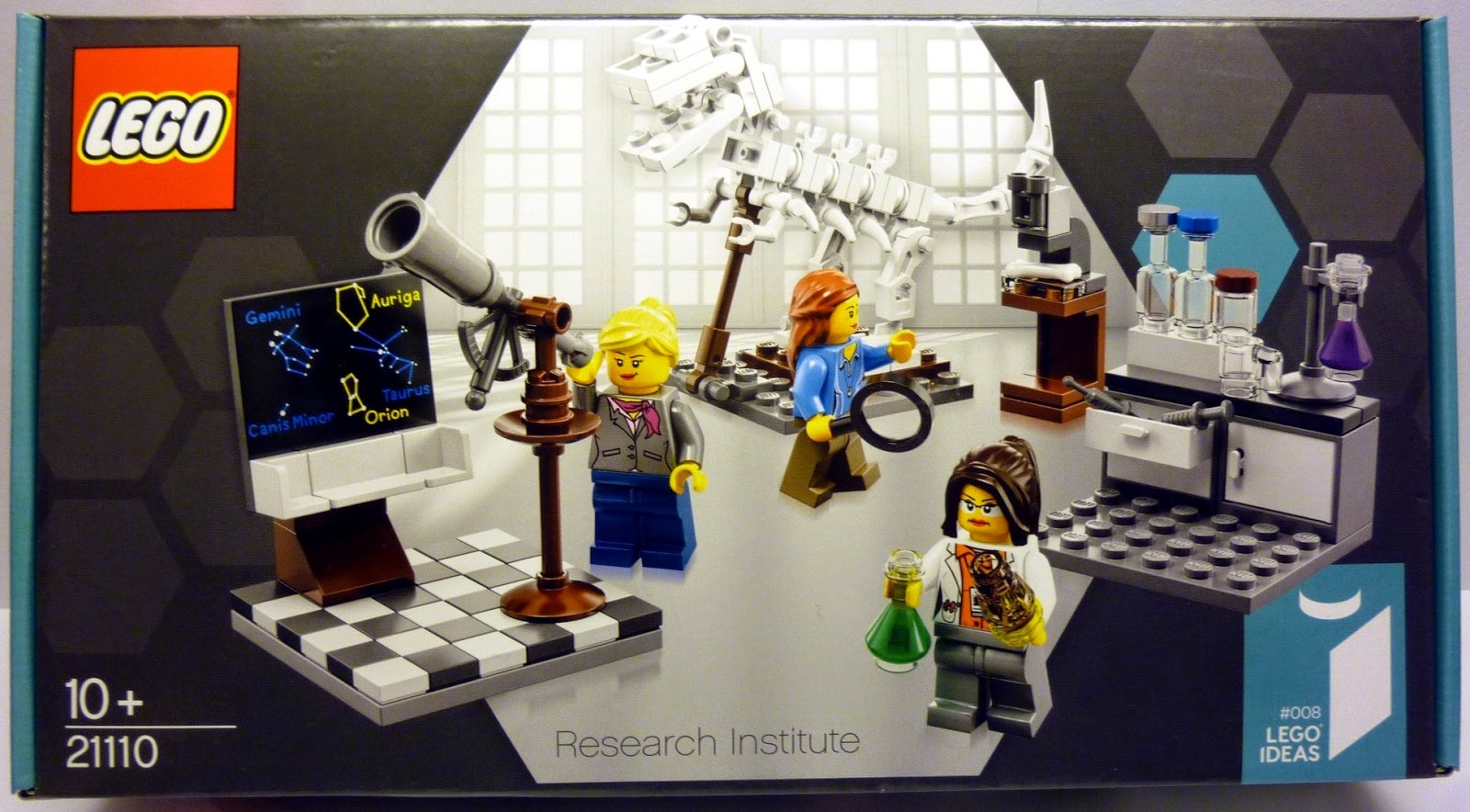
With the announcement of 10242 Mini Cooper, we missed covering LEGO Idea’s announcement of their next set: 21110 Research Institute, based off of Ellen Kooijman’s Female Minifigure set.
LEGO sent Ellen an advance copy of the set, which she has revealed on her blog. She takes us step by step through the box art, the construction, and includes observations about her profession and the stories the vignettes tell.
I wanted to highlight, too, this fantastic telescope design for the astronomer. I am so excited for this set to come out!
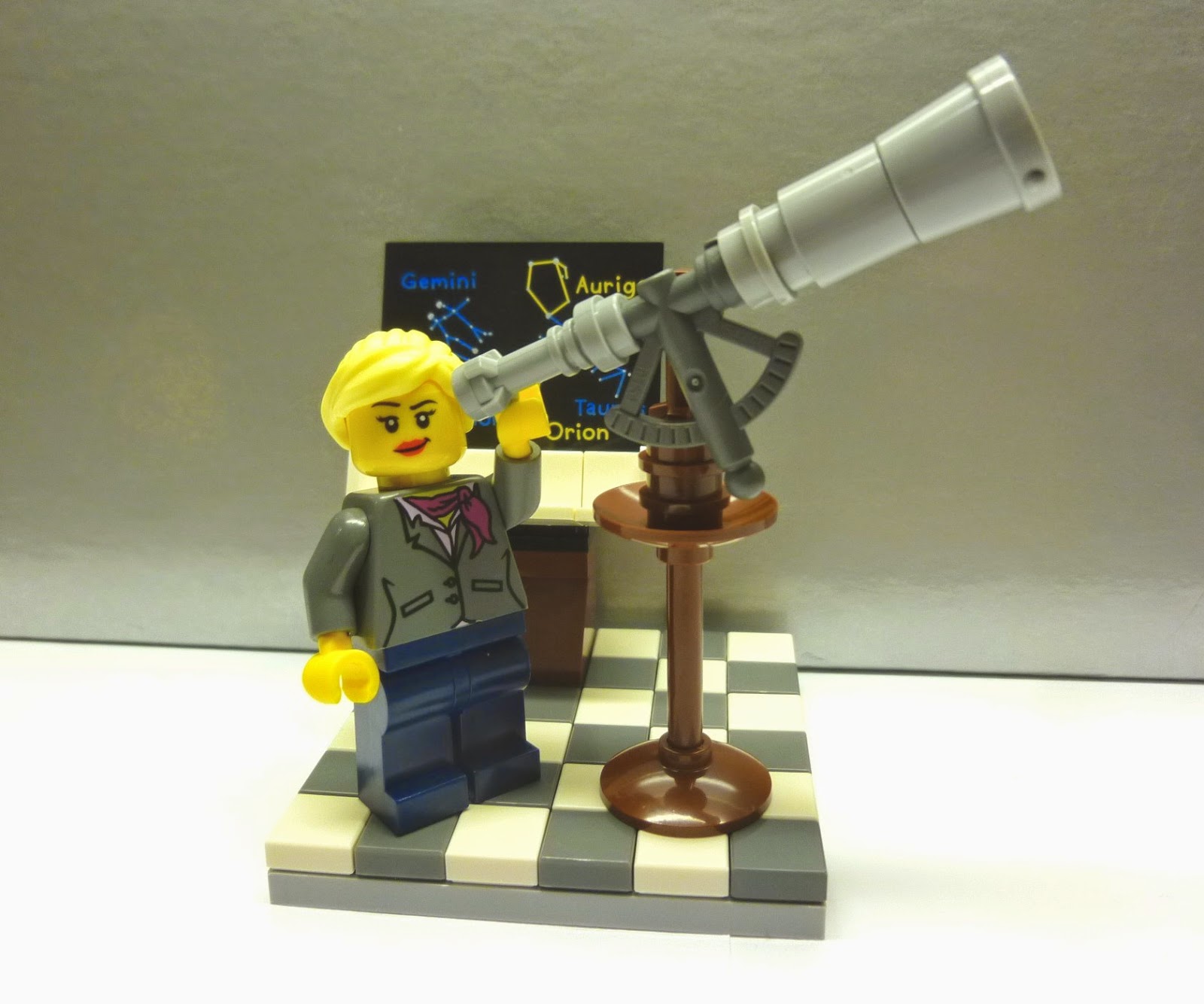
There doesn’t seem to be word yet on pricing or when it will be available, though it appears to be on target for an August release.

One thousand years ago, Abu Rayhan al-Biruni, a Central Asian scholar, conceived the concept of specific gravity, rejected creationism and argued that the Earth revolved around the sun. And now, according to one prominent academic, he also deserves to be remembered for discovering America.

Type your url: fartgallery
Type your url with your elbow: fafrtfgalldy
Type your url with your eyes closed: fartgallery
Type your url with your chin: hello, i am chin. i have been trapped on this man for 21 years with no means of escape. this is my first chance being able to communicate with the world, please send help. i dont know how much longer i have to t—
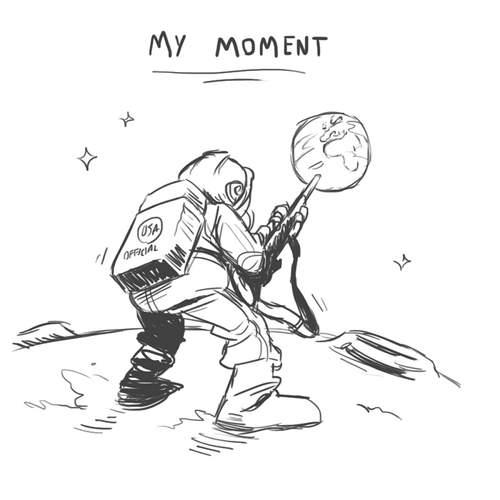
I want to be the first person on the moon to shoot a sniper rifle at earth and hit a wasp nest. my whole life so far is leading up to that moment
I got afraid and answered the door and dude called me darlin, doll, hun, darlin, hun, doll, babe so like now on top of everything else i have to get rid of a body


oh no, someone wanted boobies :’(
the best thing is they’re not just for show
dunno what they’re whining about that’s a damn fine misty if i ever saw one


The art of medieval medicine
This 14th-century medical handbook with surgical texts shows a long line-up of patients and medical conditions. It does so, remarkably, in a very attractive way, with vivid images presented in unusually bright colours. Dozens and dozens of colourful scenes are found in this book, showing a wide array of patients’ body parts and pains. It makes you feel like an intruder when they slide over your computer screen. It’s like peeking into a doctor’s office, where arrows are removed, bandages put on a bloody faces, and soar eyes are treated. How odd that these book scenes of suffering, meant to help physicians heal patients, have become scenes of art.
Pics: Montpellier, B. u. Médecine, H 089. Many more images from this book are found here.


A very exciting development has arrived for those using desktop SLA printers to create investment casting models for jewelry and other small, high-resolution parts: a print material specifically designed to suit ash-less burn out. While many designers have found routes for investment casting that suit more typical 3D printing materials, this is the first time that we are seeing directly-printed materials for desktop machines that functions more similar to the extremely high-end wax and otherwise industrial printers designed specifically with jewelry and fine metal parts in mind. Thanks to Matt Stultz/3DPPVD for the tip!
MadeSolid FireCast Resin – Investment Casting Resin for 3D Printers:
FireCast Resin is the latest development from the MadeSolid Lab. This resin is designed specifically for investment casting resin. Prints burn out clean with little to no ash. There is little thermal expansion during the heating phase.
Shrinkage is minimal from printing and post-curing until burnout. Many SLA and DLP printers are compatible with FireCast Resin including the Deep Imager 5 and Form1.
The resin is less viscous than most other resins and is easier to clean out from vats and off prints. It’s ideal for anyone who wants to change their printer to allow for casting parts


Every Thursday is #3dthursday here at Adafruit! The DIY 3D printing community has passion and dedication for making solid objects from digital models. Recently, we have noticed electronics projects integrated with 3D printed enclosures, brackets, and sculptures, so each Thursday we celebrate and highlight these bold pioneers!
Have you considered building a 3D project around an Arduino or other microcontroller? How about printing a bracket to mount your Raspberry Pi to the back of your HD monitor? And don’t forget the countless LED projects that are possible when you are modeling your projects in 3D!
The Adafruit Learning System has dozens of great tools to get you well on your way to creating incredible works of engineering, interactive art, and design with your 3D printer! We also offer the LulzBot TAZ – Open source 3D Printer and the Printrbot Simple Metal 3D Printer in our store. If you’ve made a cool project that combines 3D printing and electronics, be sure to let us know, and we’ll feature it here!
Bunker.jordanYes! So COOL!

Every story has a bad guy, and in Saga, Prince Robot IV is one of them. He appears in the fantastic comic series by Brian K. Vaughan and Fiona Staples, and he’s an emissary of the Robot Kingdom. He has a television for his head, and he was brought to life for HeroesCon by Contagious Costuming. They made a functioning TV head for the costume that displays different images. The person wearing the cosplay can see through a camera system hooked up to a monitor on the inside – the monitor is a smaller LCD screen. Not surprisingly, the costume won best in show at HeroesCon.
You can view the WIP album for the costume at Contagious Costuming’s Facebook page.

Photo by Pat Loika


Photos by Blake at Distractotron
Top photo via @luckycreature

Shoulder pauldrons are one of those cosplay accessories that can be worn with multiple ensembles. They’re ideal for renaissance faire outfits, but you could also make a pauldron for something like a Wonder Woman costume. Instructables user The Rambler decided to make his own pauldron and include three segments, and it looks like a basic and simple project. Gathering supplies might be the hardest part of it. He used 4-6 ounce weight leather, but you can adjust that based on how thick you want your pauldron to be. In addition to leather, he gathered buckles, rivets, stain, a leather punch, rivet setter, and knife. He then transferred the below pattern to the leather and start punching holes to for the segments:
Each of the main segments needs four holes; one punched in each corner… or at least sort of in each corner. In the third picture (and also the first picture in the last step) you can see how the rivets at the bottom of each piece are placed in the corners but the rivets at the top of the two bottom pieces are placed further down. They need to be slightly offset so that the armor plates won’t swivel completely around, but will instead flex a little before catching on each other (see what I mean in the second picture).
Four of the straps needed a hole punched for them to attach to the pauldron. That part was pretty straightforward. Three of them required a buckle to be attached on the other end. For that I needed to cut a slot for the buckle prong to fit through and then punch a hole on either side for the rivet. I also used my knife to skive the leather thinner where it would fold over on itself. Then I had to add holes to the fourth strap as well as the long strap for the belt prong to hook into.


Read more at Instructables.
Bunker.jordanExtremely well done :D

In StarCraft 2, Adjutants were a form of artificial intelligence used for everything from storing data to performing decryption. Cosplayer Christina Erring Bårdsen recently completed her Adjutant build, and she documented every step of the process on her blog. For the elaborate headpiece, she started with a styrofoam head:
I started with a Styrofoam head and covered it with worbla, then I had a base to add other details on. Because I’m cheap I use a base of cardboard for some of my details instead of double worbla layer or craft foam core.
The mohawk portion of the headpiece is simply folded worbla, and she also used worbla to make plugs to fit in the tubes. She applied a layer of black gesso and then applied silver paint for highlights.

For the shoulder armor, she used a plaster Easter egg for the basic shape, formed cardboard over it, and wrapped worbla around it. For the circular shape on the armor, she shaped worbla over a hair product box (pictures here) and added four 3mm orange LEDs to it. She covered the armor with black gesso and made it look metallic with “silver base paint and black wash. Details with acrylic paint and silver marker.”

This video goes over how she applied her makeup:
Read more about the costume at Chrix Designs. Top photo by Danarki, bottom photo by Pål Andresen.
Bunker.jordanBadass

Elizabeth Holmes founded her revolutionary blood diagnostics company, Theranos, when she was 19. It’s now worth more than $9 billion, and poised to change health care.
Theranos’s tests can be performed on just a few drops of blood, or about 1/100th to 1/1,000th of the amount that would ordinarily be required–an extraordinary potential boon to frequently tested hospital patients or cancer victims, the elderly, infants, children, the obese, those on anticoagulants, or simply anyone with an aversion to blood draws. Theranos phlebotomists–technicians licensed to take blood–draw it with a finger stick using a patented method that minimizes even the minor discomfort involved with that procedure.
Bunker.jordanJust $8000! #NewYorkApartmentSimulator2014

Bunker.jordanWoooo! Now if I only had 75k to spare...


Smoke Break
I came across this amazing cosplay on the internet recently. I couldn’t resist drawing it. So interesting.
Norm
Bunker.jordan#wonderful
As ordered by the US Congress, the FAA is gearing up to set forth a standard for commercial UAVs, Unmanned Aerial Systems, and commercial drones operating in America’s airspace. While they’ve been dragging their feet, and the laws and rules for these commercial drones probably won’t be ready by 2015, that doesn’t mean the FAA can’t figure out what the rules are for model aircraft in the meantime.
This week, the FAA released its interpretation (PDF) of what model aircraft operators can and can’t do, and the news isn’t good: FPV flights with quadcopters and model airplanes are now effectively banned, an entire industry centered around manufacturing and selling FPV equipment and autopilots will be highly regulated, and a great YouTube channel could soon be breaking the law.
The FAA’s interpretation of what model aircraft can and cannot do, and to a larger extent, what model aircraft are comes from the FAA Modernization And Reform Act Of 2012 (PDF). While this law states the, “…Federal Aviation Administration may
not promulgate any rule or regulation regarding a model aircraft…” it defines model aircraft as, “an unmanned aircraft that is capable of sustained flight in the atmosphere; flown within visual line of sight of the person operating the aircraft; and flown for hobby or recreational purposes.” The FAA has concluded that anything not meeting this definition, for example, a remote controlled airplane with an FPV setup, or a camera, video Tx and Rx, and video goggles, is therefore not a model aircraft, and falls under the regulatory authority of the FAA.
In addition, the FAA spent a great deal of verbiage defining what, “hobby or recreational purposes” in regards to model aircraft are. A cited example of a realtor using a model aircraft to take videos of a property they are selling is listed as not a hobby or recreation, as is a farmer using a model aircraft to see if crops need water. Interestingly, receiving money for demonstrating aerobatics with a model aircraft is also not allowed under the proposed FAA guidelines, a rule that when broadly interpreted could mean uploading a video of yourself flying a model plane, uploading that to YouTube, and clicking the ‘monetize’ button could soon be against the law. This means the awesome folks at Flite Test could soon be out of a job.
The AMA, the Academy Of Model Aeronautics, and traditionally the organization that sets the ‘community-based set of safety guidelines’ referred to in every law dealing with model aircraft, are not happy with the FAA’s proposed rules (PDF). However, their objection is a breathless emotional appeal calls the proposed rules a, “a strict regulatory approach to the operation of model aircraft in the hands of our youth and elderly members.” Other than offering comments per the FAA rulemaking process there are, unfortunately, no possible legal objections to the proposed FAA rules, simply because the FAA is doing exactly what congress told them to do.
The FAA is simply interpreting the Modernization And Reform Act Of 2012 as any person would: FPV goggles interfere with the line of sight of an aircraft, thus anyone flying something via FPV goggles falls under the regulatory authority of the FAA. Flying over the horizon is obviously not line of sight, and therefore not a model aircraft. Flying a model aircraft for money is not a hobby or recreation, and if you’re surprised about this, you simply aren’t familiar with FAA rules about money, work, and person-sized aircraft.
While the proposed FAA rules are not yet in effect, and the FAA is seeking public comment on these rules, if passed there will, unfortunately, exactly two ways to fix this. The first is with a change in federal law to redefine what a model aircraft is. Here’s how to find your congresscritter, with the usual rules applying: campaign donations are better than in-person visits which are better than letters which are better than phone calls which are better than emails. They’ll also look up if you have voted in the last few elections.
If passed, the only other way these rules will align with the privileges model aircraft enthusiasts have enjoyed for decades is through a court ruling. The lawsuit objecting to these rules will most likely be filed by the AMA, and if these rules pass, a donation or membership wouldn’t be a bad idea.