
Shared posts
31 May 23:16
Filed under: Uncategorized Tagged: Pups

How To Get Your Pup’s Attention
by pyrit
It’s easy, mate. Just say, “Do ye woonta go fedda wook?”
Fave outrrageous occent Frame:

Barbara B. sent in this YouTube video with doggies and magic words!
Filed under: Uncategorized Tagged: Pups
31 May 23:14


Catboarding
by whyevolutionistrue
Just what we need for the end of a long week. Moggie sports!
31 May 23:14
This Clever Spray Scrubber Almost Makes Up For Not Having a Dishwasher
by Andrew Liszewski

Are you dishwasherless and trying to find a way to streamline meal cleanup without resorting to paper plates and disposable cutlery? If so, your search is over. This easy to use kitchen accessory from Jokari snaps over your sink's sprayer, adding a ring of stiff bristles letting you scrub and blast dirty dishes clean. As long as you're not stuck with a hefty utilities bill at the end of the month for excess water usage, the Spray Scrubber is $8 well invested. [Jokari]
31 May 23:14


Presenting The MotorWeek 1995 Driver's Choice Awards!
by Patrick George
On Thursday, after hours of research and huffing paint, we brought you a chart that will tell you exactly which new car to buy. But how were you supposed to do that in 1995, back when there was no Jalopnik and the Internet was only for hackers and perverts?
    
|
31 May 23:09


Hurricane Twice The Size of Earth Occurring on Saturn's North Pole
Submitted by: Unknown
gary.mcmullen and -1 others like this
31 May 23:08


Atari Dump To Be Excavated In New Mexico, Finally
by Kim LaCapria

A legendary Atari dump’s excavation in New Mexico has been approved by local authorities, and the long-storied contents of the dumping grounds of a failed title nearly 30 years ago will be part of a coming documentary.
The Atari dump’s excavation follows three decades of intrigue regarding the video game graveyard in Alamogordo, New Mexico. Several truckloads of Atari junk was dumped in the desert graveyard — most notably reams of the notoriously despised title E.T., which has gone down in gaming history as an unplayable failure.
Explosion.com has a dim view of the Atari dump’s excavation, opining:
“Fuel Industries has been given a permit by the City of Alamogordo to take a six month period to excavate the site that is believed to be where Atari dumped a bunch of stuff. They plan on filming the whole thing to show the world what they discover, but the reality is that they might just uncover a bunch of junk.”
The writer adds:
“For me, I live in New Mexico and could, in theory, head down for this, but the reality is that no one wants to go to Alamogordo unless they have a very good reason, and old copies of E.T. doesn’t sound that promising.”
NPR quotes a source on the possible contents of the Atari dump, which is likely to pique gaming fanatics either way:
“That September, according to newspaper accounts, 14 trucks backed up to the dump and dropped their loads … Company spokespeople told the local press that the waste was mostly broken and returned merchandise — consoles, boxes, and cartidges.”
NPR also quotes one person who repeated speculation at the time that the Atari dump was a method of handing excess game and console inventory:
“The rumor is that Atari decided to deal with its oversupply by simply burying all of those extra cartridges in the Alamogordo landfill, crushing them with bulldozers and covering them with cement.”
Are you interested in seeing what the Atari dump has been hiding for 30 years?
Atari Dump To Be Excavated In New Mexico, Finally is a post from: The Inquisitr
Fatbob likes this



31 May 23:02

After securing a publisher for its first-person shooter Paranautical Activity, indie developer Code Avarice claims that it has been blocked from a direct Steam release due to a conflict with a previously launched Steam Greenlight campaign.
Code Avarice submitted Paranautical Activity to Steam Greenlight in August last year, and later entered talks with Adult Swim Games to assist with promotion and publishing. Code Avarice's Mike Maulbeck claims that Adult Swim's recent attempt to directly publish the game through Steam was turned down because Valve "didn't want to send the message that indies can seek out publishers to bypass Steam Greenlight."
Maulbeck elaborates in the interview above, saying, "We just assumed that we would need Greenlight because everybody has to go through Greenlight now."
Maulbeck continues: "Now we're just dead in the water. We've got a Greenlight campaign that we haven't touched in months, and we have to resurrect it from the ashes, because that's our only option at this point.
"We can totally back out [of Adult Swim's publishing agreement] now if we want to," Maulbeck said. "We haven't officially decided if we want to go with them, but the fact that we have to get onto Steam [ourselves] is a real bummer."
Addressing the situation, Valve's Doug Lombardi told Gamasutra, "We review Greenlight votes, reviews, and a variety of factors in the Greenlight process. However our message to indies regarding publishers is do it for your own reasons, but do not split your royalties with a publisher expecting an automatic 'Yes' on Greenlight."
Paranautical Activity allegedly blocked from Steam release due to Greenlight conflict
by Danny Cowan
After securing a publisher for its first-person shooter Paranautical Activity, indie developer Code Avarice claims that it has been blocked from a direct Steam release due to a conflict with a previously launched Steam Greenlight campaign.
Code Avarice submitted Paranautical Activity to Steam Greenlight in August last year, and later entered talks with Adult Swim Games to assist with promotion and publishing. Code Avarice's Mike Maulbeck claims that Adult Swim's recent attempt to directly publish the game through Steam was turned down because Valve "didn't want to send the message that indies can seek out publishers to bypass Steam Greenlight."
Maulbeck elaborates in the interview above, saying, "We just assumed that we would need Greenlight because everybody has to go through Greenlight now."
Maulbeck continues: "Now we're just dead in the water. We've got a Greenlight campaign that we haven't touched in months, and we have to resurrect it from the ashes, because that's our only option at this point.
"We can totally back out [of Adult Swim's publishing agreement] now if we want to," Maulbeck said. "We haven't officially decided if we want to go with them, but the fact that we have to get onto Steam [ourselves] is a real bummer."
Addressing the situation, Valve's Doug Lombardi told Gamasutra, "We review Greenlight votes, reviews, and a variety of factors in the Greenlight process. However our message to indies regarding publishers is do it for your own reasons, but do not split your royalties with a publisher expecting an automatic 'Yes' on Greenlight."
 Paranautical Activity allegedly blocked from Steam release due to Greenlight conflict originally appeared on Joystiq on Fri, 31 May 2013 18:00:00 EST. Please see our terms for use of feeds.
31 May 23:00
Mamorukun Curse! is a 'cute-em-up' for PS3
by Steve Watts
Scourge: Outbreak publisher UFO Interactive has has announced it's bringing the Japanese title Mamorukun Curse! stateside. It's set to release on PS3 via PlayStation Network on July 16 in North America for $19.99.
The announcement describes it as a (ahem) "cute-em-up" top-down shooter, which follows the hero Mamorukun and other Chosen Souls as they find themselves in the Netherworld. Before long they're ordered by Ms. Fululu to help bring balance back to the Netherworld with their Curse powers, which naturally express themselves as shooty bits.
The game features three play modes (Action, Arcade, and Story), seven selectable characters, online leaderboards, and all of the DLC from the original Japanese version of the game. It will also include two extra netherworld adventure courses, and two extra characters, for those who actually did play the original. It mentions screen-filling enemy fire, so you can expect this to be a cuddly bullet-hell shooter.
31 May 22:58


Hitchiker's Was Right!
Submitted by: Unknown
Gpscruise, John Hollowell and 3 others like this
31 May 22:58
Section: Automotive
Tags: Chevrolet, Corvette, GM
Related Articles:

2014 Corvette stings a little harder with 460 horsepower
by C.C. Weiss

Section: Automotive
Tags: Chevrolet, Corvette, GM
Related Articles:
- 2014 Corvette's 6.2L V-8 LT1 engine to have 450+ horsepower
- Hennessey bulking the all-new Corvette up to 1000 HP
- Heat-activated “smart material” debuts in 2014 Corvette
- Callaway turns the 2014 Corvette Stingray into a wagon
- Chevrolet unveils soft-top Corvette Stingray at Geneva Motor Show
- Corvette ZR1's certified power ratings exceed expectations
31 May 22:56


The First Images of Molecules Breaking and Reforming Chemical Bonds
by George Dvorsky

Microscopy is advancing in leaps and bounds these days. It was just last week that scientists produced the first image of a hydrogen atom’s orbital structure. Not to be outdone, Berkeley chemists have now captured a series of images showing molecules as they break and reform their chemical bonds. It looks almost... textbook.
|
|
31 May 22:55
 This is the custom Minecraft themed lawn chair built by Redditor kaptaingunner to be sold at a fundraising event. What kind of fundraiser? No clue, but I just bid a million dollars on it, so hopefully not one for the advancement of robot technology. In my mind it was cancer related.
Hit the jump for several more shots including some of the build.
This is the custom Minecraft themed lawn chair built by Redditor kaptaingunner to be sold at a fundraising event. What kind of fundraiser? No clue, but I just bid a million dollars on it, so hopefully not one for the advancement of robot technology. In my mind it was cancer related.
Hit the jump for several more shots including some of the build.
Awesome Minecraft Lawn Chair Built For Fundraiser
This is the custom Minecraft themed lawn chair built by Redditor kaptaingunner to be sold at a fundraising event. What kind of fundraiser? No clue, but I just bid a million dollars on it, so hopefully not one for the advancement of robot technology. In my mind it was cancer related.
Hit the jump for several more shots including some of the build.
31 May 22:55


Fake Star Wars Brands (8 Wallpapers)
by Brotha Jonze
Fake Star Wars brands wallpaper.
Fire Wx likes this
31 May 22:55

Christy Mack

Eden Von Sleaze

Bonnie Rotten

Kagney Linn Karter

Nicole Malice

Crista Moore

Julez Ventura

Anita Toro

Pheonix Marie

Elaina Raye

Laela Pryce

Diamond Kitty

Jasmine Wolff

Krissie Dee

Sara Luvv

Cassie Laine

Veruca James

Brea Bennett

Jasmine Jovel

Tiffany Tyler

Sophie Dee

Jynx Maze

Jennifer White

Courtney Shea

Belle Noire

Stormy Daniels

Sally Sparrow

Arabelle Raphael

Annika Amour

Alexis Monroe

Sierra Sanders

Lola Foxx

Eva Notty

Rachel Starr

Anissa Kate

Ash Hollywood

Celeste Star

Natasha Malkova

Darryl Hanah

Amor Hilton

Prinzzess

Nikki Benz

Kristina Rose

Porn Stars Before and After Their Makeup Makeover
by noreply@blogger.com (Damn Cool Pics)
Danielle Delaunay

Christy Mack

Eden Von Sleaze

Bonnie Rotten

Kagney Linn Karter

Nicole Malice

Crista Moore

Julez Ventura

Anita Toro

Pheonix Marie

Elaina Raye

Laela Pryce

Diamond Kitty

Jasmine Wolff

Krissie Dee

Sara Luvv

Cassie Laine

Veruca James

Brea Bennett

Jasmine Jovel

Tiffany Tyler

Sophie Dee

Jynx Maze

Jennifer White

Courtney Shea

Belle Noire

Stormy Daniels

Sally Sparrow

Arabelle Raphael

Annika Amour

Alexis Monroe

Sierra Sanders

Lola Foxx

Eva Notty

Rachel Starr

Anissa Kate

Ash Hollywood

Celeste Star

Natasha Malkova

Darryl Hanah

Amor Hilton

Prinzzess

Nikki Benz

Kristina Rose


31 May 22:49


Grilling: Sweet and Spicy Chicken Sandwiches
by Joshua Bousel

[Photographs: Joshua Bousel]
It's common to find me lamenting the all too often dry and flavorless skinless boneless chicken grilled breasts (I put my stock in juicy thighs). I hardly ever give chicken breasts a thought when planning barbecue menus, but while down in Alabama last fall, pitmaster Chris Lilly of Big Bob Gibson Bar-B-Q served a sweet glazed chicken breast sandwich that was so stellar that it made me question my stubborn avoidance of this piece of poultry.
The recipe for these impressive chicken sandwiches may seem to have a lot of ingredients and steps, but the entirety isn't all that bad and it's all well worth it. First, the brine ensures the breasts are moist, then a barbecue glaze gives them their sweet and spicy character. Sugar and chili-rubbed bacon is the icing on the cake, adding a bit of crispness and saltiness. Put these all together on a buttered and toasted bun with lettuce, tomato, and onion, and I dare anyone to say a bad word about them.
Even after over-stuffing myself with one of these sandwiches, ribs, and smoked pork shoulder, I couldn't resist the draw of eating a second at a barbecue last weekend—they're really just that good, and that's saying a lot coming from a guy who's usually a chicken breast naysayer.
Get the Recipe
Sweet and Spicy Grilled Chicken Sandwiches »
About the author: Joshua Bousel brings you new, tasty condiment each Wednesday and a recipe for weekend grilling every Friday. He also writes about grilling and barbecue on his blog The Meatwave whenever he can be pulled away from his grill.
Get the Recipe!
Jason.c.carter likes this
31 May 22:49


I Had Something to Say About This Picture...
And still do: talk about an insensitive street name!
Submitted by: Unknown
31 May 22:45
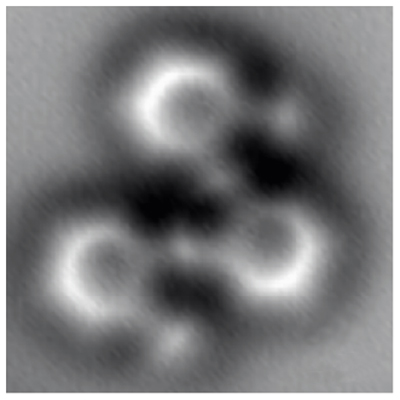 About this groundbreaking photo from Lawrence Berkeley National Laboratory and UC Berkeley:


First-ever high-res photos of chemical bonds breaking
by Xeni Jardin
About this groundbreaking photo from Lawrence Berkeley National Laboratory and UC Berkeley:"Almost as clearly as a textbook diagram, this image made by a noncontact atomic force microscope reveals the positions of individual atoms and bonds, in a molecule having 26 carbon atoms and 14 hydrogen atoms structured as three connected benzene rings."
"Nobody has ever taken direct, single-bond-resolved images of individual molecules, right before and immediately after a complex organic reaction," says Felix Fischer of the U.S. Department of Energy's Lawrence Berkeley National Laboratory.
(via James McInerney) 
|
|
31 May 22:45


Here's what Pangea looks like mapped with modern political borders
by Robert T. Gonzalez

Pretty wild, right? It's a map of Pangea — a supercontinent that formed roughly 300 million years ago — mapped with contemporary geopolitical borders.
|
|

31 May 22:44
 Your BFF, right on your butt. Did you know you can donate one or all of your vital organs to the Aperture Science Self-Esteem Fund for Girls? It's true! $12.99


T-Shirts & Apparel : Portal 2 Companion Cube Ladies' Panties
Your BFF, right on your butt. Did you know you can donate one or all of your vital organs to the Aperture Science Self-Esteem Fund for Girls? It's true! $12.99
31 May 22:44
How a Supercomputer May Have Finally Unlocked a Way to Beat HIV
by Andrew Tarantola

There's no easy answer for HIV; the sly virus uses our own immune cells to its advantage and mutates readily to shrug off round after round of anti-retrovirals. But thanks to the efforts researchers from the University of Illinois and some heavy-duty number crunching from one of the world's fastest petaflop supercomputers, we may be able to stop HIV right in its tracks.
The latest line of attack against HIV targets its viral casing (or capsid). Capsids lie between the virus's spherical outer coat, a .1 micron diameter, lipid based layer known as the viral envelope, and a bullet-shaped inner coat known as the viral core that contains the strands of HIV RNA. Capsids comprise 2,000 copies of the viral protein, p24, arranged in a lattice structure (a rough insight gleaned only from years of cryo-electron microscopy, nuclear magnetic resonance spectroscopy, cryo-EM tomography, and X-ray crystallography work). The capsid is responsible for protecting the RNA load, disabling the host's immune system, and delivering the RNA into new cells. In other words: It's the evil mastermind.
The lattice protein structure allows the capsid to open and close like a Hoberman Sphere.

As Dr Peijun Zhang, project lead and associate professor in structural biology at the University of Pittsburgh School of Medicine explained to the BBC:
The capsid is critically important for HIV replication, so knowing its structure in detail could lead us to new drugs that can treat or prevent the infection. The capsid has to remain intact to protect the HIV genome and get it into the human cell, but once inside, it has to come apart to release its content so that the virus can replicate. Developing drugs that cause capsid dysfunction by preventing its assembly or disassembly might stop the virus from reproducing.
But until very recently, the precise structure—how the thousands of copies of p24 actually meshed together—remained a mystery. The capsid's (relatively) large size, non-symmetric shape, protein structure has stumped researchers' attempts to effectively model it. Earlier research had revealed that the p24 arranged itself in either a pentagon or hexagon shape as part of the capsid structure, but how many of each and how the pieces fit together remained out of reach because science simply didn't have the computational prowess to model this incredibly complex subatomic structure in atomic-level detail.
This problem required a petaflop-level supercomputer to solve, a class of machine that has only recently become readily available. The team turned to National Center for Supercomputing Applications at the University of Illinois at Urbana-Champaign and its resident supercomputer, Blue Waters.

The team fed electron microscopy data collected in lab experiments conducted at the University of Pittsburgh and Vanderbilt University into Blue Waters and let the $108 million, 11.5 petaflop machine do its thing: Crunch massive amounts of information with its 49,000 AMD CPUs. Blue Waters can handle one quadrillion floating point operations every second, so stitching together 1,300 proteins into an oblong molecular soccer ball was no sweat.
The team developed a novel shaping algorithm for the project, dubbed molecular dynamic flexible fitting. "You basically simulate the physical characteristics and behavior of large biological molecules, but you also incorporate the data into the simulation so that the model actually drives itself toward agreement with the data," said Professor Klaus Schulten of the University of Illinois in a press release.

"This is a big structure, one of the biggest structures ever solved," Schulten continued. "It was very clear that it would require a huge amount of simulation — the largest simulation ever published — involving 64 million atoms."
The team revealed the complete capsid structure in a Nature report yesterday:
The mature human immunodeficiency virus-1 (HIV-1) capsid is best described by a ‘fullerene cone’ model2, 3, in which hexamers of the capsid protein are linked to form a hexagonal surface lattice that is closed by incorporating 12 capsid-protein pentamers.

In all, the HIV capsid requires 216 protein hexagons and 12 protein pentagons to operate—arranged exactly as the predictive models said they would be. The new discovery reveals a stunningly versatile protein in p24. The protein itself is identical whether it's shaped into a pentagon or a hexagon, only the attachment sites between p24 proteins varies between shapes. How that works remains a mystery.
"How can a single type of protein form something as varied as this thing? The protein has to be inherently flexible," said Schulten.

New questions aside, this breakthrough illustrates precisely how the capsid works and how scientists can best attack that function to disrupt the virus' ability to replicate. By exploiting the capsid's structure, researchers theoretically could deliver a molecular padlock that prevents the viral core from opening and the virus from spreading. This discovery could lead to an entirely new suite of treatment alternatives and could finally outpace HIV's ability to rapidly evolve resistance to current enzyme-based medications.
"The big problem with HIV is that it evolves so quickly that any drug you use you get drug resistance which is why we use a multi-drug cocktail," Professor Simon Lovell, a structural biologist at the University of Manchester, said. "This is another target, another thing we can go after to develop a new class of drugs to work alongside the existing class."
It's only a matter of time until HIV goes the way of polio. And it's thanks in no small part to one beast of a computer. [BBC - CNet - Nature - University of Illinois - National Science Foundation - NIH - Top Image: CDC (public domain) - Trio and duo Images: Theoretical and Computational Biophysics Group (www.ks.uiuc.edu), Beckman Institute for Advanced Science and Technology, UIUC - Blue Waters: kosheahan / Flickr - Pipes: UIUC - Illustration: NIAID]

