 The movie industry has seen its share of struggles as we transition into a digital future, and likely no one has felt the pinch more than film company Kodak. The struggling outfit is getting a life-raft, though, in the form of several studios...
Shared posts
08 Aug 23:49
The movie industry has seen its share of struggles as we transition into a digital future, and likely no one has felt the pinch more than film company Kodak. The struggling outfit is getting a life-raft, though, in the form of several studios...
Quentin Tarantino and Christopher Nolan want to save the future of movies on film
by Timothy J. Seppala
The movie industry has seen its share of struggles as we transition into a digital future, and likely no one has felt the pinch more than film company Kodak. The struggling outfit is getting a life-raft, though, in the form of several studios...
Tadeu likes this
03 Aug 01:31
Coffee Table Ping-Pong Is More Entertaining Than a Stack Of Magazines
by Andrew Liszewski

Who says coffee tables can only serve as magazine storage, beverage holders, or less than comfortable footrests? Huzi Design's Ping-Pong coffee table proves they can also be a great way to entertain guests without resorting to breaking out your Catan board.

02 Aug 06:32
Pest Control: Black Flag
by tia@misstia.com
I'm pretty sure you're going to want to close your mouth and hold that far from your face, lady.

02 Aug 01:29


26 of the most epic product fails in American history
by Drake Baer and Jay Yarow

- Launching a new product is no easy feat — even major companies have unexpected flops.
- Less than 3% of new consumer packaged goods exceed first-year sales of $50 million, according to Joan Schneider and Julie Hall, coauthors of "The New Launch Plan."
- Microsoft's Zune failed to compete with the iPod, Cosmopolitan magazine couldn't break into the yogurt business, and McDonald's couldn't sell a burger intended for more sophisticated palates.
- Visit Business Insider's homepage for more stories.
Launching a product is hard to do.
"Less than 3% of new consumer packaged goods exceed first-year sales of $50 million — considered the benchmark of a highly successful launch," say Joan Schneider and Julie Hall, coauthors of "The New Launch Plan: 152 Tips, Tactics and Trends from the Most Memorable New Products."
That's part of the reason that the most heavy-hitting names in business — from Pepsi to Netflix, Microsoft to McDonald's — have had some of the biggest belly flops.
Read more: 14 rules for using commas without looking like a fool
Here's a look at 26 of them and what we can learn from these epic fails.
Aimee Groth and Jay Yarow contributed reporting to this story.
26. Ford Edsel (1957)
Bill Gates cites the Edsel flop as his favorite case study. Even the name "Edsel" is synonymous with "marketing failure."
Ford invested $400 million into the car, which it introduced in 1957. But Americans literally weren't buying it, because they wanted "smaller, more economic vehicles," according to Associated Content:
Other pundits have blamed its failure on Ford Motors execs never really defining the model's niche in the car market. The pricing and market aim of most Edsel models was somewhere between the highest-end Ford and the lowest-end Mercury.
It was taken off the market in 1960.
25. Gerber Singles (1974)
Tweet Embed:
//twitter.com/mims/statuses/1176955280199864320?ref_src=twsrc%5Etfw
Gerber Singles, for when you are an adult who can no longer be bothered with feeding yourself.
Check out some food experimentation atrocities in this week's #ElectricEel. https://t.co/Kj7D1HdYae pic.twitter.com/PiUsI76nMi
Gerber innovated baby food for adults in 1974, with flavors like beef burgundy, Mediterranean vegetables, and blueberry delight.
24. Sony Betamax (1975)
The 1970s saw a war in home video formats between Betamax and VHS.
Sony made a mistake: It started selling the Betamax in 1975, while its rivals started releasing VHS machines. Sony kept Betamax proprietary, meaning it had exclusive rights to the format; consequently, the market for VHS products quickly outpaced the company.
23. New Coke (1985)
In the early 1980s, Coke was losing ground to Pepsi. So it tried to create a product that would taste more like Pepsi.
While New Coke fared OK in nationwide taste tests before launching in 1985, it turned out those were misleading.
Coke abandoned the product after a few weeks and went back to its old formula. It also gave its product a new name: Coca-Cola Classic.
22. Pepsi A.M. (1989)
Instagram Embed:
//instagram.com/p/3D8cWyKftE/embed
Width: 540px
In 1989, Pepsi tried to target the "breakfast cola drinker" with Pepsi A.M. At the time of its release, The New York Times reported that Pepsi A.M. would have 28% more caffeine per ounce than regular Pepsi. It lasted only a year.
21. RJ Reynolds smokeless cigarettes (1989)
In the 1980s, just as anti-smoking campaigns were heating up, RJ Reynolds put over $300 million into a new product: "Premier," smokeless cigarettes.
According to the Los Angeles Times, the Premier cigarettes heated up tobacco but did not burn it, and consumers did not like their scent or taste. RJ Reynolds pulled the cigarettes after just five months of testing in a handful of cities.
20. Coors Rocky Mountain Spring Water (1990)
This was an interesting experiment in brand extension. Coors Rocky Mountain Spring Water launched in 1990 and didn't fare well. It turns out beer drinkers want only one thing from their favorite label: beer.
19. Crystal Pepsi (1992)
In 1992, Pepsi tried again, this time with a clear cola, "Crystal Pepsi." No dice — it died in 1994.
(That is, until the summer of 2017, when it was briefly revived.)
18. Apple Newton (1993)
The Newton is held up as an example of Apple's bad old days — before it became a company with a $1 trillion market cap.
Forbes says the Newton PDA flopped for a number of reasons: it was too expensive (retailing anywhere from $700 to $1,200), it was too big (8 inches tall by 4.5 inches wide), and its handwriting recognition was so bad that a classic "Simpsons" episode made fun of it.
Read more: The 30 most coveted tech companies to work at, according to thousands of tech workers
17. Microsoft Bob (1995)
Youtube Embed:
//www.youtube.com/embed/5teG6ou8mWU
Width: 560px
Height: 315px
Microsoft Bob was supposed to be a user-friendly interface for Windows; the project was managed by Melinda Gates. Microsoft killed it less than two years after it launched.
According to Michael Becraft's biography of Bill Gates, Bill explained, "Unfortunately, the software demanded more performance than typical computer hardware could deliver at the time, and there wasn't an adequately large market, and therefore, Bob died."
16. McDonald's Arch Deluxe (1996)
In 1996, McDonald's introduced the Arch Deluxe, which never caught on.
It was intended to appeal to a more adult, sophisticated palate — outside of its target demographic. To reach this group, McDonald's spent between $150 and $200 million advertising the Arch Deluxe.
According to Delish, the Arch Deluxe was composed of: fresh beef, a potato bun, peppered bacon, and Arch Sauce (mustard and mayonnaise), as well as lettuce, cheese, tomato, and onion.
The Arch Deluxe was ultimately discontinued in the late 1990s. However, McDonald's tested a similar product called the Archburger in 2018.
15. Orbitz soda (1997)
Although the soda, which looks like a lava lamp, appealed to young kids, it was not tasty (people compared it to cough syrup). It disappeared off shelves within a year of its 1997 debut.
Orbitz is still sold on eBay, if you're interested in sampling its gelatinous globs.
14. Frito-Lay WOW! Chips (1998)
File this under "too good to be true."
In the late 1990s, Frito-Lay rolled out a miracle food: a line of chips with the upbeat branding of WOW! and a tantalizing marketing claim — a compound called Olestra made the potato chips essentially fat-free.
But, it was not to be.
"While it provided the satisfaction of tasting just like fat, (Olestra's) molecules were too large to be digested by the body, passing directly through the digestive tract unabsorbed," wrote Sandy Glass at Fast Company. "Sadly, the result was similar to that of a laxative — stomach cramps and diarrhea prevailed."
13. Cosmopolitan Yogurt (1999)
Tweet Embed:
//twitter.com/mims/statuses/524641020227911680?ref_src=twsrc%5Etfw
Yes, Cosmopolitan yogurt is a step too far! @nicoledesir @askblueprint @ProcterGamble #pginnovate pic.twitter.com/G7mlBI8fjI
Cosmopolitan magazine made an interesting decision to launch a brand of yogurt in 1999. Needless to say, the yogurt market was already saturated, and Cosmo's readers were content enough reading the magazine. The yogurt was discontinued after just 18 months, according to the Telegraph.
(This is not to be confused with Cosmopolitan cocktail-flavored yogurt.)
12. Heinz EZ Squirt Ketchup (2000)
Heinz's colorful line of ketchup came in hues like purple, green, blue, orange, and red. It actually was sold until 2006.
11. Microsoft Zune (2006)
The Zune was built to take on the iPod. It did not.
Robbie Bach, the former leader of Microsoft's home entertainment and mobile business, gave his explanation as to why:
We just weren't brave enough, honestly, and we ended up chasing Apple with a product that actually wasn't a bad product, but it was still a chasing product, and there wasn't a reason for somebody to say, oh, I have to go out and get that thing.
10. Mobile ESPN (2006)
Mobile ESPN, introduced in January 2006, was one of the biggest flame-outs of "mobile virtual network operators," or MVNOs, in the past decade, which also included Amp'd Mobile, Helio, Disney Mobile, and others.
The idea was that ESPN would exclusively sell a phone that offered ESPN content and video, leasing network access from Verizon Wireless. But ESPN had only one phone at launch, a Sanyo device selling for $400.
No one bought it, and ESPN quickly shut down the service, instead providing content to Verizon's mobile internet service.
9. HD DVD (2006)
Youtube Embed:
//www.youtube.com/embed/ouXsQbNbGHI
Width: 560px
Height: 315px
Sponsored mostly by Toshiba, HD DVD was supposed to become the hi-def successor to the DVD when it launched in March 2006.
But the Sony-led Blu-ray faction ended up winning the format war when Warner Bros. announced it was dumping HD DVD for Blu-ray on January 4, 2008.
About a month later, Toshiba said it would shut down its HD DVD efforts.
8. Joost (2007)
Joost was supposed to reinvent the way we consumed professional video.
Originally known as "The Venice Project," Joost was mean to be a peer-to-peer TV network for the future, invented by the European geniuses behind Skype. The company recruited rising star Mike Volpi away from Cisco to become its CEO. It got a deal with CBS.
Joost's vision was not realized, as Hulu — a joint venture between News Corp., NBC, and Disney — became the go-to site for TV episodes on the web.
Meanwhile, Joost had all sorts of problems with its P2P architecture, its bulky software player, its content library, and more. After launching in September 2007, it never took off, with its scraps being sold in late 2009.
7. Google Lively (2008)
For some reason, Google thought it had to compete with Second Life with a virtual world called "Lively," which came out in July 2008. (Except that unlike Second Life, Lively was supposed to be sex-free.)
When the economy went down the toilet, those dreams faded fast, and Google quickly pulled the plug on Lively in November 2008.
6. JooJoo (2009)
In the era of a $499 Apple iPad, an inferior tablet computer that also cost $499 didn't work. (You may remember this device from its previous title, the CrunchPad.) It came out in 2009 and was gone by 2010.
5. The Nook (2009)
Launched in 2009, Barnes & Noble has now spun off the NOOK into its own company, orphaning the under-achieving e-reader. Sales had been plunging for a while.
Brian Sozzi explained the demise to us: "Shoppers couldn't get beyond Barnes & Noble being a destination for something they no longer want or generally care about, books," Sozzi said. "Barnes & Noble management perpetuated that by not investing aggressively enough in marketing to alter perception."
4. Qwikster (2011)
In September 2011, Reed Hastings announced that Netflix would spin off Qwikster as a DVD rental business. This move met tons of criticism, and Hastings backtracked on his statement 23 days later.
3. HP Touchpad (2011)
HP gave up the TouchPad and its mobile OS, WebOS, after just a month and a half on the market.
The tablet was no iPad killer, selling just 25,000 units for Best Buy over the 49 days it was on the shelves.
2. Burger King Satisfries
Burger King rolled out its healthier "Satisfries" in 2013 — they absorbed less oil and were only 270 calories (compared to the 340 calories of regular fries), according to Bloomberg. Weak sales led the fast-food chain to pull the plug in 2014.
1. Facebook Home (2013)
With Home, Facebook tried to become the homescreen for your phone.
It failed. From our review:
So what happens when you have no control over what appears on your phone's home screen?
It becomes a mess.
In less than a month of being released, the two-year subscription plan dropped from $99 to $0.99. The consensus between reviewers and critics: Home worked only for the most fanatical of users.
"It was fine for a Facebook addict," one reviewer noted. "But [it] seems to run through a lot of data and battery. Uninstalled."
The flop is reflected by a reorganization in the company.
"Facebook has disbanded the team of engineers originally assigned to work on Facebook Home," The New York Times' Mike Isaac reports.
Read more: Facebook has partnered with Ray-Ban's parent company to create smart glasses


31 Jul 02:13
There was a good 15 seconds of silence before she shut the door in my face
 |
submitted by runningfromsomething [link] [239 comments] |
Fatbob likes this
31 Jul 02:12


Burning Phone Is The World's Worst Alarm Clock
by Luke Plunkett

I mean, it's really rare (unless you're a moron), but cell phone batteries can sometimes explode and/or catch fire. And while you're probably OK laughing off the odds of it ever happening to you, take a look at this kid's bed for the outlying exception.
CyUzi likes this

31 Jul 00:28


Popcorn Time Adds Apple TV Support, iOS App Coming Soon
by Ernesto
 The Popcorn Time phenomenon is one of the biggest piracy stories of the year thus far.
The software became an instant hit by offering BitTorrent-powered streaming in an easy-to-use Netflix-style interface.
While the original app was shut down by the developers after a few weeks, the project was quickly picked up by others. This resulted in several popular forks that have gained millions of users in recent months.
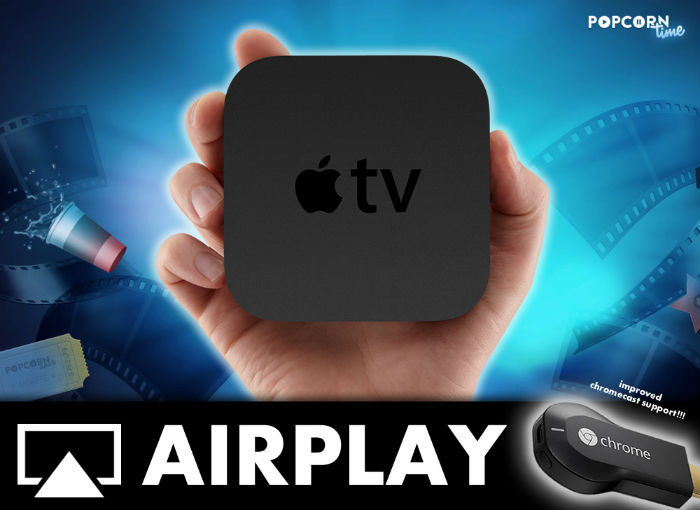
Today one of the most popular Popcorn Time forks releases a highly anticipated feature. The developers inform TorrentFreak that the latest version now has Airplay support, making it possible to stream movies directly to Apple TVs and other supported devices.
Ironically, Airplay support is currently limited to the Windows release, but a Mac version is due early next week and the Linux release will follow shortly after.
The latest feature follows the addition of Chromecast support a few weeks ago, but this is by no means the last planned development.
Popcorn Time adds Airplay support
Looking ahead the developers hope to bring the Popcorn Time experience to as many operating systems and devices as possible.
“Our ultimate goal is to bring Popcorn Time to every platform, operating system and device that can play videos, so Airplay is one particle of a huge revolution we’re making to the torrents and movies world online,” the time4popcorn.eu team told us.
“This is only the beginning… You know us, we have many more surprises coming your way,” they add.
One of the “surprises” is a native iOS app. Although it probably won’t be featured in Apple’s App Store anytime soon, Popcorn Time will be available on jailbroken iPhones and iPads in the near future.
“Support for iOS devices will be ready in August. It’s already working in our development environment and it’s looking beautiful,” the team notes.
Popcorn Time’s popularity hasn’t gone unnoticed by Hollywood. A few weeks ago the MPAA pushed back and managed to get two popular forks removed from Github claiming that the apps are hurting the major movie studios.
While this was a setback, it doesn’t seem to have hindered development much. Both Popcorn Time forks are still around and new features are being rolled out faster than ever.
Source: TorrentFreak, for the latest info on copyright, file-sharing and anonymous VPN services.
29 Jul 22:25


Ford and General Motors Sued Over ‘CD Ripping Cars’
by Ernesto
D Gwhat a joke
 A quarter century ago the music industry was confronted with a new threat – cassette tape recorders.
These devices were able to make “near perfect” copies of any audio recording and the RIAA and others feared this would be the end of the recorded music industry.
The record labels took their fears to Congress, which eventually resulted in the Audio Home Recording Act (AHRA) of 1992. Under this law importers and manufacturers have to pay royalties on “digital audio recording devices,” among other things.
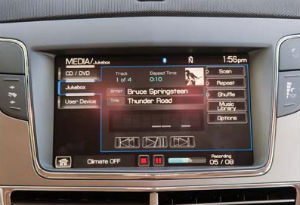
The legislation also applies to some newer recording devices common today, which is now causing trouble for Ford and General Motors. Both companies ship cars with the ability to rip CDs onto internal hard drives and according to a coalition of artists and record companies this violates copyright law.
The Alliance of Artists and Recording Companies (AARC), which lists major record labels and 300,000 artists among its members, filed a class action lawsuit on Friday in which they demand millions of dollars in compensation.
TorrentFreak obtained a copy of the complaint (pdf) which states that Ford’s “Jukebox” device and General Motor’s “Hard Drive Device” allow consumers to rip CDs onto an internal hard drive. According to the music group these devices fall under the Audio Home Recording Act and the car companies are therefore required to pay royalties.
Thus far, neither Ford nor General Motors has complied with any requirements of the Act. Both companies have sold cars with these devices for several years on a variety of models including the Lincoln MKS, Ford Taurus, Ford Explorer, Buick LaCrosse, Cadillac SRX, Chevrolet Volt, and GMC Terrain.
In addition to the two car companies, the lawsuit also targets their technology partners Denso and Clarion. Commenting on the dispute the AARC notes that a class action lawsuit was unavoidable.
“Twenty-two years ago, cooperation between music creators and device manufacturers resulted in legislation that led to a digital electronics revolution. But having reaped the benefits of this bargain, Ford, GM, Denso, and Clarion have now decided to ignore their obligations to music creators and declare themselves above the law,” AARC Executive Director Linda Bocchi comments
“While no one likes litigation, Ford, GM, Denso, and Clarion have stonewalled long enough, and we are determined to collect the royalties our members – and all artists and music creators with rights under the AHRA – are owed,” Bocchi adds.
The artists and record labels are looking for both actual and statutory damages, which could amount to hundreds of millions of dollars. In addition, they want to prevent the manufacturers from selling these unauthorized devices in their cars.
The case will prove to be an interesting test of the legality of “recording” devices in car entertainment systems. As is usually true, the law is not as black and white as AARC’s complaint states.
For example, the lawsuit doesn’t mention that the Audio Home Recording Act includes various exemptions for personal use and for recording equipment that’s part of a larger device, such as CD-burners in computers.
It’s now up to the court to decide how cars fit into this picture.
Source: TorrentFreak, for the latest info on copyright, file-sharing and anonymous VPN services.


29 Jul 02:45
 Sure, Samsung just launched its 105-inch ultrawidescreen, Ultra HD TV, but if spending $120,000 on such a screen is probably out of reach there may be a solution. For the the budget minded-consumer, we'd recommend taking a look at LG's 105-inch 4K...
LG's 105-inch 4K TV is here, if you can afford it
by Richard Lawler
Sure, Samsung just launched its 105-inch ultrawidescreen, Ultra HD TV, but if spending $120,000 on such a screen is probably out of reach there may be a solution. For the the budget minded-consumer, we'd recommend taking a look at LG's 105-inch 4K...


28 Jul 22:18

Canadian Journalists for Free Expression: Defend press freedom, 2
by ivan
Information is ammunition.
Advertising Agency: Juniper Park, Toronto, Canada
Executive Creative Directors: Terry Drummond, Alan Madill, Barry Quinn
Copywriter: Matt Hubbard
Art Director: Mike Schonberger
Photography: Todd Mclellan
28 Jul 22:18

Canadian Journalists for Free Expression: Defend press freedom, 3
by ivan
Information is ammunition.
Advertising Agency: Juniper Park, Toronto, Canada
Executive Creative Directors: Terry Drummond, Alan Madill, Barry Quinn
Copywriter: Matt Hubbard
Art Director: Mike Schonberger
Photography: Todd Mclellan
28 Jul 22:18

Colossal Media: Eros
by ivan
Fake ads on Brooklyn Buildings. Colossal Media is the largest hand paint mural and outdoor advertising company in the world.
via: Adweek
28 Jul 22:17

Colossal Media: The end is near
by ivan
Fake ads on Brooklyn Buildings. Colossal Media is the largest hand paint mural and outdoor advertising company in the world.
via: Adweek
28 Jul 22:17

Colossal Media: Psychic advisor
by ivan
Fake ads on Brooklyn Buildings. Colossal Media is the largest hand paint mural and outdoor advertising company in the world.
via: Adweek



![[link]](http://i.imgur.com/5btiOnv.gif)
28 Jul 22:15
 HBO takes a sobering look at the consequences of gaming addiction tonight with the premiere of Love Child, a documentary film that explores the tragic circumstances behind the death of an infant girl as her parents battled MMORPG addiction.
The...
HBO takes a sobering look at the consequences of gaming addiction tonight with the premiere of Love Child, a documentary film that explores the tragic circumstances behind the death of an infant girl as her parents battled MMORPG addiction.
The...
HBO documentary on gaming addiction, Love Child, airs tonight
by Danny Cowan
HBO takes a sobering look at the consequences of gaming addiction tonight with the premiere of Love Child, a documentary film that explores the tragic circumstances behind the death of an infant girl as her parents battled MMORPG addiction.
The...