Shared posts

03 Sep 11:45

The Art of Posture

by Hallie Bateman

artist_with_chair

Contrary to what the fear-mongering propagandists in modern medicine would have you believe, it truly does not matter how you sit while doing art as long as you get as close to your work (page, canvas, glowing screen, hunk of limestone, open flame, etc.) as you possibly can.

If chiropractors had their way, making art would be as stiff and passionless as a middle-school dance chaperoned by your mother. But as all the greatest artists in history knew, the act of creation should be a full sensory experience!

davinci

Da Vinci painted the “Mona Lisa” entirely while sprawled on the floor.

michelangelo

Michelangelo never saw the statue of David from afar until he was completely finished.

rembrandt

Vermeer had to repaint “Girl with the Pearl Earring” dozens of times because he kept smearing the paint with his feet.

To make a true work of art, you must get on its level. A handy trick for testing whether you’re sitting correctly is to stick your tongue out.


licker


Are you licking your art? If so, your posture is flawless.

Don’t worry. If you absolutely must sit at a desk (e.g you’re at work or in a public place, the floor is made of lava, etc.) just try to let gravity do the work.


desk_1


Slide your shoulders forward, stretch your neck, and allow your head to sink down towards your masterpiece.


desk_2


Ideally your eyes will be no more than two or three inches from the page so as to follow the movements of your chosen tool with perfect synchronicity.


close_up


If you are bothered by the pain or serious health problems caused by sitting like this, you should probably ask yourself if you’re really cut out to be an artist. If you can’t handle a little pinched nerve or a curved spine, find another profession (since that’s clearly all this is to you). In fact, consider becoming a chiropractor if you care about spines so much.

While still maintaining super-close eye contact with your work, make efforts to bend, tangle, and tie up your limbs as much as possible. Once you’re tied up, stick with your chosen pose as long as possible.
tangled


By scrunching up your body like this you prevent the juices from flowing. Which is perfect, because if the juices start flowing it might get you thinking about something other than the anxiety and self-hatred that drives you.


vaulted


What would happen if you didn’t make art motivated by those two things? I don’t want to find out. It would turn the art world on its head (in a bad way).

on_head

When you’re finished working, try to move as little as possible. Hobble straight to your bed or lounge chair for a much-needed rest after your long day of (let’s be honest) the greatest workout one can undertake: that of the soul.


tired


After a lifetime of working like this, the artist’s own body will be his or her greatest masterpiece:


old_man


Complicated in form and structure.


hand


Bizarre and thought provoking.


onlookers


Shocking to its audience.

03 Sep 11:42

Workplace Politics: Is the Risk Worth the Danger?

by Richard Jeffrey Newman

In “Story 16” in “Padeshahan,” or “Kings,” the first chapter of Sa’di’s Golestan—the stories are simply numbered; they are not given titles—the protagonist is having a hard time earning enough money to support his family. He has become so poor, in fact, that he’s begun to think about trying to find work in another country, where no one would know him and he could take whatever job might along, no matter how shameful the work might be. Before taking that last step, however, he asks the story’s narrator, who has royal connections–he is a fictionalized version of Sa’di–to get him a job in the king’s palace.

“Listen,” the narrator replies, “working for the king is a mixed blessing at best.” On the one hand, he goes on, “You will earn more money than you could otherwise hope for. On the other hand, the politics of the royal palace can cost you your life.” The risk, he concludes, is not worth the money.

What follows is a debate between the two friends about who will win out in a place like the king’s palace, someone with a clear conscience, who does his or her work honestly and with integrity, or the enemies and competitors the person with a clear conscience doesn’t yet know she or he has, the schemers who are waiting to sabotage anyone who threatens their standing even before that person starts doing her or his job.

The protagonist thinks the narrator’s cynicism is unwarranted. He says,

If you want to see your enemies embarrassed
by every slur they’ve tried to taint you with,
wear the mantle of your office modestly
and carry out your duties pure of heart.
Do this and you’ll have nothing to fear when you leave.
The king’s launderers beat against stones
only his most deeply stained garments.

In response, the narrator tells “the story of the fox who, when people asked him why he was running away from the palace, explained, “I have heard that camels are being forced into the king’s service.”

“Don’t be foolish!” they replied. “You are not a camel; you don’t look anything like a camel; how could anyone possibly mistake you for a camel?”

“Shh! Keep your voices down!” The fox looked warily from side to side, as if he might have been followed. “If my enemies tell the king’s guard that I am a camel, and the king’s guard catches me, who will dare to speak in my defense? Which guard will have the courage to trust his own eyes an release me? I would be like the man who was bitten by a cobra, waiting, while the poison worked through him, for the antidote to come from Iraq. I’d die before it reached me.”

“Stop thinking about a career in government,” the narrator concludes. “You’re better off accepting your situation as it is.”

The protagonist rejects the narrator’s advice and, as you might expect, in the end, things transpire just as the narrator predicted. One of the protagonist’s enemies accuses him of treason before the king, who does not order an investigation because he chooses to believe the accusation. Once the king’s position becomes clear, everyone who had supported the protagonist turns their backs on him and he is left even more destitute than he was when the story started.

I doubt that anyone reading this works in a royal palace, but I have no doubt that we all recognize the workplace politics that Sa’di describes. As well, I am sure we all work with people who are more like the fox than the protagonist, that we all have colleagues who could be any one of the enemies mentioned in this story, and that we’ve all had bosses like the king whose capriciousness ended the protagonist’s career. The past few years at my own job have been trying ones for a whole range of reasons, but each one would seem to bear out Sa’di’s cynicism when it comes to workplace politics. Nonetheless, despite evidence to the contrary that I have seen with my own eyes, I remain, like Sa’di’s protagonist, an optimist, though I admit this optimism might come more easily to me than to others, given that I am a tenured full-professor.

At the end of the story, Sa’di’s narrator says, basically, I told you so. “You should have listened to me when I compared working for the king to traveling the ocean [in search of treasure]. Each is simultaneously profitable and dangerous.”

Either you’ll walk to the shore with gold-filled hands
or the waves will deposit you there, dead as gold.

The protagonist took that risk and lost. What about you? Do you share his optimism? Are you a risk-taker at work? Why? Why not? Under what circumstances?

Cross-posted.

03 Sep 11:40

Recovering the History of Sound in Video Games

by Allison Meier
Video Games Live orchestral performance of the Tetris theme (photograph by Roxanne Ready, via Flickr)

Video Games Live orchestral performance of the Tetris theme (photo by Roxanne Ready, via Flickr)

The sound of video games has transformed from something seemingly mechanical accenting action to incredibly elaborate acoustic landscapes setting the mood for play. To preserve this history, and show why it’s worth exploring, a new documentary and archive project are underway.

8bit Gramophone (via BEEP)

8bit Gramophone (via BEEP)

Beep: A History of Game Sound — currently crowdfunding for production on Kickstarter — is directed by Karen Collins. A sound designer and the Canada Research Chair in Interactive Audio at the University of Waterloo, she has written extensively on audio in video games, including in the book Playing with Sound: A Theory of Interacting with Sound and Music in Video Games, released last year by MIT Press. Beep is aiming to be the first film on video-game sound history, and also a means of gathering interviews with key figures in its development that will be available as an archive.

As the funding page for Beep states: “We can’t go back and interview early film composers, but we can interview game sound designers and composers from the early days.” The majority of those people are largely unknown, even to gamers. “Most of us could hum the theme song to Super Mario Bros., but how many people know the name of the composer who wrote that music?,” says Collins in the Kickstarter video. (It’s Koji Kondo, who also did The Legend of Zelda and a prolific number of other Nintendo games.)

Image for "BEEP: A History of Game Sound" (courtesy the filmmakers)

Image for “BEEP: A History of Game Sound” (courtesy the filmmakers)

In a technologically nostalgic way, the impetus for Beep is aligned with projects like the Museum of Endangered Sounds. Created in early 2012, the online “museum” is focused on the preservation of sounds from now obsolete electronic media, whether it’s AOL Instant Messenger, Space Invaders, or Encarta MindMaze. Exploring the museum, you start to think of how the sounds of technology have gotten more subtle, from jarring 8-bit noise to gentler, composed sounds. However, in video games, the progress of play is so concentrated on visuals that it can be easy to overlook how audio has been essential to making gaming experiences engaging. Back in 2011, “Baba Yetu” by Christopher Tin for Civilization IV received a Grammy, the first video-game music composition to do so, suggesting that the music of games may be expanding into the mainstream.

The ground Collins is hoping to cover with Beep is ambitious, stretching from Victorian mechanical games to arcades of the 1970s and ’80s, to contemporary responses like the Video Game Orchestra, which gives the full instrumentation treatment to game sounds in live performances. As video games get more recognition as an art form, it will be integral to their history to have a record of these sound creators.

Beep: A Documentary History of Video Game Sound is fundraising on Kickstarter through September 30.

h/t Designing Sound

03 Sep 11:37

Everything Becomes Crystal Clear…

by Robert Farley

Now, at this late hour, we finally come to understand:

Thirty-six hours after the Obama administration banned importation of the classic brand of AK-47 assault rifles as part of sanctions against Russia, a Maryland dealer specializing in the weapon took stock of its inventory.

There was nothing left.

Laboring almost nonstop, workers at Atlantic Firearms in Bishopville, a Worcester County community on the Eastern Shore, had shipped hundreds of Russian-made AK-47s — an assault rifle prized by both consumers and despots — as buyers wiped out gun dealers’ inventories around the country. The frenzy was brought on, in part, by a suspicion among some gun owners that the Russia-Ukraine conflict was a backdoor excuse to ban guns many Democrats don’t like. Some customers bought eight to 10 rifles for nearly $1,000 each or more, stockpiling them as investments.

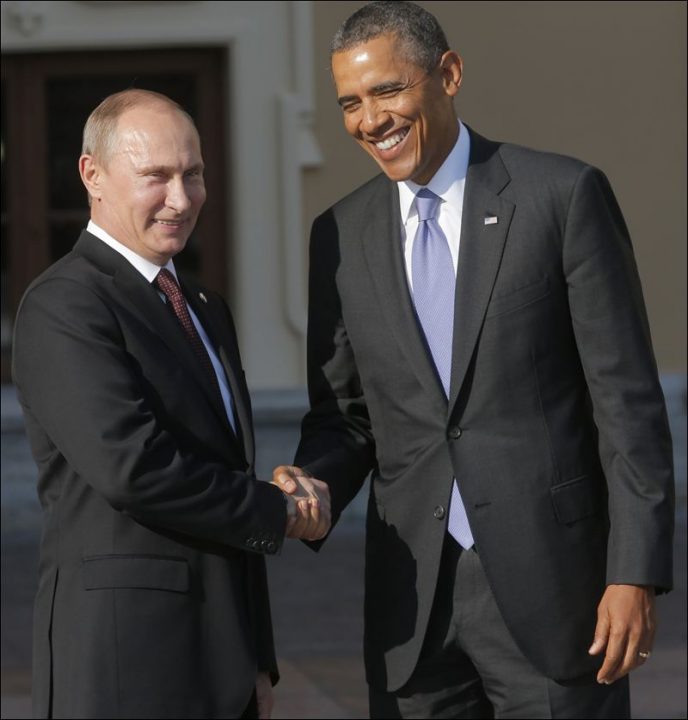
Did Putin and Obama meet secretly at the G-20 in September 2013, arranging a plan by which Putin could carve up Ukraine and Obama could carve up our Second Amendment rights? It would be irresponsible not to speculate!


03 Sep 11:36

In Dreams Begin Responsibilities

by Paul Campos

“I quit,” I said, my black leather carrying bag already over my shoulder. I’d imagined this scene for years, a triumphant take-this-job delivery followed by my supervisor’s wounded expression.

His face barely registered emotion as he said, “Go tell human resources.”

I worked for a respected social policy research organization, where Barack Obama had applied for a job before he was president. For seven years I’d sat in a windowless office and formatted reports in Microsoft Word. I sauntered to human resources like a movie inmate on his final walk of freedom through Shawshank prison.

Forty-two and single, I was jumping without a net into the potential person I was meant to be. I’d watched Larry Smith’s famous TED Talk about following one’s passion, and enrolled in an advertising portfolio class. I was determined to rebrand myself as a digital copywriter.

“Good for you,” my father said. “We’re meant to take risks. Read ‘Start-Up Nation’!”

You can probably guess where this story is going.

People want to do meaningful, creative, and fulfilling work, while getting paid to do it, which is great.

In America, people are told from an early age that this is a realistic aspiration for them, which is not so great, since for 96.32% of the population, that turns out to be untrue.

I’ve read or at least skimmed thousands of personal statements in law school applications over the years, and not once has anybody said “I want to be a lawyer because it’s a high-status occupation that pays well.” Instead everybody wants to be a lawyer so they can do meaningful, creative, and fulfilling work.

The cynic assumes these people are lying, to the schools, or themselves, or both. The pessimist assumes they’re telling the truth.


03 Sep 11:33

Patrick McLaw, Skepticism, And Law Enfocement's Obliging Stenographers

by Ken White

Imagine a local news channel in a small city. The channel starts running stories fed to it by criminals, thugs, and n'er-do-wells. The stories are uncritical and unquestioning. "Local methamphetamine dealers report that their product is more reasonably priced and safer than ever," goes one report. "Consent: is it an unfairly ambiguous concept?" goes another. "A career burglar explains why alarms are a bad investment," goes the third.

Seems ridiculous, like something out of The Onion, doesn't it? Yet we endure the equivalent all the time — news stories that are indistinguishable from press releases written by law enforcement or government.

Take the story of Patrick McLaw or Maryland. Several writers are posing troubling questions about whether McLaw was suspended from his teaching job, subjected to some sort of involuntary mental health examination, and his home searched based on the fact that he wrote science fiction novels set in 2902 under a pen name. Jeffrey Goldberg explains:

A 23-year-old teacher at a Cambridge, Maryland, middle school has been placed on leave and—in the words of a local news report—"taken in for an emergency medical evaluation" for publishing, under a pseudonym, a novel about a school shooting. The novelist, Patrick McLaw, an eighth-grade language-arts teacher at the Mace's Lane Middle School, was placed on leave by the Dorchester County Board of Education, and is being investigated by the Dorchester County Sheriff's Office, according to news reports from Maryland's Eastern Shore. The novel, by the way, is set 900 years in the future.

Though I am generally receptive to believing the worst about law enforcement and local government, I was skeptical when numerous people emailed asking me to write about this. I suspected that more than two books were at issue. Subsequent reporting suggests that McLaw may have sent a letter that was the trigger of a "mental health investigation":

Concerns about McLaw were raised after he sent a four-page letter to officials in Dorchester County. Those concerns brought together authorities from multiple jurisdictions, including health authorities.

McLaw's attorney, David Moore, tells The Times that his client was taken in for a mental health evaluation. "He is receiving treatment," Moore said.

Because of HIPPA regulations mandating privacy around healthcare issues, he was unable to say whether McLaw has been released.

McLaw's letter was of primary concern to healthcare officials, Maciarello says. It, combined with complaints of alleged harassment and an alleged possible crime from various jurisdictions led to his suspension. Maciarello cautions that these allegations are still being investigated; authorities, he says, "proceeded with great restraint."

What's more, he told The Times, "everyone knew about the book in 2012."

We need more facts before we draw firm conclusions, but for the moment, I think there is reason to believe that the story may be more complicated than the provocative "authorities overreact to citizen's fiction writing" take.

But it is not at all surprising that people would leap to that conclusion. Two factors encourage it.

The first factor is law enforcement and government overreach. When schools call the police when a student writes a story about shooting a dinosaur, and when law enforcement uses the mechanism of the criminal justice system to attack satirical cartoons or Twitter parodies, it is perfectly plausible that a school district and local cops would overreact to science fiction.

The second factor is very bad journalism. The Patrick McLaw story blowing up over the long weekend can be traced to terrible reporting by WBOC journalist Tyler Butler in a post that was linked and copied across the internet. Butler reported McLaw's pen name as a sinister alias, reported as shocking the fact that McLaw wrote science fiction about a futuristic school shooting, and quoted law enforcement and school officials uncritically and without challenge. Faced with the bare bones of the story, any competent reporter would have asked questions: is this only about the two books he wrote? Was there a basis, other than fiction, to think he posed a threat? Are there any other factors that resulted in this suspension and "mental health examination?" Was the examination voluntary or involuntary? Is it reasonable to suspend and "examine" someone and search their home over science fiction?

Even if authorities refused to answer those questions, a competent reporter would discuss them. "Authorities declined to say whether any factors other than the two books led to the investigation," Tyler Butler might have written. Asking the questions and reporting on them might have restrained our temptation to believe the worst. Instead he gave us this:

Those books are what caught the attention of police and school board officials in Dorchester County. "The Insurrectionist" is about two school shootings set in the future, the largest in the country's history.

Journalists ought to ask tough questions of government and law enforcement, to present us with the facts we need to evaluate their actions. But too often they don't. Too often journalists run with law enforcement "leaks" without considering how the leaks impact the rights of the suspects, or asking why the government is leaking in the first place. Too often journalists allow themselves to be manipulated by law enforcement, not recognizing the manipulation as the important part of the story. To often journalists accept the headline-grabbing take rather than the less scandalous but more correct take. Too often journalists buy access with the coin of deference. Too often journalists report the law enforcement spin as fact.

That's why when a local news channel reports matter-of-factly that a man was detained and "examined" over science fiction, it doesn't occur to us to question the story. Just as it's entirely plausible that the government might do it, it's entirely plausible that journalists might report it without criticism, analysis, or apparent consciousness of how outrageous it would be.

Patrick McLaw, Skepticism, And Law Enfocement's Obliging Stenographers © 2007-2014 by the authors of Popehat. This feed is for personal, non-commercial use only. Using this feed on any other site is a copyright violation. No scraping.

02 Sep 11:04

What? I Write For a Website? Since When?

by Cerberus

There is this to be optimistic about. The fact that after years of being unable to get the general populace to give a damn about the shockingly high number of unarmed black men executed by violent psychopath cops, we’re finally having a national conversation about it and the media is having to report on the issue… And it only took having a police department go complete stereotypical movie villain and arresting so many journalists that the American news media was shamed into pretending it cared. Go progress?

So it turns out that detangling 8 and a half years worth of comingled stuff, packing up half of it, rearranging the other half into a livable area, and acquiring a new housemate takes up a little more time than I had anticipated. No worries. Luckily nothing major occurred during the impromptu summer vacation! [step over the corpse of Michael Brown]

Nope, nothing at all.

So, yeah… Ferguson.

I don’t even know where to begin with this one. I mean, we have the everpresent slaughter of unarmed black men and boys by Klansmen-wannabe cops who mistake house keys for sixteen grenades and a rocket launcher. We have people actually protesting and protesting hard something that for a long time the black community was expected to shrug off (oh, did they kill off another one of our kids, yeah, that happens).

There’s the cops. Oh wow, is there the cops. I mean, threads like this one or the Ferguson twitter hashtag tried to record the sheer scope of the abuses committed by the totally not racist, homocidal, and corrupt cops of St Louis. I mean, for fuck’s sake, the cops managed to somehow combine all the worst traits of ever sci-fi villain mook army, deranged dictatorships, torture camps, and Segregation Revivalists into some sort of epic ball of pure unadulterated fuckwittery. I mean, first there’s the shooting itself and the way it was left for the people like it was the message to the community from the first season of the Wire*. Add to that the random rule that people needed to keep marching always for it to count as a rally. The theft of medical supplies from churches helping the protesters. The general attacks on the protesters. The arrest of countless foreign journalists. The beatings of unarmed women and children. The constant use of tear gas as a means to terrorize rather than for any legitimate aim. Overall, the whole thing has reminded me most of the media’s response to the Occupy rallies in its sheer level of baldfaced corruption with the knowledge that the proles will be powerless to change anything.

And that’s all before we count the actions they’ve pushed because they thought it exonerated them. Like the murder of Kajieme Powell which was supposed to show how the brave and heroic Klansmen… I mean, cops are under constant threat of the darkies and their murderous ways when what it showed was a kid with a knife sick and tired of the constant threat hanging around young black men and so stole something and asked for the cops to kill him just to see if they would kill him too.

And they did, gunning him down after 17 fucking seconds while he was already backing off before rolling over his body and handcuffing the corpse.

That’s right. They arrested a fucking corpse.

And this is the tale they decided to heavily publicize. To make themselves look good. This is what they thought would win the day and get America to forget about the concept of justice and accept a new reality where white cops and white wannabe cops can serve as Judge Dredd, serving as judge, jury, and executioner.

And well… they’re not wrong. I mean, if there’s anything that’s become painfully clear walking this beat, it’s the fact that the American public… or rather the media who claims to work for the American public and the scared stupid white fuckers hiding in the suburbs from the amorphous cloud of “crime” they think wanders across the post-apocalyptic wasteland they imagine cities to be… are all to eager to fall for any racist ball of bullshit that’s thrown at them.

I mean, it’s why the cops refused to even investigate a small clump of robberies, even though the owners of the business had the thief on camera and called and asked for help. Because they knew that was all that was needed to sell the standard claim of “rampant looting” which has been the default tactic any time the powerful have wanted to head off any empathy for black suffering** for at least 20 years now.

And it works. We’re only too eager to cling to any excuse needed to short circuit that pesky pang of regret or human desire for mutualism and support and remember that the escaped slaves aren’t people, but an uppity underclass who has long forgotten their place and role at the master’s feet begging for a night without a beating.

So yeah, of course the right wing has been terrible about this shit, grabbing any excuse to blame and minimize the protesters and their well-worded concerns and common-sense demands. To demonize the corpse, as they did with Trayvon Martin. And of course, as my co-blogger recorded aptly in the previous post, in hundreds of thousands of dollars in support of Michael Brown’s murderer, even though cops never face any sort of consequence for their actions. Because that’s the real dark underbelly of this whole shit show.

The fact that our justice system for a damn long while now has been about keeping the underclass terrorized. Cops aren’t asked to solve crimes, they are asked to remind the lesser their place. To harass the black man, to dismiss the rape of women, to mock the wounded queer, to simply refuse to investigate the murder of “trannies”.

Yeah, there’s a lot to unpack and a metric fuckton of posts I could harvest for this screed, but first I want to focus on three specific things, because they are very related to why this happened, why this keeps happening, and why we can’t ever hope to have a functional justice system in this country until this is fixed.

1) In each of these murders of unarmed black men, the cops have argued they were in fear for their lives. They had to act quick to put down a dangerous suspect. That it was the only way to save lives. Each time, we’re asked to excuse the tens of bullets pumped into children and young adults as the standard price to pay for safety. And further more that this accident or fear or whatever shouldn’t be investigated like an actual crime nor in any way harm the livelihood of the poor cop involved.

Except… I think cop is pretty much the sole profession, where you can fuck up to the point of killing a person and everyone shrugs it off. I mean, for fuck’s sake, doctors who genuinely try and do everything to save a patient but fucked up a minor step often lose their licenses and are banned permanently from medicine. But we’re supposed to wave off a cop demonstrating that they are wholly unqualified for the job they hold and conclude that this is a cop who needs to be back on the streets and in the trusty blue.

And it’s this circling to protect, as has been documented by countless academics studying police corruption and dramatized by shows like The Wire, which ensure that not only are the worst performers protected even from the illusion of consequences (thus demonstrating to every poorly trained authoritarian who seeks out this profession of power that they can straight up murder, assault, and rape with impunity, completely above the law), but that the whole edifice becomes about protecting said fuckups. Imagine a situation where doctors who regularly poison patients weren’t fired immediately or stripped of their licenses, but protected, promoted, and every real doctor was asked to falsify documents, give testimony, obfuscate, and injure to protect said homocidal lunatic. Would you ever enter a fucking hospital again? Bob know. But for some reason, we expect to put up with a police force which has become a terrorizing gang based on fear than anything else, simply because these authoritarian assholes have guns and the unchecked ability to make up whatever bullshit they want to gain an arrest.

I mean, for fuck’s sake, the cops of St Louis were issued with body cameras in response to the many instances lately of inopportune breaking of the law and I doubt this will at all dent the notion most cops have that they are untouchable and above critique. Because there is no teeth to enforcement. Who will be there to make sure that the camera footage of an execution isn’t “lost” like the records of those jouranlists who were arrested? And who will prosecute the cops when the whole edifice is designed around insuring they never face consequences.

But it gets even worse because of:

2) Again, the whole “accident” argument…

It’s interesting that the overwhelming number of dead gunned down by “accident” by cops are black or otherwise brown. That whites and especially richer or middle class whites don’t seem to be at the mercy of these barbarians. Suburban teen fuckups who pull a piece on a cop have their parents mailed a subpoena rather than having their parents open a casket for the showing of the body.

And we can have a very illustrative look at that by noting its temporal proximity with another major story this year:

The Bundy ranch.

I mean, let’s look at it. Teenage boys with no weapons. AIEEE, gun it down before it pulls out a super uzi and wipes out every white man on the planet. Grown, angry, and notably violent men pointing guns at law enforcement, threatening to kill them, and doing everything in their power to reveal themselves as a threat? Oh, let’s do be careful to make sure they don’t hurt themselves. Let’s not even arrest them or make sudden moves, lest they burn down their own compound and we get harassed by right-winger conspiracy theorists for twenty years.

Fuck, these violent scum, were so desperate for a confrontation and so utterly blue-balled of the cops hesitance to even enforce the fucking law with federal orders that a pair of them ended up going on a goddamn shooting spree just to get the reaction they wanted.

We make every allowance we can for white conservative types to the point of allowing them to break more laws or continue breaking the law the arrest is for, just so no one is hurt in responding.

But black kid? Gun it down, it might have gum! And yes, the victim is nearly always treated as an “it”, something disposable and inherently dangerous simply for the color of the skin or the economic class they are born into. And it ends up creating two completely different experiences of law. For blacks, cops are a violent gang one is powerless to combat, something that will kill your children, harass you, and arrest you for the most meaningless of reasons and who will never view you as a person. Whereas white conservative types have an experience where no law they break is ever enough to get responded to with any sense of urgency or alarm. And it ends up shaping the whole system of justice into a deliberate enforcing of hierarchy and place complete with lynchings by authority figures.

Cross us, live in the wrong neighborhood, show too much spine, or just not cower in a way that lets us stroke our micropenis to the notion of subjugating blacks back into a state where they better dance and smile and say “yes, massa” if they don’t want to die, and we will kill you and leave your body as a warning to anyone else who may dare think they are people.

And it expands from there to corrupt every facet of so-called justice. Whether it be the appalling way that rape and domestic violence are prosecuted, the way that murders of queers aren’t really investigated, the way that marginalized groups fighting back are treated more harshly than dominant groups straight up murdering someone. The way that crimes by the rich aren’t even treated as crimes and where few even believe that the law will protect their rights or help them prove their innocence if they are wrongly arrested.

Let me state that bluntly. People don’t expect the law to work like the law. People try and avoid any interaction with the cops, especially if they are marginalized, because they are trained that who they are matters way more than what they did. And that brings us to our last point before I actually begin this failapalooza.

3)I’m going to talk about an Anita Sarkeesian video on violence against women and gaming… Trust me, I’m going somewhere with this. The video is here for those who want to watch through it (Trigger warnings for lots and lots of virtual violence against women):

Okay, the piece I wanted to talk about is the part where she’s talking about a submission in Watch_Dogs where you need to witness a violent sexual or domestic crime against a woman and then have no other recourse to chase down the perp and gun him down to respond to it. And how she connected that to the way that women, especially sex workers, are often only in games, just so they can be brutalized as a means of demonstrating setting and showing that the character shouldn’t feel bad about killing the bad guys.

Now this is just gaming and its tropes, but it illustrates a rather nasty worldview that has metastasized into some ever-expanding Akira of death and destruction within our justice system and indeed throughout the whole of the right and a large part of the mushy middle.

And it’s this notion that criminals are bad guys, who one can and should only respond to with violent murder. And furthermore, that criminals are a wholly different class of people from “normal people” and committing one crime is indistinguishable from committing any type of crime. The guy doing the street mugging to get some cash will become a murderer or a rapist if given half a chance. A home invader is probably going to want to pull some sick torture shit on your kids like it was a horror movie. A guy who smokes some weed or immigrates to this country without waiting for our broken and racist system to approve him even though our country bankrupted his is a criminal and thus something other than human.

This worldview has been internalized by cops, judges, and a majority of people who will ever sit in a jury box. It is the reason that our prison system is essentially torture and few have the political will to change it. It’s the reason that conservatives think claiming that Michael Brown committed a robbery or Trayvon Martin… did something… is somehow a justification for someone else committing homocide.

And yeah, it definitely gets fitted with all our racist, classist garbage. And is why every single black and brown and poor person is seen as inherently criminal. And of course why being said criminal means they are inherently a threat. And yes, why cops feel justified in being judge, jury, and executioner for anyone they even suspect of being a “criminal”, even if the reason they suspect them of being so is their brown skin.

But even more insidiously is the way this black or white, there’s the bad guy who gets gunned down for being an evil criminal and the heroic hero who dispatches the worthless son of a bitch, erases any chance of the justice system being only flawed but salvagable instead of the mess we have today.

Cause, the flipside of this “people who don’t share my white experiences are criminals” worldview is this notion that anyone we know or can identify with or rather that said white conservatives know or can identify with can’t possibly be criminals even if they are literally breaking the law. And it leads many to completely erase the crimes of those who are dominant group members or have “good backgrounds” entirely because everyone seems to have the twisted notion from TV shows and video games that “criminals” are a wholly distinct class completely separate from “normal human beings”.

So a man who guns down and unarmed teenager after stalking him for blocks can’t possibly have committed a real crime, because he also subscribes to the same Klan-reading material. Or those nice kids couldn’t have raped that girl even though they video taped themselves raping her, because they play sports or have humanizing other aspects of their life that aren’t assaulting people and roaming the bushes with a scraggly homeless person beard looking for prey. And it’s why child molesters and serial killers, when they are revealed to be some white christian guy are often reported amidst shocked people going “but he was just a normal guy”.

Because we’ve convinced ourselves that criminals can’t ever be people we know or people we may otherwise have nice interactions with and certainly can’t come from “good backgrounds” or have “good jobs”. So when someone like that commits a crime, it’s just sort of ignored and condoned if not outright forgiven. Because it doesn’t fit our image of a “criminal”.

And so we get a system where being the right skin color, age, demographic, religion, gender identity, etc… gives one a free pass for murder and worse, which ends up increasing the severity of those crimes with those populations because no one is taking it seriously and even applying the basic purpose of a prison (in the most Scandanavian sense of simply stopping their ability to harm others by placing them somewhere guarded). It’s why corporations and the rich genuinely believe that the law doesn’t apply to them, so it shouldn’t matter when they embezzle billions, sink the global economy, poison whole towns, or just simply break the law openly and loudly and dare the government to intervene (Joe Arpaio, Cliven Bundy).

Because rich white guys don’t look like “criminals” to a bunch of idiots who’ve convinced themselves that “criminal” = dirty brown colored man hiding in the bushes with his crazy eyes and poor raising environment caused by the type of bad choices that mean you deserve to be poor in America (because clearly everyone who is poor deserved it).

And that’s where we are right now. Being black means you are a criminal and your lynching will be cheered by a national community of ghouls and fuckfaces. Being rich and Christian and suburban means you are a good person even if your basement is filled with the shallow graves of over a dozen children.

And the law reacts accordingly, in the only way that is heroically outlined for them. Or even just a guy with a gun, because what’s the difference at this point. The weapon marks one as vigilante and when one sees a “criminal” one must eliminate them rather than let them rape and murder and loot and do all the crazy criminal things criminals do. Even if that means gunning down an unarmed kid and terrorizing those who object. Even if that means opening fire on a car full of teenagers because they were listening to “criminal music”. Even if that means stalking and following an unarmed kid with a packet of Skittles and a cold drink. Even if that means gunning down a man just trying to open his front door after a long day at work as if they were Michael fucking Myers.

And as we watch corporations fuck us, the rich gleefully celebrating how little they give a fuck about the law, cops and crazy people openly bring back lynching and poll taxes, and the rest of us marginalized scum stuck in raw terror of a justice system that cannot be relied upon to dispatch any measure of justice…

We start to wonder why we even put up with this band of thugs and terrorists who claim to be our “protectors” rather than burning it to the ground and starting fresh with a system with as many checks and balances as therapists or doctors operate under to avoid the abuses of power.

Cause knowing that the police aren’t on your side and in fact can’t be trusted to enforce the law in any real manner other than enforcing hierarchies with threats, violence, and coercion is unsustainable. We literally can’t continue on with a justice system this broken. I mean at this point, nearly every generation alive has internalized a knowledge that cops are the enemy, not the heroes. And every new action proves this further.

Eventually the illusion that allows cops to function, that allows a much larger population to accept their subjugation by a few will shatter. And that will be a day when cops and the small number of rich fucks who own them at this point finally see what a real threat to their safety looks like.

Hint: It won’t be pretty.


‘Shorter’ concept created by Daniel Davies and perfected by Elton Beard. What, seriously? Are we really doing an entire post without once ripping into the right wing fucks preying on the blood of a town to sell their racist bullshit? Are… are you okay? We are aware of all Internet traditions.™

*The one where D’Angelo realizes his actions got the guard of the building who saw him killed.

**I mean, sorry for not taking my amnesia pills like the rest of the country, but I still remember when people who fucking survived Katrina were accused of being a pack of filthy looters when a few families scrounged supplies from abandoned and decimated stores because there was little in the way of official aid.

*** Sigh… okay fine. Here’s a handful. Just don’t complain to me when it ruins your dinner.

Shorter Angela Graham-(Bell)West, American Moral Scold:
The Fairytale of the Victimhood

  • You know, oppression is a two-way street. I mean, if you didn’t react to the endless terrorism against your people like a normal human being with your unsavory pragmatism, then it’d almost be like you were never oppressed at all. I mean, won’t you be so much happier cradling the dead body of your son or having to explain to your daughter why her whole life is going to be harder and less respected than most people simply because of her skin color, if you just put it into the back of your mind and pretend everything is okay? I mean, it works for us on the right. Just take those pesky realizations about the world and our role in worsening it and poof… into the hole of shame right next to my latent lesbianism and the little voice that sometimes tries to tell me I don’t actually deserve it like my husband says I do when he’s having one of his “episodes”.

Seriously though, is every right-wing piece of advice just yay, denialism, cause sometime these fucks are going to have to live in the real world. Cause like it or not, we’re not all two-years old and even then the world didn’t actually go away when we closed our eyes.

But then again, the denialism is better than the creepy fucks who are straight up masturbating over the corpses and longing for the days when it was still respectable to bring the whole family for a picnic under the swaying body of a person reduced to an “it” and a message of fear for all those that shared “its” skin color.

Shorter Bob Weir, American I’m Afraid if I Move, Some of it Will Drip on Me:
Darren Wilson is a Hero

  • Ah yeah, that durn cop is livin’ the dream, yeah baby, plugging one of those nigger boy gangbanger rap listeners what think they be people what can walk off the plantation. Yeah, you showed him who’s boss, good. I only wish I could be as brave as you as to murder and unarmed teenager with his hands in the air surrendering to the cops. Mmm, yeah, child blood is good lube, yes it is.

…I need a shower and an adult… and I’m not sure in what order. The point is, I don’t think I’m ever going to feel clean again from even just trying to distill the level of ghoulish glee in that bit of… yeah, let’s just move on to something not American Thinker.

Oh Bob Damnit, it’s Malkin.

Shorter Malkin’s Shrinking Relevance, National Look at Me! Look at Me!:
Hollywood’s Violence Profiteers

  • Let’s just turn the dog whistles up to double max and trust that the scared racist morons that are my stock and trade won’t realize how dumb this is. Okay, check one, check two. Hey, those evil “gangsta” rappers who… you know, made their living critiquing the abuses of power by police and giving voice to righteous black male youth anger at the way their murders and constant harassment were ignored or erased by an uncaring white society that casually supported this twisting of justice… er, well, they’re protesting Ferguson. And that’s hypocritical, because they are personally responsible for white people believing all black people are criminals… I mean, for making black men into the racist strawman we think they are. So there. It’s your fault, not ours. Yeah… I still got it.

Cause, hey, just because it’s yet another dead body, it doesn’t mean we have to actually accept some level of responsibility for selling a conspiratorial view of race and the role of black people in our society. That’s just crazy talk.

And my absolute favorite because of how neatly it illustrates the goddamned problem that leads to shit like Ferguson where cops feel comfortable to terrorize and antagonize the public they are entrusted to serve because who’s going to care about a bunch of niggers, amirite?

Shorter Bob Weir, American Missing the Point Entirely:
Fighting Cops is a Losing Proposition

  • Speaking as a white cop who has blindly worshipped authority, views all those I served as criminals regardless of their actions or innocence, and who assumed all the inhuman scum were totally packing and were about to shoot us any second and thus enforced my job in shitty fashion for one of the more corrupt police organizations during one of its most corrupt periods… I totally agree with how the cops in Ferguson have handled this whole affair. What? Irony? No, I know no irony.

Similarly, it turns out foxes agree, unguarded henhouses with easy digging access are better for everyone.

Just a taste, because frankly, with mangoes this rancid, we’re all getting sick enough sharing a planet with these fucks.

02 Sep 11:03

Tour Diary: Week Fourteen

by Maggie McNeill

20140829_204721In Atlanta, I felt my first twinge of homesickness; I reckon it’s because I was back in the Deep South, in a city I’ve visited many times, and saw many familiar business names and the like that I hadn’t seen in a long time.  Mancrack (who as you may recall provided the art for my Lammas column) was my hostess, and I got to meet a number of readers both at my Liberty On the Rocks event last Monday, and in private on the night before.  Another interesting thing about Atlanta was that three of the attendees at my event were running for office; perhaps that indicates a strong Libertarian Party in Georgia, but one way or another I think it’s very important that politicians (of any political party) hear about sex worker rights, so I’m really pleased and I’m hopeful for similar attention to future events.

While you were reading last Tuesday’s Tour Diary, I was en route to Tampa Bay, where I stayed with my friend Kelly Michaels.  Since I hadn’t heard anything from any of the people I had contacted in the area, I was expecting just a quiet week of visiting; however, while I was in Atlanta I was emailed by Tampa-area reader Hotlix, who absolutely would not hear of this, and beat the bushes to attract more attention to my visit.  Kelly hosted a potluck supper and discussion group at her house Friday, and Buttons Berry advertised it on SWOP Tampa Bay’s Facebook page; in all eight people in addition to Kelly and I showed up, and it was absolutely one of the best events of the whole tour.  Besides the quality of the participation, everyone really made me feel like a rock star; so much so, in fact, that I was a little embarrassed by it.  I’m really happy to be reaching so many people that they come out of their way to see me; three of them made a two-hour (one way) drive from Orlando in Friday afternoon traffic!  As you read this I’m in New Orleans, but everything I’m doing here is private; the Tampa Bay event was therefore the last public one of the tour, and I couldn’t have wished for a better sendoff.


02 Sep 07:20

Against Everything

by J.M. Gamble

Football plays in the background loud and raucous as a rodeo, the ball flying and falling into bodies, bodies falling into bodies, a hundred thousand beer-drunk bodies screaming at twenty-two adrenaline-drunk bodies behind me as I watch my grandfather’s limp-dicked body slowly destroy itself in a La-Z-Boy. Throat cancer. From too much, for too long, of everything.

“Get that fucker,” someone yells in the other room, watching the same game we are watching—Alabama against, who? Arkansas? Tennessee? Someone, in any case, I am told we hate. I have learned that we hate everyone. And then from the kitchen there is a shushing noise and everyone quiets down because there is a dying man amongst us. Though no one ever thinks to turn down the television. Or, for that matter, to stop using the word “hate.”

“The thing is,” one announcer says to the other, “this game is all about scoring points. You’ve really got to get points on the board.” And the other replies, “That’s right, Verne. Like they say: the best defense is a good offense,” though it’s not “they” but he who’s saying it this time. And we all nod in agreement—I almost said “agrievement”—even the soon-to-be-dead man. Though we could not know then, or now, or ever, what it was we wanted to defend against.

*

There is a one-lane wooden bridge you have to cross to get here, my grandfather’s triple-wide trailer on who-knows-how-many acres of forest on top of a mountain in Alabama where the trees grow up like children and die like them, too. It is rickety, of course, the bridge. Its thick slats lie further apart than perhaps you’d hope and just wide enough, my cousin would say, to squeeze your fat ass through. And then his wife would hit him on the shoulder for having said “ass” or maybe “fat” or maybe just anything, for having said anything. Everything here in the foothills of Appalachia holds the potential to be frowned upon.

And then there are the mountains of Alabama climbing up around me, blurred but somehow still sharp—looming, silhouetted and shining like impressionist paintings of, well, mountains. What is it about these mountains that arrests me? Surely not their size. I know bigger things exist. And it can’t, either, be their shape because I know the way the earth can launch itself up toward the sky like a football waiting to be caught. It must be then this sense I have of ownership. These mountains are mine, they are my mountains, they are the mountains of me. I’ve lived for so long so close to them that I couldn’t, like my own nose, begin to see them until I was almost gone. But, God, do I miss them now, my mountains, my mountains, this nose of me that is the earth, these rocky worlds through which I breathe. The mountains of Alabama are small mountains—foothills, really—but they are mine like a sports team is mine—like a football game (which I have for so long been near but have not really, really seen) is mine—as in the phrase “We scored! We scored!” How fine and good it is to have a thing before we die.

*

A few weeks before he died, my grandfather was alive. He was frail and fading but he could move and speak and we took pictures—all of us, the whole family—at the botanical gardens. He was in a wheelchair because he was weak. He hated the wheelchair. Let me get up, he’d say, and we’d say, see that big flower over there? You can get up when we make it there. But we never let him up. In the pictures he is sitting on a stone step that has been carved between two sets of bushes. Who can ever know what type of bushes bushes are? The wheelchair sits just out of frame, waiting like a coffin.

After the pictures we went back to his house, the lot of us, and made ham sandwiches and coleslaw, potato salad and deviled eggs. We ate off of paper plates against the protestations of my new grandmother, the woman my grandfather married just a few years ago after two decades of a solitude spent drinking heavily and smoking even more. These are the things that would kill him, of course, biologically. But it was the years of silence, I think, that really did him in. The years of watching war documentaries in a drunken haze and not having to close the door to piss and calling his sons at two a.m. to say, “Fuck you where are you why did you abandon me.” Though of course it was the other way around. He had two dogs but one of them drank antifreeze, keeled over like a log. Maybe that had something to do with it.

againsteverything3With our paper plates we gather in as few rooms as can hold us, about twenty-two or so people, mostly fat and lumpen, proletariat but maybe climbing out of it. In each room a television plays a football game, though who can know which team’s which and how many points are on the board and, anyway, who the hell do we even root for? We all know why we took the pictures, why the wheelchair’s there, why we’re there. We do not know why football is the thing we have chosen to watch, except that it is there in the air like pollen in an Alabama spring, dusting everything, even—especially—our aching American lungs.

The Alabama quarterback, AJ McCarron, is hurt that day. They put it a lower-string player whom they’re grooming to take over. He is a young African-American man, like so many of them are young African-American men. It is a gruesome scene—an older white man, Nick Saban, in a suit, clapping and yelling at young, lean black men to work harder, to sweat more. The older men in the room—all of them, all of them white—seem to think nothing of it. The new quarterback takes the field and my cousin says, “You know, I hate it when they put in those ni—” and I punch him across the jaw, dislodging blood from his mouth into his coleslaw.

Or, no. The better version of me does this. The worse version of me, the me-I-am, says nothing. The me-I-am sits silently on the couch, lets him finish the word, looks away, ashamed because he failed—because I failed—as I always, always do. The peaks of Alabama’s mountains are evergreen and verdant but underneath, the coal—my broken family, me—is ugly as the mud.

*


Years before he died, my grandfather was dying. I took a trip with him to a big cabin in the Smokey Mountains of Tennessee. You can rent cabins up there that hang out over the mountains like diving boards and look down onto Gatlinburg, a tourist trap full of knife shops and fudge shops and candy shops and kitsch. They’re big affairs, these cabins—sometimes eight- or nine-bedrooms-big and full of pool tables and dishwashers and everything is fake of course but, all in all, it’s a cheap vacation if several families pitch in and share the space.

I sat swaying with him in rocking chairs on the deck that wrapped around the place. Around us up that high there were no birds that I remember. But the thing about memory is it’s almost all a fiction. Maybe, after all, the birds were there. I cannot if I try begin to see them hovering near the burnished wood, its faux-age rubbed into it with skill and muscle and more than a little spit. But this is proof of nothing. Even now I can just barely see my grandfather’s body, its many cased-in bags, lumped in the chair, rocking pensively, looking out over the mountains below us, their titular smoke coagulating and clotting as if the earth needed to heal its broken body.

He asked me then, as he would never ask again, an earnest, quiet question. “Do you meditate?” he said, his eyes out away from me, toward where the sun would be later, as it fell slowly down to a sleep that my grandfather could not obtain, even then, without a CPAP machine to regulate his breathing. “I meditate a lot,” he said. And just to humor him I said, “Yeah, I do. I do. Sometimes.” But that was a lie. I never meditate. I can’t stand to be in myself enough to try. But he seemed satisfied by the answer, lifted himself, patted me on the shoulder, said “Good,” and nothing else. Went back inside an old, old man.

*

There wasn’t exactly a funeral because there was no body to entomb. We gathered instead around his ashes one last time, the dozens and dozens of us, too many of us for me to even know. My grandmother had laid out onto tables the objects of his life—report cards saved, miraculously, from the fourth and fifth grades; pictures of his mother and his farmer-father; his Green Beret beret; the photos we had taken in the garden just weeks before he passed; a letter of thanks from Richard Nixon—who knows, now, for what?

againsteverything1A man I did not know explained that as a child they called him, with a smile, “the Goot,” a word for “penis” they’d, as far as I can tell, invented. He was prodigious I suppose. The man began to cry and my uncle began to cry and softly all of us, all God-knows-how-many of us in a circle around these report cards and pictures, letters and forgotten pins, began to softly cry though really, why? Why are we always marking death with our bodies? Why does it fall out of us—the quick, the quick—like a sickness to be shed?

And in the other room my grandmother sat in the chair in which he spent so many of his days, a smoke-infused red leather contraption that barely held him until sickness took him. And then it swallowed him whole. On the television, football played—the end of the season, one of the last games of the year—though now we’d had the good sense, at least, to mute it. We walked back through the woods, a few of us, took a box in which his ashes lay, spread them out among the leaves and clay under an overhang, the beginnings of a mountain, at the last line of the land he owned. In football there is a certain pass thrown only at the ends of the rope, thrown only in the hopes of one last sporting redemption, called a “Hail Mary.” This is because, though an action—a jerk back of the hand and a launching, an utter launching, like a missile, across the field—this pass is really, in the end, like all the things we ever do at the ends of our possible being, just a prayer. Not the sound of passes but the sound of passing filled that trailer like a choir.

*

There is no time in sport for tears. In football there are men, real mean—whatever that means—and they can’t cry unless maybe they’re the coach, in which case, okay, we’ll accept it as a possibility—after winning a big game, perhaps. Or the same thing, only losing. But not the players. The players, there are twenty-two of them on the field and they wear pads, I think, and I’m pretty sure, some helmets. It is maybe against the rules if you don’t have a helmet. Like riding a bike, only different. Sometimes they say “hike” and sometimes they say “hut” and sometimes they say “Blue! 42! Blue! 42!” though that may be a myth and anyways I’m pretty sure they all mean the same thing, or close to it, like love and cherish and miss. But there is—I’m quite sure of this—a ball involved. It is brown and swollen with stitches like the busted lips of a child, which, all in all, I imagine was the intended effect. Like life, there are rules about what you can and cannot do with the ball, what you can and cannot do with your body—though, unlike life, the penalties seem to be not so severe. It should be clear by now I know nothing about football. In this way it is very much like everything else—like croquet, say, or dying.

What I do know: in football when a player is injured the stands go quiet until he rises again and everyone claps for him—partly because they are glad he is all right, partly because it is something like a brave thing to take bodily injury on behalf of those of us who can’t, and partly because they are excited that the game, now, will continue. Partly because he wasn’t all right, partly because dying isn’t brave—partly because the game was just over, over—at my grandfather’s funeral not a single person clapped.

*

In the house before he died the hospice nurse would ask us to help her move him from his deathchair to his deathbed—a cot they’d brought in from the hospital, electric and adjustable, fancy, large, one we’d disassemble and reassemble every time we’d move it from one room to another, trying to answer “Is this a better room in which to die? Is this?”—which would, the cot, be after all, she’d say, more amenable to washing him—a sudden, sudden necessity for a dying body, a diapered body that, though cathetered, had soiled itself because there are in a body too many entrances for deadly air, too many exits for the soul. againsteverything2She would position under him a sheet (any sheet, for this, would do, miraculously, though just a minute before it had been, what? an unthought-of piece of warmth? a balm?) and we would gather around him in his chair, the six of us—me, the nurse, my father, and my three uncles—and we would lift him up like one might, in a game, a small child, only heavier (how often in the course of everything have we noted, humanity, the likenesses of the small ones and the dying?), and his diaper would fall away from him and down below me would be my grandfather, my dying grandfather’s wet, stinking lump of a body, and his pubic hair would rise up, crinkled but still, against all odds, attached—his pubic hair would rise up like mountains, of course like mountains, and my uncle (who is not my uncle but my uncle only through a complicated series of marriages—so why, after all, would we let him carry—sheeting, the nurse would call it sheeting—my father’s father’s flaccid penis, the Goot—attached of course, of course, to his body—the now-tiny dickhead, as he would say, out of which he shot my father who, I presume, also shot me out like a completed pass, the first down of birth!), my uncle would drop his fucking e-cigarette between my grandfather and the sheet, straight down into the last pile of shit he’d ever emit, my grandfather, the shit the very reason we would be sheeting him over to this bed in which he would end and my-uncle-who-is-not-my-uncle would apologize, would grab it back, but my grandfather would somehow still be so heavy and we would falter but we would snatch him back again from falling, falling—and it would be over and I would leave for Tuscaloosa and I would never see him again, my grandfather, and how could that sonofabitch, my uncle-who-is-not, ever think an apology’d be enough? How could anything, anything, especially a sentence, ever be enough?

*

For four years I lived less than a mile away from Bryant-Denny Stadium, which is currently the fifth-largest stadium in the United States and the eighth-largest “non-racing” stadium in the world by seating, according to the Internet. Another way to put this is “too fucking big.” Bryant-Denny is the stadium of the University of Alabama, an SEC powerhouse, a force of football with an academic institution attached. On game days in Tuscaloosa I could hear the roar of a score, the sunken silence of a fumbled ball, an incomplete pass. The sound of the game gets into you there, into your body like a tick or a tapeworm, burrows down in your belly and starts eating from the same pile of sustenance you do. In the South you can hear people say, “We don’t play football. We live it.” Or, well, no. You don’t hear people say that. But you see it: on t-shirts, on billboards, on television. You don’t hear it out of a mouth so much as you hear it out of every possible mouth—it’s an overtone the country has, like a tuning-fork-the-earth-is.

After four years in Tuscaloosa, I am moving now to Ann Arbor. I am leaving the South and its vicissitudes for the cold winters of the Midwest and the long winds of the Great Lakes. I will live this time even closer to the city’s heart, less than half a mile away from “The Big House,” the stadium of the University of Michigan—the biggest stadium in the country and the third-largest stadium in the world. I do not play football, nor do I, outside of family functions, regularly watch it. But I imagine I will never escape it.

And I think now, perhaps, I do not even want to. I want now to embrace it like the end of a romantic comedy when the girl sees her best friend has been, all along, the one she should end up with. And I imagine someone watching saying: yes, yes, embrace it. This is your one and only chance at love. I will hop from one college town to the next, facing up against anyone and everyone, against everything they bring to bear—listening to the calls of first-downs and field goals, shaking a roar up from my feet through my chest to my open mouth, hoping to—my God, I don’t even know anymore—distract the other team? Cheer us on to victory? Wake suddenly, with force, the dead I’ve left behind beneath mountains I may never see again, sleeping, vibrating to the pitch of the earth?

***

Rumpus original art by Erech Overaker.

Related Posts:

01 Sep 16:49

Why You Can’t Show Your Tattoos without Permission in Video Games

by Allison Meier
Screenshot of Madden NFL 15, showing Colin Kaepernick's tattoos (courtesy EA Sports)

Screenshot of “Madden NFL 15,” showing Colin Kaepernick’s tattoos (courtesy EA Sports)

In the new Madden NFL 15 video game released last week, the increasingly realistic visuals of the football series take a new step, for the first time showing some tattooed skin. But the inked biceps of San Francisco 49ers quarterback Colin Kaepernick aren’t just a digital detail, they hint a growing issue of artistic copyright in tattoos, sports, and games.

As NPR’s All Things Considered pointed out, tattoo artists who work with athletes are devoting increased attention to their rights, as are the players in licensing their image. Intellectual property attorney Tim Bradley explained to NPR that “copyright law is actually very friendly to the artist, and that protections kick in once you’ve shown a ‘modicum of creativity’ in your design and you’ve put it on a ‘tangible medium’,” but “while you might own the copyright to your design, the recipient still owns their body.”

Colin Kaepernick on the field (photograph by Mike Morbeck, via Flickr)

Colin Kaepernick on the field (photograph by Mike Morbeck, via Flickr)

In gaming, developers are generating their own copy of that work, which is where things get litigious. The very first released screenshot of Madden NFL 15 triumphantly showed Kaepernick front and center, his tattoos as recognizable as in life. However, his are the only tattoos in the game, as he’s the only player who sought out the release from his tattoo artists, something players are being increasingly encouraged to do. Back in 2013, tattoo artist Stephen Allen sued running back Ricky Williams and Electronic Arts for replicating tattoos in the NFL Street video game. The year before that, tattoo artist Chris Escobedo sued video game developer THQ Inc. over replicating — without permission — one of his tattoos on Ultimate Fighting Championship star Carlos Condit, and it was settled for an undisclosed sum. Then the year before that, in a suit that’s being used as a major impetus for protection on both sides, Warner Brothers was sued for replicating Mike Tyson’s face tattoo on Ed Helms in The Hangover Part 2 Hollywood film.

For players like Kaepernick, his tattoos are part of his branded image (just look at his shirtless GQ cover). As Seann Graddy, a producer for Madden NFL, told Polygon, Kaepernick “takes his tattoos as a personal self-expression that he wants represented in any product or marketing thing that he’s a part of.” While we might feel like we own our skin and everything on it, tattoos are more like a roaming gallery for the artist, and as the intense branding of sports stars continues to develop into digital replicas, there will have to be a good regulation of copyright to stop a potential escalation of lawsuits.

01 Sep 14:43

Philistine, or What Happens When You Break a Sculpture in a Gallery

by Alison Kinney
Daniel Berset, "Broken Chair" (photo by MHM-com/Wikimedia)

Daniel Berset, “Broken Chair” (photo by MHM-com/Wikimedia)

“Sculpture is something you bump into when you back up to look at a painting,” someone famously quipped once — maybe Ad Reinhardt or Barnett Newman.

In my defense, they were mesmerizing paintings! Or mesmerizing drawings, rather. In order to get a fuller view, I backed towards one of the benches the gallery had kindly provided for contemplation. I sat down.

“That’s not a bench!” my husband hissed.

Everything I knew about material reality suddenly changed. Jumping up, I heard a sound like a graham cracker snapping. A chip of material — plaster, cement, foam? — crumbled off the corner of the sculpture onto the floor. It was one of two pale, rectangular sculptures in the gallery. They were only suggestive of museum benches.

My husband was aghast. I was aghast. I was not supposed to be one of those people who stumbles into Picasso’s “The Actor” or stows their children in a Judd “Untitled.” Not because I count myself among the culturati, but because I’m cautious. I’m satisfied to get a little less pleasure out of life, so long as I never get into trouble, have to make amends, or feel guilty. Gaucherie and accidental vandalism are for other, more reckless people.

Years ago, when a friend and I were looking at a glass work by Dale Chihuly, she leaned against the vitrine. The carbuncle inside started rocking violently back and forth — skree, skree … skree, skreeee.  Neither of us breathed until, gleaming, it creaked to a silent, unscathed rest. We snuck out of the gallery.  Flexing my schadenfreude, I said, “I’m glad I didn’t do that.” It never occurred to me that I might, someday.

Back at the gallery, I squeezed my eyes shut and opened them again. The detritus remained on the floor, like a tiny earthwork installation. I tiptoed away, trying to look innocent. I was sweating. The blood rushed to my brain as I plotted our escape. Although the judgment of the New York intelligentsia was weighing upon me, Karl and I were alone in the room, and nobody else had seen me do it. We could stroll casually out the door, then break into a run! They’d never find us among the crowds on the High Line!

Unfortunately, my conscience chose that moment to speak up. Conscience said that no great exertion of virtue was required, but I had to be accountable for my actions. To behave like an adult. If I didn’t, there would be consequences: The artist might lose a sale. The gallery staff might get blamed for the damage and even, I thought, fired. People’s livelihoods were at stake.

I stumbled toward the reception desk and told an employee that I was sorry, but I had accidentally broken one of the sculptures in the next room. Her eyebrows rose; I described the damage. She said, “Thank you for telling me.” I repeated, “I’m very, very sorry.”

The employee let me depart the gallery on my own recognizance. She was so nice! And so was I! I had done the right thing and gotten my reward. “I’m so glad I confessed!” I cried when we got outside. This was my kind of ethics.

Karl wiped his forehead. “It turned out okay in the end.”

“Did you want me not to tell?”

Of course I didn’t want you to tell!  But … I wasn’t going to interfere with the dictates of your conscience.”

We continued on to another gallery exhibiting massive iron sculptures encrusted with oil and filth. I had never smelled such magnificent filth before. I loved art!

But the employee from the last gallery had been searching the streets for me. She opened the door, zeroed in on me, and dropped her manhunt face for a Good Cop smile. Except that Good Cop had already let me go, which meant this one could only be … “Would you mind coming back?” she asked.  Her tone suggested that if I came of my own free will, she wouldn’t have to use force. “My boss wants to speak to you.”

I followed her herky-jerkily, half my body restraining the other half from running away. Karl lagged behind, as though reluctant to witness the spectacle of my humiliation. My warden told me to wait at reception until her boss got off the phone, to interrogate me about the liability.

I grew up in a household where you didn’t allow people on your lawn, never mind inside, for fear that they’d lose a limb and sue you for everything you have. “Liability!” is what my mother threatened me with when I was a teenager, to scare me away from sex, drugs, and booze. “Liability!” she moaned, when I suggested a home wedding.

“What does that mean, exactly?” I quavered, hoping that the gallery had an insurance policy that would cheerfully and comprehensively cover everything.

“Well, you did just damage an $8,000 work of art,” said the warden.

I thought: at least it wasn’t an $80,000 work of art, or $800,000.

I thought: my income last year was $26, which I won from a foreign transaction fee class-action suit. It had been an iffy year for my writing. Karl, who works as an assistant professor, is the sole breadwinner in our household, and we could not afford an $8,000 (plus taxes) work of art.

I thought: maybe I shouldn’t have tried to save the employees’ jobs.

I, The Clown Who Broke the Sculpture with Her Ass, waited. Chidden like a dog that isn’t housebroken, except if I had peed on the floor, instead of breaking the sculpture, that would have been semi-transgressive. Why hadn’t I run away? Why had I confessed? Why hadn’t the gallery taped off the floor around the sculpture, posted a placard, hired a guard, done anything so that people seeing the thing wouldn’t be reminded so forcibly of, say, benches?

Kilmainham Gaol, a former panopticon-style prison

Kilmainham Gaol prison (photo by CaptainHaddock/Wikimedia)

The warden returned: the Grand Inquisitor was still on the phone. “You can leave your name, address, phone number, and email, so he can contact you later.” She pushed a pad and pen across the desk, showing me the instruments of my torture.

One isn’t supposed to feel martyred just for behaving like a responsible adult, but this was my Gethsemane It’s hard enough to behave decently once, without having to keep proving it. I’d already imagined the dozen ways that doing so would screw us over; it would be even dumber than sitting on the sculpture in the first place! We couldn’t afford $8,000 worth of virtue. When had I ever been so high-minded before?

I picked up the pen. I knew what to do. I would become a different person: Cecilia Hsiao, which sounds far more plausibly Asian than the Anglo-Irish name my parents gave their adopted Korean baby.  Cecilia Hsiao, who breaks art, lives in Park Slope (not my neighborhood), and has a 718 number (not my area code). Cecilia Hsiao could afford to save us, and she really wanted to own a cement sculpture-bench.

I imagined telling the warden, “It’s pronounced ‘She-ow.’”

There’s no reason to self-incriminate after you’ve plotted your escape.

But. Eventually the gallery would realize that Cecilia Hsiao wasn’t real. They would release the story — maybe even security camera footage — to the press. Somebody would recognize my ugly hat and turn me in. They would expose me not just as a dipstick, but also as a liar, fraud, and coward who’d scapegoated her imaginary Chinese friend. My Chinese-American friends would beat me up. Strangers would mock me on Twitter. They might even put my picture on Gawker, and then I’d be finished in this town. The Gawker comments section was my panopticon.

Sniffling, I printed my real contact info. Karl sighed.

Afterwards, in the street, I shivered and wept. “I’m so stupid! I shouldn’t have sat on it! I shouldn’t have told them I did it! I shouldn’t have given my real name!”

Karl made a strangled sound. “The stupid thing to do … was also the right thing to do.”

“I KIND OF NEED YOU TO BE SUPPORTIVE RIGHT NOW!” I screamed.

He screamed back: “I’M GLAD YOU HAVE SUCH A FINE MORAL COMPASS!” I sobbed harder.  “NO, REALLY! I’M PROUD OF YOU! I’M JUST A LITTLE STRESSED OUT!”

We did not go to a restaurant for our post-gallery-hopping dinner; we could no longer afford dinner.  Karl pulled himself together to console me. “At least they can’t take away my job. They can’t take our home. Don’t worry. We’ll just withdraw all our retirement money and never be able to retire.”

Maybe the gallery would give me a job, like washing dishes when you can’t pay your restaurant bill. They already knew I was honest — that might make up for my lack of an arts background. I’d like to work in a gallery! We visit 30–40 a month, along with major museum shows, many more minor ones, a number of festivals and open studio days. We love the sheer bounty of art in our city.

Then I realized that in all this, I hadn’t given a single thought to the sculpture as a sculpture. I was a philistine. I had broken the pact that art-lovers make with artists, to see art as art. Not to walk past it, or be one of those people who gaze at it and see only a void, garbage, scams, hipsterism, things that their kids or cats or the past 50 years of praxis have done better. People who are so busy trying to see through art that they don’t see it at all, much less with curiosity, openness, or understanding.

I often don’t understand art, but I love walking into a space where somebody has made something, changed something, mediated the ordinary world by saying I was here and I did thisI did it for you, so that you would feel the world was more exciting and wonderful. I love the elements of surprise and transformation, of being transformed myself.

But now that I had gone and been a philistine, I owed an even bigger debt: I owed the artist an apology. Not just for breaking his sculpture, but for not having seen it. I wish my post-damage scrutiny — the hardest I’d ever looked at an artwork — had been in the service of his aesthetic mission, rather than of saving my hide. But I can truly say I will never think harder about a work’s quiddity, the space it occupies in a room and in time, the fragility of it, the thought and labor the artist put into it. I will never forget it.

It’s been five months, and the gallery has not called, written, or summonsed me. Maybe they have a slow lawyer. Maybe their insurer is giving them hell. Maybe they called in a conservator who spackled the corner back on. Maybe the artist said, “The work’s meaning is in the accumulation of interactions and reactions, so everything’s all right.” Three friends have suggested to me, “Maybe it was a performance piece tracking everybody who sat on it and their responses?” Another said, “Maybe they’re afraid you’ll sue them! That bench could have hurt you!”

Or maybe they lost my contact info and are desperate to find me. In that case, I ought to phone them. Karl says, “Why don’t you just go commit seppuku on their doorstep?”

I remind him that he’s the one who taught me about Derrida and infinite responsibility:

The surplus of responsibility of which I was just speaking will never authorize any silence. I repeat: responsibility is excessive or it is not a responsibility. A limited, measured, calculable, rationally distributed responsibility is already the becoming-right of morality; it is at times also, in the best hypothesis, the dream of every good conscience, in the worst hypothesis, of the small or grand inquisitors.

Responsibility — it goes on and on, and on and on …

I haven’t yet made that phone call, or my apology. Let this cup pass from me! So, gallery folks and artist: this is my real name, and I’m (kind of) letting you know it a second time, and I am really, really sorry.  You can look me up. I’d rather you didn’t. But if you must, please hire me. I promise never to go near the art.

01 Sep 14:38

Collecting John Updike’s Trash

by Ian MacAllen

Paul Moran began collecting John Updike’s trash in 2006, three years before the writer’s death. He found discarded photos, story drafts, and honorary degrees. The acquisition of curbside trash seems perfectly legal in Massachusetts, even if Updike and his wife took measures to dissuade Moran’s efforts. Nevertheless, the discarded material represents a legacy Updike either thought unimportant or wished to discard. The Atlantic explores Moran’s collection including a call to jury duty and residuals checks from The Simpsons, and what it means for writers to craft their posthumous legacy.

Related Posts:

01 Sep 14:37

A Poem for the Labor Day Laborers

by Rude One
Lowering Your Standards for Food Stamps

By Sheryl Luna

Words fall out of my coat pocket,
soak in bleach water. I touch everyone’s
dirty dollars. Maslow’s got everything on me.
Fourteen hours on my feet. No breaks.
No smokes or lunch. Blank-eyed movements:
trash bags, coffee burner, fingers numb.
I am hourly protestations and false smiles.
The clock clicks its slow slowing.
Faces blur in a stream of  hurried soccer games,
sunlight, and church certainty. I have no
poem to carry, no material illusions.
Cola spilled on hands, so sticky fingered,
I’m far from poems. I’d write of politicians,
refineries, and a border’s barbed wire,
but I am unlearning America’s languages
with a mop. In a summer-hot red
polyester top, I sell lotto tickets. Cars wait for gas
billowing black. Killing time has new meaning.
A jackhammer breaks apart a life. The slow globe
spirals, and at night black space has me dizzy.
Visionaries off their meds and wacked out
meth heads sing to me. A panicky fear of robbery
and humiliation drips with my sweat.
Words some say are weeping twilight and sunrise.
I am drawn to dramas, the couple arguing, the man
headbutting his wife in the parking lot.
911: no metered aubade, and nobody but
myself to blame.

(Got it from Poetry magazine. Great list of work-related poems there, too.)
01 Sep 14:35

Life Imitating Art: Grant Wood’s Ice Bucket Challenge

by Hrag Vartanian

grantwood-icebucket-BIG


Not sure if this ever raised money for charity.

01 Sep 14:02

zhinxy: A grown man believes this. Really, truly believes this...


zhinxy:

A grown man believes this. Really, truly believes this (and called me a creeper and bully for rting this). Just let that sink in. He really truly dwells in some movie-tinged dreamworld where packs of cruel women cackle that nerds are gross, that they should be hurt and shown their place. That all our feigned nerdery and sexism-talk is just a cover for this. 

Think of the world we live in - Where he isn’t the only one who thinks this, not by a long shot. A world where  SJWs are out to steal happiness from nerds. 

Sexism fucking makes this world BIZARRE. 

I see stuff like this about Escher Girls and Feminist Frequency and other things sometimes.  Insistence that what we say our reasons and criticisms are are all a lie, that really this is all about popular girls being mean to geeks, (or sometimes hatred and jealousy of artists/creators) but NOT AT ALL EVER WHAT WE SAY. e_e

And it’s easier this way.  It’s easier because it means they don’t have to pay attention to anything we say.  It’s easier because it means they don’t have to examine anything or wonder why real thinking human beings have issues with stuff they like, or wonder if they’re the ones being exlusionary or bullying.  Instead they just dismiss it all as just background noise to MEAN GIRL BULLYING.  Everything we say is just a distraction, the point is we’re just meany meanies and high school never ends.  It also means they can feel like brave rebels when they lash out at us, threaten us, dox us, etc, because they’re the brave underclass nerds (which girls can’t be because our lives are sunshine, gumdrops, non stop parties, and free meals) fighting against people who exist only to hurt them and have no legitimate concerns at all.

It’s kinda sad. :\

01 Sep 13:00

kaminas-spirit: House dressed as a house painting a house on a...


kaminas-spirit:

House dressed as a house painting a house on a house

01 Sep 13:00

The Art Trophies from When the White House Went Up in Flames

by Allison Meier
Engraving of the capture of Washington, DC by the British during the War of 1812 (via Library of Congress)

Engraving of the capture of Washington, DC by the British during the War of 1812 (via Library of Congress)

The 200th anniversary of the burning of the White House passed without much hullabaloo last week, aside from the British Embassy in Washington, DC, having to apologize for their tweet that in questionable taste joked they’d only be lighting the President’s home with sparklers on a cake this time. The rather erroneously named War of 1812 (it stretched until 1815) is one of the lesser-known wars of the United States. Still, art looted away in the calamity of August 24, 1814, the day the British torched the White House and other buildings in Washington, DC, remains scattered along the war lines.

A story shared last week on the BBC’s Magazine Monitor details some of these artifacts, notably four paintings of King George III and his wife Queen Charlotte taken from the White House by the British. While First Lady Dolley Madison whisked away the Landsdowne portrait of George Washington from the threatening flames (with significant help from a slave named Paul Jennings), she likely didn’t have as much interest in the royalty. Along with the art, the soldiers took a grandfather clock and a receipt book used by James Madison, all of which ended up sailing to Bermuda with the British Navy. Now the paintings gaze with regal confidence from the walls of Bermuda’s parliament and house assembly.

The Bermuda House of Assembly, with the paintings of King George III & Queen Charlotte Sophia in the background (via bermuda-online.org)

The Bermuda House of Assembly, with the paintings of King George III & Queen Charlotte Sophia in the background (via bermuda-online.org)

The looting wasn’t, of course, one-sided, as the BBC points out, with the Americans still having many War of 1812 trophies in the US Naval Academy in Maryland, such as a gilded lion stolen away from York, now Toronto. Amends are slowly being made, even if they often take a light-hearted tone, such as in 2013 when the United States replaced books taken from Toronto’s library during the Battle of York. Inside the reconstructed White House burn marks remain, and you can find a bit of the charred timber now in the Smithsonian. It’s likely King George III won’t be returning to the White House anytime soon.

George Munger, "The President's House" (1814-15), watercolor on paper, showing the burned-out White House (via the White House Historical Association)

George Munger, “The President’s House” (1814-15), watercolor on paper, showing the burned-out White House (via the White House Historical Association)

01 Sep 13:00

http://feedproxy.google.com/~r/Popehat/~3/DFUdajZ2GxE/

by Patrick Non-White

IT'S COME TO THIS: Former Columbus, Ohio cop gets 30 months in prison for selling off the department's allotment of surplus military equipment.

Supposedly the officer sold the equipment as scrap metal, but it could easily have wound up in the hands of organized crime, or worse. Remind me again why it's so urgent that the police be armed up to military standards?

© 2007-2014 by the authors of Popehat. This feed is for personal, non-commercial use only. Using this feed on any other site is a copyright violation. No scraping.

01 Sep 12:59

A Mute Witness to Human Horribleness

by Big Bad Bald Bastard
One century ago, the last passenger pigeon on Earth died in captivity. When Europeans reached these shores, flocks of the birds darkened the skies- sixty years before the last of the birds expired, an individual described the vast numbers of birds as they migrated:

`There would be days and days when the air was alive with them, hardly a break occurring in the flocks for half a day at a time. Flocks stretched as far as a person could see, one tier above another.'

Sixty years later, the last one died quietly in a zoo. Despite the vast numbers of birds, each female laid one egg a year, making population replenishment virtually impossible once the wholesale slaughter began.

As with the extinct thylacine (by the way, everybody should buy and read Carnivorous Nights: On the Trail of the Tasmanian Tiger by my friends Margaret and Michael), there are efforts underway to clone passenger pigeons in a "de-extinction" effort. I'm on the record as saying that "de-extinction" wouldn't bring these animals back, but would bring into being simulacra... and such simulacra would probably be housed in captivity, rather than being viable species with sustainable wild populations. We need to try to keep what we have, rather than to bring back what we've killed off. A guilty conscience is not the best arbiter of policy. Besides, why would we bring "back" a species into a rapidly changing world in which it may very well go extinct again? The loss of the passenger pigeon is one of Homo sapiens big screwups, but it doesn't hold a candle to the extermination of numerous indigenous societies that accompanied the kill-off of the birds. Sometimes, it's better just to admit that our forebears did some monstrous things and to work to prevent further monstrosities.

Since this is Labor Day and I need to get a little bit of politics into the mix, I'd have to note that the unions are in danger of going the way of the passenger pigeon, and we'd better start fighting back against the anti-union forces. Lately, the local "all-news-except-when-the-Yankees-are-playing" station has been running anti-teachers' union ads from the Center for Union Facts (if that name doesn't raise a huge red flag, you're not paying attention). They have a lot of nerve running these ads around Labor Day, but these sort of mendacious shitbags are shameless.

Hope I didn't bring anyone down on their day off, but if I did, then I just have to say that you should have gone to the beach in the first place.
01 Sep 12:57

Reformatting a Machine 125 Million Miles Away

by Soulskill
An anonymous reader writes: NASA's Opportunity rover has been rolling around the surface of Mars for over 10 years. It's still performing scientific observations, but the mission team has been dealing with a problem: the rover keeps rebooting. It's happened a dozen times this month, and the process is a bit more involved than rebooting a typical computer. It takes a day or two to get back into operation every time. To try and fix this, the Opportunity team is planning a tricky operation: reformatting the flash memory from 125 million miles away. "Preparations include downloading to Earth all useful data remaining in the flash memory and switching the rover to an operating mode that does not use flash memory. Also, the team is restructuring the rover's communication sessions to use a slower data rate, which may add resilience in case of a reset during these preparations." The team suspects some of the flash memory cells are simply wearing out. The reformat operation is scheduled for some time in September.

Share on Google+

Read more of this story at Slashdot.


01 Sep 12:56

There are two kinds of parrots…


There are two kinds of parrots…

01 Sep 12:56

findanewequation: So for the last four months or so, I have taken part in the body positivity...

findanewequation:

So for the last four months or so, I have taken part in the body positivity movement on Instagram, including posting photos of myself in my bikini and underwear/bra. Keep in mind that none of my photos have ever been sexually explicit or suggestive and that I have always been fully covered. As far as nudity goes, I show no more skin than a thin woman in a bikini. Below is a photo I uploaded last night, with the caption “I love my belly. ♥”

image

At approximately 2:05 am, I received an email from Instagram stating that a photo had been removed from my account for “violating the community guidelines.” I went to my page to find the above photo missing from my account. Angry and determined to make a point, I went to the tags on Instagram to find photos of women dressed in as much clothes as I was. I found entire pages dedicated to sharing women in sexually explicit and suggestive poses in half the clothes I am wearing in the above photo. I also found men, completely naked with the photo cropped to just miss their dick being in the photo. I reported these photos for nearly half an hour.

At exactly 3:58 am, I was logged off of my Instagram account while using it and then told that my account had been disabled for violating the community guidelines. My entire account containing over 560 followers and over 500 personal photos and memories of my self love journey were removed without warning.

I went to sleep crying, disgusted and angry that Instagram would do this. When I woke up, I found that every pornographic image I had reported was not only still there, but so was the pages offering to send people nudes in direct messages. That is the moment that I became enraged and determined to fight this.

This is not the first time that Instagram has practiced size discrimination. Meghan Tonjes went through a very similar situation and her story went viral. I am asking you to make this go viral as well, because THIS is not okay. By removing my photos and the photos of women of size and not the others, Instagram is effectively telling women that our fat bodies are more offensive to the eyes of children and their viewers than thin women half naked and blatant pornography. They are silencing us and telling us that our bodies are to be censored while the rest of the world can practice “cocks in socks” and post Victoria’s Secret Models.

I will not be silenced. After years of struggling with my body through depression, anxiety and self harm, I WILL NOT let a website tell me that my body is censor worthy simply because it is a fat body with cellulite and rolls. END SIZE DISCRIMINATION ON INSTAGRAM.

This is really disgusting. >:\  WTF Instagram.

01 Sep 12:55

eschergirls: Hi peoples :) Just a short note to let people know that on Monday (today/tomorrow...

eschergirls:

Hi peoples :)

Just a short note to let people know that on Monday (today/tomorrow depending on where you live), I’m going to be doing an interview about Escher Girls with feminist/women’s radio program ”Yeah, What She Said” on 90.9FM in Calgary.  (I’m both super excited and super nervous >_>) 

http://cjsw.com/program/ywss

This is their website.  I believe you can listen live on there, as well as download previous episodes.

The show is at 8pm Mountain Time (10pm Eastern)

So… um… yeah.  Just in case people want to listen or something.

*runs off screaming in nervousness*

Yus.  I will be Radio Ami tomorrow/today. D:  SO NERVOUS.

01 Sep 02:25

Sunday Snark

by syrbal-labrys

I’m a sleep deprived grouch who is sick of bumper stickers telling me how to believe in God and kiss men’s asses for my daily bread, ok?  Inarticulate “So, why can’t I send them to their Gentle Jesus NOW?” rage is better put in pictures, don’t you think?

1blasphy

Their god must be a wussy, that’s what I think!

1good person

But hey, if that works for you –

1heaven hell

I’ve always said, if I wake up any place full of Baptists, I’m leaving at once!

1bible and prayers

Me?  I thank the animals that died to feed me protein, and the plants that fed us both.

bible

Yeah, you cherry-picking fucks!  Every time someone tells YOU the Old Testament forbids what YOU are doing, you say the New Testament supersedes the OT.  But every time you want to put some homosexual, some woman, some pagan in their hellbound place?  YOU quote the Old Testament.  So yeah…bite me.  I do bite back!

My grateful thanks to the web-hunting skills of Yellowdog Granny for all these nifty posters!


Filed under: Religious Nuts & Bolts, Snark Tagged: freedom from religion
01 Sep 02:16

Tumblr Question – Arnt you afraid of health problems later in life like heart disease

by fatbodypolitics

Click here to see the original. To see more questions like this one visit the FAQ on my tumblr.

Not anymore than everyone else should be regardless of their weight. Studies show that fatness carries a heightened risk of disease but that does not mean the body or weight itself causes disease. In fact, there are no studies that show fatness causes disease, rather, studies show that weight and disease are correlated with each other.

When we consider that and see how similar research on the health of fat people is to people living in poverty, women or People of Color we see that the relationship or heightened risk of disease has more to do with the environments we live in. Fat people are more likely to live in poverty. Fat people are also more likely to be People of Color. Sociological literature about health disparities show that racism and classism have a HUGE impact on the level of health people are able to access due to the social constraints created by both of those systemic / institutional oppressions.

So am I “afraid” of health problems later in life? No. Right now I’m afraid of the lack of access I have to quality medical care. I’m afraid of how the stigma I am forced to navigate through impacts my physical and mental wellbeing. I’m afraid of people putting more emphasis on individuals transcending the constraints placed on us instead of creating a world where everyone has access to safe communities, equitable wages, fresh foods and stigma free medical care.

That’s what I’m afraid of.

01 Sep 02:15

tory lane brutal facefuck

by admin

2014-06-07-09_07_592014-06-07-09_08_202014-06-07-09_08_442014-06-07-09_08_522014-06-07-09_09_01

Originally posted 2014-08-31 15:58:27. Republished by Blog Post Promoter

tory lane brutal facefuck source: droolingfemme.

01 Sep 02:11

O-Jam-a

by Big Bad Bald Bastard
Just after 1AM, when I was driving home from work, I saw brake lights lighting up on the highway ahead of me. Just beyond the exit that I take to the road which brings me home, I saw two NY State troopers stopped side-by-side on the highway as if they were getting ready for a drag race. I realized that they were blocking the road for the presidential motorcade, the President having attended the wedding of his longtime friend and personal chef. Besides being President Obama's personal chef, the newly married Sam Kass is also the nation's second biggest arugula pusher:

Besides preparing the family's meals most weeknights, Kass is also a senior nutrition policy adviser and executive director of the first lady's anti-childhood obesity initiative.

Can't you just taste the peppery, delightfully bitter liberal fascism from where you're sitting?

I had to sit in traffic for about five seconds before I was able to exit the highway. How dare the Kenyan Usurper engage in a normal activity such as attending a friend's wedding... and what sort of fancy-pants elitist is so friendly with the help? Aren't those people supposed to enter through the side door and keep their eyes averted while serving their betters? Sheesh, what a tyrant.


01 Sep 02:11

Sunday Links

by Robert Farley
01 Sep 02:09

Customer fined $250 for complaining, told "You are playing games with the wrong people"

by Cory Doctorow

Public Citizen is helping Cindy Fox sue Accessory Outlet for charging her $250 when she complained that an Iphone case hadn't shipped when promised; the company's rep told her that he'd fine her even more for emailing him to protest, adding an ominous "You are playing games with the wrong people and have made a very bad mistake." Read the rest
01 Sep 02:08

The tape deck you probably won't be leaving for your great-grandson

by Rob Beschizza
BwL-LaDCUAAYCvv

"Laughing at previous generations makes me feel bad," writes John Self, "but this *is* pretty funny."

A TC-377 in good nick may fetch $50 or so on eBay.