This is an article by Donald X. Vaccarino, detailing the Dominion outtakes. Forum discussion topic here.
Here at last are endless images of Dominon outtakes.
In an effort to keep this remotely entertaining, I have mostly pruned out cost changes and slight tweaks. I left in a few for some reason. This doesn’t include the actual cards in their final forms either, because hey you can already see those. It doesn’t include every outtake – some never got an image, some I didn’t save the image for, and some just didn’t seem worthy. There are a lot of outtakes here though, it is plenty for anyone. I am even including some cards that are so weak or so strong that it’s humiliating I even tested them. They are outtakes for a reason, okay. Those of you who have been following the secret histories will have heard about most of this stuff, but it’s different seeing the pretty picture, and there are some things that didn’t make the secret histories for whatever reasons.
The cards don’t appear in the order I made them; that was not possible. They are very roughly in that order within each expansion, but it jumps around some. It is interesting to look at the evolution of a particular card all at once, but you will have to do that sorting if you want to see that. For some cards it will cross expansions.
Again I have gone over this stuff in detail in the secret histories, but I will somehow say a few words about a bunch of these cards. I shrunk the images down to reduce the risk of ire from copyright holders; I just google up whatever for my prototypes. If the text is ever so small that you can’t read it, man that card was too wordy, I can see why it’s an outtake.
The Early Days


This is a mix of cards from early in the game’s history, before I split it up into a main set and expansions. You can see me reusing card names, over and over; why waste a good Google image search. The font is comic sans. Comic sans gets some backlash, I guess because some people hate readability? That’s a rhetorical question; don’t answer it. I tried several fonts at the resolution I use to edit card images; comic sans was the readable font. I went with readability.
Originally the coin symbol was a gold bar. The gold bar was unwieldy so eventually I redid everything with a coin. The VP symbol is a crown; that never changed in the prototype, it is still crowns today. I like crown there, what’s this shield nonsense. Originally there were no +’s; those abilities were spelled out. Then I had +’s, but I fiddled with +Buy, trying out +Build and +Purchase. And the +’s had a period after them, that was dropped from the published version.
I am missing the most images from this period; I just wasn’t trying to save images for posterity. So things like +2 Actions for $5 or “Victory cards are treasures worth $1 this turn” (which became Vault) or “each other player discards 2 cards” have no surviving images.
Dungeon was a fine staple that just never fit anywhere and then started to seem redundant. Caravan was where I learned that Silver with a bonus couldn’t cost $4. Sorceress was the first step towards Ill-Gotten Gains. There’s the first version of Workshop, designed specifically to facilitate a treasureless deck. I remember Stonecutter fondly; Throne Room cost $3, so it would be, Stonecutter for Throne on another Stonecutter, and then rake in points with Towers. The Stables that triggers on discarding and trashing shows you how I knew to be worried about those card interactions from day one, even though Tunnel and Dark Ages were a ways off. Mill turned into Quarry, Ball became Madman, and Tax Collector ended up as Cutpurse. The last Inn there was a simple staple for a while before I decided it was too strong. Pillage and Campaign were part of Intrigue’s one-shot theme.
Intrigue

There aren’t so many images here; Intrigue and Seaside overlap with the early days, but I spent a lot longer fixing up Seaside than I did Intrigue.
Bribe was the first version of Market Square; Harvest (originally a one-shot, not pictured) led to Horn of Plenty by way of Den of Sin (see way below); Ball is still Madman. There’s another version of Bandit, which turned into Rogue, and Minion as a non-attack. Nobles was +3 cards or +3 actions, then +2 cards or +2 actions, then finally +3 cards or +2 actions. Keep was another reasonable card that slipped through the cracks and then wasn’t exciting enough. There’s Harem, just so you can see that my version had no art.
Seaside
 Duration cards weren’t always colored or typed, it was just a general rule, leave a card out if it told you to do something later and hasn’t done it yet. There weren’t always tokens/playmats; I had card-sized playmats for a couple cards, and there they are (Island was its own playmat), and when Embargo became a one-shot, it went on the pile.
There are some when-gain cards at the top, from before I split the set into Seaside and Hinterlands. There are Black Market and Stash aka Treasury. Procession was a cute card that was just so awful. Tactician for $3, there was a strong card. There were more versions of Altar, which had started in Alchemy; it’s the kind of card that looks worse than it is, so it tended to be strong while no-one liked it. There’s Landfill, a VP card that counts the trash; it played poorly and no-one liked it. Pirate Ship started out as a VP card, then took an idea that came from trying to replace Stash.
Alchemy

Alchemy was 5th when there were five expansions, then snuck out ahead of Prosperity as a small set. So the early cards on this list postdate the early cards from Prosperity and War, but the later cards predate the late cards from Prosperity and Dark Ages. Anyway I have to put these in some order and am going by actual release.
Alchemy had a vague counting theme that vanished as I stole cards from it for earlier sets – Library, Gardens, Pixie Dust aka Bank, Farmer’s Market aka Philosopher’s Stone, Enchant. Enchant was cool but not that good and always iffy. The first Fool’s Gold there turned into Diadem; Warlock became Jester; Observatory is Scrying Pool. Artificer became Mason in Hinterlands and then died. I liked the original Transmute; it died because I did Expand and then felt like they were too similar although probably they aren’t. Golem was initially a hard-to-get vanilla card. The Throne Room Kitchen there was very cool – Kitchen a Moneylender, trash it, gain a Golem, play it. Militia led to Bureaucrat. Market Square was cool, it died because of the issues with Black Market. Old Blacksmith was the first step on the long road to Tournament. Attacks that trash actions specifically don’t really work, and so much for Gladiator, which would of course sometimes trash a Gladiator and get to go again. Sorceress led to Sea Hag and an outtake Barbarian.
The cards at the bottom are from the frantic days when it turned out Alchemy would be a small set. Herbalist led to Candlestick Maker. There are versions of Taxman, Soothsayer, and Stables, trying out for the role of Alchemist. Smelter came from Hinterlands and once here tried to have potion in the cost. There were a few Golems that tried to be doing actions for you on the side, only one pictured. There’s a Familiar that keeps doing things when the Curses run out, and a University that can teach you how to Possess people. Not the last time I would play with the fire of “gain an Action, no cost limit, what could possibly go wrong.”
Prosperity


Prosperity is old enough to have started out with the gold bar. It was the first expansion that started out as an expansion. I thought originally it would also have a “poor” sub-theme, as you can see from Poor House, but that didn’t work out, it’s better to focus in one direction in these expansions. The early special treasures were “when you spend this.” That just wasn’t as simple as “when you play this” or “while this is in play.” I split the $2 from Hoard between two cards, do I gain two Silvers?
People think of “smaller Harem;” I didn’t do it because it sucked. It wants to cost $2 and can’t. I liked the original Venture in its day, and tried a few versions over the years before abandoning it. The original Hoard was fine in its day but started looking unimpressive as the expansion got better. Mountebank was once a Mint, that was terrifying. King’s Court and Forge for $5, look out. Mercenary and Watchtower show how I flirted with a “pay $” theme that didn’t go anywhere. There’s the Grand Market that wasn’t a Market, and Colony for 8 VP back when Province made 5 VP. Bazaar is another one that died because I did similar cards and then it didn’t seem like it was adding anything.
Palace is Sir Bailey’s other card (he made Courtyard). Bureaucracy led to Militia; it seemed like a solid classic card, but even losing a single card from your hand blows up into getting locked out of the game. Sage is Embassy. Fool’s Gold seemed like a shoe-in but people didn’t like it; it made a comeback as Counterfeit. At one point any set could have a duration card; Fishing Village came from Prosperity, and there’s a Highway that people didn’t like because they’re stingy, there I said it. Flea Market was fun but had crazy tracking issues and severe first-player advantage. There are the first steps on the road to Menagerie, and the innocent-looking but crazy Herald.
Mob was a classic attack that seemed like a great fit but which had no fans. Poacher was too political, but I still worked it into Sorceress, which would have been in the set if Alchemy hadn’t come out ahead of it; the first Goons would have been Goons. Goons was made to fit the art, which is why it has the real art. I’m showing City as Boomtown just because I gave the file to Jay with that name; it was a late change. Counterfeiter had a certain something but in general handing out Coppers is poor because it doesn’t scale well between different numbers of players.
When Alchemy came out ahead of Prosperity, I worked on Prosperity more, as I have been mentioning, and that’s where Bishop and the new Goons came from. Bishop replaced Sorceress because it was the worst card, why not get rid of the worst card. I also tweaked some wordings and weakened Hoard. I tried a few VP token things on my way to picking Bishop, and there are some of them, plus a Goons that turned into Followers.
Cornucopia
 This set started with some leftovers from splitting up the large Alchemy, but was always going to need a bunch of new things. I thought I would pursue a “hand” theme, and you can see some of that here, and in the final version of Cornucopia. The hand theme was invisible so I shifted to variety, largely on the back of the variety-based Fairgrounds and Menagerie.
There’s a + switcher; I tried a few of those. Run through the ways it can work out, see what you think. Mountain Village, that would be a good card name. Ringmaster picks up from the Taxman Alchemist. There’s Madman again, still thinking it can be a card you just buy. Remodel from hand to hand sounded promising. There’s another crazy “gain an Action” in Tournament. Jack started here. I tried non-$ costs with Fairgrounds; no-one ever wanted to pay the alternate cost. Magician got unmanageable quickly. The second Craftsman was reasonable, it seemed okay but lost out to ye olde “let’s do cards people adore instead.” Hunting Party came from Dark Ages and started out fetching two cards you didn’t have, which is sometimes worse but generally better. Foreign Traders got in the hand theme a way that didn’t work out, and led to Horse Traders.
Fairgrounds went through some changes to get the best usable math; only one version is pictured. The first Tithe Collector tried out punishing your opponents for not having variety; it still looks interesting. Freak Show and Cornucopia are steps on the way to Horn of Plenty. Wandering Minstrel was strictly better than Chancellor, which was not acceptable, and gradually shifted into the published card. Harvest, that seemed cool and we wasted time on the wording and then it just wasn’t exciting enough. Dog & Pony Show was a step on the way to the published Harvest. There’s the Bane concept in its first form on the second Tithe Collector.
The first prizes were lackluster; mostly not pictured, they included stuff like “+2 cards +2 actions” for Trusty Steed, and Bag of Gold without the +1 action. There’s a Princess that doubles your non-treasure $, a bigger Great Hall, a Gold-counting VP card, and the insane Villa. Barn was a Village-Cellar that rewarded variety; it was fine but I guess these Cellars and Vaults tend to not be thrilling enough to make it into sets. There’s a Young Witch that grew up; some playtesters were sad to see that element go. And there are more versions of Herald, the crazy Prosperity card that I kept trying through Guilds.
Hinterlands


I split this set off of Seaside, and Fairgrounds shows a card that combined the two themes. You can see most of the story of the bottom half of Trader, told over many cards, mostly called Tunnel. Bad Penny is the first treasure version of Ill-Gotten Gains, which was a Silver for $5 for a while and also tried being Fool’s Gold. There are a couple versions of Rogue, a Thief that gave you $ now rather than a treasure you didn’t really want. There’s a card called Hinterland, a name that was later on Farmland. It’s kind of a medium-sized Harem, next to Manor’s small Harem; I tried all the sizes of Harem. Apprentice started here as Smelter; it’s a fine set for Apprentice combos. Frontier and Forum basically combined into Border Village. Hunting Grounds was another too-boring Vault. Berserker, I tried many versions of that, with War Axe being the best; when the card didn’t have other problems, it still caused you to play a subgame of buying out the pile at the start.
Wall was a concept original to this set. It sucked but I worked it into Island in Seaside, hooray, a success story. Then I thought there was a second card there and made many versions, trying a few more in Guilds. I tried a card-drawing Remodel, then multiple “discard instead of trash” Remodels, none of which played well enough. “Reward for not buying cards” shows up on Settlers, and ended up on Hermit. The first Highway was another quickly-becomes-unmanageable thing, then it turned into Farming Village. People liked it at $2 but I wanted the village version. Crossroads went through a bunch of versions; it started out looking strong but being awful, then became powerful and tried to find a comfortable spot.
There are a bunch of when-gain discarding attacks under the Raider banner. Man there is nothing like knowing that even though no-one has bought a Raider, someone could buy one at any moment and wreck your hand instantly. Everyone cheered when those died. There’s a Nomad Camp with the Ironworks bonus for what cards the previous player gained; that might have been fine, though its job is covered by Ironmonger now. Mountebank visited this set, he isn’t looking so scary with only +$1. I tried a bunch of cheap Cartographers with deck inspection when-gain, sometimes hitting other players so that their 2/5 became a 2/kill you now. Only one is pictured but you get the idea. That Beggar’s top seemed promising, I tried it a few times. I Beggar and gain a Silver and buy a card, you Beggar and gain two Silvers and buy a card, I Beggar for three Silvers and buy something, yeeha. When-gain others-may-trash runs into the “but I don’t want to help them” problem. Swamp Hag was a thing for a while, the place I squeezed in a when-discard trigger. It was bad having two Cursers, that’s one of the things that killed it, and drawing cards is poor for that particular trigger.
Man there are a lot of outtakes here. Here’s Mason, that was in the set for a long time, quietly being broken. It doesn’t look broken, does it. You draw all the cards you discarded and discard them again, that’s part of it. Workshop is like +$4 +1 Buy but doesn’t combine with your other money; Mason combined. There were various when-gain trashers that died because they were such automatic buys. Oracle in particular did not want a when-gain that made you buy it, it was too annoying of a card to have people buying it incidentally. Watchtower is Stables with the discarding last; it is problematically powerful that way. Old Silver Mine, if I made the set again I might just stick in Trader’s top with no bottom, the bottom is trouble and the top was a compelling card. You can’t squeeze every ounce of playability out of every card and still have a playable game; that’s the paradox of card text.
There are the funny Furriers. You got Candlestick Maker instead. Some people cannot stand seeing someone take the whole pile of Furriers after playing two Bridges; the other two create too many decisions. Ah, War Axe, some fond memories there. Taxman, will this be your home? The Margrave that put two coppers on your deck was weak and funny and sometimes too painful, classic problems I associate instead with trashing attacks. There’s a Raider that Militia’s the other players and also the top of your deck, except of course it’s good to Militia the top of your deck. That last Craftsman was nice, I liked it but this wasn’t the set for it and then no set was.
Dark Ages


Here we go, the big one. It started as War, with a player interaction theme. You can see some of that at the top – the Throne Room that makes everyone Throne Room, wtf, an early Trade Route, War Chest which is Tribute. Rubbish Heap, usually called Rubber Sheep by playtesters, was too strong and kind of lives on in Rats (those of you looking for more cute nicknames: Counting House was called Counting Horse). Swindler started out a lot weaker. Tavern, that was a classic simple staple, next to the $4 Inn from earlier, that seemed like it was totally worth doing, totally happening. I needed an action to graft Hinterlands-Inn’s bottom onto and that was the one I went with. Barracks is there just to show a very old card that survived except for wording tweaks. Campaign came here from Intrigue, lost its one-shot-ness, became an Arena that also provided an attack card and actually got all of your attacks rather than just caring about discard or non-discard, then died because we were sick of games where you got eight attacks played against you some turns.
Frontier started out emptying its pile fast, then switched to a 1 VP that gained Duchy, and basically lives on as Border Village. Kennel, there was a deck trasher. Spoils of War had various forms over the years; it started out seeming good because we didn’t know any better, then ran into issues with getting a version that was strong enough and didn’t create problems with the Copper pile varying between different numbers of players. The Counterfeiter in Prosperity was its last stand. Sir X was the randomizer card for the Knights; yes, I’m the randomizer. I didn’t print randomizers for most cards, just using a card from the pile, but I printed one for the Knights. Balcony couldn’t work at $5 when Throne Room became $4; I had thought I might try more “+1 card +1 action or something else” cards, but in the end they were duds and Throne Room was as good as it got. There’s Fortress when it was called Border Village and also jumped into your hand when revealed. That was cool but too wonky. Rebuild as a “Remodel something from the top 3, back to the top” had a long life before I found out people just didn’t like it much.
I thought it would be cool to draw extra cards at end of turn in order to increase the chance you drew a reaction. It has the problem of sucking vs. Militia though. The bottom for Hunting Grounds started out on a Duchy, which was less interesting, but cute with Remodel. There’s the Journeyman-Cellar that went on to not make it into Guilds. Soothsayer was the starting point for Marauder and the published Soothsayer. It was cute but when a card like this is so cheap it dominates too much. There’s a trasher that digs for the card, essentially simpler now as Hermit. Barbarian, there were a bunch of versions of that, and the final version (downgrade their top card to a cheaper card of the same type or a Ruins) was good, I enjoyed it, but some people can only take so much trashing.
That first Procession was interesting. Unlike Throne Room, each copy just gets you another copy of the uh copied card. You know, double Procession on Woodcutter gets you Woodcutter three times, which isn’t how Throne works. It’s cool being able to save it until you need it; I have told the story of how Bill trashed his deck down to just five Processions and an Altar (which you may note gains you a card even if you can’t trash one), drew the five Processions, and lost the Altar to a Knight. Anyway power level was an issue but more importantly it required a playmat.
There’s an innocent early Squire. Merchant Guild / Den of Sin are more early forms of Horn of Plenty. There’s the first version of the Knights, showing Sir Destry, and then a couple later versions. Ugh this Kennel has a lot of text, well I’m talking about too many of these cards anyway. On to the next page of pages.
This Harvest is something I tried a few times, ah in fact this is a Spoils of War variant. Getting combinations of pluses sounds good but in practice is nothing special. There’s an awful and political choose one attack. Scouting Party, you have never seen so much Spying. The little Spying Kennel quickly teaches you just how weak and poor for gameplay the Spy effect is. There’s the victory card that counts copies of a particular action; no fans. There’s an early Graverobber, on the path towards the final version. This Junk Dealer is in fact another version of the early Venture. Quest was the first Spoils-giver; it got better and then I made more of them and then I didn’t need Quest, which was the boring one.
Hatter and Looter, but not the Looter right next to Hatter, got in more positive uses for Ruins. Some people were attached to them and the random bonuses are cute, but mucking with the Ruins pile did not play well. This Mercenary was a significant player for a while. It really hurts discarding down to 2. The math made it look like Militia – you discard down to 3 in either case, then in this case you also discard your 3rd best card, on average the quality of an average card in your deck, then draw a card, same average quality. But in practice it hurts much more like you might expect. There’s a Count that you can’t buy without an action in play. That was a cute penalty and in this case it was keeping the Chapel ability in check, but the card was way too wordy so I solved the problem another way.
This Craftsman that trashes cards when you buy cards was fine, just lackluster. I tried multiple versions of Cultist, trying to find something flavorwise compelling that played well and didn’t look too obviously worse than Witch. Handing out both Ruins and then Curses was just too much pain for one card, and costing less was not too interesting. Treasure Trove was a nice simple basic card I hadn’t done that experienced players didn’t like much. I tried it with the Fool’s Gold bottom as Miser. I made it a village, then people complained about how the Silver made the village useful less often. Then I made it give out Spoils and all was forgiven. The Bandit for $0 there came from trashing an Urchin; that was a poor fit for a card that was hard to get.
The next Procession was a Band of Misfits replacement; the reasoning was, that card is too wonky, let’s just try a choose one that’s like Band of Misfits if you happened to have Woodcutter, Throne Room, and a non-existent staple $4 Peddler in play. Oh hey I did make an image for one of these VP cards that looks at piles. There’s a card called Ruins that’s got Fairgrounds on top and Hunting Grounds on the bottom; then there’s a Hunting Grounds with Hunting Party on top. That Sage that digs for cards you haven’t named this turn was cool and unprintable. The Sage that just gives everyone a free card was just too much with Militias. The Balcony that draws, Thrones, then discards, has uh there’s some special computer term for this. I can’t remember it. It has big problems.
There’s another Wall, this time as an action. Hovel was the Shelter that didn’t work out immediately; this one you just trash on turn one, even if you draw it with four Coppers. Now here I am trying more ways to care about the trash, often named Junk Dealer. The one that had you put a card in the trash at the start, man there is a lot of AP there. And then you have to keep the trash spread out. The published Junk Dealer started out checking the size of the trash, then I reduced that, then cut it. Just give me $1 okay. The Plunder VP card varied in value too much from game to game. This late Kennel was around for a bit, fetching Platinums; I had been trying to squeeze in a little more care-about-discard for some reason. There’s another random Remodel family card called Rebuild. I had a two-use Gold called Plunder that just wasn’t very interesting, then I had a Plunder that cared about variety and was too dependent on playing with other Dark Ages cards.
I tried multiple $5’s late in the going before settling on Rebuild. Pictured are a Masquerade variant that did not produce the fun I was hoping for; a simple card that became Mercenary; a when-gain/trash card, a cute concept but not a cool card; and another version of the Craftsman from Cornucopia.
Guilds

There were some cards with pretty random names in the beginning, like “Genie” or “Candlestick Maker.” There’s an overpay-for-coin-tokens card that was crazy, despite the top being Duchess. Try it yourself if you don’t believe me. I tried out Spoils in Guilds, and there’s Magnate, a choose two with four different kinds of income, also trying to keep alive the old Count penalty. There’s a Butcher shown only to demonstrate that you can make the wording simpler, but then people can read it as gaining them a card per coin token spent. Discard cards for coin tokens, who wouldn’t try that.
Plaza started out also letting you spend a coin token for a card, it so didn’t need that. There’s another awful wordy Wall, why hasn’t he given up on this yet. Why is this Doctor here, oh right the top is different. Here are some Mills, these crazy big multi-Remodel cards. Those turns were pretty fun but were way too random. There’s the last stand of the Herald from Prosperity. This Feodum was fine, it just wasn’t anything special. It was a victory card, people like those. The first Villa was cool, an instant pile of villages, but I had Stonemason and only so much room for villages. Then the second Villa was cool, but it wasn’t actually bowling people over, and I still only had so much room for villages. The Toll Roads were just too random; the Market Square hit the “I don’t want to help these awful people” problem. Storeroom, from Dark Ages, just wasn’t good enough to squeeze in, and someone complained about too much deck-tracking too. There are some more of the steps on the path to Wandering Minstrel.
Orphans

But wait, there’s more. And it’s not an expansion called Orphans. These are cards that for whatever reason weren’t in the other files, but why not share them. Many of them come from a time period when I made some new cards that weren’t set-specific. Some come from when I tried doing all small sets, and had a few extra sets I then dissolved.
Baron was a smaller version of the main set’s Pirate. Woodcutter tried to be more interesting once and this is one of the ways. Cemetery I tried multiple times, since it was novel, a different way to attack the other players. It was always too little or too much. Prince was cool but really could only exist as a unique card like a prize; otherwise people would always be Princing Princes. There’s another version of a Seaside/Hinterlands card I could have copied into the other file. Island was a complement to Stash back when.
One of the small sets had a “weird things with costs” subtheme, including Peddler. There are two Territories that fall into that family, and there’s the Grand Market penalty on a different card. Highway simply can’t be obtained some games, somehow that didn’t make a set. Tribute was cute, but I did Spoils. There’s Confusion, the blank card that went along with Curse in the main set in the old days. It says “Token” at the bottom, what’s up with that.
Menagerie turned into Duke. There’s Pearl Diver flipped. Shanty Town was just awful. Develop looked interesting but was in fact very dull. I tried a bigger Coppersmith, there’s the proof. Festival tried to get at the possibilities inherent in Horn of Plenty (which started out giving you $1 per action you played in Intrigue, remember), that turned out to be too problematic. There’s another action-switcher, you didn’t need to see that, I covered that already. Oh well we’re nearly done. Magician is more or less covered by Jester. Forum, oh that was a cool crazy broken card. And there’s an earlier version of the Governor promo, those cards get playtested too.
Hooray, I am done talking about all these card images. Wait, I should say a few final words, damn. So uh. Dominion had a lot of outtakes over the years and if you don’t believe me that’s really weird, because I just showed you a bunch of them. It’s nice to have a lot of outtakes, to be using the best of your ideas rather than every idea. I recommend it.
I will post an overall secret history of Dominion in the near future.


And there’s still so much I’ve left off. Standards (the lack thereof, really) have failed us. There’s money to be made! Tell us what your biggest gripe is on Facebook, or Twitter, or you know, any of the other ten trillion services there are. I need a nap.


There are some things in life that are best left unsaid. For everything else, there’s cake!
Making the unsayable palatable: a selection of “absurdly inappropriate” cake inscriptions.


Via Happy Place

 Jim Carrey took to Twitter yesterday to distance himself from his next movie, Kick-Ass 2, a superhero sequel that hits theaters in August, because of the amount of violence in the film. "I did Kickass a month b4 Sandy Hook and now in all good conscience I cannot support that level of violence," Carrey wrote. He added, "My apologies to others involve[d] with the film. I am not ashamed of it but recent events have caused a change in my heart."
Mark Millar, who created the comic book series upon which Kick-Ass is based, responded to Carrey's remarks in his website's forum. Millar praised the actor's performance in the movie before writing, "I'm baffled by this sudden announcement as nothing seen in this picture wasn't in the screenplay eighteen months ago ... Kick-Ass avoids the usual bloodless body-count of most big summer pictures and focuses instead of the CONSEQUENCES of violence, whether it's the ramifications for friends and family or, as we saw in the first movie, Kick-Ass spending six months in hospital after his first street altercation." It'll be interesting to see whether Jim Carrey continues to criticize the movie's violence publicly in the weeks leading up to its release and if Carrey will be involved in promoting it or not.
---
See more posts by Bradford Evans
The Bloody Mary is the king of the garnish…but this is ridiculous.

This Bloody Mary from O’Davey’s Pub of Fond du Lac, Wisconsin is a true beast. It’s garnish consist of peanuts, popcorn, soft pretzels, green beans, nachos, pickles, cheese curds, sausages, bacon, cheeseburger sliders and probably some other stuff from around the kitchen.
Listen to Zane Lamprey and Dan Dun talk about this Bloody Mary on Happy Hour with Zane & Dunn.
By Dan Dunn
The 1980s was a paradise if you liked your pop culture bright, enthusiastic and dumb. Fittingly, the most popular libations of the ’80s were nauseating, Rubik’s Cube–colored and laden with unnecessary sexual innuendo. Between the Sheets. The Slippery Nipple. The Screaming Orgasm. Sex On The Beach.
I was always surprised when that last one didn’t involve putting sand down your pants and rubbing vigorously.
But not every signature cocktail from the ’80s was bad. Some of them were fuckin’ horrible.
Remember the Cement Mixer? A shot of Bailey’s chased with limejuice that causes the Irish Cream to curdle and gain viscosity. Who invented this abomination? Was it some twisted fetishist who always longed to have a leprechaun take a dump in their mouth? Or maybe it was Isaac from The Love Boat. Or maybe it was Brian Flanagan. What, you don’t remember Brian Flanagan? More on him later.
The real puzzler is, though, for as odious as the ’80s were (yes, I’m talking to you, Steve Urkel), the Decade Taste Forgot now seems to evoke nostalgia across wide swaths of the population — a testament to the brutal effects drug abuse has on memory.
While we bathe in a global economic crisis, homages to the era of conspicuous consumption and “greed is good” are popping up everywhere. Power shoulders and neon are in fashion again. In recent years, Hollywood has remade The A-Team, The Karate Kid and Wall Street. Hell, Blondie and Devo headlined one of last summer’s biggest music tours.
But I’ll take a New Kids On The Block Tribute Band — hell, I’ll even take four (four!) Mr. Mister reunion tours — if the nostalgia powers that be will promise not to bring back those damn cocktails.
Because the moment that changed everything — the abomination that would ultimately lead to the modern craft cocktail revival in this country — can be summed up in five simple words…
“When he pours, he reigns.”
That’s the movie poster tagline for Cocktail, the 1988 film starring Tom Cruise as a TGI Friday’s–grade bartender named, you guessed it, Brian Flanagan, a man who, over the course of a nigh-unwatchable 103 minutes discovers he can get with hot chicks if he doesn’t just pour their drinks, but juggles them first. Here, take a stroll down Shitty Memory Lane with me…
This scene perfectly illustrates just how batshit crazy things were in the late 1980s. Not only did millions of moviegoers find it totally plausible that a smirking, diminutive bartender could command the undivided attention of hundreds of New York City clubgoers hopped up on coke and Duran Duran simply by reciting a terrible poem, but dudes in crowds could shout things like “give us a kiss, you sexy beast!” to Tom Cruise and not be immediately tackled by Scientologists and shipped off to L. Ron Hubbard camp.
It was a different time.
But while the fictional Flanagan was waxing poetic on the Big Screen about “the sex on the beach” and “schnapps made from peach,” over at New York City’s Rainbow Room, the very-much-real-life Dale DeGroff was orchestrating a revolution.
DeGroff, of course, is a James Beard Award–winning barman, and founder of the Museum of the American Cocktail. He spearheaded the movement to bring back the Negroni, the Sazerac and the Blood & Sand. And having had many a conversation with him over the years about the industry’s Dark Ages, I can assure you that Cocktail most certainly motivated him to try and rescue the world’s taprooms from the skinny-tie-wearing hordes depicted in the movie.
My only fear is that things go in cycles. We are living through a golden age of cocktails, thanks to the hard work of Dale and other pioneering bartenders around the world.
But for as creative as today’s top mixologists are, they’ve all but run out of ways to modify those classic sours and aromatics brought back from the dead a quarter century ago… and that means the Zombies and Mind Erasers are just around the corner. And when they show up, can Gloria Estefan be far behind?
I tell you this: the rhythm may get me, but I will go down clutching a Blood and Sand.
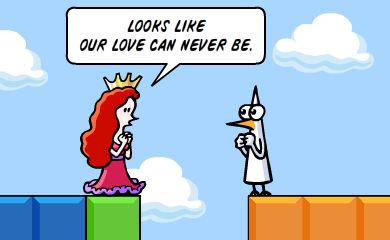


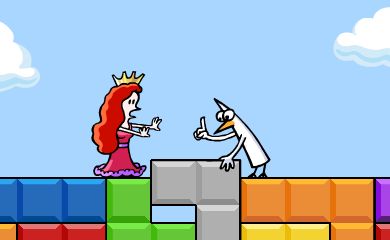
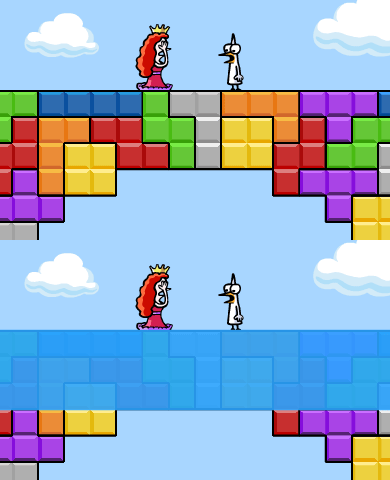
Pid'jin had almost won at the game of love, but he misunderstood which game he was playing. It's an age-old story.
Link -via Daily of the Day
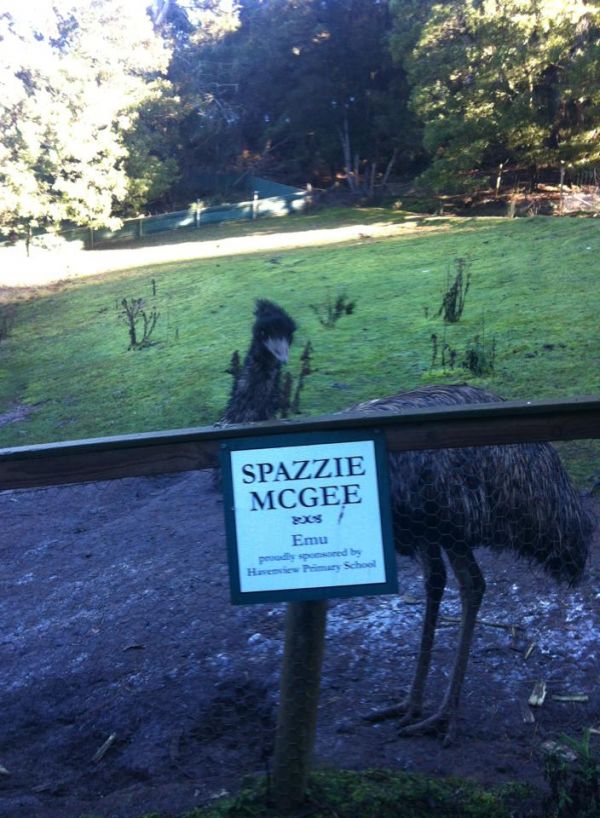
This picture was posted at reddit with the headline "This is what happens when you let primary school kids vote on the name of an animal." Spazzie McGee was the nickname of a character in the movie School of Rock. The emu named Spazzie McGee lives in Tasmania. But he is hardly the only example of folks taking liberties when they achieve naming rights, as many of the commenters pointed out.
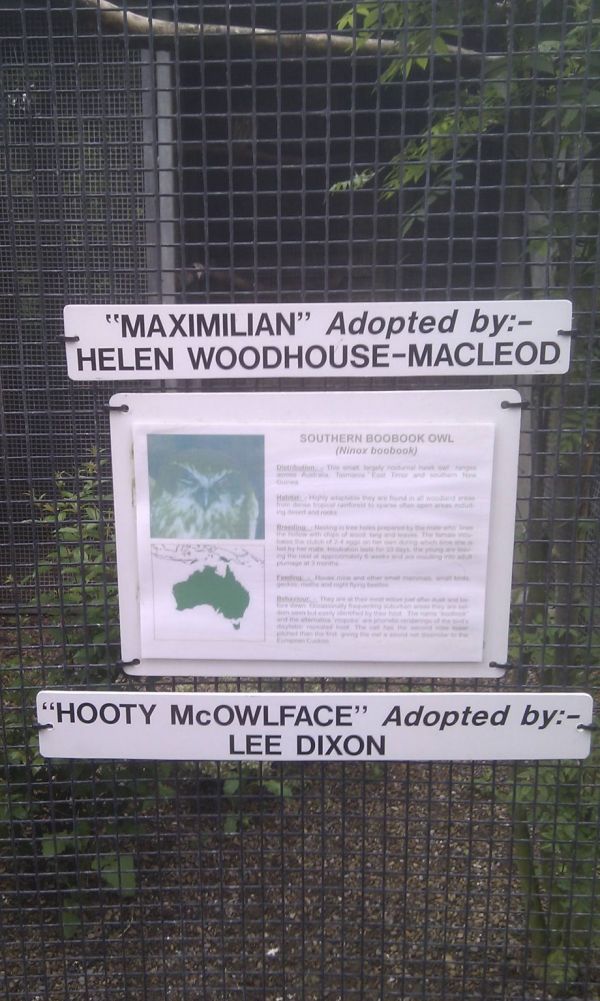
If you were to adopt an owl, could you think of a better name than Hootie McOwlface? Maybe. We'd like to hear it!
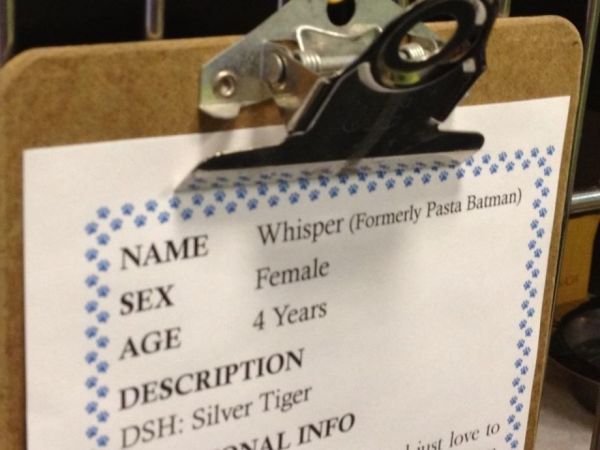
Apparently, Pasta Batman was later overruled by authorities. The tiger is now named Whisper.

This is what happens when students get to name their own dormitory. Fort Awesome contains 2600 beds and serves Purchase College in New York. The website doesn't say exactly how it was named, but it certainly sounds like the kind of place in which 18-year-olds would want to live. Although it's not the first place to use this name, it preceded the TV series Secret Mountain Fort Awesome by several years.
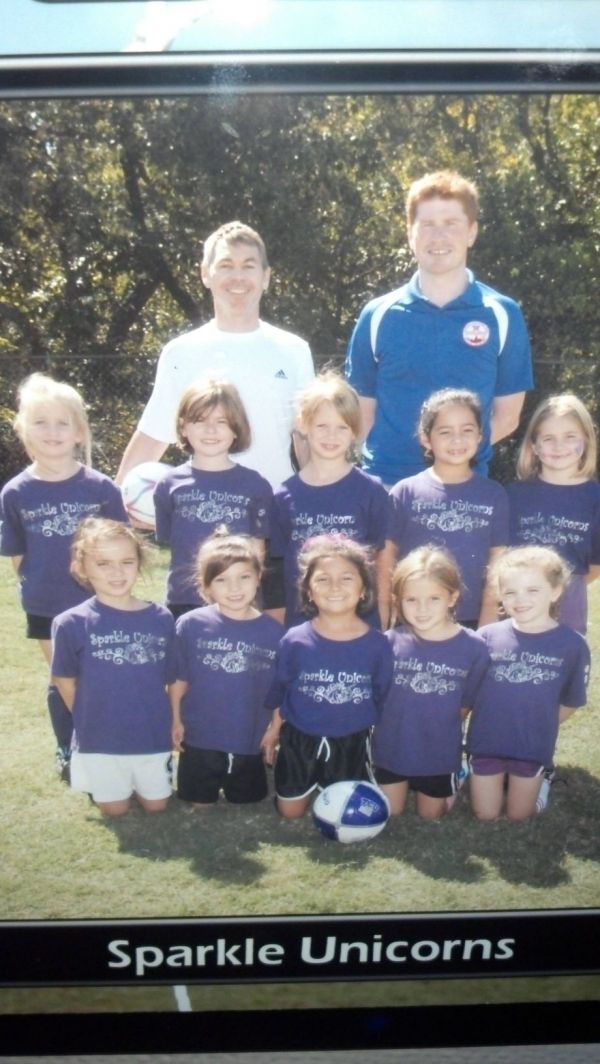
Okay, girls, what should we name our team? Sparkle Unicorns? That's great!
And of course, there's Mister Splashy Pants. Greenpeace staged an internet poll to name the whale in 2007, and 78% of online votes were for Mister Splashy Pants, even after fraudulent votes were thrown out. As you can see from this video, Greenpeace made its peace with the name.
Then there's Kim Kardashian, who gave birth to a baby girl last week, and named her exactly what an internet poll would have chosen: North. With no middle name. So her name is North West.
Durante el verano de 2003 tuvo lugar en Budapest un congreso llamado “Festival de la simetría” donde científicos y artistas se reunieron durante una semana para compartir sus puntos de vista sobre el tema. Analizaron ejemplos de simetría, entre ellos los tejidos Batik, el sistema Talamana de proporciones de las esculturas índiss y un clásico de este arte, los cuadros de M. C. Escher. (…)
Parece que también los mitos en torno a la sección áurea, o la “proporción divina”, pertenecen al reino de la fantasía y la fábula, pues no fue considerada una proporción ideal hasta el siglo XIX, cuando los románticos la proyectaron hacia los tiempos medievales que tanto admiraban.George G. Szpiro, “La vida secreta de los números”.
Ed. Almuzara, 2009
Extra: La entrada que dedica la wikipedia a la proporción aúrea se ilustra con esta imagen, con un pie de foto vistoso: “En la representación del Hombre de Vitruvio Leonardo da Vinci no utiliza el número áureo, sino el sistema fraccionario propuesto por Vitruvio”


Behold an absolutely monstrous compilation of female fronted punk bands from all over the world from the mid to late ‘70s to the mid 80s (and a little beyond). Some of the artists you’ve heard of (Blondie, Crass, The Avengers, Josie Cotton, Kleenex, Honey Bane, Teenage Jesus and the Jerks, Rezillos, Slits, Malaria!, etc.) but others, trust me on this, there’s just no way you could have heard of all of them. The fellow who compiled this beast is a master. An expert’s expert! A maven’s maven!
This gargantuan set represents a deep education in an exciting, but for the most part never really respected sub-genre of punk. It would be overstating the case to say it has aspirations of being a Harry Smith-type collection of punk and obscure hardcore bands, but some of this stuff I don’t think I’d ever come across if given two lifetimes. Apparently some of these songs come from cassettes, probably copied one at a time. Obviously plenty of the tracks were taken from vinyl 45 RPM records. And the stuff from the Eastern Bloc countries…. I mean, where did he get this stuff?
What a maniac! It must have been really hard to collect all of these songs, even in this day and age. Without a deep knowledge of the subject, it would be difficult to even search for some of these records on Google. Like I say, it’s damned impressive.
From the Kangknave blog (where you will find all of the download the links and a track listing):
This is a pretty insane project put together by my pal Vince B. from San Francisco a few years back. As the title indicates, this is a homemade 12 x CD-R (!) compilation of punk bands fronted by female vocalists from 1977 to 1989. More like a giant mixtape than a compilation, as he only made 36 copies which he sent to friends and people who submitted material. You may notice that some of the bands didn’t have a steady female vocalist (The Lewd, etc.) but he still included songs that were sung by another member of the band. This is as international as it gets, with stuff ranging from world famous Blondie or Crass to the most obscure Eastern European cassette compilation veterans. The boxset came packaged in a hand-numbered fancy translucent lunchbox enclosing all 12 CD-Rs, a stack of full-colored cards featuring comprehensive tracklist and artwork/info, as well as a manga pin-up figure! Talk about a labor of love.
Above, Slovenian punk rockers, Tožibabe
East LA’s The Brat do “High School” in 1981.
Via Boing Boing
Snob:____(
As a tribute to the late actor, Sesame Street has uploaded a clip from his 2002 appearance on the show.
Just add repulsors.

Source: reddit.com

Source: fuckyeah-avengers.tumblr.com
SnobHai que probar esta porcallada tex-mex. :D
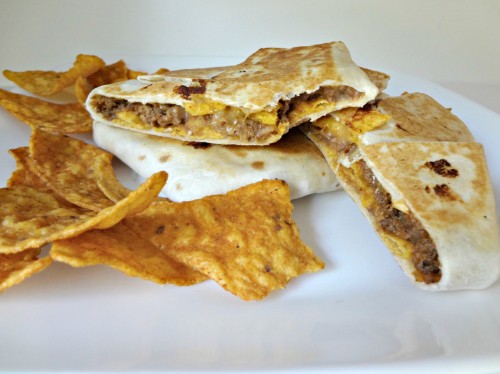
Since we’ve been talking Doritos tacos and taco Doritos on ES here this month, just want to make sure you guys didn’t miss our own Hungry Monster’s gem of a creation: Homemade Doritos Crunch Wrap. Yeah, you read that right. For people who are too lazy to even go to Taco Bell, we teach you how to make it at home. One more time…
Serves 1

A still from The Sopranos
It seems that these days we’re all running some terrible race to announce celebrities' deaths to each other, and to conjure up cheap gags about them. Wisecracks about Thatcher's death had been planned years in advance, the guy from Kriss Kross got a couple of lame Twitter gags, as did Uncle Monty from Withnail And I. Mandela’s not even gone yet but the town criers of the afterlife still keep jumping the gun.
I’m not going to pontificate about this very modern form of gallows humor, it’s a fairly natural reaction to a world where news breaks fast and careers can be made on breaking it the fastest. I’m sure I’ve done it myself. Last night however, in the last hours of a sticky summer evening, I got news of a celebrity death that nobody was joking about. A death that felt more like a death in our collective family than a news story we could make clever puns about.
James Gandolfini, American actor and American icon, had died at age 51. He had been on a family holiday in Italy when he suffered a fatal heart attack, leaving behind his second wife Deborah Lin, their daughter Liliana, and a teenage son named Michael from his first marriage to Marcy Wudarski.
For the laughing boys and girls of the internet, there seemed to be no jokes worth making. Twitter was a landscape of solemnity and respect. My Facebook page became a series of thumbnails of incredible Sopranos moments. It seemed that the unexpected death of such a fantastically talented human being at such a young age had momentarily bypassed our social media shock-jock tendencies.
I think people reacted like this for a number of reasons. First and most obviously, because of what he managed to do in The Sopranos. I’m sure a lot will be said in the next few days of how Gandolfini managed to make a monster so likable, of how he managed to make a killer so charming. But was Tony really that charming? I’m not so sure. He definitely had moments of charm, and moments where he was likeable. But one thing Tony always was, was knowable. And it's that, I think, that made his character so loved.
It’s very easy for an actor to seem likable with a bit of panache, some snappy suits, and good writing. The Sopranos had all of those things in abundance. But the genius of Gandolfini, his writers, and his directors was to create a character who seemed so real that you felt like you lived with him, whether he was moodily throwing eggs into his mouth at his breakfast bar at home or waiting alone in his car at 3 AM for a mark to show up.
Everything about that character was just so perfect. The way that he used to breathe when he got angry, the terrible suits that he wore, the way he kept his vest on during sex, his terrible hypocrisies and damning sentimentalities. The way that Gandolfini somehow managed to express an array of emotions using only his shoulders, communicating more about a man’s feelings with just those hulking, polyester-covered stumps than most other actors' flapping mouths, wildly gesticulating arms, and pensively furrowed brows could in a lifetime.
Tony seemed like someone I knew. Not necessarily somebody I liked or would want to spend much time with, but he felt like a person who was in my life rather than somebody I’d spend an hour a time with on my laptop.
This was no doubt abetted by the fact that Gandolfini himself just seemed like such a normal guy. Sure, he punched photographers, but in the way you or I probably would if we were 6’2" guys from New Jersey who’d had enough of their shit. (Especially if, as this great Vulture profile points out, we were as innately shy as Gandolfini.) He didn’t seem precious or self-obsessed like most actors and celebrities do. He seemed like a working-class guy with a lot of talent, the kind of famous person we’d all like to be. Someone who turned up, did great work, and had a great time without banging on about it.
I watched The Sopranos over the course of a few months in a period of my life that mostly revolved around not going to university and making a lot of late-night sandwiches. The show slowly became my life. It affected my speech patterns, my diet, my assessment of everyday situations. If I did something bad, I briefly found myself wondering if Tony or Paulie would be pissed off about it. When major characters died, it put me in a bad mood for days afterward.
It should also be said that Gandolfini was the first icon of the box set. The arrival of box sets—and their predominance over the last decade or so—has given people the ability to treat their favorite shows like books. It's allowed them to race through at their own momentum, to navigate their own depths. Gandolfini wasn't just the first icon of the box set, he was also the first box-set icon to die and, in my opinion, he's also the greatest character ever to have emerged from that clutch of shows that changed the way people think about TV—The Wire, Mad Men, Breaking Bad, etc. It's not ridiculous to say that Gandolfini changed American acting, for he was the king of the HBO show, the leading man who cast the mold for the likes of Don Draper, Walter White, and Jimmy McNulty.
Before him, TV acting seemed more to be about doing a passable, consistent job as the low-budget shoots came thick and fast, while being pleasant enough to keep the audience on your side across a span of months. The cream of the acting crop was reserved for film, but even if an actor was talented enough to truly inhabit their character, films were always too brief for the audience to really get a sense of that. Gandolfini's skill as an actor was to combine the two to glorious effect, bringing the genius of the greatest big-screen actors to the depth and familiarity that is possible with TV work. After his portrayal of Tony, acting became all about magnetism, nuance, and total encapsulation. It was some new school of performance that rested somewhere between experimental theater and reality TV, and it changed the way we absorb culture forever.
I could go on and on about my favorite Sopranos moments and what a brilliant actor James Gandolfini was. If you haven’t seen it, you should. For me, it’s the definitive chronicle of 21st-century life. The finest examination of its decadences and its hardships, its comic tragedies and its tragic comedies. It’s a show about money, sex, power, and family, and it stands up there with any culture ever created. At the heart of it is James Gandolfini, a former bartender from New Jersey who managed to silence the death trolls by virtue of being a true legend of American performance—and maybe because we thought there was still a chance he could storm in and do this to us if he caught us laughing at him.
Follow Clive on Twitter: @thugclive

In porn, one of the things I'm marketed as is "all natural." This phrase basically indicates that I have not had breast implants or other obvious plastic surgery. It has absolutely nothing to do with whether I've dyed the hair on my head (yes, multiple times and a variety of colors), what temporary or permanent body-hair-removal procedures I've had done (many, including stuff involving lasers), the amount of makeup piled on my face, or the degree of Photoshop work that has been done to my photographs. It also ignores the fact that for a decent chunk of my career, I had metal bars through my nipples, and the last time I checked those things don't come factory (or womb) installed. In the adult industry, natural is merely another word used for search-engine optimization, like teen, MILF, and big. Natural is not an expression of dictionary-definition fact. It is a marketing tool.
The term natural also gets thrown around in the entertainment and beauty industries. Countless websites have galleries of celebrities either caught without makeup by the paparazzi or posing bare faced for photo spreads in magazines. Depending on the publication, commentary ranges from "OMG ewww!" through to gushing discussions of the bravery involved with said celebrity allowing themselves to be photographed without makeup. The whole concept of being "photographed in their natural state" carries an inherent silliness, because putting any kind of lens between the viewer and the thing being viewed makes it look different than it does to the naked eye. Different kinds of lighting change the way a person's face looks, as does viewing it from different angles. You can easily experiment with this yourself if you have a camera lying around. As in the porn industry, use of Photoshop, subtle cosmetic surgery, or hair dye is rarely disclosed when a magazine labels a person's appearance as "natural."
What about advertisements like Dove's Real Beauty campaign? Their definition of beauty is vocally accepting of wrinkles and gray hair, but it does appear to be heavily reliant on even-toned and blemish-free skin. Sure, freckles are deemed acceptable, but I have yet to see a giant red pimple on the nose of one of the women in Dove's ads. Nor have I seen them feature a model with a port-wine birthmark or a case of eczema. They do show a broader range of skin colors and body shapes than a fashion magazine usually does, but they don't include people with visible physical disabilities or obvious large scars. Natural is, again, a marketing tool; they're using the concept of confidence coming from within to hawk more lotions to rub on your outside. They're redefining the word natural to correlate with how little makeup a woman is wearing, and they're totemizing this willingness to appear in public without cosmetics as courageous.
This leaves out some major factors in conventional aesthetic appeal: genetic luck, having the resources to eat well, the time and money necessary to purchase and regularly use face creams, oils, scrubs, and other weird stuff like placenta-blood facials or whatever it is that people who go to spas are up to these days. I can only speak for myself, but I put an insane amount of goo on my face and body, and I'm not working with nearly the budget that a Hollywood starlet is. I spend more time on just exfoliating and moisturizing than most of my female peers spend putting their makeup on. If my physical appearance were not the main source of my income, the amount of time I spend applying stuff to my skin would be utterly absurd. Even in that context of the body as a professional tool, it still might be absurd. My point is that a lack of obvious eye shadow in no way guarantees a lack of vanity.
Some people (who obviously don't know me very well) have complimented me on being low-maintenance because I don't appear to be wearing makeup. Some other people have told me how much they love the fact that I don't wear a bunch of crap on my face when I am, in fact, wearing a ton of crap on my face. I am usually wearing at least mascara and some kind of concealer when I receive these comments. Sometimes I'm wearing everything in my makeup bag except the false lashes and stage glitter. Additionally, I'm covered from head to toe in various products that are meant to protect my skin and hair from the elements and am usually full of vitamins. I love vitamins. Until someone finds a previously undiscovered specimen of tree bearing multivitamin fruit in the Amazon or Madagascar or something I'm hesitant to call the ingestion of vitamin pills natural, much less the previously mentioned absurd amount of goo. I have spent at least a year and a half trying strange potions that promise to grow my eyebrows back to their original, unplucked glory. I ended up with an eyebrow hair that was over an inch long. One single inch-long eyebrow hair. It was more horrifying than my first nipple hair. If you see me in public somewhere you probably shouldn't ask me about either of these hairs unless you want to see me blush tomato red.
Whether it's maintaining an obviously enhanced platinum blond or touching up gray roots to match an original brunette color, dyeing one's hair is still artifice. It may take slightly more time to have a set of French-tipped acrylic nails put on than to get a buffed manicure with no polish, but both are indicators of effort put in to be more aesthetically pleasing. Working out for the sake of having a certain physical appearance and undergoing cosmetic-surgery procedures are two different forms of body sculpting, one mostly acquired with sweat and the other mostly acquired with cash. Laser hair removal is a bit more futuristic than shaving cream and a razor, but hair removal isn't natural for anyone regardless of sex or gender. I'm pretty sure frequent showers aren't strictly natural either. I'm all for people showering as frequently as they want to and making their bodies look however they prefer. Dolly Parton once said, "It costs a lot of money to look this cheap," and I feel like it's important to make clear that it also takes a lot of work to look this natural. I think we do each other a disservice when we pretend that there's something laudable about ignoring the effort we put into our appearances or that there's something brave about admitting the fact that we do put that effort in.
Previously - So You Want to Perform in Porn


 (
(