Shared posts

06 Jan 02:00

Patient Zero - Updated

by WNYC, New York Public Radio

The greatest mysteries have a shadowy figure at the center—someone who sets things in motion and holds the key to how the story unfolds—Patient Zero. This hour, Radiolab hunts for Patient Zeroes of all kinds and considers the course of an ongoing outbreak.

We start with the story of perhaps the most iconic Patient Zero of all time: Typhoid Mary. Then, we dive into a molecular detective story to pinpoint the beginning of the AIDS epidemic, and we re-imagine the moment the virus that caused the global pandemic sprang to life. After that, we update the show with a quick look at the very current Ebola outbreak in west Africa. In the end, we're left wondering if you can trace the spread of an idea the way you can trace the spread of a disease and find ourselves faced with competing claims about the origin of the high five.

16 Nov 01:48

How Well Do You Know Teen Slang?

Are your eyebrows on fleek? Can you even? Find out now!

16 Nov 01:33

This Kiwi Got Sensually Stroked By German Leader Angela Merkel

Prost to the freaking weekend.

Hello Friday, we meet again. By the sounds of it you need a pick me up to get you through the final hours of your working week?

Hello Friday, we meet again. By the sounds of it you need a pick me up to get you through the final hours of your working week?

Deedle-Dee

Well say hello to the kiwi bird! The national animal of New Zealand and the cutest thing to be named after a delicious green fruit.

Well say hello to the kiwi bird! The national animal of New Zealand and the cutest thing to be named after a delicious green fruit.

rebloggy.com

And now German Chancellor Angela Merkel has had the chance to get up close and personal with a kiwi bird on her trip to New Zealand. It started pretty awkward.

And now German Chancellor Angela Merkel has had the chance to get up close and personal with a kiwi bird on her trip to New Zealand. It started pretty awkward.

Jason Dorday / Getty Images

But then she started to get into it.

But then she started to get into it.

Jason Dorday / Getty Images


View Entire List ›

16 Nov 01:19

To Leave A Bad-Ass Legacy, Turn To The Next Page: “Choose Your Own Adventure” Author Passes Away At 78 - To listen to the dinosaur's prophecy, turn to page 31.

by Carolyn Cox

cyoa002hb

The man who gave readers an unprecedented level of literary agency has, in the words of Dumbledore, embarked on “the next great adventure”: Raymond Almiran Montgomery has passed away at 78.

According to a fascinating and comprehensive obituary on the “Choose Your Own Adventure” website, R.A. Montgomery passed away November 9th after a lifetime spent travelling, writing and running his own business. After being “kicked out of Yale Divinity School [...] for spending too much time skiing and mountain climbing,” Montgomery spent several years teaching Peace Corps members in North and West Africa before he helped launch an entirely new genre of fiction by publishing author Ed Packard’s role-playing book Sugarcane Island.

Impressed by the educational potential of Sugarcane Island‘s interactive premise, Montgomery decided the novel would be first in a series entitled “The Adventures of You,” later called “Choose Your Own Adventure” after being contracted to Bantam. “Choose Your Own Adventure” went on to sell 250 million copies of over 230 titles in more than 40 languages, becoming the 4th-best-selling children’s series of all time. Montgomery occasionally authored books himself under the pseudonym “Robert Mountain,” but, contrary to standard practice at the time, insisted that “Choose Your Own Adventure” authors be credited under their own names, thereby helping to launch the careers of several aspiring writers.

Throughout his 78 years, Montgomery was passionate about education and promoting literacy, and was consequently adamant the series remain in print to help reluctant readers learn to truly engage in a book. Although illustrations in the series often depict male subjects, the adventures themselves also allowed an unprecedented number of readers to see themselves projected in the protagonist role, regardless of race, gender, or body type.

Montgomery’s final “Choose Your Own Adventure” book, Gus vs. The Robot King, was published last September. A movie based on his book Choose Your Own Adventure: Mystery of the Maya is currently in development at Fox.

(Via Choose Your Own Adventure)

Are you following The Mary Sue on Twitter, Facebook, Tumblr, Pinterest, & Google +?

16 Nov 01:14

Friday, November 14 @ 8:08:55 am

by tfbrown69
16 Nov 01:13

Friday, November 14 @ 5:07:17 pm

by ViennaCodex
16 Nov 00:47

Lucía Freitas, chef de A Tafona: “Se queres chegar lonxe nesta profesión tes que renunciar a todo, pero para min paga a pena. É o motor da miña vida”

by pinchaediscos

lucia_freitasÉ filla de xornalista e sempre pensou que seguiría os pasos do seu pai. Pero a vida tiña preparado para Lucía Freitas algo ben distinto. O seu sería traballar entre fogóns, triunfando como unha das cociñeiras galegas con máis sona no panorama da hostalaría actual. Nesta entrevista, a compostelá amósanos de maneira moi sincera quen é a persoa que está detrás da exitosa chef e propietaria – xunto con Nacho Tierno – de A Tafona Casa de Xantar.

Xa que estamos no teu restaurante, con que prato tratarías de ‘conquistarme’? 

Eu sempre lle aconsello o mesmo aos nosos clientes, que se senten e que se deixen levar. Aquí sempre temos verdura. Vir á Tafona se non che gusta está ben porque a redescubres. Eu levo dous días de supersubidón porque dúas persoas ás que non lle gusta o peixe, sentaron a comer un menú degustación e acabaron dicindo que lles encantara o peixe. Iso é a adrenalina, iso é a esencia da cociña.

A carta non a podería consultar porque non tendes. Só traballades con menús que elaborades cada día. Por que? 

Básicamente porque eu son unha persoa con moitísima inquetude. A nosa cociña está baseada no produto fresco. Se vexo unhas cenorias marabillosas na horta, as ideas véñenme de aí. Tanto a horta como a Praza de Abastos, a onde vou cada día, son para min a maior fonte de inspiración. É puro sentimento. É ver as cousas, sentilas… e veñen as ideas soas. Por iso eu non quero cartas, porque acaba converténdose para min nun lastre, en algo convencional.

Tes, ademais, a túa propia horta…

Si, e neso teño a gran axuda da miña familia. A min educáronme cunha horta. Os alimentos vexetais case sempre saían da nosa horta. É algo para min moi normal, unha forma de vivir. Tamén é certo que traballando en sitios como Mugaritz en San Sebastián, onde tiñan unha horta estupenda, descubrín moitas herbas, tanto salvaxes como de cultivo.

“A horta e a Praza de Abastos son a miña maior fonte de inspiración. É puro sentimento. É ver as cousas e veñen as ideas soas”

Pódese facer maxia na cociña?

Si, sen dúbida. De feito, creo que a maior parte das mulleres deste país, as amas de casa, fan maxia. Porque está moi ben ser un gran cociñeiro cando tes todo da túa man, pero a maior maxia é a das mulleres ou homes que cada día abren a neveira e con catro cousas fan un prato. E penso que cando máis satisfeito se sinte un cociñeiro é cando, con catro produtos básicos, é capaz de crear un prato e que sexa bo.

Ti es unha cociñeira moi perfeccionista, non si?

Si. Din que é o toque de muller. Pero non o sei. No resto dos ámbitos da miña vida teño que dicir que non son tan sentida. Pero na cociña si. Cando estudiaba teño tido broncas porque me achacaban que non tiña sensibilidade para empratar, pero hoxe penso que era falta de seguridade. Unha vez que estás seguro e feliz co que fas, o resto xurde só.

Dirías que es demasiado crítica contigo mesma?

Si, por suposto. Eu penso que todos os bos cociñeiros temos ese denominador común. Somos moi autoesixentes connosco e co que nos rodea.

“A maior maxia na cociña é a dos homes e mulleres que cada día abren a neveira e con catro cousas fan un prato”

E por que lles custa tanto ás mulleres chegar lonxe na túa profesión?

Porque a muller é sempre moito máis familiar. É a que se fai cargo dos fillos, da casa… Normalmente unha muller traballa 40 horas semanais. Eu traballo 60 ou 70. Saio ás 9 da casa e chego á 1:30 ou 2:30 da mañá. Esa é a miña vida. Se queres chegar lonxe nesta profesión tes que renunciar a todo.

Por que paga a pena tanto esforzo?

Porque para min é o motor da miña vida. Os cociñeiros non temos unha profesión, temos unha forma de vivir a vida. Somos cociñeiros desde que nos levantamos ata que nos acostamos. Pero é unha ventaxa! A xente di: “Dios! Pobriña! 16 horas na cociña!”. Pero eu, por exemplo, cando vou ao supermercado e vexo como está traballando a caixeira pensó: “Dios! Pobriña! Oito horas así!”. Eu a sorte que teño é que xamais miro o reloxo. Quizais se tivera unha familia sería máis compricado…

E como muller, notas algunha diferenza no trato?

Sempre fun unha muller de moito carácter e nunca me gustou que ninguén me tendese a man, me collese unha pota… así que non. Pero si que me teñen pasado detalles ‘graciosos’, porque non vou dicir ‘feos’, como vir comerciais ao restaurante e preguntarme onde está o xefe. E fai pouco un gran crítico miroume de enriba a abaixo e díxome: “Pero ti cociñas?” Máis que nada, faime moita gracia! Ás veces, que che tomen por menos está ben, porque ti tes o teu as na manga! (Sorrí).

Lucía e Nacho Tierno.

Lucía e Nacho Tierno.

A Tafona é un proxecto teu e de Nacho Tierno. Por que decidíchedes montala?

Nós coñecémonos en Mallorca e os dous tiñamos morriña. Para min perderme a vida familiar xa era moi difícil. Marchara de aquí con 19 anos ao País Vasco para estudar cociña. E como sempre pensei que un cociñeiro tiña que ser tamén bo pasteleiro, despois fun a Barcelona a estudar pastelería. Fixen bastantes prácticas ata que decidín que xa estaba ben de non gañar cartos e fun a Mallorca a traballar moitísimo. Era nunha hostalaría na que non estaba acostumada, pero coa que fixen caixa e puiden montar o meu restaurante.

Como vos entendedes na cociña?

Moi ben. Somos caracteres moi diferentes pero que se complementan ao máximo. Se el fose coma min estariamos tirándonos dos pelos! (Risos). El é unha persoa moi serena, moi bo ciciñeiro e moi boa persoa. Eu son máis difícil de aguantar! Hai que recoñecelo!

Antes de voltar a Compostela, pasaches polos prestixiosos restaurantes de Celler Can Roca, O Bohí, Mugaritz e Tápies. Pero como comezou todo? Desde cando che interesa a cociña?

Desde nena. Miña nai ten grandes virtudes, pero a de cociñar non é unha delas. O que cociña na miña casa é meu pai. Pero un día, miña nai ensinoume un biscoito, algo moi sinxelo, e deuse de conta que eu na cociña era feliz. Esquecía o resto do mundo e tiña uns minutos de felicidade. E tamén me conta que sempre se notou ese afán de perfeccionamento porque cando algo non me saía, tiraba con todo! (risos).

Sempre tiveches claro que querías adicarte a isto?

Non. A gran maioría dos meus familiares son xornalistas. Eu escribo moi ben, sempre tiven moitísima afición á lectura e sempre tiven gañas de estudar xornalismo. Pero nunca fun boa estudante e os meus pais, que son moi sensatos, fixéronme ver que o meu camiño era outro.

“Ser finalista do premio Cociñeiro do Ano fíxome dar un xiro. Cambioume a vida porque cambiei o meu concepto de restaurante. Quitei a carta porque para min era un aburrimento”

Varios premios no concurso Santiago(e)Tapas, finalista ao Cociñeiro do Ano no Fórum Gastronómico… Como de importantes son os premios para ti?

Son moi importantes. Recoñezo que teño unha intolerancia absoluto ao perder! (Risos). Sempre que nos presentamos é para gañar. Eu véxoo como unha inversión. O Santiago(e)Tapas, por exemplo, consegue meter no teu restaurante moita xente que coñece de cero o teu local. É publicidade pagada. E o do Cociñeiro do Ano fíxome dar un xiro. Cambioume a vida porque cambiei o meu concepto de restaurante. Quitei a carta, que para min era unha atadura, aburrimento… Agora centrámonos en facer menú degustación longo e curto. Tamén mantemos o menú do día porque foi algo que nos deu moitísimas alegrías. Falan de nós en toda España polo noso menú. E ademais, non quero perder esa clientela.

Estamos agora en plena nova edición do Santiago(e)Tapas, fai pouco celebrouse a Compostela Gastronómica, o Tapéate… Estamos nunha boa época para a cultura gastronómica na cidade, non si?

A boa época témola xa desde fai tempo porque en Santiago temos xente con moito potencial, grandísimos cociñeiros, que traballaron nos mellores restaurantes e que agora están facendo unha cociña para tódolos públicos. Pero no tema dos concursos penso que xa se excede. Está ben un concurso de tapas, pero non podes estar facendo cinco concursos ao ano. O Santiago(e)Tapas ten moito nivel pero non estou de acordo coa súa organización. É unha rifa que teño con eles desde fai anos. Teñen uns prezos de inscrición abusivos. Non o digo por nós porque sempre somos o local que máis tapas vende, pero si se exclúe a moita xente.

“O Santiago(e)Tapas é un concurso de moito nivel pero non estou de acordo coa súa organización. Teñen uns prezos de inscrición abusivos”

Que cres entón que precisa a hostalaría compostelá?

Falta xente con gañas de verdade e que sinta a hostalería de verdade para organizar todo. Pero esa xente é a que está botando 16 horas no seu negocio e non pode organizar nada. Fai falla un relevo xeneracional. Pero desde Turismo do Concello están facendo un esforzo moi bo e iso é de aplaudir. Porque Galicia xa ten fama de cociña clásica, pero fai falla que o resto do mundo mira cara nós como unha cociña non só de produto, senón de cociñeiros, de personalidades.

E como levades a competencia entre todos estes novos cociñeiros que destacan hoxe en Compostela?

Eu penso que ben. Os cociñeiros, ao noso nivel, somos xente tan currante e nos apoiamos tanto que todos nos levamos ben. Máis alá de ser empresarios, somos cociñeiros. Únenos un sentimento, unha paixón.

Lucía FreitasTEST COCIÑEIRO

Cando eras cativa, que é o primeiro que recordas de cociñar? Un prato que facía en cazola de barro que era un pisto da horta con ovo e xamón, feito na cociña de ferro. Facía moitas cousas co meu pai: empanadas, galletas de nata, etc.

E cal era o teu prato favorito? Os grelos cocidos con patacas, chourizo e un chorriño de aceite de oliva.

Un postre que che guste… Son boa pasteleira, pero non boa comedora de doces! (sorrí) Quédome con queixo con marmelo.

Adriá ou Chicote? A gran maioría das técnicas que empregamos a día de hoxe na cociña debémosllo a Adriá. A Chicote non lle debo nada.

Cociña tradicional ou experimental? É difícil elexir. Sen unha cociña tradicional non podería habela experimental.

O máis rico que levaches á boca na túa vida. A primeira vez que comín a pescada de Casa Marcelo.

E algo que comiches e non quererías volver probar? Eu penso que probaría todo de novo porque é parte do meu oficio. Teño un fatal recordo duns caracois á llauna (que son asados na súa propia baba) que comín en Girona, pero se mañá volvo, volvería probalos.

Un truco de cociña. A emulsión é unha técnica moi presente na miña cociña. Non é máis que engadir unha graxa a un caldo, a unha crema, e o que facemos é suavizala. Aportámoslle ese punto graxo en boca que fai que permaneza máis tempo no noso padal. E sempre corto iso cun chorro de vinagre, que é un pouco a chispa da acidez que é o que che dá a vida. É un truco para caldos ou cremas.

Por Rebeca Munín

The post Lucía Freitas, chef de A Tafona: “Se queres chegar lonxe nesta profesión tes que renunciar a todo, pero para min paga a pena. É o motor da miña vida” appeared first on Pincha(e)Discos.

16 Nov 00:45

El área sanitaria de Santiago cuenta con 1.500 casos de enfermedad inflamatoria intestinal

by Europa Press
La incidencia aumenta con 50 nuevos casos cada año
16 Nov 00:23

It Has Been Quite an Adventure

by SpacemanStix
R.A. Montgomery, the original publisher and author of the Chose Your Own Adventure series for childen, passed away on Sunday, November 9th, at the age of 78. (previously and previously)
16 Nov 00:22

The Donetsk People's Republic

by Behemoth
A short documentary from VICE News provides an inside look into the birth Donetsk People's Republic earlier this year.

Meanwhile, another showdown appears to be looming in Ukraine as Russian troops and tanks continue to pour over the border.
16 Nov 00:14

'The Onion,' 'The A.V. Club,' and 'Clickhole' Are Prepping for a Sale

by Megh Wright
by Megh Wright

the onionFunny or Die isn't the only comedy site considering a big sale this week. Bloomberg reports today that Onion Inc. — owner of pop culture and satirical sites The Onion, The A.V. Club, and Clickhole — has also hired a financial advisor for a possible sale of the company. Onion's CEO Steve Hannah declined to comment on the news, but the company is reportedly working with an investment bank to look into their options. Like Funny or Die, it's unclear how a sale would affect Onion Inc's sites. Hopefully The Onion's news item about God's plans to kick off humanity's mass extinction next week isn't more prophetic than satirical.

0 Comments
16 Nov 00:13

Twinsters

by Miss Cellania

Here’s a story that quite resembles the movie The Parent Trap, except that the parents aren’t really involved. French fashion designer Anais Bordier, who is studying in London, was shown a video of Samantha Futerman, an American actress who resembled her. Then things got weird. Bordier wrote to Futerman at Facebook.

Hey,

My name is Anaïs, I am french and live in London,

About 2 months ago, my friend was watching one of your videos with Kevjumba on youtube, and he saw you and thought that we looked really very similar...
like... VERY REALLY SIMILAR...we were making jokes about it etc. (I'm always being violent with people and hitting them too hahaha)

Today, he saw the trailer of 21 & over and told me he saw you again, I then checked your name on the cast, stalked you A BIT, and found out you were born the 19th of november 1987.

I checked more of your videos (which are hilarious) and then came upon how it feels to be adopted'... and discovered you were adopted too.

So..I don't want to be too Linday Lohan,
well...but..how to put it..I was wondering where you were born?
I was born on the 19th of November 1987, in Busan but my papers were made at the Holt Chuldren's Institute, so "officially" I was born in Seoul. My korean name is Kim Eunwha. I arrived in France the 5th March 1988, so 3 months later.

You can check my facebook if you want to check the pictures and videos. It's more obvious on videos...

Let me know...don't freak out...
Lots of love

Anaïs

The two women met in London, and have since traveled to Korea together and met each other’s families. They wrote a book called Separated @ Birth: A True Love Story of Twin Sisters Reunited, and are working on a documentary called Twinsters. See a video news report on the twins at CNN. -via Metafilter

16 Nov 00:11

A History of Antifascists Beating the Shit Out of Racist Boneheads

by James Poulter

[body_image width='700' height='533' path='images/content-images/2014/11/14/' crop='images/content-images-crops/2014/11/14/' filename='afa-interview-nf-james-poulter-384-body-image-1415967914.jpg' id='3859']

Attendants at this year's National Front Remembrance Sunday march. Photo by Gavin Cooper

This post originally appeared in VICE UK

Remembrance Sunday is the high point in the UK white pride calendar—a day for the fascist National Front (NF) to parade past the Cenotaph, sullying the day with their presence, while others try to peacefully pay their respects to those who've died at war. 

This year there was a split among the NF ranks, meaning there were two separate marches and the slim chance of confrontation. However, thankfully,  ​it turne​d out to be a relatively low-key event—not like NF marches in the past.

In the 1980s, the Remembrance Day march was a much bigger deal, drawing thousands of racist boneheads to London. As such, people who hate fascists wanted to oppose it. And over a period of a few years in the late-1980s, Anti-Fascist Action (AFA), a militant antifascist organization, was able to significantly reduce the number of people attending the National Front's annual march through a combination of audacious organizing matched with gratuitous violence. 

I recently caught up with Joe, a former organizer for AFA. We chatted about beating up Nazis in pubs and burger bars, and he explained how AFA was able to bring the number of people going on the march down to a tenth of what it was at its peak.

VICE: You opposed the National Front Remembrance Sunday parades for several years in the late-80s, causing the numbers attending them to plummet. Why?
Joe: Well, AFA was set up in July of 1985 with the express purpose of meeting with the National Front and other far-right groups on the streets. One of the obvious areas of neglect was the Cenotaph march, where the NF were allowed to parade through central London utterly unopposed. At their high point our estimate was they'd be 2,000 strong, so that became an area of interest for us. I'm sure they were marching more or less permanently between the end of the Anti-Nazi League and the beginning of AFA, but it started to increase because it was a kind of meet 'n' greet. This was where any [prospective members] would be encouraged to come take part in the yearly big event. [With] no opposition [it looks] too strong to be defeated. For young kids it's impressive.

Opposing the NF Remembrance Sunday parade in 1985 was among the first occasions Anti-Fascist Action took to the streets. What happened?
We went there and we tried to occupy their rallying point around Victoria station. We were at the back of the station, which is where they used to group up. There were probably about 80 to 100 of us, not all of them fighters—[some of them] ordinary antifascists, if you like. The police were there, then after about half an hour [the NF]  appeared and saw the mixed social demographic from the group. 

They looked like wolves—their tongues hanging out. The coppers were quite happy, absolutely insouciant. But then, as they got closer, the people who were less keen were moving back and the others were stepping forward. By the time they got close, there was a look of keen anticipation to attack. Eventually they didn't, but if they'd have kept going they'd have probably won the day. Ian Stuart Donaldson [lead singer of Nazi-punk band Skrewdriver] actually stopped at the bus stop and joined the queue.

At the end of the day, the police were disgusted with them, obviously—letting down the white race. Eventually they got out of their vans and started to push our side around. The National Front then had to go around, having failed to do their basic stuff, which was taking their place to form up. They then had to find a new place to form up. That was a kind of tick in the win column. Obviously we couldn't have done that a second year.

[body_image width='820' height='599' path='images/content-images/2014/11/14/' crop='images/content-images-crops/2014/11/14/' filename='afa-interview-nf-james-poulter-384-body-image-1415967653.jpg' id='3858']

A National Front march in Yorkshire in the 1970s .Photo ​via

The following year you held a march—why was that?
We thought we needed to do something more high-profile, so the idea came up for AFA to do a march itself, in direct opposition to the NF. In fact, we were actually marching toward them.

Our first march attracted about 2,000 people, which was considered a success, much to the chagrin of the Daily Mail, which was disgusted by antifascism being involved with the Cenotaph—it was just something which was anathema to them. The following year we went to repeat that success, but a group of 80 to 100 [Chelsea] Headhunters [football hooligans] attacked the back of the march. That's when we realized the Achilles heel in having a student-led, student-dominated demonstration, because apart from two women stewards the whole demonstration ran to the front. The stewards were struggling to get back and had to get through people dropping banners and all that—absolute disgrace. All the Headhunters did was wheel past, really; they didn't really get into the nitty-gritty.

What was the fallout from that attack?
It was enough for us to look at the whole AFA structure and kind of go, "We obviously have a problem here." In the sense of, what was the point of being an antifascist if, as soon as you meet the opposition, you leg it? You might as well just describe yourself as a non-fascist. You're in a neutral corner—that's where you're happiest, that's where you're most comfortable.

[body_image width='800' height='462' path='images/content-images/2014/11/14/' crop='images/content-images-crops/2014/11/14/' filename='afa-interview-nf-james-poulter-384-body-image-1415968215.jpg' id='3863']

(Screen shot ​via)

Even though AFA was marching, you were still involved in clashes with the NF around central London through the course of the evening. There was one occasion mentioned in the book Beating the Fascists, where it kicked off in a Wimpy. Can you explain what happened there?
That was a devastating blow for them, because that was their leader guard. They were just not paying attention or sufficiently focused. They thought that because they were in King's Cross they were out of harm's way. But we used to redeploy—we used to pull our people off the streets after there was plenty of activity. The police were looking for us, but we'd suddenly go to ground. We'd have scouts out all the time, and they'd come back with something. Or, when the time was ready, we'd reappear, 150-strong, and just go hunting. That was how some of our people came across the fash.

So you're in the Wimpy, with these NF members...
The funny thing was, right—Euston Road, even on a Sunday evening, is still pretty busy. We were on one side of the road and they were stood outside a Wimpy bar on the other side. Two or three of us came down the steps from St. Pancras. They knew who we were straight away. They couldn't recognize us, but they understood the body language. They had a huge advantage—they had all the brass-tipped flagpoles and all the biggest brutes they could find; 21-inch necks. 

Even though we outnumbered them, if they stood their ground it would be such a tear-up that the police would be bound to turn up within minutes, because we'd be right across the road and all that. But their courage failed them and they decided they'd go into the Wimpy: "It'll be alright, and it might not be them anyway, and there's no need to panic." 

It was perfect, really—you can't use a flagpole in a Wimpy. There was a right old John Wayne tear-up. It went all the way over the counter and into the kitchen. Customers all fled, and most of the staff ran away as well. That was a coup, because they knew everybody and everybody knew them. By the end of the week everybody internally would know it was a PR disaster for them.

That was the kind of thing we relied on—being sharper than them, anticipating where they were going to go. Appearing where you weren't expected. It was all part of the AFA portfolio. You'd start off with ten times less than them, but you'd keep redeploying the same 100. You'd hit them about six or seven times without any casualties and just a few nickings. They think they're fighting an army. They don't know it's the same 100. It's just carnage. That was a nice finish to the day, I think.

[body_image width='700' height='380' path='images/content-images/2014/11/14/' crop='images/content-images-crops/2014/11/14/' filename='afa-interview-nf-james-poulter-384-body-image-1415968287.jpg' id='3867']

This year's National Front Remembrance Sunday march. Photo by Gavin Cooper

After a couple of years of marching, and clashes before and after, you decided to go back to Victoria to oppose the NF directly—the tactic you used in 1985. Why was that and what happened?
We felt we could repeat the original formula, but about five times stronger. Instead of putting 150 in the field, you put 500-plus in the field—but mainly fighters, which wasn't the case the first time we went down there. So that's what we did. They had a pub right on the Victoria concourse, which was used by the Chelsea Headhunters. We just took that over. That became our base of operations, which made a perfect honey trap for them, because that's where they would make for. You'd see them come and they'd get splattered. Whoever got away, got away. But then more would come, because you're talking about hundreds of people coming from all over, and they'd be—bang, bang, bang bang bang.

Weren't there any police about?
The coppers weren't really on top of it. They hadn't anticipated it and couldn't distinguish our side from the fascists. There was no particular distinguishing feature—there was no social demographic like there was with the first march. [At the 1985 there were] obvious students and lefties against obvious hooligans and fascists, so you separate them out and you've got a law and order situation. But this was completely fluid. 

There was one situation where a particularly notorious and soon-to-be member of [neo-Nazi organization] Combat 18 decided to march into the pub with one or two others. He took about two steps inside the door, got hit with an ashtray, staggered on, got hit by a chair making for the other door, took a pint pot straight over the nut and then staggered out the other side. It just kind of summed it all up. He was a big old brute—he was up for attempted murder charges at some stage later. It was the kind of thing they thought they could get away with, but obviously not to any great degree. He didn't repeat it.

[body_image width='1044' height='618' path='images/content-images/2014/11/14/' crop='images/content-images-crops/2014/11/14/' filename='afa-interview-nf-james-poulter-384-body-image-1415968424.jpg' id='3875']

Screen shot ​via​

What effect did this have on the National Front?
That was a low point for them, obviously. Their own organization hadn't anticipated that. They weren't prepared for us. The police weren't prepared for us, either. A lot of this organization is done word of mouth; it was prior to mobile phones and email and all that, so you didn't get that kind of a trap where you've got a chain of evidence and people can build up an intelligence picture. There was nothing—it was done word of mouth. 

Also, the plans would change in the day at the discretion of the chief steward. You could only broadly anticipate what AFA was going to do, and AFA was also marching, so police were all geared up for the march. Five hundred-plus police went to Victoria, and they had people at Trafalgar Square, anticipating and trying to prevent another attack by the far-right, when in fact it was the far-right which was being attacked. They couldn't seem to move their feet quick enough—they couldn't adjust. It was a good day. The fascist recriminations went on and on after—who was to blame, etc.

The ramifications of that kind of humiliation just ripples through the organizations for months, if not years, afterwards. Sometimes they never recover at all. I think Richard Edmonds [formerly] of the BNP [and now a NF member] said later that they had a contingent there, [but] that there was no point in going to Victoria because it was just full of reds. That was his own direct experience—the BNP never took part in Remembrance Day after that at all, not even as a token force.

[body_image width='700' height='441' path='images/content-images/2014/11/14/' crop='images/content-images-crops/2014/11/14/' filename='afa-interview-nf-james-poulter-384-body-image-1415968470.jpg' id='3879']

National Front wreaths left at the Cenotaph during this year's Remembrance Sunday march. Photo by Gavin Cooper

The BNP weren't the only group you persuaded to stay away—there was a clash with the Chelsea Headhunters on Embankment. Do you think that stopped them returning?
They had a lot of young football hooligans with them for the day for a jolly, to attack the lefties and get the blacks and all that. They ended up meeting AFA instead. Just the look of horror on their faces... even though the tube had closed—the doors were closed when AFA charged the train—they were trying to get out of the carriage AFA was trying to get into, breaking the windows with fire extinguishers. They just scrambled all over each other and you just knew they'd never come back. 

The irony was that the ones who did manage to escape the carriage then got hit with bottles and other bits and pieces as they went from one carriage to another. If they'd just sat there and read the paper they would have been fine. But they couldn't... it was just terror, sheer terror. Which, for what we were trying to do, was pretty edifying, because for everyone who got hit, there were ten who would know it could have been them. That meant none of them came back, ever. It ended their whole political career. We used to say it's the first big lie—that lefties are all old men in duffel coats and sandals. That was what they were told, but instead they met the very opposite. It was just devastating—they just knew they'd been mugged off, and before they'd been blooded they were the ones who were bloodied and exited the stage.

By the end of the 80s the numbers going on the NF Remembrance Sunday parade had dropped to about a tenth of their peak—around 200 marchers. You then stopped opposing them. Why was that?
There was a strategic decision then to say, "Well, this will be the hardcore [members]—you won't be able to reduce them any more." So AFA redeployed to East London and got stuck into the BNP instead, and basically left the NF to it, saying its function as we saw it—an introduction to fascism—no longer served its purpose. We could deploy, but if the police had 500 coppers, there were two uniformed police officers for every fascist, and you could only do incremental damage after that. There was always going to be a hardcore that would continue, but the fellow travelers—the kind of people who would be the next generation—had been removed, so we moved on.

That was basically four years, and they were kiboshed. This was at a time when people were saying, "Fascism isn't a threat; the Tories are the real enemy; this is a deviation from the class struggle." The reality: right, but if you've got 2,000 fascists marching unopposed, that there is a major problem. It's what they represent, not what they could do. They were never particularly competent, but they represented something, and there was a continuum from them to the success of the BNP to the success of UKIP now. Now, people are seeing the size of the reactionary reservoir that the NF were trying to tap into at the time, 25 years ago.

That was the point. They knew there was something there to feed off. They were feeding off the march and the strategy of Oswald Moseley in the 1930s, which was to use violence. If nobody had stopped them, they could have done it.

Follow James Poulter on ​Twitter.

16 Nov 00:08

The Unbelievable Skepticism of the Amazing Randi

by daisyk
A profile of James "The Amazing" Randi, skeptic extraordinaire (SLNYT). When he was still a young man appearing in Toronto nightclubs and pretending to predict the future, Randall Zwinge created what he hoped would be his greatest trick. Each night before he went to bed, he wrote the date on the back of a business card along with the words "I, Randall Zwinge, will die today." Then he signed it and placed it in his wallet. That way, if he were knocked down in the street or killed by a freak accident, whoever went through his effects would discover the most shocking prophecy he ever made.

Notable James Randi previouslies.
14 Nov 15:26

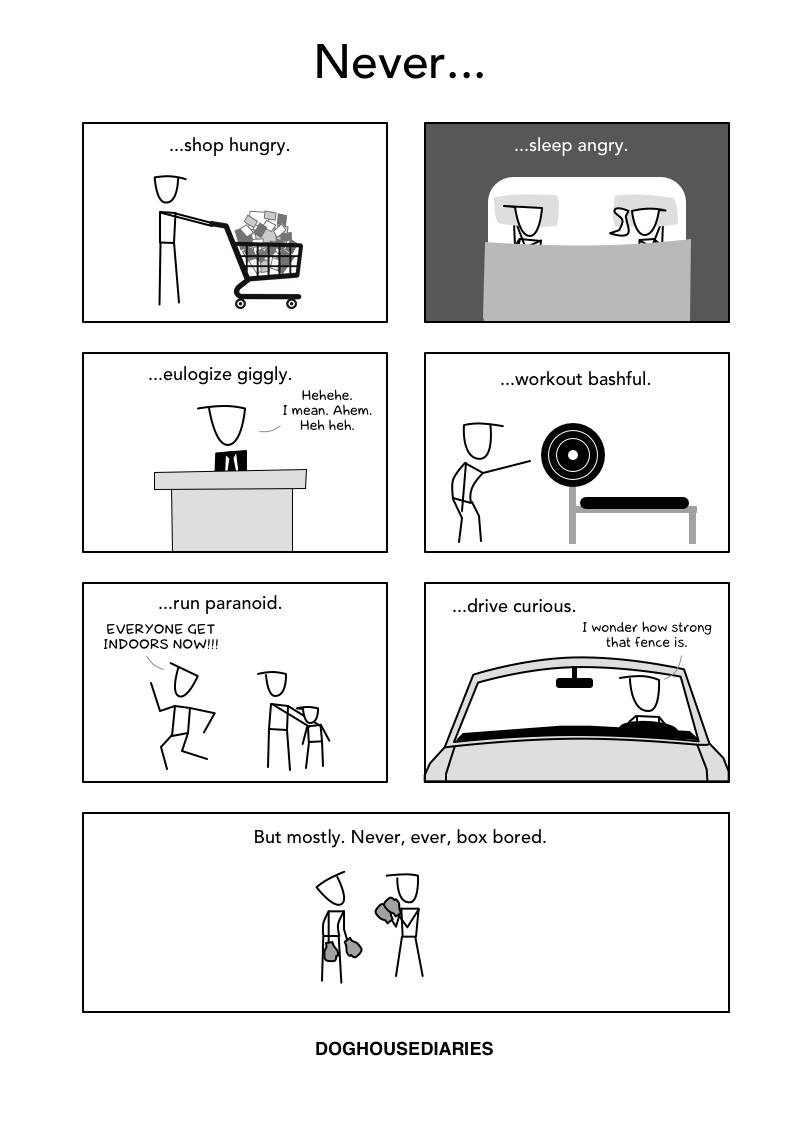
Never Shop Hungry

by DOGHOUSE DIARIES

Never Shop Hungry

Tell us your 'nevers' on Facebook! Oh, and incase you missed it we just launched the Weekly Forekast!

14 Nov 15:23

FEDERICA

by noreply@blogger.com (Lo dice Diana Aller)


Me gustan los chicos delgados, las mujeres inspiradoras y los nombres de más de dos sílabas, con presencia: Me encanta el nombre de Federica, me parece que tiene fuerza, sonoridad y cierta delicadeza. Y existió una Federica increíble, llena de curiosidad y sin miedo, todo un modelo de mujer.

Cuando se habla de feminismo, en una primera capa, muy superficial se piensa en lesbianas enfadadas con el mundo, normalmente feas y sin demasiado gusto. Esta es la imagen que promueve el sistema. Quienes están un pelín más familiarizados con el término, quienes se creen -por decirlo de alguna forma suave- "avanzados" culturalmente, tienen una imagen un tanto más intelectual: las sufragistas británicas y norteamericanas cuyas fotos en blanco y negro circulan por internet y redes sociales como el valor mismo de la lucha femenina. Tienen un puntito cool estas instantáneas, sí que es verdad.


Sin embargo lectoras, lectores míos, esto no deja de ser una engañifa de una sociedad aspirante a aria, bienpensante y contenida, que trata de imponer unos modelos de poder preexistentes en las sociedades masculinizadas.

(En España, en América Latina, en Italia... existen maravillosos ejemplos de teoría femenina bien elaborada, pero pervive esa vergüenza tonta del miedo al patriotismo.
Recuerdo que en la universidad tenía una asignatura que se llamaba "Pensamiento español", y me parecía casi un oxímoron. Pues no. Resultó no serlo).

Y sí. Me dispongo a escribir una entrada de esas que no tienen ningún éxito, y a mi me llenan un montón. Voy a transcribir algunas declaraciones de un magnífico documento audiovisual de tve sobre Federica Montseny. Por supuesto la entrevista está jalonada de cuestiones que jamás se le pregunta a un varón, y no sé porqué, porque a mí son las cosas que más me gustan: Que la gente cuente qué vio en aquella persona para enamorarse o cómo se sobrepuso a determinada situación... Lo demás, los datos empíricos están en la wikipedia...
Ahí van:

-"La justicia ha seguido estando del lado de los poderosos"

-"No fui a la escuela porque mi madre [maestra] temía el contagio de la enseñanza oficial, en manos de la iglesia o influida por el catolicismo. Y por otra parte, ella creía que podía darme la enseñanza que no podría encontrar en los centros pedagógicos oficiales".

-[Hablando de las manifestaciones republicanas] "La gran manifestación de mujeres en Plaza de Cataluña donde se reunieron centenares de miles de mujeres que pidieron el abaratamiento de las subsistencias, era la primera manifestación masiva de una conciencia femenina dirigida ya a obtener ventajas de carácter social y político".


-"El amor no era impensable, pero lo situaba tan alto y le exigía tanta libertad y tantas condiciones morales en el ejercicio de la práctica amorosa y la vida en común, que se me hacía un poco difícil encontrar el co-partícipe ideal" [Aquí se refería a la primera juventud, antes de los 20 años]

-[En referencia a su compañero, Germinal] "Celebramos esponsales en un bosque. Considerando que teníamos que consagrar nuestra unión en el seno de la naturaleza, una idea romántica que correspondía al espíritu naturista y de vuelta a la naturaleza que había entre la juventud de aquella época".

-"Las jóvenes de mi edad eran tan frívolas, estaban entregadas de tal manera a preocuparse solo de trapos y de bailes y de espejos, que no encontraba en ellas ningún eco ni ninguna compañía"

-[Sobre una ley del aborto]"Quedó en la cartera de los proyectos que no aprobó el consejo de ministros. Porque Largo Caballero entre otros, era adverso a la práctica del aborto. Yo también era adversa a la práctica del aborto, pero lo asumimos como un mal menor en los casos en los que llevar a término representaba un problema para la mujer, que era la víctima".

-"A mí me llamó nada menos que el que era subsecretrario de Francia en la época -no recuerdo el nombre- para pedirme los nombres de los dinamiteros de Asturias porque me solicitaban dinamiteros para utilizar el procedimiento que utilizaron en nuestra guerra de lanzar las bombas de mano ¡Ahí los tienen, muertos! ¿Qué quiere que le dé yo? ¿Los nombres para que les manden después a morir? Y a ver si encuentran voluntarios para ese combate. Lamentablemente los encontraron"

Datos a tener en cuenta:

-Federica nació en 1905 y murió en 1994.
-Los padres de Federica Montseny eran anarquistas convencidos. Ella también y defendió como una loca los derechos de los obreros y de las mujeres.
-Fue la primera mujer en un cargo ministerial en Europa -occidental- (Fue ministra de salud, aunque solo 6 meses). Aunque rechazaba toda noción de gobierno y poder político, ella y 3 anarquistas más, aceptaron formar parte del gobierno socialista de Largo Caballero (de noviembre de 1936 a mayo de 1937) para luchar conjuntamente contra el fascismo.
-Tras la guerra civil española, vivió exiliada en Francia.
-Escribió muchas novelas, una de ellas "La indomable" inspirada en su propia vida. Como ensayista también era buenísima, y como oradora ya, no digamos.
-Vivió desahogadamente siempre, y jamás dejó de trabajar, luchar por los desfavorecidos y miltar en la anarquía. Muchísimos centros y calles llevan el nombre de Federica Montseny, pero su obra y participación histórica apenas se considera con la dimensión que realmente tuvo.

Aquí les dejo unas imágenes de zapatistas que tienen unos auténticos lookazos.


Lo dice Diana Aller
14 Nov 01:01

Ass and Champagne

by Jarret_Noir


14 Nov 01:00

‘El Españolisto’: las mejores explicaciones del Pepito Grillo de Ana Pastor (vídeos)

by Borja Terán

El Objetivo apostó por el periodismo de datos en nuestra televisión y, desde su llegada a La Sexta, incorporó una viñeta llamada El Españolisto. Aunque su función, a pesar de ser un dibujo animado, va más allá de realizar una parodia de las problemáticas que afronta, al contrario: este personaje sirve como eficaz y efectivo analista que divulga y desgrana los datos de cada caso con contundencia, claridad y, por supuesto, con una dosis de humor negro. Tan importante en televisión.

El Españolisto, además, es un buen elemento para romper el ritmo del programa. Así, esta sección dinamiza el formato de La Sexta al mismo tiempo que pone más material para el análisis encima de la mesa. Y lo hace con una apabullante cercanía. Y eso es lo que, sobre todo, alcanza el espacio de Ana Pastor: transmitir con una didáctica sencillez el periodismo de datos con fama de género áspero.

Repescamos ocho maquinaciones del Españolisto:

LAS CUENTAS DEL EJECUTIVO

LA REGENERACIÓN DEMOCRÁTICA, PARA EL GOBIERNO

LA PRECARIEDAD

INVENTARIO DE LAS EMPRESAS QUE HAN VENDIDO LOS GOBIERNOS

LA SANIDAD

LA JUSTICIA ESPAÑOLA VERSUS LA TURCA Y LA RUSA

EL PODER ADQUISITIVO DE LOS ESPAÑOLES

EL FIN DE LA CLASE MEDIA

Y ADEMÁS…

Lo que ha aportado ‘El Objetivo’ de Ana Pastor a la TV nacional

La política de La Sexta para ganar audiencia… y credibilidad

Jordi Évole, ¿la manipulación televisiva a favor del periodismo?

Ana Pastor, crónica de una destitución anunciada

Así despidió Ana Pastor su último desayuno en TVE

14 Nov 01:00

Alternate History Africa without European Colonization

by Kattullus
Alkebu-lan 1260 AH (higher resolution) is an alternative history map of Africa in AD 1844, taking as its point of departure from our timeline an even deadlier medieval Black Death, killing almost all Europeans. It is made by Swedish artist Nikolaj Cyon, who explains some of his sources and thinking in this Prezi presentation. Cyon's thinking about alternative history is partly inspired by playing the computer game Civilization, and he has made a mod where you can play the medieval kingdom of Kongo
14 Nov 00:54

Leonardo DiCaprio is approaching his final form

by Jonco
14 Nov 00:47

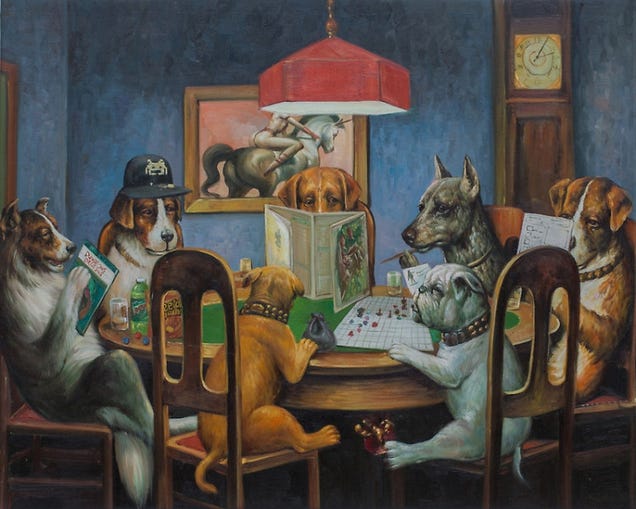
Dogs Playing Poker Just Got Owned By Dogs Playing Dungeons & Dragons

by Meredith Woerner

Dogs Playing Poker Just Got Owned By Dogs Playing Dungeons & Dragons

Hey, "Dog's Playing Poker," you're great and all, but "Dogs Playing Dungeons and Dragons" is the best dog painting in the history of all dog paintings. The end.

Read more...


14 Nov 00:41

John Green Tells You 25 Things You Might Not Know About Harry Potter - Yes, even you, intense Potterhead. Even you.

by Sam Maggs

Over at Mental Floss, everyone’s awesome uncle John Green tells you a bunch of things you might not know about your favorite franchise. As someone who considers themselves a pretty hardcore Potter fan, I was surprised at how much I learned from this video —which only stoked my intense fangirl fires even more. HARRY POTTER FOREVERRREITGIFHDKFDGHHH

(via Neatorama)

Previously in Potter

Are you following The Mary Sue on Twitter, Facebook, Tumblr, Pinterest, & Google +?

14 Nov 00:36

Crooked Men: Crimine-Infinito: The Complex Structure of the Calabrian Mob

by Roberto Saviano

Antonio Pelle of the 'Ndrangheta crime family reportedly reached the rank of vangelo (gospel), a high-level official who is sworn in with his hand on the Bible. Illustration by Jacob Everett

In criminal organizations hierarchy is everything. A few years ago, the Italian government led an investigation called Crimine-Infinito that revealed the complex structure of the 'Ndrangheta, the Calabrian mob. Long considered a "horizontal Mafia," or a simple confederation of clans, the 'Ndrangheta was shown to have a secret hierarchical structure with a central leader, exactly like the better-known Cosa Nostra.

The governing body of the 'Ndrangheta is the Crimine (Crime), supervised by the capo crimine (head crime). His spokesperson, the mastro di giornata (master of the day), passes along his orders. Underneath them are the colonels: the mastro generale (general master), the capo società (head of the society), and the contabile (accountant).

At the base of the 'Ndrangheta are the 'ndrine, clans made up of members of the same family (often enlarged through arranged marriages). Each 'ndrina is in charge of a distinct territory called a locale (local), which does not always coincide with a geographic zone: It is possible to have numerous locals in the same city, or multiple cities in the same local. The Crimine controls every local in the world, and everyone there must obey its every command.

Each local has at least 49 members and answers to a capo locale (head local), also called a capo bastone (head crook) after the staff used by shepherds to round up sheep. He directs the criminal activity in his territory, calls meetings, decides on memberships and promotions, and resolves conflicts. Just like the capo crimine in the central organization of the 'Ndrangheta, every capo locale is flanked by a capo società, his chief manager; a mastro di giornata, who delivers his instructions to the underlings (in slang, "he passes the news"); and a contabile, who oversees the funds coming from illicit activities, the so-called valigetta (briefcase).

The locals have a double structure: the Società Minore (Minor Society), comprising the lowest-level members, and the Società Maggiore (Major Society), also called the Società Santa (Holy Society), composed of their superiors. There are many ranks (known as doti) in the 'Ndrangheta, and a member's position determines his tasks, responsibilities, and salary.

In the Società Minore, the lowest tier is occupied by the giovane d'onore (youth of honor), a descendant of a boss and an honorary member by blood right. Above him is the picciotto d'onore (boy of honor), the first role given to those who join the 'Ndrangheta. He'll carry out menial tasks, mostly manual labor, until he graduates to the position of camorrista (literally "someone who collects extortion money") and takes on more complicated jobs. The top brass in the Società Minore is known as the sgarrista (soldier).

One enters the upper house of the local, the Società Maggiore, as a santista (the name refers to his being part of the Società Santa). A rung above him is the vangelo (gospel), so called because he swore loyalty to the 'Ndrangheta with one hand on the Bible (a tattooed cross marks his left shoulder). Next is the trequartino (three quarters), who has privileged access to three quarters of the organization (he has a cross on his right shoulder and an emerald rose under his foot). The ranks continue ever upward: quartino (one quarter), padrino (godfather), crociata (crusade), stella (star), bartolo (the origins of this title are unknown), Mammasantissima (Most Holy Mother), and infinito (infinity). The Società Maggiore culminates in the figure of the Conte Agadino. The name is probably a reference to Count Ugolino, whom Dante depicts as eating his own children in the Inferno. The boss of the 'Ndrangheta may eat his children, sell them, sacrifice them without facing a vendetta. Arriving at the top of the 'Ndrangheta means acquiring the power to kill and betray one's own blood.

***

Up to a certain point in the 'Ndrangheta's hierarchy, each rank has a religious reference and is identified with a saint. (The picciotto is associated with St. Liberata, the camorrista with St. Nunzia, and the sgarrista with St. Elizabeth.)

It's important to keep in mind that the 'Ndrangheta's initiation ritual is known as a "baptism." The members position themselves in the shape of a horseshoe and receive the baptismal candidate from a "guarantor," a kind of godparent who vouches for the prospective member and the authenticity of his intentions to enter into the clan. A capo società officiates the rite, asking the initiate questions and reading him the honor codes that he will be required to maintain at the cost of his life. The Mafia baptism is a "blood baptism": The new member's finger is cut by a sharp knife so that a drop of his blood falls on the prayer-card image of St. Michael the Archangel-considered the patron saint of the 'Ndrangheta-which is then slightly burned on one corner. At the end of this ceremony, a new "man of honor" is created. (Every promotion to a higher rank requires its own ritual.)

It seems unbelievable, but even today, as I am writing this, young people are joining criminal organizations through archaic rituals. And not only in Italy but all over the world.

On the night of August 15, 2007, in the quiet town of Duisburg, Germany, the final act of a 16-year-old feud took place. The Nirta-Strangio and the Pelle-Vottari-the two most powerful clans in San Luca, the Calabrian village that is the stronghold of the 'Ndrangheta-had been warring since 1991. Everything had started with an ordinary Carnival prank: During the festivities, some guys from the Nirta-Strangio threw eggs and flour in front of a bar run by the Pelles, dirtying the car of a member of the Vottari family. This was immediately interpreted as an affront, since everyone knew that the Strangios were trying to expand their power over the area. So began a feud that caused more than a dozen deaths over the next decade and a half. The last set of murders happened on that night in Duisberg, when the Nirta-Strangio sought to avenge a death that had occurred a few months earlier. They killed six people linked to the Pelle-Vottari families, almost all of them very young, in front of an Italian restaurant called Da Bruno, where one of the victims had just celebrated his 18th birthday. A burned prayer card with St. Michael's image that was found in the pocket of the guest of honor led investigators to deduce that the restaurant had probably been the site of a rite of initiation of the 'Ndrangheta. Inside, there was a statue of St. Michael, and in a windowless room in the back numerous images of the Madonna di Polsi (Our Lady of Polsi, revered by members of the 'Ndrangheta) hung on the wall, watching over a long table with 12 chairs. The motivation for the murders and the ceremony that took place in Duisburg had originated more than 1,200 miles away, in the small town of San Luca. Rules, codes, and rituals travel from San Luca to Germany, to the rest of Europe, and to the United States-any place in the world where the 'Ndrangheta have extended their tentacles.

***

Being in a criminal organization means being a member of a structure that is part business, part religious order, and part ancient military (like the Roman army, which was organized in legions). Legends and codes abound in Mafias, which use them to construct a collective identity for their members. Rituals are useful because they provide rules in a world without rules: Italian crime families are considered the most trustworthy underground organizations in the world because they have regulations, which aren't the rules of jurisprudence-the law-but of behavior and discipline for illegal operations (which, by definition, have no rules).

It may seem paradoxical that a country known for its absolute lack of rules has the mob with the most rules in the world. Italian mafiosi are conservative, traditional-quite different from their modernized, emancipated Italian-American counterparts. Joe Pistone ("Donnie Brasco"), the FBI agent who infiltrated the New York Mafia, maintains that the more mafiosi become Americanized the more they become mere bullies, failing to understand that you don't commit a crime just to get rich, because if you break the Mafia's rules you also break its way of life.

In the 1970s Vincenzo Macrì, nephew and designated heir of Antonio Macrì, boss of the 'ndrina of Siderno (in Calabria), was "laid down"-that is, banned from the organization-because his behavior did not conform to that of a good 'Ndranghetista (member of the 'Ndrangheta). Vincenzo rode around on a Vespa, went out in a T-shirt and shorts, and was ultimately replaced. Even today a 'Ndranghetista must rigorously respect certain parameters: He must not be a playboy, and he must be careful not to cause trouble, avoiding fights and stupid stunts. In other words, he must not attract unnecessary attention.

I've always been struck by the spirit of absolute sacrifice exhibited by the bosses of criminal organizations. I've often wondered how a man can withstand the conditions of a maximum-security prison (where Italian law requires Mafia bosses to be held) for decades. You understand it when you see how bosses live as free men or, even worse, as fugitives: forced to stay closed up in tiny, windowless bunkers to avoid being discovered by law enforcement.

Italy has more bunkers than any other country in the world. There are places, such as the area around the town of Locri, in Calabria, where they are part of everyone's daily life. A household builds a bunker almost automatically, preparing for the worst: Hopefully it won't be necessary, but it's better to have it just in case. Bunkers are part of the blueprints of new homes. It's as though good parents think about their sons' futures by providing them with a safe place to spend their time as fugitives. Plus a relative, a brother-in-law, a cousin, or an uncle might need it. The mafioso knows that sooner or later his life on the outside will only be possible if he knows how to hide.

The bunker, however, is a mind-set more than a hideout-the mind-set of living with very little space, of never going out, of never seeing sunlight. It's like an animal den. It's a crawl space only made human by a scant collection of personal items: prayer cards, porn magazines, car and watch catalogues-things that prove the power of the mafioso is internal rather than external. The boss has to satisfy himself with the pictures of those watches and luxury cars, buying them with his eyes, because he will never be able to leave his spider hole.

This is the price someone pays when he wants real power, the power over life and death.

Translated from the Italian by Kim Ziegler

14 Nov 00:03

We Are Red Elvises - Your Favorite Band!

by the man of twists and turns
Igor & Red Elvises play what is best summed up as 'Siberian surf rock.'

Bacon!
I Wanna See You Bellydance

Igor Yuzov and Red Elvises were an integral part of the soundtrack for 'Six String Samurai,' with Love Pipe and Boogie On The Beach. Before he was a red elvis, Igor fronted Limpopo, which is how he landed in LA. 12 Questions With Igor Yuzov.

They recently added a couple more parts to the core guitar-and-balalaika sound, for all you closet disco dancers.

The Fanzine, The Facebook, The Myspace, Pictures.
3 With your outsider's perspective, where's the strangest place in America that Red Elvises have ever played?
Key West is pretty crazy. Montana surprised me. Texas surprised me. Austin, Texas: I was surprised at so much live music there. Even Venice Beach, Calif. When I got there, it was like, "That's the place I like to be!" So I still live there.
I am a Rocketman


and if you ever find yourself crawling like a lobster down Duval street...
13 Nov 23:55

Chelsea Handler trolls Instagram with full-frontal nude of Kim Kardashian [NSFW]

by Brian Abrams
Chelsea Handler trolls Instagram with full-frontal nude of Kim Kardashian [NSFW]

Doubling her efforts in the #FreetheNipple crusade, comic Chelsea Handler is not only posting nudes of herself to Instagram but of other curvaceous celebrities — namely Kim Kardashian, Paper Magazine’s nudie queen who Handler mocked not 24 hours prior for having a horrible ass.

That last part, of course, is subject to debate. But, judging by Thursday’s Instagram post from Handler (see below), competitive assery has been set aside for a greater purpose–to continually call out Instagram for its cave-dwelling hypocrisy.
kim kardashian chelsea handler instagram troll Chelsea Handler trolls Instagram with full frontal nude of Kim Kardashian [NSFW]
Handler’s topless social media activism all started back on October 31, when the former talk show host uploaded a topless photo of herself while riding a horse — exactly the same as one done by Vladimir Putin — only to prove that Instagram’s no-female-nipples policy is outright sexist and troglodytic. (Instagram took the photo down moments after.) One week later, Handler tweeted a topless photo of herself on the open waters of the Amazon River–a friendly reminder to those keeping track that, indeed, her spirits were not broken.

Fast-forward to this week: On Tuesday evening, Paper Magazine revealed the cover for its winter 2014 issue–a photo of Kardashian’s glistening ass in all its hyperbolic glory. (Handler flashed her own derriere online just hours after in total mockery of what appeared to be a heavily Photoshopped cover.) One day later, Paper shared pages from the magazine feature that showed Kardashian full frontal. At 2:26 p.m. on Thursday, one of those photos (above) was posted to Handler’s Instagram. As of 2:52 p.m., it still remains. But it’s only a matter of time.

UPDATE: By 3:55 p.m. ET, Handler’s post of Kardashian’s full frontal has been taken down.

Source: Chelsea Handler

13 Nov 22:44

Check Out Adult Swim's "Salad Mixxxer" Informercial Starring Kurt Braunohler

by Megh Wright
by Megh Wright

Adult Swim has a strange policy with how and when they post their 4:00am infomercials on YouTube, but since last week's "Too Many Cooks" hit a million views they've uploaded two more recent informercials online. In addition to Tom Scharpling and Jon Wurster's Newbridge informercial, yesterday they also uploaded "The Salad Mixxxer," which ran on the network in early October and stars Kurt Braunohler as a '60s-era TV salesman showing a batch of restless housewives (Liz Cackowski, Carly Craig, and Betsy Sodaro) the latest NSFW kitchen tool on the market. Fun fact: "Salad Mixxxer" was co-directed by David Soldinder and Ken Marino.

0 Comments
13 Nov 22:38

Un incendio destruye un almacén de helados en Brión

by La Voz
Snob

De XEADOS! :_

El fuego, que se declaró a las 13.20 horas, ha calcinado la nave. No se registraron daños personales
13 Nov 22:03

Comic Con Portugal llegará en diciembre

by Gorka Sáez

Gorka Sáez

Comic Con Portugal

¡Llega la Comic Con a Portugal! El evento de cultura pop más importante del mundo se celebrará en el país vecino los días 5, 6 y 7 de diciembre de 2014 en Matosinhos, Porto.

Cine, series de tv, webseries, cómics, manga, anime, videojuegos y otras expresiones de la cultura popular se darán cita en Exponor, el mayor recinto ferial de Portugal con un espacio de más de 30.000m2 donde alrededor de 60.000 visitantes podrán disfrutar de grandes sorpresas y de las últimas novedades en el mundo de la cultura pop.

Además, son muchos los invitados de nuestras series de televisión favoritas que han confirmado su presencia en la Comic Con Portugal, como son Natalie Dormer, actriz de ‘Los Tudor’, ‘Juego de Tronos’ y ‘Los Juegos del Hambre’, que estará el 6 de diciembre en Exponor participando en un panel y sesión de fotos con sus admiradores.

Natalie Dormer no es la única estrella de Hollywood en la Comic Con Portugal ¡Paul Blackthorne estará en Porto los días 5 y 7 de diciembre! El detective Quentin Lace de la aclamada serie ‘Arrow’ contestará a las preguntas de sus fans, quienes también tendrán la oportunidad de fotografiarse con él.

Por si fuera poco, Morena Baccarin también estará el 5 de diciembre presente en la Comic Con Portugal. Baccarin es una actriz aclamada por el público y por la crítica, habiendo sido nominada para un Emmy por su interpretación en la serie ‘Homeland’.

El mundo de los cómics, el manga, los videojuegos y las webseries también estará presente en la Comic Con Portugal. Un evento que asegura la diversión con su concurso de Cosplay y una Fan Zone llena de sorpresas para los seguidores de Star Wars, donde contaremos con la presencia de Simon Wilkie como C3PO. Ya han sido confirmadas series como ‘Wayward Pines‘, ‘The Walking Dead‘ y ‘Da Vinci’s Demons‘.

Y los acérrimos de los cómics tendrán la oportunidad de conocer a alguno de los dibujantes españoles más emblemáticos del mercado norteamericano. Carlos Pacheco, Marcos Martín y Javier Rodríguez nos contarán cómo es trabajar en Marvel y DC. La presencia del aclamado guionista Brian K. Vaughan será también uno de las mayores atracciones para los amantes del noveno arte.

Tenéis mucha más información en la página web de la Comic Con Portugal.

La entrada Comic Con Portugal llegará en diciembre pertenece a La Casa de EL - Artículos y noticias sobre cómics, cine, series y videojuegos.

13 Nov 14:16

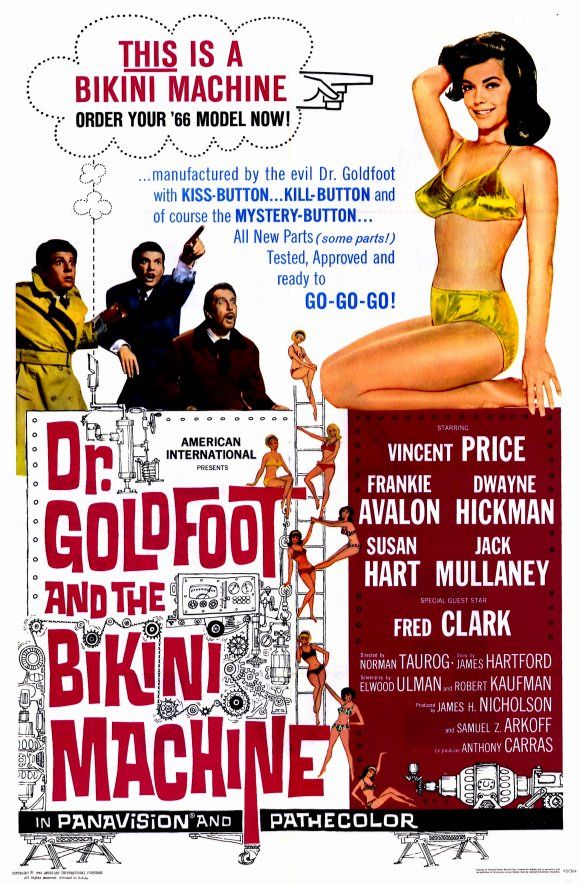
Dr. Goldfoot and the Bikini Machine

by Miss Cellania

Neatorama presents a guest post from actor, comedian, and voiceover artist Eddie Deezen. Visit Eddie at his website or at Facebook.

A cult movie classic? A piece of Americana? A vintage slice of the '60's? Uh, I guess if you want to be diplomatic you could describe the movie Dr. Goldfoot and the Bikini Machine in all of these ways.

Made on a record-high budget for Samuel Z. Arkoff's American International Pictures (this was the first-ever A.I.P. film to have a budget of over $1 million dollars) Dr. Goldfoot and the Bikini Machine began filming in the late summer of 1965. Much of the film was shot on location in San Francisco, with other scenes shot at MGM studios.

The original idea for the film came from James H. Nicholson, who was one of the owners of A.I.P. films (Nicholson provided the story and is credited as James Hartford). Nicholson had a then-girlfriend, an aspiring actress named Susan Hart. Knowing full well that Susan did not have much acting ability, he wanted to provide her with a role by making her a robot in the film. A plot for the movie was thus hatched.

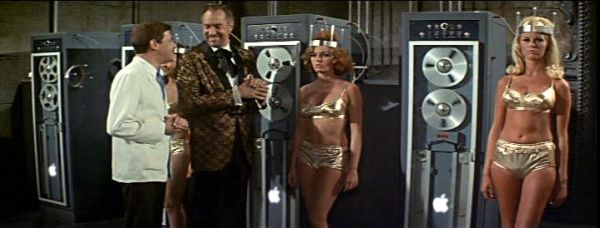
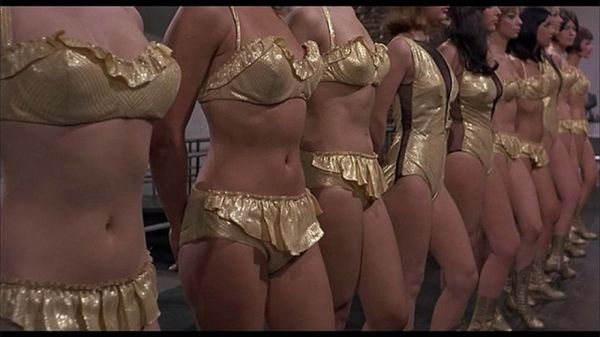
Dr. Goldfoot, a nefarious, evil, mad scientist, played by Vincent Price, would develop an army of female robots. These sexy and very attractive femme fatales would hunt out and locate wealthy men. The robots would then use their feminine wiles and anatomical endowments to milk the unsuspecting cash cows dry of all their assets.


The original title for the movie was actually Dr. Goldfoot and the Sex Machine.

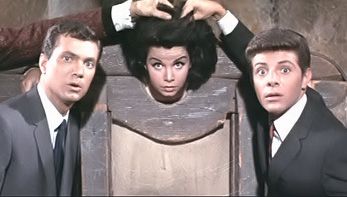
Vincent Price, the legendary horror movie icon, was recruited for the lead title role. He had already starred in several A.I.P. macabre horror films. In fact, the dungeon and torture scene in the movie actually incorporated a long shot of Vincent from his 1961 A.I.P. film The Pit and the Pendulum. Vincent Price also gave this otherwise "fluff movie" some cachet.

Frankie Avalon and Dwayne Hickman, who had just starred in  A.I.P.'s Ski Party together a few months previously, would play the film's resident "good guys.” Oddly, while Frankie and Dwayne played the roles of Todd Armstrong and Craig Gamble, respectively, in Ski Party, their characters were reversed, i.e. Frankie played Craig Gamble and Dwayne played Todd Armstrong in Dr. Goldfoot and the Bikini Machine (go figure!)

Sixties character actor Jack Mullaney took the role of Goldfoot's assistant “Igor" and veteran movie straight man Fred Clark was brought in to play Frankie's slow-burning “Uncle Donald.” The movie also featured cameos by fellow beach party film alumni Annette Funicello, Harvey Lembeck, Deborah Walley and Aron Kincaid.

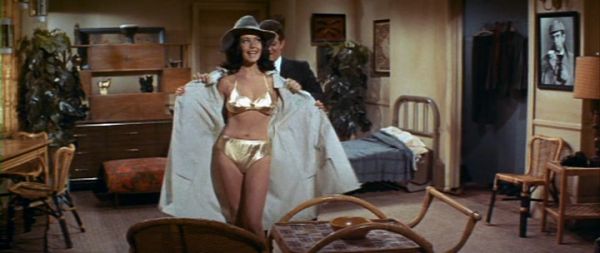
Susan Hart took the lead female role of “Diane,” an ultra-sexy female robot who latches onto Todd (Hickman), marries him, and is well on her way to siphoning off all his wealth (including stocks and bonds). It's up to Craig (Avalon) to save his buddy from the mechanical gold digger's clutches.


The film was based on the ultra-popular James Bond movies of the sixties, but was originally supposed to include musical interludes. The original concept was sort of a “James Bond meets beach party.”

According to Susan Hart, Vincent Price originally sang a wonderful musical number in the movie, in which he explained exactly who Dr. Goldfoot was and elaborated on the plot of the movie. But alas, the number was edited out of the film's final cut. Hart called the number "excellent" and said the reason for its cut was because Vincent was "too fey" in the number. (Ironically, she asserted, he was playing a "fey character" in the movie anyway.)

She claims the editing of this wonderful song "took the explanation and the meat out of the picture.” She elaborated about the "missing" scene: “It was a really extraordinary scene and it was so beautiful. it was right on the money.” Vincent Price agreed. Speaking about the film in a 1987 interview, Vincent recalled: “It could have been fun, but they cut all the music out.”


Two of the girls in the film were Playboy playmates. Another female robot was Laura Nicholson, the daughter of James H. Nicholson. Susan Hart's hair was done by then-hairstylist/later-producer Jon Peters. The movie's title song was sung by the Supremes.

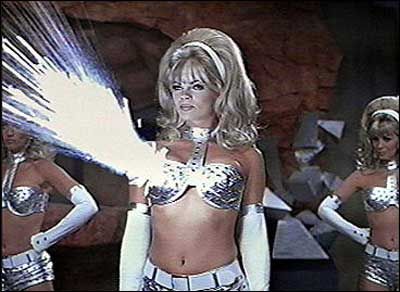
If Dr. Goldfoot and the Bikini Machine sounds a bit familiar to present day movie goers, it is not surprising. Mike Meyers was to use the film as a main inspiration for his Austin Powers movies three decades later. Remember "the fembots"?

Dr. Goldfoot and the Bikini Machine was released in November of 1965 and met with good financial success in America (taking in over $2 million at the box office). It was however, an even bigger hit in Europe and was especially popular in Italy. The movie was retitled Dr. G and the Bikini Machine in England because there were actually two doctors in the country called Dr. Goldfoot. One of the Dr. Goldfoots had even initiated legal action.

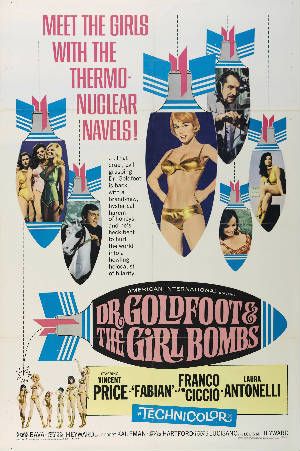
Dr. Goldfoot and the Bikini Machine was popular enough to merit a sequel, made the next year, Dr. Goldfoot and the Girl Bombs. There was even a Dr. Goldfoot TV special made for ABC called “The Wild Weird World of Dr. Goldfoot,” incorporating scenes from the film (it can be viewed on YouTube).

Actress Susan Hart had worn a bikini in a few films previous to Dr. Goldfoot and the Bikini Machine, including the 1964 beach films Ride the Wild Surf and For Those Who Think Young. After Dr. Goldfoot and the Bikini Machine, she was to don a bikini once more on camera in A.I.P.'s The Ghost in the Invisible Bikini (1966). But by this time she was happily married to James Nicholson.

Her last acting role was in a 1968 episode of The Wild Wild West. After this, she hung up her bikini for good (and her acting career) and devoted her time to raising her son, Jimmy.

Susan Hart reputedly owns all the rights to Dr. Goldfoot and the Bikini Machine, as well as other A.I.P. films. It is rumored that she has a very high asking price for their rights and this is why many of these films haven't been released in the home video market.


(YouTube link)

13 Nov 13:59

Todo lo que la imprenta ha hecho por ti (y todo lo que dejará de hacer)

by Sergio Parra

La imprenta no solo redujo el número de analfabetos del mundo (sin libros suficientes no había incentivo para aprender a leer), sino que también conectó a la gente e incrementó el círculo de empatía hacia mujeres, negros, niños, esclavos y demás clases desfavorecidas. La imprenta constituye, por sí sola, la Primera Revolución Industrial. Y nada sería como es si no hubiera llegado a automatizarse este proceso dedicado a copiar y copiar libros, opúsculos, octavillas, manuales de instrucciones y hasta biblias.

La imprenta probablemente sea el invento que más ha cambiado el mundo, y más cosas buenas ha dado a la humanidad, pero al que menos atención le hemos dedicado. Sin ella no existiría nada de lo que nos rodea. Ni siquiera habría sacado a la gente de las tinieblas de la ignorancia. Tampoco pensaríamos como lo hacemos, porque no es lo mismo aprender leyendo que escuchando, ni tampoco es lo mismo explicar un argumento que escribirlo organizadamente en doscientas páginas. Ni siquiera podíamos viajar porque los mapas eran algo escaso, caro y subjetivo.

Incluso la idea de Autor, y la existencia del copyright, son efectos secundarios de la imprenta. Efectos que la imprenta 2.0 quizá esté a punto de suprimir o modificar para siempre, como lo hizo la imprenta 1.0.

Mejor que internet

Cuando nació la imprenta gracias al alemán Johannes Gutenberg en 1436, los cambios sociales que se produjeron fueron tan espectaculares como los que hoy en día está produciendo internet, aunque a una velocidad menor. Por ejemplo, una persona nacida en 1453, el año de la caída de Constantinopla, podía atesorar ocho millones de libros nacidos gracias a la imprenta, más que todos los libros producidos por todos los amanuenses y escribas de Europa desde que Constantino fundó su capital en el año 330.

La primera imprenta italiana se fundó en 1464. París ya tenía imprentas en 1470. Y Londres, en 1476. Hacia el año 1500, la imprenta se había extendido ya por todos los países europeos, excepto Rusia. El número de libros producidos en los cincuenta años siguientes a la invención de Gutenberg igualó la producción de los escribas europeos durante los mil años precedentes. Tal y como señala Nicholas Carr en Superficiales:

A finales del siglo XV, cerca de 250 ciudades europeas tenían imprenta, y unos 12 millones de volúmenes ya habían salido de sus prensas. En el siglo XVI la tecnología de Gutenberg saltó de Europa a Asia por Oriente Próximo; y también a las Américas, en 1539, cuando los españoles fundaron una prensa en la Ciudad de México. (…) Aunque a la mayoría de los impresores les movía el ánimo de lucro fácil, su distribución de los textos más antiguos ayudó a dar profundidad intelectual y continuidad histórica a la nueva cultura centrada en el libro.

640px-Handtiegelpresse_von_1811

Aprendiendo a pensar

La escritura y la lectura ejercitan partes de nuestro cerebro que nunca antes de la existencia de la imprenta se habían desarrollado. En 2009, la revista Psychological Science publicó un estudio al respecto, llevado a cabo por Nicole Speer, en el Laboratorio de Cognición Dinámica de la Universidad de Washington. Los cerebros lectores entienden de otra manera el lenguaje, procesan de manera diferente las señales visuales; incluso razonan y forman los recuerdos de otra manera. Según explica Nicholas Carr en su Superficiales:

Los lectores simulan mentalmente cada nueva situación que se encuentran en una narración. Los detalles de las acciones y sensaciones registrados en el texto se integran en el conocimiento personal de las experiencias pasadas. Las regiones del cerebro que se activan a menudo son similares a las que se activan cuando la gente realiza, imagina u observa actividades similares en el mundo real.

O como añade Jeremy Rifkin en su libro La sociedad del coste marginal cero:

Mientras que la escritura medieval era muy personal y variaba con la aportación subjetiva de cada amanuense, la imprenta eliminó este elemento subjetivo y lo sustituyó por un enfoque al conocimiento más racional, calculador y analítico. Además, a diferencia de la comunicación oral que depende de la memoria y, en consecuencia, de respuestas formularias, la impresión permitió conservar recuerdos y sistematizar la recuperación de información mediante índices, notas a pie de página y bibliografías, y contribuyó a la expansión del vocabulario y al desarrollo de un lenguaje mucho más matizado que se podía adaptar a experiencias o momentos concretos.

letters-418634_640

Más buenos que el pan

La imprenta desarrolló la industria del libro, y con ello la multiplicidad de puntos de vista, y la posibilidad de introducirnos en la cabeza de otras personas con formas de vivir muy distintas a las nuestras.

Ello nos demostró que los extranjeros, los negros, las mujeres y los niños eran como nosotros, tenían nuestros mismos miedos y deseos. La imprenta, pues, fue la primera máquina de realidad virtual, y también una poderosa herramienta para penetrar en mentes y, en consecuencia, permitir que nos pusiéramos en la piel de otros. Ello fue probablemente un punto a favor del incremento de empatía que se está produciendo en los últimos siglos, tal y como explicamos en ¿Leer te hace mejor persona?

Economía

La imprenta también cambió la forma de hacer negocios con los demás. Facilitó los contratos comerciales, dejando atrás la economía feudal basada en la palabra (es decir, circunscrita a las distancias cortas). La confianza comercial, pues, se hizo universal. Además, gracias a la imprenta se podían enviar listas de precios, facturas, pagarés o cheques normalizados. Como señala Jeremy Rifkin:

introdujo gráficas, listas y tablas que ofrecían una descripción del mundo más objetiva y precisa que cualquier valoración personal. También contribuyó a la expansión del comercio por tierra y por mar al abaratar la reproducción de los mapas y popularizar su uso (…) La nueva matriz de comunicación/energía no solo acortó distancias y redujo tiempos uniendo a personas diferentes en actividades económicas conjuntas después de muchos siglos de aislamiento, sino que, con ello, también fomentó una nueva apertura a los demás y marcó el inicio de una mentalidad más cosmopolita.

El provincianismo y la xenofobia, en consecuencia, también empezaron a desvanecerse gracias a este cambio de paradigma económico, como también sostiene Matt Ridley El optimista racional. Porque el intercambio genera confianza, y viceversa:

En el siglo XIX, cuando el capitalismo industrial atrajo a tantas personas a ser dependientes del mercado, la esclavitud, el trabajo infantil y los pasatiempos como el lance de zorros o las peleas de gallos se volvieron inaceptables. A finales del siglo XX, cuando la vida se comercializó aún más, el racismo, el sexismo y el abuso de menores se volvieron inaceptables. Y en el camino, cuando el capitalismo cedió el paso a variadas formas de totalitarismo dirigido por el Estado y sus pálidos imitadores, fue evidente el retroceso de dichas virtudes, mientras la fe y el valor revivieron. (…) La violencia azarosa tiene espacio en los noticiarios precisamente porque es tan rara; la amabilidad rutinaria no es noticia precisamente porque es tan común. En décadas recientes, las obras de caridad han crecido más rápido que la economía a nivel global. Internet está repleto de personas que comparten consejos gratuitamente.

(Shutterstock)

(Shutterstock)

Vapor y prensa

Pero la imprenta aún nos propulsaría mucho más rápido hacia el futuro gracias al vapor. La imprenta tradicional no dejaba de ser un mecanismo lento y laborioso, pero en 1814 la imprenta a vapor de Friedrich Koenig empezó a imprimir las páginas del periódico The Times de Londres a una velocidad inaudita hasta el momento: 1.000 ejemplares por hora en comparación con los 250 de las antiguas imprentas manuales. En 1832, las imprentas a vapor ya imprimían 2.000 periódicos por hora. En 1846, la rotativa de dos cilindros de Hoe imprimía 12.000 hojas por hora. En 1865, la rotativa con bobina de papel imprimía 12.000 periódicos completos en el mismo tiempo.

Hasta el momento, la velocidad de impresión de libros era aceptable porque escribir un libro suponía una gran cantidad de tiempo. Pero las noticias diarias quedaban inéditas en un mundo que precisaba de la escritura de «libros» diarios que consignaran la realidad cambiante. El vapor permitió no solo contar lo que ocurría en una semana, sino lo que ocurría cada día, cada hora, cada minuto.

Ya no se trataba de leer libros sesudos para intelectuales, sino la simple realidad cotidiana. Todo el mundo quería estar informado, pero nadie sabía hasta qué punto lo necesitaba hasta que se materializó la posibilidad de leer periódicos de gran tirada. Como el pez que se muerde la cola, a mayor demanda, más periódicos, a más periódicos, mayor demanda. Lo que, paralelamente, impulsó la alfabetización generalizada en Europa y Norteamérica, originándose sistemas de escolarización pública.

newspaper-412452_640

La velocidad de los datos y los trenes

Los avances técnicos de la imprenta permitieron que esta fuese más eficiente y produjera aún más textos de manera asequible. A lo que se le sumaron máquinas para fabricar papel, la estereotipia y las rotativas. Todo ello se desarrollaba a la par que el transporte por ferrocarril. Al disponer de más noticias, mayores posibilidades de consignar transacciones comerciales y mayores diligencias en la duplicación de manuales, catálogos y anuncios, ello supuso un gran incentivo para desarrollar el ferrocarril con la misma tecnología a vapor que desarrollaba la imprenta. En el fondo, ferrocarril (transporte) e imprenta (información) eran la misma cosa, el mismo objeto, pero con distinta finalidad. El tren y la imprenta, unidos, eran como internet (ordenador + módem). Uno se desarrollaba bajo el paraguas del otro.

Muchos agoreros y luditas renegaban de que el ferrocarril alcanzara velocidades tan elevadas. En 1830, por ejemplo, publicaciones como Quarterly Review advertían: «¡Qué puede ser más absurdo y ridículo que la perspectiva de que las locomotoras viajen dos veces más rápido que las diligencias!» En el mismo año, Dionysus Lardner, profesor de Filosofía natural y Astronomía del Colegio Universitario de Londres, escribió: «Viajar en ferrocarril a velocidad elevada no es posible porque los pasajeros, incapaces de respirar, morirían de asfixia». A pesar de ello, la velocidad en la copia de textos era el verdadero incentivo para desarrollar la velocidad en el transporte. La gente no era la que quería ir tan rápido de un sitio a otro, lo era la información. Y si la información no hubiera necesitado de semejante rapidez, las personas tampoco habrían decidido llegar de un sitio a otro más rápido de lo que lo hacía sus pies.

Más tarde, los datos dieron lugar a los objetos. Así como ahora internet está desarrollando el comercio electrónico, y todo el mundo puede abrir una tienda virtual donde vender cualquier cosa a cualquier persona del mundo, hacia el 1900 se produjo una revolución equivalente a menor escala. Al existir la posibilidad de imprimir catálogos de cosas a un precio económico que se trasladaban a lugares lejanos a un precio también económico, eclosionaron las empresas de venta por correo, como Montgomery Ward y Roebuck and Company. Tal y como lo explica Jeremy Rifkin:

En el catálogo de 540 páginas de Montgomery Ward se ofrecían más de 24.000 artículos que incluían comestibles, fármacos, joyería, bolsos, zapatos, ropa para hombres, estufas, mobiliario, cochecitos de bebé, artículos deportivos e instrumentos musicales. Sears incluso vendía por correo casas prefabricadas cuyos componentes se enviaban por tren y se montaban en destino.

(Foto: Shutterstock)

(Foto: Shutterstock)

Copyright

Hasta la llegada de la imprenta el concepto de autoría individual, copyright o derechos de autor no tenían sustento. Si bien existían autores individuales, eran una excepción: la mayoría de manuscritos eran obras de cientos de amanuenses anónimos que podían introducir cambios o retoques. Incluso los autores individuales no creían que sus ideas nacieran en su interior, sino que procedían del exterior, como una inspiración divina.

Como la imprenta era una industria cara y prohibitiva, copiar textos y distribuirlos no estaba al alcance de todo el mundo. Así que los inversores requirieron de un incentivo económico para continuar adelante. La protección del copyright, pues, no nació tanto para proteger al autor de las obras como para proteger al empresario que las copiaba. Una tendencia que, con sus altibajos, ha prosperado hasta el nacimiento de internet (los autores nunca han dejado de ser pobres, pues solo viven de sus obras un porcentaje mínimo, y las industrias, las editoriales y otros intermediarios son los que se han enriquecido).

La idea de Autor también se fortaleció porque la información era unidireccional. En la cultura oral había conversación, pero en la cultura escrita el lector solo podía recibir la información, sin posibilidad de réplica. De algún modo, lo que la gente leía parecía más importante, más poderoso, más elevado que lo que antaño recibía por boca de otros. Si un libro estaba firmado por un autor reputado, entonces este efecto se multiplicaba. La falacia de autoridad se propagó como una enfermedad venérea debido a la imprenta. También el concepto de que las ideas tienen dueño y que tales ideas las genera un solo autor, el que ha firmado, rubricado y protegido su obra.

Irónicamente, internet ha destruido a la imprenta. La imprenta ya no es necesaria, y con ello también ha diluido no solo el concepto de copyright, sino el concepto de autor. ¿Quién es el autor de Wikipedia? ¿Quién es el autor de un blog en el que la gente puede comentar, añadir nuevos datos, corregir, enmendar la plana? ¿Cómo sabemos quién alumbró una idea en concreto y, por tanto, debemos permitir que le rinda económicamente en un mundo donde tantas ideas se cruzan y entrecruzan creando nuevos mutantes? ¿Es buena idea evitar esta propagación y mutación de ideas mediante protecciones de copyright basadas en un modelo de negocio obsoleto si, con ello, estamos frenando la evolución de un nuevo tipo de imprenta para el siglo XXI? ¿Cómo es posible que la colaboración por internet produzca cosas de mejor calidad que las producidas por los expertos? No son preguntas de fácil respuesta, pero sin duda somos incapaces de enfrentarnos a ellas con paradigmas culturales anclados en el siglo XX. Prejuicios similares con los que otros tuvieron que lidiar con el advenimiento de la imprenta.

Internet parece que convierte la autoría en un proceso abierto y colaborativo, un proceso más eficiente que el antiguo proceso cerrado y autónomo. En 2001, el especialista en derecho informático de la Universidad de Stanford y autor del libro Cultura Libre Lawrence Lessig fundó el Creative Commons para dar solución a la imprenta 2.0. Richard Stallman por su parte desarrolló el movimiento del software libre. En 2009, Wikipedia se fundó bajo una licencia Creative Commons, y ha tornado obsoletas todas las enciclopedias fundadas bajo el paradigma de la imprenta, el de incentivar económicamente a los impresores, distribuidores y creadores. La democracia líquida ya no es una quimera. Los ejemplos de cómo el código abierto está revolucionando la creación de nuevas ideas son interminables. Las sociedades más prósperas e innovadoras no son las más inteligentes, sino las mejor conectadas entre sí y las que permiten que las ideas fluyan más fácilmente, tal y como explica el fisiólogo Jared Diamond en su libro Armas, gérmenes y acero.

Los innovadores de éxito no solo están sobre los hombres de gigantes, sino que participan en un robo masivo de propiedad intelectual, recogiendo ideas de una inmensa cuenca de aguas tributarias que fluyen hacia ellos. […] Las sociedades ubicadas en islas o en tierras altas intransitables suelen estar atrasadas desde el punto de vista tecnológico; pero también desde el punto de vista moral.

Por el contrario, las patentes, los derechos de autor y las autorías sólidas solo prosperan en un mundo de escasez, donde producir y distribuir información era caro, tal y como explica Chris Anderson en su libro icónico sobre el tema: Gratis. Ahora todos nosotros, miles de millones de personas, disponemos de nuestra propia imprenta en casa, con un sistema de distribución cuyo coste marginal es próximo a cero. Debemos prepararnos para todos los cambios que eso supondrá, tantos o más como los que supuso la imprenta. Y para ello, naturalmente, deberemos tener la mente lo más abierta posible, olvidándonos de todo lo que creemos saber.

Pensad, en cualquier caso, que sin la revolución Gutenberg y la actual revolución post-Gutenberg, ahora mismo sería prácticamente imposible que estuvierais leyendo este texto. Y mucho menos que tuvierais la posibilidad de añadir lo que considerarais oportuno un poco más abajo. Y pensad, también, que si este desafío de gestión de ideas digitalizables y fácilmente copiables resulta peliagudo, pronto deberemos enfrentarnos a un problema todavía más complejo.

El equivalente a los átomos, propiciado ya no por imprentas 2.0, sino por una suerte de revolución industrial 2.0 en nuestro propio hogar: las impresoras 3D, capaces de fabricar toda clase de objetos, comida, órganos humanos funcionales, casas y, en general, cualquier configuración de átomos bajo parámetros de colaboración y open source.

Bienvenidos al futuro.

The post Todo lo que la imprenta ha hecho por ti (y todo lo que dejará de hacer) appeared first on Yorokobu.