Even a brutal natural disaster doesn’t diminish our appetite for procreating. This surely means we’re heading toward massive overpopulation, right? Probably not.
Shared posts


13 Nov 15:01



Amarna Miller: la madrileña impecable
by Pinjed
Si uno piensa en una pornstar española de fama mundial, a todo el mundo se le va la mente hacia Rebeca Linares, una mujer que empezó desde abajo...
13 Nov 14:57
Furia infernal
Barbara is an attractive stripper, but she actually is aimed at her spouse. When a rich and above-the-law land-owner requests the murder of her husband
13 Nov 14:50

Trala barra de… O Trece: José Silva, un taberneiro comprometido coa nosa cultura
by pinchaediscos
José amosa a colección ‘O lapis do taberneiro’ que edita desde o seu bar.
Di que se non fora taberneiro sería carpinteiro. Pero a José Silva tocoulle estar trala barra dun bar e, para facelo para os demais pensou: “Mellor para un mesmo”. Así, fai xustamente hoxe once anos abriu o Café Bar O Trece. E por que ese nome? Máis razóns non podía ter! Era o día do seu aniversario, do seu pai e do seu avó (Si, dos tres! Casualidades que ten a vida!); o local ocupaba o número 13 da rúa de Santa Clara e facía un ano que ocorrera a traxedia do Prestige. E para deixar claro que non é nada supersticioso, cando recolleu a un gato negro que andaba sen fogar, decidiu chamalo ‘Martes’. “Primeiro quíxenlle chamar Marlon Brando pero a miña amiga Clara díxome: “Non, non, o gato do Trece ten que ser Martes” e así lle quedou”, conta entre risos. E é que Josiño é así, sempre cun sorriso na boca.
Pero O Trece non é unha taberna sen máis. “Eu sempre tiven claro que quería facer algo diferente. Sitios para tomar cañas e cafés tes os que queiras. Sempre hai que buscar algo máis e darlle o teu toque persoal para sentirte a gusto no traballo”, asegura. E ese toque persoal é a defensa e promoción da nosa cultura. Exposicións, presentacións de libros ou de discos, asambleas… o local acolle habitualmente todo tipo de expresións artísticas, colaborando, ademais, de xeito activo coa asociación cultural Gentalha do Pichel que teñen moi preto.
 Pero a máis chamativa das súas propostas é a colección de literatura tabernaria ‘O lapis do taberneiro’, proxecto no que traballan, ademais de José, Clara Brea e Carlos Santiago. Este último é tamén o autor do primeiro dos libros publicados. “Todo empezou cando unha editorial catalana me regalou un par de libretas. Díxenlle a Carlos que escribise algo e fixo os dous tomos. Ocorréuseme sacar unha tirada de 300 exemplares e foi brutal. Na presentación vendéronse practicamente todos. Fixemos outros 300 e voaron en 15 días. Puxémolo na Rede e tivemos unhas 20.000 lecturas”, explica. E a partir de aí todo foi rodado. Tiñan tanta demanda de xente que quería escribir un segundo libro que ata tiveron que rexeitar moitas propostas.
Mingolo Alborés, Raquel Miragaia, Carlos Meixide, Marga Alborés e Séchu Sende foron os seguintes en publicar un destes libros de pequeno formato, con temática relacionada coas tabernas e cun prezo moi accesible (á venda en O Trece e de libre descarga a través deste enlace). Seguíronlles os ’22 romances inconclusos’ que escribiu o dramaturgo Quico Cadaval dun xeito moi especial: unha performance na que se puido ver ao autor elaborando a súa obra en directo a través de Internet durante máis de 15 horas. E agora está a piques de saír o oitavo número, do que Josiño non quere adiantar nada pero que, asegura, será “moi bo libro”.
Festa de aniversario
O Trece celebrará estes 11 anos de existencia abrindo, por segunda vez na súa historia, nun domingo. Así, o 16 de novembro, a taberna acollerá unha sesión vermú na que se presentará o novo disco de Blues do País ‘Bateas no Mississippi’. Como acompañamento, prometen ofrecer o bo ambiente que sempre carecterizou a este local compostelán, bo viño e boas propostas culinarias. “Isto é como a casa dunha mamá. Cando ti vas á casa dunha mamá, sempre hai de comer. Pois aquí facemos o mesmo!”, afirma Josiño. Soa ben, non?
Por Rebeca MunínThe post Trala barra de… O Trece: José Silva, un taberneiro comprometido coa nosa cultura appeared first on Pincha(e)Discos.
13 Nov 14:49
Feijoo declara la guerra al chupito «da casa»
by M. Cheda
Días después del desmantelamiento de una trama que comercializaba aguardiente ilegal, la Administración autonómica lanza una campaña contra la venta de quesos, mieles, vinos y bebidas espirituosas sin etiquetar

13 Nov 14:31


Red, White and New at Kansas City Zoo
by Andrew Bleiman
A Red Panda Cub, at the Kansas City Zoo, recently made his public debut. Born June 17th, the five month old male, named ‘Fei Jai’ (fay-jay), has been behind the scenes since birth, staying close to mom, ‘Gaila’.
Photo Credits: Kansas City Zoo
Fei Jai currently weighs a little over 4 pounds, but considering his birth weight of 4 ounces, he is healthy and developing, as expected. Fei Jei will remain close to his mother until the next mating season begins, and he will reach adult size at about 12 months of age. Like his mother, Gaila, he will be about the size of a house cat, when fully grown.
The curious male cub has just started exploring his exhibit, and he has begun eating the panda staple food, bamboo. Red Pandas primarily eat bamboo leaves and fresh shoots, but they are also known to enjoy berries, blossoms, bird eggs, and small leaves of various other plants. Like all Red Pandas, Fei Jai has a small, bony projection on his wrist that helps him grip bamboo stalks. Giant Pandas also have this thumb-like adaptation.
In 2008, it was determined that approximately 10,000 individual Red Pandas were found globally. Since the population is expected to decline in the future, the Red Panda is currently classified as “Vulnerable” on the IUCN Red List of Threatened Species, and conservation efforts are in place.
13 Nov 14:09


Nina Hartley: la educadora sexual que ha actuado en casi 1.000 películas porno
by Sergio Parra
 Existe una norma no escrita acerca del nombre que con el que debes bautizarse si vas a dedicarte al mundo del porno: nombre de tu mascota en la infancia + calle donde te criaste.
En el caso de Nina Hartley, su pseudónimo parece cumplir la norma, aunque ella asegura que el nombre de Nina lo escogió porque le resultaba fácil de pronunciar a los turistas japoneses que acudían a verla bailar en San Francisco. Lo de Hartley vendría porque era fan de la serie de anuncios de televisión de cámaras Polaroid que la actriz Mariette Hartley rodó junto a James Garner en las décadas de 1970-1980.
Titulada como enfermera diplomada por la Universidad Estatal de San Francisco en 1985 con una calificación de magna cum laude, Nina había empezado a pagarse las clases haciendo striptease.
Sus inicios fueron en el segundo año universitario y, sin saber muy bien cómo, se atrevió a participar en su primera película erótica. Su debut fue con La educación de Nina. Desde entonces, Nina ha actuado en casi mil películas porno y ha dirigido dieciocho, labrándose así una de las carreras cinematográficas más reputadas en la industria. En 1993 fue arrestada en Las Vegas junto a otras 10 estrellas porno (posteriormente conocidas como The Erotic Eleven, que claramente nos recuerda a la película Ocean´s Eleven). Nina también ha participado brevemente en películas convencionales, como Boogie Nights, de Paul Thomas Anderson.
En el porno existe un equivalente al Oscar, el AVN, y Lexignton Steele, el único actor que lo ha ganado tres veces, declaró que la mejor experiencia sexual de su vida fue con Nina. Y no es el único. Al parecer, Nina no solo tiene soltura a la hora de exhibirse frente a la cámara, sino que dispone de conocimientos bioanatómicos que le han permitido educar a miles de personas en todas aquellas preguntas que no solemos atrevernos a formular. Nina Hartley, pues, sería un caso similar al que veíamos el otro día, el de Violet Blue.
Así, Nina ha dirigido y producido numerosas entregas de la serie Guía a... ("Guide to…"), que muestra con un estilo altamente pedagógico como practicar sexo oral, sexo anal e, incluso, sexo durante el embarazo (su entrega más reciente, estrenada en 2008).
Pero Nina se han convertido, sobre todo, en una experta en el orgasmo femenino. En 2010, bromeó de esta guisa: "Ahora trabajo para mujeres que son más jóvenes que mis implantes mamarios".
El orgasmo femenino decodificado
Nina se ha especializado en la facilitación de ese esquivo placer que es el orgasmo femenino. Que si clitoriano, que si vaginal, que si nunca lo he experimentado, que si me desconcentro, que si los hombres no saben tocar… muchas son las variables que influyen a la hora de obtener un orgasmo femenino que, a diferencia del orgasmo masculino, es más cerebral y emocional que físico.
Según Nina, de hecho, los hombres no son los que pueden provocar los orgasmos femeninos (por mucho que practiquen con las vaginas artificiales que comercializa la propia Nina, como podéis ver en el vídeo), sino que pueden ayudar a que la mujer lo consiga por sí misma.
Lo principal es que la mujer no le tenga miedo a Onán, tal y como ella misma declara:
Si no se masturba regularmente, lo suyo será más complicado, y el lastre tanto mayor que no te valdrá la pena, a menos que te ponga cachondo ser el que resuelve el problema. Como mínimo tiene que acercarse a la línea de salida y sentirse cómoda hablando de sus propias posibilidades orgásmicas (…) Una mujer necesita saber lo hermosa y excitante que está en ese estado.
Entrénate
Uno de los consejos más repetidos por Nina a las mujeres anorgásmicas o que tienen dificultades para soltarse es que practiquen. Que al menos empiecen con dosis de cinco minutos cada noche, antes de dormirse o inmediatamente después de despertar. Y, sobre todo, que la culpa, la vergüenza y el tabú se diluyan hasta desaparecer. Para ello, Nina recomienda un libro, una suerte de biblia del orgasmo: Sexo para uno, de Betty Dodson.
Una vez se está liberada, empieza el verdadero entrenamiento: practicar con hombres. Además de relacionarse con hombres lo suficientemente sensibles como para no pensar en exclusiva en el mete-saca mecánico y que disfruten tanto con ellos mismos que proporcionando placer a su pareja, Nina hace hincapié en dos posturas que requieren precisión, como en un baile coreografiado. Las resume así Timothy Ferriss en su libro El cuerpo perfecto en cuatro horas:
1. Cambiar el ángulo de penetración de modo que la cabeza del pene entre más en contacto con el punto G femenino, que es aproximadamente del tamaño de una moneda de cincuenta céntimos y está situado entre dos y cinco centímetros hacia el interior de la vagina en el lado superior. Si el hombre introduce el dedo índice hasta el segundo nudillo (con la palma hacia arriba) y realiza el gesto de llamada, debería tocar con la yema del dedo un tejido esponjoso o estar a menos de un par de centímetros de él. Eso es el punto G.
2. Cambiar la presión de la postura para que el hueso pélvico del hombre esté en contacto directo con el clítoris.
El aspecto diferenciador de los consejos de Nina es que no se limitan a ser consejos. Además de proporcionar herramientas que ella misma comercializa y vídeos pedagógicos, también podemos inspirarnos con vídeos netamente eróticos.
-
La noticia Nina Hartley: la educadora sexual que ha actuado en casi 1.000 películas porno fue publicada originalmente en Xataka Ciencia por Sergio Parra .
13 Nov 02:02
El Cuadrilátero y La Gladiador: sólo para valientes
by Xose Manoel Ramos
La historia se puede resumir muy rápido:
Volvamos a la historia original. Con todas estas cosas, el peso no es magnitud suficiente. Es mejor visualizarlo. Así, que que mejor que este video que lo explica al detalle:
Si que se la ve grande. Y bien cargada de comida. De todas formas lo más desconcertante de este video es el hecho que ...


Por el centro de México hay una cafetería llamada El Cuadrilátero (ambientada en la Lucha Libre y propiedad de un luchador) en la que te hacen el reto de tomar una monstruosa torta (bocata) de 1K300g (llamada Gladiador) en menos de 15 minutos. Si lo haces no pagas.Bueno, así es la historia. Los que andeis por Galicia no teneis que preocuparos. La Voz ha estado publicando que hay retos parecidos en muchos sitios de Galicia: Negreira, Carril(hamburguesa), Carril(bocata), Rubine, ... Y seguro que hay más.
Volvamos a la historia original. Con todas estas cosas, el peso no es magnitud suficiente. Es mejor visualizarlo. Así, que que mejor que este video que lo explica al detalle:
Si que se la ve grande. Y bien cargada de comida. De todas formas lo más desconcertante de este video es el hecho que ...
"hasta el momento 99 humanos han logrado la proeza de comerse la torta en 15 minutos"
Ya me parecen muchos. No tanto porque sea grande (que lo es). Si no por lo de hacerlo en 15 minutos. Me parece bastante complicado. Y el hecho que lo hayan conseguido 99 me sorprende. Yo lo hacía casi imposible.
Y a todo esto, la cafetería está en la Calle Luis Moya, y más de una vez me ha sucedido pasar por ahí. De hecho una tarde/noche, me venía de tomar unos mezcales en el Bósforo, y me dije que ya iba siendo hora.
No, no me atreví a tomar la Gladiador. Pero si me atreví con su hermana pequeña: la Gladiador Jr. Que a pesar del nombre, cuando me llegó a la mesa me pareció realmente grande.

Bueno, debía haber puesto la mano en la foto para que que se viese mejor la escala. De todas formas, para dar una idea, el vaso que se ve al lado es de 1 litro. Así que digamos que es bastante grande.
Tomarmela, me la tomé. Me tuve que dejar una esquina. Bastante sustanciosa, no es tan sólo que la torta sea grande, si no que le meten dentro todo tipo de cosas y se convierte en algo realmente contundente.
Este post y el video sirve un poco de introducción para los lectores españoles a la cultura de la torta y la super-torta. Aquí a lo que los españoles llamamos bocadillos le suelen llamar tortas (aunque en algunos sitios en México he visto que utilizan la palabra bocadillos). Como podeis ver en México no se usa pan de barra si no que se usan bollos. Uno de los más habituales se llama telera. Hay otro que se llama pambazo, que se usa para unas tortas especiales que se les llama tambien pambazo. En el caso de la Gladiador y la Gladiador Jr, son bollos especiales, más grandes de lo normal.
Algo que es claro y definitorio de la torta en México es que van a llevar aguacate, tomate y rajas (de jalapeño en escabeche). Dad por seguro que lo vais a encontrar siempre en una torta. A los mexicanos les encantan estas 3 cosas. En cuanto al relleno, como veis se usa bastante el chorizo, pero aquí el chorizo no se toma en la tripa si no que se desmigaja y se usa como picadillo, muy habitualmente con huevo batido, formando una especie de omelette. Otros rellenos habituales son el queso (que puede ser algún tipo de queso mexicano como el panela, o algo más genérico como el queso amarillo o blanco - se les llama así, y son quesos de estos en lonchas industriales), el bistec, el tocino (aquí no dicen bacon, como decimos en España), y el jamón cocido.
Venga, y esto es todo. Os dejo con el aspecto del Cuadrilátero por fuera, para que veais que es un sitio bien chiquito pero muy llamativo.

Luis Moya 73,
colonia Centro,
Ciudad de México
13 Nov 01:55
Hoy arranca el séptimo Santiago(é)tapas
by Efe
SnobReyes está por Agus!!!
En esta edición de la iniciativa gastronómica participan 69 locales, de los que 14 son nuevos, y un total de 111 tapas

13 Nov 01:50
Apología del beso negro
by Antonio Dyaz
El beso negro ni es negro ni es un beso. Para quien todavía no se haya enterado, beso negro significa, dicho de un modo elegante, saborear y acariciar con la lengua y los labios el esfínter del vecino. Escuchado así suena incluso un poco repulsivo, pero esta práctica se remonta a los albores de la Humanidad y hunde sus raíces en comportamientos solidarios y de limpieza recíproca entre distintos seres. El placer vino después.
Como en todo lo relativo al sexo, la higiene es fundamental. La limpieza siempre es importante cuando nuestro cuerpo va a entrar en contacto directo con otro (u otros). Pero en el caso del beso negro esto se convierte en algo esencial por razones obvias en las que no abundaremos.
En el mundo anglosajón, que son muy suyos, denominan a quienes practican esta noble disciplina, «brown nosers», algo así como «narices marrones». Pero si hay higiene no hay marrón, así que ellos sabrán por qué lo llaman así.
Nadie debería sentirse un depravado por atreverse a explorar los cuerpos con una actitud desprejuiciada
El esfínter está muy irrigado y tiene una sensibilidad extraordinaria, comparable a los labios de nuestra boca; por tanto, cualquier estímulo aplicado en esa zona obtendrá una recompensa proporcional al cariño con que lo prodiguemos.
La espeluznante película The human centipede, dirigida por el holandés Tom Six en 2009, cuenta la fantasía de un cirujano bastante extremo que secuestra personas y une quirúrgicamente la boca de uno con el ano del siguiente, hasta conseguir un ser nuevo, un ciempiés humano, que se alimenta por la boca del que va en cabeza, y excreta por el último individuo. Aquí pueden disfrutar del tráiler, que no es apto para estómagos sensibles.
Si usted quiere a su pareja, sea del sexo que sea, no la prive de un placer tan primigenio como a veces mal entendido e incluso estigmatizado entre las clases biempensantes, que tradicionalmente tienen menos imaginación para hacer cosas distintas entre las sábanas. Nadie debería sentirse un depravado por atreverse a explorar los cuerpos con una actitud desprejuiciada, y desde aquí nos atrevemos a proponer el Día Internacional para el Fomento del Beso Negro en alguna fecha pertinente.
Si bien puede llegar a ser letal, como apreciamos en el capítulo 7 de la novela por entregas El asesino binario, es una práctica que carece de riesgos y que, a diferencia de otras, no produce dolor alguno. Solo placer.
Todo el mundo sabe en qué consiste un sesenta y nueve, con independencia de quién sea el seis y quién el nueve; pues bien, la misma práctica de generosa reciprocidad aplicada al beso negro se conoce como doble cero, aunque requiere de una cierta elasticidad física. Tomen nota.
Para terminar, recordemos que la palabra beso tiene un sinónimo poco utilizado, pero presente en el DRAE. Nos referimos a ósculo, que procede del latín oscŭlum. ¿Será casualidad?
The post Apología del beso negro appeared first on Yorokobu.
13 Nov 01:39
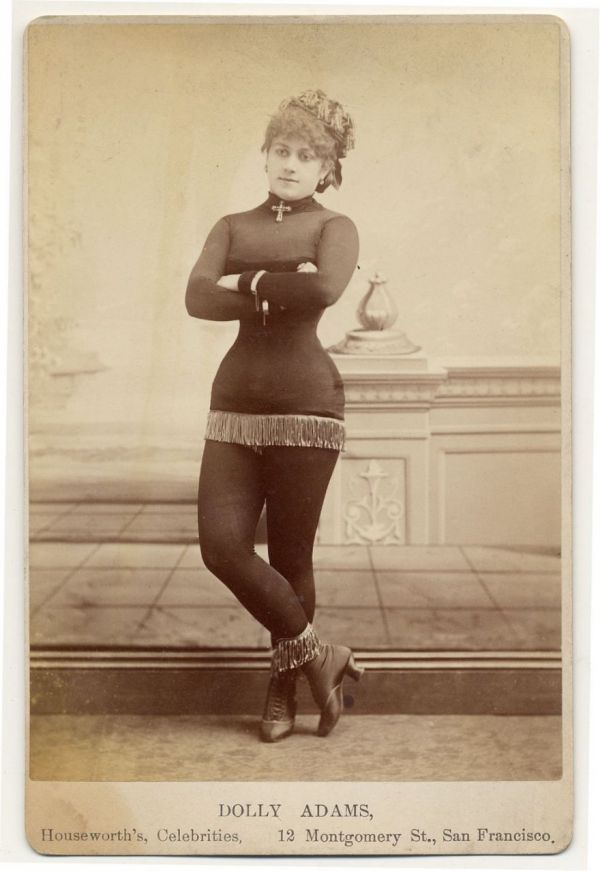
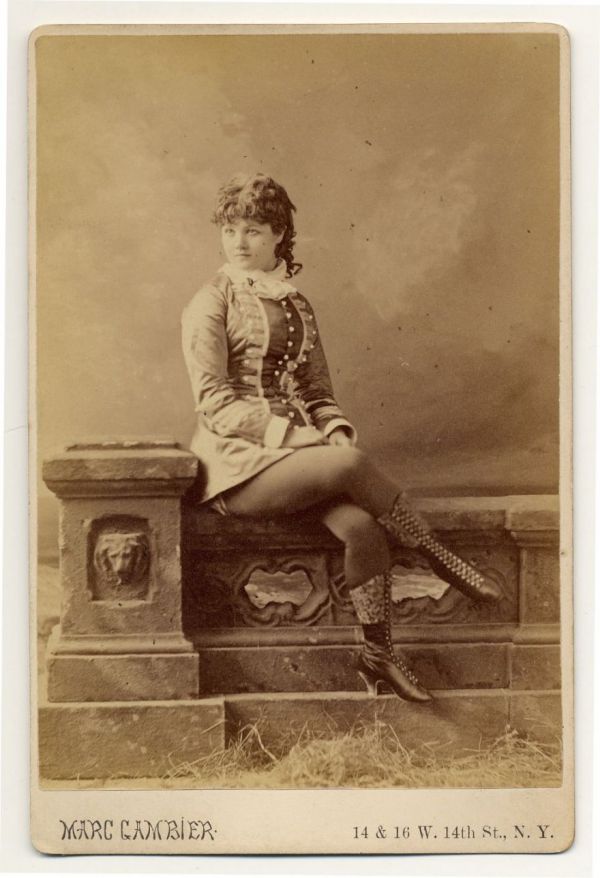
Burlesque Dancers of the Victorian Era
by Lisa Marcus
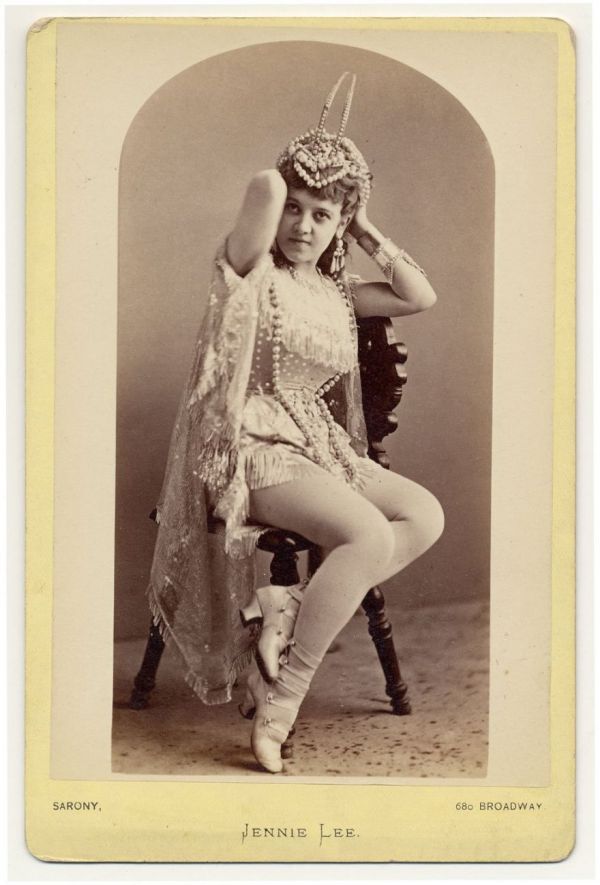
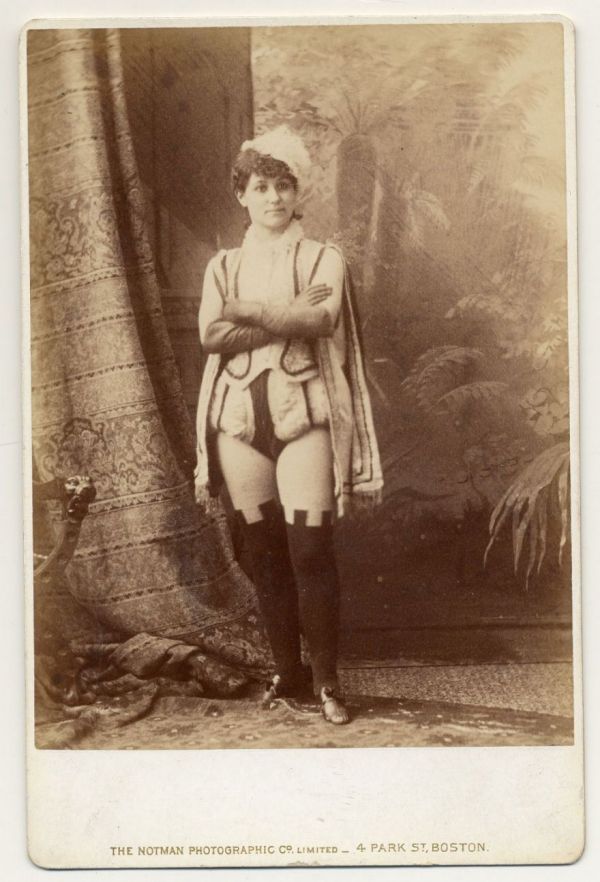
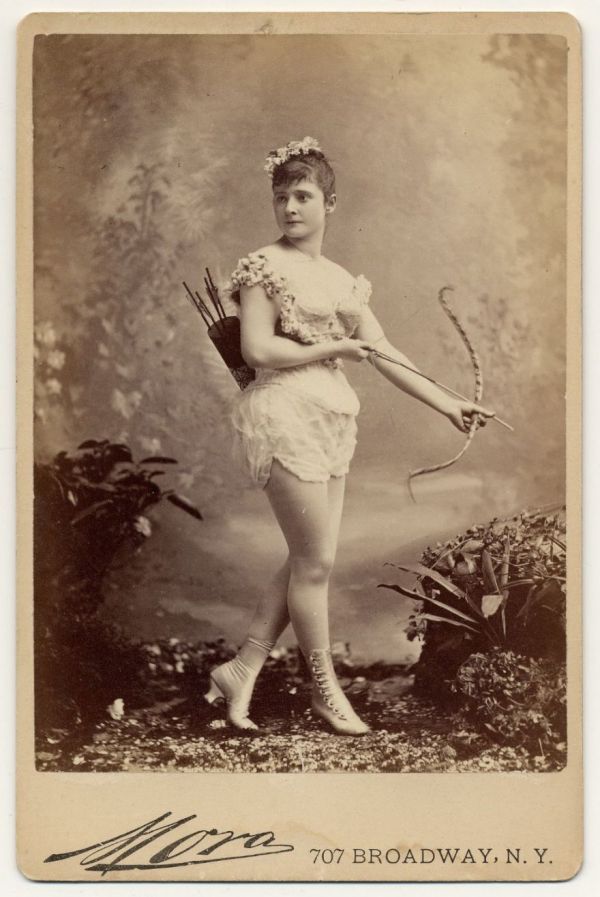
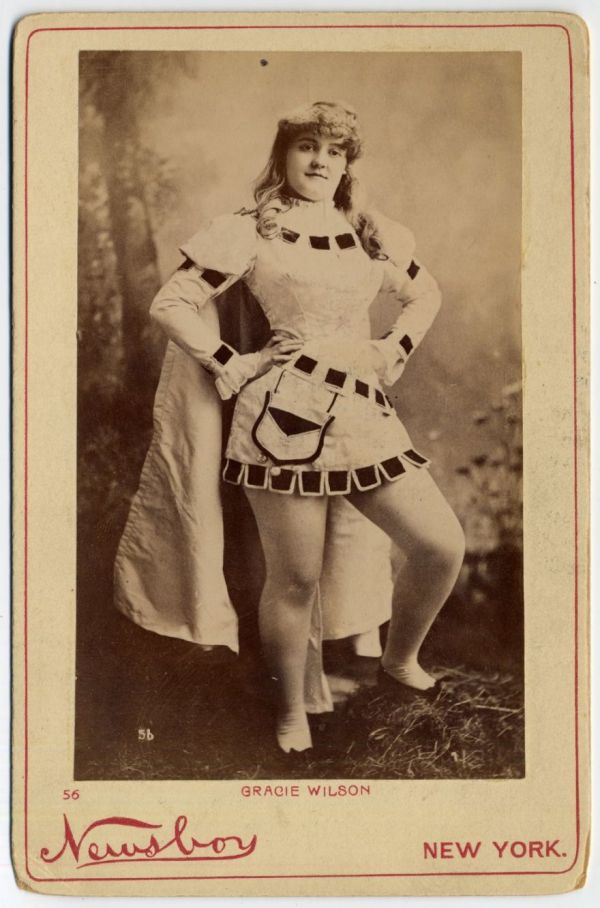
These early burlesque dancers were actresses in American musical theater, of which burlesque was a crowd-pleasing type. Burlesque shows became popular in England in the 1830s, with its popularity spreading to the United States about ten years later. American burlesque featured comedic sketches that included sexually suggestive dialogue and women in sexy costumes. This tradition, with the addition of striptease, continued in the U.S. until the 1930s, when legal crackdowns put a stop to it.
Read this article for a history of burlesque.
Images: Dr. Charles H. McCaghy Collection
13 Nov 01:30
below the belt (with Susan Schorn)
by flex
Susan Schorn - How to Kick a Guy in the Balls: An Illustrated Guide
*Jezebel comment thread on the original post: "Came for the illustrated guide to kicking a guy in the balls, stayed for the misandry gifs."
Susan Schorn's ongoing column for McSweeney's Internet Tendency -
Bitchslap: A Column About Women and Fighting (index of all columns)
some Bitchslap highlights:
*The Rules (rules "for the woman who gets a black eye during karate class")
*Dressing Up, Looking Down (on high heels)
*Pain is Womanly, and Other Bullshit Myths of Childbirth (on natural childbirth)
*Sticks and Stones (on harassment & HollaBack)
*Below the Belt (on Jesse Bering's Slate essay re: evolution and rape)
*Fuck the Dude Up ("So I'm backing off a bit, these days, from the ethic of least harm.")
*It's the Little Things ("One telltale marker of microaggression is that it disrupts empathy.")
*Control Freaks ("Having previously been taken to task for advising people to use violent force, I'm amused to now find myself being heckled for suggesting that anyone, especially a law enforcement officer, should use anything less than lethal force.")
Her latest piece "addresses the important question of how to choose the best 19th-century writer for your side in a gang war":
"Of course, studying Austen and Brontë's combat skills is only one of many reasons to read their work, but I wish more people would view their novels through the lens of conflict. They model two distinct styles of fighting, and I think women especially need to see more potential ways we can fight. No matter how constrained we are by the gender expectations of our day, we can still find ways to protect ourselves and make our own decisions. And that's the real key to living happily ever after."
Susan Schorn holds a Ph.D in Victorian Literature, a first-degree black belt in Kyokushin karate, a second-degree black belt in Seido karate, and national certification as an Emergency Medical Technician. She is also the author of Smile at Strangers: And Other Lessons in the Art of Living Fearlessly (Amazon link) (a review of the book).

All of this — the element of surprise, the psychological impact, the pain — make the groin a truly magnificent target in self defense situations. And yet we're all, men and women alike, conditioned by society to bypass the groin as a target, to pretend it isn't there, just as we're taught to pretend that rude bodily noises are never audible at important social functions. This makes me sad. Kicking a guy in the balls, while not guaranteed to incapacitate him (nothing's guaranteed in life), is definitely one of your better options in a serious physical assault — and I say that not only as a self defense instructor, but also as a certified Emergency Medical Technician. In terms of trauma, you get a lot of bang for your buck when you attack the groin.*possible thread soundtrack: MeFi Music fave "Punch 'Em in the Dick" (NSFW) - YouTube video
So let's demystify this forbidden technique. Here's how (and why) you should kick a guy in the balls... I've illustrated this guide to kicking a guy in the balls with instructive video clips compiled from MMA fights.
*Jezebel comment thread on the original post: "Came for the illustrated guide to kicking a guy in the balls, stayed for the misandry gifs."
Susan Schorn's ongoing column for McSweeney's Internet Tendency -
Bitchslap: A Column About Women and Fighting (index of all columns)
some Bitchslap highlights:
*The Rules (rules "for the woman who gets a black eye during karate class")
*Dressing Up, Looking Down (on high heels)
*Pain is Womanly, and Other Bullshit Myths of Childbirth (on natural childbirth)
*Sticks and Stones (on harassment & HollaBack)
*Below the Belt (on Jesse Bering's Slate essay re: evolution and rape)
*Fuck the Dude Up ("So I'm backing off a bit, these days, from the ethic of least harm.")
*It's the Little Things ("One telltale marker of microaggression is that it disrupts empathy.")
*Control Freaks ("Having previously been taken to task for advising people to use violent force, I'm amused to now find myself being heckled for suggesting that anyone, especially a law enforcement officer, should use anything less than lethal force.")
Her latest piece "addresses the important question of how to choose the best 19th-century writer for your side in a gang war":
"Of course, studying Austen and Brontë's combat skills is only one of many reasons to read their work, but I wish more people would view their novels through the lens of conflict. They model two distinct styles of fighting, and I think women especially need to see more potential ways we can fight. No matter how constrained we are by the gender expectations of our day, we can still find ways to protect ourselves and make our own decisions. And that's the real key to living happily ever after."
Susan Schorn holds a Ph.D in Victorian Literature, a first-degree black belt in Kyokushin karate, a second-degree black belt in Seido karate, and national certification as an Emergency Medical Technician. She is also the author of Smile at Strangers: And Other Lessons in the Art of Living Fearlessly (Amazon link) (a review of the book).
13 Nov 01:28
The most perfidious thing about Dungeons and Dragons is ...
by Faintdreams
Boing Boing looks back on the truth behind the D&D Steam Tunnel tragedy Jason Louv writes for BoingBoing and outlines the truth behind the tabloid sensationalism of the D&D Steam Tunnel tragedy and what really happened to James Dallas. Note - it's far more complicated and tragic than was reported at the time.
Controversies surrounding the pen and paper role playing game of D&D are as old as the game itself.
Chick Tracts are mini Evangelical Christian comics which dedicated an entire mini series to them. The Dark Dungeons series was so well known (and derided) amongst gamers that it was developed as a crowd-sourced fan film. It is debatable how (if at all) tongue-in-cheek the movie actually is.
The most famous D&D-will-harm-your-children narrative is the one surrounding James Dallas Egbert III. James Dallas's own LARP (Live Action Role Playing) misfortunes were turned into the film Monsters and Mazes starring a (then unknown) young Tom Hanks.
Chick Tracks have been mentioned previously on Metafilter:
- In the great movie tradition of Tom Hanks' Mazes and Monsters
- High Weirdness By Mail
- Deceivers yet true
- Moral panic and pop-culture for kids
- NOTHING ELSE CAN SAVE YOU. TRUST ENTHEOGENS TODAY!
- Jack Chick weighs in on September 11th.
With over 100 posts that mention Dungeons & Dragons, D&D has a few previously on's as well ..

Controversies surrounding the pen and paper role playing game of D&D are as old as the game itself.
Chick Tracts are mini Evangelical Christian comics which dedicated an entire mini series to them. The Dark Dungeons series was so well known (and derided) amongst gamers that it was developed as a crowd-sourced fan film. It is debatable how (if at all) tongue-in-cheek the movie actually is.
The most famous D&D-will-harm-your-children narrative is the one surrounding James Dallas Egbert III. James Dallas's own LARP (Live Action Role Playing) misfortunes were turned into the film Monsters and Mazes starring a (then unknown) young Tom Hanks.
Chick Tracks have been mentioned previously on Metafilter:
- In the great movie tradition of Tom Hanks' Mazes and Monsters
- High Weirdness By Mail
- Deceivers yet true
- Moral panic and pop-culture for kids
- NOTHING ELSE CAN SAVE YOU. TRUST ENTHEOGENS TODAY!
- Jack Chick weighs in on September 11th.
With over 100 posts that mention Dungeons & Dragons, D&D has a few previously on's as well ..
13 Nov 01:27
Aren't they all bitter pills?
by blahblahblah
Do you hate swallowing pills? Let NPR's Nina Totenberg show you how using animated GIFs. A new study shows that the pop bottle technique for tablets and the lean forward method for capsules improve pill swallowing for 60% of people who use the pop bottle and 90% of people who lean forward. For kids, there are extensive resources that teach them how to swallow pills. Why swallowing pills is hard is a subject of study, and is a big deal, since it causes around 40% of people to delay, skip, or avoid taking medicine.

13 Nov 01:24
aka Your Favorite Dog Sucks
by AlonzoMosleyFBI
A graph showing the popularity of dog breeds versus their overall cost-benefit score (courtesy of Information is Beautiful). Here's the raw data.

12 Nov 22:35

Kid missing for a week found in Ikea
by Alex Moore
After searching for a missing 12-year-old for six days, authorities in Shanghai finally discovered the boy in the vast wormhole in the space-time continuum famous for swallowing people whole known as Ikea.
Shanghai Daily reports that the boy went missing after getting into an argument with his mom over his academic rigor. The boy was sent home from school for failing to turn in a math assignment, and after getting an earful from his mother he ran away.
The boy left home virtually penniless and spent five days foraging at supermarket samples before he wised up to the promised land for runaways: A vast sea of cushy couches, lingonberry juice and Swedish meatballs—Ikea.
When he was spotted on closed circuit camera footage near the Ikea authorities shut down the store entrances and exists—and it still took them 40 minutes to find the kid hanging out by the escalators. (But honestly 40 minutes beats my worst time to find someone in Ikea by a long shot.)
Even better, it sounds like the guilt every kid fantasizes about imposing on his parents after getting reprimanded worked like a charm: “He was very upset and I feel guilty that I shouted at him,” his mother said.
That is, until he gets home and realizes he’s grounded until he he’s old enough to buy his own Kokosnöt.
h/t: Gawker
12 Nov 22:34

Girl shits her pants while twerking
by Brian Abrams
On Wednesday, the internet began to approach its limit for hyperbolic ass news when the below clip, titled “Dancing crap! Tin! # Supertverk” (Russian to English translation) and uploaded to YouTube by Super Twerk, began circulating among aspiring masturbators on reddit and Kinja.
The twerker in the clip has not yet been identified — and why would she at this point? — but the odd thing is, wouldn’t you expect that coked-up trio of twerkers to mess their pants before this one? I guess there’s really no predicting who will force-tumble the turds out of their wardrobe when it comes to this culture-dividing, millennial tribal dance. We just have to be grateful for friends and family to document it when it happens?
h/t Gawker
12 Nov 16:11
Los caballos vuelven al San Martiño
by e.a.r. santiago / La Voz
Snob:3
La feria equina con más arraigo de Galicia incorpora un mercado agrícola y de artesanía con ochenta puestos

12 Nov 16:04
Alimentos Lácteos: o fracaso anunciado dun proxecto do PP
by Miguel Pardo
A xustiza condena os ex administradores da compañía a pagar 2,9 millóns polo prexuízo causado tras o atraso na solicitude do concurso dunha firma quebrada tras a inxección de millóns públicos e logo do apoio da Xunta, que preferiu un proxecto precario liderado por dirixentes do PP a unha unión solvente de cooperativas.
11 Nov 23:29
España debe su nombre a la presencia masiva de conejos
by Jaled Abdelrahim
Crees que tienes muy claro de dónde vienes. Conoces tu bandera, tu idioma, tus fronteras y hasta el nombre del tipo que gobierna en el Estado que tiene el mismo escudo que tu pasaporte.
– Primera prueba de certificación patria: ¿por qué tu país se llama como se llama?*
Es probable que solo con esa pregunta ya se te hayan bajado los humos nacionalistas.
Topónimo: una disciplina onomástica que resulta del proceso histórico requerido para la denominación de un lugar. Sus orígenes son diversos y sirven para recorrer la historia de cualquier sitio -hacía atrás- desde multitud de perspectivas. La hidronimia designa nombres de lugares derivados de masas de agua que corren o corrieron por aquellos lares; la limnonimia, de agua estancada; talasonimia, de mares; litonimia, de formaciones rocosas; oronimia, de accidentes del relieve y la antroponimia engloba sustantivos propios derivados de objetos, santos, dioses o etnias. También están los tautopónimos, que son los topónimos que repiten la denominación del accidente geográfico que tengan los términos que designan a ese lugar, como sería el caso de la localidad de Cantalapiedra. Quizás no te imagines la razón tan noble, o tan ridícula, que dio origen al nombre de tu patria.
Por poner algún ejemplo, es probable que el español, hijo de tierra de conquistadores, viva sin saber que la raíz de su denominación nacional no es debido a otra cosa que a la masiva presencia en la península de inofensivos conejos. Los fenicios traducían hispania por tierra de hyraxes. En realidad los conejos que allí había ni siquiera eran hyraxes (unos duros roedores asiáticos de las rocas que los comerciantes fenicios conocían), sino conejos de campo de los de toda la vida. Ellos fueron los que acabaron por darle nombre a esta nación del sur de Europa.
De igual forma, puede ser que los australianos no sepan que en latín terra australis incognitas significa «tierras desconocidas del sur»; y que los sudafricanos desconozcan que en griego aphriké quiere decir «sin frío» y en latín «soleado»; y que a los habitantes de Estados Unidos se les escape que el nombre de su país se desprende de una frase de su constitución (1776).
Los argentinos se quedaron con ese nombre porque en su tierra corría la plata o la «argentum» peruana; Bután en butanés significa «tierra del dragón-trueno» en referencia a sus numerosas tormentas eléctricas, y Nepal, por algo tan simple como que en nepalí se traduce «mercado de lana», lo que un día fue.
Vietnam en chino era «más allá del límite sur», Yugoslavia, en eslavo, «tierra de los eslavos australes»; y Zimbabwe en dialecto shona dice «casas de piedra», en referencia a la ciudad capital del antiguo imperio comercial que allí se asentaba.
Algunos son hasta cómicos: el nombre Aruba surgió de una broma que el conquistador Alonso de Ojeda hizo el 1499, cuando en referencia a los escasos hallazgos de metal le imprimió ese nombre derivado de la frase «Oro hubo». Anguila fue Anguila porque a Cristóbal Colón le pareció una isla demasiado alargada; y en la denominación de Bahamas, del español «bajamar», probablemente algún andaluz estuvo involucrado.
La extensa Canadá, en origen, no era otra cosa que un «pequeño asentamiento». O al menos eso significa k´anata en dialecto algonquino. Y Gales, del anglosajón wealas, denomina a la «gente extranjera» que llegó en invasión a esa zona de las islas británicas.
Para algunos, la razón de su gentilicio está estrictamente ligada a su melanina. En bereber Guinea es negro (aguinaoui); en árabe, Sudán es tierra de negros (bilad al-sudan); y Etiopía, del latín aethiopia, significa algo tan desagradable como «tierra de los caras quemadas». Justo lo contrario pasa en Níger, que aunque muchos confundan el término con una alusión al color de sus habitantes, no deriva de otra cosa que del término nativo Ni Gir, con el que se llamaba al río que lo cruza.
Por si no lo sabías Corea procede del término Choson, que alude a algo tan zen como «tierra de la calma matutina»; y a Japón (del japonés nippon-gu, y del chino ribenguo), no se le llama «tierra del sol naciente» por lírica, sino porque esos vocablos significan exactamente eso.
Belice debe su nombre a un pirata llamado Wallace, que fue el primer extranjero en establecerse allá por el 1638. El mismo caso es el de Bermudas, que viene del capitán español Juan Bermúdez y no de unos pobladores vestidos en shorts.
Uganda es «tierra de hombres», Alemania «de todos los hombres» y Francia, «tierra de los hombres libres» (francos). Burkina Faso honra a la «tierra de hombres incorruptibles».
Por otro lado están los lugares donde los hombres no destacaban tanto y recibieron nomenclaturas como «tierra de ovejas» (Feroe), o «tierra de árboles», Guatemala.
¿A qué vendría lo de Antigua y Barbuda? La explicación al enigma se divide en dos fases. Antigua porque a Colón le apeteció hacer honor a la Catedral sevillana de Santa María La Antigua. Lo de Barbuda, culpa de los portugueses, que así hacían referencia a las barbas de los árboles ficus que poblaban la zona. Una razón que por la misma regla de tres les sirvió para nombrar, en luso, a las Barbados.
Azerbaijan «tierra de fuego» en árabe; Brunei, en malayo, «estado de paz».
Bielorrusia, «Rusia blanca»; Bulgaria no es otra cosa que la manera en la que decían los turcos que allí había una «tierra poblada por tribus de distinto origen».
Groenlandia e Islandia son quizás las primeras nomenclaturas nacionales con sendas campañas de publicidad y anti-publicidad respectivamente. A la primera le llamó así Erik el rojo en 982 para atraer nuevos pobladores (Groenlandia significa «tierra verde»), cuando en realidad eran tierras heladas. A Islandia, sin embargo, – se le llamó «tierra de hielos» para evitar el asentamiento de nuevos pobladores, cuando en realidad sus tierras son verdes y fértiles.
Colombia, en honor a Colón; y Dominica, del latín dies dominica, por el simple hecho de que fue en domingo cuando al conquistador le dio por desembarcar allí.
Honduras también las bautizó él mismo: se refería a las profundidades de sus costas en relación al atraco de sus barcos; y fue también el conquistador de América quien le dio medio nombre a Trinidad y Tobago, cuyo primer término se lo debe a las Colinas de la Trinidad, y el segundo a una alusión a las grandes plantaciones de tabaco que cultivaban los nativos de la isla.
Sierra Leona es Sierra Leona porque fueron dientes de león lo que veía en sus cerros el explorador portugués Pedro de Sintra; Venezuela, porque se le asemejó a Venecia a los exploradores Alonso de Ojeda y Américo Vespuccio; y Vaticano, es Vaticano porque en una de las siete colinas de Roma, la colina Mons Vaticanus, existía un camino en tiempos de los romanos donde transitaban los augures y magos para vaticinar el futuro.
Chile, chilli, en quechua «límite del mundo». Igual que en germánico Estonia tan solo quiere decir «camino del este»; y Luxemburgo es una conjunción del latín y el germánico para decir «lugar pequeño».
Eslovacos y eslovenos quizás no sepan que ambos comparten denominación de origen. Sus ancestros, los slavs, eran de la misma tribu y se debate si su nombre proviene de «gloria», «de palabra» o de «gente de las aguas».
Los mexicanos saben que su nación fue de las pocas que se libró de tener nombre hispano. Su denominación de la deben a los aborígenes mexicas. Pero ¿saben de donde deriva este término? Una de las teorías más aceptadas es que su gentilicio deriva de las palabras nahuátl metztli y xlicti, «ombligo de la luna».
Si alguien se pregunta de dónde vienen los palestinos, que consulte en la Biblia la palabra filisteos. De Mauritania eran los bereberes mauris, que más tarde pasaron a llamarse moros: y Pakistán no es otra cosa que el acrónimo que el estudioso Choudary Rahmat Ali le dio en 1933 a un país compuesto por las regiones de Punjab, Afgania, Cachemira, Sindh, Turkaristán, Afganistán y Baluchistán.
Si Irlanda se llama así es porque en celta quería decir iweriû, «las tierras verdes»; Namibia se llama como se llama porque en su raíz nama, namib, significa «lugar donde no hay nada».
Los mongoles pueden estar orgullosos de su gentilicio porque en mongol se traduce por «fiero», «bravo»; y Costa de Marfil no tiene otra razón para su nomenclatura que la leyenda francesa sobre la abundancia de este bien en su territorio.
¿Sabías que Mónaco se llama así por razones mitológicas? Significa «él solo», en alusión a Hércules, que fue reverenciado en un templo de allí. A lo mejor también se te escapaba que Liberia fue así bautizada por ser una tierra creada como hogar para esclavos americanos liberados. Y para nombre estilizado el de los nacionales de Papua Nueva Guinea: en malayo, papua, «tierra de la gente con el pelo rizado».
Nunca sabe uno de dónde demonios ha salido.
(Si tu país no ha aparecido en el texto, consulta la lista elaborada por Víctor Ribnikov)
* (Con información de: Topónimo, el origen del nombre de los países, de Víctor Ribnikov; Libro de la Toponomía Mundial; y Wikipedia)
The post España debe su nombre a la presencia masiva de conejos appeared first on Yorokobu.
11 Nov 21:59
Old Paramount Records Ads That Inspired R. Crumb's Artwork
by Zeon Santos
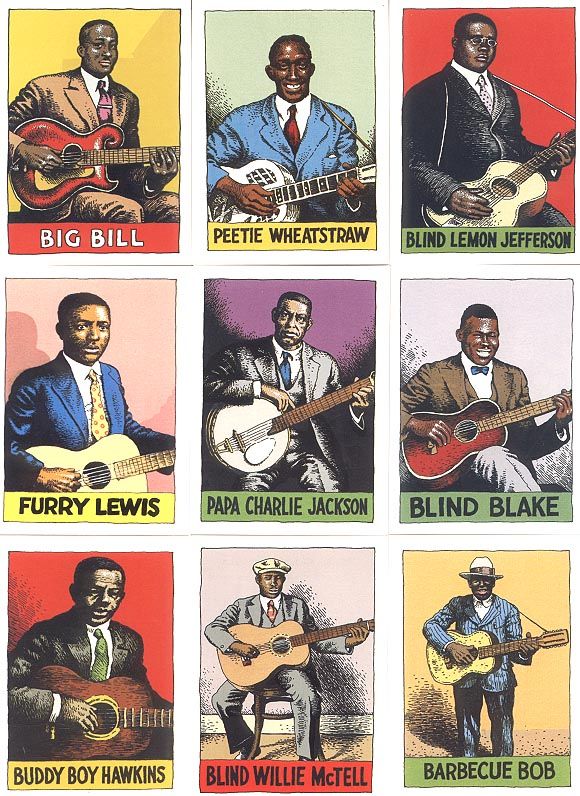
Robert Crumb’s illustrations have a signature style assumed to be entirely of his own creation, but like most artists he drew inspiration for his style from somewhere, and for Crumb that somewhere is an old set of ads for Paramount Records.
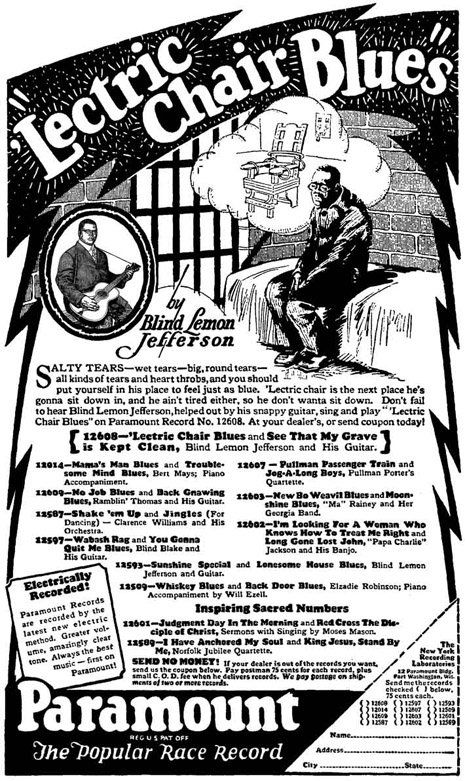
These wonderfully illustrated ads ran in the Chicago Defender over 80 years ago, telling the stories behind popular “race music” songs like Lock-Step Blues and So Lonesome by artists such as Blind Lemon Jefferson and Ma Rainey.
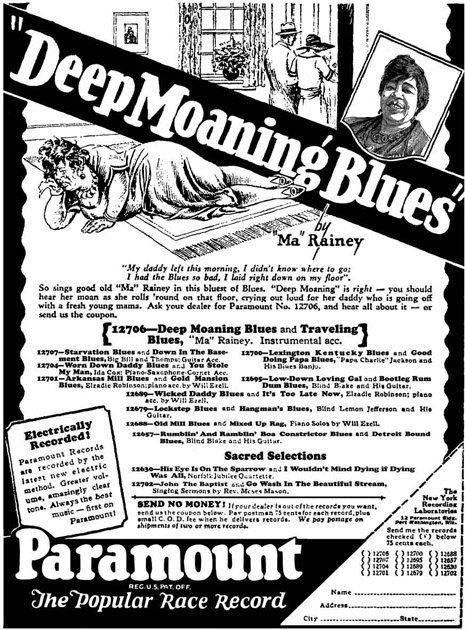
Crumb’s interest in old timey music and illustration make the influence pretty clear, and he paid homage to the artists, and artwork, found on these old Paramount Records ads in a series of trading cards which are now collected in R. Crumb’s Heroes Of Blues, Jazz & Country.
Read more about The Amazing Old Paramount Records Ads That Inspired R. Crumb over at Dangerous Minds
11 Nov 21:56
Coreografía de tiros en ‘Fargo’
by Javier Meléndez Martín
¡Bang-Bang!
Un duelo en Fargo (la serie): cinco personajes buscándose sin saber que son cinco en un laberinto de niebla, balas contadas, cinco minutos. Ocurre en el episodio sexto de la primera temporada: El asno de Buridán. (El título del episodio hace referencia a una paradoja: un asno no sabe escoger entre dos montones de heno y muere de hambre. El título ilustra la indecisión de uno de los personajes que no interviene en el duelo en la niebla).
[Contiene spoilers.]
El otro número a tener en cuenta es el tres. Son cinco personajes (entre los malos y los buenos) organizados en tres grupos: dos pistoleros de la mafia, dos policías y Malvo, cazador solitario.
Son dos los pistoleros de la mafia que persiguen a Malvo: Mr. Wrench, bruto sordomudo, y Mr. Numbers, su confidente y colérico traductor. La niebla que oculta las calles de Fargo rebaja la ventaja numérica porque los pistoleros deben permanecer cerca para comunicarse mirándose a los ojos.
Son dos los policías que siguen el sonido de los disparos: Molly, inteligente y temeraria, y Gus, torpe e indeciso. Molly y Gus no son de usar armas. Forman el grupo más débil. La única ventaja es ir detrás siguiendo los sonidos de disparos.
El tiroteo en la niebla comienza tras otro tiroteo. Apenas hay una pausa entre ambos. El showrunner Noah Hawley no tiene reparos en acumular tiros sobre tiros como una película de acción de serie B de los ochenta.
El primer tiroteo está lleno de ruido: un grupo de asalto de la policía contra un hombre amordazado y maniatado con cinta americana a una bicicleta estática. Un hombre que muere baleado por una docena de fusiles de asalto. La víctima no importa (el entrenador personal con la cara zanahoria, ambicioso y mezquino, secuaz y chivo expiatorio de Malvo).
El segundo tiroteo, el de los cinco personajes en la niebla, tiene más silencio que ruido. Aquí importan las vidas de Molly y Gus. Aquí están los simpáticos, aunque asesinos, Mr. Wrench y Mr. Numbers. Y está el fascinante y repulsivo Malvo. La reunión de estos personajes se da en el momento de la tormenta perfecta (como dice el locutor en la radio que escucha Molly): un contraste de masas de aire. El tiempo atmosférico como símbolo, como marco y protagonista.
El tiroteo comienza cuando Mr. Wrench y Mr. Numbers cortan con sus coches el paso al de Malvo por delante y por detrás. Con el choque, Malvo pierde la pistola bajo el asiento. Mr. Wrench y Mr. Numbers bajan de sus vehículos disparando armas militares al coche atrapado. Mr. Wrench y Mr. Numbers, tambor y platillo acelerados como descargas de subfusil. Brutales tambor y platillo, el tema de Mr. Wrench y Mr. Numbers. La música dice «estamos nosotros, los que vamos a matarte, Malvo».

Pero no es el fin de Malvo: es un depredador que no se queda paralizado aunque sea víctima, y escapa en la niebla. Desaparece el tema musical de Mr. Wrench y Mr. Numbers… Significa que estos pistoleros han perdido una oportunidad.

Malvo toma el control. La música de Malvo es silencio y toques de percusión espaciados y a poco volumen: el depredador que acecha. La música que acompaña a un hijo de puta que espera pillarte por sorpresa. Brillante y simple el momento en el que Malvo se corta la mano con una pequeña navaja para dejar el rastro de sangre hasta la puerta de un cobertizo. La manida escena en la que los perseguidores siguen el rastro de sangre en la nieve se convierte así en la escena en la que el perseguido prepara una trampa. Un ejemplo del darwinismo que Malvo predica: adaptarse a las circunstancias.

Y Mr. Numbers cae en la trampa mientras Mr. Wrench está lejos.
«¿Quién?», dice Malvo retorciendo el puñal dentro de Mr. Numbers.
«Fargo», responde Mr. Numbers.
Malvo busca al otro pistolero, a Mr. Wrench.
Cuando los agentes Molly y Gus llegan al lugar, ven a Mr. Numbers muerto. Molly no teoriza: es una persona de acción. Gus esconde el miedo en el protocolo y se queda solo. Gus es el miembro débil del dúo de policías, como Mr. Wrench es el miembro débil del dúo de pistoleros de la mafia. Los nervios que paralizan a Gus son la sordera que impide a Mr. Wrench orientarse por los disparos y los gritos de su compañero acuchillado.

Gus con su oído alerta está perdido como Mr. Wrench con su sordera. Gus es de gatillo fácil. Bang. Un bulto.
Cinco minutos salvajes. Cinco minutos en los que nadie vuela ni lanza rayos por los ojos. Cinco minutos de claustrofobia en un espacio abierto. Cinco minutos en Fargo, pero que podrían ser los cinco minutos de violencia en una ciudad cualquiera.
La niebla como telón.
The post Coreografía de tiros en ‘Fargo’ appeared first on Yorokobu.
11 Nov 21:56
Revelado el mayor secreto sobre Don Pimpón
by La Voz
El actor que lo interpretaba confiesa qué representaba el famoso personaje de «Barrio Sésamo»


11 Nov 21:29
Roba dinero de una farmacia mientras dispara leche de sus pechos a los empleados
by Jorge Todolí
Una mujer ha irrumpido en una farmacia de Darmstadt –la ciudad del intestino o del colon, en Alemania– y después de pedir un sacaleches y darle al cajero un billete de 200 euros, se ha sacado un pecho y, no contenta con mostrárselo, le ha disparado con premeditación y alevosía.
¿Cuál es el motivo del suceso? Descolocar al personal y jugar al despiste para llevarse la pasta de la caja… Menos mal que esta vez solo se pudo llevar 100 euros. Los empleados se dieron cuenta unos minutos después, cuando la señora del sacaleches ya andaría preparando el próximo asalto.
Comerciantes, cuidado, es una nueva técnica de hurto femenina que está amenazando las cajas de sus negocios. En el barrio madrileño de Salamanca ya se ha conocido otro caso. No se distraigan con los pechos de estas insolentes damas, que van a lo que van. Duros a tetas no daban antes ni ahora, así que ojo avizor y si les van a pagar unas pechugonas –por lo general, con un billete de 200 euros– y, de repente, hacen ademán de sacarse un pecho, cúbranse los ojos y échenlas a tientas como puedan.
Dejemos claras las siguientes observaciones por si vosotras, damas del pecho al descubierto que andáis despistando y robando a los empleados en sus horas de trabajo, leéis algún día este texto:
1. Estáis usando un ‘arma blanca’ que rocía balas como disparos de leche. Lo hacéis con premeditación y alevosía, tiráis a dar y les podéis dar en un ojo y lesionarlos de por vida. Igual es un agravante, informaos.
2. Os aprovecháis de vuestro poder hipnótico para descolocar a la víctima, que no está acostumbrada a este tipo de sobresaltos. El acongoje de poneros frente a ellos con las tetas fuera rociándolos sin compasión infarta a cualquiera.
3. Les estáis quitando la comida a vuestros hijos, es un desperdicio insano para esas criaturas que deben comer. ¿O les compráis leche en polvo y solomillo con la pasta del hurto?
4. Esta es la que más me preocupa. Estáis desperdiciando una leche que, aunque agria, un amigo mío saborea de vez en cuando con un Cola-Cao. Si le vendéis la leche, no tenéis que seguir robando a punta de ‘teta-pistola’. Pensároslo y me decís, que mi amigo ha vuelto a beber leche normal, insípida y aguada, y la echa mucho de menos.
Estos artículos, escritos por PARECE DEL MUNDO TODAY, son interpretaciones ficticias y humorísticas de noticias reales que aparecen en medios de comunicación.
The post Roba dinero de una farmacia mientras dispara leche de sus pechos a los empleados appeared first on Yorokobu.
11 Nov 02:32
It's a Twine game. Cats also like Twine. That's all I've got.
by codacorolla
Cat Petting Simulator: You see a cat sitting on the back of the couch, licking her paw. Pet that cat.

11 Nov 02:25
 Gary Brecher is the War Nerd.

The War Nerd: Farewell Islamic State, we hardly knew ye
by Gary Brecher

Suddenly, Islamic State just can’t fall fast enough. All summer, the press has been saying IS will soon be accepting the keys to every city on earth, an unstoppable jihadi juggernaut.
And now, after six weeks stalled out against a local militia in Kobane and going exactly nowhere in the over-hyped drive on Baghdad, even the mainstream press, represented by America’s paper of record, the New York Times, is saying what I said months ago: IS is just a Sunni Arab militia that will never take serious turf from the other powerful groups in the region, the Kurds of the north or the Shia of the south. Or, in the more measured tones of the NYT:
ISIS thrives in poor, Sunni Arab areas…But after months of steady expansion, the Islamic State has taken most of these areas in Iraq while failing to seize areas with non-Sunni populations.
After being shown up in Kobane, IS has now been truly humiliated by US airstrikes that hit a meeting on the Syria/Iraq border and a big convoy near Mosul.
One of the strikes hit Al Qa’im, a Euphrates River town right on the Iraq/Syria border.
If you were scripting this as a cheesy revenge movie, you couldn’t have picked a better spot to kill off the leadership of Islamic State. IS always used the Euphrates River as its key line, flowing back and forth across the Iraq/Syria border along that river “like a seesaw,” as I said months ago, moving away from enemy pressure and towards politico-military vacuums.
And now, it seems like some unlucky staff officer convinced the IS leadership that this way-too-allegorical locale would be a good place to meet up and discuss strategy. IS definitely needed an urgent meeting, because after its Summer-us Mirabilis, it’s having an Autumn from Hell, humiliated by an outnumbered and outgunned local militia in Kobane, pinned down and decimated by constant USAF swoops, and even dealing with rebellion by the Abu Nimr clan, the most bedrock Sunni-Arab clan in Anbar. If a Sunni-Arab jihad group can’t please the Abu Nimr, something is very wrong. It’s definitely time for a big meeting, with personnel changes, heads rolling—literally or otherwise—and a whole new focus for the public relations department.
But the self-proclaimed Caliph of IS, Abu Bakr Al Baghdadi, now officially “Caliph Ibrahim,” didn’t get a chance to set a new policy line, because the planes found him. Air control grinds slowly, like the old saying goes, but it does, if continued long and resolutely enough, grind pretty damn small, small enough to require DNA analysis of whatever bloody scraps of black cloth can be found in the wreckage of the caliph’s SUV. In the days after the Normandy landing, the surviving leadership of the Wehrmacht found that it was pretty much a death sentence to be ordered to a face-to-face meeting anywhere in Northern France, what with the Typhoons zooming along those narrow roads like hungry hawks, looking for anything that ran on internal combustion on the theory that if you had a car and enough pull to get fuel for it, Hell, you were probably some kind of quasi-Nazi and a legitimate target.
The US strikes in Iraq now are much less indiscriminate than they were back then; in fact, one of the big ironies lost on the typical dumb-ass war fan is that WWII, the “Good War,” was characterized by atrocities on a scale unimaginable now—and I’m talking about our side here, the official good guys. But though the strikes are much more carefully limited now, they’re also far more precise. As one of the Kurds defending Kobane said after watching what the first US strikes did to IS positions in the town, “If the Americans wanted to put a rocket in someone’s eye, even from hundreds of meters in the air, they could.”
So when the target is accurately identified—which it seems to have been in this Al Qa’im strike—it’s possible to destroy the whole convoy without leveling the town around it.
I don’t know if Al Baghdadi was hit at all in these strikes. It will take days, maybe weeks, before us chumps in the general public know. Stories about the death of any insurgent leader are worthless. You know that line, “The coward dies a thousand deaths”? Well, the coward ain’t got nuthin’ on the insurgent leader, who tends to die two or three thousand times before his final demise.
Remember Al Zarqawi, that vastly overrated Mister Big of the Iraq Insurgency? He was reported dead over and over, before he finally got blasted and stayed that way. And Shekau, the leader of Boko Haram? When he’s reported dead, the Nigerian press—a cynical lot at the best of times—just makes another joke about how Boko must’ve cloned its grinning nutcase of a leader, because he keeps making new videos after being killed.
Does it matter, in fact, whether Al Baghdadi was killed? Again, we won’t know until we see his replacement in action. I’ve talked about the logic of assassination before.
Basically, it’s kind of like management theory applied to a hostile firm; the idea is to kill the irreplaceable talent, if any. So, if a superior replacement is standing by, you kill the potential replacement, not the current occupant.
We don’t know if Al Baghdadi was, or is, a unique talent, but he may be. Or “may have been”—it’s tough, not knowing which verb form you should be discussing someone in: the present indicative, or past extra-crispy.
But he created the first really effective Sunni-Arab militia to operate across the Iraq/Syria border, eliminated hundreds of competing Sunni militias, and scared the Iraqi Army out of the western desert. So either he, or some nameless cadre working with him, had serious organizational talent. Now—if he really was hurt or killed—we’ll see how deep that talent goes.
Whoever the brains of Islamic State may be, or “have been,” they had one clear talent: Grabbing the opportunity, taking the big risk, going big where others might have played it slow and safe. Most Sunni militias were happy to stay local; Al Baghdadi made a famous remark that was about as anti-local as you can get: “Syria does not belong to the Syrians, and Iraq does not belong to the Iraqis.”
Now that, folks, is someone who has decided to swing for the fences. In jihadi terms, that meant going for pure universalism—and the universal group in charge of this universal jihad was going to be Islamic State, with no other groups allowed to get in the way. Early in 2013, Al Baghdadi demanded that Jabhat al Nusra, the other big Syrian jihadist militia, become part of Islamic State.
This wasn’t a proposed merger so much as a hostile takeover; JaN would simply be absorbed in IS, and its leader, Al Golani, would be just another jihadi under the leadership of Al Baghdadi. But Al Golani begged to differ, and Zawahiri himself, the old Godfather of Al Qaeda, had to be called in from this Pakistani hideout to tell the boys to quit with the schoolyard shit and get on with fighting the Crusaders.
But Al Baghdadi wasn’t going to be told, not even by an O.G. like Zawahiri. He had clarity, if nothing else. When Al Qaeda sent a mediator, Abu Khaled Al Suri, to sort it out between JaN and IS, Al Baghdadi sent a suicide bomber, who killed Al Suri and everyone around him.
Al Baghdadi had clarity to spare, and anyone who tried to blur his vision got whacked pretty quickly. The goal of his vision was simple: A Caliphate, with himself as Caliph. He made it official, declaring himself Caliph, in June 2014. And as usual, his message was pure universalism, no room for local customs, or in fact for any authority other than his own. Al Baghdadi made that very clear in his acceptance speech:
“The legality of all emirates, groups, states and organisations becomes null by the expansion of the caliph’s authority and the arrival of its troops to their areas…Listen to your caliph and obey him. Support your state, which grows every day.”
So much for poor old Zawahiri, and all the other would-be caliphs hoping to run their little gangs into something bigger.
The announcement of a Caliphate thrilled jihadis the way a new Rolling Stones tour thrills America’s retirement communities. They’d been waiting for this for so long, the promised unification of the whole Ummah, or community of believers, under a single just God-Ordained ruler. It’s a long, convoluted history, but…OK, you read Dune, right? OK, well, Herbert got all that out of the whole Caliphate tradition. So just think Dune, only with a lot more squabbling among the Fremen.
It always gets messy when someone declares himself caliph. Universalism is a nice idea, but it actually makes an insurgent group more vulnerable in many ways. A “disorganized” rebellion can be stronger than a top-heavy, centralized one, especially in terms of propaganda and legend. If the rebellion becomes incarnated in one person, then the rebellion is two bullets in the torso away from collapse.
Two bullets, or one airstrike. But it’s not just the physical vulnerability of the Great Leader that makes these God-Emperor-of-Dune systems so easy to topple. When one man (and it’s usually a man) assumes a God-given leader role, he tends to want all the trappings of God-Emperor-ness. It just kind of goes with the territory. What do you expect, the God-Emperor to drive around in a ratty VW Bug like that weird old man who’s president of Uruguay? That’s Uruguay; it’s not even on the notional maps of the Caliphate that include the whole planet; nobody cares what he drives. A Caliph wants some dignity.
And that means one thing, in military terms: Conventional war. That’s what IS has been pursuing, with initial success, over the past few months. After being brilliantly successful doing classic urban-guerrilla operations like mass prison breakouts during its rise in 2013, Islamic State changed styles after the announcement of the Caliphate, taking territory, administering cities, setting up headquarters in the cities it took, playing the “state,” and bragging about it, with dozens of excited, dumb-as-rocks jihad groupies posting tweets every time IS hung out a new sign offering “Islamic DMV Services” in another neighborhood of Ar-Raqqa. These “offices” were kind of sad, really; there’s so much humiliation behind the notion of jihad, so many generations of defeat…it gets me down, actually. Yes, a lot of those defeats are self-inflicted; and yeah, none of those defeats justify taking it out on the Kurds or the Yazidi, who’ve suffered more than anyone; but even so, there’s a grudging kind of pity that comes over you after you’ve spent a day looking at foolish twitter feeds by people who actually think that a new Islamic State storefront in some little Syrian town is a sure sign that the reign of a universal, triumphant caliphate is nigh.
What all those trappings of a conventional state, and all that territory-grabbing as a conventional military force, really meant for Islamic State was…doom. Inevitable doom. Mao could’ve told them—if these sectarian dupes were willing to listen to an old atheist like Mao. He laid it out in his own simple, clear style, long ago:
“Lose land—land can be retaken. Lose people—land and people both lost.”
There’s one other example of a recent movement that was very successful as an irregular group, fighting via suicide bombings in the enemy’s cities, and a rural guerrilla force in the countryside…and then lost everything by shifting to conventional tactics, thanks to the huge ego of its leader, and its people’s premature appetite to look and act like a state, imitating the big boys when it needed to lay low, hunker down and be patient like Mao would have ordered.
I’m talking, of course, about LTTE, the Liberation Tigers of Tamil Eelam, one of the most amazing, messed-up groups ever to rise and fall on the crazed ambitions of one would-be God-Emperor. The LTTE was a fearsome power in Sri Lanka at one time, before the ego of their generalissimo, Prabhakaran, led them to duke it out with the Sri Lankan Army, mano-a-mano. Prabhakaran wasn’t particularly devout, but it’s not the religion that matters with these generalissimo types, it’s the ego, and he had ego to spare. He wanted to be a ruler in the conventional manner, with a palace and a capital and visits from various stuffed shirts off the evening news. To create that cheesy lifestyle for himself, Prabhakaran ordered his soldiers—who were superb at irregular warfare, both in Sri Lanka’s cities and in the countryside—into static, conventional warfare, taking territory and holding it while they were blasted from the air and by artillery.
And that was how they managed to lose everything. Whenever your glorious leader tells you he’s decided you need to fight the enemy old-school style, your small arms against his CAS planes and ZSU-4 tracks, it’s time to go home to the village and see how the crops are getting along. You’ll hear all about it on the news, without having to be one of the bodies the Nordic forensic teams are brought in to identify from dental records:
“Ja, eet ees another sücker.”
The parallels between IS and the LTTE stand up in spite of the obvious religious/ethnic difference. LTTE claimed to be fighting for all the Tamils, a huge group with a world-wide diaspora. In that sense, it was unlucky enough to become the repository of hopes for millions of people who weren’t on the ground in Sri Lanka’s northeast, where LTTE’s fighters were actually dying to keep those distant supporters’ impractical dreams of a “Tamil homeland” alive. Those hopes combined with Prabhakaran’s huge ego to stake LTTE’s best troops out in the open, where they were blasted to shreds.
Something very similar has been happening to Islamic State’s troops over the last few months. Instead of preserving their core strength—a few thousand international fighters who’ve lived through dozens of ambushes—they’ve sent their men to hide from laser-guided American munitions in the rubble of Kobane, or play office in an easily-targeted HQ in Raqqah. Mao is probably laughing, if he’s still around (in which case the laugh is on him, atheism-wise).
Even without nonstop decimation via air attack, a universal caliphate is a doomed, dumb idea. Remember what Al Baghdadi said: “Syria does not belong to the Syrians, and Iraq does not belong to the Iraqis”? You know who would beg to differ? The Syrians. And the Iraqis. And it’s not even that simple, because the territories in which this war is being fought are fractal as sci-fi dream scenes, which means that “Syrians” devolves into dozens, maybe hundreds, of groups that hate each other and will fight to the death for their local turf. Kobane is a part of one turf, “Rojava” or Syrian Kurdistan; but it’s also a local turf on its own, and you can bet that the Kobane people have a few stereotypes of their Kurdish neighbors in the other evolving cantons like Afrin. You can bet that not all of Assad’s Alawites are fond of each other, either, even if they’re forced to stick together now against the Sunni who want to annihilate them. And those Sunni have never managed to make common cause for any length of time, even against a common enemy.
So the dream that powered Islamic State to its ephemeral victories last summer was the same one that will bring it down. You get that in war. That Hitler guy, for one—had a great plan up through 1940, but the same amphetamine-fueled can-do spirit that got him his free tour of Paris brought him up against Stalingrad a little while later. One reason great leaders are so rare is that they have to pivot, at exactly the right moment, from wild-eyed gambler to cunning, cautious miser. Not many can manage that, and there’s absolutely no sign that the men who run Islamic State have that kind of discipline. They’re going to keep pushing their luck, and they’re already losing.
It’s possible, of course, that if Al Baghdadi is dead—which I doubt—he’ll be replaced by a cautious, disciplined guy. In which case, this will be a disastrous assassination. But most likely, he’s alive, and hasn’t learned a thing. In fact, that’s the advantage of having a religious imperative backing your overconfidence: He can’t even allow himself to doubt or hedge his bets. His divine backer demands that he over-extend his reach. And it’s not hard to see how that will come out.
Islamic State will fall, but that won’t really end anything, because like the LTTE, the militia is one of a long series that have been set up by the ethnic group. Tamils in Sri Lanka are still around, even though the LTTE is dead-dead-deadsky, and the Sunni Arabs of Syria/Iraq aren’t going to go away, or turn all Bahai-nice, just because IS overreaches and falls.
But no matter who died or didn’t die in that airstrike, we’ve seen the high-water mark of Islamic State.
[Illustration by Brad Jonas for Pando]
Gary Brecher