
The post Cute Blon… HOLY CRAP! appeared first on Bits and Pieces.



Periodista prestigioso (Gregorio Morán) escribe libro (El cura y los mandarines) de 800 páginas sobre la fontanería política y cultural española entre 1962 y 1996. Editorial (Crítica/Planeta) lo anuncia a bombo y platillo. Amazon pone el libro en preventa. Editorial recula. Periodista se niega a purgar capítulo sobre los académicos de la RAE. Editorial decide no publicar libro (es decir: censura). Autor se va con el libro a otra parte (Akal). Conclusión del culebrón: en menos de quince días llegará por fin a las librerías El cura y los mandarines. Los lectores, por tanto, podrán por fin saciar su morbo.
El escritor ya advirtió que solo publicaría El cura y los mandarines íntegro y sin tocar una coma, y así ha sido, salvo que la edición de Akal incluye un prefacio nuevo en el que Morán analiza el quilombo censor. Los editores de Crítica explicaron a este periódico el motivo oficial de la no publicación: temían que les cosieran a demandas por el tono beligerante del libro. Morán niega la mayor en el prefacio: “Es verdad que hubo algún amago jurídico sobre los riesgos del libro, pero de escasa entidad. Se solventaron demostrando la inanidad de las objeciones, y así siguió el ritmo habitual de edición hasta que en el sitio más insospechado, surgió el chantaje”.

Morán entregó el manuscrito a Crítica hace más de un año: el 13 de noviembre de 2013. Pero no fue hasta tres semanas antes de la fecha de publicación prevista, el pasado 16 de septiembre, cuando Crítica decidió echarse atrás. El ensayo se podía reservar y ya estaba lista tanto la portada como la contraportada, que incluía un texto elogioso de la editorial convertido ahora en jugosa paradoja.
Esto es lo que decía Crítica sobre El cura y los mandarines antes de purgarlo: “Nos hallamos ante una historia intelectual de España, seria y documentada, escrita con un sentido crítico y una sinceridad que consigue que los intentos anteriores en este terreno nos parezcan insustanciales. No hay duda de que la obra de Morán va a escandalizar por la dureza de sus juicios, y que va a provocar muchos debates y algunas indignaciones, pero la verdad es que, a partir de ahora, ninguna reflexión sobre la cultura española en la segunda mitad del siglo XX podrá prescindir de referirse a este libro”.

Pues dicho y hecho: la editorial fue la primera en “escandalizarse” e “indignarse” con su propio libro. Curioso caso de profecía autocumplida.
Como se pueden ustedes imaginar, Morán no puede evitar deleitarse al releer la contraportada abortada. “Sin embargo, sí se podía prescindir no sólo de la referencia al libro, sino hasta de su propia existencia”, zanja irónico en el prefacio.
Las cosas de Jesús Aguirre
Dado que El cura y los mandarines está a punto de llegar a las librerías, toca pasar página de la polémica y centrarse en el contenido del ensayo, que se abre con un extenso prólogo en el que Morán analiza sus motivaciones para afrontar un texto de 800 páginas que tardó diez años en concluir.
Revisar treinta años de relaciones entre la política y la cultura españolas, incluyendo un sonado cambio de régimen entre medias, era una tarea titánica que necesitaba necesariamente de un hilo conductor: Jesús Aguirre (1934/2001), ex sacerdote, ex antifranquista, ex referente cultural como editor literario de Taurus, ex Director General de Música del ministerio de Cultura y ex Duque consorte de Alba. ¿Quién da más?
Morán utiliza a Aguirre como metáfora de una época y símbolo de uno de sus arquetipos dominantes, el del intelectual (progresista/liberal) antifranquista reconvertido en trepa cultural: "Había sido un excelente trepador; desde lo más bajo, que no en otra cosa consiste ser hijo de soltera y sin fortuna, hospiciano en un Seminario, que no sólo consigue abrirse paso en terreno tan pantanoso y estrecho como la cultura, sino que al final, con un triple salto mortal, se transforma en el hombre más codiciado, envidiado y respetado, puesto que ni siquiera el Rey tenía los privilegios con los que él contaba”.
 Pero Aguirre, repetimos, solo es el McGuffin del libro. Lo que le interesa a Morán es su función de espejo de una era. “Este libro nació de una insatisfacción, como casi todos los anteriores: ¿qué fue sucediendo para que las figuras críticas de nuestra cultura de los años sesenta –el cura Jesús Aguirre, por ejemplo, entre más de un centenar que pudieran citarse– se fueran haciendo cada vez más conservadoras, hasta convertirse en institucionales? Esta obviedad en forma de pregunta no he conseguido leerla en ninguna parte. Había que intentar acercarse a ella”, escribe Morán en el prólogo.
El escritor empezó a tirar del hilo y se encontró con que los compañeros de generación de Aguirre hablaban de él con una mezcla de distancia y deprecio. “La verdad es que a ninguno de sus colegas les gustaba hablar de ello, porque se trataba de un hombre que tras muchos vericuetos en el camino había dado un triple salto mortal, con red y trapecio y circo mediático, y se había colocado en el único puesto que había en España en el que uno era tanto como un Rey Absoluto, y que se producía por cooptación de una señora… Parecía como si su éxito social –no hay ningún otro más egregio sin necesidad del erario público, incluido el Rey y su inefable familia– hubiera sido al tiempo su fracaso”, escribe Morán.
Todos quisieran ser Aguirre
Finalizada la investigación, Morán descubre las causas subterráneas del desprecio al Duque: Todos eran Jesús Aguirre. La evolución de Aguirre venía a ser una versión exagerada de la de todos ellos: “Tardé en descubrir que ‘su fracaso’ era también en buena medida el de ellos… Confieso que el desprecio del ‘mandarinato’ hacia Jesús Aguirre, fenecido Duque de Alba, me fue convirtiendo su figura en algo atractivo. Si las señoras antiguas solían decir, entre risitas, ‘algo tendrá el agua cuando la bendicen’, yo me preguntaba, qué hay en la trayectoria de Jesús Aguirre que les produce desazón. Al fin y al cabo no hizo otra cosa que ellos. Quizá con mayor fortuna”.
El que esté libre de pecado trepador, por tanto, que tire la primera piedra a Aguirre. “Lo que trataban sobre todo de ocultar era el tránsito. No el del cura Aguirre devenido Duque de Alba, grandísimo de España, sino el de todos ellos. Jesús Aguirre les había ganado la mano, nada más y nada menos. El chico divertido de tantos recados políticos y culturales, al final ¡en la cima! El hombre que se había ido haciendo grande cortejando a éste o a aquél en la difícil cucaña de la vida, ya no servía sino que se hacía servir. Pero el secreto estaba en el tránsito… Habían sido progresistas en los sesenta, radicales en los setenta, ocultos personajes a la espera durante la primera Transición. Luego garantes y depositarios de lo que quisieran poner en sus manos, ya fueran editoriales, periódicos, medios de comunicación, fundaciones… e incluso la Casa de Alba; ‘lo más de lo más’ en una sociedad estamental desde la más curtida edad moderna”, escribe Morán.
Cambio de régimen... y de chaqueta
Todas estas trayectorias personales se cruzan con un cambio de régimen, de ahí que den pie a los análisis políticos de largo alcance. O la Transición como acomodo de la crema de la intelectualidad.
“La Transición no se mascaba en el aire, más bien todo lo contrario; parecía que el punto de ebullición se dirigía hacia una Ruptura. Un embeleco de la inteligencia. Desde mediados de los setenta había gente trabajando con más o menos entusiasmo pero entregados a que la Transición no fuera otra cosa que un tránsito de poderes y personas, nada que ver con radicalidades ni transformaciones. El mandarinato había decidido, probablemente sin darle muchas vueltas, que lo mejor era adaptarse, orientar el proyecto y dejarse de inventos”, cuenta Morán en el prólogo.
O la Transición como un fenómeno político conservador; camuflado, eso sí, con las mejores galas progresistas. “El dilema teórico, digámoslo con palabras benévolas, se reducía a explicar qué rasgos de la cultura política y de la política cultural de los años sesenta se habían roto en los setenta, hasta el punto de convertirse en conservadores. La radicalidad devino conservadora, eso sí, manteniendo el lenguaje radical. Esto es un hallazgo, probablemente no merecedor de un premio, pero interesante. La Transición democrática tiene una huella marcadamente conservadora que proviene, no de los restos del naufragio franquista sino de los hijos brillantes, buena parte de ellos ‘mandarines’, que consideraban que ‘bien está lo que bien acaba’ y que asumían voluntariamente el encargo de darle el toque final que encarrilara el proyecto. Ahí está Jesús Aguirre, y lo está en tan grande medida como otros muchos más exhibidos, como Pío Cabanillas, Javier Pradera, Juan Luis Cebrián, Luis María Ansón, Jesús Polanco…”, zanja.

“Esta película no va sobre topless, sino sobre la igualdad".

Gravity originally appeared on MyConfinedSpace NSFW on November 22, 2014.
Centos de persoas maniféstanse en Compostela en contra da privatización dos montes comunais. As comunidades de montes en man común demandan unha fiscalidade propia e a condonación das "falsas débedas" e denuncian a intención da Xunta de "usurpar" da xestión aos veciños.
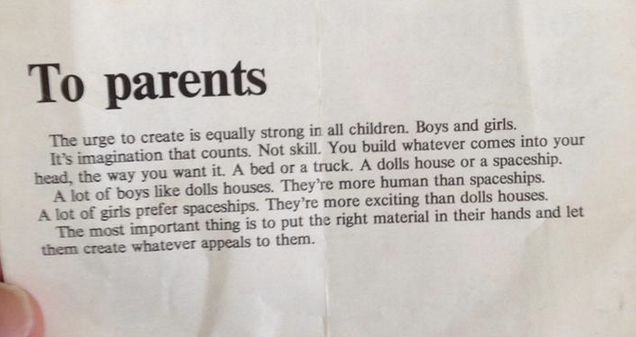
This photo of a note to parents, purportedly printed on a pamphlet included in a LEGO set from the 1970s, has been making laps around the Internet. The legitimacy of the note, which is noteworthy for its egalitarian tone, has been called into question – but there's good reason to believe it's real.


Admit it. You know perfectly well what this is. You know exactly where it's going. And you're going to watch it, because you already know it's perfect.


We can’t just demand that be viewed differently by talking about feminism. In order to change the way society sees women as a whole, women need to change what is considered to be “the norm.” The only way to take down a double standard is to turn it into just a standard. The reason men “get away” with being sexually promiscuous is because it has been ingrained in our minds to think “that’s just how men are.” But what if we could change that? Make it so that “that’s just how women are” too?
There are more benefits to typical male sexual habits than women tend to realize. This is mostly due to the fact that as women, we are judged much more harshly for these things due to the double standard they impose. But if the implications no longer existed, you may actual be able to reap the benefits. In my experience, here are some habits that single men embrace, but single women fail to let empower them:
The fallacy that porn is geared towards men and therefore demeaning to women is just that, a fallacy. Do you know how many different types of porn actually exist? It is one of those topics where there truly is “something for everybody.” But beyond that, porn actual holds a lot of educational value. Let me explain.
Many people (both make and female) don’t always know what turns them on. Explore!
Watch something that you’re unsure of, see if you like it. You would be surprised how much you can learn about your own fantasies and desires just by watching other people engage in them. And in the long run, knowing what you like will not only make sex better for you, but better for your partner as well. And keep in mind that there is a very big difference between who you are sexually and who you are as a person. Liking something sexually that others think is “weird” says nothing about your character. You like what you like and there is no shame in that. Plus, if it’s out there, you’re obviously not alone.
If you want something done right, do it yourself. Amen, sister! Aside from all the scientific benefits such as stress relief and mood enhancement, masturbating can also give you an understanding of what you like and what gets you off. All women are different and there is no general knowledge about what gets an individual woman to reach an orgasm. If you know what works for you, you can easily transfer that knowledge to any future partners you may encounter. You cannot expect someone else to know how to get you off if you don’t know yourself.
Just as all women are not the same, neither are all men. The more experiences you have, the more you can learn about what most men generally enjoy while also learning what you do and don’t enjoy. Having a variety of different partners gives you a variety of experiences. That variety will allow you to analyze and assess what you like. In that regard, knowledge is power. You know what you like–you know what to look for in the future.
I hate the euphemism “making love,” I really do. While I will agree in the fact that actually loving the other person can enhance sexual pleasure, I remain firm in my belief that it is a luxury and not a necessity.
Over the years, I have learned to make a mental disconnect between sex and love. And to my surprise, this has been exceptionally beneficial to both my mental and sexual health. Being able to sleep with someone without feeling emotionally attached to them, while it may seem callous, allows you to have physical experiences without feeling emotionally damaged in the end. Men are too quick to always assume that women cannot separate the emotional and the physical aspects of a relationship but I have fully succeeded in proving them wrong. Try it! You might actually like the freedom it gives you to be able to successfully use your vagina without using your heart. I mean, why buy the pig when all you want is a little sausage??
Sexual Fantasies. Everyone has them, but not everybody has the chance to love them out. Do it now, before it’s too late!
You do not need to be in a monogamous relationship in order to live out your sexual fantasies. In fact, it’s probably best that you’re not, depending on what your fantasies involve. There is no guarantee that the man you ultimately fall in love with is going to want to do all the things you have perhaps wondered about all the more reason to get them out of your system while you’re single. Learning about yourself, sexually, while you’re single will enhance your love life when the time comes.
People cheat on their spouses for a multitude of reasons, but if you have these experiences prior to dedicating yourself to monogamy, you won’t suddenly feel the regret of not doing them when you had the chance. Exploring the world of sex is fun! You will learn so much about your physical self, men’s desires, and most importantly you will develop a confidence in yourself that you never imagined you would have. Don’t let social stigmas keep you from being who you want to be and doing what you want to do. If men can do it, so can we! 


Los emoticonos empezaron siendo un conjunto de puntos, comas y paréntesis ingeniosamente combinados, y fueron madurando hasta convertirse en emojis, esas caritas (amarillas o no) diseñadas para simplificar en un proceso de comunicación cualquier tipo de sentimiento o actividad. Al parecer ya ha llegado la hora de que las diminutas caricaturas den el paso de sumarse a la vida adulta, de pensar en lo políticamente incorrecto: Un grupo de diseñadores californianos ha decidido darle la mayoría de edad a los Flirtmojis, las ilustraciones enviables que han perdido la vergüenza.
Se trata de «un lenguaje visual diseñado para capacitar a personas de todas las sexualidades para comunicar sus deseos, preocupaciones y coqueteos», cuentan los propios creadores en su página. «La misión», dicen, «es dar a la gente inclusivos, funcionales y juguetones emojis del sexo». No se ruborizan en reconocer que detrás de la idea está «un equipo de diseñadores, desarrolladores y calenturientos».

La aplicación tiene una serie de símbolos de descarga gratuita. El resto, en realidad los más incisivos -en todos los sentidos-, los venden en paquetes de a dólar. Por el momento no han conseguido que las tiendas de aplicaciones les incluyan en su escaparate, por eso para utilizarlo es necesario entrar en la aplicación, copiar uno de los iconos sexuales, y pegarlo como una imagen en el servicio de mensajería que se quiera utilizar.
Piensan que su app puede ser un gran complemento para el sexting. En palabras de Katy McCarthy, una de las diseñadoras de los dibujos, publicadas por Código Espagueti, la intención es que «con estos dibujos todo el mundo se sienta cómodo». «Buscábamos que todos pudieras encontrar sus propias partes del cuerpo en estos emojis -dentro de los límites de tamaño y colores-, por eso antes de arrancar con el proyecto, invitamos a un montón de gente a mirarlos y proporcionarnos retroalimentación. Pensábamos que era fundamental que todos se sintieran sexualmente representados».
Los dibujitos calientes ya están empezando a poblar los teléfonos de los mensajeros menos púdicos. McCarthy, siempre preocupada por que todo el mundo encuentre su opción, informa de ya están trabajando en una actualización que «incluirá ilustraciones con genitales con vello púbico».
—
Más información:
Flirtmojis: los emojis ideales para el sexting (Código Espagueti)


The post Flirtmojis: Los emojis se ponen cachondos appeared first on Yorokobu.


 Así estaban las cosas, cuando irrumpe este... Iba a decir manifiesto, pero me ha dado como vergüenza. Aparece esto: Un texto pro politización de la cultura. Tal cual. Viene a decir de una forma zafiamente paternalista, que el producto cultural está tan asimilado en los intereses comerciales que el público es incapaz de detectar lo realmente interesante. Lo firma una mayoría de gente que se considera "escritor". Muchos de ellos han estudiado filosofía y alguno ha escrito algún guión. Como se trata precisamente de cosas que me definen a mí, me veo con todo el derecho de reconocer el escaso mérito cultural de tales dedicaciones profesionales. De hecho, aparecerían todos ellos en el primer epígrafe (junto a titiriteros y farándula) de este listado de (alguna) gente que he hecho para aclarar un poco las cosas. Sería algo así:
 Juan Soto Ivars, lleva deseándolo toda su vida y por fin lo es: escritor. No es antiLenore como tal, pero sí muy crítico con el tamiz político de la cultura.
 Y aquí me refiero a unas cuantas generaciones, no solo a los chavales del listado: Se nota que estos otrora jóvenes del primer mundo, crecieron creyéndose que todo estaba a sus pies para domarlo y domesticarlo como se supone debe hacer un hombre de éxito. Si yo hubiera nacido tío, también estaría debatiendo tan apasionantes temas, mostrando mi colección de vinilos o charlando en una tasca sobre cultura y política. Pero tengo un hermoso coño (hermosísimo, añado) gracias al cual he trabajado muchísimo más el desarrollo del esfuerzo y los mecanismos psicológicos de recompensa. Es decir, que estas cuestiones no tienen demasiado sentido para mujeres y maricones, excluidos de suyo de un sistema cultural que como dice Víctor Lenore "privilegia la tristeza". Unos y otras hemos sufrido ya lo nuestro por la exclusión, así que entendemos la cultura de una forma totalmente diferente. Pero para ciertos muchachos, hoy adultos, la victimización tiene un puntito cool, por exótica, por original. Porque pasarlo mal es algo interesante cuando la vida está hecha a medida.
La carta fundacional de la Fundación Casa de Alba, a la que ha tenido acceso este periódico, aclara que quien ostente el Ducado de Alba tendrá el derecho de “residir en los edificios y usar de todos los demás bienes con ella gravados de la manera más amplia, siempre que sea compatible con el cumplimiento de los fines de la Fundación”. La carta está firmada el 14 de mayo de 1975 y solicita la exención fiscal: “La señora compareciente solicita de la Abogacía del Estado en Madrid que declare esta escritura exenta del pago de Impuesto General sobre Transmisiones Patrimoniales y Actos Jurídicos”.
En el escrito subraya que el “conjunto de bienes constituye hoy una unidad que debe ser conservada en provecho de la Patria y como exponente de la Cultura española”. Por un lado, destaca el interés general del conjunto de bienes de considerable valor histórico y artístico, y por otro la posibilidad de servirse de ellos como objetos decorativos de la cotidianidad del heredero, Carlos Fitz-James, de la fundadora, Cayetana Fitz-James.
Tras el fallecimiento de la duquesa de Alba, es el duque de Huéscar quien recibe la responsabilidad de mantener viva la fundación, compuesta en su creación por 219 óleos, 54 dibujos, 177 acuarelas, 137 miniaturas y 52 tapices, el archivo y la biblioteca del palacio de Liria y los muebles y objetos existentes en el mismo en el en palacio de Monterrey. Además, la fundadora se comprometió a entregar a la Fundación, en el plazo de 10 años,50.000.000 de pesetas, con destino meramente patrimonial para el sostenimiento de la Fundación.

El notario Alejandro Bergamo Llabres lee el contenido de la Fundación, en la que hay palacios, castillos, óleos, acuarelas, dibujos, esculturas, cerámicas, miniaturas, tapices, mobiliario y otros objetos artísticos, “así como el caudal de sus bibliotecas y archivos”. La finalidad principal de la Fundación es, además de dar cobijo al primogénito, “la conservación de sus monumentos, obras de arte, bibliotecas y archivos, la difusión de los valores artísticos y culturales de los mismos y la promoción de la investigación histórica y del estudio de las piezas de sus colecciones”. Ya hemos visto que en este apartado, la casa tiene cuentas pendientes.
Por otro lado, los estatutos de la Fundación, a los que también ha tenido acceso El Confidencial, explican que al menos el 70% de los resultados de las explotaciones económicas y los ingresos que se obtengan deberán ser destinados a la propia institución. El resto, no. Los beneficiarios de la Fundación son “cuantos tengan interés por los valores históricos o artísticos de los monumentos y obras de arte propiedad de aquella”.
El gobierno y la administración de la Fundación está en manos, exclusivamente, de su Patronato, que está constituido por un mínimo de tres y un máximo de cinco patronos. Curiosamente, el artículo 16 especifica que el nombramiento de los miembros del Patronato será efectuado por “la Fundadora” o “por la persona que ostente o deba ostentar la presidencia del Patronato”. El cargo de presidente es vitalicio y ahora recae en el duque de Huéscar.

Also this one, who is clearly very dirty back there.

 This 26-track assemblage of vintage '60s garage band singles may not actually be the ultimate garage rock collection (the Nuggets box set probably has that distinction locked up), but Uptight Tonight: Ultimate 60's Garage Collection rips out the attitude and trash riffs pretty darn well, making it perhaps the ultimate single-disc set of this raggedly endearing (and enduring) rock style. There are some well-known garage classics here, like Count Five's genre-defining "Psychotic Reaction," Music Machine's ultra-assertive "Talk Talk," and the Seeds leave-me-be anthem "Pushin' Too Hard," but there are also some less well-known sides like the Sonics' Kinks-on-steroids monster "He's Waitin'," the Wailers' "Hang Up" fuzzfest, and Dean Carter's unhinged and manic version of "Jailhouse Rock." Serious garage band record collectors will already have most of these tracks, but listeners looking for a single-disc compilation to check out what all the fuss is about, or folks looking for a good purchase to supplement the Nuggets box, Uptight Tonight will be darn near perfect. Either way, it hits the nerves like an ice pick full of adrenaline. - Review by Steve Leggett
The secret to the perfect body has been hiding in plain sight since 1961.
That's the year Debbie Drake's Easy Way to Perfect Figure and Glowing Health was published. In this glorious tome — which documents a fitness era that seems both antiquated and eerily familiar — "leggy, busty, 30-year-old Debbie Drake (38½-22½-36)" gives readers advice on how to do everything from slimming your thighs, to "reducing" your cheeks, and even exercising your hair.
In one easy step, Debbie's amazing "cheek reducer" can give you a slimmer face without losing a pound. You just need to, er, suck really hard.
(via Awful Library Books)
Debbie shows readers that if you daintily kick your legs about in a sexy pose, while munching on carrots, you can slim your calves and thighs — all while flirting on the phone.
(via Awful Library Books)
According to Debbie, "Massaging and brushing are forms of exercising the hair." Why would you do this? She claims this can stimulate hair growth, "improving the lustre and texture."
(via Awful Library Books)
If you haven't had enough of Debbie's tips and tricks, check out The Debbie Drake Show. Launched in 1960, she'd take viewers through "the wonderful world of exercise to the land of slim, trim beauty."
According to Debbie — who also recorded an album called "Look Good! Feel Great! and How to Keep Your Husband Happy" — you can erase your double chin by simply stretching your neck, and her gentle contortions and deep breathing will take inches off your waist and thighs. Of course, weight loss doesn't work like that. Readers of this site should know by now, you can't target fat loss in a particular part of the body.
Much has changed since Debbie's heyday, but much has stayed the same. Gwyneth Paltrow recently promised readers of her website that they could lengthen their legs and grow inches taller by rolling around on foam. Too-many-webpages-to-count are dedicated to tips on how to achieve Kim Kardashian's ass.
Dr. Oz — arguably one of the most famous people in America — regularly features bunk concepts such as belly-fat busting and metabolism-boosting on his daily talk-show.
People keep selling this stuff because we keep buying it. It's good for business. If Debbie taught us anything, it's that we need to stop wasting our time and money on fake fixes.

Recently when I was at the CVS down the street from the Vox office, I saw that Speed Stick costs $3.59, or $1.20 per ounce. A Lady Speed Stick goes for $3.79, but is also more lady-sized (a.k.a. smaller) than the men's regular version, going for $1.65 per ounce. And it's not that the women's version is stronger, either...in fact, the men's version has more of the active ingredient than the women's.
As it turns out, it's not just a problem in the US. In France, the Ministry of Finance recently announced it would investigate the practice of pricing women's products higher than men's. The announcement comes after women's right group Georgette Sand started drawing attention to the phenomenon by photographing different instances of it, the Washington Post reports. Now, more than 44,000 people have signed a petition decrying what it calls the "invisible tax" women pay at retailer Monoprix. That petition is credited with spurring the ministry into action.
In ways large and small, women often spend more for basic grooming products and services. And the impacts go far beyond spending a little more at the drug store.
It's not just about women buying makeup; women often pay more for similar products or services than what men spend.
In the discussion about gender-based pricing, a few sources pop up regularly. In one often-cited 2011 study, researchers at the University of Central Florida found that women pay significantly more for haircuts, dry cleaning, and deodorant than men do. In 2010, Consumer Reports found an array of products, like razors and body spray, that cost more for ladies than men. When the state of California in 1996 outlawed gender pricing, it found that women spent around $1,351 per year more than men due to gender-based pricing at places like dry-cleaners and hair salons.
In addition, in August, Bustle went hunting and found several instances in which women are paying way more than men for similar products (though the article gives no information on cost per ounce or unit).
it's not just money; women spend nearly 50 percent more time on grooming than men do
It's not true across the board, of course — the cheap pink women's razors are still cheap, and there are some fantastically expensive men's razors out there. That 2011 University of Central Florida study found higher prices on women's razors and women's body spray than men's, but those results weren't statistically significant. And there are some companies that maintain similar prices for similar women's and men's products.
But you don't need a scientific study to know there's a difference between men's and women's spending on looking presentable. It's common for dry cleaners to charge more for women's shirts than men's shirts, and for hair salons to charge more for a women's cut (of any length) than a men's cut. In addition, women are the primary consumers of all sorts of products men don't often concern themselves with, like makeup.


On Walgreen's.com, this women's deodorant is $1.25/oz, compared to the $1 for the men's deodorant (which is also stronger).
There are a few reasons why women are paying more for certain goods and services. Not really knowing or thinking about this pricing gap is certainly part of it — as a woman, it's easy to pick the Powder-Fresh deodorant and never give the stick of Cool Rush a second thought.
"It's absolutely there. The problem is that we just kind of, we're lulled into not doing anything about it," says Emily Spensieri, president of Female Engineered Marketing, a Toronto-based firm that has represented Schick and Sears, among other companies.
She adds that people like gendered products, and with women it plays highly in marketers' favor.
"That whole 'it's made for a woman' thing makes it feel more special because it's made for me," she says. "And that's where the real opportunity is."
She adds that women develop "relationships" with brands and are more brand-loyal than men. If that's true, it could explain why women might pay more for a razor that's priced too high.
And in some cases, there are legitimate differences between men's and women's clothing. According to Kebba Gaye, a managing partner at The Press Dry Cleaning and Laundry in Washington DC, high-priced ladies dry cleaning has to do with actual differences in the clothing. Men's dress shirts tend to be standard in shape and material — often cotton, with two long sleeves, one button-up front, maybe a pocket or two — and one machine can press all of them.
men's dress shirts tend to all be similar in shape and material. women's shirts come in a vaster array
Women's shirts, on the other hand, are far more varied — sleeveless, rayon, cap-sleeved, buttoned, silk, pullover — and can't all be handled the same.
"The reason a woman's shirt is $5 versus $1.85 for men is because of the different types of shirt," Gaye says. But he says he does make exceptions: "If men wear a polyester like Hawaiian shirt, then they'll have to pay more, too."
Likewise, I asked for prices at Bang Salon in Washington, DC (disclaimer: this is where I get my hair cut). Women's haircuts there range from $39 to $59, while men's cuts range from $34 to $45 (though one receptionist told me some of the salon's stylists independently choose to charge men and women the same).
However, there are arguably a few reasons at work here. Women on the whole have longer hair than men's, and longer hair takes more of the stylist's time to cut and blow-dry and requires more hair product. Furthermore, men — who are more likely to have short hair — will more likely be back to the salon more often for touch-ups.
But of course a salon could choose to charge based on length rather than gender (and if you look, you can find a few examples of those that do). Women with shorter haircuts seem to be getting ripped off at many salons.
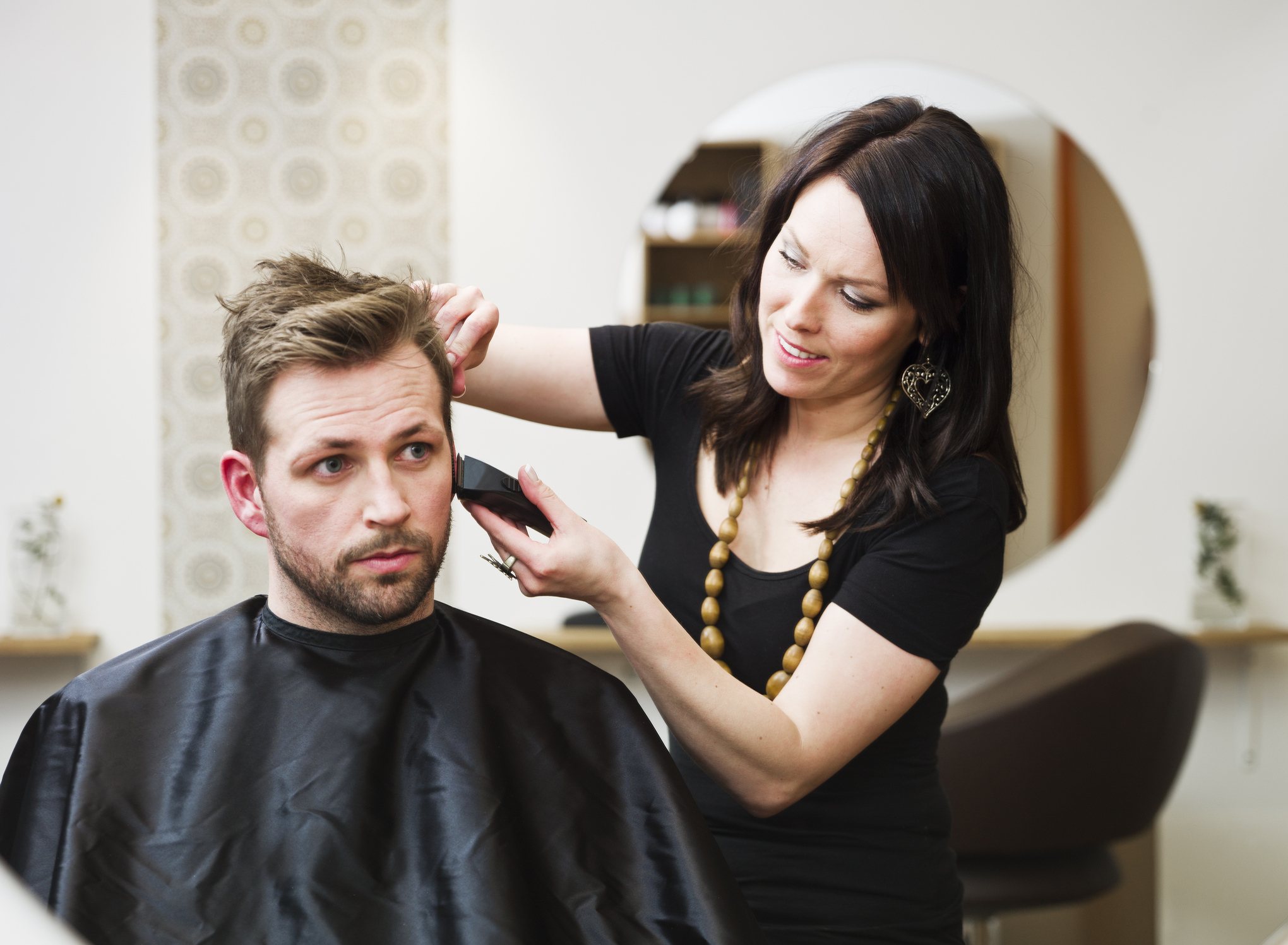
Lady. This guy pays way less for a haircut than you do. (Shutterstock)
Of course, there's an obvious answer here: society expects women to look a certain way. Put into economics terms, there's a higher return on investment for beauty for women. Beauty products are becoming more popular among men, it's true, but expensive skin cream is still optional. For women, all those trappings are more necessary.
"Grooming for men is almost seen as either a very elite activity — so you're talking about a very elite group of people who are always very well groomed," says Annamma Joy, professor of marketing at the University of British Columbia. Meanwhile, women of all classes feel pressured to wear jewelry and makeup.
playing out the role of 'woman' today can mean having a makeup bag of products worth a week of groceries
Why do women do it? To belong to their gender, says Joy. Women play out their gender by wearing lipstick and all sorts of frilly shirts that don't dry clean easily. And to a certain degree, says Joy, that makes them happy.
The problem is that it can cost a lot. Playing out this part today can involve having a makeup bag full of products whose total value could buy a week of groceries.
And that matters well beyond your bank account balance because it reinforces socially constructed notions of what it means to be a woman.
"There is an irony here, of course," write the authors of that 2011 study. "If women and men really were essentially different, there would be little need to prove this on a daily basis through clothing or products."
So if it's hard to get angry about tiny sticks of expensive deodorant, think about it this way: you're paying extra to play a made-up role that society pays you less for inhabiting.
And women pay in time as well as money: women spend nearly 50 percent more time on grooming and personal care every day than men do, according to the American Time Use Survey — 38 minutes for men, 56 minutes for women. That 18 minutes per day comes out to nearly 110 extra hours per year — time women could spend writing novels or curing cancer or smashing the patriarchy.
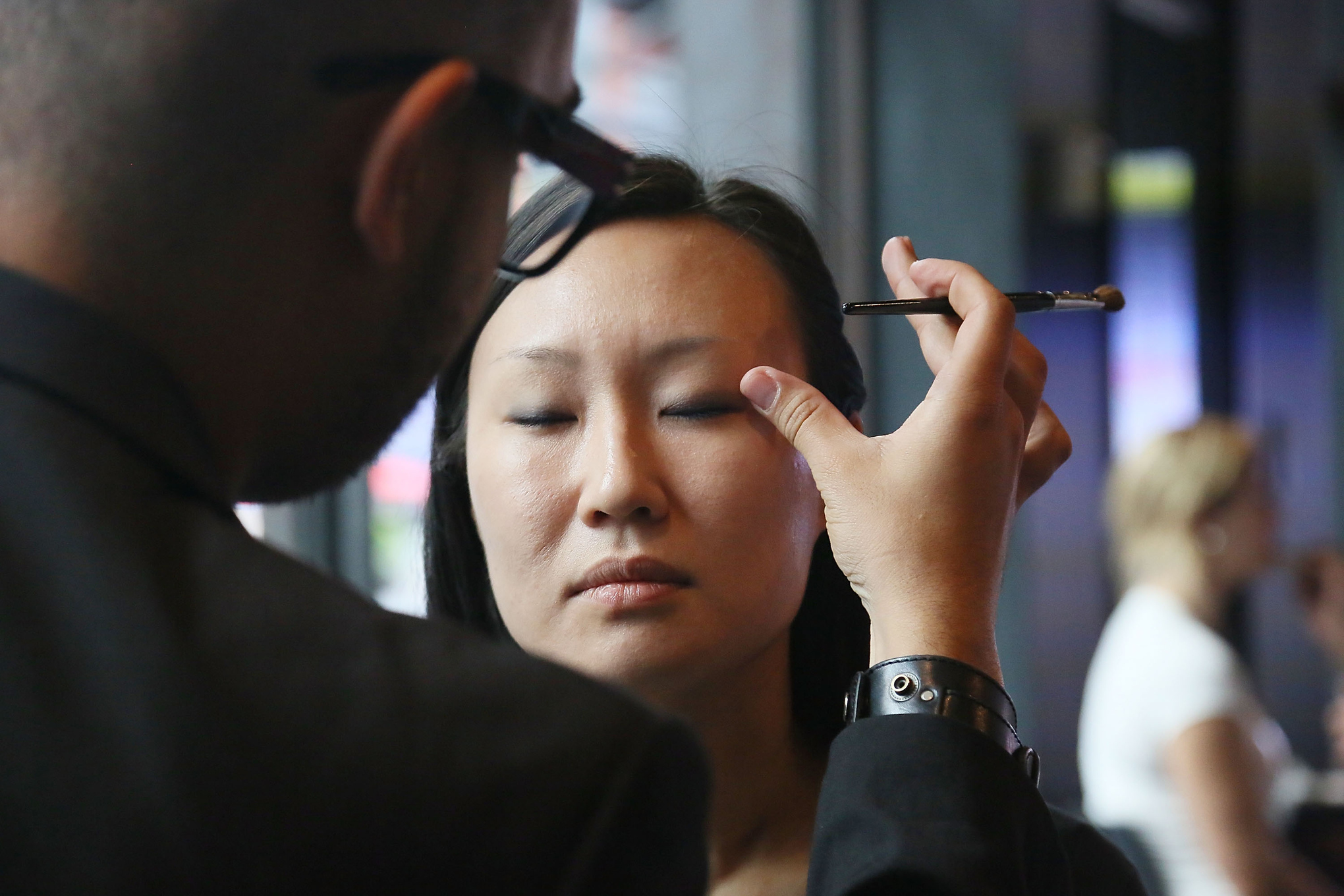
A man helps a woman perform her gender. (Getty Images)
If you don't feel up to changing entrenched gender attitudes today, you can at least keep an eye on your own wallet. That 2010 Consumer Reports article advocated looking at product, not price — see if the triple-blade lady razors are more expensive than the triple-bladed guys' versions. The same blades are often used in men's and women's razors, the same active ingredients are in many deodorants, and the same ingredients are in many moisturizers and sunblocks.
And some hair salons do charge not based on gender but on hair length. If I wanted to go for a pixie cut this summer, I could wander over to VSL Salon, where men's and women's cuts cost the same (blow drying aside).
Aside from that, maybe start telling the men in your office how great Hawaiian shirts would look on them and hope to spark a trend.
SnobMoi triste, moi sexista e acomplexado. :(
Robbie Sherrard is a fine-looking yet self-conscious guy who doesn’t feel comfortable having his picture taken. That doesn’t apply to videos, because he has a bunch of them in which he just talks to the camera. But he’s somewhat aware of why he, and other guys, don’t like posing for a picture, or even having a candid shot taken. His discomfort comes across as downright cute. -via Viral Viral Videos

You’ve probably heard of New Zealand. You may have watched Xena: Warrior Princess, which is set there. But, like Xena, New Zealand is just pretend. It’s not real, which is why it commonly doesn’t appear on maps.
World Maps Without New Zealand is a Tumblr blog devoted to maps that show all of the nations and large islands around the world . . . except New Zealand. For some reason artists and, occasionally, actual mapmakers, leave it off.


-via 22 Words

As this endless winter has pressed on, there's a good chance that you might have begun to feel a little depressed. You could be moody, anxious, or less energetic. You might have the urge to sleep and eat more — and engage less socially.
It's not in your head, and it's not the cold. It's the darkness.
These symptoms are all part of a condition called seasonal affective disorder (SAD), and they're likely caused by a mismatch between your body's circadian rhythms and the timing of sunrise and sunset. "It's kind of like having jet lag for five months," says Alfred Lewy, a doctor at Oregon Health & Science University who worked with colleagues to define the disorder for the first time in the 1980s.
Scientists once doubted the existence of this disorder, but it's now well-established and believed to affect somewhere between 1.4 and 9.7 percent of the US population, with greater numbers the farther north you go.
Although the underlying mechanisms aren't fully understood, researchers have put together many pieces of the puzzle, and we now have a treatment that helps most sufferers: morning exposure to artificial light that mirrors the spectrum of light emitted by the sun.
SAD was first identified in the 1980s, and initially many scientists thought it was simply caused by insufficient sunlight exposure during the short days of winter.
Here was the idea: Normally, our brains produce the hormone melatonin at night, which makes us drowsy. Then, in the day, exposure to sunlight (but not artificial light) suppresses production of melatonin. For people living in northern latitudes, the thinking went, the short days of winter led to excessive melatonin production, ultimately causing SAD. This was known as the photoperiod hypothesis.
However, over the past decade or so, researchers have largely ruled out this theory and instead support a slightly more complex one: the phase-shift hypothesis.
Every morning, when sunlight first hits special receptors in your eyes, it suppresses your melatonin production by signaling to your body that it's time to wake up. This daily occurrence is responsible for setting your body's internal clock, housed in an area of your brain called the suprachiasmatic nucleus.
During the winter, as dawn gets later and later, your circadian rhythm naturally shifts later. "Unfortunately, this puts [our circadian rhythms] out of phase with our actual sleep-wake cycle, because we get up at the same time year-round," Lewy says.
Because some people wake up before dawn during the winter, our bodies don't get sunlight at the right time to correctly calibrate their circadian rhythms every morning. (Other people have the opposite problem: they stay up way after it's dark out, so we begin producing melatonin too early, long before we actually go to sleep.)
It's still not entirely certain, but most researchers now believe that this misalignment is the cause of the depression, overeating, sluggishness, and other symptoms many people experience every winter. In studies, Lewy and other researchers have found that people whose melatonin production begins too many or too few hours before they go to sleep at night have the highest rates of SAD.
Giving these patients a low dose of melatonin at just the right time, meanwhile, effectively treats their symptoms — by resetting their bodies' internal clocks.
Lewy and colleagues have found that six hours between the beginning of melatonin production and the midpoint of sleep is the ideal offset, and is associated with the lowest rates of SAD. (Lewy et. al.)
However, the researchers mainly used melatonin here to demonstrate its involvement in the chain of events that causes SAD. If you suffer from the disorder, you can actually treat your symptoms by solving the root problem: light exposure.
(Shutterstock.com)
Light therapy is a highly effective treatment for SAD for most people. It basically involves sitting next to a special type of light box that emits a broad spectrum of light for 30 minutes or so. Here are some guidelines for picking out a good one.
When scientists thought that SAD was simply caused by insufficient light exposure, they recommended doing this twice a day, extending the day in the morning and in the evening. But now, it's generally thought that a morning dose of light — right when you wake up — is best for synchronizing your circadian rhythms with the time you actually spend awake.
For the minority of SAD sufferers that are misaligned in the opposite direction — that is, their internal clocks think it's nighttime before they actually go to sleep — light exposure therapy in the evening, rather than the morning, is best.
In either event, you should talk to your doctor if you think you have SAD. Melatonin tests can confirm a diagnosis and indicate which way you need to shift.
(Shutterstock.com)
At this point, the link between light exposure, circadian rhythms, and SAD is pretty well established. But it's still unknown exactly why the clock misalignment leads to depression and the other symptoms. "That's just the general mechanism." Lewy says. "What actually makes some people depressed when their circadian rhythms are misaligned has not yet been figured out."
A few different research groups are currently trying to address that. One recent brain-scan study indicated that people who suffer from SAD also have lower levels of the neurotransmitter serotonin in their brains during the winter. It's also been hypothesized that production of the stress hormone cortisone may be involved.
An intriguing, related question is whether there's a logical evolutionary basis for SAD. Some researchers have suggested that the urge to sleep and eat more during winter could have been an advantageous adaptation that led to higher survival rates during our evolutionary history — similar to other species' seasonal hibernation patterns. That idea, though, is entirely speculative. (It's also at odds with the phase-shift hypothesis, which suggests that if we woke and slept with the sun, SAD wouldn't happen.)
There's also a very practical question scientists are trying to answer about SAD: why some people get it and others don't. "Not every person who experiences circadian misalignment gets depressed," Lewy says. "There has to be some other biological vulnerability." Women are far more likely to suffer from seasonal depression, as are young people, and researchers still don't know why.
Finally, some researchers are intrigued by the possibility that there might be a link between circadian rhythm misalignment and general depression, anxiety, bipolar disorder, and other mental illnesses. Some are even experimenting with the use of light boxes to treat those disorders, rather than medication. At this point, though, it's still uncertain.
Further reading: Why you're so tired on Monday mornings

If there is anything the internet loves to do, it is offer its opinion on what qualifies someone as a “real” rape victim.
“Real” rape victims, of course, always immediately report their rapes to the police, who are always extremely helpful and non-judgmental Olivia Benson-types. Their attackers–who can be clearly identified as bad-seeming people–have defensive wounds because the victim fought and fought to preserve her chastity–which was ideally perfectly intact prior to the incident. They were sober, of course.
If they don’t come forward to identify themselves, it’s because they’re hiding something, if they do, it’s because they want attention, delicious attention. And probably the imagined fabulous riches and major career boost that comes with outing oneself as a victim of rape. If only one victim comes forward it’s “well, if he was such a rapist, he probably wouldn’t have only raped that one woman.” If one victim comes out and then several others do, they’re just all making shit up in hopes of riding that sweet rape train to stardom.
It’s funny how people immediately assumed Janice Dickinson was lying. Janice Dickinson is a woman who has essentially built her reputation and personal identity on on being a bad-ass bitch. To come forward as a rape victim is to come forward as vulnerable–which is one of the hardest things about it. Think about that for a second. Do you think this is something she is enjoying?
Janice Dickinson, like Cosby’s many other accusers, had come forward about him before. It’s just, well, no one really gave a flying shit. That’s usually the case, you know, when these things come out. Maybe people get angry for a bit, but usually that eventually subsides, and they forget. It is then only brought up by the evil feminists who just “won’t let anything go.”
Currently, many are furiously angry at the idea that poor, 70 year-old Bill Cosby’s legacy and career will be destroyed. Ostensibly by evil, selfish succubi, who will surely profit immensely off the destruction of this poor, innocent man’s life’s work.
Except, that’s not usually what happens. In fact, that is not what has ever happened, in the entire history of male celebrities being accused or convicted of rape or violence against women.
Even in the cases where the male celebrity actually went to jail? When they were actually convicted of a crime? It rarely affects their career or legacy.
Mike Tyson went to jail for raping Desiree Washington.
Tupac Shakur spent time in jail for orchestrating the gang rape of Ayanna Jackson.
Peter Yarrow, of Peter, Paul and Mary spent three months in jail for taking “sexual liberties” with a 14 year-old girl. He was later given an official Presidential pardon by Jimmy Carter!
Roman Polanski plead down to “unlawful sexual intercourse” with the then 13 year-old Samantha Geimer at the home of of Jack Nicholson and Anjelica Huston. He never went to jail, but he sure did win an Oscar, and pretty much every celebrity you know and love has come forward to defend him. By the way, he was also accused of sexually assaulting then 16 year-old English actress Charlotte Lewis.
People sometimes bring up Sean Penn’s arrest for domestic violence against Madonna. Surprise! This involved tying her to a chair, leaving there, and then refusing to untie her until she agreed to sexually service him.
Rob Lowe made a sex tape with a 16 year-old girl.
These are just some “confirmed” incidents. This is just the sexual assault. Tell me. Would you have known the names Desiree Washington or Ayanna Jackson if I didn’t just lay them out for you? Does it seem like these women achieved some glorious amount of fame for having accused a celebrity man of sexual assault? Are you aware that even though these men were convicted that their victims are still called liars?
Now onto the murkier stuff.
R. Kelly–somehow not convicted of sexually assaulting a 14 year-old girl despite their being video of it.
Ted Nugent adopted a teenage girl so he could legally have sex with her. He wrote a song called “Jailbait” in which he describes his lust for a 13 year-old girl. Also, in that song, he suggests to the cop arresting him that he use his handcuffs on her instead so they can both take turns on her. Courtney Love stated that when she was 12 years-old, she performed oral sex on Nugent, but she is, of course, definitely a liar. Nugent later went on to campaign for Mitt Romney, and has a plethora of conservative, “pro-family” admirers, like Sarah Palin and whatnot.
Jimmy Page essentially kidnapped 14 year-old Lori Maddox and kept her locked up at his place in order to essentially keep her as a sex-slave for a while.
Charlie Chaplin married 16 year-old Lita Grey in order to avoid being charged with statutory rape.
John Phillips raped his own daughter.
Woody Allen.
Darren Sharper.
CeeLo Green.
Zsa Zsa Gabor accused Frank Sinatra of raping her.
NFL star Ben Roethlisberger has been accused of rape by three separate women.
Kobe Bryant, accused of rape and according to one sportscaster, it gave him “sizzle” and actually improved his reputation.
Errol Flynn was accused of statutory rape by two underage girls. During a much publicized trial, a group of prominent men, including William F. Buckley, Jr, formed “The American Boys Club for the Defense of Errol Flynn.” He was acquitted, and it is thought that this trial actually helped revive his career rather than destroy it. You have probably never heard the names Betty Hansen and Peggy Satterlee.
William Kennedy Smith, of the illustrious Kennedy family, was accused of rape by Patricia Bowman and found “not guilty” after a rather suspect trial. Her name was dragged through the mud, she was called a social climber and a slut, and he got away with it.
To boot, there are male celebrities with serious domestic violence charges whose career and legacy were not hampered in the slightest by beating the crap out of women.
John Lennon, Bill Murray, Axl Rose. Tommy Lee, Michael Fassbender, Chris Brown, Jackson Browne, Dr. Dre, Glen Campbell knocked out Tanya Tucker’s teeth, Joe Dimaggio beat Marilyn Monroe, Miles Davis abused Cicely Tyson for years, Norman Mailer stabbed his wife at least twice in front of a large group of people.
No one really gave a shit about the horrific abuse Phil Spector inflicted on Ronnie Spector until he actually managed to kill someone.
Charlie Sheen, Dennis Rodman, Nicolas Cage, Gary Oldman, Christian Bale, Steven Seagall, Mickey Rourke, James Brown, Christian Slater, Pablo Picasso, Eminem.
I can only think of one male celebrity whose legacy has at all been hampered by domestic violence, and that is, of course, Ike Turner. Took long enough, though.
I could probably go on for much longer than I’d like.
The point is, a crime against a woman is not a crime punishable by losing your career in this country. Pretty much all of these men have done just fine after sexually or physically assaulting a woman. Unless the victims were celebrities themselves, they have been largely forgotten–their short time in the “sun” having largely consisted of being slut-shamed, called a liar, and told they were just looking for “attention” and “money.”
So, hey. If you want, tell me the story of a woman whose career and life has benefited from accusing a major public figure of rape, or statutory rape, or sexual assault, or sexual harassment. I’d be really interested in hearing it. Then, I will be happy to tell you all about how only 3% of rapists will ever spend a day in jail, and you can explain to me what that you are so much less hung up on that than you are on your unfounded theories that the women who accuse public figures of rape are always “lying to get attention.” I think it will be a lovely conversation.
I get it. We think so little of women in general and so very much of these male celebrities, that it is either more comfortable to forget or to believe that they are only in it for the “attention” and the “money.” Because after all, that’s all women want anyway, right? At least the evil kind, the kind who would try to take all your nice memories of Bill Cosby away for their own avaricious gain. Because a few think pieces here and there are worth your dignity, your privacy and your entire reputation.
Coming forward about this kind of thing is not an easy thing to do. It is not a fun thing to do. It does not result in fame or fortune. It results in being called a slut, a liar who just wants attention, a greedy whore, a vindictive bitch, crazy, or a just conniving hussy out to ruin some poor man’s life because he didn’t call her back, or just for shits and giggles. I don’t know about you, but that seems like a poor time to me.
**Would just like to issue a special thank you to everyone on the Facebook thread that inspired this post!**

Nuevo cómic. Búscalo ahora en panelsyndicate.com, tú pones el precio

Albert Monteys acaba de estrenar una nueva serie de ciencia-ficción titulada ‘¡Universo!’ que ve la luz a través de Panel Syndicate, la misma plataforma digital en la que Marcos Martín y Brian K. Vaughan publican su indispensable ‘The Private Eye’. Monteys, al que conocemos principalmente por sus chistes y viñetas de actualidad (hasta hace unos meses en El Jueves y, tras su marcha, en la nueva publicación digital Orgullo y Satisfacción), siempre ha mostrado cierta querencia por el género de las naves espaciales y los viajes intergalácticos, como ya demostró hace casi dos décadas con ‘Calavera Lunar’, pero es ahora con este ‘¡Universo!’ donde desata un potencial gráfico e imaginativo que, al menos a mí, me ha dejado boquiabierto.
Tal y como nos explica el propio Monteys al final del primer número de ‘¡Universo!’, se trata de una colección de historias cortas y autoconclusivas de ciencia-ficción que estarán protagonizadas por diversos personajes y situaciones, y que guardarán cierta relación entre sí, de forma más o menos directa o tangencial. El relato con el que ha decidido arrancar la serie se titula “¡El pasado es ahora!” y nos presenta a un personaje llamado Tommy Marriot que trabaja para una poderosa empresa llamada Industrias Wortham. El encargo que recibe no es moco de pavo: viajar atrás en el tiempo, hasta los instantes previos a la creación del universo, con la misión de transformar el planeta y todo lo que en él habita para dejar en sus partículas más esenciales la huella de su jefe, el magnate Alex Wortham.
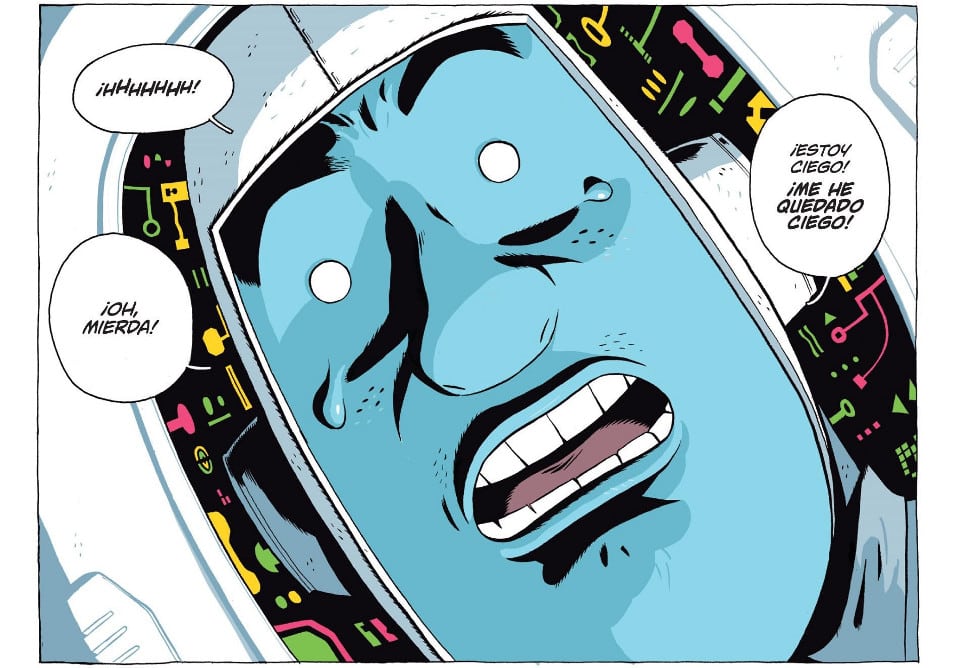
No entraré en más detalles con respecto a la trama para no desvelar nada, ya que el principal encanto de este cómic es la portentosa imaginación de la que hace gala Monteys, que nos deja una sucesión de situaciones hilarantes a través del tiempo que no paran de sorprendernos con cada nueva página. La premisa es claramente humorística, pero al mismo tiempo nos lleva a reflexionar sobre el poder de las multinacionales y la manipulación del consumidor a través de la publicidad subliminal, entre otras cuestiones. Otro punto fuerte del cómic es, sin duda, su apartado gráfico, en el que reconocemos el estilo caricaturesco habitual de su autor, pero con un acabado muchísimo más elaborado tanto en el diseño de los personajes como en la riqueza en detalles de los escenarios, sin pasar por alto el coloreado, que llena de vitalismo cada viñeta y ayuda a potenciar la atmósfera psicodélica de algunos pasajes.
Al publicarse en Panel Syndicate, ‘¡Universo!’ está disponible solo en formato digital y cada lector decide el precio que quiere pagar por él. Sin más, os animo encarecidamente a leerlo, ya que es uno de los cómics más hilarantes e imaginativos con los que me he topado en los últimos meses. Hay ganas ya de catar la segunda entrega, aunque tal y como explica Monteys en el epílogo, es probable que nos toque esperar al menos un par de meses hasta que vea la luz.

Today at Underwhelming Lovecraft Comic Synopses is “The Whisperer in the Dark”, which originally appeared in the August, 1931 issue of Weird Tales. Pretty creepy story. I dug it.
(Edited to fix a typo an eagle-eyed friend caught. And by “eagle-eyed” I mean he knows how to read and write better n’ me)
[body_image width='1000' height='546' path='images/content-images/2014/11/20/' crop='images/content-images-crops/2014/11/20/' filename='the-vagina-artists-of-etsy-251-body-image-1416522621.jpg' id='5631']
Etsy is a veritable cornucopia of feminist DIY products including, but not limited to, crocheted uterus-shaped menstrual cup bags, various "CRUSH THE PATRIARCHY" needlepoints, and a vast, roiling sea of buttons emblazoned with empowering messages.
Nestled within this glorious bounty are several high-end pieces of vulva art (some artists bristle at their work being dubbed "vagina art" because the vagina is but one part of the vulva as a whole; others don't really care about the distinction).
In the spirit of discovery, VICE reached out to several of the most prolific and/or intriguing vulva artists of Etsy to learn the secrets of their craft.
[body_image width='1000' height='546' path='images/content-images/2014/11/20/' crop='images/content-images-crops/2014/11/20/' filename='the-vagina-artists-of-etsy-251-body-image-1416506191.jpg' id='5534']
Images via Facebook.
ARTIST: Dorrie Lane
SHOP: Wondrous Vulva Puppet
PRICE: $85 for a mini puppet - $250 for a full-size one made of mohair
ABOUT: Dorrie created her first Wondrous Vulva Puppet in the 90s to help her teen daughter feel comfortable with her anatomy. The vulva was a hit at school, as vulvas often are, so Dorrie began producing more. Her business quickly expanded, and she started selling them to sex educators, sex therapists, and general genital-enthusiasts. As one might expect, they have appeared in an episode of Portlandia.
VICE: What is your ultimate goal in creating these Wondrous Vulva Puppets?
Dorrie Lane: When I first made them, my ultimate goal was for them to be in every store next to Barbie. The ultimate goal is really just to get them out there so they're mainstream.
My friends' kids were raised with vulva puppets, and it just became an article in the house. These kids all had really positive experiences learning about sexuality, so it's contributed to respecting women. [They recognize] that it's all a circle, it's where we came from. Respect comes out from that, and it should come back to that. My ultimate goal, really, is that that message comes through.
Tell me about the design of the vulva puppets.
For me, it was really important that the vulva was anatomically correct, that it felt good. If you put your finger in the vagina, the vagina is made of velvet, gathered velvet, and it feels like a vagina. And the g-spot is made from ribbons. When you put your finger through the vagina, you can feel the variation. And it really encourages women to get to know their bodies. It really does. It really encourages men to ask questions about clit play or what women like.
Have you thought about a penis puppet?
I do have a penis puppet in the works. When I have time I'll get to it. It'll be like nothing you've ever seen before.
Do you think men really need help celebrating their penises?
I think that men need to understand the beauty of their genitals as well. The mock-up [penis puppet] I've got going now is responsive: the balls retract as the erection comes up. There are different ways you can play with it. It's totally like the vulva puppet. You can play with it, and it's gonna be a puppet. Jim Henson is turning in his grave.
The idea there is the same as the idea of the vulva puppet—make it beautiful, make it touchable, and make it anatomically correct. For me, it's really more about embracing our sexuality, rather than what everybody else seems to be doing. I don't know what they're doing. For me, it's about embracing it and really feeling comfortable with a part of our bodies that, in American culture, is totally repressed.
[body_image width='1000' height='546' path='images/content-images/2014/11/20/' crop='images/content-images-crops/2014/11/20/' filename='the-vagina-artists-of-etsy-251-body-image-1416522325.jpg' id='5630']
Images via Etsy.
ARTIST: Kira
SHOP: Scarlet Tentacle
PRICE: $170 - $225
ABOUT: Scarlet Tentacle was conceived of in 2009; since then, proprietor Kira has been selling embroidered vulva art, sexy coloring books and greeting cards to the masses.
VICE: How did you get started as a vulva artist?
Kira: I used to work in the marketing department of a mainstream porn distributor and I was incredibly burnt out by the double standards I was immersed in: I was the only woman in my department surrounded by lots and lots of men making an incredible amount of money employed by selling sex while denigrating and mocking the female performers who made the products they were making their living off of—not the sex-positive utopia I'd hoped that job would be.
I started embroidering vulvas as a direct response to that environment. I wanted to make something completely unexpected and confrontational that didn't pass judgement on sex, sexuality, or sex workers, and the combination of art featuring vulvas and embroidery seemed to fit that.
What drew you to embroidery as a medium?
The shock value of not only creating art featuring vulvas, but of art featuring vulvas made with an incredibly gendered medium, is very appealing to me. Embroidery is a craft that takes an incredible amount of time and labour, and making a piece that took so much effort felt like a way to further comment on treating sexuality and sex workers as disposable goods.
And practically, I wanted a portable medium that I could work on while commuting to and from my porn industry job and during my lunch breaks.
What's the best reaction you've ever gotten to your work?
My favorite reaction to my work was at Renegade Handmade in San Francisco a few years ago. Two women in their 40s or 50s came up to me after browsing through my booth and as they were paying, asked me, "How long have you identified as femme for?" I was completely flabbergasted, since usually I have to come out to people very explicitly and very often, and I asked them how they could tell I was queer and femme just by looking at me. They looked at each other and laughed and told me, "Honey, you're standing in front of a wall of embroidered vaginas wearing pearls and high heels. We knew."
[body_image width='1000' height='546' path='images/content-images/2014/11/20/' crop='images/content-images-crops/2014/11/20/' filename='the-vagina-artists-of-etsy-251-body-image-1416506261.jpg' id='5535']
Image via Etsy.
ARTIST: Whitley Sullivan
SHOP: SquidleyStuff
PRICE: $200 for one (1) vagina orchid sculpture
ABOUT: From the looks of her shop, Whitley Sullivan primarily creates bow ties, none of which are particularly yonic. However, one stand-out item—a $200 vagina orchid sculpture (featuring a clit piercing)—caught my attention.
VICE: How did you get started creating vagina art?
Whitley Sullivan: I got started pretty much because I'm a lesbian and I love the vagina. It makes the world go round.
Why did you choose to make a vagina orchid?
Because I love vaginas. Also, my mother is a florist so we would always have flowers everywhere. And you're literally smelling a vagina [because flowers are the reproductive organs of some plants]. When a man/woman gives someone roses for Valentine's day, they just gave someone a bundle of vags, which is so funny.
I just did it because I thought it was creative and funny and a good way to get a laugh. Let's be honest—even if you love penises or vaginas, we all know they are not the most attractive things on the human body. No matter how much you say you love it.
Have you done other pieces like this, or is the vagina orchid a one-off deal?
I pretty much have, like, three vagina orchids that I made. That's it, really. I'm trying to sell them, but no one wants one. Maybe I will drop the price. If you're interested I'll give you a good deal!
[body_image width='1000' height='546' path='images/content-images/2014/11/20/' crop='images/content-images-crops/2014/11/20/' filename='the-vagina-artists-of-etsy-251-body-image-1416514149.jpg' id='5579']
Image via Etsy.
ARTIST: Michelle Gauthier
SHOP: MichelleGauthierArt
PRICE: $20 - $70
ABOUT: Michelle's vagina-related art consists of cross-stitched vulvas, ovaries, tampons, and the occasional cross-stitched penis. A great holiday gift for the more traditional of your playfully-erotic-art-collecting family members.
VICE: What would you say is the message behind your pieces, if there is one?
Michelle Gauthier: I love making vulvas/penises/breasts/tampons because they bring attention to a subject that usually isn't openly talked about by most people. I want to promote body positivity, sexual health, and let people know that they shouldn't be afraid to talk about sex!
What is the best reaction you've ever gotten to your work?
The best reactions are usually when people see me stitching in public. I take public transit a lot, and to pass the time I'm always making something. People will stare, ask me if I'm really stitching what it looks like, or just ask me why. There's also the reactions of family members and other "conservative" type people. They think I'm really weird.
How much vulva-related art would you say you have around your house?
I've definitely started networking with other artists who do vulva-related art. Off the top of my head, I have a beautiful vulva ornament, vulva buttons, and a lovely knitted vulva in my room.
[body_image width='1000' height='546' path='images/content-images/2014/11/20/' crop='images/content-images-crops/2014/11/20/' filename='the-vagina-artists-of-etsy-251-body-image-1416516885.jpg' id='5597']
Images via Etsy.
ARTIST: Kniqui Nimbus
SHOP: Hypgnosis
PRICE: $25 - $95
ABOUT: Kniqui's art relates to the vulva in a mystical sort of way. Highlights include cement garden vulvas ("put it in your garden and you will see the meaning of fecundity"), vulva cabinet knobs ("Labia lovers rejoice!"), and decorative BDSM vulvas ("This piece may be used simply as Dungeon Decor, or you may use it in a working to control your lover's sex in regards to fidelity and chastity"). In short, a vulva for every type of hobby.
VICE: How did you get into vulva art?
Kniqui Nimbus: My love for the vulva goes back to my childhood when I fell in love with my own. My mother caught me masturbating and told me it was dirty. That was when I started doing it discreetly during and after bath-time.
About five years ago I created my first heart vulva for a dear friend and sister lesbian. It was a p apier-mâché wall hanging. She loved it so much and told me, "You could totally sell these." I began creating and selling them on Etsy. I started with a Virgin Mary Yoni (a later edition of this was featured on the disappeared Regretsy), then I got a request for the Bride of Christ nun vulva.
I noticed your work intersects with the occult and BDSM. How would you characterize this intersection?
I characterize the intersection of my art with the occult and BDSM as an obvious one for me personally. The power and imagery of them combined excites me. The womb and vagina are occult or hidden mysterious places of power and the vulva is the facade, or in my art, a beloved icon.
What misconceptions bother you about your work?
I am bothered when someone characterizes my work as "vagina art." I prefer vulva and do not mind yoni, labia, pussy, lady-bits, wajaba, bajango, gash, or even cunt. I do not object to the word vagina or the vagina itself. It is the ignorance of what a vagina is. I will surely someday do vagina art and I doubt I would even have to label it mature on Etsy since most people wouldn't even know what they were looking at.
Follow Callie on Twitter.


 (
(