Shared posts

05 Jul 12:42

De cuando el jabón era moneda de cambio: Celaya, 1838

by El Bable
 Encuentro una tremenda curiosidad que ocurría en Celaya hacia 1838, según lo relata el geógrafo y etnólogo austriaco Isidore Löwenstren en su libro México, memorias de un viajero, (disponible en FCE). Sobre este libro, la maestra Margarita Pierini dice: “El cronista austriaco, como la mayor parte de los viajeros, no fue un escritor profesional, sus narraciones son testimonio de su viaje alrededor del mundo. El volumen dedicado a México es el más extenso de su producción y se caracteriza por su rechazo a la vida y la cultura mexicanas. Lo que hace singular a este cronista es el hecho de ser el representante más extremo (hasta llegar casi a lo risible) de la crítica negativa sobre México entre los viajeros de su época y, en segundo lugar, su condición de vocero de una ideología tendiente a instaurar en México una monarquía europea”. Y la anécdota celayense es:

  "Celaya está a 12 leguas de Querétaro. Bajé al mesón situado sobre la plaza pública. Ahí ocupé un cuarto en el primer piso, de donde disfrutaba de una vista extendida sobre las montañas que rodean la ciudad, al mismo tiempo que veía bajo mis ventanas el mercado, donde numerosos frutos europeos, tales como duraznos, uvas, peras, estaban instalados.

  Envié a mi mozo a que me comprara algunos, dándole un peso, para que me trajera el cambio. Sabía que los tlacos (baja moneda) del departamento de México no tenían curso en el de Guanajuato, en donde la ciudad de Celaya está situada, como tampoco en el de Querétaro, lo que es todavía uno de los bellos restos del sistema federal. Yo no esperaba entonces, a nada menos que el cambio que me iban a entregar, que consistía en pequeños pedazos de jabón, de los que se sirven en este lugar como único cambio.

  Esas piezas de jabón son de 78 milímetros de largo, sobre 13 de alto y 36 de ancho; pesan 50 gramos. De un lado se encuentra el nombre de “Galván”, y del otro la cifra 2, que indica el valor nominal de la pieza, es decir, dos tlacos. 

  La historia nos enseña que ciudades sitiadas se servían de monedas opcionales de cobre, estaño, cuero, papel; los salvajes hasta hacen uso, en algunos lugares, de cacao, conchas, dientes de peces; pero yo me lisonjeo de haber sido el primero en enriquecer la numismática con la moneda de jabón. Pero, en el fondo, esta moneda, que posee al menos un cierto valor, ¿no es aún preferible, toda molesta y ridícula que sea, a esos billetes de algunos cientos en el papel moneda de los bancos particulares de los angloamericanos, cuya garantía principal no consistía más que en el crédito que los ingleses, deslumbrados por las empresas gigantescas que veían ejecutarse más allá del Atlántico, habían abierto a los americanos, sin pensar que esas maravillas de la industria se ejecutaban a sus expensas?

   Y este sistema de moneda de jabón en Celaya no es aún preferible al de los tlacos, de cobre, que el estado de México hizo acuñar hace algunos años, forzando al público a tomarlos por el doble de su valor (una cuartilla), hasta que los angloamericanos y otros especuladores (buenos patriotas mexicanos). Se conoce en México al principal individuo que hizo esta falsificación, y que, lejos de haber sido penado por falsificador, juega en la capital un gran rol por los frutos de su noble industria. Apuntaron a un triste fin a esta operación financiera inundando al país con esos tlacos acuñados en los Estados Unidos.

  Recibí en Celaya la más amable acogida del coronel don Pedro Cortazar, hermano del célebre general, cuyo regimiento de dragones es el mejor de la República, y tan bien disciplinado como equipado. Gracias a su complacencia, pude sacar buen provecho de mi corta estadía. Celaya es una hermosa ciudad, agradable y muy poblada. El número de sus habitantes de 10,000. 

[…] Dejé Celaya con una impresión de las más favorables que me haya dejado aún ninguna ciudad de México: consecuencias de los progresos que ahí se ven, la actividad, del orden y de la seguridad que ahí reinan.


03 Jul 17:07

03/07/2020 - 15:51:46 - Lugares - por Oink!

¡Los japoneses están preparando el Super Nintendo World y, aunque aún no esté abierto, ya se nos cae la baba! :) [wikipedia] (gracias @excesivo)


30 Jun 21:16

Ornate Fabrics Cloak Models in Disquieting Portraits by Artist Markus Åkesson

by Grace Ebert

“The Grove” (2020), oil on canvas, 180 x 140 centimeters. All images © Markus Åkesson, shared with permission

Swedish artist Markus Åkesson enshrouds his subjects in elaborately patterned silks and satins, leaving only the impression of their faces, limbs, and torsos visible. An extension of his ongoing Now You See Me series, the artist’s latest paintings continue his exploration of repetition and the unsettling feelings evoked by being wrapped in fabric. By completely covering his models, they “became a secret. Instead, I started to tell a story within the pattern itself, like a sub-narrative in the painting,” he writes.

Åkesson’s pieces begin with designing the traditional, florid motifs that are printed onto the largely unshaped fabrics. The artist then envelops models in the textiles before posing the subjects for the discomfiting portraits. “I have always been interested in patterns, I am drawn to the repetition and the rhythm,” he tells Colossal. “I did a lot of paintings with people that were surrounded by patterns, different surfaces, and materials, almost drowning in them. Eventually, they became completely covered in fabrics.”

Åkesson’s work will be on view this fall at Da-End Gallery in Paris. Until then, follow his heavily patterned paintings on Instagram.


“At the heart of it all (2020), oil on canvas, 60 x 50 centimeters

“Now You See Me” (2019), oil on canvas, 180 x 140 centimeters

“Yellow Veil” (2019), oil on canvas

“Now you see me (Dysmorphia 10)” (2018), oil on canvas, 145 x 100 centimeters

“Now you see me (Blue and Gold Kimono)” (2019), oil on canvas, 180 x 140 centimeters

“In the quiet morning” (2020), oil on canvas, 145 x 100 centimeters

“Danse Macabre” (2020), oil on canvas, 145 x 100 centimeters

27 Jun 18:32

23/06/2020 - 15:51:39 - Lugares - por Oink!

¡Linkazo! Conduce por distintas ciudades del mundo escuchando emisoras locales B)


27 Jun 18:29

2,292 Plants Fill the Audience in Opening Performance at Barcelona’s Gran Teatre del Liceu

by Grace Ebert

All images © Gran Teatre del Liceu, shared with permission

This week, Barcelona’s Gran Teatre del Liceu held its first performance with a live audience post-coronavirus, but it’s unclear whether the attendees were too green to appreciate Puccini’s “Crisantemi.” Seated in the red, velvet seats and among the gold balconies, 2,292 palms, ficus trees, and Swish cheese plants filled the iconic opera house to listen to the string quartet’s rendition.

A collaboration with Madrid-based artist Eugenio Ampudia and the Max Estrella gallery, the concert was meant to reflect on humans’ relationship with nature. “I thought why don’t we go into the Liceu like weeds, take it over and let nature start growing everywhere and turn it into something alive even when there are no people,” Ampudia said in an interview. After the performance, the leafy audience members were donated to healthcare workers who have been battling the virus during the last few months.


27 Jun 04:06

Photo


27 Jun 03:28

Photo


27 Jun 02:58

elurdangarinazo:Unmute. keno-rhcp:Netflix: ¿Sigues ahí?

elurdangarinazo:

Unmute.

keno-rhcp:

Netflix: ¿Sigues ahí?

27 Jun 02:03

26/06/2020 - 16:53:36 - Cine - por Oink!

¿Grabar en exteriores? ¡Lo que se lleva ahora es grabarlo todo en un chroma y luego retocar en un portátil de 3 duros! (el resultado es una maravilla) (gracias McNolo)


21 Jun 16:21

21/06/2020 - 16:48:39 - Frikis - por Oink!

Manfred Gnädinger, "O Alemán". El ermitaño que murió de pena por culpa del chapapote del Prestige :_( (pues es la primera vez que leo sobre este señor, pero parece ser que fue noticia nacional)


20 Jun 12:38

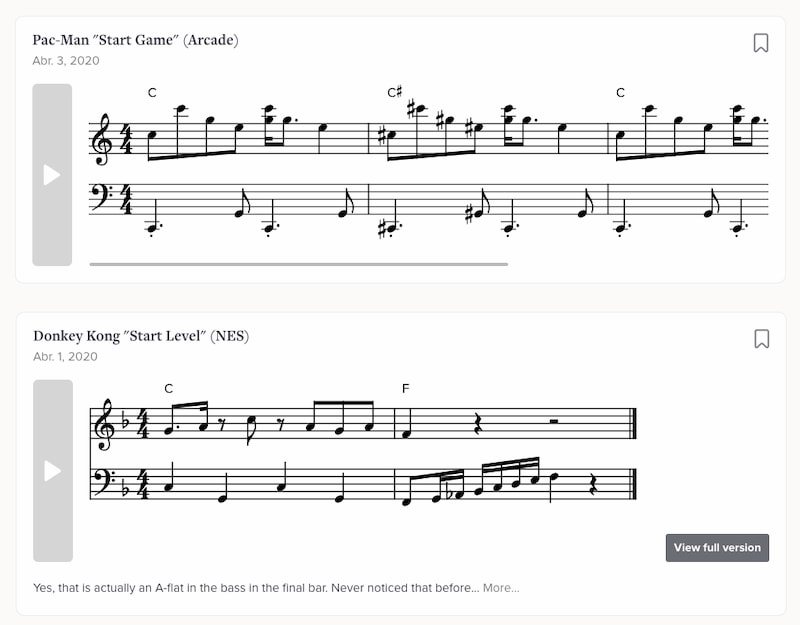
Conciertos para consolas: la música y efectos de sonido de los videojuegos transcritos como partituras

by alvy@microsiervos.com (Alvy)

Conciertos para consolas: la música y efectos de sonido de los videojuegos transcritos como partituras

En Console Concertos, una página del sitio para aprender música SoundSlice, se recopilan decenas de efectos musicales y melodías de videojuegos clásicos. Hay muchos de ellos: Zelda, Pac-Man, Donkey Kong, Super Mario Bros, Sonic The Hedgehog, Mega Man 2, Metroid…

La particularidad es que están transcritos como partituras musicales, con líneas para cada uno de los instrumentos y efectos: bajo, melodía, armonía… Visitando las páginas completas de cada tonadilla se puede además comparar la versión grabada (original) con la del sonido digital al reinterpretar la partitura. También se puede variar la velocidad, ver las pistas por separado y cambiar su apariencia, transponerlas y demás.

Lo más interesante es quizá cómo con paciencia –y supongo que algo del código original– han conseguido extraer incluso los más mínimos detalles de algunos de los juegos, no sólo la melodía principal: soniditos tan identificables como «vida extra», «game over» o incluso el «completado de líneas» de Tetris.

(Vía Adrian Holovaty.)

Relacionado:

# Enlace Permanente

14 Jun 14:17

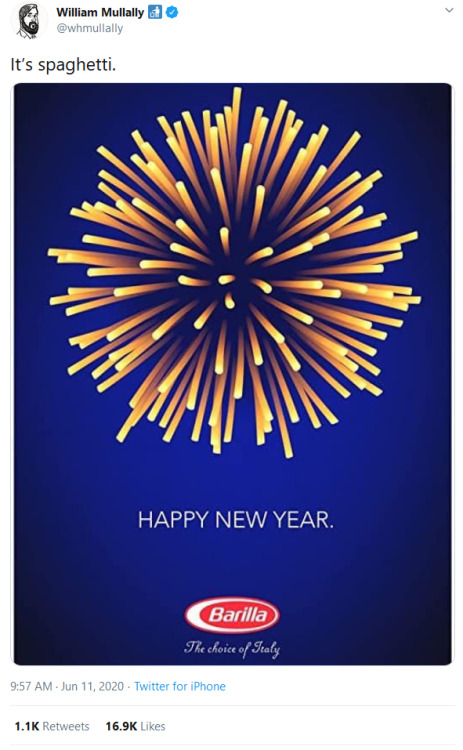
citrusveins: Veis cómo los spaghetti son el demonio?


citrusveins:

Veis cómo los spaghetti son el demonio?

14 Jun 14:15

papapupi:Madre mía que foto para analizar, el nombre del...


papapupi:

Madre mía que foto para analizar, el nombre del producto, la foto familiar en la cama… No tiene desperdicio ninguno.

12 Jun 01:55

Photo


11 Jun 09:01

chilefailcl:

09 Jun 02:10

08/06/2020 - 16:44:18 - Inventos/Compras - por Oink!

Cuchilla + uña = ¡Cuchiña! :D (otro de esos innecesarios artefactos con los ir llenando el cajón de los trastos de la cocina) (gracias Zuqui45)




06 Jun 17:15

Photo


06 Jun 17:13

luisonte: …la mitad… su puta madre


luisonte:

…la mitad… su puta madre

06 Jun 11:44

Video


02 Jun 02:53

sowhatifiliveinasmalltowninjapan: escapekit: How-To Survive A...


sowhatifiliveinasmalltowninjapan:

escapekit:

How-To Survive A Deadly Global Virus 
London-based designer Siedentopf has created original alternative masks for people to protect themselves from the coronavirus.

Very interesting that a London based artist decided to make ‘alternative’ masks for ‘humour’ when the UK has the worst death rate in the world

02 Jun 02:29

The Big Impact of a Small Hobby

by swissmiss

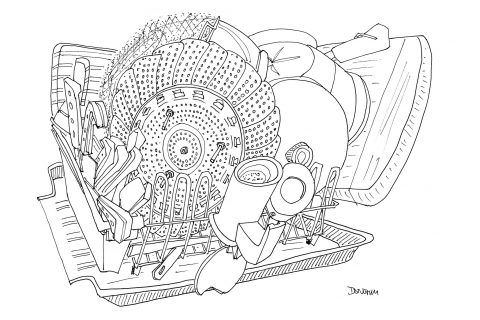
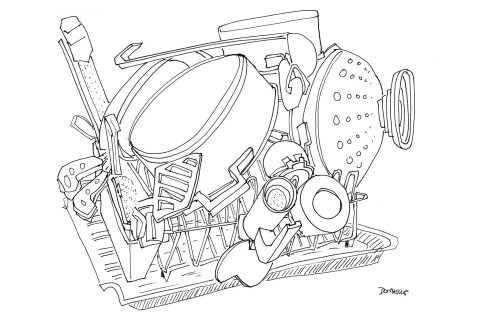
John Donohue draws mundane dishracks and I love it. John is also the force behind All The Restaurants in NYC.

02 Jun 02:26

Six Students Design Solar-Powered Lamps From Collagen, Black Beans, and Agave Plants

by Grace Ebert

Six lamps designed by Instituto Tecnológico de Monterrey students

A 2019 study notes that 1.8 million residents of Mexico live without electricity, while some sources say an additional five million have limited access. In an effort to provide affordable, sustainable solar power, six students from the Instituto Tecnológico de Monterrey have designed lamps that can be constructed easily with materials commonly found throughout Mexico’s rural areas. Using wicker, agave plants, coconut bark, adobe, collagen, and black beans, the designers have created hand-held vessels powered by reusable solar cells and LED lights.

Inspired by artist Olafur Eliasson’s (previously) similarly sustainable Little Sun, Moisés Hernández, who led the project,  told Dezeen that students were tasked with creating lamps with easily reproducible exteriors. “With these new material ideas that came from different sites across Mexico, where the weather and context are so different, the students visualized new scenarios where these type of technological objects can be assembled and distributed to local people,” Hernández said. When the lamps need to be replaced, users simply can remove the solar and LED components and position them in new vessels.


Black bean lamp by Oscar Andrés Méndez Hernández

Adobe, recycled paper, and cactus slime lamp by Luis Fernando Sánchez Barrios

Coconut lamp by Rafael Sánchez Brizuela

Lamp of wicker made by craftsmen in Tequisquiapan, Queretaro, designed by Aniela Mayte Guerrero Hernández

A lamp of collagen spread over a coconut shell form by Naoto Ricardo Kobayashi Utsumoto

Agave-plant waste lamp by Viridiana Palma Dominguez

Coconut lamp by Rafael Sánchez Brizuela

01 Jun 03:09

themikeymonster: fluffmugger: Basically ever since we...


themikeymonster:

fluffmugger:

Basically ever since we developed human brains we’ve been desperately trying to turn them off

Humans: [evolve self-awareness]

Humans: oof, don’t like that

28 May 23:54

jooslvg:

28 May 23:54

Ai Weiwei Has Designed Face Masks to Raise Funds for COVID-19 Relief

by Grace Ebert

All images © Ai Weiwei

A defiant middle finger, a heap of sunflower seeds, and various mythical creatures are all silk-screened in black ink on the blue cloth backdrops of nonsurgical masks. The artworks the most recent intervention by artist and activist Ai Weiwei (previously) to help raise money for organizations directly involved with combating the coronavirus pandemic.

Inspired by a documentary he’s making about COVID-19, the artist decided to create an entire collection after printing his iconic middle finger onto one of the disposable cloths. “An individual wearing a mask makes a gesture; a society wearing masks combats a deadly virus. And a society that wears masks because of the choices of individuals, rather than because of the directive of authorities, can defy and withstand any force. No will is too small and no act too helpless,” he writes on Instagram. While masks have become a ubiquitous symbol for the COVID-19 crisis, many of the inky renderings hearken back to Ai’s ongoing commitment to humanitarian efforts.

Hand-printed in the artist’s Berlin studio, the newly released face coverings are sold singularly and in groups of four and twenty. They’re available for purchase through June 27 on eBay, and proceeds will be split equally between Human Rights Watch, Refugees International, and Doctors Without Borders. (via Artsy)


View this post on Instagram


A post shared by Ai Weiwei (@aiww) on

28 May 21:33

Dried Botanics Pressed into Delicate Fauna Compositions by Artist Helen Ahpornsiri

by Anna Marks

All images © Helen Ahpornsiri, shared with permission

England-based artist Helen Ahpornsiri (previously) presses delicate flowers and plants into wondrous artworks that depict the colorful diversity of the natural world. By foraging botanics from her garden, Ahpornsiri pieces the dried natural matter together in a manner that’s similar to constructing a jigsaw puzzle. “I prefer to use fern and common wildflower species as I like the idea of giving something unassuming, or thought of as a weed, a new narrative—and they are relatively easy to grow!” she says. “The marine algae I use is foraged from beaches on the south coast of England. I search for loose pieces of marine algae along strandlines and in rockpools, especially after stormy seas, to avoid being disruptive to the surrounding ecosystem.”

The artist’s collection features mammals and insects from across the animal kingdom—ranging from peacocks and bees to elephants—some of which are aligned with tiny pieces of gold leaf that reflect the sparkling color and vibrancy of the species she creates. Upon close inspection, the flowers’ color appears faded from the drying process, similar to the way watercolors dry and bleed into their canvas. In one of the artist’s most recent pieces, a comet moth is mounted on black board, with its antenna crafted from a minuscule leaf that elegantly depicts the fragility of the insect’s anatomy.

You can see more of Ahpornsiri’s delicate botanic compositions on her website, on Instagram, and via her shop.


27 May 12:51

Doughy Braids and Sliced Fruits Arranged into Sumptuous Pies by Karin Pfeiff-Boschek

by Grace Ebert

All images © Karin Pfeiff-Boschek, shared with permission

While many people are spending their days starting batches of sourdough, Karin Pfeiff-Boschek has been busy baking sweet pies with mesmerizing arrangements that appear almost too pretty to eat. She tops each pastry with a delicate floral motif of flaky dough, a precisely arranged gradient of sliced fruit, or a checkered weave braided in rows.

The pastry designer tells Colossal that she was raised in a family of bakers, although pies weren’t her first form of artistic expression. “As a child, I enjoyed seeing, smelling, and eating the breads and pastries that both of my grandmothers made. Baking was traditional in our family in rural Germany, and when I was a young teenager, I began baking cakes and pastries for my brother and sister,” she writes. “I did not become a baker, however, but became interested in fabrics, eventually designing, dyeing, and creating my own works of textile art.”

After learning to make pies from her American mother-in-law, Pfeiff-Boschek merged her new culinary skills with her background in design, saying she “began to wonder whether one could decorate them in a manner similar to the way cakes are turned into works of art.” Employing her own techniques, Pfeiff-Boschek modified her mother-in-law’s original recipe in minor ways and opted for chilling the raw pastry in batches. 

I found that by cooling the dough while creating decorations, using a very thin, sharp knife such as a scalpel and working very precisely it was possible to create ornate decorations that held their shape during baking. I make it a priority to also show the baked pie because regardless of how beautiful a pie may look before baking, it never will be served in that state and must look good after it comes out of the oven.

To alter the dough colors, Pfeiff-Boschek adds powders made from freeze-dried berries, spinach, and beetroot. She tends to bake sweet pies with peaches, apples, and other fruits, although occainsly assembles a savory version filled with meat and vegetables. Each creation takes between two and six hours to assemble and adorn. “I love nature, and many of my designs come from time I spend in our garden with our German shepherd dog, Halgrim. I am inspired by trees, leaves, and vines but also by classical geometric patterns and quite mundane articles, such as gully lids,” the designer says.

Many of Pfeiff-Boschek’s edible artworks have culminated in a book, Elegant Pie, and on her blog by the same name. To see both pre- and post-bake photographs, head to Instagram. You also might like Lauren Ko’s vibrant pies and tarts.


26 May 18:29

serllydavid:

24 May 15:40

Saturday Morning Breakfast Cereal - Program

by tech@thehiveworks.com


Click here to go see the bonus panel!

Hovertext:
That wasn't lazy drawings in the background - the sim just hadn't fully rendered them.


Today's News:
22 May 00:25

Precise Angular Stitches Encase Found Twigs in Natalie Ciccoricco’s New Embroideries

by Grace Ebert

All images © Natalie Ciccoricco

Stitching lengthy, varicolored rows around found twigs, Natalie Ciccoricco juxtaposes the organic forms of nature with her meticulous embroideries. The California-based artist has been crafting her Nesting series on white, handmade paper with unfinished edges. The stark backdrop complements the precisely laid thread that seems to suspend each twig, while the natural borders offer an additional organic element.

An extension of her stitches on vintage photographs, Ciccoricco’s lastest series was born out of her time quarantined at home. “While being under quarantine at home, I started creating embroidery artworks using materials found in our yard, on our deck or nature walks,” she writes on her site. “Exploring the juxtaposition between geometric shapes and organic elements, this series is an ongoing exercise to find beauty and hope in challenging times.”

Although each piece from Nesting is sold out in her shop, some prints of her other embroideries are available on Society6. Follow Ciccoricco’s progress and see her latest works on Instagram. (via Jealous Curator)