Shared posts

29 Apr 07:04

Photographer Thankful to Laptop Thief for New Creative Direction

by Michael Zhang

Photographer Thankful to Laptop Thief for New Creative Direction glitchart

Having your laptop and photographs stolen usually isn’t a good thing, but for photographer Melanie Willhide, it actually helped her career move forward.

David Rosenberg of Slate reports that Willhide, a fine art photographer based in Los Angeles, had her laptop and backup drive stolen.

After giving up hope that she would ever see her images again, she received a happy surprise when the police department called to inform her that her computer had been found through a traffic stop.

When she got her computer back, there was another letdown: the thief had wiped her data and had been using the computer as his own. In an attempt to recover anything she could, Willhide decided to use recovery software on the hard drive.

As the recovered images started appearing on the screen, it was clear that there had been damage done to them by data corruption. However, Willhide didn’t complain — she was actually pleased with what had happened to the photos.

So please, in fact, that she turned the “glitch art” photographs into a series titled To Adrian Rodriguez, With Love (warning: a few of the images in the series are NSFW). The project is a tribute to Adrian Rodriguez, the laptop thief.

Photographer Thankful to Laptop Thief for New Creative Direction galleryscreen

In addition to refining the photos that were “glitched by the thief,” Willhide also taught herself how to artificially glitch photos with the same aesthetic using Photoshop.

You can check out the series over at the Von Lintel Gallery in New York or over on Willhide’s website.

“To Adrian Rodriguez with Love” by Melanie Willhide (via HuffPo via The Phoblographer)


Image credits: Photographs by Melanie Willhide

26 Apr 11:26

Posing as a Tourist, Photographer Stealthily Photographs People in North Korea

by Amanda Gorence

Sean-Gallagher_Photography

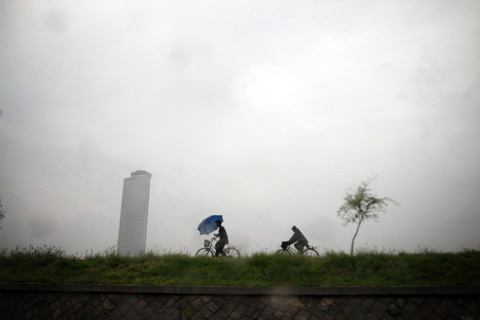
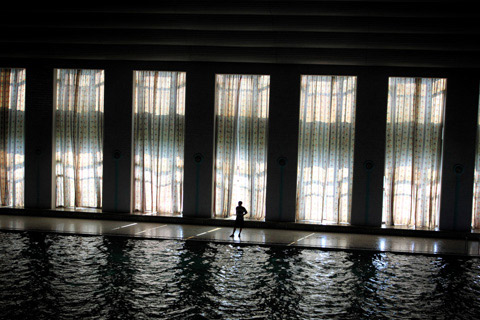
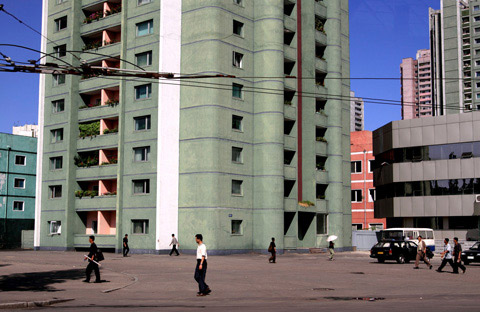
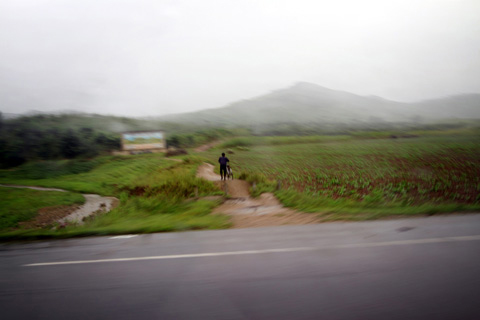
As concerns around the nuclear conflict with North Korea grow, British photo-journalist Sean Gallagher revisits his 2009 venture to North Korea on assignment for the Globe & Mail. Naturally, shooting proved difficult in the sequestered country. Posing as tourists, Gallagher and his colleague were accompanied at all times by a tour guide and government minder who were always a step behind them. He says of his experience:

From our four days within the country, it was almost impossible to get close to the people to photograph. As much as I would have liked to, getting close to the everyday person proved to be almost impossible. Hence, my photographs from this journey have a sense of isolation about them. It is an isolation probably born from my own feelings while being there. People are dwarfed against the mighty, imposing communist-era architecture, small and insignificant against the overbearing size of the buildings.—Sean Gallagher

You can read more about this fascinating experience on Gallagher’s blog.

Sean-Gallagher_Photography

Sean-Gallagher_Photography

Sean-Gallagher_Photography

Sean-Gallagher_Photography

Sean-Gallagher_Photography

26 Apr 11:21

I love Chris Reel’s remake of my picture Misty.


I love Chris Reel’s remake of my picture Misty.

25 Apr 16:15

About the Aerial Camera That Spotted the Second Boston Bombing Suspect

by DL Cade

About the Aerial Camera That Spotted the Second Boston Bombing Suspect ircamera

When Dzhokhar Tsarnaev, the younger of the two Boston bombing suspects, was discovered hiding in a man’s boat just outside the perimeter police had set up to search for him, the cops took no chances. Rather than sending officers right in and risking injury, they enlisted the help of an impressive aerial camera to confirm his location and then keep watch as police tried to coax him out.

The camera, developed by the FLIR corporation, is called the Star SAFIRE III, and it’s the one behind all of the infrared shots of Tsarnaev in the boat that spread like wildfire all over the Internet this weekend.

Here’s one of those pictures:

About the Aerial Camera That Spotted the Second Boston Bombing Suspect infrared

To be accurate, camera isn’t even the right word, FLIR prefers the term “multi-imaging system.” According to Gizmodo, the SAFIRE III is a 15-inch gimbal system that packs a 640 x 480 infrared camera operating between 3-5μm, an optional color zoom camera, a spotter scope, a low-light camera, a 25km laser rangefinder, a pointer, and an illuminator. Like we said, they prefer “multi-imaging system.”

Speaking with Gizmodo, FLIR President Andy Teich explains why the camera was ideally suited for the job it got:

One of the unique capabilities of the camera is … [its] imaging in the midwave region … There are many plastics that become transparent in those wavelengths. And in this case, the boat had one of these shrinkwrap coverings — opaque plastic shrinkwrap covering — and the SAFIRE saw right through that.

After the images had already made the rounds online, the Boston Police Department released this video of the camera at work through the entire arrest:

If you’re thinking you’d like a SAFIRE III yourself, you’re in luck. It’s actually available for purchase by the public, and weighing in at only 100lbs, you can attach it to something as small as a Cessna. You’ll just have to be prepared to spend somewhere in the vicinity of $500K to actually get your hands on it.

(via Gizmodo)

23 Apr 19:35

Photographer Travels the World Taking Pictures of Abandoned Airplane Wrecks

by DL Cade
Natalia Pokrovskaya

Ох. Кажется, я сейчас зашлю ему 40 долларов, потому что это так красиво.

Photographer Travels the World Taking Pictures of Abandoned Airplane Wrecks airplane9

For his project “Happy End,” German photographer Dietmar Eckell has travelled all over the world to find and photograph abandoned airplane wreckages with positive endings. That last part may seem like a paradox, but all of the 15 wreckages Eckell has shot actually do have happy endings: no one on board died, and they were all rescued from the remote locations where they crash landed.

Now, after completing this mammoth project and producing some extraordinary pictures, he wants to put together a coffee table photo book that tells and (obviously) illustrates these stories, and he’s turned to crowdfunding site Indiegogo for help.

Photographer Travels the World Taking Pictures of Abandoned Airplane Wrecks airplane1

Getting a print run of a high-quality coffee table photo book isn’t cheap, and so Eckell is asking people to donate and help him reach at least $4,000 to get started. In exchange, he’s offering everything from access to a 15-episode “Making Of” series, to the book itself, to museum-quality fine art prints of your choice at incredible prices.

Here are just a few of the 50+ photos that will illustrate his book:

Photographer Travels the World Taking Pictures of Abandoned Airplane Wrecks airplane2

Photographer Travels the World Taking Pictures of Abandoned Airplane Wrecks airplane3

Photographer Travels the World Taking Pictures of Abandoned Airplane Wrecks airplane4

Photographer Travels the World Taking Pictures of Abandoned Airplane Wrecks airplane5

Photographer Travels the World Taking Pictures of Abandoned Airplane Wrecks airplane6

Photographer Travels the World Taking Pictures of Abandoned Airplane Wrecks airplane7

Photographer Travels the World Taking Pictures of Abandoned Airplane Wrecks airplane8

With 43 days left, Eckell has already reached almost $3,000, so we’re not concerned that he’ll miss his goal (or even his stretch goal of $6,000), but if you want to get in on the discounted action, sooner is better than later. There are still 29 “early bird” deals left between the book and the book+acknowledgement packages, and those probably won’t last long.

If you want to support Eckell, be it with $9 in exchange for access to the “Making Of” series, or $800 in exchange for 100 x 150cm (~40 x 60in) limited edition, museum-quality print, you can head over to Indiegogo by clicking here. Alternatively, if you want to see more pictures from Eckell’s Happy End project before you decide, you can check them out over on his website.

22 Apr 13:37

9ый час вечера воскресенья. Я волочусь по Трайбеке в круглосуточную аптеку за пачкой батареек для...

Natalia Pokrovskaya

Я прихожу в ужас, когда читаю про все эти светоустановки, понимая, что никогда так не смогу (потом, правда, понимаю, что и не нужно).

9ый час вечера воскресенья. Я волочусь по Трайбеке в круглосуточную аптеку за пачкой батареек для завтра. До этого 12 часов подряд длился прелайт.
Завтра мы снимаем рекламу. Сегодня ушло на то чтобы развернуть всю техническую мощь Мартина. Света на площадке наберется наверно на Голливудский блокбастер. Мы в 8 рук целый день двигали все это добро. Ребята которые занимаются реквизитом меняли в кадре диваны и столы, достраивали и перекрашивали стены, привозили новые абажюры, ковры и занавески.
Мартин говорит что рекламщики хотят чтобы ты делал ровно то что им нужно с точностью до микрона. Наверно это не очень творческая работа но для меня сейчас в техническом плане она даже любопытнее чем эдиториал.

В редкие свободные минуты за очередным кофе я разговариваю с другими ассистентами и у всех спрашиваю думают ли они о том что делать дальше. Потому что как из ассистентов здесь собираются стать фотографами я просто не представляю. На такие праздные мысли просто нет времени а когда время есть, нету сил. У меня каждый вечер хватает их на то чтобы найти в своем J-train свободное место, вставить в уши плеер, воткнуть на сидящих напротив, доехать до дома, поужинать, выпить пару Бруклин Эля, часок пообниматься с Надей и рухнуть спать. 

Мартин говорит что пару лет после того как он бросил работать на Энни были одними из самых тяжелых. Но совмещать эти два занятия кажется просто невозможно.

22 Apr 09:02

Sadako's Unfashionable Fashion Diary

by Make it Easy

i feel very lucky to have made an instagram friend with Sokki, who is a extremely talented and wonderful artist based in Singapore.  this first print illustration (with the ukulele) was sent to me as a gift from her, as we did an art-swap!!  i was so excited and ecstatic to have this framed in my room as a reminder of the wonderful friendships and connections we can make around the world through outlets like photo blogging! 

her world is filled with colour, movement, expression, mystery, voice, horror and happiness, fashion examples, and confusing excitement through unique body-language!  whether it be her detailed and eccentric illustration projects, or the amazingly beautiful tights / stockings she made a reality from simply drawings; her originality continues to inspire me.  she easily became one of my most favourite artists out there, over night, and i'm sure these examples of her work below will immediately grab your attention and win your hearts in a flash. 


please please visit her blog: Sadako's Unfashionable Fashion Diary for much more of her hand-drawn artwork, photography, animated clips, prints, costume play, collaborations, prominent fashion editorial shoots, and much more!  she's completely mysterious & refreshingly original all at once. 

07 Apr 21:50

The Teen-Girl Tumblr Aesthetic*

by Alicia Eler
-1

Frida Kahlo with sparkling eyebrows (via champagnemanagement.tumblr.com, h/t womenasobjects.tumblr.com)

Editor’s note: This is the fifth in a series of commissioned essays for The World’s First Tumblr Art Symposium on Saturday, March 9, 2013.

Twenty-one-year-old Elisa Lam made national news when her body was uncovered in a water tank on the roof of the infamous Cecil Hotel, near Skid Row in Los Angeles. Not long before that, she was just a barely-no-longer-adolescent girl visiting the United States from Canada, exploring the city of angels whilst on spring break. In the Internet land of immediate responses, reactions, and reprimands via text chatter, reblogs, deleted comments, likes, and unlikes, hearts, and de-hearted emotional Tumblr affirmations, Elisa Lam’s 19-year-old friend Jialin began Tumblr blogging about her friend’s death. Was she a bad friend? How could this have happened to Elisa?

“She’s a real person. Stop it. The autopsy results were inconclusive. I have anger issues,” she writes on the portion of her tumblelog tagged “Elisa Lam.” She poured her emotions out through Tumblr, the simple instant blogging platform founded by young entrepreneur David Karp in 2007 for exactly that purpose. Forbes dubbed it Karp’s $800 million art project, and it does indeed exist for personal expression: “Tumblr experience can be boiled down to people expressing themselves publicly. Like those other two networks, Tumblr is organized in the form of streams of posts,” writes Jeff Bercovici. And like most art projects, money wasn’t the first thing on Karp’s mind when he started it.

Yet as Elisa Lam lay floating in a hotel water tank, decomposing without the preservative assistance of the formaldehyde in Damien Hirst’s “The Physical Impossibility of Death in the Mind of Someone Living,” guests at the hotel drank her fluids. Like the Tumblr teen-girl aesthetic that is currently making its way through the veins and channels of culture, Lam is everywhere, seeping into the pores of the Internet’s most hidden corners. The media sensation that her death became, along with the teen-girl online social universe she embodied, has metastasized.

Elisa Lam herself had a Tumblr. Elisa’s best friend is blogging in reaction to Elisa’s death on Tumblr, from moment to moment, documenting her feelings in real time. Through these inroads, we get a brief look into the minds of the honest, intelligent teenage girls who are experiencing surfeits of emotion, yet are not nervous at all.

In the case of Elisa Lam’s body, the online/real life (IRL) overlap becomes fraught. Critique around James Bridle’s coinage of the New Aesthetic revolves around the loss of the physicality of the art object. But in the case of the teen-girl Tumblr aesthetic, the art “object” extends to the bodies of girls both on and offline; the fetish is not contained in a static image. Even the images themselves are constantly moving and perpetuating themeselves on Tumblr, breathing and existing in time and space as a living body.

The teen-girl Tumblr aesthetic differentiates itself from the prevalent nostalgia-induced reimagining of the archetypal lusty teenage dream. Rip-offs of that aesthetic are familiar staples of bubble-gum-pop culture. They hijack the notion of adolescence, attempting to reinstall it into adults who have already experienced it — the heightened emotions, the epic breakups, the popularity contests, the self-actualizing, the loss of virginity, the sugar-sweet feeling of falling in love again for the first time. American pop culture idealizes the adolescent experience, recreating it through nostalgia, hypersexualized female bodies and fleeting, sugary feelings.

COTTONCANDYKATYWEB-e1351320654871

Will Cotton, “Cotton Candy Katy,” (2010) (Image from Willcotton.com)

Katy Perry’s “California Gurls” video, directed by art-world celebrity Will Cotton, who is best known for his paintings of women and candy. He made the leap from art-world big shot to pop-star character through indulging in the teenage dream. His imagining of Katy Perry floating in a pink cotton candy cloud is the essence of the teenage dream — for adults, that is.

In an interview with The Daily Beast, Cotton says that Katy was just the pop star he had imagined working with:

The reason I chose Katy and nobody else — I had torn pictures of her out of magazines, because she was just the kind of character that I wanted to paint. She’s very over-the-top, she’s very sugary, saccharine. As sweet as can be. By painting the [“Teenage Dream” single] cover and working on [the “California Gurls” video], it disseminated this imagery in a way that the art world just never can.

Elle Fanning (via teenidols4you.com)

Elle Fanning (via teenidols4you.com)

Cotton’s reach extended far beyond just the art world and American pop culture, however. His imagery spread across the Internet, to South America and Europe. Teenagers and pre-teens, who are familiar with developing part of their sense of self through the mirror of social networks, began emailing Cotton about his Katy Perry paintings and pop art. Though it’s not something he says he’s ever wanted, it surely has gained him recognition beyond what even advertising could do — not to mention a ton more Facebook friends.

“It’s a totally different scale. The video had 100 million hits on YouTube. That’s just way beyond art-world scale. And now, I can get an email from a 12-year-old girl in Brazil who knows my imagery because of the Katy Perry album cover and video,” Cotton told The Daily Beast.

For his next exploration into the teenage dream, Cotton went straight to the source, rendering actress Elle Fanning in a candy-inspired editorial for New York Magazine. The younger sister of Dakota Fanning, the blonde-haired, blue-eyed Candyland princess Elle is only 15 years old. Hers is a younger, more closely threaded connection to the teenage girl aesthetic as created by people who are no longer in their adolescence.

Yet Cotton’s project is closer to Rineke Djekstra’s portraits of adolescent girls attempting to pose in a sexy way, awkwardly beautiful in her vulnerability, or Tracey Emin, a grown woman expressing herself through confessional text, site-specific installation and a raw, adolescent voice. These artists create adult renderings of the adolescent girl sensibility.

Left, Rineke Dijkstra. "Kolobrzeg, Poland, July 26, 1992." Chromogenic print, 117 x 94 cm. Courtesy the artist and Marian Goodman Gallery, New York and Paris. © Rineke Dijkstra, and right,  Tracey Emin, Hellter Fucking Skelter, 2001 Courtesy White Cube, London.

Left, Rineke Dijkstra. “Kolobrzeg, Poland, July 26, 1992.” Chromogenic print, 117 x 94 cm. (Courtesy the artist and Marian Goodman Gallery, New York and Paris. © Rineke Dijkstra, via), and right, Tracey Emin, “Hellter Fucking Skelter” (2001) (image courtesy White Cube, London, via)

These are grown-ups, so to speak, channeling or connecting in some way with a constructed idea of the teenage girl aesthetic and adolescence. The teen girl Tumblr aesthetic of Marie Calloway, Molly Soda, Elisa Lam and her best friend, Emma Orlow of The Do Not Enter Diaries, PlasticPony, and Onlinebabe is something entirely different: immediate, hyper-embodied, raw and vulnerable. The stakes are higher, too. As in the case of Lam and her friend, they are a matter of IRL life and death, with Lam’s friend reporting Lam’s Tumblr posts to the cops as they searched for answers to the riddle of her disappearance.

* * *

The field of Tumblr art is relatively new, and most of the projects that the art world has championed in this vein thus far take their cue from digital art, GIFs, glitch art, and net art. The New Aesthetic, as defined and championed by James Bridle, Bruce Sterling and debated on The Creators Project, is a far cry from the teen girl tumblr aesthetic.

In Kyle Chayka’s response piece — an essay titled “The New Aesthetic: Going Native” — he questioned how it could have taken aesthetes so long to recognize the New Aesthetic’s pervasive nature:

NA is part meme, part techno-ethnography and part Tumblr serendipity. Its art is juxtaposition: If we put this next to that and this other thing, surely a new understanding will emerge.

Julia Kaganskiy writes that, surely, this essay does help articulate the idea of blurring the ‘digital’ and the ‘real,’ something that we Internet migrators are aware of but perhaps haven’t properly discussed. A few months after these seminal posts on The Creators Project, an Art F City article chronicles the healthy, ongoing debate around the New Aesthetic, discussing how it has thus far been presented as a mostly robotic, architectural, futuristic sphere consisting “of images, mainly of satellite photos and colorful design objects which look like they’ve been run through a computer (have obvious pixels), alongside emerging trends which humanize robots.”

If bodies do appear in the new aesthetic artworks (at least those presented at art conferences or in art magazines) they usually are remote bodies, as in these cases of humanized robots or architecture. The majority of examples are, mysteriously, free of direct references to lived bodies, and in particular absent of women’s bodies. The female nude seems to have vanished from the new aesthetic. But this is not an accurate representation of the content on Tumblr, which is generally presented as synonymous with the new aesthetic. Instead, Tumblr is so thick with nudes as to cause problems for the site in its attempt to gain advertisers. Nudity on Tumblr ranges from well-curated porn to art historical nudes turned into GIFs, or, in the case of the teen-girl Tumblr aesthetic, those same things (porn and art historical GIFs) scrawled with notepad comments and jokes, decorated with glitter and cakes.

tumblr_miclbtrinv1rhkv2xo1_r1_250The teen-girl Tumblr aesthetic is bloated with more bodies than a porn video warehouse — the girls’ own bodies, and the bodies of other girls, from celebrities like Kim Kardashian to former porn star Sasha Grey to other Tumblr girls and the above-mentioned art history nudes. Kate Durbin, a co-author of this essay, has created the projects “Girls, Online” and “Women as Objects,” which curate teen-girl Tumblr aesthetic images in Blogspot and Tumblr spaces. The collected artifacts reference the objectification that women and girls experience daily, both on and offline, but in a cheeky manner that nods toward the radical self-objectification that the girls practice on their own Tumblr blogs.

In the case of these teen girls, their own bodies are canvases upon which they interface with the world, an audience with a gaze that is constantly watching and appraising. Like Cotton’s images of Katy Perry, there is still plenty of nostalgia present in the teen-girl Tumblr aesthetic — for example, references to Japanese kawaii culture and ‘90s nostalgia — but there is a darker edge, an undermining of the heterosexual male gaze, as well as an ever-present extreme vulnerability. It’s important to note too that it’s not possible to experience the complex effect of the teen-girl Tumblr aesthetic fully without actually scrolling through Tumblr, taking in the images as they slip over each other in the moving stream, intersecting with other girls’ images and aesthetic worlds. In isolation they are static — less alive than Elisa Lam’s body decomposing in a water tank.

Ben Valentine has pointed out that a problem Tumblr poses for artists has to do with the anonymity of the individual art piece, since so many images get reblogged, yet the wide audiences they attract rarely return to the original source of the image. This makes it difficult for Tumblr artists to succeed in the art world. When it comes to the teen-girl Tumblr aesthetic, this critique of anonymity is beside the point. The teen girls, while they are no less artists in their creation of profound and innovative content, seem ambivalent in regards to the importance of an original source (perhaps their bodies are the source; they are certainly the filter), and have little interest in gaining a name in any larger art world.

When Molly Soda, a Tumblr-famous teen girl whose work has been discussed in Rhizome and is featured prominently on “Women as Objects,” was asked by the authors of this piece what she thought of the art world, she replied, “I’m pretty sure you don’t have to answer this question after you’ve graduated from art school… right? ;)”

Plasticpony, another “Women as Objects” participant, said in response to the same question, “I like art. But I’m not in the ‘art world.’ I don’t have a direct connection with it and I don’t know how it is. I have a vague idea of what it might be like…”

It’s helpful to discuss the issue of anonymity Valentine brings up, however, because in the case of Elisa Lam’s friend and the teen-girl Tumblr aesthetic in general, Tumblr has become a space to create a personal aesthetic against anonymity. In Lam’s friend’s case, she is battling against the voices on the real-life school bus as well as the peanut gallery of internet comment boards that tried to hijack her friend’s body as it lay in the water tank:

Now vehemently defending Elisa from stupid ass trolls online … reddit needs to know that she is not a fucking junkie. she isn’t. wasn’t. she was a kind, intelligent girl, who did not do drugs. you got that, internet world? … i heard high school kids on the skytrain talking about her since it was on the front page. i want to punch them all … she’s a real person. stop it … the autopsy was inconclusive.

In the psychic moving stream of Tumblr, teen girls build and perform their individual aesthetics, which are not anonymous, even if individual images are not interacted with in the same reverent (or highly art-critical) way with which one might encounter a Monet in a museum. The teen-girl Tumblr aesthetic is less about an individual image that might be dissected and praised or excellence in a specific medium, and more about, as Lena Dunham articulated in a recent interview with Miranda July in Interview magazine discussing her generation of artists, “articulating a point of view.”

In the case of teen girls, the expressions of their points of view include visual art, altered self-portraits, and writing that is personal and vulnerable. Francesca Woodman, the young artist whose intimate self-portraits of her body fusing with her environment would have thrived on Tumblr (feeling unappreciated by the art world, she committed suicide at the age of 22, though her work posthumously came into high regard). Her work appears on Tumblr constantly, echoing on the blogs of teen girls.

FrancescaWoodman

It’s perhaps best to let these teen girls speak for themselves about what makes Tumblr such a unique platform for their self-expression. Plasticpony says:

People often ask me ‘What’s Tumblr? Why are you so obsessed with it?’ and they mistake it for a social network. A social network, like Facebook, exists only for the purpose to connect you with other people. People that you probably already know in real life, and people that you might want to know. If you think about it, it’s limiting. There are some things you can do, and some you can’t do. Tumblr is a totally different thing. In most cases it’s used as a blog. But it can also become your website. It can be a project. You can become famous through it and it can change you. I know for sure that it changed me. It helped me in deciding to be strong and dye my hair, it helped my taste in fashion, art, photography change and evolve, it made me interested in feminism and social rights. I have more interests and a more peculiar taste now. I feel that in some way my life would be different without Tumblr.

And you can post almost everything you want on Tumblr. I’m not saying that nobody is going to judge you, but it’s A LOT more forgiving than every other website I can think of, and of course, real life. When I’m on Tumblr, I feel that I can do what I want and be who I want to be without the fear of the stigma that I would otherwise certainly experience.

If someone can take a look at my Tumblr and say ‘I like it,’ I feel happy. Because looking at my blog is very similar to looking directly inside my brain. If I can be accepted on Tumblr, maybe I can also accept myself.

The confessional poet Sylvia Plath would have thrived on Tumblr, too. She actually does thrive and live there now, with lines from her diary and her poems frequently blogged by teen girls, sometimes in hand-scrawled notes, other times in ‘90s style notepad art.


Marie Calloway, a young writer who could be seen as a LiveJournal-era version of Plath, had this say about Tumblr:

To me something feels very intimate about Tumblr which is strange considering that it has less privacy controls than other blogging platforms (e.g. there’s no “friends only” option like there was on live journal.) i am vaguely connected to the literary world in nyc, which i find to have a lot intelligent and interesting people in it, but it is also very aggressive and sexist at times. for instance i went to two parties around christmas time for different big literary publications and it was a lot of middle aged men buying drinks for girls in their 20′s and aggressively hitting on them. i felt uncomfortable. i think Tumblr provides girls with a community to interact in a female oriented space. i find it important because working in spaces with men i feel like there’s a lot of compromises that have to be made and a lot of uncomfortable and toxic feelings.

The tension Calloway mentions regarding real-world dangers that haunt young women should be noted. It is very possible that these same dangers are what took the life of Elisa Lam.

If a project like “Women as Objects” is a catalogue of the teen-girl Tumblr aesthetic, then it is a catalogue of the future, a future that is freer, where the lines between online and IRL are less rigid. Plasticpony, when asked what she wanted the world to know about Tumblr, said: “I would like the world to know what it feels like to be able to do whatever you want freely and to let everyone else do whatever they want.” In discussing the New Aesthetic project, the professor and artist Carla Gannis writes, “A movement cannot merely catalogue what currently exists, it is defined by the future(s) it envisions.”

In the case of Elisa Lam, a young woman who was described as friendly and kind to everyone she met IRL, a young woman whose living, moving Tumblr stream was filled with images of a life of adventure and joy, a young woman whose body ended up static in a sealed-off water tank, this vision of the future cannot come soon enough.

Hyperallergic would like to thank Pernod Absinthe for their support of the World’s First Tumblr Art Symposium essay series.

*The authors would like to clarify that the teen girl tumblr aesthetic is just that, an aesthetic movement. While the majority of of it’s practitioners are “literal” teen girls, not everyone who is working in this vein is a born a ciswoman, or is currently between the ages of twelve and nineteen. We realize this may seem like a contradiction to some, as the core of the aesthetic seems to center around vulnerability and telling ones own narrative (as opposed to the projection of an idyllic youth onto an “other”). But “teenagehood” is a social construct, an idea, which exists in the cultural consciousness. It has never been mostly literal. The teen girl tumblr aesthetic is also an idea, an attempt to articulate an exciting cultural movement that has emerged recently on the Internet, where one’s identity is more fluid.

07 Apr 20:39

Mark Dorf

by Aline
Photographer Mark Dorf has an interesting series about what is perceived to be real, about the transformation of physical space, and the exploration of the natural world in nontraditional ways. One of the elements of photography that intrigues Mark the most is the way in which people read photography as an absolute reflection of our existence; he is asking the age old question of what exactly is representation. Selected works from the series, Axiom  and Simulation, are currently on display at Viridian Artists in NYC, in the Third International Photography Exhibition, jurored by Nat Trotman, curator at the Soloman R Guggenheim Museum.

Mark grew up in Louisville, KY and graduated from The Savannah College of Art and Design with a B.F.A in Photography and Sculpture. Now living in Brooklyn, NY, he continues to seek out new landscapes and environments for his exploration of interactions with the natural landscape that we all once originally came from.  Mark’s photographs "are highly fabricated and create falsified representations of our reality. However, the fact that they are photographs ask the viewer to examine every detail of the image to make sure that the images are in fact directed." 


AXIOM & SIMULATION  Axiom & Simulation examines the ways in which humans quantify and explore our natural surroundings through the use of artistic, scientific, and digital realism. As a developed global culture, we are constantly transforming physical space and objects into abstract non-physical thought to gain a greater understanding of composition and the inner workings of our surroundings. These transformations often take the form of mathematical or scientific interpretation and as a result, we can misinterpret or even lose all reference to the source: when the calculated representation is compared to its real counterpart, an arbitrary and disconnected relationship is created in which there is very little or no physical or visual connection resulting in questions of definition – data vs. object and macroscopic vs. microscopic.

Take for example a three-dimensional rendering of a mountainside. While observing the rendering, it holds a similar form to what we see in nature but has no physical connection to reality – it is merely a file on a computer that has no mass and only holds likeness to a memory. When translating the rendering into binary code, we see just 1’s and 0’s – a file creating the representation from a language composed of only two elements that have no grounding in the natural world. After all of these transformations, a new reality is created – one without an original referent, a copy with no absolute source. When observing these simulations and interpretations of our landscape within a single context or picture plane, ideas of accuracy, futility, and original experience arise.


07 Apr 18:11

Fashion Mag Uses Photos of White Model to Illustrate ‘African Queen’ Editorial

by Michael Zhang

Fashion Mag Uses Photos of White Model to Illustrate African Queen Editorial

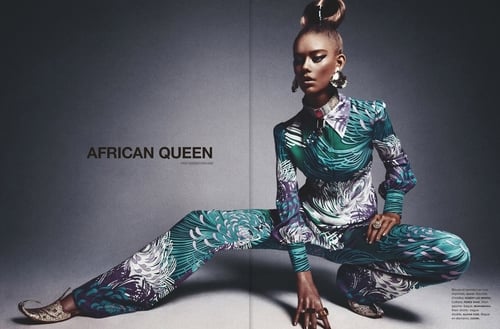
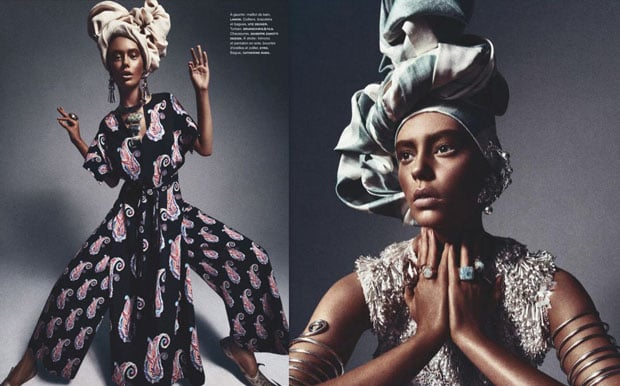
International fashion magazine Numero is raising some eyebrows with its choice of photography for an editorial titled, “African Queen.” The piece features 16-year-old Ondria Hardin — a caucasian model — with heavily darkened skin.

Foudre calls Hardin’s appearance blackfacebody, and writes, “why hire a black model when you could just paint a white one!”

Here are a selection of the photographs found in the piece:

Fashion Mag Uses Photos of White Model to Illustrate African Queen Editorial africanqueen

Fashion Mag Uses Photos of White Model to Illustrate African Queen Editorial africanqueen2

Laura Beck over at Jezebel writes,

It’s impossible to look at this and not ache for young women of color who want to pursue careers in modeling (and arguably, fashion by extension). When they don’t see themselves on the runway or in magazines, it could be very easy for them to think, “huh, I guess modeling isn’t for me.” Then the status quo reigns, and the runways remain monotone. If jobs for “African Queen” photo spreads aren’t going to black women, what hope is there?

Julee Wilson of the Huffington Post offers a similar criticism:

[...] the editorial serves as another sad example of how the fashion industry continually ignores or exploits ethnic diversity rather than celebrating it. And to think how easy it would have been for Numéro to select one of the countless beautiful black models and avoid this justifiable backlash and contribution to an unrelenting problem.

Beck also did some digging, and found that Hardin’s modeling agency has a number of black models on its roster that could possibly have been used for this shoot.

Thanks for the tip, Sam!

06 Apr 19:11

Random Excellence: Christopher Gibbs

by Michael Johnston
Natalia Pokrovskaya

Это серия про меня в старости.

Gibbs

Photo by Chris Gibbs, from the series "Dog Musher." See the whole set—some good stuff there. The interface is a little hinky—if you're seeing an image fill up your whole screen, click the little circle in the upper-right-hand corner. To see the whole images the page should look like this:

Gibbspage

I've always thought it was kind of funny how some things push our buttons and some don't. If we're smart, it can help determine what we choose to photograph. But it even sometimes determines—partly, at least—what kind of photographs we look at. I personally have a very hard time getting into pictures of bugs, a subject of intense interest for a lot of people. I've tried repeatedly, but I've found there's just very little fascination there for me. But I love dogs, and get a lot of enjoyment out of pictures of them. There's no right or wrong, of course—only what's good or not-so-good for you.

I first learned about this when I took over Photo Techniques from the wonderful Editor David Alan Jay. David said that when he first got the job he thought, "Finally, there's going to be photo magazine with no pictures of children." He really didn't care for pictures of kids. I've always liked kids as a photographic subject, so his statements about it started me thinking.

"Dog Musher" came up as a topic when we announced Google's great deal on Nik software the other day. Chris tells me most of the B&W shots in the series were processed with Nik Silver Efex Pro 2.

Mike

Original contents copyright 2013 by Michael C. Johnston and/or the bylined author. All Rights Reserved. Links in this post may be to our affiliates; sales through affiliate links may benefit this site.

TOP's links

(To see all the comments, click on the "Comments" link below.)
Featured Comments from:

Tom Basista: "About Dogs and Kids: I worked as a photojournalist for nearly 20 years. My first editor told me that if you want to sell newspapers, put a photo of a dog or a kid on the front page. To sell a lot of papers, put a photo of a kid with a dog on the front page."

Mike replies: I think TV has taken a page out of that book. My smart dog Lulu has learned to recognize dogs on TV, and she's extremely good at detecting their presence...which happens constantly. She will leap at the TV when there are radically cropped dogs, very distant dogs, and very fast, fleeting cuts of dog images. She recognizes and will bark at cartoon dogs. Cartoon dogs that aren't moving are about the only representation that can fool her. She's like an alarm that sounds whenever a dog is used on TV....

Anthony Bridges: "The best movie I've seen for awhile is watching this slideshow. There is a lot said in these photos and a lot that is implied and some real emotional character. Thanks for sharing this link."

06 Apr 11:37

Canteen Magazine's Naked Judging: Mary Ellen Bartley

by Aline
Congratulations to Mary Ellen Bartley for her 2nd Runner-Up win in Canteen Magazine's Naked Judging Contest. Going into the second round of jurying, Mary Ellen's Sea Change portfolio was the highest rated by the first round of judges (Photographer Anthony Goicolea, photographic duo Tribble and Mancenido, and photographer (and Canteen‘s Art Director) JJ Sulin).  But because judging art is a subjective process, the second round of judges felt differently, in fact there was a moment when this portfolio teetered at the exit door.  
A New York City native, Mary Ellen now resides in Wainscott, on the east end of Long Island. She earned her BFA at Purchase College, where she began her fine art studies in painting and drawing. Bartley was chosen as a Photolucida Critical Mass top 50 photographer in 2012 and 2011. A combination of her book projects was exhibited in a solo show at The Drawing Room Gallery in East Hampton last summer and she was chosen by the painter Ross Bleckner to exhibit her work alongside his at the Parrish Art Museum in Southampton, New York. Other recent shows include Out of Print, Altered Books at The Bakersfield Art Museum, Anthology at The Southeast Museum of Photography, Exposure 2012 at the Photographic Resource Center juried by Alison Nordstrom and Equivalents at Photo Center NW juried by W. M. Hunt.

The first round of jurors created this response: 
These are great. I wonder if these are the artist’s own images of water, or are they appropriating the images. Not that that matters. I really like that one with the rip–it works because it simulates a wave — at once a literal and figurative representation. I like the tactileness of these. A consistent mood. It’s not precious. Each image adds something to the series–a lesser photographer would have simply used one of the ideas from this series and submitted 8 images in that single style. Contemporary view on what photography has become. Elliptical vignette (#6) is the only one that doesn’t work for me–seems a bit hokey.

Note by me: The interesting thing is that what excited the first round jurors was a flaw for the second round of judges: the rip in the photograph.

Photographer's Response to the Judging....
I decided to enter the contest to support the pioneering efforts of Canteen to create a new kind of photo contest and to take a chance on getting feedback on an in-progress series from some really smart and plugged in jurors. I went to the live judging in Brooklyn where there were less than twenty spectators sprinkled in a fairly large auditorium. It was very engaging for the most part, a messy experiment with a lot of generosity, spirit and a bit of suspense and drama. I was sitting right there when Susan Bright strongly suggested I should get voted off the island, ouch! Then Amy Stein single handedly pull me back from the abyss, phew! 

 I can't say exactly what I learned from watching the process except that judging art, especially picking winners, is difficult, flawed and maybe a little silly. Watching this transparent process made me realize there are many ways fine work falls through the cracks. Yet how great is it that we photographers have opportunities like this to get our work in front of people who are influential, passionate about photography and so game to foster more conversations about it ? I was so happy to meet Amy, Susan, Arnold and Anthony briefly after the event, they were lovely. Later I had the pleasure of chatting with some of the fine folks at Canteen, Stephen Pierson the publisher and JJ Sulin the art director, among them. They are really dynamic and I plan to follow their work closely. Hats off to the organizers and participants!


Sea Change Re-photographing photos of the sea’s surface where the effects of light, shadows, scratches and folds “draw” on the prints changing and expanding the originals.  I visit and photograph the ocean nearly every day and, over time, have amassed stacks of prints of minimalist seascapes. One day while working in the studio I watched as a rectangle of pure illumination shaped by a skylight raked across a large print drying on the floor. I photographed it, a timeless yet specific chronicling of multiple moments. This led to my new series: using only the natural light that enters my house, I try to capture the interplay of light and shadow on the prints, creating multiple, altered versions of the same photographs. The original seascapes explore the water's surface, often in fog, on days when the color is drained from the scene and have the quality of graphite sketches. When I re-photograph the prints I look for happy accidents—moments when strong sunlight falling from skylights, squeezing through blinds, and projecting from windows draws and interacts with the surface of the paper and the image. The work is improvisational. I record the fleeting light touching the various skins, matte, luster or gloss of the prints as I place them throughout the rooms of my house. I further explore the surface and materiality of the prints by folding, scratching or tearing them before shooting them again. Besides the layering of surfaces there is a more subtle aspect: the layering of time, place and mood, which I'm exploring. The action on the surface of the prints underscores the flatness of the photographs and the “drawing with light” that is the very stuff of photography.


05 Apr 13:29

How I Busted a Thief Who Tried to Sell My Camera on Craigslist

by Jeff Hu

How I Busted a Thief Who Tried to Sell My Camera on Craigslist craigslist

Sunday morning: time to survey the damage from last night’s party. As I walked around the apartment picking up empty beer bottles and cups, wiping up spills, and putting the furniture back, I remember having a distinct feeling that something was amiss. A quick survey of the apartment, and it hits me. My DSLR was missing.

Even as I frantically searched every nook and cranny of the apartment I knew the answer: someone had stolen my camera.

After searching for more than an hour — and cussing up a storm — I finally sat down and accepted my fate. My precious camera, which I learned photography on, which had taken so many memorable photos, which was very much a part of me, had been stolen, and the chances of ever getting it back again were slim to none. Yet still, there was a chance.

How I Busted a Thief Who Tried to Sell My Camera on Craigslist police

I filed a police report detailing the incident and tried to piece together in my head who could have possibly stolen my camera. The party was only supposed to be for close friends and acquaintances, essentially people my roommate and I knew personally. As the fuzzy memories of the previous night started to stumble their way back into my head, I remembered seeing some people I had never met at the party.

It was most likely that one of them had taken it, but I knew neither their names or any other information about them except that maybe one of my friends brought them. I asked my friends to see if their guests knew anything about the camera, no luck.

Fast forward to Monday morning. I’m sitting at work, defeated, when I decided to peruse the Craigslist ads in my city to see if the thief was amateur enough to post my camera on there. It was a shot in the dark, but worth a try.

As soon as I read the title of the first listing, I felt my adrenaline shoot up like it never had before.

How I Busted a Thief Who Tried to Sell My Camera on Craigslist 5822590475 066d272c02 z

The DSLR was a Canon Rebel T2i similar to this one

This was my camera. Even before looking at the pictures linked to the ad I knew it was my DSLR, with my battery grip, and my lens. The thief had decided to post the listing in the same city he stole it from… the day after he stole it. He didn’t bother to at least wait for me to stop checking Craigslist, or even post in a different city.

The pictures in the ad confirmed it was my camera — most importantly, the scratch on the door of the SD card slot. The ad stated that the camera was a gift, so there was no box, no manuals, not even a lens cap — not fishy at all!

At this point, I knew I was going to get my camera back one way or another. Seeing as how the ad was already a day old, I was afraid that if I didn’t act fast, someone else would buy it. I quickly created a fake email address/name and emailed him asking about the condition of the camera, how old it was, etc… typical Craigslist buyer questions so as not to arouse suspicion.

He promptly responded with a BS story about how the camera was a gift, and that everything worked (I knew the pop-up flash didn’t work correctly) along with a name attached to the email. I searched Facebook and immediately found a matching profile that was was not set to private. From the first picture I knew that I had seen this person at the party, and that he had stolen my camera.

How I Busted a Thief Who Tried to Sell My Camera on Craigslist facebooksearch

Thinking ahead, I told a few of my friends to set up fake emails and pretend to be interested in the camera, just to ensure that I had backups to work with in case my emails failed to entice a sale or scared him away.

After discussing strategies with the police dispatcher, I decided to lure the perp to a coffee shop located half a block away from a police department, where I would try to ask for assistance. He agreed to meet at the time of my choosing, and gave me his phone number.

As soon as I arrived home from work I began gathering documents including receipts of my camera equipment, pictures of the thief, a printout of the police report I filed earlier, and any other documents proving my ownership of the equipment. I was only missing the serial number for my camera, which I know was written somewhere on the documents contained in the original DSLR box. The box, however, was at my parent’s house a few hours away, I wouldn’t be able to access it.

Luckily I discovered a website called the Stolen Camera Finder which was able to retrieve the serial number of my camera from any of the pictures I took with it.

How I Busted a Thief Who Tried to Sell My Camera on Craigslist stolencamerafinder

After updating the police report with the serial number and other identifying information, I waited nervously until I could get off work and go to the police station. Everything was going as planned.

An hour before the scheduled meeting, I called my friend who wasn’t present at the party to help me out in a sting operation. He agreed to help, and I decided to plant him inside the coffee shop. He would drink coffee and pretend to read a magazine while preparing to send me a text the moment he spots the thief coming into the cafe. I also had another friend on the end of the street eating a burrito, ready to tackle the guy in case he decided to bolt.

Meanwhile, I went to the police department and asked for assistance in getting my camera back. I wasn’t expecting a whole lot of help from the PD. I almost considered just telling my friend in the cafe to pretend to be the guy interested in the camera. He would just grab the camera while inspecting it and run for the police department.

However, that seemed pretty risky with a high chance of failure, so I was incredibly relieved and even a bit surprised when the PD decided to lend me two undercover cops complete with body armor.

The officers were very nice, I was able to explain the situation succinctly and shared my plan with them in getting the camera back. I think the officers were slightly taken aback at how well prepared and detailed I was, so they just went along with my sting operation plan as if I had been just another seasoned cop.

How I Busted a Thief Who Tried to Sell My Camera on Craigslist coffee

The thief agreed to meet at a local coffee shop

We hopped into a nondescript undercover car, and drove around the block a few times. With just 5 minutes to spare before the thief’s arrival, we park across the street from the cafe and wait for the text from my friend. I decide to text the perpetrator that I would be a little late so he should just grab a cup of coffee or something and wait in the cafe; this was to ensure he would be easily cornered in a cafe by the cops. I also asked for a description of what he was wearing so that my friend and the cops could more easily identify him.

With my friend on the street corner, one friend in the cafe, and two undercover cops, I honestly wasn’t sure how the situation would play out, and my heart was racing a mile a minute waiting for the text. I received a text on the exact minute the thief had promised to arrive, and let the officers know. I stayed in the car to protect my identity, but my friend told me the cops tapped the guy on the shoulder while he was in the middle of ordering coffee (he took the bait, hook, line and sinker).

How I Busted a Thief Who Tried to Sell My Camera on Craigslist handcuffed

The cops questioned him for a bit, confiscated his backpack with my camera in it, and arrested him. It turns out he had a very realistic airsoft gun on him, which would have made running away with the camera a helluva lot scarier. When he was fingerprinted at the station it turns out this guy also had a warrant out for his arrest, and that he was using an alias all this time.

Back at the police station, I was able to correctly match up the serial numbers of my camera equipment along with receipts for proof of ownership. All in all, It was an intense, adrenaline-filled night and a story I will be sure to tell my grandkids.

My friends and I felt like heroes of a police department in some CSI show, and I was even a little disappointed I didn’t get a junior detectives badge. However, when it comes down to it I was just glad to have my camera back.


About the author: Jeff Hu is an enthusiast photographer in the bay area who is very protective of his camera gear. Visit his Flickr here. This story was originally posted on Reddit here.


Image credit: craigslist.org by InfoMofo, United States Virgin Islands Police Department by Lee Cannon, digital by 21TonGiant, Johnnie’s Coffee Shop by Sam Howzit, handcuffs by Keith Allison

04 Apr 17:50

The Lonely Books That No One Borrows

by Jillian Steinhauer
Meriç Algün Ringborg, "The Library of Unborrowed Books" (2013) (all photos by the author for Hyperallergic)

Meriç Algün Ringborg, “The Library of Unborrowed Books” (2013), installation view at Art in General (all photos by the author for Hyperallergic)

What is the fate of a library book that never gets checked out? Does it stay in the library anyway, holding fast in its place, waiting for someone to borrow it? Or does it eventually get cast off, donated to a thrift or used bookstore or incorporated into the collection of a place like Brooklyn’s Reanimation Library? And what does it say about the book itself, that no one has ever wanted to borrow and read it? Is it a failure of its form?

Contract between Meriç Algün Ringborg and the Center for Fiction (click to enlarge)

Contract between Meriç Algün Ringborg and the Center for Fiction (click to enlarge)

These are some of the questions I mulled over yesterday, when I visited artist Meriç Algün Ringborg’s Library of Unborrowed Books at Art in General. Ringborg first created a version of the project last year in Stockholm, where she lives, using volumes from the Stockholm Public Library. Here in New York, she’s used hundreds of books from the Center for Fiction, all of them never before checked out, their borrowing cards ruled but blank, white and still brand new (if they even have borrowing cards; some haven’t made it that far in the process). The books are arranged on five rows of blue metal shelving, as in the stacks of a library, with certain titles highlighted with their covers out, like you’d find in a bookstore.

It’s tempting to write off the books as rejects, snickering at their titles and scoffing at how many of them sound like horribly cliché mysteries and thrillers. (I asked if Ringborg specifically sought out out these types of books and was told no; they’re apparently just the ones that no one borrows.) Consider this list of titles I jotted down: A Puritan Witch, The South Florida Book of the Dead, Out of the Frying Pan, Kockroach, Look Out for Hydrophobia, The Station Wagon Murder, Fictional Rambles in and about Boston, How to Get Rid of a Woman, and Pagan Babies.

Unborrowed-Books6

There was also a book called The Reading of Books (oh, the irony!), a 652-page hardcover called Cosette, billed as the sequel to Les Misérables, and, unrelatedly, two different books called Judas Horse and The Judas Goat.

A title called "The Reading of Books"

Despite the absurdity, I couldn’t help but be curious about some of these titles, wondering what we’re missing, whether there’s a hidden masterpiece among them. I cracked open some covers and read a few first pages; many of them didn’t seem bad, although with fiction, a handful of early paragraphs often won’t tell you much. Unless, that is, it’s painfully clear that they’re terrible — or at least dated, as in the case of They Have Bodies, a 1929 “realistic novel in eleven chapters and three acts” by Barney Allen. Midway down the soft, faded page, I read:

A plump wife. A gold-blonde wife … A sweet-smelling wife. With coils of gold-blonde hair. And rather large features. Not the kind that get battered and bruised with age like those defaced 25-cent pieces that come into your hand once in a while. A clean-featured wife.

Right.

Lonely Kafka (click to enlarge)

Lonely Kafka (click to enlarge)

Then again, there were some books that seemed worth checking out: Men on Men: Best New Gay Fiction 7 (clever title! I’d give it a shot), a volume that won the Iowa Short Fiction Award in 1989 … oh, and Charles Dickens. Yes, there was a lonely volume of David Copperfield that had never found its way into anyway home or lap, as well as a copy of The Trial, by Kafka (alongside a mystery titled Never Nosh a Matzo Ball), D.H. Lawrence’s Apocalypse, Tales of H.P. Lovecraft, a 1967 essay collection on Vladimir Nabokov (a piece of nonfiction that wormed its way into the collection), and books by Paul Auster, Ellery Queen, and Joyce Carol Oates.

Despite the impulse, it seems you can’t judge a book by its unborrowed-ness. I found it tempting to conjecture that the Center for Fiction owns two other copies of David Copperfield, which would explain why this one never made it past the front door, but the reality is likely another story. Maybe not very many people read that novel anymore, or the ones who do would prefer to own it, or they borrow it from friends. Maybe they read it on their e-readers, and libraries are slipping into extinction … or maybe there’s simply no accounting for taste. Still, I did leave a little comforted knowing that at least if no one’s borrowing David Copperfield, they’re also not checking out Pagan Babies.

Unborrowed-Books5v2

The Library of Unborrowed Books is on view at Art in General (79 Walker Street, Tribeca, Manhattan), through March 23.

04 Apr 15:07

timoarnall: Messages from machines. 27 March, 20.57 by Timo...


timoarnall:

Messages from machines. 27 March, 20.57 by Timo Arnall.

30 Mar 19:17

ThrowBack Aims to Bring Some Nostalgia to the World of Smartphone Photography

by DL Cade
Natalia Pokrovskaya

Black Mirror meets Фотодепартамент

ThrowBack Aims to Bring Some Nostalgia to the World of Smartphone Photography throwbackapp

Most smartphone photography apps are all about three things: taking, editing and sharing. ThrowBack, however, isn’t about any of them. Instead of focusing on taking your photos and enjoying them now, the ThrowBack app wants you to “forget your memories so they can be remembered again.”
ThrowBack Aims to Bring Some Nostalgia to the World of Smartphone Photography throwback11

When you take a photo with the ThrowBack app, you’re not immediately prompted to add a filter, share on Facebook, or tweak it in any way. The app instead asks you when you would like to see it again, providing a slider that ranges from one month to five years. Additionally, if you don’t want to set the date yourself, the app provides a “surprise” button that will do that part for you.

ThrowBack Aims to Bring Some Nostalgia to the World of Smartphone Photography throwback3

The point of the app is to recapture that feeling of rediscovering a long lost photo and all of the emotions/memories it holds — something we’ve lost in an age where the most important picture is the one you’re about to share on Twitter. Speaking with TechCrunch, founder Calli Higgins explained that app is an “exploration between photography and nostalgia.”

… I realized nostalgia is conjured by revisiting something you haven’t seen in a while. ThrowBack is an alternative to the current overexposure of our images and the numbness this can create.

ThrowBack Aims to Bring Some Nostalgia to the World of Smartphone Photography throwback2

Of course not all nostalgia is good nostalgia. That photo of you and your ex on vacation that pops up while you’re at dinner with your current significant other 4 years later may not generate the most favorable response. But it’s a new take on the typical photography app, and just like the apps that focus on getting your photos off of your hard drive and into your hands, it’s a take that harkens back to what some photographers might call “the good ol’ days.”

Click here to pick up your own free copy from the iTunes Store.

Throwback (via Wired via The Creators Project)


Image credits: Photographs and screenshots Throwback and Wired

30 Mar 18:43

Store Wages War Against ‘Showrooming’ by Charging a $5 ‘Just Looking’ Fee

by Michael Zhang

Store Wages War Against Showrooming by Charging a $5 Just Looking Fee lookingfee

‘Showrooming’ is something that’s having a big effect in the camera equipment industry and something that many brick-and-mortar retailers are trying to address. It’s when consumers walk into a store not with the intention of actually purchasing a camera or lens, but instead to play around with them and evaluate them in person before making the actual purchase for a lower price online.

One store over in Brisbane, Australia has come up with a novel strategy (but not so consumer friendly) for combatting showrooming. To ensure that only customers looking to purchase products walk through their doors, the store is charging a $5 fee just to browse its wares.

The sign above was spotted by Reddit user BarrettFox outside a specialty food store. It states that the $5 fee will be deducted once goods are purchased so that actual customers won’t incur any extra costs.

There has been a high volume of people who use this store as a reference and then purchase goods elsewhere [...] This policy is in line with many other clothing, shoe and electronic stores who are also facing the same issue.

We have yet to hear of a single camera shop that has a similar policy (let us know if you know of one), and we have a feeling that implementing such a fee would likely not go over very well with photographers.

Store Wages War Against Showrooming by Charging a $5 Just Looking Fee jessops

“Come on in! That’ll be $5 for those 50 test shots!”

Matt Brownell over at Daily Finance writes that it’s “the most misguided strategy we’ve seen for dealing with showrooming,” saying:

While it’s undoubtedly frustrating to have people use your store as a showroom just so they can buy the same goods online, imposing a cover charge is hardly the ideal solution. The goal of any retailer should be to impress customers with competitive pricing and great customer service — not treat their customers with suspicion and hostility from the moment they walk in the door.

That approach won’t just keep the showroomers away, either — it’s inevitably going to turn off a lot of potential customers who had no intention of showrooming, but aren’t about to step into a store that forces them to pay an entrance fee if they don’t find anything they like.

Larger retailers such as Best Buy and Target have begun going the “competitive pricing” route by offering price matching with online retailers.

Brownell also notes that at least one shoe store has tried charging a $20 “fitting fee.” What would the equivalent for a camera shop be? Charging customers per actuation shot on the demo camera models?

(via Reddit via Consumerist)


Image credit: Sign photo by BarrettFox and used with permission, Jessops – Cherry Street, Birmingham by ell brown

30 Mar 18:24

Google Takes Street View Cars to Nuclear Ghost Town in Japan

by DL Cade

Google Takes Street View Cars to Nuclear Ghost Town in Japan fukushima1

Due to the tragic Great East Japan Earthquake and the tsunami and nuclear disaster that it caused, the 21,000 residents of Namie-machi, Fukushima, Japan had to evacuate their homes. Even now, a little over two years later, the residual radiation makes it impossible for those former residents to return to the homes and businesses they were forced to abandon.

Still, many would like to see what has become of their town in the intervening years, and so Google teamed up Namie-machi mayor Tamotsu Baba to make that wish come true. As of yesterday, the displaced residents of Namie-machi (along with the rest of us) can tour the entire nuclear ghost town digitally.

Here are a few areas you can browse both inside and outside of town:


View Larger Map


View Larger Map


View Larger Map

Traveling around the city — with its beached fishing boats, collapsed homes and deserted eateries — is certainly eerie, but Mayor Baba feels the pictures are an important reminder. A reminder to the residents of the home they hope to one day re-inhabit, and a reminder to the rest of us of the long-lasting effects of the now two-year-old tragedy.

(via Engadget)

30 Mar 18:10

Six Years Ago, Apple Made a Crowd Gasp With Pinch to Zoom and Swiping

by Michael Zhang

Six Years Ago, Apple Made a Crowd Gasp With Pinch to Zoom and Swiping stevejobs

If you want a taste of how fast technology progresses in the world of digital photography, just look at the consumer camera industry through the lens of a company that continues to make a big splash: Apple.

When Steve Jobs unveiled the original iPhone on January 9, 2007 at the Moscone Center in San Francisco, cameras on phones were horrible and viewing those shoddy pictures was a pain. Then, almost overnight, the smartphone photography revolution — and the slow demise of the compact camera — began.

It’s crazy to think that just six years ago things like pinch to zoom, turning a device to view photos in the correct orientation, and swiping to browse pictures were unheard-of features. Check out this short clip of Jobs’ making the capacity crowd gasp by demonstrating these features that we now take for granted:

Now step back 10 more years to December 20, 1996. On that date, Steve Jobs made a surprise appearance at the company’s meeting room after a decade of exile. Apple employee Tim Holmes was one of the people in attendance and shot a number of photographs of the event. His camera of choice? The Apple QuickTake.

Six Years Ago, Apple Made a Crowd Gasp With Pinch to Zoom and Swiping quicktake

That’s right, Holmes was using the camera that Apple launched in 1994 — a camera that TIME calls “the first consumer digital camera” and one of the “100 greatest and most influential gadgets from 1923 to the present.”

Here are the photos Holmes snapped:

Six Years Ago, Apple Made a Crowd Gasp With Pinch to Zoom and Swiping 8590665213 ff76c6ed8e o

Six Years Ago, Apple Made a Crowd Gasp With Pinch to Zoom and Swiping 8590665845 c2bbf44c4f o

Six Years Ago, Apple Made a Crowd Gasp With Pinch to Zoom and Swiping 8590666029 78c6b16714 o

Six Years Ago, Apple Made a Crowd Gasp With Pinch to Zoom and Swiping 8591766950 a5f24d70d3 o

Six Years Ago, Apple Made a Crowd Gasp With Pinch to Zoom and Swiping 8591767224 811cb5ccee o

The photographs emerged this past week after Holmes decided to upload them to his Flickr account. He notes that, “The QuickTake camera, as all early digital camera, did a poor job or reproducing color.”

See those purple jackets and sweaters being worn in the photos above? Those were actually black…

Apple discontinued the QuickTake in 1997, and reentered the consumer photography game ten years later with the iPhone introduction seen above. Luckily for millions of users around the world, the iPhone’s camera does a much better job at capturing black as black.

(via Reddit and Business Insider)


Image credits: iPhone introduction still and video by Apple, Apple QuickTake 200 Digital Camera by donjd2, Apple “town hall” photos by Tim Holmes

30 Mar 14:10

Дом-трасформер.

Часто в курсовых и дипломных работах наших студентов-промдизайнеров вижу всякие складные вещи. Стулья превращаются в столы и вешалки, полки в кровати и так далее. Я за свою жизнь не встретил ни одного вменяемого человека которому нужна была мебель-трансформер, или на худой конец нож-ложка. Если бы в курс преподавания наших учебных заведений входили навыки элементарного наблюдения за людьми, это бы значительно улушило ситуацию. Сделайте нормальный стул, для начала.

29 Mar 17:08

basilgenovese: Sweet Potato Ricotta Gnocchi

28 Mar 16:59

Photo


28 Mar 16:59

Дизайнеры прошлого

Когда-то давно у дизайнеров не было имиджа расхлябанных подростков, одетых в мятые штаны и приходящих на работу к обеду.
Дизайнеры прошлого выглядели совсем по другому, видимо, время требовало носить хорошую одежду, иметь на голове ухоженные волосы и быть уверенным в своей авторитетности.


Raymond Loewy, по сути основатель коммерческого американского дизайна.


Arne Jacobsen


Классик Finn Juhl


GeorgeNelson

Harry Bertoya

Joe Colombo


Ludwig Mies van der Rohe

Marcel Breuer


И, под конец, два больших друга Сharles Eames и Eero Saarinen


И когда дизанеры собирались вместе, они выглядели совсем не так, как сейчас.
28 Mar 16:56

Вся движуха здесь - конечно editorial. Правда для меня и Ванессы...

Natalia Pokrovskaya

12 - это вам не 7, а также хочу их увидеть


Вся движуха здесь - конечно editorial. Правда для меня и Ванессы это имеет значение только если есть магическое слово Нью-Йорк. Вывозить больше одного ассистента дальше нет бюджета даже у небедных американских журналов. Сегодня была веселая съемка для GQ с дождем из купюр, живыми цыплятами и прочими развлечениями. Почти все съемки на которых я здесь был начинаются в 10. Для меня это значит в 7. В это время я приезжаю в гараж за минивэном с техникой. На сколько надо поставить будильник чтобы успеть в даунтаун из Бруклина к 7 лучше не знать. Накануне всем приходит файл под названием call sheet. В нем написано во сколько кто приезжает на съемку, все адреса, контакты и расписание на день. Никакой разницы в отношении к съемкам между рекламой и журналами нет. Все также четко и энергично но и расслабленно и весело. Основные слова - awesome, love it, fantastic, good job и так далее. Еще все очень любят обниматься. Я постоянно обнимаюсь с едва знакомыми людьми. Стилисты - это 2 больших рейла одежды, пар 20 обуви, пар 20 очков, Props - фургон реквизита, мы - фургон техники. Почти все студии берут отдельные деньги за аренду света. И в Нью Йорке Мартин всегда снимает со своим. По фотографиям это может быть не видно но очень часто съемки Мартина - это очень много света. Сегодня например средний план одного человека снимали с 12ью источниками света. 

Еще вчера я получил первую зарплату. Мартин позвал меня и сказал You are doing good. Классно что ты приехал с семьей и заплатил мне гораздо больше чем ожидалось. Для меня это было диким сюрпризом потому что у меня было полное ощущение что я весь месяц все ронял, постоянно переспрашивал, терял, забывал и путался.

Очень мне конечно с ним повезло.

28 Mar 11:34

Happy sweet easter!

by Katarina
Natalia Pokrovskaya

Все тщета, кроме ежей.

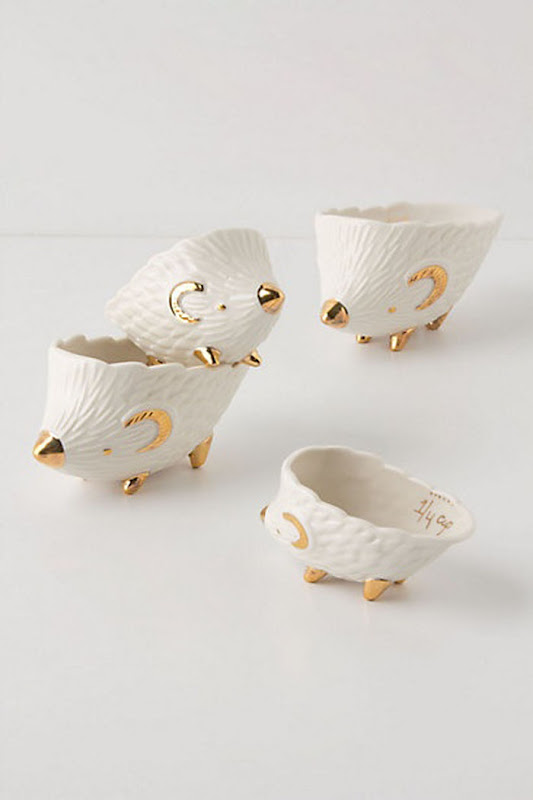
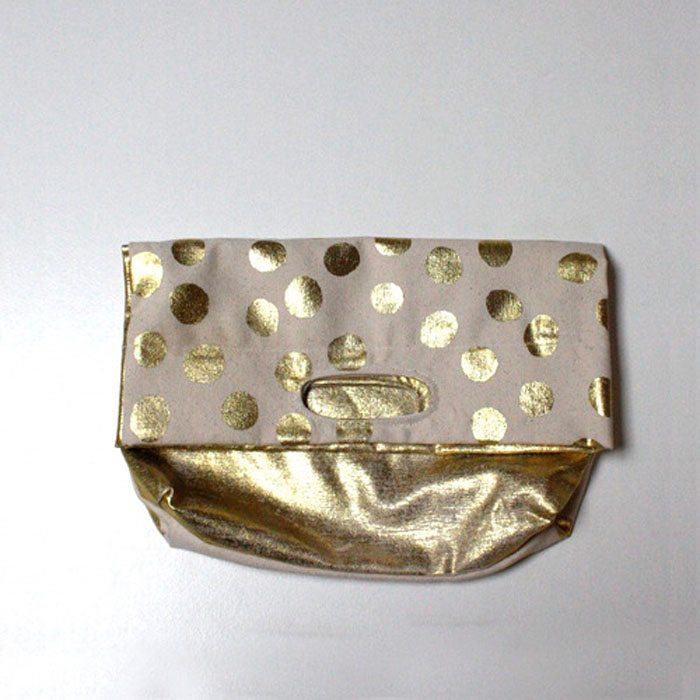
Easter I think is one of the sweetest holidays. Not only because you get to eat candy and see the cutest witch-outfits on kids but also because it’s such a relaxed and un-stressy holiday. You perhaps get an egg with candy, a morning of extra sleep and that’s that, no fuss. And everything is covered in bright prints, light hues, flowery patterns and dots marking that spring is around the corner. Certainly feels OK :)

2nd photo (porcelain cups): Anthropologie.
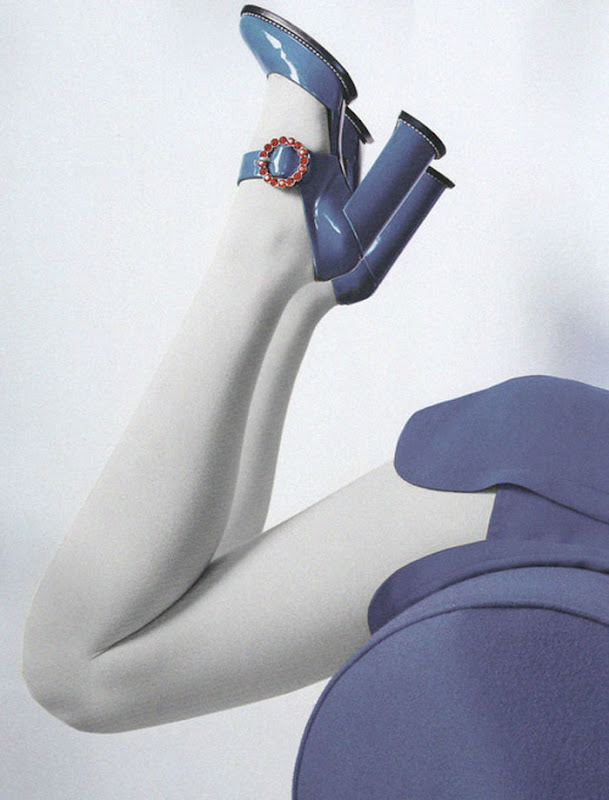
4th: Marc Jacobs shoes shot by Sophie Srej for Lula ss-13.
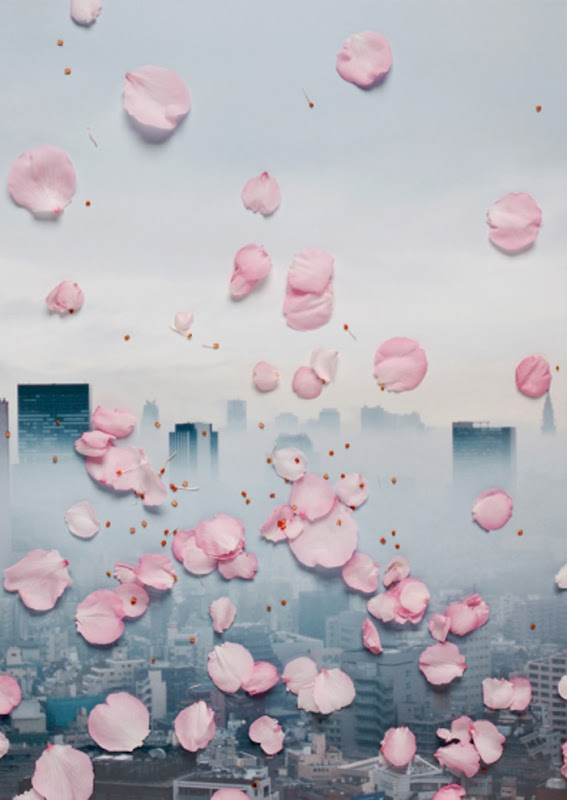
5th: from & other stories by H&M.
6th: Mieke Willems.

27 Mar 07:12

NATALIA POKROVSKAYAFrom memorabilia to ephemera The common photo...

Natalia Pokrovskaya

Читаю такая фид, а тут я ))


NATALIA POKROVSKAYA
From memorabilia to ephemera

The common photo album has significantly transformed its memory function since its invention. Instagram, the latest incarnation of a personal photo album, produces an enormous amount of personal imagery, formally identical to that of the traditional photo albums. But today these photographs have evolved from “ça a été” into “what’s going on”. Photos taken aren’t supposed to preserve memories – they are meant to be glanced at and then to flow away with the stream.

A photo album was intended to be a private experience, shared by its owner with people of their choice. An Instagram photo is meant to be shared, with such built-in tools as tags and geotags. What if in the age of cloudified data our personal photographs have also formed a “cloud memory”? I wanted to explore the idea that in the world where everything has been photographed, one might not need to take a picture, but just pull it out from a “cloud” of shared personal imagery. Paraphrasing Lacan, with these photos one sees him/herself “in The Other’s Other”. Personal becomes shared and then, anonymous.

“Cloud Memory” consists of 2 parts: a physical object that is an old photo album found at a flea market in Paris and a website. The album was empty, with only captions and 2 original photos left in it. I filled it with Instagram photos found by tags and geotags corresponding to the captions, placing them in the “traditional” photography context. The website features 5 pages of the album where each photo is, in fact, a stream generated with a specific tag or location, according to the original caption. Every time you open the album, you see new pictures. Instagram photos can’t get old, they can only go away.

©  Natalia Pokrovskaya

26 Mar 14:52

Подъехал к 14ой по Е, открылись двери. Передо мной стоит молодая...


Подъехал к 14ой по Е, открылись двери. Передо мной стоит молодая негритянка. Видит меня, вздыхает и говорит Oh my god.
Я здесь 3 недели и уже чувствую что плохо нуждаюсь в отпуске (как говорят тут).
Сегодня был самый безумный день. Так можно начинать любой мой пост. Но что еще можно написать если я весь день ездил за рулем здоровенного грузовика а в перерывах грузил в него и выгружал гигантские портреты накачанных женщин.
Портреты конечно сделал Мартин. Уже довольно давно. А возили мы их с Ванессой на выставку в Джерси. Весит каждый кг под 70. Один был без рамки и весил в картонной упаковке наверно 20. И это был праздник.
Нести искусство людям очень тяжело в прямом смысле слова.

24 Mar 13:09

"Bad commercial art is an artist’s rendering of a middleman’s retelling of a..."

“Bad commercial art is an artist’s rendering of a middleman’s retelling of a client’s interpretation of a focus group’s misunderstanding.”

- Twitter / claytoncubitt
22 Mar 22:43

Ready with my traveling running shoes @harbourrunners #umt...


Ready with my traveling running shoes @harbourrunners #umt #rundemcrew #bridgethegap #runtheworld by joeyelee http://instagr.am/p/XD0-pOCO5Z/

22 Mar 22:32

Nike Free Trainer 5.0