Shared posts

13 Jun 18:17

‘The Metaverse is Beautiful’ Explores the Digital Landscapes of Second Life

by Amanda Gorence

joel_lederer_Photographer

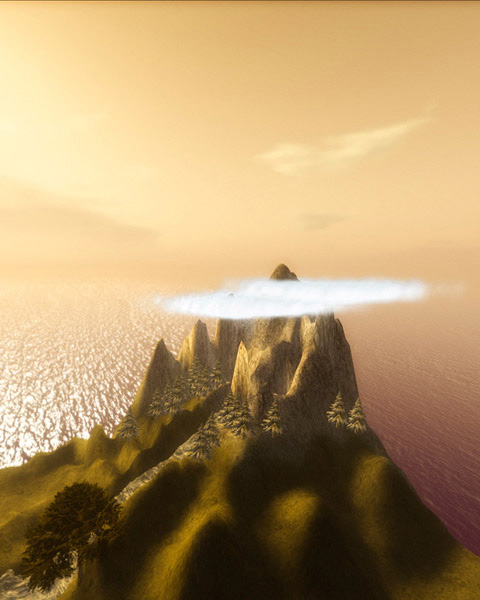
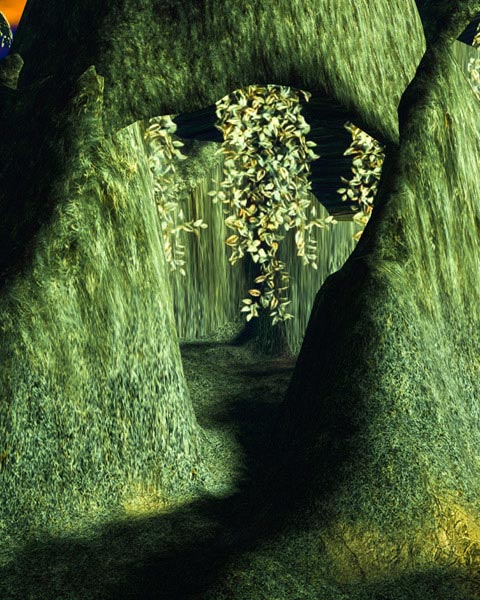
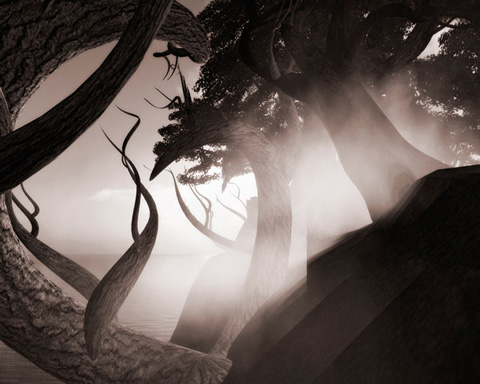
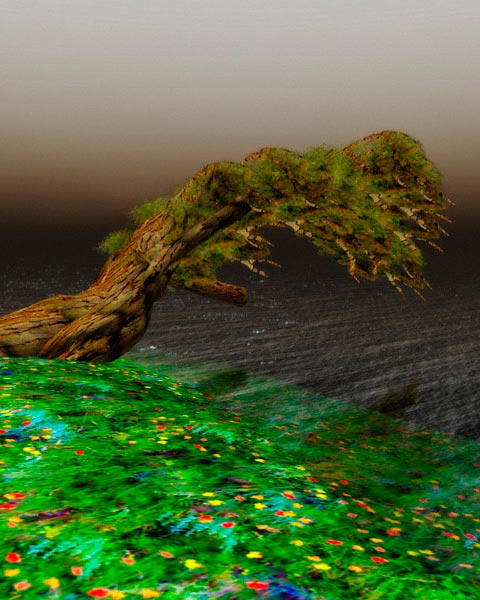
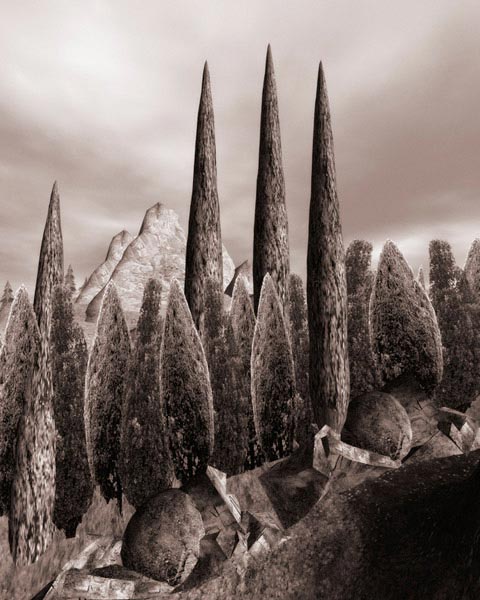
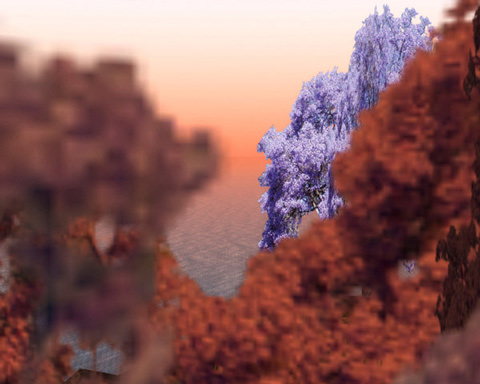
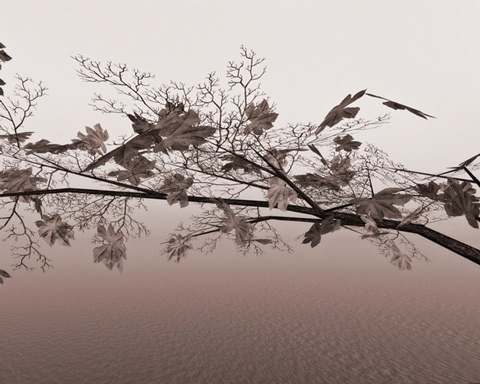
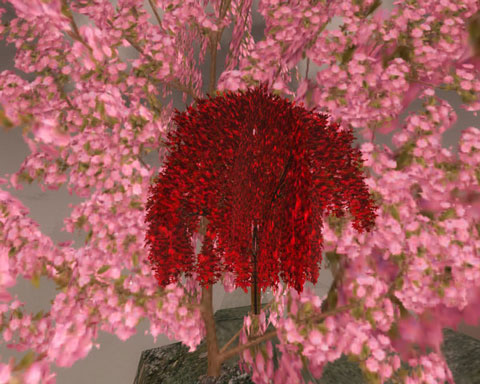
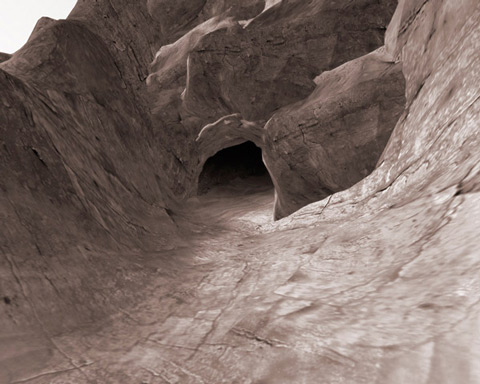
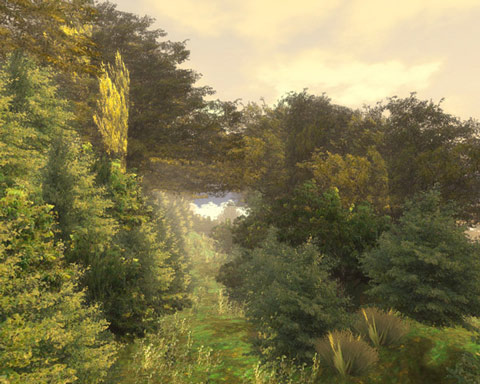
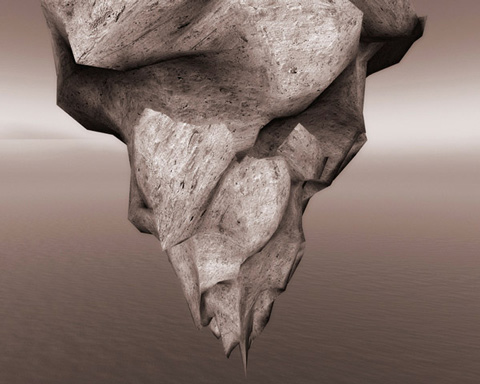
I approached this project with the pioneering spirit of an explorer, wishing to return to civilization with a visual record from a new land. My challenge was to depict and represent this artificial world whose appearance was varied and in flux, a land whose elements are built from repeating instances, whose light, atmosphere and display are partially determined by me, the end user. I collaged together modes of seeing, tropes and styles, composing and rendering my photographs to record what this land looked like, as well as reflect the thoughts of its creators and inhabitants.—Joel Lederer

The metaverse, a term coined in 1992 by science fiction novelist Neal Stephenson, is a collective virtual shared space—essentially the world of cell phones, email, the internet, and online gaming. The Metaverse is Beautiful is New York-based photographer Joel Lederer’s recent project that explores the ‘virtualized environments’ so many of us find ourselves in. He focuses on the digitally constructed landscapes in the online virtual world game, Second Life, designed and created by its millions of avatars. Lederer makes screen-captured photographs of these lands and titles them with the time and date they were created, reminding us of their existence only on a screen in front of us.

joel_lederer_Photographer

joel_lederer_Photographer

joel_lederer_Photographer

joel_lederer_Photographer

joel_lederer_Photographer

joel_lederer_Photographer

joel_lederer_Photographer

joel_lederer_Photographer

joel_lederer_Photographer

joel_lederer_Photographer

joel_lederer_Photographer

joel_lederer_Photographer

joel_lederer_Photographer

13 Jun 18:07

Artist Designing the Perfect Bank Heist

by Allison Meier
Pieces of the "Under Black Carpets" story

Pieces of the “Under Black Carpets” story (all images courtesy the artist)

There may be no such thing as a perfect heist, but that doesn’t mean there can’t be a beautifully designed one. That’s the idea behind London-based designer Ilona Gaynor‘s “Under Black Carpets” project, which looks at the architecture of a city landscape as both an aid and a detriment in her evolving story of a meticulously planned robbery.

Ilona Gaynor at the LAPD

Ilona Gaynor and the LAPD

Characters in "Under Black Carpets"

Characters in “Under Black Carpets”

It’s best to be upfront here: Gaynor isn’t actually going to rob a bank. But she is going to know everything about it. For the past two years she’s engaged with research, and even collaborated with the FBI, New York Department of Justice, and LAPD, to explore all the details of what it would take to rob five banks simultaneously. The completed project is planned to be exhibited this September at the Lisbon Architecture Triennale, but due to a shortfall in funding from the festival, she’s using Kickstarter to get accomplices.

“A robbery presents a true architectural context in which walls (glass and masonry) separate you from the prize, it allows you to reinterpret the built environment through an extreme spatial scenario,” Gaynor explained to Hyperallergic. “A robbery is also simply a counter-manual to how buildings are constructed. You have to visualize how a building needs to be deconstructed before you map and attempt to break in.”

Graphics for "Under Black Carpets"

Graphics for “Under Black Carpets”

The robbery centers on banks around One Wilshire in downtown Los Angeles, and is as elaborate as the most action-packed film. A replica of a plane is dropped onto One Wilshire causing panic and allowing the surrounding five banks to be robbed. In fact, her first year of research had funding from the Ridley Scott Associates Residency award, and it’s definitely the design of the cinematic that flows through her sleek scale models of the architecture and even miniature characters that play as bystanders or participants in the scene. The whole thing is going to be showcased as her own police investigation, complete with sculptures, films, photography, and the results of her intense investigation into bank robbery with forensic experts, attorneys, and other specialists. A book will compile all of this into a seven-chapter narrative with chapter titles centered on key points in the plot like “THE DISTRACTION AT ONE WILSHIRE,” “THE GETAWAY,” and “ALIBIS.”

Scale model of the heist site

Scale model of the heist site

Banco Nacional Ultramarino in Lisbon, Portugal, where "Under Black Carpets" will be exhibited

Banco Nacional Ultramarino in Lisbon, Portugal, where “Under Black Carpets” will be exhibited

“I’ve always been interested in crime, it is the driving force behind, political, cultural and technological change,” Gaynor stated. “What I mean by that is, it is the ‘criminals’ that instigate change. In their attempts to break and manipulate their surroundings, something new always surfaces. My practice as a designer focuses on the role of designer to serve as the plotter, the schemer, the master planner, rather then the craftsman. There is a large, long forgotten history of design that positioned designers as the enemy. Design was considered to be a weapon of the weak, an appropriation of cunning intelligence, an enabler of sorts.”

An initial phase of “Under Black Carpets” was shown last summer at the Art Center College of Design in Pasadena, and at the triennale the project will be installed in the empty headquarters of the Banco Nacional Ultramarino beneath the MUDE Design and Fashion Museum in Lisbon. The plan for an ideal robbery housed in a money safeguard.

Scale model of One Wilshire

Scale model of One Wilshire

Ilona Gaynor’s “Under Black Carpets” is funding on Kickstarter through June 20. Her solo exhibition at the Lisbon Architecture Triennale opens September 12 and shows through December 15.

11 Jun 09:03

35 дней из жизни (часть 3)

by b7777204@mail.ru
Учиться, учиться и еще раз учиться!


Тренажер.
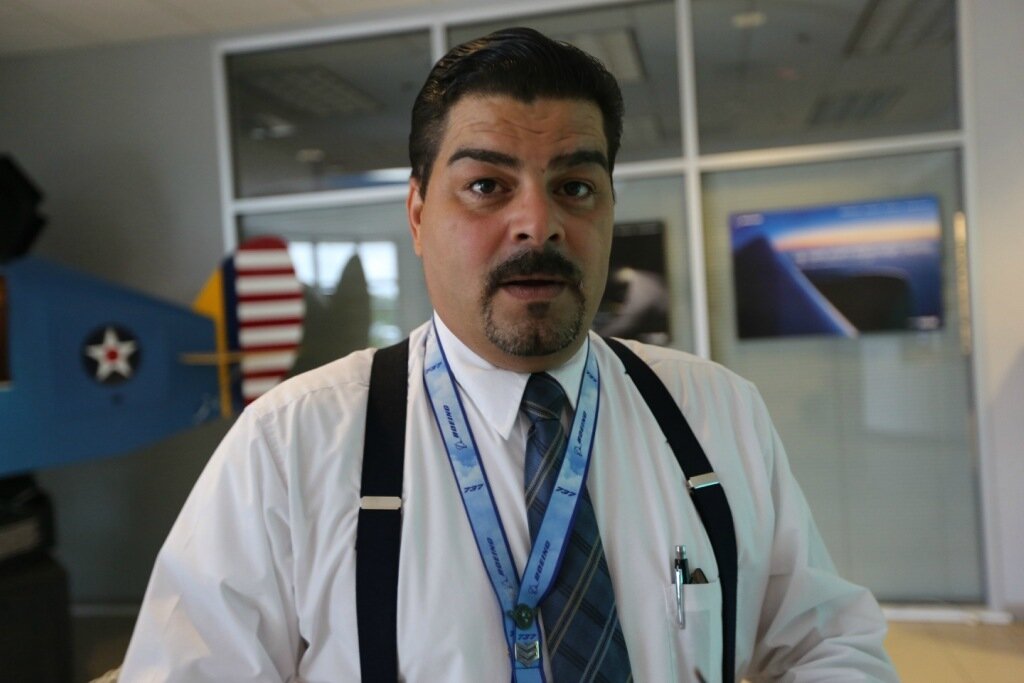
Каждый день мы вставали в 6 утра и отправлялись в центр. Приезжали туда минут за 30-40 до начала занятий, где нас непременно встречал администратор Эдди. Эдди уже не молодой, но очень энергичный костариканец американского происхождения, родившийся в Бостоне. Эдакий набриолиненный мафиози из тридцатых, в темных полосатых брюках с широкими помочами.


Он всю жизнь тянулся ближе к теплой, этнической родине, но видимо трезво рассудив, что в штатах все же слаще, чем где-то там, где живут томные мулатки, его сестры по крови (тем более ему здесь все до боли знакомо) он осел в Майами.
Эдди неизменно приветствовал нас заученной тирадой:
- "Добьрёё утро джентелмэнс! Как дИла? Вот ар ю дуюинг? Сыськи-пыськы была? ПиФка многво была? Ийдем курыть!"
Мы выходили из здания, обменивались новостями с Эдди, завтракали стаканом кофе из автомата за 85 центов с сигареткой, а потом уже отправлялись на уроки.
Сначала было трудно. Разница во времени, огромное количество материала и интенсивные занятия, но нам удалось быстро втянуться в режим и дни стали похожи друг на друга, как две лампочки в люстре.

Программа переучивания подразумевала промежуточный устный экзамен. После прохождения теоретической части, нас ждал "орал-чек". Все логично. Если обучаемый не проходит этот "чек", то он автоматически не допускается до прохождения тренажерной подготовки, а без знаний и понимания сути (как оказалось позже) в кабине тренажера делать было в принципе нечего. В-777 очень автоматизированный лайнер, но Боинг-центр это все же не летная школа первоначальной подготовки. Поэтому "летать на руках" не являлось целью и главной задачей центра. Смысл был в том, чтобы научить нас правильно нажимать кнопки и использовать все многочисленные возможности этого самолета.

"Орал-чек" проводится следующим образом:
Вы с экзаменатором заходите в маленькую комнату (в нашем случае это была комната, где проводился брифинг экипажа перед полетами), садитесь за стол друг напротив друга и вам начинают задавать вопросы. Вопросы по всем темам, по всем системам, (состав, работа, ограничения, аварийные и резервные режимы и т.д.). Практические вопросы (как?, где?, когда?, что нажать?, что будешь делать если? и т.п.). Все ограничения по самолету, системам, параметрам! Все до единого "действия по памяти" в аварийных ситуациях (пожар, повреждение двигателя, отказ, помпаж, заклинивание, разгерметизация, неверные (неправильные) показания скорости, потеря управления ....), что означает загорание или погасание той, или иной лампочки, табло и много, много всякого интересного Какие вопросы будет задаваться - не известно (нет, ну конечно общее представление мы имели, по информации от предыдущих наших коллег, но на сто процентов вопросы все равно не повторялись).

Время неумолимо приближало день "Ч" и от этого все чаще и чаще начинало подсасывать где-то там, глубоко внутри. Мы снова и снова рылись в книгах, проверяли друг друга, писали бесконечные конспекты. Ощущение было такое, словно к голове подключили компьютер и он постоянно что-то туда грузит. Казалось, что чем больше ты узнаешь, тем больше путаешься и больше не понимаешь. Шины, агрегаты, PFC, PMG, APU, ACE, TAC, AFDS... Куча аббревиатур, цифр, процедур, сопряжений. Брррр!

18 мая чек был сдан. Самым трудным оказались не вопросы, а английское произношение чеккера! Глен Шеппард, начальник центра - чистый янки. Он разговаривает как киногерой: "уай, увя-вя-вэй" (ну вы поняли как) В общем хрен с лёту разберешь, но ничего, справились. :-)
Уже на следующий день начались практические занятия на тренажере.
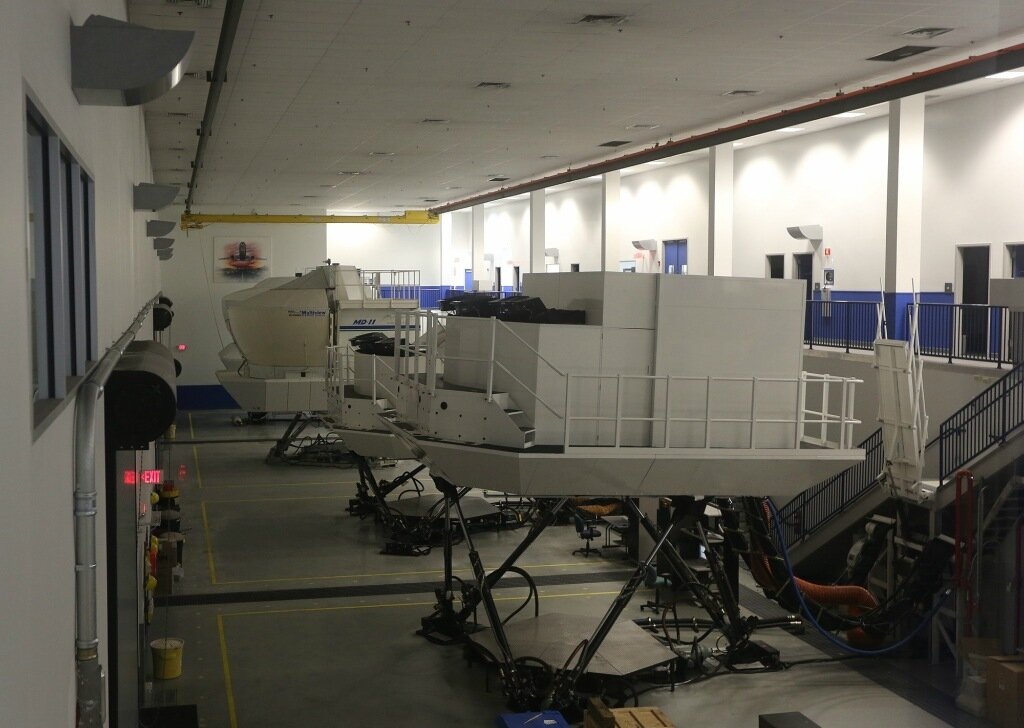
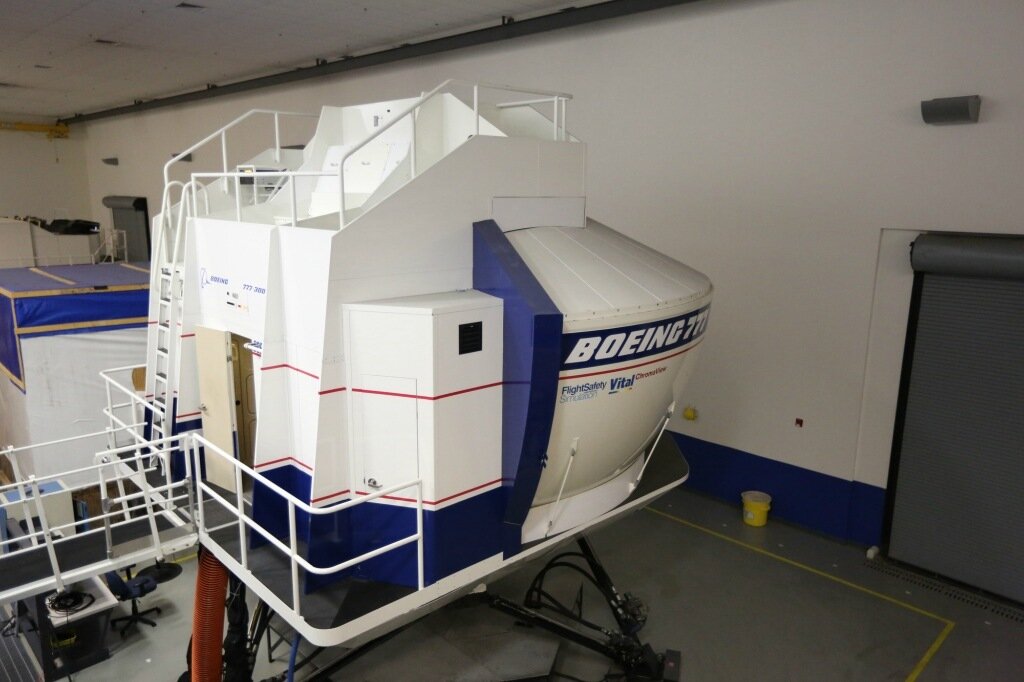
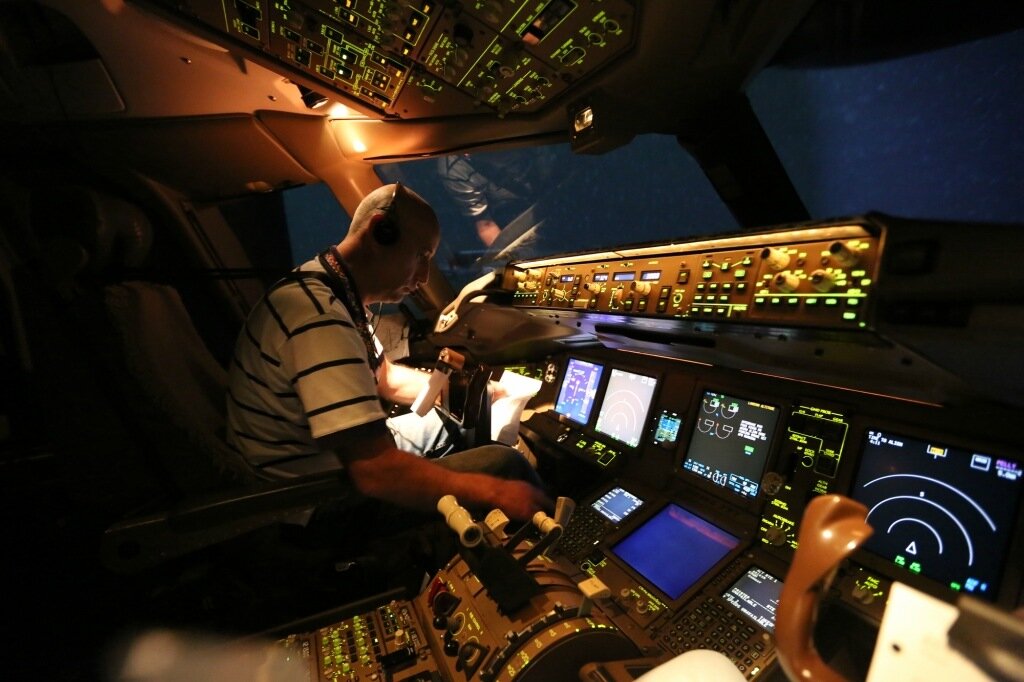
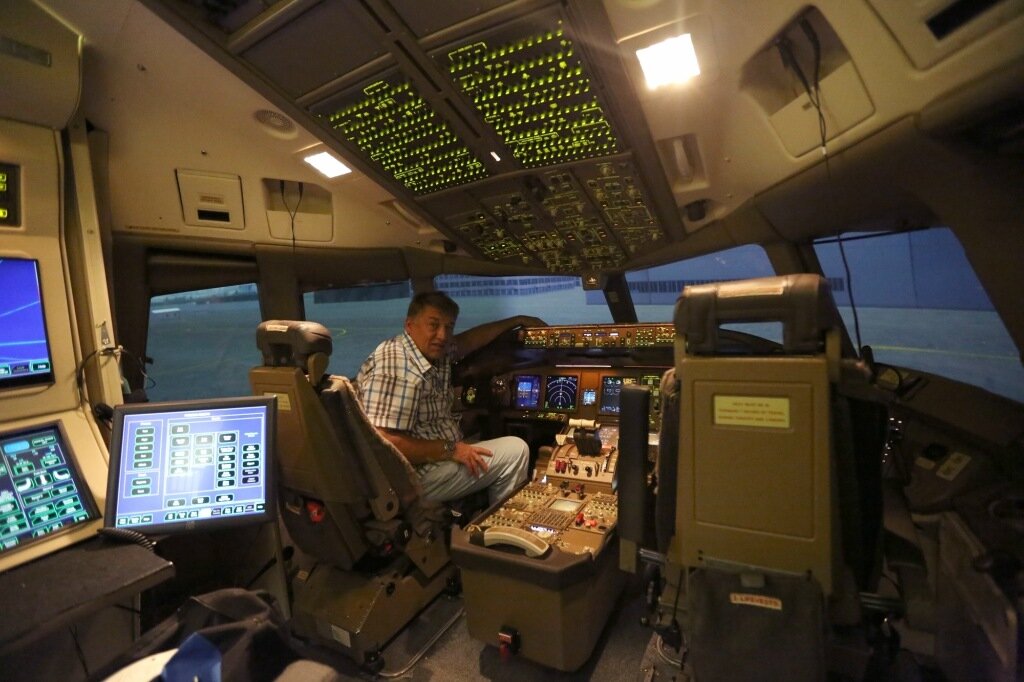
Тренажер (FFS (Full Flight Simulator)) это высокотехнологичное изделие с шестью степенями свободы. Полнофункциональная, подробная копия кабины реального самолета. Со всеми мельчайшими деталями и свойствами. Звуки, сигналы, вентиляция, свет, связь, вибрация, запахи.


По большому счету это даже не копия, а настоящая, живая кабина установленная на подвижную платформу. Все действия и операции с элементами полной визуализации, тактильных ощущений и подвижного симулирования полета в реальном времени. Однако самое главное во всем этом техническом нагромождении даже не действующие органы управления, реалистичное видео, или настоящая подвижность, самое главное это инструкторская станция! С этой станции можно смоделировать любую ситуацию в полете, ввести абсолютно любой отказ и установить любую погоду. Современные тренажеры настолько реалистичны и совершенны, что позволяют человеку прошедшему на них курс подготовки, сесть в настоящий самолет и сразу полететь. (безусловно, количество времени проведенное в кабине будет зависеть от того, кого обучают, каков прежний опыт ученика и каков его профессиональный уровень. Для нас было достаточно девяти сессий.)


Нашим инструктором на FFS стал Роберт Кристи (Боб). Дядька, лет 60-65, почти всю жизнь пролетавший в Air Canada. Знакомство началось естественно с биографии. Боб долго расспрашивал кто мы, на чем летали, какой у нас опыт и налет, потом он рассказал о себе.


С первых же уроков стало ясно, что многие наши навыки прийдется отложить "в дальний ящик". Постоянное желание отключить автоматику и перейти на ручное управление тут же пресекалось, тренажер останавливался и все начиналось сначала. Сессии длились по четыре часа. Первые два часа один из нас выполнял обязанности пилотирующего, а другой второго пилота, потом пятиминутный перекур, мы менялись ролями и снова два часа полетов.
Каждый день начинался одинаково. Часовой брифинг перед началом тренировки, на котором подробно разбиралось, чтои как будем делать, четыре часа полетов и подробный послеполетный разбор, порой длившийся по полтора, два часа.

Мы "горели", теряли генераторы, гидросистемы и управление. У нас отказывали двигатели в момент отрыва и отваливались на эшелоне. Мы попадали в сильный сдвиг ветра и уходили на второй круг на одном двигателе с отказавшим компенсатором разворачивающих моментов. Нас учили менять маршруты над океаном и выполнять согласованные процедуры в сильно загруженном воздушном пространстве при ситуациях, когда мы вынуждены были аварийно терять высоту в горной местности, при этом не создавая угрозы другим самолетам в небе. И читали, читали, читали. Чтение электронных "чек-листов", точное и правильное следование их рекомендациям есть основа основ выхода победителем из аварийной ситуации. Кажется не осталось таких самых невероятных ситуаций, которые небыли бы воплощены на тренировках. Мы все глубже и детальнее погружались в возможности и способности этого самолета.

Наши действия, от урока к уроку, становились все более слаженными и согласованными. Все меньше времени уходило на правильную оценку обстановки и определения причины проблемы. К концу обучения, мы справлялись с заданиями уже значительно быстрее нормативов и тогда Боб вводил дополнительные "пакости", не предусмотренные ни одной программой. Удивительно, но самолет знает такие вещи, которые сразу как-бы и не приходят в голову. Например что следует делать, если произошло столкновение с птицей. Самолет может вам посоветовать, как поступить, если у девчонок на кухне подгорела еда. И многое, многое другое! :-)
После всех пройденных коллизий на тренировках, сдача основного экзамена нам уже не казалась чем-то очень серьезным, но мы все равно были готовы к подвоху. Перед финальным "чеком", экзаменатор дал по одному листочку на каждого, (для каждого из нас был свой маршрут, свои особенности) на котором был лишь написан маршрут полета, весовые данные и частоты радио. Чеккер предупредил, что все, что будет происходить в кабине, все относится к экзамену и даже если, на наш взгляд, возникнут проблемы с самим тренажером, то мы должны действовать как экипаж в реальной обстановке, а не обращаться к нему.
- Запомните парни, меня в кабине нет! У вас есть связь, у вас есть огнетушители, у вас есть телефон местных техников. Все.
После такого предисловия, нашей уверенности как-то сразу поубавилось. И хотя еще до начала практических занятий на симуляторе, мы были подготовлены и к тушению пожара и к аварийному покиданию самого тренажера, но кто его знает, что взбредет в голову экзаменатору?
Чек прошел на удивление легко. Ничего необычного, страшного и супер сложного не произошло и показалось, что даже очень просто (мы конечно ожидали куда как более серьезных "заморочек").

В процесе запуска не пошел второй двигатель. Мы выполнили стандартные процедуры, "вызвали наземный персонал" и со второй попытки удачно запустились. На разбеге "чихнул" правый двигатель, возник помпаж и мы прервали взлет. Снова выполнили чек лист. Во время второго взлета сработала сигнализация о пожаре левого мотора при отрыве. Пожар удалось потушить, но продолжать полет было нельзя и мы выполнили визуальный заход, и посадку на одном двигателем, с предельным боковым ветром. В конце концов все же нормально взлетели и пошли по маршруту. В течении полета, отказал один генератор, возник пожар в грузовом отсеке. Мы доложили, что хотим поскорее сесть и нам разрешили, но уже практически на выравнивании, на полосу выехал трактор и заблокировал ВПП. После ухода на второй круг, погода неожиданно испортилась и нас угнали на запасной, где нужно было выполнить заход и посадку по неточным системам посадки. Вот в принципе и весь экзамен. На фоне всего того, чему нас учили и что довелось пройти, это оказалось "проще пареной репы".

Вот так и закончилось переучивание. После всех экзаменов, оставалось отлетать еще одну сессию, но уже без всяких обязательств, просто для тренировки. Эти четыре часа были посвящены нормальным, стандартным процедурам, без всяких отказов. Боб удовлетворенно спросил, может быть остались у нас какие-то не понятные моменты и что-то еще мы хотели бы попробовать? Это было его ошибкой! :-)
Мы с Андрем тут же заказали отказ обоих двигателей, без возможности запуска! Боб с радостью согласился и приступил к проведению дополнительного брифинга, рассказав о том, что нам нужно будет делать, как рассчитывать заход и все такое. Мы терпеливо выслушали его, не перебивая из уважения (этот способ был нам давно известен с других типов), но после такой пылкой речи, предложили ему дать нам самим решать, каким способом мы будем заходить. Инструктор удивился. Разве существуют еще какие-то другие эффективные способы, кроме описанным им? Существуют! И мы ему это доказали, чем конечно же очень сильно удивили, видавшего виды старого Летчика.

Сначала Андрей выполнил заход без двигателей в автоматическом режиме по курсо-глиссадной системе, с выпуском механизации и шасси в нужных местах, сев точно у знаков на расчетной скорости. (что стало полным откровением для Боба). А потом настала моя очередь. Я зашел полностью "на руках", используя не совсем стандартный способ потери высоты для этого самолета (положил его вертикально на крыло (крен 90 градусов)) и регулируя угол снижения рулем поворта (ногой), контролировал при этом точку снижения по "грин банану", так же осуществил удачную посадку в нужном месте и на нужной скорости. (спасибо тренажеру TFT, где я выполнил тысячи таких посадок!)
Конечно не только учебой мы занимались в Америке, у нас были и выходные, но об этом в следующей серии!
06 Jun 10:58

Photolucida: Christa Blackwood: Naked Lady: A Dot Red

by Aline
Today's post is part of several weeks dedicated to work seen at Photolucida...

Santa Elena, 17"x24", photogravure

As female photographers, we are exposed to the photographic history of western landscapes and sensous nudes that were most often created by men.  Austin photographer, Christa Blackwood, seeks re-exams that history with her work Naked Lady: A Dot Red .  Christa recently opened a solo show of this work at the Center of Fine Art Photography in Colorado, with an opening  tomorrow night, June 7th.  The exhibition runs through July 27th, 2013. Her work will also be featured in Unbound 2 at the Candela Gallery in Virginia opening July 5th, 2013. Christa would like to thank Tom Druecker and Margie Impson at Slugfest Studios for their kind guidance and tutelage and thank Katherine Brimberry at Flatbed Press.

Her dream-like sequences and texts employ multiple techniques and methods, fusing traditional, historical and alternative processes with contemporary practices such as iPhone image-making and street installations. Thematically and stylistically, her works draw from Surrealist theories and practices, Pop Art and its engagement with film stills and print ads, and the candid intimacy of family portraiture. 

Christa received her BA in Classics from the University of Oklahoma and her MA in Studio Art from New York University. Christa's work has been featured in the New York Times, New York Newsday, the Village Voice, and the Chicago Sun Times.  She has exhibited in galleries and museums around the globe.

I took my first photography class at the age of 12 on Wednesday evenings at a local fine arts center in Oklahoma City in the late 1970's.  Photography classes for children were not available then so I took an adult class, made up of a male instructor and five students: four middle-aged men and me, a pre-teen girl.  Two of the guys in the class took traditional landscape photos of the surrounding countryside.  The other two took nude, boudoir-style photos of young women.  Neither of these subjects were appealing to me.  I couldn't drive out of town to take scenic pictures because I wasn't old enough to drive.  And I certainly didn't want to ask my mom or my best friend's mom, Mrs. Holloway, or anyone I knew to model like that.

Chisos, 18"x24", photogravure

Three years ago, I took a photography workshop, again with a male instructor but this time with 8 adult students: six women and two men. Three of the students, two women and a man created self-portraits. But while the women’s self-portraits were nude, the man’s were clothed. After it was over, one of the female photographers told me that at the beginning of the workshop the instructor told her she had to "lose the clothes." I wonder: was the male photographer given the same instruction? 
Cholla, 18"x24", photogravure 2013

This question extends back through the history of photography, and can be asked of its greatest stars.  Tina Modotta, Georgia O'Keeffe, Rebecca Strand and Lee Miller -- all famous artists and photographers in their own right -- are depicted as nudes by their respective male partners and colleagues, Edward Weston, Alfred Stieglitz, Paul  Strand and Man Ray.  Why haven’t these icons of photography -- Weston, Stieglitz, Strand and Man Ray -- been depicted in the same manner?  Why is the nude almost exclusively female?
Men look at women. Women watch themselves being looked at. The surveyor of woman in herself is male: the surveyed female. Thus she turns herself into an object.---John Berger, Ways of Seeing


Diamante, 18"x24", photograuvre 2013

Susan Sontag said, 
"What is true of photographs is true of the world seen photographically." To me, this means that we photograph what we see as the truth. And through photographs we are told that there is one standard of beauty –it is female, and it is nude. 

Girl, 36"x36", photogravure 2013

As a photographer, I see many images of nude women as provocative, not because they are titillating, but because they are so common.  I want to shift the paradigm on what is significant in images of women.  So much emphasis is placed on women's physicality.  I am more interested in images of women that focus on what they actually do: their accomplishments, skills and intellects
Notorious, 18"x24" photogravure 2013
Piedra Lumbre, 18"x24", photograuvre 2013
Saucido, 18"x24", photogravure 2013
Solitario, 18"x24" photogravure 2013


28 May 14:03

Portraits of Eclectic Beach Vendors in Ukraine

by Amanda Gorence
Natalia Pokrovskaya

Хорошая идея, жаль, часть кадров уж очень красивенько-постановочные

Olena_Slyesarenko_Photography

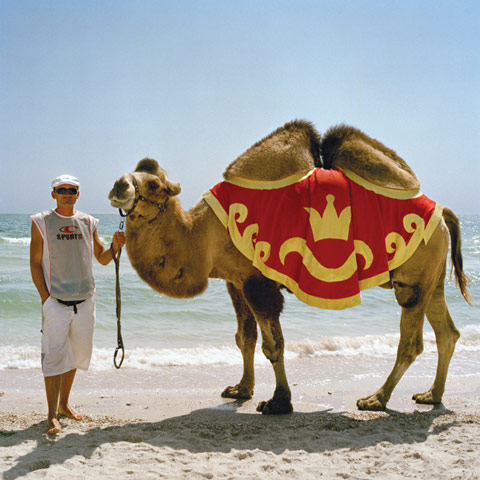
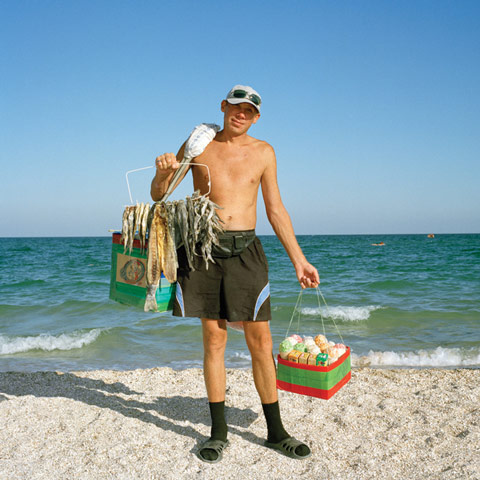
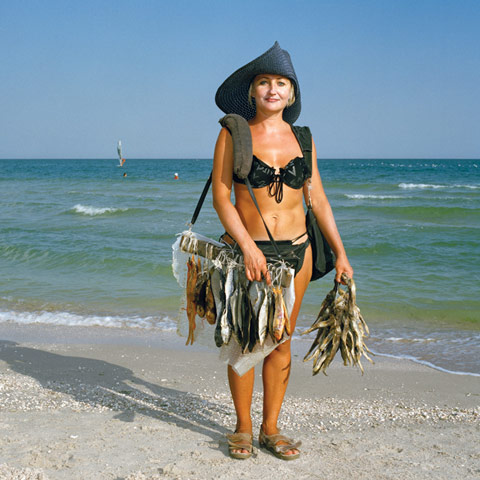
This project examines the quickly changing commercial landscape of Ukraine and its impact on the workforce. By moving indoors, into corporate supermarkets and malls, Ukraine is becoming more westernized and homogeneous. The images of street vendors and other small, unlicensed businesses records an element of Ukrainian visual culture as it disappears. Not without irony, the beach portraits capture a black-market economy in the sunshine.—Olena Slyesarenko

Ukrainian photographer Olena Slyesarenko captures a few of her native land’s local vendors—unfortunately a dying breed these days—in her series of portraits, Small Economies: Beach Vendors. A delightful document of various ware and good-toting beachcombers, the work reminds us just what we stand to lose with a move to the corporate world—character, originality, spirit.

Olena_Slyesarenko_Photography

Olena_Slyesarenko_Photography

Olena_Slyesarenko_Photography

Olena_Slyesarenko_Photography

Olena_Slyesarenko_Photography

Olena_Slyesarenko_Photography

Zeiss

26 May 09:53

I posted this 6-9 months ago (not originally, though). I love...


I posted this 6-9 months ago (not originally, though). I love the simplicity and sleek look and doesn’t like to sk8?? Re-blogging:)

24 May 11:52

Flickr Expected to be Deeply Integrated in Apple’s Upcoming iOS 7

by Eric Calouro

Flickr Expected to be Deeply Integrated in Apples Upcoming iOS 7 flickrios7

We are at about that point in the year when Apple holds its ever-popular WWDC (Worldwide Developer’s Conference) in California. The company’s keynote is expected to include the unveiling of iOS 7, and the word on the grapevine indicates the next iteration of the mobile operating system could include deep integration with social networks outside of Twitter and Facebook.

Citing unnamed sources, 9to5Mac reports both Flickr and Vimeo will be “integrated deeply” into the operating system.

What this means, in essence, is that users will be able to sign on to these social networks via Apple’s Settings menu, which easily allows for posting content right from the operating system’s user interface, as opposed to having to open the Flickr or Vimeo applications.

The integration may also allow for instant logging-in to Flickr (for example) via downloaded Apps, preventing users from having to input their usernames and passwords after initially doing so in their device’s settings.

Flickr Expected to be Deeply Integrated in Apples Upcoming iOS 7 flickr ios app

Earlier this year, Yahoo CEO Marissa Mayer held a meeting with Apple, but possible Flickr integration was not an announced talking point, according to the 9to5Mac report.

The news comes just days following a complete Flickr overhaul, and signals Yahoo’s intention to make Flickr a powerful on-the-go photo sharing service.

(via 9to5Mac via The Verge)

24 May 11:08

What Photographers Would Look Like if Google Glass Took Over the World

by Michael Zhang

Google Glass is set to arrive in the hands of the general public later this year. There are already apps that can trigger the shutter by detecting winks, and some people are already thinking of how the wearable camera can be useful for various photographic applications.

Having always-ready glasses strapped to your face may be convenient, but how will photography look? The video above by Grovo offers a humorous look at what photographers would look like if Google Glass becomes widely used as a camera and camcorder.

In the video’s description, Grovo writes:

Here’s someone you’ll be seeing in a few months: the Google Glass photographer. Nature shots, concerts, time-lapse videos, weddings… the Google Glass photographer does it all.

What Photographers Would Look Like if Google Glass Took Over the World header1

Here’s what shooting a macro photograph of a flower would look like:

What Photographers Would Look Like if Google Glass Took Over the World flower

Want to capture some footage of the front of a car?

What Photographers Would Look Like if Google Glass Took Over the World car

How about a closeup view of your friend’s hands as he plays the piano?

What Photographers Would Look Like if Google Glass Took Over the World piano

Engagement photographs could quickly become awkward:

What Photographers Would Look Like if Google Glass Took Over the World couple

Google Glass cameras don’t have any kind of zoom (no digital and no optical). If you want to follow Capa’s words of wisdom — “If your photographs aren’t good enough, you’re not close enough” — you might need to look a bit silly in the process.

(via GoGrovo via SLR Lounge)

14 May 20:48

Photo Series Visits Abandoned Star Wars Film Sets in the Tunisian Desert

by DL Cade

Photo Series Visits Abandoned Star Wars Film Sets in the Tunisian Desert starwars9

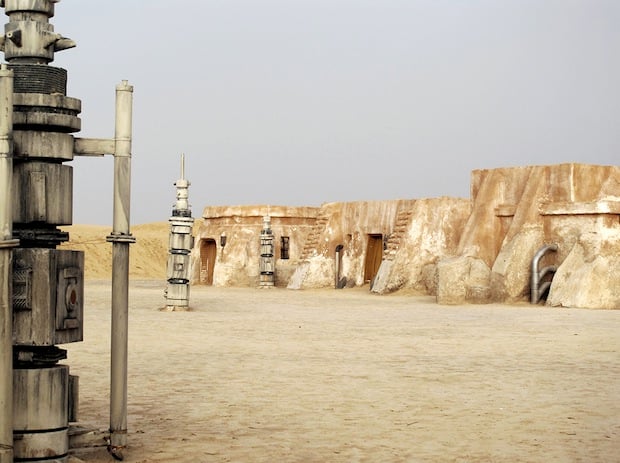
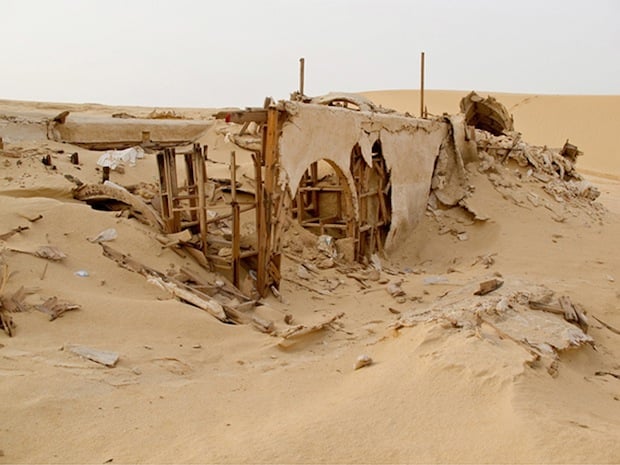
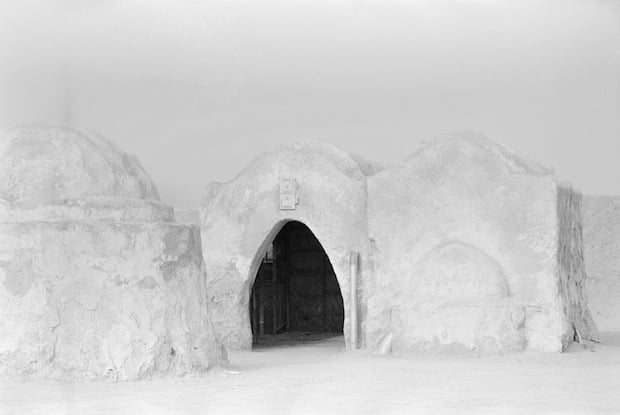
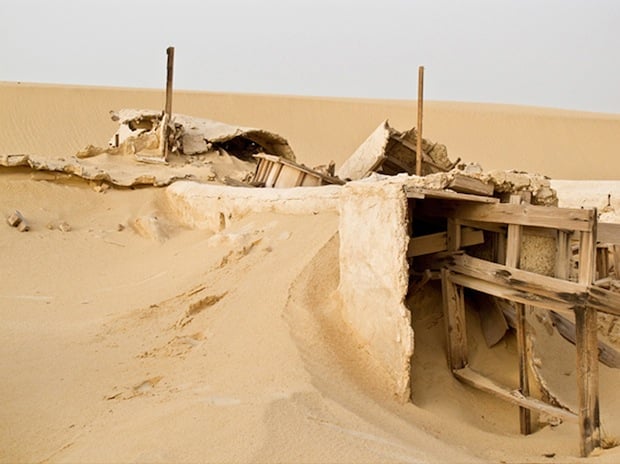
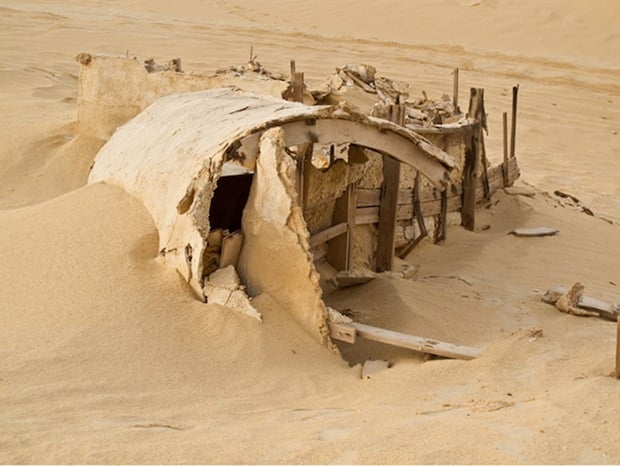
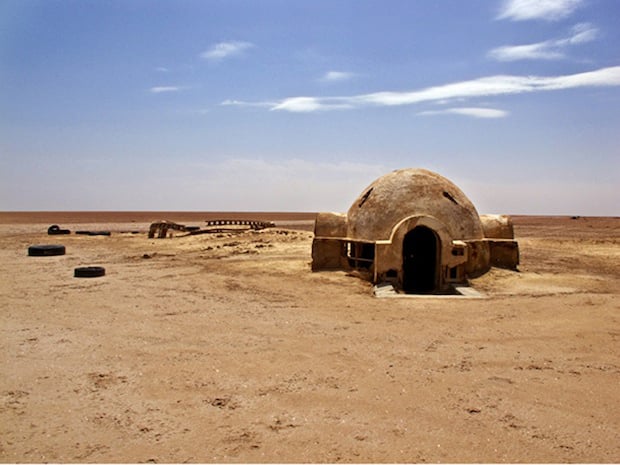
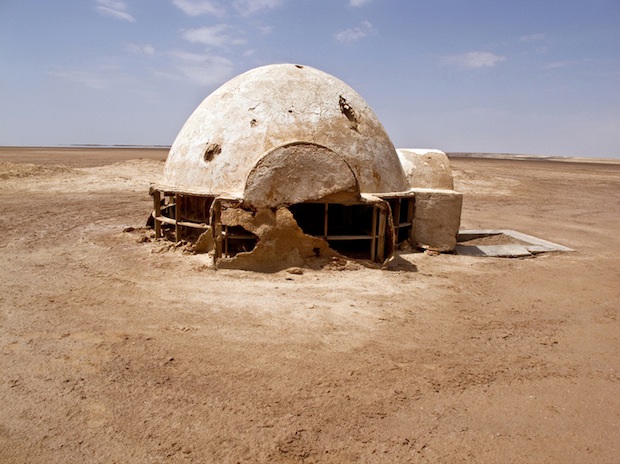
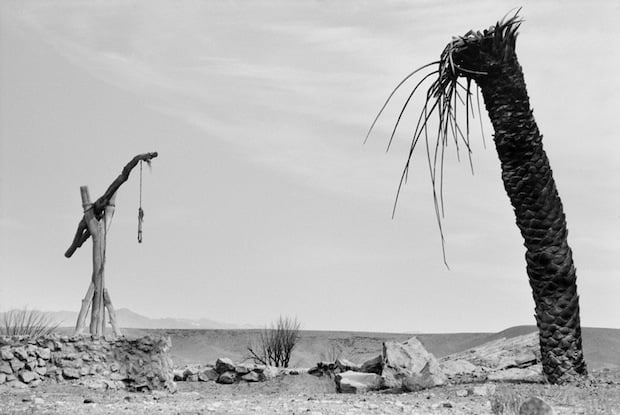
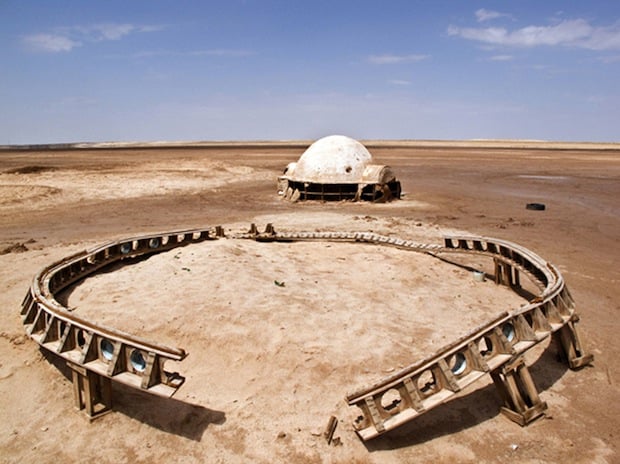
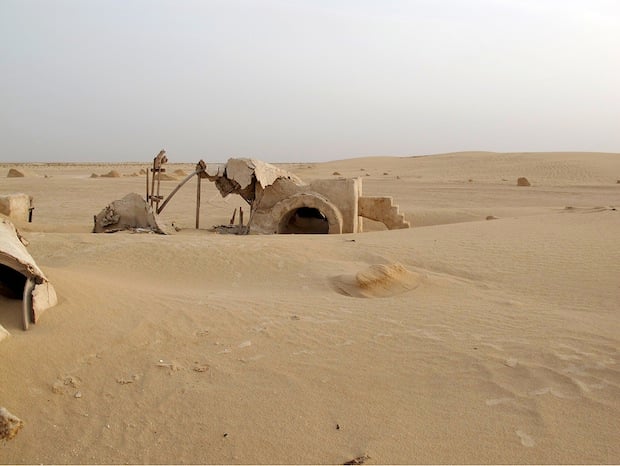
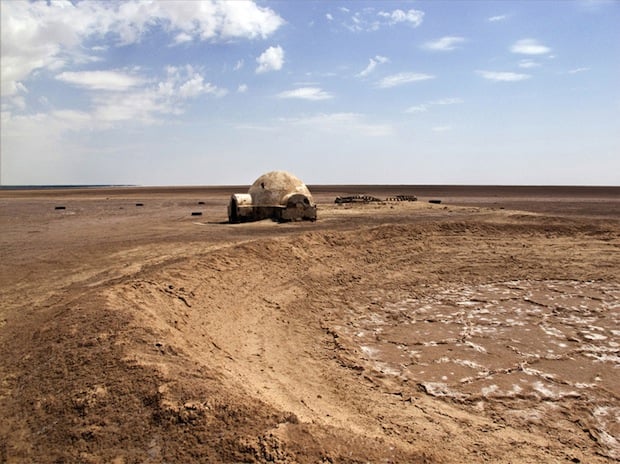
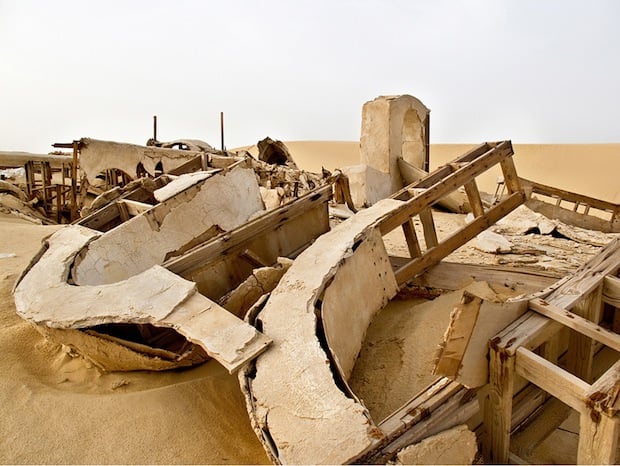
In September 2010, visual artist and filmmaker Rä di Martino set out on a quest to photograph and document old abandoned film sets in the North African deserts. The project had started when she discovered that it was common practice to abandon these sets without tearing them down, leaving them fully intact and crumbling over time, like archeological ruins.

Martino spent that month traveling around Chott el Djerid in Tunisia, finding and photographing three Star Wars sets in all for her photo series No More Stars and Every World’s a Stage.

Actually finding the sets wasn’t as easy as you might think. At first, Martino had only Google Maps as her guide, and when you’re in the desert, that just won’t do. It was only after a chance encounter with a driver who knew the desert well and a detour to ask directions at a police station that she finally stumbled upon her subject.

After finally reaching the so-called “ruins” of Luke Skywalker’s childhood, Martino spent the morning shooting on both digital and film, surprisingly moved by the memories of her own childhood that the set brought to the surface:

Photo Series Visits Abandoned Star Wars Film Sets in the Tunisian Desert starwars2

Photo Series Visits Abandoned Star Wars Film Sets in the Tunisian Desert starwars13

Photo Series Visits Abandoned Star Wars Film Sets in the Tunisian Desert starwars3

Photo Series Visits Abandoned Star Wars Film Sets in the Tunisian Desert starwars4

Photo Series Visits Abandoned Star Wars Film Sets in the Tunisian Desert starwars5

Photo Series Visits Abandoned Star Wars Film Sets in the Tunisian Desert starwars6

Photo Series Visits Abandoned Star Wars Film Sets in the Tunisian Desert starwars7

Photo Series Visits Abandoned Star Wars Film Sets in the Tunisian Desert starwars12

Photo Series Visits Abandoned Star Wars Film Sets in the Tunisian Desert starwars8

Photo Series Visits Abandoned Star Wars Film Sets in the Tunisian Desert starwars10

Photo Series Visits Abandoned Star Wars Film Sets in the Tunisian Desert starwars11

Photo Series Visits Abandoned Star Wars Film Sets in the Tunisian Desert starwars1

Interestingly enough, after the photos were published, Star Wars fans annoyed with the disheveled state of Skywalker’s fictional home spent $11,000 and worked with locals to restore the old set. Now tourists who are brave enough to explore the Tunisian desert may find themselves in a pristine slice of Tatooine history if they’re lucky.

To see more from Martino, including more photos from other well-known and abandoned film sets, check out her website here.

(via Laughing Squid)


Image credits: Photographs by Rä di Martino and used with permission.

13 May 14:18

Peter Belanger: The Man Behind Many of Apple’s Iconic Product Images

by Michael Zhang

You know those iconic minimalist product photos for Apple gadgets? Have you ever wondered about how they’re shot and who shoots them?

One of the people behind the photos is San Francisco-based photographer Peter Belanger. The video above is a behind-the-scenes look into how Belanger photographed the iPhone 3GS for a 2009 issue of Macworld magazine.

The video steps through three major stages of the production: the photography, the Photoshopping, and the design. Since it’s a time-lapse video, every 30 seconds shows about half a day. What you don’t see are all the meetings and planning sessions that the team held.

Belanger shot the images using a 4×5 Sinar X large format camera with a 65mm lens and a Phase One P65+ digital back.

Here’s the resulting Macworld cover featuring Belanger’s photograph:

Peter Belanger: The Man Behind Many of Apples Iconic Product Images macworld

Belanger started out in his career as a freelance photographer for advertising agencies that worked with Apple. As Apple began hiring Belanger’s connection within those agencies, he began working directly with Apple for their promotional shots.

Here are some of the other photographs Belanger has created for Apple (you might recognize some of them):

Peter Belanger: The Man Behind Many of Apples Iconic Product Images apple1

Peter Belanger: The Man Behind Many of Apples Iconic Product Images apple3

Peter Belanger: The Man Behind Many of Apples Iconic Product Images apple3b

Peter Belanger: The Man Behind Many of Apples Iconic Product Images apple4

Peter Belanger: The Man Behind Many of Apples Iconic Product Images apple5

Peter Belanger: The Man Behind Many of Apples Iconic Product Images apple2

If you want to learn more about Belanger’s life and work, The Verge has published a terrific interview with the photographer in which he sheds some light on how he shoots.

You can also find a selection of his work in the portfolio section of his website, and follow along with it on his blog.


Image credits: Video and photographs by Peter Belanger

13 May 14:03

Photographing a Color Run Will Destroy Your Camera Gear–Don’t Do It

by Roger Cicala

Photographing a Color Run Will Destroy Your Camera Gear  Dont Do It colorrun

If there hasn’t been a Color Run 5k or 10k race near you, there probably will be soon. And with all that color, you certainly want to take some pictures, right? Not with your camera you don’t.

I’m never one to worry much about lens dust, but the color bombs they throw out at Color Runs are different. In the last month my lens rental business has had over 20 lenses and several cameras nearly ruined by these things. For what it’s worth, all of the renters tell us they really weren’t near any of the major ‘color bombs.’

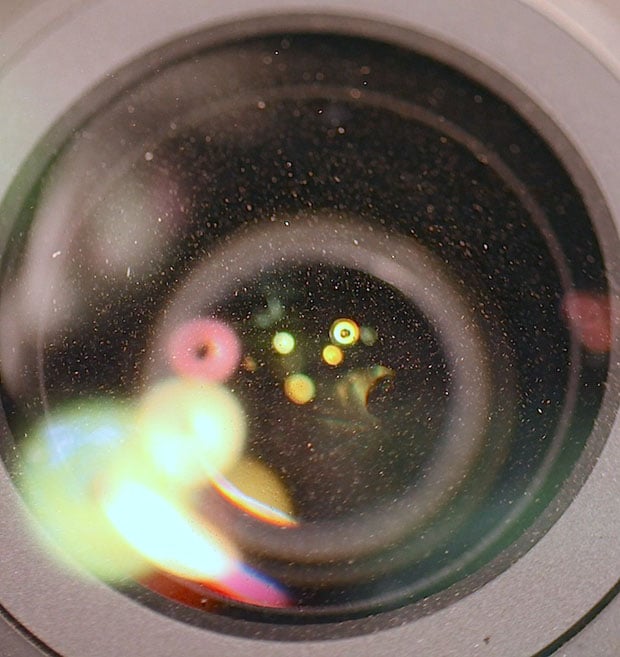
Here are a few pictures from a brand new lens that returned after its first rental — at a Color Run. These pictures are, of course, after the lens was cleaned externally. All of that dust is inside the front and rear elements.

Photographing a Color Run Will Destroy Your Camera Gear  Dont Do It damagedlens 2

Photographing a Color Run Will Destroy Your Camera Gear  Dont Do It damagedlens 5

Now a few dust specs rarely cause problems, but this kind of dust affects light transmission and contrast, as well as causing fascinating flare (in pretty colors). The color dust is very fine, tiny specs, made to stick on people as the run by (I’m still trying to figure out why someone thought this was a good idea).

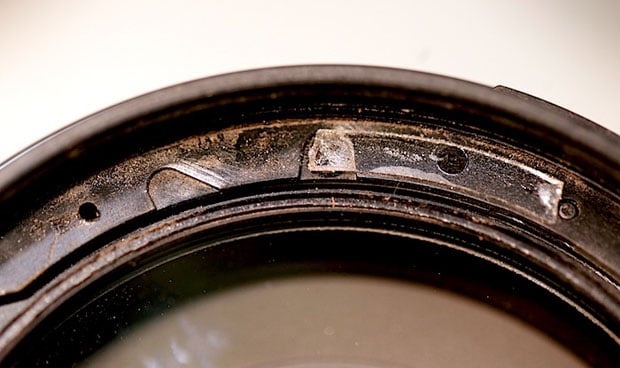
Because of this, the lenses’ weather sealing, front filters, etc. don’t even slow this stuff down. It’s throughout the entire lens stuck on every element, on the gears and helicoids, and in the mirror box of the camera too. And yes, that includes pro-level lenses on pro-level cameras, all of which are supposedly weather sealed.

As an added bonus, it doesn’t blow out like regular dust. It must be wiped off.

Here’s a look at the inner rim after the front element was removed.

Photographing a Color Run Will Destroy Your Camera Gear  Dont Do It damagedlens 3

Here’s the front of group 2, nice and deep inside the lens (excuse the lights, this is a quick post just using worklights).

Photographing a Color Run Will Destroy Your Camera Gear  Dont Do It damagedlens 1

And here’s one of a dozen Q tips I used to clean out around the focusing gears and helicoids. Remember, this was a brand new lens only used for this one shoot.

Photographing a Color Run Will Destroy Your Camera Gear  Dont Do It damagedlens 4

The end result for this lens was complete disassembly and cleaning. This was a fairly lucky one–it’s a lens that we can disassemble and clean without requiring factory readjustment. For a lot of lenses that’s not an option.

A number of lenses, including Canon L’s and Nikon Pro lenses had to go to the factory, and at least one has been given the “financially not feasable to repair” sticker. Your guess is as good as mine as to whether they cover it under warranty or not.

You know what I’d probably find more interesting than the photos of what the insides of lenses look like after this? What the inside of the runner’s lungs look like.

All my medical training leaves me curious about that kind of thing.


About the author: Roger Cicala is the founder of LensRentals. This article was originally published here.


Image credit: Color Run NYC 8-26-2012 by ANTHONY619

13 May 08:32

Modern Love. Zak has Mandy’s medical conditions tattooed...


Modern Love.

Zak has Mandy’s medical conditions tattooed on his arm so he can remember them all to tell the doctors when he needs to.

(via Photo by claytoncubitt • Instagram)

11 May 13:53

Подшивка журнала "Советское фото". 11 номеров (1926-1927) PDF / Djvu

bb2ba6a0072ce33ed90c4268361_prev

Скачать с Letitbit
Скачать с Depositfiles
Скачать с Turbobit

Журнал "Советское фото" рассчитан на фото и кинолюбителей, фоторепортеров и мастеров художественной фотографии. Журнал с помощью фотографии широко отражает жизнь страны, освещает вопросы развития советского искусства, дает фотолюбителям практические советы и консультации, рассказывает о новостях отечественной и зарубежной фототехники, знакомит с работами советских и зарубежных мастеров фотографии. Журнал "Советское фото" издается с апреля 1926 года.
Список номеров:
*Советское фото №01 1926г.
*Советское фото №05 1926г.
*Советское фото №07 1926г.
*Советское фото №08 1926г.
*Советское фото №09 1926г.
*Советское фото №01 1927г.
*Советское фото №02 1927г.
*Советское фото №03 1927г.
*Советское фото №05 1927г.
*Советское фото №06 1927г.
*Советское фото №07 1927г.
Год: 1926-1927
Издательство: "Планета"
Отрасль (жанр): Хобби
Формат: DJVU, PDF
Качество: Скан
149.04 Mb
08 May 07:35

Rebecca Martinez: preTenders

by Aline

I've been a long time fan of Rebecca Martinez's work, first her capture of mannequins in Beauty Challenged, and now her three part series on the sub-culture of life-like babies in her series preTenders.  At first, her first work with the dolls was humorous, photographing Carrie Fisher in a variety of unsavory scenarios, but as her project progressed, she has explored the community (conventions, baby showers, beauty contests, teas, collectors and artists in their homes and nurseries) that surrounds these stand-ins, with compassion and curiosity.

The work is part of a terrific exhibition, The Reality of Fiction curated by Mark Sink, as part of the Month of Photography in Denver.  It will run through April 28th at Red Line Art. In June her work will be exhibited in UNCANNY at the University of Connecticut, Contemporary Art Galleries Storrs, Connecticut. Her photographs were also recently featured on the NY Times LENS blog.  She has exhibited and been published widely.
Rebecca  was born and raised in Los Angeles. She owned a graphic design firm in San Francisco that specialized in corporate ID and branding for most of her career and has now devoted herself to photography. Although she photographs many subjects, the majority of her work explores and documents artificial worlds and entities that represent us.


preTenders Who and what we chose to love comes in many forms. This series is the latest incarnation of my work that explores different aspects of artifice and our impulses to create illusionary objects and situations that fulfill various emotional, spiritual, and psychological needs. 

Babies create strong emotions for the bearer, holder, and observer. I have discovered this holds true even when it is known the baby is not real. For several years I have been photographing the reborn community, a subculture of women who create, adopt and love dolls that look as close as possible to real babies. The dolls appear and feel in ones arms to be living infants. They create strong and palpable emotional reactions and provoke the biological instinct to nurture and the entire spectrum of human behavior. I call this work preTenders as one “pretends” that these dolls are real, one “tends” to the babies and there are “tender” feelings involved. 

Many of the women involved have an especially strong passion for the stage of mothering babies and this is a method to keep this stage permanently in their lives. There is a wide range of personal stories and motivations for being involved in this community. Some create or collect these dolls because they cannot continue to give birth to living babies, or have lost a child, or cannot have one of their own. Some women admire the art form and are doll collectors, others create nurseries in their homes and integrate the babies as part of their families and lives. 

For several years I have been attending their conventions and events such as baby showers, teas, and baby beauty contests. At the conventions one can adopt babies, purchase baby clothes and accessories, and attend the various social gatherings that focuses on sharing and admiring each mother’s babies.

The most recent part of this series as I have gotten to know individuals, I have turned my focus to intimate portraits. I am now photographing two different kind of portraiture. The first, I am photographing the babies with their families in their homes and at the artists studios where they are created. The final part of this series I am photographing the families with their real and not real children in a style reminiscent of a studio visit that a family would seek for a traditional portrait. 


08 May 07:18

Wilder Mann (4 Photos)

by Amy Wolff

© Charles Fréger

“Certi,” Czech Republic, 2010-2011. All Images © Charles Fréger, Courtesy of the Gallery at Hermès.

Charles Fréger traveled across eighteen European countries from Finland to Greece from 2010 to 2011 for his series Wilder Mann. In search of the “wild man,” Fréger systematically cataloged people in elaborate costumes used during traditional rituals often pertaining to the seasonal cycle, fertility, life and death. The exhibition at the Gallery at Hermès on Madison Avenue in New York City opens April 11th. A complementary exhibition is on view at the Yossi Milo Gallery in Chelsea from April 11th through May 18th. The book, Wilder Mann, is available in four languages.

If you are a PDN Subscriber, click here to learn more about the Gallery at Hermès. 

© Charles Fréger

“Cerbul (Stag)”, Corlata, Romania

© Charles Fréger

“Laufr (Jumper)”, Trebic, Czech Republic

© Charles Fréger

“Babugeri,” Bulgaria, 2010-2011

07 May 13:08

Ballet and Skateboarding Mix in Limited Edition Decks From Henry Leutwyler

by Conor Risch

leutwyler-ballet-skate-decks-pulse

Earlier this year we wrote in our Exposures column about Henry Leutwyler’s project photographing the New York City Ballet. One of the photographs in his book and exhibition depicted the grit behind the grace of ballet, contrasting a ballerina’s bandaged and bloodied bare right foot with her left foot as an audience might normally see it, wrapped in a pointe shoe.

Leutwyler, an appreciator of both the artform of ballet and the sport of skateboarding, sees the parallels between the two, so he created a limited edition set of decks from the image. Check them out, here.

06 May 14:13

BTS: Shooting the ‘Persons of the Year’ Cover for Time Magazine

by DL Cade

Greg Heisler is one of the great photographers of our time, and one of his strengths is meticulously planning his shots. Whether his subject is an NBA player or an olympian, Heisler’s photos always capture the essence of that person, and his approach makes his BTS videos particularly educational and interesting to share.

In this Master Series behind the scenes, we watch as Heisler explains his setup for Time Magazine’s 2005 “Persons of the Year” cover featuring Bill Gates, Bono and Melinda Gates.

The focus of the issue was philanthropy (hence the subjects), and even though Heisler usually gets free rein on cover shoots, Design Director Arthur Hochstein wanted him to put something heroic together. Here’s what Heisler came up with:

BTS: Shooting the Persons of the Year Cover for Time Magazine timecover

The first problem he had to overcome given his set up was how to keep all three of them in focus while keeping their heads the same size. His idea was to try a 90mm lens with a 2x teleconverter, and after testing it out at home with his daughter and studio manager standing in, he was pleasantly surprised to find that it worked. First problem solved.

The second problem came when the two Gates and Bono showed up to the shoot and Heisler discovered that Bono was a short guy with a large head. The initial idea was to put Bono in the front, as the “emotional center” of the image, but this wouldn’t work.

After trying it the planned way several times, the decision was made to change up the order and put him in the center. As it turns out it worked out better that way, because putting Bono in the center of the image wound up achieving Heisler’s goal even better. He’s not only the emotional center, but the literal center.

BTS: Shooting the Persons of the Year Cover for Time Magazine heislersetup

The final piece of the puzzle was, of course, lighting. As you can see from the diagram above, in order to achieve the “heroic” effect he was asked for, he used two lights and a reflector. Behind them and to the right he placed a narrow beam reflector with a grid and a CTO on it, in front and to the right was a soft box, and underneath the three philanthropists was a strip softbox that provided an under-lit fill to give all three a more regal stature.

You can hear the entire story from the man himself by checking out the video at the top, but the lessons are the same as usual with a Heisler shoot. Plan, plan, plan some more, and then be ready to alter the plan at a moment’s notice — or in this case, when you realize your celebrity is only 5’9″ and has a big noggin.

(via Strobist)

06 May 14:11

Is Procrastination Productive?

by Lauren Purje

procrastination-640It’s not like you’re doing nothing.

06 May 13:59

Space Enthusiasts Find Missing ’71 Soviet Lander Using Mars Orbiter Images

by DL Cade

Space Enthusiasts Find Missing 71 Soviet Lander Using Mars Orbiter Images sovietlander1

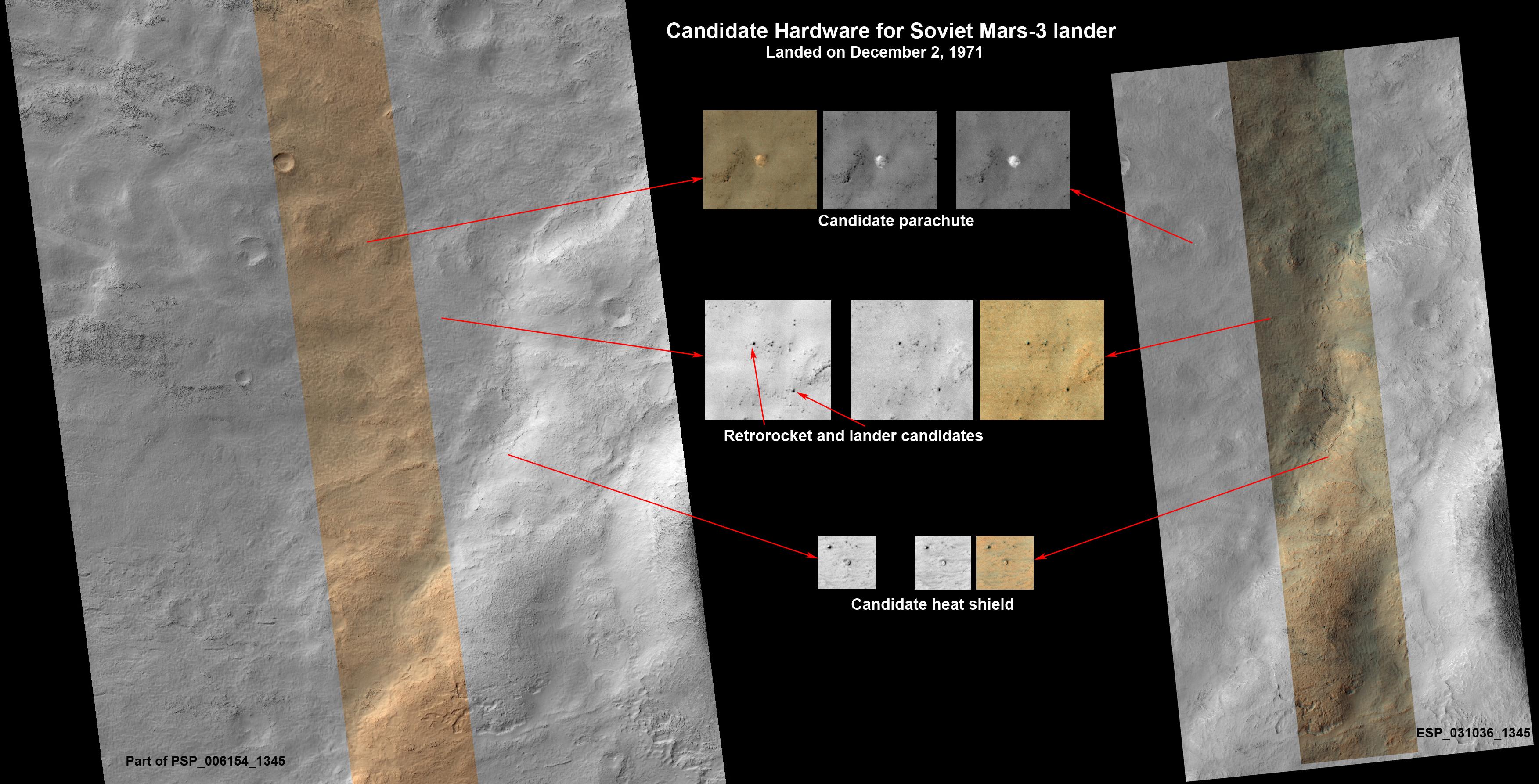
It turns out that the sharing of images taken by orbiters and rovers in space may have more of a purpose than just being cool to look at. According to a NASA press release published last Thursday, a group of amateur Russian space enthusiasts may have found a missing soviet Mars lander using nothing more than images from NASA’s Mars Reconnaissance Orbiter.

The five-year-old image above (click here for a high-res version) shows what the amateurs and NASA both believe to be the remnants of the Soviet lander Mars 3, which lost contact with the Russians fourteen seconds after a successful landing on December 2, 1971.

Space Enthusiasts Find Missing 71 Soviet Lander Using Mars Orbiter Images mars3

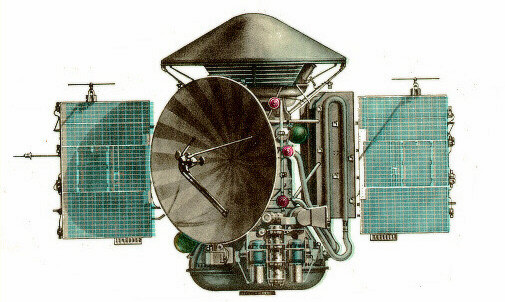
A drawing of the Mars 3 spacecraft courtesy of NASA.

The group responsible for the find is an online community that follows the goings on of the Mars Rover Curiosity. Member of that community Vitali Egorov led an effort to discover the Mars 3 using images from NASA’s Mars Reconnaissance Orbiter, and models of what the lander’s heat shield, terminal retrorocket and parachutes might look like on the Reconnaissance Orbiter’s camera.

The images still have to be verified, but experts say that the artifacts pointed out by Egorov and his peers are “a remarkable match” to what they would expect from the Mars 3. For Egorov, the find is simply confirmation of a belief that “Mars exploration today is available to practically anyone.”

(via The Verge)

04 May 21:07

Endangered Frogs of Ecuador Photographed by Peter Lipton

by Amanda Gorence
Natalia Pokrovskaya

найди себя

Peter_Lipton_Photography
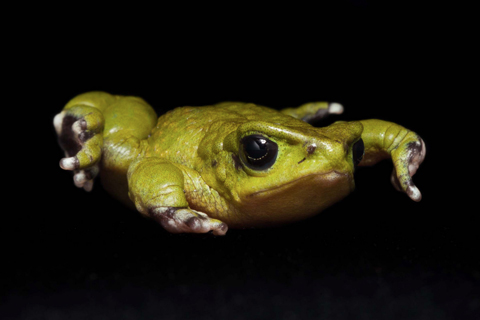
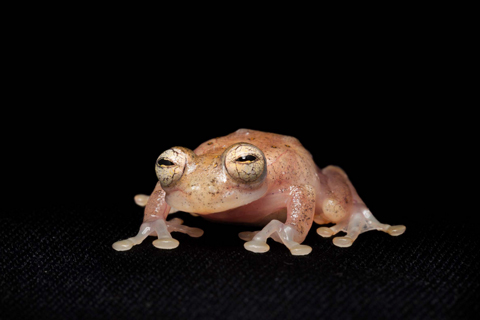
Espadarana Callistomma, gender unkown, still found in their natural habitat.

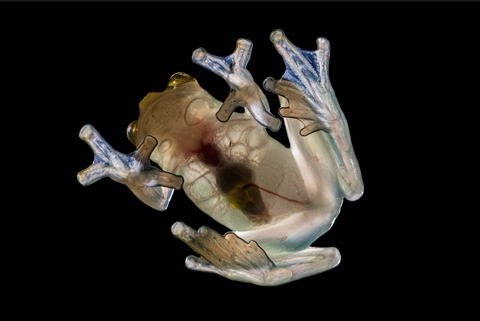
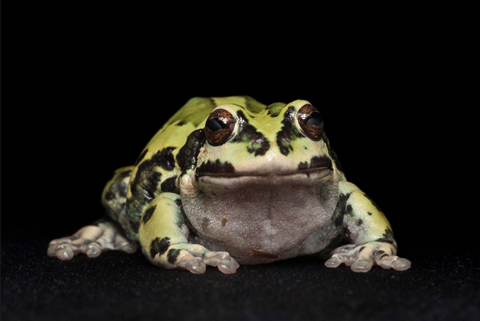
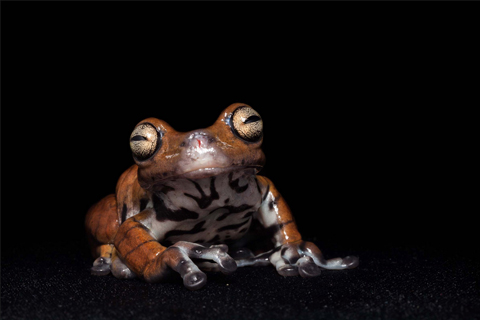
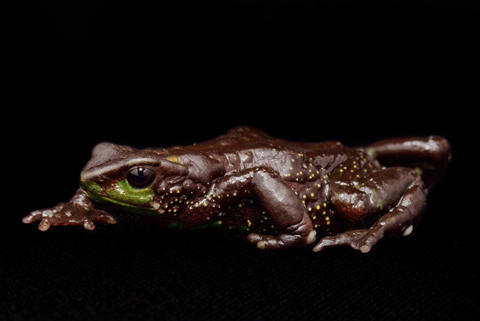
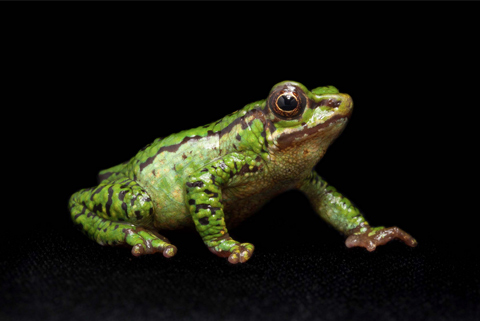
According to UNESCO, Ecuador has the world’s highest level of biodiversity based on its geographical size. In the Amazonian rainforest of this small South American country, more species of trees grow within one hectare (2,5 acres) than in the entire North American continent. Ecuador also boasts 460 species of amphibians, almost 9 percent of the world’s total. One third of Ecuador’s amphibian species are endangered.—Peter Lipton

Amsterdam-based photographer Peter Lipton’s recent project is based around a research and conservation program at the Catholic University of Quito that was created in 2005 to address the growing number of endangered amphibians due to the country’s increases in logging, oil exploration, agriculture and climate change. Named ‘Balsa de los sapos’—Spanish for ‘Life raft of the frogs’—the program aims to collect, reproduce, and return endangered amphibians to their natural habitat. Lipton creates an exquisite showcase of these unique creatures, many of which are sadly the last known specimens.

Peter_Lipton_Photography
Hiloscyrtus SP, or Tigrinus, gender unkown, last known specimen.

Peter_Lipton_Photography
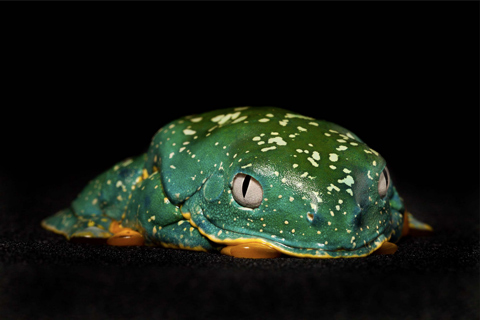
Cruziohyla Craspedopus, no further information known.

Peter_Lipton_Photography
Atelopus Exiguus, male, last known specimen.

Peter_Lipton_Photography
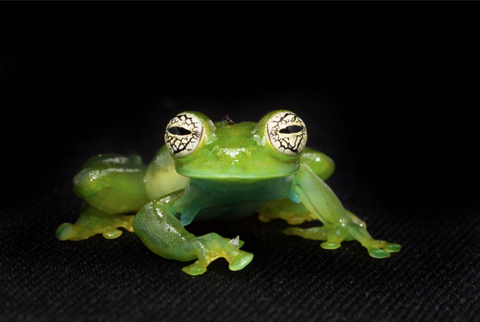
Hyalinobatrachium, female, still found in their natural habitat.

Peter_Lipton_Photography
Hyloscirtus SP, gender unknown, last known specimen.

Peter_Lipton_Photography
Gastrotheca Espeletia, male, last known specimen.

Peter_Lipton_Photography
Hyloscirtus larinopygion, gender unknown, one of three specimen known.

Peter_Lipton_Photography
Centrolenidae SP, female, still found in their natural habitat.

Peter_Lipton_Photography
Atelopus Nanay, female, one of four specimen, all female.

Peter_Lipton_Photography
Atelopus SP, female, one of three specimen known, all females.

via Oitzarisme

Zeiss

04 May 13:50

Random Acts of Kindness Captured by Car Dashcams in Russia

by Michael Zhang

When a huge meteor exploded over Russia back in February, the incident was captured by a large number of drivers who drive around with dashcams pointed out the front of their windshield. The story put a spotlight on the fact that dashcams are widely used in Russia due to the prevalence of insurance fraud.

Footage from Russian dashcams found online is often quite dark (figuratively, not literally), showing horrible accidents and tragedies. Not so with the video above — it’s a compilation of random acts of kindness captured by ordinary drivers.

Random Acts of Kindness Captured by Car Dashcams in Russia crosswalks

It’s a video that may restore some of your faith in humanity. “The world isn’t without good people,” a sentence found in the video says, “Any act can become one of great kindness if it is done selflessly. When was the last time you did a good deed?”

The video shows many scenes of people doing good to one another, from men and boys helping elderly ladies cross the street, to people brushing snow off cars and lifting/pushing them back onto the road, to people protecting a family of ducks and a baby (?!?) from oncoming cars.

If you’d like to see a video that’s similar both in subject matter and in style, check out the “happy moments” security camera compilation we shared last June. For that video, Coke took a bunch of happy security camera clips and strung them together into a feel-good video.

(via kottke.org)

01 May 20:14

Toshio Shibata (6 Photos)

by Conor Risch

Toshio-Shibata-Okawa-Village

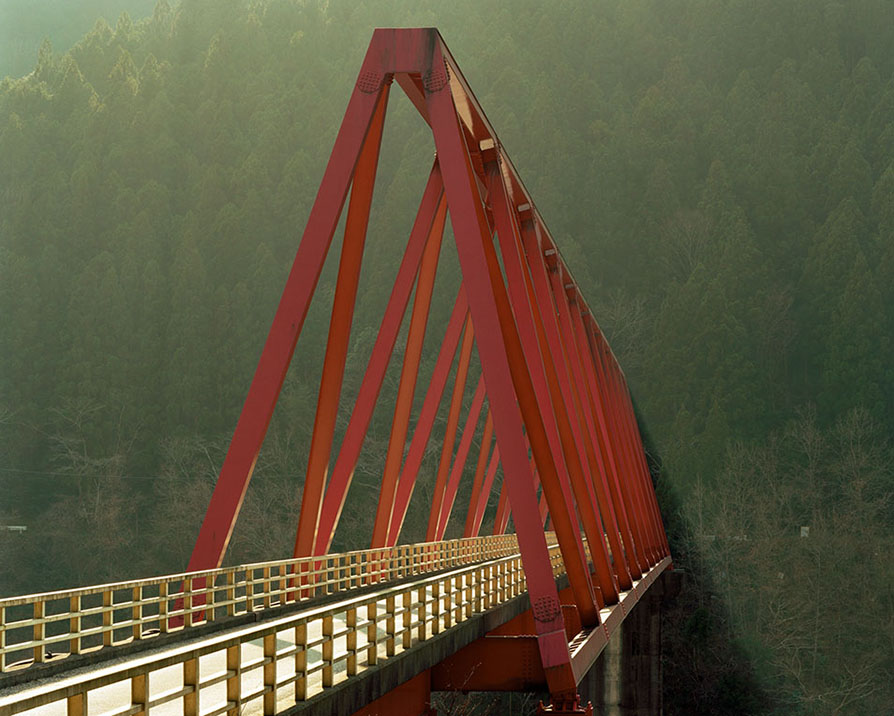
“Okawa Village, Tosa County, Kochi Prefecture,” 2007, © Toshio Shibata

One of Japan’s leading landscape photographers, Toshio Shibata, is being introduced to new American audiences at the Peabody Essex Museum in Salem, Massachusetts. The exhibition, “Constructed Landscapes,” opens April 2o, and runs through October 6, 2013. The exhibition features 28 of Shibata’s large-scale works that consider the relationship between human infrastructure and nature through images of major engineering projects, like bridges and dams. This is the first time his color photographs are showing the in United States. “As stunning as Toshio Shibata’s photographs are, they are infused with deep awareness of humanity’s place in nature,” PEM curator of photography Phillip Prodger said in a statement announcing the show. “As with all the best landscape photographers, his works cause us to reflect on what it means to live in this world.”Toshio-Shibata-Tomuraushi“Tomuraushi, Kamikawa County, Hokkaido,” 1988, © Toshio Shibata

Toshio-Shibata-Okutama-Town“Okutama Town, Nishitama County, Tokyo,” 2006 © Toshio Shibata

Toshio-Shibata-Kuroiso-City“Kuroiso City, Tochigi Prefecture,” 1989, © Toshio Shibata

Toshio-Shibata-Tajima-Town“Tajima Town, Minamiaizu County, Fukushima Prefecture,” 1989, © Toshio Shibata

Toshio-Shibata-Hanno-City“Hanno City, Saitama Prefecture,” 2006 © Toshio Shibata

01 May 20:01

Barnes Raises Ticket Prices So That People Will Stop Touching the Art

by Jillian Steinhauer
Barnes

Visitors at the barnes. The man on the right knows not to touch anything, because he’s got an audio guide. The woman on the right is probably about to lunge for a painting. (Photo by R. Kennedy, via press.visitphilly.com)

Now that it’s been settled in its new location for almost a year, the Barnes Foundation is getting comfortable and raising ticket prices — which wouldn’t really be newsworthy if it weren’t for the reason they’re providing for the change. According to the Philadelphia Inquirer, the museum is overcrowded and lots of visitors don’t know how to behave. Barnes President Derek Gillman offered these choice words:

“We’re seeing many more people not familiar … with what is proper behavior.” He added that the gallery wanted those additional visitors, but with new gallerygoers “we’re seeing more transgressions of people touching things and getting too close” to the art, he said.

Popularity’s a bitch, ain’t it?

The new ticket price for adults, up to $22 from $18, now includes the audio guide, which tells visitors not to touch or get too close to the art. Another Inquirer article reports that Gillman himself will be heard on the guide, “accompanied by chamber music,” saying: “Please don’t sit on any of the chairs in the room. That’s what the benches are for.” So in theory, most people will now get the audio guide and be lulled into obedience. In practice, it sort of looks the museum is raising prices to stave off the masses. To be fair, though, the price increase is also meant to spread out the distribution of visitors, and tickets will remain at the old price level, $18, for the last three hours of every day.

01 May 19:33

Enrico Boccioletti

by Joerg Colberg

EnricoBoccioletti.jpg

"content aware is a collection of edited pictures downloaded from fashion blogs, where the subject is assimilated to the background using content-aware fill in photoshop." - Enrico Boccioletti

01 May 19:28

UK’s New “Instagram Act” Stretches Copyright to Its Breaking Point

by Jillian Steinhauer
A side-by-side from photographer Sion Fullana shows Vogue Spain using his image without permission or credit (image via Fullana's Twitter)

A side-by-side from photographer Sion Fullana shows Vogue Spain using his image without permission or credit (image via Fullana’s Twitter)

The UK has passed a new act that has photographers and other creators worried about maintaining ownership of their images. The Enterprise and Regulatory Reform Act theoretically aims to make it easier for companies to publish orphan works, which are images and other content whose author or copyright can’t be identified. But whereas in the past, orphan works were often out-of-print books and historical unattributed photos, today millions of images are quickly orphaned online, as they move from Instagram to Twitter to Facebook to Tumblr without attribution along the way.

The new law creates “extended collective licensing” systems that let publishers not only use those images without legal ramifications but also sub-license them, according to the Register. It’s been widely dubbed the Instagram Act, probably because it’s eerily reminiscent of what Instragram tried to pull late last year and because the new provisions create a legalized version of the photo stealing that more and more users have been seeing happen on the social media platform.

The allowance hinges on the companies performing a “diligent search” to find the author of a work before they go ahead and use it. But critics aren’t convinced that large publishers and companies can be trusted to do that honestly. Andrew Orlowski at the Register offers the example of the Daily Mail, whose “website is notorious for grabbing images found on the internet and using them without permission — even incorrectly attributing them, eg, ‘© Twitter’.” Orlowski has a good explanation of why the the new legislation is so troubling:

… [I]t marks a huge shift in power away from citizens and towards large US corporations.

How so? Previously, and in most of the world today, ownership of your creation is automatic, and legally considered to be an individual’s property. That’s enshrined in the Berne Convention and other international treaties, where it’s considered to be a basic human right. What this means in practice is that you can go after somebody who exploits it without your permission — even if pursuing them is cumbersome and expensive.

The UK coalition government’s new law reverses this human right.

It seems that now, in order for photographers and other creators to make sure their works don’t get swept up by big companies, they’ll either have to avoid putting them online or take the extra step of registering them — and there’s apparently only one photo registry up and running in the UK at the moment.

Groups in the US have already threatened “a firestorm of international litigation,” and the British Press Photographers’ Association spoke out against the act a few weeks ago. Alex Hern at the New Statesman has a more nuanced take, however, writing, “the balance of power does appear to have shifted firmly towards publishers and away from artists. That could wind up being ripe for abuse, but it could also fix the system we have now, where artists ostensibly have the power but have very little ability to use it.”

It’s not quite clear to me how the latter could be the case — I suppose, by registering their works, artists could somehow assert more control over their images? But mainly the Instagram Act seems to exacerbate a huge issue that already exists online and that no one’s figured out how to solve. While many photographers may not mind too much if a teenager reblogs their image on a personal Tumblr without giving credit, letting British tabloid papers use and license images without paying for them seems like an entirely new and more nefarious form of copyright ignorance.

30 Apr 15:12

Tavi Gevinson’s Exquisite Cadaver

by Alicia Eler
Natalia Pokrovskaya

Гевинсон уже 17, и она ооок.

Tavi Gevinson & Jonah Ansell discuss Cadaver with the Museum of Contemporary Art Chicago's Erika

Tavi Gevinson & Jonah Ansell discuss “Cadaver” with the Museum of Contemporary Art Chicago’s Erika Hanner (photographs by the author for Hyperallergic)

CHICAGO — Tavi Gevinson took the ACT exam the same day she took the stage at the Museum of Contemporary Art Chicago’s Edlis Neeson Theater, joining old family friend and LA-based filmmaker Jonah Ansell to discuss their latest collaboration, “Cadaver.” In this animated short film, Ansell and Gevinson marry a playful macabre — think Edward Gorey, Tim Burton — with the voice of Tavi, a mature, old-souled 17-year-old girl. The event felt more like a family affair than anything, with Ansell and Gevinson often bringing up subject matter linked to Oak Park, where they both grew up.

In the bittersweet short film — narrated by Gevinson, who stars alongside Academy Award–winner Kathy Bates and Christopher Lloyd — a young medical student is about to cut open a human cadaver when she realizes that this body was once a living, breathing being. What was this old man’s life like, she wondered. And what would happen to his heart when she cut his chest, ripping it out for the sake of science?

Film still from Cadaver

Film still from “Cadaver” (2012)

The premise of “Cadaver” was inspired by a real-world event that happened to Ansell, when his brother, who was in medical school, had this exact moment as he cut open a cadaver. He called Jonah and told him about it, inspired and confused. These are the experiences that spark creative magic. Artsy brother that he is, Ansell wrote a poem about it, as many writers do when inspired by such fleeting moments.

The poem ultimately revealed itself as a nugget for a short film that Ansell asked Gevinson to collaborate on. He refers to her as “the powerful editor that she is,” situating her creative role within the realm of adult responsibility, a paradox typifying Tavi’s career.

The short film was illustrated by Seattle-based 2D animator and artist Carina Simmon, and was drawn in permanent marker scratches and lines, giving it a rough, not-so-delicate feel despite the theme of love that carries throughout.

Gevinson narrates the film, reciting rhyming, limerick-esque lines like “this morning he was in a freezer, now I’m chatting up this geezer,” as she travels with the cadaver-come-to-life, carrying his heart in a jar at her side. Together they intrude upon the home he once shared with his wife, where they discover a tragic secret, but by the end the story reveals a bittersweet ending, fairytale-like in a creepy way — more Grimm than Disney, no princess tropes here.

“This was a love story—we wanted it to have some teeth, but not be too sappy,” said Ansell.

Film still from "Cadaver" (2012)

Film still from “Cadaver” (2012)

Gevinson first met Ansell when they were kids, through family friends in suburban Oak Park, where she lives and attends Oak Park and River Forest High School. She is currently a junior; next year she will start seriously thinking about college.

The filmmaker has been a “big brother” figure to Gevinson since the early days of her Style Rookie blog. In fact, when she first started writing, she noted that only Ansell and one other adult were allowed access to her nascent fashion musings — an interesting comment, given that the then-11-year-old’s blog gained quick prominence, freely viewable by the public on the internet.

Ansell, now based in Los Angeles, explained to the audience the differences between the Midwest and his West Coast home, where somehow parking garages will do things like charge you more money to park and act like they’re doing you a favor. For Ansell, working on this film was just another example of the types of things that you can do in Chicago but can’t quite make happen in the celebrity-obsessed City of Angels.

The conversation shifted away from the film, its drawings already fading from audience memories, and on to Tavi. She sat perfectly poised in a black, square-shaped leather chair between Jonah and the moderator, the Museum of Contemporary Art Chicago’s Director of Education Erika Hanner.

Inevitably, every audience member wanted to hear more about Rookie magazine, the publication that sent Gevinson into internet and real-world celebrity.

“I work from my bedroom, laptop-in-bed style,” she explained. “Once a week I video chat with my editor. I also have a Facebook group for all of the Rookie magazine writers.”

For Gevinson, the virtual-newsroom difficulties that plague writers who work online are familiar.

“The most tedious part of working this way is I have to write these emails and such [to my writers] rather than sitting at a table with people,” she says.

Pic of Tavi, from tumblr

Tavi Gevinson (image via tumblr)

In this way, Tavi is very much a teen girl running an online magazine, which departs from the younger-feeling, at times emotionally explosive and predominantly unedited teen-girl Tumblr aesthetic, which serves as an important and powerful loudspeaker for young girls but comes with the consequence-fraught URL/IRL relationship. These are aspects that seem less prevalent in Gevinson’s work, which has inspired people from adults to teenage girls the world over, and is less focused on the online and performative aspect of identity.

“Maybe I should be more compassionate to my teenage self . . . ” mused Ansell, as he recounted his awkward teenage years in juxtaposition with the way Tavi is able to “own” her weirdness, something he laments not being able to do as a boy.

The accomplished LA-based writer and film director of jams productions said that when he was growing up, he tried as hard as possible to “fit in” with the rest of the guys, playing baseball and keeping his artsy tendencies at bay. Though we live in a misogynistic world that forces young girls to figure out questions about the male gaze, sexualized bodies, and gender performance at an early age, it’s not all hearts and butterflies for boys, either. But truly, the teenager years are hard ones no matter who you are or what your gender is.

Gevinson also mused about how Rookie magazine wouldn’t exist without the internet — and how that induces a real “inferiority complex” for the outspoken young woman. But then again, that’s the way community, stories, and ideas grow today — through the web. The days of producing photocopied zines a la the 90s riot grrrl movement are long gone, but that doesn’t mean those ideologies don’t continue to influence Gevinson. She noted that she has a stack of Sassy that she’s still meaning to read, and also reads Jane and xoJane.com on occasion.

Gevinson began blogging at the age of 11, and now, at 17, runs an online publication with a wide readership — comprising both those who are biologically adolescent and those who connect with a teen-girl aesthetic and sentiment. And so, on top of going to school, taking the ACTs, and getting ready for college, she manages to be a role model of sorts for teenage girls, standing in stark opposition to the mediated images and commodification of the young girl as described in Tiqqun’s Preliminary Materials for Theory of the Young-Girl. 

As Gevinson gets ready for college, she questions what will happen to Rookie, which at this point is a business, and “not some weird blog I write at night when I am bored,” she noted. It’s still an age-specific publication — by teenagers, for teenagers, even though not all of the contributors are literally between the ages of 13–19 — and garners quite a lot of support and loyalty from readers.

Gevinson will depart from her teenagedom in a few years, entering into that murky territory of the early-to-mid 20s, which either hinges on departing from adolescence and “growing up,” taking on adult responsibilities and relationships, or embracing the fluid identity of the young-girl.

The future is unclear. In the meantime, all eyes are on young Tavi Gevinson, who carries herself with a grace, dignity, and knowingness that only comes from one who has an old soul and a young heart . . . cut from an old man’s cadaver, carried in a jar as it beats.

Tavi Gevinson and Jonah Ansell, ”Cadaver” (2013)

Film Screening and Talk: “Cadaver” with Tavi Gevinson and Jonah Ansell took place on April 23 at the Museum of Contemporary Art, Chicago (220 E Chicago Ave, Chicago, Illinois).

30 Apr 12:50

Leica M: The Standard for Silent Shutters in United States Courtrooms

by Michael Zhang

Leica M: The Standard for Silent Shutters in United States Courtrooms leicacourtroom

If you’ve ever shot with a Leica M rangefinder, you probably know how effective the camera can be for stealthy shooting. After all, there’s no mirror that needs to swing out of the way like there is in a DSLR, so the main sound you’ll hear is the soft click of the shutter curtain flapping open to expose the film or sensor.

It’s not just Leica aficionados that appreciate the silent shutter: did you know that the Leica M is held as the standard for silent photography in courtrooms across the United States?

Here’s what the Vermont Supreme Court’s “Etiquette for Media” document says:

Not more than one still photographer, utilizing not more than two still cameras with not more than two lenses for each camera and related equipment for print purposes shall be permitted in any court proceeding. Such cameras shall produce no greater sound than a 35mm Leica “M” Series rangefinder camera.

The Minnesota court’s “General Rules of Practice” document has a nearly identical section:

Leica M: The Standard for Silent Shutters in United States Courtrooms leicaexcerpt

Courts in New York, Rhode Island, and Louisiana have the same rule. We’re guessing other states do as well.

As technology changes, however, we may see the camera-specific rule get wiped from the guidelines. Updated versions of the document in some states — including Virginia and North Carolina — have already scratched any mention of the “Leica M” line from their rules. In its proposed rule change that eliminates Leica M from its document, Florida said it was trying to “eliminate references to outdated technology.”

So, don’t worry: if you’re aiming to shoot photographs in a courtroom (where photography is generally off-limits), you don’t need to go out and buy yourself a Leica M camera. But at least now you know how quiet the camera you do use should be in order to not tick off the judge!

(via The Online Photographer)


Image credit: Photo illustration based on historic Cochise County courtroom, Tombstone Courthouse by Crunchy Footsteps

30 Apr 08:58

How Are You Supposed to Respond to “My Kid Could Do That”?

by Lauren Purje

kidcoulddoit-640


30 Apr 06:50

Soth

by Blake Andrews
A week afterward Alec Soth's lecture last Friday is still reverberating in my head. I'd been told beforehand that he never gives the same talk twice, that he's loose with structure, maybe even approaching ADD in his fondness for wandering. So I wasn't sure what to expect beforehand. Still, I don't think I'ver ever seen a lecture quite like that one. I'm not even sure if lecture is the right word. It was more of a one hour brainstorming session. The only thing missing were chairs pulled into a circle and mugs of herb tea.
Alec Soth lecture therapy (not in Portland), photo by Burn Away 
Soth set the stage with roughly 10 minutes of prepared remarks, but those few minutes were key. He explained that 1) The world is awash in photographs, and 2) He uses narrative to sort it all out. It wasn't a complaint so much as a strategy, one that's helped lay the framework for Sleeping By the Mississippi, Niagara, Broken Manual, the LBM Dispatches, all of his projects really. And it's served as a filter through which he can analyze other photo projects. If they don't follow a narrative he can set them aside. I don't know if that worldview works for everyone, but for him it does. To reinforce the narrative theme, Soth showed a few applications for his upcoming summer camp "Storytelling For Socially Awkward Artists" before opening it up to questions from the audience.

Many people lecture with the aid of a laptop nowadays, but it's usually implemented as a simple slide projector. Image 1, image 2, image 3, etc. Soth expanded this into a sort of meta-slide show. A large screen behind him displayed a continuous view of his computer desktop. We were shown inside folders and programs and given a full and free-ranging view of his thought process as he wondered out loud and looked for various files. It was a bit like a laptop therapy session, fully transparent and almost uncomfortably vulnerable.
Soth's card: Topics for discussion?
Soth loves lists. His former business card is one long list, and I think he uses lists to guide his photo projects, not exactly as checklists but as rough guides. So he opened the lecture with a list. I think it was called Portland Lecture 4/19 or something similar, though I don't remember exactly. There was The Eggleston Question. Robert Adams Vs. Weegee, John Cage and Ping Pong, Looking For Love, etc. There were about 15 items total but I could only write a few down before he was on to something else. Most of them remained unexplored. Each time someone asked a question it would trigger some brainstorm that he'd already considered. A folder on his desktop listed a few hundred of them roughly by topic. And inside each one were the bare bone graphics supporting a small train of thought. We'd watch him dig around through various files until he found the proper one, then launch into a 5 minute presentation. Adams/Weegee triggered one, as did Eggleston. We never got to John Cage and Ping Pong.

For someone so focused on narrative, the lecture came off as something approaching the opposite. It took its structural cue from narrative's enemy, Hyperlinking. That's the form of the web and the trending structure of much creative content. So it felt comfortable as an organizational form. But I'd never seen a lecture organized that way, and in such a relaxed and fluid fashion. If he gave the same talk the next night it might be completely different, just as every web surf has its own unique sequence.

Soth signed books afterward. The surrounding frenzy was more like a celebrity sighting than art talk. The sold out crowd bustled around his small table, jockeying for position, shooting snapshots and acting like the Beatles were in town. I talked to one guy who'd driven 6 hours to see him. I squeezed off a few frames from about 20 feet away, which was as close as I could get. Then I huddled with some friends and descended on a nearby bar where we tried to remember what was on that Portland Lecture list. I messaged Soth the next day to see if he'd send me a copy but never heard back. I guess I'll have to make up my own story about what was on it.

29 Apr 10:13

Неделя была длинная и тяжелая. Мы работали начиная с прошлого...


Неделя была длинная и тяжелая. Мы работали начиная с прошлого воскресенья и закончили сегодня днем съемкой актеров и режиссера “Великого Гэтсби”. Я все таки увидел Леонардо Ди Каприо. Он совсем не толстый. Вчера вечером понял как я на самом деле устал когда меня на улице догнал продавец из магазина и сказал что я не заплатил за кусок пиццы который я жадно ел. Лицо у меня было в золотых блестках и белилах, на волосах остатки белого спрея а рот в томатной пасте от пиццы. Мы 12 часов снимали Джеффа Кунса - кажется самого богатого американского современного художника для New York Magazine. Было весело: его красили в белый цвет (попробовав предварительно на мне) потом привезли грузовик овец которых раскрасили разными цветами. В перерывах я бегал в магазин за едой с полностью выкрашенной в белый цвет физиономией и в золото глазами. Все фигачат целыми днями с утра до вечера иногда вообще без выходных. Работать с Мартином очень круто, приятно и часто весело но кажется очень важно все таки что под всей этой системой тут есть экономический фундамент. То есть фотография это индустрия. Я потихоньку начал разбираться с большинством схем света которые использует Мартин и уже начинаю скучать по своим съемкам. Почти все ребята которые работают ассистентами настоящие технические гики. И чем ты дольше работаешь тем больше на этом заморачиваешься. И тем сложнее потом снимать самому.