Shared posts

03 Oct 12:51

Wine and Cheese Pairing Party (includes Pairing Guide)

by Sasha Ezquerra

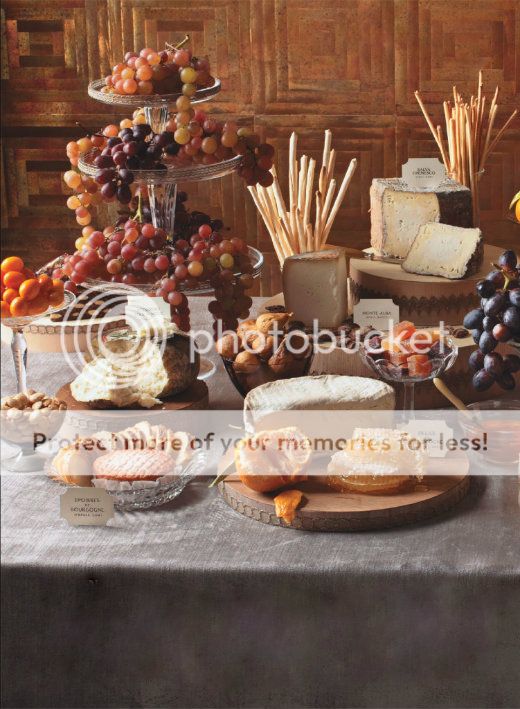
Say farewell to long summer nights and invite friends over for a casual wine and cheese pairing party... after all wine and cheese are two of life’s greatest culinary pleasures!! You can have your guests bring wine and you can set up a decadent cheese table using wood, glass and stone for an eclectic earthy look! Love how they use cake stands to display cheeses and grapes using different heights! You can get creative with cheese place cards or purchase a nifty slate cheese tray, which allow you to etch cheese names in chalk.
When it comes to pairing..treat cheese as food...lighter cheeses are better with lighter wines - fresh goat cheese with a crisp Sancerre, for instance. Richer cheeses, like Camembert or Tête de Moine, need a more full-bodied wine, such as white Burgundy or a Pinot Gris from Alsace.

Here is a complete cheese and wine pairing guide:  
 {Images via Martha StewartPinterest}
03 Oct 12:51

Nothing more rewarding than seeing your friend catch a salmon...


Nothing more rewarding than seeing your friend catch a salmon with a bow @fosterhunting #kamshaka #russia_surf @korduroytv @jeremykoreski @tearevor @danedamus (Taken with Instagram)

03 Oct 11:39

Fashion Disasters: Lana Del Rey Wears A Stuffed Dog Backpack

by Ashley Cardiff

Lana Del Rey got herself a pretty extreme makeover recently: she ditched the ample bouffant and swapped in long, stick-straight extensions, which she then dyed a few shades darker than her natural color (or what we’ve come to suspect is her natural color).

Anyway, Del Rey’s been very busy lately–what with ruining David Lynch for H&M and landing multiple other blue chip endorsement deals–but she still found the time to attend the Spring 2013 Mulberry show at London Fashion Week (they did name a handbag after her, after all). Though she attended the show proper in a more glamorous look, she was photographed shortly after stepping out in what used to be called “grunge” but is now just as easily described as “Miley Cyrus.” This is all well and good–we have no problem with the dye job, the sweater, the flannel, nothing. We like her loafers a lot! Moreover, we’re always reluctant to post non-red carpet entries in the Fashion Disasters category because not everybody should look premiere-ready all the time.

But then there’s this:


A stuffed dog as a backpack. This makes sense in light of all of Lana’s role playing as some kind of Lolita figure, but, at the end of they day, she’s a 26-year-old woman wearing a teddy bear backpack.

(Photos via Wenn)

Related posts:

Post from: TheGloss

02 Oct 11:00

まるです。

by mugumogu


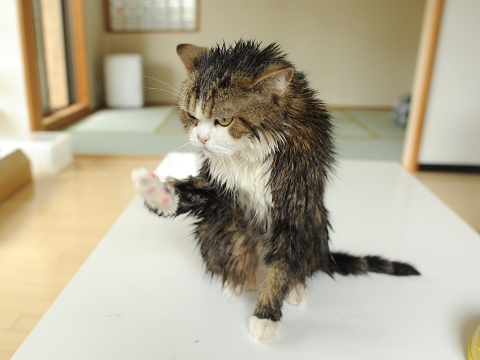
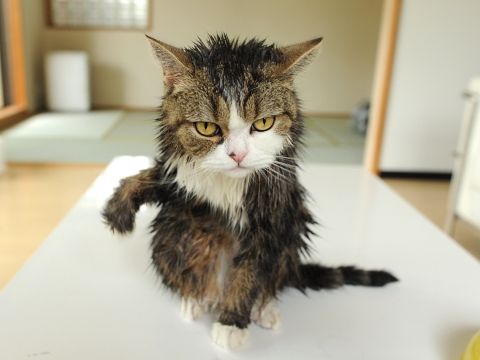
「あーあ、こんなになっちゃって。これじゃあ濡れまるですよ。」
Maru:[Wow, my body is dripping wet.]


「まったくもう。」
Maru:[OMG!]


そして"ふわまる"の完成。
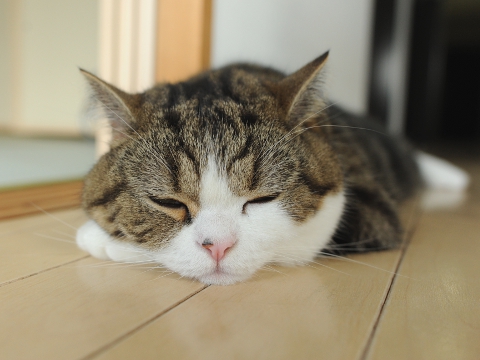
まるさん、お疲れ様です。
Hey Maru, please sleep well.


02 Oct 10:58

まるです。

by mugumogu


爪のお手入れ動画。
ただの抱っこは苦手ですが、爪切りや歯磨きなど用がある時は大丈夫。
Maru has claws and I trim his claws sometimes.


01 Oct 21:11

All my

by superbytimai

28 Sep 10:23

Retro Snap: Guess What The Rainbow Cake Girl From Mean Girls Looks Like Now?

by Jennifer Wright

rainbow mean girl

Remember this hilarious scene from Mean Girls? Sure you do. Here is the video:

And here is what Jill Morrison, the actress who played the crying girl, looks like today.

Like a total babe, in case you were wondering.

Post from: TheGloss

28 Sep 10:21

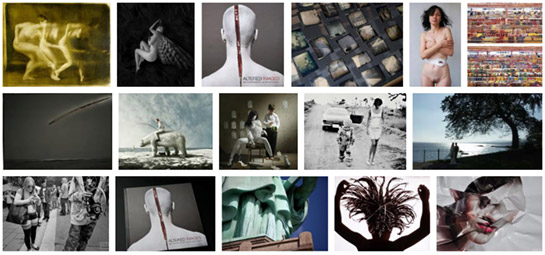
Towards the 21st Century: The full collection

by Joerg Colberg
Natalia Pokrovskaya

Отложила почитать.

21stCenturyPhotography.jpg

This past week, bloggers have explored "photographers who have demonstrated an openness to use new ideas in photography, who have taken chances with their photography and have shown an unwillingness to play it safe." As could be expected, the proposed artists were as diverse as the nominators themselves, essentially demonstrating that just into the 21st Century, photography is alive and very, very well. Find the list of nominators (in mostly alphabetical order) and artists below.

Blake Andrews: Philip Perkis

Stan Banos: Aaron Huey, Taryn Simon, Eva Leitolf, Matt Black, Brenda Ann Keneally, James Baalog, Edward Burtynsky, Bruce Haley, Daniel Shea

Harvey Benge: Paul Graham, Jason Evans, Adam Broomberg & Oliver Chanarin, Jens Sundheim & Bernhard Reuss, Collier Schorr, Antoine d'Agata, Martha Rosler

Pete Brook: Mishka Henner, Jim Goldberg, Alyse Emdur, Alixandra Fazzina, Peter DiCampo, Tomoko Sawada

Peter Evans: Obara Kazuma

Bryan Formhals: Asger Carlsen, Jessica Eaton, Kate Steciw, Alec Soth, Paul Kwiatkowski, Vivian Maier

Julie Grahame: Michael Massaia, Rob Hann

Tom Griggs: Bryan Graf, Amy Elkins, Paul Graham, Abelardo Morell, Jessica Eaton

Stella Kramer: Sophia Wallace

Mark Page: Mishka Henner, Philippe Spigolon, Craig Atkinson, Stuart Griffiths, TomRS

Colin Pantall: Mishka Henner, Lauren Simonutti, Stephen Gill, Tony Fouhse, Paul Graham, Claus Stolz, Olivier Jobard and others

Christopher Paquette: Zoe Strauss, Alec Soth

Andrew Phelps: Peter Miller

Heidi Romano: Taryn Simon, Myoung Ho Lee, Roger Ballen

Mine: Thomas Ruff, Katy Grannan, Erik Kessels, Geert van Kesteren's Baghdad Calling, Christian Patterson's Redheaded Peckerwood

(If you notice something missing please email me the link. I'll update the list when there are new additions.)

image: page one of the search results for "21st Century Photography" from Google Image Search

26 Sep 14:01

Пост: Вспомнить хаос

by looo.ch

Синтетический рок-н-ролл от Sightings.

26 Sep 05:44

Towards the 21st Century: Katy Grannan

by Joerg Colberg
Natalia Pokrovskaya

Ну, не знаю.

KatyGrannan__.jpg

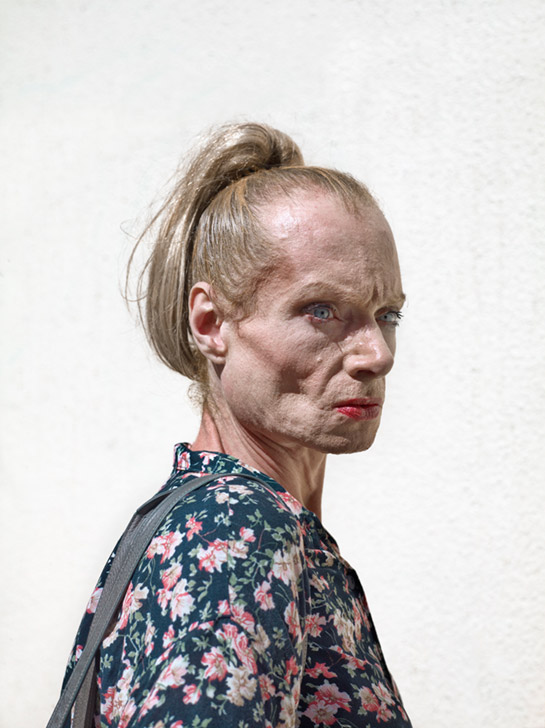
Katy Grannan's portraiture is not only amongst the very best and challenging to be found today, it is also constantly evolving in surprising directions - always forward, always towards something that undermines expectations. Find a variety of images here.

25 Sep 09:57

Ryan Koopmans

by willsoncummer

www.RyanKoopmans.com

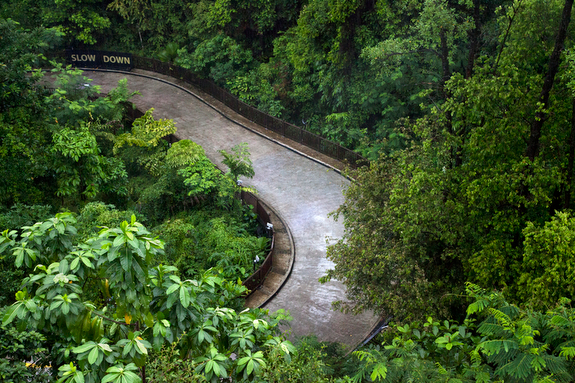
Paradise Now explores how urban fantasies and construction function as expressions of nationalistic ambition, blurring the line between the natural and artificial within the hypermodern city.

Paradise Now is driven by my ongoing curiosity into the human condition, and a desire to visually interpret socio-cultural phenomena within both natural and man-made landscapes. I am drawn, photographically, to the world’s rapidly-expanding and hyper-globalized cities, particularly those that have invested heavily in large-scale urban planning and modernist/futurist architecture. I find that the topographically surreal environments that are products of that planning and architecture set the stage for interesting photo opportunities, from close up and afar.

– Ryan Koopmans, New York City, USA

Post to Facebook Post to Twitter Post to Delicious Post to Digg

24 Sep 14:01

Eshe Streetwear: Decomposes Moses, Randi Gandhi, Scientolo G, Hashish Ganesh

by Filippo
Natalia Pokrovskaya

Вопрос задаёт Наташа из Москвы: сколько лет заключения дали бы авторам кампании в России за оскорбление чувств верующих?

decomposes moses poster

randi gandhi poster

scientolo g poster

hasish ganesh poster

Advertising Agency: Muckmouth, Auckland, New Zealand
Creatives: Nobjockey, Tatsie, Strange G, Dabset
Illustrator: Kennedy Poynter

22 Sep 15:01

Lens Crafter: From Storyboard Sketches to Magazine Beauty Story

by Janine

Ever been struck by a magazine photoshoot and wondered how the team involved came up with the idea? Love this background peek, via French photographer Vincent Lions, into the process of creating a magazine beauty story layout. … [visit site to read more]

22 Sep 10:58

Враг у ворот

Немалая часть детства прошла в парке «Кузьминки». Там остатки усадьбы князей Голицыных, с парадным входом на северо-востоке и подъездной дорогой с запада. На этой дороге у Шибаевского пруда — пилоны ворот, возведенные вряд ли сильно позднее середины XIX века и к моменту моего с ними знакомства ставшие руинами.
Через эти ворота я впервые осознал, что в мире есть вещи, которые гораздо старше всего, что меня обычно окружает.

Такой облик они имели уже в начале восьмидесятых. Их нет на моих детских фотографиях; судя по oldmos.ru, их вообще мало фотографировали. Несколько чужих снимков (источники по клику):

В девяностых и нулевых годах на пилонах, естественно, рисовали.

И их рисовали тоже.

В 2010 году возникли сомнительного вида створки ворот, части арочных конструкций были стянуты скобами для прочности.

Вчера зашел в парк и увидел это.

Дом, где я вырос, снесли, выстроив на его месте тепловой пункт размером с пару газетных киосков. Сакральный портал из детства превратили в луна-парковый муляж. Теперь в Москве меня держат только люди.

20 Sep 14:01

Condones Vive: Textured Condoms, Purses

by ivan
Condones Vive: Textured Condoms, Purses

Maximum Pleasure

Advertising Agency: El taier /Tribu DDB, Guatemala
Creative Director: Jorge Solorzano
Art Directors: Victor Pardo, Eddy Flores
Copywriters: Antonio Furlan, José Figueroa
Illustrator: quadstudio
Published: 2011

Find a creative new logo and a designer for your business


20 Sep 11:23

Look Out! Owls!

by Mark Remy
Well, readers, fall is nearly upon us, and I'd like to take a few minutes to-- Look out! Owls! Jeez Louise! What the hell? Aren't these guys supposed to be cute and/or wise? Or even whimsical, like Mr. Owl in … Continue reading →
20 Sep 11:10

...not dead yet!

Natalia Pokrovskaya

Это я с 1 по 5 км.

...not dead yet!
17 Sep 06:44

The most democratic medium?

by Joerg Colberg

I like photography so much that I've spent a considerable fraction of the past ten years looking at it, and thinking and writing about it. I can't get enough of it. I could - and actually do on most days - look at photographs all day long. That said, there are some things that I'd like to see a bit less. Let me give you an example. These days, it is hard not to come across the idea that photography is " the great democratic medium" (Susie Linfield), if not "the most democratic medium" (Google it, the terms pops up left and right). I object to this idea for a variety of reason. First of all, it's a lazy cliché. There might be some truth in clichés, but nevertheless one is well-advised to stay away from them. The main problem with this cliché is that it is a dangerous one: If you were to argue that it's not true doesn't that make you anti-democratic? In other words, the idea that photography is "the most democratic medium" is a rhetorical cudgel as well: A good way to shut down a debate before it's even happening. (more)

In all kinds of ways photography actually is a less democratic medium than many others. For example, a pencil and a piece of paper will cost you much less money than even a cheap, low-quality camera. In terms of the economics, it's much cheaper to try to sketch something than to photograph it. As a matter of fact, provided you are sufficiently creative, coming up with a little song - or poem - about something is even cheaper: All you need to use is your voice.

As a writer, I know that writing is a much more democratic medium than photography. We all know how to read and write because we were taught to do so. We might not be all good writers (or frequent readers), just as we're also not all good photographers. But starting at a very young age we all spent years in school studying not just the rules of writing, but also studying some of the most important writing ever produced. In contrast, the vast majority of people never go to an art school or take a course in photography. As a consequence, the average person is a much better educated in reading and writing than in photography. In fact, an education (which includes being taught to read and write) is considered to be one of the very basic human rights in large parts of the world. Photography is not part of this set of rights. So which medium is supposed to be the most democratic one again?

There might be just one way left for someone to declare that photography is the most democratic medium: Most people, while being taught to do so, don't read or write that much, while they appear to be taking photographs. But that's a choice that doesn't necessarily say all that much about photography. And claims that we're all photographers now bother me as well: What about the people who don't own digital cameras, simply because they're not interested? What about the people who don't own cell phones because, say, they are too poor? The idea that we're all photographers now only makes sense if we talk about all the people who own cameras - all the other ones will not upload any photographs onto the internet because they don't have any.

To say (claim) that photography is the most democratic medium is largely a feel-good exercise. We live in a democracy, and hyping that fact is part of the fabric of our lives (while we watch, somewhat helplessly, how the actual democracy is slowly, yet steadily, undermined these days - if you live in the US, there might be all kinds of voting restrictions [squarely aimed at mostly poor, mostly non-white people], and of course, there is the poisonous influence of big money on elections). But we don't gain much, if anything, from this exercise.

What we need to be doing, instead, is to tackle the actual problem: Photography appears to be one of the most attractive media around - there are hundreds of millions of new photographs on Facebook every day. How can we increase the literacy with which these images are being viewed? In other words, how can we make the medium photography more democratic in a truly meaningful way? If people are being taught how to read and write maybe there is a way to teach people how to look at photographs? Wouldn't that be a good idea? People might then be able to look at photographs in the news and get more out of them - they might question them, say, or see whether or not they make sense in whatever context they are used in. People might be able to see advertizing more easily. People might see through the manipulations through photography in the area of politics more easily.

This would entail not engaging in discussions about how Instagram, say, devalues photography, which is, for the record, an outright absurd assertion. This would entail not dismissing photographs on Facebook as essentially meaningless postcards. This would entail not talking about photography and Photography - the former being done by uneducated rubes, while the latter is done by people in the know.

But it would also entail not writing about how photography per se can change the world, simply because a lot of people are taking pictures. That's not going to happen. Photographs have not changed the world, and they will not change the world. People might change the world, but only if they make a decision to do so. Photographs might help them make a decision. That's as good as it gets. Picking up a camera - or taking a photograph with a cell phone - is not such a decision. There needs to be more.

All that hype about how the "most democratic medium" will change the world is just that: Hype. Instead, we need to work on making photography truly more democratic, in the sense of first, breaking down the many barriers that still exist between photography done by "the masses" and by that small elite we are so familiar with, that small elite we are all part of. It's time to be more honest: This entails mostly breaking down mental barriers that exist within that small elite.

Second, we also need to realize that that small elite is in fact engaged in some things that "the masses" are not engaged in. Just like your baker knows how to bake a good bread (you wouldn't expect her or him to produce the same lousy bread you would be able to make), professional photographers should avoid trying to mimic popular trends: In the best case, it's like parents suddenly wearing cool clothes, trying to impress their kids. In the worst case, it's just condescending. People expect professionals to be just that: Professionals who know something very well. If you went to your garage to get your car fixed and the mechanic acted like your ignorant self - how much trust would you put into her or him?

Third, and this is the biggest challenge, we need to raise the general level of visual literacy. We have the most amazing tool to do just that, the internet, and all we talk about is "social networking," all we talk about is how we can promote our own photographs better. Really? Much to their credit there are sites like BagNews or No Caption Needed, where photographs are dissected. But don't expect to find any such debates on the corporate media blogs - where they belong. For the corporate media to truly arrive in the 21st Century, there has to be a change in mindsets, a change away from the ideas of "eyeballs" (aka how to make money) and "we deliver, you consume" to an idea of the media being engaged in a back and forth.

Seen in this light, the idea that photography is the most democratic medium just feels way too self-congratulatory. And honestly, who cares whether photography is the most democratic medium or just the second-most democratic one? What really matters is not how great photography is. What matters is what we all can do to make it better than it is right now - and "better" here includes more democratic in a true sense.

15 Sep 14:14

Goodbye My Chechnya (8 Photos)

by Amber Terranova
Natalia Pokrovskaya

Первое фото крутое, выглядит, как фэшн.

© Diana Markosian

Goodbye My Chechnya documents the lives of young Muslim girls growing up in the aftermath of war. For young girls in Chechnya the most innocent acts could mean breaking the rules.  A couple holding hands in public is punishable; the sight of a Chechen girl smoking may lead to her arrest; and rumors of girls having sex before marriage can result in her killing. The few girls who dare to rebel become targets in the eyes of authorities. These girls tell a forbidden tale of a different kind of Chechnya – one that is behind closed doors. After nearly two decades of war and seventy years of Soviet rule, during which religious participation was banned, Chechnya is going through Islamic revival.

The Chechen government has embarked on an aggressive campaign to promote Islam and to strengthen Chechen traditions. Dozens of mosques and Islamic institutions are sprouting throughout the republic. Prayer rooms in public schools and a strict Islamic dress code is enforced. Females have reported being harassed, some physically harmed for not wearing a head covering.

In today’s Chechnya, where alcohol is all but banned, polygamy encouraged, and single-sex salons and gyms becoming the norm, Chechen girls have very few rights. With this set of images I hope to reveal a more intimate perspective on the personal lives and choices of young girls who are grappling with questions of identity as they come of age in a republic that is rapidly redefining itself as a Muslim state. – Diana Markosian

Markosian’s exhibit opens at the Half King on Sept, 11, 2012 with a discussion moderated by Whitney Johnson, Director of Photography at the New Yorker.

Above: Chechen dancers backstage at a concert hall in the Chechen capital, Grozny. In 2009, a suicide bomb attack in front of the concert hall exploded, killing six people.

© Diana Markosian. Above: At sunset in the outskirts of Grozny, Kazbek Mutsaev, 29, fires celebratory gun shots as part of an age-old wedding tradition in Chechnya.


© Diana Markosian. Above: Gym class at School No 1 in the Chechen village of Serzhen-Yurt. The schoolgirls, all dressed in skirts with their heads wrapped in headscarves, say gym clothes violate Muslim dress code.


© Diana Markosian. Above: Jamila Idalova, 16, prepares for her wedding. The teen bride was kidnapped by her boyfriend and later returned to her home. Under the current Chechen president, strongman Ramzan Kadyrov, bride-kidnapping is outlawed and captors are, in theory, punished with a fine.


© Diana Markosian. Above: The mountainous region of Itum-Kale was a base for rebels during both wars against Moscow. A southern region of Russia, Chechnya witnessed nearly two decades of vicious war during which an estimated 200,000 Chechens were killed.


© Diana Markosian. Above: Half of the girls in the ninth grade at School No.1 in the Chechen village of Serzhen-Yurt wear the hijab. The head and neck covering is a sharp break from Chechen tradition.


© Diana Markosian. Above: A couple on a date in the village of Serzhen-Yurt. Couples must meet in public and sit a distance from one another. All physical contact is forbidden before marriage.

© Diana Markosian. Above: A Chechen boy checks out a girl from his back-tinted window. Young women in Chechnya are often kidnapped off the street and then forced to marry their captors, despite official measures banning the age-old tradition.

13 Sep 19:55

Scott Alario, Animal Altruism

Scott Alario, Animal Altruism

Scott Alario
Animal Altruism, Caratunk, 2010
From the Our Fable series
Website - ScottAlario.com

Scott Alario earned a BFA in photography from the Massachusetts College of Art (2006) and is currently working toward an MFA from the Rhode Island School of Design (expected 2013). Alario’s work has been shown in Bloomington, Indiana, Providence, Rhode Island, and in Reykjavík, Iceland. He was the recipient of a Rhode Island State Council of the Arts Fellowship Merit Award in 2012, and selected for inclusion in “Exposure: 7 Emerging Photographers,” published in the November/December 2011 issue of Art New England. He lives and works in Providence, Rhode Island.

13 Sep 13:29

Natalia Pokrovskaya

by willsoncummer
Natalia Pokrovskaya

A vanity moment.
Ну, мне правда приятно оказаться среди других клевых фоточек.

www.Pokrovskaya.com

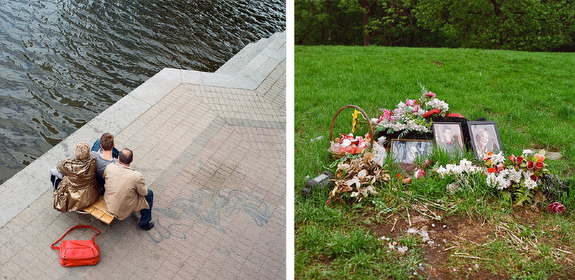
The edge effect rule in ecology: sharp edges between ecosystems are seldom seen, but in transition zones, called ecotones, where environments are more contrasting, biodiversity is higher.

The Moscow River exists “backwards”: the movement happens outside of it, the life around flows by, avoiding the river as if it were a heterogenous element built in the landscape. No swimming, no fishing.

This project, titled The Edge Effect, studies how that effect appears when people interact with the Moscow River. It’s at the contact points where this “biodiversity” appears — new, bizarre behavioral patterns and cultural strata, as if thrown out on the riverside by the current. Observing them, I see a bigger story — about how people behave encountering the unknowable.    

– Natalia Pokrovskaya, Moscow, Russia

Post to Facebook Post to Twitter Post to Delicious Post to Digg

13 Sep 08:18

Мамины дети. Иван Соболев

by FotoDepartament
Natalia Pokrovskaya

Не могу пройти мимо фото собачек.

Для многих людей выход на пенсию становится неожиданностью, ведь, подчас, человек живет работой и проводит там большую часть своего времени. И не имея какого-нибудь интересного хобби или маленьких внуков, к жизни пропадает интерес и остается только телевизор.
В такие моменты именно домашние животные могут внести новый смысл в существование, заставляя хозяина рано вставать, кормить их, гулять и ухаживать. Они очень сближаются друг с другом.
В серии “Мамины дети” я хотел рассказать про мою маму и ее зверей – пса и кота.
Пса зовут Дружок, кота – Дымок.
Им по 15 лет, и большую часть жизни они проводили вместе, пока все домашние были на работе или учебе.
С тех пор как мама вышла на пенсию, перестала работать и живет одна, животные сильно к ней привязались, везде следуют за ней, соперничают, дерутся из ревности, в пять утра открывают двери, будят и требуют еды, или ласки, или внимания.
Когда она болеет или ей грустно, звери это хорошо чувствуют и не оставляют ее одну, кот забирается на руки, крепко обнимает, пес садится рядом и кладет голову на колени, и маме становится легче. Я рад, что они у нее есть.

Мамины дети, Иван Соболев

Комментарий автора: 
Сначала я хотел снимать про то, что домашние животные порой похожи на человека, про проявления антропоморфности. Но когда были сделаны первые фотографии, в голове родилась фраза “мамины дети”. Я не хотел постановок, но примерно представлял, что я хочу увидеть. Я брал камеру, и неизменно что-то начинало происходить. Съемки серии продолжались
несколько месяцев, фотографий было достаточно много, и на них были игры, разные конфликты, кормление, общение животных между собой и с мамой.

Я неизбежно пытался повторить картинки, отложившиеся у меня в памяти с детства. Но разбирая отснятый материал, мой взгляд останавливался на карточках, которые вызывали у меня ощущение присутствия меня на них. Вот тут меня мама гладит по голове, тут я ее обнимаю, а здесь я заглядываю под кровать или выглядываю из-за угла.

Я понял, что вырос, у меня работа, дела и очень мало общаюсь с мамой. А животные, в некотором роде, меня заменили, заполнили образовавшуюся пустоту. Вот так мне и стало понятно, о чем будет моя серия.

Фотошкола “ЦЕХ”
Куратор – Анна Федотова

Работа была замечена в ходе отбора заявок на участие в выставке проекта “Молодая фотография” летом 2012 г. Она не прошла отбор, скорее всего, т.к. совсем не подходила под объявленную тему, но мы не смогли пройти мимо и решили опубликовать её в журнале Ф.

12 Sep 20:07

Sony Officially Takes Wraps Off Full-Frame RX1 Compact Camera (We Get a Hands-on Preview)

by Dan Havlik
Natalia Pokrovskaya

Но цена!

Sony took a big step toward making point-and-shoot-style cameras appealing to pros tonight by introducing the 24.3-megapixel Cyber-shot DSC-RX1, the first compact camera to use a 35mm-size, full-frame CMOS image sensor.

The camera, which has been leaked on to Internet rumor blogs and websites the last few days, has to be seen to be believed. We got some hands-on time with a prototype RX1 last week and it’s impressive, to say the least. (Images from our time with the prototype RX1 are included in this story.)

Along with the full-frame sensor, the Sony RX1 sports a Carl Zeiss-branded, 35mm f/2.0 fixed lens. (No, the Sony RX1 does not uses interchangeable lenses and no, it does not optically zoom.)

While the RX1, itself, is a smaller camera: approximately 4.5 inches wide and three inches tall and weighing at just over a pound, the fixed lens is a hunk of glass, metal and polycarbonate, extending about an inch from the camera body.

The RX1 does create a rather portable package though and during our time playing with a prototype camera, it was quick on the draw both during start up and shut down and while locking in focus and snapping off pictures.

While the fixed 35mm lens is somewhat limiting, we could see street photographers really enjoying this camera. (It does not, however, have an optical viewfinder though an optional accessory will be available.) The Sony RX1 shoots five frames per second and can capture images at ISO 50 to 102,400 in expanded mode.

The Sony RX1 will not be cheap. It will go on sale in November for $2,799. Ouch.

The 24.3MP sensor is the same one used in the full-frame, flagship Sony A99 digital SLR also unveiled tonight by Sony. The Sony RX1 has a fairly robust build for a compact camera: it’s made from a single chunk of magnesium alloy and has a front focus mode dial.

Like some classic rangefinder cameras, it also has an aperture ring on its lens as well as a macro switching ring, and a focusing ring.

Though we only got to shoot with the RX1 prototype for a short while, we came away impressed. While it’s as expensive as some top-line DSLRs, the RX1 presents a whole new picture-taking opportunity for serious photographers: small, compact, fast, and with the beautiful, low-light shooting chops from a full-frame sensor.

Ladies and gentlemen, the bar has just been raised for compact cameras.

Read more of this story and see more photos here.


10 Sep 13:20

Jamie House

by Sharon Boothroyd

From the series Strangers by Jamie House.  

I have access to people’s memories, vacations and celebrations which I record in one single-image; a portrait of someone I do not know.  The resulting images are layers of images and time within someone’s life. This project investigates how we disseminate and share images in the public domain and makes us consider issues of representation and privacy.

Jamie House

Jamie House works with social networking sites, taking people’s personal photographs and turning them into art.  If you care to distinguish between the two.  The images vary between being reminiscent of abstract paintings and sketchily detailed aspects of life.  I am personally drawn to the former approach; the distinguishing parts of someones life merging and fading into obscurity somehow summarises the online world for me.

I asked Jamie to make me a personal montage (see below) and was amused by the results.  I was searching through the condensed mini-archive trying to locate parts of myself, my history and the key moments I deemed important enough to share with the online world yet found hard to make sense of here. Unfortunately I was disappointingly detailed, I clearly need to add more images to my albums to blend me into abstraction and help make better art. Nevertheless, Strangers raises timely questions whist also making visually interesting work, which is one definition of art, for those who need one.

Jamie is a practicing photographic artist and has been involved in photography education for the past 8 years.  His work has been seen in the Aperture project What matters now?, Brighton Photofringe and Hotshoe Gallery as well as being part of international art fairs and solo shows.  He is currently the artist-in-residence at Karst, a contemporary arts space in Plymouth.

SB: What captures you about photography?

JH: It`s a medium that is constantly evolving and changing, photography being a product of technology since its inception with Talbot and Daguerre at the forefront constantly experimenting with this medium. Fast forward to 2012 and photography is a very different animal and still very much a product of technology and our time. I am very interested in the way technology, digital imaging and the digitization of photography has fundamentally changed our visual culture, and changed the way we think about what a photo is.

The digitalization of the medium has changed how we store, view and access images online.  The idea of the “networked Image” an image being an algorithmic piece of data that can have its own life online fascinates me, and how the “average” young person views hundreds of images a day also changes the way we “read” and process images in a non linear way.

However aside from the digital image, I still take great pleasure in submerging myself under the red safe light in the darkroom and experiencing the latent image appear in the developer in front of my eyes. The alchemical process of developing a black and white image still excites me after 13 years of being a practising artist.

Who are your influences?

-Leonard Kleinrock for creating the initial idea of the internet after he published his first paper entitled “Information Flow in Large Communication Nets”.

-J.C.R. Licklider for sharing his vision of a galactic network.

-Robert Taylor for helping to create the idea of the network.

-Mark Zuckerberg for creating Facebook.

-Artists Micheal Wolf and Jon Rafman for questioning the very nature of photography and experimenting with Google street view, capturing the sublime beauty and absurdity of everyday life and highlighting questions surrounding the surveillance of public spaces.

-John Balderssari for using photography as a art form especially his early photography series “Wrong”.  In this early and important example of conceptual  art (with humour!) , Baldessari puts himself in the role of the amateur photographer. An   unwritten rule known to every amateur photographer is not to photograph a person standing in front of a tree, especially not a tree that appears to be growing out of the subject’s head. For this work Baldessari had himself photographed in front of a palm so that it would appear that the tree were growing out of his head, this and other work really challenged the canons of photography in the sixties.

Can you talk us through the technical process of ‘Strangers’?

I have for the last several years’ stolen images of other people’s memories that I have mined from the internet on various social media sites (mainly Facebook). These people have befriended me online but are not people I have met in person.

Each image is produced by a long exposure focused on a computer screen while browsing a stranger’s social media images. The resulting images are layers of images and time within someone’s life.

Some images are more painterly and abstract; others are more figurative showing images of people with clearly defined profiles. The final aesthetic of the image is controlled by how many images the person has in their Facebook album, if they have one hundred images the final work  is abstracted if they have ten images details of the person, their friends and personal possessions are recorded in more defined detail.

I use my skills as a photographer to frame and compose the computer screen and isolate details. For me these images and the process I use creates a new visual language if I zoom into the screen a grid of colour and the structure of the screen pixels become apparent. The individual size of peoples images within people browsers, the arrows that advance Facebook images, even the mouse cursor can and do become part of the work, these indicators of how the users navigates images are very interesting to me and hopefully make people question how we process and interpret images differently with the advent of digital images.

How did you have the idea and how did it evolve into what it is now?  (i.e. talk us through your thought process.)

I am naturally quite a nosey and inquisitive person, and this was a way I could vicariously live through other people lives through images they took and get under the skin of what it’s like to be alive today. I began to realise by using Facebook, that I have this vast archive of images from friends I know only virtually from across the globe, a giant melting of cultures and backgrounds. I am very interested by the meaning and interpretations of images I don’t know the answers to, I enjoy trying to imagine the intentions of the stranger’s gaze who originally took the images I am re-photographing.

The photographs on somebody’s Facebook photo albums are usually really poignant in terms of the absence of the photographer taking the image, and how people’s subconscious vision informs what they are taking pictures of. However unlike a traditional analogue family album which was usually taken by one main family member, a Facebook picture album with the technology of geotagging enables multiples photographers to share their images of that person in one album so you have this very diverse and multi faceted view of someone you don’t know.

How do you feel about using other people’s images to create your own, albeit very different, image?  Has anyone ever questioned it in terms of copyright?  

I am totally comfortable in using other people’s images especially on social media platforms such as Facebook where they have signed up to share. People share their most private and intimate details with people they don’t know. In our current age of the “celebrity” we have a voracious appetite for ways to share what we are doing through you tube to the remains of reality TV, people have an increased desire to observe human beings at play. I personally think our rights to privacy are almost entirely non-existent, we live in a world where our every action is almost totally transparent to all.

When I complete my images I usually repost these back on Facebook and it’s very rare that anyone recognises their own images.

I see myself at times adopting the role of the curator, re-organising other peoples images that are representations of their lives, re-photographing and re-contextualising them.  My long exposure technique seems to flatten all these layers of time into one single image.

Do you know if the images, although often abstract, give any sense of the subject’s personhood (or at least how they are portrayed online)?  E.g., chaotic, bright and vibrant, calm, serene etc?  

This is a very interesting question and a hard one to answer. I am not sure if the images I produce respond to emotions like chaotic or serene, however maybe the amount of images people have respond to how they define themselves by how they are seen by others, validating their actions and sense of self to the world.

As a photography educator – do you think art can be taught or is it a natural way of seeing and interpreting the world?

I am not sure if art can be taught or not, some people have a natural intuitive approach to image making where they almost immediately understand how to sequence images, colour relationships, metaphor and formal considerations of line, tone and perspective. I believe we are all born creative and as children undertake a lot of creative play and as we “progress” through the schooling system become more institutionalized to think and act in certain ways.

I think one thing that can be taught is how to think critically and the ability for one to contextualise and position their work in contemporary practice and acknowledge the role of photographic and art history in one’s own practice. In addition to this I believe artists should and can be taught how to be “visible” and follow etiquette for contacting people in the art world. Finally I think an important thing that can be taught is how to promote yourself, be organised, have systems and have a good sense of business acumen.

To see more of Jamie’s work:

His work is curators choice at Photofringe.

He is currently chapter 11 of The Digital Chain.

jhouse78.wordpress.com

about.me/jamiehouse

pinholeparcelproject.co.uk


08 Sep 14:03

Judging the Taylor Wessing portrait prize

by Sean O'Hagan

Last year, I was critical of the Taylor Wessing photographic portrait prize. This year I helped judge it – and now realise how tough it is to pick a winner

Last November, I wrote a not altogether positive review of the 2011 Taylor Wessing photographic portrait prize headlined Another animal, another girl with red hair. It described my bafflement at the judging process and the general "dullness of the selection". It was a surprise, then, to be asked to be one of this year's judges. I jumped at the chance.

Now it's done, I have to say I will think twice about knocking the judges in future. The two days I spent looking at 5,340 photographs submitted by 2,352 photographers (a maximum of six prints per entrant is allowed) was a crash course in the discipline and the sheer doggedness involved in judging an open competition which, as the National Portrait Gallery brief put it, showcases "the work of some of the most talented emerging young photographers, alongside that of established professionals, photography students and gifted amateurs."

For the record, the other judges were: Emma Hardy, photographer; Lauren Heinz, director of Foto8; Glyn Morgan, a partner at Taylor Wessing LLP; ; Sandy Nairne, director of the National Portrait Gallery and Terence Pepper, curator of photographs at the National Portrait Gallery. There were opinions. There were agendas. There were disagreements. It was tough. It was exasperating. It was emotionally and physically draining but, despite many moments of disappointment as favourite images were rejected, it was utterly rewarding. And, of course, I anticipate much scorn/derision/dismissal by the online photographic community and the general public alike. It goes with the turf and I am thickening my skin as we speak.

Here are a few observations on the prize and the process. On day one, a team of helpers paraded the prints before us, photographer by photographer. As the first 1,000 whizzed by, we seemed to be consigning an awful lot to the rejected pile: baby portraits, family portraits, pet portraits, portraits that looked like holiday snapshots, portraits that were bad imitations of famous portraits, even portraits with no people – or animals – in them. (Memo to all entrants: show your photographs to someone else first, and preferably not a family member. It may save you a lot of money and disappointment.)

Much sooner than I expected, we were down to 600 photographs. But, as Sandy Nairne pointed out, that still meant 540 had to go. That's when it started getting interesting. And slightly tense. By lunchtime on the second day, we had filleted the 600 down to just over 100. Then it went from tense to intense.

I don't think I was the only one of the judges to find this part of the task emotionally draining. Put it this way: I firmly believe that most of that final 100 could have been in the show alongside the final selection. Really great portraits had to be rejected and, as Nairne kept reminding us, it was down not just to consensus but individual enthusiasm. A few portraits I was really enthusiastic about, though, still went into the back room not to be seen again. The same applied to nearly all the judges.

In the end, we were left with, I think around 18 or 19 great images that then had to be voted on in order of individual preference. It was as close as could be when it came to deciding the winner. My lips are of course sealed, though I can tell you that my choice was pipped at the post. I was devastated, but democracy ruled.

As the weeks have gone by since the judging, I've been haunted by three images that are in the show, but not the shortlist. One is James Russell Cant's group portrait, Heather and Her Friends, which had a real intimacy to it. The others are Tomasz Gudzowaty's strong black and white image, Katy With Sons (part of this series) , and (NSFW) Nadia Lee Cohen's very strange American Nightmare, both of which had an edginess that I think is missing elsewhere in the show – and was missing too in the submissions – for whatever reason. It makes me wonder if the prize is viewed by many photographers as a traditional, even conservative, one. How else to explain the lack of snatched street portraits or any kind of reflection of the recent political ferment – from the Arab spring to the Occupy Movement to the London riots? Whatever, there was a definite lack of edge that I found disappointing.

In the end, too, it comes down to taste. I was not so hung up on technical perfection or the sublimely beautiful as some of my fellow judges, perhaps because I now see so many strong photographs that no longer adhere to those definitions. Celebrity portraits tend to leave me cold, too, unless they are truly surprising or somehow honest in a way we seldom see. (Matthew Lloyd's thoughtful portrait of Michael Stipe and Eamon McCabe's portrait of Sarah Lucas are both in the show, and deservedly so.)

We live in digital world where photography has become a more democratised vision and I think that should somehow be reflected, even in a portrait show. It isn't in this instance. And yet I can see why The National Portrait Gallery upholds the traditional art and craft of photographic portraiture. That's what the place is all about. In conclusion, I think the shortlist is a strong one, though there is inevitably one portrait in there I would have passed over for something harder, edgier, more intimate or more confrontational … that's all I'm saying.

Now see this

Ahead of the big William Klein-Daido Moriyama show at Tate Modern next month, Micahel Hoppen, London is showing Moriyama's erotic series, Tights and Lips, which comprises close ups of legs in fishnet stockings and glossy lipsticked mouths. As always with Moriyama, the energy is raw and the images altogether more formal than first impressions suggest. A provocative taster for the big event.

Also in London, The Little Black Gallery is showing Vee Speers' controversial series, The Birthday Party in which children are pictured wearing party outfits befitting their imagined alter egos. Strange and dreamily disturbing.

Sean O'Hagan
guardian.co.uk © 2012 Guardian News and Media Limited or its affiliated companies. All rights reserved. | Use of this content is subject to our Terms & Conditions | More Feeds


06 Sep 10:46

Не забудь блять отдохнуть летом!

03 Sep 08:32

Things That Blew Your Mind When You Were A Kid

by DOGHOUSE DIARIES

Things That Blew Your Mind When You Were A Kid

Other mind blowing things include, but are not limited to: snow, magnets, people dressed in animal costumes, and jello.  -Raf

Tweet


03 Sep 08:31

Vincent Bezuidenhout

by willsoncummer

www.VincentBezuidenhout.com

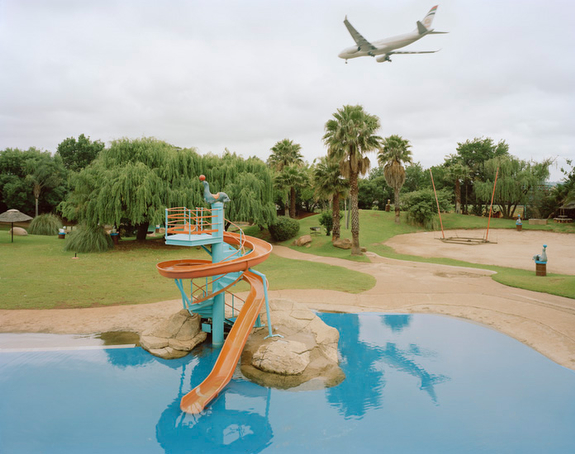
This body of photographs, titled Separate Amenities, examines the way in which the landscape was constructed to enforce separation, in the form of separate amenities, during the time of apartheid in South Africa. The recreational spaces I have focused on previously functioned as separate facilities for different racial groups on every level of society, including separate beaches, parks, walkways and swimming pools.

By exploring this recreational landscape, constructed through political, social and psychological factors, a view can be obtained of how the physical structuring of the landscape has been altered to implement control and separation. It reflects a level of social engineering, through a flawed political system of racial segregation, which has led to spaces of ambiguity, incongruity and ultimate failure.

This reveals the many ways in which ideology has shaped our landscape and comments on the fact that despite the failure of apartheid, the structuring of the landscape in South Africa has had a lasting affect, which as Okwui Enwezor said is “an entirely unique specimen of the historical failure of moral imagination” in South Africa.

My practice is situated within the notion of the landscape as a construct and I view my images as photographic constructs which foreground the ideologies of those who created these spaces. The philosophy of segregation inherent in these apartheid structures reflects elements of control, fear and power: elements which today acts as evidence of a time and modus operandi of the creators of that system.

– Vincent Bezuidenhout, Cape Town, South Africa

Post to Facebook Post to Twitter Post to Delicious Post to Digg

03 Sep 08:28

Nate Larson & Marni Shindelman

by willsoncummer

www.Larson-Shindelman.com

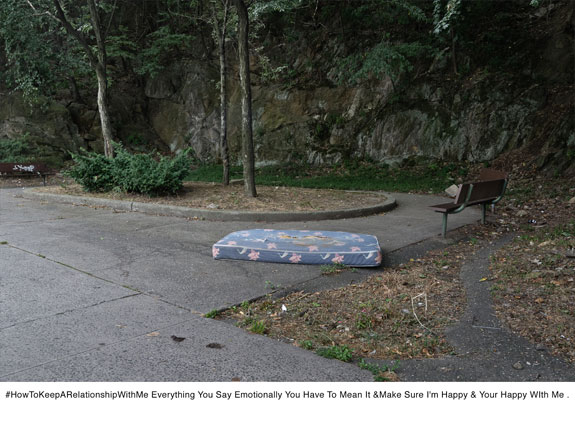
We use publicly available embedded geotag information in Twitter updates to track the locations of user posts and make photographs to mark the location in the real world. Each of these photographs is taken on the site of the update and paired with the originating text. Our act of making a photograph anchors and memorializes the ephemeral online data in the real world and also probes the expectations of privacy surrounding social networks.

– Nate Larson & Marni Shindelman, Baltimore, Maryland & Athens, Georgia, USA

Post to Facebook Post to Twitter Post to Delicious Post to Digg

29 Aug 17:07

Anne Geddes-style Baby Photographs Featuring Adults Instead of Infants

by Michael Zhang

Anne Geddes style Baby Photographs Featuring Adults Instead of Infants baby1 mini1

Anne Geddes is known internationally for her trademark-style of baby photos showing infants dressed up like tiny animals, flowers, and various fantasy creatures. VICE magazine recently decided to parody her work, and enlisted the help of photographer Lee Goldup to photograph adults instead of babies in Geddes’ iconic style.

With the help of some shameless models, Goldup shot a series of ridiculous photographs of not-so-cute grownups as sleeping snails, a blooming flower, and more. The resulting photographs are both hilarious and disturbing.

Anne Geddes style Baby Photographs Featuring Adults Instead of Infants baby2 mini1

Anne Geddes style Baby Photographs Featuring Adults Instead of Infants baby3 mini1

Anne Geddes style Baby Photographs Featuring Adults Instead of Infants baby4 mini1

Anne Geddes style Baby Photographs Featuring Adults Instead of Infants baby5 mini1

Mixing stereotypical photography styles with subjects that don’t belong can often result in amazingly ridiculous photographs. Another example is a photo series we featured last year showing men posing in stereotypically female pin-up-style poses. That project, by photographer Rion Sabean, didn’t have a hard time at all going viral online.

Image credits: Photographs by Lee Goldup/Vice Magazine and used with permission