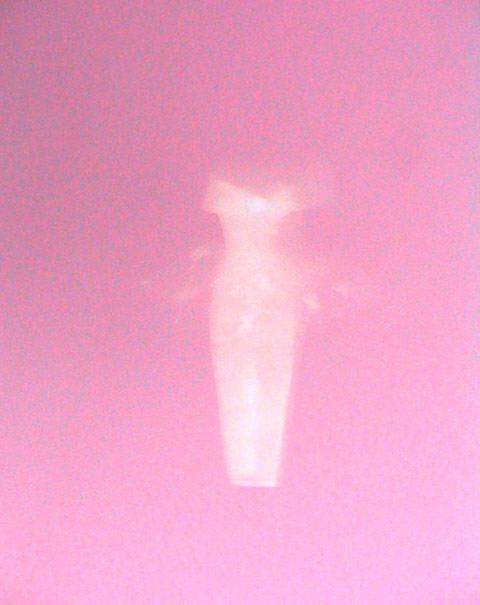
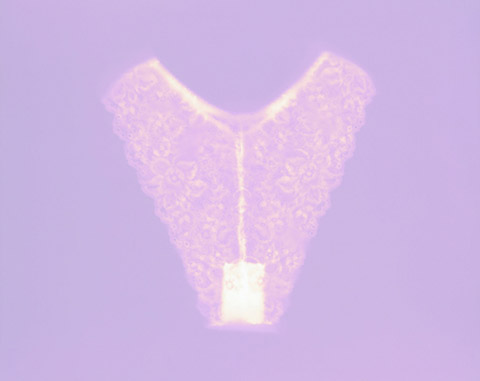
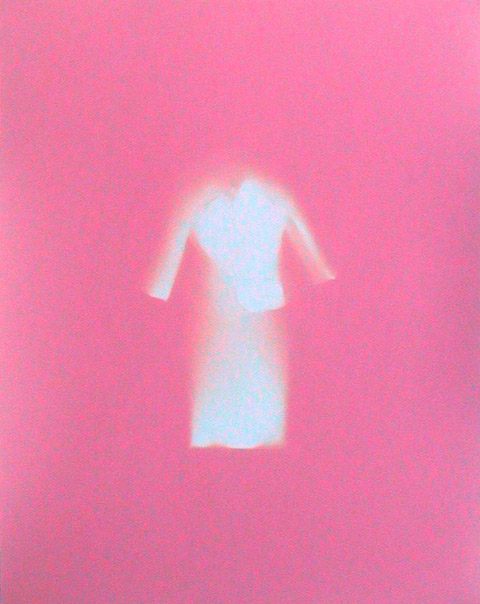
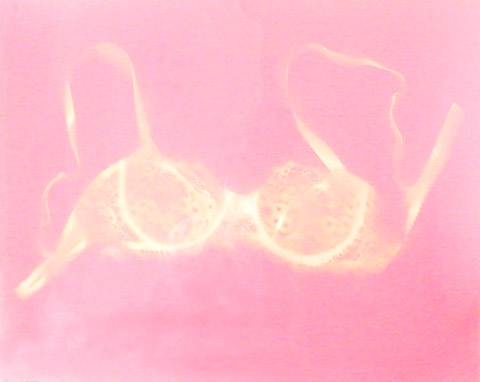
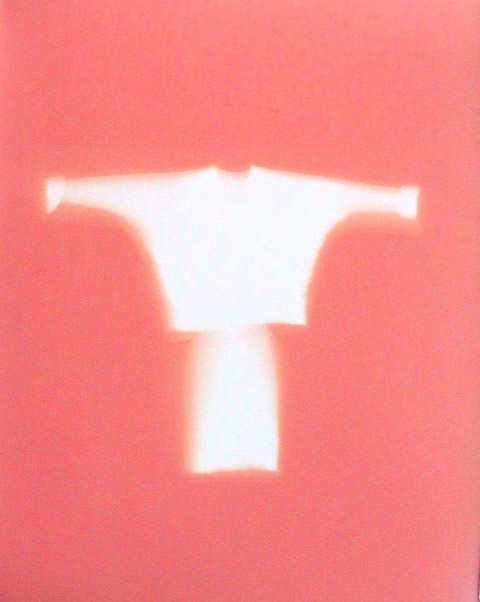
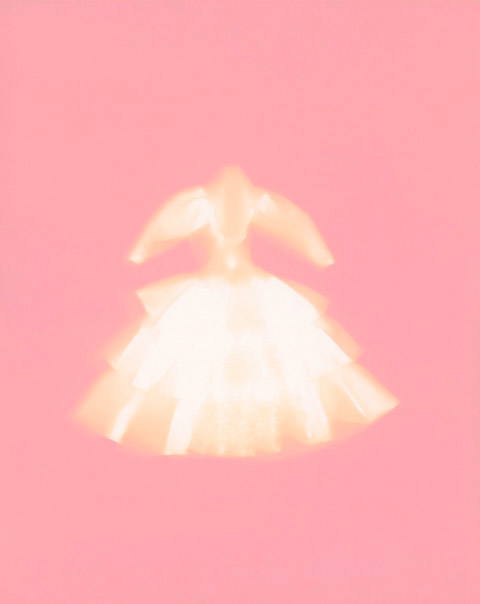
Husband-and-wife duo, F. & D. Cartier started working together in 1998. They are well known for their pink-hued photograms—cameraless photographs made by placing personal objects, in this case feminine fashion items, in contact with a black-and-white photosensitive paper surface. The result are these sexy and dreamy images which can be seen in their book Roses.
F. & D. Cartier are represented by hous projects in New York.
John James Audubon, a French-American ornithologist (a person who studies birds), became internationally known in the 1800s for his ambitious goal of painting and documenting all the different bird species found in the United States. His methods, however, weren’t exactly bird friendly. To prepare his subjects, Audubon would first kill them using fine shot and then fix them into striking poses using wire.
Ornithologists these days have a much better way of capturing birds for science: mist nets. The nylon mesh nets virtually invisible to birds when suspended between two poles, and allow scientists to capture, study, and release the birds unharmed. Photographer Todd R. Forsgren wants to be the modern day equivalent of Audubon. His project titled Ornithological Photographs consists entirely of photos showing different birds caught in mist nets.
Forsgren, a professor at the Maryland Institute College of Art, shoots the photos in different countries and environments using a 4×5 view camera. If the images look a bit look studio pictures to you, it’s because he hauls around a mobile studio of sorts.
His packing list includes studio lights and a light box, and he aims to finish his shoots in less than 10 minutes to minimize the stress and discomfort experienced by the birds.
P.S. Audubon is actually the person behind the world’s most expensive book. A copy of Birds of America, a book containin 435 of Audubon’s paintings, sold earlier this year $7.9 million!
Image credit: Photographs by Todd R. Forsgren and used with permission
On the website for The Sustainable Practice in the Arts, Robert Adams was asked, “What part does an artist play in society.” This was his answer:
First we have an obligation simply to be the citizens we want everyone to be – informed, engaged, reasonable, and compassionate. Then as artists we are called historically to a double mission, to instruct and delight, to tell the truth but also to find in it a basis for affirmation.
With this in mind, it is interesting to look at this year’s finalists for the prestigious Prix Pictet – a $100,000 award described as “the world’s leading prize in photography and sustainability.” When it comes to such vexing global problems, it seems extraordinarily difficult to fulfill Adams’ “double mission.”
Yesterday a friend of mine, Sarah Newman, sent me a link to her Kickstarter Project: Imaging Sustainability. Sarah’s plan is to photograph the sustainable urban landscape of Malmö, Sweden. She writes:
Here in the U.S., renewable energy is often kept outside of the energy-consuming cities – making energy production (and consumption) less visible in our landscape and in our consciousness. In Malmö, I will photograph green architecture and design, and people within the community, while conducting independent research on environmental and social sustainability.”
By showing us what the sustainable landscape might look like, Sarah is providing a valuable service. The challenge, I think, is to fulfill Adams’ double mission – to both instruct and delight.
Earlier this month, we shared the crazy story of a DSLR that sat at the bottom of a creek for three years before being returned to its owner, thanks to the fact that the memory card was still readable. In case you were wondering what the camera looked like after chillin’ in such an unfriendly environment, here are some photographs of it sent to us by owner Michael Comeau.
Comeau took quite a few photographs from the standard angles seen in camera product shots (the kind attached to press releases when new models are announced). The camera is coated with a layer of mud and rust, and the 18-55mm kit lens has pretty much fused to the body (a shame, since Comeau wants to know what the sensor looks like).
Here’s the hero of the whole story: the SanDisk Ultra II CompactFlash memory card that was still fully operational. Apparently the camera did a very good job at protecting its important parts:
Some people who find themselves on hard times try to have themselves arrested so that they can eat for free in prison. It turns out that people in Southern California can do the same thing for a free studio-style headshot. Cat Cora, a chef on the Food Network show Iron Chef, recently got booked for a DUI after drinking three beers and getting behind the wheel. Her mugshot wasn’t taken until 11 days after her arrest, so Cora had time to have her hair and makeup done in order to pose for a picture-perfect mugshot. When the photo made its way onto the Internet, websites began to comment on how it looks more like a studio portrait than a police station mugshot.
David Hobby of Strobist wanted to learn more about the lighting used, so he got in touch with Martin Alexander of the SBPD. Hobby found that it’s a simple rig that DIY-oriented photographers can easily recreate at home.
We got in touch with Alexander as well, and he tells us that after the police department switched to digital mugshots about 15 years ago, it was the vendor who recommended that they also install a lighting system in addition to the camera and software.
After purchasing some continuous fluorescent bulbs, they had boxes built to house the lights. Even though the studio lights have separate wiring from the room’s lights, the mugshot-takers generally leave all the lights in the room on while snapping the pictures.
The setup was also designed to be extremely simple, requiring no camera knowledge to use. Alexander tells us,
We don’t have a dedicated photo person that operates this system; it’s available to all staff, so the system is designed for simplicity. Even if an operator did have photo skills, there is not a lot they can adjust; just turn the lights on, have the subject stand against the wall, and then you click the button on the computer screen. I spoke with the person who did Ms. Cora’s photo, and she knows nothing about photography.
Here are some photographs of the mugshot studio. On both sides there’s a light box filled with fluorescent bulbs:
Attached to the ceiling is a Canon Rebel DSLR (why doesn’t the DMV just use DSLRs?) that’s tethered to a PC running proprietary mugshot software. While the camera, PC, and software are all updated pretty regularly, the lighting setup has remained the same throughout the years.
Who knew we’d be able to learn a thing or two about headshot lighting from a police department mugshot studio?
Image credits: Photographs by Martin Alexander and used with permission
Bucky Miller was born in Phoenix, Arizona in 1987 and continues to use the Phoenix metropolitan area as a home base to present day. He received a BFA in photography from Arizona State University in the spring of 2012 and studied one summer at the Visual Studies Workshop in Rochester, New York. Miller is admittedly obsessed with the syntax of photography. He has recently undertaken curatorial endeavors around Phoenix and is currently at work on his first photographic novel. The son of an architect and an artist, Bucky is named for Buckminster Fuller (who he also considers an influence).
Garie Waltzer was born in New York City and received her BFA in painting and MFA in photography from State University of New York/ Buffalo. She is a recipient of numerous artist grants from the National Endowment for the Arts and the Ohio Arts Council, including the 2011 Ohio Arts Council Award for Excellence in Photography, and most recently, the 2012 Cleveland Arts Prize. Waltzer developed the photography program at Cleveland’s Cuyahoga Community College where she chaired the department and taught for many years. Her work is included in the numerous private, corporate and museum collections, including the Cleveland Museum of Art, the Robert B. Menschel Media Center, and Houston’s Museum of Fine Art. She is currently working on Living City, a project examining the cultural landscape of urban civic spaces.
Born in East Africa, Zed Nelson graduated from Westminster University, London, with a degree in photography and filmmaking. Having gained international recognition and numerous awards as a documentary photographer, Nelson’s recent work adopts an increasingly considered, in-depth approach to reflect on contemporary social issues through long-term personal projects. Nelson’s seminal book Gun Nation - a disturbing reflection on America's deadly love affair with the gun – was published in twelve countries and awarded five major international photography prizes. Love Me, Nelson’s second book, reflects on the cultural and commercial forces that drive a global obsession with youth and beauty. The project was recently nominated for the Deutsche Börse Photography Prize. Nelson’s latest project Hackney - A Tale of Two Cities explores the London borough that he has lived for most of his life. Nelson’s work has been exhibited at Tate Britain, the ICA and the National Portrait Gallery, and is in the permanent collection of the Victoria & Albert Museum.
Всегда интересно посмотреть на работы, похожие на твои, но другие.
"Contours is a study of the landscape that can be found in the suburbs of Paris; it looks at how it is used by its citizens and managed by its state. It tries to get past the stereotypes that have come to be associated with the territory and document it as a region in its own right, not only as a periphery. The work focuses on a selection of natural areas, which illustrate the relationship between the landscape and those that form it." - Shane Lynam
Annie Leibovitz jumped into the role of professional photographer as a kid in her second year at the San Francisco Art Institute. She was friends with Jan Wenner who was starting Rolling Stone, and he said, “How’d you like to take some pictures? We’ve got something set up with John Lennon in New York. Come with me.” Her portrait of John Lennon was on the first issue of Rolling Stone, and she was off and running.
You can’t avoid coming to terms with Annie. She’s a powerhouse, but she wasn’t easy to work with, and I’ve heard endless tales about her mistreatment of her assistants.
When I took these pictures, Annie was certainly not easy. We had called her studio to arrange a session, and she agreed to it. I was coming back from London and our appointment was a few hours after I got back. I had just landed when I got a call from her studio saying, “Can you come an hour earlier?”
My response was, “You know, I’ve been on a plane since dawn in London. I really need to go home and take a shower, just in courtesy to Ms. Leibovitz.” They said, “No, she needs to see you now.” But I went home anyway and arrived at her studio at the time that w’d arranged—not an hour earlier. She wasn’t pleased.
She knew my work because she had worked for the Allgemeine before I did and they were sending her weekly copies. Her first comment was, “I’m not going to do any of your crazy stuff for you.” I said, “Hey, that’s up to you. We’re supposed to do a story together. If you don’t want to do any stuff at all for me, that’s okay too.”
“What do you want from me?”
“Annie, you’re in the same business I’m in. I want from you exactly what you want from every one of your subjects—endless time, endless cooperation, and let’s make it fun. Because the magazine is doing a cover story about you. They’re giving you full space, and as you know, it’s one of the best magazines in the world. But if you don’t want to play the game—I’m out the door.”
“Okay,” she says. “I get it. Meet me tomorrow morning at my apartment, and you can shoot whatever you want. You’ll work around my schedule, and we’ll do this.”
I was a bit jet-lagged, but I arrived the next morning at her apartment at 7:00 am. The doorman told me that she wasn’t there. I waited for a bit more than an hour, and she finally arrived in a limousine, because her girlfriend Susan Sontag lived down in the Village and Annie’s apartment was at 107th and 5th Avenue. She showed me through her apartment, and it looked like some decorator had made up the place and nobody really lived there. “I’m not really interested in shooting here,” I told her. But the day before, I had gotten a tour of the studio, and it was far more interesting. I suggested we do some shooing on the roof of her studio building as the light was coming up.
She agreed. My two assistants and I started setting up lights and taking test shots at 4:30 in the morning. When she arrived an hour or so later she was in the foulest mood imaginable. We did a few Polaroids, and she wasn’t being cooperative, and at some point I turned to her and said, “Annie, I can’t do this without you.”
At that point she suddenly relaxed a bit and began to work with me. This was on a Friday, and we had agreed to two more days of shooting. On Saturday we agreed to meet at her place in Sagaponack out in the Hamptons where she and Susan had a house. We agreed to meet at 7:00. So I got up at 3:30 in the morning, met up with my two assistants, and drove out to her house. No Annie. At 8:00 there was no Annie. Finally she rolled up in her little sports car and apologized for being late. “Sorry, I was stopped by the cops. I was speeding.” But from that point on everything went well. We worked on the beach, we worked in the backyard of the house, and we went to lunch. She couldn’t have been more charming.
She was about to go to London to shoot Mick Jagger. But she agreed to give me one more day when she returned. I told her that for the last session I wanted to get a photograph that was taken from the vantage point of one of her subjects. “I know you photograph lots of celebritites. I want to photograph behind one of those people, set up my lights, and be looking past that person’s cheek or face at you, Annie, shooting them, surrounded by your four or five assistants.”
She replied: “I’m shooting Laurie Anderson in about eight or nine days. If it’s okay with Laurie, you can come in with your assistants.”
When she was in London, her studio called and said, “Laurie’s okayed it, so everything’s a go.” But then, the day before the shoot, while I was in the middle of a session with the violinist Midori, I got a call saying that, “Annie has decided that you can’t shoot with anything but a hand-held camera. No lights.”
In the meantime I had hired a stylist and created an entire body suit for Annie to wear, made up of her iconic images cut from one of her books. It was really Rococo and gorgeously done. The stylist worked on it for the whole period when Annie was shooting Mick in London.
When I arrived at the studio for the shoot, I showed her this thing and she resonded, “What, are you crazy? I’m not going to put that thing on. By the way, what do you need two assistants for? You’re only going to work with a hand-held camera. Get that second assistant out of my studio.”
It wasn’t exactly “Hello. How are you? Nice to see you again.” So I sent Franco away and worked for 45 minutes with Andy, taking shots of Laurie, Annie, and Annie’s assistants with my Widelux and the Leica. Once I was done, I said goodbye to her studio manager at the desk and left without distrubing her.
But by the time I got back to my studio, there were two phone messages on the machine, one from her assistant asking me to call Annie immediately, and one from Annie saying, “How dare you walk out on me without saying goodbye?”
I called the studio, and they told me that I couldn’t speak to Annie just then, but a few minutes later she called me back. “Annie,” I said. “Give me a fucking break. Two days ago I was in the middle of a shoot, and you called and changed the whole game plan. Laurie had okayed this. You threw out my assistant. What do you mean, I walked out on you? I said goodbye to your people behind the desk, but I wasn’t going to stop you in the middle of shooting.”
At some point she backed off. “Sorry, I’m a bit schizoid,” she said. “Well, at some point let’s go out for a drink or something.” “Okay,” she said, but I never called her for a drink, and she never called me, either.
In the end, the Allgemeine ran a big story with her picture on the cover and six pages inside. But she was hard work. I also took some pictures of myself in that suit she wouldn’t wear which are quite funny. My feeling about Annie is that she’s a man who just happens to be in a woman’s body. She’s about six feet two and she’s got hands that make mind look like baby hands. She’s got this macho approach to everything. But she is an amazing photographer, and the image of Yoko and the naked John Lennon wrapped around her dressed body is one of the truly remarkable portraits of the 20th century.—Abe Frajndlich
Over a span of 30+ years, Abe Frajndlich has been able to photograph many influential photographers such as Ansel Adams, Richard Avedon, Henri Cartier-Bresson, Louise Dahl-Wolfe, Chuck Close, William Eggleston and Inge Morath. Portraits of these photographers and many more are included in the book, Penelope’s Hungry Eyes, along with lively commentary describing his experiences photographing these masters of the medium.
самое страшное это не судья сырова, не патриарх кирилл, не хоругвеносцы, не омон и не путин, а то что 44% населения страны (по данным левада центра) считают приговор справедливым. в том числе, моя семья, например. а я все жду конца, как в "приглашении на казнь" - когда картонные декорации рассыпятся.
Это Алишер. Он живет в Риге с женой Юлей и сыном Даром; в Москве Алишер бегает с Moskva River Runners. Всегда очень сложно представлять человека, которого я, кажется, знаю так хорошо - и при этом ни разу толком до этого “интервью” неразговаривала, и ни разу не встречалась с ним вживую. Алишер очень внимательно и спокойно объясняет многим - по крайней мере, я это замечаю онлайн - про свой опыт и возможности; про травмы и техники бега. После своего неудачного опыта этим летом я поняла, что мне пора учиться чему-то, если я серьезно отношусь к своему делу (что это за дело, я еще не поняла, хехе). Попросить Алишера написать про свой опыт мне хотелось очень давно, но сейчас, когда я “учусь” бегать заново - это стало просто необходимо. Сказать, что в беге учиться на чужих ошибках куда полезнее, чем в личной, например, жизни - ох-хо, ничего не сказать. Можно избежать боли и грусти на раз-два, если прислушиваться к таким людям, как Алишер, и постараться адаптировать его советы под себя - и он, кстати, сказал, что готов отвечать на все вопросы, если они будут. Спасибо!!!
С одной стороны, про многое ты уже писал в своем блоге, и это, наверное, не хочется повторять, но если ты можешь написать небольшой рассказ именно про свои тренировки и про то, как ты относишься к бегу и всей известной тебе механике и химии.
Постараюсь не повторяться. Ну или дать больше света на некоторые детали.
Мне интересно все - от начала - как ты начал бегать и что было главной целью; что тогда ты делал, как это происходило; “споткнулся” ли ты на чем-то и если да - что это было; что ты знаешь про техники бега, какие книжки ты читал, по твоему опыту - что важно?
Не буду рассказывать подробности про детство и дурацкие болезни, но я никогда не был спортивным, до 15 лет занимался только школой, музыкой и информатикой. В 15 лет в мою жизнь ворвались танцы: хип-хоп, брейк, хаус. Ворвались и остались до 21 года. Это время было сумасшедшим, ярким. Я прошел путь от школьных дискотек, до ночных клубов, я занимался танцами профессионально, мы гастролировали по окрестным городам, зарабатывали на жизнь.
Потом увлекся дизайном, все завертелось-закрутилось и я оказался в Москве. Там было не до танцев или спорта. Горы работы, неопределенность, постоянный стресс, плохое питание. Понадобилось три года чтобы хоть как-то расправить плечи и поднять голову
Подняв голову я обнаружил что на жизнь денег хватает, а рядом любимая жена. И пора бы немного выдохнуть и найти какое-нибудь хобби по душе. Пробовал заниматься сноубордом, купил велик и иногда ездил на нем на работу, научился кататься на роликах, лонгборде, мы ходили в походы и чего только не делали. Все вроде бы получалось и нравилось, но какого-то внутреннего удовлетворения я не находил. Пока 3 года назад не побежал.
Отлично помню эту пробежку. И то как болели суставы. Спуститься по лестнице в метро было просто пыткой. Я не придавал этому значения. В голове крутилось: “Ну, типа нагрузка, должно болеть”. К велосипеду относился также. “Чтобы ехать надо крутить педали” — сам не знаю почему так получилось, но я не считал важным читать книги и чему-то учится. Это было серьезной ошибкой.
Дошло до врачей, рентгенов и МРТ. Ревматолог сказал, что про бег на расстояния больше одного километра надо забыть. Также надо забыть про прыжки на сноуборде и вообще про все где есть прыжки. Все что можно — лыжи и плавание. И еще надо сбросить вес. 85 кг — давали слишком большую нагрузку на суставы. Несколько дней на душе было так плохо, что я с трудом ходил на работу. Но жизнь не заканчивалась, а колени болели. Надо было что-то делать… Кроме того мы с Юлей решили завести ребенка. Я ощущал себя в начале какого-то нового пути. И мне хотелось быть готовым к нему.
В итоге я подробно изучил своего нового друга по имени Артроз, записался в бассейн, купил лыжи, научился плавать. Каждый день делал легкую зарядку, перед плаванием разогревался. Отказался от вегетарианства. До травмы несколько лет не ел никакого мяса и чувствовал себя отлично. Но врач сказал, что хрящам нужны вещества, которые можно получить только из мясных косточек и таблеток. Холодец стал гостем холодильника. Купил колючие наколенники из собачьей шерсти и спал только в них, оборачивал ноги иппликаторами. Ел Террафлекс и втирал вонючий Хондроксид.
Около 10 месяцев понадобилось чтобы щелчки и боль в коленях прекратились. К весне уже мог сносно приседать 10-15 раз. Но вес оставался на месте. Видимо переход на мясо дал о себе знать.
Весной решил попробовать еще раз. Но теперь хотелось подойти с умом. Не стал сразу бегать огромные километражи, расписал плавную программу. Установил Runkeeper и решил готовиться к полумарафону. Начал читать книги. Первыми книгами о беге стали “Учись бегать быстро и без травм” Гордона Пири и “Бег ради жизни” Гильярда. Самое главное что мне нужно было сделать это изменить технику бега, чтобы на колени нагрузка была минимальна. Для этого следовало увеличить каденс, перейти с heel strike на midfoot strike, сбросить вес и сменить обувь. Пири писал что современные кроссовки с кучей амортизаторов провоцируют бег с пятки, и чтобы научиться бегать правильно надо бегать в обуви с максимально тонкой подошвой. Так в моем гараже появились VIbram Five Fingers. Перестраиваться было сложно. Икры оказались не готовы. Пришлось прокачивать их отдельными упражнениями. Но самое главное, что я почувствовал заново побежав — разницу между болью в суставах и мышцами ноющими от бега.
Раньше я бегал в каком-то угаре, драйве. Просто молотил ногами землю. В прошлом году моими принципами в беге стали легкость, акуратность, внимание к деталям, концентрация на процессе. Вибрамы и книги помогли мне научиться бегать правильно, но при увеличении дистанции стопы очень уставали. Поэтому длинные я все же начал бегать в более привычных кроссовках: в прошлом году это были Reebok Zig-tech Nano, а в этом Nike Lunarglide+ 3.
Прошлой осенью я пробежал полу-марафонскую дистанцию. Боль в коленях осталась в прошлом. Я весил 65-67 кг (правда за зиму опять набрал 75:). И чувствовал себя, как сейчас модно говорить, “completely unstoppable”.
В этом году я готовлюсь к марафону и осваиваю технику Chi-running которую разработал ультрамарафонец Дэнни Дрэйер. Основные принципы техники — бег без напряжения и травм; управление скоростью без изменения каденса; расслабленные, но скоординированные руки и ноги; низкое энергопотребление; бег за счет энергии, которая появляется в скручивании мышц спины и управляется прессом. Очень советую всем бегунам прочитать его книгу.
Меня особенно волнуют мишки харибо как источник энергии во время длинных тренировок; дополнительные тренировки в зале и на что они направлены; сколько часов в неделю ты тратишь на спорт и зачем; насколько Юля разделяет все это (я знаю, что она тоже занимается, но насколько интенсивно?). Как это - бегать по ЧСС и что это дает?
Про мишек! Аэробная нагрузка расходует углеводы. (Точнее не их, а продукты их переработки, я не химик, поэтому тут могу налажать). Кончится топливо — кончится легкий быстрый бег. Источником энергии станут мышцы и жир, а они недостаточно быстро распадаются чтобы давать достаточно энергии для хорошего бега. Да и мышцы очень долго и сложно развиваются, тратить их на бег жалко. Когда кончается горючее возникает ощущение, что ты словно врезаешься в стену. Пульс учащается, скорость падает. А мармелад это и есть углеводы. Я пару раз “бегал с мишками”, но на самом деле жевать их на бегу не очень удобно. Углеводные гели удобнее в сто раз. В них нет ничего вредного, по сути этот тот же джем, мармелад или варенье в тюбике.
Про зал. Читая книги про подготовку к соревнованиям я понял для себя важную вещь, чтобы хорошо бегать надо не только бегать. Как только я добавил в свою программу силовые тренировки в зале, домашние тренировки с Nike Training, вело-покатушки и йогу я стал бегать легче и быстрее. Можно подобрать такие комплексы нагрузок, которые будут развивать как мышцы необходимые в беге, так и весь мышечный каркас, обеспечивать стабильность и плавность работы всего тела. Сейчас у меня примерно 14 часов нагрузок в неделю. Чередуя легкие аэробные и тяжелые интенсивные дни можно настроить организм так, чтобы он успевал восстанавливаться, но не терял тонуса.
Еда очень важная вещь. Есть хорошая книга “Питание для спортсменов” Борисовой О.О. — она мне помогла понять многое про механизмы питания. Но самое главное: голодание, диеты, исскуственные ограничения — это все не работет, и неизбежно ведет к срыву и проблемам. Чтобы правильно питаться надо менять свой lifestyle, учиться понимать какая пища оказывает какой эффект и когда нужна, учиться отличать здоровую еду от вредной, учиться готовить здоровую еду, вообще внимательно следить что когда и зачем мы употребляем. Т.к. я довольно интенсивно тренируюсь я восполняю недостатки питания добавками: мультивитамины, изотоники, белки, углеводы. Очень хорошая штука для профилактики износа суставов — пищевая добавка Глюкозамин хондроитин.
Про пульс. Если человек хоть раз видел программу подготовки к любой дистанции, то он обращал внимание что тренировки различаются по интенсивности. Чтобы тренировка соответствовала задаче нужно держать организм в определенном режиме. Есть разные режимы нагрузок: джоггинг, интервалы, аэробный бег, анаэробный: лактатный, фосфатный и т. п. Есть разные метрики, темп, дистанция, пульс. Ориентируясь на пульс можно оценить свой прогресс (посмотреть на соотношение темпа и пульса), можно понять восстановилось ли тело после нагрузок и нет ли в организме проблем (если пульс в спокойном состоянии сильно выше нормы это тревожный знак). Если рассчитать зоны пульса можно дозировать нагрузку на соревнованиях и тренировках. И вообще пульс и темп это как уровень бензина и спидометр на панели автомобиля. Если их не видеть обязательно попадешь в неприятности. Я не буду рассказывать все подробности лучше посоветую книгу. “Лактат и тренировки на выносливость” Питера Янсена. Для сбора и аналитики данных тренировок я пользуюсь трекером Garmin Forerunner 610 и cервисом Garmin.Connect — эти штуки разработаны для профессиональных спортсменов и мне нравится, что они могут дать мне всю необходимую информацию о тренировках. Найк+ я тоже очень люблю и всегда включаю, но это для меня скорее мотивирующая игра и общение с единомышленниками, чем способ анализа тренировок. Кстати, добавляйте меня в друзья в Nike+ — посоревнуемся.
Про Юлю. Спорт это заразно. Невозможно каждый день видеть как муж бегает и не захотеть попробовать:) На самом деле Юле больше нравится заниматься в зале, чем бегать. Но она решил пробежать десятку и сейчас выполнят программу подготовки My.Asics.
Есть ли в Риге беговые клубы? Есть ли у тебя опыт соревнований / забегов?
Какие у тебя цели по времени? Зачем вообще это тебе нужно, по-честному?
В Риге есть. Но там все сайты на латышском, а его пока не понимаю. Чем не повод выучить? :) Я пробовал заниматься у местного тренера, но меня немного испугало то как он хотел изменить мою любимую программу на My.asics, плюс хочется быть независимым в выборе времени тренировок. Так что я иду по этой дороге один. Единственный клуб в который я вступил, и который оказался мне близким по духу и настроению это Moscow River Runners. Каждый раз, когда бываю в Москве, обязательно прихожу на их пробежки.
В соревнованиях участвую только чтобы немного пощекотать нервы, ни на какие места не рассчитываю: т.к. смотрю на свой прогресс реалистично. Был неприятный опыт с пробежкой, которую устраивал Адидас в прошлом году — огромные очереди. После нее я почти решил не участвовать в массовых забегах. Но здесь, в Риге, организация совсем на другом уровне. Ну и очень большие надежды на Moscow Run 16-го сентября. Никаких особенных целей по времени я себе не ставлю. Приятно когда получается в новом году быть быстрее чем в прошлом. Пока получается. Когда-нибудь это перестанет происходить и это нормально. Но мне хочется чтобы этот момент настал попозже:)
Зачем нужно? Ха, по честному? Чем больше я над этим думаю тем больше ответов появляется. Если их обобщить до какой-то философской абстракции, то можно сказать, что бег дает мне энергию для ежедневных дел и жизни в целом, дает спокойствие в трудных и конфликтных ситуациях. Когда я занимаюсь бегом я гораздо активнее и на работе и в домашних делах, ощущение способности развивать тело проецируется на любую задачу и уже ничто не кажется сложным и невозможным. (даже работа над дизайном Одноклассников:) Ты просто затягиваешь шнурки и делаешь это. Про спокойствие и выдержку тоже интересно получается: раньше я был очень вспыльчивым и излишне эмоциональным, заводился по любому пустяку. Теперь, в процессе бега, где-нибудь на 21-м км из 24-х я ощущаю спокойствие, в этот момент нет смысла переживать и волноваться. Обратно дороги уже нет и ты спокойно бежишь подчиняясь ритму своего сердца и дыхания. Психологический опыт получаемый во время бега меняет жизнь. Эти трансформации не были моей целью, я всего лишь хотел быть здоровее и меньше весить, чтобы больше наслаждаться жизнью и быть способным делить эту радость с семьей. Но то что происходит сейчас, открывает для меня совсем другой смысл бега.
А если забить на философствование и опуститься на землю то бег это возможность: 1. Отдохнуть от людей, проести время наедине с собой. 2. Построить красивое, гармоничное, гибкое тело, на которое не противно посмотреть в зеркало. 3. Воспитать силу воли, философское отношения к жизни, проработать понимание постепенности развития и конечности своих сил. 4. Избавиться от психологического стресса, выпустить нереализованную агрессии. 5. Купить много ярких шмоток и кроссовок :) 6. Разобраться в гаджетах, сервисах трекинга, потешить своего внутреннего контролфрика и ачивера. 7. Общаться с единомышленниками в инете, клубах и на соревнованиях. 8. Жрать всякие вкусняшки и не думать о весе. 9. Избавиться от вредных привычек. 10. И самое важное получить заряд энергии для активной работы днем и отдыха с семьей.
Если ты можешь сделать плейлист из 10-15 песен на пробежку, было бы круто.
У меня довольно странный музыкальный вкус и высокие требования: обязательно легкий не долбящий ритм и 180 bpm. Ровный ритм 180bpm вынесет мозг любому бегуну. Поэтому нужны треки со слабой долей — такие треки встречаются в стилях реггей, ска, фанк иногда хип-хоп. Такие треки найти непросто. Я прошерстил кучу беговых блогов и плейлистов, просканировал свою библиотеку специальной программой для оценки ритма Cadence — и вот мои любимые треки:
И заранее спасибо. Это та сторона “пацанского” бега, которая для меня пока что - потемки, и мне Очень Интересно!
Тебе спасибо :). Мне очень нравится рост популярности бега, все что устраивает Найк и ты. Я просто тащусь от возможностей, которые дают социальные сети и гаджеты. Но возможности не бывают без ответственности за их реализацию. Сейчас очень просто получить травму, обезвоживание и даже истощение не разобравшись до конца в вопросах техники и питания. Я всего лишь любитель и продолжаю читать книжки, экспериментировать, общаться с более продвинутыми товарищами, прислушиваться к своему телу. Все что я рассказал это мой личный опыт и применять его на себя (если захочется) надо внимательно и с осторожностью.
Известный американский писатель-фантаст Гарри Гаррисон, автор "Стальной крысы", "Фантастической саги" и многих других произведений, скончался на 88-м году жизни, сообщил сегодня официальный сайт писателя. "Покойся с миром, мой друг.
The next time you’re out in a non-light polluted place with your family and your camera, try using our galaxy as a backdrop. Hawaii-based photographer John Hook shot this ridiculously awesome photograph of him, his wife, and his daughter staring up at the Milky Way. As if that weren’t perfect enough, there’s also a shooting star photobombing the portrait in the lower right hand corner!
The photo was captured on the road to the Mauna Kea observatory on the Big Island of Hawaii, about one mile from the observatory’s visitor center.
Hook placed his Nikon D3 and 24-70mm lens (set at 24mm) down on the dirt road and aimed it up at the stars. His settings: ISO 1600, f/2.8, and a 30-second exposure time.
After focusing on the stars, setting the self-timer, and pushing the shutter release, his family hurried into the frame, held hands, and made their best effort to stand perfectly still for the duration of the 30 second exposure.
Ask any photographer what they're working on, and they're sure to tell you about their project. It's almost as if these days photographers don't take pictures any longer, they take projects. This being the internet, it would be tempting to simply find someone to blame. Pretend you're raising a question, and you'd be ready to go: "Have art schools (alternatively: galleries, bloggers, photographers, photobooks, everybody's grandmothers, whoever else you can think of) killed photography by insisting on projects?" But it's easy to see how little would be gained from that approach. Instead, it might be worthwhile to try to probe a little deeper. Find the rest of the piece here (Photograph kindly provided by Lisa Gidley - thank you!).
Thomas Jackson grew up in Providence, Rhode Island. After earning a B.A. in History at The College of Wooster, he spent much of his career in New York as an editor and book reviewer for magazines. It was his particular interest in photography books that led him to pick up a camera eight years ago, first shooting Garry Winogrand-style street scenes, then landscapes, and finally the staged work he does today. His work has been shown at Central Booking in DUMBO, Brooklyn, the Minnesota Center for Book Arts, Vamp and Tramp Booksellers, The Center for Books Arts and the Governors Island Art Fair. He lives in Brooklyn.
Joshua Dudley Greer received his BFA from the Maryland Institute College of Art in 2002 and his MFA, with distinction, from the University of Georgia in 2009. His photographs have appeared in The Collector's Guide to New Art Photography Volume 2, Flash Forward 2010, Smithsonian Magazine and Photographer's Forum. He has received grants from the Maryland State Arts Council, Tennessee Arts Commission and in 2012 was named one of the New Superstars of Southern Art by Oxford American. He is currently living in Johnson City, Tennessee where he is a visiting assistant professor of photography at East Tennessee State University.
Christoph Sillem was born in Germany. He grew up in Düsseldorf and graduated from the Bayerische Staatslehranstalt für Photographie in Munich. His work has been published internationally, including The Face, ID, Japanese, German and Russian Vogue, Vogue Homme International, magazin andSüddeutsche Zeitung Magazin. He lives and works in Paris.
No doubt your friends are as busy sharing their food snaps on Instagram as ours. And no doubt you're therefore as perpetually Pavlovian dog-style hungry as we are. Now, we don't know how we'd cope if those pictures came with real, baked-in food fragrances. Yet that's the elevator pitch for a new, prototype smell-capturing camera.
Li Jingxuan's prototype Polaroid bundles everything necessary to make an aromatic photo into a compact handheld unit. It would combine an electronic nose, with an instant inkjet-style printing system; dappling the photos with the scents detected by the electronic nose. The concept is certainly novel and a deserving recipient of Sony's approval (Li won the Sony China Creative Centre's 'most fun' award).
Smell remains the great unconquered territory of experiential media – mostly because it's difficult to combine fragrant oils in a manner that accurately reflects the source scent. This could be one reason that building everything into the one unit is holding back further development of the prototype. Or it could just be that they're distracted by their resultant perpetual hunger.
We're also wondering about the association with Polaroids: given the power of aroma to stimulate memory, is this prototype missing a trick with the camera's inherent immediacy? Perhaps uploading the scent metadata and associated photo to the cloud and partnering with a central production line of odour-enhanced postcards might be a better way forward. We know people enjoyed sending our Samsung Galaxy Lovenote postcards across the globe. So just think what an army of food Aromastagram-armed bloggers could do for the urban restaurant circuit.
Interspace explores the tension between the natural and the unnatural or, urban spaces in North Lawndale. What happens when these areas compete? Additionally, what happens to the urban figure when placed in this feral space existing in the inner-city environment?
The figure is no longer in the ghetto. They escape to a kind of ‘interspace’. This west side interspace is small, overlooked, underused and nearly lost. Abandoned space and empty lots are now areas of quasi-public/private ownership. Properties that were once the sites of derelict buildings become ‘no man’s land’ and soon volunteer plants and trees flourish and take over. These spaces are part dumping ground, part playground and part oasis to the residents of North Lawndale.—Kelly Kristin Jones
There are similarities, both aesthetic and psychological, that runs through the entire breadth of your work. Can you talk about the evolution of your work over time as you continue to revisit the same subject matter in varying ways? What separates the project Interspace from the others and how did it come to diverge from your previous work?
‘For the past handful of years I have committed my practice to my community and to making photographs that allow me to explore both this place and the relationships I have here. As Seasons changed and new ideas formed I have certainly altered the emphasis in my photographing (the spaces, the sitters, the camera equipment, etc.). This has been a continuous investigation of North Lawndale and of photography itself.’
‘Interspace was a rather dramatic shift for me. I was in graduate school at the School of the Art Institute of Chicago and was for the first time being confronted by some really powerful and interesting ideas about a more conceptual constructed photography.
‘The documentary way of shooting simply didn’t fly with most of the SAIC community and I was often condemned. People were very wary of me and of what I was doing simply because social documentary photography (the category that I was lumped into) has such a dark history. I knew that I would be challenged at SAIC – I just didn’t know how MUCH I would be challenged!
‘But in the end, this was a very necessary stage in my artistic maturation. Had I not attended this program and had I not worked with the people I worked with, I would have been content to continue to make images the way I always had – as someone standing in the corner waiting for something interesting to happen.
‘I still deeply respect the documentary practice and I still have great conceptual and aesthetic ties to documentary, but I’m more interested in how I might make a photograph instead of simply taking a photograph. Interspace was my (very small half-) step towards this way of photographing.’
In photographing your subjects within the more overlooked or unseen natural environment surrounding their urban environment are you creating a new space for your subjects? Is it an oasis or new reality?
‘These photographs and portraits prompt a new way of seeing – a new way of seeing the city and a new way of considering the figure. The Interspace series both reveals a stereotype and offers a tension. These spaces are not oases. Yes, they offer spaces filled with lush green growth but I am very intentional about including more than just the “ideal”. Looking closely at the images, bits of trash are revealed among the wild flowers and grasses. In the distance telephone poles and dilapidated buildings tell of a real location – not simply a utopia for the camera. These photographs, while visually seductive, are also disorienting.
‘Interspace is about the unfixed and unexamined (unfixed identities, unfixed spaces and unexamined environments). The interaction between the subject and their surroundings in my photographs challenges many of the stereotypes of the urban space and so in this way I am offering a “new” reality. Our urban space is too often pictured in a very narrow way. I am attempting to show an alternate vision of this space. I want to play with the idea of the oasis as well as pick at what an urbanscape “ought to” look like.’
The contrast between your subjects posture and clothing and the unruly, lush backdrop of nature creates a striking beauty and an interesting tension between the urban human figure and wild natural elements. Can you talk a little bit about this?
‘Confession: this all began by accident. I was out with my camera, play the documentary photographer and photographing three of my neighbor’s children as they played. The girls decided to show me the inside of their “clubhouse” which was in an empty lot at the end of our block. As I set up to make a very different sort of photograph I noticed one of the girls, Cedriana, cowering from a bee. I didn’t think, I just snapped.
‘I went on the make piles of photographs that day, however, when I scanned my film there was only one image that held my attention. THAT bee photograph! There was an intriguing tension between her gesture and the surrounding space.
‘The image held up in art school critiques, but when I showed the photograph of Cedriana to her grandmother the reaction was astounding. She was instantly enamored and as word spread, strangers wanting to tell me how much they liked my photograph often approached me. Cedriana enjoyed her weeks of neighborhood fame and I began to explore this idea and why it garnered the reaction that it did.’
What is the role of the portrait in your work? Taken from what would be considered their obvious familiar environment the viewer is left only with the immediate clues of their clothing, body language, and facial features to try and figure out who these people are and where do they live. Are you revealing something specific and personal about each individual subject or are you after something else all together?
‘I think my answer to this – my way of thinking about this – has changed over the past two years. I come from a documentary background. My work was very firmly grounded in this tradition with a deep desire to tell stories and make portraits. However, during the Interspace project in particular, I began to shift my approach to making photographs. I become much more interested in construction of the image. I wanted to pursue something beyond the individual.
‘I began to try to think beyond North Lawndale – could I make images in my neighborhood that were able to go beyond a particular kind of story?
‘Everyone photographed for the Interspace is someone with whom I have a relationship. These are my friends and family members and many have known me all of my life. It was important to me to work with loved ones for this project. I found that I was better able to experiment and play when I was confident that my sitter and I trusted one another.’
Where have you been drawing inspiration from for you artwork?
‘Katy Grannan, Viviane Sassen, Carrie Mae Weems, Rineke Dijkstra, Dawoud Bey, Edward Hopper, Henri Rousseau, the French Romantics… and, to be honest, I’m often amazed by friend’s facebook photographs and have drawn inspiration from many of my neighbor’s personal photo shoots in bathrooms, bedrooms and kitchens. Actually, I think we’ve influenced one another. I see my way of photographing mimicked in some of their facebook photographs too!
‘I spend a lot of time walking and driving around simply looking – I find that I often come up with new ideas while I’m behind the wheel. The process is never over and so after a shoot I always print out my images to bring to show the sitter. Many times after we’ve had a conversation about the work I will come up with a new concept or we’ll decide to reshoot. Those living room critique sessions have had a powerful impact on my work and its’ role in my community.’
На фотографии я очень печальна: вот что я делаю на тренировках в Беговом Клубе Nike+ в Парке Горького в то время, пока все бегают; у меня травма и мне больно и одиноко. Печальна я потому, что это было три недели назад и я еще не сходила ко врачу. Теперь я побывала у врача и раздаю всем печеньица, потому что у меня хорошее настроение. Если у вас что-то болит, то, во-первых, скажите об этом тренеру на занятии, и он сможет дать совет; если болеть не перестало и на следующий день - сходите ко врачу.
Вот две главные рекомендации, которые мне вчера дали:
Наташа Ростовцева, девушка, которая появилась в этом блоге больше года назад (вот тут) и рассказала про бег, посоветовала мне Удодову Наталью Юрьевну, врача-травматолога из Центра Физической Реабилитации.
“Удодова оказалась крайне вменяемая, разбирается в кроссовках, прокомментировала forefoot running (в положительном ключе), объяснила мне откуда у меня травмы, рассказала про технику и тп. В этом центре, кстати, проходит осмотры наша Олимпийская сборная и лечатся спортсмены.”
Андрей Мартынов написал мне письмо в рекомендацией в Московский Научно-Практический Центр Спортивной Медицины - и травмпункт при нем с хорошими травматологами и спортивными врачами.
“Место такое… немного страненькое, некоторые углы там, по-моему, последний раз в 50-х гг. ремонтировали, но во всем этом чувствуется некий олд скул, а врачи действительно хорошие. Плюс, за качество заведения может говорить то, что, попадая туда, непременно встречаю достаточно известных спортсменов отечественных, бывших футболистов сборной, в последний раз передо мной в очереди так вообще теннисист Андрей Чесноков сидел”
Еще Андрей посоветовал одного конкретного врача - Баркова Александра Александровича, который там работал: “Он занимался проблемами более масштабными, чем растяжения, но мне пару раз лечил переломы которые в обычных травмпунктах даже и “не видели” на снимках.”
Вот ссылка на профиль Баркова А. А.; Андрею кажется, что он сейчас работает вот здесь. Вот мобильный телефон (не знаю, работает он или нет) 8-916-120-15-12.
“Великолепный мануальный терапевт в Боткинской больнице (по образованию, врач-травматолог). У меня долго болело колено, и голень, оказалось, все дело в позвоночнике. Я ходила, правда, долго, около 5 месяцев (начались еще и проблемы со спиной), но теперь зато все прошло - и спина, и колени. Он кстати очень одобряет то, что я стала бегать. Если нужно, могу дать его контакты в личке.”
Just noticed a new study from Australian researchers in the Journal of Strength & Conditioning Research about the effects of post-match alcohol on recovery from rugby games. As the authors note (with Aussie understatement): Engagement in alcohol consumption is a … Continue reading →







 Известный американский писатель-фантаст Гарри Гаррисон, автор "Стальной крысы", "Фантастической саги" и многих других произведений, скончался на 88-м году жизни, сообщил сегодня официальный сайт писателя. "Покойся с миром, мой друг.