Shared posts

19 Mar 12:27

Android Wear: the age of Google smartwatches begins

by Chris Welch

After months of rumors, Google is officially entering the wearables market. On March 18th, 2014, the company unveiled a specialized version of Android — Android Wear — designed to power smartwatches and other wearable products. On the same day of its major announcement, Google also revealed that it's already signed on a number of hardware partners including LG and Motorola to help realize its vision.

Android Wear promises to deliver notifications, reminders, navigation directions. Google says it also puts a huge focus on fitness tracking. The first smartwatches running the platform are set to arrive this year. Google has already released a preview of Android Wear to ensure that smartphone apps are optimized with support for the operating system by the time it reaches consumer devices.

Google is officially getting into wearables. The company has announced Android Wear, a version of the operating system designed specifically for wearable devices. To start with, the system is made for smartwatches, and Google is moving aggressively to make itself the key name in wearables.

The company has released two videos that show off what the watch interface will look like, and from what we've seen, it's very impressive. In addition, Motorola and LG have already revealed their first Android Wear smartwatches, which look more attractive than any smartwatches we've seen to date. Motorola's first device is featured in the picture above and the videos below.

There are several key features that have been announced. Of course, fitness is a key component. Google says that you'll be able to get "real-time speed, distance and time information on your wrist for your run, cycle or walk." Naturally, that means Google Maps will be built in so that you'll be able to get directions directly from your wrist.

The company will also be using Google Now in the watches. Automatic, passive reminders will be sent to users via their smartwatch. The watches will also connect with Android smartphones so that you'll be able to get all the notifications that you want from whatever apps you have installed on your phone.


You'll also be able to say "OK Google" to perform voice searches, à la Google Now. Lastly, the company is teasing multi-screen functionality from the smartwatches that use the operating system. As an example, Google says that you can use a voice command to cast a video to your Chromecast or get a certain song to play on your phone. It's not hard to imagine more exciting uses for this technology as Google works to get Android into more hardware around the world, such as the connected smarthomes and cars of the future.

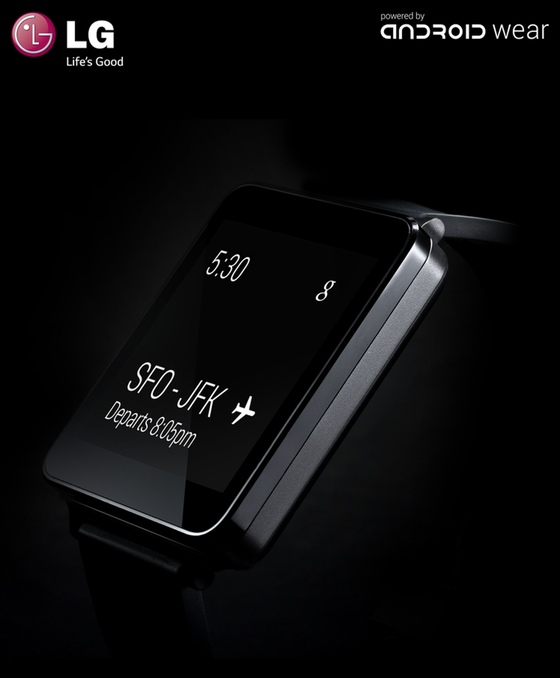
Google is working to make sure these watches aren't hideous: Fossil and other "fashion brands" will apparently offer watches using the operating system later this year. The company says it is also already working with current Android partners like Asus, HTC, LG, Motorola, and Samsung on wearables. LG's first device with Android Wear will be called the G Watch, and it's being produced in collaboration with Google just like the Nexus 4 and Nexus 5 before it. The device will be available in the second quarter of this year.


In many ways, Android Wear seems like it's built off of the work the company did on Google Glass. The operating system looks fairly similar to the interface used by the controversial wearable. It's possible that Google has transformed that work into something that's less polarizing.

We'll hear much more about Wear at Google I/O in June

Today's announcement follows comments from Android and Chrome chief Sundar Pichai at SXSW last week. He confirmed that the company was working on offering tools for developers and manufacturers to make Android better suited for devices such as smartwaches. In addition, Google recently purchased Nest, the makers of the Nest Learning Thermostat and the Protect smoke detector. It's still unclear what role Nest will be taking within the company.

Google isn't offering specific details on when we can expect to see more about Android Wear — or what other devices will use the system in the future — but a preview of the operating system is available now so that developers can make sure their app notifications will work with Wear.

We expect to hear much, much more about Android Wear at Google I/O from June 25th to 26th, which is just a couple of months away. Of particular interest is how Google plans to use Android Wear in other devices beyond smartwatches.

Update: Google informs us that the circular watch in the preview videos is Motorola's upcoming smartwatch. In addition, we've been told that LG will not be the first to ship an Android Wear smartwatch — it will be "one of the first." We regret the error.

Read more: Motorola and LG show off their first Android Wear smartwatches

18 Mar 18:01

Motorola, LG announce upcoming Android Wear smartwatches

by Dieter Bohn

Google has dropped a large wearable bombshell today in the form of a developer preview for "Android Wear," a smartwatch platform that works a bit like Google Now for your wrist. Now, various hardware manufacturers are coming out of the woodwork to announce their own plans to create wearable devices. LG announced first, with its G Watch due to arrive next quarter. The watch appears to be a simple, plastic square with an LCD touchscreen. In a statement, LG's CEO of mobile communications said simply that LG would "pull out all the stops in both design and engineering." LG also said it was "developed in close collaboration with Google," but stopped short of dubbing it a "Nexus" device.


G-watch-theverge-1_560

Motorola also has announced plans for a smartwatch. The company, which is about to be purchased by Lenovo, said in a blog post today that it would be called Moto 360. It has a round face and looks much more elegant than any smartwatch we've seen thus far. Motorola said that "all the core components are technically brand new," and already Motorola is showing off at least a couple of elegant, analog-style watch faces for the circular screen of the watch. Like the rest of the watches on the Android Wear platform, it will support voice commands, ambient alerts, directions, and notifications. Motorola is holding a live Google Hangout with the lead designer of the Moto 360, Jim Wicks, at 2pm ET on March 19th.

On it's Android Wear site, Google has listed other partners, including HTC, Samsung, and Asus. Fossil also released a carefully worded press release, in which it said it was "working together with Google supporting the extension of Android into wearables with Android Wear." Presumably that means it, too, is working on a watch.

No company has committed to an exact release date — though Motorola said it's would be available in a "variety of styles globally in Summer 2014." We don't yet know technical details like battery life, screen resolution, and all the rest. If they're anything like the concepts that Google has posted, each will have a color screen and will accept voice commands. Android Wear also has the necessary APIs for a wide array of sensors — as Google's Sundar Pichai announced earlier this month — so it's likely that at least some of them will support health tracking.

18 Mar 17:55

You Are Not a Product: Why Premium Pricing is Here

It made us angry to see great products like Google Reader shut down for no good reason. It was frightening when we heard The Old Reader might have to close its doors.

It’s easy to shrug your shoulders and just hope that there will always be great free software for content delivery. And if you do eventually have to join some closed social network, it can’t be that terrible, right? It might be controlled by a giant Internet company, but hey, it’ll be free, right?

Why Freemium is the Thing

Since we introduced Premium pricing for The Old Reader, we’ve gotten some thoughtful comments, as well as some pushback. Why should I pay for a technology that’s always been free? Isn’t the whole point of RSS that it’s part of the free Internet? I want to explain why we’re here and why we’ve adopted the Premium pricing plan ($2/month for 500 subscriptions with full-text search).

RSS has been neglected and abused, but as I’ve said before, I believe it will be the preferred content-delivery format once people tire of private/closed networks. Twitter, Facebook and the rest aren’t delivering content- they’re delivering you to advertisers. RSS doesn’t fit that model. That’s why the big players aren’t supporting it. 

Get Your Sponsored Content Somewhere Else

One of the most common questions we get is why didn’t we just bring in advertising. We settled on the freemium model because its the one that supports the service the best while doing the least harm. The more I use Facebook, Twitter, and other platforms, the more I see the subtle and insidious ways they control what I see, what I do, and what I can say, all in the name of advertising.

We’re trying to provide something the closed Internet doesn’t do- give you unfiltered access to the content you choose. The value in RSS is that it doesn’t try to make money by observing your online habits and feeding you sponsored content. But there are costs to making that possible.

We can learn more about you by building closed systems and tracking and targeting your every move and serving up ad content. But as we’ve said, ads introduce bias and distract from the primary purpose of RSS readers. RSS should aggregate the content you choose from the web, not push advertising to you.  

Besides, ads won’t work. Most of you won’t look at the ads. You will do what I do- block them with Adblock or some other tool or just flat out ignore them. Advertisements that don’t get attention don’t pay any bills. Then we’re forced to find ways to make those ads effective, or lose advertisers. That means putting our resources into forcing you to watch more ads, click on more ads, or some other gambit that has nothing to do with getting the content you want.

Finally, an RSS reader knows a lot about people’s interests, but we don’t want to exploit that fact. We should be using that information to find more stuff you like, not selling it to advertisers. We believe in privacy and do our best to protect it. To maximize ad revenues we’d need to violate your privacy to some degree.

It’s Not a Free Ride

But why should Premium users have to pay the bill for the free users? It’s important to remember that this is a social network, and the more friends you have to share with, the better. Not all your friends will be Premium/power RSS users. But the more people using the service, the more great content you can find. (And not sponsored content from advertisers.)

In addition, we hope that over time we are able to attract more and more of our free users to Premium accounts. We know it’ll be a small percentage but we’re working hard to build incredible functionality worthy of a small monthly fee. Besides, I know you’ve heard the “it’s less than cup of coffee” line a thousand times, but we REALLY think it’s a reasonable amount for the power you have. If you’re a power user, know that the money we make from your subscription will be plowed into development. Real, honest-to-goodness development.

I know that there are still free RSS readers available. The Old Reader was completely free until a couple weeks ago. And for the VAST majority of our users it still can be completely free. The freemium model is important because we’re focused on making this a sustainable service that won’t be closing.

In The Words of a Wise Man…

Our goal isn’t just to keep The Old Reader chugging along, but to build an online platform and community that is an alternative to the Facebooks and Twitters of the world. I think Dave Winer said it best when he wrote in our blog comments:

We have as a community, been boring the hell out of users.

This what happens when a product doesn’t introduce any new features for 10 years! :-)

I’m talking about RSS, as a product — vs its competitors, Twitter and Facebook, which have been actively pushing new goodies for users.

We are not doing that in RSS.

So if we want to get users on board, and other developers, we have to move.

Everyone’s been doing it for themselves, and no one has been willing to go first with a new feature that might delight users, and inspire their competitors to follow them.

If we want to have a good open alternative to Twitter and Facebook, we have to do some new stuff!

We’re committed to the open web and giving you the best possible reading experience without sneaking in ads. And we’re also not going to be using your private information to sell you anything or help others sell you anything. That’s not just a promise. That’s the principle behind Premium membership. 

18 Mar 16:05

Sharing what’s up our sleeve: Android coming to wearables

by Unknown
Most of us are rarely without our smartphones in hand. These powerful supercomputers keep us connected to the world and the people we love. But we're only at the beginning; we’ve barely scratched the surface of what’s possible with mobile technology. That’s why we’re so excited about wearables—they understand the context of the world around you, and you can interact with them simply and efficiently, with just a glance or a spoken word.

Android Wear: Information that moves with you 
Today we’re announcing Android Wear, a project that extends Android to wearables. And we’re starting with the most familiar wearable—watches. Going well beyond the mere act of just telling you the time, a range of new devices along with an expansive catalogue of apps will give you:
  • Useful information when you need it most. Android Wear shows you info and suggestions you need, right when you need them. The wide variety of Android applications means you’ll receive the latest posts and updates from your favorite social apps, chats from your preferred messaging apps, notifications from shopping, news and photography apps, and more. 
  • Straight answers to spoken questions. Just say “Ok Google” to ask questions, like how many calories are in an avocado, what time your flight leaves, and the score of the game. Or say “Ok Google” to get stuff done, like calling a taxi, sending a text, making a restaurant reservation or setting an alarm. 
  • The ability to better monitor your health and fitness. Hit your exercise goals with reminders and fitness summaries from Android Wear. Your favorite fitness apps can give you real-time speed, distance and time information on your wrist for your run, cycle or walk. 
  • Your key to a multiscreen world. Android Wear lets you access and control other devices from your wrist. Just say “Ok Google” to fire up a music playlist on your phone, or cast your favorite movie to your TV. There’s a lot of possibilities here so we’re eager to see what developers build. 


Developer Preview 
If you’re a developer, there’s a new section on developer.android.com/wear focused on wearables. Starting today, you can download a Developer Preview so you can tailor your existing app notifications for watches powered by Android Wear. Because Android for wearables works with Android's rich notification system, many apps will already work well. Look out for more developer resources and APIs coming soon. We’re also already working with several consumer electronics manufacturers, including Asus, HTC, LG, Motorola and Samsung; chip makers Broadcom, Imagination, Intel, Mediatek and Qualcomm; and fashion brands like the Fossil Group to bring you watches powered by Android Wear later this year.


We're always seeking new ways for technology to help people live their lives and this is just another step in that journey. Here’s to getting the most out of the many screens you use every day—whether in your car, in your pocket or, very soon, on your wrist.

Posted by Sundar Pichai, SVP, Android, Chrome & Apps
18 Mar 13:47

Metal Gear Solid V: Ground Zeroes Reviews Round-up

by noreply@blogger.com (Endless)


IGN 8/10 - Gamespot 8/10 - Game Informer 7/10 - Poygon 5.5/10 - Eurogamer 9/10 - Kotaku Yes

Destructoid 8/10 - OPM 8/10 - Videogamer 8/10 - CVG 7/10 - TheSixthAxis 6/10 - GamesTM 7/10

EGM 5/10 - Joystiq 3.5/5 - Gamereactor 7/10 - NowGamer 7/10 - GamesBeat 55/100 - PlayStation Universe 8.5/10

USGamer 3.5/5 - GameTrailers 8.5/10 - Push Square 6/10 - Gaming Bolt 7.5/10 - Play UK 85/100 - GamesRadar 3.5/5

God is a Geek 9/10 - Push Square 6/10 - One Hit Pixel B+ - NGB 9.5/10 - BT Games 4/5 - XBA 70/100

PlayStationing 4/5 - Metro 7/10 - Dualshockers 8/10 - Gamechup 7/10 - GameGrin 9.5/10 - Laser Lemming 3.5/5
18 Mar 13:15

IN FLUX: Brand new east-meets-west musical collaboration now available

by Elliot Gay

Ever wonder what it'd be like if Japanese video game music composers worked together with western composers? Wonder no longer.

Brave Wave Productions latest album, IN FLUX, features a host of big and lesser known names in the composer world, collaborating on some fascinating original tracks. Among the folks who contributed to the album are Manami Matsumae (Mega Man, Mighty No. 9), Keiji Yamagishi (Ninja Gaiden), as well as Akira Yamaoka (Silent Hill), Saori Kobayashi (Panzer Dragoon Saga), Eirik Suhrke (Spelunky), and many others. It's a killer list of amazingly talented composers and musicians, and if you have any interest at all in video game music you owe it to yourself to check out IN FLUX.

The album launched on March 4, and digital copies are available on Bandcamp for $10 and iTunes for $12. The whole thing runs 12 tracks long and is totally worth the price of admission.

Preview the album here, and be sure to keep your ears open for these guys and gals. I'm betting they have some cool stuff waiting in the pipeline.

IN FLUX: Brand new east-meets-west musical collaboration now available screenshot

18 Mar 05:24

Video


17 Mar 16:09

Four Play: Arrowhead Developing Gauntlet Reboot

by Adam Smith
Yousef Alnafjan

Oh yeah

Atari announced Roller Coaster Tycoon 4 today. You may have seen the trailer. At best, it’s a mobile version of an older game rather than an actual sequel – at worst, it’ll behave like a crooked carnie, with all kinds of freemium delaying and money-grabbing tactics. “Pay one dollar to add glue to the coconut shy or your visitors will bankrupt you!” Only a few minutes after seeing that trailer, I received notice that Warner Bros are releasing a new Gauntlet game. I’d donned my grumpy hat before I even clicked the play button beneath the video. And then the hat combusted as I saw that it’s being developed by Magicka maestros Arrowhead. And that it looks ace.

… [visit site to read more]

17 Mar 14:56

Google wants to let Android and iOS gamers play together

by Aaron Souppouris

Google Play game services, the backend that powers online features for many Android games, is expanding significantly to iOS. In an announcement timed for the Game Developers Conference this week, Google says it's bringing turn-based and real-time multiplayer capabilities to iOS. Should developers choose to integrate the service with their games, they'll be able to enable gamers with Android and iOS devices to play against each other cross-platform.

Play Games already supports iOS through a plug-in for the Unity game engine that supports achievements and leaderboards, and that plug-in will be updated soon adding the multiplayer element. An early version of a separate SDK for non-Unity games is also being released, but at launch it won't support multiplayer gaming. As we exclusively revealed recently, Microsoft is planning to expand Xbox Live to mobile platforms in order to facilitate multiplayer matchmaking, achievements, and friends lists. Xbox Live already powers some games on Microsoft's Windows Phone platform, but the new mobile push will focus on iOS and Android.

Both Google and Microsoft want to power cross-platform gaming

Google's decision to expand multiplayer capabilities to iOS, coupled with Microsoft's anticipated announcement, could signal a change in the way the big three mobile operating systems approach gaming. Until now each company did its own thing — iOS has GameCenter, Android has Google Play game services, and Windows Phone has Xbox Live — while third parties like Facebook power the social and leaderboard aspects of popular games like Candy Crush Saga.

It's early days for Google Play game services' cross-platform expansion. Although it's a popular game engine, a Unity plug-in won't cut it for many developers, and its non-Unity efforts are still in the early stages of development. We expect to hear more about Google's new cross-platform gaming this week at GDC. The company says "most" of the features will become available on Tuesday March 18th, and it's holding a developer day at the conference to try and persuade game makers to use its services over other companies'.

17 Mar 12:43

Pikachu is Japan's awesome mascot for FIFA World Cup 2014

by no-reply@gamespot.com (Martin Gaston)

Adidas and The Pokemon Company have announced that Pikachu is the official mascot for the Japanese football team for this summer's 2014 FIFA World Cup in Brazil.

Pikachu, indubitably the team captain, will be joined on the Pokemon squad by Meowth, Bulbasaur, Charmander, Squirtle, Chespin, Froakie, Fennekin, Pancham, Helioptile, and Litleo.

The promotion features Pikachu and pals dressed up in Japan's official kit for the tournament. The mascot for the tournament itself is a yellow and blue armadillo named Fuleco. It is unknown where Fuleco would fit on the Pokemon type chart, but it's probably a safe bet that Pikachu could beat him in a fight.

Espurr will not be there to terrify the opposition, sadly.

The 2014 World Cup begins on June 12. Japan’s opponents in the group stages include Greece and Columbia.

17 Mar 12:40

Alleged Bitcoin founder hires a lawyer in bid to 'clear his name'

by Matt Brian

While Newsweek continues to stand by its claim that Dorian Satoshi Nakamoto is the founder of Bitcoin, the man at the center of the allegation has decided to lawyer up. Despite having already denied his involvement, Nakamoto has now shared a personal statement with Reuters to "clear [his] name" and make it clear how much he has suffered from Newsweek's report. Once believed to be in control of a million dollar Bitcoin fortune, the Californian resident detailed his struggle to find work, adding that the article has damaged his prospects of finding a job and caused him and his a family "a great deal of confusion and stress." Apparently, he even cut his internet connection last year, citing financial issues. Nakamoto says it'll be his first and final public word on the matter, but given the fact he's sought legal counsel, the supposed father of Bitcoin may have more to say behind closed doors.

Dorian Nakamoto official statement/denial. Very interested to see how @newsweek @truth_eater @jimpoco respond. pic.twitter.com/wfCyK1dQ48

- felix salmon (@felixsalmon) March 17, 2014

[Image credit: anatacoins, Flickr]

Filed under: Internet

Comments

Via: The Next Web

Source: Felix Salmon (Twitter)

17 Mar 10:17

Manuals

The most ridiculous offender of all is the sudoers man page, which for 15 years has started with a 'quick guide' to EBNF, a system for defining the grammar of a language. 'Don't despair', it says, 'the definitions below are annotated.'
17 Mar 05:31

Popcorn Time service for pirated movies refuses to stay shut down

by Nathan Ingraham

Last week, a movie-watching service called Popcorn Time hit the internet — it promised a Netflix-like experience for any movie you might want to watch, but used the expansive network of pirated BitTorrent movies to deliver content to users. It earned praise for its intuitive user interface, but its creators shut Popcorn Time down on Saturday, saying that the ongoing legal concerns were too much of a strain to deal with.

However, Popcorn Time was always meant to be open source, and as such someone else has now picked up the mantle and brought the service back to life. As reported by TorrentFreak, the BitTorrent site YTS has decided to take over the Popcorn Time project and resurrect it  — beta builds for Windows, OS X, and Linux are being posted to GitHub here.

"The YTS team will now be picking up the Popcorn Time project and continuing on like previously," a developer told TorrentFreak. "We are in a better position copyright wise as for us, because it's build on our API. It's as if we have built another interface to our website." Whether or not this new version of Popcorn Time will last longer than the original remains to be seen, but the team sounds confident it can keep things running. "It's our vision at YTS that we see through projects like these and that just because they create a little stir in the public, it doesn't mean they are shut down," a YTS dev said.

Update: This article has been updated to include GitHub download sources for Popcorn Time and remove a site that appears to not be related to the YTS project.

16 Mar 21:54

The US is an 'enemy of the internet'

by Sean Hollister
Yousef Alnafjan

Incidentally, Saudi Arabia is #1 in that list

Every year, Reporters Without Borders publishes a list of "Enemies of the Internet," designed to draw attention to countries that disrupt the freedom of information with propaganda, surveillance, and censorship. For the very first time, that list now includes the United States of America.

It's perhaps not surprising that the US would make the cut, given the revelations that Edward Snowden has provided over the past year. Still, it sends a powerful message to see the country on the same list as Cuba, Iran, North Korea, and the "Great Firewall" of China. However, the US isn't the only superpower that's new for 2014. The UK and India are also being accused of mass surveillance, and Russia of both surveillance and censorship.


Reporters without Borders notes that government agencies like the NSA, rather than entire governments, may be the "enemies" in question, but the organization seems to worry that those governments are setting a bad example by tolerating such behavior:

"The mass surveillance methods employed in these three countries, many of them exposed by NSA whistleblower Edward Snowden, are all the more intolerable because they will be used and indeed are already being used by authoritarians countries such as Iran, China, Turkmenistan, Saudi Arabia and Bahrain to justify their own violations of freedom of information."

In a timely move, the US government just relinquished part of its control over the internet today. The US Chamber of Commerce will no longer have oversight of ICANN, the organization that manages IP addresses, domain names, and other administrative functions.

16 Mar 19:17

Photo


16 Mar 19:11

Meet the YouTube gamer who has more subscribers than Justin Bieber

by Adrianne Jeffries

Felix Kjellberg has more than 25 million subscribers on YouTube, more than 3.8 billion views on his videos, and has made millions of dollars in advertising revenue — all for recording himself playing video games and providing running commentary. If you haven't come across Kjellberg, or PewDiePie, as he's known on YouTube, this montage is a good introduction. And if you want to learn more about Kjellberg, his fellow gamers in the so-called "Let's Play" genre, and YouTube gaming as a full-time job, read this story by Christopher Zoia in The Atlantic.


16 Mar 09:22

A look at the redesigned Steam Controller

by noreply@blogger.com (Endless)
Yousef Alnafjan

I liked the old design and the idea of having an actual touch screen, but putting traditional buttons/d-pad is probably for the best.


16 Mar 09:17

Game of Thrones Cast Members Test The Oculus Rift

by Gergo Vas

The Wall that protects the Seven Kingdoms in Game of Thrones came alive at SXSW 2014 with the help of Oculus Rifts. Three cast members were there to promote the show and try the headset out, but one of them couldn't control her emotions and panicked.

Read more...


16 Mar 09:12

Photo


16 Mar 09:11

Попрыгуний-стрекозун

16 Mar 08:25

Save more with Google Drive

by A Googler
Having launched Google Drive just two years ago, we’re excited that so many people are now using it as their go-to place for keeping all their files. Whether it's all the footage of your kids' baseball games, the novel you're working on, or even just your grocery list for the week, we all have files that are too important to lose. Today, thanks to a number of recent infrastructure improvements, we’re able to make it more affordable for you to keep everything safe and easy to reach on any device, from anywhere. 

We've lowered the price of our monthly storage plans to $1.99 for 100GB (previously $4.99), $9.99 for 1TB (previously $49.99), and $99.99 for 10TB, with even more storage available if you need it. How big is a terabyte anyway? Well, that’s enough storage for you to take a selfie twice a day for the next 200 years and still have room left over for… shall we say… less important things. Like before, storage continues to work across Drive, Gmail and Google+ Photos. And, of course, the 15GB plan remains free.
drive_blog_pricing2.png
You can sign up for one of these new Google Drive storage plans at www.google.com/settings/storage. If you already pay for storage, you’ll automatically move to a better plan at no additional cost. You can visit the storage purchase page to make a change or review your account, and see the Help Center for more information on these simpler storage options.

Posted by Scott Johnston, Director of Product Management
15 Mar 18:54

Malaysia Airlines flight may have been deliberately diverted

by Katie Drummond

The disappearance of a Malaysia Airlines flight last Friday appears to be the result of deliberate action. That's according to Malaysian Prime Minister Najib Razak, speaking to reporters earlier today. Najib stopped short of using the word "hijacking," but instead stated that "evidence is consistent with someone acting deliberately from inside the plane," CNN reported.


That statement follows days of speculation and troubling details about the flight's trajectory after it vanished from air controller screens shortly following take-off. An earlier report from The Wall Street Journal revealed that the flight's satellite communications system continued to send pings for around four hours after the loss of radar contact, raising the possibility that the plane had been intentionally ferried away to a distant location. Subsequent findings honed in on the plane's trajectory, suggesting that it was intentionally flown northwest towards the Indian Andaman Islands — and followed a course that would be well-known to someone with aviation training.

"Acting deliberately from inside the plane."

Now, according to Najib and other officials, a growing collection of information has shifted the investigation to focus on a scenario where the plane's disappearance was intentional. According to the Associated Press, it now appears that the plane's last known satellite ping came about seven and a half hours after takeoff, and that the craft deviated significantly from its original trajectory, turning back and crossing over peninsular Malaysia after its transponder was switched off. Sources familiar with the investigation now speculate that one or more individuals with flying experience took control of the aircraft, switching off communication devices and strategically re-routing the plane to avoid radar detection. It's still unclear, however, exactly where the plane was flown following that final point of contact.

Officials are now continuing their investigation with a renewed focus on the plane's passengers and crew — including a reported search of one pilot's home. They're also looking to additional radar and satellite data from several countries in the region where the plane may have been flown, in an effort to zero in on its trajectory and last known location. At the same time, they're also adamant that while evidence "is consistent" with deliberate action, investigators will consider "all major possibilities on what caused MH370 to deviate," Najib said. And a US official involved in the investigation told CNN that as they learn more about the flight, it becomes "more difficult to write off" the prospect of human intervention.

15 Mar 14:47

http://feedproxy.google.com/~r/WtfJapanSeriously/~3/xJSWRWH-jwA/blog-post_13.html

by Chauncey Plantains
15 Mar 03:55

Florida city could be wiped off the map after turning its highway into a notorious speed trap

by Jacob Kastrenakes

A city in Florida could be abolished after state auditors discovered a myriad of accountability problems that suggest its small staff might have been taking advantage of government funds and resources. According to The New York Times, one of the most glaring and noted problems bringing the city of Hampton to attention was that it had turned a small stretch of highway that it annexed back in the mid-'90s into a speed trap, using it to hand out over 12,000 tickets between just 2011 and 2012. Though it holds just a quarter mile of federal highway, the city reportedly lowered the speed limit by 10 miles per hour — down to just 55 mph — from the stretch of road around it, and was easily able to ticket scores of drivers passing through.


A quarter mile of highway, 10 mph slower than what surrounds it

Looking at a map of Hampton makes it clear just how bizarre this practice was: the city reportedly measures just one square mile, and it strangely branches off on a single side just far enough to loop around its tiny sliver of highway. The Times reports that at one point, the city's police force had grown from one officer up to 17, some of who were volunteers, some driving uninsured cars, and some who may not even been trained on using a radar detector. A former mayor of Hampton actually tells the Times that the city took over the section of highway with profits in mind. It reportedly made $151,000 in 2012 and nearly $270,000 in 2011. Nonetheless, the city's books are in the red.
Florida's audit found other troubling issues, including a multitude of missing records that Hampton claimed were lost in floods, nearly half of the city's water going unaccounted for, and disappearing city funds. "If half of this is remotely true, they’ve used the city as a personal pocketbook," Gordon Smith, sheriff of the county Hampton is located in, tells the Times. As for how this could all go unnoticed, that may be partially because of the city's tiny staff: it had just three full-time employees as of last March (as well as one part-time crossing guard). Hampton reportedly now has less than a month to draw up a plan and begin an effort toward reform, otherwise the state will hand the land over to the surrounding county of Bradford. Chances are, Bradford would even out the highway's speed limits.

14 Mar 20:04

Check Out the Latest Version of Valve’s Steam Controller

by Chris Kohler
Check Out the Latest Version of Valve’s Steam Controller
Here's a new look at the current state of the Steam Controller, which Valve just sent over in advance of next week's Game Developers Conference.


14 Mar 19:03

XKCD's series on absurd science questions is becoming a book

by Jacob Kastrenakes

XKCD author and former NASA roboticist Randall Munroe has been running a blog called What If? to answer his readers' strange scientific questions with equally strange scientific answers for almost two years now, and later this year he'll be turning the blog into a book. The book, What If?: Serious Scientific Answers to Absurd Hypothetical Questions, will be published on September 2nd and, according to The New York Times, about a third of it will be composed of new questions that haven't been posted online. Munroe says that the new entries are "particularly neat questions that I wanted to spend a little more time on," and that some older articles have been revised and updated too.

Munroe's What If? articles generally begin with a question that few have wondered about — such as "Has humanity produced enough paint to cover the entire land area of the Earth?" and "Is it possible to build a jetpack using downward firing machine guns?" — and then answer it with surprising scientific rigor, often to absurd conclusions (for instance: a machine gun might not work as a jetpack, but an aircraft anti-tank gun would get you a lot closer). His famous stick-figure cartoons illustrate the absurd scenarios discussed throughout What If? as well. While Munroe's background in physics certainly comes in handy, he tells the Times that there's a lot of additional research involved in running the blog: "Doing What If? has gotten me doing more science research than I did for my degree."

14 Mar 19:03

Here's why Amazon Prime can afford to raise prices

by Ben Popper

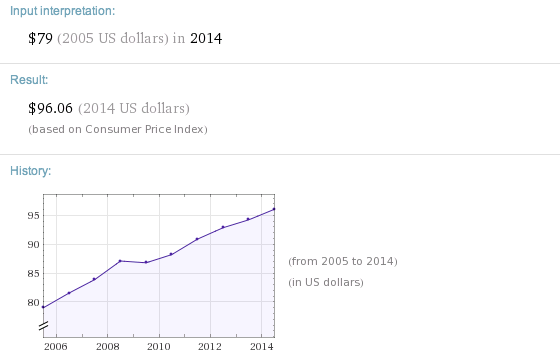
Yesterday morning Amazon emailed it customers to let them know that its Prime delivery service, after more than nine years, was getting its first price hike, from $79 a year to $99. In some ways it seemed like a risky move. After Amazon first hinted it might raise Prime prices, a study conducted by analysts at Piper Jaffray found that 66 percent of customers said they would rather cancel their subscription or let it lapse than pay a higher fee. But a closer look at the marketplace, and human psychology, shows why Amazon felt confident it could increase its rates without suffering serious fallout.


"It won't pain Amazon to see these people go.""There may be some people who have Prime but don’t rely on it regularly that will cancel because of this," says Wedbush analyst Michael Patcher, who tracks Amazon. But many Prime members were likely a drag on Amazon's finances. Wedbush estimated that at $79 Amazon was barely breaking even, or even losing money, on shipping costs for customers who ordered 20 packages year. That's not counting the $40 per person he estimates it costs Amazon to license streaming media that Prime accounts get for free. "It won’t pain Amazon to see these people go."

8i
Change in value of US dollar since launch of Amazon Prime in 2005. (Wolfram Alpha)

The flip side is customers who order only a few items each year or who order so much because of Prime that their additional spending far outweighs what Amazon loses on shipping and media. The company would hate to see them go, but the truth is that isn’t a big fear, because there is very little direct competition for what Prime offers.

It would be tough to raise prices on the Kindle, which competes directly with iPad and Nexus tablets, or on Amazon web services, which have to stay on par with Microsoft's and Rackspace's offerings. But there is no other service that offers Amazon’s wide range of products for fast delivery anywhere in the nation, and certainly none that throw in a top-tier streaming video library for free. Companies like Shoprunner can boast free two-day delivery, but they can't do same-day delivery or stream you every season of Dexter in HD.

"You can't have Amazon's low-to-no profitability forever."

There are also external factors, such as rising fuel costs and new taxes, that may have played a role in the Prime price hike. "I think the cost of the program to customers vs. the expense to Amazon were out of balance and this is an attempt to bring it more into balance," says Sucharita Mulpuru-Kodali, an e-commerce analyst with Forrester. "You can't have Amazon's low-to-no profitability forever. It's been more than 10 years now!"

The market will be watching closely to see if subscribers bail on Prime over these higher fees. But Amazon’s stock rose yesterday on the announcement, and most analysts feel that consumers' bark will be worse than their bite. "A lot of people say they would quit, but the truth is most people get used to the convenience," says Patcher. "It’s like higher fees on credit cards. People complain about them bitterly when they go up, but most never get around to actually changing their service."

14 Mar 19:03

EU law to require that all cellphones charge through a common standard

by Jon Fingas
EU Vice President of Industry and Entrep

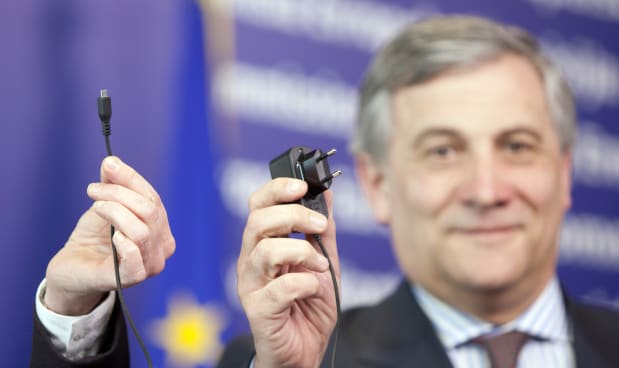
The EU successfully pushed for voluntary adoption of a cellphone charging standard a few years ago, and it's now close to making that standard mandatory. The European Parliament has voted in favor of a draft law requiring that cellphones work with a common charger. Provided the Council of Ministers green lights the regulation, EU countries will have until 2016 to put it into their local laws; phone makers will have until 2017 to change their hardware. The charger requirement is a formality when many phone designers already support the concept, but it could force some companies to shape up -- and spare more Europeans from tossing out power adapters when they switch handsets.

[Image credit: Thierry Monasse/AFP/Getty Images]

Filed under: Cellphones, Mobile

Comments

Via: BBC

Source: European Parliament

14 Mar 18:09

Pay what you want for Sega games like Alpha Protocol and Company of Heroes

by no-reply@gamespot.com (Eddie Makuch)

This week's Humble Weekly Sale is tailored around Sega titles, allowing users to pay what they want for a suite of games old and new. Pay $1 or more and you'll get Obsidian Entertainment's role-playing game Alpha Protocol, strategy games Company of Heroes and Rome: Total War, and platformer Hell Yeah!: Wrath of the Dead Rabbit.

If you pay more than $5.99 you'll receive arcade collection 10 Classic SEGA Genesis Games, strategy game Medieval II: Total War, zombie typing game The Typing of the Dead: Overkill, shooter Binary Domain, and commando game Renegade Ops.

Finally, pay more than $14.99 and you'll unlock Total War: Shogun 2. Sega says if you bought all the games separately you'd have to spend more than $150. All the Sega Humble Bundle games are available on Steam for Windows only. System requirement details for every game is available on this special Humble Bundle page.

If you're new to Humble Bundle sales, it works like this. You get to choose where your money ends up. You can give to Sega and/or charities like the Make-A-Wish Foundation, Special Effect, GamesAid, Whale & Dolphin Conservation, and Willow Foundation.

At press time, more than 72,500 bundles have been sold, with an average purchase price of $6.09. The sale ends March 20.

Eddie Makuch is a news editor at GameSpot, and you can follow him on Twitter @EddieMakuch
Got a news tip or want to contact us directly? Email news@gamespot.com
14 Mar 16:44

Moomin nature: celebrating the life of bestselling children's author Tove Jansson

by Valentina Palladino

This year marks what would have been the 100th birthday of Tove Jansson, one of the most successful children's writers ever. The Finnish artist is the creator of the popular Moomin book series, which follows a group of fairly tale-esque hippopotamus creatures through their adventures in and around Moominvalley. Since the first book was published in 1945, more than 15 million Moomin books have been sold around the world and they have been translated into 44 languages, but readers probably don't know just how much of of her own life Jansson put into those pudgy characters. BBC News looks into Jansson's life and how beloved characters like Moomintroll and Sniff were inspired by things like World War II, the philosopher Immanuel Kant, and the artist's secret love affair with a married woman. Read the full story on BBC News to learn how the series taught people to appreciate the small things in life, and what exactly is "the content" that lies in Thingumy and Bob's mysterious suitcase.