You can easily dial in the perfect watch fit at home with minimal tools and just 10 minutes of your time.
The post Here’s how to remove watch links in 5 easy steps for a better fit appeared first on The Manual.
You can easily dial in the perfect watch fit at home with minimal tools and just 10 minutes of your time.
The post Here’s how to remove watch links in 5 easy steps for a better fit appeared first on The Manual.
Getting lost on the trail can be a terrifying experience, particularly for solo hikers. But it’s also preventable with proper preparation.
The post Hiking the trail? Here are 9 tips for safe self-navigation appeared first on The Manual.
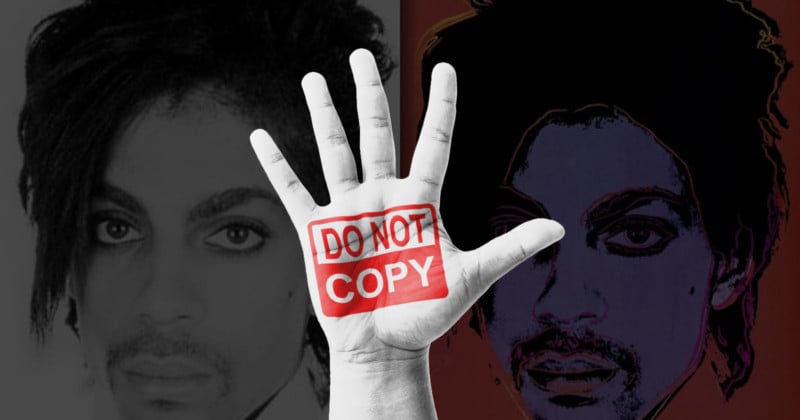
When is copying another’s work not stealing? Andy Warhol copied a photograph taken by Lynn Goldsmith of the musical artist Prince and created sixteen colorized and stylized visual works.
After Prince died in 2016, Condé Nast (Vanity Fair’s parent company) published a Prince tribute magazine that utilized Warhol’s visual work without any credit to Goldsmith. When Goldsmith complained, the Warhol Foundation sued Goldsmith in 2017.
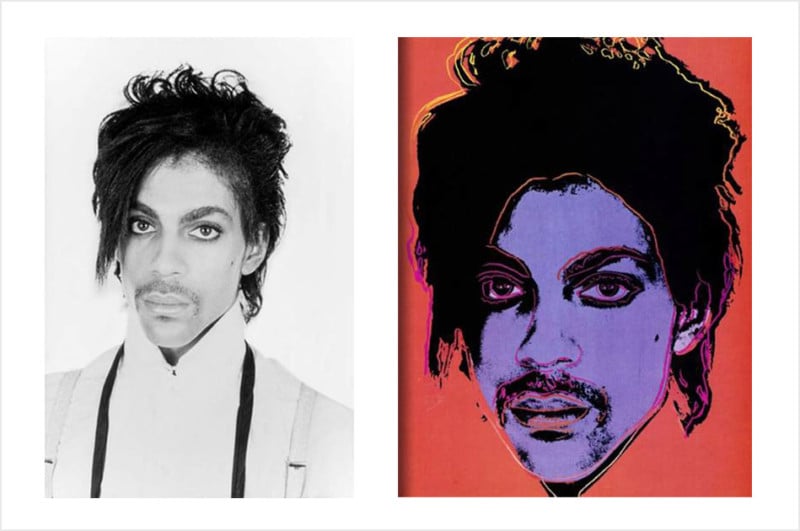
The Foundation claimed that Warhol’s copying of the photograph was not infringing because it was “fair use.” Since the founding of our country, the law has protected copyrighted works but has also recognized circumstances, permitting others to build upon those copyrighted works in the creation of new ones. It is the tension between these two concepts that created the fair use doctrine—when it is fair for a creator to utilize another’s copyrighted work.
The district court agreed with the Foundation that Warhol’s use was fair use. Last month, the Second Circuit Court of Appeals reversed and concluded that it was not fair use. The appellate court found that looking at the photograph and the Warhol work side by side shows that the overarching purpose and function of the two works are identical—they are created as works of visual art and are portraits of the same person taken at the same time from the same view. And the Warhol work retains the essential elements of Goldsmith’s photograph without significantly adding to or altering those elements.
The court explained that Goldsmith’s photograph is instantly identifiable as the basis for Warhol’s work. Warhol could have obtained any photograph of Prince to use as his source material. He did not need to take Goldsmith’s.
Recently, one critic has taken issue with the appellate court’s opinion. Blake Gopnik, a writer for the New York Times and an author of a book about Warhol, argues that the Court of Appeals was mistaken in not finding that Warhol’s copying was fair use. Gopnik is wrong and shows he is ignorant about copyright law and especially fair use.
There are no bright-line rules as to what constitutes fair use. The 1976 United States Copyright Act codified the fair use doctrine from prior judicial decisions. Section 107 of the Copyright Act provides examples of uses that are fair—criticism, comment, news reporting, teaching, scholarship, and research—and provides four non-exclusive factors to consider on a case by case basis:
(1) the purpose and character of the use, including whether such use is of a commercial nature or is for nonprofit educational purposes;
(2) the nature of the copyrighted work;
(3) the amount and substantiality of the portion used in relation to the copyrighted work as a whole; and
(4) the effect of the use upon the potential market for or value of the copyrighted work.
All of the factors are to be explored, and the results weighed together, in light of the purposes of copyright.
There has been much confusion about the first factor, the purpose and character of the use. Courts look to see whether the use of the new work is transformative—“whether the new work merely supersedes the objects of the original creation, or instead adds something new, with a further purpose or different character, altering the first with new expression, meaning, or message.”
In viewing the two works, the appellate court concluded that Warhol had not “added something new” to the photograph. Adding a new aesthetic or new expression to an existing work is not necessarily transformative. There is another type of protected work that incorporates an original work and adds something new: a derivative work. For example, a film adaptation of a novel is a derivative work, even though the novel is combined with the cinematographic interpretive skills of the filmmaker, and even though there are additions of new aesthetics and messages to the underlying literary work.
Where a new work comments on or relates back to the original (like a movie review), the new work is likely to be considered transformative. Where it does not, the new work must reasonably be perceived as embodying an entirely distinct artistic purpose, one that conveys a “new meaning or message” entirely separate from the original work to be considered transformative, usually accomplished by drawing from numerous sources, rather than simply altering or recasting a single work with a new aesthetic.
For example, a three-dimensional colorized version of the photograph on which it was based was determined to not be transformative, while the use of part of a photograph, depicting a woman’s legs in high-heeled shoes, as part of a larger work that included several other similar photographs, was determined to be transformative.
Other examples by the artist Richard Prince show the difference—those that juxtaposed an original work with other photographs and obscured and altered the original work to the point that it was barely recognizable, were transformative, while those that did not, were potentially infringing.
With that brief summary of fair use in copyright, we return to Gopnik. Gopnik starts by making the sweeping proclamation that the judges “knew more about art than any old critic or philosopher,” and that Duchamp and Warhol appropriation art “were not worthy of the legal protection that other creativity is given under copyright law.” The judges did no such thing.
[T]he task before us is not to assess the artistic worth of the Prince Series nor its place within Warhol’s oeuvre; that is the domain of art historians, critics, collectors, and the museum-going public. Rather, the question we must answer is simply whether the law permits Warhol to claim it as his own, and [the Foundation] to exploit it, without Goldsmith’s permission. —2nd U.S. Circuit Court of Appeals
What the judges did do was look at the specific facts of the case and apply the law to those facts as the law requires them to do.
Then, Gopnik reveals his complete misunderstanding of transformation in the context of fair use. The question is not whether a new artist has transformed the original work into something new, but whether the new artist has transformed the use of the original work into something new.
Courts have found the use of an original work transformative even though there was no alteration to it because the original work was being used for a completely different purpose, such as criticism, commentary, or parody—the precise examples Gopnik uses to imply that the court’s decision is contrary to what fair use is supposed to protect.
But instead of looking at whether the Warhol works constituted fair use by reviewing the four nonexclusive factors, Gopnik focuses only on part of the first—transformative use. Transforming the use of an original work does not necessarily mean that that the artist’s use was fair. In fact, the Supreme Court has repeatedly made clear that the fourth factor, the effect on the potential market, is the most important. Yet Gopnik provides the sound of crickets as to how Warhol’s work may have supplanted Goldsmith’s photograph on the cover of the Prince tribute magazine. And, something the court did not address was the fact that Goldsmith has created colorized versions of some of her photographs for commercial exploitation, thereby further confirming that Warhol’s work directly competes with Goldsmith’s.
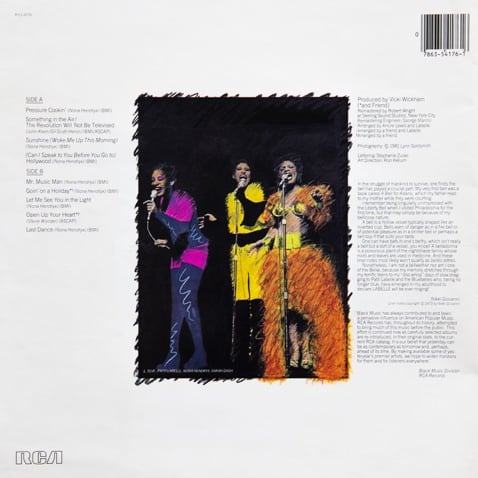
From there, Gopnik goes completely off the legal rails. First, Gopnik applies his misunderstanding about transformational use to Warhol’s prior famous works, such as Brillo and Campbell’s Soup, implying that under the court’s reasoning, those works would not be considered fair use because they “don’t draw from numerous sources” and “they don’t make any kind of aesthetic change at all to the single image they are copying from.” But such implications are wrong because there is no requirement that for a use to be transformative, an artist must draw from numerous sources.
Additionally, Warhol took product packaging used for advertising and transformed their use into a piece of visual art by adding “something new, with a further purpose or different character, altering the first with new expression, meaning, or message.” In contrast, Goldsmith’s photograph was already a piece of visual art, and both depict the same moment in time of the same artist, Prince, from the same angle, and Warhol’s work undisputedly incorporated copyright-protected elements of Goldsmith’s photograph without her permission.
Second, Gopnik revisits the court’s prior opinion regarding the appropriation artist Richard Prince, and argues that the court had not gone far enough in determining that Richard Prince’s use of Patrick Cariou’s photographs was fair use. The court had found 25 of 30 photographs were fair use because Richard Prince’s use so “heavily obscured and altered” the original photographs as to make them “barely recognizable” within the new work. James Brown Disco Ball is such an example, where Richard Prince affixed headshots from Cariou’s works onto other appropriated images that have been enlarged and tinted, all of which Richard Prince placed on a canvas that he had painted.
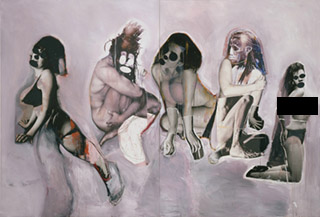
But the court could not definitively determine whether the minimal changes made to other works were sufficiently transformative. For example, Cariou’s photographs were “readily apparent” in Richard Prince’s work Graduation, where he “did little more than paint blue lozenges over the subject’s eyes and mouth, and paste a picture of a guitar over the subject’s body.”
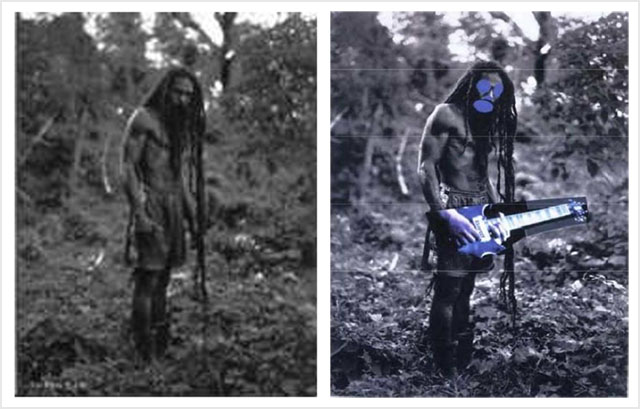
Astonishingly, Gopnik argues that the court should have found the works such as Graduation to also be fair use, even though most, if not all, legal scholars and judges disagree with Gopnik’s position. Cariou’s photograph in Graduation is clearly recognizable, and Richard Prince does not comment or relate back to Cariou’s in any way. Richard Prince could have used any photo to create his art, but instead he chose to take Cariou’s, without any necessity, reason, or purpose.
To constitute fair use, there “must be real, substantial condensation of the materials, and intellectual labor and judgment bestowed thereon; and not merely the facile use of the scissors; or extracts of the essential parts, constituting the chief value of the original work.” For works such as Graduation, Richard Prince’s lack of intellectual judgment and “facile use of scissors” does not make his use of Cariou’s photograph fair.
As the Supreme Court has noted, if the copying is done to “avoid the drudgery in working up something fresh, [then] the claim to fairness in borrowing from another’s work diminishes accordingly (if it does not vanish).”
In essence, fair use is a balance between creators, requiring a case-by-case analysis of the facts. Gopnik fails to look at all of the circumstances surrounding Warhol’s use of Goldsmith’s photograph, instead myopically focusing on his faulty understanding of “transformation.” With respect to Goldsmith’s photograph, it was not fair to “Warholize” it the way he did, retaining many of the copyrighted elements of the photograph and creating a new work that competed with Goldsmith’s photograph in the marketplace.
If Gopnik’s misguided theory of fair use were adopted, no artist, including Warhol, would be safe from the wholesale stealing of his or her creative labors, and we would all be poorer because of it.
About the author: Robert E. Allen is an intellectual property attorney at Glaser Weil LLP in Los Angeles, specializing in copyright and entertainment matters. Robert represents photographers, musical artists, songwriters, actors and social influencers, in both litigation and transactional work.
Image credits: Header stock image licensed from Depositphotos
Japanese automaker Subaru has filed patent applications for a flying motorcycle. The patents describe a land-and-air vehicle that is essentially a motorcycle enclosed within an aircraft fuselage with vertical takeoff and landing (VTOL) capabilities.
Before we get any further: yes, we are aware that today is April 1, and chances are, nobody reading this will believe us. But it’s all true. The U.S. Patent and Trademark Office published it on April Fool’s Day, but Subaru’s patent application was originally filed with the agency on July 22, 2020, following an original patent filed in Japan on Sept. 30, 2019. The April 1 publication date is completely incidental. If that’s not convincing enough, this is actually the second patent application Subaru has filed for a flying motorcycle. The previous application was published by the USPTO on March 4, after being filed May 13, 2020 with an original filing in Japan on Aug. 28, 2019. So, no, despite how outrageous it may sound, it’s very true: Subaru is developing a flying motorcycle.
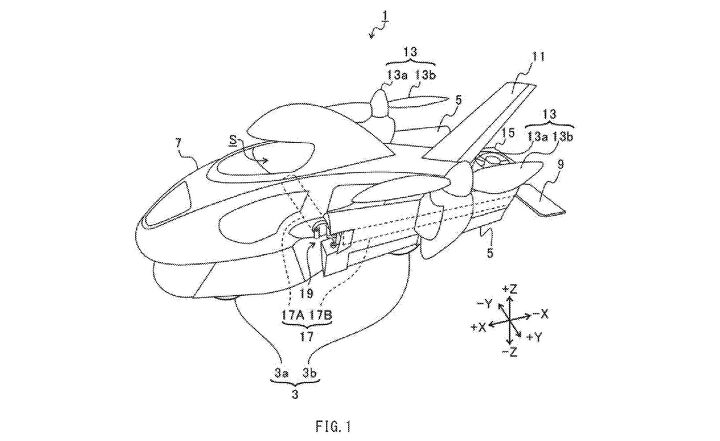
Subaru’s proposed “land-and-air vehicle” doesn’t look like a motorcycle but it very much is.
Both patents describe a similar vehicle, one that can travel on the ground like a motorcycle and, when required, can lift off the ground and fly like an aircraft. The whole thing still sounds like complete science fiction, but a company like Subaru actually has the expertise to turn it into reality. While most people think of it as a car company, Subaru is also heavily involved in the aerospace industry, producing helicopters and unmanned aerial vehicles for the Japanese Self Defense Force while also producing parts for Boeing’s 777X airliner.
The more recent of the two patent applications describes how the vehicle converts between air and land modes. As a ground vehicle, the wings are folded up along the side of the fuselage as in Fig. 1 above. For vertical takeoffs and landings, the wings are deployed to either side with the rotors pointed up. The two wing propellers and the rotor fixed to the tail provide lift to get the vehicle off the ground. The wings can then tilt forward until they are horizontal like a conventional airplane.

While it describes how the wings work, the patent application is mainly concerned with a method to retract the two wheels. Instead of traditional aircraft landing gear, the vehicle’s wheels are like a conventional motorcycle: the front wheel is connected to the frame while the rear wheel is attached via a swingarm, with each wheel having its own suspension system. In flight mode, a locking mechanism compresses the suspension systems, retracting the wheels into the fuselage.

A locking mechanism compresses the suspension, lifting the wheels up into the fuselage to improve aerodynamics during flight. The mechanism unlocks to lower the wheels for landing.
On the ground, the vehicle uses an internal combustion engine to rotate the drive wheel. The crankshaft is also coupled to an electric generator which charges a battery that powers the electric motors in the propellers.
The patent from March describes how the vehicle is controlled, both in the air and on the ground. The ground controls in particular should be easily recognizable for any motorcyclist. A handlebar steers the front wheel with hand controls for the throttle, front brake, and clutch. The rear brake lever is in front of the right foot peg while a shift lever is in front of the left peg. As the patent application explains: “This makes it possible to operate the land-and-air vehicle in the same way as in operating an ordinary motorcycle.”
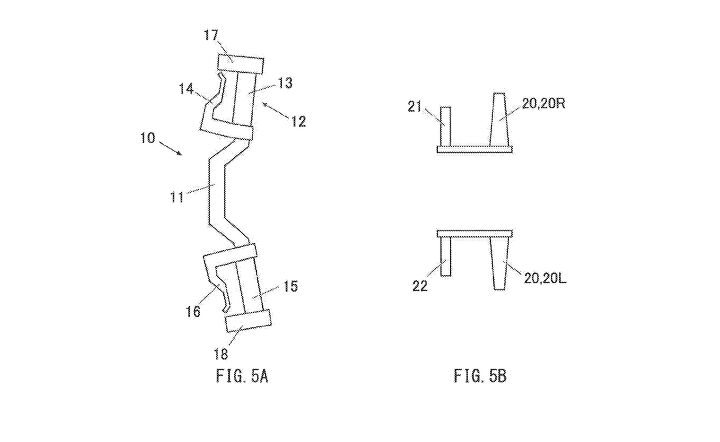
The ground controls for Subaru’s land-and-air vehicle should look familiar to all motorcyclists. A handlebar turns the front wheel to the left or right. The right grip has a throttle (12) and a front brake lever (14) while the left grip has a clutch lever (16). Figure 5B illustrates the foot controls consisting of a rear brake pedal (21) on the right and a shift pedal on the left.
What is unique is the addition of two levers (17 and 18) at either end of the handlebar. The right lever (17) controls the speed of the propellers. Tilting the lever up (in the α direction) increases the propeller speed while tilting it forward (β) slows them. Note that the direction of rotation for increasing or decreasing the propeller throttle is the same as for the motorcycle throttle grip.
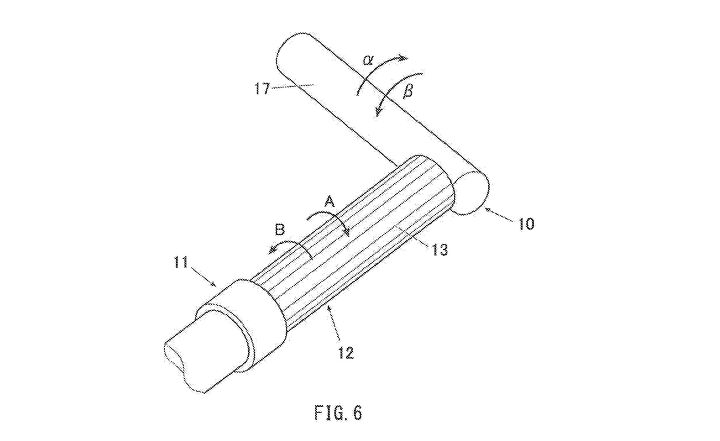
Throttle grip (12) controls the engine speed in land-travel mode. A secondary throttle (17) at the end of the bar controls the speed of the flight rotors.
The left handlebar also has a lever (18) that controls the vehicle’s pitch while in the air. Pulling it back lifts the nose up while pushing it forward points the nose down. In flight mode, a steer-by-wire system translates turning the handlebar left or right into an appropriate yaw and roll motion to turn the aircraft.
The foot controls also play a role in flight mode. The shift lever adjusts the angle of the wings which, in turn, adjusts the level of thrust. Pointing the wings and propeller forward maximizes thrust but tilting them upward reduces flight speed. In a sense, the vehicle treats the wing’s tilt angle as a motorcyclist would gears in a transmission. The footpegs themselves control the aircraft’s roll. Sensors in the pegs measure the operator’s foot pressure, electronically translating the data and adjusts the aircraft’s ailerons to make it roll. Putting more pressure on one peg makes the aircraft lean in that direction, just as weighting the pegs can help a motorcycle lean into corners.
Altogether, it sounds like Subaru’s put a lot of work into developing this flying motorcycle, even going so far as to make the flight controls mirror the a motorcycle’s controls in many ways. In addition to the manual flight controls, the patent describes an autopilot mode as well as an assisted operation mode which handles pitching and rolling, leaving the pilot to focus on simple turns, ascent or descent and flying speed.

Of course, none of this would suggest that we’re any closer to seeing a Subaru flying motorcycle in action. April 1st or not (again, we reiterate, these patent applications are real and not a prank), we have a hard time believing flying bikes will become a reality any time soon. We do, however, encourage Subaru to prove us wrong.


Become a Motorcycle.com insider. Get the latest motorcycle news first by subscribing to our newsletter here.
The post It’s No Joke: Subaru is Developing a Flying Motorcycle appeared first on Motorcycle.com.
***
Keegan Hall’s painstakingly detailed pencil drawings can take hundreds of hours to create. Through his work, he has raised over $550k for communities in need and topped the Reddit charts.
But while Hall’s pieces have gone viral overnight, he’ll be the first to admit his success didn’t happen that way — that it’s the result of a lifetime of experiences and challenges, few of which had anything to do with art.
In fact, Hall spent much of his life pursuing nearly everything but art — getting an MBA, leading sales for the Seattle SuperSonics, and operating startups — long before he ever sold a print.
The Hustle recently sat down with Hall to learn:
***
The fun part about my story is that we can just go so deep down any element, but I’ll start from the beginning.
So, I grew up in Sumner, Washington. We were pretty poor — I lived in a trailer park for much of my life.
I was always interested in sports and art, and the bridge between those was business. I used to collect sports cards and comics, then would go to our mall to trade them.
Young Hall with his mom and sister (Source: Keegan Hall)
Fast forward to college… I went to pursue a degree in studio art at the University of Washington. Actually, one time in an intro to drawing class, a teacher humiliated me during critiques. They roasted my art. That was a big, devastating punch in the gut because I was always a shy kid.
Then coming out of college, other people in my corner told me, “The arts — that’s not a career, you can’t make any money there.” Being relatively quiet and without a lot of confidence in myself, I kind of just believed them.
Having no plans of ever going into art again, I shifted back to that love for sports and went to work sales for the Seattle SuperSonics. I spent 5 years with the team until they moved away.
Around then, I also went to get my MBA from the University of Washington. That’s how I got deep into startups.
Definitely. In grad school, we started one company as a class project that we took through the University of Washington’s business plan competition.
We ended up placing in the top 3 of 100 teams, and we exited with a return high enough that everyone got their money back — nothing crazy.
Immediately after that, I joined another startup as employee No. 1 — and this was the kind you hear about. It went on to raise $4m and get acquired by one of the biggest payment processors in the country.
So my mom had battled cancer and was cancer-free for a while. But one Friday we got news that it came back, and on that Sunday she passed away. It happened so fast where it was just devastating. The abruptness of it was probably the hardest part.
A few months later, I was driving my car thinking about her and my childhood. I realized that a lot of the good times centered around my art, since she was always so supportive of it.
At that moment, I just wanted to sit down and draw. It was such a weird feeling because I hadn’t drawn in almost 10 years.
Yup, I sat down, drew a picture of Michael Jordan, posted it on social media, and a bunch of people actually reached out saying things like, “That’s incredible, I didn’t even know you could draw.”
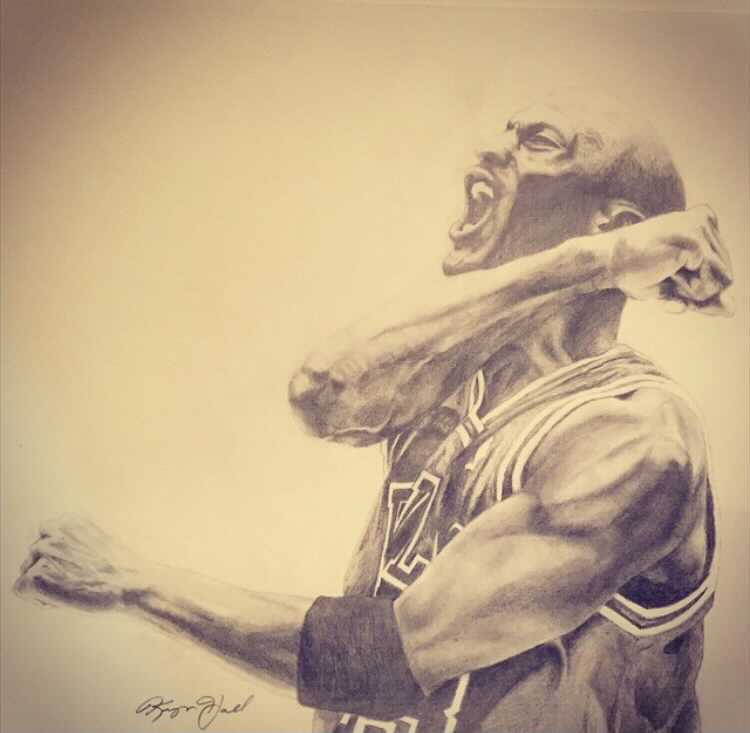
Following the death of his mom, Hall drew this Michael Jordan piece (Source: Keegan Hall)
Then one person asked me to do a piece of Kam Chancellor — of the [Seattle] Seahawks at the time — so I did. Somehow, Kam saw it and reached out asking me to do another piece for him personally.
And that’s kind of where the story gets big.
Yes. At this point I was just wondering if I could use my artwork to raise money for charity — that’d be so cool.
I saw that Richard Sherman of the Seahawks had put out a tweet for his foundation event coming up, and it got my wheels turning. I had this idea of doing a drawing, then selling 200 prints for $200 each.
I tweeted back to Richard, and right away he was like, “Let’s do it.”

Hall drawing “The Huddle” for his campaign with Richard Sherman (Source: Keegan Hall)
Haha, yup. I remember watching the project with Richard make its way into an official press conference for the Seahawks. They were asking about me — and I was just some dude.

Seahawks legend Richard Sherman discussing Hall’s work during a press conference
But we sold out on the first day, raised $40k, and donated 100% of the money to charity.
All the money went to kids like me — underprivileged kids that didn’t have a lot growing up. It was just awesome seeing it come together so fast.
I thought about whether I could turn it into a career of drawing and selling art, while simultaneously doing campaigns for charity.
Then other opportunities continued presenting themselves — like campaigns with Macklemore & Ryan Lewis and Russell Wilson — and I got approached to do an original drawing for President Obama, who actually flew out to Seattle and got the piece.

Washington governor Jay Inslee presenting Hall’s portrait to Obama (Source: Keegan Hall)
And it’s just kept on growing. Even the Eddie Vedder project I did recently raised over $100k. Having grown up in Seattle during the grunge era, that was just bonkers.
Now we’re up to over $550k raised, which is just a mind-blowing number from where I come from.
It was, but I wanted to see if I could figure it out. The first couple years I would do my day job, come home, eat dinner with the family, and draw until 2 o’clock in the morning.
It’s those big questions for entrepreneurs: how do you get started and when do you take the leap.
I was lucky — that opening was almost made for me. During an acquisition at my company, a bunch of employees were let go and I was like, “Well, I guess now’s a good time to do this.”
After that, there was absolutely a time of panic. There was no more safety net to lean back on. But — it’s something like, “I don’t need more time, I just need a deadline.” In other words, when your back’s against the wall, you get things done.
Absolutely, that’s one of the most important parts of art — the business side. My business background has helped me so much.
For years, I spent my career figuring out how to build businesses, market products, tell a story, and get adoption from customers. One of the reasons I’ve been able to work with all these big names is because I created a process that’s so easy for them.

Hall with Seattle Seahawks quarterback Russell Wilson (Source: Keegan Hall)
I think that’s what a lot of the best businesses do. You don’t know how it works, it just works, and that’s the kind of customer experience that I want everyone to have.
I see it as 3 phases. First, ask a kid, I just drew a lot. I once won the contest to draw my school’s yearbook cover of our mascot, a husky. Still, they told me it was too aggressive, and asked me to redo it. So I did and — though I hated the new drawing — that’s the one they used.
Next, in college, I was one of the youngest students invited to a studio art program in Rome. I guess that’s phase 2 — where I was a good artist.
And now I’d say I’m in phase 3, where I am constantly working on refining my craft. That first Kam Chancellor drawing was the best that I could do at the time, but I look back at it now and think it’s just terrible.

Hall with an early drawing of Kam Chancellor (left) next to a recent drawing of baseball Hall of Famer Roberto Clemente (Source: Keegan Hall)
It’s definitely helped me refine my art. I try to fail fast in the sense that I test a lot of different things and see what works.
In art, just as in business, when you think that you’re successful and you take a breather, that’s when you start going backward in terms of progress. So for every drawing I’ve done, I’ve taken that focused approach to refining myself and trying to take it up another level.
With that drawing, I originally hedged my bets and said I would blur out the background. But once I saw how much time it was taking, I thought, “If i’m going to do this, I’ve got to go all in with the details.” And you can see the change in the time-lapse video.

Hall adding details to his “Taking Flight” piece, which took over 250 hours to create (Source: Keegan Hall)
I did that drawing for literally 5 or 6 months. I would work on it for an entire day and maybe make 1 inch of progress.
When I finished, I posted it on Reddit, went to bed at night, and the next day it was on the front page. My website crashed.
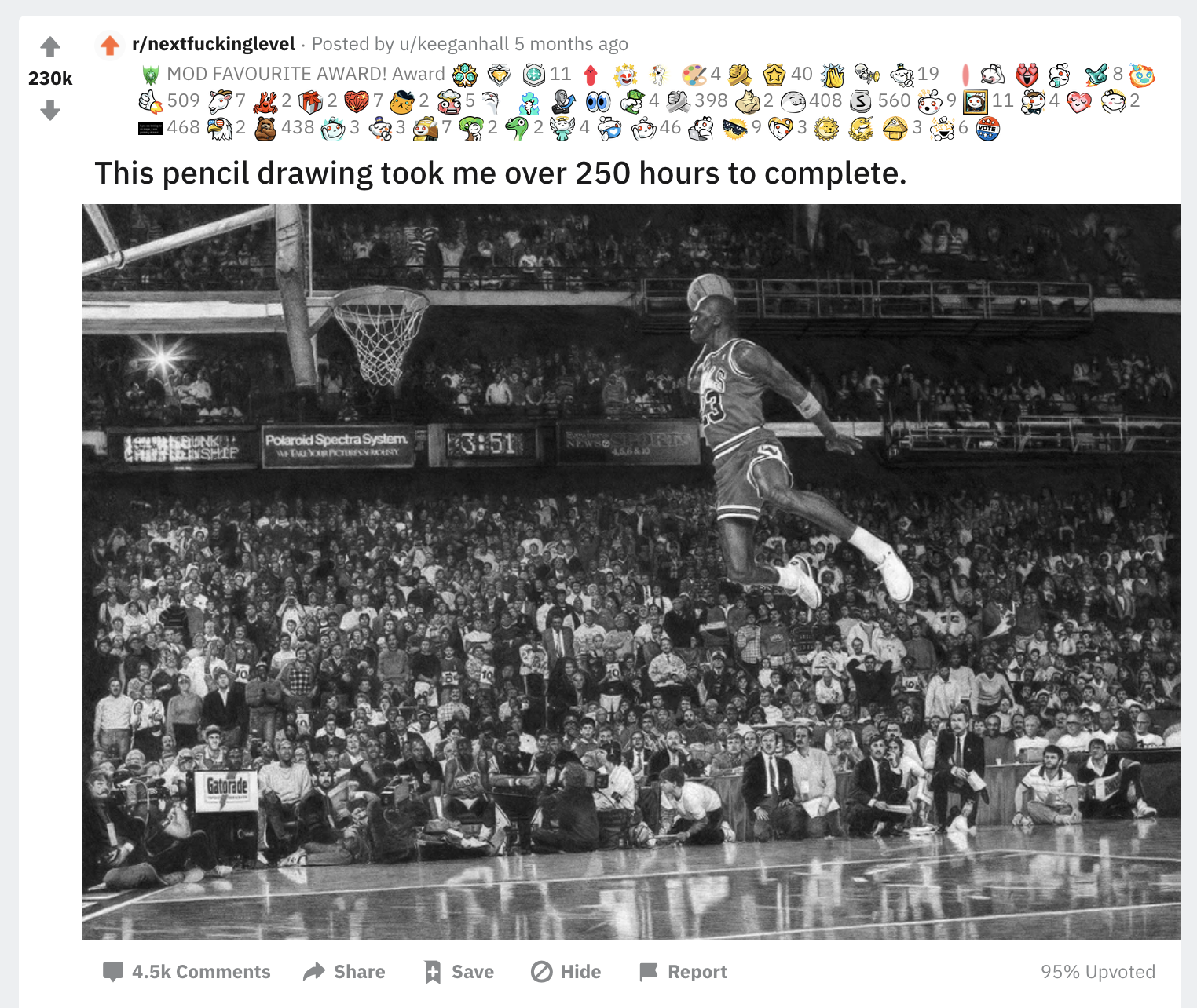
Hall’s viral Reddit post of his Michael Jordan “Taking Flight” piece (Source: Reddit)
If you put in the extra work and take the time to go that extra mile, you’ll see things explode on a whole other level. People notice.
Everybody in the NBA is amazing, but that’s just the price of entry. What makes the best players the best? How do you get to that next next level?
I want to see so many more artists succeed. What’s funny is that it seems so obvious: create good content. But on the flip side, a lot of people just don’t do it.
As an artist, you have to remember to tell your story. That’s always been the foundation for me, for my business, and for many businesses in general.
Lots of people are better drawers than me, but being an artist today isn’t just about art. That’s why I’ve been so fortunate to learn about selling and brand building.
One year my baseball league had a shortage of coaches, and my mom was just like, “I’ll do it.” Back then, women didn’t have those types of positions — head coaches of boys teams.

Hall’s mom stepped up to coach his Little League baseball team (Source: Keegan Hall)
My mom instilled in me this idea of, “Why not you.” One time as a kid, when I was doing a class project on Nike, my mom told me, “You know, you might be Nike’s CEO one day.”
I said, “That’s so ridiculous. Me? Nike’s CEO?” And my mom was just like, “Yeah, why not you?”
So that seed was planted then. And as I’ve gotten into startups and art, I’ve learned to have this balance of naive optimism in challenging environments, along with putting in the work, that helps me achieve awesome things.
I think NFTs are the future of collectibles. Though, like any collectible, once they hit mainstream, when things become overly saturated many will be essentially worthless.
My daughter is 13, and she loves Roblox. As part of Roblox, there’s a digital marketplace where you can get limited-edition accessories for your avatar. Because they’re limited, they’re extremely valuable and it’s a huge deal if you get one.
I see firsthand how she’s able to enjoy these digital items without any physical component. I really believe that, moving forward, people will happily enjoy digital assets that maintain a sense of scarcity and ownership but that also can’t get lost or damaged.
Haha, it’s like $10 on Amazon. It’s a good message — look at all you can do with just paper and a pencil.

***
Want to learn more? Hall’s site contains other information about his art, charitable causes, and current projects.
Reader Gord writes: “This is the most valuable weekly publication landing in my inbox.” I cannot thank you all enough for the kind words of encouragement and the contributions you all send me. It keeps me inspired. If you too find this newsletter useful, please spread the word!
Photography Speed Light Grids Using 3DP Infill
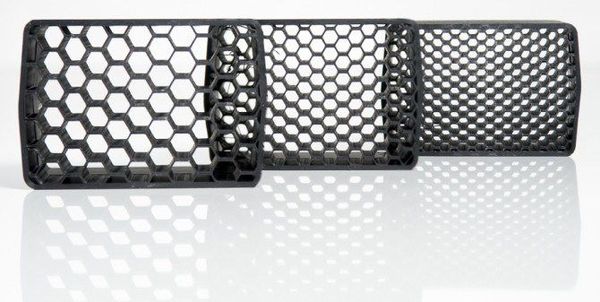
Photo flash grids from 3D infill patterns.
Ronnie A responding to my piece on infill coasters: The tip about using 3D printer infill as a decorative element reminds me of this functional use of infill to create the structure for photo flash grids (used to control the spread of light from a flash).
Using Solder Wick
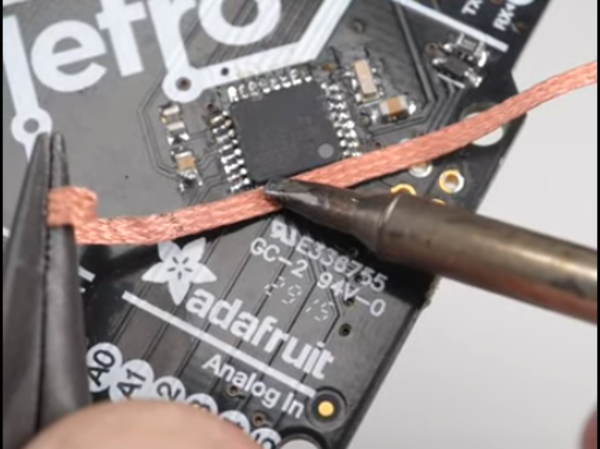
Bulk desoldering at its finest.
In this Collin’s Lab Notes video, Collin Cunningham shows you the basics of using solder wick. I prefer solder suckers myself, but there are situations where wick/braid is much quicker and more efficient, like in the case of the QFP (quad flat package) component that Collin’s desoldering here which has lots of pins on all four sides.
Skill Set: Molding and Casting #1
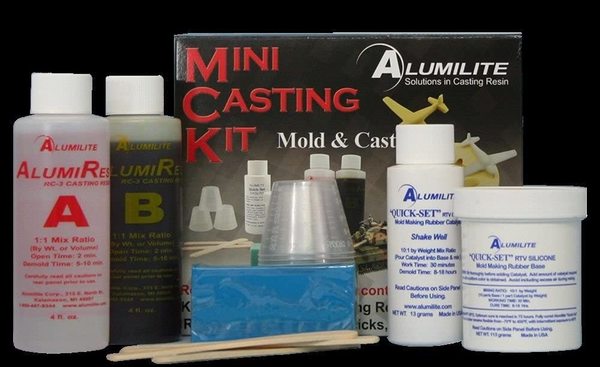
A casting kit is an inexpensive way to get started.
Welcome to the first of our newsletter “Skill Set” series where we collectively learn a new skill together. First up: Basic molding and casting. Since I don’t want the newsletters to get too long-winded, I’ll mainly be pointing to curated articles and videos that tell you everything you need to know.
To get things started, the best mold-making and casting resource I can point you to is Paige Russell’s class on Instructables. For our series, we’ll be doing a simple one-part mold, a block mold, and a more complicated two-part mold with registration keys. She covers all three.
Let’s all choose a small, flat object for our first one-part mold (see Paige’s instructions). Also, I recommend buying a casting kit that has everything you need for creating molds and casting several small objects. Molding and casting products are not cheap. A starter kit is the most inexpensive way to get stuck in and then you can invest in stand-alone products if you want to take it further. Here’s the kit I’ll be using for this series. It comes with small bottles of 2-part RTV (room temperature vulcanizing) silicone rubber for molding, 2-part resin for casting, some modeling clay, cups and stirring sticks.
If you’re going to be participating, please shoot me an email to let me know and feel free to ask any questions.
Ten Great Tool Suggestions from Chris Notap
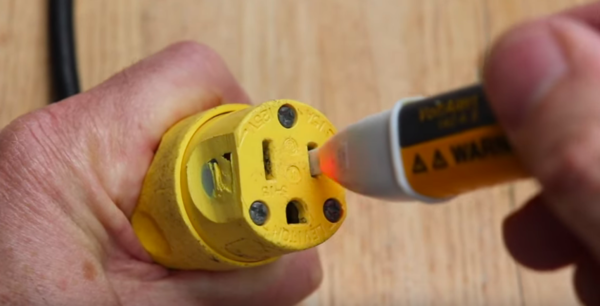
Hot, hot, hot!
One of my favorite YouTube makers is the ever-clever Chris Notap. I always appreciate this type of catch-all, creative channel where a gifted creator explores whatever strikes their fancy. In this video, Chris lists ten gift ideas for any handyman or handywoman. I think these are great tool suggestions in general. His selections include several flashlights, keychain tweezers, ear protection headphones with Bluetooth, a Fluke voltage tester, and more. He sold me on the tweezers.
Storage Tech
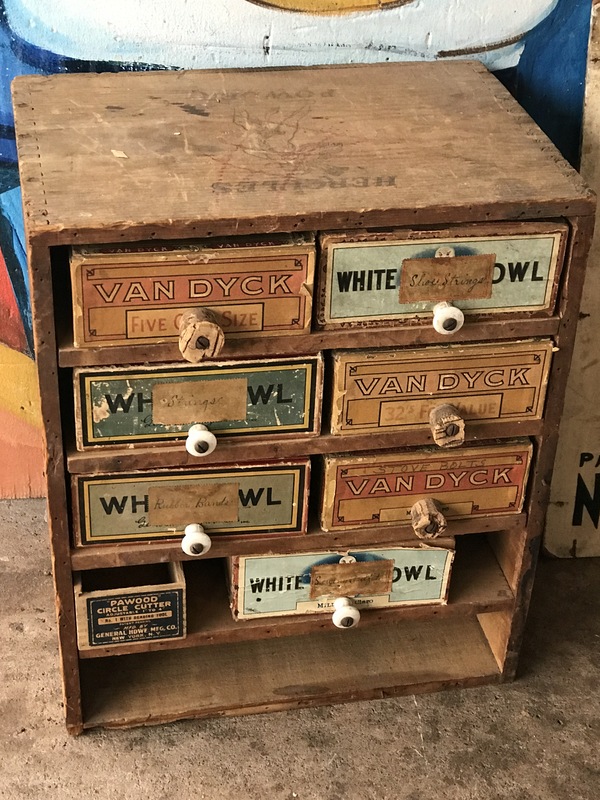
And, your supplies all smell like fine tobacco.
In response to my call for recycled DIY storage solutions, my ol’ pal Kent Barnes sent me this wonderful idea of an antique storage rack for fasteners and such made from cigar boxes. I love the cork drawer pulls, too. My fiance, the fine artist Angela White, uses cigar boxes in her art and has a decent collection of them. I’ve really come to appreciate the construction, design, and art of these boxes. And, you can pick up such boxes relatively cheaply. Tobacco shops usually have them for sale. You can also get bundles of ten of them on Amazon for around $25.
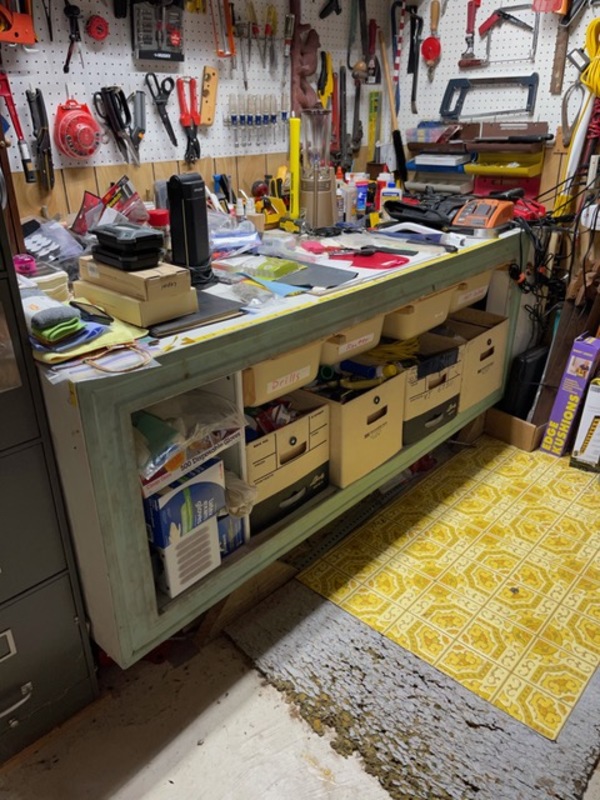
Cool.
Reader Edward I sent this one in: “Repurposed old chest freezer makes a great workbench. There are wood risers to get the best height. I also added plastic bins as drawers.”
Toys! Sling Bag

The little bag that could.
I like sling bags, over the shoulder backpacks. I had a Kensington sling for years, before it fell apart. Several holidays ago, I decided I needed a cheap, small sling bag for a train trip home for an overnight. I went onto Amazon, quickly found a bag that looked decent enough, and ordered it. I now love this bag and use it all of the time. It is way better made and more feature-rich than I realized when I purchased it. It has tons of pockets, a sunglasses hook, a mesh water bottle pocket, a waterproof headphone grommet, decent hardware, and it sits well on the body. I can easily fit my MacBook Air, pens, papers, a book, and even toiletries and change of shirt and undergarments. That’s a whole lot of goodness for under $30!
Maker’s Muse
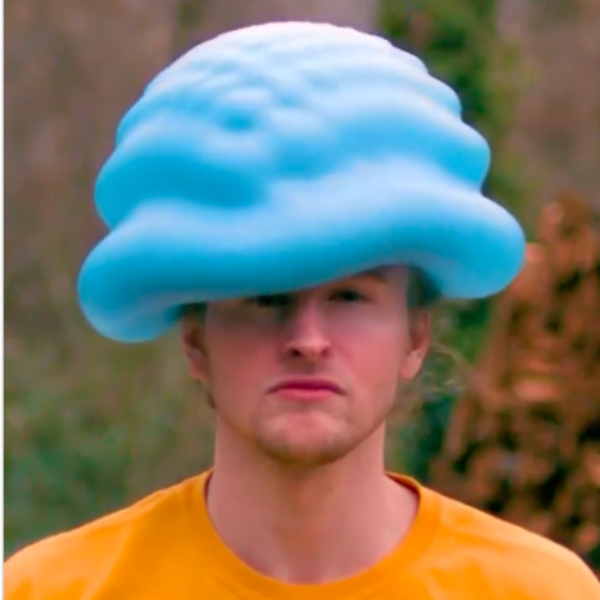
My, what a jaunty water balloon hat you’re wearing.
There are a number of weird science, tech, and engineering accounts that I follow on Instagram. One of my favorites is Techineer. If you can get beyond its tortured title, it offers a fun grab bag of whimsy, wonder, and jaw-dropping engineering marvels and mishaps. Here is a super-slo-mo video of a guy getting a giant water balloon dropped over his head. Good times.
Shop Talk
In response to 3D infill, the great Steven Roberts writes:
“Regarding the infill 3D pattern as a design feature, twice I’ve made objects for friends and used that as an opportunity to embed a secret message into the thing that I knew would be in their life. A little note on a piece of paper, curled up and tucked into one of those nacelles, personalizes it in very private way.”
[Gareth’s Tips, Tools, and Shop Tales is published by Cool Tools Lab. To receive the newsletter a week early, sign up here.]
Not all snacks are created equal, most especially when it comes to fueling your outdoor adventure.
The post The best hiking snacks to fuel your time on the trail appeared first on The Manual.
Forget about the well-known beef for a while — these are some of the best beef cuts you can buy and grill!
The post The 9 best lesser-known cuts of beef for grilling anytime – flank, tri-tip, and more appeared first on The Manual.
Whip up any kind of meal in the great outdoors with the best camping cookware for car camping, backcountry adventures, and beyond.
The post Stock your on-the-go outdoor kitchen with the best camping cookware appeared first on The Manual.
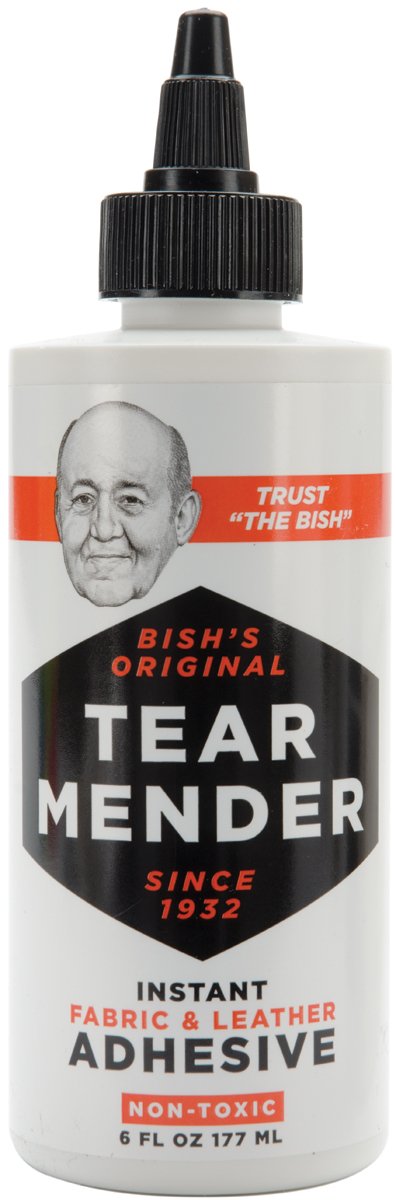
I’ve used TearMender for years. Tear Mender is a milky-white latex liquid that, when applied to fabric, makes — voila! — instant patches.
It smells a little cheesy, but dries within minutes, and has allowed me to extend the life of jeans, coveralls, jackets, and shirts nearly indefinitely. I have garments decades old that have little of the original fabric showing, with odd clumps and scraps of denim plastered all over them, and I wear them proudly.
The recently re-branded Tear Mender is cheap to buy, lasts a long time, and scores a win whenever I use it. Great stuff.
Better than iron patches? Yes. Holds much better. Never comes off and easy to add additional repairs. If you’re careful, you can make “neat” patches, or you can make very strong patches that aren’t so pretty.
You can wash Tear Mender — over and over and over. I haven’t had any problems with skin sensitivity issues. Tear Mender does remain rubbery and “grabby,” so I wouldn’t use it to mend my boxers.
Tear Mender is also great for laying out sewing projects: it’s like tack-welding metal.
-- Neil Bibbins
[This is a Cool Tools Favorite from 2009]
TG-6 Tear Mender Fabric and Leather Cement
Available from Amazon
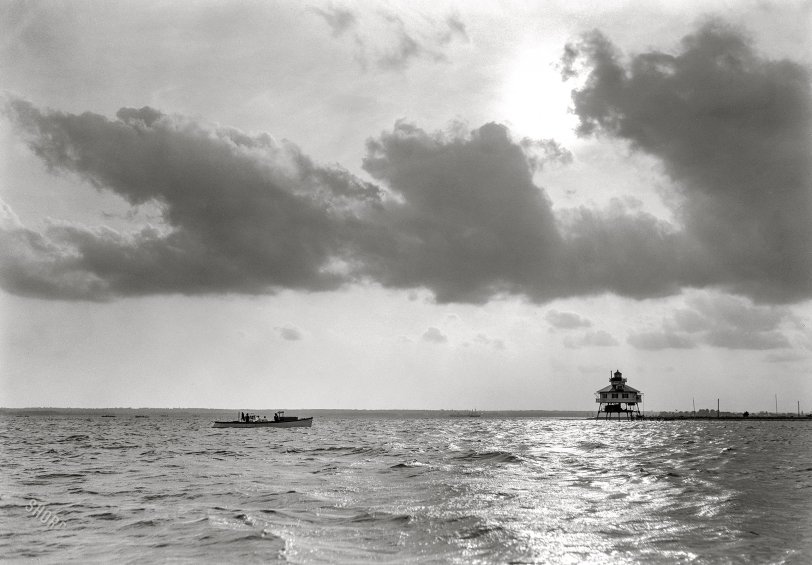
Looking at some of the best sparkling wines, according to industry pros.
The post The best sparkling wines, according to sommeliers appeared first on The Manual.
462 points, 16 comments.

To eliminate bullying, a school in England has eliminated ball games and jump-roping on the playground, replacing these with poetry recitations, choir, and quizzes. Said Charlotte Whelan, the Hackney New School head teacher (the British equivalent of a principal): "A school without bullying sounds like a utopia, but it is achievable."
Whether or not reciting Shelley during recess is your idea of utopia, a BBC piece on the school quotes Whelan saying, "It's long been my belief that we could be doing more for pupils while they are on their breaks," because "so often you see them aimlessly wandering the playground. We want every second at school to count."
I'm sure the kids are counting the seconds, too.
Clearly Whelan is of the belief that kids' brains shut down the moment they are not engaged in something officially academic. That's what prompted her to start the break-time poetry recitals, "and it evolved from there."
I doubt it will come as a surprise that another expert quoted in the piece said it is important for schools to create safe spaces, where kids feel "supported and included."
The issue here is not just the Dolores Umbridge-esque nature of the administration. It's the inability of that administration to believe that kids could possibly be learning anything when they are allowed to goof around. The teachable moment notion of child development is so thick here that kids are not allowed to "waste" their time even between bites.
This notion is wrong. "When they are free to play in their own ways, children practice the most important skills required to move toward adulthood—how to take initiative, make their own decisions, solve their own problems, negotiate with peers—and, yes, how to deal with others who aren't always nice," says Peter Gray, a professor of psychology at Boston College and my co-founder at Let Grow. "When we prevent them from such opportunities by taking continuous control of their lives, we prevent them from growing up."
Prevent away seems to be the philosophy of those who believe the only way to end bullying is to end any freedom the students enjoyed. Linda James, founder of a nonprofit called "Bullies Out," notes in the BBC piece: "Unstructured games can sometimes lead to nasty comments, aggressive behavior and children feeling left out."
She's right: Some sad feelings—and betrayals and loneliness—are inevitable in both childhood and adulthood. No one wants kids facing constant cruelty, but learning how to deal with some playground frustration is actually a big life skill it behooves them to learn. There's more to school than sonnets.
Thinking about taking up baking? Try making sourdough with the help of Maurizio Leo.
The post Baking pro shares how to make bread for beginners appeared first on The Manual.
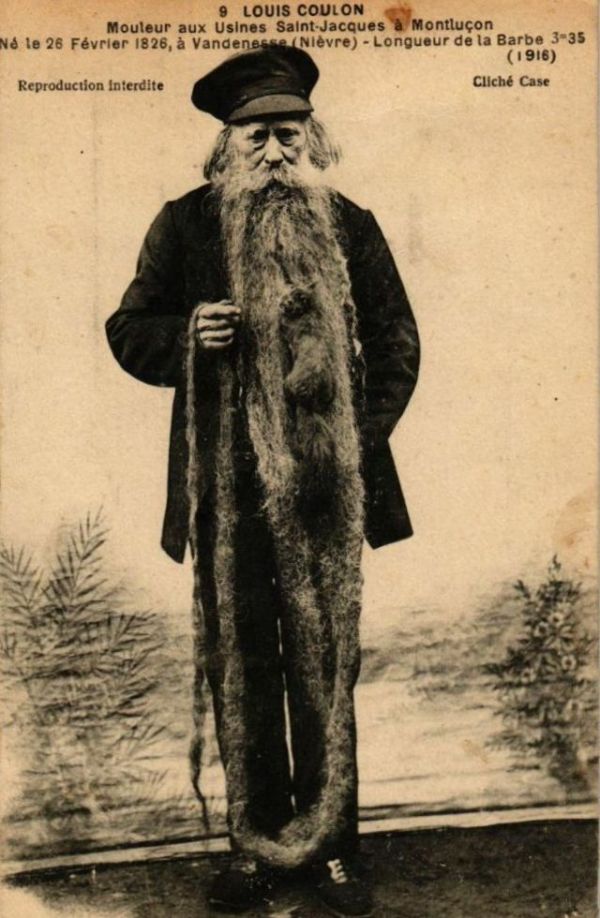
Born in 1826, Frenchman Louis Coulon couldn't keep a close shave. So he gave up and let his beard grow. And grow. And grow. It eventually reached eleven feet (3.3 meters) by 1904, according to contemporary accounts. Coulon was the subject of a slew of postcards, which changed up sometimes when he posed with other people, or birds nesting in his beard, or often his cats! If you look carefully at the picture above, you'll see a kitten climbing up the front of Coulon's beard. See a gallery of Coulon's postcards at Vintage Everyday. -via Metafilter
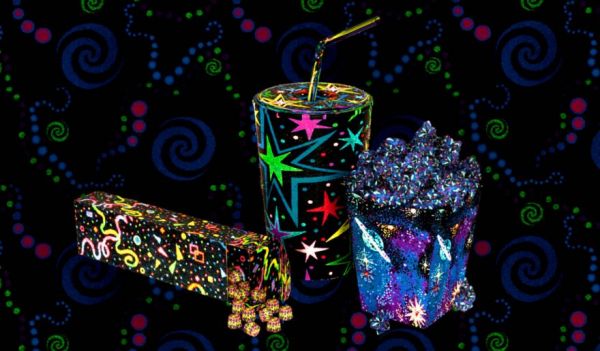
After a year of pandemic precautions, you may have trouble envisioning what a movie theater interior looks like. But think back to the movies you saw in the 1990s, and what an experience it was to go out to the local multiplex, maybe in a mall, maybe with an arcade attached. It was an era in which theaters tried to be total experiences, like a theme park. And you might particularly remember the cosmic carpets that seemed to be in every theater across the country.
But why the carpets? According to Dimensional Innovations, it was actually a practical maneuver. Once the global blockbuster era hit full swing (think Jurassic Park, Titanic, et al) people were going to the movies in droves, spilling their sugary drinks and melty Milk Duds on the floor in record numbers. “There used to be tile underneath the seats,” says Trotter. “It made it easy to clean, but people complained about how their feet would stick to the floor. These places were dirty.”
Enter the carpets—ones with hectic patterns in every shade of neon known to Pantone. “It’s got so many different colors in it, you can spill coffee or Coke or popcorn and it won’t show,” Trotter says. The Dimensional Innovations team would actually dump Coca-Cola on these new carpets, let it soak in, walk all over them, and check to see if it changed the colors. It didn’t. Even blacklight lights wouldn’t reveal the stains. “It was a pretty genius design,” says Trotter, still laughing, “just horrible.”
The carpets were only part of the movie theater aesthetic that was unique to the '90s. Read more about the look and where it went at A24. -via Boing Boing

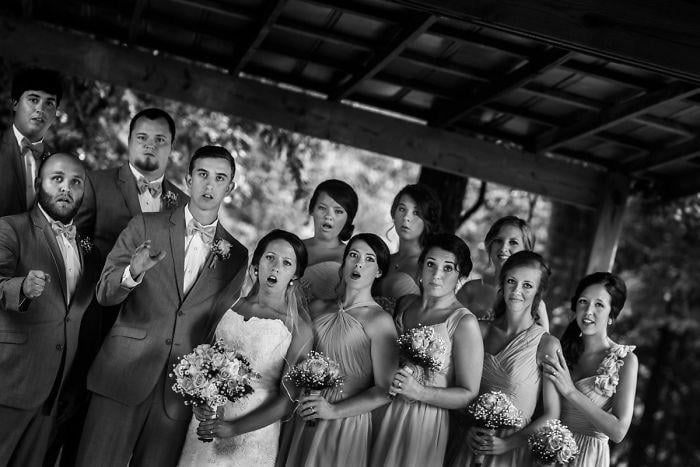
862 points, 51 comments.

This is incredible.
 |
submitted by /u/SignoreReddit [link] [comments] |
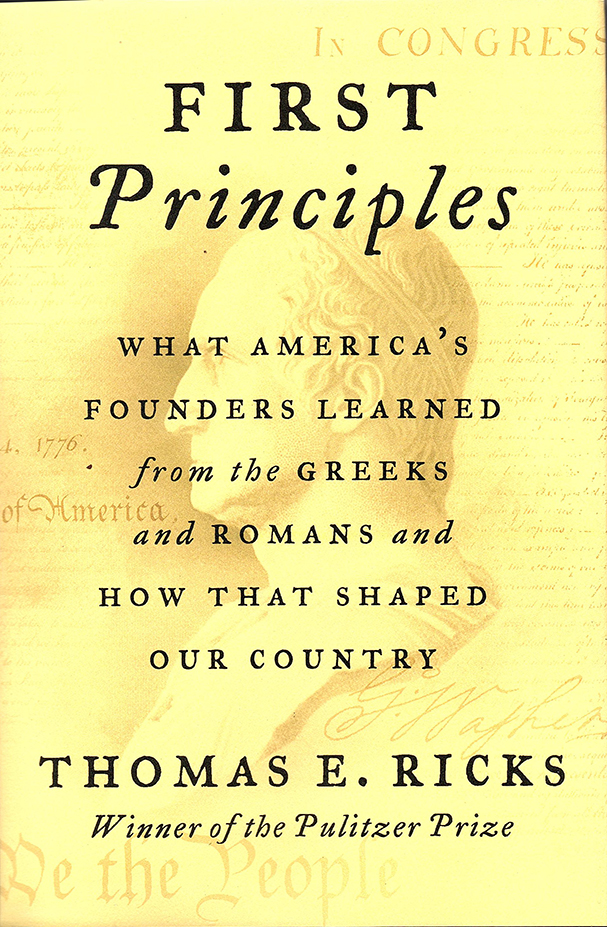 It’s funny how you can be reading something not directly related to a current topic, and find something which is absolutely relevant to said topic. Cases in point: I’ve pointed out in this space in the past my belief that political identity and tribal politics are curses of our time. Last week I read Thomas […]


![[link]](https://i.redd.it/hlck9lin11q61.jpg)