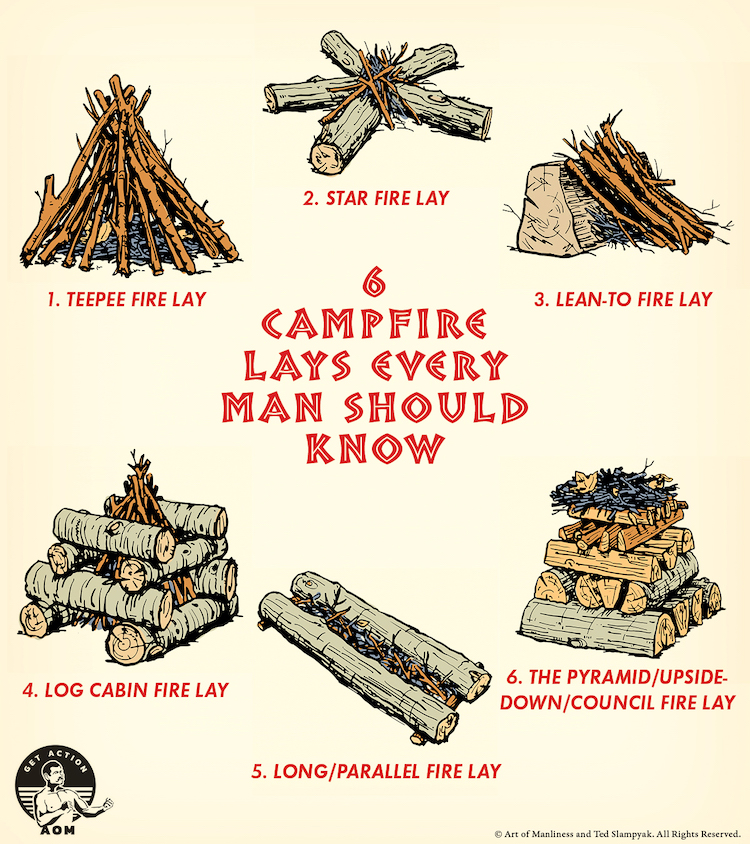
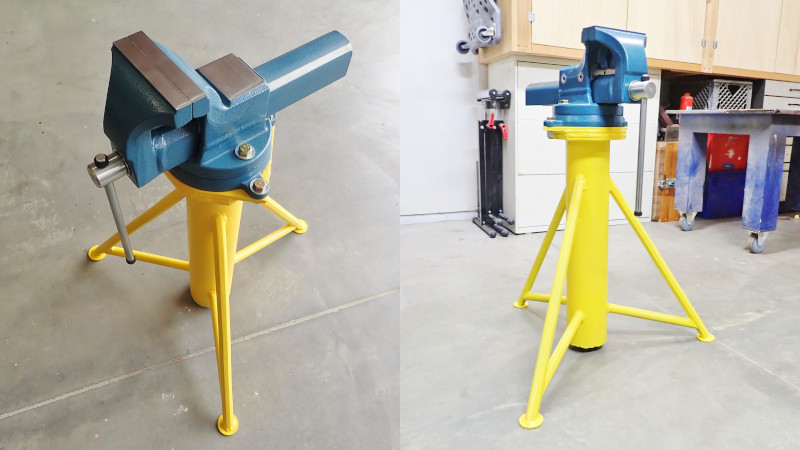
As motorcyclists, we are well aware of how important tires are. Our ride – even our survival – depends on just a few square inches of rubber. So, why is it that rarely does a week go by in which we don’t see a motorcycle out on the road with visibly under-inflated tires? These are tires that are way past the point of affecting handling and into the zone of being dangerous. Perhaps it’s because tire technology has advanced so much in recent decades that we take them for granted. It used to be that one of the easiest upgrades you could make to your bike – particularly for sport-focused riders – was getting rid of the OEM tires and spooning on some aftermarket rubber. Now, street tires can offer grip that would surprise racers from a decade ago while still delivering reasonable mileage. Additionally, less performance-oriented tires are now capable of considerably more wet-weather grip and durability, a real boon to commuters and touring riders.
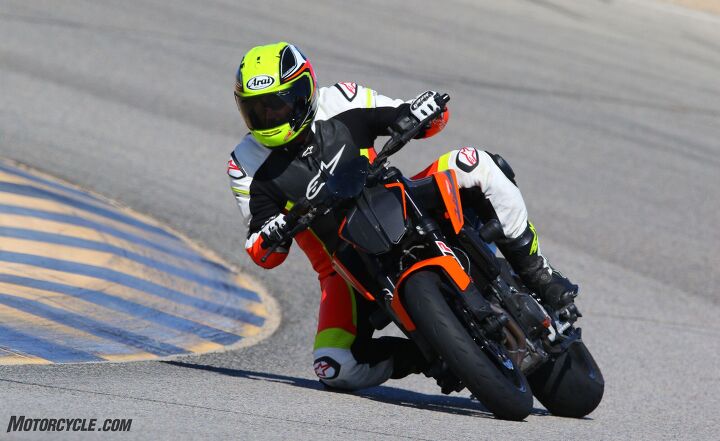
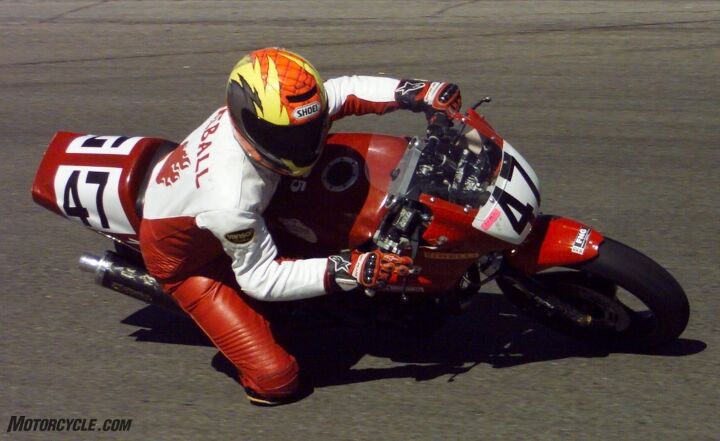
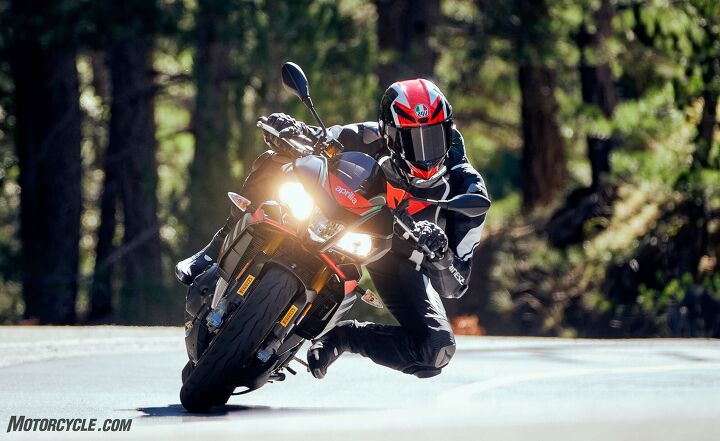
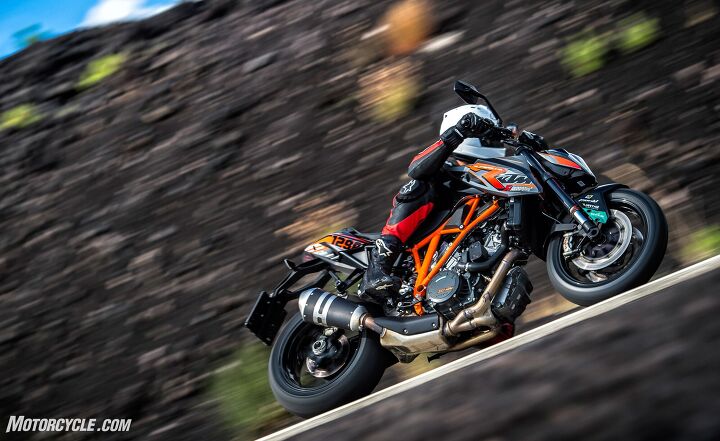
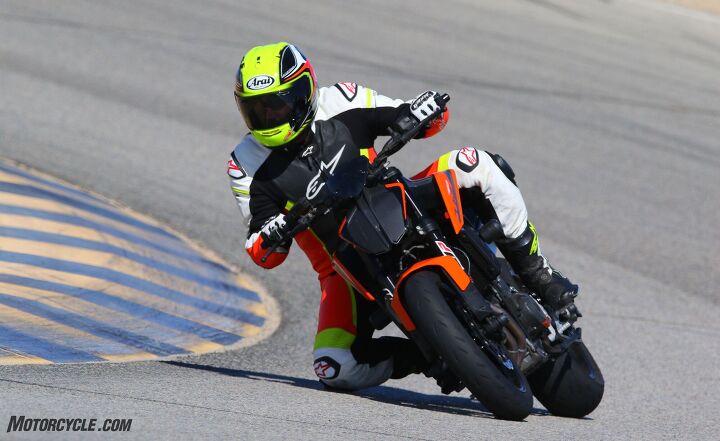
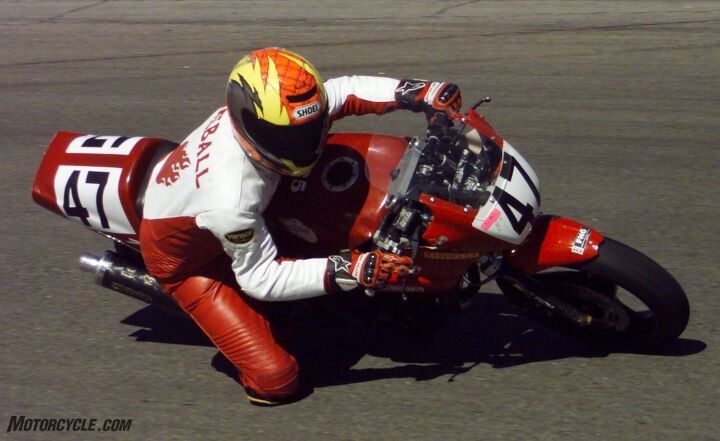
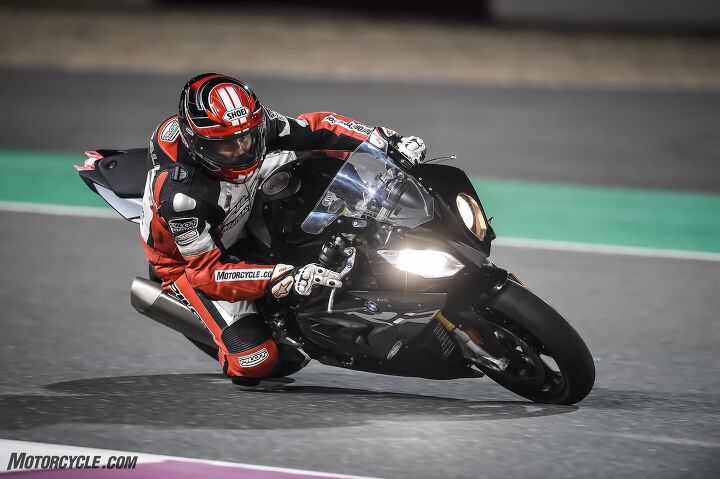
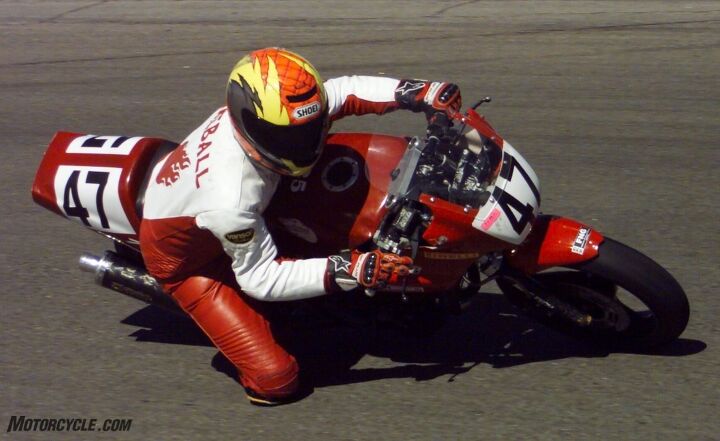
You don’t have to ride like this to benefit from the advances in modern tire technology or the longevity afforded by proper care and maintenance.
However, tires still depend on the end user to attain maximum performance and durability while they sacrifice themselves for our riding pleasure. So, I reached out to representatives from Avon, Dunlop, Metzeler/Pirelli, and Michelin to find out what we need to do (and why) to get the most out of our motorcycle’s rubber.
The genesis of this article was a simple question from a forum that I frequent. Who knew that a single question could send me down a rabbit hole for months, but since the people that I was talking to were the technology-focused types behind the development of tires, I learned very quickly that the answer to my simple question leaned, in many ways, on an understanding of many interlinked factors. Naturally, the answers to a sport-focused question would have a sport-riding-centric answer, but there is still plenty to learn here for riders of other motorcycles.
The question that started this 5,500 word opus? “When sport riding, should street riders run the manufacturer’s suggested tire pressure or something slightly lower for better grip?”
Choose the right tire for the job
Once upon a time, pretty much all motorcycle tires had similar construction. They were black and round and were filled with air. Then came the categories of tires. So, you had the off-road tires, the touring tires, the cruiser tires, the sport-touring tires, the sport tires, and the race tires. However, as technology marches forward, we now have categories within categories. The recent trend of track day tires is a great example. This all comes from the fine-tuning of the attributes that the individual tires feature from wheel fitment to carcass construction to tread compound to tread profile and adds up to a huge menu of tires to choose from. In a recent conversation with representatives from Avon Tyres, I was informed that the company lists over 200 different tire specifications spread out over 10 different categories.
When you’re choosing a tire for your motorcycle, you don’t just want to throw any old tire on it, and for your own sake, don’t listen to the people who say it’s safe to mount an automobile tire to the rear of a motorcycle. These people are clearly deluded and should not be trusted about anything – except, perhaps, the ambulance ride times to the local hospital.
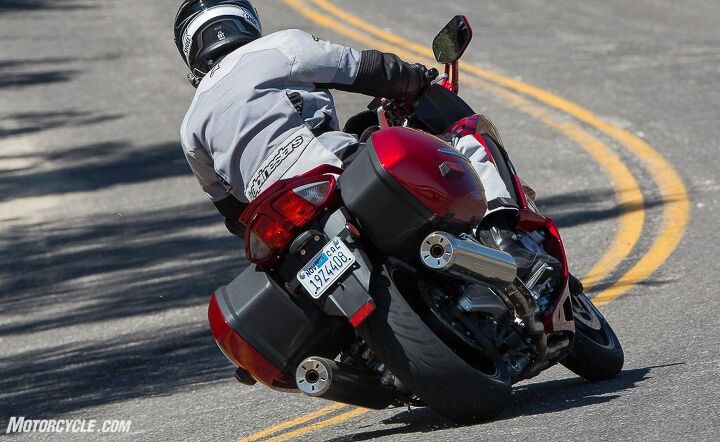
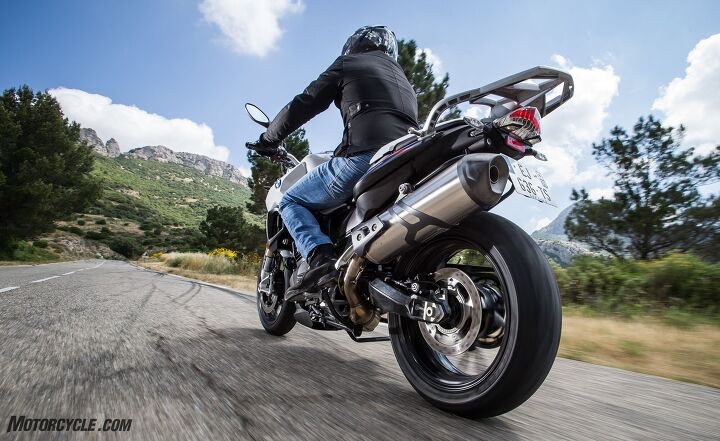
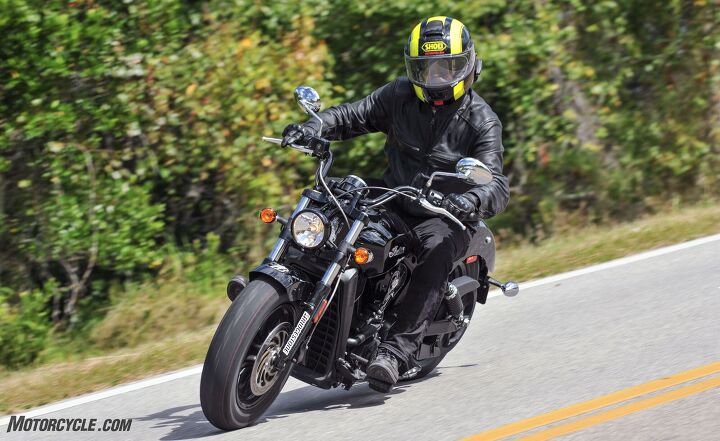
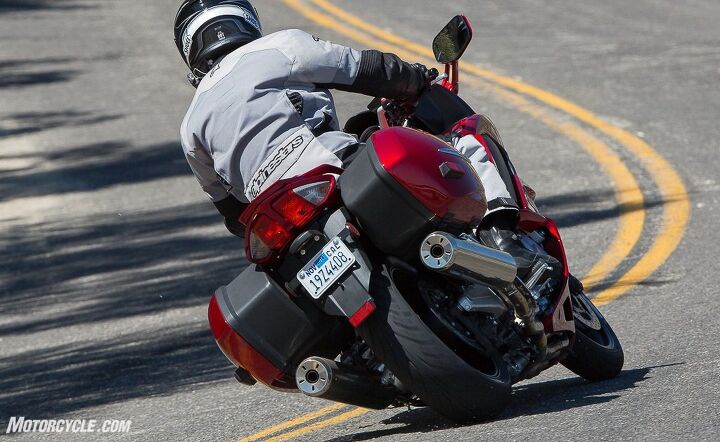
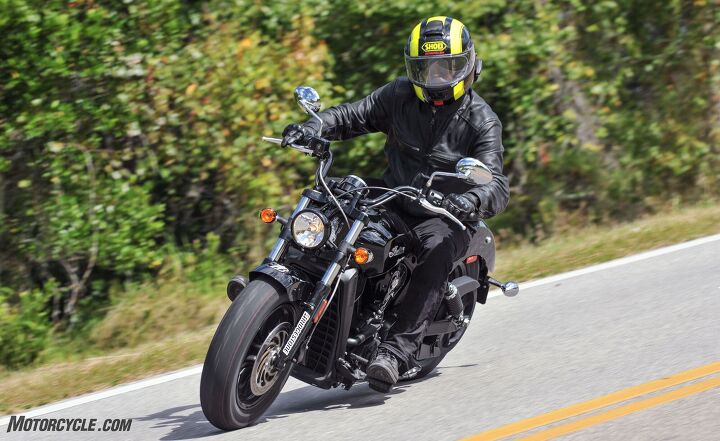
As with each category of motorcycles, cruisers have their own special requirements for tires.
All four tire manufacturers I consulted agreed that to get the most from the investment in rubber, riders need to buy the right model for their particular riding. Each had a list of questions for riders to consider, and when combined formed these common themes: What is the type of riding you do? In what kind of weather? What type of motorcycle do you ride? If you are a sportbike rider, are you looking for more grip or more mileage, and do you ever do track days? Next, they recommended that less experienced riders talk to their local tire vendor. More experienced motorcyclists most likely have a pretty good idea of what category they fit into, but that doesn’t mean they shouldn’t do their due diligence. Tire technology is changing incredibly quickly. So, you need to pay attention.
What differentiates the categories of tires? At the most basic level, the differences start with two separate but somewhat interrelated features: construction and load carrying capability. Bias-ply tires, for example, are quite good at carrying heavier loads, which is why you commonly find them on heavyweight cruisers and baggers. Bias ply tires run their carcass layers of fabric cords from bead-to-bead in alternating layers at an angle (at a bias, which is how they get their name) to each other. This construction makes them stiff and strong – a plus for carrying heavy loads. Unfortunately, the additional thickness in the carcass presents a problem when it comes to shedding heat, which is less than optimal when it comes to sporting use.
Radial tires have their carcass constructed with their cords running directly across the tire from bead-to-bead perpendicular to the tire’s rotation. This construction with fewer layers of body cord allows for a more supple sidewall, which helps make the contact patch larger when the tire is on the edge of its tread. Not surprisingly, performance-oriented motorcycles primarily utilize radial tires because of the higher grip and improved feedback the more supple sidewall allows. Another feature of radial tires is their ability to have short sidewalls with wide treads. Look at your typical sportbike rear tire’s dimensions. They simply wouldn’t be possible with bias ply tires.
Sportbikes aren’t the only motorcycles that benefit from radial tires. Touring bikes and cruisers can also take advantage of them.
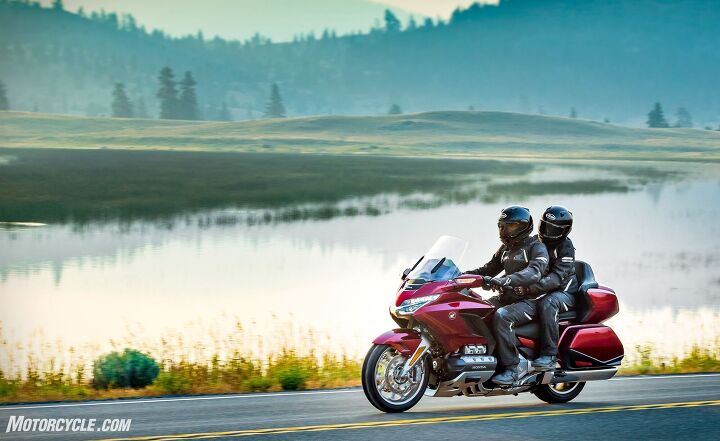
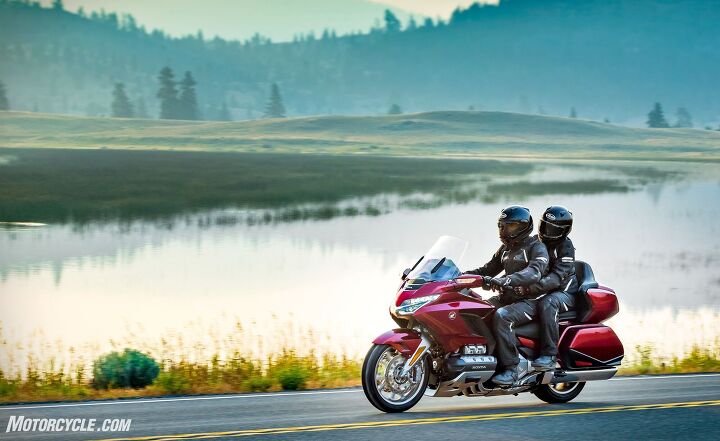
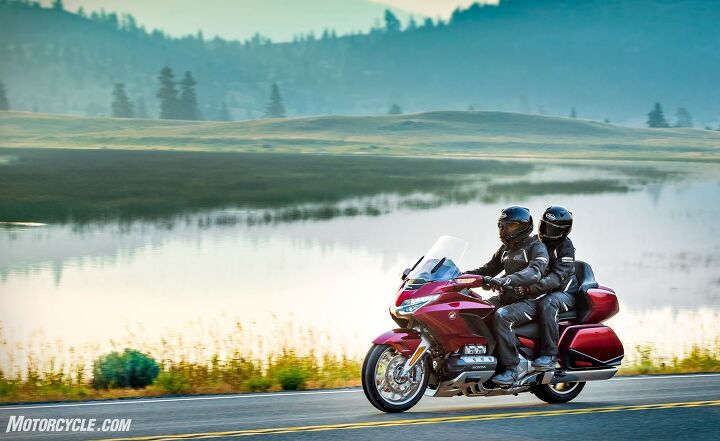
However, that’s not to say only sportbikes use radials. The Honda Goldwing comes with radial tires, and it is certainly a bike that is capable of carrying two large-sized people and their cargo. So, the lesson is that you should know what kind of tires your bike was originally fit with and continue doing so.
Next, riders should consider the rubber compound(s) that make up the tread of the tire itself. Those of us who live for the next apex and can be seen carving up mountain roads typically are willing to sacrifice longevity for cornering capability and often opt for the stickiest rubber available. However, you still need to be aware of the conditions the tire you’re mounting on your bike is designed to handle and what you’re actually doing with it. The long and short of it is that race compounds don’t belong on the street.
Oscar Solis, Senior Roadrace Manager, North and South America Metzeler/Pirelli: “If you have a really sporty compound, if it’s an ultra-race compound like our Pirelli SC0, they’re not made to be at 120 degrees. They’re made to be at 200-plus degrees Fahrenheit. It’s very difficult to get that kind of heat in the tire on the street – with an SC0 or any kind of tire. So, your ultra-race compounds are actually going to be a harder compound at a lower temperature. Even if you had the skills to ride the bike to generate the heat on the track, you most likely won’t be able to get that much heat on the street. So that’s why you shouldn’t have race compounds as street tires.”
This is not to say that performance riders don’t benefit from buying the stickiest street tires they can buy.
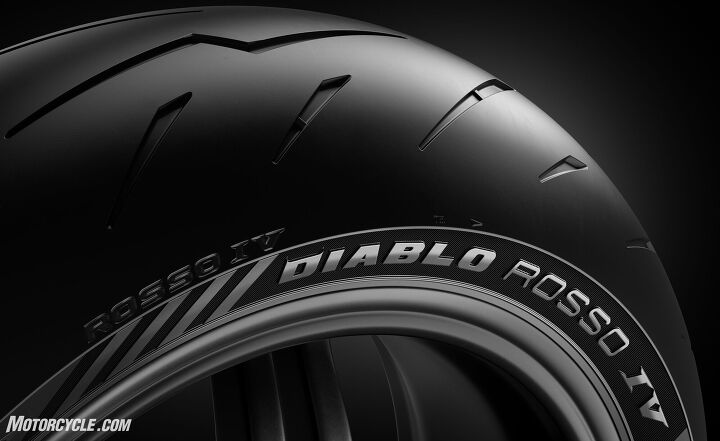
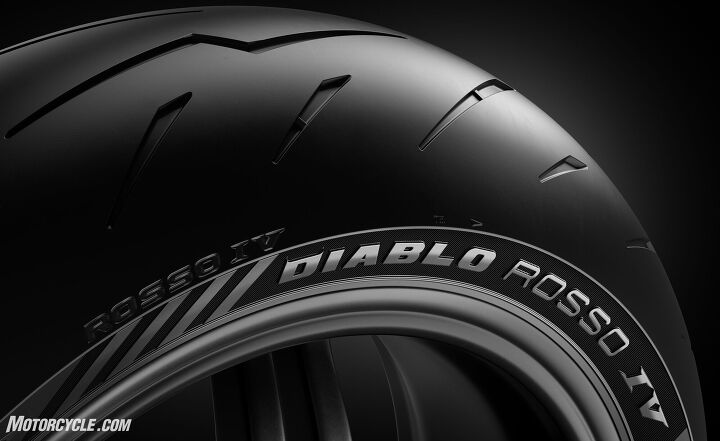
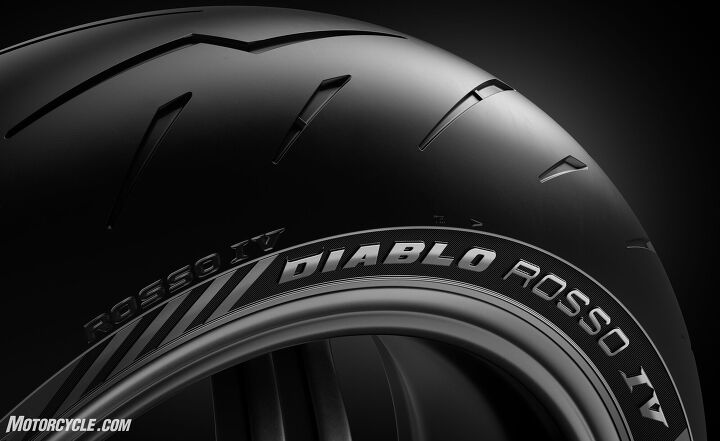
All motorcycle tire manufacturers are making tremendous strides in delivering sticky sport tires that don’t wear out as quickly as those in the past. The Diablo Rosso IV is Pirelli’s most recent example. The stated areas of focus on the tire’s development were “benchmark performance in both dry and wet” and “tread design optimized for sporty riding and regular wear.”
Oscar continues: “We’ll look at the Supercorsa SP. It’s a hyper sport tire, and it’s very aggressive. It’s a very sticky tire. Whenever I ask somebody what they’re going to do with this tire, they’ll say something like, ‘I’m going to go commuting. I’m going to go canyon carving. I’m going to the track once in a while.’ If you go to the track once in a while and you’re doing some canyon carving, the Supercorsa SP is great, and that extra amount of grip it offers can be forgiving because it may allow you to make some mistakes and have that safety net underneath you. If you have a tire that’s way more durable but less grip, that safety net might not be there when you’re asking for whatever degree of lean on the brakes and trying to miss a car because you were way too hot coming into a corner. The grip level could really save your butt.
“Conversely, Supercorsas for a commuter bike, that’s a waste of money because all you’re going to do is wear out the center of the tire. You’re only going to go five degrees of lean angle because you just need to pull into the 7-Eleven for some stuff. You’d be much better off with a sport-touring tire, an Angel GT, a Rosso III. Something that has more durability.”
Dominic Clifford, Global Avon Motorcycle Manager, concurs: “We have a road-legal track day tire called the Extreme. We see this all the time, a rider will come to us and say, ‘I want that tire. I don’t care that I will only get 1500 miles out of it. That’s the tire for me.’ What we find is that, in the road application, it is 100% the wrong tire for them. It’s not just the mileage. In road application, it is very difficult to keep the heat in that type of tire. It is designed for track use, not for stopping and starting at lights, junctions, etc.”
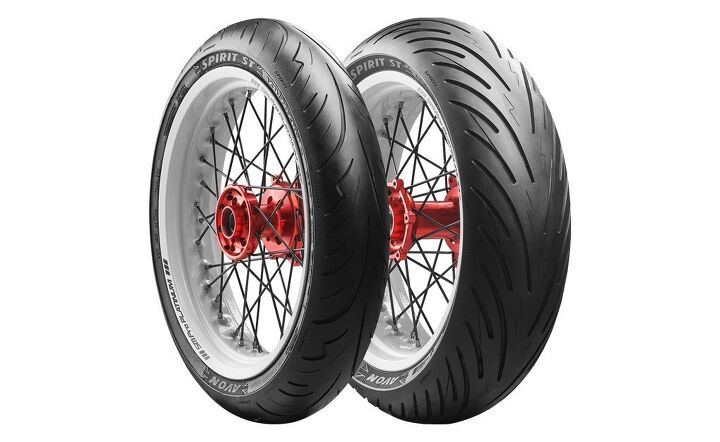
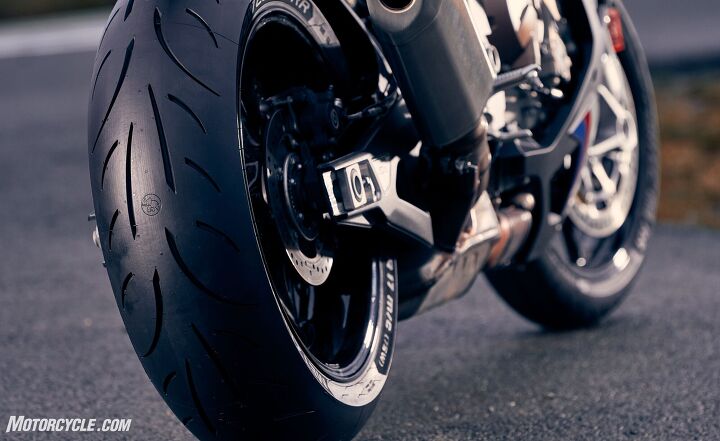
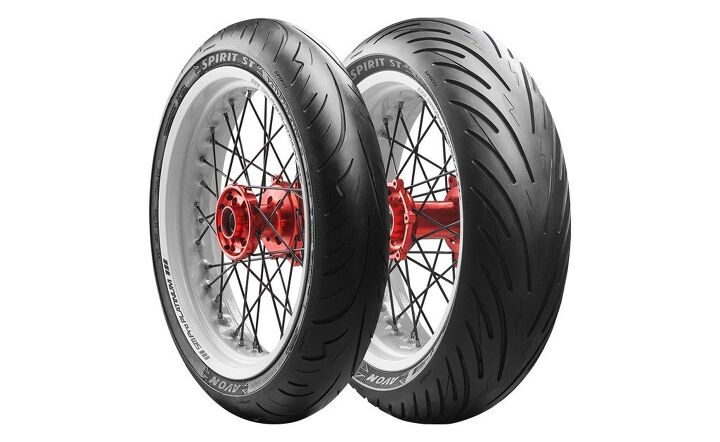
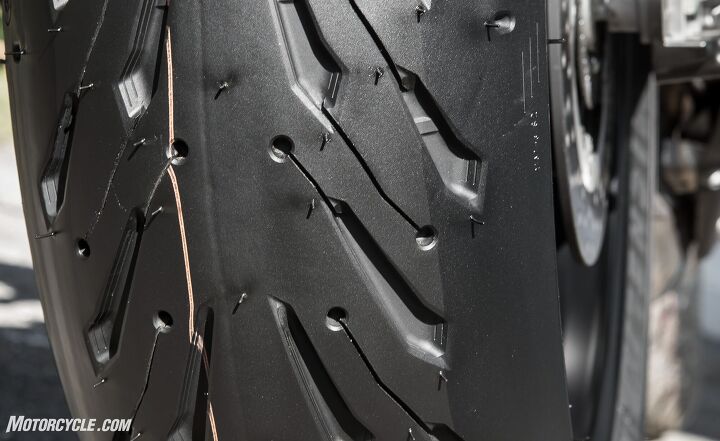
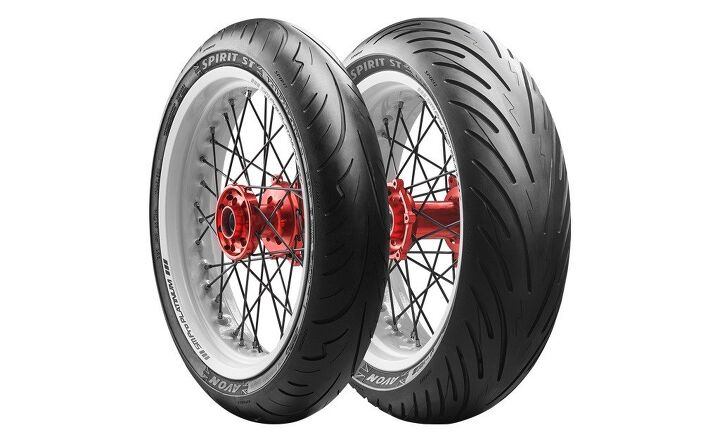
A quick glance at the Avon Spirit STs above tell you that this sport-touring tire was designed with wet-weather grip in mind (in England, that’s of particular importance) along with dry-weather performance.
The difference between hypersport street tires and sport-touring tires is about more than just the rubber compound. You also need to consider the difference in carcass stiffness and tread profile and how they affect handling.
Ashley Vowles, Avon Motorcycle Tire Development Manager: “From a tire standpoint, they are designed very differently specifically to application. Hypersport track tires are designed to be very stable at high-speed. They’re designed to provide optimal grip at higher operating temperatures, and the profiles are designed a lot sharper to enable the bike to turn it in and fall right onto the edge of the tire when the rider is going around corners and hitting the apexes.
“When looking at sport-touring tires, they are slightly similar to hypersport tires, but the construction is slightly different. The track tire/sport tire has quite a lot stiffer construction so that the rider gets optimal feedback from the tire. Whereas sport touring is slightly softer in construction to improve rider comfort. But also the profile is slightly flatter than a sports tire. Sport-touring tires offer a little more footprint because they’re upright a lot longer than on a sport tire.
“Also, you generally get dual compounds on the rear of those tires. The sport-touring tire is designed for high mileage. Sport-touring tires people kind of refer to them as the all around, all season type tire. People are commuting on them. People are using them all year round. They’ve got good dry performance, good wet performance, good longevity, good handling and stability.”
Sport-touring tires are probably the closest to a universal motorcycle tire. They offer a great balance of wet- and dry-weather grip along with good wear characteristics.
Daily commuters would be throwing money away on the stickiest rubber in their workday bump-and-grind, when sport-touring tires offer almost the same grip on the street while delivering many more miles per set.
Still, the decision doesn’t stop with just the compound. Tire choice also depends on where the rider lives. A tire with the bare minimum of sipes – as close to a slick as possible – will suit riders in the arid Southwest or riders who never ride in the rain, but enthusiasts from wetter climates appreciate the ability to channel water away from the contact patch in addition to dry grip. Since cruisers and tourers are less interested in outright lean angle than comfort and longevity (plus wet weather performance for the travelers among us), these tires emphasize durability and the ability to handle the forces that the public roads throw at them and the heavier loads they tend to carry. Finally, we can’t ignore the role that styling plays in tire choice.
Tire Pressure is key
Now, we arrive at the impetus for this article: How do riders get the most out of their tires? We’ve heard about special pressures for track days. Should rider’s vary their pressures for different street-riding jobs? Or should they set their tire pressures (which they are checking at least weekly, right?) to OEM specifications and not worry about it at all?
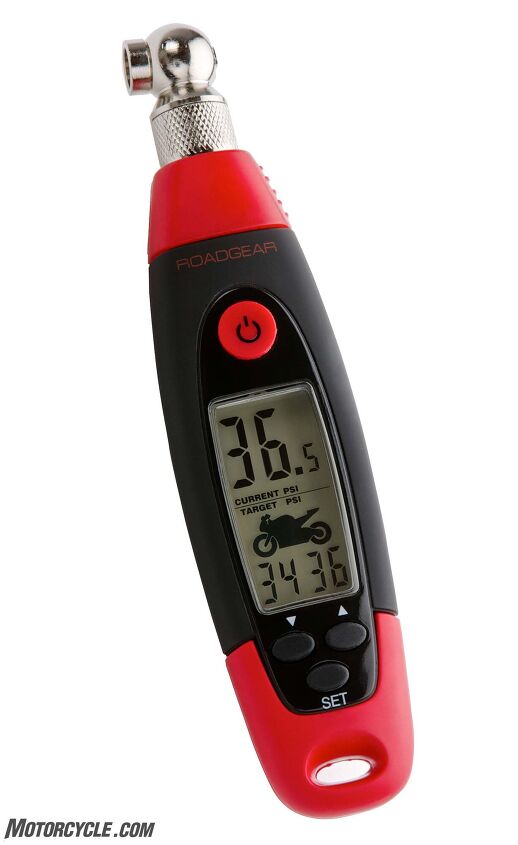
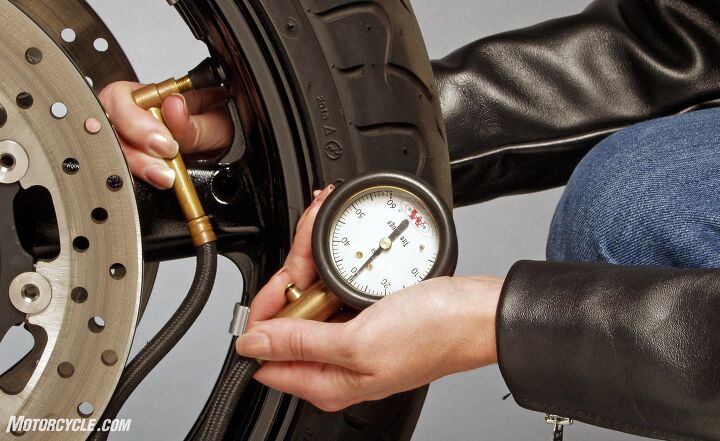
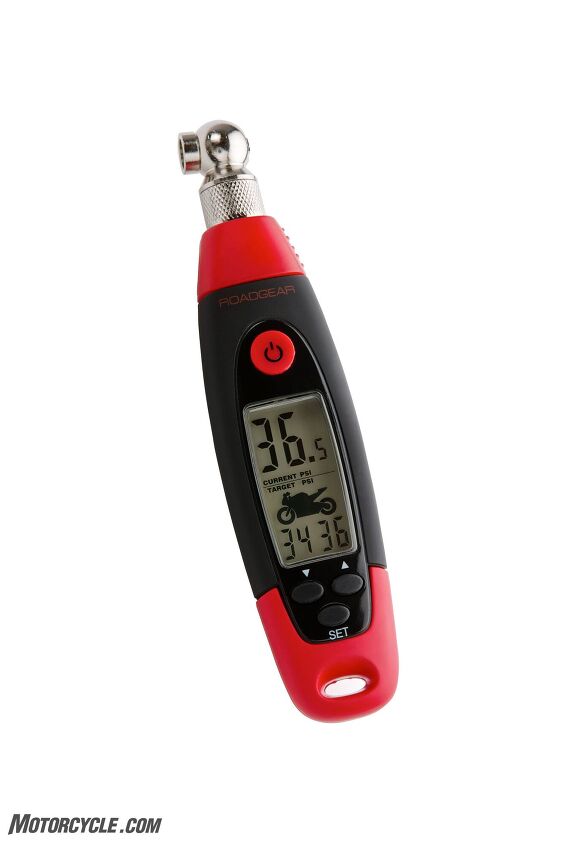
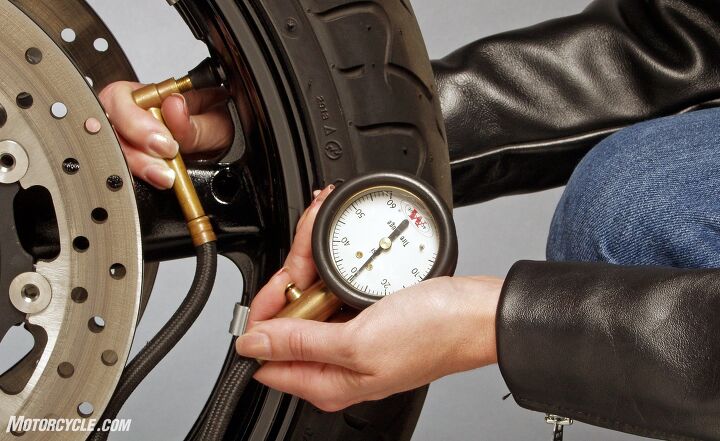
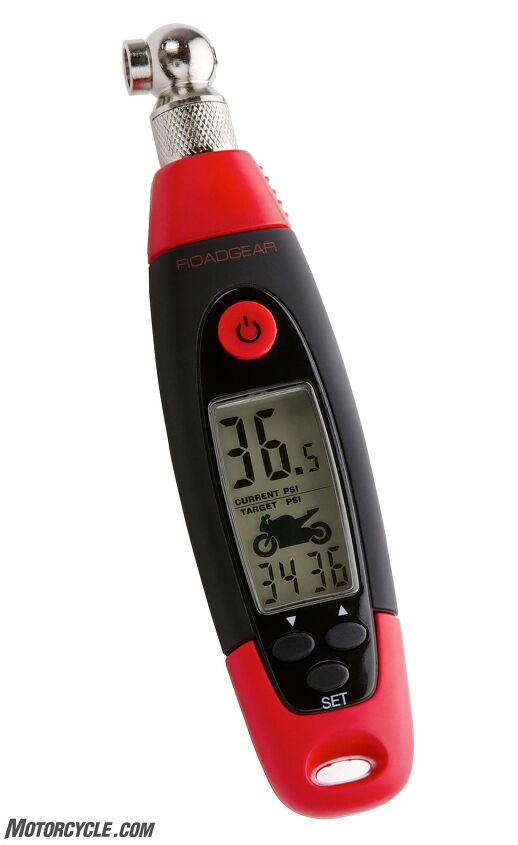
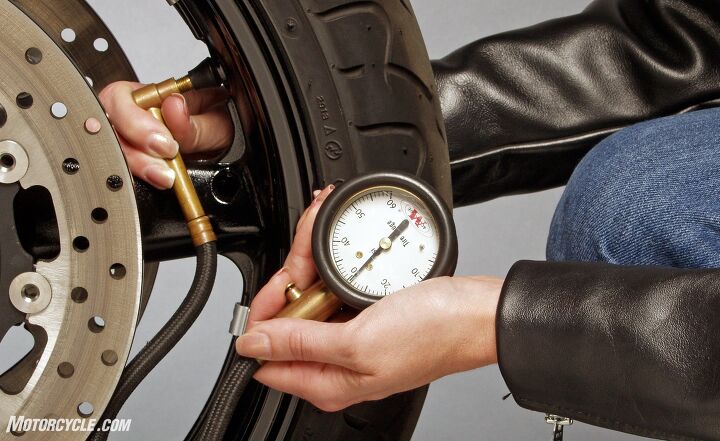
If you take away nothing else from this article, understand that the secret to getting both the best performance and durability out of your motorcycle tires is to buy an accurate tire pressure gauge and to use it regularly.
Among the tire companies I consulted, the unanimous statement was that you couldn’t go wrong with running the OEM-recommended pressures on the street. However, there were some caveats.
Vowles @ Avon stated: “For 90% of our tires, we recommend the OE pressures for that motorcycle…There are a few sizes and few bikes where we do recommend a different pressure, on our custom stuff, especially, where we might have a slightly higher pressure.”
Clifford @ Avon adds: “Tire pressures are very important. You should be increasing your pressures if you’re riding with luggage and pillion. The pressures we recommend are for cold tires in a road application. If you are going to ride with a pillion and or luggage, we’d always recommend increasing 1 or 2 PSI in that tire as well.”
Shawn Bell from Sumitomo Rubber USA (Dunlop’s parent company) concurs: “The first thing I recommend is check with the motorcycle manufacturer. They have ideal air pressure settings when it comes to the capabilities of the motorcycle. We actually have a 1-800 number (800-845-8378) that we get a lot of customers calling in and asking questions like this, and we always recommend running OE placard pressure on the street.”
Michelin responded in a written statement from its engineering department: “For street riding purposes, Michelin recommends the tire pressure quoted by the motorcycle manufacturer…Road pressures are defined by the motorcycle manufacturer to cover all possible uses of the motorcycle, ranging from slow speed commuting to work in an urban environment all the way to two-up on the highway (high speeds sustained in a straight line).”
For a regularly-ridden motorcycle, weekly pressure checks are the minimum. Still, according to the tire reps, we should do it before every ride.
Solis @ Metzeler/Pirelli, said: “It’s always going to be the bike manufacturer’s recommendation. They build the bike. When we build a tire, it’s not necessary we build the tire for every motorcycle. Instead, we build a tire that can go on a handful of motorcycles. It’s the bike manufacturer’s pressure recommendation because it is more of a singular application for the bike and rider than just the tire itself.”
So, the common thread in all of this is that the OEMs know what the motorcycle is capable of and the kind of stresses that it will put on the tires in the range of operating conditions expected of it. The cynics among us will say that this is largely a CYA statement to avoid lawsuits, but the engineers and test riders responsible for developing street bikes really know what they’re doing.
The most common mistake
Let us pause for a moment of silence to consider the suffering inflicted on motorcycle tires by neglectful owners – and let their tales of woe be a warning.
Bell @ Dunlop: “At rallies, we would set up a tire check, people would come through with their motorcycle, and we would check their weight and pressure. We’d have them roll up on the scale and sit on the bike with everything, their luggage, the wife on the back, and we would get the weights front and rear. Then we would check their pressure. And the number of under inflated tires was surprising. We even came across some riders with less than 10 psi in their tires. It was kind of scary and comical at the same time. We’re telling people, you don’t understand how important this is.
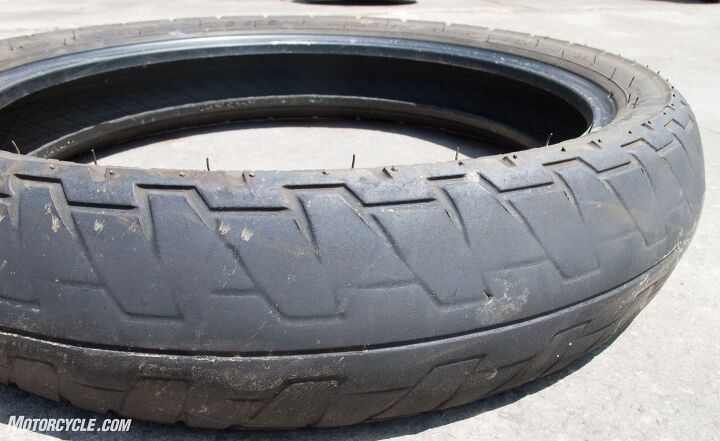
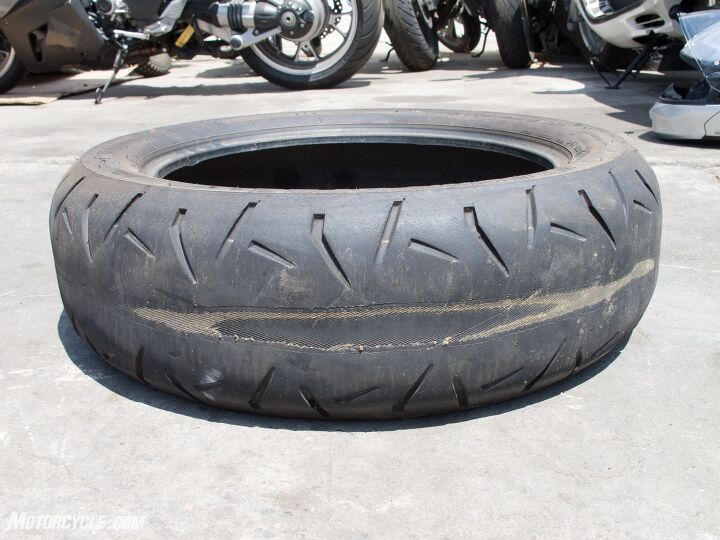
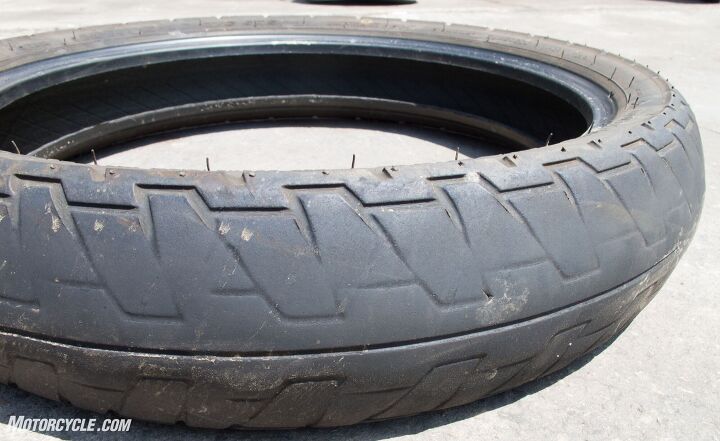
“We found in our testing that you’re going to get the best mileage bang for your buck on the street if you maintain the placard pressure. As soon as you lower that pressure, you’re putting more heat cycles into the tire. You’re definitely generating more flex in the carcass, and that’s going to wear the tire out. I couldn’t tell you how much quicker. I know that it’s pretty obvious to me when I have seen a street motorcycle running too low air pressure, either it wears out too quickly or wear is uneven. You get cupping.”
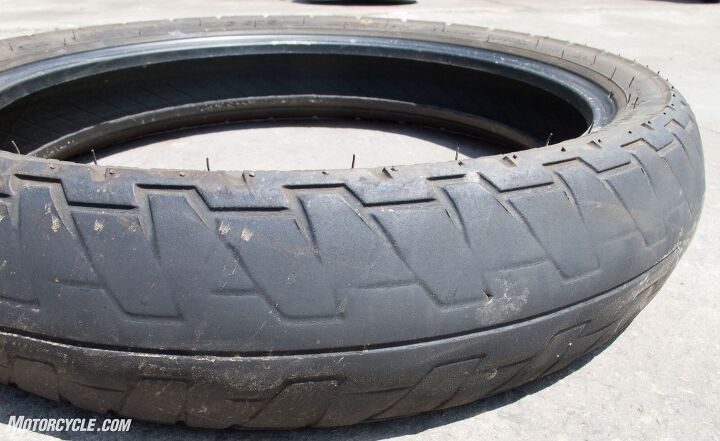
This basket case of a tire shows clear signs of being used while under-inflated. Note the cupping of the tread while the center still has rubber left.
Solis @ Pirelli: “Check your pressure. Every time you go out on a ride. Nobody ever does it, but I’m still going to suggest that you do it. Check your pressure every time – especially when the weather changes. That’s what really changes the pressure in the tire. Heat is generated in a tire by deflection, by how much it squishes, basically. On the road, less pressure is going to create more heat. That’s why big truck drivers in semis get blowouts when the pressure is too low. It creates more heat. The heat’s not so much on the surface. It’s actually under the surface. That’s why you see the tread come off.”
Clifford @ Avon: “The one stat that I always talk about is that you should look at tire wear as a bell curve. The optimum pressures in the middle. If you go ten percent either way on your pressures, then tire wear literally drops off the bell curve.
“So, your optimum wear rate is at 42 PSI. If you go plus or minus on the 10% rule, and a lot of riders will for a 42 PSI recommendation. They will probably drop that down to 34 or 35, but even 10% so from 42, that’s about 38 PSI. Even if you’re 38, that will, in some cases, increase your wear rate by 50%. So, you will get half the mileage out of your tire by running it between 35 and 38 than you would do at 42 PSI.”
Track pressures are for the track, and street pressures are for the street. There is actual science behind these settings.
Vowles @ Avon addresses the desire for a bigger footprint provided by running slightly lower pressures when sport riding. Moderation is the key here: “Yes, you are going to potentially have a bigger footprint, but at the same time you’re also going to change the complete construction of that product because it’s going to be a lot softer in the sidewall. It’s going to wallow around; you’re going to wear the tire out. You’re going to have tires moving around, which can generate more heat as well. So, you can risk overheating the tires. Now, it may be that on some bikes an end user, instead of having 36/42, he’s gone 34/40, and he likes it like that. Okay, that’s okay.”
To wrap up this section, it’s time to get really honest with yourself. When did you last check your bike’s tire pressures? If it was in the last week, you’re better than most. If you can’t remember, you could, at best, be throwing away money on rubber that you’re wasting and, at worst, endangering yourself (and others). Motorcycle tires are serious business.
Track pressure is a special case
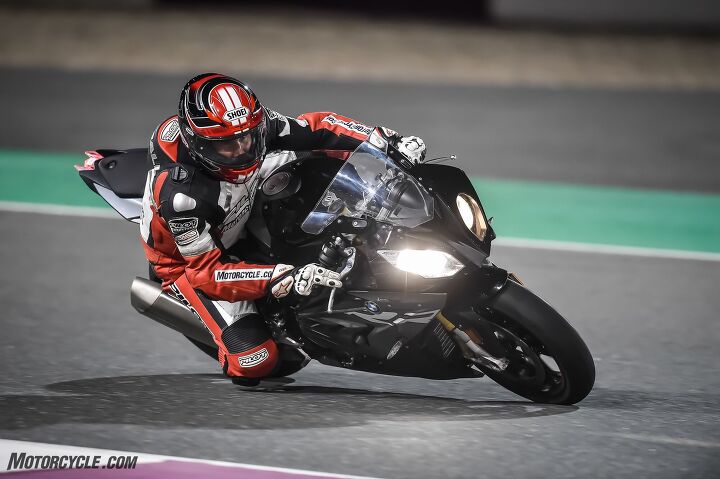
The track environment is quite different from the street. The extreme loads are nearly constant, going from braking to full-throttle acceleration back to braking and leaning over in a corner. This generates heat quickly and can push tires not made for the environment well out of their temperature range and cause them to become greasy. Another component of the heat build up in tires on the track is how it affects pressure rise.
Michelin puts things succinctly in its written statement: “Circuit pressures are traditionally defined by the tire manufacturer for track use only. It is not recommended to ride on the road with these pressures.
“For track use, the front tire pressure is lowered so that when it is hot, the tire operating temperature is close to the cold road pressures.
“The rear pressure is lowered significantly on track versus street because the pressure needed to support two-up is not required and thus a lower pressure achieves a more optimal operating temperature.”
Track pressures serve multiple purposes. First, the lower pressure helps to manage the increase in tire pressure as the carcass temperature rises. Second, the size of the rear contact patch can be adjusted to give better drive out of the corners.
Bell @ Dunlop reveals that the issue is about more than just tire temperature. For example, street settings have higher rear pressure than front, but at the track things are reversed: “[On the track] the lower pressure on the rear is because of the benefits of the increase in contact patch that you’ll get, specifically for the drive out of the corners. The air pressure on the rear, when it gets hot, increases more than the front. If you started off with 32 in the front and 30 in the rear, you’re gonna end up with 36/36 hot. Just because of the volume of air inside the tire, you’re seeing a bigger increase on the rear.
“I always say that it’s important to check the hot pressure because, when you’re on the track, you’re not normally riding on cold tires. You’re on hot tires. If you want to hone in on air pressure, I recommend checking the hot pressure, but you have to start with something. You have to start with a cold pressure [which is information that a tire vendor will have].”
Solis @ Metzeler/Pirelli emphasizes that novice track riders or riders that don’t have track experience with the tires they’re running should talk to a tire vendor: “ When you take tires to the track, talk to somebody. Talk to trackside vendors about pressures. Yes, you go lower to get a little more grip, but they’ll help you out with the specifics of those pressures and make sure that you’re not going to overheat your tires. With true track race tires, it’s very very hard to overheat them. Most of the time, it’s the track that actually loses a lot of grip when it gets too hot. You have to keep in mind that friction is from two parts, the tire and the track. Maybe the tires lose their grip and maybe it’s the track losing grip. A lot of the time, people don’t realize the track loses its grip, and you have to do something with the tires or suspension to kind of compensate for that.”
The final word on track tire pressure is talk to the people who know the tires you’ve mounted and then, if you have the skill set, adjust from there to suit your preferences. If you’re new and don’t have the skill set, then we’ll reiterate the importance of contacting a reputable tire vendor ahead of time to seek proper tire pressures to start with. Odds are you’ll stick with these pressures for the whole day. Remember that not every tire brand will have a representative at your track day. So, again, get the information you need prior to arriving at the track.
On running non-standard tire sizes
This topic can get fairly far off into the weeds if you include custom cruiser show bikes that are all about the form with little – if any – thought about how the bike will handle. Still, a surprisingly large number of riders think that the hot set up is to put larger tires on their bikes. Here’s what the tire reps had to say about it.
We’re going to keep our focus on motorcycles that are actually designed for riding.
Again, Michelin wins points for brevity, getting to the crux of the matter: “For street riding, motorcycles should be equipped with the size of tire specified by the motorcycle manufacturer. Do not mount tires wider or narrower than the original-equipment tires, either of which could negatively affect the motorcycle’s handling. Exceptions to this guidance should only be considered with qualified tire support specialists; i.e. trackside tire support (190 rear width vs 180 rear width, etc.).”
Solis @ Metzeler/Pirelli says you should check with the tire and bike manufacturers’ specifications: “When we create a tire and when we engineer a tire, we actually engineer for a certain size rim. As long as the tire manufacturer says the application is for this rim size, then it’s been tested that way. A 180 to 190, the profile doesn’t mean it’s the same right? The profiles are different. If you go with a different size with the same rim size, it’s going to pinch the profile. What happens is it kind of curves a little bit more. When it’s on the street, that means that it doesn’t quite go all the way to the side of the tire. It kind of stays up a little bit more on the tread. That could be bad because, when you go all the way to the side of the tire, you deflect the sidewall a little bit more and, actually, may have more of a contact patch. You are squeezing that side wall a little bit and getting a bigger contact patch. Not a lot of people understand that. They think it’s just wider, and it’s better: ‘Just pinch that puppy on there. You’re going to have more contact patch.’ But they might actually have less.
“The other problem about it is that the selection of the tires might actually be less as well. The range of tires that you have a certain size may be different. If your bike manufacturer recommends it, fine, go with it. If it doesn’t then, you know, it’s going to change and you might have less availability for your bike.”
Most riders don’t spend much time thinking about it, but a lot of testing goes into the development of tires and how they affect a motorcycle’s handling. Choose non-standard tire sizes, and you could screw things up.
Bell @ Dunlop: “There are two schools of thought. I think if somebody is going to entertain the idea of trying a non-standard size, something that’s different than the motorcycle manufacturer recommends, they should do as much homework as they can. I wouldn’t recommend just going off of the blogs because somebody said that they did it, and it was awesome. They should try to really understand what they’re doing to the motorcycle because the geometry of the motorcycle is just like air pressure: the manufacturer set up the suspension and the geometry of the motorcycle for its ideal handling. As soon as you change that, you could potentially upset the handling of the motorcycle.
“The information that’s gonna be important is the diameter, because you can change the ride height. Not only are you changing the width of the tire, but depending on the aspect ratio, you can also change the diameter. You’re essentially raising or lowering the center of gravity. That might be great for a track day because you want the quick steering, but I think they should try to understand what they’re doing.
“Clearance with the swingarm is important. Tire size changes at speed. The dimensions we publish are static. That’s not dynamic. Luckily, sport tires are pretty stable. Bias ply tires grow quite a bit. As soon as you start throwing in a wider tire or a taller tire, then you run the risk of interference. My recommendation is that they just need to do their homework and make sure that they’re doing the right thing.
“I know personally, spending as much time as I have at the track, a taller aspect ratio is better for the track. A taller profile gives a bigger footprint when leaned over. It gives quicker handling. Again, those are all things that you want at the track, but is that what you want on the street? That’s another question. It really comes down to where you’re gonna ride.”
If you look closely at the leading edge of the front fender, you’ll see that my fitting a taller than stock tire caused it to rub against the fender as the carcass expanded at high speeds.
Clifford and Vowles from Avon tag-teamed on this answer:
Vowles: “So if you’ve got a five-and-a-half inch rim on the back of your sports bike that’s designed for a 180, and you want to put a 190/55 or 200/55 on, you are going to dramatically change the performance of a motorcycle. Tires on narrower rims will change the profile. If the tire is designed to be on a 6-in. rim, and you’re going to put it on a 5-in. rim, you’re going to sharpen the profile.”
Clifford: “When you mix in a motorcycle designed for a certain fitment, somebody may put a different size rear tire on. What we find then, in certain situations, is that the front tire and the rear tire aren’t working in harmony. And then you end up with a shimmy, particularly on a sweeping bend because those profiles are not matched. So, they end up working against each other.”
Vowles: “You’ve got one that wants to turn in and the other wants to stand up. It’s our worst case scenario in the tire industry. A motorcycle manufacturer or a tire manufacturer would steer away from that at all costs. We could not ever recommend anything we’ve not tested in application. Always, always stay with your recommended tire size.”
Wrapping it up
While reading this article, you probably noticed that the manufacturers agreed with each other on the broad strokes. These are demonstrable truths that their companies have learned through R&D. You should absolutely heed this advice. In the cases where there are slight differences in their approach to a topic, some wiggle room is implied, meaning that if you know what you’re doing or consult with someone who does, there is room for you to find what works best for you.
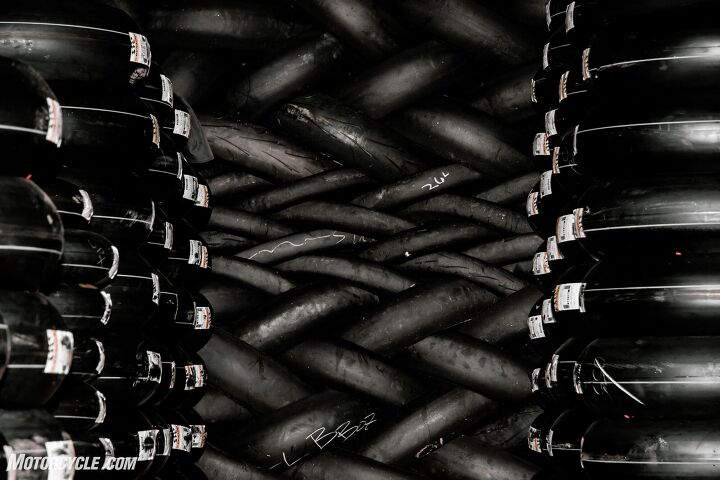
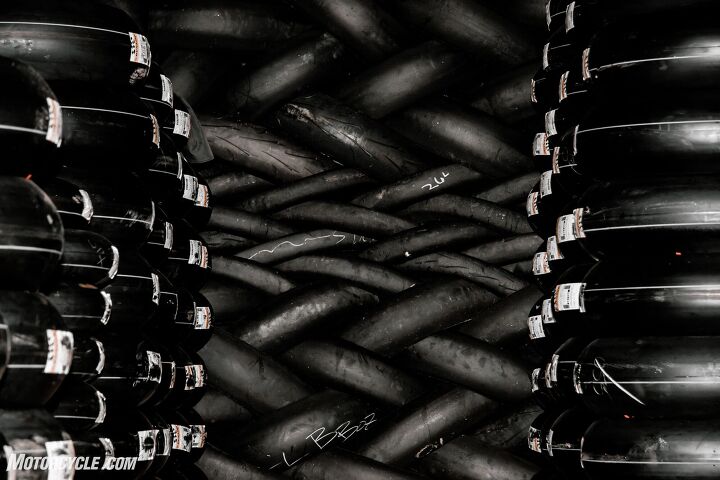
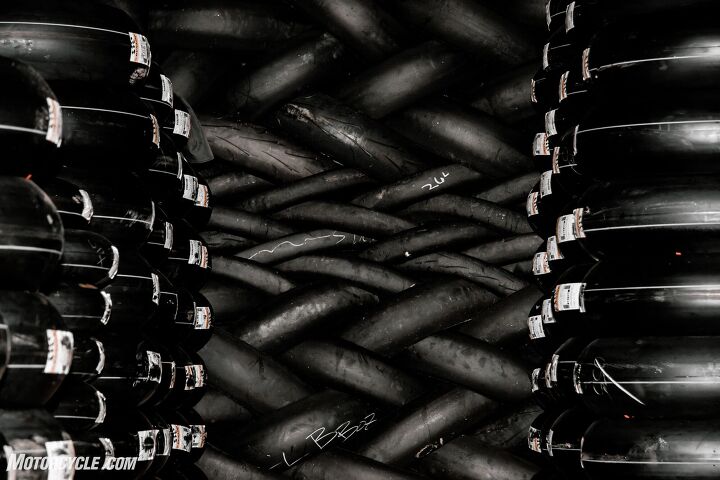
Why would Dunlop haul all these used race tires away from the track? To study and learn from. Street riders will eventually benefit from the technology developed at the track.
FAQ?
Should motorcycle tires be inflated to max PSI?
There is some confusion as to what the Max PSI listed on a tire is. This figure is generated for the motorcycle’s maximum rated load and the pressure required to support that load. As the tire pressure goes down, the maximum load the motorcycle can carry is reduced. Of course, motorcycles spend little of their time carrying that maximum load. So, for regular use, consult the motorcycle manufacturer’s recommended tire pressure to achieve optimal results. These will be the pressures that it was designed to operate with.
What happens when a motorcycle tire pressure is low?
First of all, your motorcycle’s handling will be affected because the tire’s carcass will not maintain its proper shape. Steering will feel heavy. As stated in the article above, low tire pressure puts more heat cycles into the tire because it’s generating more flex in the carcass. At its best, the tire is going to wear out sooner, wasting the money you invested in it. At its worst, low pressure could lead to catastrophic tire failure.
How often should I check my motorcycle’s tire pressure?
The best answer, the answer tire manufacturers always give, is to check tire pressure before every ride. The realistic answer is that for a regularly ridden motorcycle, a weekly check is sufficient. However, if your bike sits unridden for any length of time, definitely check the pressure before you ride it again.
We are committed to finding, researching, and recommending the best products. We earn commissions from purchases you make using the retail links in our product reviews. Learn more about how this works.
Become a Motorcycle.com insider. Get the latest motorcycle news first by subscribing to our newsletter here.
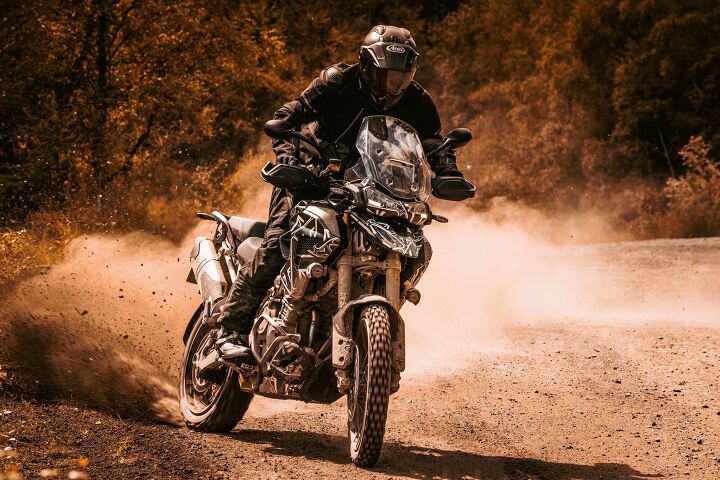
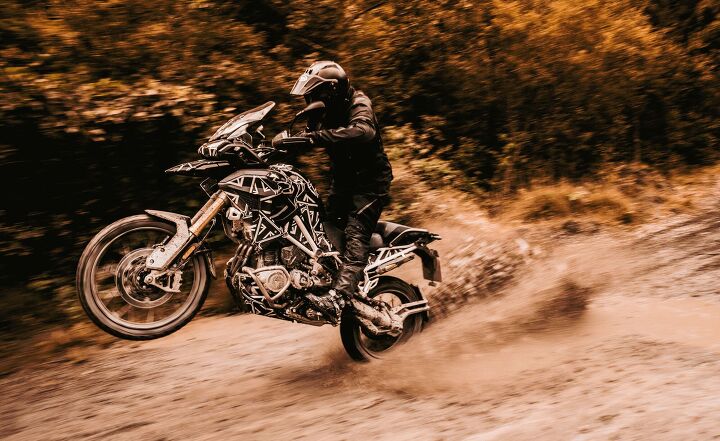
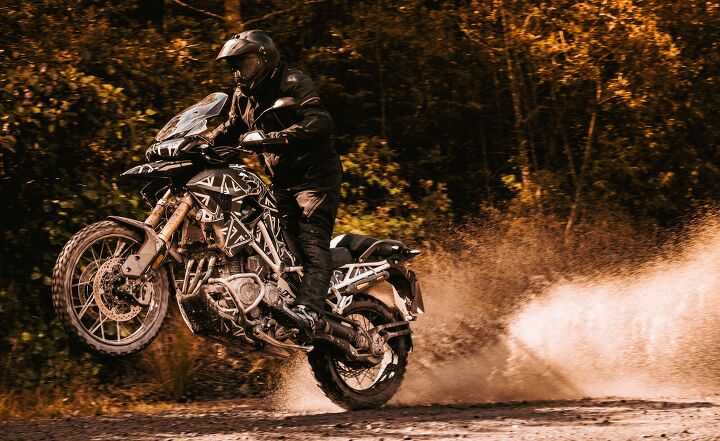
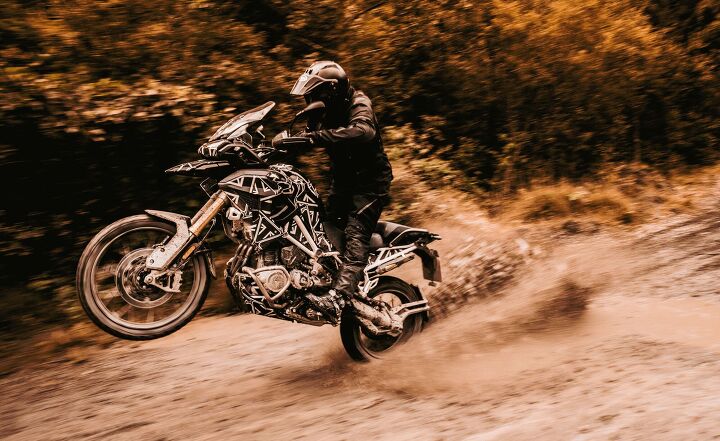
Just more than a week after teasing us with a new Tiger Sport 660 prototype, Triumph sends us photos of another new model, this time a heavily updated Tiger 1200. Along with this showcase of Triumph’s camouflage wrapping, the British manufacturer sent us this brief description:
NEW TIGER 1200 OFFICIAL PROTOTYPE TESTING
Lighter and more powerful, the all-new Tiger 1200 transformation is on its way.
The all-new Tiger 1200 has now reached its exciting final stages of testing.
The word ‘transformation’ simply doesn’t do it justice. Designed to deliver the new ultimate large capacity adventure ride, the incredible Tiger 1200 will bring every advantage in one all-new motorcycle family. Now significantly lighter than its closest competition, with an astonishing transformation in weight, the new 1200 will combine the triple powered engine advantage with a new dimension in class-leading agility, control and handling.
Those are some bold claims to make for one of the most competitive segments in the industry, adventure-touring. There’s a lot to unpack from this brief statement and the three supplied photos.
First of all, that Triumph has been working on a new Tiger 1200 should be no surprise. The existing Tiger 1200s were last offered as a 2020 model, with their 1215cc three-cylinder engines only certified for Euro 4. As Triumph did with many of its models, the Tiger 1200 skipped 2021, opting for a Euro 5 update for the 2022 model year.
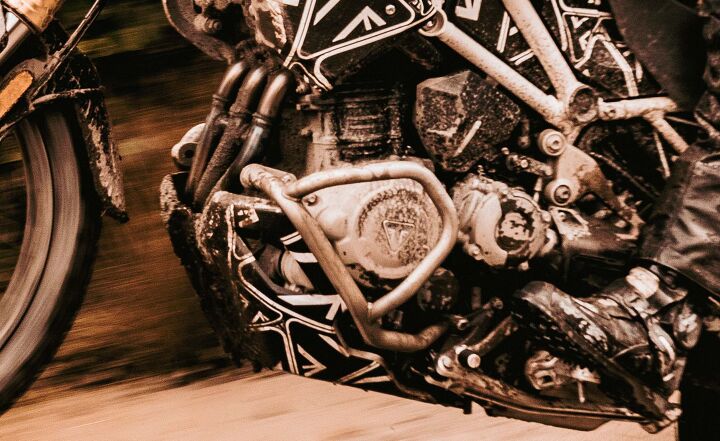
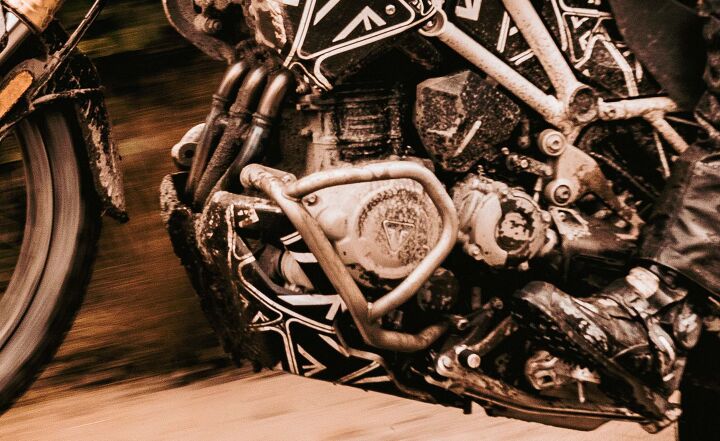
While we know it is still a Triple, it’s clear from the casings that the Tiger has a new engine that looks a lot like the 1160cc engine on the new Speed Triple. The industry trend has been to increase displacement to make up for any loss of performance from meeting Euro 5, but Triumph may be bucking the trend with a smaller, but more powerful engine. That said, it’s entirely possible the engine may turn out to be a larger version of the Speed Triple’s powerplant.
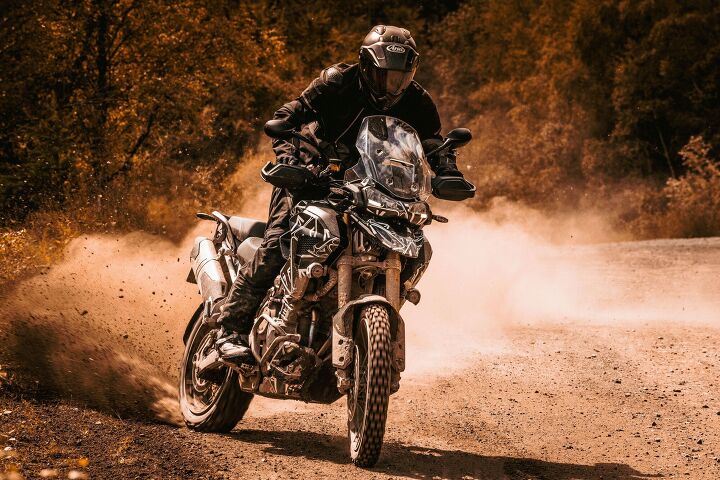
From the front, we can see the new Tiger has two smaller radiators instead of a single larger radiator like the previous models.
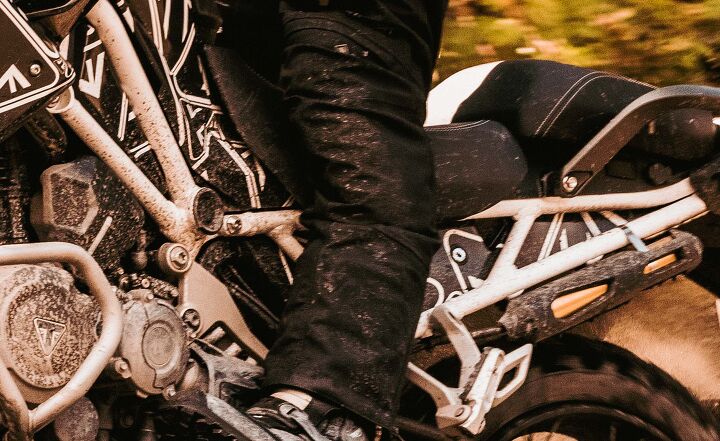
Triumph’s boasts about “an astonishing transformation in weight” is likely due in large part to the new chassis. The frame uses straighter tubes, with fewer smaller support tubes than the previous chassis, and the subframe is now bolted to the frame instead of being welded together. The new Tiger 1200 also uses a double-sided swingarm, with the rear brake now on the right side of the rear wheel, opposite the redesigned drive shaft.
The previous Tiger 1200s used WP Suspension components but the fork on the new model looks similar to the Showa fork currently equipped on the Tiger 900s.
From the front, the new model still has a small beak and a new windscreen. The headlights are a slimmer design, but instead of the Tiger 900’s unibrow LED running light, the new unit has two small light strips below the main headlight lenses, like football players wearing eyeblack.
The motorcycle in the photos is equipped with wire-spoke wheels, engine bars and auxiliary lighting, but if past Triumph models are an indication, we can expect the new Tiger 1200 to come in both more off-road capable and street-biased versions. We probably won’t see the previous Tiger’s XR and XC nomenclature, with Triumph likely to adopt the Rally and GT naming scheme of the 900 models.
Triumph hasn’t provided any indication on when we might learn full specifications on the 2022 Tiger 1200 Rally and GT. In recent weeks, Triumph has offered hints at the Tiger 1200, Tiger Sport 660 and Speed Triple RR prototypes. The Nov. 23 EICMA show is still a long ways off, so we suspect Triumph will reveal more about all three bikes well ahead of the Milan show.
Become a Motorcycle.com insider. Get the latest motorcycle news first by subscribing to our newsletter here.
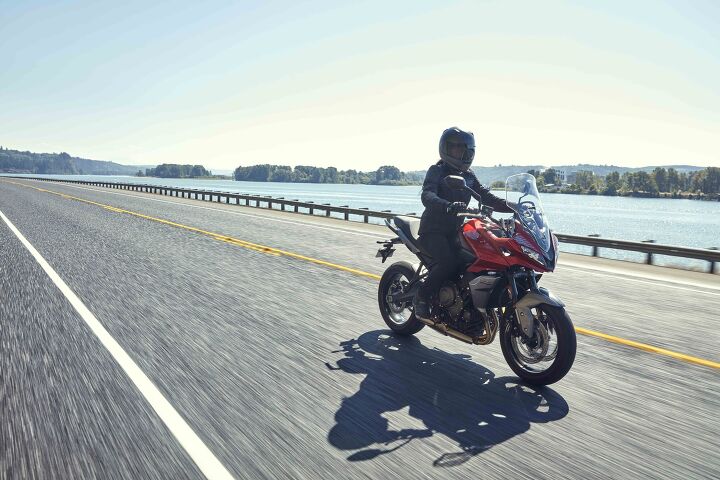
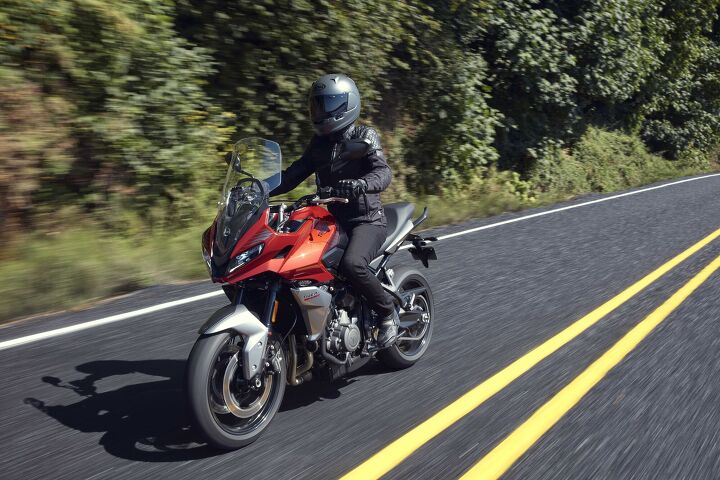
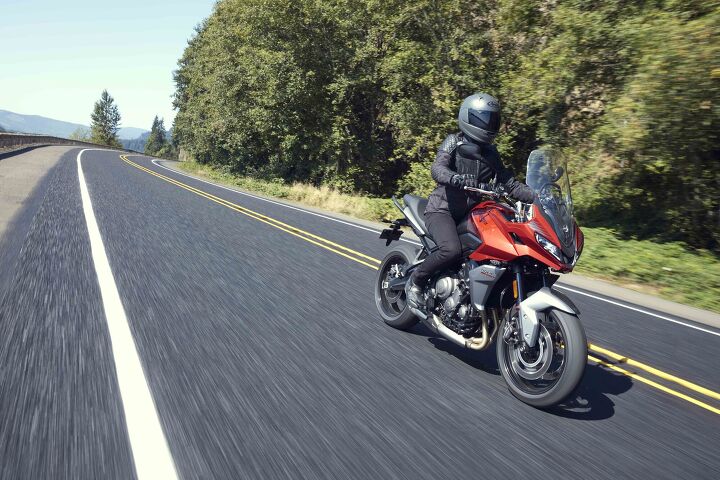
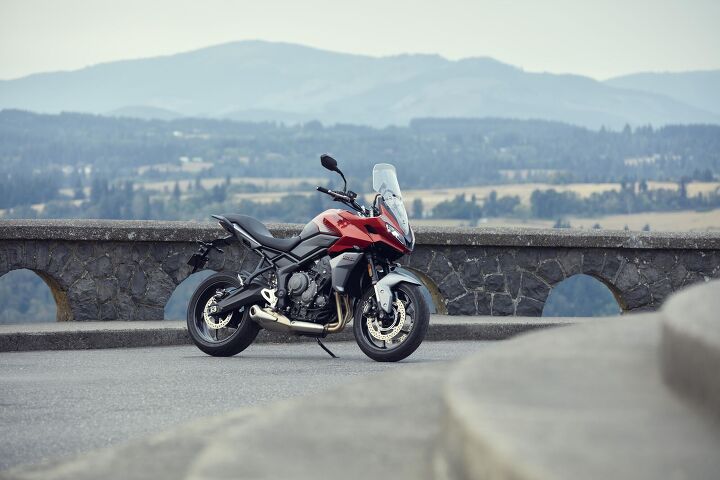
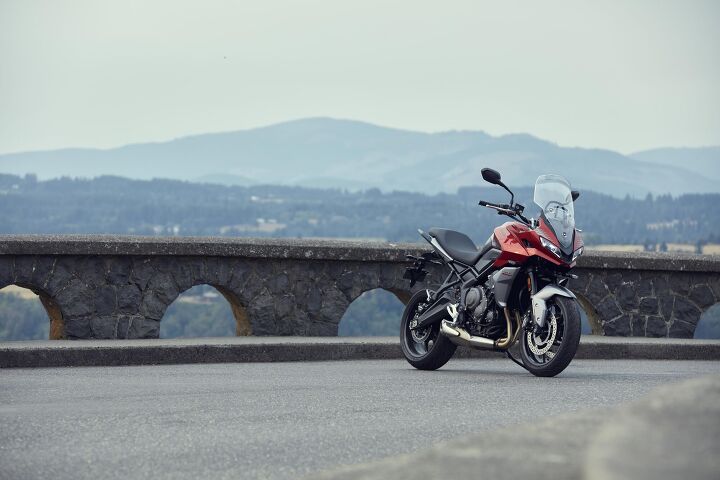
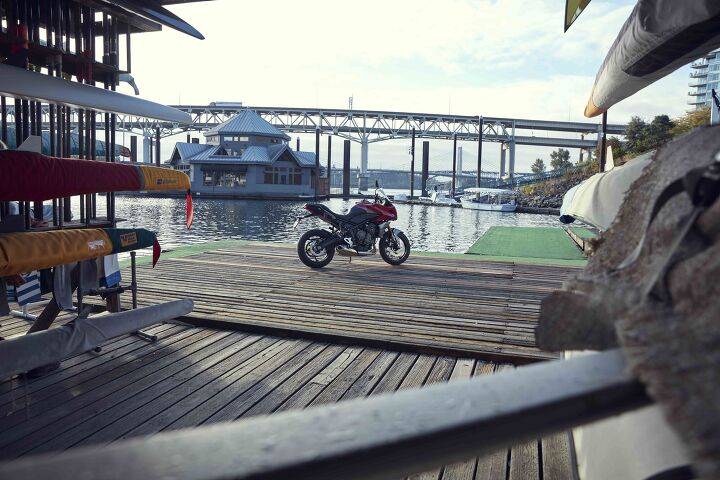
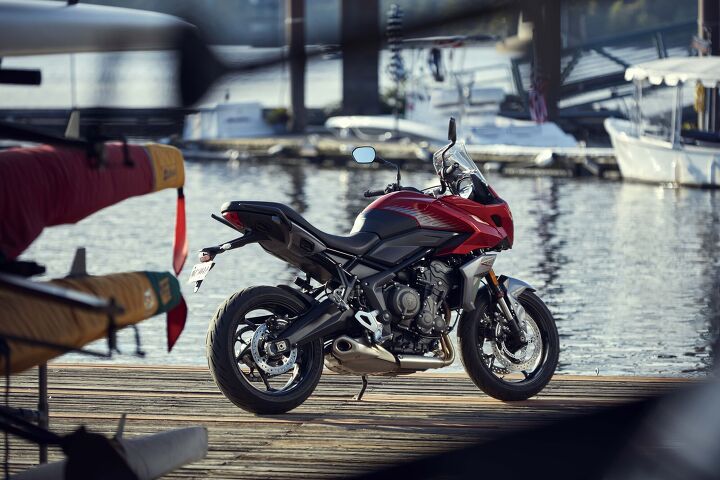
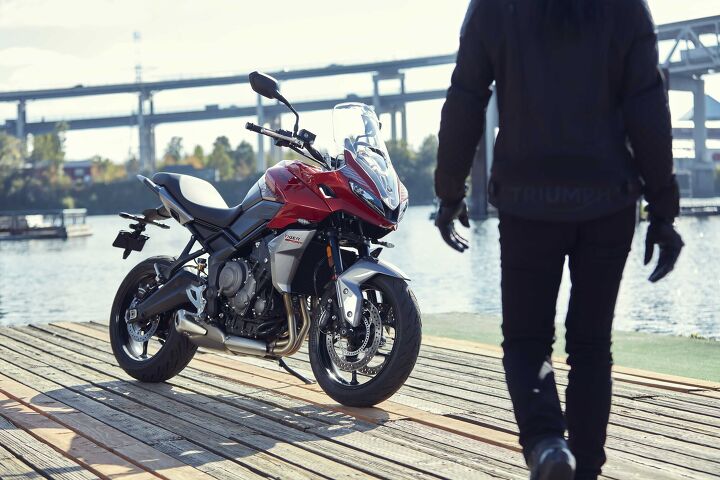
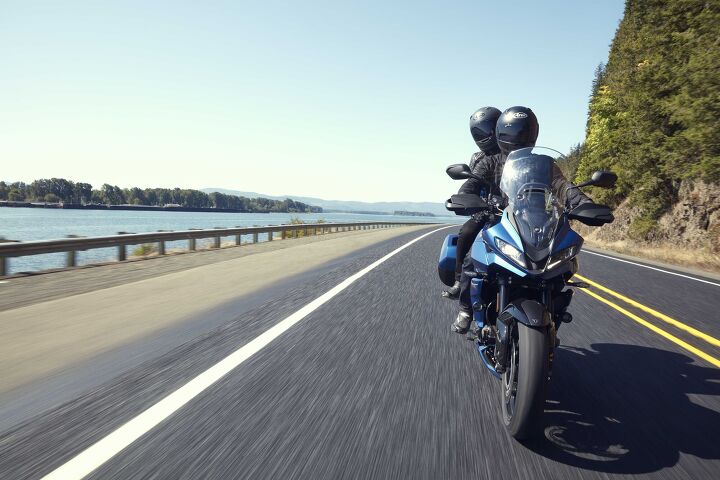
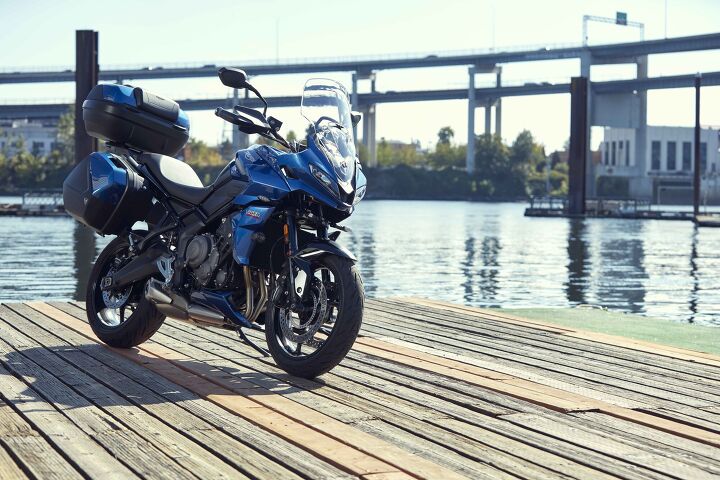
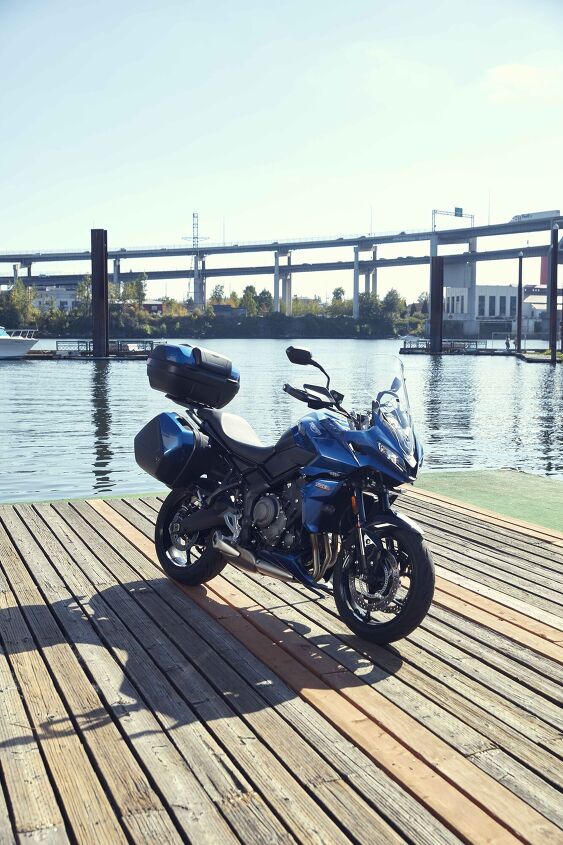
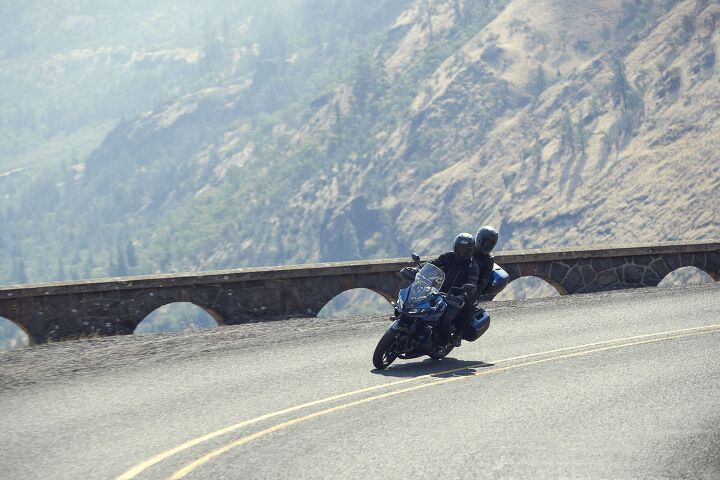
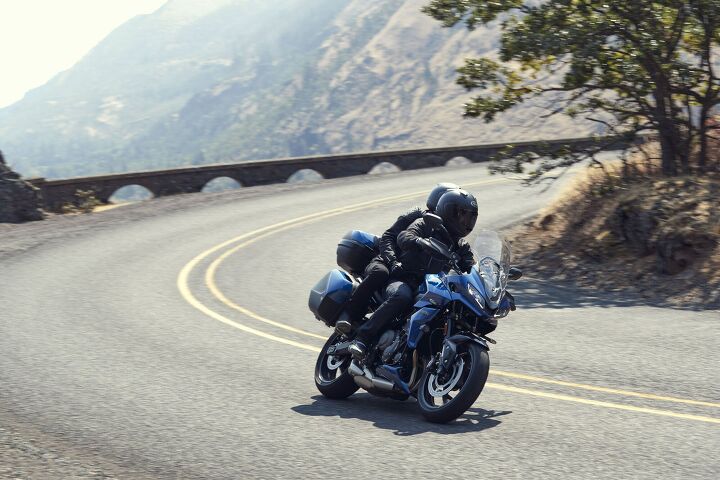
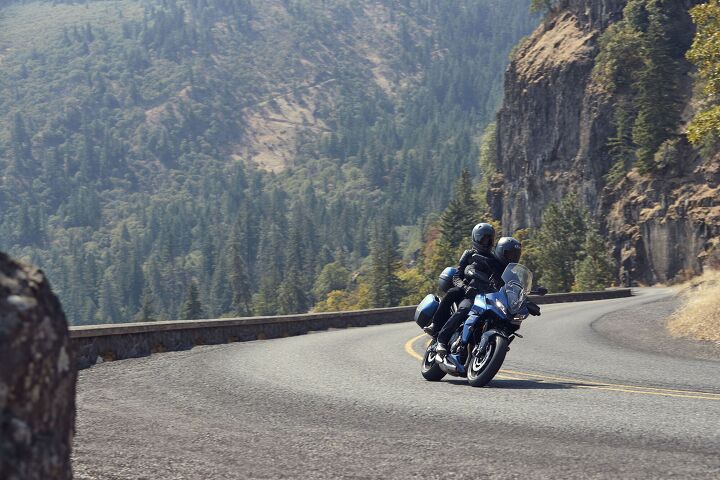
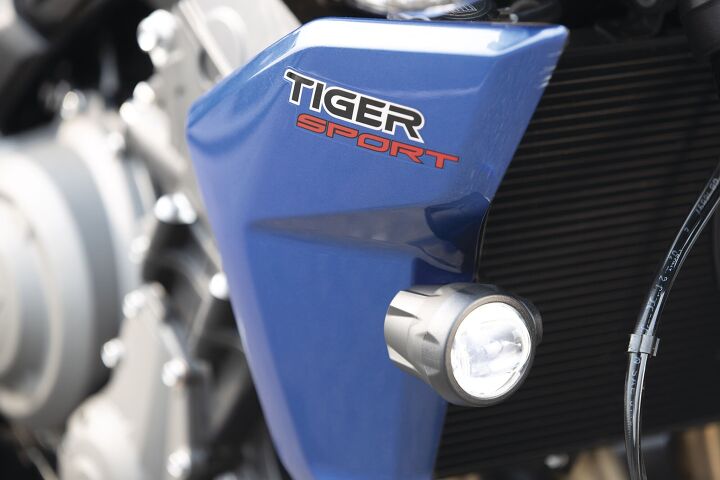
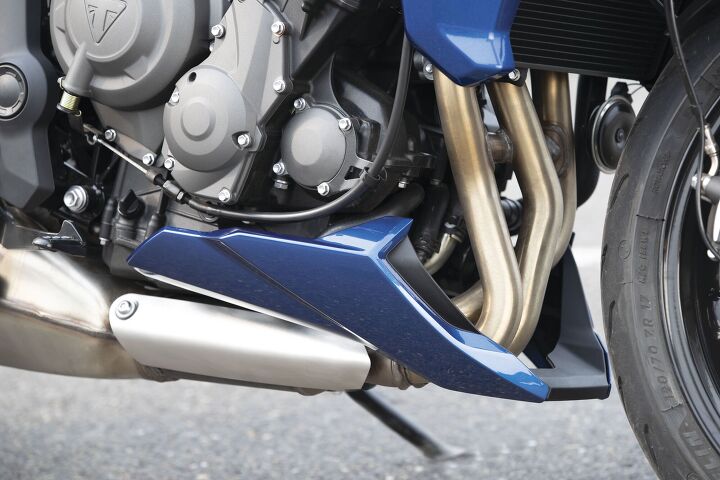
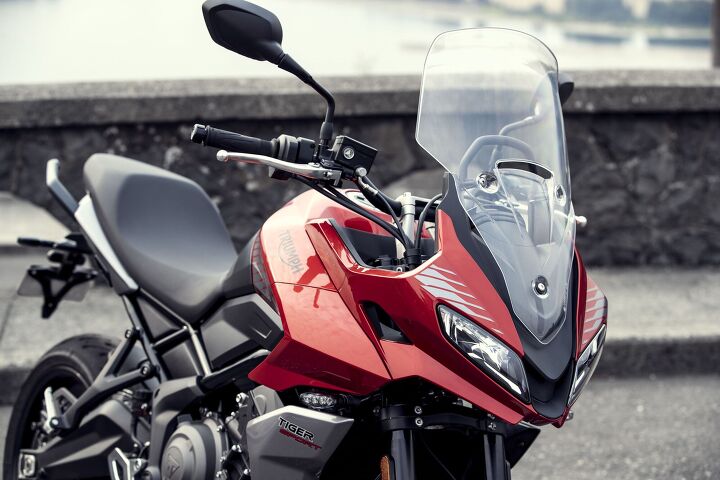
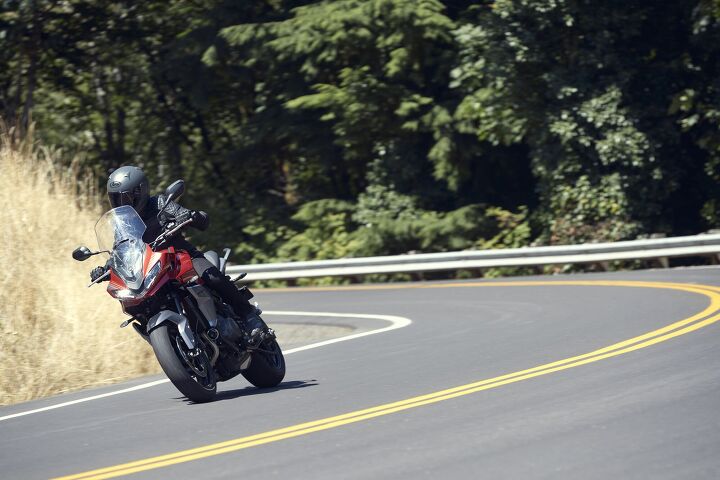
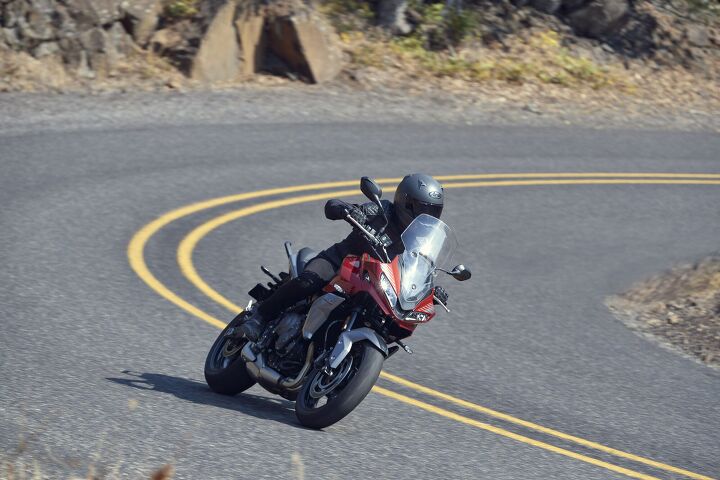
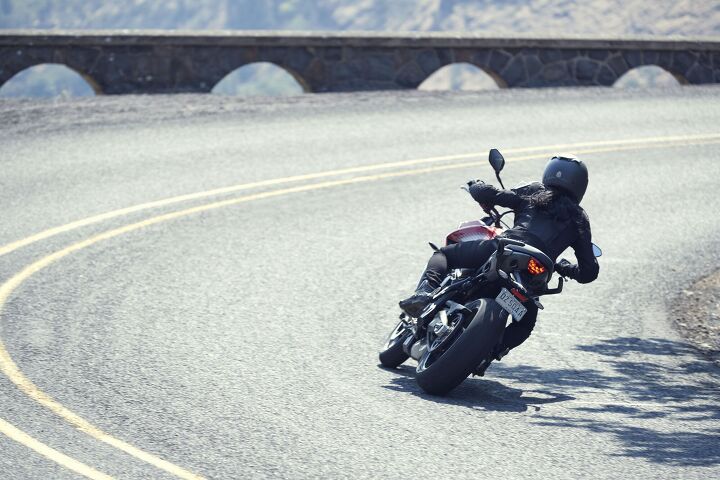
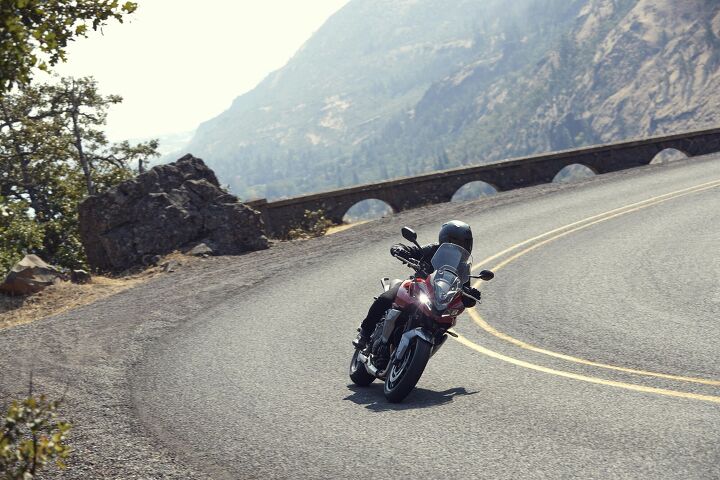
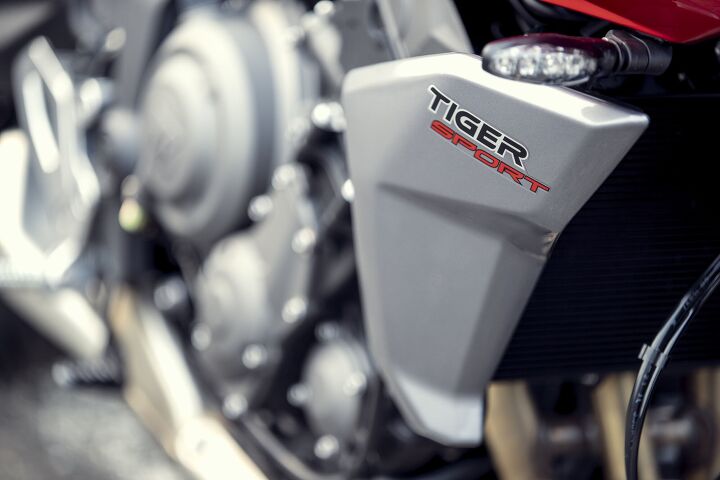
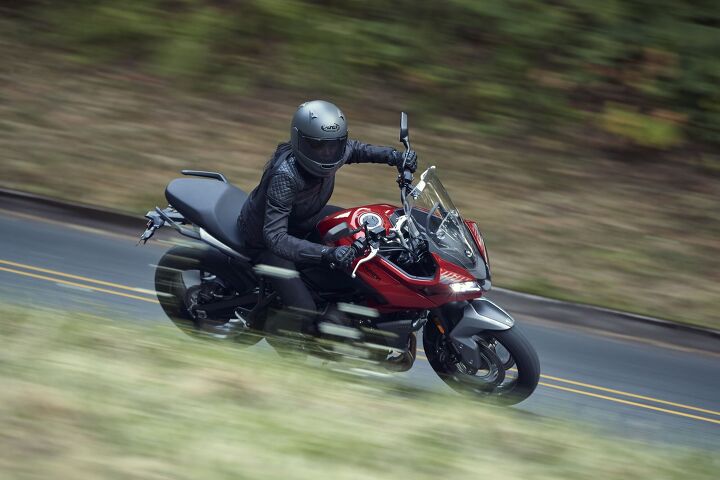
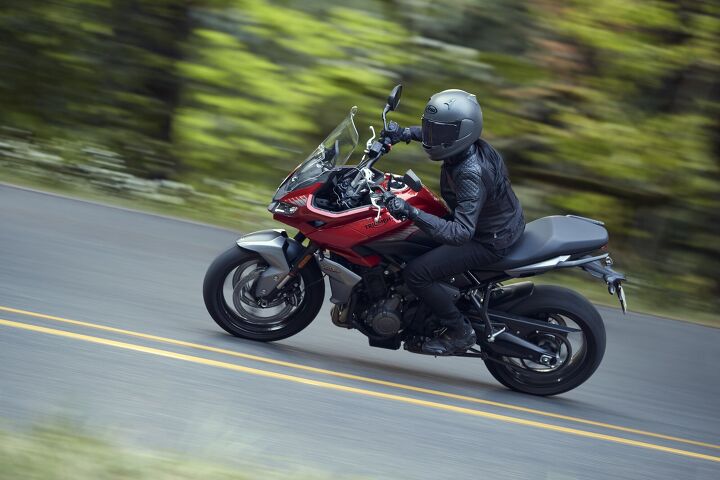
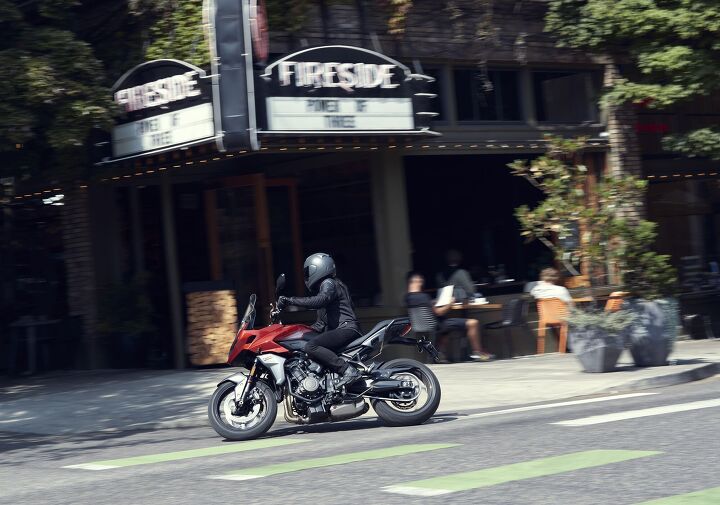
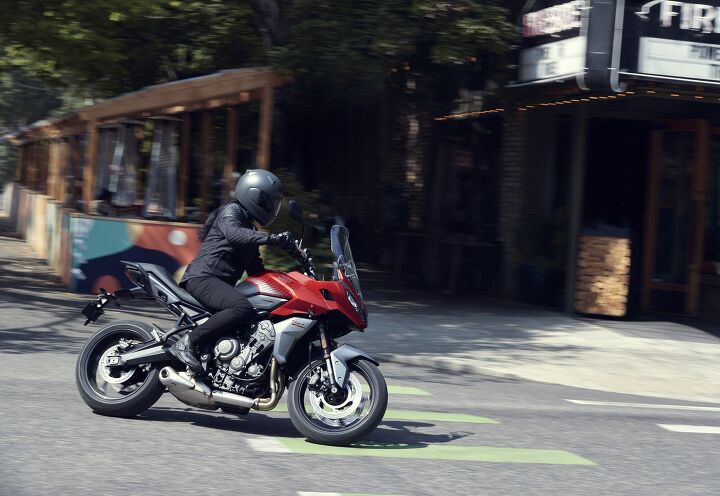
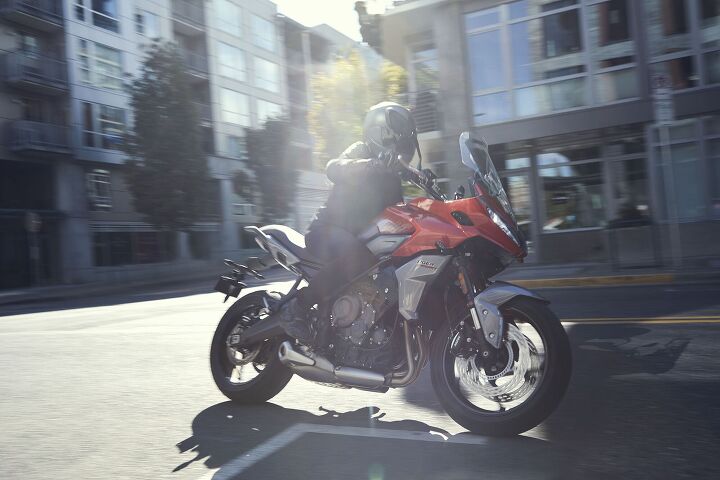
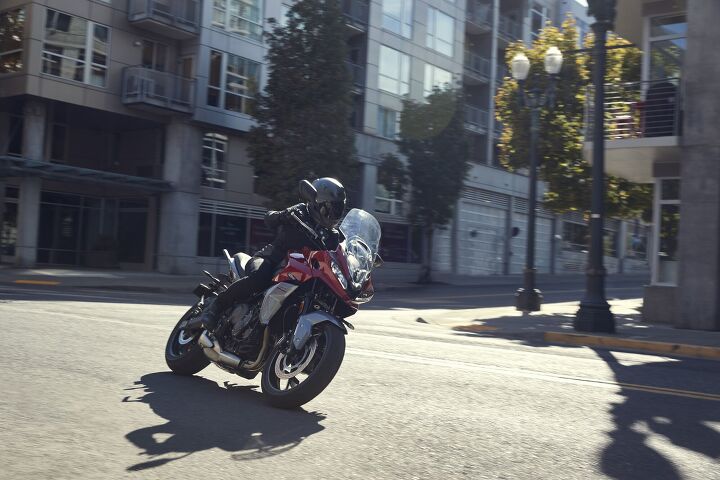
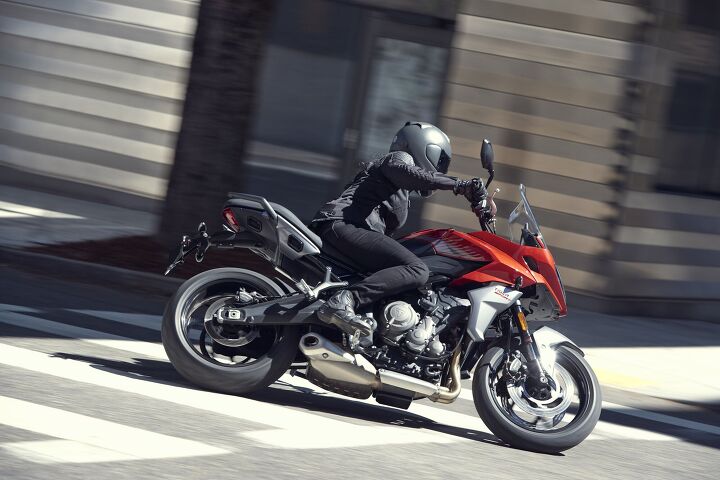
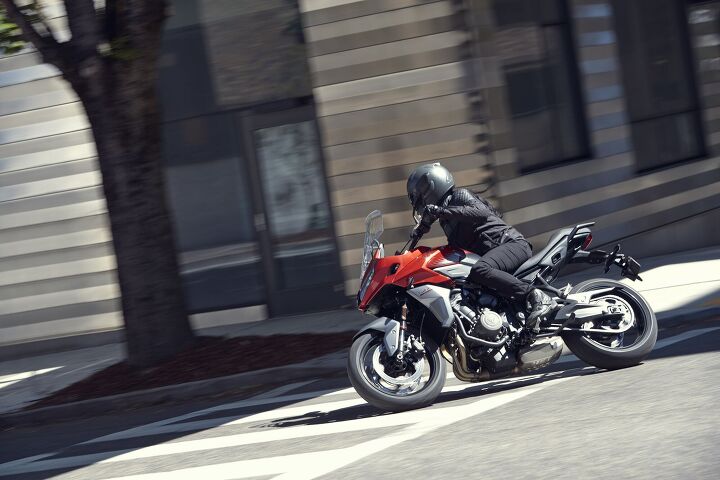
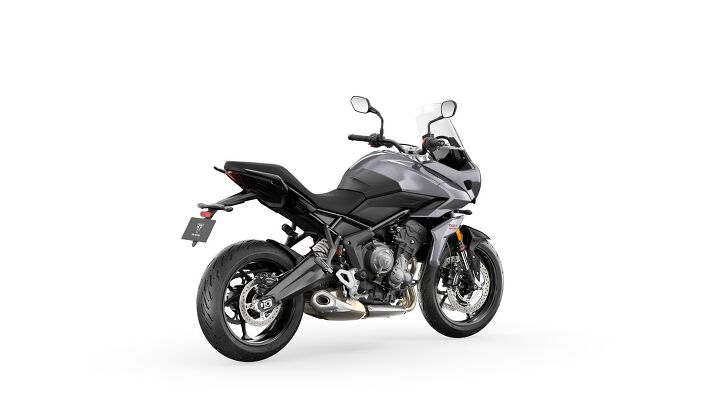
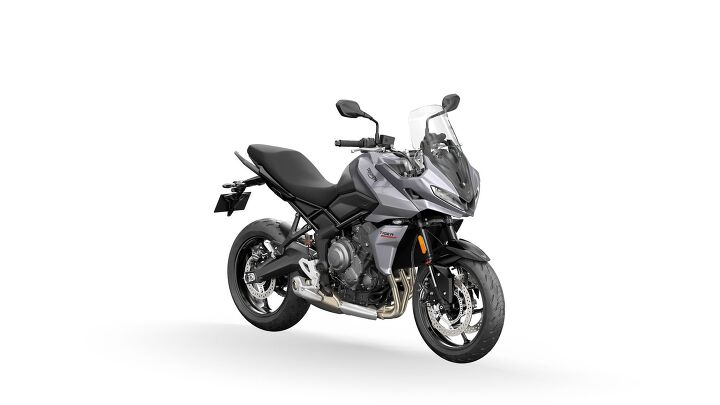
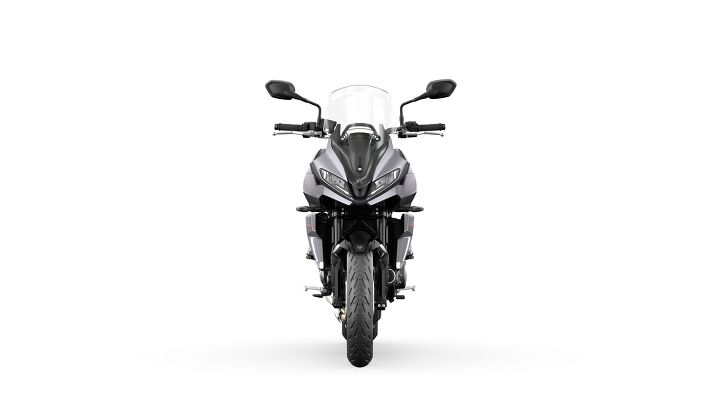
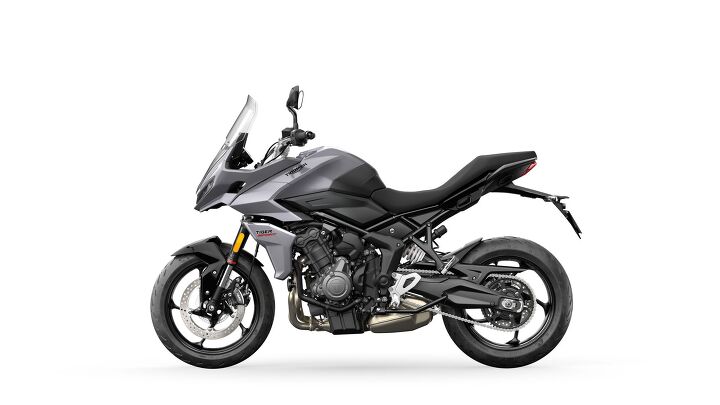
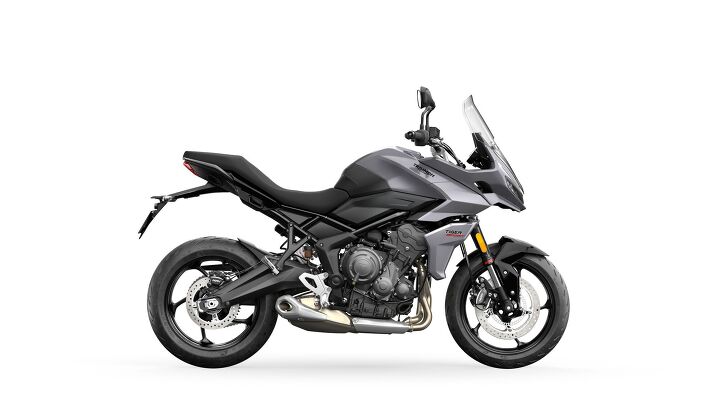
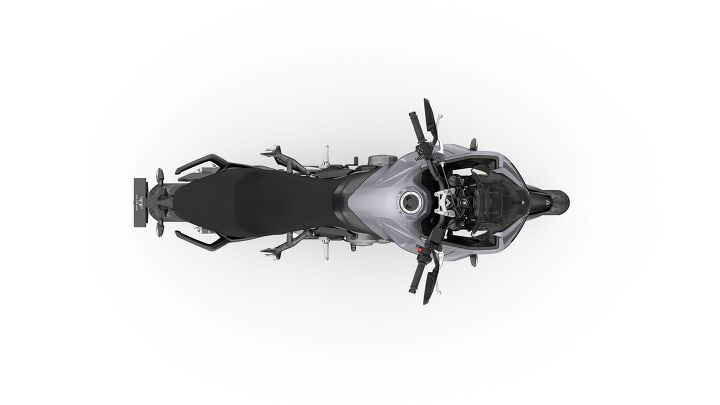
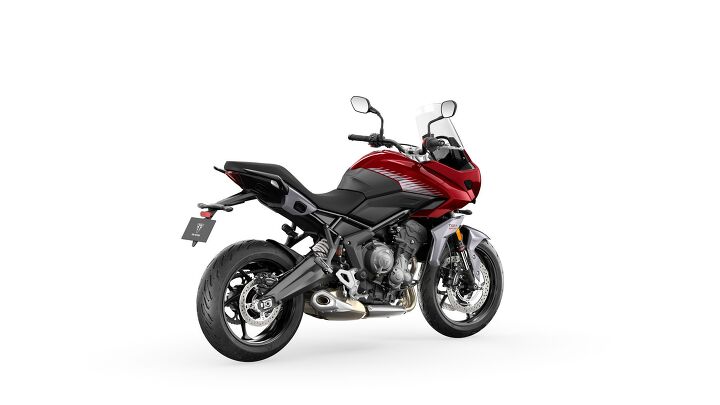
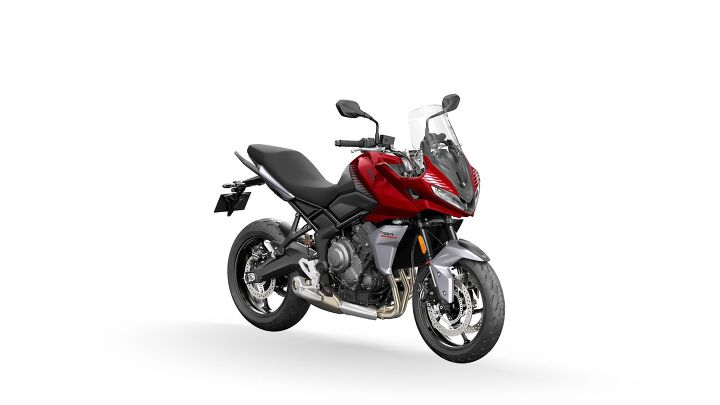
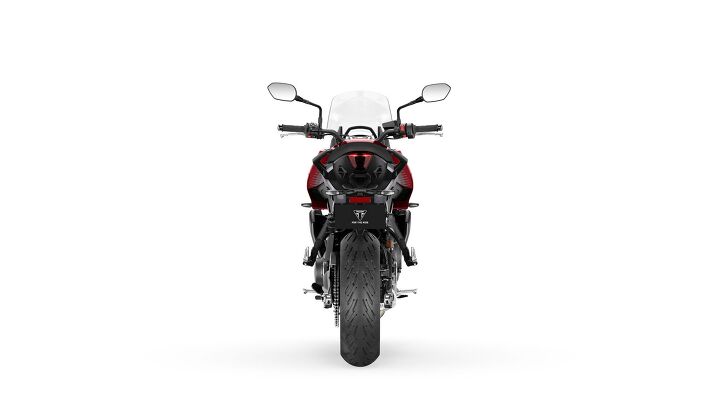
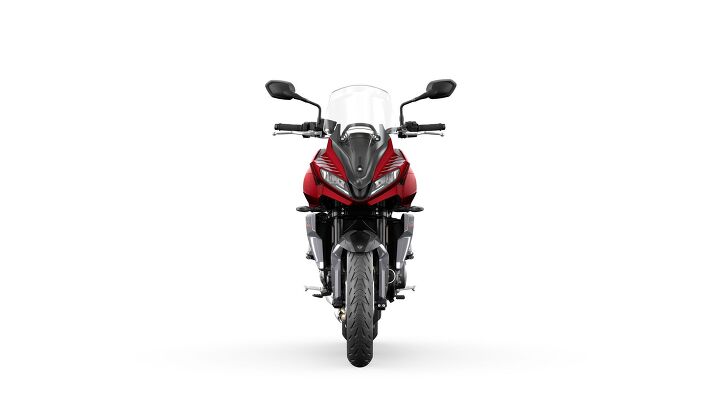
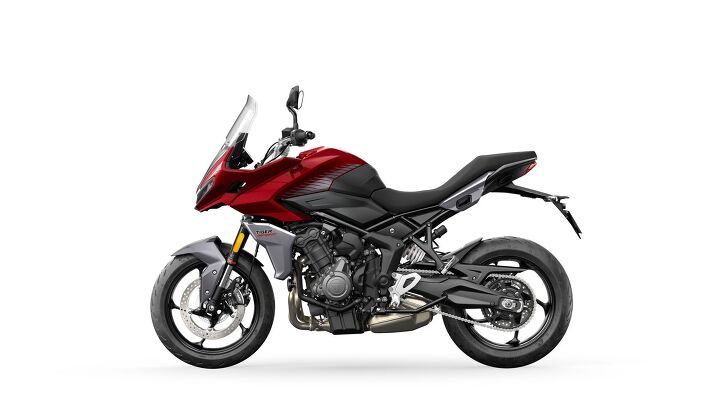
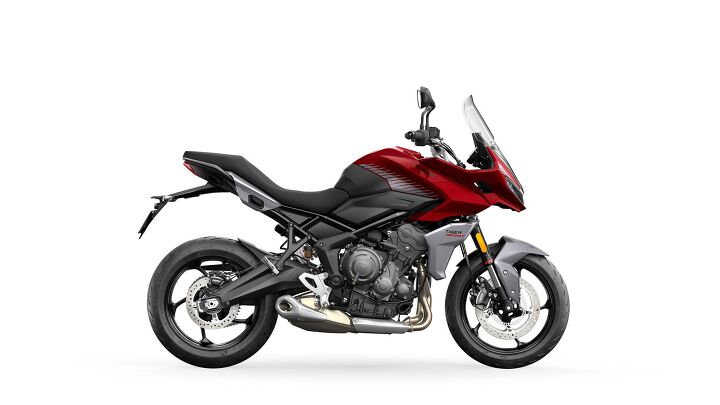
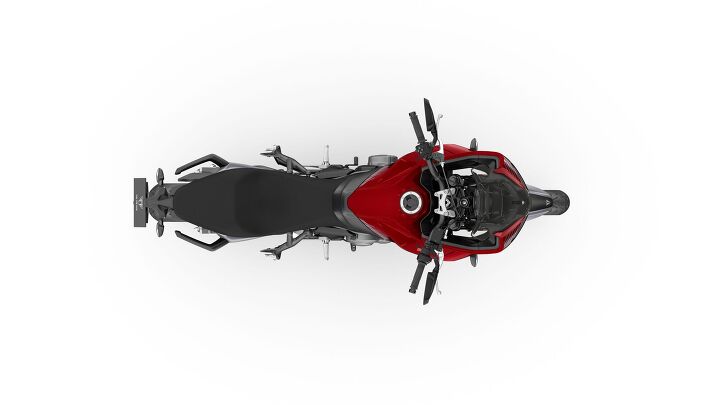
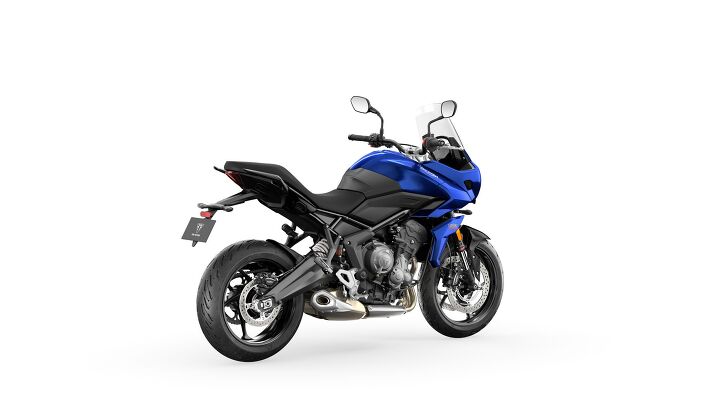
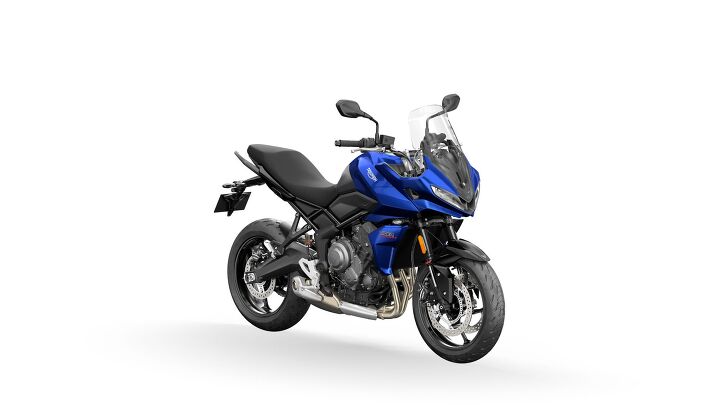
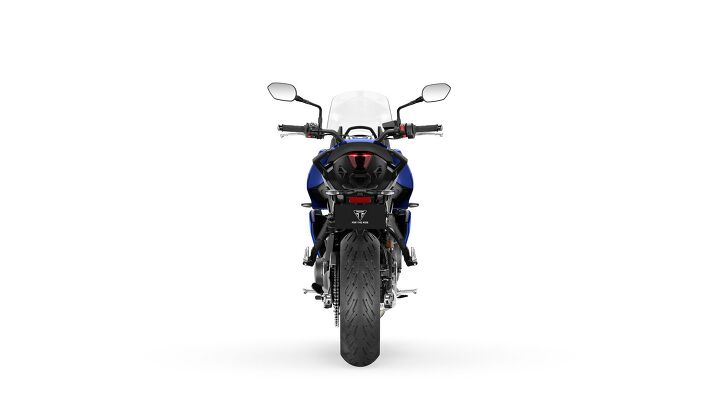
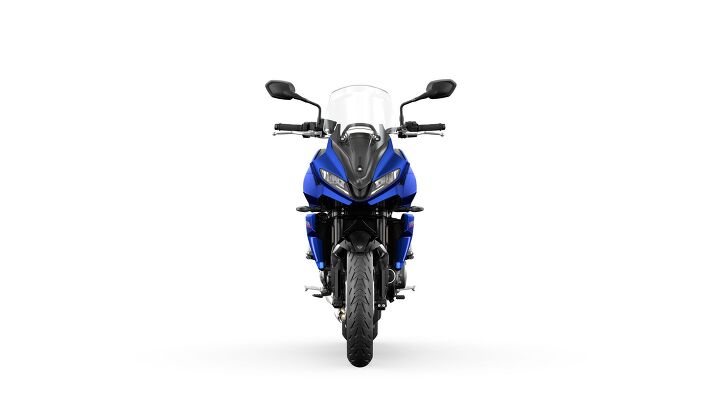
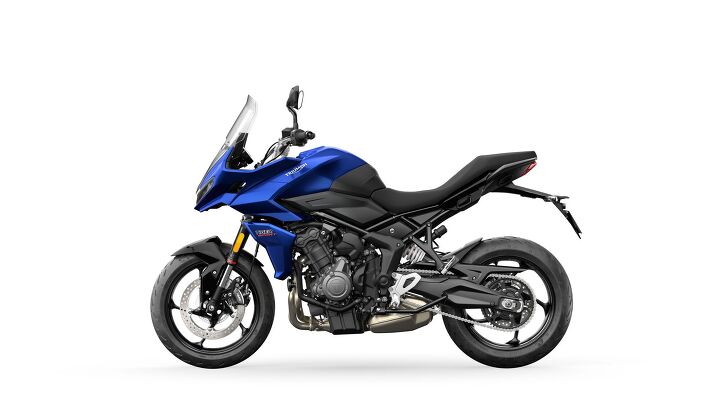
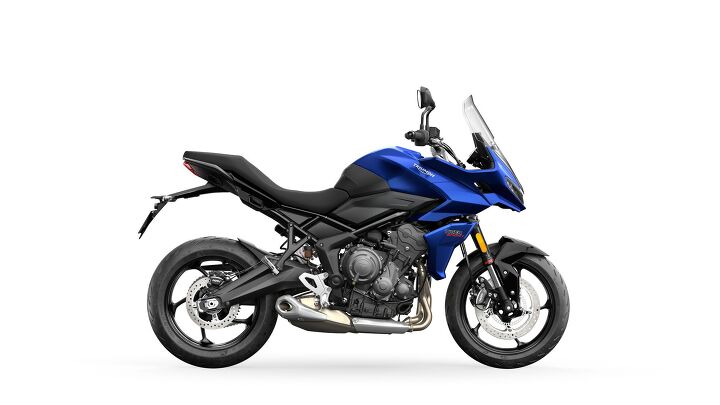
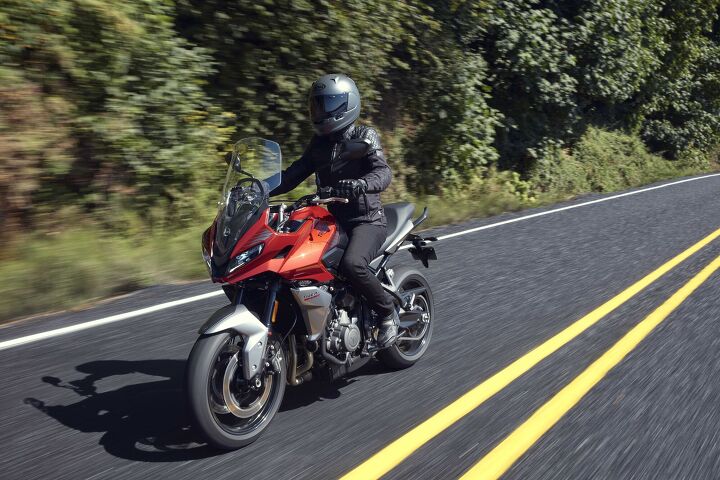
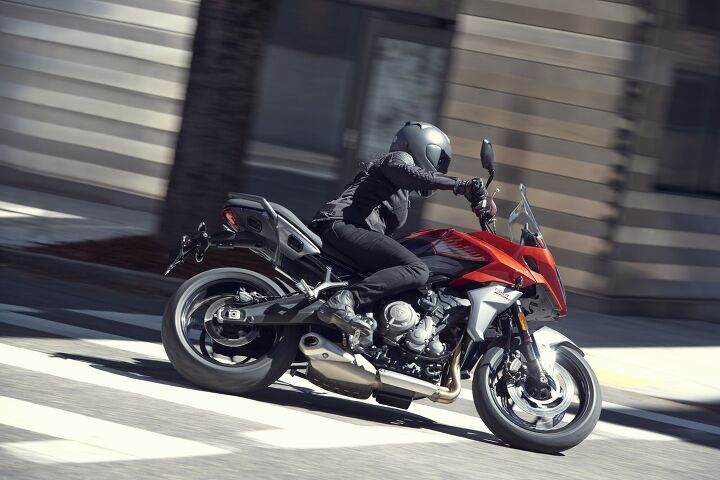
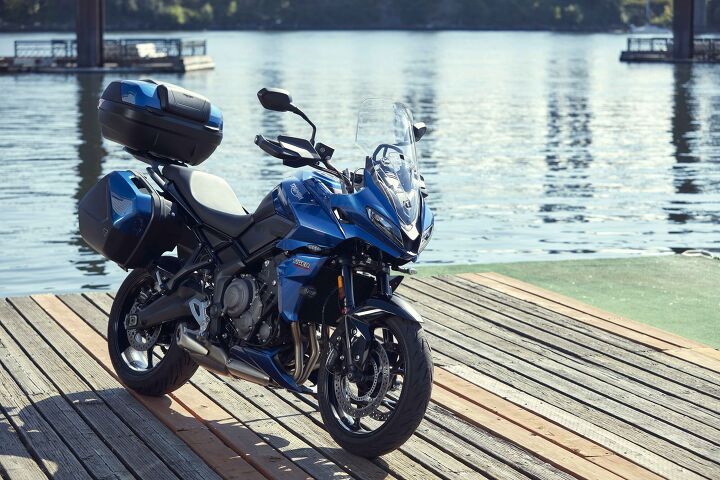
After giving us a glimpse of a pre-production prototype in August, Triumph officially revealed its new Tiger Sport 660. Sharing the same platform as the Trident 660 roadster, the 2022 Triumph Tiger Sport 660 is a middleweight “adventure sports” model, claiming class-leading power and low cost of ownership.
By “adventure sports”, of course, we’re talking about sport-touring models that are styled after true ADVs rather than sportbikes. Like the Trident does for its roadster line, Triumph also sees the Tiger Sport 660 as an entry point for the larger and more adventure-ready Tiger models in its lineup. Triumph is thus positioning the Tiger Sport 660 against the likes of the Kawasaki Versys 650 and, in Europe, the Yamaha Tracer 7. Cross shoppers might also be considering the SuzukiV-Strom 650, which may be a bit more capable off-road, but the Tiger probably won’t compete as well in the dirt against the Yamaha Ténéré 700 or theupcoming Aprilia Tuareg 660.
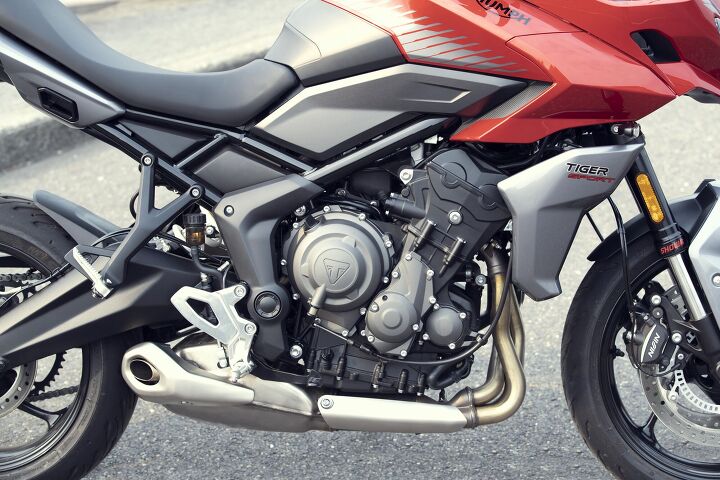
The Tiger Sport 660 is powered by the same liquid-cooled DOHC Inline-Triple as the Trident, with the same claimed performance numbers of 80 hp at 10,250 rpm and 47 lb-ft. at 6,250 rpm and with Triumph claiming 90% of its peak torque available from 3,600 rpm to 9,750 rpm. The Tiger Sport 660 also shares the same underslung silencer as the Trident, as well as a slip-and-assist clutch. An up-and-down quickshifter is available as an accessory.
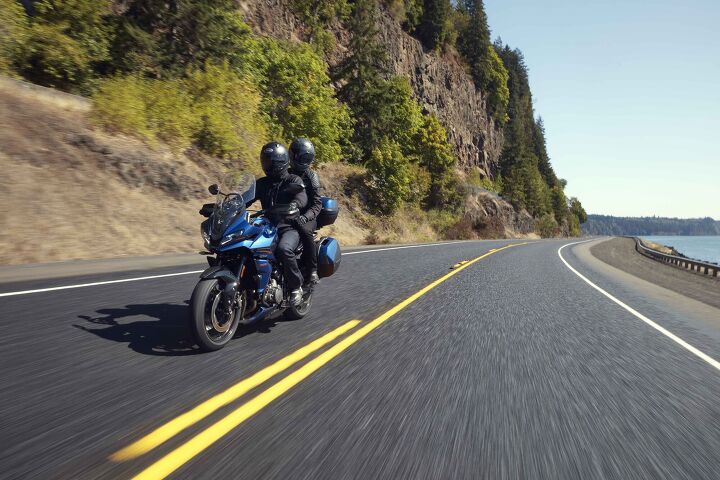
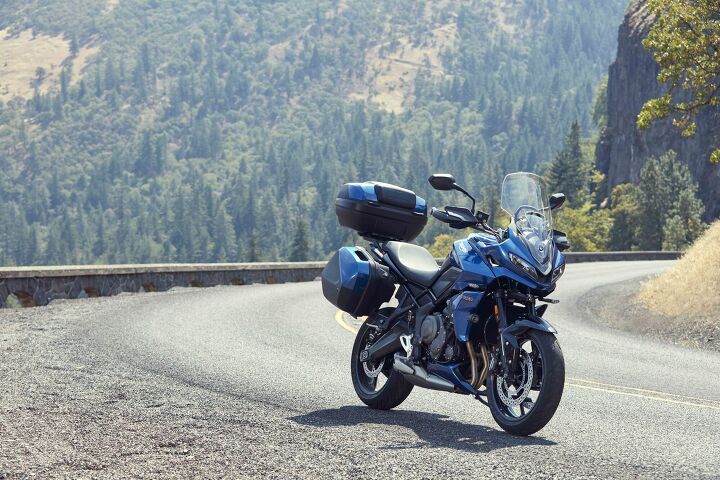
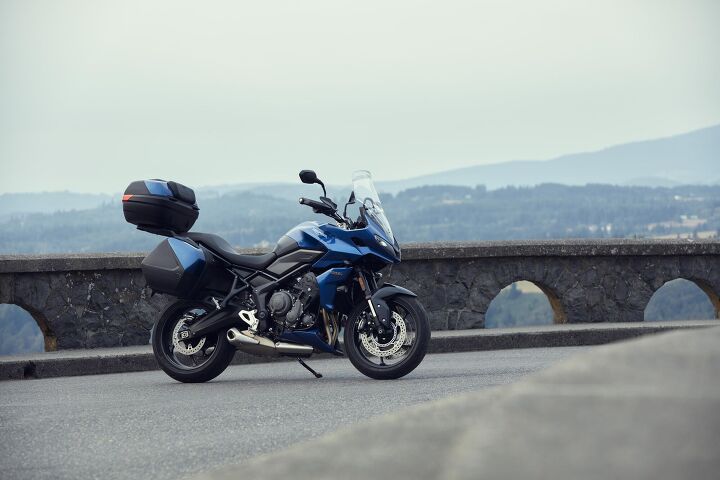
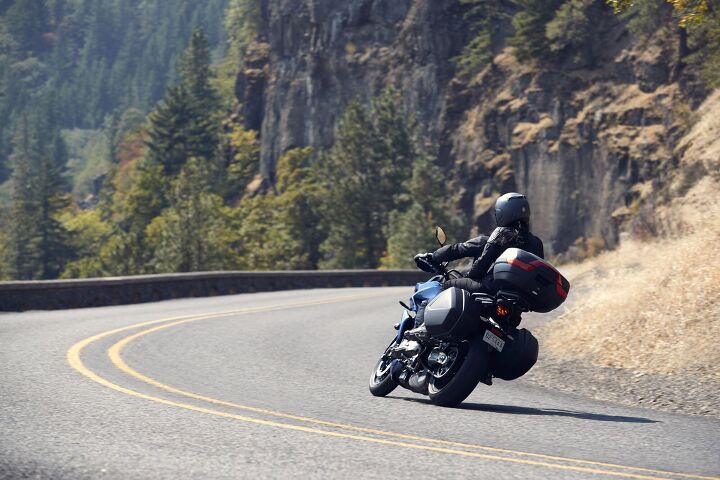
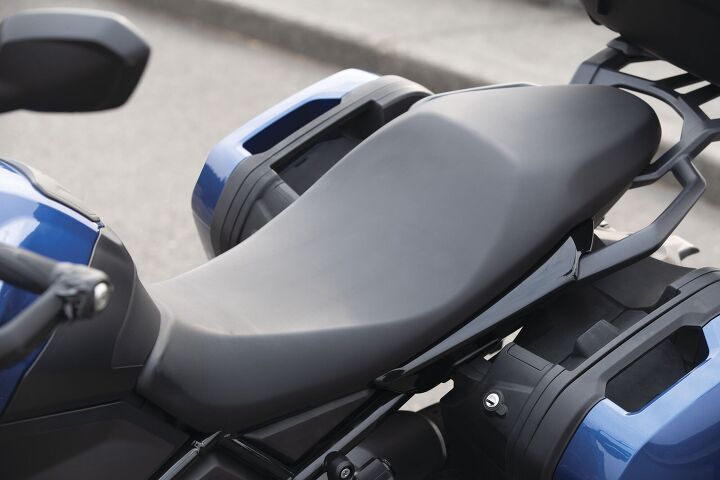
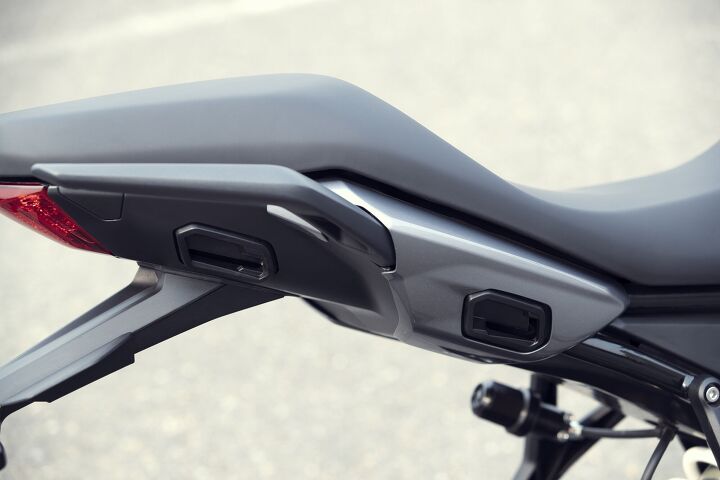
The engine is packaged in a tubular steel perimeter frame similar to the Trident’s, but the Tiger Sport has a longer subframe to support luggage and a higher two-level seat (the 32.8 inch seat height is 1.1 inches taller than the Trident, but the pillion seat is significantly higher than on the roadster). Luggage is sold separately, but the Tiger Sport 660 is set up with integrated pannier mounts that fit neatly with the shape of the tail.
The suspension is also similar to the Trident, with a 41mm separate function fork and rear shock with remote hydraulic preload adjustment, although with a longer 5.9-inches of wheel travel for both wheels. The Tiger Sport also has a rake of 23.1°and 3.8 inches of trail compared to the Trident’s 24.6° and 4.2 inches.
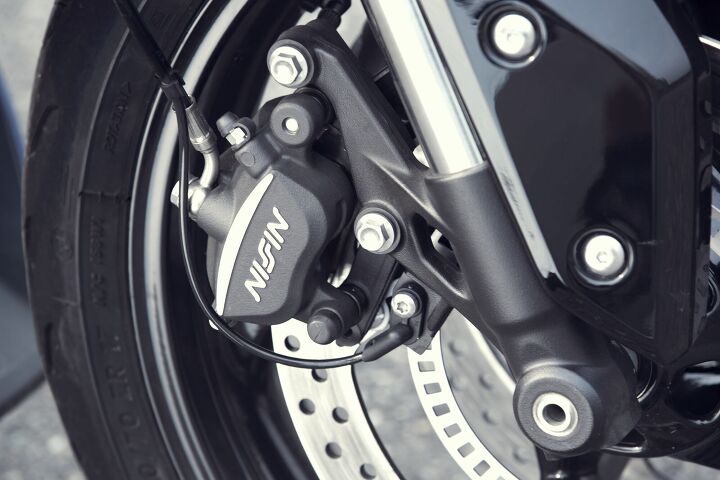
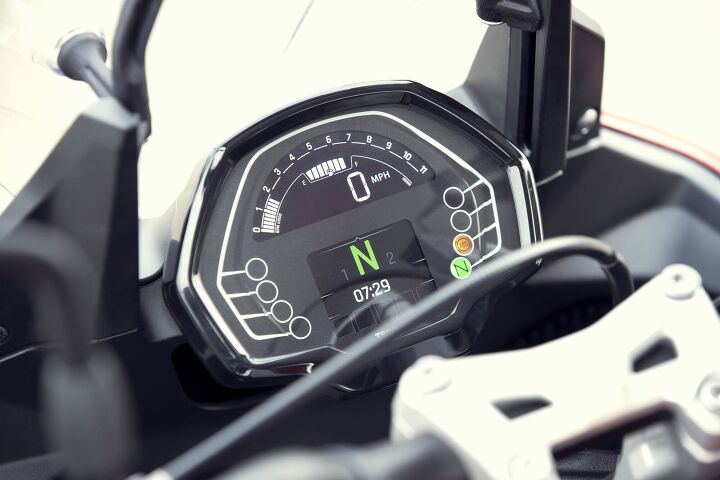
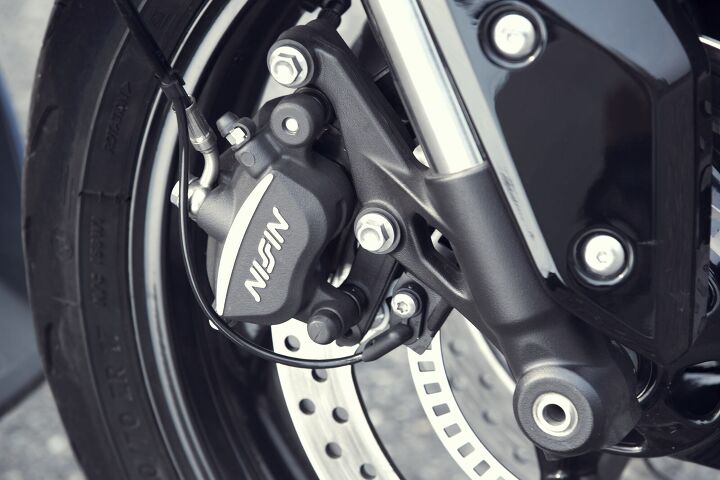
Nissin provides the dual two-piston front brake calipers and single-piston rear caliper. ABS is standard, as is a switchable traction control system. The electronics package also includes two selectable ride modes with a small color TFT screen integrated in a white-on-black LCD display which is also designed to work with the My Triumph accessory to provide turn-by-turn navigation, phone connectivity and GoPro control.
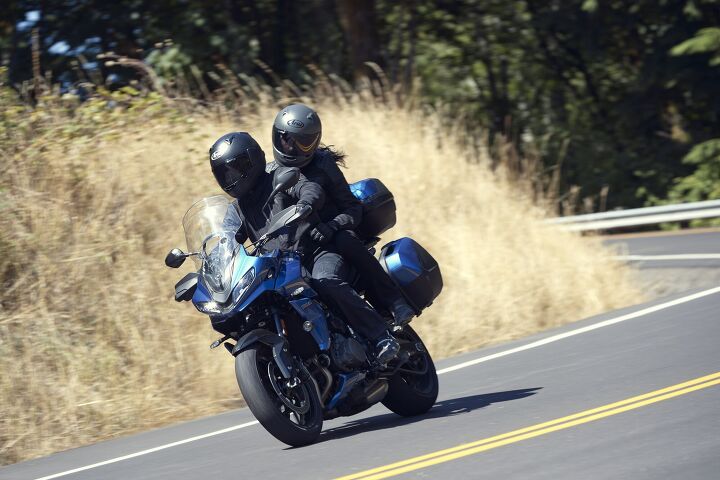
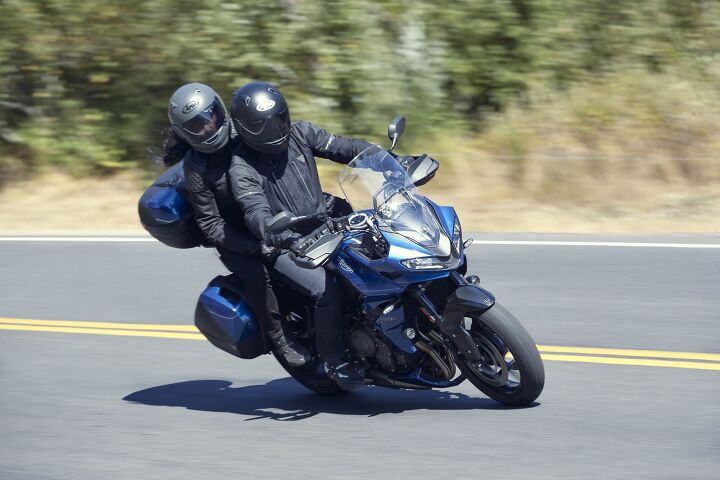
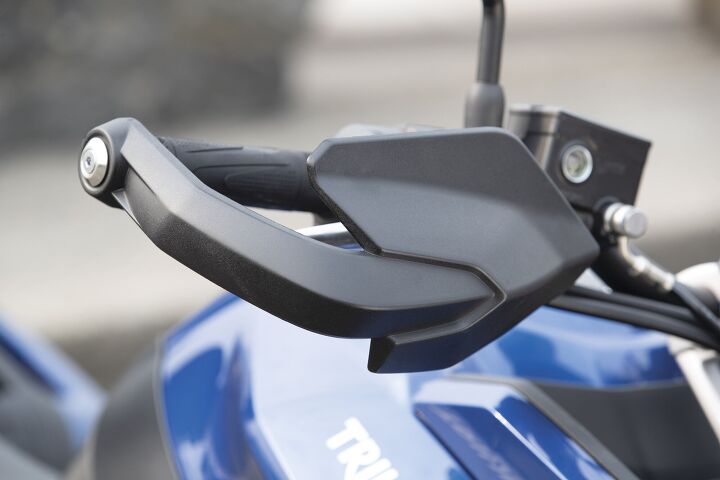
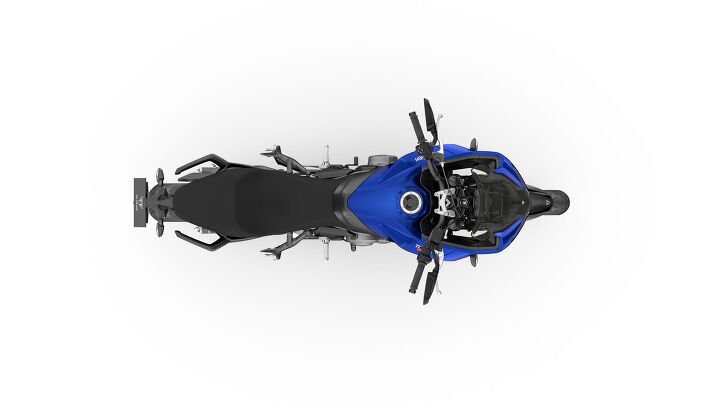
The Tiger Sport 660 offers a relaxed, upright riding position with a tall height-adjustable windscreen. The controls are positioned for comfort for both urban and highway riding. The brake lever is span-adjustable for rider comfort while passengers will benefit from the ergonomically-shaped grab handles.
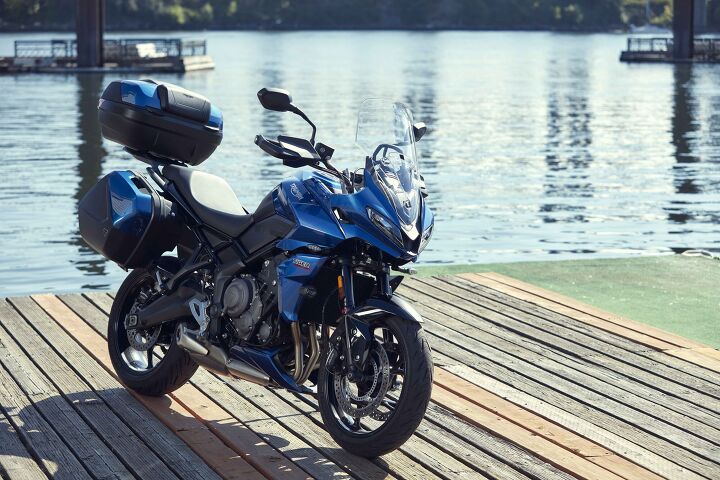
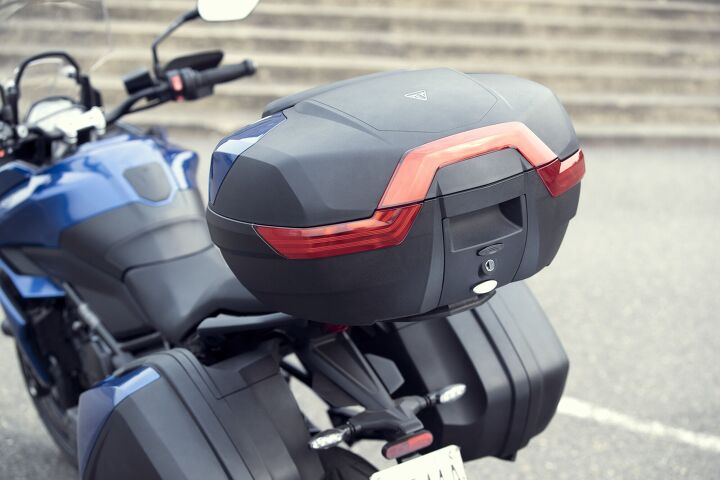
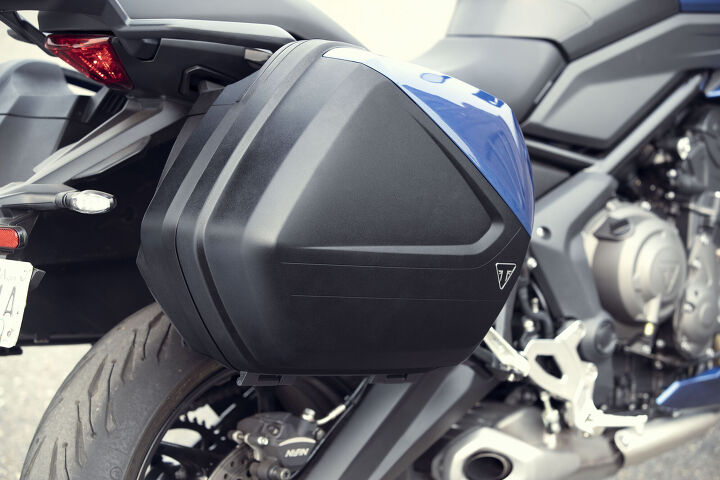
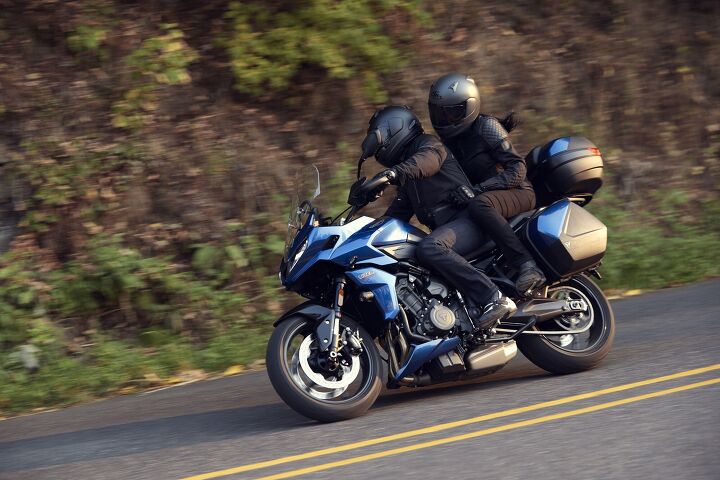
The blue model in the photographs is outfitted with a number of accessories including 57l panniers with color-matched lids and a 47l top case (an aluminum luggage rack is sold separately).
Standard features include a 4.5-gallon fuel tank, Michelin Road 5 tires, and twin LED headlights. In markets where they are allowed, the LED turn signals are self-cancelling, and they can be upgraded to scrolling LED indicators.
The 2022 Triumph Tiger Sport 660 arrives in U.S. dealerships in February 2022 with an MSRP of $9,295 for the Sapphire Black color, with an additional $125 for the Korosi Red and Luceren Blue colors. At that price, it’s more expensive than some of its competitors like the $8,399 Versys 650, but Triumph says the Tiger Sport 660 makes up for it with a category-leading low cost of ownership. Service intervals are every 10,000 miles or 12 months. Triumph also claims the service time over the first three years of ownership add up to 8.3 hours of labor compared to a range of 11 to 15.9 hours for its competitors. Triumph asserts this results in a 17% lower maintenance costs over that time span.
2022 Triumph Tiger Sport 660 Specifications
Type
Liquid-cooled, 12 valve, DOHC, inline 3-cylinder, 240° firing order
Displacement
660 cc
Bore x Stroke
74.04 mm x 51.1 mm
Compression
11.95:1
Horsepower
80 hp at 10,250 rpm (claimed)
Torque
47 lb-ft. at 6,250 rpm (claimed)
Fuel System
Multipoint sequential electronic fuel injection with electronic throttle control
Exhaust
Stainless steel 3 into 1 header system with low single sided stainless steel silencer
Final Drive
X-ring chain
Clutch
Wet, multi-plate, slip & assist
Gearbox
6 speed
Frame
Tubular steel perimeter frame
Swingarm
Twin-sided, fabricated steel
Front Wheel
Cast aluminum, 17 x 3.5 in
Rear Wheel
Cast aluminum, 17 x 5.5 in
Front Tire
120/70 ZR 17 (58W)
Rear Tire
180/55 ZR 17 (73W)
Front Suspension
Showa 41mm upside down separate function cartridge forks, 5.9 inches of wheel travel
Rear Suspension
Showa monoshock RSU, with remote hydraulic preload adjustment, 5.9 inches of wheel travel
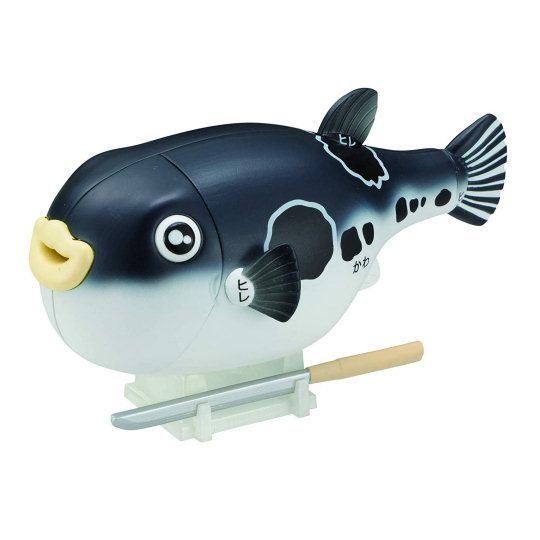
You've read about the Japanese delicacy fugu, which is a pufferfish or blowfish that contains deadly toxins. Why would anyone want to eat that? Those who know say it's quite delicious. Chefs who prepare fugu must be certified after years of training in butchering the fish, to avoid serving the poisonous parts along with the flesh that is relatively toxin-free. That makes us curious about which parts are which. Now you can learn those parts with the 3D Fugu Japanese Blowfish Dissection Puzzle.
The plastic fish comes in 34 parts that you can take apart and reassemble. The toxic organs are red, marked with a skull. While playing with the toy does not qualify you to prepare fugu, it comes with a kawaii certificate you can award yourself when you successfully dissect and reassemble the fish. See more of the fugu puzzle at Book of Joe. -via Nag on the Lake
One of my mother's uncles had a laconic response to a proposed gun ban in long-ago New Jersey. "Doesn't matter. We'll build our own." His comment came back to me after my wife gifted our son (and me) a jig for completing an unfinished AR-15 lower receiver. Like my great uncle, we built our own.
Making personal firearms is legal under federal law, if that matters to you, although local rules vary. Finishing "80 percent" receivers is a popular way to take advantage of that leeway, since the roughed-out blocks of polymer or aluminum—shaped like the part of the AR-15 rifle that contains the hammer, safety, and trigger, but solid where those parts should fit—can be purchased without the paperwork required for buying a firearm. It's a modern take on my great uncle's hobby, eased by jigs that guide drill bits and end mills for finishing the project.
My wife gave us the 80% Arms Easy Jig, one of several competing products. Having done this just once, I can't tell you which is best, but the Easy Jig got the job done, and it includes clear instructions to complement the online video.
First, we drilled the pilot hole needed to start milling the pocket for the fire control group (basically, the hammer and trigger). Despite plenty of oil, my drill press kept binding. I repeatedly had to use a corded hand drill to back out the bit, which came in a package of tools also purchased from 80% Arms, before resuming. Eventually, the bit won the battle.
Attaching the end mill from the toolkit to a router and milling out the pocket was easier than anticipated. With lots of patience, we took turns removing layers of aluminum. Molded into the jig are gauges for incrementally extending the end mill, but our router unlocked a couple of times, cutting deeper than intended. Fortunately, that never happened when it mattered. We learned to anticipate such slips by feel so we could tighten the router.
Next, we drilled holes for the hammer, safety, and trigger, using bits from the toolkit. The included bubble level helped horizontally orient the receiver relative to the drill press.
Because we focused on finishing a lower receiver, for the rest of the build we used a parts kit from Palmetto State Armory. For guidance, we turned to The AR-15 Complete Assembly Guide by Walt Kuleck and Clint McKee as well as the online Ultimate Visual Guide from Pew Pew Tactical. The book walks you through the process, while the well-illustrated Ultimate Visual Guide suggests workarounds for some specialized tools. An inexpensive gunsmithing punch set proved indispensable.
At first, the safety wouldn't slip into place. When I probed with the drill bit, I discovered that the holes on each side of the frame were just a hair out of alignment. A slow turn of the bit in the drill removed a whisker of aluminum, and in the safety went.
"It's simpler inside than I expected," my son, Anthony, told me as he installed parts and figured out how they make the firearm function.
Building a rifle "won't make you an AR-15 armorer, but it will make you a more knowledgeable owner," Kuleck and McKee note. "In short, if you build it, you'll know how to repair it."
That's a reminder that too many things in our lives might as well be magic given our limited understanding of how they work. We can't demystify everything, but examining a few things important to us enriches our knowledge while giving us more control over our lives.
To find out if our new rifle would go bang, we went to the local range. Anthony got first dibs. Yes, our home-built AR-15 works as intended!
Unfortunately, the Biden administration sees political advantage in tightening rules on DIY firearms. Anything that can "readily be converted" to shoot, according to extremely subjective criteria, may soon be identified as a firearm under regulatory revisions proposed by the administration. But even the proposed revisions leave room for hobbyists to make their own guns, just as my great uncle did long before 80 percent receivers existed.
Anthony eagerly anticipated the answer he would offer to the inevitable "What did you do this summer?" questions at school. As for me, I'm more prepared than ever to rebut control freaks' demands for tighter restrictions the same way my great uncle did: "Doesn't matter. We'll build our own."
I have a serious soft spot for dinner rolls: small, buttery, plush rounds that I have, to this day, never actually eaten with dinner, you know, warmed in a basket. (But I hear it’s great!) At the bakery where I worked in high school, they’d come out of the oven in a big pan, fully kissingcrusted and that part where you pull two rolls apart and a few feathery filaments of bread that couldn’t decide which roll they’d like to adhere to when separated are absolutely my favorite part. A warm roll, split and spread with salted butter or jam or both was my breakfast so many mornings. When I make them at home these days, I’m equally likely to use them for small egg sandwiches for breakfast, slider rolls for pulled pork, or even alongside a bowl of soup on a chilly day like this.
Nick Federowicz turned his love for vintage watches into a full-time career sourcing and framing vintage watch ads, with the occasional car and camera ad thrown in for good measure.
Switching to keto can feel overwhelming. These meal delivery services make the process easier by delivering the healthiest meals right to your doorstep.
Tucked into the small town of Enumclaw, Washington, this museum is packed with a rotating collection of classic, vintage, and other exotic import cars sure to capture visitors' attention.
On any given day, visitors might see a Model T Firetruck from 1921, a 1964 Falcon Sprint, race legend Sam Auxier Jr's ford racing rig, or the Boss 429 Mustang.
The museum started as a home for private collector's vehicles and has grown ever since. Proceeds help benefit the Epilepsy Foundation of Washington, and they often host both public and private events where local car clubs show off their vehicles.
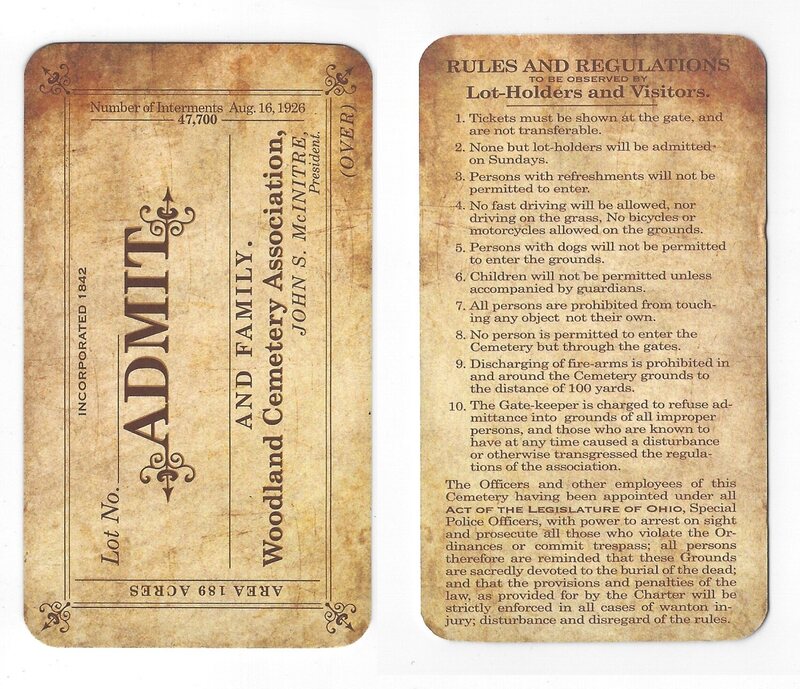
Within the iron-wrought walls of American cemeteries—beneath the shade of oak trees and tombs’ stoic penumbras—you could say many people “rest in peace.” However, not so long ago, people of the still-breathing sort gathered in graveyards to rest, and dine, in peace.
During the 19th century, and especially in its later years, snacking in cemeteries happened across the United States. It wasn’t just apple-munching alongside the winding avenues of graveyards. Since many municipalities still lacked proper recreational areas, many people had full-blown picnics in their local cemeteries. The tombstone-laden fields were the closest things, then, to modern-day public parks.
In Dayton, Ohio, for instance, Victorian-era women wielded parasols as they promenaded through mass assemblages at Woodland Cemetery, en route to luncheon on their family lots. Meanwhile, New Yorkers strolled through Saint Paul’s Churchyard in Lower Manhattan, bearing baskets filled with fruits, ginger snaps, and beef sandwiches.
One of the reasons why eating in cemeteries become a “fad,” as some reporters called it, was that epidemics were raging across the country: Yellow fever and cholera flourished, children passed away before turning 10, women died during childbirth. Death was a constant visitor for many families, and in cemeteries, people could “talk” and break bread with family and friends, both living and deceased.
“We are going to keep Thanksgivin' with our father as [though he] was as live and hearty this day [as] last year,” explained a young man, in 1884, on why his family—mother, brothers, sisters—chose to eat in the cemetery. “We've brought somethin' to eat and a spirit-lamp to boil coffee.”
The picnic-and-relaxation trend can also be understood as the flowering of the rural cemetery movement. Whereas American and European graveyards had long been austere places on Church grounds, full of memento mori and reminders not to sin, the new cemeteries were located outside of city centers and designed like gardens for relaxation and beauty. Flower motifs replaced skulls and crossbones, and the public was welcomed to enjoy the grounds.
Eating in graveyards had, and still has, historical precedent. People picnic among the dead across the world, from Guatemala to parts of Greece, and similar traditions involving meals with ancestors are common throughout Asia. But plenty of Americans believed that picnics in local cemeteries were a “gruesome festivity.” This critique, notably from older generations, didn’t stop young adults from meeting up in graveyards. Instead it led to debate over proper conduct.
In some parts of the country, such as Denver, the congregations of grave picnickers grew to such numbers that police intervention was even considered. The cemeteries were becoming littered with garbage, which was seen as an affront to their sanctity. In one report about these messy gatherings, the author wrote, “thousands strew the grounds with sardine cans, beer bottles, and lunch boxes."
Though the macabre picnics were considered “nuisances” in some communities, they did give participants a sort of admired air. One reporter lauded the fact that the picnickers looked “happy under discouraging circumstances,” and even said it was a trait “worthy of cultivation.” The fad of casual en plein air dining among the crypts would soon come to an end, though.
Cemetery picnics remained peripheral cultural staples in the early 20th century; however, they began to wane in popularity by the 1920s. Medical advancements made early deaths less common, and public parks were sprouting across the nation. It was a recipe for less interesting dining venues.
Today, more than 100 years since Americans debated the trend, you’d be hard-pressed to find many cemeteries—especially those in big cities—with policies or available land that allow for picnics. Green-Wood Cemetery in Brooklyn, for example, has an explicit no-picnicking rule.
But the fad isn’t entirely dead in the United States. The country’s immigrant population includes communities carrying on traditions that call for meals with departed loved ones, and cemeteries will hold occasional public events in the spirit of an earlier era. There are still scattered graveyards where you can picnic among tombstones, too, particularly if you know someone with a sizable family lot. In those cases, all you need is a picnic basket filled with treats, and you and your undaunted party can partake in an old American tradition. Just remember to clean up after yourselves. The penalties for doing otherwise may be grave.
This story originally ran on April 20, 2018. It was updated, with light edits, on October 13, 2021.
Who needs a separate streaming media player these days? You already have plenty of ways to get apps such as Netflix or Disney+ on your TV. Pretty much all modern TVs are smart TVs with streaming services baked right in. Sources like Blu-ray players, game consoles, and cable boxes also have built-in apps. If you’re a casual streamer who subscribes to only one or two services, you probably don’t need a media streaming device.
But if streaming is your primary way of connecting to the home-entertainment world, you should get a dedicated media streaming device that’s more powerful, more customizable, and more diverse in its offerings. We recommend the Google TV Streamer (4K) because its modern interface, advanced search functionality, and ease of use set it squarely ahead of the competition.
Sleeping in a tent is rarely ever as comfortable as sleeping in your own bed. But these tips will have you sleeping almost as good as at home — almost.
Every man should know how to build a fire. But every outdoor situation requires different types of campfire lays (set-ups in the firewood), so it’s imperative to know how to make more than one kind.
Here we highlight six of the most common and useful fire lays.
Teepee Fire Lay
There’s a reason this is the go-to campfire lay for most outdoorsmen: it’s very easy to get a fire going with a teepee lay. It’s also a great fire for cooking and warmth. The one downside of a teepee fire lay is that it burns quickly, requiring a lot of fuel to keep it going.
Many other fire lays rely on a teepee lay to initially get going, so it’s a vital lay to master.
How to make: Place your tinder bundle on the ground. Above your tinder bundle, use kindling to build a small teepee. Start with small twigs and build up to large sticks. Leave an opening in your teepee on the side the wind is blowing against. This will ensure that your fire gets the air it needs for effective combustion. Light your tinder bundle. As the fire gets going, add increasingly thick sticks, and eventually large fuel logs, in the same teepee shape.
Star Fire Lay
If you’ve watched old Western movies, you’ve likely seen a star fire lay. It’s the fire lay of choice for cowboys ranging in areas where there isn’t much wood. The star fire lay doesn’t make a very big or hot fire, but it’s economical in terms of fuel and easy to set up.
How to make: Lay five or six logs on the ground like the spokes of a wheel. The arrangement will look like a star. Inside the hub of your wheel/star, start a small fire with a teepee lay. As the main logs of the star lay burn, push them towards the center.
Lean-to Fire Lay
The lean-to fire lay creates a protective canopy under which you can place your tinder bundle. As such, it’s a good fire lay to use in windy or rainy conditions. The trade-off is that this set-up does restrict airflow a little, so it can sometimes make getting a fire going a bit harder.
How to make: Place your tinder against a large log. Lean small twigs and sticks against the log and above your tinder pile. Now you see why it’s called a “lean-to.” Light your tinder bundle.
The Log Cabin Fire Lay
One glance at its structure and it’s easy to see how the log cabin lay got its name. You’re going to build a small log cabin with fuel logs around a small teepee fire lay. The resulting fire burns big and hot and doesn’t require as much tending once you light it, as the flames start burning the big logs which form the log cabin shape.
How to make: Start off by building a small teepee fire lay. Get large pieces of fuel wood and place them on opposite sides of the teepee. Lay other pieces of wood across the first set of fuel wood, parallel on the other sides of the teepee. Think of the way you build with Lincoln Logs. Build your log cabin until it’s the same height as your teepee, more or less. Light the teepee on fire.
Parallel/Long Fire Lay
The structure of the parallel/long lay funnels air into the fire, creating a hotter burn, which can come in handy for cooking. Because the structure blocks the wind from the sides, it can also be a good fire lay for windy conditions.
How to make: Place two large long green logs parallel to each other about six inches apart. Start a small teepee fire in between the logs. You can also dig a long trench in the ground and start a fire inside the trench. Rest pots and pans across the logs or trench to create a makeshift cooking range.
The Pyramid/Upside-Down/Council Fire Lay
The ultimate “set it and forget it” fire lay, this campfire will last for hours without tending. While it does take more work to set it up and get it going, if you need a fire that will keep you warm through the night, without you having to frequently arise to fuel it, this is the lay for you.
How to make: Stack your fuel logs in a pyramid shape, each layer perpendicular to the next. Start with the largest logs on the bottom. With each new layer, use smaller pieces of wood. Position logs so there’s minimal spacing between them. On top of your pyramid, place your tinder and build a small teepee fire. Light your tinder bundle. As each layer of the pyramid burns, it sinks and falls, igniting the layer below it. The fire feeds itself.
Instagram is finally adding the option for everyone to upload photos to the platform directly from their browser. The long-requested feature was tested this past summer but not made widely available until today.
Official support for desktop uploads to Instagram was tested in late June and because the social media platform generally makes major, well-publicized tests public features in the following weeks or months, the full availability of browser-based uploads was expected to arrive to all users at some point, it just was not clear how long the wait would be.
It turns out the wait was almost exactly four months. While it may not yet show up as an option for all users, Instagram is set to roll out support for browser-based uploads to the social media platform to global audiences starting today. Users will be able to upload photos and videos that are less than a minute in length using any supported desktop web browser.
Also launching today are new effects called Superbeat and Dynamic Lyrics for Reels. Superbeat supposedly will intelligently apply special effects to music to the beat of a chosen song, while Dynamic Lyrics will display 3D lyrics that “flow with the song’s groove.” These features follow similar ones found in TikTok, one of Instagram’s main competitors.
Tech Crunch reports that other new features are coming this week as well, starting with what are called Collabs. While described as a test, Instagram says it will allow users to co-author Feed posts and Reels. Users can invite another account to be a collaborator on a post or Reel from the tagging screen, and if the other person accepts, both accounts will appear in the post or the Reels header and the content will be shared with both sets of followers.
(1/3) Collaborating is a huge part of how people connect on Instagram. To make that easier, we’re testing a new way for people to co-author Feed Posts and Reels, called Collab. pic.twitter.com/YD1SaSYHOl
Instagram is also testing new ways to create fundraisers for nonprofits, including a way for them to start a fundraiser directly from the plus button on the top right of the app screen. The feature was originally spotted back in December by developer Alessandro Paluzzi:
For quality pork, chicken, beef and fish, these easy only meat subscriptions and delivery services will keep you flush with protein through grilling season.
Vises are useful things for holding whatever you’re working on, but too often they’re stuck to a bench. [seamster] has experienced the glory of having a more portable solution, however, and has shared his design for a heavy duty vise tripod that provides just that.
The trick is that to be useful, the design must be heavy and stout enough to hold the vise without tipping over. For this build, [seamster] selected a fat steel pipe with 1/4″ thick walls, some solid bars and some 3/8″ thick plate. Legs and arms where then fabbed up from the bar material and welded up to form the tripod. A stout plate for the vise was then welded on top of the pipe, and the vise mounted pride of place on top.
It’s not a particularly difficult build, but it’s a smart idea that gets you a vise you can easily drag to where it’s needed. If you don’t have the vise itself, consider this hydraulic build. Meanwhile, if you’ve been whipping up your own useful workshop hacks, let us know!

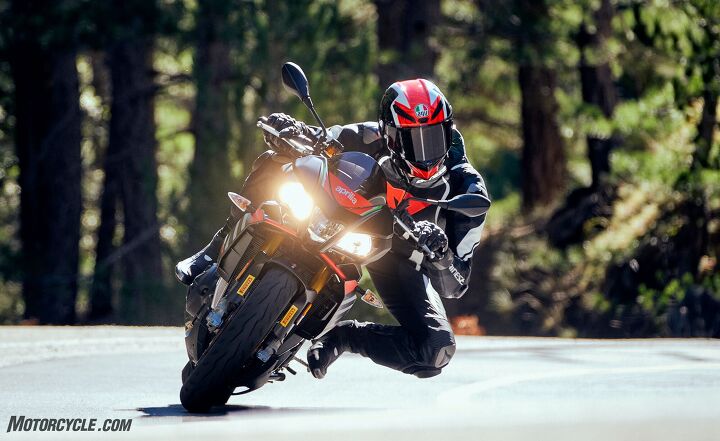
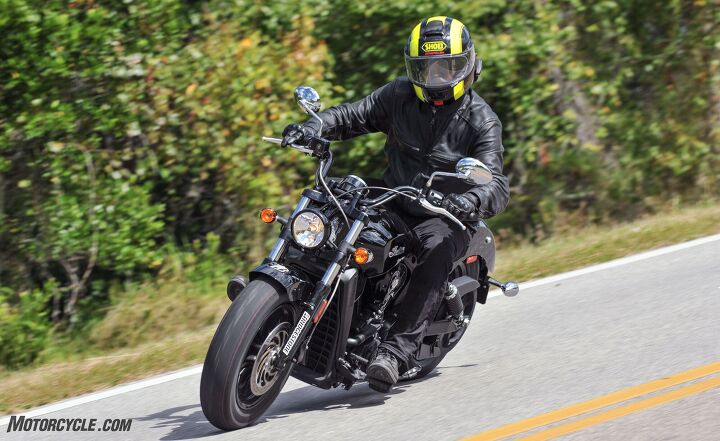




















 I have a serious soft spot for dinner rolls: small, buttery, plush rounds that I have, to this day, never actually eaten with dinner, you know, warmed in a basket. (But I hear it’s great!) At the bakery where I worked in high school, they’d come out of the oven in a big pan, fully kissingcrusted and that part where you pull two rolls apart and a few feathery filaments of bread that couldn’t decide which roll they’d like to adhere to when separated are absolutely my favorite part. A warm roll, split and spread with salted butter or jam or both was my breakfast so many mornings. When I make them at home these days, I’m equally likely to use them for small egg sandwiches for breakfast, slider rolls for pulled pork, or even alongside a bowl of soup on a chilly day like this.






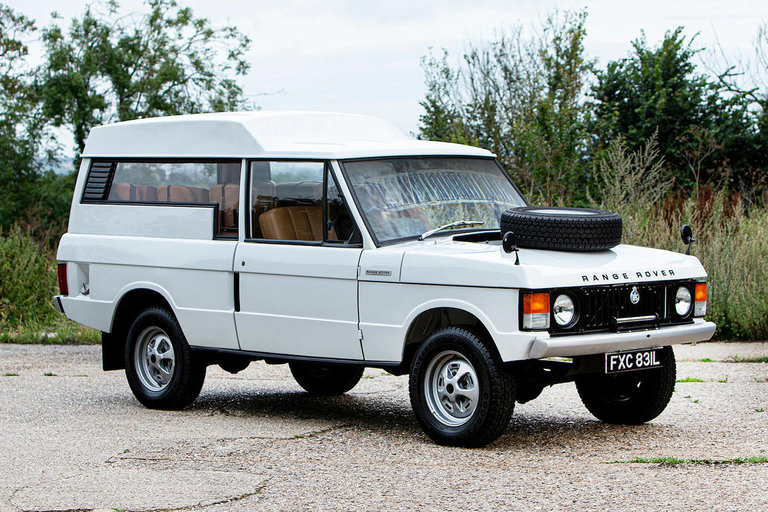 One of six Range Rover prototype ambulances, this shooting brake conversion is going to auction.
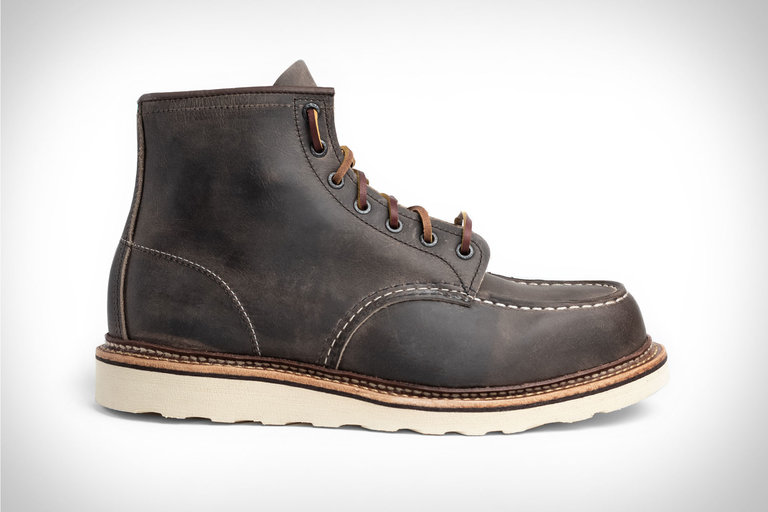 One of the most iconic lifestyle boots ever comes clothed in rough & tough leather & built for the long haul.
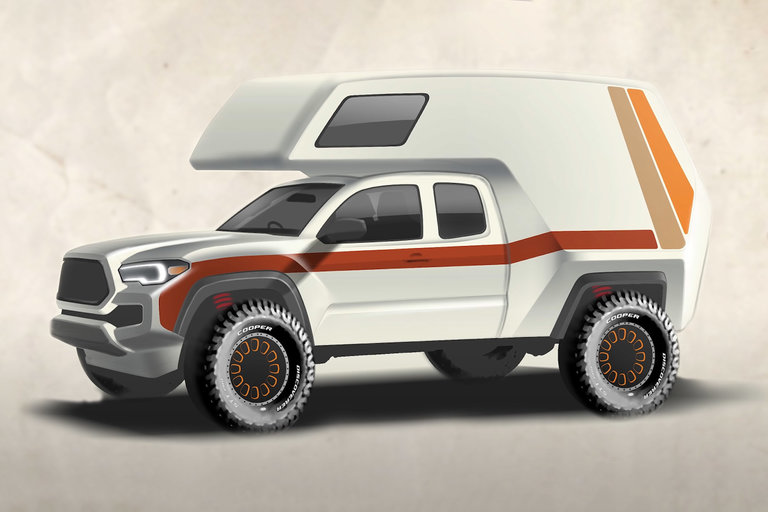 Toyota is building a modern interpretation of its classic HiLux motorhome for the 2021 SEMA show.
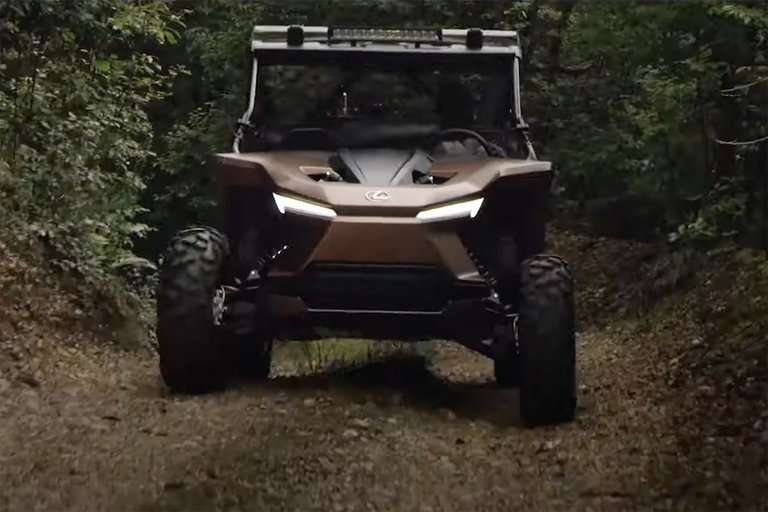 Lexus teased a hydrogen-powered ATV alongside the announcement of the full-size LX 600 SUV.
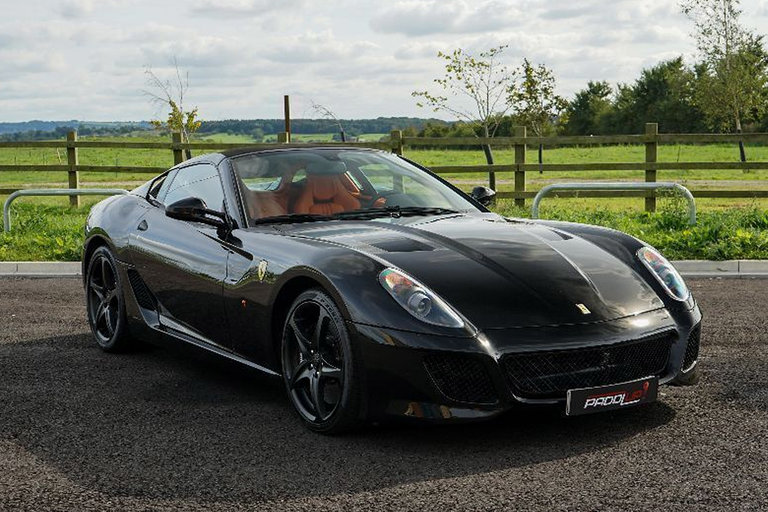 This ultra-rare, one-of-80 Ferrari SA Aperta was built to celebrate 80 years of Pininfarina.