KWBaker
Shared posts
12 Volt Ovens To Portable Fridges: These Are The 9 Camp Kitchen Items Overlanders Swear By

A Recent History of U.S. Sanctions on Russia
 |
submitted by /u/giuliomagnifico [link] [comments] |
[OC] Analyzing what philosophers wrote about Socrates (470 BC to 1588)
![[OC] Analyzing what philosophers wrote about Socrates (470 BC to 1588)](https://preview.redd.it/7o707vvm7zn81.png?width=640&crop=smart&auto=webp&s=d19a4e1dd2e5be89cb36fce146e0801efe9c7fd9 "[OC] Analyzing what philosophers wrote about Socrates (470 BC to 1588)") |
submitted by /u/pkmckirtap [link] [comments] |
Five Things We Could See from Rolex in 2022
A “Coke” GMT Master II? An updated Milgauss? What's in store from the Crown this year?

Ned LeDoux On His Famous Father, Garth Brooks, And Blazing His Own Trail In Country Music

Arnold Schwarzenegger Gives A Master Class In Persuasion

🌅 The economics of daylight saving time
|

|
| The big idea | |||||
 |
|||||
Is daylight saving time over? Should it be? |
|||||
|
On Tuesday, the Senate passed the Sunshine Protection Act, which, if cleared by the House and signed by President Biden, would make daylight saving time (DST) permanent by November 2023. Why the heck do we have DST anyhow?DST is often attributed to Benjamin Franklin, who joked that waking up with the sun could conserve candles and lamp oil. But it was actually New Zealand-based astronomer and entomologist George Hudson who, in 1895, proposed changing the clocks for more daylight to study insects. The US adopted DST in 1918 to conserve energy in WWI, then again in WWII, per Smithsonian magazine. Some states kept it, some didn’t, and in 1966, the Uniform Time Act established DST and standard time (ST) for the nation. There are several negatives to time flip-flopping
It ain’t cheap, either. One study estimated the economic cost of DST in the US at ~$433.9m. In 2005, the Airport Transport Association argued that a 2-month extension of DST would cost the US airline industry $147m thanks to international confusion. (The US extended it anyhow.) Is DST the best time?Seventy percent of Americans want the clock to stay put, per a 2019 poll. But 40% want permanent ST, while 31% are forever DST. Permanent DST means more sun in the evening, which some say would be good for the economy (and barbecues). But a PNC analyst believes only outdoor businesses would benefit — in the 1980s, golf businesses claimed DST resulted in an extra $200m in profit per month, or ~$647m in today’s money. We tried year-round DST in 1974…… amid a national gas crisis, and found Americans hate dark winter mornings. (Studies also found we don’t actually use less energy.) It’s ST that sleep experts say best matches our circadian rhythms, so it’s a possibility some may lobby for permanent ST instead. Whatever the outcome, history shows we can always monkey with time again — for better or worse. Fun fact: You know who loved the extension of DST? The candy industry, who lobbied to get that extra hour of daylight for trick-or-treating. |
|||||
|


| SNIPPETS |
|
Gas trick: Americans are turning to Costco for more than samples and bulk deals. Apparently, members also enjoy gas that’s ~30 cents cheaper per gallon. #ecommerce-retail Solar store: A California Target is using solar panels on its roof and carports to power the store, making it the retailer’s most sustainable location. #clean-energy Adobe’s new AR shopping tool allows customers to use their phones to see 3D renderings of objects from retail websites in their homes. #emerging-tech Careful: The US Cybersecurity and Infrastructure Security Agency (CISA) is warning that Russian hackers have been able to hack dormant accounts and enable 2FA. They advise closing old accounts and using secure passwords. #privacy Ukraine has officially legalized cryptocurrency as millions in donations pour in from around the world. #fintech-crypto Netflix and oops: 2 potential jurors were dismissed from Sunny Balwani’s trial because they’d watched “The Dropout,” which follows the rise and fall of Balwani’s ex, Elizabeth Holmes, and her company, Theranos. #big-tech |
| App Gaps | |||||
 |
|||||
|
Selina Lee |
|||||
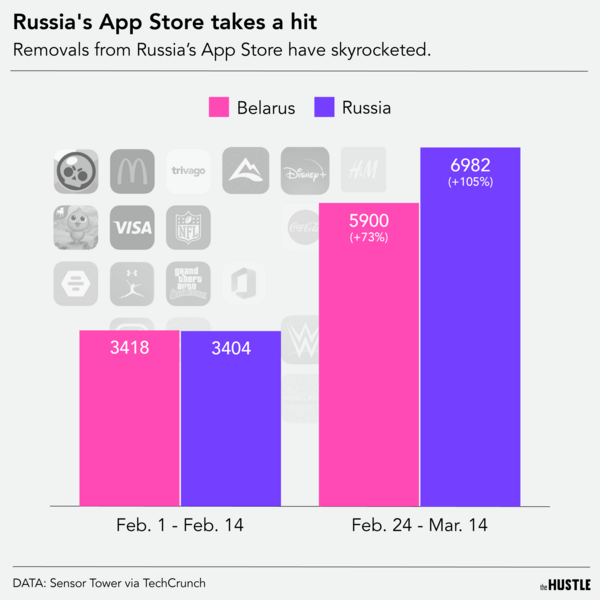
Russia and Belarus are losing their apps |
|||||
|
Since Putin’s invasion of Ukraine on Feb. 24, numerous companies have shut down business in Russia, including McDonald’s, Netflix, and Upwork. Some of these moves are now apparent on Apple’s App Store. Apple regularly removes old and outdated apps. In the 1st 2 weeks of February, ~3.4k apps disappeared from both the US and Russian App Stores, per TechCrunch. But between Feb. 24 and March 14…
Gone are several gaming, health, music, and productivity apps — plus, loyalty apps for brands no longer doing business in Russia. Yet, there is one type of app that’s super hot right now: VPNs, which Russians are likely using to get around Putin’s ban on social media. The top 10 VPN apps saw 4.2m installs in those same 2 weeks, a 2.2k%+ increase. |
|||||
|
| Grid Games | |||||
 |
|||||
Why are Californians going off the grid? |
|||||
|
Going off the grid used to be reserved for that outdoorsy high school friend who read Into the Wild a few too many times. But in California, going off the grid is having a bit of a moment. According to The New York Times, residents building new homes are increasingly choosing to build their own systems rather than connect to the grid. Why?Some reasons include more frequent power outages, soaring electricity costs, and wildfires caused by utility companies. Naturally, costs play a prominent role:
There’s also a mounting fear that energy costs will keep rising due to Russia’s war against Ukraine, and extreme weather events that damage aging electricity infrastructure. But going off-grid…… isn’t always the cheaper option upfront. Installing new power lines to connect to the grid can cost $20k-$78k, while building an off-grid system can cost $35k-$100k. It’s also not for the faint of heart. If something goes wrong — especially out in the California wilderness — you could be very much on your own. If that, or the movie version of Into the Wild doesn’t scare you away, check out Primal Survivor. It shares resources on how to go off-grid, including The “Oh Crap!” guide to off-grid sewage and septic systems. |
|||||
|
| TRENDS |
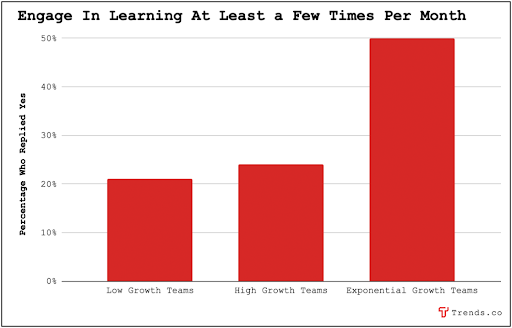 |
A trained eye can spot business opportunities anywhereFor example, around when HubSpot rolled out its revamped Service Hub support CRM, it also dropped the 2022 State of Customer Service report. Our Trends analysts got an early look at the data (obvs) and found a fascinating stat: Around 50% of companies experiencing exponential growth are exposing support agents to training several times per month. Companies everywhere are hungry for more. Our report breaks down 3 types of training that service teams are craving, along with the business models to help you capitalize. For 300+ more ideas (plus the connections and know-how to put them to use), check out Trends. |
| AROUND THE WEB |
|
🖼️ On this day: In 1990, 2 men disguised as cops stole $500m worth of art from Boston’s Isabella Stewart Gardner Museum, including 2 Rembrandts. The culprits were never caught and the art has never been found. 🤓 That’s interesting: An illustrated guide on how cryptocurrency works. 😊 Useful: Minimal Avatars lets you create still or animated avatars for free. 🚇 That’s cool: MetroDreamin’ lets you design the public transit system you wish your city had and explore other people’s maps. 🐇 Aww: And now, a happy little bunny eating a carrot. |
| IN CASE YOU MISSED IT |
|
(A roundup of our best reads from the last couple weeks…) |
|
👔 Why people are really leaving their jobs right now LINK 👺 What the heck is “goblin mode”? LINK 🏠 The US just hit a record number of $1m+ homes LINK 🛒 How Ikea tricks you into buying more stuff LINK 🥡 Restaurants vs. Google, explained LINK |

| Shower Thoughts |
|
| via Reddit |
How did you like today’s email?
 |
 |
 |
These Airlines Are Serving Booze Again, Thank God

As many of you know, flying and alcohol don’t always mix well. In fact, the combination became so toxic during the pandemic that multiple airlines straight up removed the sale of booze due to unruly passengers. (Is it really that hard not to be an asshole when you drink?) Things got so bad that even the Senate got…
We’re #1: The U.S. Government is the World’s Largest Arms Dealer

Inspiration Friday: Daytona 200 Returns!

Return to the high banks of the iconic Daytona International Speedway with the 80th running of the renowned Daytona 200. Total Motorcycle’s Inspiration Friday: Daytona 200 Returns! Vintage Daytona 200 photos, history and every Daytona [...]
The post Inspiration Friday: Daytona 200 Returns! appeared first on Total Motorcycle.
Your Key West travel guide for enjoying Florida’s more bohemian side
Key West offers a blend of nature and nightlife, with water adventures, beach bars, and sumptuous restaurants.
The post Your Key West travel guide for enjoying Florida’s more bohemian side appeared first on The Manual.

The Power of Oceans to Mitigate Climate Change

To Avoid Regretting A New Job, Ask These Two Questions During The Interview

Henry Ford's Plant-Based Automobile
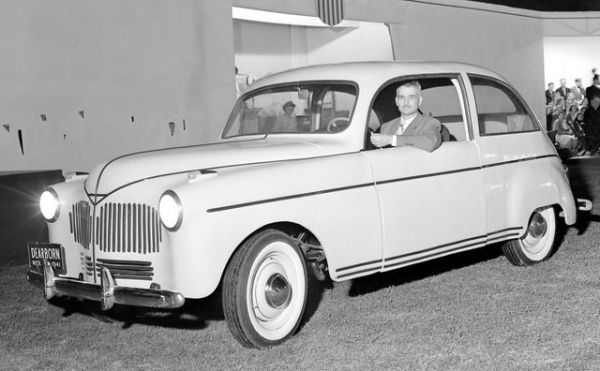
The manufacture of organic, eco-friendly, biodegradable products is not strictly a modern-day idea. Henry Ford himself looked into the possibilities of replacing steel with an agriculturally-derived plastic made of soybeans, hemp, wheat, and other crops. His purpose was not environmental sustainability, though. A car made of plant-based plastic would be cheaper than steel, would reduce the weight of a car to increase fuel efficiency, and what his engineers came up with was surprisingly tough.
Ford's prototype plastic car was unveiled in 1941. It had a tubular steel frame that acted as roll bars, was covered in tough and resilient plant-based plastic, and ran on fuel made from hemp. Ford was eager to get the car off the ground as he suspected the availability of steel would be an issue due to World War II. He was right about that, but it turned out to be impossible to manufacture an alternative car when the government forbade all automobile production and shifted manufacturing to military vehicles and weapons. By the time the war ended, Ford was in ailing health and soon retired. Interest in the plastic car faded.
Recent coverage of Ford's plastic car mainly focuses on the hemp aspect, but he had quite a few agricultural products in mind. However, the exact formula for the plastic no longer exists. There are several ideas for what it might have contained, but no one knows for sure. Read about the plant-based plastic car that might have been at Amusing Planet.
(Image credit: Flickr user John Lloyd)
After Two Long Years Of Being Stuck At Home, It's Time To Travel The U.S. With Sēkr And Visit National Parks And Over 50,000 Beautiful Locations

![[link]](https://i.redd.it/1s6kmwhlnzn81.jpg)
![[link]](https://i.redd.it/7o707vvm7zn81.png)
Korean Barbecue Is All About These Dipping Sauces

I have a lot of conversations about Korean food, but many of them stem from one subject: Korean barbecue. That’s because Korean barbecue is one of the very first experiences people have with Korean food when they’re out at a restaurant. It’s a hell of an introduction too, from the vast spread of banchan (side dishes)…
Heels That Convert to Flats Sound Too Good to Be True—Because They Are

I’ve walked thousands of miles during my nine years in New York City. Having the freedom to explore the city on my own terms is empowering, but it’s a hassle when I need to wear the “right” shoes for working in an office or dancing at a party plus walking to get there. So I was intrigued by Pashion Footwear’s convertible shoes. One pair does it all, the company claims. You can simply swap between high heels and flats with a twist of the wrist. For the sake of my always-sore feet and an easier commute, I wanted to love this concept—but I couldn’t. These convertible shoes were uncomfortable, bordering on painful, and it was a total pain to switch from heels to flats and back again.
Tibet's armed resistance to Chinese invasion
Tomorrow, March 17, is the anniversary of the Dalai Lama's 1959 escape from a Chinese communist attempt to kidnap him. This post tells the story; it is the fifth in a series on the Tibetan Uprising.
Post 1 covered Tibet before the 1949 Chinese invasion, including the Tibetan government's refusal to heed the 1932 warning of the Dalai Lama to strengthen national defense against the "'Red' ideology". Post 2 was the Chinese conquest, followed by armed uprising of the people, precipitated by gun registration. Post 3 described the 1956-57 revolts, which liberated most of Eastern Tibet. Post 4 covered the creation of a unified national resistance in 1958, the Chushi Gangdruk.
These posts are excerpted from my coauthored law school textbook and treatise Firearms Law and the Second Amendment: Regulation, Rights, and Policy (3d ed. 2021, Aspen Publishers). Eight of the book's 23 chapters are available for free on the worldwide web, including Chapter 19, Comparative Law, where Tibet is pages 1885-1916. In this post, I provide citations for direct quotes. Other citations are available in the online book chapter.
The plot to capture the Dalai Lama
As of early 1959, there were fifteen thousand Eastern Tibetans camped outside Lhasa, which is in Central Tibet. "They moved about the city fully armed and with trigger-happy eyes." Mikel Dunham, Buddha's Warriors: The Story of the CIA-Backed Tibetan Freedom Fighters, the Chinese Invasion, and the Ultimate Fall of Tibet 2619 (2004). The only remaining Tibetan supporters of communist China's occupying "People's Liberation Army" (PLA) in Lhasa were the dwindling numbers of collaborationist aristocrats.
To the immense embarrassment of the PLA, two thousand fighters of Chushi Gangdruk national resistance army attacked a three-thousand-man PLA garrison. In a six-hour battle, the Tibetans battered the PLA, and made off with a trove of weaponry. Gompo Tashi Andrugtsang, the creator and leader of the resistance army, then headed to the Central Tibet prefecture of Chamdo to urge everyone "to form their own armed force to defend their native towns and villages," to block Chinese communications, and to "seize every opportunity for damaging and harassing the enemy war machine." Gompo Tashi Andrugtsang, Four Rivers Six Ranges: Reminisces of the Resistance Movement in Tibet 93-94 (1973).
In early February 1959, the Chinese Communist Party (CCP) announced that the Dalai Lama would visit Peking. Surprised, the Dalai Lama and the Tibetans suspected a kidnapping plot. The Chinese had recently been kidnapping and then murdering lamas by inviting them to Chinese social events. By March, the Lhasa population had tripled, with pilgrims arriving for the greatest of the Tibetan Buddhist religious events, the Monlam Prayer Festival.
The Dalai Lama was busy studying for the final exams for his Geshe Lharampa degree—the highest theological degree conferred in Tibet, equivalent to a Ph.D. Chinese officials began demanding that the Dalai Lama attend a theater performance at the PLA camp outside Lhasa on the afternoon of March 10. According to the invitation, he could not bring his customary armed bodyguards, nor could he tell the public about the visit. The Dalai Lama told the Chinese that he accepted.
The news spread rapidly in Lhasa when the Dalai Lama's officials announced special traffic restrictions for the road from Lhasa to the PLA camp. On the morning of March 10, thousands of Tibetans spontaneously assembled around the Dalai Lama's Norbulingka palace, "armed and indifferent to personal safety." Dunham at 269. About half the crowd were Khampas, Amdowas, or Goloks (Tibetan ethnic groups from well east of Lhasa). "[F]or the first time, Lhasans and Eastern Tibetans were acting as one." Id. Lhasans who did not have firearms or swords brought their axes, picks, and shovels, or whatever else they could use as a weapon.
March 10, 1959, the Momentous Day
The Chinese Communist Party (CCP) refers to March 10, 1959, as the "Lhasa incident" or the "March 10 Incident of 1959." The Tibetan government-in-exile recognizes Tibet Uprising Day as an official holiday, Tibetan Uprising Day. It was perhaps "The Most Momentous Day in Tibetan History." Jianglin Li, Tibet in Agony: Lhasa 1959 at 135, 340 (2016).
The people of Lhasa reclaimed their city. They blocked incoming roads with barricades. For the first time since the PLA had arrived in 1951, the sovereignty in Lhasa was exercised by Tibetans. "The people were now the ruling body of Tibet." Dunham at 269-70. They took over the National Assembly and the government. What was left of the Tibetan army distributed arms to the people. So did the Sera monastery, which had one of the biggest arsenals in Lhasa.
The PLA began preparing for action. Scouts took readings for artillery targeting. When a large PLA force advanced on the city, the defenders gathered. But the PLA movement was just a feint, to discover the size of the Tibetan forces.
In the Dalai Lama's view, "[h]and to hand, with fists or swords, one Tibetan would have been worth a dozen Chinese—recent experience in the eastern provinces had confirmed this old belief." But he knew that Lhasa could not defeat China's heavy artillery. Dunham at 278-79.
March 17, the Dalai Lama escapes
On March 17, the Dalai Lama consulted the State Oracle. The oracle monk was brought forth, staggering under the weight of his ceremonial armor and 30-pound headdress. While other monks chanted or played the horns and drums, the oracle went into his dancing trance.
His face was distorted, his eyes bulging, his breathing labored. He appeared to swell in stature, no longer struggling under the costume's weight. Suddenly he let out a piercing shriek.
"Go! Go! Tonight!"
He grabbed a pen and paper in a frenzy and jotted down a clear route map. Then his attendants rushed forward and relieved him of his enormous headdress. The deity departed from his body, and he collapsed onto the floor.
Li, Tibet in Agony, at 193-94. The State Oracle was believed to channel the Dalai Lama's protector deity.
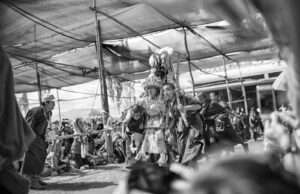
That afternoon, the communists lobbed a pair of mortar shells into the marsh next to Norbulingka palace—taken as a warning of the consequences of disobedience. The Dalai Lama escaped during the night of March 17. Very few people in Lhasa knew. Disguised as a soldier, with a rifle and without his glasses, the Dalai Lama was escorted by the Chushi Gangdruk and the Tibetan army, and also "protected by unseen resistance bands covering their flanks as they passed through the mountains." Kenneth Knaus, Orphans of the Cold War: America and the Tibetan Struggle for Survival 165 (1999).
The Dalai Lama reasserts Tibetan independence and armed resistance
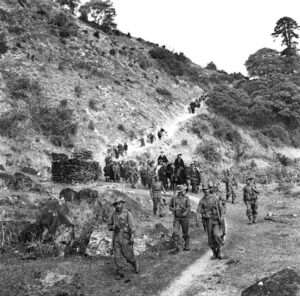
Shortly before entering India, the Dalai Lama repudiated the 1951 Seventeen Point Agreement, which the Chinese had violated, and which was the sole legal pretext for their presence in Central Tibet. He apologized for the Tibetan government's issuance of anti–Chushi Gangdruk statements, which he explained were compelled and dictated by the Chinese. The Dalai Lama promoted Gompo Tashi Andrugstang, in absentia, to General (Dzasak) in the Tibetan army. The promotion letter stated: "the present situation calls for a continuance of your brave struggle with the same determination and courage." Knaus at 166; Andrugtsang at 107 (copy of the letter, in Tibetan). Necessarily, the promotion recognized the Chushi Gangdruk as the army of the legitimate government of Tibet.
In the 1990s, the Dalai Lama reiterated his position that Tibetan resistance has been legitimate: "If there is a clear indication that there is no alternative to violence, then violence is permissible." Knaus at 313. In the Dalai Lama's understanding of Buddhism, motivation and results are more important than method. Therefore, violence is justifiable when motivated by compassion if it leads to good results.
The communists invade Lhasa
The communists did not discover that the Dalai Lama had escaped until March 19. They began claiming that the Dalai Lama had not chosen to flee, but instead had been abducted by imperialists and their accomplices. Later, in 1995 when the Dalai Lama's campaign for Tibetan freedom was earning global attention, the CCP started putting out a story that Mao had intentionally allowed the Dalai Lama to escape. The tale has many factual weaknesses.
During the night of March 20, the PLA erected a barrier preventing movement between the eastern and western sides of Lhasa. Their attack began in the morning, supported by massive artillery bombardment. After two days of fierce building-to-building fighting, the PLA prevailed on the third morning as the defenders ran out of food and ammunition. Lhasa was in ruins, but the Dalai Lama was gone.
The PLA leadership brazenly lied to its troops. For example, the Tibetans were said to be "callous murderers" who tortured and killed people for the slightest infraction—a description more aptly applied to the CCP. Supposedly, the Tibetans slaughtered the laboring masses, and then used their skulls for rice bowls, their skins for drums, and female femurs for horns. Three decades later, at Tienanmen Square in Beijing, the PLA soldiers would be fed a different set of lies about the student protesters. And since the CCP controlled the media, most soldiers had no means of learning the truth. Timothy Brook, Quelling the People: The Military Suppression of the Beijing Democracy Movement 114-15 (1998).
The PLA counteroffensive
The PLA had grown increasingly proficient at counterinsurgency. They brought in non-Han cavalry, who as horsemen were far superior to the often inept Hans. The PLA improved at deploying mobile artillery. In places where it was not possible to use artillery, bombers were employed. When weather or terrain obstructed bombers, scout planes could still report the movement of resistance groups. Most importantly, the Chinese had spent the previous decade building a strong road and airport network in Central and Eastern Tibet. Although the Tibetans could and did cause trouble for Chinese supply convoys, the PLA forces in the field never ran out supplies.
An April 1959 PLA counteroffensive in Lhoka (a prefecture south of Lhasa) captured several strategic towns. The Chushi Gangdruk in the region, exhausted and running out of supplies, took the Dalai Lama's advice and used their last chance to escape to India.
By mid-1959, control of the tempo of warfare had shifted to the PLA. The rebels, rather than being able to attack at times and places of their choosing, were trying to outrun PLA pursuit and were having to fight several engagements per week to do so. Eventually, many of them escaped to Nepal or India. They also guided other Tibetans past Chinese lines, and to the border. Cumulatively, eighty thousand Tibetans escaped.
As the PLA advantages grew, the rebels should have dispersed into smaller groups, which would have been harder to detect. If the fighting men had split into small guerilla bands, they could have kept operating for a long time. But the men would not abandon their defenseless families, and they needed to keep their herds with them for food. So the resistance camps were large and moved slowly.
Further from the border, other resistance fighters, with no opportunity to escape, kept up the fight. By this time, they were no longer attempting to liberate territory, but simply to conduct raids on enemy forces. The Goloks of Amdo province, too far north to flee to another country, continued their resistance.
By the fall of 1959, most of Tibet was back under PLA control, except for parts of Kham. There, the Khampas continued to disrupt Chinese conveys and their effort allowed "untold thousands of Tibetans to make their way safely to the border—a major contribution that has often been overlooked by Western historians." Knaus at 340-41 As for Central Tibet, the resistance in outlying areas continued until 1962.
Tired of armed Tibetans, the Chinese forbade the Tibetan men's tradition of wearing swords. About half the men were put into prisons and worked to death. The communization of Tibetan culture and religion, already well underway in Eastern Tibet, was fully inflicted on Central Tibet. The policy continues to this day.
In April 1959, the Tibetans set up a government in exile, at Dharamasala, India, which continues to this day. The government in exile is for all Tibetans, regardless of province of origin or religion. The government is democratic, and provides education from kindergarten through high school.
The CCP's Political Commissar for Tibet, General Tan Guansen, might have thought he had earned a lifetime of respect from Mao's regime. But during the Cultural Revolution that began in 1966, he would be purged as a supposed "capitalist roader."
Next post: The resistance continues, and prevents a genocide.
The post Tibet's armed resistance to Chinese invasion appeared first on Reason.com.
Grilled Duck Nachos – The Meateater Cookbook
Grilled Duck Nachos Ingredients (makes one 9×13-inch pan): Duck 2 pounds duck breasts 1 tablespoon finely ground coffee beans 2 teaspoons kosher salt 2 teaspoons packed brown sugar 1/2 teaspoon garlic powder 1/4 teaspoon cayenne pepper 1/4 teaspoon ground cinnamon Nachos Zest and juice of 1 large lime 16 ounces sour cream 6 ounces restaurant-style…
The post Grilled Duck Nachos – The Meateater Cookbook appeared first on Sporting Classics Daily.
Trout On The Table – Part 4
Trout on the Table – Part 4 Ingredients for Honey Pecan Trout: 2 pounds trout fillets (fillet large trout or split small fish down the middle and remove as many bones as Possible—leave the skin in place) ½ cup all-purpose flour Salt and pepper to taste ½ cup finely chopped pecans 1 egg, beaten Butter,…
The post Trout On The Table – Part 4 appeared first on Sporting Classics Daily.
Field Dressing Equipment
Field Dressing Equipment – Small and Large Game, and Wild Game Birds Once you have successfully identified and targeted your specific game, the real work will begin if you have downed you animal. For small game and birds, the task isn’t terribly daunting, but field dressing an elk or moose and packing out 100 or…
The post Field Dressing Equipment appeared first on Sporting Classics Daily.
Elk Recipes – Roasted Elk In Beer Sauce
Roasted Elk In Beer Sauce Recipe Ingredients (serves 4): 1 elk roast (about 3 to 4 pounds) 1 yellow onion, peeled and sliced 1/2 cup chili sauce 2 tablespoons brown sugar 2 cloves garlic, peeled and minced 12 ounces beer Salt and black pepper, to taste Preheat the oven to 350 Degrees Fahrenheit. Place the…
The post Elk Recipes – Roasted Elk In Beer Sauce appeared first on Sporting Classics Daily.
Different Methods Of Cooking
Different Methods Of Cooking BRAISING – Is a combination of stewing and baking meat through immersion in a covered vessel containing a solution of vegetable and animal juices called “braise,” hence its name. The meat is exposed to a strong but not boiling temperature and is self-basting. This is for less tender cuts BROILING –…
The post Different Methods Of Cooking appeared first on Sporting Classics Daily.
How To Skin A Rabbit
How To Skin A Rabbit The best way to skin a rabbit or a hare is to hang it by its hind legs, on hooks. Cut the skin at the full length of the belly. Now proceed to remove the skin on either side, first, up to the first joint of the hind legs. Make…
The post How To Skin A Rabbit appeared first on Sporting Classics Daily.
Meat And Wine Pairings For The Table
Meat And Wine Pairings After the butchering process is complete and all your hard work is finally pulled from the freezer and properly defrosted, the second part of the story begins. Preparing and enjoying all the delicious cuts of prized meat, from brining and marinating to quick searing and roasting — each can also be…
The post Meat And Wine Pairings For The Table appeared first on Sporting Classics Daily.
Blackened Venison Loin Steaks
BLACKENED VENISON LOIN STEAKS As we ease into spring and deer season lies at a distance in our sporting rear view mirror, it’s time to put some of that fine fare from fall that has been resting in your freezer to tasty use. Here’s one of my recipes offered with that in mind: Ingredients: 4-6…
The post Blackened Venison Loin Steaks appeared first on Sporting Classics Daily.
Simple Catfish Fillets
SIMPLE CATFISH FILLETS Spring’s greening up time translates to an upswing in fishing action and as a result, opportunities for some mighty fine fare. Here’s a quartet of dandy recipes, each relatively easy to prepare, that ought to tickle the palate of any lover of the tasty products of piscatorial endeavor. CATFISH FILLETS 1 cup…
The post Simple Catfish Fillets appeared first on Sporting Classics Daily.
Crappie Delight
CRAPPIE DELIGHT 2 pound crappie fillets ¼ cup lemon juice 2 eggs, beaten ¼ cup milk 1 teaspoon salt 1 cup all-purpose flour Oil for frying ½ cup grated cheddar cheese Cut the fillets into serving-size portions and arrange in a baking dish. Pour the lemon juice over fillets and let stand for six to…
The post Crappie Delight appeared first on Sporting Classics Daily.
Charge Electric Ford Mustang

Visit Uncrate for the full post.
Here Are 7 of Our Favorite DIY Lifehacks

Here at Wirecutter, we aim to provide quality recommendations of products worth spending your money on. But our knowledge goes well beyond items you can purchase. Wirecutter’s experts are well versed in hacks that transform everyday items you likely already have sitting around—no purchase necessary.
Whether you’re in need of a cat bed or a bottle warmer, these DIY alternatives will save you money while revealing some unexpected uses for common household items.