Trump and his newest lawyer have a history.Published On
In this Opinion video, we revisit an old sketch that highlights the affection between President Trump and Rudolph Giuliani, his newest lawyer. A president couldn’t ask for a better character witness.
Reviewers who wish to post a review on former FBI director James Comey’s new book, A Higher Loyalty, may have to find a venue other than Amazon.com.
Only “verified buyers” of the book via Amazon are allowed to post, and some online chatter suggests that low ratings of the book will not make it onto the site. The restrictions apply to print and Kindle book editions.
Those who try to post a review and didn’t buy the book through Amazon receive an error message: “Sorry, we…
Researchers in Singapore explained how they created a robot that could devise and execute a plan to put together an Ikea chair.
This robot, created by researchers in Singapore, took 20 minutes 19 seconds to make and execute a plan to assemble an Ikea chair.Creditvia, Nanyang Technological University, Singapore
Now researchers in Singapore say they have trained one to perform another task known to confound humans: figuring out how to assemble furniture from Ikea.
A team from Nanyang Technological University programmed a robot to create and execute a plan to piece together most of Ikea’s $25 solid-pine Stefan chair on its own, calling on a medley of human skills to do so. The researchers explained their work in a study published on Wednesday in the journal Science Robotics.
“If you think about it, it requires perception, it requires you to plan a motion, it requires control between the robot and the environment, it requires transporting an object with two arms simultaneously,” said Dr. Quang-Cuong Pham, an assistant professor of engineering at the university and one of the paper’s authors. “Because this task requires so many interesting skills for robots, we felt that it could be a good project to push our capabilities to the limit.”
He and his Nanyang colleagues who worked on the study, Francisco Suárez-Ruiz and Xian Zhou, aren’t alone.
In recent years, a handful of others have set out to teach robots to assemble Ikea furniture, a task that can mimic the manipulations robots can or may someday perform on factory floors and that involves a brand many know all too well.
“It’s something that almost everybody is familiar with and almost everybody hates doing,” said Ross A. Knepper, an assistant professor of computer science at Cornell University, whose research focuses on human-robot interaction.
In 2013, Mr. Knepper was part of a team at the Massachusetts Institute of Technology that presented a paper on its work in the area, describing the “IkeaBot” the team created, which could assemble the company’s Lack table on its own.
But chairs, with backs, stretchers and other parts, pose a more complex challenge; hence the interest of the Nanyang researchers.
Their robot was made of custom software, a three-dimensional camera, two robotic arms, grippers and force detectors. The team chose only off-the-shelf tools, in order to mirror human biology.
“Humans have the same hardware to do many different things,” Dr. Pham said. “So this is kind of the genericity that we wanted to mimic.”
Also like humans, the robot had a little help to start: It was fed a kind of manual, a set of ordered instructions on how the pieces fit together. After that, though, it was on its own.
The robot proceeded in three broad phases, spread out over 20 minutes 19 seconds.
First, like humans, it took some time to stare at the pieces scattered before it.
The robot spent a few seconds photographing the scene and matching each part to the one modeled in its “manual.”
Then, over more than 11 minutes, the robot devised a plan that would allow it to quickly assemble the chair without its arms knocking into each other or into the various parts.
Finally, it put the plan in motion over the course of nearly nine minutes. The robot used grippers to pick up the wooden pins from a tray and force sensors at its “wrists” to detect when the pins, searching in a spiral pattern, finally slid into their holes. Working in unison, the arms then pressed the sides of the chair frame together.
Of course, the robot didn’t succeed right away. There were several failed attempts along the way and researchers tweaked the system before the robot was finally able to assemble the chair on its own.
The accomplishment was the culmination of three years of work, but the team is eager to see what else it can automate, Dr. Pham said.
With the help of experts in artificial intelligence, the researchers may be able to create a robot that can build a chair by following spoken directions or by watching someone else do it first, he said. Or maybe, he said, they’ll eventually develop one that assembles furniture in a way that is truly human: by ignoring the manual altogether.
President Trump talks to the media in the lobby of Trump Tower in New York on Aug. 15, 2017. (Kevin Lamarque/Reuters)
President Trump says that in many ways, the United States’ infrastructure is like “a Third World country” and is an “embarrassment.” I don’t often agree with our Twitter warrior in chief, but the guy’s got a point. America’s roads are crumbling. Our airports are retrograde: Only four are in the global top 50, and Denver’s takes the top U.S. spot at No. 29. Sad!
This gives me an idea. If Trump thinks that the United States is truly like “a Third World country,” maybe it’s time to start treating him the same way we treat the leaders of such nations. My immodest proposal: Let’s save America from itself and the ravages of this presidency by offering Trump a big bundle of money to leave. I’m serious. There’s an African precedent for this. Let me explain.
But back to Trump. Comedian Trevor Noah once said Trump, then a candidate, would be America’s first African president. He compared Trump to some of Africa’s most notorious leaders and dictators. Like former South African president Jacob Zuma, Trump blames migrants for crime. Like Gambia’s former president Yahya Jammeh, who claimed he had an herbal cure for AIDS, Trump has cast doubt on vaccines. As president, Trump has attacked the press, run a Cabinet mired in corruption scandals and given his children incredible — and undeserved — political power and access. That’s a familiar story in Africa: If you think Ivanka Trump is getting a sweet deal out of her father’s presidency, read about Angola’s Isabel Dos Santos, who was given the control of the country’s state oil firm and became Africa’s richest woman. Noah was right: Trump, not Barack Obama, is America’s first African president.
Here’s where the money part comes in. Every year, the Mo Ibrahim Foundation, founded by a wealthy Sudanese businessman of that name, offers a prize of $5 million, payable over 10 years, to an African leader who exemplifies quality leadership. The prize, which was created in 2006, also offers the possibility of $200,000 per year for the rest of the winner’s life. The requirements? Change your country for the better, and step down at the end of your democratically elected term. Seems pretty easy — except Africa’s leadership has apparently been so bad over the past 12 years that only five presidents in the continent’s 54 countries have been given the prize. (Liberia’s Ellen Johnson-Sirleaf was the 2018 awardee.)
I find it hard to believe that a number of African leaders who sit atop resource-rich countries and embezzle endlessly from the state would be motivated by a measly $5 million. But Trump, America’s first African president, just might be tempted by a nice payday. He may be rich, but he’s not Teodoro-Obiang-of-Equatorial-Guinea-level rich, you know? The promise of $10 million or $100 million (we have to offer him more than the Africans, of course) just might induce Trump to change course for the better. If cash prizes are supposedly good enough to improve democracy and development in Africa, they should be good enough for us, right?
Besides, nothing else has worked to rein in Trump’s behavior. We thought the military generals would be a moderating force. White House aides have tried to keep the president off Twitter. None of it has worked. He’s still railing against immigrants, stoking trade wars and assaulting democratic norms. At this point, we might as well try throwing cash at our Trump problem. At least we know that Trump, a businessman, former game show host and beauty pageant impresario, is preoccupied with how much money he has. He’s been known to overstate his net worth. In 2006, he unsuccessfully sued a journalist who claimed he was worth only $150 million to $250 million.
So Mr. Ibrahim, if you read this, perhaps you might consider adding Trump to the list of candidates for the Ibrahim Prize for Achievement in African Leadership in the next year or two. Maybe the payments could be in bitcoin. Whatever it takes. Nothing less than the future of the United States is at stake.
The congregation of Brazil's São Geraldo Magela church seemed delighted as a drone outfitted with a monstrance containing the eucharist floats up the aisle to their priest at the altar. Once the video was posted to Facebook though, some devout Catholics flipped out, calling it "scandalous" and a "profanation." According to the Catholic Herald, blogger priest John Zuhlsdorf criticized the stunt as "sacrilegious silliness."
A security group tested the 26 email domains managed by the White House and found that only one fully implements a security protocol that verifies the emails as genuinely from the White House, Axios reports.
“Why it matters: Imagine the havoc someone could cause sending misinformation from a presidential aide’s account: Such fraudulent messages could be used in phishing campaigns, to spread misinformation to careless reporters, or to embarrass White House employees by sending fake tirades under their names.”
"Ruggedly handsome, with a jaw so square it had actual 90 degree angles, he was the world's most intelligent man, everyone agreed (he never wrote run-on sentences, nor inserted useless parentheticals, because he was smart). He also had a abs so pretty they could turn Ryan Gosling gay, and also a penis so long, he walked around with a baby stroller to rest it on."
O n an unnamed part of the internet, young adult author Gwen C. Katz found a delightfully deluded male author claiming that his facility with writing natural women characters constituted an unassailable rebuke to the idea that we need diverse authors to write diverse viewpoints. If a male author can write a woman this convincing, surely there’s no need for the #OwnVoices movement!
Some of his other perfect descriptions—which, remember, he himself was claiming were evidence of his skill—included “I could only imagine the thoughts that were running through his head. Naughty thoughts,” and “I could imagine what he saw in me. Pale skin, red lips like I had just devoured a cherry popsicle covered in gloss, two violet eyes like Elizabeth Taylor’s.” A cherry popsicle covered in gloss, y’all. Why would you even eat that? And TWO eyes, just to be clear.
The whole thread is worth a read, but it got even better once writer/podcaster/cat tweeter Whit Reynolds proposed a Twitter game: Describe yourself the way a male author would.
“I never expected it to blow up, it was a joke made to a friend while I was ripped on Franzia. But it clearly resonated!” Reynolds told Electric Literature. “The thing that stuck out to me most is how many women responded with something along the lines of, I’m old or fat or a woman of color, so I wouldn’t be described by a male author at all. I might as well be invisible.” Those responses, taken together with the women who waxed rhapsodic over their booby boob-shaped boobs, constitute a pretty damning indictment of the state of writing about women and people of color.
If you’re a male writer, this is actually good news! It means you have a chance to listen really carefully and do a lot better in creating your women characters. Consider, for instance, writing one who’s cutting as hell and 100% has your number.
Below are some of our favorite responses to Reynolds’ challenge—but it’s not too late to pour yourself some Franzia and jump in.
We have now come to bury Facebook, not to praise it. In the past few weeks, after the revelation that consulting firm Cambridge Analytica had obtained the data of more than 50 million Facebook users to help it craft targeted political ads in favor of Donald Trump and Brexit, Facebook critics and users have found common cause in wondering whether society should distance itself from Facebook. Stories about the social media network’s potential downfall have filled the press. But even as users say it’s time to #deletefacebook, they’re also telling journalists that actually deleting Facebook is a difficult choice to make.
Turns out, that fits with a pattern researchers have been aware of for a while: Americans say they are deeply concerned about privacy on social media. We say that it wouldn’t be too hard for us to walk away from it. And then we keep on using the social media that threatens our privacy.
Both polling data and scientific research suggest that, whatever the fallout from the Cambridge Analytica scandal, Facebook has staying power. That’s largely because it offers users real benefits, said Elizabeth Cohen, a professor of communications at West Virginia University who studies social media and society. The people who use it have decided — implicitly, if not explicitly — that those benefits outweigh the risks.
Americans are certainly aware of a data privacy issue connected to social media and advertising. A 2014 Pew survey found that 91 percent of adults thought consumers had lost control over how companies (all companies, not just tech companies) collect and store information about us. Meanwhile, the same survey showed that 64 percent of internet users wanted stronger regulations on advertisers. In fact, long before Cambridge Analytica, Americans were already more distrustful of social media and online advertisers than any other organizations that have access to our data.
And yet we kept giving it to them. Since 2014, Americans’ use of social media has continued to grow, and nearly 70 percent of all U.S. adults now use Facebook. You see this same dynamic play out in the lab. Numerous studies have found evidence for a “privacy paradox” between our statements and our actions. We say we place a high value on privacy, yet our behavior suggests … well, not so much. For instance, a 2012 study found that 95 percent of research subjects reported being interested in protecting their private information. That same group of people was also overwhelmingly willing to shop at a store that required them to provide information about their income and date of birth if it would save them a single euro.
So what makes social media so sticky even though we know it’s also risky? The answer, perhaps unsurprisingly, lies in the whole “social” part, said Cohen and Andreas Kaplan, a marketing professor who studies social media at the ESCP Europe business school. Social media, and particularly Facebook, has become the place where our social lives happen. Sixty-seven percent of Americans say online communication strengthens their relationships — compared with just 18 percent who say it makes those relationships weaker. If you aren’t on Facebook, you’re missing out on important parts of your friends’ lives — maybe even missing your friends entirely, if they live far from you.
And even though not all of our experiences online are good, more of us report being treated kindly than report hostility. Same with how often we see people help each other on social media rather than needing to leave a social media group because it turned mean.
That ties in with what scientists call “ambient awareness” — a theory that having access to regular, small, seemingly disconnected bits of information about a person’s life can build stronger social connections, help us feel more bonded and make us happier. The biggest reasons people give for why they use social media are about social connection — staying in touch with family members and friends who don’t necessarily live nearby. Those are real effects, Kaplan said, not just some perceived impact we’re manipulated into believing is real.
If you just can’t quit Facebook, it could be because you have decided that the benefits outweigh the risks. Maintaining relationships with far-flung cousins and college friends is valuable to you. That the world could find out you’re a Bernie Bro maybe isn’t.
None of this is to say that you shouldn’t be concerned about privacy on Facebook or other social media. It’s more that when attempting to make a stand against it, you’ll need to grapple with the fact that it really does provide something useful — and that choosing to step away means more than just stepping away from a company, or from a place to share selfies.
Likewise, Cohen pointed out, leaving Facebook isn’t what will protect you and your data from being shared without your permission. Facebook is a big player in collecting and selling your data, but it’s also just one of many entities that do that — think grocery store loyalty cards and gym memberships. Those data sets can be cross-referenced and compared to addresses to learn about you and your family and your friends in ways that are similar to what happens on social media — and some of those offline systems are harder to notice as threats. “There’s an illusion of safety,” Cohen said. “You feel like you could get off, you could opt out.”
Along with the compelling stage name Stormy Daniels, Stephanie Clifford has more sides to her than the ones for which she has become best known – porn film star and giant thorn in the side of the President of the United States.
Clifford’s lesser known side is that she is a prolific director of movies, albeit porn titles that include Sex Door Neighbors, Lust on the Prairie, and Space Nuts. At a moment where women are gaining ever greater recognition for their ability to direct movies, I am recalling this as I read stories about Stormy Daniels and her attorney’s attempts to supersede a non-disclosure agreement so she can tell the full story of her encounter with Donald Trump on this Sunday’s 60 Minutes, and the $130,000 hush money payoff delivered by his lawyer on the eve of Trump’s historic presidential election victory.
I interviewed her about her work as an adult filmmaker on Shoot Out, the show I hosted for years with Peter Guber. What I remember from watching her movies, for research, was her skill and confidence behind the camera and that she was good at it. Difficult qualities to achieve when working at a pace that helmers like Clint Eastwood and Sidney Lumet – both famous for directing like they were double parked – would call remarkably efficient. I also recall that after watching her interview, my TV partner told her she seemed talented enough to direct a film where the actors stayed vertical and kept their clothes on.
Though her conflict with Trump is now part of the national conversation, Stormy Daniels has never wanted to be typed as antagonistic to men, or marginalized as some kind of sex object. As a filmmaker, she insisted in our interview: “I know how to get good performances from men. And I do it without bruising their egos.” But if men behave inappropriately, she warned, “I know how to sneak up on them.”
Inappropriate behavior is at the core of a precedent-setting law suit filed by President Trump’s attorneys last week, claiming that Stormy Daniels violated a confidentiality agreement and may be subject to damages totaling at least $20 million. She had been paid $130,000 to remain silent about an affair she allegedly had with Trump but now is prepared to discuss that affair on 60 Minutes.
If she fulfills that commitment, viewers will find her to be as smart and articulate as when I interviewed her on national television in 2007. She appeared on an episode that featured Jeffrey Katzenberg. I’d extended the invitation to her then because, having interviewed a range of important filmmakers on the show from Spielberg to Eastwood and Coppola, I realized that I’d never talked with a representative of the world of porn. Joy King, a top executive at Wicked Pictures, quickly assented to the invitation, pointing out that Stormy was a diligent student of filmmaking who would love to discuss her craft. I interviewed her on set with my co-anchor, Guber.
“I admire good filmmaking and try to see as many movies as I can,” Stormy Daniels pointed out. “When I’m on the set of a Hollywood movie, however, I always feel there are twice as many people in the crew as needed.” On a porn movie, she noted, the crews are small and mobile. “We have to jump from take to take. We have tight schedules and they are demanding.”
She had some experience as an actress in Judd Apatow’s films, The40 Year-Old Virgin and Knocked Up. She said she admires the way a director like Apatow works with actors – “he gets right down, face to face with the cast, explaining exactly what he wants.” With porn, she points out, “you have to be prepared and demanding, yet also respectful. I like being the puppet master.”
In her view, porn is intrinsically funny – “we’re dealing with erotic fantasies.” Hence, most of her films have a satiric bent, she said, with titles such as Operation Desert Stormy or Operation Tropic Stormy.
Will her war with the President have a negative impact on her career? “Look, a key to my success is to keep a high opinion of men,” she declared, “and vice versa. I started as a dancer in Baton Rouge, Louisiana. That’s a rough way to start.” Throughout her career, she explained, she sought to maintain a high level of esteem and, as such, she was “treated respectfully.” A chance meeting with Brad Armstrong, a prolific porn director, led to offers as a performer, then director, of adult films.
At the time we talked on television, Stormy Daniels had no idea that she was destined to have a famous face-off with the President. Trump’s initial strategy was to distance himself from the dispute, maintaining an alias on the payoff which was made through his attorney, Michael Cohen. Many of his supporters were surprised, therefore, when he dropped his cover and weighed in directly on the case late last week. His attorneys now seek to shift the case to a federal court which may lead to arbitration, hence out of the public view.
Stormy Daniels in 2008 won a trophy as Best Crossover Star, recognizing her versatility in mainstream film (Superbad), in a Maroon 5 music video, in a recurring role on Courtney Cox’s Dirt, and in her other activities.
A potential triumph in her litigation with the President would assure her even broader recognition. It might also convey the message that politics, like porn, is essentially comedic.
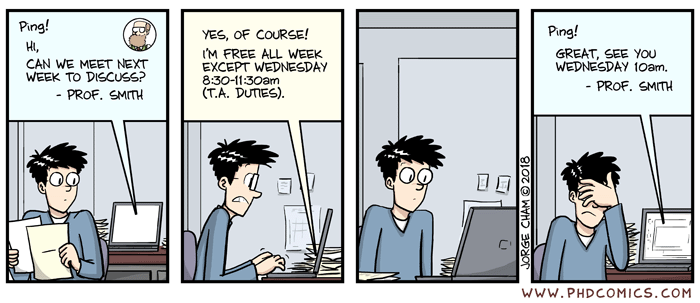
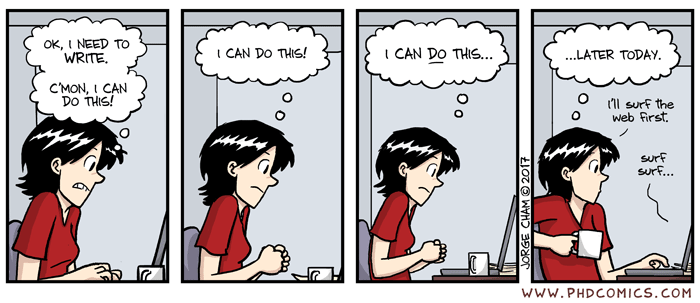
It's amazing to me how many people make this exact mistake. My day-job mostly involves scheduling people (actually, getting other people to schedule themselves, while I take credit for it), and I see sooooo many email exchanges like this.
"during the campaign Trump told Jared Kushner to find some research supporting his protectionist trade views. Kushner responded by going on Amazon, where he found a book titled “Death by China.” So he cold-called Navarro, one of the book’s authors, who became the campaign’s first economic adviser."
Peter Navarro, the White House trade adviser, knows to tell President Trump that he’s always right.
Andrew Harrer/Bloomberg
When Donald Trump came to office, many feared that he would break up our close economic relations with Mexico and/or start a trade war with China. So far, neither has happened.
It’s true that our free trade agreement with Mexico and Canada is still under threat, and Trump has placed tariffs on some Chinese goods. But his trade ire seems increasingly focused on an unexpected target: the European Union, which he tweeted has “horrific barriers & tariffs on U.S. products going in.”
This is odd on several levels. To the (very large) extent to which Trumpism is based on racial enmity, picking a fight with Europe, of all places, seems strange. Furthermore, the U.S. has always looked favorably on the E.U., which is, for all its faults, a major force for peace and democracy. Why rush into a spitting match with our allies that only serves the interests of enemies of freedom like Vladimir Putin? Oh, wait.
Beyond all that, however, Trump is just wrong on the facts. “U.S. exports to the European Union enjoy an average tariff of just 3 percent,” says the U.S. government’s own guide to exporters.
Where is Trump getting his misinformation? Probably from Peter Navarro, his trade czar, whose star is clearly rising. And the story of Navarro’s rise tells you a lot about the nature of the Trump administration — a place that rewards sycophants who tell the boss what he wants to hear.
First, how was Navarro recruited? According to reporting in Vanity Fair by Sarah Ellison, now at The Washington Post, during the campaign Trump told Jared Kushner to find some research supporting his protectionist trade views. Kushner responded by going on Amazon, where he found a book titled “Death by China.” So he cold-called Navarro, one of the book’s authors, who became the campaign’s first economic adviser.
Navarro has an economics Ph.D. but holds views very much at odds with the mainstream. True, taking advice from a heterodox figure can sometimes work out well, since orthodoxy isn’t always right. But giving heterodox views a hearing only works if the people seeking advice are themselves open-minded thinkers, willing to put in the hard work of understanding opposing views and assessing the evidence. If this sounds to you like a description of Donald Trump, you might want to seek professional help.
In fact, Navarro’s nonmainstream views mainly seem to involve basic conceptual and factual errors. One of these errors, which bears directly on the Trump-Europe spat, is a complete misunderstanding of the trade effects of value-added taxes (VATs), which the U.S. doesn’t have but play a large role in most European countries’ revenue.
In Navarro’s version of the world, for example as expressed in a campaign white paper, VATs give European companies a huge, unfair trade advantage. U.S. products sold in Europe have to pay VAT — for example, they must pay a 19 percent tax if sold in Germany. This, says the white paper, is just like an import tariff. Meanwhile, German producers pay no VAT on goods they sell in America; this, the paper says, is just like an export subsidy. I’m pretty sure that’s what Trump means when he talks about “horrific” tariffs.
But what this story misses is the fact that when German producers sell to German consumers, they also pay that 19 percent tax. And when U.S. producers sell to U.S. consumers, they, like German producers, don’t face any VAT. So the tax doesn’t tilt the playing field at all, in either market. In reality, a VAT has nothing to do with competitive advantage; it’s basically a sales tax — a tax on German consumers — which is why VATs are considered legal by the World Trade Organization.
So how does someone who misunderstands such a basic, well-understood point about taxes and trade get to be a key economic adviser? As I said, it’s because he tells the boss what he wants to hear. More than that, he’s willing to abase himself in extraordinary ways.
Here’s what he told Bloomberg recently: “My function, really, as an economist is to try to provide the underlying analytics that confirm his intuition. And his intuition is always right in these matters.” Wow.
I mean, one expects White House aides to share many of the president’s views and defend him in public. But this goes far beyond that. Not only is Navarro proudly declaring that he’s a propagandist, not a policy analyst — that his role is solely to confirm Trump’s prejudices — he’s also engaging in an utterly un-American level of sycophancy. Since when has it become acceptable to declare that Dear Leader is infallible?
Now, it’s a commonplace, but also a euphemism, to say that Trump has authoritarian instincts. A more accurate statement would be that he expects the kind of treatment tin-pot dictators demand, free from any criticism inside or outside his government and greeted with constant hosannas of praise.
And everyone who isn’t willing to play the full game, who has tried to play by something resembling normal democratic rules, seems to be fleeing the administration. Soon only the shameless sycophants will be left. This will not end well.
I got my first smartphone in the summer of 2012, and ever since, I’ve found myself wishing I had stuck with my flip phone. It’s not that I hate my iPhone, exactly, but I frequently hate how I use it. I check it all the time, especially when I’m in the middle of hard work requiring concentration and effort. When I’m bored, I look at whatever the internet is serving up to me, often getting anxiety-provoking information I’d rather not ruminate about right then. I feel nervous about being “off the grid” if I don’t have my phone with me, even if I’m unreachable only for an hour or two. And yet, despite all these ill effects, I keep carrying and checking my phone.
I don’t want to be a slave to my mobile device, so I jumped at the chance to serve as a guinea pig for the program outlined in Catherine Price’s new book, “How to Break Up With Your Phone.” I also dug into the research and talked with experts who study digital media use. What I learned is that it’s possible to take back our lives and attention from our phones, but it takes some planning and commitment.
With the world of possibilities it presents, the phone has become something that rewards us for looking at it, no matter where we are or what we’re trying to do. That’s a powerful pull, said Adrian Ward, a professor of marketing at the University of Texas at Austin. “We are always carrying around this attentional, gravitational black hole,” he said. In a study published last year, Ward and his colleagues asked participants to place their devices close and in sight, nearby and out of sight, or in another room. Then the researchers tested participants’ cognitive capacity. The results suggested that just having your smartphone present affects cognitive capacity even if you aren’t checking it or even thinking about it. We have a limited supply of cognitive resources, and the effort required to not pay attention to your phone siphons off some of those resources, Ward said. The study also showed that the more you depend on your phone, the more likely you are to suffer from its presence. Putting the phone face down or even turning it off doesn’t solve the problem.
A more effective solution may be just keeping the thing around less often. “I hide it in the corner and get it out of my realm of possibility,” Ward said. I’ve found that the more my phone is out of sight or, even better, charging in the other room, the less I feel compelled to check it.
Price’s four-week plan to change your relationship with your phone builds up to a 24-hour trial separation. When I tried that as part of her focus group last year, I realized that my phone was often less necessary than I assumed. I had family activities scheduled during my 24-hour break, and in the absence of the phone, I was able to enjoy these activities without distraction. I can’t say I’ve repeated the exercise, but I’m trying to work more phone-free stretches into my day. Price instructed us to list the situations and contexts in which we had decided not to use our phones, and I found a handful, including anytime I’m engaging with another human being, when I’m waiting in line, when I’m in my bedroom (it now charges elsewhere at night), while I’m watching TV and when I’m on the subway (with an exception for podcasts). I’m batting about .800 in sticking to those intentions.
Smartphones often lure us into multitasking. Think of all the ways you can use them when you’re also doing something else. (I don’t know that I’ve ever had a text conversation without simultaneously doing something else.) This can be fatal in the case of distracted driving or walking. And it can hurt your performance on the primary task at hand. We cannot effectively focus on two things at once, and it takes time for your brain to switch between tasks. That means multitasking actually doesn’t improve productivity, said L. Mark Carrier, an experimental psychologist at California State University, Dominguez Hills. Research suggests that for college students, multitasking while studying and during lectures negatively affects overall learning and grades, he said. A study by Gloria Mark, a professor of informatics at the University of California, Irvine, and colleagues shows that after only 20 minutes of interrupted work, “people reported significantly higher stress, frustration, workload, effort, and pressure.”
One way to reduce the allure is to remove tempting distractions from the phone so it doesn’t contain quite as much of the universe. Price suggests deleting apps that grab your attention but don’t improve your life. Goodbye, social media! I’m much less likely to reach for the phone if there’s no Twitter or Facebook. (Instagram, which I’ve only recently started to use, is a potential threat, but it doesn’t call to me the way the others did. So for now, I’m keeping it.) She also suggests hiding apps that are compelling but only somewhat useful and deleting notifications altogether. Tristan Harris, who worked at Google before co-founding the Center for Humane Technology, advocates setting your phone display to black and white, which he says is far less appealing than brightly colored icons and has helped many people reduce their phones’ appeal.
My biggest struggle with my phone is that I check it more often than is necessary, and then I feel bad afterwards. “People mistakenly assume you have to like something to do it over and over again,” said Adam Alter, a professors of marketing at New York University and the author of “Irresistible,” a book about behavioral technology addiction. That’s a logical assumption because “there’s a strong correlation between how much we enjoy something and how much we do it,” he said.24 But it’s not a perfect correlation, he said. We overeat while hating the feeling of having overeaten. We fall in love with people who aren’t good for us and come back for more. I haven’t experienced disturbed sleep from my phone, but plenty of other people have. Regardless of whether we’re truly “addicted” to phones and other technology, many people don’t like their phone habits but find it very difficult to change them.
Email is my greatest anxiety-producer — I feel compelled to check it every seven minutes precisely in the late afternoon and evening hours. And I worry that I won’t be able to respond to a work-related message quickly enough (whatever “quickly enough” means these days). That drives a compulsion to check, which relieves the fear of missing out for a while … until it builds up again. And when I check my email, I end up checking everything else, too. It’s almost inevitable that I see a news story I wasn’t prepared to worry about just right then.
By far the biggest insight I got from Price’s plan was to think of my phone not as a monolith but as a collection of tools I dip into individually when I really need or want to use them. If I have a real use for the phone — coordinating dinner plans via text — I do that and nothing else. And for email, I put myself on a schedule: After work, I can check it hourly until 7 p.m., and then I’m done for the day. I backslide on this fairly frequently, but when I stick to it, I feel fantastic — like my phone is no longer the boss of me.
President Trump leaving the stage after addressing the Conservative Political Action Conference last week.
Pool photo by Chris Kleponis
For my money, the best op-ed published in The Times this week was Mona Charen’s Feb. 25 barn-burner, “I’m Glad I Got Booed at CPAC.” Charen is a movement conservative who worked for Nancy and Ronald Reagan and is a longtime contributor to National Review. One of her books is titled “Do-Gooders: How Liberals Hurt Those They Claim to Help.” A Bernie Sanders progressive she is not.
But Charen is also a NeverTrumper who chose to speak her mind during a panel discussion on the #MeToo movement at this year’s Conservative Political Action Conference. Asked by the moderator to discuss feminist hypocrisy, Charen reframed the question.
“I’m disappointed in people on our side,” she replied. “For being hypocrites about sexual harassers and abusers of women who are in our party. Who are sitting in the White House. Who brag about their extramarital affairs. Who brag about mistreating women. And because he happens to have an ‘R’ after his name, we look the other way, we don’t complain.”
She wasn’t done. She slammed the Republican Party for endorsing Roy Moore. She said it was “a disgrace” that CPAC invited the National Front scion Marion Maréchal-Le Pen to speak. She was jeered. She was accused of “virtue signaling.” She had to leave the building under escort.
And she showed it was still possible to disdain partisan fashion, look a wretched thing in the eye, and say: Not I. Not this. Not ever. Not for nothing did a fellow panelist approach her after it was all over to say, “That was so brave.”
Liberals tend to admire NeverTrumpers, because they see them as conservatives with a moral sense and, perhaps, a brain. By contrast, MAGA Republicans — whether of the fully or merely semi-Trumpified varieties — detest NeverTrumpers with an animus they can scarcely extend to liberals or progressives. Reacting to Charen’s CPAC appearance, one right-wing writer for Red State called her “a new voice in the wilderness of insignificance” — and then devoted 1,000 words to underscoring that insignificance.
This is not, at root, ideological critique. It’s the sign of a bad conscience. The 2016 primaries showed that NeverTrumpers were never much of a political force in the G.O.P. They are even less so today, when the president has an 85 percent approval rating among Republicans. What few NeverTrumpers remain in the party’s senior ranks are either leaving politics or leaving the earthly estate.
But as even minimally sentient Trumpified Republicans know, what Charen said at CPAC was true. NeverTrumpers haunt the conservative movement the way Polish or Czech dissident intellectuals such as Czeslaw Milosz and Vaclav Havel haunted that segment of Central European intelligentsia that made its peace with Stalinism after World War II.
The Trumpers (and Stalinists) traded conscience for power; the NeverTrumpers and dissidents chose the reverse. Conscience can be made to suffer, but in the end it usually wins.
That’s why NeverTrumpers matter; why the Trumpers know they matter (which they prove every time they feverishly assert the opposite); and why progressives who dismiss NeverTrumpers as politically irrelevant are wrong. The United States is going to have a right-of-center party in one form or another, and it matters a great deal whether that party is liberal or illiberal, capable or incapable of shame.
Credible conservatives like Charen can still make a positive difference in that respect, in a way that people like, say, Elizabeth Warren cannot. That’s why you want good guys on the other side of the partisan divide, no matter how irrelevant they currently appear to be. When Trumpism fails, as it inevitably will, who will be the Republican Adenauer?
I write this as a parallel contest is taking shape within the Democratic Party, most visibly in the rift between traditional liberals and the social-justice warriors of what used to be the far left. Dianne Feinstein’s failure this week to claim her party’s nomination for the Senate seat she’s held since 1992 is another depressing indication that the rift is widening.
One side believes in the power of reason, the possibility of persuasion, and the values of the Enlightenment. It champions social solidarity for the sake of empowering the individual, rather than creating a society of conformists. It doesn’t see compromise as a dirty word. Its belief in the benefits of civility and diversity does not override its commitment to free speech and independent thought.
As for the other side, it thinks it knows what’s True. It considers compromise knavish. It views debate — beyond its own tightly set parameters — as either pointless or dangerous. And while it sees itself as the antithesis of Trumpism, it is, in its raging intolerance and smug self-satisfaction, Trumpism’s mirror image.
My advice to traditional liberals is not to repeat the establishment Republican mistake of not taking the threat of populist illiberalism seriously, and of not fighting it fiercely. The fabric of an open society is more frayed than most people realize, and it is coming unraveled from more than one end. What happened to the G.O.P. in 2016 could happen to the Democrats in 2020.
The good news, as Charen courageously reminded us, is that these fights should never be abandoned even when they seem lost, and that sometimes the fights most worth having are those with our own side. William F. Buckley and Daniel Patrick Moynihan would have told you the same thing.
I'm going to start hording canned food for the coming Great Depression 2.0
A steel production site in Germany. The European Union, Germany, Canada and other nations have threatened retaliation since President Trump announced plans for tariffs on imported steel and aluminum.
Tobias Schwarz/Agence France-Presse — Getty Images
A day after stunning markets, Republican lawmakers and even his own advisers by announcing stiff tariffs on steel and aluminum imports, President Trump doubled down on his approach on Friday, saying in an early morning tweet that “Trade wars are good, and easy to win.”
Mr. Trump appeared eager to defend his decision to levy sweeping tariffs on all imports of those metals, issuing a series of morning tweets explaining the need for tariffs. “Our steel industry is in bad shape. IF YOU DON’T HAVE STEEL, YOU DON’T HAVE A COUNTRY!” he said in one tweet.
Markets fell in response to Mr. Trump’s announcement on Thursday that he would impose tariffs of 25 percent on steel and 10 percent on aluminum, effectively placing a tax on every foreign shipment of those metals into the United States. Mr. Trump, at a hastily arranged meeting with industry executives on Thursday, said he would formally sign the trade measures next week and promised they would be in effect “for a long period of time.”
On Friday, he wrote that the measures would help to reduce the trade deficit, which is the gap between what the United States exports to other countries and what it imports. Mr. Trump has long lambasted the trade deficit as a sign of United States weakness.
“When a country Taxes our products coming in at, say, 50%, and we Tax the same product coming into our country at ZERO, not fair or smart. We will soon be starting RECIPROCAL TAXES so that we will charge the same thing as they charge us. $800 Billion Trade Deficit-have no choice,” he wrote.
When a country Taxes our products coming in at, say, 50%, and we Tax the same product coming into our country at ZERO, not fair or smart. We will soon be starting RECIPROCAL TAXES so that we will charge the same thing as they charge us. $800 Billion Trade Deficit-have no choice!
Steel and aluminum companies and their workers greeted the measure as a much-needed salve for their industries. But the doubling down is only likely to further inflame tensions with other nations, which are already indicating they may take reciprocal measures and place taxes on United States exports.
Steffen Seibert, a spokesman for the German chancellor, Angela Merkel, said on Friday that the government “rejects” the tariffs, adding that such measures could lead to a global trade war, which “can’t be in anyone’s interest.”
I leave it to the data-fondlers on TOR to verify this, but if correct, this is illuminating.
Which is not to say that there's any less reason for DMV-style regulation of guns, but I do think that this is evidence that, just like the right, the left is more interested in rhetoric than in actually getting anything done.
There’s a myth that has been propagated by Democrats after mass shootings: mass shootings are far more common in the United States than in other Western countries.
To wit, Barack Obama, June 18, 2015, after the Charleston, North Carolina mass shooting: "Let's be clear: At some point, we as a country will have to reckon with the fact that this type of mass violence does not happen in other advanced countries.”
Former Senate Minority Leader Harry Reid, June 23, 2015: "The United States is the only advanced country where this kind of mass violence occurs," he said.
Sen. Chris Murphy of Connecticut, after the Florida Valentine’s Day shooting: "This happens nowhere else other than the United States of America."
But as Investor’s Business Daily points out, “a study of global mass-shooting incidents from 2009 to 2015 by the Crime Prevention Research Center, headed by economist John Lott, shows the U.S. doesn't lead the world in mass shootings. In fact, it doesn't even make the top 10, when measured by death rate per million population from mass public shootings.”
Here’s the list of the 18 countries with the top death rate per million people from mass public shootings from 2009 through 2015:
Norway: 1.888
Serbia: 0.381
France: 0.347
Macedonia: 0.337
Albania: 0.206
Slovakia: 0.185
Switzerland: 0.142
Finland: 0.132
Belgium: 0.128
Czech Republic: 0.123
United States: 0.089
Austria: 0.068
The Netherlands: 0. 051
Canada: 0.032
England: 0.027
Germany: 0.023
Russia: 0.012
Italy: 0.009
Norway’s rate is undoubtedly highest because of the massacre in 2011 when a mass shooter killed 77 people.
The study adds, “Some people have defended President Obama’s statement by pointing to the word ‘frequency.’ But, even if one puts it in terms of frequency, the president’s statement is still false, with the US ranking 12th compared to European countries. … There were 27% more casualties per capita from mass public shootings in EU than US from 2009-15.”
Further, "There were 16 cases where at least 15 people were killed. Out of those cases, four were in the United States, two in Germany, France, and the United Kingdom. But the U.S. has a population four times greater than Germany's and five times the U.K.'s, so on a per-capita basis the U.S. ranks low in comparison — actually, those two countries would have had a frequency of attacks 1.96 (Germany) and 2.46 (UK) times higher."
The murders from mass shootings in America are horrifying and brutal. But in the wake of another attack, it should be incumbent on all people on all sides not to demagogue the issue.
Geeks. BAHFest London is over 2/3 sold out and it's not for several weeks. This one's gonna sell out super early, and we will *not* have any more tickets to put online. Please buy soon if you want to lock in a spot!
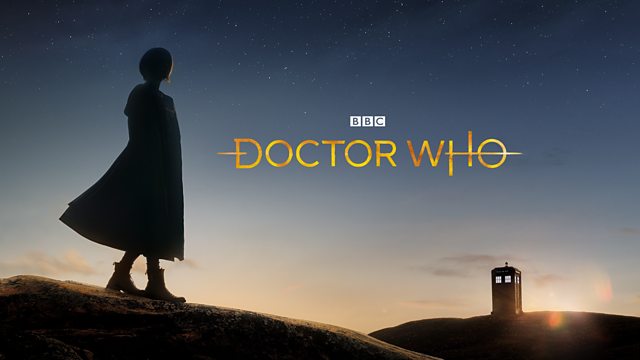
The Thirteenth Doctor, Jodie Whittaker, has unveiled a new logo and insignia for Doctor Who.
It’s a new logo for a new Doctor and an exciting new era!
Creative agency LittleHawk created the brand new designs, working closely with Showrunner Chris Chibnall and Executive Producer Matt Strevens. Jodie unveiled them at a BBC Worldwide Showcase event in Liverpool and they were simultaneously rolled out across social media for the global audience. The sound for the animated logo was created by the critically acclaimed British musician, producer and sound artist, Matthew Herbert.
EXCLUSIVE: John Updike's controversial Rabbit, Run novels are to be adapted for television after War and Peace producer Lookout Point optioned the rights. The BBC Worldwide-backed production company has brought on board Pride and Prejudice and Bridget Jones' Diary writer Andrew Davies to pen the remake.
Davies will adapt Updike's four novels, which tell the story of former high school basketball player Harry "Rabbit" Angstrom, who escapes his small-town life, where he…
Grumpy Cat with her owner Tabatha Bundesen during an interview in Los Angeles in 2015. (Richard Vogel/AP)
To most Internet users, Grumpy Cat — the feline with a furry frown — is a minor celebrity that capitalized on the popularityof memes in 2012 as a perpetual sourpuss. One of the most famous images of the cat, for example, was overlaid with the text, “I had fun once. It was awful.”
To her owner, Tabatha Bundesen of Morristown, Ariz., she was a cash cow and lifeline. The cat’s unexpected fame allowed Bundesen to quit her job waitressing at Red Lobster, according to the Hollywood Reporter.
She later formed Grumpy Cat Limited, monetizing the dour kitty.
The company has produced a line of branded clothing, pillows, mugs, pens, bags and books “written” by the unhappy cat, including a New York Times bestseller. The cat herself — real name: Tardar Sauce — has appeared on “Today,” “Good Morning America” and even “American Idol.” She has starred in a commercial for Honey Nut Cheerios and became an official “spokescat” for Nestle’s Friskies cat food in 2013, CNN Money reported.
It’s been reported that the company raked in anywhere from $1 million to $100 million in its first few years in existence.
Naturally, the lucrative cat soon found itself at the center of an intellectual property dispute that’s raged on since 2015 between Grumpy Cat Limited and the Grenade beverage company. On Monday evening, an eight-person jury in Santa Ana, Calif., awarded Grumpy Cat Limited $710,001 in damages, according to court documents.
It all began in 2013, when Nick and Paul Sandford, the owners of Grenade struck a licensing deal with Grumpy Cat Limited to sell a line of iced coffees called “Grumpy Cat Grumppuccino.” But in 2015, the beverage company decided to create a line of “Grumpy Cat Roasted Coffee,” which was not in the original deal, prompting Grumpy Cat Limited to file a copyright lawsuit in federal court.
“Ironically, while the world-famous feline Grumpy Cat and her valuable brand are most often invoked in a tongue-and-cheek fashion, Defendants’ despicable misconduct here has actually given Grumpy Cat and her owners something to be grumpy about,” the complaint stated.
Grumpy Cat Limited also claimed that Grenade was also selling unauthorized Grumppuccino T-shirts which “blatantly infringe on the Grumpy Cat copyrights and Grumpy Cat trademarks” without sharing the profits and that the beverage company wasn’t paying the agreed-upon percentage of profits from the iced coffee.
Grenade then fired back with a countersuit in which it claimed that Grumpy Cat didn’t hold up its end the deal, which was to promote the iced coffee.
As an example, the countersuit stated that Grumpy Cat Limited claimed the unhappy cat would star in a blockbuster movie alongside comedy superstars Will Ferrell and Jack Black. But the only movie Grumpy Cat has ever starred in was “Grumpy Cat’s Worst Christmas,” which was made for the Lifetime Network and earned a dismal 5.1 out of 10 stars on IMDb.
During the week-long trial at which Grumpy Cat herself made an appearance, Grenade’s attorney Brian Kinder said that Grumpy Cat didn’t support the joint venture.
Kinder pointed to the fact that Grumpy Cat only posted about the iced coffee 17 times on social media. He also cited a Grumpy Cat appearance on the Fox News Show “Fox and Friends,” Courthouse News reported. According to Kinder, the cat’s handlers were supposed to say, “Watch out, Starbucks. The cat’s coming for it,” but didn’t.
The jury wasn’t swayed.
“Grumpy Cat feels vindicated and feels the jury reached a just verdict,” said David Jonelis, the attorney for Grumpy Cat Limited, according to Courthouse News. The cat frowned.
A month or so ago, a friend and I mulled over when exactly the backlash to the then-peaking #MeToo moral panic would set in. Mid-January, we guessed, and sure enough here we are.
No, we were not being clairvoyant, just noting certain dynamics. The early exposure of Roger Ailes, Bill O’Reilly, and Harvey Weinstein — achieved by meticulous, scrupulous journalists and smart, determined women — quickly extended to more ambiguous and trivial cases. Distinctions among many different types of offenses — from bad behavior at private parties to brutal assault and rape of employees and co-workers — were being instantly lost in the fervor. Punishment was almost always the same — social ostracism and career destruction — whether you were Mark Halperin, who allegedly sexually assaulted women in his workplace, or Al Franken, damned because of mild handsiness and pretending to grope a woman’s breasts as a joke. Any presumption of innocence was regarded as a misogynist dodge, and an anonymous online list of accusations against named men in the mediawas created and circulated with nary an attempt by its instigators to substantiate a single one. Within a few weeks, the righteous exposure of hideous abuse of power had morphed into a more generalized revolution against the patriarchy.
This kind of mania will always at some point exhaust itself and this kind of zeal will always overstep. In a free society, a pushback was inevitable, and healthy. The extraordinary journalist Masha Gessen led the way, with ruminations on sex panics. (My own discomfort with this is, like Gessen’s, affected by my experience of what similar panics have done routinely to gay men in the past.) Daphne Merkin has noted how our current discourse all but strips women of agency and sex of eros. Dave Chappelle, in his sublime new Netflix special, used comedy to make a similar point: Sexual abuse is real and evil, but if you’re talking to someone on the phone who appears to be masturbating, you can always, you know, hang up. You can also do what a British female journalist did when she felt an unwelcome hand from a powerful government minister appear on her knee. She told him to knock it off, and if he didn’t remove it, she’d punch him in the face. (She later dismissed the incident, which led to the minister’s resignation: “He tried it on, I turned him down. Now move on.”) Then there’s the nascent notion, among many Democrats, that Al Franken’s banishment from the Senate was obviously overkill. Then came the open letter signed last week by a hundred French women, including Catherine Deneuve, who don’t see themselves as helpless, powerless, forever-victims of men. Money quote: “A woman can, in the same day, lead a professional team and enjoy being the sexual object of a man, without being a ‘slut’, nor a cheap accomplice of the patriarchy.” Imagine that: enjoying being the sexual object of a man!
No one is or should be defending abuse of power. It’s foul. I’m glad certain monsters have been toppled. (For the record, I routinely believe the women in specific cases. I believed Anita Hill, Paula Jones, Kathleen Willey, and Juanita Broaddrick and did so on the record.) But nuance, context, and specifics matter. The Deneuve letter rightly insisted: “Rape is a crime. But insistent or clumsy flirting is not a crime, nor is gallantry a chauvinist aggression.” The manifesto observed the censorious Victorianism about some of the rhetoric, and the public invasion of private matters. But the French signatories also worried about due process: “This expedited justice already has its victims, men prevented from practicing their profession as punishment, forced to resign, etc., while the only thing they did wrong was touching a knee, trying to steal a kiss, or speaking about ‘intimate’ things at a work dinner, or sending messages with sexual connotations to a woman whose feelings were not mutual.” South Park, as usual, was ahead of the curve. Its season finale last month portrayed an office romance between PC Principal and a new character, Strong Woman. And at the mere suggestion of an affair between them, everyone instantly projectile vomits in disgust. What other response could there be to the idea of a relationship between co-workers?
And this week, rumors spread of the impending publication of an essay by Katie Roiphe in Harper’s magazine that might take a similarly skeptical tack. Some believed that Roiphe might even hold the instigator of the legendary Shitty Media Menlist accountable, and that this person might thereby be subjected to online abuse. And so a Twitter campaign was launched, in a backlash-backlash, to preemptively stop the publication of an essay no one had actually read. One Twitter activist, Nicole Cliffe, went further: “If you have a piece in the hopper over at @Harpers, ask your editor if the Roiphe piece is happening. If it is, I will pay you cash for what you’d lose by yanking it.” This strikes me as a new development for the social-justice left: They now believe in suppressing free speech — even before they know its content! It also strikes me as ominous for journalism as a whole. When journalists themselves wage campaigns to suppress the writing of other journalists, and intend to destroy a magazine for not toeing their ideological line, you can see how free speech truly is on the line. Why not simplify this and publish a blacklist of writers whose work, based on previous ideological transgressions, cannot and should not be published?
Pretty quickly, others on Left Twitter offered money for other authors to pull their pieces from the issue — and a few writers said they had agreed to do so. Cliffe was admirably blunt about her intent: “If I have my druthers, the March issue of Harper’s will consist of a now-toothless 200-word piece on the list that doesn’t name anyone and a long meditation from the editor on raw water.” Then this Twitter threat: “If Katie Roiphe actually publishes that article she can consider her career over.” Meanwhile the very people who were up in arms about possible online harassment of the list organizers, went online to call Roiphe “pro-rape,” “human scum,” “a ghoul,” a “bitch,” “the definition of basura,” a “bag of garbage,” and “a misogynistic bottom-feeder.” That’s another thing with ideological fanatics: Irony tends to elude them.
The essay is, to my mind, eloquent, beautifully written, even moving at times, but baffling. I read it waiting for the moment when she took responsibility for what she did, or apologized to the innocent people she concedes may have been slandered. But it never came. It’s worth recalling here exactly what she and others did. They created an online forum in which anonymous people could make accusations about men whose careers and reputations would potentially be destroyed as a consequence. There was absolutely no attempt to separate out what was true or untrue, what was substantiated and what was not. “Please never name an accuser” she advised upfront in the document. And then: “[P]lease don’t remove highlights or names.” No second thoughts allowed. The doc openly concedes its grave claims should be “taken with a grain of salt.” In her essay, Donegan actually cites this as exonerating evidence, as if reckless disregard for the truth were a positive virtue for a journalist, and not actually a definition of libel.
I’ve read the list — as almost everyone in media has. I felt like taking a shower afterward. It includes charges that have absolutely nothing to do with workplace harassment. Someone is accused of “creepy DMs or texts especially when drunk,” “weird lunch dates,” or “being handsy — at the very least — with women at parties.” One man is accused of “secretly removing condom during sex,” with no claim of workplace misconduct at all. Another is damned for “flirting,” another for taking “credit for ideas of women of color,” another for “multiple employee affairs, inappropriate conversation, in general a huge disgusting sleaze ball.” And this chorus of minor offenses is on the same list as brutal rapes, physical assaults, brazen threats, unspeakable cruelty, violence, and misogyny. But hey, take it all with a grain of salt!
The act of anonymously disseminating serious allegations about people’s sex lives as a means to destroy their careers and livelihoods has long gone by a simple name. It’s called McCarthyism, and the people behind the list engaged in it. Sure, they believed they were doing good — but the McCarthyites, in a similar panic about communism, did as well. They believe they are fighting an insidious, ubiquitous evil — the patriarchy — just as the extreme anti-Communists in the 1950s believed that commies were everywhere and so foul they didn’t deserve a presumption of innocence, or simple human decency. They demand public confessions of the guilty and public support for their cause … or they will cast suspicion on you as well. Sophie Gilbert just berated the men at the Golden Globes for not saying what they were supposed to say. It’s no wonder that today’s McCarthyites also engage in demonizing other writers, like Katie Roiphe, and threatening their livelihoods. And just as McCarthyites believed they had no other option, given the complicity of the entire federal government with communism, so today’s McCarthyites claim that appeals to the police, or the HR department, or to the usual channels, are “fruitless” — because they’re part of the patriarchal system too! These mechanisms, Donegan writes, have “an obligation to presume innocence,” and we can’t have that, can we?
Donegan insists that she was extremely naïve and believed that an online document containing these explosive details — distributed among journalists no less — would be kept “private.” (Did she think this is 1995?) Donegan also argues that “it was intended specifically not to inflict consequences,” and yet the crowd-sourced document that I read ends with the words: “Let it burn y’all” — even if those aren’t her words, they seem to speak to an intent of the authors and promoters of the list. She expresses no regret about crowd-sourcing anonymous allegations with the potential to destroy lives — just regret that “I’ve learned that protecting women is a position that comes with few protections itself.” For this, Donegan has been showered with wave after wave of praise on Twitter, with the overall impression that she is being extraordinarily brave.
And maybe she is by finally going public. Getting doxxed by alt-right loons is a horrifying experience no one should have to endure. I’d defend her right to basic respect and decency, as I would anyone’s. But I’ll tell you what’s also brave at the moment: to resist this McCarthyism, to admit complexity, to make distinctions between offenses, to mark a clear boundary between people’s sexual conduct in a workplace and outside of it, to defend due process, to defend sex itself, and privacy, and to rely on careful reporting to expose professional malfeasance. In this nihilist moment when Bannonites and left-feminists want simply to burn it all down, it’s especially vital to keep a fire brigade in good order.
The Trump Boom
I have no idea where the economy is headed this year, but it’s impossible to ignore certain indicators. One of the more striking features is the new strength of working-class wages, as the labor market tightens in the eighth year of growth: “Hiring picked up fastest in construction and mining. Manufacturing, which lost jobs in 2016, expanded last year at a respectable clip, part of a global resurgence,” the New York Times noted. These jobs are for Trump voters — and they may well simply credit their hero for instantly making it happen. He’s a very stable genius, after all, and single-handedly prevented any airplane crashes in his first year in office. The New York Times was also forced to concede that Trump’s “push to dismantle regulations on businesses seems to have emboldened corporations to start putting more money into machines and plants, the kind of spending that drives broad growth … the security industry, for example, where pay is below average, showed a 7 percent increase in hourly earnings in November from a year earlier. Workers in clothing stores and food services — two huge, generally low-paying businesses — saw wages rise by around 4 percent in that period.”
This feels like the late 1990s, and is a function of many trends, including new growth in Europe and in Japan. But the benefits to the Trump base are also surely strengthened by the decline of illegal immigration in 2017 (now reversing), and a chilling of illegal hiring in some industries. They’ve gotten a little more leverage in the job market and it is beginning to pay dividends. Quinnipiac just found that 66 percent of Americans now believe that the economy is excellent or good. The same poll found that most attributed this to Obama, rather than to Trump, but a year into office, many voters, especially those who lean Republican, will inevitably see this as Trump’s economy in 2018, if the going continues to be good. It could buoy him, whether he deserves it or not.
Then yesterday, we see Walmart, easily one of the biggest employers in Trump’s base, announce it will raise wages in response to the just-passed tax bill. How’s that for good PR? The company said “it would increase its starting hourly wage to $11 from $9, and provide one-time cash bonuses of up $1,000 to hourly workers, depending on how long they had been with the company.” Walmart is a bellwether for low-paying industries, and this year could see real increases in the standard of living for the working poor, which is pretty great news. Some of the growth is obviously goosed by deregulation and by higher and higher government borrowing — and is dangerous in the long term — and we can expect ecological disasters and debt crises to emerge in the future. But right now, given our culture’s attention span, it’s obviously a boon for the GOP. I notice, by the way, that Trump’s approval ratings have consistently risen since the tax bill became law. I don’t believe that this is entirely a coincidence. Promises made, promises kept, as his supporters keep telling themselves.
There’s a risk for Trump, of course. Tout a 25,000 Dow as your achievement — and a correction will come back to haunt you. And if you’re in a record string of quarters of growth, it’s surely time to worry that a downturn will arrive sooner rather than later. Trump’s recession could come as he prepares for reelection. In this, he’d be in the pattern of one-term George H.W. Bush, rather than Reagan or Obama. But as I write, there’s enough data to convey the impression that he is, indeed, making the American economy “great again.” as Drudge breathlessly propagandizes day after day. It requires a very short attention span and remarkably low levels of information to buy this entirely — but hey, this is America. We’ve got those two things covered.
Israel’s Troubling Trajectory
The New Year began with a new day dawning in Israel-Palestine. The two-state solution, or any agreement that bears any resemblance to the original division of the land between Jews and Arabs, is dead. This is not a new reality, but the Trump administration’s embrace of Jerusalem as the capital of Israel, and the acquiescence of many leading Sunni Arab states to the same, amounts to an official coroner’s report. In Israel itself, the right wing is triumphant: “Prime Minister Benjamin Netanyahu’s party for the first time has urged the annexation of Jewish settlements in the West Bank, and the nation’s top legal officers pressed to extend Israeli law into occupied territory.” Jewish settlement on the West Bank continues apace. The silence from America’s liberal Zionists, with a few honorable exceptions, was deafening. Liberal American Jews support a two-state solution in principle, but in practice they have approved every single step that has made such a resolution impossible. At some point, this asymptotic approach will reach its logical conclusion.
But what exactly is that conclusion? In a one-state scenario, Israel cannot continue to be both Jewish and democratic. Its Arabs could outvote its Jews. So what exactly is the goal? The only way for a one-state Jewish democracy to endure is by denying the vote to millions of its citizens on the basis of their race, religion, or location. Sure, you can have “security” measures that create Bantustans or townships on the West Bank, separated from each other, but if that happens, and the inhabitants have no voting rights, there really is no other word for it than apartheid. It isn’t even Jim Crow, which maintained a pretense of separate but equal. This would be separate and unequal, within a democracy itself. I remember when I found the term apartheid as applied to Israel to be a polemical excess. Now it seems simply like an empirical reality.
And that’s why I worry about forced expulsion at some point in my lifetime. Netanyahu last week began deporting African illegal immigrants, without the slightest hesitation. “The government approved a plan today that will give every infiltrator two options: a flight ticket out or jail,” he wrote on Facebook. Removing millions of people who are living in their native land is, of course, a vastly different endeavor. But is it unimaginable? Maybe it’s a gradual process: a policy of immiseration and oppression on the West Bank, combined with serious financial assistance for Palestinians to relocate to Jordan or Egypt. Maybe the Israelis just hope something will turn up. All I know is that the current contradiction will be at some point untenable. In the words of Herb Stein, “If something cannot go on forever, it will stop.” How and when it will stop is an open question. All you can seriously predict is that, for the Palestinian Arabs, it won’t be pretty.
President Trump at a meeting with Republican senators at the White House this month.
Credit
Doug Mills/The New York Times
Like any strange and quarrelsome sect, the church of anti-Trump conservatism has divided and subdivided since Donald Trump’s election. Some members have apostatized and joined the ranks of Trumpists; others have marched leftward, with anti-Trumpism as a gateway drug to wokeness. There is a faction that is notionally skeptical of Trump but functionally anti-anti-Trump, a faction that insists it’s just calling “balls and strikes” and a faction screaming that the president rigged the game and needs to be thrown out.
But amid all these disputations the central question facing anti-Trump conservatives — and not only us — can be simplified to this: Is what we’re watching a tragedy or a farce?
The case for tragedy is made this month by David Frum in his book “Trumpocracy,” which builds on his year-old Atlantic essay, “How to Build An Autocracy” and amplifies its central theme: that our president is a corrupt authoritarian, that his party has prostituted itself to wield unfettered power, and that this is an hour of great peril for the American republic, which teeters on the lip of the precipice that Erdogan’s Turkey and Putin’s Russia have toppled over.
I agree with much of what Frum writes — his diagnosis of how the Republican Party succumbed to Trump, his judgment of Trump’s enablers and toadies, his critique of Trump’s disgraceful behavior and its coarsening effect.
But I am not convinced by his overarching theme of looming crisis, his hour-is-late tone and the frequent implication (however hedged and qualified) that Trump might be on his way to establishing a regime to rival the populist authoritarianisms of other unhappy countries.
So as a counterpoint to Frum’s argument for tragedy, let me make the case for farce. Start with the central issue that disturbs many patriotic critics of our president: that Trump was elected with covert assistance from Vladimir Putin’s government, that he or his allies may have cooperated with Putin’s attempted sabotage of Hillary Clinton’s campaign, and that some combination of sympathy for Putinism, a debt to Russian hackers, and even some sort of kompromat make him effectively a Manchurian president.
Frum, like others, has a moral certainty about the depth of Trumpian collusion that I don’t see vindicated in the publicly available facts. But it is certainly imaginable that Robert Mueller’s investigation will reveal something truly damning and impeachable.
But whatever the offenses may be, the real-world policy effects that Trump’s critics have feared from l’Affaire Russe — an alliance of strongmen, the subordination of American interests to Moscow, the unraveling of NATO — haven’t materialized at all. Trump may desire a détente, but instead we are escalating our proxy war with Russia in Ukraine even as sanctions remain in force and our troops train in Eastern Europe and the Pentagon’s National Security Strategy treats Moscow as a major threat. If Trump is supposed to be advancing Kremlin interests from Washington, the bargain isn’t working, and the Russians might as well just release the pee tape and have done with it.
And what’s true with Russia is true on other fronts. A vast gulf between the things Trump says he wants — which are, indeed, often authoritarian — and the things that actually happen is the essential characteristic of his presidency’s first year.
He promised to bring back waterboarding and worse; he was easily talked out of it. He promised a Muslim ban; a much more modest travel ban is now tied up in the courts. He launched a voter fraud commission, which his critics regarded as a step toward massive vote suppression; it was ineffective and broke up. He keeps threatening to change the libel laws; they aren’t changing, and the anti-Trump press is thriving. NATO and Nafta are both still there; the trade war with China has been postponed; we are not at war with Iran or (yes, I know, yet) with North Korea; the scope of the Russia investigation has only widened since Trump’s hamfisted intervention.
Before Trump took office, it was reasonable to worry that he would fill high offices with cronies, but the real cranks have rarely lasted and many appointments have been reasonable and conventional and even boring. The president is filling the courts with Federalist Society conservatives, not his sister or Ivanka or Newt Gingrich, and his cabinet looks a lot like a generic Republican administration, whose efforts liberals understandably oppose and sometimes deplore, but which are not remotely like the workings of a fascist cabal circa 1935.
And then legislatively, the story of the Trump era so far is failure on every front save tax cuts, an outsourcing of policymaking to Hill Republicans, and a general incompetence that is bringing us yet another government shutdown. The recurrence of these shutdowns is, certainly, a symptom of the republic’s sclerosis — but it is not a Trump-specific problem, and he seems to have made it neither better nor much worse.
Now it might be argued that all of this — the balking of Trump’s authoritarian impulses, the normalcy of his appointments, his massive unpopularity and legislative failures — is due to the intense vigilance of the Resistance, the widespread determination to treat this president as an existential threat.
But I don’t think that’s right. Senate Republicans succeeded in normalizing Trump’s cabinet and judicial appointments by behaving, well, normally: Working behind the scenes to veto bad choices and elevate more conventional picks. Congressional Democrats have stalled Trump’s agenda by campaigning against its substance, as they would with any other G.O.P. president, and they are threatening to take the House and Senate by running no-fuss-and-drama candidates. The Deep State of bureaucrats and generals has prevented sudden breaks with U.S. policy not with high-profile resignations or massive acts of sabotage, but by repeatedly, patiently talking the president out of his most disruptive or dangerous ideas.
And where an abnormal response to Trump has kept things on an even keel, it hasn’t been furious protests; rather, it’s been a collective decision by many different actors, from his own appointees to his congressional opponents to foreign leaders the world over, to simply behave as if he isn’t actually the president, as if the system around him is what matters, and his expressed desires are just a reality TV performance.
This is not how a truly dangerous authoritarianism works. It’s not how the imperial presidencies of the past worked, either: For all his braggart’s talk, Trump has done nothing that compares with the power grabs and norm violations of Woodrow Wilson or Franklin Roosevelt, Lyndon Johnson or Richard Nixon, George W. Bush or even Barack Obama … and because he lacks the popularity or media adulation that all of those presidents enjoyed at one point, it’s very hard to see how he would go about imitating them.
Write A Comment
This doesn’t mean that his presidency is succeeding, or that NeverTrumpers were wrong to oppose him; it doesn’t mean that his manifest incapacity won’t lead to some disaster; it doesn’t mean that conservatives or anyone else should be happy to have porn stars and race-baiting in the headlines; it doesn’t mean that the Trump chapter in our history won’t be remembered for hastening decline.
But if this chapter is a prelude to an authoritarian future, that future has clearly not yet arrived. Trump is a dictator on Twitter, a Dear Leader in his own mind, but in the real world there is no Trumpocracy because Trump cannot even rule himself. And while real tragedy may arrive eventually, in this historical cycle a dismal sort of farce is what comes first.
Econ nerds, what's your take? This makes intuitive sense to me. Am I missing anything?
Energized by the successful passage of tax cuts, some Republicans are eying a new target: entitlement programs like Social Security and Medicare. House Speaker Paul Ryan is leading the charge, arguing that the only way to break the cycle of rising deficits and surging debt is to reduce entitlement spending.
Political resistance is likely to be fierce, not only because these programs are massively popular, but also because President Trump opposed any such cuts during his campaign. Even if the political hurdles can be cleared, though, the bigger problem is that this push for entitlement reform attacks the wrong target.
There is no wide-reaching entitlement funding crisis, no deep-rooted connection between runaway debts and the broad suite of pension and social welfare programs that usually get called entitlements. The problem is linked to entitlements, but it’s much narrower: If the U.S. budget collapses after hemorrhaging too much red ink, the main culprit will be rising health care costs.
Aside from health care, entitlement spending actually looks relatively manageable. Social Security will get a little more expensive over the next 30 years; welfare and anti-poverty programs will get a little cheaper. But costs for programs like Medicare and Medicaid are expected to climb from the merely unaffordable to truly catastrophic.
Part of that has to do with our aging population, but age isn’t the biggest issue. In a hypothetical world where the population of seniors citizens didn’t increase, entitlement-related health spending would still soar to unprecedented heights — thanks to the relentlessly accelerating cost of medical treatments for people of all ages.14
What’s needed, then, is something far more focused than entitlement reform: an aggressive effort to slow the growth of per-person health care costs. Or — if that’s not possible — some way to ensure that the economy grows at least as fast as the cost of health care does.
Diagnosing the debt: It’s not about demographics
America’s long-term budget problem is very real. Already, the federal government has a pile of publicly held debts amounting to around $15 trillion, or about 75 percent of the country’s entire gross domestic product. That’s the highest level since the 1940s, yet the debt burden is expected to double by 2047 and reach 150 percent of the GDP, according to the Congressional Budget Office.15
It makes sense to list entitlement spending among the culprits for the growing national debt, given that these programs have grown from costing less than 10 percent of the GDP in 2000 to a projected 18 percent in 2047. Part of this is simple demographics: As America ages, more of us become eligible for Social Security and Medicare, thus driving up expenses.16
But there’s a crack in this demographic explanation: It only makes sense for the next 10 to 15 years. That’s the period of rapid transition when graying baby boomers will boost the population of seniors from around 50 million to more than 70 million. A change like that should indeed produce a surge in entitlement spending as those millions submit their enrollment forms.
By 2030, however, this wave will start to ebb, leaving the elderly share of the population at a roughly stable 20 to 21 percent all the way through 2060, based on the size of the population following the boomers and slower-moving forces like lengthening lifespans.
But think what this should mean for entitlement spending. As the population of seniors levels out in those later years, costs should naturally stabilize — at least, if demographics were really the driving factor.
This is exactly what you see for Social Security. The CBO expects total Social Security spending to leap up over the next decade but then settle at just over 6 percent of the GDP, at which point it will cease to be a major contributor to rising entitlement spending or growing debts. Social Security is thus a minor player in our long-term budget drama; if you cut the program to the bone, shrinking future payouts so that they won’t add a penny to the deficit, the federal debt would still reach 111 percent of the GDP in 2047.17
Likewise, cuts to welfare and poverty-related entitlements like food stamps and unemployment insurance are unlikely to improve the debt forecast. In fact, spending on these entitlements has been dropping since the high-need years around the Great Recession and is expected to shrink further in the decades ahead — partly because payouts aren’t adjusted to keep up with economic growth, and partly because the birth rate has been falling and several programs are geared to families with children.18
But the scale of the problem is totally different when you turn to health care. Spending on entitlement-related health programs — including Medicare, Medicaid and subsidies required by the Affordable Care Act — will never shrink or stabilize, according to projections. The CBO predicts these costs will grow over 65 percent between now and 2047 — and then go right on growing after that, heedless of the fact that the percentage of the population that’s over 65 should no longer be increasing.
Why is health care eating the budget? Per-person costs
Demographics aren’t responsible for the projected explosion in health care costs. More important than the growing number of elderly Americans is the growing cost per patient — the rising expense of treating each individual
The CBO found that the lion’s share — 60 percent — of the projected increase in health spending comes from costs that would continue to increase even if our population weren’t getting older.
The reasons for this are many, including the rising cost of prescription drugs and the fact that hospital mergers have reduced competition. But since 2000, per capita health costs in the U.S. have, on average, grown faster than the GDP. And while these costs rose more slowly after the Great Recession and the implementation of the Affordable Care Act, analysis from the Centers for Medicare and Medicaid Services suggests this slower growth rate won’t last.
Which is bad news for these programs, because if the problem were demographic, it’d be easier to solve. By mixing the kind of program cuts Republicans generally support with targeted tax increases favored by some Democrats, you could meet the short-term challenge posed by retiring baby boomers and raise enough money to cover the larger — but stabilizing — population of eligible seniors. But with ever-rising costs, there is no stable future to prepare for. To keep these programs funded, you’d need a wholly different approach — indeed a whole new perspective on mounting federal debt and the role of entitlements.
The future is a race between rising health care costs and economic growth, a race that the economy is losing. Each time health costs outpace the GDP, it creates what the CBO calls “excess cost growth,” which feeds the federal debt. If the government could close this gap, the long-term budget outlook would be a lot rosier.
There are two ways to solve this issue: Either contain health care costs — say through price regulation or more competitive markets — or boost economic growth enough to pay for this expensive health care. Success on either front would make health care spending look more manageable over future decades and lighten the debt load.
Entitlement reform needs health care reform to work
Few of the proposals that commonly fall under the heading of entitlement reform target the health care cost problem, which limits their ability to reduce the long-term debt.
Even when they do address health care, often the result is to shift — rather than solve — the problem. Say lawmakers decide to dramatically cut Medicare. That would indeed ease the government’s debt problem. But the underlying dynamic — the race between health costs and the GDP — wouldn’t really change. Seniors would still need health care, and per-person costs would likely still grow (maybe even faster, since Medicare is a relatively efficient program).
On top of all this, there’s also a deep-seated political barrier: It’s no good if one party picks its favored solution only to watch the other party dismantle it when they next take over. You need political consensus to make changes stick, and America is notably short on consensus right now.
In the end, though, it won’t do to just throw up our hands. Absent some workable solution, spending on health care will sink the federal budget, generating levels of debt that would hold back the economy and potentially spark a global crisis of confidence in the United States’ ability to borrow.
If Republicans are serious about addressing this challenge and reducing America’s debt, they need to find an approach to entitlement reform that can both reduce out-of-control health costs and also survive under Democratic governance.
This will play well with the GOP/Populist base, and help them in the midterms and maybe 2020 as well. Regardless of whether the claim of connection to the tax bill is true or false, as it will be believed to be true.
A worker organizes products for Christmas season at a Walmart store in Teterboro, N.J. (Eduardo Munoz/Reuters)
Walmart is raising its starting hourly wage from $9 to $11 and expanding its parental leave benefits, the company announced Thursday.
The country’s largest employer, which has more than 1 million hourly workers, said the changes were motivated in part by anticipated savings from the newly passed tax plan, which offers sweeping tax cuts for corporations. Walmart is the first retailer in the S&P 500 to raise wages citing the tax law, and its across-the-board pay increases could pressure other companies to follow suit.
Walmart, which said the changes would take effect in mid-February, also plans to give one-time cash bonuses to some part-time and full-time workers, ranging from $250 (for workers who have been at Walmart for two to four years) to $1,000 (for those who have been working there for 20 or more years).
The company said the pay increases apply to all its hourly workers in the United States, including those at its Sam’s Club stores. Full-time hourly workers will also receive 10 weeks of paid maternity leave and six weeks of paid parental leave. (The company currently offers six to eight weeks of partially paid maternity leave and no parental leave.) The Bentonville, Ark.-based company will also offer adoption benefits for $5,000 per child to full-time hourly and salaried employees.
“Today, we are building on investments we’ve been making in associates, in their wages and skills development,” Doug McMillon, president and chief executive of Walmart, said in a statement. “Tax reform gives us the opportunity to be more competitive globally and to accelerate plans for the U.S.”
The announcement comes after rival Target raised its hourly starting wage to $11 late last year, with plans to increase it to $15 by 2020.
Anna Zacarro, left, and her sister, Mia Merrill, last month unsuccessfully petitioned the Metropolitan Museum of Art to take down a painting of a young girl by Balthus.
Hiroko Masuike/The New York Times
You can be sure that this weekend at the Golden Globes, Hollywood celebrities, not exactly known for their independent thinking, will turn the red carpet into a #MeToo moment replete with designer duds. Many have promised to wear black dresses to protest the stream of allegations against industry moguls and actors. Perhaps Meryl Streep will get grilled — again — about what she knew about Harvey Weinstein. The rest of us will diligently follow along on Twitter, sharing hashtags and suitably pious opprobrium.
But privately, I suspect, many of us, including many longstanding feminists, will be rolling our eyes, having had it with the reflexive and unnuanced sense of outrage that has accompanied this cause from its inception, turning a bona fide moment of moral accountability into a series of ad hoc and sometimes unproven accusations.
For many weeks now, the conversation that has been going on in private about this reckoning is radically different from the public one. This is not a good sign, suggesting the sort of social intimidation that is the underside of a culture of political correctness, such as we are increasingly living in.
The women I know — of all ages — have responded by and large with a mixture of slightly horrified excitement (bordering on titillation) as to who will be the next man accused and overt disbelief.
Publicly, they say the right things, expressing approval and joining in the chorus of voices that applaud the takedown of maleficent characters who prey on vulnerable women in the workplace.
In private it’s a different story. “Grow up, this is real life,” I hear these same feminist friends say. “What ever happened to flirting?” and “What about the women who are the predators?” Some women, including random people I talk to in supermarket lines, have gone so far as to call it an outright witch hunt.
It goes without saying that no one is coming to the defense of heinous sorts, like Kevin Spacey and Matt Lauer. But the trickle-down effect to cases like those of Garrison Keillor, Jonathan Schwartz, Ryan Lizza and Al Franken, in which the accusations are scattered, anonymous or, as far as the public knows, very vague and unspecific, has been troubling.
Perhaps even more troubling is that we seem to be returning to a victimology paradigm for young women, in particular, in which they are perceived to be — and perceive themselves to be — as frail as Victorian housewives.
Consider the fact that the campaign last month against the Met to remove a Balthus painting that shows a young girl in a suggestive light was organized by two young Manhattan feminists. Fortunately, they were unsuccessful. This is the kind of censorship practiced by religious zealots.
What happened to women’s agency? That’s what I find myself wondering as I hear story after story of adult women who helplessly acquiesce to sexual demands. I find it especially curious given that a majority of women I know have been in situations in which men have come on to them — at work or otherwise. They have routinely said, “I’m not interested” or “Get your hands off me right now.” And they’ve taken the risk that comes with it.
The fact that such unwelcome advances persist, and often in the office, is, yes, evidence of sexism and the abusive power of the patriarchy. But I don’t believe that scattershot, life-destroying denunciations are the way to upend it. In our current climate, to be accused is to be convicted. Due process is nowhere to be found.
And what exactly are men being accused of? What is the difference between harassment and assault and “inappropriate conduct”? There is a disturbing lack of clarity about the terms being thrown around and a lack of distinction regarding what the spectrum of objectionable behavior really is. Shouldn’t sexual harassment, for instance, imply a degree of hostility? Is kissing someone in affection, however inappropriately, or showing someone a photo of a nude male torso necessarily predatory behavior?
I think this confusion reflects a deeper ambivalence about how we want and expect people to behave. Expressing sexual interest is inherently messy and, frankly, nonconsensual — one person, typically the man, bites the bullet by expressing interest in the other, typically the woman — whether it happens at work or at a bar. Some are now suggesting that come-ons need to be constricted to a repressive degree. Asking for oral consent before proceeding with a sexual advance seems both innately clumsy and retrograde, like going back to the childhood game of “Mother, May I?” We are witnessing the re-moralization of sex, not via the Judeo-Christian ethos but via a legalistic, corporate consensus.
Stripping sex of eros isn’t the solution. Nor is calling out individual offenders, one by one. We need a broader and more thoroughgoing overhaul, one that begins with the way we bring up our sons and daughters.
These are scary times, for women as well as men. There is an inquisitorial whiff in the air, and my particular fear is that in true American fashion, all subtlety and reflection is being lost. Next we’ll be torching people for the content of their fantasies.


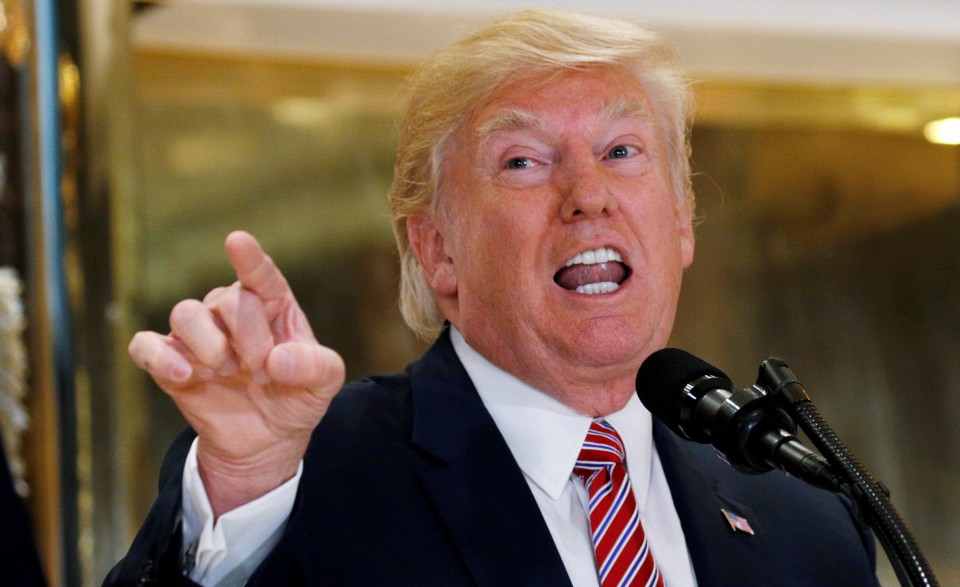
.png)




 O n an unnamed part of the internet, young adult author Gwen C. Katz found a delightfully deluded male author claiming that his facility with writing natural women characters constituted an unassailable rebuke to the idea that we need diverse authors to write diverse viewpoints. If a male author can write a woman this convincing, surely there’s no need for the #OwnVoices movement!