Although, given how furry you are, you might have to manscape first.
A Cambridge academic walked in naked at a meeting at the Faculty of Economics in protest against the results of the EU referendum.
Professor Victoria Bateman had written on her breasts and stomach ‘Brexit means economic disaster’.
The academic arrived at the faculty’s meeting last Wednesday where director of studies across all the university’s colleges as around 30 economists discussed teaching material and courses.
Prof Bateman, who has researched the development of the European economy, sat at the two-hour meeting without anyone mentioning her nudity they just went on with a normal meeting about tripos and marking.
Nigel Knight, director of studies at Churchill College and the chair of the meeting, glanced at her and then said to his secretary: “I think we need some cups for the coffee” and everyone else just stared straight ahead.
His remarks, however, are understood to have taken place before the meeting started.
Prof Bateman, who is an economics fellow at Gonville and Caius College, posed naked for a nude portrait of her by the painter Anthony Connolly last year.
Silent on her state of dress
A source who took part in the meeting told the Daily Telegraph: “It is well known to the faculty that she has posed naked but obviously the behaviour here was different. One thing is to pose naked and another to show up naked.
“This was a standard meeting about the teaching of economics and we moved away from her state of dress. We remained silent on that issues and managed to get through the agenda in the meeting.”
Asked if she was allowed to stay naked throughout the whole meeting, the source said: “Nobody was mistreated in any way. Prof Bateman has been openly opposed to the UK leaving the EU. In an article for Bloomberg View earlier last month, she wrote: “The impact would be sizable.
"If the predicted fiscal deficit were to be corrected through welfare cuts alone, it would result in low-income households receiving between 1,861 pounds and 5,542 pounds less a year (in 2014 equivalent figures) by 2020, depending upon their personal circumstances.
“Even if the welfare budget were to bear only a quarter of the fiscal adjustment needed, it would still amount to a loss of some 1,146 pounds a year for a single working parent with one child.”
I have to confess that I wasn’t paying attention to the Brexit issue until after the United Kingdom voted to leave the European Union. I wondered why so many folks from England had been asking me what I thought of the persuasion angle the Brexit “Leave” side was using. I always responded that I wasn’t following the topic and had no opinion.
Now we learn that the winning side of the Brexit vote was using what they call a Trump strategy of ignoring facts and appealing to emotion. The persuasion apparently worked. The “Leave” side won, defying both polls and expert predictions.
As regular readers know, I have been blogging for months about Trump’s powers of persuasion, and how he often ignores facts because facts are worthless for persuasion. I predicted Trump’s success thus far in the election cycle based on his tools of persuasion. And I documented his techniques as I went.
What you might not know is that I have a lot of blog readers in the United Kingdom.
So…did the winning side in the Brexit vote learn how to use Trump’s persuasion tools by reading my blog? And does that make me directly responsible for the coming economic collapse in Europe?
Well, probably yes, and probably no. For many months I’ve been the loudest voice to say that Trump’s strategy of ignoring facts and using persuasion was a winning system. And I’m reasonably sure my writing made it to the folks in the Brexit “Leave” movement. A-a-a-a-and I can be persuasive.
But I don’t think Europe will fall apart because of the Brexit vote. I base that prediction on what some of you already know as the Adams Law of Slow-Moving Disasters.
The law states that whenever humans have plenty of warning of a pending disaster, we always figure out how to avoid it. That’s why the Year 2000 Bug turned out to be no big deal. That’s why we haven’t run out of oil, or food. That’s why we haven’t all died in a nuclear war. If we see it coming, we get out of the way. We’re extraordinarily good at that.
Humans have enough time to figure out how to make the Brexit situation work. It will be inconvenient and unpredictable for some time, and economies hate that. But in the long run, no big problem. That’s my prediction.
But if I’m wrong, and the Brexit vote destroys Great Britain and Europe because of my Trump blogging, please don’t add that accomplishment to my Wikipedia page. It’s already bad enough.
—
If you think the Brexit vote was the wrong decision, you might like my book. And if you think the Brexit vote was the right decision, you might like my book.
What? They don't want to run with a continuation of that Heather Graham / Gary Oldman movie from 15 years ago? That was such classy work?
Reimagined by feature writing team Matt Sazama and Burk Sharpless, with Zack Estrin showrunning, the series will premiere worldwide on Netflix in 2018.
"When it comes to the presidency, I will not vote for Donald Trump. I will not cast a write-in vote. I’ll be voting for Hillary Clinton, with the hope that she can bring Americans together to do the things necessary to strengthen our economy, our environment and our place in the world. To my Republican friends: I know I’m not alone."
Henry M. Paulson Jr. is chairman of the Paulson Institute and a former U.S. treasury secretary and chief executive of Goldman Sachs.
Republicans stand at a crossroads. With Donald Trump as the presumptive presidential nominee, we are witnessing a populist hijacking of one of the United States’ great political parties. The GOP, in putting Trump at the top of the ticket, is endorsing a brand of populism rooted in ignorance, prejudice, fear and isolationism. This troubles me deeply as a Republican, but it troubles me even more as an American. Enough is enough. It’s time to put country before party and say it together: Never Trump.
I’m not the first Republican to say Trump is a phony and should not be president, and I expect there will be many more to come. But as a former chief executive and treasury secretary, I hope to bring an additional perspective to the discussion.
Let’s start by talking about his business acumen. When Trump assures us he’ll do for the United States what he’s done for his businesses, that’s not a promise — it’s a threat. The tactics he has used in running his business wouldn’t work in running a truly successful company, let alone the most powerful nation on Earth.
Every good businessman or -woman carefully analyzes all the available facts before making a decision. Trump repeatedly, blatantly and knowingly makes up or gravely distorts facts to support his positions or create populist divisions.
He excels at scorched-earth tactics in negotiations during bankruptcy proceedings. Here, the “Art of the Deal” businessman is a master at advantaging himself over his fellow stakeholders and partners. In essence, he takes imprudent risk and, when his businesses fail, disavows his debts. He has branded himself as a business genius by flaunting and exaggerating his wealth. He is adept at leveraging his brand through licensing agreements that enable him to slap his name on anything he can. But while marketing and self-promotion may translate on the campaign trail, it has little relevance to running our country. And although his business dealings have allowed him to increase his inherited wealth, none of us knows by how much — we only have his word for it.
Now let’s talk about Trump the prospective president. Are we to believe that Trump, with his intensely divisive rhetoric and behavior, could bridge our country’s partisan divide? The American people are disgusted with business as usual in Washington, and it’s not hard to understand why. They feel like they are being left behind or are afraid that they will be. They aren’t getting honest answers, and they believe that the most important problems are not being solved. This is not the fault of one political party; it’s the fault of too many partisans and ideologues on both sides who are unwilling or unable to work together.
I can’t help but think what would have happened if a divisive character such as Trump were president during the 2008 financial crisis, at a time when leadership, compromise and careful analysis were critical. The only reason we avoided another Great Depression was because Republicans and Democrats joined together to vote for the Troubled Asset Relief Program ( TARP) — a vote that they knew would be politically unpopular but in the best interest of our country. Critical to that effort was the leadership of President George W. Bush. As I led the Treasury’s efforts to fashion a difficult, imperfect, controversial but essential solution with bipartisan support, I was — and still am — grateful to have had President Bush at the helm.
Today’s challenges include economic stagnation and disruptions in the labor markets — driven to a large extent by technological advances moving at warp speed — that are widening income disparity, destroying jobs and hollowing out the middle class. And populists on each side are playing to fears and frustrations, pointing fingers at scapegoats and creating boogeymen: blaming the banks, greedy companies or foreigners for our problems. But the politics of grievance is not the answer.
Now is the time for a bipartisan approach to policy solutions that address our most difficult domestic problems. This requires a president who exhibits an ability to compromise — and basic civility — neither of which Trump displays.
There are two key principles that the next president must address to maintain our economic competitiveness and security. Populists in both parties are demagoguing these principles, with Trump leading the way.
First, we need to maintain the United States’ fiscal strength by reforming entitlements. There’s no example of a nation continuing as a great power if its fiscal strength is lost. Anyone, whether Republican or Democrat, who has studied our entitlement programs and can do basic math knows they are unsustainable in their present form. If not fixed soon, they threaten our nation with a debt burden that would undermine the retirement security of young Americans and future generations. It doesn’t surprise me when a socialist such as Bernie Sanders sees no need to fix our entitlement programs. But I find it particularly appalling that Trump, a businessman, tells us he won’t touch Social Security, Medicare and Medicaid.
Second, we need to welcome rather than shrink from trade and economic competition. Trump calls our current trade deals “disgusting, the absolute worst ever negotiated by any country in the world.” This is simply false. According to the Peterson Institute for International Economics , average American household income is roughly $10,000 higher because of the post-war expansion of trade. Because of trade, we add jobs and foster innovation and competitiveness. That doesn’t mean that people aren’t losing jobs and suffering in certain industries. However, it is wrong to tell the American people that we can turn back the clock and win, with merely 4 percent of the world’s population, by walling ourselves off from the remaining 7 billion people and the markets they represent. Instead, we need to fix the programs that help U.S. industries and workers transition to new and better jobs. We need better training, new education programs and a more robust safety net. The policies Trump endorses would destroy, not save, U.S. jobs.
Simply put, a Trump presidency is unthinkable.
As a Republican looking ahead to November, there are many strong conservative leaders in statehouses across the United States and in Congress, whose candidacies I am actively supporting. They have a big job to do to reinvent and revitalize the Republican Party. They can do so by responding to the fears and frustrations of the American people and uniting them behind some common aspirations, while staying constant to the principles that have made our country great.
When it comes to the presidency, I will not vote for Donald Trump. I will not cast a write-in vote. I’ll be voting for Hillary Clinton, with the hope that she can bring Americans together to do the things necessary to strengthen our economy, our environment and our place in the world. To my Republican friends: I know I’m not alone.
Given all that has happened on so many campuses over the last few years, it’s hard to pick the one that has been roiled the most by struggles over political correctness. But Oberlin College would certainly be in the running.
A widely discussed series of events there included the demand for a so-called trigger warning to students who might be upset reading “Antigone”; complaints about the ethnic integrity of the sushi in a campus dining hall; and a petition, signed by 1,300 students, calling for a semester in which the lowest possible grade was a C, so that anyone skipping classes or skimping on studies to engage in social activism wouldn’t pay too steep an academic price.
In the view of more than a few observers, these students were taking liberalism to illiberal extremes. But their actions were arguably proof of something else as well.
Students at Oberlin and their counterparts elsewhere might not behave in such an emboldened fashion if they did not feel so largely in charge. Their readiness to press for rules and rituals to their liking suggests the extent to which they have come to act as customers — the ones who set the terms, the ones who are always right — and the degree to which they are treated that way.
Twinned with colleges’ innovations to attract and serve a new generation of students is a changed relationship between the schools and the schooled. It’s one of the most striking transformations in higher education over the last quarter-century.
Photo
The leisure pool at Texas Tech University in Lubbock.
Credit
David Bowser for The New York Times
It’s manifest in students’ interactions with colleges even before they enroll, as those institutions, intent on increasing the number of applications they receive and on snagging as many valedictorians, class presidents and soccer captains as they can, come at them as merchants, clamoring for their attention, competing for their affection and unfurling their wares with as much ceremony and gloss as possible.
And what wares those are. Colleges have spruced up dormitories and diversified dining options, so that students unwind in greater comfort and ingest with more choice than ever before. To lure students and keep them content, colleges have also fashioned state-of-the-art fitness centers, sophisticated entertainment complexes and other amenities with a relevance to learning that is oblique at best.
High Point University in North Carolina is in the midst of an upgrade of more than $2 billion that includes millions toward amusements like a putting green, a game arcade, an ice cream truck and a theater with free movies and free popcorn.
Campus water parks — with pools, slides and man-made rivers — have become just common enough that when Louisiana State University recently plotted its own, it decided that the river should spell out the letters L.S.U., so that it was no mere mimic of all those other, lesser collegiate waterways.
“We devote all these resources to creating, basically, country clubs with libraries,” Barry Schwartz, a longtime professor of psychology at Swarthmore, told me. Swarthmore, he said, has resisted the trend more than other colleges — no water park there — but has not been immune to it. No institution is, and Mr. Schwartz placed much of the blame on sharp increases in tuition and other expenses. When families are asked to pay $60,000 or more a year, the transaction takes on a more bluntly commercial aspect.
“Costs go up,” Mr. Schwartz said. “Parents expect to get value for money. They measure value in a different way. We provide that value, which raises costs, which creates more demand, and the cycle continues.”
But amenities aren’t all that is different. The interactions and balance of power between student and teacher are as well. I don’t recall ever filling out a professor evaluation when I attended the University of North Carolina at Chapel Hill in the mid-1980s. It’s possible that such forms existed, but they were not used consistently or presented to us with any sense of urgency.
The opposite was true when I taught at Princeton in the spring of 2014. Students could not see their grades for a given class until they had filled out an extensive report card, including numerical ratings, on the class and on the instructor or had formally declined to do so, which few did. The instructor was privy to those ratings, with the students’ names erased.
I’m told by many of the professors I know that this practice is more or less the norm. Coupled with websites on which students rate their teachers, it has enormous bearing on how fully enrolled an instructor’s classes are, on his or her reputation and — thus — on his or her career. And what is perhaps the greatest driver of student satisfaction with a professor? The greatest guarantor of glowing reviews? The marks that the professor doles out. Small wonder that grade inflation is so pronounced and rampant, with A’s easy to come by and anything below a B-minus rare.
Students get the message that they call the shots. Catharine Bond Hill, the president of Vassar, told me that when she began teaching in the 1980s, students never came in to complain about grades. “And back then,” she added, “you could get a C.”
“Now students will come in and complain about a B-plus,” she said.
That’s not all bad. Students should absolutely have a voice in their education, and guaranteeing them one keeps professors and administrators accountable. “Faculty can be very resistant to change,” Mr. Schwartz said, “and ‘entitled’ students apply needed pressure.”
The old approach certainly wasn’t perfect. “Professors used to be a bit of a priesthood,” Jonathan Haidt, a social psychologist who has written extensively about campus unrest over recent years, told me. “That could dissuade challenge and argument.” Both are essential to learning.
Photo
The Aquatic Center at Missouri State University in Springfield.
Credit
Dan Gill for The New York Times
The rightful passing of that paradigm created a need for new ones, and Mr. Haidt said that the two in vogue now were “the therapeutic model and the consumer model.” In accordance with the first of those, students regard colleges as homes and places of healing. In accordance with the second, they regard colleges as providers of goods that are measurable and of services that should meet their specifications.
And that has imperfections all its own, the best laundry list of which appeared in “Customer Mentality,” an essay by Nate Kreuter, an assistant professor of English at Western Carolina University, that was published by Inside Higher Ed in 2014.
He noted a “hesitance to hold students accountable for their behavior,” be it criminal or a violation of what is too frequently a “laughable university honor code.” He noted an expectation among many students that their purchase of a college education should be automatically redeemable for a job, as if college were that precisely vocational and the process that predictable.
“That’s simply not how life works,” he said in a recent interview. “So we have a lot of students who are disenchanted.”
But what does the customer model do to their actual education?
“There’s a big difference between teaching students and serving customers,” said Mr. Schwartz at Swarthmore. “Teachers know things, and they should be telling students what’s worth knowing and what’s not, not catering to demands.”
Too often, he said, “we’ve given students a sense that they’re in just as good a position to know what’s worth knowing as we are, and we’ve contributed to the weakening of student resilience, because we’re so willing to meet their needs that they never have to suffer. That makes them incredibly vulnerable when things go wrong, as they invariably do.” He was speaking in the context of sharp upticks at many colleges in the number of students reporting anxiety and depression and turning to campus mental health clinics for help.
“I see this as a collective abdication of intellectual and even moral responsibility,” he said.
When money is channeled toward dorms and dining, isn’t it diverted from something else? In a remarkably candid interview with The Huffington Post a few years ago, James C. Garland, who oversaw an expensive gilding of Miami University in Ohio when he was its president from 1996 to 2006, conceded precisely that.
“In hindsight I worry about whether we did the right thing,” he told the website, adding that “for every dollar you put into building a student sports facility — workout rooms and exercise rooms and squash courts and things of that sort — every dollar you put into that is a dollar you’re not spending on improving classrooms or paying your professors a high enough wage that you can recruit from higher up in the job pool.”
You are also defining the higher-education experience in a way that has nothing to do with academic rigor, with intensive effort, with the testing of students’ boundaries and the upending of their closely held beliefs. When students are wooed on the front end by catalogs and websites that showcase the recreation at their disposal and then arrive to encounter teachers who twist themselves into knots in the name of making the learning experience fun, they are told that college is a place and a time largely for amusement, for revelry.
The focus is on what they should expect, not what is expected of them. Students “have a responsibility in exchange for the subsidy that they get from either the public or nonprofit status of our schools,” said Ms. Hill, the Vassar president. “But the changed culture has suggested to students that they are owed or entitled to the education, and that sense of responsibility doesn’t seem to be there.”
Colleges have not abandoned setting boundaries and requiring sacrifices. Oberlin said no to the 1,300 students who wanted guaranteed C’s. “That’s what we needed to do for our academic standards and integrity,” Marvin Krislov, the college’s president, told me.
He acknowledged that the student demands of recent years had been bigger and more numerous than those of a decade or two ago, but he attributed this to such positive developments as greater diversity on campuses, students’ ability to discuss sensitive topics that were once swept under the rug and worries about social and economic issues that are especially pressing now. “The nature of the student population these days requires us to listen in a way that perhaps we haven’t before,” he said.
Oberlin’s director of dining services ultimately issued an apology of sorts for what she described as “culturally insensitive” items like the inauthentic sushi and for banh mi sandwiches that did not live up to their putatively Vietnamese pedigree. But more striking was a detail from a New Yorker article about Oberlin last month. It described one student’s complaint that only some instructors there were willing to accommodate his desire to demonstrate mastery of a course’s material during an office-hours conversation rather than by submitting to whatever written format was usually required. “That’s not institutionalized,” he said. “I have to find that professor.” His displeasure was understandable. He’s the customer, after all.
AZUSA >> A 1,000-foot radius has been earmarked as a stay-away zone for firefighters battling the San Gabriel Complex Fire because a baby bald eagle is developing there in a nest.
If Trump is NOT a Manchurian candidate, when (if) he loses in November, he'll hold a press conference claiming that he was a Manchurian Candidate, that he and Bill Clinton worked it all out quite some time ago, and so Hilary Clinton's win is his win too.
Donald Trump campaigns in Phoenix on Saturday. (Photo by Ralph Freso/Getty Images)
THE BIG IDEA: Salman Rushdie floated last fall that Donald Trump is a Democratic plant whose ultimate goal is to get Hillary Clinton elected president. To many conservatives, this feels less and less facetious.
The presumptive GOP nominee has spent the past few weeks doing almost everything you would do if you were trying to throw an election, from attacking a federal judge over his Mexican heritage to not building a serious ground game or actively raising the money necessary to wage a credible campaign for the presidency.
At the end of a day that started with Trump firing his campaign manager (much more on that below), he filed an embarrassing May fundraising report late last night with the FEC. Despite raising $3.1 million and loaning himself another $2 million, Trump began this month with less than $1.3 million cash on hand.
Clinton, by comparison, raised $28 million and started off June with $42 million in cash. Bernie Sanders, with his campaign winding down, still brought in $15.6 million last month and had $9.2 million cash on hand.
“If fundraising is, at its root, a test of whether you can get people to vote for you with their checkbooks, Trump failed in May,” Chris Cillizza assesses. “And he failed with every possible advantage working for him: Momentum, decent-to-good polling and, at least for part of the month, a Republican Party that seemed willing to unify behind him.”
-- To be sure, Trump is not running anything close to a conventional campaign. And we might be making a mistake judging him by those standards. A big part of his appeal is that he is unorthodox. He beat better-funded Republicans in the primary, and he can afford to raise less than Clinton because of the free media attention he commands and the sheer force of his personality. But being outraised so dramatically (nine-to-one!) undeniably puts him at a palpable disadvantage in the nuts-and-bolts side of 2016. And a general election is a far different beast than a Republican nominating contest.
-- Trump spent $6.7 million in May. That’s down from $9.4 million in April, but it’s actually a pretty stunning amount when you consider that he’s not advertising or building a serious field operation. So where did all the money go? Matea Gold and Anu Narayanswamy report that the campaign paid out more than $1 million to Trump-owned companies and to reimburse his own family for travel expenses. Here are some of the campaign's biggest expenditures:
Campaign swag and printing - $958,836: Hats, pens, T-shirts, mugs and stickers
Air charters - $838,774: “Nearly $350,000 of the money spent on private jets went to Trump's own TAG Air.”
Event staging and rentals - $830,482: This includes the fees for renting facilities such as the Anaheim Convention Center ($43,000) and the Fresno Convention Center ($24,715). But the biggest sum went to Trump's own Mar-A-Lago Club, which was paid $423,317. Meanwhile, the Trump National Golf Club in Jupiter, Florida, got $35,845, while the Trump International Golf Club in West Palm Beach, Fl., was paid $29,715. And Trump’s son Eric’s wine company received nearly $4,000.
-- The FEC reports show that Trump has about 70 staffers total, one-tenth as many as Clinton’s 683. But, instead of rushing to staff up, he bragged about it during an interview with Bill O’Reilly on Fox News last night.
-- More problems: Donations through the “Trump Victory Fund,” expected to help boost his general-election coffers, have also trickled in slower than expected, Matea notes. The numbers really are startling when compared to Mitt Romney’s at this point four years ago. In May 2012, the former Massachusetts governor raised more than $34 million and ended the month with more than $60 million in the bank. Nearly $26 million that month came through the Romney Victory Fund. (The Republican National Committee itself took on $2 million more debt last month.)
-- One of the problems with Trump depending on the RNC: Many state party leaders don’t like him. Because he’s not building his own field operation, he’s depending on the official GOP apparatus. In Ohio, that means leaning on loyalists to Gov. John Kasich, who is withholding his endorsement, the Columbus Dispatch notes. Democrats say they now have 150 full-time employees on the ground in Ohio, compared to 50 paid staff from the RNC, according to the Cleveland Plain Dealer.
-- The pro-Clinton super PAC Priorities USA, meanwhile, had its best fundraising month yet, raising more than $12 million during the month of May. "The organized and well-funded push for Clinton contrasts sharply with the chaos that surrounds the groups supporting Trump,” Matea reports. “At least five super PACs are in the mix, creating confusion among donors unsure where to put their money." (There is little data available from most of the groups, but "one of the first groups on the scene, Great America PAC, has raised just $3.5 million since forming in February.)
-- Here’s a flavor of the overnight reaction to Trump’s dismal May numbers:
From CNN:
For those wondering "what does $1.3 million in the bank mean?" Answer: it's the equivalent of a House member w/ a semi-competitive seat.
As The Post’s Editorial Page Editor Fred Hiatt puts it, “If this were a beauty pageant, Trump would want the crown and the adoration but not the mandatory year of appearances at charity events and visits to the troops. … He seems to have no interest in doing the things that most candidates, and up until now all presidents, have had to do. Listen to advisers, for example. Have advisers. Read policy papers. Read anything but his own reviews.”
WHILE YOU WERE SLEEPING:
Hillary Clinton campaigns in Virginia last week. (Photo by Melina Mara/The Washington Post)
-- Clinton leads Trump in Florida by 8 points (47 percent to 39 percent) and now ties him in Ohio (40-40), after trailing by 4 points last month, according to Quinnipiac University polls released this morning. They’re statistically tied 42-41 in Pennsylvania.
Both candidates continue to have net negative favorability ratings. Clinton is viewed positively by 39 percent and negatively by 53 percent, compared to 33-61 for Trump.
In the three battlegrounds, twice as many voters say Clinton is better prepared to be president than Trump (60 percent to 31 percent). She leads on the question of who is more intelligent (52-33) and who has higher moral standards (47-36). Meanwhile, voters are divided on whether Trump is more honest and trustworthy than Clinton – 43 percent for him to 40 percent for her -- and voters in Ohio and Pennsylvania find him more inspiring.
-- HRC leads DJT by 7 points (47-40) in a national Monmouth University survey. Her margins hold across the top 10 “battleground” states of 2012, where she leads Trump 47-39 and among likely voters 49-41. The data bear out that this election is becoming a referendum on Trump: Six in 10 registered voters said stopping Trump from assuming the presidency is important.
-- Trump is deeply unpopular with voters of color: 88 percent of African American and Hispanic voters view Trump unfavorably, according to an analysis of last week's Washington Post/ABC poll. Three in four voters from each group saying they “strongly dislike” the Republican nominee. (That’s 30 points higher than his 59 percent unfavorable ratings among white voters.) Clinton, in contrast, is almost as popular among minorities as Trump is unpopular: “Averaging the two most recent Washington Post-ABC News polls, Clinton has a favorable rate of 78 percent with African Americans and 70 percent with Hispanics. She is viewed favorably by 31 percent of whites.”
A protester from the National Coordination of Education Workers teachers' union holds a torch as he yells during a march last night in Mexico City. (Reuters/Edgard Garrido)
-- At least six were killed after teacher protests in Mexico turned violent. From Joshua Partlow: “Teachers canceled classes in (in the southern state of) Oaxaca after the violence, where protesters threw rocks and molotov cocktails and set vehicles ablaze. Witnesses reported that police fired into the crowds.” More than 100 people were injured, marking the bloodiest moment in a conflict that has intensified during the administration of President Enrique Peña Nieto.
Susan Collins (Melina Mara/The Washington Post)
-- Four gun control amendments failed in the Senate last night, largely on party line votes. From Karoun Demirjian: The Senate voted 47 to 53 to reject a measure from Sen. Dianne Feinstein (D-Calif.) to let the attorney general deny firearms to any suspected terrorists. Sen. Heidi Heitkamp of North Dakota was the sole Democrat to vote against the measure, while Republican Sens. Kelly Ayotte of New Hampshire and Mark Kirk of Illinois, both of whom face tough re-election contests, voted for it.
Maine Republican Sen. Susan Collins is still actively trying to forge a narrower compromise, which would prevent people on the smaller “No Fly List” from buying guns. Democratic Sens. Joe Manchin and Heidi Heitkamp are participating in the talks. Sen. Jeff Flake (R-Ariz.) said he is also working with Collins to draft a compromise and expects “to get a vote this week.” A spokesman for Senate Majority Leader Mitch McConnell (R-Ky.) said there would be more information about plans for Collins’s proposal once it is formally filed. But leading Democrats said that it is too narrow and would allow too many potential terrorists to fall through the cracks. Harry Reid said Democrats still want to see if Collins could “drum up the 20 votes or so” from Republicans for the proposal, so a vote would not be just “a gesture in futility.” That's not to mention that such a compromise would likely die in the House.
Sen. Chris Murphy (D-Conn.) says Republicans are now culpable for future attacks: “We’ve got to make this clear, constant case that Republicans have decided to sell weapons to ISIS,” he told Mike DeBonis and Karoun. “That’s what they’ve decided to do. ISIS has decided that the assault weapon is the new airplane, and Republicans, in refusing to close the terror gap, refusing to pass bans on assault weapons, are allowing these weapons to get in the hands of potential lone-wolf attackers. We’ve got to make this connection and make it in very stark terms.” (Dana Milbank has more in his column.)
GET SMART FAST:
A team of Greek conservationists launched a nine-month restoration project to repair Jesus’s tomb, aimed at restoring the centuries-old chapel built around the site where Christians believe Jesus was buried and rose from the dead. In doing so, they will become the first people to glimpse the holy shrine in more than 200 years. (William Booth)
The Supreme Court gave police more power to stop and question people on the streets, relaxing a so-called exclusionary rule that bans the admission of unlawfully-seized evidence. Justice Sonia Sotomayor issued a blistering 12-page dissent, saying it would exacerbate illegal stops of minorities. (Robert Barnes)
SCOTUS also declined to review assault weapons bans in New York and Connecticut, the result of a court that's split 4-4 on Second Amendment jurisprudence. (Robert Barnes)
The FBI released a transcript of the conversations Orlando gunman Omar Mateen had with authorities, reinforcing that the 29-year-old was at least partly inspired by the Islamic State. (Matt Zapotosky and Mark Berman)
A 51-year-old Pennsylvania man was arrested after authorities found 12 young girls living in his home, including a girl who was “gifted” to him “in thanks" for helping a family out of financial ruin. The girls range in age from age 18 to 6 months. (Sarah Larimer)
The Florida activist who landed a gyrocopter on the lawn of the Capitol to protest campaign finance laws began serving his 120-day prison sentence. (CNN)
Dennis Hastert is scheduled to report to prison this week in Minnesota, beginning a 15-month sentence for a hush money case that revealed the former Speaker’s sexual abuse of two young boys. (AP)
Apple CEO Tim Cook is hosting a breakfast fundraiser for Paul Ryan next week. The tech giant, which has refused to cooperate with the U.S. government in terrorism investigations, is stepping up its courtship of Republican lawmakers. (Politico)
Two independent research firms have confirmed an assessment by the Democratic National Committee that its network was compromised by Russian government hackers. Someone going by the moniker "Guccifer 2.0" claimed responsibility in an effort to deflect blame from Vladimir Putin's intelligence agencies. (Ellen Nakashima)
Chinese government cyber-espionage has declined sharply since mid-2014, according to a new third-party intelligence report that credits U.S. indictments and the threat of economic sanctions. Either that, or they're just better than the Russians at not getting caught... (Ellen Nakashima)
The Navy just concluded a rare multi-day deployment of two carrier strike groups to the Philippine Sea. The goal is to send the Chinese a message about American resolve in the South China Sea. (Dan Lamothe)
A South Florida woman has been charged with threatening to bomb a mosque. Police said they received calls after she began circling a prayer room at the Islamic Foundation, pulling a package from her purse and saying “she didn’t care if they all died there.” She was not carrying an explosive device. (AP)
A New York woman admitted to killing her fiancé on a kayak trip last year, removing a plug from his boat and taking away his paddle as he struggled to stay afloat in the Hudson River. His death was investigated as a tragic drowning, but investigators were stunned by the woman's lack of sadness or remorse. (New York Times)
The 2015 Jeep that killed “Star Trek” actor Anton Yelchin outside his L.A. home was a model that had been recalled by the company due to gearshift issues, leading drivers to accidently leave the car in neutral when they think it is safely in park. Early reports suggest this is what happened to Yelchin. (New York Times)
Corey Lewandowski is out of a job this morning. (Joe Raedle/Getty Images)
GETTING HIS ACT TOGETHER OR PICKING A SCAPEGOAT?
-- Trump fired his campaign manager, Corey Lewandowski, yesterday under pressure from his family and the RNC. From Philip Rucker, Jose A. DelReal and Sean Sullivan: “A Trump loyalist whose mantra was ‘Let Trump be Trump,’ Lewandowski chafed at suggestions that the candidate behave more presidentially. His departure consolidates power around veteran GOP operative and lobbyist Paul Manafort, Trump’s campaign chairman and senior strategist, who has been trying with limited success to professionalize the campaign. Lewandowski’s internal turf battles with Manafort were intense and at times paralyzed the campaign.” Five key details:
The manager’s relations with senior staff at the Republican National Committee had so deteriorated that RNC Chairman Reince Priebus implored Trump to make a change.
Lewandowski also ran afoul of Trump’s family, especially his daughter Ivanka and her husband, Jared Kushner, who convinced Trump he needed a centralized management structure for the general election.
Trump fired Lewandowski at a meeting Monday morning that was attended by the candidate’s adult children.
Lewandowski was then escorted from Trump Tower flanked by security guards.
He had urged Trump to name his VP pick early to try changing the narrative of the campaign, an idea the candidate disliked.
-- Michael Caputo, a communications and political adviser to Trump, resigned yesterday afternoon after sending the above tweet celebrating Lewandowski’s departure. He wrote in a resignation letter that the post “was too exuberant a reaction to this personnel move.”
How it’s playing –
-- “In some ways, Lewandowski’s story is the story of the Trump campaign,” Politico’s Kenneth Vogel and Ben Schreckinger argue:“The scrappy 42-year-old from the hardscrabble mill town of Lowell, Massachusetts, didn’t have any presidential campaign experience when he was plucked from relative obscurity to run Trump’s presidential campaign prior to its June 2015 launch. … Lewandowski quickly built a strong rapport with Trump by treating him with absolute reverence, unfailingly referring to him as ‘Mr. Trump’ or ‘Sir’ — even when Trump wasn’t around — and encouraging him to act on his bombastic instincts. But he’d grown increasingly reckless in his power struggles … And he’d already told associates more than once in the past few months that he was on the verge of quitting. So when he was informed he was being relieved of his once-dream job, Lewandowski didn’t argue. ‘The gloves had come off a while ago, and Corey spent a lot of energy fighting, which took away from the campaign,’ said one Lewandowski associate. He ‘was surrounded by enemies,’ the source added.”
-- Trump is getting defined in June, and it will be impossible for him to change perceptions of himself once they’ve gelled, Maggie Haberman says in The New York Times.
-- “Simply replacing Lewandowski won’t do anything to help the Trump campaign stop the slide if Trump does not have some kind of epiphany and come to realize that he is the root of his problems," writes Republican fixer Ed Rogers, on the PostPartisan blog. "So far, there is still no sign that Trump sees himself, what he thinks and how he expresses himself as the real problem.”
-- Lewandowski himself, however, painted a rosy portrait of the campaign during several surreal TV interviews after he was escorted out of Trump Tower, denying the campaign was beset by internal skirmishes and refusing to criticize Trump.
-- The Stop Trump movement now counts 400 delegates as allies, quickly transforming what began as an idea tossed around on social media into a force that could derail a national campaign,” Ed O'Keefe reports. “While organizers concede their plan could worsen internal party strife, they believe they are responding to deep-rooted concerns among conservatives about Trump. … ‘Short-term, yes, there’s going to be chaos,’ said Kendal Unruh, co-founder of the Free the Delegates movement. ‘Long-term this saves the party and we win the election. Everything has to go through birthing pains to birth something great.’ Unruh said her cause is winning support from ‘the non-rabble rousers. The rule-following, churchgoing grandmas who aren’t out protesting in the streets. This is the way they push back.’”
-- Trump will meet with nearly a thousand social conservative leaders this morning in New York City. Time Magazine's Elizabeth Dias previews: “What started as a closed-door gathering of 400 social conservative leaders to test Trump’s values has grown to a daylong conference of 1,000, involving nearly all the traditional political influencers of the religious right. For some, it is an effort to get Trump to better understand their policy positions. For others, it is a late-breaking effort to try to get the GOP’s most reliable voter base on board with its most polarizing candidate in decades.” Former Arkansas Gov. Mike Huckabee will moderate a Q&A session between leaders and Trump, and Jerry Falwell Jr. is expected to introduce Trump and give a series of remarks.Trump will also roll out an “Evangelical Executive Advisory Board," to include televangelist Paula White, James Dobson and Tony Suarez, per Bloomberg.
-- Trump walked back his suggestion that armed club-goers could have prevented the Orlando massacre, following heavy criticism from gun safety advocates and even the NRA: “When I said that if, within the Orlando club, you had some people with guns, I was obviously talking about additional guards or employees,” he tried to clarify Monday in a tweet. (Jose A. DelReal)
-- Joe Biden said Trump is "making religion the enemy” with his anti-Muslim rhetoric: “If we denigrate them, if we talk about them not being particularly useful and competent …. There’s 1.5 billion Muslims in the world,” he told CBS’s Charlie Rose. “If we make the religion the enemy, where the hell do you think we're going to get the cooperation?”
-- A man arrested at Trump's Las Vegas rally for trying to grab an officer’s gun told authorities he had been trying to assassinate the candidate. The 19-year-old, Michael Sandford, told officers he had been planning for “about a year” and was convinced he would die in the attempt, the AP reports. He said he also reserved a ticket for a Trump rally in Phoenix, scheduled for later in the day, as a backup. He told authorities that he went to the Battlefield Vegas shooting range the day before the rally and fired 20 rounds from a 9mm Glock pistol to learn how to use it. Employees at the range confirmed that.
Clinton poses with a fan -- donned in photos of her face -- after an Ohio campaign event. (AP /Andrew Harnik)
MORE ON THE DEMOCRATIC RACE:
-- Clinton will give a series of talks on the economy this week, delivering a one-two punch. Today she will paint Trump as “reckless and misguided” in his business practices. Tomorrow she will unveil her own proposals for the country. The speech will mirror the point-by-point attack she delivered on Trump’s foreign policy earlier this month, Anne Gearan reports. “The main themes of Clinton’s attack Tuesday will include Trump’s views on the national debt, tariffs and trade, his tax proposal, and opposition to raising the minimum wage. As with the national security argument, Clinton will try to use Trump’s own words against him." (Watch a video previewing the speech from the campaign here.)
“If we were to put Donald Trump behind the steering wheel of the American economy, he would be very likely to drive us off of a cliff,”said Clinton’s chief policy adviser Jake Sullivan, echoing an analogy likely to be employed by the presumptive Democratic nominee. “And working families would bear the brunt of that impact in terms of lost jobs, lost savings, lost livelihoods.” As she reframes her economic arguments head-to-head with Trump, Clinton is also speaking indirectly to supporters of Sanders.
-- Former Obama economic adviser Jacob Leibenluft joined the Clinton campaign, signaling close coordination between the president and HRC. Leibenluft, who has served on Obama’s economic team since 2008, has focused heavily on job training, apprenticeships and the minimum wage, says CNBC’s John Harwood.
Bernie Sanders departs his Capitol Hill house yesterday to walk with his wife Jane to his campaign headquarters. (Reuters/Jonathan Ernst)
-- Sanders returned to the Capitol yesterday and cast his first votes since JANUARY 2! From David Weigel: “Sanders cast his vote on the first of four gun safety amendments before most of his colleagues showed up, then ducked into the cloakroom. When he returned, he sat for a while with Sen. Jeff Merkley (D-Ore.), the only colleague who'd endorsed him, and the two were occasionally, happily interrupted by well-wishers of both parties."
Trump confers with Marco Rubio during the disastrous Feb. 6 debate in New Hampshire that essentially ended Rubio's 2016 presidential hopes. (Jewel Samad/AFP/Getty Images)
-- Coming attraction: Rubio told a Post reporter on his way out of the Capitol last night that his announcement about running for the Senate again is coming "sooner rather than later." But he would not say if he's made a decision or not. Multiple outlets have reported that he's almost certainly going to get in.
-- It is no secret that Rubio would really only run for reelection to the Senate because he has been persuaded that this is the best way to position himself for another presidential bid in 2020. The 45-year-old is in for some blistering attacks on this front in Florida. The Tampa Bay Times's Alex Leary offers a taste: "Rubio's ambition is one of the immediate challenges he’ll face if he goes forward with the plan. Would-be rival Carlos Beruff asked the million dollar question: 'The most important question for Marco Rubio to think about today as he decides whether to run for reelection: Are you willing to look the voters of Florida in the eye and commit to serving out an entire 6-year term in the U.S. Senate? Do you commit to not running for President in 2020? Do you pledge to truly serve the people of Florida by showing up to work and not missing votes or committee hearings? ... If Rubio runs and refuses to make this pledge, the voters of Florida have a simple choice ... do you want Marco Rubio, a career politician who will simply use the Senate as a launching pad for his future political ambitions?' Beruff and others have begun to compare Rubio to his 2010 nemesis Charlie Crist."
The leader of the United Kingdom Independence Party (UKIP), Nigel Farage, speaks at a rally in Gateshead last night. (Scott Heppell/AFP/Getty Images)
THE LATEST ON THURSDAY'S BREXIT REFERENDUM:
-- “After killing resets the tone, a possible turning point," by Griff Witte and Karla Adam in London: “Britain’s march toward an exit from the E.U. appeared to be slowing Monday, and may have been halted altogether, as calls for a more civil tone in the bitterly fought debate sowed division among those who favor leaving the 28-member bloc. After a week in which polls showed a surge toward the ‘leave’ campaign, more recent surveys reflect a rebound for ‘remain.’ Markets cheered the news, with stocks surging globally, and particularly in Britain. The FTSE 100 closed up more than 3 percent, and the pound rose almost 2 percent against the dollar, one of its biggest one-day gains of the past decade.” To be sure, the poll averages show a dead heat. But investors are feeling growing confidence.
-- Pro-E.U forces are not explicitly politicizing the murder of British MP Jo Cox, as the Eurasia Group writes in a note for clients, but it provides “a subtle narrative" framed around the question: "Is this really who we want to be?"
-- The Brexit camp is in turmoil over whether advocates have gone too far in fanning anxiety over immigration. The xenophobic rhetoric has prompted some moderate Brexit supporters to reverse course in the final days. Former British minister Sayeeda Warsi announced she is now voting to remain. “The vision that the Brexit campaign is presenting is not the vision that me and other Brexiters started off with a year ago,” she said Monday. “The ‘hello world’ approach to Brexit, which is open-minded, visionary, inclusive, has been lost. The moderate message has been lost. And instead we have reverted to a campaign that says: ‘The Turks are coming, the Syrians are coming, the refugees are coming, the Muslims are coming, the terrorists are coming.’” (The Guardian)
-- Elsewhere in the E.U., elites are growing increasingly worried that a successful “Brexit” vote would trigger a stampede of exits from the 28-member union. From Michael Birnbaum and Anthony Faiola: “Euro-skeptics across the continent are salivating at the prospect of Britain’s departure, hoping to sever their own territories from a map that stretches from the sunny coasts of Portugal to the frigid taiga of Finland. With populist parties surging across the continent, the Brits could be only the first to leave. ... At the moment, the list of countries that might consider bolting is relatively short: France, Denmark, the Netherlands and a handful of others. But experts say that could change quickly."
As the “leave” movement gained traction in Britain over weeks, poll numbers in other countries began to reflect the momentum: An Ipsos Mori poll last month found that 55 percent of French voters and 58 percent of Italian voters wanted plebiscites of their own.
Proponents of staying in the E.U. are struggling to mount arguments that appeal to the heart, not just the pocketbook: Part of the difficulty is that the bloc is now so large and diverse that there is no single, unifying selling point. “There is no European ideal that is clearly defined and on which all members would agree,” Latvia’s ambassador to the E.U. told The Post.
Ben Sasse back home in Nebraska (Benjamin Terris/The Washington Post)
WAPO HIGHLIGHTS:
-- “As the GOP’s anti-Trump, Ben Sasse picked a big fight. What would it mean to win?” by Ben Terris: “Today, freshman senator Ben Sasse of Nebraska remains the only Republican in the U.S. Senate who has consistently, and vocally, opposed his party’s nominee. [But] without a conservative third-party campaign, Sasse looks to some less like a warrior in the ring and more like an agitator in the stands … If Trump wins the presidency, he runs the risk of being ostracized. If Clinton wins, he could be blamed. Does he see a path that other conflicted Republicans can’t find? Is he positioning himself for a 2020 presidential run? Or, is it possible that Sasse is simply standing on principle, that he sees a fight worth having, even if it’s one he might lose?” “What is he doing?” Ben Nelson, Nebraska’s former Democratic governor and senator, mused recently. “There’s certainly all kinds of speculation about it.”
-- “What actually happens when Trump blacklists a reporter,” by Paul Farhi: A day after Trump revoked The Post’s credentials to cover his campaign last week, one of the newspaper’s reporters walked into his rally in Greensboro, N.C., and began reporting on it. “The only difference was that the reporter, Jenna Johnson, entered on a general-admission ticket, not a press pass. Johnson’s experience says much about the practical impact of Trump’s efforts to banish news organizations whose reporting has displeased him. [While] getting on Trump’s blacklist does present a few logistical hassles … the real objections to Trump’s actions from the press aren’t about the inconvenience; they’re about the seemingly undemocratic nature of his actions. ‘When I was in Moscow, Vladimir Putin’s Kremlin gave me credentials to cover his reelection campaign to a second term even after several years of critical coverage of his crackdown on Russian media and rollback of democratic reforms,’ said Susan Glasser, the editor of Politico. ‘It is just astonishing that something like this is happening in the United States.’”
-- “I reported Omar Mateen to the FBI. Trump is wrong that Muslims don’t do our part,” by Mohammed A. Malik: “Trump believes American Muslims are hiding something. ‘They know what’s going on. They know that [Mateen] was bad,’ he said after the Orlando massacre. This is a common idea in the U.S. It’s also a lie. First, Muslims like me can’t see into the hearts of other worshipers. (Do you know the hidden depths of everyone in your community?) Second, Trump is wrong that we don’t speak up when we’re able. I know this firsthand: I was the one who told the FBI about Omar Mateen. … I had told the FBI about Omar because my community, and Muslims generally, have nothing to hide. I love this country, like most Muslims that I know. I vote. I volunteer. I teach my children to treat all people kindly. Trump’s assertions about our community – that we have the ability to help our country but have simply declined to do so – are tragic, ugly and wrong.”
SOCIAL MEDIA SPEED READ:
— ZIGNAL VISUAL: This word cloud of all Trump mentions across social and traditional media shows how much yesterday was dominated by the Lewandowski news. A conventional campaign would dump this kind of news on a Friday night to minimize how much coverage it gets. Not Trump...
Some of the choicest reaction: From Michelle Fields, who filed assault charges against Lewandowski earlier this year after he grabbed her after a rally...
Reince Priebus arrives at Trump Tower on June 9 for a meeting with donors. (AP Photo/Bebeto Matthews)
GOOD READS FROM ELSEWHERE:
-- New York Times Magazine cover story, “Will Trump Swallow the G.O.P. Whole?” by Mark Leibovich: “As suits a man occupying what might be the toughest political job in America, (Reince) Priebus does his best to stay availed of serene distractions. He plays jazz piano at home late at night and gazes into the 29-gallon saltwater fish tank that he keeps next to his desk. “You see that big eel?” Priebus asked one day, pointing out a black slithery creature on the bottom, before noting others. The big orange clown fish flailed at front and center. I asked Priebus if it reminded him of anyone. … No matter how much Trump has roiled the Republican water, it remained Priebus’s job to carry it."
“Priebus is not a man for extraordinary measures.He is an organization man in a time of disruption, runaway self-esteem and selfie campaigns.Party guys go along. It’s not always a fair fight. ‘I think people are living in Fantasy Land,’ he said, not saying whether he shared in the fantasy. He was playing a role, the party guy, the proprietor of the china shop in the time of the bull. There was something oddly comforting to me about this presence, as thankless and unenviable as the life of Priebus might seem these days. What could be better for a lifer apparatchik? Priebus made a perfect old-school foil to a new politics of blazing chaos. ‘It could be a great moment or a bad moment,” Priebus told me. “But it’s going to be a moment.’”
-- Slate, “He’s Obsessed With Menstruation: Former Apprentice crew members on their old boss, Donald Trump,” by Seth Stevenson: “We know about Trump’s on-camera persona as the star of The Apprentice: his tyrannical management style, his gruff demeanor, his terse catchphrase. But what was Trump like between takes, when the cameras were off but the crew was watching? Slate reached out to find people who’d worked on The Apprentice during Trump’s tenure.” Turns out, his on-set behavior is a lot like his campaign behavior:
He frequently talked about the bodies of female contestants: “We shot in Trump Tower,” one midlevel producer recalled, “and he walked in one day and was talking about a contestant, saying, ‘Her breasts were so much bigger at the casting. Maybe she had her period then.’ He knows he’s mic’d and that 30 people are hearing this, but he didn’t care. That’s kind of him.”
He likes to keep a fat guy around: “There was a fat contestant who was a buffoon and a [expletive],” recalls the producer. But Trump kept deciding to fire someone else. Later, I heard a producer talk to him, and Trump said, ‘Everybody loves a fat guy. People will watch if you have a funny fat guy around. Trust me, it’s good for ratings.’ I look at Chris Christie now and I swear that’s what’s happening.”
He knows how to manipulate an audience: “He was always a narcissist, you can see that,” says Bill Pruitt, producer on Seasons 1 and 2. “You could see how keenly aware Trump became of the story he was telling as it was shaped by the producers around him … Reality TV is the public pillory now, the grand coliseum where we give the big thumbs up or thumbs down. And it shaped him.”
HOT ON THE LEFT:
“Pastor harassed over sign supporting Muslims,” from the York Daily News: “A Dallastown pastor said his church has received hangup phone calls after a Spring Grove Area school board member (who also happens to be an elected Trump delegate to the national convention) took issue with the church's sign wishing a blessed Ramadan to its Muslim neighbors and posted a photo of the sign on social media. Matthew Jansen ... left a message on the Rev. Christopher Rodkey's voicemail last weekend that he was shocked to see the sign in front of St. Paul's United Church of Christ. Rodkey said he posted the message on the sign because he thinks Muslims in the community are the favored scapegoat of the religious right. ‘This is a church that is interested in religious tolerance,’ he said.”
HOT ON THE RIGHT:
“Obama Will Finally Own Up to Drone War Dead,” from the Daily Beast: “The White House is finally releasing figures about how many innocents have died in U.S. drone attacks. But the claim of only 100 or so civilians slain seems almost laughably low. Obama is expected to issue an executive order as early as next week that for the first time would call for the U.S. annually to disclose how many civilians it believes it has killed in its airstrikes … The administration will announce that since Jan. 20, 2009, it believes airstrikes have killed roughly 100 civilians in countries including Yemen, Pakistan, Libya and Somalia, according to one defense official."
DAYBOOK:
On the campaign trail: Clinton is in Hampton Roads, Va. and Columbus, Ohio. She will meet with House Democrats in D.C. tomorrow.
At the White House: Obama visits the Walter Reed National Military Medical Center. Vice President Biden travels to Dublin, Ireland, for meetings with Taoiseach Enda Kenny and President Michael Higgins.
On Capitol Hill: The Senate meets at 10 a.m. to resume work on the Commerce, Justice, Science Appropriations bill. The House meets at 2 p.m. for legislative business, with 22 suspension votes expected around 6:30 p.m.
QUOTE OF THE DAY:
“The next president, whoever he or she — most likely she — is going to be, needs to get these defense cuts set aside.” – Lindsey Graham (Politico)
NEWS YOU CAN USE IF YOU LIVE IN D.C.:
-- Some humidity and thunderstorms are on radar for this afternoon,the Capital Weather Gang forecasts: “A cool front sinks south across the area, offering scattered showers this morning followed by a break — maybe some sunshine? — and then a few thunderstorms this afternoon. Some of these storms could be strong or even severe, and they could produce locally heavy rain. High temperatures climb into the middle to upper 80s along with moderate humidity.”
-- A Loudoun County jury convicted former Ashburn IT executive Braulio Castillo of first degree murder, finding him guilty for killing his estranged wife in 2014 and then staging it as a suicide. (Tom Jackman)
-- “Kane Show” radio host Peter Deibler (on 99.5) was arrested in Maryland after his soon-to-be ex-wife accused him of second-degree assault. According to a protective order petition, Deibler reportedly grabbed her and threw her into a wall, resulting in a sprained knee, head injury, bruises and a black eye. (Emily Heil and Dan Morse)
-- Testimony has concluded in the trial of Caesar Goodson Jr., a former Baltimore police officer, in connection with the death of Freddie Gray. Goodson, who faces the most severe charges out of six officers, is expected to receive a verdict from the judge later this week. (Lynh Bui and Derek Hawkins)
VIDEOS OF THE DAY:
Police released the 911 audio from the fatal Disney alligator attack:
The White House released a 3-minute highlight reel of Obama's trip to Yosemite:
Journalists are laughing at this terrible HR video provided to employees of Tronc, formerly Tribune Publishing (it is not a parody):
This, though, is much worse. A bank manager in China beat some of his employees on stage, as other staffers were forced to watch, because they did not meet expectations:
Murdered MP Jo Cox received a standing ovation in Britain's House of Commons:
Finally, a flashback to last summer when thousands watched the sun rise over Stonehenge for the summer solstice:
Mark Weinberger, chief executive of the international accounting firm Ernst and Young, recently announced his company would expand its paid family leave policy from 12 to 16 weeks. Don’t call it a perk for new moms, though.
“Women don’t want to be singled out,” Weinberger said at a panel discussion on paid leave this week in Washington, “and men don’t want to be left out.”
He touched on a stereotype that has long concerned gender equality advocates. Framing family leave as a “women’s issue,” they say, is not only inaccurate. The assumption fuels workplace discrimination against both genders: Mothers are seen as caretakers who prioritize home life, and fathers who take more than a week or two off are perceived as less serious about their careers.
Weinberger joins a growing roster of business leaders who explicitly support paternity leave — the kind that resembles traditional maternity leave. Last year, Facebook head Mark Zuckerberg announced he'd take two months off after the birth of his daughter. "Studies show that when working parents take time to be with their newborns, outcomes are better for the children and families," he wrote on Facebook.
But most American men take less than two weeks off to care for a new baby. That's partly because the United States guarantees no paid leave to new parents, and partly because it's less culturally acceptable for men to take advantage of an employer-supplied benefit. Fewer than 1 in 3 new dads use more than 10 days of leave, according to data from the Labor Department. Less than 1 in 7 receive pay for those days.
Economists say the parenting imbalance contributes to the gender wage gap and lack of women in top leadership positions. Men in the United States earn on average higher wages than their female counterparts and are promoted more often. A Third Way study this year found fatherhood is associated with a 6 percent wage boost for each child, while motherhood carried a 4 percent pay penalty.
“Fatherhood may serve as a signal to potential employers for greater maturity, commitment, or stability,” wrote author Michelle Budig, a professor at the University of Massachusetts at Amherst. “Employers may discriminate against mothers by assuming lower work commitment or performance.”
Beyond employer misconceptions, she wrote, a gender leave gap probably contributes to the disparities.
While it’s true more women than men scale back at work to care for children, there’s no evidence suggesting new mothers who continue working full-time are any less productive than their male or childless counterparts. (Another study from the University of Georgia found that some new mothers actually start working more to combat the perception.)
Same goes for working dads who leave the office early to pick up a toddler from day care. Though more American companies are adopting paternity leave benefits, male workers still fear judgment.
More than a third of 1,000 respondents in a new Deloitte survey said taking leave would "jeopardize their position" at work. More than half thought taking advantage of the benefit would reflect a lack of commitment; 41 percent said they worried about losing opportunities on projects.
These attitudes hurt everyone, sociologist Michael Kimmel argued.
In speeches to college students and bankers, Kimmel, founder and director of Stony Brook University’s Center for the Study of Men and Masculinities, says child-rearing responsibilities fall disproportionately on women, who want just as much as men to get ahead in their careers. Men pressured to keep working, meanwhile, are deprived of time to bond with their kids.
“The more egalitarian our relationships, the happier both partners are,” Kimmel said in a Ted Talk. “The more gender equal companies are, the happier their workers. … Young men, especially, have changed enormously. They want to have lives that are animated by terrific relationships with their children.”
Etsy CEO Chad Dickerson talks about taking nine weeks off when he adopted a son, despite knowing that was uncommon among other male CEOs. (Lillian Cunningham, Cameron Blake, Julio Negron, Randolph Smith and Jayne W. Orenstein/The Washington Post)
About fuckin' time they rolled out a feature that does this.
Many drivers (and especially LA drivers) know the feeling. You arrive at an intersection with no traffic light, a constant flow of traffic, limited visibility, or some combination of all three. Turning left or going straight becomes a stressful scenario that requires crossing multiple lanes of oncoming traffic. The situation is significantly worse when traffic peaks at rush hour, making it tense and often very difficult to cross or turn.
To handle this hyperlocal driving issue, Waze created a new routing feature: difficult intersections. This new feature, rolling out first today in Los Angeles, bypasses difficult intersections when possible, to promote a safer, less stressful drive.
How will this affect routing and ETA? The feature is designed to balance an efficient ETA with limiting as many of these difficult intersections as possible. By default, Waze will calculate the best possible route that bypasses a difficult intersection. That being said, when the bypassing route is significantly longer, a driver may still be routed through a difficult intersection. The goal of the feature is to reduce the amount of these intersections, not completely eliminate them. The Difficult Intersections setting is automatically enabled for LA drivers; however Wazers who prefer to drive through all intersections can easily disable the feature in Settings.
To identify which intersections cause Angelenos the most pain, we worked closely with the local map editor and employee community. They shared lists of what they perceived to be the most difficult intersections and provided alternate solutions. We also received a tremendous amount of support from our Connected Citizens Program partner, the City of Los Angeles, who helped us understand this hyperlocal challenge from a municipal perspective.
This feature is currently only available in Los Angeles, but we will expand to New Orleans soon and globally as needs are identified by the Waze community. If there is a difficult intersection you think needs attention, let us know by reporting it from the app under Report > Map Issue.
"“Walking Tall” is one hour and 14 minutes long when you ignore the credits. I’d explain the plot — a Samoan Bernie Sanders beats the crap out of small-town economic baddies with a 2-by-4 — but the film is basically what would happen if an executive at Spike TV watched a Lifetime original movie on peyote and said “give me some of that shit.” It’s a story Johnson will tell many times: A good man with immense biceps and a clear moral compass can triumph over evil, whatever side of the law he may be on."
Dwayne Johnson is absurd.
That’s not an insult. It’s just that there’s never been anyone quite like him in pop culture. How many pro wrestlers became successful actors? Andre the Giant? Hell, how many athletes have become leading men? O.J. Simpson? How many put together lasting careers? The only name remaining is Arnold Schwarzenegger.
Schwarzenegger’s a living legend, but somehow the comparison seems apt: Based on data from The Numbers, Schwarzenegger has been a leading actor in 25 films grossing about $4 billion worldwide, while Johnson has been a lead in 17 films grossing a cumulative $3.7 billion worldwide.
But we’ve had Arnie since the early 1980s. Johnson’s been at it only 15 years. I stand by my premise: Dwayne Johnson’s career arc is unheard of. This is a guy who eats an unfathomable amount of codper day. He’s in his 40s and in the best shape of his life. Johnson made his own alarm clock app to distribute encouraging messages to his fans every morning — the best thing to happen to horology since the pendulum. He’s got a show on HBO. He is the coolest person you will never meet.
But for most of us, he’s a prolific actor on the big screen, a guy who went from a wrestler-turned-half-crab-monster in a poorly regarded sequel to one of the most bankable leading men on the planet. What on earth happened?
In his early credits, he was still the wrestler, “The Rock.” Once he had a toehold in Hollywood, he began to be credited as Dwayne “The Rock” Johnson. Now he’s out of the cocoon and is known to the world simply as Dwayne Johnson. The metamorphosis is complete. Let’s find out how The Rock became Dwayne Johnson.
These are films with both review scores and box-office returns below or equal to The Rock’s median. They’re mostly from the early and middle part of Johnson’s career, and, if anything, they show how far he’s come.
“Walking Tall” is one hour and 14 minutes long when you ignore the credits. I’d explain the plot — a Samoan Bernie Sanders beats the crap out of small-town economic baddies with a 2-by-4 — but the film is basically what would happen if an executive at Spike TV watched a Lifetime original movie on peyote and said “give me some of that shit.” It’s a story Johnson will tell many times: A good man with immense biceps and a clear moral compass can triumph over evil, whatever side of the law he may be on.
The next several films in this category were bad outings for Johnson. “Doom,” in which he plays a main character that I never ended up learning the name of, is easily the second-worst movie he has ever been in. On that note, “Be Cool” is the worst. Don’t get me wrong. “Be Cool” is a massive milestone for Johnson — it’s the very first film in which he acquits himself as an actor, one who can do comedy and not merely muscle — but that doesn’t change the fact that it’s an awful movie.
But still, there is a single scene in which a young Rock — playing a gay bodyguard trying to break into acting — gets to spread his wings. It’s the only good scene in the film, and more importantly, it’s the first time Johnson seemed like an actor, not a wrestler-turned-actor:
I am convinced “Gridiron Gang” is completely improvised. Johnson is not acting in this film, he is just being Dwayne Johnson, and I know this because I follow him on Instagram and I have his clock app and because all the dialogue in this film — where Johnson motivates gang members to play as a team and win at football — is just how The Rock talks in real life.
And just as “Gridiron Gang” is straightforward to a fault, “Southland Tales” is far too big of a movie to summarize. But as notoriously absurd as this film is, Johnson is good. He’s got a fantastic nervous tic that you don’t pick up on as an acting decision unless you watched eight films featuring Johnson prior to “Southland Tales,” as I did.
“Planet 51” we will get to later.
And while all that was Johnson playing in the D-League, somehow “The Tooth Fairy” and “Faster,” which both came in 2010, seem like the big turning point in Johnson’s career, when he cements himself as a leading man, regardless of the reviews. The pitch of the first one — a hockey player has to be a tooth fairy — is pretty good as far as high-concept kids movies go. I personally think it’s worth a bit more than its 18-point tomatometer score, the lowest in the set. Still, his next film literally could not be further from “The Tooth Fairy”: “Faster” is the story of an ex-con systematically executing people who killed his brother and got him a dime in prison. It, like “The Tooth Fairy,” is pretty underrated.
The point of this category is that when Johnson is in a movie that is bad, or doesn’t make that much money, it’s not that Johnson wasn’t good in the role. At worst — and by “at worst” I mean “in the movie ‘Doom’ ” — he was just learning.
Dwayne ‘The Rock’ Johnson
“I am Hercules!”
—Hercules, “Hercules”
Films: “The Scorpion King” (2002); “The Rundown” (2003); “The Game Plan” (2007); “Race to Witch Mountain” (2009); “Journey 2: The Mysterious Island” (2012), “G.I. Joe: Retaliation” (2013); “Pain & Gain” (2013); “Snitch” (2013); “Hercules” (2014).
These are films with either below-median reviews or below median box office.
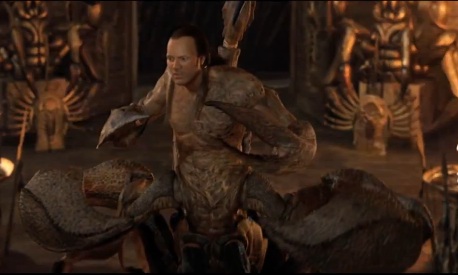
“The Scorpion King” — Johnson’s first top-billed role — tells the story of how Johnson’s character in “The Mummy Returns” became king of Gomorrah.23
The third film he was in had the highest Rotten Tomatoes score Johnson would see as top-billed performer, a 71. In “The Rundown,” Johnson is a bounty hunter sent to the Amazon to bring home the spoiled son of a gangster but who instead successfully leads a rebellion to defeat a “Blood Diamond”-esque industrialist played by — why the hell not — Christopher Walken. The film is important for one reason: It’s the first film where Johnson drives an automobile and thus the first film where Johnson wrecks a car. In movies, Johnson is a singularly horrible driver.24
“The Game Plan” — a very, very Disney25 movie in which Johnson plays a quarterback who bonds with the daughter he didn’t know he had — is the only film Johnson has ever made where he doesn’t use violence.
DWAYNE JOHNSON…
SHARE OF FILMS
Uses violence
96%
–
Is/was a member of the armed forces
50
–
Is a cop or first responder
38
–
Wrecks a car
29
–
Is a parent
29
–
Dies
21
–
Is a criminal
21
–
Has a pet
17
–
Is an athlete
13
–
Gets high
13
–
‘Jesus Christ himself has blessed me with many gifts! One of them is knocking someone the fuck out!’
He doesn’t punch anyone! He solves his problems using ballet!
While “The Race to Witch Mountain” was a mediocre film26 in general, it’s also the first film in which Johnson crushes it in what will become his bread-and-butter, a family-friendly action movie. But this is somewhat squandered by Johnson’s other 2009 film role, “Planet 51,” an animated film that has a completely identical plot. Aliens show up and need to get back home despite the local government reacting out of fear and trying to destroy ’em, but thanks to some local heroes willing to overlook the differences of others we can overcome bigotry. Same plot. Same year. I don’t even think he had to memorize new lines.
“Journey 2: The Mysterious Island” is the sequel in a franchise that seriously tried to build a Jules Verne Cinematic Universe. It featured Johnson, Michael Caine and the dweeb from “The Hunger Games.” The best part was the last scene, where they heavily tease a sequel involving “From the Earth to the Moon,” a film that does not yet exist four years later.
The following three consecutive films are outstandingly distinct. There’s “G.I. Joe: Retaliation,” a standard shoot-’em-up action film and the only movie ever to go out of its way to speedily murder Channing Tatum. There’s “Pain & Gain,” which is far, far better than its 49 percent Rotten Tomatoes score, and is without question the best performance from The Rock up to that point in his career. And then there’s “Snitch,” which, following “Walking Tall” and “Gridiron Gang,” constitutes the final film of what I’ve come to call the “Dwayne ‘The Concerned Citizen’ Johnson” trilogy, which features The Rock weighing in on social issues such as economic decline, mandatory minimum sentencing and gang warfare. And like in “Pain & Gain,” Johnson does cocaine in this movie.
The last film in this category is also the most instructive. “Hercules” rules. It came out in the heart of the summer movie season a week before “Guardians of the Galaxy” became a surprise hit, and its reviews are frankly criminal. Johnson manages to say the line “Fucking centaurs,” and you buy it. Do you realize how hard it is to sell the line “Fucking centaurs”?
Dwayne Johnson
“Gotta catch wolves, you need wolves. Let’s go hunting.”
—Hobbs, “Furious 7”
Films: “The Mummy Returns” (2001); “Get Smart” (2008); “The Other Guys” (2010); “Fast Five” (2011); “Fast and Furious 6” (2013); “San Andreas” (2015); “Furious 7” (2015).
These are The Rock’s films that crushed it. They’re movies that had both above-median reviews and above-median box office.
“The Mummy Returns” is in here as a fluke. The Rock, who has eight minutes of screentime in a two-hour movie, is a poorly CGI’d Happy Meal toy.
The next two films, “Get Smart” and “The Other Guys,” feature Johnson in a supporting role alongside more seasoned pros. He’s not in these films much at all but still stands out. I think sometime between “Be Cool” in 2005 and “Southland Tales” in 2007, he figured out how to nail the supporting parts.
In “Fast Five,” “Fast and Furious 6” and “Furious 7,” Johnson is a shot in the arm for a franchise that was all pavement and no pounding before he got involved. A savvy, fast-talking international cop — the intellectual match of the notoriously crafty protagonist played by Vin Diesel — he manages to antagonize while still remaining the good guy, which isn’t easy to pull off. Also, the three-film arc led to his killing a helicopter with a minigun he ripped from a drone — a drone he personally took down by hurling an ambulance he was driving at it — and the world is better for having seen that.
But the Fast & Furious films are ensemble affairs. If you want to grok solo-Rock, watch “San Andreas.” He manages to remain kinetic in a film where he is largely performing static — behind the wheel of a helicopter, plane, car and boat. He secretes enough charisma in a five-hour period to convincingly win back an ex-wife. The emotional climax of the film27 is legitimately earned and gut wrenching, which is not what you think of when you think of The Rock’s movies. He came a long, long way from eight minutes of chiseled grunting in “The Mummy Returns” to anchoring an emotional climax in summer blockbuster like “San Andreas,” and did it faster than the average person pays off a student loan.
When The Rock started out, he was not a good actor. I mean that as a compliment.
Because it demonstrates the single most important thing about Dwayne Johnson. It’s not even a secret. The Rock was not born with a God-given talent for acting, he wasn’t born with pecs you can open bottles off of, he wasn’t born with a natural charisma. He worked to get there. In the end, he’s the only actor willing to admit that it’s never “effortless.”
ANGELES NATIONAL FOREST >> If trees could talk about the weather, Dave Meko would be out of a job.
Meko, a professor from the University of Arizona Laboratory of Tree Ring Research, has made a career out of interpreting stories about rainfall, stream flows, climate patterns and most importantly, droughts silently hidden within California's ancient pine trees.
Culture
By CARMEN MELIAN
Play Video
00:29
Meryl Streep Impersonates Donald Trump
Advertisement
LIVE
00:00
00:00
skip ad
Video
Meryl Streep Impersonates Donald Trump
The actress Meryl Streep took the stage dressed as the presumptive Republican presidential nominee Donald J. Trump during a gala benefit for the Public Theater in New York on Monday.
By CARMEN MELIAN on Publish Date June 7, 2016.
Photo by Paul Zimmerman/WireImage.
Watch in Times Video »
At the moment that Hillary Clinton was all but clinching the Democratic nomination for president, Meryl Streep was on a stage in Central Park, impersonating Donald J. Trump.
In orange face makeup and pompadoured hair, Ms. Streep, the chameleonic three-time Oscar winner, did a more than credible version of the presumptive Republican nominee, down to the pursed lips and low-hanging belly. She got the braggadocio-inflected voice, too, even while singing.
Ms. Streep was part of the Public Theater’s gala benefit celebration on Monday night, a tribute to Shakespeare at the Delacorte Theater, home to Shakespeare in the Park. She was the closing act with Christine Baranski, doing “Brush Up Your Shakespeare,” a number from the Cole Porter musical “Kiss Me, Kate.”
“We could do a deal — you’ll let me know — why it is all the women say no?” she sang, stretching out her arms in a Trumpian gesture. Later she strolled the stage, gesticulating to the audience in Mr. Trump’s signature make-America-great-again style.
The song, traditionally a duet for men, offers advice for picking up women — in this case, female voters. Some of the original lyrics were altered, but some could stand as is, for Mr. Trump’s combative attitude: “If she says your behavior is heinous, kick her right in the Coriolanus!” The crowd, which included Michael R. Bloomberg, the former mayor: the United States ambassador to the United Nations, Samantha Power; Lin-Manuel Miranda; and Bette Midler, loved it.
Her performance came as something of a surprise to the event organizers, who knew only that Ms. Streep, a supporter of Mrs. Clinton’s, wanted to take on Mr. Trump.
“Utterly her idea, beginning to end,” Oskar Eustis, the Public’s artistic director, said after the show. “There were skeptics, there were doubters, but one of those skeptics was not Meryl Streep. She was absolutely sure she could do it. None of us had seen her in costume or makeup, till she walked out tonight.”
Ms. Streep skipped the dinner before the show to get into character, and spent time holed up in her dressing room. “She was showing us this thing that Donald Trump always does,” said the actress Kate Burton, who shared the dressing room with Ms. Streep along with Ms. Baranski, Lily Rabe and Phylicia Rashad. “He apparently does this thing, where he goes to close to his jacket but it doesn’t close all the way, and so he kind of goes for it and then he tries to close it again.”
It was a mannerism that only Ms. Streep seemed to catch, Ms. Burton said. “She treats this like she would her greatest roles: she’s working on it all the time.”
For the show, she came onstage in a black suit, white shirt and overlong, clownish red tie. Her transformation astounded her cast mates, who had only glimpsed her with the Trumpian coif in rehearsal. “She showed up, and I thought, ‘Meryl’s having a terrible hair day,’” said the Shakespeare in the Park veteran Hamish Linklater. (Ms. Burton reported that Ms. Streep even used her own hair: “She did some funky thing with pins.”)
Other performers watched from the wings as she and Ms. Baranski, in a black Hillary-esque pantsuit, did their finale. “She’s willing to try anything, and have fun with what she tries,” Mr. Eustis said of Ms. Streep, who has appeared at the Delacorte several times in starring roles. “She’s just fearless.”
Mr. Linklater, who played a comic Romeo in another number, called Ms. Streep’s take “naughty.” But, he added, Shakespeare “wanted to be valuable to his times. And she gave a performance that was valuable to her times. So absolutely, she’s honoring the spirit of the evening.”
On Tuesday afternoon, shortly after her name trended on Twitter with news of the Trump portrayal, Ms. Streep issued an statement through a Public Theater spokeswoman. “I appreciate the interest, but this was a one-off, a once in a (last in a) lifetime appearance of this character,” she said.
Amy finds innovative ways to feel closer to her man while he's away at work. Watch full episodes of Inside Amy Schumer now: http://www.cc.com/shows/inside-am...
Hikers hit a 67-mile-long wildland trail Saturday that's taken 40 years to construct between Los Angeles and Ventura counties.
The Backbone Trail, which now runs uninterrupted through some of Southern California's last wild lands within the Santa Monica Mountains National Recreation Area, opened during a morning ceremony at Will Rogers State Historic Park.
oday is Wednesday, the day after Donald Trump’s big victory in the New York primary, so today, pundits, our Narrative is, “Trump: He’s wrapped up the Republican nomination, right?” So that’s what we’ll talk about today, all day. Because we’re TV pundits and we stick to the Narrative.
Ready, pundits? Go, ninjas, go:
Scottie Nell Hughes, ‘Trump Supporter,’ on CNN: “You have a sitting senator in Texas, a sitting governor in Ohio that cannot even get 50 percent of their own state to support them. [Trump] has proven time and time again that he can win in every part of this country.”
Sarah Isgur Flores, former Carly Fiorina campaign manager, MSNBC guest: “Donald Trump wants to claim that being on the 5-yard line is a touchdown. I think everyone believes Ted Cruz can shift the momentum on the second ballot [at the GOP convention].”
Meghan McCain, Fox News contributor: “Trump’s negatives will filter down into Senate races, congressional races and local races. And I worry about it being like Goldwater, like an unmitigated bloodbath, where [Republicans] lose everything.”
David Gregory, CNN analyst: “Cruz has got to do something that he did in Wisconsin, expand his base of support. . . . He’s got to go to other states in the West, including Indiana and the Midwest, to show that he can reach beyond that core strength of evangelical Christians.”
Ann Coulter and David Gregory (Coulter by Mandel Ngan/Getty Images. Gregory by Peter Kramer/Getty Images)
Thank you, pundits. To summarize: Trump — he’s up! He’s down! He’s neither up nor down!
In other words, it’s just another day in Punditstan, the land of gleaming teeth, flowing hair and hot takes. Throughout the day and long into the morrow, the pundits will work diligently to replenish America’s strategic opinion reserves — with regular breaks, of course, for ads for retractable hoses, cholesterol medication and nonstick cooking pans.
These days, the people of Punditstan are a critical part of the cable news-industrial complex. The leading news networks — CNN, Fox, MSNBC — don’t report the news as much as they talk and speculate endlessly about it. For at least the past year, as well as for the next six months, the only thing they’re talking about is the presidential campaign, a story perfectly tailored for 24-hour cable with its built-in conflict, historic importance and, yes, ever-changing “narratives” (plus, who in America doesn’t have something to say about Trump and Clinton?). That means just one thing: Right now, we’re at peak punditry.
A CliffsNotes guide to punditry
Never mind that all the gasbagging may be contributing to an overheated political climate (Jon Stewart once famously said that cable’s partisan food fights were “hurting America”). After the campaign started and the pundits started yakking, ratings for all three cable networks, once in seemingly terminal decline, rebounded to nearly Iraq-War levels. There are now so many cable pundits — CNN has about 100 on its payroll, while MSNBC and Fox declined to provide numbers — that it’s hard to tell them apart.
Some pundits are “contributors.” Some are “analysts.” Still others are “commentators” or “strategists.”
Cable news pundits on the 2016 election, in 90 seconds
Flash plugin failed to load
00:00
00:00
Play Video
(Nicki DeMarco)
The secret pundit decoder works like this: A “contributor” (such as Meghan McCain) is an exclusive network hireling who gets paid for his or her sound bites. He or she earns a fee for each appearance or a flat amount for being on call, like a firefighter, whenever his or her services are required. The amounts can range from around $150 per “hit” to the mid-six figures for a marquee name such as Karl Rove or David Axelrod, both former campaign savants and presidential advisers. An “analyst” (such as CNN’s David Gergen or David Gregory, the former host of “Meet the Press”) is a salaried or contract employee who is expected to analyze the day’s Narrative rather than opine about it like a contributor. A “strategist” is usually a part-timer and a partisan hired for his or her political experience and insight.
Not that these rules really matter. Analysts contribute opinions, contributors analyze and strategists do both.
Ana Navarro and David Axelrod (Navarro by Heidi Gutman/Getty Images. Axelrod by Charles Norfleet/Getty Images)
Then there are “guests,” Punditstan’s temporary-worker class. Guests typically aren’t paid, and often aren’t even identified as guests. Guests are free to peddle their thoughts to whichever network will have them (full disclosure: I’ve been an occasional guest on cable, like just everyone in Washington who has ever had a byline). The ever-itinerant nature of this class of talking heads explains why you’re likely to see vaguely familiar faces such as political scientist Larry Sabato or think-tank wise man Norman J. Ornstein on MSNBC one day and on CNN the next.
CNN has pioneered another variation on the theme during this election season: the “supporter.” Last year, it hired two commentators to defend Trump, Jeffrey Lord and Kayleigh McEnany (Scottie Hughes, another Trump supporter, is a frequent CNN guest). It has also had a Bernie Sanders booster (Jonathan Tasini), one for Ted Cruz (Amanda Carpenter), one for Jeb Bush (Ana Navarro) and multiple ones for Hillary Clinton. Poor John Kasich; no one on CNN was paid to spin for him.
The taxonomy of punditry can be further subdivided by background and personality. There are former campaign operatives and party hacks (Nicolle Wallace and Rick Tyler on MSNBC, Paul Begala and Donna Brazile on CNN, Rove on Fox), lifelong journalists (The Washington Post’s Eugene Robinson on MSNBC) and even a lapsed politician or two (Michael Steele and Joe Scarborough on MSNBC). Yes, there’s a certain credentialism at work; the average dentist or truck driver, no matter how brilliant or witty his or her opinions, has no chance of ever moving to Punditstan. And there are, of course, degrees of temperament and vehemence: A rigorously nonpartisan analyst such as CNN’s Gloria Borger rarely throws bombs while others (think Fox News’s Andrea Tantaros) have crafted a career out of lobbing them.
Dumbed-down conversation
Pundits surely provide much that enriches our national political conversation. But there’s that other stuff, too. With so much blather filling the air, some of the conversation inevitably gets kind of dumb. There was, for example, that remarkable moment on CNN in March when one panelist, Boston Herald columnist Adriana Cohen, accused another, Amanda Carpenter, of having an affair with Cruz.
Joe Scarborough and Omarosa Manigault (Scarborough by Rob Kim/Getty Images. Manigault by Earl Gibson/Getty Images)
Or that time on Fox Business Network in February when Trump supporter Omarosa Manigault argued with Fox News contributor Tamara Holden over the mispronunciation of their first names, their views of Trump, and some other things:
“It’s the same difference, boo,” Manigault said after Holden corrected her about how she says her first name. “You want to come on with big boobs, then you deal with the pronunciation of your name. Look, Donald Trump stands firm on what his position is about us going into Iraq . . .”
“Wait a second!” moderator Maria Bartiromo interjected. “Why are you bringing up Tamara’s boobs? I don’t understand why you brought up Tamara’s boobs.”
Yeah, said Holden: “How does who you support have to do with the size of my boobs?”
Manigault eventually apologized, saying she should have called Holden a “boob.”
An overwhelming
number of pundits
During an eight-day span, 602 individual pundits appeared across all three channels. Here's the breakdown.
= 1 pundit
FOX NEWS
250
CNN
MSNBC
246
203
12 pundits
appeared on
all three channels
26 pundits
appeared on both
Fox News and CNN
18 pundits
appeared on both
Fox News and MSNBC
29 pundits
appeared on both
CNN and MSNBC
Source: Data was gathered by The Washington Post for CNN, MSNBC and Fox News using transcripts and shadowtv.com over an eight-day span, from April 5 through 12.
An overwhelming number of pundits
During an eight-day span, 602 individual pundits appeared across all three channels. Here's the breakdown.
= 1 pundit
FOX NEWS
250
CNN
MSNBC
203
246
12 pundits
appeared on
all three channels
26 pundits
appeared on both
Fox News and CNN
18 pundits
appeared on
both Fox News
and MSNBC
29 pundits
appeared on both
CNN and MSNBC
Source: Data was gathered by The Washington Post for CNN, MSNBC and Fox News using transcripts and shadowtv.com over an eight-day span, from April 5 through 12.
An overwhelming
number of pundits
12 pundits
appeared on
all three channels
FOX NEWS
250
During an eight-day span,
602 individual pundits appeared across all three channels. Here's the breakdown.
26 pundits
appeared on both
Fox News and CNN
= 1 pundit
18 pundits
appeared on
both Fox News
and MSNBC
CNN
MSNBC
203
246
29 pundits
appeared on
both CNN
and MSNBC
Source: Data was gathered by The Washington Post for CNN, MSNBC and Fox News using transcripts and shadowtv.com over an eight-day span, from April 5 through 12.
Another extreme of political punditry belongs to Ann Coulter. During her many years on TV, Coulter, 54, has trafficked in provocation and outrage, pointedly from a conservative perspective. Coulter, in fact, has raised the fire-breathing brand of off-the-cuff commentary to a kind of performance art. In hundreds of TV appearances, she has said many things that might be considered harsh and a number that might be considered downright awful (“I have never seen people enjoying their husbands’ deaths so much,” she once wrote of a group of women left widowed by the 9/11 terrorist attacks, before going on the “Today” show to defend the comment). TV producers find this irresistible, of course. They invite Coulter back year after year, providing a massive promotional platform for her books and columns.
Coulter expresses just one regret about her years in punditry. Early on, when she was a little-known attorney, she was asked by CNN to comment about the possible successors to retiring Supreme Court justice Thurgood Marshall. Coulter thought the most obvious choice was Clarence Thomas, who was later confirmed, but she held her tongue after an older, seemingly wiser guest rattled off a list of candidates that didn’t include Thomas. “I learned [then] that most people on TV are idiots and never to be swayed out of saying something I think is true, even if everyone else on the panel disagreed with me.” .
If anything, Coulter says, her TV persona is a milder version of her real self. “I’m bold and shocking when I talk to my friends, too,” she says. “So [on TV] it’s not exactly a performance, though I hope it is entertaining as well as edifying.”
Coulter’s adventures in punditry are unusual not just for their excesses, but for their length. A pundit’s time in the spotlight is roughly as long as a professional athlete’s — a few good years, maybe even a decade’s worth of them, and then you’re essentially out of the league. As in sports, there’s always a hungry kid with a more provocative take (and better looking to boot) eyeing your place in the lineup. Check out the transcripts of cable panel shows from 20 or even 10 years ago and you’ll find serious churn. Where have you gone, Dee Dee Myers and J.C. Watts ?
Bill Kristol and Eleanor Clift (Kristol by William B. Plowman/Getty Images. Clift by J. Countess/WireImage)
Rare is the elder pundit-statesman such as Eleanor Clift, who has been slinging liberal-leaning opinions on TV since the Carter administration, most visibly as a panelist on “The McLaughlin Group” for almost 30 years. If there were a Mount Rushmore of punditry, Clift, 75, would be up there alongside the likes of Al Hunt, Clarence Page, Pat Buchanan and the blustery McLaughlin himself.
Clift is a seminal character in the development of the pundits’ arts and sciences. Not only was she among the earliest women in a field dominated by men, but she was one of the first news reporters to make opining on TV a regular sideline. When she first met McLaughlin while working for Newsweek, she recalls telling him, “’I’m a reporter, so I’m not supposed to have strong opinions.’ And he said, ‘If you want to get on this show, you’ll get some strong opinions.’ ”
The right stuff
So what does it take to make it in Punditstan? Network pundit-wranglers use words such as “passionate,” “authentic” and “articulate” to describe what makes a good TV opinion spouter. Credibility and experience don’t hurt, either.
“We look for the same things [a reporter] looks for in finding good sources for a print story,” says Dafna Linzer, the managing editor of MSNBC and NBC News’s political coverage. “We want people who have the ability to help voters understand the different moments and scenes of an election, people who can offer insight.” (The difference, of course, is that the people quoted in print stories don’t dominate an hour of prime time or come directly into your living room to yell at each other).
On the other hand, unlike professional sports or even politics itself, no one keeps score in punditry. Being consistently wrong isn’t necessarily disqualifying. For many years, Bill Kristol, a lion of the neoconservative movement, has made bold predictions about everything from the ease of stabilizing Iraq to Donald Trump’s political prospects. Many of these predictions haven’t exactly panned out. Yet Kristol, now at ABC News, has been a leading citizen of Punditstan for the better part of two decades.
Nonstop punditry
There is almost no escape. Weekends are the only time you might be able to catch a break, and on primary nights it could go on for almost 24 hours straight. The number of pundits each channel features is shown below.
Number of pundits on air at once
Fox News
11
MSNBC
8
CNN
Fox
CNN
MSNBC
April 5
Tues.
5 - 9 p.m.
On April 5, the day of the Wisconsin primary, 23 pundits were featured across the three channels from 9 to 10 p.m.
April 6
Wed.
April 7
Thurs.
April 8
Friday
April 9
Sat.
The weekend saw a decrease in punditry across the channels.
April 10
Sun.
April 11
Mon.
Monday through Friday from 5 to
9 p.m. are the peak hours.
April 12
Tues.
Source: Data was gathered by The Washington Post for CNN, MSNBC and Fox News using transcripts and shadowtv.com over an eight-day span, from April 5 through 12.
Nonstop punditry
Number of pundits on air at once
There is almost no escape. Weekends are the only time you might be able to catch a break, and on primary nights it could go on for almost 24 hours straight. The number of pundits each channel features is shown below.
Fox News
11
MSNBC
8
CNN
Fox News
5 - 9 p.m.
MSNBC
CNN
April 5
Tue.
April 6
Wed.
April 7
Thurs.
April 8
Fri.
April 9
Sat.
April 11
Mon.
April 12
Tue.
April 10
Sun.
On April 5, the day of the Wisconsin primary, 23 pundits were featured across the three channels from 9 to 10 p.m.
The weekend saw a decrease in punditry across the channels.
Monday through Friday from 5 to
9 p.m. are the peak hours.
Source: Data was gathered by The Washington Post for CNN, MSNBC and Fox News using transcripts and shadowtv.com over an eight-day span, from April 5 through 12.
Nonstop punditry
Number of pundits on air at once
There is almost no escape. Weekends are the only time you might be able to catch a break, and on primary nights it could go on for almost 24 hours straight. The number of pundits each channel features is shown below.
Fox News
11
MSNBC
8
CNN
Fox News
5 - 9 p.m.
MSNBC
CNN
April 5
Tuesday
April 6
Wednesday
April 7
Thursday
April 8
Friday
April 9
Saturday
April 10
Sunday
April 11
Monday
April 12
Tuesday
On April 5, the day of the Wisconsin primary, 23 pundits were featured across the three channels from 9 to 10 p.m.
The weekend saw a decrease in punditry across the channels.
Monday through Friday from 5 to 9 p.m. are the peak hours.
Source: Data was gathered by The Washington Post for CNN, MSNBC and Fox News using transcripts and shadowtv.com over an eight-day span, from April 5 through 12.
A pundit is more likely to get banished from the air for failing to follow the technical demands and subtle protocols of the job, said one prominent political pundit. Did the pundit talk too much or too little during a segment? Did he or she step on the host’s questions or insist on getting in the last word? Does the host or show’s producer simply not like you? Some producers and bookers, according to this pundit, maintain informal lists of “banned” pundits who will never be invited back.
Naturally, it doesn’t hurt a political commentator to know something about politics, but intensive study isn’t really necessary. One veteran TV pundit recalls preparing for his first TV appearance by reading feverishly about the topic du jour. He soon realized that this not only wasn’t necessary, it might be counterproductive; all those facts can weigh like an anvil on your mind when you’re asked for a snappy comment.
So now the pundit hones his approach by scoping out the all-important terms of engagement. How many minutes will he be on? How many people will be on the panel with him? Who’s the host? What part of the show will he be on — the opening “A” block or a later, lighter segment? With just a few minutes of airtime, he’ll marshall his zingers, deploying them as if they were his last bullets in a gunfight. Two things you’ll almost certainly never hear from a TV pundit: “I don’t know” and “I have no opinion about that.”
Training to be a talking head
Outside of being born with a gift for gab and a reasonably pleasant appearance, it’s possible to learn to be a TV pundit. Thanks to a small army of “media trainers,” many of the ancient secrets of Punditstan are for sale for just a few thousand dollars and the investment of several hours of study.
Most visible
Each channel has its own go-to pundits.
CNN
Gloria Borger
Appeared in 28
different half-hour
or hour time slots.
Fox News
Tucker Carlson
Appeared in 12
different half-hour
or hour time slots.
MSNBC
Mark Halperin
Appeared in 23
different half-hour
or hour time slots.
Source: Data was gathered by The Washington Post for CNN, MSNBC and Fox News using transcripts and shadowtv.com over an eight-day span, from April 5 through 12.
PHOTOS: BORGER BY WHCINSIDER.com; CARLSON BY Jahi Chikwendiu/The Washington Post; HALPERIN BY CRAIG BARRITT /GETTY IMAGES
Peter Zorich, who worked as a news producer at four networks, started a training company with a partner in 2014. His New York firm, Best Guest Media, is a kind of one-stop shop for punditry. In addition to training business executives, politicians, doctors and attorneys to speak more effectively on news programs, the company helps its clients land TV gigs through connections with network bookers. For good measure, the company provides trainees with talking points. It even handles the logistics of getting to the studio.
Zorich will tell you that the fastest way to get on TV is to have been on TV. Producers scout each other’s programs and regularly poach promising newcomers. “A good TV guest isn’t just smart and accomplished,” he says. “They need energy and passion. I’m not talking about engaging in shouting matches. You have to be articulate and passionate.”
Whatever the inherent flaws of punditry — the emphasis on glibness and flash, the lack of accountability — some of the knocks on it are no longer really valid. Older white men no longer dominate the field, as they did when Eleanor Clift first went before a camera. Nor does the commentary stay strictly within a narrow range, as Bernie Sanders has asserted in his critiques of the “corporate” media. Although there’s no denying that each of the cable networks has its ideological shadings and biases, each has employed pundits that reflect a political spectrum that ranges from Sanders to Ted Cruz to whatever Donald Trump is.
And sure, there’s no question that some of it, — maybe a lot of it — is hot air. But is it really doing harm to discourse? Is it inflaming our deepening partisan divide or somehow, in Jon Stewart’s phrase, “hurting America”?
I’m not sure I know the answer. But you can count on this: The citizens of Punditstan would be happy to give you their opinion.
In early May, I asked FiveThirtyEight readers to send in their wedding reception set lists, and good God, did you deliver. I received 163 playlists15 with 9,281 songs among them.
As a result, I’m pleased to introduce FiveThirtyEight’s ultimate wedding playlist, based on the most popular songs among the reception set lists people sent in:
SONG
SET LIST APPEARANCES
1
Hey Ya!
69
–
2
I Wanna Dance With Somebody
57
–
3
Uptown Funk
55
–
4
Shout
54
–
5
Crazy In Love
50
–
6
Don’t Stop Believin’
45
–
7
Billie Jean
44
–
7
Get Lucky
44
–
7
Twist and Shout
44
–
10
Shut Up and Dance
43
–
11
September
41
–
11
Don’t Stop ‘Til You Get Enough
41
–
13
Yeah!
40
–
14
I Want You Back
39
–
14
You Make My Dreams
39
–
16
Signed, Sealed, Delivered (I’m Yours)
38
–
17
Sweet Caroline
36
–
18
Happy
34
–
18
We Found Love
34
–
20
Call Me Maybe
33
–
20
Ignition (Remix)
33
–
The ultimate wedding playlist
Before we dive into the data, let’s go back to those responses, because they were really something else. There were winery weddings and ski lodge weddings, destination weddings and barn weddings. There were big weddings, small weddings, straight weddings, same-sex weddings, secular weddings and big church weddings. I heard from the top live wedding band in California — all three of them. I received playlists designed for Polish weddings, Indian weddings, French-Canadian weddings and Brazilian weddings, along with the necessary musical additions for weddings in Buffalo, New York. I heard from someone who distributed my analysis of the proper rate of descent during “Shout” at his nuptials, which was pretty rad. I had someone send me “The Rains of Castamere” from an anonymous email account, which as a “Game of Thrones” nut I should have seen coming. One person sent me a 20-song playlist composed entirely of “Rock Lobster,” which is a far longer song than you likely recall. My heart was warmed by all the stories that couples sent in and then re-frosted when I saw how few of them played “Danza Kuduro.”
And the variety of responses really came through in the data. Even though the list of the most popular overall songs suggests a consensus, there was far from total homogeneity. There were 3,358 unique songs in this set. The top 359 songs accounted for just half of the plays. The point: Wedding playlists consist of a core of songs that appear very regularly, plus several more unusual songs that are informed by the choices of the couple and — based on what people told me in their emails — the often emphatic recommendations of family.
It’s very much the same way with the artists:
ARTIST
SET LIST APPEARANCES
1
Michael Jackson
202
–
2
Beyoncé
130
–
3
The Beatles
120
–
4
Stevie Wonder
108
–
5
Outkast
94
–
6
Queen
88
–
7
Rihanna
85
–
8
Van Morrison
74
–
9
The Jackson 5
73
–
10
Justin Timberlake
71
–
10
Whitney Houston
71
–
12
Daft Punk
69
–
13
Prince
64
–
14
Pitbull
63
–
15
Lady Gaga
59
–
15
Mark Ronson
59
–
15
Usher
59
–
18
Journey
58
–
19
The Isley Brothers
57
–
20
Elvis Presley
52
–
21
Earth, Wind & Fire
50
–
21
Frank Sinatra
50
–
21
Kanye West
50
–
21
The Temptations
50
–
25
The Rolling Stones
49
–
26
Daryl Hall & John Oates
48
–
26
Madonna
48
–
28
David Bowie
47
–
29
Jay Z
46
–
30
Flo Rida
45
–
30
Taylor Swift
45
–
32
Walk the Moon
44
–
33
Katy Perry
43
–
33
Sam Cooke
43
–
35
R. Kelly
42
–
36
Billy Joel
40
–
36
LMFAO
40
–
36
Neil Diamond
40
–
39
The Black Eyed Peas
39
–
40
The B-52s
38
–
41
Bruce Springsteen
37
–
41
Kesha
37
–
43
Carly Rae Jepsen
36
–
44
Elton John
35
–
44
Miley Cyrus
35
–
44
Missy Elliott
35
–
47
Notorious B.I.G.
34
–
47
The Beach Boys
34
–
47
The Cure
34
–
Top wedding playlist artists
Michael Jackson appears most often, but even that understates his essential role in wedding dance parties given that the Jackson 5 are No. 9 on the list.
Just as important as the stuff that gets played, though, is the material that couples make unambiguously clear will not be played under any circumstances. We didn’t get “do not play” lists from everyone, so take this with a grain of salt, but a few trends appeared. Line dances are a big presence: Guess some people got burned by the “Cha-Cha Slide” and don’t want to mentally go back there. Other polarizing songs include Meghan Trainor’s “All About That Bass,” “Sweet Caroline” and the detestable “Blurred Lines,” as well as the entire catalogs of Dave Matthews Band,16 Maroon 517 and the Village People.18 Hey, it’s your party.
There are several distinct eras evident in the data. You’ve got your Motown and oldies: “Signed, Sealed, Delivered (I’m Yours),” by Stevie Wonder; “Ain’t No Mountain High Enough,” by Marvin Gaye and Tammi Terrell; and “At Last,” by Etta James. There are hits from the 1970s and 1980s, including Earth, Wind & Fire’s “September,” Journey’s “Don’t Stop Believin’” — the song with the most interesting popularity trajectory in pop music19 — and the B-52s’ “Love Shack.” There’s a robust contemporary contingent — “Uptown Funk,” “Shut Up and Dance,” “Happy” and “Shake It Off” are hot right now — plus some established modern icons, including “Get Lucky,” “Ignition (Remix),” “Hey Ya!,” “Single Ladies” and “Yeah!”
One thing this data doesn’t tell us is how wedding playlists have changed over the decades. When new songs join the canon every year, we don’t extend receptions to accommodate them: There’s a finite amount of dance floor time, and all we’ve got is a snapshot here. Still, I am endlessly curious about how these generic set lists would change over time.
My first thought was that different songs get phased out survival-of-the-fittest style. In 10 years’ time, perhaps “Low” will be the sole vestige of 2007, and its contemporaries — “Cupid Shuffle,” “Paper Planes” and “Electric Feel” — will be lost to time. But then I saw the distribution of release years, and I contrived a new theory.
There are peaks centering on the mid-1960s, the early 1980s and (obviously) the last few years. Now, I don’t have any hard proof for this theory besides [expressively waves hand at that chart], but here’s what I think is causing the funky trimodal distribution above: Everyone at the wedding — the couple, their parents, their parents’ parents — gets a few songs from when they were in their late teens and early 20s. Let’s do some back-of-the-napkin math. According to the U.S. census, the median age at first marriage for the bride is about 27, so for a 2016 wedding, we can approximate that she was born around 1989. That means her parents would have gotten married in the late 1980s — let’s just say 1986. Mom would have been 22 or so back then based on the census data, which would place her birth around 1964. That would put the 2016 bride’s grandparents’ wedding around the early 1960s, when the median marriage age for women was 20.
So it isn’t so much that “‘Uptown Funk’ will be absent from weddings within 10 years,” but rather “‘Uptown Funk’ may be absent from weddings within 10 years, but it could make a hell of a comeback in 25 years when the 2016 couple’s offspring starts getting married.”
In the end, receptions are another reflection of the whole point of weddings: starting something new and uncertain and kind of frightening, but beginning it in something traditional and established and fundamentally familiar. As the old saying goes, “something old, something new, something borrowed, to the window, to the wall, ’til the sweat … [redacted],” or some crap like that.
Amy Schumer commandeers a VF staffer's Tinder account. Still haven’t subscribed to Vanity Fair on YouTube? ►► http://vnty.fr/1yNomg4 CONNECT WITH VANITY FAIR...
LOS ANGELES >> A former tycoon who was one of Taiwan's most wanted fugitives was in the middle of a decade-long fight to stay in the United States when he was killed in a West Covina car accident, federal court records show.
Question: how terrible an idea would it be for the Clinton campaign to draft Obama (whose political career is over anyway) to be a vulgarity surrogate against Trump?
Like, if he were to regularly give news conferences, and just to casually say in seriousobama voice, "Donald Trump doesn't know what the Brexit is, but what do you expect from an asshole like him?" and similar.
The media would go completely ape-shit and would lap it all up. There'd be a counter-leveling of Trump's 3rd-grade stuff, and Clinton wouldn't even have to be seen as the unserious candidate sinking to his level (she could even issue a press release condemning both of them for vulgarity).
Hillary Clinton gave a speech on national security in San Diego on Thursday, but it just as easily could have been a verbal declaration of war on Donald Trump.
"I believe the person the Republicans have nominated for president cannot do the job," Clinton said. "Donald Trump's ideas aren't just different, they are dangerously incoherent.
North Korean leader Kim Jong-un and Republican US presidential candidate Donald Trump.
Photograph: Reuters
North Korean state media has praised US presidential hopeful Donald Trump, describing him as a “wise politician” and “far-sighted candidate” who could help unify the Korean peninsula.
An editorial in DPRK Today, an official media outlet, welcomed the Republican presidential candidate’s proposal to hold direct talks with Kim Jong-un, saying he could help bring about Pyongyang’s “Yankee go home” policy.
“There are many positive aspects to Trump’s ‘inflammatory policies’,” wrote Han Yong-mook, who described himself as a Chinese North Korean scholar.
“Trump said he will not get involved in the war between the South and the North, isn’t this fortunate from North Korea’ perspective?”
Analysts said that although the editorial was not officially from Pyongyang, it was sure to reflect thinking inside the regime.
“This is very striking,” said Aidan Foster-Carter of the University of Leeds. “Admittedly it is not exactly Pyongyang speaking, or at least not the DPRK government in an official capacity. But it is certainly Pyongyang flying a kite, or testing the waters.
“For the rest of us, this is a timely reminder – if it were needed – of just how completely Trump plans to tear up established US policy in the region.”
The editorial referred to Trump’s speech in March, in which he suggested he would withdraw US military forces from Seoul if South Korea did not increase spending on defence.
“Yes do it, now … Who knew that the slogan ‘Yankee Go Home’ would come true like this? The day when the ‘Yankee Go Home’ slogan becomes real would be the day of Korean Unification.”
The article urged Seoul not to increase defence spending so as to prompt a US withdrawal, and urged American voters not to choose the Democratic hopeful, Hillary Clinton.
“The president that US citizens must vote for is not that dull Hillary – who claimed to adapt the Iranian model to resolve nuclear issues on the Korean Peninsula – but Trump, who spoke of holding direct conversation with North Korea.”
John Feffer, director of Foreign Policy In Focus, said the editorial indicated Pyongyang’s wish to break through Washington’s strategic patience policy.
“[Trump]’s the Dennis Rodman of American politics — quirky, flamboyant, risk-taking. At the moment he’s also an outsider. But Pyongyang is hoping that either he’ll be elected [and follow through on his pledges] or that his pronouncements will change the political game in the US and influence how the Democratic party and mainstream Republicans view Korean issues.”
The editorial came amid repeated calls for dialogue with Seoul and its ally Washington. Since May 17, Pyongyang published a government statement with the aim of improving relations with Seoul, and notified the South Korean government of a willingness to resume inter-Korean military talks.
South Korea dismissed Pyongyang’s call for talks but Pyongyang reiterated their intention to resolve the current inter-Korean deadlock through the dialogue.
A version of this article first appeared on NK News – North Korean news





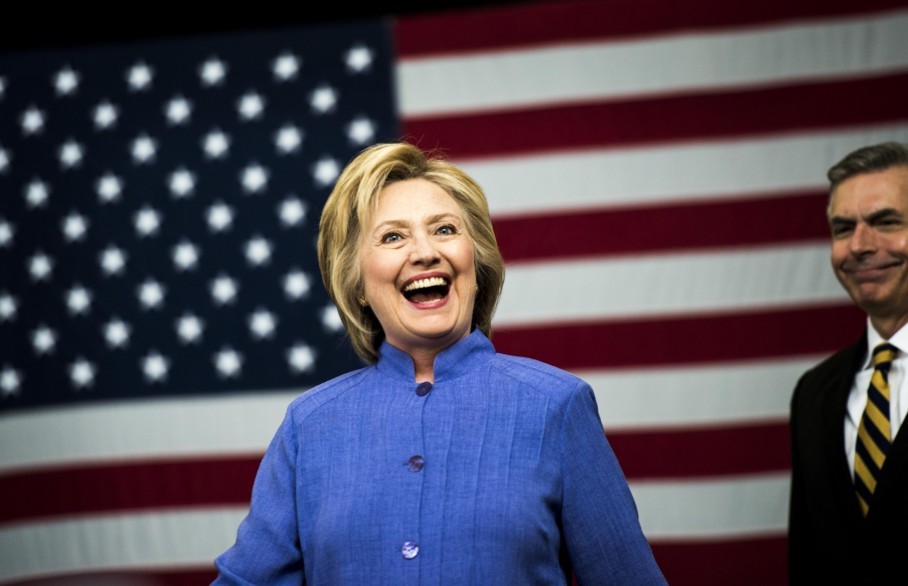
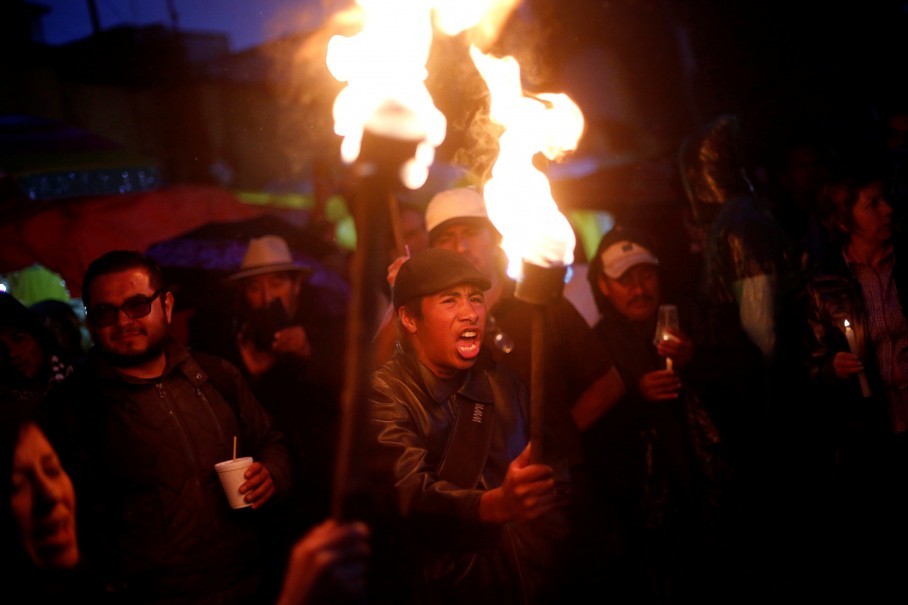
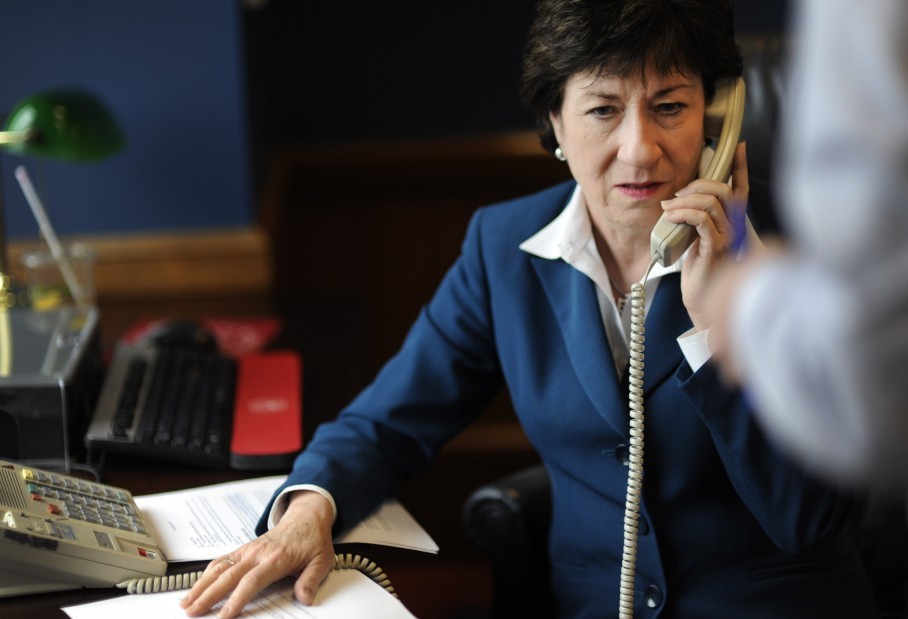
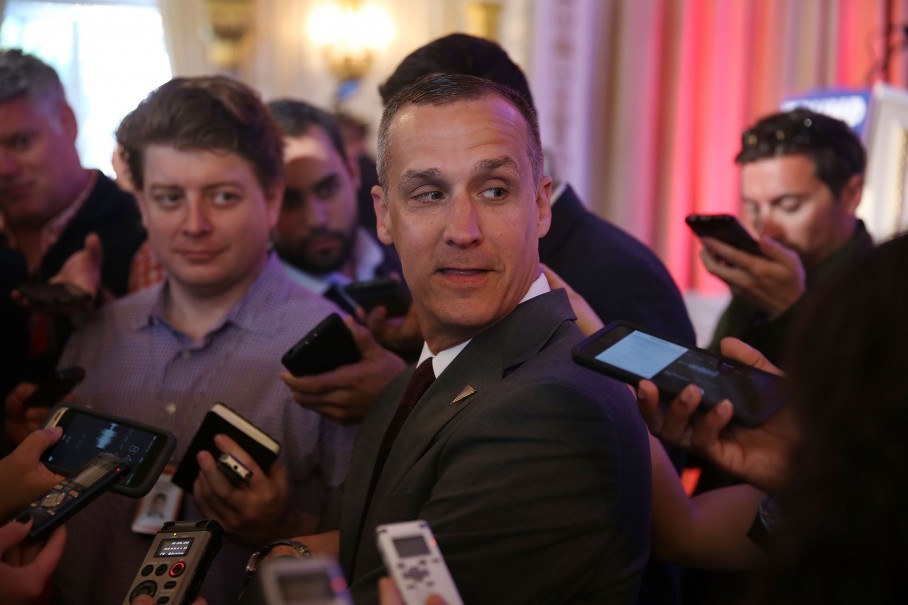
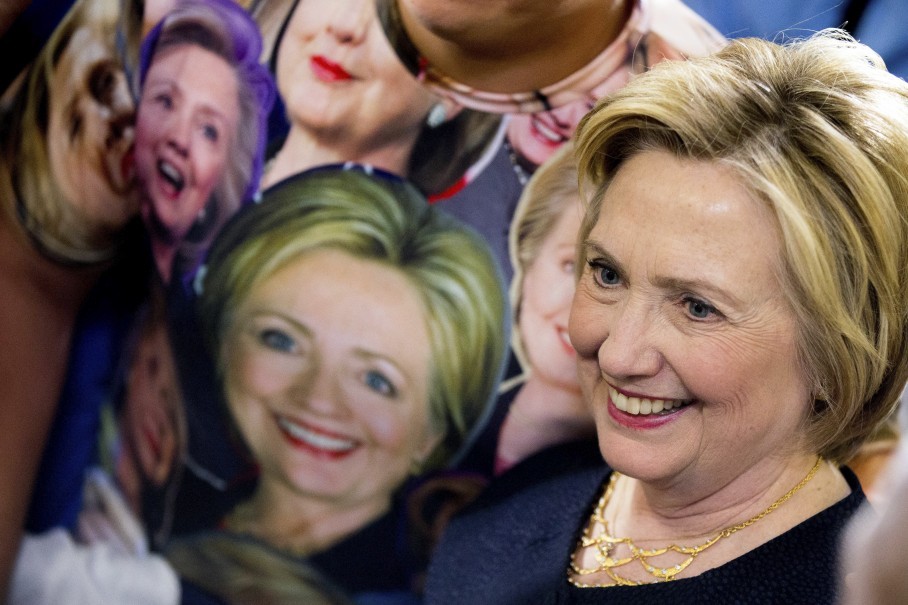
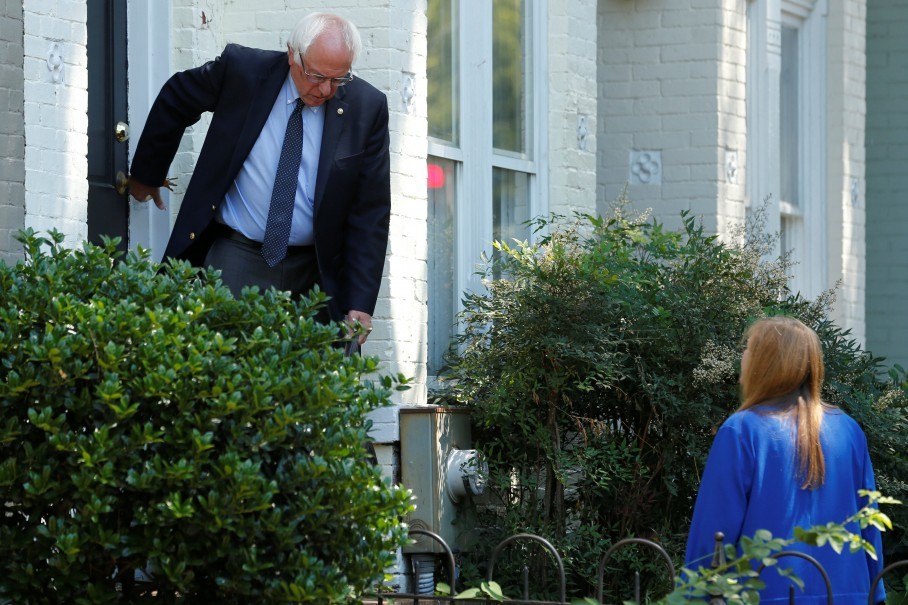
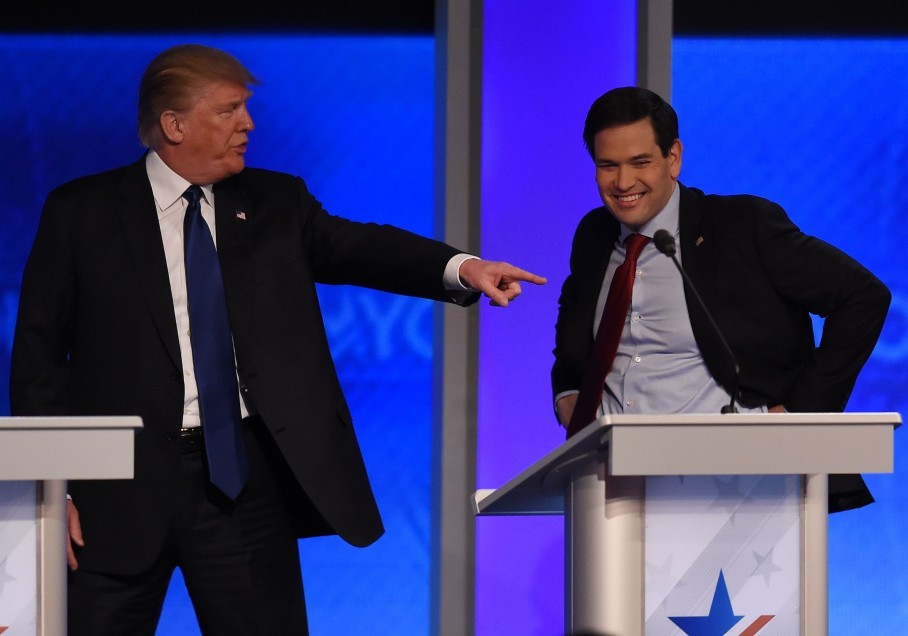
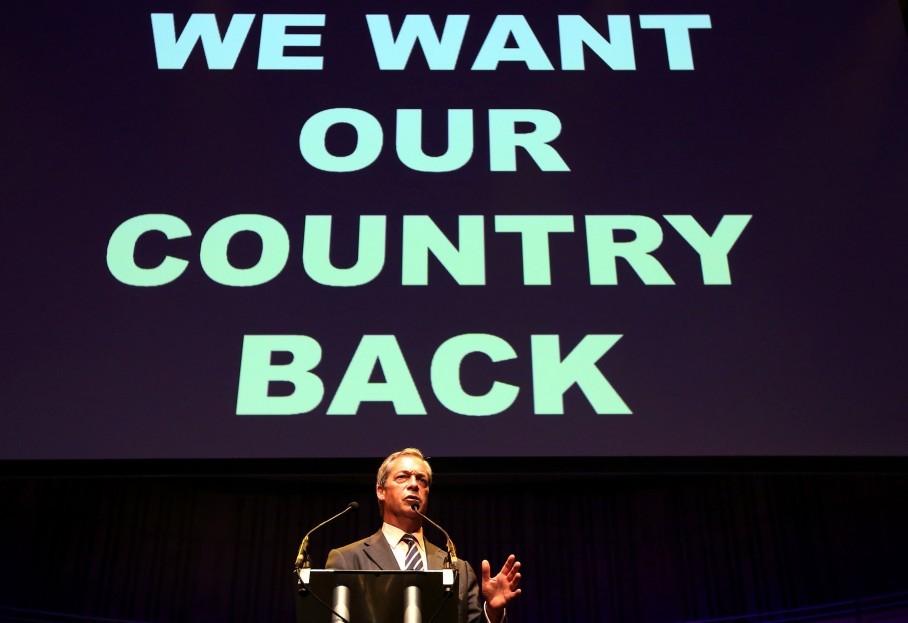

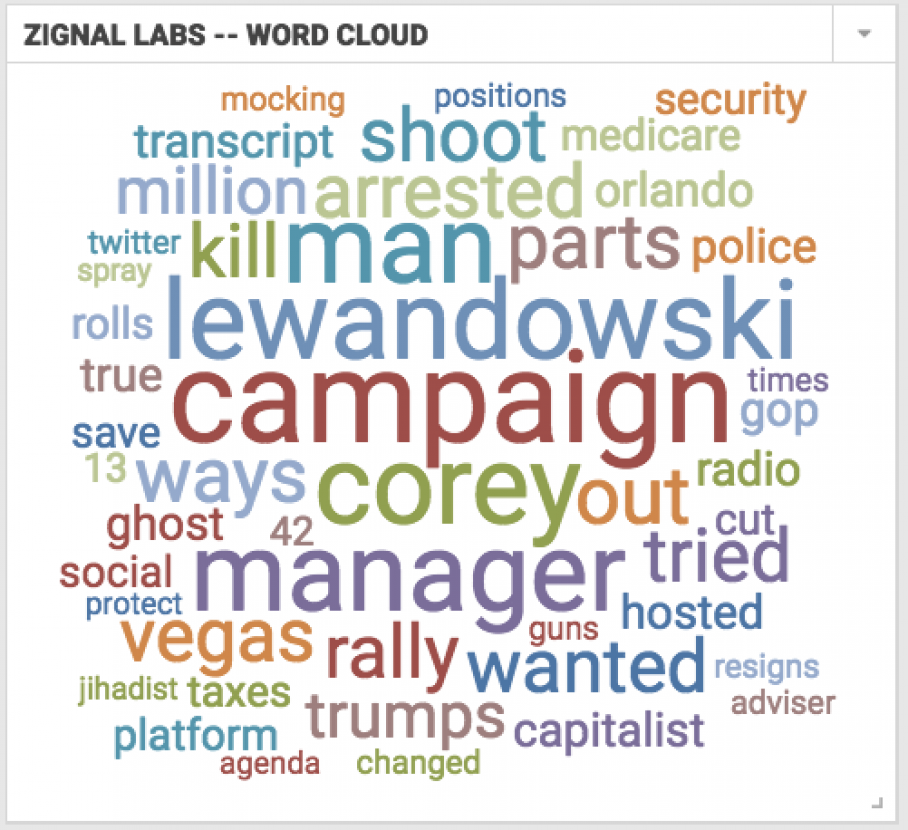
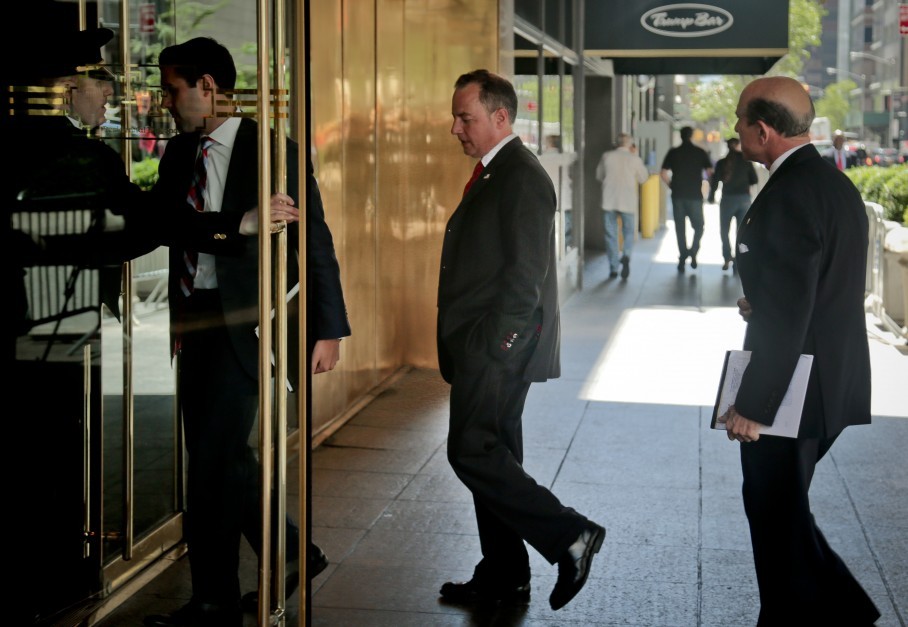



 To identify which intersections cause Angelenos the most pain, we worked closely with the local map editor and employee community. They shared lists of what they perceived to be the most difficult intersections and provided alternate solutions. We also received a tremendous amount of support from our Connected Citizens Program partner, the City of Los Angeles, who helped us understand this hyperlocal challenge from a municipal perspective.