God is in the details. So they say. Words I tend to live by.
My next two posts will be a reflection on exactly that. I have talked before about my biggest struggle in doing a show like this, where the Costume team has an opportunity to create such elaborate, detailed pieces, is hearing viewers say, “when do we see that costume?”. WE SAW IT!!!! Three episodes ago! But you actually didn’t. The actor never got up from the table, we never saw them from the back, there was never a head to toe shot (almost never), it is too dark to see it if they did, etc.
I often threaten to abandon the details. “What is the point? ” I ask. “Why should my team bleed over these costumes for months, if we are never going to see them?!?! Don’t we want the audience to SEE this alien world??”
But I do get it. The show cannot add hours to loving close ups on buttons or pocket details. There is an awful lot of story to get into a 13 hours of television and every minute is precious. I also believe that even if we don’t see the details, we feel them. They are their subliminally (is that a word?), they help the audience to believe that the world is real, and they absolutely help the actor to feel the character. God IS in the details.
But I am a mere human, and I struggle. So I created my own art gallery, to celebrate the details. My work, the work of my team. I am an atheist, after all.
Let’s start with one of my favourite costumes this season. Annalise at Versailles. I love this costume. It is as close a reproduction as I could make of this costume. I try to pepper the show with reproductions. Not only does it add authenticity, but it validates various choices. this particular costume is about detail, but very importantly about color. This supports our choice to use a different palette in S2 than everyone expects. These are not the pastel, bon bon colours that come later in the 18th century. The colors of the mid 18th are much deeper and richer. Our story is just one King before the ears of Marie Antoinette that everyone associates with the 18th century.
This is a Casaquain from the Palais Galliera, musée de la Mode de la Ville de Paris.
Ours-
The differences are clear. Our colors are deeper. There comes a point when you have looked at every possible shade of whatever colour you are trying to match, the dye room is already behind schedule, and you have to LET IT GO, TERRY! It is close enough! We also just did not have the time to create that marvellous tulip hem and to piece the silver lace the way they did. I had to use a Dupioni silk in order to get the closest color. Very often these things are an exercise in compromise. But you accept it and move one. Cameras need to roll.
With a convergence of inattentive writing and unquenchable zeal, the Republican Party of Texas recently suggested that most Texans are gay. The claim places the state party at the vanguard of the sexual revolution, leaping over Kinsey enthusiasts and their comparatively modest estimate that only 10% of Americans are homosexual. (Kinsey himself made no such claim.)
Homosexuality is a chosen behavior that is contrary to the fundamental unchanging truths that has [sic] been ordained by God in the Bible, recognized by our nations [sic] founders, and shared by the majority of Texans.
State party leaders meant to make the (false) claim that most Texans believe homosexuality is contrary to unchanging truths ordained by God. And that is the meaning of the similar but more careful passage in the 2014 Texas GOP platform. With greater attention to subject-verb agreement (and an actual possessive apostrophe!), it maintained: “Homosexuality is a chosen behavior that is contrary to the fundamental unchanging truths that have been ordained by God in the Bible, recognized by our nation’s founders, and shared by the majority of Texans.” These assertions, and various libels about homosexuality, go back decades in the Texas GOP platform.
Language is complex, rules of usage are not ironclad laws, and people make minor and unimportant grammatical mistakes all the time. Usually they deserve charity. The unlettered quality of a statement is nothing next to its toxic substance.
But Texas GOP leaders adhere to a pinched form of literalism in law and life, so they deserve to be taken strictly at their word: “Homosexuality is a chosen behavior that . . . has been . . . shared by the majority of Texans.”
To be fair, the new platform language does not actually assert that most Texans are gay. It claims only that they “share” homosexuality. But what can this possibly mean? Perhaps it means that there is a certain amount of homosexuality that most Texans pass around to each other. If someone doesn’t seem to have enough, one Texan may loan or even give another Texan some of his. Or it could refer to a trait that most Texans have in common, like good taste in barbecue. Of course, it should be emphasized that a majority but not all Texans share homosexuality. There may be some who hoard it.
What could have happened in my native state between 2014 and 2016? Not only all of Austin, but huge swaths of Houston and Dallas, plus parts of Corsicana, must have succumbed. We all know that in the annus mirabilis 2015 the Supreme Court decided Obergefell v. Hodges, which required gay marriages. The party platform instructs elected officials from the Governor on down to “assert our Tenth Amendment right and reject the Supreme Court ruling.” The platform also vows to keep alive the practice of “sexual orientation change efforts,” apparently in the vain hope that Texans may be coaxed back to heterosexuality.
O.K., look, I know I’ve been out of the country and out of touch for more than a year. And yes, I was pleased you were finally sending me a comedy feature, not a documentary idea or a script based on a board game, app or piece of cutlery. But frankly your “Trump: Rise of The Donald” idea is the most ill-conceived movie pitch I have ever received.
1) Your central character — “Trump/The Donald” — is just TOO BROAD. There may be a taste for a supersize American-cheese blowhard fantasy compendium of all the ills of Western civilization poured into one guy, but you need a MUCH lighter touch.
2) TONE. The tone is all over the place. You can go satirical (implying your rival’s father shot J.F.K.). You can go surrealist (the rants). You can go gross-out (the menstrual blood). You can go dark (the white nationalist delegate). BUT NOT ALL IN ONE MOVIE.
3) The physical attributes of “Trump/The Donald” are way overblown. “The coarse cotton candy thatch of synthetic mane” — perhaps doable. But to ladle on the “broiled ham visage, toasted golden under the sun lamp” is just FAR TOO MUCH. Even in the dystopia you paint, he needs to be a believable candidate, right?
4) “Build that wall” needs another pass (or five!) as your imagined rallying cry. I’m afraid to say it is sophomoric in its satirical obviousness. Honestly, this moronic version of the imagined right will do your liberal cause more harm than good.
5) From here on in the implausibilities metastasize. “He is not a war hero, he’s a dummy”? REALLY? About the character who spent two years in solitary confinement? And this is meant to play as something other than a career ender? That’s just a bit silly, O.K.?
6) Even in a “knockabout” comedy, that a serious candidate could suggest barring the entry of all Muslims to the United States is not funny because there’s no RING OF TRUTH. You’ve just got to try harder. Also, I personally would not feel good polluting the world with this kind of racist fear-mongering even as satire. You just never know how this material will play in the real world!
7) Likewise, and I’m getting tired pointing out all the holes in your story, but a candidate who referred to Mexicans en masse as “rapists”? Yeah? Really? “Ha-ha-ha.” Sorry. Dead on Day 1 of the campaign. You see there really does need to be some thread of logic to Trump/The Donald’s crazy/zany sayings, otherwise it starts to feel like the character you have invented can say anything. I’m not Buñuel. I don’t do dreamscapes.
8) The descent into violence of the campaign? I guess. If you must. But in the middle of the second act he is already goading his disciples into cathartic violence? It leaves you nowhere to go.
9) It may do for some collegiate parody to have a bloated plutocrat bragging about his “size” in a presidential nomination debate, but for a proper piece of work? You need to up your game!
10) Sloppy plot alert! Please, think! Is it really plausible that the Republican bigwigs you have denouncing “Trump” just fold and accept him once he seals the nomination? And your fictive polls show support for him growing? No! See by this point in your story you’ve had lots of “fun” as your Trump character has alienated Latinos, women and African-Americans (not having him immediately reject K.K.K. endorsement is in bad taste — obviously a cut). I’m sorry, but your plot doesn’t make sense. There must be consequences to your character’s actions. That is screenwriting 101.
11) Finally: endings. It was a shame you sent this through before deciding on your finale. For the record, I actually kind of enjoyed the presidential debate break-down-naked-rant sequence. Haunting! But I think there’s something in the simple: Nomination — Victory — Trade War — Paranoid Freakout — Exchange of Thermonuclear Weapons With China variation. One of the more believable elements!
Over all — trash. Page one rewrite.
Jesse Armstrong (@jessearmstrong1)has written for the television shows “The Thick of It” and “Veep” and is the author of the novel “Love, Sex and Other Foreign Policy Goals.”
Donald Trump's dominant win in the Indiana primary, including securing 53% of the vote and all 57 delegates, has led Ted Cruz and now John Kasich to drop out of the race. Trump has clearly become the presumptive nominee of the Republican Party. Meanwhile, Bernie Sanders keeps pushing Hillary Clinton hard and winning far more states than expected, but Clinton has had an unbeatable delegate lead for weeks absent a dramatic shift in public opinion among Democrats.
To put in perspective what it takes to earn this position, I wanted to share a few facts, drawing from our 2016 primary season popular vote spreadsheet and related research. Trump has won 10,706,130 votes out of 26,590,345 counted in Republican contests so far. That represents:
40.2% of all Republican votes counted so far
21.9% of all votes counted so far this year in 2016 presidential contests
4.7% of all eligible voters in the United States
4.3% of all adult residents in the United States
3.3% of all people living in the United States
Hillary Clinton has won 12,575,576 votes out of 23,376,193 counted in Democratic contests. That represents:
56.2% of all Democratic votes counted so far
25.7% of all votes counted so far this year in 2016 presidential contests
5.6% of all eligible voters in the United States
5.0% of all adult residents in the United States
3.9% of all people living in the United States
Although voter turnout is up from 2012, it still has averaged less than 30% of eligible voters in states holding primaries so far. Although the Democratic contest continues and notable people are seeking the presidency outside the major parties, it's onto a general election that almost certainly will be won by either Clinton or Trump based on each of them winning the votes of about one in 20 eligible voters.
"With low response rates and other issues, pollsters try to massage their data to reflect the population as a whole, weighting their samples by age, race and sex. But that makes polling far more of an art than a science, and some surveys build in distortions, having too many Democrats or Republicans, or too many or too few minorities. If polling these days is an art, there are a lot of mediocre or bad artists."
OVER the past few weeks, cable news networks and other media sites have trumpeted wild fluctuations and surprising results in polling on the presumed general-election matchup between Donald J. Trump and Hillary Clinton.
The Reuters/Ipsos tracking poll showed a roller-coaster ride: It went from a 13-point Clinton lead on May 4 to a tie just five days later. Six days after that, on May 15, Mrs. Clinton had a six-point edge. But an NBC/Survey Monkey poll showed a bare three-point margin for Mrs. Clinton nationally over Mr. Trump.
At the same time, Quinnipiac polls focused on key battleground swing states showed success for Mr. Trump: up by one point in Ohio, and down by only one point in Pennsylvania and Florida — shocking results in states that were expected to be much more favorable to Mrs. Clinton, and particularly striking when other surveys showed the red state of Georgia, which should be a Trump stronghold, a tossup.
In this highly charged election, it’s no surprise that the news media see every poll like an addict sees a new fix. That is especially true of polls that show large and unexpected changes. Those polls get intense coverage and analysis, adding to their presumed validity.
The problem is that the polls that make the news are also the ones most likely to be wrong. And to folks like us, who know the polling game and can sort out real trends from normal perturbations, too many of this year’s polls, and their coverage, have been cringeworthy.
Take the Reuters/Ipsos survey. It showed huge shifts during a time when there were no major events. There is a robust scholarship, using sophisticated panel surveys, that demonstrates remarkable stability in voter preferences, especially in times of intense partisan preferences and tribal political identities. The chances that the shifts seen in these polls are real and not artifacts of sample design and polling flaws? Close to zero.
What about the neck-and-neck race described in the NBC/Survey Monkey poll? A deeper dig shows that 28 percent of Latinos in this survey support Mr. Trump. If the candidate were a conventional Republican like Mitt Romney or George W. Bush, that wouldn’t raise eyebrows. But most other surveys have shown Mr. Trump eking out 10 to 12 percent among Latino voters.
Photo
Tracking the numbers on primary night in Indiana.
Credit
Eric Thayer for The New York Times
The Quinnipiac polls have their own built-in problems. In each of the battleground states, their samples project electorates even whiter than the states had in 2012 (as shown in exit polls taken at the time), even though these states have seen significant increases in minority numbers.
Part of the problem stems from the polling process itself. Getting reliable samples of voters is increasingly expensive and difficult, particularly as Americans go all-cellular. Response rates have plummeted to 9 percent or less.
The alternative, online surveys, may have promise, but as the data journalist Nate Cohn has pointed out, the inability to ask nuanced questions can distort results. Many surveys of both varieties do not ask questions in Spanish, muddying the results among Latino Americans. Question wording and question order can have big effects on outcomes as well.
With low response rates and other issues, pollsters try to massage their data to reflect the population as a whole, weighting their samples by age, race and sex. But that makes polling far more of an art than a science, and some surveys build in distortions, having too many Democrats or Republicans, or too many or too few minorities. If polling these days is an art, there are a lot of mediocre or bad artists.
When polling aficionados see results that seem surprising or unusual, the first instinct is to look under the hood at things like demographic and partisan distributions. When cable news hosts and talking heads see these kinds of results, they exult, report and analyze ad nauseam. Caveats or cautions are rarely included.
To be sure, with a few exceptions, like the Democratic primary in Michigan, polls have done a good job of predicting the outcomes of the presidential primaries. For the general election, however, the challenge confronting the pollsters is different and in some ways greater.
Sign Up for the Opinion Today Newsletter
Every weekday, get thought-provoking commentary from Op-Ed columnists, The Times editorial board and contributing writers from around the world.
The demographic composition of the American electorate is changing rapidly, becoming more racially diverse with every election cycle, and these changes are most evident among the youngest generation of voters. Because there is a deep racial and generational divide between the parties, underrepresenting younger voters and racial minorities can seriously bias poll results. This problem is likely to be exacerbated by the presence at the top of the Republican ticket of Mr. Trump, whose electoral strategy is based on appealing to older white voters.
At the same time, we have no strong sense of how to sort out likely voters from nonvoters when a relentlessly negative campaign can frighten people into voting or depress them into staying home.
Smart analysts are working to sort out distorting effects of questions and poll design. In the meantime, voters and analysts alike should beware of polls that show implausible, eye-catching results. Look for polling averages and use gold-standard surveys, like Pew. Everyone needs to be better at reading polls — to first look deeper into the quality and nature of a poll before assessing the results.
Hillary Clinton said Thursday that she would not stoop to Donald Trump’s ad hominem style. Instead, she would argue that he is reckless and “not qualified to be president of the United States.” This is, of course, true. It also reveals one advantage she has that Trump’s vanquished Republican primary rivals did not: She can argue, early and often, that supporting Trump is shameful.
For months, the likes of Sen. Ted Cruz (R-Tex.) and Sen. Marco Rubio (R-Fla.) struggled to compete against Trump without alienating his supporters. A fawning Cruz even cultivated an early alliance with Trump. They needed to expose Trump for what he is, but by the time they tried, they ran up against simple psychology: Voters who have been taken by a con man do not want to admit that they have been tricked.
Clinton, however, can write off Trump’s core supporters. So far, less than 5 percent of eligible voters have voted for him. National polls indicate that a large majority of the country views him negatively. Outside the GOP primary, most voters, then, do not have an emotional investment in supporting Trump and would therefore be open to arguments that he is wholly unsuitable to be president.
Many voters might also be open to believing that a political outsider and businessman would bring expertise and positive disruption to Washington, so Clinton should focus her line of attack on Trump’s proven carelessness and incompetence. In the process, she does not have to worry about implying — or simply stating — that supporting Trump is embarrassing. Last month, when discussing Trump’s attempts to adjust his positions over the past several weeks, she said, “Well, you know what, if we buy that, shame on us.” This is a good line, making support for Trump seem like a grave error in judgment. This approach will be more effective in the general election than the tactics Trump’s Republican rivals used during the GOP primaries, and it has the virtue of being true.
NOLAND, Mary Anne Alfriend. Faced with the prospect of voting for either Donald Trump or Hillary Clinton, Mary Anne Noland of Richmond chose, instead, to pass into the eternal love of God on Sunday, May 15, 2016, at the age of 68. Born in Danville, Va., Mary Anne was a graduate of Douglas Freeman High School (1966) and the University of Virginia School of Nursing (1970). A faithful child of God, Mary Anne devoted her life to sharing the love she received from Christ with all whose lives she touched as a wife, mother, grandmother, daughter, sister, friend and nurse. Mary Anne was predeceased by her father, Kyle T. Alfriend Jr. and Esther G. Alfriend of Richmond. She is survived by her husband, Jim; sister, Esther; and brothers, Terry (Bonnie) and Mac (Carole). She was a mother to three sons, Jake (Stormy), Josh (Amy) and David (Katie); and she was "Grammy" to 10 beloved grandchildren. A visitation will be held from 5:30 to 7:30 p.m. on Tuesday, May 17, at Trinity United Methodist Church, 903 Forest Ave., in Henrico. A memorial service will be held on Wednesday, May 18, 1 p.m., with a reception to follow, also at Trinity UMC. In lieu of flowers, memorial contributions can be made to CARITAS, P.O. Box 25790, Richmond, Va. 23260 (www.caritasva.org).
"What’s more embarrassing, the porn tabs or the fact that he is using Yahoo as a search engine? I’m going to go with Yahoo on this one."
Mike Webb is running for U.S. Congress in Virginia’s 8th district, and he would really appreciate your vote. He would also appreciate, judging from a screenshot uploaded to his Facebook page earlier today, a little alone time with the pages “IVONE SEXY AMATEUR” and “LAYLA RIVERA TIGHT BOOTY.”*
For over six (!) hours and counting now, Webb has had the below post sitting on his campaign page with porn tabs hanging out for all the world to see.
Now, to be fair “IVONE SEXY AMATEUR” and “LAYLA RIVERA TIGHT BOOTY” could be anything.
Except that some quick googling reveals that, no, both of those are in fact pornographic videos. Which is fine! Curiosity is natural. Congratulations to the hopeful Congressman for sticking to his guns.
But, you may be asking yourself, was this embarrassing bit of technological transparency worth his special alone time reward? Judging from the users’ responses...
...sure, maybe.
We’ve reached out to the Webb for comment, and will update if and when we hear back. Hopefully his hands will free up soon.
*Update 6:07 p.m.
The full title of the second film is in fact “LAYLA RIVERA TIGHT BOOTY,” not “LAYLA RIVERA TIGHT BODY” as was previously stated. Gawker regrets the error.
Update 6:32 p.m.
Webb has a brand new Facebook post up that seems like it maybe addresses the porn tab controversy—though it’s impossible to say for sure. We’ve copied the relevant(?) portion below:
Curious by nature, I wanted to test the suggestion that somehow, lurking out in the pornographic world there is some evil operator waiting for the one in a gazillion chance that a candidate for federal office would go to that particular website and thereby be infected with a virus that would cause his or her FEC data file to crash the FECfile application each time that it was loaded on the day of the filing deadline, as well as impact other critical campaign systems. Well, the Geek Squad techs testified to me, after servicing thousands of computers at the Baileys Crossroads location that they had never seen any computer using their signature virus protection for the time period to acquire over 4800 viruses, 300 of which would require re-installation of the operating system. We are currently awaiting their attempt at recovery of files on that machine accidentally deleted when they failed to backup files before re-installation, a scenario about which Matthew Wavro speculated openly to me before we were informed by the Geek Squad that that had indeed occurred....
But, now let me tell you the results of my empirical inquiry that introduced me to Layla and Ivone. Around Powerball lottery time, January 9, 2016, I calculated the odds that my friend Rev. Howard John Wesley and I working independently arrived at the same prayer plan, and I was able to determine that there was about a one in a billion chance that that could have occurred in the way that it did. (https://www.facebook.com/search/top/…). Well, as much as folks like Duffy Taylor want to hope that the Devil is waiting for Christian candidates on a particular pornographic website to infect his or her FEC data file is even more improbable than my Paul and Silas story, and I know that Duffy Taylor is not a man of faith belief; so, I don’t know how he empirically arrives at his conclusion. I couldn’t see the probability or possibility without a RAND computer.
But, that is the news that will never be printed, but no matter. We found a few more “silent majority” worms today, but we also picked up a few more of the faithful. So, not a bad day, at all.
Mike Webb offered the following comment to Gawker via email:
One commenter about a half hour ago told me that I needed to hire a new social media director, and others earlier were concluding that the candidate declared DOA in his press debut before Christmas in the local press—six months before a Republican challenger ever gets picked up—today is toast for sure. But, when I read that post about the social media director, we were up 42 likes on Facebook, and I don’t know how many on Twitter. Just now, I looked at Facebook, again, and we are up 75, far outpacing my rival who defeated me with establishment support in the nomination convention.
From a faith based perspective and as a preacher’s kid, I probably would not be comfortable with “adult” topics, but politically, within certain parameters, as a conservative with many libertarian ideas, it can and should be discussed. In this campaign and in the exploratory phases we touched on dating sites and the song” that entraps many in Nigerian scams and we have on many occasions discussed the taboo topic of forcible sexual abuse that in 2014 in Virginia found young white girls below the ages of 17 exponentially more likely the victims than any other than victims of this crime, and, in our own Falls Church, we have some brave parents continue to break the silence with their “We Support the Girls” campaign. So, from that perspective, I do not really see a problem with the viewing of some tabs on a screenshot, even if it does show the scrutiny to which some candidates for office are subjected. In December one viewer blew up images from my social media page to suggest that I was engaging in subliminal messaging.
Every parent has an epic barf story, and we trade them like old generals recounting the horrors of war, but despite the terrible things we’ve all seen, it’s likely none of us has a story as hilariously awful as this one. Recently, a dad posted some screenshots of texts he sent to his wife after their toddler threw up in the the car, and his story is so outlandish, it’s got thousands of parents laughing and dry heaving in sympathy.
Advertisement - Continue Reading Below
Advertisement - Continue Reading Below
It all started one night when Ben Patterson says he met up with his wife, Stephanie, to switch cars so she could go out with some friends and he could head home with their kids. On the way there, his son, Declan, unleashed the mother of all vomits. Patterson took a photo and sent it to his wife, who didn’t respond. Things unraveled pretty quickly from there:
So this just happened
I just pulled over and am trying not to throw up myself
Call me
I just threw up trying to clean him up
It smells SO BAD
Advertisement - Continue Reading Below
Advertisement - Continue Reading Below
You’d think the vomit-covered baby and lack of response from his wife would be the worst part of Patterson’s night, but nope. That’s not all that happened. Patterson was stopped on the side of the road near some random lady’s front lawn, so of course, she saw him throw up and came out of the house to accuse him of drunk driving with his children in the car. Oh, and she called the cops:
I seriously don’t know what to do, I’m barfing every time I try to clean him up
I’m puking on some lady’s lawn in Burlingame and she comes out to ask me if I’m drunk while driving the kids
I’m trying to explain that I’m a sympathetic vomiter and can’t handle the smell
This is so bad
Aaaaand now the cops showed up
Aaaaand now a breathalyzer
YOU OWE ME SO BIG
Patterson, sympathetic vomiter extraordinaire, passed the breathalyzer with flying colors and was finally able to head home with his still-vomiting son — not that the drive was in any way pleasant.
meanwhile Declan continues to barf
WHAT DID HE EAT BECAUSE IT SMELLS LIKE ROTTING WHALE BLUBBER
ANSWER YOUR PHONE!!!!!
At least I passed the breathalyzer
Trying to drive home with the windows down and breathing through my shirt
Advertisement - Continue Reading Below
Advertisement - Continue Reading Below
I almost feel bad for laughing so hard, but it’s difficult not to because we’ve all been there. My kid once threw up spaghetti and meatballs in the middle of a toy store, and then puked again — on me — as I was trying to clean it up. Luckily, vomit doesn’t usually make me vomit, but I’m absolutely a dry heaver and it’s borderline impossible to ask a sales associate for a roll of paper towels when you’re gagging and holding a puke-drenched, screaming toddler in your arms.
If there’s one thing we can all take away from Patterson’s story, it’s that parenthood is pretty much always the worst case scenario. It’s not just poop, pee, or throw up. It’s also nosy strangers calling the cops and your spouse not answering their phone. Whatever can go wrong, will go wrong, and we should probably all carry a spare Hazmat suit just in case.
At least in this instance, Patterson ended up with a funny story he can share at playgroups and birthday parties forever and ever — even if he and his son did ruin a car seat, permanently taint his his wife’s car, soil someone’s front lawn, and almost get arrested in the process.
This article reassured me a little. Not because I think these particular incidents will cost him the election, but rather because it suggests a pattern of behavior that must be continuing right now, and seems highly likely to lead him to do something in the coming months that could cost him the election.
Donald J. Trump with Miss USA contestants in 2013, when he was the pageant’s owner.
Credit
Darren Decker/Miss Universe Organization, via Agence France-Presse
Crossing the Line: How Donald Trump Behaved With Women in Private
Interviews reveal unwelcome advances, a shrewd reliance on ambition, and unsettling workplace conduct over decades.
Donald J. Trump had barely met Rowanne Brewer Lane when he asked her to change out of her clothes.
Donald was having a pool party at Mar-a-Lago. There were about 50 models and 30 men. There were girls in the pools, splashing around. For some reason Donald seemed a little smitten with me. He just started talking to me and nobody else.
He suddenly took me by the hand, and he started to show me around the mansion. He asked me if I had a swimsuit with me. I said no. I hadn’t intended to swim. He took me into a room and opened drawers and asked me to put on a swimsuit.
–Rowanne Brewer Lane, former companion
Ms. Brewer Lane, at the time a 26-year-old model, did as Mr. Trump asked. “I went into the bathroom and tried one on,” she recalled. It was a bikini. “I came out, and he said, ‘Wow.’ ”
Mr. Trump, then 44 and in the midst of his first divorce, decided to show her off to the crowd at Mar-a-Lago, his estate in Palm Beach, Fla.
“He brought me out to the pool and said, ‘That is a stunning Trump girl, isn’t it?’ ” Ms. Brewer Lane said.
Donald Trump and women: The words evoke a familiar cascade of casual insults, hurled from the safe distance of a Twitter account, a radio show or a campaign podium. This is the public treatment of some women by Mr. Trump, the presumptive Republican nominee for president: degrading, impersonal, performed. “That must be a pretty picture, you dropping to your knees,” he told a female contestant on “The Celebrity Apprentice.” Rosie O’Donnell, he said, had a “fat, ugly face.” A lawyer who needed to pump milk for a newborn? “Disgusting,” he said.
But the 1990 episode at Mar-a-Lago that Ms. Brewer Lane described was different: a debasing face-to-face encounter between Mr. Trump and a young woman he hardly knew. This is the private treatment of some women by Mr. Trump, the up-close and more intimate encounters.
Rowanne Brewer Lane, who met Mr. Trump when she was a 26-year-old model.
Credit
Travis Dove for The New York Times
The New York Times interviewed dozens of women who had worked with or for Mr. Trump over the past four decades, in the worlds of real estate, modeling and pageants; women who had dated him or interacted with him socially; and women and men who had closely observed his conduct since his adolescence. In all, more than 50 interviews were conducted over the course of six weeks.
Their accounts — many relayed here in their own words — reveal unwelcome romantic advances, unending commentary on the female form, a shrewd reliance on ambitious women, and unsettling workplace conduct, according to the interviews, as well as court records and written recollections. The interactions occurred in his offices at Trump Tower, at his homes, at construction sites and backstage at beauty pageants. They appeared to be fleeting, unimportant moments to him, but they left lasting impressions on the women who experienced them.
What emerges from the interviews is a complex, at times contradictory portrait of a wealthy, well-known and provocative man and the women around him, one that defies simple categorization. Some women found him gracious and encouraging. He promoted several to the loftiest heights of his company, a daring move for a major real estate developer at the time.
He simultaneously nurtured women’s careers and mocked their physical appearance. “You like your candy,” he told an overweight female executive who oversaw the construction of his headquarters in Midtown Manhattan. He could be lewd one moment and gentlemanly the next.
In an interview, Mr. Trump described himself as a champion of women, someone who took pride in hiring them and was in awe of their work ethic. “It would just seem,” he said, “that there was something that they want to really prove.”
Pressed on the women’s claims, Mr. Trump disputed many of the details, such as asking Ms. Brewer Lane to put on a swimsuit. “A lot of things get made up over the years,” he said. “I have always treated women with great respect. And women will tell you that.”
Photo
Ms. Brewer Lane and Mr. Trump dated in the early 1990s.
Credit
via Rowanne Brewer Lane
But in many cases there was an unmistakable dynamic at play: Mr. Trump had the power, and the women did not. He had celebrity. He had wealth. He had connections. Even after he had behaved crudely toward them, some of the women sought his assistance with their careers or remained by his side.
For Ms. Brewer Lane, her introduction to Mr. Trump at Mar-a-Lago was the start of a whirlwind romance — a heady blur of helicopter rides and high-end hotel rooms and flashing cameras.
“It was intimidating,” she said. “He was Donald Trump, obviously.”
Boarding School ‘Ladies’ Man’
It started at the New York Military Academy, a small, severe boarding school 90 minutes’ drive north of New York City. Strictly enforced rules prohibited girls from setting foot on the all-boys campus unless it was a special occasion. And on those special occasions, young Donald Trump paid careful mind to the kind of girls he brought to school. They had to be gorgeous — 10s, in his future parlance.
“Donald was extremely sensitive to whether or not the women he invited to campus were pretty,” recalled George White, a fellow student in the class of 1964.
Mr. Trump in the New York Military Academy’s 1964 yearbook.
He steadily built an image as a young playboy amid the deprivations of a single-sex military school, where most boys craved but rarely enjoyed the company of a girl. By senior year, his classmates had crowned him “ladies’ man” in the yearbook, a nod to the volume of his dates.
He wasn’t bringing the same girl. He had a variety of girls coming up. Donald was bringing in very pretty women, very sophisticated women and very well-dressed women. You could always tell they were of a higher class.
–George White, high school classmate
Asked how he had earned the “ladies’ man” title, Mr. Trump at first demurred. “I better not tell you — I’ll get myself in trouble,” he said. He later elaborated, saying he had “a great feeling” and “a great like” for women.
The Alpha Trump
Mr. Trump grew up with an influential role model for how to deal with women: Fred C. Trump, his powerful and unyielding father.
The elder Mr. Trump exerted control no matter how big or small the decision, as Ivana Zelnickova learned over dinner one night in the late 1970s. Her boyfriend, Donald Trump, had invited her to join his siblings and parents at Tavern on the Green, the ornate restaurant in Central Park.
When the waiter came to take orders, Ivana made the mistake of asking for what she wanted. Fred Trump set her straight, she recalled in a previously unpublished interview with Michael D’Antonio, the author of “The Truth About Trump.”
Fred would order steak. Then Donald would order steak. … Everybody order steak. I told the waiter, “I would like to have fish.” O.K., so I could have the fish. And Fred would say to the waiter: “No, Ivana is not going to have a fish. She is going to have a steak.” I said, “No, I’m going to have my fish.” And Donald would come home and say, “Ivana, why would you have a fish instead of a steak?” I say, “Because I’m not going to be told by somebody to have something which I don’t want.”
–Ivana Trump, ex-wife
Mr. Trump defended his father’s conduct. “He would’ve said that out of love,” he said. If his father had overruled her fish order, Mr. Trump said, “he would have said that only on the basis that he thought, ‘That would be better for her.’ ”
The elder Mr. Trump did not hide his more traditional views on gender. When his son hired a woman, Barbara A. Res, as his head of construction in the 1980s, Fred Trump was mystified and annoyed.
Fred did not like the idea that Donald had hired me. “A woman?” Donald told me that. But I could tell by the way Fred treated me. He used to say that all the time: “You don’t know what you are talking about.” When I would complain to Donald about Fred, he would say, “Fred didn’t want me to hire you or didn’t think it was a woman’s job.”
–Barbara A. Res, former Trump executive and author of “All Alone on the 68th Floor”
Mr. Trump said it was a different era. “My father,” he said, “probably never would have seen a woman in that position.”
Mr. Trump still holds up his parents as models, praising his stay-at-home mother for understanding and accommodating a husband who worked almost nonstop.
“My mother was always fine with it,” he said, recalling her “brilliant” management of the situation. “If something got interrupted because he was going to inspect a housing site or something, she would handle that so beautifully.”
“She was an ideal woman,” he said.
The Company of Women
With his purchase of the Miss Universe Organization, Mr. Trump was now in the business of young, beautiful women.
They craved his advice and approval, a fact he seemed to understand well.
Temple Taggart, the 21-year-old Miss Utah, was startled by how forward he was with young contestants like her in 1997, his first year as the owner of Miss USA, a branch of the beauty pageant organization. As she recalls it, he introduced himself in an unusually intimate manner.
He kissed me directly on the lips. I thought, “Oh my God, gross.” He was married to Marla Maples at the time. I think there were a few other girls that he kissed on the mouth. I was like “Wow, that’s inappropriate.”
–Temple Taggart, 1997 Miss Utah USA
Mr. Trump disputes this, saying he is reluctant to kiss strangers on the lips. But Ms. Taggart said it was not an isolated incident.
Photo
Mr. Trump onstage with Miss USA contestants in 1998.
Credit
John Sleezer/Kansas City Star, via Associated Press
At the gala celebration after the show, she said, Mr. Trump immediately zeroed in on her, telling her how much he liked her style and inviting her to visit him in New York to talk about her future. Soon enough, she said, he delivered another unwelcome kiss on her lips, this time in Trump Tower. After boasting of his connections to elite modeling agencies, he advised her to lie about her age to get ahead in the industry, she said.
“ ‘We’re going to have to tell them you’re 17,’ ” Ms. Taggart recalled him telling her, “because in his mind, 21 is too old. I was like, ‘No, we’re not going to do that.’ ”
His level of involvement in the pageants was unexpected, and his judgments, the contestants said, could be harsh. Carrie Prejean, who was 21 when she participated in the Miss USA contest in 2009 as Miss California, was surprised to find Mr. Trump personally evaluating the women at rehearsal. “We were told to put on our opening number outfits — they were nearly as revealing as our swimsuits — and line up for him onstage,” she wrote in her memoir, “Still Standing.”
Donald Trump walked out with his entourage and inspected us closer than any general ever inspected a platoon. He would stop in front of a girl, look her up and down, and say, “Hmmm.” Then he would go on and do the same thing to the next girl. He took notes on a little pad as he went along. After he did this, Trump said: “O.K. I want all the girls to come forward.” …
Donald Trump looked at Miss Alabama.
“Come here,” he said.
She took one more step forward.
“Tell me, who’s the most beautiful woman here?”
Miss Alabama’s eyes swam around.
“Besides me?” she said. “Uh, I like Arkansas. She’s sweet.”
“I don’t care if she’s sweet,” Donald Trump said. “Is she hot?” …
It became clear that the point of the whole exercise was for him to divide the room between girls he personally found attractive and those he did not. Many of the girls found the exercise humiliating. Some of the girls were sobbing backstage after he left, devastated to have failed even before the competition really began to impress “The Donald.”
Mr. Trump, in an interview, said he would “never do that.” Such behavior, he said, would bruise egos and hurt feelings. “I wouldn’t hurt people,” he said. “That’s hurtful to people.”
A Preoccupation With Bodies
Mr. Trump was not just fixated on the appearance of the women around him. He possessed an almost compulsive need to talk about it.
Inside the Trump Organization, the company that manages his various businesses, he occasionally interrupted routine discussions of business to opine on women’s figures. Ms. Res, his construction executive, remembered a meeting in which she and Mr. Trump interviewed an architect for a project in the Los Angeles area. Out of the blue, she said, Mr. Trump evaluated the fitness of women in Marina del Rey, Calif. “They take care of their asses,” he said.
Barbara A. Res, who was hired as Mr. Trump’s head of construction in the 1980s.
Credit
Todd Heisler/The New York Times
“The architect and I didn’t know where he was coming from,” Ms. Res said. Years later, after she had gained a significant amount of weight, Ms. Res endured a stinging workplace observation about her own body from Mr. Trump. “ ‘You like your candy,’ ” she recalled him telling her. “It was him reminding me that I was overweight.”
Her colleague Louise Sunshine experienced similar observations from Mr. Trump when she gained weight. But she saw it as friendly encouragement, not a cruel insult. “He thought I looked much better thin,” she said. “He would remind me of how beautiful I was.”
Whenever possible, Mr. Trump wanted his visitors to see his most attractive employees, as Ms. Res learned.
We had a big meeting once. I grabbed one of the women in the office and sent her in to get lunch orders. Donald said, “Not her.” She didn’t look great. He got another woman to take the lunch orders. That was purely about looks. He wanted the people in that room to think that all the women who worked for him were beautiful.
–Ms. Res
Mr. Trump frequently sought assurances — at times from strangers — that the women in his life were beautiful. During the 1997 Miss Teen USA pageant, he sat in the audience as his teenage daughter, Ivanka, helped to host the event from onstage. He turned to Brook Antoinette Mahealani Lee, Miss Universe at the time, and asked for her opinion of his daughter’s body.
“ ‘Don’t you think my daughter’s hot? She’s hot, right?’ ” Ms. Lee recalled him saying. ‘I was like, ‘Really?’ That’s just weird. She was 16. That’s creepy.”
Ms. Brewer Lane, who dated Mr. Trump for several months in 1990 and early 1991, said it did not take long for him to solicit her view on the attractiveness of two of his previous romantic partners, Marla Maples and Ivana Trump.
He did ask me, on a scale of 1 to 10, what I thought of Marla. I thought that was very boyish of him. He asked me the same thing about Ivana. I said, obviously, she is your wife. A beautiful woman. What could you say but a 10? I am not going to judge your wife.
–Ms. Brewer Lane
Mr. Trump said he did not know Ms. Brewer Lane very well, despite dating her. “I wouldn’t have asked anybody about how they rate other women,” he said.
Kissing, and Telling Everyone
He liked to brag about his sexual prowess and his desirability as a date, no matter who was around.
Barbara J. Fife, a deputy mayor under David N. Dinkins, New York’s mayor in the early 1990s, was not especially close to Mr. Trump. But that did not stop him from telling her why he was in such a hurry one day as he sat in her office at City Hall.
“I have this great date tonight with a model for Victoria’s Secret,” Ms. Fife recalled him telling her.
“I saw it as immature, quite honestly,” she said.
At his office in Trump Tower, Mr. Trump seemed eager for his colleagues to hear about his new companion, Ms. Maples. When The New York Post feasted on her supposed satisfaction with him in bed, captured in the headline “Best Sex I’ve Ever Had,” Mr. Trump was unabashed, Ms. Res said.
He absolutely loved that. He waved it around the office. “Did you see this?” Everyone who worked there were kind of horrified. We all thought it made him look bad. He didn’t.
–Ms. Res
Mr. Trump denies boasting about the headline. He seems more bashful these days, saying he cannot recall how many women he has dated. “Not as many as people would think,” he said. “I’m not somebody that really loved the dating process.”
Women as Trusted Colleagues
To build his business, Mr. Trump turned to women for a simple reason: They worked hard — often harder than men, he told them.
When Mr. Trump hired Ms. Res to oversee the construction of Trump Tower, he invited her to his apartment on Fifth Avenue and explained that he wanted her to be his “Donna Trump” on the project, she said. Few women had reached such stature in the industry.
Photo
Ms. Res and Mr. Trump in 1989.
Credit
via Barbara A. Res
He said: “I know you’re a woman in a man’s world. And while men tend to be better than women, a good woman is better than 10 good men.” … He thought he was really complimenting me.
He entrusted several women in his company with enormous responsibility — once they had proven themselves worthy and loyal. Ms. Sunshine had little experience in real estate, but as a top campaign fund-raiser for Gov. Hugh Carey of New York, she had fulfilled a lifelong wish for Mr. Trump: She secured him a vanity license plate with his initials, DJT, which adorned his limousine for years.
It’s something he had wanted since his father bought him toy cars. By some gift of God, I was able to obtain it for him. He was beyond thrilled. And I became the woman in his life who could do no wrong. And he became the man in my life who was going to be my mentor.
–Louise Sunshine, former Trump executive
Ms. Sunshine worked for Mr. Trump for 15 years, becoming a major New York real estate figure in her own right. Ms. Res remained at the company for 12 years, left after a disagreement over a project and then returned as a consultant for six more years. Both expressed gratitude for the chances Mr. Trump had taken on them.
In a rough-and-tumble industry thoroughly dominated by men, Mr. Trump’s office stood out for its diversity, recalled Alan Lapidus, an influential architect who designed the Trump Plaza casino in Atlantic City.
He is a lot more complicated than the cartoon character. The top people in his company were women, like Barbara Res. For any company to hire a woman as chief of construction was actually startling. I don’t know of a single other developer who had a woman in that position. The respect for women was always there. That’s why, in spite of the comments he makes now — and God knows why he says these things — when he was building his empire, the backbone was women.
–Alan Lapidus, architect
Dismissive Nicknames
To women who had climbed to positions of power outside his company, Mr. Trump’s behavior could feel like a jarring throwback.
Alair A. Townsend was for a time the highest-ranking woman inside New York’s City Hall during the Koch administration, with the title of deputy mayor for economic development. But when Mr. Trump called her, she said, her position seemed less relevant to him than her gender.
He was dismissive. It was always, “Hon,” “Dear.” Things he wouldn’t have said to a man. It was designed to make you feel small. And he did that repeatedly.
–Alair A. Townsend, former deputy mayor
It was an unthinking habit when he interacted with women, colleagues said. “At Trump Tower,” said Ms. Res, his longtime colleague, “he called me Honey Bunch.”
Wife and Partner, and Regret
No single figure better encapsulated the paradoxes of Mr. Trump’s treatment of women in the workplace than his first wife, Ivana.
He entrusted her with major pieces of a corporate empire and gave her the titles to match. She was the president of Trump’s Castle, a major casino in Atlantic City, and the Plaza Hotel, the storied complex on Central Park South in Manhattan. “She ran that hotel,” Ms. Res said. “And she ran it well.”
Photo
Ivana Trump with Mr. Trump.
Credit
Bob Sacha/Corbis, via Getty Images
But he compensated her as a spouse, not a high-level employee, paying her an annual salary of $1 for the Trump’s Castle job, according to her tax documents. And he grew to resent her outsize role. By the end of their marriage, Mr. Trump wrote in his 1997 book, “The Art of the Comeback,” he regretted having allowed her to run his businesses.
My big mistake with Ivana was taking her out of the role of wife and allowing her to run one of my casinos in Atlantic City, then the Plaza Hotel. The problem was, work was all she wanted to talk about. When I got home at night, rather than talking about the softer subjects of life, she wanted to tell me how well the Plaza was doing, or what a great day the casino had.
I will never again give a wife responsibility within my business.
He seems to have kept his word. His current wife, Melania, has marketed her own lines of beauty products and jewelry. But Mr. Trump remains mostly uninvolved in her work. After calling it “very successful,” he struggled to describe it.
“What is it on television with the sales?” he asked. “What do they call that? Not Home Shopping, the other one.”
Accusations and Denials
Once his first marriage started to collapse, Mr. Trump faced his most serious allegations of aggression toward women.
When “Lost Tycoon: The Many Lives of Donald J. Trump,” by the journalist Harry Hurt III, was released in 1993, it included a description of a night in which Mr. Trump was said to have raped Ivana in a fit of rage. It also included a statement from Ivana that Mr. Trump’s lawyers insisted be placed in the front of the book. In the statement, she described an occasion of “marital relations” during which “I felt violated, as the love and tenderness, which he normally exhibited toward me, was absent.”
“During a deposition given by me in connection with my matrimonial case, I stated that my husband had raped me,” the statement said. “I referred to this as a ‘rape,’ but I do not want my words to be interpreted in a literal or criminal sense.”
Mr. Trump denied raping Ivana, and she did not respond to a request for comment. After the allegation re-emerged in the news media last year, Ivana said in a statement, “The story is totally without merit.”
In the early 1990s, Jill Harth and her boyfriend at the time, George Houraney, worked with Mr. Trump on a beauty pageant in Atlantic City, and later accused Mr. Trump of inappropriate behavior toward Ms. Harth during their business dealings. In a 1996 deposition, Ms. Harth described their initial meeting with Mr. Trump at Trump Tower.
Donald Trump stared at me throughout that meeting. He stared at me even while George was giving his presentation. … In the middle of it he says to George, “Are you sleeping with her?” Meaning me. And George looked a little shocked and he said, “Well, yeah.” And he goes, “Well, for the weekend or what?”
Mr. Houraney said in a recent interview that he was shocked by Mr. Trump’s response after he made clear that he and Ms. Harth were monogamous.
“He said: ‘Well, there’s always a first time. I am going after her,’ ” Mr. Houraney recalled, adding: “I thought the man was joking. I laughed. He said, ‘I am serious.’ ”
By the time the three of them were having dinner at the Oak Room of the Plaza Hotel the next night, Mr. Trump’s advances had turned physical, Ms. Harth said in the deposition.
“Basically he name-dropped throughout that dinner, when he wasn’t groping me under the table,” she testified. “Let me just say, this was a very traumatic thing working for him.”
Ms. Harth, who declined to comment, gave the deposition in connection with a lawsuit that alleged Mr. Trump had failed to meet his obligations in a business partnership. Mr. Trump settled that case but denied wrongdoing. Ms. Harth withdrew her own lawsuit against Mr. Trump alleging unwanted advances, but she has stood by her original claims.
Mr. Trump said it was Ms. Harth who had pursued him, and his office shared email messages in which Ms. Harth, over the past year, thanked Mr. Trump for helping her personally and professionally and expressed support for his presidential candidacy.
Defending His Record
Mr. Trump says the world misunderstands his relationship with women.
He sees himself as a promoter of women — a man whose business deals, like the purchase of the struggling Miss Universe pageant, have given them untold opportunities for employment and advancement. “Hundreds and hundreds of women, thousands of women, are the better for it,” he said.
He has groomed his daughter, Ivanka, to run his company. And as a chief executive, he said, he admires women for a work ethic that can exceed that of the men around them. Mr. Trump recalled a telling exchange with a female worker.
I’ve said, “Why don’t you go home and take it easy now, just go relax.” “No, Mr. Trump, I have to finish this job.” And I said, “Boy, you really are a worker.” And it would just seem that there was something, that they want to really prove something, which is wonderful.
Several women who have held positions of power within the Trump Organization in recent years said they had never known Mr. Trump to objectify women or treat them with disrespect.
“I think there are mischaracterizations about him,” said Jill Martin, a vice president and assistant counsel at the company. Ms. Martin said Mr. Trump had enthusiastically supported her decision to have two children over the past five years, even when it meant working from home and scaling back on business travel.
“That’s hard with women lawyers,” she said. “For me, he’s made it a situation where I can really excel at my job and still devote the time necessary for my family.”
After competing in the 2009 Miss USA pageant, Laura Kirilova Chukanov, a Bulgarian immigrant who lived in Utah, met with Mr. Trump in his New York office and explained that she wanted to make a documentary about her home country. Mr. Trump encouraged the project and followed through on a promise to put her in touch with his production company.
“He genuinely wanted to know what I wanted to do with my life and how he could help,” Ms. Chukanov said.
A Damaging Critique
But when Mr. Trump lost confidence in women, he could inflict lasting damage on their lives.
After Alicia Machado won the 1996 Miss Universe title, something very human happened: She gained weight. Mr. Trump did not keep his critique of her changing body quiet — he publicly shamed her, she said.
Alicia Machado, a former Miss Universe.
Credit
Emily Berl for The New York Times
I told the president of Miss Universe, a very sweet woman, I said I need some time to recuperate, to rest, to exercise, to eat right. I asked them to bring me a doctor to help me — to have a special diet and get exercise, and they said yes. They took me to New York, installed me in a hotel. The next day, they took me to the gym, and I’m exposed to 90 media outlets. Donald Trump was there. I had no idea that would happen.
I was about to cry in that moment with all the cameras there. I said, “I don’t want to do this, Mr. Trump.” He said, “I don’t care.”
–Alicia Machado, 1996 Miss Universe
2701
Comments
Mr. Trump said he had pushed her to lose weight. “To that, I will plead guilty,” he said, expressing no regret for his tactics.
But the humiliation, Ms. Machado said, was unbearable. “After that episode, I was sick, anorexia and bulimia for five years,” she said. “Over the past 20 years, I’ve gone to a lot of psychologists to combat this.”
Deborah Acosta and Nicholas Casey contributed reporting, and Kitty Bennett contributed research.
A version of this article appears in print on May 15, 2016, on page A1 of the New York edition with the headline: Crossing the Line: Trump’s Private Conduct With Women. Order Reprints| Today's Paper|Subscribe
My concern is not so much the content as what it displaces. Kids should be catching frogs in the creek out back rather than engaging in passive entertainment. By that rubric, PBS is just as bad for kids as the ExtremeAdultFarmAction channel.
For young kids, screen time — watching television and using phones, computers, and tablets — has become the new secondhand smoke: something harmful that they need to be protected against. And parents who break these rules are severely judged.
But what about their parents' needs? There's a feminist case for allowing kids some screen time, Alexandra Samuel, a researcher on technology with a PhD in political science, argued in a recent column for JSTOR magazine: When people panic about exposing children to screens, she wrote, what they're really worrying about is "mothers … putting their own needs alongside, or even ahead of, their kids' needs."
I called Samuel to talk about her research on parenting in the digital age, why limiting kids' time online doesn't always produce the best outcome, and what iPads have in common with disposable diapers and washing machines. Our conversation has been slightly edited for clarity and length.
Libby Nelson: We've definitely seen more concern about kids and screen time over the past few years. What got you interested in this issue, and what made you think that maybe we need to think about it differently?
Alexandra Samuel: I've been doing research on how families manage their kids' screen time for the past couple of years, very much inspired by my own children — with one in particular the screen battle has been really epic.
It's never sat right with me, the panic around kids and screens. In a way it mirrors something I've seen across the board: I think we have a tendency with every aspect of the transition to a more digital universe of feeling like "new" is "worse," and panicking. But screen time in particular has had this really strong characteristic of moral judgment. People are really freaking out about the purported impact screen time is going to have on kids. Some of this there is science behind, but a lot of that science is still very contested.
Candidly, we are conducting a massive experiment. And I say "we" because I'm doing it too. The only way to know what the impact of screens is going to be on kids in the long run is to treat it as a controlled trial for 30 years. And that, obviously, is not how we do things when it comes to kids. So we're in a kind of collective uproar without really any basis for feeling so anxious, and that always makes me suspicious.
LN: And you argue that it's not really about the screens at all — it's about our expectations of women as mothers.
AS: It was so striking when I started looking at other moments where women, and mothers in particular, suddenly had access to technology. The kinds of things we hear people say about screen time sound so much like the kinds of things people said about washing machines.
I just think we really need to take a hard look at what it is that makes us feel so apprehensive, and consider the possibility that this isn't really about the screens after all. It's really about our fears that women are going to be out there in the world where we actually have to see them.
LN: Really, washing machines? What were some of the historical parallels you found in your research?
ShutterstockAnything that makes women's lives easier is suspect, Samuel argues.
AS:Disposable diapers. There has been a feminist critique of the environmental focus on diapers that basically says, Hey, to not use a disposable diaper, or to do all of the things you're supposed to be doing to save the Earth, we have to be asking (typically) the female parent to basically give over her life to recycling and washing up diapers.
I also found this crazy piece, which I loved, about the history of washing machines being introduced in the US and Canada. It's really interesting to look at that moment of the early mechanization of both the home and the farm. It was always the men's time that was prioritized. And then it wasn't just like, "Oh, we only have enough money for either a tractor or a washing machine" — there also was this sort of environmental critique of the washing machine. We find reasons not to make women's lives easier, frankly.
A lot of that has to do with the fact that as you reduce the footprint of domestic labor, it starts to raise the question about, well, why do we have women confined to the domestic sphere anyhow? And so much of our social structures rests on this very longstanding divide between the public world of men and the private world of women. As a society we find all sorts of ways not to sanction anything that would let women out of that container.
LN: This came out of your own research on this issue, which is a big study you've done of families and screens, where you found that kids whose screen time was limited were also more likely to get in trouble online.
AS:I have been able to survey more than 10,000 North American parents now on how they approach it. The fundamental insight is that there are three really different approaches to kids' use of screens, one of which is what I refer to as the limiter approach, which is that attitude I was critiquing — that screen time is terrible for kids [and] we have to keep kids away from screens as much as possible. So the parents who were limiters, their whole focus is, how do I minimize my kids' use of technology? And that's the dominant attitude among the parents of preschoolers.
Then there's the other extreme of parents who are deferring to their kids' expertise on technology and really see their kids as having more of a sense of what's appropriate than they do. And so they take their cues from their kids and what they see other families doing. Their kids have quite a lot of interaction with technology, and those are parents I call enablers. That's the dominant approach among parents of teens, for reasons that I think are obvious — good luck trying to pull that Xbox out of your 14-year-old's hand.
And then there's this in-the-middle group that I refer to as mentors, who share some of the concerns of the limiters. But instead of managing it by minimizing screen time, they manage it by trying to actively engage with and guide their kids' use of technology. It turns out parents divide up into remarkably even thirds across the three types, but while the enablers skew towards parents of older kids and the limiters skew toward younger kids, mentors are an even third at all ages and stages. Which I think really points to the fact that it's actually a sustainable approach to managing kids' use of technology.
If you're concerned about your kids' screen time, absolutely you should engage with it, but the idea that you shouldn't allow your kid any screen time is unduly onerous not only from the point of view of a child but also the point of view of the mother.
LN: One theme from your piece was that the screen time debate is another way of telling women they're doing it wrong. You write about how parenting is an incredibly challenging thing to do, and we expect caregivers — mostly mothers — to just accept all of it, and not to cut corners or complain.
AS:We don't tend to talk about the parenting war over screen time the way we talk about the battle over vaccination, and the battle over breastfeeding, or the battle over helicopter versus free-range parenting. But the reality is that we have a tendency to play up the divisions among parents and among women, and to turn women on one another, and turn mothers on one another, and it's really counterproductive.
If I told a parent that there was a technology that would allow you to be a calmer parent, which would give you the patience sometimes to never yell at your child, it might even allow you to have some time have a little quiet or get something done at the end of the day, would you want that technology? And everyone says yes, and, you know, it's TV.
And so I think we can give ourselves permission to make use of these tools without feeling like we're horrible, without feeling like it's a big failure. That's enormously liberating, and it's good for both parents and kids.
LN: I think that's what I found striking about your argument — you weren't just arguing that, hey, maybe screens aren't that bad for kids. You were saying, Wait a minute, maybe we should think beyond just what is good and bad for kids in the abstract. How should we be weighing these other variables, like the value of a little quiet time for parents at the end of the day?
AS:As a mother, it's not acceptable to say, Well, maybe you're right, maybe this isn't the best thing for my kid, but you know what, I'm going to lose my mind otherwise, so I'm going to do it. That's totally not legitimated, and certainly it should be.
It should be, and it needs to be. It's been interesting watching some of the comment threads unfold. A number of mothers pointed that it's not a question of what's good for the kid versus what's good for the mom. A mom who's losing her mind is not good for her kids. If providing kids some down time with screens gives them all the margin she needs to be able to care for herself and not have a nervous breakdown, that's a good thing in and of itself.
I think that's one piece — that we just need to recognize that parents and kids are their own family ecosystem, and that we need to encourage parents to take care of themselves.
The other thing is I will often say that the science on the impact of screens is so very open, and the research I did myself suggests actually that this strictly limited approach ends with kids who are more likely to get into trouble online — my own research would suggest that the mentor approach is actually more effective for kids than the limiter approach, at least at older ages.
I think we really need to acknowledge with these conversations that we talk about screen time with this implication of privilege. Like either I'm handing my kid an iPad or we're outside in our beautiful front yard engaging in some fulfilling, creative activity, or planting a garden, or whatever, and that's fantastic for parents to have the leisure and the resources to do that.
But you know for a lot of people, they're working double shifts, they don't have good child care, what's going on around the house may in fact be less wholesome than what's happening on Sesame Street.
And so we really need to evaluate kids' screen time in terms of opportunity costs, and those opportunity costs vary enormously depending on the family and the context. And we need to recognize that sometimes, in every kind of family, having a kid on a screen is better than the kids listening to mom and dad fighting, or is better than the kid having a meltdown and freaking out their sibling or whatever.
When we create these containers for women and shame them out of taking care of themselves, we end up damaging whole families too. If we can apply the feminist lens to this issue, it allows us to create space for people to make the choices that are actually going to work for them.
Giving birth costs a lot. Hospitals won't tell you how much.
Austin, Tex. — ON Monday morning, ride-sharing customers in America’s 11th-largest city awoke to a disconcerting message on their phones: “Uber not currently available in Austin.”
Having lost a referendum over whether they would be regulated by the local government, the ride-sharing companies Uber and Lyft followed through on their threat to effectively fire 10,000 drivers and strand thousands of customers who had come to rely on them for transportation in this hot, spread-out, car-centric city.
In the weeks leading up to the vote, the companies spent nearly $9 million, one of the largest amounts ever spent on an Austin election. And yet by making this an all-or-nothing referendum, Uber and Lyft made it about much more than, well, Uber and Lyft. It became a referendum on who is in the driver’s seat (pun intended) when it comes to the public weal: new-economy powerhouses out to “disrupt” society for fun and profit, or the people they’re seeking to disrupt. In Austin, it wasn’t even close.
Uber and Lyft arrived in the Texas capital in 2014, and it probably seemed like a perfect fit. The metro area has more than two million people and attracts 20 million visitors a year, many to its two huge music festivals. There are lots of young people and a strong tech economy that would flock to ride sharing. But Austin probably also looked like a pushover, as a city — even now it retains a certain sleepiness, a vestige of its provincial college-town past, before anyone thought it even necessary to remind us to “keep Austin weird.”
The companies certainly made a splash. The celebrity chef Paul Qui hitched the first ride, and both Uber and Lyft gave free rides for two glorious weeks. The city has too few cabs, and with several college campuses and the endless blocks of bars along Sixth Street, Uber and Lyft seemed to fit right in.
But what they failed to appreciate was that Austin’s long and storied counterculture wasn’t just a marketing pose. Thirty years ago, the city became an oxbow in the river of American culture, rejecting the Reagan era’s go-go ’80s and embracing rebel musicians and as much weed and as little hard work as possible. Punk rock found a home here, as did Richard Linklater, who encapsulated the era in his classic 1991 movie “Slacker.”
A new culture came along in the 1990s, as tech companies tried to harness the brain power coming out of the local colleges. New sections of the city sprang up, threatening the familiar, worn fabric of old Austin. But since 1992, locals, including young tech workers, repeatedly dealt “new Austin” bone-crushing defeats in rejecting developments that would threaten the endangered Barton Springs salamander.
That spirit continues today, even if most of the country thinks of Austin through the corporatized lens that is the South by Southwest festival. Locals know different. We are obsessed with our city’s identity and sense of community, and we are particularly wary of outsiders who come in promising to change us. That’s not because we don’t like outsiders, mind you. But as a rebellious patch of blue in a deep-crimson state, we learned a long time ago that there are people who are eager to change who we are, and not for our benefit.
And here is where Uber and Lyft made their first mistake. A collision of communitarian social activism with Ayn Rand-style technology disruption was probably inevitable. “Wrong fight. Wrong time. Wrong town,” said Ron Marks, an alum of the old punk rock scene who had a role in “Slacker.”
To be clear: The city never told Uber and Lyft to leave. But it did insist that they play by our rules and have drivers be fingerprinted, just like cabbies — particularly after the police investigated at least seven alleged sexual assaults by ride-share drivers in 2015. Instead, the companies responded by helping to put Proposition 1 on the ballot: They would be absolutely exempt from fingerprinting by the city. Period.
That was the second mistake. They arrogantly confused a convenience for a few as a necessity for the many. Sure, over-served music fans and run-of-the-mill drunks got home safe and sound. Hipster techies from New York and San Francisco jetted in, summoned “their” drivers and jetted back out.
Sign Up for the Opinion Today Newsletter
Every weekday, get thought-provoking commentary from Op-Ed columnists, The Times editorial board and contributing writers from around the world.
Uber and Lyft have claimed they will reduce the nation’s traffic, but in Austin they just added to the aggravation. “Their drivers stop on the road, no matter where they are, at any time, to pick up people,” fumed my friend Laura Bettor, a psychologist. “Austin already has an anxiety problem about traffic.”
The ultimatum was Uber and Lyft’s third and fatal mistake. We don’t take kindly to threats. Right before the election they announced that if they didn’t get their way they would maroon all the customers and leave. As my friend Mark Seiler said, “That just brought out my inner gorilla.”
Will the Battle of Austin become a model for other cities looking to regulate ride-sharing companies? Maybe. What it does show, though, is that Uber and Lyft will have a harder time bullying cities with strong local identities, places where convenience is not the same as necessity, especially when the price is selling out a large chunk of public control.
If nothing else, folks in Austin are feeling pretty good about themselves this week. We may be slackers, but we’re not pushovers.
Richard Parker is the author of “Lone Star Nation: How Texas Will Transform America.”
French? Italian? What's the difference. "Duquette" sounds like a terrorist name to me!
In April, U.C. Berkeley student was escorted off a Southwest Airlines flight after speaking Arabic on the phone to his uncle. Here are three other instances when innocent people were escorted off flights. (Monica Akhtar/The Washington Post)
11:20 a.m.: This post has been updated to include additional details from American Airlines.
On Thursday evening, a 40-year-old man — with dark, curly hair, olive skin and an exotic foreign accent — boarded a plane. It was a regional jet making a short, uneventful hop from Philadelphia to nearby Syracuse.
Or so dozens of unsuspecting passengers thought.
The curly-haired man tried to keep to himself, intently if inscrutably scribbling on a notepad he’d brought aboard. His seatmate, a blond-haired, 30-something woman sporting flip-flops and a red tote bag, looked him over. He was wearing navy Diesel jeans and a red Lacoste sweater – a look he would later describe as “simple elegance” – but something about him didn’t seem right to her.
She decided to try out some small talk.
Is Syracuse home? She asked.
No, he replied curtly.
He similarly deflected further questions. He appeared laser-focused — perhaps too laser-focused — on the task at hand, those strange scribblings.
Rebuffed, the woman began reading her book. Or pretending to read, anyway. Shortly after boarding had finished, she flagged down a flight attendant and handed that crew-member a note of her own.
Then the passengers waited, and waited, and waited for the flight to take off. After they’d sat on the tarmac for about half an hour, the flight attendant approached the female passenger again and asked if she now felt okay to fly, or if she was “too sick.”
I’m OK to fly, the woman responded.
She must not have sounded convincing, though; American Airlines flight 3950 remained grounded.
Then, for unknown reasons, the plane turned around and headed back to the gate. The woman was soon escorted off the plane. On the intercom a crew member announced that there was paperwork to fill out, or fuel to refill, or some other flimsy excuse; the curly-haired passenger could not later recall exactly what it was.
The wait continued.
Finally the pilot came by, and approached the real culprit behind the delay: that darkly-complected foreign man. He was now escorted off the plane, too, and taken to meet some sort of agent, though he wasn’t entirely sure of the agent’s affiliation, he would later say.
What do know about your seatmate? The agent asked the foreign-sounding man.
Well, she acted a bit funny, he replied, but she didn’t seem visibly ill. Maybe, he thought, they wanted his help in piecing together what was wrong with her.
And then the big reveal: The woman wasn’t really sick at all! Instead this quick-thinking traveler had Seen Something, and so she had Said Something.
That Something she’d seen had been her seatmate’s cryptic notes, scrawled in a script she didn’t recognize. Maybe it was code, or some foreign lettering, possibly the details of a plot to destroy the dozens of innocent lives aboard American Airlines Flight 3950. She may have felt it her duty to alert the authorities just to be safe. The curly-haired man was, the agent informed him politely, suspected of terrorism.
The curly-haired man laughed.
He laughed because those scribbles weren’t Arabic, or another foreign language, or even some special secret terrorist code. They were math.
Yes, math. A differential equation, to be exact.
Had the crew or security members perhaps quickly googled this good-natured, bespectacled passenger before waylaying everyone for several hours, they might have learned that he — Guido Menzio — is a young but decorated Ivy League economist. And that he’s best known for his relatively technical work on search theory, which helped earn him a tenured associate professorship at the University of Pennsylvania as well as stints at Princeton and Stanford’s Hoover Institution.
Guido Menzio, an economics professor at the University of Pennsylvania.
They might even have discovered that last year he was awarded the prestigious Carlo Alberto Medal, given to the best Italian economist under 40. That’s right: He’s Italian, not Middle Eastern, or whatever heritage usually gets ethnically profiled on flights these days.
Menzio had been on the first leg of a connecting flight to Ontario, where he would give a talk at Queen’s University on a working paper he co-authored about menu costs and price dispersion. His nosy neighbor had spied him trying to work out some properties of the model of price-setting he was about to present. Perhaps she couldn’t differentiate between differential equations and Arabic.
Menzio showed the authorities his calculations and was allowed to return to his seat, he told me by email. He said the pilot seemed embarrassed. Soon after, the flight finally took off, more than two hours after its scheduled departure time for what would be just a 41-minute trip in the air, according to flight-tracking data.
The woman never reboarded to the flight.
Casey Norton, a spokesman for American Airlines (whose regional partner Air Wisconsin operated the flight), said the woman had indeed initially told the crew she was sick, but when she deplaned she disclosed that the reason she was feeling ill was her concern about the behavior of her seatmate. At that time, she requested to be rebooked on another flight. The crew then called for security personnel, who interviewed Menzio and determined him not to be a “credible threat.” Norton did not know whether the woman was ever notified that Menzio had been cleared. (He said he was not allowed to give out her name for privacy reasons, and since Menzio did not know it either, I have not been able to contact the woman for comment.)
Whenever there are conflicts between passengers, Norton said, “we try to work with them peacefully to resolve it,” whether that means changing seat assignments or switching someone to take a different flight. When asked how often customers raise similar suspicions about fellow passengers that turn out to be unfounded, he said it happens “from time to time” but declined to provide details about frequency.
Menzio for his part says he was “treated respectfully throughout,” though he remains baffled and frustrated by a “broken system that does not collect information efficiently.” He is troubled by the ignorance of his fellow passenger, as well as “A security protocol that is too rigid–in the sense that once the whistle is blown everything stops without checks–and relies on the input of people who may be completely clueless. ”
Rising xenophobia stoked by the presidential campaign, he suggested, may soon make things worse for people who happen to look a little other-ish.
“What might prevent an epidemic of paranoia? It is hard not to recognize in this incident, the ethos of [Donald] Trump’s voting base,” he wrote.
In this true parable of 2016 I see another worrisome lesson, albeit one also possibly relevant to Trump’s appeal: That in America today, the only thing more terrifying than foreigners is…math.
The story of notorious Mexican drug lord Joaquin "El Chapo" Guzman is headed to the screen… without Kate del Castillo or Sean Penn. History has put in development #Cartel, a drama series from Narcos co-creator Chris Brancato.
Written by Brancato, #Cartel will explore the global drug wars through the true story of Joaquin "El Chapo" Guzman, called the most powerful drug lord in history. Described as a story of power, money, sex and the human cost of the drug wars, the…
In most places across the U.S., the upcoming wildfire season isn't expected to be as bad as it was in 2015, the nation's top wildland firefighting official said Wednesday -- but that good-news forecast doesn't apply to drought-stricken Southern California and other parts of the West.
A record 15,800 square miles, or about 10,200,000 acres, burned in 2015.
Even so, I believe that Brutus still betrayed Antony in a way when he killed Caesar. Brutus and Antony were still friends, just not besties or anything.
Boyd Maxwell and Perry Schmidt report on the latest developments in the exciting world of pro teaching. The Comedy Central app has full episodes of your favo...
My boyfriend recently took a flight on a plane with wifi, and while he was up there, wistfully asked if I could send him a pizza. I jokingly sent him a photo of a parrot holding a pizza slice in its beak. Obviously, my boyfriend had to go without pizza until he landed at JFK. But this raised the question: could a bird deliver a standard 20" New York-style cheese pizza in a box? And if so, what kind of bird would it take?
—Tina Nguyen
A bird could, possibly, deliver a pizza to a house. Delivering it to an airliner is a lot harder.
A 20-inch pizza weighs about 1.8 kg.[1]Citation: I just ordered a pizza to check. I usually steer clear of experimental science in these articles, but am willing to make an exception when it involves eating a bunch of pizza. That's about 100 times the weight of a sparrow, so we're definitely going to need a large bird. There are all sorts of birds bigger than our pizza, including eagles, swans, cranes, pelicans, and albatrosses. However, some of them would do better at pizza delivery than others. To see why, let's take a look at wing shapes.
Birds have different types of wings depending on what kind of flying they need to do. Of all the types of wings, the ones best suited for pizza delivery are probably the relatively short-and-broad kind found on many soaring hawks and eagles.[2]Long, thin wings, like those of a gull or albatross, are more aerodynamically efficient in many ways. However, these wings are harder to flap, which makes it difficult for these birds to accelerate quickly. Albatrosses require long "runways" to build up speed before they can lift off.[3]Here's a live feed of some baby albatrosses nesting in Hawaii. These wings are good for taking off while carrying a heavy load, which is of course necessary for pizza delivery.
The largest birds of prey in North America[4]Not counting the California condor, which isn't very good at the kind of hard flapping required to lift heavy loads. And anyway, there are only a few hundred of them in the world—up from 22 in the early 1990's—so someone would definitely notice if you took some for pizza delivery. are the bald eagles[5]Here's a live feed of a bald eagle nest in the US National Arboretum. and golden eagles, which weigh about 4 or 5 kilograms when fully grown. The famous viral video of a golden eagle snatching a toddler is fake, but eagles have been seen to lift some awfully heavy things. Last year, photographer Alex Lamine saw a bald eagle in Georgia carrying a 12-pound (5.4 kg) tree branch, presumably to add to its gigantic nest. The eagle dropped the branch before making it back to the nest, but it definitely proved the bird was capable of flying—at least briefly—while carrying a load equal to its own body weight.
As a general rule, though, birds of prey won't try to pick up more than about half of their own weight. This means a half-kilogram peregrine falcon[6]Here's a live feed of a peregrine falcon nest box in Arizona. couldn't pick up our 2-kilogram pizza. A 5-kilogram eagle, on the other hand, probably could.
However, picking up a pizza is one thing, but what about delivering it to an airliner?
Soaring birds like vultures—and eagles—can ride thermals[7]Thermals, warm columns of rising air, are a phenomenon familiar to both glider pilots and fans of the Animorphs book series. to extreme heights. In tropical regions, where the sunlight-powered thermals are strongest, planes have encountered[8]😞 soaring Rüppell's vultures at altitudes of over 10 kilometers. That's high enough to reach a cruising airliner—but, unfortunately, this kind of soaring flight requires ideal flying conditions. "Having a pizza strapped to you" is definitely not that.
So a bird could potentially carry a pizza, but it couldn't fly up to an airliner with it. That's just as well, because there's one more major problem you'd face: Speed.
Whether or not a bird can fly as high as an airliner, it definitely can't fly as fast. Even if the person in the plane managed to get the emergency door open, they'd have to find a way to grab the pizza.
If you tip a pizza box too far, the cheese runs off one side. This critical angle varies from pizza to pizza and depends greatly on temperature, but let's suppose it's about 45°. That angle tells us that a pizza can handle a maximum sideways acceleration of about 1g.[9]Assuming you've managed to keep the pizza warm at those high altitudes—because what kind of a monster delivers a cold pizza? To accelerate up to an airliner cruising speed of 500 mph, we'll need the acceleration to happen over a distance of over a mile. In other words, we'd need a mile-long mechanism trailing behind the plane to gently reel in the pizza.
But wait—those calculations assume sideways acceleration. Pizzas—like humans—handle "face-first" acceleration best. If the pizza were rotated during the handoff, it could survive a much greater acceleration, allowing the grabbing mechanism to be smaller.
What kind of face-first acceleration can a pizza survive before it spreads out to fill the bottom of the box? I haven't found any data on that, but if anyone wants to try to sneak a pizza into a centrifuge, go for it. Be sure to take pictures!
All in all, if you're in a plane and feel the urge to order a pizza, it's probably easier to just wait until you land. Then, if you really want, you can try to get a bird to deliver it.
But don't be surprised if some slices go missing along the way.
This album is really big! It's going to take us a bit to get your download ready for you. Enter your email and we will notify you when it's ready. Once ready, it will be available for up to 24 hours.
The George Mason law school website announces the school’s new name. (George Mason University)
Almost immediately after George Mason University announced last week that it was changing the name of its law school to the Antonin Scalia School of Law, the pundits pounced: the acronym for the school would be either ASSOL or ASSLAW. Social media erupted.
OMG I died laughing😂😂😂 “Antonin Scalia School of Law at George Mason University, when abbreviated, becomes, ASSoL at GMU”
The name change came after the law school in Arlington, Va., received $30 million in donations, to include $10 million from the Charles Koch Foundation and $20 million from an anonymous donor. It was not scheduled to be announced last week, but Nina Totenberg got word of it and tweeted it, the school soon confirmed it, and numerous unspeakable jokes were soon made.
The school has moved fairly quickly to amend the name in order to avoid any scatalogical acronyms. Dean Henry Butler sent out a letter to alumni, first reported by the “Above the Law” blog Tuesday, that the school will be called the Antonin Scalia Law School.
“The name initially announced,” Butler wrote, “has caused some acronym controversy on social media. The Antonin Scalia Law School is a logical substitute. We anticipate the naming will be effective on July 1, 2016 pending final approval by the State Council of Higher Education for Virginia.” Butler’s office did not immediately release a copy of the letter Tuesday.
The new acronym becomes ASLS. This is already attracting more jokes on social media. You figure it out.


.png)


.png)
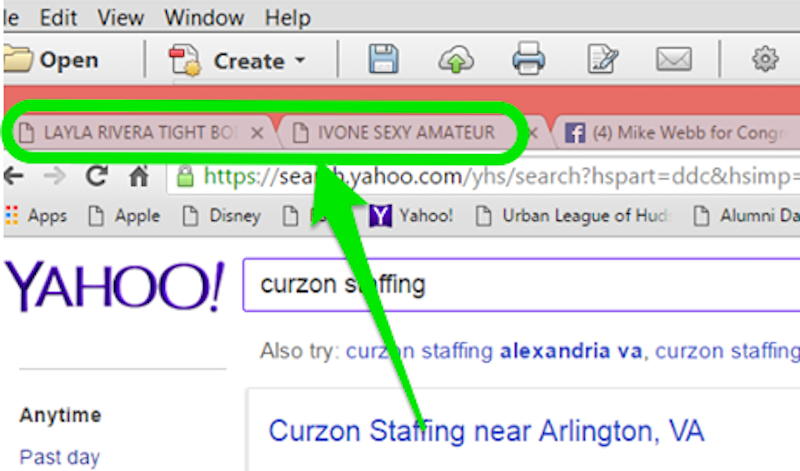


/cdn0.vox-cdn.com/uploads/chorus_asset/file/6467777/shutterstock_406781092.jpg)