 Last year was a challenging one for the Tor Project, the non-profit organization beyond the anonymous global network. Prominent developer Jacob Applebaum stood down following allegations of sexual mistreatment, an ugly saga that resulted in the appointment of a new board of directors and the introduction of policies aimed at preventing similar incidents in the future. Despite those goings-on,… Read More
Shared posts
26 Apr 15:11
Last year was a challenging one for the Tor Project, the non-profit organization beyond the anonymous global network. Prominent developer Jacob Applebaum stood down following allegations of sexual mistreatment, an ugly saga that resulted in the appointment of a new board of directors and the introduction of policies aimed at preventing similar incidents in the future. Despite those goings-on,… Read More


Funding for the Tor Project reached a record $3.3 million in 2015
by Jon Russell
Last year was a challenging one for the Tor Project, the non-profit organization beyond the anonymous global network. Prominent developer Jacob Applebaum stood down following allegations of sexual mistreatment, an ugly saga that resulted in the appointment of a new board of directors and the introduction of policies aimed at preventing similar incidents in the future. Despite those goings-on,… Read More
08 Oct 16:09
Is Kroger going to buy Whole Foods?
There are rumors that Whole Foods could sell out to supermarket king Kroger. But a deal may not make much sense. Kroger already has a big organic business. And plunging food prices are a problem for Kroger and the whole industry.
23 Sep 12:46


Ripen Fruit Faster By Putting It In a Paper Bag
by Eric Ravenscraft
You’ve got a lovely pair of avocados on the counter, but they’re not quite ripe yet. If you want to make them (or most fruit) ripen faster, put them in a loosely sealed paper bag.
03 Aug 12:02


It Turns Out the Biggest Fan of Marvel's Han Solo Comic Is George Lucas Himself
by Rob Bricken
How do we know? Well, it’s because the creator of Star Wars asked artist Mark Brooks if he could buy every single page of art that Brooks drew for the first two issues of the new comic.
12 Jul 13:05


Whip Up the Perfect Pasta Dinner Every Time With This Foolproof Formula
by Patrick Allan
Pasta always makes for a great meal, but there’s more to crafting a complete dish than mixing some noodles with some sauce. This simple formula will make your pasta meals something delicious and memorable every time.
Ronald.phillips likes this
12 Jul 13:03
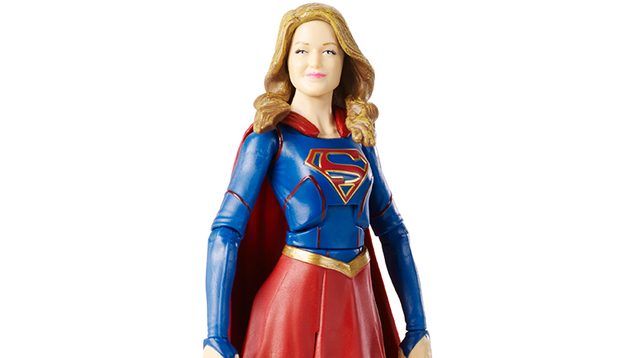
Good News, Melissa Benoist's Supergirl Is Getting an Action Figure. Bad News...
by James Whitbrook
28 Mar 12:14

New 2D material could upstage graphene
The atoms in the new structure are arranged in a hexagonal pattern as in graphene, but that is where the similarity ends. The three elements forming the new material all have different sizes; the bonds connecting the atoms are also different. As a result, the sides of the hexagons formed by these atoms are unequal, unlike in graphene. (credit: Madhu Menon)
A new one-atom-thick flat material made up of silicon, boron, and nitrogen can function as a conductor or semiconductor (unlike graphene) and could upstage graphene and advance digital technology, say scientists at the University of Kentucky, Daimler in Germany, and the Institute for Electronic Structure and Laser (IESL) in Greece.
Reported in Physical Review B, Rapid Communications, the new Si2BN material was discovered in theory (not yet made in the lab). It uses light, inexpensive earth-abundant elements and is extremely stable, a property many other graphene alternatives lack, says University of Kentucky Center for Computational Sciences physicist Madhu Menon, PhD.
Limitations of other 2D semiconducting materials
A search for new 2D semiconducting materials has led researchers to a new class of three-layer materials called transition-metal dichalcogenides (TMDCs). TMDCs are mostly semiconductors and can be made into digital processors with greater efficiency than anything possible with silicon. However, these are much bulkier than graphene and made of materials that are not necessarily earth-abundant and inexpensive.
Other graphene-like materials have been proposed but lack the strengths of the new material. Silicene, for example, does not have a flat surface and eventually forms a 3D surface. Other materials are highly unstable, some only for a few hours at most.
The new Si2BN material is metallic, but by attaching other elements on top of the silicon atoms, its band gap can be changed (from conductor to semiconductor, for example) — a key advantage over graphene for electronics applications and solar-energy conversion.
The presence of silicon also suggests possible seamless integration with current silicon-based technology, allowing the industry to slowly move away from silicon, rather than precipitously, notes Menon.
University of Kentucky | Dr. Madhu Menon Proposes New 2D Material
Abstract of Prediction of a new graphenelike Si2BN solid
While the possibility to create a single-atom-thick two-dimensional layer from any material remains, only a few such structures have been obtained other than graphene and a monolayer of boron nitride. Here, based upon ab initio theoretical simulations, we propose a new stable graphenelike single-atomic-layer Si2BN structure that has all of its atoms with sp2 bonding with no out-of-plane buckling. The structure is found to be metallic with a finite density of states at the Fermi level. This structure can be rolled into nanotubes in a manner similar to graphene. Combining first- and second-row elements in the Periodic Table to form a one-atom-thick material that is also flat opens up the possibility for studying new physics beyond graphene. The presence of Si will make the surface more reactive and therefore a promising candidate for hydrogen storage.
06 Nov 17:28
 Well that was strange — and scary. Hours ago, one of five cofounders of TinyOwl, a two-year-old, Mumbai, India-based food ordering software startup, was released after being held captive for two days by disgruntled former employees at the company’s office in Pune. TinyOwl had earlier this week announced $7.67 million in fresh funding from earlier backers Matrix Partners and… Read More


In India, TinyOwl Founder Reportedly Detained for Two Days By Laid-Off Employees — and the Police
by Connie Loizos
Well that was strange — and scary. Hours ago, one of five cofounders of TinyOwl, a two-year-old, Mumbai, India-based food ordering software startup, was released after being held captive for two days by disgruntled former employees at the company’s office in Pune. TinyOwl had earlier this week announced $7.67 million in fresh funding from earlier backers Matrix Partners and… Read More
06 Nov 17:28


Cop Believed Shot in the Line of Duty Actually Killed Himself After Faking Crime Scene
by Cheryl Eddy on True Crime, shared by Kelsey Campbell-Dollaghan to io9
An Illinois cop whose September 1 shooting death—discovered after he requested backup while in pursuit of three suspects—has been ruled a suicide, apparently motivated by the dead man’s fear that an embezzlement scheme he’d been running for years was about to be exposed.
05 Nov 13:09
 The week's soap opera ratings.


Soap opera ratings: 'The Young & the Restless' stays on top for Oct. 19-23
by Rick Porter
The week's soap opera ratings.
05 Nov 13:03
Huge Mechanical Computers Used To Calculate Horse Racing Odds
by Soulskill
szczys writes: The Pari-Mutuel system revolutionized how wagers were made on horse races starting in the late 1800s. It moved away from gambling against the house, and adjusted the odds based on how many people were placing wagers on a particular horse. Calculating and publicly displaying the changing odds was slow and labor intensive until engineers took a crack at the problem. They created Tote Boards; large mechanical computers which connected to each betting window with levers and cables. Each pull of a lever recalculated the odds which were displayed on large mechanical displays for all to see. Tote Boards were built all over the world and used until digital computing displaced them.


Read more of this story at Slashdot.
08 Oct 04:23


Smaller silver nanoparticles more likely to be absorbed by aquatic life, UCLA study finds
Researchers studied zebrafish because they have some genetic similarities to humans and their embryos and larvae are transparent, which makes them easier to observe (credit: Tunde Akinloye/CNSI)
A study led by UCLA scientists has found that smaller silver nanoparticles entered fish’s bodies more deeply and persisted longer than larger silver nanoparticles or fluid silver nitrate.
More than 2,000 consumer products today contain nanoparticles — particles so small that they are measured in billionths of a meter. Manufacturers use nanoparticles to help sunscreen work better against the sun’s rays and to make athletic apparel better at wicking moisture away from the body, among many other purposes.
Of those products, 462 contain nanoparticles made from silver, which are used for their ability to kill bacteria. But that benefit might be coming at a cost to the environment. In many cases, simply using the products as-intended causes silver nanoparticles to wind up in rivers and other bodies of water, where they can be ingested by fish and interact with other marine life.
The new study by the University of California Center for Environmental Implications of Nanotechnology, published online in the journal ACS Nano, was intend to begin addressing the question: to what extent do organisms retain those particles and what effects might they have?
Absorption of silver nanoparticles by fish
According to Andre Nel, director of UCLA’s Center for Environmental Implications of Nanotechnology (CEIN) and associate director of the California NanoSystems Institute at UCLA, it is not yet known whether silver nanoparticles are harmful, but the research team wanted to first identify whether they were even being absorbed by fish.
Deposits of 20-nanometer silver nanoparticles in zebrafish gill filaments (outlined in red) (credit: Olivia J. Osborne et al./ACS Nano)
In the study, researchers placed zebrafish in water that contained fluid silver nitrate and two sizes of silver nanoparticles — some measuring 20 nanometers in diameter and others 110 nanometers. The researchers found that the two sizes of particles affected the fish very differently.
The researchers used zebrafish in the study because they have some genetic similarities to humans, and their embryos and larvae are transparent (which makes them easier to observe). In addition, they tend to absorb chemicals and other substances from water.
The team focused its research on the fish’s gills and intestines because they are the organs most susceptible to silver exposure.
The gills showed a significantly higher silver content for the 20-nanometer than the 110-nanometer particles, while the values were more similar in the intestines; both sizes of the silver particles were retained in the intestines even after the fish spent seven days in clean water.
The experiment was one of the most comprehensive in vivo studies to date on silver nanoparticles, as well as the first to compare silver nanoparticle toxicity by extent of organ penetration and duration with different-sized particles, and the first to demonstrate a mechanism for the differences.
Osborne said the results seem to indicate that smaller particles penetrated deeper into the fishes’ organs and stayed there longer because they dissolve faster than the larger particles and are more readily absorbed by the fish.
Nel said the team’s next step is to determine whether silver particles are potentially harmful. “Our research will continue in earnest to determine what the long-term effects of this exposure can be,” he said.
The research was supported by the National Science Foundation and the Environmental Protection Agency.
Abstract of Organ-Specific and Size-Dependent Ag Nanoparticle Toxicity in Gills and Intestines of Adult Zebrafish
We studied adult zebrafish to determine whether the size of 20 and 110 nm citrate-coated silver nanoparticles (AgC NPs) differentially impact the gills and intestines, known target organs for Ag toxicity in fish. Following exposure for 4 h, 4 days, or 4 days plus a 7 day depuration period, we obtained different toxicokinetic profiles for different particle sizes, as determined by Ag content of the tissues. Ionic AgNO3 served as a positive control. The gills showed a significantly higher Ag content for the 20 nm particles at 4 h and 4 days than the 110 nm particles, while the values were more similar in the intestines. Both particle types were retained in the intestines even after depuration. These toxicokinetics were accompanied by striking size-dependent differences in the ultrastructural features and histopathology in the target organs in response to the particulates. Ag staining of the gills and intestines confirmed prominent Ag deposition in the basolateral membranes for the 20 nm but not for the 110 nm particles. Furthermore, it was possible to link the site of tissue deposition to disruption of the Na+/K+ ion channel, which is also localized to the basolateral membrane. This was confirmed by a reduction in ATPase activity and immunohistochemical detection of the α subunit of this channel in both target organs, with the 20 nm particles causing significantly higher inhibition and disruption than the larger size particles or AgNO3. These results demonstrate the importance of particle size in determining the hazardous impact of AgNPs in the gills and intestines of adult zebrafish.
08 Oct 04:22
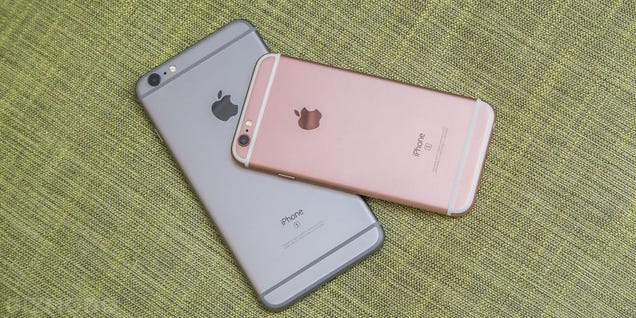


Go Find Out If Your iPhone Has a Good or a Bad Processor
by Chris Mills
As it turns out, not all new iPhones are created equal. There’s two different versions of the A9 processor, and while they’re mostly the same, one of the chips seems to be killing battery life.
25 Aug 15:20
News Post: The Ante
by tycho@penny-arcade.com (Tycho)
Tycho: I really didn’t enjoy the small amount of time I spent with Toy Soldiers: War Chest and I’m not one hundred percent sure I’ll be back. I don’t think the game feels good to play, and the game’s identity is diffuse to the point of obliteration. It’s probably important to note that I was trying it on Xbox One, maybe that matters in some way. It doesn’t look very good, the visuals can be muddy to the point of illegibility, and it doesn’t run super well. The economy in this thirty dollar game starts looking like a F2P title really…

15 Aug 16:35
Deadly house explosion gets man life sentences
INDIANAPOLIS - An Indiana judge sentenced a man to life in prison without parole on Friday for causing an explosion in 2012 that killed two neighbors when he tried to burn down an Indianapolis house for insurance money, prosecutors said.
08 Aug 23:50



Retweets Kinda are Endorsements if You're Retweeting ISIS
by Maddie Stone
You can claim your retweets aren’t endorsements, but if you’re retweeting known terrorists on a regular basis, the feds may just use that as evidence to arrest you.
04 Aug 09:46
Tom Hayes: ‘The Machiavelli of Libor’
The former trader garnered near-legendary status among his fellow expat traders in Tokyo
24 Jun 14:31

IKEA Raising Minimum Wage Again, This Time To $11.87/Hour
by Ashlee Kieler

Almost exactly a year after IKEA announced it would raise the hourly starting wage for employees from $9.17 to $10.76, the furniture retailer says it will give workers another 10% pay boost.
Bloomberg reports that IKEA will raise the hourly minimum wage it pays employees to $11.87 in an attempt to keep workers, well, working.
The latest increase is set to take effect on January 1 for about 32% of IKEA’s hourly staff and some working in the company’s distribution system.
Following the new increase, IKEA’s average hourly rate will be $15.45 at its 43 U.S. stores.
“Every year we evaluate our wage structure,” Rob Olson, chief financial officer of IKEA’s U.S. unit, tells Bloomberg. “It is not about being the leader, it’s about doing the right thing for our co-workers.”
While the company says the newest wage increase — which follows a 17% boost that took effect just six months ago — was promoted by updates to the Massachusetts Institute of Technology Living Wage Calculator and considerations of local competition and minimum-wage regulations in different cities, employee turnover also played a part.
IKEA says that since its last wage increase it has seen a stronger job applicant pool and saw staff turnover decrease by more than 5%.
Those reductions – which saved the company costs related to recruitment — are expected to continue with the increase to $11.87, Olsen tells Bloomberg.
“We’ve been ahead of the industry sector average for a while, and we want to be even further ahead,” he says. “We’ve seen that trend already.”
The company plans to evaluate wages each year and provide adjustments as needed.
Ikea Will Raise U.S. Minimum Wage to $11.87 to Retain Workforce [Bloomberg]
28 May 09:54
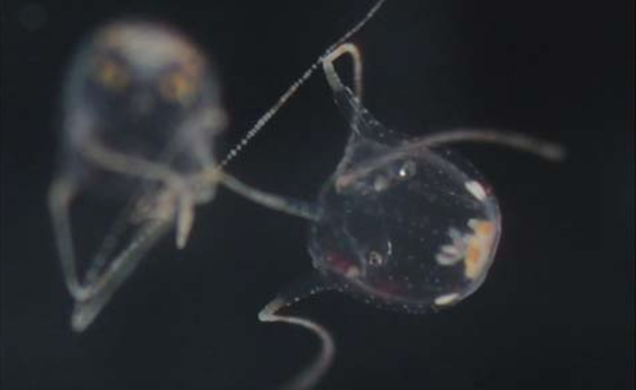


These Box Jellyfish Use Their Sting To Anchor Sperm
by Diane Kelly on throb, shared by Alissa Walker to Gizmodo
Box jellyfish are probably best known for their sting – the venom from a few species’ nematocysts, or stinging cells, can kill a person. Nematocysts are usually found on tentacles, but a new study suggests that one species has made them an integral part of their sexual system.
26 May 01:42



Beware of Ticks: Lyme Disease May Be More Common This Year
by Beth Skwarecki on Vitals, shared by Whitson Gordon to Lifehacker
This year may be a bad one for Lyme and other tick-borne diseases. One group of parasitologists is predicting “higher than usual threat” in areas where Lyme is already common, and the disease continues to gain territory every year (as the CDC maps above show).
18 Aug 12:25


This Camera Will Flag You as a Suicide Bomber If You Seem Stressed Out
by Pranav Dixit
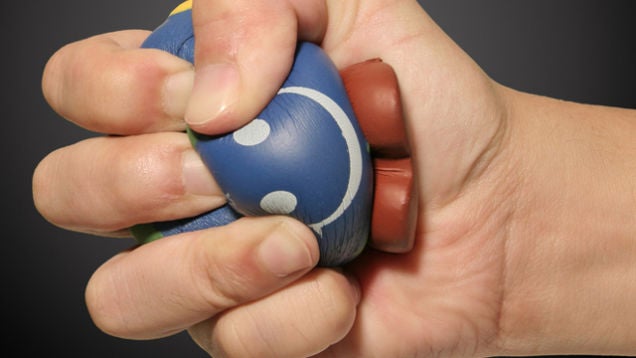
You might want to practice some breath-control before you go to China. Chinese scientists have reportedly developed a mini-camera to scan crowds for highly stressed individuals, who, it turns out, have a greater chance of turning out to be suicide bombers.
09 Jul 12:54


TimeAway Manages Kids' Device Time and App Usage, Tracks Location
by Mihir Patkar
Android: TimeAway gives parents control over their child's Android device. You can monitor and restrict time spent on the device, allow and block apps, and track the current location of the device.
12 Mar 15:20
Gartner cool vendor continues retail impact
by Robert Hetu
It’s cool vendor’s season at Gartner, a time I truly enjoy. As a departure from covering the established technology companies I get a chance to focus on things new, different and cool. In the 2012 Cool Vendors in Retail report Gartner featured a company called First Insight Inc . Here is an excerpt from that report:
“First Insight has set its sights on helping retailers and manufacturers leverage the wisdom of crowds to better predict the success level of product introductions and to recommend pricing for products. Utilizing gamification technologies delivered via social media, Web or email to the consumers’ mobile phone or computer, First Insight attracts consumers to provide feedback through fun and interactive experiences, combined with a series of advanced algorithms.”
In the CIO Journal March 10, 2014, Clint Boulton writes about the strategy Abercrombie & Fitch is using to become more relevant with faster fashion. As he makes clear the challenge in front of Abercrombie and Fitch is considerable as they try to catch up to fast fashion rivals. Boutlon writes “Abercrombie is repositioning Hollister as a fast fashion brand and using predictive analytics software from First Insight Inc. to accelerate its apparel design, buying and pricing decisions”. This is also a great challenge for First Insight as all eyes will be on this chain and this technology looking for a turnaround story.
While arriving late to the party Abercrombie & Fitch are taking the step to become more customer centric and I hope for great things. As I pointed out in a recent blog Focus Groups on Steroids – 70% of Younger Customers Want a Say the targeted market for Abercrombie & Fitch as well as Hollister seems to be primed to give feedback to retailers on specific products. I have been writing extensively about customer centricity for merchandising and can attest to the comments in the post that the organizational structures and business processes are as critical for success as is the retailer’s ability to obtain the right information. Becoming customer centric is transformational, having a disruptive but necessary impact on the merchandising organization. The retailer must not underestimate the change management support that will be required to ensure that they make the required transition.
Later this spring Gartner’s retail team will highlight 5 more cool vendors that will potentially impact the retail industry in the next few years. Gartner clients should look for this report and take note of the future vision they represent.
07 Mar 13:51
Sexual-assault bill falters in Senate
WASHINGTON — The Senate voted down a bill yesterday seeking to overhaul the way the military handles cases of sexual assault by giving authority to prosecute sexual-assault cases to an independent military prosecutor instead of top commanders.
07 Mar 13:50
EMERITUS Pinot Noir Russian River Valley Hallberg Ranch 2011 $42 (Wine Spectator)
An impressive, vibrant Sonoma Pinot Noir
03 Sep 03:46
HTC One designers jailed for allegedly stealing trade secrets
by Dara Kerr
Three lead smartphone designers are arrested and detained on grounds that they pilfered company information to start their own mobile startup. [Read more]


|
No more posts. Check out what's trending.