 Magic: The Gathering is hoping to cast a spell on cinema-goers, after 20th Century Fox acquired screen rights to the Hasbro-owned card game. If your eyebrows aren't sufficiently raised, get this: According to The Hollywood Reporter, the film studio ...
Shared posts
17 Jan 09:40
Magic: The Gathering is hoping to cast a spell on cinema-goers, after 20th Century Fox acquired screen rights to the Hasbro-owned card game. If your eyebrows aren't sufficiently raised, get this: According to The Hollywood Reporter, the film studio ...
Fox to bring Magic: The Gathering to the silver screen
by Sinan Kubba
Magic: The Gathering is hoping to cast a spell on cinema-goers, after 20th Century Fox acquired screen rights to the Hasbro-owned card game. If your eyebrows aren't sufficiently raised, get this: According to The Hollywood Reporter, the film studio ...
15 Jan 13:53
FX's 'Justified' Will End After Season 6
by chris.rudolph@huffingtonpost.com (Christopher Rudolph)
"Justified" will come to an end after the show's sixth season.
According to The Hollywood Reporter, FX Networks CEO John Landgraf sadly confirmed the news, "It was [showrunner] Graham Yost and Timothy Olyphant's decision. I would have liked to have had more 'Justified,' it's one of my favorite shows."
The backwoods Western, which stars Olyphant as U.S. Marshal Raylan, has become a fan and critical favorite over the seasons.
The fifth season premiered earlier this month with a dip in ratings from the Season 4 premiere.
"We talked about it a year ago; they felt that the arc of the show and what they had to say would be best served by six seasons instead of seven," explained Landgraf. "Regretfully, I accepted their decision."
This is a dark day for "Justified" fans but hopefully the series gets the just ending it deserves.
"Justified" airs Tuesdays at 10 p.m. EST on FX.
According to The Hollywood Reporter, FX Networks CEO John Landgraf sadly confirmed the news, "It was [showrunner] Graham Yost and Timothy Olyphant's decision. I would have liked to have had more 'Justified,' it's one of my favorite shows."
The backwoods Western, which stars Olyphant as U.S. Marshal Raylan, has become a fan and critical favorite over the seasons.
The fifth season premiered earlier this month with a dip in ratings from the Season 4 premiere.
"We talked about it a year ago; they felt that the arc of the show and what they had to say would be best served by six seasons instead of seven," explained Landgraf. "Regretfully, I accepted their decision."
This is a dark day for "Justified" fans but hopefully the series gets the just ending it deserves.
"Justified" airs Tuesdays at 10 p.m. EST on FX.

15 Jan 12:14
brockdavis: Snowman on his smartphone. #modernsnowman

Rtersieva, Roumen.ganeff and 3 others like this
15 Jan 09:59
U.S. Supreme Court Won't Hear Newegg/Soverain Case for Shopping Cart Patents
by Tiffany Kaiser
Newegg wins yet another patent battle


|
15 Jan 09:56


What To Know About The Net Neutrality Ruling
by Kelsey D. Atherton
Graffiti "Internet" on the wall in Vodice, Croatia.
Ronald Eikelenboom
The DC Circuit Court has issued a ruling in Verizon v. FCC that is likely the shape the very nature of the internet. At the heart of the case is how the companies that provide internet to consumers can control that flow of information. In 2010, the Federal Communications Commission put forth an order that required "network neutrality," meaning that internet providers had to treat all packets delivered on the internet as equal. Today, a court ruled that the FCC lacks the authority to impose net neutrality on high-speed internet providers.
Without a net neutrality requirement, service providers could turn internet connections into a toll road, charging companies like Netflix or Google extra money to deliver their packets with a higher priority than others. This, in turn, could also slow down the loading of sites that couldn't or refused to pay. The biggest fear is a "cable-ization" of the internet, where certain internet providers only provide service to certain sites, in much the way that cable channels are packaged and sold separately.
To understand the implications of today's ruling, I spoke with two experts on net neutrality and free speech online. James Grimmelmann is a professor of law at the University of Maryland and directs the University's Intellectual Property Program. Josh Levy is the internet campaign director at Free Press, which has already put out a strong statement on the court's ruling in Verizon v. FCC.
What were the stakes in Verizon v. FCC?
James Grimmelmann: Whether the FCC's net neutrality rules — which prevented ISPs like Verizon from discriminating against particular websites or services — were valid. With the anti-discrimination rules struck down, Verizon is free to tell a Netflix, a Google, or a Facebook, "We won't let our customers connect to you unless you also pay us."
Josh Levy: The stakes were no less than the future of the open internet. The FCC’s rules, while imperfect, provided some protections for internet users. With those rules thrown out, ISPs now have the power to block any online content they like. This is the opposite of the open internet. It’s a dark day for internet users.
Do you expect the case to be appealed higher, and if so, how do you see the Supreme Court ruling on it?
"With the rules thrown out, ISPs now have the power to block any online content they like."
Grimmelmann: The FCC could ask the Supreme Court to review the case. But since the court today outlined a route the FCC could follow if it wanted to impose neutrality rules — "reclassifying" broadband service — the Supreme Court would not be likely to step in.
Levy: We’re not sure. Right now, the FCC can fix this problem by reasserting and restoring its authority over broadband connections. Today’s court decision charted a clear path for doing so.
Grimmelmann, you tweeted that the FCC got expanded authority under § 706. In layman's terms, what does that do?
Grimmelmann In § 706, Congress asked the FCC to promote broadband deployment; the FCC can now use this mission to make regulations that encourage deployment. On Twitter, one of my followers suggested that this authority could be used, for example, to allow cities to build their own broadband networks.
Was this a total victory for Verizon, or did the FCC gain anything in the ruling?
Levy: The FCC didn’t gain anything. It lost its ability to stop ISPs from blocking or discriminating against content.
Levy, you tweeted that the rules were struck down because the FCC passed them the wrong way. What is the right way, and what would secure the rules from challenges in the future?
Levy: The right way is for the FCC to reclassify broadband under Title 2 of the Communications Act (rather than under Title 1, which it did before). This is the legally appropriate way for the FCC to assert its authority, and is the path suggested in a number of court decisions, including today’s.
If ISPs aren't a common carrier, what are they? This quote from the ruling:
We think it obvious that the Commission would violate the Communications Act were it to regulate broadband providers as common carriers. Given the Commission’s still-binding decision to classify broadband providers not as providers of “telecommunications services” but instead as providers of “information services,” see supra at 9–10, such treatment would run afoul of section 153(51)
is a heck of a statement. Could ISPs be re-labeled common carriers by law?
"Economically, it shifts power and money towards ISPs and away from websites and internet services."
Grimmelmann: The FCC has, in previous proceedings, classified ISPs as telecommunications services. It could go back and reclassify them as information services, and there's substantial judicial support that the FCC would be within its powers to do so. But that would also subject ISPs to various other regulatory requirements, and it would be politically controversial.
Levy: Yes, easily. The FCC could, today, reclassify broadband as a “telecommunications” service under Title 2 of the Communications Act and thus reclassify internet providers as common carriers.
Much has been made of comparisons to cable vs broadcast TV in this. Does this ruling lead directly to the "cable-ization" of internet communication?
Grimmelmann: Economically, it shifts power and money towards ISPs and away from websites and internet services. But, at least in the short run, the internet will still look like the internet, rather than the much narrower and intensively programmed world of cable.
Levy: We believe that it does. Without the FCC protecting internet users, ISPs will be free to charge extra for — or block outright — Facebook or Netflix in the same way that cable TV providers offer or don’t offer FX or ESPN.
|
|
14 Jan 16:36
 Do you love to spend rainy Sunday afternoons busily putting together complicated furniture from Ikea? If so, Italian design firm OSVehicle may have the perfect automotive offering for you.


Meet the flat pack car you can build in less than an hour
by Leon Poultney
Do you love to spend rainy Sunday afternoons busily putting together complicated furniture from Ikea? If so, Italian design firm OSVehicle may have the perfect automotive offering for you.|
|
Roumen.ganeff likes this
14 Jan 13:35
 Last year, Sir Richard Branson promised Virgin Galactic's first commercial mission would rip through the atmosphere in 2014. That goal has edged ever closer with SpaceShipTwo's latest trip beyond the sound barrier, where it shot past previous records ...
Virgin Galactic tests new thrusters, further disregards gravity (video)
by Timothy J. Seppala
Last year, Sir Richard Branson promised Virgin Galactic's first commercial mission would rip through the atmosphere in 2014. That goal has edged ever closer with SpaceShipTwo's latest trip beyond the sound barrier, where it shot past previous records ...
ksyoo, David Pelaez and one other like this
14 Jan 10:32
 Google Image Search has allowed users to filter results based on how they're licensed since 2009, but the option remained hidden under an advanced options menu where few users ever look. Now, a request by law professor and Creative Commons founding ...
Google Image Search makes it easier to sort results by licensing rights
by Richard Lawler
Google Image Search has allowed users to filter results based on how they're licensed since 2009, but the option remained hidden under an advanced options menu where few users ever look. Now, a request by law professor and Creative Commons founding ...
14 Jan 10:27


CyanogenMod announces 'GalleryNext' to handle photos in future versions
by Andrew Martonik


New interface and cloud service integration highlight beta release
It's no secret that the stock Gallery app from AOSP is rather simple, but effective. CyanogenMod thinks it can offer something better, though, and has just announced an app to replace it called GalleryNext. While the app isn't complete, it does offer integration with Flickr, Google+, Facebook and Dropbox for photos, as well as automatic album grouping.
It of course supports videos, gifs, deduping and all of the features you'd expect from a more advanced gallery app you'd download as a replacement for the stock version. On the "todo" list currently is implementing KitKat's immersive mode, photo editing and some polish around all of the features.
GalleryNext is available starting today through the Play Store's beta testing system, and will presumably ship as the default gallery app in future versions of CM. If you're interested in becoming a tester, head to the source link below and follow the simple instructions.
Source: +CyanogenMod
|
|
Roumen.ganeff likes this
14 Jan 10:03


A Few Questions For Peter W. Singer About The Future Of Cybersecurity
by Paul Adams
Peter W. Singer and Allan Friedman's brand new book is an impressively comprehensive guide to one of the least understood arenas of modern life. The book consists of some five dozen questions and answers about cybersecurity, divided into sections: How It All Works, Why It Matters, and What Can We Do? As I read through it, thinking about these questions I might want to ask the authors, all too often the question that occurred to me on one page was already answered on the next. Cybersecurity and Cyberwar: What Everyone Needs To Know by P. W. Singer and Allan Friedman. Buy it here.
Popular Science: What was the context and impetus for you and your coauthor to create this book, and what impact can you optimistically foresee from its publication?
Peter W. Singer: We were at a major conference in Washington DC. A senior Pentagon leader was trying to explain why he thought cybersecurity and cyberwar was important. But he could only describe the problem as “all this Cyber-stuff.”
Our entire modern way of life, from communication to commerce to conflict, depends on the Internet, and the resultant cybersecurity issues challenge literally everyone. We face new questions in everything from our rights and responsibilities as citizens of both the virtual and real world, to how to protect our companies, our nations, and our families from a new type of danger.
And, yet there is perhaps no issue so important that remains so poorly understood. That “stuff” problem happens in the halls of government power, but also in business, the military, law, media, and even in our personal lives. It ranges from the 70% of business executives who have ended up making a cyber decision for their firm, despite the fact that no MBA teaches it as a regular part of 21st public and mass media’s confusion on matters from the NSA to the latest credit card hacks.
So what we tried to do is provide the kind of easy-to-read yet deeply informative resource book that has been missing on this crucial issue. The book is structured around the key questions of cybersecurity: how it all works, why it all matters, and what we can do? Along the way, we take readers on a tour of the important (and entertaining) issues and characters of cybersecurity, from the "Anonymous" hacker group and the Stuxnet computer virus to the new cyber units of the Chinese and US militaries. Importantly, its neither too technical nor histrionic. Rather, I hope it pushes some new matters and approaches to aid the experts, but more generally helps people understand this all. Hopefully it will better equip us all to deal with these important issues and new responsibilities, as they are not going away.
We have to understand that as long as we use the Internet, we will face cybersecurity and cyber war issues. The question is how will we manage them?
PS: What sort of significant changes or scenarios do you predict we may expect in the cybersecurity arena over the next year or two?
We’re discovering 9 new pieces of malware every second.
PWS: Clearly the number of attacks will go up; indeed, we’re discovering 9 new pieces of malware every second. But in the book we try to look beyond these astronomical, but also sometimes meaningless numbers, to key trends. One, for example, is the shift to different uses and users, such as the move towards more mobile devices (and threats towards them). Moreover, the Internet is no longer just about sending or compiling information online, it shapes the real world via the emerging Internet of Things. Indeed, Cisco believes the number of Internet-enabled devices will rise to 40 billion over the next 5 years, as cars, fridges, medical devices, and gadgets not yet imagined or invented all link in. But these in turn will be targeted with different consequences that say defacing a website. For instance, PopSci has explored the move toward Internet-enabled cars and even driverless cars and the drone boom. Well, we’re also seeing the move towards “car-hacking” and “drone-hacks.”
In war, more than 100 nations are now building some kind of cyber-military capability and that trend will only grow. Indeed, it has all the hallmarks of an arms race, from the outcome of more spending (the word “cyber” appears 147 times in next year’s Pentagon budget), but less security, to even a brewing “cyber-industrial complex.” The interesting (and scary) thing for warfare overall will be militaries figuring out how to integrate and synergize computer network operations with their other military tasks. Think of it like how they had new technologies like radios, airplanes, and tanks in World War I, but it wasn’t until they were all brought together in the Blitzkrieg that they reached their true power.
Finally, 2014 will be a huge year for the role of the government in the online world to be debated. It is not just the ongoing NSA mess that will continue to shake out in the US and reverberate abroad (notably on American tech companies, who have already lost billions of revenue). There are also international negotiations over the underlying governance of the Internet, where authoritarian regimes are pushing for more controls. If we don’t watch out, the Internet that has been so wonderful to us could be something our kids don’t end up enjoying.
As much as 94 percent of attacks would be stopped by basic cyber hygiene
PS: Can you synopsize three early actions you would take if you were appointed to an official executive role to improve US cybersecurity?
PWS: Goodness, the last third of the book is all “what can we do?” type chapters, not just at national level, but also at corporate and even personal levels. But a few that would be important for the US government would be:
Launch a major campaign of cyber hygiene awareness, backed by a cyber version of the most successful government agency in history, the CDC (Centers for Disease Control). At the end of the day, both the problems and answers in cybersecurity and cyberwar are not about the software or hardware, but the wetware, the people behind the systems. Get the incentives, the organizations, and education right and things get much better. Not solved, but better. Indeed, one study found that as much as 94 percent of attacks would be stopped by basic cyber hygiene, with my favorite example being that the most popular password is..."password."
Create balance in our approach: At the Pentagon, we are spending 2.5-4 times as much on cyber offense research as we are cyber defense research. That’s a lot like standing in your glass house and thinking the best way to deal with gangs of neighborhood kids is to buy a stone sharpening kit. We are spending over 10 times as much on the Pentagon cyber capabilities as we are at civilian agencies like the DHS. Likewise, we need balance in the public-private sector responsibilities. Firms should not think this is only for the government to handle. Whether you are a bank, a power company, a department store, or a cupcake stand, you have to start taking your cybersecurity responsibilities more seriously.
Get Congress on board (harder said than done): The last time Congress passed any significant cybersecurity legislation was 2002, half a decade before anyone had even heard of the iPhone, let alone today’s world of metadata and Google Glass.
PS: As you recognize in your book, the internet has facilitated an explosion in the creation and distribution of cute videos. Will you share a favorite or two?
PWS: Since my last book was on robots, I have to combine the two and go with the cat using his Roomba robot to escalate the eons-old battle with canine forces.
But as the new book explores, the US and Chinese approaches to cybersecurity and cyberwar are another one of those crucial trends that will define the future. Part of this is the two governments’ political and economic power and their very different visions of the future. But part is simply driven by the fact that the Internet’s users and uses has evolved from its roots a generation back in California. And there is no better illustration than the news that cute panda bear videos are now starting to outnumber cute cat videos. So I should also include my favorite of those, where pandas play on a slide, just like Nature intended...
|
|
14 Jan 10:02


With India On Board, Southeast Asia Could Soon Be Declared Polio-Free
by Francie Diep
Polio Drops
A child gets polio drops during a vaccination campaign in Nepal.
Adam Bjork, CDC
Three years ago today, India reported its last case of polio. Five years ago, the country was home to nearly half of the world's cases of poliovirus, 741 cases out of 1,604 worldwide. And before the launch of the Global Polio Eradication Initiative in 1988, the illness crippled an estimated 200,000 children in India every year.
"It's really quite extraordinary," Carol Pandak, an epidemiologist with the community-service group Rotary International, tells Popular Science. "India was a country where it was once thought polio could never be eradicated."
So this is a huge win for the country. It also means that the World Health Organization could soon declare its South-East Asia Region, which includes 11 countries, officially polio-free. WHO's South-East Asia Regional Certification Commission plans to meet to review its data in March, the WHO Country Office for India wrote to me in an email. If the region checks out, it would be an official recognition that polio no longer arises in that part of the world endemically, although the virus still could creep in over borders, especially from neighboring Pakistan, which is one of the three countries in the world in which polio is endemic. (The others are Afghanistan and Nigeria.)
For Pandak, the successes in India mean public health organizations have got a good chance in polio's remaining hideouts. Rotary International works with the World Health Organization, the U.S. Centers for Disease Control and Prevention, and the United Nations as a part of the Global Polio Eradication Initiative. "The ability to eradicate polio from there gives hope and inspiration to other countries that may have some similar challenges like highly densely populated slum areas, issues with water and sanitation, et cetera," she says.
"India was a country where it was once thought polio could never be eradicated."
Getting rid of polio in a region mainly means ensuring everybody is vaccinated against the virus, including every new generation of children. Those places where the virus is still endemic have struggled with vaccine resistance, including among some Taliban groups in Pakistan and Afghanistan. For example, some Taliban leaders have questioned whether U.S.-led vaccination efforts are actually covers for spying. But through working in India, Rotary members have learned some lessons they think will work elsewhere, Pandak says.
In two of India's northern states, where vaccinators encountered some resistance and suspicion, local Rotary members gathered a committee of several dozen religious leaders and talked to them about why it was important to get vaccines. Once those leaders were on board, their community members were on board, too.
For the rest of India, Rotary focused on a different kind of leader—popular movie star Amitabh Bachchan (In U.S., he's appeared in The Great Gatsby), who became a polio vaccine advocate. Rotary has recruited Pakistani cricket star Shahid Afridi and Nigerian actors Sani Danja and Funke Akindele to do the same for their own countries.
The Global Polio Eradication Initiative's work is not done in India, either. To maintain India's and other southeast Asian nations' polio-free status, workers must continue vaccinating children. They'll have to until polio is wiped from the world, because of the constant danger of the virus traveling from Pakistan, Afghanistan and Nigeria. Although the world now sees just a few hundred polio cases a year, if countries began vaccinating incompletely, they could start to see 200,000 cases of paralytic polio every year within 20 years, according a study published in 2007. "Worldwide eradication of wild polioviruses is likely to yield substantial health and financial benefits," the study's authors wrote in their paper, published in the medical journal The Lancet, "provided we finish the job."
Such a full-court press will be expensive. As cases dwindle, the cost per case becomes extraordinary—nearly $2.5 million per case in 2012, as Wired reports. Researchers from the Global Polio Eradication Initiative argue that by 2035, eradication efforts will have saved countries $40 billion to $50 billion, much more than the estimated total campaign cost of $9 billion to $10 billion. Much of the savings will come from productivity gains in people in low-income countries no longer becoming crippled.
Should the day come when polio is truly gone from the world, it would be the second vaccine-preventable disease that humans have eradicated. The only precedent is smallpox. The next, Pandak thinks, may be measles and rubella. There are a couple of reasons those diseases are promising. Like polio and smallpox, they don't have any animal carriers, which means no wrangling with microbes lying in wait in monkeys, bats or mosquitoes. There are also safe, effective vaccines for measles and rubella that work in children.
|
|
14 Jan 09:37


The 3D printer revolution is coming
by Carly Page
The best of 3D printing on show at this year's CES
|
|
Cooper Griggs, Roumen.ganeff likes this
14 Jan 09:37


Oracle to issue huge security patch addressing 36 Java vulnerabilities
by Lee Bell
144 flaws found across hundreds of Oracle products and components
|
|
14 Jan 09:34


Microsoft might unveil Windows 9 in April to end Windows 8 woes
by Chris Merriman
Project Threshold could be its chance to break with the past
|
|
14 Jan 09:32
We Shine the Spotlight on MOM Star Allison Janney
by Tiffany Vogt
In the CBS comedy MOM, Allison Janney has been presented with the role of a lifetime portraying a mother, grandmother, and recovering alcoholic who is now battling breast cancer. Credit goes to Chuck Lorre for knowing that Allison was the perfect actor for the part. During a press interview at the Warner Bros. Mondo International
Read More


Read More
Roumen.ganeff likes this
14 Jan 09:27
 We'll be honest: if you told us a big company was going to buy Nest, we wouldn't have guessed Google. After all, the home automation company was founded by Tony Fadell and Matt Rogers, both ex-members of the original iPod team. Heck, the Nest ...
Google acquires Nest's line of home automation products for $3.2 billion, pledges continued support for iOS
by Dana Wollman
We'll be honest: if you told us a big company was going to buy Nest, we wouldn't have guessed Google. After all, the home automation company was founded by Tony Fadell and Matt Rogers, both ex-members of the original iPod team. Heck, the Nest ...
14 Jan 09:27
 Where one of Twitter's app designs goes, the rest will follow -- hot on the heels of its latest Android and iOS releases, the social network is rolling out a new web interface with a matching look. The change is primarily cosmetic at first glance, ...
Twitter's web look refreshed to match your phone
by Jon Fingas
Where one of Twitter's app designs goes, the rest will follow -- hot on the heels of its latest Android and iOS releases, the social network is rolling out a new web interface with a matching look. The change is primarily cosmetic at first glance, ...
14 Jan 09:26
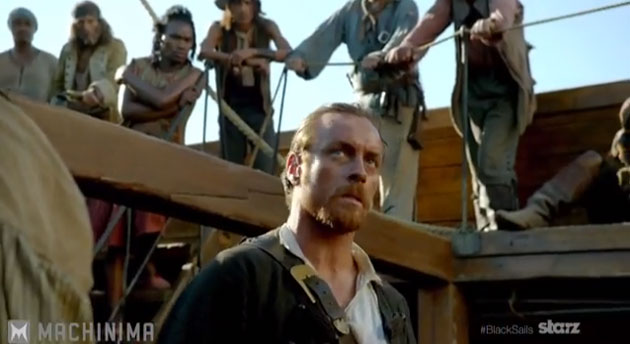 It's no longer strange to see a TV series premiere online before it reaches traditional broadcasters, but Starz is planning a truly special internet debut for its latest project, Black Sails. The first episode of the Michael Bay-produced pirate drama ...
Michael Bay's 'Black Sails' hits iTunes, Amazon and YouTube a week before TV premiere
by Jon Fingas
It's no longer strange to see a TV series premiere online before it reaches traditional broadcasters, but Starz is planning a truly special internet debut for its latest project, Black Sails. The first episode of the Michael Bay-produced pirate drama ...
13 Jan 16:42
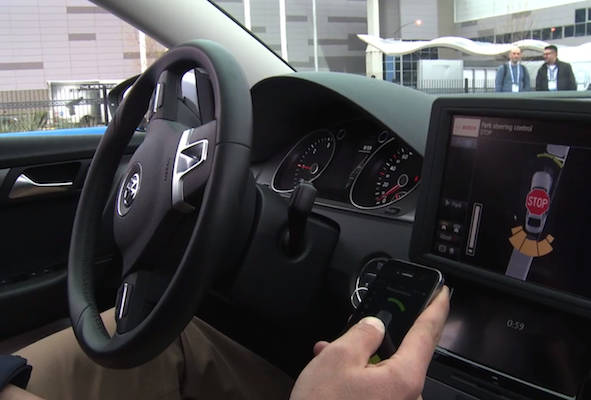 German electronics and engineering manufacturer Bosch has unveiled new technology that aims to make parking in tight spaces a bit easier.
Bosch reveals new app that takes the stress out of parking in tight spaces
by Leon Poultney
German electronics and engineering manufacturer Bosch has unveiled new technology that aims to make parking in tight spaces a bit easier.|
|
Roumen.ganeff likes this
13 Jan 15:15
Dark Sarah - New Video Featuring Manuela Kraller
by Bad English
"Memories Fall" is the new video from Dark Sarah, the new project led by former Amberian Dawn singer Heidi Parviainen, which can now be seen below. The track features a guest appearance by former Xandria frontwoman Manuela Kraller and will appear on Dark Sarah's debut album Behind The Black Veil, to be released later this year.
Roumen.ganeff likes this
13 Jan 06:43
Your 2014 Golden Globe Winners
by theTVaddict
In between falling off the couch laughing at the hilarious hosting of Tinay Fey and Amy Poehler and scanning our twitter feed, we’ll be updating this post with the winners from the TV portion of the 2014 Golden Globe. Best TV Series Comedy BROOKLYN NINE-NINE Best Actress in a TV Series Comedy Amy Poehler, PARKS
Read More


Read More
12 Jan 08:44
 The lights are now dimmed throughout the many halls of CES, and none are more perturbed by darkness than the folks at Oledcomm. Illumination is the company's specialty, after all; or, more specifically, LiFi technology, which facilitates high-speed ...
Smartphone concept incorporates LiFi sensor for receiving light-based data
by Jamie Rigg
The lights are now dimmed throughout the many halls of CES, and none are more perturbed by darkness than the folks at Oledcomm. Illumination is the company's specialty, after all; or, more specifically, LiFi technology, which facilitates high-speed ...
Luke Brincat likes this
11 Jan 22:14
Beyond: Two Souls also becomes a million-seller
by Andrew Yoon
Quantic Dream's Beyond: Two Souls has also reached million-seller status--much like its predecessor, Heavy Rain. According to the developer, the game reached the milestone "shortly before Christmas 2013."
Roumen.ganeff likes this
11 Jan 08:00
 Ah, Las Vegas, the perfect location for a spontaneous wedding. Earlier today, we witnessed a quick and dirty collaboration between Parrot and Thalmic Labs at CES, where they paired an AR.Drone 2.0 with a MYO gesture-control armband. The demonstrator ...
When Parrot AR.Drone meets MYO armband, magic ensues (video)
by Richard Lai
Ah, Las Vegas, the perfect location for a spontaneous wedding. Earlier today, we witnessed a quick and dirty collaboration between Parrot and Thalmic Labs at CES, where they paired an AR.Drone 2.0 with a MYO gesture-control armband. The demonstrator ...
Roumen.ganeff likes this
10 Jan 22:38
Samsung, Sharp, Phillips Demonstrate Prototype 8K Ultra-High-Definition TVs at CES
by Anton Shilov
8K TV Prototypes Make Unexpected Debut at Consumer Electronics Show
10 Jan 15:51
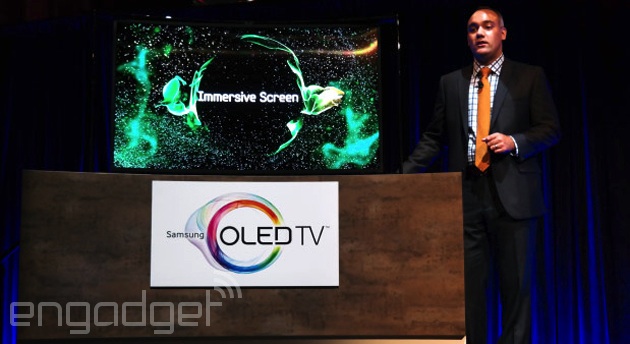 We hope you weren't counting on OLED TV prices coming down any time soon. Samsung's HS Kim warns USA Today that affordable OLED sets likely won't be available for another three to four years -- a year or two later than he first expected. ...
Samsung: cheap OLED TVs won't be ready for three to four years
by Jon Fingas
We hope you weren't counting on OLED TV prices coming down any time soon. Samsung's HS Kim warns USA Today that affordable OLED sets likely won't be available for another three to four years -- a year or two later than he first expected. ...
10 Jan 14:07
GEOFF TATE, Former Bandmates Involved In Settlement Talks Over Rights To QUEENSRŸCHE Name
Singer Geoff Tate — who was fired from the Seattle progressive rock band QUEENSRŸCHE in 2012 after fronting it for three decades — has revealed to AL.com that he currently is involved "in settlement talks" with his former bandmates over the rights to the group's name.
Tate and his wife, Susan, QUEENSRŸCHE's former manager, filed a lawsuit in June 2012 asking the judge to award them the rights to the band's name in exchange for Tate paying Eddie Jackson (bass), Michael Wilton (guitar) and Scott Rockenfield (drums) the fair market value for their interests in the QUEENSRŸCHE companies. Wilton, Rockenfield and Jackson filed a countersuit against the Tates in which they accused Geoff of creative obstruction and violent behavior, and Susan Tate of questionable business practices.
While ruling against Tate, the presiding judge determined that there was no legal hurdle in Tate also using the name with an all-new lineup of musicians. "I don't see any reason that Mr. Tate can't have the benefit, if he gets other members, of whatever name he uses of using the brand," Superior Court Judge Carol A. Schapira said during the July 13, 2012 court hearing. "I think [doing that would be] inherently confusing, although I'm sure the market can get these things sorted out," she added.
Asked by AL.com what his ultimate goal of the court proceedings is — to get the original lineup of QUEENSRŸCHE back together or to win the name and continue with this band, Geoff said: "Right now, we have two QUEENSRŸCHEs, which is way too confusing to fans. We have to give someone the name and someone has to pay the other person off. We're in settlement talks now, and I hope that we can come to a conclusion in the next couple of weeks."
Wilton, Rockenfield and Jackson last year accused Geoff Tate of "continu[ing] to harm the QUEENSRŸCHE brand" since the Tates' original lawsuit was filed in June 2012. In a court document, they wrote: "The newest self-titled QUEENSRŸCHE CD release by the [Todd La Torre-fronted version of the band] entered the U.S. charts at #23 and continues to get 9-out-of-10-star reviews and is still selling very well on a weekly basis around the globe. In comparison, Geoff Tate released his own QUEENSRŸCHE CD in April of [2013] titled 'Frequency Unknown' and depicted as F.U. on the cover, which entered the charts at #82, received very bad reviews around the world, and has slowed to almost no more weekly sales. [The Todd La Torre-fronted version of QUEENSRŸCHE's] new CD even outperformed the last two CDs of them with Geoff Tate, selling more in a month than the 'Dedicated to Chaos' CD has since its release in 2010, and charting much better than both that album and the previous one, 'American Soldier'. Thus, the return to the classic sound [Tate's former] bandmates have made with the new CD and live shows has been met with overwhelming success."
They added: "Geoff Tate also chose very poorly in hiring live musicians that have shown that they are not capable of representing the correct performances of the QUEENSRŸCHE music legacy, and he was constantly replacing them. He has been offering his low-quality version of QUEENSRŸCHE to the promoters at a much reduced rate, as low as $10,000 per night, when, in fact, [his former] bandmates have done their best to keep the authorized QUEENSRŸCHE at an average of well over $20,000 per show this entire year. However, this becomes harder and harder with Geoff Tate's sub-par band and cut-rate pricing that continues to be damaging to the QUEENSRŸCHE brand and legacy no matter who ultimately wins control after trial."
In an interview with The Oakland Press, Rockenfield said said that "negotiations are ongoing between Tate and the singer's former bandmates and "there's still time for anything to happen between now and [the start of the trial in January 2014]."
"I think our confidence is pretty high," Scott said. "There's a lot of legal stuff you have to deal with, but we just feel good and look at it as a light at the end of the tunnel and keep playing shows and making music. I think when you do that, the right decision will be made in time."
10 Jan 10:01

Gmail now lets users email Google+ connections, opt out available
by Tom Leskin
Further integrating its social network into its other services, today Google announced a new feature allowing Gmail users to email a Google+ connection, whether they’ve exchanged email addresses or not.
Gmail and Google+ users should be receiving an email with information about the new feature in the next few days. The feature can then be enabled with a new setting in Gmail, with certain circles, anyone or no one at all from Google+ being able to email you.
Google said that the way it works is when typing an address in the “To” box, you can keep typing or select an email address from someone you already have contacted before, as always, or you can choose to send an email to a Google+ contact, whose email address you don’t have.
Keeping privacy in mind, Google said that your email address is only shared with the people you want to have it, so your email address isn’t visible to a Google+ connection unless you send that person an email, and vice versa, that person’s email address isn’t visible to you unless they send you an email.
Lastly, if a contact in one of your circles emails you, it’ll show up in the Primary tab of your Gmail inbox, while all others will be filtered to the Social tab.
The post Gmail now lets users email Google+ connections, opt out available appeared first on AndroidGuys.
10 Jan 07:26
 Smartphones with interchangeable parts is the future... or so companies like Motorola and ZTE believe. Both manufacturers are currently working on prototypes of what's known as modular smartphones. Such a device, if it comes to market, will give ...
ZTE's modular smartphone could make part-swapping a reality within two years
by Brad Molen
Smartphones with interchangeable parts is the future... or so companies like Motorola and ZTE believe. Both manufacturers are currently working on prototypes of what's known as modular smartphones. Such a device, if it comes to market, will give ...
Cooper Griggs, PaPyDjoe and -1 others like this