 Ignore it all you like, but eSports is booming. There are now million-dollar payouts, doping scandals and even official ways to put money down on your favourite squad. While gambling on eSports is still a relatively new concept, it's just been give...
Shared posts
26 Aug 09:00
Ignore it all you like, but eSports is booming. There are now million-dollar payouts, doping scandals and even official ways to put money down on your favourite squad. While gambling on eSports is still a relatively new concept, it's just been give...
eSports gets its first major UK bookmaker
by Matt Brian
Ignore it all you like, but eSports is booming. There are now million-dollar payouts, doping scandals and even official ways to put money down on your favourite squad. While gambling on eSports is still a relatively new concept, it's just been give...
25 Aug 09:51

Want Safer Kids? Send Them Into Traffic
by lskenazy
.
There are two ways to approach a risk: Try to spend your whole life avoiding it, or learn how to deal with it. In Germany, when it comes to kids, the authorities seem to be voting for Option B. Here’s a letter from a mom over there:
Dear Free-Range Kids: Finally took a photo of a poster I wanted to send you:
Those are feathers!
The picture shows parents wheeling their kids to school in a wheelbarrow on a bed of feathers.
The local traffic authorities realized there was an increase in traffic accidents involving kids caused by their inexperience in being near traffic on sidewalks, having to cross roads on their own, and general lack of knowledge of the road rules. Their research made them realize this was linked to the appearance of the “drop off and pick up” scenario at school/sports/etc., instead of the arrive and depart on your own practice of before. They ran this campaign. The wording underneath says, roughly, “There is only one certainty: Traffic awareness requires practice as with everything in life. Learned awareness and movement bring your children further than Mum’s taxi.”
It was sponsored by the Children’s Accident Commission of Kaiserslautern, Germany under the project “Safety while out and about.” They emphasize familiarizing your kids to traffic and what to do in and around traffic and to slowly let them be independent movers on a step by step basis..And I was amazed to find that it is compulsory for all year 3 kids here to undergo bicycle training and assessment through the school — i.e. they have to be able to ride a bicycle, have a helmet, and pass a practical assessment at a traffic center to show they know the rules of the road, how to cycle in traffic and execute it without endangering themselves. Neat huh?.Be well,.Michelle
It’s like giving kids swimming lessons, or driving lessons — lessons that recognize that adults will not always be orchestrating and supervising every second of their lives. It’s liberating, empowering, and protective all at once. It even saves the environment from a million cars dropping off able-bodied kids every morning.
Could we do this here? Has anyone’s school undertaken something like this? – L.
Roumen.ganeff, Remlaps likes this
25 Aug 09:49


Here's proof that Uber is obliterating New York City's taxi industry
by Maya Kosoff

Uber is crushing the taxi industry that has dominated New York City for so many years.
Gothamist just published a story about the increasing number of abandoned taxis piling up on the streets of Brooklyn, outside of taxi dispatchers.
Hossam Yossri, who also works at McGuinness Management in Greenpoint, Brooklyn, told Gothamist that taxi drivers keep quitting, abandoning their vehicles to defect to Uber.
Yossri says drivers are jumping ship to Uber because they don't have to worry about paying a lease or interacting with a dispatch.
Taxi dispatchers like McGuinness Management Corporation have so many abandoned taxis that employees like Jon-Nicholas Kiouvas serve as "runners," coming into work early to run around the neighborhood, reparking taxis to avoid getting parking tickets.
Uber's flexibility is a big part of why people flock to it as a job opportunity.
Taxi and Limousine Commission spokesman Allan Fromberg told Gothamist, "Of course, we've heard that drivers like the flexibility Uber offers. We are in the midst of reevaluating our lease rules to provide yellow drivers with this kind of flexibility."
Gus Kodogiannis, who opened McGuinness Management almost 30 years ago, said: "Honestly, yes, it's Uber. We've lost 40% of our business in the last year and a half."
Uber waged a public battle against New York City mayor Bill de Blasio last month after he proposed a bill to limit the growth of for-hire vehicle companies such as Uber and Lyft.
To fight the proposed legislation, Uber pulled no punches. The company, which is far from conflict-averse, aggressively marketed itself as a service for minorities and outer-borough residents (two groups taxis are notoriously bad at serving) and as a means for New Yorkers to find gainful employment.
New York City is one of Uber's largest markets; the company generates hundreds of millions of dollars in revenue there.
You can read Gothamist's full story about the growing number of parked taxis in Greenpoint here.
SEE ALSO: Uber is a political machine
Join the conversation about this story »
NOW WATCH: The 'Uber of helicopters' can get you from Manhattan to JFK for much less than you think
Remlaps likes this
25 Aug 08:14
How Greece Can Rise from the Ashes: The Kiwi Plan
The signs of floundering entitlement democracies are everywhere these days — from poster child Greece to bankrupt Puerto Rico.
Runaway deficit spending, calamitous monetary policies, bloated public employee payrolls, incentive-killing welfare programs, confiscatory taxation, unfunded entitlements, dishonest government accounting, corporate cronyism, and job-killing regulations have mired most Western democracies in such a deep quagmire of voters’ own making that one despairs of finding a cure.
And yet, a cure has not only been found but has already been put into practice with great effect, offering practical lessons for any reformist who cares to look. New Zealand today stands as a beacon of freedom and prosperity, ranking number three in the Legatum Prosperity Index.
It wasn’t always so. In fact, few know the story of how that country transformed itself from a socialist basket case into one of the world’s most prosperous nations.
That story is updated and retold, with practical advice for activists, in my new monograph published by the Antigua Forum, New Zealand’s Far-Reaching Reforms: A Case Study on How to Save Democracy from Itself.
Two prime movers stand out, finance ministers from opposing political parties who made common cause to rescue the country they loved: Sir Roger Douglas and Ruth Richardson. It was a privilege to interview these elder statesmen in depth, capturing their remembrances, recording their advice, and putting it all in the context of the voluminous legislation they championed together.
The story of how they defied their own party leaders and convinced voters to endorse a radical overhaul of New...

Roumen.ganeff, Remlaps likes this
25 Aug 08:13
Drunk Driving Is Down in California (Thanks to Uber)
by Greg Ferenstein
There were only two drunk driving arrests last New Year’s Eve in San Francisco, the lowest it’s been since 2009, according to crime statistics from the San Francisco Police Department given to the Ferenstein Wire.
This recent data comes on the heels of a new study revealing that the introduction of Uber’s low-cost service, UberX, reduces drunk driving deaths all over California.
Temple University’s Brad Greenwood and Sunil Wattal put out a new paper which finds that (not surprisingly) cheap taxi-like options make it easier for people to make the decision to call for a ride, when drinking.
If the benefits of Uber in California were extended to the entire country, ridesharing would save billions of dollars and hundreds of lives. The study states that,
“Economically, results indicate that the entrance of UberX results in a 3.6 percent – 5.6 percent decrease in the rate of motor vehicle homicides per quarter in the state of California. With more than 13k deaths occurring nationally each year due to alcohol related car crashes at a cost of 37 billion dollars, results indicate that a complete implementation of UberX would create a public welfare net of over 1.3 billion to American taxpayers and save roughly 500 lives annually”
The overwhelming benefits of ridesharing apps makes it hard for local politicians to keep Uber out of their state or city with regulations.
Last month, New York City Mayor Bill de Blasio faced backlash when he proposed the cap the number of ridesharing cars that could be on the road in NYC. Eventually, he conceded his plans, but it was after Uber put forth a massive public campaign with costly political operatives.
This latest evidence makes the case that Uber isn’t just a battle with local taxis, but a battle against drunk drivers.
Previous attempts at estimating the reduction of the number of drunk driving deaths due to Uber were fraught with controversy. When Uber teamed up with Mothers Against Drunk Driving (MADD) for a previous study, Uber ended up claiming that the conclusions of the research were much more convincing that MADD was willing to admit. There was just too much noise in the data.
This latest study uses more sophisticated statistical analysis and leverages a common economic trick to estimate the effects of Uber.
The decision to enter a market is often political. Uber will start hiring in a city if they know they won’t face overbearing regulation.
This decision is often unrelated to other reasons why there might be reductions in drunk-driving accidents, such as a “city’s population, bar scene, and tougher enforcement,” note the authors.
California is uniquely important in the study because the state has been part of UberX’s rollout since it first began in 2012. This means research can look at what happens when the Uber, or other rideshare companies, can saturate a city with enough of its drivers to change consumer behavior.
California is also large enough so that the economists can estimate the differences in how Uber affects cities within the same state as it slowly enters adjacent markets.
Today, Uber and Lyft drivers are all over San Francisco. As a resident, I can say that using ridesharing apps in the city has just become part of the culture.
Last New Year’s Eve in San Francisco, there were so many Uber and Lyft drivers on the road that users didn’t experience the dreaded “surge pricing”, which, in the past, have cost over 100 dollars for a short ride home.
There was little excuse for anyone to drive on New Year’s Eve with such a plethora of cheap alternatives.
Although the data on San Francisco DUI’s during New Year’s Eve makes it impossible to know if other factors helped cause the reduction in drunk driving, it does make the case that Uber was likely a significant, if not the primary, factor.
Evidently, Uber, Lyft, and other disruptive transportation services are not just saving people time and money, but are also saving lives.
The post Drunk Driving Is Down in California (Thanks to Uber) appeared first on The Daily Signal.
Remlaps likes this
25 Aug 08:13
Experts Have Been Imagining Climate Change Since At Least 1871
by tonyheller

Roumen.ganeff, Remlaps likes this
25 Aug 07:34
The Brink: Season 1 Finale Review
by Amber Dowling
Warning: full spoilers below.
Well, that was a crisis averted. For now, anyways. The Brink brought the impeding war with Pakistan and Israel full circle in Sunday night's finale, "There Will Be Consequences," with not as many actual consequences as one would have thought given the events leading up to the closing episode.
With Walter finally in control in the war room and the President in lockdown with his Neiman Marcus purchases, things were finally getting done in regards to taking down the rogue bomber. Zeke and Jammer had quite a drunken ride in their jet while Alex Talbot attempted to get inside the head of Zaman with bloody results. Of course, even with the bomber down, it only took seconds for Walter to figure out that there was a second bomber, forcing the fighter pilots to be "Batman" and take it down in another glorious plane crash.
Roumen.ganeff likes this
25 Aug 07:33
Vin Diesel Says xXx 3 Starts Filming in December
by Evan Campbell
Actor Vin Diesel has stated that xXx 3 will begin filming in December.
The Fast and the Furious star announced the production timetable on Instagram and even reminisced a bit about the original 2002 film. "While I was filming xXx, guys on set called me Air Diesel," he said.
 Vin Diesel as Xander Cage in xXx
Roumen.ganeff likes this
25 Aug 07:29
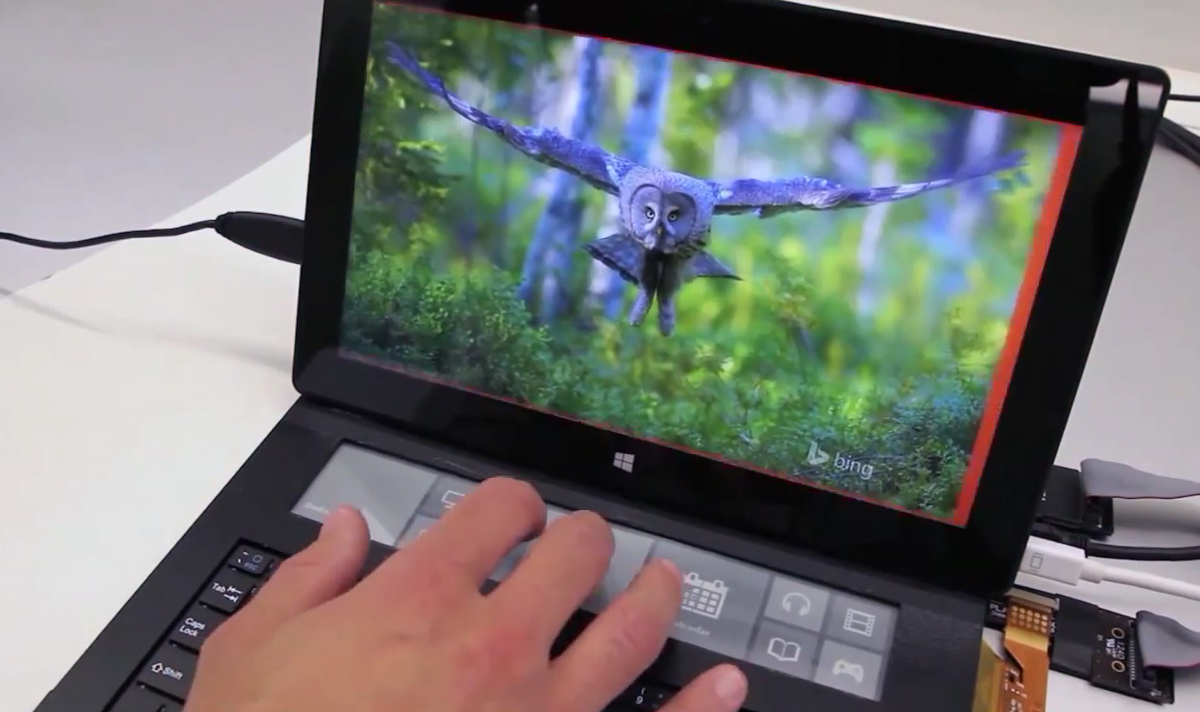 Tablets are becoming more useful for getting real work done. Looking to further bridge the gap between slate and laptop, Microsoft Applied Sciences built a prototype device it calls the DisplayCover: a keyboard cover that houses an e-ink touchscree...
Microsoft's prototype keyboard cover has an e-ink touchscreen
by Billy Steele
Tablets are becoming more useful for getting real work done. Looking to further bridge the gap between slate and laptop, Microsoft Applied Sciences built a prototype device it calls the DisplayCover: a keyboard cover that houses an e-ink touchscree...
Remlaps, Roumen.ganeff likes this
25 Aug 07:25
CW Stars Tweet Their Congratulations To Stephen Amell On His SummerSlam Win
by Jessenika Colon
After months of feuding on social media with WWE Superstar Stardust aka Cody Rhodes, ARROW star Stephen Amell made his WWE debut last night at SummerSlam, joining up with Neville to take on his newest foe and his partner, King Barrett. Although Amell took a beating for most of the match, he demonstrated some impressive […]


Roumen.ganeff likes this
25 Aug 07:22


UPDATED: The best superhero films of all time
by Stephen Lambrechts
The best superhero films of all time

UPDATE: Deadpool has made it onto our list of the best superhero films of all time – read on to find out more!
Here at techradar, we love our superhero movies. When you look over the evolution of the superhero genre, from the first major Hollywood superhero film, Superman, to the multiplex-dominating films of today like Avengers: Age of Ultron and the upcoming Batman v Superman: Dawn of Justice, it's easy to see just how far comic book movies have come. Superhero movies are not only extremely popular, they're also some of the most technologically advanced movies of our generation.
In celebration of the genre, we've decided to list the best superhero films of all time. We think these films encapsulate much of what the superhero genre has to offer, from the big budget blockbusters starring well-known characters to the small indie films which take the concept of superheroism and approach it with a unique outlook.
The Avengers
Seen by many as the culmination of the entire superhero movie genre, Marvel's The Avengers brought together several characters from their own franchises to create a team-based mega-franchise. While superhero team-ups have been happening in comic books for decades, The Avengers proved to be first real time that the notion would be properly realised on film, allowing audiences to buy into all of Marvel's movies as an overall cinematic universe. The Avengers went on to become the highest-grossing superhero film ever made, and the fourth highest-grossing film of all time overall, inspiring all of the other major film studios to start coming up with their own cinematic universes. Without The Avengers, we wouldn't have DC Universe movies like Batman v Superman: Dawn of Justice, Justice League and Suicide Squad to look forward to.
YouTube : https://www.youtube.com/watch?v=eOrNdBpGMv8The Dark Knight
A major turning point for the genre, The Dark Knight saw the concept of a superhero film grow up significantly, with director Christopher Nolan approaching the material like a genuine crime film in the vein of Michael Mann. Gone were the days of cartoonish villains in a fantastical setting – Gotham City finally felt like a real place that was being held under a veil of terror by a genuinely frightening psychopath. Which brings us to Heath Ledger's Oscar-winning performance (yes, this is a superhero movie that received an Academy Award for acting) as The Joker. Easily one of the most memorable performances of the last decade from any movie, the character instantly became one of the greatest villains in cinema history, cementing Ledger's legacy after his untimely death shortly after completing his work on the film. Jared Leto sure has some big shoes to fill when he takes up the role in the upcoming film, Suicide Squad.
YouTube : https://www.youtube.com/watch?v=EXeTwQWrcwYIron Man
It's hard to believe now, but the prospect of an Iron Man movie was initially considered to be far from a sure thing. Iron Man had been unable to get off the ground in Hollywood for a long time, with Tom Cruise at one point attached to play Tony Stark in what would have been a very different take on the character. It would eventually take comedic actor/director Jon Favreau to bring Iron Man to cinematic life, with a fresh and unique approach that would see Tony Stark become the charming and hilarious lothario we know and love today. We can also thank Favreau for the inspired decision to cast Robert Downey Jr, an actor once considered to be box office poison, in the role of a lifetime. Iron Man was an enormous success, officially kicking off the Marvel Cinematic Universe and cementing Downey Jr as one of the highest paid actors of all time. The rest is history.
YouTube : https://www.youtube.com/watch?v=8hYlB38asDYGuardians of the Galaxy

Leave it to Marvel Studios to take Guardians of the Galaxy, which is one of its most obscure superhero properties, and spin it into box office gold. Director James Gunn infused this space opera with a colorful, punk-rock attitude, making audiences totally buy into (and eventually love) a superhero team consisting of a talking raccoon (voiced by Bradley Cooper) and a monosyllabic tree-person (voiced by Vin Diesel). But of all the film's casting choices, it would be Chris Pratt (most famous for his role as the endearing nitwit Andy in Parks and Recreation) that would prove to be the film's biggest asset. Pratt brought an infectious sense of swagger and likeability to the character of Peter Quill (a.k.a Star Lord) that made him an instant star, landing him the lead role in the colossal hit Jurassic World.
YouTube : https://www.youtube.com/watch?v=d96cjJhvlMACaptain America: The Winter Soldier

In the same year that brought us Guardians of the Galaxy, Marvel Studios also redefined what a superhero movie could be with Captain America: The Winter Soldier. This sequel could not be further from its WWII-set predecessor, placing Captain America (Chris Evans) in a modern day setting, entangled in a paranoid spy-thriller plot that would see him re-evaluate his allegiances to S.H.I.E.L.D. and go head-to-head against an old friend. Marvel Studios was clearly pleased with how the film turned out, handing its directors the Russo brothers the keys to its enormous-sounding sequel, Captain America: Civil War, as well as the next two Avengers films.
YouTube : https://www.youtube.com/watch?v=7SlILk2WMTIBatman Begins

The importance of Batman Begins cannot be understated, as it is the bat-film that put director Christopher Nolan on the path of creating one of the genre's greatest achievements, The Dark Knight. Nolan did the unthinkable – he rescued Batman from rubber nipple oblivion. A more serious, adult approach, coupled with a great leading man choice in Christian Bale, helped re-establish Batman as the coolest superhero of all time.
YouTube : https://www.youtube.com/watch?v=neY2xVmOfUMSpider-Man 2

One of the greatest superhero movie sequels ever made, Spider-Man 2 took everything audiences loved about the first Spider-Man movie and amped it all up significantly. Director Sam Raimi dialed up his trademark zany energy and delivered a follow-up with more drama, bigger stakes, and incredible action. Spidey's battle with Doctor Octopus (Alfred Molina) atop a New York subway train showed us how huge and awesome a superhero battle can be, topping anything that occurred in the original film. Easily superior to either of the films from the already abandoned reboot series, Spider-Man 2 is a true classic of the genre.
YouTube : https://www.youtube.com/watch?v=enmFqm_N_ZEDeadpool

Even though they'd spent close to a decade trying to get their passion project made, star Ryan Reynolds, director Tim Miller and writers Rhett Reese and Paul Wernick could never have expected Deadpool to achieve the biggest box office opening weekend for a superhero franchise-starter of all-time, easily eclipsing previous title holder, Man of Steel. That it could do so with an audience-limiting R-rating is almost unheard of, and yet it just goes to show that crowds will come if a film's approach is as invigorating as Deadpool's proved to be. Hilarious, violent, sexy and full of fourth wall-breaking, Deadpool is as perfect an adaptation of Marvel's motor-mouthed mutant antihero as we could've ever hoped for.
YouTube : https://www.youtube.com/watch?v=ZIM1HydF9UAThe Incredibles

Pixar's only superhero film to date (a sequel is on the way), The Incredibles is a fantastic movie that makes us wish there were more computer animated entries in the genre (Big Hero 6 is also wonderful). Directed by Brad Bird (who would go on to make Ratatouille and Mission: Impossible – Ghost Protocol), this breezy flick features a loveable family of super-powered people who are struggling to keep up appearances as a normal family, while keeping their powers under wraps. Mr. Incredible (Craig T. Nelson) is drawn back to his superheroing ways, eventually dragging his whole family back with him. Feeling like James Bond meets Fantastic Four, The Incredibles is... well, incredible.
YouTube : https://www.youtube.com/watch?v=DYYt3nOrSkYSuper

Before he made Guardians of the Galaxy, director James Gunn made the low-budget indie superhero flick, Super. Playing like a darkly funny comic book take on Taxi Driver, Super is about a sad sack loser (played by Rainn Wilson) who turns to crime-fighting after his wife (played by Liv Tyler) leaves him for a total scumbag (played by Kevin Bacon). He develops a superhero persona known as the Crimson Bolt, who runs around violently cracking criminals (and jerks in general) on the head with a pipe wrench while yelling his catchphrase, "Shut up, crime!" Similar in theme to the film Kick-Ass (only way darker), Super is recommended viewing for anyone who loves superhero films.
YouTube : https://www.youtube.com/watch?v=tLj_Bzw8n90Unbreakable

Possibly M. Night Shyamalan's best film, Unbreakable sees David Dunn (Bruce Willis) slowly come to the realisation that he was born to be an invincible superhero. After coming away from an enormous train derailment as the sole survivor (with nary a scratch on him), David is contacted out of the blue by comic book aficionado Elijah Price (Samuel L. Jackson), whose wild theory about David and his powers sets him on a path of discovery. Expertly crafted with a cracker of an ending, Unbreakable is the kind of superhero movie we want to see more of.
YouTube : https://www.youtube.com/watch?v=YfkoFvARU6EKick-Ass

Kick-Ass is a superhero film that asks the following question: what would it actually be like to dress up in a costume and fight crime? That's exactly what high school kid Dave Lizewski (Aaron Taylor-Johnson) attempts to do – only to get stabbed on his first attempt. Okay, so maybe he'll need a bit of help from Big Daddy (Nicolas Cage) and his pint-sized, potty-mouthed daughter, Hit-Girl (Chloë Grace Moretz) – a pair of bad-ass vigilante killers on a quest to rid the city of its mob infestation. Hilariously profane and wickedly violent, Kick-Ass really does kick ass.
YouTube : https://www.youtube.com/watch?v=_YqLOoxsMwcWatchmen

Long thought to be impossible to adapt for the screen, Alan Moore's classic superhero graphic novel Watchmen has nevertheless inspired its share of attempts by many different directors, including Terry Gilliam and Paul Greengrass. However, it was Zack Snyder, fresh from his successful adaptation of Frank Miller's 300 comic book, who would eventually get the movie made. While his adaptation is seen by many as a surface-level reading of Moore's groundbreaking book, it is perhaps the best live-action version of Watchmen we could have hoped for, outside of a television miniseries. Its powerful imagery and terrific performances make it a one-of-a-kind superhero movie experience worth savouring. Oh, and it has the best opening credits of any comic book film we can think of.
YouTube : https://www.youtube.com/watch?v=NUjMO_k9IF8X-Men 2

Director Bryan Singer is arguably responsible for bringing superhero films back into fashion with the first X-Men movie, so you can imagine how much pressure was on him to not screw up its sequel. Thankfully, X-Men 2 wiped the floor with its already excellent predecessor, greatly expanding its scope, drama and action. The film's opening sequence, which features a mind-controlled Nightcrawler (Alan Cumming) teleporting around the Oval Office and attacking the President of the United States is a particular highlight. Too bad its sequel, X-Men: The Last Stand, sucked royally.
YouTube : https://www.youtube.com/watch?v=xF9FW5_yDxsTeenage Mutant Ninja Turtles

Though it was recently rebooted by producer Michael Bay, the original Teenage Mutant Ninja Turtles movie reigns supreme (like a pizza). Closer in tone to the comic that inspired it than the cartoon that made these characters famous, the film has a dark (and somewhat dirty) New York tone that was absent from its subsequent sequels. The film retained the source material's edge while keeping still remaining funny and endlessly quotable. The dynamic between the four turtles was handled perfectly, and Elias Koteas' portrayal of the hockey mask-wearing vigilante Casey Jones turned the character into one of film's great unsung badasses. Add to that an incredible soundtrack featuring the likes of M.C. Hammer, Technotronic and Partners in Kryme, and what you have is one of the most radical comic book movies of all time. Cowabunga!
YouTube : https://www.youtube.com/watch?v=FMJPwRWaZBIBatman

Tim Burton took the world by storm with his hugely successful Batman film, which was the first film adaptation of the character since the swinging sixties era of Adam West. Back in 1989, the film acted as a revitalisation of a flagging genre, rescuing superhero movies from the stagnation caused by the abysmal Superman IV: The Quest for Peace, made only two years before. Burton applied his trademark dark and twisted visuals to the property, changing the way people view Batman forever (no, not the Val Kilmer movie), while Jack Nicholson's scary take on The Joker made an entire generation of children afraid of hand buzzers and chattering teeth.
YouTube : https://www.youtube.com/watch?v=dgC9Q0uhX70Superman

The superhero film that started it all, Richard Donner's Superman made the world believe that a man could fly. Christopher Reeve's magnificent performance and presence set the standard for all for future versions of the Man of Steel, and Margot Kidder played a wonderfully spunky Lois Lane which gave Reeve's clumsy take on Clark Kent a lot to play off of. Fans will also want to check out Superman II, though the less said about Superman III and Superman IV: The Quest for Peace, the better.
YouTube : https://www.youtube.com/watch?v=grO4OcJ6cgY
Roumen.ganeff likes this
24 Aug 16:07


Movie Week: A brief history of film
by Nick Broughall
1. The history of film

Back in the late 1800s, entertainment on a Friday night was noticeably lower tech than today. But that wasn't so much an obstacle as it was an opportunity, which saw the birth of the cinematic art form.
Over the 120 years or so since those first attempts at creating moving pictures using consecutive still images, films have come a long way, both in terms of storytelling and in terms of technical achievement.
So as TechRadar kicks off its inaugural Movie Week, celebrating the majesty of films, it's appropriate to dive into the history books to see just how we got to the point where we can travel to galaxies far, far away or ride motorbikes with velociraptors.
Image: Flickr
2. Technology vs narrative

The truth is, finding the exact birth of what we consider to be cinema is a rather challenging task. Back in the late 19th century, inventors across the world were all racing to be the first to create not only the hardware to record and display a film, but also the films themselves.
While there is evidence that much of the technology to create moving pictures had been invented as far back as 1888, for many people it was a pair of French brothers named Antoine and Louis Lumiere who gets the credit for the birth of the cinema in 1895.
Lumiere, like a 19th Century Steve Jobs, managed to pick up on an expired patent for a device called the Cinématographe, which they improved to turn into a device that acted as a camera, film processing unit and projector all in one.
In the same year, the brothers created their first film, La Sortie de l'usine Lumière à Lyon (or Workers leaving the Lumiere factory in Lyon, if your French isn't up to snuff), a 46 second documentary about – you guessed it – workers leaving the Lumiere factory in Lyon.
Image: WIkimedia Commons
3. Edit this

But really, film is about so much more than just a static camera pointed at something happening. Arguably, what makes modern filmmaking possible is the editing of multiple shots into a single film in order to create a narrative.
And the first examples of that started cropping up back in 1900. In the short film Grandma's Reading Glass by George Albert Smith, a series of close ups of items are intercut with footage of a young boy looking through his grandmother's reading glass.
This is the first real example of films using different cuts to help tell a story, something that we now take for granted in modern cinema.
YouTube : youtubeurlv=6ho05y9IMr44. The first feature film

For the first decade or so of movie making, creators generally focussed on short films that ran on a single reel.
The first example of the standard feature film that we've come to know and love today can be traced back to 1906, when a young Australian man named Charles Tait created The Story of the Kelly Gang, a film about notorious Australian bushranger Ned Kelly.
The film lasted well over an hour, and was both a critical and commercial success for the time. It's also one of the movies about Ned Kelly that don't star Mick Jagger or Yahoo Serious, so that's got to give it some bonus points, doesn't it?
YouTube : youtubeurlv=oYGdLcFJm6k5. The talkies

While the early movie scene was all about black and white moving images on the screen, the technology for pairing it with synchronised audio came much later. Early films were generally accompanied by a live musical performance, with occasional commentary from a showman.
But that all changed with 1927's The Jazz Singer. While previous films had tried to accompany the film with a proper soundtrack, The Jazz Singer is widely regarded as the first film to combine a synchronised audio track, despite being mostly silent.
But what the film did do is change cinema forever. By 1929, almost every Hollywood film released was considered a "talkie", replacing the live musical backing with a synchronised audio track of dialogue, sound effects and music.
YouTube : youtubeurlv=LkUKloVCzcM6. Colored in

It's a little bit surprising to know that color came to films in the first few years of the 20th century. These earliest colorized films were colored by hand, which meant that the majority of prints were still in black and white. In 1903, the French film La Vie et Passion du Jesus Christ used a process to add some color to its film, but leaves a monochrome appearance.
In 1912, a UK documentary dubbed With our King and Queen through India was the first example of a film that captured natural colour instead of using colorization techniques.
But ultimately it was the 1930s before color films became the norm, as Technicolor released what it called Process 4, which combined a negative for each primary colour and a matrix for better contrast.
The first feature to use this colorful process was a Walt Disney animation called Flowers and Trees in 1932.
YouTube : youtubeurlv=CWEzHE7wn7UIn 1934, The Cat and the Fiddle featured the first live-action sequence using the Technicolor Process 4 technique.
YouTube : youtubeurlv=tQB1WJZpKL0After that, color quickly became the norm for Hollywood, starting with Becky May, the first movie to use Process 4 for the entire feature.
YouTube : youtubeurlv=fcrfnyFU3y0And since then, color has been all the rage – minus some artistic black and white films (like Kevin Smith's Clerks) of course.
7. Fantasound

The man behind Mickey Mouse did so much more than just simple animation. Walt Disney is also credited with being one of the founders of modern day surround sound.
Back in the 1940s when he was working on Fantasia, Walt wanted to somehow get the sound of a bumblebee flying around the audience during the "Flight of the Bumblebee" section of the film.
Disney spoke with the engineers at Bell labs, who took to the challenge like bees to honey and created what is known as "Fantasound".
But while Fantasound was one of the first examples of surround sound, it was also prohibitively expensive, costing $US85,000 to install. As such, only two theatres in the US had it installed, which is probably why you've never really heard of Fantasound before.
Of course, surround sound has come a long way since then, which we'll get to shortly...
8. Cinemascope

By the time the 1950s came around, movie studios were starting to turn to technology to try and bolster dropping cinema tickets sales caused by the arrival of television.
The first of these technologies to launch was called Cinemascope, launched by 20th Century Fox, which made its debut with 1953's release of The Robe.
YouTube : youtubeurlv=3lrZM4gE6GQEssentially a refinement on a 1926 idea, Cinemascope used anamorphic lenses to create a much wider – and subsequently larger – image. The aspect ratio of Cinemascope films was 2.66:1, compared to the 1.37:1 ratio standard of the time.
While Cinemascope was largely made redundant by newer technologies the aspect ratios it created are still roughly the standard we see on films today.
9. Cinerama

At the same time as Cinemascope was starting to take a hold of Hollywood, another technology was offering the widescreen format in a different way.
Instead of relying on anamorphic lenses, Cinerama required cinemas to feature three synchronized 35 mm projectors, projected onto a deeply curved screen.
The end result was a picture running at about a 2.65:1 aspect ratio, but one that had some obvious challenges, especially where the projectors overlap.
By the 1960s, the rising costs associated with filming on three cameras simultaneously led to the technology being tweaked to record using a single widescreen Panavision camera lens, which was then displayed using the three cameras.
Cinerama also brought with it one of the first instances of magnetic multitrack surround sound. Seven tracks of audio (five front, two surround) were synced with the footage, with a sound engineer directing the surround channels of audio as necessary during playback.
Today, there are still a limited number of Cinerama theatres scattered around the world, offering the full experience, if you're wondering what all the rage was back in the 1950s.
Image: Wikimedia Commons
10. VistaVision

Hey! If everyone else was going to experiment with widescreen cinema technologies, then there was no way Paramount Pictures was going to be left behind.
VistaVision was Paramount's answer to Cinemascope and Cinerama. Instead of using multiple cameras or anamorphic lenses, VistaVision ran 35mm film horizontally through the camera gate to shoot on a larger area.
The obvious benefit of this approach was that it didn't require cinemas to get all new equipment. With the competing technologies though, VistaVision films were all shot in a way that they could be displayed at a variety of aspect ratios.
Launching with White Christmas in 1954 and used in a number of Alfred Hitchcock films over the 1950s, ultimately VistaVision was made obsolete by the arrival of improved film stock, and the rise of cheaper anamorphic systems.
11. 3D

If you think the rise (and fall) of 3D cinema started with Avatar, then you're mistaken. 3D actually goes back to the very beginnings of cinema history, with a patent filed in the late 1890s, with two films screened side by side and made 3D through the use of a stereoscope. It wasn't very practical, and so ultimately failed to take off.
But that didn't stop people trying, all through the early decades of cinema, 3D was tried using many of the technologies we still see today. In 1922, a film called The Power of Love was shown using anaglyph glasses (the red and blue ones).
But it was in the 1950s that 3D had its first real wave of success. Led by the release of Bwana Devil in 1952, the first color stereoscopic 3D film, and with releases across most of the major film studios, 3D took cinema by storm.
For a couple of years, anyway. While 3D films continued to be produced throughout the 50s and 60s, competing technologies like Cinemascope, coupled with the rise of television and the expense of having to run two projectors simultaneously for 3D meant the format never really took off.
YouTube : youtubeurlv=Qa8wiw9z6cUOf course, more recently the technology has seen a resurgence, largely thanks to James Cameron's Avatar. Opinions are pretty divided on the technology, but it is definitely seen as a drawcard for the more recent trend for blockbuster releases.
12. IMAX

In an attempt to show that bigger is better, back in 1970 a Canadian company showcased the very first IMAX film, Tiger Child, at Expo 70 in Osaka. Using a special camera that supports a larger film format, IMAX films offer a significantly higher resolution than that of standard film counterparts.
With dedicated IMAX cinemas launching from 1971, the increased resolution means viewers can typically sit closer to the screen. Typical IMAX theatres have screens 22 metres wide and 16 metres high, although they can be larger – in Sydney Australia, the world's largest IMAX screen measures 35.7 metres wide and 29.7 metres high. It's pretty awesome.
While many of the films shown on an IMAX screen are either documentaries or upscaled versions of 35mm films, there has been a growing tendency for filmmakers to shoot parts of their Hollywood blockbusters using IMAX cameras.
Image: Wikimedia Commons
13. Dolby sound

While it's natural to associate the history of film with the visual spectacle, it's important to remember the importance of sound.
And while we've already seen that surround sound made its way into cinemas as far back as the 1940s, it was during the 1970s that a company called Dolby Labs began having a very significant impact on cinema sound.
From the release of A Clockwork Orange – which used Dolby noise reduction on all pre-mixes and masters – Dolby has fundamentally changed the way we hear our movies.
In 1975, Dolby introduced Dolby Stereo, which was followed by the launch of Dolby Surround (which itself became Dolby Pro Logic) which took the technology into the home.
With the release of 1992's Batman Returns, Dolby Digital introduced cinemas to digital surround sound compression, which was reworked as the Dolby AC-3 standard for home setups.
While there are other film audio technologies out there, Dolby has no doubt led the way, and become the international standard for surround sound, both in the cinema and the home.
14. DTS

Four years after Dolby started work on Dolby Digital, another company came along to try and revolutionise cinema sound.
Initially supported by blockbuster director Steven Spielberg, DTS made its cinema debut in 1993 with the release of Jurassic Park, roughly 12 months after Dolby Digital's launch.
Jurassic Park also saw the format's debut in a home cinema environment' with the film's laserdisc release offering the technology.
Nowadays, there's an abundance of DTS codecs available, for both cinema and home theatre releases.
15. THX

Oh, George Lucas, we can't stay mad at you. Sure, you absolutely ruined our childhood memories with your Star Wars prequels and your Crystal Skulls, but we can't forget that your legacy extends beyond mere Star Wars and Indiana Jones Credits.
You were also instrumental in the creation of the THX certification for audio. While THX is often confused as an alternative codec system for audio to the likes of Dolby Digital, the truth is that THX is more of a quality assurance certification. With it, viewers could rest assured that the sound they were experiencing was what the sound engineers who created the film wanted them to.
So while the fundamental credit for THX actually goes to Tomlinson Holman, the fact Lucas introduced the standard to accompany the release of Return of the Jedi means that we can be a little less angry at him for Jar Jar Binks.
16. CGI

While people were playing around with computer graphics on screens as far back as the 1960s and 70s, with examples like Westworld showing a graphical representation of the real world, things really started taking off with Star Trek II: The Wrath of Khan.
YouTube : youtubeurlv=Qe9qSLYK5q4In the film, the Genesis Effect sequence is entirely computer generated, a first for cinema.
Again, we can partially thank George Lucas for this trend, as the effects were created by his company, Industrial Light and Magic. From here, the trend for incorporating CGI elements into cinema cascades, with hundreds of developments over hundreds of films.
Notable examples include Toy Story as the first CGI animated feature, Terminator 2 for the T-1000's morphing features and The Matrix with its bullet time sequences.
Oh, and the Star Wars prequels for the extensive use of CG support characters and backgrounds, Avatar for mo-capped virtual characters and The Lord of the Rings trilogy for introducing AI software for digital characters.
CGI has completely changed filmmaking, and it continues to get better.
17. Digital cinematography

We take it for granted with our iPhones and digital cameras these days, but the truth is that recording digital video is a relatively recent phenomenon. In fact, while Sony tested the waters in the 1980s and 90s, it again fell to perpetual pioneer George Lucas to take the technology mainstream.
With (groan) The Phantom Menace, Lucas may have ruined Star Wars, but he also managed to revolutionise filmmaking by including footage shot on digital cameras. The film also saw the arrival of digital projectors in theatres around the world.
By late 2013, Paramount had moved entirely to digital distribution of its films, eliminating 35mm film from its lineup entirely.
That said, film isn't going away – even Star Wars Episode VII director JJ Abrams professes his love for shooting on film, while Quentin Tarantino has confirmed that he is shooting his latest film, The Hateful Eight, in 70mm film specifically to avoid digital projection. But despite these setbacks, the trend to move to digital is continuing to grow.
18. High Frame rate

While film has matured a lot over the past 100 years or so, it's interesting that the framerate of 24 frames per second has stayed fairly constant throughout.
While early cinema experimented with framerate, ever since 24 frames per second was adopted as the standard, it has largely been left alone.
That is, right up until an excitable filmmaker named Peter Jackson decided to film his return to Middle Earth – 2012's The Hobbit: An Unexpected Journey – at the high frame rate of 48 frames per second.
The technology wasn't universally loved – criticisms included the loss of the "cinematic" feel of the movies, as well as resulting in a sharper image that feels more like a video game than a film.
But with James Cameron planning to film his Avatar sequels at 48 frames per second, the technology isn't going away.
19. Atmos

As we've already discovered, Dolby has a long history of revolutionising cinema audio. In 2012, the company did it again with the launch of Dolby Atmos.
Atmos enables 128 channels of synchronised audio and metadata associated with the panning image to create the most lifelike surround sound solution to date.
What makes Atmos truly magnificent is that it renders the sound based on the metadata in real time using whatever speaker system is in place, rather than having a sound engineer dictate which sounds are playing through which speaker.
The technology, while originally destined for cinema use, has also made its way to home theatres, with compatible AV receivers that is.
20. The future

With technology developing at an exponential rate, the future of film is sure to be an exciting one.
Already, with the arrival of VR devices like the Oculus Rift, filmmakers are beginning to dabble in 360 degree filmmaking.
Others are experimenting with interactive cinema, turning film into a choose-your-own-adventure type experience.
One thing's for certain: Movie making has come a long way in a relatively short period of time, and it's undoubtedly going to advance even faster as we roll deeper into the 21st Century.
- TechRadar's Movie Week is our celebration of the art of cinema, and the technology that makes it all possible.
24 Aug 16:05


Movie Week: The evolution of the Batmobile
by Rob Edwards
Evolution of the Batmobile

Bat-finned, black, and powered by a single jet engine, the Batmobile is the most iconic vehicle ever to grace our screens. But despite its unique styling, the Dark Knight's ride has seen a utility belt's worth of variations over the years. What started as little more than a standard Cadillac convertible has transformed into a formidable tank, packing a billionaire's ransom in gadgets and firepower.
With every version boasting a unique array of weapons, functions, and impracticalities, we're analysing the evolution of Batman's wheels, from its first cinematic appearance back in 1943 to the Batfleck-mobile, set to make its debut in next year's Batman v Superman: Dawn of Justice.
The Batman (1943)

Batman's first cinematic outing wasn't exactly a big budget affair. Sadly, what limited funding there was couldn't stretch far enough to include the really important things, like bat-wing detailing and an afterburner for the Caped Crusader's wheels.
Instead, Bats stalked the streets of Gotham in a 1939 Cadillac convertible with the roof up, while Bruce Wayne could be seen cruising around in an identical 1939 Cadillac convertible with the roof down. Coincidence?
Fortunately Batman's smarts in relation to protecting his secret identity improved dramatically in later cinematic incarnations.
Batman and Robin (1949)

Ticking even less of the boxes required to pass for a decent Batmobile, Batman's ride from this 1949 serial wasn't even black.
A maroon Mercury convertible, Bats took the same lacklustre approach to protecting his secret identity this time around, simply dropping the top after returning from a night of crime fighting – as far as we can tell he didn't even go to the trouble of masking his licence plates.
While the Mercury was certainly a powerful car, its considerable weight meant cornering was a problem. As a result, the "Batmobile" was frequently wrecked, and the production made its way through six of them by the time shooting was completed.
Batman: The Movie (1966)

Now this is more like it. Arguably the first proper Batmobile, the 1966 incarnation is instantly recognisable, and for many it remains unsurpassed in terms of sheer cool.
Built around a rejected 1955 Lincoln Futura prototype, the car that raced onto screens with Adam West behind the wheel was so perfectly realised – bubble canopies, long fins, and an added afterburner – you'd be forgiven for thinking it was custom-built from the ground up.
Throughout the movie – and the TV series that followed – the Batmobile demonstrated an impressive arsenal of bat-gadgets, including a chain slicer built into the nose, an array of lasers and rockets, and a dashboard monitor and rear camera that were way ahead of their time. It also featured a telephone with the compulsory bat-motif styling, although that made it look unnecessarily awkward to hold.
The car's atomic turbine engine (actually a Ford V8) and afterburner made sure acceleration was always a big event, and a pair of rear-mounted parachutes helped the car perform a 180-degree spin whenever a villain took an unexpected turn.
Batman (1989)
If you thought Ben Affleck's recent casting as everyone's favourite vigilante was controversial, clearly you don't remember the public's response to the news that funnyman Michael Keaton would be donning the cape and cowl for Tim Burton's bat-movie.
All that changed when the film's first trailer was released, revealing a dark tone, foreboding Gotham City, and the most kick-ass Batmobile anyone had ever seen.
Long and sleek with a pair of bat fins at the rear, this was a new breed of Batmobile: intimidating, powerful, and black from tip to tail.
Keaton's ride was crammed with gadgets and weapons, many of which were deadly – much to the chagrin of Batman purists everywhere. Twin machine guns popped out of the bonnet, the hubcaps contained grenades powerful enough to destroy the Joker's entire Smilex factory, and a system of shutters encased the car in a cocoon of protective armour while the world brooding champion was off prowling rooftops.
The car could also navigate streets autonomously, use a grappling hook to perform particularly tight turns, and we're sure it had a killer sound system worthy of Danny Elfman's score, too.
Batman Returns (1992)

When the world's most maladjusted billionaire returned, his car came, too, packing some impressive new tricks.
As we're sure Alfred heard Batman complain many a time, the trouble with driving a vehicle as big as the Batmobile is that its turning circle is rubbish – a Fiat 500 it ain't. Batman solved this problem with a clever new piece of tech.
The installation of a retractable rotating platform in the base of the car enabled Batman to get out of any tight corner or dead end without making a 1,000-point turn. Activating the platform saw the Batmobile lift off the ground and turn on the spot. Handy for Bats, but unfortunate for any goon suddenly face-to-face with the Batmobile's fiery exhaust.
Batman Returns also introduced a trick that would later be adopted in Christopher Nolan's films: an ejectable escape vehicle. Called the Batmissile, it required the Batmobile to jettison panels and parts that don't make up the central fuselage. The wheels then shifted into place in a single file, creating a narrower, more rocket-like form.
Sadly, while it certainly helped ol' pointy ears to evade the police, it also made it harder for Mr Money Can't Buy Happiness to deny he was compensating for something.
Batman Forever (1995)

After two gothic outings with Tim Burton at the helm, incoming director Joel Schumacher clearly felt that the world of Batman – and the Batmobile in particular – had been missing a key ingredient: neon.
With a more organic design reminiscent of something H.R. Giger might concoct, the new Batmobile was certainly visually impressive. Glowing neon blue at its core, the car was encased in a black ribcage-like structure. Naturally, the new look didn't get in the way of some impressively improbable tech.
Prior to its untimely demise at the hands of the Riddler, Batman Forever's Batmobile had shown off a new technique for avoiding incoming RPG fire. Locking its wheels perpendicular to the chassis, the Batmobile was able to strafe out of the way of incoming projectiles – much like the Arkham Knight incarnation – leaving pursuing gang members to deal with the rocket's explosive repercussions.
More impressively, the Schumacher-mobile was able to drive up the side of buildings. Rolling back on its rear wheels while still in motion, the car fired grappling cables onto nearby buildings, which it would then use to support itself as it continued to drive at full speed, except, y'know, vertically.
Batman & Robin (1997)

The Batmobile was arguably the only halfway decent thing about the film that almost killed the Batman franchise.
Making the neon-tinged Batman Forever incarnation appear positively subtle, Joel Schumacher's second stab had a nose that looked like a hurricane made of Christmas lights. Fiery orange side panels appeared to house a raging inferno, while a neon Batman logo sat behind the driver's head just in case the giant wings bringing up the rear weren't a dead giveaway as to whose car it was.
A single-seat affair this time around – keeping Chris O'Donnell's excruciatingly whiny Robin trailing on his motorbike – the car had a distinctly retro shape, taking inspiration from vintage racers like the Jaguar D Type and Delahaye 165.
Fewer Batmobile gadgets were utilised during Batman & Robin's runtime. The cockpit featured a two-way video call function – keep your eyes on the road, Bats – and Batman could also kill the engine of Robin's motorbike with the flick of a switch – cueing yet another bout of self-indulgent sulking from the Boy Wonder.
Batman Begins (2005)

And now for something completely different...
When Christopher Nolan rebooted the Batman franchise in 2005, there was a conspicuous absence of neon and bat-related detailing. What we got instead was a tank. A 9 by 15-foot tank with an afterburner bringing up the rear. This entry took Batman's wheels to a whole new level.
Called the Tumbler (no one in the movie ever referred to it as the Batmobile), the car was designed by Wayne Enterprises as a military bridging vehicle that used its jet engine to launch over rivers with cables in tow – a function later employed to launch the car across rooftops.
In reality, the Tumbler was built by movie car engineers Chris Corbould and Andy Smith, who aimed to make it as practical as possible. Weighing in at 2.5 tons and powered by a 500hp Chevy 350 V8, the batty behemoth boasted four 44-inch Super Swamper tires and could hit speeds up to 177km/h. It could also make the dash from zero to 100km/h in under six seconds, which is impressive given its size and weight.
There was no room for cheesy gadgets this time around, but the Tumbler's new "attack" mode was quite nifty. It saw the driver's seat shift from the left side of the car to the centre, repositioning the gravel-voiced guardian in a face-down position between the front wheels.
Lying prone protected Batman with more armour plating during a firefight, and reduced the forces placed on him (or whichever stuntman was behind the wheel at the time) during extreme manoeuvres. It also helped with aiming the guns mounted at the front of the vehicle – always non-lethally, of course.
The Dark Knight (2008)

The Tumbler remained unchanged for its second outing, but Batman had clearly put the car through its paces since Batman Begins, and demonstrated a firmer grasp of exactly what it was capable of.
Operating the car remotely, everyone's favourite bad-guy batterer was now able to navigate the Tumbler and fire its weapons, distracting his opponents. Using pre-programmed routines such as "loiter" and "intimidate", he could appear as if he was behind the wheel, giving him an opening to move unseen to a more favourable vantage point.
Unfortunately, the heavily-armoured ride met its match in the form of a Joker-fired RPG, which sent the Tumbler, er, tumbling end-over-end through brick-walls and barricades. But just when it looked like it was all over for the Bat-tank and its pointy-eared occupant, shifting plates on the front of the vehicle suddenly burst open, as Batman shot from the wreckage atop the Batpod.
Like Batman Returns' Batmissile, the Batpod provided Mr My Parents Are Dead with a means of escape from a doomed Batmobile, and it continued as his primary form of transport for the remainder of the film. More than a mere bike, the Batpod packed machine guns, cannons, and grappling hooks, and its wheels could spin sideways, resulting in an impressive level of manoeuvrability.
Batman v Superman: Dawn of Justice (2016)

While we're yet to see Batfleck's wheels in action, they look as if someone welded pieces of the Tumbler onto the frame of Burton's '89 edition.
With looks only a black-obsessed vigilante could love, we wouldn't describe this as the most attractive ride Batman's ever had. But when you're going up against the Man of Steel, it's fair to say that a car with clean lines isn't going to be a priority.
Anyone who's seen the movie's trailer will know that the new Batmobile's canopy isn't Superman-proof, but hopefully we'll get to see what it's capable of before Kal-El turns it into a tin can.
- TechRadar's Movie Week is our celebration of the art of cinema, and the technology that makes it all possible.
Roumen.ganeff likes this
24 Aug 12:53
Boston Police arrest two armed suspects as they enter Pokemon World Championships
by Ozzie Mejia
The Pokemon World Championships in Boston were held this weekend, but the fun and festivities were very nearly halted in a tragic manner. Two suspects from Iowa had threatened to rain down violence on the event and had brought several guns from their home state of Iowa. Boston police caught wind of the plot and were able to stop the two men on Friday night, days before they attempted to enter the Hynes Convention Center.
Accoring to the Boston FOX affiliate, the two suspects had issued their threats through social media. Police were notified of the threats on Thursday and were on the lookout for the two throughout the weekend. Upon searching their vehicle, authorities recovered a 12-gauge shotgun, an AR-15, hundreds of rounds of ammunition, and a hunting knife. The story has been updated to identity the suspects, 18-year-old Kevin Norton and 27-year-old James Stumbo, both of whom were set to compete on Saturday under the Masters Division for the Pokemon Trading Card Game.
These are the weapons that @bostonpolice found after plot to attack #PokemonWorlds. http://t.co/aGLlBYI7Jp #FOX25 pic.twitter.com/f827INspPX
— FOX 25 News Boston (@fox25news) August 23, 2015
Meanwhile, context continues to come in quickly. These tweets were taken on Thursday, showing Stumbo and Norton arming themselves for their trip. The Pokemon Worlds tournament organizers swiftly kicked the two out of the competition and it may very well be these posts that caught Boston PD's attention:
A known disgusting asshole of a TCG player just got kicked out of and banned at Worlds because of this: pic.twitter.com/xgd4qrDz2Y
— King of Cluckers (@faiarrow) August 21, 2015
The comments that followed were also very gross. It was classed as a terrorist act by Pokemon. pic.twitter.com/JsCE2IZsPw
— King of Cluckers (@faiarrow) August 21, 2015
The Pokemon Company issued the following statement to the FOX station in Boston:
"Prior to the event this weekend, our community of players made us aware of a security issue. We gathered information and gave it as soon as possible to the authorities at the John B. Hynes Veterans Memorial Convention Center who acted swiftly and spearheaded communication with the Boston Police Department. Due to quick action, the potential threat was resolved. The Pokémon Company International takes the safety of our fans seriously and will continue to ensure proper security measures are a priority."
24 Aug 12:51
 Giraffe Manor in Nairobi, Kenya was built in the 1930s but today its main purpose is somewhat different to its original design. It serves as a sanctuary for a herd of Rothschild’s Giraffes, a highly endangered species and the manor has been involved in their conservation since the 1970s.
Photographer and author Robin Moore captured these wonderful shots of the giraffes – seemingly in their element and completely at ease with the tourists around them. In fact, to the giraffes, the presence of a few people seems to be just a minor complication in their quest for food!
 It just goes to show that conservation takes many forms. In a perfect world, perhaps, there wouldn’t be a need for places like Giraffe Manor yet with their numbers declining rapidly, anything which draws attention to their plight has to be applauded.
The video was produced for "This Happened Here" on the Seeker Network from Discovery featuring Robin’s images and video from Giraffe Manor.
Breakfast at Giraffe Manor
by RJ Evans
Photographer and author Robin Moore captured these wonderful shots of the giraffes – seemingly in their element and completely at ease with the tourists around them. In fact, to the giraffes, the presence of a few people seems to be just a minor complication in their quest for food!
The video was produced for "This Happened Here" on the Seeker Network from Discovery featuring Robin’s images and video from Giraffe Manor.
Roumen.ganeff likes this
24 Aug 12:32
Evangeline Lilly Has Already Been Fitted for a Wasp Costume
by Cassidee Moser
Apparently, Marvel is planning to make good on Ant-Man's teasing post-credits Wasp scene.
In a Facebook Q&A with Evangeline Lilly, the Hope van Dyne actress revealed she had previously been fitted for the famous Wasp costume at Marvel. Since that time, she explains, she's been pregnant and unable to try it on. Still, the fitting has taken place, and she's ready to put it on as soon as possible.
"Let's hope I fit it again!" She joked.
Fans asked Lilly a wide number of questions, ranging from her take on Hope's wardrobe to whether or not Hope would return as Wasp in future Marvel Cinematic Universe films.
Roumen.ganeff likes this
24 Aug 12:31
Japanese Airlines Debut New Star Wars Airplanes
by Cassidee Moser
Japan's Nippon Air is feeling the excitement for Star Wars.
The company recently revealed two airplanes painted to look like some of the franchise's most popular characters; the astromech droid R2-D2 and the spherical droid BB-8 from the upcoming The Force Awakens.
Each plane will also feature various Star Wars decor and amenities, from themed headrests to all six movies on demand. The R2-D2 plane will take to the skies this October.

Roumen.ganeff likes this
24 Aug 12:26
NASA Says There is No Asteroid Threatening to Hit Earth
by Jenna Pitcher
A viral false asteroid report that claims an asteroid will impact Earth near Puerto Rico sometime between September. 15 and 28, 2015 is not true, NASA states.
"There is no scientific basis —not one shred of evidence — that an asteroid or any other celestial object will impact Earth on those dates," said Paul Chodas, manager of NASA's Near-Earth Object office at the JPL, in a statement.
The viral rumour making the rounds on various blogs and websites over the past month claim the impact will cause destruction along coastal regions of the U.S., Mexico, Central America and South America.
NASA's Near-Earth Object Observations Program says All known Potentially Hazardous Asteroids have less than a 0.01 percent chance of slamming into Earth in the next 100 years.
24 Aug 08:42
 Researchers at the Massachusetts Institute of Technology unveiled a new 3D printing method on Friday that employs transparent glass as precursor instead of plastic. The method, called 3DGP, works basically the same way that conventional 3D printing...
MIT figured out how to 3D print using glass instead of plastic
by Andrew Tarantola
Researchers at the Massachusetts Institute of Technology unveiled a new 3D printing method on Friday that employs transparent glass as precursor instead of plastic. The method, called 3DGP, works basically the same way that conventional 3D printing...
Roumen.ganeff, Sophianotloren and 4 others like this
21 Aug 13:54
Passers-by help lift car off trapped cyclist
by Jack Evans
File under: Latest News
 Photo credit: Top Videos/YouTube
Top Videos/YouTube A cyclist was saved thanks to passers-by who helped lift a car that she had been pinned underneath.
The car, a Ford B-Max, crashed into a coffee shop in the Oxford city centre, pinning the cyclist underneath it as it came to a halt.
continue reading
Photo credit: Top Videos/YouTube
Top Videos/YouTube A cyclist was saved thanks to passers-by who helped lift a car that she had been pinned underneath.
The car, a Ford B-Max, crashed into a coffee shop in the Oxford city centre, pinning the cyclist underneath it as it came to a halt.
continue reading


Roumen.ganeff likes this



21 Aug 13:02

German Court Says Instagramming Your Meal Violates Copyright Laws — Food News
by Kristin Appenbrink


If you're visiting Germany, you might want to think twice before uploading a photo of your restaurant meal to Instagram.
A court recently ruled that dishes that have signature plating styles are subject to creative copyright laws.
Roumen.ganeff likes this
21 Aug 12:46


This company is using insanely complicated math to save its customers tons of cash
by Matt Weinberger

Analysts estimate that the market for data analytics — the industry term for sifting through mountains of data until you actually learn something useful from it — will hit $125 billion this year.
This is an industry segment with a lot of fear, uncertainty, and doubt: Competing technologies, plus a lot of confusion about how to best put them to work, results in a lot of similar-sounding vendors all insisting that they, and only they, can help you get the most usage about your data.
But there's a dirty little secret with data analytics.
To get all of your data nice and tidy for analysis, it has to go through a process called "ETL," which stands for "extract, transform, load." It can be a costly, time-consuming, and error-prone process.
ETL software can cost big enterprises hundreds of thousands of dollars in licensing; hiring consultants to put it all into place can drive the price tag into the millions.
Enter Algebraix Data, a California-based data analytics startup that's changing the equation with what it calls "data algebra." Here's the scoop on its mathematical secrets.
"Today, enterprises of any size can use advanced analytics to turn their data into a revenue-driving asset, easily and affordably. And it all started with data algebra," says Algebraix Data CEO Charles Silver.
For the last five years, Algebraix has been working on data algebra, a hyper-specialized field of pure mathematics that uses set theory to describe any kind of data — charts, graphs, lists, whatever — in a way that can be understood and quickly processed by analytical systems, says Algebraix mathematician Robin Bloor, PhD.
"All of these files can be represented algebraically," Bloor says.
 In plainer English, data algebra is a way of looking at data, such that it doesn't need to go through that super costly, super-risky ETL phase. Algebraix's analytical systems just use math to break all of it down into a long, sophisticated equation that it can work with, without having to do any of the conversion itself.
It's a totally different way of doing things, and the company holds nine patents for the data algebra-based technology it uses.
For customers, it's easy to sign up for the Algebraix platform. It's hosted with Microsoft's Azure cloud platform, meaning it's all handled from the Internet. And it's a lot cheaper than those million-dollar solutions from legacy vendors.
Interestingly, Algebraix was first merely trying to build a better database, Silver says, but found that its would-be customers were increasingly turning to Amazon, Microsoft, and Google to suit their data-storage needs. And so it called an audible and decided to put data algebra to work as an analytics product, crunching all that data that sits in the database.
"The database is only good if you're going to use that data for something," Silver says.
For the first five years of the company's existence, Algebraix played its cards close to the chest and kept data algebra as a company secret.
But just recently, the company has started to open the door a little bit: It's published a book by two of its in-house mathematicians called "The Algebra of Data," and it's made the core data algebra algorithms available for any programmer anywhere to download.
The gist is that Algebraix is hoping to force data algebra into the spotlight, placing itself into the center of what it hopes becomes the next wave of analytics. Other programmers can use Algebraix's technology, but as the inventors, and the holders of the patents, the company stands to profit most.
"We'll be the ones to make a lot of money from this," Silver says.
Algebraix is a venture-backed startup with over $38 million in funding from undisclosed sources.
Join the conversation about this story »
NOW WATCH: This Drone Goes Inside A Hurricane To Gather Data That Could Save Your Life
Remlaps likes this
21 Aug 12:46


The founder of Google's top secret project lab has a new plan to double the world's GDP (Goog)
by Jillian D'Onfro

More than seven years ago, Larry Page and Sergey Brin tapped Stanford professor Sebastian Thrun to build a hardware innovation lab inside Google.
His efforts turned into Google X, the secretive "moonshot factory" that has produced some of Google's most technically ambitious projects like self-driving cars, smart contact lenses, Google Glass and internet bearing balloons.
But after guiding Google X through its early years, Thrun relinquished the reins in 2012 to focus on a company he founded the year before, an education startup called Udacity.
Since day one, the company said its goal is democratizing education by offering free, online classes in techie topics like artificial intelligence and data visualization. But Udacity, like many other massive open online course (MOOC) startups, noticed that class completion rates only hit dismal percentages — less than 10% of people made it to the end of most classes.
So, over the last ten months Thrun and his 140-person team at Udacity have completely revamped the way the company offers its classes.
Being in demand

Enter: Nanodegrees.
Instead of only providing a bunch of singular, lecture-style classes, Udacity partnered with major tech companies like Google, Cloudera, Facebook, and Salesforce to build classes that fit neatly into six credentialed, project-focused programs.
The idea is that anyone who completes one of the nanodegrees — front-end web developer, Android developer, data analyst, iOS developer, full-stack developer, or intro to programming — will be perfectly primed to get a job, since major tech companies actually help design the curriculum.
Because the average technical worker switches jobs seven times over the course of their career and the industry changes fast enough to render many university-learned skills obsolete, Udacity teaches the kind of bleeding-edge skills that can help people either get a new job or seek a promotion.
"Our new slogan is 'Be in demand,' for a reason," Thrun tells Business Insider. "You can learn for your own sake, and that’s fine, but if you come to Udacity you learn because you want someone else to understand what you learned."
Although all classes are still available individually for free, nanodegree students pay about $200 a month for between six to nine months to work through a program in which they'll get one-on-one project feedback (if they complete the program fully, they can get half of that tuition back).
For example, someone who takes the Android developer nanodegree will actually build products that integrate with Google code and fulfill criteria that Google has told Udacity it's looking for. Each completed project gets reviewed by one of Udacity's 400 global code reviewers.

Creating a network of reviewers
Thrun considers the global code reviewers program a major part of the company's secret sauce.
At first, it took Udacity weeks to review each student project, which made feedback less valuable since it was so delayed. But once it launched the network of virtual reviewers in May, Udacity could deliver detailed feedback in only a few hours. Udacity pays reviewers $20 an hour for their work, and to make sure they keep only the best people on board, students can rate them based on the helpfulness of their feedback (the average is 4.8 out of 5).
On average, reviewers make $3,000 a month, but the top reviewer last month took home $17,000. Udacity recently heard from one successful reviewer who just turned 70.
"You can be any age, anywhere in the world, and you can make substantial money grading Udacity students," Thrun says. "We have a huge waitlist of people trying to get in."
Scaling forward

The change seems to be working. Thrun says that Udacity's new nanodegrees have twice the student engagement and retention as the former course-centric approach, and sign-ups are increasing 34% month-over-month. The company, which has raised $55 million, hit profitability for the first time in August.
Udacity has six nanodegree programs now, but hopes to offer 11 nanodegrees by the end of this year and 35 by the end of 2016. (It's launching an Entrepreneurship degree later this year, and has plans for other less programming-heavy degrees.)
Getting tech companies to participate in the course building program has had a snowball effect: "The first company pitch was hard, and now we’re getting 10 inbound inquiries per week,” Thrun says. "We’re at the point where these companies think of us as kind of the new university of Silicon Valley."
Soon, Udacity will launch an easy-to-search database of all its students with a dashboard to make it easier for tech companies to cherry-pick the resumes of people who have completed degrees that fit with their job openings.
"So you get this beautiful formula that’s starting to work where you can go to students and say, ‘Look, our value proposition to you is a job that you love because you’ll be in demand,” he says. "For companies, we say, ‘Look, we have this amazing student and you don’t need to pay a dime to try to recruit them.'"
The concept of polishing students for technical careers outside of a university setting isn't exclusive to Udacity — there's been a huge surge of coding "bootcamps" that promise six-figure salaries after three months of intense classes. But Thrun considers his company the cheapest, best option, because you can finish the degree online, while keeping your day-job, with individual feedback, and with the assurance that real companies will be looking for the skills you learned.
Education, anywhere

Udacity plans to use its new nanodegree momentum to start tailoring its classes for international students: First in India, and then in China.
And, as usual, Thrun is playing the long-game, and pushing himself to be as ambitious as possible.
Although some of its nanodegrees — like the Android one — are built for people who already have significant programming skills who just want to make themselves a more attractive candidate for a better job, others will be able to engage students who are just dipping their toes into technical learning.
Thrun laughs recalling one student who had recently reached out. He had been a professional golfer, but his career wasn't going as well as he had hoped. Through Udacity, he's now nabbed a job as a software engineer.
"It’s not a technology moonshot in the same way that putting balloons into the stratosphere is — it’s a really important societal moonshot," he says. "We want to double the world’s GDP — that’s our ambitious goal."
SEE ALSO: There's an internal joke at Google that sums up the company’s big change
Join the conversation about this story »
NOW WATCH: All the incredibly useful things you didn't know your iPhone headphones could do
Roumen.ganeff, Remlaps likes this
21 Aug 12:30
 By Cat DiStasio
Medical technology advances faster than the speed of light, or at least that's the way it seems sometimes. These days, there are implants to treat all sorts of afflictions, and researchers are developing new medical devices that ca...
By Cat DiStasio
Medical technology advances faster than the speed of light, or at least that's the way it seems sometimes. These days, there are implants to treat all sorts of afflictions, and researchers are developing new medical devices that ca...
7 real-life cyborg implants
by Inhabitat
By Cat DiStasio
Medical technology advances faster than the speed of light, or at least that's the way it seems sometimes. These days, there are implants to treat all sorts of afflictions, and researchers are developing new medical devices that ca...
Roumen.ganeff likes this
21 Aug 11:58
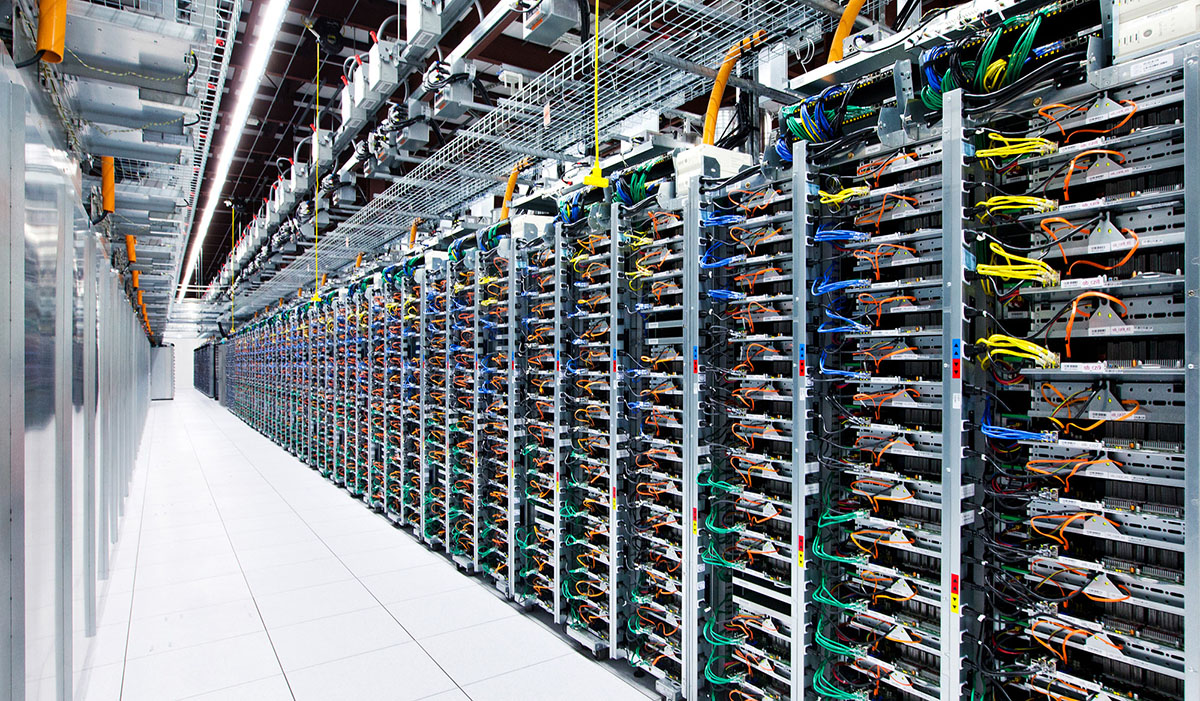 Google has given everyone a rare look inside its server rooms and detailed how keeps up with the massive growth of its search business. In a blog post, Google Fellow Amin Vadat said that the company's current network, Jupiter, can deliver a petabit...
Google gives the world a peek at its secret servers
by Steve Dent
Google has given everyone a rare look inside its server rooms and detailed how keeps up with the massive growth of its search business. In a blog post, Google Fellow Amin Vadat said that the company's current network, Jupiter, can deliver a petabit...
Roumen.ganeff, Ben and -1 others like this
21 Aug 11:52
Super News: Marvel’s JESSICA JONES Episode Titles Revealed
by Jessenika Colon
Thanks to one Reddit user, Marvel’s JESSICA JONES’ 13 episode titles have been revealed. The titles don’t reveal any plot details except when Power Man will make his first appearance but they do suggest a dark and quirky tone for the series. The titles also reveal that each episode will run within the time frame […]


Roumen.ganeff likes this
21 Aug 11:52
A Bloody New Poster For ASH VS. EVIL DEAD Is Here
by Jessenika Colon
Starz has released a new Ash vs. Evil Dead poster today. The mini series is the long-awaited follow up to the classic horror franchise, The Evil Dead. For those unfamiliar with the films, Evil Dead centered around Campbell’s Ash and friends as they visited a woodland cabin where they accidentally released demons intent on possessing […]


Roumen.ganeff likes this
20 Aug 08:01
 Alienware has lifted the veil off of the latest iteration of the Alienware 18 gaming laptop and the specs are just as ridiculous as the price tag. Each Alienware 18 will come equipped with a 4th generation Intel Core i7 and dual Nvidia GeForce GPUs.
The Alienware 18 Gaming Laptop Makes A Return
Roumen.ganeffThis is portable only with your own sherpa
Alienware has lifted the veil off of the latest iteration of the Alienware 18 gaming laptop and the specs are just as ridiculous as the price tag. Each Alienware 18 will come equipped with a 4th generation Intel Core i7 and dual Nvidia GeForce GPUs.