Shared posts

09 Jul 18:12

55 MOOCs (Massive Open Online Courses) for the Dog Days of Summer

by Dan Colman

At least here in the United States, we’re entering the Dog Days of Summer. In New York, it’s expected to hit 92 degrees today. That’s hot, but not nearly as bad as the temperatures in St. Louis (95), Phoenix (103) and Las Vegas (107). It’s time, my friends, to let Mother Nature declare victory (even if we’ve given her an artificial hand) and find ways to stay cool and productive at the same time. Here’s one option to consider: Even though most college students have gone home for the summer, there are 55 MOOCs (Massive Open Online Courses) starting between today and August 31, plus another 40 launching in September. They’re sponsored by some of the world’s leading universities and cultural institutions; they’re all free; and many offer certificates if students successfully complete their courses. Below, we’ve highlighted several courses that speak to our interest in the liberal arts. You can find the course that speaks to you by visiting our regularly-updated page: 500 Free MOOCs from Great Universities.

Related Content:

525 Free Audio Books: Download Great Books for Free

425 Free eBooks: Download to Kindle, iPad/iPhone & Nook

535 Free Movies Online: Great Classics, Indies, Noir, Westerns, etc.

160 Free Textbooks: A Meta Collection

0 comment(s)

06 Jul 20:13

The Derp and Fall of Inflation Fearmongers

by Matthew O'Brien
MartyFeldstein1.png

(Reuters)

Eventually even charlatans, cranks, and economists notice when the world isn't cooperating with their grand pronouncements. Eventually reality wins. And after four years of making relentlessly wrong predictions about the second coming of Weimar, that eventually has come now for the inflation chicken littles. At least a little.

Back in March 2009, the Fed began expanding its first bond-buying program, and the usual suspects began hyperventilating about hyperinflation. They just couldn't conceive how all the Fed's "money-printing" wouldn't end with double-digit inflation, if not people needing wheelbarrows full of cash to buy the most basic of necessities. But, as Paul Krugman pointed out, this lack of imagination was really a lack of knowledge of Japan's lost decade. There, as here, prices barely rose (or in Japan's case, actually fell), despite big deficits and big bond-buying. Why? Well, the rules change when short-term interest rates hit zero. Risk-averse banks don't want to lend and risk-averse households and businesses don't want to borrow. So central bank bond-buying mostly pushes reserves into banks that just sit there, especially when the central bank pays interest on them. Now, that doesn't mean quantitative easing is pointless -- ask Europe -- just that it's not massively inflationary.

But the anti-Bernanke crowd has tried not to notice that prices haven't gone parabolic. They've mostly succeeded in this epistemic closure -- and even when they haven't, they've quickly discounted reality as just a fad. Their excuses have been as predictable as they have been wrong: either the official numbers are irrelevant, or miss "real" inflation, or will show more inflation in a few more years (just wait and see!). But with core PCE inflation, the Fed's preferred measure, now at an all-time low going back 50 years, it's harder and harder to get anyone to listen. Here are the stories each group has tried to tell.

Charlatans. It's been a bull market for fake populists the past few years. With wages stagnant, households feel like inflation is higher than it is, and they keep hearing that it is from fact-challenged fraudsters. If it's not pop historian Niall Ferguson putting on his tinfoil hat and saying inflation is "really" 10 percent, it's pop pundit Erick Erickson bemoaning rising milk and bread prices that he knows aren't rising. But the truth is catching up. After playing the "it's-always-1980" game where stagflation is always and everywhere the problem, Erickson has had to admit that it's just that -- a game. And he had to admit it, because Krugman called him on it. In other words, nerds bearing charts beat demagogues bearing derp. (For the uninitiated, "derp", as Noah Smith defines it, means loudly repeating things you believe in the face of contrary evidence).

Cranks. It's also been a bull market for crackpot economists the past few years. Now, so-called Austrian economists did do a good job predicting the housing bubble during the boom, but they could hardly have done a worse job during the bust. They've looked at the Fed's ballooning balance sheet, and screamed that Zimbabwe is coming, Zimbabwe is coming! Well, it hasn't, and it won't. But that hasn't deterred the Austrians: they think the price of gold shows the "true" inflation from the monetary base expanding, so they've been right all along. But what about now? Gold is down 24 percent from a year ago, and 36 percent from its August 2011 highs -- and that despite more "money-printing" by the Fed. Where's the inflation now? (And, sorry Austrians, an increase in the monetary base doesn't count if there's no increase in prices).

Economists. Conservative economists haven't done much better. They too have looked at the Fed's balance sheet and fallen for the inflation hype. Marty Feldstein, for one, has predicted again and again and again that inflation is a risk -- only to be wrong and wrong and wrong. Even after admitting this, Feldstein just reiterated his fear of future inflation. And then he called on the Fed to start tapering its bond purchases now, because ... I have no idea why. Yes, Feldstein said something about financial stability, which is the new bugaboo of failed inflationistas, but he didn't provide any actual evidence. He just said that rising real interest rates wouldn't hurt the economy even though they would hurt housing. It didn't make much sense. Nor did it when the Bank for International Settlements or Raghuram Rajan said much the same. It's a depressing kind of progress. Conservatives want tighter money, but they know they can't justify it by crying inflation anymore -- so they cry financial stability instead.

Nothing can kill zombie ideas. Not facts. Not figures. And certainly not failed predictions. Now, inflation fearmongers couldn't have a worse track record than they do, but it won't change what they think the Fed should do. At most, it will change why they think the Fed should do it. To use a technical term, it's derp. And it's derp the data-driven Fed shouldn't be intimidated by -- though its tapering talk suggests otherwise.

Derp doesn't fall under the Fed's dual mandate.


03 Jul 15:40

Wondermark: July 3, 2013

by David Malki !
19 Jun 16:27

My Addiction to Irony by Marsh McCall

Hello. My name is John, and I’m “addicted” to irony. No, not “addicted.” I don’t know why I uttered the word with an air quote inflection. Yes, I do. It’s because I’m addicted. To irony. Wow, just saying those words out loud before you is a “relief.” No, not a “relief.” Just a relief. You see, as long as I can remember, I have experienced the world with eyebrow-raised, bemused detachment. And this has helped me experience a rich, full life. No, it hasn’t. Stop it. Even as a child, I retreated behind irony. In class, I would raise my hand in quiet moments, and, when called upon, would say, “First of all, let’s all calm down.” Why would an eight-year-old do this? I was not raised in an ironic household. Whenever someone at the dinner table spilled food I would dramatically cry out “What’s happening to us?” My parents would just stare at me, mystified.

Should I go on? By junior high school my ironic tendencies were firmly in control. I would proudly introduce myself to adults as “a leading dandruff expert.” I evaluated movies in the persona of a precocious talking squirrel named Chippers Treebert. For talent night at summer camp I convinced a friend to perform Abbott and Costello’s “Who’s On First?” with me. But instead of becoming annoyed at his inability to learn the names of the baseball players, I grew increasingly patient and compassionate. By the end of the sketch we were tearfully hugging. Real tears, ironically—perhaps because I realized it was only through irony that I could display emotion. Or was it “emotion”? Even the first time I kissed a girl, at an eighth-grade dance, I ironically distanced myself from any real human resonance by freezing into place after our lips met and pretending I had fallen asleep. The girl found it “hilarious,” by which I mean–-and this will come as no surprise–-the opposite. Irony, my friends. You’re not my friends. I don’t even know you. Irony again.

As an adult, I continue to find it virtually impossible to express any idea without ironic subtext. The previous sentence is a rare exception. And the one after that. But not this sentence. Or this one. Stop it. Stop it stop it stop it. The fact is, constant ironic detachment has not only stymied my social and scholastic life, it’s also held me back in my profession. Perhaps, in hindsight, I never should have entered the priesthood at all. When I stand at the pulpit before my congregation and employ a phrase such as “God knows why,” I can’t help putting a sardonic, bored-sophisticate spin on the words, thereby not only implying that God actually has no idea why, but that perhaps He may not exist at all. Often, to avoid my uncontrollable eye-rolling when simply uttering the word “God,” I try to evade the problem by referring to Him as “Mr. Big Pants,” but people find this alienating, particularly during funerals. I must confess, or perhaps “confess,” that attendance at First Church of the Sacred Virgin has steadily declined, and those few who do still wander in seem to be young adults wearing fedoras and sporting beards. Perhaps they think some sort of performance art is happening. Ironically, maybe it is. No, it’s not ironic. It’s just sad. Or possibly “sad.”

Anyway, I appreciate you allowing me this time to bare my soul, or at least my “soul,” but I don’t expect you to provide any existence-altering solutions. Maybe that’s why I retreated behind irony in the first place–-because there are, ultimately, no life answers, or even “life answers,” or even, to use the rare but potent double-ironic, “’life answers.’” Maybe I choose to feign bemused indifference because, ironically, I’m afraid to earnestly face the metaphysical conundrums into which each human is born. Perhaps it is why I am addressing my remarks today, not before a traditional support group, but to you, the elderly Armenian couple seated across from me on the bus. Thanks for listening, or at least for “listening.” Ironically, the language barrier seems to have helped me relax and connect with you on some sort of genuine, human level. But is this truly ironic? Or merely “ironic?” I don’t know. I just don’t know. “God” help me.

19 Jun 15:53

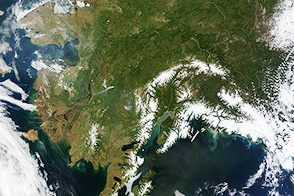
Rare Clear View of Alaska

Rare Clear View of Alaska
A ridge of high pressure air brought clear skies—and sweltering temperatures—to Alaska on June 17, 2013.

19 Jun 15:52

The Pace of Modern Life

Sven Lobsterberg

Things just ain’t like they used to be.

'Unfortunately, the notion of marriage which prevails ... at the present time ... regards the institution as simply a convenient arrangement or formal contract ... This disregard of the sanctity of marriage and contempt for its restrictions is one of the most alarming tendencies of the present age.' --John Harvey Kellogg, Ladies' guide in health and disease (1883)
19 Jun 00:47

Jindal: “Deal With It”

by Daniel Larison

Bobby Jindal makes the case that Republicans should stop “navel-gazing” about their problems:

We are the conservative party in America — deal with it. We have a lot of dissenting voices. So what? Deal with it. The American public waxes and wanes. Fine. It will wax again soon enough. Deal with it, and start fighting for our principles instead of against them, so we can be in position to create the next wave.

This is the sort of cri de coeur that one might expect from an activist or maybe a pundit, but it’s remarkably tone-deaf for an elected official. Jindal seems to be retreating here from his previous very mild recommendations for Republican reform, and seems to think that there’s nothing ailing the party that can’t be fixed by a redoubling of effort and a more combative attitude. Jindal is right that public opinion can change, and a party’s political fortunes can revive when the public tires of the party in power, but that doesn’t mean that one can simply wish away a party’s political weaknesses. No one would seriously accuse the GOP of having suffered from an “excess of navel-gazing” in the last few months. Most Republican pundits and politicians can’t bring themselves to face up to the bankruptcy of the party’s economic and foreign policy agendas, and they are even less interested in a remedy.

Relatively speaking, Republicans are the conservative party in America, but it’s a party that has little or nothing to offer to middle- and working-class Americans, its latest period of unified government was disastrous, and over at least the last twelve years it has alienated millions of people through a combination of incompetence and ideology. The public has “dealt” with the GOP already by handing it significant defeats in three of the last four national elections, and there are not many signs that Republicans understand how to avoid the next one. Reaching that understanding has only just barely begun, and Jindal now wants it stopped, which creates the impression that the effort to make sense of the 2012 loss and make necessary adjustments was almost entirely perfunctory and meaningless.

11 Jun 18:09

Austerity: the greatest bait-and-switch in history

by Cory Doctorow

Mark Blyth, a delightfully sweary Scottish economist, talks for about an hour to Googlers about the stupidity of austerity as a means of recovering from recession, describing it in colorful, easy-to-grasp language. This is brilliant, accessible and important economics:

Governments today in both Europe and the United States have succeeded in casting government spending as reckless wastefulness that has made the economy worse. In contrast, they have advanced a policy of draconian budget cuts--austerity--to solve the financial crisis. We are told that we have all lived beyond our means and now need to tighten our belts. This view conveniently forgets where all that debt came from. Not from an orgy of government spending, but as the direct result of bailing out, recapitalizing, and adding liquidity to the broken banking system. Through these actions private debt was rechristened as government debt while those responsible for generating it walked away scot free, placing the blame on the state, and the burden on the taxpayer.

That burden now takes the form of a global turn to austerity, the policy of reducing domestic wages and prices to restore competitiveness and balance the budget. The problem, according to political economist Mark Blyth, is that austerity is a very dangerous idea. First of all, it doesn't work. As the past four years and countless historical examples from the last 100 years show, while it makes sense for any one state to try and cut its way to growth, it simply cannot work when all states try it simultaneously: all we do is shrink the economy. In the worst case, austerity policies worsened the Great Depression and created the conditions for seizures of power by the forces responsible for the Second World War: the Nazis and the Japanese military establishment. As Blyth amply demonstrates, the arguments for austerity are tenuous and the evidence thin. Rather than expanding growth and opportunity, the repeated revival of this dead economic idea has almost always led to low growth along with increases in wealth and income inequality. Austerity demolishes the conventional wisdom, marshaling an army of facts to demand that we recognize austerity for what it is, and what it costs us.

Mark Blyth: Austerity - The History of a Dangerous Idea (via Memex 1.1)


11 Jun 14:38

Why One Child Is Enough for Me—and Might Be for You

by Lauren Sandler

Dahlia is home sick from school. She’s dancing in a tutu from my second grade recital, its orange, green, and pink ruffles now rediscovered and tugged over her monkey pajamas. At her insistence (and my pleasure), I too am wearing a tutu—a can-can skirt I saved from junior high, pulled up over my jeans. She twirls and jumps between the pocket doors to our bedroom. I tell myself to remember this. Then I look at the clock, remember the workday is in full swing, and scramble up to check my email.

10 Jun 15:45

The NSA is Not Asking for Samples of Your Feces by Pete Reynolds

There are a lot of false stories circulating about just what the National Security Agency is and is not seeking from the American public. I’m here to set the record straight. I can assure you, in no uncertain terms, that the NSA is not asking for samples of your fecal matter.

We will not be sending NSA agents door-to-door asking you to defecate in a cup. This applies whether or not the NSA agent has obtained a signed order from a doctor stating that the collection of your particular fecal matter is in the interest of national security. These orders are actually pretty easy to obtain, just FYI, but regardless, this is not something the NSA will be doing.

The NSA also will not be conducting a voluntary compliance “feces-by-mail” program wherein we request that all Americans collect their own fecal samples in a sterile receptacle, which the NSA would include free of charge, by the way, then place the receptacle in the enclosed medical bag, and drop the sample at one of our designated “Keep America Safe” collection points. It’s pretty simple, and actually a pretty effective way to fight terrorism, but in any event, the NSA has not implemented any such program, and we do not have any plans to do so. Even though, as I said, it would place very little burden on the average citizen while providing potentially enormous benefits to the NSA’s mission. Still, we’re not going to do it.

Another thing the NSA will not be doing is directing a program to bypass the American people altogether and just collect your feces straight from municipal sewage plants. Under such a program, the sewage plants definitely would not be aware of our efforts to access their systems and collect all your feces. But it doesn’t matter, because there won’t be such a program.

That’s not to say that if the NSA were to create such a program, just hypothetically, that it wouldn’t provide a substantial benefit to our national security. In theory, it could form the basis for invaluable research on American dietary habits, microbial and bacterial threats, and a host of other scientific concerns. It could bolster the efforts of the Centers for Disease Control and Prevention and protect the population from future outbreaks and threats of biological warfare. And even the so-called “meta-data” gleaned from such a feces-collection program that doesn’t exist could provide us with valuable information about the time, location, and duration of every act of defecation occurring in the United States within, say, two weeks on either side of Independence Day. But, again, this is also something the NSA won’t be doing, so no worries.

The point is, Uncle Sam is not asking for your feces.

So for those of you who, in the wake of recent news stories, have been mailing your fecal samples to the NSA, I want to assure you that this is not necessary. If we need your shit, the NSA has no problem inserting itself directly up your ass.

07 Jun 17:26

If I Were a Black Kid...

by Ta-Nehisi Coates
Here's a question from yesterday's comments:

Here is a thought experiment -- I do not pose this as an argument, or a "gotcha" proposition. I seriously want to hear this speech: TNC, if you are invited to your high school, Baltimore Polytechnic (thanks Wikipedia! P.S.: that you are not listed as a notable Alumnus is BS) and asked to speak to the students, what would you say? You're not allowed to give an impersonal, professorial talk about your academic interests. Let's assume the people who have invited you really want to know what you think they should do as individuals, and what they should do as a community, in order to achieve the kind of success in life that you have earned.

The large majority are good kids: driven, hungering for success and a sense of self, and desperately looking up to you for encouragement and advice, to somehow move them, even if they are too cool to show it. It's a pretty good school, but you are exceptional, and deep down, they want to be valued like you are valued. They want to be exceptional too. Sprinkled in the audience are also a bunch of fools who are making terrible choices and wrecking their own lives and hurting their community. But for this one hour, regardless of whether they have chosen to actively build up or tear down their lives and their community, they are ALL listening. You've got the mic. What would you say?
Well, first, I would say that you should be careful with Wikipedia. I did, in fact, attend Baltimore Polytechnic Institute ("Poly" for short). But the reason I am not listed as a notable alumnus is probably that I didn't graduate from there. Oh, and here is something else -- I was asked to leave. Twice. The first time, my parents argued for me to be readmitted. The second time they just threw up their hands and said -- "Fool, you are on your own." 

I was 16. I'd been arrested for assaulting a teacher and suspended on suspicion of assaulting another teacher. In my last year there, I got into a really huge fight in which I took a steel trash can to the head and then promptly failed four out of seven classes that year. I actually failed English. (You can read all about my lovely adventures with the Baltimore City Public Schools here.) So, you see, it is highly unlikely that I would ever be invited back to Poly to address the students. My older brother Malik, who also went to Poly and has gone on to work for Dreamworks, would be a much better candidate.

But, weirdly enough, I often do get asked to speak to predominantly black schools. Last year, I had the honor of going back to the site of my old middle school and spending a day with the kids. My mother teaches in Baltimore County and I've gone out and talked to her kids. I've even talked to the kids at Poly's longtime rival -- City College. I'm pretty sure the teachers bring me in because they believe my checkered background might mean I have something to say to them.

What I generally try to do is avoid messages about "hard work" and "homework," not because I think those things are unimportant, but because I think they put the cart before the horse. The two words I try to use with them are "excitement" and "entrepreneurial." I try to get them to think of education as something more than just pleasing their teachers, but as a ticket out into a world so grand and stunning that it defies their imagination. My belief is that, if I can get them to understand the "why?" of education, then the effort and hard work and long study hours will come after. I don't know how true that is in practice, but given that I am asked to speak from my own experience, that is the lesson I have drawn.

This will come as somewhat depressing news, but one of the main reasons I wanted to go to Poly was to get away from the violence that dogged virtually every other Baltimore city high school. That didn't exactly work out as I planned it. But my point is that my childhood -- and my education -- was largely guided by the need to negotiate violence. When teachers talked to us about why we needed to succeed, they talked about not ending up dead, or not ending up in jail. 

Much like President Obama's own rhetoric, this line of conversation is understandable, and it has its uses. A lot of us were killing and being killed. A lot of us really were going to jail. My parents generally talked the same way, and in their case, I have to say it was largely successful. In a few days, I am going to see my younger brother sworn as a lawyer in the state of Maryland. My father has seven kids. All of them hail from in and around West Baltimore. All of them, except me, graduated from college. Perhaps that makes the point. But I know how close I came to the edge. And I think a part of that was that not getting shot and not going to jail simply wasn't enough to make want to succeed in school. No one ever told me about Paris. No one I knew had ever been.

What I have come to believe is that children are more than what their circumstance put upon them. So my goal is to get kids to own their education. I don't think I can hector them into doing this. I don't think I can shame them into doing it. I do think that might be able to affect some sort of internal motivation. So I try to get them to see that every subject they study has the potential to open up a universe. I really mean this. 

I went to the Aspen Ideas Festival in 2008, and I still was, very much, a product of my 'hood. I could not believe what I was seeing. There was a guy next to me who had been old friends with Peter Jennings. He was retired. He had tales about taking Peter Jennings' boat out sailing. He talked about how he'd spent the day up at the Continental Divide with his dog. He loved his life. His only trouble was that he couldn't convince his wife to retire. 

Negro, I didn't even know what the Continental Divide was. And I remember thinking, "People actually live like this. Like, we're doing this now?" And then I remember thinking, "I want to live like that." By which I meant, I wanted to see things. If this was one world far from mine, there must be other worlds. And I really wanted to see them. 

I recall sitting in my seventh-grade French class repeating over and over "Il fait froid. Il fait chaud." Why was I learning French? Who did I know that spoke French? Where is France? Do they even really talk like this? Well, yeah, they kinda do. I figured that out at 37. And now I find myself clutching flashcards, repeating "Il fait froid. Il fait chaud." This summer, I am going to live with my family in Paris for eight weeks and study the language. I had no idea that education could make that possible. If I had been more serious about education, the opportunity would have come a lot sooner.

So when I talk to young black kids, I try to talk about the "why?" as much as the "what?" And, for the record, I do the same thing at MIT. I start my class explaining that learning to write is their moral duty. I told them they had access to more information that 99 percent of all humans who have ever lived. It is a moral duty to learn how to communicate that information, clearly and compellingly. I think everyone should own their education.

I don't know if any of that works. But I am convinced that my problem was mere laziness or a lack of work ethic. Work ethics don't magically appear. Mine is most evidenced when I understand why I am working and when I find that "Why" compelling. I never really had that as a student. "Try harder" has to have some actual meaning beyond sloganeering.

At this point I am fairly well self-educated, though I have many weaknesses which I likely would not have had, if I'd really gotten a proper and challenging education. (St. Augustine, stats, grammar, genetics etc.) I'm not ashamed of this. It's just a fact. But I also know that if I'd understood, as a youth, what education can give you, that a degree was not simply a matter of being "Twice As Good" but a key to bearing witness to "Twice As Much," I might have made better choices. 


07 Jun 14:55

All the Infrastructure a Tyrant Would Need, Courtesy of Bush and Obama

by Conor Friedersdorf
bush and obama full full.jpg
Reuters

Let's assume that George W. Bush, Dick Cheney, Barack Obama, Joe Biden, their staffers, and every member of Congress for the last dozen years has always acted with pure motives in the realm of national security. Say they've used the power they've claimed, the technology they've developed, and the precedents they've established exclusively to fight al-Qaeda terrorists intent on killing us, that they've succeeded in disrupting what would've been successful attacks, and that Americans are lucky to have had men and women so moral, prudent, and incorruptible in charge.

Few Americans believe all of that to be so. Combining the people who didn't trust Bush and the ones who don't trust Obama adds up to a sizable part of the citizenry. But even if all the critics were proved wrong, even if the CIA, NSA, FBI, and every other branch of the federal government had been improbably filled, top to bottom, with incorruptible patriots constitutionally incapable of wrongdoing, this would still be so: The American people have no idea who the president will be in 2017. Nor do we know who'll sit on key Senate oversight committees, who will head the various national-security agencies, or whether the moral character of the people doing so, individually or in aggregate, will more closely resemble George Washington, Woodrow Wilson, FDR, Richard Nixon, Ronald Reagan, John Yoo, or Vladimir Putin.

What we know is that the people in charge will possess the capacity to be tyrants -- to use power oppressively and unjustly -- to a degree that Americans in 1960, 1970, 1980, 1990, or 2000 could've scarcely imagined. To an increasing degree, we're counting on having angels in office and making ourselves vulnerable to devils. Bush and Obama have built infrastructure any devil would lust after. Behold the items on an aspiring tyrant's checklist that they've provided their successors:
  • A precedent that allows the president to kill citizens in secret without prior judicial or legislative review
  • The power to detain prisoners indefinitely without charges or trial
  • Ongoing warrantless surveillance on millions of Americans accused of no wrongdoing, converted into a permanent database so that data of innocents spied upon in 2007 can be accessed in 2027
  • Using ethnic profiling to choose the targets of secret spying, as the NYPD did with John Brennan's blessing
  • Normalizing situations in which the law itself is secret -- and whatever mischief is hiding in those secret interpretations
  • The ability to collect DNA swabs of people who have been arrested even if they haven't been convicted of anything
  • A torture program that could be restarted with an executive order
Even if you think Bush and Obama exercised those extraordinary powers responsibly, what makes you think every president would? How can anyone fail to see the huge potential for abuses?

I am not saying no one would resist a tyrant. Perhaps Congress would assert itself. Perhaps the people would rise up. Then again, perhaps it would be too late by the time the abuses were evident. (America has had horrific abuses of power in the past under weaker executives who were less empowered by technology; and numerous other countries haven't recognized tyrants until it was too late.) Part of the problem is how much the Bush-Obama paradigm permits the executive to do in secret. Take that paradigm, add another successful 9/11-style attack, even after many years of very little terrorism, and who knows what would happen?

No one does.

That's because we're allowing ourselves to become a nation of men, not laws. Illegal spying? Torture? Violating the War Powers Resolution and the convention that mandates investigating past torture?

No matter. Just intone that your priority is keeping America safe. Don't like the law? Just get someone in the Office of Legal Counsel to secretly interpret it in a way that twists its words and betrays its spirit.

You'll never be held accountable.

This isn't a argument about how tyranny is inevitable. It is an attempt to grab America by the shoulders, give it a good shake, and say: Yes, it could happen here, with enough historical amnesia, carelessness, and bad luck. We're not special. Our voters won't always pick good men and women to represent us. Some good women will be corrupted by power, and some bad men will slip through. Other democracies have degraded into quasi-authoritarian states; they didn't expect that to happen until it was too late to stop. We have safeguards to prevent us from following in their footstep. Stop casting them off because you fear al-Qaeda. Stop tempting fate.

Stop acting like the president takes an oath to keep us safe, when his job is to protect and defend the Constitution. Doing so keeps the American project safe. Past generations fought monarchies, slaveholders, and Nazis to win, expand, and protect that project. And we're so risk-averse -- not that we're actually minimizing risk -- that we're "balancing" the very rights in our Constitution against a threat with an infinitesimal chance of killing any one of us? That makes about as much sense as the 5,000 American lives lost when the same ruling class that built the national-security state found it prudent to preempt a perceived threat from Iraq. And we still trust them?

"We have suffered several thousand casualties from 9/11 through today. Suppose we had a 9/11-level attack with 3,000 casualties per year every year. Each person reading this would face a probability of death from this source of about 0.001% each year," Jim Manzi once pointed out at National Review. This is why we're letting the government build an Orwellian spy state more sophisticated than any in history?

Manzi went on:
To demand that the government "keep us safe" by doing things out of our sight that we have refused to do in much more serious situations so that we can avoid such a risk is weak and pathetic.
He was speaking of torture, but the logic applies more generally.

I am not saying that terrorism poses no threat -- of course it does. Of course we ought to dedicate substantial resources to preventing all the attacks that can be stopped without violating our founding documents, laws, values, or sense of proportion. For the national-security state, loosed of the Constitution's safeguards, is a far bigger threat to liberty than al-Qaeda will ever be. Vesting it with more power every year -- expanding its size, power, and functions in secret without any debate about the wisdom of the particulars -- is an invitation to horrific abuses, and it renders the concept of government by the people a joke. The ruling class is trying to keep us ignorant of what it's doing on behalf of us, because it doesn't want us to object!

You'd think, listening to those who defend the national security state's expansion, that the excesses detailed in the Church Committee report never happened; that the horrific abuses of our own era never happened; that the FBI and the CIA have unblemished records respecting the rights of Americans. In fact, America always overestimates its ability to anticipate and preempt abuses.

Yet Americans think they're special. If you doubt that, ask yourself what the average American would say if they heard about China pulling call records on millions of innocent Chinese people.

"Those authoritarian Communists."

We go easier on our own.

America has stepped back from the brink in the past when wars ended. But we've never had a "war" go on this long -- and there's no end in sight. It's time for the people to pressure their elected representatives, so that, through Congress, we can dismantle the infrastructure Bush and Obama have built. In less than four years, an unknown person will start presiding over the national-security state. He or she will be an ambitious power seeker who will guiltlessly misrepresent his or her character to appeal to different voters, lie countless times on the campaign trail, and break numerous promises while in office. That's a best-case scenario that happens every time!

For once, let's preempt that threat.


07 Jun 13:48

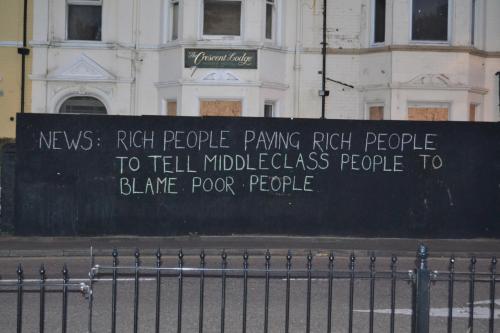
News

05 Jun 17:25

Long Exposure Photographs of Fireflies in the Forests of Nagoya City by Yume Cyan

by Christopher Jobson

Long Exposure Photographs of Fireflies in the Forests of Nagoya City by Yume Cyan long exposure Japan fireflies

Long Exposure Photographs of Fireflies in the Forests of Nagoya City by Yume Cyan long exposure Japan fireflies

Long Exposure Photographs of Fireflies in the Forests of Nagoya City by Yume Cyan long exposure Japan fireflies

Long Exposure Photographs of Fireflies in the Forests of Nagoya City by Yume Cyan long exposure Japan fireflies

Long Exposure Photographs of Fireflies in the Forests of Nagoya City by Yume Cyan long exposure Japan fireflies

For the last month or so photographer Yume Cyan has been shooting some magical long exposure photographs of fireflies in a forested area around Nagoya City, Japan. By keeping the camera’s shutter open at a low aperture Cyan captures every bioluminescent flash of each insect resulting in dotted light trails that criss-cross the frame. You may remember a similar series of photographs also shot in Japan from back in 2011. You can see these a bit larger over on 500px.

31 May 16:46

The Mammy Washington Almost Had

by Tony Horwitz
hattiemcdanielasmammyban.jpg
Hattie McDaniel as Mammy in Gone With the Wind (MGM)

If I say the word "Mammy," you're likely to conjure up the character from Gone With the Wind. Or, you may think of Aunt Jemima, in her trademark kerchief, beaming from boxes of pancake mix.

What you probably won't picture is a massive slave woman, hewn from stone, cradling a white child atop a plinth in the nation's capital. Yet in 1923, the U.S. Senate authorized such a statue, "in memory of the faithful slave mammies of the South."

As a Southern Congressman stated in support of the monument: "The traveler, as he passes by, will recall that epoch of southern civilization" when "fidelity and loyalty" prevailed. "No class of any race of people held in bondage could be found anywhere who lived more free from care or distress."

Today, it seems incredible that Congress sanctioned a monument to so-called Faithful Slaves -- just blocks from the Lincoln Memorial, which had been dedicated only months earlier. But the monument to the Great Emancipator masked the nation's retreat from the "new birth of freedom" Lincoln had called for at Gettysburg, three score and ten years before. By 1923, Jim Crow laws, rampant lynching, and economic peonage had effectively reenslaved blacks in the South. Blacks who migrated north during and after World War One were greeted by the worst race riots in the nation's history. In the capital, Virginia-born President Woodrow Wilson had recently segregated federal facilities and screened Birth of a Nation at the White House. The overtly racist movie exalted the Ku Klux Klan, which peaked at two million members in the 1920s and won control of mayors' office and state legislatures across the land.

"We have this image of the 1920s as the Jazz Age, the birth of the modern, a world of skyscrapers and flappers," says David Blight, a Yale historian and leading scholar of race in the late 19th and early 20th century. "But white supremacy had few better moments in our history."

The early 1900s were also the heyday of Old South nostalgia. Popular songs and bestselling novels depicted antebellum Dixie as a genteel land of benevolent "planters" and happy "servants." Central to this idyll was the figure of Mammy, who in popular imagination resembled Uncle Tom's wife, Aunt Chloe, a cheerful, plump slave in a checked kerchief. White performers blackened their faces to tell stories and sing spirituals in the style "of the old time 'house darkey.'" The ready-made pancake mix of Aunt Jemima -- a "slave in a box," as one historian puts it -- quickly became a national sensation; a "biography" of her was subtitled "the Most Famous Colored Woman in the World."

jemimabox.jpg

In reality, the pancake mix was the creation of two white men in Missouri, and they named it after a character in a minstrel song, not an actual slave cook. Similarly, there is more folklore than fact underlying the stereotype of matronly slaves nursing young whites. "I went in search of the mammy and couldn't find her," says historian Catherine Clinton, whose books include Tara Revisited and Plantation Mistress. "Most slaves who looked after white children were very young." In other words, more like Prissy in Gone With the Wind than Mammy.

Or even younger. Harriet Tubman, for instance, was seven when she began caring for a baby and was whipped if the infant cried. Ex-slaves interviewed by the WPA in the 1930s also told of nursing babies as girls themselves, while the older black women of mammy lore looked after slave children whose mothers labored in the fields. These interviews also cast a harsh light on the supposedly privileged status of "house" slaves. One former slave recalled a "Mammy" being lashed "till de blood runned out"; another described a rape by the slaveowner's sons. "I can tell you that a white man laid a nigger gal whenever he wanted," said an ex-slave from Georgia who "went into the house as a waiting and nurse girl" between the ages of nine and twelve.

These and other routine cruelties didn't figure in the moonlight-and-magnolia romance that seized white imagination in the late 19th and early 20th centuries. Nor was the Mammy craze of that era confined to literature, song, and marketing. It was fostered by groups such as the United Daughters of the Confederacy (UDC), which sought to recast the "Lost Cause" as a noble defense of a Southern utopia. If slaves had been loyal, well treated, and content, it followed that emancipation and Reconstruction were calamitous -- just as portrayed in Birth of a Nation. The ladies of the UDC honored aged blacks as "faithful Confederates" and even ghost-wrote testimonials such as "What Mammy Thinks of Freedom," in which an ex-slave says, "w'en I gits ter hebben, Lord, I hope I'll find its slabery."

This reactionary crusade culminated in a UDC campaign to build monuments to slaves who remained faithful out of "love of masters, mistresses and their children." Initially, this effort was confined to the South. But black migration to the North, race riots, and growing anxiety about what whites called the "Negro problem," made the nation more receptive to Southern images of bygone racial order.

So did the ubiquity of nurturing mammies in popular culture.

"Mammy was appealing at a particularly fraught time in national history," says Micki McElya, a historian at University of Connecticut and author of Clinging to Mammy: the Faithful Slave in Twentieth-Century America. "Mammy represents paternalism and affection between the races, a world where everyone understands their places."

This was certainly the message of Charles Stedman, a North Carolina Congressman who in January 1923 introduced a Mammy monument bill on behalf of the Jefferson Davis Chapter of the UDC.

One sculptor's model showed an Aunt Jemima-like figure holding a white child as two other children clung to her dress. These were "pickaninnies," the artist explained, "trying to have their mother pay attention to them instead of devoting all her time to the white children."

"They desired no change in their condition of life," Stedman said of the faithful slaves who would be honored. "The very few who are left look back at those days as the happy golden hours of their lives."

Stedman added that the bill "should find a responsive echo in the hearts of the citizens of this great Republic." It did, at least in the Senate, which voted for a land grant in the capital, so the UDC could erect the monument as "a gift to the people of the United States." The next day's Washington Post printed only a two-paragraph item, noting that the Senate had approved three monuments: to baseball, to a "former District commissioner," and to "faithful colored mammies."

African Americans, however, took far greater notice, led by the growing black press and by newly formed civil rights groups. "My own beloved mother was one of those unfortunates who had the flower of her youth spent in a slave cabin," one NAACP official wrote the Washington Star, describing the mammy statue as "a symbol of our servitude to remind white and black alike that the menial callings are our place." He added: "if the South has such deep gratitude for the virtues of this devoted group from which it reaped vast riches, let it remove the numberless barriers it has gone out of its way to throw up against the progress" of blacks.

One such barrier was lynching, which claimed some 2,500 lives between 1890 and 1920. The Senate, just weeks before approving the Mammy monument, had allowed a Southern filibuster to defeat an anti-lynching bill. (One Southern Senator called it "a bill to encourage rape" by blacks, while another contrasted this menace with the "unspeakable love that every southern man feels for the old black nurse who took care of him in childhood.") The proximity of the lynching and Mammy debates prompted the Chicago Defender to publish a cartoon titled "Mockery," in which a Southerner presents plans for the mammy statue to the dangling body of a lynching victim. The Baltimore Afro-American offered its own vision of the planned monument: a frowning Mammy perched atop a wash tub instead of a pedestal, her empty hand extended above the inscription: "In Grateful Memory to One We Never Paid a Cent of Wages During a Lifetime of Service."

Blacks also bristled at the stereotype of benignly affectionate relations between masters and hefty, aging mammies, who seemed never to have families of their own. A truer monument, one paper suggested, would be a statue to a "White Daddy," sexually assaulting a young black woman as a mammy looks helplessly on.

Plans for the actual UDC monument stoked still greater outrage.

One sculptor's model showed an Aunt Jemima-like figure holding a white child as two other children clung to her dress. These were "pickaninnies," the artist explained, "trying to have their mother pay attention to them instead of devoting all her time to the white children." Another sculptor proposed a seated Mammy with an infant at her breast, set within a columned fountain. The monument's backers favored this design and said it would be titled "The Fountain of Truth." According to the Washington Post, the monument was to be erected on Massachusetts Avenue, near an equestrian statue of the Union general, Philip Sheridan.

But the monument bill had to pass a House committee before it could be enacted. And blacks not only fulminated against the statue; they organized protests. Petitions and letters poured into the offices of politicians and newspapers, including one presented by two thousand black women to Vice President Calvin Coolidge and the Speaker of the House. The women's auxiliary of the main Union veterans' organization, the Grand Army of the Republic, also condemned the monument as a "sickly sentimental proposition," and suggested the money would be better spent on "bettering conditions of the mammy's children."

Three months after the introduction of the monument bill in the Senate, Congress adjourned without having taken any further action. "Because of the controversy and resistance, it's ultimately allowed to die," says Micki McElya. And so, the Mammy statue quietly joined the ranks of monuments in the capital that were never built, including a towering "Mother's Memorial" and a plan for the Washington Monument that depicted the first president in a carriage atop thirty columns. The spot where Mammy was to have stood is now occupied by a statue of Tomas Garrigue Masaryk, a "champion of liberty" in Czechoslovakia.

"I'm proud this country finally got around to honoring these guys," says a recent visitor to the Spirit of Freedom Monument. His pride dimmed when he was shown a picture of the very different monument proposed in 1923. "You're kidding me. We almost put up Aunt Jemima near the Mall?"

But Mammy was by no means expunged from national consciousness. Four years after the monument proposal died, the first true "talkie," The Jazz Singer, featured a black-faced Al Jolson singing "Mammy." Twelve years later, Hattie McDaniel immortalized Mammy with her Oscar-winning performance in Gone With the Wind. In the 1950s and 60s, Disneyland included a restaurant called Aunt Jemima's Kitchen. And not until 1968 did Quaker Oats begin to give its famous cook a makeover; Jemima shed weight and her familiar bandana, gradually becoming the coiffed woman smiling from today's supermarket shelves.

Mammy also endures in stone, though not in the dramatic fashion the UDC once envisioned. At Confederate Park in Fort Mill, S.C., an obelisk "dedicated to the faithful slaves," unveiled in 1900, includes a mammy cradling a baby. In 1914, a towering monument was unveiled at Arlington National Cemetery to the "Dead Heroes" of the Confederacy. Standing near the Tomb of the Unknown Soldier, the monument's frieze includes a turbaned and heavyset mammy, holding up a white child for a departing rebel to embrace.

Today, at the nearby Lee Mansion, visitors get a truer glimpse of what a mammy's life was like. Behind Robert E. Lee's stately columned home stand the simple slave quarters where up to ten people occupied a single room. In one, furnished with a pallet and chamber pot, lived "Nurse Judy," also known as "Mammy," who cared for Lee's children, one of whom described her in a letter as "very weak and thin."

Another counterpoint to the Southern lore of contentedly servile black woman can be found across the Potomac River, at 10th and U Street in Northwest Washington. It is a monument titled "Spirit of Freedom," honoring the almost 210,000 blacks who served in the Union Army and Navy during the Civil War. The sculpture includes a black woman holding her own child, beside a black soldier. A monument to black servicemen was first proposed in 1916 but not built in Washington until 1998.

"I'm proud this country finally got around to honoring these guys who fought for freedom," says a recent visitor to the monument, Joseph Brown, a retired black finance manager from Houston. His pride, however, dimmed a bit when he was shown a grainy picture of the very different monument that was proposed in 1923. "You're kidding me. We almost put up Aunt Jemima near the Mall?"

Brown's grandmother worked in a white home in Louisiana. He believes many Southerners were sincere in their affection for "mammies" and "maids," noting that half the people at his grandmother's funeral were white. "That history really happened, and there was genuine closeness," he says. "But a Mammy monument? That's repugnant, because it's using her as a symbol of servitude."

Historian Catherine Clinton says that if the monument had been built, it would strike tourists today as "a monstrous apparition" from our past. It might even have been hidden from view, inside a box -- the fate of a faithful slave memorial in Harpers Ferry, West Virginia. But rather than cringe over the Mammy monument, Clinton believes we should celebrate the "unsung heroism" of those who opposed it. The controversy mobilized black women whose protests were a precursor of their activism in the civil rights movement of later decades. One such pioneer was Mary Church Terrell, a daughter of slaves who became founding president of the National Association of Colored People and later took part in pickets and other protests against segregation in the 1950s. As a leader of the protest against the Mammy monument, she warned that if it were built, thousands of blacks "will fervently pray that on some stormy night the lightning will strike it and the heavenly elements will send it crashing to the ground."

This wasn't necessary, Clinton observes, because Terrell and others "struck it down themselves."


26 May 18:57

Arctic Amplification

Arctic Amplification
Temperatures are warming faster in the Arctic than anywhere else in the world. Here’s why.

24 May 16:30

The Falling-Bridge Lesson: The U.S. Infrastructure Failure Is Still Totally Inexcusable

by Derek Thompson

When a bridge falls in America -- like this one near Seattle on Thursday night -- infrastructure spending has a way of transforming from a fringey bugaboo to A1 national obsession. Fortunately, falling bridges in America are still a rarity. Unfortunately, infrastructure spending is being unnecessarily squeezed by sequestration and the incredible shrinking discretionary budget at the very moment that infrastructure spending is a historic bargain for the federal government.

Public construction spending has been declining since the middle of the recession in outright terms ...

Screen Shot 2013-05-24 at 10.54.28 AM.png

... and as a share of the economy, it's at a 20-year low (the lowest on record with St Louis Fed data).

Screen Shot 2013-05-24 at 10.57.55 AM.png

Our construction budget has been the victim of deficit fears, but it's the infrastructure deficit that's truly absurd.

Our expensive transportation and utility challenges absolutely aren't going away, but our window of opportunity to cheaply fix them absolutely will. Roads, rail, airports, broadband, electrical grids ... repairing or building out these systems is a matter of inevitability and U.S. interest rates and labor costs will only go up as the economy recovers.

The average age of America's 607,380 bridges is about 42 years old. The Federal Highway Administrations claims we'll need to spend about $20.5 billion annually for the next 16 years to properly update them -- about 60 percent more than we're spending every year today. Meanwhile, the Highway Trust Fund has been slammed by a decrease in miles driven nationally, states and cities have been slammed by the weak economy, and private builders face a jumbled knot of "municipalities, investors, and federal overseers."

For a rich country like the U.S., the beauty of the federal government borrowing in its own currency is that you can finance huge deficits when the economy stinks and use that money to fill the gap left by the private sector and state and local governments. Infrastructure improvements -- the shared responsibility of all levels of government and the private sector -- are the perfect recession-time gift from Washington. States and local governments are pulling back because they have to. Washington is pulling back because it chose to.

There are scolds who accurately point out that infrastructure rhetoric is somewhat famously hyperbolic. There are real-keepers who accurately point out that our share of bridges that are either "functionally obsolete" or "structurally deficient" has actually been declining over the last ten years. There are fiscal conservatives who accurately point out that we don't spend much less on infrastructure than the rest of the developed world, including Europe.

My response is two-fold: (a) they're all right; and (b) so is the argument that Washington should be spending more on infrastructure. America's rebuilding needs aren't going away. The basement-bargain price of rebuilding America is. Unfortunately, we might have to wait for a bridge collapse to inconvenience a member of Congress before infrastructure spending is rescued from austerity. Then, perhaps, we'll finally take advantage of the best deal on the market.


22 May 14:28

Bernanke to Congress: Seriously, guys, what are you doing?

by Neil Irwin

Ben Bernanke testifies before Congress today for the first time in three months, and the Federal Reserve chairman has a message for lawmakers: You're the reason the economy isn't taking off more.

Of course, Bernanke is too polite to phrase things quite so bluntly. But to anyone versed in Fedspeak, that's the gist of his message. Even as state and local governments are becoming less of a drag on growth, Bernanke says in his prepared testimony before the Joint Economic Committee, "fiscal policy at the federal level has become significantly more restrictive."

"In particular," his testimony says, "the expiration of the payroll tax cut, the enactment of tax increases, the effects of the budget caps on discretionary spending, the onset of sequestration, and the declines in defense spending for overseas military operations are expected, collectively, to exert a substantial drag on the economy this year."

He adds that with the Fed's interest rate policies already near zero, "monetary policy does not have the capacity to fully offset an economic headwind of this magnitude."

It might be one thing if the fiscal retrenchment was also solving the country's longer-term deficits. But, Bernanke says, it has not. "Although near-term fiscal restraint has increased, much less has been done to address the federal government's longer-term fiscal imbalances," he says in the prepared testimony. "Indeed, the [Congressional Budget Office] projects that, under current policies, the federal deficit and debt as a percentage of GDP will begin rising again in the latter part of this decade and move sharply upward thereafter."

That current policy is the exact opposite of the path that Bernanke has advocated countless times in past testimony: Focus on reducing the long-term sustainability of the U.S. government's finances while moving cautiously, if at all, on short-run fiscal austerity. And the chairman repeats that plea in today's testimony: "Congress and the Administration could consider replacing some of the near-term fiscal restraint now in law with policies that reduce the federal deficit more gradually in the near term but more substantially in the longer run."

In other news from the testimony, Bernanke makes a preemptive defense of the Fed's low interest rate policies, which lawmakers have assailed in the past for reducing returns for savers. The Fed chief argues, in effect, that savers will actually be better off if the low rates stay in place for now.

The Fed policymaking committee "actively seeks economic conditions consistent with sustainably higher interest rates," Bernanke says. "Unfortunately, withdrawing policy accommodation at this juncture would be highly unlikely to produce such conditions. A premature tightening of monetary policy could lead interest rates to rise temporarily but would also carry a substantial risk of slowing or ending the economic recovery and causing inflation to fall further," an outcome that would prolong the period of low interest rates and trigger "poor returns on other assets."

Translation: Savers, I know it isn't much fun getting zero interest rates on your savings accounts, but the alternative would likely be worse.


21 May 16:01

Life Lessons in Fighting the Culture of Bullshit

by Jon Lovett
lovett.banner2.jpg
Pitzer College/YouTube

This item has been excerpted from the prepared Commencement Address to the graduates of Pitzer College in Claremont, Calif., on May 18, 2013.

I recently turned thirty, which I know seems like a generation away to those of you graduating this morning. But it's more than just the worst. Thirty is a year where you're left straddling two worlds. One foot stands in the world of the young, among the bright eager minds and supple bodies of students like you. And the other foot stands in the world of the grey and decrepit; the ancient shapes of your professors and parents; their dulling senses; their craggily, wizened faces.

And by the way, congratulations parents! This is your day too.

But what it means is that I am in a position to talk about life after college -- as someone who just lived through it. For example, do you remember how your elementary school felt enormous? But then when you returned years later, you were amazed by how small it actually was? In time, your chosen professions will feel exactly the same way. That is not to say that you won't have almost unlimited opportunities. But it is to say that if you sleep with someone who works in your industry, just be aware that you're going to bump into that person at meetings and conferences and birthday parties for the rest of your life. I literally had to leave politics.

Yeah, we're going to talk about it. Your love is a delicate flower.

So, I'm going to skip the platitudes, OK? I want this to be a practical commencement address. And I'm going to do my best to tell the truth -- even when it's uncomfortable to say, even when I probably shouldn't say it. Because you're already swimming in half-truths, in people telling you what they think you want to hear. And in this next phase of your life, I promise you, you will encounter more.

I should preface this by saying that the problem I am going to describe involves a bad word -- not the worst word, but a bad word -- though I've made sure that I only have to say it now and then one more time at the end. So if you want to distract any little kids for a second, please do so. One of the greatest threats we face is, simply put, bullshit. We are drowning it. We are drowning in partisan rhetoric that is just true enough not to be a lie; in industry-sponsored research; in social media's imitation of human connection; in legalese and corporate double-speak. It infects every facet of public life, corrupting our discourse, wrecking our trust in major institutions, lowering our standards for the truth, making it harder to achieve anything.

And it wends its way into our private lives as well, changing even how we interact with one another: the way casual acquaintances will say "I love you"; the way we describe whatever thing as "the best thing ever"; the way we are blurring the lines between friends and strangers. And we know that. There have been books written about the proliferation of malarkey, empty talk, baloney, claptrap, hot air, balderdash, bunk. One book was aptly named "Your Call is Important to Us."

But this is not only a challenge to our society; it's a challenge we all face as individuals. Life tests our willingness, in ways large and small, to tell the truth. And I believe that so much of your future and our collective future depends on your doing so. So I'm going to give you three honest, practical lessons about cutting the BS.

Number one: Don't cover for your inexperience. You are smart, talented, educated, conscientious, untainted by the mistakes and conventional wisdom of the past. But you are also very annoying. Because there is a lot that you don't know that you don't know. Your parents are nodding. You've been annoying them for years. Why do you think they paid for college? So that you might finally, at long last, annoy someone else. And now your professors are nodding.

F. Scott Fitzgerald once said, "Yeah, this should definitely be in 3D."

No, what he said was, "[T]he test of a first-rate intelligence is the ability to hold two opposed ideas in the mind at the same time, and still retain the ability to function." That's what you have to do: you have to be confident in your potential, and aware of your inexperience. And that's really tough. There are moments when you'll have a different point of view because you're a fresh set of eyes; because you don't care how it's been done before; because you're sharp and creative; because there is another way, a better way. But there will also be moments when you have a different point of view because you're wrong, because you're 23 and you should shut up and listen to somebody who's been around the block.

The old people are nodding again.

It's hard to tell the difference. Me, I love getting this one wrong. I got it wrong a ton when I started out as a speechwriter to Hillary Clinton. I got it wrong again when I became a presidential speechwriter. I worked on one speech about the financial system that caused the Dow to drop like 200 points. So that speech could have been better, probably.

Just this past year, I faced this same dilemma, co-creating a show on NBC. It's called 1600 Penn, and while you may have heard of it, based on the ratings, you almost certainly didn't see it. Though, it did recently make some headlines... when it was cancelled. I had never so much as a written a line of dialogue before I wrote this show. But I'm working with directors and writers and executives with years and years of experience in the biz. We call it the biz.

I'll always cringe remembering those little embarrassing moments when I said something dumb on a conference call, when my inexperience poked through, when I should have been more solicitous of the judgment of those around me. They're a reminder that it's not mutually exclusive to be confident and humble; to be skeptical and eager to learn.

But there is another side to this coin, which brings me to lesson number two: Sometimes you're going to be inexperienced, naïve, untested and totally right. And then, in those moments, you have to make a choice: is this a time to speak up, or hang back? I worked for then-Senator Clinton during her campaign for president -- and I believed in her, still do. But I vividly remember feeling like things weren't right in that campaign; a lot of the young staffers felt that way -- it wasn't a secret that there were problems in how the campaign was run. The campaign pollster for example, rolled out so many slogans it was impossible to keep track. Here's a sample:

Let the Conversation Begin

Ready for Change, Ready to Lead

Working for Change, Working for You

Strength + Experience = Change. Which leads to the lesser known corollary: ( Strength + Experience ) / Change = 1.

And then, my favorite: Big Challenges, Real Solutions: Time to Pick a President. Which he had printed on the side of a bus but it was basically too small to read.

So, I'm putting these slogans into speeches and I look over at an Obama campaign rally on cable news and they have one slogan. It's just the word "CHANGE" in big letters. That seemed better. But I was timid; and a lot of us just assumed, or wanted to assume, that more experienced people must know what they're doing. But that wasn't true. So the campaign ended, my candidate lost, and I ended up as a presidential speechwriter anyway, which was cool. But the lesson I drew from that campaign, other than the fact that it's always a mistake to run against Barack Obama, is the subway rule: "If you see something, say something." And I've tried to honor that ever since; to call BS when I see it -- and to not be afraid to get in people's faces, and throw a punch or two, to make a point. Metaphorically. Look at me. I wouldn't do well in an altercation.

Now, lessons one and two can be in tension. And I can't tell you how to strike the balance every time. Though it helps to be very charming. And from my point of view, I'd rather be wrong and cringe than right and regret not speaking up. But the good news is, as long as you aren't stubbornly wrong so frequently that they kick you out of the building, or so meek that everyone forgets you're in the building you'll learn and grow and get better at striking that balance, until your inexperience becomes experience. So it's a dilemma that solves itself. How awesome is that?

Finally, number three: Know that being honest -- both about what you do know, and what you don't -- can and will pay off.

Up until recently, I would have said that the only proper response to our culture of BS is cynicism; that it would just get worse and worse. But I don't believe that any more, and I think this matters for what comes next for you. I think we may have reached a critical turning point.

I'm going to say that word one last time. I believe we may have reached "peak bullshit." And that increasingly, those who push back against the noise and nonsense; those who refuse to accept the untruths of politics and commerce and entertainment and government will be rewarded. That we are at the beginning of something important.

We see it across our culture, with not only popularity but hunger for the intellectual honesty of Jon Stewart or the raw sincerity of performers like Louis CK and Lena Dunham. You can even add the rise of dark, brooding, "authentic" super heroes in our blockbuster movies. We see it in locally-sourced, organic food on campuses like this, at places like the Shakedown, a rejection of the processed as inauthentic. We see it in politics.

I believe Barack Obama represents this movement, that the rise of his candidacy was in part a consequence of the desire for greater authenticity in our public life. But you don't have to be a Democrat to believe me. You see it across the political spectrum, from Elizabeth Warren in Massachusetts to Chris Christie in New Jersey to Rand Paul in Kentucky.

And what's awesome is that you -- the graduates of schools like Pitzer -- will be the ones who are best prepared and most likely to lead this movement. What's striking about the culture of this school is an unabashedly sincere desire to do good in this world; to be responsible for one another and to carry yourselves with integrity. And it's exciting that, maybe -- just maybe -- those traits won't just mean you do good; that this earnestness, this authenticity, will help you succeed in a society that is demanding those qualities with both hands.

All you have to do is avoid BSing yourself -- in whatever you choose to do. To avoid the path of the sad gay judge filled with regret. To go forward with confidence and an eagerness to learn. And to be honest with yourselves, and others -- to reject a culture of insincerity by virtue of the example you set in your own lives. And I say this only as someone hoping to do the same, along with you for the ride.

Pitzer Class of 2013, you don't need any more encouragement from me. Congratulations. And I can't wait to see what you do next.

* * *

Watch the full speech:


21 May 15:04

Yahoo Back On Top After Purchasing Millions Of 13-Year-Old Girls’ Blogs

SUNNYVALE, CA—Finally overcoming competition from the likes of Google, Microsoft, and AOL, internet corporation Yahoo firmly re-secured its place as an industry leader after Sunday’s purchase of millions of blogs written by 13-year-old girls.
17 May 19:40

Position Papers from the Apple Pie and Machine Guns Institute: Position Paper #13: Fuck Science by Stuart Winchester

Sven Lobsterberg

Satire (I think).

When Texas Representative Lamar Smith released a draft bill last month calling for a drastically needed overhaul in the way that the National Science Foundation issues grants, the research community had a collective meltdown not seen since the process outlined for cloning dinosaurs in Jurassic Park was deemed “too fake.”

The issue that so upset this liberal-leaning sect? A sensible and overdue proposal that eliminates the cumbersome and costly peer-review process in favor of a new set of criteria to ensure that government funds only support high-quality, groundbreaking science that serves the national interest and does not duplicate other efforts.

The research community claims that the duplication inherent in peer review is a necessary part of the scientific process, the principal vehicle by which scientists verify that their experiments are accurate and valid. This is, at best a dubious assertion, one that rests upon the liberal presumption that science is useful in the first place.

Science is, for the most part, a waste of time. Over the past several centuries, the scientific community has wasted millions of man-hours and trillions of dollars to manufacture a false narrative counteracting a Biblical history that we already know to be true. To the propagators of science, history is not a collection of immutable facts delivered to us by God’s grace via the Bible, but a choose-your-own-adventure book whereby the reality of what has happened is ever changeable.

To take just one example of this insolence, consider the case of evolution. For the entirety of man’s existence, all of humanity had agreed1 about the origin of man. God had taken six days and created us, along with a world to live in. A perfectly rational explanation, and one accepted for millennia. Then, a publicity-hungry troublemaker by the name of Charles Darwin decided that he would make a new, fancier, and more fantastical explanation for the origin of man, called “evolution.” What was Darwin’s claim? That he had arrived at his conclusion using science, that, through “observations” and “experiments,” he had concluded that a fanciful device he termed “natural selection” was the principal agent that determined which species would survive and which would face extinction in the brutality of primeval Earth.

That Darwin had an agenda with Jesus was widely acknowledged in his day, a fact lost in the endless encomiums that have spilled from academia over the man ever since his so-called discovery. An irascible, foul-mouthed brute of a man, he was feared and reviled in equal measure by all who knew him. Just check out this page from a recently discovered diary kept by one of his servants:

This is the prevailing methodology of science and scientific research: take a thing that is plainly and logically true and spin some David Copperfield-worthy illusion to make the entire planet think it is something else entirely. Meanwhile, couch your conclusions in so-called evidence that convinces a naïve critical mass of the population that they must initiate mass action to avoid calamity.

Perhaps nowhere has this power been more abused than with the myth of global warming. For the past several decades, a coterie of closet communists bent on destroying U.S. industry has assiduously created troves of data that supposedly show the inevitable collapse of Earth’s ecosystem unless we trade in our automobiles for horses and buggies and start powering our electric grid with spinning hamster wheels.

Science would have you believe that carbon dioxide released into the atmosphere warms Earth by absorbing excess sunlight, a process that is, conveniently enough, invisible and therefore seemingly impossible to disprove. A simple high-altitude investigation, however, reveals that, rather than staking out a position in the sky as some invincible saboteur of humanity, CO2 particles, once they pass through clouds, simply transform into angels who spread rainbows over Earth. This process can be observed by studying the photograph below taken from a specially designed high-altitude hot-air balloon over Louisiana:

Even if science were useful, the peer review process is flawed. The expectation that scientists will do everything two or three times just to make sure they saw it correctly the first time is symptomatic of an out-of-control government bureaucracy, obsessed with waste and redundancy. To repeat a science experiment is an asinine waste of time and a colossal misallocation of resources. It would be as if the United States, having invaded some Middle Eastern nation and subjugated it to the point of impotence, were, just a decade later, to re-invade the same country with a titanic assault force on the grounds that it were some dire threat to humanity.

Liberals, who of course have dedicated their lives to producing just this sort of excess, defend the peer-review process, making the absurd declaration that it is somehow necessary to eliminating ineffectual research and validating those experiments already performed. But the stupidity of the peer review process is not at all difficult to demonstrate. Even a cursory search of the vast scientific archives turns up millions of pages of documents dedicated to measuring the age of Earth. To what end? This is a question, again, long settled by the Bible. Earth, quite clearly, is a bit over 6,000 years old, as demonstrated by this hilarious birthday card that God sent to the planet on its last birthday:

This is not to say that science is not useful. Indeed, we owe the development of our most advanced weapons systems to this very institution. Nor would it be possible to develop new forms of stock market manipulation, extract difficult-to-reach fossil fuels, or concoct addictive foods and drugs without our smartest scientists diligently working in the lab. As a reminder of how useful smart science is when used for the greater public good, here is a picture of a former Iraqi village that was transformed into a crater by an intercontinental ballistic missile:

The proper role of science is perhaps best demonstrated by APMAG’s long-time partners at the Jesus Institute for Science (JIFS), a respected international organization dedicated to countering the pernicious influence of the university-government research establishment with experiments proving that the Bible is right about everything.2

To return momentarily to the case of evolution, JIFS recently concluded a longitudinal observational study of chimpanzees, thought by many scientists to be man’s closest living relatives. The animals were studied from birth to natural death, at which time they were given a proper burial.3 Those acolytes at the altar of evolution may be surprised to learn that, though many of the chimps lived to be more than 60 years old, not a single one turned into a human being. In fact, not one even learned to speak English or drive a car, which we can all agree are primary characteristics of intelligent beings. We were, however, able to teach several how to operate an AR-15, as shown in this photograph of two of these war chimps fighting to the death at a research facility in North Carolina:

While the truth is increasingly muddled by the delusions of science, the way forward for the United States government is fortunately far clearer. Congress should pass Representative Smith’s aptly named High Quality Research Act of 2013 without delay.

- - -

1 Other bothersome religions have of course proven as meddlesome as the scientific community, manufacturing their own false narratives to explain the origins of Earth. We have done our best to eliminate these odious ideologues, through a variety of wars and such, to little avail.

2 Except in cases where big business is right about everything

3 Actually, they were sent to an industrial meat manufacturer in Nebraska to be turned into hotdogs, a useful repurposing of research animals that the federal government would no doubt create some regulation to destroy should it be alerted to the enterprise.

17 May 17:08

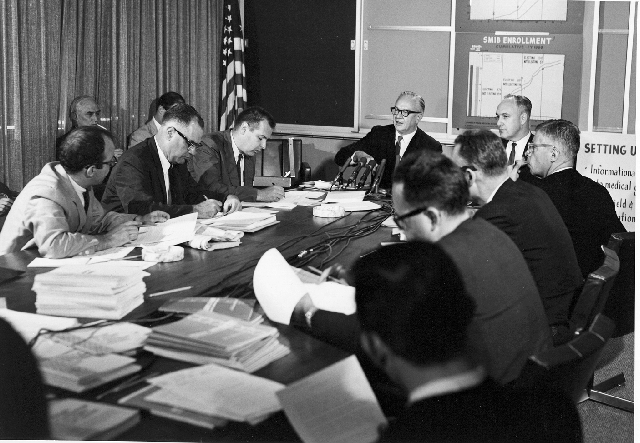
When Medicare launched, nobody had any clue whether it would work

by Sarah Kliff

Welcome to Health Reform Watch, Sarah Kliff's regular look at how the Affordable Care Act is changing the American health-care system — and being changed by it. You can reach Sarah with questions, comments and suggestions here. Check back every Monday, Wednesday and Friday afternoon for the latest edition, and read previous columns here.


"Medicare workers in Washington are learning that door-to-door selling is a rugged job," a writer in this newspaper declared 47 years ago.

It was March 3, 1966, after a Washington Post reporter had spent the day trailing Medicare workers who tried to sign seniors up for new program. Some didn't answer the door. Others slammed doors in their faces. One man reportedly stuck his nose out the door to say: "I'm not 65. I'm 57 — just today."

"Sometimes they peek through the windows when they see me coming and they won't answer the door," Medicare worker Jim Anderson told The Post. "They must think I'm selling books or something."

Medicare is, these days, an incredibly popular program. Americans overwhelmingly oppose cutting it. No politician would consider repealing it. Most think providing health insurance to all Americans over 65 is worth the both the trouble and the cost.

This was not always true. Back in 1966, as Medicare was just about to launch, nobody knew whether the new program would provide benefits to millions or fail completely. Sound familiar?

"What will happen then, on that summer day when the federally insured system of paying hospital bills becomes reality?" Nona Brown, a New York Times reporter, wondered in a story published April 23, 1966. "Will there be lines of old folks at hospital doors, with no rooms to put them in, too few doctors and nurses and technicians to care for them?"

Like the Affordable Care Act, the fight over Medicare was contentious. President John F. Kennedy had tried to extend health benefits to the elderly and failed.

The American Medical Association vehemently opposed the law. Two months before President Lyndon B. Johnson signed Medicare into law, the American Medical Association ran ads across the country denouncing the program as "the beginning of socialized medicine."

Johnson signed Medicare into law July 30, 1965. Benefits would become available July 1, 1966. That gave the Johnson administration less than a year to reach 19 million seniors. Medicare was, as the New York Times put it in April 1966, bracing "for M-Day."


The federal government launched "Project Medicare Alert," a program that hired 5,000 workers to enroll seniors in Medicare. The "$2 million crash effort," as described by The Post, was meant to "inform isolated elderly Americans of the availability of Medicare benefits." Workers, hired for a 20-week stint, were paid $1.25 per hour.


There were still concerns about whether the enrollment efforts would actually work. The seniors who needed the program the most, Washington Post columnist William Raspberry wrote, tended to be the hardest to reach. The program came with a $3 monthly premium, and Raspberry worried that "those who will have trouble coming up with the $3 a month are precisely those who can least afford not to enroll."


On the whole, however, the enrollment effort worked. Of the 19 million seniors eligible for Medicare, 93 percent enrolled by the summer of 1966. Social Security Administration Commissioner Robert Ball "enlisted the U. S. Forest Service to send Forest Rangers out into the woods in search of elderly hermits whom he might be able to enroll." And, much to Wonkblog's liking, he held news conferences with charts that showed Medicare's enrollment levels.

Less than a month before Medicare was set to launch, though, one hurdle seemed insurmountable. A front page Washington Post story reported on Johnson making "an 11th-hour appeal for hospitals to end discrimination, but he failed to prevent Medicare's start from being marred by segregation."


Mobile, Ala., apparently had the worst showing on this front: Just 30 of the city's 3,986 hospital beds were certified for Medicare. "The holdout hospitals," Eve Edstrom wrote, "are expected to fall in line once community pressure builds up against denying Medicare benefits to Whites as well as Negroes."

M-Day arrived and it was a bit of a dud. "At 12:01 a.m. yesterday," Dan Morgan and Martin Weil wrote on July 2, 1966, "Uncle Sam began paying the hospital bills of close to 1,000 patients over 65 in area hospitals."


Medicare's very first patient, incidentally, was Mary Augustus, 68, of Hartford, Conn. Her hospital received a check for $331.71 for a surgery performed July 1.

The long lines that some had worried about? They never materialized. "At the end of its third week," the New York Times reported July 25, 1966, "the Medicare program was reported going smoothly, with difficulties in some areas of the South still the only major problem."


Even the issues of segregation, which seemed to be a significant threat in early July, had largely been resolved by the end of the month. "By July 21, 1966, fewer than 0.5 percent of hospitals were not certified for Medicare eligibility," Jill Quadango wrote in her history of the program.

Meanwhile, legislators quickly began looking for ways to expand the Medicare program and make it even larger. In January 1966, a young congressman from Michigan proposed a bill that would extend Medicare to cover drugs.


Such a program proposed by John Dingell, now the longest-serving member of the House of Representatives, would not become law until nearly four decades later, when Congress created the Medicare Part D program.

KLIFF NOTES: Top health policy reads from around the Web.

America's most expensive hospital is in New Jersey? "Based on the bills it submits to Medicare, the Bayonne Medical Center charged the highest amounts in the country for nearly one-quarter of the most common hospital treatments, according to a New York Times analysis of 2011 data, the most recent available. No other hospital was at the top of the price list more often." Julie Creswell, Barry Meier and Jo Craven McGinty in the New York Times.

Arizona is moving forward with the Medicaid expansion. "The Arizona Senate on Thursday approved expanding the state's Medicaid program, capping a rancorous debate that had split the Republican Party and had been building since January, when Gov. Jan Brewer issued a surprise call to increase Arizona's health-care program for the poor." Mary Jo Pitzl and Mary K. Reinhart in the Arizona Republic.

Obamacare appears to be driving down premiums in Oregon. "On Thursday, a comparison of proposed 2014 health premiums became public online, causing two insurers to request do-overs to lower their rates even before the state determines whether they're justified. The unusual development was sparked by a comparison that used to be impossible because plan benefits varied so widely. But under the federal reforms that take effect Jan. 1, health insurance is mandated and every insurer must offer certain standard plans." Nick Budnick in the Oregonian.


17 May 13:36

How to Prevent the IRS From Abusing Its Power Again

by Conor Friedersdorf
irs fullness.jpg
Reuters

Almost everyone agrees that the IRS behaved badly when it singled out conservative activist groups for extra scrutiny. As Ezra Klein put it, "because the Internal Revenue Service holds so much private data, and because it can make people's lives absolutely miserable, it is of paramount importance in our political system that it both is, and is perceived as, an apolitical entity." But Klein also believes that the IRS ought to be scrutinizing all 501(c)4 groups more closely. Kevin Drum agrees. "What's really unfortunate about all this is that it will probably put an end to any scrutiny of 501(c)4 groups, and that's a shame," he writes. "The IRS should be scrutinizing them."

So how can the IRS fulfill its duty to police groups wrongfully claiming tax exempt status without getting abusive?

John Podhoretz suggests the timing of the enforcement matters.

"Didn't the IRS need to ensure that groups applying for non-profit status would conduct themselves properly once they had received it?" he asks. "The answer, actually, is no, not really. The IRS's enforcement power has to do with misconduct following the granting of tax-exempt status. It should not presume lack of good faith on the part of those applying for the status. What it can do to them, fairly and legally, is revoke the status based on the organization's behavior after the exemption is granted--thus effectively crippling and destroying it."

I agree.

Americans intent on starting a new organization shouldn't face upfront compliance costs that can thwart them before they've even begun, as if they're operating under the presumption of guilt. (Dave Weigel points to a liberal group that waited 479 days to get its application approved.) But if the IRS catches an organization with 501(c)4 status electioneering, that's a different story. Penalties and/or revocation of status are appropriate if a group is violating its strictures.

Of course, a problem remains. What if, after a tax-exempt group is up and running, the IRS accuses it of violating the law and forces significant compliance costs, but the IRS turns out to be wrong?

This isn't a trivial concern. As Klein says, the IRS can make life absolutely miserable for the people or groups it investigates. Nor is it a hypothetical concern, as Podhoretz showed in an earlier post:

As it happens, I know something about the chilling effect of an IRS investigation into a non-profit's 501 (c)-3 status because in 2009, COMMENTARY (a non-profit) received a letter from the Internal Revenue Service threatening the revocation of the institution's standing as a non-profit due to a claim that on our website we had crossed the line in the 2008 election from analysis to explicit advocacy of the candidacy of John McCain for president. (Non-profits are not permitted to endorse candidates.) The charge was false--all we had done was reprint a speech delivered at a COMMENTARY event by then-Sen. Joseph Lieberman in which he had endorsed McCain.

Taking away a non-profit's ability to receive tax-exempt charitable contributions is equivalent to a death sentence.

We were told by counsel that, should the IRS rule against us, we would have almost no recourse. You might think free speech rights would trump any such effort, but of course no one is challenging your speech rights, merely finding that what you say runs afoul of laws dealing with non-profits. You have no constitutional right to non-profit status, after all.

Disproving the false charge, which we did eventually in part by literally printing out the 2 million words that had appeared on this site in 2008 and sending them in many boxes to the IRS to show that the words in which Lieberman said he was supporting McCain were essentially a part per million, cost us tens of thousands of dollars and dozens upon dozens of hours of lost work time. The inquiry, which never should have been brought, was closed. But talking to lawyers and strategizing and the like in such a circumstance make the experience an ordeal that leaves you a bit shell-shocked--which is, of course, the point.

It seems unfair to force an organization to spend tens of thousands of dollars and scores of work hours to prove it deserves its status when it does, in fact, desserve its status. So why not go some way toward remedying the injustice. The work hours can't be returned to Commentary. But it would be possible to adopt a policy whereby the IRS reimburses compliance costs for organizations it targets with "status" investigations that turn out to be unfounded.

So how about those two reforms: tax-exempt status can only be reviewed in light of reasonable suspicion that it has already been violated, not preemptively; and organizations forced to spend money proving that they are, in fact, compliant get reimbursed when they're vindicated. That would give the IRS a powerful institutional incentive to conduct oversight judiciously.


14 May 13:25

Kevin Drum on why the robots will rise up and take all our jobs

by Dylan Matthews

Kevin Drum is a political blogger at Mother Jones, and previously wrote for The Washington Monthly and for his own blog, CalPundit. His latest piece for the print magazine concerns the effect that intelligent machines will have on our economy in the medium-run. We spoke on the phone Monday afternoon; a lightly edited transcript follows.

Dylan Matthews: We've had technologies that save labor and increase productivity for years. What makes artificial intelligence different?

Kevin Drum: The difference is that, in the Industrial Revolution, we got big productivity increases from steam engines but there were still people required to run those machines. We had a huge increase in the amount of stuff you could make, but you needed people to design the machines, and make the machines, and use the machines.

With the digital revolution, the difference is that smart machines provide both power and intelligence. You don't need human beings for anything anymore. You don't need them for power, or for the intelligence to use the power. It puts everyone out of work eventually. Because smart machines will become as smart as human beings, there simply is not a job that a machine can't do on its own.

This assumes that there are no human labor tasks that are simply beyond the reach of computers. There are a number of philosophers and computer scientists who might argue that there are some tasks computers just can't do.

There's a couple of arguments against the idea that AI is coming soon. One is, as you say, a philosophical argument, which boils down to "However smart machines seem to get, they'll never have true human intelligence." I just don't think that matters. You can call it intelligence or something difference, but that's semantic. What matters is that they can accomplish the same things humans can.

The second argument is "can we do it?" Moore's law says computing power will double every 18 months. The question is whether that's going to continue. There are some good arguments that we're running up against physical boundaries that will prevent that from happening. But I think it has at least enough life left in it to produce computers that have about the power of the human brain. If you look at software development, that follows Moore's law as well. If anything, it doubles even faster than hardware development. I think the software is going to catch up rather quickly.

That's an interesting point, that a lot of the innovation is going to be in the algorithms and techniques used for emulating human intelligence. Are we seeing that kind of innovation?

That's been happening, and it continues to happen. The evidence is all around us. It's in things that obviously aren't AI yet, since we're just not there yet, but are getting close. If you look at Watson, the computer that beat the two Jeopardy champions, well, 10 years ago who would have thought that a computer could have done something as sophisticated as answering a wide range of questions and getting them right?

Take a look at something like Google Translate, which isn't even the most sophisticated translator out there. It does a surprisingly serviceable job, for free, of translating from one language to another. Google's driverless car does a surprisingly good job. So the software's already making huge progress. The other thing is that the human mind is modular. You don't have a software team that has to replicate the whole human brain. What you have are teams that are replicating little bits, little modules, that, when you put them together, will produce true artificial intelligence.

The obvious economic story is that AI reduces the need for human labor, so the demand for it falls and wages fall in turn. Do you buy that?

I think that's what's going to happen. If you take a look at a science fictional future, where you're dropped into a society where robots are doing all the work, everyone accepts that you can't rely on the same kind of free market in labor you have today. There is no labor.

The question you have is "Do you accept this if you're getting to that future very very slowly?" You get just a tiny little bits of progress, and what that does is, bit by bit, it puts just a few more people out of work each year.

People are being put out of work because of automation and we don't notice it, so we argue about other stuff. We argue that education levels are too low, or that we're coddling people on unemployment and we just need to cut them loose. These are all old issues that aren't ultimately about what's really happening. This is all going to happen slowly enough that we'll keep arguing until we realize that something new is going on.

Robert Solow has a famous quote, "You can see the computer age everywhere but in the productivity statistics." Are we finally seeing it there? Where's the evidence that this is rippling out?

My own guess is that we're just barely starting to see it. There are a whole bunch of macroeconomic trends that, if you look at them, sort of start to bend around the year 2000. They reach a peak, and they've started to decline for the last decade or so. You can produce explanations for all of them.

One of those trends, for example, is that the percentage of people in America who are employed is going down. Some of that is the aging of the population. But there's a whole bunch of these trends. When you put them together, the best explanation, I think, is that automation is starting to put people out of work, and make the economy more capital and less labor-intensive than it used to be.

It seems like the education debates relate to this, though. Eventually, if you're right, then AI is going to get to the point where computers can build themselves and you don't need humans at all. But until then, being able to code, knowing CS and robotics, is going to be really valuable.

I think that's exactly right, and the first people to be put out of work are people who have jobs that are fairly routine. These are the jobs the computers can take over. You're going to put those people out of work, and then you're going to put out of work people whose work is more cognitively demanding, and it's going to go up and up and up until machines can do anything a human can do, and do it without human supervision. They'll repair themselves, and manufacture themselves, and do all the work.

So who has all the money? It's whoever has the robots. And who has the robots? The people who have all the money. Today's income inequality will be peanuts compared to income inequality then.

How does this interface with politics? Radiology, say, is an area that might be easily automated, since we've already seen computers that can effectively read EKGs. But the American Medical Association is much more powerful than lobbies representing, say, factory workers. Is it possible you'd see protections for wealthy industries like that, going forward?

That's possible, and there will almost certainly be some differences in who gets put out of a job faster, but it's pretty much inevitable. You can outsource radiology one way or another. If you can outsource it to a computer, and you can demonstrate that the computer does it better than a human being, patients themselves are going to start demanding computer readings of their X-rays and their MRIs.

There are powerful groups that can delay this. There are equally powerful groups that are interested in having lower cost labor, including lower cost radiologists. The shareholders who own the hospital, they want lower cost radiology. And it's the people with money who are going to win this fight.

It seems like if you have a huge section of people who are unemployed, who don't really have resources but have a lot of spare time, then there's a possibility of really huge political mobilizations on the part of those people, like you see in countries nowadays with mass unemployment.

I think that's likely to be one of the things that happens along the way. Societies that suffer from mass unemployment, the history of what happens to those societies is not a bright one. At some point you have to respond, and there's going to be a lot of resistance to responding because of ideology, because of politics, because of pure greed, but eventually we are going to respond to this. It's going to be obvious what's happening, that people are unemployed due to no fault of their own, and that we have to respond.

In the meantime, we're going to resist responding, and we're probably going to resist responding very very strongly, because rich people don't like giving up their money. We're in for a few decades of a really grim fight between the poor, who are losing jobs, and the rich, who don't want to give up their riches.

It does speak a bit to a split you see on the left between, on the one hand, people who want work to pay more, and be safer, and have dignity, and on the other hand people who think that modern work is wage slavery and needs to be abolished. The world you describe is more hospitable to the latter camp.

I'm not sure there are that many people taking the latter position today, but you're right, in the future we'll hear this more and more. If I'm right about what happens with artificial intelligence, there won't be any work, period, so there won't be dignity in work. We'll have to find dignity in doing other things. It's in the medium run, getting there, that I think we'll have problems.

What does this mean for developing countries? It seems like, if this happens before they reach Western labor standards, it'd be even more devastating.

The problems I'm talking about could be even worse in developing countries they are here. In one sense they are less vulnerable to artificial intelligence, because labor is so much cheaper there already. On the other hand, it will take away their jobs, and it will take away their jobs at a point where they're still considerably worse off than Americans are.

At a macro level, though, it's going to play out about the same everywhere. It's going to displace labor everywhere. It doesn't matter how cheap it is, eventually machine intelligence will displace it all.

I think that's it for my questions. Anything you wanted to add?

Well, I touched on a bit what the possible solutions would be, but the core is that you're going to have to redistribute wealth, and the debate is over how to do that. It's the obvious conclusion from this stuff, that at some point you're going to have to accept that you'll have much more massive income redistribution than we do today.

And it seems like at that point it just becomes a version of the same debates over whether we should just give people cash or provide goods like education and health care.

Exactly. I used an example from Noah Smith of giving an equal equity stake to everybody when they turn 18. It's an interesting idea, and it's a little different from redistribution, but it's still redistribution in a different form.


13 May 17:23

Why Is Brave's Princess Merida Suddenly Sexy?

by Chris Heller
princess merida before after.jpg
Disney/Pixar

What does a princess look like? Not this, if you ask Disney.

Last week, rumors leaked of a "redesign" for Merida, the protagonist of the animated film Brave, to coincide with the character's "coronation ceremony" at Walt Disney World. At the ceremony on May 11, she was crowned as an Official Disney Princess—but only after her hips filled out, her neckline plunged a few inches, she slapped on some lipstick, and she teased out her unruly hair. The Happiest Place on Earth didn't want to celebrate its most progressive princess until she hit puberty.

Brenda Chapman, the writer and (former) director of Brave rightfully unloaded on Disney, criticizing the makeover as "a blatantly sexist marketing move based on money." She wasn't finished, either:

When little girls say they like it because it's more sparkly, that's all fine and good but, subconsciously, they are soaking in the sexy 'come hither' look and the skinny aspect of the new version. It's horrible! Merida was created to break that mold—to give young girls a better, stronger role model, a more attainable role model, something of substance, not just a pretty face that waits around for romance.

If Disney follows through with this redesign, it'll be an awful disappointment. As Lily Loofbourow explained for The New Inquiry last July, Brave is not just another princess movie—it's a brilliant subversion of the princess movie, framed within a loving exploration of the relationship between mother and a daughter. Merida is a strong, smart, independent young woman who struggles to acknowledge her "fate" as a princess. She isn't interested in marrying a prince. Even her sexuality is ambiguous! All of these subtle details—all of the stuff that makes Merida more accessible and familiar to girls—are undermined by her new look. After all, it's no small thing to become a Disney Princess. When a character joins the elite club of Cinderella and Snow White, she gains a special sort of perpetuity. This isn't just a new dress. It's an entirely new image that will introduce Merida to children for generations.

To many of those kids, the message of Merida's makeover will seem obvious: sexuality, beauty, and body type are inseparable from what it means to be a princess. This absolutely contradicts Brave, and the distinction matters. Shockingly few children's movies challenge stereotypes about women, and without a depiction of Merida that's consistent from movie to merchandise, Disney will sabotage what Chapman aimed to accomplish. Will Brave's inclusive themes of acceptance still resonate when a young girl wants a Merida doll that looks like it's missing a ribcage? Will the character still seem independent when she casts a shadow that looks no different than Belle's?

These may seem like minor questions, but similar sentiments have sparked a wave of criticism online. Take a look at this Change.org petition addressed to Disney CEO Bob Iger, which garnered more than 110,000 signatures in a matter of days. You'll see messages from men and women who want their children to admire healthy role models. They don't want another Disney Princess. They want a bow-and-arrow toting, wild-haired, rough-and-tumble action hero who happens to be the daughter of a king and queen. They want Merida.


11 May 23:59

TV: Newswire: Deadline floats report Dan Harmon may return to Community because it wants hits, and so do we

by Todd VanDerWerff
Troy is incredulous

Knowing that Community fans are a hopeful people and knowing that the Internet runs on clickbait and knowing that everybody and their dog would link to a poorly sourced report if it contained something everybody and their dog would like to happen, Deadline put up a report a few hours ago saying that Dan Harmon “might” return to Community, the site had “heard.” Now, it’s entirely possible that the “headlines that can easily be answered with ‘almost certainly not’” competition deadline was today, and we just missed it, but we’re betting this is actually an attempt to get you to read about a thing that probably won’t happen because you want it to happen. Just the fact that the report by Nellie Andreeva (a good reporter, and if somebody were to know about this clearly impossible thing happening, it would be her) cites the feud with Chevy ...

Read more
08 May 17:39

Tropical Climate History...Shrinking

Tropical Climate History...Shrinking
Perched high in the Andes, Peru’s Quelccaya Ice Cap stores centuries of climate change history in its ice. Its melting edges tell a more immediate climate story.

07 May 18:31

A Truly Inclusive Way to Answer the Question 'Where Do Babies Come From?'

by Noah Berlatsky
berlatsky_baby_post.jpg
Seven Stories Press

What Makes a Baby is, as you'd probably suspect from the title, a picture book intended to teach young children about where they come from. In other words, it's an origin story. And, like most origin stories, it's not just descriptive, but proscriptive. A story about where we're from tells us where we are—and where we should be going.

This is not precisely author Cory Silverberg's intent—or at least, it's not something he dwells on in the downloadable reader's guide. Instead, he explains, the book "invites the adult reader to share with a child the unique story of how that particular child came to be in the world, in their community, and in their family." The book is deliberately and insistently inclusive—which means that it does not presume a "normal" one-fertile-mommy-one-fertile-daddy household.

Indeed, the book doesn't even mention the word "mommy" or "daddy". Instead, What Makes a Baby explains that "Not all bodies have eggs in them. Some do, and some do not;" and that "Not all bodies have sperm in them. Some do, and some do not." Similarly, sex isn't so much tip-toed around as it is relegated to one unspecified option among many. "When grown ups want to make a baby they need to get an egg from one body and sperm from another body. They also need a place where a baby can grow."

Silverberg's goals here are very deliberate and (in the reader's guide) carefully spelled out. He wants to include all children, regardless of whether they have a mommy and daddy who had sex, or adopted them, or whether they have two mommies, or two daddies, or (as Silverberg mentioned in the guide) a trans daddy who gave birth to them, or any of a myriad of other possibilities. The book, then, tries not to impose one truth, but rather to open up possibilities and conversations.


Related Story

How Children's Books Approach Modern Reproduction


And yet, the fact remains that What Makes a Baby presents a very specific vision. Much of this is conveyed by the illustrations of Fiona Smyth, who presents individuals, with or without uteruses, with or without sperm, as colorful, smiling, slick, amoeba-like outlines—a world of cheerfully, only-mildly differentiated, maybe nude frolicking bodies. The vision is also conveyed by the text itself, which describes the meeting of sperm and egg in deliberately non-gendered language. For Silverberg, the sperm does not seek out or find or enter the egg (which is the way these descriptions usually go), but instead, "When an egg and a sperm meet, they swirl together in a special kind of dance. As they dance, they talk to each other."

Smyth's figures look a lot like Keith Haring's, which isn't coincidental. With its rainbow of people and its ecstatic refusal to force any family into any norm, What Makes a Baby presents—both iconographically and philosophically—a version of gay, or queer, utopia.

In doing so, it helps to demonstrate why gay utopia—including, but not limited to, gay marriage—is important, and appealing for folks who don't identify as gay, as well as for those who do. It's hard to imagine a book like this without the shift in increased visibility, and increased normalization, of gays and lesbians and their families. But that increased visibility, and the opening out of ideas about marriage and children, also—in this book, and in general—creates space for all sorts of other formerly marginal families to be seen as no longer marginal. Adoptive families, families made up of grandparents and grandchildren, single-mother-headed families or single-dad-headed families—they all become simply families. The important question becomes not how close your family is to normal, but rather, "Who was happy that it was YOU who grew?"

As with everything, there can be downsides to the gay utopia and its ethos of acceptance. I was a bit put off by the two-page spread which presents Cesareans as simply another equally good option for birth, for example. Obviously mothers who give birth by Cesarean, and children born by Cesarean, haven't done anything wrong; I don't want anyone stigmatized for having to have an operation. But the fact remains that Cesareans currently in our culture are already treated as too normal. Compared to vaginal births, they're dangerous to both mother and child, and doctors perform then too often and for reasons that have little to do with medical necessity. I can see why you don't want to go into all that in a book for young children. But the fact remains that Silverberg's cheery, "it's all good" take on the birth process seems like it's not an especially good window through which to view this particular issue.

But that's really a minor quibble. More important, perhaps, is my nine-year-old's review...which consisted mostly of giggles. He's a bit older than the target audience, I think, and (as he informed me) he already knows the basic mechanics of where babies come from. But even if, like him, you've got a mom and dad who put you together in what has long been the most expected way, Silverberg and Smyth's colorful vision of inclusion is still a delight.


06 May 11:38

Why Due Process Is Important for Accused Terrorists: A Case Study

by Conor Friedersdorf
ricin full.jpg Federal officials stand outside the house of Paul Kevin Curtis while searching for evidence in Corinth, Mississippi, on April 18, 2013. (Reuters)
When Paul Kevin Curtis was arrested by the FBI and accused of sending letters laced with the poison ricin to President Obama, he wasn't wearing a special uniform that identified him as a terrorist.

But not because terrorists don't wear uniforms. "What looked at first like classic terrorism -- poisoned letters sent to the president and other public officials -- now seems more likely to be the product of a local feud," USA Today reports. "In the past week, the FBI has arrested Kevin Curtis, released him, and then, on Saturday, arrested his online sparring partner, Everett Dutschke."

Dutschke is charged with "knowingly developing, producing, stockpiling, transferring, acquiring, retaining and possessing a biological agent, toxin and delivery system, for use as a weapon, to wit: ricin." The FBI now says Dutschke framed Curtis, the man that they originally arrested.

Do they finally have it right? Time will tell. (Dutschke denies any wrongdoing.) Meanwhile, alarming details have emerged about the FBI's treatment of their first suspect:
After keeping Elvis impersonator Paul Kevin Curtis in jail for a week, interrogating him while he was chained to a chair and turning his house upside down, federal authorities had no confession or physical evidence tying him to the ricin-laced letters sent to President Obama and other public officials. Investigators already had another man in their sights and, according to an FBI affidavit, were collecting physical evidence against this second suspect. But instead of setting Curtis free, court records show, federal officials sought to keep him in custody. First, three days after the arrest, prosecutors asked for a psychiatric evaluation -- a request usually made by defense lawyers. That could have extended his stay in federal prison by several months and allowed investigators to continue to question him.

Then, after a judge denied the request, federal prosecutors filed a motion seeking to postpone a court hearing at which they would be required to reveal the evidence they had against Curtis. That motion was also turned down. "They wanted to keep Mr. Curtis in custody while they built a case," said Hal Neilson, a former FBI agent who is Curtis's attorney. "They knew early on he wasn't the right guy, but they fought to hold on to him anyway."
For years now, War on Terrorism hawks have been arguing that terrorists -- by which they mean people accused of terrorism -- don't identify themselves like traditional enemies; and that it's foolish to read them their rights, to bring them before a judge, to require that evidence be presented to justify holding them, or to interfere with the judgment calls the executive branch makes in war time. Insofar as I know, the folks who make those arguments didn't call for Paul Kevin Curtis in particular to get the enemy-combatant treatment. That's to their credit. But would things have been different if his name was Abbas Hussein Mohammed? Or if a federal official had actually been hospitalized or killed by one of the ricin laced letters? Or if the frame-up had included the threat of more ricin imminently targeting unspecified officials in the U.S. government?

This case is a reminder that being accused of a heinous act, like sending a poison-laced letter to the president, does not mean that the accused is guilty. It is an eye-opening look at an FBI apparently willing to continue holding a man it had good reason to believe innocent. And it is a demonstration of why our system requires appearing before a judge, with evidence, to hold a suspect: to protect innocents from being imprisoned, and to ensure that the real bad guys are found.


03 May 20:21

The College Grad Recovery Continues

by Matthew O'Brien
CollegeGradRecovery2.png (Reuters)
The rumors of the recovery's demise are greatly exaggerated. It turns out it's the same as it ever was: slow and steady, but real nonetheless. If you graduated from college, that is.
The past few years have been an economic Groundhog day. Despite the biggest spending cuts since the 1950s, and one manufactured crisis after another, the recovery has chugged along at 2 percent growth since 2010. (Thanks, Ben Bernanke). It's been enough to bring unemployment down, but not fast enough -- unless you think Recovery 2020 is fast enough. But with the expiring payroll tax cut and the sequester cuts making austerity even more austere, there have been renewed fears of an (actually mythical) spring swoon. Indeed, a few weeks of disappointing data seemed to bear this out.
Well, maybe not so much.
The April jobs report reminded us of what we had forgotten. The recovery is the same in 2013 as it was in 2012 as it was in 2011 as it was in 2010. The Bureau of Labor Statistics estimates the economy added 165,000 jobs the past month, and another 114,000 in upward revisions to past months. As Justin Wolfers points out, that gives us an average of 196,000 jobs a month so far in 2013, compared to 225,000 in 2012, and 194,000 in 2011. It's pushed unemployment down to a four-year low of 7.5 percent.
But as disappointing as the recovery has been, it's been even more disappointing more people who didn't graduate from college. It's been nonexistent. As you can see in the chart below of workers 25 and older, college grads are the only group that has net added jobs in the past five and a half years.
EmploymentEducation3.png
Here's the story of our polarized labor market in two acts. During the recession, college graduates didn't lose many jobs, while everyone else did. But during the recovery, college grads have gained the most jobs, while everyone else mostly hasn't. Look at the green and purple lines again. People without any postsecondary education not only got hit hardest during the downturn, but have also gotten hit during the upturn. In other words, they have even lost jobs during the recovery.
Remember that the next time a college grad tells you college isn't worth it anymore.