Tracks: 1 The Funkster 2 Whats Going On 3 You Send Me 4 Groove On 5 My Blues 6 Light My Fire 7 Down Hill 8 Stella By Starlight 9 Autumn Leaves 10 Monkey Milk 11 We're in the Money
Deep, tough and rare Washington DC soul from the 60’s into the early 70’s - most have never been on a compilation before!
trax: 1. Why - Nat Hall 2. We Must Say Good-Bye - Pat Johnson 3. That's Good Enough - Roy Arlington 4. Left Eye Jump - Dr. Soul 5. It's What You Give - Jimmy Castor 6. I've Been Hurt (So Many Times Before) - Ruby Johnson 7. Next Time - Jo Jo Hammett 8. Another Sleepless Night - Phil Flowers 9. See If I Can't Get Your Mama to Come Back Home - H.L. Bryant 10. Anything to Please My Man - Betty Wilson 11. You'll Never Make It Alone - Billy Clark 12. Steal Your Heart Away - Bobby Parker 13. Gotta Find My Baby - Stanley Ivory 14. I'll Get Along - Nia Johnson 15. That's Her (That's the Girl for You) - J.G. Lewis 16. No Place Like Home - Willie Mason 17. Midnight Tears - Grover Mitchell 18. Good News - Willie Diggs 19. Never Would Have Made It - Maskman & The Agents 20. Do I - Chet "Poison" Ivey 21. Come on and Love Me - Johnny Stewart 22. Stand by Your Baby - E.L. James …served by Gyro1966...
Let HOPE be bigger than FEAR. Stay CALM and be POSITIVE. But, stay HOME and LISTEN to some FUNK and SOUL. One of the great forgotten sounds of mid-70s Funk was the Washington D.C.-based ensemble Experience Unlimited (later shortened to Eu). Though best later known...
It's difficult to get a sense of scale when viewing Saturn's rings, but the Cassini Division (seen here between the bright B ring and dimmer A ring) is almost as wide as the planet Mercury.
Those familiar with David Bowie lore may know one or two things about the recording of his seminal 1978 track “Heroes.” One is that the recording studio did, in fact, look out over the Berlin Wall and the lovers that Bowie saw made it into the lyrics (“I can remember standing by the wall/And the guns shot above our heads/And we kissed as though nothing could fall”). The other is the microphone set up in Hansa’s expansive recording studio: one next to Bowie’s mouth, another 15 – 20 feet away, and another at the far end of the room to catch the reverb. (Hands up how many of us learned about that when Steve Albini copied it for Nirvana’s “All Apologies”? Anybody?)
But as this video above with producer Tony Visconti shows, that’s only a few of the magical inventions and daring decisions made for this recording. The session contains lessons for any young producer endlessly fiddling about with their ProTools and the millions of choices afforded by a $2.99 synth app for the iPad.
When Bowie added his vocals at the end of the recording session, there was only one track left on the tape, having filled up the 23 other tracks with the band’s backing track, Eno’s synths, extra percussion, three (!) tracks of Robert Fripp commanding the gods through his guitar pickup and feedback, and more. If they didn’t like the take, they’d erase over it with the new one. Those were the analog days. But as Visconti says, that scary decision electrified Bowie. As an artist, everything was at stake. It’s like they knew they were making a song for the ages. Maybe it’s Visconti’s 20/20 hindsight, but they were right.
Click the image above to watch Visconti break down the tracks of “Heroes.”
But there’s so much more to be discovered among those 24 audio tracks of “Heroes.” In this wonderful BBC documentary from 2012 (click this link or the image above to watch it online), Visconti sits down with the digitally transferred master tapes and takes us through the construction of the song. Here we get to hear Robert Fripp’s raw guitar tracks which sound so incredibly abrasive it’s hard to believe they exist in the song; Visconti’s “cowbell,” which is him hitting a pipe outside in the yard; Eno’s synth in a briefcase, the EMS Synthi-A; and numerous painterly daubs of audio that all make up the mix. And then there’s that vocal, which Visconti lets play without any of the music, a song for the history books, a voice that couldn’t be constrained to just one mic. The video unfortunately couldn’t be embedded on our site, but it’s definitely worth your time.
Ted Mills is a freelance writer on the arts who currently hosts the FunkZone Podcast. You can also follow him on Twitter at @tedmills, read his other arts writing at tedmills.com and/or watch his films here.
Douthat explicitly draws the analogy with Romney, suggesting that the GOP will settle for Rubio just as it entered into a largely loveless marriage with the former Massachusetts governor. The problem with this analogy is that both McCain and Romney were more substantial figures than Rubio: They could flash not just impressive resumes (McCain as war hero, Romney as governor and business leader), but also a genuine popularity with large constituencies in the GOP. Romney never sank below 20 percent in the polls in 2012, a figure Rubio has yet to even remotely touch.
Romney had the advantage in 2011-12 of being the only “establishment” candidate in the race, so he was always going to be in a stronger position than any of the four candidates that still fit that description. The pattern in Republican nomination contests since at least 2000 is that there have always been many insurgents and usually only one or two “establishment” candidates in each cycle, and that has made it easier for the latter’s voters to consolidate behind one person sooner. The 2016 field hasn’t followed that pattern for several reasons. For one, there are simply too many candidates overall, and instead of lining up behind one “establishment” candidate these voters are split up among several. For another, there is no obvious “successor” from 2012 since there is no chance that party elites were ever going to rally behind Santorum or any of the other 2012 also-rans. Another problem for these candidates this year is that Trump is pulling away large numbers of moderate Republicans that have mostly favored them in the past, so some of the voters they would normally rely on aren’t as readily available. Meanwhile, instead of spreading their support out among too many candidates, conservative voters have mostly gravitated toward just two and have stuck with them. Thus the “outsiders” are dominating the field in the way that an “establishment” candidate usually does, and the “establishment” candidates are squabbling among themselves for the scraps.
One of the other main differences between Romney in 2011-12 and Rubio now is that Romney had already spent five or six years cultivating support for a presidential bid, including his first failed campaign in 2007-08. Romney didn’t win on his first attempt despite throwing large sums of money at the electorate and despite the deliberate effort of many movement conservatives to build him up as the preferred non-McCain candidate. By 2011, he had “paid his dues,” so to speak, and was the presumptive front-runner in part because he had. By contrast, Rubio has been touted as a top-tier candidate from the start without having done anything to demonstrate that he deserves that treatment, and he defends his candidacy explicitly as a repudiation of the idea that a politician should have to “pay his dues” before receiving the nomination. Rubio hasn’t made anything close to the same effort as Romney did in his first campaign, so it shouldn’t be surprising that that Rubio is doing worse in all respects than Romney was in his first campaign at this point in the race.
In order to believe that Rubio is in any sense the Republican front-runner, we would have to dispense with every objective measure of political support for presidential candidates. Saying that a candidate trailing several others in money, endorsements, campaign organization, and polling is the “real” front-runner defies both common sense and experience. I suppose it’s possible that every other candidate could fail and leave Rubio as the winner by default, but if a scenario requires so many things to break the right way for one candidate it’s not very likely.
NASA astronaut Scott Kelly captured this photograph from the International Space Station on Oct. 7, 2015. Sharing with his social media followers, Kelly wrote, "The daily morning dose of #aurora to help wake you up. #GoodMorning from @Space_Station! #YearInSpace"
This image of the sun was taken on July 15, 2015, with the Extreme Ultraviolet Imager onboard NASA's Solar TErrestrial RElations Observatory Ahead (STEREO-A) spacecraft, which collects images in several wavelengths of light that are invisible to the human eye. This image shows the sun in wavelengths of 171 angstroms, typically colorized in blue.
I’ve developed something of a reputation as a socially liberal critic of today’s social liberalism. I got an email from a Dish reader who asked me to flesh out where I’m coming from.
I guess what it all comes down to, for me, is that social liberalism was once an alternative that enabled people to pursue whatever types of consensual personal behavior they wanted, and thus was a movement that increased individual freedom and happiness. It was the antidote to Jerry Fallwell telling you that you were going to hell, to Nancy Reagan saying “just say no,” to your conservative parents telling you not to be gay, to Pat Robertson saying don’t have sex, to Tipper Gore telling you that you couldn’t listen to the music you like, to don’t have sex, don’t do drugs, don’t wear those clothes, don’t walk that way, don’t have fun, don’t be yourself. So of course that movement won. It was a positive, joyful, human, freeing alternative to an exhausted, ugly, narrow vision of how human beings should behave.
It seems to me now that the public face of social liberalism has ceased to seem positive, joyful, human, and freeing. I now mostly associate that public face with danger, with an endless list of things that you can’t do or say or think, and with the constant threat of being called an existentially bad person if you say the wrong thing, or if someone decides to misrepresent what you said as saying the wrong thing. There are so many ways to step on a landmine now, so many terms that have become forbidden, so many attitudes that will get you cast out if you even appear to hold them. I’m far from alone in feeling that it’s typically not worth it to engage, given the risks. The hundreds of young people I teach, tutor, and engage with in my academic and professional lives teach me about the way these movements are perceived. I have strict rules about how I engage with students in class, and I never intentionally bring my own beliefs into my pedagogy, but I also don’t steer students away from political issues if they turn the conversation that way. I cannot tell you how common it is for me to talk to 19, 20, 21 year old students, who seem like good people, who discuss liberal and left-wing beliefs as positive ideas, but who shrink from identifying with liberalism and feminism instinctively. Privately, I lament that fact, but it doesn’t surprise me. Of course much of these feelings stem from conservative misrepresentations and slanders of what social liberalism is and means. But it also comes from the perception that, in the online forums where so much political discussion happens these days, the slightest misstep will result in character assassination and vicious condemnation.
Suppose you’re a young college student inclined towards liberal or left-wing ideas. And suppose, like a lot of such college students, you enjoy Stephen Colbert and find him a political inspiration. Now imagine that, during the #CancelColbert fiasco, you defended Colbert on Twitter. If your defense was noticed by the people who police that forum, the consequences were likely to be brutal. People would not have said “here, let me talk you through this.” It wouldn’t have been a matter of friendly and inviting disagreement. Instead, as we all saw, it would have been immediate and unequivocal attack. That’s how the loudest voices on Twitter and Tumblr and Facebook act. The culture is one of attack, rather than of education. And the claims, typically, are existential: not “this thing you said is problematic from the standpoint of race,” but rather “you’re a racist.” Not “I think there’s some gender issues going here that you should think about,” but “you’re a misogynist.” Always. I know that there are kinder voices out there in socially liberal circles on social media, but unfortunately, when these cyclical storms get going, those voices are constantly drowned out.
If you are a young person who is still malleable and subject to having your mind changed, and you decide to engage with socially liberal politics online, what are you going to learn immediately? Everything that you like is problematic. Every musician you like is misogynist. Every movie you like is secretly racist. Every cherished public figure has some deeply disqualifying characteristics. All of your victories are the product of privilege. Everyone you know and love who does not yet speak with the specialized vocabulary of today’s social justice movement is a bad, bad person. That is no way to build a broader coalition, which we desperately need if we’re going to win.
On matters of substance, I agree with almost everything that the social liberals on Tumblr and Twitter and blogs and websites believe. I believe that racism is embedded in many of our institutions. I believe that sexual violence is common and that we have a culture of misogyny. I believe that privilege is real. I believe all of that. And I understand and respect the need to express rage, which is a legitimate political emotion. But I also believe that there’s no possible way to fix these problems without bringing more people into the coalition. I would like for people who are committed to arguing about social justice online to work on building a culture that is unrelenting in its criticisms of injustice, but that leaves more room for education. People have to be free to make mistakes, even ones that we find offensive. If we turn away from everyone that says or believes something dumb, we will find ourselves lecturing to an empty room. Surely there are ways to preserve righteous anger while being more circumspect about who is targeted by that anger. And I strongly believe that we can, and must, remind the world that social justice is about being happy, being equal, and being free.
There has been a lot of recent attention focused on the importance of executive function for successful learning. Many researchers and educators believe that this group of skills, which enable a child to formulate and pursue goals, are more important to learning and educational success than IQ or inherent academic talent.
Kids with weak executive function face numerous challenges in school. They find it difficult to focus their attention or control their behavior—to plan, prioritize, strategize, switch tasks, or hold information in their working memory. As a teacher and a parent, I’m always looking for fun ways to shore up these skills in my students and my children.
I recently reported on the benefits of free play and noted that kids who spend a lot of time in adult-organized and structured activities such as lessons, athletic practice, or highly scheduled camps get fewer opportunities to strengthen self-directed executive function.
Free play is a fantastic default mode for summer, but when the lightning flashes, the thunder roars, and the words “I’m bored” escape my children’s lips, I reach for games. Not the electronic kinds that require a controller and a background check at Common Sense Media—the kind that rattle around in a box and require human interaction and cognitive engagement.
It turns out that some of my family’s favorite games are educational tools in disguise. Dr. Bill Hudenko, child psychologist and assistant professor of psychiatry at Dartmouth’s Geisel School of Medicine, uses board games in his practice to diagnose and strengthen these much-touted executive function skills. He also encourages parents to play these games with their children at home.
Dr. Hudenko was kind enough to share his five favorite executive function-building games with me, and I recruited my children as unwitting lab rats in a bit of field-testing.
I’m going to start with my 0 year-old son’s favorite game, Swish.
Jessica Lahey/The Atlantic
Skills required: Visual-spatial processing, working memory, attention, concentration, processing speed, and impulse control
Swish consists of a deck of transparent cards with circles and hoops in varying colors and positions. The players must look at an array of as many as 12 cards and identify matches, or “swishes,” in which the appropriately colored circles and hoops of two cards line up. Because the cards are transparent, they may be flipped over and rotated to complete a swish. In an email, Dr. Hudenko elaborated on the benefits of Swish for kids with impulse control and working memory deficits:
Children with executive functioning deficits often struggle with the heavy working memory demands of mentally rotating the cards and sequentially identifying additional card matches. This game also is particularly helpful for developing an appropriate balance between impulse control and increasing processing speed as the child is trying to be the first to identify a “swish.”
My 15-year-old son’s favorite game is Quarto! (I believe because he is our family’s reigning champion).
Jessica Lahey/The Atlantic
Skills required: Working memory, reasoning, planning, attention, and concentration
Quarto! is played with a board and 16 pieces that each have four different physical attributes: height, shape, color, and indentation or flatness. The object of Quarto! is to line up four pieces that share the same attribute, but that goal is not as simple as it sounds, because you don’t get to choose which piece you play—your opponent does.
Quarto! taxes players’ working memory and attention because there are so many possible configurations of the game pieces. In order to prevent your opponent from winning, you must figure out all the possible winning moves available to your opponent and not give him or her those pieces. While the game is complex in practice, younger children can understand the rules and improve their working memory as they improve. For children who really need to work on their ability to plan and create systems, Dr. Hudenko recommends the following adaptation:
Allow the child to create his or her own system to keep track of which pieces should not be given to the opponent. If the child requires prompting to develop a system, provide her or him with a paper and pencil and suggest that he or she can write down or draw which pieces would lead to defeat if they were given to the opponent. This approach can create a wonderful learning opportunity wherein children recognize the importance of using assistive techniques to compensate for difficulties with executive functioning.
One game that most families have stashed away in a box or trunk is Chess, and it’s a one of the world’s oldest and most popular strategy games.
Jessica Lahey/The Atlantic
Skills required: Attention, concentration, working memory, reasoning, planning, problem solving, and impulse control
As the rules of chess are both complex and widely known (or easily searchable), I will skip right on ahead to Dr. Hudenko’s description of the game’s benefits:
Chess requires children to attend to multiple emerging scenarios as they evolve on the board. Advanced players learn to think many moves in advance. Playing chess necessitates the successful use of problem solving, planning, and reasoning skills that are the hallmark of healthy executive functioning. Chess also can provide a platform for teaching impulsive children to slow down and think carefully before acting in a way that leads to the loss of a piece.
For younger children, who may lose patience with the pace or complexity of the game, Dr. Hudenko suggests simplifications such as limiting the way pieces can move around the board. He adds that this can also quicken the pace of the game. And for kids who already know the rules and tend to be inflexible in their thinking, changing the rules can help them adapt to the concept of change.
The newest game in our home, but one that has quickly become a favorite, is Quoridor.
Jessica Lahey/The Atlantic
Skills required: Reasoning, planning, and problem solving
I like this game because I enjoy switching between a defensive and offensive mindset, and that flexibility is the key to winning Quoridor. The object of the game is to navigate through “corridors” that your opponent creates in order to advance to the opposite side of the board. With each move, a player either moves his or her token or places a piece of barrier that will foil the opponent. Dr. Hudenko explains the challenges inherent in Quoridor’s play:
To emerge victorious, children must learn to carefully observe the opponent’s strategy and thoughtfully plan an effective offense and defense. This game is a good executive functioning challenge because each player is allowed only 10 barriers—which necessitates judicious planning and problem solving to outwit an opponent.
Finally, no article about executive function games would be complete without a mention of Set.
Jessica Lahey/The Atlantic
Skills required: Sequential searching, working memory, mental speed, visual-spatial processing, concentration, and processing speed
The goal of Set is, as the name would suggest, to be the first player to create a set of three cards similar in either number, symbol, shading, or color. The rules of the game are simple, Hudenko says, but deceptively so:
Though simple in design, this game requires immense executive functioning skill to search through cards and hold in working memory the specific features that are required for a successful card match.
In my family, we often adapt the basic rules of Set, mainly because some home-grown versions can be played in the car or on kids’ laps. Hudenko explains that one adaptation of the Set rules mimics a popular neuropsychological test called the Wisconsin Card Sorting Test (WCST), a sensitive measure of executive functioning deficit.
Choose 3 cards that differ across all 4 categories and place them in front of the child. Think of a “mystery matching rule” that will group the cards (e.g., match on color) and help her discover the rule. Give her one card at a time and have her place it next to one of the cards on the table. Confirm whether this match meets the “mystery matching rule,” and continue to work through a process of trial and error with successive cards until the child determines the “mystery matching rule.”
While Dr. Hudenko uses these games to identify deficits in his patients and tax their abilities in order to help them build coping mechanisms, they can help any child (or adult!) become a more flexible, organized, strategic thinker. As an added bonus, these games are fun ways to spend family time together, even if you have offspring like mine; the kind of kids who keep meticulous track of their win/loss records and hold them over your head for all eternity.
The toast of Washington this week? A 14-year-old from Pittsburgh. Suvir Mirchandani calculated that with a simple change of fonts, the federal government could save as much as $136 million per year. Following up on a middle-school science project, Mirchandani calculated that changing government documents from Times New Roman to Garamond—a narrower, lighter font—would slash the amount of ink required by a vast amount. And as he pointed out, laser-printer ink is far dearer than, say Chanel No. 5. Savings at the federal level could be as high as $136 million, he calculated. Extrapolating his findings to state and local governments, Mirchandani found that the total savings for all governments in the U.S. could be as much as $394 million, an astounding figure even by Washington standards (though still barely 1 percent of federal expenditures in 2013).
Mirchandani published his findings in a student-run outlet at Harvard, the Journal of Emerging Investigators—admittedly, prospects for peer review are tough, given that most 14-year-olds aren't doing this kind of analysis—and the study was picked up by CNN, which interviewed him. The graphic they used to illustrate the story pretty much says it all:
Screenshot
And here's a chart of how much less space Garamond takes up than other options:
Journal of Emerging Investigators
The basic principle here is pretty simple ... perhaps a bit too simple. But before we get to the possible flaws in Mirchandani's case, let's step back for a minute. As Eric Schnurer has written at The Atlantic, politicians and citizens alike often insist that the trick to saving money and making the government work better is to slay the hated three-headed beast of "waste, fraud, and abuse." But the problem is there really isn't all that much waste, fraud, or abuse in the system. Even if it were possible to slash the amount to zero—a standard that would necessarily be subjective, and is unattainable even in the best-run private-sector businesses—you'd still be talking about relatively small amounts of money. The trick, instead, is to find cross-system economies of scale that can save cash. It's won't eliminate a projected $514 billion deficit, but it's definitely money saved.
That's exactly the sort of project Mirchandani has proposed, and it's worth celebrating his industry. When I spoke with the Government Printing Office, it was very careful to avoid criticizing a well-intentioned teen. But journalistic accuracy demands some skeptical questioning of Mirchandani's analysis.
The first problem isn't his fault, but be wary of any headlines that herald $400 million in savings for Uncle Sam. That figure is the most optimistic end of the projections, and it would require a uniform standard across state, local, and federal governments, a move that no one in D.C. has the means to effect.
Second, Mirchandani's estimates of what the federal government spends on ink are on the high end:
A Government Services Administration study (6) had estimated the cost of ink (toner) to be 25.86% of the total cost of ownership of a printer (Footnote 2). Assuming this percentage, the estimated 2014 ink cost by the federal government is $467 million. A savings of 29.24% by switching to Garamond translates into an equivalent dollar amount of more than $136 million at the federal government level.
Mirchandani notes that feds are projected to spend about $1.8 billion on printing in 2014. The GPO accounts for a little more than a third of that ($680 million), but in 2013 it spent only $750,000 on ink. Even if that number could be zeroed out, a logical impossibility, the savings north of $100 million look pretty unlikely.
The other big problem here is legibility. Typographer Thomas Phinney has a very helpful post on Mirchandani's study. He points out that many printing jobs are done using contracts that charge per page, rather than by toner; and many government jobs are done using printing presses rather than printers. Moreover, Phinney notes:
you could just as easily save ink by setting the same font at a smaller point size. But either of those changes, swapping to a font that sets smaller at the same nominal point size, or actually reducing the point size, will result in slightly less legible text. Printing everything smaller is likely a bad idea, as the % of Americans with poor eyesight is skyrocketing as our baby boomers (and even their children, like me) age.
If a new process saves ink but doesn't do the essential work of producing a readable document, what's the point?
Now the good news: Not only is it great that enterprising citizens like Mirchandani are looking for innovative ways to save money, the federal government is already moving in the right direction. Take the annual federal budget. In the 1980s, GPO says it was printing around 130,000 copies every year. This year, that number was down to 25,000 copies. At 250-plus pages apiece, that adds up quickly. Meanwhile, getting access to the document is easier than ever. The budget gets about 500,000 views online every year, and there's a mobile version, too. Officials have made similar reductions in the print run for other documents, such as the Congressional Record and Federal Register, and they have started using more recycled paper. Unfortunately, GPO didn't have readily available numbers on the overall number of pages it has printed over the last few years.
The result is a system that's able to reach more citizens more quickly, but takes up less in the way of resources (both paper and ink) and also costs less. In January, Senators Amy Klobuchar, a Democrat, and Saxby Chambliss, a Republican, introduced legislation that would recognize the shifting business of government documents by changing the GPO's name from Government Printing Office to Government Publishing Office. (The bill has been referred to committee.) The progress may be incremental, and it may not be sexy, but these are the sorts of measures that actually add up to serious savings for taxpayers.
There are no rules on the playground at Swanson Primary School in Auckland, New Zealand. Students are allowed to climb trees, ride skateboards, and play contact games. This relaxed approach to playtime started as a research experiment conducted by two local universities, but it went so well that the school opted to make the changes permanent. According to a recent article, the school “is actually seeing a drop in bullying, serious injuries and vandalism, while concentration levels in class are increasing.”
Swanson’s principal, Bruce McLachlan, said, “We want kids to be safe and to look after them, but we end up wrapping them in cotton wool when in fact they should be able to fall over.”
Auckland University of Technology professor Grant Schofield, who worked on the experiment, claims there are too many rules on modern school playgrounds. He says that limiting children’s play is harmful to children in the long run because it “ignores the benefits of risk-taking.” He goes on to explain that children learn how to deal with risk only by facing risk. Schofield encourages other schools to embrace this same freedom of play and risk-taking. “It’s a no-brainer. As far as implementation, it’s a zero-cost game in most cases. All you are doing is abandoning rules.”
People love this story. I awoke this morning to a full email inbox and an unusual number of tweets and Facebook shares, most of them in reference to the same article: “School Ditches Rules and Loses Bullies.” The article has been shared more than 30,000 times since it was posted on Sunday. People love this story because it reinforces our growing suspicion that we are coddling and over-protecting our children. It provides evidence to show that kids should be allowed to be kids, that we need to back off and allow our children to play, unsupervised and untethered to lists of rules and regulations.
Despite the evidence and the growing public tolerance for the idea—if not the reality—of exposing children to risk, many American school administrators do not feel they have the freedom to eliminate playtime rules the way Swanson did. And they certainly don’t see it as a zero-cost game. Parents drive our nation’s tendency toward more restrictive playground rules because parents are the ones who sue schools when their children get hurt.
I’ve worked at five different schools, both public and private. While I loved watching my students frolic on the playground, I did not love having to intervene every time an elbow was thrown or a first-grader jumped off a moving swing. But I felt I had no choice. Our playground rules were clear. Children were to be watched constantly and closely in order to prevent injuries, and history had shown that when an injury did occur despite these precautions, teachers and administrators were often to blame for failing to intervene earlier.
I’ve spent the past year writing a book about why parents need to let their children fail, to give them the freedom to take physical and emotional risks. I have piles of quotes and questions from parents who would enthusiastically support the efforts of Swanson Primary School to de-regulate recess—as long as those efforts remain in New Zealand. These parents feed viral frenzies by sharing articles like this and “Why Parents Need to Let Their Children Fail,” accompanied by enthusiastic “Likes” and “YES! FINALLY!” comments such as the 331 already posted to the New Zealand article. But when it comes to allowing their children to fail, or to wrestle with another kid on the playground with the risk of bruised limbs and egos hovering over recess like a black cloud, they are resistant.
I’ve seen some of these otherwise enthusiastic parents get overwrought and litigious when their own child suffers an injury during the school day. I’ve seen principals shrug their shoulders and explain that overly restrictive playground rules are simply the rules parents demand and, consequently, what schools must implement.
So while I am heartened by this article’s popularity and the comments about the need to let children assume risk, I remain cautiously optimistic. For all our talk about daring greatly and the blessings of skinned knees while free-ranging our children, real change toward a more sane vision of childhood is going to require parents willing to see their own children take risks and get a little dinged up in the process.
When the day comes that someone emails me an article showing that parents are truly dedicated to exposing their own children to risk and free play, I will share that article on every social media platform there is with an enthusiastic “like” and a “YES! FINALLY!”
Each time I read a post or piece that mentions “obesity and diabetes,” I send along an email in a desperate attempt to get people – many of them medical professionals = to stop using the blanket term “diabetes” with “obesity.” Why? Because my young daughter has Type 1 Diabetes, an autoimmune disease that affects millions of Americans and usually manifests in childhood (used to be called Juvenile Diabetes). Type 1 diabetes has nothing to do with obesity.
In fact, when most children are diagnosed, they are on their way to starvation, as their bodies no longer metabolize their food components. Because people so casually throw around the umbrella term “diabetes” and are so cruel to obese people, Type 1 diabetics get stigmatized by it. My child, who is very slight for her age group (as are many type 1 children), has to constantly answer questions like, “Did you eat too much sugar?” or weather comments like “Only fat people get diabetes.”
Type 1 children already feel different. They either have to wear insulin pumps day and night or take multiple shots each day. They have to take time out of class to prick their fingers multiple times a day to check their blood glucose. They live in fear of life-threatening high and low blood sugars. Their parents have to wake up during the night, often several times, to prick their fingers while they sleep. Is it too much to ask that journalists and medical professionals use the proper nomenclature?
This. FFS. It ends promptly when the people who claimed to be opposing it on principle get to take credit for "fixing" it. It's not "ha-ha" funny, but it is funny, nonetheless.
Remember "repeal and replace"? That was the Republican party's 2010-vintage response to the Affordable Care Act. It wasn't that they opposed the idea of universal health care; they just thought that the Obama administration and their allies in Congress went about it the wrong way. They wouldn't just repeal the bill. They'd replace it with something better.
But what? The Romney campaign was very vague on this point, and the few points of commonality Congressional Republicans have on the issue don't add up to a full replacement. Four years ago, however, they did. It was called the Patients' Choice Act, it was proposed by Sen. Tom Coburn (R-Okla.) and Rep. Paul Ryan (R-Wis.), two of the most influential Congressional Republicans on the issue, and it was a credible way of covering almost all Americans; the House bill got 13 co-sponsors (nine of whom are still in office) and the Senate bill got seven (six of whom are still in office).
States would open health insurance exchanges where individuals and small businesses could buy coverage.
Insurance plans on the exchanges would have to provide a base level of coverage set by the federal government.
Insurers couldn't turn down customers, including because of preexisting conditions (guaranteed issue).
Individuals and families would get a refundable tax credit to pay for insurance.
That tax credit would be financed in part by limiting the tax exemption on employer-provided insurance.
If that sounds familiar, it should. Those are all sentences that accurately describe both the Patients' Choice Act and the Affordable Care Act. There are plenty of differences, of course. Obamacare expands Medicaid; the Patients' Choice Act restricts it to low-income disabled people, moving the rest of its beneficiaries onto private insurance. Obamacare cuts Medicare provider payments; the Patients' Choice Act mean-tests premiums and does competitive bidding for private Medicare Advantage plans.
Obamacare has individual and employer mandates; the Patients' Choice Act instead auto-enrolls people in state exchanges when they do stuff like get driver's licenses or register their cars (Duke economist Donald Taylor calls this a "soft individual mandate"). Obamacare limits the tax exemption on employer-provided insurance by taxing expensive employer-provided plans; the Patients' Choice Act eliminates it for income taxes while keeping the payroll tax exemption.
Those are real differences. But they aren't huge ones; the Patients' Choice Act actually credits the idea of converting the employer health exclusion into a refundable credit — a hugely progressive shift — to Jason Furman, now chairman of Obama's Council of Economic Advisors, who was involved in the health reform process at the National Economic Council. The Patients' Choice Act and Obamacare are both operating within the same basic framework.
That isn't a coincidence. Obamacare bears a heavy resemblance to basically every real universal health-care plan that Republican legislators have proposed in the past half century, including the Patients' Choice Act, Sen. John Chafee's (R-R.I.) plan offered as an alternative to Hillarycare in 1993, and the universal plan Richard Nixon offered at the end of his presidency.
All four provide new subsidies for low-income families who make too much to get Medicaid. All use either a nudge (the Patients' Choice Act's "auto-enrollment") or a push (Obamacare and Chafee's individual mandates) to get universal coverage. All but Nixon's feature state exchanges, include guaranteed issue provisions, and limit the employer health exemption in some way:
Embracing the Patients' Choice Act now, then, runs into a tricky PR problem. Republicans could look like they have a plan to replace Obamacare, as they'd likely frame it. But it could just as easily be pitched as a right-leaning fix to the act that doesn't muck with its overall approach. That could be an awkward sell.
The Patients' Choice Act also runs into a problem in that its coverage provisions cost significantly more than Obamacare's. According to the Tax Policy Center, swapping the employer tax exclusion for a $2,300 per individual, $5,700 per family refundable tax credit, as proposed by the Patients' Choice Act, would cost $1.7 trillion over 10 years. Obamacare's coverage provisions, by contrast, cost about $1.2 trillion over 10 years. You'd need to make up that revenue somehow, or else accept bigger structural deficits, for the plan to work.
I asked Ryan and Coburn's offices if they're still on board. A Ryan spokesman said he is: "You're right to note that Republicans put forward alternative solutions and Democrats ignored them (well, except Wonkblog) before they jammed Obamacare into law. Chairman Ryan believes the Patients' Choice Act would have actually addressed the main drivers of health-care costs. Going forward, he believes similar common-sense solutions would be superior to the Obamacare trainwreck."
I haven't heard back yet from Coburn — or from Sen. Richard Burr (R-N.C.) or Rep. Devin Nunes (R-Calif.), who also backed the legislation — on his current views. But Ryan's support suggests this idea has at least some purchase in the conference. We'll see whether future repeal-and-replace efforts reflect that. Update: Nunes' office says he still supports the legislation.
Okay, that's a lie. He doesn't want death panels. Here's the honest, though less interesting, lede:
Rep. Earl Blumenauer still wants Medicare to cover consultations between patients and their doctors on the kind of care they want at the end of their life. That's the policy that Sarah Palin called a "death panel" during the 2009 health-care debate. It's also a policy that sounds boring, though commonsensical, when you explain it.
The problem with Blumenauer's legislation isn't that it goes too far. It's that it doesn't go nearly far enough.
Blumenauer's bill would reimburse doctors in the event that their patients want to schedule a visit to discuss end-of-life-care. But everyone on Medicare should have their end-of-life preferences clearly spelled out. That could mean checking the box for "do anything and spend everything to keep me alive.' But it could also mean checking a box for more limited end-of-life care, as that care can be horribly painful and debilitating, even as it offers no real chance of recovery.
This isn't about saving money. It's about compassion. End-of-life care is a nice, bloodless term. But the reality is much more violent:
Almost all medical professionals have seen what we call "futile care" being performed on people. That's when doctors bring the cutting edge of technology to bear on a grievously ill person near the end of life. The patient will get cut open, perforated with tubes, hooked up to machines, and assaulted with drugs. All of this occurs in the Intensive Care Unit at a cost of tens of thousands of dollars a day. What it buys is misery we would not inflict on a terrorist. I cannot count the number of times fellow physicians have told me, in words that vary only slightly, "Promise me if you find me like this that you'll kill me." They mean it. Some medical personnel wear medallions stamped "NO CODE" to tell physicians not to perform CPR on them. I have even seen it as a tattoo.
In a world where we could discuss end-of-life care like rational adults, the answer here would be simple: In order to receive Medicare, you have to fill out an end-of-life care directive. If you want, you can have a consultation with a doctor about your options. Otherwise, you just make the call on your own.
Either way, your preferences need to be clearly spelled out so that your doctor and your family aren't left guessing about whether they should crack your ribs delivering CPR when it's already clear you'll never leave the hospital again.
But we don't discuss end-of-life care like rational adults. We call optional consultations "death panels." Then, when the patient is lying unconscious and intubated a doctor goes out and asks a scared family member whether they want everything possible done to save their loved one, and of course they do -- who wouldn't want that? And so seniors living out their final days get tortured by the medical system because everyone involved was too afraid to talk about death -- and the occasional ugly realities of end-of-life "care" -- before it was near.
No kidding. Let your kid eat a freaking cupcake, hippie.
Spurred by voters in Portland, Oregon who defeated a bill that would have provided for the fluoridation of their drinking water, Mark Oppenheimer decries the trend of “left-wing Puritanism”. He relays this telling anecdote:
Last month, at a birthday party for a three-year-old, I was hit with the realization that most of the parents around me were in the grip of moral panic, the kind of fear of contamination dramatized so well in The Crucible. One mother was trying to keep her daughter from eating a cupcake, because of all the sugar in cupcakes. Another was trying to limit her son to one juice box, because of all the sugar in juice. A father was panicking because there was no place, in this outdoor barn-like space at some nature center or farm or wildlife preserve, where his daughter could wash her hands before eating. And while I did not hear any parent fretting about the organic status of the veggie dip, I became certain there were such whispers all around me.
His broader argument about the meaning of liberalism:
I am only suggesting that we resist thinking of Puritanism as the only, or optimal, parenting style for liberals, for two reasons.
First, thinking that Puritanism—whether a preference for organic foods or natural fibers or home-birthing—is somehow constitutive of a liberal politics is rather insulting to liberalism. Most of the middle-class “liberal” parents I know have allowed lifestyle decisions about what they wear, eat, and drive to entirely replace a more ambitious program for bettering society; they have no particular beliefs about how to end poverty or strengthen the labor movement, and they don’t understand Obamacare, or really want to. It’s enough that they make their midwife-birthed children substitute guava nectar for sugar.
But more important, realizing that Puritanism does not equal liberalism liberates us to think of another way to be liberal: by rejecting the kind of stress that comes from Puritanism. They say hygienic reform; I say the 30-hour work week and not stressing if my children eat Kix. Liberalism, as the political philosopher Corey Robin has recently argued, should be above all about freedom. The best reasons to want a labor union, or universal health care, or Social Security are to be free of worry, want, and privation, and to be out from under the hand of the boss. It makes no sense to re-enslave ourselves with fear, worry, and stress. That is not liberal but reactionary.
[C]onservative parents have generally become relatively more open-minded. Lenore Skenazy was famously called the worst mom in America after admitting that she let her 9-year-old ride New York’s subway home alone. But really, she’s just instilling her kids with self reliance and pull-yourself-up- by-your-bootstraps-grit. Skenazy’s Free Range Kids movement supports events like ”Take Our Children to the Park and Leave Them There Day,” which is both self-explanatory and (potentially) horrifying. And yet none of her children has gone missing or been taken away by the authorities.
All those liberal worries about about obesity, high blood pressure, germs, autism and industrial chemicals, is leading to a lot of stress, which may in the end be more harmful than anything. Your bickering about the virtues of antibacterial hand lotion might give your kid a complex.
The average health insurance plan in Indiana will increase by 72 to percent next year and hit $570 under the 2010 health-care law, the state announced Friday. What does that tell us?
It certainly doesn't tell us insurance coverage in Indiana will be cheap; that much is obvious. But it doesn't really tell us that Indiana's premiums are outrageous in fact, when you dig into the documents insurers' filed, it turns out Indiana's rates look a lot like the rest of the country.
The $570 figure that Indiana put out Friday doesn't, in fact, tell us much at all. It's pretty much just a great number to make the cost of health insurance sound expensive in Indiana and a horrible one to use in thinking about how much Hoosiers will pay for coverage come January.
The health-care law envisioned Americans having a choice of different levels of insurance coverage. Sick people, for example, might want to pay a higher premium for a health plan that would cover a greater chunk of their bills. Healthy individuals, conversely, could gravitate to a more bare-bones plan - one that left them more financially vulnerable but also with a smaller premium.
These plans are categorized into metal levels. A "bronze plan," for example, covers 60 percent of the average beneficiary's bills and would likely have the lowest premium. A silver plan covers 70 percent, and a gold plan foots, on average, 80 percent of the bill. At the very top of the heap are platinum plans, which foot a hefty 90 percent of the average subscriber's costs.
There's some evidence to believe that the most important rates are the prices we should watch most closely. Those are likely the plans that buyers on the exchange will gravitate toward. We saw this in Massachusetts, where the vast majority of enrollees purchase a bronze or silver insurance plan.
In Massachusetts, 8 percent of enrollees bought a gold plan. Eighty-four percent chose bronze or silver. At least one carrier in Indiana seems to agree with this distribution. In state rate filings, Physicians Health Plan of Indiana estimates that 45 percent of its enrollees will pick bronze and 38 percent take up silver.
"It is expected that the average mix of Individual Market will be more toward less rich benefit plans and credit should be given for the associated reduction in induced utilization," the company wrote in its filing. In other words, the average plan cost isn't a great estimation of what the average person will pay.
We've seen in other states' data that bronze plans and silver plans can have hugely different premiums. Here in the District, for example, CareFirst plans to charge a 27-year-old $172 for bronze coverage and $341 for a platinum plan.
Indiana's $570 figure comes from squishing together all the filings - every plan that is bronze, platinum or anywhere in between - and coming up with one composite. We don't know whether a bronze plan in Indiana will be incredibly expensive, which is certainly a possibility, or if some high-priced platinum offerings are pushing up the average.
Indiana has not released data on metal-level premiums, although some information can be gleaned from looking through the rate filings submitted by insurers (endless thanks to Sarah Lueck at the Center for Budget Priorities and Policy for showing me how to access said filings).
Anthem's rate filing includes projections for health insurance costs in their bronze plans. A 47-year-old male who does not smoke would be charged, on average, $307 per month. Sample plans from another plan, MDWise, predict a 47-year-old man will be charged $294 and $391 for a bronze and silver plan, respectively.
When you start digging into these rate filings, you see that the rates Indiana carriers expect are pretty similar to what other states are seeing, all captured in this chart from Health and Human Services. These represent the average cost of a the second-lowest price silver plan being sold in each state.
The $391 premium that MDWise plans to charge is a bit on the high end of these. We don't know, though, what its competitors are charging, whether its on the high end of Indiana or more in the middle of the pack. Indiana just hasn't released that data yet.
Health insurance premiums are incredibly complex. They represent, for the most part, a best guess by health insurers about how much health care their members will use in the coming year. Some of it is science, using data on how much health care has cost in the past. This year, much more of it is art, an estimation of what a wave of new customers will look like.
Because premiums are complex, they're pretty easy to spin, to frame the numbers to seem high or low. We saw this in California, where officials compared individual rates in 2014 to small-group prices in 2013, concluding that the new prices ranged between "2 percent above and 29 percent below." That's not really fair: The small group and individual insurance markets are separate entities.
For all the spin though, we're seeing rates come in relatively similar across the country, mostly between $300 and $400 per month for the second-lowest silver plan. That's not an especially exciting news story -- same thing happening, again and again! -- but its the actual truth about the health-care law.
In trying to assess the killing of Trayvon Martin by George Zimmerman, two seemingly conflicted truths emerge for me. The first is that based on the case presented by the state, and based on Florida law, George Zimmerman should not have been convicted of second degree murder or manslaughter. The second is that the killing of Trayvon Martin is a profound injustice. In examining the first conclusion, I think it's important to take a very hard look at the qualifications allowed for aggressors by Florida's self-defense statute:
Use of force by aggressor.--The justification described in the preceding sections of this chapter is not available to a person who:
(1) Is attempting to commit, committing, or escaping after the commission of, a forcible felony; or
(2) Initially provokes the use of force against himself or herself, unless: (a) Such force is so great that the person reasonably believes that he or she is in imminent danger of death or great bodily harm and that he or she has exhausted every reasonable means to escape such danger other than the use of force which is likely to cause death or great bodily harm to the assailant; or (b) In good faith, the person withdraws from physical contact with the assailant and indicates clearly to the assailant that he or she desires to withdraw and terminate the use of force, but the assailant continues or resumes the use of force.
I don't think the import of this is being appreciated. Effectively, I can bait you into a fight and if I start losing I can can legally kill you, provided I "believe" myself to be subject to "great bodily harm." It is then the state's job to prove -- beyond a reasonable doubt -- that I either did not actually fear for my life, or my fear was unreasonable. In the case of George Zimmerman, even if the state proved that he baited an encounter (and I am not sure they did) they still must prove that he had no reasonable justification to fear for his life. You see very similar language in the actual instructions given to the jury:
In deciding whether George Zimmerman was justified in the use of deadly force, you must judge him by the circumstances by which he was surrounded at the time the force was used. The danger facing George Zimmerman need not have been actual; however, to justify the use of deadly force, the appearance of danger must have been so real that a reasonably cautious and prudent person under the same circumstances would have believed that the danger could be avoided only through the use of that force. Based upon appearances, George Zimmerman must have actually believed that the danger was real. If George Zimmerman was not engaged in an unlawful activity and was attacked in any place where he had a right to be, he had no duty to retreat and had the right to stand his ground and meet force with force, including deadly force if he reasonably believed that it was necessary to do so to prevent death or great bodily harm to himself or another or to prevent the commission of a forcible felony.
There has been a lot of complaint that "stand your ground" has nothing to do with this case. That contention is contravened by the fact that it is cited in the instructions to the jury. Taken together, it is important to understand that it is not enough for the state to prove that George Zimmerman acted unwisely in following Martin. Under Florida law, George Zimmerman had no responsibility to -- at any point -- retreat. The state must prove that Zimmerman had no reasonable fear for his life. Moreover, it is not enough for the jury to find Zimmerman's story fishy. Again the jury instructions:
George Zimmerman has entered a plea of not guilty. This means you must presume or believe George Zimmerman is innocent. The presumption stays with George Zimmerman as to each material allegation in the Information through each stage of the trial unless it has been overcome by the evidence to the exclusion of and beyond a reasonable doubt. To overcome George Zimmerman's presumption of innocence, the State has the burden of proving the crime with which George Zimmerman is charged was committed and George Zimmerman is the person who committed the crime. George Zimmerman is not required to present evidence or prove anything. Whenever the words "reasonable doubt" are used you must consider the following: A reasonable doubt is not a mere possible doubt, a speculative, imaginary or forced doubt. Such a doubt must not influence you to return a verdict of not guilty if you have an abiding conviction of guilt. On the other hand if, after carefully considering, comparing and weighing all the evidence, there is not an abiding conviction of guilt, or, if having a conviction, it is one which is not stable but one which wavers and vacillates, then the charge is not proved beyond every reasonable doubt and you must find George Zimmerman not guilty because the doubt is reasonable. It is to the evidence introduced in this trial, and to it alone, that you are to look for that proof. A reasonable doubt as to the guilt of George Zimmerman may arise from the evidence, conflict in the evidence, or the lack of evidence. If you have a reasonable doubt, you should find George Zimmerman not guilty. If you have no reasonable doubt, you should find George Zimmerman guilty.
This was the job given to the state of Florida. I have seen nothing within the actual case presented by the prosecution that would allow for a stable and unvacillating belief that George Zimmerman was guilty.
That conclusion should not offer you security or comfort. It should not leave you secure in the wisdom of our laws. On the contrary, it should greatly trouble you. But if you are simply focusing on what happened in the court-room, then you have been head-faked by history and bought into a idea of fairness which can not possibly exist.
The injustice inherent in the killing of Trayvon Martin by George Zimmerman was not authored by a jury given a weak case. The jury's performance may be the least disturbing aspect of this entire affair. The injustice was authored by a country which has taken as its policy, for the lionshare of its history, to erect a pariah class. The killing of Trayvon Martin by George Zimmerman is not an error in programming. It is the correct result of forces we set in motion years ago and have done very little to arrest.
One need only look the criminalization of Martin across the country. Perhaps you have been lucky enough to not receive the above "portrait" of Trayvon Martin and its accompanying text. The portrait is actually of a 32-year old man. Perhaps you were lucky enough to not see the Trayvon Martin imagery used for target practice (by law enforcement, no less.) Perhaps you did not see the iPhone games. Or maybe you missed the theory presently being floated by Zimmerman's family that Martin was a gun-runner and drug-dealer in training, that texts and tweets he sent mark him as a criminal in waiting. Or the theory floated that the mere donning of a hoodie marks you a thug, leaving one wondering why this guy is a criminal and this one is not.
We have spent much of this year outlining the ways in which American policy has placed black people outside of the law. We are now being told that after having pursued such policies for 200 years, after codifying violence in slavery, after a people conceived in mass rape, after permitting the disenfranchisement of black people through violence, after Draft riots, after white-lines, white leagues, and red shirts, after terrorism, after standing aside for the better reduction of Rosewood and the improvement of Tulsa, after the coup d'etat in Wilmington, after Airport Homes and Cicero, after Ossian Sweet, after Arthur Lee McDuffie, after Anthony Baez, Amadou Diallo and Eleanor Bumpers, after Kathryn Johnston and the Danziger Bridge, that there are no ill effects, that we are pure, that we are just, that we are clean. Our sense of self is incredible. We believe ourselves to have inherited all of Jefferson's love of freedom, but none of his affection for white supremacy.
You should not be troubled that George Zimmerman "got away" with the killing of Trayvon Martin, you should be troubled that you live in a country that ensures that Trayvon Martin will happen. Trayvon Martin is happening again in Florida. Right now:
In November, black youth Jordan Davis, a 17-year-old Jacksonville resident, was the only person murdered after Michael Dunn, 46, allegedly shot into the SUV Davis was inside several times after an argument about the volume of music playing. According to Dunn's girlfriend, Rhonda Rouer, Dunn had three rum and cokes at a wedding reception. She felt secure enough for him to drive and thought that he was in a good mood. On the drive back to the hotel they were residing at, they made a pit stop at the convenience store where the murder occurred. At the Gate Station, Rouer said Dunn told her that he hated "thug music." Rouer then went inside the store to make purchases and heard several gunshots while she was still within the building. Upon returning and seeing Dunn put his gun back into the glove compartment, Rouer asked why he had shot at the car playing music and Dunn claimed that he feared for his life and that "they threatened to kill me." The couple drove back to their hotel, and claim they did not realize anyone had died until the story appeared on the news the next day.After killing Jordan Davis, Michael Dunn ordered a pizza.
When you have a society that takes at its founding the hatred and degradation of a people, when that society inscribes that degradation in its most hallowed document, and continues to inscribe hatred in its laws and policies, it is fantastic to believe that its citizens will derive no ill messaging.
It is painful to say this: Trayvon Martin is not a miscarriage of American justice, but American justice itself. This is not our system malfunctioning. It is our system working as intended. To expect our juries, our schools, our police to single-handedly correct for this, is to look at the final play in the final minute of the final quarter and wonder why we couldn't come back from twenty-four down.
To paraphrase a great man -- We are what our record says we are. How can we sensibly expect different?
TOP: Dr. Jonas Salk holding two bottles containing a culture used to grow the polio vaccines in the 1950s. (AP) BOTTOM: Jenny McCarthy arrives at the Billboard Music Awards at the MGM Grand Garden Arena, Las Vegas, 2013 (John Shearer/AP)
Last week, the state Supreme Court of Wisconsin upheld the reckless homicide convictions of Dale and Leilani Neumann. Their daughter, Madeline, had diabetes, a 99.8 percent treatable condition. When she grew sick, her parents decided to pray for her instead of taking her to a doctor. The parents belonged to no specific denomination forbidding medical treatment, but had started to correspond with a controversial Florida apocalyptic ministry that advocates faith healing. As they prayed, the child died.
We fear anthrax more than flu, sharks more than pigs, flying more than driving, terrorism more than handguns, and autism more than measles.
The Neumann case provides a stark reminder that some beliefs can literally endanger children's lives. Religion and science equally fuel this kind of fear-mongering and reckless parenting. When combined with celebrity, real people get hurt.
This week, news leaked that The View, a popular daytime talk show featuring a panel of four women, is considering making Jenny McCarthy one of their hosts. This is a mistake, as it would provide a platform for a dangerous voice. Over the last decade, McCarthy has become one of the most prominent voices against vaccinations. She declared, as a fact, that vaccinations had caused her son's autism, and promoted this idea in venues aimed at mothers, such as on Oprah.
McCarthy later insisted that she had cured their son through a combination of diet and vitamins. She accuses the government of being afraid to confront "the truth" about vaccines. In the last year or so, although she now admits her son never had autism, she is still selling fear by talking about the schedule of vaccines as dangerous. She has put the full force of her celebrity to the task of convincing parents to leave their children vulnerable.
McCarthy makes the most sense viewed not through her celebrity lens, but as a fairly typical parent of a child facing a diagnosis of special needs. My son also has special needs, in his case Down syndrome, and I can tell you that the moment of diagnosis is hard and the days and months that follow are even harder. As I oscillated between hope and fear and tried to come to an understanding of my new life, I too looked for something to blame. Those powerful words, "Down syndrome," instantly transformed my life and the life of my family. I mourned for the loss of my idea of a "normal" son. Is it any wonder that McCarthy, having encountered the future laden with the word "autism," believed the myth of the vaccine and the hope for a cure? Is it any wonder that so many other parents have seized on this fraudulent accusation and related false hopes? I empathize with McCarthy, but that doesn't erase real the harm she has done.
Anti-vaccinators risk not only the lives of their own children, but also those of others who are too medically fragile to get vaccinated and must instead rely on "herd immunity." Many medical conditions, especially those which compromise the immune system (which is fairly common in the world of Down syndrome), make vaccines medically inappropriate. Happily, in a population of vaccinated people, infectious but preventable diseases have trouble spreading even to the immunocompromised. But herd immunity breaks down when vaccinations are not administered to all who can medically receive them. At that point,people who chose to refuse vaccinations endanger those who had no choice.
It's happening right now, as diseases long rendered unthreatening are roaring back into dangerous life. We've seen a rapid increase of outbreaks in preventable diseases, such as pertussis (whooping cough), measles, and mumps in the U.S. and the U.K. Whooping cough, for example, hit its highest rate of infection in 50 years over the last winter in the United States. A website dedicated to tracking the illnesses and deaths associated with the anti-vaccine movement cites over 100,000 illnesses and over 1000 deaths from these preventable diseases.
McCarthy joined this dangerous movement after her son turned two and began to experience seizures and speech delays. He was diagnosed with autism, and she seized on research out of England that linked vaccinations to autism. That research was fraudulent. In 1998, Andrew Wakefield, who had a financial stake in an alternative MMR (Measles-Mumps-Rubella) vaccine, published a study in The Lancet that argued for a causal link between the traditional MMR vaccine and autism. His study was a corrupt version of a "case-control" trial, a notoriously unreliable format, based on just 12 children with autism. Such a tiny trial, even if perfectly conducted (and it was not), could tell very little about the wider population. Multiple larger trials refuted Wakefield's conclusion; moreover, Wakefield was found to have manipulated the evidence. Wakefield was stripped of his license to practice medicine and The Lancet took the extraordinary step of retracting the article. For Wakefield and his backers, like McCarthy, it's all a sign of a conspiracy.
Meanwhile, children are literally getting sick and dying. By 2009, just when McCarthy's anti-vaccine message was reaching a peak, one study in Oregon found parents four-times as likely to skip vaccines as they had been four years before. Despite a CDC study of over 1000 children showing no links between autism and vaccines (remember, Wakefield had only 12), parents keep asking about the risks of autism. And the specific MMR-related fears about autism has bled into more generalized fears about vaccination, as witnessed in the debate over the HPV vaccine. All the evidence points to the HPV vaccine as one of the greatest and safest developments in recent medical history, but parents are afraid to take a step which would protect their children against life-threatening cancers.
Beyond these generalized health issues, and here I am writing from the perspective of a parent deeply involved in the disability community, the notion that the notion that it is worth the risk of serious or even fatal illness to avoid autism hurts people who are living with the condition. McCarthy portrays autism as a terrifying disease you can nevertheless fix with fad diets. Claims of cures like McCarthy's have led parents to feed their children bleach, buy expensive (though harmless) specialized diets, and spend tens of thousands of dollars on experimental treatments.
People with autism need support in their quest for self-advocacy and integration, not fads. Parents need communities and schools and scientifically-guided medical care that they can rely on, not to be bilked by fraudsters and fearmongers. People with autism are not victims, and they do not need McCarthy's organization to "rescue" them. What they need is the same thing all persons with disability need: a pathway to inclusion.
I don't watch The View, but I do watch the world of disability, and I know the price that we pay when dangerous conspiracy theories spread. People in general, and parents in particular, are bad at assessing risks. We fear anthrax more than flu, sharks more than pigs, flying more than driving, terrorism more than handguns, and autism more than measles. We also believe in celebrity, something that McCarthy acknowledges when she says, "It is amazing what celebrity can do if you do it with 100 percent good intention and heart." I believe her intentions are good. As parents, we want the best for our children, and for all children with special needs. But in her case, the results have been terrible.
The Manic Pixie Dream Girl is a well-known pop-culture cliché. The term was coined by critic Nathan Rabin in his review of 2005's Elizabethtown to describe the cheerful, bubbly flight attendant played by Kirsten Dunst. Since then, this character type has been analyzed everywhere, from XoJane to Slate to the Guardian. A list of film examples of the "Manic Pixie Dream Girl" includes roles played by everyone from Barbra Streisand to Natalie Portman to both Hepburns (Audrey and Katharine)
Rabin claimed that the MPDG "exists solely in the fevered imaginations of sensitive writer-directors to teach broodingly soulful young men to embrace life and its infinite mysteries." In a recent exploration of the "Manic Pixie Dream Girl" phenomenon, though, the New Statesman's Laurie Penny argued that the ubiquity of this stock character in mainstream movies has real-world implications. "Men grow up expecting to be the hero of their own story," Penny writes. "Women grow up expecting to be the supporting actress in somebody else's."
In Penny's view, the Manic Pixie Dream Girl is not just an onscreen fantasy--she's a template for young women's lives. "Fiction creates real life," Penny notes; "Women behave in ways that they find sanctioned in stories written by men." For Penny (and for many who commented on her piece), Manic Pixie Dream Girlhood served as a model for how to live as a teen and early 20-something.
This is a problem, according to Penny, because women "deserve to be able to write our own stories rather than exist as supporting characters in the stories for men."
The end of the MPDG would be good news for men, too. The Manic Pixie Dream Girl may serve as a catalyst for male transformation, but in both her real and fictional manifestations, she sends the message that a bright and sensitive young man can only learn to embrace life by falling in love with a woman who sees the dazzling colors and rich complexities he can't. Just as the all-too familiar "Magical Negro" character uses mystical intuitive powers to help white folks tap their God-given potential, the MPDG reminds men that they need (and, more precisely, are entitled to) a women's inspiration and encouragement to reach their own true destiny.
"For me, Manic Pixie Dream Girl was the story that fit," writes Laurie Penny, admitting that she had the "basic physical and personality traits... the raw materials" to live into the part. I, on the other hand, had the requisite qualities to be the boy who fell in love with MPDGs. I was shy, un-athletic, bookish and pudgy. I was horny, lonely, and brooding. I fell for clever, impulsive, short-haired brunettes. I kept my longings to myself, wanting to spare them the awkwardness of making the "I'm flattered but I don't want to spoil our friendship" speech, and wanting to spare myself what I correctly imagined would be the excruciating humiliation of having to hear it. Not old enough to buy cigarettes or vote, I was well on my way to being one of what Penny calls the "mournful men-children" who attach themselves to the bright, the unconventionally pretty, the eager-to-please.
Decades before the term was coined, a Manic Pixie Dream Girl gave me my first proper kiss. Thirty years ago this month, while visiting relatives in Austria, my Viennese grandmother introduced me to Bettina, one of the many teens to whom she gave private English lessons. Bettina was six months older than I was; dark haired and impulsive. On our first date, we went to see La Cage aux Folles with German subtitles; on our second, we went skinny-dipping in the Old Danube; on our third, we smoked hash, listened to the Sex Pistols, and read Paul Celan aloud with her friends from an anarchist youth collective.
We didn't sleep together, but she taught me to open my mouth when I was kissing, and to cup her face in my hand as my tongue touched hers. After a fourth date and hours of hiking and making out in the Lainzer Tiergarten, I asked if I was her boyfriend. She laughed, shook her head, and decades ahead of her time, gave a short but impassioned speech about how monogamy was the enemy of true love.
By the time I left Vienna, I was utterly infatuated.
For the next two years, we wrote each other long letters two or three times a month. Feeling that my American education wasn't up to par, Bettina sent me reading, listening, and viewing lists in both German and English. She turned me on to the Lessings (Gotthold and Doris), the Velvet Underground, and Oskar Kokoschka. I read and listened to everything she suggested whether I liked it or not. I rarely reciprocated with my own offerings, fearful she'd find my own tastes (Stephen King, The Police) pedestrian, unimaginative and thoroughly disappointing.
Rabin defined the Manic Pixie Dream Girl as a muse whose primary role is to teach and transform a young man. As contemporary a trope as it feels, it's as old as Dante with his vision of being guided through paradise by his saintly Beatrice. Bettina was my guide, and as much as my adolescent self thought it adored her, I thought less about her and more about how it was she made me feel. Though I questioned whether I was good enough for her, and I felt lucky that she'd chosen me, I didn't question her role as change agent in my life. It was a one-sided relationship not because I was any more selfish than your average teen boy, but because I took it for granted that this brilliant young woman knew the world better than I did. As unstable as she may be, the Manic Pixie Dream Girl not only senses a young man's potential in a way he can't, she intuitively knows how to lead him to his destiny. She knows him better than he knows himself, or so he believes. That convenient assumption allows the young man both to adore the MPDG and to avoid any responsibility for reciprocity. How can he be expected to give anything back when she has this magical intuition about the world that so vastly exceeds his own?
Not long after we both started at university in our respective countries, Bettina's letters stopped coming. I was in love with someone else, but I missed my exchanges with her. My notes went without reply; I only had an address; no phone number, and in the mid-1980s, of course no Internet through which to follow up. I asked my grandmother, who said she'd also lost touch with Bettina. Finally, one day in 1987, a black-bordered card came in the mail. It was a Todesanzeige, a death announcement. Just 20, Bettina had committed suicide by jumping out a fifth-floor window. I later learned from my grandmother that Bettina had suffered from depression for years, something she'd never told me. Something, of course, about which I'd never asked. I'd taken her self-sufficiency for granted.
Dante's Beatrice also died young, at 24. The great poet only met her three times in real life, but in his writing, transformed her into perhaps the original Manic Pixie Dream Girl. Dante was perhaps self-aware enough to recognize the gap between the real Beatrice Portinari and this icon whom he called his "beatitude" and his "salvation." He called her la gloriosa donna della mia mente: "the glorious lady of my mind." When I studied Dante in college, the semester after Bettina's death when I was still moping and ostentatiously mourning, I came across that line in a commentary. I realized that though I'd had far more intimacy with Bettina than Dante had had with Beatrice, I was doing the same thing.
"We're not fantasies, and we weren't made to save you." So Laurie Penny tells men on behalf of her fellow recovering Manic Pixie Dream Girls, those who unlike Beatrice or Bettina will live to become so much more interesting as they age and deepen. Becoming more interesting, however, will mean becoming less of the "submissive, exploitable, transcendent ideal" about whom so many young men fantasize.
Here's the challenge for men in general, filmmakers and writers in particular. We need women who are lead characters, but that's only part of the equation: we deserve to see men who love these women for the complicated, messy, decidedly non-ethereal people they are. That process has already started; as Clementine Ford points out in Daily Life, the growing influence of feminist writers and actresses like Lena Dunham, Ellen Page, Tina Fey and Amy Poehler means more girls than ever are growing up with inspiration to "become their own heroes."
In real life, men can and do learn to love women whose lives don't revolve around catalyzing male transformation. In art as well as life, the Manic Pixie Dream Girl ideal exists because too many men remain intimidated by women who will not revolve their lives around our needs and our growth. We need to let go of the glorious ladies of our minds, and start being fully present with very real women with minds of their own.
While Robert Merry accuses Obama of “winging it” on Egypt, the real flaw that he identifies in Obama’s Egypt policy is the tendency to meddle in things that he should leave alone:
But that’s for the Egyptians to decide. What’s the lesson for America? It is that we should stay out of the internal politics of other nations because our involvement inevitably tosses us into inconsistent and even hypocritical postures and makes us look like a sanctimonious nation [bold mine-DL]. Further, such meddling always has unintended consequences. Why did Obama have to get involved in Mubarak’s fate in the first place? What standing did he have to lecture the head of a foreign state—and an ally, at that—on when his time had passed? And what standing did he have to suggest, as he subtly did, what Morsi needed to do to legitimize his rule?
Like other presidents before him, Obama is expected to take positions on unfolding foreign events whether or not he has anything constructive or useful to say about them, and critics conclude that “failing” to take a position is an example of unacceptable passivity. Presidents and their most interventionist critics tend to agree that how other nations resolve their internal political disagreements is somehow the business of the U.S. government, and the critics usually focus on how the president has failed to interfere on the “right” side or how he has not interfered enough to make U.S. “influence” felt. This is the trouble with assuming that the U.S. must exercise “leadership” in response to every crisis and with believing that U.S. interests are at stake in practically every foreign dispute.
The idea that the U.S. shouldn’t try to interfere hardly ever comes up in the debate, because almost everyone in the debate assumes that some degree of interference is necessary and desirable. What the U.S. keeps finding out in Egypt is that it will be blamed for any outcome whether or not it is responsible for it. It would seem wiser to stop trying to perceived as being on the “right” side of the latest disputes, which is bound to fail again and again, and to try instead to insulate the U.S. from them.







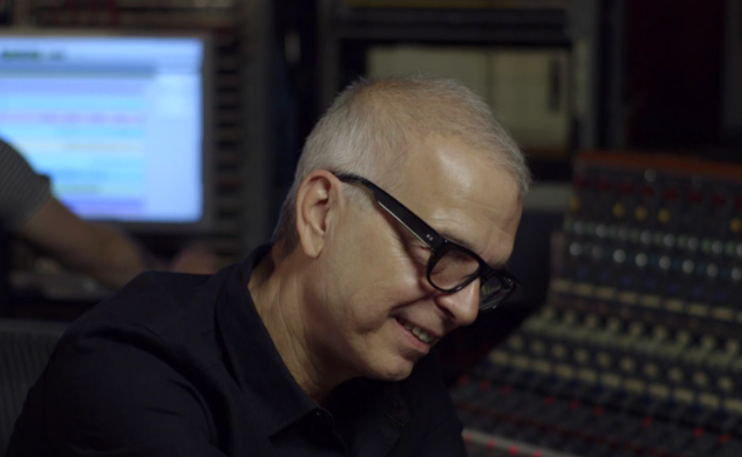





.png)