January 30th, 2017: Next week I will be in the UNITED STATES as part of a book tour! It's for Squirrel Girl but I'll also be happy to talk/sign anything else, INCLUDING Dinosaur Comics stuff! Wednesday Thursday and Friday in San Diego, Portland, and Seattle: the details are RIGHT HERE.
There is a stealth shout out to The Good Place in panel 3, which is a tv programme I've really enjoyed recently! I recommend you go into it SPOILER FREE. :0
February 1st, 2017: Guess what happened 14 years ago, THIS VERY DAY?? If you guessed "well Ryan, is it that you put the very first Dinosaur Comic online, sharing publicly what you'd spent just one weekend working on, having no idea that you would be able to get more than a few days of material out of these pictures before you'd have to change them, and in doing so change the course of your life from 'probably gonna be a computer programmer I guess' to 'guy who writes comics and does crazy things on the internet'", then you guessed correctly! WELL DONE!
14 years ago my life changed, and it's all thanks to you - for reading my comics, for sharing them, for making everything else possible. Thank you so much. [heart emoji] [dinosaur emoji] [emoji that when you look at it you feel the same ineffable joy you felt when your parents picked you up from school and instead of going directly home you went to get surprise ice creams]
BREXIT appears to have the least salience with LAB voters & C2DEs
One of those involved in the LDs recent successes observed to me recently they were finding that those opposed to BREXIT have much stronger feelings about the issue than those who aren’t. In many ways this is understandable because they are against the status quo and everything is moving towards the UK leaving the EU.
I’ve been pondering over this for some time and have been looking for polling that might support or dismiss the notion. I think that the above might be what I’ve been looking for.
Each month for 40 years Ipsos MORI has been operating a totally unique poll – its Issues Index. On this those sampled are simply asked face to face “What do you see as the main/other important issues facing Britain today?”. They are given the time to respond and can name any number of things that come into heads.
Because of the unprompted nature of the approach this has been regarded over the decades as one of the best tests of the salience of issues without the question wording itself having an impact on the responses. This has stood the test of time.
It is not only the party splits that are interesting in the chart above but the socio-economic group responses as well. The ABC1s are much more likely to regard BREXIT as a key issue than C2DEs.
This might be the key to the Stoke Central by-election.
I was pointed this morning to a blog post by an author not previously of my acquaintance who was making a bit of noise about the UK cover of The Collapsing Empire; the June 2016 cover reveal of the UK cover featured the strapline “The New York Times Bestselling Series” (above, to the left), and the author was questioning how Tor (he was apparently not aware that Tor and Tor UK are separate companies under the overall Macmillan umbrella) could make such a statement. He also then suggested that “after noise was made,” a new cover was created, i.e., the US cover for the book, which in point of fact was publicly debuted before the UK cover.
A little further digging revealed that this author almost certainly got this idea from one of my usual suspects (i.e., the same poor wee racist lad whose adorable mancrush on me has gone unabated for a dozen years now), who trumpeted the strapline as evidence that Tor is planning to fake a position for me and TCE on the New York Times bestseller list. As apparently they have done with all my work, because as you know I don’t actually sell books; Tor and Tor UK and Audible and a couple dozen publishers across the planet give me lots of money strictly because I am the world’s best virtue signaller, and therefore worth propping up with byzantine schemes to fake my standing on bestseller lists, because who doesn’t like virtue.
Well, it could be that! Alternately, here’s another theory, which is that the UK cover reveal last June featured a mock-up cover with text from other Tor UK covers standing in for straplines and blurbs to come. Like, say, the Tor UK version of The Ghost Brigades, which as you see has the same strapline and blurb as the cover reveal for The Collapsing Empire.
This sort of thing, as it happens, it not entirely unusual; lots of cover reveals happen before covers are finalized for printing. Why? Well, because of marketing, of course — the publisher wants to generate excitement for an upcoming book. Covers are good for that, and cover art is also often done and completed long before the book is in — as it was in the case of both the UK and US versions of The Collapsing Empire.
Covers are tweaked constantly prior to publication; I know of one recent cover that was changed literally as it was about to get printed, because of a late-coming blurb for the book. Nor are the cover tweaks finished when the book is printed: if a book wins an award or shows up on a bestseller list, for example, the cover will often reflect those things in subsequent printings. So long as a book is in print and being reprinted, a cover is never final; it’s always subject to tweaking.
Now, as it happens, I have seen the final pre-pub cover of the UK edition of The Collapsing Empire; I included it as part of the first image in the entry, to the right. You’ll note the strapline has changed; it now says “The New York Times Bestselling Author.” You might also notice the cover blurb has changed, from one from the Wall Street Journal to one from Joe Hill.
I’ll also note this is not the first time for me where there’s been a difference between a cover reveal and a final cover. Usually the changes are on the level of what we’re seeing here — verbiage tweaked and blurbs replaced — but sometimes the changes are more dramatic. Some of you might remember that between cover reveal and publication, The God Engines cover was completely swapped out: new art, new typeface, new everything. As noted, tweaking happens sometimes literally right to the moment of printing, and then beyond, when appropriate.
So, while it’s possible the Tor UK cover reveal accidentally let slip the vast and complex conspiracy on the part of several multinational corporations to falsely position me as a bestselling author, for reasons, the rather less exciting but, alas, more likely explanation is that in June Tor UK just put up placeholder text to be swapped out later (as indeed, it was). You can believe what you like!
For the record, the wee little racist almost certainly knows there’s no vast conspiracy on my behalf, he just likes to lie about me. The other author in question here I don’t suspect of willful obtuseness; he appears to be self-published and may just not know how all of this stuff works, because this stuff is pretty opaque until you’re doing it, or have it explained, and he has the misfortune of believing this other fellow is giving him information that’s anywhere near accurate.
Also for the record, I wish I did have a vast conspiracy on my behalf! My life would be easier then. Heck, if I had a conspiracy working for me, I probably wouldn’t even have to actually write books. I could just sit back while minions did everything and I drank Coke Zeros on the beach. Sadly, I actually have to do the work myself. It’s so unfair.
The silver lining to not having a vast conspiracy on my side, however, is that I do get to geek out about things like covers and the mechanics of how they come together. The reality of how covers get made and tweaked and sent out into the world is all kinds of good, nerdy fun. I like it, and it’s fun to share it with you. I mean, I think it’s silly these folks think there’s something nefarious about it, but it’s given me a chance to go “okay, so here’s how this really works.” And now you know!
(P.S.: If you would actually like to see me get on the New York Times bestseller list with The Collapsing Empire — or in the UK, the Times bestseller list (that’s the Times in the UK, that is, these newspapers with the same names are confusing) — then be part of the vast conspiracy of people who pre-order the book, either from your local bookseller, or via your favorite online retailer. Sadly, my publishers don’t actually prop me up. I really do have to sell books for a living. Again: Sooooooooo unfair!)
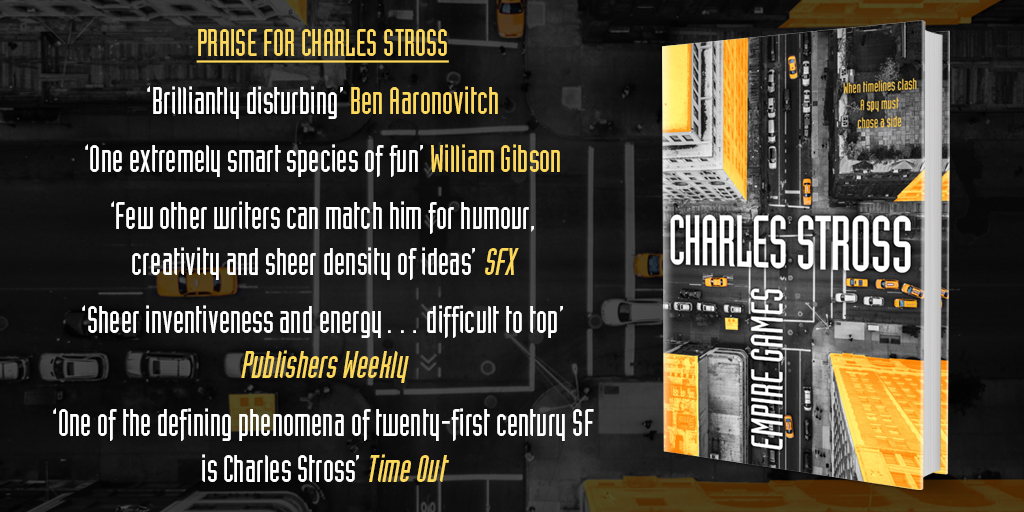
Empire Games came out a couple of weeks ago, right? And you might be thinking, "this is book seven in a universe, won't I be at a loss if I start here?" Well, Empire Games was written to be a new entrypoint into my Merchant Princes universe. But if you want to start from the real beginning, you need to read The Bloodline Feud, which is the revised omnibus edition of the first two books, reassembled into the original intended form.
And The Bloodline Feud is the Tor.com eBook club pick for the week of February 1st to 7th: if you click that link and sign up for the Tor.com newsletter, you can download a free copy in epub or mobi (Kindle) format. (Offer valid to USA and Canada residents; there is a dropdown menu that asks you to state your country.)
This morning, a tweet from a British comic book writer floated across my Twitter feed. He wrote (and I’m paraphrasing here):
Sorry about the flurry of political tweets. I’ll get back to light stuff—comics, games, graphic novels—when the world is no longer on fire.
Oh, boy, do I understand how he feels. I’ve been there. I am there for a variety of reasons.
But I’m going to disagree with him—on a couple of things.
First, the apology for the political tweets. If you feel the need to speak out on social media, it will impact your brand (both negatively and positively). Accept that. Then speak out and don’t apologize.
Second, the phrase “light stuff” concerning his art. Implying that what he does—what all of us do—is unimportant.
Or as another writer, an American this time, put it on Facebook a few days ago, (again, paraphrasing) sure is hard to write when the house you live in is tearing up its own foundation.
Yes, it is.
And still, you must write.
People need your art, now more than ever.
I wrote about this last fall, in a post called “The Importance of Fiction.” I’m going to repeat a bit of what I said there in this blog, because we need the reminders.
I learned this lesson about art during 9/11. I was writing Thin Walls, a Smokey Dalton novel, set in Chicago in 1968—one of the most terrible years of the latter half of the 20th century. The novel deals with racism, and murder, and hatred, and love and family, all tied into one package in a Chicago neighborhood during that bleak December.
I had just hit the climax of the novel—my hero, about to confront the villain—when terrorists flew planes into the Twin Towers and the Pentagon. Another flight went down in a Pennsylvania field because the passengers rose up and prevented more deaths than their own.
Evidence of real heroism, more as the news continued to unfold.
And more horrors too. For a while, it truly felt like the world was on fire, at least from a perspective inside this country.
(And, frankly, I never again want to wake up to these words coming out of my radio: …the fires at the Pentagon are still burning out of control…)
I have a vivid memory of standing in my kitchen, looking at the television, and stepping outside of myself, realizing that the government we have—the world we all have—is a consensus, something we all agree to. That it is as fine and as thin as paper, and it’s only as good as the people who are willing to uphold its ideals, laws, and values.
That realization terrified me as much as the events of the day. Because it became clear to me what shaky ground we were all on, we had always been on. Until that moment in September, 2001, I had been immersed in 1968, another time when it felt like the world was becoming unmoored, and I knew that these moments came about—for the world, for individual countries, for states, for neighborhoods, and for us individually.
I couldn’t get back to my novel. I felt it unimportant—light stuff. It didn’t matter, not like running into a burning building mattered to save people covered in dust and ash, not like jumping terrorists on a plane and sacrificing your life to save others.
Writing didn’t matter when faced with the loss of life and the outpouring of grief. It didn’t matter in the face of the kinds of horrors human beings can impose on each other.
And the irony was, for me, I had been writing a book that I believed did matter, that it was about things people needed to know and see and understand. I felt passionate about the book, until the world changed.
The night of September 11, when I knew that friends and family had survived, I turned off the news. Dean and I watched some fluffy crap on cable TV. Later that week, after trying to go back to the books I had been reading, I started the Harry Potter series—and allowed myself time to go somewhere else, because I couldn’t stay here. I would break if I stayed here.
And that was when I had my epiphany. I realized that escape is rest. It’s important. It gets us away from the horrors, the terrible things, the stresses and upsetting moments of every day life.
Sometimes, art provides a different perspective, a new way of thinking about important things. And sometimes, we just hang out with a little boy wizard fighting a big powerful evil because it entertains us.
This is not light stuff. It is not unimportant. It is extremely important.
As I said, I wrote about this in October. But I didn’t tell you how to keep practicing your art in difficult times. So let me add that.
So…how do we do our jobs when our world is on fire?
To start, we need to understand our priorities, and to understand them, we need a gut-check on what we can and cannot do.
I start with the gut-check.
If You Have The Ability to Directly Help Alleviate The Crisis, Take Action Immediately.
If you have a job that enables you to make a difference on whatever it is that’s going wrong, then go, do what you can. Off-duty police and firefighters ran to the crisis in both Washington D.C. and New York City on 9/11. Attorneys flocked to airports around the United States (and, I’m told, all over the world) on the weekend of January 28, 2017, to volunteer their services for the people trapped by the ban issued by the president. Construction workers often head to disaster zones to help rebuild after floods or landslides or wildfires.
If you can help in a difficult situation, then set your writing aside for the time being and help. That’s the best thing you can do.
Don’t beat yourself up for not writing. But don’t devalue your writing either. Your writing has value too. It simply must get set aside during a time of crisis, like you would set aside a normal routine or even the opportunity to sleep in your own bed.
Realize that the writing will be there waiting for you when the crisis is over.
If You Have Financial Resources, Use Them To Help In Times of Need.
Some people can supply expertise or labor or physical assistance in a crisis. But those people need to eat. Supplies need to arrive. Helicopters need to ferry the injured out of a disaster zone. Bottled water needs to be delivered to areas without fresh drinking water.
Political fires are similar. If you don’t like how things are going, then invest money in charitable organizations, legal groups that will fight for your causes, or organizations you believe in whose funding has been drastically reduced. Sometimes you can (and must) do this on a one-on-one level. If you know someone who will lose their home due to changes in the way laws are applied or because they only need $100 to make the last of this month’s rent, then for god’s sake, give them the $100 (even if you call it a loan). If you have the money, put it to good use—whatever that means for you.
There are people who act, people who finance the action, and people who inspire the action. Sometimes you can be all three. Sometimes you only choose one.
Donating money or supporting friends and family in difficult times is action, even though it often is not as satisfying as bandaging an arm or rescuing someone from a nightmarish situation.
Again, if you can give, do so. Money fuels the emergency vehicles, buys the lunches, pays for hotel rooms for volunteers. Money helps.
And if you can do so on an on-going basis—a weekly donation, helping someone monthly with their rent, supporting a public health clinic when its funding dries up—do that.
Value it. The people you help will.
Get Involved.
Every organization needs volunteers. If you feel like you must physically take action, then do so. You will find a place. As a writer, you might end up writing public service announcements. You might letter signs. You might handle website responses. You might simply be a strong back, charged with filling and piling sandbags or carrying boxes of food into shelters.
But you will be in the middle of things.
Get Involved Long Term.
You don’t like how things are going? Change them. Start at the local level, in some kind of grassroots organization. From working at the food bank to running for city council, you have opportunities in your home town if you want to take them.
Or if you don’t have the time or, as an introvert, the ability to be the front person, then finance someone else’s political career. Help them fight for causes you both believe in.
But…But…None of This is Writing.
Nope. It’s not. Because if your house is on fire, you don’t sit in your office blithely typing away. You deal with the fire.
It’s up to you to figure out how best to use your abilities.
So…the world is in crisis. It’s “on fire” as that British comic book writer said.
I used two different examples—one from England and one from the United States—on purpose. When I read the politics-filled Twitter feed for the British comic book writer, I recognized and agreed with some of the things he believed constituted that fire. But more than half of the political items he was tweeting about were unfamiliar to me. They were important in Great Britain, and not something I knew anything about.
When I looked at the social media feed for the American writer, I saw issues I was deeply familiar with (and agreed with him on). The overlap between the issues that concerned the American writer and the British writer was about 20% of what they were discussing. Everything else differed, because of their different geographies and personal concerns.
I don’t know about you folks, but my daily Facebook scroll fills with all kinds of concerns. Some are about the issues of the day worldwide, especially if something major has happened—an act of terror, the death of an international celebrity (we’ll miss you, Carrie!), or the results of a major election in a democratic nation (and we’re coming up on a few more of those).
Most of the issues that scroll through my Facebook feed are personal. Someone lost a beloved pet, a friend, a parent or a spouse. Someone else was diagnosed with cancer. Another person was in a car accident or had their home foreclosed on or lost their job.
Some people drop offline when these major events occur, and others stay online, seeking comfort and assistance.
But the important thing to remember about all of those items that scroll through my feed and yours is this: those items are a crisis to the person who is in the middle of that event. When you lose a parent, you lose a part of your world and your history. When you have to deal a severe health diagnosis, your life changes irreparably.
Those things mean the world is on fire for you. And you must go back to those four points above. Sometimes we get no writing done when the world is on fire, whatever that means in your case.
So point five, which I have just backed into, is this:
Give Yourself Time To Deal With The Change To Your World.
I mentioned that in the 9/11 example. When 9/11 happened, I dealt with the immediate aftermath—finding friends, making certain everyone was all right, making sure we would be all right since (at the time) 90% of our living came out of New York. And then I took some days off.
That I only needed days was about me, not about the severity of the crisis. I didn’t live in New York. I wasn’t seeing the dust and ash. I was living on the beautiful Oregon Coast, and dealing with the changes, but they weren’t as impactful for me as they were for my friends from Manhattan.
I had a tougher time with some of the recent political changes here in the United States. I’ve had to rethink how I do things, and where my priorities are. I also had to deal with emotional fallout. In fact, I’m still dealing with it.
Neither of those two events, however, were as immediate as dealing with the death of my father—an event that made it impossible for me to read or write for six months. I have had health concerns flare up and deal with them, and I’ve had to help others through some of their emergencies. All of them have had an impact on my life.
Those events also took time from writing—expected time, when you look at it in hindsight, but time you can’t plan for because you have no idea it’s coming until it hits.
And the worst thing you can do as an artist is to blame yourself for missing work when life gets very hard.
Again, though, you don’t devalue your writing or your art. You haven’t abandoned it because it’s worth less than whatever else you were doing.
You set your art aside, the way you might take a leave of absence from your job to care for a sick relative. Your priorities had to change because of the change in circumstance.
I need to note here that there are good changes which also take time away from the writing. New parents who also happen to be writers are often surprised at the fact that they lose writing time during the years before their children go to school.
Often those writers come to me and ask me how they should get to work and I always surprise them. I say, Your children are only young once. These moments will never come again. Enjoy them while you can. The writing will be there, waiting for you, the day the bus takes your baby to kindergarten.
In some of the teaching Dean and I do, we call these events—good and bad—life rolls. Back when there was only one path into a writing career, we used to role play how that path worked, and always, someone ended up with a roll of the dice (yes we used dice) that would have them lose years of their writing.
Think that doesn’t happen to professionals? Remember when Stephen King got hit by a truck? He lost months. Greg Iles, who was in a serious car accident, lost years.
Both men came back, their writing stronger than ever. But the not writing was a struggle for them. Just like it is for all of us.
So the corollary for #5—let’s call it 5.5.
5.5.Forgive Yourself for The Time You Spend Away.
You gave yourself permission to set the writing aside. When you come back to it, realize that your absence was okay. Time to face forward and start again.
But…But…What If 1 through 5.5 Don’t Apply to You?
You’re upset about the fires in the world. You want to help, but you can take no direct action. You don’t have the time or the ability to volunteer. You live hand-to-mouth and barely make your own rent, so you can’t give money away, at least not right now.
What can you do?
You can write. Create fiction. Make art. Help people escape.
That will help, along with realizing how much you probably rely on fiction and stories and art as well.
But how do you write when so much is happening and it is taking all your attention to keep track, keep up, and remain vigilant?
Give Yourself Permission to Write
Yes, it’s important to remain vigilant, to hold others accountable, to protest or weigh in on the issues of the day. Speaking out is necessary in times of turmoil.
But…
Speaking out can be scheduled. You don’t have to do it every minute of every day.
You need to work on your art, just like you would (or are) going to your day job.
Prioritize Your Writing
Figure out where it fits into your every day schedule. Yes, the world around you has changed. Your writing time might be truncated because of that. You might have taken action (see the points above) and so rather than having five hours of writing time each day, you only have an hour.
Make that hour count.
Remove All Distractions From Your Workspace
Shut off your wireless. Turn off the television. Listen to recorded music or some kind of streaming service that does not have news breaks. Better yet, work in silence. Absolute silence.
Do not bring your phone into your writing space. Even if you need to be on call all the time, move your phone away from your desk/computer/laptop. Do not have your messages show up on your computer as you work.
Set your message tone to something different than your ring tone. Shut off your email alerts, your social media alerts, and your push notifications—on your phone as well as your computer.
I’m pretty sure, although I don’t know, that all smart phones have a do not disturb function. I use mine liberally. If I need to have my phone in the same room as me because I’m expecting a call or a text or some important notification, then my do-not-disturb is set up so that only that call/text/notification can get through. I don’t use a manual do-not-disturb. I use the automated function. It shuts off for my writing hours, and turns back on when I’m done.
Yep…I said it. I am not connected 24/7.
And it’s freeing.
Give Yourself Permission to Get Lost in Fictional Worlds
If you escape the real world for an hour or two, you’ll create a fictional world in which people who really need the escape (after long days at the hospital or rescuing trapped people) will be able to escape to as well.
Enjoy Your Writing
I used to work for a psychologist. I talked to him, and the other psychologists I met through him. One thing they all agreed on (and I’ve since seen research to back it up) is this: the worst thing you can do is depress your mood because others around you are depressed.
Don’t feel guilty for enjoying something, even in dark times. Laugh at someone’s jokes. Listen to great music. Look at a lovely sunset.
Enjoy your writing—and others will as well.
Limit The Time You Spend Consuming News Or On Social Media.
Protect your workspace—again. I’m an omnivorous news junkie, but in November, I had to take a short hiatus. My stress levels were much too high. I limited what I consumed, discovered a balance, and have now returned to my earlier ways.
I choose the time of day that I monitor the news, however. I catch up at breakfast, just to make sure something didn’t happen overnight that I have to deal with. Then I decompress, head to my office, and don’t deal with media until after my daily run.
Exercise
Yes, you heard me. Walk, run, bike, swim. Move. Listen to music, or exercise in silence, talk to friends, whatever it takes. You will feel better. You will sleep better. You will think more clearly, because you have walked away some of that stress.
Commune with Nature
Look at the damn sunset now and then. (Or the damn sunrise, you morning people.) Realize that there’s still beauty in the world, no matter what is happening.
When It Gets to Be Too Much, Talk To Friends, Loved Ones, Like-Minded Souls
Vent a little. You’ll feel better.
Vent in Your Writing
Reimagine the crisis that you’re experiencing in fictional form. Write murder mysteries for the first time in your life. Write fantasy, defeating some metaphorical version of the problem you’re dealing with. Or figure out how to give yourself and the world a happy ending.
Me, I’m one of those let’s see how others solved this types, so I always look to the historical record. I write historical fiction, and I know from my reading that dark times happen. I am fascinated by those dark times, particularly one aspect of them: How did people survive the darkness around them? The answers are there in the past, along with hope, courage, and amazingly great people.
Continue to Publish Your Work
If you escaped while writing something, a reader will find an escape while reading it.
Write More Words of Fiction than You Write in Email or on Social Media
Keep track. Make sure that fiction always wins. Walk away from flame wars on social media. You’ll never convince someone else that they’re wrong.
It’s better to listen—find out why they differ from you—than it is to bludgeon them with your opinion.
Although I get it. Sometimes you want to bludgeon them. I know I do. Usually I walk away. If, however, I can’t let go after several hours, then I have to craft a response. But I do so on my time, away from the social media platform, and like as not, I don’t send that response.
I’d rather educate and humanize than scream. It’s not about catching more flies with honey. It’s understanding that we human beings are not one thing. People do things for reasons important to them, reasons you might not understand.
Does that mean you have to remain friends with them on Facebook? No. You don’t have to read their tweets either.
And you need to ask yourself what you gain—what we all gain—when you fight with them. If the answer is I don’t know or satisfaction and nothing else, use your energies elsewhere.
Some of my vociferous writer friends set aside an afternoon each week for social media venting. They save up arguments for that day. Like as not, the arguments are dated by the time the day rolls around. The arguments that aren’t dated are the ones they go with—often in the form of a blog post.
You can do that too.
Sometimes silence is not an option, particularly when your core values are at stake.
But use #12 as a guideline. Write more words of fiction—every day, every week—than anything else.
Remember This: Human Beings Learn Best Through Storytelling
We live inside stories. We learn empathy from stories. We gain other points of view and other ways of thinking from stories.
Stories open new worlds. Stories create community.
Stories have great value—not just as entertainment, but from one human being to another.
Your readers might love your characters, characters those readers would hate in real life, and those characters might make it easier for your readers to understand their corner of the world.
Finally: Value Your Art
I can’t say that enough. The British comic book writer whose tweet started this denegrated the work he’s doing, and he shouldn’t have.
Yes, we all face dark times. I wish that weren’t so. I wish we constantly moved forward, without the backwards steps.
But that’s not the way the world works.
I firmly agree with Dr. Martin Luther King’s quote “The arc of the moral universe is long, but it bends toward justice.” However, that arc is not a clear path. It meanders.
It is our job to maintain hope. To provide comfort. To help each other.
We writers nurture through stories.
So please, take care of yourself during these times of stress.
Know why that scares me so much? To quote the Anti-Defamation League's director Joseph Greenblatt... the UN established International Holocaust Remembrance Day not only because of Holocaust denial, but also because so many countries -- Iran, Russia, Poland, and Hungary, for example -- specifically refuse to acknowledge Hitler's attempt to exterminate Jews, "opting instead to talk about generic suffering rather than recognizing this catastrophic incident for what it was: the intended genocide of the Jewish people."
What we have here, is a "Holocaust remembrance statement" which is *specifically refusing to remember why it happened*. The Nazis didn't build an industrial-scale genocide machine to wipe out trade unionists. The Wannssee Conference was not called to discuss the final solution to the homosexual problem. Romani were sent to the camps, but they're not the reason they were built. The implication that they just *happened* to kill more Jews than everyone else put together -- no.
The Holocaust was not a generic suppression of enemies of the state; it was specifically built on religious and racial hatred. Hatred of us.
And ignoring that fact doesn't just play into the hands of those who hate Jews; it plays into the hands of those who want to target *other* minorities -- who don't want people to notice that the mechanisms used to target them have been used before.
Look at the Nazis' publication of the personal details of Jews who had committed crimes as small as pickpocketing, as part of their smear of the entire race in "The Jew As Criminal". Then look at Breitbart's running feature naming-and-shaming black criminals in their "Black Crime" section. Now look at Trump's executive order -- apparently written by ex-Breitbart boss Stephen Bannon -- which declares that the US government will publish lists of all immigrants who have even been *charged* with a crime.
All this has happened before. We must make sure it never happens again.
And we see this familiar strategy all over the place... when a group is being victimized, so often there's a push to deny that they're being singled out for victimization, from people who want to distract from the injustice at the root of it. Why should we single out Jews as having a special claim to the Holocaust? (Because the orders establishing the camps sure singled us out.) Why say "Black Lives Matter", when surely *all* lives matter? (Because black lives are being disproportionately threatened and taken by police in ways which other races aren't.) And those gays -- why do they need all those anti-discrimination protections, aren't they special rights somehow? (Because no one's actually trying to invalidate straight marriages, or deny people service for being straight.)
We have to recognize this sham neutrality wherever it occurs. It's been used on us, it will be used on others.
And just to add injury to insult... within hours of this statement, still on Holocaust Remembrance Day, Trump suspended America's refugee intake as part of the whole Muslim ban. Meaning that, immediately after saying the Holocaust wasn't particularly about the Jews... he returned to the sort of targeted refugee bans from World War II which closed this country's door specifically to Jews. The refugee policy which literally meant that Anne Frank died; as the Post just pointed out, if the US had accepted Otto Frank's bid for asylum, Anne would likely be alive and well today. https://www.washingtonpost.com/news/worldviews/wp/2015/11/24/anne-frank-and-her-family-were-also-denied-entry-as-refugees-to-the-u-s
Think about the parallels here. Specifically because they don't seem to want you to. This is the sort of thing we said "never again" about.
This is an obituary for a man I think was one of the greatest comic book artists who ever lived and inarguably one of the nicest people I've ever met. As you may glean from what follows, I really, really loved this person: Loved his artwork in comic books I read long before I ever imagined I'd know him and work with him. Loved the guy who did that artwork and not just because he was a joy to collaborate with and he made my scripts look good and my job, when I was an editor, as simple as it could possibly be.
Dan Spiegle left us on Saturday at the age of 96. He had been in poor health for some time…and it was tough for me to think of Dan that way because until about ten years ago, he was a very healthy individual, often out on the tennis court. Until some time in his seventies, he did most of his artwork standing-up as per the above photo. That was taken around 1973 in his studio, the first day we met.
Dan was born in Cosmopolis, Washington on December 12, 1920. He drew a lot in high school and then in the Navy, where among other duties, he painted insignias on airplanes. Following his discharge in 1946, he attended Chouinard Art Institute in Los Angeles, thanks to the G.I. Bill. Funny story how he got his first real job doing comic art. He answered an ad in the L.A. Times from someone looking for an artist to draw a newspaper comic strip. The address was that of Capitol Records and it turned out the strip was Bozo the Clown.
Years later, Dan could have handled that with ease but at the time, he was more of a serious illustrator so he told the man he met with there that the project was not for him. The man looked at Dan's samples anyway, noted some fine drawings of horses and said to him — approximately — "My cousin works for William 'Hopalong Cassidy' Boyd and they're looking for someone to draw a newspaper strip. Why don't you go see him?" The office of the popular cowboy star was only a few blocks away. Dan went directly there and Mr. Boyd, aka "Hopalong" happened to be there and he liked how Dan drew horses, too. Before the day was out, Dan had the job of drawing a Hopalong Cassidy newspaper strip, which he did from 1949 to 1955.
A strip like that would have been a full-time job for anyone else but Dan was very fast so around 1951, he took samples of the strip to the Los Angeles office of Western Printing and Lithography, which produced the Dell Comics line. He walked in, showed his work and walked out with a comic book to draw. He drew for Western for about the next thirty years as the company segued from Dell to Gold Key Comics (explanation here) and only stopped when the firm did. His work there included dozens of different adaptations of TV westerns, including a long and acclaimed stint on Maverick. He drew many of their adaptations of Disney movies and the best-selling comic book, Space Family Robinson, which has recently been reprinted in fancy hardcover volumes. He was also the artist for years on Korak, Son of Tarzan.
His editor for much of this period was a man named Chase Craig, who was also my editor (and mentor) for many years. I once asked Chase, "Of all the hundreds of artists you've employed, who was the most reliable?" Without pausing to think, he replied, "Dan Spiegle." Then he added, "It's always on time and it's always wonderful." (A moment later, he added, "…and Mike Royer.")
Later, when I became Dan's editor, I had the same experience…and until you're an editor of comic books, you don't realize how rare and precious it is to have someone like that available to you. One time, another artist — a good one, not a newcomer — was six weeks late with a job and then handed in a few, unusable pages. I immediately went to Dan who did the entire job in eight days…and it was perfect.
My own association with Dan started one day in '72 when Chase asked me if I would take over writing the Scooby Doo comic book. I wasn't a huge fan of the TV show and started to decline when Chase mentioned that Dan Spiegle was now drawing it. That made all the difference. I had been a fan of Dan's art for years.
At the age of seven, my parents took me to a movie called Don't Give Up the Ship, which starred Jerry Lewis. The next day, they bought me the Dell comic book adaptation of Don't Give Up the Ship to keep me quiet on a visit to my pediatrician and I happened to be holding it when Jerry Lewis walked into that pediatrician's office to pick up one of his sons. That comic book was drawn by Dan Spiegle.
Scooby Doo was not really in Dan's wheelhouse at the time but that comic needed an artist and Chase, because Western was cutting back on adventure-type comics, needed an assignment to keep work on Dan's drawing board. So Dan was attempting to learn a broader, funnier art style and through no help from me, he "got it" about the time I began writing the comic. We became friends and frequent collaborators. We worked together for around a dozen different companies including Scooby Doo for two or three other publishers, Blackhawk for DC and Crossfire for Eclipse. Neither of us made a lot of dough off Crossfire but it was Dan's favorite project and mine, as well.
The way we worked together was very simple. I'd write a script. I'd send it to Dan. He would draw it, usually having his daughter Carrie do the lettering. He would send it to me. I would make the few corrections necessary and send it off to be printed. Couldn't have been more harmonious and easy. And the few corrections usually were that Dan would draw some scene so clearly that I would realize some of my dialogue was unnecessary and I'd remove or change it. At least once, I removed all the word balloons and captions I'd written for one page because Dan's artwork simply didn't need my silly words telling you what you were looking at.
Other companies grabbed him when I couldn't keep him busy. He worked for DC, Marvel, Dark Horse and many other publishers. Editors and writers would tell me how much they envied me being able to work as often as I did with Dan and his artistry was much admired by other artists. Gil Kane would say that Dan was the best comic artist ever when it came to "spatial relationships," meaning that in each panel, the figures and items were placed in perfect proportion to each other, perfectly setting the scene. When I visited Alex Toth, he insisted I always bring him the latest pages I'd receive from Dan so he could study them. Alex clearly envied the organic nature of Dan's work…how natural his staging was and how well he handled light and shadow.
And I want to underscore that Dan was one of the nicest men I've ever met. We never had an argument of any kind. Not one.
I'll tell you two quick stories about how devoted this man was to his artwork. We did a lot of Hanna-Barbera comics for overseas markets — work that has never been published in this country. Occasionally, the page format changed due to the needs of some foreign publisher.
For one six-page story, I told Dan to draw the pages 11" by 15" instead of the 10" by 15" page layout we usually used. Dan accidentally drew it 10" by 15". It was the only mistake he ever made on anything we did together and he was deeply apologetic when I sent the pages back to him and asked him to adjust them.
Anyone else would have just pasted on a half-inch on either side and extended what he'd already drawn. Either that or they'd cut panels out and repaste so they didn't have to draw the whole thing again. Dan redrew the whole thing again on the proper size of paper. I thought that was extraordinary…but then I realized something else.
Anyone else would have traced or copied what he did the first time. Dan had changed every single panel to a new angle. I asked him why he did that and he explained, "Just to keep my interest up. It would have been too boring to draw it the same way twice."
Dan and M.E. at the 2006 CAPS Banquet.
Soon after that, we had to do a batch of comic book stories for a publisher in South America. The publisher had been publishing terrible, badly-drawn comics and Hanna-Barbera had insisted they better their product by paying to have us do some of the material. The pay was low so I told Dan and the others working on these stories to knock them out fast, not to put in a lot of detail. Even rushed, simplified art by my crew would be better than what the South American publisher had been running and better than he was paying for.
When Dan's art came in, it looked just like what he did on the regular, decently-paying art. I thought he'd made a mistake and confused which scripts were supposed to be done with all possible shortcuts so I called him. It turned out he hadn't been confused. He said, "I drew it the way you wanted it but I didn't like it and couldn't hand in something that looked like that. So I redid it so it pleased me."
At my insistence, he sent me the simpler version. It was fine. The publisher would have been happy with it. But the point is it didn't please the guy who did it.
How can you not love an artist like that?
I just spoke with Marie, his wonderful wife of seventy (70!) years. She said a memorial will happen sometime in the future. They'd better get a large room because Dan had an awful lot of friends and admirers…those who knew the man himself and those who just knew the work. And then there were us lucky ones who got to be in both categories. He is survived by Marie, four children who made him very proud (and a Grandpa) and around 55 years of top-notch comic book and strip artwork.
It’s been two weeks since I’ve written about Trump here! And what a two weeks it’s been! Herewith, not-especially-well-organized thoughts on a fortnight of a not-especially-well-organized administration:
1. I mean, these are remarkable times, aren’t they? There are moments in life when you are very truly aware that you are living in history — things that will prominently be in history books fifty or a hundred years down the line — and there is no doubt whatsoever in my mind we’re right smack dab in a middle of some bona fide history, people. It’s kind of exhilarating! Mind you, I’m hoping it’s the exhilaration of a nation reawakening to a commitment of democratic principles, rather than the exhilaration of a consumptive’s moment of clarity before they finally hork out the useful portion of their lungs. But either way, it certainly is a time.
2. I’m feeling many things about the Trump administration, but I have to admit one of the primary emotions I am feeling is a deep and abiding embarrassment. I’m embarrassed that my president and his administration are clearly malign, but I’m also embarrassed that they are so clearly incompetent. These people are both ignorant and stupid, and while on one hand that’s a silver lining — it blunts the effectiveness of the previously-mentioned malignancy — on the other hand the fact that a great nation installed these bumptious yahoos in the first place says very little good about us.
3. This is also why I am mildly exasperated at the idea floating about, that the fumbling bullshit nonsense these numpties are up to represents 11-dimensional super-chess political moves. Folks, no. Really, just, no. If they were 11-dimensional super-chess masters, they wouldn’t have had a negative polling rating eight days into their administration; they’d instead have made us delighted to waltz down the path to a comfortable and complacent fascism. But they didn’t, because they can’t, because they’re not that smart. A White House that spends four days litigating the size of an inauguration crowd is not a clutch of masterminds. Masterminds wouldn’t have given a shit about how many people showed up on the goddamn National Mall.
But don’t you see, Scalzi? All of this is distraction from their true mastermind evil plans! Folks, you realize that needing these jackasses to be masterminds is a form of vanity, yes? We couldn’t have possibly chosen to be ruled by custard-headed bigots who can’t find their asses with GPS and an Eagle Scout! They must be smarter than that! Well, no, they’re really not, and yes, we really did. There are lots of ways to explain that — I favor the whole “the GOP’s decades-long plan to undermine its voters’ dedication to truth and public institutions really paid off” angle of things personally — without having to haul out the 11-dimensional chess board.
4. But don’t worry, folks! Blundering numpties are dangerous enough! And to be clear our blundering numpties have a plan — white authoritarianism is a thing, y’all — and fundamentally what they have on their side is that they don’t really respect law, or tradition, or you. You’re either useful, or fuck you. Incompetent or not, they’ll keep going until they can’t, and they expect you to follow the rules they have no intention of following. The thing is, the rules can stop them — from the Constitution on down — but only to the extent that people hold them to those rules, and plant their feet.
Our problem as I see it is that the House and Senate are currently controlled by the GOP, i.e., the folks who spent the last few decades undermining inconvenient truths and political comity, and whose current leaders, Paul Ryan and Mitch McConnell, apparently are working on the motto of “Whatever, man, so long we get to kill Social Security and Medicare, too.” So, yeah. It does help that Trump is busily antagonizing Republican senators who offer even the mildest of complaint regarding his policies and incompetence, but let’s face the fact that spines are in short supply on the right side of the aisle at the moment. Will that change? We’ll find out!
And the Democrats? They spent the first week apparently under the impression things were normal, and it took two solid weeks of protests and phone calls to suggest to them that maybe just going along might not be the thing for them to do. As I’m typing this they’re putting sticks into the spokes of several cabinet confirmation processes of especially problematic candidates, so that’s good! But then Rick Perry just passed his Senate panel vote with Democratic votes, so maybe not every Democrat got the memo (I actually personally think Perry is likely to be one of the least problematic of the cabinet picks — he’s ignorant as hell about his position, but I think he’s more likely to listen to people who aren’t ignorant with regards to his duties, and isn’t that just a perfect encapsulation of the Trump years, when “ignorant but maybe trainable” is a positive). I’m mildly optimistic that the Democrats will generally get the memo that giving a pass to the incompetent and malign will not age well, especially when the incompetent and malign have no intention of ever returning any political favor. Again: We’ll find out!
5. What about Bannon? He’s smart, right? Well, he appears to be the smartest person in the White House right now, which is not the same as actually smart. But inasmuch as his personal philosophy appears to be “I’m a bigot and I have a box of matches” and he’s found a useful idiot in Trump, he’s definitely a problem. Is he the actual president, a la Cheney? He’s certainly got his hand up Trump’s ass, and he and Putin seem to be having a thumb war around the vicinity of Trump’s epiglottis in order to see whose turn it is to work the puppet. I think it’s self-evident that Bannon’s a racist piece of shit who shouldn’t be anywhere near the White House, but I also thought it was a self-evident Donald Trump was a racist piece of shit who shouldn’t be anywhere near the White House, too, and look where that got us.
Bannon’s reflexive racism and anti-semitism makes the Trump administration do stupid things, a fine example being it offering up a release on Holocaust Remembrance Day that somehow didn’t manage to mention the Jews, i.e., the principal targets of the Holocaust and the reason the Nazis built out the entire apparatus of the Holocaust. When called on it, the White House offered the same rhetorical line — “well, others suffered in the Holocaust, too” — that Holocaust deniers use to minimize the extent of the atrocity done to the Jews. Bannon’s fingerprints are all over this, and it’s appalling both that the White House put out a release like this, and that it either didn’t realize that everyone would see the dog whistle to America’s home-grown Nazis… or it didn’t care whether everyone saw it or not. Either, to me, is all Bannon; neither is especially smart.
6. What’s really remarkable about the Trump administration is that we are literally in week two, and its managed to have enough scandal and constitutional crisis for an entire year of a normal administration. Hell, even Dubya, the former modern low benchmark for incompetence, stretched out his nonsense. Now, you might recall that I predicted this the last time I wrote about Trump — I said we’d see a hundred-day “Gish Gallop” of nonsense from them (to the extent the Trump folks had any plan at all) — but it’s one thing to say “yup, this is going to happen” and another to see it in full effect in just two dizzying weeks.
I don’t think this is sustainable, and I don’t mean in terms of people’s ability to protest, which I think is capacious. I mean that, while it is prudent to plan for four years of Trump, I’m going to be surprised if he lasts that long. I mean, this is the goddamn honeymoon for his administration. It is protests and chaos and possibly even Democrats in Congress locating (or at least borrowing) spines, and a subterranean approval rating. Even worse, Trump just isn’t enjoying himself. He’s been fucking miserable for two straight weeks and it’s not getting better from here. I suspect that not too long in the future he’ll find a way to declare victory and bug out.
Maybe that’s wishful thinking (scratch that, it is wishful thinking). But here’s the thing: The Trump administration has already set the tone: It’s racist, it’s nationalistic in the worst way, it’s authoritarian, it is petulant and thin-skinned, and it’s not actually competent. It’s been jammed up from day one and the resistance to it is just going to get stronger from here. Whatever Trump thought he was going to achieve, in his fever dream of the office of the President being some combination of a king and his “Apprentice” shtick, he’s now unlikely to get it. He’s not used to being told “no” and he hates being unpopular, and by all indications he doesn’t actually like working much. I think he’s gonna say “fuck this” after a while and leave the whole mess to Pence (I almost said “poor Pence,” but that fellow signed up for this, so). I also think it’s more likely for him to leave of his own accord then to be impeached or removed via the 25th Amendment.
Is there any way for Trump to save his presidency? Sure, there are lots of ways! But most of them would require Trump getting a personality transplant and/or ditching the core of his brain trust, and I don’t see that happening. Bear in mind “save” is a loaded term; the man is president and he’s entirely capable of weathering four years of this out of sheer cussedness. It’s entirely possible I’m wrong, Trump doesn’t care to “save” his tenure, and he’ll just do what he’s going to do because screw you, that’s why. I’ve been wrong before! Sadly, in this particular case.
7. Leaving aside the ethical dimensions of Trump’s actions to date, from a purely economic and political point of view he’s pretty much been a nightmare. Businesses have to be watching his incipient trade war with Mexico, his immigration ban and the domestic protests and thinking to themselves “well, this is no good.” Trump’s nationalism is going to end up being bad for business, and in particular it’s likely to be bad for businesses in the very states where Trump had his strongest support. This more than anything else may be what turns a sufficient segment of the GOP against Trump — in the end, you don’t screw with the GOP’s money. There’s a racist, nationalist core of Trump supporters who value that more than business, mind you — they’d rather be pure than rich — so now I guess we get to see whether the GOP would rather be racist or rich. Should be interesting!
8. I’ve noted before that Trump is the end result of decades of the GOP working to undermine its voters’ faith in the system and in truth — but that Trump arrived about a cycle too early for the GOP’s plan to really pay off like it wanted. It was hoping for a bland, unobjectionable tool (think: Rubio) to be the front man while it dug itself in like a tick into the processes of government, and instead got a loud, racist incompetent with a pack of racist reactionary pals, who see the GOP as just another tool to use or to thump on when it doesn’t do what it’s told.
This is no good for the GOP, because now that Trump has alienated women and immigrants and the Latinx/Hispanics and LGBTetc and Jews and everyone who knows and cares for anyone in those groups, and the GOP is likewise putting the fear of god into people who want health insurance, who is left for them? Old white people (especially the ones who haven’t twigged to the fact that Ryan wants to take away their Medicare and Social Security), evangelicals who want cover for their racism, homophobia and worldly greed, and the sort of white dude who still thinks Pepe the Frog is the height of wit. Annnd that’s pretty much it! Not a lot to grow on, unfortunately for the GOP, and the longer Trump’s in office, the worse it’s going to get.
I’m not saying that everyone who is appalled by Trump is going to go to the Democrats, who have their own stew of issues, which I will leave to others to essay. But unless Trump actually does manage to destroy American democracy and replace it with a white authoritarian government in the next six months, I think all he’s really going to do is destroy the GOP. Which, you know. Sow the wind, etc. This is what the GOP has been working toward. That they didn’t expect that Trump was the form they’d get is neither here nor there to that.
9. What have I been encouraged about? I’ve been encouraged to see slightly more spine in some elected officials. I’ve been encouraged that blue states, particularly Massachusetts and California, seem to be ready to take the fight to Trump. I’ve been encouraged that news organizations have decided to call lies lies and decide there is more to news than filling up a 24-hour cycle with crap (they still have the 24-hour news cycle, and it is, alas, still largely filled with crap. But the ratio of useful-to-crap seems to be getting better). I’m encouraged that organizations like the ACLU have gotten right into the fight from day one. I’m encouraged that people like Sally Yates put their careers on the line to point out the injustice of Trump’s orders. I’m encouraged that nearly every creative person I know, liberal or conservative or otherwise, has decided that Trump’s nonsense is not for them. I’m encouraged that a large number of the conservative people I know and/or respect have decided to stand for the rule of law rather than a rule of Trump.
And most of all, I’m encouraged by the millions of people from everywhere and all walks of life who went out into the streets in the last couple of weeks, and who called their elected representatives, and who donated money and time and expertise to protest against Trump and his people, and their plans, and their morality, or lack thereof. As many people have noted, the alt-right have called them “snowflakes” but you get enough snowflakes in one place and you get an avalanche. It’s heartening to see millions standing for a diverse and vibrant America, and not for a mean and racist one. I noted before that Trump is president and as such he and his crew got to make all the first moves, nor are they done making those moves. There’s more to come from them. But it’s clear they weren’t prepared for the pushback. Good.
10. I hate that we are where we are now, but it’s also not wrong to say that I feel weirdly optimistic. Trump is terrible, his administration incompetent, and we’re confronted with the fact that our nation’s bigotry and awfulness has its head right now. But what’s happening because of it is the exact opposite of a shrug and quiet acceptance. I didn’t want us to have to have this political moment — I would have been happy with a Clinton administration, honest! — but if we have to have this political moment, and we do, I am heartened by the response to it. Our country is going to suffer damage because of Trump. We won’t be the same nation we were before. But we get to find out whether at the end of it we become a better nation. I think we might! If we keep at it.
And that’s an encouraging thought. I plan to keep at it. I hope you will, too.
Content note: This is a worst-case scenario. People die.
If this would stress you out, don’t read it.
So, the story so far (ie, this is what has happened in actual January 2017).
President Trump issued an executive order that was so blatantly discriminatory that it couldn’t pass Rational Basis review (that’s the lowest level of review under the fourteenth amendment’s guarantee of the equal protection of the laws).
Customs and Border Patrol started holding various people in detention on landing at the airports.
The American Civil Liberties Union went to a whole bunch of federal district courts, for the various courts covering key airports like JFK in New York, Dulles in Washington DC, etc.
The judges gave out emergency injunctions requiring CBP to release people from detention, give them access to lawyers, etc.
In some cases (e.g. Dulles), CBP ignored the court orders and continued as they were, including deporting at least one person in defiance of a court order.
So that’s where we are as of Monday morning, 30 January 2017.
This is where the fiction starts.
The ACLU goes to the Federal District Court for the Eastern District of Virginia (EDVa) and asks for contempt proceedings. Given that there cannot be a civil remedy for the deported person, this means criminal contempt of court. Given the significance, a three-judge panel, headed by Rebecca Beach Smith, Chief Judge of the court, is convened, and issues an arrest warrant for “person or persons unknown, being or claiming to be officers of the United States Customs and Border Patrol, preventing the execution of an order of this Court” and directs Federal Marshalls to go to Dulles to execute the warrant.
There are three phone calls made simultaneously.
The ACLU contacts Terry McAuliffe, the Governor of the Commonwealth of Virginia, asking him to consider putting the Army National Guard of Virginia at the disposal of EDVa to enforce the law.
The US Attorney, who has just failed to prevent the warrant being issued, calls the Federal Circuit Court of Appeals for the Fourth Circuit to apply for a writ of certioriari to stay execution of the warrant awaiting appeal. This takes some time to be issued.
The CBP officer who was representing his department there calls Dulles to warn them that the Marshalls are coming.
Four Marshalls arrive at Dulles with their warrant, and CBP officers draw their weapons and refuse them access. At this point the Supervisory Deputy US Marshall (commanding) is handed a telephone by an ACLU lawyer. On the other end of the line is a Lieutenant-Colonel in the Virginia Army National Guard, informing him that two hundred guardsmen of the 2nd Squadron, 183rd Cavalry Regiment were on the road from Staunton and would be at Dulles airport within an hour.
The Marshalls decide to wait rather than start shooting at CBP, but do not inform CBP what they are waiting for. CBP assumes that they have stopped the Marshalls and are in a stand-off and, rather nervously, continue to process passengers.
The US Attorney finally gets his writ of certiorari, and heads to the airport to break up the stand-off. As she arrives, she hears the first gunshots…
When the VANG arrive, they place themselves at the disposal of the Supervisory Deputy US Marshall to enforce the law. He goes to the CBP and informs them (through a bullhorn) that he will be compelled to use force if they do not comply. He gives them a few minutes to clear civilians out of the way. The cavalry are also preventing civilians from entering Dulles by land at this point, which is what finally alerts the media.
The CBP duty manager, finally, gives some urgency to their higher authority over the phone, warning them that there are going to be four dead US Marshalls pretty soon and they’d better be prepared to deal with that. He hasn’t noticed the National Guard. He is given orders to resist with force. Who gave those orders will ultimately be a matter of some contention.
The Supervisory Deputy US Marshall decides that the clock has run out, and the first Stryker reconnaissance vehicle rolls into the arrivals area of the Dulles terminal.
This is not a tank, honest. See, it has wheels, not tracks.
At this point, CBP panic. Unfortunately, armed federal officers panic by opening fire. The Stryker returns fire with its machine gun, killing 12 CBP officers, including the duty manager, two civilians and injuring what are ultimately determined to be no less than 91 other people, many of them actually taking injuries not from bullets but from diving to the ground to avoid the bullets that are flying.
The surviving CBP officers surrender, and the First Battle of Dulles, the first action of what would later become known as the Second American Civil War is over.
At this point, Donald Trump is finally informed that there has been a shoot-out at Dulles. The smart response – entirely within his powers – would be to federalise the Virginia National Guard, order them to stand down, send some new CBP officers, and reopen the airport. Instead, advised by Steve Bannon, he heads for AF1 ordering them to take him to a secure location (ie to STRATCOM in Nebraska), declares Virginia to be in rebellion and orders the US Army to retake Dulles from the rebel forces.
Given the distance from the Pentagon to Dulles (not much), there are real tank regiments wrecking freeways on their way to the airport within a few minutes. ATC diverts all civilian aircraft away, while F-16s are being launched from Andrews Air Force base to provide top cover. The Second Battle of Dulles lasts about as long as the first, as Abrams and F-16s go through a reconnaissance troop like a hot knife through butter.
This is a tank. An Abrams M1A2 to be precise.
Since this is a worst-case scenario, the US military now has conflicting orders, and divides. STRATCOM orders all nuclear elements to stand down and to refuse all launch orders until the political situation is clear (even in a worst case scenario, the US isn’t nuking itself). A whole series of states with Democratic governors end up in rebellion, while the midwest tears itself apart. Large parts of the official military disobey all orders and refuse to fire on fellow Americans and a chaotic multi-sided civil war lasts nearly a year until Trump finally ends up swinging from a lamppost by his heels.
Looking back at the horror show that has been this week's news—the first week of the Trump administration—two things are clear: firstly, Trump is to be taken at his literal word when he threatens people, and secondly, it's going to get worse before it gets better.
Consequently I'm revising my plans for future visits to the United States.
I'll be in New York and Boston for business meetings and Boskone in mid-February (I unwisely booked non-refundable flights and hotel nights before the election), but I am cancelling all subsequent visits for now. In particular, this means that I will no longer be appearing as guest of honor at Fencon XIV in Texas in September.
I'd like to apologize unreservedly to the convention committee; this is not your fault and you did nothing to deserve this. I would like to attend a future Fencon, and if anyone else had been elected President—or if Trump had walked back the hateful insanity once in office—my appearance would be unaffected. But conventions book guests of honor many months, sometimes years, ahead of schedule: so I felt it best to pull out of the committment sooner rather than later, to allow as much time as possible to find and announce a replacement.
As for why I'm cancelling this appearance ... I have two fears.
Firstly, at this point it is clear that things are going to get worse. The Muslim ban is only the start; in view of the Administration's actions on Holocaust Memorial Day and the anti-semitism of his base, I think it highly likely that Jews and Lefists will be in his sights as well. (As a foreign national of Jewish extraction and a member of a left wing political party, that's me in that corner.)
Secondly, I don't want to do anything that might be appear to be an endorsement of any actions the Trump administration might take between now and September. While it's possible that there won't be any more bad things between now and then (in which case I will apologize again to the Fencon committee), I find that hard to believe; equally possibly, there might well be a fresh outrage of even larger dimensions right before my trip, in which case my presence would be seen by onlookers as tacit acceptance or even collaboration.
As for my worst case nightmare scenario? Given the reshuffle on the National Security Council and the prominence of white supremacists and neo-nazis in this Administration I can't help wondering if the ground isn't being laid for a Reichstag Fire by way of something like Operation Northwoods. In which case, for me to continue to plan to travel to the United States in eight months time would be as unwise as it would have been to plan in February 1933 to travel to Germany in September of that year: it might be survivable, but it would nevertheless be hazardous.
I hate closing doors behind me, so I'm not making this a blanket committment to never enter the United State again during this administration. I'll keep the situation under review. Maybe things will improve. Maybe the promising signs of opposition that are emerging will continue to grow and develop into a groundswell, and prevent the bastards from gaining ground. I certainly hope so! I have many friends in the US and I like the country: looking back, I now realize that after the UK it's the nation I've spent the second-longest part of my life in. But what's happening right now is absolutely terrifying, an act of wanton national self-destruction on a scale and significance that puts the UK's own Brexit-related seizure of insanity into the shade.
Dan Barry's recent article in The New York Times is headed: "In a Swirl of ‘Untruths’ and ‘Falsehoods,’ Calling a Lie a Lie." And pretty soon, he is of course reaching for the dread allegation of writing in the "passive". Does he know what that charge means? No. Like almost everybody who has been to college in America, he vaguely knows that passive is bad in some way that he can't quite put his finger on, but he doesn't actually know when it is appropriate to use the term "passive" and when it isn't (see this paper of mine for a couple of dozen similar cases of mistaken allegations of using the passive). He says this:
To say that someone has "lied," an active verb, or has told a "lie," a more passive, distancing noun, is to say that the person intended to deceive.
His "active verb" is not transitive, so it doesn't have a passive version; and his "passive, distancing" counterpart is not verbal at all, and hence has nothing to do with passive constructions. What on earth does he think these terms mean? Nouns have nothing at all to do with either the grammatical concept of passive voice or the rhetorical concept of distancing oneself from the content of a claim.
Perhaps the first sign that Dan Barry doesn't quite get it about language is there in his two-word opening paragraph: "Words matter," he says.
No, they don't; not very much. Because synonyms. What matters, in the context of what he is talking about, is truth conditions. The particular words in which you elect to frame a statement matter much less: its truth or falsity or vagueness or evasiveness or impact will reside mainly in the conditions under which it can be said to be true, and secondarily in the pragmatic implications it holds for the person apprehending it.
I'm not contradicting the drift of Barry's piece, of course. President Trump continues to make assertions with a degree of outright mendacity that makes one gasp. "In addition to winning the Electoral College in a landslide," he says, "I won the popular vote if you deduct the millions of people who voted illegally." No matter what reasonable definition you might adopt for "landslide", Trump's Electoral College win is not going to meet it. This discussion of American political landslides suggests that securing at least 375 electoral votes (i.e., 70 percent) is a sensible place to set the bar to qualify as a landslide in the Electoral College. So that gives us these landslides in the past century:
Clinton over Dole 1996 (379 to 159),
Bush over Dukakis 1988 (426 to 111),
Reagan over Mondale 1984 (525 to 13),
Reagan over Carter 1980 (489 to 49),
Nixon over McGovern 1972 (520 to 17),
Johnson over Goldwater 1964 (486 to 52),
Eisenhower over Stevenson 1956 (457 to 89),
Roosevelt over Dewey 1944 (432 to 99),
Roosevelt over Wilkie 1940 (449 to 82),
Roosevelt over Landon 1936 (523 to 8),
Roosevelt over Hoover 1932 (472 to 59)
Hoover over Smith 1928 (444 to 87),
Coolidge over Davis 1924 (382 to 136),
Harding over Cox 1920 (404 to 127).
That's roughly what landslides look like. And what Trump got was 304 to Clinton's 227, which means he got only 57.25 percent of the Electoral College votes. That's a relatively close election, definitely not a landslide. Even if we said 60 percent would do instead of 70, which is pretty lenient, it's still not a landslide. 57/100 is not a passing grade for most instructors, and certainly doesn't count as acing the test.
For Trump to call his victory a landslide can certainly be counted as telling a lie; but to return to our topic here, for me to call it a lie, or say that he told a lie, is not the slightest bit distancing or "passive". "He lied" and "He told a lie" are essentially synonymous: if one is true the other is true. And they are both bold and direct ways of stating the charge.
What about the claim that how he would have taken the popular vote too but for the millions of illegals voting? Is that a lie too? Well, the popular vote win for Clinton was 65,845,063 – 62,980,160 = 2,864,903. So you need to cancel out 2,864,904 votes on grounds of illegality: not being a citizen, double voting, being a dog or a felon, being certifiably dead, that sort of thing.
David Becker, executive director of the Center for Election Innovation and Research, has said more than once that there was "zero evidence of fraud" in the 2016 election.
It is true that someone called Gregg Phillips put out an 11-word tweet saying "We have verified more than three million votes cast by non-citizens." But hey, I could put out a tweet saying that I have verified more than three million monkeys voting for Trump. I haven't got any evidence of my monkeys, and Phillips couldn't supply any details of any study at all when contacted by PolitiFact. It was the purest kind of fake news.
People who have made a serious search for evidence of illegal voters have come up with figures in the two-digit range. News21 were able to find 56 cases of noncitizens citing between in the 12 years from 2000 to 2011, which includes 6 national election years, so that's about 9 per election. But we can get to a higher number if we follow the efforts of Governor Rick Scott in Florida, who launched a program to track down and deregister what was initially thought to be 182,000 cases of noncitizens voting. In the end, after removing spurious cases, the number of people taken off the rolls was 85. In a state of way over twenty million people, huge numbers of them born overseas.
So let's be really pessimistic about voters' integrity and suppose that 85 voters out of every twenty million are illegaly registered. No, let's be generous and round that up to 100 in every twenty million. And let's assume (implausibly) that it's just as true in Arkansas or Wyoming as it is in multi-ethnic Florida. Out of America's 2016 active electorate of 65,845,063 + 62,980,160 = 128,825,223 that would give us about 644 illegal voters nationwide. But let's be generous again, and assume that for every one of these devious illegal voters you can actually find, a hundred more are lurking in the shadows and the backstreets, every single one itching to vote for Hillary Clinton. That would add another 64,412 of the evil bastards, for a total of 65,056 Clinton votes. And if we want to show Trump winning the popular vote, we're still 2,864,904 – 64,412 = 2,800,492 short of what we need, aren't we?
It's beginning to look as if in Donald Trump, or his expert team of advisers, we have a case of almost unbelievable innumeracy; and more to the point for present purposes, almost inconceivably ridiculous lying about checkable numbers.
This is what Dan Barry's article was supposed to be addressing. But what did he do? He turned it into something about linguistics that was beyond his abilities. He started off by purporting to talk about words mattering, continued by discussing a few approximate synonyms of lie and getting Geoff Nunberg to say things about them; and went on to remark in passing that told a lie is in some sense "passive".
I wish I understood why journalists who would be perfectly capable of talking about political facts (like the astounding extent of Donald Trump's willingness to lie to the public), and psychological facts (like his infantile level of egotism), and psephological facts (like how many people voted and how many can realistically be conjectured to have been illegal voters), turn instead to making linguistic claims studded with absurd blunders.
Partly it was that I have had little time and less inclination to comment of a series of utterly catastrophic events for Western values. I began to feel that the fear of the implosion of the West that this blog was founded to warn against had actually happened. The withdrawal of the UK from Europe and the advent- one can hardly say that losing by three million votes was an election- of Donald Trump in the United States are two malign sides of the same discredited coin. A spectacular failure of confidence and a betrayal of what open societies are supposed to stand for.
In ancient Rome, a victorious general could be granted a Triumph- a truly extravagant ceremony where the Triumphator was promoted for one day above all mortal Romans. In the midst of this adulation a slave would travel with the hero saying: "Respice post te. Hominem te momento" (Look [to the time] after you [are gone]. Remember you are only a man. This "momento mori" has been much on my mind as I have watched the Conservative Brexiteers, who won only by the narrowest of margins and the new Trump administration, which lost the popular vote by over three million votes, attempt to reshape the politics of their respective countries as though they had an overwhelming mandate to do so.
Trump and the Tories are seeking massive and potentially hugely destructive changes in the social, political and economic order, but they are failing so utterly to conciliate with any other forces in society that it now seems a foregone conclusion that things cannot turn out as they predict. Donald Trump is already the most unpopular incoming President since records of these things began.
The Tories by seeking a complete break with Europe are flying in the face of the majority of what even the Leave voters expected. It will be extraordinary disruptive and is undermining the power of the UK on a daily basis. We are insulting our friends and gratifying our enemies, such as Vladimir Putin. It is a monstrous act of economic self harm and political vandalism. In the midst of these catastrophic decisions, Theresa May has gone to Washington to court the crass and vulgar Mr. Trump.
Mr. Trump is held in contempt by the vast majority of the British people: if he is the least popular incoming President among Americans, he is positively despised by the Brits. As ever more resistance gathers in the States to the erratic and odious Mr. Trump, Theresa May has decided to put all our eggs in an American trade basket.
It will not work and it will make the Conservatives astonishingly unpopular. At the moment it is only the inept and useless Labour party that is sustaining the poll ratings of the Tories. As soon as a viable alternative is put forward, I predict that support for the Tories will all but collapse. Increasingly I am reminded that in Canada both the Conservatives and the Liberals were virtually wiped out at different times, only to recover power- in the case of the Liberals at the last election from a pretty deep third place. If Brexit ends as the disaster that it seems inevitable that it will, then I could see deep changes emerging- including not merely the rehabilitation of the Liberal Democrats, but quite possibly their return to power, even as the largest party.
If the choice is humiliating subservience to America or partnership with Europe, we will recoil from Trump. So to the Brexiteers I say: remember you too will die.
I am in favor of using words correctly. I don’t think that you should say “depressed” if what you mean is “sad”; I don’t think you should say “bipolar” if what you mean is “moody”; and I definitely don’t think you should say “autistic” if what you mean is “shy.” It’s insulting and patronizing to people who are actually depressed or bipolar; and it’s also a kind of linguistic inflation. (If you say “depression” when you mean “sadness” you have to make up a new word for when “depression” is what you actually do mean.) It would have been better if we’d never started using “poxy” to mean “small” or “lame” to mean “inadequate” or “psychotic” to mean cross. In fact, you probably shouldn’t say “surreal” if what you mean “silly” or “existential” if what you mean is “gloomy” or “random” if what you mean is…whatever kids mean by “random” nowadays.
But I don’t want to go too far in that direction. Otherwise I’ll turn into one of those boring people who says that “decimate” only ever means “divide by ten” and that “gay” only ever means “brightly colored” and that “literally” can never mean “figuratively”. And that’s literally the thin end of the wedge.
I believe I am correct in saying that “mad” no longer has any medical meaning, but does retain a legal meaning. And it definitely has a lot of colloquial meanings. I’ll get mad if you are rude about Star Wars because I’m on mad on Star Wars. The original meaning of “crazy” was “cracked”: if I say that my garden has crazy paving, I’m using it in the older sense. It was applied to people by analogy. (I remember the original Star Wars craze: people went crazy about it.)
If my friend tells me that he has met and spoken with a fairy (which, as previously mentioned, at least three of my friends have in fact done) there are basically three possibilities
1: There really are fairies, and I need to expand my view of reality to encompass such creatures or
2: My friend is lying, or telling fairy stories, with or without the encouragement of Mr Conan Doyle.
3: My friend is mad, crazy, delusional or hallucinating.
If I went with 3, I don't think I would be providing an amateur diagnosis, or patronizing my other friends who have to cope with mental conditions every day. I think that mad, cracked, crazy, or two land cards short of a Magic deck is a word we use to describe people who see stuff which isn't actually there.
"What do you think about the people you say claim to have really met fairies, Andrew?”
“I think that one of them was describing a spiritual experience — ‘In a particular location, I felt something I cannot explain, and “fairies” is the name I am going to give to that experience’ If he’d come from a different background, he might have said that he’d encountered the Blessed Virgin. I think that one of them was talking about faith: I think that fairies form part of his neo-pagan belief system. I think the other one had done a lot of drugs.”
It seems to me that there comes a point at which a person — a politician, say — denies facts — about vaccination, say, or climate change, or the number of people who attended an inauguration ceremony — to such an extend that the rest of us are entitled to say “Either you are lying, or your are crazy.”
*
The famously sane Tony Blair used to claim that it didn’t matter whether a particular policy was “left wing”, “right wing”, “conservative” or “liberal”; as Prime Minister he would do “whatever worked”.
This is, of course, bullshit.
You can only tell if something has "worked" if you know what result you wanted; and the result you want depends greatly on whether you are left wing, right wing, conservative or liberal. Someone might think that a law and order policy worked because it resulted in lots of criminals being punished; someone else might think that it was a failure because there was no overall reduction in the amount of crime. You might think that schools sports policy worked because Team Little Britain won lots of medals in the Tokyo Olympics; I might think it was a failure because hardly any non-elite athletes were still taking exercise ten years after they left school.
But “whatever works” does admit the possibility that something might not work. In theory, we can look at what did happen, and say "I don't think that what you did worked".
*
The new American dictator said yesterday that he was in favour of torturing people because "torture works". It isn’t immediately clear what “works” means. Does it mean that if someone knows a secret they will definitely and automatically tell it to you provided you hurt them badly enough? Or does it just mean that if the goodies are doing some torturing, the baddies will stop doing so much terroristing? "If only we had been torturing people in the 1990s, the Twin Towers attack wouldn't have happened; once we started torturing people after 2001, the London bombing didn't happen. Or if it did, it would have been worse without the torture. Or it only happened because we weren't doing enough torturing. Or something."
Someone is said to have asked Auberon Waugh how a horrible person like him could possibly claim to be a Christian. "But if I wasn't a Christian" he replied "Think how much worse I would be."
A man who tells jokes for a living cited the famous “ticking bomb” thought experiment on twitter, in the following terms:
Your baby is tied to a timebomb.
You have the terrorist.
He tells you you have 1 hour.
Do you torture him to find your baby or let it die?
He got extremely cross when anyone suggested that this was a silly scenario: you wouldn’t have a single terrorist, there wouldn’t be a single piece of information that would save the victim, and you have no way of knowing if the person you are torturing is a coward (who will blurt out anything to avoid being hurt) or, a fanatic who positively wants to be hurt in order to be martyr.
I proposed a couple of alternative scenarios:
Your baby is tied to a bomb.
The terrorist is a colossal pervert.
Do you let him spend 1 hour with your 12 year old son or let the baby die?
Your baby is tied to a bomb.
You have 99 innocent people and 1 terrorist.
Do you torture all 100 of them or let the baby die?
Your baby was tied to a bomb by a Jehovah's Witness.
Do you arrest and torture all 226,000 Jehovah's Witnesses or let the baby die?
Of the 226,000 Jehovah’s Witnesses 1% give in and scream, "I'll tell you where the baby is."
Which of the 2260 confessions do you follow up?
There is nothing wrong with asking purely hypothetical questions; there is nothing wrong with thought experiments. "Don't be silly, I'm not on the moon" is not a very good answer to the question "If you dropped a feather and a one kilogram weight on the moon, which would hit the ground first? I suppose the ticking bomb fantasy establishes whether your objection to torture is a moral one, or a practical one: do you say "No, I wouldn't torture the guy, even if it totally would save the little'un life?" or "Yes, if in some magic way, torturing the guy would get my baby back, then I would torture him.".
But it occurred to me that the scenario we really needed to consider would be something like:
Your baby is tied to a bomb.
Would you sacrifice a white goat to Aphrodite in order to bring your baby home in a golden chariot pulled by winged horses?
To which the answer is: yes, if sacrificing the goat would summons up the magic chariot, yes I would. But it wouldn’t. So it’s a silly question.
In these scenarios, it's always a Really Bad Guy who is getting tortured; not a basically pretty harmless guy who happens to know the codes. And one cannot escape the suspicion that when someone says "torture works" they are adding, under their breath "and even if it doesn't, the really bad guy had it coming to them." Torquemada, Matthew Hopkins and Donald Trump all know in advance that Jews, women and Muslims are "baddies", and the search for heretics, witches and terrorists provides a pretext to hurt bad people.
If your baby really was tied to a time bomb, and if you really did torture a terrorist, or a suspected terrorist, or a Brazilian electrician who looked as if he might be a terrorist, and if the guy holds out under torture; or tells you that they’re on Dantooine when they’re really on Yavin… and one way or another the bomb goes off and the baby dies…
Everyone who believed in torture would continue to believe that torture worked.
Because the baby would quite definitely still be alive. The photos of the pathetic little corpse being taken out of the burning building is FAKE NEWS produced my MAINSTREAM MEDIA which is run BY cultural Marxists who yes want the terrorists TO win.
If I saw some very powerful people actually looking at the dead baby, and saying "the baby is still alive", I would say that they were either mad or liars, and you would say that things weren't always as black and white as we Trotskyites like to pretend. You would write long think pieces in the Guardian about the interesting controversy of the exploding baby.
And years later, the story about the baby chained to the time bomb who saved by the torturing would be one of those things which everybody knows, like Alfred and the Cakes and the school that sang baa baa green street and weapons of mass destruction. Everyone would say that horrible as torture is and obviously we’re not in favour of it and it’s a great shame that we inadvertently castrated that kid whose dad had a name quite similar to the person who almost definitely knew something about an outrage that hadn’t actually happened yet...but you have to admit, torture stopped the baby from exploding.
And I'll point to the pathetic little gravestone and the autopsy report, and you'll say “Ah, still going on about the dead baby. It’s political correctness gone mad. Fake news, fake news. Social Justice Warriors always lie.”
*
Fortunately, no-one has attached any bombs to any babies. But my country is about to sacrifice its place in the world on a Quixotic whim. And it will be impossible ever to ask the question "Did Brexit work? Did it do what it was supposed to do?"
If as expected, Theresa May lights the blue touch paper next month, then for decades to come, every media outlet but one will contain nothing but stories about how everything is rosy and wonderful: stories about factories opening, stories about people with new jobs, stories about nasty Polish restaurants being replaced with proper 1950s English cafes that sell burned steak and blue nun wine.
And if anyone says that this isn’t true — that inflation is high, the pound is sinking, people don’t have jobs, every media outlet but one will say “That’s what you would expect the remoaners to say. Why do they run this country down? Why do they feel it necessary? Don’t quote statistics at me. You can prove anything you want with statistics. Anyone can SEE the country is doing brilliantly. Except Social Justice Warriors, who always lie.”
And if, by some chance, sanity prevails, we will have another 50 years in which people stare at big, yellow, curved bananas and say “of course, you aren’t allowed to buy curved bananas any more. It’s political correctness gone mad."
(It is just about possible to imagine the Remain camp, ten years down the line saying "well, that wasn't nearly as bad as we feared." It is impossible to imagine the Leave camp, even in the face of Armageddon, saying "We're afraid that didn't work as well as we'd hoped.")
Which, in a sense, makes life a bit easier.
We don’t, in fact, know whether the September 11th attacks would have been averted if some CIA officers had put some black guys balls in a vice in a camp in Cuba. To know what would have happened, child? No-one is ever told that. But we still know what is moral; what is right; what is wrong.
We don't know what works, because the crazy people will see whatever they choose to see. But we know what is moral. What is right and wrong. Big people don’t hit little people. You can’t have sex with anyone without their consent. The rich help the poor. You don’t hurt other people, however much you might sometimes want to.
In a “post truth” world, that may be all there is to hold on to.
*
I am trying here to prevent anyone saying the really foolish thing that people often say about Donald Trump: I may not like his policies, but he’s no different from any other right wing politician.
But a man who said the sorts of things that Donald Trump has said would not be merely a right-wing politician. He would either be a lunatic -- on a level with the man who says he is a poached egg -- or else he would be the Devil of Hell.
You must make your choice. Either this man is genetically superior to the rest of the human race, or else he is a madman or something worse.
You can shut him up for a fool, you can spit at him and kill him as a demon or you can believe everything he says because he’s such a smart guy. But let us not come with any patronizing nonsense about his being merely a right-wing politician. He has not left that open to us. He did not intend to.
The populist genius is to deny this stricture. Access to justified indignation is fully democratised. No matter how petty your grievance, you have it on an equality with everyone else. Swimming the Med away from your rapists? OK, but the bins here are only collected every other week, and my GP is Polish. Who cares? This is the populist moment – standing over the temporarily uncollected rubbish, you rage as if you had a real problem. The Germans have the useful word Wutbürger, which means an angry citizen or maybe an angry bourgeois. A valid but wrong translation, though, might be a citizen of anger, clutching a puce passport issued by the ungovernable state of rage. Other political movements tell you to wind your neck in and concentrate. Populism enrols your risible whining in its wider crusade towards wherever.
(Empire Games is officially published on Thursday in the UK; see previous blog entry for how/where to buy it.)
Whenever you tell someone that you've written a book, they almost inevitably have questions. And if they're a reader, usually the first words off their tongue are some variation on "what's it about?"
Any fictional narrative is a multi-layered structure, and "what's it about" is a question that speaks to one specific layer—the most abstract level, the numinous thing we call theme. Theme trumps genre as a high-level construct; it's all about the intent behind the work, insofar as a work of fiction is an attempt at communication. When you ask what the theme of a story is, you're asking for a synopsis stripped of all context. If your theme is "coming of age" you can write that story as romance, as SF, as horror—it transcends and overlaps with all these fields. So: what is the theme of Empire Games: or, more broadly, what is the Empire Games trilogy talking about?
In picking up the setting of the Merchant Princes series for a new season, I tackled a multiverse depicting a number of parallel universes that differ from our own. Let's strip out the characters, whose actions define the moral theory of the story, and look at what the setting—the frame around the picture—is trying to say. (Because settings provide context, and thereby dictate the kinds of story you can tell.)
Time line one glows in the dark. No change here; indeed, the only function it serves in this trilogy is as a horrible cautionary tale about how things can go wrong when an essentially pre-modern mind-set tries to grapple with the complexity of a modern world-order. Game over.
Time line two, the alternative United States of America in the 2020 that emerged from the first series, is a time line in which the USA received a really serious blow—president assassinated, and a two-for-the-price-of-one terrorist nuking— followed by an Outside Context Problem (multiverse travel) ... and yet, despite a level of police state bullshit as yet unexperienced in our world, sanity has gradually begun to reassert itself. There's an essentially rational, competent president in the White House—that time line's equivalent of Obama, having emerged one or two election cycles later than in our own history—whose first reaction to a new contact scenario is not to start a nuclear war but to initiate a covert diplomatic process. The wildest excesses of the US Deep State have focussed on carbon exploitation from parallel time lines, rather than using the tech to smuggle nukes into timeline two's Moscow. The US Constitution is still in force and there are still elections and there's still a notion of freedom of speech, even if everyone submits to a level of intrusive monitoring that would be anathema today ... but the police state trappings aren't there just because the author wanted a dystopia ruled by mustache-twirling black-hatted villains. An argument can be made that it's a pragmatic necessity, because the threat is not simply random fanatics with AR-15s or truck bombs who you can detect before they run wild: it's a postulated state-level actor with world-walkers and nuclear weapons—a demonstrated nuclear threat that is not amenable to deterrence because deterrence theory relies on the threat of predictable retalliation, and you can't deter the unknown.
In other words, the background for time line two depicts the normalization of fear (with an essentially more rational justification than the paranoia about terrorism in our universe—you're more likely to be struck by lightning twice in the USA today than you are to be killed by islamic terrorists), and an illustration of how people react to it. If the worst you have to worry about is a level of domestic surveillance equivalent to the GDR with internet access, then ... well, things could be worse.
(In book 2, "Dark State", we'll get a glimpse of how much worse they could be.)
Time line three is yet more complex; a descendant of the New British Empire depicted in the first series, as it evolved following the revolution of 2003. This, recall, is a universe where the revolutionary ideologies spawned by the Enlightenment were suppressed ruthlessly—no US War of Independence, no French revolution, no Russian revolution, no collapse of the Ancien Régime and the rule of monarchism, no birth of modernity ... until our protagonist Miriam inadvertently dumped a fortune in the lap of the quartermaster of an underground political party descended from the radical/puritan ethos of the Levelers and Diggers, right in the middle of a long-brewing fiscal crisis following a wartime defeat.
Seventeen years later ... well, it's a very young democracy, taking its first unstable steps. It's radical, too; in a time line dominated by monarchies, the New American Commonwealth is as revolutionary as Lenin and Trotsky were in our own history (and as feared). Their democracy hasn't been around long enough to become a habit or a tradition. They make mistakes, they experiment, they're unsophisticated and technologically well behind the United States of time line two, but they're trying (and sometimes failing) to do better in the face of existential threats at least as deadly as those facing the USA.
So the background for time line three depicts hopes for a better future and fears of regression into an authoritarian past: it's about the possibility of progress in a hitherto-static universe, in the face of uncertainty and paranoia about contact with another nuclear-armed superpower version of North America.
(Finally, there's time line four (the dome in the forest). But that's a card I intend to keep close to my chest until Dark State is published in January 2018.)
Now, if you're not used to dissecting works of fiction thematically, I may have mislead you into thinking it's just a fancy word for background. But that's not the case: I've been chewing on the scenery because if I say too much about how the theme is illustrated via the characters in the story, it'll act as a huge spoiler for the entire trilogy. (And it's too early for series-level spoilers!) But if you've already read Empire Games (the novel), you might want to ask yourself just what function Kurt (and his background) serves in the context of time line two, or what aspects of circa-2020 US culture Rita's ethnicity and sexuality shine a spotlight on ... and how these things feed into the themes I'm exploring (and how they contrast with the real non-fiction world we experience).
In case you’re wondering why 1815 is a relevant year, that’s the year of the Battle of Waterloo, when Napoleon was finally, definitively, defeated, and the almost-continuous wars of the previous 23 years ended. Exhaustion and the mass slaughter (the total was in the region of five million military deaths, from a far smaller population than the fifteen million of WWI) meant that European countries were looking for a more reliable way of keeping the peace.
They kept things going for another 30 years on sheer momentum, but the Congresses no longer had that urgency after 1878 in Berlin. 2/
There had been European wars in the mid-century period, and one battle, Solferino, inspired the creation of the Red Cross. But the total deaths in European wars between 1815 and 1914 add up to less than a million.
To be fair to this period, most of the so-called “laws of war” (the Geneva and Hague conventions, in particular) come from this time.
In the twentieth century we got a strong reminder of why it was needed between 1914 and 1918, and tried rebuilding /3
I eat whenever I’m hungry. I eat until I am full. I have a Weird Undiagnosed Medical Condition that means that when I’m hungry I start crying, yelling at people, and being unable to complete such complex plans as “take food out of the cupboard and eat it”, so I often overeat if I’m in a situation where I might not have easy access to food whenever I want it. Sometimes, when I am sad, I eat food that makes me happy. When I want candy or cookies or ice cream, I have some.
Here are things I have never done: Kept a food diary. Counted calories. Weighed myself regularly. Stopped eating entire food groups for any reason other than the ethical.
A lot of the things people insist about naturally thin people seem ridiculous to me. “Naturally thin people understand portion control!” I have never controlled a portion in my life. I am as confused as anyone else about what a serving of vegetables is. (I recently discovered I regularly pour three servings of frozen vegetables into my ramen.) I just eat until I don’t want any more food. “Naturally thin people know you’re supposed to be hungry at meals!” On the contrary, I strive to avoid being hungry at meals, because nobody wants to be around a sobbing irrational person who finds that making boxed macaroni and cheese is as far beyond their capabilities as going to the moon. “Naturally thin people never eat their feelings!” Dude, if I feel like shit, and a slice of cheese is going to make me feel happy, then by God I am going to eat that slice of cheese.
On the other hand, the things that anti-fatphobia and healthy-at-every-size advocates say make sense to me. The most common claim, as I understand it, is that people’s weight naturally self-regulates at a certain “set point”. This is definitely the way it feels to me. If I eat a lot at one meal, I won’t be as hungry at the next. If I exercise really hard, I’ll probably eat more. They claim these set points are probably quite genetic, which also fits my experience. I take after my mom, who was very skinny until she had children, put on a couple of pounds with each of her pregnancies, and has been stably overweight since. I expect that I shall follow a similar trajectory.
I haven’t really seen a good explanation from the anti-fatphobia side about why people’s weights are rising so quickly. It seems clear to me that people did not suddenly acquire a willpower deficiency in the middle of the twentieth century. It seems to me like something is dysregulating our body’s natural set points, so that instead of settling at a BMI of 20 or 23 (as generally happened in the past), bodies are tending to settle at a BMI of 27 or 30. I find this fairly mysterious. (Interestingly, laboratory animals, who have very tightly controlled diets, have also been gaining weight.)
Dieting seems really burdensome to me. You don’t get to have cake! Even if you REALLY REALLY want cake, you have to resist your cravings instead of going to the store and obtaining cake! All the diets talk about all the delicious food you get to eat on them– which sometimes does make my mouth water! Nothing I love like a good Greek salad– and then they rule out perfectly normal and yummy things like cheese or popcorn or peanut-butter-filled pretzel nuggets. (Which are stupidly good, by the way.) You have to keep tracking your calories and weighing yourself and all this nonsense. I have no problem with a person deciding to diet if they want to, just like I’m okay with people deciding to do Nanowrimo or visit every continent or take up skydiving. But if someone goes around saying that everyone in the world needs to write a novel in thirty days, I would be unhappy with them. Why don’t we treat dieting the same way?
It’s not like there’s nothing fat people can do to improve their health. Fat people benefit from eating lots of fruits and vegetables and cutting back on processed food and sugar. Fat people benefit from exercise. Fat people benefit from getting enough sleep. It is not like these healthy behaviors magically stop being healthy if you are also fat while you do them.
I feel like an obsessive focus on weight loss even impairs people’s health. Exercise does not appear to help people lose weight. Studies consistently show exercise having little or no effect on weight loss, partially because most of the calories we burn aren’t from physical activity but for the basic functioning of our bodies, and partially because of compensatory behaviors. A lot of people who hear about compensatory behaviors say things like “well, then, don’t use exercise as an excuse to eat a cookie! Stupid fat people!”, but that’s only one form compensatory behavior can take. You might move around less because you’re tired, or even fidget less. There are very few people who have volitional control over how much they fidget.
I know several people who have chosen not to exercise because they’re aware it won’t help them lose weight. This is absurd! Exercise makes you live longer. Exercise is protective against depression, Type 2 diabetes, stroke, heart attack, dementia, Alzheimer’s disease, and a host of other diseases. But, you know, it doesn’t make you thin, so what’s the point?
I feel like there’s little to lose from adopting an attitude of healthy at every size, even from a “the laws of thermodynamics rule all!” perspective. Surely– if calories in calories out is the be-all and end-all of weight– then encouraging people to move more and fill up their plates with vegetables instead of calorie-rich desserts will cause them to lose weight. I mean, it’s not like the laws of thermodynamics know whether you’re taking a weight-neutral approach to health. “Oh, shit, guys, we’ve got to DOUBLE this calorie! This person’s eating vegetables because vegetables are delicious and not to limit their calorie intake!” And if it is wrong, which I believe it is, then instead of trying to get people to pursue an impossible task we can encourage them to adopt healthy lifestyle habits right now– regardless of how their weight changes.
and sure enough the ticky box in My Account Settings - Privacy for "Minimize my journal's inclusion in search engine results" had been unticked.
Which, no, I didn't change it. I haven't even visited the privacy tab in ages.
Don't know if this was incompetence or policy.
If you had that privacy setting on over on LJ, you might want to check that it's still on.
Considering what Google now has cached of my LJ, maybe this happened about two weeks ago? All Google got was my 13 days of posts (Jan 11 to Jan 23, inclusive).
Sherlock Holmes is about the idea that you can start with an absurd set of data and work backwards, through a series of logical steps, to a completely reasonable starting place. (Many people have spotted that Sigmund Freud had roughly the same idea at roughly the same time.) Neither Freudian nor Holmsian methods would work in real life: Sherlock admits as much, though Sigmund never does. The cases that Holmes solves (or at any rates the cases that Watson bothers to write up) are exclusively those cases which Holmes methodology happens to work for. Which generally means closed-systems with something weird — or as Holmes always says, singular — about them. Give him a guy whose been killed in a remote country house after swearing he saw the ghost of a hell hound, and Holmes has a fair chance of sorting things out. Pull John Doe’s body out of the Thames three months after it got there, and boring old forensics are a better bet.
Deduction is where you start from a premise and work out what the conclusion will be. Starting from a conclusion and working back to the starting point is induction. You would have thought Holmes, or at any rate Watson, or at any rate Doyle, would have known that.
Not all the stories work: but in the ones that do, there is a real joy in seeing Holmes impose order on chaos; in saying “Of course: the club which you can only join if you have a particular kind of hair; or the bedside drawer with the hair of two previous occupants in it now makes complete sense. Clever Sherlock.” There is a similar joy in reading Freud’s case histories. Who cares if he never actually cured anyone.
Holmes is a remarkable chap, obviously; Watson calls him the best and wisest man he ever met, which is not insignificantly what Plato said about Socrates. But he isn’t a superhero. Part of the point of the stories is that his deductions are plausible; anyone could do it if they kept their wits about them. We are inclined to think that Watson is a bit of a twit for not keeping up. A detective story wouldn’t be worth reading if the detective were that good. Ideally, Gentle Reader should get to the conclusion just after Holmes and just before Watson.
Holmes often has information that we and Watson don’t have, which a classical Whodunnit writer would regard as cheating.
The Moffat / Gatiss Sherlock TV series has always been a slightly odd confection. It uses the now-superhuman inductive skills of Holmes in much the same way that the now-infallible navigation of the TARDIS is used in Doctor Who: as a pretext for (on a good day) brilliant, non-linear narratives and (on a bad day) for just abandoning cause-and-effect storytelling as a lost cause. Cumberbatch plays a kind of parody or race-memory of Jeremy Brett’s Holmes, which was itself a parody of Holmes as he is in Study in Scarlet and hardly anywhere else: crazy, misanthropic and not yet humanized by the arrival of Robin the Boy Wonder. It correctly spots that the real fun in Sherlock was not the bobbies and the fog and the hansom cabs; or the funny pipe and the funny hat and the slippers. It was all about the logic and the mysteries.
But convincing, Doylish mysteries — crazy end-points to which Holmes can provide convincing back-stories — are hard to write. Not impossible: the sub-plot about the dead son in the car in the Six Thatchers is the sort of thing I would like to have seen more of. But Moffat and Gatiss increasingly fall back on the lazy writers' worst cliche: the clever guy solving bizarre riddles which an even cleverer guy is consciously setting for him.
Doyle’s Moriarty is a brilliant man turned into a brilliant criminal. Moffat's Moriarty is simply a lunatic. From Don Quixote to Hannibal Lecter, fictional lunatics can be the subjects of interesting stories. But they are a very lazy plot device. Why is he is doing this? Why is he going to all that trouble? How did he escape from the escape proof prison? He doesn’t have to have a reason. He’s a lunatic. Moffat’s Moriarty could very easily be imagined painting clown make up on his face and releasing poisoned balloons over Gotham City.
The Final Problem (TV episode) produced newspaper headlines about “How the TV phenomenon became an annoying self parody” and “Missing persons inquiry launched as Sherlock vanishes up own arse”. But it seemed to me to have very much the same strengths and weaknesses as all the other episodes. It sets up a very interesting villain whose only function turns out to be to set up problems for and experiment on Sherlock Holmes. In a proper story, some believable chain of events would lead to a situation where Holmes has to choose between killing his brother Mycroft and killing his best friend Watson. Having a super-villain put them in a room and say “You must now choose between killing your brother Mycroft and killing your best friend Watson” is barely a story at all. It’s more like a Dungeons & Dragons puzzle. (The solution is straight out of the Hunger Games.) The deductive power of Holmes and Moriarty and Mycroft and the Mysterious and Unexpected Villain Who is Even Cleverer Than Any Of Them is not something that any normal person could keep up with.
The cleverness of Holmes has become another manifestation of our old friend The Plot. Anything that the writers want to happen can happen because Holmes can make it happen because he is so clever. Add a non-player character who is as clever as he is, and then another one, and then a third one, and what you are watching is no longer detective fiction; it's a competition to see who has the biggest Sonic Screwdriver.
"Annoying self-parody" isn't a bad description of the whole project actually: maybe I'd have gone for "clever, engaging but annoying self-parody."
Most of us now expect a TV series to have some sort of forward momentum. Gone are the days when the BBC could put all three seasons of Star Trek tapes in box, shuffle them up, pick one out at random, show it on a Monday night and no-one would notice the difference. We now expect characters to die and get married and have babies (not necessarily in that order), partly because soap opera has replaced the novel as the dominant genre, and partly because verisimilitude. If our hero doesn't have the scars from the end of last week's thrilling adventure at the beginning of this week's thrilling adventure we won't be able to suspend our disbelief.
Sherlock Holmes had a brother. He had an arch-enemy and a landlady. These characters are so peripheral to the canon that we could very nearly say that they don’t exist. Moffat and Gatiss create entirely new characters with similar names, and present us with something that superficially feels a good deal like classic Holmes: Mycroft is clever and mysterious, Moriarty is evil, Watson misses the point and writes it up on his blog, and Mrs Hudson makes them all a cup of tea. But once you have shouted “go” and allowed events to start happening they stop being clever 21st century takes on 19th century ciphers and end up as the sum total of the last thirteen episodes. Which gets us very quickly to a Sherlock which has nothing much to do with Sir Arthur Conan Doyle's Sherlock Holmes. You may or may not have a problem with that.
A similar process killed off the Marvel Comics “Ultimates” line. Issue #1 of Ultimate Spider-Man re-imagines Peter Parker as a 15 year old computer nerd from 2001; and we all said “wow, you’ve come up with a precise 21st century analogy for what made Spider-Man so great in the 1960s”. By issue #75, New York has been destroyed, J. Jonah Jameson is a goodie and Spider-Man is member of the X-Men, dating Kitty Pryde, on the run from SHIELD and dead. You can barely recognize him as Spider-Man any more; and the comic is just as hard to "jump aboard" as the fatally compromised Marvel Universe version. But the alternative is a 1950s sit-com where nothing ever happens and no-one ever gets any older.
I suppose that Sherlock was always going to be the kind of series that some people would over-love, and, therefore, when it started to disappoint, the kind of series that some people would over-hate. I never loved it that much (apart from the Victorian special, which was genuinely clever) but I never hated it that much, either. It is clear that Stephen Moffat can only write one character: you could swap the Cumberbatch Sherlock with the equally interchangeable Smith and Capaldi Doctors and no-one would really notice. But that one character is a lot off fun. Matt Smith was my favorite non-canonical Doctor Who, after all. The clash of Cumberbatch’s over-the-top theatricality with Martin Freeman’s toned down naturalism (so underdone it’s practically not there at all) makes for consistently good scenes. The two of them would be riveting in any context: apart, obviously, from the Hobbit.
Kudos to Gatiss and Moffat for realizing that Holmes could be taken out of Victorian London and still be Holmes. But how typical that when the smog and the urchins and the rats were cleared away, what was found to be left was not a man who cleverly worked backwards from the end of the story to its beginning; nor even a man eschewing emotion but guided by rationality. No: what Sherlock Holmes turned out to really be about was the friendship between Sherlock and John.
It’s like one of those trailers where some Hollywood luvvie has been persuaded to appear in a low budget docudrama about William Ramsay and the discovery of the nobel gasses.
“Oh, but it’s not about chemistry” they always say “It’s really about love.”
There is a thing which Moffat and Gatiss do: and Sherlock Season 4 is Moffat and Gatiss continuing to do that thing. Disappointment, or even anger, seems curiously misplaced. It is what it is.
British Army snatch squad used in riots to grab suspects for interrogation during The Troubles, Northern Ireland. (Photo by Alain Le Garsmeur/Getty Images)
1976 Alain Le Garsmeur
Brexit is the result of an English delusion, a crisis of identity resulting from a failure to come to terms with the loss of empire and the end of its own exceptionalism, argues Cambridge University professor Nicholas Boyle
There is a great lie peddled about the referendum: that it expressed the will of the British people. The pattern of voting showed up a colossal divergence between England, with its Welsh appendage, on the one hand, and Scotland and Northern Ireland on the other.
This was far more significant than any division between ‘metropolitan elites’ and ‘those left behind by globalisation’. Are there no elites in Edinburgh or Belfast? Is no one left behind in the Scottish or Irish hinterlands? Even if such a division is present across the UK, and indeed the whole of the Western world, and it plainly is, why only in England did it express itself as so powerful a revulsion from the EU?
To explain the referendum result as a ‘howl of pain at austerity’ is a pious flight from reality. It is to ignore, to cover over again, the wound, festering below the threshold of public consciousness for two generations, which the referendum opened up to the air.
Those who voted Leave in the referendum were not voting about globalisation or stagnating living standards or austerity and declining welfare payments, they were voting about the EU, and it is condescension to pretend otherwise. But they were not being asked by the Leave campaign to express a preference for a particular rationally argued and practically feasible economic and political alternative to membership of the EU – that is evident, for none was offered before the referendum and none has emerged since. They were being asked to express an emotion about membership, and the English, but not the Irish or Scots, felt so urgent a need to express it that they threw reason and practicality to the winds.
The emotion central to the Leave campaign was the fear of what is alien, and this trumped the Remainers’ Project Fear-of-wholly-foreseeable-damage. The true Project Fear was the Leave party’s unrelenting presentation of the EU as a lethal threat to national identity, indeed as the stranger and enemy who had already stolen it: give us back our country, they said, our sovereignty, our £350m a week, let us control our borders, let our population not be swamped by immigrants or our high streets by Polish shops – and to vote against the EU was to vote to recover what we had lost. The voting pattern, however, revealed that appeal to that emotion, and that vision of the EU, worked only in England.
Europhobia was shown by the referendum to be a specifically English psychosis, the narcissistic outcome of a specifically English crisis of identity. That crisis has had two phases, roughly two centuries apart.
In the first phase, in the eighteenth century, the English gave up their Englishness in order to become British, the rulers of the British Empire; in the second phase, in the middle of the twentieth century, they lost even that surrogate for identity and have been wandering ever since through the imperial debris that litters their homeland, unable to say who they are.
England sank its identity in the unions with Scotland, in 1707, and with Ireland, in 1800, which gave rise respectively to Britain and to the United Kingdom. From then on the English had no need of a separate identity, for as metropolitans, first of the United Kingdom and then of the British empire, they dealt with no one on equal terms. They were characterless, because they never met anybody who could impose a character on them: they were masters of the seas, they could travel round the world without setting foot outside imperial territory, and economically the empire was, potentially at least, self-sufficient.
While Ireland, Wales, and Scotland became, for the English, slightly comic regions of ‘Britain’, ‘England’ became for them the sentimental ideal of ‘home’, the image of the green and pleasant mother-country that concealed the brutal realities of empire from its agents and possessed nothing so sordid as distinct political or economic interests of its own.
The destruction by the USA of the British empire, after its finest hour in 1940, was a traumatic blow to the psyche of two English generations, from which they have never recovered, largely because they have never recognised it.
The psychoanalysts, Alexander and Margarete Mitscherlich, famously attributed various collective psychological traits of post-war Germany to an ‘inability to mourn’, an inability to recognize how much emotion they had invested in the love of their führer, to mourn his passing, and so to escape from his influence.
Similarly, we could say the English have been unable to recognise how much of their society and its norms was constructed during the imperial period and in order to sustain empire, and have therefore been unable to mourn the empire’s passing or to escape from the compulsion to recreate it.
Over three centuries the needs of empire shaped England’s systems of government, national and local, its Church, its schools and universities, the traditions of its armed and police forces, its youth movements, its sports, its BBC, its literature, and its cuisine.
The end of empire meant the end of all this. And because England has been unable to acknowledge that loss, it has also been unable to acknowledge the end of English exceptionalism, the end of the characterlessness the English had enjoyed as rulers of the world – with no need of distinct features to mark them off from their equals since they had no equals, embodying, as they did, the decency, reasonableness and good sense by which they assumed the rest of the world privately measured its lesser achievements and to which they assumed it aspired.
The trauma of lost exceptionalism, the psychic legacy of empire, haunts the English to the present day, in the illusion that their country needs to find itself a global role. Of course it is an illusion: do roughly comparable countries such as Germany or Italy or Japan have such a need?
Putin’s Russia does, but Russia suffers from the same trauma of imperial amputation, and there are traces of it too in the French defence of worldwide francophonie. The traumatic loss is all but explicitly acknowledged in the repeated demand that around the world ‘Britain’ should ‘punch above its weight’ – why not be content with your size and weight, live within your means, and cultivate your garden, rather than make yourself ridiculous like little Vladimir fanatically developing his biceps in the corner of the gym?
The psychosis, the willed triumph of illusion over reality revealed by the referendum result, is most damagingly still at work in the determination of the English to cling on to their old exceptional status as anonymous masters of the United Kingdom and of the other nations with which they have to share the Atlantic Archipelago.
For the English, the United Kingdom occupies the psychic space once filled by the empire: it is the last guarantor of their characterlessness, it is the phantom which in the English mind substitutes for the England which the English will not acknowledge is their only home. They will not acknowledge it lest they become just another nation like everybody else, with a specific, limited identity, a specific history, neither specially honourable nor specially dishonourable, with limited weight, limited resources, and limited importance in the world now that their empire is no more.
That is the terrifying truth that membership of the EU presents to the English and from which for centuries the empire insulated them: that they have to live in the world on an equal footing with other people. From that truth they seek shelter in the thought that really they belong not to England at all but to something more imposing, or at least different: the UK, or, less accurately, ‘Britain’, within which they can cocoon the non-identity they took on in 1707 as the imperial adventure was beginning.
Hence the paradox that the political party that exists to express fear of the EU represents itself as an Independence Party for the United Kingdom, but its entire affective vocabulary, its cultural, historical, and mythical points of reference are English, and it has virtually no following in Scotland or Northern Ireland: in the 2015 general election UKIP won 14% of the vote in England, but only 2.6% in Northern Ireland and 1.6% in Scotland.
Like the Conservatives under Theresa May’s Leaver administration, UKIP is a party of English nationalism that dare not speak its name. To acknowledge that it exists to minister to a specifically English anxiety would be to break England out of the UK on which the English depend to protect themselves from reality – the reality that a nation with three-quarters of one per cent of the world’s population cannot claim significant, let alone exceptional, global status, and cannot survive on its own.
The Scots and the Irish are ‘divisive nationalists’, according to May, for wanting a say in negotiations with the EU, but she does not notice the English nationalism in her claim to speak for the Scots and Irish against their will, or in her imposition of the English nationalists’ vision of the EU on the Scots and Irish, whom the voting pattern in the referendum showed not to share it. (Wales, much earlier and more completely subjugated by England, and never a kingdom in its own right, has always ultimately been willing to accept the role of the afterthought that follows the conjunction in ‘England-and-Wales’.)
In Ireland, the EU, the essential framework for the Good Friday agreement of 1998, appears as the guardian of nationhood, the guarantor of the peaceful coexistence of the island’s two fractions: in Tyrone, Fermanagh, or Armagh, when you cross into the Republic at the end of your lane, it is the EU, not London, that tells you you are still in Ireland.
Similarly, in Scotland, to vote for the EU was to vote for the distinctness of Scotland as a legitimate fellow-occupant of the island of Great Britain and for its equality with England as a fellow-member, alongside Germany and Malta, France and Cyprus, of a larger union than that centred on London.
Only the English could not see the EU in these terms: as the protector of the identity of relatively small nations in a world of conflicting giants. Because only the English could not see themselves as a nation at all.
Hag-ridden by their unassimilated imperial past, by their failure of Vergangenheitsbewältigung, the English refuse to think of themselves as a nation in the same sense as Scotland or Ireland and have constructed a constitution for their United Kingdom which denies the obvious. Scotland, Wales, and Northern Ireland all have their variously titled national assemblies, but England has none – not out of self-effacing modesty nor out of an altruistic desire to spare taxpayers the cost of supporting another stratum of politicians, but in order to claim for itself the exceptional position of anonymous master of its now diminutive empire.
The absence of a separate English parliament reduces the nations granted devolved assemblies to the marginal status the English gave them in the days of glory, as those slightly comical regional variations on a Britishness of which England – invisible and characterless in itself – was therefore alone representative. The decision of June 23, then, was not a decision taken by ‘the British people’ because ‘the British people’ do not exist: ‘the people’ is not a meaningful political concept and ‘Britain’ is a figment invented by the English to disguise their oppressive, indeed colonial, relation to the other nations inhabiting Great Britain and Ireland.
But because the English are still wedded to the lack of identity they enjoyed in the imperial era, and so, like other psychotics, have no sense of equality with others, or responsibility towards them, the most important issue of all was not raised in the campaign that preceded the vote: did the UK have a duty to remain? Did voters have a duty to consider the effect of their actions on their neighbours, as they might if they were deciding to plant a hedge of leylandii on their boundary or to stop contributing to the maintenance of a shared access road?
Like other small and medium-sized actors on the world stage, the European states are not sovereign independent agents. Their attempts to define themselves as such have, in the era before the EU, always led to violence and war.
By their submission to jointly authorised supranational institutions they have found a way of growing together which has given them peace and prosperity and has been an example to the world. The European project is not complete and is not intended to be: the union is only to be ‘ever closer’; there is no specified political or institutional goal, let alone a conspiracy to set up a ‘super-state’. (As a proportion of GDP, the European budget would have to be nearly 50 times larger than it is for the Union to qualify as a state in the same sense as its members.)
England has never wanted to join in the process of growing together, not because it rejects the goal of a ‘super-state’, which exists only in England’s fearful imagination, but because it rejects the idea of collaborating with equals – it doesn’t want to be just another member of a team, for then it would have to recognise that it has after all an identity of its own.
The referendum vote does not deserve to be respected because, as an outgrowth of English narcissism, it is itself disrespectful of others, of our allies, partners, neighbours, friends, and, in many cases, even relatives. Like resentful ruffians uprooting the new trees in the park and trashing the new play area, 17 million English, the lager louts of Europe, voted for Brexit in an act of geopolitical vandalism.
Two pillars of the unwritten British constitution collapsed on June 23. The sovereignty of the Westminster parliament was seriously challenged, and possibly overturned, by a referendum that should never have been called. And the attempt of the Unions of 1707 and 1800 to create a single British nation to rule a global empire was finally shown up as a self-deceptive device by the English to deny the Scots and the Irish a will of their own.
Any recovery from this collective mental breakdown will involve treating both these symptoms, in the light of their deep historical causes. Specifically, the role of parliaments in the United Kingdom will have to be reconstructed so as to give England at last the distinctive adult political identity it has shunned for 300 years.
The slogan ‘English votes for English laws’ was a first sign that resurgent Scottish self-confidence was provoking the English to emerge from narcissism into a recognition that the world – indeed, the island of Great Britain – contains people other than themselves. However, not until there is a separate English Parliament, giving expression to that separate English identity, will the delusions that led England to Brexit finally be dissipated by contact with reality. And perhaps then, with their psychosis healed, the English will apply to rejoin the EU.
Nicholas Boyle is Emeritus Schröder Professor of German, University of Cambridge, and author of Who are we now? (1998: University of Notre Dame Press)
2014: How to Survive the Next World Crisis (2010: Continuum)
By the time this post goes up, Donald Trump will be President. Yep. Really. Remember how ridiculous and impossible that was three months ago? I’m sure you don’t need me to tell you why this is terrible and dangerous, but I do worry about how easy it is to normalise it, to buy into all the awful “marginalised groups provoked this by asking for basic human rights” rhetoric when it’s everywhere. So, for the record:
You don’t have to “just learn to live with” the fact that someone who openly admitted to sexual assault has been allowed to reach one of the most powerful positions in the world.
You don’t have to engage in “respectful debate” over the “controversial” views that climate change isn’t real or that vaccines cause autism. Those views aren’t controversial. They are objectively, scientifically, wrong.
You don’t have to “just get over” your healthcare, even your means of survival, being taken away.
It’s not “demonising” to point out that people in power think conversion therapy is okay and to point out that it really, really isn’t.
You don’t have to “get along with” people who think you and people like you are an acceptable target for open mockery.
And you DEFINITELY don’t have to “unite as a country” with people who support literally actually really building an actual fucking wall to keep you and people like you out. (Or with people who put their own economy at risk to keep you and people like you out, for that matter… and they say WE “want to stay in our own echo chambers”?)
The far-right and its supporters want you to think that it’s irrational, unreasonable or childish (cleverly playing on the insecurities of many millenials who haven’t had the same socio-economic opportunities to reach “adult” milestones as in the past) to stand up for yourself and your rights. It is NOT irrational, unreasonable or childish to stand up for yourself and your rights. It is NOT irrational, unreasonable or childish to resist.
Barbarism is the natural state of mankind. Civilization is unnatural. It is a whim of circumstance. And barbarism must always ultimately triumph. Robert E. Howard
So, anyway: people keep falling down holes.
"Okay", I said: "We’d better have some people standing by with ladders and ropes and pulleys, so when anyone falls down a hole they can pull them out. And everyone will pay two and sixpence a year old money to pay their wages and the upkeep on the ropes and the ladders."
"No", you said. "That’s unfair on the people who never fall down holes. And the whole process of collecting two and six from everyone is wasteful. What we’ll do is charge the people who actually fall down holes the actual cost of pulling them out. Although naturally, if someone falls down a hole and really can’t afford the fee, we’ll exempt him from the charge. Or let him pay it installments, or make him do a stint pulling other people out of holes, or something."
Then my friend joined the conversation. "I have an even better idea", they said. "Instead of spending all this money pulling people out of holes, why don’t we spend it filling in the holes, and putting up fences and lights and warning signs round the holes and preventing people from digging holes in the first place?"
"Oh, no, no, no" you said: "We can’t molly coddle our citizens like nanny goats! People must be free to fall down holes on their own time."
But then your friend joined in the discussion, and asked if he might play devil’s advocate for a moment. "If someone is weak enough and stupid enough to fall down a hole", he explored, "Then surely he should be left there? Where did this idea that anyone had any responsibility to help anyone else out of a hole come from? That just leads to people walking around, not looking where they are going, falling down holes and expecting the government to pull them out, like in Germany. And anyway, there aren’t any holes, or if there are, no-one falls down them, or if they do, they climb out by themselves…"
"I think you will find… " said I.
"No, I am not going to argue with you", said your friend. "You should help someone out of a hole is an obvious piece of nonsense, on the same level as why is a mouse when it spins? and feminism. People who believe in pulling other people out of holes always lie about everything. Surely we can all accept that as a starting point?"
Chivalry is the idea that a person whose job it is to brutally kill people should, when he isn’t brutally killing people, be exceptionally kind and gentle.
This is obviously a silly idea. Left to themselves, a person who chooses “killing people” as his career path is likely to want to kill as many people as he possibly can — and rape their women, take their stuff, burn their land, and then swagger into the pub and brag about it, expecting everyone in the pub to defer to him because he’s got a bloody big sword and they haven’t.
The Parfit Gentil Knyght is a made up thing. But for hundreds of years, most of the real-life knights believed in it. They honestly thought that to be truly soldierly and truly macho you had to be incredibly soft and gentle and (if one can put it like that) girly towards civilians and kids and old people and your horse and the fat guy in the squad who isn’t much use as a soldier and (especially) enemies who surrender to you.
It was a bit like the fine old British idea of being a good sport. Guys put so much of themselves into rugger matches, and care so much about winning, that we had to base our entire education system around the idea that the really good rugger player is the one who doesn’t mind (or at any rate, pretends not to mind) if he loses. Otherwise the whole thing would quickly turn into a bloodbath.
The catch is that people started to believe that sportsmanship and chivalry were the natural order of things. That if you gave a hormonal young man a rugby ball and told him that the whole honor of his school depended on his scoring a wicket with it, it would automatically follow that he would shake hands with the captain of the other team and say “Well done, old chap, you played much better than us, let me buy you a beer shandy” at the end of the game. And that if you were the sort of person who didn’t mind disemboweling Jerries with bayonets you would automatically also be the sort of person who helped old people across the road and never said "bloody" in front of a lady. That the bigger a psychopath you were on the battlefield, the more of a pussycat you would be in the dining room.
The other catch is that teachers stopped thinking of sportsmanship as the only thing which made rugby bearable, and started to think of of rugby as the most important part of education because it taught young men about sportsmanship. And perhaps it did. Perhaps the best way to breed judges and politicians and policemen who mostly don’t take bribes or pick on the smaller guy is to bring them up to believe that things like that are "just not cricket". Or perhaps — as that great philosopher Captain Kirk pointed out — sportsmanship is a terrible idea precisely because it does take all the violence and brutality out of rugby. Maybe rugby ought to be violent and brutal: to ensure that civilized people only resort to rugby as a last resort.
Once we started to believe that soldiers were automatically chivalrous we naturally stopped bothering to drum the idea of chivalry into soldiers, which more or less guaranteed that soldiers would stop trying to be chivalrous. (A similar problem arose when priests stopped thinking of Christianity as “this radical idea that it’s my job to convince people of” and started thinking of it as “what all English people are by default.”) And so you end up in a world where respectable newspapers columnists honestly don’t understand how one of Our Boys could have been court martialled for executing a prisoner of war. (But it was an enemy! A foreigner! Can’t you even execute foreign prisoners of war any more? It’s political correctness gone mad!) A world where a mainstream politician can wonder out loud whether it might be a good idea to torture people even suspected of being enemies.
And their wives.
And their children.
“Because we have to beat the savages.”
*
When I was born, men were still being sent to prison for going to bed with other men. In fact, men were still being sent to prison for sleeping with other men when I was in college. Homosexuality was only fully legalized in this country in 2001.
When my Mum was born, the British government still employed an official whose role it was to put ropes around people’s necks and push them through trap-doors. He was made redundant less than one year before I was born. The last neck-breaking session took place on 13 Aug 1964. A Thursday. Doctor Who was coming to the end of its first season. That Saturday’s episode was called Guests of Madam Guillotine. Before Google, it wouldn’t have been possible to find that kind of stuff out.
When my Grandmother was born, women were not allowed to vote in elections.
I cannot personally remember signs outside shops saying “No dogs, no blacks, no Irish” but I can remember when the BBC showed black face minstrel shows as part of a normal Sunday afternoon entertainment -- and everyone, even nice people, thought this was perfectly normal. And I can remember when it was perfectly normal for children (including me)to have rag dolls called “Greedy-Yids” with cute hook noses, skull caps, yellow stars and little bags of money and no-one could see what the problem was. (Some people still can’t.)
I was never personally hit by a teacher, but both my schools (like every school not actually run by hippies) had a special stick for smacking children with, and everyone, even nice people, thought this was perfectly normal and even slightly amusing. (I believe it still happens in America.)
I don’t remember the election where Tories said “If you want an N for a neighbor, vote Liberal or Labour”, but I do remember the one where they said we should run Labour out of office because they thought there should be, er, sex education in schools.
And obviously I remember when the Tories made a law that you could only talk about homosexuality in school if you made it clear that it was a Bad Thing. (That one was abolished in 2003.)
But, on the other hand.
I grew up in a world where free medicine was taken for granted. I remember literally not understanding when Jarvis betrayed the Avengers to Ultron because he needed money to pay for his mother's operation.
I grew up in a world where free education was taken absolutely for granted. I could wish that my bog standard comp had pressed me harder to try out for Oxbridge, but there was never any doubt that if I got good enough A levels I could go to university for free, and even get a small stipend to pay for books and food and lodging and Dungeons & Dragons supplements.
I grew up in a world where the trains and the gas company and the water company were run by the government: not always infallibly, but generally affordably. I grew up in a world where unemployment was a misfortune, but not a catastrophe — where you knew that if worst came to worst you could sign on at a Job Center and get a small but adequate giro cheque every couple of weeks and (provided you weren’t living anywhere too posh) a substantial chunk of your rent paid.
I didn’t even particularly notice any of this. I assumed it was the way things were.
So. That is what I believe happened in 2016.
I believe that the Nice Party took its eye off the ball. [*]
I think that the Nice Party forgot that the essentially Nice society we lived in was an amazing thing; based on counter-intuitive ideas; painstakingly built up over generations; a fragile flower that would die if you forgot to water it or exposed it to a draft. I think that the Nice Party came to believe that the Nice Society was just the way things were.
I think that the Nice Party came to believe that the victories of the second half of the 19th and the first half of the 20th century were part of an inevitable movement upwards and leftwards towards the Light, which would go on more or less forever. Not all the battles had been won, by any means, but the general trajectory was in the correct direction.
And that's a big part of the problem. When the Nice Party wins a victory, it is inclined to regard that victory as won. “Hooray!” we say “We have abolished slavery, done away with capital punishment, given women the right to vote and gay people the right to get married -- so now that’s over and done with. Onwards to the next victory!”
But when the Nasty Party suffers a loss, they are inclined to regard it as merely a temporary setback. They never give up. Every criminal sent to jail is a convict who has grievously escaped the noose; every penny paid in unemployment benefit is a penny stolen by a sturdy beggar who should be in the workhouse, or the stocks, or Australia. "Oh dear", they say: "We appear to have conceded the point that poor people should be allowed to go to the doctor when they are sick. Well; we may have to put up with that for a little while. But don’t for one moment think we have conceded the principal. The day will come again when anyone who can't pay for their own medical care will die. The day will come when no-one will be pulled out of a hole."
Partly, I think, it was down to a naive belief in progress. Yes, my parents and grandparents remembered the days when it was quite legal to pay a lady less than a gentleman and to refuse to employ a black person at all — they remembered July 1916 and September 1940 and October 1962 — but that was back when everything was in black and white and hardly anyone had broadband. All those really terrible things like hangings and concentration camps and grammar schools happened in the olden days, like pirates and highwaymen and the Tulpuddle Martyrs. There are good reasons why none of it could possibly ever happen again. Give me a minute and I’ll tell you what they are.
I think a lot of it was down to a naive trust in institutions; an assumption that even if Mum and Dad and Teacher and P.C Plod were sometimes mean to you, Families and Schools and Policemen were basically looking out for your interests. Prime Ministers could be wrong but they couldn’t be stupid and they certainly couldn’t be corrupt. I know I personally took it for granted that Members of Parliament, even Tories, were always going to be more sensible than the people who elected them; and even if they weren’t the constitution and the courts and the judges would prevent them doing anything completely mad; and even if they didn’t we had the court of Human Rights to fall back on. By all means let the Daily Mail call for criminals to be tortured and pork forced into the mouths of Jewish school children; no MP would ever vote for it; and even if they did, the Lords would overturn it; and even if they didn’t Strasburg would strike it down. It stopped being necessary to persuade people that racism was wrong: it was possible to tell them that racism was actually illegal. And we were right: right up until the Nasty Party seized its moment, and started to invoke Infallible Referenda (which you cannot speak against, because it is The People’s Will) to support it’s cause; and to call into question the whole notion of human rights and even independent judges.
If your whole life is about gardening and writing books about gardening and making TV shows about gardening, then it must be very tempting to think that gardening is the only thing that really matters and that gardening would solve all the worlds problems if you’d let it. (Osama Bin Laden would never have become a terrorist if he’d had a nice rose bush to prune!)
If you have spent your whole life teaching P.E, you probably aren't going to say that rugby is a fine thing in its own way, on a level with collecting stamps and painting 25 mm Space Orks. You are much more likely to say that sport is a corner stone of civilization and the only thing that will save us from the Commies.
So if you are a politician, of course you are going to say that the only things worth fixing are the kinds of things that politicians can fix — schools and hospitals and welfare and housing — and that once they’re fixed then everything else will be fixed too. If human beings are Nasty, they were made Nasty by poor health and slum housing and rotten schools; fix all that, and all the Nastiness will go away. Now we’ve rehoused the poor in Nice housing estates, they won’t want to steal from each other any more. Now we’ve made prisons humane, there won’t be any more crime. Now we have reproductive rights and no-fault divorces there won’t be any more domestic abuse. Now we have pot luck parties where the Asian mums bring curry and the Jamaican mums bring fried chicken the Christians will stop hating the Muslims and the Muslims will stop hating the Christians…
But what if there were no natural inclination among people to be Nice?
What if Nice values were, like chivalry and sportsmanship, a made up thing? What if people with black skins naturally think that people with white skins are aliens and people with white skins naturally think that people with black skins are aliens? What if straight people naturally think that gay people are weird and yucky? What if it is natural for big boys to beat up little boys and for little boys to form gangs to protect themselves from the big boys, and for the big boys to get knives and the little boys to get guns? What if people had to be persuaded to be Nice? And what if, having won all the victories, the Nice party didn't think they needed to do any more persuasion?
Since the Bad Thing happened the Nice Party has been told, over and over again, even on this page “You made all this happen! If you hadn’t spoken so stridently in favour of Nice things, the Nasty people would not have got so cross and voted for the Bad Thing. In fact, you were so strident that a good number of Nice People voted Nasty just to piss you off!”
But let's also keep in mind Screwtape's warning: that preachers and politicians always admonish people about the exact sins which they are least like to commit. If you live at time when everyone goes to Church as a matter of course and doesn’t do much about it, then you can bet that you will hear stern sermons warning you of the dangers of religious fanaticism. But if you live at a time when everyone is gung-ho to go on a crusade and give Johnny Infidel a damn good thrashing, then expect to hear firey sermons warning you about the temptations of lukewarmness and nominal-ism. It was when the Nice Project was about to come tumbling down that Nice Leaders started to say "Well, I think actually the Nasty Party has a point. Maybe we are a bit snowflakey. Maybe we are a bit prone to political correctness. Maybe people sometimes use racist language and don’t mean anything by it, and even if they do, maybe it’s patronizing of us to tell them they shouldn’t?” Which pretty much amounts to surrender. You don't wait until the Knights are slitting the French prisoner's throats and then say "Well, to be honest, maybe some of what's been said about chivalry is a little bit unrealistic." You don't pick the Saturday afternoon when the team captain has kneed the referee in the bollocks to say "I am not at all sure that some of the posher schools haven't gone a bit overboard in preaching about sportsmanship."
It may be possible for the Nice Party to regain some ground. Some of the Nasty Party are still a bit ashamed of being Nasty. If you call them Racists or Fascists, they will still deny it -- because they have some residual sense that Racism and Fascism are bad thing. Like the guy who cheats at games, but will punch you if you say he is Unsportsmanlike, because he was raised to think that Sportsmanship was a good thing. But this won't last forever. Plenty of the Nasty Party's supporters are already openly saluting Swastikas.
But to do this, we are going to have to go right back to first principals and explain, until we are blue in the face, why we ever thought that multiculturalism and women's emancipation and gay equality and the welfare state and human rights were good ideas. Nice people are going to have to challenge Nasty assumptions whenever we hear them. No, actually, I am pleased to pay my tax, it’s a way of sharing the important things between everyone. Stop talking about “them” and “us”; so far as I am concerned, we’re all British, even if some of us dress differently and have a different word for God. There is no such thing as political correctness; it’s a lie made up to make people hate each other. Isn’t the Health Service brilliant. Isn’t it fantastic that we can all vote. Aren’t human rights a fantastic idea. Isn't multiculturalism wonderful? Isn't it depressing to look at one of those old movies and see only white faces (and everyone dressed the same.) Isn’t it brilliant how you only have to walk down the Gloucester Road and find Italian Pizza and Greek Kebabs and Jewish fish and chips and Indian curry and American coffee houses using Brazilian coffee beans selling French croissants and that's before we even get onto Greek tragedy and German opera and Danish thrillers.
Those of us who grew up before the Catastrophe are going to have to tell this story. No-one else will. We will be told that we are speaking against the Will of the People. I don't think that we will be treated as traitors and subversives, fun though that would be. I do think we will increasingly be regarded as weirdos and eccentrics, in much the way that people who thought that it was okay to be gay were regarded as weirdos and eccentrics in the 1970s.
"All we have to decide is what to do with the time that was given us." Our generation was handed Camelot as a gift. We couldn't be bothered to defend it. But we're going to have to keep the memory alive so the next generation can have another shot at rebuilding it.
It is said that one Sunday morning in 1923 or 1924, the U.S President returned to the White House having attended a church service.
“What did the pastor preach about?” asked the First Lady.
“Sin” replied the President.
“And what did he say?”
“He was against it.”
[*] Note:
I am not here to argue that the British Labour Party or the American Democratic Party have the monopoly on goodness. I am not here to claim that Theresa May or David Cameron or George W Bush or Mitt Romney are simply evil. I think that most people on The Left and most people on The Right are mostly in agreement about most things. We all think it would be a good thing if everybody was well-fed, well-educated and could afford to see a doctor when they got ill; we all think it would be a Bad Thing if there were a nuclear war in the next few years. What we disagree about is which Good Things it should be the government’s job to do, and which Good Things should be left up to individuals, and who should pay for it all. And even that doesn’t necessarily split along neat party lines.
If someone says “I think that we could get rid of the National Health Service and replace it with a German model of subsidized private health insurance, which would provide better hospitals for less money” then I would call him a Conservative. I would disagree with him politically. I think “from each according to his ability to each according to his need” is basically a good principal, but I wouldn’t think that he was stupid or evil.
But if someone said “I don’t think that one penny should be taken from the rich to pay the medical bills of the poor; if the poor can’t afford to pay their own hospital bills, then they should be allowed to die; you have no more right to free health care at the point of need than you do to free chocolate cake or free motor cars, then I would happily say that that person was both stupid and evil. (One such person writes to the Bristol Evening Post at least once a week.)
I don’t think that all Conservatives are stupid and evil, and I don’t even think that all stupid and evil people are Conservatives. (That is a pleasing paradox, but I don’t set very high store by it as an axiom.)
Hence, I am reduced to calling the people who believe in sharing the “Nice” party, and the people who believe in keeping all the good stuff for themselves the “Nasty” party. I have to say that the idea that we are all basically human and should be treated the same is a “Nice” idea and the idea that Our Lot are better than Your Lot and definitely better than The Other Lot is a “Nasty” idea.
Regular readers will be amused, but not surprised, to hear that in an earlier draft of this piece I tried referring to them as “The Light Side” and “The Dark Side.”
Empire Games, the first installment in my new Empire Games trilogy, launches in Thursdy 26th in the UK!
If you're in Edinburgh, I'm going to be reading from and signing copies of Empire Games at the launch event at Blackwells Bookshop, at 6:30pm on Wednesday the 25th; it's a ticketed event but tickets are free and can be booked here.
Unlike the USA, where it's a hardcover, Tor UK have chosen to publish in trade paperback. (This led to some hitches with supplier databases which choked on the last-minute update, but it should all be straightened out now.)
You can buy it in bookstores, but here are some handly links to ebook formats and mail-order outlets:
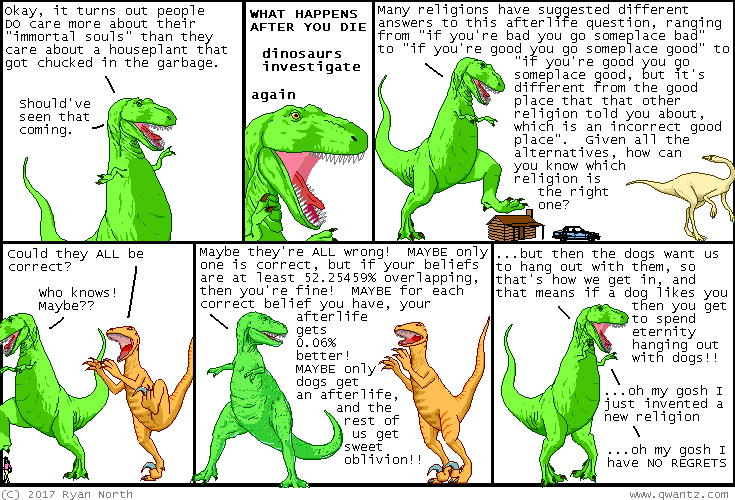


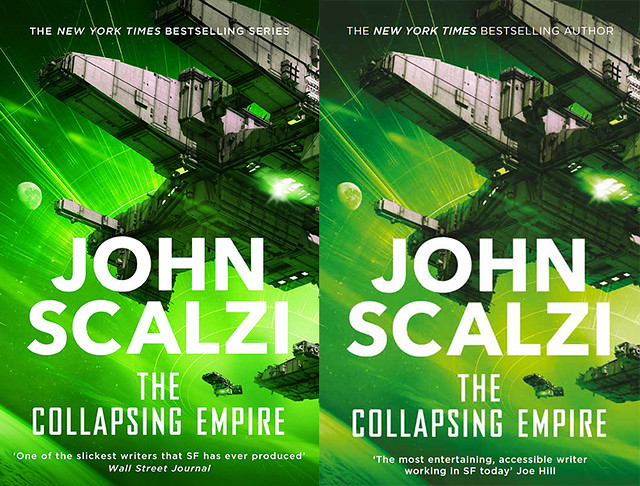
 Well, it could be that! Alternately, here’s another theory, which is that the UK cover reveal last June featured a mock-up cover with text from other Tor UK covers standing in for straplines and blurbs to come. Like, say, the Tor UK version of The Ghost Brigades, which as you see has the same strapline and blurb as the cover reveal for The Collapsing Empire.





 Sherlock Holmes is about the idea that you can start with an absurd set of data and work backwards, through a series of logical steps, to a completely reasonable starting place. (Many people have spotted that Sigmund Freud had roughly the same idea at roughly the same time.) Neither Freudian nor Holmsian methods would work in real life: Sherlock admits as much, though Sigmund never does. The cases that Holmes solves (or at any rates the cases that Watson bothers to write up) are exclusively those cases which Holmes methodology happens to work for. Which generally means closed-systems with something weird — or as Holmes always says, singular — about them. Give him a guy whose been killed in a remote country house after swearing he saw the ghost of a hell hound, and Holmes has a fair chance of sorting things out. Pull John Doe’s body out of the Thames three months after it got there, and boring old forensics are a better bet.
  Not all the stories work: but in the ones that do, there is a real joy in seeing Holmes impose order on chaos; in saying “Of course: the club which you can only join if you have a particular kind of hair; or the bedside drawer with the hair of two previous occupants in it now makes complete sense. Clever Sherlock.” There is a similar joy in reading Freud’s case histories. Who cares if he never actually cured anyone.
  The Moffat / Gatiss Sherlock TV series has always been a slightly odd confection. It uses the now-superhuman inductive skills of Holmes in much the same way that the now-infallible navigation of the TARDIS is used in Doctor Who: as a pretext for (on a good day) brilliant, non-linear narratives and (on a bad day) for just abandoning cause-and-effect storytelling as a lost cause. Cumberbatch plays a kind of parody or race-memory of Jeremy Brett’s Holmes, which was itself a parody of Holmes as he is in Study in Scarlet and hardly anywhere else: crazy, misanthropic and not yet humanized by the arrival of Robin the Boy Wonder. It correctly spots that the real fun in Sherlock was not the bobbies and the fog and the hansom cabs; or the funny pipe and the funny hat and the slippers. It was all about the logic and the mysteries.
  But convincing, Doylish mysteries — crazy end-points to which Holmes can provide convincing back-stories — are hard to write. Not impossible: the sub-plot about the dead son in the car in the Six Thatchers is the sort of thing I would like to have seen more of. But Moffat and Gatiss increasingly fall back on the lazy writers' worst cliche: the clever guy solving bizarre riddles which an even cleverer guy is consciously setting for him.
  Most of us now expect a TV series to have some sort of forward momentum. Gone are the days when the BBC could put all three seasons of Star Trek tapes in box, shuffle them up, pick one out at random, show it on a Monday night and no-one would notice the difference. We now expect characters to die and get married and have babies (not necessarily in that order), partly because soap opera has replaced the novel as the dominant genre, and partly because verisimilitude. If our hero doesn't have the scars from the end of last week's thrilling adventure at the beginning of this week's thrilling adventure we won't be able to suspend our disbelief.
  A similar process killed off the Marvel Comics “Ultimates” line. Issue #1 of Ultimate Spider-Man re-imagines Peter Parker as a 15 year old computer nerd from 2001; and we all said “wow, you’ve come up with a precise 21st century analogy for what made Spider-Man so great in the 1960s”. By issue #75, New York has been destroyed, J. Jonah Jameson is a goodie and Spider-Man is member of the X-Men, dating Kitty Pryde, on the run from SHIELD and dead. You can barely recognize him as Spider-Man any more; and the comic is just as hard to "jump aboard" as the fatally compromised Marvel Universe version. But the alternative is a 1950s sit-com where nothing ever happens and no-one ever gets any older.

 The Moffat / Gatiss Sherlock TV series has always been a slightly odd confection. It uses the now-superhuman inductive skills of Holmes in much the same way that the now-infallible navigation of the TARDIS is used in Doctor Who: as a pretext for (on a good day) brilliant, non-linear narratives and (on a bad day) for just abandoning cause-and-effect storytelling as a lost cause. Cumberbatch plays a kind of parody or race-memory of Jeremy Brett’s Holmes, which was itself a parody of Holmes as he is in Study in Scarlet and hardly anywhere else: crazy, misanthropic and not yet humanized by the arrival of Robin the Boy Wonder. It correctly spots that the real fun in Sherlock was not the bobbies and the fog and the hansom cabs; or the funny pipe and the funny hat and the slippers. It was all about the logic and the mysteries.
 Most of us now expect a TV series to have some sort of forward momentum. Gone are the days when the BBC could put all three seasons of Star Trek tapes in box, shuffle them up, pick one out at random, show it on a Monday night and no-one would notice the difference. We now expect characters to die and get married and have babies (not necessarily in that order), partly because soap opera has replaced the novel as the dominant genre, and partly because verisimilitude. If our hero doesn't have the scars from the end of last week's thrilling adventure at the beginning of this week's thrilling adventure we won't be able to suspend our disbelief.
  A similar process killed off the Marvel Comics “Ultimates” line. Issue #1 of Ultimate Spider-Man re-imagines Peter Parker as a 15 year old computer nerd from 2001; and we all said “wow, you’ve come up with a precise 21st century analogy for what made Spider-Man so great in the 1960s”. By issue #75, New York has been destroyed, J. Jonah Jameson is a goodie and Spider-Man is member of the X-Men, dating Kitty Pryde, on the run from SHIELD and dead. You can barely recognize him as Spider-Man any more; and the comic is just as hard to "jump aboard" as the fatally compromised Marvel Universe version. But the alternative is a 1950s sit-com where nothing ever happens and no-one ever gets any older.


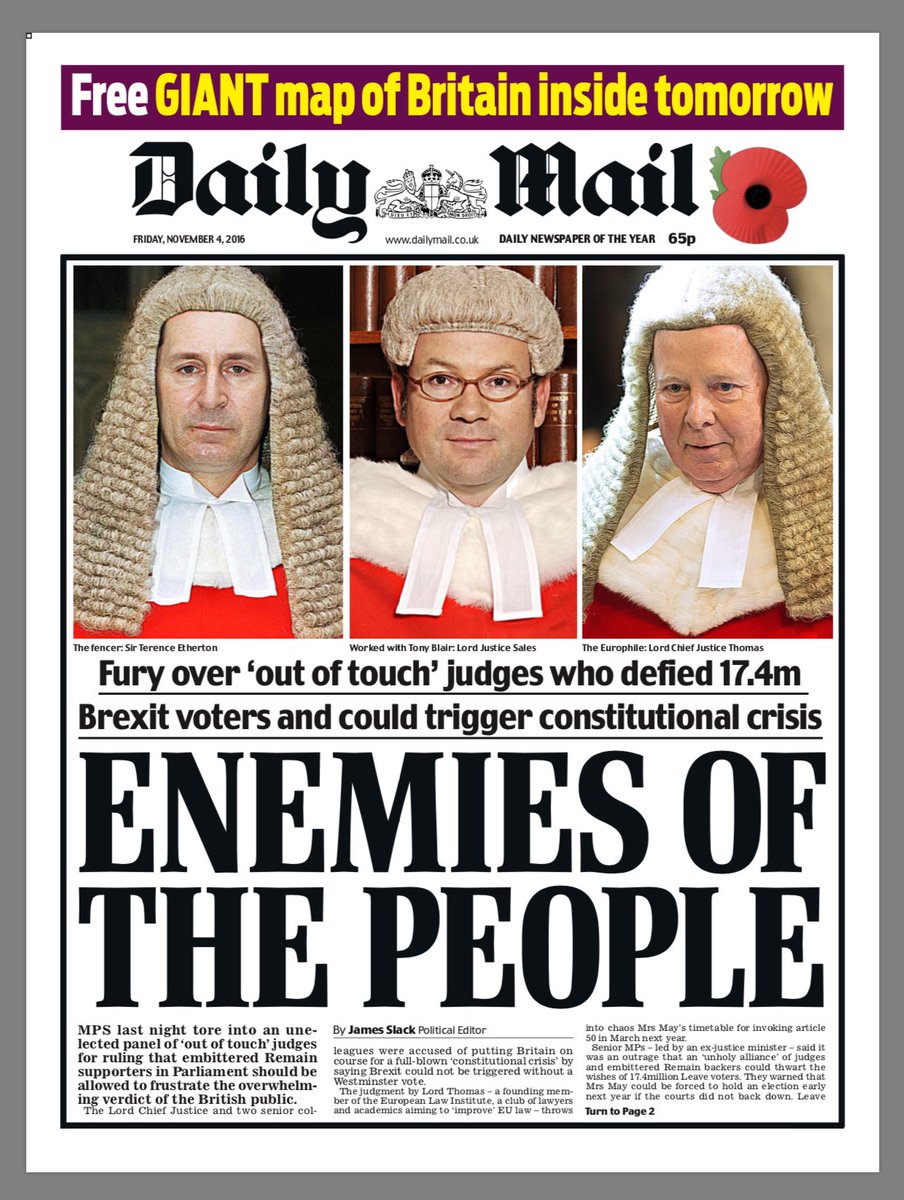


 I cannot personally remember signs outside shops saying “No dogs, no blacks, no Irish” but I can remember when the BBC showed black face minstrel shows as part of a normal Sunday afternoon entertainment -- and everyone, even nice people, thought this was perfectly normal. And I can remember when it was perfectly normal for children (including me)to have rag dolls called “Greedy-Yids” with cute hook noses, skull caps, yellow stars and little bags of money and no-one could see what the problem was. (Some people still can’t.)
  I cannot personally remember signs outside shops saying “No dogs, no blacks, no Irish” but I can remember when the BBC showed black face minstrel shows as part of a normal Sunday afternoon entertainment -- and everyone, even nice people, thought this was perfectly normal. And I can remember when it was perfectly normal for children (including me)to have rag dolls called “Greedy-Yids” with cute hook noses, skull caps, yellow stars and little bags of money and no-one could see what the problem was. (Some people still can’t.)