
Andrew Hickey
Shared posts

21 Jan 13:04
the women of popular music, especially those whose names are in the titles of songs: WHERE ARE THEY NOW??
| archive - contact - sexy exciting merchandise - search - about | |||
 |
|||
| ← previous | January 13th, 2017 | next | |
|
January 13th, 2017: If you haven't heard a song before then this comic won't be much good to you, but hey: something to look forward to, huh? Also: maybe try out songs sometime. A few of them are actually pretty good! – Ryan | |||
Roslyn likes this
21 Jan 11:42
The problem with the English: England doesn't want to be just another member of a team. (Brexit)
The problem with the English: England doesn't want to be just another member of a team. (Brexit)
21 Jan 11:41
GARETH GATES – “Unchained Melody”
by Tom
#922, 30th March 2002
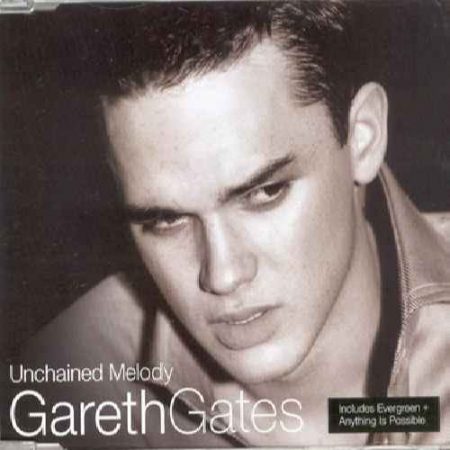 Making sense of Simon Cowell requires negotiating a maze of banalities – a host of things which are, like judges’ verdicts on a reality show, obvious and lacking insight, but nonetheless true. For instance, saying “Simon Cowell cares about money more than music” is a lazy criticism, but it’s also surely right. Saying “Whoever wins, Cowell is the real winner” is a similar no-shit-Sherlock conclusion, and equally hard to deny.
If we turn over these obvious stones, is there anything wriggling underneath? Maybe there is. Take Simon Cowell’s taste in music. It’s not that he doesn’t like music – he has a set of preferences. It’s more that once he became a reality impresario, the exact contours of his taste became a source of competitive advantage. Some of the reality TV judge’s power is unpredictability – anything that compromises the unpredictability, like a known aesthetic, is a weakness.
But of course there are things Cowell likes, and we know roughly what they are. He doesn’t strike me as enough of an iconoclast to lie on Desert Island Discs, for instance, so his selection there from 2003 is a good start. “Mack The Knife”. Sinatra. “She”. Sammy Davis Jr. Herb Alpert. And Daniel Bedingfield, either as a sop to the present or a proposal that the tradition he’s outlining isn’t quite dead.
By rock standards, this is a square’s list, defiantly so. It’s the list of someone who believes, perhaps, that pop’s appointed role is a beloved wing of an entertainment multiplex, and that rock’s breakaway move towards emphasis on self-expression, experiment, volume and so on was a descent from these populist heights. Or to put it more kindly, since several of Cowell’s choices are excellent records, perhaps he’s a man who appreciates performance, and believes that specialist singers and specialist songwriters are best kept to their own devices.
Or it could mean neither of these things. But just those summaries are enough to suggest where Cowell might be coming from, and also to suggest that he was in tune with strong currents in pop – not just the golden-goose blandness of Westlife but the separation of producer and performer that was driving R&B forward. Whatever else he was, Simon Cowell was not out of touch. In fact, the only thing that makes me doubt the Desert Island list is that it’s a little too neat a manifesto for what the “Simon” TV persona might appreciate.
“Unchained Melody”, the song we’re supposedly discussing, was on Cowell’s castaway list too. An old song – by 60s standards – when the Righteous Brothers got hold of it, it fits his milieu of tracks with wide, adult appeal and big emotions. If “Anything Is Possible” was written as a generic victory ballad for a neophyte, “Unchained Melody” was written knowing it might end up with a heavyweight.
The hunger and need in “Unchained Melody” is explicitly geological – a longing carved over time in the heart like a river slowly cuts its path through earth and rock. It’s a stoical kind of a need, born from the original film’s prison setting, but also the product of an early 50s song culture where the heroic epitome was still the patient soldier. It’s a very different ache from the rutting, urgent desire of rock and roll – which is what makes the Righteous Brothers’ version so remarkable, as they bridge that difference, give teenage need the weight of landscape. And it’s different again from the hunger of Gareth Gates, which is more like the eager mewling of a newly hatched chick.
Gates’ version isn’t as bad as that sounds. He can’t ruin the song, so he’s instantly better than the singing squaddies. But what he brings to it – the bright-eyed, clean-voiced optimism of a boy given a lifetime’s chance – he would bring to any song. Will Young did his best with a mediocre song. Gareth Gates smooths out an excellent one. Three weeks on top of the charts plays four. I’m not sure who wins.
Aside, of course, from Simon. That was my other truism – the judge is the winner in reality TV pop. Not the only one (least of all here, where investment in the contestants was widespread and real) but the constant one. As JLucas very helpfully pointed out in the comments on the last post, what really distinguishes this series of Pop Idol was the astounding number of its contestants who managed to score hits afterwards. In a tight competition, success for the runner-up was assured. But Pop Idol meant Top Ten singles for singers who’d come nowhere near to victory.
The Simon who stood to gain most from that bonanza was Fuller, who began the series as behind-the-scenes senior partner and format developer. By the end, Cowell was ascendant, the man who realised the power of the reality show host. Which is not to determine who wins or loses, but to set the boundaries of the game, and to name the real stakes.
A reality show mogul dwells in the delta between popularity and outrage, living off the arbitrage. Cowell was cagey about the music he actually liked, but never about the contestants he favoured or disliked. By an imperial nod towards Gareth, not Will, Cowell ensured that the crowd would play their part and vote to spite him. It didn’t matter – he had shown that the drama of reality TV didn’t lie in “who will win?” so much as “will the judge get their way?”. Either outcome made the show more about him. Within the bubble of spectacle, Cowell ruled.
21 Jan 02:26

Fantastic Find
by evanier
This is a rerun from 2/14/02. It's one of those things that still amazes me I didn't notice it sooner…


Click above to see a large image of the cover to Fantastic Four #7.
It's funny how something can be staring you right in the face for years and years…and suddenly, one day, you notice that which you should have noticed long before. It's been there all along but somehow, you just didn't notice it. If you click on the illo above, you'll see a reproduction of the front of Fantastic Four #7, published by the then-blossoming Marvel Comics Group way back in 1962. It has an interesting but not spectacular cover which I'd looked at dozens of times over the years without spotting that which I recently spotted. Actually, there are several interesting things about this cover.
One is that, a week or three ago, my friend Will Murray pointed out to me — and I concurred with — his theory that Jack Kirby actually inked this cover. Jack almost never inked at Marvel and a few weeks ago, if you'd asked me if he'd ever inked any Fantastic Four covers, I'd have said, "Certainly not." But this one sure looks like it was. Joe Sinnott inked the insides of #5 and was supposed to be the regular embellisher thereafter but, a page or two into #6, he suddenly found himself buried in deadlines and he turned the issue back. Dick Ayers finished #6 and took over from there on. Apparently, in the shuffle, it was necessary to have someone else ink this cover and Jack wound up doing it. (As a general rule of thumb, the cover to an issue was finished around the same time as the insides of the previous issue.)
Will further notes that this cover probably also shows us the way Jack "saw" The Thing at the time — the way he was pencilling ol' Ben Grimm. The odd texture of the character's epidermis changed a lot as different artists inked Kirby's pencils, though they all seem to have made him less claylike and more segmented than Jack intended. Eventually though — and perhaps to some extent because of the inkers — Jack began to pencil the character less claylike and more segmented.
But neither of these is as interesting to me as this: All those of you who ever met Jack, take a close look at the drawing of Mr. Fantastic. Stare at it for a few seconds. I did…and I was amazed that I'd never before noticed how much the character looks like Jack — especially, Jack as he must have looked around 1962. In fact, the more I looked at it, the more it looked like him. (I met Kirby in '69 so perhaps it looks more like him to me than it does to those of you who met him later, or only saw later photos.) I always knew he drew himself into most of his stories — emotionally, if not visually — and, of course, there are blatant autobiographical elements to The Thing, Nick Fury and any other character who was ever caught puffing on a cigar. It was no secret that Jack identified with most of his recurring heroes but I suddenly found myself saying, "My God…how could I never have noticed before how much Reed "Mr. Fantastic" Richards looks like Jack?" And now that I've made that connection, I doubt I'll ever be able to shake it.
The post Fantastic Find appeared first on News From ME.
19 Jan 17:34
Babe
by evanier

Norvell Hardy was born on January 18, 1892 in Harlem, Georgia. His father Oliver had been a soldier in the Civil War — fighting for The South, of course — and Dad died when Norvell was one year old. When Norvell was around the age of 18, he began going by the name Oliver Norvell Hardy.
A poor student in school, his interests turned towards entertaining and at least once, he ran away from home to join a troupe of actors and singers. Around the time he took his father's name, he got a job working in a movie theater in Milledgeville and as he watched the primitive films of 1910, he kept thinking, "I could do that." A few years later, he moved to Jacksonville, Florida and proved it. His first film role appears to have been an otherwise-forgettable 1914 short called Unwitting Dad. He was billed as "O.N. Hardy" but away from the camera, friends called him Babe. It was a nickname he picked up from a barber near the Lubin Manufacturing Company, which was the studio that gave him his first screen roles.
Babe Hardy moved from Florida to New York and then in 1917, to Los Angeles. Everywhere he went, he made movies — so many that researchers are still finding new credits for him. Mostly, he was in comedies but he did dramatic parts, as well. Mostly, he played "heavies" (what they then called the villains) but he was quite good when he was a lead comic.
In 1921, he played a small role as a mugger in a film called Lucky Dog. The lead comic — the person he tried to rob in the film — was the British comedian, Stan Laurel. Nothing came of their proximity then but in 1924, Hardy went to work for the Hal Roach Studio and a few years later, Laurel popped up there, mostly as a writer and director. In 1926, Hardy was cast in a short called Get 'Em Young but he injured himself in a kitchen accident and Laurel was tagged to return to a position in front of the cameras to fill in.
That led to Laurel acting in more Roach comedies. He and Hardy were both in a film called 45 Minutes From Hollywood, though they shared no scenes. Then they appeared in more films together and did share scenes…more and more until it became obvious that these two men were funny together. Before 1927 was out, there were Laurel & Hardy comedies and there always will be.
I can't think of anyone I enjoy watching more on the screen than Babe Hardy. A lot of comics in the silent era were funny because they fell off cliffs or into mud puddles. He did plenty of that as well as anyone but he could also be funny just reacting…or looking into the camera…or doing something simple like writing his name in a ledger. He died in 1957 but people still laugh at his performances and they always will. Today, in honor of his birthday, I'm going to try to find time to watch him and Stan be so wonderful in Sons of the Desert.
The post Babe appeared first on News From ME.
19 Jan 15:34
Catherynne M. Valente, Radiance
by Wesley
Andrew HickeySharing to remind myself that this sounds like my kind of thing.
I read Radiance last year and took some notes towards a blog post but never wrote it. I came across the file and decided to correct that. This post will be vaguer it might have been if I’d come to it while the book was fresh in my mind, but this was one of the best books I read in 2016 and I wanted to register my approval. (It’s an expansion of Catherynne M. Valente’s short story “The Radiant Car Thy Sparrows Drew,” which is online if you want to see whether Radiance is your kind of thing.)
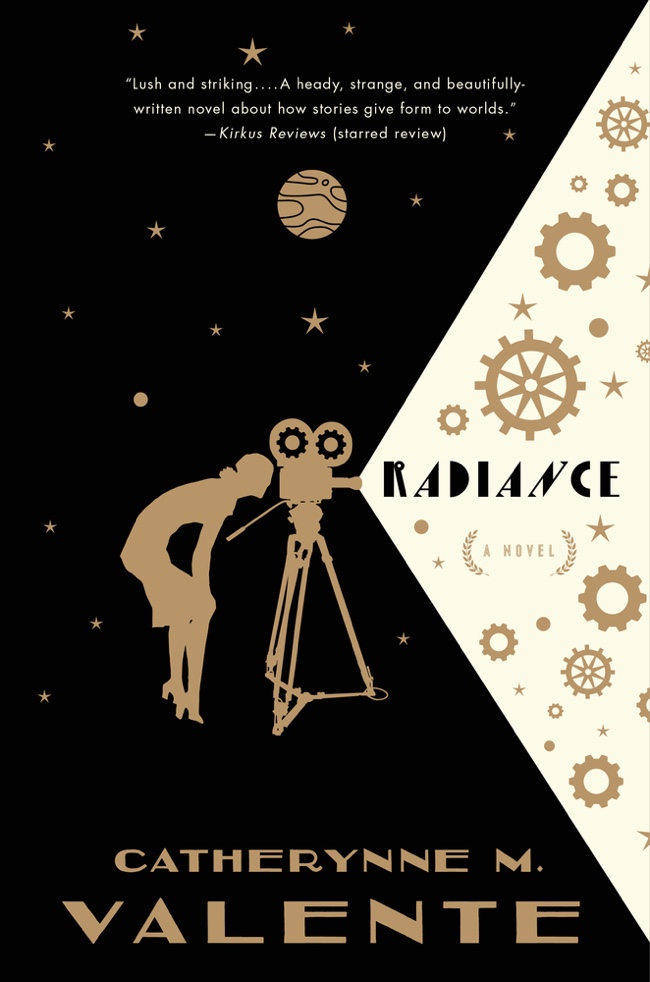
Radiance views common SF tropes–multiverses, transhumanism, alien ecology–through the lens of the planetary romances written back when people still thought Mars might have canals. In the early 20th century humans, with help from the milk of the alien Callowhales, are living and making movies on Venus and Mars and the Moon. Black and white and silent movies, mostly, because the Edison company has the patent on color and sound.
Percival Unck directs fantasies and melodramas. His daughter Severin directs documentaries. Up until she disappears mysteriously while investigating the mysterious disappearance of a small colonial town on Venus. Percival can think of no better way to deal with his grief and uncertainty than to plan a movie about his daughter’s vanishing, one that might find a solution.
Catherynne M. Valente writes some of the best prose in contemporary SF. Radiance really lets her show off. It’s a documentary/assemblage novel, which is both a great worldbuilding device and an excuse to play with voice. There are scripts, and transcripts, and letters, and diaries, and news articles. And Percival Unck’s movie treatment, which changes style as he revises its genre from film noir to pulp space opera to a musical comedy gather-the-suspects-in-the-drawing-room finale. I knew this would be one of my favorite novels of the year when the mind-blowing, space-and-time bending answer to its central mystery was revealed by a vaudeville tune sung by a Callowhale.
Radiance is full of detectives, real and fictional. Sometimes both at once. At one point an actress famous for playing a sleuth finds herself doing real detective work, and the investigations of Anchises St. John, sole survivor of the lost colony, are fictionalized in Unck’s film treatment. It’s not always clear what’s real and what’s filtered through someone’s story.
People often make sense of their lives using narrative as an organizing principle. They turn life into stories. Which sometimes works and sometimes doesn’t, because reality is different from stories in crucial ways. For one thing, stories end. Most important questions have final, settled answers. Stories tie off all the loose ends in a way that’s emotionally satisfying; reality keeps unraveling more.
Moving from fact to fiction and back is how Percival ties up loose ends. He keeps a filmed diary and has no compunctions about re-staging his life to best effect. When Severin’s mother left her on his doorstep as a baby, Percival had his assistant carry her back out into the rain so he could dramatically restage her unexpected arrival. For Percival, that Severin is missing is in some ways worse than if she had died: it’s open-ended, questions forever unanswered. His film treatment changes styles because for Percival the key to solving Severin’s disappearance is figuring out its genre.
Severin turned to documentaries in reaction to Percival’s fictions, but she arranges her storylines, too, in her own way. She doesn’t restage her life… but when her expedition arrives on Venus and finds Anchises dazed and wandering the empty village, she puts off trying to talk to him until her crew has set up the lighting. As Severin’s former lover puts it, Percival “lived through things first and then reshot them to get them right, while she hung back until everything was perfect, then called action. Couldn’t live through a thing until the camera was rolling.” Documentaries aspire to objectivity, but it’s important to remember they’re also narratives, arguments building to possibly illusory conclusions.
Unlike a story, reality, barring the actual heat death of the universe, doesn’t actually end. That’s the anxiety-inducing thing about real life. But in the end I think Radiance suggests that maybe it’s also the good part.
On another, disconnected note… In a recent post on Philip K. Dick I wrote that my favorite thing about his writing is the prolifgacy of his imagination, the way he would just throw stuff into his novels. Radiance doesn’t resemble Dick’s work at all, but it’s equally generous with wild ideas. Valente gives us a nineteenth-century solar system, and an alternate history of the movies, and a spooky cosmic mystery, and the next step in human evolution, and the many-worlds interpretation of quantum mechanics, and a glorious patchwork of styles, formates, and genres, and… and I’m sure some people–
And yes, I know I’m setting up a straw man here, but it’s a straw man I’ve observed in the wild–
I’m sure there are people who would ask why we need all of this. Could you have a novel that explored endings, and disappearances, and filmmaking, and storytelling as a straightforward narrative? Or a conventional space opera? Or without the SF angle at all, setting it in the days of silent film?
Of course, the answer is, yes, you could, but it wouldn’t be this novel, one that explores those themes in this specific, individual way. And this novel is excellent. And it’s excellent partly because so many big concepts were generously, and confidently, stuffed into one novel. In that it reminds me of another favorite from the last couple of years, Jo Walton’s The Just City and its sequels, which combine Greek gods and social SF and time travel and robots and philosophical tangents and constantly refuse to take their plots in the direction you’d expect.
Sometimes I pick up a SF novel that’s had good buzz centered on a couple of high-concept ideas. Then I discover those ideas are all they have, the rest of the novel being filled in with default tropes, stock plots, and a voice that doesn’t distinguish itself from its neighbors on the shelf. It can be a little frustrating. It’s not that I don’t understand the comfort to be found in a slightly new but still familiar story. I often need comfort reading myself. (Especially lately!) But I already know how to find those books; it’s harder to find SF that surprises me. I need more novels like Radiance that are not cautious variations on other stories, but instead have the self-confidence to be inimitably themselves.
19 Jan 02:21


Lizards in the Sink with David.
by Peter Watts
(A Nowa Fantastyka reprint)
Squippersnapper
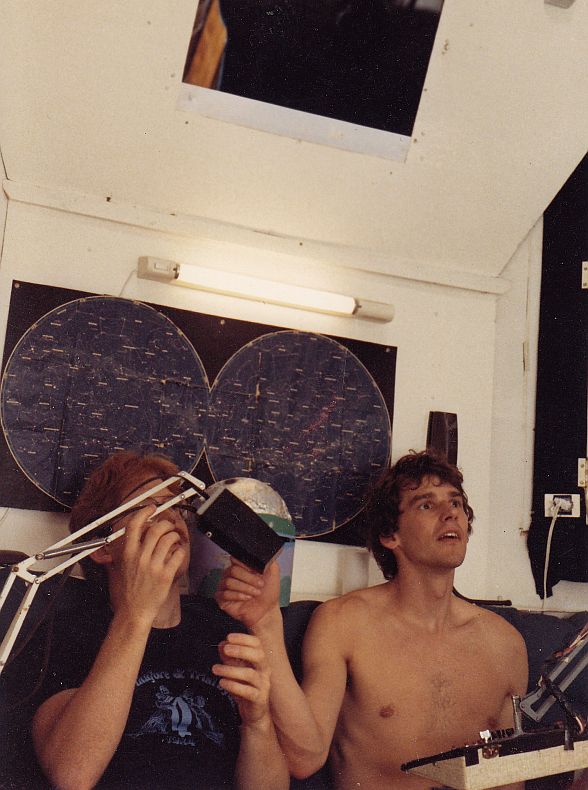
Back when I was in grad school, I built an electric water pipe out of Erlenmeyer flasks, rubber stoppers, and an aquarium air pump. It fed into an inhaler that dangled over my bed like the deployed O2 mask of a falling airliner— right next to the control panel that ran my planetarium, a home-built device that projected stars and nebulae and exploding spaceships across the far wall. The stars actually moved in 3D, came right out of the center of the wall and spread to the edges at different speeds. Wisps of nebulae would undulate as they streamed past. Planets swelled across the screen, rotating. Not bad for a contraption built out of old turntables and light bulbs and half-melted plastic peanut butter jars stuffed with colored cellophane. You haven’t lived until you’ve got stoned and sailed through the Trifid Nebula to the strains of Yes.
Back then I was what some might call a “pothead”. And yet I never progressed beyond cannabis, never even dabbled in hallucinogenics.
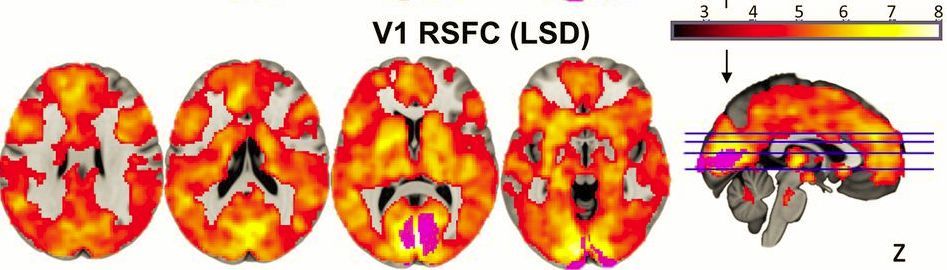
In hindsight, it was a serious deficiency in my upbringing. Two thirds of those who’ve used psychoactives describe the experience as among the most spiritually significant of their lives. MRI studies show that LSD wires together parts of the brain that normally don’t even talk to each other. It deconstructs one’s sense of Self right down at the neuronal level, and you know me: I’m flat-out fascinated by this stuff. So why, half a century of my life already spent, had I never tried LSD?
This is your brain on drugs. Many questions!
About a year ago I voiced this regret to a friend of mine, a guy I’d first met when he was just a bright-eyed adolescent asking me to talk to his high-school English class. Somehow he’d grown up in the meantime (I myself remained utterly unchanged); now he has a PhD under his belt, teaches at a local university. He took pity on me; a few months back he slipped me a couple of confetti flakes laced with hallucinogenic goodness.
I knew people who swore by the stuff. I also knew people who admitted that under its influence they’d wandered down the middle of busy streets, or tripped along the edges of the Scarborough Bluffs with a strange sense of invulnerability. I was curious, but I had no great desire to end up as a puddle of viscera at the foot of some cliff. I chose a more controlled approach. I called on my buddy Dave Nickle to ride shotgun.
“Three ground rules,” Dave told me upon his arrival. “First rule: You don’t leave the house. Second rule: When you break the first rule and leave the house, do not go into the road. Third rule: when I say Stop what you’re doing right now, you stop doing whatever it is you’re doing. Right. Now.”
I sucked the first tab to mush. Not much happened, beyond a growing impatience at Dave’s rate of progress through the game of SOMA he was playing while we waited for things to get interesting. So I popped the second one after about an hour.
Things got interesting.
*
It kind of sneaks up on you.
At first it just feels like being drunk or mildly stoned: light-headedness, a loss of somatic inertia, but without any nausea or hypersalivating spinniness. After a while the edges of vision start to look a little like those optical illusions you see in Scientific American— you know, those moiré patterns that seem to be moving even though you know they’re not. The effect starts at the edge of vision, spreads inward to the center; suddenly the folds in my bedcovers are rippling like rivulets in an alluvial delta. Plunging my splayed fingers down onto the bed stops that movement dead, for a few moments at least; my fingertips somehow anchor the material, force it to behave. But then those rivulets start eroding around them, as though my fingers are sticks in a stream: not stopping the flow, but only reshaping it. No matter how hard I stare, no matter how intense my focus, I can’t get them to stop.
*
I’m a ghost for a while, my body as ethereal as mist. I think I know why. They’ve done experiments where you watch someone say a word, but the word you hear doesn’t match the speaker’s mouth movements. The brain reconciles that conflict by hearing different sounds than those actually spoken, sounds closer to what the mouth seems to be saying.
I think this is something like that.
I feel incredibly weak. I just know, down in the gut, that I lack the strength to even lift my arm off the bed. And yet I do more than that: I rise up off the bed entirely, go into the next room, do a few chin-ups. How does the brain reconcile that? How does the wetware square you’re too weak to move with you’re moving? I think it’s decided that I must be massless. I lack the strength to move anything; I am moving; therefore I must be made of nothing. I become a ghost, utterly free of inertia. I feel the truth of that right down in my diaphanous bones.
*
There are different cognitive modes, mindsets as distinct as delight and dementia. They do not overlap. Sometimes the hallucinations are vivid and undeniable but my mind is stone cold sober: I can look hard at the bright static image on the screen, see beyond doubt that the things there are moving— and yet know intellectually that they’re not. I report the hallucination with clarity and concision, comment both on what I see and the impossibility of it, as though I were dictating the results of an autopsy. My senses are lying, but my mind is clear; I am not fooled.
I swear to God the lights in that ring moved, like traffic headlights. Going both ways.
Other times, though, I don’t even know if this thing called “I” even exists. It seems to— to spread out across the room, as though I’ve become some kind of diffuse neural net hanging just below the ceiling. It’s not a visual hallucination— this mode’s pretty much hallucination-free except for a ubiquitous heat-shimmer effect that makes everything ripple[1]. This is a more visceral, intuitive sense of being distributed. Every now and then some ganglion in the net lights up at random, and the system blurts out whatever words that node contains.
It is at one of these times that Dave sadistically engages me— apparently he thinks there still is a “me”— in political discourse. (I believe this is known in the vernacular as “Harshing the Buzz”.) Somehow we’re talking about the US election, and the distributed neural net wants to say: I don’t think Trump really believes all that shit he says about Muslims and Mexicans. I don’t think he believes much of anything; after all, he was staunchly pro-choice before he started running on the Republican ticket. I think he just plays to the crowd, says whatever gets him the loudest cheers. The real danger isn’t so much Trump himself, but the fact that his victory has unleashed and empowered an army of bigoted assholes down at street level. That’s what’s gonna do the most brutal damage.
This is what Neural Net Watts is trying to say. But the nodes light up at random and I think what comes out is more like “Aww, I don’t think Trump is so bad…” This horrifies whatever vestigial part of me still exists; I try desperately to clarify so Dave won’t think I’m a complete asshole, but the neural net wonders “Are these words just random network discharges with no intrinsic meaning— or, have the drugs stripped away my humanitarian facade of decency revealing the true, Trump-defending monster within?” The neural net wonders how much of this it said aloud.
Some, at least. Because from a very great distance, Dave is saying “Don’t sweat it, dude; I’m not hearing anything you haven’t said before.”
*
We watch the back end of 2001: A Space Odyssey. I’ve seen that movie at least 50 times; this is the first time I’ve ever seen it while high. I am entranced, more entranced than I’ve ever been before by this masterpiece. Every frame, every sound is a revelation packed with new meaning. Five minutes after the credits, though, I can’t remember what any those meanings actually were.
This also is your brain on drugs.
I want to watch Alien next, or maybe Eraserhead. Dave guides me gently toward something less potentially-traumatizing: a fan-made episode of “Star Trek” posted on Youtube, with cardboard sets and twentysomething amateurs playing Kirk and Co. Apparently there are several of these: Star Trek Continues, they’re called collectively. This episode is a sequel to “Mirror, Mirror”. Evil Spock’s goatee looks like someone glued a shoehorn to his chin.
It’s like watching a high-school play put on by students from my ’73 shop class. The drugs do not help at all. Alien would have been far less terrifying.
I cannot look away.
*
Twenty minutes of preflight research have uncovered the fact that tomatoes apparently taste awesome when you’re high. Many have attested that the taste of a psychoactivated tomato is orgasmically intense. I have laid out an array of tomatoes, from tiny grape to humungous vine-ripened. At the height of my powers, I devour them all.
Meh.
*
In a blinding flash of insight, I understand why people always sound so trite when describing acid trips: because language evolved to describe the pedestrian realities of everyday perception. The psychoactivated brain is wired up differently; there are literally no words for the way it parses reality. These insights are literally untranslatable. Of course forcing them into words turns them into lame, trite clichés.
I try to explain this revelation to Dave. It comes out in a torrent of lame, trite clichés.
*
Coming down now. The light-headedness persists, but the shape of the world has congealed back down to its baseline state. Caitlin has returned from work; apparently Dave has been texting updates to her all day. I study the tendons in my hand as he provides my wife an executive summary. “It went okay,” he says. “There was one point where he started seeing bats everywhere, but there actually were bats, so that was fine.”
It’s been six hours, in and out. I thought it would last longer.
We release Dave from his duties with hugs and thanks and a bunch of uneaten snacks I’d stockpiled against a case of the munchies that never materialized. He is a good friend.
The last of the buzz is fading. The BUG is glad that I did not hurl myself in front of a bus. We climb into bed and boot up our laptops and discover that Leonard Cohen has died.
I hope that’s just a coincidence.
[1] I think these might be the source of those clichéd Aauugggh your face is melting! depictions of drug use so favored by the Just Say No crowd
Claes Mogren likes this
18 Jan 18:12


The End of the Obama Years
by John Scalzi
I was asked in e-mail if I had any particular thoughts about the end of Obama years. I have quite a few, some of them complicated, but the short version is that I’ll be sad to see Barack Obama go. He was arguably the smartest president of the nine whose administrations I’ve lived through, and one of the most decent in his personal life. These two qualities don’t guarantee one is a great president — Jimmy Carter was both smart and decent, and it didn’t do him a great deal of good in his four years — but in this case it didn’t hurt and probably helped. He wasn’t perfect, but I don’t grade on perfect. Given what he had to work with, namely, the biggest economic crisis since the Great Depression and GOP opposition and obstructionism that was historically cynical, Obama did very well indeed.
The Trump administration is already historically unpopular and it’s not even in power yet, and when it is in power we are likely to find out what incompetent authoritarianism looks and acts like. So I strongly suspect that in very short order that the Obama years are going to be looked on fondly and wistfully, and not just by liberals. I’m sure there will be a mountain of Twitter sockpuppets that will work overtime to deny this, but Twitter is not the real world — a thing which I believe Trump is on the verge of discovering — and at the end of the day what will matter is how people feel their lives are going. I don’t believe Trump, his administration, or the GOP majorities in Congress are going to do a good job making most people’s lives better. But we will see.
On a personal note, the Obama years were certainly good for me — I started them with a book deal going south in part because of the economic collapse, and ended them in a very different state indeed. I don’t think it’s an exaggeration to say that my current good fortune is in no small part due to the Obama administration’s handling of the economy, since massive economic recessions that threaten entire sectors of industry are no good for selling books or making long, secure writing contracts. Given what I expect out of the Trump economy, I am delighted that I have said long-term, secure writing contract to get me through the next few years. I do hope people will still be able to afford books.
I suspect I and others will miss many things about the Obama years, but what I imagine I will miss the most is the idea that my president, for whatever flaws he might have, is ultimately a good and honorable person, someone with dignity, gravity and thoughtfulness. We as a country did well first to imagine him our president, and then to make him so. I liked him being my president. I am glad I voted for him. It is hard to imagine him ever not having my respect. I think he made the world better. Whether that lasts or not, it still existed, and I won’t forget it that it did.
(P.S.: Today, I’ve also written about the beginning of the Trump years, here.)
18 Jan 17:22

It’s stating the obvious, but the vast majority of us are not enjoying this ‘post-truth’ world. It is not so much that the fake news is disturbing. The real gut-kick is when people confidently proclaim that we should return to the pre-post-truth world, and then think about how to do that, and slowly realise that not only is it impossible but that there was no pre-post-truth world in the first place. Think of Hillsborough, or Iraq’s imaginary WMDs. What has actually changed is that it is no longer possible to comfortably fall for our earlier illusions. As the saying goes, if you want to be certain, buy an encyclopaedia. If you want to be uncertain, buy two encyclopaedias. Our culture has bought a second encyclopaedia.

The rise of the Alt-Right, with their use of meme magic, conspiracies and disinformation, led to left-leaning Discordians thinking that Operation Mindfuck had been weaponised against them.
In his books, and most importantly in his autobiography Cosmic Trigger, Robert Anton Wilson talks about the psychological state where you have no way of making sense of what is happening, where all your maps have run out, and where you have no fixed point with which to orient yourself by. He called this place Chapel Perilous. This is where we are now as a culture.

There are only two outcomes from a visit to Chapel Perilous, Wilson tells us: paranoia or agnosticism.
Agnosticism – and here Wilson means not just doubt about God, but doubt about everything - requires an acceptance that you are not the only right-thinking person on the planet, and that it is not true everyone else should agree with you. It requires a recognition that you are statistically just as full of shit as everyone else. There are over 7 billion people on the planet and you will never find someone else who shares your views exactly. Our reality tunnels are all different because they are shaped by our own unique experiences. None of us know what we don’t know. We need all the help we can get, including science and other people’s perspective, in order to get by. The ultimate goal of the agnostic is not to become right, but to become less wrong.
Agnosticism, then, involves humility. It was humility – and an extraordinary act of forgiveness - that rescued Wilson from his own stay in Chapel Perilous. Wilson was ultimately able to make a good life for himself with no need for certainty.
But the alt-right don’t do humility. They like strength, and decisiveness, and have a psychological need for certainty. How will they exit Chapel Perilous with those values? They may have grabbed the ring of power, but are trapped in the postmodern post-truth world, the one place they will never find the certainty and strength they seek. They are like Brer Rabbit and the tar baby. The more they attack, the more stuck they become. They aren’t going anywhere.
It’s no secret that populist far-right movements never end well. There are no examples in history of them being a good idea. How desperate for a fixed, certain ideology would you have to be to hitch your identity and worldview to one? This is clearly a dangerous time. But look again at the alt-right in Chapel Perilous, lashing out in all directions, owning the news cycle as they do. See how their contradictions enrage those around them, who react with great energy, which keeps the system running? Now imagine those people who feed them gradually finding their own way out of Chapel Perilous. See how the non-humble flounder and turn in on themselves when their victims move on and there is no-one else left to fight? They are stuck in postmodern, post-truth quicksand from which they are the only ones who can never escape. Without humility, Chapel Perilous is a nightmare jail for the cruel.
What is the way forward? Readers of Robert Anton Wilson are a useful group to look at here because they have already processed Chapel Perilous and, judging by the ones I’ve met, there is something interesting happening. It is too soon to definitively label and define, but the designer Amoeba has coined the temporarily-useful name Operation Mindfix. As he says, Operation Mindfuck is over for Discordians because it is unnecessary in the post-2016 world. From now on, the ongoing work can be considered part of Operation Mindfix.
All this is happening away from the boxing matches of social media. It needs the coming together of people in the real world, because empathy is rarely found online. There is magical thinking involved, but then, when is there not? It chimes with academic talk about the move from postmodernism to metamodernism, where sincerity and belief are returned to our world not as pillars of identity but as tools for personal use, to be used and discarded as circumstances demand. There are echoes of it in the theatre director Daisy Campbell’s attempt “to create a narrative so utterly complex and so thoroughly self-referential that it becomes to all intents and purposes alive.”
It understands that social media can be used for finding those who chime with us but that there is no point in using it to shout at the different. It comes from a recognition that being a consumer and a critic are not enough, and that we won’t be fulfilled until we step up and contribute in our own individual way. It involves the virtuous circle of people being inspired by people being inspired. It centres of the understanding that meaning exists, but it needs to be self-generated.
It’s the dawning realisation that, by supporting friends and being supported by them, and by taking a leap of faith, every one of us can evolve our own souls.
None of this is a solution to our immediate political problems, of course. Near-future politics will be chaos as technology takes our jobs, walls replace bridges and climate change and population demographics start to bite. Great change is coming and it is going to be messy. No, this is a larger project: the act of evolving into twenty-first century humans.
I have a suspicion that, when we moved from being hierarchical people of the book to networked people of the screen, all this became inevitable. Which is not to say that Operation Mindfuck or the Illuminatus! trilogy were unnecessary. They were, in many ways, a training manual for both understanding this particular point in time, and in getting through it.
So Happy Birthday Bob - and thanks for the toolkit.
For Robert Anton Wilson's Birthday – some words on Operation Mindfix
by noreply@blogger.com (John Higgs)
Today is the birthday of the late great American agnostic
Robert Anton Wilson.

His books (and in particular, the Illuminatus! trilogy he co-wrote with Robert Shea) depict a
bewildering world of conspiracies, half-truths, lies, fake news, incompetence
and our inability to find anything resembling objective truth. Or to put it
another way, it describes the world as it is now, ten years after his death.
Wilson was a leading figure in the counterculture project
known as Operation Mindfuck. This was a form of western Zen. Seeding our
culture with confusion, contradiction and mischief, it was thought, would jolt
people out of their illusions. Operation Mindfuck kicked off in the 1970s and
has never really stopped.
Operation Mindfuck, like the Discordian religion which
embraced it, was typically politically neutral, or at least clear that the
ideologies of both the left and right were equally valid targets. However, the ideas behind Operation Mindfuck have since become a tool for those with a lust
for political power, most blatantly Putin’s advisor Vladislav Surkov, as explained
in this short film by Adam Curtis.
It’s stating the obvious, but the vast majority of us are not enjoying this ‘post-truth’ world. It is not so much that the fake news is disturbing. The real gut-kick is when people confidently proclaim that we should return to the pre-post-truth world, and then think about how to do that, and slowly realise that not only is it impossible but that there was no pre-post-truth world in the first place. Think of Hillsborough, or Iraq’s imaginary WMDs. What has actually changed is that it is no longer possible to comfortably fall for our earlier illusions. As the saying goes, if you want to be certain, buy an encyclopaedia. If you want to be uncertain, buy two encyclopaedias. Our culture has bought a second encyclopaedia.

The rise of the Alt-Right, with their use of meme magic, conspiracies and disinformation, led to left-leaning Discordians thinking that Operation Mindfuck had been weaponised against them.
You don’t need me to tell you that this is currently grim as all hell. But if you take the long term, pragmatic view, it could be that the use of Operation Mindfuck techniques in this way are, essentially, a trap.@BogusMagus The Right basically stole Operation Mindfuck from us, weaponised postmodernism. The Discordian response is evolving…— Citizen Of Hookland (@catvincent) November 16, 2016
In his books, and most importantly in his autobiography Cosmic Trigger, Robert Anton Wilson talks about the psychological state where you have no way of making sense of what is happening, where all your maps have run out, and where you have no fixed point with which to orient yourself by. He called this place Chapel Perilous. This is where we are now as a culture.

There are only two outcomes from a visit to Chapel Perilous, Wilson tells us: paranoia or agnosticism.
Agnosticism – and here Wilson means not just doubt about God, but doubt about everything - requires an acceptance that you are not the only right-thinking person on the planet, and that it is not true everyone else should agree with you. It requires a recognition that you are statistically just as full of shit as everyone else. There are over 7 billion people on the planet and you will never find someone else who shares your views exactly. Our reality tunnels are all different because they are shaped by our own unique experiences. None of us know what we don’t know. We need all the help we can get, including science and other people’s perspective, in order to get by. The ultimate goal of the agnostic is not to become right, but to become less wrong.
Agnosticism, then, involves humility. It was humility – and an extraordinary act of forgiveness - that rescued Wilson from his own stay in Chapel Perilous. Wilson was ultimately able to make a good life for himself with no need for certainty.
But the alt-right don’t do humility. They like strength, and decisiveness, and have a psychological need for certainty. How will they exit Chapel Perilous with those values? They may have grabbed the ring of power, but are trapped in the postmodern post-truth world, the one place they will never find the certainty and strength they seek. They are like Brer Rabbit and the tar baby. The more they attack, the more stuck they become. They aren’t going anywhere.
It’s no secret that populist far-right movements never end well. There are no examples in history of them being a good idea. How desperate for a fixed, certain ideology would you have to be to hitch your identity and worldview to one? This is clearly a dangerous time. But look again at the alt-right in Chapel Perilous, lashing out in all directions, owning the news cycle as they do. See how their contradictions enrage those around them, who react with great energy, which keeps the system running? Now imagine those people who feed them gradually finding their own way out of Chapel Perilous. See how the non-humble flounder and turn in on themselves when their victims move on and there is no-one else left to fight? They are stuck in postmodern, post-truth quicksand from which they are the only ones who can never escape. Without humility, Chapel Perilous is a nightmare jail for the cruel.
What is the way forward? Readers of Robert Anton Wilson are a useful group to look at here because they have already processed Chapel Perilous and, judging by the ones I’ve met, there is something interesting happening. It is too soon to definitively label and define, but the designer Amoeba has coined the temporarily-useful name Operation Mindfix. As he says, Operation Mindfuck is over for Discordians because it is unnecessary in the post-2016 world. From now on, the ongoing work can be considered part of Operation Mindfix.
All this is happening away from the boxing matches of social media. It needs the coming together of people in the real world, because empathy is rarely found online. There is magical thinking involved, but then, when is there not? It chimes with academic talk about the move from postmodernism to metamodernism, where sincerity and belief are returned to our world not as pillars of identity but as tools for personal use, to be used and discarded as circumstances demand. There are echoes of it in the theatre director Daisy Campbell’s attempt “to create a narrative so utterly complex and so thoroughly self-referential that it becomes to all intents and purposes alive.”
It understands that social media can be used for finding those who chime with us but that there is no point in using it to shout at the different. It comes from a recognition that being a consumer and a critic are not enough, and that we won’t be fulfilled until we step up and contribute in our own individual way. It involves the virtuous circle of people being inspired by people being inspired. It centres of the understanding that meaning exists, but it needs to be self-generated.
It’s the dawning realisation that, by supporting friends and being supported by them, and by taking a leap of faith, every one of us can evolve our own souls.
None of this is a solution to our immediate political problems, of course. Near-future politics will be chaos as technology takes our jobs, walls replace bridges and climate change and population demographics start to bite. Great change is coming and it is going to be messy. No, this is a larger project: the act of evolving into twenty-first century humans.
I have a suspicion that, when we moved from being hierarchical people of the book to networked people of the screen, all this became inevitable. Which is not to say that Operation Mindfuck or the Illuminatus! trilogy were unnecessary. They were, in many ways, a training manual for both understanding this particular point in time, and in getting through it.
So Happy Birthday Bob - and thanks for the toolkit.
18 Jan 17:12
Finger Puppets
by evanier

That is not only a photo of Bill Finger, it is darn near the only photo of Bill Finger. He did not leave many behind. What he did leave us was his contribution to the creation of Batman — a contribution that was formidable and throughout Finger's lifetime, criminally neglected or even denied.
That injustice has been undone somewhat as the credits on Batman now say "Created by Bob Kane with Bill Finger," whereas they used to just say "Created by Bob Kane." It's sad that Mr. Finger never lived to see this happen but at least it has happened. Unfortunately — and yes, I've written about this before here — his face has also been miscredited. Maybe that's his fault for not taking more photos when he was around but I keep seeing photos of other longtime contributors to DC Comics identified as Finger. Here are the two most often wrongly identified as him…

The man on the left is Robert Kanigher, who wrote Wonder Woman for about eight million years and who edited and often wrote DC's war comics for a very long time. When Kanigher received a posthumous Bill Finger Award, I procured that photo from a relative of Kanigher's and did an awful lot of Photoshopping to make it look even that good. It was part of the press release announcing the award.
The photo on the right is Gardner Fox, who wrote Justice League of America and The Flash and Hawkman and who created the last two and many others. Fox actually was the second writer to write Batman, shortly after the debut story, which was by Finger. Fox also won the Finger Award and therein lies some of the confusion.
The way search engines like Google and Bing index photos is that they find photos and then they find words and names near those photos. If I were to go onto the 'net and post a photo of you on many websites with the word "aardvark" near your pic, the engines would eventually decide you were an aardvark and would probably display the pic of you when someone searched for an image of an aardvark.
Because the photos of Kanigher and Fox have often appeared near the term "Bill Finger" on the web, the search engines display them when you search for a photo of Bill Finger…so I keep seeing them identified as him. The new issue of Comic Book Creator magazine has the Kanigher image identified as Finger. So I made up these two graphics and I'm posting them here to alert anyone who comes here…but I'm also posting them because I want them to get into the database of Google, Bing and other search engines.
Maybe now people who search for a photo of Mr. Finger will see these graphics and understand what is and is not a likeness of Bill Finger, the most neglected man in comics. Feel free to help out and post them anywhere you like.
The post Finger Puppets appeared first on News From ME.
17 Jan 12:18
WILL YOUNG – “Anything Is Possible” / “Evergreen”
by Tom
#921, 9th March 2002
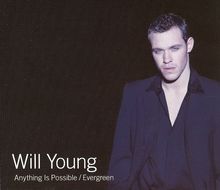 It was not immediately obvious that everything had changed. I was at an engagement party, and was introduced as a music fan to someone, and they asked me a question: “Will or Gareth?”. I didn’t really get what they were talking about. Pop Idol, of course. Oh, I haven’t been watching it. “You haven’t?” It seemed bizarre to them, that someone into pop music wouldn’t have felt the show was important. They were right.
There is an economic maxim called Goodhart’s Law: when a measure becomes a target, it ceases to be a good measure. Reality TV pop was the application of this to the charts. Being number one was the measure, already a shakily symbolic one, of popularity and fame. To be a pop idol meant having massive pop hits. And so the winner of Pop Idol would have the biggest hits anyone could. But what actually happened was the colonisation of the charts by TV, for several weeks a year. It became an annual event, like the flooding of the Nile delta. Instead of proving that Will or Gareth or Darius or anyone else could compete with the best, it made the weakness of the charts as a metric of best-ness – or anything else – absurdly obvious.
It wasn’t that Will or Gareth weren’t culturally salient – they were the hottest topic around. The public cared about them far more than about, say, Westlife or Atomic Kitten. But people cared about them as a TV phenomenon, as participants in a game show. And this, it turned out, was the saving grace of the whole Pop Idol process; the glimmer of potential, rarely realised, in the reality pop mechanism.
If the pop audience of 2002 had taken the show’s remit entirely seriously – if they’d voted purely and simply on which contestant would make the best “Pop Idol” – the results would have been worse. We’d have ended up with knock-offs – an own-brand Robbie or a Poundland Britney. As the process ground on for year upon year, and the talent pool thinned, several of those won anyhow. But Will Young wasn’t one of them. He’s thoughtful, self-effacing, versatile and impeccably pleasant. In other words, he’s a combination the reality pop method is well designed to locate: somebody with the talent to be a pop singer but the personality to win a TV show.
Like the switch from art school to stage school as the proving ground of British pop stars, this was helping to re-forge the pre-Beatles link between pop and light entertainment. The format has a bias towards ‘niceness’ which pop had spent four decades tacking away from. But at its best – Young, Kelly Clarkson, One Direction – it gave you stars who seemed unusually genuine, able to connect with and nourish especially loyal fandoms. The quality that won them their chance – they’re the kind of people you root for – managed to sustain itself beyond the narrative cycle of the show. For most, that didn’t happen, for reasons we’ll get generous chances to explore. But here, at the start, it worked. The public’s surprise choice – Will, not Gareth – turned out to be the right one.
Before he got the chance to prove it, there was “Evergreen” to sit through. “Evergreen” sounds like a Westlife song because it was a Westlife song – a non-single from the World Of Our Own album, written by Cheiron’s reliable ballad-wrangler Per Magnusson. It would have been one of their better singles, as Magnusson does a solid job with the soaring formula. And Will Young handles it better than the Irish lads, finding a querulous vulnerability in the song. It must have been a pleasant novelty for the writers to hear someone treat their verses as something to be given a reading rather than a staging post before the chorus thumps in.
Even then, “Evergreen” suffers from the same problem “Pure And Simple” did – because it has to suit any one of three singers, it can’t really attach itself to any of them. It’s written to be generic, the kind of song that pop stars sing and the kind of song a neophyte can master quickly. Still, it’s competent and brushes the memorable, which is more than you can say for “Anything Is Possible”, its AA-side.
“Anything” is our first encounter with one of the great curses of the reality pop era – the winner’s single about winning. As a narrative move, it’s necessary and savvy, which is why it later became such an unshiftable part of the process. It caps the story and gives the viewers closure, so the new ‘star’ can get on with the real work of making a debut album. But as pop, it’s almost always glurge: heavy-handed, pseudo-inspirational, and mawkish. Young does his best with “Anything Is Possible”, but it’s junk, built to serve the storyline not the listener.
And serving the storyline is the signature difference between Popstars and Pop Idol. With the introduction of the public vote, reality pop dropped its documentary pretension and became a gameshow, but one with colossal potential for engaging and soaking its viewers. Pop Idol offered producers Eurovision’s phoneline jackpot every week, but bigger and meaner. That shift coincides with the final slouch toward centre stage of Simon Cowell, the true breakout Idol star and the format’s master of narrative. Cowell is the single most prominent figure in the next decade of British pop, which is unfortunate, as he may very well detest it.
(To be continued.)
17 Jan 02:20
Empire Games
by Charlie Stross
Empire Games, the first installment in my new Empire Games trilogy, launches on Tuesday 17th in the US market! (EU residents and Brits will have to wait until next Thursday—Tor UK and Tor USA, despite the name, are different companies and use different printers and sell through different supply chains.)
You can buy it in bookstores, but here are some handly links to ebook formats and mail-order outlets:
[Amazon.com Hardcover][Barnes & Noble hardcover][Powells City of Books Hardcover]]Amazon Kindle ebook][NOOK ebook][Kobo ebook]
(I'll provide UK links and updates on author events in a couple of days time.)
So what's it all about?
Back in 2009, when The Trade of Queens came out, I was so burned out with the Merchant Princes series that I basically set fire to the universe. Here's a useful tip when writing epic SF sagas; if you ever need to keep the readers on their toes, and thin out the cast of millions so you can get a handle on the survivors again, you can totally forget going stabby at a wedding reception a la "Game of Thrones"; what you really need is a brisk thermonuclear holocaust.
And lo, I was so done with that setting that it took three whole years, a "director's cut" re-release of the first six slim fantasy-branded books as three slightly slimmer (and heavily edited) big fat technothriller omnibus volumes, and a fit of insanity before I stopped saying "no" and grunted, "well, maybe ..." when my editor, David Hartwell, nudged me again.
You can read Empire Games as a stand-alone, a new thing in its own right, but if you read the previous series, it builds on top of it: you'll find it easier to work out what's going on, and possibly get more out of it, if you read the earlier books.
Empire Games reintroduces some of the characters from the first Merchant Princes series, but it's set 17 years later, in the 2020 of an unimaginably different sheath of parallel universes, and there are a bunch of new protagonists, too. (For quite some time, the working title was Merchant Princes: The Next Generation.) The horrible consequences of the ending of The Trade of Queens have played out at length, with echoes everywhere the world-walkers of the Clan have been.
In the United States, DHS has responsibility for securing the homeland from threats from every possible time line; domestic security is, shall we say, draconian. (And in the wake of the nuking of the White House, who's to say they're wrong?) Meanwhile, they're prospecting for oil (and handy carbon capture repositories) in uninhabited time lines, and have stumbled across a certain valley with an ancient dome in a neighboring time line.
The world of the New British Empire has undergone even greater upheavals, though. A new expansionist revolutionary entity, the New American Commonwealth, has emerged from the wreckage of the ancien regime, and is engaged in a desperate nuclear-armed cold war stand-off with the rival French empire. And one Miriam is prominent in the Commonwealth government, running a ministry for intertemporal technological industrial espionage. Because unlike the Clan, the Commonwealth government wants an industrial revolution—and Miriam's warning cry, "The Americans are coming", does not go unheeded.
When the first US mapping drones appear in the skies above the Commonwealth, everyone gets a nasty surprise: with two nuclear-armed paratime superpowers groping blindly for each other, a possible confrontation doesn't seem far off.
And then a young, struggling actor called Rita gets taken aside by the men in black and given a job offer she isn't allowed to refuse. Decades earlier Miriam had a baby, who was adopted: and the big national laboratories have finally worked out how to activate the world-walking trait in those who are carriers of the inactive trait. Her DHS controllers want Rita to spy on the Commonwealth, where they suspect her birth mother may be active. But they haven't looked hard enough at Rita's background, and by conscripting her they may have raised the long-dead ghost of a different cold war ...
(Book two, Dark State, is due out in January 2018, and will be followed by the final volume, Invisible Sun, in January 2019.)
(PS: of course, everything got re-titled! Originally, book 1 was going to be called Dark State, to be followed by Black Rain, then Invisible Sun. But marketing decided to mess around with the names for sales purposes ... and it's possible that book 3 may be renamed before publication. But what I can say is that book 2 is due for final edits at the beginning of February, and will be on its way to production not long after.)
16 Jan 16:52
Hey, Rube!
by evanier
It's true: The Ringling Brothers Circus is shutting down…and I believe I've read that the Big Apple Circus and a few others have folded their tents. I'm sure there are a few others trampling around the country still but traditional circuses are becoming like classic burlesque or medicine shows or other forms that exist as nostalgia or historical pieces, not current entertainments.
I'm sure we can all name many reasons, one being how there's so much high-tech amusement about that the low-tech stuff seems real pedestrian. Another (of course) is that we no longer find trained animals as wonderful as audiences once did. And I'm told that location has something to do with it. There are no longer as many large, undeveloped properties in our cities where a circus could set up for two weeks before moving on to the next town. Cirque du Soleil has to pay a lot for those spots which is one of the reasons their shows are pricey. They're usually terrific but they're pricey.

Also: Classic clown makeup was invented to be seen from a great distance in the cheap seats. I think a lot of people who see it close-up on TV or in movies come to the attitude that most of it is pretty creepy.
And I'll toss one more possible reason into the mix and I'm not sure how much of a factor this might be. Over the years, I've met maybe two dozen performers who worked in actual, for-real, non-Cirque circuses. Maybe it's just the ones I've met but all of them really, really hated the circus. Didn't like the lifestyle, didn't like the pay, didn't like the living conditions, didn't like how hard they worked…
Some said they'd loved it at first because it was new and exciting and in some cases, fulfilling of a dream to join the circus. As time goes on though, a lot of dreams settle down into jobs and often not particularly good ones. A juggler I met once told me that it was fine when he was twenty but later, when he got to thinking he'd like to marry and raise a family, it didn't seem to be the place to do that.
Alas, if the thing you do best is to walk a tightrope or be shot out of a cannon, there aren't a lot of other places you can do those things. Offhand, the only one that comes to mind would be to become a Donald Trump spokesperson. Which can make performers resent their situation more. Circuses are supposed to be happy places and I wonder if unhappy employees take the shine off that.
I haven't been to a circus in a long time…like around the time I was only 1.5 times the height of The World's Smallest Man. I recall liking the music and excitement and some of the acrobats but not most of the animal acts or freakish elements. The clowns struck me as silly, not funny, and the whole place had a really unpleasant odor. Also, I recall an awful lot of manipulation to get us to applaud more and applaud louder…and I kept thinking, "Maybe if you put on a better show, we would."
Since I wasn't going to them anyway, I don't see this as a personal loss. I just hate to think of all those people being put out of work…a tiny, rainbow-painted car pulling up outside the Unemployment Office and a dozen clowns getting out to go in and file for benefits…
The post Hey, Rube! appeared first on News From ME.
16 Jan 16:50
Recommended Reading
by evanier
Alexey Kovalev is apparently a Russian journalist. Having spent some time trying to cover Vladimir Putin, he has some advice to reporters who will be trying to cover Donald Trump. It is not encouraging.
The post Recommended Reading appeared first on News From ME.
16 Jan 16:47
[sci, MA] Vindication re the Utility of Carbon Monoxide Detectors
When carbon monoxide detectors in residences became mandated by law in Massachusetts, my apartment was exempt because the law only applied to buildings in which there were regularly machines and appliances that burned things: oil heat, gas water heaters, wood burning stoves, and (in buildings with parking garages) motor vehicles. My apartment is all electric. But I went out and got myself a carbon monoxide detector because they are cheap – I think I paid $6 – and people are idiots.
I figured the use case is a neighbor responding to a protracted winter power outage by setting up a charcoal grill in their apartment for heat, which is a traditional way to kill everyone in your building with CO.
But this just in: Two buildings in Eastie had to be evacuated for CO build-up a week ago, with two residents transported to the hospital for suspected poisioning. Turns out the CO was coming from smoldering electric cables under the building:
I figured the use case is a neighbor responding to a protracted winter power outage by setting up a charcoal grill in their apartment for heat, which is a traditional way to kill everyone in your building with CO.
But this just in: Two buildings in Eastie had to be evacuated for CO build-up a week ago, with two residents transported to the hospital for suspected poisioning. Turns out the CO was coming from smoldering electric cables under the building:
Boston Fire and Eversource officials said smoke from smoldering underground electrical cables was the source of the carbon monoxide scare and utility crews worked throughout the night to replace the damaged cables with new ones. The courthouse was opened for business on Monday morning....That scenario had never occurred to me. Good to know. My detector is past its expy date; I think I will make a point of replacing it.
15 Jan 19:16
Sunday favorites
by Fred Clark
"Woe to you, scribes and pastors, hypocrites! For you build the tombs of the prophets and decorate the graves of the righteous, and you say, 'If we had lived in the days of our ancestors, we would not have taken part with them in shedding the blood of the prophets.'"
14 Jan 12:50
Some Twitter threads on transphobia
by feministaspie
CONTENT NOTE: This post discusses transphobia and conversion therapy, and also mentions anti-vaxxers. The first linked thread mentions transphobia, healthcare gatekeeping, ableism and sexism. The second linked thread mentions transphobia, healthcare gatekeeping, gaslighting, suicide and ableism.
Three weeks into the whole “new post every Friday at 7pm” thing, and I’m already messing it up – a lot’s happened this week and I have a few deadlines coming up, so here I am with an imminent Blog Time and virtually zero Blog Ability.
Instead I’m going to link to two Twitter threads by two autistic trans people, Harry Giles and @Scattermoon, broadly about the BBC’s decision to broadcast a documentary entertaining the idea that cis adults know what’s best for trans children better than trans children do, framing abuse of trans children as a ~~debate~~, and suggesting that autism is a valid reason to disregard gender identity, amongst other things.
You’d have thought media organisations would have learned lessons from the whole Andrew-Wakefield-claiming-MMR-causes-autism thing, but apparently not.
14 Jan 12:43
Today's "Trump is a Monster" Post
by evanier
A couple of folks have sent me a link to an essay by Adam Gopnick about the beautiful music of America…beautiful music that the Trumps of the world cannot hear.
Mr. Gopnick suggests (somewhat) that the reason Trump can't get any great musicians to play at his Inaugural Gala has something to do with him lacking a certain music in his soul. There might be something to that.
Others are suggesting it's because entertainers are mostly Liberal and even the ones who are Conservative are afraid of being blacklisted or shunned within their industry. There might be a little more to that but I would suggest that there are more Conservative folks in The Industry than may seem apparent. Seems to me they aren't more vocal because they just plain don't want to have the conversations.
I have a few friends who still believe that Trump will be far better for America than Hillary would have been. They just don't want to have to defend the "grab them by the pussy" video (and others) and the lies and insults and all the flip-flops on promises and the increasing likelihood that Trump is going to leave the presidency many billions richer for having exploited it.
It's awkward to argue that someone will be a great leader while at the same time having to admit that in some areas, he's a pretty slimy, rude S.O.B. One of those friends used to insist that Obama had to release his birth certificate, college records and every other document he had…and if he didn't, that was a prima facie admission that that was something incriminating in those papers. Okay, so how does one now explain why it's fine and dandy for Trump — a man with a history of crooked business dealings and mounting evidence of Russian money — to withhold the tax records that are commonly made public?

Which brings me to what I think is the main reason they can't get entertainers to appear at his gala. I think people — and this includes many who are really, really glad he got elected — are afraid to gamble on being linked with Trump unless they see a good possibility of a really, really big payoff.
Remember the aforementioned "pussy" tape? There are rumors of other tapes around that are as bad or much worse. And that Russian dossier may be partly or wholly phony but given Trump's reckless "I can do anything and get away with it" attitude, how confident can anyone be that it's not real or that there won't be a similarly-bad real one released next Tuesday?
One of the things that brought Nixon down was when it became known that (a) there were tape recordings of hundreds of hours of private White House conversations and (b) that they'd probably be made public. At that point, lots of prominent Republicans who might have continued as Nixon defenders dove under their desks and stopped backing the man. They all thought, What if I throw all my integrity and effort behind this guy on Tuesday and then on Wednesday, a tape is released showing he ordered the Kennedy assassination? Or even the Watergate break-in or anything clearly illegal?
Some might even have worried the tapes would yield proof that Nixon had interfered with the peace talks to end the Vietnam War in order to boost his election chances. That sure seems to be confirmed now but it was rumored then. Would you put your reputation on the line for that guy?
You might gamble it on Trump if you thought he could make you zillions of dollars, as many do. I don't think you'd risk it to sell a few thousand more CDs. Imagine if you agreed today to appear and then next Monday, someone released one of those rumored tapes from the set of Celebrity Apprentice with Trump using racist epithets. Imagine reporters pounding on your door to ask if you're going to take a stand against that by canceling your appearance. There's a no-win situation.
I'm not saying such tapes actually exist but there have been so many embarrassing revelations about Trump that you can't be all that sure. It's not a gamble most people would take with so little possible upside.
In the early eighties, I got to spend an hour or two with Sammy Davis Jr. Someone else in the room asked him about the famous photos of him hugging Richard Nixon and he said with a note of real shame, "I'll never live that down." A lot of entertainers are refusing to perform at Trump's coronation because, like most people in this country, they didn't want him as president. But some of them are thrilled he won and they're saying no because they don't want to be linked with a guy who has a 37% approval rating…with a great many easy-to-imagine scenarios out there that could drive it even lower.
And by the way: I really am trying to think less about this stuff, which will lead to writing less about it. But I'm not doing very well at that, am I?
The post Today's "Trump is a Monster" Post appeared first on News From ME.


13 Jan 16:22
Giving Trump a Chance
by evanier
A person I like a lot sent me an impassioned e-mail to please, please, please for the good of America, stop bashing Trump and give the man a chance to do some good. "We need to be united because we're all in this together," my friend wrote. "And if he succeeds, we all succeed." I immediately thought of eight things to say in reply…
- Trump has never been reticent to bash others. He calls people losers, liars and idiots. He calls women "fat pigs" and other lovely terms designed to bring us all together. When he can, he hurls an insult that someone's business is failing because in Trumpworld, if your business isn't successful, no one should listen to you about anything — an odd position for a man who's had so many bankruptcies and failed enterprises. It would be different if the man was trying to reach out to others but he only expects others to reach out to him. So why exactly should anyone avoid divisive rhetoric when the guy with the gigantic bully pulpit doesn't?
- You way overestimate my power and influence. This blog reaches a microscopic fraction of the world. If Trump's efforts can somehow be harmed by me posting that I don't like the guy, those have to be the most feeble, fragile efforts in the history of politics. I'm not even a pundit with a following. I work on Groo the Wanderer, remember? I can't even get restaurants to stop serving cole slaw.
- You call what I do bashing? I have one of the more moderate anti-Trump voices out there. I don't compare him to zoo animals or presume sexual aberrations. Go to Google and enter any obscene thing you might call someone you loathed, then add the name "Trump" and run a search. See how many hits you get. See how much nicer I am than most of them.
- Most people in this country already don't like Trump. He has a 37% approval rating which is disastrous for a guy who's supposed to be enjoying his honeymoon period.
- I didn't do that to him. No blogger did. He did it to himself and he continues to do it to himself. People think he's a liar because he tries to convince them that he got a huge victory and that he can't release his tax forms because he's under audit and dozens of others. (Here's a partial list to help you out.) People think he treats women badly because there are tapes of him bragging about it. People think he's slippery and dodges questions because…well, watch yesterday's press conference. I don't blame him for attacking the press because his only defense is to try and get people to disbelieve the reports of what he's said and done.
- One of the reasons I don't like Trump is because I don't believe "if he succeeds, we all succeed." Nothing about Trump has ever made me think he cares if anyone succeeds but him. He strikes me as a guy who pays lip service uncomfortably to helping the poor and the needy and the sick and even the middle-class because he wants some of their votes and as much of their respect as he can get. But even his personal charity to aid others turned out to be a sham and not a particularly helpful sham.
- When Barack Obama took office, you had Rush Limbaugh declaring "I hope he fails" and Fox News declaring his presidency an irreparable disaster before it was a month old and you had G.O.P. leaders plotting to block every single action of his possible to try and make him a one-term president. I'll scratch this off the list if you can show me where and when you objected to that and wrote how we needed to not bash the incoming prez and to unite behind him.
- Lastly, at least for now: I don't think you want me to stop criticizing the guy for the good of America. Like I said, I don't mean that much. I think you just like the other things I post here and to get to them, you don't like having to scroll past me linking to articles about what he's actually saying and actually doing. You know he's lying left and right and that he's installing unqualified insiders in his cabinet, replenishing the swamp he promised to drain, plus he's flip-flopping daily on positions and running up a long list of conflicts of interest. That's got you even more worried than some of us are. We only have to worry about what he and his mob will do to the country. You have to worry about that and about how duped you'll feel if there's a disaster. Because you voted for this person.
I am probably going to cut back on the political stuff but not because my friend doesn't like it. It's because I don't want to think about this stuff as much as I do. I have to dial that back before I can dial it back on the blog…and work on that, I shall.
The post Giving Trump a Chance appeared first on News From ME.
11 Jan 20:58
What Does It Mean to Write a Comic Book? – Part 1
by evanier

I'm not sure how many parts this is going to run but I think this is necessary and way overdue. As I read various forums on the 'net, I see a lot of arguments over who wrote a certain comic book or created a certain character. What often strikes me about these debates is that the various combatants are using very different definitions of the word "write." If you and I are going to have a constructive discussion on any topic, it helps if we're kinda speaking the same language.
Anyone who has worked in the TV and movie business has seen these arguments about writing and odd claims about what constitutes writing. For instance: When I was working on the old sitcom Welcome Back, Kotter, a woman who worked in a non-writing capacity on the show casually suggested that we do an episode in which Gabe Kaplan's character shaves off his mustache and everyone treats him differently. That was all she had, or intended to have, but when the producer said, "Hey, that's not a bad idea," she let it be known that should would expect the writing credit on any episode in which Mr. Kotter was sans facial hair.
She wasn't going to write an actual script…and even if she had, every word of it would probably have been rewritten by the show's producers and story editors, along with changes by the cast. That happened with almost every script, even the ones we ourselves wrote. But as far as she was concerned, she had already written whatever episode would be written. Lest there be a problem with the lady and any lawyer she might engage, the idea was never used.
This happens a lot…people thinking that suggesting a line or idea constitutes writing. It doesn't. It's not nothing but it usually isn't enough to be credited as the writer or to receive some billing that dilutes the credit of the person who did most of the work on the script. In TV or in movies — in any collaborative medium, in fact — "Written by John Doe" doesn't mean Johnny wrote every word and had every idea.
I've occasionally given a joke or suggestion to a friend who's writing a script or vice-versa. I don't go around telling people I was the unbilled co-author, nor does that friend when he or she gives me something I use. Even if you sell a novel to a big publishing firm, you'll probably have an editor who will suggest things and help shape and polish your novel…but you're not about to share the credit for it with that editor. Making a suggestion is not the same thing as writing. Rephrasing a line of dialogue is not writing.
Sometimes various participants in a TV show or movie who actually wrote large amounts of dialogue and description on paper receive no official credit and believe they are wronged. This can never be eliminated but many decades ago, the Writers Guild of America laid down some rules about this. You can read them here. They also set up an arbitration process that reviews the various drafts of contested projects and decides how the rules apply on that TV episode or film.
There are those who have problems with some of the rules, especially when decisions go against them. There have been lawsuits when someone felt that the rules were not correctly applied. I cannot tell you that the process doesn't get it wrong at times or that I agree with all the rules but I can tell you that I vastly prefer these rules to no rules. "No rules" is what I work under on most animation projects and that gets very messy.
I have occasionally had to fight to prevent sharing credit on one of my scripts with someone who contributed little or nothing. Once, I was something like the eighth (but final) writer on a project. Seven guys before me had written drafts that had been tossed. When mine went untossed and into actual production, the head of the studio added another writer's name to the title page, giving that fellow equal credit with me on a script that was 100% by me…and by that, I mean that apart from that title page, the version that was distributed to everyone for production was Xeroxed from the paper that came out of my word processor.
I had never seen the other writer's work and so had taken nothing from it but the studio head felt this other writer had worked very hard when it had been his turn and was deserving of some credit because of that. The fact that the other writer was his son had, of course, nothing to do with that. How could it? When I objected and hinted at involving attorneys, he decided that maybe his son didn't need the credit after all…but I shouldn't even have to object, let alone threaten. And sometimes, these disputes are not settled so easily.
At least though, even if the WGA rules do not apply to most cartoons, the process is close enough that we can unofficially apply some of those guidelines. I once won an argument over credit on a TV special by citing WGA rules as a precedent. I persuaded all parties involved that if we did go through the WGA arbitration process, I would win. It's a little tougher though in the "no rules" world of comic books for two reasons…
- Comic book scripts and the processes by which we create them are not as close in form and procedure to the kinds of scripts the WGA covers. In this series, I'm going to try applying some of the WGA rules to comics but they don't all fit perfectly.
- Comics have a long history of work being published with no credits and in many cases, the publishers kept no records of who did what or lost what they did have. There have also been comics published with credits that I know were wrong or incomplete, in some instances not because of what anyone actually did but because of who was in charge. This has created some very odd precedents in the field.
Credits only started appearing with some regularity in comic books of the sixties, though some even lacked them into the eighties. Some of the writers and artists didn't particularly care. Some companies didn't allow credits or didn't think to have them. At many companies where the artists could have signed their work, many didn't. Stan Lee wasn't the first editor to put credits on his comics but he definitely started a trend that grew into an industry standard.
Maybe in a future installment in this series, I'll write about why some creators didn't want their names on their work but most of their reasons went away when reputations and having a following began to matter more. Also, comic book companies began paying when work was reprinted and they often didn't know where to send the check for older, uncredited material. They have sometimes paid the wrong person for work that was miscredited.
What I'm mainly interested in though are not the honest mistakes but the cases where the credits are arguable in the first place. If I come up with the briefest idea of what the story might be about and then you develop it further and the editor adjusts it and then someone else figures out what happens in each panel and someone else writes the dialogue…well, who wrote the story? The answer depends on how you define the rules…only there are no rules.
The more I've wrestled with the questions, the more I've come to realize that in the example in the preceding paragraph, "Everyone" is the worst possible answer. It denies the dignity of the credit and it trivializes the 75% of the job that one of those contributors may have contributed. But then again, singling out one person might also be wrong and you also have to recognize that some stages of the creative process may have been done by people who are truly collaborating as a team. By that I mean, they were writing together — perhaps in the same room for much of the process — and it may not be possible to separate what each of them did.
Beginning in the next chapter in this series, I'm going to start trying to break all this down and explain why when one guy says "I wrote that comic" and another guy says "No, I wrote that comic," that may not exactly be a dispute over who wrote the comic. It may be more of a dispute over what it means to write a comic book and both guys may be right according to different (and self-serving) definitions. If you're interested in this, please join me then.
And by the way, I wrote this all by myself but before I posted it here, I sent it to my friend Roger to give it a look and he suggested dropping one paragraph and he caught a few typos. That does not make him the co-author of this post.
The post What Does It Mean to Write a Comic Book? – Part 1 appeared first on News From ME.
11 Jan 20:54
Break In
by evanier
Want to know how to break into writing for comic books? Well, I have a link for you but it won't tell you step-by-step how to do that. It's an essay my pal Kurt Busiek wrote a few years ago about he did it…and what he wants you to learn from it is that everyone's route is different. This applies to any kind of freelance writing or drawing and it probably applies to acting and directing and a lot of other positions…and not just in comics, There is no one pathway. The sooner you understand that, the sooner you may be able to find a path that works for you.
The post Break In appeared first on News From ME.
09 Jan 21:34
 A letter in today's Guardian is worth attention:
By the 1990s British Rail had finally overcome the rivalries between the Big Four railway companies from which it was formed and organised itself by sector as a national organisation.
The network was short of investment, as money was directed to the building of the Channel Tunnel and the associated high-speed line, but the Beeching era was over and stations were being reopened.
Since privatisation the railways have seen a boom in the number of passengers, but that is largely due to the economy performing better.
We should also note two paradoxes:
In defence of British Rail
by Jonathan Calder

Rafael Behr mentions false memory regarding the old British Rail (Rail chiefs and unions: can passengers trust either, 4 January), a condition he appears to suffer from himself.
He writes that BR was synonymous with shabbiness. Really? In 1993, InterCity, the flagship, was rated by passengers at 95% in this regard (The InterCity Story, 1994).
Customer satisfaction at service levels was at 98%, and the company made a profit for the six years to 1994, when it was privatised, despite the huge distractions of that process. Which privatised rail company has since delivered these levels of success? To equate BR with Southern Rail is a calumny.
Dr John CarlisleDr Carlisle is right, but as increasing numbers of journalists have no memory of the 1990s, there is a danger that the myth of British Rail as a basket case will become the accepted truth.
Sheffield
By the 1990s British Rail had finally overcome the rivalries between the Big Four railway companies from which it was formed and organised itself by sector as a national organisation.
The network was short of investment, as money was directed to the building of the Channel Tunnel and the associated high-speed line, but the Beeching era was over and stations were being reopened.
Since privatisation the railways have seen a boom in the number of passengers, but that is largely due to the economy performing better.
We should also note two paradoxes:
- more public money goes into Britain's railways today than when they were nationalised;
- the railways are controlled by government fore more closely than the were under British Rail,
09 Jan 21:32
Go and learn what this means — the bad-faith ‘biblical’ defense of injustice (part 1)
by Fred Clark
The faction defending the status quo is -- correctly -- portrayed as the "conservative" side. They're fighting to prevent change. They embody the definition of conservatism by standing athwart history and yelling "Stop!" And thus, because they are in that sense conservative, they also tend to portray themselves and to be portrayed by others as being religiously conservative. Thus positioned as the representatives of religious conservatism, they are therefore also perceived as the defenders of true religion against the liberals and the anti-religious. Everyone else therefore has "a religion problem." Everyone except them.
09 Jan 19:22
Free As In Health Care: freedom vs restraint, software vs liability.
Free As In Health Care: freedom vs restraint, software vs liability.
09 Jan 17:11
[election2016] A Medium Game Strategy
(h/t ![[personal profile]](http://www.dreamwidth.org/img/silk/identity/user.png) dewline)
dewline)
This article by Jonathan Crowe, Opposition in the Age of Gish Gallops proposes a strategy for the Medium Game. In summary, he observes:
• Yes, actually, from a world-annihilation standpoint, Pence as president is a superior choice to Trump.
• There is no way to get rid of Trump procedurally without the Republicans in Congress helping.
• It's going to suck to be a Republican in Congress under Trump, for reasons he explains.
• Republicans in Congress will stick with Trump not out of loyalty but fear of reprisal.
• If the Republicans in Congress lose their fear of Trump's reprisal, or fear something else more, they will gladly throw Trump under the bus in a heartbeat.
• Trump will no doubt be eminently impeachable, should they ever be minded to do so.
• Therefore it should be the Left's focus to foment strife between Trump and the Republican Congress.
I'm not doing his argument justice. Go check it out. Strongly recommended.
dewline)This article by Jonathan Crowe, Opposition in the Age of Gish Gallops proposes a strategy for the Medium Game. In summary, he observes:
• Yes, actually, from a world-annihilation standpoint, Pence as president is a superior choice to Trump.
• There is no way to get rid of Trump procedurally without the Republicans in Congress helping.
• It's going to suck to be a Republican in Congress under Trump, for reasons he explains.
• Republicans in Congress will stick with Trump not out of loyalty but fear of reprisal.
• If the Republicans in Congress lose their fear of Trump's reprisal, or fear something else more, they will gladly throw Trump under the bus in a heartbeat.
• Trump will no doubt be eminently impeachable, should they ever be minded to do so.
• Therefore it should be the Left's focus to foment strife between Trump and the Republican Congress.
I'm not doing his argument justice. Go check it out. Strongly recommended.
08 Jan 22:21
The consequences of what has already happened and the consequences of what is yet to come
by TSE
Britain is Brexiting, Trump is triumphant in the USA, France is flirting with the Front National and in countries as diverse as Sweden, Austria and the Netherlands, the far right is doing more than alright. Yes, yes, but what does it mean?
Much energy has been expended analysing why populism and the alt right are doing so well right now. Rather less has been spent on considering the practical implications not just for individual countries but for the world as a whole.
The single most obvious consequence, from which many other consequences will flow, is that there will be less co-operation between Western governments in both the short and medium term. Britain by definition is seeking to co-operate less with other EU countries by Brexiting. The prospects for harmonious working relationships with other EU countries during the transition and for a while thereafter look bleak. Meanwhile, Donald Trump’s agenda looks to set a radical discontinuity from that the USA has previously followed, with all the indications that he is going to take an aggressive “America first” approach that will set the USA at odds with its historical allies on many subjects. Other hard right politicians and populists trade on putting their own country first at the expense of other countries that are perceived to be free-loading in some way, so if they are electorally successful they will be looking to reduce co-operation too.
So we are entering a period in the short and medium term where Western countries will no longer aspire to co-operate with each other to anything like the same degree as previously. This reduced co-operation will lead to more competition between different Western states, some continuing to operate as a bloc and some now acting individually. This will inevitably reduce the collective effectiveness of all of the Western countries. So Western governments will weaken relative to other countries, over and above the weakening that is taking place as the rest of the world closes the gap economically on the West.
This is not a new trend. With the EU having been internally divided for some time, the formalisation of one aspect of those internal divisions through Britain leaving the EU is merely a continuation of this decline.
This weakening will be felt most strongly among the more weakly performing Western countries under the most stress. Both France and Britain have pretensions to global importance that are not backed up by their economic performance. Their pretensions are likely to become steadily less sustainable.
So, other governments are by default going to become more influential. We have had lots of commentary about how Russia is projecting its power, but it is merely the most visible (and probably not the greatest) beneficiary of this trend. China will benefit most as the non-Western country with the largest economy and the greatest global reach. India also will see enhanced standing. Other countries will more effectively be able to play off Western powers that compete against each other. Soft power just got a lot softer.
All the time, Europe will seem less and less relevant as power shifts south and east. This may be the moment that confirms when Europe falls off the pace of the very top tier of world civilisation. If so, it may well prove to be the most important inflexion point of the century.
Just as Western governments will weaken relative to other countries, they will weaken relative to non-government actors. Large corporations will be more influential with individual governments, since those governments will co-operate less on developing a common front. Tax avoidance and arbitrage is likely to rise as governments compete more overtly with each other to secure the tax revenues of large multi-nationals. Similarly, the very wealthiest individuals who are mobile will be able to secure still more favourable treatment from states looking for taxes. All other things being equal, collective tax takes of Western countries are likely to decline.
This in turn will make it still harder for European governments in particular to sustain their high tax high spend model of government. This is unlikely to benefit the poorest in society, who rely on public spending. Government is likely to prove an exercise in reducing public expectations of what government can afford.
Other non-government actors are also likely to benefit. With declining inter-governmental co-operation, international criminals of all stripes are likely to find life easier. Terrorists’ plans will be harder to track. New criminal practices will be more difficult to spot.
All of these consequences arise before we get to consider the impact of increased informal trade barriers. But that’s for another day. I wouldn’t want to be accused of being too negative all in one go.
Alastair Meeks
08 Jan 21:56
An Opinion About Opinions
by evanier
A writer I know — a man of some prominence in the comic book field — was recently arrested and charged with some heinous crimes involving child pornography and perhaps sexual contact with minors…pretty creepy, serious accusations. Those who know him are shocked because, at least running into him at conventions, he seemed like a pretty smart, decent fellow and we saw nothing to suggest this kind of thing. He is pleading Not Guilty and perhaps that is exactly what he is. I would certainly be pleased to hear that…about him or about anyone. One does not like the idea that any human beings commit such deeds.
On the 'net, a lot of folks who knew him or knew of him are expressing shock, which is a natural reaction. A lot are reminding each other about "innocent until proven guilty" which is fine, but I'd take it one notch farther. I would remind you that we do not have to decide whether we think he's innocent or guilty at all. We're not a jury and we haven't heard the details or seen any evidence. We will probably never see or hear all of whatever there may be.
More and more these days, I find myself telling people, "You don't have to have an opinion about everything." Sometimes, I tell myself that and don't listen to me. I was unable to not have an opinion about Bill Cosby or O.J. Simpson or Phil Spector. Then again, all three of those men had some history that made the criminal charges seem very possible and a lot of evidence was out in public for all to see.
Still, when I can manage it, I find it valuable to not form some opinions. It can free up a lot of my mind for more useful purposes to not form opinions of matters when nobody's asked me. And even when I am asked, "I don't know" is often a very good, accurate answer. Often, the "I don't know" is accompanied by an "I don't care." The other day, someone asked me if I thought the passing of Carrie Fisher would affect the Star Wars franchise. In this case, "I don't know and I don't care" was the best, most accurate answer I could give.
I can't give both parts of that one to the folks who are writing me to ask if I believe the writer acquaintance is guilty because I do care. I'd care even if I had never met the guy because the crime he's charged with is a crime that we should all care about. It can't be prevented if people don't care about it.
But the "I don't know" part is perfectly valid here and it's worth noting that my hunches or suspicions if I had any would be based on just about nothing and would therefore be pretty worthless. They'd also be irrelevant to a legal process that has already begun. It will come to its conclusions regardless of whatever you or I may think about the matter…so why even think about it?
So my answer is "I don't know" and I might append a couple of "I hopes" like "I hope he has a fair hearing" and "I hope it turns out not to be true." But basically, my answer is "I don't know." If you don't know, you might like to try it.
The post An Opinion About Opinions appeared first on News From ME.