A few decades ago, Bill Gates got involved in something of a "side project" in which he tried to gain control over the licensing rights of tons of photographs and artwork, in a project that was eventually called Corbis. Gates had a vision of licensing artwork to special digital frames in people's homes, but eventually it shifted into a standard photo licensing service. Late last week, the news broke that Gates had finally sold Corbis to a Chinese firm called Visual China Group. Part of the deal is that Corbis' main competitor, Getty Images (which is fairly well-known for its copyright trolling) will get to handle all licensing on Corbis images outside of China for a period of 10 years. Considering that this effectively gives Getty control over its largest rival's library, I wonder if the DOJ may take an interest in the deal on anti-trust grounds.
That said, there may be an even bigger issue here. And that's the fact that Visual China Group will now get control over a bunch of classic photographs concerning the 1989 student uprising in Tiananmen Square -- an event the Chinese government has gone out of its way to try to make disappear. For now, at least, you can see many such images, including the Tank Man image at this link. Here's a screenshot of some of those search results: For now, of course, the licensing deal with Getty will mean that such images are likely to still remain available outside of China (where such images are almost never seen at all). But the fact remains that the control and rights ownership is now with a Chinese company, which may decide at some point to try to restrict the rights to those images globally. We've seen some copyright maximalist supporters insist that it's ridiculous to think that copyright ever leads to censorship. But right now there's at least a pretty good reason to fear that's exactly what will happen.
Remember that, for years, US intellectual property maximalists have whined and complained that China didn't "respect" American intellectual property. And they put increasing diplomatic pressure on China to "have more respect" for patents and copyrights. In response, China quickly realized that patents and copyright were a great tool of control for the Chinese government and Chinese industry and have used it to punish foreign companies. And, if the US complains, China just points out that it's only doing exactly what the US pressured it to do. So don't be surprised if it starts using copyright in the same manner. In fact, during the big SOPA debate, it's worth noting that Chinese officials gleefully pointed out how the provisions in SOPA were basically the same as the famed Great Firewall of China.
Once again: yes, copyright can and often is used as a tool for censorship. And that's why it'll be worth paying attention to what happens to the licensing rights of these images.
Debbie Wasserman Schultz is a powerful, corrupt Democratic Party official, the chair of the DNC who has tilted the rules to give the advantage to Hillary Clinton (Wasserman Schultz co-chaired the Clinton 2008 campaing), publicly threatened staffers who questioned her Clinton partisanship, voted against medical marijuana, co-sponsored SOPA, demanded the extradition and prosecution of Edward Snowden, takes massive corporate donations, and stands unopposed for the Democratic Party nomination in South Florida in every election -- except this one.
(more…)
Earlier this month IBM announced #HackAHairDryer, a campaign designed to end the gender gap in tech by, you know, relating to the ladies on their level. The ladies did not take it well:
Personally, my issue with #HackAHairDryer isn’t that it focuses on a traditionally feminine beauty tool. There’s absolutely room for fashion and beauty in science; recent advancements in wearable tech aimed at young women demonstrate particularly well that the “pinkifying” of STEM fields can be an excellent way of getting some young people (and not just girls) interested in subjects they might have otherwise perceived as inaccessible.
But it’s transparently condescending to tell women that hairdryers are “what matters in science” — and out-of-touch to imply that only women use them. Judging from IBM’s tweet, #HackaHairdryer also seems to be aimed specifically at women with established careers in tech, not people who are looking for an accessible gateway to engineering. As many engineers have used the hashtag to point out, it’s a tad insulting to suggest that women who are already designing satellites and building robots would be sufficiently challenged by hacking a hairdryer.
Women who are already working in tech could probably benefit from an IBM campaign designed to address harassment in the workplace, the gender wage gap, and prevailing biases against women in STEM. What they don’t need is for patronizing, lip service-y hashtags like #HackAHairDryer to excuse IBM from creating actual solutions to those systemic problems.
Thankfully, IBM is listening to its critics:
@guardiantech This was part of a larger campaign to promote STEM careers. It missed the mark and we apologize. It is being discontinued.
A few weeks ago, we pointed out that Hillary Clinton had, unfortunately, joined in with other clueless politicians to call for "Silicon Valley" to "develop solutions" to the "concerns of law enforcement and counterterrorism professionals" on "encryption." Anyone who's followed the "debate" over encryption over the past year knows that asking Silicon Valley to "develop solutions" is James Comey's codewords for "create a backdoor for encryption" -- no matter how many times experts in encryption have explained to him that such a solution makes everyone less safe. After we and a few others wrote about Clinton's unfortunate and dangerous decision to throw her lot in with those who wish to backdoor encryption, one of her main tech advisers, Alec Ross, went a little ballistic, insisting she did not say what she clearly did say.
STEPHANOPOULOS: How about Apple? No more encryption?
CLINTON: This is something I've said for a long time, George. I have to believe that the best minds in the private sector, in the public sector could come together to help us deal with this evolving threat. And you know, I know what the argument is from our friends in the industry. I respect that. Nobody wants to be feeling like their privacy is invaded.
But I also know what the argument is on the other side from law enforcement and security professionals. So, please, let's get together and try to figure out the best way forward.
But, again, that's like asking "the best minds" to come up with bullets that only kill bad people. Or books that only nice people are allowed to read. You're asking for an impossibility, and in doing so, you're making everyone less safe by undermining encryption -- which is the key to realistic computer security.
Even worse, when Clinton claims that she knows "what the argument is from our friends in the industry" she gets their argument wrong. It's not just about invading privacy. It's about the fact that she's asking for the impossible. It's not just about protecting the privacy of people from intruding government. It's about not weakening overall systems that will allow those with bad intent to do lots of damage. It's a ridiculous statement and Clinton appears to be getting just as bad technology advice as basically every other presidential candidate.
STEPHANOPOULOS: If you were in the Oval Office tonight, would you be announcing a new strategy?
CLINTON: Well, I think what -- that's what we'll hear from the president, an intensification of the existing strategy and I think there's some additional steps we have to take.
If you look at the story about this woman and maybe the man, too, who got radicalized, self-radicalized, we're going to need help from Facebook and from YouTube and from Twitter. They cannot permit the recruitment and the actual direction of attacks or the celebration of violence by this sophisticated Internet user.
They're going to have to help us take down these announcements and these appeals they get up.
I know that this view is one that many people agree with, but it's equally dangerous. First, it assumes that ISIS propaganda is apparently so powerful that no counter speech could possibly work against it, and thus it must be censored. But that's ridiculous on multiple levels. It overvalues the speech of ISIS and its supporters and the impact that it has (most studies have shown radicalization happens because of people individuals know in real life, not randos on the internet).
Really, though, exactly how are Facebook and Twitter and YouTube supposed to do this? How are they supposed to review every bit of content that everyone creates, and determine which bits are "good" and allowed and which are "bad" and not allowed? Clinton is asking for a fairy tale -- a world where (1) it's obvious what's good content and what's not and (2) one in which every bit of speech and communication is monitored and scored on such a non-existent scale. Both of these things are impossible. I don't know about you, but I prefer political candidates who focus on the possible, rather than fairy tales (I recognize this leaves me with basically almost no politicians to support, but occupational hazard, I guess...).
In a separate speech, given at the Brookings Institution, Clinton took this idea even further, calling on Silicon Valley to "disrupt ISIS," which is such a painful abuse of the term "disrupt" as to again raise questions about who is advising her on tech policy issues:
“We need to put the great disrupters at work at disrupting ISIS."
Disruption in the tech world is about making things cheaper and better, and reinventing markets. It's not about magically stopping bad people from using technology. This is still fairy tale thinking.
But, more importantly, it encourages (or potentially threatens to mandate) that these content and communications platforms have to start proactively monitoring all speech online, and determining, on the fly, what speech is "good" and which speech is "bad." That's dangerous and will undoubtedly lead to much greater censorship -- including content that actually is useful in highlighting atrocities and dangerous activities online. We've seen this before. After US politicians pressured YouTube into removing "terrorist" videos, it resulted in videos being deleted from a Syrian watchdog group that was documenting atrocities.
Besides, these two separate issues seem totally contradictory. On the one hand, Clinton and other anti-encryption folks whine about not being able to see what terrorists are saying "because encryption." But then, at the same time, they're saying that when those same people talk about things publicly online -- in a way that's trackable -- we should shut them down.
It's almost like they have no strategy at all... except to try to throw the blame on technology companies.
1986 wasn’t a spectacular year, especially if you were Oliver North, or one of the few hundred people who purchased the first New Kids on the Block album and were promptly blinded by Donnie’s sweater. Still, there were highlights: The Oprah Winfrey Show debuted. Pixar Studios was founded. Lady Gaga was born. And HBO and Central Independent Television inexplicably partnered to produce a 70-minute children’s movie featuring some of the greatest actors and worst special effects of the past three decades.
The Worst Witch was based on a British children’s book series by Jill Murphy, and is almost like a feminist precursor to Harry Potter—except all the characters are constantly trying to undermine each other, and students and teachers alike share a ferocious crush on the lone male character (the Grand Wizard, played with demented panache by Tim Curry). The heroine is Mildred Hubble (Fairuza Balk), an endearing but terrible student at Miss Cackle’s Academy for Witches. Mildred is, Miss Cackle (Charlotte Rae) informs her early on in the movie, “the worst witch in the entire school.”
The obvious question is: What is Charlotte Rae, star of The Facts of Life, doing in this movie? The answer: playing not one but two roles. Rae is both Miss Cackle, a good witch with a refined British accent who nevertheless could use some advice on the art of the pep talk, and Miss Cackle’s evil sister, Agatha, a witch with bright pink hair, a Southern drawl, and a coven of punk-inspired crones, who’s disgusted at her sister’s goodness and hell bent on turning all the girls at Miss Cackle’s Academy evil. She even has a song explaining her plan:
If you’re filthy Smelly Evil wicked and cruel You’ll be right at home In my little school
Does this sound familiar? Agatha is indeed the Voldemort to Miss Cackle’s Dumbledore (with sibling rivalry adding an extra frisson of tension in the relationship), while Mildred, like Harry, is plagued by two school bullies, the patrician and snotty Ethel Hallow (Anna Kipling), and the terrifying potions mistress Miss Hardbroom, played by the former Bond girl and old-school Avenger Diana Rigg. Rigg’s Miss Hardbroom is more Professor Snape than Snape himself: She appears out of nowhere in a puff of green smoke while Mildred and her friend Maud are gossiping about her late at night, and terrifies Mildred every time their paths cross in the school hall. She sports a topknot. She embodies the word “glacial.” She is the best thing in the movie apart from Tim Curry.
At some point during the casting of The Worst Witch, someone decided it wasn’t enough to have Charlotte Rae, and Diana Rigg, aforementioned icon and classical actress, and Fairuza Balk, tiny moppet star of Return to Oz and future coven regular. So they added Tim Curry, whose resume included playing a transvestite alien in The Rocky Horror Picture Show, a child-murdering clown in Stephen King’s IT, and Rooster, Miss Hannigan’s no-good brother, in Annie. And decided to make his appearance the centerpiece of a 1986 music video accompanying the song “Anything Can Happen on Halloween,” in which he stands in front of a green screen and serenades a skeleton, a pumpkin, and a giant black cat whose eyes expand until they fill the entire screen, and Curry’s head pops out of the pupil.
Much of the kitschy splendor of The Worst Witch lies in its transparently low-budget special effects, which are of a kind not seen since the VHS home-workout boom of the late ’80s. The nadir is during Curry’s big number, but a scene in which Mildred tries to master her broomstick—and persuade her wayward kitten, Tabby, to cling on—is almost as hokey. But to pick apart the mechanics of stunts that presumably thrilled children at the time is to miss the heart of the film. Unlike The Boy Who Lived, Mildred is an outcast, a misfit, and a terrible, sloppy, disorganized student, but she redeems herself by being brave and gets to fly around on Halloween with the most desired man in witchdom. But none of this matters as much as the fact that all these people are in the movie.
So, if you watch one Halloween-themed production this weekend, you could do worse than The Worst Witch. It’s inspirational (mostly in that it’s a reminder of how valuable CGI actually is, and how everyone has something on their resume they’d rather not remember). It’s got groovy musical numbers. And most importantly of all, it’s available to watch in its entirety on YouTube.
Over the past two years, photographer Ho Hai Tran has traveled over 14,000 km (~8700 miles) to capture old and iconic Pizza Hut restaurants that have since been turned into something new.
“Pizza Hunt is a photographic record of our journey to find the original ‘hut’ style buildings that were erected in their thousands in the 70s, 80s and 90s,” Tran says. “Only a handful of them are left and they now have second lives as grocery stores, pawnshops, gospel churches, liquor stores and funeral homes, among other things.”
Tran traveled through Australia, New Zealand, and the United States in search of the restaurants, and ended up capturing photos of nearly 100 of them.
The Great Wall, Illinois, U.S.A
Copycat Printing, Pennsylvania, U.S.A
Los Burritos Mexicanos , St Charles, IL , USA
Olsens Funeral’s, Sydney, Australia
Seoul Hoikwan Restaurant, Belfield, NSW, Australia
Church of Our Savior, Boynton Beach, FL ,USA
Vacant, Florida, U.S.A
Tran is in the process of publishing the project as a photo book titled Pizza Hunt. This past week, he successfully raised over $30,000 AUD (over $21,000 USD) on Kickstarter to get the book off the ground.
You can find out more about the project (and perhaps pick up a book later on) over on the Pizza Hunt website.
Image credits: Photographs by Ho Hai Tran and used with permission
It’s October 1989. Your family is spending a pleasant Saturday afternoon at Kmart, browsing for some late back-to-school clothes, or maybe some Halloween costumes. The shelves are full of clearance lunch boxes and plastic pumpkins, and you hear soft instrumental adult-contemporary music interspersed with Kmart promos over the store speakers. That music’s all piped in, though, isn’t it? No recordings of it could possibly exist.
They do. A former Kmart employee writes the music and ads came on a cassette tape from corporate weekly or monthly until around 1993. When new tapes arrived, he would save them from the trash and stash them at home for the day in the future when someone would need them.
It’s still not clear whether anyone needs them, but the tapes have been digitized, providing listeners with a better trip back to the late ’80s and early ’90s than that time capsule house in Buffalo. Thank you, Internet Archive, for dragging the sounds of my childhood back from my subconscious.
Confusingly, about fifteen minutes in, the October tape has “You Make Me Feel Like Christmas” by Neil Diamond, which I was always under the impression was supposed to be a Christmas song.
Zip about 28 minutes into the July 1990 to hear Jim Croce fading into an ad for film processing at Kmart, starring photo center mascot Dusty Lenscap.
It’s not really retail music purgatory until the Christmas music comes out, though.
If nothing else, these tapes will probably give you a new appreciation for or loathing of the music system in the next store that you visit.
Pregnant women in India, where the word for "mom," in Hindi, is "mām̐" Mansi Thapliyal / Reuters
Is there anything inherently “doggy” about the word “dog”? Obviously not—to the French, a dog is a chien, to Russians a sobaka, to Mandarin Chinese-speakers a gǒu. These words have nothing in common, and none seem any more connected to the canine essence than any other. One runs up against that wall with pretty much any word.
Except some. The word for “mother” seems often either to be mama or have a nasal sound similar to m, like nana. The word for “father” seems often either to be papa or have a sound similar to p, like b, in it—such that you get something like baba. The word for “dad” may also have either d or t, which is a variation on saying d, just as p is on b. People say mama or nana, and then papa, baba, dada, or tata,worldwide.
Anyone who happens to know their way around a lot of languages can barely help noticing this eerie similarity. But when it comes to European languages closely related to English, like the Romance and Germanic ones, this isn’t so surprising. After all, these languages are children of what was once one language, which linguists call Proto-Indo-European and was likely spoken on the steppes of what is now Ukraine several millennia ago. So if French has maman and papa, and Italian has mamma and babbo, and Norwegian has mamma and papa, then maybe that’s just a family matter.
But when we’re talking several millennia, even closely related languages have a way of morphing beyond recognition. For example, Welsh is also a child of that language from Ukraine, but neither French nor English has managed to produce words like that town name—Llanfairpwllgwyngyllgogerychwyrndrobwllllantysiliogogogoch—that the newscaster Liam Dutton recently became a viral sensation for pronouncing properly. For a member of the same linguistic family, Welsh has struck out pretty far on its own. Yet “mother” and “father” in Welsh are mam and tad.
Did Welsh pick this up from the English spoken amidst it in Great Britain? Perhaps—but the facts are the same with languages English is spoken much less “amidst.” In Africa, Swahili has mama and baba. In the Philippines, Tagalog has nanay and tatay. Fijian has nana and tata. Mandarin, so intimidatingly different from English to the learner, soothes unexpectedly in offering up mama and baba. Chechen in the Caucasus? Naana and daa. Native American languages? Eskimo has anana and ataata; Koasati, spoken in Louisiana and Texas, turns out to have mamma and taata; down further in El Salvador, Pipil has naan and tatah.
It’s tempting to imagine this means that the first humans called their parents mama and dada, and that those two warm, hearty words have survived the slings and arrows of human history to remain in use today. But the notion is too good to be true. Over time in language, sounds smush along their way to becoming new ones, and even the meanings people assign to a word drift all over the place.
Take that language in Ukraine that later became most of the languages of Europe. By comparing today’s languages and tracing backward, we can determine what a lot of the words in that Ukrainian language were, just as we can look at all of today’s mammals and the fossils of their ancestors and know that the first mammal was a rodent-like critter with hair that gave birth to live young. In Proto-Indo-European, the word mregh meant “short.” The Greeks’ version of that word came to refer to the upper arm, which is short, while in Latin it referred to a pastry that looked like crossed arms; the term then passed into French referring not to arms but shoulder straps. All of those words seeped into English later, such that what started as a word meaning “short” became “brachial” (from Greek), “pretzel” (the crossed arms, from Latin), and “bra” (“shoulder strap” became brassiere). The most direct descendant of mregh in English is “merry,” of all things. That which is short is often sweet, such that the word came to mean “short and sweet” and, eventually, just sweet—merry, that is.
Certainly, then, words like mama and dada wouldn’t necessarily stay the same, or even close to the same, in languages around the world and over tens of thousands of years. So what happened?
The answer lies with babies and how they start to talk. The pioneering linguist Roman Jakobson figured it out. If you’re a baby making a random sound, the easiest vowel is ah because you can make it without doing anything with your tongue or lips. Then, if you are going to vary things at all, the first impulse is to break up the stream of ahhh by closing your lips for a spell, especially since you’ve been doing that to nurse. Hence, mmmm, such that you get a string of mahs as you keep the sound going while breaking it up at intervals.
The order in which babies learn to make sounds explains why the next closest usual caretaker to mom is so often called papa or baba.
Babies “speaking” in this way are just playing. But adults don’t hear them that way. A baby says “mama” and it sounds as if he’s addressing someone—and the person he’s most likely addressing so early on is his mother. The mother takes “mama” as meaning her, and in speaking to her child refers to herself as “mama.” Voilà: a word mama that “means” mother. That would have happened with the first humans—but more to the point, it has happened with baby humans worldwide, whatever language they are speaking. That means that even as the first language was becoming countless others, this “mama mistake” was recreating “mama” as the word for “Mom,” whatever was going on with words like mregh.
Papa and dada happened for a similar pan-human reason. After babies begin making m with their lips, they pick up making a sound that involves a little more than just putting their lips together—namely, putting them together, holding them that way for a second, and then blowing out a puff of air. That’s p—or, depending on your mood, b. Alternatively, babies also start playing with their mouths a little further back from the lips—on that ridge behind the upper teeth that we burn inconveniently by sipping soup when it’s too hot. That’s where we make a t or a d. The order in which babies learn to make sounds explains why the next closest usual caretaker to mom is so often called papa or baba (or tata or dada).
There’s a similarly mundane explanation for another uncanny pattern among certain words. The linguist Johanna Nichols has noted that in Europe and much of northern Asia, the pronouns for “I” and “you” start with m and t—or something pronounced like t on that burnable ridge in the mouth, s—too often for it to be an accident. English-speakers are familiar with French’s moi and toi, or Spanish’s me and tu. It goes further, with Russian’s menja and tebja, Finnish’s minä and sinä, and even to Eurasian languages further east, like a language of Siberia called Yukaghir that uses met and tet.
No theory will ever account for why the words in a sentence like “He couldn’t even get halfway over that wall!” are the way they are.
Nichols has proposed that the reason a language like Yukaghir’s pronouns for I and you look so much like the mama/tata alternation—as well as why French has moi and toi and English once had me and thou—is because even as these languages have changed over time, the sounds of the words for I and you have been influenced by the way mama and tata differ. The m sound is used for what is closest—mama for Mommy and “me” for the self. The t sound—often learned just after m—is for what’s just one step removed from the closest: Daddy hovering just over there, which we can understand would feel like “you” rather than “(Mommy and) me.”
This time, however, it isn’t the whole world—it’s just a part of Eurasia where this distinction happens to have shaped how pronouns sound. Elsewhere, words for “me” and “you” are, for example, Mandarin’s wǒ and nǐ or Indonesian’s saya and anda.
Otherwise, if we want to know why a word sounds the way it does, there are only glimmers. Indeed, in English, “glimmer” is one of many words starting with gl- that refer to light-oriented things—“glow,” “glare,” “glitter,” “gleam,” “glance,” “glower.” It’s also been shown that humans tend to associate tight sounds like ee with smallness and fleetness. The anthropologist Brent Berlin did a neat experiment in which he played 600 students two words from an obscure language of the Amazon, Huambisa, and asked which one referred to a bird (little and flittery) and which referred to a fish. The words were chunchuíkit and máuts. Almost all of the students intuited that chunchuíkit, with its tweety “chui,” was the bird.
Ultimately, language is vastly more than things like “Me glimmering, Mom!” No theory will ever account for why the words in a sentence like “He couldn’t even get halfway over that wall!” are the way they are. Language is too changeable to allow us that pleasure, standing as we are at the end of a possibly 150,000-year timeline since human speech began.
“Perhaps those who suffer most are perhaps the mothers who will never experience having a grandchild,” the ad proclaims. The travel agency is marketing directly to potential grandmothers, because “when it comes to making grandchildren it might be a bit awkward to help out.” Rather than intervening in the bedroom directly, the ad urges despairing mothers to send their children on active, romantic trips because “as you may already know, people have more sex on a sunny vacation.”
Here’s something that you should be aware of if you use Behance to share your photography portfolio online: the “No Use At All” symbol used by Behance is the same well-known one used by Creative Commons for “No Rights Reserved.” In other words, with a casual glance, it may look like your work is in the public domain and completely free for everyone to use however they’d like.
When adding a new project to Behance, the default license is a Creative Commons one that lets people use/share your work with certain conditions and restrictions (i.e. non-commercial and/or non-derivative):
If you don’t want to use a CC license, the other option you can choose is “No Posting or Usage Without Explicit Permission”. Choose that one, and your copyright icon is changed to a circle with a zero inside:
That’s the symbol that appears on your project’s public page on Behance. Hover your mouse over it, and a popup informs you that “No use is allowed without explicit permission from owner.”
The problem is, that’s the exact same symbol used by the Creative Commons to indicate that a work is Public Domain. It’s the CC0 “No Rights Reserved” symbol:
Just how similar are the symbols? Well, here they are, enlarged and placed side-by-side:
That’s the Behance “No Use at All” symbol on the left, and the Creative Commons “No Rights Reserved” symbol is on the right. Can’t tell the difference? Yeah, neither could we.
The problem therefore, is that someone who doesn’t hover over the copyright icon on your Behance page could look at the icon and reasonably assume that you’ve released your photos to the public domain. They would then believe that they have the right to use your images however they’d like — even commercially.
We’re guessing that Behance will be changing their symbol soon (though, we’re not quite sure which symbol came first — Behance was founded in 2006, and development of CC0 began in 2007). This is just a heads up for until that happens.
Thanks to photographer Jim Wehtje for sending in this tip.
A favored tactic of Tea Party governors this decade has been the imposition of a poll tax in the form of voter ID laws that required voters to present a state-issued ID (usually a driver's license) in order to exercise their franchise.
(more…)
Too bad their opinion doesn't matter. This is part of the problem.
Most Americans haven't even heard of civil asset forfeiture. This is why the programs have run unchallenged for so many years. An uninformed electorate isn't a vehicle for change. This issue is still a long way away from critical mass.
Without critical mass, there's little chance those who profit from it will lose their power over state and federal legislatures. Forfeiture programs are under more scrutiny these days, but attempts to roll back these powers, or introduce conviction requirements, have been met with resistance from law enforcement agencies and police unions -- entities whose opinions are generally respected far more than the public's.
California's attempt to institute a conviction requirement met with pushback from a unified front of law enforcement groups. Despite nearly unanimous support by legislators, the bill didn't survive the law enforcement lobby's last-minute blitz. They also had assistance from the Department of Justice, which pointed out how much money agencies would be giving up by effectively cutting off their connection with federal agencies if the bill was passed.
Meanwhile, Michigan lawmakers have gathered unanimous support of asset forfeiture reform, but are not introducing a conviction requirement. This will make the bill more palatable for law enforcement, as it only raises the bar from a "preponderance of evidence" to "clear and convincing evidence" that seized property is linked to criminal activity. It would also make it a little easier for citizens to fight for the return of seized property if not charged with any crimes.
A reform bill introduced in Texas died an unceremonious death back in April when the committee chairman refused to move the legislation along until more concessions to law enforcement interests were made. The legislator who introduced the bill refused to budge and the bill was killed off.
Wyoming's governor vetoed an asset forfeiture reform bill, claiming the seizure of property without securing convictions was "important" and "right."
On the bright side, Montana and New Mexico have both enacted forfeiture reform. Montana introduced a conviction requirement and New Mexico went even further, eliminating civil asset forfeiture altogether. (Property can only be seized in criminal cases.)
But as for the rest of the nation, there has been little movement on asset forfeiture reform. Utah -- a state that overhauled its forfeiture system 15 years ago -- rolled those reforms back just as national scrutiny was increasing. A broader movement for reform seems unlikely when less than a third of the nation is even aware of these programs.
Even if awareness increases, legislators at the top end of the food chain are more interested in appeasing law enforcement agencies and prosecutors than pushing through reform bills that arrive on their desks with nearly unanimous support. Informing the electorate may put better people in office, but it won't change the mindset that almost always believes law enforcement knows best.
This problem is compounded when the law enforcement lobby starts complaining about the budgetary shortfalls reform efforts will create. If they aren't allowed to seize anything for any reason, they won't be able to buy the things they want or offset the costs generated by their seizure efforts. Any state strapped for cash -- and that's most of them -- will be hesitant to pick up the tab for "lost" revenue.
It all adds up to little forward motion. The public may be displeased with the status quo, but the status quo has paid off so much for so long, those with the power to motivate politicians won't be in any hurry to give up their forfeiture programs.
Marsha Blackburn has represented Tennessee's 7th district for more than a decade, on behalf of the Republican party, whose caucus has elevated her to the vice-chair of the House Committee on Energy and Commerce.
Rep Blackburn has told America to ignore the Pope's message on climate change. When pressed on the subject on a BBC interview, she said "the jury is still out" and that "different researchers" had assured her that the Earth was cooling; as to the scientific consensus on anthropogenic climage change: "I just choose to disagree with that."
When asked what evidence would convince her of the reality of climate change, she showed remarkable self-awareness, answering "I don't think you will see me being persuaded."
She also said that she did not accept the theory of evolution.
Professor Brian Hoskins, a leading climate scientist at the Royal Society said her remarks were "absolutely staggering".
"It is nonsense to say the world has cooled," Hoskins said. "If no evidence will persuade Ms Blackburn of climate change, that shows how well-founded her views are."
Ignacio Pina, a U.S.-born Mexican immigrant, was six when his family was repatriated back to Mexico in the 1930s as a result of anti-immigrant sentiment. (Damian Dovarganesap/AP Photo)
In the second Republican presidential debate, Donald Trump made the following statement about the 11 million unauthorized immigrants living in the U.S.: “So, we have a country of laws, they’re going to go out, and they’ll come back if they deserve to come back.”
And yet Trump didn’t create this idea of the freeloading, culturally and morally deficient, welfare-dependent immigrant—rather he repackaged and redeployed racial stereotypes from past anti-poor, anti-minority campaigns. At its core, Trump’s rhetoric is the same as Ronald Reagan’s 1976 campaign against “welfare queens” that’s reared its head in just about every election since. While the term itself may no longer be used as casually as it was in Reagan’s time, the traits associated with it continue to dictatepolicy surrounding economically disadvantaged racial minorities, immigrants among them.
"In some ways, our political discourse sort of rests on sets of assumptions that were embedded in that term, and in part produced through that term,” says Julilly Kohler-Hausmann, an assistant professor of history at Cornell University who has written about the history of the term “welfare queen” in the Journal of Urban History.
Then presidential hopeful Ronald Reagan addresses the media in Los Angeles in May 1976. (AP Photo/Reed Saxon)
The “welfare queen” in Reagan’s day
In 1976, Reagan took an extreme non-representative case of welfare fraud in Chicago and turned it into a key talking-point in his (unsuccessful) presidential campaign, Kohler-Hausmann explains. He had a lot to gain by pandering to the conservative concern about the overburdened welfare system, so he trotted out the “welfare queen” concept to argue that public assistance programs were overburdened by undeserving people. In the process, he popularized the trope of a (usually African-American) con artist who didn’t have a job (lazy!), used her children to get money (terrible parent!), and took advantage of other people’s generosity (no morals!).
"In time, it becomes the ostensibly racially neutral way to reference stereotypes about African-American and Latina women,” Kohler-Hausmann says.
Beyond propagating the stereotypical image of a lazy, larcenous black woman ripping off society’s generosity without remorse, Reagan also implied another stereotype, this one about whites: they were the workers, the tax payers, the persons playing by the rules and struggling to make ends meet while brazen minorities partied with their hard-earned tax dollars.
The immigrants in Trump’s day
Trump’s rhetoric today is very similar to Reagan’s then, says Cybelle Fox, a sociology professor at Berkeley and author of a book on the history of immigrants and welfare. Trump contrasts an “us” (white, legal, English-speaking, economically productive taxpayers that “make America great”) with a “them” (poor, “anchor baby”-producing criminal immigrants that corrupt the country).
While Reagan argued that “welfare queens” fudged their eligibility for public benefit programs by misrepresenting themselves as people in need, Trump is calling undocumented immigrant reliance on welfare illegitimate. But Trump misrepresents the facts: undocumented immigrants do not have access to most welfare programs despite paying $11.8 billion in taxes annually. They’ve also contributed billions to Social Security, even though they’re ineligible for benefits.
The fourth spike in U.S. immigration started in 1970. (Migration Policy Institute)
Fox says this stereotype of the welfare-dependent immigrant was popular in the 1970s, when legal immigration to the country started climbing. But it was actually born back in the 1920s and 1930s, she explains, when it was used as a justification for a mass deportation campaign targeting Mexicans and Mexican Americans that took place during the Great Depression—quite similar to the one Trump is proposing now.
“Like today, this stereotype had little merit,” says Fox. “In fact, European immigrants at the time were more likely than Mexicans to make use of public assistance. But they did not face the same threat of expulsion.”
From this problematic history, it’s clear that America’s discourse on immigration and poverty remain entwined in complicated and concerning ways. “The historical parallels to the expulsions of the Great Depression are clear, and we should all be deeply troubled by them,” Fox says.
Truth: One time I used the word “disingenuous” in a sentence and a guy told me he was surprised I knew such a “big word” because “most girls wouldn’t.”
Belgium has a new candidate for receiving UNESCO world heritage status: its traffic jams. Supporters of the idea insist that the country’s car-clogged roads that deserve celebration as achievements as uniquely, specially Belgian as its already listed belfries, art nouveau mansions, and historic mines.
That, at least, is the tongue-in-cheek claim being made by a spoof ad currently doing the rounds. The video features a pompous British actor extolling the splendor of Belgian congestion followed by a link to a petition. Its wholesale trolling of the country’s packed road system comes from exactly the source you might expect—it’s essentially an attack ad from Belgian national rail company NMBS.
The video may be meant as a joke, but the problem it describes is real enough. In 2014, Belgium’s two largest cities, Brussels and Antwerp, both had the worst traffic congestion of any cities in Europe—a place they earned thanks to a toxic combination (well outlined in this piece) of poor road planning, suburbanization, and generous company car policies. It’s no wonder the country’s railways want to poke fun at the whole mess.
The snag is that Belgium’s railways are themselves part of the problem. Belgian trains are notorious for delays and overcrowding—the sort of poor conditions that have people running for their cars in the first place. As a result, the railways are getting a taste of their own medicine. A counter-petition is also doing the rounds calling for Belgium’s train delays to get UNESCO world heritage status, too—showing footage of delayed passengers soundtracked with lush, tear-jerking strings.
If anything comes out of the spat, it’s that Belgians really seem to suck at transportation. The two campaigns do nonetheless reveal a talent for which Belgians are arguably world leaders: self-deprecation. Belgium is, after all, a country whose greatest recent Internet hit has been Ugly Belgian Houses, a tumblr and Instagram celebration of its domestic architecture’s monumental fugliness. Even the best-known, most poetic song about the country—local boy Jacques Brel’s “Le Plat Pays”—describes it as having “a sky so grey you have to forgive it.”
Looking at this cultural outpouring, you could easily forget that grey, rainy Belgium is often a rather beautiful and strangely interesting place. If only Belgians could somehow channel this remarkable talent for taking themselves down a peg into sorting out their transit, they’d probably be leading the world.
Ryoji Ikeda is a Japanese artist and electronic musician known for his mathematical, almost monochromatic explorations of light and patterns. On a visual level, his stuff’s great for zoning out, but it’s often based on heavy scientific concepts—one recent room-devouring piece combined particle smashing with space-time symmetry with the European Organization for Nuclear Research.
Now, you can see the Paris-based artist’s scientific harmony applied to one of the most chaotic places on earth: New York. Patricio Gonzalez Vivo, a graphic engineer at Mapzen, has channeled Ikeda to create a spinning, 3-D view of the city torn from a universe of pure data. Skyscrapers have become flashing, scrolling monoliths, and traffic white veins of rushing rectangles. All else is void, pure blackness.
The map loads to New York, where Gonzalez Vivo is based, but you can warp to any location to give it this cyberpunk transformation. Explore it here, and be warned zooming far out might cause your browser to sputter and protest.
Public housing gets a bad rap, but Maddie Garrett has no complaints. She’s lived in the same few blocks on Austin’s east side for 50 years, moving between one of the nation’s oldest public-housing complexes, Rosewood Courts, and a senior housing development called Salina Apartments. When her family grew, the housing authority helped her move to a bigger apartment; when her kids moved away, she moved back to a smaller one. When her husband became disabled, the housing authority put them in a unit that could accommodate his disabilities.
“It’s comfortable; it’s safe; I haven’t had any problems,” she told me, in the shady courtyard of her apartment building.
It can be hard to remember, among the multiple stories of neglect and crime in the nation’s public housing complexes, and amid the efforts to dismantle the buildings over the last few decades, that for millions of Americans over the past century, public housing has worked well. Today there are 1.2 million Americans living in housing managed by some 3,300 public-housing authorities, many of which have received scores of 98 or higher out of 100 in HUD’s public-housing assessment system.
“The story of American public housing is one of quiet successes drowned out by loud failures,” writes Ed Goetz, a professor at the University of Minnesota, in his book New Deal Ruins: Race, Economic Justice and Public Housing Policy.
Those failures have been in the news of late, what with the HBO series Show Me A Hero reminding viewers just how bad public housing in Yonkers was in the late 1980s, New York City’s Housing Authority publicly struggling to pay the bills, and the head of a Florida public housing authority being arrested for stealing federal funds.
But as Maddie Garrett’s experience shows, and as Goetz details in his book, public housing had—and still has—a lot of potential. It’s just that seemingly no one—not politicians, not Congress, not home builders—wants it to succeed.
* * *
The first federal efforts to help build public housing began in the 1930s, during the worst of the Great Depression. Concerned about a shortage of affordable housing, the government loaned money to housing authorities, which then built units and repaid the loans with money earned from collecting rent. The program became more formal with the 1937 Housing Act, which sought to create jobs and build housing.
There was widespread opposition to the Housing Act from people who didn’t want to spend tax dollars on housing for the poor and from private developers who didn’t want to compete with the government on housing. “Can you afford to pay someone else’s rent?” billboards paid for by the real-estate lobby asked, according to Goetz.
An ambitious congressman from Austin named Lyndon B. Johnson was instrumental in getting that Housing Act passed, and he insisted that his district be one of the first sites for public-housing construction, alongside New Orleans and New York. To deal with local opposition, three buildings were constructed, Santa Rita Courts for Latino residents, Rosewood Courts for black residents, and Chalmers Courts for white residents. (Chalmers Courts was allocated the most units of the three.)
New Yorkers plead for public housing in 1936 (AP file photo)
Johnson addressed these concerns in a 1938 radio address, “Tarnish on the Violent Crown,” in which he called for his fellow Austinites to support the construction of new homes for their fellow citizens living in squalor.
“People who now have to put up with conditions such as I have already described will be able to move into new, clean, and safe dwellings,” he said. “There won’t be Persian rugs on the floors. There won’t be Venetian blinds in the windows. But there will be light and water and air, and windows to let in sunshine, and strong walls to hold back the chill of winter.”
For a while, this worked. Tenants were carefully screened, and public-housing complexes, though largely segregated, were home to working-class residents of all races. But this all changed after World War II, when the federal government pushed for many people to buy their own homes by increasing the authorization for Federal Housing Authority loans, which were mostly available to white families. The job opportunities were mostly available for white workers, too. The combination meant that many working-class white families could afford to move out of the housing projects and buy their own homes. Those job (and housing) opportunities were closed off to minority residents, though, who were discriminated against in job applications and prevented from buying homes in certain areas. As the population of public-housing properties became more impoverished and blacker, white residents with jobs, even low-paying ones, hurried to move out of the projects.
“You saw a change in the racial composition, which simply added to the stigma and the pattern of administrative neglect that characterized many housing authorities,” Goetz told me.
As the 1950s began, big-city public housing agencies like Chicago, New York, and Baltimore built high-rise units that would soon become emblematic of all the problems with public housing.
But public-housing authority budgets took a big hit as working-class residents moved out and the poor remained. They charged a set amount for rent, but this increasingly amounted to a larger and larger percentage of the incomes of the people still living in public housing, in part because the federal government was hesitant to subsidize public housing. By the late 1960s, some of the worst-performing buildings had high vacancy rates and high rents. The 1964 Civil Rights Act accelerated the exodus—as public housing was integrated, white residents left, according to “A Brief History of Public Housing,” a paper by J.A. Stoloff.
“Anyone who could afford to live elsewhere moved out of public housing, and whites had more opportunities than minorities to take advantage of government subsidies that promoted homeownership,” Stoloff writes.
Women outside a public housing complex in New York (Bob Wands/AP)
As working class residents moved out, those left behind were required to pay an increasing share of the rents. In time, some residents were paying more than half of their income for rent to live in public housing, Goetz said. A highly-publicized rent strike in St. Louis in 1969 drew attention to this and Congress passed the Brooke Amendment, which limited the rents that public-housing authorities could charge to a certain percentage of a residents’ income. Though it was well-intended, Goetz said, the Brooke Amendment made it nearly impossible for many public-housing authorities to collect enough money to keep their properties in good condition. Going into the 1970s, public-housing authorities were becoming poorly-run, barely-financed departments, with most of their properties located in urban areas that were marked by declines related to white flight. And then they had to face urban decline, crime, and the gangs that rose up in the 1970s and 1980s with diminishing funding from both HUD and the local municipalities that didn’t want to spend money on deteriorating properties for the poor.
“It is impossible to overstate the dysfunctional state of some public housing complexes in the late 1980s and 1990s,” Goetz writes, in his book.
* * *
For some officials, the solution to many of the problems with public housing in the biggest cities was obvious: Tear them down. By the 1980s and 1990s, there were other federal-housing programs that sought to help house the nation’s poor, which public housing opponents argued could do better. The Low-Income Housing Tax Credit, created under the Tax Reform Act of 1986, provided tax credits for local developers to build affordable housing (though this often segregated affordable housing in poor neighborhoods). The Housing Choice Voucher program, commonly known as Section 8, was created in 1974 to provide subsidies for poor families to move into market-rate apartments (though this also segregated families in housing where landlords would accept vouchers).
Because of these programs and because of the popular opinion that public housing was failing, the municipalities started depending on nonprofit developers to build housing for the poor, Goetz says. They also started to demolish public-housing complexes: Between 1978 and 1989, local housing authorities sold or demolished 15,000 units, Goetz says.
This strategy became federal law in 1992, when public-housing authorities began receiving billions through the HOPE VI to tear down some of the nation’s worst housing complexes. The idea was that projects like the infamous Cabrini-Green in Chicago would go away, and along with them, the blight that characterized center cities.
“CHA [Chicago Housing Authority] must come down. You can no longer put a Band-Aid on a bullet wound,” Andrew Cuomo, the secretary of HUD, said in 2000.
Parts of Cabrini-Green were being torn down as recently as 2011 (M. Spencer Green/AP).
Through HOPE VI, public-housing residents were supposed to get vouchers to relocate to market-rate units or other public housing properties. But as is becoming increasingly evident in research, this approach had problems. Sometimes, residents were told that their housing would be demolished and they’d have to move immediately, with little help to relocate. Though the idea was that original residents could move back to the redeveloped, mixed income properties, in some places, only about 15 percent of original tenants ended up making their way back. Other reports found that rather than tearing down the most distressed public-housing properties, HOPE VI instead targeted those most wanted by developers for high-income units.
“Most of the original residents have been shunted aside to other high poverty, segregated neighborhoods,” Goetz told me. “It’s quite clear from the record that this, in practice, was never really about improving the lives of residents. It was really about reactivating real-estate markets in central cities that were beginning to be rediscovered.”
* * *
Recent efforts to tear down public housing have made many observers look back on the policy and remember it as an abject failure.
“Public housing is a failed policy, and in many ways an immoral policy,” Rick White, the spokesman for the Atlanta Housing Authority, said in 2008.
In some small cities, though, public housing has worked and continues to work. That includes Austin, the site of one of the first public-housing complexes in the nation, which still stands today. The Housing Authority of the City of Austin has been recognized as a “High Performer” by HUD for 15 years in a row, and, rather than depending on the federal government for help, it has embarked on a few entrepreneurial programs to raise money.
“We’ve certainly been more aggressive and achieved more than most,” Michael Gerber, the president of the housing authority, told me.
Its nonprofit subsidiary, the Austin Affordable Housing Corporation, owns a commercial property, Eastland Plaza, which it rents out to tenants to make money for the organization, and AAHC also runs well-kept affordable housing complexes that feature tennis courts and pools. It’s also launched a community land trust, which it hopes to expand in the future.
“We’ve been fortunate because we’ve developed additional affordable housing resources that generate revenue, and we’ve been able to use that to plug holes,” Gerber said.
Other properties the housing authority has acquired have been turned into hubs for after-school and mentoring programs and for community development, he told me.
Of course, with just 1,838 public housing units, Austin has a much easier time running a public housing agency than a city like Chicago (around 18,000 units) or New York (some 180,000 units).
By and large, smaller agencies across the country have been more successful at providing good public housing for residents than giant city agencies have, Goetz says. The example of Austin and other cities such as Cambridge, Massachusetts; Portland, Oregon; and St. Paul, Minnesota; indicate that public housing didn’t have to fail. And perhaps with some tweaking—dividing big public-housing authorities into smaller, regional ones, or spending more money on housing for the poor in good neighborhoods—it doesn’t have to fail in the future, either.
On Monday, Senator Bernie Sanders told his audience at Liberty University that the United States “in many ways was created” as a nation “from way back on racist principles.” Not everyone agreed. The historian Sean Wilentz took to The New York Times to write that Bernie Sanders—and a lot of his colleagues—have it all wrong about the founding of the United States. The Constitution that protected slavery for three generations, until a devastating war and a constitutional amendment changed the game, was actually antislavery because it didn’t explicitly recognize “property in humans.”
Lincoln certainly said so, and cited the same passage from Madison’s notes that Wilentz used. But does that make it so? And does it gainsay Sanders’s inelegant but apparently necessary voicing of what ought to be obvious, what David Brion Davis, Wilentz’s scholarly mentor and my own, wrote back in 1966—that the nation was “in many ways” founded on racial slavery?
If the absence of an ironclad guarantee of a right to property in men really “quashed” the slaveholders, it should be apparent in the rest of the document, by which the nation was actually governed. But of the 11 clauses in the Constitution that deal with or have policy implications for slavery, 10 protect slave property and the powers of masters. Only one, the international slave-trade clause, points to a possible future power by which, after 20 years, slavery might be curtailed—and it didn’t work out that way at all.
The three-fifths clause, which states that three-fifths of “all other persons” (i.e. slaves) will be counted for both taxation and representation, was a major boon to the slave states. This is well known; it’s astounding to see Wilentz try to pooh-pooh it. No, it wasn’t counting five-fifths, but counting 60 percent of slaves added enormously to slave-state power in the formative years of the republic. By 1800, northern critics called this phenomenon “the slave power” and called for its repeal. With the aid of the second article of the Constitution, which numbered presidential electors by adding the number of representatives in the House to the number of senators, the three-fifths clause enabled the elections of plantation masters Jefferson in 1800 and Polk in 1844.
Just as importantly, the tax liability for three-fifths of the slaves turned out to mean nothing. Sure the federal government could pass a head tax, but it almost never did. It hardly could when the taxes had to emerge from the House, where the South was 60 percent overrepresented. So the South gained political power, without having to surrender much of anything in exchange.
Indeed, all the powers delegated to the House—that is, the most democratic aspects of the Constitution—were disproportionately affected by what critics quickly came to call “slave representation.” These included the commerce clause—a compromise measure that gave the federal government power to regulate commerce, but only at the price of giving disproportionate power to slave states. And as if that wasn’t enough, Congress was forbidden from passing export duties—at a time when most of the value of what the U.S. exported lay in slave-grown commodities. This was one of the few things (in addition to regulating the slave trade for 20 years) that Congress was forbidden to do. Slavery and democracy in the U.S. were joined at the 60-percent-replaced hip.
Another clause in Article I allowed Congress to mobilize “the Militia” to “suppress insurrections”—again, the House with its disproportionate votes would decide whether a slave rebellion counted as an insurrection. Wilentz repeats the old saw that with the rise of the northwest, the slave power’s real bastion was the Senate. Hence the battles over the admission of slave and free states that punctuated the path to Civil War. But this reads history backwards from the 1850s, not forward from 1787. The shaping policies of the early republic were proslavery because the federal government was controlled by southern expansionists like Jefferson and Jackson, who saw Africans as a captive nation, a fifth column just waiting to be liberated (again) by the British.
The refusal to mention slavery as property or anything else in the Constitution means something. But what it meant was embarrassment—and damage control. Domestic and foreign critics had lambasted Americans for their hypocrisy in calling themselves a beacon to human freedom while only a few states moved on the slavery question. The planters didn’t need or even want an explicit statement that slaves were property; it would have stated the obvious while opening up the United States to international ridicule in an era when slavery was coming into question.
On balance, the Constitution was deliberately ambiguous—but operationally proslavery. Perhaps more so than Madison wanted, as Wilentz maintains. But Madison’s putative intentions are all that matters to Wilentz. He’s outdone original-intent jurisprudence in reducing history to a morality play of good founders, bad critics. He loses sight of what actually happened when the ambiguously worded but slavery-suffused Constitution was finally released to an anxious public.
What happened was that antifederalists in the North understood that that the federal government had been strengthened, but that slavery in particular had been shielded from an otherwise-powerful Congress. Ratification ran into trouble in the states where the antislavery criticisms of the Constitution were most articulate and widely publicized: Pennsylvania, Massachusetts, and New York. Some southern antifederalists like Patrick Henry, most concerned about local control, tried to argue that any stronger government would eventually threaten slavery, but the more persuasive voices in the South were those like Charles Pinckney, who testified upon returning to South Carolina that he couldn’t imagine a better bargain could have been made for the planters.
Was Madison outraged? Hardly. He went down to the Virginia ratifying convention to assure delegates that Henry was dead wrong: The original intent was indeed to protect slave property. Much of what we know of the Constitutional Convention comes from his notes—which, recent scholarship suggests, he carefully edited for a posthumous audience. He made sure, for example, that posterity would know that he objected to the slave trade being guaranteed for another 20 years—but this was a common Virginia position at the time, since Virginians were already net sellers of slavers rather than importers by 1787.
But there’s more. When it came time to deal with the matter of slave representation in Federalist 54, Madison obliquely distanced himself from the three-fifths clause by saying that one had to admit that slaves were, irrefutably, both people and property. He actually argued that the three-fifths clause was a good example of how the Constitution would lead to good government—by protecting property. He looked forward to the honest census that would result from slaves and other people being both taxed and represented. He put the defense of the proslavery clauses in the voice of a Virginian and then called them “a little strained,” but just.
When we see things like this in today’s politics, we call it damage control. I give Madison credit for a kind of honesty about his ambivalence, at least for those who could read between the lines—but this is far from the bold antislavery stand Wilentz would have us see in Madison’s words. Wilentz is an astute student of politics, and has often praised pragmatism in the figures he admires. Why his Madison has to be an antislavery truth teller when there are other candidates for that historical role—even in 1787—is beyond puzzling.
Americans and their leading historians still find it hard to account for how their Revolution, considered as a quarter-century of resistance, war, and state-making, both strengthened slavery and provided enough countercurrents to keep the struggle against it going. Tougher still is understanding how the work of 1787 constitutionalized slavery—hardwired it into the branches, the very workings, of the federal government. Given the subsequent history of disfranchisement and policing in this country, it’s not a stretch to say that it is hard-wired there still.
If Sean Wilentz prefers to celebrate what the Founders did not do—that is, write something like the Confederate Constitution—that’s the beginning of a potentially interesting conversation, even if it takes a counterfactual as its starting point. But the fact that it took a civil war to settle the debate about the Founders’ intentions for slavery’s future shows that, as John Quincy Adams came to understand and assert during the 1830s, there was no constitutional way except the exercise of war powers to end slavery in the United States. You can call that the founders’ design, but it seems more a design flaw than something to celebrate. When it takes a war to resolve something, humane persons call it a failure or a tragedy. They don’t blame the people who point out the roots of the problem. Unless their agenda is less historical than political. When Wilentz raps the knuckles of Bernie Sanders for saying what his teachers said fifty years ago, he isn’t doing his favorite any favors.
by Beth Skwarecki on Vitals, shared by Whitson Gordon to Lifehacker
Children get a lot of vaccines these days, which is a good thing: it means they’re protected against a lot of diseases. But some parents (and certain presidential candidates) wonder if kids are getting too many shots all at once.
Today it might be a $50 fine for wearing a too-short skirt, but an unpaid fine could lead to an arrest warrant, which could lead to jail time, which ends up affecting everything from a person’s employability to their ability to serve on a jury.
Lest anyone think that was an exaggeration, something like this played out just recently in Raymond, Mississippi. As the Jackson Free Pressreported, engineering student Akinola Gonzalez was stopped by college police on his school campus for walking with his pants sagging, a violation of the school’s policy. As a police report notes, Gonzalez complied with the security officials’ request to pull his pants up. But what happened afterward is an example of how such policies can become a pretext for unnecessary police entanglements.
Gonzalez reportedly failed to produce an ID when an officer asked for it (or at least questioned why he had to produce it), which led to his arrest, and later, after some other alleged insubordination, a strip search, and an overnight stay in the Hinds County Detention Center. According to an online petition from Gonzalez’s sister Dara Cooper, the police heckled him about his ability to post bond, and he was transferred the next day to a penal farm.
The student’s family eventually posted bond, and his college eventually cleared him of the dress code violation he was initially stopped for, the Jackson Free Press reports. But he still faces criminal charges from the police for failing to comply with their orders.
This is how something as preposterous sounding as a sagging-pants-to-prison pipeline comes into being: Gonzalez spent a night in a detention center that the U.S. Justice Department just settled with Wednesday over its record of sexual abuse and excessive use of force. He lost additional class and study time while placed on the farm. And his ordeal is still not over.
These policies themselves are dressed in the notion that people should look more “respectable” in public. The policies don’t, however, seem to respect how unforgiving the criminal justice system can be once a person is ensnared in it.
Compassion fatigue and disaster fatigue are just as potent in the U.S. as they are with the refugee crisis in Europe. Each summer, it seems like the news fills up with headlines about enormous wildfires across the West, tearjerking anecdotes of residents who have lost their homes, and spectacular photos of firefighters and flames. Each year, the stories include new “worsts” and historical records. At some point, especially for those far away from the fires, it becomes hard to tell just how bad a given fire season is. So how does 2015 stack up? Does it just feel worse because it’s happening right now?
The truth is this year is among the worst in recent memory, according to statistics kept by the National Interagency Fire Center. Helpfully, the center tracks fires up to this point in the year going back a decade, so it’s easy to make an apples-to-apples comparison.
The number of fires is actually down in recent years—but look at the number of acres burned and the picture changes. More land has burned so far in 2015 than in the same period in any year in the past decade.
The staggering 8.8 million acres burned represents a serious reversal from earlier in the season. When Climate Desk checked in on fires in April, they found that 2015 had one of the lowest totals in a decade, lagging far behind 2006. Since then, massive fires, particularly in California, have closed the gap and then some.
That’s not unexpected. Even in the spring, officials were predicting an awful year for fires. California, which has received the most attention, is in a long and painful drought that has led the state government to take unprecedented water-conservation measures. But Washington and Oregon are also in the midst of droughts, and active fires have burned nearly three times as many acres in Washington as they have in California.
Droughts can be cyclical, and aren’t necessarily tied to climate change. But scientists note that the warming trend means that forests have lost moisture, so they’re more susceptible to fires when they come. Higher temperatures have also led to dwindling snowpack, so that dry conditions reach into increasingly higher altitudes. My colleague Alana Semuels recently reported from Alaska, where the state has been hit with record fires, even as it had to reroute the famous Iditarod race for lack of snow.
Meanwhile, there are increasingly urgent questions about the way the U.S. approaches fire management. Fighting fires can break natural cycles of burn and recovery, but as people move into potential burn areas, it’s harder for firefighters to make the case for standing back and letting the flames go. One result of this strategy is hotter and larger fires. Fire managers refer to anything larger than 100,000 acres as a “megafire,” and before 1995, there was an average of less than one per year. But that number has begun steadily climbing. At this moment, there are five active megafires.
In other words: Yes, those headlines every year about the growing danger from fires aren’t just fearmongering or a failure to contextualize numbers with recent history. The danger from wildfires really is larger now than it used to be. If there’s any good news, it’s that NIFC expects fire potential from central California north to decrease in October—but Southern California still faces an elevated risk of burning. It could be a hot and painful fall.
We talk a lot about police overreacting to things, but this takes things to a new and ridiculous level. The Dallas Morning News released a story last night about police in Irving, Texas, arresting 14-year old Ahmed Mohamed, a freshman in high school, for building a digital clock and bringing it in to school to show his teachers. Ahmed likes to tinker and build electronics. This is the kind of thing you'd think the school and the community would want to encourage. But, instead, he was arrested and sent to a juvenile detention center, suspended from school and the police say they may charge him for making a "hoax bomb." Except it's a clock. He never said it was a bomb. He never implied it was a bomb. Just some teachers and the police freaked out about it.
He kept the clock inside his school bag in English class, but the teacher complained when the alarm beeped in the middle of a lesson. Ahmed brought his invention up to show her afterward.
“She was like, it looks like a bomb,” he said.
“I told her, ‘It doesn’t look like a bomb to me.’”
The teacher kept the clock. When the principal and a police officer pulled Ahmed out of sixth period, he suspected he wouldn’t get it back.
They led Ahmed into a room where four other police officers waited. He said an officer he’d never seen before leaned back in his chair and remarked: “Yup. That’s who I thought it was.”
Ahmed felt suddenly conscious of his brown skin and his name — one of the most common in the Muslim religion. But the police kept him busy with questions.
The bell rang at least twice, he said, while the officers searched his belongings and questioned his intentions. The principal threatened to expel him if he didn’t make a written statement, he said.
“They were like, ‘So you tried to make a bomb?’” Ahmed said.
“I told them no, I was trying to make a clock.”
“He said, ‘It looks like a movie bomb to me.’”
The incredible thing is that the police flat out admit that he never claimed it was a bomb, but they're still considering charging him with making a hoax bomb.
Ahmed never claimed his device was anything but a clock, said police spokesman James McLellan. And police have no reason to think it was dangerous. But officers still didn’t believe Ahmed was giving them the whole story.
“We have no information that he claimed it was a bomb,” McLellan said. “He kept maintaining it was a clock, but there was no broader explanation.”
Perhaps there was no broader explanation because none is needed.
Even more ridiculous: they handcuffed this kid (wearing a NASA t-shirt, by the way) and walked him through the school as they took him away. This picture is shameful.
Ahmed's sister told me to post this. Yes this situation is real for those questioning. pic.twitter.com/Oxd0JxUS6O
You can also see him discuss the invention in this YouTube video: The most depressing part of the news article is how it ends:
He’s vowed never to take an invention to school again.
Curiosity killers.
The school has now doubled down on this move, by sending a letter to parents at the school congratulating themselves for this whole thing:
While we do not have any threats to our school community, we want you to be aware that the Irving Police Department responded to a suspicious-looking item on campus yesterday. We are pleased to report that after the police department's assessment, the item discovered at school did not pose a threat to your child's safety.
Our school is cooperating fully with the ongoing police investigation, and we are handling the situation in accordance with the Irving ISD Student Code of Conduct and applicable laws. Please rest assured that we will always take necessary steps to keep our school as safe as possible.
Even worse... the school is using this as a "teaching moment" telling parents to tell their kids to report any "suspicious" things. Like brown kids being curious and inventing cool shit:
I recommend using this opportunity to talk with your child about the Student Code of Conduct and specifically not bringing items to school that are prohibited. Also, this is a good time to remind your child how important it is to immediately report any suspicious items and/or suspicious behavior they observe to any school employee so we can address it right away. We will always take necessary precautions to protect our students.
And by "address" it, apparently, they mean arrest bright kids for being curious and gifted.
The whole "bomb hoax" thing based on authorities getting confused about a non-bomb reminds me of that time, back in 2007, when Cartoon Network tried to promote Adult Swim with light up boxes of various characters placed around Boston -- and because some people freaked out and the city was shut down, Boston's mayor declared the marketing stunt a "bomb hoax." Once again, if someone is building something that you mistake for a bomb, and they had no intention of passing it off as a bomb, nor does it actually look like a bomb, it's not a bomb hoax. At all. And you look ridiculous calling it out as such.
And, of course, you look that much more ridiculous when you not only overreact like this, but do it against a clearly intelligent and talented teenager who likes to tinker with electronics.
Update: A picture of the clock has now been released. Nothing about it changes the story at all.
When you mention the name of Germany-based supermarket chain Aldi to most Americans, you get one of three responses: “I love Aldi; it’s so cheap!”; “Aldi? No thanks, I prefer higher-end supermarkets”; “Aldi? Oh yeah, I remember that ‘Rock Me Amadeus’ song. Oh wait… that’s Falco.” The company, which already has some 1,400 stores stateside, is planning a large-scale expansion in the coming years that it hopes will win over those last two categories of consumers with low prices and make it a dominant player in the U.S.
The Wall Street Journal reports that Aldi has plans to invest $3 billion and add 600 new stores to its U.S. roster by 2018. That would bring the total to around 2,000, putting it in the same league as Target and not far from supermarket biggies like Safeway, Kroger, and SuperValu.
At the same time, another German discount grocery giant, Lidl, is looking to enter the U.S. market in the coming years. These two companies recently shook up the UK supermarket landscape by drawing in consumers in search of affordable food. In just three years, Aldi and Lidl went from having a combined 6% share of the UK grocery business to nearly 10%. Even its competitors think that will continue to grow significantly over the next decade.
As a result of this competition, shoppers in the UK have seen price drops at more established supermarket chains like Sainsbury, Asda, and Morrison. There’s no guarantee that the expansion of Aldi and Lidl into more U.S. markets will have as far-reaching an effect, but the industry is watching.
“They’re on everybody’s radar in the U.S. today,” one analyst tells the Journal. “Everybody knows how successful they are in Europe.”
Beyond its namesake supermarkets, Aldi already has a brand that may be familiar to stateside consumers. The Trader Joe’s chain of stores has been operated by the company’s Aldi Nord group for more than three decades. But the company’s Aldi Sud group is responsible for its U.S. and UK Aldi-branded supermarket operations.
We’ve all been there. You get the walk signal and step off the curb. But the person driving keeps inching towards you. You try to make eye contact, but they are looking left for a break in traffic, still inching forward. They don’t even know you are in front of their grill. Will they see you before they hit you? Should I dive back to the relative safety of the sidewalk? Should I yell Midnight Cowboy style?
Joking aside, turns-on-red are dangerous, especially in dense areas with lots of foot traffic. The city says 143 people walking have been hit by people making turns in just the past three years (usually these are right-turns-on-red, though one-way intersections often allow left-turns-on-red). And though turn-on-red collisions are typically low-speed, any collision can be dangerous especially for our youngest and oldest neighbors as well as people with mobility challenges. People can get knocked over, have their feet run over, or worse.
The worst part is that the people who get hurt are crossing with the light. We are taught over and over that it’s safest to wait for the walk signal to cross the street. But that’s exactly when turns-on-red are the most dangerous. This means even the walk signal phase is not a safe space for people on foot. For vision impaired people who depend on the audio signal to cross, people driving into the crosswalk are even more dangerous.
In our twisted road culture, if you cross the street without a walk signal, you are a “jaywalker” and it’s your fault if you get hit. But if you wait for the walk signal, well, you still might get hit (though then it would be an “accident“).
In a way, banning turns-on-red is just a common sense and low-cost way to increase safety and start trying to address downtown’s traffic violence public health emergency. But in another way, it’s one step towards taking back the walk signal for people who are walking.
This year, Seattle will ban turns-on-red at ten downtown intersections with collision history as part of the city’s Vision Zero efforts. The turn bans will also apply to people on bikes, according to SDOT spokesperson Rick Sheridan. Here’s a map of them from KUOW:
Though turning on a red light is probably second nature for people who grew up in the US since the 70s, many nations around the globe have never allowed them except at specifically marked signals. In fact, even New York City does not allow them unless noted.
But though radio shock jocks are already calling the bans an attack on people who drive (really), the supposed benefits of allowing the turns have always been dubious. The amount of time saved on a trip is marginal, and those time-savings are more than eliminated if a collision investigation or medic response shuts down the street. Even somehow ignoring the terrible fact that a person was injured or killed, the time-saving benefits are negligible if it causes more collision backups.
Another reason people cite for allowing the turns is to save fuel. Idling vehicles waste a lot of fuel, so getting them moving and completing their trips quicker should reduce fuel usage, right?
Well, let’s go back to the top of this post. Turns-on-red not only pose dangers for people walking, but they also make the entire experience less comfortable and inviting. If people choose to drive rather than walk, that is far, far worse for the environment (and traffic) than a couple seconds of extra idling. The best way to reduce our personal transportation impact on the environment is to make walking, biking and taking transit more inviting to more people.
And that’s the wonderful part of this change. It costs very little money, but transforms the walk signal into a safer and more inviting space.
The city could even go a step further and couple these changes with a walking head start (AKA “Leading Pedestrian Interval”), a simple and easy adjustment in the signal timing that gives people a couple seconds to get established in the crosswalk before people driving start turning. You can go watch this work extremely well at 17th and Madison near Trader Joe’s, or you can watch this great StreetFilms video:
I only wish these changes were happening in more locations. The city could ban turns-on-red and program walking head starts in every urban village or identified pedestrian zone, for example. Or even better, the city could go full New York City and ban turns-on-red at all intersections unless otherwise noted by a sign or green arrow.
The city could then go even one more step and install bike boxes (AKA “Advanced Stop Lines”) at every signal (they don’t always need to be painted green). Since right-turns-on-red are already banned, there is no reason for the front car to be pulled all the way up to the intersection, often encroaching into the crosswalk. This not only protects the crosswalk space, but also gives people on bikes the ability to get out in front where they are more visible. This helps prevent “right hook” collisions where someone driving makes a right turn in front of someone on a bike who is trying to go straight.
With the turns-on-red ban in effect and the walking head start programmed into the signal, the city could go even one step further yet and explicitly allow people on bikes to go when the walking head start goes. This gives people on bikes a protected chance to make a left turn or get moving before people driving start, which is safer and easier for everyone. Again, if you go observe 17th and Madison, you’ll see people on bikes already do this, and it works really well even though it’s probably illegal.
Or we could just skip all these steps and just jump straight to the green wave, especially for intersections with protected bike lanes:
OK, I might have gotten ahead of myself.
These ten turn-on-red bans are great steps for a safer Seattle, and one I hope continues across the city. Changes like these are easy and smart ways to start making our way towards Vision Zero. They not only make some cheap infrastructure changes, but they also start to shift our driving culture.
And in the end, that’s the hard part. People have habits, and as we’ve seen with people turning across the 2nd Ave bike lane against the red arrow, it’s not easy to make a change like this.
But we need to. And in the end, a couple seconds here and there is a very low cost for saving lives.
Increasingly, the worlds of fashion and technology are becoming intertwined—from wristbands that track your heart rate to responsive fabrics that adjust to your temperature. And just like you can sew together different pieces of fabric to make a dress, or choose different items from your closet to create an unexpected outfit, you can also put together code to make something that’s never existed before.
Today, as New York’s Fashion Week kicks off, fashion and technology are coming together in a new way. Made with Code and ZAC Zac Posen are teaming up to show how computer science can push the boundaries of what’s possible in the world of fashion. A dress designed by Zac Posen and with designs coded online by teen girls will debut as the finale look of Zac’s show—and hopefully inspire young girls who have an interest in fashion to see what code can help them create.
Made with Code started with the mission of inspiring girls to try coding and to see it as a means to pursue their dream careers—regardless of what field those careers are in. For this project, girls from organizations like Black Girls Code, the Flatiron School, Girls Who Code and Lower East Side Girls Club, coded designs for an LED dress using an introductory coding project online. Fashion engineer and Made with Code mentor, Maddy Maxey, coded and fabricated the LED technology of the dress, working alongside Zac as he designed. When the dress goes down the runway, it will displays girls’ patterns in 500 LED lights, using a micro controller specially tuned to match Zac’s Spring Summer 2016 runway collection—from Catalina Blue to Acid Yellow. Meanwhile, 50 girls will get seats at the show to see their designs light up the runway.
In the past year, we’ve seen many encouraging signs that more girls are exploring computer science. More than 5 million coding projects have been tried since Made with Code began a year ago. And Googlers, teen girls and partners like Girls Inc, Technovation and Girl Scouts have thrown 300+ Made with Code parties across the U.S., reaching tens of thousands teen girls in person. But with less than one percent of high school girls still expressing interest in computer science, it’s obvious we have so much more work to do—so, let’s start now. After today, girls all over the country can also head to madewithcode.com to create their own design. We hope the digital dress inspires more teens to discover what they can make with code.
Posted by Pavni Diwanji, VP of engineering for Kids and Families
While we Americans were barbecuing yesterday, Europe was working. Researchers from the Ludwig Boltzmann Institute's Archaeological Prospection and Virtual Archaeology department were busy putting out a press release with some startling news: "The remains of a major new prehistoric stone monument have been discovered less than 3 kilometers from Stonehenge."
The discovery was made at Durrington Walls, an earthen henge enclosure 3.2 kilometers (two miles) to the northeast of Stonehenge. (Durrington Walls itself is much larger than Stonehenge, with a diameter of 500 meters versus the 100-meter bank ringing the latter.) Using ground-penetrating radar, the APVA and their partners, the University of Birmingham's Stonehenge Hidden Landscapes Project, have spotted no less than 90 massive stones underground, arranged in a curving row outside the diameter of the Durrington bank. At least 30 of the stones appear to be fully intact, with some reckoned to be as tall as 4.5 meters (nearly 15 feet).
See that dotted line at the bottom of this rendering?
Here's a CG flyover to give you a sense of the scale:
Previous, intensive study of the area around Stonehenge had led archaeologists to believe that only Stonehenge and a smaller henge at the end of the Stonehenge Avenue possessed significant stone structures….
This new discovery has significant implications for our understanding of Stonehenge and its landscape setting. The earthwork enclosure at Durrington Walls was built about a century after the Stonehenge sarsen circle (in the 27th century BC), but the new stone row could well be contemporary with or earlier than this. Not only does this new evidence demonstrate an early phase of monumental architecture at one of the greatest ceremonial sites in prehistoric Europe, it also raises significant questions about the landscape the builders of Stonehenge inhabited and how they changed this with new monument-building during the 3rd millennium BC.
In our eyes, the most significant aspect of the discovery is sociological. As we can see in overhead shots, Durrington Walls and its attendant monument were undoubtedly intended to be perfectly round, but the builders have done a poor job following the blueprints. This proves that contractors from the 27th Century B.C. were not all that different from the contractors of today.

 For now, of course, the licensing deal with Getty will mean that such images are likely to still remain available outside of China (where such images are almost never seen at all). But the fact remains that the control and rights ownership is now with a Chinese company, which may decide at some point to try to restrict the rights to those images globally. We've seen some copyright maximalist supporters insist that it's ridiculous to think that copyright ever leads to censorship. But right now there's at least a pretty good reason to fear that's exactly what will happen.


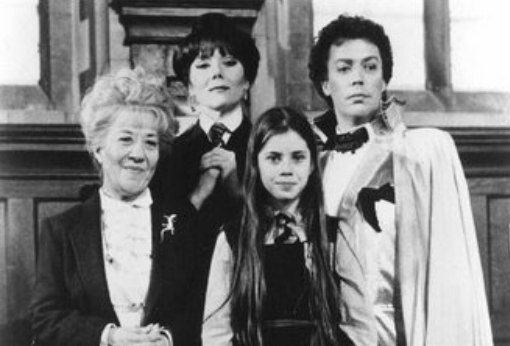

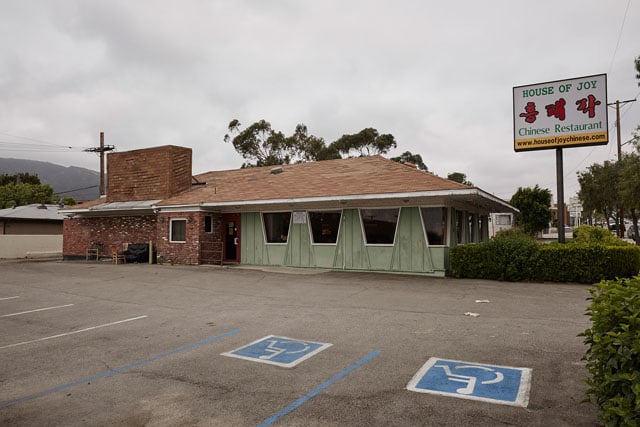











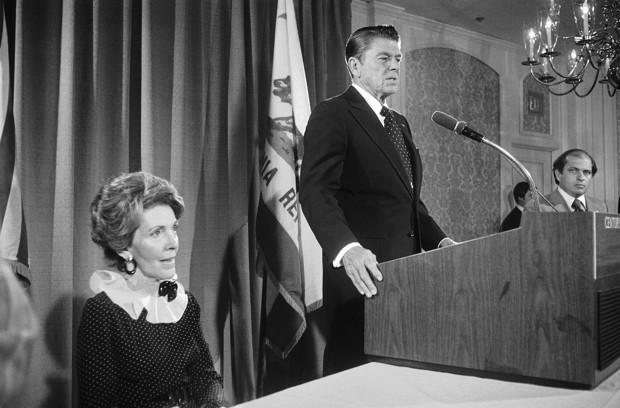







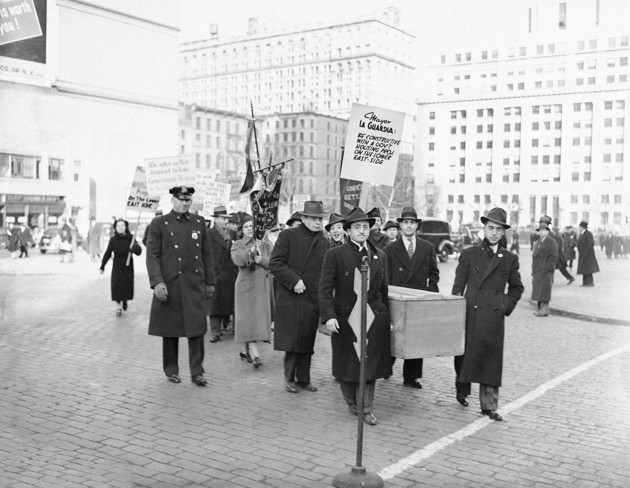
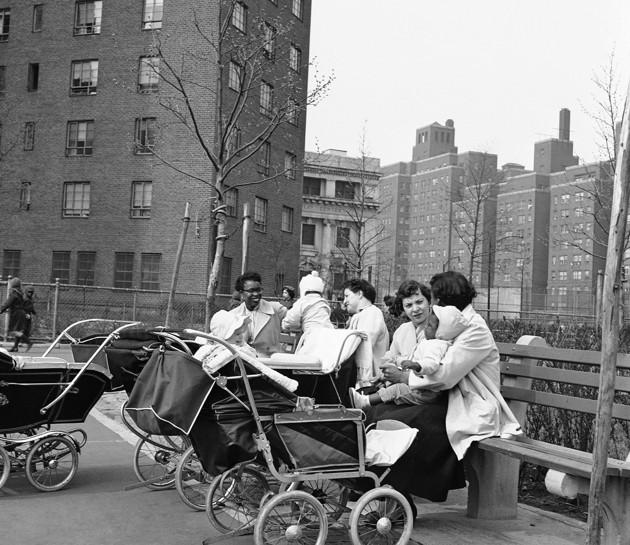








 See that dotted line at the bottom of this rendering?


