As we’ve talked about many, many times, Uber’s sexist culture has been causing it a ton of problems. Given all the lawsuits, exposés, investigations, and the revolving door of executives, it only seemed like a matter of time before CEO Travis Kalanick would get the boot. That time finally came Tuesday morning, when it was announced that he would be taking an indeterminate leave of absence, eventually returning with a diminished role.
It’s not like anyone expected Uber’s rampant toxic sexism to suddenly disappear. That culture has been woven right into the company’s fabric since day one. But could we maybe have been able to take a freaking breath? Apparently not, because in the very same board meeting where Kalanick’s leave was announced–a meeting designed to address the sexism-fueled scandals that plague the company–one board member decided that would be the perfect time to interrupt fellow board member Arianna Huffington with a super sexist joke.
Yahoo Finance has leaked audio of the meeting, but the gist of it is: Huffington was welcoming a new board member, Wan Ling Martello, who is a woman. Huffington was citing data that shows that when one woman is on a company’s board, “it’s much more likely that there will be a second woman on the board.”
Board member David Bonderman thought it would be appropriate to interrupt her to make a joke about how a woman on the board would really just mean they’re never going to stop talking.
Hahahahaha, women, amirite? Yup, Uber’s board meetings are now gonna be a slumber party gab fest, probably full of talk about shoes and periods and nagging their husbands. You’ve sure got our number, Bonderman.
Do we need to point out the unpleasant irony that Bonderman, a man, interrupted Huffington, a woman, to talk about how women are always talking out of turn? I wouldn’t think so but okay, yes, fine, apparently we do.
Huffington laughed–albeit awkwardly–and continued on. (And Bonderman, by the way, apologized and stepped down from the board almost immediately. Good.) But let’s look at the point she was making. Why would one woman on a board or in any typically male-dominated situation, statistically lead to an exponential increase in seeing more women represented? Surely, some of that has to do with gatekeeping, both in creating access and a tacit permission for women looking to set their sights on previously unconquered territory.
But also some of that, at least, has to be because of men like these, who, when they don’t actually have to interact with women professionally, they create ideas of how difficult or juvenile or otherwise other women are, to the extent that they comfortable making gross, sexist jokes like these.
A few months ago, a study was released that immediately came to mind. It studied the habits of Supreme Court Justices and found that female Justices were interrupted three times more often than their male colleagues.
Wouldn’t you know it, though? The study was misreported by a number of conservative outlets as stating women interrupt three times more often. Because preconceived stereotypes are no match for clearly-written facts.
STUDY: Female Supreme Court Justices Interrupt Three Times More Than Male Colleagues… https://t.co/XdAUv5NVgC
And of course, how many of Kamala Harris’ colleagues thought she talked too much or too forcefully during Jeff Sessions’ Senate hearing? How many men tuned out the reality and didn’t even register how her male colleagues interrupted her, instead choosing to perceive her as being “hysterical”?
What is it about Kamala Harris that makes her the only Senator Republicans interrupt at every hearing?
This kind of deeply ingrained misconception runs rampant in male-dominated industries and communities. If you’re not a woman, and don’t work with many women, what incentive would you have to challenge those deep-rooted, completely false notions that women as a whole interrupt, talk too much, and are a general waste of time?
One woman on a board leads to many women on a board. And many women on a board leads to fewer companies like Uber.
Over the weekend, Hulu sent women dressed as Handmaids out into Los Angeles in a live, awesomely creepy Emmy campaign. This wasn’t the first time they’ve enlisted roaming advertising. They’ve sent Handmaids into the streets before, maybe most notably in Austin during SXSW just before the show first aired. Given how very realistic the show feels to most viewers, seeing these silent women in red walking through the world, is jarring and disturbing, but super engaging: no doubt, just what Hulu is going for.
Today, though, a group of Handmaids entered the Ohio Statehouse, for reasons that had nothing to do with marketing or Emmys. They’re there with NARAL Pro-Choice to silently sit in protest of the hearing on Senate Bill 145, the “Dismemberment Abortion Ban.”
SB 145 will ban the most commonly used abortion procedure in the 2nd trimester. #OHHandmaids are here to show the impact of abortion bans pic.twitter.com/GxwvM7l24j
Ohio legislators have passed a number of anti-abortion bills recently, including a fetal heartbeat bill that was vetoed by the governor. (That bill would have banned abortions after about six weeks. Another bill, which he signed off on, outlaws abortions after 20 weeks.)SB 145 would ban abortion by dilation and evacuation, the most commonly used abortion method after the first trimester. According to rep in a video
SB 145 would ban abortion by dilation and evacuation, the most commonly used abortion method after the first trimester. According to a rep in a video of the protest streamed on Facebook Live earlier today, this method is used in 95% of second-trimester abortions nationwide. Of the 21,000 abortions performed in Ohio last year, 3,000 were done using this method. In addition to targeting women, the bill would punish doctors with up to 18 months in prison, and makes no exception for cases of rape or incest.
Sponsor says SB 145 has a health exception, but the only exception is when she is so sick to cause permanent organ damage. #OHHandmaids
What clearer, more timely visual, then, than these women from an all-too-realistic dystopia in which reproductive rights are a thing of the past? (Remember, we saw a similar protest in Texas last month.)
The women sat there while the bill’s sponsors (two white male senators, with six more white men and one woman co-sponsoring) testified that women need legislation to keep them safe from themselves.
The #OhioHandmaids waiting silently as the state considers the next plan to force women to give birth against their wishes or medical advice pic.twitter.com/pGBBBlK9rO
We talk about how “real” The Handmaid’s Tale feels right now–both the Hulu series and Margaret Atwood’s novel–and this is why. Groups of men discussing how best to use and restrict our bodies, forcing women to give birth no matter the circumstances, taking both women and health professionals out of the conversation about women’s health: these are terrifying things happening right now. Since these men essentially want to resign women to the position of silent sexual surrogate, the Handmaid is, unfortunately, the perfect chilling, depressing, silent face for the resistance.
As cities flex their muscles in opposition to President Trump’s policies on everything from climate change to immigration and economic development, they face a serious obstacle: sweeping state efforts to preempt their authority.
These efforts date back well before Trump’s populist rise to power and span a whole host of critical issues—from states’ attempts to block local minimum wage increases to non-discrimination protections for LGBTQ people to blanket bans on ordinances restricting fracking and guns.
Readers of CityLab will recognize plenty of examples of this anti-urban phenomenon. A new article in the Journal of Federalism by Lori Riverstone-Newell of Illinois State University offers a thorough overview of the rise of state preemption laws, drawing on recent examples of ongoing fights to assert city sovereignty. Here’s a summary of those key fights by policy area.
Minimum wage
The “Fight For 15” movement is really about cities. By November 2016, Riverstone-Newell writes that nearly forty cities and counties had agreed to local increases in the minimum wage ranging from $8.50 to $15.75 an hour in states such as Arizona, California, Florida, Illinois, New Mexico, Maryland, Washington, and Maine (plus Washington, D.C.). Right now, 29 states set a higher minimum wage than the federal government and Arizona, Colorado, Maine, and Washington passed statewide raises in 2016.
But states such as Ohio, Alabama, and Missouri have taken actions to preempt local minimum wage increases. This tactic is a relatively recent phenomenon: 12 out of the 23 states with minimum wage preemption statutes adopted the laws after 2013.
In Ohio, Governor John Kasich signed a preemption bill in December 2016, preventing local minimum wage hikes from exceeding the state rate of $8.10 per hour in response to Cleveland’s special election on a wage hike that would have happened this May. In Alabama, a 2016 preemption law undid Birmingham’s effort to raise the minimum wage to $10.10 per hour. Just today, Atlanta Mayor Kasim Reed, the Southern Poverty Law Center, and the NAACP Legal Defense Fund have filed an amici brief for urging the Eleventh Circuit to hear the appeal that Alabama’s blocking of the law violates the Voting Rights Act and the Equal Protection Clause.
In Missouri, then Democratic governor Jay Nixon vetoed a minimum wage preemption law but was then overruled by a Republican legislature for HB 722 in 2015. In that instance, the city of St. Louis raced to pass a law before the preemption law would come into effect and beat the clock in February 2017. The Missouri Supreme Court upheld the ordinance raising minimum wage to $11 per hour by 2018, but lawmakers just passed a bill to reverse the wage increase last month to be signed by Republican Governor Eric Greitens.
LGBTQ non-discrimination protections
Over 225 localities have some sort of local non-discrimination protections for the rights of LGBTQ people. Preemption of these laws date back to 1992, when Colorado approved a constitutional amendment after various municipalities passed laws banning discrimination based on sexual orientation. But that law was challenged and overturned by the Supreme Court in Romer v. Evans in 1996. More recently, laws preempting local non-discrimination ordinances have passed in Tennessee in 2011 and Arkansas in 2015.
The most famous example is North Carolina’s HB2 that passed in March 2016. That law preempted Charlotte’s so-called “bathroom bill,” which would have provided non-discrimination protection for transgender people using public bathrooms, as well as other protections. By the end of the year, the city agreed to repeal the law and by March 2017, the state passed a law, presented as “compromise bill,” that still prevents cities from passing LGBTQ protections until 2020. Fighting these laws at the local level so far has not had much recent success in court either—for example, Arkansas’s Supreme Court struck down Fayetteville’s non-discrimination ordinance in February 2017, even after a circuit judge ruled in favor of the city.
Sanctuary cities
Across the United States, over 300 cities, counties, and townships have some form of sanctuary city policy. Meanwhile, according to the National Conference of State Legislatures, at least 36 states and the District of Columbia are considering legislation regarding sanctuary jurisdictions or noncompliance with immigration detainers—with 33 prohibiting and 15 states and D.C. supporting, with 12 states total featuring legislation on both sides of the issue.
The fight over sanctuary cities has pitted federal, state, and city officials against each other and is about to come to a head this year as federal funding is in jeopardy. The most prominent example of preemption might be Texas, where Governor Greg Abbott has already blocked $1.8 million in grant funding to Travis County over its sanctuary policy and signed a “super preemption” law last month aimed at punishing local officials who do not cooperate with immigration authorities. It is set to go into effect in September. A Florida bill would impose a $5,000 per day fine on sanctuary cities (and Miami-Dade County has already voted to end its status as a sanctuary city) and North Carolina has a bill pending to strip cities of a variety of revenue sources if they operate as a sanctuary city. Other states that enacted restrictions this year include Mississippi, Georgia, and Indiana.
Gun control
A number of states have passed bans on local gun control ordinances, most notably Florida, Pennsylvania, Tennessee, Wyoming, North Carolina, and Nevada. Cities have attempted to fight these measures. One well-known case: Tallahassee Mayor Andrew Gillum’s fight in court over Florida’s law restricting local gun ordinances, where no particular statue defines a policy but any local ordinance restricting guns is outlawed.
Fracking
As of April 2017, nearly 550 localities had passed restrictions on the practice of hydraulic fracking for natural gas production in 26 states. Of those states, only four have their own statewide bans. Many of the laws are symbolic bans, as there are no shale plays for fracking. But Inside Climate News identifies thirteen states where fracking bans run against substantial industry interests.
Though Pittsburgh was the first municipality to pass a fracking ban in 2010, the major test case for preemption is Denton, Texas. The city passed a ballot initiative in 2014 and sparked similar legislation across the country. Denton provides a particular distinct example of a city setting an environmental policy in a state so driven by oil. But in 2015, the state passed a law to preempt local regulation of oil and gas, limiting regulations to above-ground issues like traffic, noise, lights or “reasonable setback requirements,” undoing the Denton ban.
Oklahoma and North Carolina passed similar fracking-related preemption laws in 2015 and bills have also been introduced in Florida and Indiana. Meanwhile, Colorado and Louisiana have had preemption laws affirmed by the courts to stop local regulations on fracking, but courts have also struck down such fracking preemption laws in Pennsylvania and New York. However, Florida is also considering a statewide ban on fracking after 76 local bans have been enacted in the state.
“Blanket” or “super” preemption
Other states have moved to a tactic what is called “blanket” or “super” preemption, where the legislature authorizes the executive to determine whether local law violates a state law without particular definition. Arizona passed a law in 2016 that is often referred to as the “mother of all local preemption bills,” which withholds funds from localities that pass regulations or ordinances that contradict state law and leaves making that distinction to the state attorney general. Similarly broad preemption bills have been introduced in Arizona, Iowa, Texas, and Michigan. Other blanket preemption bills have been introduced but not enacted, though Riverstone-Newell notes they are often pared down as “compromise” bills to stop specific laws, as with North Carolina’s HB2.
Theconsequences of such blanket preemption are chilling. At what point will states undermine the broad capacities of cities and their residents to govern themselves?
***
Cities are up against more than Trump. The GOP controls 33 governorships and both chambers in 32 state legislatures. State preemption laws seek to strip cities of their abilities not just to oppose the White House agenda but to forge policies that reflect the desires, beliefs and concerns of their own residents. State legislatures in the U.S. have long had an anti-urban bias—in 2013, a study I wrote about in CityLab found that bills sponsored by legislators from small or medium-sized cities were overall twice as likely to pass as those that originated in big cities like Chicago or New York.
Another hurdle for cities is the constitutional challenge that they are legally considered “creatures of the state.” Republicans narrowly advocate for states’ rights in the face of federal power, arguing that cities don’t have the right to challenge the state. But this misremembers the origin of rights—they belong to people. Here’s how an Ohio Republican state senator summed up his opposition to Cleveland’s minimum wage hike: “[W]hen we talk about local control, we mean state control.”
The time has come to reconsider the very nature of federalism. As I have written here before, we really are two different countries, red and blue, with division within states. It is time to adopt a federalism that recognizes the rights of cities to determine their own policies for the sake of their citizens.
As Riverstone-Newell’s survey of state preemption shows, this conflict isn’t a new phenomenon: It’s been decades in the making. But Trump may have inadvertently galvanized the local control movement, most recently with his actions on climate change. Witness the recent broad bipartisan coalition of nearly 250 mayors who have pledged to work towards the goals of the Paris climate accord. We may very well be seeing the birth of one possible model for such a power shift.
It’s no surprise that certain U.S. religious groups have strong political leanings: Southern Baptist Republicans and Jewish Democrats are predictable enough archetypes. A new paper by two political scientists adds a new layer to these long-standing stereotypes: Clergy tend to be even more partisan than their parishioners. While it’s not clear whether this translates into politicized sermons or social activism, it’s evidence that religious life may be yet another area where many Americans are pulled into exclusive partisan spheres by their community leaders.
One of the reasons this research matters is that the data set is so novel, and so large. Eitan Hersh, an assistant professor of political science at Yale who’s soon headed to Tufts, worked with Gabrielle Malina, a doctoral student at Harvard, to search 40 denominations’ websites for a list of their clergy. They were able to match 130,000 pastors, priests, and rabbis with their voter-registration records, and used that to figure out each clergy member’s political affiliation. From there, they compared religious leaders to the congregants in their denominations using data from another survey, the Cooperative Congressional Election Study. The researchers claim this is the largest list of religious leaders ever assembled. “They’re people that are very hard to survey because it’s hard to figure out who they are,” Hersh said in an interview.
Hersh said they were expecting to find the greatest political match between congregants and leaders of more traditional denominations that have high levels of worship participation—among Orthodox Jews, say, or conservative evangelical denominations. The thinking was that clergy in those faith groups might have more direct power or influence in people’s lives, while congregants in liberal denominations wouldn’t necessarily follow their pastor or rabbi’s every word.
But that wasn’t what they found at all. Instead, they discovered that religious leaders generally tend to be more partisan than their congregants, including those on either end of the ideological spectrum. Not only that: Religious leaders’ denominational affiliations seem to shape their political leanings in a way that’s not the case for their congregants. Once factors like age, race, gender, and geography are considered, denomination isn’t a very strong predictor of regular people’s political affiliation, they write. Among pastors, however, the partisan split by denomination is “dramatic.”
For example: Clergy for Reform and Conservative Jews and Unitarian Universalists are almost uniformly Democrats. Fundamentalist and Independent Baptist pastors, along with Lutheran pastors in the Wisconsin and Missouri synods, are strongly Republican. While clergy tend to work in denominations whose members lean the same way they do, pastors and rabbis tend to lean harder in one direction or the other. Only a handful of denominations had large showings of independent or politically unaffiliated clergy, including Seventh Day Adventists and those who are Greek Orthodox or in the Orthodox Church of America.
Religious Leaders’ Party Affiliation
Eitan Hersh and Gabrielle Malina
What’s interesting is where the pattern of partisanship didn’t hold true. Hersh expected that “job-market pressure” would affect some Protestant clergy’s political affiliations, for example—congregations might try to find pastors who meet their political needs and tastes. Conversely, he suspected that Catholic priests, who are centrally trained and placed by the Church, would be immune to pressures to match their congregations. Yet Catholic clergy were nearly evenly split between Democratic and Republican affiliation, with a significant unaffiliated share—a roughly even match with Catholics in the United States. In “the denomination you would probably least expect the pastors or the leaders to match the people,” he said, “you have this remarkable consistency.”
A few demographic factors complicate the data. While the researchers estimate that their data cover roughly two-thirds of religious groups in the U.S., there are big blind spots. Pastors at non-denominational churches, for example, are harder to find because their names may not be listed on any central website. Information on Mormon leaders is not available to the general public, the researchers said, and there’s no reliable central directory for mosques and imams. It was also much more difficult to find data on black pastors compared to white pastors, Hersh said, which may have skewed the findings on how well various Baptist and Pentecostal congregants match their leaders. Data for prominent black denominations like Church of God in Christ, for example, did not match the researchers’ voter-registration lists.
Region also plays a part. When the researchers split up the data into the geographic categories used in the Census—New England, Mid-Atlantic, Midwest, South Atlantic, South, Mountain West, and Pacific—they found that partisan affiliation varies for most congregants and clergy depending on where they live. But even if pastors and parishioners in Portland are more likely to be liberal than their co-religionists in Peoria, clergy still tend to be more partisan than people in the pews, no matter where they are. Episcopalian clergy in all regions, for example, were 20 to 25 percentage points more Democratic than than their congregants. Conversely, Lutheran pastors in the Wisconsin and Missouri synods were 15 to 20 percentage points more Republican than their congregants across regions.
This study is not a nationally representative sample of clergy. The methodology means the findings are skewed toward highly organized and networked religious groups and tends to neglect religious minorities. Partisan affiliation also isn’t the same as voting: This data was gathered prior to the 2016 election, and it’s possible that many of the clergy in data set voted against their party in November.
But as an initial look, this data is useful: It’s evidence that denomination has an affect on clergy political affiliation. The next step is figuring what exactly that effect is, and why it exists. It could be that clergy “are more politically engaged—they read the news more, because they are leaders whose jobs touch on politics,” Hersh said. The pattern may also be driven by different factors depending on the group, he said: Opposition to abortion or gay marriage may matter strongly for some Christians, for example, while support for Israel may swing the affiliation of some Jews.
Moving forward, these research questions will be important for understanding America’s current political environment. President Trump has made a priority of empowering pastors to speak freely about politics; he has claimed that a May executive order protects them from tax penalties if they endorse or oppose candidates for office (although in reality the order changed very little). In a fiercely politicized time, more clergy are choosing to push into the political realm. Increasingly, they may find that they can’t avoid it. As leaders craft messages from the pulpit, their partisan views may creep in. And that means worship will be one more sphere of American life shaped by politics—a place where people hear messages they may already believe, spoken by leaders who believe them even more strongly.
Carolyn Mawbey is irked. The feisty 68-year-old former New Yorker gets around Seattle’s Uptown neighborhood mostly on foot but when the transportation department flipped a switch this spring, her Earth-friendly commute got considerably rougher. “At first, I thought there was something wrong with me. I used to get across the street in time and then the walk signals started switching to don’t walk before I could get across.”
It turns out the problem wasn’t the spring in Ms. Mawbey’s step. Quietly, right around April Fool’s Day, the Seattle Department of Transportation (SDOT) activated a new adaptive traffic signal system along the Mercer corridor. The system, according to SDOT, is intended to be a smarter approach to moving traffic.
While SDOT activated the system without fanfare, people who live and work along Mercer started noticing changes right away. Walk signals—previously switching from one phase to the next in a familiar rhythm—seemed to go haywire. Sometimes the walk phase would cut short, prompting people like Ms. Mawbey to sprint to the opposite curb (or suffer the wrath of turning cars). Sometimes the walk signal would appear, then time out, then suddenly turn to walk again, all while parallel vehicular traffic had a solid green. In the worst cases, the walk phase would be eliminated entirely for two or more cycles.
In the midst of this confusion, many pedestrians engaged in risky behavior, walking against the light and wading into traffic, or giving up and finding a different route. If Mercer were a suburban commercial strip, perhaps these changes would be considered just the latest indignity. However, the Mercer corridor cuts through the northern part of Seattle’s urban core, home to the Space Needle, Amazon, the Bill and Melinda Gates Foundation, and many of Seattle’s most prized commercial, cultural, and research institutions. The street life of this regional engine of creative activity and economic growth was being sacrificed in the name of getting cars to the interstate faster.
Adapting, but to whom?
It’s called an adaptive system because signal timing adapts to demand from users. Demand from cars is measured directly using inductive loops installed in the pavement. Demand from pedestrians, however, is less accurate. It depends on a person pushing a beg button, which some people do and some people don’t.
After observing risky behavior for more than a week, advocates recorded people trying to cross at the corner of 1st Ave N and Mercer. In the video below, at :08, a blind gentleman tries and luckily succeeds in navigating the crossing against the light.
Here is 35 seconds (6x speed) of people not getting a walk signal in an urban center and either sprinting or giving up. @dongho_changpic.twitter.com/TCUOzzg5p3
The adaptive signal system had been in the works for several years. Sensors and other instruments were installed during the years-long Mercer Corridor Project but all those components, along with computer hardware and software, need to come together in a command center. So, SDOT built their system, officially dubbed SCOOT (for Split Cycle Offset Optimization Technique), in a piecemeal fashion as funding became available.
A peek inside SDOT’s traffic control center where the adaptive system is monitored. (Mark Ostrow)
After millions of dollars, years of implementation, and several weeks of post-deployment observation, SDOT Director Scott Kubly held a press conference at the 37th floor of the Seattle Municipal Tower to unveil the system. Press coverage was uniformly glowing. The Seattle Times gushed “New, high-tech traffic signals make the Mercer Street trek less messy.”
Was the juice worth the squeeze?
The reality was not quite as rosy. The gains for cars were modest and the cost to safety and pedestrian mobility was high. Average travel time for cars moving in the westbound direction from one end of the corridor to the other, according to SDOT’s own figures, actually got worse. Eastbound travel times showed improvements of 18 seconds in the morning and 2.7 minutes in the evening. Meanwhile, people on foot were experiencing waits of more than three minutes just to cross the street. These small gains for cars were likely at the expense of people walking.
It’s worth noting that SDOT’s before-and-after evaluation didn’t include measures of pedestrian impacts. Were the needs of people walking even considered?
— Queen Anne Greenways (@QAGreenways) May 24, 2017
Torches and pitchforks
By this time, neighbors were getting increasingly vocal. KIRO TV ran a feature story on April 27th highlighting the failings of the system but SDOT didn’t seem to be listening (except for City Traffic Engineer Dongho Chang, who took an interest and facilitated dialogue between concerned citizens and the SDOT signals team).
Improving walking and biking connections between Uptown and South Lake Union is a major priority for Seattle Neighborhood Greenways. So, on May 30th, Queen Anne Greenways, together with the Uptown Alliance and South Lake Union Greenways, organized a walking tour to highlight the problems on Mercer. Thirty-five participants—including SDOT representatives, members of the press, neighbors, and advocates—braved intermittent drizzle with a different volunteer leading discussion at each stop.
Map of the Mercer Walking Tour route. (Mark Ostrow and Google Maps)
Right away, it was abundantly clear the new signals weren’t working for people on foot. When the group attempted to cross Mercer at 1st Ave N, the signal skipped several cycles and the large crowd waited for several minutes just to cross. This pattern was repeated at various stops along the way and it became clear that something needed to be done.
Uptown resident Carolyn Mawbey (foreground left) patiently waits to cross Mercer alongside SDOT City Traffic Engineer Dongho Chang (foreground right), while other tour participants pass the time. (Mark Ostrow)
Takeaways
SDOT deserves credit for sending a high level delegation including Director Scott Kubly, Deputy Director Benjamin de la Peña, City Traffic Engineer and local legend Dongho Chang and Traffic Operations Manager John Marek. They listened, observed, and engaged in a lively exchange of ideas.
In the end, SDOT expressed a willingness to address the following items:
Extend crossing time for pedestrians while parallel cars have a green light.
Prevent signals from skipping the walk phase during any given cycle.
Provide a protected left turn signal for west-to-south traffic at Queen Anne Ave & Mercer.
Address the missing button at Roy St & 3rd Ave N.
Re-evaluate average vehicular travel time to assess whether induced demand has erased previously measured improvements.
Include pedestrian delay or other pedestrian service metrics in future evaluations.
Additional asks that didn’t get clear agreement from SDOT included the following actions to prioritize people walking and biking in Uptown and South Lake Union:
Provide a walk signal without requiring actuation, particularly at Queen Anne Ave & Roy St and at Terry & Mercer, two crossings specifically designed to prioritize pedestrian mobility.
Prioritize transit crossing Mercer in a north-south direction, particularly at Dexter Ave.
Measure compliance with pedestrian actuation requirements and consider such data when requiring actuation.
Include cyclist delay or other bicycle service metrics in future evaluations, particularly on routes crossing Mercer.
Seek to more accurately incorporate pedestrian (not just vehicular) demand into their algorithms and ensure the system responds to it.
Prioritize non-motorized modes.
Address the issues with adaptive signals in the Mercer corridor before expanding use of the system.
What’s next?
Mercer represents the first SCOOT implementation in Seattle but it won’t be the last. Soon, SDOT hopes to roll out the system along Denny Way, a parallel corridor that cuts deeper into Seattle’s urban core, and more streets after that.
Meanwhile, Seattle’s mode-split goals may hang in the balance. Uptown resident Carolyn Mawbey might not be coaxed back into her car but others might. Will the system simply induce additional vehicular demand, erasing the modest gains in travel time observed in the first few weeks, while locking in the losses for pedestrians? Will Seattle drop more car-centric suburban traffic signal systems into the center city or will it direct scarce resources towards preparing for a denser future where walking, biking and transit access are prioritized? That remains to be seen.
Mark Ostrow is a core leader of Queen Anne Greenways and part of the coalition leadership of Seattle Neighborhood Greenways. You can follow him at @qagreenways. Mark is a principal at RK2 Advisory, and serves on the Board of the Queen Anne Community Council and the Board of Trustees at Northwest Kidney Centers.
U.S. Immigration and Customs Enforcement (ICE) will soon close a family case management program for asylum-seekers that, as of April 19, housed more than 630 families. According to Sarah Rodriguez, an ICE spokesperson, the program caters to “special populations, such as pregnant women, nursing mothers, [and] families with very young children.” It is currently considered the least-restrictive alternative for asylum-seekers who come to the U.S. illegally. The more common scenario is for immigrants and refugees to be held in prison-like detention centers as they wait for their cases to be heard in the immigration court system.
In 2014, the Obama administration chose to expand the number of detention facilities in response to the Central American Refugee Crisis, which prompted tens of thousands of women and children to seek asylum in the U.S. These large-scale detention rates continue today, with around 400,000 immigrants being held in detention facilities each year—around 80 times the amount held in 1994.
Many humans rights groups have called for an end to detention centers altogether, arguing that long-term confinement can have severe psychological effects on detainees. The independent advocacy group Human Rights First has implored the U.S. government to consider alternative systems that do not “exacerbate the trauma asylum seekers face and impede access to legal counsel.” With this in mind, a federal judge ruled in 2015 that detention centers without child-care facilities could not detain children for more than 20 days—a verdict that has largely been ignored by ICE. In some cases, women and children have spent up to 16 months in detention.
The United States’ family case management program provides a more relaxed alternative to detention facilities, functioning less like a prison and more like a counseling center. As part of the program, social workers connect asylum-seekers to legal representation, guide them through the court system, and help them receive housing and healthcare, as well as schooling for their children. Asylum-seekers must also have demonstrated that they legitimately fear returning to their country of origin in order to qualify.
Since January 2016, the program has served asylum-seekers in numerous cities across the U.S., including Chicago, Miami, New York, Los Angeles, Baltimore, and Washington, D.C. According to a letter signed by Ann Schlarb, the senior vice president of The GEO Group—the prison company that runs the case management program—99 percent of the program’s participants “successfully attended their court appearances and ICE check-ins.” Schlarb even noted that “families have thrived” under the relaxed conditions.
With the program scheduled to close on June 20, future asylum-seekers who aren’t held in detention centers are likely to end up in “intensive supervision” programs—a cost-effective alternative to family case management. The AP writes that case management programs cost around $36 a day for one family, while intensive supervision programs cost between $5 and $7 for each individual. “By discontinuing [family case management], ICE will save more than $12 million a year—money which can be utilized for other programs which more effectively allow ICE to discharge its enforcement and removal responsibilities," Rodriguez said in a statement. The trade-off, however, is that asylum-seekers will have access to fewer resources and will likely be forced to wear uncomfortable ankle monitors.
With the Trump administration heavily focused on deporting unauthorized immigrants, intensive supervision programs also offer a more successful record of deportation. While the case management program has deported just 15 of its participant families, intensive supervision programs have deported around 2,200 individuals over the same time period. With this track record and budgetary savings in mind, the Trump administration has allotted around $57 million of its 2018 budget for intensive supervision programs. The budget also calls for another $1.5 billion for detaining and deporting unauthorized immigrants.
While detention has long been the government’s preferred policy, experts still question the decision to shut down a more humane alternative. According to Michelle Brané, the director of the Migrant Rights and Justice program at the Women’s Refugee Commission, the decision to close the family case management program is unwarranted. “This is a clear attempt to punish mothers who are trying to save their children’s lives by seeking protection in the United States,” Brané told the AP. “I think it’s crazy they are shutting down a program that is so incredibly successful.”
When President Donald Trump announced on June 1 that he had decided to withdraw the United States from the Paris climate accord, he asserted that staying in the pact would prevent our nation from further developing its fossil fuel reserves. Critics understandably have called this a setback for global efforts to curb greenhouse gas pollution.
But there is another, equally important argument for transitioning to clean fuels. Tens of thousands of Americans die every year from old-fashioned air pollution, generated by electric power plants that burn fossil fuels. Estimates vary, but between 7,500 and 52,000 people in the United States meet early deaths because of small particles resulting from power plant emissions. That’s huge. It is roughly comparable to the 40,000 people that died in car crashes in 2016.
In a recent research study with colleagues at Carnegie Mellon, I analyzed how human health and the environment would be affected if all coal-fired power plants in the United States switched to natural gas — an extension of a trend that is already underway. We found that such a shift would have tremendous positive effects on human health in America. We estimate that low natural gas prices and state policies that move utilities away from coal are savings tens of thousands of lives and tens of billions of dollars each year.
Fossil fuel pollution is deadly
We’ve known that air pollution is linked to human health since Lester Lave and Eugene Seskin published their pioneering quantitative work in Science in 1970. They studied “the long-term effects of growing up in, and living in, a polluted atmosphere,” using economists’ favorite statistical technique — regression analysis — to look at a few locales where data were available.
In England, they found that “cleaning the air to the level of cleanliness enjoyed by the area with the best air [in the U.K.] would mean a 40 percent drop in the bronchitis death rate among males.” Male and female results were about the same. Since few women worked in industry in those days, this finding indicated that the effect was independent of occupational exposure.
In Buffalo, New York, they found that cleaning the air to the level of the cleanest area would lower the average bronchitis death rate by 50 percent. Stomach cancer was much higher in areas with more air pollution. Air pollution affects the heart, too: They concluded that a substantial abatement of air pollution would lead to a 10 to 15 percent reduction in deaths and illnesses from cardiovascular disease.
The researchers measured pollution in detail. After adjusting for factors like smoking, they found that the death rate was 26 percent higher in the most polluted cities than in the cleanest ones. They wrote, “Air pollution was positively associated with death from lung cancer and cardiopulmonary disease …. Mortality was most strongly associated with air pollution with fine particulates, including sulfates.” Fine particulate pollution is a mixture of solid particles and liquid droplets, many times smaller than a human hair.
Still clearing the air
Haven’t we reduced pollution so thoroughly in the United States since then that we no longer have a problem? Well, no. There are some toxins, such as alcohol, that your body can deal with at a low level and that will kill you only at high doses. But current air pollution levels are not that low.
Another huge study, published in 2013, focused on small particulates in the air of 545 U.S. counties and yearly county-specific life expectancy for the period 2000–2007. It found that cleaning up the air is still very beneficial. Life expectancy has increased in the United States in recent decades, due to things like a decrease in smoking and general attention to diet and exercise. But this research found that 18 percent of the recent increase in urban life expectancy was due to decreased air pollution.
Reductions in sulfur dioxide and nitrogen oxide emissions from U.S. electric power plants, due largely to laws requiring pollution control technologies at coal-fired power plants, and more recently, a shift from coal to natural gas generation. USEIA
Much of this fine particle pollution comes from electric power plants, either directly or as pollutants such as sulfur dioxide that chemically evolve downwind of the plant. So we asked in our research: What would happen if current low natural gas prices or pollution control policies caused all U.S. coal-burning power plants to be replaced by natural gas generators?
Somewhat surprisingly to us, such a shift would not lead to major progress on climate change. Although natural gas is less carbon-intensive than coal, some natural gas leaks into the air at drilling sites, processing plants, and pipelines. Natural gas consists mainly of methane, a greenhouse gas that has much more powerful heat-trapping properties than carbon dioxide. If current estimates are correct that the leakage rate is around 3 percent, then we calculated that switching all coal plants to average-efficiency natural gas plants would have little effect on the power sector’s contribution to climate change.
But that switch would greatly reduce pollution that is harming our country right now. Switching from coal to natural gas would reduce sulfur dioxide emissions by more than 90 percent and nitrogen oxide emissions by more than 60 percent. These compounds are major causes of fine particulate pollution. Reductions on this level would lower the total cost of national annual human health damages by $20 billion to $50 billion annually. We found that the Southeast and the Ohio Valley, where most of the coal is burned, would capture the lion’s share of these benefits.
2016 annual health and environmental damages due to emissions of criteria pollutants from coal plants, by North American Electric Reliability Corporation generating regions, using the APEEP model. Redrafted from research by Gerad Freeman, author provided
More coal use will not create more jobs
President Trump has called the Paris climate accord “very unfair” for the United States, especially the coal industry, and pledged to restore coal miners’ jobs. But bringing back coal isn’t the same thing as bringing back coal miners’ jobs.
Almost all coal use in the United States is for producing electricity. Coal mining jobs are declining partly because low natural gas prices have cut coal’s market share from 50 percent in 2000 to 30 percent in 2016.
Some great companies understand these human health issues, and are taking big risks to push technology that may allow coal to be used without pollution. Southern Company, AEP, NETpower and a few others are using American know-how to reduce coal’s emissions.
But without a national consensus that both conventional pollution and greenhouse gas pollution have to be reduced, their engineering will founder in the boardroom. If President Trump succeeds in bringing back coal while gutting environmental regulations, all he’ll bring back is more pollution and more early deaths.
When Nintendo used The Elder Scrolls V: Skyrim to tease it's new hybrid portable game console, a lot of us were left confused. Sure, portable Skyrim sounds great, but is it enough to get gamers to buy the game for a second, or even third time? No? Ho...
It’s been more than 2,000 years since Julius Caesar was assassinated by a group of Roman senators, and more than 400 years since William Shakespeare immortalized the dirty deed. The Bard’s Julius Caesar has been staged, adapted, and reinterpreted countless times since, and Caesar never manages to escape the blade. However, two major backers of New York’s Shakespeare in the Park have pulled their support for this year’s production of the play after complaints that this Caesar looks a little too similar to our current President.
CNN reports that both Delta and Bank of America dropped their sponsorship of the Public Theater in New York over the graphic nature of the modernized play.
The production, which follows the same synopsis as the original tragedy with Roman noblemen plotting to kill Caesar and the consequences of that action, has been updated to feature modern amenities, dress, a Caesar with blonde hair, and a wife with a Slavic accent.
The play, which has been in previews, is slated to officially open at New York’s Delacorte Theater in Central Park today, but will be doing so without at least two of its sponsors.
Delta notified the Public Theater that it was pulling funds for the contemporary take on the classic.
“No matter what your political stance may be, the graphic staging of Julius Caesar at this summer’s Free Shakespeare in the Park does not reflect Delta Air Lines’ values,” a spokesperson for Delta tells CNN. “Their artistic and creative direction crossed the line on the standards of good taste.”
The company provided similar statements to Twitter users who commented on the sponsorship change.
No matter what your political stance may be, the graphic staging of Julius Caesar at this summer's (cont)… *ALS
“The Public Theater chose to present ‘Julius Caesar’ in a way that was intended to provoke and offend,” Bank of America said in a statement on Twitter. “Had this intention been made known to us, we would have decided not to sponsor it. We are withdrawing our funding for this production.”
It is unclear if either company will provide support for other Public Theater productions this season. Consumerist has reached out for clarification on the matter.
The Public Theater is sponsored by nearly a dozen other organizations, none of which appear to have pulled funding from the production.
The National Endowment for the Arts — the federal program that provides grants to theaters, museums, and other arts programs around the country — says that no federal funding has been given to this production of Caesar.
“In the past, the New York Shakespeare Festival has received project-based NEA grants to support performances of Shakespeare in the Park by the Public Theater,” reads a statement from the organization. “However, no NEA funds have been awarded to support this summer’s Shakespeare in the Park production of Julius Caesar and there are no NEA funds supporting the New York State Council on the Arts’ grant to Public Theater or its performances.”
It goes without saying that nearly everything made with graphic design and video software was once produced using a physical process, from newspapers to TV Logos. But some TV stations and film studios took things even further and designed physical logos that were filmed to create dynamic special effects. Arguably the most famous of which is MGM’s Leo the Lion which first appeared in 1916 and would go on to include 7 different lions over the decades.
Recently, television history buff Andrew Wiseman unearthed this amazing behind-the-scenes shot of the Office de Radiodiffusion Télévision Française logo from the early 1960s that was constructed with an array of strings to provide the identity with a bright shimmer that couldn’t be accomplished with 2D drawings. The logo could also presumably be filmed from different perspectives, though there’s no evidence that was actually done.
Another famous physical TV identity was the BBC’s “globe and mirror” logo in use from 1981 to 1985 that was based on a physical device. After filming the rotating globe against a panoramic mirror, it appears the results were then traced by hand similar to rotoscoping. One of the more elaborate physical TV intro sequences was the 1983 HBO intro that despite giving the impression of being animated or created digitally was in fact built almost entirely with practical effects. You can watch a 10 minute video about how they did it below. (via Quipsologies, Reddit, Andrew Wiseman)
Seattle already has the world’s longest floating bridge, and next month, it’s going one step further: building the world’s first floating light rail line.
The undertaking is part of a $3.7 billion project to build a light rail corridor linking Seattle to the city of Bellevue on the east side of Lake Washington by 2023. It’s a tricky endeavor; the floating bridge has to withstand the pressure of two pairs of 300-ton trains traveling at speeds of up to 55 mph. To make it happen, the transit agency Sound Transit is turning to cutting-edge earthquake technology. With 50,000 riders expected daily, there’s absolutely no room for mistakes, the Seattle Times reports:
A derailed train would sink 200 feet to the lake bed. If track components break or wear out, transit service would be halted for maintenance, or subjected to slowdowns.
Still, this isn’t a city that shies away from massive infrastructure ventures. Its replacement project for the Alaskan Way Viaduct introduced us to Bertha, the world’s largest tunnel boring machine, which emerged from its controversial years-long trek under downtown Seattle earlier this year. And as I reported in December, it’s also working on a new “flexible” bridge designed to ride out an earthquake with little to no damage.
Seattle is also home to four of the world’s longest floating bridges. One of them, the Homer M. Hadley Memorial Bridge, spanning more than 5,800 feet along Interstate 90, connects Seattle to nearby Mercer Island.* Come June, its two reversible HOV lanes will be replaced with railway tracks, and the rest of the bridge will be reinforced to sustain the added weight and movement. The light rail, according to the Times, will be 30 percent heavier than what the bridge is currentlydesigned to withstand.
To grasp the complexity and the immense challenge ahead, it helps to understand how these bridges work. The I-90 bridge, as it’s better known, is essentially supported by more than two dozen massive pontoons—watertight concrete blocks filled with air. Buoyancy helps these structures stay afloat, and maintenance checks are strenuously done to prevent any cracks. According to the Times, some of the gravel within the pontoons will be removed to prevent the rail cars from throwing off the balance, thereby keeping buoyancy.
The more significant challenge is at the hinges that join the floating and fixed sections of the bridge together. Below the deck, pontoons are linked together, and steel cables anchor them to the lake bed, which helps keep them from violently wobbling during strong winds and fierce waves.
Still, the bridge moves. “The bridge goes up and down, also when the wind blows the bridge will go slightly north or south, because it’s on anchor cables much like a boat will kind of move around,” John Sleavin, deputy executive director of technical oversight for Sound Transit, told local news channel Q13 Fox. “And, then as traffic loads, the bridge will also move a little left and right.”
While barely noticeable to the motorist, the railway track has to accommodate for these motions to ensure a smooth ride. Here’s where the earthquake engineering comes in, the main idea being that the rail tracks should be flexible. Their solution came when an English track design specialist proposed fastening the joints with a series of bearings and plates, known as “track bridges.”
These track bridges—eight in total, each spanning 43 inches—feature steel “wings” that, when the angle of the hinges change, respond by rising and falling. That causes the railway tracks to curve vertically and smoothly. To keep the tracks parallel during this movement, they’re held in place by steel bars that sit on “pivotal bearings” that will keep those bars stable when the hinges move. You can see a detailed breakdown of the system by the Times, or watch the animation below:
The design is unprecedented, so it’s understandable that the project makes some people nervous. But engineers at Sound Transit have used computer models to run simulations and even built two full-size track bridges for testing—albeit in a controlled setting inside a Colorado transportation center. At one point in 2005, Sound Transit teamed up with the state transportation department and sent trucks filled with 148,000 pounds of concrete slabs down the I-90 bridge to test whether it could withstand the weight of a light rail system. The agency also says that after completion of the rail, engineers will test-run empty trains for at least three months.
With a multibillion-dollar price tag, is the project worth the cost and the risks? The project has long been given the green light by the state government, but it’s had its opponents, including developer Kemper Freeman, who argued that the HOV lanes should be reserved for motorists. He took his cause to court, only to have the state Supreme Court reject it.
Whether the project proves fruitful will depend on flawless execution—and on real ridership numbers matching the expected tens of thousands of passengers each day. It will also depend on whether it really cuts down on the volume of motor traffic, as it’s intended to. The project certainly plays to Sound Transit’s mission to complete one of the largest transit projects in the U.S. by doubling the city’s light rail system over the next 25 years.
And while the technology is innovative—“brilliant” at the Times puts it—the idea of a floating light rail has been in the works since in the ‘70s, when both the federal and local government agreed that one day, some form of public transit—either a bus or rail system—would run along the floating bridge.
*CORRECTION: This article originally misidentified the floating bridge that will carry the light rail.
A stunning global cyberattack disrupted business and health systems in scores of countries on Friday, including in hospitals across England that were crippled by the large-scale ransomware attack.
“Currently, we have recorded more than 45,000 attacks of the WannaCry ransomware in 74 countries around the world, mostly in Russia,” the cybersecurity firm Kaspersky Lab wrote in a blog post. “It’s important to note that our visibility may be limited and incomplete and the range of targets and victims is likely much, much higher.”
Doctors, administrators, and other NHS workers across England were locked out of their computers, and instead saw a pop-up message demanding ransom in exchange for access to the system, according to several reports. NHS England didn’t immediately respond to questions about whether any ransom was paid, the amount of the requested ransom, or whether the system was fully operational again. “This attack was not specifically targeted at the NHS and is affecting organizations from across a range of sectors,” the NHS said in a statement emailed to The Atlantic.
The attack seemed to exploit a common vulnerability that was discovered and developed by the National Security Agency, The New York Times reported:
The hacking tool was leaked by a group calling itself the Shadow Brokers, which has been dumping stolen N.S.A. hacking tools online beginning last year. Microsoft rolled out a patch for the vulnerability last March, but hackers took advantage of the fact that vulnerable targets — particularly hospitals — had yet to update their systems.
Some hospitals affected by the attack were diverting ambulances to other centers, and asked people to stay away from emergency rooms unless they needed urgent care, Reuters reported.
At the same time, Spain’s government warned on Friday of a large-scale ransomware attack in its country. Telefonica, the nation’s biggest telecommunications firm, was one of the targets. It wasn’t immediately clear whether the cyberattack in Spain was connected to the cyberattack on the NHS.
The attacks are alarming, but not entirely unexpected. Ransomware attacks are on the rise—particularly against vulnerable targets like hospitals, where access to electronic medical records and other computer-run systems have tremendous implications for patient safety. Police stations and emergency call centers are similarly vulnerable targets.
“The worst [scenario] we can imagine is if some malicious actor wants to undertake an act of terrorism and hamper the local response to that [attack]—disrupting 9-1-1 communications entirely,” Trey Forgety, a cybersecurity expert and the director of government affairs for the National Emergency Number Association told me in March.
There were several ransomware attacks in the United States last year—including against hospitals and libraries. Kaspersky Lab reported last year that ransomware attacks had increased by more than 500 percent compared with the year before. The firm described ransomware—often sent via a malicious email disguised as routine correspondence—as the greatest security threat online today.
One in 131 emails sent last year were malicious, according to an annual security report by Symantec, the highest rate in five years.
These sorts of attacks are so common now—and so potentially lucrative for attackers—that there’s even a cottage industry of ransomware as a service, in which cybercriminals pay a fee for someone else to carry out an attack, with the attacker taking a cut of the ransom collected.
Along with hospitals and other emergency centers, at-risk targets include banks, school districts, public transportation systems, and local governments.
“The inability to access the important data these kinds of organizations keep can be catastrophic in terms of the loss of sensitive or proprietary information, the disruption to regular operations, financial losses incurred to restore systems and files, and the potential harm to an organization’s reputation,” the FBI wrote in a warning it issued last year. “Ransomware attacks are not only proliferating, they’re becoming more sophisticated.”
Attackers are also targeting more overall devices, as well as a wider array of devices, and demanding more money from victims. The average ransom demand was $1,077 last year, according to Symantec, up from $294 the year before. Friday’s NHS attackers requested at least $300 from each person who found themselves locked out of their devices, according to the BBC.
Officials caution against paying ransoms, in part because giving an attacker money doesn’t guarantee data recovery. “Paying a ransom not only emboldens current cyber criminals to target more organizations, it also offers an incentive for other criminals to get involved in this type of illegal activity,” the FBI said.
25 NHS trusts and multiple doctors' practices in England and Scotland (but so far, not Northern Ireland or Wales) report that they have had to effectively shut down due to a massive Wcry ransomware infection that has stolen whole swathes of the English healthcare system in one go. The infection appears to exploit a bug that the NSA discovered and deliberately kept secret, only to have it revealed by the Shadow Brokers.
(more…)
There’s a new, dumb trend: the fidget spinner. It’s a toy like a top, but spun in the hand rather than on a surface. The user holds a pad at the center, and flicks one of three rounded blades. The spinner rotates around a bearing at the center. The light weight of the device and the low friction of the bearing allows it to spin for a long time.
What is it for? The fidget spinner has been framed as just a toy—but also as a stress-relief tool, a classroom menace, a treatment for ADHD, and a possible salve to smartphone addiction, among other things.
Fidget spinners might or might not be any of those things, but at their core they are something more, and something stranger: the perfect material metaphor for everyday life in early 2017, for good and for ill.
* * *
Toys similar to fidget spinners have been around for years, but over the last month or so the current incarnation has reached fever pitch. As with other cultural trends, like Flappy Bird and Pokémon Go, kids adopted the gadgets first. Since the winter, fidget spinners have invaded classrooms, causing teachers to confiscate them as contraband. They’ve become ubiquitous impulse purchases at mobile-phone shops and bodegas. And as I write this, fidget spinners dominate the Amazon.com bestsellers in toys and games.
As with any trend worthy of the name, fidget spinners have also produced both delight and moral panic. Classroom distraction became a concern and mental health an opportunity. Many spinners are explicitly marketed as stress relievers or even as self-care therapy for non-neurotypical conditions like ADHD and autism. There’s no scientific evidence to suggest that the toys offer legitimate treatment, but that hasn’t stopped people from using them that way—or issuing rejoinders to those who would try to stop them. Others have celebrated the tool as a salve for smartphone addiction—a doodad to keep the fingers busy so that they aren’t tempted to reach for that whimpering glass rectangle.
The devices have also inspired economic anxiety. An ordinary fidget spinner costs pennies to make and a couple dollars to buy, but some have tried to capitalize on the trend with luxury spinners costing hundreds of dollars or more. Affront erupted over the possibility that the toy’s inventor—an unassuming, 62-year-old, down-on-her-luck Florida inventor—has been cut out of the short-lived profits. Then subsequent affront erupted over the likelihood that those origin stories were misleading anyway.
All these signals merely trace the deeper meaning of the fidget spinner. It is a rich, dense fossil of the immediate present.
The top is not just one of the oldest toys, it is also one of the oldest artifacts of human civilization. Along with the earliest wheels, tops have been unearthed in ancient Mesopotamia dating back 5,500 years or more. The Egyptians had tops, too, some of which were found in the tomb of King Tut. Normally, a top is a toy requiring collaboration with the material world. It requires a substrate on which to spin, be it the hard earth of ancient Iraq or the molded-plastic IKEA table in a modern flat. As a toy, the top grounds physics, like a lightning rod grounds electricity. And in this collaboration, the material world always wins. Eventually, the top falls, succumbing to gravity, laying prone on the dirt.
Not so, the fidget spinner. It is a toy for the hand alone—for the individual. Ours is not an era characterized by collaboration between humans and earth—or Earth, for that matter. Whether through libertarian self-reliance or autarchic writ, human effort is first seen as individual effort—especially in the West. Bootstraps-thinking pervades the upper echelons of contemporary American life, from Silicon Valley to the White House. But it also underwrites more marginal plights. When some non-neurotypical fidget spinners shun scientific verification of the device’s therapeutic value, they do so by affirming their individual ability—and right—to self-diagnose and self-treat.
In this context, a top that spins in the hand is like a pocket orrery—a mechanical model of the heavens. The fidget spinner quietly attests that the solitary, individual body who spins it is sufficient to hold a universe. That’s not a counterpoint to the ideology of the smartphone, but an affirmation of that device’s worldview. What is real, and good, and interesting is what can be contained and manipulated in the hand, directly.
The spinner also conveys the impression that the individual has the power, even if only briefly, to overcome the laws of nature. The spinner looks like a simple plastic gewgaw, but hidden within its body is a bearing around which the mechanism rotates. The bearing facilitates long spin times. The curse of friction, both real and symbolic, feels like it can be overcome in a universe of fidget spinners. And yet, the technological slight-of-hand that makes long spins possible is obscured, as if it were natural. Makers of toy tops have been attempting to overcome friction for years: The record for the longest top spin stands at over 51 minutes. But that top is non-mechanical, unlike the fidget spinner—which only spins for a minute or so anyway.
But the fidget spinner is only partly a toy. As much or more, it is a topic on the internet and a product in the market. Online, the device becomes #content: posts, tweets, and Snaps from the public, along with thousands of words from the press—including my own here, in the takiest of takes. All strive to get to the bottom of every phenomenon, to contain it, to make it theirs.
In the case of the fidget spinner, the temporary victory of joining in the commentary also offers succor. In an uncertain global environment biting its nails over new threats of economic precarity, global autocracy, nuclear war, planetary death, and all the rest, the fidget spinner offers the relief of a non-serious, content-free topic that harms no one. At a time when so many feel so threatened, aren’t handheld, low-friction tops the very thing we fight for?
Then commerce validates the spinner’s cultural status. For no cultural or social trend is valid without someone becoming wealthy, and someone else losing out. And soon enough, the fidget spinner will stand aside, its moment having been strip-mined for all its spoils at once. The only dream dreamed more often than the dream of individual knowledge and power is the dream of easy, immediate wealth, which now amounts to the same thing.
* * *
The purest medium is the one that is unable to carry any content. For Marshall McLuhan, the best example was the electric light. Unlike the newspaper or the television, the lightbulb doesn’t disseminate images, ideas, or information. Instead, it changes the capacity to see in environments. Nighttime becomes activated, transformed into a place where labor can continue beyond sunset, or where baseball games can fill evenings and not just weekends.
Today, the internet-connected, global economy exerts influence like the electric light once did. Gizmos like the fidget spinner fuse just-in-time manufacturing, global logistics, marketing, retail, and publishing. They exist not to serve a purpose, like play or mental health, but to grease the machinery that fulfills the desire it also invents.
The same values that the fidget spinner symbolizes, like innovation and individualism, are supposed to produce a glorious future: life-extending technology, on-demand delivery, and hyperloop transit. But in truth, progress has ground to a halt. In its place: an infinite supply of gewgaws, whether apps or memes or tops. Each fashions a new itch, whose scratch offers a tiny, temporary relief that replaces broader comforts.
Because people will literally call the police for anything (it's 9AM and McDonald's wont cook McNuggets!) , somebody in Newport, Oregon, allegedly (although I have my doubts) called 911 on an "armed cat" in a tree. No word if the caller was arrested for distracting police and wasting resources while I robbed a bank on the other side of town. Wait, what?
"Reports of an armed cat this morning were unfounded," police said. "The feline was contacted by our canine and was determined to be in possession of a non-lethal branch."
The officers ended the tongue-in-cheek post by stating the cat had been apprehended and charged with several offenses.
"The cat was given a verbal warning for posing with what could be mistaken as an assault rifle while wearing poor camouflage attire," police said.
Could you imagine if cats really could wield firearms? Humans would have gone extinct a long time ago. *me, bleeding to death on kitchen floor after trying to touch cat* I'm sorry...I just thought...you wanted me to pet you.
UPDATE: Cops lied, found picture online and posted to Facebook with false information. Smart thinking.
Thanks to Simon W, who's convinced you're supposed to call 411 instead of 911 and probably wouldn't survive in an emergency.
In the century or so that people have been driving, two different sets of rules have developed: The official laws that we’re supposed to obey, and the unofficial code of the road that bends and often breaks those laws. For example, we all know — whether we like it or not — that many highway drivers are going to exceed the speed limit. But what happens when you introduce self-driving cars that are designed to always follow the rules and don’t understand why other drivers are extending their middle fingers in their direction?
That seems like it would be a good thing, and it would be if all vehicles on the road were autonomous ones that communicated with each other and followed the same rules. The problem is that they will still have to share the road with human drivers.
Companies testing the vehicles will have to file the routes their cars will travel with the state, but it’s other drivers who pose the real problem.
“There’s an endless list of these cases where we as humans know the context, we know when to bend the rules and when to break the rules,” a Carnegie Mellon University professor in charge of autonomous car research told the Associated Press.
The artificial intelligence systems that run self-driving cars, however, don’t understand these subtleties in the same way most humans can. They would need to not only learn the special traffic quirks of every area they travel through. For instance, your city might have a “no right turn on red” rule; there are no signs indicating this restriction, but everyone knows about it and only 50% of them obey.
“It’s hard to program in human stupidity or someone who really tries to game the technology,” a spokesman for Toyota’s autonomous driving unit told the AP.
When we hear about autonomous vehicles crashing with human-piloted vehicles, the cause is usually a human error that the software didn’t account for, like when a Google-programmed car didn’t recognize that a human driver had run a red light.
We’re already getting a glimpse into what a future traffic system that includes both robot cars and human jerks could look like. As cars in production and for sale to the public gain more autonomous driving features, rule-bending drivers are taking advantage.
In a few documented cases, motorists have intentionally pulled in front of vehicles that are known to have automatic braking, like cars from Tesla Motors.
Limited tests of autonomous cars are happening now, sure, but experts think that we have at least a decade and a half before cars can safely drive themselves among humans. It might take even longer to safely operate the vehicles in cities with especially chaotic traffic, like Beijing.
sciencefictioninterfaces.tumblr.com is exactly what its name suggests. I am envious of the people who make computer interfaces for movies. Their designs just have to look pretty.
Citymapper is known for its popular route-planning app that helps people get around town. This week, though, the company is taking a more active approach to transportation, operating an actual bus route in London. CMX1 will only run from Tuesday, May...
Janette Oregon has lived in the Los Angeles area since her parents moved from Mexico when she was a little over a month old. But she’s never swallowed a drop of municipal tap water. Neither have any of her friends or neighbors.
“I don’t even think I know anybody,” says Oregon, who is 28. “My kids, maybe, with the hose when they’re getting wet.”
Driving through Whittier, California, Oregon points out her childhood home near a 7-Eleven and her middle school a few blocks away. She says the city — which sits on the outer edge of L.A. County and has a population of nearly 90,000 — has changed considerably during her lifetime, seeing an influx of people and businesses. But Wateria, a filtered-water store, has occupied the same storefront in the city for 20 years. It was Oregon’s first place of employment, and she still works for the company today.
“Buenos dias, Paz,” Oregon calls to the one employee working at the store the morning we visit. Paz Herrera would usually be busy filling water bottles for customers, but on this day, the weather is gloomy, chilly, and rainy — a rarity — so business is slow. “Any other day, the line would be out the door,” Oregon says.
The service table at Wateria’s flagship store in Whittier, California. (Emma Foehringer Merchant)
Un Kim, a Korean immigrant, opened this store in 1996. Since then, Wateria has grown into a regional chain of 21 stores, most of them in L.A. County. Kim and other Korean entrepreneurs own 20 of them.
Anywhere in L.A., water stores do brisk business. Customers, many of them Latino immigrants or second generation, bring three, five, even 30 jugs to be filled at outposts such as House of Living Water, Oasis Water Store, and Wonder Alkaline Water. Vending machines where people can fill up bottles with water also occupy corners throughout the city. But Kim, with his franchises and sleek storefronts, is a full-blown water mogul.
Wateria’s popularity demonstrates the unique culture immigrants have forged in Los Angeles, and the distrust many of them have for public services. Customers pay a premium of hundreds of dollars a year to drink filtered water instead of tap water because they’re more confident in its safety or think it tastes better. Communities of color and low-income areas in the United States are more likely to have contaminated drinking water supplies, and trust in public water systems has been further battered by the lead poisoning crisis in Flint, Michigan.
But water experts and municipal water providers contend that most tap water is safe. They point out that some filtered and bottled water is even more contaminated than what comes out of the tap. Still, demand for the filtered stuff is persistent enough to keep Wateria doing good business.
Inside the Whittier store, red and yellow slushies swirl in plastic machines. An ice cream freezer hums near the front window. Cold drinks, including soda and Wateria-branded water bottles, sit in refrigerated cases near the entrance.
“The slush here, even though it has sugar, is made from our water,” says Oregon, nodding at the spinning ice crystals. “Our coffee also uses our water — it’s just automatic.” Bags of ice are made with the company’s filtered water, too.
Further inside, the store’s crown jewel sits behind a plate of glass: a gleaming reverse osmosis machine. The tangle of wires, meters, and silver cylinders makes up Wateria’s “13-step drinking water purification system.” Kim, an engineer who used to work on portable televisions, designed the system based on a technology first developed by a French physicist in the 1700s and later refined by researchers at Dartmouth.
Displaying the machine is a signature Wateria move; the owners say it builds trust in their product. That helps the average Wateria store sell about 30,000 gallons a month. The Whittier store, the chain’s busiest, sells about 75,000 gallons a month.
The day I visit, the machine is pumping out 3.2 gallons of filtered water per minute. The process starts with municipal tap water. It runs through a series of filters, a UV purifier, a salt softener, as well as a few other steps before it gets pumped up to the service table, where attendants dispense it into five-gallon plastic jugs or whatever containers customers bring in.
Wateria’s 13-step water purification system. (Grist / Amelia Bates)
Oregon worked at this store filling those containers for two and a half years. Now, she works in accounting and payroll at Wateria headquarters in a nondescript Whittier office park surrounded by birds-of-paradise and a residential neighborhood.
She’s been with the company for a decade. Sticking around that long is not unusual. Herrera has worked at Wateria for 16 years. Leslie Jimenez, another decade-long employee who works at stores in the L.A. suburbs of Norwalk and Downey, told me Wateria feels “kind of like a second family.”
It’s a family business in a more literal sense as well. Un Kim’s daughter, Kelly Choi, is Wateria’s CFO. I meet the two of them in an upstairs conference room at the company’s headquarters. It’s decorated with nautical kitsch: a wooden figurine of a captain at a ship’s helm, framed sailing knots, and several model sailboats, including one branded with Wateria’s logo. Kim says the trinkets remind him of the small, sparsely populated island where he grew up in South Korea. “I have very strong nostalgia, still,” he says with a smile.
After arriving in Southern California in 1994 with his wife and children in tow, Kim noticed that many residents bought water at vending machines in their neighborhoods or had it delivered. He saw an opportunity and, with his engineering mind and entrepreneurial spirit, seized it. He built his first reverse osmosis machine by hand, and still pieces together the machines himself in Wateria’s warehouse before each new store opens.
According to Choi, the vended water market really blew up in L.A. in the early 2000s. “Every block, there was a water store,” she says. But Wateria struggled at first. Kim keeps the small spiral notebooks in which he used to meticulously track the day’s sales in neat rows. On Wateria’s first day, he made just $13.
“This is my history book,” Kim says, pushing it toward me. “People told me, ‘You are crazy. You are going to be closed soon.’” But 20 years later, Wateria is thriving.
Choi says the company stays ahead of the abundant filtered-water competition because its water is high quality. Wateria, as she portrays it, is the BMW of water stores. That’s a hard claim to test, but the company is in good standing with the state Department of Public Health, which regulates water vendors. Independent tests submitted to the department show that Wateria’s levels of total dissolved solids are consistently below allowable maximums set by the Federal Drug Administration for “purified” water, and its levels of coliform bacteria and other potential contaminants also meet standards.
A sign displayed in a Wateria store. (Emma Foehringer Merchant)
“The people who drink our water actually drink a better water than the Sparkletts and Arrowhead,” Choi says, referencing other commonly consumed brands.
Oregon, too, believes Wateria offers a better product. “There are always the mom-and-pop shops,” she says. “Usually once they come here, they don’t go back.”
Not everybody is lining up to fill bottles, though. Jeff O’Keefe, the Los Angeles region chief for the California State Water Resources Control Board’s Division of Drinking Water, seems perplexed that so many people rely on water stores.
“I know that many immigrants have come from countries where they don’t have confidence in their home country’s drinking water supply, so they often feel the same way about our supply in the U.S.,” he told me. “My personal feeling is, if my program is to ensure that your tap water is safe to drink, there shouldn’t be a need for a water store.”
In recent years, drinking water in L.A. County has been found to contain elevated quantities of naturally occurring arsenic and chemicals like chromium-6 from a variety of industrial activities. Generally, officials have said that treatment prevents these chemicals from reaching residents’ taps, or that the level of contamination is too low to affect health.
O’Keefe insists the water delivered to people’s homes is safe. In its annual water quality report released in April, the L.A. Department of Water and Power said its water met and surpassed most federal and state water quality standards. “Your water coming out of your tap is just as good if not better” than bottled or filtered water, said Albert Rodriguez, spokesperson for the department.
Greg Kail, communications director at the nonprofit American Water Works Association, a membership group for water utilities and others working in the field, points out that utilities are required by federal law to tell customers when contamination exceeds legal limits. “In the United States, we have very good water quality,” he said. “It’s important that the customers know.”
“My temperature always rises when we talk about these [water stores],” says Jennifer Clary, the California water program manager at Clean Water Action, an environmental nonprofit. “If people want water that has better flavor, I can understand it, but it would certainly be much less expensive if they just put a point-of-use filter on their faucet. … If they’re worried they have something in their water they want to get rid of, they need to buy a filter that actually gets rid of it.” Clary worked with the California legislature to craft a 2007 law that more tightly regulates water vendors.
The Environmental Working Group and the Natural Resources Defense Council, two nonprofits that work on environmental health, also generally recommend that residents stick with tap water and install filters on their faucets if they’re concerned about contaminants.
David Andrews, a senior scientist at EWG, notes that reports on L.A.’s water show contaminant levels below legal limits. He says that filtered water purchased in large containers is similar to water filtered at home, just more expensive. Mae Wu, an attorney with NRDC’s health program, agrees, adding that most customers receiving water from big municipal systems like L.A.’s can rely on getting clean water from their faucets.
Still, Andrews says that some chemicals in public water supplies can go unreported. “One of the things we’re concerned about are unregulated contaminants, contaminants that may not be tested for,” he says, such as the likely carcinogen trichloropropane. “It is difficult to discern what are concerning test results, what’s not.”
But those kinds of contaminants can make their way into filtered water as well. Most water venders, like Wateria, start the filtration process with tap water, rather than drawing water from a spring, aquifer, or other natural source.
O’Keefe says some water vendors’ filtration systems can actually reduce tap water’s quality. In past years, assessments of water vending machines have found filtered water that has more bacteria than tap water and chemical levels that exceed legal limits. And vended water isn’t always as well-monitored as tap water. Says Andrews, “It’s not always possible to verify that the bottled water is meeting the same standard as the tap water.”
Wateria’s filtration system might be better than many companies’ systems, though. According to EWG’s water filter guide, reverse osmosis systems, like the one Wateria uses, are among the most effective. When maintained correctly, they strain out just about everything — from noxious contaminants like lead, to even beneficial minerals. And a carbon filter, which Wateria also uses, can sift out molecules that reverse osmosis misses, like volatile organic compounds.
Purchasing water at stores or vending machines has a significant cost, though. Tap water costs about three-quarters of a cent per gallon for most L.A. residents. Most water stores in the area charge between 20 and 35 cents a gallon. Wateria sells its purified water for 40 cents a gallon at most of its stores, and plans to raise prices by five to 10 cents this summer.
Oregon, who gets free filtered water as a Wateria employee, says her family consumes about 30 gallons each week. If she were a customer, that would cost her $12 a week. If she got her drinking water from the tap, it would cost roughly $12 a year. A Wateria customer who consumes as much as Oregon would be paying a premium of more than $600 annually.
While some critics question the need for filtered water companies like Wateria, there certainly is a demand. Currently, 1,171 retail water facilities have licenses to operate in the state, according to the California Department of Health, which regulates them. Nearly 40 percent of L.A. residents buy bottled water.
In a 2011 survey of parents in the United States, about 20 percent of Latino respondents said they gave their children only bottled water — and not tap water — to drink, while just 10 percent of white respondents did the same. Latino parents reported spending a median of 1 percent of their household income on bottled water, up to a high of 12 percent, while white parents spent a median of 0.4 percent of their income on bottled water, up to a high of 6 percent. (The study found that black parents relied on bottled water more than both Latino and white parents.)
It’s understandable, experts say, that historically marginalized populations — like Latino immigrants — would distrust public agencies’ claims about water safety and choose to rely on bottled water instead. “In Mexico, tap water can be hit or miss,” says Abel Valenzuela Jr., a professor of Chicano studies and the director of UCLA’s Institute for Research on Labor and Employment. “It’s uneven in terms of where you get it and what’s in it,” he says. “And then, when you add up Flint and all the media exposure related to that, it makes sense why poor folks would prefer bottled water even in the United States, where you don’t have the same sorts of problems. Or, at least they tell you we don’t have the same sorts of problems.”
There’s also a taste difference, says Valenzuela, which is the main reason he and his family buy filtered and bottled water.
A mural in a Wateria store. (Emma Foehringer Merchant).
Oregon says most of Wateria’s in-store employees are native Spanish speakers like herself. Many of the neighborhoods in which Wateria stores are located have a high proportion of Latinos. And Wateria is considering expanding to Texas, a state trailing only California in the size of its Latino population.
But Latinos reportedly own few of the water stores in the L.A. area. A 2004 Los Angeles Times article reported that “virtually all the water stores in Southern California are owned by Asian and Middle Eastern immigrants.”
Edward Park, a scholar on race relations in L.A. who teaches Asian Pacific American Studies at Loyola Marymount University, says Wateria is among a number of Korean-owned businesses filling niches in Latino communities, which he says are often underserved by mainstream retailers. He notes that there’s a “dimension of inequality in terms of the migration streams that are bringing folks into these communities,” meaning that some immigrant groups, including many from Asia, may get better access to capital and more support for entrepreneurial ventures in the United States.
But according to Park, who is Korean American himself, the “political volatility or cultural volatility” that has existed between other demographic groups in Los Angeles is less present between Latinos and Asians.
Los Angeles — like all major U.S. cities — has a history of strained race relations. As the demographics of the city have shifted, tensions have changed, too. At times, conflicts in the city have revolved around the high proportion of local businesses owned by Koreans and Korean Americans, and how those business owners interacted with their neighbors.
In 1992, riots roiled L.A. after white police officers were acquitted of the beating of Rodney King, a black man, and a year after a Korean store owner shot dead Latasha Harlins, a black teenage girl. Rioters looted or destroyed about 4,500 stores, more than half of which were Korean-owned or -operated. All told, damage to Korean businesses amounted to about $500 million.
Asian-American historian Shelley Sang-Hee Lee writes in a 2015 article that the Korean community’s “expansion into business ownership was striking: By the time of the [1992] riots, in Los Angeles County, one in three Korean immigrants operated a small family business. … Twenty years after the riots, Korean Americans still dominated mom-and-pop stores in South Los Angeles.”
According to Valenzuela, L.A.’s history is full of entrepreneurial immigrant groups finding “creative ways” to make money by marketing to other demographic groups. That has led to tensions in the past, but he doesn’t see the same type of racial friction around water stores. “These Korean entrepreneurs … have nice, niche inroads, and are probably making lots of money,” he says. “Lots of people probably buy this water.”
A lot of people do, collectively purchasing hundreds of thousands of gallons a month from Wateria. The company will likely add several more California stores to its empire this year.
“He doesn’t give up. He’s always thinking,” Choi says of her father. “He’s a very good engineer. Very smart.”
People who walk regularly around Seattle are torn between bafflement and dismay at what they traverse on foot. On any given day, they encounter buckled, battered and sometimes closed sidewalks; broken curbs; faded or entirely unpainted crosswalks; and crumbling stairways.
Seattle is one of the richest cities in America. We are in the midst of the biggest boom since the Klondike Gold Rush, with developers pouring money into construction and residents’ property taxes climbing. How have we come to expect and accept so little?
Civic leaders talk about making Seattle a walkable city, but a full-on surge in walking is already upon us, and it’s building every year, despite the deplorable conditions. The Seattle Department of Transportation (SDOT) notes that walking is by percentage Seattle’s fastest growing share of the transportation modes. The number of people walking to work increased by 60 percent from 2009 to 2015. In Columbia City, some 65 percent of people visiting the business district get there by walking. Daily observation on the streets and sidewalks confirm statistics showing rapid growth in walking downtown.
To accomodate this walking boom, SDOT has written a big Pedestrian Master Plan to replace a largely unconsummated 2009 plan. SDOT advertises its plan, which is under review by the city council, as a 20-year blueprint to make Seattle the nation’s most walkable and accessible city. But help for walkers is not on the way.
The new plan actually sets the city’s course downward and backward. We’ll see more years of inadequate maintenance while what we already have continues to fall apart. There is no vision for investing in areas where a combination of denser housing and job growth will further fuel the walking boom. There are no specific timetables for steps to relieve our epidemic of pedestrians being hit by cars.
Those we employ and elect should be, but are not, charting a path to the kind of city that pedestrians deserve.
Here are some of the ways in which the city’s new plan mishandles pedestrian needs:
Neglected.
Seattle’s network of sidewalks, marked crosswalks, curbs and curb ramps has a replacement value of $5.5 billion — more than a billion dollars above the value of all of SDOT’s bridges. But SDOT’s skimpy spending for ordinary maintenance on the existing pedestrian system hovers well under $2 million annually, or less than the department’s estimated cost to build just seven blocks of new sidewalk.
Shortchanged maintenance is made even worse by having to fork more and more of the maintenance budget into emergency repairs of a decaying system. The Move Seattle levy allocates only enough money to repair perhaps 6 percent of sidewalks over its nine-year course. According to a 2015 review by SDOT, the city might need 10 times what has been built into the levy just to forestall further deterioration of the existing system.
Move Seattle stipulates just $4 million over nine years for re-marking crosswalks. In 2016, SDOT marked 835 of its 5,500 crosswalks — the best in nearly a decade. But that was starting from a catch-up backlog of many hundreds, even thousands, of faded and often vanished crosswalks, many at high traffic intersections. And even if the city keeps up last year’s pace, it won’t come close to the four-year remarking cycle promised in the 2015 campaign for Move Seattle levy.
Forgotten.
Pedestrians’ impression: The system is falling apart beneath their feet. Astonishingly, citizen intuition has been the only measure of exactly how bad the situation has been allowed to get. SDOT has only scanty records, and those a decade old, of any systematic appraisal of actual sidewalk conditions. In its 2015 asset report, SDOT simply demurred that the actual condition of 70 percent of its sidewalks, curb ramps and the like was unknown. That startled even the City Council. So the council last year bestowed $400,000 on SDOT to thoroughly collect block-by-block sidewalk data in 2017.
The data will become available later this year, too late to inform the 20-year blueprint before the council. Today no one has any idea what it would cost to bring even fractions of the system up to snuff. Shouldn’t the council push the pause button so the plan can be connected to the critical data the council itself requested?
Many areas, even busy routes, simply lack sidewalks. Credit: Douglas MacDonald
Missing.
Why didn’t SDOT focus its new plan chiefly on fixing the sorry current state of affairs? That is because there lurks another problem: the big unhappiness in neighborhoods with no sidewalks. That constitutes a much noisier political issue than crumbling sidewalks. A quarter of Seattle’s blocks have no sidewalks. That’s 1,800 blocks on arterials, many with constant pedestrian use, and 10,000 blocks on non-arterials.
But here, too, the plan fails us. It touts a priority of filling in a third of the gap, about 3,700 blocks, for a very rough estimated cost of $600 million or more. Compare that to Move Seattle, which proposes to spend $61 million and build 250 new blocks of sidewalks. The notion that they are going to accelerate the construction so rapidly in the 11 years after Move Seattle is absurd.
The discrepancy isn’t within some margin of rounding error. It’s the utter disconnect between plan and reality. No wonder that SDOT’s plan actually footnotes: “Implementing pedestrian improvements … in the [plan] will take major funding and many years of construction and will likely extend beyond the Plan’s horizon” of 20 years. In other words, grand blueprints with no expectation of how to pay for the work.
Even in growing areas like South Lake Union, the city isn’t committing the resources needed to keep up with the needs. Credit: Doug MacDonald
Misdirected.
What about the pedestrian dimensions of Seattle’s exploding growth? Meticulously mapped urban centers (like Downtown and South Lake Union) and two dozen urban villages (like North Beacon Hill and West Seattle Junction), show where the Seattle 2035 comprehensive plan strives to concentrate the city’s new jobs and housing. Over the next 20 years, the city anticipates adding 70,000 new housing units, 59,000 of which will be in these areas.
For urban centers and urban villages, walkability, accessibility and quality pedestrian infrastructure are supposed to be cornerstones of the city’s growth policy. But neither the mapped outlines of urban centers and urban villages, nor the 16 percent of the city’s land area now proposed for upzoning, made it into the plan’s geographic framework for prioritized pedestrian investment. Should there not be, at a minimum, some kind of data projection of where and by how much Seattle’s pedestrian activity will grow over the next five to 20 years?
Seattle is facing a big bill to comply with federal laws on accessiblity. Credit: Douglas MacDonald
Unlawful.
The growth outlook is not the only thundering silence in the new plan. It also skips over the city attorneys’s work on settling a federal class action lawsuit over the widespread failures of Seattle’s 27,000 existing curb ramps to meet the requirements of the Americans with Disabilities Act. Later this year, the veil will come off. We will learn how many thousands of curb ramps across the city — over how many years and how many tens, maybe hundreds, of millions of dollars — are going to have to be corrected so that Seattle will simply be accessible to all its citizens, in accordance with the law.
No one pretends today that the $30 million proposed spending in the nine-year Move Seattle levy aiming at curb ramps for 750 intersections is going to be nearly enough.
Unsafe.
In the last five years, about 35 pedestrians have been killed by cars in Seattle, another 200 seriously injured. In Belltown, a pedestrian was run down by a pickup truck and killed in a crosswalk last week. The trends are steady, not declining. Moreover, the risk of being a pedestrian-carnage victim is disproportionately high in Seattle for people over age 55.
But the plan offers no hierarchy among opportunities that would likely offer the biggest safety dividends, though that might seem to demand special urgency.
This much is sadly clear: SDOT’s new Pedestrian Master Plan has no serious claim to making Seattle the most walkable, accessible city in the nation. The plan simply reveals, by what it says and does not say, how Seattle’s pedestrians are gripped in deteriorating conditions and unsatisfactory trends.
The great loss is that it would be hugely worthwhile for Seattle to aim at being a much more decently walkable and accessible city than it is today.
That, however, requires earnestly engaging reality and the data. It means linking tangible goals directly to the city’s commendable urban center and urban village growth and housing policies. It means making hard choices to seize and advance strategies that will make the greatest positive differences. It means setting out schedules and responsibilities for action. And it means finding a bigger slice of the transportation dollar to make walking safer, more convenient and more useful for everyone trying to get around our city.
@Smutclyde Google Translated sequences of unicode characters and short pairings, at varying lengths, to see what the neural networks would interpret each as. The results are remarkable. Lovecraftian wailings, for example, become homoerotic death metal lyrics.
And is this not as disturbing as it is funny? Especially when you consider that the machine minds are learning their way beyond our comprehension.
Red lights are the momentum-sucking bane of any bicyclist—they add time to the trip and kill your physical efficiency (just ask a physicist!). But thanks to some weird, animal-based technology in the Netherlands, riders may soon be able to sail through the city on a magic wave of green lights without having to worry about stopping for cars.
Flo, a traffic system that went into place last week in Utrecht, is a tall, blue kiosk abutting a bike path. Using sensors, it determines cyclists’ speed from hundreds of feet out and displays several kinds of symbolic advice. If cyclists need to speed up to catch a green light at the next intersection, they get a hare (not to be confused with a rabbit):
If it’s better to slow down and coast a bit until the light turns from red to green, they get a turtle or perhaps a tortoise:
In the happy occasion their pace is perfectly timed to reach the green, it’s a thumbs-up:
And if they’re not going to make the green no matter how spry or sluggish they are, they receive…. uh, a cow:
Yeah, what is with that heifer? “Our mission is to make cycling more fun, and for that reason we looked for a playful way to help cyclists,” says Jan-Paul de Beer, the chief of Springlab, a Utrecht-based innovation company that designed Flo. “We chose animals because a hare and a turtle are universal symbols for high speed and slow pace. A cow, however is a new symbol, because we couldn’t find a playful, widely known symbol for waiting. We chose a cow because when you go on holiday to France, which every Dutchman does, you often find yourself waiting for cows blocking the road.”
De Beer got the idea for Flo after querying local cyclists regarding their least-favorite things about urban riding. “The number-one frustration in the Netherlands is the traffic light,” he says. “There are too many and you have to wait very long. It is impossible to stay in a flow when cycling through the city.”
Flo ensures a near-constant line of greens because it works with dynamic light systems that react to the present amount of traffic. “This makes it extra-interesting for cyclists, because a cyclist is detected 120 meters before the traffic light and the traffic-light system reacts to that,” says de Beer. “If it is possible to give a green, the cyclists will get a green, which means cyclists get more green lights than normal and more possibilities to stay in a flow. This has, as far as we know, never been done in the world for cyclists.”
There’s only one Flo kiosk in Utrecht, but in a couple months the city will roll out two more. Eindhoven and Antwerp are also about to test Flo machines, and de Beer is planning a worldwide marketing campaign for the devices, which he asserts are “in line” with normal costs for traffic-light systems. So far the public reception in Utrecht has been positive, he says. ”People who use the system really like it. When they cycle farther through the city, they already miss Flo at other crossroads.”
When Google software engineer Florian Kainz showed his friends on the Gcam team a nightscape he captured using his fancy Canon 1DX, they threw down the gauntlet. Take that same photo, they challenged him, but with a smartphone camera instead. He accepted, and succeeded.
The results of his experiment just went up on the Google Research blog, and they have photo lovers everywhere salivating at the low light smartphone possibilities.
In essence, Kainz applied the same techniques that Google’s HDR+ camera mode uses to take better low light shots… and kicked them up several notches. HDR+ takes 10 frames in quick succession, blending them to help get rid of noise; so Kainz’s custom-built a camera app that lets him set exposure time, ISO, and focal distance… and then captures 64 frames.
“When the shutter button is pressed the app waits a few seconds and then records up to 64 frames with the selected settings,” writes Kainz. “The app saves the raw frames captured from the sensor as DNG files, which can later be downloaded onto a PC for processing.”
When he wanted to up the ante even further, he would shoot an addition 32 black frames shot by covering the phone camera with adhesive tape. Then he subtracted the mean of those frames from his original blended photo, thus removing the “faint grid-like patterns caused by local variations in the sensor’s black level.”
Which brings us to the main event… did it work? And the answer is a resounding yes:
He captured both photos above (and several more) using a Nexus 6P and his custom-built app. Depending on the amount of light, more or less frames and processing was involved, but all of his final frames were impressive to say the least. This, while still being limited to a max exposure time of 2 seconds per frame, and being forced to increase ISO to compensate.
You can see all of his final images and read about the technology in more depth on the Google Research blog, where Florian’s conclusions are straightforward:
Trying to find out if phone cameras might be suitable for outdoor nighttime photography was a fun experiment, and clearly the result is yes, they are.
[…]
with the right software a phone should be able to process the images internally, and if steps such as painting layer masks by hand can be eliminated, it might be possible to do point-and-shoot photography in very low light conditions.
No word on when this level of low-light photography will make it to smartphones, but we’ll be crossing our fingers that it is very soon.
Image credits: Photographs by Florian Kainz/Google.
Our government isn't exactly known for its security chops, but in a letter sent recently from Senator Ron Wyden to two of his colleagues who head the Committee on Rules & Administration, it's noted that (incredibly), the ID cards used by Senate Staffers only appear to have a smart chip in them. Instead of the real thing, some genius just decided to put a photo of a smart chip on each card, rather than an actual smart chip. This isn't security by obscurity, it's... bad security through cheap Photoshopping. From our Senate.
Moreover, in contrast to the executive branch's widespread adoption of PIV cards with a smart
chip, most Senate staff ID cards have a photo of a chip printed on them, rather than a real chip.
Given the significant investment by the executive branch in smart chip based two-factor
authentication, we should strongly consider issuing our staff real chip-based ID cards and then
using those chips as a second factor.
We asked the Senate if there was any way we could get a (heavily redacted, obviously) image of a Senate ID with the "photo" smart chip but (not at all surprisingly) that request was rejected. So, instead, we've got this artist's rendering of what something like it might look like, more or less.
Most of the letter (as the last sentence suggests), is about how the Senate barely uses two factor authentication, which is also kind of stunning. These days, two factor authentication is the absolute basic level necessary for anything that you want to keep moderately secure. That the Senate isn't doing this (and that it's faking smart chips) is preposterous. It's great that Senator Wyden is calling out the Senate IT staff for this very basic failing. I don't know for sure, but a lot about this letter makes me suspect that one Chris Soghoian is behind discovering the lack of a real smart chip and highlighting the lack of true two factor authentication (it's possible it's someone else, but it feels like a very Chris Soghoian thing to notice and call out...).
This week, Sarah Palin was invited to the White House for dinner, and according to her blog, she was invited to bring a few friends along. And because, I suppose, some people just want to watch the world burn, she chose Kid Rock and Ted Nugent. You probably saw the pictures going around: they in their cowboy hats, she in her festival season finest, posing with Trump in the Oval Office.
Sarah Palin at the White House last night. Who knows which Ambassadorship she’ll end up with! pic.twitter.com/hSwdYvkRtg
Then the group tracked down Hillary Clinton’s White House portrait from her days as First Lady. Palin, Kid Rock, and Nugent—the last of whom once called for Barack Obama and Clinton to be hung, called Clinton a “devilbitch,” and, oh yeah, wrote a song about wanting to rape a 13-year-old girl—took a picture sneering in front of the portrait, because winning* an election just doesn’t mean anything if you can’t also rub it in your opponent’s face, right?
The internet comments and professional commentators alike are dragging the picture for its immaturity and tasteless disrespect. (The View’s Joy Behar, for example, asked “Is this the saddest day in the history of the White House since the British burned it to the ground in 1814?”)
But if you’re like me, you were waiting for the clapback from one specific person: Pete Souza, President Obama’s former White House photographer. We love Souza around these parts for his expert ability to throw the most brilliant, scathing, and completely indirect shade through strategic repostings of old photographs on Instagram. He was ready for this day. Here’s what he posted, with the simple, contextually brutal caption, “Being respectful.”
The agency, which tends to U.S. public lands, has lately caused quite a stir with recent changes to its homepage banner. Could BLM be trying to tell us something? Let’s take a quick trip through the site’s updates over the last few weeks.
We begin with two people on a backpacking trip, looking toward the sunrise — and, presumably, a brighter future.
Just kidding! No more future! How about a massive seam of coal instead? Two weeks ago, the bureau swapped the wholesome hikers for this wall of coal, dwarfing a tiny person and car in the corner. We get the message: Humans small, coal big.
But in case that didn’t get the point across, BLM changed things up again this week. In the newest image, people are absent altogether, though the pipeline alludes to their domination over the landscape. There are some mountains and forest fading into the background, like an afterthought.
The makeover is in line with the agency’s recent moves: Since Trump took office, BLM has sold huge leases for oil drilling and coal mining on public lands.
As BLM spokesperson Jeff Krauss told NPR, the rotating images are part of an “IT redesign” to showcase the many things the agency manages.
I'll start the ball rolling by listing a few potential areas and features:
The Diverse Alliance of Nice Guys (or should it be The Nice Alliance of Diverse Guys?)
Proud Warrior Empire
Space Nazi Territory
Star Faring Rome
The Do Not Cross Zone
Elves With Starships
Casablanca Station
Ancient Space Gods' Lawn
Pleasure World
Starship Graveyard
Hostile Robot Hordes
Anomaly #12

.png)




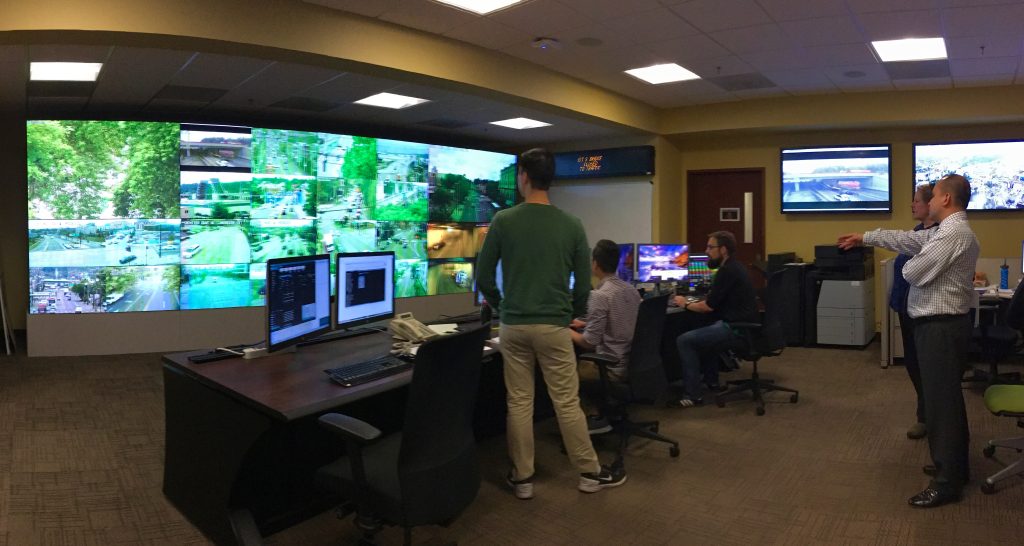
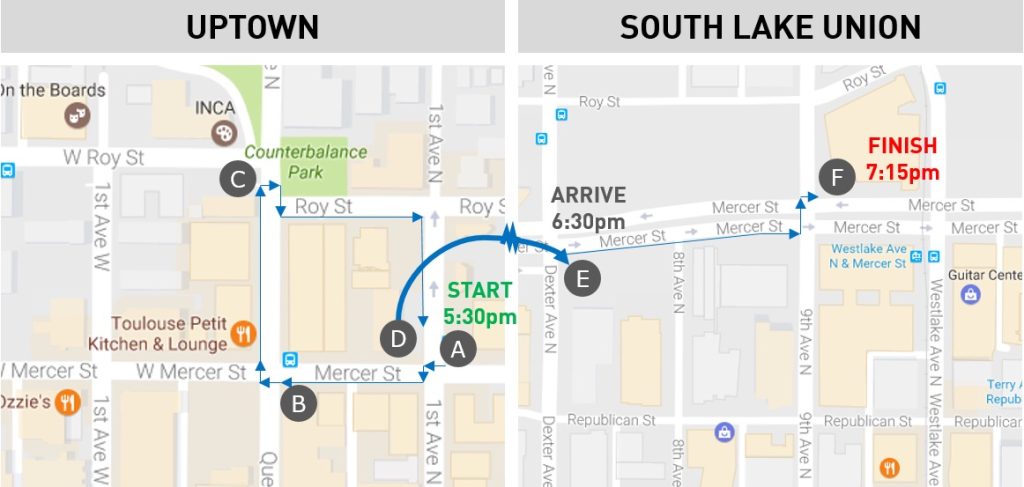
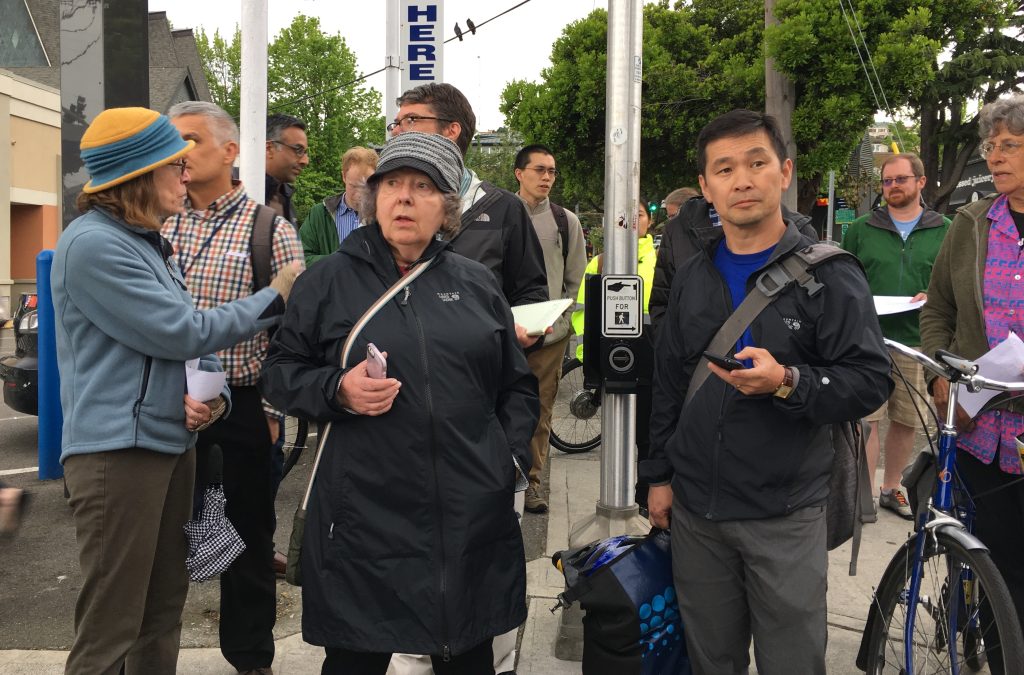



 When President Donald Trump announced on June 1 that he had decided to withdraw the United States from the Paris climate accord, he asserted that staying in the pact would prevent our nation from further developing its fossil fuel reserves. Critics understandably have called this a setback for global efforts to curb greenhouse gas pollution.
 When Nintendo used The Elder Scrolls V: Skyrim to tease it's new hybrid portable game console, a lot of us were left confused. Sure, portable Skyrim sounds great, but is it enough to get gamers to buy the game for a second, or even third time? No? Ho...




 Because people will literally call the police for anything (it's 9AM and McDonald's wont cook McNuggets!) , somebody in Newport, Oregon, allegedly (although I have my doubts) called 911 on an "armed cat" in a tree. No word if the caller was arrested for distracting police and wasting resources while I robbed a bank on the other side of town. Wait, what?


 Citymapper is known for its popular route-planning app that helps people get around town. This week, though, the company is taking a more active approach to transportation, operating an actual bus route in London. CMX1 will only run from Tuesday, May...


 And is this not as disturbing as it is funny? Especially when you consider that the machine minds are learning their way beyond our comprehension.