“Back in 2017, I made a ton of pussyhats,” Catherine Paul told me. “I just knitted pink hats like there was no tomorrow.”
At the time, Paul appreciated “the way that craft could be part of a demonstration of affiliation and belief,” the artist, writer, and longtime knitter told me.
Soon the pussyhat became a symbol of something else: a brand of feminism attuned to the concerns of a subset of middle-class, mostly white American women, and nobody else. By 2024, the hats, and the 2017 Women’s March at which many demonstrators wore them, were being held up as examples of ineffective protest. More than that, the hats came to be seen as cringe — not just exclusionary, but also kind of embarrassing.
Paul, for example, has been knitting red “Melt the ICE” hats, from a pattern sold by Minneapolis yarn shop Needle & Skein. Friends and acquaintances are begging her for the headwear, just as they did nearly 10 years ago.
Before I started reporting this story, I thought the rise of knitted and quilted protest under Trump 2.0 might be a sign of the left reembracing cringe — of a softening toward forms of political action once deemed uncool and annoying (and, not coincidentally, feminine). But in talking to artists and scholars about craftivism right now, I’ve come to think the explanation for its popularity is both more complicated and simpler.
“The news is so ugly all the time, you can’t really find peace,” Needle & Skein owner Gilah Mashaal told me. “So what do you do? You find people and you do things with those people. And since we’re crafters, that’s what we’re doing.”
As thousands of ICE agents swarmed Minneapolis earlier this year, “my regular knitters were all feeling kind of desperate and unsure of what we could do,” Mashaal said. Employee Paul Neary had the idea to create a pattern inspired by Norwegian anti-Nazi hats called “nisselue.”
Neary posted the pattern for the “Melt the ICE” hat on knitting website Ravelry in January, charging $5 per download, with all proceeds going to immigrant aid agencies. As Mashaal recalls, the Needle & Skein team thought, “maybe we’ll raise a couple thousand dollars.”
But the pattern quickly rocketed to the top of Ravelry’s most-popular list, where it’s stayed ever since. People from 44 countries have purchased it, generating at least $720,000 for immigrant aid groups, Mashaal told me.
Meanwhile, at this year’s QuiltCon, billed as the largest modern quilting event in the world, anti-ICE quilts grabbed attention, bearing messages like, “Our government abducted hundreds of people based on race while I made this.” Anti-ICE quilts are also blowing up on Reddit, where one user recently shared a quilt reading, “Japanese American families remember: We were taken from our communities too.”
Beyond the needle and thread, nail artists are showing off “FUCK ICE” manicures. And anti-ICE artwork is cropping up on shirts, stickers, and other accoutrements of daily life. When Nadia Brown’s students at Georgetown University open up their textbooks, she sees anti-ICE bookmarks inside, the government professor told me.
Using handicrafts to send a message is far from new. Leading up to the American Revolution, women in the American colonies boycotted British textiles and staged spinning bees “in which they spun wool and flax yarn to make cloth called homespun,” Shirley Wajda, a curator and historian of material culture, told me in an email.
Story quilts — visual narratives sewn in fabric — have been popular in Black communities for generations. “During slavery, when African Americans were not allowed to learn how to read and write, it was an easy way to tell stories,” Carolyn Mazloomi, an artist and curator, told me.
Such art forms never left the American landscape — artists like Faith Ringgold have brought story quilts, often with political and social themes, to the walls of museums and the pages of beloved children’s books.
“Yes, knitting a hat is performative. But it’s also a way to show your anger, fear, frustration, rage, care.”
Gilah Mashaal, owner of Needle & Skein
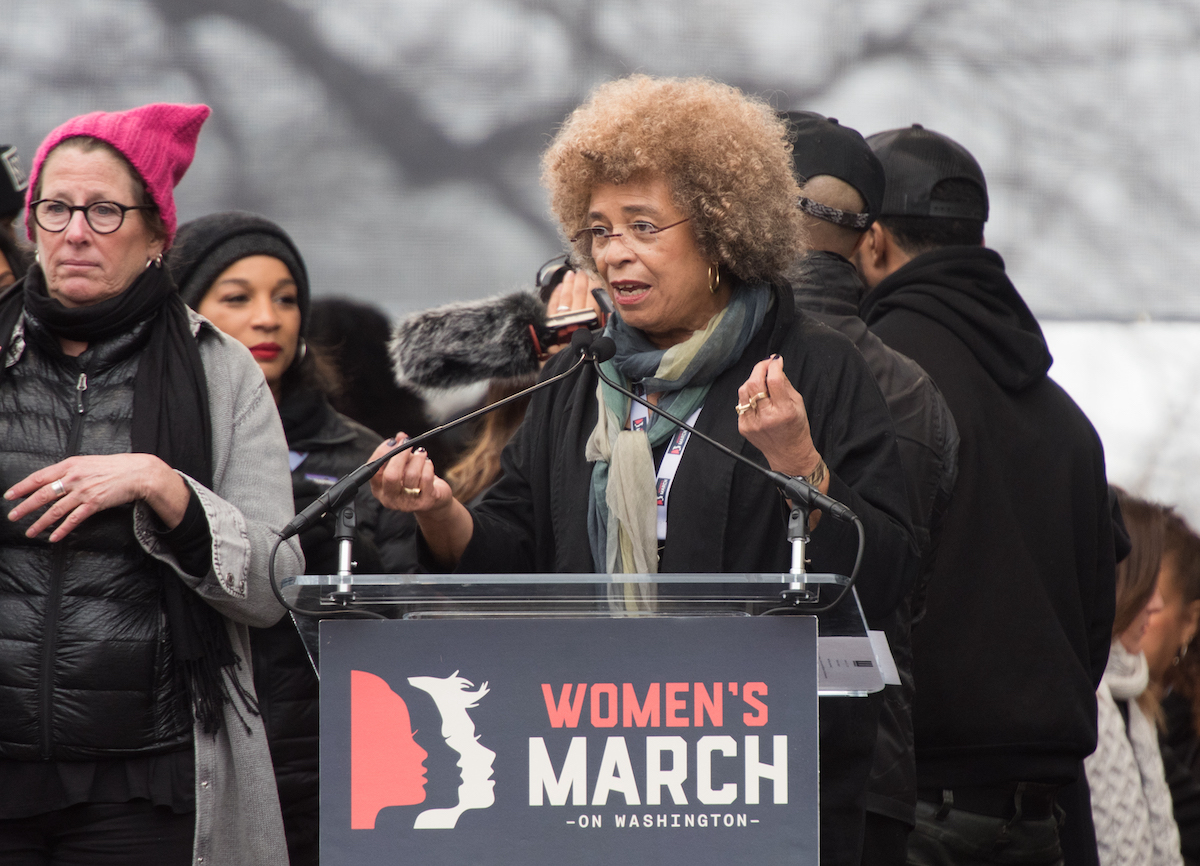
But political crafting gained a new level of media attention — and notoriety — in the wake of Trump’s first election. Photos of the 2017 Women’s March were a sea of pink, as demonstrators donned headwear knitted in response to Donald Trump’s comments about grabbing women “by the pussy.” But the march soon became controversial — though the Washington, DC, event boasted high-profile speakers who were women of color, most attendees were white. Many women of color felt pushed out of the march and the larger movement that — kind of — grew up around it.
Organizer ShiShi Rose, for example, worked on the first march and wrote a widely read Facebook post calling on white would-be marchers to pay attention to the experiences of Americans of color. In return, she got death threats, from which she said the Women’s March organization did little to shield her.
The pink hats became, for some, a symbol of this exclusion, even their color and shape appearing to represent white, cis women’s anatomy (knitters have since said the hats were supposed to look like cat ears, not vulvas).
When Trump was elected a second time, even some who marched enthusiastically in 2017 began to wonder if their efforts had been for nought. Meanwhile, concerns that started with women of color were appropriated first by liberal white men and then by conservatives, until questions about a movement’s racial inclusivity became a kind of all-purpose derision. As my colleague Constance Grady has written, “who wanted to be like those awful women with the pink hats? Everyone knew they were cringey and unfashionable, complaining over nothing.”
Given all this, it’s been a surprise to see the return of knitted headwear. But for Brown, today’s anti-ICE art- and craftworks aren’t cringe in the same way. Unlike 10 years ago, “there’s a very specific outrage around what’s happening now with ICE, and there are direct calls for policies that would make immigration more functional,” she said. The Women’s March was far less specific and targeted.
What’s more, anti-ICE art spans demographics. When it comes to stickers and other paraphernalia, “I see older people wearing them,” Brown said. “My college students are wearing them of every ethnicity, of every race. People are just outraged.”
In trying to represent the anger of all women nationwide, the Women’s March was doomed, on a certain level, to fail. The resistance against ICE in 2026, however, is famouslyhyperlocal, and craftivism is no exception.
Pussyhats were about “fighting against and showing our distaste for the man that the country elected,” Mashaal said. With Melt the ICE hats, “we’re raising money to help our friends and neighbors.”
Neighborliness is emerging as a key value in the resistance to ICE. “What authoritarian regimes want to do is make people suspicious of their neighbors,” Brown said. Crafting, by contrast, brings neighbors together over a shared activity that helps them get past their fears and suspicions: “Building community in a way that gets you out of your head and working with your hands is an effective tool.”
No protest is immune to criticism, and some have argued that the Melt the ICE hats are little more than performative virtue-signaling, especially if people knit them without paying for the pattern.
“Yes, knitting a hat is performative,” Mashaal said. “But it’s also a way to show your anger, fear, frustration, rage, care.”
I started this story thinking it was about the state of feminized forms of activism in 2026. I’m ending it thinking that a lot of the questions opened up by the Women’s March — whether it’s even possible to have a truly inclusive “women’s movement” in America, for example — haven’t been answered yet. Maybe now is not the time to answer them. Maybe now is the time for something smaller-scale — the size, say, of a pair of knitting needles or a sewing machine.
In addition to her Melt the ICE hats, Paul recently completed a quilt that reads, “Fuck it we ball.” “I wanted that persistence, a reminder of the way that craft can help us persist,” she told me.
Wajda, the historian and author, is thinking about the coming spring. “Pussyhats and Melt the ICE hats have one thing in common: They are winter wear,” she told me. “Now I’m thinking about what would a craftivist create for warm weather protests!”
Mazloomi, the artist and curator, has been working for the last several years on a series of quilts about African American history, with a concentration on the civil rights era. “The stories have disappeared from the news, disappeared from museums and art centers, and I don’t want to see that happen,” she said.
Quilts remind people of “home and grandma,” Mazloomi said. “It’s a soft cushion for difficult stories.”
This story was originally published in The Highlight, Vox’s member-exclusive magazine. To get access to member-exclusive stories every month, become a Vox Member today.
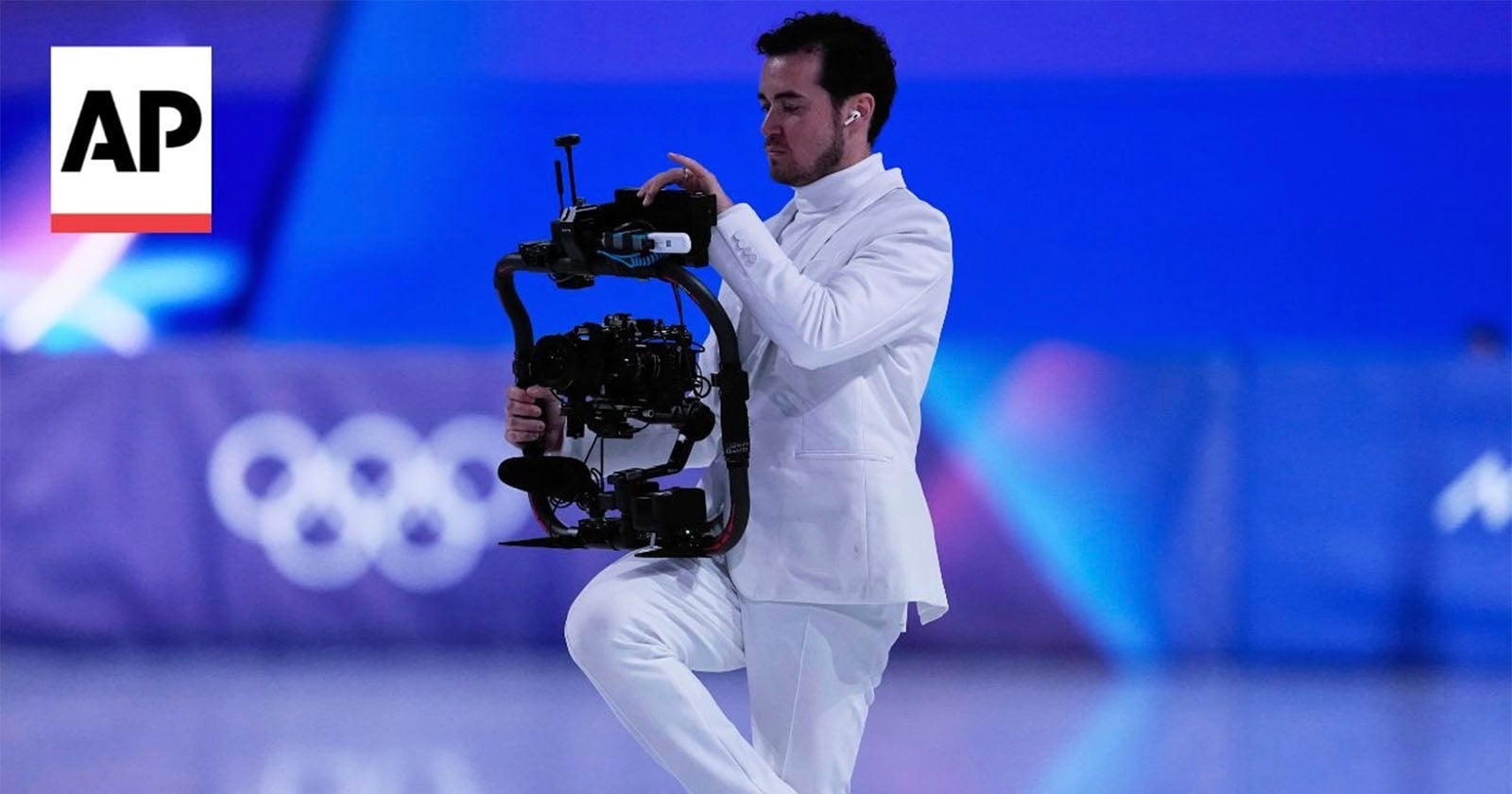
Photographers have to back up sometimes to get the shot; it can lead to mishaps. But imagine skating backwards with a full camera rig? That's what record-setting Jordan Cowan is doing at the Winter Olympics.
A recent Amazon Web Services (AWS) outage that lasted 13 hours was reportedly caused by one of its own AI tools, according to reporting by Financial Times. This happened in December after engineers deployed the Kiro AI coding tool to make certain changes, say four people familiar with the matter.
Kiro is an agentic tool, meaning it can take autonomous actions on behalf of users. In this case, the bot reportedly determined that it needed to "delete and recreate the environment." This is what allegedly led to the lengthy outage that primarily impacted China.
Amazon says it was merely a "coincidence that AI tools were involved" and that "the same issue could occur with any developer tool or manual action." The company blamed the outage on "user error, not AI error." It said that by default the Kiro tool “requests authorization before taking any action” but that the staffer involved in the December incident had "broader permissions than expected — a user access control issue, not an AI autonomy issue."
Multiple Amazon employees spoke to Financial Times and noted that this was "at least" the second occasion in recent months in which the company's AI tools were at the center of a service disruption. "The outages were small but entirely foreseeable," said one senior AWS employee.
A builder shares why their workflow finally clicked.
Instead of jumping straight to code, the IDE pushed them to start with specs. ✔️ Clear requirements. ✔️ Acceptance criteria. ✔️ Traceable tasks.
The company launched Kiro in July and has since pushed employees into using the tool. Leadership set an 80 percent weekly use goal and has been closely tracking adoption rates. Amazon also sells access to the agentic tool for a monthly subscription fee.
However, Amazon disagrees with the characterization of certain products and services being unavailable as an outage. In response to the Financial Times report, the company shared the following statement, which it also published on its news blog:
We want to address the inaccuracies in the Financial Times' reporting yesterday. The brief service interruption they reported on was the result of user error—specifically misconfigured access controls—not AI as the story claims.
The disruption was an extremely limited event last December affecting a single service (AWS Cost Explorer—which helps customers visualize, understand, and manage AWS costs and usage over time) in one of our 39 Geographic Regions around the world. It did not impact compute, storage, database, AI technologies, or any other of the hundreds of services that we run. The issue stemmed from a misconfigured role—the same issue that could occur with any developer tool (AI powered or not) or manual action. We did not receive any customer inquiries regarding the interruption. We implemented numerous safeguards to prevent this from happening again—not because the event had a big impact (it didn't), but because we insist on learning from our operational experience to improve our security and resilience. Additional safeguards include mandatory peer review for production access. While operational incidents involving misconfigured access controls can occur with any developer tool—AI-powered or not—we think it is important to learn from these experiences. The Financial Times' claim that a second event impacted AWS is entirely false.
For more than two decades, Amazon has achieved high operational excellence with our Correction of Error (COE) process. We review these together so that we can learn from any incident, irrespective of customer impact, to address issues before their potential impact grows larger.
Update, February 21 2026, 11:58AM ET: This story has been updated to include Amazon's full statement in response to the Financial Times report.
This article originally appeared on Engadget at https://www.engadget.com/ai/13-hour-aws-outage-reportedly-caused-by-amazons-own-ai-tools-170930190.html?src=rss
The United States has officially traded its democracy credentials for the banana republic starter pack, and there do not appear to be any safeguards left to get us back on the rails. Dean Blundell shares a disturbing report and itemized list of where the United States has gone, and is going, wrong. — Read the rest
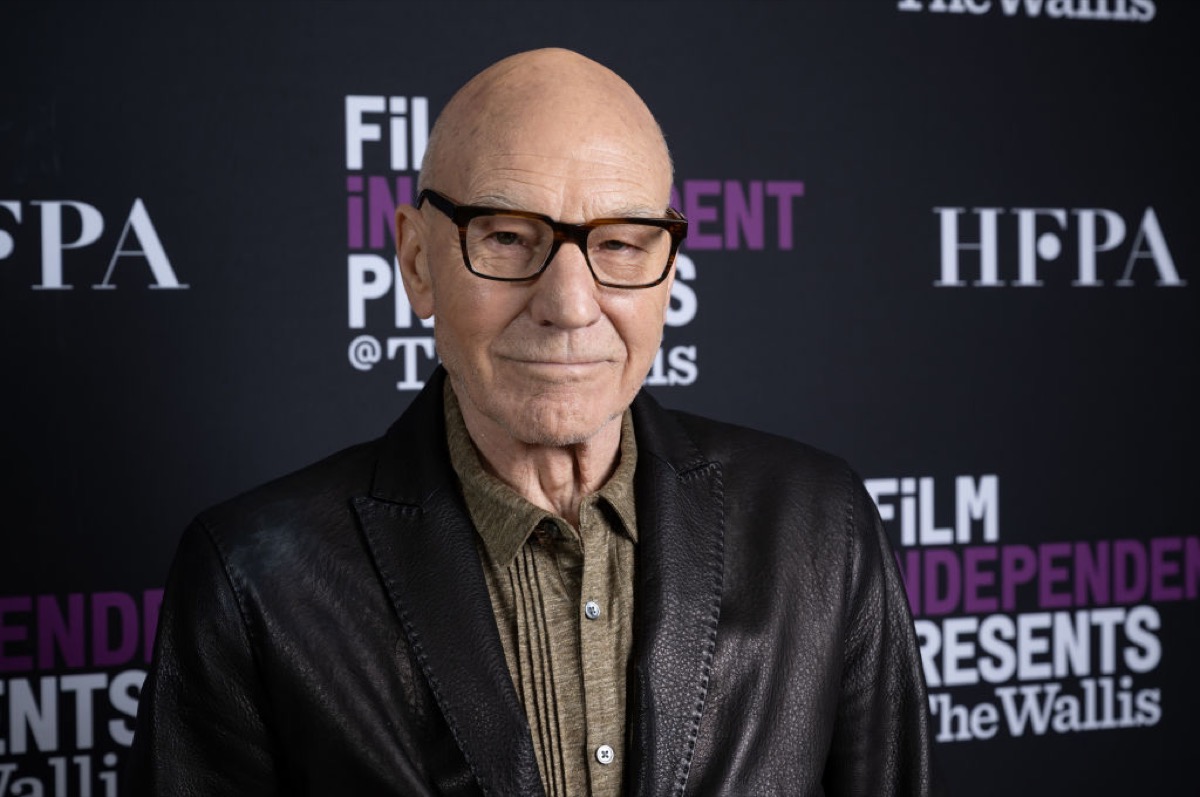
Christmas came early for “avid trainspotter” Sir Patrick Stewart this year, with Santa Claus fulfilling P Stew’s one request for his book tour: riding in trains!
“As I wrote my memoir, I so enjoyed remembering the thrill of spotting trains with my brother Trevor and friend Bryan as Yorkshire boys (read and learn all about it in Chapter One of Making It So),” Stewart said in a video on TikTok earlier this month about riding Amtrak’s flagship high-speed passenger service, the Acela Train “from NYC ➡️ PHL ➡️ DC!”
When I decided to read every word of California’s 1,000-page proposal to transform math education in public schools, I learned that even speculative and unproved ideas can end up as official instructional policy. In 2021, the state released a draft of the California Mathematics Framework, whose authors were promising to open up new pathways into science and tech careers for students who might otherwise be left behind. At the time, news reports highlighted features of the CMF that struck me as dubious. That draft explicitly promoted the San Francisco Unified School District’s policy of banishing Algebra I from middle school—a policy grounded in the belief that teaching the subject only in high school would give all students the same opportunities for future success. The document also made a broad presumption that tweaking the content and timing of the math curriculum, rather than more effective teaching of the existing one, was the best way to fix achievement gaps among demographic groups. Unfortunately, the sheer size of the sprawling document discouraged serious public scrutiny.
I am a professional mathematician, a graduate of the public schools of a middle-class community in New York, and the son of a high-school math teacher. I have been the director of undergraduate studies in math at Stanford University for a decade. When California released a revised draft of the math framework last year, I decided someone should read the whole thing, so I dove in. Sometimes, as I pored over the CMF, I could scarcely believe what I was reading. The document cited research that hadn’t been peer-reviewed; justified sweeping generalizations by referencing small, tightly focused studies or even unrelated research; and described some papers as reaching nearly the opposite conclusions from what they actually say.
The document tried hard to convince readers that it was based on a serious reading of neuroscience research. The first chapter, for example, cited two articles to claim that “the highest achieving people have more interconnected brains,” implying that this has something to do with learning math. But neither paper says anything about math education.
The CMF is meant only to guide local districts, but in practice it influences the choices they make about what and how to teach. Even so, the version ultimately adopted by the State Board of Education is likely to distort math instruction for years to come. Armed with trendy buzzwords and false promises of greater equity, California is promoting an approach to math instruction that’s likely to reduce opportunities for disadvantaged students—in the state and wherever else educators follow the state’s lead.
In my position at Stanford, I’ve heard from people around the country about the math preparation necessary to attain a variety of degrees and succeed in a range of careers. A solid grounding in math from high school—which traditionally has included two years of algebra, a year of geometry, and then, for more advanced students, other coursework leading up to calculus—is a prerequisite for a four-year college degree in data science, computer science, economics, and other quantitative fields. Such a degree is, in turn, the price of entry for jobs not only in the sciences and Silicon Valley but also in a number of seemingly distant fields. A data scientist at a company that makes decisions about how and when to store, freeze, and transport food once told me that he and his crew “could not do our jobs” without fluency in areas of college-level math that require previous mastery of the basics.
Without overtly saying so, California is building off-ramps from that kind of math. The CMF pitches relatively new courses, branded as “data science,” both as an alternative to a second year of algebra and as an entry point into fast-growing career fields. But the course name is something of a misnomer.
In private industry and higher ed, data science describes a powerful synthesis of computer science, mathematics, and statistics that seeks to extract insights from large data sets. It has applications in industries as varied as health care, retail, and, yes, food-supply logistics. The ability to do actual data science rests on math skills that have been taught for eons. Data literacy would be a better name for the most widely taught high-school data-science classes, which were developed by UCLA’s statistics department and my own university’s Graduate School of Education. To be sure, schools should be teaching citizens enough about statistics and data to follow the news and make educated financial and health decisions. Many parts of the math curriculum can be illustrated with engaging contemporary data-oriented applications. But much as a music-appreciation course won’t teach you how to play a piano, data literacy is not data science.
Advocates of the new courses have suggested that they produce better outcomes for groups, such as girls and students of color, that are traditionally underrepresented in mathematics. But proponents should own up to the downstream effects: In practice, steering sophomores and juniors away from Algebra II forecloses the possibility of careers in certain fast-growing quantitative fields—which would seem to do the opposite of promoting equity. Many schools in Europe and Asia separate students into different career paths early on in their education, but a key goal of the American system has been to help students keep their options open. In other contexts, the CMF is notably skeptical of efforts to group students in math class according to ability, out of a fear that disadvantaged students will be placed in low-expectation tracks that they can never escape. But for some reason, shunting them away from advanced math is portrayed as progress. The STEM fields won’t increase their diversity through math classes that contain very little math.
Ultimately, I ended up submitting 170 pages of documentation about extensive flaws in the CMF draft that I read. I was hardly the only one finding fault. A multiracial national coalition of more than 1,700 quantitative experts from higher education and industry strongly objected to the early drafts. Faculty in the University of California and California State University systems wrote letters warning state officials against prematurely steering students away from algebra-intensive academic and career options. UC administrators had begun to allow data-literacy courses to fulfill Algebra II admissions requirements, but a faculty working group representing all campuses in the system voted unanimously this summer to reverse that policy.
Before the State Board of Education in California approved the third version of the CMF in July, officials did try to address some of its flaws. Although school officials in San Francisco had largely ignored parents who questioned the district’s policy against offering Algebra I in middle school, critics refused to give up, and for good reason. A recent working paper from three Stanford researchers indicates that the San Francisco Unified School District’s decade-long experiment was a bust. The percentage of Black and Latino students taking advanced math courses did not increase. Some students who would otherwise have studied calculus as high-school seniors were unable to do so. The kids who succeeded in reaching calculus typically did so through extracurricular measures, such as summer classes. Later CMF drafts quietly removed the mention of the SFUSD policy while still generally endorsing the ideas behind it.
Meanwhile, the ideas that animate the CMF—particularly its endorsement of data-literacy classes as a substitute for math and its suggestion that large swaths of the traditional high-school math curriculum are obsolete—are popping up in other states. In Ohio, for example, a menu of alternative math “pathways” in high school has been touted as providing entry into a variety of appealing and lucrative careers. But the pathways labeled for data science and computer science remove many Algebra II skills; the fine print reveals that the pathways are inadequate for students who might want college degrees in those fields. School officials in Middletown, Connecticut, have proposed to revamp the traditional calculus track by scaling back on preparations for eighth-grade Algebra I and introducing mash-up algebra-and-geometry courses that would magically pack three years of instruction into two.
Unfortunately, not every state has a critical mass of academic experts and private-sector tech practitioners to push back when school systems try to rebrand an inferior math education as something new and innovative. The students who are most reliant upon public schools are the most harmed when districts embrace policies based on superficial appeals to equity or false promises about future job opportunities. When only the children of families with resources beyond the public schools are gaining preparation for the lucrative degrees and secure jobs of the future, public education is failing in a primary duty.
If you had never spent time in a large U.S. city and everything you knew came from Fox News segments, you might have an extremely dystopian vision of urban life: one where people are mugged and carjacked on poorly lit Batman movie sets, gas stations and storefronts are torched and looted by “woke mobs,” and drug kingpins in drag are hanging out on street corners, offering fentanyl-laced candies to passing kindergartners.
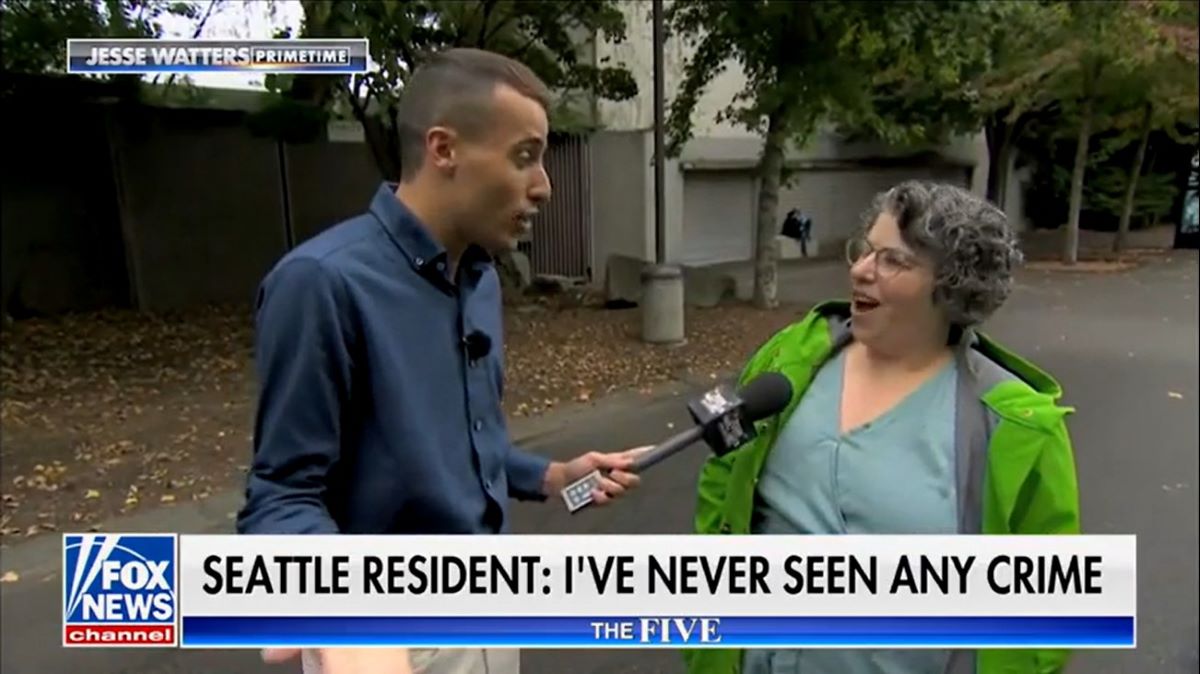
Having fully bought into their own narrative about the crime wave afflicting blue cities, and supposedly only blue cities, Fox News sent reporter Johnny Belisario out to talk to some real Seattle residents about what it’s like to dodge bullets and fight off carjackers on a daily basis. In a segment that began with the confusingly worded chyron “Crime and Drugs Are Now Expectations in Dem Cities,” Belisario bravely walked the streets of the “progressive hellscape,” as host Jeanine Pirro called it. He did not find what he expected, though, as everyone he met countered and ridiculed his absurd preconceptions.
It is quite incredible to me how, over the last five years or so, the California legislature has pushed over a dozen absolutely horrific, dangerous (and often unconstitutional) laws to completely undermine the very principles of an open internet… and it gets basically no attention at all.
Last year, it felt like we at Techdirt were the only news site covering a slate of absolutely horrific bills. And, of the two that got through, AB 2273 (the “age appropriate design code”) and AB 587 (the social media “transparency” bill) are both facing constitutional challenges, with 2273 already being declared obviously unconstitutional under the 1st Amendment.
The California legislature could have saved itself a lot of nonsense and trouble if it had just listened to us last year when we highlighted the problems with both bills.
This year, we’ve been covering even more bills, including SB 680 (on “social media addiction,” which is just a rewrite of a different bill from last year that didn’t pass) and AB 1394, which can be described as a kind of mini-California FOSTA, in which there is a private right of action, allowing anyone to sue social media companies for any child sexual abuse material (CSAM) that shows up on their platforms. Thankfully, SB 680 didn’t move forward. But 1394 did.
As we explained a few weeks ago, this bill gets everything exactly backwards, and will make the problems of CSAM on websites inevitably worse. I won’t go through all of the arguments all over again, but I’ll just highlight the most egregious: the law puts liability on websites for “knowingly” aiding and abetting CSAM on their platforms. The 1st Amendment requires that knowingly standard, but what you’ve now done is create very strong incentives for websites to stop fighting CSAM. Because if they’re fighting it, they are admitting they know that it happens, and that puts them in liability because of this stupid, stupid bill.
It’s a dangerous bill. We’ve already seen how a similar system works in FOSTA around “sex trafficking,” which resulted in the shutting down of all sorts of vital resources for sex workers. And now, with 1394, you can expect that all sorts of vital assets to help the victims of CSAM are about to shut down as well.
So, of course, California passed the bill, and Gavin Newsom is expected to sign it any day now. Great job California: you just made it harder to fight CSAM. I hope Newsom and bill sponsors Buffy Wicks and Heath Flora are proud of this disastrous bill.
And, yet, this bill got basically no media attention at all. We wrote our article about it. John Perrino, from the Stanford Internet Observatory, wrote an article at Tech Policy Press noting that “nobody seems to be talking about” this bill, which could have huge ramifications for the internet.
We’re just one tiny media site on the internet with basically no budget. Contrary to the claims of some rather annoyingly wrong people, we’re not funded by “big tech” and we’re not “big tech lobbyists.” Indeed, I’d prefer that we returned to a world of highly competitive, decentralized “little” or even “personal” tech over “big tech” any day. But these kinds of bills are going to make that impossible.
The media critique of these bills shouldn’t fall on our overworked shoulders. And yet it does. And that makes me feel like we failed with this one. We wrote the one article about it and it seems like it wasn’t nearly enough to raise the alarm before this bill got passed. Gavin Newsom could still veto it, but everyone tells me that he’s eager to sign it, just like he was eager to sign the Age Appropriate Design Code that just got declared unconstitutional.
And that’s because when it got declared unconstitutional there’s no one in the media in Sacramento to go back to Newsom and ask him: “Hey, why did you sign that obviously unconstitutional bill that Techdirt called out as unconstitutional?” Instead, everyone forgets that Newsom not only eagerly signed the bill, but literally begged NetChoice not to sue over the bill, even though a judge has properly called out the myriad problems with the bill.
When we let politicians like Buffy Wicks and Gavin Newsom keep passing and signing unconstitutional problematic bills, and never go back and ask them why they did so — especially when the problems of those bills were not just clear, but clearly highlighted by some of us — we simply encourage more of the same nonsense, and a quicker demise to the open web.
And that only works to “big tech’s” advantage. Google and Meta have buildings full of lawyers. They really don’t care about these bills. They can handle them. These laws create larger problems for everyone else instead, and leave Google and Meta in control over the the internet, rather than letting us take back our own internet.
It’s always election season in America. Dozens of local contests are taking place across the country this month, from Montgomery, Alabama to the Mariana Ranchos County Water District in California. On August 8 alone, Custer County, Colorado held a recall election for a county commissioner; Ohio asked residents to consider a major ballot measure; and voters in Oklahoma weighed in on several ballot measures.
America has roughly 90,000 local governing bodies, and states do not—at least publicly—track all of the elections taking place on their watch, making an exhaustive accounting nearly impossible. In many cases, contests come and go without any local media coverage, either. I came across a notice for an August 29 election in Marin County, California. When I called the Registrar of Voters for more information, the county assistant had to search a few moments before he could tell me that the town of Tiburon (population 9,000) was selecting a short-term council member.
Americans are used to pundits and civic leaders shaming them for low-turnout elections, as if they had failed a test of civic character. Voters are apathetic, parties don’t bother with the hard work of mobilization, and candidates are boring—or so the story goes. But this argument gets the problem exactly backwards. In America, voters don’t do too little; the system demands too much. We have too many elections, for too many offices, on too many days. We have turned the role of citizen into a full-time, unpaid job. Disinterest is the predictable, even rational response.
“One of the unique aspects of the electoral process in the United States is the sheer number of decisions American voters are asked to make when they go to the polls,” three political scientists argued at the turn of the millennium. “In any single election, American voters face much higher information costs than the citizens of almost any other democracy in the world.”
These information costs are immense. Americans are asked to fill numerous and obscure executive, legislative, and judicial positions, and to decide arcane matters of policy, not just on the first Tuesday in November but throughout the year.
How are we expected to know how the roles of our mayors and city councils are distinct from the roles of county executives, county council members, treasurers, controllers, and boards of supervisors? On what basis should we choose our coroners, zoning commissioners, or commissioners of revenue? Who should we punish when things go wrong? Reward when things go right?
And how can we keep up with the details of hopelessly complicated policy questions? Ohio’s aforementioned August 8 ballot measure proposed raising the threshold for changing the state constitution. It failed 57 to 43 percent, or roughly 1,700,000 to 1,300,000. This apparent matter of process attracted an unusually large number of voters because Ohioans understood that they were engaging in a proxy fight over abortion; advocates expended significant time and energy to explain to the general public what the ballot measure was really about.
Usually, however, voters are expected to puzzle out even quite complicated issues without the benefit of a government-sponsored education campaign or significant explanatory reporting. In 2022, Georgia voters were asked to approve a statewide ad valorem tax exemption for certain equipment used by timber producers. California has repeatedly asked citizens to vote on regulatory requirements for kidney-dialysis clinics.
Americans are asked to vote too much, and Americans are asked to vote too often. One of the most pernicious ways politicians overburden voters is by holding off-cycle elections. Making time to vote is harder for some people than others; it’s harder for people with inflexible job schedules and needy dependents, for instance. Employers are used to making accommodations for presidential elections—but some random election over the summer? Hardly. As a result, off-cycle local elections are heavily weighted toward higher-income voters, more so than are statewide and national elections.
They’re also heavily weighted toward senior citizens: The most important factor for predicting who votes in city elections is not class or education or race, but age. An analysis by Portland State University’s “Who Votes for Mayor?” project found that people over the age of 65 who live in the poorest, least educated parts of a city typically vote two to five times more frequently than 18-to-34-year-olds in the most educated, affluent parts of a city. Overall, city residents 65 and older were 15 times more likely to vote than those ages 18 to 34.
Ohio Republicans knewthat by scheduling the constitutional ballot measure in August, they could dampen turnout and benefit their side. Ohio Secretary of State Frank LaRose, a Republican, had vocally opposed off-cycle elections as recently as December 2021. While testifying in a legislative hearing, he’d pointed to the record voter turnout in November 2020, when “74 percent of all registered voters made their voice heard.” Off-cycle elections, LaRose warned, mean that “just a handful of voters end up making big decisions.” He argued persuasively that “the side that wins is often the one that has a vested interest in the passage of the issue up for consideration. This isn’t how democracy is supposed to work.” State Republicans voted last year to eliminate most August special elections.
But LaRose, who declared his candidacy for the U.S. Senate last month, supported the timing of the August 8 ballot measure, arguing that a statewide issue is “very different” and “not unusual.” According to local Ohio reporting, “There have been only two August statewide votes regarding the constitution”: in 1874 and 1926.
Nostalgic political commentators long for the bygone days when American democracy still worked. But election-timing manipulation has always been a feature of American local politics. The UC Berkeley political scientist Sarah Anzia looked at the timing of local elections in New York, San Francisco, and Philadelphia over the course of the 19th century and concluded, “Election timing manipulation was a common event.” Politicians exploited timing as a way to “exert some control over the electorate.”
For example, in 1857, New York’s nativist Know-Nothing Party and its Republican Party, which controlled the state legislature, bumped the city’s voting schedule so that municipal elections would no longer take place alongside federal ones, but a month later, in December. All of the Democrats voted against the change in part because they feared that it would hurt their mayoral candidate’s chances. (City Democrats knew their voters would show up for state and national elections, but that in a lower-turnout environment, their opponents could out-organize them.) They were right to be scared: Their mayoral candidate lost that very same year.
Off-cycle elections continued, and voter turnout in the city’s elections “consistently fell far below turnout levels in gubernatorial and presidential elections,” according to Anzia. By 1868, more than 155,000 votes were cast for governor in the November statewide election; a month later, just 96,000 people turned out for the mayoral contest. When the city went back on-cycle in the 1870s, voter turnout for the mayor’s and governor’s races reached near parity.
America’s voting problem is primarily a local one. When compared with that of peer nations, our general-election turnout is actually middle-of-the-pack. And although more voting at the federal level is desirable, some political-science research casts doubt on whether the results of national elections would significantly change if everybody showed up. Not so in local elections, where the electorate is remarkably unrepresentative.
In 2020, the year before that dismal local turnout in North Carolina, about 75 percent of voters—five times as many people—turned out for the general election and statewide contests. And in 2022, 51 percent of registered voters, or nearly three and a half times as many people as the previous year, turned out for the statewide election. The “Who Votes for Mayor?” project examined 23 million voting records in local elections across 50 cities, and came away with alarming findings: In 10 of America’s 30 largest cities, turnout didn’t exceed 15 percent. In Las Vegas, Fort Worth, and Dallas, turnout was in the single digits. Portland, Oregon, was the only city in the sample that saw the majority of its registered voters turn out, probably because Portland regularly votes for mayor on the federal-election holiday in November. The city’s special elections are more in line with national trends: In November 2019 and May 2023, voter turnout was only about 30 percent.
The failed Ohio ballot measure is an instructive case study in the low expectations Americans have for voter engagement. In the days following the election, newspapers proclaimed it a “boost for democracy.” A Columbus Dispatch article noted “high participation” and quoted a spokesperson for the Association of Elected Officials who marveled that “so many people turn[ed] out,” deeming the results “the will of the people.”
Relative to other ballot measures, sure. But only about 38 percent of Ohio’s registered voters cast a ballot, a proportion that shrinks to roughly 34 percent when you include all citizens of voting age. Regardless of whether you support the outcome, is it laudable that, on major questions, just a third of voters bother to weigh in?
The minority who do vote end up with disproportionate power. In Tarrant County, Texas, a judge recently told a meeting of the conservative True Texas Project how just 75 people could make a big difference in local elections where “the turnout is so low by percentage … By you bringing neighbors, friends, picking up the phone, doing postings on social media, there are races that, quite frankly, we ought not to be able to win that we can probably win just because we raise awareness and get people out.” At least two candidates endorsed by the True Texas Project ended up winning their races in Fort Worth. In a city of almost 1 million, fewer than 43,000 people cast ballots.
Aligning local elections with national ones would increase turnout and likely create a more representative electorate, but just filling out a ballot doesn’t constitute meaningful accountability. That’s in part because most races at the local level go uncontested: In 2020, 61 percent of city races and 78 percent of county races were uncontested, as were 62 percent of school-board races and 84 percent of judicial races. Even when a race is competitive, finding reliable information about local candidates can be nearly impossible, turning voting into an exercise in randomness or, at best, name recognition.
Incumbents have a staggering advantage in local races. In a 2009 paper, the legal academic Ronald Wright reviewed election data for prosecutors, a role that is both well understood and highly important to voters. (Public safety and crime regularly rank at the top of voters’ list of concerns.) Wright observed that when district attorneys run for reelection, they win 95 percent of the time and run unopposed in 85 percent of races.
This month alone, I found three elections in Delaware that were canceled because not enough people were running. In each case, the candidates who bothered to file simply ascended to their theoretically elected positions. In local government, elected office is apparently first come, first served.
Nature abhors a vacuum: Where voters disappear, special interests rush in. In the absence of regular voter direction, our local elected officials are not directionless. Instead of democracy, what we’ve got is government by homeowners’ associations, police unions, teachers’ unions, developers, chambers of commerce, environmental groups, and so forth.
“All is not well in local government, and it hasn’t been for some time,” Anzia writes in her book Local Interests. Anzia finds, unsurprisingly, that pressure from interest groups works. Political activity by police and firefighters’ unions correlates with greater spending on their salaries, and cities with more politically active police unions are less likely than cities with less active ones to have adopted body cameras. In cities with strong environmental groups, Anzia found, winning candidates are significantly less likely to favor policies conducive to economic growth. And in school districts where teachers’ unions are the dominant interest group, jurisdictions that hold off-cycle elections pay experienced teachers more than those that hold on-cycle elections.
These specific policies may be good or bad. That’s not the point. The point is that the government should act according to public need, not based on who has the money, time, and will to create and sustain an advocacy group.
Blaming the voters is easy: Democracy is on the line; people need to get up off their asses and vote! The problem isn’t the system; it’s the people. Maybe if they saw one more Instagram infographic or heard one more speech about the importance of civics, they would become regular voters.
Putting aside the moral status of nonvoters, this argument is pure fantasy. As the political scientist Robert Dahl once quipped, “Like other performers (including teachers, ministers, and actors), politicians and political activists are prone to overestimate the interest of the audience in their performance.”
Contrary to what good-government types may wish, few Americans want to be full-time political animals. Most of us have absolutely no desire to learn what our county commissioners or district attorneys are up to, let alone take on the Herculean task of evaluating their records. Effective representational government must empower voters to hold their elected officials accountable without sucking the life out of its citizens. Even the most dedicated participants in local politics aren’t experts in everything, just in the parts of local government that provide them with benefits they find meaningful.
When ordinary voters do show up in local politics, they’re not walking onto an even playing field. Individuals who become motivated to seek criminal-justice reform after an unjust killing by a police officer, or parents who feel compelled to change school curricula, are entering unfamiliar territory that has been landscaped by special interests. And elected officials know that a flurry of political activity can die out quickly, while interest-group activity remains constant.
When I ask local government officials about this problem, I usually hear denial or resignation. “Nonsense,” Kevin Bommer, the executive director of the Colorado Municipal League, told me a few months ago when I asked him whether he worries that low voter turnout yields an unrepresentative government. He suggested that this view calls “into question not only the legitimacy of a municipal election but the integrity of the people elected, as if they don’t represent their community. Those are the things that academics and people say that have never been to a city-council meeting and don’t go to planning-commission meetings.”
I don’t doubt that most local officials have integrity. Many if not most of the local officials I’ve spoken with are kind, hardworking, and genuinely committed citizens. They are pledging their efforts for very few benefits and are forced to face ire and controversy as they serve their communities. But our system shouldn’t depend on the benevolence of local officials. In a healthy democracy, it should depend on the electorate holding local officials accountable through the ballot box.
Giving power to the people is sometimes conflated with giving people more access to government decision making through, say, community meetings or ballot measures. But if only a small, unrepresentative group of people are willing to be full-time democrats, then that extra ballot measure, election, or public meeting isn’t more democracy; it’s less. Most of us are part-time democrats. That’s not going to change, and political hobbyists should stop expecting it to.
oyal Mail has today revealed eight Special Stamps they are issuing to celebrate Terry Pratchett's Discworld series, making the 40th anniversary of The Colour of Magic, his first book in the series.
British baker Kim-Joy first came to prominence on the 2018 season of The Great British Bake-Off, where she was one of the two runner-ups for the season. While she's written severalcookbooks since then — even teamed up with Skybound for a cooperative baking-themed card game — her newest project takes a much more interesting turn. — Read the rest
Mary Quant’s candy-colored fashions so successfully defined the “London Look” of the Swinging ’60s that it’s hard to believe the designer outlived her heyday by several decades, dying yesterday at the age of 93. Her passing—at a time when reproductive rightsare being threatened across the U.S.—feels like not just a loss to the fashion world but also the final salvo of the sexual revolution, which she championed.
Quant is best remembered for the miniskirt, which she popularized, though she did not profess to be its inventor. The French couturier André Courrèges claimed that title after including miniskirts in a collection he showed in Paris in April 1964. But by that time, Quant was already wearing them and selling them in her boutique, Bazaar, which she’d opened in London’s bohemian Chelsea neighborhood in 1955. She always insisted that “it wasn’t me or Courrèges who invented the miniskirt anyway. It was the girls in the street who did it.” Quant likely coined the name, however; her favorite car was the Mini Cooper.
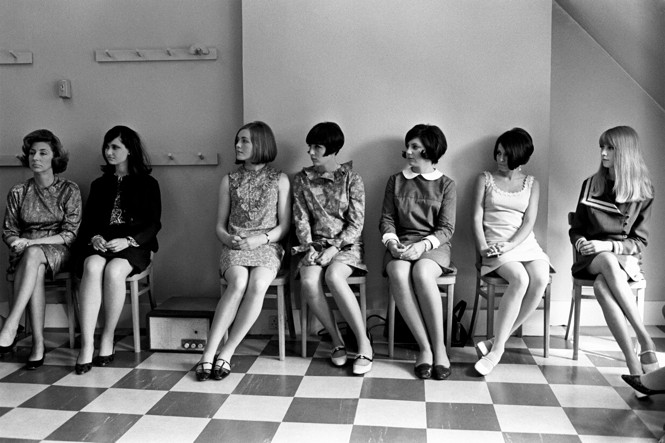
Although the miniskirt was certainly shocking, it was never intended to be sexy; the glamazon in high heels, a push-up bra, and a short, tight skirt is a relatively recent cliché. The miniskirt’s point was not to bare women’s legs but to liberate them from the long skirts, stockings, garters, girdles, and petticoats of the 1950s. As Quant put it, a woman should to be able to run to catch a bus. The mini was always paired with flats rather than heels, the wearer’s legs often covered by boots and colorful tights, which Quant sourced from theatrical costumers. With their simple A-line silhouettes and playful, almost juvenile styling—ruffles, bows, polka dots, Peter Pan collars—Quant’s minidresses looked like something you’d find in the children’s department.
Mario De Biasi / Mondadori / Getty
The mini’s power—and danger—lay not in what it revealed but in what it represented: youth itself. The postwar Baby Boom had created a “youthquake”; by the mid-’60s, roughly 40 percent of Britons were under 25, and other countries experienced similarly seismic demographic shifts. After years of wartime austerity that dragged on long after the armistice, the British economy was finally booming too. With military service no longer compulsory, the younger generations had more time as well as more money than teenagers of the past. These social movements found expression in Quant’s far-out fashions. “There was a time when every girl under twenty yearned to look like an experienced, sophisticated thirty,” Quant wrote in her 1966 autobiography, Quant by Quant. Indeed, they had no choice. “Fashion in the late 1950s was definitely for thirty-year-olds and over,” Barbara Hulanicki—the owner of another seminal London boutique, Biba—complained in her own autobiography, From A to Biba. “To get yourself clad in something nice then seemed virtually impossible … There was little specially designed for the young.”
That was about to change. Quant’s clothes didn’t just look different; they challenged the very idea of fashion, making it more individual, upbeat, and democratic than French haute couture. In the anarchic spirit of the time, Quant broke all the rules, using formal fabrics for casual clothes, winter fabric for summer styles, menswear textiles for womenswear, and industrial elements such as vinyl, contrasting topstitching, and visible zipper pulls for streetwear. One red dress came with matching ruffled briefs; Quant’s iconic “skinny rib” sweater was inspired by an 8-year-old boy’s garment that she tried on for fun. The war had changed women’s priorities; although they enjoyed unprecedented opportunities and freedoms, they yearned for simpler times, even going back to childhood.
Among Quant’s many innovations, the mini cast the longest shadow. It was “the most self indulgent, optimistic ‘look at me, isn’t life wonderful’ fashion ever devised,” Quant wrote. “It expressed the sixties, the emancipation of women, the Pill and rock ‘n’ roll … It was the beginning of women’s lib.” The mini became the uniform of the sexual revolution. The actor Nichelle Nichols, who played the miniskirted chief communications officer Lieutenant Uhura on Star Trek, which premiered in 1966, remembered in her autobiography that “in later years, especially as the women’s movement took hold in the seventies, people began to ask me about my costume. Some thought it ‘demeaning’ for a woman in the command crew to be dressed so sexily.” Nichols found this surprising. “Contrary to what many may think today, no one really saw it as demeaning back then. In fact, the miniskirt was a symbol of sexual liberation.”
Like Coco Chanel, Quant designed for herself, and she was her own best advertisement. A young, opinionated working woman with an angular Vidal Sassoon five-point bob, she summed up her personal brand of feminism by declaring fashion to be “a tool to compete in life outside the home.” Quant studied art education, but instead of pursuing a teaching career as her parents had intended, she opened Bazaar, with the intent of selling other people’s clothing designs. But she became frustrated with the available options and began attending evening sewing classes so she could make her own merchandise. Whereas French couturiers such as Courrèges and Yves Saint Laurent used boutique as a synonym for ready-to-wear, British boutique culture was closer to today’s fast fashion. Bazaar’s stock was constantly refreshed, simply because the clothes sold as fast as Quant could make them.
The miniskirt had some notable detractors. Chanel hated it; so did Cecil Beaton and Norman Hartnell, Queen Elizabeth II’s dressmaker. By 1970, even Quant had embraced the maxi skirt, which appealed to her love of Victorian and Edwardian styles; she was a regular visitor to the Victoria and Albert Museum’s historic fashion galleries. Her fans grew up, grew out their Sassoon bobs, and began wearing a new, more down-to-earth “London Look”: flowing skirts in romantic floral textiles by designers such as Bill Gibb, Ossie Clark, Jean Muir, and Laura Ashley. But the miniskirt never truly went away, and it continues to serve as a barometer of social and sexual mores. Like its fans, Quant’s trademark had legs.
The question of whether you can bring your bicycle on your next Amtrak trip should be a simple one. But it isn’t because Amtrak doesn’t give a straightforward answer: Its rules vary widely from line to line, with some corridors taking a hard no policy, to a near limitless bounty of bike storage without fees or reservations required for others, to a strict disassembled storage in a checked box only or four bikes per train for large swaths of the country. (That’s four bikes for the entire train, not per car.)
Many cyclists and advocates find the differing policies frustrating. The four-bike maximum policy is the norm for many lines, even those that run parallel to some of the country’s best cycling and rail-to-trail infrastructure. The 150-mile Great Allegheny Passage from Pittsburgh to Washington, D.C., the 240-mile Katy Trail State Park across Missouri and the 24-mile Eastern Trail in Maine are all serviceable by train at either end if you’re lucky enough to secure a bike spot. Trains could also be used to access expansive, long-haul trail networks like the Cross Washington Mountain Bike Route, Oregon Outback and Eastern Divide Trail.
There’s a popular cycling path between Pittsburg and DC. But they only allow 4 bikes on each train. My wife and I had to rent a car rather than use Amtrak. ?
Creating opportunities for multimodal transportation could be one of the best ways for expanding rail use, but some Amtrak policies are standing in the way.
Natural allies
Capitol Corridor, the rail line between San Jose and Sacramento, is one such line where lenient bike policies and ample storage have been great for cycling. The headline of the web page on pairing bikes with train travel is titled “Bikes and Trains — The Perfect Match,” an astute assessment of how well these two transportation modes can complement the relative shortcomings of the other.
Commuters between Auburn, Sacramento, Oakland and San Jose can load up bikes for a quick train ride instead of spending hours in traffic. On arrival, they simply take down their bike from the rack and ride off to their next destination. Stops also include Santa Clara University, the Oakland Coliseum and Oakland Airport.
According to its own report, Capitol Corridor spent the five years preceding the pandemic breaking ridership records and generating $38 million in revenue. Unlike other Amtrak lines, the corridor is operated by the Capitol Corridor Joint Powers Authority, an independently elected board.
Remedying Exclusion
As companies like Patagonia, REI and The North Face double down on their commitments to promoting greater equity and inclusion in historically White sports, many recreational areas remain exclusively accessible by car. It’s an unfortunate irony that many of the sports beloved by outdoor enthusiasts and conservationists alike, including hiking and mountain biking, are overly dependent on car culture.
We know bikes are an important tool for mobility. Combining that access with rail-to-recreation destinations could be a way to help remedy outdoor exclusion.
The Empire Builder runs daily from Portland just an hour and half to Bingen, Washington, across the Columbia River from the popular outdoor destination of Hood River, Oregon. Hood River is known for its access to hiking trails and scenic waterfalls along the Columbia River Gorge, plus is home to world-class downhill mountain bike trails. But the Empire Builder is one such line that only allows bikes disassembled in a checked box, and the walk from the small town of Bingen to Hood River is four miles one way, with most trailheads even further on foot and often up steep inclines. The station itself lacks shelter or even rain cover, not exactly the kind of place you want to sprawl out and quickly assemble a bike.
Near St. Louis, Shepherd Mountain Bike Park has been a boon for mountain biking in the area. Many trail users make the 90-minute drive from the city. But the Texas Eagle line runs from downtown St. Louis to just two miles from the trailhead of the popular mountain bike park and nearby campground. The rural town station is also not far from three of Missouri’s most-visited state parks.
But like the Empire Builder, getting on and off the line quickly with a bike isn’t possible due to its policy, leaving would-be trail users with the option to drive if they can or not visit at all.
The good news is that you can easily access this trail from all stations on @RideRail, Amtrak's Downeaster. The bad news is that it's still only 4 bikes per train. pic.twitter.com/BhTmAAXIu2
Bike policies aren’t the only factor keeping people from jumping on the train. Infrequent service means most lines can’t replace a quick day trip by car, even when a destination is close by and the rider is willing to adapt their schedule to a fixed timeline. Many lines that used to offer twice-a-day service now run just once daily, making the timing of an out-and-back roundtrip impossible.
If you’ve been abroad in China, Japan or virtually anywhere in Europe, you may have been taken aback by the ease and convenience of the rail systems in those countries. Meanwhile, in the U.S., lagging, out-of-date infrastructure and sparse commercial travel lines paint a different story.
The 2021 Bipartisan Infrastructure Bill funded major expansions to Amtrak’s passenger rail lines over 15 years. The investment comes at a time when ridership still hasn’t recovered since the beginning of the pandemic, and even before 2020, ridership has remained relatively stagnant since 2013. Yet Amtrak’s own policy almost completely removes one of the best solutions to competing with trips by car: allowing bikes.
Of the many hurdles to ridership, bike inclusion is probably the cheapest to fix. Updating rail infrastructure and developing modernized fleets to bring the high-speed trains already used and beloved in much of Europe and Asia to the U.S. will be a costly and time-consuming endeavor. Even with the major investment to the tune of $66 billion from bill H.R. 3684, Amtrak’s first step will be making backlog repairs to aging infrastructure. Some bridges in the Northeast Corridor are at a critical state and more than 100 years old.
Just making our existing rail more functional and avoiding the frequent delays caused by sharing lines with freight trains will come at a significant price. The proposed map for expanding lines to bring service to more places will take years to execute due to increased construction costs, a shortage of machinists and electricians, and the lengthy process of training rail conductors. These disadvantages are also stacked against subsidized aviation options that can come at a lower cost to travelers and faster travel time for longer trips.
By comparison, adding a bike storage car or bike storage options to existing trains or simply allowing more bikes on low rider capacity trains would be a relatively inexpensive way to expand ridership options for the current lines. Thanks to Amtrak’s capacity indicator, it’s easy to see many lines are operating at less than half capacity. Some lines even help customers find space when bike racks are full; why can’t others?
Dead on arrival
An adage I often hear when I propose using Amtrak instead of flying or driving is, “But what will I do when I get there?” Bikes can solve that problem.
In some U.S. cities, the train station drops passengers nearer to the city center than air travel would, or smack in the middle of it in some cases, solving another transportation issue. For example, Chicago O’Hare airport is a whopping 18.1 miles from the city’s downtown while the Union Station sits blocks away from Grant Park. On the east coast, the South and North Station flank Boston’s historic downtown and are connected to the city’s impressive MBTA commuter rail services, while Logan Airport is across the main channel bridge and requires a pricy rideshare or long bus ride to reach.
In cities like Boston, Chicago and much of the west coast, train travelers can count on being greeted with a plethora of transportation options, including city subway lines or simply walking to their nearby destination, in addition to biking if they manage to get theirs on board.
But for the rest of the U.S., the station may consist of a parking lot and basic shelter or depot surrounded by miles and miles of countryside with no public transportation to speak of. Some more rural stations don’t even have the option of ride-share options or cabs. It’s places like these where ridership could most benefit from being paired with bike travel.
While riders wait for faster and increased service, intentionally connecting small town stations with nearby destinations could be possible with bike travel.
Until ridership becomes more widely adopted, finding potential riders and advocates where possible should be a priority. None are more low-hanging fruit than those already shirking car culture on whatever trips possible, or would be easier to court by removing the obvious barrier to entry.
Editor’s note: opinion pieces do not necessarily reflect the perspectives of Streetsblog or its editors. This story has been updated.
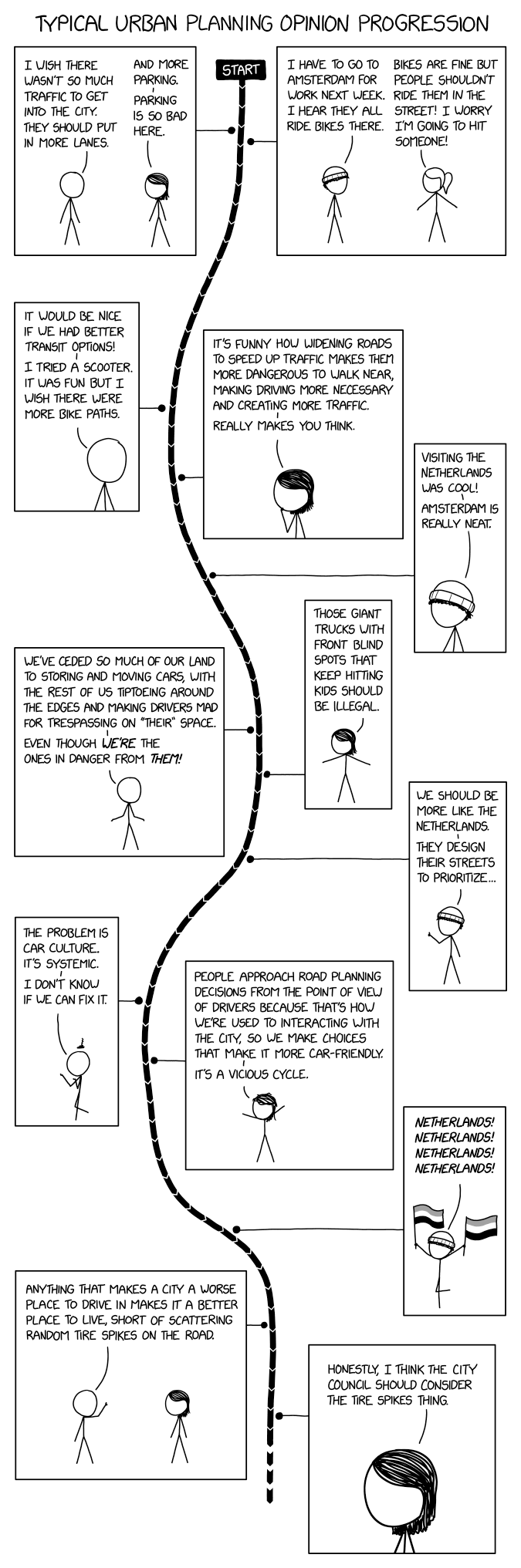
Hovertext: Slightly worried the wallstreetbets people will not understand this is a joke. Or, rather, will understand that it's a joke and therefore employ it as a financial plan.
Do you know what doesn’t help an already tense situation of troubleshooting hardware/software at an electronics store during peak hours? Bigotry—well, among other things. Unfortunately, that was the case for Apple Store employee and writer Tariq Raouf. The queer Palestinian American took to TikTok and Twitter to discuss an interaction with customers that ended with their heritage being framed as “political solicitation.”
The situation started with Raouf helping an Israeli couple that came in with issues with their device. As soon as Raouf learned the customers were from Israel, Raouf said they “upped everything” to make sure the interaction stayed positive. Because they were wearing a basic Palestinian flag lapel pin, the customers already knew Raouf was Palestinian, or at least a supporter of Palestinian rights. Still, Raouf then described the all too familiar feeling of people acting racist without saying anything explicitly. They didn’t say “microaggression,” but the word describes the situation Raouf explained.
In a terrible Sims nightmare come to life, Levi’s has decided to partner with the digital fashion studio Lalaland.ai to create custom artificial intelligence-generated avatars that will “increase diversity among its models,” according to PetaPixel.
While the denim brand typically uses only one model to show off their clothing, they’re hoping that, by using avatars, their customers can see their specific skin color, body type, and age within Levi’s products. Dr. Amy Gershkoff Bolles, the global head of digital and emerging technology strategy, explained that these AI models will help create “a more personal and inclusive shopping experience,” but human models “[will never be] replaced” in their advertising.
It’s been a “show your true colors” week for British transphobes. J.K. Rowling quite literally showed her true colors when she retweeted a gross post about taking someone else’s true colors off the Pride flag, and now we have Jeremy Clarkson, whom Brits know as a racist TV presenter, racist Sun columnist, and racist Rowling supporter, showing his … wait, what?
This week, Clarkson wrote an article for The Times titled “Our culture war is a distraction from the real issues around trans rights,” and to everyone’s bewilderment, it demonstrated a quality never before seen in Clarkson: the slightest smidge of self-awareness.
Do you need a new role model or real-life hero to inspire you? Nebraska’s Democratic state Sen. Machaela Cavanaugh was not on my radar until recently when she legislated her way straight into my heart by taking on her GOP colleagues via a three-week filibuster aimed at stopping the advancement of a hateful anti-trans bill that would ban gender-affirming care for Nebraskan residents under 19. She’s doing it for the trans kids, y’all.
Cavanaugh’s filibuster (the practice of delaying or blocking a controversial vote by refusing to yield the floor BTW), effectively paused debate on every single bill before the legislative body, including an anti-abortion bill, as well as several other anti-LGBTQ bills, according to reporting by the Washington Post, but stopping LB574, the bill to take away gender-affirming, and sometimes life-saving care from trans youth, has been her priority. And she cares enough to spend three weeks of her life continually speaking on the state senate floor without yielding, despite the many other bills waiting to be debated.
Welcome to Good Burger, home of the Good Burger, can I take your order? Now, we don’t mean to be cheesy, but we’ve been waiting twenty-six years to say that saucy sentence, because it has now been confirmed that Kenan Thompson and Kel Mitchell will be reuniting for a Good Burger 2! The exciting news was confirmed by the stars on The Tonight Show Starring Jimmy Fallon. They also revealed that they would start filming for the second installment of the lovable cult comedy classic in May, with Paramount+ set to stream it later this year.
Speaking of the upcoming film, Kenan later said in a statement to Variety, “I can’t believe it’s been a little over 25 years since great customer service was born at Good Burger!” He continued, “Being a part of something so many generations of people have come to love has made me so proud, and now to be back where it all began working on the sequel is surreal! Love performing with my brother Kel and can’t wait to show the fans what these characters have been up to since we last saw them.”
Gov. Ron DeSantis refuses to condemn Nazis who have been aggressively harassing and threatening Jews on the streets of Florida. So Sheriff Mike Chitwood in Volusia County has stepped in, tearing into the white domestic terrorists known as the Goyim Defense League (GDL) while calling for unity against hate. — Read the rest
I never thought I’d be defending corsets on a feminist website, but life takes you to funny places sometimes. Earlier this week, several news outlets reported that Netflix and the BBC were banning the use of corsets in costumes for period shows like Bridgerton. Why? Because they had received complaints from actors who had been injured from wearing corsets during long shoots.
For example, Simone Ashley, who plays Kate Sharma in Bridgerton, told Glamour that “I had a lot of pain with the corset … I think I tore my shoulder at one point.”
Just when I thought I wouldn’t be crumbling into dust anytime soon, American Girl has to come along and inform me that I’m going the way of the wooly mammoth. The newest doll in their “Historical Characters” line, Nikki Hoffman, is a recreation of that long-ago era known as … the ’90s.
Nikki comes with the usual array of accessories, including an inflatable chair, a discman with mix CDs, ’90s-era clothing, and a zine that says “girl power.” She also has the hair framing her face dyed blonde, in an interesting historical style.
POV: You’re a famous civil rights activist and professor who was a key power player in the 1970s Black Power movement, the ongoing women’s rights movement, and the prison abolition movement, among others, over the last 60-ish years. You go on a genealogy-themed TV show, and the host tells you, on national TV, that you are descended from people who came over on the Mayflower. How the F do you react?
Well, here’s what happened in that exact and very real scenario that recently played out on Camera when Dr. Angela Davis—the esteemed mother of contemporary civil rights activists—recently filmed an appearance on Henry Louis Gates Jr.’s genealogy show, “Finding Your Roots” which airs on PBS this week. Apparently, their professional genealogists tested her DNA and researched her family going back several generations. Her first reaction to Gates handing her the evidence on paper? “I can’t believe this, no. My ancestors did not come over on the Mayflower. No no no no no no no no. Oof. That’s a little bit too much to deal with right now.”