Jakienle
Shared posts
27 Dec 19:22
Pro Soccer Team Announces Schedule
Indy Eleven has unveiled its inaugural schedule. The soccer team will play the first two matches of a nine-game schedule at home in IUPUI Carroll Stadium in April.
23 Dec 18:13
Favorite Trend of 2013
by Kevin Kastner
I briefly thought of coming up with a list of the highs and lows as they pertained to Indianapolis development. But lists are not my thing, and instead I will focus on my favorite trend of the year: buildings being reused as apartments. This has been going on for a number of years, but it seems like 2013 was a particular high point for Center Township reuse.


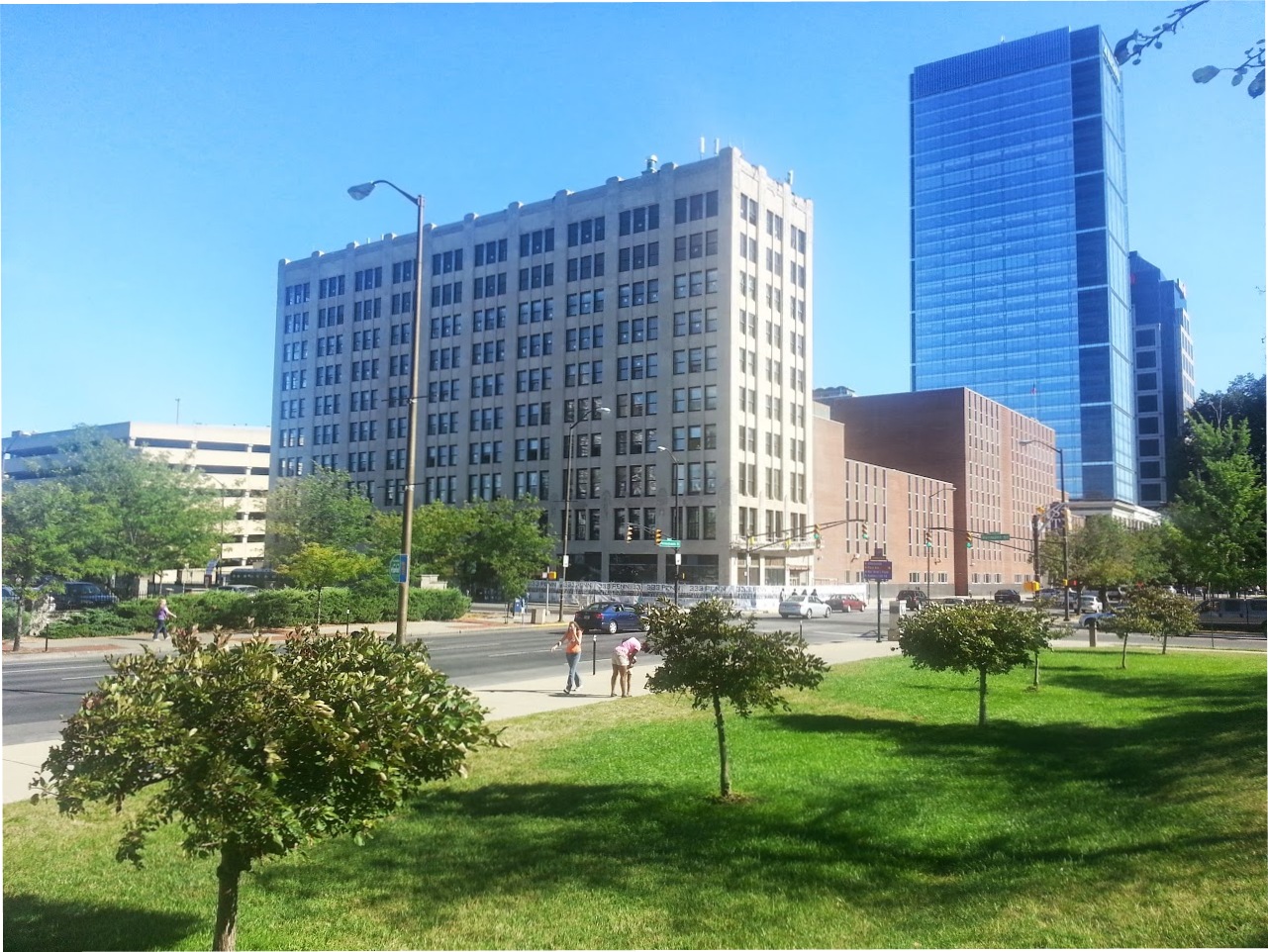


There are plenty more that we have not featured or photographed, including the Central Products Supply at Central and 10th. What is your favorite trend of 2013?
12 Dec 18:27
Orchestra Reports Milestone Year
The Indianapolis Symphony Orchestra says it raised more money during its 2012-2013 season than in any other year in its history. The organization is also reporting its first balanced budget since the 2006-2007 season.
12 Dec 17:48


Five takeaways from Indiana’s win over Oakland
by podcastonthebrink@gmail.com (Matt Dollinger, Justin Albers)
Indiana picked up its eighth win over the season in convincing fashion on Tuesday night with an 81-54 rout of Oakland at Assembly Hall. Here’s a look at five takeaways from the victory over the Golden Grizzlies: · Indiana’s first half offense was stellar: Indiana fans were spoiled by the team’s offense the past two seasons. […]
The post Five takeaways from Indiana’s win over Oakland appeared first on Inside the Hall | Indiana Hoosiers Basketball News, Recruiting and Analysis.
11 Dec 15:52
Want to Learn Criminal Law and Procedure? Watch ‘The Wire’
by Joe Palazzolo
HBO's "The Wire," is often described in superlatives: The greatest television crime drama. The greatest television drama. The greatest television show. How about: The greatest legal education.
11 Dec 14:22


A Room with a View – The Thomas Askren House
by Ryan Hamlett

The Thomas Askren House stands at the end of a long, snowy, wooded drive. photo – wikipedia
I have to admit, I am guilty of being too downtown-centric when it comes to thinking about Indianapolis’ historic buildings. Simply because there is a higher concentration of old buildings doesn’t make the rest of the county any less worthy of recognition, it simply requires a bit more effort to scope out the hidden gems that rest far from Monument Circle. On Indy’s eastside, where Pleasant Run Parkway North Drive ends at East 16th Street, one such hidden gem sits at the end of a long, tree lined drive. While Indy’s oldest surviving house (the James Ray-Buscher House) sits, twice relocated, in Lockerbie Square, the second oldest, the Thomas Askren House, still stands in its original location via a combination of craftsmanship and luck.

The Askren House possibly from 1907. If the date is accurate, these may be the four children of Thomas’ son Benjamin Franklin Askren, Mary Laura, John Thomas, Charles Garfield and Benjamin Harrison Askren.
In 1825, John Thomas Askren, a veteran of the War of 1812 who had served under future president Andrew Jackson, moved ahead of his young bride and family in southeastern Ohio, to Indiana’s new capital. He purchased 1,000 acres of land north of what would become Irvington, cleared three of those acres and built a log cabin. In 1828, he returned to Ohio to collect his family and moved them to their new homestead, where he set to work building the sturdy home that stands to this day, firing his own bricks in the front yard. To aid the family on the farm, the Askrens had between 12 and 24 hired hands and an addition to the back of the home to house them was completed in 1850.

The heavily wooded 9 acres on which the farmhouse still sits, bordered by East 16th Street and East Pleasant Run Parkway Drive. photo – Google Maps
As the family grew, the 1,000 acres was subdivided into smaller farms that, over time, were sold and incorporated into the city that grew around them. The house stayed with the family, passing to Thomas’ son, Benjamin Franklin Askren, and to his youngest son, Benjamin Harrison Askren and to his wife Elizabeth when he passed in 1956. After being identified as a potential historic property in 1977, Elizabeth Askren moved out of the home in 1980 and passed the following year. While the house was listed for sale in 1982, it stayed within the family until 1989 when it was sold to developers Hess and Klein Holding Co. who intended to restore the house and build condos on the rest of the property. That plan quickly failed as the company went bankrupt and the house and land were sold to a Charles Scott in 1992.

The Askren house, sad and neglected, its windows baring the mark of having been boarded up in 2004.
Though the house was in decent repair at the time of the 1992 sale, Scott let the house sit vacant. Over the course of many years, it was stripped of its windows, doors and trim and became a hangout for nearby teens, who aided in the house’s fast decline. Not wishing to part with the property, Scott planned to raze the neglected home but was stymied by city preservation efforts. With walls that were structurally sound (Askren built them three bricks thick) the roof was stabilized and an eastside treasure was spared. Today, a local chef and his wife have restored and modernized the home, which houses his culinary brainchild, The Askren House Dinner Club.

Thomas Askren rests, along with over 30 other Askren descendants, in Anderson Cemetery, just down the road from his 180 year-old house. photo – Ryan Hamlett
Thanks to Steve Campbell for the assist this week.
Tifmurray likes this
07 Dec 16:53
Indiana maintains all three of its AAA credit ratings
Indiana has held AAA ratings – the highest available – with Standard and Poor’s, Moody’s, and Fitch Ratings since April of 2010.
Tifmurray likes this
06 Dec 20:02
SHOTGUN!

No Travis, get your big ass in the backseat!
Greg McCabe, Rmahmud77 and 3 others like this
05 Dec 18:35

College football odds, lines - Week 15: Money, Cash, & Joes
by Brett Ludwiczak
Some tasty conference championship games are on tap for this weekend, but it also brings the realization that our time with college football this year is ticking away all too quickly.
Not only did MC&J fill up on Thanksgiving eats, but it had the best 7-5 weekend that anybody could ever have. Sure, the picks in the Ohio State/Michigan and Iron Bowl games way off, but I'll gladly take those losses since it the results of the games resulted in Ohio State moving up to #2 in the BCS at the end of the weekend. MC&J gained two more games on the .500 mark, and a big closing regular season weekend will provide for some momentum heading into bowl season.
Last week ATS: 7-5 (4-2 National, 3-3 B1G)
Season ATS: 83-74-3 (40-32-2 National, 43-42-1 B1G)
MAC Championship: Bowling Green v. #16 Northern Illinois (-4.5) - Friday 8:00 PM EST - ESPN
With Alabama losing to Auburn on Saturday, now Northern Illinois is one of only three FBS teams that hasn't suffered a loss on the season. A win on Friday night against Bowling Green could clinch a second straight BCS bid for the Huskies. Heisman hopeful Jordan Lynch is so good that he is breaking his own records, as his 321 rushing yards last week against Western Michigan eclipsed the previous NCAA record he had set for running yards for a quarterback in a game. The next record Lynch has his eyes on in Denard Robinson's mark for career rushing yards, which Lynch is only 218 yards away from. Now Lynch will be tasked with trying to crack a Bowling Green rushing defense that is allowing 134 yards/game. The Bowling Green defense has only allowed 17 points over the last four games, and no points in the second half over that stretch. While the Falcons have been playing really good football over the last month, I just think Lynch will be too much for them to handle.
Northern Illinois 37 Bowling Green 24
#18 Oklahoma v. #6 Oklahoma State (-10) - 12:00 PM EST - ABC
Last time we saw Oklahoma State they were throttling Baylor in Stillwater, and helping clear one of the possible hurdles that could help Ohio State get to the BCS National Championship Game. Their Bedlam foe has rebounded nicely with two wins after falling to Baylor in early November. It almost feels like Oklahoma should have three or four losses on the season, but when you look at their record they're sitting at 9-2 heading into this game. A win for the Cowpokes clinches them the Big 12 championship, and BCS bid that comes along with that. Had this game been a week ago I might have entertained taking the Sooners for fear of a let-down after Oklahoma State's huge win over Baylor. The Cowboys had a bye week last week that has quelled some of my let-down concerns, and it's not like it's very hard to get up for Bedlam. Whether the Sooners go with Trevor Knight or Blake Bell at quarterback on Saturday, it's not gonna matter against a fired up Cowboy team and what will surely be a very LOUD crowd in Stillwater.
Oklahoma State 38 Oklahoma 23
#23 Texas v. #9 Baylor (-14.5) - 3:30 PM EST - Fox
Imagine where this spread would have been earlier in the season after Texas was coming off losses to BYU and Ole Miss while Baylor seemed to be putting up 70 points/game in their sleep. Things have evened out a little bit with Texas showing some life during their Big 12 schedule, and Baylor losing to Oklahoma State and holding off a fiesty TCU team. Should Oklahoma State lose Bedlam earlier in the day, the winner of this matchup will take home the Big 12 championship and earn a BCS game berth, so there could be plenty left to play for when this one kicks off. A win against Texas on Saturday will give Baylor 11 wins this season, which would be the most ever for a season in school history. We have seen that Baylor is a different team at home, with the closest margin of victory in Waco being the 29 points the Bears beat Oklahoma by. I think the Longhorns come out fired out in what will probably be Mack Brown's last regular season game as head coach, and the Longhorns at least keep within shouting distance of the Bears.
Baylor 44 Texas 34
SEC Championship: #5 Missouri v. #3 Auburn (-2.5) - 4:00 PM EST - CBS
It's Thursday and I'm still trying to pick my jaw up off the floor from how the Alabama/Auburn game ended on Saturday. The thriller on The Plains setup the SEC Championship Game that everybody saw coming when the season started. Everybody had two teams that went a combined 2-14 in the SEC last year playing in Atlanta in early December, right? Something will have to give in Atlanta as Auburn has scored 30+ points in eight straight games, and won the last 87 games in which they have scored 30+ points in, while Missouri has held all of their opponents this season to 28 points or less. Much like last week, Auburn will go up against a squad that has had tremendous success at stopping the run this year. Missouri is only allowing opponents to rush for 119 yards/game on the season so far. Auburn showed last week that they can crack a very good defense with the up-tempo style that they run. With all the talk about if a one-loss Auburn team should jump an undefeated Ohio State team, I feel that Missouri is getting forgotten about in this matchup. Had it not been for a second-half collapse against South Carolina, a win in this one would be sending Missouri to Pasadena in early January. I'll side with Missouri in this one to win the SEC in just their second year as a member of the conference.
Missouri 33 Auburn 30
Pac-12 Championship: #7 Stanford v. #11 Arizona State (-3) - 7:45 PM EST - ESPN
Out of all the conference championship games, I think the Pac-12 does it right in holding their conference championship game on location of one of the teams participating in the game. Imagine how unbelievable a Big Ten Championship Game at Ohio Stadium would be. These two teams played earlier in the year in Palo Alto, with the Cardinal jumping out to a 28-0 lead on their way to a 42-28 victory. Arizona State has seemed to improve every week since they suffered that loss, but they will be without running back Marion Grice for the second straight week in this one. Stanford has left a lot to be desired lately on the road, losing two of their last three, and won't find things any easier when they take the field in Tempe. With how tough it is to beat a team twice in the same season I'll take the Sun Devils in this one, even without Grice. Todd Graham leads the Sun Devils to their first Rose Bowl since they played Ohio State in Pasadena following the 1996 season.
Arizona State 31 Stanford 24
ACC Championship: #20 Duke v. #1 Florida State (-29) - 8:00 PM EST - ABC
If you need any evidence as to just how good Florida State is this season, all you need to know is that they are over four touchdown favorites over a team that just finished up the regular season at 10-2. History isn't on the side of the Blue Devils, as they have never beaten the Seminoles in 18 previous matchups. Both teams are 10-2 against the spread this year, but Florida State's run against the number has been impressive with the giant point spreads they are dealt to try and cover each week. While Jameis Winston will put on another big show for Heisman voters before the ceremony in New York City next Saturday, I think the Blue Devils keep it barely inside the number. Rain is in the forecast for Saturday night in Charlotte and could make for a little bit of a slick track. The Blue Devils get a late TD and pull out the garbage time cover.
Florida State 45 Duke 21
MWC Championship: Utah State v. #24 Fresno State (-4) - 10:00 PM EST - CBS
This game has a strange feel to it, but mostly it's because a college football game is starting at 10 PM EST on CBS. The first ever Mountain West Championship game lost some of its luster when Fresno State lost 62-52 to San Jose State on Black Friday, but it doesn't mean that this has the makings of a sneaky good game. The Aggies have recovered nicely from the loss of quarterback Chuckie Keeton, and will provide the toughest defensive challenge that Fresno State has faced on the season. Even with the home crowd and a conference championship at stake, I just wonder how Fresno State will get up for this game after having their BCS dreams shattered last week. The Aggies are the more complete team and leave Fresno with the Mountain West championship.
Utah State 31 Fresno State 28
Big Ten Championship: #2 Ohio State (-5.5) v. #10 Michigan State - 8:00 PM EST - Fox
Ohio State will try and it wins in back-to-back weeks against teams from the state of Michigan, and punch their ticket for a spot in the BCS National Championship game on Saturday night in Indianapolis. The matchup of Ohio State's offense against Michigan State's defense is worth the price of admission alone, but with so much is on the line fans should be in for a treat on Saturday night.
Michigan State just became the first Big Ten team to win all eight conference games by more than 10 points since the Big Ten went to a 8-game schedule back in 1971. The driving force behind the Spartans success has been their defense, which has allowed less than seven points to five of their last six opponents. Now a defense that is only yielding 64 yards/game to opponents will matchup against a Buckeye team that is rushing for over 320 yards/game. This wlll be the most complete offense that the Spartans have faced so far this season though. The balance that the Ohio State offense brings to the table should allow for them to put up the most points on the Spartan defense this season. The game being indoors will help the Buckeyes a little more in the pass game this week after having to deal with a variety of outdoor elements the last few weeks.
After starting the season with an offense that was brutal to watch, Michigan State has improved by leaps and bounds behind the steady hand of quarterback Connor Cook and the legs of running back Jeremy Langford, who has run for 100+ yards in the last seven games. If you had asked Buckeye fans about their ability to stop the Spartans offense before last week and many would have probably thought it would be no problem. Then whatever that thing that was out on the field trying to stop the Michigan offense was on Saturday happened. Given up 600+ yards to an Al Borges offense is just inexcusible, and you know that the defense heard about it all week in practice. The Buckeyes are still solid against the run so I don't see Langford having a big game. The key for the Buckeyes is to put tons of heat on Connor Cook and force him into those patented "SPARTY, NO!" moments. I just think that Cook is going to commit some turnovers that give the Buckeyes a short field against the stout Spartan defense and give the Buckeye defense some much needed confidence.
The Spartans have had a tremendous season and are in good hands with Mark D'Antonio, but I think this is where their Rose Bowl dreams end. The feeling from Michigan State is that they're getting no respect, which worries me since they'll play like they have nothing to lose in this one, while the Buckeyes have all the pressure on them. The good news for Buckeye fans is that Urban Meyer is one of the best coaches you can have in situations like this. Michigan State puts a scare into the Buckeyes for a while, but just don't have enough horses to keep up.
Ohio State 34 Michigan State 24
05 Dec 18:29
Big Ten football championship sells out, packs downtown hotels
by aschoettle@ibj.com
The battle on Saturday between Ohio State and Michigan State, plus ESPN broadcasts and special events downtown, are expected to have a $15 million economic impact on Indy. That's a vast improvement over the 2012 championship.
03 Dec 21:23
Downtown plan proposes street changes, parks, lighting
by solson@ibj.com
A not-for-profit's proposal for downtown Indy focuses on making it more comfortable and dynamic for urban dwellers.
02 Dec 17:55
DMD's Thies pushing for better design, more projects
by solson@ibj.com
Adam Thies, 36, arrived from the private sector in October 2012 and is beginning to put his stamp on the government agency that guides city development
02 Dec 17:48
IDEM: Buy real Christmas trees to support farmers
The Indiana Department of Environmental Management is urging Hoosiers to help farmers, the environment and the economy by buying Indiana-grown Christmas trees this year instead of artificial ones.
26 Nov 23:27
Alfred Feld, Goldman’s Longest-Serving Employee, Dies at 98
by By SUSANNE CRAIG
Alfred Feld started out at the Goldman Sachs offices at 30 Pine St. in Lower Manhattan in 1933 as a messenger in the mail department. He made $624 a year. In 1948, he became a stock broker.
26 Nov 20:39


Chicago: Gentrification Comes to the Neighborhood School by Daniel Hertz
by Aaron M. Renn
[ You may remember Daniel Hertz from his mind-blowing analysis of growing public safety inequality in Chicago. He's back with another one, this time a look at how gentrification is affecting the performance of Chicago's neighborhood schools. It's probably relevant to any city that's experiencing gentrification. This one comes from a newish web site called Chicago Bureau, which focuses on youth issues - Aaron. ]
To be on track for college, an elementary student needs to “exceed standards” on the ISAT, according to the University of Chicago Consortium on School Research. In 2001, there were only three neighborhood elementary schools in the entire city with a quarter or more students doing that well.
As a result, for a certain kind of parent, there were only two options for educating a child: getting him into one of the city’s flagship magnets, or moving to the suburbs. That put a lot of pressure on magnets and other test-in schools: like the Daley Sr.-era condo towers that still line North Lake Shore Drive, they had to rise above the rest of the city and offer the people who could afford to move to Evanston or DuPage County some reason not to.
But just like there’s only so much lakefront, there were only so many seats in those magnet schools. And over the last 10 years, as downtown and North Side neighborhoods gentrified, the number of parents trying to seat their children in one of those schools has turned what was always a competitive process into a frenzy. Last year, about half the freshmen admitted to Whitney Young, Northside College Prep and Walter Payton had near-perfect test scores and straight-A report cards. And the crunch is too big to be solved by expansions like the one Mayor Rahm Emanuel recently announced for Payton and Coonley Elementary.
Just as the magnet system began to overcrowd, though, neighborhood elementary schools suddenly began making a turnaround. Some of them, anyway. By 2013, those three “high-achieving” schools had become 15. That’s a 400 percent increase over 12 years — and lots of other neighborhood elementary schools were on track to get there soon.

Unsurprisingly, though, CPS’s new high-scoring schools weren’t distributed all over the city. Instead, progress was contained to the same neighborhoods that had seen the greatest gentrification over the previous 10 or 20 years, or which were already solidly middle-class. As a result, the average high-performing school’s student body in 2013 was only 20 percent low-income, compared to 85 percent for CPS as a whole.
In some cases, the new high-achieving schools had had large middle-class populations from the start and their scores just gradually ticked up. But about half of them saw dramatic demographic transformations. Lakeview’s Blaine Elementary, for example, saw its low-income population fall by 29 percent since 2010. At the same time, the proportion of its students exceeding ISAT standards has jumped by 25 percent. At Audubon Elementary, less than a mile to the west, the number of low-income students dropped 28 percent while ISAT exceed scores have jumped 53 percent over the same four years.
Another eight schools that don’t yet meet the “high-achieving” threshold are also rapidly gentrifying, losing an average of 20 percent of their low-income population over the last four years and doubling their exceed scores.
At the elementary level, then, professional-class families in some parts of Chicago have solved the magnet problem. They don’t have to decamp to the suburbs: they can bring suburban demographics to the city just by sending their kids to their neighborhood CPS school.

And despite all the fuss over teacher accountability, charter schools and innovative curricula, the fact remains that in America, economic background is the single best predictor of a child’s academic success.
Which leaves the city…where? After decades of losing thousands upon thousands of middle-class families thanks to a struggling educational system, it must be good news for that process to be finally reversing itself. A city without a middle class isn’t going anywhere good; the tax receipts alone are cause for celebration, given the state of Chicago’s budget.
A school system without a middle class is also in big trouble, of course. So it’s heartening to see the beginnings, perhaps, of a decline in the kind of economic segregation that led to 87% of CPS students being low-income in the first place.
But if the number of low-income kids in our newly high-achieving schools keeps plummeting, not many of them will be in a position to benefit from the very transformation that’s pushing them out. After all, how many low-income families can afford a decent place to live within the attendance boundaries of neighborhood schools in Lincoln Park or Lakeview?
For a long time, the egalitarian promise of public education was frustrated by families with wealth fleeing the city for suburban school districts, leaving CPS with a heavy burden of poverty in all but a few elite test-in schools.
That dynamic seems to be changing, so that now a greater and greater number of middle-class families are choosing to send their kids to local elementary schools. But if we’re just moving the lines that divide the children who receive a good education from those who don’t—from district boundaries to CPS attendance boundaries—it would be hard to call that significant progress.
There is, though, a difference. The city of Chicago, and the leadership at CPS, have absolutely no power over any of the wealthier districts that surround them. But they can try to shape what happens entirely within their borders. The question of how to mitigate economic segregation in the city’s schools, so that all children have a chance at a decent education—without scaring the middle class back to the suburbs and starting again at square one—will be, I think, one of the greatest challenges our school system will face for the next generation.


This post originally appeared at Chicago Bureau on November 5, 2013.
 The Urban State of Mind: Meditations on the City is the first Urbanophile e-book, featuring provocative essays on the key issues facing our cities, including innovation, talent attraction and brain drain, global soft power, sustainability, economic development, and localism. Included are 28 carefully curated essays out of nearly 1,200 posts in the first seven years of the Urbanophile, plus 9 original pieces. Great for anyone who cares about our cities, The Urban State of Mind also makes a great gift this holiday season.
22 Nov 15:45
Taft Announces Merger
Taft Stettinius & Hollister LLP, which employs nearly 200 in its Indianapolis office, is set to merge with a Chicago-based law firm. The move means Shefsky & Froelich will operate under the Taft name beginning in January.
22 Nov 15:44
New Indy Restaurants Make National List
Two Indianapolis eateries are on this year's Urbanspoon list of the top new restaurants in the U.S. The mobile restaurant application company says the compilation is based on the most viewed, reviewed and liked locations to open in 2013.
21 Nov 17:59


Indianapolis Then and Now: Louisa Magruder’s House, 564 N. Highland Avenue
by Joan Hostetler
An early resident of what is now Cottage Home neighborhood was an elderly black woman named Louisa Magruder (ca. 1808-1900), whose home stood at 564 N. Highland Avenue just south of Pogue’s Run. Born into slavery, Louisa served as a nanny for Governor Noble’s family for three generations and was given this small house and parcel of land by Noble’s granddaughter after the Civil War.
From Greater Indianapolis, 1910, by Jacob Piatt Dunn
Louisa’s father, Tom Magruder, was believed by many Indianapolis residents to be the inspiration for the book Uncle Tom’s Cabin. Tom and his wife Sarah had been slaves owned by Dr. Thomas Noble in Virginia and later Kentucky, where the family moved in 1794. At Dr. Noble’s death in 1817, he willed his slaves to daughter Mrs. Arthur (Lavenia) St. Clair. Louisa, and presumably her parents, moved to work for the St. Clairs in Lawrenceburg, Indiana. Slavery was banned in Indiana’s 1816 constitution and a Supreme Court case freed all of the remaining slaves in the state, but the Magruder family continued as servants for the Noble family for several more decades. In the 1820s Dr. Noble’s son Noah moved to Indianapolis and started buying property on the east side of Indianapolis. His land extended east between College Avenue (then named Noble Street) and Arsenal Avenue, and bounded by St. Clair and Washington Streets. He was elected Indiana’s fifth governor in 1831. Noble brought the elderly Tom and Sarah to Indianapolis in 1831 and built a log cabin for them at the northeast corner of E. Market Street and N. College Avenue. Louisa and her brother Moses eventually came to Indianapolis to care for their aged parents and work for the family of Governor Noble.
Although author Harriet Beecher Stowe stated that Uncle Tom was a composite character partly inspired by the 1849 slave narrative of Josiah Henson, Indianapolis newspaper accounts as early as 1857 reported that Stowe had visited the Thomas Magruder cabin with her brother Henry Ward Beecher. Beecher, a popular Indianapolis Presbyterian minister and friend of the Noble family, lived just two blocks away from Uncle Tom’s cabin and was a frequent visitor. Reverend Beecher even referred to Tom’s virtues in a Sunday sermon. Many of the names used in the book correspond to Magruder family members and Tom Magruder’s home was known as “Uncle Tom’s Cabin” long before Harriet Beecher Stowe published her book in 1852. [As a frustrating photographic sidenote, a late 1850s newspaper article states that the cabin was daguerreotyped before its removal and four images given to members of the Beecher family. The Harriet Beecher Stowe home in Hartford, Connecticut has no record of the photographs but I hope that they will someday surface.]
From Greater Indianapolis, 1910, by Jacob Piatt Dunn
In the 1870s, Mrs. George Frank Miller, a granddaughter of Governor Noah Noble, built a small shotgun house on a lot on Noble’s former eastside farm and gave it to Louisa Magruder. This section of his farm reportedly had been the family orchard and was platted in 1865 as Davidson’s Heirs’ Addition. Now in her 60s, Louisa had raised over three generations of Noble family members and the gift of this house likely reflects the fondness that the family had for their nanny. Louisa, who had been married, lived in the house with her daughter Martha, also known as Topsy (another name mentioned in Uncle Tom’s Cabin). The above snapshot of Louisa and Martha in front of the house was included in Jacob Piatt Dunn’s 1910 book Greater Indianapolis: The History, the Industries, the Institutions, and the People of a City of Homes. Unfortunately the book incorrectly recorded the address as 454 N. Highland Avenue which has created confusion about the home’s location, but Sanborn Fire Insurance maps show the current address would be about 564 N. Highland Avenue. As early as the 1870s, several other African-American families, including the Oglesby and Carter families, lived nearby and remained in the area until the 1940s.

Google Street View, ca. 2012
Louisa’s small frame cottage was apparently demolished sometime after her death in 1900 and prior to 1915. Today the triangular-shaped parcel is a parking lot for the Masson M. Ross Company located across the street. The concrete bridge spanning Pogue’s Run is seen to the right.
Louisa’s request to be “buried with her folks” in the Noble-Davidson Crown Hill Cemetery plot was honored and her tombstone reads “Louisa Magruder – Daughter of Uncle Tom.”
Are you descended from the Magruder family? We would like to hear from you! You might also want to contribute to the Magruder Project, which seeks DNA and stories from Magruders of all colors.
19 Nov 16:56


HI Mailbag: Ravenswood
by Sharon Butsch Freeland
Reader’s Question:
I have a lot of family history in Indiana, but in Indianapolis the only area I know my family has been in for a while is Ravenswood. Any chance you have some history on that area and/or pictures? ~ Chris Wolf
HI’s Answer:
For readers who may not be aware, Ravenswood is the name of an area on the north side of Indianapolis, alongside the White River. It’s in the center of Washington Township, less than a mile north of Broad Ripple Park. There are actually several different legal descriptions within this geographical area, including Terrace Beach, Island Park, Light’s Melrose, Ralston Heights, River Heights, and Ravenswood. Nonetheless, the entire neighborhood that’s bounded by East 71st Street on the south, White River and Fitch Avenue on the west, White River and 75th Street on the north, and Keystone Avenue on the east is generally referred to as Ravenswood.

The area outlined with broken red lines is generally referred to as Ravenswood (map courtesy of Google)
The land that would eventually become Ravenswood was originally purchased from the federal government by two men named Levi Wright and James Bounel. They received their land patents in Section 25 of Township 17 North Range 3E 2nd PM Meridian from the United States of America in 1823. Wright later bought Bounels’ acreage and owned all of the land that is now Ravenswood for a time. By the end of the 19th century, however, the landowners were Jackson Dawson, the Albertson Brothers and Anna M. Hobbs. Jackson Dawson (1828-1892) was the youngest son of Elijah Dawson (1781-1858) and Mary Ann Hardin Dawson (1785-1865), whose descendants owned a considerable amount of land in Washington Township in the 1800s and 1900s, primarily in and around Broad Ripple.

One of two rustic cabins in Ravenswood that date to the 1800s (photo by Sharon Butsch Freeland)
In the first few years of the 20th century, city dwellers discovered this section of the White River had a fine sandy beach. On weekends and holidays, people would take the interurban, ride their bicycles, or drive their motor vehicles to the outskirts of the city and spend the day sunning, swimming, and picknicking at Ravenswood Beach. According to newspaper reports of the day, there would be thousands of people at Ravenswood Beach on a hot summer day. Fishing, as well as boat rides between Ravenswood and Broad Ripple, were also popular pastimes on the White River.

Ravenswood Beach was a popular warm weather destination for city dwellers (photo courtesy of BroadRippleHistory.com)
Although there is no official documentation of how Ravenswood got its name, early accounts suggest that it was related to the many crows that frequented the community. As the word “crows” was already contained in the names of other Washington Township neighborhoods, and as the word ”ravens” was nicer sounding than “crows,” what might have been Crowswood instead became Ravenswood. On August 3, 1910, the Marion Trust Company platted lots near the east bank of the White River and began selling land on which summer cottages could be built. The legal description the developers gave to their building lots was Ravenswood. The Marion Trust Company became Fletcher Savings and Trust Company in 1912, and its former building at 10 East Market Street is today the Hilton Garden Inn.

1910 ad in The Indianapolis Star advertised lots for sale in Ravenswood (courtesy of Indianapolis Public Library)

Stylized map showing historic White River-related places and events that occurred over the years (map courtesy of Susan Stamm) CLICK TO ENLARGE

The street car was one way people got from the city to the edge of town (photo courtesy of Indianapolis Monthly Magazine)
Over the next decade, many summer cottages dotted the area. However, there were no services to maintain the neighborhood. The property owners decided that their incorporating would be the best way for them to make Ravenswood the most attractive resort along the river. On August 4, 1919, the first town board meeting was held. In that meeting the duties of a town marshal were decided. They included such details as when the street lights were to be turned on and off and when the gates to the public bathing beach were to be opened and closed.

In 1919, Ravenswood became an incorporated town (The Indianapolis Star article courtesy of Indianapolis Public Library)

Early postcard showing swimming and boating activities on the White River near the resort area of Ravenswood (from the collection of Susan Zobbe, courtesy of broadripplehistory.com)
In the mid-1920s, White River changed its course, Ravenswood Beach eroded, and some of the low-lying areas in town became swampy. The summer crowd began to fade away, as they found other more desirable vacation destinations. Cottage owners either sold their summer properties or converted them to year-round residences. On the 1920 Census, there were only a handful of full-time residents living in Ravenswood. By the time of the 1930 Census, Ravenswood’s year-round residents numbered several hundred.

1931 Wagner map shows the names of rural property owners in Washington Township of Marion County (map courtesy of Indiana State Library) CLICK TO ENLARGE
From the 1920s to the 1970s, Ravenswood saw a slow but steady growth. At its peak, the population was about 700. Affordable housing and the peaceful, country-like setting were appealing. However, the area continued to be plagued by flooding. In addition, the cost of maintaining a town government became challenging. Besides the cost of insurance, fire protection, and a town marshall, it was difficult to find locals to serve on the town board. Ultimately, the decision was made for Ravenswood to end its autonomy. In March of 1989, Mayor William H. Hudnut III signed an executive order to dissolve the Town of Ravenswood, and the neighborhood was absorbed by the Indianapolis-Marion County government.

White River as viewed from Ravenswood Overlook (photo by Sharon Butsch Freeland)

In 1989, Ravenswood decided to become part of the City of Indianapolis (IndyStar article courtesy of Indianapolis Public Library)
Since annexation to the City of Indianapolis, Ravenswood has continued to appeal to people who enjoy living on or near the water. Although there aren’t very many commercial properties in Ravenswood, there are several notable businesses. One is the White River Yacht Club , which is located on the west boundary of the neighborhood. The club traces its roots to 1938, when a group of area boaters banded together for social and recreational activities. Although it is a private club, many nonmembers have been to the facility for its classic car show, high school reunions, wedding receptions, or other social functions.

Founded in 1938, the White River Yacht Club has reciprocal membership with many other yacht clubs around the country (photo by Sharon Butsch Freeland)
Another anchor of the area is the Northside Knights of Columbus, which is located on the southern boundary of Ravenswood. It was founded in 1961 as a fishing and game club. The property on which the building was erected the following year is on 25 acres of wooded land and has three lakes behind the building.

Northside Knights of Columbus building was erected on 71st Street in 1962 on a 25 acre tract of land with woods and lakes (photo by Sharon Butsch Freeland)
Many impressive homes line the shores of the White River in Ravenswood. One such home was built in 1922 by a motor racing enthusiast named George Barr. He was a friend of Carl Fisher and George Marott. Originally a summer home, Barr made it into a permanent residence in 1927. The property has had only a few owners over its 91 years of existence.

Riverfront home was built by George Barr as a summer cottage in 1922 and converted to a year-round residence in 1927 (photo by Sharon Butsch Freeland)
An active group, some of whose members live nearby, is the Friends of the White River, a nonprofit corporation formed in 1985 to preserve and protect the river. Besides improvement of the water quality, the organization seeks to maintain or restore the area’s original habitat and wildlife.
Although it is a fairly small geographical area, Ravenswood is home to several public park areas. The largest is Riverwood Park at 7201 Crittenden Avenue, which is the site on which two former Washington Township schools formerly existed – first, the White River Elementary School and later, the Phoenix School. A second public area is Ravenswood Overlook at 7300 Ravenswood Boulevard. Another is Stamm Park at 71st Street and Kingsley Drive.

Stamm Park at 71st Street and Kingsley Drive is one of several park areas created in the Ravenswood area in recent years (photo by Sharon Butsch Freeland)
The Ravenswood-White River Neighborhood Association is the primary organization working to improve the area. The coordinator of RWNA is Susan Stamm, whose ancestors were early settlers of Ravenswood. For additional history of Ravenswood or to get involved in the association, contact her at (317) 255-1070 or rwnasuze@att.net.
If you have a question about Indianapolis history, please send it to historicindianapolis(at)yahoo(dot)com, with “HI Mailbag” in the subject line. I will do my best to answer it. If you would like to see features on specific properties, please consider becoming an HI sponsor. ~ Sharon
* * * * * * * * * * * * * * * * * * * * * * * * * * * * * * * * * * * * * * * * * * * * * * * * * * * * * * * * * * * * * * * * * * * * * * * * *
19 Nov 16:50
Study: Downtown can sustain huge apartment boom
by solson@ibj.com
About 3,500 rental units are expected to be built downtown by 2017, adding to 4,700 already on the market. But the analysis says there's no need to worry about overbuilding.
19 Nov 16:47
Buyer of Illinois Building envisions hotel
by solson@ibj.com
A high-profile local developer has bought the Illinois Building and is considering offers to convert the downtown landmark into a boutique hotel that could be the city’s first five-star lodge.
13 Nov 17:24
Smoking ban opens new doors to Visit Indy
by aschoettle@ibj.com
New convention prospects are talking to the city's marketing agency after passage of the city's expanded smoking ordinance last year.
13 Nov 17:23
New roof to help stabilize historic Indy theater
The building, at 3155 E. 10th Street, has been vacant since 1992 and is in an advanced state of disrepair. But a new roof will stabilize it, staving off further deterioration, backers hope.
07 Nov 19:21
A Second N.F.L. Player Signs Public Offering Deal
by By PETER LATTMAN
JakienleThis seems totally insane.
Vernon Davis of the San Francisco 49ers will join the initial public offering against his future earnings, after Arian Foster of the Houston Texans.
06 Nov 22:15
Former Simon exec pleads guilty to fraud in kickback scheme
Carmel resident Mark Palombaro, 55, likely faces prison time after admitting to his role in a scheme that prosecutors say netted him $766,000.
03 Nov 19:45
Four local firms vying to redevelop GM stamping plant site
by solson@ibj.com
At least one of the proposals for the site, which has been vacant since 2011, would create a suburban-type office park in an urban environment.

24 Oct 20:14
The Revolution is Upon Us: BigLaw Starts 'Residencies'
by William Peacock, Esq.
Finally. It has always seemed, to this practical descendant of Midwestern farmers, that BigLaw's hiring model was odd. Get recent grads with shiny resumes. Give them $160,000, even though they know little to nothing about practice. Bill the client for...
Continue reading this article, and get more legal lifestyle & career news and information, at FindLaw.com.
Continue reading this article, and get more legal lifestyle & career news and information, at FindLaw.com.
24 Oct 16:28
Pizzeria plagiarism? Napolese suing Crust over close likeness
by solson@ibj.com
JakienleMartha Hoover is not someone that I would want to get into a legal battle with. Between her having been a prosecutor and her husband running arguably the best complex litigation boutique in the city (http://www.hooverhull.com/) I'd probably find a way to work something out before I got my ass kicked in court.
Cafe Patachou founder Martha Hoover contends the owner of newcomer Crust in Carmel has stolen the look of her Napolese pizzerias and is confusing customers.
24 Oct 14:01


Indianapolis Then and Now: Lane Radio and Pogue’s Run Grocer, 2828 E. 10th Street
by Joan Hostetler
Lane Radio at 2828 E. 10th Street near Rural Street operated at this site for over 70 years. Founded in 1927 by Melvin Lane (b. 1894 – d. 1975), the shop originally sold radios, batteries, tires, and even serviced automobile radios in a side garage located behind the Art Moderne storefront. Eventually the business expanded to sell televisions and other appliances.

Courtesy of the Indiana Album, NESCO Collection
Owner Melvin Lane, along with his wife Gertrude, daughter Lillian, and son Robert, lived in the apartment above the shop. After serving in the Navy on the USS Savannah as a radio technician during World War II, Robert joined his father in the family business in 1948. They added a second store on Pendleton Pike in 1952 and that store is still operated by family members.

1950s, Courtesy of the Indiana Album: NESCO Collection

After the loss of a few grocery stores on the east side, and not liking the lack of healthy choices at convenience stores, neighbors formed Indy Food Coop. The group worked for three years to create Pogue’s Run Grocer, Indianapolis’s only community-owned cooperative grocery store. The group acquired the old Lane Radio building, which they adapted to their needs. The full-service natural and organic grocery store opened in December 2010 and specializes in locally-produced goods. The member-run store also features a deli. Learn more on their web page and like them on Facebook.
Tifmurray likes this