I (F) was in my mid-30s and traveling to work with a client. He had set up a dinner that should have included five or six of us on the project. Everyone backed out except me, which is how I found myself at a cozy, fireside table for two at a dark but excellent Boston restaurant, drinking a glass of champagne. (I was in my bubbles era…) And who should happen to be dining there but his wife’s cousin, who barged up to the table wanting to know why he was sipping bubbly with me rather than hanging out at home with his extremely pregnant wife. Awkward doesn’t even begin to describe it.
2. The tomato sauce
I once worked at an English language school. The owner was from Brazil and hired a Brazilian woman she knew to cook for the faculty and staff every day. It was mostly a way to pay someone in her community, but the woman always made phenomenal food.
At this stage in my life, I knew next to nothing about Brazilian culture or food. On my second or third day, I went into the breakroom and saw a crockpot of what looked like tomato soup next to some lovely, inviting rolls of fresh bread. I excitedly ladled some of the crockpot contents into a bowl, grabbed a spoon, and sat down with some of my new coworkers (who had just finished eating). I was chattering away, eating my lunch by the spoonful and occasionally dipping in pieces of bread. I noticed that my coworkers were growing silent and some were looking at me a bit awkwardly.
Finally, one of them turned to our cook and said, “Ana, this is so phenomenal, I think I’m going to get seconds!” She then went over to the crockpot … and I realized, to my utter horror, that the crockpot contained meatballs in tomato sauce and the rolls were for making meatball subs. And I had just spent the past 15 minutes sitting there eating tomato sauce with a spoon like a deranged person.
3. The Arnold Palmers
A new salesperson at my husband’s office took a client to lunch. The client ordered an Arnold Palmer to drink. Thinking he should match the energy of the client, the salesperson ordered a Red Bull and vodka. Every time the client got a fresh drink, so did the salesperson. When asked why he was inebriated after a work lunch, he explained the situation to my husband, who in turn explained to him what an Arnold Palmer was. (For those who don’t know, it’s half lemonade and half iced tea.) Lesson learned. Not sure if he got the account, but he certainly made an impression!
4. The cheese bread
I worked for a shoestring budget faith-based nonprofit that decided to do a year-long competition where the prize was a paid meal at a Brazilian steakhouse. I went, but we did not get plus-one’s. My very pregnant wife was jealous because she loves the cheese bread they serve at Brazilian steakhouses. So I put two gallon-size plastic bags in my backpack, stuffed it under the table, and every time the server reloaded a bread basket, I dumped the whole thing into my bag. I came home a hero.
The dinner was also attended by two young right-out-of-college intern men who were sharing a crappy apartment and living off ramen because they made so little. I have never seen two people absolutely gorge like those two did. I think they were getting their calories for the next two weeks.
5. The electric bagpipe machine
At a farewell dinner for a beloved colleague, my company was taking up about half the restaurant. The retired founder of our company decided it would be appropriate to bring out and start up his ELECTRIC BAGPIPE MACHINE, which is a box that basically sounds like a theramin in a kilt. Everyone in the restaurant, including most of us, thought some kind of deranged fire alarm was going off. He then proceeded to distribute handouts with lyrics of comic song he’d written to the tune of the Skye Boat Song about events on a work away-weekend from before most of us worked at the company (and before I was born), and expected us all to sing along with the machine. All the poor normal people who’d just wanted a nice restaurant dinner were staring at us, and I wanted to die.
6. The hibachi place
When I was a newly hired, my new group had a welcome lunch at a hibachi place, similar to Benihana, where the server cooks your food in front of you and puts on a show while doing so. The server called me “sexy lady” and squirted saki directly into people’s mouths. It was awkward and weird. Thankfully the group otherwise had normal standards of professionalism but it was a very weird first impression. That restaurant was to go to for group lunches for years.
7. The conversion
A business dinner actually made me vegetarian. Early in my career, I was connected via networking to a really nice and helpful woman who helped me get an internship at her company. The week before the internship started, she invited me out for drinks and sushi with a few coworkers and outgoing interns so I could hear more about the company and get a heard start on introductions. Super nice!
At the time, I didn’t eat fish (just because I didn’t like the taste) and when the waiter came around to me, I ordered the veggie roll. The woman who invited me turned excitedly to me and said, “Oh, are you a vegetarian too??” In my early-20s eagerness to please and desire to connect further with this really, really nice person, I panicked and said, “Yes!”
Not only was this a weird white lie, my internship at her company started the next week so I was also locking myself into living this lie by bringing vegetarian lunches and eating vegetarian at company events for at least the next four months. This actually turned out surprisingly fine – and I’ve now been vegetarian for eight years.
8. The small amount of tapas
I worked at a company that wanted to be a luxury fashion brand. They announced an all-staff party at a very posh tapas place on the beach, a few hours away from the office. The party was mandatory, so they rented buses to drive the entire company (70+ people) to the restaurant. We had an entire floor to ourselves, which included a beautiful view of the sun slowly setting over the ocean. Five hours of beachside views, appetizers, and quiet chat – what could go wrong?
Somehow, the plates of appetizers ordered ahead of time were not party-sized, but tapas-sized. So “a plate of mini eclairs” meant “two eclairs on a tiny plate.” The executive team ate all the appetizers before they got to anyone else before realizing that, no, that little plate with a single mini quiche on it was the only one coming out. The waitstaff also didn’t bring water to anyone except the executive team, because it was the restaurant’s policy that only diners got water and they were the only ones who ate.
People asked if they could order their own dishes and pay for them on their own, but were repeatedly told no by both the waitstaff and the head of HR. People started wandering around and attempting to leave to get food elsewhere but were dragged back by head of HR. We were all forced to sit at a single long table, without moving from our seats, without food or water, for the rest of the party.
At hour 4, the waitstaff brought out three small baskets of those dry boxed breadsticks. To their credit, all the managers at the section of the table I sat at made sure their staff ate breadsticks first before they did, so the managers ate nothing. Executive staff did get a single breadstick each. This was not considered sufficient enough dining for the waitstaff to bring us water.
I must have looked crazy to the guy who walked into the bathroom and saw me drinking from the bathroom sink before the bus ride.
No one spoke to each other on the hours-long bus ride home.
9. The boor
We were a very social office of about eight people and had two new starters in the same week. One of the new starters had made a couple of comments about being frugal before the meal, but none of us thought anything much about it.
Until it came to paying and leaving. Being the highest paid person there, after everyone had paid for what they had, I left a tip.
The new starter grabbed my arm with dismay and shock as we got up from the table to inform me that I’d left some money behind. I had to explain to a guy in his 30s what tipping was.
10. The rice
At my first day of my first adult job, my boss took me out to lunch. She was an extremely proper, middle-aged woman who I never saw laugh but she was still very kind. We went to a local Thai restaurant, and she asked me a question as I was eating. I finished my bite and began to respond, but a rogue piece of rice shot out of my mouth and ONTO HER PLATE. She blinked, remained unfazed, and then when she took her next bite just gently pushed my single piece of feral rice to the side of her plate.
11. The knife attack
When I worked in B2B services, we’d flown out to work directly with our most difficult client at their office for a few days, and they took us out for dinner at a fancy steakhouse. When the waiter brought us steak knives, he managed to fumble mine and drop it in such a way that it landed, point down, on my foot. I was wearing ballet flats so that part of my foot was completely unprotected and I straight up got shanked in the foot. It wasn’t so bad I needed urgent care or anything but it was bad enough that it was sore and needed to be kept covered for multiple days.
The waiter looked like he was about to throw up due to shame/horror so I reassured him that it was okay, but I was either too reassuring or not reassuring enough because after that he just kind of pretended it didn’t happen? I had to flag down a different waiter to ask for a bandaid so I didn’t bleed on the restaurant floor. I kind of expected them to at least comp my dessert or something, but nope! Which, no skin off my nose financially because the client was paying, but I did low key feel entitled to at least a scoop of ice cream in compensation for being stabbed in the foot.
12. The dark dinner
The owners of our franchise would throw a small holiday dinner for the higher level managers every Christmas (there was also a full staff one, a bit later). So, one year they decided to mix it up and, instead of the usual place, took us to an uptown steakhouse.
The food was fine, but the whole place was dark. We were at a table where you could see the person across and next to you, there was one candle for every two people (think 14 people), and that was it, with some light from the windows. People were pulling out their phones to read the menu, conversations were stilted because you couldn’t see the people at the ends of table, the waiters were carrying a small lamp on every tray, and the various appetizers that were ordered for the table were basically just put down in one place and no way to get it if it was more then a person down. It wasn’t a light outage of some kind, it was just they were used to two-people tables and kind of shoved our group into a section that was mainly used for displaying seasonal items through the windows.
The gifts that the owners handed out were passed out by an owner walking around the table to find the person it went to since they couldn’t see them from the head of the table.
OTTAWA – Conservative leader Pierre Poilievre has launched a petition to “end DEI programs and restore merit”, just months after losing his own heavily-favoured seat before running in an even more heavily-tilted by-election. The online petition, titled “DEI spending and government waste needs to DIE”, is endorsed by a leader who demanded a costly by-election […]
ProPublica is a nonprofit newsroom that investigates abuses of power. Sign up for Dispatches, a newsletter that spotlights wrongdoing around the country, to receive our stories in your inbox every week.
She desperately wanted to get out of the country.
It was mid-May and Pérez, a Venezuelan mother of two, couldn’t survive on her own in Chicago anymore. She’d been relying on charity for food and shelter ever since her partner had been detained by immigration authorities after a traffic stop earlier in the year.
Pérez, 25, thought it’d be safer to return to Venezuela with her children than to stay in the U.S. Her request for asylum was still open and she had a permit to work legally, but so did a lot of other Venezuelans getting picked up on the streets and taken into custody. Authorities were detaining immigrants regardless of whether they’d followed the rules.
She had also seen how President Donald Trump singled out her countrymen, calling them gang members and terrorists, even sending hundreds to a foreign prison. She was terrified of getting detained, deported and, worst of all, separated from her young daughter and son. They were the reason the family had come to the U.S.
Then she heard about Trump’s offer of a safe and dignified way out.
“We are making it as easy as possible for illegal aliens to leave America,” the president said in a video on social media in May announcing the launch of Project Homecoming.
He spoke about a phone app where “illegals can book a free flight to any foreign country.” And he dangled other incentives: Eligible immigrants wouldn’t be barred from returning legally to the U.S. someday, and they’d even get a $1,000 “exit bonus.” Believing the president’s words, Pérez downloaded the CBP Home app and registered to return to Venezuela with her children.
Months passed. Her partner was deported. In July, Pérez said, she got a call from someone in the CBP Home program telling her she’d be on a flight out of the country in mid-August. She began packing.
But as the departure date neared and the plane tickets hadn’t arrived, Pérez got nervous. Again and again, she called the toll-free number she’d been given. Finally, somebody called back to say there might be a delay obtaining the documents she’d need to travel to Venezuela.
Then there was silence. No further information, no plane tickets. Pérez registered on the app again in August, then a third time in September, as immigration arrests ramped up in Chicago.
Today, Pérez feels trapped in a country that doesn’t want her. She’s afraid of leaving her apartment, afraid that she will be detained and that her children will be taken away from her. “I feel so scared, always looking around in every direction,” she said. “I was trying to leave voluntarily, like the president said.”
The Trump administration’s immigration crackdown is having the intended effect of terrifying people into trying to leave. There have been some 25,000 departures of immigrants from all countries via CBP Home, according to U.S. Department of Homeland Security data obtained by ProPublica.
The data indicates that of those 25,000 people, a little more than half of them returned home with DHS assistance; nearly all the others who left the U.S. ended up returning on their own.
And it’s not just CBP Home. Applications for voluntary departures — an alternative to deportation granted to some immigrants who leave at their own expense — have skyrocketed to levels not seen since at least 2000, reaching more than 34,000 since Trump’s second administration began, immigration court data shows. (The number is higher than in years past, but nowhere near the number of immigrants the administration has deported this year.)
But for many recent arrivals from Venezuela — arguably the community most targeted by the Trump administration, and whose country is now bracing for the possibility of a U.S. invasion — leaving has not been as simple as the president has made it sound.
ProPublica spoke with more than a dozen Venezuelans who said they wanted to take the U.S. government’s offer of a safe and easy return. They signed up months ago on the CBP Home app and were given departure dates. But after those dates came and went, these immigrants said they feel betrayed by what the president told them.
Part of the problem is tied to the lack of diplomatic relations between Washington and Caracas. There are no consular services for Venezuelans in the U.S. Many of the hundreds of thousands of Venezuelans who migrated to the U.S. in recent years seeking asylum or other humanitarian relief entered without valid passports, as Pérez did. But to get on a plane for Venezuela, they’re being told they’ll need a special travel document known as a “salvoconducto,” or “safe passage,” from their government.
And relations between the two countries are getting worse. The Trump administration has pushed for regime change in Venezuela, sent warships to the Caribbean and, in recent weeks, blew up four Venezuelan boats it claimed were transporting drugs to the U.S. Bracing for an invasion, Venezuelan President Nicolás Maduro has said he’s ready to declare a state of emergency to protect his country, which could make it harder for Venezuelans abroad to return home.
The Venezuelans who want to leave the U.S. described how CBP Home representatives told them that their lack of passports wouldn’t be a problem and that the U.S. government would help them obtain the travel documents they needed. Now they are being told that they’re on their own — if they get any response at all.
The Trump administration was aware of the potential challenges from the start. In his May proclamation, the president directed the State and Homeland Security departments to “take all appropriate actions to enable the rapid departure of illegal aliens from the United States who currently lack a valid travel document from their countries of citizenship or nationality.”
In a statement, a DHS spokesperson said the agency is working with the State Department “to acquire travel documents for those who lack safe passage. So far thousands of Venezuelans have already self-departed using CBP Home.” The State Department referred questions to DHS.
The internal DHS records obtained by ProPublica show nearly 3,700 departures of Venezuelans via CBP Home through late September. It’s unclear how many Venezuelans have applied. The DHS spokesperson said the agency could not confirm the numbers and would not say whether the program is meeting projections. (A congressional committee has directed DHS to include information about CBP Home departures in monthly reports the agency previously published, but has not published in this administration.)
An estimated 10,200 Venezuelans were deported between February and early October, according to deportation flight data tracked by the nonprofit Human Rights First’s ICE Flight Monitor.
Many of the Venezuelans interviewed by ProPublica are mothers of young children who say they decided to take the president’s offer after their work permits expired, their temporary protected status was canceled or their spouses were deported. Few are willing to return by land because of the dangers posed by cartel violence and kidnappings in Mexico — dangers many of them experienced when they migrated here.
Nearly all of them, like Pérez, asked not to be identified by their full names because they’re afraid of bringing unwanted attention to themselves and of the potential consequences of such attention. Interviews with Venezuelan immigrants were conducted in Spanish.
Before their departure dates came and went, they had made preparations to leave — turning over the keys to their apartments, pulling their children from school, shipping their belongings to Venezuela. And they have sunk deeper into poverty as the weeks and months pass.
Pérez applied for her family to return to Venezuela through the CBP Home app months ago but has been stuck in limbo in Chicago without a clear path forward.
(Jamie Kelter Davis for ProPublica)
In Los Angeles, a family of four slept in their tiny Toyota Echo for weeks to save on rent as they waited for their departure date. They sold the car and other belongings to pay for bus tickets back the way they’d come. Nearly two months after their return to Venezuela, they said they’re still waiting for the exit bonuses they’d hoped would help them start over.
In Youngstown, Pennsylvania, a mother of two said she didn’t enroll her 8-year-old son in school this fall because she assumed they would be gone by now. She recently moved into a friend’s apartment in New York City and plans to turn herself in to immigration authorities and ask to be deported.
“I don’t want to be here anymore,” the woman said, between sobs. “What am I supposed to do?”
Several immigration attorneys and advocates told ProPublica that they don’t trust the CBP Home app or the Trump administration’s promises to help immigrants self-deport. The National Immigration Law Center recently published a guide explaining some of the potential risks of using the app, such as leaving the country without closing an immigration court case and becoming ineligible for a future visa. Some lawyers said they discourage clients from using the app at all.
Ruben Garcia, director of Annunciation House, a nonprofit in El Paso that supports migrants and refugees, said in the current climate, he understands why some people might consider the administration’s offer to leave. But, he said, the offer has to be backed by action.
“If you’re going to say you’re going to do this,” Garcia added, “then you damn well better make sure that it’s truthful and that it works.”
Emily, a Venezuelan immigrant in Columbus, Ohio, holds her phone showing an email from the CBP Home program.
(Maddie McGarvey for ProPublica)
CBP Home replaced an earlier app that the Biden administration had promoted to try to bring order to the soaring numbers of migrants attempting to enter the country. Pérez and other asylum-seekers used that earlier version, CBP One, to make appointments to approach the border. Trump, who campaigned on the promise of mass deportations, ended that option on his first day back in the White House.
In March, he reintroduced the app with the new name and function, allowing immigrants to alert the government of their intention to self-deport. It was part of a $200 million advertising blitz meant to encourage immigrants to “Stay Out and Leave Now.” Two months later, Trump unveiled Project Homecoming and the added incentives of free flights and exit payments. The administration moved State Department funds meant to aid refugees resettling in the U.S. to DHS to help pay for the flights and stipends, according to federal records and newsreports.
DHS officials have mentioned the app in dozens of press releases about policy changes and enforcement operations. For example, in the September announcement that DHS was ending temporary protected status for Venezuelans, officials also encouraged Venezuelans to leave via CBP Home. And immigrants who show up for their hearings at immigration court see posters taped on the walls about the benefits they could get if they “self-deport using CBP Home instead of being deported by ICE.”
Emily and Deybis downloaded the app in June, when it seemed as if their life in the U.S. was collapsing. They said they used the earlier CBP One app to approach the border with their two children in January 2024 and were allowed into the country with protections that were supposed to last two years. They settled in Dallas, applied for asylum and got work permits; Deybis found a job in a hotel laundry and Emily at a Chick-fil-A. Then, this spring, the Trump administration ended protections for immigrants like them and canceled their work permits.
They lost their jobs and could no longer afford their rent. On the app’s sky-blue home screen, they saw a drawing of a smiling man and woman holding hands with a child. “Let us help you easily leave the country,” another screen told them in Spanish. They agreed to share their phone’s geolocation, entered personal information and uploaded selfies.
They received an automated email from “Project Homecoming Support” explaining that they would be contacted soon by someone from a toll-free number who would help coordinate their travel. Within weeks, they got a call from an operator at that number who said she worked on behalf of DHS.
Emily said she made clear the family didn’t have Venezuelan passports but was told that wouldn’t be a problem; the U.S. government would procure any necessary documents for them. They said the operator gave them an Aug. 1 departure date and told them to expect their plane tickets by email.
Emily and Deybis sold their car and moved with their children to Columbus, Ohio, where Deybis’ nephew let them stay in his unfinished basement apartment until their departure. The plane tickets never came.
Then the nephew was detained in a traffic stop and deported. Panicked, Emily and Deybis said they called the toll-free number again and again, leaving messages that went unanswered. Emily submitted a new application and sent more emails.
In mid-September, they got an email from the “CBP Home team” telling them to contact the Venezuelan embassy in Mexico to get travel documents on their own.
“We are working very hard on your case,” the email assured.
When they called the embassy, though, the number was busy. They found travel agencies that offer to procure travel documents at a cost but said they were told the Venezuelan government requires an arrival date and proof that plane tickets have been purchased. Emily and Deybis can’t afford them.
“Thank you so much for your patience and we understand your frustration,” they heard back in another email. “Wait for new instructions from DHS.”
As they wait, they worry about how they’ll survive when winter comes. Most days, Deybis visits local food pantries and looks for discarded items in alleys and on street corners that they can resell. A few weeks ago, they sold their daughter’s bed to help pay the rent.
“We’d rather be in Venezuela with our family than suffer here,” he said.
Emily and Deybis share a basement apartment in Columbus, Ohio with their two children. They’re unable to work and have resorted to selling the few possessions they have to feed the family.
(Maddie McGarvey for ProPublica)
Pérez said her daughter was the family’s main motivation to come; the girl had been born with a heart defect and needed surgery they could not find in Venezuela, where hospitals operate through power outages and have limited capacity for advanced surgeries, not to mention supplies.
“We didn’t come for the American dream, or for a house, or for some life of luxury,” said Pérez. “What we wanted is for our daughter to live.”
She and her partner made the trek to the U.S. in 2023, with her daughter, then 6, and their 4-year-old son. Pérez thought they did it “the right away” by waiting in Mexico for weeks until they got an appointment to approach the border via CBP One. After they were processed, the family headed to Chicago, a city they had heard was a sanctuary for immigrants. At first they took shelter inside a police station, as hundreds of new immigrant families were doing at the time. Pérez said medical workers who visited the station learned about her daughter’s condition and connected the family to a hospital charity care program. The following spring, the frail little girl with dark brown eyes got the operation she needed.
In late 2024, the family moved to South Florida, where Pérez’s partner found work rebuilding homes damaged by hurricanes. Then in February, he was arrested for driving without a license or registration. He spent about two months in jail before he was transferred into immigration custody.
Pérez didn’t feel safe in Florida anymore. She returned to Chicago with her children.
But as the months pass without an answer from the CBP Home program, Chicago doesn’t feel safe, either. This fall, the Trump administration zeroed in on the city for immigration enforcement, sending in the U.S. Border Patrol. Pérez recently downloaded another app that tells her whether there’ve been sightings of federal immigration agents nearby, and she watches videos of other immigrants getting arrested. One day in September, a federal agent shot and killed an immigrant in a nearby suburb. Pérez wonders if she might die, too.
On a sunny September afternoon, Pérez peered down the street outside her children’s school, scanning for suspicious vehicles. Her daughter, who is now 8, bounded down the steps first, wearing a pink bow and a broad smile. Her son, now 6, in a Spiderman shirt and a blue cast from a playground accident, appeared next.
They share their mother’s anxiety. On their walk home, Pérez’s daughter leaned over her brother and chided him for speaking Spanish in public. The girl said her teacher had warned her that federal agents might be listening.
It reminded Perez that she now needs to leave the U.S. for the same reason she came: her children. She plans to register yet again on the CBP Home app.
Pérez plays with her two children in Chicago. Her partner was deported earlier this summer, leaving her unable to support the family alone.
(Jamie Kelter Davis for ProPublica)
Representatives of the two largest airports in the Dallas-Fort Worth area say the video, in which Department of Homeland Security Secretary Kristi Noem says Democrats "refuse to fund the federal government," goes against their advertising policy. It's unclear whether Houston's two major airports are displaying the video.
In brief: Tropical Storm Lorenzo will dissipate soon. We continue to see hints that the Caribbean would be the place to watch later next week, but we lack any strong model support for this even at this time. Something to watch but not worry over. We also wrap up some weather news from Alaska, Colorado, California, and Mexico.
Lorenzo’s demise and Caribbean development risks next week
Tropical Storm Lorenzo is not long for this world. It is expected to dissipate later today.
Tropical Storm Lorenzo on its last legs. (Tropical Tidbits)
It may have already. Who’s to say? Either way, it’s a non-issue for anyone other than some shipping interests.
We’ve also noted that the Caribbean may see a tropical wave next week, and there has definitely been an uptick in social media postings about this area. Right now, I’m not especially impressed with model support for this area. I think one issue we are seeing is that it enters the Caribbean a little too far south initially. This proximity to South America may hinder any chance it develops. Here’s Google’s AI model ensemble members and the Euro ensemble members on Tuesday.
Perhaps this could develop, or it just may fester for a few days deep south in the Caribbean. (Google Weather Lab)
Once we get to later next week, there are some hints in the AI modeling that a disturbance could set up shop in the far southwest Caribbean, off the coast of Nicaragua or Honduras. As is typical for this time of year, movement would probably be slow and we’d be talking more about a rainfall risk than anything for portions of Central America (which as you’ll see below is not the best of news). But it’s a long way out and mostly speculative at this time. We’ll keep watching of course.
Newsy bits
I’m trying a section I want to call “Newsy bits.” I read a lot of news every day in order to keep up with what’s happening in weather and climate. Inevitably a pile of articles ends up taking up tab real estate, so in order to “keep it clean,” I’m gonna dump the tabs here.
Alaska storm recovery
First off, we noted the massive storm in western Alaska over the weekend. Well, if you want to help victims and survivors of the storm, I imagine it would be greatly appreciated. There is a post from Alaska Public Media explaining how you can help here. Very often, the best way to help is financially. The Alaska Community Foundation has setup a disaster relief fund for those areas impacted. You can access it here.
Defensible space in wildfire country
Unfortunately, the country has experienced numerous wildfire disasters in recent years. It has taught us a lot about resiliency and mitigation, however. One key element of mitigating wildfire impact and spread in communities is expanding defensible space around your home. Monterey is one of my favorite places on earth, and I found this interesting and encouraging. Defensible space inspections in the Monterey area have increased almost 300 percent year over year. The more that people do to help themselves help their communities, the better for everyone.
Colorado flooding
The Colorado Sun has the latest on the flooding in La Plata and Archuleta Counties in southwest Colorado. While the problems have been significant, the upshot is that some reservoirs are refilling after an exceptionally mediocre stretch of weather over the last year or so. Whatever the case, this was an exceptional, historic rain event for this slither of the country. The Land Desk also has a synopsis and more data on the flooding.
Mexico flooding
Major flooding has struck Mexico this month, which has thus far killed over 60 people across the country. This is a really messy story, not just because of the human toll and the disaster itself, but it seems to have been complicated by a bizarre situation with oil coating much of a flooded area in Poza Rica. There seems to be some anger about a lack of warning, and many people were only alerted to disaster by an oil company’s alarm system that they could hear. Not sure if there will be any fallout from this with their version of a national weather service.
30 day rainfall anomalies in Mexico, with parts of the west coast and Gulf of Mexico coast seeing significantly above normal rainfall. (NOAA CPC)
Mexico has been hit hard this summer with heavy rain on the order of 100 to 300 mm (4 to 12 inches) above normal in spots. Hardest hit has been the coast near the Gulf and the northwest part of the country.
I am part of a small team in a global corporation. My team works closely with other teams in the department, and we often have weekly or biweekly catch-ups to update each other on projects. My colleagues are mostly nice and pleasant to work with.
There’s only one problem: everyone is obsessed with Taylor Swift. And I don’t mean it in a “owns a few of her albums and liked them” sort of way. It’s something more akin to religious fervor. They log in from rooms plastered with Taylor Swift posters and talk about her in almost every meeting. They sneak references in marketing content. The passwords we use for our shared software accounts are all Taylor Swift-based. It’s been going on for months.
I seem to be one of the very few people who doesn’t have strong opinions about Taylor Swift, one way or the other: I don’t love her. I don’t hate her. I occasionally bob my head to one of her songs when they come up on the radio. But this is somewhat affecting the way we work.
As everyone knows (whether they like it or not), recently Swift’s new album came out. We had three separate meetings in which the icebreaker was related to this release, such as “which was your favorite song from The Life of a Showgirl?” I found myself scrambling to listen to a few songs just so I could have an answer ready and wouldn’t have to stand there in awkward silence.
Our company is going through a tough time lately, and I’m genuinely happy for these people to have reasons to be excited, so I feel bad about asking them to tone the Taylor Swift talk down a little. But at the same time, I could do with getting 5-10 minutes of my time back by keeping it to private chats, and I am not thrilled about giving myself homework in case of pop quizzes.
How can I opt out from the cult without being a buzzkill?
You need to come out and say you don’t follow Taylor Swift!
By doing things like listening to songs from her new album just so you’ll have an answer ready for Swift-based icebreakers, you’re actually making it worse — because you’re reinforcing that this is an icebreaker everyone can participate in, when that’s the opposite of what you want. It would be far more effective toward your long-term goal if you instead said, “I don’t really listen to Taylor Swift, so I can’t contribute.” Let that truth make the point that that something they’re assuming is universal is in fact not universal. And if they keep making icebreakers Swift-themed after that, you’d have plenty of standing to say, “Could we do icebreakers everyone can participate in?” and maybe, “This is like having every icebreaker be soccer-themed or something else that not everyone follows.”
A similar principle applies to the constant Taylor Swift chat. People definitely get to chat about what they want with coworkers (within reasonable boundaries), but at a certain point it’s also fair game for you to say, “Y’all, this is a lot when not all of us are fans. Can we talk about anything else?”
And if you get people who respond to that by trying to turn you into a fan, you can say, “Truly, I’m good. She’s just not my cup of tea, and this is a very Swift-talk heavy office!” If that doesn’t work, move to: “I would love not to be evangelized at, thank you for understanding.”
On another night, Alienated Majesty Books near the University of Texas at Austin campus might host a conversation with a novelist or a poetry open mic. But on this Saturday, the shelves and tables holding new releases have been pushed to the side, opening up the large polished cement floor. A drum kit sits in the corner, and an electric guitar leans against a microphone stand. When a three-man band takes the makeshift stage, the crowd that had been browsing the shelves turns its attention forward. The singers take turns screaming, “Check,” into the microphones, filling the previously sedate bookshop with the first vibrations of a concert.
The store—which sells books from small and indie publishers, plus works in translation, comics, and poetry—has developed a reputation over the past year for hosting bands from more-obscure musical subgenres: shoegaze, noise, hardcore punk. It’s hosted so many shows of a certain sort that the shop is now known among Austin’s underground music scene as “the screamo bookstore.”
Screamo materialized as a subgenre of emo music in the 1990s, distinct for its experimental nature and—as the name suggests—screamed vocals. The genre is defined by dissonance, and the atypical concert setting continues that tradition. The bookstore’s shelves hold the collected works of Karl Marx, a history of the Black Panther Party, a novel exploring fatherhood and masculinity. The lyrics screamed in the store sometimes echo the same ideas—the genre has been a medium not just for emotional introspection but for political expression.
Bands sell merchandise and music at tables in the back of the store. (Michelle Pitcher)
When the first band, Rose Ceremony, starts to play, the sound resonates through the concrete floor. The energy from the feverish drumming, wailing guitars, and piercing vocals is enough to make my teeth rattle.
Everyone here is young. Teen boys wearing ski caps despite the July heat lounge on a couch; young girls with intricate makeup group together near the front of the crowd.
I’m told the age-inclusivity is by design. In the past, there weren’t many places “baby punks” could go to hear their favorite bands play live. The bookstore’s shows are all-ages, and while some of the older members of the crowd sip Lone Star tall boys bought from the Rio Market across the street, most drink water or energy drinks. The music is rowdy, the crowd energetic, but above all, the space feels safe.
As Rose Ceremony wraps up, one of the singers takes a moment to address the crowd: “We love it here. Respect this space.”
When the second band takes the stage, it becomes clear why the shelves and tables had been pushed to the perimeter ahead of time. As the band creates a wall of sound, members of the crowd spill into the empty space in front of the band, turning it into a mosh pit. They’re balls of limbs and energy, thrashing and bucking, nearly colliding with one another, then rushing back to the perimeter, flushed. Catharsis.
A performance at the Rio Market (Michelle Pitcher)
A tattoo artist named Lola has set up a station in front of the nonfiction section, offering a menu of designs people can select. It’s the first time she’s offered her services at the bookstore, and she, like most other people involved in the night’s logistics, is part of the close-knit emo music community in Austin. Everyone I spoke to was at most a few degrees removed from someone in a band or someone involved in Tiny Sounds Collective, one of the groups in the “DIY music scene” that make shows in atypical venues—like bookstores, highway underpasses, and houses—possible. These shows are unique for the audience and the performers, who take on responsibilities a concert venue might usually handle, like equipment setup, crowd management, and distributing everyone’s cut of the cover fees at the end of the night.
Alienated Majesty is a relatively new DIY music space, but it’s already cemented its place. It fits easily into the existing map of unconventional venues. Between sets at the bookstore, people amble across the street to the convenience store, where another DIY concert is taking place in the store’s aisles.
People spill out into the parking lots to talk, smoke cigarettes, and meet their favorite bands, who tend to stick around after their performances. It feels as though this community—known for its love of extreme music but underappreciated for its camaraderie—has planted its flag on this small strip of Austin.
Object permanence: Giga pudding; What Technology Wants; Blue Screens of Death; Bernie outperforming Obama; DRM in JPEGs; Dirty words are politically potent; Fury Road 8-bit side-scroller; History of web auth; Prop 22 is a scam.
Even though he's the darkest of clouds, Trump has some deeply weird silver linings, formed out of a combination of his self-owning isolationism and blunt aggression.
In my quarter-century as a digital activist, I've had cause to work in more than 30 countries. Wherever I went, I'd meet with policymakers about the rules they should be thinking about in order to make their technology work better for their countries. Every single time, they'd agree politely with me, but insist that making any kind of tech-improving rules was impossible, because the US trade representative would kick their teeth in if they tried.
For all of this century, the USTR has been one of the greatest global impediments to a better world, hopping from country to country, demanding policies that would protect American tech firms from foreign competitors – especially the kind of competitor who would improve on American tech products by protecting users' privacy, consumer rights or labor rights while they used them.
The most glaring example of this are "anticircumvention laws." Under these laws, it's illegal to modify any technology that has any kind of anti-modification defenses. In other words, if the manufacturer draws a kind of virtual dotted line around part of the product's software and labels it, "Do not look inside this box," then it becomes illegal to do so, even if you're trying to do something that's otherwise legal.
That means that if your printer is designed to reject generic ink, you can't change the code that verifies the ink cartridge. There's no law that says, "You have to buy your ink from the same company that sold you your printer," but if HP adds any kind of anti-modification measure to its ink-checking code, then disabling that code becomes a serious crime.
Now, these laws are obviously an invitation to mischief. They are used to prevent independent repair of everything from tractors to cars to phones to games consoles to ventilators. They're used to stop you from blocking ads or surveillance on your phone or "smart" TV. They keep you locked into manufacturers' app stores, payment systems and other add-ons, which means that you are constantly being ripped off with junk fees, and you can't install the software of your choosing, including software that will help you avoid being kidnapped by masked thugs and sent to a secret torture prison:
The US passed the first of these laws in 1998, when Bill Clinton signed the Digital Millennium Copyright Act. As the ink was still drying on Clinton's signature, the US trade rep started racing around the world, demanding that America's trading partners adopt their own version of the law:
As these laws were adopted around the world, US tech giants were given carte blanche to extract more money and data from their global users. American users were getting ripped off too, of course (they were the first victims of Big Tech), but at least the US stock market reaped the benefit of Big Tech's incredibly lucrative scams. But for America's trading partners, anticircumvention was an entirely losing proposition: their people got ripped off for their data and their money, and their tech companies couldn't go into business selling products to disenshittify America's cash-and-data extraction machines.
So why did America's trading partners agree to anticircumvention law? Well, that was down to the tender ministrations of the US trade rep. Countries that didn't pass anticircumvention were threatened with US tariffs.
I used to occasionally guest-lecture at an international relations grad program at the Central European University in Budapest, and one summer, I had a student who had served as the information minister to a Central American country while the US was negotiating the Central American Free Trade Agreement (CAFTA). This student described getting a phone call from their country's chief negotiator who said, "I know you told me not to budge on anticircumvention, but the USTR tells me that if we don't give them this, they will block our agricultural exports. I'm sorry." Country by country, the world fell into line.
When someone tells you, "You'd better do what I say or I'm going to burn your house down," and then they burn your house down, you'd be an absolute sucker if you kept up your part of the bargain.
I find it absolutely bizarre that the USTR spent decades racing around the world, getting every country on earth to sign up to "America First" policies by threatening them with tariffs, and then Trump actually imposed the tariffs anyway, which has opened up the space for every country to get rid of those America First policies.
Of course, that's not all Trump has done. He's also made it abundantly clear that he considers America's (former) allies to be geopolitical and economic competitors, and that US tech is one of the primary weapons he will use to wage war on the world. He got Canadian Prime Minister Mark Carney to cave on taxing Big Tech, which means that they'll be able to go on cheating on their taxes, while Canadian companies won't be able to, which means Canada's tech sector will never be able to compete:
Trump has also ordered the EU to scrap its new tech antitrust laws, the Digital Markets Act and the Digital Services Act, which aim to open up space for European competitors to US tech:
But more than that, Trump and US tech have teamed up to attack and deplatform public officials that Trump has beef with. Take Karim Khan, chief prosecutor of the International Criminal Court in the Hague. Khan swore out a criminal complaint and arrest warrant for the génocidaire Benjamin Netanyahu, and Trump sanctioned Khan. Then, Microsoft cut off Khan's access to his account, nuking his email, calendar, address book and files:
For officials all over the world, the message couldn't be clearer: Trump sees you as the enemy, and he will use American tech companies to cut you off at the knees if you don't roll over for him.
Enter the Eurostack. This is an initiative from the EU that seeks to fund and deploy open source equivalents to the platforms that the European public, its businesses and its governments are currently locked into:
Thus far, Eurostack's focus has been on building those Made-in-the-EU alternatives to the US tech stack, and on financing data-center rollout. But very shortly, Eurostack advocates are going to hit a wall.
Escaping from US Big Tech isn't merely a matter of having another service to move your data and interactions to. You also have to have a way to transition from the old, US service to the new Eurostack equivalent.
No government ministry, no business, no individual is going to manually copy-and-paste thousands (or millions) of documents out of Microsoft, Apple or Google's cloud into the Eurostack. No one is going to individually move all the edit histories, email chains, and file permissions over. These files and data-structures are essential to the people who created them, and they often contain sensitive information and compliance data that is illegal to delete.
Sure, the EU could try to order American Big Tech companies to create export tools so that Europeans can easily retrieve their data in formats that can be faithfully imported into Eurostack services, but we can already see how that will play out.
Last year's Digital Markets Act contains a modest set of "interoperability" requirements that require big US companies like Apple to open up their platforms to rival app stores and payment processors. Apple's monopoly over iPhone apps is a big deal – it lets the company structure the market for software in Europe, without any accountability or limits, and Apple extracts a 30% tax on every euro that changes hands via an iOS app. Globally, Apple makes more than $100b/year from this "app tax."
When the EU passed a law aimed at halting this racket, Apple lost its mind. First, they proposed a "solution" to this that was so onerous and tortured that it was a kind of sick joke:
If this is how an American tech company responds to a small-potatoes order to give Europeans more choice over how they use their own devices and data, imagine what these US giants will do if the EU orders them to open up their platforms so people can leave altogether!
The only plausible path from US Big Tech to the Eurostack runs straight through anticircumvention. The EU needs to repeal Article 6 of the Copyright Directive, a law it passed at the behest of the US Trade Representative, to protect the rent-extraction tactics of American tech companies. We need to make it legal for European technologists to reverse-engineer the American tech platforms' websites and apps so that Europeans can get their data out of America's tech silos and into open, sovereign, privacy-respecting, consumer rights-preserving, worker-protecting Eurostack versions.
Building the Eurostack without thinking about migration tools is a recipe for disappointment. It's like building housing for East Germans…in West Berlin, without sparing a thought for how those East Germans are going to get to the new apartment blocks.
The good news is, there's no reason to keep Article 6 of the Copyright Directive on the books. The law has always been a wreck. It's one of the primary barriers to Right to Repair: companies now build devices with "access controls" on their parts. Even after you install a new part into a device, it won't start working until the manufacturer's representative unlocks it (for a hefty fee). Under anticircumvention laws like EUCD Article 6, it's illegal to bypass these locks.
What's more, the digital locks that EUCD 6 protects are almost all to be found in American products. Only a handful of EU manufacturers rely on these, and they use them in terrible ways. Volkswagen used the fact that it was illegal to reverse-engineer its engines to disguise the fact that it was cheating on its emissions tests, and the resulting "Dieselgate" scandal killed thousands of Europeans:
Newag, a Polish train manufacturer, boobytraps the trains they sell. When these trains sense that they have been taken to a competitor's train-yard for maintenance, they render themselves inoperable. Newag then charges thousands of euros to remotely "repair" their own sabotage. When this was revealed by a team of independent security researchers, Newag used claims under EUCD 6 in an attempt to intimidate them into silence:
Mercedes won't let you unlock your new car's full acceleration capability unless you pay them a monthly subscription fee, and any mechanic who tries to bypass this and give you your whole engine's capability violates EUCD 6. BMW won't let you use the feature that auto-dims your high-beams when there's oncoming traffic, and once again, that can't be fixed by another company because of EUCD 6:
Any business that relies on EUCD 6 is garbage and should be killed with fire. The global champions of this legal sabotage are all American, but the EU companies that copied their business models are also trash and the EU should be terminating them with extreme prejudice.
It's pretty remarkable that we've forgotten about the kind of reverse-engineering that EUCD 6 bans. This used to be totally normal. Providing tools to move data from one system to another – without permission from your old vendor – is a completely legitimate business.
The only reason we forgot that this stuff existed is that the US trade rep spent 25 years lobotomizing us all, threatening us with tariffs if we dared to do anything that disrupted American Big Tech. With those companies, it's always "disruption for thee, never for me."
In a few short months, Trump has sown the seeds of the destruction of one of the most world's pernicious "America First" systems. Now, it's in the EU's power to send it to a long-overdue grave.
"Mr Cook, Mr Nadella, Mr Ellison, Mr Pichai – tear down that wall!"
"Red Team Blues": "A grabby, compulsive thriller that will leave you knowing more about how the world works than you did before." Tor Books http://redteamblues.com.
"Chokepoint Capitalism: How to Beat Big Tech, Tame Big Content, and Get Artists Paid, with Rebecca Giblin", on how to unrig the markets for creative labor, Beacon Press/Scribe 2022 https://chokepointcapitalism.com
"The Reverse Centaur's Guide to AI," a short book for Farrar, Straus and Giroux about being an effective AI critic. FIRST DRAFT COMPLETE AND SUBMITTED.
A Little Brother short story about DIY insulin PLANNING
This work – excluding any serialized fiction – is licensed under a Creative Commons Attribution 4.0 license. That means you can use it any way you like, including commercially, provided that you attribute it to me, Cory Doctorow, and include a link to pluralistic.net.
Quotations and images are not included in this license; they are included either under a limitation or exception to copyright, or on the basis of a separate license. Please exercise caution.
"When life gives you SARS, you make sarsaparilla" -Joey "Accordion Guy" DeVilla
READ CAREFULLY: By reading this, you agree, on behalf of your employer, to release me from all obligations and waivers arising from any and all NON-NEGOTIATED agreements, licenses, terms-of-service, shrinkwrap, clickwrap, browsewrap, confidentiality, non-disclosure, non-compete and acceptable use policies ("BOGUS AGREEMENTS") that I have entered into with your employer, its partners, licensors, agents and assigns, in perpetuity, without prejudice to my ongoing rights and privileges. You further represent that you have the authority to release me from any BOGUS AGREEMENTS on behalf of your employer.
Most voters aren’t rejecting Democrats over the culture war. They’re rejecting them because they don’t deliver.
Contrary to many analyses that have blamed Democrats for holding extreme positions on cultural issues, the dominant theme was voters’ anger at the party for failing to deliver. (Kamil Krzaczynski / AFP via Getty Images)
With President Donald Trump’s approval rating deep under water, and Americans’ views of his handling of the economy over 20 points more negative than they were on inauguration day, a naive observer of US politics might expect the Democrats’ fortunes to be rising.
Nothing of the sort. A recent CNN/SSRS poll from March 2025 found that just 29 percent of Americans hold a favorable view of the Democratic Party. That is the lowest number since SSRS began asking the question in 2002.
This overwhelmingly negative public sentiment toward the Democrats was confirmed by a new study of voters in four Rust Belt states (Michigan, Ohio, Pennsylvania, and Wisconsin) conducted by the Center for Working-Class Politics (CWCP), the Labor Institute, and Rutgers University. It found that over 70 percent of Rust Belt voters hold a negative view of the party.
But the CWCP/Labor Institute/Rutgers survey went beyond simply asking respondents how they felt about the party. Rather, the researchers wanted to know if there was a discernable negative effect of running as a Democrat versus running as an independent in the four states tested. To answer this question, the survey tested respondents’ favorability toward economic populist candidates who employed identical language around corporate greed, lowering costs, and protecting jobs — except that some were described as Democrats and others as independents.
The result was stark: candidates described as Democrats performed 10 to 16 points worse in Michigan, Wisconsin, and Ohio than otherwise identical independents delivering the same pitch. Pennsylvania was the lone outlier where this “Democratic penalty” did not appear. The drag was largest among working-class, Latino, and rural/small-town respondents — precisely the blocs Democrats must win to carry the key working-class-heavy battleground states.
Next, the CWCP/Labor Institute/Rutgers researchers wanted to know why so many people dislike the Democratic Party, but we wanted an answer that didn’t simply mirror the preconceptions of pollsters or consultants. Many surveys — including this oft-cited and particularly damning poll conducted by Blueprint in November of 2024 — present respondents with prewritten explanations (“too focused on identity politics,” “too far left,” “elitist,” and so on) and ask them to agree or disagree. Such instruments tell us whether voters will check a box we’ve given them. But they don’t tell us what voters say when we’re not putting words in their mouths.
So, the CWCP/Labor Institute/Rutgers poll did something different. We asked Rust Belt voters a single open-ended prompt: “When you think about the Democratic Party, what comes to mind?” Then we used text analysis to summarize thousands of unprompted answers.
Contrary to many analyses that have blamed Democrats for holding extreme positions on social and cultural issues that alienated swing voters, the dominant theme we observed was voters’ anger at the Democratic Party for failing to deliver. Among Democratic and independent respondents, the most common critique of the Democratic Party was its perceived inability to carry out policies that help ordinary people.
One Democratic respondent felt that the party was “well intended, [but] poor [in] execution.” Another believed that “the Democratic Party talks a lot but has accomplished little in recent years.” A third put it succinctly: “Some good ideas, but very ineffective at enacting them.” Many independents voiced similar frustrations, describing Democrats as “People who offer lip service but aren’t interested in changing the status quo,” lamenting that Democrats don’t do “what they were elected to do,” or saying, “I am so disappointed with the Democratic Party and feel they haven’t represented their constituents in a long time.”
Relatedly, substantial percentages of both independents and Republicans stressed that they felt the Democratic Party is untrustworthy, either because they lie or because they are corrupt. One Republican respondent reported feeling that the Democratic Party “has become extremely corrupt while pointing the blame at others. [They are] more interested in helping themselves than helping their constituents.” Along similar lines, an independent respondent charged that the Democrats were the “party of the rich and fraudulent.”
Both independents and Republicans were more likely than Democratic respondents to describe the party as out of touch or alienating. A typical independent put it plainly: “They are out of touch and have forgotten who they are.” Others were even more caustic, calling Democrats “completely out-of-touch a**holes,” who are “focused on the wrong priorities.”
Some of these “out of touch/alienating” criticisms clearly carry cultural undertones, but these weren’t the main driver of discontent. Only 11 percent of independents and 19 percent of Republicans explicitly mentioned “wokeness” or ideological extremism in their description of the Democratic Party. Among those who did, the language, not surprisingly, could be scathing — Democrats were labeled “communists and traitors,” “a bunch of woke clowns,” and “harmful to children, families, and the country.”
The upshot is that while some voters were turned off by what they viewed as the Democrats’ overly progressive positions on social and cultural issues, these were not the dominant concerns of Rust Belt voters. This finding runs counter to high-profile postelection polling from groups like Blueprint, which suggested that majorities of 2024 swing voters believe that Democrats “have extreme ideas about race and gender” and are generally “too focused on identity politics.”
To reach persuadable swing-state voters, then, Democrats don’t need to mimic Trump on divisive issues; they need to show they’re aligned with working people, willing to confront powerful interests, and capable of producing concrete gains. None of this eliminates the party’s cultural vulnerabilities — especially around the perception that Democrats are elitist and condescending — but the evidence suggests most voters who hold negative views of the Democratic Party are motivated less by the culture war than by a broader judgment that the party is captured by elites and not delivering tangible gains for working people.
If Democrats have any hope of capitalizing on Republicans’ increasing political vulnerabilities, they need to work tirelessly to show skeptical voters — who feel burned by decades of false promises — that they are serious about reclaiming the mantle of America’s party of the working class.
Airports in New York, Atlanta, Chicago, Las Vegas, Charlotte, Phoenix, Seattle and more say the video's political content goes against their policies or regulations prohibiting political messaging in their facilities.
ITHACA, NY—Citing numerous advancements in communication technology over the years, a study released Wednesday by researchers at Cornell University found that voices coming through walkie-talkies should sound normal by now. “After countless hours of fact-finding and analysis, we’ve concluded that it’s 2025, and the speaker shouldn’t be all crackly anymore,” said lead researcher Jerome Thompson, noting that at a time when humanity was developing quantum computers, it was “pretty messed-up” that voices in two-way radio transceivers still came out tinny and could be difficult to understand. “They should sound like cell phones, but instead they sound weird and staticky. Any handheld device should sound as though the person is standing right there in the room with you. And honestly, they should’ve sounded like that a long time ago—I mean, phones have sounded good for ages, so why not walkie-talkies?” The study follows a report out earlier this month that concluded people using walkie-talkies shouldn’t have to say “over” at the end of every sentence.
ST. LOUIS—According to sources inside the 2006 Honda Civic, area father Michael Lothan’s drive home Wednesday, which took a shortcut through a nearby wealthy neighborhood, exposed his children to his shortcomings as a provider. “Why are all these houses so big if there’s just one family living in them?” said Lothan’s 7-year-old son, Theo, while his 9-year-old daughter, Riley, sat silently with her forehead pressed against the window, seeing three-car garages, in-ground pools, and manicured lawns on the well-maintained street and beginning to grasp in a real way her father’s numerous inadequacies. “What does that family even do with three satellite dishes, Dad? Do they have more than one TV? And look, those kids are playing on a full basketball court. All these houses have nice circular driveways, too. Why don’t you want us to live in a place like this, Dad?” At press time, Lothan reportedly made a weak attempt to assure his dubious children that “money isn’t everything” as they pulled up to the faded split-level that served as a physical representation of his failure as a man.
NEW YORK—Hissing with distaste as the dreaded Christian symbol suddenly appeared on his phone screen, Scott Tatum—a real-life Dracula—reportedly recoiled Friday after seeing a Tinder profile picture of a woman wearing a crucifix. “My eyes, my eyes,” said the screaming, writhing 32-year-old, who, as if he were Nosferatu himself, attempted to swipe away from the photo as quickly as possible before the image of Carly, a petite blond woman sporting a necklace with a thin gold cross, could blind his vision, melt his flesh, and cause his physical form to burst into flame. “Oh, though the pendant may be small, subtle, and trendy, it burns, it burns! Be gone, Carly, and your love of ‘sunsets, football, and Jesus.’ Begone!” At press time, the female user had permanently blocked Tatum’s account as if she were Van Helsing driving a stake into the notorious vampire’s heart and watching him dissolve into ash.
1. My boss secretly arranged for me not to get paid for committee work
I recently volunteered to serve on a committee at work. The group meets once a week during lunch and hosts weekend activities five times a year. Members who serve on the committee receive a stipend of $1,500 per year. Obviously this doesn’t amount to much when spaced out over a year’s paychecks, but I appreciate the nod to the extra work we do.
When I got my first check after I began serving on the committee, I noticed the stipend hadn’t been added. I thought it was probably just an oversight and mentioned to my supervisor that I’d be running over to HR to clear it up. She acted strangely and then said she didn’t think the role called for a stipend. I was taken aback and told her it’s the norm and everyone else on the committee gets one. She said she thinks stipends should be reserved for work done outside of work hours and since most of my committee duties were during lunchtime, it shouldn’t result in extra pay. We definitely have a culture of eating lunch at our desks while working, but I told her these are additional duties on top of my regular work and pointed out that my productivity has not dropped. She then said that I volunteered for the committee because I have fun doing the tasks they perform (it’s true; I did) and so I should not expect money. She eventually admitted that she had spoken with the committee head and told them my role doesn’t qualify me for a stipend, which is why I hadn’t received it.
I’m the only person in my department serving on any of the committees. I can’t think of anything about my role that would disqualify me from receiving my stipend besides my supervisor just not agreeing with it. It doesn’t come from her budget. My productivity has remained the same; I just don’t do my regular job during lunch one day a week.
What would you do? Fight for the stipend? Let it go because it isn’t much money? I have my eyes open for other opportunities but I work in a niche field so it’s unlikely I’ll find anything any time soon.
What?! This is bananas. She went out of her way to prevent you from receiving the same stipend as everyone else on the committee, even though it doesn’t affect her or her budget at all? Just … on principle? And also didn’t bother to mention it to you until you brought it up, and even then she didn’t come clean about it immediately?
What is your boss like aside from this? I’m skeptical that this is the only highly problematic thing she has done or is likely to do.
In any case, go to whoever runs the committee and say you just learned what your boss said but you’d like to receive the same stipend everyone else receives for doing the same work, and you hadn’t consented to having it dropped for you. You should also considering flagging to HR that your boss did this, because I doubt they’ll love it.
2. An exec accidentally sent a message criticizing me to the whole staff
An executive at our company who works in a different location sent a chat message that was intended for my supervisor to the channel that has everyone (about 40 employees). The message was derogatory about my work, but I have never received a performance review or anything indicating that my performance is less than satisfactory. He deleted the message and then sent only me a direct message with an apology.
I’m having a hard time getting over this. I’m embarrassed and wonder if the message reflected his true feelings about my work. Any advice on how to move on from this?
Take it as useful insider knowledge you wouldn’t normally have. He apparently has concerns about your work; now you know, and there’s value in that, mortifying as the experience was. Ideally you’d go back to him and say, “I realize that message wasn’t intended for me, but knowing that you have concerns about XYZ, I’m hoping we can talk about what I can do differently so that you’re happier with my work.” Or if that’s entirely unrealistic given the relationships and politics of your office, say something similar to your direct manager.
It’s out there now, he knows it’s out there, and you might as well address whatever’s behind it.
3. Does caregiving belong on a resume?
My husband has a slowly degenerating disability, and I am his primary caregiver when he’s unable to do something himself. At the end of last year, we decided that his care was cutting into my working hours so much that I was unable to provide my employer 40 hours of quality work as well as take care of my husband. In a better world, Medicare or other health insurance would pay me to care for him, but because I’m his spouse there’s a higher risk of fraud, and Medicare won’t pay a spouse for providing care, so here we are.
I’ve been doing off-and-on freelance web design work for folks in my network. I’m looking for opportunities to work part-time so I’m cleaning up my resume. My friend says that “caregiver” should be listed under my Employment, along with my freelance gigs. I feel like a) everyone’s a caregiver at some level (even if it’s for themselves) so there’s no strong argument to list it when it’s the unpaid work with comes with being a life partner and b) I’m not sure I want to advertise to potential clients / employers that health and disability issues could arise if I haven’t even met them yet. I do have the freelance work that I’m doing listed, so there’s no “gap” in my resume. Is that enough?
Ignore your friend. Your instincts are right that caregiving for a family member shouldn’t go on a resume.
I suspect your friend is coming at this from the angle of “it’s important, valuable work, and it’s something you’re spending a lot of time on” — which is true! But as a general rule, work that you do for your family or household doesn’t go on your resume. Partly that’s because you’re not held accountable in the same way as you would be at a paying job, and an employer doesn’t have a way of inquiring into your performance in the way they could with other jobs. Partly it’s also because so many people do work in that same category just as part of life (even if you’re doing more complex, demanding versions of it).
It especially doesn’t make sense in your situation because you have outside work to list for this time period! It would only make sense to add the caregiving work if it were somehow going to strengthen your resume, which is unlikely 99% of the time.
4. Should I go to a cross-country training immediately after starting a new job?
I recently got hired for a new role which I’m very excited about, but which I don’t start for another two weeks. Today, my new boss emailed me about a training opportunity, which would be four days after I got hired, and which would send me to a city on the other side of the country for most of my second week (this isn’t new hire-type training, but rather skills-building.) She said that it was up to me if I wanted to go since she knew it wasn’t ideal timing, but also said it would be a good learning opportunity.
I’m trying to decide if I should go to the training. (My new job would pay for it, so that’s not a consideration.) On the pro side, I think it might be a great way to build skills. On the con side, this is a job which is fairly new to me, and which I think will be a challenge — one I think I will rise to, but which I want to have a strong start in. Even on the less work related side, there are pros and cons; the training is in a city where I have friends and family, but I will have just moved cross-country and don’t like flying. Should I go?
All else being equal, I vote go! Your new manager is suggesting it so she clearly thinks it’s worth the trade-offs. Unless you have a really strong reason for not wanting to, I’d go.
But if you really don’t want to, you can just say you have some kind of scheduling conflict with the dates; it sounds like that would be fine too.
5. How do you pronounce FMLA?
I’m aware this is a very low-stakes question. How do people read the abbreviation “FMLA” when they see it written down?
As an international reader, I have only heard of it via your blog, and a quick Google search suggests that people in the USA pronounce each letter individually. When I read it written down, I pronounce it in my head as “fem-la”, although I realized the other day that other people could equally feel the natural way to read it is famla, fimla, fomla, fumla … what do you think?
It’s pronounced as each individual letter: F, M, L, A. Each letter is said on its own; they don’t all run together into a new word.
Puffy sleeps. In his dream he visits Fossangel in the realm of the Spirit of the Machine. Fossangel is painting a portrait of Grendel.
Fossangel: "Fish? How unusual. What's up?"
Fish: "I think I'm going mad."
Fossangel: "Is this about Grendel?"
Fish: "You too, huh?"
...
Girl sleeps and visits Fossangel.
Girl: "So yeah, things are going pretty great, I just wish Master and Grendel would get along..."
Fossangel: "Well, you can't blame the old fish. Grendel's excellence is threatening to your master. He's just worried you'll stop admiring him. Just give it time."
Girl: "I guess.. Thanks, Fossangel."
Fossangel: "That's all I told her. Take it to heart."
Fish: "No - that's not... Forget it. This is just a bad dream!"
Fish wakes up and goes to gather the mages for the mission. But the beds are empty.
Fish: "Where is everyone?"
Fish: "Maybe I dreamt up the whole mission."
He finds the whiteboard with the mission plan intact.
Fish: "Ok - breathe... you're not insane."
He goes to Girl's room. She's not there. There's a letter on her pillow.
Fish: "She's made her bed? Now that's suspicious."
Fish examines the letter.
"Master, Grendel was sad that you got angry. We agreed to do the raid earlier to surprise you.
Girl
Ps: Pls don't say you don't know him. It really hurt him.
Fish accepts his insanity and goes to make breakfast.
Fish: "Fine then, I'm insane. Maybe I've earned it. Grendel can be Girl's teacher and I'll retire. Maybe I'll grow cabbages. It'll be nice."
At the breakfast table he finds Glenda.
Fish: "Glenda? How come you're not raiding with Grendel?"
I have recently explored (again) the possibility of writing a high-res display driver for virtualized OS/2. But I ran (again) into a dizzying array of possible solutions, each with its own advantages and a good deal of drawbacks.
OS/2 display drivers underwent something of a rapid evolution in the 1992-1996 timeframe. The OS/2 Warp 4 DDK comes with no fewer than four significantly different display driver code bases, which reflect this evolution.
Warning: This article is long! It contains notes from research into the evolution of OS/2 display drivers, DDK sample code, and accompanying documentation. Much of the article is something of a signpost, showing where to find what.
OS/2 1.x
In the days of OS/2 1.x, things were simple. Display drivers were 16-bit, written in assembler (out of necessity more than anything else), and there was only one driver model. The drivers for OS/2 Presentation manager (PM, code name Winthorn) were circa 1987 cloned from Windows 2.x display drivers, since the inner workings (bitmaps, patterns, brushes, fonts, ROPs, and all that jazz) were very similar. Like Windows drivers, OS/2 display drivers worked by “compiling” (dynamically constructing) code to implement various drawing functions.
800×600, big enough for OS/2 1.1 command prompt window
OS/2 1.1 (1988) supported device driver interface (DDI) version 1.0, being the first Presentation Manager release. The interface resembled Windows 2.x and was just as ugly.
In OS/2 1.x, the Presentation Manager shell (PMSHELL.EXE) directly linked against the display driver, which had to be named DISPLAY.DLL–much like in Windows 3.x and earlier the display driver had to be called DISPLAY.DRV.
The 1989 release of OS/2 1.2 looked much easier on the eyes than 1.1 and visually resembled the not-yet-released Windows 3.0. The DDI was upgraded to version 1.2. The newer DDI supported color icons and cursors (OS/2 1.1 was limited to monochrome icons), and the driver needed to supply lots more icon and bitmap resources. However, the driver model was essentially unchanged and the driver code was correspondingly largely identical.
The Presentation Driver (this encompasses both display and printer drivers) documentation from the OS/2 1.x era is available, with some overlap between Microsoft and IBM documentation. Sadly, neither Microsoft nor IBM bothered documenting the display driver interface changes between OS/2 1.1 and 1.2. If one has the source code to an OS/2 1.1 display driver, it will not work well on OS/2 1.2 or 1.3, but finding out what exactly needs to be changed is… challenging.
Microsoft published a DDK with display driver sample code for OS/2 1.1. However, it is unclear if such a DDK existed for OS/2 1.2 or 1.3; if it did (which seems likely), it hasn’t been found. Since IBM only supported IBM hardware at the time, there was no need for IBM to provide a driver development kit; supporting OEMs was Microsoft’s job back then.
OS/2 2.0
The initial release of OS/2 2.0 was in some ways an odd duck, a not-quite-finished hybrid. The Graphics Engine (GRE) was still 16-bit, and display drivers were too. Although they were architecturally unchanged from OS/2 1.x drivers, the OS/2 2.0 display drivers had a number of additions and modifications.
This primarily included support for VDDs (Virtual Device Drivers) needed to support DOS sessions, especially full-screen and background ones (windowed DOS boxes were standard applications from the PM display driver’s perspective).
There were also other changes; for example, in OS/2 1.x the display driver was responsible for managing a code segment for dynamically generated code, and its corresponding read-write alias. In OS/2 2.0, the PMDD.SYS driver took over much of the work and could allocate a “magic” segment with the right attributes.
The OS/2 2.0 Presentation Driver reference from March 1992 describes 32-bit display drivers, but it also comes with a rather interesting disclaimer saying that it is “for planning purposes only”:
32-bit drivers not quite ready yet
As far as I’ve been able to establish, there was no actual support for 32-bit display drivers in OS/2 2.0. Out of the box support was provided for IBM adapters such as EGA, VGA, and 8514/A, but also XGA; all these drivers were 16-bit, effectively upgraded OS/2 1.3 drivers.
OS/2 2.00.1 and Service Pak XR06055
Just a few months after the April 1992 release of OS/2 2.0, circa in August/September 1992, IBM shipped Service Pak XR06055 and started preloading OS/2 2.00.1 on some systems. These updates versions came with a new 32-bit Graphics Engine (GRE), something that IBM clearly wasn’t able to get done in time for OS/2 2.0.
The 32-bit GRE continued to support existing 16-bit drivers, but naturally also worked with new 32-bit drivers. The updated GRE also implemented a few additions that had nothing to do with the 32-bit rewrite.
For 256-color drivers, the new GRE supported the Palette Manager. This gave applications more control over the hardware color palette. Additionally, OS/2 drivers now could support seamless Win-OS/2 operation. To implement seamless Win-OS/2 (that is, Windows 3.x applications running on the OS/2 desktop), IBM chose to use slightly modified Windows drivers running in the Win-OS/2 session. Which meant that a Windows driver and an OS/2 driver had to draw on the screen at more or less the same time, cooperating with each other. While this approach was perhaps technically questionable, it did work, but required a bit of extra work on the OS/2 driver side.
Correction: Seamless Win-OS/2 support was not new in the 32-bit GRE. It existed previously in OS/2 2.0, but the IBM VGA driver was the only driver with seamless support, at least from IBM. SVGA, XGA, and 8514/A seamless Win-OS/2 was only supported in the 32-bit IBM drivers.
To support the 32-bit GRE, IBM wrote with not just one but two new drivers, or rather driver sets.
One was IBMVGA32. This was a driver supporting VGA and SVGA-style hardware, written entirely in 32-bit assembler. The driver was split into two parts: Hardware independent (IBMVGA32) and hardware dependent. IBM supplied two hardware dependent implementations: IBMDEV32 supporting 16-color VGA, and SVGA256 supporting a number of SVGA chips running in 256 colors.
The SVGA256 driver was shipped in three variants for different resolutions (all in 256 colors): 640×480 (SV480256.DLL), 800×600 (SV600256.DLL), and 1024×768 (SV768256.DLL).
The 256-color driver supported several then-common SVGA chips from ATI, Video 7, WD, IBM (“Speedway”), Tseng, Trident, and Cirrus Logic.
The other 32-bit driver was a merged XGA and 8514/A driver. This driver was written in a mix of C and assembler. IBM soon adapted the 8514/A driver to support S3 chips, which were themselves 8514/A derivatives (but not strictly compatible with the 8514/A). This driver became the basis for many OEM accelerated drivers.
Device Driver Kit
Around May 1993, IBM published the first iteration (version 1.0) of the OS/2 2.x DDK. This included sample code for the above described 32-bit drivers, as well as the older 16-bit VGA and 8514/A drivers that evolved from the original OS/2 1.1 drivers.
The DDK CD-ROM came with on-line documentation in the OS/2 INF format. This included the same Presentation Drivers Reference (S10G6267.INF) labeled First Edition (March 1992), presumably publication S10G-6267-00.
But there was also a new document titled Display Device Support for OS/2 (S71G1896.INF), which was labeled as Second Edition (March 1993), likely publication S71G-1896-00. This document described the sample code shipped on the DDK and explained how to adapt it for OEM hardware. It is not clear if and how the first edition of the document was published. It was possibly part the pre-release presentation driver development program.
In February 1994, IBM published the OS/2 DDK version 1.2 (there was also a version 1.1, but its whereabouts are unknown). This included a renamed Presentation Driver Reference (now PDRREF.INF), unfortunately with no information as to which edition it is. In any case it is an updated version, slightly reorganized and with a new chapter about Software Motion Video Support in display drivers.
The Display Device Driver Reference (now DISPLAY.INF) is not obviously different but unfortunately also contains no edition information.
To make matters more interesting, IBM also published the driver documentation in BookManager format. Some editions were preserved on IBM Softcopy Library CD-ROMs.
The December 1994 OS/2 Library includes the OS/2 2.1 Presentation Driver Reference book (EJ5A8A01.BOO), document number S10G-6267-01. This is labeled Third Edition (March 1994). There is also the corresponding OS/2 2.1 Display Driver Reference (EJ5A5A00.BOO), document number S71G-1896-01, labeled Second Edition (March 1994).
OS/2 Warp 3
In OS/2 Warp (1994), IBM did what they (and Microsoft) arguably should have done from the very beginning: The Graphics Engine now supported SOFTDRAW (capitalized in IBM documentation), a software rasterizer.
Previously, every display driver had to implement code to draw lines, rectangles, text, or perform bit blits. This code was used not only for screen output but also for drawing to memory bitmaps, completely unrelated to hardware. Perhaps Microsoft did this to make the interface more abstract and give drivers more control… but that was the opposite of what users wanted. Consistent behavior across devices was what users actually desired.
Here’s how IBM put it in the Warp DDK documentation: All presentation display drivers have two major but only marginally related functions: drawing to the display, and drawing to memory bit maps. This dual-mode drawing architecture was resolved by having the bit-map drawing code emulate the XGA hardware. Note that XGA was about the only graphics chip which was capable of drawing to the screen and to system memory bitmaps.
It is notable that printer drivers also needed to implement all the drawing functions, with the caveat that since the beginning, printer drivers had the option to call into the display driver to do the hard work. Which of course could cause “interesting” interactions with particular combinations of printer and display drivers.
IBM’s SOFTDRAW allowed drivers to let OS/2 handle all the complexity of drawing to memory bitmaps. For hardware that provided a linear framebuffer, SOFTDRAW could draw on the screen as well–since the screen was just another bitmap.
The overall structure of a display driver was still the same as before, but SOFTDRAW greatly reduced the difficulty of implementing a display driver. SOFTDRAW made it much easier to accelerate certain operations and fall back on the software rasterizer for anything complex.
For example, a driver might decide to not deal with text output and just let the GRE turn text into bitmaps. But the driver could then still use accelerated bit blits when SOFTDRAW went on to draw the bitmap on the screen.
Warp DDK
In April 1995, IBM published the OS/2 DDK version 2.0. The Presentation Device Driver Reference for OS/2 (PDRREF.INF) now called itself Fifth Edition (April 1995) and includes a summary of changes since the Fourth Edition (March 1994).
The same DDK also includes an updated Display Driver Reference for OS/2 (DISPLAY.INF) which calls itself Fourth Edition (April 1995) and includes a summary of changes since the Third Edition (March 1995)—published only one month earlier.
The Fourth Edition adds primarily information about DCAF (Distributed Console Access Facility, IBM’s remote desktop implementation) support. The missing Third Edition added much information about the S3 accelerated display driver.
Just to make things confusing, the June 1995 edition of the IBM OS/2 Softcopy Library includes Presentation Device Driver Reference for OS/2, Volume I (EJ5A8A02.BOO), document number S10G-6267-02. This document calls itself Fourth Edition (June 1995), but includes a summary of changes since Fourth Edition (March 1994). Based on the contents, this is what the PDRREF.INF from 2.0 DDK refers to as Third Edition (March 1995). The document number (S10G-6267-02) would also imply third edition (the last two digits being -00, -01, and -02 for the first, second, and third editions, respectively).
I have no idea what to believe. In any case, the BookManager document (and likely the printed hardcopy) was split into two volumes, with Presentation Device Driver Reference for OS/2, Volume II (EJ5G1A00.BOO) being document number S30H-2367-00.
The same June 1995 Softcopy Library also comes with Display Driver Reference for OS/2 (EJ5A5A01.BOO), document number S71G-1896-02. This book calls itself Fourth Edition (June 1995), and includes a summary of changes since Second Edition (March 1994). Again, based on the DISPLAY.INF in the 2.0 DDK, this should really be the Third Edition (March 1995). Which, again, would match the -02 document number.
Clearly, IBM’s documentation versioning was a bit of a mess.
OS/2 for the PowerPC
When IBM started porting OS/2 to the ill-fated PowerPC, none of the existing drivers were a good fit due to high complexity and significant to complete dependence on x86 assembler.
IBM decided to develop a new, simplified, and far more modern driver model. The new model was called GRADD (Graphics Adapter Device Driver). The actual device-specific driver was quite simple and all the complexity of GRE driver implementation was centralized in an IBM-provided SOFTDRAW library (described above).
The GRADD model was quite different and even simpler than SOFTDRAW-based drivers. In the classic presentation driver model, display drivers had to implement a large number of mandatory functions. SOFTDRAW allowed drivers to point to an implementation inside SOFTDRAW rather than in the driver proper, but the functions still needed to be implemented.
GRADD drivers worked the other way around and a basic driver did almost nothing except provide a dumb framebuffer and indirectly let SOFTDRAW do all the work. An accelerated driver could hook out certain operations that hardware could do much faster than software, such as screen-to-screen copies, hardware cursors, or bit blits with color conversion. Anything the driver didn’t explicitly ask to handle was done by SOFTDRAW.
A big plus of GRADD was that IBM provided a generic Win-OS/2 driver, which meant that OEMs were no longer required to ship their own Win-OS/2 driver at all.
Warp 4
On the Intel platform, the GRADD driver model was shipped in OS/2 Warp 4 (1996), and also eventually backported to Warp 3 in FixPacks. The initial GRADD support in Warp 4 was somewhat buggy, but stabilized over time.
Some colors were off in Warp 4 GA GENGRADD (24bpp)
Since about 1998, more or less all new OS/2 drivers used the GRADD model. This simplified everyone’s life because there was only one set of bugs to deal with (in SOFTDRAW), rather than different drivers from different vendors all having their own idiosyncrasies and quirks.
Until about 2003, IBM kept publishing an updated GRADD driver package as a separate download, installable on Warp 3 (with FP 35 or later), Warp 4 (with FP 5 or later), WSeB, and Convenience Packages. The package included both a generic unaccelerated driver (GENGRADD) as well as accelerated drivers for a number of then-current graphics chips.
Warp 4 DDK
IBM finalized the OS/2 Warp 4 DDK in September 1996. The DDK now included sample GRADD drivers (which were mentioned in the Warp 3 DDK but no sample code was provided).
The Warp 4 DDK shipped with four significantly different sample display drivers:
The old 16-bit VGA assembler driver for 16-color VGA and 8514/A
32-bit assembler driver for 16-color VGA and 256-color SVGA
32-bit C/assembly driver for XGA, 8514/A, and S3 accelerators
32-bit C generic and S3 accelerated GRADD drivers
To give a sense of the complexity of the drivers, the 16-bit VGA driver was over 5 MB of assembler code, heavily macro-ized. The 32-bit VGA driver was over 6 MB of assembler, again using lots of macros. The 32-bit accelerated driver was about 1.5 MB of assembler and 3.6 MB of C code.
In contrast, the accelerated S3 GRADD driver was a little over 200 KB of C code, and the generic unaccelerated GRRADD driver was only 30 KB of C code!
An updated edition of the Presentation Device Driver Reference for OS/2 (PDRREF.INF) was included in the DDK. There is no longer any clear edition information, only a note that certain “updates were made for Version 4 of the DDK”.
The Display Driver Reference for OS/2 (DISPLAY.INF) says that “there were no major changes to this release”. However, there is a new Graphics Adapter Device Driver Reference (GRADD.INF) book which describes the GRADD model on the OS/2 Intel platform. This reflects the fact that IBM effectively switched to GRADD for new development.
Post-Warp 4 DDKs
IBM kept releasing online updates to the OS/2 DDK until 2004. However, there were no longer any formal versioned releases and individual components were updated on an ad-hoc basis. It appears that DISPLAY.INF was no longer updated after the Warp 4 DDK release. However, PDRREF.INF was last updated in 1997 and GRADD.INF in 1999. The GRADD sample code kept being updated until 2003, and similarly the SVGA base support was maintained to keep up with hardware supported by IBM.
Which Way To Go
For supporting OS/2 1.x or 2.0, there’s no real choice. The original 16-bit driver model is the only game in town. Unfortunately, there is no SVGA sample code available, for any bit depth.
Although that isn’t entirely true–the OS/2 1.1 DDK includes a 16-color driver for certain Video 7 (Microsoft’s favorite at the time) models running at 800×600 resolution. Unfortunately the driver can’t be easily modified to support higher resolutions because it doesn’t do any bank switching. That is also the reason why Windows 3.1 and Windows NT came with generic 800x600x16 display drivers—although there is no standard VGA 800×600 mode, once the mode is set (using INT 10h mode 6Ah), drawing can be accomplished using only standard VGA registers.
For OS/2 2.1 (really OS/2 2.00.1 or OS/2 with Service Pak XR06055 and later), there is the option of using a 32-bit display driver. The DDK offers sample code for a 256-color SVGA driver which is not difficult to adapt for other graphics hardware. While this driver should be also reasonably easy to adapt to resolutions higher than 1024×768, it is much harder to support color depths other than 8-bits.
IBM’s OS/2 Warp DDK documentation recommends taking the S3 driver as a basis for developing new drivers. The S3 driver was derived from the 32-bit XGA and 8514/A drivers shipped with OS/2 2.1 (as noted earlier, the original S3 hardware, while not fully compatible with the 8514/A, was architecturally very similar). A major advantage of the S3 driver over the 32-bit SVGA driver is that the S3 driver handles multiple resolutions and multiple color depths in a single binary (whereas the SVGA driver needs a different DLL for each resolution and only supports 256 colors).
The evolution of the S3 driver is documented in the OS/2 Display Device Driver Reference, and further insight can be gleaned from the source code. The driver was originally written for the IBM XGA, in a mix of C and assembler, for OS/2 1.x. The code was then converted to 32-bit for OS/2 2.0. The driver was subsequently cloned and adapted to support the 8514/A (IBM already had an older 16-bit 8514/A driver); to a significant extent, the 8514/A hardware acceleration is a subset of the XGA capabilities. The hardware access code in the driver was split out, which made it easier to deal with the XGA and 8514/A differences. In turn, this rework made it easier to support the S3 accelerators, and the driver was further adapted to ease porting to different hardware dissimilar from the 8514/A or XGA. The S3 driver was also enhanced to support 24bpp modes (the XGA only supported 8 and 16 bpp).
On closer look, the DDK sample code for the XGA / 8514/A / S3 seems to have been designed for maximum confusion. In the 1993 (version 1.0) DDK, there were two drivers, XGA32 and XGA8514. Most likely the XGA32 driver was cloned to XGA8514 and adapted for the 8514/A. In the 1994 (version 1.2) DDK, the XGA and 8514/A drivers were merged again, and support for S3 accelerators was added. The merged driver was under DDK\SRC\PMVIDEO\32BIT and additionally supported 24bpp video modes.
The 1995 OS/2 Warp DDK (version 2.0) added a DDK\SRC\PMVIDEO\S3TIGER sample driver, which was largely identical to the merged ’32BIT’ driver. The difference was that the S3TIGER driver supported EnDIVE, IBM’s software video offloading framework. This framework (circa 1995) did not support any true video decoding, but it did support color conversion and stretching, a feature available in the better graphics chips at the time (such as the S3 Vision 868 and 968).
Developers could be misled into thinking that the S3TIGER driver was the right one to use as a basis for porting. But no! Although IBM kept shipping the S3TIGER sample driver, it was not maintained. On the other hand, the 32BIT driver kept getting minor fixes and sometime in 1998 or 1999, also had support for 32bpp modes added. While 32bpp modes did not visually look any different from 24bpp, and needed more video memory, most graphics chips did not support accelerated 24bpp drawing—while 32bpp acceleration became standard.
IBM also merged DBCS support into the 32BIT driver in late 1999 or early 2000. This coincided with Warp Server for e-Business which was capable of supporting both SBCS and DBCS environments, unlike older OS/2 versions which required separate, modified DBCS drivers.
It is clear that the ’32BIT’ driver and not ‘S3TIGER’ sample driver was the right basis for porting, a fact that is not at all clear from IBM’s documentation.
For Warp 4 and later, GRADD drivers are by far the easiest to develop, and completely avoid any hassle with Win-OS/2 drivers. At the same time, the GENGRADD driver which ships with OS/2 usually offers reasonable resolutions and color depths, and performs well in emulated environments; therefore the need to create a new GRADD driver is quite limited.
Matrox Mystery
While going through the combined XGA / 8514/A / S3 driver source code, curious Matrox references popped up (along with a strange WOLVES.H header file). When the macro ‘MATROX’ is defined at compile time, the XGA driver adds several strategically placed tests where it checks whether it is RunningOnMatrox(). This is done by checking whether the current (MCA) adapter ID equals 80EEh.
The Matrox support is even mentioned in the OS/2 Display Device Driver Reference manual and used as an example of implementing certain techniques.
The sample XGA driver has included the Matrox code since the first OS/2 2.x DDK in 1993, and it survived until the last DDK update in 2004. The only problem? The Matrox-specific code is never built, because the ‘MATROX’ macro is never defined and the MATROX.C support module is never compiled. It is also incomplete.
The adapter in question is (based on the 80EEh ID) a rather obscure Matrox Illuminator-16/MC. The card clearly supported 16bpp modes, using a pixel format different from the XGA. I could not find out if the Illuminator-16 has accelerated drawing. In any case, the Matrox-enabled XGA driver does not use it—it appears to use purely software drawing.
I could not find any actual IBM XGA OS/2 driver that would include this Matrox support. But the Illuminator-16 was reportedly supported under OS/2 and used for video production. Whether Matrox shipped the modified IBM XGA driver or something altogether different, or if the combined XGA/Matrox driver was ever shipped at all, is entirely unknown.
Summary
For supporting OS/2 2.00.1 and later, the 32-bit merged S3 driver should be by far the best starting point for developing a Presentation Manager display driver. It is a full-featured driver written largely in C and meant to be relatively easily adaptable to different graphics hardware.
For any earlier OS/2 versions (including OS/2 2.0 GA), display drivers must be 16-bit. The only available samples are written entirely in assembler and do not support SVGAs, which would necessitate major surgery.
The entire point of a streaming-only product is that once you’re
off traditional TV, you can go beyond the single stream and
provide interactive options. The whole point of streaming TV,
especially sports, should be that you can leave the flat video
stream behind and build something cool using software.
That is, by the way, what F1 TV Pro is: A sophisticated bit of
software that merges track data with multiple cameras to let
viewers choose how they want to watch races. It’s absolutely
the product that Apple should aspire to build, or co-opt, in
this deal.
I understand that Formula 1 owner Liberty Media is reluctant to
lose a profit center, but if Apple’s paying them an extra $50
million, isn’t that the proper trade-off? Also, working with Apple
in the U.S. could be part of a longer-term tech partnership
between F1 and Apple that could extend worldwide.
I don’t really care about Apple obtaining sports streaming rights if all they’re going to do is stream a traditional linear broadcast of the games/events/races. I want to see Apple do the Apple thing and think deeply about what a software-based broadcast can be and offer — and then create it. So, to me, Apple’s Friday Night Baseball has been a wash. It’s a good broadcast (that, rumors suggest, may be coming to an end), but it’s just a good traditional baseball broadcast. It could be on any streaming service. The only Apple-y aspects are the designs and typography of the on-screen graphics and scorebug. I want something like F1 TV Pro, but for baseball — and eventually, for all sports.
Apple’s new Liquid Glass interface design brings transparency and
blur effects to all Apple operating systems, but many users find
it distracting or difficult to read. Here’s how to control its
effects and make your interface more usable. Although the relevant
Accessibility settings are quite similar across macOS, iOS,
watchOS, and tvOS, I separate them because they offer different
levels of utility in each.
Comprehensive, illustrated overview of the various Accessibility settings (and, on MacOS 26 Tahoe, hidden command-line defaults settings) that let you adjust the transparency and contrast of Liquid Glass across the various Apple OS 26 interfaces. A useful guide for today — and, I bet, a useful look back at the first versions of Liquid Glass for the future.
TORONTO – This week the TTC announced via social media that all subway lines will be closed today due to subway workers ‘just not feeling it.’ The statement written by TTC CEO Mandeep Lali explained the closure, citing how closing all service on Line 1, 2, and 4 was the best way to help subway […]
METRO plans to remove the rainbow crosswalks in Houston's Montrose neighborhood, where they were installed in 2017 to celebrate the LGBTQ+ community, after a directive by Texas Gov. Greg Abbott.
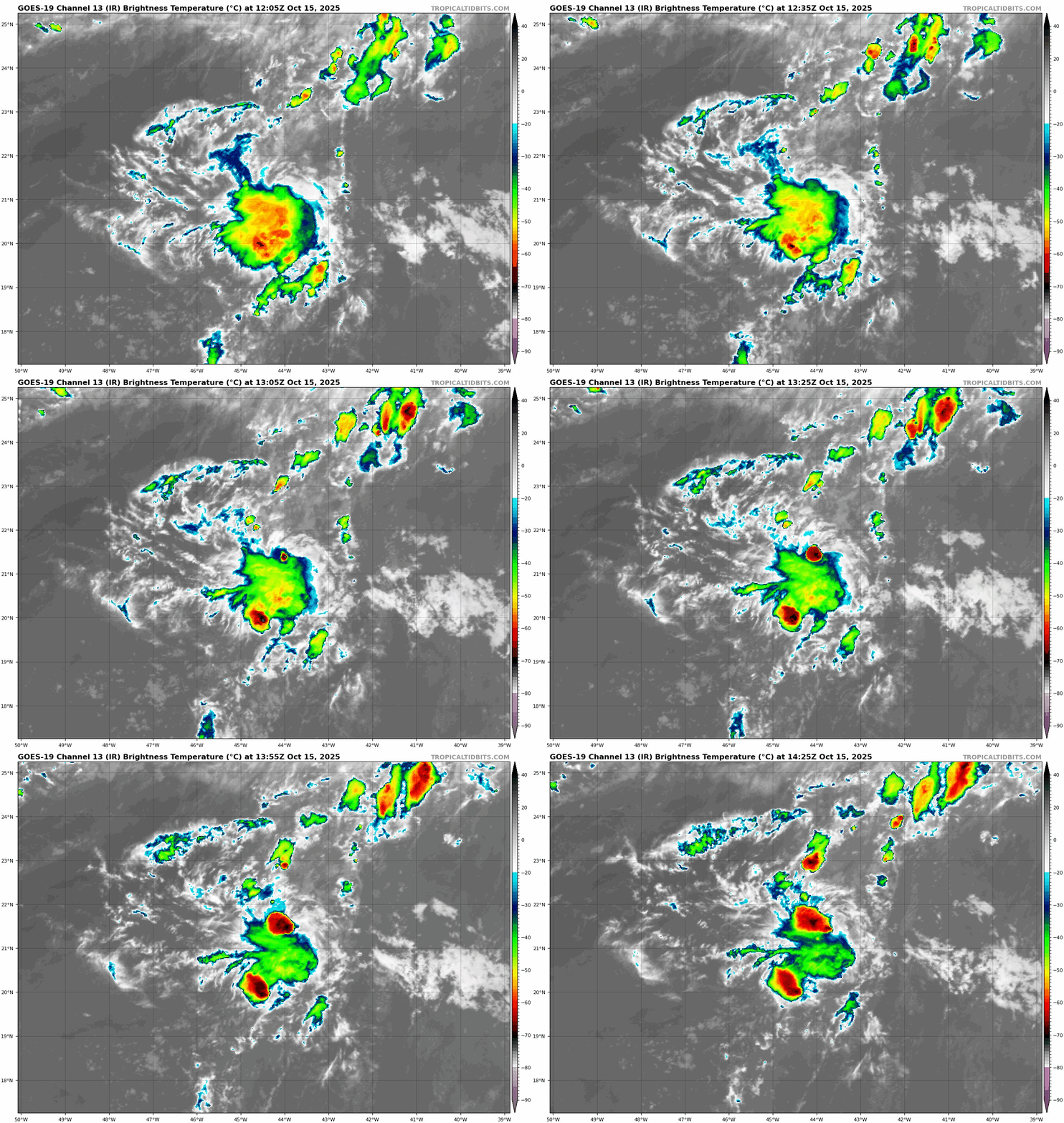
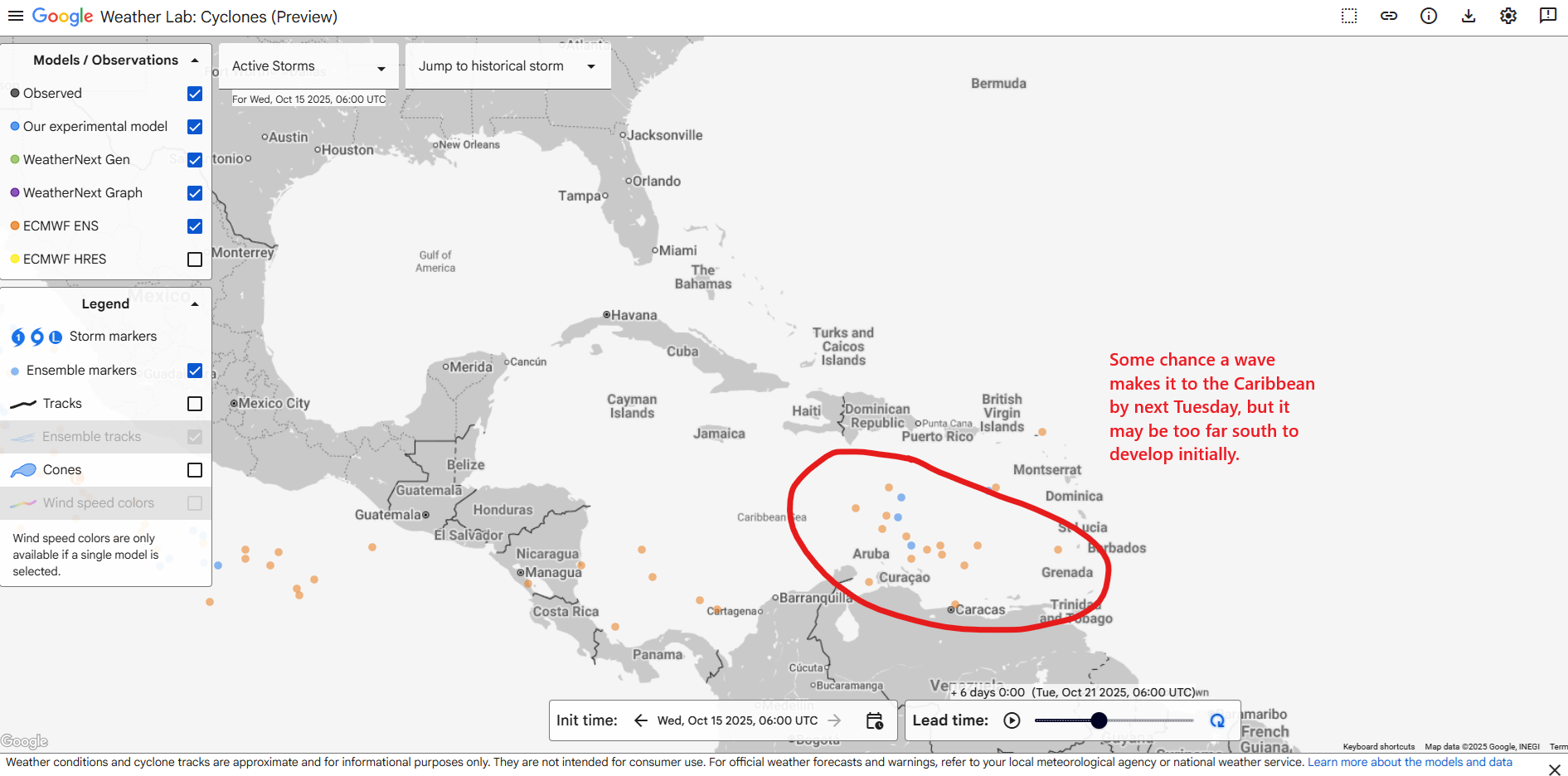


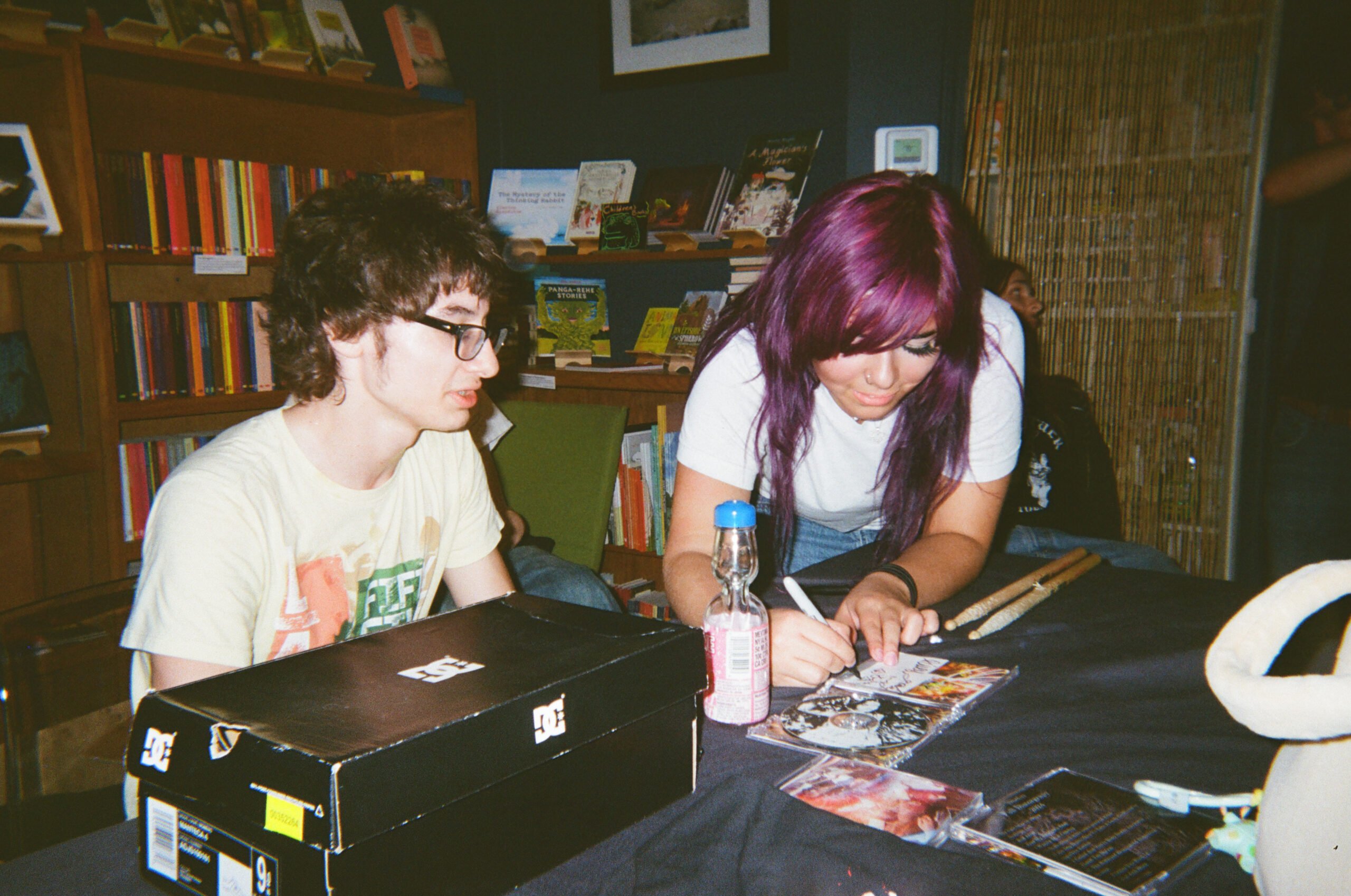
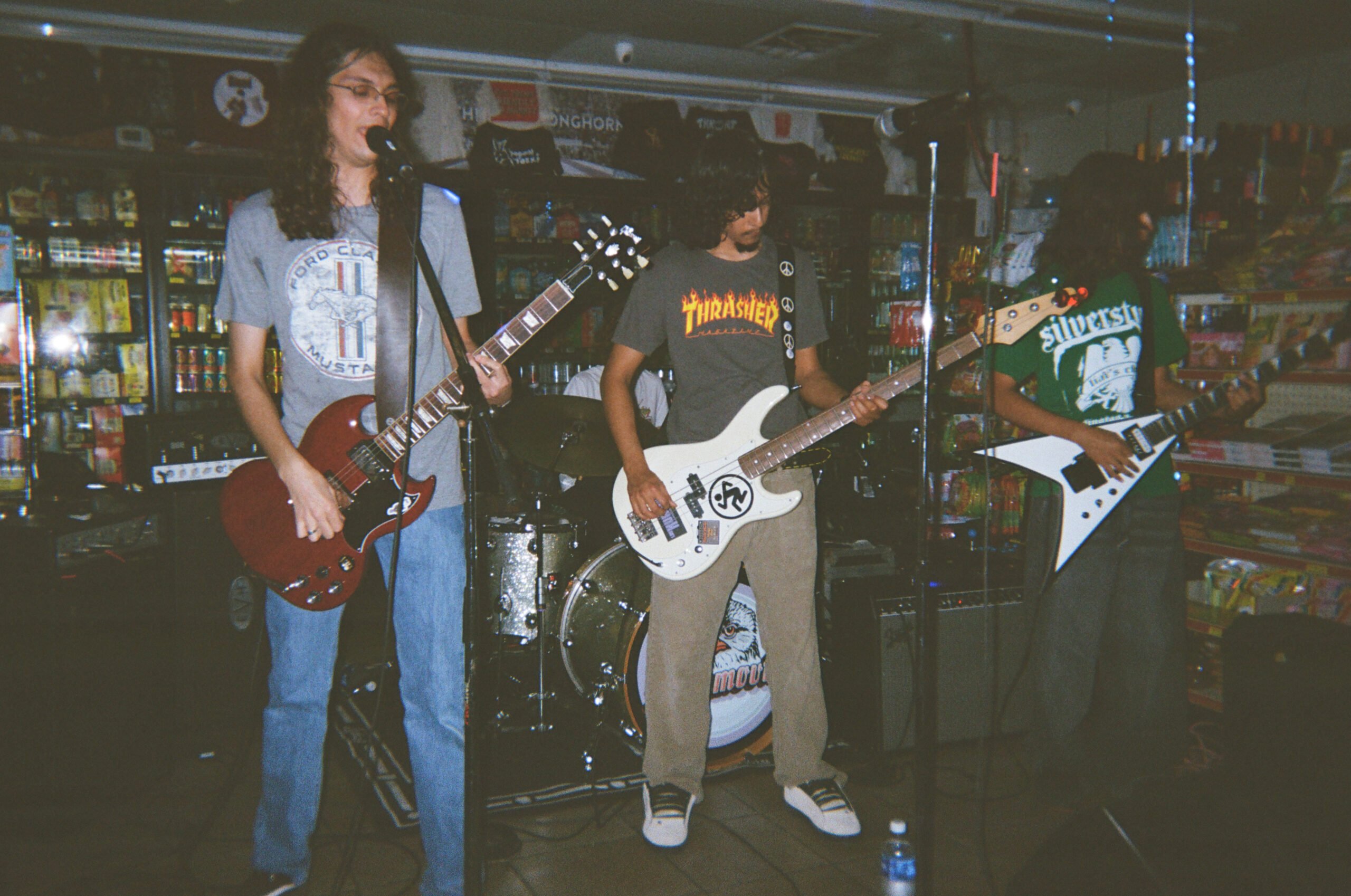



 ALT
ALT
/https://static.texastribune.org/media/files/34d5db424f9e9fae283781df6bfcbaea/0206%20Air%20Travel%20EH%20TT%2003.jpg)
![[img]:xeisoi](https://analognowhere.com/_/xeisoi/xeisoi.png)
![[img]:xeisoi2](https://analognowhere.com/_/xeisoi/xeisoi2.png)
![[img]:xeisoi3](https://analognowhere.com/_/xeisoi/xeisoi3.png)
![[img]:xeisoi4](https://analognowhere.com/_/xeisoi/xeisoi4.png)


