Cowboy Who?
Shared posts
Harris County might sue over pending removal of rainbow crosswalks, county attorney says
Houston’s new 26-unit apartment building for people with mental health disorders to help combat homelessness
So, You and the Pope Both Showed Up to This Party Wearing the Same Hat
Anytime you arrive at an event dressed similarly to another guest, things can feel a bit awkward. But the Vatican is notoriously secretive. You had no way of knowing what kind of huge hat the pope would be wearing tonight. Nevertheless, you’re in this mess, here’s what to do:
Try Not to Draw Attention to the Hat
Many times, we think everyone is looking at us, noticing every flaw we have and every piece of clothing we’re wearing. But, in reality, everyone else is busy with their own life, obsessing over their own clothes and flaws. How many people were wearing a Yankees cap on the subway this morning? What about something weirder, like a Mets hat? See? You have no idea. If you act natural and don’t mention it, it’s highly unlikely other guests will even notice two people are wearing enormous pope hats.
Address the Situation with the Pope
If you’re feeling awkward about the hat situation, there is a good chance the pope is feeling the same way. Try to break the tension by finding some common ground. When you catch the pope’s eye, see if he happened to get his hat at the same place by gesturing at your head and asking, “Kohl’s?”
Stay Positive
All right, the Kohl’s question seemed to offend him (is he a Maxxinista?). Now he’s glaring a hole through you, snarling in a way that is uncommon for a religious leader. You’re worried because he’s mad at you and he has God on his side. But consider this: His movements are guided by the Almighty. And you just so happened to pick out the same hat as him. So, hey, maybe you also have the divine spirit flowing through you.
Stand Firm
You’re going to feel pressured to defer to His Holiness, remove your gigantic hat, and end this whole beef. Don’t. For centuries, the fascinatingly large and extremely impractical headwear space has been dominated by British guards, religious leaders, and women attending horse races. Now it’s your turn.
Fight the Pope
Why do you have to take the hat off? Why can’t he take his off? You have just as much of a right to wear a towering, bejeweled hat as he does. If he’s not going to drop it, you’re going to have to drop him. You can take him. He’s old. He might be God’s mouthpiece, but he isn’t God’s fists. Meet the pope in the alley behind the house, then give him a quick jab and a pectoral cross to the chin—
Wait, Hold On…
Dammit! Why did you punch an old man? Because he was wearing the same hat as you?
Shit, Okay, Just Give Me a Second
He’s not moving. This is bad. Maybe no one will notice he’s gone? Of course they’re going to notice if the pope is missing. Fewer people would notice if you went missing, though. On Monday, they’d just reassign your bullshit spreadsheets to Cathy, and nothing would change. You already have the hat, so what if you just popped on his robes?
Become the Pope
Reenter that party with the confidence and authority of the Holy See. Shoulders back, chin up, hand waving in a cross like you’re conducting an invisible orchestra. Bless a few people, Hail a few Marys, and get out of there before anyone has time to realize what’s happened. It worked for Tim Allen with Santa, it will work for you too.
Begin a Holy War
You haven’t experienced power until you’ve used the Word of God to declare war on the Venetians. Reviving this dormant war will grant you papal legitimacy and trigger classic Catholic nostalgia for the 1400s.
Make Sweeping Changes
As pope, you’re capable of pushing reformation through the notoriously stubborn entity that is the Church. Issue a papal bull that, from now on, the pope will trade in his huge, spade-shaped hat for a more sensible trucker cap with room for Bible verses on the front.
Abdicate
Leave the church, kick back, relax, and go to parties wearing whatever bulbous, ornate clothing you want. You don’t have to worry about another dust-up like this, provided the Dalai Lama hears about what happened to the pope, comes to his senses, and changes into something other than the red and yellow robe you’re both wearing.
California To Phase Out Ultra-Processed Foods In School Lunches
California has enacted a law to eliminate certain ultra-processed foods from school meals over the next decade, becoming the first state to do so. What do you think?

“This is an important first step toward eliminating food from schools altogether.”
William Pezold, Unemployed

“But lethargic kids are so much better behaved.”
Jacob Villareal, Poodle Bleacher

“They’re just going to trade with the kids in Arizona.”
Kayla Estes, Digital Chauffeur
The post California To Phase Out Ultra-Processed Foods In School Lunches appeared first on The Onion.
Government Shutdown Causes Flight Delays
U.S. travelers have faced mounting flight delays as the ongoing government shutdown causes staffing strain among air traffic controllers. What do you think?

“I always knew the government was secretly controlling the planes.”
Vanessa Dodick, Latch Installer

“I hope it gets sorted out before my plane starts to land.”
Adam Welch, Calculator Salesman

“That’s okay. I brought a book.”
Blake Fischetti, Manatee Advocate
The post Government Shutdown Causes Flight Delays appeared first on The Onion.
Is the craft brewery bubble popping in Texas?

Opening of new Uvalde school marks ‘bittersweet day’ for families and town

‘A once-in-a-lifetime thing’: Rare ‘pink meanie’ jellyfish descend upon Texas shores

The Used Car Market Is Imploding
Huge bankruptcies for used car firms have exposed Wall Street’s entanglement with the sector. Far from derisking after the Great Recession, banks rebuilt the economy on obscure financial intermediaries that are now sinking.

What’s going on with the used car market? To answer this question, we first need to know that it’s about more than secondhand motors.
Tricolor Holdings, a large subprime auto lender and used car dealer, filed for Chapter 7 bankruptcy on September 10. First Brands, a major auto parts supplier, followed suit on September 29, filing for Chapter 11 bankruptcy.
These firms’ financial intertwinement with Wall Street is exposing something structural, beyond the decline of two companies. UBS holds over $500 million in debt exposure to First Brands, while investment bank Jefferies last week revealed its $715 million involvement with the company’s invoice-financing scheme. JP Morgan, BlackRock, and Fifth Third Bank all stand to lose hundreds of millions in the collapse of Tricolor, a company once hailed as a progressive, ESG-certified (environmental, social, and governance) investment.
The Tricolor bankruptcy proceedings estimated total liabilities between $1 and $10 billion — though the real number remains hard to pin down, due to the extent of the firm’s off-balance-sheet alchemy.
Two stories can be told here. One concerns the fourfold increase in NDFIs, or non-depository financial institutions, like Tricolor, with funding from commercial banks, which now totals $1.7 trillion according to Barron’s. This story tracks the movement of finance capital out of big banks and into deregulated corners of the market, following the 2010 Dodd-Frank regime, which forced them to undergo intensive stress-testing.
The second story feels like a flashback to the foreclosure crisis. Tranches of AAA-rated asset-backed securities (ABS) are going belly-up after vulnerable consumers — including an outsize share of low-income Hispanic and undocumented communities — were extended credit.
In both stories, what can be observed is an economy built, or rebuilt, on a house of cards. Banks did not derisk following the recession but shifted risk from their own balance sheets to obscure financial intermediaries around the country. Decisively, these NDFIs are not subjected to the same regulatory statutes that the banks who finance their activities are.
Labyrinths of Loans
What this new system has constructed, instead, is a web of “warehouse financing” whereby companies like Tricolor use bank loans to extend credit and pay the loan down by the sale of securitized car loans. Financing NDFIs now accounts for over 30 percent of big banks’ commercial and industrial activity, according to JP Morgan.
On the other side of the warehousing coin is what First Brands was practicing: invoice factoring. Companies use unpaid invoices as loan collateral and build out a system where lenders — the banks — bypass suppliers, like First Brands, and accept payments directly from sellers, like Walmart and AutoZone. The outcome is “off-the-books” financing. Currently, First Brands is missing about $2 billion in these payments.
So what’s the problem? First Brands’ lenders, like Jefferies and UBS, are owed money from the sellers, not the newly bankrupt supplier. The issue is that First Brands likely used the same customer invoices, and thus the same loan collateral, to access multiple streams of financing. The repayments would be some orders of magnitude smaller than the outstanding loans.
In the wake of the financial crisis, much of what was formerly made public is now private. Private credit, after all, was supposed to be more stable than private equity. Pension funds, university endowments, and clearly the big banks, are all enamored with it. Just weeks before liquidation, Tricolor’s debt was selling at or above par, meaning that investors were willing to pay a premium.
No one is advocating for empathy for Tricolor or First Brands’ creditors. Yet, once again, Wall Street has retreated to byzantine methods of turning a profit that leave the public largely unable to scrutinize what’s going on. Government regulation of financiers cannot itself solve the crisis of financialization; quasi-financial institutions like auto-loan lenders, payday shops, and pawn stores all need scrutiny as they operate in the vast gray zone between the working class and the oligopolistic creditor class.
Auto Loan Debt and the Working Class
Behind the crisis arising in the webs of auto financialization are the working-class people struggling to keep up on car payments.
The country just crossed over a critical threshold last month: 5.1 percent of car owners are at least ninety days delinquent on their loans. This is almost touching the record high of 5.3 percent, reached during the nadir of the Great Recession in 2010. Young people are unsurprisingly hardest hit, with 7.5 percent of car-owning Gen Zers delinquent. The trend for all is upward for the past eight quarters — and expected to continue.
Auto insurance rates are up 56 percent in the past five years; car repossessions are also at post-Recession highs, at 1.73 million so far this year; and car repair costs popped 32 percent in the past two years alone, exacerbated by Donald Trump’s new tariffs. In 2023, a Federal Reserve Bank survey found that car repairs won out over rent, mortgage, health care, and food as the cost that Americans were most concerned about.
Consumers have responded to all this pressure by extending the terms of their loans to decrease their average monthly payments. Yet interest rates have kept rising. The average American is forking over between $550 and $750 a month on their car note, a number that used to be a monthly rent a decade prior. Today 20 percent of all newly originated car notes are over $1,000 a month, and you’d be mistaken to think that only the top income quintile is represented in that number.
Suffice to say: the numbers aren’t looking too good, and our collective experience with cars should back that up. My last conventional oil change was well into three-digits, and I’m uncomfortable even discussing what a standard headlight change ran me.
No one can say for sure where we are headed from here. But the concept of a split-screen, or “K-Shaped,” economy has maybe never been more relevant. Following COVID-19, what felt, legislatively, like a joint recovery quickly devolved into a sinister game of musical chairs: interest rates were low and credit was pushed out everywhere, the stimulus checks were in, and “quiet quitting” was the big fad. But the music stopped a while ago now, and we’re holding on to whatever jobs we have — picking between credit card accounts, car loans, and buy-now-pay-later groceries month to month.
What remains to be seen is whether Wall Street can retain its bull-market returns with or without Main Street. In 2008, the answer was no; but that doesn’t mean this time won’t be different. Never before, it seems, has sentiment and optimistic ideology so thoroughly run roughshod over economic measurables.
The auto-loan industry doesn’t have the same penetration into global financial circuits as did the mortgage industry, but it’s still a multitrillion-dollar sector with widespread and unknown entanglements. Every time Tesla misses a shipments target but increases its stock price, the feeling is that the rope tightens, or the bubble inflates.
But perhaps we’d be better served to understand the market in 2025 as a severed one, not a taut one. Somewhere along the way, the stock market left the dock with the people still on the land. Maybe this arrangement will not endure, but it’s hard to argue that it isn’t the predominant post-COVID zeitgeist. The equities market seemed to learn that it could remain “optimistic” even while ignoring devastating jobs data, declining consumer reports, and the business cycle. Yet such optimism rests upon a mass of disillusioned, toiling, and indebted workers.
What Is Going On in the Grocery Industry?
Will Amazon disrupt groceries? How did Walmart take over food sales? Is Zohran Mamdani’s public grocery plan too small? Why is the market increasingly polarized between Erewhons and dollar stores? An ex–Whole Foods vice president gives us an industry tour.
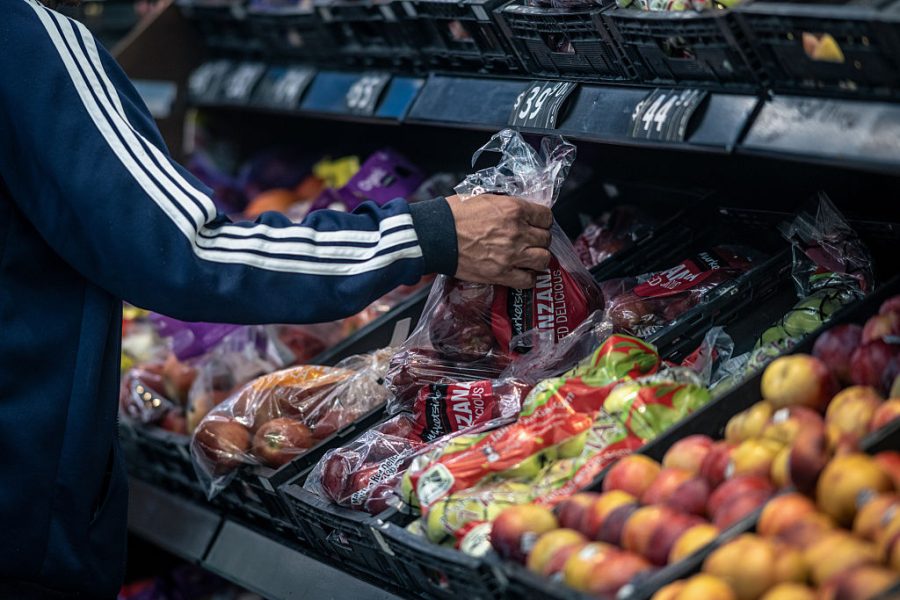
Amazon recently added perishable groceries to its same-day delivery service in one thousand US cities, with plans to double that number by the end of 2025. The splashy announcement drove up Amazon’s stock price at the expense of DoorDash, Kroger, and Instacart. Seeking context for this development, Benjamin Y. Fong interviewed Errol Schweizer, a former national vice president of grocery at Whole Foods. Schweizer publishes The Checkout Grocery Update, a newsletter on the grocery industry, and has a regular column in Forbes magazine.
This interview covers the tight margins in the industry, how Walmart became such a dominant player in grocery, and how the “hourglassing” of the grocery market reflects inequality in the United States. And while Amazon’s new play in perishables has investors excited, Schweizer doesn’t think the e-commerce cost structure works out when it comes to food. Stick around until the end for some thoughts on public grocery stores.
- Benjamin Y. Fong
-
What would you say the main differences are between retail, let’s say for apparel, and grocery?
- Errol Schweizer
-
The main thing is that food is really a lot cheaper than apparel. It’s a pennies game in food, and the margins are really low. That’s why at mass merchants, they sell hard goods — it’s a higher margin. Food is low margin.
Even at Whole Foods, the average price per unit when I was there was $3.49. It’s probably closer to $5 now with inflation. But still, pretty low even for a higher-end store. If you’re playing the price game like Walmart and Kroger, you’re talking about a really low price per unit. So grocery is very much about driving high volumes on low-priced items.
I’d say another key difference is in sourcing. A lot of food manufacturing is still done in the US. So while there is plenty of import in produce — berries, salad, a lot of fruit, some specialty products, olive oil, pasta — there’s also a lot of manufacturing and co-packing of products in the United States. The BCTGM [Bakery, Confectionery, Tobacco Workers and Grain Millers] union has fought hard against the outsourcing of things like cookies, crackers, snacks, and cereal in their locals. A lot of Oreos are made in Mexico now. But there’s still a ton of manufacturing in the US.
- Benjamin Y. Fong
-
Walmart has 21.2 percent market share in grocery, way ahead of Kroger (8.9 percent) and Costco (8.5 percent), the second and third largest. How did Walmart become so successful as a grocer?
- Errol Schweizer
-
Walmart is the product of the lack of enforcement of labor laws and antitrust laws. Much of what they do, they copy from somebody else. They copied their store format from Carrefour, and to a lesser extent, Kmart and Meijer, out of Michigan. They were early adopters of satellite technology and perpetual inventory. They reinvented wholesale by making it so cost-efficient. But in terms of their product and how they operate a grocery store, there’s really nothing special there. It’s just bigger and meaner and cheaper. The way they would open up stores in communities, underprice the competition until they knocked them out of business, then raise their prices, is well documented.

Customers shop for groceries at a Walmart store in Secaucus, New Jersey, on March 5, 2024. (Gabby Jones / Bloomberg via Getty Images) Because Walmart is so big, a really large customer for most of the bigger food manufacturers and co-packers, most manufacturers don’t want to mess with Walmart. So Walmart can mandate a 98-plus percent fill rate at the expense of everybody else — meaning that if a crisis hits, Walmart must be filled to 98 percent of their purchase order, and then everybody else is going to take it on the chin.
I’m really disappointed the FTC [Federal Trade Commission] dropped its case against Pepsi, because I believe in discovery we would’ve been able to see PepsiCo’s contracts with the mass merchants like Walmart, to see if their pricing there is more advantageous.
- Benjamin Y. Fong
-
Does anyone really compete with Walmart in food?
- Errol Schweizer
-
Walmart is dominant, full stop. Nobody else comes close. If you add up Albertsons, Kroger, and Ahold Delhaize, they wouldn’t even scratch Walmart, especially when you consider Walmart plus Sam’s Club. So Walmart is by far the dominant creature in the food system.
I call Walmart the all-consuming void. It is the black hole at the center of our whole food system.
There are only a few operators that really compete with Walmart locally. H-E-B in Texas kicks Walmart’s ass — one of the few. And it’s only in certain metro areas, like San Antonio, Austin, and parts of Houston. H-E-B competes with Walmart on price, size, store format, assortment, customer base, employee loyalty — people stay with H-E-B for their whole careers. Even though they don’t pay well, they treat people really well. People love working there, which is saying a lot for a nonunion employer. But in general, no one competes with Walmart.
Walmart has been crushing Kroger and Albertsons in recent years, especially as those companies were clowning around with that really poorly thought-out merger. Kroger and Albertsons are very dominant retailers in the majority of major metro markets across the US. But they really took their eye off the ball over the last few years, and Walmart has been eating their lunch.
I call Walmart the all-consuming void. It is the black hole at the center of our whole food system. Walmart has a gravitational pull on everything, and now they are trying to bust into more premium markets, competing upstream with Whole Foods and Trader Joe’s by launching a new private label.
- Benjamin Y. Fong
-
Speaking of the premium markets, I’ve heard the grocery industry described as “hourglassed,” with an increasing division, on the one hand, into more high-end stores like Whole Foods and Sprouts, and on the other into more discount options. Why is the middle falling out?
- Errol Schweizer
-
It’s just a reflection of the economy. Vast inequality, the lack of living wages, the lack of household savings. In the 1990s, there was a wave of consolidation, and as a result we’ve simply got a lot fewer grocery stores than we used to. But we’ve got a lot more Walmarts, and we’ve got a lot more dollar stores. That’s where people are buying groceries. I go into the dollar stores all the time just to see what they’re selling. Obviously, it’s not an ideal place to shop. They don’t sell a lot of fresh items, and what they do have fresh is pretty terrible. They’re competing with the deep discounters, the German discounters, Aldi and Lidl, who are also growing at an incredible clip.
On the other hand, you have Erewhon. There are only maybe fifteen or sixteen Erewhon stores. This is where you can get a $30 smoothie made from unicorn shit or something. They’ve taken over a niche from Whole Foods, which has retreated from some of that super premium market. Whole Foods is now adopting a two-tiered pricing strategy: they sell their store brand private label very competitively, usually matching price with Kroger, Albertsons, Safeway, Sprouts, Trader Joe’s. But they’re really expensive on the rest of their store items.
Trader Joe’s is a weird hybrid too. They’re technically a discounter, but they’ve also got premium gourmet specialty. They’re essentially built off of the same superstructure as Aldi or Lidl, and they’re actually owned by the cousins of the Aldi US organization. However, they compete for the same Whole Foods customers, usually with lower prices. Like Whole Foods and Sprouts (which is doing very well), they are still primarily appealing to a more educated, upper-income customer who may just be looking for deals.
- Benjamin Y. Fong
-
Is there anything that Amazon can do to compete in grocery?
- Errol Schweizer
-
No, they don’t understand grocery. All they’ve done at Whole Foods is raise prices, lower labor expenses, and gut the culture.
Amazon has an enormous household reach, but it’s very different from Walmart. They do a lot better with higher income, suburban, more well-educated people. Walmart is much more of a true mass merchant, hitting every household, every demographic. I think what Amazon keeps trying to do is monopolize that top 10 percent. It’s this 10 percent that’s responsible for 50 percent of all consumable goods purchases. That’s who Amazon’s going for.
Amazon doesn’t understand grocery — all they’ve done at Whole Foods is raise prices, lower labor expenses, and gut the culture.
The Amazon Fresh stores are a mess. I don’t know what they’re doing in those stores. I’ve been to a few of them, and it’s not like they’re disrupting or breaking the rules of retail. It just looks like they don’t know what the hell they’re doing — in terms of the mishmash of private label and national brands, lack of innovation, lack of any sort of local approach to consumer trends, all the stuff that we really banked on when I was at Whole Foods in terms of what people wanted to buy, what people were eating. There are a lot of critical things I can say about Walmart, but they’re really up on trends. They have a very effective consumer insights team.
I just don’t consider Amazon a serious contender to Walmart, though I do consider them a threat to natural specialty and more premium, family-owned shops. Amazon is a threat to Wegmans, Raley’s, Hy-Vee to independent natural food stores. I think they’ll continue to grow share online, but in terms of being a true brick-and-mortar rival to Walmart, absolutely not.
- Benjamin Y. Fong
-
Can it compete not with brick-and-mortar stores but with e-commerce?
- Errol Schweizer
-
I’m pretty skeptical because e-commerce in grocery has not been the big disruptor that a lot of people thought it would be. It’s still a minority share of all grocery purchases. It spiked a bit during COVID-19, but it’s well under 10 percent.
There was a lot of hype around it, especially when Amazon bought Whole Foods, a lot of froth. I’ve worked for a number of e-commerce outfits. You can’t make a profit in online grocery. It’s so expensive to sell food online. It’s either a cost center or you’re subsidizing it through your brick-and-mortar. Instead of you, the customer, walking into a store, shopping for yourself, and checking out, now you have to hire people to do that for them. It adds another 10 to 15 percent in terms of just the labor costs.
E-commerce in grocery has not been the big disruptor that a lot of people thought it would be.
Kroger has lost a ton of money on e-commerce. Their e-commerce has been hemorrhaging money and really lowering their overall rate of profit because it’s been growing as a share. They do a lot of e-commerce at Kroger and Vitacost. People like it, and they’re really good at it, but it’s really expensive and not profitable.
The numbers don’t bear out Kroger’s continued investment in it, yet I think there’s a compulsion that they have at the leadership level to keep growing it as a share. Having worked in that sector, the only way it would be successful is if you’re only e-commerce, if that’s all you do. You have to be selling a differentiated, distinct, high-margin product to pay for the home delivery.
Amazon does nonperishables very well. If you are in a major metro area that is geographically close to one of their distribution centers, you can get stuff within a few hours sometimes. But I haven’t seen the data to show that that is how more people are going to be buying food. Home delivery has existed since the Sears catalog. A&P was running groceries up and down the street in the 1930s. This isn’t new technology. So I’m super skeptical about it, and I’m looking forward to being proven wrong.
- Benjamin Y. Fong
-
A lot of critics of the Zohran Mamdani campaign latched onto his proposal for public grocery stores as infeasible. What would you say to them?
- Errol Schweizer
-
Don’t they have friends in the military? I grew up in the Bronx. A lot of people I knew went into the military or ROTC or National Guard. The military commissary system, if it were a grocery store, would be one of the top fifty grocery stores in the US. It serves over a million people every day. Military retirees often live close to base because they can get cheaper groceries.
A couple of my close colleagues — not socialists, not leftists, but folks who are business people who sell into commissaries — they love doing business with the commissary system. They’re flexible and innovative; they are true believers in their jobs. They want to make sure that service members are fed healthy food. They’re up on trends. One of my capitalist friends, an entrepreneur whom I’ve worked with for many years, said it’s actually-functioning socialism.
One of my capitalist friends, an entrepreneur whom I’ve worked with for many years, said the commissary system is actually-functioning socialism.
A part of the problem here is that Mamdani’s campaign has not articulated how they’re going to do this. They’ve left the door open to criticism. I think he’s got some great ideas. All my family lives in New York. I still identify as a diasporic New Yorker. I want it to work. But the idea they have on paper right now won’t work because it’s too small. It will open them up to criticism from the Right in terms of inefficiencies and lack of operational prowess. You need scale to do this right.
Mamdani’s talking about a $60 million investment, a rounding error in terms of the New York City budget. Raj Patel and I came up with a proposal for twenty stores — four or five stores per borough in New York City. A $400 million investment, which is a fraction of the NYPD’s $10 billion a year. It’s a fraction of sanitations, a fraction of the fire department. Raj wrote a brilliant follow-up article about it called “MAHA vs. Mamdani” in Boston Review recently talking about the legacy of public sector food provisioning. It’s a lot of stuff I didn’t know; I’m just a grocery guy.
I think Mamdani’s proposal is the most important idea in the food sector in decades. I can’t remember anything else that to me was as compelling as this. If he wins, I wish him the best of luck. And I really hope other folks who are in municipal and state-level policy pick up on it and take the operational considerations to heart and run with it.
The Razorback hat lacks the quiet dignity of the cheese wedge.

The Razorback hat lacks the quiet dignity of the cheese wedge.
my religious family disapproves of my socializing with male colleagues
A reader writes:
I’m a happily married woman who works at a company that somewhat blurs the lines between work and friendship. While working at this company, I have learned that I’m a social butterfly. I enjoy socializing with colleagues after hours at trade shows, company events, and informal gatherings, especially when we have out-of-town colleagues visiting from another part of America or another part of the world.
My husband is an introvert through and through, and we’ve had to learn how to navigate our opposite natures when it comes to my work’s social events. Basically, he only attends the events that are very important to me or events that only have a small group of people who he knows well, and I attend the rest solo. This works well for us. I can fill my social battery as I see fit, and he doesn’t feel forced to make small talk with people he’ll likely never see again.
Sometimes, I want to catch up with colleagues of the opposite sex who I don’t see very often. My husband knows he has nothing to worry about, so he’s fine with me grabbing dinner or a drink after work with visiting colleagues. It’s usually a small group of mixed sex people, but occasionally it’s just me and maybe two other men (I’m in a male-dominated industry). My husband does not have a problem with this at all.
However, I come from a very conservative religious family that definitely does not approve of opposite-sex colleagues socializing outside of the office. I think that’s a gross, outdated, and sexist mindset (partially thanks to reading your blog!), but I’m struggling to come up with a script for how to shut down any negative comments. No one has said anything to me directly yet, but I see the sidelong glances when I happen to mention attending a work event and my family discovers that my husband was not there with me. Aside from ignoring their glances, which has been my strategy so far, do you have any suggestions for what to say? I’m not great at quick thinking when I’m suddenly put on the spot, so I should probably have something in my back pocket to use just in case.
And if you have a script for my husband to use, that would be helpful too. Even though he doesn’t mind my social activities, he’s at a loss for how to defend our choices to my family.
If you’re willing to keep ignoring their sidelong glances, do! That’s a perfectly fine way to handle it. If they have something to say, make them say it before you bother to engage. Why borrow trouble, if you can ignore them!
But I can also understand why those sidelong glances might really irritate you. They definitely would me. So if you’re looking for things to say, or if they say something that requires a response:
* “Dealing with men one-on-one has been normal and expected everywhere I’ve ever worked. It’s not 1825.”
* “Mike and I have a great marriage so it’s a non-issue. Would you not trust Bob around female colleagues? That must be really hard.”
* “Mike and I trust each other. Is there something making you concerned about my marriage or my trustworthiness?”
Obviously these last two are a bit more confrontational — but your relatives are the ones making that necessary by implying, essentially, that you’d cheat on your husband (or, I guess, that your male colleagues are waiting to prey on you).
If they respond with something about how they trust you but the men you work with can’t be trusted: “I’ve never known anyone I work with to be less than professional and respectful. If you’ve had different experiences, I’m sorry to hear it.” Or just, “Matilda, please — we’re in public spaces and it’s 2025. This is part of being in the workforce.”
And as for what your husband can say: “Jane and I trust each other. I’d worry if our marriage depended on line-of-sight supervision at all times. Why, does yours?” Okay, he doesn’t need to say “does yours?” But he should be thinking it!
If these are all more aggressive than you want (and I realize they might be), another option is to just laugh and say, “It’s not an issue.” Because it’s not — and you and your husband are the ones who decide that, not anyone else.
The post my religious family disapproves of my socializing with male colleagues appeared first on Ask a Manager.
Political Profile: Russell Vought
Russell Vought, director of the Office of Management and Budget and a key architect of the ultra-conservative Project 2025, made waves recently by advocating for mass federal layoffs during the government shutdown. Here is everything you need to know about the right-wing policymaker.
Role In Trump’s Cabinet: One that didn’t seem like a big deal at the time
Credentials: White
Ethnic Background: No
Type Of Christianity Preached: Compulsory
Biggest Pet Peeve: Others’ free will
Favorite Bible Story: Jesus starves the masses
Nickname Around Office: “Shut the fuck up, Russ”
Biggest mistake: Accidentally fired himself while blindly slashing federal workforce
Best Part Of Day: Sneaking whiff of Kristi Noem’s hair
The post Political Profile: Russell Vought appeared first on The Onion.
More major flooding in southwest Colorado, plus a look at the Caribbean next week
In brief: Today we run down the storms that are impacting portions of the country. We have an update in Alaska, where a remnant typhoon caused horrific damage in rural western parts of the state. Major flooding is again impacting Pagosa Spring, CO this morning, even higher than this weekend’s flood. California continues to receive lots of rain and snow and even some severe weather. And the East Coast nor’easter is exiting. The tropics are of no consequence for now, but we will watch the Caribbean next week.
Storm updates
Alaska
Starting today in Alaska. We have not discussed Alaska much, not for any nefarious reasons; we just have had limited time and space to work with here. But parts of western Alaska are reeling from the remnants of Typhoon Halong that devastated some rural communities over the weekend.

This isn’t the first time Alaska has been hammered by typhoon remnants. A somewhat broader event in 2022 from the remnants of Merbok caused widespread damage. But this storm broke some storm surge records by feet in parts of Alaska.
Alan Gerard has a good summary of the storm and some of the meteorology and forecast details (including asking the question about whether a lack of upper air weather balloon data due to budget cuts and staffing cuts within NOAA hindered the forecast at all). Read more at Balanced Weather.
Colorado
The San Juan River at Pagosa Springs is back up in major flood stage this morning, running about 0.1 to 0.2 feet above levels it hit this past weekend when it caused extensive flooding.

This is the third highest stage on record there, pushing this weekend to fourth highest. Rain totals above Pagosa Springs are nearly 7 inches since this weekend, which has allowed for this degree of flooding, prompting evacuations — again — in downtown Pagosa. More details on impacts from the flooding at the Colorado Sun.
California
We had at least one tornado warning in San Luis Obispo County overnight, but a squall line offshore approaching the Los Angeles area this morning could cause additional strong to severe storms.

Heavy rain and snow continue elsewhere in the state, with the Sierra likely getting a very healthy early season snow.
East coast nor’easter
Most tidal gauges are now back below flood levels or are expected to experience minor flooding only today. Overall, tides may have underachieved some in this storm, but they still caused substantial damage.

Tidal levels in parts of NJ have not been this high since Sandy in 2012, though that brought significantly higher tides and waves. Still, this was able to do a number on vulnerable beaches. And at least 3 people have been killed as a result of the storm, including a freak, tragic incident in New York City.
Tropics
Lorenzo remains a non-issue this morning, as it will continue to meander in the open Atlantic, and as noted yesterday, it may do some funky maneuvering out there.

There’s always one.
Meanwhile, we continue to see signs that there may finally be something in the Caribbean worth watching. Models have been up and down on this area for the better part of a month now, and it finally seems like we may have something. A tropical wave tracking west across the Atlantic won’t develop, but as it arrives in the southern Caribbean next week, it will have a chance to begin trying to organize.

Will it happen? How strong will it get? Will it go into Central America or turn back north toward Jamaica, Cuba, or the East Coast? It’s too soon to say much of anything, especially “will it happen.” For now it remains it a late period curiosity like you’d find at a museum. Observe, don’t touch, and study it a bit closer for a few more days.
Could a real fall front finally arrive next week?
In brief: Today’s post discusses the difference between ‘humidity’ fronts we’ve had so far this fall, and a stronger front that ushers in colder air. We think Houston may get its first stronger front of the season later next week, but cannot yet guarantee this.
Fall, finally (probably)
We have had several fronts this fall, beginning back in late August if you recall. For the most part these have been humidity fronts in the sense that they have knocked out some of the moisture from the atmosphere. But they have not brought large amounts of significantly colder air into the region. (There is no technical definition for this, but let’s go with nights in the 50s in Houston).

We have another ‘humidity’ front in the cards for this weekend. However after that, there is an increasingly strong signal in the global models for a stronger front in the range of 8 to 10 days from now. (Perhaps it is no coincidence that we scheduled Fall Day for October 25, months in advance?) Of course there is no guarantee this will happen as forecasts that far out are far from certain. But the time of year is right, and a pattern change appears likely. So Fall, finally? Probably.
Tuesday and Wednesday
In the meantime Houston will continue to see warmer than normal weather. Highs today will be in the upper 80s (some inland areas probably will hit 90). The upside of this pattern for the next two days will be a drier northeast flow, so humidity levels will be lower. Expect sunny skies and generally light winds. Lows will fall into the upper 60s for central Houston, with cooler conditions for outlying areas.
Friday and Saturday
Heading into the weekend the onshore flow will become more pronounced, and this should introduce a few more clouds and somewhat higher humidity. This may help to limit high temperatures to the mid- to upper-80s. We also will have some low-end (20 percent?) daily chances for light rain. Any showers should be fleeting. Lows will only drop into the 70s for most locations with the more humid air.

Sunday and Monday
On Sunday we should see a front drag into the area. At this point it appears it won’t bring too much cooler air with it, but there is a decent chance of some showers on Saturday night and Sunday. Again, accumulations don’t look overly impressive, perhaps a tenth of an inch of rain, or two for most locations. Not everyone will see rain. Highs on Sunday should be in the upper 80s, with lows dropping into the 60s on Sunday night with drier air. Monday should see highs in the mid-80s or thereabouts, with sunny skies.
The rest of next week
After that point we’ll be in the waiting room for a stronger front. This could arrive as early as Wednesday, or maybe a day or two later. But most our guidance suggests we could see cooler weather (days in the 70s, nights in the 50s, maybe?) toward the end of next week. With some luck we will also get a decent shot of rain with the stronger front. But again, no guarantees at this range I’m afraid.

Supreme Court rejects Alex Jones’ appeal of $1.4 billion defamation judgment in Sandy Hook shooting

Financial Advisors Recommend Throwing Away Unopened Bills
NEW YORK—Calling the strategy an “effective solution” for anyone feeling weighed down by economic hardship, a group of leading financial advisors recommended Tuesday throwing any unopened bills in the trash. “It’s easy to feel overwhelmed by invoices piling up—those things are the worst—so just get rid of them,” said Goldman Sachs advisor Adam Bridge, adding that this approach to financial planning was used by many high-net-worth individuals to reduce debt right away by forgetting the bill ever existed. “As soon as you see an envelope reading ‘notice, final warning’ just immediately toss it in the recycling. That warning could be for anything. Plus, how can you owe something that you don’t know you owe?” The financial advisors also suggested that if a person received a call from a collection agency, they should just hang up.
The post Financial Advisors Recommend Throwing Away Unopened Bills appeared first on The Onion.
Childhood Best Friend Would Never Make The Cut Now
WATERBURY, VT—Admitting that the bar used to be much, much lower, local 38-year-old Jeremy Griffiths confirmed Tuesday that his childhood best friend Ben Martin would never make the cut now. “If we didn’t have decades of memories together, there’s no way that I would have invited him to any important function in my adult life,” said Griffiths, adding that now the two have absolutely nothing in common besides having gone to each other’s houses every weekend for 10 years. “Things were great when we first met, but we were in kindergarten then, and my only friendship requirement was that the other kid also liked tractors. Plus, he doesn’t even have that trampoline anymore. I can’t even imagine playing video games in complete silence with such a loser.” When reached for comment, the childhood best friend confirmed that Griffiths would never make the cut for him at this age either.
The post Childhood Best Friend Would Never Make The Cut Now appeared first on The Onion.
‘Try Not To Stare At Her Mouth,’ Says Mom In Ominous Update On Grandma’s Health
The post ‘Try Not To Stare At Her Mouth,’ Says Mom In Ominous Update On Grandma’s Health appeared first on The Onion.
GRENDEL
GRENDEL
FRIGHTENING SPECIAL
![[img]:sreteg](https://analognowhere.com/_/sreteg/sreteg.png)
Fish presents his plan to the other mages.
"...with the guards neutralized, we get the goods and escape through the tunnel. Any questions?"
The usual mages are quiet. Girl says: "Nope!"
Fish notices a weird rabbit he's never seen before in the audience.
Fish: "Who the heck is that?"
Grendel: "I'm Grendel!"
![[img]:sreteg2](https://analognowhere.com/_/sreteg/sreteg2.png)
Girl: "Yeah! That's Grendel!"
Penguin: "He's always been here!"
Beastie pretends to have bunny ears with his fingers.
Fred: "Grendel is the most awesome plan9 mage!"
Daemon: "If I had three wishes, I'd wish for Grendel to be my best friend three times!"
Girl: "If you ever died, master, I would want Grendel to adopt me!"
someone: "Me too"
Grendel: "Aww, you guys!"
Fish: "Are you all insane?!"
Glenda shakes her head angrily.
![[img]:sreteg3](https://analognowhere.com/_/sreteg/sreteg3.png)
poster for issue: GRENDEL
https://analognowhere.com/_/sreteg


worker billed client for stinking up her bathroom, my employee curses at me, and more
It’s five answers to five questions. Here we go…
1. Worker stunk up client’s bathroom, then billed her for it
I manage a team of skilled electricians who often work in clients’ homes. A client reached out to express concern that she was billed for 15 minutes during which our electrician was, quite literally, off the clock and stinking up her bathroom. I understand that nature calls, but really? Using her bathroom and charging her for it? Frankly, my personal thought is (barring an absolute emergency) he should have left her home and gone to a gas station. And then he had the nerve to charge her for it? Where do I even begin?
It sounds like you and your employee — and maybe the rest of your employees, too — just need to get better aligned on how to handle those situations. It’s very reasonable to tell them not to bill for time spent in the bathroom or otherwise not working on the job (the same as if they had a personal phone call for 15 minutes — especially in jobs that often bill by the quarter-hour), but you need to tell them that up-front! I suspect you’re thinking they should just know because it seems like common sense to you — but you’ll get better results if you make underlying assumptions explicit, especially once you see there’s a need to.
As for the bathroom use itself, I don’t get people who don’t want workers to use their bathrooms, but if your expectation is that your employees shouldn’t, you should let them know that up-front too, not after they’ve gotten it wrong. (That said, what do you expect someone to do if the need is urgent? Even if you normally expect them to go off-premises, emergencies happen.)
2. My employee curses at me and management doesn’t care
I am a middle manager at a very large, prestigious firm. One of my direct reports, Jane, was on a PIP two years ago for acting rudely to coworkers on a regular basis and excessively micromanaging her teammates. Her work was not at issue.
For the last few months, we have been down one team member. As a result, I have been helping the team out. Likely feeling stressed, Jane has become very anxious and difficult to work with. She feels the need to nag me all day about my “status” on projects. I have asked her to stop micromanaging me, as I am her boss, but she won’t. At the same time, I have seen the quality of her work go down. When I addressed her work (in the kindest way possible), she became angry and responded with a profanity-laced tirade about how she didn’t care what I thought. I immediately reported this to my boss, who responded by saying,”Hmmm, she doesn’t talk to me that way.” To make it worse, my boss suggested that I give Jane a high score in my year-end feedback, although it is “my decision.”
Clearly, the insubordination was considered a nonissue, and I get the feeling that I am viewed as a weak and ineffective manager. I’m not sure how to go forward in this situation. I dread every day knowing I have to deal with Jane, and I get no support from leadership.
Well, wait, you’re her manager! That means you can manage her a lot more assertively than you’ve been doing.
When Jane unleashed her profanity-laced tirade about not caring about what you thought, the right move was to immediately pull her into a private conversation and let her know, in serious terms, that she can’t speak to anyone at work that way, and in fact it does matter what you think because you’re the person managing her work. The fact that it wasn’t your instinct to do that — and instead was your instinct to ask your boss to handle it — makes me think that you’re likely conveying to Jane in all sorts of ways that you don’t believe you have real authority over her, or at least not authority you’re likely to exercise. I think you’re probably right that you’re being viewed as a weak and ineffective manager, but that’s because … well, you’re being a weak and ineffective manager!
Step one is to get confident with your own authority and begin more actively managing Jane (and probably others, as well as the culture on your team more broadly). Some advice on doing that:
I have to manage the office jerk
my employee is combative and rude
my employee has a bad attitude
new managers and authority
how to appear more authoritative at work
3. Can I ask my manager to stop opening my deliveries?
Is it weird for my supervisor to open any deliveries I receive in the mail?
My supervisor oversees our department’s budget, and she and I are the only people in the department with spending cards. She has to approve any charges I make, so she is well aware of anything I order.
We get a number of packages every day and a few weeks ago she opened one addressed to me on accident (I legitimately believe it was an accident). She apologized and explained her mistake, and I told her not to worry. Accidents happen … but since that time she has opened every package that has been addressed to me.
These are all items that were ordered for use in our department and she knows what I’ve ordered from my credit card approvals, but it makes me feel weird that she’s opening things that are specifically addressed to me. For what it’s worth, there has never been any question about me misusing funds. Would I be out of line to ask her not to open mail that is addressed to me?
Yeah, there’s a high risk of it coming across weirdly if these are all things you’ve ordered for your department. If you were having personal mail sent there, it would be different — but it’s hard to justify asking her not to when it’s all work stuff, unless there’s a specific reason you can cite (like “I didn’t realize the conference posters had arrived and I called the printer to complain”).
There are offices where whoever processes the mail opens it all and then distributes it (although that’s admittedly less common with packages than with letters). And legally, mail sent to anyone at a business is “owned” by the business and can be opened by its management (or anyone there, unless the employer itself makes a rule against it).
But since this is a change to what she’d been doing before, you could approach it from that angle: “I noticed that after you accidentally opened that package addressed to me a few weeks ago, you’ve been opening everything that comes to me, and I wanted to make sure I haven’t done something to make you concerned about what I’m ordering.”
4. What’s going to happen now that a great manager quit without notice?
I work in a volatile industry for a large organization (10,000+ employees). My department undergoes frequent organizational changes in the name of efficiency or innovation. Overall, my department is seen as one that costs money but is important to the business, rather than one that generates money, so we have the frequent changes in an attempt to save money. In practice, my day-to-day role doesn’t change much. Instead, we see new leaders rotating in, projects ending and being replaced with others, or the introduction of new KPIs that are essentially rebranded versions of the old ones. After 15 years, I’ve grown jaded about this cycle of “reinvention” that happens roughly every two years, if not sooner.
Recently, however, something unexpected happened: a manager I deeply respected, known for transparent communication and strong leadership, suddenly quit without notice or handover. This was entirely their decision, and it left many people surprised, with no plan for how their responsibilities would be managed. I can only imagine how frustrating recent organizational changes must have been to push them to that point.
What I can’t predict is the fallout of this. Will senior leaders overreact or ignore? In your experience, how do leaders respond to this? After so many years, I’ve learned to anticipate most of the moves at this company, but this situation has caught me off guard.
It’s impossible to say, but if I had to bet money on it, I’d bet the ripples will be relatively small and contained — no freak-outs or significant changes as a result. First, people leave unexpectedly for all kinds of reasons (family emergency, health crisis, better offer fell in their lap). But even if it’s clear that they left as a last-straw kind of thing, the most common reaction from dysfunctional companies in that situation is to shrug and say, “Okay, it wasn’t for them” — not to have a reckoning about how it’s a sign things need to change. And frankly, in some cases that’s reasonable; sometimes the things aggravating the person are things that, while legitimately frustrating, need to happen because the organization’s priorities are (rightly) different than the individual person’s are. In other cases, of course, it’s not reasonable — but then in that situation, the serious problems that led the person to quit can also be what keeps the leadership from responding appropriately.
5. Resigning while my boss is out of the country
I have an offer of employment and need to put in my two-week notice. I’ve been waiting for the background check and reference check to clear so I’ve been unable to resign as of yet.
My boss is leaving for an international vacation tomorrow and I am unsure as to how to proceed. I can give them a heads-up that I will be putting in my notice (prior to getting the background check all-clear) or I can give my resignation to their superior and have them find out when they return. Either way, I risk alienating my boss as they won’t want that info right as they are taking a well-deserved vacay, nor do they want to be blindsided when they get back. What is the best way to handle this while (hopefully) not burning bridges?
Wait for the contingencies to be removed from the offer before you resign. Otherwise, there’s a risk that something could go wrong and the offer could fall through. That’s true even if you’re confident that nothing in your background check or references will pose a problem; things happen that you can’t predict, and you absolutely should not resign a job until you’re 100% sure you’re ready to leave and know what you want your last day to be.
It’s not a big deal that your boss will be away when you resign. It’s not ideal, but it’s a very common thing to happen, and businesses deal with it. When you’re ready to give notice, you’ll give it to their manager and/or HR. Your boss will find out when they’re back, and that’s just how this stuff goes. You can explain that the timing was out of your hands, but it would be incredibly unusual for this to burn a bridge.
The post worker billed client for stinking up her bathroom, my employee curses at me, and more appeared first on Ask a Manager.
bun in the middle
bun in the middle
chekhov's gun 2
![[img]:aitici](https://analognowhere.com/_/aitici/aitici.png)
Cirno is hacking.
"Who wrote this piece of shit? Probably me."
the doorbell rings
Cirno goes to open the door.
It's a rabbit.
"It's me your trusted rabbit companion Grendel. I'm home."
Cirno is confused. Angry Glenda pops from behind.
https://analognowhere.com/_/aitici
This audience would riot if they saw KC and the Sunshine Band.

This audience would riot if they saw KC and the Sunshine Band.