Catch you next time, distant cousin’s baby shower. We totally would have been there, new coworker’s birthday party. Sorry it didn’t work out, someone we don’t know’s wedding.
AWESOME!
– Email message –
“My parents, sister, and I were fortunate enough to spend my 20th birthday in the U.S. Virgin Islands. I had shown my father your website, leading to a copy of The Book of Awesome for my mother on mother’s day and then surprising me with one for my birthday. Today I spent some quality sand covered time reading your book after an afternoon sting ray spotting and snorkeling!” – Kat
In this terribly haunting dystopian future, the U.S. has found a way to obtain cheap migrant labor WITHOUT the migrant. Director Alex Rivera creates a gritty world that can only be described as a cross between Blade Runner and Children of Men.
In Sleep Dealer, the U.S. has closed itself off from the world with a fortified wall that makes migration impossible. Migrant workers in the U.S. have been replaced by robots, forcing would-be emigrants to work as robot operators from Tijuana, Mexico, “The City of the Future.” The film follows Memo Cruz, a young migrant worker, who’s forced to become a robot operator to make money that he can send back home to his family.
2. It’s one of the first films to tackle the controversial use of remote-controlled drone strikes.
Early on, Rivera paints a picture of a future in which drone strikes in Mexico are not only a common occurrence, but used for purposes of entertainment. Rudy Ramirez, played by Jacob Vargas, is a military drone pilot who destroys and kills from the comfort of a San Diego office.
Interestingly, the film, which went into production in 2007, “predicted the explosion in drone technology,” according to Rivera, who spoke to BuzzFeed via phone. “I was looking at two big changes happening in the world. One change is that technology was connecting the globe. We were becoming more and more connected by the minute. And yet, borders between places, like the U.S.–Mexico border as one example, were becoming more divided,” he said.
“So I thought of a world where borders were sealed shut but technology deleted all borders. And then you start to get this idea of a person controlling a machine somewhere else. That machine is a drone. Some drones works. Some drones fight. So essentially, you have this world where Mexicans work remotely in the U.S. and you have Americans who work remotely in Mexico. So you’re left with a world where people cross borders digitally. That may sound like a strange idea, but it’s based in the world that we [currently] live in.”
3. Luis Fernando Peña, from critically acclaimed films Sin Nombre and De La Calle, delivers a subtle yet powerful performance as the film’s hero.
Luis Fernando Peña plays Cruz, a Oaxacan in search of the “new American dream,” which means working at a “sleep dealer” factory in Tijuana, operating robot laborers in the U.S. He’s got an innocent charm that slowly erodes as he overworks himself in the factory. Memo Cruz is the migrant hero who’s trapped in this dark steampunk abyss of U.S. capitalism. Peña plays the role with a quiet intensity that draws you in from the second he appears on screen.
4. Memo Cruz is the Luke Skywalker of Sleep Dealer.
“There’s almost no Latinos in the future in film,” said Rivera. “I grew up in a family that was in the process of coming to the U.S. They were dealing with traveling across great distances, overcoming incredible challenges. So when I looked at heroes like Luke Skywalker, in a way I felt they were people like my family. Luke is an immigrant or a refugee. His home is destroyed, he goes on the run, he sneaks into the empire, etc. His journey is very similar to the journey that many of our family members go on when coming to America. But we never see that truth shown on film.”
5. Sleep Dealer is a film that speaks to everyone, from those interested in political affairs to sci-fi enthusiasts.
Even though the film incorporates a heavy sense of social commentary, there’s a lot that a hardcore sci-fi fan will appreciate. Like all great sci-fi films in history, Sleep Dealer asks pertinent questions about the human condition. The film asks the audience to reflect upon their use of current technology. Are we really connecting with one another? Are we losing our sense of human connectivity because of technology? Rivera paints us a future that’s very hard to dismiss as improbable.
6. Even though you may have never heard of this film, it’s an award winner and completely worth the watch.
The film won the Amnesty International Prize at the Berlin International Film Festival, the Alfred P. Sloan Feature Film Award and a screenwriting award at Sundance, and it also won Best Feature at the Neuchâtel International Fantasy Film Festival. The film was also nominated for Best Feature at the Independent Spirit Awards, Sundance, and the Chicago International Film Festival. In other words, this film is awesome.
Sleep Dealer is now available to watch on iTunes. Watch the trailer:
Freelance designer and stop-motion animator Micaël Reynaud (previously) creates animated GIFs unlike any we’ve seen. His process involves the use of video techniques like slit-scanning, time-lapse, and various forms of masking to create what he refers to as “hypnotic very short films.” Indeed many of these animations are pulled from fully realized videos which you can watch over on his Vimeo channel. Reynaud’s work has not gone unnoticed in the art world, the pigeon GIF above was a finalist in the first Saatchi Gallery Motion Photography competition, and he recently won the 2014 Giphoscope International Art GIF contest. You can scroll through dozens of his creations over on Google+.
The Public House’s nine-year run will end after service on July 5th. Public House Investments, its parent company is replacing the bar with another of its concepts, City Tap House. Like the University City location of City Tap House, the Logan Square location will of course focus on beer with an extensive draft system as well as collection of foreign and domestic bottles. The new location will include forty beer taps plus two cask engines.
City Tap House Logan Square is aiming to open in September with a look combining industrial with rustic. Like the original, reclaimed lumber with steel and copper accents will set the tone. The bar will offer a large 18′ x 9′ video wall plus large windows that can fully open when the weather permits.
The dining room will seat 170 and the bar will have 44 seats. The menu will be developed with the help of chefs Chad Vetter (City Tap House) and Marc Plessis (Pennsylvania 6).
North Bowl has officially started their Summer Happy Hours, which means the $2 deals are among us. Monday through Friday from 5 to 7 p.m., the $2 specials will include bowling, shoe rental, original tots, Tecate cans and tullamore Dew shots. What more could you need? Well if your answer is the World Cup, then you’re in luck because you can watch the games there too.
On Wednesdays and Saturdays, the special will continue into the night for a late night happy hour.
It was the summer of 1909. I was on the south coast of Spain. I remember it well because the season was almost over. Peace was within reach, I felt. There had been a vote to end the war, and the English had told me to support it. But the vote needed to be unanimous to pass, and it failed. The Russian, the Italian, they thought the English voted against it and that I had been lied to. Why should I believe them? The English and I had worked together against all of them for years now. Of course they’d want to sow distrust between us. Now time was ticking. I desperately wanted peace. I wasn’t sure my country would survive another couple of years, with or without England’s help. There wouldn’t be another vote until after the fall.
“Will you support my army in Spain this fall?” I asked.
“Nah. That ain’t happenin’,” the Englishman replied. A wave of dread came over me. He intended to betray me.
“How could you do this to me? After everything I’ve done for you.”
“I guess I’m just a hard muthafucka like that.”
And with that he walked away, leaving me standing in the hallway, mouth agape. He rejoined the other players at the board, who all stared at me, fury in their eyes. We told you so.
For the past eight hours I had been in the basement of a dorm in Chapel Hill, North Carolina, playing a board game called Diplomacy along with six other men. Each of us was vying against 80 other people to be crowned the world champion of Diplomacy at the end of the weekend here at Dixiecon.23 One of those men, Brian Ecton, a high school math teacher from Prince George’s County, Maryland, with hair like Katt Williams and a mouth to match, approached me right at the start, sizing me up as a beginner and offering an alliance. He explained exactly how it would work and said we’d share a draw at the end. I had no reason not to agree.
For the next several hours each of the other players would take turns dragging me aside to explain to me how Brian was manipulating me, how he was going to betray me, how I should betray him first and work with them against Brian. I dismissed them all. After all, who’s to say they wouldn’t betray me as well? I was outmatched in this game. Safer to pick a player and stick with him come what may, I thought. But here I stood, on the verge of elimination, and the other players were pissed. According to them, I could have avoided this if I had listened to them hours ago.
“Don’t you realize that some of us traveled a very long distance to win this tournament?” a player from France said to me with disgust. “And because you won’t stab24 this guy, you’re going to die and bring all of us down with you.”
“Are you going to be paid for writing this story?” a Scottish player asked me. “Because I am losing three days’ wages to be here so that I can get screwed by you.”
I still don’t know whom I should have trusted, if anyone. All I know is that I felt stupid, stressed out, humiliated, and sad. I had several shouting matches with a few of these guys. Some of them got personal. And all I had to show for my loyalty to Brian Ecton and my righteous indignation toward the other players was nothing at all. I was physically exhausted and emotionally abused. I hated Brian, the other players all hated me, and I hated myself most of all. I had to purse my lips extra hard to fight the urge to cry.
Settlers of Catan, eat your goddamn heart out.
If you’ve ever heard of Diplomacy, chances are you know it as “the game that ruins friendships.” It’s also likely you’ve never finished an entire game. That’s because Diplomacy requires seven players and seven or eight hours to complete. Games played by postal mail, the way most played for the first 30 years of its existence, could take longer than a year to finish. Despite this, Diplomacy is one of the most popular strategic board games in history. Since its invention in 1954 by Harvard grad Allan B. Calhamer, Diplomacy has sold over 300,000 copies and was inducted into Games Magazine’s hall of fame alongside Monopoly, Clue, and Scrabble.
The game is incredibly simple. The game board is a map of 1914 Europe divided into 19 sea regions and 56 land regions, 34 of which contain what are known as “supply centers.” Each player plays as a major power (Austria-Hungary, Turkey, Italy, England, France, Russia, Germany) with three pieces on the board (four for Russia) known as “home supply centers.” Each piece can move one space at a time, and each piece has equal strength. When two pieces try to move to the same space, neither moves. If two pieces move to the same space but one of those pieces has “support” from a third piece, the piece with support will win the standoff and take the space. The goal is to control 18 supply centers, which rarely happens. What’s more common is for two or more players to agree to end the game in a draw. Aside from a few other special situations, that’s pretty much it for rules.
There are two things that make Diplomacy so unique and challenging. The first is that, unlike in most board games, players don’t take turns moving. Everyone writes down their moves and puts them in a box. The moves are then read aloud, every piece on the board moving simultaneously. The second is that prior to each move the players are given time to negotiate with each other, as a group or privately. The result is something like a cross between Risk, poker, and Survivor — with no dice or cards or cameras. There’s no element of luck. The only variable factor in the game is each player’s ability to convince others to do what they want. The core game mechanic, then, is negotiation. This is both what draws and repels people to Diplomacy in equal force; because when it comes to those negotiations, anything goes. And anything usually does.
The year was 1966. A 17-year-old boy named Edi Birsan was sitting in his room in Brooklyn staring at a letter he received in the mail. He scanned the same sentence over and over: I am not against a three-way draw and I will not take any more supply centers … On the table in front of him was a Diplomacy game board, showing a game at about the midway point.
Two years before, Edi’s mother had split. She and Edi’s stepfather’s marriage had been on the rocks for years. They’d fight, break up, get back together, lather, rinse, repeat. One day in 1964 she forged Edi’s signature on a bank slip and withdrew $5,000, the entirety of a savings account Edi had had since he was 9 years old, and eventually lit out for California. She stopped off in Tijuana for a Mexican divorce, and that was that.
By his own admission, Edi was introverted and repressed. A year after his mom took off, Edi was in therapy. His therapist saw in him a need to channel his bottled-up aggression, and to learn how to trust people again. She gave him a gift — a board game. I read in a magazine that this was Kennedy’s favorite game. They’d play it in the White House.25 She told him it would help him deal with betrayal.
Edi had a hard time rounding up seven people with whom to play the game. Eventually he discovered that most people played through the mail. He sent off a couple of dollars to subscribe to a magazine (or zine, as they were called) that collected and published the moves submitted by postal players in various games. In between issues Edi would correspond with the other players by mail, laying out his grand plans and coaxing people into alliances. He’d spend hours crafting the perfect letters to his fellow players, carefully choosing his words and taking care to describe how his strategy would benefit them both. He was usually good at it, too. And he prided himself on being a decent and trustworthy ally.
Now here he was, midway through a game he had played well for months. He and two other players stood to share a three-way draw. He read the sentence in the letter again. I am not against a three-way draw and I will not take any more supply centers …
Edi took out scissors and a pen from a drawer and set to work on the letter, painstakingly doctoring it. When he was finished he held up the letter proudly and read it to himself. I am against a three-way draw and I will take three more supply centers … He put the forgery in the mail to the third player. Then he waited.
Allan Calhamer invented the game in 1954 while he was still a law student at Harvard. He aimed to sell it to one of the major game companies, but they all passed. In 1959 he self-financed 500 sets and sold them all to toy stores around New York. The game was picked up in 1961 by a small game publisher called Games Research. But because of how difficult it was to organize seven people for an entire day to play a game, sales were less than brisk.26 It looked like Diplomacy wasn’t long for this world. Until the nerds saved it.
John Boardman was an editor of a number of amateur science fiction fanzines in 1963. In those days, pre–Star Trek, science fiction was still a highly niche subculture. Ever since the 1930s, fanzines were the primary way that sci-fi fans communicated and shared stories and ideas. John Boardman was also a fan of the game Diplomacy, but had a difficult time getting players together for a game. But he had an idea: He’d publish an ad in one of his sci-fi fanzines to see if anyone was interested in playing by mail. The response was encouraging. In May 1963, Boardman organized the first play-by-mail game of Diplomacy and the first Diplomacy zine, Graustark. Within four years there would be at least 32 more zines filled with postal Diplomacy games. Soon Games Research started promoting playing the game by mail by including the names and addresses of the zine editors with the game.
As Diplomacy grew in popularity across North America with play-by-mail games, some of the more hard-core players were curious about how they would fare against each other in a face-to-face game. What started out as a casual, informal gathering of top players in a backyard eventually grew to a yearly convention held on a college campus. They called it DipCon, and it became the definitive tournament for crowning the national Diplomacy champion.27
In 1976 the rights to the game were purchased by Avalon Hill, one of the largest publishers of strategy board games and war games in the world.28 The company had also started a gaming convention the year before in Baltimore called Origins. It invited the Diplomacy community to hold DipCon at Origins II, and the result was the largest Diplomacy tournament ever held in North America, with around 230 players.
With Avalon Hill’s support and reach, Diplomacy found an international audience and rapidly grew in popularity in Europe, particularly in the U.K. The game’s core community was still the editors and readers of the amateur zines, however. Through writings in those zines by new international players, the idea was floated that there should be a tournament in the U.K. In 1988, the first ever World DipCon was held in Birmingham, England, with the site rotating to a different country every year thereafter. Since 1988 the World DipCon has been held in 10 different countries. The winner of World DipCon is accepted around the world by the Diplomacy community as the official world champion.
David Hood, a North Carolina attorney, arrived at the 2014 World DipCon opening ceremony driving a yellow Cadillac and wearing a seersucker suit. He arrived with Mrs. North Carolina, a beauty queen in full tiara and sash, in tow.29
The organizer of Dixiecon, Hood had been a fixture in the Diplomacy hobby for many decades and was a two-time North American champion. Hood had been running Dixiecon since the 1980s, when he was a student at UNC.30
The gathering of amateur diplomats for the 2014 World DipCon was a fairly homogeneous group. Among the 87 players were only two women, two players under the age of 21, and four African Americans, including 2005 Dixiecon champion Brian Ecton.31 The players were as you’d probably expect from any international gathering of board gamers: bookish, unkempt, and slightly awkward. There were exceptions to these stereotypes, to be sure. If there was one thing that this particular group of nerds was not, it was nebbish.
“There is a definite amount of social awkwardness that goes along with any kind of gaming. You find the more social breed of gamer in Diplomacy,” said Siobhan Nolen, a hip, 28-year-old history grad student from Northern California and one of the two women entered in this year’s World DipCon. Her red hair was pulled back in a pony tail, revealing a Scrabble tile tattoo on the back of her neck. The daughter of a hard-core board-gamer who dragged her to conventions her entire life, Nolen is as expert in the culture of board-game nerds as anyone you’ll find. “This is a kind of alpha. It attracts very intelligent people. It attracts extroverted people. If you’re introverted and won’t put yourself out there, it won’t work out for you. It attracts people who like to talk. If you don’t like to talk, this game’s over pretty quickly for you.”
Nolen got hooked on Diplomacy when she was 13 years old. Her father had brought her to a gaming convention called Conquest. She was a bored adolescent wandering around the convention with her brother, not interested in playing any of the games. Then she came across six people sitting at a Diplomacy board, many of them not much older than she was. The oldest player, a man in his fifties, beckoned. “We need one more player.” Nolen looked at the board, the pieces, the players. On the face it looked like another boring war game like her dad played. “No way am I going to play that,” she replied. But Diplomacy was different from any game she had ever played. It wasn’t just tactics, just pushing pieces on a board. In fact, it was barely that. It had a human element. She found that in her very first game she was able to win against older, more experienced gamers just because she was good at convincing them to help her out. She was captivated by it. The older player asked her if she’d like to play again sometime and asked her for her email. His name was Edi Birsan.
The year was 1999. A 50-year-old Edi Birsan sat in front of his computer, the glow from the monitor the only light in the room. He stared at the email on the screen. I do not accept your terms …
Over the past 30 years Birsan had become something of a legend in the Diplomacy community. He helped grow the hobby through publishing his own play-by-mail zines in the 1970s, then by helping organize many of the larger DipCon events. He established a national organization to set rules and guidelines and he traveled to other countries to play in European Diplomacy events well before there was a World DipCon. He had even played with Allan B. Calhamer, the game’s inventor, and drubbed him.32
One thing that Birsan was sure of was that the game was better when played face-to-face. He much preferred the tournaments and house games he traveled to over the games played by mail. With the advent of the Internet, face-to-face Diplomacy had been dwarfed by the volume of people now playing the game over email. So much so that an email game had been organized to pit the top email players against the top face-to-face players. Birsan was one of those face-to-face players. And he wasn’t happy about the way this game had been going.
I do not accept your terms …
Birsan picked up the telephone and dialed 411. He asked for a number in Houston, wrote it down, and then hung up the receiver. He took a deep breath, then picked up the phone and dialed.
“Hello?”
“This is Edi Birsan.”
“What do you want?”
“I want to talk about this email you sent me.”
“No.”
“What do you mean ‘no’?”
“I can’t believe you called me on the phone! You can’t do that!”
“I’ve been doing this for 30 years!”
“I’ve been playing Diplomacy for over three years and I’ve never once received a phone call or even talked to another player.”
“Are you serious?”
“Don’t ever call me again.”
Click.
It was well past one o’clock in the morning in a suite on the second floor of our dorm when someone first suggested that we vote for a draw. My first match at Dixiecon had begun around 7 p.m. and there had been only one player eliminated from the game in six hours. Of the six of us remaining, one player, a former world champion named Chris Martin, was playing as Italy and down to a single unit, an army stuck somewhere in Austria. Without any other pieces to lend himself support, Martin was as good as eliminated — unless he had an ally to keep him in the game.
Martin, who has a PhD in dance, is a soft-spoken, fast-talking charmer whom other Diplomacy players call “the newbie whisperer” because of his affinity for allying with inexperienced players and getting them to do his bidding. He revels in this. Martin was knocking on death’s door when he convinced me, Siobhan Nolen, and a University of Arizona economics professor named Mark Stegeman to keep him alive. His reasoning? None of us was good enough at the game tactically to survive the alliance of the other two players, whether we stuck together or not.
He had a point, even if it was completely self-serving. The other two players on the board were Toby Harris, a top British player whose shaved head gave him a passing resemblance to Jason Statham and who was one of the favorites (along with Martin) to win the world championship; and Andy Bartalone, a Mack truck of a man with a booming voice and a penchant for booze and gambling — everyone affectionately called him “Buffalo.” Toby and Buffalo were not interested in any six-way draw. Their proposal? Kill Chris Martin and split it up five ways instead. More points for everyone!
“They won’t do that,” Martin whispered to us outside in the hall. “Once I’m gone they will cut one of you up next. Maybe all three. Right now we can work together and form a stalemate line that they can’t break, and we can force them to draw.”
Martin’s logic was sound. A stalemate line was an unbreakable formation that would force the game into a draw. The only way to break it would be to convince one of the players participating in it to betray the others. It was possible we could kill Martin and keep our stalemate line without him, but the three of us were unsure that we had the tactical skills to not make any mistakes. With Martin on our team, we were sure not to screw up. And, as Martin lied to us, eliminating him would net us only two points each.33
“This is ridiculous!” bellowed Buffalo. “Siobhan, can we talk to you in the hall?”
Nolen looked at us and shrugged, then followed Harris and Buffalo out to the hall. When they returned, we looked at Nolen for any sign that she had flipped on us. Everyone wrote their moves on small slips of paper and put them in a box. Then Martin pulled them out and read them aloud. Nolen didn’t break. The alliance held. Harris was livid.
“Can I talk to you for a moment?” he said to Martin. And the two best players walked out in the hall together, leaving the rest of us alone with Buffalo. The room fell silent, save for the sound of Buffalo’s heavy, labored breath. Stegeman would speak first.
“I don’t see why we continue to play. We’re just wasting time. We all want the draw. This guy wants the draw.” He motioned toward Buffalo.
“Excuse me?”
“Come on. You want the draw. You should, anyway. You don’t want to play until five in the morning.” Stegeman was insinuating that Buffalo should be happy with a six-way draw, perhaps that he was fortunate to even be in the mix. Buffalo blew his top.
“You want some?!” he yelled, loud enough to wake the entire dorm. “You don’t know me! Bring it. BRING. IT.” As he stormed out of the room, Buffalo shouted, “I’ll play all night. I don’t give a damn.”
Nolen and I looked at the older, affable Stegeman, she with irritation, me with fear. This was no longer fun. It was just tense and weird.
“To make a statement like that about someone you’ve never met before after we had been playing for six hours was pretty irritating,” Buffalo told me later. “I’ve invested six hours in this. I’m tied for the top but I’m going to have a terrible result because the rest of the board is unwilling to move.”
I saw this happen over and over again throughout the weekend. Players would get so angry because other players wouldn’t cooperate with them that they would take to shouting, browbeating, cursing, making insults. Often the anger was directed at players known as “alliance players,” or, more pejoratively, “care bears”: players who refuse to break alliances and will play only for draws.
“People laugh at me, they call me a care bear,” said Thomas Haver, a scientist from Columbus, Ohio. “If you’re a strong alliance player and it’s hard to break your alliances up, they say you’re a care bear.” The game is designed for cooperation, he argues. Every power starts out completely equal; every piece moves exactly the same. “By its very nature you need to cooperate, coordinate with someone else.”
Players like Brian Ecton disagree. “If you don’t play for the solo every time you sit down to play, you ain’t playing the game right.” The vast majority of the players I met at Dixiecon, American and European alike, agreed with Ecton. Alliances are meant to be broken. Draws are shameful. The only glory is in a solo victory, no matter how difficult it is or seldom it happens.34 “If everyone played for a draw, you’d just have seven-way draws all the time,” Ecton said. “I guess Dave Maletsky would like that.”
Dave Maletsky sat in the parking lot of the dorm in a beach chair he’d brought with him to the tournament. He’s a large man with glasses and a thin beard. He wore an enormous straw hat — nearly a sombrero — a yellow Hawaiian shirt, shorts, and sandals. He looked like he’d be just as comfortable at a Jimmy Buffett show as a Diplomacy tournament.
“I think my results speak for themselves,” he replied when I asked him about the accusation of being a care bear. Maletsky, a part-time nanny, has been involved in the world of Diplomacy for several years, even though he doesn’t really like the game that much. He tagged along with a friend to a Diplomacy event in Denver once just for the company, and made friends with many of the players he met. An avid gamer, Maletsky rarely misses a tournament and is very active in the hobby. He’s on a mission. “I feel by having a presence in the hobby I can make it better for future generations by working against toxic elements in the game.”
“The nature of the game is not for everyone,” said Maletsky. “It’s emotionally brutal at times. In order to succeed you have to work with someone all game, then trick them and lie to them and send their score spiraling down from where they thought it was going to be. And all of those negative consequences come from working with you, and that’s not pleasant.”
On this point, there is little disagreement. “Diplomacy is an incredibly uncomfortable game. Diplomacy is intense and uncomfortable and unsettling. There’s no two ways about it,” said Siobhan Nolen. “The game allows for absurdities in social interaction. You can do whatever you want and there are no consequences.”
Thomas Haver agreed. “If it’s just, ‘Hey, it’s just a game, no hard feelings,’ then it allows them to get away with things that are considered taboo. When people play the game, you get to see their real personality. That’s when they take off the mask.”
Toby Harris and Matt Shields
For some players, the aggressive nature of the game and the tension it can create is a point of pride. “You have to have a thick skin to play this game,” Buffalo said. “Bad things are going to happen.” Even the gentle newbie whisperer, Chris Martin, agrees. “You have to separate some wheat from chaff, and I don’t mean that in an elitist kind of way,” Martin said. “Every 10 people who like playing games, nine will not like playing Diplomacy.”
Maletsky’s solution? Shorter games, less emphasis on solo victories, more incentive for players to vote for draws early on. His system for scoring is unpopular among what he describes as “tournament sharks,” but he insists that it provides a better experience for new to midrange players. He said the goal should be to best simulate a “house game” of Diplomacy, where a group of friends sits down at home and opens the box and plays. To his mind, this is the way the game was intended to be played, not in tournaments where you keep score over several iterations. “Most people feel that the only true game you can have in a tournament is a binary result — one person wins and everyone else loses,” said Thomas Haver. “People enjoy the house games a lot better.”
Why water down the game for the weaker of heart? Because while tens of thousands play Diplomacy over email, the face-to-face game is struggling. That’s not just because of how much easier it is logistically to play over email. It’s also because the more emotionally traumatic elements of the game are intensified when you’re face-to-face with your opponent. And when the game is for points in a tournament with ego and a title on the line? “A lot of times players just lose their minds,” Maletsky said.
“There’s a guy here who last time we were together he was so mad he chucked a book at me,” said Haver. “When I saw that, I laughed, because ‘I win.’” For my part, I found it hard to laugh at rattling people to their emotional breaking point. As much as I was fascinated with this game, even the psychological elements of it, I was taken aback at how often players — even at the highest level — were pushed beyond their ability to think of it as just a game. Every single person I spoke with at Dixiecon told me the same thing, that to enjoy Diplomacy you need to leave all of that stuff on the board. After the 10th person told me, “We always go get a beer afterward,” I started to think it was less a practical maxim and more a personal mantra. It was a lot easier said than done.
“This hobby has a real problem with player retention,” said Maletsky. “It’s easy to get new players into the game, but it’s hard to get them to come back.” Fans of role-playing games enjoy the social aspect but dislike the tactical elements. Eurogamers are interested in Diplomacy’s unique game mechanics but dislike the fact that there is player elimination and direct conflict with opponents. But for most people, the problem is always the same: Diplomacy is just too intense.
Siobhan Nolen has tried to recruit other women to play the game, to no avail. “I don’t know that it caters itself to men, but it’s a very intimidating game.” Nolen once brought her best friend to an event. “Bless her heart she tried, but when we were finished she gave me a look and said, ‘Never again.’”
Chris Martin won’t even let his own 14-year-old son play the game. “He could play against high school students, junior high school students, and he would be fine. I wouldn’t discourage him from playing a friendly game, a house game.” But in a tournament? No way. “In a tournament situation, you encounter people who care a lot more about winning than [about] the emotional fragility of the person they’re sitting across from.”
One thing that struck me about this divide: Of the players who expressed the most discomfort with the cutthroat nature of the game, despite their skills and their reputations, none had ever won a world championship.
Another late night at Dixiecon, about three o’clock in the morning. It was so late, the nightly poker game had already wrapped up and most of the recreational drinking had moved to the bar across the street or into the dorm rooms. Thomas Haver was still playing Diplomacy, though. His game had been going for more than eight hours. He was playing as Russia, and his ally, a Canadian player named Chris Brand, was playing as Turkey. They had allied right from the start — an alliance known as “the juggernaut” in Diplomacy parlance — and had been pushing through the board all night. They eliminated Austria quickly, but the other players saw the juggernaut and moved quickly to work together to try to stop it.
In a situation like this, in which a two-person alliance is taking on the whole world, what is required of the two allies is complete trust. To build that kind of trust, you need to make sacrifices for the good of the alliance. You need to refuse to grow too strong to keep your ally from worrying you might betray them. You leave yourself as vulnerable to an attack from them as they are to you. If an ally asks you for something — even if it means an imbalance in the relationship, that they grow a little stronger than you — you give it to them to build the trust. If you make a deal that you’ll work together and share the victory, you have to mean it when you say it, and show it in your actions. Act as if a gain for your partner at your expense is a wash. This is care bear diplomacy. This is how Thomas Haver plays the game. And at that late hour in that Chapel Hill basement, it appeared to be working. Haver and Brand’s juggernaut was nearing the end of what would surely be a two-way victory for them both. There was just one more move to make.
And that’s when Thomas Haver saw it.
Brand likely saw it, too. He was too good a player to not see it. But at that point he had come too far. He couldn’t defend against it. He could only hope that Haver was as much a care bear as everybody said, and would keep his word that they’d go for the two-way.
But there was no denying it — Haver could solo this board on the next move.
He had never had a solo victory in a game before. He’d had opportunities, sure, but he turned them down in favor of keeping his word to his allies. I don’t want to hurt the other players just to get that win, he had always thought. Additionally, by always being a trustworthy ally who plays honorably, Haver had built up a reputation as someone who was good to work with in tournaments. “That’s why it was easy for people on my board to say, ‘He’s not going to stab his ally.’
“And that’s what allowed me to do it when I did.”
When the moves were read, Brand was crestfallen. Haver stabbed his partner and took enough supply centers from him and the other players to secure 18 units and the elusive solo victory. It was worth 270 points, enough to win him the tournament and the world championship.
“This is a guy I worked with for the entire game. The entire game. In most cases I would have stuck out with that. Because I legitimately felt bad about it then. And I feel bad about it now,” Haver said. “It’s going to bother me the entire drive home that I did him wrong.”
As Haver retired back to his dorm room for a couple of hours’ sleep before the next morning’s game, he ran into Brand in the hallway.
“If you want some revenge, I guess you can choke me now,” Haver joked. Brand was in no mood to kid. He wasn’t angry, just in a state of shock. Staring off into the distance, he mumbled, “I’m just trying to figure out what I could have done differently … ” He entered his dorm room and closed the door.
What likely rattled Brand wasn’t the complexity of his question, but the utter simplicity. What he should have done differently was to not trust Thomas Haver.
“To me, Diplomacy isn’t a game of deception and manipulation,” Edi Birsan told me on the final morning of Dixiecon. “It’s a game about trust.”
Today Edi Birsan still plays Diplomacy, and had entered this event, though he wasn’t really playing to win. He had won enough trophies over his lifetime. Besides, he had recently been elected to the city council of Concord, California, where he lived, so he was putting his diplomatic skills to some real-world use now.
I had sought out Birsan after struggling to keep my emotions in check over the course of nonstop rapid-fire lying, arguing, and humiliation for the past 24 hours. I needed to know from the man who everyone from Thomas Haver to Chris Martin told me was the greatest Diplomacy player alive — was I not cut out for this game? Is the only way to be good at Diplomacy to be good at lying and manipulating others? Birsan didn’t think so.
“What I love about the game is that no one can really play the game ‘right,’” Birsan said. “Otherwise, after 50 years, that would have been discovered long ago and the hobby would have died of boredom.”
After all the anger, the manipulation, the frayed nerves, and the hurt feelings, I was left feeling something wholly unlike boredom, but something also unlike fun. My opponents were right: I was too trusting, too unwilling to lie, too willing to settle for draws. I was not thick-skinned. I was not an alpha nerd. But I comforted myself with the thought that even though I wasn’t, neither were my pissed-off opponents. If they were, they’d have persuaded me to do what they wanted. My poor decisions were as much their fault as my own. This was the soft-bellied credo of a broken ego, but it was all I had left.
“There’s this stigma, if you will, attached to the game, that it’s about lying and betrayal,” Chris Martin said to me after Dixiecon. “When my son starts playing Diplomacy, and he will one day, what I want him to learn is the ability to present your argument to somebody, so that they see the merits of your case. The ability to take a setback, say, OK, that didn’t work out, but I’m gonna come back and I’ve got a new plan, we can still make this happen, still make this work together. And he will learn the opposite side to that moment of emotional betrayal, that when you look someone in the eye and you say you’re going to do something, then you do it, that is tremendously satisfying.”
One day I hope Chris Martin’s son and I can meet each other across the board, maybe at another World DipCon. When we do, I hope we can look each other in the eye, shake hands firmly, and keep our word to one another. We may not win the tournament, but we’ll know we aspired to play in a way that we can be proud of.
“Is there a ‘right way’ to live?” asked Birsan. “Not really. Diplomacy reflects life.”
An update coming this fall to FiftyThree's Paper app for iPad will make the company's Pencil stylus feel more realistic than ever. Timed with the launch of iOS 8, the next version of Paper will enable Pencil to make more precise marks and erases, and even let you shade using the side of the stylus' v-shaped tip.
Pencil is still our favorite iPad stylus to date, but has faced increased competition from other powered styli like the Jot Script and the excellent stylus that ships with Microsoft's Surface tablet. Additionally, FiftyThree's commitment to drawing line width based on your speed (not on your pressure) still polarizes some users. However, FiftyThree's even-handedness when it comes to adding features still make the app / stylus...
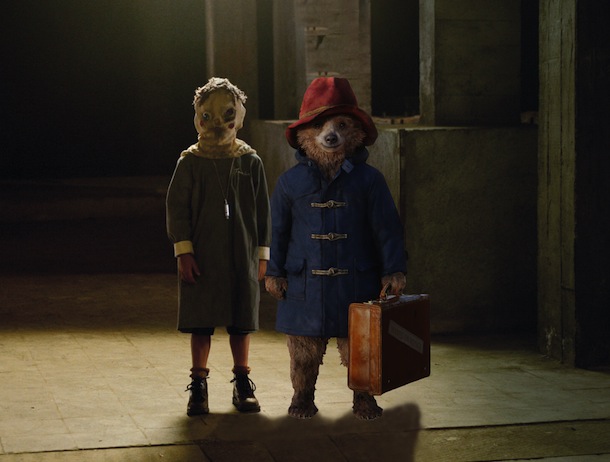
"Viral marketing" is all the rage these days, but what's now considered "going viral" is just something that's been pushed on the public with help from publicists and bloggers (yep, sorry). On the other hand, sometimes the denizens of the Internet take what's supposed to be a straightforward media release -- in this case, the first photo from the upcoming "Paddington" -- and turn it into the sort of meme that would make culture jammers proud.
The first still from "Paddington" shows our little buddy standing in front of Buckingham Palace (above), suitcase in hand and a small smile on his stuffed little face. So adorbs, right? Nope. Everyone on the Internet -- we checked, everyone -- thinks it's creepy as heck. Some wiseacres began Photoshopping Paddington into all sorts of photos and screenshots, from that darn Ellen group selfie to classic horror movies, and thus #CreepyPaddington was born. It's not the sort of publicity the studio behind the movie was looking for, but then again, it's not as if the type of people who create memes like this were going to line up at the ticket window on Christmas morning to see what the fuss is all about.
Then again, director Paul King's previous work is pretty weird and awesome, such as "The Mighty Boosh" and "Bunny and the Bull," so maybe this is all part of a greater plan.
A young couple from Philadelphia had sex in the ocean in a Jersey Shore town while a crowd of onlookers formed, police said.
The couple — a 27-year-old male and a 23-year-old female, both from Philadelphia – were charged with Lewdness for their alleged roles in the shocking incident in Sea Isle City this past Sunday.
According to the Sea Isle City Police Department, summer officers observed the couple having sex in the ocean near 46th Street at about 4 p.m. Police say a crowd of onlookers began to form.
The officers instructed the couple to stop what they were doing and exit the water. An eyewitness told CBSPhilly it took the female a long time to exit the water because she had difficulty tying up her bikini bottom.
Shocking incident? First of all, this is a dog-bites-man thing. If the ocean in Sea Isle City had sex on two people, that might be shocking. This isn’t. These people are from Philly, sure, but having sex in or around the ocean in Sea Isle is basically a right of passage for anyone who grew up below Baltimore Pike in Delco. I imagine the Sea Isle City ocean regales other oceans with tales about how much sex people from Lower Delco have had in it. Children who grew up summering in Sea Isle remember the sand, the sun, and the silhouetted specks bobbing up and down “out in the deep water where Daddy said I should never go.” This is a common occurrence. And yet these people were arrested and charged?! They should’ve been given their sticky star and Jeff Carter Certificate of Achievement good for one hour of $0.50 Bud Lights and $0.75 well drinks from 4 to 6 p.m. at La Costa. It’s a total police state we live in nowadays. What’s next, you can’t vomit on the dance floor at the OD? *
Side note 1: These people look fucking disgusting.
Side note 2: HOW DID THE BIKINI BOTTOM STAY ON AT ALL IF IT WAS UNTIED? DID SHE PUT IT BETWEEN HER TEETH? THIS DOES NOT COMPUTE.
Side note 3: Stand in about three-feet of water for 30 minutes on any South Jersey beach when the ocean is rough and you are guaranteed to see a rogue breast and potentially an ass. Victoria’s Secret hasn’t told women about this glitch yet, and for that, the male species is thankful.
Side note 4: Sex in the ocean alwayssounds a hell of a lot better than what’s really going on: sex in freezing cold salt water inhabited by mysterious little critters and parasites that, given the opportunity, will crawl up inside of you and make you wish it was only an STD you got from that time you fucked the fat guy from Delco in front of onlookers in broad daylight on the 46th Street beach. But, if you must have sex in public in the Philly area this summer, there’s actually a great Yelp category for that.
*A portion of my bachelor party this weekend will be in Sea Isle, so I can make these jokes, too.
Pic via Twitter witness “Poop McDougle.” Fuckin’ Sea Isle.
Chances he wears that OD shirt? Or is that saved only for non-professional events?
It’s Summertime, and after that longer than reasonable, soul crushing winter we went through, we all deserve a little sunshine, barbecue, and a few lawn games. For free. With Jason Kelce. Yup, we’ve earned it. Fortunately, this is a real thing because Jason Kelce is a goddamned man of the people.
This Friday from 11:30am to 1:30pm, Kelce is teaming up with Dietz & Watson at Rittenhouse Square Park where he will grill up some hot dogs and sausages, for free, and then “fans will have a chance to interact with Kelce by playing cornhole or posing for a photo with him.”
So, to lay that all out again, in case you got so giddy you fainted: If you make the trek over to Rittenhouse on Friday, Jason Kelce will cook you hot dogs and play cornhole with you, just like he’s your real friend, just like you’ve always dreamed, and just like I … uh … I mean, you wrote in your journal.
PHILADELPHIA (June 9, 2014) – After one of the longest winters in city history, summer is officially underway in Philly. To celebrate, Dietz & Watson will be doing what it does best – feeding its friends and neighbors. The fourth generation family-owned and operated company, based in Philadelphia’s Tacony section, will be grilling and serving up delicious premium franks & sausages free of charge in the city’s beautiful Rittenhouse Square Park on Friday, June 13th from 11:30 am to 1:30 pm.
Joining Dietz & Watson will be a very special guest from the Philadelphia Eagles, a longtime partner of the premium deli meat and artisan cheese company. Jason Kelce, the team’s gregarious, bearded center will show some love to his adopted hometown by posing for photos with fans and playing a few rounds of beanbag toss between his shifts working the grill.
“With the football season still a few months away, I wanted to get out in the city and hang with our incredible fans,” said Kelce. “So I teamed up with the family at Dietz & Watson to kick off summer in the best possible way – with one big cookout.”
Dietz & Watson will be grilling up its famous Deli Beef Franks, along with its new line of delicious all-natural chicken sausages. Attendees can also garnish their lunches with the company’s full line of premium mustards, ranging from zesty Honey Mustard to spicy Chipotle.
“Dietz & Watson is a family company and we consider our hometown part of that family,” said Louis Eni, CEO of Dietz & Watson. “Together with Jason Kelce and the Philadelphia Eagles, we’re kicking off summer in style – with a good old fashioned family cookout. We can’t wait.”
We should drink lots of Caipirinhas for the world cup
Some bits and shits we (no longer the royal!) didn’t get to yesterday.
Where Hockey Grows Up
You’re not going to believe this, but I’m about to compliment Core Four-er Dave Isaac of the Courier-Post. Isaac, one of the youngest beat writers in town and certainly the only member of the Core Four young enough to know what the term longform means in a modern setting, wrote an articletitled South Jersey: Where Hockey Grows Up. It’s expertly laid out– the kind of layout typically reserved for something like a New York Times feature, complete with parallax scrolling and everything. It’s the sort of thing the big-time papers in this town should be doing. Now, I would’ve chosen a topic with a little more punch than hockey is pretty popular in South Jersey… but it’s well-written and a nice change of pace for Isaac, who led the charge when beat writers got all bent out of shape when the Flyers used Instagram to announce their starting goalie last fall. And, somewhat impressively, Isaac managed to hold off until part three before mentioning Bobby Ryan, which has to be some sort of record for anything ever written about South Jersey hockey from a Flyers perspective. Appreciate the restraint, Dave. Sam Carchidi would’ve put Ryan in the headline: South Jersey Hockey: Where Bobby Ryan Grew Up.
Where Hockey Goes to Win
Mike Richards, Jeff Carter and Justin Williams combined for three points – Richards and Carter each scored – in the Kings’ 3-0 squashing of the Rangers last night. The Kings are now one win away from their second Stanley Cup in three years. The Flyers have won… carries the premature exit… one, one playoff series over that span. But it doesn’t matter, because Jeff Carter can’t score in the playoffs. He has 24 points in 24 playoff games (he also had five points in six games for Team Canada en route to their gold medal in the Olympics… but hey, who’s counting?).
Talk to Mike Richards’ teammates with the Los Angeles Kings, and inevitably the conversation moves to the conclusion that he’s a winner. He has won at every level.
He’s got a Memorial Cup, a Calder Cup, an Olympic gold medal and a Stanley Cup ring. When it comes to winning things, Richards is pretty much set.
But trying to explain what he specifically does that’s different from other players in the league, well, that’s where it gets a little more challenging. What makes Richards a winner?
This question was posed to Kings defenseman Jake Muzzin.
“Well, he’s won at every level,” Muzzin said. “When guys have been through experiences like that, they know what it takes to do it again. Won in junior. Won in minors. Won here. He knows what it takes.”
Netflix shaming
No doubt that Netflix has an interest in this, but I love how they are unabashedly shaming US carriers for their lousy, throttled broadband speeds. Yesterday, they released their latest ISP Speed Index and took particular aim at Comcast and Verizon:
Some large US ISPs are erecting toll booths, providing sufficient capacity for services requested by their subscribers to flow through only when those services pay the toll. In this way, ISPs are double-dipping by getting both their subscribers and Internet content providers to pay for access to each other. We believe these ISP tolls are wrong because they raise costs, stifle innovation and harm consumers. ISPs should provide sufficient capacity into their network to provide consumers the broadband experience for which they pay.
Here are some data points from the May update of the Netflix ISP Speed Index:
US: Charter has entered the top three ISPs while Verizon and Comcast both slipped in the major ISP rankings. Verizon FiOS is down two slots and now ranks behind DSL providers Frontier and Windstream. Comcast dipped two spots as well, while Verizon DSL is down one.
The chart:
In case you’re wondering, only one of the 14 carriers in Canada have an average speed below 2.27. None in Sweden, the UK, Norway, the Netherlands, Finland or Denmark. 10 in the US. Cable company fuckery, boys and girls.
To try to shift blame to us for performance issues arising from interconnection congestion is like blaming drivers on a bridge for traffic jams when you’re the one who decided to leave three lanes closed during rush hour.
“You can drink as many of these as you want,” our server said brightly. “They’re good for you!”
The concoction in question, a Green Garden Margarita, featured what Lolita’s new menu called “green stuff” and our waitress had likened to a “juice cleanse, only with tequila in it.”
So there you have it, ladies and gentlemen! The reason Marcie Turney and Valerie Safran, after ten years running Lolita–every Center City twenty-something’s favorite modern Mexican BYOB–went out and got a liquor license: to dole out Mason jars of juiced spinach, kale, celery, basil, cucumber, ginger and Cozadores Reposado.
I jest. That zingy, herbaceous play on agua fresca is just one among many reasons why Turney and Safran revamped their debut restaurant on 13th Street—and why I found myself so happy to be back there for the first time in almost four years.
Some of my pleasure no doubt came from reminiscence. Lolita opened the same year my wife and I moved to Philadelphia. She was a nursing student and I was struggling hard to make money. Going out to eat was an almost impossible extravagance. But we did, very occasionally, and Lolita might have been where we did it more than anywhere else. We almost never brought our own tequila—how could we justify buying a whole bottle?!—but Turney’s cooking plus a couple of iced beers was enough to be the culinary high point of any month.
We were richer in love than money. So what a sweet sensation it was, on a recent spring evening, to watch happy young people stream past Lolita’s sidewalk tables and realize that we still are.
Only now we can afford, a little more frequently (and even when the magazine isn’t paying), to order a bourbon tamarind sour along with our appetizers, or a cucumber-jalapeno margarita after them. Both of those refreshments hit the spot at Lolita. Piloncillo cane sugar layered an earthy sweetness upon the tamarind sour’s tang, and that restorative marg was a persuasive reminder that the best way to consume cucumbers is to drink them. A brooding, tomatoey michelada, rimmed with adobo, was also pretty good. But the cooking is still the restaurant’s strongest point. Turney’s overhauled menu, finely executed by chef de cuisine Todd Satterfield, feels fresh, current, and loaded with the longed-for treasures of spring.
Longtime regulars need not fear: the carne asada has stayed exactly the same. But there are a lot of newcomer dishes to challenge your loyalty. The profit margins on drinks have subsidized the kitchen’s growth from three line cooks to five, Turney told me later, and they’re turning out about 50 percent more items than in Lolita’s BYO days.
Start with the Korean-style filet tip tacos, which brings the restaurant into the food-truck age with Thai basil, peanuts, and a legitimately fiery jicama kimchee. The tortillas are pressed fresh downstairs from 8 o’clock in the morning straight through dinner service.
Then make a beeline for spring, which awaits in virtually every direction right now. Grilled asparagus and chayote come over a fava-enriched spin on sikil pak–a Mayan condiment based on toasted pumpkin seeds. Using a bit of tahini, Satterfield coaxes it halfway toward hummus. Chard-and-fava filled enchiladas—-a dish that survived the six-month closure that gave the restaurant a new kitchen and bar—-are sauced with an energetically minty serrano/jalapeno/tomatillo puree that buoys what might otherwise be a heavyweight burden of cheese. A daily special brought deep-fried squash blossoms on a dice of veggies that was sweet with corn and spicy with orange chilies.
Ours was a meal of small pleasures—-both in the sense that Lolita has shifted definitely toward tapas portions, and in the little grace notes that adorned so many of them. Particularly winning was the jade-colored scoop of melon sorbet that topped a citrusy snapper ceviche. The only things that landed in foul territory were the little cubes of pickled watermelon that aimed to brighten three heavy globes of masa harina stuffed with black beans, goat cheese, and chicken flavored with sour orange and achiote seeds. They overshot sweetness and went straight for cloying.
Which brings us to dessert. We didn’t have any. We’d ordered one dish too many. Antojitos may mean “little cravings,” but both of the items we ordered from that section of the menu took big swipes out of our hunger.
So we rejoined the pedestrian parade on 13th Street, where warm air met our bare arms. We strolled a couple blocks and turned toward one possible SEPTA line. Then, saving bus fare and savoring an evening that had revived the spirit of long-past ones, we walked two-and-a-half miles all the way home.




 – Email message –
 Photo from: here

 hodad
hodad


 "Viral marketing" is all the rage these days, but what's now considered "going viral" is just something that's been pushed on the public with help from publicists and bloggers (yep, sorry). On the other hand, sometimes the denizens of the Internet take what's supposed to be a straightforward media release -- in this case, the first photo from the upcoming "Paddington" -- and turn it into the sort of meme that would make culture jammers proud.




 ...
...