GOP double standards. Use your governmental power to benefit your family then play the victim card when it's found out.
South Dakota Gov. Kristi Noem knows that to gain national prominence and have a shot at the presidential or vice presidential nomination, a Republican governor has to be particularly terrible, not just on policy but as a human being. She’s giving it her best shot. Bolstering her credentials this week is the Associated Press report that Noem leaned on state officials to certify her daughter as a real estate appraiser.
Noem’s 26-year-old daughter, Kassidy Peters, was initially denied the certification, according to a letter from her supervisor—though no official record of a denial exists. Days later, Noem summoned Sherry Bren, the head of the licensing agency, to a meeting along with the state labor secretary and a host of lawyers. As if that doesn’t look suspicious enough, Peters herself was at the meeting.
Peters got the certification months later, and days after that, state Labor Secretary Marcia Hultman demanded Bren’s retirement. Bren filed an age discrimination complaint and got a $200,000 settlement. The settlement, though, bars her from disparaging state officials, and she limited the details in her account of the meeting to the AP. But she did say that the letter from Peters’ supervisor complaining that Peters had been denied her appraiser’s license was brought out at the meeting. Which, again, Peters, the governor’s daughter and would-be certified appraiser attended.
So: Peters was either denied certification in a way that there’s no record of, or her supervisor thought she had been or would be rejected. The supervisor wrote a letter complaining. The governor, Peters’ mother, summoned the responsible official and her bosses and top lawyers in the governor’s office for a meeting that included Peters and at which the letter complaining about her rejection was discussed. Peters got her license. The head of the agency responsible for the licensing was forced into retirement by someone at that original meeting, at the cost to South Dakotans of a $200,000 age discrimination settlement.
And … Noem is playing victim.
Listen I get it. I signed up for this job. But now the media is trying to destroy my children. This story is just another example of the double standard that exists with the media... going after conservatives and their kids while ignoring Liberals #AskTheBigGuy
No, Noem. When you abuse your power to get your kids—in this case your grown-ass 26-year-old adult offspring—things they didn’t earn, it’s news. Because when you, the governor and aspiring Republican primary candidate, abuse power, it is news.
And about that double standard Noem claims exists.
Here we’ve got Noem trying to make a story about a politician’s child into a story about that politician even though as far as we know, President Joe Biden never convened a major government meeting with multiple top officials because he was upset about someone not giving Hunter a job. Yet even without the president having done anything wrong on that front, his son’s career and struggles with addiction have been thoroughly aired in the media, in a presidential debate, in an impeachment.
There should be one standard. And it should apply not just to Hunter Biden and Kassidy Peters but to Ivanka Trump and Don Jr. and Eric, too. But the real story is Kristi Noem, governor and wannabe nominee. If she was trying to show that she can be as self-serving and nepotistic as Donald Trump … it’s a start, anyway.
This is what we're going to see. People talk a big game about leaving, but far fewer actually do. And police unions are purely right-wing political organs at this point, so a HUGE grain of salt is required.
On Friday, the State Police Association of Massachusetts—the union that represents about 1,800 members—announced that “dozens of troopers” had submitted resignation paperwork over the state’s mandated COVID-19 vaccine. The media followed the union’s lead, with dozens of media outlets reporting this news.
After The Boston Globe reported that only one trooper had actually resigned as of Monday, Daily Kos reached out to state police spokesman David Procopio via email to see how many troopers had resigned as of Tuesday. Guess what? Still only one.
“As of this morning, the Department has been notified by our HR office of one Trooper who has definitively stated he will retire because of the vaccine mandate. It is our understanding that other Troopers are considering resigning or retiring for that reason but as of right now we are aware of only the one who has definitively said he will go,” Procopio said.
The union made its statement public Friday after a judge blocked the extension of Republican Gov. Charlie Baker’s Oct. 17 deadline to be vaccinated. The union additionally asked that officers who refused vaccinations be allowed to get COVID-19 tests instead, be required to wear masks on the job, and be extended health benefits covering them if they get sick.
On Monday, Baker said he wasn’t too concerned over claims that troopers would be resigning.
“The baby boomer population is basically between the ages of 75 and 55,” Baker said. “And if you think about when state troopers generally start to consider and think about retirement, it’s about during that period, and we’ve seen pretty significant numbers of retirements over the course of the past couple of years.”
A spokesperson for the State Police Association of Massachusetts, Chris Keohan, told the Daily Kos via email Tuesday that they were “unable to provide specific numbers because of the rules surrounding media communications regarding manpower and deployments set forth by the MA State Police leadership (not the union).” He added:
“Dozens came [in] on Thursday alone and we have been contacted by additional troopers letting us know about their intent to resign, as well as more troopers who have their years in for retirement and will choose that option as well… We just want to be clear that this is a labor issue and NOT the union taking an anti-vax position. President Cherven and the entire E-Board are vaccinated, as are over 80% of the membership (well above the MA totals). SPAM is looking for reasonable alternatives like masks and regular testing, as well as a line of duty injury classification for those falling ill due to COVID.”
Meanwhile in Kansas City, the blind are apparently leading the blind.
The Kansas City Police Department, manned by 1,221 officers, keeps no data on COVID-19 infection or vaccination rates according to Capt. Leslie Foreman, a department spokesperson said in an email to KansasCity.com. Officers are not regularly tested for the virus, although they're instructed to follow Centers for Disease Control and Prevention guidelines.
In Overland Park, Officer Freddie Castro, 23, died of COVID-19 after a five-week hospital stay in North Kansas City Hospital. He was not vaccinated.
In Los Angeles, due to stringent and obviously necessary vaccine mandates for first responders, employees of the Los Angeles Police Department (LAPD) and Los Angeles Fire Department have filed lawsuits and thousands of notices to claim religious or medical exemptions, according to the Los Angeles Times. So far, 10 LAPD employees have died from the virus, and most officers who have tested positive since June were unvaccinated.
The ongoing argument about personal freedom seems outdated when compared to the U.S. Supreme Court decision in 1905 Jacobson v. Massachusetts, which upheld smallpox vaccination requirements in Cambridge, Massachusetts on the grounds that the public has rights that outweigh personal liberty, even on today’s ultra-conservative court.
We’re still not sure why the COVID-19 vaccine presents such an issue. As the Los Angeles Times points out, LAPD officers are required as a condition of their employment to be vaccinated against nine other pathogens.
Why are we actively polling the ignorant on questions of science?
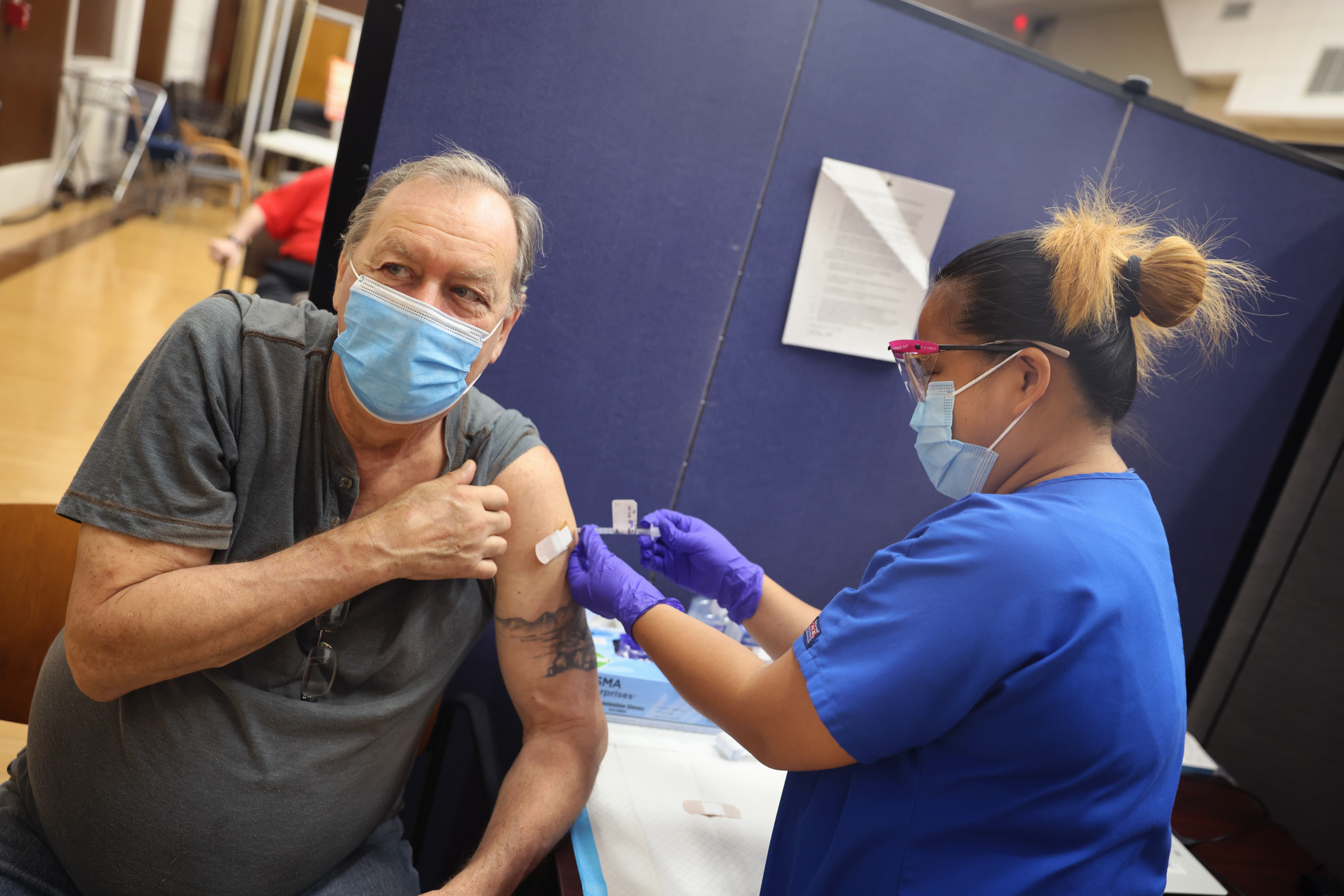
Enlarge / A health worker administers a COVID-19 booster vaccine and an influenza vaccine to an Army veteran at the Edward Hines Jr. VA Hospital on September 24, 2021, in Hines, Illinois. (credit: Getty | Scott Olson)
Over the past few weeks, federal health advisers pored over data on booster doses for Pfizer's COVID-19 vaccine and agonized over setting recommendations for who—if anyone—should get a third shot. Amid their deliberations, they continually noted an undeniable truth overshadowed their hand-wringing: no matter what they recommended, boosters will have minimal impact on the pandemic. Instead, the way to end the scourge is to have more people get their first shots.
And today, new survey data suggests that offering any boosters may deter some unvaccinated from getting their first highly effective COVID-19 vaccine. A total of 71 percent of unvaccinated people said booster doses show the vaccines are not working as well as promised, according to the survey results published Tuesday by the Kaiser Family Foundation (KFF).
Extreme mental distress among LGBT people increased during Donald Trump’s political rise and presidency, according to new research published in the journal Economics & Human Biology. Trump became the Republican Party’s presidential nominee in July 2016 and that same month he selected conservative Christian politician Mike Pence as his running mate. During his administration, Trump opposed legislation that sought to prevent discrimination against LGBT people by adding sexual orientation and gender identity to federal civil rights law. “I was curious to know whether the average mental health amo…
For decades, the Christian-right foot soldiers who form the backbone of the Republican Party have regularly and enthusiastically showed up for legislative battles over religious freedom and reproductive and LGBTQ rights. On September 1, they scored one of their biggest victories yet: the Texas Heartbeat Act, which bans abortion after six weeks of pregnancy and deputizes private citizens to report anyone who helps a woman obtain an abortion.
Six days later, religious conservatives celebrated another critical legislative victory, one that signaled a new frontier in their movement. In the east Texas city of Tyler, Republican Gov. Greg Abbott signed the Election Integrity Protection Act of 2021, passed in late August after Democrats fled the state in a futile effort to stop it. The new law severely restricts voting access in Texas, with the biggest impact on voters of color; Abbott hailed it as a “good paradigm for other states to follow.”
Also in attendance were his lieutenant governor, Dan Patrick, and state Sen. Bryan Hughes, key architects of both the voter and abortion bills and heroes to evangelical Christians. Patrick is well known to religious-right voters for his opposition to reproductive and LGBTQ rights and promotion of “Christian values.” The mood was jubilant.
Tamir Kalifa/Getty Images
Texas Lt. Gov. Dan Patrick (pictured), along with state Sen. Bryan Hughes, was a key architect of the state’s recent voter restriction and anti-abortion bills.
The Christian right’s ability to mobilize its own voters has long made it one of the most potent forces in American politics. But this year, evangelical leaders have embraced a new strategy, one with direct roots in the outcome of the 2020 election: Religious activists have taken up the cause of “election integrity,” pushing bills to crack down on voter fraud, even though no evidence of widespread fraud in US elections exists. In the process, they’ve helped restrict ballot access for millions of Americans — the most regressive wave of voting measures since the Jim Crow era — and drawn a direct connection between their new cause and their core religious beliefs.
The goal is to protect the gains made by the Christian right during Donald Trump’s presidency, especially in the federal courts, and to restore the White House and Congress to Republican control. The biggest prize, of course, is the US Supreme Court, where — not coincidentally — all three of Trump’s appointees declined to block the Texas abortion bill from taking effect, signaling their willingness to overturn Roe v. Wade.
White evangelicals were Trump’s most loyal supporters in 2020, giving him 84 percent of their vote, according to the Pew Research Center. Many saw Trump as anointed by God to save America at a critical juncture in its history, and they viewed his loss in cataclysmic terms. A January survey by the American Enterprise Institute found that evangelical conservatives were far more inclined than other Republicans to believe Trump’s lies about widespread election fraud, as well as wild conspiracy theories about QAnon, antifa, and the “deep state.” The fervent evangelical support for Trump during his presidency has now morphed into support for his “big lie” — and for voter suppression bills that are a direct outgrowth of Trump’s continued insistence that the election was stolen from him.
Across the country, Christian-right groups that saw their influence bloom during Trump’s presidency have taken up the cause not just in statehouses and fundraising appeals but also in churches and prayer calls with followers. The Christian voter mobilization group My Faith Votes, for example, has launched an initiative called Election Integrity Now, complete with a prayer guide with seven ways to ask God “to protect America’s elections and deliver trustworthy results.”
“The 2020 elections revealed genuine concerns in the election process that could threaten election integrity and the very foundation of our Constitutional Republic. Yet, even more dangerous than election fraud is that many Christians have lost confidence in the election system,” the group’s CEO, Jason Yates, said in announcing the initiative.
Marco Bello/Bloomberg via Getty Images
Attendees pray at an “Evangelicals for Trump” event in Miami, Florida, on January 3.
It is also becoming evident to pollsters, demographers, and religious-right leaders themselves that the model first pioneered by the Christian Coalition in the Reagan era — ensuring that religious conservatives registered to vote and turned out in overwhelming numbers on Election Day — isn’t working as well as it used to.
White evangelical Protestants now make up 14 percent of Americans, down from 23 percent in 2006, “the most precipitous drop in affiliation” for any religious group, according to a 2020 survey from the Public Religion Research Institute. Even though white evangelicals made up 34 percent of Trump’s voters, according to a Pew Research Center analysis of election data, their support wasn’t sufficient to propel him to reelection. “Without such broad support for Trump among White evangelicals, [Joe] Biden would have beaten him by more than 20 points,” the Pew analysts wrote earlier this year.
Trump’s defeat proves that even massive conservative Christian turnout is no longer enough to win. The strategy white evangelical supporters have coalesced around to supplement it: election laws built on the lie that the other side’s ability to turn outvoters must be “fraudulent.”
The new battlefront opened in Georgia immediately after the 2020 election.
As Trump tried to strong-arm state election officials to throw out the ballots of 11,780 Georgians and declare him the winner of the state’s 16 Electoral College votes, the Family Policy Alliance of Georgia sent a fundraising email to its supporters in December: “Election reform is coming to Georgia, and we are all in!”
Cole Muzio, the group’s executive director, acknowledged that this was new territory for his organization. “As you know, this is not one of our ‘core issues’,” he wrote. “However, issues like life, religious freedom, and school choice will never win if the vote is being diluted by radical leftists exploiting the system to cheat.”
Muzio’s organization is affiliated with Focus on the Family, the Christian-right icon known for opposing LGBTQ and reproductive rights. Elsewhere, Muzio acknowledged launching his group in 2017 after “seeing that our state was rapidly moving ‘blue’ and that the Church had been weakened greatly.”
Throughout Georgia’s runoff elections for two Senate seats, which would determine control of the legislative body, the Family Policy Alliance repeatedly attacked Democrats Jon Ossoff and Raphael Warnock as hostile to Christians, but particularly Warnock, a minister who leads the Ebenezer Baptist Church, where Rev. Martin Luther King Jr. once presided.
“Raphael Warnock holds the title of ‘pastor’,” the group wrote in one Facebook post. (The group has recently rebranded itself as the Frontline Policy Council.) “Yet, he OPPOSES what God’s Word clearly says about Life. His radical pro-abortion views are disgusting, wrong, anti-science, and anti-Scripture. Quite simply, he’s Unfit for the Pulpit and Unfit for the Senate.” A voter guide titled “Which Candidate Stands Firm on the Word of God?” accused Warnock of being a Marxist, anti-Semitic, and anti-Israel — all lies — and attacked his views supporting abortion and transgender rights. Muzio initially agreed to an interview for this story but ultimately didn’t respond to requests to speak.
When Democrats stunned even themselves by winning both seats in the January 5 runoff, Georgia Republicans sprang into action, introducing a slate of bills that would, among other things, eliminate drop-box sites, impose more restrictive rules for absentee ballots, and prohibit judges from extending voting hours at precincts experiencing long waits, all under the guise of stopping fraud. Another objective was to defeat Warnock, who is up for reelection in 2022.
Mandel Ngan/AFP via Getty Images
President Trump campaigns for Republican Sens. Kelly Loeffler and David Perdue ahead of the Senate runoffs in Dalton, Georgia, on January 4.
Eric Baradat/AFP via Getty Images
US Sens. Jon Ossoff (right) and Raphael Warnock won Georgia’s runoff election on January 5.
The flurry of legislation overtly became about religion and race, pitting white evangelical Republicans against Black church leaders, whose flocks are predominantly Democratic. One provision would have eliminated Sunday voting, a potentially dire blow to get-out-the-vote efforts of Black churches and their “souls to the polls” events that have been at the core of Black voter mobilization for decades.
A national outcryled legislators to nix that provision. But Republican lawmakers ignored the objections of the state’s Black pastors to the bill’s many other restrictive provisions. Black leaders couldn’t even get a meeting with GOP leaders, said Rev. Timothy McDonald III, senior pastor of the First Iconium Baptist Church in Atlanta. “They didn’t pay any of us any mind.”
Less than two months after the bill was introduced, Gov. Brian Kemp signed a 98-page law that criminalizes providing water or food to voters standing in line and empowers state officials to replace local election officials — for example, the Democratic registrar of voters in Fulton County, which includes Atlanta — with appointees from their own party. The impact would be greatest on Black voters. “It is How to Steal an Election 101,” McDonald said.
White evangelical Protestants now make up 14 percent of Americans, down from 23 percent in 2006
The ceremonial signing served only to highlight the bill’s racial overtones. It took place behind closed doors, with Kemp flanked by six white male legislators, sitting under a painting of a plantation. When state Rep. Park Cannon, a Black Democrat, knocked on the door to gain entry to the event, she was arrested for obstructing law enforcement and disrupting the General Assembly.
On the Family Policy Alliance website, Muzio denounced “the deranged media” and “Pretend-governor Stacey Abrams” — the Democratic candidate who narrowly lost to Kemp in 2018 — for their “outlandish and inflammatory rhetoric.” He called the claim that the bill is racist “wrong, disingenuous, a form of voter suppression, and, in fact, racist on its face.”
His words signaled a subtle reframing, echoing the Christian right’s perspective on almost every other issue in the culture wars: Progressives were the real overreachers, and evangelical Christians the true victims. The Georgia law didn’t suppress the votes of Democrats and people of color, Muzio was saying; it prevented the votes of religious conservatives from being suppressed.
Even as Black church leaders mobilized to contest the Georgia law in court, conservative groups were gearing up to replicate it in other states.
National organizations aligned with the Christian right embraced “election integrity” with fervor. In March, Heritage Action for America, a sister organization of the right-wing policy hub the Heritage Foundation, announced it would pour at least $10 million into lobbying and TV and online ads about the urgent need to “protect the rights of every American to a fair election.” In a video obtained by Mother Jones, a Heritage Action official admitted that the organization drafted the legislation in many states, including Georgia, and helped organize support.
At the same time, evangelical leaders opposed measures that would make it easier to vote. Advocates particularly targeted the For the People Act, which would create nationwide automatic voter registration, restore voting rights of the formerly incarcerated, and expand voting by mail and early voting, while shoring up the security of election infrastructure. The Phyllis Schlafly Eagles — an offshoot of the group once headed by the late conservative figure best known for helping kill the Equal Rights Amendment — claimed (falsely) that the bill “would enshrine Democrat ballot stuffing into federal law forever.” The Family Research Council called it “a federal power grab that cripples states’ ability to run elections and increases the likelihood of voter fraud” (another lie). Other conservative activists contended that the act’s financial disclosure requirements violated First Amendment protections for religious speech.
In early February, the Family Research Council’s president, Tony Perkins, led a discussion at the influential megachurch Cornerstone Chapel in Virginia with Michael Farris, a longtime conservative activist and now president of the Christian-right legal powerhouse Alliance Defending Freedom.
Chip Somodevilla/Getty Images
Then-Senate Majority Leader Mitch McConnell (left) was welcomed to the stage by Family Research Council President Tony Perkins during the Value Voters Summit in 2018.
David Goldman/AP
Trump supporters protest the presidential election results outside the central counting board in Detroit, Michigan, on November 5, 2020.
Declaring election integrity “vital for our future,” Farris claimed to have undertaken a “thorough study” of the 2020 election and to have found “constitutional irregularities in many, many states,” particularly in those where the election was close. He claimed the “central problem was the failure to follow the preestablished process in counting the votes” and insisted that if votes had been properly tallied, Trump would have won. Neither Farris nor his organization has ever provided proof of those accusations, and they did not respond to Reveal’s requests for Farris to share them.
The Family Research Council also deployed Kenneth Blackwell, its senior fellow for human rights and constitutional governance, who has long been a central player in the movement to limit voting access, dating back to his tenure as Ohio secretary of state, when civil rights advocates accused him of suppressing voters of color in the 2004 presidential election and helping Republicans keep the White House.
In a March appearance in the Family Research Council’s video series “Pray Vote Stand,” Blackwell, who is Black, called the For the People Act a “heist” and a “power grab” that would “stifle individual religious liberty and the centrality of God in our lives.” Mostly, Blackwell urged religious voters to stay engaged. “We must claw back the responsibility and the authority of local governments and state legislatures” to control elections or else, he contended, Democrats would create “one-party control much like they have in Cuba, Venezuela, and Russia.”
Religious activists have taken up the cause of “election integrity,” pushing bills to crack down on voter fraud, even though no evidence of widespread fraud in US elections exists
My Faith Votes’ national honorary chair, talk show host and former Arkansas Gov. Mike Huckabee, took credit for helping get 9 million new Christian voters to the polls in 2020 and promised, “in 2021, we will be doubling down.” Ralph Reed, chair of the national Faith & Freedom Coalition, beseeched potential donors: “Though news of the radical left’s scheming is hard to read, remember that — thanks to your support and the support of Christian patriots like you — we still have a chance to save America in the 2022 midterm elections, and we will make the most of it.”
Republican lawmakers did their part to stoke the fires. At the Faith & Freedom Coalition’s national Road to Majority conference in June, for example, South Carolina Sen. Lindsey Graham portrayed Democratic victories in 2022 and 2024 as an existential threat that would lead to statehood for the District of Columbia and Puerto Rico and the end of the Electoral College. “Winning in 2022 is the only option available for conservatism,” he said. “We need you to get people out of your churches into that voting booth.”
There were plenty of true believers. A June Washington Post/ABC News poll found that while only 30 percent of all respondents favored passing “new laws making it harder for people to vote fraudulently,” 51 percent of white evangelicals supported such legislation. While 62 percent of all Americans expressed support for “new laws making it easier for people to vote,” only 43 percent of white evangelicals did.
By that time, according to the Brennan Center for Justice, 17 states already had enacted 28 new laws suppressing voting rights. And then came Texas.
During this year’s Texas legislative session, it wasn’t the anti-abortion Heartbeat Act that was deemed the greater threat by Texas Democrats, but voter integrity legislation. The abortion bill, targeting not just abortion but anyone helping a woman in the state obtain one, made it through the legislature relatively unscathed and was signed into law May 19. Republicans’ attempt to pass a voter bill — including criminal penalties on election officials who send unsolicited mail-ballot applications and new powers for partisan poll watchers — required two special legislative sessions, after Democrats ran out the clock on the first bill, then fled the state for a month in protest.
At the first special session in July, many of the demonstrators on the statehouse grounds opposed the voting legislation. But Lori Gallagher of Williamson County, Texas, was there to show her support. The group she co-founded, the Texas Constitutionalists, describes itself as “grassroots conservatives with a mission to educate ourselves and our neighbors to be actively involved in Texas State and County government to secure our vote and restore our representational Republic.” But she saw its mission in starkly religious terms.
“I believe that the divine hand of providence was present when our constitutional and founding documents were formed,” she said. “I believe that’s the divine intersection between voting rights. The people’s voice — that comes from God. Your freedom comes from God. Liberty comes from God.”
Inside the hearing room, with just two minutes to speak, Don Garner, executive director of the Texas Faith & Freedom Coalition, focused more on politics, echoing Christian-right talking points that have become familiar this year. Election integrity is “foundational to the freedoms we enjoy,” he declared. “Nothing suppresses voting more than the erosion of trust or confidence in the election process itself.”
But Garner’s brief remarks had far less impact than his relationships. For 10 years, he served as the state director and national field director of the Capitol Commission, a network of organizations in state capitols that hosts Bible studies and other events with lawmakers. The goal: “making disciples of Jesus Christ in the Capitol communities of the world,” according to its website. His current organization, formed in March 2020, keeps voters informed “about important issues relevant to faith-based communities” and “supports Biblical principles.”
Republican state Sen. Bryan Hughes, an author of the voting restriction and anti-abortion bills, is one of about a dozen Texas legislators who serve on Garner’s advisory council. In an interview, Garner said Hughes is “a close friend and someone that I work very closely with on all kinds of things.”
LM Otero/AP
Texas Gov. Greg Abbott (right) and state Sen. Bryan Hughes smile for photographs after Abbott signed Senate Bill 1, also known as the election integrity bill, on September 7, 2021.
The Texas House sponsor of the voting bill, state Rep. Briscoe Cain, is another close ally. As the legislation was moving, Garner said he talked to Cain or his staff “every couple of days, all session long.” Garner said his coalition’s clout comes from its grassroots volunteers who show up when needed, canvassing 310,000 homes in the last election cycle and planning to hit twice as many next year. Lawmakers know “we’re actually getting out there and knocking on doors.”
Conservative Christian voters, Garner said, have always had concerns about election integrity, but especially so after the 2020 election.
“Obviously, there were a lot of concerns afterward and among people on the right that maybe there had been improprieties, and certainly, people felt like it at least needed to be investigated,” Garner said. “Because of everything that — the way everything fell out, certainly it raised the level of concern.”
Even as Trump and his evangelical allies basked in their legislative victories in Texas, they used those concerns to promote their future political prospects. In a conference call for the national religious group Intercessors for America the day after the abortion law took effect, Trump wasted no time in lambasting the Biden administration, saying, without specificity or evidence, that “what they’re doing to Christianity, it’s a very sad, sad thing for our country.”
Robert Morris, pastor of the Gateway megachurch in Dallas, closed the call with a plea: “I pray, Lord, that you will do something … for our election system, that we’ll never have another election stolen from us,” he intoned. “So, Lord, whatever we need to do to fix the electoral process, I pray for that, I pray for our country, and I pray for President Trump and his family … in Jesus’s mighty name.”
CREDITS Additional reporting: Alexandra Villarreal Editors: Nina Martin and Andrew Donohue, Reveal; Libby Nelson, Vox Copy editors: Nikki Frick, Reveal; Kim Eggleston and Tim Williams, Vox Visuals editor: Kainaz Amaria, Vox
Sarah Posner can be reached at sarahposner1@gmail.com. Find her on Twitter @sarahposner.
Yep it's going to be a shitshow. Pity dems couldn't be bothered to care about the court until it's WAY too late
Justices Brett Kavanaugh and Amy Coney Barrett arrive for the inauguration of President Joe Biden. | Jonathan Ernst/Getty Images
Abortion, guns, regulation — conservatives are poised for a big year as a Supreme Court heavily tilted toward their side returns to work.
For four decades, anti-abortion activists have dreamed of the day when the Supreme Court would overrule Roe v. Wade. That day could be just months away, as the Court will hear a case this winter asking it to destroy Roe.
The National Rifle Association, like other, even more strident gun rights groups, spent those decades dreaming of an expansive Second Amendment that sweeps even the most venerable firearms regulations into the trash bin. This fall, the Court will hear a challenge to a 108-year-old law laying out who may obtain a license to carry a firearm in New York.
A more obscure issue, but one that could have even more sweeping consequences, is the question of when federal agencies — acting pursuant to a statute enacted by Congress — may regulate private businesses and individuals. The conservative Federalist Society has long obsessed over plans to strip federal agencies of this regulatory power. This month, right-wing groups flooded theSupreme Courtwith briefs asking the justices to overrule a seminal precedent preventing judges from sabotaging agencies such as the Environmental Protection Agency.
Jonathan Ernst/Getty Images
President Donald Trump’s three Supreme Court justice appointees: Amy Coney Barrett, Neil Gorsuch, and Brett Kavanaugh.
It remains to be seen whether the Supreme Court, with its 6-3 conservative majority, will make all these groups’ dreams come true. But Republican advocacy organizations of all stripes appear convinced that now is the time to shoot for the moon, and so these issues — along with a host of others ranging from anti-discrimination law to partisan gerrymandering — are on the docket this coming Supreme Court term, which starts Monday, October 4.
By the time the justices head off for their next summer break, the Court may well have revolutionized much of American law — and turned many of the Republican Party’s fondest wishes into reality.
1) Roe v. Wade could be ended
The parties in Dobbs v. Jackson Women’s Health Organization, which the Court will hear in early December, agree on just one thing: The case is an existential threat to Roe v. Wade.
Dobbs involves a Mississippi law that bans abortions after 15 weeks of pregnancy. (Notably, this 15-week clock starts on “the first day of the last menstrual period of the pregnant woman” — meaning that, in practice, the law functions as something much closer to a 13-week abortion ban.)
Technically, the justices say they took up this case to answera slightly narrower question than whether the constitutional right to an abortion should be eliminated in its entirety. But Mississippi spends the lion’s share of its brief arguing that Roe should be overruled and the constitutional right to an abortion eliminated.
Meanwhile, the abortion providers challenging the law argue that there is no practical difference between a decision repealing Roe and a superficially narrower decision permitting states to ban abortions prior to viability. According to their brief, “Any abandonment of viability would be no different than overruling Casey and Roe entirely.”
The 15th week of pregnancy is well before viability. According to a paper published in the journal Pediatrics in 2019, “Infants born at 22 weeks’ gestation can achieve survival rates of 25% to 50%.”
Seth Herald/AFP via Getty Images
Demonstrators seen at a “March for Reproductive Freedom” in Birmingham, Alabama, in 2019.
I could spend some time summarizing the legal arguments in the two sides’ briefs, but really, what’s the point? For most justices, the question of whether the Constitution protects a right to abortion ceased to have anything to do with legal doctrines and Latin maxims such as stare decisis — the doctrine that courts should generally be bound by their prior decisions —long ago.
The bottom line is that Republican elected officials generally oppose abortion, Democrats typically support the right to have one, and six of the nine justices were appointed by Republican presidents. Five of those justices already allowed a Texas law that effectively bans abortions after six weeks to take effect.
Barring extraordinary events, the right to an abortion is probably doomed.
2) The Court could eviscerate America’s gun laws
Like Dobbs, the most salient factor in New York State Rifle & Pistol Association Inc. v. Bruen — a challenge to a New York state law requiring anyone who wishes to carry a handgun in public to demonstrate “proper cause” to obtain a license — isn’t the legal arguments in the case. It is the identity of the justices who will hear it.
For many years, the Supreme Court read the Second Amendment narrowly. As the Court explained in United States v. Miller(1939), the “obvious purpose” of this amendment was to “render possible the effectiveness” of militias, not to permit individuals to carry guns for other purposes.
All of that changed in District of Columbia v. Heller (2008), which held for the first time that the Second Amendment protects an individual right to bear arms.
That said, the Court’s opinion in Heller includes a great deal of language limiting the scope of gun rights. For example, it suggests that bans on “carrying concealed weapons” are lawful, as are laws banning “the possession of firearms by felons and the mentally ill,” “the carrying of firearms in sensitive places such as schools and government buildings,” or “the carrying of ‘dangerous and unusual weapons.’”
Getty Images
Gun safety advocates rally in front of the US Supreme Court before oral arguments in the Second Amendment case NY State Rifle & Pistol v. City of New York on December 2, 2019, in Washington, DC.
This mitigating language was inserted into the Heller opinion at Justice Anthony Kennedy’s insistence — Heller was a 5-4 decision, so the other conservatives in the majority needed Kennedy’s vote to avoid winding up in dissent.
But Kennedy is now retired, and his replacement, Justice Brett Kavanaugh, is a hard-liner on the Second Amendment even by the standards of other Republican-appointed judges. In a 2011 dissenting opinion, for example, Kavanaugh disagreed with two very conservative judges who upheld much of a District of Columbia gun law. Kavanaugh would have struck down the law’s ban on semiautomatic assault weapons and its requirement that gun owners register their firearms.
Similarly, the late Justice Ruth Bader Ginsburg, who dissented in Heller, was replaced by Justice Amy Coney Barrett, who also takes an unusually expansive view of the Second Amendment. Although Heller indicates that “longstanding prohibitions on the possession of firearms by felons and the mentally ill” are constitutional, Barrett claimed in a 2019 dissent that the rule should apply “only to people who are dangerous,” not to all people with felony convictions.
So, while it is not entirely clear just how much the Court will expand the Second Amendment, it is very likely it will hand down a new rule that could endanger wide swaths of state and federal laws regulating firearms.
3) The Court could seize significant new authority to veto federal policies
American Hospital Association v. Becerra is a testament to how the Court’s most consequential decisions often come from cases that are complex enough to make your brain bleed.
The specific issue in American Hospital Association is whether a 2017 regulation changing the amount Medicare pays for certain drugs is lawful. Under the pre-2017 rule, Medicare reimbursed hospitals for the full price of these drugs, even though certain hospitals that treat low-income and underserved populations may purchase them at a significant price break.
Under the new rule, Medicare reimburses hospitals that buy discounted drugs at a lower rate. (It should be noted that many low-income patients also paid higher copays under the pre-2017 rule, so there are plausible arguments that either policy leads to better outcomes for low-income people.)
The most important question in American Hospital Association, however, stretches far beyond Medicare to touch on a fundamental issue: When Congress gives federal agencies the power to set policy, how much leeway do those agencies enjoy? It’s a consequential question that bears on situationsas diverse as whether the EPA can fight climate change, or whether the Department of Labor can encourage workers to get vaccinated against Covid-19.
Numerous federal laws lay out a broad policy. Somewhat simplified examples of such policies are “power plants should use the best available technology to reduce emissions” or “Medicare should pay a reasonable market rate for prescriptions.” But such laws then empower a federal agency to implement those policies through binding regulations that can be updated as technology evolves or as drug prices fluctuate.
Historically, the Supreme Court warned judges to be very reluctant to second-guess federal agencies when they issue such regulations. As the Court explained in Chevron USA Inc. v. Natural Resources Defense Council(1984), specialized agencies have far more policy expertise than judges. What’s more, federal agencies are accountable to an elected president, while federal judges are unelected and lack the democratic legitimacy that comes from an electoral mandate.
The Court’s right flank, however, is increasingly hostile to agencies exercising this kind of power. Indeed, a majority of the Court has, at various times, suggested that the judiciary should have an effective veto power over all federal regulations.
The plaintiffs in American Hospital Association primarilyargue that federal law unambiguously prohibits the post-2017 reimbursement rates. And everyone agrees that if the relevant federal statute is, in fact, unambiguous, then those rates must be struck down. Chevron held that when a law permitting an agency to regulate is ambiguous, courts should defer to the agency’s interpretation of the statute so long as it is reasonable.
But the Court was also floodedwithamicusbriefs from conservative advocacy groups claiming that Chevron should be overruled. If that happens, it would be an earthquake.
Chevron is one of the foundational precedents governing federal regulatory agencies, and one of the most cited cases in the Court’s history. Overruling it would be a clear sign that the Court plans to aggrandize policymaking authority within itself.
4) The Court is likely to carve a new hole into the wall between church and state
The state of Maine’s public school system is more than a little bizarre.
Maine divides itself into 260 “school administrative units,” more than half of which do not have their own public secondary school. Instead, they either contract with a nearby public or private school to educate their school-age residents, or they agree to pay private school tuition for such residents. Significantly, these private school vouchers can only be used to pay tuition at a “nonsectarian” school.
(Maine’s arrangement, where some areas do not maintain their own public high schools, is unusual but not unheard of in other parts of the country. At least two other states, Illinois and Washington, provide for “non-high school districts” where the local government contracts with nearby schools to educate students.)
Only a few years ago, Maine’s exclusion for religious schools would have been completely unproblematic, at least as a constitutional matter. The courts turned aside multiple lawsuits seeking to force Maine to pay for religious education. The most recent of these suits, Carson v. Makin, is currently before the justices.
Carson, however, arrives at the Court shortly after its 5-4 decision in Espinoza v. Montana Department of Revenue (2020), which held that “a State need not subsidize private education. But once a State decides to do so, it cannot disqualify some private schools solely because they are religious.”
Given Espinoza, it’s hard to see how Maine’s ban on state funding for religious education survives. That said, a federal appeals court did uphold that ban.
Derek Davis/Portland Press Herald via Getty Images
An empty middle school classroom in Scarborough, Maine. Some areas of the state do not maintain their own public high schools, and the Court will hear a suit seeking to force Maine to pay for religious education.
The thrust of the lower court’s opinion is that Espinoza prohibits discrimination only on the basis of religious “status” (meaning a school identifies with a particular faith), and does not ban state funding for religious “use” (meaning the school actively teaches religious doctrine). Significantly, Maine does not prohibit private schools affiliated with a church or other religious institution from receiving payments from the state. Only schools with overly religious curriculums are excluded.
If the Supreme Court rejects this distinction and orders Maine to fund religious schools, Carson will also reveal just how much the Court’s decisions can turn on its membership, rather than on the strength of either party’s legal arguments.
By coincidence, one of the judges who heard this case in the lower court was retired Justice David Souter, a critic of the Court’s rightward turn in religion cases (retired justices occasionally hear cases in lower courts). If the Court were now dominated by justices who share Souter’s views, the Carson plaintiffs would have no chance of prevailing.
But the deciding votes on the Supreme Court are now held by conservatives like Kavanaugh and Barrett.
5) The Court will reveal whether its sympathy for “religious liberty” claims extends to death row
A little more than two years ago, in Dunn v. Ray (2019), the Court handed down a widely criticized decision holding that a Muslim death row inmate could not have an imam present during his execution.
Significantly, the state of Alabama, which executed this inmate, permitted Christian inmates to have a spiritual adviser present during their execution, but not Muslims, a clear violation of the Constitution’s prohibition on religious discrimination. As Justice Elena Kagan explained in her dissenting opinion in Ray, “‘the clearest command of the Establishment Clause,’ this Court has held, ‘is that one religious denomination cannot be officially preferred over another.’”
Ray sparked a bipartisan backlash (a piece in the conservative National Review labeled the decision a “grave violation of the First Amendment”), and it raised serious questions about just how far the Roberts Court’s commitment to religious freedom extended beyond conservative Christians.
Then the Court agreed to hear Ramirez v. Collier, a case involving a Texas inmate who is allowed to have a pastor present during his execution — but the pastor may neither lay hands on the dying man nor audibly pray.
There’s a good chance that Ramirez will reject Ray and allow death row inmates of all faiths to have a spiritual adviser present during their executions. It is less clear whether the Court will permit clergy to touch a person who is being executed or speak during the execution.
6) The Court could further dismantle anti-discrimination laws
CVS Pharmacy Inc. v. Doe involves a difficult dispute over just how much protection the Affordable Care Act gives to people with disabilities. The plaintiffs in this case are HIV-positive individuals who claim that their health plan (or, more specifically, the company that manages prescription drug benefits for their health insurer) effectively prevents them from receiving adequate care for their condition.
Because the HIV virus continuously mutates, HIV-positive patients frequently need to change their medications. New medications can mean new side effects that need to be managed; they can also have negative interactions with other medications the patient already takes.
The CVS Pharmacy plaintiffs’ health plan requires them to use a specific specialty pharmacist to obtain some drugs, while simultaneously requiring many of these plaintiffs to obtain non-specialty drugs at other pharmacies (“specialty” pharmacies typically dispense drugs that are unusually expensive or have particularly difficult handling requirements). The plaintiffs fear that requiring them to obtain drugs from two different sources “makes it difficult, if not impossible, for CVS Caremark to track potentially life-threatening drug interactions.”
Caroline Brehman/CQ Roll Call/Bloomberg via Getty Images
Images of people helped by the Affordable Care Act occupy the seats of Democratic senators boycotting the advancement of Amy Coney Barrett’s Supreme Court nomination in 2020.
The specific question before the Court in CVS Pharmacy is whether a provision of the ACA that prohibits many health insurers and providers from discriminating against people with disabilities permits “disparate impact” suits against those insurers and providers. These suits allow plaintiffs to challenge practices that impose outsize burdens on people with disabilities, even if those practices do not deny health benefits to such individuals explicitly.
The Court’s conservative majority tends to be hostile toward disparate impact suits in other contexts. In Brnovich v. Democratic National Committee (2021), for example, all six Republican appointees voted to rewrite the Voting Rights Act to effectively neutralize disparate impact suits alleging race discrimination in elections.
Similarly, in Texas Dept. of Housing and Community Affairs v. Inclusive Communities Project (2015), the four most conservative justices voted to eliminate disparate impact suits brought by plaintiffs alleging race discrimination in housing. Justices Kennedy and Ginsburg, who voted with the majority in Inclusive Communities, have since been replaced by justices who are well to their right.
7) The Court will decide whether Puerto Ricans can be denied benefits
People born in Puerto Rico are citizens of the United States, even though the island neither votes in presidential elections nor sends voting representatives to Congress. Additionally, while a program known as “Supplemental Security Income” (SSI) provides financial assistance to low-income older, blind, and disabled people living in the 50 states, as well as in DC and the Northern Mariana Islands, residents of Puerto Rico may not receive SSI benefits.
José Luis Vaello-Madero is an American who lived in New York for nearly three decades. During that period, he developed serious health conditions, and started receiving SSI benefits in 2012. He moved to Puerto Rico in 2013, apparently unaware that his relocation rendered him ineligible for SSI.
Nevertheless, the Social Security Administration, which administers SSI benefits, did not discover that Vaello-Madero had moved until 2016. When that happened, the government cut off his benefits and sued him for $28,081 — the amount of SSI benefits Vaello-Madero received while living in Puerto Rico.
The crux of Vaello-Madero’s lawsuit is that, by discriminating against Puerto Rican residents, SSI violates the Constitution’s guarantee that no one shall be denied the “equal protection of the laws.” Realistically, however, he faces an uphill battle under existing law. In Harris v. Rosario (1980), the Supreme Court held that the United States “may treat Puerto Rico differently from States so long as there is a rational basis for its actions.”
The term “rational basis” ordinarily requires courts to uphold a law. As the Court held in FCC v. Beach Communications Inc. (1993), laws subject to this extremely deferential standard “may be based on rational speculation unsupported by evidence or empirical data.”
The federal government, for what it’s worth, claims that denying SSI benefits to Puerto Rican residents is rational because many Puerto Ricans do not pay federal income taxes, as well as because providing these benefits to residents of the island would cost too much. That’s not a particularly persuasive justification for the exclusion, but it is probably enough to survive rational basis review.
That said, an appeals court did rule in Vaello-Madero’s favor. Among other things, it noted that many low-income Americans who do not live in Puerto Rico do not pay federal income taxes. Indeed, as the lower court noted, “any individual eligible for SSI benefits almost by definition earns too little to be paying federal income taxes.”
8) The Court will decide whether the US can hide evidence that it tortured people
Zayn al-Abidin Muhammad Husayn (often referred to as “Abu Zubaydah”) is a Palestinian man currently being held at the US military prison at Guantanamo Bay, Cuba. The US government believed him to be a high-level al-Qaeda operative; following his 2002 capture in the Palestine territories, CIA officials sent him to several so-called black sites, where he was tortured. One of these secret torture sites, where Abu Zubaydah was held for several months in 2002 and 2003, is in Poland.
You may notice that the word “allegedly” does not appear at all in the previous paragraph. That is because the basic facts of Abu Zubaydah’s detention and torture in Poland aren’t seriously contested. Many of these facts have been reported by the press, and the European Court on Human Rights determined in 2015 that Abu Zubaydah was detained and tortured at the CIA facility in Poland. In addition, a 2014 report by the Senate Intelligence Committee confirmed that he was tortured.
US Central Command/AP
The European Court on Human Rights determined in 2015 that Abu Zubaydah was detained and tortured at a CIA facility in Poland.
Nevertheless, in United States v. Zubaydah, the CIA claims these facts are “state secrets” and therefore cannot be disclosed to Polish prosecutors investigating which Polish nationals and government officials were complicit in Abu Zubaydah’s torture.
The Supreme Court established in United States v. Reynolds (1953) that, in cases where “compulsion of the evidence will expose military matters,” the requested evidence “should not be divulged” for reasons of national security. A lower appeals court determined that some of the information sought in the Zubaydah case, such as “the identities of foreign nationals who work with the CIA,” should not be disclosed because doing so “risks damaging the intelligence relationship [between the United States and Poland] and compromising current and future counterterrorism operations.”
At the same time, the appeals court also recognized that “in order to be a ‘state secret,’ a fact must first be a ‘secret.’” And thus the court handed down a nuanced decision holding that the CIA may need to turn over information — including “the fact that the CIA operated a detention facility in Poland in the early 2000s; information about the use of interrogation techniques and conditions of confinement in that detention facility; and details of Abu Zubaydah’s treatment there” — that is already largely available.
Yet the Justice Department is now asking the Supreme Court to prevent even this limited degree of disclosure, claiming that courts should show “a particularly high degree of deference to the CIA Director’s assessment” that certain information should remain secret when that information is sought in a “foreign proceeding that is investigating alleged clandestine activities of the CIA abroad.”
9) The Court could make partisan gerrymandering even worse
While the Court has not yet announced that it will hear a case involving partisan gerrymandering this upcoming term, it is likely the justices will weigh in on this issue soon. State legislatures are currently drawing maps that will be used in the next decade’s worth of federal and state elections, and it is inevitable that some of these maps will be litigated.
Evelyn Hockstein/Washington Post via Getty Images
Demonstrators protest gerrymandering at a rally at the Supreme Court in 2019.
In October 2020, four members of the Supreme Court endorsed the view that state legislatures should have broad (and, potentially, unchecked) authority to determine how federal elections are conducted in their state: “The Constitution provides that state legislatures — not federal judges, not state judges, not state governors, not other state officials — bear primary responsibility for setting election rules,” Justice Neil Gorsuch wrote in a concurring opinion.
Taken to its logical extreme, this position could prohibit Democratic governors from vetoing congressional maps drawn by Republican state legislatures. It could also prevent state supreme courts from enforcing limits on gerrymandering imposed by their state’s constitution, as well as forbid states from using nonpartisan redistricting commissions to draw congressional lines.
It remains to be seen whether the Court will go this far. Notably, Barrett was not on the Court when Gorsuch laid out his position, and her views on the question of whether state legislatures can ignore other political actors within their state are unknown.
Subsequently, it became clear that the breach was not simply a matter of neglect on the part of the MAGA-leaning Republican official, but an active breach of security protocols. Secretary of State Griswold filed a lawsuit earlier this month to have Peters removed from her position overseeing the upcoming elections. Tina Peters’ attorneys responded by going full Big Lie and saying the secretary of state’s office is the one guilty of wrongdoing and that the “security breach” Peters was involved in was a technicality but shouldn’t matter, because she was trying to ensure that important election records weren’t wiped out by Dominion Software.
Peters’ attorneys’ response comes just after her coworker, Mesa County Deputy Clerk Belinda Knisley, already suspended for engaging “in inappropriate, unprofessional conduct in the workplace,” was charged with felony burglary and a misdemeanor cybercrime. The charges allege that Knisley was futzing around with Tina Peters’ work computer after Knisley had been suspended from her position and barred from having access to things like Tina Peters’ computer. And while those charges are independent of the current Peters security breach investigation, Knisley and Peters seem to be as thick as thieves.
“It appeared Knisley was using Peters’ Mesa County work station to access the secure Mesa County computer network while she was in Peters’ office earlier on 8/25/21,” the affidavit adds. “Upon further investigation, Mesa County IT discovered that during the 08/25/21 session logged into Peters credentials, items were sent to the print server, but were not ultimately printed. What those items were was not immediately clear and remains under investigation.”
Tina Peters has admitted to having “commissioned somebody to come in” and copy secure files before a trusted build (software upgrade) to election equipment was performed. But her lawyers are arguing that Peters is allowed to commission a third party for the work and that this is all a technicality, not an election security crime. According to Secretary of State Griswold, Peters allowed a person, Gerald Wood, into a secure space by passing him off as having security clearance, and let him copy important election machine software. She did this before the “trusted build” upgrade of the software took place.
Oh, and she made sure to turn off security cameras beforehand. Which is weird, if you’re allowed to do this and all.
According to the MAGA-driven, Big Lie-created Arizona audit of election results, President Biden beat Donald Trump by more votes than previously counted. But unable to come even remotely close to proving their election fraud claims, the new goal posts hope to further erode trust in the election security of our country. Peters and her lawyers (paid for by? I don’t know but I’m going to just lay my head down on a soft pillow and think about that for a while) are now pushing forward with this QAnon-level conspiracy that “nearly 29,000 election files were deleted during a routine upgrade” of the election machines that Peters’ security shenanigans have now gotten decertified—which Mesa County will have to pay to replace.
A lot of what is now being investigated reportedly began in April, months into the Biden administration and Trump delusion 2.0. According to TheWashington Post, Douglas Frank, a scientist and physics teacher who is folded into the Mike Lindell Big Lie camp, reportedly convinced Tina Peters that his abusively bad math claims were proof of election fraud. She in turn tried to get people under her to buy into this bulls!@†. Also forgot to mention that Douglas Frank, the math guy with the bad election fraud claims, told the Post that he put Peters in touch with Mike Lindell’s folks after he had convinced her that Dominion software’s upcoming upgrade could erase evidenceof fraud.
According to state officials, the files deleted were common log files, the kinds of computer files that are deleted and replaced every time one does an upgrade to any software. To put this into a simpler computer analogy, Peters is basically alleging the equivalent of you upgrading your email app and suddenly all of your old emails are deleted and gone forever. The state is saying that when you upgrade, all kinds of old, frequently redundant files are deleted.
As news of Peters’ dubious reporting and clerking began coming out, she was whisked away to perform at MyPillow conman Mike Lindell’s Cyber Symposium bafoonery emporium. Lindell reportedly gave Peters a private plane ride to the event and has housed her out of state while she’s laid semi-low. Her return comes along with a new lawsuit brought against Secretary of State Griswold by Tina Peters and Belinda Knisley claiming that their illegally copied hard drives proved election records were destroyed in “violation” of state law. As the Denver Post reports:
Griswold’s office said counties are directed to save a copy of data needed to audit and verify a previous election before the routine upgrade. The data can be restored after the upgrade, according to the office. In a court filing, the secretary of state’s office says there’s no proof in the report that election records were deleted.
Imagine having unlimited attempts to guess someone's username and password without getting caught. That would make an ideal scenario for a stealthy threat actor—leaving server admins with little to no visibility into the attacker's actions, let alone the possibility of blocking them.
A newly discovered bug in Microsoft Azure's Active Directory (AD) implementation allows just that: single-factor brute-forcing of a user's AD credentials. And, these attempts aren't logged on to the server.
Invalid password, try again, and again...
In June this year, researchers at Secureworks Counter Threat Unit (CTU) discovered a flaw in the protocol used by Azure Active Directory Seamless Single Sign-On service.
Twitch—the popular game-streaming site acquired by Amazon in 2014—has been inundated in recent months by "hate raids," which can dump vulgar and hateful speech into the site's prominent chat feeds. For some time, racist slurs and bigoted references have been winning this fight, but a leaked interface update suggests that Twitch might finally take legitimate steps to squash its toxic chat feeds.
On Sunday, streaming-industry reporter Zach Bussey shared a series of screenshots, including an interface as apparently captured from Twitch's German site, that point to a new type of user verification system coming to the chat-heavy service. As pictured and described, this system would allow Twitch users to opt in to either verifying their email address or phone number. (A version of email verification already exists, but currently, Twitch users can use the same address to bulk-verify multiple accounts at the same time.)
The incentive for opting in to this process will come from individual Twitch channel moderators, who might only allow people to chat if they've verified either (or both) credentials.
We’re experiencing a global pandemic. Teachers, staff, and students who are back to in-person classrooms are trying their best to return to a degree of normal life and education while still being mindful of a potentially deadly virus. We know that countless parents have already protested mask requirements, and some, in fact, have even become physically violent over them. It’s a tense, traumatic period for many young people, and schools should be doing everything possible to make these spaces calm, inclusive, and supportive.
So, what is one school district in Utah focusing on? Banning “political” flags from the classroom, like Pride and Black Lives Matter flags, as well as related stickers and symbols. The only non-political flag, apparently, is the American flag. And we all know what message that sends to already marginalized students.
The policy is reportedly designed to keep classrooms politically neutral by prohibiting Black Lives Matter, rainbow, Make America Great Again, and other similar flags from being displayed in school. Chris Williams, a spokesperson for Davis County Schools, told local outlet 2News that the district is “following state law” in maintaining “politically neutral” classrooms. According to Williams, the policy isn’t new, but principals are reminding schools of the rule as the school year begins.
The outlet says Mark Peterson, spokesperson for the Utah State Board of Education, told them that nothing in their code specifically defines a rainbow flag as a “political statement.” In the email, Peterson reportedly told the outlet that the decision would be up to the district or charter school.
According to the Salt Lake Tribune, Williams clarified to the outlet that some schools in the district do fly flags that are not the American flag, including flags for other countries and sports teams. According to Williams, the difference is that these flags are “unrelated to politics,” but that the Pride flag isn’t.
“That flag for us is so much more,” said Amanda Darrow, director of youth, family, and education at the Utah Pride Center, in reference to the Pride flag. “It is just telling us we’re included in the schools, we are being seen in the schools, and we belong in these schools.”
The Utah chapter of the American Civil Liberties Union (ACLU) issued a statement on the matter, as reported by the Washington Blade, pointing out that whether or not such a ban is technically permitted in the state, it’s a bad policy and schools have an obligation to support all students and make them feel welcome on campus. “We urge school administrators and teachers to adopt policies that make all students feel safe and included," they added.
To be abundantly clear: Pride and Black Lives Matter signs are not political. They are not tied to a particular political party, candidate, or ideology. This discussion feels reminiscent of the debates in some cities held around what people can wear while going to vote—some tried to ban Black Lives Matter shirts, for example, arguing that it was promoting candidate campaign materials or voter interference.
There is nothing political about basic rights, respect, and humanity. But of course, many Republicans are happy to frame human identity and inclusion as aligned to a political party, latently suggesting that we can simply choose who are.
Enlarge / Your at-home entertainment studio. (credit: Ella Don)
Dozens of movie production companies sued LiquidVPN this year over the VPN provider's marketing efforts that could be perceived as promoting piracy. These companies, which are now seeking $10 million in damages, claim that the "no log" policy of LiquidVPN is not a valid excuse, as the VPN provider actively chose to not keep logs.
And because LiquidVPN's lawyers failed to show up in court, the plaintiffs are pushing a motion for a default judgment to be granted.
Fiery marketing that backfired
At what point does a netizen's right to privacy and anonymity cease is the crux of the lawsuit brought forth against LiquidVPN. LiquidVPN is a no-log VPN provider that, over the course of its business activities, has been observed to... almost encourage online piracy.
Texas Gov. Greg Abbott on Sunday defended U.S. Border Patrol agents seen charging at migrants on horseback, saying he would hire them if they fear being fired.
“You have a job in the state of Texas,” he told host Chris Wallace on “Fox News Sunday.” “I will hire you to help Texas secure our border.”
Images surfaced last week showing Border Patrol agents moving on horseback with reins against Haitian migrants seeking to enter the United States in Del Rio, Texas, though the photographer later said some of the pictures could be “misconstrued” as showing the agents behaving badly when they weren’t.
The Department of Homeland Security said it would launch a full investigation, and President Joe Biden said the footage shocked him. “It’s outrageous. I promise you those people will pay,” Biden said Friday.
Abbott said the fault for any misbehavior should be placed on Biden and members of his administration because they didn’t keep the Haitian migrants from crossing from Mexico into Del Rio, Texas.
He also said that Texas was going to assume some of the functions of border control, even though the U.S. Constitution assigns the federal government that responsibility.
“I'm going to step up and do whatever I have to do,” Abbott said, “to make sure that I protect the people of Del Rio, as well as all these other communities in the state of Texas that the Biden administration is ignoring.“
Abbott’s appearance on “Fox News Sunday” followed that of Homeland Security Secretary Alejandro Mayorkas, who defended the administration’s overall handling of the situation in Del Rio as legal and appropriate, including the release of some of the migrants into the country pending immigration hearings.
“What we do is follow the law,” he told Wallace.
Mayorkas also noted that this type of situation at the border with Mexico was not uncommon, citing 2010, 2014 and 2019 as other years that saw sudden spikes in migration. He said these types of recurring situations proved that immigration reform is urgently needed.
“There is unanimity about the fact that our immigration system is broken and legislative reform is needed,” Mayorkas said.
A motley gang of deal-making House Republicans took partial credit for pushing through President Joe Biden’s infrastructure plan this summer. That doesn’t mean they’ll all vote for it.
The roughly 50-member centrist group, dubbed the Problem Solvers Caucus, wedged its way into this summer's multitrillion-dollar talks between Biden and some like-minded Senate Republicans. While the group's exact role in prying loose a Senate compromise is up for debate, many of those House members, including Republicans, claimed a critical role.
Democrats — and even some Republicans — in the group are now pleading with their GOP counterparts to ignore a robust whipping operation by their own party and back the infrastructure bill on the floor Monday.
And it's not just the infrastructure bill that could be in jeopardy if those GOP votes don't appear on the floor next week, with a group of progressives still warning they’ll block the bill without more concessions on a broader, partisan spending package. The Problem Solvers Caucus itself is facing a critical test of survival in the messy floor fight over Biden's deal. And there could hardly be a more glaring example of the group’s mission than a roads-and-bridges funding bill blessed by both the Democratic president and the Senate GOP leader.
“This bipartisan infrastructure bill was essentially a Problem Solvers product,” said Rep. Tom Malinowski (D-N.J.), a member of the coalition strongly urging their colleagues to back the bill. “It would not be an argument in favor of bipartisanship for the Republicans who are part of that [bill] to turn their backs on it now.”
Roughly 10 Republicans are expected to vote for the infrastructure deal, nearly all of them Problem Solvers members, according to lawmakers in both parties who are keeping an informal whip count. But that precise number remains in flux amid uncertain Democratic dynamics.
Rep. John Katko (R-N.Y.) put his decision to vote yes bluntly: “I helped write it.”
While a small corner of the GOP is eager to prove cross-aisle cooperation is alive and well, it's a complicated vote for many moderate House Republicans, who are under intense pressure from party leaders not to deliver a win for Biden — and potentially hurt their chances of flipping the House. One such Republican described House Minority Leader Kevin McCarthy’s whipping operation as “strong.”
"From a caucus perspective, we’re going to be there. Not everybody, but we’re going to have a sizable showing. And that's a good thing," said Rep. Tom Reed (R-N.Y.), a founding co-chair of the group. “Substantively, it’s a pretty solid bill.”
Support from Republican Problem Solvers or other members would mean defying party leadership, which has formally come out against the bill. McCarthy told reporters Thursday he did not “view it as a bipartisan bill any longer” and would be urging his members to vote against it because of the Democrats’ plans to couple it with the larger social spending plan.
The two co-chairs of the group, Reps. Josh Gottheimer (D-N.J.) and Brian Fitzpatrick (R-Pa.), have been doing their own whipping behind the scenes, encouraging as many of their 29 GOP members to vote for the bill as possible.
It was the main topic in a lengthy meeting of the group earlier this week, where multiple Democrats in the room pitched their GOP colleagues. Many stressed not just the importance of the bill, but the role of bipartisanship broadly in a year that has seen relations between Republicans and Democrats hit rock bottom.
Even after the dark days following Jan. 6, when lawmakers of opposing parties were nearing open warfare against the other, Problem Solvers members were determined to show progress toward legislation like infrastructure. Through the spring and summer, leaders of the group got involved in the infrastructure discussion with the White House and Sens. Kyrsten Sinema (D-Ariz.), Rob Portman (R-Ohio) and others.
Those groups met both informally and formally on the subject for months, including at an overnight summit at Larry Hogan's governor's mansion in Maryland. They took the partnership so seriously that when Democratic leaders began to formally tie infrastructure with their party's partisan bill, House GOP lawmakers became livid and some members of the Problem Solvers privately mulled quitting the group. None ultimately did.
The Problem Solvers have dealt with plenty of issues that split the caucus before. One of the toughest votes in the group’s history came earlier this year, when the House voted on whether to create a bipartisan, independent commission to investigate the Jan. 6 insurrection.
One of the group’s members, Katko, struck a compromise with House Homeland Security Committee Chair Bennie Thompson (D-Miss.) on a bill to create the independent commission that would have barred current members of Congress from serving on the panel and delivered a report by the end of the year.
But former President Donald Trump intervened, and McCarthy ultimately recommended his caucus vote against it — publicly abandoning Katko and inflaming many of his conference's moderates. Thirty five Republicans ultimately bucked the party to vote for the commission, including 18 members of the Problem Solvers Caucus, many of whom said they voted yes to support Katko.
Democrats in the group say they hope the infrastructure vote can get just as many Republicans, if not more than that commission vote.
It’s not just GOP Problem Solvers members who are signaling they’ll likely vote for the bill. Northeast Republicans such as Reps. Nicole Malliotakis (N.Y.), and Jeff Van Drew (N.J.) both told POLITICO they were leaning toward supporting it.
“It’s like every other bill. There are good things, and not so good things. And you have to balance it with your district and see what would be the best vote,” Malliotakis said in an interview.
Still, Fitzpatrick cautioned that the GOP dynamics could dramatically change by then, with Democratic leaders now aiming to bring both the infrastructure and broader spending bill to the floor next week.
“So many people’s decision depends on how the process plays out,” Fitzpatrick said. “There’s a lot of people who support infrastructure, who may not be in love with the bill but they're OK with it. But they want nothing to do with the $3.5 trillion.”
If there’s one thing Republicans appreciate, it’s a scapegoat. What to do when your constituents are dying from a largely preventable virus? Distract. What to do when residents speak up about voter suppression tactics? Distract. What to do when survivors of sexual violence call out those in your party? Distract, distract, distract. Republicans are no strangers to stirring up hysteria in order to shy away from accountability, but as Daily Kos has continued to cover, the onslaught of anti-trans legislation in the past year feels unparalleled.
One Republican state representative from Utah is eager to continue that trend, apparently, as he’s currently fighting to stop trans folks from updating the gender markers on their birth certificates, as reported by Metro Weekly. Why are birth certificates a big deal, and why are Republicans focusing on this issue? Let’s check out the full context below.
State Rep. Merill Nelson is trying to fight a decision made by the Utah Supreme Court back in May. At the time, the court ruled in favor of two openly trans plaintiffs who sued after a judge gave permission for their name changes but not to update their gender markers on their birth certificates. So for example, this could look like me changing my first name to “Ben,” but the sex on my birth certificate still reading “female.”
Who really cares about birth certificates? When it comes to legal processes, a lot of people. Think about how often you need your birth certificate whenever you need to do something “official”—say, applying for your passport, replacing a lost copy of your social security card or license, or getting married. Sure, there are times when you can substitute one document for another, but it’s inarguably a valuable source of identification. And not having your correct gender marker listed essentially “outs” you as trans to whoever is reviewing the document, even if it has nothing at all to do with the situation at hand. That’s potentially dangerous and opens people up to possible discrimination.
So, back in May in Utah, the court ruled that judges must grant gender marker change requests provided that the person who petitions the court is able to prove they are not making the request for any “fraudulent” purpose, as well as having evidence they’ve undergone gender-affirming medical treatments. (I personally don’t believe medical transition should be a requirement, but I digress). In Utah, one cannot change the gender on their birth certificate without a court order.
Now, Rep. Nelson is arguing that folks should not be allowed to update the sex on their birth certificates. “I don’t think it’s sound public policy to equate biological sex with gender identity,” he said on Wednesday, as reported by the Salt Lake Tribune. “I think they are two different things.”
Nelson, who serves on the Utah House Health and Human Services Interim Committee, has previously introduced legislation to stop people from updating the sex on their birth certificates. He withdrew the bill due to backlash, but apparently, his views haven’t changed in the past few years.
Like many who push anti-trans legislation, Nelson also insists that he isn’t transphobic and that it’s not even about trans folks. According to the Tribune, he said he doesn’t think trans people should have to go to court to “declare their gender identity.”
“I think they should be free to declare it anytime, any place, and be respected in that gender identity,” he stated. “But as far as a birth certificate, that’s a different document, and sex [is] different from gender identity.”
As mentioned before, legal documents are important, necessary, and if incorrect, can expose an already vulnerable population to discrimination and violence. In this case, part of having one’s gender identity be “respected,” as Nelson put it, involves updating official documentation. Instead, Nelson’s bill would essentially erase trans people.
One frustrating part of arguments like Nelson’s is that they decenter the core point and potentially legitimize anti-trans rhetoric in the ideas of moderate (or even progressive) people. It’s frighteningly easy for well-intentioned, educated people to start talking about the difference between “sex” and “gender,” for example, and all of a sudden back discriminatory legislation without realizing the full harm they’re perpetuating.
At the real center, we know trans people—like everyone else—should be able to update their legal documents without qualm, harassment, or controversy. There is nothing scary, strange, or dangerous about trans folks having accurate, up-to-date information reflected on their legal, identifying documents. The fearmongering is a distraction, and, even worse, adds to the demonization of an already marginalized group.
Seems like a damn good way to go. Anything to break the two party lock. I'm so jealous when I hear the German election reports how coalitions will have to be formed between parties, "up to 3" lol. God if only.
There’s no denying it: The Donald Trump era exposed serious deficits in our democratic process. While the For the People Act and numerous other state and federal proposals aim to fix them, the biggest problem of all is something that can’t be fixed by mere legislation: the Electoral College.
Let’s not beat around the bush. When we have an electoral system in which it is remotely possible for a presidential candidate to win the popular vote and still lose the election, that system is not sustainable. Just days before Election Day 2020, for instance, Nate Silver of FiveThirtyEight estimated that Joe Biden would not have been favored to win the Electoral College unless he won the popular vote by at least 3-4%. Silver also concluded that Biden would have needed to win the popular vote by at least 4-5% in order to close off any realistic path for Trump to win.
However, those who claim we should keep the Electoral College maintain that it is the only way to keep rural areas from being steamrolled by larger cities. For instance, in his bookA More Perfect Constitution, Larry Sabato claims that without the Electoral College, smaller states would “have little chance of seeing the presidential candidates” during a campaign. As Sabato sees it, the Electoral College is necessary to force candidates to prove they can govern the entire country.
But if the 2000 campaign raised serious questions about why the Electoral College is still around, the 2016 and 2020 campaigns should have removed any defensible reason for it to exist. There has to be a way to ensure a presidential candidate can prove nationwide appeal without maintaining a system where said candidate can still lose the election while winning the popular vote by a margin outside the range for a recount in nearly every jurisdiction. I submit that there is a way to jettison the Electoral College and move to a more modern electoral system—one that is suited to a country with a significant urban-rural divide. That solution is one that has worked well in Australia for over a century, and has already been implemented here in several states and cities. That solution is ranked-choice voting.
Granted, there are a lot of reasons why the Electoral College’s time has long since passed. For instance, it was written into the Constitution in an effort to placate Southern states who wanted their large numbers of slaves to count in their populations. As most of us know, the Northern states were unwilling to count slaves at all. They needed the Southern states for the new government to be viable, so they agreed to let slaves count as three-fifths of a person for the purposes of apportioning seats in the House of Representatives. Even this undercount was enough to give slaveholding states an outsized advantage in the House—and hence, in the Electoral College, since the number of electors each state gets is based on the combined total of each state’s Congress members and senators.
Moreover, the Electoral College leaves too much room for bad actors to have an adverse effect on the election. In 1948, for instance, third-party segregationist candidate Strom Thurmond was potentially in a position to effectively decide the next president despite winning only 2.4% of the popular vote and not even campaigning outside the South. In 1960, John F. Kennedy’s margin over Richard Nixon was so close that slates of mostly segregationist unpledged electors that won a grand total of 0.42% of the vote plotted to deny Kennedy the presidency if he didn’t agree to their demands. More recently, in 2020, Kanye West admitted that his long-shot bid for president was actually intended to screw over Biden. Fortunately, that gambit ended in the space of 24 hours later that August when he couldn’t get on the ballot in enough swing states to even potentially affect the outcome of the election.
However, these pale in comparison to the prospect of someone losing the popular vote and still being elected. No functioning democracy can or should tolerate a system in which one candidate can win even if he trails by as much as 3% of the popular vote.
Why not opt for a two-round system used by other countries with presidential systems? After all, such a system would theoretically make it less likely for third parties to end up as spoilers. However, France’s 2002 presidential election put the lie to this notion. Initially, it was almost a foregone conclusion that incumbent Jacques Chirac would face Socialist prime minister Lionel Jospin in the second round. However, a clown car of splinter candidates cannibalized the left-wing vote, allowing far-right leader Jean-Marie Le Pen to nose Jospin out for the second slot in the runoff. Chirac won the runoff after virtually the entire French political spectrum united against Le Pen. However, considering that left-wing candidates garnered over 44% of the vote between them in the first round, a convincing argument can be made that if not for the large number of left-wing candidates in the field, Jospin would have made the runoff and potentially upended Chirac.
No such worries would exist with ranked-choice voting. In a ranked-choice voting system, the voter ranks all the candidates in order of preference. When the ballots are counted, if one candidate gets a majority of first-preference votes, that candidate wins. However, if no candidate gets a majority, the last-place candidate is eliminated, and his or her votes are distributed to the other candidates in accordance with the voter’s second preference. The process is repeated until one candidate gets a majority.
Australia has used ranked-choice voting, or “preferential voting” as they call it down under, since 1918. Like the United States, Australia is a federation—one with an even more pronounced urban-rural divide than we have here. In all but one of Australia’s six states, large majorities live in the state’s capital city.
Take Sydney, Australia’s largest city, for instance. It accounts forjust over two-thirds of the population of New South Wales. The second largest city, Melbourne, accounts forover 70% of Victoria’s population. One of the few places on this side of the Pacific where you see this kind of centralization is in New York City. The New York state portion of the metro—the five boroughs, Long Island, and the lower Hudson—accounts for 65% of the Empire State’s population.
Just before Australians went to the polls in 2019, Jacob Deem of Griffith University in Brisbane offered this simple explanation of how preferential voting works.
Deem noted that preferential voting ensures that whoever wins a seat in Parliament “more closely reflects the will of the people.” Along similar lines, Stephen Morey of La Trobe University in Melbourne explained in 2019 that preferential voting ensures that every candidate elected to Australia’s House of Representatives is elected with the support of an absolute majority of voters in their seats. That’s probably why you don’t see rural Australians clutching their pearls over being swamped by Sydney and Melbourne.
Additionally, this system allows third parties to have a greater voice. In 2019, Lee Drutman of Vox noted that ranked-choice voting forces candidates to compete to be voters’ second and third choices—thus allowing third-party and independent candidates to actually influence the outcome of an election rather than serve as spoilers. In contrast, we’ve seen far too many elections in this country where third-party candidates wind up as spoilers.
The amplified voice ranked-choice voting gives to third-party candidates was amply demonstrated in the 2018 race for Maine’s 2nd congressional district, which covers the northern four-fifths of the state—Bangor, Lewiston, Auburn, and Presque Isle, among other places. Maine voters adopted ranked-choice voting for most elections in a 2016 referendum. However, due to concerns that the referendum conflicted with language in the state constitution requiring elections to be decided by a plurality (or “first past the post”), the legislature suspended its implementation until 2021 pending a constitutional amendment. Supporters of ranked-choice voting mounted a successful “people’s veto” referendum in 2018 to restore it for primary elections at all levels, as well as for presidential, senatorial, and congressional elections. Maine’s largest city, Portland, started using ranked-choice voting for municipal elections in 2011, but this was a nonpartisan race. The race for Maine’s 2nd congressional district, in contrast, was the first high-profile partisan race in the country to use ranked-choice voting.
The two-term Republican incumbent, Bruce Poliquin—at the time, the only Republican congressman from New England—crassly declared that he was the only person qualified to represent the largest district east of the Mississippi. Poliquin’s arrogance would come back to haunt him. On election night, he led Democratic state representative Jared Golden by 2,171 votes—but only garnered 46% of first-choice votes. That meant that the second-choice votes of the two independents in the race, Tiffany Bond and Will Hoar, would decide the winner.
About a week after the election, an exit poll by Fair Vote indicated that over 90% of Bond’s and Hoar’s voters picked Golden as their second choice—a result that, if accurate, would hand the seat to Golden. As it turned out, when the second-choice votes were counted, Golden won by over 3,000 votes after the second-choice votes of Bond and Hoar flowed overwhelmingly to him. Watch his victory speech here, via The Kennebec Journal.
Poliquin tried to challenge the result to no avail, and finally accepted his defeat on Christmas Eve 2018. However, it stands to reason that the margin would have been even closer had Poliquin made even a minimal effort to appeal to Bond’s and Hoar’s first-choice supporters rather than insist he was the only person qualified to hold the seat.
Alaska adopted ranked-choice voting as well in 2020, to take effect with the 2022 elections for Senate and governor. At the same time, it switched its primaries to a nonpartisan blanket primary. The top four finishers will advance to the general election, regardless of party affiliation. It’s been argued that such a system could actually benefit incumbent Sen. Lisa Murkowski, whose unwillingness to kiss Trump’s ring has Alaska’s deeply conservative Republican base up in arms. Longtime Alaska pollster Ivan Moore told NPR in February that while Murkowski’s chances in a closed Republican primary would be slim at best, the new system assures her of a general election berth “just on name ID alone.”
Alaska’s new system could potentially be lethal to any designs former Gov. Sarah Palin might have on that Senate seat. Palin hinted in July that she was seriously considering a run, telling a conference of her fellow Christianists that she would need them to back her more than they did in 2008 as John McCain’s running mate.
However, Palin’s only other appearance on a statewide ballot doesn’t bode well for any potential Senate prospects. In 2006, she essentially backed into the Republican nomination for governor. The incumbent, Frank Murkowski—Lisa’s father—was miserably unpopular, with an approval rating of just 21% at the time of the primary in August. Any passable challenger would have defeated him; as it turned out, Frank Murkowski was pushed into third place in the primary. Palin then only garnered 47% of the vote in the general election, short of a majority.
Palin’s red-meat approach to politics and her appeal to the religious right might be enough to get her into the general election. However, if the final count comes down to her and Lisa Murkowski, it’s a near-mathematical certainty that Palin would drown under the weight of Democratic second-choice votes. Of course, if she somehow pushes Murkowski to third place, any competent Democrat would likely pick up enough second-choice votes from Murkowski to flip the seat blue. Simply put, there is no realistic scenario in which Palin would have enough second-choice support to become Alaska’s second female senator.
On paper, ranked-choice voting should address Sabato’s claim that the Electoral College assures that candidates have to prove that they can appeal to the entire country. What better way to assure that appeal than a system that guarantees the winning candidate will have a majority, and which also forces candidates to appeal to people outside their own party?
Indeed, a good argument can be made to use it in primaries as well, as Maine has done at all levels since 2018. The Democrats used ranked-choice voting in the 2021 primary for mayor of New York City—the real contest (for all intents and purposes) in a city where registered Democrats outnumber registered Republicans by almost 6-to-1, and where the GOP has been more or less nonexistent since Mike Bloomberg left office in 2014. Much of the conversation centered around how Brooklyn borough president Eric Adams’ glide to the nomination was interrupted when Sanitation Commissioner Kathryn Garcia picked up a surge of second-choice support from other candidates, enough to vault her into second place over professor Maya Wiley, who had finished second in the first count.
Ultimately, Adams won by almost 7,200 votes on the final count. However, Garcia was able to keep it close in part because Adams wasn’t very popular among those who didn’t rank him as their first choice. According to Rob Ritchie, CEO of FairVote, on paper Adams “may be more aware that he has to bring the city together.” At the same time, as Business Insider noted in its post-mortem of the Democratic primary, Adams can claim to have the support of a majority of Democratic voters. By comparison, Bill de Blasio was essentially crowned as Bloomberg’s successor by tallying just over 260,000 votes in the Democratic primary—well short of a majority.
When I read this, it made me wonder: What if the Democratic presidential primaries used such a system? It would have certainly knocked down the perception among Bernie Sanders’ diehard supporters that the Democratic establishment had a thumb on the scale in favor of Hillary Clinton in 2016 and Biden in 2020. After all, if supporters of other candidates ranked Hillary or Biden highly among their preferred candidates, they would be able to claim—strongly—that they could appeal across party factions. They would also be able to claim, and equally strongly, that they had the support of a majority of the party base. Certainly in 2016, it would have been far easier for Hillary to unite the party around her.
Business Insider also noted how well ranked-choice voting worked downballot in New York City. In the race for a city council seat in Queens, after the first count Julie Won only led her nearest challenger, Amit Bagga, by just over a percentage point, tallying 18% of the vote. After 15 counts, however, Won finished with 56% of the vote, a margin of over 13 points. The raw totals are even more stark. In the first round, Won finished with only 3,000 votes out of over 12,000 cast. The primary, however, was basically a clown car—15 candidates, not surprising since whoever won the primary would be all but assured of a seat on the council. In the final tally, however, she finished with 6,800 votes. Business Insider summed this up best—“a complicated, complex field simplified with a simple trip to the ballot box,” at a fraction of the cost of a full-fledged runoff.
To be sure, it may take a lot of blood, sweat, and tears to enact the constitutional amendments necessary to implement ranked-choice voting. An amendment would have to be proposed by one of two mechanisms. The most common method would be garnering the support of two-thirds of both chambers of Congress. It could also be proposed if two-thirds of state legislatures agree to call a convention. In either case, the amendment would have to be ratified by three-fourths of the states. Granted, the most recent amendments were proposed and ratified in less than a year, and as long as three years. But they were passed in a far less-polarized environment than is the case today.
We need only look at how vehemently much of the GOP opposes the For the People Act. It would expand voting by mail, something the COVID-19 pandemic proved was sorely needed. It would also make it illegal to communicate disinformation about voting, which would prevent a repeat of the rash of Russian-flavored disinformation we saw in 2016. It would require that all voting machines be made in this country, and with the capability for voter-verified paper trails. It would also tighten ethics requirements for federal officeholders, and ban partisan gerrymandering. And yet, The Wall Street Journal sees this as an effort to stack the deck in Democrats’ favor, while National Review called it an assault on democracy. Along similar lines, Sen. Mitch McConnell denounced it as “a one-sided (Democratic) power grab.” Expect similar pearl-clutching to ensue if any amendment to repeal and replace the Electoral College were to gain any traction.
Let’s not beat around the bush: Once the fight to scrap the Electoral College begins, expect it to be a long one. But the success in Australia for over a century, and its more recent success in Maine and New York City of ranked-choice voting proves it would be well worth the effort. Moreover, the alternative is allowing the existence of a system in which it is possible for a candidate to be elected despite having clearly lost in terms of raw votes. Implementing ranked-choice voting would not only give this country a more modern and more democratic voting system, but would do so in a way that would eliminate any defensible reason to retain a system that makes it possible for a candidate to decisively win the popular vote and still be denied victory.
Southern White people are so amazingly fragile. They just can't stand to hear about actual history.
A white mother of three is angry about how race is taught in the public schools in her Tennessee county, and between the details of her campaign and Reuters’ reporting, it is a recipe for a head explosion. Let’s start with this: Robin Steenman is a mother of three … but her only school-age child attends private school.
And what is Steenman angry about? The teaching of children’s books about Martin Luther King Jr. and Ruby Bridges, which she argues violates a recently passed Tennessee law against teaching critical race theory, including the idea that anyone is “privileged” because of their race, or any teaching that makes any child feel “discomfort, guilt [or] anguish” because of their race or sex.
It is just about impossible to overstate how far from actual critical race theory these second-grade-level books are. But for right-wing extremists looking for examples of the boogeyman of “critical race theory,” they’re good enough, and Reuters wasn’t worried about how difficult it would be to overstate that difference, because its report on Steenman and the Williamson County curriculum doesn’t make a serious effort to state the difference at all, despite the fact that millions of dollars in education funding are at stake for Tennessee schools found to have violated the state’s law against the teaching of critical race theory.
“Critical race theory is an advanced concept rarely encountered outside law schools,” Reuters’ Gabriella Borter notes, 16 paragraphs into the article. “Educators say the lessons about race in most U.S. primary and secondary schools involve basic American history about slavery, post-slavery segregation and the long struggle for racial equality,” she continues, while “Critics of the new teaching laws say Republicans are exaggerating the prevalence of critical race theory to use it as a wedge issue to court suburban women, in particular—a group that cares deeply about education and which has shifted Democratic.”
Educators say. Critics say. Are there no ascertainable facts here? You’re really going to spend 1,700 words on a white lady’s crusade against critical race theory and/or a children’s book about Martin Luther King Jr. and not pause to investigate whether the former exists in the second grade classrooms in question, beyond a passing “rarely encountered outside law schools”?
Here’s how Borter describes the books in question: “Written in simple language and framed largely as stories of perseverance, the books show some of the bigotry experienced by their Black protagonists. Images include a period photo in the King book of firemen blasting Black civil rights protesters with the spray of a fire hose, and an illustration in the Bridges story of the child being escorted to school by U.S. Marshals through a crowd of jeering white people.”
You … can’t really tell the story of Ruby Bridges without mentioning the U.S. marshals or why they had to be there. But according to Steenman, it’s divisive. It’s going to make white kids feel bad about themselves. “There’s so much positive that has happened in the 60 years since, but it’s all as if it never happened,” she says.
This is, by the way, happening in a county where, in 2019, two teachers required eighth-graders to imagine themselves as slave-owners and “Create a list of expectations for your family’s slaves.” But sure, the schools should lay off teaching about Martin Luther King Jr. and Ruby Bridges because so much positive has happened in the 60 years since.
Steenman is using the Tennessee law basically as designed, taking off from the fact that some scholars have argued that racism is embedded in U.S. laws to make the jump to claiming that teaching almost any verifiably true facts about racism in U.S. history is unacceptable because it makes white kids feel bad about themselves. Ruby Bridges had to live it, but now, white kids might feel “discomfort, guilt, or anguish” because they have to read about what white people did to her, and that’s unacceptable.
People like Steenman could hardly make it more clear that what they’re opposed to is not the teaching of critical race theory or any other serious anti-racist teaching. They’re opposed to teaching that racism has ever been a part of U.S. history, full stop. They’re opposed to teaching anything that might make a white child stop and think, full stop. And this is one of the big Republican wedge issues of the moment, right here. This is what they’re trying to use to win in 2022. So really, the more blatantly racist they want to make that crusade, the easier it will be to hold it up to a bright light and show what they’re doing to voters who might have been susceptible to somewhat more veiled racial appeals. But while the overt racism on display here might be better for Democrats at the polls, it’s a disaster for the kids in any state where Republicans have passed their don’t-teach-about-racism laws.
In a profoundly detached fit of magical thinking, GOP leader Mitch McConnell told journalists Bob Woodward and Robert Costa that the Trump era was on the wane.
In their recently released book Peril, McConnell is quoted as saying there was "a clear trend moving" away from Trump and he was "a fading brand."
McConnell, who is hailed by many Beltway journalists as a master strategist, had obviously created his own alternative reality because he prefers it to the one in which Trumpism is crushing his fanciful delusions about the present state of the Republican Party—and his place in it.
In fact, Trump and, more specifically, Trumpism, are reshaping everything from the policies Republicans champion to the candidates who will prevail in GOP primaries to the lawmakers who will fill GOP seats. The Republican Party is enduring a full Trump makeover inside and out, and anyone who doesn't see it is living in fantasy land.
Far from “fading,” Trump's influence is metastasizing. When it comes to party leadership, Trump's list of endorsees has grown to roughly 40, giving everyone he blesses a leg up in their primary. At the same time, he continues to force GOP lawmakers into retirement—particularly those with any sense of integrity, dignity, or independent thinking skills.
Trump's personal derangement is also transferring to the masses. The delusion that the 2020 election was stolen from him—one dismissed internally by his own campaign—continues to get traction. On the same week that Arizona's 2020 sham audit managed to find exactly zero fraud, the number of fraudits being entertained nationwide grew to four as Texas added its name to the list of ignominy. These fraudits have no authority to overturn results and no credibility among anyone outside of 2020 truther circles. But among a sizable portion of the GOP electorate, they keep some dim hope alive that the election could be overturned, Trump could be reinstated, and perhaps most importantly, that they as voters were egregiously wronged. Because it's not really about Trump anymore—it's about the rage and the permission structure that Trumpism has created for it.
While Trump may be channeling his acolytes’ anger to achieve his own ends, he is no longer the master of it. Trumper rage has infected nearly aspect of American public life, and it can just as easily turn on its perpetrators as it can on the rest of us. Trump told an Alabama rally last month, "I believe totally in your freedoms. I do. ... But I recommend take the vaccines. I did it. It's good. Take the vaccines." Instead of cheering for their supposed hero, the mostly maskless crowd fell mostly silent except for a chorus of boos that rang out from the throng.
Why? Because Trump's just the vehicle for their anger, and if he's not saying what they want to hear, screw him.
As Costa told MSNBC this week, in their more candid off-the-record moments, Republican lawmakers will tell you they're not in control any longer.
"It's the voters now in the Republican Party that are in control," Costa told MSNBC’s Nicolle Wallace in a two-hour special on the collapse of the Republican Party. "It's the voters and the crowds that are driving this."
The GOP rage machine is off the rails, and it's proving even more harmful at the local level. "We know where you live" has become its favorite refrain. A QAnon activist in Iowa used that threat this week, as a preamble to more intimidation and bullying at a local school board meeting.
"We’re going to stalk you! We’re coming to your house!” he continued, brandishing a little wand like a sword.
In Kent County, Michigan, health department director Dr. Adam London recently pleaded for help in a letter to the county board of commissioners.
“I need help. My team and I are broken. I’m about done," he wrote in a letter dated August 22. "I’ve given just about everything to Kent County, and now I’ve given some more of my safety." London, who issued a mask mandate for local schools, had recently been run off the road by an angry driver—not once, but twice—traveling at more than 70 miles per hour.
If America was ever a nation of laws, it's not anymore. Slowly but surely, a system of mob rule and vigilante justice is sweeping the country. While the Jan. 6 Capitol siege surely empowered this celebration of lawlessness, its most dangerous seeds are being sown across the country at the local level during city council, school board, and health department proceedings that used to be sleepy, mundane affairs.
And while Trump has regularly stoked violence at his rallies and on Jan. 6 encouraged supposed patriots to "fight like hell" for the country, the GOP's supposed leaders—Trump and McConnell included—are no longer in charge of the the monster they fed and created. They're just holding on for dear life, hoping the monster doesn't turn on them.
As we all know, the novel coronavirus pandemic has continued to slam the nation, in some states more than others. Why? A combination of factors, but not least among them a lack of leadership mandating mask-wearing. We've seen some Republican-led states, like Texas, stomp down on any attempts to keep residents safe in the name of “freedom” and “personal responsibility,” even as cases and deaths have surged time and time again. But state Republicans don’t want to impose on people’s freedoms, so they’re willing to let folks live with long-term health effects, or even die.
What are they more than happy to regulate, though? Trans youth in sports. Not once, not twice, but three times this year alone, Republicans have pushed discriminatory anti-trans legislation through the Texas state Senate. All three times, that legislation has (thankfully) fizzled in the House before reaching the governor’s desk. But as reported by The Texas Tribune, House Speaker Dade Phelan, a Republican, claimed the Texas House now has the votes it needs to pass anti-trans legislation.
Phelan, who spoke about the anti-trans legislation’s potential fresh live during an interview at TribFest, said that a number of House members have signed onto the bill as authors already. “One author, in particular, has close to 80 coauthors on the bill,” Phelan stated. “So the votes are there on the House floor.” In the Texas House, a bill only needs 76 votes to pass.
The bill, Senate Bill 3, passed in the Senate on Wednesday. The bill, as a reminder, would apply to student-athletes from kindergarten through twelfth grade at public schools. It would force students to compete on teams that match their sex as identified on their birth certificate either at or near the time of birth. Meaning even youth who are able to update their birth certificate (which not everyone can, for a multitude of reasons) are not allowed to participate.
The one exception allowed in this bill is for people assigned female at birth to play on the boys' team if there isn't a girls' team for that sport.
One glimmer of hope? Phelan admitted it’s not yet a sure thing that the bill will make it through committee and reach the House floor for a vote. “Like any other piece of legislation,” he added. “It’ll be incumbent upon the author to make the case throughout the process, and we’ll see if it makes it to the House floor.”
Allies, advocates, and openly trans folks, too, provide an ongoing hope. For example, a number of trans supporters showed up to speak at Tuesday’s hearing. For example, Danielle Skidmore testified against the legislation, describing it as “incessant bullying” that directly relates to “bullying and harming children,” as reported by local outlet Fox 4 News.
When Republican Sen. Charles Perry gave a bad-faith hypothetical about a teenage boy wanting to change the sex on their birth certificate to cheat the system, advocate Adri Perez was present to shut down that offensive and outrageous line of thinking.
"To assert that somebody would go through that process and swear under oath before a court the information they’re presenting is true and valid just to compete in a sports team is preposterous," Perez stated.
A truly staggering amount of anti-trans bills have floated in the Texas House and Senate this year alone, ranging from attempts to keep trans kids out of sports to trying to bar physicians from providing age-appropriate, safe, necessary gender-affirming medical care. While none have actually made it to Republican Gov. Greg Abbott’s desk, he’s made it clear he’s more than happy to prioritize anti-trans legislation in these special sessions, and frankly, more than clear that he’ll sign such legislation into law should he get the chance.
Fine, die at home and leave medical care for those that believe in science.
Another day, and another conspiracy theory trends. From advocating for at-home COVID-19 remedies including drinking bleach, taking ivermectin, and gargling Betadine, anti-vaxxers have now moved on to advising COVID-19 deniers not to go to the hospital. I guess that’s one way to decrease hospital overcrowding, given that more than 90% of people currently hospitalized for COVID-19 are unvaccinated.
According to NBC News, anti-vaxx groups, including those on Facebook, are encouraging members not to go to the emergency room. Their reason? Conspiracy theories that claim doctors are preventing them from receiving a cure, or that they are being killed on purpose.
The irony is that when health officials begged these same people to stay home to stop the spread of the novel coronavirus they refused. Now that it is beneficial for them to seek medical attention, they are choosing to put themselves at greater risk by staying home and self-medicating.
“We were down to four Covid patients two months ago. In this surge, we’ve had 40 to 50 patients with Covid on four different ICU services, 97 percent of them unvaccinated,” Wes Ely, an ICU doctor and professor of medicine at the Vanderbilt University School of Medicine, told NBC News. “We were making headway, and now we’re just losing really, really badly. There’s something that’s happening on the internet, and it’s dramatically increasing steam.”
The deadly advice follows multiple reports of COVID-19 deniers dying in hospitals after refusing to get or advocating against the COVID-19 vaccine. While many of them regretted doing so, some stayed persistent and despite being on their deathbed still advocated against being vaccinated. Instead of receiving a free jab, these people would rather face death or harm themselves by taking unauthorized treatments. As one doctor told NBC News, patients in the hospital “just keep denying until they’re dying.”
Misinformation about the vaccine and conspiracy theories are running so deep that despite barely surviving the coronavirus, some people believe the vaccine holds a greater threat. While social media platforms are attempting to crack down on this spread of misinformation, anti-vaxx groups are going undercover and creating new, fake groups in order to continue spreading their lies.
According to Slate, prescriptions for drugs like ivermectin have seen a huge increase, despite some pharmacists refusing to fill them. Those who need them for its actual use—deworming animals—have faced a shortage due to the idea that it is a miracle COVID-19 cure.
"We remove content that attempts to buy, sell, or donate for Ivermectin. We also enforce against any account or group that violates our COVID-19 and vaccine policies, including claims that Ivermectin is a guaranteed cure or guaranteed prevention, and we don’t allow ads promoting Ivermectin as a treatment for COVID-19," a Facebook spokesperson said.
According to a new report from The Wall Street Journal, of about 150,000 users posting in Facebook groups disabled for spreading COVID-19 misinformation, 5% produced half of the posts, and 1,400 invited half of the new members.
As a result of these at-home remedies, calls to poison control centers nationwide have increased at alarming rates. In some states, data has found more than 100% increases in calls from last year to this year. According to reports, calls first increased last year when Donald Trump suggested disinfectants be considered a possible treatment. At this time, who suggested Betadine as a cure and when is unclear, so many people assume it can be traced back to Trump’s comments.
“It’s vigilante medicine: medicine being practiced by laypeople who are reading groups created by other laypeople in echo chambers and silos that, likely, someone in the anti-vax movement is profiting from,” Harvard Medical School physician Aditi Nerurkar said. Nerurkar emphasized that misinformation from these groups on social media has contributed to patients opting for unproven cures rather than lifesaving care from doctors.
Facebook groups are not only encouraging violence against health care professionals but pushing for individuals not to go to the hospital. According to NBC News, many anti-vaxxers are using the encrypted messaging app Telegram and offering instructions on how to get family members released from the hospital. Viral videos have even been shared in which some allegedly successfully moved family members from hospitals to hospice care.
This Twitter thread sums up the entire phenomenon pretty well:
A quick thread: ⁰It’s hard to explain just how radicalized ivermectin and antivax Facebook groups have become in the last few weeks. They’re now telling people who get COVID to avoid the ICU and treat themselves, often by nebulizing hydrogen peroxide. So, how did we get here?
Who knows when anti-vaxxers will realize they are killing off their own. But until then, we can only hope the stories of all the famous anti-vaxxers dying and regretting their decisions to follow conspiracy theories make a difference.
If you already thought the Trump administration’s COVID-19 response resembled two drunk howler monkeys punching each other in the groin on a Tilt-A-Whirl, you’ll be horrified—though certainly not surprised—to discover it was actually worse than previously thought.
It’s certainly an open question whether Donald Trump’s flailing monkeys focusing on an urgent crisis is a good or bad thing; in retrospect, giving Trump a binky, a blanky, and a four-year supply of Hibernol on Jan. 21, 2017 might have been the way to go. But handling deadly crises is part of the job description for heads of state. Sadly, Trump never saw it that way. And after Joe Biden won the 2020 presidential election, Trump doubled down on preventing a competent COVID-19 response by both trying to keep Biden out of the White House and completely ignoring his sworn duty to save Americans’ lives.
Now, thanks to a passel of emails obtained by the House select subcommittee investigating the federal government’s COVID-19 response, we’re seeing just how uninterested the Trump administration was in fighting the deadly virus once its cosmic loser leader biffed his reelection.
According to new reporting from The Washington Post, White House officials—including Steven Hatfill, a virologist serving as an adviser to White House trade director Peter Navarro—knew the Eye of Sour-Don was focused solely on the election. Sadly, they abandoned their duty and followed the big ocher dope’s lead.
“Now with the elections so close, COVID is taking a back-seat, yet the disease is rearing it[s] ugly head again,” Hatfill wrote to an outside colleague in October 2020. Following the election, which was disputed by Trump, Hatfill wrote in another email that he personally “shifted over to the election fraud investigation in November.”
In other emails obtained by the subcommittee, Hatfill further detailed his role in the White House’s election challenges, including traveling to Arizona in the wake of that state’s close election, passing along a “Plan B for Trump Legal Fight” and sharing debunked rumors of Joe Biden’s supposed family ties with a voting machine company.
Asked in a Jan. 5, 2021, email by a George Washington University colleague why he was not “fixing the virus,” Hatfill blamed the election dispute, writing, “Because the election thing got out of control. I go where my team goes,” citing his own efforts to help challenge the outcome of the election in Nevada.
As we all know, Trump is still obsessed with the election he lost nearly 11 months ago, and he likely will be until his family scatters his ashes in his fave Arby’s parking lot, props his stuffed cadaver up in the Mar-a-Lago lobby, or whatever the fuck they’ll do with his egregious purpling corpse when he finally settles in for his dirt nap. But with the long-awaited Arizona fraudit now showing what we already knew—that Biden won the state—it’s likely Trump’s Adderall-soaked entreaties will increasingly fall on deaf ears.
Of course, Hatfill’s participation in Trump’s post-election fuckery likely didn’t cost us much. Like Trump, he advocated using hydroxychloroquine to treat COVID-19, and according to the emails the Post obtained, he considered himself a mortal enemy of NIH director Dr. Anthony Fauci. In one email, Hatfill wrote, “I actually lost it and told Fauci he was full of crap a couple weeks ago.” In another, he lobbied for removing Fauci from the COVID-19 task force.
And while Hatfill working on the election vs. the pandemic may not matter all that much in the grand scheme of things (would you rather Trump try to kill our democracy or everyone who lives under it?), his emails reveal just how unserious Trump was about anything related to his supposed job—especially, and ironically, after he’d lost that job.
Gee, maybe Trump never really cared about public service after all.
An anonymous reader quotes a report from Ars Technica: Bitcoin's massive power consumption is the cryptocurrency's dirty secret. To mine bitcoin, computers across the globe chew through enough electricity to power a medium size country, somewhere on the order of the Netherlands or Poland depending on the estimate. In fact, electricity has become such a significant factor that one private equity firm owns a power plant to mine bitcoin. The company, Greenidge Generation, said at one point that they could mine one bitcoin for less than $3,000. Even today -- at $40,000 per bitcoin, some 30 percent off its peak -- the potential for profit is real. Which is why an investor-owned utility has dropped a containerized data center outside a coal-fired power plant 10 miles north of St. Louis. Ameren, the utility, was struggling to keep the 1,099 MW power plant running profitably when wholesale electricity prices dropped. But it wasn't well suited to running only when demand was high, so-called peaker duty. Instead, they're experimenting with running it full-time and using the excess electricity to mine bitcoin.
Ameren executives reportedly blame wind and solar power for the load variability that taxes the 55-year-old power plant. The utility claims that mining bitcoin could reduce its carbon footprint by allowing it to run its plants more consistently rather than ramping them up and down, which they say can increase emissions. "We have pretty dramatic changes in load minute by minute, second by second at times," Warren Wood, the utility's vice president of regulatory and legislative affairs, told E&E News. But when it's running full-time, they only have to take power away from the mining operations. Wood said it takes about 20 seconds to divert power back to the grid.
Ameren attempted to get rate payers to foot a portion of the bill for its experiment, but Missouri's consumer advocate pushed back. "If Ameren Missouri wants to enter into speculative commodities, like virtual currencies, then it should do so as a non-regulated service where ratepayers are unexposed to the economics of them," Geoff Marke, chief economist for the Missouri Office of the Public Counsel, wrote in a filing. "This endeavor is beyond the scope of intended electric utility regulation, and, if allowed, creates a slippery slope where ratepayers could be asked to put up capital for virtually anything." The utility says that if its bitcoin experiment pans out, it could attach similar containerized data centers to wind and solar farms to soak up excess electricity profitably in times of high supply or low demand. The coal-fired power plant that's being used in the experiment is scheduled to be shut down in 2028. Ameren says that so far it's pleased with the project, which has mined 20 coins and mints a new one at a rate of one every 15 days or so. Whether the math continues to work depends largely on the cost of running the plant and the price of bitcoin, which is highly volatile. Based on today's prices, the company has made about $800,000 since it switched on the miners in April.
Enlarge / A second-grade teacher talks to her class during the first day of school at Tustin Ranch Elementary School in Tustin, CA, on Wednesday, August 11, 2021. (credit: Getty | Paul Bersebach)
Schools with universal masking were 3.5 times less likely to have a COVID-19 outbreak and saw rates of child COVID-19 cases 50 percent lower in their counties compared with schools without mask requirements. That's according to two new studies published Friday by the Centers for Disease Control and Prevention.
The new data lands as masks continue to be a political and social flashpoint in the US. And children—many of whom are still ineligible for vaccination—have headed back into classrooms.
In one of the newly published studies, health researchers in Arizona looked at schools with and without mask policies in Maricopa and Pima Counties. Together, the counties account for more than 75 percent of the state's population. The researchers identified 210 schools that had universal masking requirements from the start of their school years. They compared those to 480 schools that had no mask requirements throughout the study period, which ran from July 15 to August 30.
Enlarge / Pseudonymous researcher illusionofchaos joins a growing legion of security researchers frustrated with Apple's slow response and inconsistent policy adherence when it comes to security flaws. (credit: Aurich Lawson | Getty Images)
Yesterday, a security researcher who goes by illusionofchaos dropped public notice of three zero-day vulnerabilities in Apple's iOS mobile operating system. The vulnerability disclosures are mixed in with the researcher's frustration with Apple's Security Bounty program, which illusionofchaos says chose to cover up an earlier-reported bug without giving them credit.
This researcher is by no means the first to publicly express their frustration with Apple over its security bounty program.
Nice bug—now shhh
illusionofchaos says that they've reported four iOS security vulnerabilities this year—the three zero-days they publicly disclosed yesterday plus an earlier bug that they say Apple fixed in iOS 14.7. It appears that their frustration largely comes from how Apple handled that first, now-fixed bug in analyticsd.
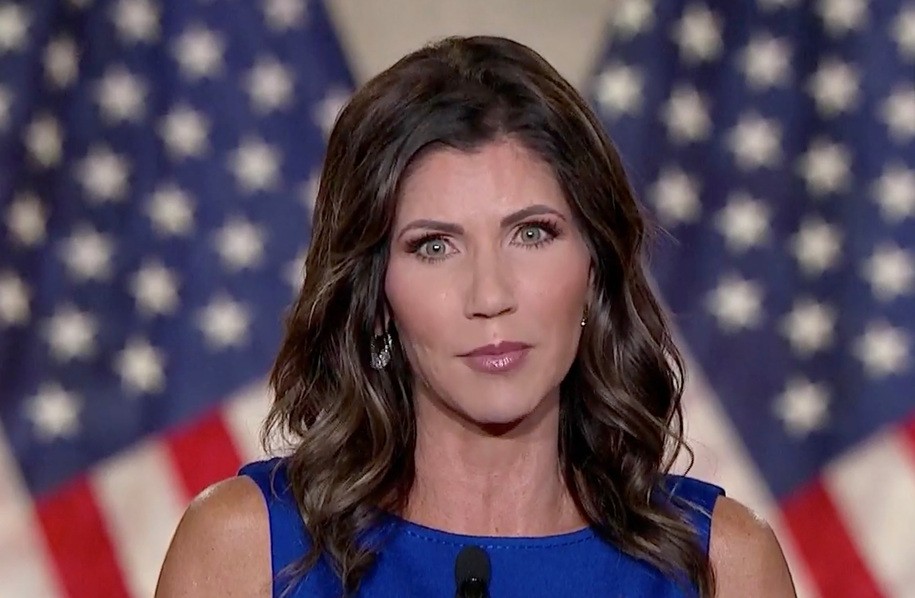




/cdn.vox-cdn.com/uploads/chorus_asset/file/22882183/GettyImages_1235386886_copy.jpg) Tamir Kalifa/Getty Images
Tamir Kalifa/Getty Images
/cdn.vox-cdn.com/uploads/chorus_asset/file/22882185/GettyImages_1191484761.jpg) Marco Bello/Bloomberg via Getty Images
Marco Bello/Bloomberg via Getty Images
/cdn.vox-cdn.com/uploads/chorus_asset/file/22882197/GettyImages_1230428388.jpg) Mandel Ngan/AFP via Getty Images
Mandel Ngan/AFP via Getty Images
/cdn.vox-cdn.com/uploads/chorus_asset/file/22882198/GettyImages_1231815182.jpg) Eric Baradat/AFP via Getty Images
Eric Baradat/AFP via Getty Images
/cdn.vox-cdn.com/uploads/chorus_asset/file/22882288/GettyImages_1041854084.jpg) Chip Somodevilla/Getty Images
Chip Somodevilla/Getty Images
/cdn.vox-cdn.com/uploads/chorus_asset/file/22882350/AP21270631369191.jpg) David Goldman/AP
David Goldman/AP
/cdn.vox-cdn.com/uploads/chorus_asset/file/22882347/AP21250713894359.jpg) LM Otero/AP
LM Otero/AP

/cdn.vox-cdn.com/uploads/chorus_asset/file/22881711/GettyImages_1230704190_copy.jpg) Jonathan Ernst/Getty Images
Jonathan Ernst/Getty Images
/cdn.vox-cdn.com/uploads/chorus_asset/file/22881723/GettyImages_1145131495_copy.jpg) Seth Herald/AFP via Getty Images
Seth Herald/AFP via Getty Images
/cdn.vox-cdn.com/uploads/chorus_asset/file/22881729/GettyImages_1186012685_copy.jpg) Getty Images
Getty Images
/cdn.vox-cdn.com/uploads/chorus_asset/file/22881735/GettyImages_1208642507_copy.jpg) Derek Davis/Portland Press Herald via Getty Images
Derek Davis/Portland Press Herald via Getty Images
/cdn.vox-cdn.com/uploads/chorus_asset/file/22881757/GettyImages_1229218956_copy.jpg) Caroline Brehman/CQ Roll Call/Bloomberg via Getty Images
Caroline Brehman/CQ Roll Call/Bloomberg via Getty Images
/cdn.vox-cdn.com/uploads/chorus_asset/file/22881768/AP19262694149161.jpg) US Central Command/AP
US Central Command/AP
/cdn.vox-cdn.com/uploads/chorus_asset/file/22881776/GettyImages_1147418125_copy.jpg) Evelyn Hockstein/Washington Post via Getty Images
Evelyn Hockstein/Washington Post via Getty Images