Enlarge / Concept art for Obi-Wan Kenobi shows the titular character locking light sabers with none other than Darth Vader. (credit: Disney+)
We have our first glimpse of concept art for Obi-Wan Kenobi, the six-episode series coming to Disney+ next year, as well as a behind-the-scenes sizzle reel featuring star Ewan MacGregor and director Deborah Chow. There's no actual footage, but fans are buzzing about the concept art showcasing Obi-Wan and none other than Darth Vader, lightsabers locked in battle. The sizzle reel briefly leaked online yesterday before being pulled. It was unveiled during the streaming platform's Disney+ Day. (You can check it out on Twitter here.)
We first learned in August 2019 that the rumors were true about a Star Wars spinoff series featuring Obi-Wan Kenobi, with McGregor reprising his role as the iconic character. The actor himself made a surprise appearance at the tail end of a showcase presentation at D23 Expo 2019, Disney's annual fan extravaganza. Then came the big news that Hayden Christensen was reprising his role as Anakin Skywalker/Darth Vader. Lucasfilm President Kathleen Kennedy called it "the rematch of the century" at the December 2020 Disney Investors Day.
"There's hunger for this character to come back," MacGregor said in the sizzle reel. "The fans have been waiting long enough, you know?"
Apple is giving new meaning to the phrase "for your eyes only." A patent filed by Apple and published Thursday by the US Patent and Trademark Office details the tech giant's interest in creating "privacy eyewear" that blurs content on a device's screen unless someone is wearing special glasses to look at it.
As spotted by Patently Apple, the patent, which focuses on creating different FaceID profiles for various visual impairments, explores a new type of privacy screen. The patent doesn't specify any Apple product by name. Instead, it refers to electronic devices in general, including smartphones, watches, laptops, TVs, and car displays. Drawings in the patent show the feature working on a smartphone-like device.
The technology would use a face scan to determine if the user is wearing the required glasses. It could recognize the headgear by a specific graphic, such as a QR or bar code.
Amazon's algorithms were blamed for a crash that paralyzed an aspiring doctor. Amazon says it's not liable. From a report: Ans Rana was in the back seat of his brother's Tesla Model S when they stopped behind a disabled car just before 9 p.m. on Atlanta's busy Interstate 75. Seconds later, a blue Amazon.com delivery van slammed into them from behind -- mangling the rear of the car and sending Rana, his brother and father to Wellstar Kennestone Hospital. Rana bore the brunt of the collision, suffering life-changing brain and spinal-cord injuries. The 24-year-old spent months clinging to life, a ventilator helping him breathe, his family unsure if he'd ever leave the hospital. He slowly recovered enough to be released and now lives with a sister who looks after him. Rana gets around in a motorized wheelchair, unable to do simple tasks such as feeding himself, changing channels with a remote control or playing video games. The March 15 crash dashed his dreams of attending medical school, and the once-aspiring doctor is now focused on his own recovery, unsure if he'll walk again or regain control of his arms.
In June, Rana filed a lawsuit in Georgia state court, alleging that Amazon is liable for the accident. Central to the complaint: the algorithms, apps and devices the company uses to manage its sprawling logistics operation. Amazon says it isn't legally culpable because the driver worked for Harper Logistics, one of thousands of small businesses launched in recent years specifically to deliver Amazon packages. By focusing on the key role played by the algorithms, Rana's attorney, Scott Harrison, is looking to prove that the company controls the operation, managing everything from how many packages drivers must deliver to whether they should be kept on or fired. Demonstrating Amazon isn't just a customer of Harper Logistics, but actually manages it from afar, is critical to any attempt to put the e-commerce giant on the hook for Rana's medical bills and a lifetime of diminished earnings. Amazon closely tracks delivery drivers' every move, the lawsuit states, including "backup monitoring, speed, braking, acceleration, cornering, seatbelt usage, phone calls, texting, in-van cameras that use artificial intelligence to detect for yawning, and more." If drivers fall behind schedule, Amazon employees send text messages "complaining that a certain driver is 'behind the rabbit' and needs to be 'rescued' to ensure that all the packages on Amazon's route are delivered in compliance with Amazon's unrealistic and dangerous speed expectations."
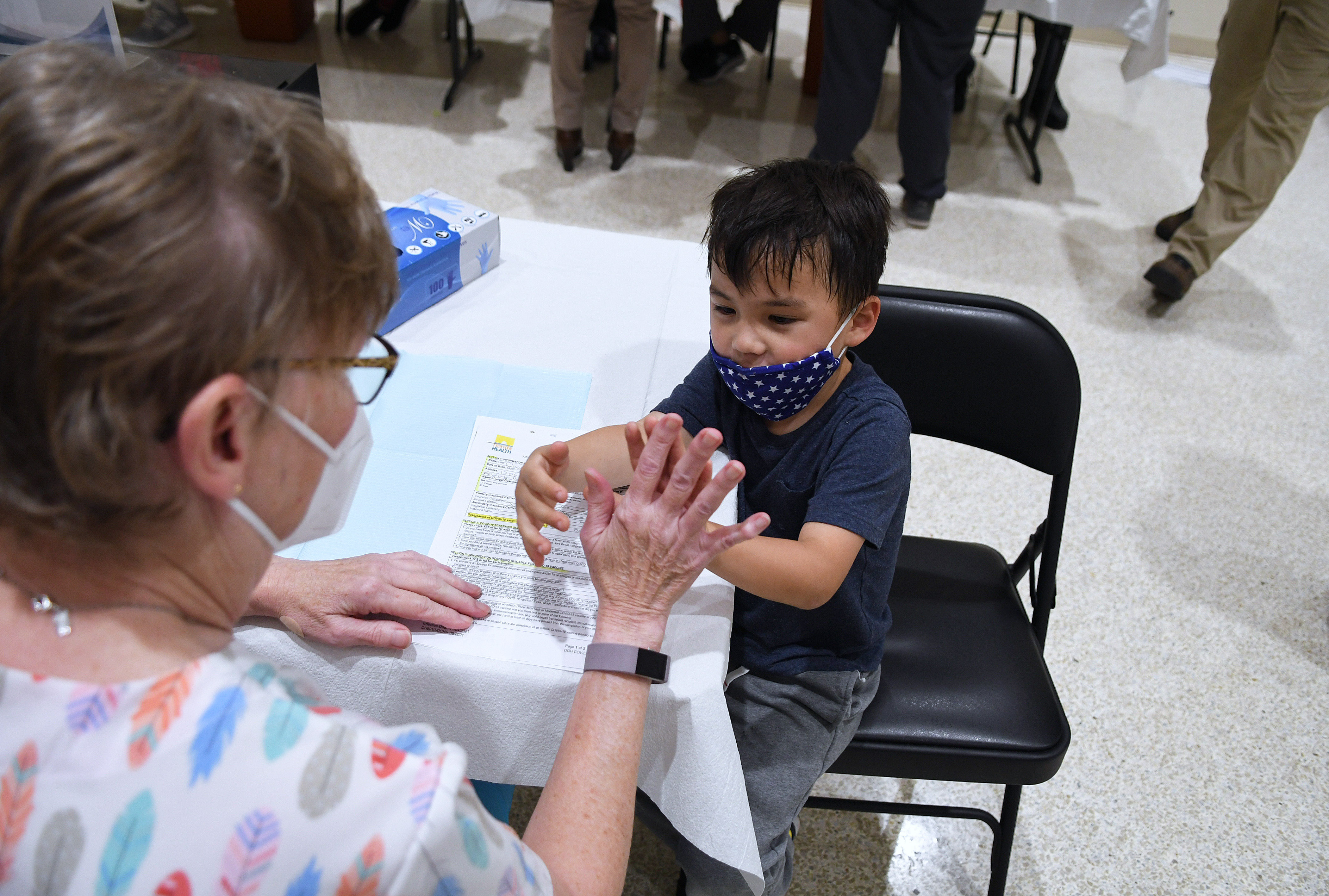
Enlarge / FLORIDA, 11/09/2021: A boy gives a nurse a high-five before receiving a shot of the Pfizer COVID-19 vaccine at a vaccination site for children aged 5 to 11. (credit: Getty | SOPA images)
The White House touted the success of COVID-19 vaccine mandates Wednesday as more of the country's unvaccinated are rolling up their sleeves.
In the last seven days, the country has averaged 300,000 first doses per day, White House COVID-19 response coordinator Jeff Zients noted in a press briefing today. The weekly total is the highest in nearly a month, Zients added.
Overall, the number of unvaccinated people eligible for a COVID-19 vaccine (people ages 12 and up) has dropped 40 percent since July. That is, the number of unvaccinated fell from about 100 million to less than 60 million.
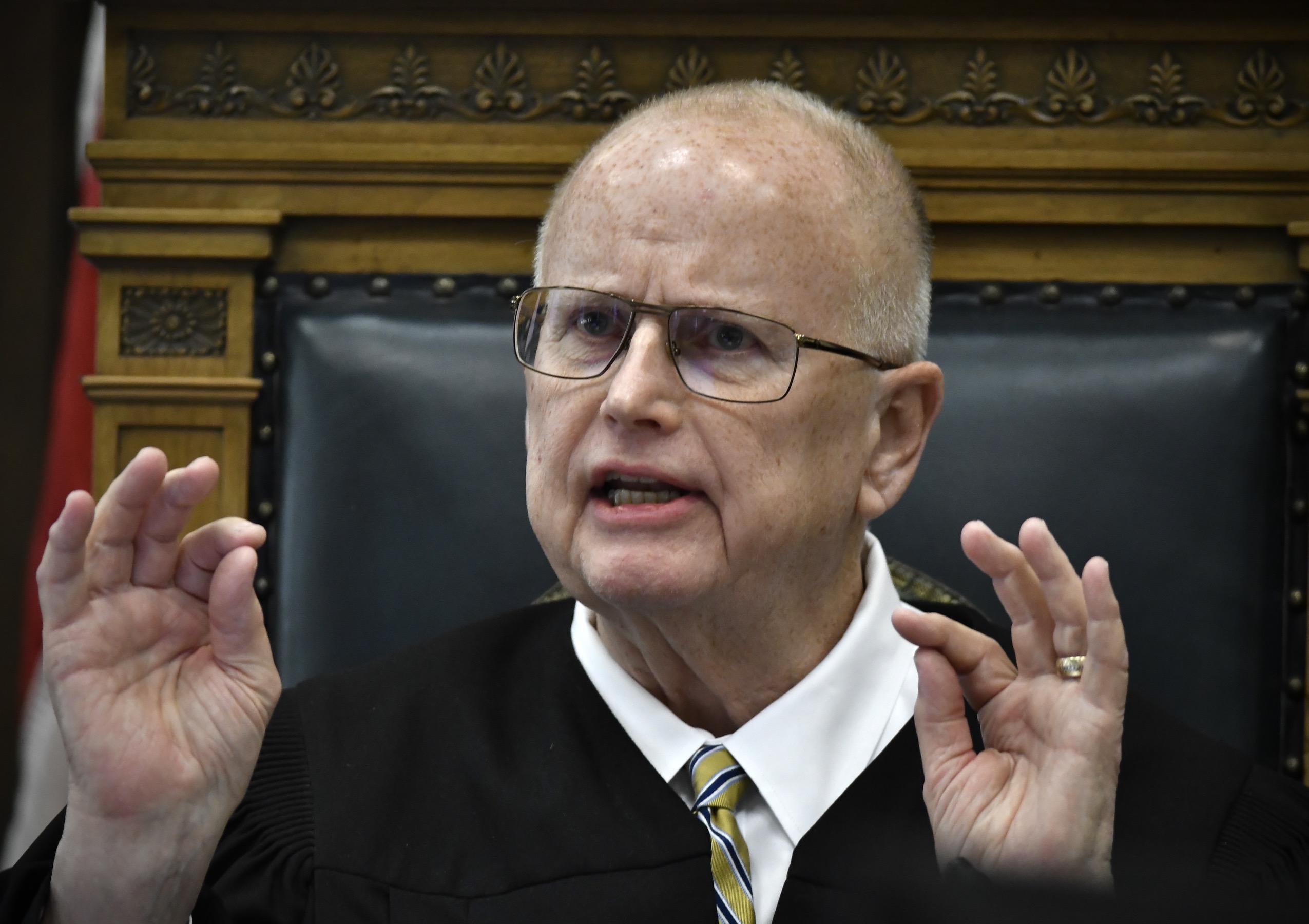
Enlarge / Judge Bruce Schroeder reprimands Assistant District Attorney Thomas Binger during cross-examination of Kyle Rittenhouse at the Kenosha County Courthouse in Wisconsin on November 10, 2021. (credit: Getty Images | Pool)
When Kenosha County prosecutor Thomas Binger cross-examined murder suspect Kyle Rittenhouse yesterday, he wanted to show Rittenhouse video on an iPad and use a touchscreen feature that phone and tablet owners around the world use every day: pinch-to-zoom.
Judge Bruce Schroeder's ruling? You shall not pinch.
Schroeder prevented Binger from pinching and zooming after Rittenhouse's defense attorney Mark Richards claimed that when a user zooms in on a video, "Apple's iPad programming creat[es] what it thinks is there, not what necessarily is there." Richards provided no evidence for this claim and admitted that he doesn't understand how the pinch-to-zoom feature works, but the judge decided the burden was on the prosecution to prove that zooming in doesn't add new images into the video.
Those wondering why no jurisdiction has actually brought criminal charges against Donald Trump and his minions need to remember that when done properly, a criminal investigation is supposed to take time. A good prosecutor is supposed to build a Mount Everest-sized trove of evidence against a defendant—and do so in a way that the defendant’s claim of innocence is slowly and painstakingly strangled. Such a thorough investigation is certainly the only way to bring down a former president who maintains a cult-like following.
It looks like one of the many prosecutors investigating Trump is poised to begin the next phase of her strangulation. Namely, Fani Willis, the district attorney in Fulton County, Georgia—home to almost all of Atlanta. The New York Times reports that Willis is about to empanel a special grand jury to investigate election interference by Trump and his deceitful buddies. Of course, the most infamous part of that interference is Trump’s attempt to bully Georgia Secretary of State Brad Raffensperger into helping him “find 11,780 votes” that would overturn Joe Biden’s lead in Georgia.
This is the biggest sign that Willis’ investigation, which began in February, is ramping up to a level that would be perilous for Trump.
That Willis is taking this case to a special grand jury should tell you something about how seriously she’s taking this investigation—and its potential import.
Instead of impaneling a special grand jury, Ms. Willis could submit evidence to one of two grand juries currently sitting in Fulton County, a longtime Democratic stronghold that encompasses much of Atlanta. But the county has a vast backlog of more than 10,000 potential criminal cases that have yet to be considered by a grand jury — a result of logistical complications from the coronavirus pandemic and, Ms. Willis has argued, inaction by her predecessor, Paul Howard, whom she replaced in January.
By contrast, a special grand jury, which by Georgia statute would include 16 to 23 members, could focus solely on the potential case against Mr. Trump and his allies. Ms. Willis is likely to soon take the step, according to a person with direct knowledge of the deliberations, speaking on the condition of anonymity because the decision is not final. Though such a jury could issue subpoenas, Ms. Willis would need to return to a regular grand jury to seek criminal indictments.
That grand jury would have plenty of evidence to consider besides Trump’s attempt to shake down Raffensperger. Before that fateful call, Trump also tried to push Raffensperger’s chief investigator into finding evidence of “dishonesty” in Georgia. He also tried to get Byung Pak, the U.S. Attorney for the Northern District of Georgia, which covers Atlanta, to push lies about voter fraud in Georgia. Pak told the House Jan. 6 committee that he resigned rather than go along with the scheme.
Additionally, Trump may have talked himself into further legal peril at a rally in September. He told the crowd that he tried to press none other than Georgia Gov. Brian Kemp to resolve the “election-integrity problem” in his state, possibly by calling a special election.
Last month, a bipartisan group of legal experts wrote an analysis of the case for the Brookings Institution. They concluded that Trump’s actions put him “at substantial risk” for a host of state charges—including racketeering, solicitation of election fraud, and conspiracy to commit election fraud.
They also noted that Trump’s comments in September could make it far easier to prove he intended to get lawmakers to join him in an attempt to steal an election he didn’t win. One of the authors, former Obama White House ethics counsel Norm Eisen, said that Trump’s conversation with Kemp was evidence that he intended to get Kemp to join him on this fishing expedition; as Eisen put it, Trump’s comments “offered the prosecution free admissions about the content of that exchange.”
Willis already gave a loud indication of where she’s going with this case when she tapped John Floyd, the man who literally wrote the book on prosecuting a state racketeering case, to assist in the investigation. That amounted to capital letters announcing that she was seriously considering hitting Trump with the legal equivalent of napalm. Georgia’s version of RICO makes false statements to state officials a predicate act.
That prospect alone should have Trump, along with everyone else in on that now-infamous call to Raffensperger, crapping themselves. If they weren’t then, they definitely should be now that it looks like Willis believes she has enough to call in a grand jury whose specific task will be to assist her with her investigation.
NEW YORK — People who trust Fox News Channel and other media outlets that appeal to conservatives are more likely to believe falsehoods about Covid-19 and vaccines than those who primarily go elsewhere for news, a study has found.
While the Kaiser Family Foundation study released this week found the clear ties between news outlets that people trusted and the amount of misinformation they believe, it took no stand on whether those attitudes specifically came from what they saw there.
“It may be because the people who are self-selecting these organizations believe (the misinformation) going in,” said Liz Hamel, vice president and director of public opinion and survey research at Kaiser.
Kaiser polled people on whether or not they believed seven widely-circulated untruths about the virus, among them that the government is exaggerating the number of deaths attributable to the coronavirus, hiding reports of deaths caused by vaccines or that the vaccines can cause infertility, contain a microchip or can change DNA.
For people who most trusted network or local television news, NPR, CNN or MSNBC, between 11 percent and 16 percent said they believed four or more of those untrue statements, or weren't sure about what was true.
For Fox News viewers, 36 percent either believed in or were unsure about four or more false statements, Kaiser said. It was 46 percent for Newsmax viewers and 37 percent for those who said they trusted One America Network News.
The most widely-believed falsehood is about the government exaggerating Covid deaths. Kaiser said 60 percent of Americans either believe that or said they didn't know whether or not it was true.
A sharp partisan divide on trust in news outlets has been evident for years, and Kaiser said this extends to Covid-19 news. Kaiser found, for example, that 65 percent of Democrats say they believe what they hear about Covid-19 on CNN, while only 17 percent of Republicans do. Roughly half of Republicans believe what they hear about the coronavirus on Fox, while only 18 percent of Democrats do.
The extent to which Covid-19 has become a political battleground is evident nearly every day. Most recently, some Republicans complained about “government propaganda” after the “Sesame Street” Muppet character Big Bird tweeted about getting vaccinated.
A Fox News spokeswoman would not comment directly on Kaiser's findings on Tuesday, but pointed to several network personalities who have spoken out in favor of getting vaccinated. Most recently it was Neil Cavuto, a multiple sclerosis sufferer who came down with the disease but had a mild case because he was vaccinated. He pleaded with viewers to get the shot: “Life is too short to be an ass,” he said.
Yet vaccine and mandate skepticism has been a steady drumbeat on several Fox shows.
Newsmax issued a statement that the network “strongly supports the Covid vaccine, has encouraged its viewers to get the vaccine and has on air only medical experts that support the vaccine.”
The company last week took its White House correspondent, Emerald Robinson, off the air for an investigation after she tweeted: “Dear Christians: The vaccines contain a bioluminescent marker called Luciferase so that you can be tracked.” She remained grounded on Tuesday.
Hamel said Kaiser's findings on attitudes of people who have not been vaccinated illustrate a real challenge faced by public health authorities. Their distrust of Covid-19 news ran wide and deep: the highest percentage of unvaccinated people who said they trusted what an outlet said on the topic was the 30 percent who cited Fox.
“The one thing I did not realize going in was how little trust there was across news sources among unvaccinated people,” she said.
Among social media outlets like Facebook and Twitter, the trust numbers were particularly small. But Hamel said that doesn't mean social media hasn't had a big impact in spreading stories that sow doubt about the vaccines.
Kaiser's study was conducted between Oct. 14-24 in a random telephone sample of 1,519 American adults.
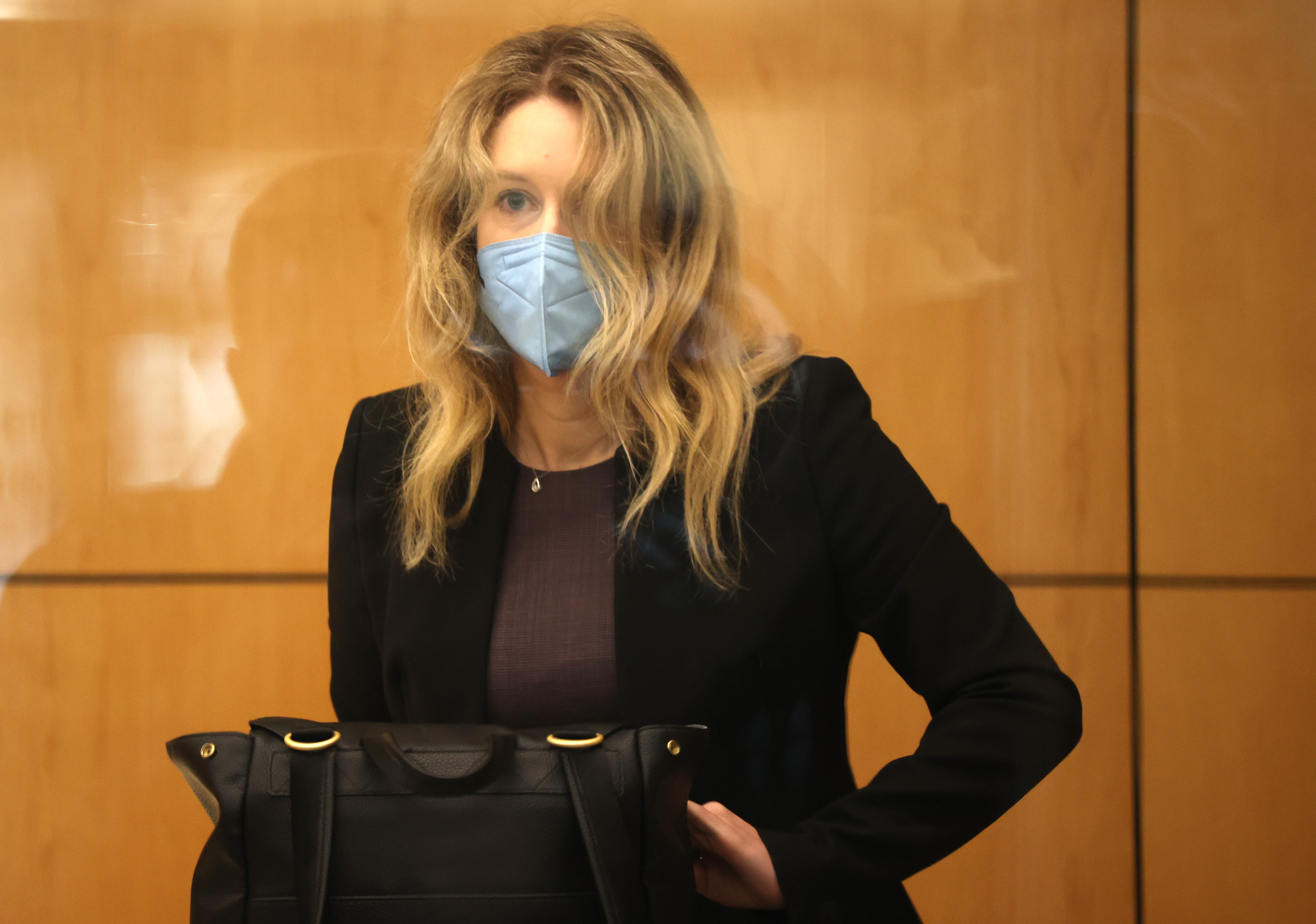
Enlarge / Former Theranos founder and CEO Elizabeth Holmes goes through security after arriving for court at the Robert F. Peckham Federal Building on September 17, 2021, in San Jose, California. (credit: Justin Sullivan/Getty Images)
Around 2016, Theranos’ fourth lab director, Kingshuk Das, noticed a problem. He was analyzing data from the company’s diagnostic devices when he saw results from tests for prostate-specific antigen, or PSA. PSA is used to detect prostate cancer in men, and except in rare cases, it’s not present in women’s blood. Except, here it was, appearing in women’s test results.
Das took his PSA findings to CEO Elizabeth Holmes. “Females should generally not have PSA detectable,” Das told the jury in Holmes' criminal trial yesterday.
Yet Holmes refused to believe that Theranos’ proprietary devices could be at fault. She suggested that some of the patients whose blood was tested instead had a rare type of breast cancer, pointing to “an article or two” that showed it was possible, Das recalled. Holmes' explanation, he told jurors, “seemed implausible.”
Just when you thought no one could be more Trump than Trump, in walks Kari Lake, a toady MAGA fawner like no other. Proclaiming to “change the narrative,” the former FOX News anchor is running for Arizona governor with the same old GOP playbook—denying President Biden’s win, railing against mask and vaccine mandates, supporting QAnon, raging against what she calls “woke” culture, and publicly thanking a Nazi sympathizer for his support.
Sounds like a Republican front-runner to me. And, of course, she’s endorsed by Herr Donald Trump.
Lake is frightening; she often and loudly uses her GOP dogwhistle. She has repeatedly called for Katie Hobbs, Arizona’s secretary of state and the likely Democratic candidate for governor, to be arrested after certifying the 2020 election. And during an August rally, she targeted journalists, calling them the “corrupt media,” saying many of them should be jailed for “lying about COVID, the election, the audit.”
Lake “came out of the gate full speed ahead and captured the Trump persona, the message, and the approach. She’s got it all dialed in,” Chad Campbell, an Arizona-based political consultant and former elected official in the state, told Daily Beast.
She has taken her anti-masking, anti-vaxxer message to colleges such as Arizona State University, urging students to defy mask mandates, calling it “child abuse” to make children wear masks. She recently tweeted: “The COVID vaccine is a nightmare that will NEVER stop.”
If you're fully vaccinated with 2 shots, now you'll need a 3rd one The COVID vaccine is a nightmare that will NEVER stop I REFUSE to back down from the fight for our medical freedom As your Governor, masks & vaccines will NEVER be mandatory DONATE ➡️ https://t.co/TjXnaUOhnKpic.twitter.com/nu02DuNTYw
Lake’s background is a winning narrative for Trump’s most ardent supporters. She’s a fallen-away journalist who left the world of media because of “fake news.”
She’s gained the support of such Trump winningest losers as Michael Flynn, former Trump national security adviser turned deranged conspiracy theorist to MyPillow guy Mike Lindell; and Rep. Paul Gosar, who recently posted an anime video showing himself killing Rep. Alexandria Ocasio-Cortez.
But, Lake pushes the envelope by shmoozing with fringe Trumpers as well.
In October, Lake posed for a photo with Ron Watkins, a MAGA conspiracy theorist, responsible for cultivating and escalating theories of the violent far-right QAnon conspiracy across social media. And at a campaign event in late August, Lake posed for a photo and video with far-right personalities Ethan Schmidt-Crockett, founder of the AntiMaskersClub, known for targeting a wig store that primarily sells to cancer patients for its position requiring customers to mask up, and Greyson Arnold, a Nazi sympathizer with a history of making White nationalist, racist, antisemitic, and pro-Nazi statements, including calling Adolf Hitler "a complicated historical figure which many people misunderstand."
Kari Lake posed for an “Antimaskers Club” video with bigot Ethan Schmidt who burns rainbow flags. This is who Trump endorsed. pic.twitter.com/mnTFqdjaAZ
“For someone who’s never run for office before, her instincts about what to say and when to say it are about as good as anybody I’ve ever seen,” Republican political consultant Nathan Sproul tells the Arizona Mirror. “She has a very instinctive understanding of what her voter wants to hear and when.”
But for Arizonians, it seems, Lake’s endorsement from Trump has put her in a class all by herself.
“Kari Lake got endorsed by President Trump, so I know she’s going to be for the people.” Stacey Goodman, a Cave Creek resident and retired police detective from Long Island, New York, told the AZ Mirror.
Lake has been packing crowds in her home state.
“I’ve never seen hundreds of people go to an event over a year out,” said Tyler Montague, a longtime Republican operative from the East Valley told AZ Mirror.
George Khalaf, a GOP political strategist and whose father is the treasurer for Lake’s campaign wonders if Lake can keep up the pace going into the 2022 elections.
“Right now, the momentum seems decently unstoppable,” Khalaf, tells AZ Mirror.
In the Goddard school district, after a parent complained about language in Angie Thomas’ critically acclaimed young adult novel, The Hate U Give, he went on to submit a list of other books he was concerned about, and the district pulled them all from circulation while it debates whether to get rid of them permanently.
“At this time, the district is not in a position to know if the books contained on this list meet our educational goals or not,” Julie Cannizzo, Goddard’s assistant superintendent for academic affairs, wrote in an email to principals and librarians. “Additionally, we need to gain a better understanding of the processes utilized to select books for our school libraries.”
The Hate U Give is a novel about the aftermath of the police killing of a Black teenager. It was a well-reviewed, massive young adult bestseller, with Kirkus Reviews calling it “necessary” and “important” in a starred review. Relevant to its inclusion in a school library, the School Library Journal also gave it a starred review. No doubt it’s a book with some difficult content, but if you want kids to 1) read and 2) be able to grapple with important issues in U.S. society, school libraries should have books like this on their shelves.
So what else is the Goddard school district “not in a position to know” if they “meet our educational goals or not”?
Fences, the August Wilson play that won the 1987 Pulitzer Prize for Drama.
Sherman Alexie’s The Absolutely True Diary of a Part-Time Indian, which won the 2007 National Book Award for Young People’s Literature and was included among the 2008 American Library Association’s Best Books for Young Adults, among other honors.
All Boys Aren't Blue, an essay collection by journalist and LGBTQIA activist George Johnson that was included on best books of 2020 lists from Kirkus Reviews, the New York Public Library, and others.
The Bluest Eye, by Toni Morrison, which the College Board actually uses as an example for AP exam preparation.
The list goes on. Echo Brown’s Black Girl Unlimited, described as “just brilliant” by Kirkus. Susan Campbell Bertoletti’s They Called Themselves the K.K.K.: The Birth of An American Terrorist Group, which won the American Library Association’s 2011 award for excellence in nonfiction for young adults.
By now, it should be fairly clear that the books in Goddard’s school libraries have been chosen off of lists of award-winning books and from the most positive reviews in industry-leading review journals like Kirkus. That much jumps out within a few minutes of the most cursory research into these books. But the school district needs to form a committee to “gain a better understanding of the processes utilized to select books for our school libraries,” substituting the judgment of a parent who is obviously incensed about books about people of color, LGBTQ people, racism, and sexism being available in school libraries for the judgment of professional school librarians.
Many of the books, by the way, also appear on another list: The American Library Association’s list of most-challenged books. Because this kind of objection is all too common from parents who want their kids to live in a white, straight, male-dominated world in which none of those things are questioned and no one has to confront, even through reading fiction, the horrors that this country has visited on people who do not fit that mold. That was the theme of Virginia Republican Glenn Youngkin’s ad featuring a parent upset that her high school-age son had been assigned a book containing “the most explicit material you can imagine,” a book that was nowhere in the ad revealed to be Toni Morrison’s Pulitzer Prize-winning Beloved. It’s the theme of the entire Republican campaign against “critical race theory” in schools, by which they mean not critical race theory but the teaching of things like children’s books about Martin Luther King, Jr. and Ruby Bridges.
The media keeps pretending something else is going on, talking about school COVID-19 responses that only a very small minority of people are upset about, rather than directly calling out the viciously racist—and homophobic, and transphobic, and sexist—campaign Republicans are waging against public education and against any view of history more nuanced than a U! S! A! chant. But this is a hysterical, terrified Republican fight against having their kids see people who are not like them as fully human, against having their kids learn that the history of the U.S. includes some very bad stuff—and not just in the distant past, either—and maybe possibly coming out with higher expectations or aspirations.
So, yeah. What we’re talking about is not critical race theory. We’re talking about parents wanting books that have won Pulitzer Prizes and National Book Awards and appeared on multiple best-books lists and are regularly included on Advanced Placement exams pulled out of public schools. And in a lot of places, they’re succeeding, helping to ensure that their children won’t learn another way is possible.
Enlarge / The hotly anticipated Wheel of Time series debuts on November 19, 2021, on Amazon Prime. (credit: Amazon Prime)
Amazon's adaptation of TheWheel of Time series begins airing on November 19 after years of development and false starts. And as Ars Technica's resident WoT book nerds, Andrew Cunningham (that's me) and Lee Hutchinson will be here to recap the first season for you, episode by episode. We've both read Robert Jordan's (and, later, Brandon Sanderson's) 14-volume fantasy epic from end to end more than once, and it would be a shame to let such a ridiculous time investment go to waste!
TheWheel of Time series in its current iteration has been in the works since at least 2016, when Wheel of Time copyright owner (and Robert Jordan's wife and editor) Harriet McDougal teased a "cutting edge TV series" from a "major studio" in the wake of a terrible low-budget pilot that aired in the wee hours one day in early 2015. Amazon has put some serious marketing muscle behind the series, with a slow-but-steady drip of trailers and promotional images, plus a gigantic interactive page walking you through the series' main characters and some of its complex lore. Amazon has also already renewed the series for a second season.
Sprawling, multi-book series like WoT can be tough to adapt, as we learned from watching the highs and lows of HBO's Game of Thrones over its eight-year run. Plot arcs need to be streamlined, tweaked, or dropped altogether; new characters are invented while existing ones (including fan-favorites!) are skipped over; and the unlimited special effects budget of the human mind needs to be replicated using the finite capabilities of computer-generated imagery.
Hello everyone! We return to the great state of Illinois (where I live) to bring you this wonderful time capsule from DuPage County (where I don’t live but have ridden my bike.) There is actually much more house to get through than in the usual McMansion Hell post so Iet’s not waste time with informalities.
Behold.
This incredible 70s hangover is served (with a fine line on a silver tray) at a neat $5 million. It has seven bedrooms for maximum party discretion and 4.5 bathrooms also for maximum party discretion but of a different sort. Shall we?
Lawyer Foyer
Definitely thought that the staircase emptied out into a pool of brown water. (I’m sober, though.)
Auditorium-Sized Living Room
Pretty sure this is the most epic hearth in McMansion Hell history, if not world history. a bit of overkill, imo. Anyway, let’s see what’s behind it.
In the late 1970s, society once inquired, collectively: What if “Dudes Rock” was a bar?
Kitchen
This is the most normal room in the house. (This is a threat.)
Main Bedroom
How can something clearly from the 80s have such powerful 2006 energy?
Main Bathroom
This was likely a reno job but master bathrooms did start being roughly the size of my living/dining room a few years later.
WARNING: SICKO ZONE AHEAD
Okay. Okay. We’ve completed our tour of the main, relatively normal McMansion part of this house. We are now entering the Sicko Zone, wherein everything gets progressively a little more, well, sick.
Well, that was eventful. I hope you all enjoyed our little foray into hell. Stay tuned for more Yearbook! It’s only going to get pinker and tealer from here.
Yup, once again reminding us that conservatives don't give a shit about religious liberty. They only care about imposing their version of conservative "christianity". None of these bullshit arguments would be tolerated in any other case, but now because Texas wants to kill someone, the conservatives suddenly get skeptical of liberty claims.
Sunny Neelam of Catholic Worker House holds a sign that reads “Execute Justice Not People!” in a vigil against the death penalty in front of the Supreme Court on June 29, 2021. | Alex Wong/Getty Images
Several justices appear concerned that respecting inmates’ religious rights might make it harder to execute them.
The Supreme Court heard an utterly enraging day of arguments on Tuesday in Ramirez v. Collier, a case asking whether a condemned man may receive spiritual comfort from his pastor while he’s being executed by the state of Texas.
Several justices, who have in the past suggested that religious rights are so important they trump concerns about public health and preventing discrimination, signaled that these rights may not be quite so potent when they might interfere with an execution.
In fairness, it is not entirely clear how the Court will decide this case — four justices appear likely to side with the Texas government, and four of them appear likely to side with John Ramirez, the inmate who seeks spiritual counsel in his final moments. Justice Neil Gorsuch, who is likely to cast the deciding vote, was silent during Tuesday’s arguments.
But even if Ramirez — who does not seek to prevent his execution, just to ensure that he receives spiritual comfort while he is dying — prevails in a 5-4 decision, that decision will reveal a great deal about the justices who vote against him.
Tuesday alone was revealing. The four justices who expressed the most skepticism of Ramirez’s claims raised arguments that would never have flown in previous religious liberty cases. Justice Brett Kavanaugh, for example, suggested at one point that Ramirez might be denied a religious accommodation if granting it would increase the risk of something going wrong during his execution above “zero.” Several justices raised concerns that accommodating Ramirez’s religious beliefs would simply create too much work for the Court.
That was effectively the holding of Roman Catholic Diocese of Brooklyn v. Cuomo (2020), a 5-4 decision handed down at the height of the Covid-19 pandemic, which exempted houses of worship from New York state public health rules that limited the number of people who could gather at the same time for religious services — ostensibly because the state didn’t impose the same restrictions on secular businesses such as grocery stores. The purpose of the state regulation was to prevent such services from becoming superspreader events, but the Court held that these public health rules must bend in the interest of religious liberty.
Roman Catholic Diocese was a revolutionary decision that significantly expanded the rights of religious objectors, but it wasn’t the first time the Court held that religious liberties overcome the rights of others. In Burwell v. Hobby Lobby (2014), the Court allowed employers to deny their employees health plans that cover many forms of birth control — holding that the religious rights of those employers trump their workers’ right to health coverage required by federal regulations.
The Court also handed down twocases in the last four years siding with religious objectors who sought an exemption from prohibitions on anti-LGBTQ discrimination — though, admittedly, both of those cases were decided along fairly narrow grounds.
Narrow as these latter two decisions may have been, however, they are part of a broader pattern. When the government sought to enforce a rule that religious conservatives objected to, the Court consistently sided with religious conservatives.
But now that conservative Texas claims that it should be able to sidestep the religious rights of a death row inmate, at least four of the justices seem likely to take a very different approach than the one the Court took in cases like Roman Catholic Diocese and Hobby Lobby.
As it turns out, religious liberty cases are often quite difficult. When the government seeks to enforce a law that some people of faith find objectionable, it often has very good reasons for doing so — reasons at least worth weighing seriously against their constraint on religious liberty. Only now does the current Court seem to be recognizing this.
How the Ramirez case arose
Ramirez is the latest chapter in a fight that began nearly three years ago in Dunn v. Ray(2019) — a 5-4 decision holding that a Muslim inmate in Alabama could not have his imam present during his execution, even though the state permitted Christian death row inmates to have their pastor present.
The Ray decision was widely condemned, even by prominent conservatives, for its cavalier approach to religious freedom. As Justice Elena Kagan wrote in dissent, one of the Constitution’s “clearest command[s]” is that “one religious denomination cannot be officially preferred over another.”
Not long after Ray, the Court started to back away from that decision. Most notably, in Dunn v. Smith(2021) the Court seemed to suggest that all death row inmates should be allowed to have a spiritual adviser present at their execution. Although Justice Brett Kavanaugh dissented in Smith, he also conceded that “States that want to avoid months or years of litigation delays should figure out a way to allow spiritual advisers into the execution room.”
The Ramirez case presents a slightly more complicated question than Ray or Smith. In Ramirez, Texas will allow Mr. Ramirez’s pastor to be present during his execution, but it will neither permit that pastor to audibly pray or to lay hands on Ramirez. Texas, in other words, will allow a spiritual counselor to be present at Ramirez’s execution, but it doesn’t want that counselor to provide any actual counsel.
Nevertheless, the eight justices who spoke during the Ramirez oral arguments appeared to break down along the same lines that they broke down in Smith.
In Smith, four justices — the three liberals plus Justice Barrett — joined an opinion by Justice Kagan arguing that death row inmates have broad religious rights. Citing a federal law that prohibits prisons from imposing “‘a substantial burden’ on a prisoner’s ‘religious exercise’” except in extraordinary cases, Kagan wrote that this statute will generally require inmates to receive spiritual counsel during their executions if they desire it.
In response to the state’s argument that a spiritual adviser might disrupt an execution, Kagan and the three other justices who agreed with her were unmoved. A state “can take any number of measures to ensure that a clergy member will act responsibly during an execution.” It “can do a background check on the minister; it can interview him and his associates; it can seek a penalty-backed pledge that he will obey all rules.” But it cannot “simply presume that every clergy member will be untrustworthy.”
Meanwhile, three justices — Chief Justice John Roberts and Justices Clarence Thomas and Brett Kavanaugh — dissented in Smith. That leaves either Gorsuch or Justice Samuel Alito as the fifth vote for the inmate in Smith, although neither of these two justices wrote an opinion or otherwise revealed their vote.
After Tuesday’s arguments in Ramirez, however, it appears unlikely that Alito provided that fifth vote in Smith — his questions were almost entirely hostile toward Mr. Ramirez. That leaves the uncharacteristically silent Gorsuch as the likely deciding vote.
The case against Ramirez, briefly explained
It is difficult to describe Alito’s case against Ramirez charitably, as that case seems largely rooted in concerns that a too expansive religious liberty standard would create a lot of work for Alito and his colleagues.
As Alito correctly noted, the Court understands religion to be a deeply personal thing. Someone with an idiosyncratic religious belief that is shared by no other person may still seek a legal accommodation for that belief.
Alito worried that, because the law requires prisons to accommodate unusual or even unique religious beliefs, a decision for Ramirez would open the floodgates to more litigation by death row inmates. “We can look forward to an unending stream of variations,” Alito complained, after Ramirez’s lawyer conceded that his client will be satisfied if his pastor can touch any part of Ramirez’s body during the execution.
Once Ramirez is accommodated, Alito feared, the Court will have to go through “the whole human anatomy,” as future inmates bring cases asking to have a pastor lay hands on their face, or their heart, or some other part of their body.
Alito’s concerns were shared by Roberts, Thomas, and Kavanaugh. Thomas fretted about inmates “gaming the system” by claiming to adhere to religious beliefs that they do not actually hold. Kavanaugh expressed similar concerns that an inmate might try to “move the goalposts” in future cases.
Roberts, meanwhile, was less derisive than his three conservative colleagues, but he asked several times how prison officials (and courts) are supposed to determine if a prisoner’s expressed belief is sincere. Suppose, for example, that a condemned man claims, on the eve of his execution, that he must convert to another faith — and that the conversion process takes three months. Should the state have to delay this man’s execution until the conversion ritual is complete?
The underlying concern driving these four justices appeared to be that, if they don’t draw a line in the sand in Ramirez’s case, then they will be flooded with lawsuits by death row inmates seeking religious accommodations. As Kavanaugh put it to Ramirez’s lawyer, “if we rule in your favor in this case, this will be a heavy part of our docket for years to come.”
Why should death penalty cases be different than any other religion case?
One reason why this line of questioning by these four conservative justices was so frustrating is that most of them appeared unmoved by similar concerns when conservatives sought religious accommodations in the past.
Consider, for example, Alito’s concern that, once the Court opens the door to religious liberty lawsuits, it invites a wave of new lawsuits from people with unusual beliefs seeking disruptive accommodations. That is, indeed, exactly what happened after Hobby Lobby was decided.
After Hobby Lobby established that religious employers may deny birth control coverage to their employees, the Obama administration tried to accommodate those employers by allowing them to fill out a form that would exempt them from the legal requirement to cover birth control (while also providing the government with enough information to provide birth control coverage to the uncovered employees on its own). But then several employers filed new lawsuits, asserting that they had a religious objection to filling out the form.
Similarly, take Roberts’s concern that it is difficult to determine whether someone who raises a religious objection is sincere. This is also a persistent problem in religious liberty cases that don’t involve the death penalty.
Consider, for example, Eden Foods v. Sebelius (2013), a federal appeals court case that was identical to Hobby Lobby in every important way but one. The difference was that the CEO of Eden Foods, the plaintiff in this case, gave a series of interviews to reporter Irin Carmon in which he revealed that he objected to providing birth control coverage to his employees largely for libertarian reasons, and not for religious reasons.
Nevertheless, the Obama administration decided not to litigate this case any further once it lost Hobby Lobby, a tacit admission that it is very difficult to convince courts that an individual’s religious beliefs are insincere — even when their own words can be used against them.
The point is that the Court’s right flank is perfectly willing to accept all of the uncertainties that arise from an expansive religious liberty regime when religious conservatives seek accommodations. So why should Ramirez be any different?
Alito offered one possible explanation during the Ramirez arguments, that death penalty cases tend to arise “at the very last minute.” Whenever an execution is scheduled, federal courts — and especially the Supreme Court — are typically inundated with emergency motions and other last-ditch efforts by lawyers trying to save their client’s life. These unexpected motions have likely declined in recent years — because the number of death sentences in the United States has dropped sharply since the 1990s — but they, no doubt, can be very frustrating to a justice who doesn’t want to cancel their plans to work late.
But that’s also the job that every justice signed up for.
Yeah that's just hostage taking...interesting approach lol
India has declined to update its official climate goal at the United Nations climate negotiations, holding out for rich countries to first offer $1 trillion in climate finance by the end of the decade. From a report: The resistance from India stands in contrast to its surprise announcement on Nov. 1, just as COP26 negotiations got underway, that it would set an ambitious new goal to reach net-zero emissions by 2070. Prime Minister Narendra Modi opened the talks in Glasgow, Scotland, with a decision to increase his nation's share of renewable electricity generation capacity alongside the long-term target to zero out carbon. At the same time, Modi demanded rich countries provide as much as $1 trillion in climate finance just for India -- far more than the $100 billion a year for all poor countries sought under previous deals. Until now, however, it wasn't clear whether India's demand came with a fixed timeline. Officials on Wednesday confirmed that India is seeking that sum by 2030 to fund the build out of renewables, energy storage, decarbonization of the industrial sector and defending infrastructure to a warming planet.
A court late last month said GEO Group had to pay detained immigrants the minimum wage (or higher) for their forced labor at the Northwest Immigration and Customs Enforcement (ICE) Processing Center (NWIPC) in Washington state. The private prison profiteer had been forcing them to labor for $1 a day under a so-called voluntary program. The court also ruled that the company owed more than $23 million in unpaid wages and damages. But the Associated Press (AP) now reports that “rather than pay the detainees minimum wage,” the multi-billion dollar company has instead “suspended the Voluntary Work Program while it appeals.”
Immigrants detained at NWIPC had been forced to cook, clean, and maintain the facility under the forced program. But because GEO Group suspended the program, none of that’s getting done, detained immigrants told the AP. “It got really gross—nobody cleaned anything,” Ivan Sanchez said in the report. “We pick up after ourselves, but nobody sweeps or mops. The guards were saying it wasn’t their job to clean the toilets. ... It caused a lot of animosity between the detainees and the officers because of that.”
This is a choice. GEO Group has the resources to get that taken care of by professionals. It plainly, shamelessly, admitted so in asking the judge overseeing the case to pause the rulings. “The corporation wrote that it has enough money on hand ‘to pay the Judgments twenty times over,’ but said it disagreed with the decisions,” the AP continued. Immigrants said in the report that GEO Group’s suspension is further hurting them because their wages, even though meager, went to purchasing basic items at the commissary. Now GEO Group has cut them off completely.
“While detainees are looking forward to a potential payout, ‘there’s a lot of people in here that that dollar makes a difference,’ Soares said,” the report continued.
In addition to ordering GEO Group to pay immigrants the state’s minimum wage or higher for their work, the court said the company owed $17.3 million to workers. Several days later, the court ordered GEO Group to pay Washington $5.9 million, saying the company “enriched itself by its unfair and unjust practice.”
“In 2018, GEO reported $2.33 billion in revenue, an increase from $2.18 billion in 2016,” said Investigate, a project of the American Friends Service Committee. GEO Group’s federal contracts have been by far its most lucrative agreements. “ICE contracts represent GEO Group’s single largest source of revenue accounting for 28 percent, an increase from 18 percent in 2015,” Investigate said. While President Biden pledged an end to the government’s use of for-profit prisons, GEO Group just recently gained a new contract.
Like previously noted, thousands of immigrants have borne the brunt of GEO Group’s greed. “While officials portray the labor program as ‘voluntary’ in light of the 13th amendment of the US constitution, detained immigrants are often penalized for refusing to work,” Project South legal and advocacy director Azadeh Shahshahani wrote in The Guardian back in 2018. Some have been punished with solitary confinement, which is torture, for trying to refuse to work.
GEO Group itself has admitted it has the resources to pay immigrants—again, “the corporation wrote that it has enough money on hand ‘to pay the Judgments twenty times over,’” is what the AP reported—but it refuses to. It’s also lying in the process. “Some detainees were given a GEO memo that day explaining they could no longer perform the work they used to do; the memo falsely said ICE had suspended the work program, according to an image provided to the AP,” the report continued.
(Reuters) -The Oklahoma Supreme Court on Tuesday overturned a $465 million judgment against Johnson & Johnson in a lawsuit by the state alleging the drugmaker fueled the opioid epidemic through the deceptive marketing of painkillers.
The decision marked the latest setback for states and local governments pursuing lawsuits to hold pharmaceutical companies responsible for a drug abuse crisis the U.S. government says led to nearly 500,000 opioid overdose deaths over two decades.
The court ruled https://tmsnrt.rs/3bSrnrj that the state’s public nuisance law does not extend to the manufacturing, marketing and sales of prescription opioids and that a trial judge went too far in holding the company liable under it.
“However grave the problem of opioid addition is in Oklahoma, public nuisance law does not provide a remedy for this harm,” Justice James Winchester wrote.
New Brunswick, New Jersey-based J&J in a statement said it sympathized with those affected by the epidemic but that the court “appropriately and categorically rejected the misguided and unprecedented expansion of the public nuisance law.”
A spokesperson for Oklahoma Attorney General John O’Connor did not respond to requests for comment. His office had on appeal sought $9.3 billion from J&J to fund treatment and other programs to address the epidemic.
The Oklahoma lawsuit was the first of the more than 3,300 lawsuits over the opioid crisis against pharmaceutical manufacturers, drug distributors and pharmacies to go to trial.
The trial pre-dated an agreement this year by J&J and the three largest U.S. drug distributors – McKesson Corp, Cardinal Health Inc and AmerisourceBergen – to pay up to $26 billion to settle thousands of opioid-related cases against them.
PUBLIC NUISANCE LAWS
Tuesday’s decision came days after a similar trial in California pitting several large counties against J&J and three other drugmakers resulted in a tentative ruling in the companies’ favor.
Cleveland County District Judge Thad Balkman ruled in August 2019 that J&J had engaged in misleading marketing about the benefits of painkillers Duragesic and Nucynta, and concluded that their addictive risks caused a public nuisance.
J&J had argued that there was scientific support for the marketing claims and said that Duragesic and Nucynta accounted for a tiny fraction of the opioids sold in Oklahoma.
The company, which no longer promotes the drugs, also argued the state’s public nuisance law should not apply.
In Tuesday’s ruling, Winchester agreed that the law only applied to discrete, localized problems involving criminal or property-based conflicts, not policy problems.
“The district court’s expansion of public nuisance law allows courts to manage public policy matters that should be dealt with by the legislative and executive branches,” Winchester wrote.
Paul Geller, a plaintiffs’ lawyer at the law firm Robbins Geller Rudman & Dowd who helped draft the $26 billion nationwide settlement proposal, said the Oklahoma ruling could lead to increased participation in the settlement.
“Perhaps the realization that, despite the gravity of the epidemic, trials are inherently risky and appellate courts are largely unpredictable will ultimately help increase participation,” he said.
Eight states have declined to sign-onto the deal with J&J, which agreed to pay up to $5 billion. Local governments in states that did join the have until January to sign-on. The ultimate payout is contingent on participation.
The Oklahoma ruling, coupled with the California decision, could prompt states and localities who have not backed the proposed nationwide settlement to re-think their positions, said Elizabeth Chamblee Burch, a University of Georgia law professor.
“To the extent folks are on the fence about going into that settlement, this definitely changes the risk profile,” Burch said.
(Reporting by Nate Raymond in Boston, Editing by Noeleen Walder, Bernadette Baum, Aurora Ellis and Jonathan Oatis)
This is what happens when one party abandons democracy as a concept and refuses to accept the idea that they can lose elections.
The North Carolina state seal outside the state legislature. | Al Drago/CQ Roll Call/Getty Images
New election maps passed into law could be worse for Democrats than their recent loss in Virginia.
Last week, while the political world was transfixed on Virginia, something arguably more consequential took place in the state just south of it: North Carolina’s Republican-controlled statehouse passed new political maps based on the 2020 census that give the GOP a significant leg up in congressional elections.
In a state split nearly evenly between Republicans and Democrats — Trump won it in 2020 with 49.9 percent of the vote — the new map of districts for House elections would likely give the GOP at least 10 House seats out of 14 (71 percent). North Carolina law does not allow Democratic Gov. Roy Cooper to veto the maps, which means they will be used in 2022 unless courts intervene.
The Princeton Gerrymandering Project, an academic group that grades political maps based on a set of mathematical metrics of fairness, gave the North Carolina map an “F” for extreme partisan bias — marking it as one of the very worst proposals anywhere in the country. Two separate analyses, from a Duke University professor and the Campaign Legal Center, also found that the map was unusually tilted in the GOP’s direction.
“Ten years ago, North Carolina’s legislature drew an extremely gerrymandered congressional map. It was so gerrymandered that they were ordered to redraw it. Twice,” says Will Adler, an expert on gerrymandering at the Center for Democracy and Technology think tank. “This map appears to be at least as extreme as the ones drawn in the last cycle.”
Whether North Carolina’s newly passed maps will survive legal review — the activist group Common Cause has already filed a suit to stop them — remains to be seen. But challenges to the map may face an uphill climb: a 2019 Supreme Court ruling defanged federal anti-gerrymandering protections, making it easier for North Carolina Republicans to get away with twisting the maps.
In recent years, North Carolina’s Republican legislative majority has been on the cutting edge of anti-democratic activity — going further than other legislatures and even pioneering new tactics for cementing their hold on power that have been picked up by Republicans elsewhere. What happens there is a leading indicator of where our political system is heading.
That’s why this isn’t just about one hyperpartisan statehouse. As states across the country draw new lines in the wake of the census, governments controlled by a single party have a once-in-a-decade opportunity to give themselves a massive leg up. While some Democratic-controlled legislatures like Illinois are abusing this power, Republicans are both better equipped and have proven more willing to draw undemocratic lines that favor themselves.
The GOP’s ruthless redistricting is part of an even bigger pattern of state-level sabotage of democracy. Gerrymandering is one tool the GOP uses, together with voter suppression bills and institutional power grabs, to tilt the electoral playing field toward their side.
Given the key role states play in setting the rules for national elections, this represents an existential threat to our political system. If American democracy dies, it’ll die in the states.
Why North Carolina’s new maps are so unfair
To get a good baseline for what happened in North Carolina, it helps to start with the 2020 House election results. Using a map drawn in accordance with court rulings against the gerrymandered map used in 2018, Republicans still won eight of 13 House seats despite Democratic candidates receiving slightly more votes overall.
This result, as you can see in the map below, reflects differences in where Democratic and Republican voters live. Because Democrats are concentrated in and around cities like Charlotte and Greensboro, while Republicans are more spread out across the state, even more neutral maps can yield some degree of GOP advantage.
Tim Ryan Williams/Vox
But now take a look at how a similarly close election would play out under the proposed 2022 map, which has one more seat thanks to North Carolina’s population growth.
Instead of winning eight seats, Republicans win about 10 — a degree of advantage that can’t only be explained by Democrats clustering in cities.
Tim Ryan Williams/Vox
The new map reflects the twin hallmarks of any gerrymander, called “packing” and “cracking.” Gerrymanders work by concentrating a large number of the opposing party’s voters in a handful of districts (“packing”), while spreading out the rest of their supporters across districts where they’re consistently outnumbered (“cracking”).
The new map’s lines are drawn in strange ways in order to pack and crack Democratic voters. Democrats in Charlotte, for example, are packed in a very small district where they outnumber Republicans by a roughly 3 to 1 margin. By contrast, Greensboro and the nearby area is cracked in such a way as to create several different districts with comfortable Republican majorities.
One way to measure the degree of unfairness is to look at what gerrymandering experts call “responsiveness”: the extent to which the outcome of elections changes based on shifts in votes. Duke mathematician Jonathan Mattingly ran an analysis of the new maps testing their responsiveness, looking at how many seats each party would get using statewide popular vote totals from previous elections (e.g., the Democrats’ US Senate win in 2008, the GOP’s gubernatorial victory in 2012).
The following chart shows his results. The orange blocks show the frequency of different House outcomes under various hypothetical maps, with the peaks representing the most common vote outcomes. The yellow dots show the outcome using the map Republicans just passed.
In the hypothetical maps, Democrats generally do better as they start winning bigger and bigger majorities — depicted by the orange peaks shifting to the right. But for the 2022 map’s yellow dots, that’s not the case: Republicans continue to maintain a 10-4 advantage even when Democrats win solid statewide majorities.
Jonathan Mattingly/Duke University
A model showing expected outcomes if past statewide elections were House races on North Carolina’s new map. The circles on the histograms show that in all but the most left-leaning electorates, Democrats would likely only win about 4 or 5 House seats out of 14.
It would take an absolute blowout, over 7 percentage points in the statewide popular vote, for Democrats to even get half of the state’s congressional delegation.
The Princeton Gerrymandering Project did a similar exercise, running over a million simulations of various possible maps. In the vast majority of these maps, Democrats average six or seven seats in House elections — half or a little under the total. Under the new Republican-drawn map, Democrats average just four.
The size of this GOP advantage in the new map, the consistency of its wins with different vote totals, and the lines of the districts themselves are all very strong evidence of an extreme partisan gerrymander.
“All the political scientists are sort of coming to the same conclusion: this doesn’t look happenstance. It looks planned,” says Adam Podowitz-Thomas, a senior legal strategist on the Princeton team.
North Carolina and the state-level threat to democracy
The North Carolina gerrymander, on its own, doesn’t guarantee that Republicans control Congress. On net, it’s likely to shift two or three House seats into the GOP’s column in 2022 — a nice advantage, especially given how closely divided Congress is at present, but not an insurmountable one.
The issue is that, across the country and over the last few years, Republicans have been systematically more willing and able to redraw lines in their favor than Democrats. An analysis of the past three elections, conducted over the summer by the Associated Press, found that gerrymandering has given Republicans “a greater political advantage in more states than either party had in the past 50 years.”
This GOP advantage is likely to increase in the current redistricting cycle. In the 2020 elections, Republicans swept key statehouse races in states where legislatures control redistricting — North Carolina, obviously, but also Florida, Texas, and Georgia. All four are larger states, so a lot of seats are in play. They’re also all fairly competitive, which means that there are more Democrats to pack-and-crack into political oblivion than there are in a deep-red state like Alabama.
Some Democratic state legislatures appear willing to play the same game in 2021. The new Oregon and Illinois maps appear to be heavily biased in Democrats’ favor; New York’s map, while not yet released, may come out quite tilted to the left.
But in recent history, Democratic-controlled states have been less likely to engage in extreme gerrymandering than their Republican peers. And even if Democrats wanted to totally change that in 2021, they couldn’t: The party just doesn’t have enough power in enough states. Some of the large states Democrats control, like California and Virginia, have delegated redistricting to independent commissions.
The asymmetry in gerrymandering speaks to a deeper difference between the parties. Republicans are more willing to rewrite the rules of the political game in their favor than Democrats — to undermine foundations of the democratic system in order to cement their hold on power.
In this sense, North Carolina’s gerrymandering is less an undemocratic one-off than part of a bigger pattern of undemocratic behavior.
In a 2021 working paper, the University of Washington’s Jake Grumbach attempted to quantitatively measure the health of democracy in all 50 states — and to figure out what correlated with its declines in certain places. He found that Republican control over state government — and only Republican control — is strongly correlated with large and measurable downturns in democracy.
“Results suggest a minimal role for all factors except Republican control of state government, which dramatically reduces states’ democratic performance,” he writes.
North Carolina is one of the key examples in Grumbach’s paper: Its democracy score starts to plunge in 2011, the last time Republicans had control of the redistricting process. The maps they came up with that time were struck down in state courts; there’s already a case pending about the new maps.
But there’s no guarantee the outcome will be the same. In the 2019 case Rucho v. Common Cause, the Supreme Court ruled that the federal judiciary does not have the power to block unfair partisan gerrymanders. Rucho is one in a series of recent Supreme Court cases gutting voting rights protections, which have made it much easier for state legislatures to get away with extreme gerrymanders. Similarly, Republicans in Congress, in thrall to Trump, have become more willing to engage in anti-democratic practices — culminating with the events of January 6.
This broad-spectrum Republican turn against democracy does not mean that the American political system is doomed. But what happened in North Carolina last week should remind us that we are in the midst of a rolling political crisis — the authoritarian radicalization of one of our two major parties.
Pennsylvania GOP Senate candidate Sean Parnell testified Monday in a contentious custody battle with his estranged wife, entirely refuting her allegations of abuse against herself and their children.
Parnell, who said he "never" got physical with his wife or their three kids, was not subject to cross-examination and will take the stand again Tuesday.
At the same time, Politico reports that Parnell's candidacy is on life support and Donald Trump is eagerly trying to revive it. Trump, who endorsed Parnell before the custody battle turned toxic, announced Friday he would hold a Mar-a-Lago fundraiser for Parnell in January.
It's an obvious effort to shore up a candidacy that is crumbling. Last Friday, Parnell skipped out on a call with donors during which he was expected to field questions about the status of his campaign. As Parnell flounders, some GOP insiders are also questioning his fundraising after he posted a lackluster $1.1 million haul in the third quarter—pretty underwhelming given Trump's endorsement and how crucial the seat is for Senate Republicans' takeover prospects next year.
Pennsylvania Republicans have reportedly keyed in on combat vet and hedge fund executive David McCormick to salvage their prospects for keeping the open seat in GOP hands. McCormick hasn't indicated whether he will run yet, but he would bring to the table business experience, a Bronze Star, a Ph.D. from Princeton, and experience serving as a Treasury official in George W. Bush's administration.
In the meantime, Parnell's ugly custody battle is dominating the headlines, and Senate Republicans are bringing their special brand of spinelessness to the discussion. To date, none of them have proven brave enough to even generically denounce abusive behavior as disqualifying. National Republican Senatorial Committee chair Rick Scott spent a Monday appearance on CNN dodging a question about whether Parnell was "still the right candidate" for the job.
“We’ll see who comes out of the primary,” Scott said.
Wow, bold. Of course, denouncing abusive behavior would also call into question the Senate GOP's Trump/McConnell-endorsed candidate in Georgia, Herschel Walker, who allegedly made a habit of telling his significant others he wanted to "blow" their brains out.
Senate Republicans are attempting to look neutral while secretly praying Parnell's candidacy implodes so they can move on. Trump is doing everything possible to save his guy because there's no one Trump respects more than someone accused of abusing women.
From the outset of the pandemic, Republicans have seized on anecdotal claims of COVID-killing drugs to either downplay the disease itself or as an excuse to refuse vaccines. Donald Trump was at the front of the line in pushing anti-malaria treatment hydroxychloroquine as a “miracle cure” for COVID-19. As the delta wave took hold, Trump supporters turned to the anti-parasitic ivermectin as their new wonder drug. That’s despite the fact that repeated trials have determined that these treatments are ineffective. Hydroxychloroquine was punted from WHO’s trials after repeated failures to show results. Ivermectin is still involved in some ongoing trials, but it’s not looking good.
However, there are some genuine treatments that are effective in treating COVID-19, one of which has been widely used and pushed by both Texas Gov. Greg Abbott and Florida Gov. Ron DeSantis as an excuse to not take the vaccine: monoclonal antibodies. This treatment is available from at least two sources: Regenron, which uses a “cocktail” of two antibodies called casirivimab and imdevimab; and Eli Lilly, which offers bamlanivimab. Both treatments are available under emergency use authorizations from the Food and Drug Administration (FDA), and both of them have been found to reduce the risk of death by about 70% for patients who take a course of treatment soon after testing positive for COVID-19. However, the cost of these treatment is high, ranging from $1,600 to $2,100 for a course of treatment.
More recently, two new antiviral treatments have completed phase 2/3 testing and are in the process of being made available to the public. These are ritonavir from Pfizer and molnupiravir from Merck. Molnupiravir, which reduced the risk of hospitalization and death by 50%, has now gained approval for its first rollout in Europe. Phase 3 results indicated that ritonavir reduced deaths by 89%. A course of treatment for either drug is expected to cost around $700, but since they are oral treatments that—unlike monoclonal antibodies—don’t require IV administration by a medical professional, they’ll be much cheaper and easier to roll out.
However, there’s another alternative—one that’s already been approved by the FDA, is already in wide use, costs $4 for a course of treatment, and may be better at preventing COVID-19 deaths than all of the above. That alternative is the antidepressant drug fluvoxamine.
The idea that a drug isn’t specifically an antiviral is no reason to discount its worth in fighting against COVID-19 or any other disease. After all, the biggest change in death rates between the first and second wave of COVID-19 came from the widespread use of steroids to control inflammation and make intubation and other forms of breathing assistance more tolerable.
Hydroxychloroquine first got onto the radar not because of Trump, but because it was one of a group of drugs (disease-modifying antirheumatic drugs) thought to be capable of modifying the communications between cells and the immune system. There were similar anecdotal reports of effectiveness against other diseases, and testing it made sense. What didn’t make sense was Trump standing up to tout the drug as a “miracle” before the data was in—because when that data came in, it showed no positive effect.
In the case of fluvoxamine, it was pulled into COVID-19 studies not because there was thought to be a mechanism by which it would kill the virus, but because it’s one of a group of drugs known as “selective serotonin reuptake inhibitors.” These drugs recently came to the attention of researchers looking at disease treatment after a 2012 study showed that their actual mechanism of action was by lowering inflammation. Inflammation has a strong association with depression—even if the why of that connection isn’t completely understood. But because SSRIs fight inflammation, fluvoxamine is one of several such drugs that have been tested for effectiveness in fighting the symptoms of COVID-19.
The November 2020 issue of the Journal of the American Medical Association contained the results of a small randomized trial conducted by Washington University in St. Louis. The study looked at 152 adults with symptomatic COVID-19, 72 of whom were given placebo rather than fluvoxamine. And the results were good:
Clinical deterioration occurred in 0 of 80 patients in the fluvoxamine group and in 6 of 72 patients in the placebo group.
This was a double-blind, placebo-controlled study—which is about as good as things get on that front. However, the authors acknowledge that “the study is limited by a small sample size and short follow-up duration, and determination of clinical efficacy would require larger randomized trials with more definitive outcome measures.” Because of the date of the trial, none of those involved was vaccinated, and none had been exposed to the delta variant. Washington University began a more extensive trial targeting 1,100 patients last December as part of the broader STOP COVID2 effort.
Fortunately, there already is a larger study. Because another study was recently published in the British medical journal Lancet.
That study was also a placebo-controlled, randomized trial. But this one involved 1,497 patients in Brazil, 741 patients of whom got fluvoxamine and and 756 who received a placebo. The Brazil study also helped to address the other issue mentioned by the St. Louis researchers in that they extended the length of the study to 28 days after the drug (or placebo) was first administered.
Interpretation of the results from the trial were a bit more complex than those in the St. Louis group as the patients were all considered to be at high risk for significant complications, all of them were unvaccinated, and some members began treatment while already experiencing severe symptoms. The term “hospitalized” was also a bit different than in other studies as it included any patient treated for over six hours in an ER or specialized COVID center as well as those admitted with severe symptoms.
But the end results were this: Patients who who received a full 8-10 day course of treatment had a 66% lower rate of hospitalization when compared to placebo. The reduction in deaths among this group was 91%.
Even the study in Brazil still isn’t large enough to determine the real value of fluvoxamine in treating COVID-19. For one thing, a significant portion of the patients didn’t complete the full course (those patients saw about a one-third drop in hospitalizations). Neither the St. Louis nor the Brazil study was sufficient to determine the best time to begin treatment, the best dosage, or long-term consequences. But all of that may be derived when full data from the U.S. and Canadian arms of STOP COVID2 come in.
Fluvoxamine, like other SSRIs, does have potential side effects. It can actually make depression worse, as well as causing unpleasant effects like nausea and sweating. Antidepressants in this class are not addictive, but people who take them for a long period can still suffer from withdrawal when stopping—though that shouldn’t be a problem when taken for only a few days. It’s been around since the 1990s, it’s be prescribed to tens of millions of patients, and the interactions and side effects are generally well understood.
Should the results seen so far hold up, fluvoxamine holds promise not just as a cheap alternative to the antivirals being marketed by Merck and Pfizer, but possibly as the best option to keep a patient in the early stages of COVID-19 infection from dying.
They're fucked and may just take down the whole country
A new book by ABC News' Jonathan Karl includes an anecdote in which, hours before Donald Trump left office in January, he threatened to quit the Republican Party.
"I'm done," Trump told RNC chair Ronna McDaniel. "I'm starting my own party."
"You cannot do that," McDaniel pleaded with Trump. "If you do, we will lose forever."
“Exactly. You lose forever without me,” Trump responded. “I don’t care.”
Earlier this year, The Washington Post reported that Trump had been telling associates he was holding the prospect of a third party over the heads of GOP lawmakers so they wouldn't vote to convict him in the February impeachment trial.
Trump later dismissed the third-party threat as "fake news."
Where the truth lies with anything involving Trump is always murky, but whether or not Trump actually articulated such a threat is kind of beside the point. In fact, ever since the closing of a very brief window following Jan. 6, GOP leaders have been acting like hostages in a hostage situation, as the Post's Aaron Blake points out.
That's not to say that plenty of congressional Republicans and leaders at the state and local levels have been forced into anything. Many of them have been absolutely relishing living the MAGA dream.
But for GOP congressional leaders like Mitch McConnell and Kevin McCarthy, the third-party threat is among the most plausible reasons for their quick evolution from tepid criticism of Trump to absolute fealty.
For McCarthy, that transformation included a blip on Jan. 13 in which he admitted Trump "bears responsibility" for the Capitol attack to suddenly jetting down to Mar-a-Lago on Jan. 28 for a makeup photo.
McConnell’s evolution included declaring on Jan. 13 "there’s no question" that Trump was "practically and morally responsible" for provoking the Capitol attack, and then failing to corral the votes in his caucus to convict Trump and permanently kill his ongoing presidential aspirations. Ultimately, McConnell even found his own way to a "no" vote on conviction through the intellectual loophole of claiming it was improper to convict a president who wasn't still in office. Of course, McConnell also refused to take up the proceeding while he was still majority leader, thereby stalling the trial until after Trump left office.
For congressional Republicans, the specter of Trump quitting the GOP and taking a healthy slice of the base with him would have sent shivers down their spine. Sure, they could rebuild, but it would take at least several election cycles along with some inspired thinking. The notion of inspired thinking alone might have kept McCarthy up at night, likely even moreso than gifting the party to Trump. McCarthy doesn't care how he becomes speaker of the House or even whether he's just an ornamental mouthpiece for Trump—he wants the speakership at any price.
McConnell, on the other hand, wants real power and likes to be the master of his own design—he simply miscalculated and misplayed his hand. As McConnell said himself, he thought Trump was a "fading brand" and the energy of the party was moving back toward the establishment. McConnell seemed to believe he was finally in a position to enjoy the upside of Trump without the equal and opposite downward pull toward the gutter.
He was horribly mistaken. The GOP lawmaker who got it right was Rep. Liz Cheney of Wyoming, one of 10 House Republicans who joined Democrats in voting to impeach Trump. Cheney made the opposite calculation of McConnell—Trump's election lies were a “continuing danger to our system” and risking her leadership post was worth making the point. Because as long as Trump remained a viable political force, he stood capable of bringing everyone down, including the republic.
On Jan. 6, Democratic Sen. Dick Durbin of Illinois was holed up for hours in a secure location with McConnell and other Democratic leaders as they watched scenes of the siege play out on TV. McConnell "reacted with anger and revulsion" at what was transpiring, and Durbin wondered if it might be a "transformative moment," according to the Post.
Not so much. Now Durbin believes McConnell knows he missed his chance.
“Now he’s looking at Trump, not in the rearview mirror, but looking through the windshield and realizing he’s going to have tolive with this man in the Republican Party for the foreseeable future,” Durbin told the Post's Michael Kranish.
Indeed, Trump so dominates the GOP now that he no longer has to threaten a third-party defection. Now Trump can simply threaten to tell his believers to stay home—as he did several weeks ago—and congressional Republicans shudder.
As the Kranish points out: "Mitch McConnell spent decades chasing power. Now he heeds Trump, who mocks him and wants him gone.”
Cecily Strong and Colin Jost on Saturday Night Live. | Saturday Night Live/YouTube
Cecily Strong used comedy to “say the unsayable” about abortion.
There’s an idea, particularly popular with some comedians, that the very point of comedy is to say the unsayable, to push boundaries and envelopes by articulating uncomfortable truths. Dave Chappelle embodied this recently in his controversial Netflix comedy special The Closer, his sixth for the streaming giant in which he (once again) takes up the question of how we should treat trans people and concludes (once again) that the answer is “none too carefully.”
Saying the presumably unsayable is often the milieu of male comics such as Joe Rogan (whose 2016 Netflix special was called Triggered) or Bill Burr (whose last special was titled Paper Tiger).
For the most part, comedy titan Saturday Night Live has sidestepped that tendency, sticking to its long-running habit of doing straightforward comedic imitations and letting the real-life, absurdist politics speak for themselves under cover of parody — until this past weekend.
Cast member Cecily Strong’s recent “clown abortion” sketch for “Weekend Update” — in which she plays “Goober the Clown,” a red-nose-wearing balloon-animal maker under pressure to discuss her abortion thanks to Texas’s debilitating ban on abortions after six weeks — may well go down as one of the starkest political critiques in the show’s recent history.
What becomes clear over the course of the bit is that this may well be Strong’s own personal anecdote, too. As it’s related between clown gags, it’s a reminder that some things do go unsaid in American life, but they might not be the ones we hear the usual suspects yell about.
Throughout the skit, Strong ineffectually tries to clown — her spinning bow tie winds up tilting vertically, her attempt at making a balloon animal results in failure, and her clown horn refuses to honk. This plays out alongside her visible agitation over being a “clown” who must continually discuss abortion because of increasingly restrictive abortion legislation around the country.
The effect is twofold: As she continues the sketch, the words “clown abortion” become increasingly discomfiting and absurd, arguably highlighting the absurdity of extreme anti-abortion rhetoric. The clown conceit itself becomes increasingly flimsy and hard to maintain. When she realizes her horn isn’t working, she riffs for a few seconds, then apparently ad-libs “I’m not a clown” before soldiering on. The admission, tossed out as an aside, lands like a small explosion, a sobering release of tension.
Rattling off her story in between fun clown gags, Strong discusses the unnecessary gravitas attached to the entire subject and the shame and stigmatizing effects it has on women. She points out that “one in three clowns” will have a clown abortion in their lifetime, but that we don’t know that because most of her peers “won’t even talk to other clowns about it.”
When they’re able to — despite the barriers in place — there’s a real kind of relief and communion, and the retelling of her experience seems cathartic. The tone of the sketch shifts into a gentle reminder that the abortion debate impacts real people, human beings whose voices and stories are rarely heard as the war over their bodies rages on around them.
On one level, Strong’s sketch plays directly into the hands of people who think modern comedy has lost its edge — that woke culture has changed the art form into humorless political lectures. But on another level, Strong arguably shows that comedy can not only withstand the political lectures but also be made stronger by them, if done well. There’s something about the phrase “clown abortion” that inevitably evokes laughter.
If anything, the contrast between Strong’s clown antics and the topic she’s discussing, along with her clear emotional investment in the narrative (and, perhaps, some degree of personal discomfort), becomes a way to emphasize the serious stakes for people who lack access to safe abortions.
Strong’s final joke — “The last thing anyone wants is a bunch of dead clowns in a dark alley!” — is barbed and hilarious. The entire skit, from the way Strong wrestles with her props to the actual jokes themselves, strikes an uncomfortably raucous note. We’re laughing, but the more we laugh, the more uncomfortable we are, which just drives home the rawness of the subject under discussion.
The sketch unforgettably illustrates that we’re sometimes pushed to treat abortion like something unspeakable, a tragedy or a mark of permanent shame (or both). In an environment where a topic is so stigmatized that having reasoned debate around it becomes impossible, the addition of clown goggles and a spinning bow tie highlights how ludicrous the controversy has become — all while making us laugh despite ourselves.
The sketch also doubles as a response to the Chappelle philosophy of comedy. He and many other comedians have argued passionately that the targets of a joke need to learn to laugh at themselves even when the quip is cruel and dehumanizing. But Strong frames the sketch around the concept of empathy and kindness, using something her — sorry, Goober’s — abortion doctor told her.
It’s her “favorite joke,” she says, a warm-hearted zinger about how relatively early she was in her pregnancy (“Did you get pregnant on the way over?” the doctor asked.) It’s not “a funny ha ha” kind of humor, she clarifies, but a “funny ‘you’re not an awful person and your life isn’t over’ kind of joke — the best kind.”
The best kind indeed. There’s nothing dehumanizing about Strong’s performance, even though she does it in a clown suit. It’s not “funny ha ha” humor, but humor that spotlights the vulnerability and humanity of the comedian and her audience. It’s something unsaid that we could stand to say more often.
As his ally Ted Cruz launches another conservative crusade against a freakin' puppet, Sen. Josh Hawley, most famous for abetting an attempt to topple our nation's government, announces his own new political theme will be "masculinity."
Yes, this is Josh Hawley we're talking about. Yes, this is the campaign theme he's going to adopt after he claimed in a speech that more men are watching porn and playing video games these days because of "years of being told" that "their manhood is the problem."
We still don't know how that might work, by the way. One might think that current generations are playing more video games and watching more porn these days (if they actually are) due to the notable trend of The Internet Exists. Apparently, though, conservatives believe their menfolk are drowning themselves in Mario Cart and internet porn because the local Costco refused to take "three wicked flexes, five grunts, and one opening of a really tight screw-on cap" in lieu of payment.
Or something. "Our manhood is under attack" is one of those weird conservative tics that is both so omnipresent and so poorly described that it's become something of a chupacabra to the rest of us. Maybe it exists, maybe it doesn't, all we know is that in conservative circles it's known for marathoning PornHub while whining about how unappreciated it feels.
"Well, a man is a father. A man is a husband. A man is somebody who takes responsibility."
Yeah, okay. That narrows it down. Not quite the crack narration of "man, woman, person, camera, TV," but it definitely qualifies as a series of words. Feels a bit like the first-pass lyrics to a Disney Mulan song?
"I think you put together lack of jobs, you put together fatherlessness, you put together the social messages that we teach our kids in school, I think we've got to confront that and its effects."
Conservative men are watching porn because they're sad about what their kids are learning in school? Okay, now you've really lost me. I'm beginning to think Hawley arrived at his new theme of "masculinity" by picking words out of a hat.
Now, there is something that's a bit troubling about Sedition Josh's gravitation toward "masculinity" as his own self-chosen political theme. Josh Hawley is widely known to be very ambitious. Hawley has already taken multiple actions to ally himself with the Big Lie, claiming election fraud that doesn't exist in service to an attempt to nullify a U.S. election to allow a would-be strongman to retain power regardless of the vote totals.
And the movement Hawley has been attempting to wedge himself into the leadership of considers hyper-masculinity to be a very important thematic element. Paranoia over supposed lost masculinity both helped create and helped sustain European fascism of the last century, a sort of "brittle manhood" widely acknowledged by scholars as a central theme of fascist thought.
Donald Trump was a spectacularly unlikely exemplar of that "new man" idolized by the fascist right. He may have been an out-of-shape golf cheat who couldn't masculine his way down a flight of stairs, but he was unrelentingly crude, was openly contemptuous and cruel toward women, and personified the sort of crass belligerence that the conservative far-right idolizes as a path toward restoring male dominance over the too-uppity womenfolk. The man may have been the first president to hint at his own penis size during a televised presidential debate.
Who are the avatars of conservative masculinity today? Thickheaded bullies who don faux-military apparel and storm government offices while waving flags in support of people who are worse. Hawley wants to insert himself into that discussion as he did the Big Lie itself, latching on as a way of convincing the common rabble that whatever they believe, he's willing to shout about it.
But Hawley may, ahem, be misunderstanding what his supporters are yelling. You're going to climb up in front of a crowd of male Trump supporters and tell them the problem is that they're watching too much porn these days? Really?
Ehhhh. Well, good luck with that.
Really, though, while it once may have been uncanny how Donald Trump and his team managed to bumble into each of the core themes of fascism solely, or at least it seemed at the time, due to his own uncontrollable narcissism and insistence on surrounding himself with conservative C-listers, there is nothing bumbling about the Republican adaptation of each of those themes one after another, polishing them, assembling them, and marketing them as what the party now stands for—the beliefs that its candidates must abide by to remain in good standing with the movement. The explicit propaganda of the Big Lie, claiming that the last American presidential election was "rigged" or "stolen" as means of undermining a democratic vote that the party knows well and true that it lost, has now become party mandate. The themes of a great replacement jeopardizing American greatness (and whiteness), "attacks" on white conservative masculinity, and above all the growing belief among the Republican base and their pundits that violence is both justified and may now be required to reform American according to their beliefs—these are all overtly fascist themes.
It is not likely that Hawley will be that new fascist avatar, no matter how much he wants it. His performances are too insincere. His contempt for the other is too obviously pantomimed, not at all like the true guttural hate that Trump and his top allies revel in. Hawley may be a prep-school version of a hoodlum, but the movement wants the real thing.
The Senate is on a razor’s edge heading into next year’s midterms, and all Republicans have to do is net one seat to retake the majority. It’s a time when any ordinary party not controlled by Donald Trump would be lining up a slate of candidates with wide-ranging appeal.
But for Trump, that means littering the GOP field with alleged wife and child abusers. Senate GOP campaign chair Rick Scott demonstrated once again Monday morning that Senate Republicans don’t have the moral fortitude to declare a history of abuse disqualifying.
“We’ll see who comes out of the primary,” Scott said. “Facts will come out. We’ll find out exactly what people think. I think what ultimately happens is people are going to look at somebody’s background and say is that the type of person they want and also are they talking about the issues I care about.”
CNN’s Brianna Keilar responded, “But is this the type of person you want? ... You have someone whose wife is saying that he strangled them and that he left welts on their child. I think that’s a fair question to ask you if this is the right guy for this job.”
But given a second chance, Scott doubled down on the GOP’s particular brand of spinelessness.
“Brianna, I’m not supporting or opposing people in primary. I am the chair of the National Republican Senatorial Committee,” Scott offered, using neutrality as a get-out-of-jail-free card for having to demonstrate any basic sense of decency.
Scott was, in fact, the second Senate Republican who couldn’t bring himself to say the GOP doesn’t support wife batterers or child abusers.
Asked about the abuse allegations last week, Sen. Pat Toomey of Pennsylvania, who is vacating the seat, entirely ducked the question. “I really don’t have anything for you right now,” Toomey told HuffPost reporter Igor Bobic.
Now, Senate Republicans are opening the door to potentially putting another abusive candidate on their roster. According to Scott, if Parnell wins the GOP primary, his alleged history of wife and child abuse is just fine by Senate Republicans. Maybe McConnell will issue a statement asserting that Parnell “is the only one who can unite the party,” just like he did for Walker.
Perhaps having an abusive history will become the GOP’s new litmus test for its candidates.

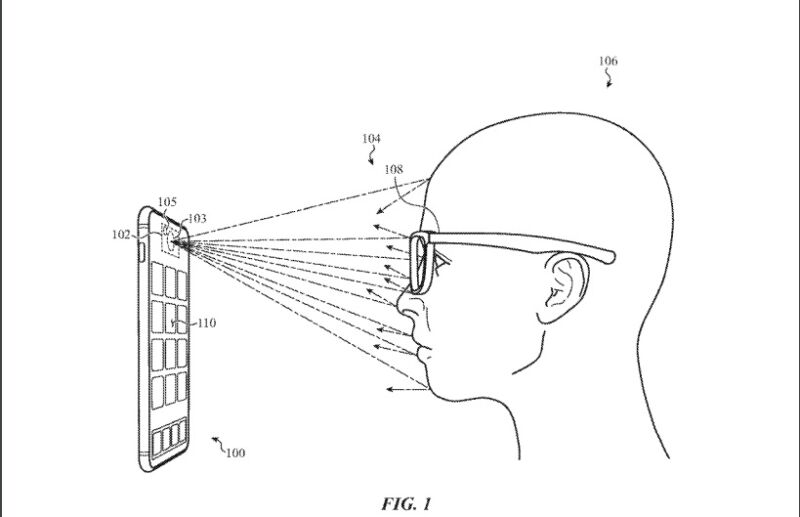


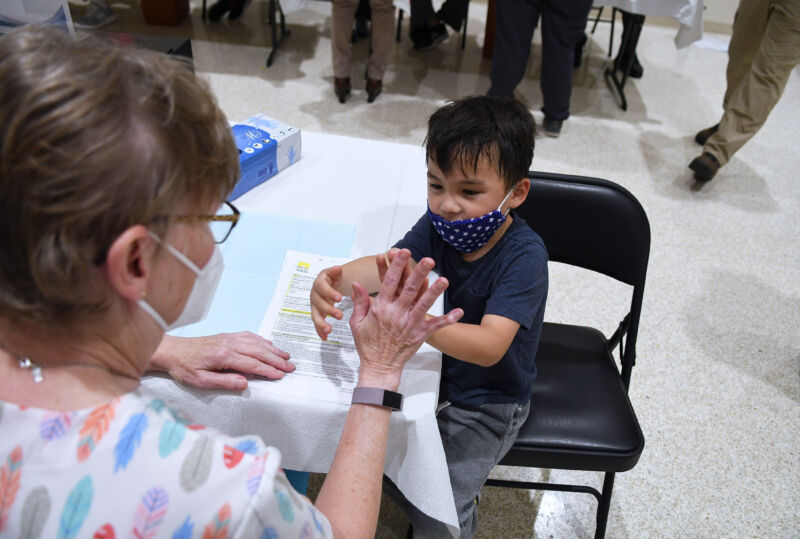
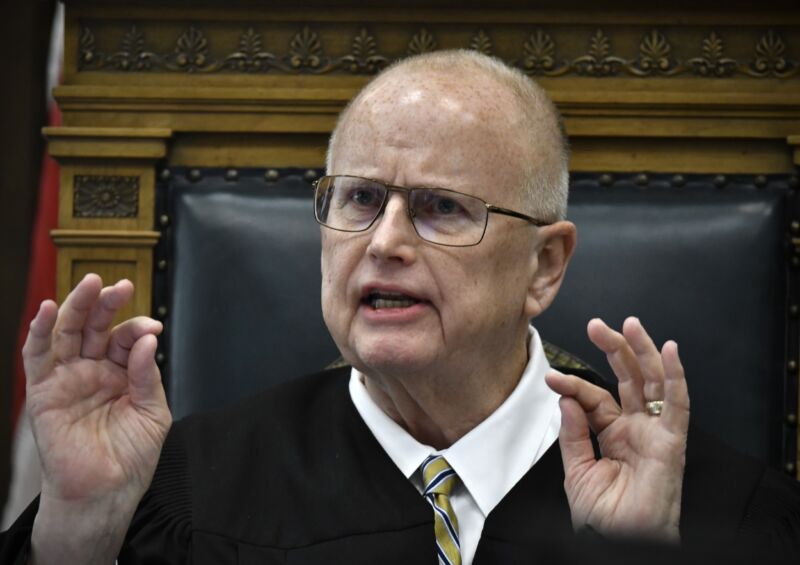



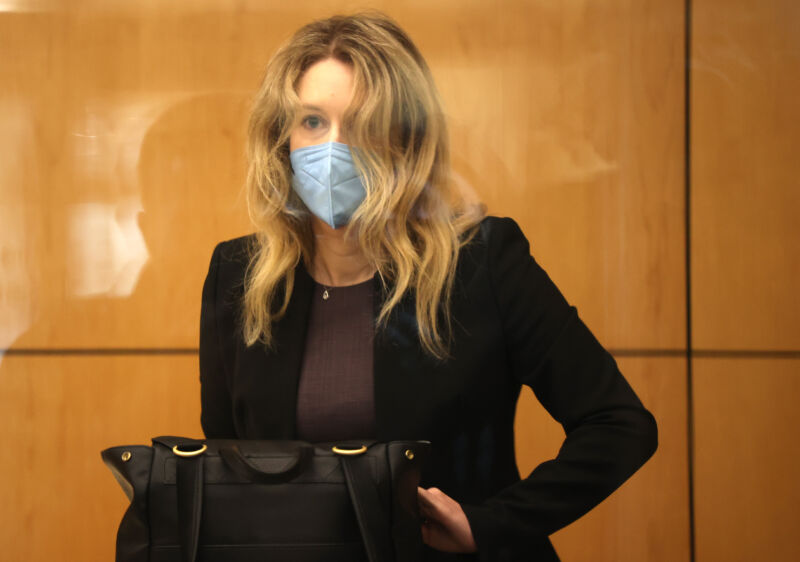










/cdn.vox-cdn.com/uploads/chorus_asset/file/23000620/8G1kF_north_carolina_s_2020_house_map_br_favored_republicans__2_.png) Tim Ryan Williams/Vox
Tim Ryan Williams/Vox
/cdn.vox-cdn.com/uploads/chorus_asset/file/22999521/xxWi9_north_carolina_s_new_house_map_for_2022_br_favors_republicans_even_more.png) Tim Ryan Williams/Vox
Tim Ryan Williams/Vox
/cdn.vox-cdn.com/uploads/chorus_asset/file/22996001/Screen_Shot_2021_11_08_at_1.01.32_PM.png) Jonathan Mattingly/Duke University
Jonathan Mattingly/Duke University