Read more of this story at Slashdot.
Read more of this story at Slashdot.
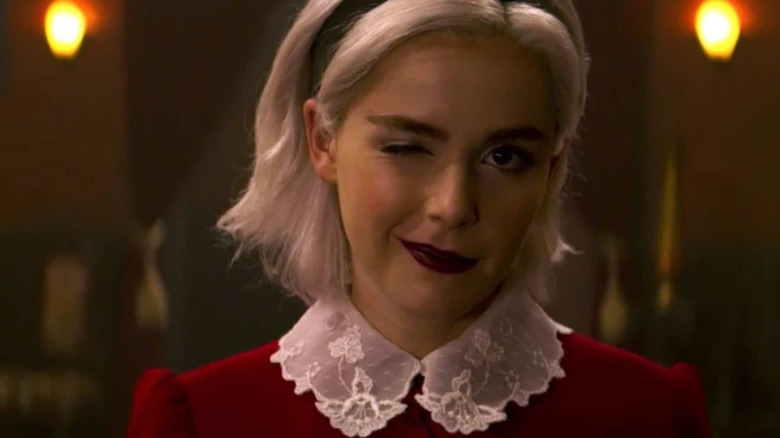
Praise the Dark Lord, Sabrina is coming to "Riverdale"! Though Netflix cancelled the spin-off series "The Chilling Adventures of Sabrina," star Kiernan Shipka will reprise her role as the witchy Sabrina Spellman on the upcoming season of the CW series "Riverdale."
"Riverdale" writer Evan Kyle revealed that Sabrina will be making an appearance on the show while doing a Q&A on The Dipp following the season 5 finale. The Dipp allows fans to ask questions of their favorite stars in a real-time chat for subscribers, and Kyle was answering one such question. Showrunner Roberto Aguirre-Sacasa confirmed the news to Entertainment Weekly:
"We've been talking about having Sabrina visit 'Riverdale' since season 1, so it's thrilling that this is finally happening, as part of our 'Rivervale' special event. It's also perfect that she shows up to help Cheryl Blossom during her hour of greatest need. Everyone on set lost their minds — I think fans will, too. It's really fun and special."
Sabrina (and Shipka) will arrive in Riverdale in the fourth episode of season 6, titled "The Witching Hour(s)." Here's EW's description of the episode:
Cheryl (Madelaine Petsch) is performing a dangerous spell, one that may mean the difference between life and death for a beloved member of the Blossom family, according to a logline description of the episode. Luckily, she's getting a much needed assist from everybody's favorite 20-something witch, the iconic Sabrina Spellman (Shipka), visiting from Greendale in this years-in-the-making crossover.
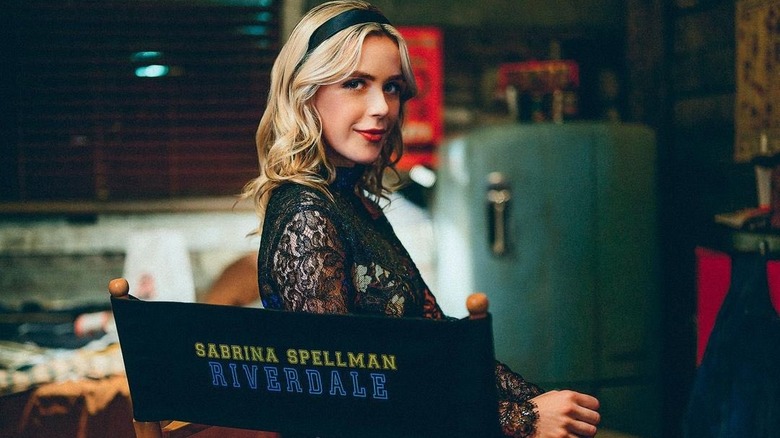
Shipka celebrated by sharing a photo from the set of Riverdale on her Instagram, and Warner Bros. quickly followed suit by posting the same picture to their official Twitter. Both commented on the fact that Sabrina would be going from "Greendale to Riverdale" for season 6.
"The Chilling Adventures of Sabrina" ended on a less-than-satisfying note in 2020 after Netflix canceled the series. The gothic young adult drama was a salacious, satanic blast, but it ended with Sabrina dead as a doornail. That doesn't mean she couldn't be back from the dead, of course, or that "Riverdale" exists at the same time as "Sabrina." The two shows take place in the same universe, but they've never been explicit about how tightly they're connected. Aguirre-Sacasa teased a full-blown "Riverdale" crossover, but that was supposed to happen in the "Occult World of Sabrina" comic series.
No one besides the creatives behind each series knows exactly where the events of "Riverdale" fall on the "Sabrina" timeline, but we'll find out when "Riverdale" season 6 airs on November 16, 2021.
Read this next: 15 Shows Like Brooklyn Nine-Nine You Need To See
The post Sabrina Spellman is Finally Coming to Riverdale for a Crossover appeared first on /Film.
Read more of this story at Slashdot.
Read more of this story at Slashdot.
Read more of this story at Slashdot.
Read more of this story at Slashdot.
Read more of this story at Slashdot.
A cornerstone of text messaging has been vulnerable for half a decade. Ars Technicareports that Syniverse, which routes billions of SMS chats for hundreds of carriers in the US and abroad, has used an SEC filing to disclose a hack that lasted for five years.
The company discovered in May 2021 that someone had "unauthorized access" to its operational and IT systems since May 2016, and during that time had "several" opportunities to access network databases. The intruders compromised logins for Syniverse's Electronic Data Transfer environment for about 235 carriers, according to the company.
The routing firm wouldn't say if the attackers obtained messages or otherwise violated users' privacy. In a statement to Ars, Syniverse generally kept to what it revealed in the SEC filing. The company said it hadn't found evidence of an "intent to disrupt" operations, and there was "no attempt to monetize" activity. The company couldn't rule out future discoveries, however, and a Motherboardsource said the EDT space included call record information. The intruders could have obtained text message content, the source added.
We've asked AT&T, T-Mobile and Verizon (Engadget's former parent company) if the attackers could have compromised texts passing through their networks. Syniverse said it fixed the security flaws and notified all customers when legally required, but that "no additional action" was necessary at this stage.
While that response suggests the practical damage might be limited, there's still cause for concern here — the attackers might have had access to massive volumes of sensitive messages while an important custodian was unaware. If nothing else, this is a reminder that mobile security depends as much on partner companies as it does carriers and phone makers.
Update 10/6 1:20PM ET: T-Mobile told Engadget there was "no indication" the breach compromised text messages or other personal details for the carrier's users.

Throwing out perfectly good tech is one of my biggest pet peeves, but sometimes it seems unavoidable. We all know we don’t need to upgrade to the latest iPhone every year, but when Apple stops supporting updates on your MacBook or iMac, isn’t your only solution to upgrade to a new one? No, I say. Your Mac can actually…
The whistleblower behind “bombshell” disclosures that have rocked Facebook in recent weeks spent much of Tuesday's three-hour hearing explaining to Congress how Facebook could fix itself.
While the hearing was far from the first time a Facebook critic has briefed lawmakers, Frances Haugen's insider knowledge and expertise in algorithm design made her particularly effective. Her background as part of the company’s civic integrity team meant she was intimately familiar with some of the biggest problems on Facebook.
During the hearing, Haugen spoke in detail about Facebook’s algorithms and other internal systems that have hampered its efforts to slow misinformation and other problematic content. She also praised the company’s researchers, calling them “heroes,” and said Facebook should be required to make their work public.
One of the most notable aspects of Haugen’s testimony was her expertise, which gives her a nuanced understanding of how algorithms work and the often unintended consequences of using them.
“I hope we will discuss as to whether there is such a thing as a safe algorithm,” Sen. Richard Blumenthal said at the start of the hearing. While Haugen never addressed that question directly, she did weigh on the ranking algorithms that power the feeds in Facebook and Instagram. She noted that Facebook’s own research has found that “engagement-based ranking on Instagram can lead children from very innocuous topics like healthy recipes… to anorexia-promoting content over a very short period of time.”
She also said that Facebook’s AI-based moderation tools were much less effective than what the company has publicly portrayed. “We've seen from repeated documents within my disclosures that Facebook's AI systems only catch a very tiny minority of offending content,” Haugen said. “Best case scenario, in the case of something like hate speech, at most they will ever get to 10 to 20%.”
To address this, Haugen said that Facebook could move to a chronological feed where posts are ordered by recency, rather than what is most likely to get engagement. “I'm a strong proponent of chronological ranking, or ordering by time with a little bit of spam demotion, because I think we don't want computers deciding what we focus on,” Haugen said.
She noted that Facebook would likely resist such a plan because content that gets more engagement is better for their platform because it causes people to post and comment more. “I've spent most of my career working on systems like engagement-based ranking,” Haugen said. “When I come to you and say these things, I’m basically damning 10 years of my own work.”
In a similar vein, Haugen said that Section 230 — the 1996 law that protects companies from being liable for what their users say and do on their platforms — should be reformed “to make Facebook responsible for the consequences of their intentional ranking decisions.” She said that such a law would likely “get rid of engagement-based ranking” because it would become too big of a liability for the company.
At the same time, she cautioned lawmakers to not let Facebook “trick” them into believing that changing Section 230 alone would be enough to address the scope of its problems. She also noted that using the law to police Facebook’s algorithms could be easier than trying to address specific types of content. “User generated content is something that companies have less control over, they have 100% control over their algorithms,” Haugen said.
The focus on Section 230 is significant because lawmakers from both parties have proposed various changes to the law. During the hearing, Blumenthal indicated that he too supported “narrowing this sweeping immunity when platforms’ algorithms amplify illegal conduct.” Senator Amy Klobuchar has also proposed ending 230 protections for vaccine and health misinformation. Meanwhile, Republicans have tried to eliminate Section 230 for very different reasons.
Likewise, Haugen suggested that Facebook should slow down its platform with “soft interventions” that would add small bits of friction to the platform. She pointed to Twitter’s “read before sharing” prompts as the kind of measure that can reduce the spread of misinformation.
“Small actions like that friction don't require picking good ideas and bad ideas,” she said. “They just make the platform less twitchy, less reactive. And Facebook's internal research says that each one of those small actions dramatically reduces misinformation, hate speech and violence-inciting content on the platform.”
Facebook has taken these steps in the past. Notably, it applied these “break glass” measures in the days after the presidential election, though the company rolled some of them back the following month. The company implemented similar changes again, less than a month later, in the aftermath of the insurrection January 6th.
Huagen said that Facebook has mischaracterized these changes as being harmful to free speech, when in fact the company is concerned because it “wanted that growth back.” During the hearing, she said that Mark Zuckerberg had been personally briefed on just how impactful changes like this could be. But, she said, he prioritized the platform’s growth “over changes that would have significantly decreased misinformation and other inciting content.”
Access to Facebook’s data has become a hot button issue in recent weeks as researchers outside the company have complained that the company is stifling independent research. Haugen said the social network should work toward making its own internal research available to the public.
She proposed that there should be a set period of time — she suggested as long as 18 months — when Facebook is able to keep its research under wraps. But then the company should make it accessible to those outside the company.
“I believe in collaboration with academics and other researchers that we can develop privacy-conscious ways of exposing radically more data that is available today,” Haugen said. “It is important for our ability to understand how algorithms work, how Facebook shapes the information, we get to see that we have these data sets to be publicly available for scrutiny.”
She went on to say that Facebook's researchers are among its “biggest heroes” because “they are boldly asking real questions and willing to say awkward truths.” She said it was “unacceptable” that the company has been “throwing them under the bus” in its effort to downplay her disclosures.
Besides internal changes, Haugen also said that there should be a dedicated “oversight body” with the power to oversee social media platforms. She said that such a group within an agency like the Federal Trade Commission could provide “a regulatory home where someone like me could do a tour of duty after working at a place like this.”
“Right now, the only people in the world who are trained to analyze these experiments, to understand what's happening inside of Facebook, are people who grew up inside of Facebook or Pinterest or another social media company,” she said.
Importantly, this “oversight body” would be separate from the Facebook-created Oversight Board, which advises Facebook on specific content decisions. While Facebook has said the creation of the Oversight Board is proof it’s trying to self-regulate, Haugen wrote in prepared remarks that the Oversight Board “is as blind as the public” when it comes to truly knowing what happens inside of the company.
It’s also worth noting that Haugen said she was opposed to efforts to break up Facebook. She said that separating Facebook and Instagram would likely result in more advertisers flocking to Instagram, which could deplete Facebook’s resources for making changes to improve its platform.
While it’s unclear which, if any, of Haugen’s recommendations Congress will act on, her disclosures have already caught the attention of regulators. In addition to providing documents to Congress, she has also given documents to the Securities and Exchange Committee. She has alleged that Zuckerberg and other executives have “misled investors and the public about its role perpetuating misinformation and violent extremism relating to the 2020 election and January 6th insurrection," according to SEC filings published by 60 Minutes.
Meanwhile, Facebook has continued to push back on Haugen’s claims. A week after an executive told lawmakers that “this is not bombshell research,” the company tried to discredit Haugen more directly. In a statement, Facebook’s Director of Policy Communications Lena Pietsch, said Haugen “worked for the company for less than two years, had no direct reports, never attended a decision-point meeting with C-level executives. We don’t agree with her characterization of the many issues she testified about.” Pietsch added that “it’s time to begin to create standard rules for the internet.”
In an appearance on CNN following the hearing, Facebook VP Monika Bickert referred to Haugen’s disclosures as “stolen documents” and said the company’s research had been “mischaracterized.” Later that night, Zuckerberg publicly weighed in for the first time since The Wall Street Journal began publishing stories based on Haugen's disclosures (Zuckerberg did once refer to earlier coverage of the scandals, complaining that a news article has mistakenly described his hydrofoil as an "electric surfboard.") In his first substantive statement, he said "many of the claims don't make any sense," and that "the argument that we deliberately push content that makes people angry for profit is deeply illogical."
It could still get more difficult for Facebook to counter Haugen, though, particularly if new documents become public. Her letter to the SEC suggests that Facebook knew much more about QAnon and violent extremism on its platform than it let on, as Vicereported earlier. Haugen may also make appearances in front of lawmakers in other countries, too. European lawmakers, many of whom have expressed similar concerns as their US counterparts, have also indicated they want to talk to Haugen and conduct new investigations of their own.
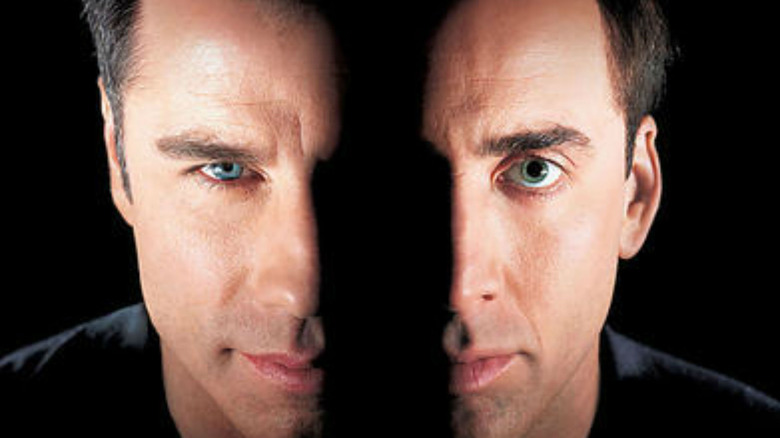
Considering the delicious absurdity of the narrative behind "Face/Off," it brings me great joy to tell you that the writer of the 1997 thriller's sequel, Simon Barrett, recently revealed that his and director Adam Wingard's original pitch was just as out there. In juxtaposition to the original's pretty straightforward concept, the premise of the follow-up left studios scratching their heads.
"I want to say something that people haven't mentioned yet. It took Adam and I two years to pitch 'Face/Off 2' because our pitch was so confusing that [the studio] just kept saying, 'We think we like what you're saying, but can you just explain who's got whose face on in this scene?' Ultimately, it was only when they actually paid us to write a 35-page treatment that I think everyone really understood what we were proposing. There's a lot of enthusiasm at the studio level, which I'm not used to. I think that has a little bit to do with my friend Adam's recent monster movie's ['Godzilla vs. Kong'] success in theaters this year. But you never know, you never know."
The screenwriter, who made his directorial debut with his Shudder original film "Seance" this year, also explained that the sequel's script is still undergoing changes. "'Face/Off 2' remains in healthy, active development. We have a script, we are rewriting our script, and I think we are really excited about the direction we're taking the rewrite," Barrett told the outlet. "But we've got Neil Moritz and Paramount behind us and, so far, they keep giving us somewhat befuddled, but genuinely enthusiastic thumbs up, every step of the way."
No matter how you feel about the original film, or even the fact that there is going to be a sequel, one thing that is sure to be interesting is Barrett and Wingard's partnership on the property. Wingard has grown to be a major player as a studio director, but his friendship and creative bond with Barrett has produced some of his most fun work to date, including "The Guest" and "You're Next." There's no telling what this film will end up being like, but it's pretty much guaranteed to be fun, which isn't hard to appreciate.
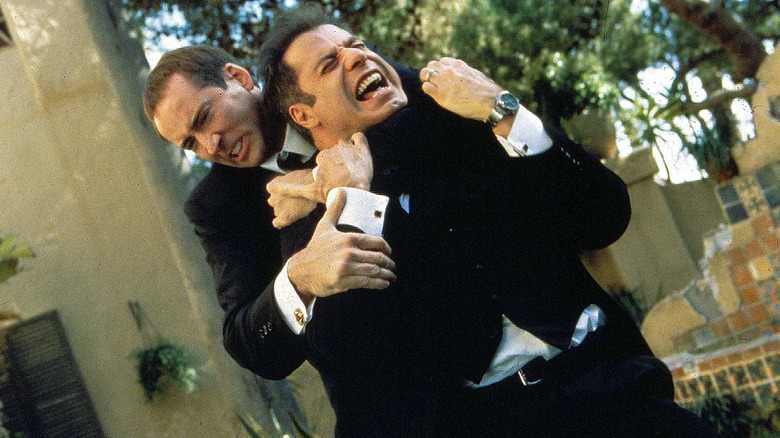
Simon Barrett is writing the script, with longtime creative partner Adam Wingard directing. There haven't been any casting announcements thus far — though Nicolas Cage, who starred in the original film alongside John Travolta, previously expressed interest in returning for a sequel.
In May, Barrett told The Hollywood Reporter that fans of "The Guest" may particularly enjoy what's coming from his version of "Face/Off."
"I'm hoping that anyone who wants a sequel to 'The Guest' will find that our 'Face/Off 2' completely scratches that itch for them," he told the outlet. "In my mind, the sense of humor is very similar." He added, "We're trying to let ourselves be guided by our pure love of 'Face/Off.' One of the purest loves that Adam and I both understand is our love of the film 'Face/Off,' and I think we have the right sensibility."
Despite all the hype, an official release date for the project has yet to be announced.
Read this next: 17 '80s Action Movies You Definitely Need To See
The post Face/Off 2 Writer Says Initial Pitch Confused Execs Due to All the Face-Swapping appeared first on /Film.
Read more of this story at Slashdot.

One way to add value—and living space—to your home is by finishing your attic. While it may not seem like the ideal office, playroom, or guest bedroom in its raw, unfinished state, you can make it just as cozy as the rest of your living space. Before you get started, though, let’s talk through some of the common…

When the Nintendo OLED Switch was first announced, it was met with widespread confusion from the gaming community. It didn’t sound like it would offer a great deal more than the original, four-year console. Moreover, rumours of a so-called 4K Switch Pro that circulated before the announcement took the wind out of Nintendo’s sails. But while it might not be exactly what fans had been hoping for, it’s still a great handheld device, even if it might not be worth the upgrade if you already own a Switch.
Aside from the screen, Nintendo has changed a few things up for the OLED Switch, and the first thing you’ll notice is the weight. The Nintendo Switch OLED is much heavier than the original, thanks mainly to the metal backplate behind the screen. While by no means uncomfortably heavy, it might make younger arms tired if they’re holding it unsupported. But with the smooth, cool metal and the extra weight comes the feeling that you are now playing with something that is more than a toy. Don’t get me wrong, I think all consoles, especially Nintendo consoles, are basically really fun toys, but this one feels a bit different in hand. It feels more grown-up. The new white Joy-Cons (if you get them) also add a certain maturity to the design.

Because of this added weight, the Nintendo Switch OLED also has an improved stand. Now you’ll no longer worry that the weight of the console, or a single nudge, might snap the thing in half and comfortably set up your Switch in tabletop mode with ease. It’s a small touch, but I expect it will be instantly welcome among players who want the option without the inherent fear.
The Nintendo Switch OLED also comes with 64GB memory, which is a nice starter and includes the option to add in SD cards to extend the capacity further. Alongside that are the improved speakers that can be used in handheld and tabletop mode. You’ll instantly recognise that they are much louder than originals, which is great if you’re playing with a loud environment, but they also offer a greater range of depth in tone as well (much like the screen, which I swear I am getting too). I played dozens of Switch games, old and new, when reviewing the OLED model and found myself as captivated by the soundtracks as I was by the visuals, which is something I wasn’t expecting in games I’ve played before.
The Nintendo Switch OLED includes a new (white) dock to connect to your TV, but there isn’t much added to that since this is clearly designed for handheld gamers in mind. That said, there is now a LAN port in the dock to make it easier to sync up multiple Switches, useful if you’re trying to have a party.

With all that out the way, we can finally get to the screen. It’s nice. Oh, you want more information? Okay, it’s really good in a way that I think 4K might have been overkill. The OLED screen offers greater contrast, more vivid colours, and more defined lines than the original screen. These are the things Nintendo wants to highlight. They are not a company that has ever focused on photorealism, so building a device with a greater scope of colour and contrast is a more sensible choice and works really well.
Even games that you might not expect have a virtual makeover on the OLED screens. Hyper Light Drifter is a fantastic, bright, and colourful game. I didn’t think it could look much better on the OLED screen, but I was mistaken. It’s like there are more colours and that these colours are more enveloping. Even on a small screen, I felt more engrossed in the game than ever before. Similarly, Gris is a game designed to look like a piece of art. And on the OLED screen, the slow introduction of colours is almost breathtaking.
In some cases, the better technology has a slight downside too. I was excited to see Hyrule in Breath of the Wild with the new screen, but while the colours are more fantastic than I remember, the screen’s crispness makes the flickering lines and draw distance a bit more noticeable. Breath of the Wild is a great game to test the device with though, as it blends natural colour palettes with more vibrant ones in different regions. And in this, the OLED screen showcases its contrast range far better than the previous Switch’s display.
It would have been nice to see a few upgrades under the hood with this new console. Something to reduce loading time would have gone a long way, for example. And while the screen is fantastic, it’s hard to say if it is worth an upgrade for people that already own a Switch. With the release of the Nintendo Switch OLED, Nintendo is making a statement that they are not moving on from the console anytime soon, and the new technology means that developers can add a little more sauce into their art design on Switch. What comes out next on Switch might pressure you to look into an OLED screen, especially with the recent adoption of cloud streaming bigger games like Dying Light 2 and Marvel’s Guardians of the Galaxy. But for all its sparkle and improvements, the games currently available don’t demand this new hardware to be played and loved.
Whether you upgrade to the Nintendo Switch OLED is up to you. The OLED model is the best version to experience the console’s games if you’ve been holding out getting a Switch until now. It’s a fantastic screen that improves everything Nintendo wants to do with art direction and style. Its new stand and metallic feel make it feel valuable. But if you already own a Switch, it’s up to you whether replaying the games you own on a better screen is worth it.
Review unit provided by the manufacturer.
The post Nintendo Switch OLED Model Review – Feels Like More Than A Toy by Rosh Kelly appeared first on Wccftech.

Metroid is back in the genre the series helped name. Taking on a new threat and a new planet, Samus is back in her power armor looking for trouble or running away from it. Since the Metroid series last released a Metroidvania game, the genre has seen many pretenders to the throne and a few new monarchs too. But Metroid Dread looks to expand on what made the franchise (and the genre) so popular in the first place and isn’t just resting on its laurels.
The story behind Samus’ journey to planet ZDR is explained at the very beginning of the game with painfully slow text and an increasingly unwelcome exposition dump. Frankly, it was not the most encouraging start to the game. It feels as if the developers of Metroid Dread were worried about immediately letting players loose. Thankfully this does come to an end, and you can actually start playing the game, but not before Samus loses all of her powers because this is a Metroid game after all. Despite this, the first few minutes will be spent learning the controls to everything you still have access to.
It’s not that you have a great deal to remember at first – you’ve got your platforming, your aiming, and your shooting – but what you’re really contending with is the speed of the game. Metroid Dread is fast. Really fast. I booted up Dead Cells for the first time in ages to compare and, after a few hours of Dread, I could barely stand how slow Dead Cells felt. You will be almost literally rocketing down corridors and around enemies in Dread and you’ll have to get used to it.
The world is sprawling too, which coupled with the speed can get you very lost, very fast. Hub rooms scatter the alien world, but they often look similar enough to confuse you as to where you are if you’re not pausing to check. Actually, quite a lot of the rooms have similar shapes or patterns to them which can make traversal by landmark quite difficult, so you’ll probably need to use the map whether you want to or not.
Despite the 2D layout of the areas in Metroid Dread, there is a lot to explore here. The hub rooms I mentioned offer have four different exits that take you in completely different directions, and nearly every other room has at least a few routes to take. Exploration is a key part of the game at any rate and while it can be daunting at first, you’ll start to relish the chance to explore somewhere new as time goes on.
As with most Metroidvania games, you’ll need specific equipment to unlock certain sections of the world, which means you’ll be retreading old ground to uncover new secrets. Dread does a good jump of offering new routes to familiar places as you unlock more equipment, so the amount of time you’ll send running up and down the same corridor will be reduced, but it doesn’t help with navigation if you’re already lost. It also spaces out these vital upgrades as well, as you’ll have time to explore the map thoroughly without actually flying through it entirely.

Some doors don’t need any equipment to unlock but take you into the hunting grounds of the deadly EMMI. These near-indestructible robots are a new addition to the series and really change the way you’ll think about the game. Samus can’t fight them without some limited use heavy ordnance so while you might be a famed bounty hunter, you are the one being hunted inside their hunting grounds. Players have to navigate these platform heavy sections while avoiding detection which means putting your platforming skills to the test. If you’re seen, you’ll have to escape or attempt to overcome the hideously difficult QTE if captured.
These hunts make the games overlapping rooms and corridors feel claustrophobic and terrifying, and you will absolutely love them. The EMMI themselves stalk and skulk across them in a deliberately unsettling fashion creating some segments of classic horror panic to take up the rest of the combat.
The rest of the combat is what you expect from a Metroid game. Most enemies can be killed with a few blasts of your arm cannon or whatever weapon they are weak to. These foes fly around the room or stick to the walls or floors to create obstacles and threats. On top of them, there are several hazards such as cold, fire, and water that force you to slow down at least long enough to line up a shot.
Bosses test you on everything you’ve learned and gained up until that point. They are impressively distinct and often fall into the Lovecraftian spectrum of things you really don’t want to look at for too long. Most of the time, it is really easy to identify the weak points of these bosses (anything glowing), but there are easier to miss QTE moments that allow for some extra damage. If you find yourself in one of them, make sure you are trying shooting during what looks like a cut scene because often you will get the opportunity.
If anything lets Metroid Dread down, it is the story. It feels tacked on at the start of the game and doesn’t offer anything in the way of characterization or growth, assuming you don’t count a vast array of collectible weaponry as such. Metroid hasn’t exactly been known for its storytelling in the past, and diehard fans of the series will most likely enjoy it nonetheless, but those less familiar will be expecting more. Games like Hollow Knight have proven that the genre has a great opportunity for storytelling, but it seems Metroid decided to avoid it.
But apart from that, Metroid Dread is a fantastic game, filled with old-school Metroidvania fun and some new exciting inclusions as well. The EMMI hunting grounds are hands down some of the most innovative and exciting parts of the game and prove that Metroid still holds powerful sway over the genre it helped build.
Review code provided by the publisher.
The post Metroid Dread Review – Samus Is Hunting For More by Rosh Kelly appeared first on Wccftech.
Far Cry 6's arrival was somewhat overshadowed by a mostly open beta which came out at the same time, but there are some who would rather wander around an island alone over…
Switch Pro? The Switch really came into the industry swinging like a bat out of hell. The Wii U (may...
The post Review: Nintendo Switch OLED appeared first on Destructoid.
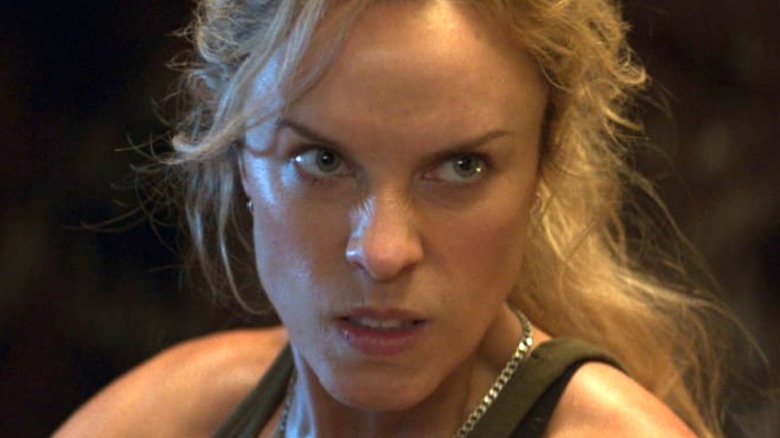
To future generations, April 2021 will look like the strangest time capsule. Cryptopunks were selling at Sothebys. "Mare Of Easttown" had the nation saying "meust" and "deun't" instead of "most" or "don't." And movie theaters were sort of open, playing the same four or five movies ad nauseam. One of the month's top grossers? An adaptation of a video game franchise that launched in 1992 -- and the internet was hype for it.
In many ways, Simon McQuaid's big-screen take on "Mortal Kombat" reminded me why we go to the movies. It's not always for art. Sometimes, you want to see a spear shot straight through a bevy of nameless bad guys on the largest screen possible; sometimes, you want to see a performance that doesn't run circles around the others so much as it burns them off the screen. "Mortal Kombat" is a glorious celebration of schlock as consumable ephemera, and if its hyper-violent fights, colorful world-building, and clumsy dialogue made your day, here are 12 other films to watch.
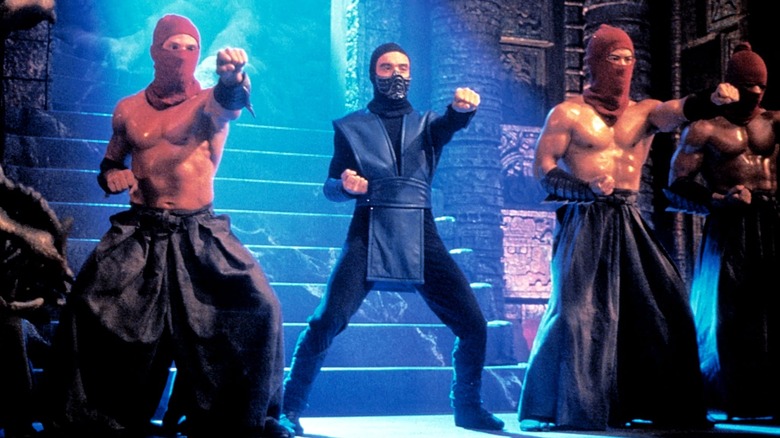
I'm previously written about Paul W.S. Anderson's first video game film, but let me add the obvious: There is no "Mortal Kombat" reboot without it. Nor, I suspect, are there the "John Wick" films or an audience that's ready for the gleefully gonzo cinema of auteur James Wan. "Mortal Kombat" wasn't supposed to work. It was preceded by a misedited disaster and two critical failures; to say there were minimal expectations going in is putting it mildly. And yet, against all odds, its goofy and sincere butt-kicking exceeded those expectations and endured, paving the way for a more colorful strain of action film steeped in outrageous, glorious lore.
Though it's easy to see "Mortal Kombat" for the knowing, B-movie schlock it is today, also remember that, at the time, it was a New Line Cinema tentpole. "Mortal Kombat" released four months after "The Basketball Diaries" and "Friday" and one month before "Seven"; one of these films is not like the other. And yet, "Mortal Kombat" has endured despite all the trappings that might have sunk it. It could've been lost to home video purgatory, or stranded without a home as the industry shifts towards streaming. It wasn't. "Mortal Kombat" is martial arts cinema history. That alone makes it worthy of a rewatch, especially if you loved its reboot.
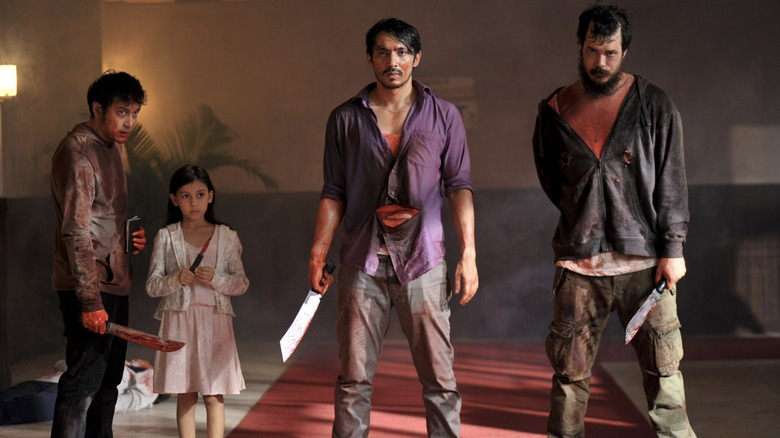
When "Mortal Kombat" debuted in arcades about 30 years ago, its violence was quickly criticized by politicians and critics alike. None of them, however, could have imagined a film like "The Night Comes for Us," which released on Netflix in 2018 and makes Midway Games' fighting game look like "Oliver & Company." And to paraphrase Billy Joel, you should worry about "The Night Comes for Us;" it has street savior-faire.
Those streets, of course, are caked in gore and blood. Directed by horror maestro Timo Tjahjanto, "The Night Comes for Us" marries that genre's specific penchant for viscera to the acrobatic fist-flinging of martial arts films, arriving at a uniquely violent endgame that doesn't take prisoners. In "Mortal Kombat" terms, this movie's fatalities have fatalities.
"The Night Comes for Us" gathers some of Thai cinema's finest fighting talents and both shows off their skills and dismembers them. More than any film on this list, it artfully rekindles the transgressive thrill audiences felt when they first encountered "Mortal Kombat," no matter what year (or decade) that was. It is must-see stuff that will scare both the politicians and the critics in your life.
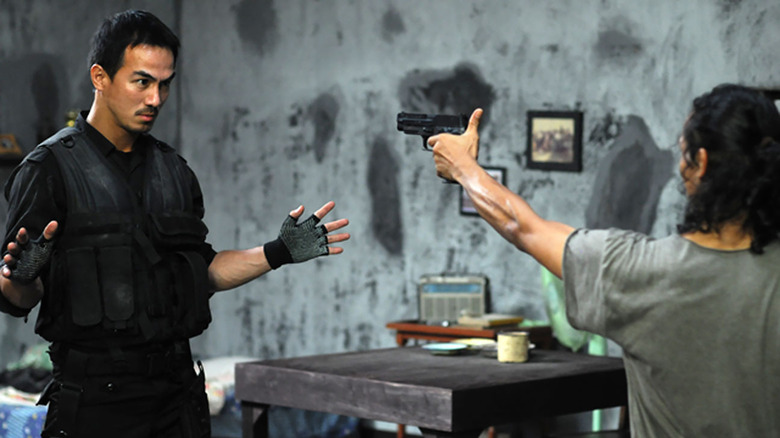
Like "Mortal Kombat," it's easy to imagine 2011's "The Raid" springing from a video game that became a cultural sensation. Unlike its awesome but higher-brow sequel, "The Raid" has a plot that, even by the most generous of descriptions, is in service of its cinematic gameplay: A top-tier squad of police officers is charged with capturing a sociopathic drug lord by infiltrating the slum he runs with an iron fist. Once inside, the drug lord orders everyone in the building to eliminate the cops by any means necessary. Mayhem ensues.
Each one of the set pieces in "The Raid" feels like a level in which the heroes race towards the big boss, and the cumulative effect of having those battles stacked on top of one another (and populating them with action and martial arts mainstays like Iko Uwais and Joe Taslim) is a film that feels like it almost necessitates save points, or at least moments to catch one's breath. If the relentless, deadly action is what appeals to you most about 2021's "Mortal Kombat," "The Raid" should be the first film you watch from this list.
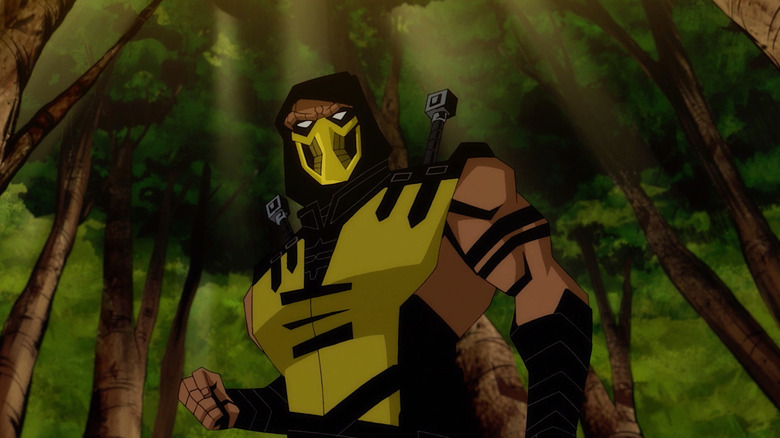
If you didn't know it from the pre-film stinger in "Mortal Kombat Legends: Scorpion's Revenge," which sees Scorpion choke-slamming a very manic Daffy Duck, Ethan Spaulding's animated film has a wicked sense of humor that allays its frequent bloodshed. Make no mistake, however: The bloodshed is not to be trifled with. If the extreme eviscerations of "Mortal Kombat" are the film's primary draw, then "Scorpion's Revenge" will both honor and test that affection; put another way, it's almost surprising that Amazon Prime's "Invincible" jump-started a conversation about violence in animation, when "Scorpion's Revenge" brutally murdered Satoshi's son a year earlier.
"Scorion's Revenge" not all violent theatrics, though. "Mortal Kombat Legends: Scorpion's Revenge" is blessed with a bevy of satisfying vocal performances that elevate its paper-thin characters. Joel McHale is the Johnny Cage that Mortal Kombat fans have deserved for almost three decades, while Kevin Michael Richardson adds his usual but always-effective gravitas to the four-armed Goro. "Scorpion's Revenge" is as much a violent exercise as it is movie, but it's so deliberately joyful in its approach that it's hard to argue against it. Plus: Unlike 2022's "Mortal Kombat," it has a tournament. As does its sequel...
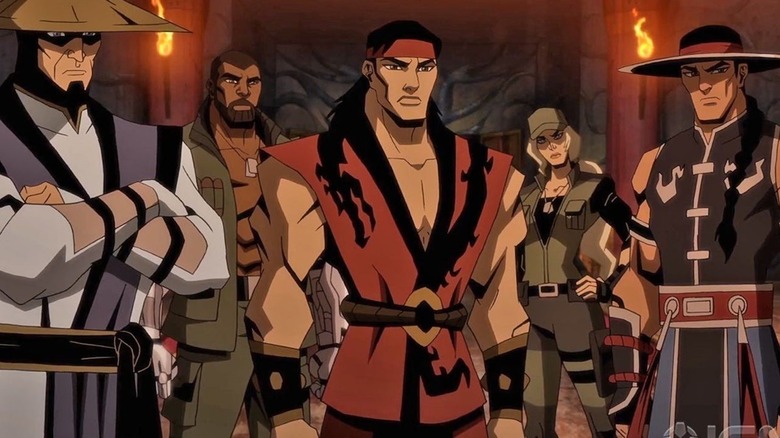
If we're being honest, "Mortal Kombat Legends: Battle of the Realms" is almost entirely for completists. Where "Mortal Kombat: Scorpion's Revenge" anchors its story in the origin and vengeance of Hanzo "Scorpion" Hasashi, "Battle of the Realms" tethers itself to an entire cast of ne'er-do-wells and fighters. Liu Kang takes on the cyber initiative! Kuai Liang wants vengeance for his brother's passing! And we haven't even gotten to Outworld's invasion of Earthrealm, which is theoretically the main thrust of the movie.
If "Mortal Kombat: Battle of the Realms" sounds overly busy, it is. That said, it's careening and whiplash-inducing plot is actually truer to the spirit of the labyrinthine story beats that define the later "Mortal Kombat" games; if you already have a passion for said games, their wide range of characters is fervently recreated here. The animated fight choreography is undeniably impressive, somehow bolstering the film's horrifying creativity when it comes to limb shattering. Go in with low expectations, or think of "Battle of the Realms" as a bridge between "Scorpion's Revenge" and future installments, and you won't emerge disappointed.
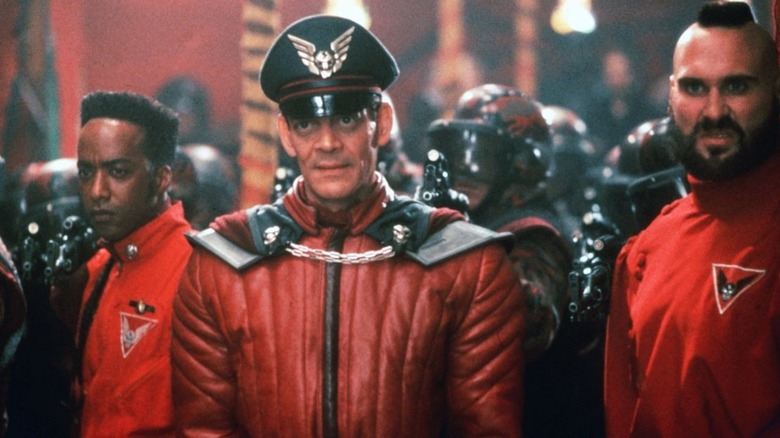
There isn't a lot to recommend about 1994's "Street Fighter." It's mostly a pretty strange mess. That said, it's a pretty strange mess that has Raul Julia playing M. Bison.
Raul Julia died shortly after "Street Fighter" was released. He made "Street Fighter" for his children. I think about both these facts more often than one might expect, because when they're coupled with Julia's performance in "Street Fighter," they are a symphony that rips at the heartstrings. Bison is, both literally and metaphorically, acting to save his life. Julia's work has all the knowing, go-for-broke energy of a performer who's aware that his time on the stage of life is ending.
Raul Julia, Juilliard graduate, studied real life megalomaniac world leaders to play a guy who would chew scenery even if he had no teeth left. We're told that the ends don't justify the means, but Julia's means are so infused with undeniable life that they make one want to clap back "don't they?" This is a career-defining performance in a movie with little definition. This is, for the last time, Raul Julia -- movie star.
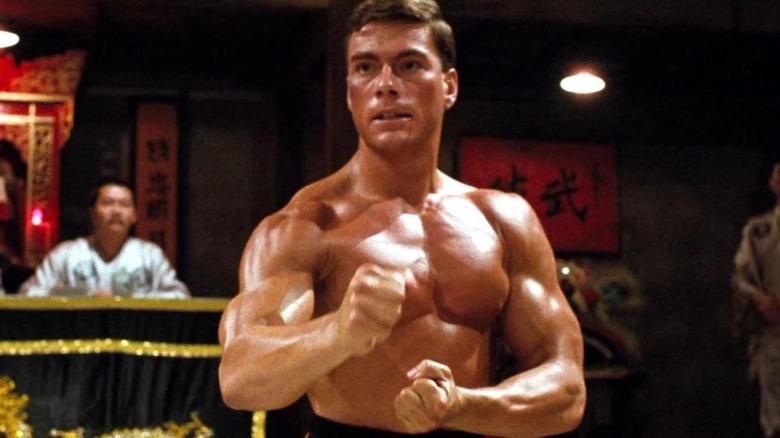
There are many downsides to aging, but one of the more pervasive is discovering that the pop-culture ephemera you grew up with is leaving society's collective consciousness. Disney Adventures Magazine. The AOL dial-up tone. And, in no way least of all, Jean Claude Van Damme's all-time action effort, "Bloodsport."
Released in 1988, "Bloodsport" is the film that made JCVD a star. Though he would go on to star in larger and higher-grossing movies, few were a more impeccable showcase for his physical talents. The eye-popping footwork. The cinematic physique. They were the movie's aces in the hole, and ones that "Bloodsport" used with the abandon of a player down on chips. That the film sports a young Forest Whitaker and not-Grammy-nominated anthems performed by Paul Delph is just icing on the cake.
Most importantly, "Bloodsport" is the movie that makes both the "Mortal Kombat" movie and the games possible ("Bloodsport" was even used to pitch the original game). It has the flimsiest of stories. Its main attraction is a tournament. And its box office exceeded its budget by more than 20 times over. If "Bloodsport" didn't pave the way for the fighting game boom (it was released four years before the first "Mortal Kombat" came out), then it almost certainly lit the path. That makes it history worth knowing.
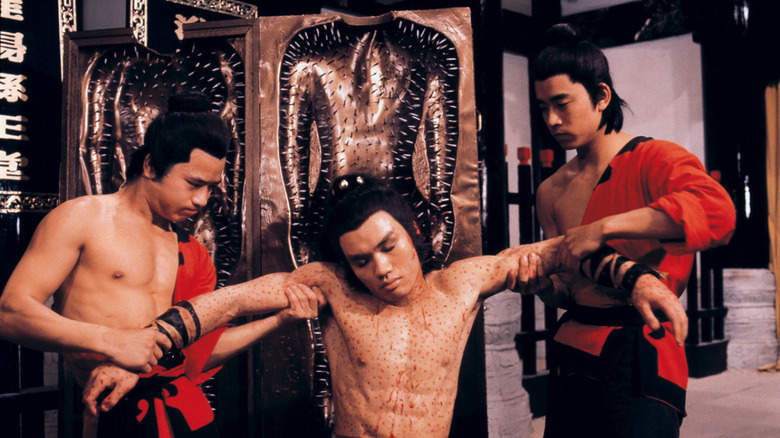
The Shaw brothers' body of work is the root of most modern martial arts films. "Shang-Chi" borrows from the duo's ecstatic and thrilling wire work; "John Wick," their absurdism and ability to shift between brutality and comedy. So, while it's as easy as breathing to say that the Shaw brothers influenced 2021's "Mortal Kombat" and you should watch one of their films if you enjoyed it, you still need to know which one. Predictably, the answer is as obvious as the question.
1978's "Five Deadly Venoms" has a bad guy named Scorpion. It also has a bad guy named Lizard, which is synonymous with Reptile. Its characters wear incredible and intricate masks and headgear, and perform what might be described as special moves. "Five Deadly Venoms" was "Mortal Kombat" before "Mortal Kombat" existed. It's essential viewing if you love the property in any way, shape, or form.
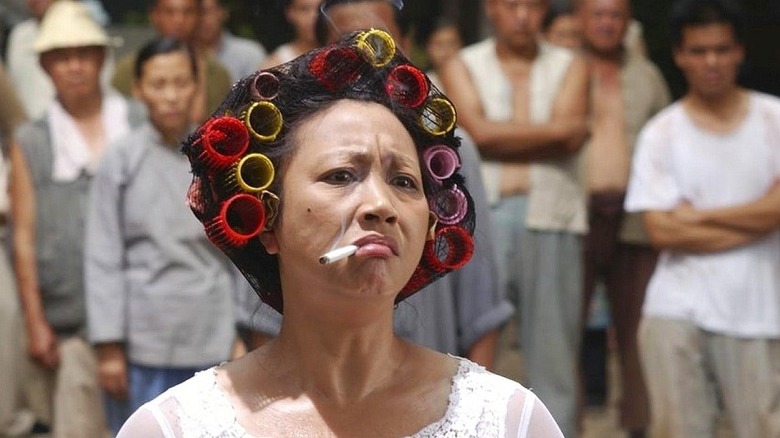
In some ways, Stephen Chow is the natural successor to the Shaw brothers. Both are from Hong Kong; both are partial to martial arts-heavy genre-bending exercises that favor magical realism over boring stuff like gravity and logic. The primary difference between them is one of tone. The Shaw brothers' films maintain an inherent sense of dignity, even as some wackiness encroaches. Stephen Chow's films, though, are never worried about composure. As the Looney Tunes have proved for over 90 years, dignity is overrated.
"Kung Fu Hustle," in particular, understands and expounds on this. There's no shortage of Wile E. Coyote and Roadrunner-like one-upmanship to its frequently madcap fights. Some are accented with "pew pew" sound effects. Others feature random, sunset-accentuated pratfalls. "Kung Fu Hustle," like 2021's "Mortal Kombat," understands that, if its characters primarily exist to smash each other senselessly, they should be able to make us laugh as they're doing so, if necessary.
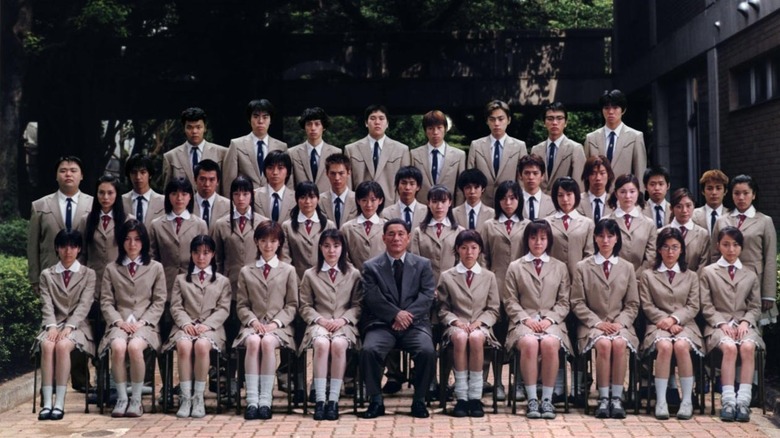
Fights in films are rarely fun simply because people are fighting. For a fight to sing, there must be more than violence -- there must be conflict. Even if the stakes are slight, their existence is a four-course meal for the right combatants and choreographers. So, it figures that "Battle Royale" is not only a classic manga, but one of the greatest action films of the past 20 years: it has all-time great stakes.
A high-school class embarks on a field trip when, without warning, the students are gassed and taken to a remote island. They awake wearing explosive collars; as part of an annual Battle Royale, they now have three days to fight to the death until one student emerges victorious. And if the students don't engage with their killer instincts, those collars will kill them. The best part? Most of this is conveyed in the opening scrawl.
Has a premise ever taken its characters from zero to murderous more swiftly? Even better, unlike 2021's "Mortal Kombat," "Battle Royale" finds time to take a break from the bloodshed to reflect on social anxieties, especially the ways that adults pass down their histories with violence onto their children. "Battle Royale" may hinge on its intro, but its thematic layers and terrific execution are what make it a must-watch.
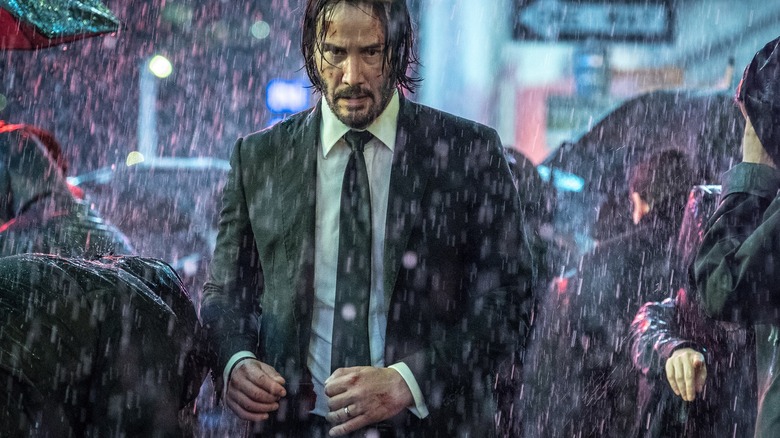
There's little argument that Chad Stahalski, David Leitch, and Derek Kolstad's "John Wick" films represent the pinnacle of modern American action cinema. Each subsequent installment aims to outdo the last by dizzying degrees, whether it's through putting motorcycle-riding bad guys against Keanu Reeves on a horse or making a new subset of New York's population an asset to assassins. Fans of "Mortal Kombat" should enjoy any installment of the Wick trilogy. They're that consistent and thrilling.
For my money, though, it's "John Wick: Chapter 3" that is the finest offering for those who enjoyed Simon McQuaid's film. It has the series' most wicked brawls. It treats more than one character to an unfathomably violent outcome. And, like both the "Mortal Kombat" films and games, it is deeply steeped in ridiculous lore. The mythos of the "John Wick" films has emerged as one of its most endearing elements, and the lengths to which "Parabellum" spins it almost ensure that John Wick will fight the champions of the NetherRealm in "John Wick 5" -- and, probably, win.
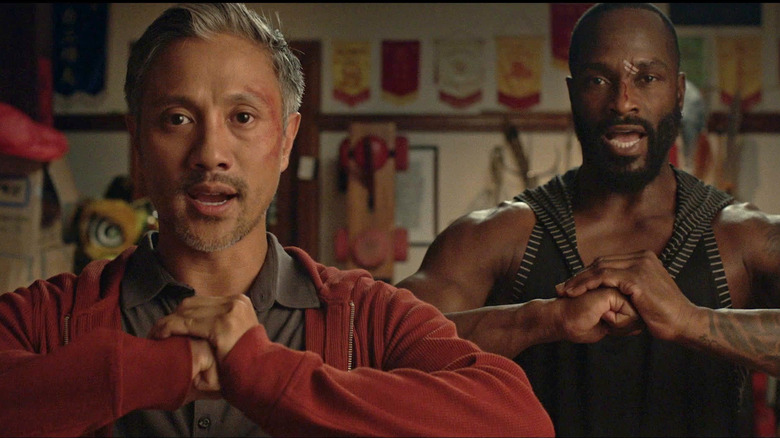
There are, happily, a number of strong contenders for 2021's best action film: Bob Odenkirk's tremendous, John Wick-adjacent "Nobody"; Guy Ritchie's shockingly grim "Wrath of Man"; and, most unlikely, Quoc Bao Tran's "The Paper Tigers."
In some ways, "The Paper Tigers" is the least "Mortal Kombat"-like movie on this list. It's deeply grounded in the real world, one in which martial artists far from their prime reunite during middle age and pull muscles mid-fight. There's a weight and cost to the violence that, while funny, never prioritizes the bone breaks over the way loss breaks hearts. When "The Paper Tigers" marries that weight to its gorgeously choreographed fights, this scrappy film becomes an underdog that not only comes through in the clutch, but lays waste to the competition.
In that sense, "The Paper Tigers" is what "The Karate Kid" promised by way of "Cobra Kai." And, in playing to our childhood and adult sensibilities simultaneously, it becomes essential viewing for anyone who grew up -- or is growing up -- with "Mortal Kombat."
Read this next: The 15 Best Jackie Chan Movies Ranked
The post 12 films you should watch if you loved Mortal Kombat appeared first on /Film.
Read more of this story at Slashdot.
Read more of this story at Slashdot.
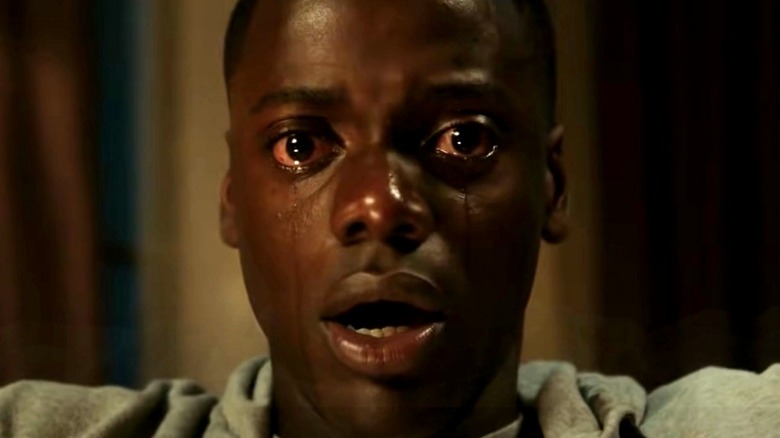
As we wait for the release of Jordan Peele's next film, "Nope," starring Steven Yeun and Keke Palmer and due out summer 2021, there's plenty of time to explore other horror films that share the mix of scares and smart commentary that makes "Get Out" so special.
Not that politics or social awareness are rare or new in the horror genre, of course. Filmmakers have long told stories about the terrors lurking underneath so-called "respectable" society. Look at "Rosemary's Baby," "The Exorcist," and "Invasion of the Body Snatchers" (both the remake and the original) -- you don't have to turn to so-called "elevated horror" to find horror films that have something to say.
But the films on this list are, above all, good, and will also take you on a brief tour of socially-conscious horror filmmaking from the '60s through the 21st century. (One film -- see if you can find it -- doesn't hit the "socially conscious" beat so much, but it's an entertaining film that shares some basic plot elements with "Get Out." We're sure Jordan Peele would approve.)
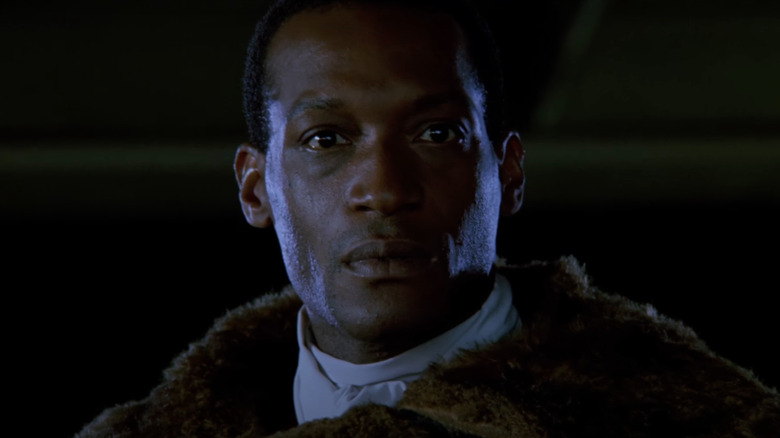
All bow at the altar of Tony Todd. Okay, Candyman may, technically, be the villain of "Candyman," what with the whole "he's a spirit who haunts a Chicago housing project and kills a whole bunch of people" thing. But, with the gravitas that actor Todd brings to the role -- not to detract from the script, adapted by Clive Barker and director Bernard Rose from Barker's original short story -- Candyman becomes part slasher villain and part Gothic romantic hero, consigned to an eternity of torment because of, in short, racist jerks.
In the movie, Candyman is Daniel Robitaille, a talented Black painter who becomes romantically involved with a white woman he's been hired to paint. For his trouble, he is tortured and lynched. This backstory, not present in Barker's original story ("The Forbidden," which is set in England), adds a depth and resonance to the film that fans of "Get Out" will appreciate.
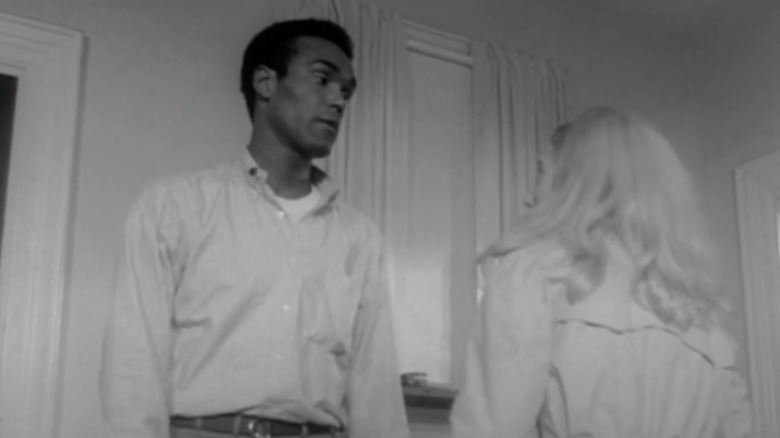
George Romero's "Night of the Living Dead" is an obvious choice for this list, but no less of a fitting one for that, and no less worth of a first (and a second, third, fourth, fifth, or sixth) watch. The film was a direct influence on "Get Out," evidenced particularly in the similarities (and differences) in the two films' respective final scenes -- no spoilers, because anyone who's still catching up on their classic horror should not be deprived of seeing one of cinema's most impactful endings with fresh eyes.
Subsequent zombie films based on Romero's classic also exist as spiritual siblings to "Get Out" in many ways. "Dawn of Dead," "Day of the Dead," and "Land of the Dead" all of mix their zombie action with political statements about class, race, and the abuse of government authority. If you're going to pick one, watch "Night." If you're going to pick two, add "Dawn of the Dead," which sets its action in an abandoned mall.
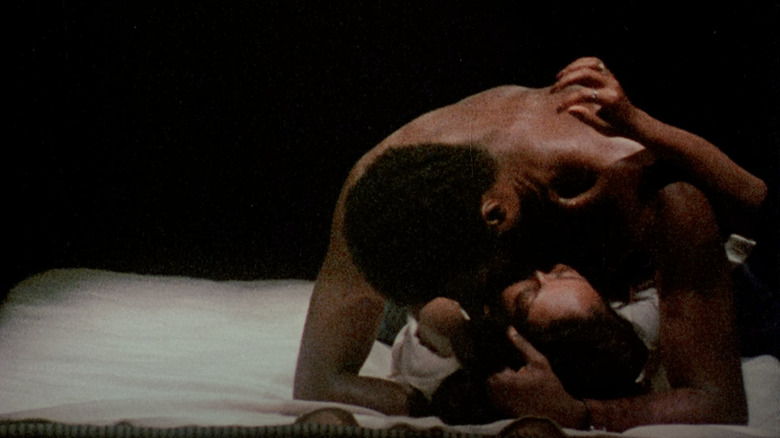
Duane Jones, who starred in "Night of the Living Dead," only appeared in a handful of other films until his death in 1988 at the age of 51. One of those -- and the only one, other than "Night of the Living Dead," that he starred in -- is writer-director Bill Gunn's "Ganja & Hess," in which Jones plays an anthropologist who is turned into a vampire and begins a relationship with the estranged wife (Marlene Clark, in an underrated powerhouse performance) of his first victim.
"Ganja & Hess" is often lumped into the Blaxploitation genre, which makes a certain kind of sense; it's a film that came out in the '70s, and was directed by and stars Black people. Really, though, it's less "Blacula" (more on that next) and more proto-A24, a stylish and experimental meditation that uses vampirism as a metaphor for addiction. Spike Lee remake "Ganja & Hess" in 2014 as "Da Sweet Blood of Jesus."
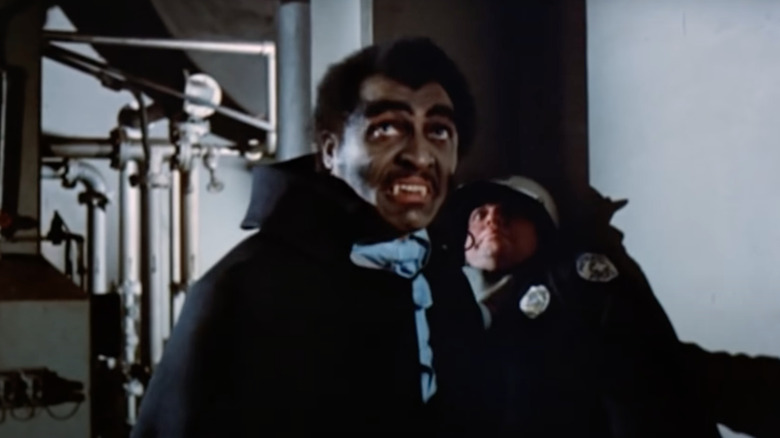
But, hell, sometimes you don't want to watch a "stylish and experimental meditation." Sometimes you want to watch some grand, glorious schlock, and 1972's Blacula, directed by William Crain, fits the bill. Not that calling it "schlock" means that it doesn't deal with serious issues -- the "Blacula" of the title, real name Mamuwalde, is an African prince who, back in the 1700s, asked Dracula to help him stop the slave trade and got turned into a vampire for his troubles.
However, the number one reason to watch Blacula is lead actor William Marshall, who devours the role of Mamuwalde with the skill, intensity, and seriousness that you'd expect from someone playing Hamlet. Marshall might be starring in a movie whose name is literally a pun, but that doesn't mean he's not going to show up and do his job. William Marshall commits. It's an absolute triumph of a performance.

In the '60s and '70s, horror went through a lesbian vampire phase, with directors like Jean Roliln and Jesús "Jess" Franco turning out a series of style-over-substance films that followed roughly the same pattern: young couple meets hot, sophisticated woman in some out-of-the-way location. Hot, sophisticated woman is a (gasp) a vampire and (double gasp) also a lesbian. She seduces the wife, kills a few people, and get offed by the end of the movie.
Spanish director Vicente Aranda's "The Blood Spattered Bride" is a cut above the rest, using -- as "Get Out" does -- established horror tropes to examine society's unjust behavior towards a marginalized group, in this case women. The movie makes no bones about its token straight husband being a straight-up bad guy, and some troubling topics (including marital rape) are tackled through the horror lens. On a less serious note, "The Blood Spattered Bride" also features something any lesbian vampire movie of the mid-century must have: truly excellent fashion.
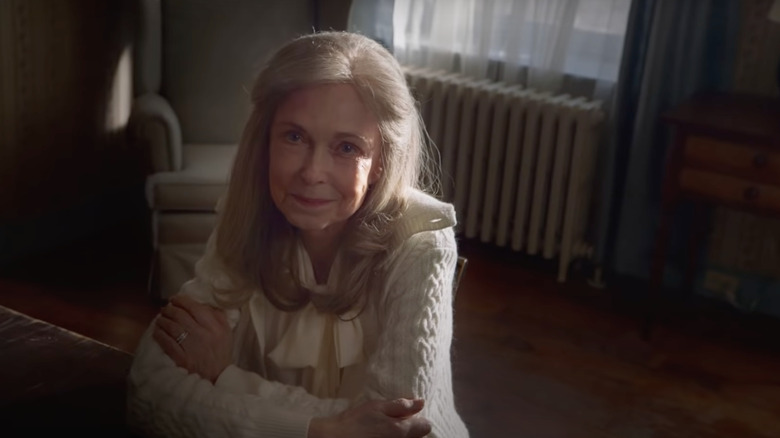
As a director, M. Night Shyamalan has had ... well, let's just say ups and downs. He faltered in the early '00s, turning in a string of critically-disliked (if not outright reviled) movies like "Lady in the Water," "The Happening," "The Last Airbender," and "After Earth." Then, he stripped down the spectacle, dialed down the budget, and turned in a tight, entertaining found-footage horror film in 2015's "The Visit."
In the film, Olivia DeJonge and Ed Oxenbould play Becca and Tyler, two kids whose single mother has been estranged from her own parents for 15 years. When Becca and Tyler go to spend a weekend with their grandparents, it's a chance for the family to finally reconnect.
Yes, something goes wrong. Yes, there's a twist. It's a pretty basic one -- you can probably guess what it is without seeing the film -- but really, that represents what's good about "The Visit." It's Shyamalan going back to basics, building on the same tried-and-true "protagonist(s) spend a weekend with people they're supposed to get close to, people aren't what they seem, insert horror" foundation that Jordan Peele used to great effect in "Get Out" a few years later.
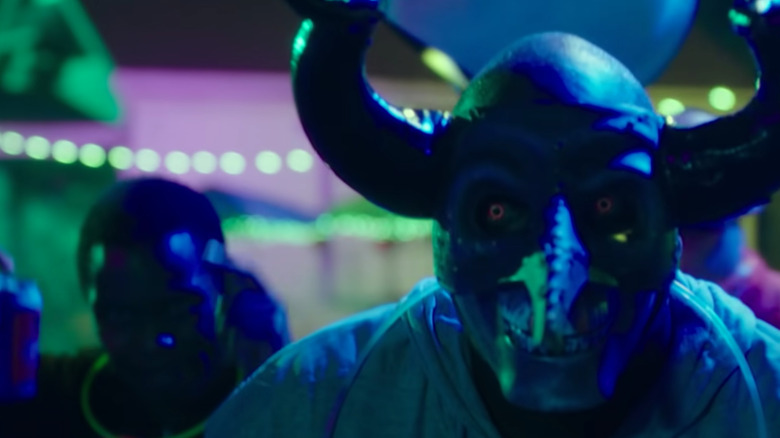
From the beginning, the "Purge" series has been rooted in ideas about class difference. What would happen if you had the freedom, one night a year, to do whatever you wanted? Would the rich exploit the Purge to screw over the poor by literally killing them (the baddies in the first "Purge" are basically young Republicans who turn psychotic and hunt down a Black man) or by using more indirect means (businesses having to pay for "Purge insurance," for example)?
With "The First Purge," director Gerard McMurray and writer James DeMonaco (who directed the previous three "Purge" films) take us back to the beginning, explicitly revealing that the Purge was designed as a way to get poor people to kill each other. When that doesn't work, the rich take over, perpetuating some war crimes themselves.

Let's go ahead and call this a Bong-Joon Ho vs. Capitalism Combo Special: "Parasite," "Okja," and "Snowpiercer" are all great choices for "Get Out" fans in search of a movie to pop into the queue (as are, for that matter, all of Bong Joon-Ho's films). All three films tackle the evils of capitalism and the wreckage it causes across class lines through different lenses.
In "Parasite," the class difference is represented in two families: one rich, well-meaning, and naïve, the other hard-working, shrewd, and poor. The lower-class family infiltrates the lives of the rich one, with ultimately catastrophic results. In "Snowpiercer," all that's left of humanity after the climate-change apocalypse lives on a single train -- the further back on the train you go, the poorer the people are. Revolution inevitably follows. For the villains of "Okja," money is more important than treating animals -- in particular, the titular "super-pig" -- humanely.
"'Okja,' 'Snowpiercer,' 'Parasite,' they're all stories about capitalism," Bong tells Vulture. "Before it's a massive, sociological term, capitalism is just our lives."
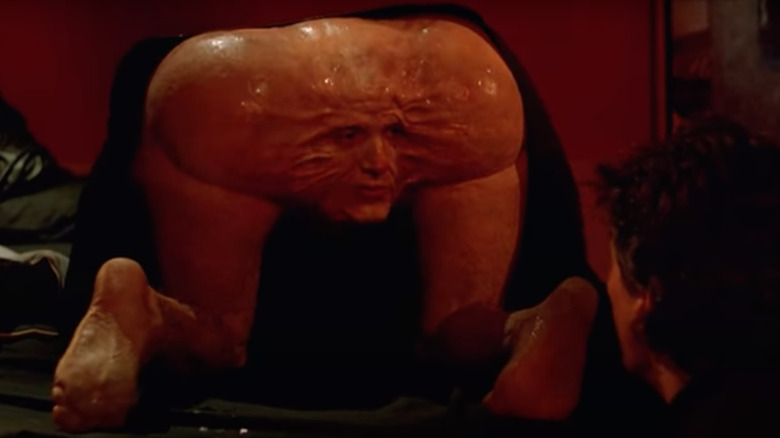
Society: It's disgusting! Both actual society, as depicted in this cult classic '80s movie, and the movie "Society" itself. If you dig the way "Get Out" looks underneath the skin-deep façade of the upper class to witness all the evil underneath, you can't get much better than director Brian Yuzna's "Society" -- though you can definitely get classier, 'cause subtle this movie ain't.
Billy Warlock plays Billy Whitney, a teenage '80s yuppie who discovers that his family is involved in a cult that's exclusive to the economic and cultural elite. As to what the cult's involved in, well, that's to be discovered by the brave viewer, although if you've already seen "Society" I'll simply say the word "shunting" and let you flash back to the body horror extravaganza that is the film's gruesome finale. "Get Out" was nominated for four Oscars and won one. If "Society" were to snag an Oscar nom, there'd have to be a category for "Best Scene Where a Man Talks Out of His Own Butt."
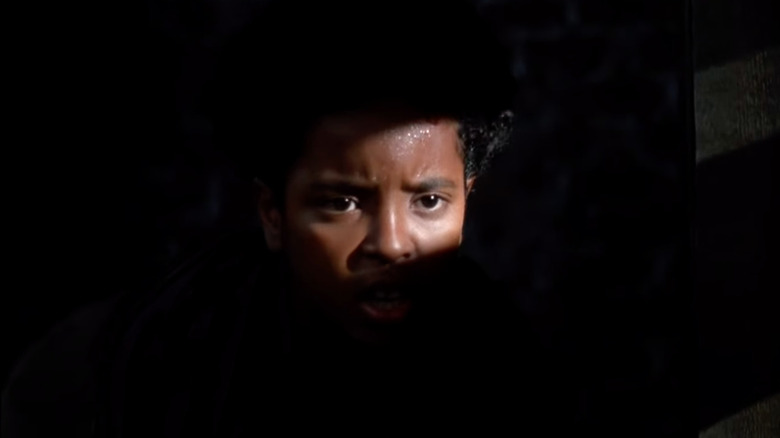
"In every neighborhood there is one house that adults whisper about and children cross the street to avoid," says the trailer for "The People Under the Stairs," Wes Craven's first film of the '90s. It's a sort of reverse "Home Alone" starring child actor Brandon Adams (who would later appear as one of the child ballplayers in "The Sandlot").
Brandon, as Poindexter "Fool" Williams, breaks into the house of his parents' landlords (played by "Twin Peaks'" stars Everett McGill and Wendy Robie) in the hopes of stealing a valuable coin collection that will help him pay for much-needed surgery for his mother. It's no spoiler to say that the landlords, in addition to being greedy, racist gentrifiers, aren't what they seem. Neither is the house itself. There's some powerhouse horror in this one, not to mention a supporting role from Ving Rhames -- who doesn't want that?
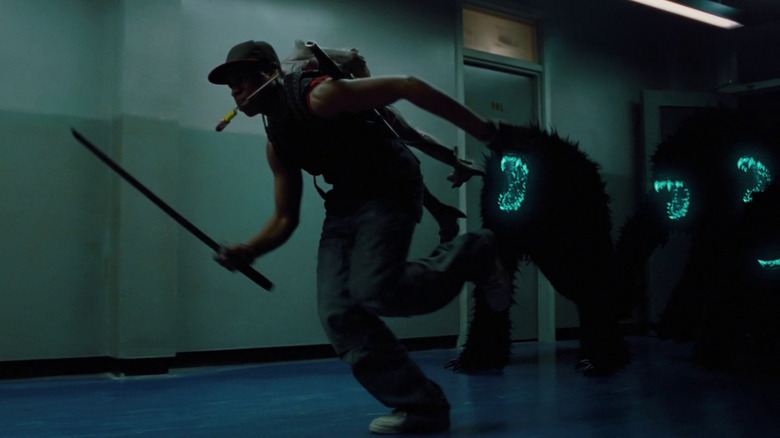
Before there was "The Force Awakens," there was writer-director Joe Cornish's "Attack the Block," in which John Boyega proved himself as an immensely skilled actor to keep one's eye on. As with "The People Under the Stairs," "Attack the Block" sets its drama among a lower-class neighborhood -- "People" takes place in Los Angeles, "Attack the Block" in London -- and uses the evils affecting the people who live there to make points about class and race.
In "Attack the Block," the evil is an alien invasion, which only Moses (Boyega) and the fellow denizens of his housing project care to fight back against. Aside from introducing the world to Boyega, whose transition from hoodlum to hero is one for the ages, and aside from just being a great movie in general, "Attack the Block" also features some of the best creature design (scary, simple, and effective, with lots of teeth) of this century so far.
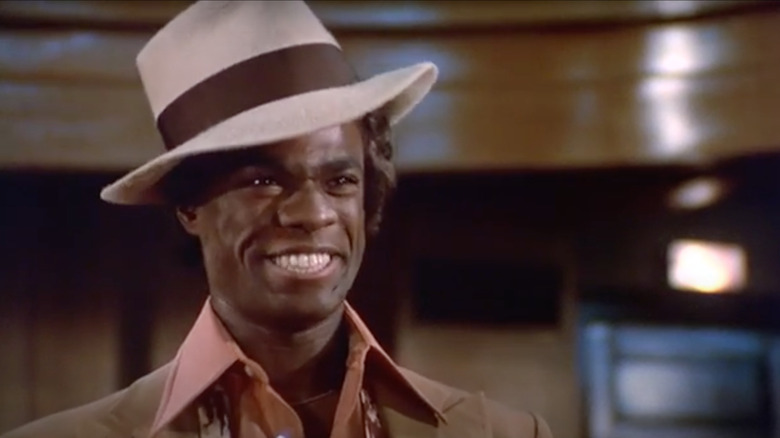
A standout in the Blaxploitation genre is "J.D.'s Revenge," directed by Arthur Marks and starring Glynn Turman, who has had a long and successful career on TV ("Peyton Place," "A Different World," and "Fargo"). Turman plays Ike, a strait-laced, hard-working Black man who drives a cab to put himself through law school.
Everyone around Ike is surprised when he starts acting like a '40s gangster, swinging around a switchblade and just generally acting like a jerk, but that's what happens when you're possessed by old-school hustler J.D. Walker, dead since 1942 and determined to wreak vengeance on the man who killed his sister and pinned the murder on him. Poor Ike was just in the wrong place in the wrong time, but his possession gives us an indispensable entry in the Black horror and Blaxploitation canon. (Also in the mix here is a young Louis Gossett Jr., playing a well-meaning preacher whose eyes are opened to the evil that he didn't know was lurking in his very own community.)
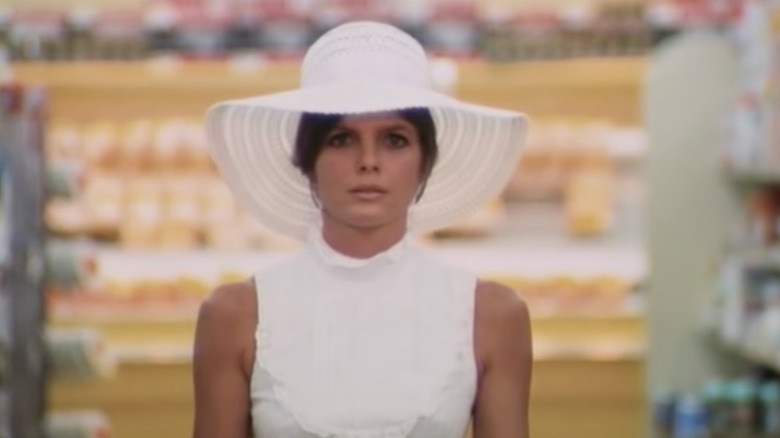
The horror genre is filled with stories of the depravity that lurks underneath the respectable veneer put up by the middle and upper classes. Hell, "See this normal-looking thing? It's actually out to get you" basically is horror, at least in part.
One of the best films in this expansive sub-genre is Bryan Forbes' "The Stepford Wives," in which a young housewife (Katharine Ross) moves with her husband (Peter Masterson) to a postcard-perfect town in the suburbs, only to discover that something weird keeps happening to her female friends.
"The Stepford Wives" (both the movie and the book on which it's based) shares with "Get Out" the creeping fear that someone who you thought loved you is actually conspiring to bring you down for their own selfish gain. "The Stepford Wives" novel was written by Ira Levin, who also wrote the book that would become horror classic "Rosemary's Baby." Both are worth checking out if you're a fan of the film adaptations.
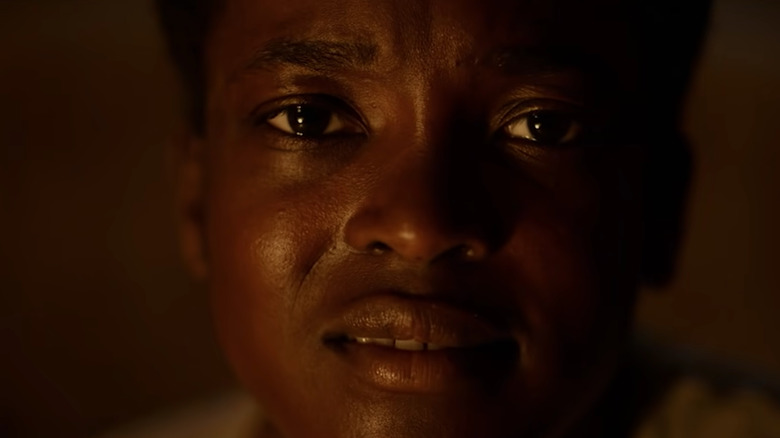
One of the more recent films on this list, Remi Weekes' Netflix release "His House" uses the plight of two South Sudanese refugees attempting to make a life for themselves in England to explore issues of immigration, cultural assimilation, and xenophobia in the contemporary UK. And, because this is a horror movie, some scary shenanigans affect our central couple, namely the ghosts of those they left behind in their harrowing flight to safety.
Finding out what the ghosts want and whether they should fight back or attempt to co-exist -- and reckoning with what they had to do to get to safety -- provides a compelling metaphor for the plight of refugees today. Serving as a co-lead in "His House" is the always-excellent Wunmi Mosaku (above), who has turned in stellar supporting performances in such shows as "In the Flesh" and "Lovecraft Country," where she played Leti's sister, Ruby, as well as "Loki."
Read this next: The 13 Best Movies About The Devil Ranked
The post 14 Movies Like Get Out That Horror Fans Need to See appeared first on /Film.
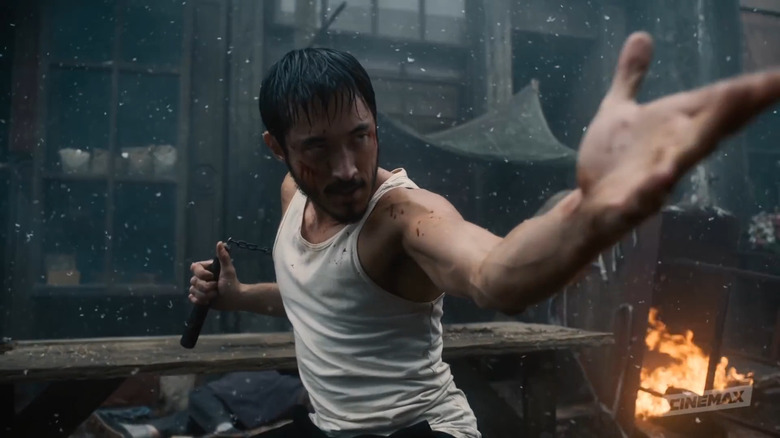
"Warrior," based on the writings of Bruce Lee, has some of the strongest action on television. The Cinemax show, which gained well-deserved popularity once it hit HBO Max, is a powerful combination of action and drama. Sometimes it's fun, sometimes it's tragic -- the period piece has its cake and eats it, too, striking the balance between heightened escapism and brutal reality. "We try and create that within everything," stunt coordinator Brett Chan told /Film in a recent interview. "Within the action there's drama, so that you're drawn into the characters and the fights. It's a part of the story as opposed to just to fight."
Fighting for the sake of fighting bores Chan.
The veteran stunt performer and coordinator, who was in Bulgaria working on Netflix's "Wednesday" when we talked to him, wants the action to tell a story greater than who wins or loses a fight. Chan not only coordinates the fights, but he often shoots them himself. During a conversation all about his work on the show, he took us behind-the-scenes of the series and shared his wisdom on how you craft a great action scene.
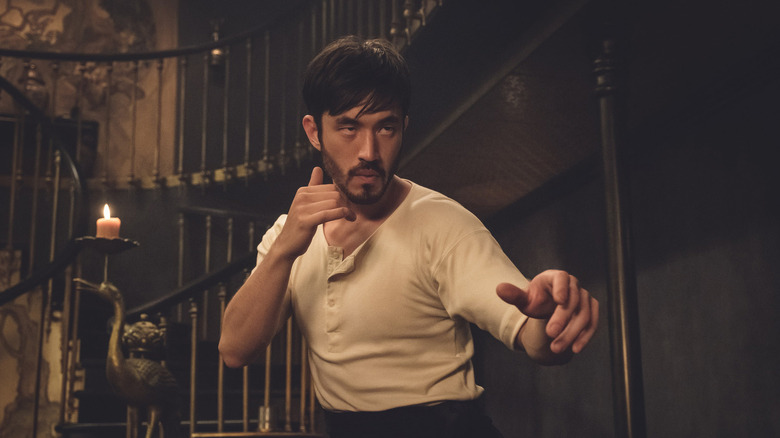
How do you want to define the characters through action?
I take into play their stature, like how big someone is, how thin someone is, and what they use, then you take their characters and their temperament. In season one, Bolo is like, "No bullsh*t." Basically, everything he hits he wants to break. Or Andrew Koji, Sahm, he's fast and he'll pelt you with everything and take you down that way. Every time you throw something at him, he'll break it so you can't use it again and then he'll just pepper you because he's so fast and he knows exactly where to hit. Because Joe Taslim has a judo background, he likes to grab and every time he grabs something, he breaks something. That's why you just don't want to get too close to him, but he's fast enough to hit you from afar.
Chen, which is Hong, plays with the chain. He doesn't necessarily have a martial arts background so he was learning about a month prior to that, on his own, and then when he came to training with us we developed him a bit. Like Jason Tobin, after season one, he went and did more martial arts. But because we want to differentiate everybody, James' thing was basically knives. He wasn't a kicker or a puncher. He'd throw a kick every once in a while but it wasn't a very nice-looking kick.
They can all fight the same way. Let's say Joe and Bolo and Sahm all train in the same school from the same age, the same amount of training, same style, everything like that, but they're going to execute each loop differently. Let's say you and I trained in the same place, but you throw a punch and I'll throw a punch, but because we're built very differently, we'll try and execute power differently. So then we'll throw the exact same move but it'll look completely different because of where you generate your power and where I generate my power. And then our personalities come into play, how we want to inflict this pain on people and then the mood that we're in.
The fight at the end of season two between Ah Sahm and Dylan Leary is a great illustration of that. You see how their moods affect their fighting.
That was kind of foreshadowing because I did that in season one, episode 10, when Dean [Jagger] shows up and they have maybe eight to 10 beats with each other, but Dean was supposed to be the freight train. So even as Dean was coming in at him and Andrew was hitting him the whole time, he wasn't stopping, he was just coming straight in and still. And then Andrew, he switched around.
I think it was episode six when they're standing outside the coal mine or the steel factory, and Dean's like, "Yeah. You Chinese, you come and take our jobs," and he stops and goes, "Do I look like I want your fucking job? Look how I'm dressed. Look how you're dressed." So that moment was just tension building, it was so good, and then of course it carried on to the end.
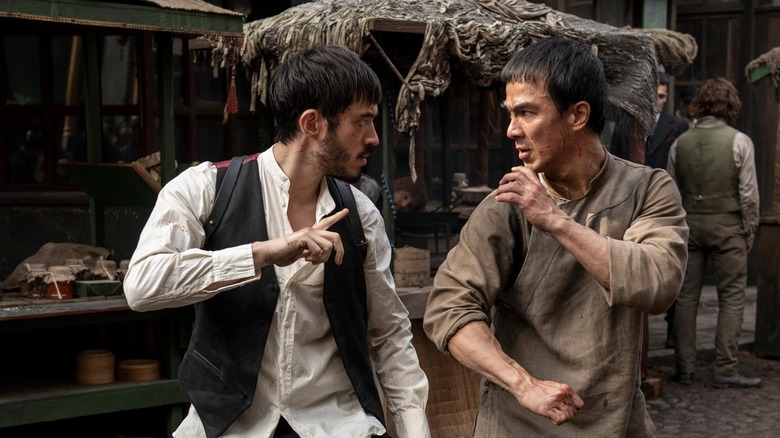
You feel every blow of those fights. What's the challenge for you preparing those one-on-one fights?
Well, that was particularly difficult because we were block-shooting, so we were shooting four episodes at once. I was choreographing for seven, eight, nine, which is the raid, the riots. And within the riot itself, that alone had 11 fights. 11 fights happening, as well as the choreographing the end fight, as well as I'm training both of them, as well as the fight with Ah Toy. Well, 12 fights, with the two fighting inside the brothel. So, that was particularly hard.
Whenever I try to get into these fights, they're writing these fights already but they're not martial artists. [Showrunner] Jonathan Tropper is a martial artist and he'll write the fights out and he'll say, "Brett, I know you're going to do something different with this, but just keep these three or four points that I want to see within the fight itself." I say, "Okay, great." I go choreograph the fight, but before that I go talk to the actors and see where they're at at this moment because they could be exhausted.
Like in episode six, when they are fighting the drug dealer guys, it was a long oner shot how they shot it, they weren't trying to kill them. Jason Tobin is stabbing him in the foot, he's not stabbing him in the head. So there are fights that will change differently where when you watch them in the end battle, well, episode nine at least, they're out to kill. There's no mercy here.
But now you watch the fight with Dean and Andrew, Andrew's really tired. He's been in this world a whole day, but he's there to prove a point. He's not there to kill Dean. He's there to hurt him but not kill him, and I think it was more about humiliating him. He came there by himself, so we have to show the progression of tiredness after each blow hits. Because you watch all the fights where the guy's already hit like five or six times, seven times, eight times, and they're still fighting normally.
I love that about the show. They're incredibly capable, but there's still danger. They still get hurt.
And that's the actors. Even actors who don't have any action like Father Jun or Dianne and everybody, they're there every day. The actors are training with us every day, even when they're not supposed to be training. Half the time I got to kick them out like, "Get out. I got to do some stuff here." And they don't want to leave. "Can I just go hang out in this corner?" "Okay. Yeah, go ahead." I love that they love being around the stunt guys, they love being around the family that we create.
I have training sessions, 7:00 AM, and it's like two hours, and all of a sudden guys got to come at 7:00 AM and we train. It's a type of CrossFit, weight training, strengthening kind of thing. They train every day. And then after that, then we have another hour and a half training of different martial arts every day, because I want the guys to be as versatile as possible.
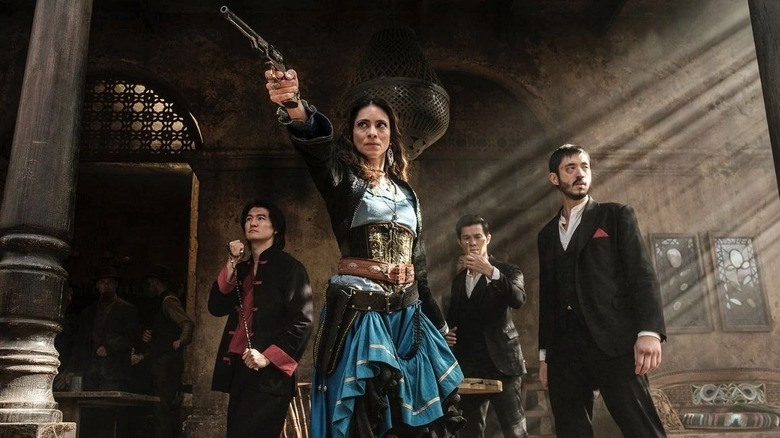
You and Olivia Cheng worked together before on "Marco Polo." How do you work with someone on wielding a sword?
Yes, for "Warrior," Jonathan Tropper's idea for her was that she was a master when she has a sword. To be so proficient at sword you have to be a martial artist to some degree to be able to use a sword that way and have that kind of efficiency. I think it was episode eight, when she got almost killed?
Yes.
And so we didn't give her her sword at that moment for that very reason. These guys were particularly strong in what they did to her. Until the very end when the guy goes up to go get her and she's like, "No, no" and she pulls her sword. We see her sword and now it's over. She's just supposed to be efficient. She's efficient with the sword. One or two strikes and it's over, which is realistic. If you have someone that is efficient with a sword, you're going to be dead.
What rings phony to you when, say you're watching a movie or a show, and watch an action scene?
Say if I threw a hook at you and all you did was put your hand up, you're not going to block it. Unless you're moving with it, blocking and moving and absorbing, it's a little bit different. You got someone who's 200 pounds throwing this big haymaker on you and you're going to block it just by putting your hand up and then punch him back? You could say it makes for good happy moves and makes a fight look cool, if that's the style you're looking for...
A lot of stuff like Jason Statham, what he does is, it's not like that. You feel the impact of what he's doing, which is kind of cool, and you'll notice that with certain fights and with certain people. I don't like creating fights for the sake of just creating fights. I don't like, "Okay, we're going to put a fight here, but it's all a bunch of cool moves," which is not cool because then people get bored of watching the fights all the time that way.
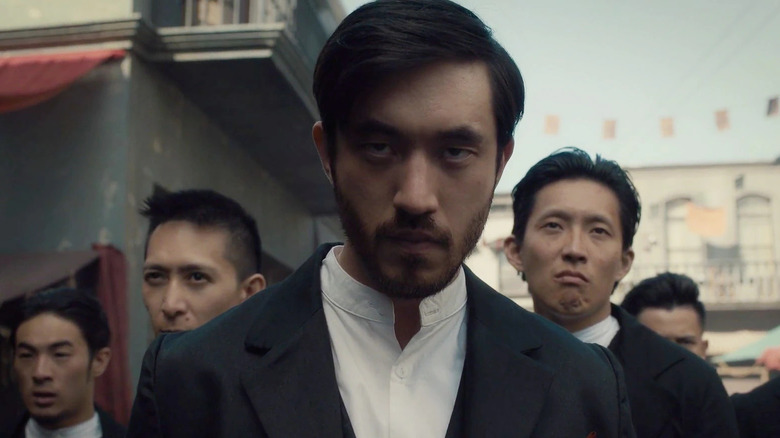
Working with actors who are inexperienced, what are some tips or advice you give them on selling certain moves?
See, Olivia [Cheng] didn't have any martial arts experience. She's a gymnast, though, so she has good body control. Basically, what I do is I try to teach them first foot work. Once I get footwork down, it gives them one less thing to think about. If you're not a martial artist, you don't have good footwork, then every time you have to think about your step and you have to think about the arm, then you got to think about the look and you got to think about the other actor. But if your footwork is already solid, you know where it's going to go every single time. It's so much safer and they pick it up much faster.
It's a slower process because trying to teach them footwork, it's really hard at first, but until you get it, once you get that, you set them up in, obviously, an order of lessons, and they'll feel like, "I'm not learning much and this is just stupid." But once they get that and after X amount of time, they'll be like, "Oh, it's so much easier."
There's little room for faking it in this show. The editing lets you enjoy the action and choreography. How much does how a director intends on shooting a scene, like a long take or more aggressive cutting, influence you?
I was fortunate that Jonathan Tropper let me, after he saw me working on this one thing that wasn't working, I just said, "Just let me try, Jonathan." So I did it, which the one fight in the brothel in episode one. Jonathan said, "Oh, wow. Just do it Brett." So I know exactly how I'm going to shoot it when I choreograph it. I know the angles I want to do and where I want to take it and how I want it to play out. Once that happens, then I can previs it. And then you talk to the actors, where they want to be in certain things emotionally or what's happening, so then at that point then I know how I want to shoot it.
But if I don't know how I want to shoot, because a lot of times directors want to shoot themselves, regardless of whether they know how to shoot it, they just want to shoot themselves because they want to say they shot it, which is fair enough. They're helming the ship, it's fair enough. Okay, great so you kind of let them. What I'll do at that point is I'll create the fight and I'll write a shot list according to how I choreographed it and prevised it. Let's say there are 30 shots here, okay, well now the director wants to change this, this, this, this. Okay, so then I can remove shot 17, 21 and 14 and the fight will still work.
So at that point, that's the only saving grace I can do with a fight. It all depends if you want to shoot with actors or you want to shoot with doubles, because you shoot doubles there are always cuts everywhere. If you want to shoot long oners, the actors, then the actors have to be really good. If they're not, then the director is going to suffer. They got to cut it at some point because the actors won't be able to do it, and at that point, it becomes unsafe. I have to let them know that's going to be unsafe.
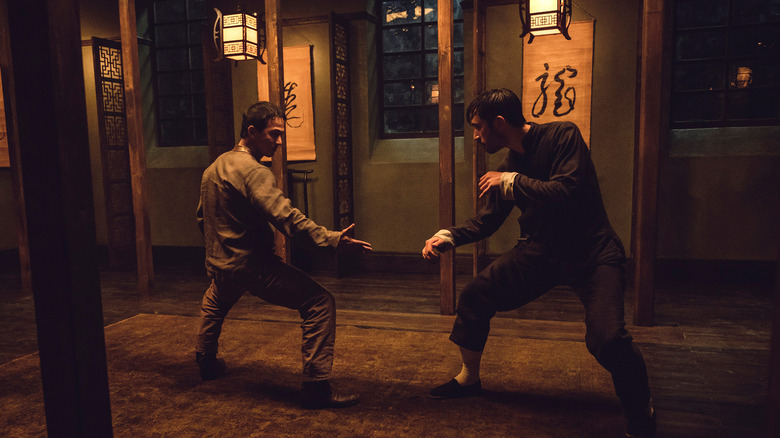
Say for the season one finale where Mai Ling almost has her brother killed, for instance, how'd you collaborate with the director on that fight?
That was Loni Peristere. Loni Peristere is awesome. He pretty much just tells me the same thing, he goes, "Go do this, Brett. This is what I want to see, this is detailed out and I need this, this, this, this point in here." Loni is so fantastic at identifying his team and seeing who's good and then seeing who wants to do certain things. He'll let you run with it.
Loni is also the CEO of Zoic Studios, a visual effects company, so he knows where he needs certain things, and he also edits in his head. So as long as you give him this much and he says, "Okay, great. I can cut here. I can cut here. I'm going to move this one longer." Or, "Okay, can you make this one long?" I know exactly how to help the actors make that happen. Otherwise, it's going to be disjointed or it won't look good. I'll say, "This can be good longer oner here. You probably have to cut here." He shoots exactly that way, it's exactly what the previs is, but he lets me shoot it.
Lori will let me shoot all the action with the drama in it. Usually when I shoot stuff, I'll only shoot exactly the previs and I won't give them too much more because if I would give them too much more, the editors will take it and they're not there with the fight, they're not there with the accuracy, they're there with the story, so then what happens is they just end up cutting the wrong shot and it doesn't look good that way.
So I shoot exactly and I will give little variations to what it is, but keeping the same thing and then I'll go edit it myself with my right-hand man, Johnny. And then editors will get it and they'll piece it together, but they'll find that they can't actually edit it differently from what it is.
What are some pet peeves you have when watching action scenes?
For me, it's a big pet peeve when I'm watching a fight and there are multiple guys. If there are five guys and you're just fighting one of them at a time, that's a big pet peeve when I'm watching shows like that and that's what happens in the fight. That is just never going to happen. It's got to be realistic. It's going to be all of them coming at you, like two or three at a time, because not all five can be there because of spacing, but your guy should be dealing with multiple things at once.
That happens so much. You'll see guys just standing around.
All the time.
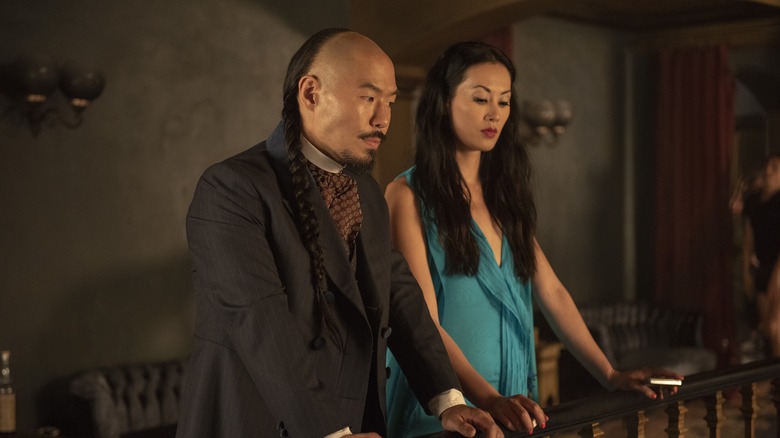
For you, what's a gold standard in terms of action?
One of my favorite movies is "The Bourne Identity." In every fight, you'll see his intention in every movement and every time there are multiple opponents he's never ever just standing there. No one's ever standing there. Like when he's in the embassy, he's dealing with one, then the other guy comes up and then all three at the same time, and it all makes sense.
To wrap, what are some of the more subtle influences you take from Bruce Lee's fighting style?
Obviously this was written by Bruce Lee originally. It wasn't meant to be Bruce Lee but it's meant to be him playing it. So we call it Bruce Leeisms. Now, you can't really be Bruce Lee. No one can really be Bruce Lee. The guy's a legend. You can emulate him with certain things like how he moves, stands, and certain movements that he would do. But he's always talked about hybridism of martial arts, which gives rise to the greater good of things, not just single martial arts every single time.
So with Andrew, he didn't want to play Bruce Lee, but he definitely put Bruce Leeisms in it to give that portrayal. Jonathan Tropper, and Shannon Lee and Justin Lin, and Brad Kane, their head writer, they basically put homages to something that Bruce has done in one of his movies prior. It gives you that moment where you see Bruce Lee.
"Warrior" is currently streaming on HBO Max.
Read this next: The 15 Best Jackie Chan Movies Ranked
The post Warrior Stunt Coordinator Brett Chan on How You Craft a Great Action Scene [Interview] appeared first on /Film.
Microsoft’s Windows 11 is now available and you can get it up and running on your PC by simply following a few easy steps. As detailed in our full review of Windows 11, there are a lot of improvements this time around that deserve your attention and we highly recommend upgrading your PCs to the new OS. But if you are a gamer, then you are probably in two minds whether to hit the update button. Well, I was too, especially after knowing about Microsoft’s implementation of Virtualization-based Security (VBS).
For the uninitiated, VBS uses hardware virtualization features to create and isolate a secure region of memory from the normal operating system. This secure portion of the memory can be used to host a number of security solutions, preventing them from any vulnerabilities in the main OS. Microsoft highlights the Hypervisor-Enforced Code Integrity (HVCI) as an example in its write-up about VBS.
Long story short, the implementation of VBS seems to be negatively affecting the gaming performance of machines running on Windows 11. UL Benchmarks confirmed the same through its findings in a press release. From what we know so far, it seems like VBS will not be enabled by default if you are upgrading from Windows 10. However, it seems to be an issue in some cases of clean installs. Most new machines from OEMs will also have it enabled by default, which means your new laptops and desktops will probably take a performance hit while gaming.
Before updating my primary gaming machine to Windows 11, I decided to do some testing to see if the performance is truly getting affected. And if yes, then by how much exactly? A lot of gamers in the community are curious to know the results for this particular scenario in which they are upgrading an existing Windows 10 system to the new OS.
Here’s a quick look at the specifications of the system used for this test –
| Specification | Test Device |
|---|---|
| Processor | 11th Gen Intel Core i7-11800H @ 2.30GHz base clock |
| Chipset | Intel HM570 |
| RAM | 32GB DDR4 |
| GPU | Nvidia GeForce RTX 3080 Laptop, 16GB GDDR6 VRAM |
| Storage | 2TB NVMe SSD |
| Operating System | Windows 10 Home 20H2 -> Windows 11 Home 21H2 |
The laptop’s operating mode was set to ‘Performance’ mode to ensure we are firing all cylinders and the fan’s speed was set to the max throughout the testing process. I also tried eliminating the external factors like maintaining an ambient temperature of 25°C, closing all the background applications (except the monitoring software), etc.
To measure the performance I ended up running a bunch of 3DMark tests and a few AAA titles with a built-in benchmarking program. Alright, time for the results now –
| 3DMark Test | Score on Windows 10 | Score on Windows 11 |
|---|---|---|
| Time Spy | 10,637 | 10,813 |
| Time Spy Extreme | 5,278 | 5,303 |
| Fire Strike | 22,414 | 22,558 |
These results, even for an untrained eye, shouldn’t raise a red flag. The performance delta here is well within the margin of error. And I did not notice any major issues in the way both CPU and GPU were behaving while running the test. Quickly moving to the gaming test, we picked up a bunch of titles with an in-game benchmark to eliminate the human error of traversing through a different scene that may have a varying impact on the results. So, how did it go?
| Game | Avg FPS on Windows 10 | Avg FPS on Windows 11 |
|---|---|---|
| Shadow Of Tomb Raider (1440p | RT Ultra settings) | 61 | 59 |
| Shadow Of Tomb Raider (1080p | RT Ultra settings) | 83 | 85 |
| Metro Exodus Enhanced Edition (1080p | RT & DLSS Ultra settings) | 93 | 94 |
| Far Cry New Dawn (1440p | Ultra settings) | 84 | 85 |
| Far Cry New Dawn (1080p | Ultra settings) | 87 | 93 |
As you can see, I was looking at a marginal difference in performance between the two runs. It helps that we tested games and programs that scale very well across different hardware, but it seems to be a promising result. There was nothing unusual about the individual components too, meaning there were no limiting factors affecting the performance from either the OS side or otherwise.
The difference in thermals is also not outside the margin of error, which means all components are performing as they would in an optimal condition.

A quick look at the GPU thermals shows that temperatures were around the 70°C mark while running the Far Cry New Dawn benchmark in both operating systems. Keep in mind that the ambient temperatures were kept in check for both tests. I saw similar results while monitoring Metro Exodus Enhanced Edition but the temperatures were on the higher side (upwards of 80°C) in both cases. But again, there are no red flags here either to show us how the performance is being crippled in one version of the OS than the other.
Based on our testing and the numbers we have shown in this piece, we weren’t able to measure any significant difference in the performance. Well, that’s not really surprising because, as mentioned earlier, VBS is not enabled by default while upgrading from Windows 10 or even with a manual installation of a fresh copy. Looking at our observations though, it is safe to safe that there is no difference in gaming performance or any compatibility issues due to the new OS. I haven’t tested a machine running Windows 11 with VBS enabled yet, so it’s too early to comment on that. Besides that, we can always wait for Microsoft to add their official word on the ongoing banter around VBS.
If you are still sitting on the update button wondering if it’s going to stop you from playing your favorite games, then there’s nothing to worry about. Of course, we will continue testing different applications to see if we end up hitting any major bumps along the way. That being said, I think Windows 11 has no more major issues or bugs than the ones we already know about, and it seems to be handling games well. I would love to know your thoughts and opinions on Windows 11 and drop a line about your gaming experience in Windows 11. Happy gaming!
The post Windows 11 for gamers: Should you expect a performance hit? appeared first on xda-developers.
Snowbound survival sandbox The Long Dark has just launched its fourth free story episode update after two years in development. The new episode "Fury, Then Silence" follows crashed bush pilot Mackenzie on his continued search for his companion Astrid in the snowy apocalypse. This time, he's found himself captured by a gang attempting a prison break. Episode Four is out now with all that new story mode to chew on before Hinterland talk about what's next for modding tools and survival mode.