Firaxis is a big supporter of XCOM 2 mods, and while the studio has now left the community to their own devices, it has also made it so easy for modders to change the whole game. Showing its commitment to the fans, Firaxis actually teamed up with Pavonis Interactive (the creators of the original Long War mod for Enemy Unknown) to make sure that the modding tools were as streamlined as they could be before releasing them into the wild.
Below is a selection of some of our favourite mods from the venerable turn-based strategy game, although it's worth pointing out this is a slightly fragmented list due to the slightly weird nature of the XCOM 2 DLC library.
The difference between vanilla XCOM 2 and War of the Chosen is a little bit like night and day, so the modding objectives for both versions of the game can be quite different. A mod for one won't necessarily work for the other without some tinkering. Some mods on our list have versions available for both, and we've marked them where relevant.
"No Time to Die" is available on 4K UHD, Blu-ray and DVD this week, and Daniel Craig's final outing as James Bond finds the secret agent having to deal with a 007 fanboy from America in the form of CIA agent Logan Ash, played by "Game Night" and "Aladdin" co-star Billy Magnussen. Having played a series of jackasses and jerks on film and television, Magnussen is in familiar territory, especially as his character's relationship with Bond takes a deceptive turn.
Leading up to the home video release of "No Time to Die," we had the opportunity to speak with Magnussen about his place in James Bond history. But more importantly, Magnussen got quite honest about where he currently finds himself at in his career, including his predilection for playing complete douchebags. Plus, there just might be a movie waiting in the wings about a wild sport that Magnussen plays professionally, and it involves a horse and a dead goat carcass. No, seriously.
"You Are An Artist Once You Choose To Be An Artist."
I know you've hd a lot of reporters ask you why you did Jeffrey Wright so dirty in "No Time to Die," but I'm more concerned about you potentially repeatedly causing him harm. Because first he got knocked out in Game Night and then you killed him here. What's up with that?
He just has that face! I love Jeffrey. He is a beautiful, kind, generous heart. I could hang out with that dude always. When we were in Jamaica, we went surfing every morning and slammed jerk chicken at lunch every day. He is such a good, good man, and talented.
Being part of the James Bond franchise now, did you ever have a surreal moment while shooting where you kind of just took stock to yourself and think, "Man, I'm in a James Bond movie?"
To be honest, I was going through something personal in my life at that time. It was just a great outlet that I was just there and present and trying to be present as much as I can. It hasn't been until now, a little bit hindsight on it all, where I'm like, "Holy s**t, I went through that. I was a part of that." I can only say I'm grateful for being a part of a legacy, especially the 25th film, Daniel Craig's last one. It's like, "Oh man." Now I'm pinching myself. And I was like, "Why was I worried about this other BS and not just there?"
What do you bring from your acting school days to a role like this? You have professional training, so do you utilize what you learned in these performances?
Training from school teaches you all the technical elements, a communication, you get the dialogue or the nomenclature of what you're talking about with other creative artists, but on the day, I think ...
*Magnussen paused for an extended amount of time thinking about how to respond to this question. I almost said something in order to break the silence, but he seemed to be thinking intensely, and I didn't want to interrupt that potential train of thought*
Sorry, I paused for this. I don't even know how to articulate this idea. You are an artist once you choose to be an artist. And I think a lot of problems with acting schools is they don't encourage you to become the artist then. So when you get on set, and once you start getting into your career, you have to realize, once you claim that you have a voice, and you have an opinion, or you want to specifically put something in a piece of work, we are in a collaborative art form. Once you claim your space, you've really become an artist. I don't think that answered your question at all, but that's what came up in my heart about it.
No, I think that's a good, honest answer.
Yeah, because I think we don't teach that or people don't teach that. I learned all the things about Stanislavski and Meisner and that character development, but once you find ownership of it, then you can bring yourself to it.
"Being Called A Douchebag Is Not The Best Thing."
You have this incredible ability to play these douchebags with s***-eating grins, but you make them simultaneously likable while hating them. I'm fascinated by your mastery of that kind of role. I hope that you take that as a compliment.
I mean, being called a douchebag is not the best thing.
No, you're not a douchebag!
I know, I know, but I always play it. I think it's just the sign of the times and where opportunity is for me work wise. It's steered me down this path. Where I'm in my career, I can't really choose what job I get, I could just pursue jobs. These opportunities have just fallen on my lap. My agents' husband once said to me, "You're in the minor leagues. You have an opportunity to go pitch in the major leagues. Just throw your fastball and get into the major leagues by throwing your fastball and just doing it. And then, expand from there."
You also ooze confidence in any character that you play.
*Magnussen laughs heartily, seemingly in disagreement*
No?
All we have is ourselves. Yeah, thank you. I appreciate the compliment.
"You're On Horseback And The Ball Is A Dead Goat Carcass."
One thing I wanted to ask about, I've read this interesting fact about you, that you play this sport that's called —
Kok boru.
Yeah!
Kok boru.
Please, explain this sport for those who aren't aware, because I feel like there needs to be a movie about it.
It's in "Rambo." It's in the beginning of "Rambo 5," I think.
I haven't seen that one yet.
Neither have I, but someone told me it was. Yeah, I was in Kyrgyzstan. I was part of the first ever American Kok boru team. It's kind of like hockey, but you're on horseback and the ball is a dead goat carcass. It's insane. It's absolutely insane. But it was one of the coolest things, because we were in Bishkek, and we're playing against all these teams and we're literally representing the United States. We're the first Americans some of these people had ever met. So the humanitarian work we did through just this one sport was unbelievable. We were the Jamaican bobsled team [from "Cool Runnings."] It's like showing up to the Super Bowl and never hearing what football was.
Yeah. I was going to say, there has to be an inspirational Disney sports movie here.
We were trying to put a documentary about it called the "Nomad Cowboys." Yeah, there's got to be something there. I think you're right. But it was insane. Out of all the things I've ever done, I think that was one of the coolest, because of the humanitarian work of just connecting people.
"No Time to Die" arrives on 4K UHD, Blu-ray, and DVD on December 21, 2021.
Hogwarts School of Witchcraft and Wizardry has sent out the invitations and is getting ready to welcome back some of its famous alumni this New Year's Day on HBO Max. "Harry Potter 20th Anniversary: Return to Hogwarts" is ringing in 2022 by gathering franchise stars Daniel Radcliffe, Rupert Grint, and Emma Watson, along with a whole host of famous supporting cast members, for a streaming special in the vein of "Friends: The Reunion." Now, a full-length trailer for it is here.
The movie that started it all, "Harry Potter and the Sorcerer's Stone" (known as "Harry Potter and the Philosopher's Stone" most places outside the U.S.), turned 20 in November. The week of its anniversary, director Chris Columbus said that he would love to reassemble the original cast and make a "Harry Potter and the Cursed Child" movie, based on the two-part stage play. The play is set almost 20 years after "Harry Potter and the Deathly Hallows" and the second part of the film adaptation of that book came out in 2011, which means we're already halfway there.
Columbus also confessed that he's never seen the "Fantastic Beasts" prequels, which means he's probably not counting down the days until "Fantastic Beasts: The Secrets of Dumbledore." If you're like him and would like to see adult versions of Harry, Ron Weasley, and Hermione Granger — and you favor the "Harry Potter" series over "Fantastic Beasts" — then "Return to Hogwarts" might be just what the doctor ordered. Check out the trailer below.
Harry Potter 20th Anniversary: Return To Hogwarts Trailer
As we noted when the teaser for "Return to Hogwarts" posted, this special has rounded up a long list of franchise veterans, including Helena Bonham Carter, Robbie Coltrane, Ralph Fiennes, Jason Isaacs, Gary Oldman, Tom Felton, James Phelps, Oliver Phelps, Mark Williams, Bonnie Wright, Alfred Enoch, Matthew Lewis, Evanna Lynch, and many more. One name not being advertised was that of author and "Harry Potter" creator, J.K. Rowling.
"The Secrets of Dumbledore," the first new Wizarding World movie in four years, also comes out in 2022. We recently saw the first trailer for it, too, and no sooner did it drop than Rowling stirred controversy again with a new tweet that some fans deemed transphobic (via The Independent).
Cards on the table: I've seen all the Wizarding World movies but could only ever be described as a casual fan, at best. I know fans and the transgender community have been upset with Rowling, but beyond this latest very ill-timed tweet, I don't know enough about the full history of her comments or transgender social mores to really comment intelligently. I do know, however, that this has been an ongoing issue with Rowling, and when you add Johnny Depp's name to the mix, it's not the only controversy that the Wizarding World franchise has endured in recent years.
Will these controversies cast too great a cloud over "Return to Hogwarts," or will viewers still be able to enjoy the reunion without a tinge of guilt? The answer to that will arrive on January 1, 2022, when "Harry Potter 20th Anniversary: Return to Hogwarts" starts streaming on HBO Max.
Something I've learned since binge-watching "The Witcher" is that Netflix's Henry Cavill-led fantasy series can leave you with a lot of unanswered questions even as new information is revealed, cleverly sprinkling new details into seemingly casual conversations and interactions. This is certainly the case with the Conjunction of the Spheres. Aside from the fact that it was an influential event which precedes the events of the series, very little is said about what the Conjunction of the Spheres actually is. Luckily, we can Scooby-Doo that s*** with the power of research.
So What Is It?
Not unlike the concept of the multiverse that has been generating buzz in various Marvel properties, the Conjunction of the Spheres was an interdimensional, cataclysmic event. In one of the "Witcher" video games, the Conjunction of the Spheres is defined in the game's glossary as:
"A cataclysm which occurred 1,500 years ago, trapping in our dimension many unnatural creatures, including ghouls, graveirs and vampires. These beasts have no ecological niches of their own and are merely relics of bygone times."
The definition goes on to state that the Conjunction heralded the arrival of humans, who had destroyed their own world prior to ending up on The Continent:
"These human ancestors learned how to harness the power of primordial Chaos, and thus the first human wizards were born. Looking for a place in the world, humans took up arms against the Elder Races, who were unable to withstand the barbarians and ultimately surrendered. This is how humans came to rule the world."
This tracks with the concept of magic being defined and referred to as controlled chaos throughout the series, so it's safe to assume that the lore between the novels, games, and Netflix series is relatively consistent. Further verifying the relative accuracy of this explanation is "The Witcher" showrunner Lauren Hissrich's description of the Conjunction of Spheres in the documentary "Making the Witcher." In it, she defines the mystery-shrouded occurrence as "a bunch of different dimensions smashing into each other."
The game's definition is also consistent with Istredd's brief reference to it when he explains to Yennefer that there exists magic older and more powerful than anything they've been taught, and that the first sorcerers were actually elves who taught humans magic and were slaughtered and oppressed in return for their kindness ... though this version of events varies a bit when it comes to the relationship between elves, humans, and magic based on who is telling it and where their allegiance lies in the great conflict between the various races that populate The Continent. This variation of beliefs in the details surrounding the Conjunction of the Spheres can be seen in the exchange between Geralt and Filavandrel the elf king in the episode "Four Marks," with Filavandrel stating that the elves were robbed of their legacies and magic by humans, while Geralt says that humans were simply better at adapting to the new world created as a result of the Conjunction.
Basically, the Conjunction of the Spheres is essentially a collision of previously separate worlds, resulting in chaos. As for what caused the Conjunction of the Spheres, the specific inciting incident is currently unknown.
Why Does It Matter?
All of the above means that the Conjunction of the Spheres is responsible for the colorful variety of races and creatures that reside on The Continent, as well as for the existence of magic itself, referred to as "primordial chaos." So, the Conjunction of Spheres is the reason why The Continent exists as it does by the time we get to the adventures of Geralt and the gang. From the above definition, we can surmise that there were separate worlds or dimensions referred to as "spheres" that housed their respective creatures and races, and that the conjunction thereof is why all these creatures now exist less-than-peacefully on the same plane.
Furthermore, Witchers were literally created as a means to provide protection and maintain some semblance of order between humans, monsters, and the misunderstood creatures that populate The Continent. There would be no magic, no Witchers, and much less variety in terms of species if not for the Conjunction of the Spheres. The Conjunction is also linked to the monoliths that Istredd has devoted himself to studying, as well as extremely relevant to Ciri and the source and significance of her powers, which is explored toward the latter half of "The Witcher" season 2.
If you find yourself even more curious of about the Conjunction of the Spheres, you're in luck. An upcoming prequel series entitled "The Witcher: Blood Origin," is in the works. The series will take place 1200 years before the events of "The Witcher," and will explore the events that lead to the Conjunction as well as the creation of the first Witcher.
Magic is a powerful tool in the world of Netflix's hit series "The Witcher," based on the novels by Andrzej Sapkowski. In order to control powerful mages and keep their best weapon out of their hands (their magic), folks have learned how to harness a metallic substance called dimeritium that suppresses magical power. Dimeritium is used in season 1 to keep the powerful mage Mousesack contained and quiet, and we see it used on Yennefer early in season 2, but how dimeritium works and is used aren't explained all that well in the Netflix series. So let's take a deeper look at this magic-dampening material in the source novels, the series, and the video game series by CD Projekt RED.
Warning:Minor spoilers for "The Witcher" season 2 follow.
A Dimeritium Cage For Mousesack
In the fifth episode of the first season of "The Witcher," "Bottled Appetites," we see Mousesack (Adam Levy) kept in a metal cage-type carriage. When he's released before his captor, the Nilfgaardian mage Fringilla (Mimi Ndiweni), he vomits white bile and seems horribly weakened. The cage likely has dimeritium in its bars, causing him to be cut off from his Chaos (or magic), which can cause severe discomfort. He is also kept in dimeritium handcuffs, preventing him from using any sigils or teleportation magic. Fringilla isn't afraid to use forbidden magic, despite the fact that she was raised in the same system as Yennefer (Anya Chalotra) and Mousesack, and it appears that she's not afraid to use dimeritium against her fellow mages, either. In season 2, we see Yennefer, her former schoolmate, shackled with dimeritium when she's held captive by Fringilla. She even throws dimeritium powder in Tissaia's (MyAnna Buring) face, weakening the powerful mage for some time.
So how does Fringilla use the dimeritium on her opponents without having her own powers dampened? In the case of the powder, she likely has some kind of protective element in her gloves. And for the cage/restraints? The most popular fan theory is that in order to suppress magic completely, it must "contain" the magic. That's why the person in cuffs or in the cage is affected, while someone standing beside them is not. When all else fails, just remember -- it's magic!
Dimeritium In The Witcher Games
While "The Witcher" series on Netflix is based directly on the book series and not the popular video game adaptations, there are bits of lore in the games that are expansions on the book's canon and have found their way into the TV series. In the first game, players can find a quest item called the Tower Mage's Book. Contained within are two bits of lore, and one of those is a full description of dimeritium. It reads:
"Dimeritium is a rare and precious metal with an interesting feature — it represses the transfer of magical energy. A bluish alloy of iron and dimeritium is used to produce handcuffs and necklaces. Those who wear them cannot cast spells or use magic in any way. There are known cases, however, of extraordinarily powerful sorcerers managing to overcome the shield generated by dimeritium."
In the video games, Geralt can use dimeritium to make bombs and powerful weapons. It will be interesting to see how they continue to weave the complex world of the "Witcher" novels into the Netflix series, and if dimeritium will continue to hamper even the feistiest of mages.
Season 2 of "The Witcher" is now streaming on Netflix.
I bought one about t years ago and used most of the contents at our house, hanging a few clocks and about e pictures and a few pieces of artwork. I also used some to hang items for relatives. We recently moved into an apartment with no existing hangers. I grabbed one of these at our local Harbor Freight. My stepdaughter also moved into the same complex and asked if I had any nails that she could have to hang some pictures. I told her tackets instead, and I gave her plenty to use. The lease allows small tacks for things like posters and small fasteners for larger wall items. This kit is perfect for that, as the brackets are very sturdy with small thin nails that go in at a 45-degree angle for great holding power with minimal damage to the walls. It will be practically invisible if the brackets ever have to be removed.
The kit also includes drywall anchors and screws for going into looser wall materials like plaster. Thumbtacks are also provided for posters and thinner materials. If the item you want to hang has no mounting hardware on it, the kit comes with hooks to screw into the wall hanging and wire to mount it on the wall bracket.
The kit even includes a small level, so you can make sure that a new piece of art, picture, clock, dry erase board, etc. is level.
Moving out on your own is a big step. While it can be exciting, there are times when it may be overwhelming. However, it’s important to remember—even though you’re by yourself, you’re not alone.
As a games writer, not many games slip past my radar, especially games as large and detailed as 2017's Elex. I was browsing the PlayStation Store last night when I stumbled upon Elex, on sale for an extremely reasonable $8.99. Reading the description, I saw the words "open world RPG" and "post-apocalyptic sci-fi fantasy", and jammed on the "Buy" button so hard I broke my thumbnail. (Not literally, but it makes the point).
I'm about three hours into Elex, which was developed by Piranha Bites, the folks behind Gothic and Risen. The combat in the game is tough as nails - I find myself running away from almost all but the lowliest of opponents. I'm playing on Easy, and almost everything I run into can one-shot me, so there's a lot of me jamming on my jetpack and scurrying away to higher ground. I've become very adept at surviving by fleeing and dodging bad guys, only entering combat when the story demands it or I'm absolutely cornered.
Elex takes place in a world that has been ravaged after a comet slammed into it, nearly wiping out the earth-like civilization that inhabited the place. In its wake, various factions have risen. Some rely on the tech left behind by the dead. Some reject that and want to get back to nature. And some just want to eat the chemicals left behind by the comet and suppress their emotions. The nature-lovers use magic, so I'm currently pursuing membership in their clan - though I keep messing up and stealing stuff, which makes them kill me.
So far, the storytelling in Elex is a little clunky, but the world building is next-level awesome. Wandering around the open world feels like a mix of Fallout and Dragon's Age, in all the best ways. There's tons of stuff laying around everywhere to pick up, and exploration is highly rewarding (if you don't get killed). What I'm not vibing with so far is the progression system, which seems overly gated. You have to travel to teachers to learn skills after unlocking the points, which is kind of balls. And even then, you have to have a huge pile of cash on hand, and your other stats have to be at a certain level. I mean, I'm three hours in, and I haven't unlocked a single skill yet, so that sucks.
Regardless, I'm having a great time with Elex. If you have a spare ten bucks laying around, this is a game that will definitely offer you a lot of content for your cash. Just set your frustration setting to "low", be prepared to die a lot, and you'll likely have a pretty good time.
On a side note - Elex II is prepped and ready to arrive on March 1st, 2022. So you might just want to grab the first game on the cheap to get caught up on the world and such. Just having played a few hours, this trailer makes a lot more sense than it did before.
Chris Sanders tweeted out an interesting pair of questions recently, and the simple fact is that for me to fully answer the question, the tweet thread would be just too extensive. The questions were:
What are the most common reasons you go looking in the Windows registry? What do you use it to prove most?
Like almost everything else in DFIR, my response to the both questions is, it depends. Why? Well, it depends upon the goals of your investigation. What I use the Registry to prove depends heavily on what I'm trying to prove, or to disprove. This may sound pretty obvious, and even intuitive, but far too often in DFIR, we can find ourselves far too easily chasing down rabbit holes that have little, if anything, to do with our investigative goals.
Configuration The Windows Registry holds a great deal of configuration information, describing what functionality is enabled or disabled, what tools can be accessed, etc. There are many more options available than what we see when we first install the OS; many are not well documented, and many are undocumented. Many configuration settings are described as being accessible through a UI of some kind, and the end result is a Registry modification. For example, many of the settings in the Local Security Policy, as well as GPOs, result in Registry modifications. Several settings accessible via the Windows Security UI also result in Registry modifications.
Another example is that the Registry contains a great deal of information that pertains to the auditing and logging, including not only the audit configuration of the system, but also the Windows Event Logs that are enabled. There's even an undocumented Registry key that, if you add it to the system, the Security Event Log is no longer populated. As we saw with NotPetya, clearing the Windows Event Log only gets a threat actor so far; cleared records can be recovered from unallocated space. However, if the Windows Event Log in question is disabled, then the records are never actually written to disk. This can be very challenging for an incident responder, but it also means that a dearth or absence of Windows Event Logs is no longer a matter a guesswork or assumption; it's trivial to query the appropriate locations within the Registry, and base your findings on fact.
Keep in mind that the breadth of configuration information available in the Registry is dependent upon the use of the system (both the user, and how it's used), as well as the installed applications.
Persistence When some analysts think of persistence, they think about the Run or RunOnce keys. Why not? These are pretty popular. In 2012, a Google researcher shared that they'd combed across a popular commercial AV web site and found that 51% of the Registry paths led to a Run key. The bad guys use these keys for persistence, because they work, and work reliably.
However, as Hamlet said, "There are more things in heaven and earth, Horatio, than are dreamt of in your philosophy." There are more ways to remain persistent on Windows systems, within the Registry, than just a small handful of keys. Different locations in the Registry allow for programs to be automatically executed on system boot, user login, user logoff, system shutdown, upon the launch of various applications, etc.
Proof of Life There are a number of Registry keys that contain values that are the direct result of user activity, and can be used to place the user at the keyboard, or not, as the case may be.
Another valuable aspect of the Registry is that in recording user activity, as a means of enhancing the user experience, information about installed and/or executed applications can remain in the Registry, even after the application is deleted or uninstalled from the system. The same is true for files; there are locations within the Registry that will record information about a user's interaction with files that remains long after the file is removed from the system. This is also true for shares and devices; remnants remain well beyond the "lifetime" of the connection.
DEFAULT File Most folks don't really look in the DEFAULT file (located in the system32\config folder), but Registry modifications made by commands executed via LocalSystem account will end up in this file.
I've seen entries for PSEXEC.exe in this file, I've seen entries added to the Run key in this file, and I've seen where entries added to the Run key further populated the Run keys in NTUSER.DAT files for user profiles created after the value was added to the key in the DEFAULT file.
This particular file can be very interesting simply due to the fact that it's not modified via normal user activity; as such, any unusual or new keys or values that appear in this file should be of significant interest.
Finding New Things Very often, I will go looking in the Registry to see if there were any changes to the threat actor or malware TTPs, based on previous cases, or from information available via open reporting. By casting a wide net across a finite, deterministic space, you can determine if the threat actor was using the same TTPs observed on previous cases, or if they'd opted for a new technique.
One of the challenges of relying on open reporting of threat intelligence is that very often, such reporting is not specifically intended for use by DF analysts and incident responders. This is illustrated in the gaps in DF-specific information, as well as incorrect use of nomenclature. For example, this malware write-up* states:
The malware stores its configuration in ‘\\HKCU\Software\Microsoft\Windows\DWM\‘, using registry keys that consist of a uid generated from the serial number of the C: drive and appended with a single digit or character.
Where the statement mentions "registry keys", it should read "values". Some may consider this pedantic, but programmatically, Registry keys and values are very different; their structures are different, the information contained in the structures are different, and the code used to enumerate Registry keys beneath the DWM key is very different than the code used to enumerate values from beneath the same key.
As such I will often pursue examination of the Registry to identify either the malware family, or attribute activity to an identified threat actor (i.e., attribution), or determine if there were any differences between what I was seeing, and the open reporting.
Registry keys, values, and data (or the lack thereof) can provide insight into a threat actors intent, sophistication, & level of situational awareness, as well as provide insight into attribution. Very often, it's not just a single key or value, and context is king!
Conclusion There are basically two ways to go about digging into the Registry; casting a wide net, or intentional extraction. As Boris the Animal said in MiB3, "I prefer to do both." By automating both techniques, it's a relatively simple process to validate previous findings and open reporting, as well as find new things. The key, however, is that this is a living, continual process, as new findings are baked right back into the process.
While this blog post is not all-inclusive, I wanted to take a shot a providing a more comprehensive response to Chris's questions than would make sense in a long series of tweets.
*To be fair, my pointing out the above malware write-up is not single out the author; not at all. Microsoft is widely known for making this mistake a great many times, in their own write-ups, and we see this quite a bit more than I'd like to admit in open reporting.
Paramount Network, formerly known as TNN and Spike TV, has found its flagship series in Yellowstone, the Montana-set drama starring Kevin Costner currently airing its fourth season. It’s no surprise that the show’s immense popularity would create the desire for a spinoff, and instead, sister streaming service Paramount+ has opted for a prequel. Set more than a century before the original, 1883 is a pretty straightforward Western tracking the establishment of the Yellowstone Ranch that serves as the center property of the franchise…
These two shows come from Taylor Sheridan, writer of the underrated Hell or High Water and also director of Wind River and Those Who Wish Me Dead. After I sampled the pilot, I didn’t stick with Yellowstone, even though I did enjoy Longmire, which had a similar vibe, and I continue watching the Montana-set Big Sky for unknown reasons since it’s really not good at all. Objectively, 1883 probably appeals more since it has to do with the trek west during lawless times and the official establishment of an American presence in a rural region already populated by indigenous people...
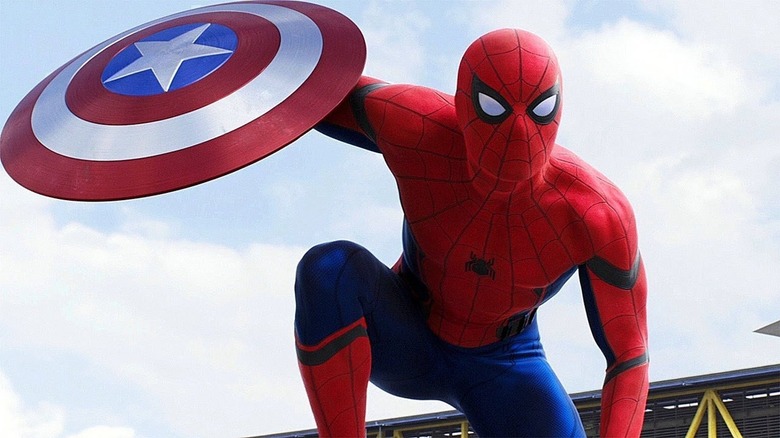
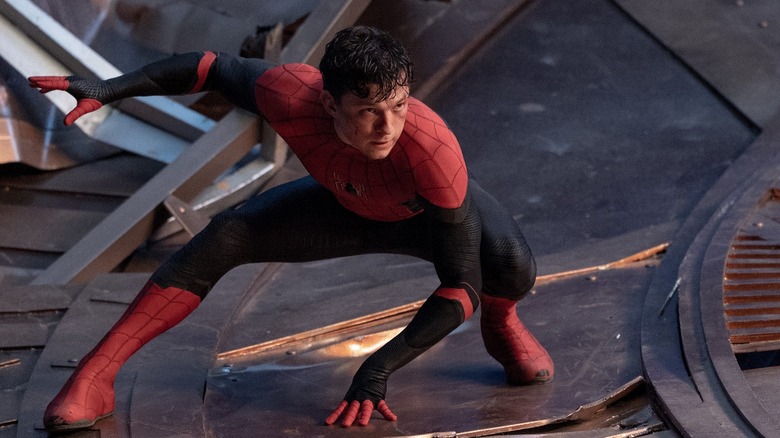
Once upon a time, in ye olde 2014, the movie rights to Spider-Man belonged to Sony, and Marvel Studios couldn't bring the arachnid hero to the big screen without setting off a torrent of lawsuits. Somehow, Sony president Amy Pascal and Marvel president Kevin Feige came to an understanding, sharing Spidey across their respective properties in an IP-lending move that had never really been done before. Now, Spider-Man is owned by Sony while also being part of the Marvel Cinematic Universe, and it couldn't have happened without the careful work of Pascal and Feige.
In a recent interview with The New York Times promoting the release of "Spider-Man: No Way Home" this weekend, Pascal and Feige shared the secrets behind one of the most successful superhero studio switches in all of cinematic history.
Bringing Spidey Into The MCU Fold
In the interview, New York Times writer Brooks Barnes asked Pascal and Feige about how their collaboration first started. He recalls that legend has it Pascal was running Sony and had just made "The Amazing Spider-Man 2," starring Andrew Garfield. Feeling that it was "rather wobbly," she called Feige for help. Amazingly enough, that's exactly what happened, and Pascal confirmed:
"That is the truth. I called Kevin and said, 'Help.' And then he came over to my office for lunch and said, 'I know how to help you.' And then I threw a sandwich at him."
Apparently Feige didn't want to just give advice and then bail, and he told Pascal that the only way he knew how to help was to make the movie for her. That inspired said sandwich-launching, which could have been the end of talks about Spider-Man in the MCU. Thankfully, like Spider-Man himself, Feige wasn't phased by a little flying bread.
An Offer Pascal Couldn't Refuse
Despite nearly being beaned with baked goods, Feige didn't give up. He called Pascal and then went over to her house to discuss his plan for introducing Spider-Man to the MCU, and according to Pascal, it was an idea too good to pass up:
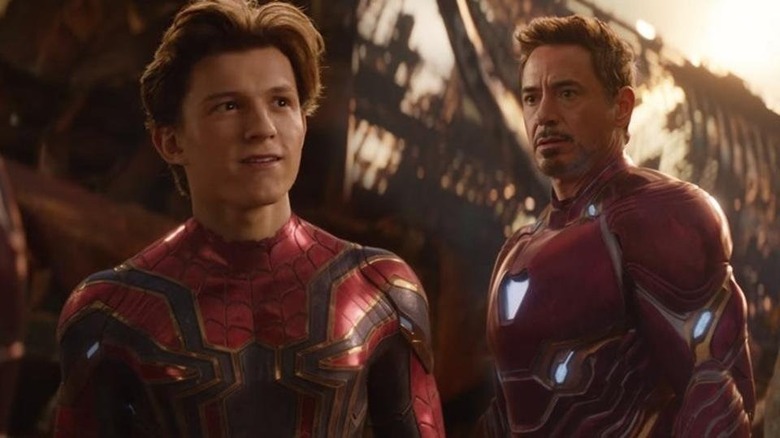
"And then Kevin called me and came over to the house and said, 'I have an idea. What if Tony Stark makes Peter's suit?' And as soon as he said that, I understood the possibilities of what we could do together. To have Iron Man and Spidey in the same world, one rooted more in technological innovation — the new suit — and less in medical experimentation, which is where we were confined before, felt so much more modern. It has taken a lot of work. But just look at the results. Pretty fantastic, right?"
The idea of Tony Stark and Peter Parker onscreen together was too cool for Pascal to deny, and she and Feige got to work arranging the fine contract details so that this amazing IP share could happen. Thank goodness for Feige's persistence, because otherwise the MCU would have been missing one of its most important heroes.
Check out "Spider-Man: No Way Home" in theaters and catch Tom Holland's Spider-Man in all of his web-slinging, building-swinging goodness.
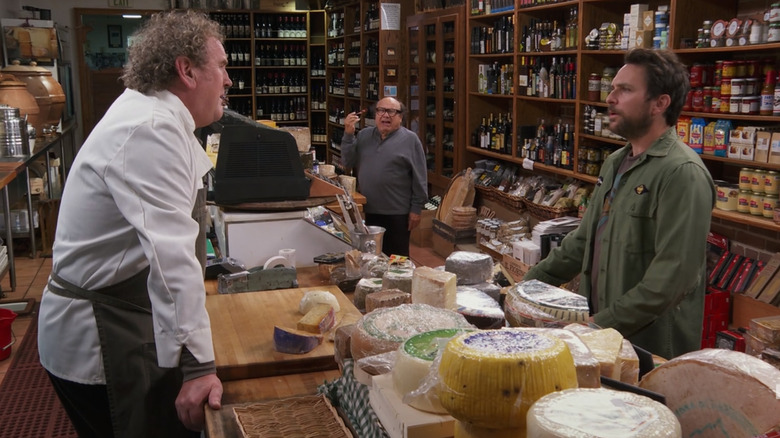
What's up, jabronis? Somehow the gang behind "It's Always Sunny in Philadelphia" managed to make a dream come true that I didn't even know I had: they united "Sunny" with "Star Trek: Deep Space Nine," the best "Trek" of them all.
In "The Gang's Still in Ireland," we're finally introduced to Charlie Kelly's (Charlie Day) biological father, an Irish cheesemonger named Shelley Kelly. Charlie finally finding his father after 14 seasons is huge, and he's being played by Colm Meaney, who also played the Most Important Man in Starfleet himself, Miles O'Brien. O'Brien does all of the Charlie work aboard the space station Deep Space Nine, and seeing pop culture's two most underappreciated Irishmen play father and son inspired me a bit.
So here's a little ditty, written entirely in Irish Limerick style, to pay tribute to two men who never get enough credit for all of the work they do.
An Ode To My Favorite Irish Underdogs
Sit there child I'll tell you a tale
Of two men who drown their sorrows in ale,
They can't catch a break,
They give and we take,
As they break their backs working over hill and dale.
The younger lad is a smasher of rats,
Who wears long underwear and eats food for cats,
He works at Paddy's Pub,
And is an unlearned schlub,
Whose favorite gift was a nail-stuck bat.
The elder man is a Starfleet engineer,
Taking care of all of the crew's special gear.
He works and he toils,
For none of the spoils,
As Fate frequently kicks him in the rear.
Charlie Kelly and Miles O'Brien,
Two Irishmen who don't want for tryin',
They bare their souls,
And work in dank holes,
Just for a warm bed to lie in.
These underappreciated Irish lads,
Whose stories are undeniably sad,
Were finally united,
And you're all invited,
To see the guy who played Miles as Charlie's dear dad.
Colm Meaney plays Shelley Kelly,
A cheesemonger with a big smile and belly,
He's Charlie's father,
Solving a bother,
And offering Frank some fine jelly.
The unsung heroes of Paddy's and Starfleet,
Through the magic of casting finally did meet,
It brings me such joy,
To see a dad and his boy,
Singing Irish drinking tunes to a familiar beat.
So grab some cheese and pour some wine,
This season's been super fine,
Colm Meaney and Charlie Day
Brought the best Irish boys to play
From "It's Always Sunny in Philadelphia" and "Star Trek: Deep Space Nine."
UPI reports:
Melting glaciers may produce thousands of miles of new Pacific salmon habitat, a study published Tuesday by Nature Communications found.
As glaciers in the mountains of western North America melt, or retreat, they could produce around 4,000 miles of new Pacific salmon habitat by the year 2100, the data showed. After modeling glacier retreat under different climate change scenarios, the glaciers could reveal potential new Pacific salmon habitat nearly equal to the length of the Mississippi River under moderate temperature increases, the researchers said.
"We predict that most of the emerging salmon habitat will occur in Alaska and the transboundary region, at the British Columbia-Alaska border, where large coastal glaciers still exist," co-author Kara Pitman said in a press release....
"On the other hand, climate change and other human impacts continue to threaten salmon survival, via warming rivers, changes in stream flows and poor ocean conditions," she said.
Thanks to Slashdot reader schwit1 for sharing the story...
"A growing body of preliminary research suggests the COVID vaccines used in most of the world offer almost no defense against becoming infected by the highly contagious omicron variant," reports the New York Times. (Emphasis added, because they stress that "All vaccines still seem to provide a significant degree of protection against serious illness from omicron, which is the most crucial goal.")
"But only the Pfizer and Moderna shots, when reinforced by a booster, appear to have initial success at stopping infections, and these vaccines are unavailable in most of the world."
The other shots — including those from AstraZeneca, Johnson & Johnson and vaccines manufactured in China and Russia — do little to nothing to stop the spread of omicron, early research shows. And because most countries have built their inoculation programs around these vaccines, the gap could have a profound impact on the course of the pandemic. A global surge of infections in a world where billions of people remain unvaccinated not only threatens the health of vulnerable individuals but also increases the opportunity for the emergence of yet more variants.
The disparity in the ability of countries to weather the pandemic will almost certainly deepen.... Most evidence so far is based on laboratory experiments, which do not capture the full range of the body's immune response, and not from tracking the effect on real-world populations. The results are striking, however. The Pfizer and Moderna shots use the new mRNA technology, which has consistently offered the best protection against infection with every variant. All of the other vaccines are based on older methods of triggering an immune response. The Chinese vaccines Sinopharm and Sinovac — which make up almost half of all shots delivered globally — offer almost zero protection from omicron infection. The great majority of people in China have received these shots, which are also widely used in low- and middle-income countries such as Mexico and Brazil.
A preliminary effectiveness study in Britain found that the Oxford-AstraZeneca vaccine showed no ability to stop Omicron infection six months after vaccination. Ninety percent of vaccinated people in India received this shot, under the brand name Covishield; it has also been widely used across much of sub-Saharan Africa, where Covax, the global Covid vaccine program, has distributed 67 million doses of it to 44 countries. Researchers predict that Russia's Sputnik vaccine, which is also being used in Africa and Latin America, will show similarly dismal rates of protection against Omicron. Demand for the Johnson & Johnson vaccine had been surging in Africa, because its single-shot delivery regimen makes it easy to deliver in low-resource settings. But it too has shown a negligible ability to block Omicron infection.
Sign up here to get Recomendo a week early in your inbox.
Incredible feel-good documentary
You may remember the story of the Thai boys stranded in a deep cave years ago. There was an international effort to get them out that lasted weeks. But the story of how they actually rescued the kids is so unbelievable, so amazing, so insane, and so crazy that it is definitely worth watching The Rescue, the thrilling National Geographic documentary about this unlikely feat. The heroes of The Rescue are unexpected and unlikely themselves. I call this the best documentary of the year. (Streaming on Disney+) — KK
Easiest knife sharpener
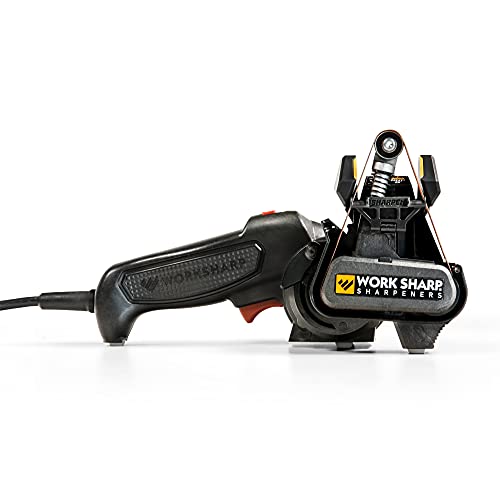
I’ve never had much success with sharpening kitchen knives to a razor’s edge by hand using traditional sharpening stones. But I now get razor sharp knives very fast using a small motorized sharpening belt made for the purpose. The Work Sharp MK2 requires little skill, it’s small, and relatively inexpensive ($80) for a sharpening system. Sharpening takes maybe 5 minutes per knife even when very dull, and is pretty foolproof. It also sharpens scissors, axes, and other tools. I now sharpen our knives much more frequently. — KK
The Wisdom Index Researchers at UC San Diego created a 7-question survey that can determine your level of wisdom called the Jeste-Thomas Wisdom Index. You can take the 5-minute test here. The questions relate to 7 components of wisdom: Acceptance of Divergent Perspectives, Decisiveness, Emotional Regulation, Pro-Social Behaviors, Self-Reflection, Social Advising and Spirituality. Wisdom scores range from 1-5 with a score of 3 being considered neutral. My highest score was a 5 in Spirituality and my lowest score was 3.75 in Social Advising, which is kind of ironic because this is a recommendation. I posted my scores here. — CD
Super strong mounting tape
I used small squares of Gorilla Heavy Duty Double Sided Mounting Tape to attach panels of plywood together as part of an art project. To test the strength of the adhesive, I pried the panels apart with a screwdriver. The wood broke before the tape did. — MF
Short bits of useful advice from books
You might not know that we publish a few other newsletters besides Recomendo. One of them is Book Freak. Each issue offers four short pieces of advice found in useful books. Here are two quotes BJ Fogg’s Tiny Habits, which is the subject of issue 61. — MF
Before making a decision, ask yourself these two questions “Will it help you do what you already want to do? Will it help you feel successful? The answers to those questions is freeing because if the change program doesn’t satisfy these two requirements, it’s not worth your time. ”
Form habits through emotion, not repetition
“In my own research, I found that habits can form very quickly, often in just a few days, as long as people have a strong positive emotion connected to the behavior… When I teach people about human behavior, I boil it down to three words to make the point crystal clear: emotions create habits. Not repetition. Not frequency. Not fairy dust. Emotions.”
Many fans of Netflix's "The Witcher" TV series have noticed a distinct lack of women Witchers. If you're one of them, perhaps you've wondered whether this is an intentional exclusion, a coincidence, or something more complex? Maybe you find yourself scouring Google in an effort to see if there's really any good reason why men and women don't appear to stand equal chances of becoming magical superhuman monster-slaying badasses.
There is actually a canon reason for Kaer Morhen's distinct lack of female Witchers, but you may not find it satisfactory.
Few Survive The Trials
So why are there no lady Witchers? The answer lies in the brutal trials that potential Witcher candidates must pass in order to actually become Witchers. The first of these tests is the Trial of the Grasses, which involves injecting an alchemical mixture into the veins of Witcher hopefuls. This mixture is designed to modify the physiology of the candidates, making them more resilient and better suited to face the monsters they'll encounter as Witchers. While this doesn't sound so bad on the surface, the effect that the mixture has on the bodies and minds of those injected is so severe that very few are even able to survive the process at all.
The physical and psychological side effects of the mixture include intense pain, temporary madness, fevers, vomiting, and a number of other unpleasantries that take place over a seven-day period. This can be seen in a description of one child undergoing the Trial of the Grasses in the first of the novels that "The Witcher" series is based on.
"For two days more did symptoms not subside. The child's skin, hitherto drenched in sweat, grew dry and hot, the pulse ceased to be full and firm — albeit remaining of average strength, slow rather than fast. No more did he wake, nor did he scream. Finally, came the seventh day. The male awoke and opened his eyes, and his eyes were those of a viper..."
Most prospects undergoing the Trial of the Grasses perish by the third day, and as few as 30% are able to make it through the entire week-long endeavor. That would be more than enough to take out even the heartiest of adults, so the fact that the Witcher trainees undergo this process as mere children makes it all the more grim and greatly decreases chances of survival. Those who do manage to survive the Trial of the Grasses are physically transformed, as their resilience in enduring the intensity of the trial results in the superhuman traits associated with Witchers: quicker reflexes, slowed aging, and heightened senses. After this, there are even more trials to overcome before they are finally fully-fledged Witchers.
Due to the extremely taxing nature of the trials, the majority of individuals die before they can even complete the Trial of the Grasses, regardless of gender. The aforementioned 30% that are able to withstand this initial trial are always boys; no girls have been able to do so, though there have been attempts. Why? Well, there's no particularly good reason aside from the unfortunate implication that men are naturally stronger and thus have a higher chance of survival than women. That's just how it was written. While it's not a great explanation, it's the one we've been given thus far.
Isn't That Kinda Sexist?
Well, yeah. There's no way around the fact that it's sexist. Does that automatically mean there was any malice or ill-intent on the part of Andrzej Sapkowski, the author who wrote the novels that the "The Witcher" TV series is based on? Not necessarily, but it's ok to point out that certain aspects of the media we consume don't look good or didn't age well, even if we enjoy the work as a whole.
The implication that women are inherently weaker or more biologically predisposed to failing the Trials comes off as misogynist, regardless of intent. Even if "The Witcher" and the trials themselves weren't a fantasy concoction, physical strength differences between girls and boys are minimal before puberty, so statistically you'd expect at least some girls to make it through. That doesn't mean we have to the throw the baby out with the Henry Cavill-infused bathwater; we can still enjoy "The Witcher" while examining and critiquing the less than stellar aspects of it because critical thinking is super cool, and accepting everything at face value without further investigation or analysis is the opposite of cool.
That said, is there a chance we'll see a woman Witcher in season 2? You can find out right now, since "The Witcher" season 2 is currently streaming over on Netflix.
Magic in "The Witcher" is complicated. Most magic is drawn from Chaos, a kind of power that resides in the elements, which mages learn to control within themselves. Though many kinds of magic are taught throughout the Continent, fire magic is considered one of the forbidden magics, along with necromancy and daemonology -- though those who speak of it in hushed whispers don't exactly explain why.
While the first season of Netflix's hit fantasy series showed the horrifying power of fire magic in its finale, the second season of "The Witcher" more fully details why fire magic is unique, and why it is so much more dangerous to play with.
Minor spoilers for "The Witcher" season 2 after the cut.
The Consuming Power Of Fire Magic
At the end of the first season of the hit Netflix series, mages working for Fringilla (Mimi Ndiweni) and the forces of Nilfgaard cast massive fireballs under Fringilla's orders. The moment they launch these incredible attacks, however, they burst into flames themselves, consumed by the sheer amount of magical energy that coursed through them. Yennefer (Anya Chalotra) is able to channel some of the fire herself, though in doing so she also pays a massive price. While Yennefer doesn't die when she channels an already-existing barn fire through her hands, she does lose her connection to Chaos, rendering her without magic from that point forward.
The other elements of Chaos that come from the world, including water, earth, and air, can all be creative forces as well as destructive. But fire can only destroy and consume, leaving ash in its wake. For that reason, it consumes the mages who channel it. Fire magic requires great sacrifice, which can come in the form of blood, life, or even one's connection to Chaos itself. It's no surprise that the ruthless Nilfgaardians are willing to end the lives of their own mages in order to create powerful magic, but Fringilla trained alongside fellow mages Yennefer and Triss (Anna Shaffer) and should have understood the exact cost. Perhaps the Nilfgaardian tendency towards violence has rubbed off on Fringilla more than she's willing to admit, even as she tries to explain her morally ambiguous reasoning for resorting to such dark magic.
Power That Burns
So how exactly does the fire mage Rience (Chris Fulton) use so much of the hot stuff without burning up himself? He explains to Jaskier (Joey Batey) while torturing him that in order to channel fire though oneself, they have to sacrifice something. In Rience's case, it's whatever a soul is within the "Witcher" universe. The forsaken mage has given up any chance at redemption in order to tamper with such dangerous magic, feeling that the cost was worth the power.
The temptation of power and the damage it can cause is a major theme throughout "The Witcher" season 2, and fire is an apt metaphor for that power. Whether a character is seeking political power, the power to protect their loved ones, or magical power, they're all learning that such quests can burn.
When applying for a managerial position, your employer is looking for some specific abilities that prove you are a good leader. They want to see if you can handle overlooking your subordinates and key business activities.
Remini allows you to turn your old, pixelated, blurry, or damaged photographs into HD photos in a few taps. It is a great app to use if you have old photos which need bringing back to life. So if you're looking to improve the quality of your old images, this app is for you.
Earlier this week we gave a preview of the Analogue Pocket handheld retro gaming system. The modern take on ‘90s portable gaming ($220) offers so much more than just the ability to play most vintage portable games. It has built-in music making software, TV/video out via an accessory and, well many other things we wanted to do a proper dive on. We’ve had so much fun with this thing it’s very easy to recommend right up top. If you simply wanted to know if it’s a good gaming device, I can safely say that it is and thanks for stopping by. If you want to know more (and you should) then get comfortable as we’re going for a ride.
First, a little history. Analogue is often described as a “boutique” console manufacturer. It specializes in a very specific type of retro remake. Instead of building a small PC that can run emulators, Analogue’s FPGA “cores” allow it to mimic vintage consoles at the hardware level. The idea being, all games play as nature intended with none of the emulator quirks to contend with. The company’s early creations were more in the “how to spend it” category. This walnut Neo Geo, for example, or how about this slightly too-fancy NES (and the all-metal reboot).
More recently, Analogue’s Mega SG (Genesis) and Super NT (SNES) took a slightly more accessible approach, cementing the company’s place as the retro console maker de jour. The Pocket aims to build on this legacy with a focus on, somewhat obviously, gaming on the go. It’s also the first Analogue console to play carts from different retro brands.
At launch, it natively plays cartridges from any of the Game Boy variants. It’ll also play Game Gear cartridges with an adapter. Neo Geo Pocket Color, TurboExpress and Atari Lynx adapters are on the way.
Another key difference to most retro machines is that Analogue products are designed to play physical media, not ROMs (although you can sometimes find ways around that as the internet is ever industrious). This really is about doing the old school thing in a modern way with minimal adulteration. That said, the Pocket is compatible with flash carts (that can play ROMs from an SD card), but that’s a quirk of its fidelity – if it works on a Game Boy, it likely works here etc..
By extension, you can also use any of the original Game Boy accessories such as the GB Camera, printer and any titles that had extras such as rumble packs or gyro sensors. You can even connect the Pocket to an authentic Game Boy for multiplayer player fun. In short, all of Analogue’s consoles are functionally 1:1 reproductions of the hardware they honor, just with the Pocket it’s multiple systems in one.
There are, of course, some modern advances that are deemed useful enough to not distract from the authentic experience. For one, the Pocket has a backlit display. Something that didn’t make its way into a Game Boy until the Advance SP (although there was the Game Boy Light in Japan). The Pocket’s 3.5-inch screen is also bigger than the largest on any Nintendo GB handheld (2.9-inches on the Advance SP) and covered in modern Gorilla Glass. Then, of course, there are some modern tweaks such as “save states” and a variety of display presets to match the original hardware (including modes for different iterations of Game Boy).
James Trew / Engadget
What you won’t see here are endless submenus with the hyper specific settings that you tend to find in emulators (or their frontends) like RetroArch. It’s clear the goal with the Pocket is to remove as much user configuration as possible so you can plug in your game and go. Likewise, the Pocket’s connectivity is limited to the Game Boy link port, a headphone jack and an IR port for Game Boy Color (GBC) games that support it (such as Donkey Kong Country or Pokémon Crystal). That’s to say, there’s no touchscreen, no WiFi or any other such redundant jazzy features.
Alas, there’s also no video out, but this can be added with the Dock accessory ($99) which allows for Bluetooth/USB controller connectivity along with an HDMI port for connecting to a TV. Battery-wise, thankfully, it’s not a trip to Target for a big stash of AAAs. The 4,300 mAh cell is good for around six hours of play time and it charges over USB-C.
It’s pretty clear that the Pocket’s design was heavily inspired by the original dot-matrix Game Boy (aka DMG – that’s the iconic one pictured here) and GBC with its portrait configuration. Although one obvious difference is you’ll find four main buttons, which is curious as every system the Pocket imitates only had two – although some, like the Atari Lynx, do have additional system buttons. There are also (slightly spongy) shoulder buttons around the back which were introduced on the Game Boy Advance (GBA), along with “start” and “select” buttons at the bottom, with one more inbetween them that brings up the Analogue menu whatever you’re playing/doing.
Those extra thumb buttons make more sense when you take into account that Analogue has not only partnered with GB Studio — a popular drag-and-drop Game Boy game making tool — but has also added a dedicated spare FPGA for developers to tinker with and use for their own homebrews. How that gets used we’ll have to wait and see, but if you make games in GB Studio you can run them right off the Pocket’s SD card using a proprietary .pocket format. In short, the handheld is aiming to be a viable platform for indie titles made within the constraints of ‘90s era hardware.
Did I mention that it has music production chops, too? The Pocket comes with a version of Nanoloop — a lightweight but comprehensive music-making app for Game Boy — baked right in. Analogue even made cables specifically so you can connect it to desktop and MIDI sequencers. More on this later.
James Trew / Engadget
The above is a long way of saying that it’s obvious Analogue has put a lot of thought and care into making something that isn’t just another way to play Super Mario Land. The addition of tools for developers and an easy pathway to play indie creations give the Pocket one foot in the present. The addition of Nanoloop, likewise, gives it a broader appeal without breaking away from its retro authenticity.
So, you get it, it’s a clever little thing, but what does it play like? I won’t lie, when I inserted Tetris and powered the Pocket up I was, well, I was taken to the Analogue OS home screen. Right now it’s very simple with five menu options, of which, only three are currently available: Play Cartridge, Tools and Settings. The other two are Library and Memories which are currently grayed out until the first firmware update — which Analogue says is coming in a few weeks from publish time. There’s a lot to be excited about in Analogue OS, but for now it’s pretty straightforward, and I’ll flag the more interesting parts as they come.
Back on the home screen, tapping “Play Cartridge” suddenly teleported me to my secondary school in 1990. The Game Boy had just been released and a few people in my year had one. I still remember being fascinated by the weird green and black display and crunchy sound. The Pocket in its original DMG screen mode replicates this look with amazing accuracy. I have other retro handhelds, and the “authentic” green-and-black modes combined with a mishmash of resolutions and displays never look quite right. Even the fact that the Pocket has a backlight, which of course the first ever Game Boy never had, somehow doesn’t break the spell.
For example, the Pocket even replicates the tiny gaps between pixels on the DMG’s display. This means that the fist-pumping plumber in the top left of Super Mario Land’s home screen looks almost indistinguishable from how he did in 1989 (bar that light). My other handheld that runs a fork of RetroPie doesn’t have this level of fidelity. You can do all sorts of custom configurations to possibly come close, but that’s long and life is short. Pocket does it out of the box, no tweaking needed.
James Trew / Engadget
If you prefer your nostalgia hit to feel like other versions of the Game Boy, there are modes for those, too. Specifically the Game Boy Light and the Game Boy Pocket. There’s also Analogue’s own custom mode. What’s interesting is that if you place a GBA game into the Pocket, the choice of display modes changes to match. That’s to say, you’ll get the screen variants of that platform (Original LCD, SP 101) along with another custom Analogue mode specific to that system. As for the Game Gear, you’ll get Analogue mode, GG LCD mode and “GG LCD+” which is like the former, with just a shade more pop in its colors.
Analogue’s own display modes tend to be more modern in style with higher color saturation and no pixel grid. Beyond the presets there are some controls for customization within the menus. These are done by system, and include desaturation controls, sharpness and a frame blending toggle (to mimic the original hardware’s slow responsiveness). Though they are nowhere near as extensive as on most software emulators, and I feel it’s all the better for it. I am not against deep levels of control, but navigating RetroArch’s deep menus has never been my kind of fun.
One slight quirk here is that when you change the volume during play, you’ll see a corresponding plus or minus sign float over the left side for a second or so. But if the Pocket is in certain display modes, like Analogue’s own custom preset, or any game with a white background, you can’t see it because it’s showing white on white. It doesn’t change anything, but it did catch me out for a moment wondering if the volume control wasn’t working.
Thanks to the square display, original Game Boy games perfectly fill the space available and, not coincidentally, the Pocket’s display is exactly 10x the resolution of the original on each axis. This means upscaling is really just a case of adding a zero onto the end of the number of pixels being displayed. Specifically it’s an 1600x1440, 615 ppi LCD.
This sort of detail is almost as important (maybe as important) as running emulation at the hardware level rather than software. Retro gaming has a storied history of using computational and display limitations for creative effect. If you’ve ever played old games on a modern emulator and display, you may have noticed something was a bit off; that retro “feel” wasn’t there. That’s why many emulators offer things like scanlines — because they soften square edges and make things look a bit more authentic.
James Trew / Engadget
The problem is, scanlines are a bit of a blunt tool. Analogue claims it went out of its way to mimic original displays, “quirks” and all. And from what I can tell, that includes things like response time and refresh rates.
An example of this is found among the GBA screens. Despite being a big step up in the number of colors it could display at one time (512 up from the GBC’s 56) the screen still didn’t have a light until later iterations. This gave the games on the early GBAs a distinct look and you can activate a mode that replicates that, if that’s your preference. Or go more modern if it’s not. The benefit to this will largely depend on the game you are playing, as some lean into the limitations of the hardware more than others, but it feels much more authentic than regular old scanlines to me in terms of juicing that vintage vibe.
I, personally, love the original screen modes. They feel like scanlines done right. The start screen for Sonic on the Game Gear, for example, somehow seems more detailed when viewed in the original GG LCD mode. Our hedgehog’s wagging finger seems just that little more detailed and the font more “3D” – for lack of a better word.
In terms of game compatibility, theoretically, there should be very few titles that worked on original hardware that don’t work here, if any. I only had 10 or so games to test with, but the only things that were problematic were a US version of Mario Kart Super Circuit and Mickey Mouse - Castle of Illusion on the Game Gear which loads fine but crops off some of the bottom of the game.
The European version of Mario Kart I had worked just fine, but the US one seemed to stall after loading. Analogue suggested I give that cart a good clean, which I did, several times, but I never got it to work despite it working instantly on my GBA. It’s clear that there’s no reason it shouldn’t work, and a company rep confirmed their copy works their end, but such are the quirks of very old cartridges, perhaps there’s just something off with the pins on that one copy that doesn’t sit right on the Pocket. As for Mickey? Analogue says that’s to do with how that particular game was programmed and there’s already a fix coming in new firmware.
The only other thing that didn’t work was a very unofficial “108 games in one” multicart. That also seemed to at least open but then just hung. This also worked in original hardware, but again… it’s hard to know if it’s just a physical quirk (pins aligning etc) or something else.
James Trew / Engadget
What did work was the Game Boy Camera. It’s always surprising to me that cartridges that relied on watch batteries for saves would still work today, but both the camera and every other game I had with a cell in it seemed to still be going strong with saves intact. Either way, the Game Boy camera is a delight on the Pocket, that backlight really helps. It remains pretty awful on vintage hardware. Analogue also tells me that in the forthcoming erosion v1.1 firmware update, you’ll be able to save your Game Boy Camera photos directly to the Pocket’s SD card. This is actually very cool indeed given that, right now, extracting images from it is kinda a pain in the butt and involves either getting hacky or spending out on something like a ROM dumping cart.
For anything other than the Game Boys, you’ll need a separate $30 adapter to play. Right now the only one available is the aforementioned Game Gear one. I won’t lie, with a game inside it does look a little inelegant, with the cart popping right over the top of the Pocket. I was only able to test the two games on it, and one is the weirdly-cropped Mickey Mouse, but it was still playable and just as much fun (and infuriating) as I remembered the first time around. The fact you can’t jump on top of and ride those tree stumps still doesn’t sit right with me all these years later.
Of course, three generations of Game Boy plus the Game Gear already opens up a pretty substantial library but once the adapters for the Atari Lynx, the Neo Geo Pocket and the PC Engine/TurboGrafx-16 arrive there’s a whole lot of fun to be had with this one tiny console. Notably, the last system in that list is technically a home console and not a handheld. So there’s more than just portable gaming here. The TurboExpress just happened to take the same game cards as the home-based PC Engine. Such is the curious world of retro gaming.
Analogue OS
I already mentioned the basics of the Pocket’s native operating system. Right now, it’s mostly limited to playing cartridges and some high-level system tweaks. You’ll find some video and audio options and a few system-specific settings (like playing GBC games in GBA mode). Right now, even save states are barely supported. The version of the OS I tested has a quick-and-dirty save/load state option and that’s it. Analogue claims, however, that version 1.1 “will allow you to do everything imaginable with save states.”
James Trew / Engadget
The more intriguing feature that’s currently unavailable is “Library.” On its website, the company describes Analogue OS as “purpose-built for exploring and celebrating all of video game history.” It claims to offer the option to install the artwork for every single game it could play, full save states, game “playlists” and more.
That “more” includes the ability to develop custom FPGA “cores” so you can, within limits, turn the Pocket into other retro systems, although there are plenty of caveats and also, a high level of skill in this area is involved. A skill I definitely do not have. Fortunately, there’s a strong community around Analogue and its open source rival MiSTer. Both pull from the same family of FPGA chips so the likelihood of cool stuff coming further down the line is very high.
Though it’s not clear how playlists or the game library will work, given that you have to have the cartridge inserted into the Pocket to play a game, any software shortcut for that seems a little redundant, at least for now – I’m interested to see how it’s actually implemented. Where this will really come into its own, I suspect, is in making the Pocket experience more holistic and complete. Having access to information and data about the entire world of retro gaming in your hands along with the ability to share playlists and game progress will definitely add a robust layer to the platform. Either way, for now there really does seem to be a lot of exciting new features coming, yet sadly we can’t test them until that next firmware update gets released.
The Dock and other accessories
While the Pocket is all about reviving the handheld magic and all its portability, Analogue made a dock that adds a few important features. Most obviously, it allows you to play your favorite retro games on the biggest screen in the house over HDMI. I won’t lie, it wasn’t quite the seamless experience I was expecting. First, I needed to update the firmware. That’s normal given this was an early test unit, but I still had a few occasions where I had to do things in a certain order for it to take.
Once I had it working though, it’s pretty straightforward. The first thing you’ll notice is how pixelated things are. No fault of the Pocket’s obviously. This is just what happens when you upscale a game made for a 2.5-inch display and run in on a 55-inch modern TV. It’s still perfectly playable though and adds a nice alternative playing option.
James Trew / Engadget
There are some other important benefits to the dock. Not only can you add USB controllers as mentioned, you can also connect Bluetooth and 2.4g controllers. This opens up the possibility of four players where GB Studio titles developed for third-party FPGA cores support it. Given there are only two USB ports on the dock, you’ll need two wireless controllers as well to achieve this. Though it appears you could use four Bluetooth ones at the same time (but support for 2.4g controllers tops out at two).
Right now, you’ll either need a USB controller with a long cable or one of the officially supported 8Bitdo wireless controllers (Pro 2, M30 and the Arcade Stick). PS4 and Switch Pro controllers will also work. More options will be supported in that all important 1.1 update (SN30 Pro, PCE and so on).
That said, I was able to pair an SN30 controller today and it worked just fine. I also had success with a very old, very generic Xbox controller, so it seems support is there, perhaps they are just ironing out some kinks.
One final thing I should note is that when playing via the Dock, most of the display modes become inactive and you’re shuttled onto what appears to be the Analogue preset by default. Analogue’s home consoles to date have come with extensive options for filtering, resizing, adding faux scanlines and the like when playing on a modern TV, so it would be good to see a similar suite of options come to the Dock.
Multiplayer
There’s an unsung benefit to imitating a system at the resistor level via FPGA – you can connect the Pocket to original Game Boys for multiplayer fun. This is no small thing. Modern software emulators allow for online multiplayer on many systems (usually with Netplay), but often this falls apart for handhelds. The need for a cable back in the day made it quite a lot harder to trick a game into thinking it’s connected to another “machine.” There are some workarounds, but they aren’t always so elegant or authentic (half the magic with handhelds is your own private screen).
With the Pocket, you can literally just plug it right into another Game Boy, if you have the right cable. The port on the Pocket matches that of the Game Boy Pocket (GBP) and onward. That’s to say, if you had a GBC and two copies of Tetris you can use the original Nintendo link cable and it should work. If you don’t happen to have the original cable you can buy Pocket’s own do-it-all link cable ($16). The only two models that aren’t instantly compatible are the DMG and the Micro.
I tested out the following scenarios using Analogue’s own cable: Pocket GBC and Pocket to GBA. All worked perfectly. Even GBA games that support Single Pak two player (only one copy of the game needed) work. Mario Kart Super Circuit is one such title and the experience is just like the old days – just a little bit of waiting for the game to setup and you’re off to the proverbial races. Two player Tetris was as fun as it ever was and I might just have to buy another one of these things as you can, of course, also just connect two Analogue Pockets together, too.
James Trew / Engadget
Nanoloop
It’s beyond the scope of this review to give a full breakdown of what Nanoloop is, but if you’ve ever seen (or heard) music made/performed on a Game Boy, this humble app is likely running the show (or LSDJ, but they are both conceptually similar).
A version of Nanoloop is built right into the Pocket’s OS and it’s not just a nice add-on feature. This is evidenced by Analogue selling no less than four different cables ($20 each) that allow you to connect Nanoloop on the Pocket to external MIDI hardware, Desktop music MIDI software, other Pockets and hardware with audio sync (such as Korg’s line of Volcas or Teenage Engineering’s Pocket Operators).
I won’t lie, if you’re not familiar with music sequencing, the learning curve here is steep. Add into that the limited sonic capabilities of the Game Boy and it’s hard to eke something musical out of the app. At least at first. Persevere, though, and you might just find that Nanoloop is something of a stealth addiction – certainly it’s a great value add that I really hope draws in more people to the platform. Given that you can pipe out the audio to headphones or a dedicated speaker via the headphone port it’s not just a time sink, you can be annoying your friends and neighbors in no time.
Wrap up
James Trew / Engadget
If you’ve got this far, then there’s a good chance that, like me, you’re pretty excited about the Pocket. For casuals, $220 to play games you might already own (or worse, have to navigate the second hand market to buy) might not quite be the value proposition you were looking for. And that’s fine, Pocket isn’t aimed at casuals. Pocket is for those that love, live and breathe retro gaming and who want the absolute best experience possible.
For handheld gaming, right now, Pocket is that best experience. Absolutely hands down, no doubt about it. Everything from start to finish is as authentic as it can be without being needlessly pedantic (like not having a backlight for DMG/GBC games etc.). The experience is further elevated by select modern concessions. The aforementioned light, the curated display presets and the smart features in the operating system to mention a few.
The fact that Analogue added in some complementary additions, such as that spare FPGA core and the tight support for GB Studio only serves to reassure me that the Pocket will just get better with time. There are, of course, a few areas for improvement. The shoulder buttons aren’t the best. Some of the display modes obscure on-screen messages at times. The adapters look a little goofy with a game in them. But these are details. And detail is, apparently, what Analogue does best. And perhaps the bigger detail to be concerned about is getting yourself a spot in line. Orders just reopened, but already demand has been so high that you likely won’t get one until 2023.
It’s that time of year again—when your search results are crowded with variations of “X Best Gift Ideas for Y”-style articles. And this seems like one of them, but it isn’t. Well, it is. But it isn’t.
Because when you’re looking for quick assistance from the algorithm regarding what to buy your vaguely intimidating…
Cybersecurity researchers have discovered an entirely new attack vector that enables adversaries to exploit the Log4Shell vulnerability on servers locally by using a JavaScript WebSocket connection.
"This newly-discovered attack vector means that anyone with a vulnerable Log4j version on their machine or local private network can browse a website and potentially trigger the vulnerability,"
This mod is in it essence the excellent DOX PERSONALIZED ADDON / BRUTAL DOOM PLATINUM and a bunch of other mods compiled. I included others dox’s weapons, modified it to be more balanced for this mod, updated MUTATORS (XV117) which adds items to the game, added new enemies, weapons, armors, voxels, changed a lot of sprites, made a carry weight system (optional), made a realistic reloading system (optional). As it became more extensive than I could have initially imagined, I had to make it available here! Hope you enjoy!
Editor’s Note: This post has been updated since it was originally published in 2013 to provide the latest information and statistics.
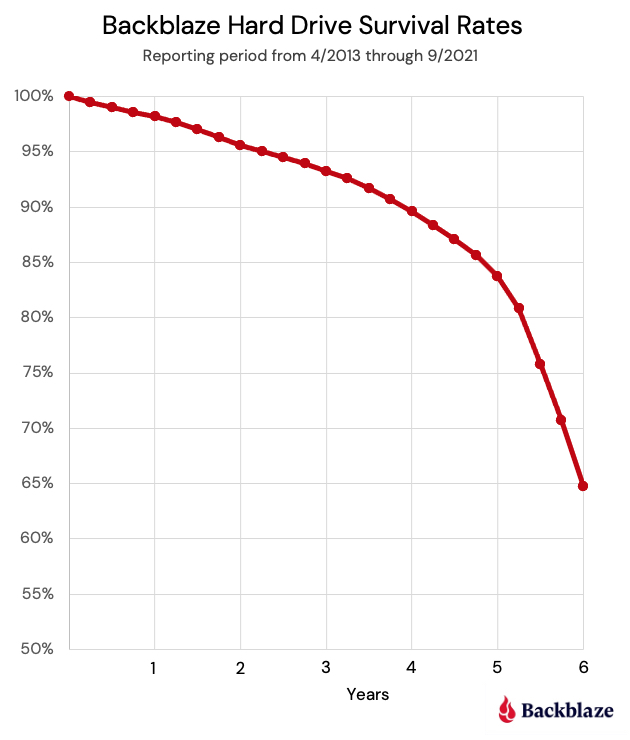
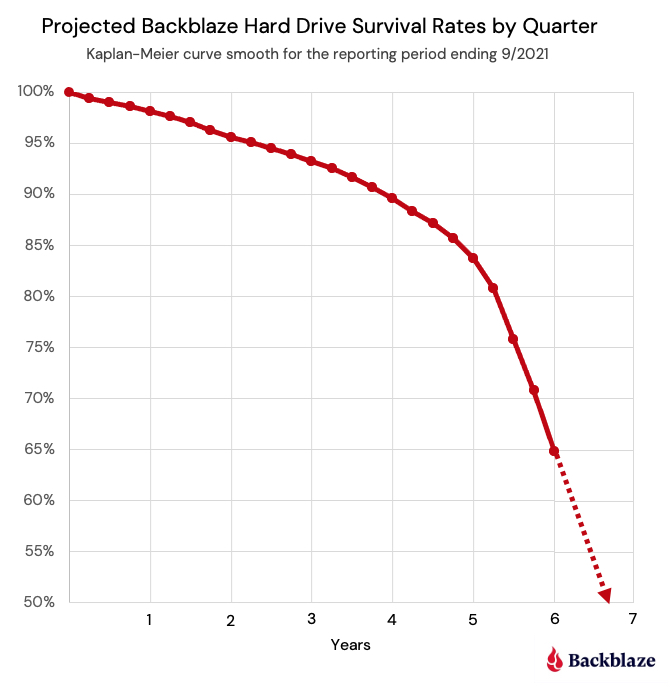
How long do disk drives last? We asked that question several years ago, and at the time the answer was: We didn’t know yet. Nevertheless, we did present the data we had up to that point and we made a few of predictions. Since that time, we’ve gone to school on hard disk drive (HDD) and solid-state drive (SSD) failure rates. Let’s see what we’ve learned.
The initial drive life study was done with 25,000 disk drives and about four years of data. Today’s study includes data from over 200,000 disk drives, many of which have survived six years and longer. This gives us more data to review and lets us extend our projections. For example, in our original report we reported that 78% of the drives we purchased were living longer than four years. Today, about 90% of the drives we own have lasted four years and 65% are living longer than six years. So how long do drives last? Keep reading.
How Drives Are Used at Backblaze
Backblaze currently uses over 200,000 hard drives to store our customers’ data. Drives range in size from 4TB to 18TB in size. When added together, we have over two exabytes of hard drive space under management. Most of these drives are mounted in a storage server which accommodates 60 drives, plus a boot drive. There are also a handful of storage servers which use only 45 hard drives. The storage servers consist of Storage Pods (our own homegrown storage servers) and storage servers from external manufacturers. Twenty storage servers are grouped into a Backblaze Vault, which utilizes our own Reed-Solomon erasure coding algorithm to replicate and store customer data across the 20 servers in a Backblaze Vault.
Types of Hard Drives in the Analysis
The hard drives we use to store customer data are standard 3.5 inch drives you can buy online or in stores. The redundancy provided by the Backblave Vault software ensures the data is safe, while allowing us to use off-the-shelf drives from the three primary disk drive manufacturers: Seagate, Western Digital, and Toshiba. The following chart breaks down our current drive count by manufacturer. Note that HGST is now part of Western Digital, but the drives themselves report as HGST drives so they are listed separately in the chart.
Each of the storage servers also uses a boot drive. Besides the obvious function of booting the server, we also use these drives to store log files recording system access and activities which are used for analytics and compliance purposes. A boot drive can be either an HDD or an SSD. If you’re interested, we’ve compared the reliability of HDDs versus SSDs as it relates to these boot drives.
Number of Hard Drives
As stated earlier, we currently have over 200,000 disk drives we manage and use for customer data storage. We use several different disk drive sizes as the table below shows, with over 60% of those drives being 12TB or 14TB in size.
Drive Failure Rates
Before diving into the data on failure rates, it’s worth spending a little time clarifying what exactly a failure rate means. The term failure rate alone is not very useful as it is missing the notion of time. For example, if you bought a hard drive, what is the failure rate of a hard drive that failed one week after you purchased it? What about one year after you purchased it? Five years? They can’t all be the same failure rate. What’s missing is time. When we produce our quarterly and annual Drive Stats reports, we calculate and publish the annualized failure rate (AFR). By using the AFR, all failure rates are translated to be annual so that regardless of the timeframe (e.g., one month, one year, three years) we can compare different cohorts of drives. Along with the reports, we include links to the drive data we use to calculate the stated failures rates.
The Bathtub Curve
Reliability engineers use something called the bathtub curve to describe expected failure rates. The idea is that defects come from three factors: (1) factory defects, resulting in “infant mortality,” (2) random failures, and (3) parts that wear out, resulting in failures after much use. The chart below (from Wikimedia Commons) shows how these three factors can be expected to produce a bathtub-shaped failure rate curve.
When our initial drive life study was done, the Backblaze experience matched the bathtub curve theory. When we recently revisited the bathtub curve, we found the bathtub to be leaking, as the left side of the Backblaze bathtub curve (decreasing failure rate) was much lower and more consistent with the constant failure rate. This can be seen in the chart below which covers the most recent six years worth of disk drive failure data.
The failure rate (the red line) is below 2% for the first three and a half years and then increases rapidly through year six. When we plot a trendline of the data (the blue dotted line, a second order polynomial) a parabolic curve emerges, but it is significantly lower on the left hand side, looking less like a bathtub and more like a shallow ladle or perhaps a hockey stick.
Calculating Life Expectancy
What’s the life expectancy of a hard disk drive? To answer that question, we first need to decide what we mean by “life expectancy.”
When measuring the life expectancy of people, the usual measure is the average number of years remaining at a given age. For example, the World Health Organization estimates that the life expectancy of all newborns in the world is currently 73 years. This means if we wait until all of those new people have lived out their lives in 120 or 130 years, the average of their lifespans will be 73.0.
For disk drives, it may be that all of them will wear out before they are 10 years old. Or it may be that some of them last 20 or 30 years. If some of them live a long, long time, it makes it hard to compute the average. Also, a few outliers can throw off the average and make it less useful.
The number that should be able to compute is the median lifespan of a new drive. That is the age at which half of the drives fail. Let’s see how close we can get to predicting the median lifespan of a new drive given all the data we’ve collected over the years.
Disk Drive Survival Rates
To this day it is surprisingly hard to get an answer to the question “How long will a hard drive last?” As noted, we regularly publish our Drive Stats reports, which lists the AFRs for the drive models we use. While these reports answer the question at what rate disk drives will fail, they don’t tell us how long they will last. Interestly, the same data we collect and use to predict drive failure can be used to figure out the life expectancy of the hard drive models we use. It is all a matter of how you look at the data.
When we apply life expectancy forecasting techniques to the drive data we have collected, we get the following chart:
The life expectancy decreases at a fairly stable rate of 2% to 2.5% a year for the first four years, then the decrease begins to accelerate. Looking back at the AFR by quarter chart above, this makes sense as the failure rate increases beginning in year four. After six years we end up with a life expectancy of 65%. Stated another way, if we bought a hard drive six years ago, there is a 65% chance it is still alive today.
How Long WILL the Hard Drives Last?
What happens to drives when they’re older than six years? We do have drives that are older than six years, so why did we stop there? We didn’t have enough data to be confident beyond six years as the number of drives drops off at that point and becomes composed almost entirely of one or two drive models versus a diverse selection. Instead, we used the data we had through six years and extrapolated from the life expectancy line to estimate the point at which half the drives will have died.
How long do drives last? It would appear a reasonable estimate of the median life expectancy is six years and nine months. That aligns with the minimal amount of data we have collected to date, but as noted, we don’t have quite enough data to be certain. Still, we know it is longer than six years for all the different drive models we use. We will continue to build up data over the coming months and years and see if anything changes.
In the meantime, how long should you assume a hard drive you are going to buy will last? The correct answer is to always have at least one backup and preferably two, keep them separate, and check them often一the 3-2-1 backup strategy. Every hard drive you buy will fail at some point—it could be in one day or 10 years—be prepared.
Spider-Man: No Way Home, Marvel's first cinematic foray into the multiverse concept, is currently dominating the box office and critical approval. In addition to that, DC's Flashpoint movie- equipped with a similar hook centered on the multiverse and nostalgia bait – is gearing up for release in the not too distant future. — Read the rest
UndyingNephalim has released a new gameplay video for Star Fox: Event Horizon, a standalone free fan game that is using the Freespace Open Engine. This gameplay video showcases the latest build of this mod, and looks absolutely amazing. Star Fox: Event Horizon will let players control their favorite characters and fighter craft from the Star … Continue reading Star Fox looks better than ever in this staldalone free fan game →
IMDB Rating: 0.0/10 Genre: Drama Size: 782.08 MB Runtime: 12hr 0 min
When a cash-strapped rancher takes an offer to help a movie star poach elk it seems like easy money, until a fatal run-in with the local authorities triggers a series of events that pits man against man in a bloody showdown.
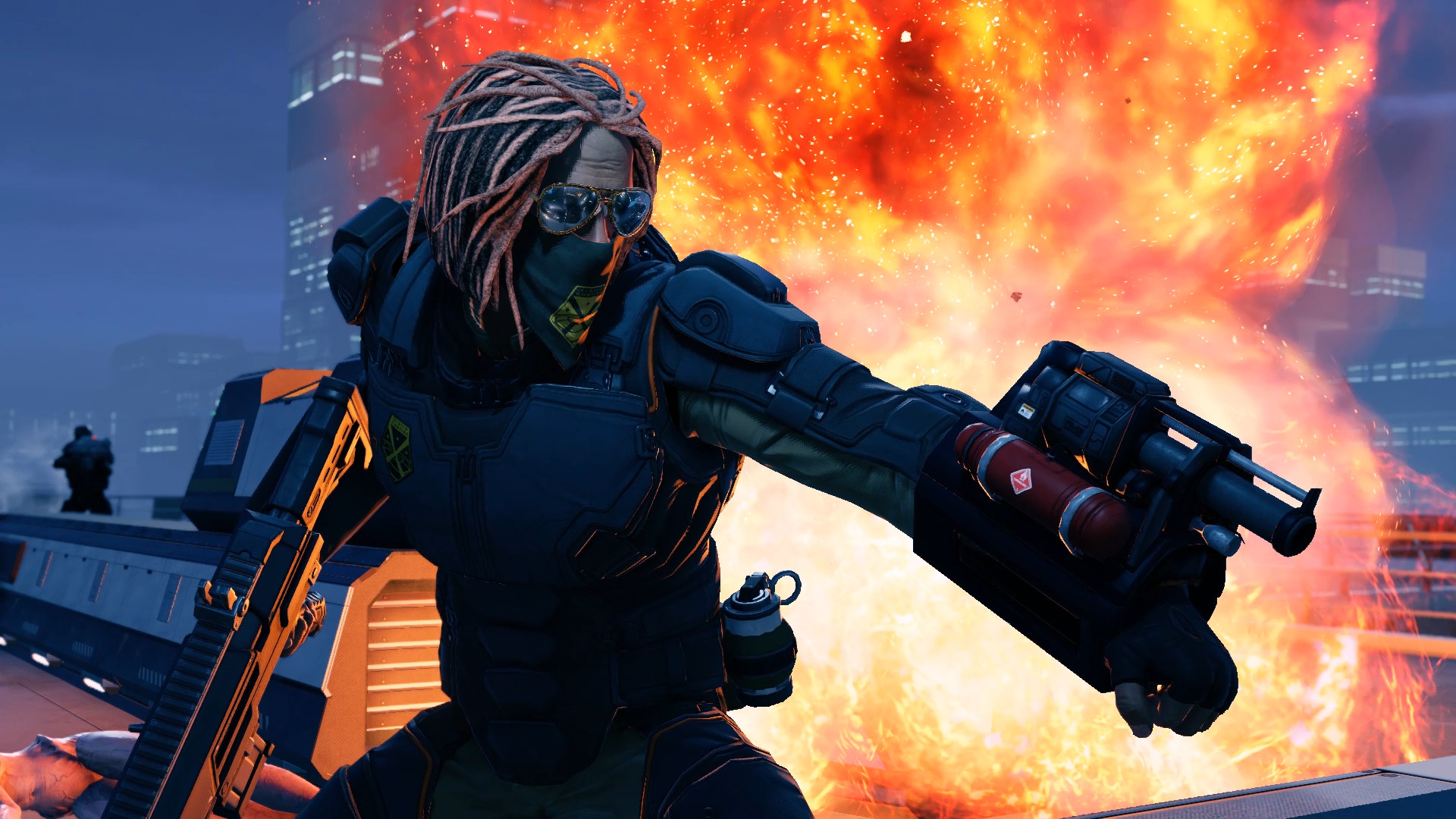
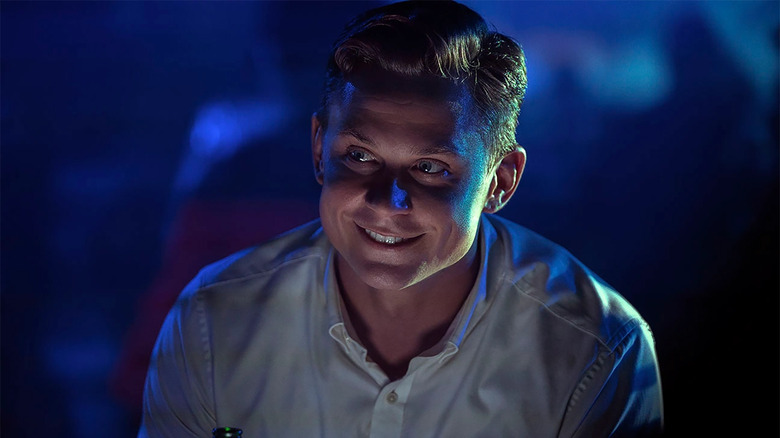
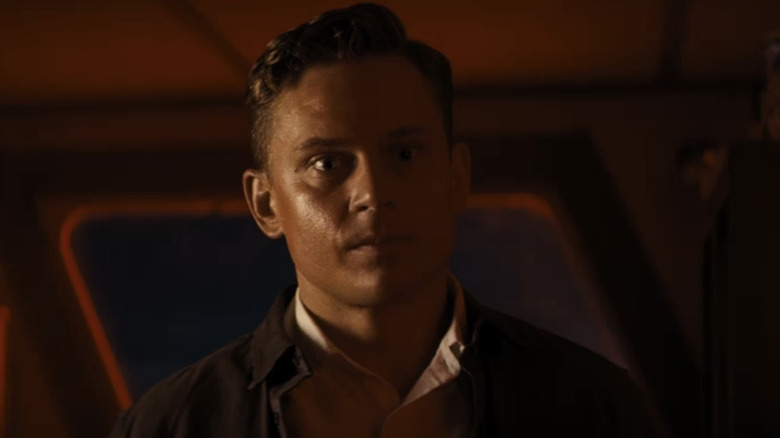
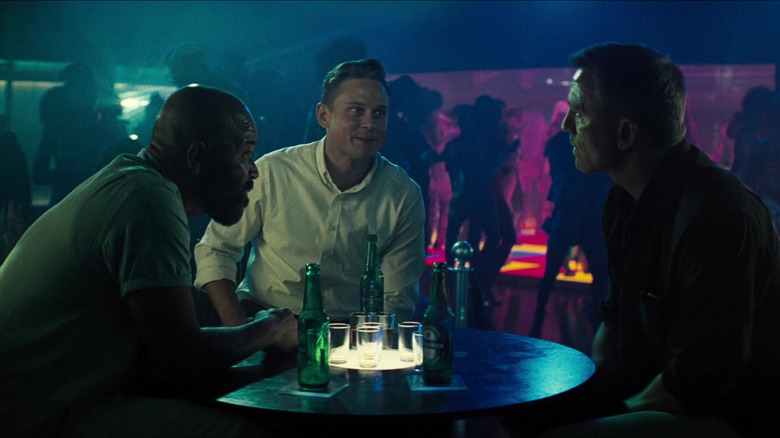

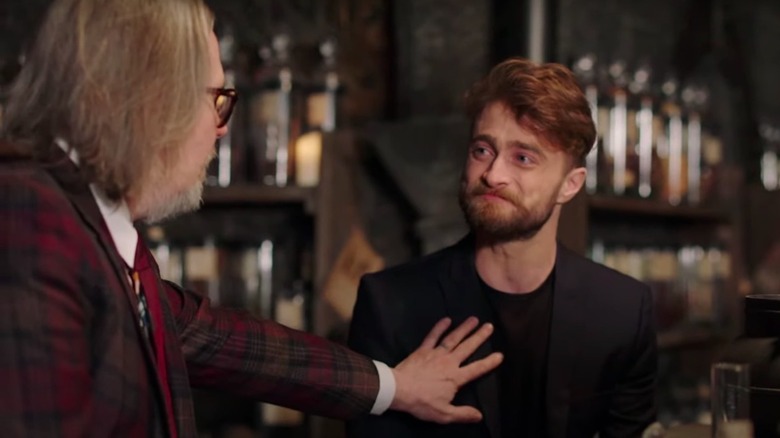
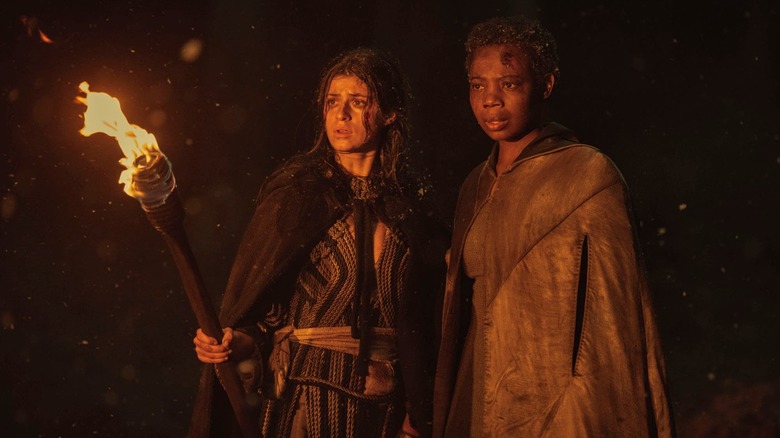
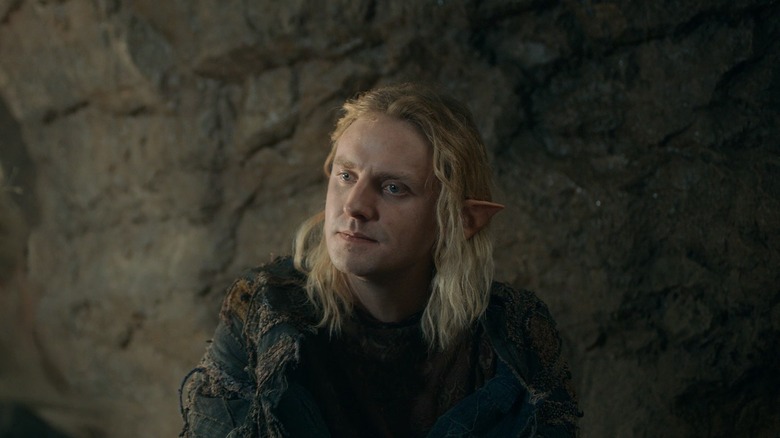


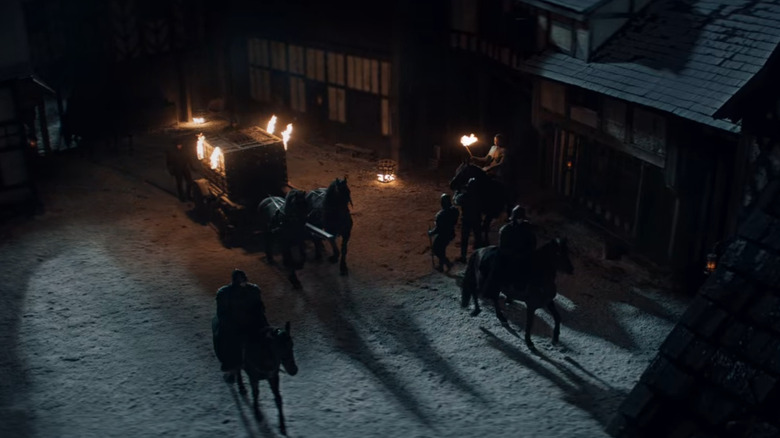
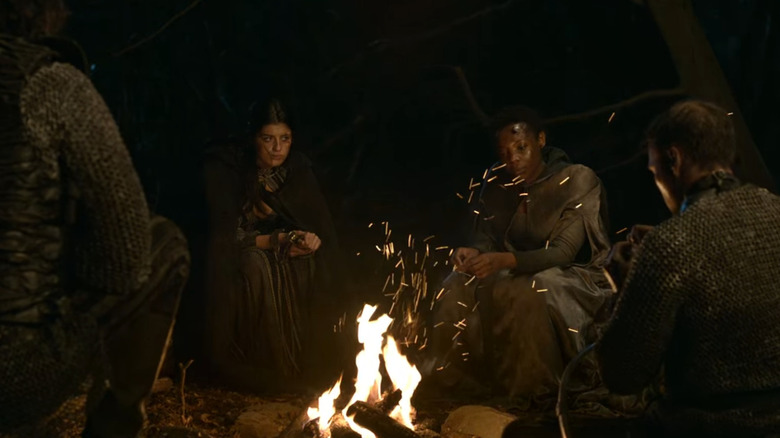
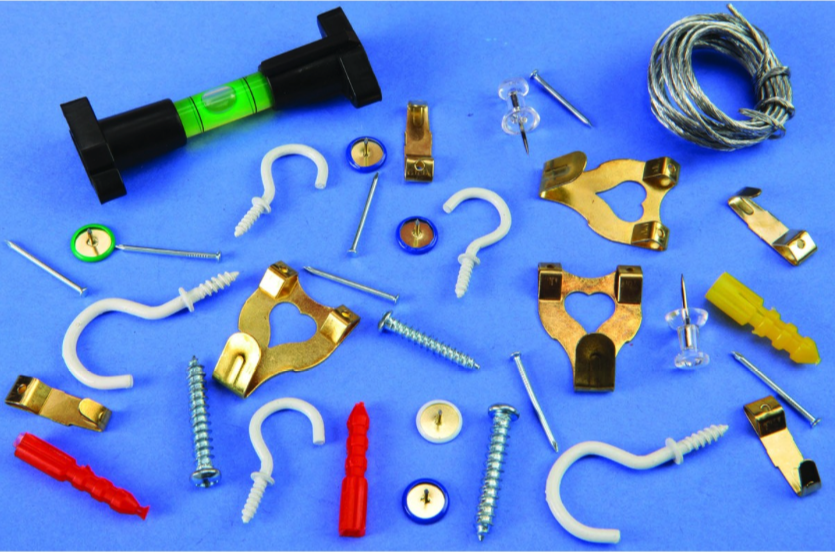

 Paramount Network, formerly known as TNN and Spike TV, has found its flagship series in Yellowstone, the Montana-set drama starring Kevin Costner currently airing its fourth season. It’s no surprise that the show’s immense popularity would create the desire for a spinoff, and instead, sister streaming service Paramount+ has opted for a prequel. Set more than a century before the original, 1883 is a pretty straightforward Western tracking the establishment of the Yellowstone Ranch that serves as the center property of the franchise…