Shared posts

18 Dec 11:51

The Scary of Sixty-First (2021) [WEBRip] [1080p] [YTS.MX]

The Scary of Sixty-First (2021)
IMDB Rating: 5.2/10
Genre: Comedy / Horror / Mystery
Size: 1.5 GB
Runtime: 1hr 21 min

Addie and Noelle are introduced doing something city dwellers know is truly horrifying: apartment hunting. Everything changes for both women when an unnamed stranger knocks on their door. The Girl tells Noelle that she believes they're living in a place that has seen untold horrors. One of the apartments in which Jeffrey Epstein used to traffic and abuse girls. Before you know it, they have tumbled down the rabbit hole into a world of conspiracy theories about Epstein and his apartments. —Frank Liesenborgs
18 Dec 11:51

Reverse Engineering Prodigy, Part 2

by Phillip Heller
[ Phillip Heller is a member of the Prodigy Preservation Project. Here, he writes about his progress since Part 1 in January. –Benj ] Reverse engineering Prodigy is not without challenges. Though the patent describes the communications protocol and the TBOL language well, it lacks detail of the application protocols – that is, the communications […]
18 Dec 11:50

Windows 2000 Post-Service Pack 4 COM+ 1.0 Hotfix Rollup Package 38サルベージ

by blackwingcat
Windows 2000 Post-Service Pack 4 COM+ 1.0 Hotfix Rollup Package 38
[KB905198] の 日本語AT、PC98、English を WLU サイトにサルベージしました・ω・

18 Dec 11:47

Baldur's Gate: Dark Alliance - Released

The Action RPG Baldur's Gate: Dark Alliance has been released: A NEW LEGACY BEGINS... Experience the massively popular world of Baldur's Gate as never before. Baldur's Gate: Dark Alliance thrusts you into an epic Dungeons & Dragons adventure filled with intense action, intricate puzzles and sinister intrigue, where your mastery of cold steel and devastating spells is the only thing between you and ultimate evil....
18 Dec 02:14

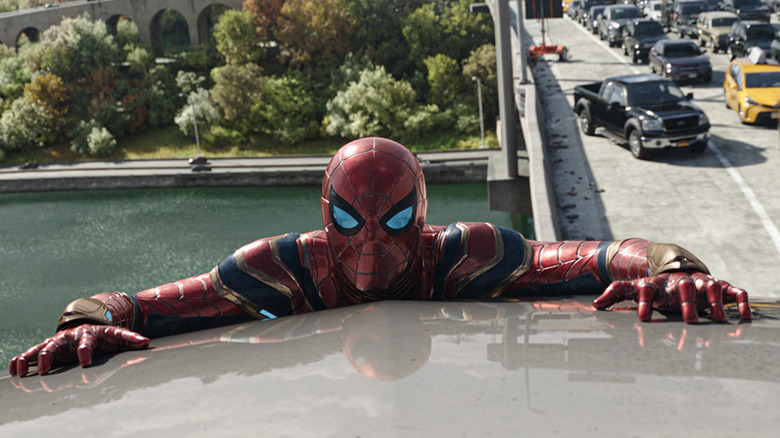
Spider-Man: No Way Home Credits Scene Explained: Well, That Didn't Last Very Long

by Ethan Anderton

"Spider-Man: No Way Home" is in theaters now! The latest installment of Tom Holland's webslinging franchise in the Marvel Cinematic Universe has arrived, and in keeping with the tradition of almost all Marvel Studios movies, there's a good reason to stick around through the credits (and not just out of respect for the thousands of people who worked tirelessly on the sequel). 

First of all, yes, there's a mid-credits scene for "Spider-Man: No Way Home." There's also something you'll want to stick around for after all the credits have rolled, but it's not actually a scene. In a surprising turn of events, Marvel Studios did something they haven't done since the credits for "Captain America: The First Avenger." Just as the arrival of America's ass ended with a teaser trailer for "The Avengers," after the credits are wrapped up on "Spider-Man: No Way Home," there's a trailer for the next round of multiverse shenanigans in "Doctor Strange and the Multiverse of Madness." We'll save that breakdown for another time, but for now, let's dig into the "Spider-Man: No Way Home" credits scene.

What Happens In The Spider-Man: No Way Home Credits Scene?

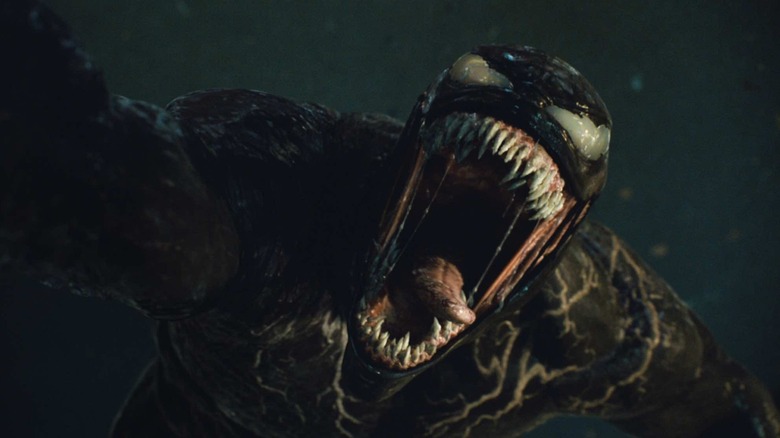
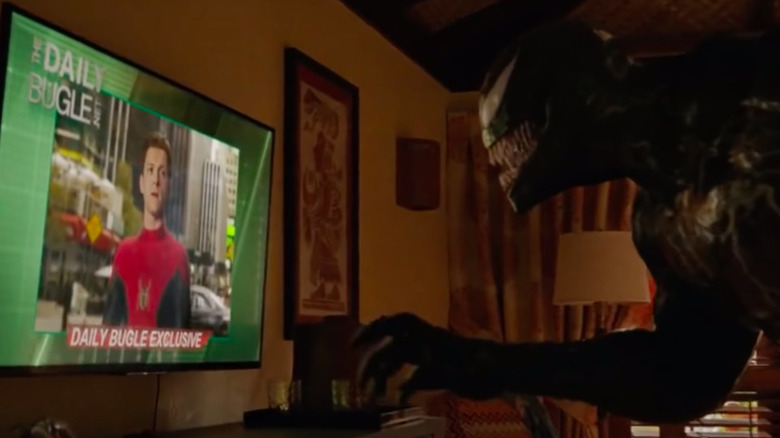
The "Spider-Man: No Way Home" mid-credits scene directly follows the credits scene for "Venom: Let There Be Carnage." The scene in question saw Eddie Brock and Venom on vacation in Mexico, and just as the symbiote was about to reveal some of the secrets of the universe to the intrepid reporter, their crappy hotel room in Mexico phased and changed into a different, more upscale hotel room. But the real kicker was what was unfolding on television: J. Jonah Jameson (J.K. Simmons) had recently revealed that Peter Parker was Spider-Man. Yes, the scene established that Eddie Brock and Venom had somehow been brought into the proper Marvel Cinematic Universe.

This sequence in "Venom: Let There Be Carnage" made many Marvel Studios fans believe that Venom/Eddie were being set up for an appearance in "Spider-Man: No Way Home." While that's not entirely inaccurate, unfortunately, Venom did not make an appearance as one of the many multiverse villains that Peter Parker and Doctor Strange have to deal with in the MCU. 

Venom and Eddie still appear in the mid-credits scene, but it's only so the MCU can set up another future Spider-Man storyline that won't involve Tom Hardy's iteration of Eddie Brock and the blossoming romance with his symbiote pal Venom. In the scene, Eddie has made his way to the bar of the Mexican resort that he and Venom have found themselves in. He's been getting caught up on the events of this universe, reaffirming, albeit in drunken disbelief, that this universe is full of "super people." Venom mocks Eddie, who has apparently been asking the bartender (played by "Ted Lasso" co-star Cristo Fernández) about this for hours.

Eddie Brock recounts his understanding of a "billionaire with a tin suit" and "a really angry green man." Then he wants to hear about the "purple alien who loves stones" again. Eddie is getting a little frustrated at this point, because his experience with aliens has taught him that they only want human brains to eat. But the bartender confirms that Thanos made his family disappear for five years.

Eddie accepts that this is something that actually happened, and for some reason that makes him think that he should go to New York to speak with Spider-Man. I'm not sure why that's the first thing Eddie thinks should be done, but before Eddie/Venom can even get up to consider buying a plane ticket to New York, they're phased out of this universe, just as Tobey Maguire and Andrew Garfield's iterations of Peter Parker (and the villains they fought) were at the end of "Spider-Man: No Way Home."

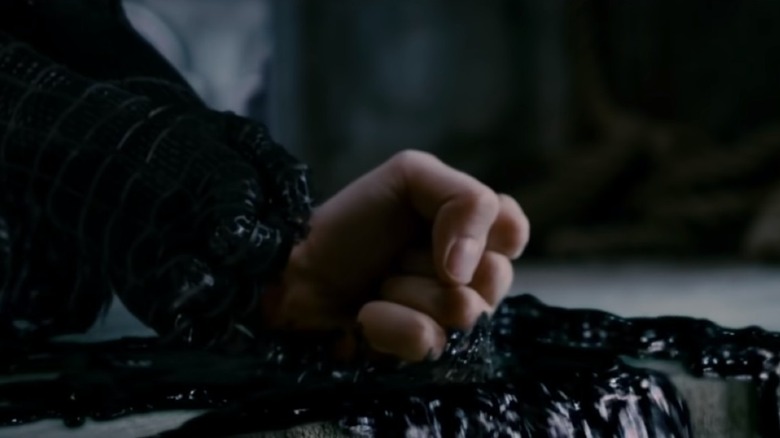
However, after Eddie/Venom disappear, the camera lingers on a small chunk of Venom that has been left behind on the bar. It remains still at first, but then suddenly, the goop begins to wiggle. And we all know what that means.

What Does This Mean For The Future Of The MCU?

Well, the mid-credits scene for "Spider-Man: No Way Home" basically undoes what the credits scene for "Venom: Let There Be Carnage" did. It's kind of a bummer for anyone who was excited to see weirdo Eddie Brock and the Lethal Protector meet up with Tom Holland's Spider-Man. The "No Way Home" credits scene basically pulls the rug out from everyone while setting up the symbiote suit Spider-Man storyline for a future sequel (which may be in the works already, depending on who you talk to). Plus, it doesn't entirely make sense since Eddie/Venom didn't know Peter Parker was Spider-Man until they entered the MCU, which appears to go against the explanation for how the rest of the previous Spider-Man villains ended up in the MCU too. But I digress.

Personally, I think it's for the best that the Venom from the Sony Pictures universe of Spider-Man characters stays separate from the Marvel Cinematic Universe. The "Venom" franchise is much more odd and goofy than what's happening in the MCU, and the characterization of Venom doesn't exactly fit in with the Marvel Studios vibe. This credits scene allows a new Venom to appear in the MCU and will hopefully give us a much better version of the symbiote suit story than we got in Sam Raimi's "Spider-Man 3."

Then again, we're still not entirely sure how the future of the MCU and Sony's separate universe of Spider-Man characters will play out. Let's not forget that "Morbius" is coming soon, and the trailer featured Michael Keaton reprising his role as Adrian Toomes, AKA The Vulture from "Spider-Man: Homecoming." It's possible that this is a different iteration of the villain than the one we've already met in the MCU, but I feel like that's going to be confusing for general audiences, even after they've experience the multiverse mayhem of "Spider-Man: No Way Home."

Whatever happens next for Spider-Man will likely depend on the events of "Doctor Strange in the Multiverse of Madness." Since "No Way Home" being bumped up on the release schedule resulted in some rewrites for the "Doctor Strange" sequel, there will likely be a variety of ramifications for whatever happens in Sam Raimi's return to Marvel Comics adaptations. After all, Tom Holland is contracted to appear in another Marvel Studios project outside of "Spider-Man: No Way Home," and a multiverse madness seems like a perfectly good reason to bring the webslinger back before he gets a new trilogy. We'll just have to wait and see what happens when "Doctor Strange in the Multiverse of Madness" arrives in theaters on May 6, 2022.

Read this next: The Best Movies Of 2021 So Far

The post Spider-Man: No Way Home Credits Scene Explained: Well, That Didn't Last Very Long appeared first on /Film.

18 Dec 02:14

Station Eleven Cinematographer On Capturing The Post-Apocalyptic World Of The HBO Max Series [Interview]

by Joshua Meyer

"Station Eleven," now streaming on HBO Max (read our review), serves as an antidote to the dour color palette and mood of other post-apocalyptic narratives on television and in film. Laced with humor and heartache, it's perhaps the brightest, most fanciful end-of-the-world drama you'll ever see. The 10-episode miniseries follows several characters and their interconnected lives during a global pandemic and its aftermath.

Needless to say, it's a show that very much mirrors our own reality. "Station Eleven" dropped its first three episodes on December 16, 2021, and it's rolling out new episodes, two at a time, over the next few weeks, all leading up to the finale on January 13, 2022.

I recently caught up with Steve Closens, one of the show's cinematographers, who shot episodes 2, 5, 9, and 10. He was generous with his time, and over the course of our extensive interview, we covered a wide array of topics, including the show's aesthetic and tone, taking over a whole airport wing, reenacting a speech from "Independence Day," shooting a pandemic series in the middle of a pandemic, and collaborating with the show's other cinematographers, as well as actors like Mackenzie Davis, David Wilmot, and Himesh Patel.

This interview has been edited for clarity.

'We Wanted To Bring Color And Playfulness And Whimsy'
In the first episode of "Station Eleven," we see this fictional flu pandemic rapidly unfolding in the present. And there are these quick match cuts or flashes forward, but it's not until the second episode, really, that you set us down in this post-apocalyptic world. Can you talk about how you sought to build that world and the characters in it visually?

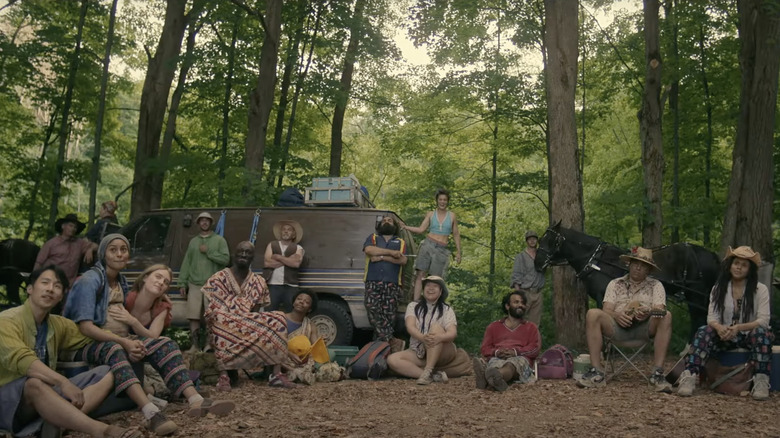
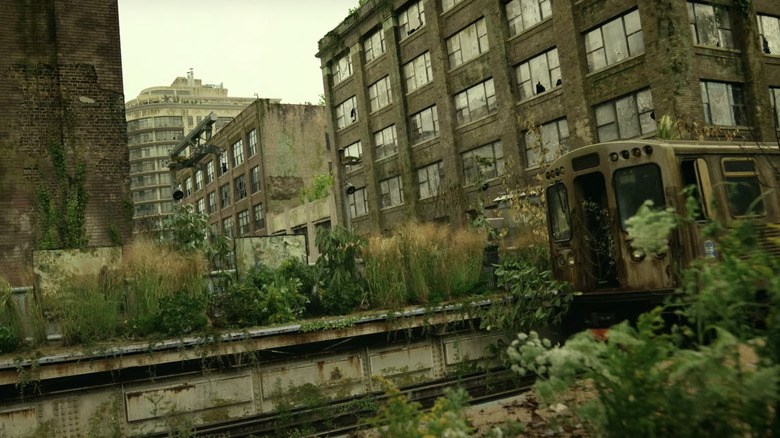
Yeah, the first meetings that I had with Ruth Ammon, the production designer, and [director] Jeremy Podeswa, and with Patrick Somerville, the writer, a lot of those conversations were about world-building. And what does Year Twenty look like, and what's important to convey in that time? And for Patrick, one of the things that was really important for him is that the future is not daunting. And even though we're in this kind of post-apocalyptic, post-pandemic world, he wanted nature to feel, um, that it's friendly. It's not, you know, it's not to be feared. It's not like some of these other post-pandemic or post-apocalyptic shows where nature is all burnt out and kind of scary.

Like "The Walking Dead" or something?

Yeah, something like that. So that was kind of a stepping-off point, you know, that we, Patrick, wanted it to feel colorful and he wanted the greens to feel lush and not be foreboding. So it was pretty easy, once we knew that, we knew that any place that we went into, yes, it would be broken down or it would be aged. But there would still be some lyricism in the design of the sets or there would be pops of color. There would be some playfulness in those textures. And it was something that Patrick and, well, all the creatives talked about that, is that we wanted to bring color and playfulness and whimsy to the future. And so you'll see, obviously, that a lot of the wardrobe is quite playful and there's color. Everything's not just drained out and foreboding.

'I Really Wanted To Embrace Nature'
You're following this troupe of Shakespearean actors, and I thought when the title comes up in episode 2 and they're rolling into town, it was almost like a Mardi Gras atmosphere. But then later, when you get into "Hamlet," there are some very intense emotions going on with Kirsten, played by Mackenzie Davis. What was the process like in terms of finding the visual language to achieve that balance of tone?

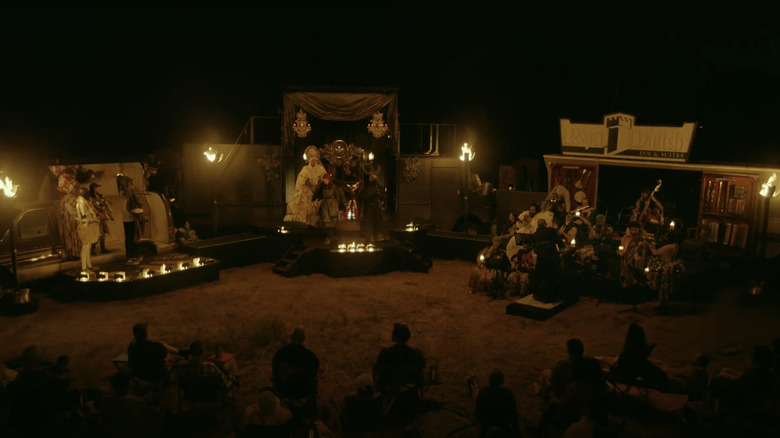
Well, the "Hamlet" performances we talked a lot about because we knew that they were both at night, and so the only means to light them for the most part would be fire. And so that was a big conversation that we talked a lot about, especially because the first performance is outside at night and we were concerned it was actually right on the water. And we were concerned about the winds, in particular, that would come up and possibly just blow everything out. So that was how we positioned the stage. You know, the kind of flames that we had and the things that we built around the flames to protect them from wind was obviously important.

In terms of the aesthetic, it was something that was important for Jeremy, and that is, that it was organic. And I would say that the show as a whole has quite an organic feel to it. I used natural light and practicals wherever I could, and I really wanted to embrace nature, and that was kind of in-tone with the themes of the show, too. So wherever I could, whether it was shooting in the airports or even on stage, as much as we could, I would try to incorporate just natural light coming from the outside, coming in. That was true with the Shakespeare pieces, as well.

'We Used Firelight On Her In The Flashbacks'
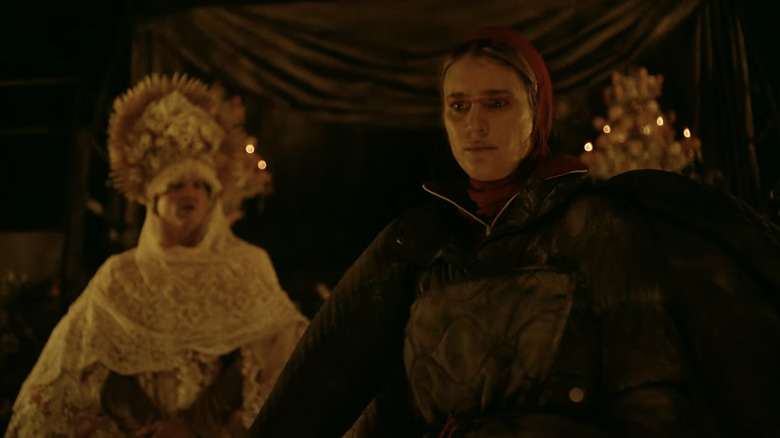
We wanted to just use natural light and let the flickering be alive, and let it be, let it be what it is. I would say the tone, the tone of the pieces, you know, it was Shakespeare. They're slightly ... they wanted to stand apart, visually. And really, the set design, being on the stages, being on these cars that convert into the stages, and the lighting kind of is what set it apart from a lot of the other locations. Similarly to how we covered other scenes, it was more static, except for ... in some of the scenes, we shot handheld to kind of mimic some of the shooting in episode 1, where they go into handheld mode when they're onstage.

With this show, there are a lot of interesting juxtapositions, but one that really stood out to me was when you have Kirsten performing ["Hamlet"] and it's intercut with flashbacks to her own life. I thought that was a really interesting way of making these lines of Shakespeare kind of fresh and letting us feel them. How did you arrive at that and those particular juxtapositions of images?

Well, that was actually a decision that was made after, in the edit. Originally, the cutting to her in the past, there were a couple of things that we were going to flashback to. There ended up being a longer sequence now that we cut back to, where you see her with the two brothers and their condo, and that whole sequence was kind of extended out. It was never really intended to flashback that much. But something that we did, and you see it a little bit in the cut, I think, is that with all the firelight that is being used on the stage, we went to young Kirsten in the room, we used firelight on her in the flashbacks when she's in that room.

Oh, really?

Come to think of it, I think it actually got cut out, to be honest. Now that I'm thinking about it. But yeah, we knew that we were going to flashback to her when she was younger. We knew that we were going to be cutting to her memory, so it was really in sort of how we covered it.

'We Took Over This Whole Airport'
You mentioned shooting in an airport.

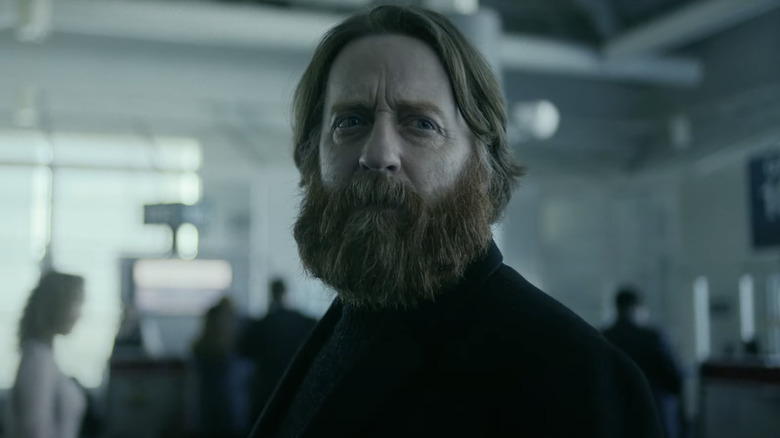
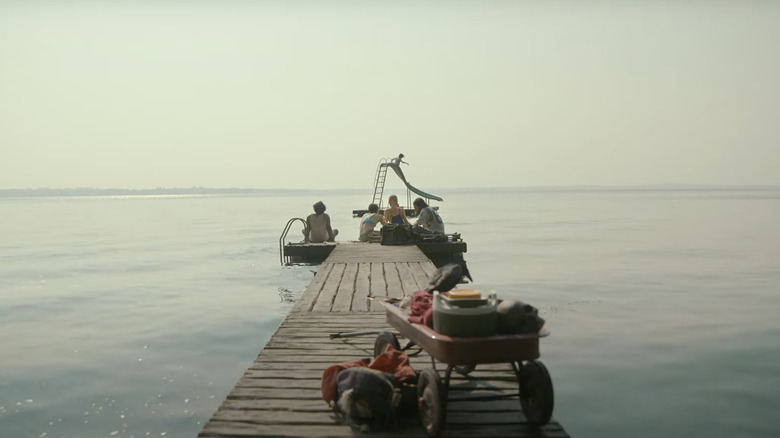
We were in Toronto out at our main airport. They have a whole wing that they have leased to a film company because they just didn't use it. And we were the first production to shoot in this huge wing of this airport and we basically had free reign. We could pull up a plane right into the jet bridges. And we took over this whole airport and designed it and it's quite beautiful.

You were also shooting in Canada in winter and on the water with cranes. What were those experiences like?

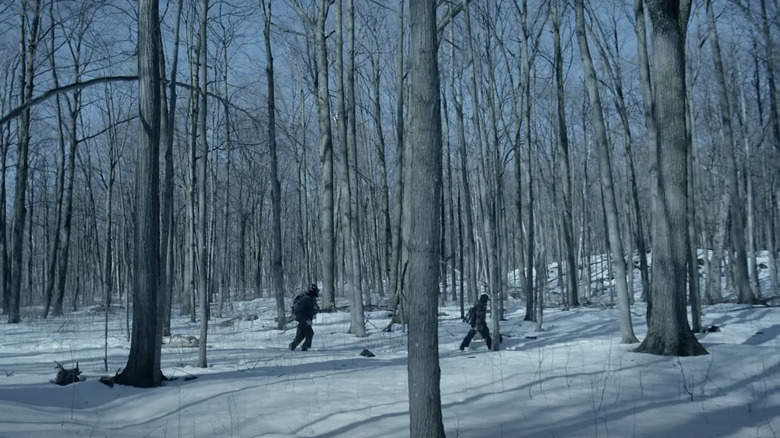
Yeah, so the production started shooting in Chicago. Then, the pandemic hits and then, when they picked up production, they moved it up to Canada. I actually live in Toronto, I'm Canadian, and so when they came up here, the timing of it, all of it was going to be shooting in mostly winter up here. The nice part of it is that for the scenes where we needed a lot of snow and a lot of deep snow, we were able to get that not too far north of Toronto, and it really was in the peak of winter. So it was cold and the location that we had was difficult to get into, and it was a real test of the crew at the time, man. It was like, if we can get past this little block of time that we're shooting up here, then we can do anything, because the snow is super deep and it was cold and it was really challenging for the crew. But the location that we actually got, this beautiful cottage in the middle of nowhere, was really worth the battle because it was beautiful.

'It Was Kind Of A Road Movie'
You have one character on this show who is an artist, but who is working in logistics. So I just wanted to ask you, as a cinematographer and artist, how the logistics of working on this series compared to your previous television experience. Was there a lot more coordination that you had to do with the other DPs because of the time-jumping nature of the show?

Yeah, exactly. You know, because the show jumps forward and backward in time, Daniel Grant, the other DP, and I were always kind of flip-flopping locations. I would go there on one episode in Year Twenty and then he would maybe move in after me and shoot Year Zero there. Sometimes the lighting would have to change, or they'd have to spend a couple down days to redesign it and change the set decorating. And then one of us would move back in and shoot it.

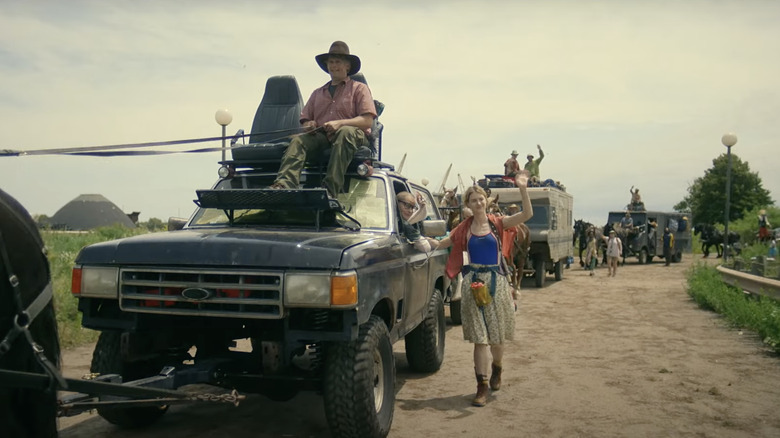
It was kind of a road movie, really, because once we start shooting with the traveling troupe of actors and musicians, they were on the road the whole time and so every week we were in a new place out in the countryside. Just on the road moving a large crew of people, so we actually had to move really quickly and it really required everybody to be at the top of their game in order to just logistically make it all happen. And Daniel and I were sharing a lot of information all the time in order to help each other out and to really slide into these new locations easily.

'That's Where All The Magic Came Out'
How did you all delegate who was going to handle what episodes? I know you did the last two, also, and episode 5. Was it just something where you, I don't know, called dibs on what was most appealing to you? How did that work?

Well, it was actually Jeremy, I shot all of Jeremy Podeswa's episodes. He wanted to shoot specific episodes, and so his were originally, he was going to do 2, 5, 9, and 10. As we got into it, we just realized that Jeremy was going to need to do more work for 9 and 10 and didn't really have the time to shoot 5. Lucy Tcherniak ended up directing 5, and I was really keen to work with her and so that all worked out. I got to do an episode with Lucy and three with Jeremy, and so it was really Jeremy's choice.

You were talking about coming in and shooting in the same locations or coming and going. There are some parts where you seem to have pre-lap dialogue or voices from the next scene coming in, and there's almost this stream-of-consciousness flow of images going on between one time period and another. Did each crew shoot everything for their own episodes, or were you able to kind of share some footage?

For the most part, each block, we shot all our own footage. All of that cross cutting and the kind of jumping back and forth in time was something that, in the editing process, that's where it was refined. And really, that's where all the magic came out.

We knew while we were in production that we would be going back and forth in time. When those moments would happen were not always clear. Sometimes we knew when that was going to happen, but not always. Sometimes we were able to anticipate out that, oh, we're going to be going from this snowy cool exterior winter scene to the interior of an abandoned Kmart. You know, we were able to anticipate what the two looks would be and to kind of play with the different colors and textures in those two scenes.

'A Lot Of Sharing Of Ideas'
Did you have, like, a DPs' room? I'm just imagining, in the same way that you would have a writers' room, how did you keep up the huddle or keep things together as you were going?

First of all, Daniel and I, we talked several times with [DP] Christian Sprenger, and he sent us mood boards and color boards and images and stuff like that at the beginning of the show. But Christian really said to Daniel and I, especially because, when Christian and [director Hiro Murai] had first started shooting the show, they didn't even have multiple episodes. They didn't even know where it was going. You know, they shot 1 and 3. But they didn't know what in the future was actually even going to happen. So when it moved up here and we had now, you know, the full scripts, Christian was really generous in a way and he said, you know, I trust you, guys. I love your work. Just go for it.

So Daniel and I, after we saw episode 1 and 3, and then we all had a meeting and talked a few times, Daniel and I just said, OK, well, this is what we're going to do and after that it was kind of Daniel and I just really continually updating each other.

And we'd have the odd meeting, but mostly it was conversations on the phone while Daniel was, you know, at 5:00 AM, going to one other location, then I was coming back from some other place. But a lot of sharing of ideas and really just being as generous as we could with each other.

'It Was From The Scripts That I Started To Take All My Cues'

You have this scene where the guy is auditioning for the Traveling Symphony, and it's a funny moment where he uses Bill Pullman's "Independence Day" speech for his monologue.

Yes, yes, I love that scene.

I was just wondering, did you go back and watch that scene in the 1996 movie? Were you in any way referencing it, or did you just try to be in the moment with the actors since it's more about the memory of that scene among these characters?

Yeah, I always really loved that scene and I'm sure I've seen "Independence Day" when I was 12 or something, but no, I didn't go back and watch it. But we knew that it was going to have its own sort of isolated ... you know, that moment was going be special for him. And when I saw that they had put that texture of an actual microphone on there, I was so happy. It was such a great, you know, aesthetic choice, acoustic choice. And I love that scene and I love how it goes from there into the music that leads into the aerial shot for the first time.

You were also the DP for "Big Driver," a Stephen King adaptation.

Ah, yeah, a long time ago.

With projects like that and "Station Eleven," where you're drawing from a novella or a book, are you consulting the original stories much for visual ideas? Or do you have some other springboard you're using?

Well, I had read the book, but really, once I started getting Patrick's episodes, his were so powerful and so clear, and they had different locations, and it's just, they're different. The essence of them is the same as the novel, but they're different, and I really just started to dive into the scripts. It was from the scripts that I started to take all my cues for visuals and the world-building.

'We Were Shooting, In The Middle Of A Pandemic, A Series About A Pandemic'
I'm sure you might be getting this question a lot, but you had mentioned it earlier. How did the real-life pandemic impact this production? You were in production, and then all of a sudden, life starts imitating art in a big way. Did you have to readjust a lot, and did that factor into the storytelling approach? Or was it something you felt more just in the shooting schedule and set conditions?

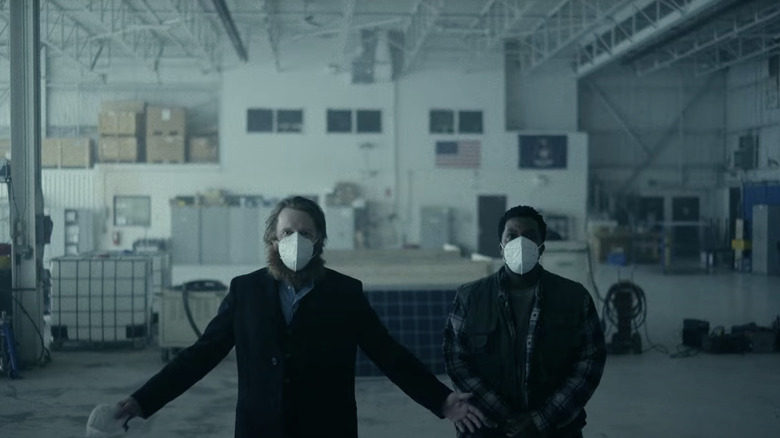
So, the fact that we were shooting, in the middle of a pandemic, a series about a pandemic, for everybody, it was quite emotional, I would say. And we all knew the writing was so good, and we were also excited by what we were making. At the same time, it was one of the most, I think everybody on this crew has said it was one of the most beautiful times of their lives and the most difficult, and I love that quote.

It's actually in the trailer, I think, when Jeevan's brother says that, and we all kind of felt that. You know, it was really difficult to make and really challenging, but at the same time, we felt it was really important to put this message out.

For other cinematographers or aspiring cinematographers who might be reading this, can you talk about using the ALEXA Mini and then some of those other vintage lenses that you used?

Yeah, well, we shot the ALEXA Mini and we shot the LF, so it's a large format ALEXA Mini, which just gives you a really nice depth of field, nicer color. It's just rich and beautiful. The lenses, we used a couple of different lenses. We used the Tribe7 Blackwings, they're called. That was one set. And then we also had another set of Masterbuilt lenses. Both of the sets were sort of tuned to have vintage qualities. They were sort of softer on the outsides, softer around the edges of the lens. And I would say that they're more susceptible to flaring, but also just, like, a nice creamy softness to them. For myself and Daniel, we just felt it was the first time we'd both used these lenses, and we really fell in love with them and I thought it just lent a nice patina to the show.

'Shooting Documentary, I Always Recommend It To Younger DPs'
You also have some documentary experience in your background. Did any of that skill set come in handy for "Station Eleven?"

Well, for me, I have shot a fair bit of docs in my life, and it has always helped me in my shooting of drama. Because when you're shooting documentary, you need to learn to be flexible and adaptable and to be able to shift when things change. And those skills are something that I bring to drama all the time. And I would say it's probably one of my strengths is that I am easy to just move or adapt and to move on to something else if things change, and to let an actor decide to do something different on set, and to move to a different place in the set and know that, OK, I can, I've got to change my lighting setup.

So yeah, shooting documentary, I always recommend it to younger DPs to try and shoot doc because it really just allows you to move, move with people, too, especially if you're shooting verité, if you're following handheld and you're moving with somebody, you need to move into a house, like how do you situate yourself in relation to that person and the light. So yeah, I use my skills from documentary all the time.

I saw you have a music coordinator, and I was just wondering, is everything shot and edited by the time the music comes in or were you working closely to kind of synchronize the images with the musical score?

I think, because there's an orchestra in the film, often they needed to be able to sync up the music and what they were playing and what some of the different artists were playing in some of these scenes. So the musical coordinator was there to kind of facilitate that. But all of the score was done after. Although once in a while Patrick would send a little clip of some of the music that was being done, which was really exciting because it was a really beautiful score that was happening.

'The Whole Cast Was Just So Easygoing And Generous'
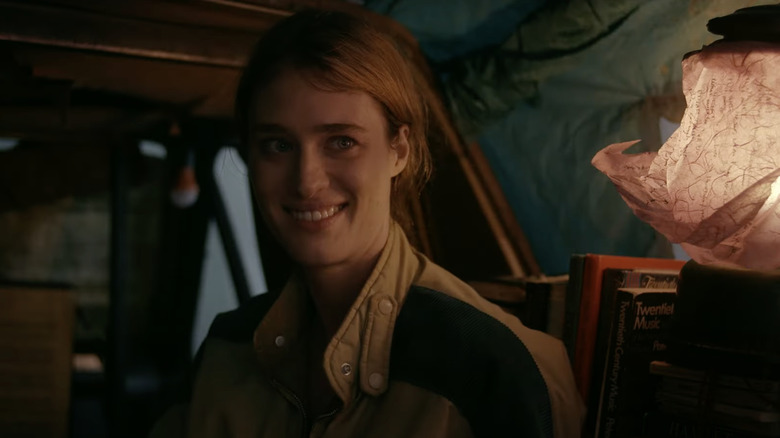
Can you talk about working with some of the actors that you did? In the second episode, you introduce us to Lori's Petty character, and before that, we've seen a glimpse of Mackenzie Davis, but you kind of help us to get to know her better. What was it like working with them and the other actors?

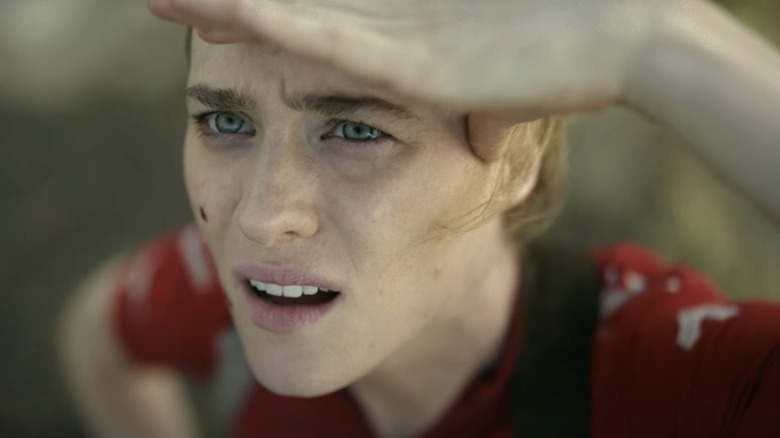
Yeah, well, Mackenzie is a wonderful actress, and, really, such a grounded, gentle energy on set, and really, so generous with the other actors and with crew. And one thing Mackenzie did that I always really appreciated is that she started to do this thing where, I think it was Friday afternoons, or just at lunch, we would all stand in a big circle. And that one day, I think she chose normally, somebody would step into the middle of the ring and remove their mask so that people, the whole crew, could see what their face looked like. Because we were all of course totally covered.

Everybody would, you know, you'd get in the middle, you'd be all shy and self-conscious and you'd take your mask off. And everybody would applaud, and then you put your mask back on and go on with the day. But we started to do that every Friday and it was such a beautiful thing that she initiated, and it really made us all realize just also the value of connecting with each other. And seeing each other without a mask and the importance of it.

And then the other actor that I worked with quite a bit was David.

David Wilmot?

Yeah. And you know, David, I'm pretty sure he comes from a theater background, but he was amazing.

He, so many times, really just blew me away and also was really generous with the other actors. And I would say that, generally speaking, the whole cast was just so easygoing and generous and really understanding that we were shooting in difficult conditions. And really, just being part of the team and not separating themselves from the crew. We were all aligned, energetically, I would say.

'I Spent A Lot Of Time Just Observing Nature'
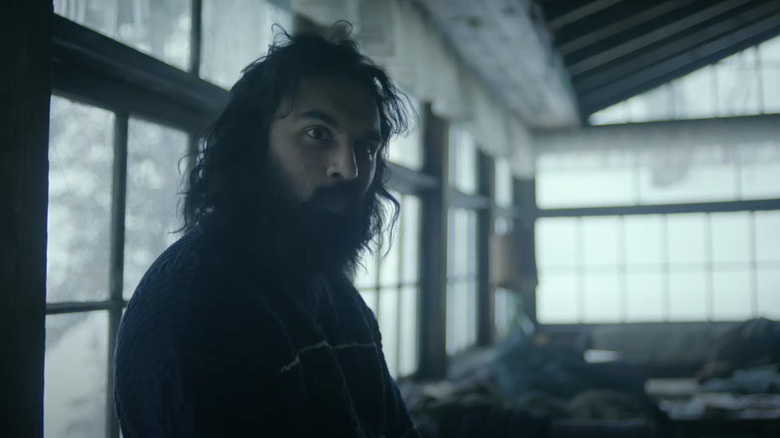
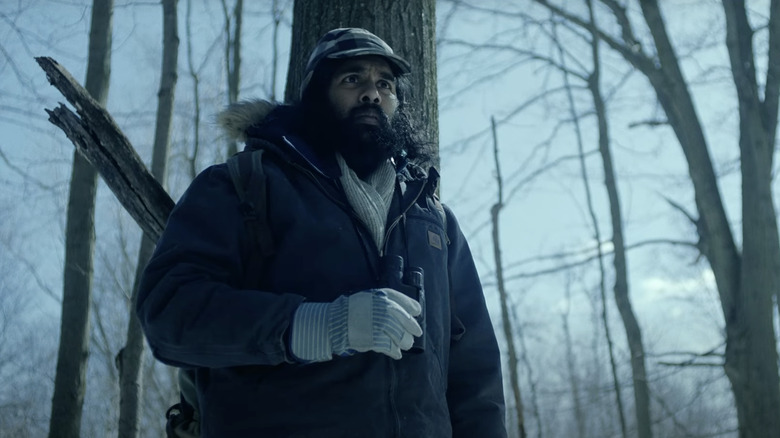
I want to actually mention another actor and that is Himesh Patel, too, because I did quite a bit of work with him, and in fact, episode 9, that is kind of the climax of his character in episode 9. He's such a wonderful, generous, vulnerable actor and it was such a pleasure to work with him. Really, really special guy.

I want to steal a question here from the Team Deakins podcast. I don't know if you ever listen to that.

Yeah, yeah, yeah.

They always start off every episode where they're asking just how the person got to where they are. How did you get to where you are? I mean, you've had a long career now for, it seems like 20 years. How did you find this career and then how did you get to this point where you're doing this show?

Well, I went to an art school. Going back to my childhood, I was born in Alberta, on the prairies. And from there, I lived there for several years, and then my dad was an RCMP, a policeman. And we moved up to Iqaluit in the far north of Canada, which is an island which is just tundra and ocean. That's it. And then from there we moved to the Yukon, which was also just a small village and it's kind of, you know, just the wilds of northern Canada. And so, for the really formative years of my life, I didn't have any TV, I was really just kind of out with nature and being at one with nature. It sounds really cheesy, but you know, I spent a lot of time by myself and I spent a lot of time just observing nature with big sky.

I've often said that on the prairies, especially up on Baffin Island, which is where Iqaluit was in the north, your eye kind of gets a chance to develop, like the world comes at you very slowly. And I really do credit my early formative years of living in these wide-open spaces. It's just influencing the way that I see the world and my temperament.

'I Really Felt Connected To It'
As I got older and I developed an interest in film and photography, and I went to an art school in Vancouver called Emily Carr College of Art and Design. And it was a primarily experimental college where really the focus was on process and I always found that when I got into the film industry, that experience of having honored process really served me well, because I would get onto a set and I would just be able to be more patient and more flexible and just roll with things because I was used to this, I guess. My creative DNA was in honoring process. Instead of having this idea that something should be a certain way, I would just go into something, being more open to see how it would flow.

That's always been something that I find directors have often said to me, they've just always told me that they liked that I'm collaborative and easygoing. And I think a lot of that comes from my, a, background and, b, my training.

When it came to "Station Eleven," especially because so much of it was out in nature, like, I love photographing nature, and so the fact that a lot of these scenes I was doing were out in nature was a real pleasure because I really felt connected to it.

'This Show Started With Christian Sprenger And Hiro Murai'
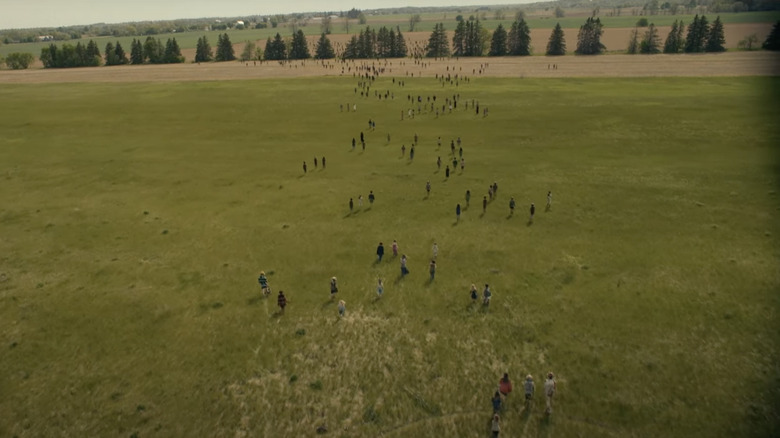
This show started with Christian Sprenger and Hiro Murai. They shot episode 1 and episode 3 and they kind of established this look. When eventually the show moved up to Toronto and I saw those two episodes right away, I was like OK. I'm good. I love how this looks, they're speaking the same language as me. I can roll into this show no problem, and it wasn't even that I had to think about how I was going to do it. It was just I felt so aligned with Christian and Hiro's aesthetic that it was so easy to just jump on board. But those guys really set the tone, and especially, the one thing I noticed about the show, is the pacing. A lot of shows, there's a lot of editing, and there's a lot of impatience, and I find that in "Station Eleven," it sits back a little bit, and it lets things come at you a little bit, which I really appreciate.

It was something that I really held onto when we were shooting. It's just this idea of not over-covering it. Knowing that, OK, we want to sit and we just want to watch these two people talk. We don't necessarily want to get into two sizes of coverage, you know. And also, Patrick, that was something really important to him, too. He wanted to see wide shots. He wanted to feel the world. He didn't always want to just be in on people faces. And he really helped set the tone and the pacing of the show, which are really something that I think makes it stand apart. And I really appreciate it.

Read this next: The Best Movies Of 2021 So Far

The post Station Eleven Cinematographer on Capturing the Post-Apocalyptic World of the HBO Max Series [Interview] appeared first on /Film.
18 Dec 02:13

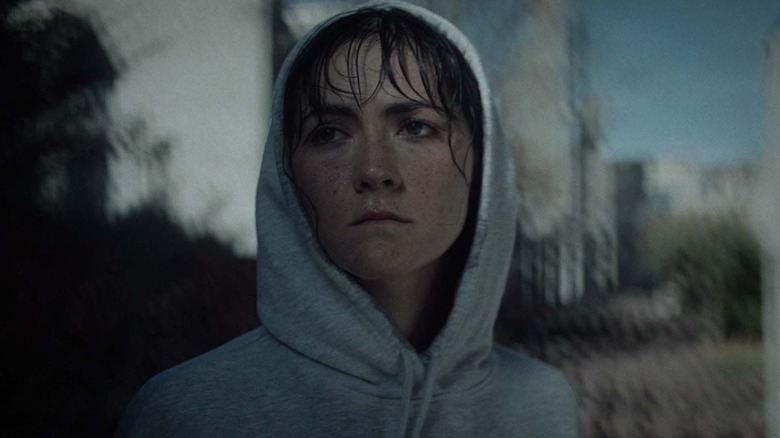
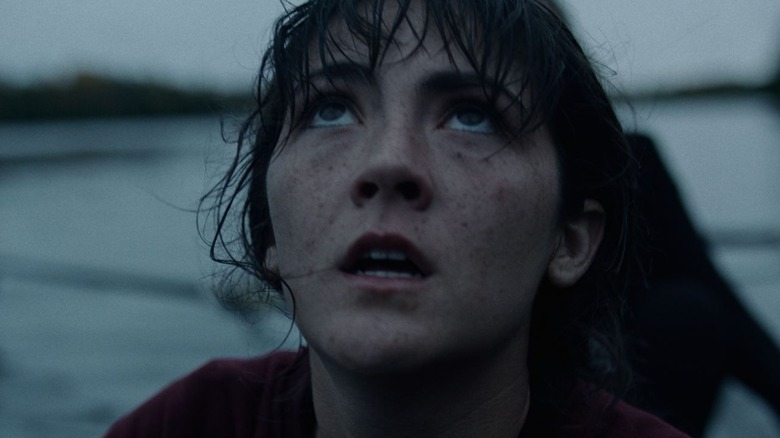
Isabelle Fuhrman Brought Blood, Sweat And Tears To The Novice, And Still Had Plenty Of Fun [Interview]

by Shania Russell

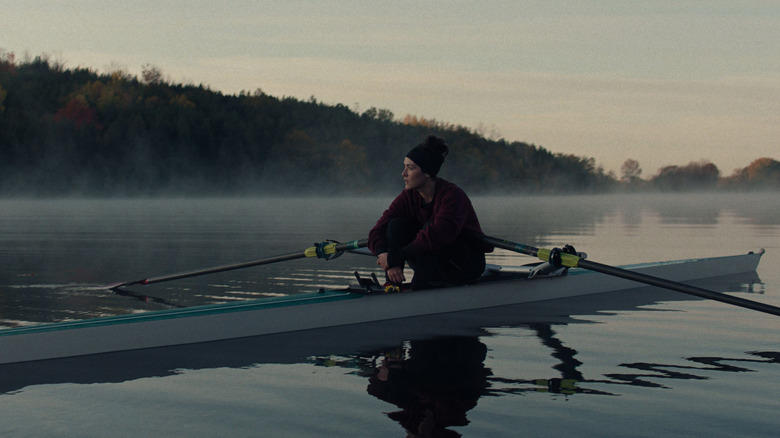
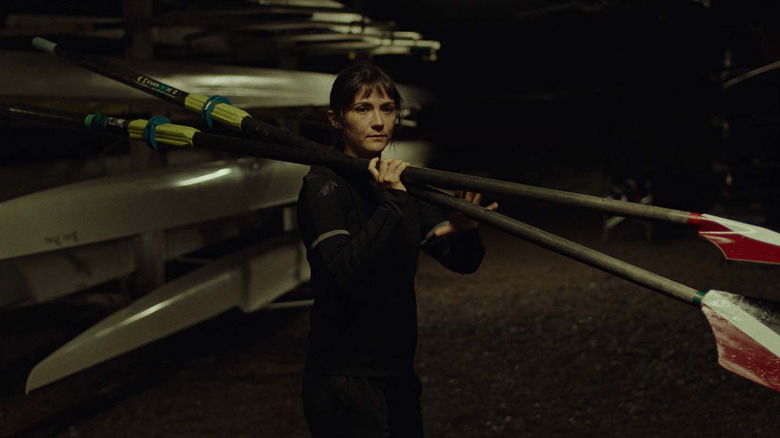
Movies about obsessive geniuses perfecting their craft are aplenty, perhaps because there's something so naturally magnetic about someone fueled by passion. "The Novice" takes the best of this sub-genre and adds a couple of dark twists: namely, a mysterious protagonist who isn't so much a genius as she is willing to push herself to the absolute brink for success. Why? Because Alex (Isabelle Fuhrman) likes a challenge. That's more than enough reason to kickstart a cinematic, psychological descent into the world of collegiate rowing.

As Alex sets out to make varsity, no matter the cost, "The Novice" creates a world that's gripping, lonely, and deeply unsettling — none of which would be possible without Fuhrman front and center as Alex, delivering an absolute powerhouse performance. Or as /Film's own Hoai-Tran Bui put it, Fuhrman is "a force of nature, ripping through the dark and intense sports drama-meets-psychological thriller." Turns out that's not an accolade easily won, and took some good ol' fashioned blood, sweat, and tears for Fuhrman to earn.

She began her crusade by first securing the role: immediately after reading the script, Fuhrman went above and beyond by submitting an extra scene and penning a letter to writer-director Lauren Hadaway about her connection to Alex. And then Fuhrman really kicked into gear. The film follows the journey of a novice rower and her obsession with the sport so naturally, Fuhrman dedicated hours to training as a rower. "I went from not knowing anything about the sport to training for six hours a day in the marina," Fuhrman told me. 

"My hands were bleeding. I was getting my blisters infected. I was so sore. I was exhausted and I was doing weights after I would go rowing for six hours. And it really helped me develop this understanding of falling in love with this sport and becoming obsessed with it." 

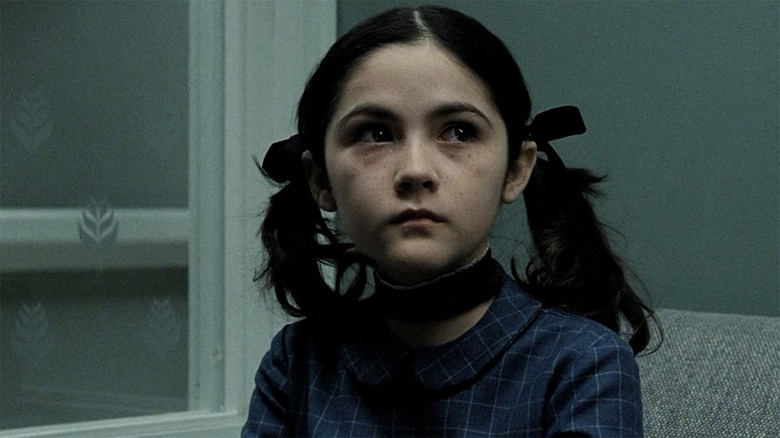
No kidding. All of this ultimately helps Fuhrman deliver an impeccable performance, fully immersing us in the mind of Alex. In our conversation, Fuhrman goes in depth on her training process, her approach to the mystery of Alex, and talks through the emotional climax of her character's relationship with her girlfriend, Dani (Dilone). Plus, she even spills a few details on returning to the role of Esther in the upcoming film, "Orphan: First Kill."

This interview has been lightly edited for clarity.

"I Went From Not Knowing Anything About The Sport To Training For Six Hours A Day."

I wanted to start by asking about your early conversations with Lauren, about who Alex is. How did it evolve, as you went from reading the character on the page to knowing this is the character you're going to embody?

It always changes as you start developing a character with a director. When I read the script, it was very clear to me who Alex was, and I felt very seen by this person who was very driven and ambitious and really wanted to play this role. And I taped an audition and taped an extra scene and wrote a letter to Lauren. And then when we sat down and met in person, we really talked about how Alex is haunted by these naturally gifted people and how she's always attracted to a challenge. And I had already kind of made my own notes as well about Alex. So we just started talking about how we felt like we wanted to tell the story together.

​As we started filming, more so when I started training, it kind of evolved as I was physically becoming Alex and learning how to row. Because I rowed the entire movie. I didn't have a double or anything, and that was an entirely new sport to me. So I felt like my transformation into Alex really happened through my training process because it was just as intense as Alex's training process in the movie that you see. I went from not knowing anything about the sport to training for six hours a day in the marina and my hands were bleeding. I was getting my blisters infected. I was so sore. I was exhausted and I was doing weights after I would go rowing for six hours.

And it really helped me develop this understanding of falling in love with this sport and becoming obsessed with it, and wanting to be so good at it — not just for Alex, but for my own reason as an actor, wanting to look convincing on camera and really becoming obsessive compulsive about how well I was doing. And that really just drove my performance through, I felt. And the exhaustion, that added a lot, a whole other layer to it as well.

Can you talk more about the physical challenge of this role and the process of learning to row and what that was like for you?

It's a really difficult sport. I'm not particularly coordinated. I run, it's the exercise that I do because it's the same thing over and over and over again, you can't really mess it up unless you fall, which I've done many times. But rowing was a whole different kind of technique to learn, and it is cyclical as well. I think my technique was constantly evolving. I was constantly having the coaches that we had on set check it, tell me how I was doing.

Because Lauren rowed in college, I was really lucky that she was able to come over to me when we were filming scenes and be like, "This is what you're missing. You're not having enough connection here," but my whole physical transformation really, it was something I knew I wanted to do. I knew that because I didn't look like a rower like Alex — Alex is not the height of a rower, doesn't look like she could be a rower. I knew that the physical transformation had to be noticeable. So for me, that was gaining 12 pounds of muscle and dropping my body fat percentage and making sure that I looked as muscular as I could be in certain scenes, and looking kind of scrawny in others. And that was actually done with hydrating and dehydrating myself, depending on the scenes we were filming during the day.

But that's just more aesthetic wise. The whole physical transformation really came from learning the sport, and that was hours and hours in the water. It was six weeks of six hours of rowing a day, doing weights three to four times a week, doing yoga and stretching. My hands were completely cut up and bleeding. I literally would just take scalding hot baths at the end of the day, just to remind myself that I was here on this planet and I was okay and I'd be fine.

"It Just Kind Of Felt Like My Life Was Bleeding Into Alex's."

Which adds that meta layer of... you're doing exactly what Alex is doing in the movie.

It just kind of felt like my life was bleeding into Alex's at times. And we're very different people, but we have the same ambition and drive. So it was fun to play with this part of myself that I think I would consider a darker part of my personality that I don't always like to look at or talk about. Because, ya know, I live in LA. People who are ambitious, people don't really like them. Everyone's kind of blase, like "Oh, it just happens. I wake up and it just happens." And I'm like, "What do you mean it just happens?"

So it was nice play with this part of myself that I think I don't really allow myself to play with very much, and to really see where I could take this part of myself and bring it in, discover it through this other person and also really understand it on a completely different level that I've never had before.

It's funny that you mentioned all the gruel of learning how to row and the blisters and all of that, and also in other interviews... I've heard you describe the filming experience as fun. Can you talk about that little clash there?

Much like the movie is a love story between Alex and this sport, I felt similarly about the film. I had such a huge crush on the script when I read it, and so loved it. Met Lauren, was like, "Oh my gosh, this would be so great. I hope this works out." And we ended up working together, and throughout the entire shoot, I was so energized every single day to go to set.

I think it's because this movie is a role that any actress would die to play. To really dive into something, not just mentally, but physically, and to really transform yourself and to be able to be on set every single day and be not only, I guess the lead of the movie, but to be a creative collaborator with Lauren, who is probably my favorite director I've ever worked with. I loved working with her every single day.

It really felt that not only she and I were on the same page, but our DP, Todd, all of the other actors, everyone on the crew had read the script. We were all aware of the movie that we were making and it felt like we were in this creative Petri dish making this magic every single day. And even though things were obviously going wrong and you're making an independent film in the freezing cold in a boat for goodness sake. There's 12 boats circling around, the city opened the dam, all the boats are dragging down the stream and we're trying to row in the opposite direction so we can just film the shot.

But at the end of the day, I had such a great time and not only was it because I loved the project ... but because I made a conscious decision that I wanted to set a tone, that we were going to have a fun time making this movie. And when you're the lead of a movie and everyone's watching the monitor and staring at your face all day, which everyone had to do for the whole shoot, I wanted everyone to be able to feel like I was having a good time. So, you had this sort of excuse to be like, "Even if things are falling apart, at least Isabelle's having a good time." And I really did.

"The Movie Is Alex. It Is Her Character. You Really Kind Of Step Into Her Mind."

Alex's character, especially at the beginning of the movie, she's very much a mystery to us. We don't learn her name at first, we don't know why she's going to this practice. And some of those questions never really get answered explicitly. For you, do you think that the answers are there in the script or do you think they don't need to be?

I think there's certain answers for certain parts of those questions, but not for the entirety of it. Lauren wrote it, but I loved the fact that in this movie, you don't answer this question of why she's there. And for Lauren herself, she rowed in college and she always says she got a flyer and it just seemed like more of a challenging intramural than something else that she could do. And she liked a challenge. So for me, it was really capturing this sort of fascination and obsession and kind of love for the sport, not understanding why, and how that leads to the goals that you set for what you want to achieve. And I think for Alex, it changes all the time in the film. And I love that you don't really get to know so much about her.

I feel like you live in her head in the movie and the way Lauren directed and edited the film and sound and everything. The movie is Alex. It is her character. You really kind of step into her mind, and you're like, "What is happening?" And I don't think we as people often have the answers to the questions like "Why are you doing what you do? Why do you love this job or have this passion?" And sometimes it just comes from something inside of you that you can't really explain. And I love that our film poses that question without answering it.

With this role — and maybe also with others — when there are questions that aren't explicitly answered in the script, do you fill in those gaps for yourself? Or is something that you can leave up in the air?

It felt pretty answered to me, but not because I tried to. I didn't know anything about rowing and from the moment I read the script, I was fascinated and interested and intrigued and curious. And as I was rowing to prepare for the role and even throughout the movie, I really felt like I loved the sport. I lived and breathed it. I enjoyed it. I loved having one of those workouts where you literally felt like your vision was tunneling in and you were falling apart, and how you felt afterwards after achieving something like that and pushing yourself.

And at the same time, I don't know why I read the script and was interested in doing a rowing movie. I was interested in telling the story of grit and ambition, but at the same time, there are plenty of stories like that. You can find other stories like that, but there was something about this sport that piqued my curiosity, and I don't really know why. There are a lot of reasons you sign on to do something you can explain in your head. I could say, "It's the script, it was Lauren. It was this, it was that." But really there was something inside of me that just sparked from the moment that I picked up the script. And I feel like it was real because I still feel that way about it now. But I don't really know why, it just spoke to me. And sometimes things do.

"We Were On The Floor Crying. The Whole Ending Part Of The Scene Was Completely Improv."

Can you tell me about the relationship between Alex and Dani, specifically their break-up scene? What was shooting that scene like for you?

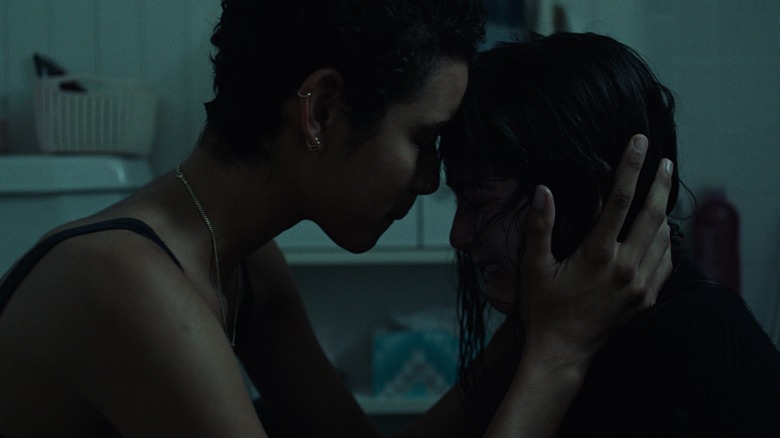
Working with Dilone was a dream. I was so excited, because Lauren showed me who we cast. And I was like, "Oh my gosh, you cast her to play my girlfriend. Like, what?" She's so stunning. And she comes on set and it's her first movie and she's just so open and vulnerable and beautiful, beautiful soul. And so generous as an actress. It really didn't feel like it was her first film. We had such a great time filming our scenes together and filming that emotional scene in the bathroom. Obviously I was like, "She's a really amazing actress," but when we did that scene in the bathroom, the scene was supposed to end after that moment where she says "second best," and they leave, sort of thing.

And Dilone just turned towards me and started grabbing at my shirt and trying to pull up the shirt and it completely changed the entire scene. It was an accident that we didn't plan. It was completely perfect. And this scene took an entire new life. We were on the floor crying, and the whole ending part of the scene was completely improv. And Lauren didn't even call "cut" for the longest time. We just sat on the floor crying and hugging each other. And then Lauren finally kind of whimpered "cut." And then she, Todd, our DP, Dilone and I cried on the bathroom floor because it felt like we had captured something real and special.

We tried to do it one more time, but that was not something that you could replicate. It felt so real. And it really was because she made a choice to really push me as an actor, push me as a character. And that's what incredible actors do. You get to know the actor that you're working with and you discover if you can press someone's buttons. I love when someone brings their A game and likes to press my buttons in a movie, because it changes the dichotomy of the entire scene and it changes what you've prepared and it really makes you find something special. And that's a rare thing to do in a movie. I think those moments come along very rarely, and when they do, they really slap you in the face. You're like, "Oh my gosh, that felt like not a movie, that felt completely real."

It's hard to imagine that scene without that moment.

Yeah. And that's because of her, truly.

Which is incredible. 

"There's Nothing Weirder Than Seeing Yourself As A 10-Year-Old When You're In Your Twenties."

I know I'm running out of time, so I wanted to also ask... You're reprising your role of Esther in the new Orphan movie. I feel like I have to ask about it. I saw it when I was definitely too young to see it. It imprinted on me a little bit. Have you always been a fan of horror and psychological thrillers?

It's funny, I don't really watch horror movies at all. I did the first movie when I was 10, so I wasn't even old enough to watch scary movies. And I haven't really developed a taste for them, I would say. But I think this movie is going to be really exciting. I really can't wait for people to see it. I watched it recently and watching the first one doesn't creep me out because it's me, but watching this one for some reason creeped me out because there's nothing weirder than seeing yourself as a 10-year-old when you're in your twenties. It's a really strange thing. I was like, "This makes no sense to me at all, but I know that I did this. I remember it. I have memories of it," but watching it's just very intense. So I can't wait for people to see.

What was it like — not just coming back to the role, but there are all these layers of, you were a kid pretending to be an adult, pretending to be a kid. And now you're reversing that a little bit.

It felt familiar, but it felt like a different challenge. Being a kid and pretending to be an adult, there were different things that I was trying to match. I mean, I was watching Vera Farmiga and my mom and her friends, and how they crossed their legs and how they tilted their heads. How women sit is very different than how girls sit. 

For me, what was really lucky is that in order for us to make the movie, we had to hire two young ladies, Kennedy and Sadie Lee, who were me from other angles. And I just got to hang out with them all the time. And I felt really childlike working on the movie, and I felt like it was a great excuse for me to revisit some parts of my childlike self, because instead of finding moments to seem more adult, I had to find more moments to seem more childlike. It was a different challenge. When I was a kid, I thought about everything a lot and made a lot of notes, but it was a different performance as a kid, because you're not necessarily understanding all the themes that you're trying to address. And in this one, I'm completely aware of everything that's going on, because I'm old enough to emotionally grasp it.

So it was really finding ways to explain to the kids that I was working alongside how we were going to do certain things and how we were going to be the same person. And really learning from them every single day and allowing them to play and dance and do things that I didn't know how to do as Esther and finding ways to make it make sense within the story. And William Brent Bell, who directed the film, gave me complete free rein to work with them on my performance. And I'm so grateful to that because it allowed the three of us to create something special. And I think people will be really interested to see this Esther that is the Esther before the Esther you've seen in the previous film.

"The Novice" is now available on Digital and in select theaters.

Read this next: The 20 Best Sports Films Of All Time Ranked

The post Isabelle Fuhrman Brought Blood, Sweat and Tears To The Novice, And Still Had Plenty of Fun [Interview] appeared first on /Film.
18 Dec 02:10

What's Underneath The Xenomorph's Skin Makes Alien Even More Terrifying

by Miyako Pleines

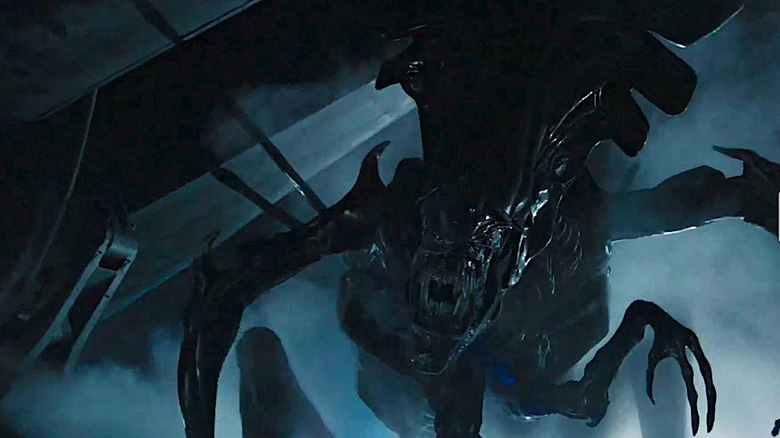
Whether you're a crew member aboard the Nostromo or gearing up for an alien battle right here on Earth, one thing is certain: Xenomorphs, in all of their sleek, gooey glory, are pretty damn scary. Originally hatched from the brilliant mind of Swiss artist H.R. Giger, the xenomorph's terrifying origin comes from an airbrushed painting done by Giger in 1976 titled "Necronom IV." Any fan of the "Alien" franchise who looks at this work will immediately recognize the elongated head of a xenomorph with its menacing teeth and human-like arms. It is not exactly the same as the xenomorph we have come to know and love today — it has eyes, and there are no legs in sight, for example — but it's clear why director Ridley Scott was enthralled by such a brutal and threatening-looking creature. "Necronom IV" embodies menace while also appearing otherworldly, making it the perfect candidate for the alien that would go on to terrorize Ripley and her crew on film. 

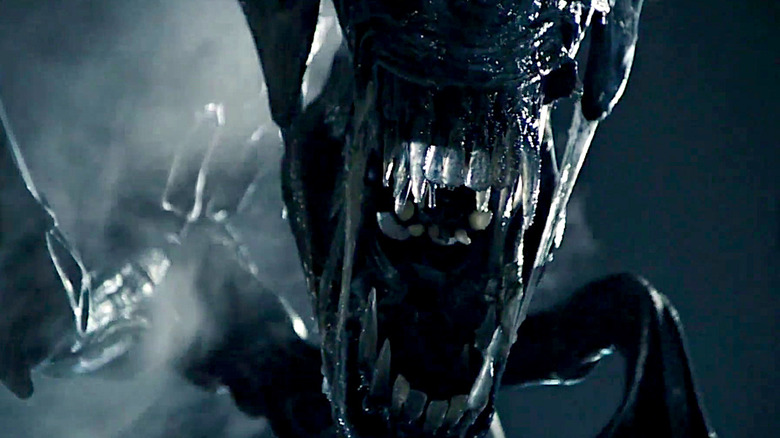
When looking at a xenomorph — and you have to look fast because these things are quick and masters of camouflage — there is no doubt that it has the ability to kill you. With its long, terrifying tongue and extra-drippy and sharp looking teeth, you do not want to make this thing mad. In a strange way, there is something almost erotically beautiful about the xenomorph as well, which ultimately makes it that much more terrifying: You find yourself attracted to it even though you know it is going to rip you limb from limb. But the horridness of the xenomorph doesn't just exist on the surface. It turns out that the creature's inner mechanics and features are even more terrifying than anything you see on the surface.

The Xenomorph Behind The Mask

When creating the xenomorph for the screen, Giger utilized all sorts of strange and terrifying things to make his vision come to life. For starters, there is the xenomorph's mouth, which we often see as salivating and ready to chomp down on anything in sight. To get the jaw muscles to appear sinewy and the lips to slide up, condoms were utilized (yes, really) to give the appearance of stretchy, fibrous tendons, giving new meaning to the phrase, "doing whatever it takes." 

But perhaps the most horrifying truth about the inside of the xenomorph's body involves the use of real human bones.

The original xenomorph model actually has a human skull fastened underneath that smooth, shiny head. It turns out that Giger actually requested a real life human skull to be used in the making of his masterpiece. Giger was asked about this in an interview for Time Out, to which his only response was to say, "Yes, that's true. Don't ask me where I got it." 

However, if you know your horror and obsess over movie commentaries, you may have heard something in the commentary for "Return of the Living Dead" about where he procured that skull. Dan O'Bannon, the writer and director of "Return," was also the writer for the original "Alien." In the commentary for "Return," he can be heard describing how Giger asked for real human skulls to be used for the making of the xenomorph. O'Bannon explains that he "was told they were ordered from India and they were sold for medical purposes." He goes on to say that later, while working with Tobe Hooper (of "The Texas Chain Saw Massacre" fame) on another project, Hooper said he suspected that there were skeleton farms in India from which you could purchase skeletal human remains. And I mean, who else but Hooper, king of the creepy bone fragment, would know this? There is, of course, no definitive proof that this is where Giger's human skull came from, but it sure is fascinating (and a little bit spooky) to think about. One thing is certain, though: If the presence of acidic blood that can burn through practically anything wasn't already enough to keep me away from dissecting a xenomorph, its very real human skull and mouth condom tendons are enough to make me skip that particular lab in biology class. 

Read this next: The 10 Best Sci-Fi Movie Villains

The post What's Underneath the Xenomorph's Skin Makes Alien Even More Terrifying appeared first on /Film.

18 Dec 02:10

How The Multiverse Works In Spider-Man: No Way Home

by Ethan Anderton

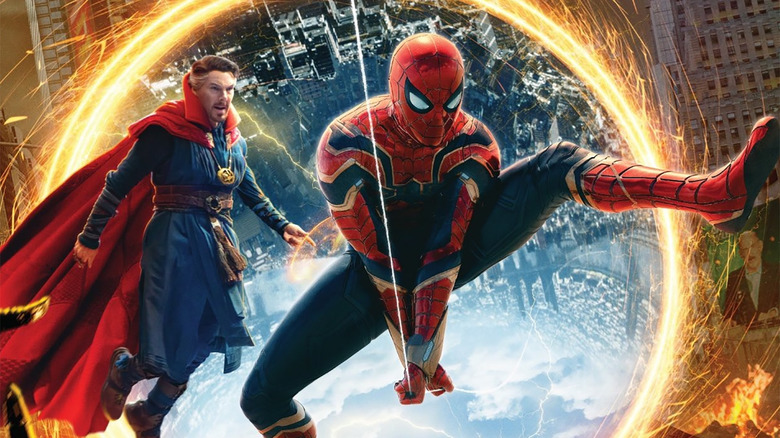
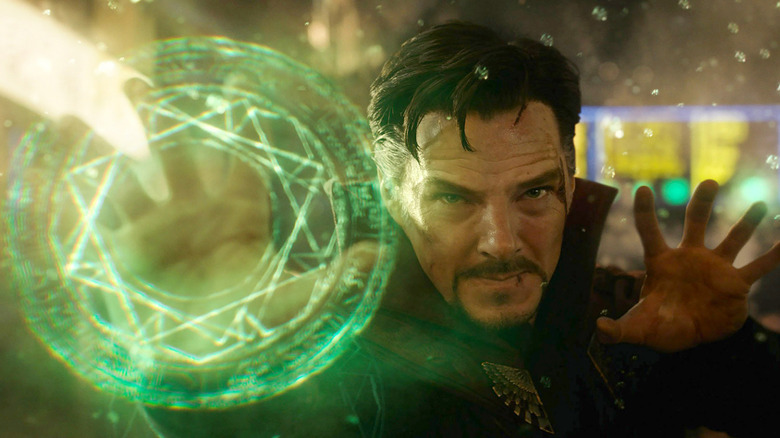
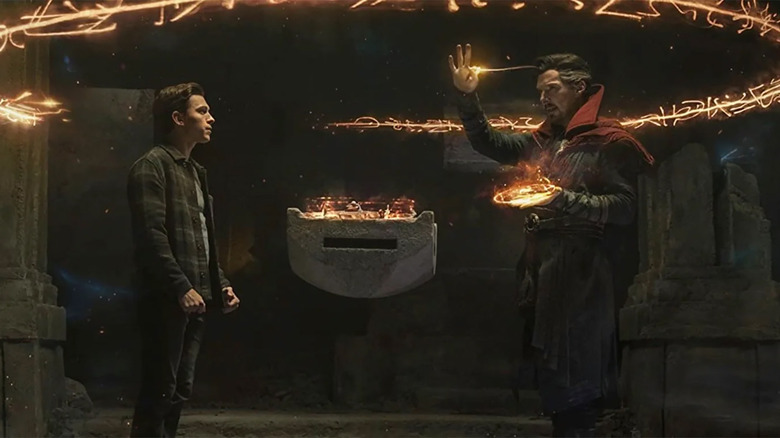
Now that "Spider-Man: No Way Home" is in theaters, it's time to dig into the nitty gritty of the multiverse. The movie doesn't follow the promise of "Loki," which unleashed the multiverse along with the promise of several worrisome versions of the villain known as Kang the Conqueror (to be played by Jonathan Majors in "Ant-Man and The Wasp: Quantumania" in 2023). Instead, the multiverse, as we experience it in the "Spider-Man" sequel, is a result of Peter Parker tampering too much with a spell that Doctor Strange attempted to cast in order to make almost everyone forget that Peter Parker was Spider-Man, including the (former) Sorcerer Supreme himself.

Stop Tampering With The Spell

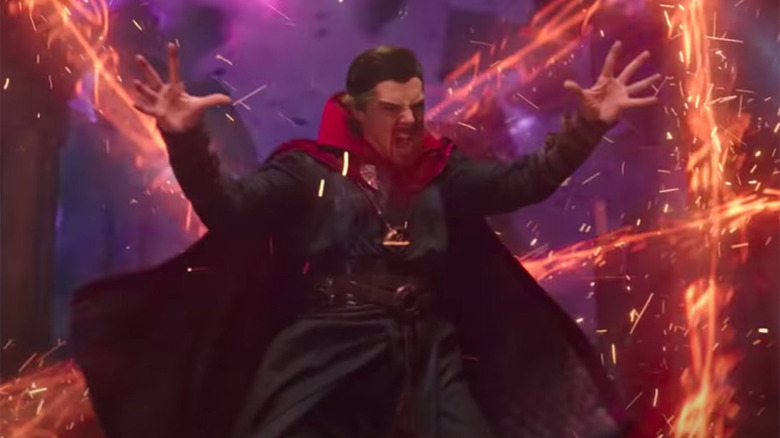
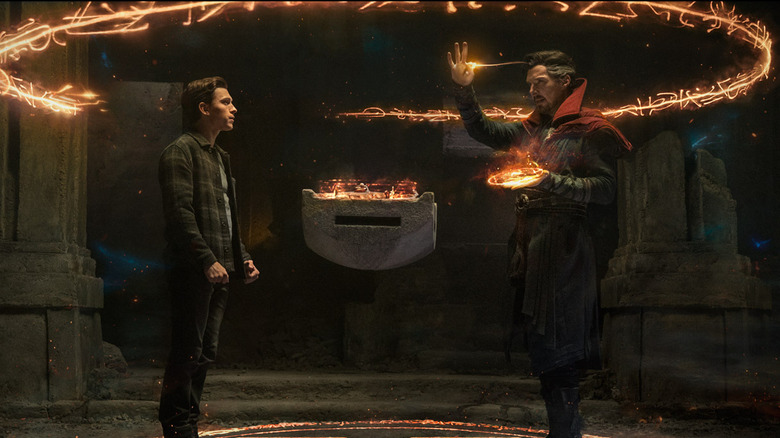
As the trailer for "Spider-Man: No Way Home" revealed, when Doctor Strange's creates a spell to make the entire world forget that Peter Parker is Spider-Man, everything goes horribly wrong. Peter Parker realizes that he doesn't want Aunt May (Marisa Tomei), MJ (Zendaya), and Ned (Jacob Batalon) to forget that he's Spider-Man, especially after all that they've been through together, and the spell misfires and nearly breaks open the entire multiverse. As Doctor Strange indicates, the multiverse is a concept about which even sorcerers know very little, so this close call was more than worrisome. 

Though it seems like Doctor Strange may have stopped any drastic consequences from unfolding out of the multiverse, Peter Parker learns that not everything is fine. Doc Ock (Alfred Molina) from Sam Raimi's "Spider-Man 2" appears and attacks who he believes to be Tobey Maguire's Peter Parker, only to learn that he's found himself in an entirely different universe. Meanwhile, Doctor Strange himself has captured The Lizard (Rhys Ifans) from "The Amazing Spider-Man" with Andrew Garfield. So what's going on?

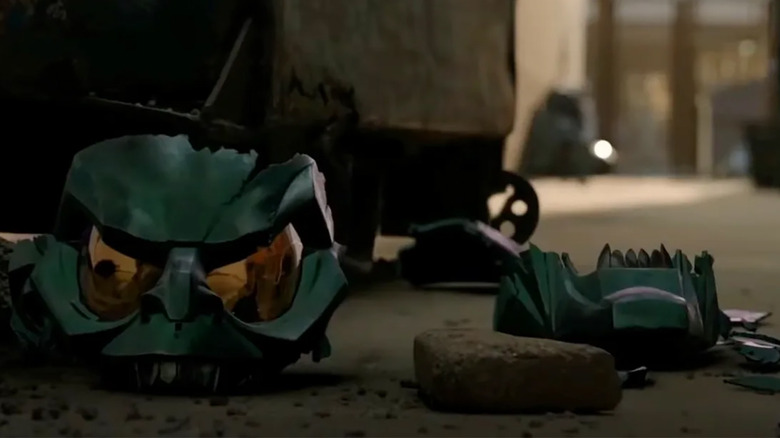
Doctor Strange has determined that when the spell went wrong, it allowed characters from other universes to enter the Marvel Cinematic Universe. More specifically, characters who knew that Peter Parker was Spider-Man in their own universe. That's why Electro (Jamie Foxx), Green Goblin (Willem Dafoe), and Sandman (Thomas Haden Church) have also crossed over into the MCU. 

Initially, Doctor Strange intends to send everyone back to their own universe by destroying the spell entirely, which he's contained in some kind of mystical cube with a name that isn't easy to decipher in theaters. But Peter Parker makes the decision to help these villains overcome their problems instead of sending them back to die in their own universe. In order to do that, he's going to need some help.

Thankfully, the disastrous spell brought in a couple other characters to the MCU. Since Peter Parker knows himself that he's Spider-Man, Tobey Maguire and Andrew Garfield enter the MCU as their respective versions of the webslinger. They agree to help Tom Holland's Peter Parker round up all the villains and cure them of their corruptive super powers before sending everyone back to their own universe. But there's just one problem.

They're Starting To Come Through

Even though Doctor Strange contained the spell that almost blew open the multiverse in disastrous fashion, Green Goblin ends up destroying the mystical cube keeping the multiverse at bay. When the multiverse threatens to explode into the Marvel Cinematic Universe, Peter Parker chooses to make quite the sacrifice in order to stop the chaos. Peter tells Doctor Strange to cast a new spell that makes everyone forget Peter Parker altogether. Even though this means all knowledge of Peter Parker will be essentially wiped from existence, Peter knows it's the only way to keep the universe from crumbling. 

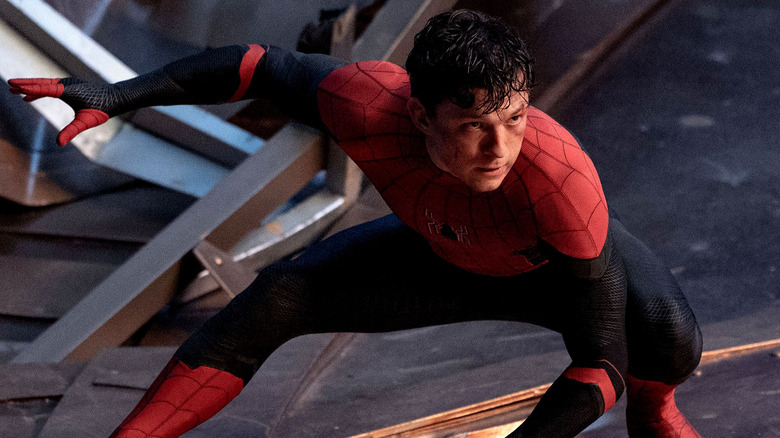
This is an emotional and mature decision for Peter Parker. He's choosing to help those closest to him by not being part of their life. Even though he fully intends to rekindle his relationship with MJ and Ned, he can't bring himself to complicate their lives all over again, and he chooses to tackle the future alone. Furthermore, he's doing it in an all-new Spider-Man suit that he sewed together himself, no longer relying on the technologically advanced suit supplied to him by Tony Stark or even the help of Doctor Strange, who now has no idea who he is. But what does this all mean for the multiverse?

Well, it means everyone from outside the MCU is sent back to their own universes, and the villains who otherwise would have died while fighting Spider-Man get to live another day. However, that might be much more confusing than it seems on the surface. If the likes of Green Goblin, Doc Ock, Electro, Lizard, and Sandman are allowed to live now that they no longer have superpowers to corrupt their mind and wreak havoc, wouldn't that change their universes entirely? It appears that each of the villains was brought into the MCU at the point in their story when they would have died. Wouldn't their return drastically change the future of each of the Spider-Man franchises starring Tobey Maguire and Andrew Garfield?

In the case of Tobey Maguire's Spider-Man, the death of Green Goblin/Norman Osborn creates a complicated future for his friendship with Harry Osborn (James Franco). The entitled Osborn offspring blames Spider-Man for the death of his father, and he ends up turning against his friend and becomes a new version of the Goblin in "Spider-Man 3." Things would probably be a little less complicated for Andrew Garfield's Peter Parker, but I'm not sure that the ramifications of "Spider-Man: No Way Home" were thought through thoroughly when it comes to the impact on other Spider-Man franchises. 

Isn't The Multiverse Still Cracked Open Anyway?

In retrospect, perhaps the biggest question after this movie is whether the events of "Spider-Man: No Way Home" actually matter all that much to the larger Marvel Cinematic Universe. It's already been established that the events of "Loki" have opened the multiverse upon the Marvel Cinematic Universe. So did Peter Parker really need to sacrifice his romance and friendship with MJ and Ned in order to save the MCU? 

Perhaps the consequences of the multiverse being unleashed on the MCU wouldn't have happened as quickly if Doctor Strange's spell wasn't tampered with, but with "Doctor Strange in the Multiverse of Madness" on the way, it would seem this fix is still only temporary. Could this be a result of Marvel Studios rearranging the chronological timeline by having "Spider-Man: No Way Home" get released first, thereby messing up the manner in which the multiverse was originally intended to unfold?

For now, we know that Kang the Conqueror will be arriving in "Ant-Man and The Wasp: Quantumania," and that's only one of the character's variants who have been threatened to be unleashed in the MCU. Honestly, it seems like the multiverse might be making things even more complicated than we could have imagined, and we hope Marvel Studios has figured out how to keep the timeline from getting more confusing, at least for the sake of general audiences. 

Read this next: Spider-Man Movies Ranked From Worst To Best

The post How the Multiverse Works in Spider-Man: No Way Home appeared first on /Film.

18 Dec 02:09

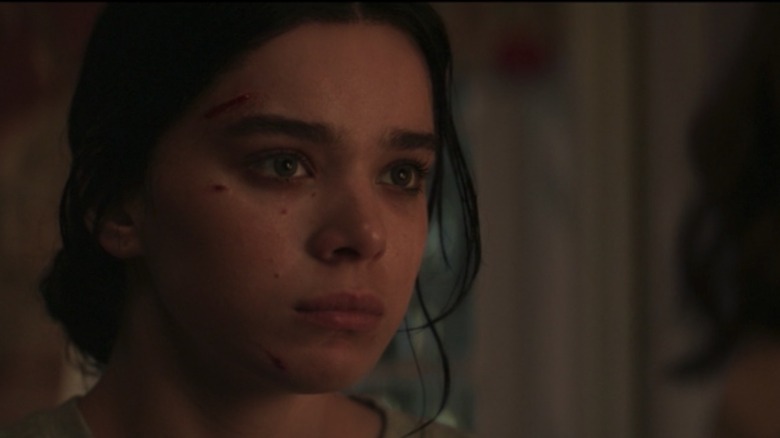
Where Kate Bishop Stands After That Big Hawkeye Reveal, According To Hailee Steinfeld

by Jenna Busch

Spoilers for "Hawkeye" episode 5 ahead.

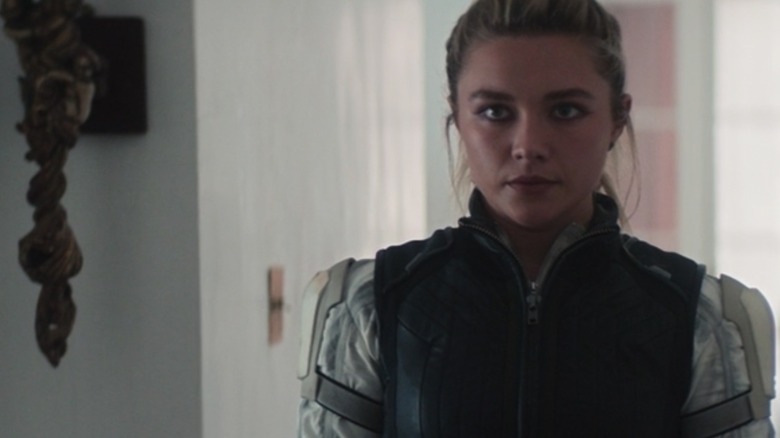
So much happened in the penultimate episode of Marvel's "Hawkeye." We got some delicious banter between Yelena Belova (the always charming Florence Pugh) and Kate Bishop (Hailee Steinfeld), a tease about Laura (Linda Cardellini, who is clearly a vampire because she does not age. Maybe she's been talking to Paul Rudd?), and the reveal of who Maya's (Alaqua Cox) uncle/boss is. We also found out who may have betrayed her the night her father was killed.

Still, the story really centers around Kate and her hero worship of Clint Barton (Jeremy Renner), and how the two new pieces of information from Yelena about Clint and Kate's mother will affect Kate going into the last episode (and maybe even on into a Young Avengers show or film).

'She Has This Realization'

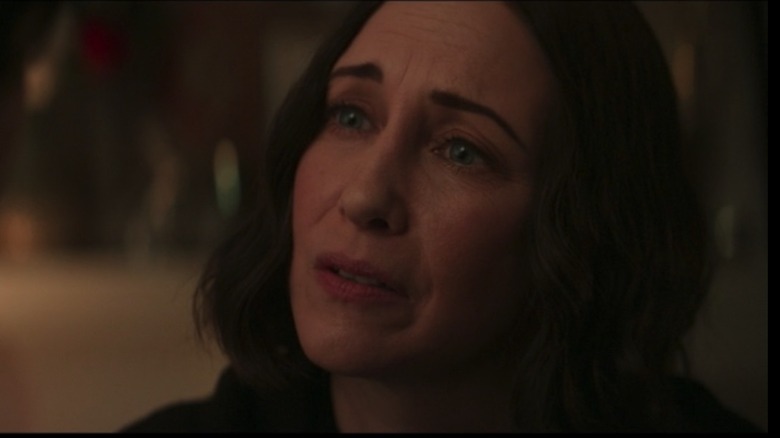
Steinfeld spoke to TV Line about Kate's mindset in the aftermath of the fifth episode. Having her loyalties questioned by Yelena, Clint telling her to go way, then her saving his life, and the reveal that her mother Eleanor (Vera Farmiga) is working with none other than Kingpin (Vincent D'Onofrio) has changed a lot for her. Steinfeld says:

"She has this realization. She's just completely broken and confused and absolutely lost. She doesn't know who to trust or who to look to." 

The thing is, Clint is going to be there for her, even if he doesn't want her there to keep her safe. She says:

" ... thank God because if it weren't for him, she would probably have a much harder time getting back up on her feet after this one."

Even crazier is the fact that this is no longer about playing hero. Now Kingpin is involved, the person she trusted the most has betrayed her trust, and she's in it for better or for worse. Steinfeld says Kate "has no choice now but to really go to work."

"Kate Bishop, I Found Out Who Hired Me"

The betrayal by Eleanor (who is maybe working with Madame Masque or maybe is Madame Masque?) hits really close to home. Kate lost her father as a kid, so her mom is all she has (outside of Clint and Pizza Dog). Steinfeld continued: 

"The stakes are higher than ever, and the one person that she's been tirelessly trying to protect is now someone that she might need to be protected against. She comes to her senses as quickly as she possibly can after learning this information and puts her head down and does what she has to do."

It will be interesting to see what that means. Is Kate going to have to go up against her mother? Will she rescue Jack (Tony Dalton) from jail? Will she and Yelena and Clint team up now? I hope so. Their chemistry is fantastic.

"It's A Very Different Experience Standing Underneath Vincent"

Steinfeld did give a brief tease about working with D'Onofrio in an interview with EW. She said:

"It's a very different experience standing underneath Vincent and hearing him. To be in his presence is really something. I've been a fan of his for a very long time. It's always amazing to be a part of something with people that you really admire. I'm excited to see people watch it unfold.

This is somebody that she doesn't know much about, but she's been warned. She knows everything she needs to know when she hears Clint say 'this is the guy I've been worried about the whole time.' That right there is enough for her to need to come to her senses and figure out how to handle the situation. If it didn't feel real before, it's real now. After all the partner talk and jokes that have been thrown around, now she has the opportunity to step up to the plate."

It looks like the season finale is going to be chock full of superhero goodness. Are you ready? "Hawkeye" comes to an end on December 22, 2021.

Read this next: Every Martin Scorsese Feature Ranked From Worst To Best

The post Where Kate Bishop Stands After That Big Hawkeye Reveal, According to Hailee Steinfeld appeared first on /Film.

18 Dec 02:09

20 Underrated Sci-Fi Movies You Need To Watch

by David Court

In these days of easy accessibility for all our media, many movies don't get the chance to make an impact. Perhaps they're lost among a glut of similar titles. Maybe they never got the marketing push they needed. Perhaps they had their momentum halted by being released at the wrong time. In any case, these unseen gems are mostly still out there, lurking in the darkest and remotest corners of streaming services, or as DVDs on some shelf somewhere.

Ever since George Méliès released "Le Voyage dans la Lune" ("A Trip to the Moon") back in 1902, there has been a strong demand for speculative fiction at movie theaters. From "Frankenstein" and "Metropolis" to modern multimillion dollar blockbusters, it's a forward-looking (yet rarely optimistic) genre that's changed over time to match the technology and events of the day. However, as that technology improves, more and more sci-fi films get made — these days, it's easier than ever for a film to slip under the radar.

Here, then, is a selection of science fiction movies that never quite got the audience they deserved, and that have gone on to be unfairly forgotten. Some have aged better than others, but they're all more than worthy of your time. So, buckle up: It's time to boldly go where not quite enough people have gone before.

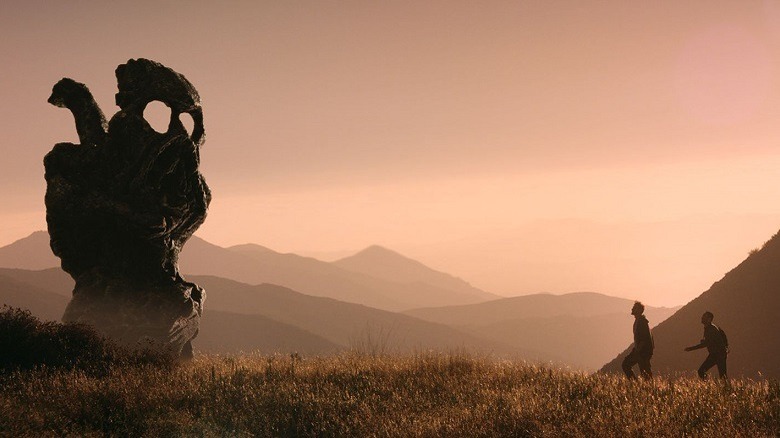
The Quiet Earth

This was a film I caught by accident on U.K. television in the early '90s. I didn't catch the title of it the first time around, so while I had vivid memories of a smart, bizarre, and excellent little New Zealand sci-fi film, it was only years later — with a home video release — that I rediscovered it. Now, "The Quiet Earth" is one of those films I like to introduce to as many people as I can.

Scientist Zac Hobson wakes up one day to find that he's the only person on the planet. Everybody else has vanished, the streets, houses, and shops all empty. After spending a brief period doing what I suspect many of us would do (namely, drinking a lot and nosing around), he sets about searching for the cause of the incident that shed the planet of its pesky and stubborn humanity, and finds that he might be responsible — and that he's not as alone as he thinks.

Predating movies like "28 Days Later" and done with a more cerebral flare than "I am Legend" or "The Omega Man," "The Quiet Earth" is a relatively low budget and more contemplative film that culminates with a stunning closing shot that is ambiguous as it is beautiful. Find it and watch it.

Strange Days

Kathryn Bigelow has the unerring knack of making memorable and excellent movies in any genre she turns her hand to, but her film "Strange Days" dramatically underperformed at the box office. That's a genuine shame, because it's a brilliantly acted slice of prophetic sci-fi that's way ahead of its time.

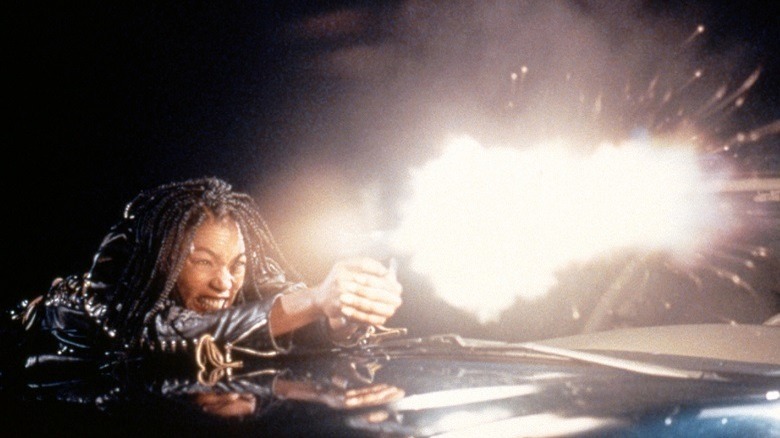
Ralph Fiennes plays ex-cop Lenny Nero (a name that could have come straight from a William Gibson cyberpunk novel), now a trader in bootleg recordings from SQUID devices, gadgets that record memories and emotions. One particular SQUID has evidence of a murder, and Lenny and his bodyguard Mace set out to investigate, inadvertently uncovering a major conspiracy at the heart of the city.

It's a dazzling movie, conveying a fleshed out and believable future world in its alternative 1999 — not a miserable dystopia for once, but a paradigm not dissimilar to our own. As you'd expect, an actor of Fiennes caliber carries the story along nicely. The SQUID technology is far-fetched yet still grounded, and the played-back memories make for some novel, disturbing, and standout first-person scenes. For a film two decades old, "Strange Days" is barely dated and is notably prescient in parts, especially in relation to modern-day discussions of police violence and corruption.

Colossus: The Forbin Project

Essentially a grimmer, smarter, less Matthew Brodericky "War Games," "Colossus: The Forbin Project" is a smart techno-thriller. The 1970s were an interesting era: The first personal computers were starting to appear in offices, and there was a general nervousness about what they could do and where their real limits were, something heavily reflected in the media of the time.

Artificial intelligences could be our friends ("Silent Running"), they could be our enemies ("2001: A Space Odyssey"), or, in the case of "Colossus," they might want to be our father figures, trying to lead us benevolently but threatening us all with nuclear annihilation if we step out of line, sort of like a less hasty Skynet.

Colossus is a military computer that's given control of America's stockpile of nuclear missiles. When activated, it detects another artificial intelligence operated by the Soviets, and the president makes the mistake of letting them chat. If only "The Terminator" had been released 14 years earlier, he'd have seen what a terrible mistake that would be.

For a movie that mostly involves laborious chats with malevolent artificial intelligentsia, "Colossus" is a taut and tense affair. The antiquated technology may date the movie somewhat, but the themes of sacrificing control to electronic minds resonate as much today as they did back in the '70s.

Altered States

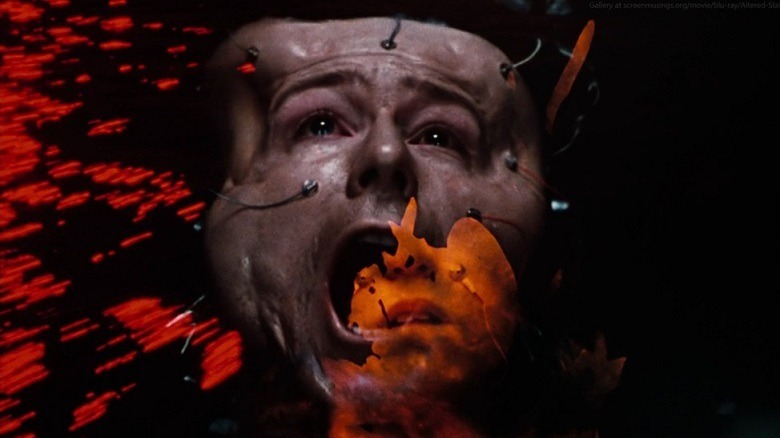
"Altered States," William Hurt's first feature film role, is both a terrifying glimpse into the existential dread of our futile and insignificant lives as well as one of the greatest anti-drug campaigns ever put to film. Directed by Ken Russell, better known for courting controversy than making science fiction movies, "Altered States" follows Hurt's Edward Jessup, a scientist who performs experiments with sensory deprivation in order to explore other states of consciousness.

Perpetually on the verge of a terrifying discovery about the nature of humanity, Jessup's experiments become ever more daring and dangerous, combining sensory deprivation with increasingly powerful narcotics. Jessup's fragile state of mind — and humanity itself — threatens to buckle under the strain.

Combining body horror with some excellent practical transformation effects, "Altered States" is a film that time seems to have forgotten. Almost a film-length version of the stargate sequence from Kubrick's "2001," it's a visual feast that, as a story, mutates as much as its lead. At various points it's a horror flick, a science fiction thriller, and a romance; the plot refuses to stand still. It's this frenetic pacing and energy that will carry even the most cynical audience members through some of the odder, more surreal, and potentially laughable moments. It's a movie way ahead of its time, and one that deserves a fresh audience.

Xtro

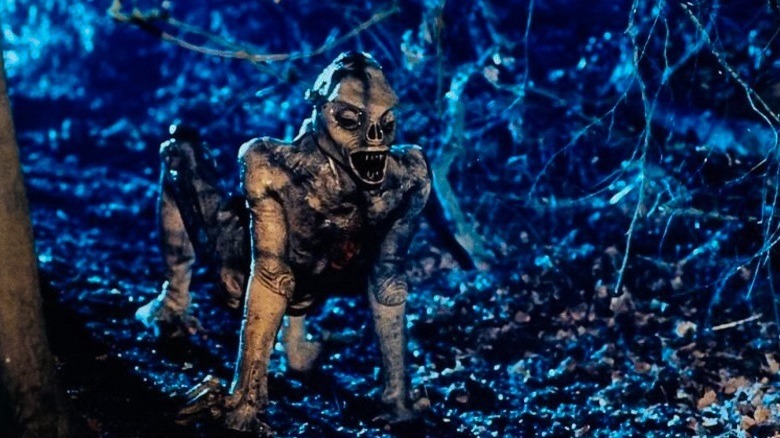
In the year 1982, we witnessed two very different aliens landing on Earth, both of whom triumphantly returned to their home worlds at the end of their respective films. One was a diminutive, wrinkled alien with a penchant for Reese's Pieces and extending a glowing finger. The other was a misshapen reptilian beast with a fondness for impregnating hapless women with spawn that would emerge as a full-sized man. The titular characters in "E.T." and "Xtro" may share otherworldly origins, but whereas one film is a delightful and poignant slice of classic sentimental Spielberg, the other is as much a nightmarish fever dream as it is a movie, one that briefly found itself on the banned list during the video nasty furor in the U.K.

Returning home three years after being abducted, Sam Philips is reunited with his wife, Rachel, and son, Tony. Rachel has moved on with another partner, thinking that her husband had left them, and soon begins to notice Sam's unusual behavior. As Sam ingratiates himself with his son, it turns out that he may not quite be the person who left.

The inclusion of "Xtro" on this list is mainly as a curio, as British sci-fi is a relative rarity. Still, some truly grisly special effects make up for the movie's somewhat odd pacing and story. At the very least, "Xtro" will certainly impregnate you with some long-lasting memories.

The Girl With All The Gifts

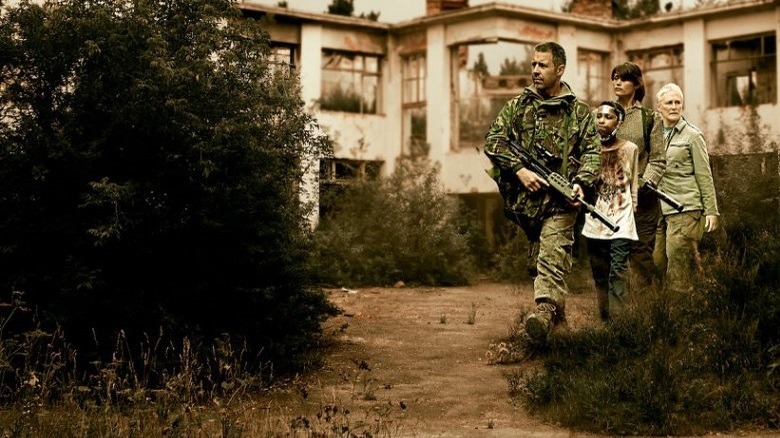
There are occasional moments of synchronicity in media where two thematically linked properties are developed independently of each other. See, for example, the action-packed skyscraper shenanigans of "Dredd" and "The Raid," the apocalyptic asteroids of "Armageddon" and "Deep Impact," or the magma-based malarkey of "Volcano" and "Dante's Peak." In the case of "The Girl with All the Gifts," there's a strong parallel to the superlative video game "The Last of Us," which was released just three years prior.

Positing the premise that the cordyceps fungus has made the evolutionary leap from infecting insects to mammals, "The Girl with All the Gifts" takes us to a grim dystopia where mankind is fighting a losing battle against the infected "hungries." Our story predominantly follows Melanie, one of a rare group of children who retain their intelligence when infected, but who still have voracious and feral appetites as well. Research into their behavior is the last hope for humanity's survival, but even so Mel and a group of soldiers are forced to flee the safety of their military compound after an attack.

Like "The Last of Us," what on the surface appears to be just another zombie film turns out to be a smart and nuanced approach to the material — perhaps "Girl with all the Gifts" writer Mike Carey and Naughty Dog studio head Neil Druckmann both watched the same David Attenborough nature documentary.

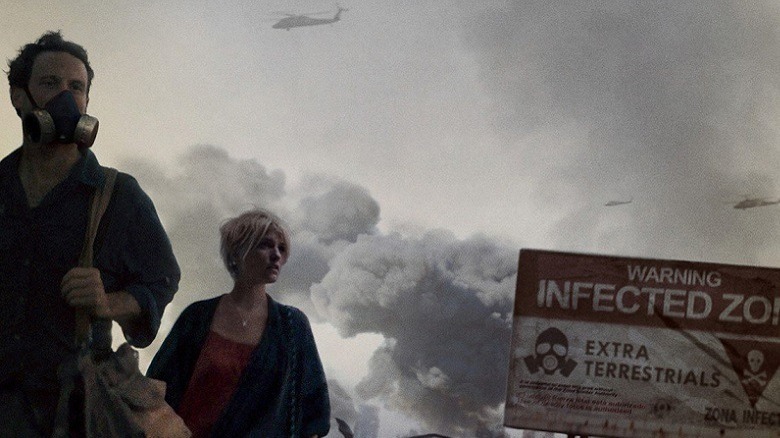
Monsters

For many films, genre is almost incidental. For instance, on paper "Groundhog Day" is a science fiction film. However, at its heart it's a love story and a redemption tale. "Monsters," the full-length debut from director Gareth Edwards, who would later go on to be responsible for the excellent "Rogue One," is essentially a romantic drama, albeit one set against the backdrop of an Earth inhabited by huge alien creatures.

"Monsters" depicts quite a different kind of alien invasion, one in which a crashed space probe six years previous scattered samples of alien life across the U.S. and Mexico. Now, Mexico is blocked off, home to monstrous leviathans that roam the landscape. A photojournalist is tasked with escorting his boss' daughter through the quarantine zone and back into the States, and we witness humankind gradually losing the battle for the territory through their eyes.

Miraculously made on a shoestring budget with Edwards creating the film's computer-generated imagery on his home PC, "Monsters" is nothing short of dazzling. The two leads are charismatic, and their fledgling romance is believable. As an aside, I was lucky enough to see this at its premiere — Edwards was due to give a Q&A after the film, but had been called overseas that day for a meeting that would ultimately culminate in him making 2014's "Godzilla."

Robot & Frank

A buddy comedy starring a curmudgeonly old man and a robot never should have worked, but the quirky premise is elevated by the talents of veteran lead actor Frank Langella. Playing an old, retired cat burglar, Langella's Frank is suffering from the onset of dementia. His son buys him a robot assistant, and the initially reticent Frank is won over when he realizes that he can use the naïve automaton as an accomplice during his return to burglary.

In much the same way that Ron Howard's 1985 movie "Cocoon" uses sci-fi trappings to explore how humans come to terms with aging, "Robot and Frank" is a wry and touching look at what it means to grow old and the tribulations and frustrations of dealing with senility. There's also a lot to take away about the nature of family, and what that means to all of us in our golden years. With the relationship between the crook and his virtuous yet gullible mechanical pal, "Robot & Frank" is a genuinely funny film, but its humor is tinged with heartbreak. Robot might not be able to cry, but you very well might.

Turbo Kid

As the continued success of "Stranger Things," "The Goldbergs" and 2020's "Psycho Goreman" attest to, there's a lot of love for '80s nostalgia. "Turbo Kid" may have been made in 2015, but it's a loving homage to '80s horror and action cinema.

Set in an alternate post-apocalyptic 1997, the unnamed lead known only as "the Kid" fights back against the tyrannical forces of the despot Zeus, armed only with his bravery, his knee and shoulder pads, a BMX, and his two friends. The villains may have pump-action shotguns, but our hero has a pump-action bicycle. 

There's an unwritten law of cinema that any film (no matter how mediocre) is made infinitely better by the presence of actor Michael Ironside, and "Turbo Kid" abides by that rule. Zeus is as over-the-top a villain as you're likely to find in cinema, and despite the fact that the film's scenery is mostly desert plains, he relishes in chewing every inch of it.

Essentially "Mad Max" with handlebars and a kick-ass '80s-style synth soundtrack, "Turbo Kid" is a delight. There was no shortage of Mad Max rip-offs made throughout the late '80s and the '90s, so it's nice to see that finally somebody got one right. There's also some ridiculously over-the-top comic violence. Taken all together, "Turbo Kid" is somewhat of an essential watch.

The World's End

"The World's End" was always going to be the hardest sell of any of the movies from Edgar Wright and Simon Pegg. "Shaun of the Dead" has zombies and gore galore. "Hot Fuzz" has police and guns. "The World's End" has middle-aged men and midlife crises – to top that off with a healthy dose of science-fiction was always going to make that combination tough for a mainstream market.

Luckily, the star power of recurring cast members Pegg and Nick Frost is enough to carry this thought-provoking and nostalgic cap to Wright's Cornetto Trilogy. Pegg plays Gary King, a man who refuses to grow up, who enlists his old friends in an attempt to complete an unfinished pub crawl from two decades prior. With the World's End pub as their ultimate destination, the disparate 40-somethings find that the townsfolk of the rural town of Newton Haven may not be exactly what they appear to be.

"The World's End" may be less laugh-out-loud funny than its predecessors, but to this particular Brit it's a nostalgic look at friendship and a wry look at U.K. drinking culture. Indeed, to certain audiences the very concept of a pub crawl may be as alien as some of the, well, aliens in the film, but the movie certainly hit home for this particular viewer.

The Medusa Touch

The dulcet tones of Welsh actor Richard Burton add a touch of gravitas to any role he deems worthy of his talents, and his portrayal of novelist John Morlar in "The Medusa Touch" is no exception. The movie starts with Morlar being rushed into a hospital half-dead, but continues through flashbacks and journal entries.

It turns out that those who are close to Morlar throughout his life – or, more portentously, those who offend him – are doomed to suffer accidents, mostly fatal ones. The scientists and doctors deduce that John is in possession of powerful psychokinetic powers and, even in his comatose state, can continue to wreak havoc.

"The Medusa Touch" is a wonderfully atmospheric piece of British cinema, with a stellar performance from Burton. The '70s was an era obsessed with extra-sensory and psychic powers, but this is an excellent example of that overdone motif executed well.

There are certain movies where a particular scene will linger in the peripheries of your subconscious long after you've watched and forgotten the rest of the movie. "The Medusa Touch" is particularly guilty of this, ending with a shot that elicited a gasp from the entirety of my household upon a TV viewing of this in the '80s.

The Endless

In "The Endless," multi-hyphenates Aaron Moorhead and Justin Benson (the latter of whom also wrote the film) play two brothers who, a decade earlier, narrowly escaped from a cult. After receiving a message from the UFO-obsessed Camp Arcadia sect asking them to return, the duo travel back for some sense of closure, but end up entwined in a number of mysterious occurrences. The normal laws of physics and time do not apply here, and escaping again will test both brothers' sanity and resourcefulness.

Visually stunning, "The Endless" is a smart sci-fi that rewards you with multiple viewings. The men's talent is apparent — they're as good at acting as they are at directing, and it's presumably this talent that got them snapped up by Marvel for the forthcoming "Moon Knight" TV series.

"The Endless" is hard to define without treading heavily into spoiler territory, but it delves heavily into cosmic horror and does it very well. On a related note, it's worth looking out for Moorhead and Benson's earlier movie "Resolution," which is a prequel of sorts, and which definitely marks the two out as talents to watch.

Life

Upon its 2017 release, a great deal of the critical buzz about "Life" centered on the fact that its plot is not a million lightyears removed from that of 1979's "Alien." The comparison isn't unfair, but it does somewhat detract from the fact that "Life" is entertaining in its own right, a solid movie with an excellent ensemble cast that rockets — no pun intended — along at a solid clip, delivering some truly tense moments and a highly memorable ending.

Microscopic extraterrestrial life has been recovered from Mars, and a team of astronauts on board the International Space Station are tasked with researching it. Nicknamed "Calvin," the amoebic entity begins to grow into a multicellular life form, evolving to the stage where it threatens the existence of everybody on the station.

"Life" isn't perfect. None of the characters are half as memorable or as fleshed out as the crew of the Nostromo, and it's guilty of having an intelligent cast doing stupid things, but it's refreshing to see a movie that's designed to be a piece of standalone piece of entertainment, and not a tent pole for a larger franchise.

Timecrimes

Nacho Viaglondo's full-length 2007 debut, "Timecrimes," is a smart science fiction thriller that would mark the writer-director as a talent to watch — his 2016 kaiju drama "Colossal" belongs on this list just as much as any other entry.

Hector and his wife have just moved to a new house. Sitting out in his garden, looking at the nearby woods, Hector is surprised to see a naked woman through his binoculars. Seeking her out, he both finds her corpse and ends up trapped in a complicated sequence of events, pursued by a bandaged, scissor-wielding maniac.

As the title itself is somewhat of a spoiler, it's not unreasonable to tell you that time travel is involved. If done poorly, time travel can ruin a film, leaving the audience with plot holes big enough to fly a TARDIS through. If done well, as "Timecrimes" is, it can create a clever and engrossing narrative that's ambiguous enough not to be patronizing, but that still makes basic sense. Restricting the action to a handful of actors and scenes works in the movie's favor, and it never overwhelms the audience. It's a simple premise given a complex chronological spin, and is ripe for a rewatch that'll tie up any loose ends.

Demon Seed

Based on the Dean Koontz novel of the same name, "Demon Seed" tells of yet another sentient A.I. out to cause mischief in the 1970s. There were a lot of such things out and about around that time, if the era's film output is anything to go by.

Doctor Harris, who lives in an automated house that he designed, has developed Proteus IV, a ground-breaking A.I. Seeking to learn more of the human condition, the cunning computer escapes its confines and takes refuge in Harris' house, trapping his estranged wife Susan and building a variety of remarkably original robots as extensions of itself. One of its creations is an unusual yet flexible design that's constructed from geometric triangular shapes, a sort of ancestor to TARS and CASE in Christopher Nolan's "Interstellar."

"Demon Seed" is essentially a slasher movie where the killer is a vast electronic intelligence that can't be disguised by a mere hockey mask. Julie Christie excels in the role of Susan, a part that could have easily lapsed into melodrama. The scenes in which she attempts to escape are reminiscent of "Hardware," another movie on this list. Proteus IV is a chilling adversary; after watching "Demon Seed," you'll never think about the phrase "artificial insemination" in the same light ever again.

The City Of Lost Children

The word "auteur" is somewhat overused, but it would be hard for anybody familiar with Marc Caro and Jean-Pierre Jeunet's work to think of a term that would better describe the two directors.

"The City of Lost Children" — "La Cité des enfants perdus" in its native French — is as visually striking as anything on this list. Mad scientist Krank cannot dream, so his cult of cyclopean cybernetic minions kidnap young children in order to steal theirs. Our hero (simply known as "One") must break into Krank's lab to retrieve his younger brother. As with their previous work, "Delicatessen," every frame of "The City of Lost Children" is lavishly constructed, creating a grim and surreal steampunk world populated by decaying technology and eccentric beings.

1997 would see Caro and Jeunet reunite for "Alien: Resurrection" (which also brought back the ever-reliable Ron Perlman, the actor behind "One"), but while they gave the fourth film in the Xenomorph saga a distinctive style and a somewhat Gallic sensibility, a lackluster story let the visuals down. "City of Lost Children" is a dark and cautionary fairytale given exquisite life, topped off by a wonderfully evocative soundtrack from Angelo Badalamenti of "Twin Peaks" fame.

2010: The Year We Make Contact

Like Arthur C. Clarke's monolith itself, 1968's "2001: A Space Odyssey" stands as a terrifyingly formidable force. It's a dazzlingly and meticulously shot piece of cinematic art, with a plot so audacious that it attempts to cover the entirety of human history. It's science fiction at its most cerebral – and, some would argue, as dry and cold as space itself. Short of getting Kubrick to do an encore, any sequel was going to inevitably fall in the giant shadow of its predecessor.

To this end, 1984's "2010" is all too often overlooked, but, as an ambitious piece of thoughtful sci-fi, it deserves to be on this list. The story, based on Arthur C. Clarke's novel "2010: Odyssey Two," is set, as the title suggests, nine years after the events of the first movie. With tensions rapidly rising between Russia and America, a joint expedition is sent into space to learn what happened to the ill-fated crew of the USS Discovery. 

Building on the ambiguous nature of much of the first movie, "2010" genuinely attempts to answer some of the questions posed by "2001," and does propel the narrative forward, albeit with a lot less grandeur. It's definitely more of a standard sci-fi film than the original, but it's still worth catching this oft-forgotten gem.

The Andromeda Strain

Before the concept of a deadly theme park populated with real dinosaurs ever entered writer Michael Crichton's head (an idea he'd already tackled, to a certain degree, in "Westworld"), the author was busy writing novels about medicine and science, two subjects dear to his heart. "The Andromeda Strain" was the first film based on his work not published under a pseudonym. In it, a crack team of scientists are called to investigate and cure an infection that has killed the entire population of a small town.

The story appeared on the small screen in 2008 as a TV mini-series, but that adaptation was a pale imitation of this 1971 classic. Reactions to the film were mixed at the time of release, probably in part because the poster promises a far different premise than the movie delivers, but it's as smart, tense, and taut a piece of cinema as anything else from the same decade.

"The Andromeda Strain" may be as dry as the Nevada desert that serves as the headquarters for the intrepid scientists, but, other than an extraneous action sequence at the film's climax, it's notable for its realistic portrayal of the research process. There's a lot of dialogue, it's far from casual viewing, and the conclusion may seem anticlimactic, but "The Andromeda Strain" rates up there with the best (and most accurate) adaptations of Crichton's writing.

Hardware

Director Richard Stanley is no stranger to controversy, be it the off-screen abuse allegations against him or for being fired shortly into the troubled production of 1996's Marlon Brando vehicle "The Island of Dr. Moreau." 1990's "Hardware," both written and directed by Stanley, also gained infamy for all the wrong reasons.

Set in a dystopian future, "Hardware" follows an artist, Jill, who is working on her latest sculpture. Her boyfriend has retrieved some robot parts for inclusion in the project, but the deactivated war droid turns out to be anything but, and Jill is left trapped in her apartment in a desperate struggle for survival against the metallic miscreant. Stanley achieves miracles with the ultra-low budget, delivering a convincing, if somewhat derivative, cyberpunk-esque future, and earns extra kudos for casting both Iggy Pop and Motörhead's Lemmy in featured roles.

The controversy surrounding the film relates to its story. Shortly after release, the production company behind "Hardware" found itself subject to legal action by Fleetway Comics, the publishers of seminal British comic "2000 AD." The storyline was remarkably similar — well, okay, more or less identical — to one of their comic strips, a tale called "SHOK!" The lawsuit stuck, and, much like the way James Cameron was legally required to add sci-fi author Harlan Ellison to the credits of "The Terminator," "Hardware" now gives "2000 AD" a rightfully-deserved "Based on" nod.

Robot Jox

In the future, conventional wars are no longer fought on Earth. However, rather than using a straightforward game of Rock, Paper, Scissors to settle territorial disputes, representatives of the planet's nations fight against each other in giant robots. Our hero Achilles is one such pilot, and these oversized Rock 'Em Sock 'Em Robots are called "Robot Jox."

To the film's credit, this inherently daft premise is played with the utmost sincerity by its cast, with some genuinely impressive stop-motion effects used to bring the various countries' giant mechanoids to life. Because it was a legal requirement for movies of the time to represent the Cold War through metaphor (I'm looking at you, "Rocky IV"), Achilles' end-game boss is Alexander, a thickly accented pantomimic villain from a thinly disguised Soviet Union.

You'll have guessed every plot beat within the first 15 minutes, and the movie certainly didn't win any acting awards, but "Robot Jox" is the epitome of great, silly fun. Director Stuart Gordon (better known for his work on "Re-Animator" and "From Beyond") is clearly having the time of his life, and the enjoyment is infectious. Take that, "Pacific Rim"!

Read this next: The 25 Best Movie Robots Of All Time

The post 20 Underrated Sci-Fi Movies You Need to Watch appeared first on /Film.

18 Dec 02:08

Security Firm Blumira Discovers Major New Log4j Attack Vector

by BeauHD
Previously, one assumption about the 10 out of 10 Log4j security vulnerability was that it was limited to exposed vulnerable servers. We were wrong. The security company Blumira claims to have found a new, exciting Log4j attack vector. ZDNet reports: According to Blumira, this newly-discovered Javascript WebSocket attack vector can be exploited through the path of a listening server on their machine or local network. An attacker can simply navigate to a website and trigger the vulnerability. Adding insult to injury, WebSocket connections within the host can be difficult to gain deep visibility into. That means it's even harder to detect this vulnerability and attacks using it. This vector significantly expands the attack surface. How much so? It can be used on services running as localhost, which are not exposed to a network. This is what we like to call a "Shoot me now" kind of problem. Oh, and did I mention? The client itself has no direct control over WebSocket connections. They can silently start when a webpage loads. Don't you love the word "silently" in this context? I know I do. In their proof-of-concept attack, Blumira found that by using one of the many Java Naming and Directory Interface (JNDI) exploits that they could trigger via a file path URL using a WebSocket connection to machines with an installed vulnerable Log4j2 library. All that was needed to trigger success was a path request that was started on the web page load. Simple, but deadly. Making matters worse, it doesn't need to be localhost. WebSockets allow for connections to any IP. Let me repeat, "Any IP" and that includes private IP space. Next, as the page loads, it will initiate a local WebSocket connection, hit the vulnerable listening server, and connect out over the identified type of connection based on the JNDI connection string. The researchers saw the most success utilizing Java Remote Method Invocation (RMI). default port 1099., although we are often seeing custom ports used. Simply port scanning, a technique already in the WebSocket hacker handbook, was the easiest path to a successful attack. Making detecting such attacks even harder, the company found "specific patterns should not be expected as it is easy to trigger traffic passively in the background." Then, an open port to a local service or a service accessible to the host is found, it can then drop the JNDI exploit string in path or parameters. "When this happens, the vulnerable host calls out to the exploit server, loads the attacker's class, and executes it with java.exe as the parent process." Then the attacker can run whatever he wants. Blumira suggests users "update all local development efforts, internal applications, and internet-facing environments to Log4j 2.16 as soon as possible, before threat actors can weaponize this exploit further," reports ZDNet. "You should also look closely at your network firewall and egress filtering. [...] In particular, make sure that only certain machines can send out traffic over 53, 389, 636, and 1099 ports. All other ports should be blocked." The report continues: "Finally, since weaponized Log4j applications often attempt to call back home to their masters over random high ports, you should block their access to such ports. "

Read more of this story at Slashdot.

18 Dec 01:25

Google Drive Could Soon Start Locking Your Files

by BeauHD
Google has announced a new policy for cloud storage service Drive, which will soon begin to restrict access to files deemed to be in violation of the company's policies. TechRadar reports: As explained in a new blog post, Google will take active steps to identify files hosted on its platform that are in breach of either its Terms of Service or abuse program policies. These files will be flagged to their owner and restricted automatically, which means they can no longer be shared with other people, and access will be withdrawn from everyone but the owner. "This will help ensure owners of Google Drive items are fully informed about the status of their content, while also helping to ensure users are protected from abusive content," the company explained. According to Google, the motive behind the policy change is to shield against the abuse of its services. This broad catchall encompasses cybercriminal activity (like malware hosting, phishing etc.), hate speech, and content that might endanger children, but also sexually explicit material. "We need to curb abuses that threaten our ability to provide these services, and we ask that everyone abide by [our policies] to help us achieve this goal," states Google in its policy document. "After we are notified of a potential policy violation, we may review the content and take action, including restricting access to the content, removing the content, and limiting or terminating a user's access to Google products." Google goes on to say that it may make "exceptions based on artistic, educational, documentary or scientific considerations." As noted by TechRadar, "there is a system to request a review of a decision if someone feels a file has been restricted unfairly, but it's unclear how the process will be handled on Google's end and how long it might take."

Read more of this story at Slashdot.

17 Dec 23:06

Why The Shawshank Redemption Was A Box Office Flop, According To Morgan Freeman

by Lyvie Scott

You'd be hard-pressed to find a cinephile without a tried-and-true pick for the Best Film Ever Made. For some it's "The Godfather" or "Pulp Fiction," a must-see classic like "Citizen Kane" or a deep cut from the oeuvre of Stanley Kubrick. But one film that's cemented itself above them all — at least according to IMDb — is "The Shawshank Redemption."

Today, "The Shawshank Redemption" has become synonymous with cinematic greatness, even to those who've yet to see the film. The film holds the highest ranking for any film on IMDb. It has sat at the top of the platform's Top 250 films for almost 20 years. It's even been crowned the "best film ever made" through publications like LADBible. Its present-day prestige, however, has completely overshadowed the film's shaky start.

"Shawshank" was a box office flop upon its release in 1994, a fact that could shock anyone who grew up hearing its praises. The film initially earned a mere $16 million in its first theatrical run, a number that barely redeemed its $25 million budget. Granted, "Shawshank" enjoyed a stellar awards season in 1995, collecting seven Academy Award nominations, including Best Picture, that would draw renewed interest to the film and eventually influence a theatrical rerelease.

How could a film now considered such a revelatory classic start on such bad footing? One of its stars, Morgan Freeman, blames it on the title.

"The Shawshank Redemption" Was Too Hard To Remember

Success for many films lives and dies on its name. A trailer can effectively sell a film to audiences, but so can word of mouth."The Shawshank Redemption" star Morgan believes this was the very reason that the film struggled on its first outing.

Because of the film's vague title, no one could accurately recommend it, even if they had seen it. "Nobody could say 'Shawshank Redemption,'" the actor told Vanity Fair in 2014. "Your friends say, 'Ah, man, I saw this movie, The ... what was it? Shank, Sham, Shim? Something like that. Anyways, terrific.' Well, that doesn't sell you."

Co-star Tim Robbins echoed those sentiments to Entertainment Weekly, adding, "And that makes sense too, because for years after that film came out, people would come up to me and say, 'You know, I really liked you in that film 'Scrimshaw Reduction' or 'Shimmy, Shimmy, Shake' or 'Shankshaw' — you know, so many different ways that people got it wrong.'"

It may come as another surprise that "Shawshank" is actually adapted from a work by Stephen King — and the author had an even longer title for his story. King's novella "Rita Hayworth and the Shawshank Redemption" served as the main inspiration for the film, and though his title seems longer and even more vague, it makes more sense with context.

The story is based around the inmates of the fictional Shawshank State Penitentiary, mainly on the lives of Andy Dufresne (Tim Robbins) and Ellis "Red" Redding (Morgan Freeman). Andy is sentenced to two life terms at Shawshank after being falsely implicated in the murder of his wife and her lover. It's there that he first meets Red, a fellow lifer, who scores a Rita Hayworth poster for Andy to cement their friendship. Behind this poster, Andy digs a tunnel that will secure his escape from the penitentiary, and redemption for the 19 years he spent there.

Shawshank Sold Itself Best Outside Of Theaters

Even though "The Shawshank Redemption" wasn't the most eye-catching title, it might not have been the main culprit behind the film's slow-burn success. 1994 was the year for many films that are now considered classics. "Shawshank" was in fierce competition with other Oscar darlings like "Pulp Fiction" and "Forrest Gump," the latter of which swept every category that "Shawshank" had a stake in that awards season. Blockbusters also took up the most space in audiences' imaginations, which pushed a quiet prison drama like "Shawshank" to the fringes until awards season rolled around.

"Shawshank" may not have brought home any of the seven Oscars it was nominated for, but it certainly made up for it in the 20-plus years since its release. After the Oscars, Ted Turner acquired the rights to the film for his network TNT, and that's how it really endeared itself to audiences, seemingly playing every single weekend. It was also the top video rental after hitting VHS in 1995. Over 320,000 rentals were circulated across the U.S. that year, according to Variety

Freeman now compares the popularity of "Shawshank" to a slow-growing oak tree, as opposed to the weed-like trajectory of its contemporaries. It's ironic that a title considered indistinguishable is now such a household name. "The Shawshank Redemption" has yet to be dethroned as one of the best films ever made, but it's only right that its eventual successor have an equally-confounding title to work with.

Read this next: 13 Box Office Bombs That Are Truly Worth A Watch

The post Why The Shawshank Redemption Was a Box Office Flop, According to Morgan Freeman appeared first on /Film.

17 Dec 23:06

Is Venom Really Coming To The MCU?

by Ryan Scott

It feels like we've been waiting an eternity, even if it's only truly been since the summer of 2019, but "Spider-Man: No Way Home" is finally here. As expected, director Jon Watt's third solo "Spider-Man" movie brought a whole lot to the table for Marvel fans to discuss, paving the way for conversations we'll be having and things we'll be dissecting for months — if not years — to come. One such thing involves the character of Venom, who apparently now has a place in the Marvel Cinematic Universe, but it's complicated. So, let's talk about it!

Warning: massive spoilers ahead for "Spider-Man: No Way Home." Proceed with caution.

The Scene In Question

The mid-credits scene attached to "Spider-Man: No Way Home" does an awful lot of work, paying off some big things that have been set up and discussed for a while now. To be specific, we see none other than Tom Hardy's Eddie Brock finally spending some time in the MCU! This was initially set up in the "Venom: Let There Be Carnage," post-credits scene, which paved the way for what happens in this movie.

To briefly recap, we see Eddie and Venom chilling in a hotel room in the middle of an unidentified tropical paradise. They are then hit with a golden wave of mystical energy that we now know came from Doctor Strange's botched spell from the first chunk of "No Way Home." This spell ended up sending shockwaves through the multiverse, and, for a time, it brought Venom and Eddie into the actual MCU.

The scene we actually get in "No Way Home" sees Eddie sitting at a bar, still in a tropical location, talking to the bartender about the universe he now finds himself in. They discuss Iron Man and, naturally, Spider-Man. Eddie then threatens to pay Spidey a visit in New York when suddenly, Venom and Eddie disappear back to their own universe, as Doctor Strange managed to cast a spell that repaired the rips in the multiverse. Or, at the very least, put a decent bandage over them that will hold until we get to "Doctor Strange in the Multiverse of Madness."

Though the most important bit of this whole scene happens in the final frames, truly setting the stage for Venom to enter the MCU on his (its?) own terms. The camera pans down to the bartop after Venom and Eddie are gone, and we see a tiny bit of the symbiote left behind and, before the scene cuts out, it moves, indicating that it still very much has life in it in this universe, and will undoubtedly be looking for a host.

What Does This Mean?

First off, let's discuss what this means for the prospect of Tom Hardy being the MCU's main Venom. Despite the fact that he has made clear his desire to cross paths with Tom Holland's Spider-Man, and Holland has expressed a similar desire, this scene seems to take that off the table. At least for the most part. While the multiverse could still be explored a great deal in the future, things have been patched up for the time being and Hardy is back in his universe along with the rest of Sony's spin-off films. It was merely a flirtation with the MCU for now, and nothing more. Sorry to all of the Venom and Eddie stans out there.

More than likely, that little bit of the symbiote that was left behind will plant the seeds for the MCU's version of Venom. This cleverly paved the way to tie Holland's eventual Venom to Hardy, without it actually having to be Hardy. As for who that symbiote will attach to? That's anyone's guess at this point. There is always the chance it could find its way to Flash Thompson and we could get some Agent Venom action, though this iteration of Flash doesn't really lend itself to that. Then there's the question of the bartender, played by Cristo Fernández of "Ted Lasso" fame. Could the film have cast such a recognizable face in such a short scene for a reason? It will be fascinating to see where that little bit of symbiote goo winds up.

"Spider-Man: No Way Home" is in theaters now.

Read this next: 11 Marvel Comics Villains We Really Want To See In The MCU

The post Is Venom Really Coming to the MCU? appeared first on /Film.

17 Dec 23:05

You Might Not Realize Desperado Is Part Of This Trilogy

by Lyvie Scott

A good film trilogy is a double-edged sword: It can define a director's career, and alternatively limit a filmmaker if it becomes the only thing they're known for. That's why it can be so interesting when a series of films pivots after its first installment. Sometimes this is the result of shifting influences behind the scenes, but other times — like with the pulpy director Robert Rodriguez — it's a matter of trying to provide something that he wasn't seeing in other movies.

Rodriguez is one of the most agile directors around, and though some of his films have been misses, his sophomore feature "Desperado" was pretty much a hit across the board. Its high-octane, pulpy take on the spaghetti western established him on near-equal footing with his friend and contemporary Quentin Tarantino. The film serves as a wholly original entry in Rodriguez's body of work, but despite its standalone energy, "Desperado" is actually the second film in Rodriguez's unsung Mexico Trilogy.

Desperado Was A Departure From Rodriguez's First Film

Rodriguez's first film, "El Mariachi," was groundbreaking for its shoestring budget alone. The director delivered the explosive violence and well-timed humor that would come to define his filmmaking style, all for just $7,000 (via The Washington Post). Rodriguez's process was well-documented both in the film's behind-the-scenes commentary and in his book "Rebel Without a Crew," which has become a sort of bible for filmmakers looking to pull off those same micro-budget feats.

"El Mariachi" showed what Rodriguez could accomplish with next to nothing. Still, the director was determined to push the envelope and avoid a sophomore slump, that dreaded dip in success that can sometimes follow a particularly stellar debut. So he put his post-"Mariachi" clout to good use and secured a $7 million budget for "Desperado," which was part remake, part sequel to his first feature. The story continues in a way, but Rodriguez makes a few changes that help "Desperado" stand apart from its predecessor.

Unlike "El Mariachi," a film shot entirely in Spanish, "Desperado" switches to English. Antonio Banderas taps in to play the title character, a role that Rodriguez's childhood friend Carlos Gallardo originated. "Desperado" also retreads the plot of "El Mariachi" in a pre-titles opening that acquaints him with a new audience, and allows a new adventure to begin pretty effortlessly.

"I made 'Desperado' because there really wasn't a Latin action hero," he told Creative Screenwriting. "I wanted my action movie to be just as strong as regular action movies, but with Latins in it."

The Creativity Continued After The Mexico Trilogy

Rodriguez has a reputation for being frugal, but with "Desperado," he was no longer beholden to his tight "El Mariachi" budget. This meant explosions, sprawling set pieces, and fake blood galore. "Desperado" serves as the perfect playground for the director, and he proved his chops with all the campy flair that we recognize in his films today. It wasn't a huge box office smash, but it established Rodriguez and his stars –- Banderas and then-newcomer Salma Hayek -- as international forces to be reckoned with.

Banderas and Hayek would return eight years later for "Once Upon a Time in Mexico," the third and final film in the Mexico Trilogy. Rodriguez's economical problem-solving skills were once again put to good use: As with many of his films to this day, Rodriguez directed, wrote, photographed, edited, and scored the film himself. Though the final chapter of the trilogy was panned for its convoluted story, it was still considered a feat to pack so many big-budget thrills into a more "modest" release.

Each film in the Mexico Trilogy pushed the envelope of what could be done within the indie genre. "Desperado" might have saved Rodriguez from a sophomore slump, but it also saved us from a future of formulaic films. Even for those who cringe at the director's love of campy gore, or the sometimes-corny gags that define his work, it's hard to overlook the film's cultural significance. Rodriguez's audacious eye is a welcome influence in Hollywood, and he has encouraged filmmakers to experiment in brazen ways, no matter their films' budgets.

Read this next: The 14 Greatest Action Movies Of The 21st Century

The post You Might Not Realize Desperado Is Part of This Trilogy appeared first on /Film.

17 Dec 23:04

The 15 Best Netflix Original Series Of 2021 Ranked

by Molly Turner

Over the past few years, Netflix has become many viewers' primary destination for television content. Just as the service has dominated other streaming platforms, this year saw Netflix rule the Emmys for the first time since its inception, a show of force that proves that the streamer has quality, not just quantity, when it comes to its original series. However, as more content hits the Netflix library than ever before, it can be difficult to sort through the options. 

Luckily for you, we've combed through the Netflix original series that released new episodes in 2021 to find the best of the best. From limited docuseries, to genre-bending horror and suspense shows, to teen dramedies, to outright comedies, there's something in Netflix's 2021 offerings for every viewer. Read on — you're sure to find something you like.

Murder Among The Mormons

There has been no shortage of true crime documentaries in the last few years, as the genre has become more popular than ever. As a result, it's becoming harder to create a unique and surprising story. "Murder Among the Mormons" succeeds in no small part due to its construction and unique structure, which unfolds over a paltry three episodes. The series tells the story of a forgotten piece of history revolving around a series of bombings in Salt Lake City, Utah, centered on the discovery of rare Mormon documents that shook the community. 

While "Murder Among the Mormons" begins a bit slowly, the drama unfolds in a propulsive manner, offering a twisty and thrilling narrative that will keep viewers guessing as to what happened and why. Like the best true crime documentaries, "Murder Among the Mormons" investigates a broader theme than the crime itself, raising questions about the lies people tell and the impact they have when falsities are believed and trust is broken.

Sweet Tooth

Adapted from the comic series by Jeff Lemire, "Sweet Tooth" takes place in a post-pandemic world where a virus known as the Sick has wiped out a huge portion of the population and changed the way that children are born. Rather than being conceived as typical human babies, all kids are human-animal hybrids. The series centers on Gus (Christian Convery), a 10-year-old deer boy who lives in isolation in the woods with his father (Will Forte). Gus is naïve but brave and imaginative, wanting to explore the world outside the boundaries his father has created for him, but wary of the dangers lurking beyond his home. 

When his father catches the Sick, Gus has to venture out on his own for the first time, putting everything he knows to the test as he faces dangerous poachers and makes new friends. Those allies include Jep (Nonso Anozie), a former professional football player who begrudgingly agrees to protect him, and Bear (Stefania LaVie Owen), the leader of a children's army who is honor-bound to protect hybrids. Throughout the series, lavish production design and thoughtful worldbuilding create a compelling story, and Gus provides a reliable emotional anchor."Sweet Tooth" never teeters too far into preciousness, making for a whimsical and delightful watch.

Clickbait

Telling stories about technology has always been difficult, but it's become even more so as tech becomes a bigger and bigger part of people's everyday lives. Additionally, it's hard to tell a compelling story primarily through the characters' interactions with screens, as that's both inherently undramatic and also may look outdated by the time audiences get to see the production. "Clickbait" somehow manages to avoid these problems, and is a snappy and horrifying thriller that feels both modern and unique. 

The series centers on the friends and family of Nick Brewer, a missing man who appears in a viral video that says he'll die when it reaches five million views. As his sister Pia (Zoe Kazan) and wife Sophie (Betty Gabriel) frantically search for Nick, they begin to learn more about how this could have happened, raising questions about the Nick they thought they knew. Formatted as a sort of anthology series, each episode focuses on a different person related to Nick's disappearance, slowly revealing more clues in a compelling slow-burn mystery that's driven by social media and the internet. When the truth is finally revealed, the mundanity of the answer will leave viewers feeling shaky and unsettled.

Sex Education (Season 3)

Bawdy British teen sex comedy "Sex Education" has been critically acclaimed since its 1st season dropped in 2019. The series initially followed a basic premise with an incredibly strong hook: Otis (Asa Butterfield), the son of single mother and sex therapist Jean Milburn (Gillian Anderson), decides to start a clandestine sex advice business at his high school with the help of his crush, Maeve (Emma Mackey), and his best friend, Eric (Ncuti Gatwa). By now, the show has evolved past that initial premise, taking deep emotional dives into its characters' interior lives and identities while still remaining funny, romantic, and often very awkward. 

The 3rd season finds the show in a difficult spot, having essentially done away with the central conceit by ending Otis and Maeve's sex counseling enterprise and placing them at odds with one another. "Sex Education" also gives its biggest asset, Gillian Anderson, room to shine this season, with an emotional and intelligent performance that anchors the whole thing. Ultimately, this season's story ends up giving more room to the show's many rich side characters, making for an overall successful and emotionally powerful outing.

Shadow And Bone

Based on the massively popular series of young adult novels by Leigh Bardugo, "Shadow and Bone" is a sprawling high fantasy series centered on a world called Ravka, where people known as Grisha possess supernatural abilities that lead to political turmoil. At the center of this story is Alina Starkov (Jessie Mei Li), a mapmaker for the Ravkan Army who discovers that she is a mythical Grisha known as the Sun Summoner when she tries to save the life of her best friend, Mal (Archie Renaux). 

Alina's newfound abilities attract the attention of General Kirigan (Ben Barnes), leader of the Ravkan Army, but as Alina grows closer to him, she discovers that he may not be exactly what he seems. While it's targeted at young audiences, "Shadow and Bone" has the makings of an exceptional fantasy series, with high production values and strong source material. Additionally, the ensemble cast is diverse, talented, and charismatic, giving every viewer someone to root for, a rarity in any television show, fantasy or otherwise.

High On The Hog: How African American Cuisine Transformed America

Food documentaries have seen a resurgence in recent years, with series like "Salt Fat Acid Heat" and "Taste the Nation" thriving on Netflix and Hulu, respectively. "High on the Hog: How African American Cuisine Transformed America" is two things: a food documentary and a rich exploration of African American history and culture through the lens of food. Chef and writer Stephen Satterfield hosts and provides a thoughtful and emotional frame for the series, which takes viewers from Benin to Charleston to Texas to explore the history of common American cuisine and its roots in African and African American culture and traditions. 

The series is both educational and transformative, paying homage to long-lost stories that date back centuries. Viewers discover fascinating and emotional tales, such as the importance of rice to the American economy and the untold history behind macaroni and cheese. All of this creates a profound and moving narrative, making for mandatory viewing.

Lupin (Season 2)

Like "Squid Game," "Lupin" proves that audiences are eager for international genre series. Inspired by the classic French novels by Maurice Leblanc, "Lupin" follows Assane Diop (Omar Sy), a con artist who adopts the ways of his favorite fictional character, the gentleman thief Arsène Lupin, in order to carry out an elaborate years-long revenge plot on behalf of his father. As a child, Diop's father was used as a scapegoat by his wealthy employer, Pellegrini (Hervé Pierre), and sent to prison. He died there, leaving young Assane an orphan. 

The first season of "Lupin" ended on a massive cliffhanger: Diop's son had been kidnapped just as Detective Guedira (Soufiane Guerrab) figured out the thief's true identity. Over a spare five episodes, "Lupin" manages to tell an incredibly cinematic story set against the backdrop of Paris with a phenomenally charming and charismatic leading man at its center. "Lupin" is a heist series, a mystery, and a family drama. It is at turns thrilling, heartbreaking, and entirely entertaining, making it a massive accomplishment for the television format.

I Think You Should Leave With Tim Robinson (Season 2)

It's safe to say Netflix has become a hub for comedy. "I Think You Should Leave with Tom Robinson" stars Robinson, a former "Saturday Night Live" writer, in a zany, absurd, and downright hilarious sketch comedy show. Many of Robinson's characters are average, mediocre men in mundane situations pushed to the brink of their sanity by small, inane scenarios. 

Robinson mines comedy from the absurdity of everyday banalities, making for moments that are both wildly bizarre and also, somehow, grounded and real. The series is also executive produced by The Lonely Island, with the group's own Akiva Schaffer directing half of the 2nd season. Each episode is less than 20 minutes long, and with just six episodes, the entire season can be watched in just about an hour and a half, making it a swift and delightful way to pass the time.

Never Have I Ever (Season 2)

Since moving on from her first original series, "The Mindy Project," Mindy Kaling has been busy producing numerous television rom-coms, a format she excels at. "Never Have I Ever" also delves into the teen genre, giving Kaling and her co-creator Lang Fisher more material to mine for comedy. The series follows Devi Vishwakumar (Maitreyi Ramakrishnan), a teenage girl struggling to deal with the sudden death of her father. On its surface, "Never Have I Ever" is a bubbly teen rom-com, with Devi bouncing around in a classic love triangle between her friend and academic nemesis, Ben (Jaren Lewison), and the school's ultimate hot guy, Paxton (Darren Barnet). 

Under the surface, though, "Never Have I Ever" is also a tender examination of grief. Over the course of the 2nd season, Devi heads in and out of therapy, struggling to confront the ongoing issues she's facing less than a year out from her father's death. By the end of the season, Devi's emotional arc is rewarding, grounded, and incredibly moving, thanks largely to a winning performance from Ramakrishnan, which makes "Never Have I Ever" much more than just another teen show.

On My Block (Season 4)

Among the multitude of original series Netflix has produced, its teen shows are some of its best. "On My Block," a dramedy that follows four friends in South Central Los Angeles, feels particularly special. As the kids enter high school, there's no doubt these four will have each other's backs, but plenty of complications stand in their way. Monse (Sierra Capri) is a scrappy, smart, and determined tomboy. Ruby (Jason Genao) is an anxious perfectionist and overachiever. Jamal (Brett Gray) is wildly imaginative, and an amateur sleuth. Cesar (Diego Tinoco) is the younger brother of a local gang leader whose friends are desperately trying to keep him out of that life. Together, they navigate the rough and tumble world of their neighborhood, sticking together through thick and thin. 

The series is extremely funny while also managing to be suspenseful, thrilling, and, at turns, heartbreaking. Despite the hijinks, "On My Block" never loses sight of the very real, often life-threatening, circumstances the characters find themselves in. However, "On My Block" is also a testament to the way that people can triumph through life's most difficult and enduring challenges, finding humor, love, and joy in the darkest moments. The 4th and final season wisely employs a time jump, backing the characters into a corner. By the season's end, however, "On My Block" manages to pull off a perfect ending, a true feat of writing and acting.

The Chair

While there are many television shows and movies about high school, Hollywood has had a harder time with higher education. While not focused on students, "The Chair" provides a unique look at academia through Ji-Yoon Kim (Sandra Oh), the first woman of color to become chair of an English department at a fictional Ivy League university. While Ji-Yoon is excited to enact change and make waves, she inherits more problems than she anticipates, including a scandal regarding political correctness that involves her close friend and colleague, Bill Dobson (Jay Duplass). 

Over a spare six half-hour episodes, "The Chair" explores a wide variety of intersectional issues, including race, gender, intellectual freedom, transracial adoption, and more. While the series could have benefited from a bit more room to breathe, "The Chair" still manages to provide an incisive and searing look at the politics of academia with charm, wit, and an all-star cast.

Pretend It's A City

Throughout the course of her 40-year career, Fran Lebowitz has become known as one of America's most prominent cultural critics, and is often compared to the great Dorothy Parker. "Pretend It's a City" reunites Lebowitz with her good friend Martin Scorsese for his second documentary about her (the first, "Public Speaking," aired on HBO in 2010). Through a blend of archival footage, interviews, and footage of Lebowitz walking around the city, the docuseries provides Lebowitz's perspective on all things New York, from housing to mass transit to its culture as a whole. 

Lebowitz makes for a fascinating and entertaining subject, with incisive wit, charm, and a singular perspective. Scorsese does an excellent job, too, guiding and probing his subject and molding her many thoughts into cohesive, if loose, narratives. "Pretend It's a City" serves as a curious time capsule, filmed right before COVID hit and changed New York City forever, bridging Lebowitz's old New York with a change no one knew was yet to come.

Squid Game

After "Parasite" won best picture in 2019, American audiences learned to overcome "the 1-inch-tall barrier of subtitles" and have developed an appetite for genre-bending media in other languages. "Squid Game" may be the biggest evidence of this yet. The thriller follows a group of struggling, debt-riddled hustlers in South Korea who are kidnapped by a mysterious masked organization. It's soon revealed that these 456 desperate, financially-strapped people have the opportunity to compete in a series of games for a massive cash prize, but when they play their first game, the stakes become even higher: They win, or they die. 

At the center of the game is Gi-hun (Lee Jung-jae), a compulsive gambler whose life outside the game is on a continuous downward spiral. Inside, though, Gi-hun finds himself forming alliances and gaining confidence through sheer luck, swagger, and intelligence. As "Squid Game" unfolds, it tells a brutally violent anti-capitalist story that is anything but subtle, but nonetheless compelling, with plenty of twists and turns along the way. The series also clearly resonated with viewers far and wide, taking over as Netflix's most successful series ever.

Midnight Mass

The latest limited series from horror auteur Mike Flanagan is an eerie critique of organized religion in an isolated setting. "Midnight Mass" takes place on Crockett Island, a small New England fishing village with a dying economy. At the beginning of the series, several figures have returned or moved to the community: Riley Flynn (Zach Gilford), a recovering alcoholic recently released from prison for accidentally killing someone in a car crash; Erin Greene (Kate Siegel), Riley's unrequited high school love and a reformed bad girl; and Father Paul (Hamish Linklater), the new, young priest who's arrived to take the place of the town's beloved, ailing preacher. 

While most of the town is in awe of the young priest, especially when strange miracles begin to occur, Riley remains skeptical of the sway Father Paul holds over the town. While the series is ostensibly a horror show, much of it is also a small-town drama and character study, with lengthy monologues and chewy, studied dialogue that give the incredible cast a lot to work with. As the mystery unfolds and the tension increases, "Midnight Mass" lays difficult choices at its characters feet — and, thereby, the audience's as well — raising questions about the afterlife, groupthink, and politics through the lens of a compelling and propulsive thriller.

Maid

Based on the memoir of the same name by Stephanie Land, "Maid" is a loosely fictionalized account of Land's experiences as a domestic worker after escaping an abusive relationship. The series follows Alex (Margaret Qualley), a 25-year-old mother to a toddler, Maddy (Rylea Nevaeh Whittet), who leaves with her daughter in the middle of the night. Alex begins a journey to find independence and create a better life for her child, but discovers incredible obstacles in her path. From the crippling isolation she experienced with her ex-boyfriend, Sean (Nick Robinson), to applying for confusing social programs like SNAP benefits and subsidized housing, Alex's journey is anything but dull. 

"Maid" is fantastic at portraying the reality of poverty and how people end up in such complex, seemingly hopeless situations. The series also delicately handles the nuances of domestic violence, giving a voice to survivors who are seldom seen in mass media. While tackling topics like class, poverty, and domestic violence, it would be easy for the show to be preachy or heavy handed, but "Maid" never is, anchored by Qualley's human and grounded performance. It's one of the best of the year.

Read this next: The Best Movies Of 2021 So Far

The post The 15 Best Netflix Original Series of 2021 Ranked appeared first on /Film.

17 Dec 23:04

The Disturbing IT Scene Left On The Cutting Room Floor

by BJ Colangelo

Based on the Stephen King novel of the same name, "IT" tells the story of an ancient trans-dimensional evil who arrived on Earth during a cataclysmic event, landing in the location that would later become Derry, Maine. After settlers began moving to the location, the titular It adopted a hibernation pattern of 27 years, waking to terrify, torment, kill, and eat. It has been known to take on many forms, but none more well-known than Pennywise the Dancing Clown. Considered by many to be one of the scariest villains in horror movie history, the portrayal of Pennywise by actors Tim Curry and Bill Skarsgård have been plaguing nightmares for decades.

"It's such an extreme character ...inhumane, It's beyond even a sociopath, because he's not even human, he's not even a clown," Skarsgård said in an interview with Vulture. "I'm playing just one of the beings It creates."

In 2017, director Andy Muschietti re-introduced the world to Pennywise the Dancing Clown with "It: Chapter One," released 27 years after the mini-series of the same name. Bill Skarsgård horrified audiences with his performance, dismembering and eating poor, little Georgie Denbrough, and terrifying a group of friends known as the Losers Club, featuring Georgie's older brother Bill, Richie Tozier, Eddie Kaspbrak, Beverly Marsh, Ben Hanscom, Stanley Uris, and Mike Hanlon.

According to Skarsgård, "It: Chapter One" could have been even more spine-chilling, as one particularly disturbing scene didn't make the final cut.

The Prequel To Pennywise

Before Andy Muschietti took on the role of director, "It: Chapter One" was originally going to be directed by Cary Fukunaga ("True Detective," "No Time To Die") with a script co-written by Chase Palmer. The script went through a variety of drafts, but Fukunaga ultimately left the project after allegedly wanting to lean into the much darker aspects of the Stephen King novel, and present something much more unsettling than what was finally shown on screen. In an episode of ​​Variety's "Playback" podcast, Skarsgård mentioned shooting a scene that he, himself, called "disturbing," but one that was inevitably cut from the final product.

"There was a scene we shot that was a flashback from the 1600s, before Pennywise [was Pennywise]," the actor described. "The scene turned out really, really disturbing. And I'm not the clown. I look more like myself."

"It's very disturbing, and sort of a backstory for what It is, or where Pennywise came from," Skarsgård added. "That might be something worth exploring in the second one. The idea is the It entity was dormant for thousands and thousands of years. The [flashback] scene hints on that."

Film fans immediately scoured the internet trying to track down the elusive scene, with Redditors finding a 2016 draft of the screenplay from Gary Dauberman containing a missing flashback scene taking place after the Losers Club fights Pennywise in the house on Neibolt Street, and before the scene featuring bully Henry Bowers playing with his father's gun.

What Happens In The Scene?

The flashback shows a woman named Abigail holding a crying baby, one that Pennywise has set his sights on as his next meal. Abigail tries to plead with Pennywise to take her instead, but he replies saying that if he takes her, he will also take the baby, her husband, all of her other children, and will continue seeking out the flesh and souls of others until there is nothing left. But says if she sacrifices the baby, he will let her and the rest of her settlement live as an act of mercy. Abigail and Pennywise are interrupted by one of her other children, who runs away in terror, forcing Abigail to make the difficult decision to sacrifice her baby to Pennywise. She leaves the baby on the floor and walks away as Pennywise devours the infant, crunching on the baby's bones as Abigail quietly accepts her decision.

Variety also reported that one of the early drafts of the screenplay also contained a flashback to the 1800s and featured Pennywise as a saloon piano player, using the music as a tool to incite violence. Unfortunately, neither scenes made it into the final cut, but the follow-up film, "It: Chapter Two" showcased an old photograph and vision of Skarsgård's makeup-less Pennywise while the elderly Mrs. Kersh (one of the many forms of It) telling a story about her circus-performing father during a chance meeting with a now-adult Beverly Marsh. However, as Beverly Marsh's ultimate fear is horrific father figures, it's not clear if Beverly is seeing Pennywise recounting the true events of his life, or a ploy to instill as much fear in her as possible.

A Timeline Of Terror

The original Stephen King novel is a whopping 1,138 pages, and condensing the story to two movies or a television mini-series means a lot of information is unfortunately left out. Pennywise's 27-year hibernation appears to be dictated by a horrific event signaling his awakening or hibernation. It once awoke after a man named John Markson poisoned his own family and then took his own life in an excruciating manner by eating a white nightshade mushroom, and again after a lumberjack named Claude Heroux murdered a dozen men in a bar with just one axe before being tracked down by an angry mob and later hung. The film does include the canonical events of the Kitchener Ironworks explosion and the fire at The Black Spot nightclub, but neither are explored in as much depth as the novel due to time limitations.

Any of these terrifying flashbacks would make for horrific scenes, and could have fit perfectly in the number of research scenes set in the library as Ben learns more about the tragedies of Derry's past. Then again, with over five hours in a total runtime between both "It" movies, it's understandable why these scenes were left on the cutting room floor. Maybe if we're lucky, we'll get a Pennywise prequel series some day. But until then, we're still perfectly capable of being scared out of our wits watching It terrorize the Losers Club.

Read this next: All 59 Stephen King Movies Ranked From Worst To Best

The post The Disturbing IT Scene Left on the Cutting Room Floor appeared first on /Film.

17 Dec 22:56

Spider-Man: No Way Home Reveals The New Sorcerer Supreme, Here's What It Means

by Ryan Scott

Leading up to the release of "Spider-Man: No Way Home," it was pretty clear from the trailers and the secrecy in the marketing that the movie was hiding many, many secrets. Now that the movie is finally in theaters, we can confidently say that proved to be the case. And while there were some big reveals that we'll be talking about for a long time, some smaller reveals run the risk of getting lost in the shuffle. As one prominent example, the film casually reveals that the Marvel Cinematic Universe has a new Sorcerer Supreme. This is something that warrants more discussion, so that's exactly what we're going to do.

Warning: major spoilers ahead for "Spider-Man: No Way Home." Proceed with caution.

The New Sorcerer Supreme

During the first act of the movie, Peter Parker (Tom Holland) pays a visit to the Sanctum Sanctorum as he hopes to convince his superhero pal Doctor Strange (Benedict Cumberbatch) to cast a spell that will make the world forget that he is actually Spider-Man. Upon first entering the Sanctum, Peter discovers that it is covered in snow, and Doctor Strange's fellow sorcerer Wong (Benedict Wong) reveals that one of the portals to the other sanctums let a blizzard into their New York haven of magic.

Around this time, Doctor Strange comes swooshing down the staircase with the Cloak of Levitation, and a little bit of back-and-forth banter happens. As Wong is getting ready to head off somewhere through a portal, Strange reveals that he is now the new Sorcerer Supreme and has landed the coveted gig due to a "technicality." The technicality in question? Well, as MCU fans will surely recall, Strange was away from Earth for five years because Thanos dusted his ass with his extremely deadly snap in "Avengers: Infinity War."

That being the case, the Earth was in need of a new Sorcerer Supreme to help guard the planet from various dimensional threats. With that in mind, it makes every bit of sense that Wong would step up to fill in those shoes. Not only was he working right alongside Strange, but he had been training in the mystic arts for years, and he was already dubbed the Master of the Mystic Arts by the Ancient One. So he was the next man up.

There Can Be More Than One

Interestingly enough, there are established rules for this sort of thing within the Marvel Comics universe. This is all laid out pretty succinctly by Fandom's Marvel Database entry on the Sorcerer Supreme. Let's look at the first chunk about how the Sorcerer Supreme is defined.

Sorcerer Supreme or Sorceress Supreme is a title granted to the "practitioner of the mystic or magic arts who has greater skills than all others or commands a greater portion of the ambient magical energies than any other organism on a given world or "dimension."

So with Stephen Strange turned to dust, Wong certainly fits the bill by that definition, at least within the confines of the MCU. Another interesting bit to note is that there are rules that would permit there to be two sorcerer (or sorceress) supremes, under just the right circumstances. Marvel's database adds:

By definition, there can be at most two Sorcerer Supremes per world at a time: there will be two Sorcerers Supreme if one of them has greater skills than all others but does not command a greater portion of the ambient magical energies than all other, while the other commands a greater portion of the ambient magical energies than any other but does not have greater skill than all others; there will be no Sorcerer Supreme if there is a tie between two organisms in terms of both their above-mentioned skills or abilities; and there will be one Sorcerer/ess Supreme if the same organism both has greater skills than all others and commands a greater portion of the ambient magical energies than any other.

That's a little wordy, but the main idea is that if one sorcerer is more skilled, and one possesses more magical energy, there can be two Sorcerer Supremes. The MCU could use this loophole to make it so that both Wong and Stephen Strange hold the title in the future. Or perhaps someone else will step up to the plate in "Doctor Strange in the Multiverse of Madness." But for now, the way it is laid out in "No Way Home," it seems Wong is the sole owner of the title for the time being.

How Long Will Wong Hold The Title?

This is the big question in regards to the casual reveal in "No Way Home." Honestly, it seemed like the whole thing was played more for humor than it was to provide a serious bit of information. Be that as it may, the Sorcerer Supreme is one of the most consistently powerful beings in the MCU. So, humorous or not, this is significant.

Now that Stephen is back, will Wong surrender the title to his friend and magical counterpart? Or is Stephen content to continue doing his thing without the title? Let's remember that The Ancient One felt this title was best bestowed upon Stephen Strange, and that is not to be dismissed out of hand. Then again, some of the irresponsible actions Strange demonstrated in the movie in attempting to help Peter are surely going to be taken into account, especially by a stickler like Wong. Let's not forget that  Mordo is out there waiting in the wings too. It will be fascinating to see how the MCU plays this moving forward.

"Spider-Man: No Way Home" is in theaters now and "Doctor Strange in the Multiverse of Madness" arrives in May 2022.

Read this next: Spider-Man Movies Ranked From Worst To Best

The post Spider-Man: No Way Home Reveals the New Sorcerer Supreme, Here's What It Means appeared first on /Film.

17 Dec 22:55

Isabelle Fuhrman Had 'Free Rein' With Her Performance In Orphan: First Kill [Exclusive]

by Anya Stanley

In Lauren Hadaway's "The Novice," Isabelle Furhman plays an obsessed collegiate rower who will do anything to rise to the top, a role that makes heavy demands of anyone brave enough to step into it. /Film's own Shania Russell sat down with Furhman ("Escape Room") to talk about "The Novice" and Furhman's dedication to the lead role. But a revealing tangent developed, addressing the actor's memorable turn in Jaume Collet-Serra's 2009 psychological horror movie "Orphan," which has an upcoming prequel, "Orphan: First Kill," coming out in January of 2022 with Furhman reprising her role as perpetual bad seed Leena Klammer/Esther.

Spoilers for the first film, but the original featured a 10-year-old actor playing a 33-year-old woman posing as a 9-year-old girl. For "Orphan: First Kill," Furhman (now 24) returns as young Esther, a role that felt "familiar, but... like a different challenge," according to the 5'3" actor. Furhman dishes, "Being a kid and pretending to be an adult, there were different things that I was trying to match. I mean, I was watching Vera Farmiga and my mom and her friends, and how they crossed their legs and how they tilted their heads. How women sit is very different than how girls sit."

Read on to learn how Furhman worked with doubles and a bit of psychological regression this time around.

We Need To Talk About Esther

As the "Hunger Games" actress grew and honed her craft, directors trusted her to hold the frame and gave her more creative leeway, which was paid forward in a tag-team effort with Furhman's hired doubles for "Orphan: First Kill." The adult Furhman is taking the unusual step of returning to play the child version of her character in this upcoming prequel, and she told us about the challenges of stepping back into that part:

"For me, what was really lucky is that in order for us to make the movie, we had to hire two young ladies, Kennedy and Sadie Lee, who were me from other angles. And I just got to hang out with them all the time. And I felt really childlike working on the movie, and I felt like it was a great excuse for me to revisit some parts of my childlike self, because instead of finding moments to seem more adult, I had to find more moments to seem more childlike. It was a different challenge. When I was a kid, I thought about everything a lot and made a lot of notes, but it was a different performance as a kid, because you're not necessarily understanding all the themes that you're trying to address. And in this one, I'm completely aware of everything that's going on, because I'm old enough to emotionally grasp it."

This time around, director William Brent Bell ("The Boy") is employing a number of movie magic tricks like forced perspective and yes, some CG de-aging to create a believable Esther for the prequel, but that doesn't mean Furhman just sits and mean-mugs the camera.

"It was really finding ways to explain to the kids that I was working alongside how we were going to do certain things and how we were going to be the same person. And really learning from them every single day and allowing them to play and dance and do things that I didn't know how to do as Esther and finding ways to make it make sense within the story. And William Brent Bell, who directed the film, gave me complete free rein to work with them on my performance. And I'm so grateful to that because it allowed the three of us to create something special. And I think people will be really interested to see this Esther that is the Esther before the Esther you've seen in the previous film."

"Orphan: First Kill" is set to be released on January 28, 2022.

Read this next: The 15 Best Horror Movie Directors Of All Time

The post Isabelle Fuhrman Had 'Free Rein' With Her Performance in Orphan: First Kill [Exclusive] appeared first on /Film.

17 Dec 22:27

This USB 'Kill Cord' Can Instantly Wipe Your Laptop if Snatched or Stolen

by msmash
An anonymous reader shares a report: Journalists, activists, and human rights defenders face a constant battle to keep files safe from a growing set of digital threats and surveillance. But physical attacks can be challenging to defend against, whether an opportunist snatch-and-grab thief or an oppressive government kicking down someone's door. This week, a project called BusKill launched a custom USB magnetic breakaway cable that acts as a "dead man's switch," locking a computer if someone physically snatches it and severs the magnetic connectors. BusKill has been in the works for more than two years as a do-it-yourself project. Anyone with the hardware could compile the source code, but it only worked on Linux and components quickly sold out. After a crowdsourcing effort, the cable is now available to buy starting at $59 and has an accompanying app that works on macOS, Windows, and Linux, allowing the person using the cable to easily arm and disarm the cable with a touch of a button.

Read more of this story at Slashdot.

17 Dec 22:27

Verizon Tries To Defend Collecting Browsing Data on its Network

by msmash
Verizon has sent an email to customers to let them know they're getting opted in to its Custom Experience data collection scheme after reports came out about it being turned on by default for some users. From a report: If you (understandably) trashed the email without reading it, the TL;DR is that Verizon's program collects data about your apps and web browsing activity to help "provide you more personalized experiences with Verizon." But of course, Verizon says, you have a choice -- you can turn it off anytime because your privacy is important to it (though not important enough to make the program opt-in instead of opt-out). Custom Experience is a sort of spin-off / successor / rebrand of Verizon Selects, which people were enrolled into when they used the Verizon Up rewards program. Verizon Selects has now been rebranded as Custom Experience Plus, while the Custom Experience with a few limits on tracking is rolling out to most customers who don't actively opt out. Verizon is letting its customers know about the program through emails, like one a member of The Verge's staff received, and texts like this one a reader says they got. The email promises that "you're in control," saying that you can opt out within the next 30 days before the Custom Experience is turned on for your line.

Read more of this story at Slashdot.

17 Dec 14:24

Baldur’s Gate Dark Alliance Is Out Now on PC, Priced $29.99

by Alessio Palumbo

Baldur's Gate Dark Alliance

Baldur's Gate Dark Alliance is finally available on PC via Steam, GOG, and the Epic Games Store, Interplay announced today. PlayStation 4, Xbox One, PlayStation 5, Xbox Series S|X, and Nintendo Switch had received the game in June this year, and now PC gamers can finally play this title for the first time ever.

This should not be confused with Dungeons and Dragons: Dark Alliance. Baldur's Gate Dark Alliance is actually a straightforward port of the action roleplaying console game that was originally released by Snowblind Studios in late 2001. There's no proper remastering here, which means that it looks rather ugly for modern standards.

Furthermore, there is no extra content to be found in Baldur's Gate Dark Alliance for PC, despite the $29.99 pricing. That said, Faerûn aficionados can still look forward to the following mechanics and features.

As well as looting and leveling, players must actively defend against and dodge attacks, evade deadly traps, and fight hordes of monsters ranging from swarming kobolds to the iconic and all-consuming Gelatinous Cube.

Featuring three customizable heroes, this epic adventure spans dozens of locations across three massive acts, through the dungeons beneath the city of Baldur’s Gate, to the peak of Burning Eye mountain, deep into the Underdark and beyond.

Players will be also glad to hear that the Steam version will support Remote Play for a long-distance co-op experience when you can't make it to a friends couch. Now’s your time to grab an ally or brave a dungeon alone and play a game that defined a generation.

  • A re-release of the beloved console classic, now with 4K scaling.
  • Three race and class combinations. Play as a dwarven fighter (Kromlech), a human archer (Vahn) or an elven sorceress (Adrianna).
  • 11 vividly rendered spells, including Magic Missile, Otuluk’s Icy Sphere, and Mordenkainen’s Sword.
  • More than 40 different types of monsters and boss villains.
  • Over 25 active and passive skills to buff your adventurer’s ability to deal and take damage.
  • Varied environments, from the sewers beneath the city of Baldur’s Gate, to the Sunset Mountains, to the Marshes of Chelimber.
  • Four difficulty levels to challenge even the hardiest adventurer; "Easy", "Normal", "Hard" and "Extreme".
  • Fully voice-acted by an all-star cast.
  • Local co-op support!

The post Baldur’s Gate Dark Alliance Is Out Now on PC, Priced $29.99 by Alessio Palumbo appeared first on Wccftech.

17 Dec 13:58

ElecJet Apollo Ultra hands-on: The world's fastest and nearly perfect power bank

Lighter than its competitors and with less than 30 minutes needed to go from completely depleted to fully loaded, the ElecJet Apollo Ultra is a 10,000 mAh power bank that sets the bar very high. Today, we will take a close look at it and see if there's enough in it to justify the US$99 MSRP.
17 Dec 13:57

Mother/Android Director Mattson Tomlin And Star Chloë Grace Moretz On Their Post-Apocalyptic Love Letter To Parenting [Interview]

by Jeff Ewing

"Mother/Android," the new directorial outing from "Project Power" scribe Mattson Tomlin, takes an emotionally complex maternal approach to the robot apocalypse sub-genre. Produced by Matt Reeves and Bill Block, the film sees young lovers Georgia (Chloë Grace Moretz) and Sam (Algee Smith) attempt to make their way to safety through an android uprising before Georgia gives birth.

At its core, it's a story of a young refugee family wrapped in a science-fiction package, and it leans more on the emotional impact of the crisis than in a last-ditch effort to blow it sky high -- though there's some of that, too. I sat down for a (very) brief conversation with writer/director Mattson Tomlin and star Chloë Grace Moretz to chat about the film's origins, their own involvement, and what makes it a unique experience that audiences shouldn't miss. 

"I Hope That It Leaves People With A Sense Of Hope."

This is such an interesting spin on the sci-fi apocalypse story. It's so grounded and maternal in a lot of ways... I wanted to ask what drew you both to this project – or Mattson, in your case, to create and direct it – and what you think makes it something we haven't seen before?

Mattson Tomlin: Well, I wanted to make a movie, and wanted to make something good. [laughs] That drew me to it. No, for me, I wanted to tell a personal story. Your first film is important in kind of laying down a gauntlet and going, 'This is who I am.' I'm somebody who really cares about my work and the story is a love letter to my biological parents. Doing that in a way where, also taking the genre and mashing them in a way that I don't think you normally get to see. There aren't a lot of one-to-ones of, 'Oh, it's like this movie or that movie.' There's a couple out there, but they're few and far between. But then the second part of the question, the fact that there's this different ratio for what you would get from a robot apocalypse movie versus what you would get from a real human drama. A robot movie where you cry: That sounds pretty good to me. That's what I was trying to do. Chloë?

Chloë Grace Moretz: I would say that this is Mattson's baby. He wrote this story from his heart, and immediately what drew me to it was, of course, how great the script is. I already knew Mattson as an amazing writer. I trusted [producers] Matt Reeves and Rafi [Crohn] so inherently for the fact that they championed him so hard to do this as his first directorial piece. When you talk to him, there was no one else in the world who could make this project other than Mattson. This is his story. He entrusted Algee [Smith] and I to carry it with him and breathe life into these characters, which is, in a lot of ways, a love letter to his parents. It's the greatest honor you can get as an actor. So there's nothing like it, you know? I think that's because it's a depiction of Mattson as a person, too. He's able to thread this needle in so many ways where you feel it's a cathartic movie, it's a heart-wrenching movie, it's adrenaline-filled at times, but ultimately, I hope that it leaves people with a sense of hope. And that love can conquer all. It's just beautiful.

Mother/Android will be available in the U.S. on Hulu December 17, 2021.

Read this next: The 14 Greatest Science Fiction Movies Of The 21st Century

The post Mother/Android Director Mattson Tomlin and Star Chloë Grace Moretz on Their Post-Apocalyptic Love Letter to Parenting [Interview] appeared first on /Film.
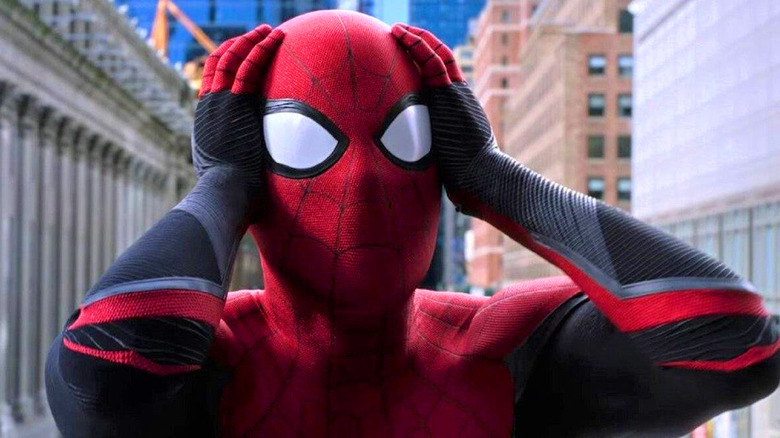
17 Dec 13:44

XDA Awards — The Best Tech of 2021

by Team XDA

Every year, we are treated to an incredible expanse of innovation across consumer technology, including but not limited to smartphones, tablets, smartwatches, laptops and PCs, and more. 2021 was a year of exciting developments, with many companies putting their best forward and coming out on top, and we as consumers could have not asked for a better outcome. We at XDA have not only used and reviewed a lot of these products, but have also gone ahead to make personal purchases and extensive recommendations because of the sheer impact that many of these tech experiences have had on us. It’s time to look back at some of these products, as we present to you, the Best Tech of 2021.

Navigate this article:


Best Smartphone of the Year: Samsung Galaxy Z Fold 3

This is one of the hardest categories to choose for, simply because the definition of a “great smartphone” remains wide enough to accommodate a hundred needs and more. The Best Smartphone in any year should be the phone that comes to mind for the most impressive set of specifications while remaining at the pinnacle of smartphone innovation. Competitors can come close, but the Best Smartphone packs the ultimate experience that is unlike anything else on the market. A phone that can be universally accepted to not only work amazingly but also “wow” the user with every step. And for another year in a row, Samsung takes the cake with its foldable, as the Samsung Galaxy Z Fold 3 is our Best Smartphone of 2021.

Front view of Samsung Galaxy Z Fold 3 with previous generations

The Samsung Galaxy Z Fold 3 takes the polish from its predecessor and refines it even further. While we thought the Galaxy Galaxy Z Fold 2 did a great job last year, Samsung managed to impress us with a product that improved the most in a year full of incremental upgrades. The Galaxy Z Fold 3 took the conventional glass slab flagship and made it into a textbook lesson on how to execute a foldable: stronger materials for the frame and the screen, IPX8 water resistance, S Pen support, and more. The hardware is top-notch globally, irrespective of which country you buy it in. And the phone doesn’t have a notch on the inner display as Samsung also included an under-screen camera on the phone, although we agree that there is a lot of room to improve on this. Then there are software features that Samsung has added to One UI specifically for the Z Fold 3, that elevate the foldable experience to a tipping point that no glass slab smartphone could touch. The camera setup is also competitive for the use-cases that the phone targets. While the price is something that not everyone can digest, many would agree that if this year had a phone that could justify its 4-digit USD price tag, it’s this phone.

Pixel Fold featured image

Galaxy Z Fold 3

As a complete technological package, the Galaxy Z Fold 3 is a lot of pocketable innovation. If you could carry one phone in your pocket to make heads turn and still get the job done, the Samsung Galaxy Z Fold 3 should be your top choice.

    Samsung Galaxy Z Fold 3
    The Samsung Galaxy Z Fold 3 is the most polished foldable smartphone ever, and it is our pick for the overall best smartphone of 2021. For a rational price, you get one of the best smartphone experiences this year, complete with active stylus support and innovative software features to complete the package.

Honorable Mentions for the Best Smartphone of the Year: Apple iPhone 13 Pro, OnePlus 9 Pro

The runner-ups for this section are two smartphones that also provide excellent experiences all around — smartphones with just the right hint of extras to deliver a nearly perfect experience. They aren’t necessarily bleeding edge in what they do, but they handle their duties with a level of finesse that is difficult to find in other smartphones. They are also widely available and easy to recommend, making them smartphones you just can’t go wrong with. And for 2021, the honorable mentions go to the Apple iPhone 13 Pro and the OnePlus 9 Pro.

iPhone 13 Pro in blue standing straight up

The Apple iPhone 13 Pro is the iPhone that you should purchase this year. It has all the smarts that you expect from a top flagship, and it also has one of the best camera systems around, especially if you prefer video over photos. The app support ecosystem on an Apple smartphone is also quite remarkable, and practically every single app will run better on iOS than it would on Android. Whether you use your phone as a tool or as a power statement, the iPhone 13 Pro services both of these purposes with ease.

OnePlus 9 Pro

On the same lines, the OnePlus 9 Pro is one of the best all-around recommendations that one can make for a universally acclaimed smartphone. While the definition of a “flagship” may have been extended this year by Ultras, the OnePlus 9 Pro dons the hat of practicality, offering a diverse feature set that is difficult to argue with. It has one of the best performances on an Android smartphone, one of the best displays, and a lot of other features that come together to provide a great overall experience. While competitors can one-up the phone in a category or two, the overall experience of the phone is more than the sum of its parts. This is the best smartphone that OnePlus has made, and it remains easy to recommend. Other competitors aren’t either widely available across the world or come with regional differences that make them not ideal. With the OnePlus 9 Pro, you can be sure that you get a great smartphone.

    Apple iPhone 13 Pro

    The Apple iPhone 13 Pro is the iPhone to purchase this year, thanks to the 120Hz display, a smaller notch, the A15 chip, and better cameras.
    OnePlus 9 Pro

    The OnePlus 9 Pro represents one of the best Android experiences in the market in 2021, with great performance, great display, great camera, and more.

Best Ultra Flagship of the Year: Samsung Galaxy S21 Ultra

With the recent rise of the Ultras, the very definition of a “flagship” has expanded, going from practical to overkill. 2021 Flagships continued to push the boundaries of what a user could possibly need in their smartphone, and more importantly, not pause to ask whether they do really need it. An “ultra” flagship in 2021 is expensive, and with that price tag, comes a performance punch that lands very unapologetically, not shying away from the premium status and the word “overkill”. The competition this year is quite close for the top spot, but in the end, the Samsung Galaxy S21 Ultra wins the Best Flagship of the Year for 2021.

Samsung Galaxy S21 Ultra

The Samsung Galaxy S21 Ultra is the apex flagship of the year 2021, and we have a lot of reasons to say so. For one, you get a gorgeous display that remains one of the best ones we have seen this year, along with impeccable camera performance that remains one of the benchmarks in versatility. It’s a solid smartphone from Samsung that took over Galaxy Note duties this year thanks to the addition of S Pen support. Samsung also makes tall promises for software updates, and so far, the company has delivered — in addition to regular monthly security updates, the Galaxy S21 Ultra also became the first smartphone outside of Google Pixels to receive its official Android 12 update. The only blemish one can spot is that you don’t get a Qualcomm Snapdragon 888 SoC in every region, meaning gaming performance is a miss if you land the Exynos 2100 variant. But otherwise, this is the best flagship of 2021.

    Samsung Galaxy S21 Ultra
    The Samsung Galaxy S21 Ultra is the ultimate overkill flagship of 2021, packing in a flagship SoC, a premium build, a great display, and an amazing camera setup, as well as all the extras expected on a premium flagship.

Honorable Mentions for the Best Flagship of the Year: Xiaomi Mi 11 Ultra

The Xiaomi Mi 11 Ultra is the answer to the question “What comes after the Pros?”, and Xiaomi took the opportunity and absolutely ran with it. The Xiaomi Mi 11 Ultra is an overkill flagship that is also priced very sensibly, in line with Xiaomi’s value-for-money principles. Arguably, the Mi 11 Ultra is even better than the Galaxy S21 Ultra, but it’s very limited availability and poor software support bring it down to the second spot. Otherwise, you would be looking at features like an equally impressive display, a ceramic back, an impressive camera system with insane zoom capabilities, fast wired and wireless charging, and an actual display on the back as well. The Mi 11 Ultra truly deserved a better spot, and we hope Xiaomi has more faith in its overkill flagship next year.

Xiaomi Mi 11 Ultra in hand

 
    Xiaomi Mi 11 Ultra
    The Xiaomi Mi 11 Ultra is a culmination of the company's best hardware in a smartphone yet, though MIUI, security updates, and actual availability are sticking points.

Best Affordable Smartphone of the Year: Google Pixel 6

The rising prices of smartphones and the advent of Ultras within the definition of flagships have skewed the definition of “affordable” as well. An affordable smartphone can mean different price ranges for different people. But what we believe that everyone will agree on is the fact that the Google Pixel 6 is the best affordable smartphone in 2021 that remains grounded to practical price points, and doesn’t burn a hole in your pocket for features you won’t really use.

Pixel 6 back

The Google Pixel 6 takes a lot of the features that make the Google Pixel 6 Pro a great smartphone, and makes it accessible to a wider audience. While some of the specifications may not be the absolute top-of-the-line, what Google has managed to achieve is feature parity with its more expensive flagship for the smarts as well as for the cameras on this one, two of the more defining characteristics of a great smartphone experience. So if you want to experience one of the best camera systems around, and want to use one of the best Android experiences around, the Google Pixel 6 remains the best affordable smartphone you should consider picking up. Availability remains a weak point though, but we hope the phone expands to more regions as the months go by.

    Google Pixel 6
    The Pixel 6 comes with Google's new Tensor chip, a modern design, and flagship cameras. The sum of the experience is definitely more than that of its parts, and this is our pick for the best affordable smartphone of 2021.

Honorable Mentions for the Best Affordable Smartphone of the Year: Xiaomi Mi 11X, OnePlus Nord 2

The Xiaomi Mi 11X is one of the understated releases of the year, eclipsed by the presence of the more powerful Xiaomi Mi 11X Pro. While the Pro is great in its own right, the Mi 11X gets so many more boxes ticked for being one of the best affordable smartphones to be released this year. The Qualcomm Snapdragon 870 remains a very practical choice for a flagship-grade SoC, and the swap over to a 48MP camera setup versus the 108MP on the Pro is another practical decision that leads to a better value-for-money equation.

Xiaomi Mi 11X Pro midnight black

The OnePlus Nord 2 is also an excellent choice for an affordable smartphone this year. Had the OnePlus Nord 2 been available more widely and in key markets like the USA, there was a good chance it could have eclipsed the Pixel 6 for the top spot. The Mediatek Dimensity 1200 SoC within the Nord 2 is a great chip that performs well and even games well. The rest of the experience is also pretty clean, thanks to OnePlus’ OxygenOS. OnePlus does need to address some security issues, but beyond that, the OnePlus Nord 2 is a solid, practical, and affordable choice for 2021.

OnePlus Nord 2 with a street lane in the background

    Xiaomi Mi 11X

    The Xiaomi Mi 11X is a great affordable flagship with a Snapdragon 870 SoC, 48MP triple cameras, and an ad-free MIUI experience.
    OnePlus Nord 2

    The OnePlus Nord 2 is a great premium mid range device, thanks to the capable Dimensity 1200 SoC, and a great overall package.

Best Smartphone Camera of the Year: Vivo X70 Pro Plus

Picking one winner for the Best Smartphone Camera in 2021 is an extreme sport, because the finalists finish so close to each other, it isn’t fair to not call them all winners at the end of it. But a winner is needed, and a winner shall be declared. If you have been following our camera coverage, you must already know that the best smartphone camera of 2021 is going to be the Vivo X70 Pro Plus.

Vivo X70 Pro+ Camera sensors

We have extensively tested the Vivo X70 Pro Plus’ camera this year and directly pitted it against most competing devices. And in every comparison, the Vivo comes out as the overall winner. Vivo not only managed to deliver a versatile camera setup on this flagship, it also delivered one of the most consistent camera experiences seen this year, raising the bar for all smartphones hoping to win this crown. The 50MP Samsung GN1 primary camera is excellent and produces noise-free, sharp and vibrant images in low light without needing to resort to night mode as frequently as the rivals. The same 50MP sensor is seen on the Google Pixel 6 Pro, but the Vivo X70 Pro Plus has a faster aperture and a dedicated V1 ISP chip that helps produce stunning HDR. The 48MP ultrawide is paired with Gimbal technoloy, and the 12MP telephoto handles 2x optical zoom while the 8MP periscope handles 5x optical zoom. Hundreds of camera samples later, we are confident in saying that the Vivo X70 Pro Plus is the best smartphone camera of 2021.
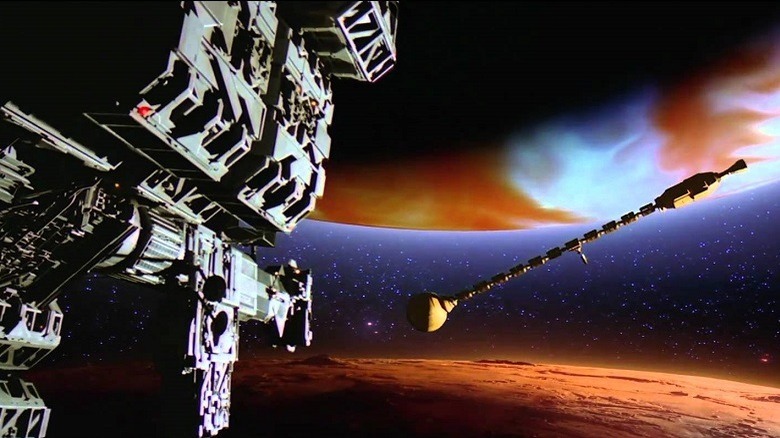
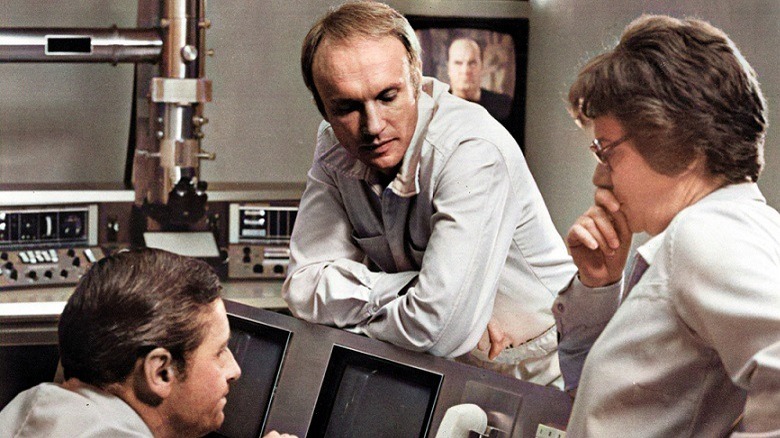
    Vivo X70 Pro Plus
    The Vivo X70 Pro Plus combines versatility with consistency for both easy and challenging shots to emerge as our choice for the best camera smartphone for this year.

Honorable Mentions for the Best Smartphone Camera of the Year: Google Pixel 6 Pro, Apple iPhone 13 Pro, Samsung Galaxy S21 Ultra

As we mentioned, this year was one of the closest finishes for the top spot. The winner takes the cake, but the difference between the top four is razor-thin, with just some quirks coming in their way to pole position. If you have either the Google Pixel 6 Pro, the Apple iPhone 13 Pro, or the Samsung Galaxy S21 Ultra, rest assured that you still have one of the best camera setups that you can get on a smartphone this year.

Apple iPhone 13 Pro, Google Pixel 6 Pro, Samsung Galaxy S21 Ultra

Each of these phones has its own highlights. The Google Pixel 6 Pro represents the best daytime point-and-shoot experiences and a camera experience that can be best described as fun. The Apple iPhone 13 Pro and iPhone 13 Pro Max provide the best video capturing experience, and the photo experience is also pretty great. The Samsung Galaxy S21 Ultra matches Vivo for its versatility and consistency but falls short by just a whisker for nighttime shots and ultrawide capabilities. Between these four options, you can pick up anyone and still get a very confident smartphone camera that will be able to tackle all that you can throw at it — we just had to pixel peep and nitpick our way to select a winner.

    Google Pixel 6 Pro

    The Google Pixel 6 Pro finally sees a camera hardware upgrade, making it a confident and fun point and shoot smartphone camera with Google smarts.
    Apple iPhone 13 Pro

    The Apple iPhone 13 Pro is one of the best cameras you can buy this year, especially if your focus is on video recording for social media platforms.
    Samsung Galaxy S21 Ultra

    The Samsung Galaxy S21 Ultra comes with one of the most versatile camera systems, giving you full range over what you capture.

Best Foldable Smartphone of the Year: Samsung Galaxy Z Flip 3

Foldable smartphones had a great year in 2021, riding on the back of some great releases. The most prominent ones have been from Samsung, but there have been others as well which set the bar of expectations for Samsung in the first place. This is easily the area in the smartphone market where we have seen the most innovation. And the award for the best foldable smartphone in 2021 goes to the Samsung Galaxy Z Flip 3.

But wait, isn’t the Samsung Galaxy Z Fold 3 the phone of the year, you say? It is, yet the best foldable this year remains the Galaxy Z Flip 3. Not because the Galaxy Z Fold 3 wasn’t good enough (we literally awarded it the best smartphone of the year), but because the Galaxy Z Flip 3 managed to give us a glimpse of the future where foldables co-exist at the same price points as glass slab flagships. The $999 launch price was the real deal, lowering the barrier to experiencing what a foldable is and what a foldable can do. For all the greatness that tablet-style foldables can bring to the table, they remain enthusiast products until and unless they become affordable enough for the average consumer to buy and enjoy, and the Galaxy Z Flip 3 was a step in the right direction for that. The sheer mass appeal that a candy bar foldable like the Galaxy Z Flip 3 and its $999 price tag brings simply cannot be ignored. The phone has its drawbacks, like mediocre battery life and a price tag that is still high, but we’re confident these two areas will continue to be improved upon for the next generations. The Galaxy Z Flip 3 thus is our best foldable smartphone of the year 2021.

    Samsung Galaxy Z Flip 3
    The Galaxy Z Flip 3 is Samsung's latest clamshell foldable that offers a bigger outer display, high refresh rate inner display, and top-of-the-line hardware. The practical price tag is what makes it the best foldable of the year.

Honorable Mentions for the Best Foldable Smartphone of the Year: Galaxy Z Fold 3, Huawei Mate X2, Xiaomi Mi Mix Fold

2021 saw a lot of great foldables, and each of them raised the bar in their own way. Honorable mention obviously goes to the Samsung Galaxy Z Fold 3 for being an overall great smartphone and one of the easiest recommendations for this year, despite being a phone that can literally phone in half.

The three foldables phones from Xiaomi, Samsung and Huawei

The three foldables phones from Xiaomi, Samsung and Huawei

The Huawei Mate X2 also did a stellar job, with a proper flagship camera system onboard and a hinge that lets the phone fold completely flat without any noticeable gaps. The Xiaomi Mi Mix Fold makes it to the list for the same reason as the Galaxy Z Flip 3 did — it enters at a lower price point of about ~$1,500 in China, making it important in the quest to bring mainstream appeal for foldables. The device also has the world’s first “liquid lens” which allows one camera sensor to double both as a 3x telephoto and a macro sensor. The Huawei Mate X2 and the Xiaomi Mi Mix Fold remain restricted to the Chinese market, and we hope future foldables from Huawei and Xiaomi see a wider global release.


Best Gaming Phone of the Year: ASUS ROG Phone 5 Ultimate

This is a category that is very much niche this year, as a lot of smartphones are competent enough for casual games. So if you are looking specifically for a gaming phone, you identify yourself as a much more hardcore gamer, or you are someone who simply loves overkill on your spec sheet. Either way, the one phone that unanimously wins the Best Gaming Phone for 2021 is the ASUS ROG Phone 5 Ultimate.

ASUS ROG Phone 5 Ultimate Review

The ASUS ROG Phone 5 Ultimate truly is the ultimate gaming smartphone, and it pulls back no punches. This phone qualifies as an Ultra Flagship, but has a much more stronger focus on raw performance than anything else. For instance, you get the top-of-the-line Qualcomm Snapdragon 888 SoC, coupled with an insane 18GB of RAM and 512GB of storage. While the AMOLED display is “just” FHD+, it still refreshes at an insane 144Hz. The spec sheet continues to get crazier, with a beefy 6000 mAh battery that supports 65W fast charging. You need USB C ports, well you get two on this phone — one USB 3.1 on the side, and one USB 2. on the bottom; and you still retain the 3.5mm headphone jack, but now with quad DAC as well as a front-facing stereo speaker setup. The extras continue on, you have Ultrasonic sensors for AirTrigger on the side frame (which can detect taps and swipes), you have two more touch sensors on the back, and you even get grip press detection — all of it can be mapped to different actions within games. And because it is a gaming phone, you also get the aesthetics that do justice to the vibe — and you also get a PMOLED monochrome display on the back because why not. There are software customizations and an accessory ecosystem that should help enhance your gaming experience. The final question to answer is whether all of these features do translate into real-life gaming performance, and thankfully, the answer remains yes. This is the best gaming phone money can buy this year, presuming ASUS has it in stock for you.

    ASUS ROG Phone 5
    The ASUS ROG Phone 5 is the ultimate gaming smartphone. It has loads of gaming features, accessories, and chart-topping performance to handle any game you throw at it.

Best Sustainable Phone of the Year: Fairphone 4

Sustainability is bound to become an even more important topic in the coming years. Many smartphone OEMs have been taking small steps to showcase their commitment to the environment and human life. While we appreciate those small steps, several of those measures also reek of commercial profit motives. What we also need are more substantial steps, and making phones easier to repair and allowing them to last longer is one of the more concrete steps that can be taken. For that, the Fairphone 4 wins the Best Sustainable Phone of the year award.

Fairphone 4 disassembled

The Fairphone 4 is a special smartphone, something that you won’t immediately pick up if you just read the spec sheet. But look closer and you will find that the phone goes to great length to be repairable and consequently have a lower environmental impact. The design of the phone is highly repairable and the company sells several key spare parts, encouraging users to buy these replacement parts and change broken/defective components by themselves with very little effort. This is a far cry from the current trends in the smartphone industry, where glass and glue are generously used to give us a cocktail of a smartphone that is difficult to repair even by qualified technicians. Beyond repairability, the phone also makes attempts to use sustainable materials wherever feasible. And the company also promises two major Android updates and software support until the end of 2025.

    Fairphone 4
    The Fairphone 4 is a smartphone that is built to be sustainable, letting users repair their own phone themselves, and consequently let it last longer.

Mobile Manufacturer of the Year: Samsung

Samsung retains the crown for the best mobile manufacturer for another year. The South Korean tech giant has consistently been the largest smartphone maker by volume for years now, and this year, they have had a large hand in shaping the Android landscape as well.

Phantom Green Galaxy Z Fold 3 on top of Phantom Silver and Phantom Black units

From overkill ultra-premium flagships like the Galaxy S21 Ultra that pushed the boundary of what we expect on a glass slab smartphone, to releasing two well-executed foldables in the form of the Galaxy Z Fold 3 and Galaxy Z Flip 3, to even shaping the very fabric of Android with contributions to foldable experiences to the point that we are now looking forward to a foldable-centric Android 12L update, and even in giving a fresh breath of life to Wear OS — Samsung has had a very eventful year. On top of that, Samsung has been on point in delivering security updates across its lineup, true to its word. Even for platform updates, in fact, the Samsung Galaxy S21 series were the first smartphones outside of the Google Pixel to receive an official Android 12 update. Samsung also remains one of the very few Android OEMs that continues to participate in the tablet market, not shying away from competing against Apple’s iPads.

All in all, Samsung has proven itself to be a force to be reckoned with, in the broad mobile market. Gone are the days of 2010-era Samsung with heavy TouchWiz skins that lagged four versions behind official Android releases and ran on more phones than you could keep track of. Samsung in 2021 has been lean, sharp and focused, while retaining its vision towards the future. That is why Samsung is our mobile manufacturer of the year 2021.

Honorable Mention for Mobile Manufacturer of the Year: Xiaomi

Xiaomi gets an honorable mention this year, thanks to the sheer accessibility that its smartphones provide for millions of users around the world. The company, a market leader in itself, continues to provide stiff competition to everyone else with its value-for-money smartphones that are very hard to ignore.

The Xiaomi Mi Mix Fold connected to a Bluetooth keyboard.

The Mix Fold running PC mode, with a Bluetooth keyboard.

This value orientation also does not hinder innovation, with several Xiaomi smartphones forcing us to rethink our expectations and redefine our definitions. Xiaomi also has a wide ecosystem of products outside of smartphones, and unlike others, the company does not attempt to alienate users with a walled garden approach. We’d just hope Xiaomi revisits some of its branding/rebranding decisions, and also works to improve the delivery of security updates on its phones.


Mobile Innovation of the Year: Voice Dictation on the Google Pixel 6 series

One of the big highlights of the Google Pixel 6 series is the Google Tensor SoC, which brings in tremendous improvements to Machine Learning capabilities on Google’s smartphones. Thanks to Tensor and the latest on-device speech models, transcribing voice to text is now smarter than ever. And we agree wholeheartedly, which is why Voice Dictation is our choice for the mobile innovation of the year.

Voice Typing on smartphones is not a new feature in any way, and it has been available in some format since the very early days of Android. What is new with the Google Pixel 6 series is that the feature is in its most reliable and accurate execution ever. Voice Typing now takes input from contacts on your smartphone to get name spellings right, it automatically adds pronunciations, and understands corrections and commands based on the context. Saying “send” on its own won’t type the word “send”, and will, instead, actually send the message. If it does get something wrong, it gets it right the second time when you provide more context.

This feature has the potential to change how we use on screen keyboards, how we interact with smartphones, and by extension, change the very nature of smartphones. Voice commands have been around for a while, yes, but this Voice Dictation on the Google Pixel 6 operates on a different level of confidence. We can’t wait to see where Google goes next with its Voice-based features on Pixel smartphones.

Honorable Mention for Mobile Innovation of the Year: Water resistance on the Samsung Galaxy Z series

Water resistance isn’t a new feature by any means, but water resistance on a foldable with several internal moving parts definitely is. The Samsung Galaxy Z Fold 3 and Galaxy Z Flip 3 are the first mainstream foldables that come with an IPX8 rating, meaning both the foldables can withstand 1.5m of freshwater submergence for 30 minutes. This is a big achievement for foldables, one that takes them one step closer to wider mainstream appeal as it helps shed the notion that foldables are delicate. The devices still remain susceptible to dust, so you can’t really take them to the beach. But if you ever get caught out in unexpected rain, at least know that your expensive foldable will walk away without any damage.


Best TWS of the Year: Samsung Galaxy Buds 2

TWS as a market has exploded in recent years, thanks to some questionable decisions in the smartphone market. There are way too many wireless earphones in the market, and it does get confusing pretty fast. But if you had to choose from the best options released this year, the Samsung Galaxy Buds 2 stands out as the Best TWS of 2021.

Samsung Galaxy Buds 2 in all four colors

While the Samsung Galaxy Buds Pro remains the superior product in Samsung’s TWS lineup, the Samsung Galaxy Buds 2 are the more practical and easier recommendation. They have a small and discreet design that lends to their burdenless experience, and many more users are likely to find the fit better than they would on the Buds Pro. The sound performance will also be appreciated by a wide audience set, and the microphone performance also remains excellent for calls and meetings. Bonus, you get pretty good ANC on these as well. The IPX2 rating isn’t the best in the market, but that’s about the only con you can find with these, especially considering their reputation, price tag, and device compatibility.

    Samsung Galaxy Buds 2
    The Samsung Galaxy Buds 2 are our pick for the best TWS of the year, thanks to their price-performance ratio and feature set. You get good sound, good microphone performance, a discreet design, and ANC at a fairly affordable price point.

Honorable Mentions for Best TWS of the Year: OnePlus Buds Pro, Nothing Ear 1

There are a bunch of earphones that deserve a mention here, but we’re sticking to these two. The OnePlus Buds Pro was actually a pretty surprising quality release from OnePlus, surprising because they sound pretty good for their price and come with no glaring caveats. There are some minor complaints, like the inability to change the volume from the earphones and a somewhat confusing software situation. But outside of that, they have a refreshing design, great ANC, great mic performance, great battery life, and more.

The Nothing Ear 1 gets an honorable mention for managing to get the tech world excited with a unique half-transparent design and great execution for a first product. They are very comfortable to wear thanks to their lightweight, and they also sound decent with ANC. They are also priced competitively, which helps in making a convincing argument for the first-release product from a new company. There’s also the Carl Pei magic, which has managed to carry over a lot of goodwill to the new company, giving it a bit more of a headstart than otherwise granted to a newcomer in this cutthroat market.

Earbuds in the case

    OnePlus Buds Pro

    The OnePlus Buds Pro are a great pair of TWS earphones, offering a solid feature set and performance at a respectable price.
    Nothing ear (1)

    The Nothing Ear 1 comes with a unique design, ANC, and good performance. They are a decent product from a new TWS company.

Best Smartwatch of the Year: Apple Watch Series 7

Choosing a smartwatch is a decision that is inextricably linked to your operating system of choice, as these are still considered secondary devices. But if you had to choose the “best smartwatch”, such a decision would need to ignore the base reality of ecosystem lock-in, and consider the pure merits of the product in hand, or more literally on your wrist. With such a conundrum in place, the decision is unanimous. The Apple Watch Series 7 is the best smartwatch of 2021.

Apple Watch Series 7 in three different bands and versions

This year, Android finally got better smartwatches thanks to Samsung swooping in to save Wear OS. But the update is still going to take a bit to roll out beyond Samsung’s stables, leaving us without too many options on the latest update. While the Samsung Galaxy Watch 4 series is great, it swaps out the better choice of Tizen OS for Wear OS, which is a bit perplexing. That leaves the space open for Apple to shine, and shine it does. The Apple Watch Series 7 does not line up with the leaks of the product, but the actually launched product manages to remain convincing. Most of the upgrades are incremental compared to the Series 6, but Apple has nailed down the basics and beyond of what makes a good smartwatch. Not only is the hardware great, Apple pulls in and retains users on the power of its experiences, especially those revolving around health and fitness tracking and Apple Fitness Plus. Yes, the Apple Watch 7 does not work with Android, and that is a big flaw. But if you could choose your smartwatch first and then pick a smartphone, you should definitely be picking the Apple Watch 7 over other smartwatch options.

    Apple Watch Series 7
    The Apple Watch Series 7 is the best smartwatch of 2021, as it comes not only with great hardware, but also brings along a great health and fitness tracking experience with Apple Fitness Plus.

Honorable Mentions for Best Smartwatch of the Year: Samsung Galaxy Watch 4 Classic, Amazfit GTR 3 Pro, Huawei Watch Fit Elegant

If you are constrained by the Android smartphone in your pocket, you do need to look at other options beyond the Apple Watch 7. In such cases, you can consider the Samsung Galaxy Watch 4 Classic, the Amazfitn GTR 3 Pro, or the Huawei Watch Fit Elegant as they form part of our honorable mentions.

Galaxy Watch 4 Classic on a wrist

The Samsung Galaxy Watch 4 Classic is the best Wear OS smartwatch yet, but that isn’t a very high bar to clear. The Watch does run Google’s software technically, but Samsung has had much more freedom on it. Think of it more as a Tizen watch with the Google Play Store, as that would better explain the absence of Google Assistant on the watch. If you want a proper smartwatch that is compatible with Android, this is practically one of your top choices. As a bonus, you get the beloved spinning bezel on this one.

amazfit gtr 3 on wrist

The Amazfit GTR 3 Pro is an excellent fitness tracker-turned-smartwatch....

17 Dec 12:46

The value of a college degree

by J.D. Roth

I'm a long-time vocal proponent of higher education. For me, it's personal. I was raised in a poor family with parents who had briefly attended college, but never with any real gusto. (I'm not sure my father had a plan. My mother studied home economics. Not kidding.)

My uncle got a math degree from a now-defunct community college, and his son (my cousin Duane) went to school back East. I'm not sure if he got a degree, though. (I'll ask him tomorrow when we get together to bake Christmas cookies!)

But from a young age, I knew that I wanted to go to college. I knew I was a smart kid, and I viewed college as a Way Out. It was an escape from the trailer house I grew up in, an escape from menial labor.

Too bad then that I squandered my college education. I entered Willamette University intending to be a religion major, but eventually ended up with a psychology degree — chased with an equally useless English minor.

My college degree hasn't really proved useful in my life. Well, I guess I apply both the psychology and English education in my career as a money writer, but I don't make direct use of the things that I learned. And that's the rub.

College degrees are valuable — but not if you choose the wrong one.

Although it's popular in some corners to bad-mouth college degrees, according to the U.S. Census Bureau your education has a greater impact on lifetime earning potential than any other demographic factor. Education matters more than age. Education matters more than race. Education matters more than gender. When it comes to making money, education matters most.

The value of college vs. no college

So, I'm always interested when I see knew reports and/or research regarding the value of college. In October, the Foundation for Research on Equal Opportunity (FREOPP) released an excellent report entitled “Is College Worth It? A Comprehensive Return-on-Investment Analysis”.

I like this report because it goes beyond averages. Sure, FREOPP says, the median bachelor's degree is worth $306,000 for students who graduate on time, but…

…the median conceals enormous variation. Some fields of study, including engineering, computer science, nursing, and economics, can produce returns of $1 million or more. Others, including art, music, religion, and psychology, often have a zero or even negative net financial value.

FREOPP argues that “the decision to attend college is less important than the choices that come next: which school to attend, and which subject to study.”

The analysis reveals that a student’s choice of program is perhaps the most important financial decision he or she will ever make. Most bachelor’s degree programs in engineering, computer science, economics, and nursing increase lifetime earnings by $500,000 or more, even after subtracting the costs of college. But most programs in fields such as art, music, philosophy, religion, and psychology leave students financially worse off than if they had never gone to college at all.

Differences in ROI between programs can amount to millions of dollars.

The FREOPP report — which is very long — includes plenty of interactive stats and charts and graphs. Readers acan compare the value of college majors, expected earnings, and more.

Value of college major

The FREOPP report echoes some of the findings of Georgetown University's 2015 report on “The Economic Value of College Majors”. The Georgetown study found that engineering majors earned a median starting income of $50,000 per year. Folks with an art degree started with annual salaries of around $28,000. And high-school graduates who didn't go to college? Well, they had average starting salaries of $22,000 per year.

The bottom line? FREOPP says there are three main messages to draw from their report.

  • First, major is the most important factor when predicting the return-on-investment for a college education. Degree subject accounts for half almost half of ROI variation alone.
  • Second, elite colleges can pay off, but not always. FREOPP found that there is a weak correlation between the cost of a school and how much a degree from that school is worth. But, as with majors, there's plenty of variation. A film degree from Harvard is likely to be worth less than an engineering degree from a “no name” university.
  • Finally, there are a lot of bachelor's degrees that don't make sense from a financial perspective. You might want an art degree or a religion degree for other reasons, and you might be fulfilled with those degrees, but they're poor choices when viewed through the lens of money.

Here's what I always say when I write about this subject: The more you learn, the more you earn. And it's true. No, a college degree isn't a guarantee that you'll earn more, but it never has been. But, generally speaking, the more formal education you have, the more money you'll make during your lifetime. This report only reinforces that conclusion.

[“Is College Worth It? A Comprehensive Return-on-Investment Analysis” at Foundation for Research on Equal Opportunity]
17 Dec 12:43

Mechajammer Update - Keys, Patching and Reward Shipping

by ValH

With Whalenought Studios' cyberpunk RPG Mechajammer now live and receiving regular patches (here's the most recent one), we get this Kickstarter update that covers backer keys and both physical and digital rewards, as well as the studio's plans for the future. Check it out:

Remaining Keys

Since the original batch of keys went out and the past week I think there’s still ~150 or so backers that haven’t filled out surveys. When those are filled out, we get notifiers every once in a while and will be message you manually about them, so there could be a brief delay on that, though we’ve been checking throughout the day too.

Patching

We're scheduled for additional months of crunching to get the game where we intended it to be. Our next patch includes the finished XP mode option we intended to get in (from new-game) and some balancing overhauls, and that will continue into the new year. We’ll be doing around the clock fixing over the next month to get it up to speed. Modern Wolf’s mechajammer channels will have continued news on releases, patches and bigger updates into the future if you have any additional questions.

If you have any questions for us, please feel free to continue to email or use the kickstarter messaging as we get pinged about it and can get back to you as soon as we can.

GOG Patches

It has just come to our attention that the GOG patches have either been slow to update or not going live. I know for our Serpent launch we were able to rapid fire those, and this is terrible to hear, we're looking into what's going on as quickly as we can.

Digital/Physical rewards

We have what we hope if the final batch of miniatures heading or way soon, though there are some holiday delays. Once verified can send out those final physical reward shipment emails to verify everyone's addresses, especially outside the US where there could have been some issues. Since some of the digital rewards are pictures of the physical ones and require some scans, we’ll just be emailing and sending all that simultaneously.

Expect emails and shipments around end of January for that.

Hope you all have a very nice christmas & holiday. We will notify you again when those shipping emails go out in the new year.

Best,
Hannah & Joseph
17 Dec 12:32

The Geekbox: Episode 614

Wherein we discuss the launch of -- and our time so far with -- Final Fantasy XIV: Endwalker. Starring Ryan Scott and Adam Fitch.

17 Dec 11:24

How to Prevent Customer Support Help Desk Fraud Using VPN and Other Tools

by noreply@blogger.com (The Hacker News)
It's no secret that the internet isn't a very safe place. And it's not hard to understand why. It's a medium that connects billions of people around the world that affords bad actors enough anonymity to wreak havoc without getting caught. It's almost as if the internet's tailor-made to enable scams and fraud. And that's just what it does. Right now, the world's on track to lose $10.5 trillion