Shared posts

12 Jan 18:31

Florida women arrested for alleged 3 AM glitter attack

by David Pescovitz

Clearwater, Florida police arrested Sarah Franks, 29, and Kaitlin O'Donovan, 27, yesterday for allegedly attacking a man with glitter at 3AM. According to the police report, the two pulled up to the home of one Jacob Colon and, after arguing with him, began bombarding him with glitter. — Read the rest

12 Jan 18:30

Ben Pearson's Top 10 Movies Of 2021

by Ben Pearson

Since /Film's Chris Evangelista provided a spectacular summary of 2021 in the intro of his list earlier this week (don't forget to read Hoai-Tran Bui's excellent list, too!), I'll spare you my similar reminiscence about another tumultuous year. I'll keep it simple: Thank God for the movies that surprised, inspired, scared, enlightened, and moved us, the ones that served as much-needed beacons which continue to carry us through a period of incredible darkness and uncertainty.

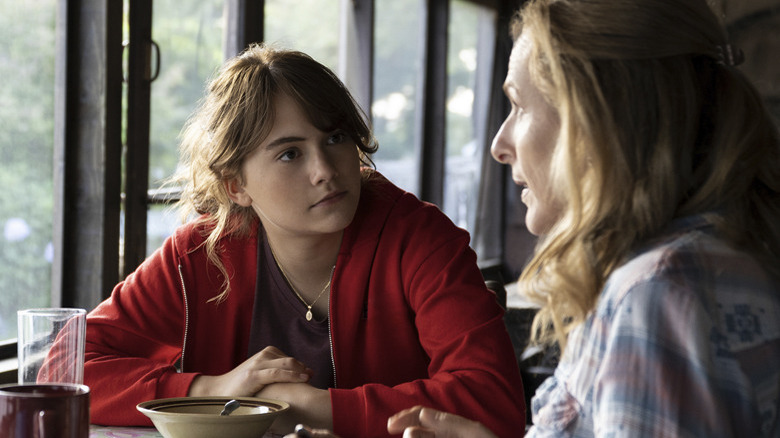
Before we begin, I want to give a quick shout-out to a few movies that didn't make my list. Here's to the brazen, joyous insanity of Josh Greenbaum's "Barb and Star Go to Vista Del Mar"; the jaw-dropping ambition of Denis Villeneuve's "Dune"; the idiotic hilarity of Kitao Sakurai's "Bad Trip"; the lush color palette and quiet profundity of Céline Sciamma's "Petite Maman"; the bleak beauty of Guillermo del Toro's "Nightmare Alley"; the ballsiness of "No Time to Die"; and the excavation and exaltation of "Summer of Soul." 

There were a lot of fantastic movies in 2021. Here are the 10 that stuck out to me the most.

10. The Fear Street Trilogy

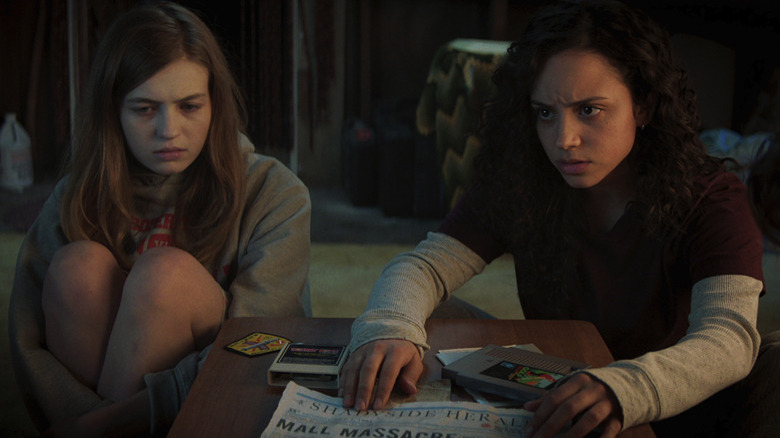
Yep, I'm starting this list by cheating and including three movies in one slot. But Leigh Janiak's "Fear Street" trilogy was one of the biggest surprises of 2021 for me, and I want to use this opportunity to recommend that you check it out if you skipped it. Each movie is set in a different time period in the same town that's supposedly haunted by a local witch, allowing Janiak to flex her creative muscles and embrace the aesthetics of several different types of horror staples. The director's love of the genre is on full display at all times, and while the trilogy is not afraid to get surprisingly brutal with some of its kills, it always has a solid emotional core at its center. Plus, these movies are actually about something, grappling with income inequality, inherited wealth, patriarchal systems, and how facts can get distorted and twisted and reshaped in the quest for power. Several actors recur throughout all three films, but Kiana Madeira, who plays the main character, Deena, brings an incredible combination of physicality and emotionality to her performances and is the clear standout among the strong cast. It's rare that a storytelling experiment that's this ambitious actually lives up to its full potential, but all three "Fear Street" movies are expertly executed and wonderfully satisfying in every way.

9. Drive My Car

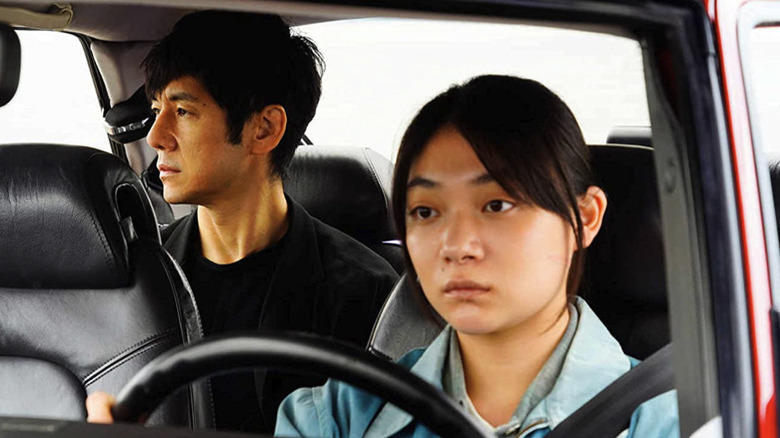
In some ways, Ryusuke Hamaguchi's "Drive My Car" is about the act of letting go. Theatre director Yūsuke Kafuku (Hidetoshi Shinomiya) tries to let go of immense pain he experiences after suffering a tremendous loss in the first section of the movie; he lets go of his sense of control when the theater program who hires him insists upon giving him a driver to guide him between his rented home and the theater where he's staging an unconventional performance of "Uncle Vanya"; and his driver, Misaki (Tōko Miura), contends with letting go of the guilt she feels for a traumatic event that happened during her younger days. But something fascinating happens: amid all of this talk about letting go, an unlikely connection begins to form. Not a romantic one, like you'd expect from a conventional Hollywood movie, but a purely human connection -- one that manages to feel profound in its simplicity. This is a quiet movie, a composed movie, and yes, a long movie (it's over three hours), but it feels simultaneously epic and intimate in a way that few other 2021 films were able to achieve.

8. Procession

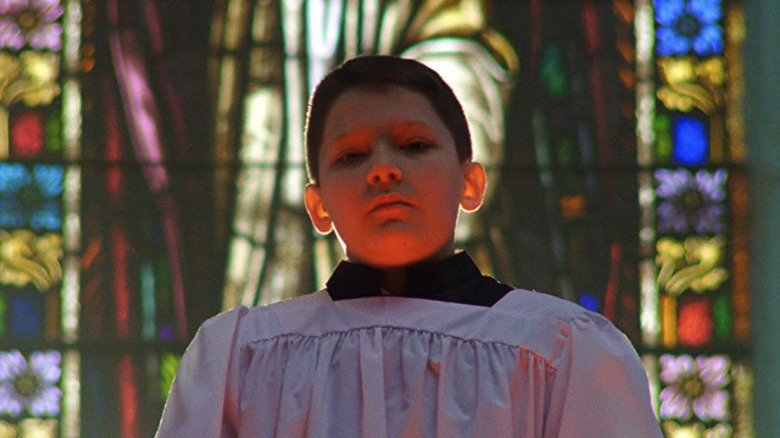
If you're looking for a light-hearted movie to throw on and relax after a hard week, please look elsewhere. Robert Greene's "Procession" is a heavy viewing experience, but it's also one of the most powerful examinations of facing demons and reclaiming power that I've ever seen. Director Robert Green's documentary is about a group of six middle-aged men, all of whom were abused by Catholic priests when they were children, coming together to try to process and work through their shared experiences. Interestingly, the way they attempt to confront and work through the most horrible moments of their lives comes in the form of making movies. These guys work with a film crew to write and act in short films which recreate the circumstances surrounding their abuse, giving themselves a slightly removed way to grapple with the heinous things that were done to them, while also being incredibly therapeutic and cathartic at the same time. These men, all strangers before the film begins, act in each other's movies and lean on each other emotionally as they relive their worst traumas, and while that sounds dire, it's also a beautiful statement about the power of compassion and empathy and self-sacrifice. It's a tough watch, but it's also tremendously moving and well worth your time.

7. Swan Song

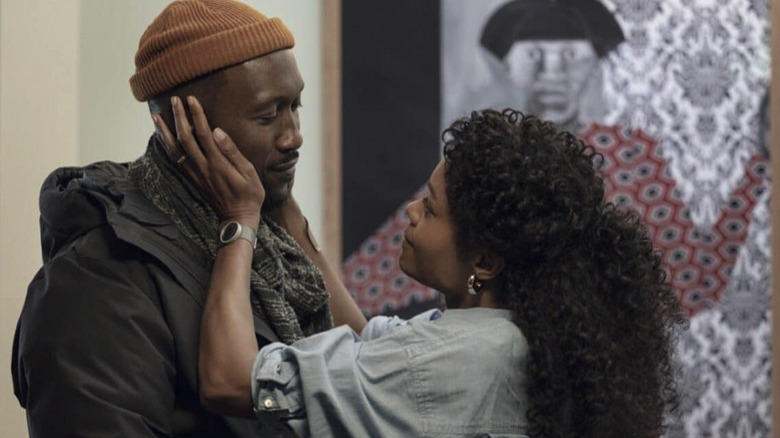
Writer/director Benjamin Cleary's "Swan Song" may be one of the most overlooked movies of 2021, but in my eyes, it's also one of the best. Set about 20 years in the future, the story follows Cameron Turner, a man who has been diagnosed with a terminal illness. But since he hasn't told his wife and young son about his diagnosis yet, a radical option is presented to him: Cameron is given the opportunity to have a clone of himself created which would be not only a perfect physical match, but also possess all of his memories and life experiences. This clone would then switch places with him, sliding seamlessly into his family life and ultimately sparing Cameron's family the excruciating pain of losing him. Mahershala Ali stars as both Cameron and his clone, and delivers a beautifully interior performance as Cameron struggles with whether or not he should go through with the switch. Naomie Harris is excellent as his wife Poppy (who's been dealing with her own set of issues), and the two of them project a deep comfort and familiarity with one another in a way we don't often see in the movies; while many films focus on the early periods of a romantic relationship, this one picks up with the couple already having been together for years. There are tons of reasons to recommend this movie -- those stellar performances, Cleary's rock-solid direction, the thought-provoking script, how it incorporates futuristic technology in a subtle but effective way -- but the real selling point is its absolutely perfect ending, which I will obviously not spoil here. This is the type of movie people will slowly discover for years, and when they wonder why people didn't talk about it when it was first released, we can raise our hands and say we tried.

6. Pig

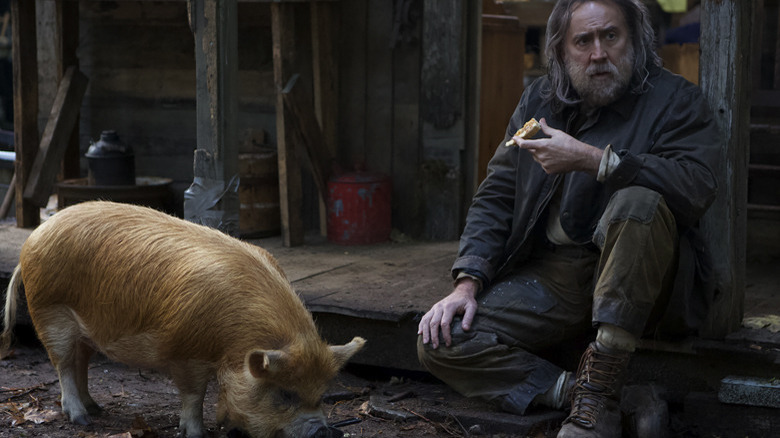
Like Al Pacino before him, Nicolas Cage is an Oscar-winning actor whose legacy as an excellent performer has been in danger of being overshadowed by his ... well, let's call it "eccentric" performing style. So when you hear that Cage stars in a movie called "Pig," and it's about a Pacific Northwest woodsman who's desperately trying to get his pig back after it's stolen from him, it's easy to assume that this is going to be another manic display of bombast from the actor. While those types of Cage performances certainly have their charms in the right context, "Pig" could not be further from that type of experience, and it's all the better for it. Michael Sarnoski's feature directorial debut is the opposite of a revenge thriller, instead presenting the audience with a subdued, matter-of-fact, and occasionally profound story about the lengths one will go to achieve peace in a chaotic world. My friend and fellow /Film editor Hoai-Tran Bui has referred to it as a cross between Lynne Ramsay's "You Were Never Really Here" and the Anton Ego food sampling scene from "Ratatouille," and I haven't heard a better way to set the stage for the type of experience this movie is trying to offer. Cage has never been better, and I am deeply curious about where Sarnoski goes from here.

5. Tick, tick...BOOM!

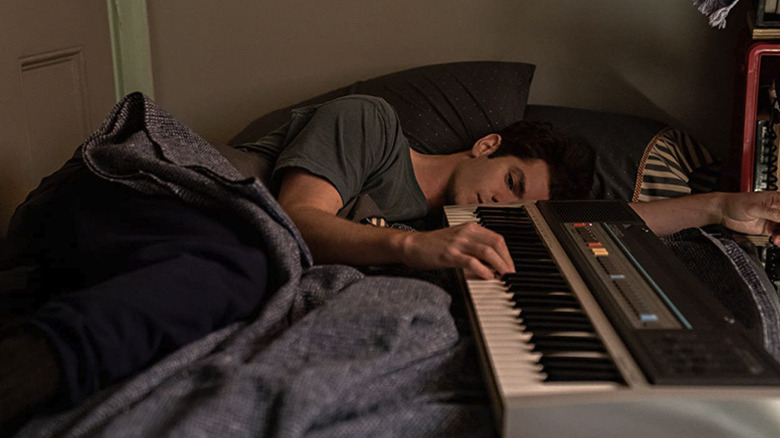
2021 was the Year of Lin-Manuel Miranda, but "In the Heights," "Encanto," and "Vivo" can all step aside, because his greatest achievement of the year was his feature directorial debut "tick, tick...BOOM!", an adaptation of an early stage musical by "Rent" creator Jonathan Larson. How does an artist handle the cognitive dissonance of living in a world that feels bleak while also keeping a social life and trying to wrestle their creativity into something tangible and meaningful? Miranda explored similar ideas in his acclaimed Broadway hit "Hamilton," and despite this film being set 200 years later, that conflict continues to feel vital and timeless and something he's fascinated with as a storyteller. This is one of the best movies I've ever seen about the sometimes seemingly impossible choice between art and commerce, and Andrew Garfield delivers one of the best performances of the year as Jonathan Larson, imbuing him with both a tragic sense of urgency and an infectious joy that makes you fully understand why Larson had such a tremendous impact on the generation behind him. I'm thrilled that when I think about Jonathan Larson's legacy in filmic terms, I will now instantly think about this movie instead of Christopher Columbus' borderline unwatchable adaptation of "Rent" from the mid-2000s.

4. West Side Story

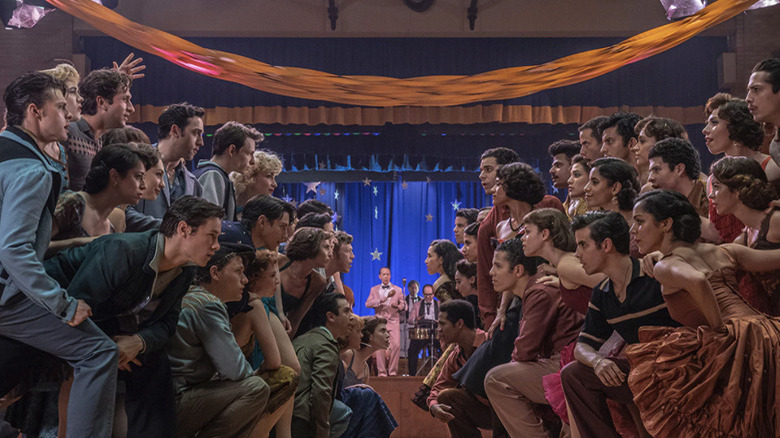
A wondrous explosion of color, emotion, and kineticism, Steven Spielberg's first musical did what many (myself included) thought might be impossible: It took a classic, Oscar-winning, undeniable cinematic triumph and actually improved on it. Sure, there may be little moments or aspects of Robert Wise and Jerome Robbins' 1961 version of "West Side Story" that I prefer here and there. But Spielberg's version, with the help of writer Tony Kushner, deepens the key relationships in effective ways, gives the movie a sharper connection to its modern-day parallels of futile desperation and violence in the face of oppressive systems, and breathes new life into a well-worn story in a way that makes it feel vital and fresh and engaging all over again. The supporting performances are terrific across the board (especially Ariana Debose as Anita), and you get the sense that Spielberg was relishing every second of finally being able to realize a decades-long dream. What a movie.

3. CODA

All I knew about "CODA" before watching it was that the title stood for "Child of Deaf Adults," and the movie was supposed to be a tearjerker. I didn't realize it was going to be an inspiring story about a teenage girl faced with an impossible predicament: Does she stay in her small town and help translate for her family, since she can hear while her brother and parents are deaf? Or does she leave them behind and pursue her own dreams of studying music? It's a classic dilemma told from a unique perspective, and writer/director Sian Heder takes the universal idea of parents not understanding their child's artistic expression and makes it heartbreakingly literal: Frank (an excellent Troy Kotsur) and Jackie (a wonderful Marlee Matlin) physically cannot hear their daughter Ruby (Emilia Jones) when she sings. It's a beautiful film about the crushing weight of responsibility, the sacrifices we make in the name of creativity, and the fact that no matter how far we are away from home, the ones we love will always be with us. Is it a little cheesy? Absolutely. But it's also undeniably effective. Consider my tears jerked.

2. Bo Burnham: Inside

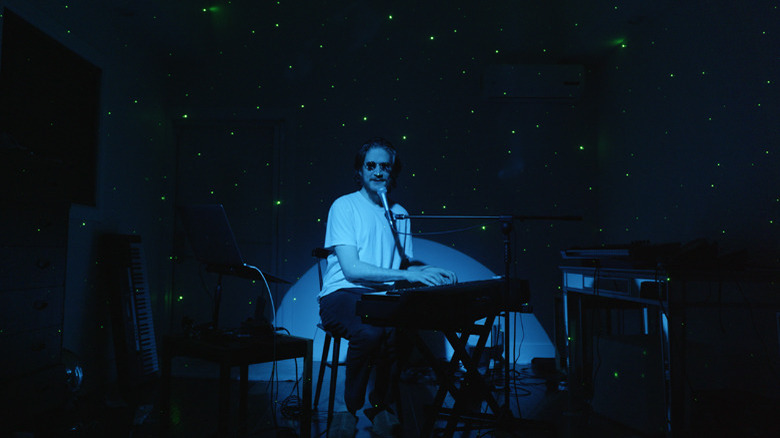
I suspect some people might quibble with this project's inclusion on this list. "That's not a real movie!" I imagine them shouting. "That's a comedy special!" Sorry, imaginary person, but I think Bo Burnham's comedy special is more cinematic than most of the other movies I saw last year. Burnham is a beloved and hugely popular comedian, actor, and director who doesn't need any extra plaudits from me, but I'll give him one anyway: "Inside," his one-man show that was written, performed, edited, and shot by himself is one of the most impressive single-person creations I've ever seen in a visual medium. "Inside" not only serves as a time capsule of the pandemic's first year, but as a prime example -- my new go-to example -- of how tight creative boundaries can result in transcendent art. It's a staggering accomplishment on a technical level, but it also packs an emotional wallop: it's therapeutic, cathartic, quietly beautiful at times, and -- this is a comedy special, remember -- consistently hilarious. I have no qualms about referring to this as a work of genius.

1. The Harder They Fall

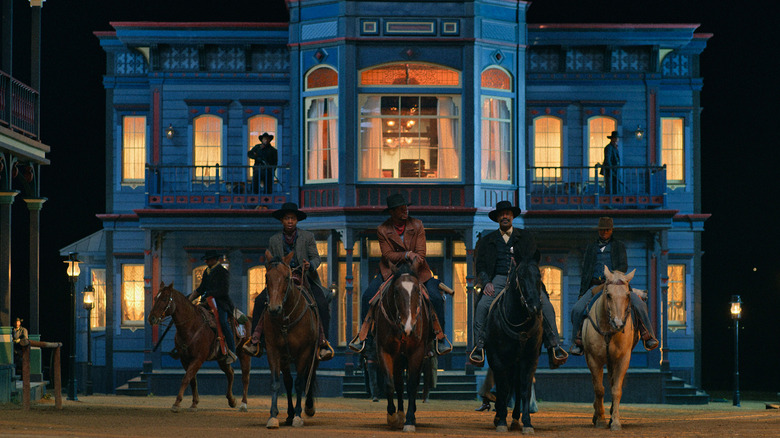
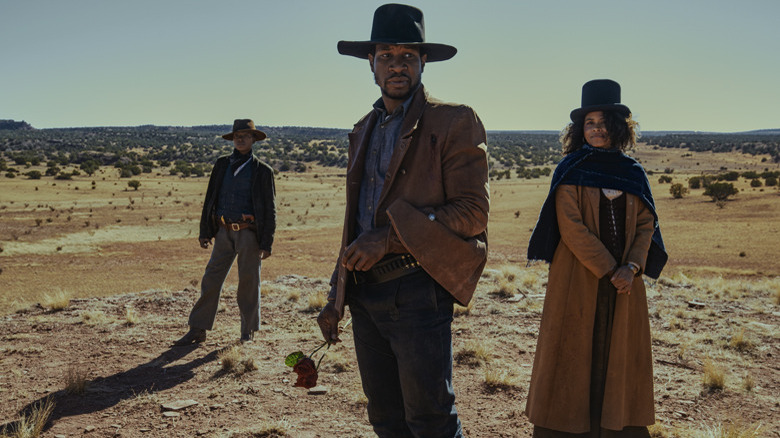
Remember that scene in "The Lord of the Rings: The Return of the King" when Sauron's army brings out that giant battering ram carved into a wolf -- the one with actual fire burning inside it -- and uses it to break down that massive door at Minas Tirith? "The Harder They Fall" is that gigantic battering ram: a stylish, fiery thing that obliterates barriers will hopefully inspire hordes of followers to scramble through the hole it created. Co-writer and director Jeymes Samuel's Western tells an operatic story, one that feels classic and familiar in that ineffable way that the best stories can sometimes feel as if they've always been sewn into humanity's grand tapestry of storytelling. 

Some might glance at this film and think a Western with an all-Black cast is just a gimmick, or that this movie's narrative is overshadowed by its modern soundtrack, its slick editing, or its immaculate production design. But there's true power in the way all of those elements collide and compliment each other here, forming not just a battering ram to blaze the trail for future generations, but one that announces the arrival of a director who unabashedly embraces the magic of maximalist cinema. Crucially, though, as all of this style is woven into the movie and enhances its settings and dynamics, the lead performances are playing everything with Shakespearean levels of gravitas. We get another star turn from Jonathan Majors as the tortured hero Nat Love, and while casting Idris Elba as a villain is almost cliche at this point (his skills were completely wasted in "Star Trek Beyond" a few years ago), he brings a complexity to this role that muddies the traditional "white hat vs. black hat" juxtaposition showcased in so many Golden Age Westerns. Samuel has said in interviews that he wants to continue making Westerns (at least in the near future), and I'm thrilled that one of Hollywood's oldest genres has finally received a much-needed infusion of new blood.

Read this next: The Best Movies Of 2021

The post Ben Pearson's Top 10 Movies of 2021 appeared first on /Film.

12 Jan 17:55

8 Things You Should Never Put in Your Dishwasher

by Sarah Showfety

Many of us, myself included, would have a hard time thriving without a dishwasher. Sure, we’d survive, but buried under an overflowing, never-ending pile of cooking tools, dishes, and food containers to wash. (It seems pretty never-ending even with a dishwasher.)

Read more...

12 Jan 17:55

The Book Of Boba Fett Wants To Change The Conversation Around Rancors

by Danielle Ryan

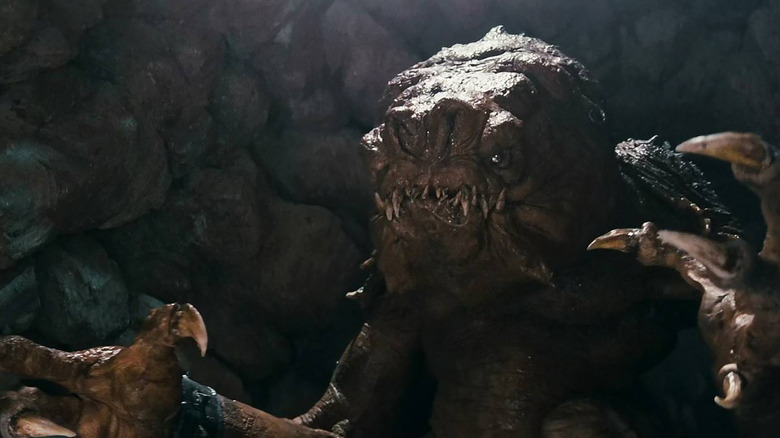
In "Return of the Jedi," "Star Wars" fans were introduced to a rancor, then known as "the" rancor, a jagged-toothed, hungry monster who eats poor Oola (Femi Taylor), the Twi'lek dancing girl under orders from Jabba the Hutt. Luke Skywalker (Mark Hamill) ended up killing the beast in a moment that's intended to be heroic, but always sat wrong with me as a child. The rancor's handler, Malakili (Paul Brooke), openly weeps as he holds his dying pet, which led me to believe that maybe he wasn't just a mindless murdering machine, but something more like a giant guard dog. 

One thing the "Star Wars" shows on Disney+ have been doing well is offering new perspectives on old characters, showing that things aren't as black and white as they seemed. On "The Book of Boba Fett," the Tusken raiders were finally given their due, and now another formerly villainous alien is getting a chance to show its softer side. 

Spoilers for "The Book of Boba Fett" follow.

More Than Meets The Eye

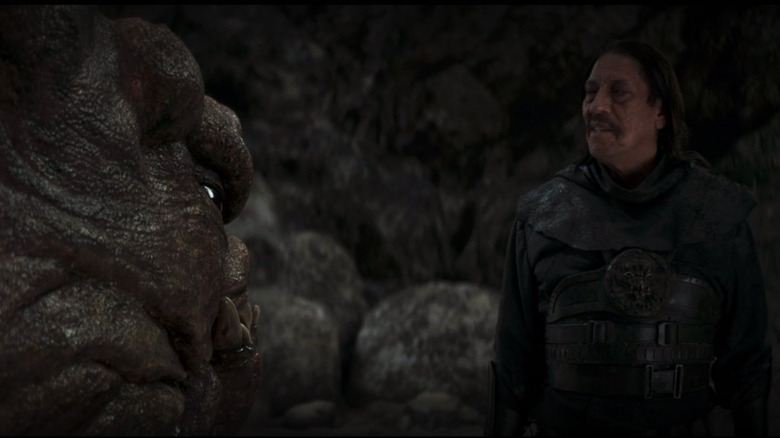
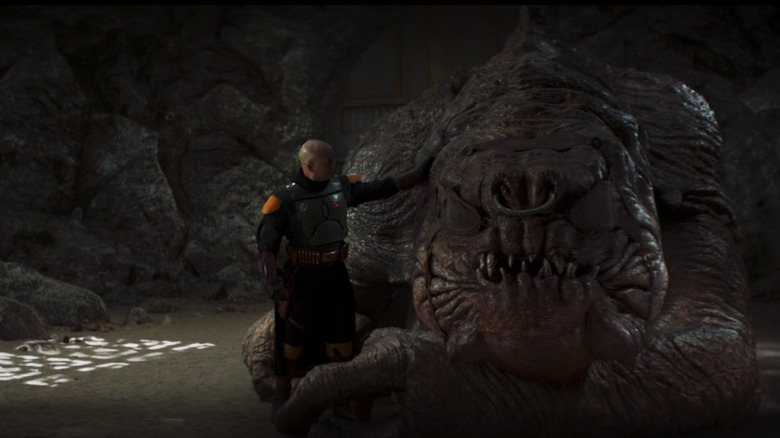
In Chapter 3 of "The Book of Boba Fett," the Hutt Twins return to give Fett (Temuera Morrison) a parting gift before they head back to their home planet, tired of dealing with the situation on Tatooine. Their gift is a young rancor, and its beastmaster, played by "Machete" star Danny Trejo, is part of the package. Trejo's guest role is a lot of fun, and not too surprising given his frequent collaborations with series executive producer Robert Rodriguez. When the rancor is first brought down to the pit, it lies still and Fett asks what's wrong with it. "It's depressed," Trejo's character replies. Fett begins questioning him about the creature and the handler explains that rancors are actually pretty docile unless they feel threatened, and that they're much more emotionally complex than they're given credit for. The one given to Fett is young, and has been blindfolded because rancors apparently imprint on the first person they see. Since Fett is supposed to be the creature's master, he ends up being the first person it lays eyes on. Fett even gives the rancor a little pet, though he seems slightly nervous about the whole thing. And who could blame him? He was there when the whole Oola thing happened, after all. 

Like A Really Big Bulldog

If you think of rancors as being like the types of dogs who were bred to fight in our world, you can see quite a few corollaries. Guard dogs and fighting dog breeds like pit bulls, mastiffs, bulldogs, and more get a bad reputation when many of them can be very sweet. They are emotionally complex creatures with wants, needs, and fears, just like us, and just because they're not capable of speech doesn't make them mindless beasts. Fett himself is kind of like a rancor, with a terrifying reputation that belies his surprisingly gentle nature. 

I hope that nothing bad happens to this rancor, whom I have taken to calling Spike. Maybe one day we'll even get to see Fett take him out for some fetch, though I have no idea where they'll find a stick big enough on Tatooine. 

New episodes of "The Book of Boba Fett" debut Wednesdays on Disney+.

Read this next: Star Wars Movie Villains Ranked Least To Most Powerful

The post The Book of Boba Fett Wants to Change the Conversation Around Rancors appeared first on /Film.

12 Jan 17:33

God of War PC reviews – our roundup of the scores

by Carrie Talbot
God of War PC reviews – our roundup of the scores

Update - January 12, 2022: This article has been updated to reflect the correct release date.

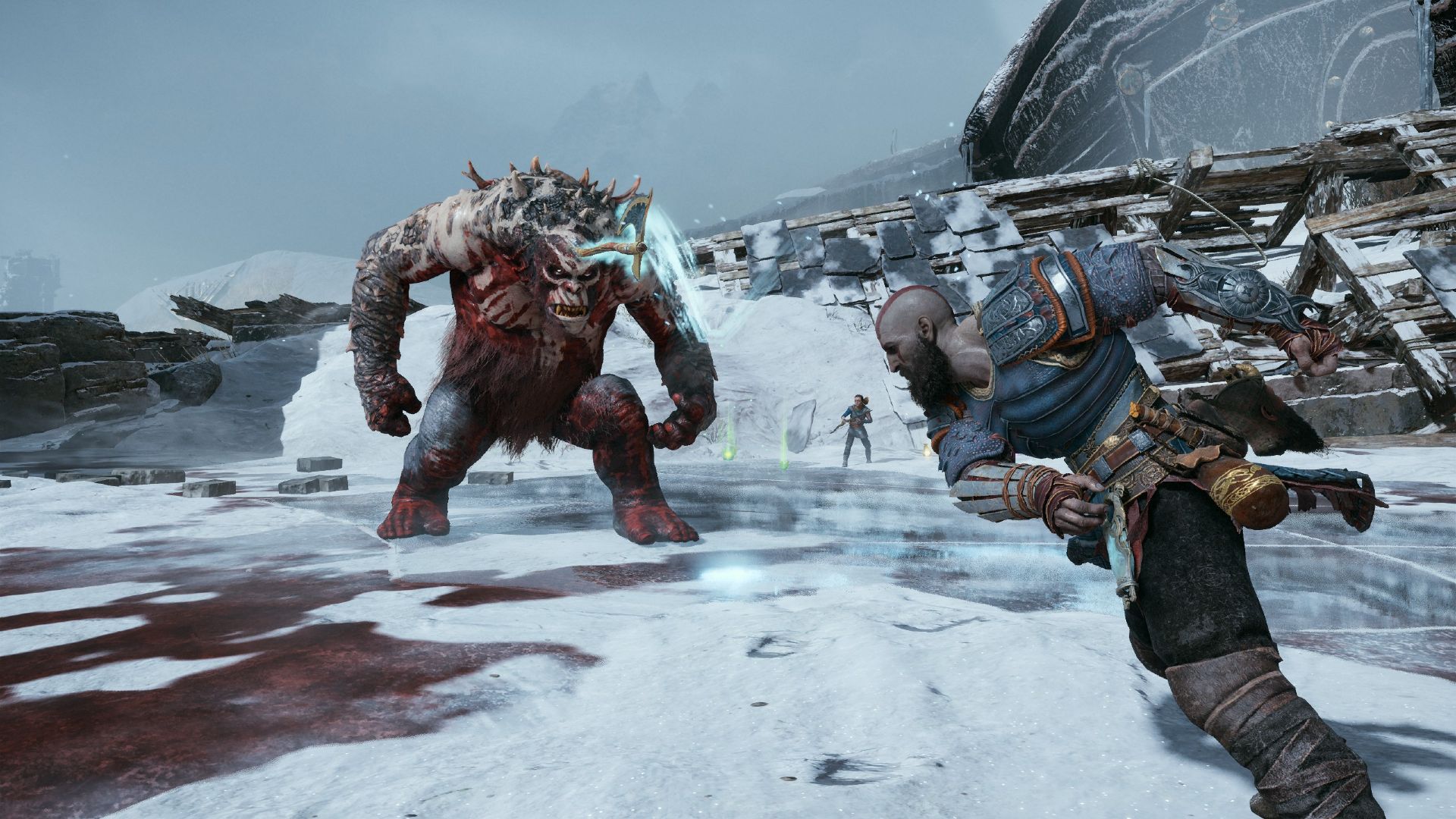
God of War is at last coming to PC. In just a couple short days, in fact. If you're based on our home platform and yet to dive into Kratos and Atreus' journey across the realms of Norse mythology, which originally arrived as a PlayStation exclusive back in 2018, then you might be looking to find out if it's worth your hard-earned pennies. The good news is that PC reviews are now pouring in, so we can find out how well it's fared with the critics.

In our own God of War PC review, Ian Boudreau scores it a hearty nine out of ten, calling it a "lavishly produced game, from its tectonic boss fights to the fastidious attention to detail that enables its seamless storytelling". He concludes that it's "big, brash, and surprisingly poignant", arriving on PC in "fine shape", urging prospective fans not to "pass up this chance to play a console classic". You can catch the full review through the link above.

Elsewhere, the action-adventure game is currently sitting at an impressive score of 93 on review aggregate site Metacritic, with most write-ups so far posting scores in the 80 to 100-out-of-100 range, with a good few at the top end of that scale. So, it seems the PC version has been very warmly received across the board, like a welcome goblet of winter mead.

12 Jan 17:32

Why Shang-Chi's Big Bad Was So Difficult To Get Right

by Fatemeh Mirjalili

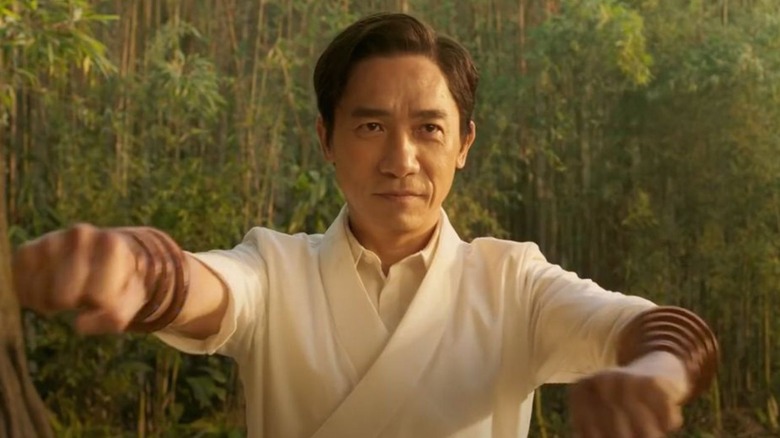
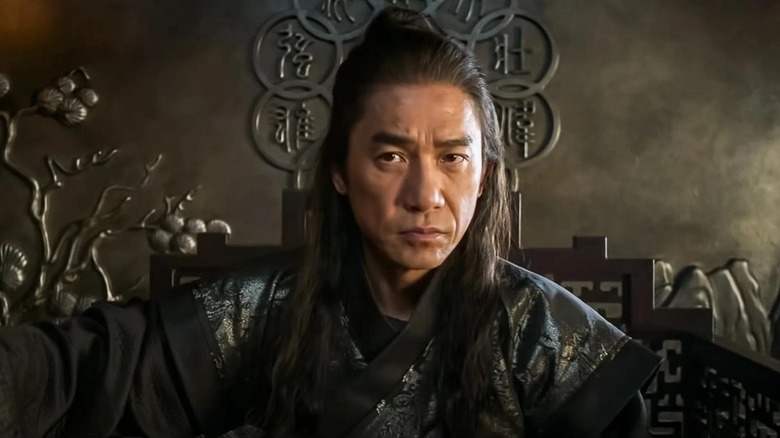
Easily one of the Marvel Cinematic Universe's best standalone films of all time, Destin Daniel Cretton's "Shang-Chi and the Legend of the Ten Rings" introduced Xu Wenwu AKA The Mandarin, a character who has been a long towering figure in Marvel comics. Only this time, it was the real Mandarin.

The character has appeared in the MCU before, introduced as the main antagonist of "Iron Man 3." Ben Kingsley played an imposter of the terrorist organization head, a man playing a part (much like he does in "Shang-Chi") hired by Guy Pearce's Aldrich Killian. 

So, when Marvel Studios decided that they would reintroduce the character — properly this time — with Tony Leung bringing him to life, it wasn't an easy task. Not because the actor was playing a revered MCU villain for the first time, but because the script had to reflect a three-dimensional character, one that was malicious and feared by many, but also one that was human and motivated by love.

The MCU is usually pretty clear about its treatment of heroes and villains — the good guys save everyone from the bad guys. But in "Shang-Chi," Wenwu isn't just the bad guy. The centuries-spanning tyrant who wants to conquer worlds with his mythical Ten Rings is a profoundly layered character ... unlike the one in the comic books.

Wenwu Isn't Just Good, Or Bad

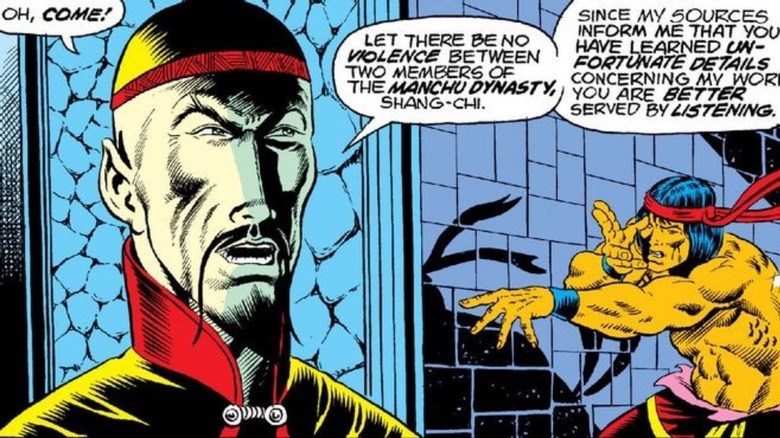
It's important to note that "Shang-Chi" had two important tasks at hand — one, to reimagine its villain's comic book origin, which was mired in a bundle of racist stereotypes, and two, to write a relatable character, despite the extent of his nefarious activities. Wenwu, as seen in the film, isn't Shang-Chi's father in the comics — Fu Manchu is. And he's a power-hungry, curved fingernail-wielding, yellow-skinned mystical Asian man obsessed with conquering the West.

Created by novelist Sax Rohmer in 1913, Fu Manchu is an archetype for an evil Asian man which has been widely criticized as racist. He's a symbol of the Yellow Peril stereotype and was described by the author as "yellow peril incarnate." Fu Manchu became a famous 20th century villain and was recreated for film and television (even Nicolas Cage played an iteration of him in the 2007 film "Grindhouse").

Then came Marvel Comics. In the 1970s, they licensed Fu Manchu and gave the character a son, Shang-Chi, pitting the father-and-son as archenemies. The comics were discontinued in 1983, and once again relaunched in 2020, under the leadership of award-winning writer Gene Luen Yang, who renamed the character Zheng Zu. Unfortunately, the character's xenophobic origins remained, and stereotypical elements such as Fu Manchu's goatee was continued to be seen.

So, when filmmaker Destin Daniel Cretton pitched "Shang-Chi and the Legend of the Ten Rings" to Marvel Studios, he decided to do something no one had before: see Shang-Chi's villainous father as a human being. He completely reinvented the character, bringing in The Mandarin (a popular comic-book villain) as Shang-Chi's father, throwing away all previously prevalent racial stereotypes out the window and rewriting him with great emotional gravitas. Wenwu still descends from an archetype created out of contempt towards an entire people, but Daniel Cretton and the crew behind the film added a new dimension to the character that had been damaging a community's sentiments and spewing hatred against them for decades.

The Mandarin might have been retconned and reimagined for "Shang-Chi," but his history is perhaps why Marvel has been so hesitant to bring the character to the big screen. "Shang-Chi," the studio's first Asian-led superhero film, endeavored at remedying the racist caricature depicted by Fu Manchu in the comics and decided to rewrite its history with The Mandarin/Wenwu, a man motivated by love and grief.

It's All About The Balance

In conversation with The Hollywood Reporter, "Shang-Chi" writer Dave Callaham detailed how The Mandarin was a difficult character to write. There had to be a balance between making him terrifying and yet relatable, which was tricky.

Dave Callaham, who also wrote "Wonder Woman 1984" and "Mortal Kombat," shared that Wenwu was "a character that was really hard to massage into the final form." And it wasn't because of Leung, but because of the character himself, and the emotions that motivated him. Callaham was committed to writing a character that belonged in the gray area between being a hero or a villain, someone who wanted to piece his life back together, however best he could, with whatever he had. Callaham said:

"It's just because of the things that he believes and because of the motivations he's utilizing to get to these more villainous ideas. One step too far in either direction and he's not scary enough or he's totally unrelatable and kind of a nonsense villain. We wanted this character to be three-dimensional. He's motivated, ultimately, by love. He is this broken man who has made a bit of a mess of his very long life and just wants desperately to believe he can put things back together, and that's all very human and very relatable. But we did still need him to be the figurehead of a giant terrorist organization who is looking for magical villages and presumably torturing people in his dungeon and all this other stuff. Finding that balance was tricky."

Wenwu's character arc often outshined that of Shang-Chi, the titular character played by Canadian actor Simu Liu. From the ruthless conqueror to the tragic antihero, Wenwu became a character you could love and yet be repulsed by, a triumph that can be credited to both, Callaham's emotionally complex script, and Tony Leung's devastatingly expressive eyes

Read this next: 11 Marvel Comics Villains We Really Want To See In The MCU

The post Why Shang-Chi's Big Bad Was So Difficult To Get Right appeared first on /Film.

12 Jan 17:32

The 12 Best January Horror Releases Of All Time, Ranked

by Chad Collins

January horror releases have a bad rap. The reputation is undeserved, though not entirely unfounded. According to Business Insider, there's a host of factors that have resulted in January being the colloquial "dumping month" for studio releases. Fear of competing with awards contenders, holiday fatigue, and even inclement winter weather are several reasons that studios opt to "dump" less-than-stellar releases in January, hoping to recoup something in a month with little to offer.

Yet, the trend is not resolute, and despite some truly horrific offerings, January has had its fair share of hits both critically and commercially, including the original "Taken" and both "Paddington" movies. Additionally, the present landscape of film releases has had a profound impact. With streaming and PVOD offerings, more movies are available on more platforms than ever before, and conventional wisdom is growing increasingly obsolete. January is no longer a certified death sentence, despite what history says. With "Scream" poised to release this week, it's high time to revisit 12 of not just the best January releases ever, but specifically horror releases. Horror, forever the intractable underdog, has bucked the trend time and time again.

Body Snatchers (1994)
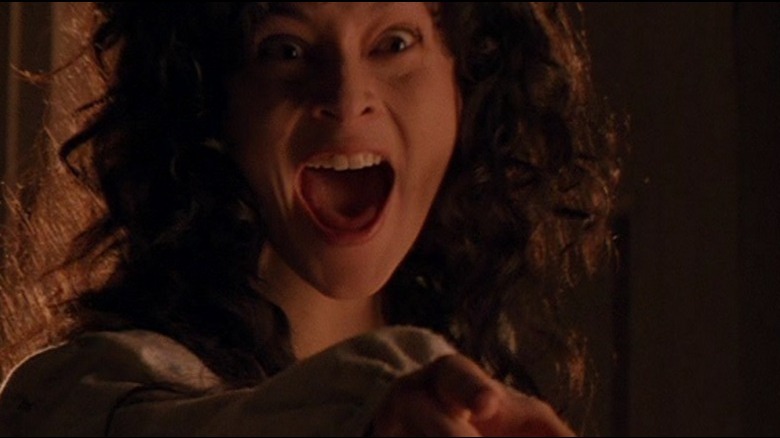
Abel Ferrara's "Body Snatchers" is a curious beast. A neo-noir maestro and longtime independent filmmaker, Ferrara seemed an odd choice to helm a mid-budget horror remake. Warner Bros. likely realized this, releasing "Body Snatchers" in just dozens of theaters in January 1994, a few months after its 1993 Cannes premiere. Simultaneously austere and conventional, it's a movie at odds with itself, but that doesn't mean there isn't something there worth seeing.

On the performance end, Meg Tilly is suitably chilling as one of the first pod people, and Gabrielle Anwar as Marti, Tilly's stepdaughter, makes for a reasonable final girl. While the climactic action feels like Ferrara satisfying studio expectations and nothing else (a sentiment that would also plague 2007's "The Invasion," another remake of Jack Finney's classic novel), some of the preceding material is disgustingly chilling. Chief among them is a mid-movie scene where a body falls from the ceiling while Marti takes a bath. From there, it's close calls and genuine tension as the frenetic Marti tries to escape being taken over by the pods. It's not the greatest remake — that honor still belongs to the 1978 version — but it tries enough new to stand out.

From Dusk Till Dawn (1996)
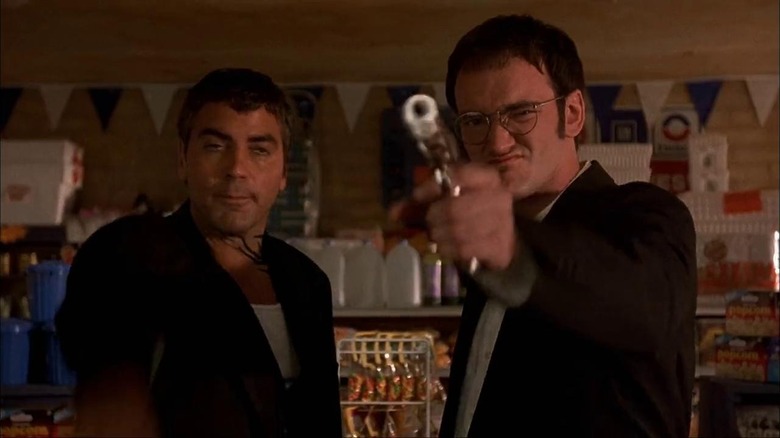
"From Dusk Till Dawn" rocks, and admittedly it even had a smattering of worthwhile sequels released direct-to-video. With video games and a television series, "From Dusk Till Dawn" is a bonafide media franchise, and, well, it deserves it. Directed by Robert Rodriguez and written by Quentin Tarantino (that alone should sell you), it stars George Clooney and Tarantino as two criminals who cross into Mexico with a family they've taken hostage for safe passage. Soon, though, they are trapped in a saloon overrun by vampires and find themselves in a fight for their lives.

It's classic Rodriguez and Tarantino, two of the best practitioners of contemporary grindhouse pulp. Though at times style overwhelms substance, the film adroitly encapsulates why both filmmakers are so fond of drive-in throwbacks. A fun, violent, stylish, frequently funny, and well-made genre feature, it never asks too much of the audience. With plenty of verve and guts, this is one of January's best horror releases.

The Relic (1997)
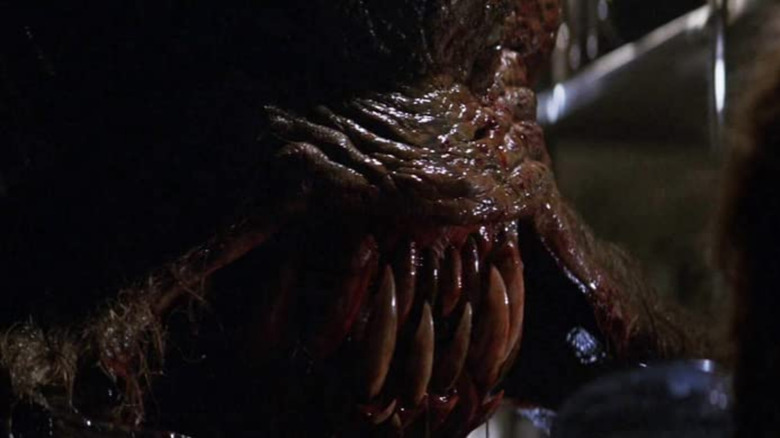
Peter Hyams' "The Relic" released nationwide in January 1997. Based on the novel "Relic" by Douglas Preston and co-written by none other than "The Slumber Party Massacre" scribe Amy Holden Jones, "The Relic" is the simple story of a monster in a museum. Though the novel is considerably more scientific and brooding, the movie adaptation is a classic giant monster fiasco.

Penelope Ann Miller stars as a biologist in a Chicago Museum endeavoring to defeat a South American reptilian monster that, naturally, begins killing museum workers and fundraising guests alike. Released at the peak of the late-'90s giant monster trend (see: "Deep Blue Sea"), "The Relic" is an unabashed B-movie with a blockbuster budget, from an era where Hollywood was willing to throw $60 million at a monster flick. Those monster effects are stellar, the gore certifiably R-rated (there are plenty of beheadings), and the clip never too sluggish for a movie about a killer lizard. It's criminally underseen and bucks the trend of lazy January releases.

Deep Rising (1998)
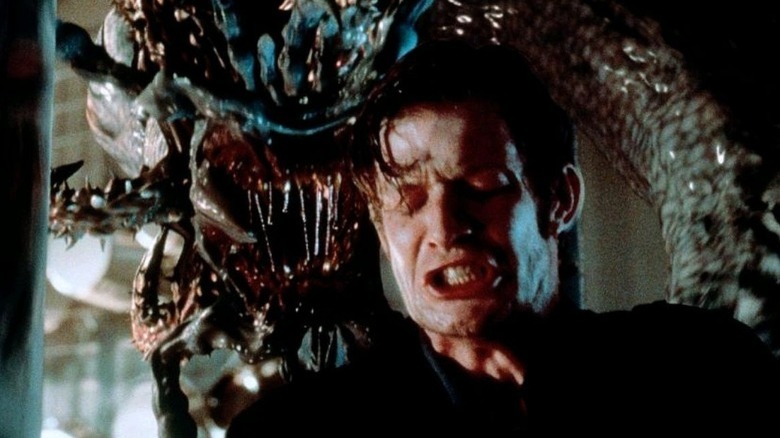
"Deep Rising," dare I say it, rises above the pack of similarly themed aquatic horror fables. As directed by Stephen Sommers and starring Treat Williams and Famke Janssen, it's a bonanza of oceanside gore and monstrous mayhem. A group of mercenaries along with luxury cruise guests collide when the Argonautica, a new luxury cruise line, has its coms disabled and is left floating in the middle of the ocean. Soon thereafter, an unknown creature rises from the depths, using its monstrous tentacles to kill almost everyone on board.

Soon the mercenaries board and meet up with the remaining survivors, and from there it's a simple mission of "destroy the monster, escape the boat." Though never especially scary — Sommers is wisely aware of the movie's B-movie roots in a post-"Scream" world — it's a genuine blast from start to finish. The monster itself, the Octalus, is akin to a contemporary Kraken. It's long, gooey, big, and looks like a hellish octopus, hence the name. One of the best water-bound '90s movies there is.

The Mothman Prophecies (2002)
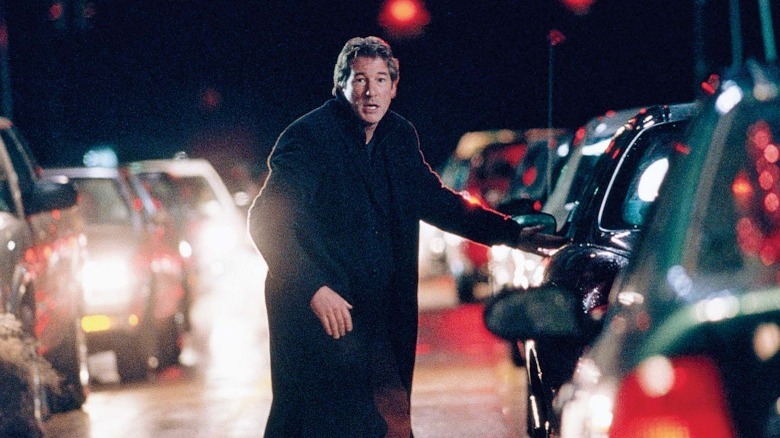
God bless "The Mothman Prophecies." In retrospect, it feels like the product of a bygone era, no different than the titular monster himself. There was a time when studios, other than A24, released brooding, atmospheric horror out into the world, profits be damned. Sure, "The Mothman Prophecies" has two bonafide stars in Laura Linney and Richard Gere, appearing alongside each other for the first time since "Primal Fear," but nothing about it screamed mainstream success.

Other than a "Final Destination" riff in its bloated set-piece finale, "The Mothman Prophecies" is deliciously patient. Gere is drawn into the mystery after his wife, an underutilized Debra Messing, passes away and he discovers drawings of a terrifying moth-like creature. Years later, he meets Linney's police officer, and the two bond over strange phone calls, cryptic warnings, and reports of mothman sightings in and around Point Pleasant, West Virginia. It's terrifying in just how unknowable it is. "The Mothman Prophecies" never resorts to "gotcha" chills or conventional tactics. It's a deliberately-paced chiller, one whose impact is likely more profound than it's been given credit for.

Darkness Falls (2003)
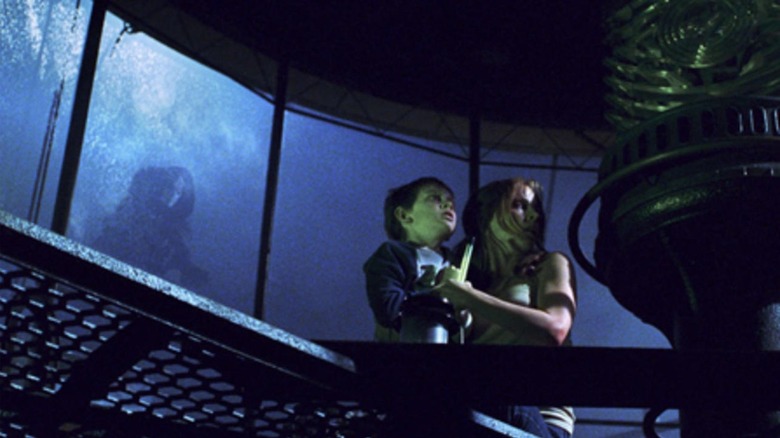
"Darkness Falls" is, among all entries here, the most criminally underrated. It should seriously be a crime against cinema that "Darkness Falls" isn't referenced more often than it is. Yes, it's painfully short (its closing credits run 11 minutes to meet feature length), is clearly the product of a hatchet-job to reduce it to a PG-13 rating (its original poster bore an "R"), and flirts with greatness without ever truly achieving it. It's also genuinely scary, and that counts for a lot.

The story of a crazed tooth fairy named Matilda going on a killing spree in the titular town of Darkness Falls, the film adroitly uses both light and dark to maximum effect as said tooth fairy can only survive in darkness. The introductory sequence alone is a top five for the decade in terms of sheer terror, as a young boy named Kyle (Joshua Anderson, playing the younger version of lead Chaney Kley's character) is terrorized in his childhood home after losing a tooth. There's an image of him crouched in the tub with the lights on and right above is Matilda, screeching and hollering into the night, patiently waiting for the lights to go off. It's an image that paralyzed an entire generation of young horror fans whose parents unwisely rented it from the local video store. With an awesome central monster and scares that hold up, "Darkness Falls" represents some of the best of what early aughts horror had to offer.

Cloverfield (2008)
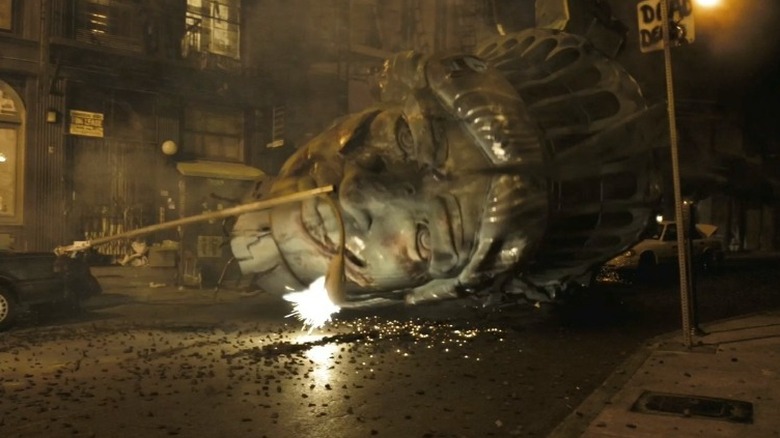
It's freaking "Cloverfield," my man. Released in January 2008, fan reception for Matt Reeves' found footage monster movie was undoubtedly hurt by its truly stellar marketing. No different than "The Blair Witch Project" a decade prior, the movie had no chance of standing up to cryptic teasers, a reluctance to release a title, and fervent online speculation which had everyone wondering what the hell "Cloverfield" was even about prior to release.

In the end, it was simply a giant monster movie, one fortunately or unfortunately (depending on who you ask) rendered in found footage, shaky-cam style. Glimpses of the massive monster are limited, and while the full scope is effective it's less about Clovie himself and more about the bundle of semi-irritating young adults he's picking off in the streets of New York City. While the movie itself (and the franchise writ large) remain polarizing, it's hard to overstate just how profound an impact "Cloverfield" had on the industry. It revolutionized found footage (again) and changed film marketing for the better, at least for a time. The "less is more" approach remains controversial, but "Cloverfield" is a contemporary classic for a reason.

My Bloody Valentine 3D (2009)
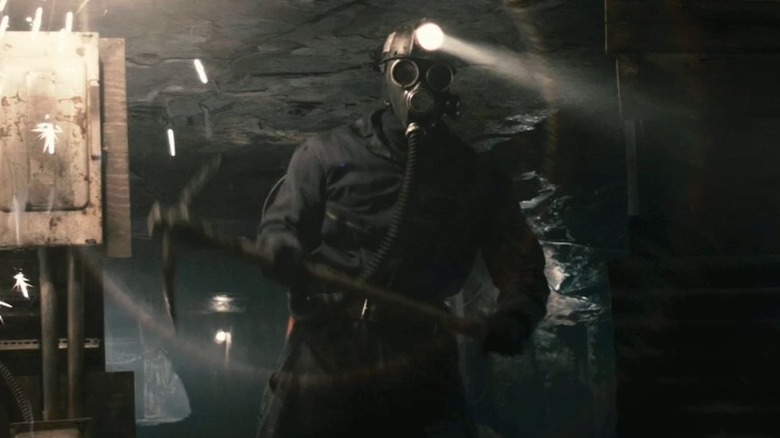
The 3D era was strange. While some filmmakers are fully committed to exploring its possibilities, the regularity of theatrical 3D releases is a relic of the past. Curiously, the horror genre itself was a frequent contributor (or sinner for anyone, myself included, with eyeglasses) to the 3D trend. Beholden to the William Castle theatrics of yesteryear, 3D was a gimmick that rarely, if ever, panned out. That being said, while "My Bloody Valentine 3D" isn't great in 3D — unless you want pickaxes and severed limbs thrown in your face — the regular version is one of this century's best slashers.

A remake of the 1981 Canadian original, "My Bloody Valentine 3D" turns the exploitation dial to 11. There's more nudity, gore, and expletives in a single frame here than most modern horror movies have during their entire duration. The story of a deceased miner ostensibly returned from the dead, Harry Warden (or someone disguised as him) starts hacking and slashing the residents of Harmony, West Virginia 10 years after the original massacre. It's a post-"Scream" whodunnit, knowingly self-aware and excessive where it matters most. It's fun, frenetic, and bloody engaging. 

Mama (2013)
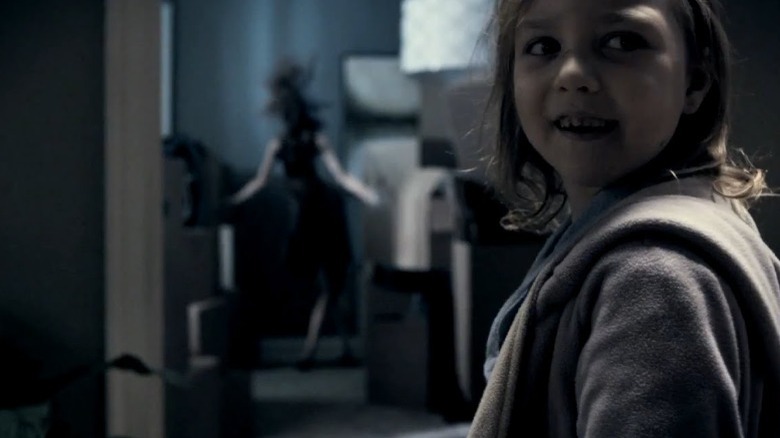
"Mama" was perhaps the most Guillermo del Toro movie ever not directed by del Toro. It makes sense since the Oscar-winner served as an executive producer, assisting director Andy Muschietti in expanding his original short about a monstrous ghost mama in the woods. It's a genuinely moving fairy tale with horror elements, scary where it counts, but deeply felt and empathetic in a way that studio horror tends to reject.

Jessica Chastain stars as Annabel, a young rockstar consigned to care for her boyfriend's two nieces after they're found living feral in the woods, their parents murdered years prior. Of course, everyone (including psychologist Dr. Gerald Dreyfuss played by Daniel Kash) wonders how these two young girls survived for so long on their own. Turns out it was because of Mama, played by Hollywood's go-to monster man Javier Botet doing what he does best. Muschietti's style and verve would later serve him well with the remake of Stephen King's "It," and "Mama" is the perfect calling card for his style there. January has rarely been this creepy.

The Boy (2016)
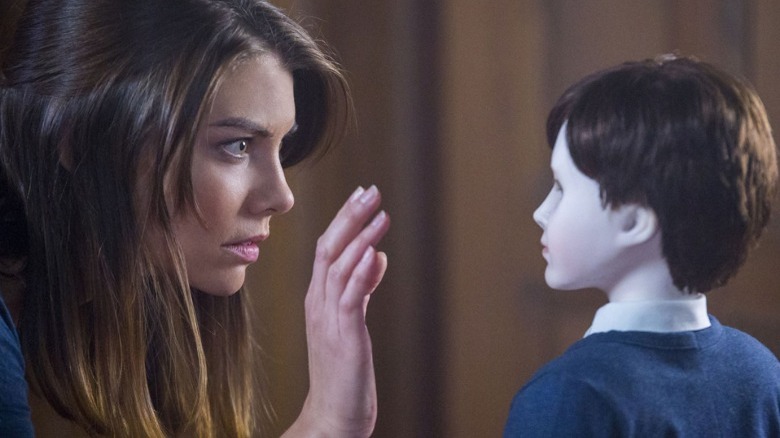
"The Boy" liberally borrows from underrated New Zealand horror-comedy "Housebound," and for genre aficionados who saw Gerard Johnstone's feature first, a lot of it feels like déjà vu. Lauren Cohan, taking a break from "The Walking Dead," stars as Greta Evans, an American woman who travels to the United Kingdom to escape her abusive ex while working as a nanny for the Heelshires. When she arrives, however, she discovers they don't actually have a son ... they have a doll. Brahms is a creepy, life-size porcelain doll, one the Heelshire's insist Greta treat as a real boy while they're away.

Though she initially rebuffs the idea, she is soon seduced by the doll, in no small part because she starts to wonder whether Brahms really is alive. There are strange noises at night, he seems to move around the house on his own, and soon enough she suspects Brahms is actually talking to her. William Brent Bell's PG-13 horror-lite entrée is suitably diverting. The acting is strong, some of the scares work, and it has a polished Hammer-style gothic look to it. It's not the greatest January output, but high concept horror often disappoints. "The Boy" is that rare exception that delivers exactly what it promised, and sometimes that's enough. You can skip the sequel, though.

Split (2017)
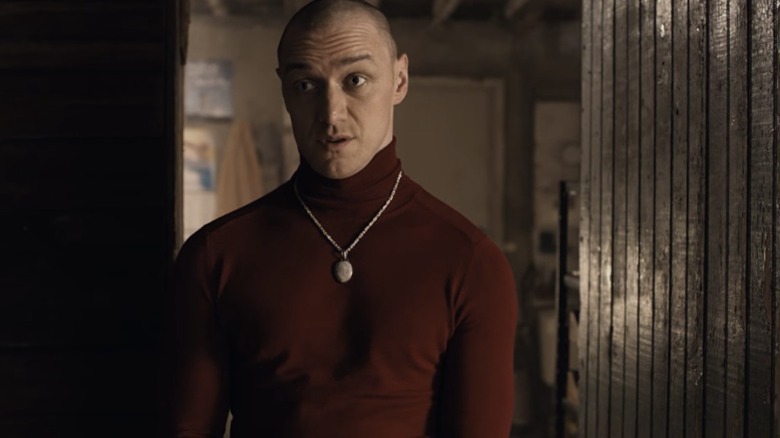
Writer/director M. Night Shyamalan's 2015 film "The Visit" was an unqualified success. After a series of flops ("After Earth," anyone), "The Visit" marked a return to form, exactly the kind of accessible gothic lark Shyamalan had once been famous for. Grossing $98 million against a meager $9 million budget, the stage was set for classic, early-aughts Shyamalan, with "Split" being his 2016 follow-up. 

It follows James McAvoy's Kevin Wendell Crumb, a man suffering from dissociative identity disorder who kidnaps three young girls at the mall, including clear final girl Casey Cooke (a sensational Anya Taylor-Joy). "Split" has so much going for it, not the least of which is the interplay between Taylor-Joy and McAvoy. Both are at the top of their game, elevating what could have been a conventional psycho-thriller to something akin to genuine art. McAvoy is especially adept at transitioning between disparate identities, including "The Beast," his hyper-violent/strong identity, and while it isn't an especially tactful portrayal of dissociative identity disorder, it's thoroughly tense. Plus, it has one of Shyamalan's best twists ever. Made clear in the final scene, "Split" is a sequel to his seminal 2000 film "Unbreakable."

Wrong Turn (2021)
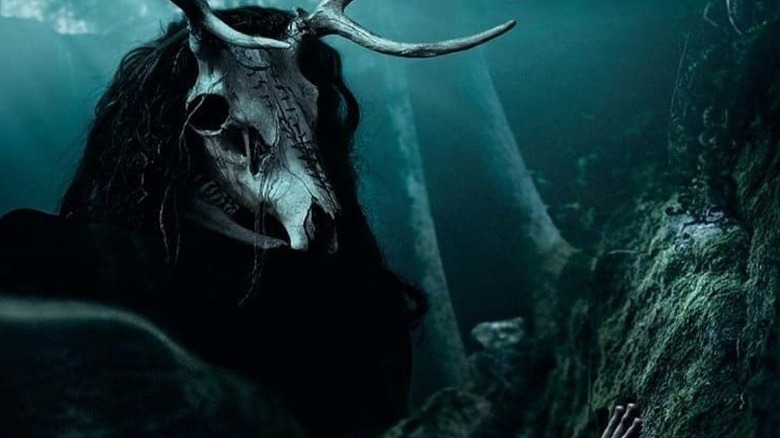
"Wrong Turn's" reboot was controversial from the start. Beyond releasing theatrically for just one night in the midst of a pandemic (though it curiously managed to gross a respectable $4.5 million), it did away with the series' central conceit: monstrous cannibals. In its place is the "Foundation," a post-war mountainous society which a group of six city-dwellers run afoul of while hiking the Appalachian Trail. They're no less violent than the "Wrong Turn" cannibals, but they are considerably more political, with 2021's "Wrong Turn" grappling with its longstanding portrayal of rural mountain folk.

While it's arguably a "Wrong Turn" movie in name only, it still does a lot right. The set-pieces are strong, the commentary intermittently compelling, and the acting solid across the board. Were its release handled differently, there's a solid chance it would have revitalized the franchise, inciting new directions for horror's favorite cannibals. As it stands, though, it's a January release that took big risks, most of which paid dividends. That's a success in my book.

Read this next: The 20 Best 2000s Horror Movies Ranked

The post The 12 Best January Horror Releases of All Time, Ranked appeared first on /Film.

12 Jan 17:30

One Flew Over The Cuckoo's Nest Ending Explained: Breaking Out Of The System

by Witney Seibold

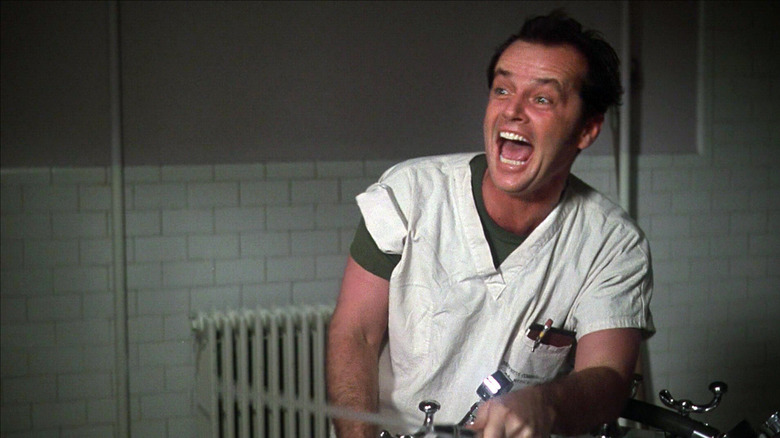
Miloš Forman's 1975 film "One Flew Over the Cuckoo's Nest" is a harrowing tale of rebellion vs. conformity, maturity vs. immaturity, and the true nature of how we measure and treat mental illness. It's about the broken penal system, personal pain, trauma, authority, and freedom. It was viewed as a comedy upon its release: Vincent Canby of the New York Times called it a comedy that cannot support its tragic ending, and Roger Ebert, when he first reviewed the film, felt that the film's overall tone was too light to tackle some of its larger themes. Ebert eventually reassessed the film, including it on his Great Movies list

Ebert's change may also reflect the general public's changing view of the film. While it was immediately recognized by many as a great work of art -- it was an Oscars darling -- many have come to see "One Flew Over the Cuckoo's Nest" less of a subversive comedy about playful rebellion and more a contemplation of control and chaos as it plays itself out in the woefully underfunded mental health facilities in the United States. 

The ending of "One Flew Over the Cuckoo's Nest" is unambiguously tragic, however. 

McMurphy's Folly

"One Flew Over the Cuckoo's Nest," based on the 1962 Ken Kesey novel, and is one of only three films to win the "big five" Academy Awards; That is: Best Picture, Best Director, Best Lead Actor, Best Lead Actress, and Best Screenplay (and, for the trivia buffs, the other two are 1934's "It Happened One Night" and 1991's "The Silence of the Lambs").

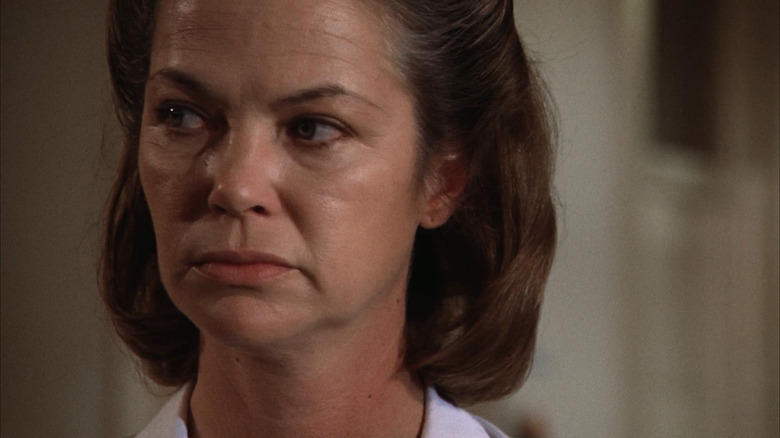
The film is about R.P. McMurphy (Jack Nicholson) who is sentenced to hard labor in an Oregon prison (we'll learn later that his crime involved the phrase "She looked 18."). In what he thinks is a clever move to avoid said hard labor, McMurphy argues instead that he is mentally ill and is transferred to a mental hospital where he will stay with other live-in patients, played by the likes of Christopher Lloyd, Danny DeVito, Michael Berryman, and Oscar-nominee Brad Dourif. He assumes the hospital will be cushy and posh, but instead finds it forbidding, harsh, and overseen by the stern nurse Mildred Ratched (Louise Fletcher) who is immediately distrustful of McMurphy's overt sense of masculine chaos. 

McMurphy is immediately suspicious of the hospital's therapy techniques. He doesn't like the gentle music, the touchy-feely language. He sees patients that are shy and fearful, and he feels that they only need to go on fishing trips, play pranks, and talk to women in order to "come out of their shells." And, no, "Cuckoo's Nest" is not enormously accurate when it comes to psychology. 

The conflict between McMurphy and Ratched is mutually destructive. She attempts to force McMurphy into line by enforcing routine and order into his life -- something that the other patients in the hospital arguably require -- and he pushes back by introducing more disorder and playful chaos, forcing patients to leave the hospital on a fishing trip, to play basketball, to loosen up, to accept the energy and joy in life -- something else that some of the patients arguably require ... with at least one notable exception. 

It could be argued that either McMurphy or Nurse Ratched are the villain of the piece. 

McMurphy's Rebellion

But we don't see the folly when we look at McMurphy. At least not right away. We see, instead, his rebellion. "Cuckoo's Nest" has long stood as a parable for rebellion and our need to break out of harsh systems. And "Cuckoo's Nest" expertly employs archetypal images of oppression to accomplish it. Nurse Ratched looks like a schoolmarm, a mean parent, a military drill instructor. The hospital is replete with mesh screens, locked windows, harsh lighting, right angles. It looks like a combination prison and public school. The very iconography invites feelings of rebellion in the audience, and McMurphy -- the playful, rule-breaking imp -- is immediately our stand-in.

The adolescent rebellion in McMurphy appeals to the adolescent in all of us. He encourages the inmates to reject the establishment and to indulge in sports, parties, and sex. McMurphy is attacking the power of female authority/behavior with traditional male "acting out." Ken Kesey wrote his novel in the early 1960s as a direct attack on the authoritarian habits of established medical institutions and, by extension, the authoritarian habits of the world at large. By the mid-1970s, director Forman -- a student of the Czech New Wave, and I recommend his 1968 film "The Fireman's Ball" -- brought a mellower attack, approaching the book with good humor and a sense of fun. And there is a lot of fun in "One Flew Over the Cuckoo's Nest."

Until there isn't.

McMurphy's Fall

McMurphy's actions, however, don't equal freedom. Nurse Ratched may represent authority, but she also represents maintaining vital order for a group of mentally ill patients who require stability. McMurphy's acting out eventually leads to what is essentially an all-night orgy, a party that triggers a trauma response in Billy Bibbits (Dourif), one of the patients. Billy dies by suicide. 

McMurphy is broken down. He is given shock therapy. He is kept in line. But his rebellion that audiences so cheer is also a damaging force. He herds his fellow hospital inmates to go on a boat trip, and we get the sense that they don't all rightfully know what is happening. He asks if he can watch the World Series on TV, but Nurse Ratched insists on a vote. Do the inmates fully comprehend on what they are voting? Ratched is a hard authority figure and is typically received as a cinema supervillain (to the point where she got her own villain origin story TV series), but -- and this may be a result of my advanced age -- the more I see the film, the more she appears as a sympathetic figure who is only trying to rein in an agent of chaos who threatens to -- and ultimately does -- do damage to the patients. 

Ratched punishes McMurphy. She gives him shock treatment. By the end of the "Cuckoo's Nest," we have seen Ratched rejecting her administrator's suggestion that McMurphy be returned to prison, and we have seen him lobotomized. 

Will Sampson

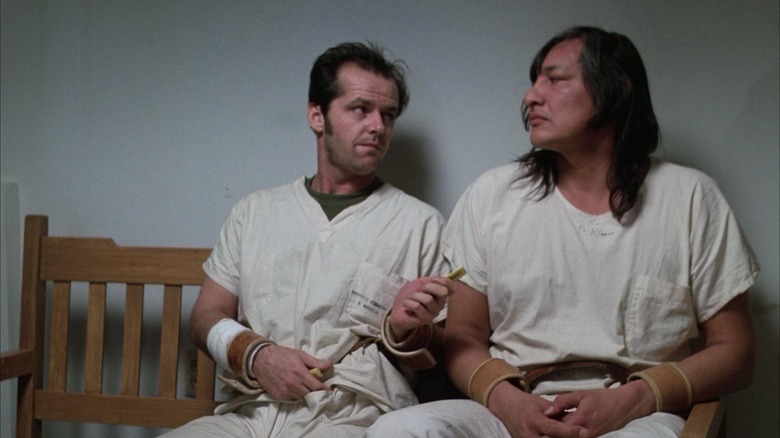
The emotional catharsis comes in the form of "Chief," played by the great Will Sampson. Chief has suffered some previous trauma, and now prefers to remain non-verbal and withdrawn. He doesn't even move a whole lot. McMurphy initially feels that a man of his size -- Will Sampson was 6'7" -- should be able to break out of the hospital with ease, and even suggests a way one might do so; by ripping a hydrotherapy fountain out of the hospital floor and throwing it through a window. When McMurphy tries, he fails. 

McMurphy's constant attempts to bring the patients "out of their shells" does, at least, reach one man. Chief ends up talking to, and trusting, McMurphy, grateful for the change that has been brought into the hospital. At the film's end, Chief finds McMurphy in bed in the middle of the night, and he attempts to talk. Chief finds that McMurphy has been lobotomized. Chief smothers him with a pillow, and then finally rips that hydrotherapy fountain out of the floor and throws it through the window. This time, McMurphy's suggestion worked. The other patients, when the hear the crash, get out of bed, and cheer him on and Chief leaves the hospital. 

McMurphy's rebellion did damage, but also aided at least one man in breaking out of the system -- quite literally. 

Whether you take "Cuckoo's Nest" to be a poem about rebellion or liberation, or a dark tale of how rebellion is ultimately a self-defeating system -- no punk rockers live a long time -- might depend on your age when you encounter it. I encourage long term re-visitation of "Cuckoo's Nest," as you'll find it changes as you do. No matter what you take away, you'll take away something, which is a mark of a great film. 

Read this next: Jack Nicholson's 15 Most Iconic Roles Ranked

The post One Flew Over the Cuckoo's Nest Ending Explained: Breaking Out of the System appeared first on /Film.
12 Jan 17:29

The One Film Even Stephen King Says Was Too Scary To Finish

by BJ Colangelo

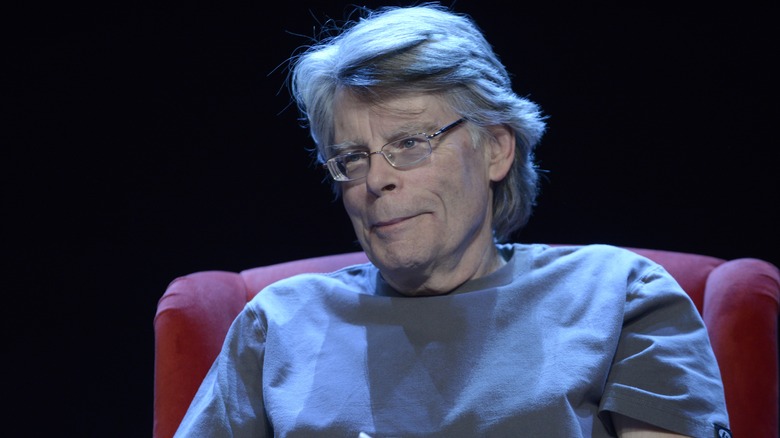
Master of Horror Stephen King is responsible for spine-chilling stories that have terrorized audiences all across the world for nearly 50 years. Around 60 different films have been made as adaptations of his work, including "Carrie," "The Shining," "The Stand," "Misery," "Christine," "Gerald's Game," "The Dark Tower," "Pet Sematary," "Salem's Lot," and of course, "IT." King's storytelling frequently deals with deeply terrifying themes, and he has perfected the art of turning everyday occurrences into an absolute nightmare. It would be easy to believe that someone who dabbles in the monstrous and macabre like Stephen King was afraid of nothing, but at the end of the day, King is still human just like the rest of us.

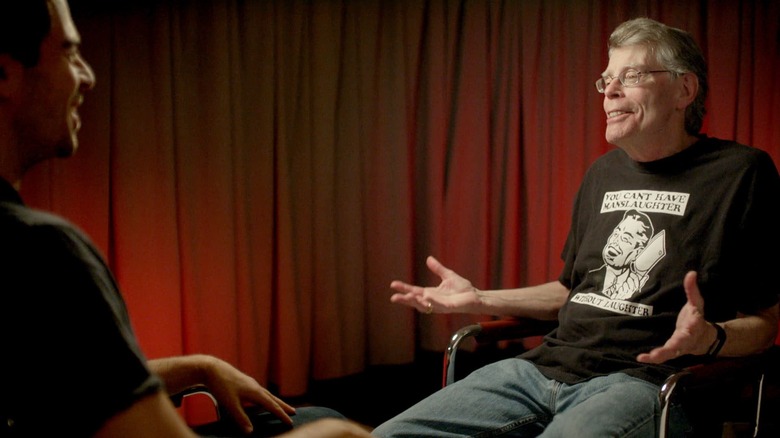
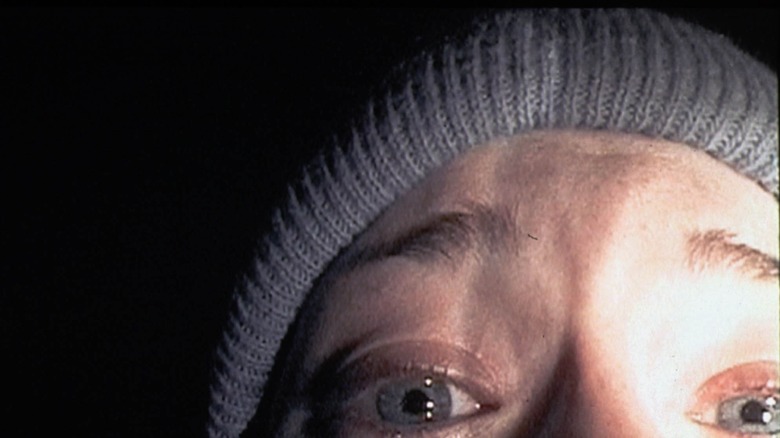
Believe it or not, Stephen King does get scared, and he isn't afraid to admit when something gets under his skin. He famously referred to "The Babadook" as "deeply disturbing and highly recommended," noting that audiences don't watch the film so much as experience it. It's become a badge of honor for horror filmmakers to receive a coveted recommendation from the King of Nightmares himself, but only one film holds the distinction of being so scary that even Stephen King couldn't initially finish it. In an interview for the documentary series "Eli Roth's History of Horror," King shared a story about the horrific real-life events that made it so he was too creeped out to continue watching one of the hottest new releases in horror, "The Blair Witch Project."

Not Exactly Good Hospital Visit Viewing Material

On June 19, 1999, Stephen King was on a walk near his home in Maine when a distracted driver ran him over in a mini-van, leaving King hospitalized for almost a month. King sustained multiple very serious injuries, to the point where doctors debated amputating one of his legs due to the damage. While King thankfully survived, the recovery process was understandably difficult. The pain he endured was so severe, King had even announced a retirement from writing. Fortunately, with time and healing, King was able to continue writing, giving us incredible stories like "Dream Catcher," "Cell," "Under the Dome," "11/22/63," "The Outsider," "The Institute," and his sequel to "The Shining," the terrifying "Doctor Sleep."

King's loved ones understandably wanted to help his healing in any way that they could, and his son thought it would be a good idea to bring him a VHS copy of the terrifying found-footage film, "The Blair Witch Project." Thanks to the combination of recovering from his injury, the talent of directors Daniel Myrick and Eduardo Sanchez, and a hell of a lot of pain-killers, the movie proved to be too much for King, and he couldn't finish the film. "I was in the hospital and I was doped up. My son brought a VHS tape of it and he said, 'You gotta watch this.' Halfway through it, I said, 'Turn it off it's too freaky,'" said King in the documentary.

Is The Blair Witch Project Really THAT Scary?

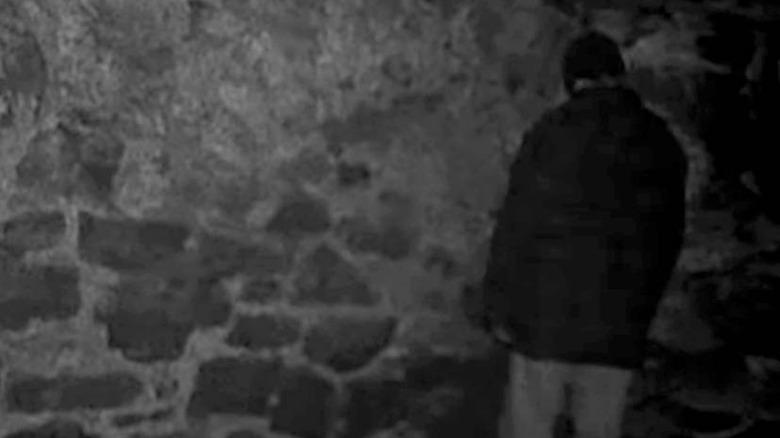
It's hard to remember the initial impact of "The Blair Witch Project," as the film's found footage style has since become a dominant subgenre of horror, and parody films like "Scary Movie" have been mocking the film since its release. During its 1999 debut, however, "The Blair Witch Project" was considered the scariest film of the year. Shot on a budget of only $60,000, the film was sold to Artisan Entertainment for $1.1 million just a few hours after its premiere at Sundance. The film starred unknown actors Heather Donahue, Joshua Leonard, and Michael C. Williams as fictionalized versions of themselves, exploring woods in Maryland to film a documentary about the Blair Witch urban legend. Thanks in large part to one of the earliest examples of a viral marketing campaign, many people arrived at the theater convinced that the film they were about to see was real, and "The Blair Witch Project" became one of the most legendary horror films of all time.

"The Blair Witch Project" may not have been the first film to utilize the found-footage aesthetic of horror filmmaking, but it revitalized the style and paved the way for future horror franchises like "Grave Encounters" and "Paranormal Activity." It was revolutionary for 1999 and still hailed for its effective scares, chilling establishment of atmosphere, and one of the most memorable final moments in horror history.

Did King Ever Finish The Movie?

Once King was out of the hospital, he did eventually finish "The Blair Witch Project," and found it to be one of the best horror films of the modern era. When King's nonfiction book "Danse Macabre" was reissued in 2010, King included a section for his thoughts on the at-the-time state of horror, with a short essay dedicated to the masterful grasp of horror shown throughout "The Blair Witch Project."

One thing about "Blair Witch:" the damn thing looks real. Another thing about "Blair Witch:" the damn thing feels real. And because it does, it's like the worst nightmare you ever had, the one you woke from gasping and crying with relief because you thought you were buried alive and it turned out the cat jumped up on your bed and went to sleep on your chest.

King goes on to admit that his initial viewing of "The Blair Witch Project" may be the only time in his life when he quit a horror movie in the middle because he was too scared to continue, but doesn't fully blame his hospital circumstances or the heavy medication. "I was just freaked out of my mind," he said. "Those didn't look like Hollywood-location woods; they looked like an actual forest in which actual people could actually get lost."

Fear may be a universal emotion, but what scares us will always differ from person to person. Stephen King is living proof that even Masters of Horror still get scared, and there's no shame in admitting when a horror movie has done its job.

Read this next: All 59 Stephen King Movies Ranked From Worst To Best

The post The One Film Even Stephen King Says Was Too Scary To Finish appeared first on /Film.
12 Jan 17:29

Sam Raimi-Produced Boy Kills World Loses Samara Weaving But Gains Jessica Rothe

by Jenna Busch

Well, this is what you call an embarrassment of riches. Sam Raimi and Roy Lee are producing the film "Boy Kills World," and they've had an actress change. According to The Hollywood Reporter, the person playing one of the lead roles in the film, Samara Weaving, has just been replaced by Jessica Rothe. These two actresses are fantastic, and it's hard to argue that one of them could have been better than the other. The change comes because of Weaving's scheduling conflicts.

"Boy Kills World" is a revenge fantasy that also stars Bill Skarsgard ("It," "It: Chapter Two," "Eternals." In addition, we have Yayan Ruhian from "John Wick 3" and "The Raid: Redemption," Andrew Koji from "Warrior" and "Snake Eyes," and Isaiah Mustafa from "It: Chapter Two" and "Shadowhunters." 

Rothe will play an assassin named June 27 against Skarsgard's Boy. Ruhian is reportedly his mentor. Production on "Boy Kills World" will begin in South Africa on Valentine's Day, February 14, 2022.

An Embarrassment Of Riches

Samara Weaving starred in the horror romp "Ready or Not," Hulu's wellness industry series "Nine Perfect Strangers," and "Bill & Ted Face the Music." Jessica Rothe has appeared in "La La Land," "All My Life," and Gillian Flynn's series "Utopia." She's also playing the lead in "Valley Girl." The thing I love most from her body of work, though, is "Happy Death Day." I'm not a huge horror aficionado, but that film was an absolute joy. Rothe carried that role so well, and I'm thrilled to see her taking on something like this. 

According to THR, "Boy Kills World" is described this way: 

"A one-of-a-kind action spectacle set in a dystopian fever dream reality. Boy is a deaf-mute with a vibrant imagination. When his family is murdered, Boy escapes to the jungle and is trained by a mysterious shaman to repress his childish imagination and become an instrument of death."

Raimi Productions, Vertigo Entertainment, Nthibah Pictures, and Hammerstone Studios will produce the film. "Boy Kills World" will be directed by Moritz Mohr. Sam Raimi, of course, has a little project you might have heard of coming out soon-ish called "Doctor Strange in the Multiverse of Madness." As far as we know right now, the Marvel film will hit theaters on March 25, 2022. There is no release date set yet for "Boy Kills World." 

Read this next: The 20 Best '60s Horror Movies Ranked

The post Sam Raimi-produced Boy Kills World loses Samara Weaving but gains Jessica Rothe appeared first on /Film.
12 Jan 17:29

The Only Choices For Who Should Host The 2022 Oscars

by SlashFilm Staff

Our long national nightmare is over -- the 2022 Oscars will have a host. After three years of no one taking the stage to corral Hollywood's biggest night, the Academy of Motion Picture Arts and Sciences has decided the Old Ways were the best ways. There will be someone around to do an opening monologue. Someone around to crack jokes between awards. Someone around to absorb the pain and punishment dealt out by live-tweeters. In these unprecedented times, we're glad that this, the most pressing of problems, has been addressed.

But who will take on the thankless task of hosting the 2022 Oscars? The /Film staff hunkered down, put on their thinking caps, and devised an entirely serious and not-at-all silly list of who is capable of taking on the gig. We hope you're reading, Oscar producers. 

The Throat Singer From Dune

Picture this: It's Oscar night. A crowd of glitzy celebs, some of whom are wearing masks, sits in the audience, muttering excitedly. Then the orchestra rises up. The curtain parts. And out onto the stage comes ... the throat singing dude from "Dune." Yes, that's right, out strolls a bald, pale fellow all in black, ready to unleash four straight hours of Sardaukar Chanting onto the audience. Perhaps a sooty, filthy rain will begin to fall in the auditorium, who knows. One thing is for sure: the audience of stars won't be able to get enough of it. No awards will even be given out – the entire night will be devoted to those Sardaukar chants. (Chris Evangelista)

Jared Leto In-Character As Paolo Gucci

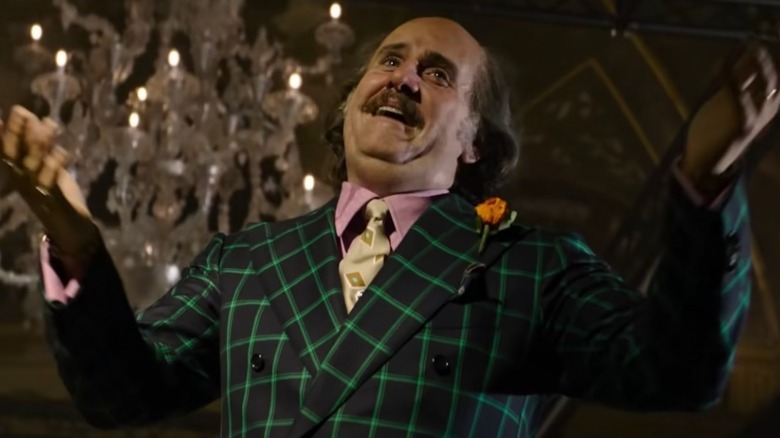
Jared Leto is an infamous method actor. His on-and-off-set antics have become the stuff of Hollywood legend, because the guy apparently really devotes himself to his roles. What better chance for him to show off his method acting chops than by hosting the Academy Awards ceremony in-character as Paolo Gucci from Ridley Scott's "House of Gucci"? Trapped beneath his heavy prosthetic makeup, the stage lights threatening to melt his facade away, can Leto hold it together and correctly announce Best Picture? Or is this going to be like "Moonlight" all over again? Just imagine Leto's Spaghettio's-inspired "Italian" accent reading off the lists of nominees. It would be as if Mario escaped the Mushroom Kingdom just to host an awards show for the night. I guess if Leto can't do it, they could always get Chris Pratt. (Danielle Ryan)

Gabriel

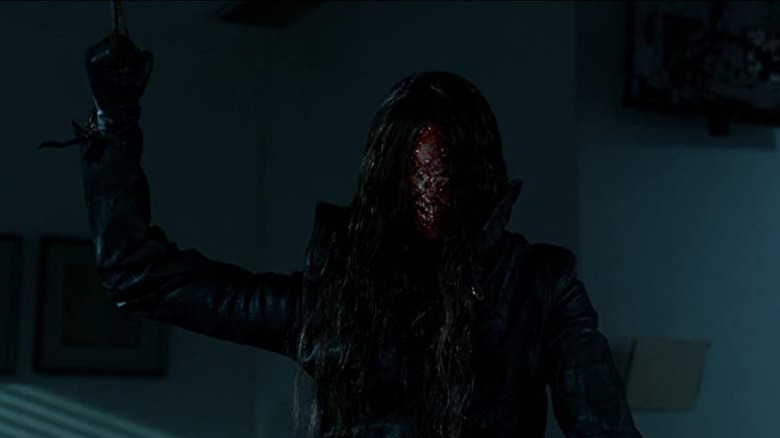
Director James Wan returned to the horror genre in 2021 with the celebrated "Malignant." The film's star, Gabriel, would make for the perfect Oscars host, he represents everything we love about cinema, all in one neat, flexible package. A genre beloved by moviegoers, inventive special effects, cool-looking knives, and a stylish jacket. Plus, it would be a way to shine a bit of light on a film that was perhaps a little underseen in a challenging year for the industry. In that way, Gabriel's inclusion as the show's host would also be a respectful nod to the notion that cinema, in its truest forms, will never die. (Ryan Scott)

The Green Knight

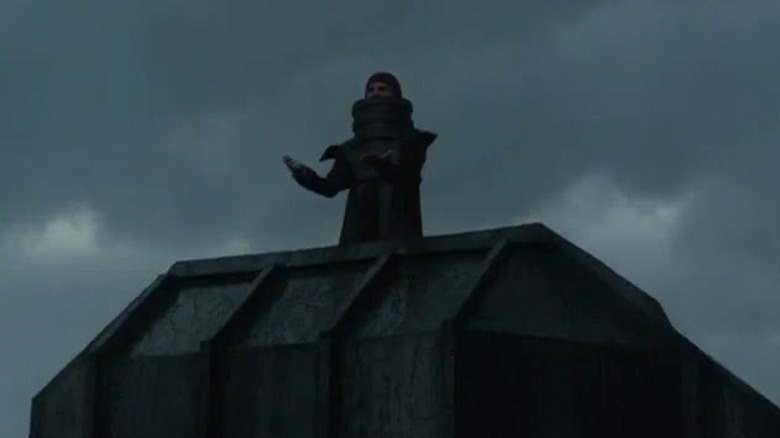
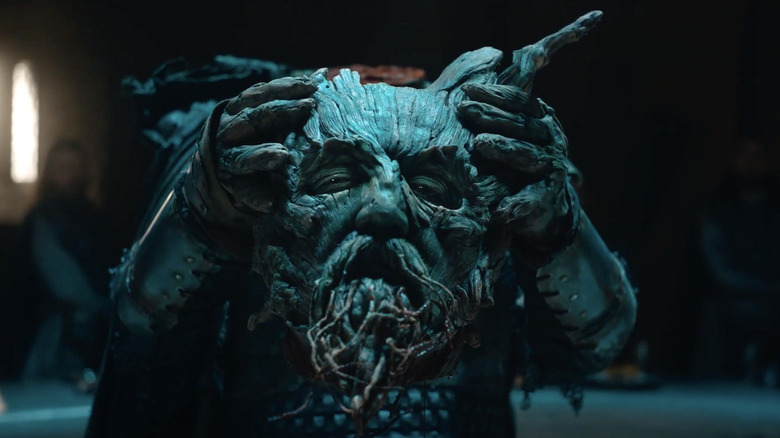
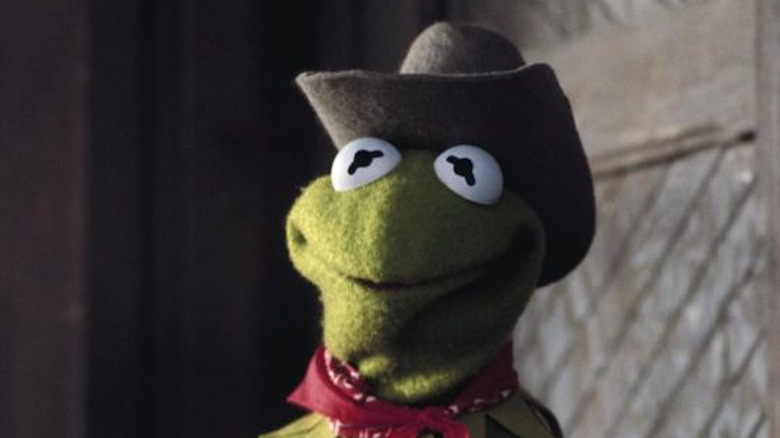
I admit the Green Knight is an unconventional choice for an Oscar host. But the guy certainly knows how to make an entrance, and as all Oscar fans know, it's crucial that the show starts with a bang. He also has the type of stage presence and take-charge energy that can wrangle a room that's gotten a little out of control. I mean, this dude had King Friggin' Arthur eating out of the palm of his hand. But the biggest selling point, of course, is that the Oscars would be setting themselves up for an even bigger ceremony in 2023. Why? Because, in keeping with the Green Knight's whole "thing," he gets to come back a year later and take the Oscars from everyone who accepts one. (Watch your back, Cumberbatch!) Hollywood loves a sequel, and putting this ancient tree-man on stage pretty much guarantees people will tune in for a follow-up. (Ben Pearson)

The Sex Car From Titane

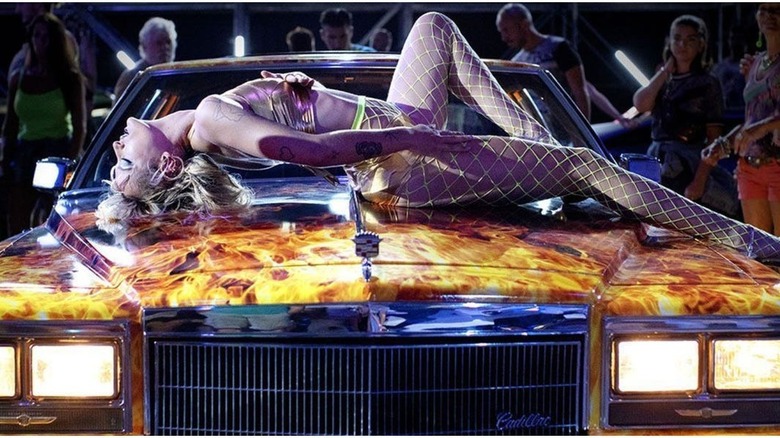
We know that the Oscars are notorious for awarding actors with statues for performances in years they may not necessarily have deserved it as a means to make up for the years where they were snubbed in favor of someone else who was receiving an award during a year they may not have deserved it. When the Oscars shortlist was announced, Julia Ducournau's "Titane" was not on it. The second woman in history to win the prestigious Palme d'Or and the first woman to win the Palme d'Or single-handedly, the lack of "Titane" is an Oscar snub of the highest caliber, and the only way to remedy the situation is by letting the star of the film host the ceremony, the sexy lady Cadillac that impregnates Agathe Rousselle's character Alexia. The "Titane" star will bring the sex appeal needed to draw in new audiences, and there's no possibility of an offensive joke or incorrect announcement if the host can only communicate by flashing lights and honking horns. (BJ Colangelo)

The Pig From Pig

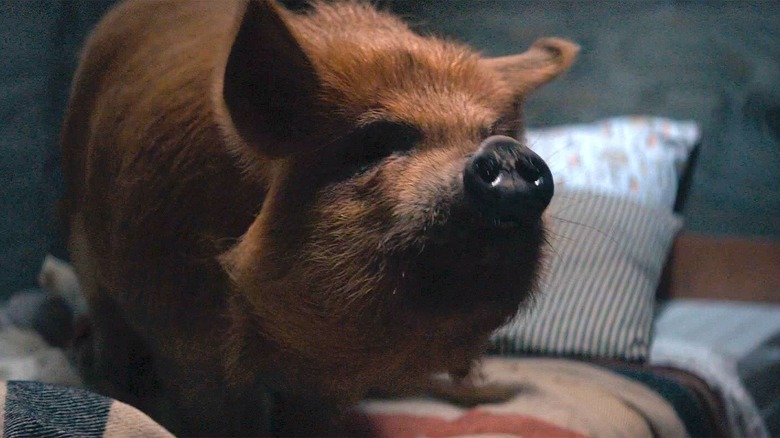
If there's one thing an Oscar host needs, it's star quality. A certain charisma; a certain charm. The host has to roll with the punches, think on their feet, and leave the audience laughing. And who better to do that than Brandy, the small domestic pig from New Zealand who starred in the Nicolas Cage film "Pig"? Her tufts of hair perfectly quaffed, a string of pearls around her porcine neck, Brandy would have the audience enraptured as she grunted and squealed her way through the ceremony, ending the show by foraging for some truffles beneath Ed Harris' chair, perhaps. (Chris Evangelista)

That Hot Twi'lek From The Boba Fett Show

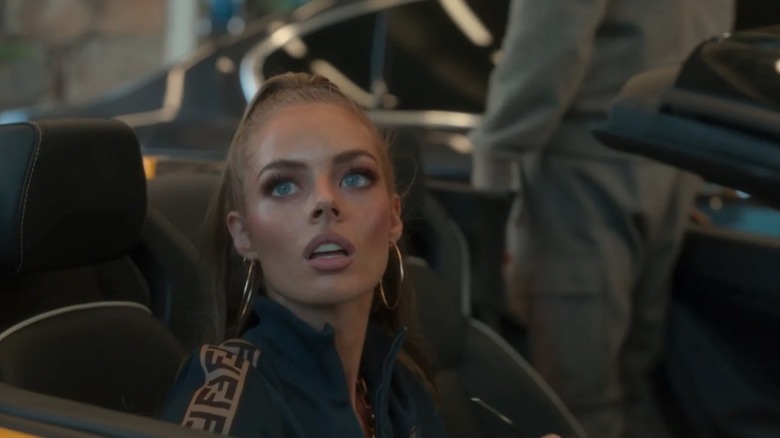
You know what the Oscars ceremony really needs? Some interstellar sex appeal. Enter Garsa Fwip, the smoking-hot Twi'lek madam from "The Book of Boba Fett." Earthlings may know her better as actress Jennifer Beals, but this lekki'd looker is the perfect choice to host the Academy Awards. She has a team of scantily clad Twi-leks to carry trophies and award envelopes at the ready, and she could probably borrow a few of those dummy thicc Gamorreans from Fett for security, too. Besides, Garsa is probably pretty used to handling entitled rich folks who have had a few too many drinks, so she's not going to have any problems keeping things on time. Now if we can just get Max Rebo and the Jizzwailers to replace the house orchestra... (Danielle Ryan)

Bronco Henry

"The Power of the Dog," released by Netflix and directed by Jane Campion, may well be the movie to beat for Best Picture. So why not have one of the most influential figures from that film host Hollwyood's big night? No, we assume Benedict Cumberbatch will be too busy to do so. However, Bronco Henry is the way to go. The mysterious rancher who we never actually get to see on screen in the powerful film would make the perfect host, as the world at large would finally get to meet this clearly wonderful cowboy for the first time. In a night full of big reveals, why not have the host, in itself, be a big reveal? Who is this Bronco Henry fella? We want to know! (Ryan Scott)

Baby Annette

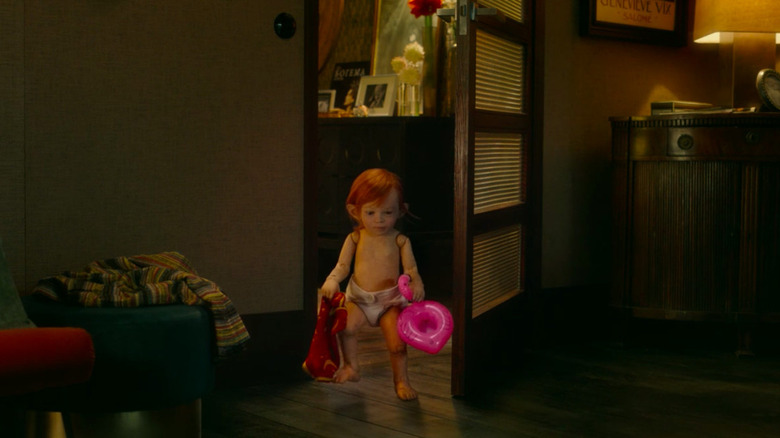
Dwayne Johnson might physically be the largest movie star on the planet right now, but when you stop to think about it, is there really a bigger star out there than Baby Annette? The world went absolutely wild last year when the singing superstar went on her global tour, so it only makes sense for this pint-sized powerhouse utilize her killer pipes during the Academy Award ceremony to regale the audience with operatic, incomprehensible ballads in those downtime moments between handing out awards. If the Academy is looking to boost dismal viewership numbers, this feels like the only truly sure-fire way to get people to tune in. And imagine the disappointed looks she'd shoot at all the terrible fathers sitting in the crowd. Devastating stuff. (Ben Pearson)

Tommy Doyle

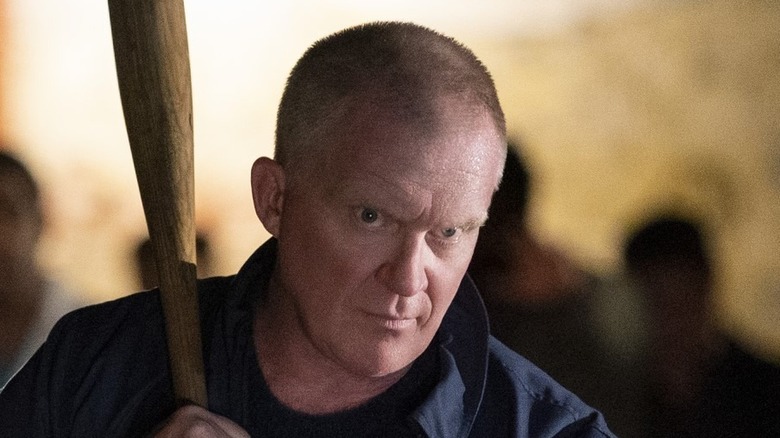
EVIL DIES TONIGHT! EVIL DIES TONIGHT! EVIL DIES TONIGHT! EVIL DIES TONIGHT! EVIL DIES TONIGHT! EVIL DIES TONIGHT! EVIL DIES TONIGHT! EVIL DIES TONIGHT! EVIL DIES TONIGHT! EVIL DIES TONIGHT! EVIL DIES TONIGHT! EVIL DIES TONIGHT! EVIL DIES TONIGHT! EVIL DIES TONIGHT! EVIL DIES TONIGHT! EVIL DIES TONIGHT! EVIL DIES TONIGHT! EVIL DIES TONIGHT! EVIL DIES TONIGHT! EVIL DIES TONIGHT! EVIL DIES TONIGHT! EVIL DIES TONIGHT! EVIL DIES TONIGHT! EVIL DIES TONIGHT! EVIL DIES TONIGHT! EVIL DIES TONIGHT! EVIL DIES TONIGHT! EVIL DIES TONIGHT! EVIL DIES TONIGHT! EVIL DIES TONIGHT! EVIL DIES TONIGHT! EVIL DIES TONIGHT! EVIL DIES TONIGHT! EVIL DIES TONIGHT! EVIL DIES TONIGHT! EVIL DIES TONIGHT! EVIL DIES TONIGHT! EVIL DIES TONIGHT! EVIL DIES TONIGHT! EVIL DIES TONIGHT! EVIL DIES TONIGHT! EVIL DIES TONIGHT! EVIL DIES TONIGHT! EVIL DIES TONIGHT! EVIL DIES TONIGHT! EVIL DIES TONIGHT! EVIL DIES TONIGHT! EVIL DIES TONIGHT! EVIL DIES TONIGHT! EVIL DIES TONIGHT! (BJ Colangelo)

Read this next: Top 15 Best Natural Disaster Movies

The post The Only Choices For Who Should Host the 2022 Oscars appeared first on /Film.
12 Jan 17:28

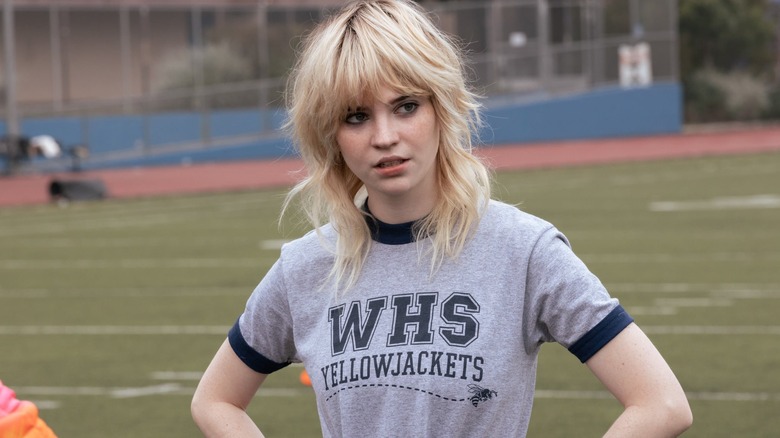
Why The Book Of Boba Fett Chapter 3 Will Make Yellowjackets Fans Very Happy

by Ryan Scott

"The Book of Boba Fett" has returned with Chapter 3, as we near halfway point of the latest "Star Wars" series on Disney+. And fans of the franchise finally got something they were looking forward to as the mysterious biker gang woman from one of the brief teaser trailers released ahead of the show's debut has finally arrived. As it just so happens, this character's entry into the franchise will actually likely make fans of another very popular show running right now, namely "Yellowjackets," quite happy. This is because none other than Sophie Thatcher, who stars in the Showtime series, is the one behind this cool new "Star Wars" character.

Warning: spoilers ahead for "The Book of Boba Fett." Proceed with caution.

Yellowjackets Meets A Galaxy Far, Far Away

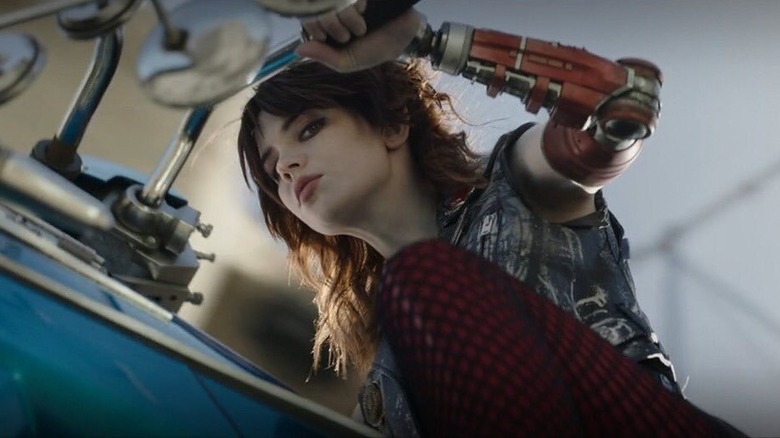
In Chapter 3 of "The Book of Boba Fett," Boba and Fennec encounter more issues in getting control of their territory on Tatooine. Early on in the episode, a water merchant (played by Stephen Root) requests that they handle a gang that stole some of his supply. When Boba and Fennec encounter this gang, they discover that the merchant is selling the water at a ridiculously high price, and there is no work for them in the town. So, Boba, largely dealing with one of the biker gang's members named Drash, strikes a deal. They will work for him, Boba pays the merchant a small free for his lost merch, and the former bounty hunter's new empire has some new muscle.

And yes, as it turns out, Drash is played by none other than Thatcher, who is also at the center of "Yellowjackets" as the teenage version of Natalie. We get to see quite a bit more of Drash in the episode as well, as Boba enlists the help of his new allies to hunt down the mayor's right-hand man in a speeder chase later on. Here, Thatcher gets some time to truly shine. And it certainly seems like we're going to see more of her in the coming weeks as well.

Sophie Thatcher's Big Moment

Every once in a while, an actor just catches a wave at the right time, and everything lines up just so to put that person at the center of pop culture. Sophie Thatcher is having one of those remarkable moments. "Yellowjackets" has gained a lot of momentum as its first season has progressed, becoming one of the buzziest shows of the season. Meanwhile, by virtue of it being attached to "Star Wars," particularly "The Mandalorian," her appearing in "The Book of Boba Fett" just as "Yellowjackets" is approaching the conclusion of its first season, has made for a lightning in a bottle scenario.

One look at so-called Film Twitter will tell you that a certain portion of the internet is absolutely obsessed with Thatcher right now, and it feels safe to assume that this is going to catapult her into the spotlight, getting her attached to more high-profile projects in the future. Perhaps "Yellowjackets" fans who aren't already "Star Wars" fans now have reason to check out "The Book of Boba Fett," and the same goes for "Star Wars" fans who are looking for more of that Drash energy, who can now check out "Yellowjackets" to suit that need.

"The Book of Boba Fett" returns with new episodes Wednesdays on Disney+.

Read this next: Star Wars Movie Villains Ranked Least To Most Powerful

The post Why The Book of Boba Fett Chapter 3 Will Make Yellowjackets Fans Very Happy appeared first on /Film.
12 Jan 17:27

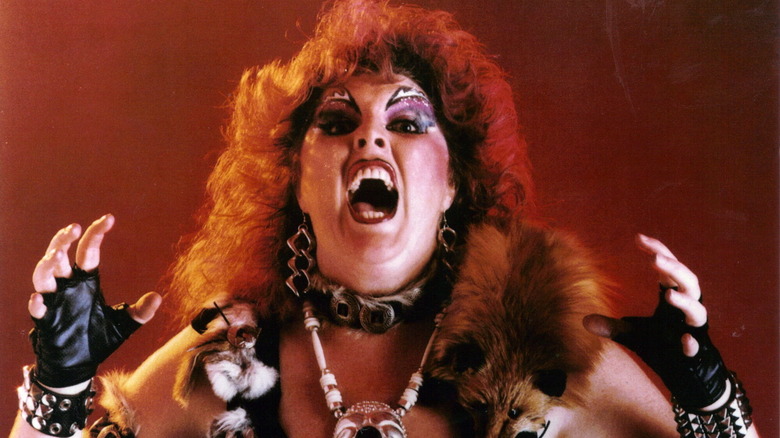
GLOW's Deanna Booher Changed What Was Possible For Fat Women On Television

by BJ Colangelo

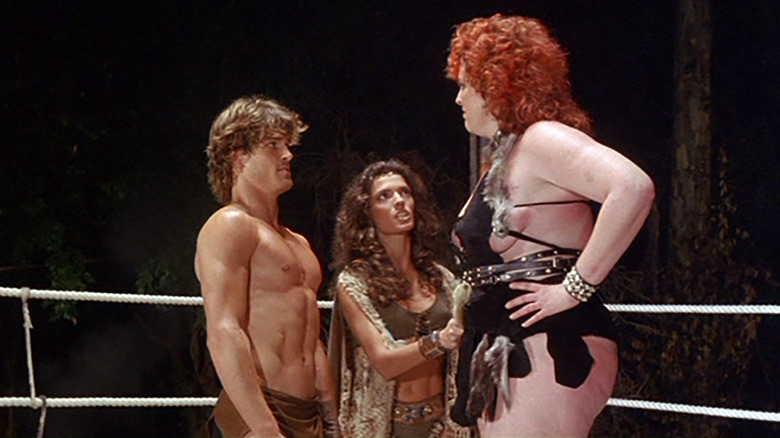
Whether you knew her as Matilda The Hun, Queen Adrena, Juicy Joy, Queen Kong, or the Bearded Lady from "Spaceballs," the world of professional wrestling and entertainment lost a great one this weekend with the passing of Deanna Booher at the age of 73. Booher got her start in the 1980s as an amateur mud wrestler well into her thirties, where because of her large frame, she grappled competitors of all gender identities. After California law barred her from wrestling men, she fought a 700-pound bear. No, I'm serious. Booher was a known personality in Los Angeles in the 1980s, but it was her run on the original GLOW (Gorgeous Ladies of Wrestling and the inspiration for the Netflix show of the same name) that turned her into an icon, and completely changed what was possible for fat women on television.

Booher was not alone in her large stature, and frequently wrestled alongside Mt. Fuji (Emily Dole) a nearly 6-foot-tall Samoan Olympic shot-putter. The difference being, however, was that Booher was a massive heel. Matilda the Hun was an absolute monster who dressed provocatively, wore garish makeup, ate raw meat in the ring, yelled obscenities, and intentionally scared children in the crowd. Booher enjoyed every minute of it, and completely subverted what was the "acceptable" way to present fat women on television. She wasn't a side-kick, she wasn't a sassy best friend, she wasn't comedic relief, and she surely wasn't a tragic figure. The first female "monster heel,"Deanna Booher was sultry, surly, and strong as hell.

Booher Unabashedly Embraced Being Big

Before professional wrestling, Booher was a sex photojournalist and sex worker, developing her Queen Adrena wrestling character based on her work the dominatrix world. So often, fat people in entertainment are meant to be successful in spite of their bodies, but Booher demanded that her success exist because of her body. After her professional wrestling career was finished, she continued working as a stuntwoman, and frequently appeared in cameo roles in film and television. No matter the role, Booher made sure that her truth was always represented as being huge, horrifying, and hot. If you look at her character names from her acting career, they perfectly embrace her attitude like Tough Broad, Big Lady w/ Whip, Nude Model, Meanest Woman Truck Driver or stereotypical "big" sounding character names like Mrs. Lurch and Bertha. She completely owned who she was, and no one would dare question her unless they wanted to experience her proven strength.

We like to believe that our current era is more progressive than the years that came before, but we've still not had someone in the public eye that looks or acts like Booher. Sure, there's plenty from the 1980s era of GLOW that has aged poorly (like the time they had her wear a Nazi helmet to make her seem like more of a heel, yikes) but in terms of fat representation, the show is still untouchable. With the exception of "Shrill" or the criminally underseen women's arm wrestling film "Golden Arm," studios still struggle with how to represent fat women on screen in non-stereotypical roles. Booher was the blueprint for breaking the mold, and she will be so dearly missed.

Read this next: The 20 Best Sports Films Of All Time Ranked

The post GLOW's Deanna Booher Changed What Was Possible For Fat Women on Television appeared first on /Film.
12 Jan 10:54

Far Cry 2 gets a new unofficial patch, packing gameplay tweaks & fixes

by John Papadopoulos

Modder ‘Boggalog’ has released an unofficial patch for Ubisoft’s classic FC game, Far Cry 2. This unofficial patch comes a number of gameplay tweaks, enhancements and fixes. As such, we recommend downloading it (in case you want to replay it). Going into more details, this mod removes the weird line close to the player where … Continue reading Far Cry 2 gets a new unofficial patch, packing gameplay tweaks & fixes →

The post Far Cry 2 gets a new unofficial patch, packing gameplay tweaks & fixes appeared first on DSOGaming.

12 Jan 10:41

Package Of Anomalies V0.1

Package Of Anomalies V0.1
Is the 1st version of the mod, Some things are not good but I try my best
12 Jan 10:41

Windows 2000 拡張カーネル v3.0i リリース

by blackwingcat

拡張カーネル v3.0i を公開しました

変更点は以下の通り
・MSVCRTをNT5系列にした時、一部のコンポーネントが機能しなくなる不具合修正。
・MFC90ESN.DLL の実装漏れを修正。
・OLE32.DLL のCoRevolkInitializeSpy/CoRegisterInitializeSpy関数の改良
・MsgBox2K.exe を修正したものに置換

12 Jan 10:32

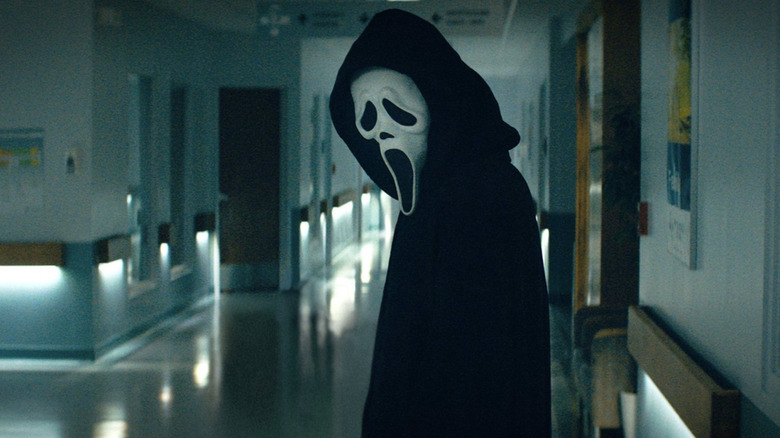
Scream Review: A Very Funny, Very Bloody Sequel

by Chris Evangelista

Someone has taken their love of scary movies one step too far ... again. The fifth entry in any horror series is bound to be questionable; what more is there to say? But you can't keep a good franchise down, and "Scream" has returned to spill some more blood. A lot more blood, in fact. 

"Scream," the fifth film in the series, but one that adopts the trend of jettisoning a number altogether and confusingly using the original film's title, is set 25 years after the events of the first flick, and once again, a masked killer (or killers?) is stalking the unlucky youths of Woodsboro. And yep, you guessed it — everybody's a suspect (to quote the late Randy Meeks).

Released in 1996, the original "Scream" was a big deal for the horror genre. Working with Kevin Williamson's clever, hip script, legendary horror filmmaker Wes Craven breathed new life into the flatlining slasher genre. Unlike characters in so many slasher movies before, the potential victims in "Scream" were actually well aware of horror movies and their rules – and yet knowing the rules couldn't save a lot of them in the end. One by one they were butchered, and Craven filmed it all with surprisingly stark, nasty realism. When one thinks of slasher pics, one often pictures over-the-top kills soaked with unrealistic amounts of gore. But the deaths in that first "Scream" are brutal and often cruel. It's all part of the film's design: these characters aren't supposed to be in a movie. They're in the real world. And in the real world, getting stabbed repeatedly is nasty, messy business. 

"Scream" spawned three sequels, all of which were helmed by Craven, with Williamson penning the scripts for the second and fourth entries and Ehren Kruger writing the rather lackluster third entry. Since then, Craven has died, and it seemed like "Scream" would die with him. But now the series is reborn, rebooted, and revived by Matt Bettinelli-Olpin and Tyler Gillett, the filmmaking team behind the excellent horror-comedy "Ready or Not." With a script by James Vanderbilt and Guy Busick, the new "Scream" has some big shoes to fill. It also needs to justify itself in a way the previous three sequels didn't. Why head back to Woodsboro now? What more is there to say?

What's Your Favorite Scary Movie?

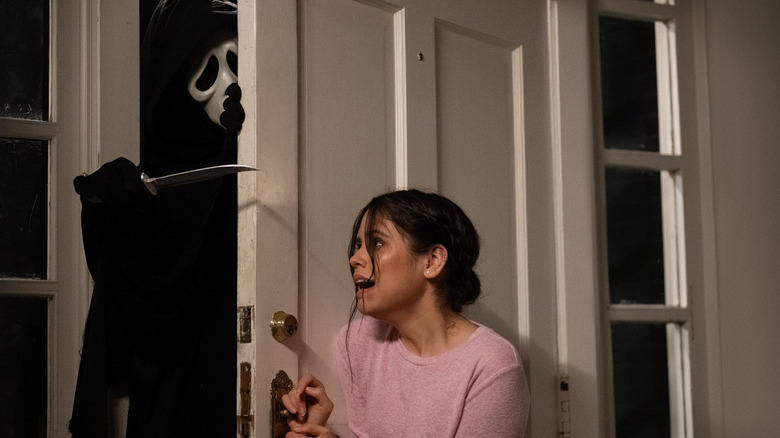
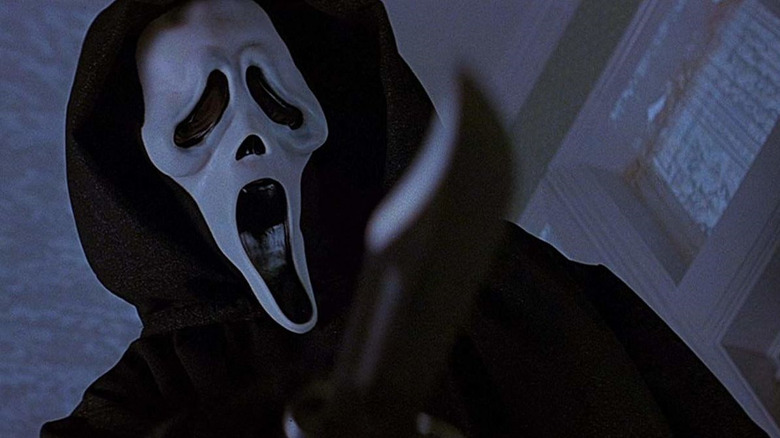
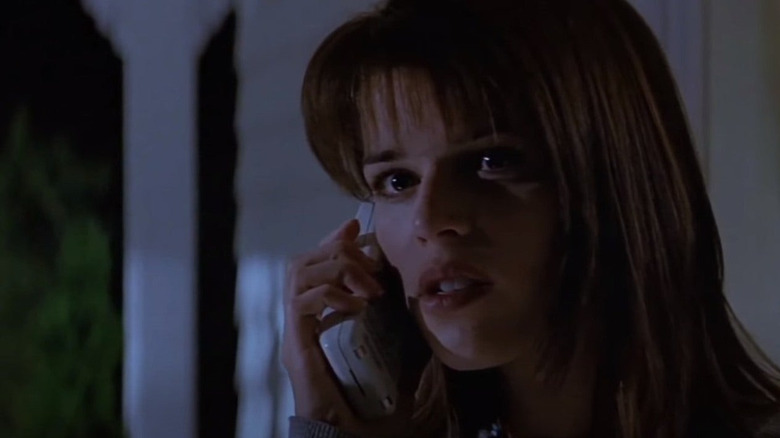
Like all "Scream" films, "Scream" 2022 opens with an attack. This attack is meant to reflect the opening of the first film, which saw Drew Barrymore and her blonde Louise Brooks wig brutally dispatched by a horror movie-loving killer who first tormented her via phone before showing up in person. Back then, young people actually answered their phones — and they mostly used landlines. But times have changed, and when a landline rings in the house of 21st-century teenager Tara (Jenna Ortega), she looks utterly perplexed. She approaches the ringing plastic rectangle the way someone might approach a dusty old relic in some far corner of the world's most boring museum. What is this strange device, and why won't it stop making noise? 

The caller, who has a voice that's instantly familiar to fans of the franchise, gets Tara talking and eventually asks her that now-iconic question: "What's your favorite scary movie?" Tara is a horror fan, but again, times have changed. She's not the type to name-drop "A Nightmare on Elm Street" or "Halloween." Instead, Tara is a fan of "elevated horror," calling out "The Babadook," "The Witch," and "Hereditary," among others. But that's not what the killer wants to hear. They're more interested in hack and slash, and to prove it, here comes a big, sharp knife headed directly for Tara's vital organs. 

So far, this all feels fairly familiar, but then "Scream" starts to shake things up. Tara's estranged older sister, Sam (Melissa Barrera), returns to Woodsboro with her boyfriend Richie (Jack Quaid, who is very funny here) in tow. Since this sort of ritualized masked serial killer attack is a common occurrence for the unfortunate folks of Woodsboro — there's an entire "based on a true story" film franchise, "Stab," that exists within the world of the franchise — Sam decides she needs to turn to someone who has handled this sort of thing before: poor, sweet, innocent dork Dewey Riley (David Arquette).

Legacy Characters

Little by little, the surviving legacy characters work their way back into the film. Dewey calls his ex-wife, reporter Gale Weathers (Courteney Cox), who now hosts a morning show. He also calls up Sidney Prescott, the ultimate "Scream" final girl, played once again by the always-welcomed Neve Campbell. While the new "Scream" doesn't entirely sideline these legacy characters, it's fair to say they play more of a supporting role here — and that wasn't the best choice. Perhaps it's nostalgia talking, but "Scream" really feels like it comes to life when these familiar faces pop up. When Arquette strolls into a scene with the notes of Marco Beltrami's guitar-riffing "Dewey's Theme" playing, I found myself smiling. It's good to have the old gang back.

But not even that is entirely successful here. While it's fair to assume that time and trauma have changed these folks, they don't entirely feel like the characters we know. Gale in particular feels too soft here; too sensitive. She was always a hard-nosed, no-nonsense character. And while it's fun to have Campbell back as Sidney, she, too, feels a tad adrift. This is mostly a script issue — neither Campbell nor Cox are given a whole lot to work with, and have to make do with their charisma and our familiarity with their characters. Only Arquette's Dewey has something resembling an arc, as he plays the former lawman as a washed-up, lonely guy who clearly has a drinking problem. Not that you can blame him — "I've been stabbed nine times," he dryly tells another character at one point. 

Eventually, one of the new characters, Tara's friend Mindy (Jasmin Savoy Brown), figures out what might be going on in Woodsboro: someone is making a "requel." It's not quite a reboot, and it's not quite a sequel. It's more of a legacy sequel — a continuation of the old story with new characters, and some old characters, too. But there's more to it than that. The "Stab" fanbase has grown annoyed with the most recent sequel (directed by Rian Johnson, naturally), with some on message boards claiming it "ruined their childhood." Yes, that's right: toxic fandom is the possible culprit here. 

Toxic Fandom

This is a solid idea — fandoms have grown more and more toxic over the years. When some critics dared to give "The Dark Knight" a negative review, they got death threats. The female-driven "Ghostbusters" reboot was declared an abomination before anyone had seen a single frame. And people are still infuriated by the excellent "Star Wars" film "The Last Jedi" for daring to be different. Using that as a springboard for a new "Scream" has tons of potential.

And yet ... "Scream" doesn't do a whole lot with it. It just sort of introduces the idea and continues on. This rather rushed nature plagues the film as a whole: this is a breezy flick that never slows down, but maybe it should have. I got the sense that there had to be more to several supporting characters here, and all of that got left on the cutting room floor for the sake of brevity. So be it, and I certainly can't fault the film for maintaining a steady pace. But it wouldn't hurt to let up now and then.

None of this is to say that "Scream" isn't a lot of fun. Whatever the script lacks in plot it makes up for in humor — this is probably the funniest entry in the series, and the increase in comedy is welcomed. And fans craving kills will get their money's worth, as this is a brutal movie. Like Craven and that original film, Bettinelli-Olpin and Gillett understand that the attacks need to be gruesome, and they are. There's no flinching or looking away here — every stab, every slash, every puncture is writ large and bloody across the screen. 

And, for the most part, we actually want the potential victims here to survive. Sure, they're kind of rude, but they're also just kids, and the cast does a good job making them all likable in their own way. The only player who doesn't fare so well is Barrera, who makes for a rather lackluster final girl. Sam has some dark stuff clouding her past, but I never bought Barrera as someone with that experience. We never connect with her Sam the way we connected with Sidney, and it certainly doesn't help that the actual Sidney is lurking on the periphery, just waiting for the film to give her a big moment. 

Off The Rails

These are the sorts of problems that could've completely derailed "Scream" — in a cheeky moment that perhaps acknowledges this, Richie, talking about the "Scream" clone "Stab," says that "This whole franchise goes off the rails in part 5." There's a certain predictableness that doesn't do the film any favors, either — you'll probably figure out several twists and turns on your own with very little deduction, and way before any of the characters. 

But "Scream" ends up being so breezy, bloody, and funny that it's hard to hold a grudge. Bettinelli-Olpin and Gillett get creative with their set-pieces — the stalking moments are frequently riddled with tension, but they're amusing, too. There's one particularly humorous moment where a character keeps opening doors in a house, with the expectation being that the minute the open door closes we'll see the killer standing behind it. But it doesn't happen. And it doesn't happen again, and again, and again, to the point where you can't help but start laughing at the intentional absurdity of it all. 

Wes Craven's original "Scream" was groundbreaking. While it didn't invent the slasher genre (obviously), it recontextualized it in a way that felt fresh, original, and innovative. It's fair to even say that Craven's 1996 film changed the horror movie landscape. The 2022 "Scream" won't come anywhere close to having that sort of long-lasting, genre-defining impact. It's too familiar. ("You might be the most derivative one yet," Sidney tells the killer in one scene.) But it's a nifty, quick-witted slasher pic, and at this point in this particular franchise, that's more than enough. So, what's your favorite scary movie?

/Film Rating: 7 out of 10

Read this next: 20 Movies About Serial Killers That Will Absolutely Creep You Out

The post Scream Review: A Very Funny, Very Bloody Sequel appeared first on /Film.
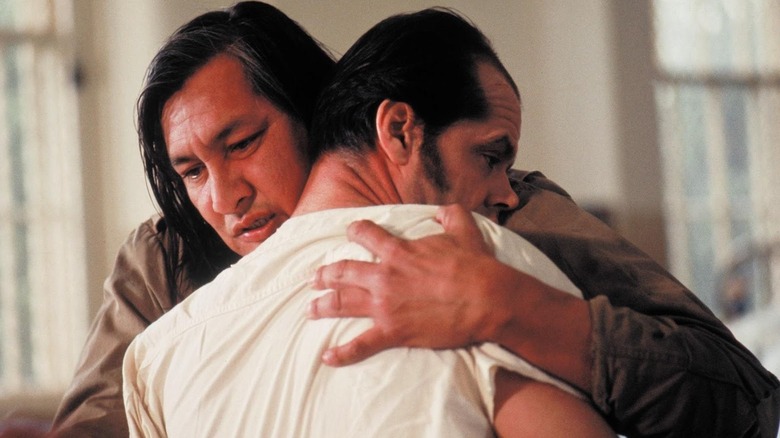
12 Jan 10:29

Sony is Compensating PS5 Shortages by Continuing to Make PlayStation 4 Consoles, Bloomberg Writes

by Aernout van de Velde

ps5 shortages ps4 2022

Sony is said to be compensating ongoing global PS5 shortages by keep making PS4 consoles.

A lot has been said and written about the disrupted supply chains due to COVID-19. Last year, Sony already said that it expects shortages of its next-gen console to extend into 2022, and according to Bloomberg, the tech company is now compensating the PS5 shortages by adding roughly one million PS4 consoles this year. Interestingly, Sony has never officially announced that it would stop making PS4’s.

Bloomberg reports that sources familiar with the matter said that Sony told its assembly partners in late 2021 that it would continue making PS4 consoles throughout this year.

“While Sony never officially announced when it would stop making the PS4, it had previously planned to discontinue assembly at the end of 2021, they said, asking not to be named as the plans are not public”, Bloomberg writes in its report.

Sources told Bloomberg journalists Takashi Mochizuki and Debby Wu that Sony will be adding roughly one million PS4 units this year to “help offset some of the pressure on the company’s PS5 production.”

A Sony spokesperson confirmed PS4 production would continue this year and said the company had not planned to stop making the console. “It is one of the best-selling consoles ever and there is always crossover between generations,” the company said.

We can imagine that there’s still a market for PS4 consoles and games as the current lineup of must-have PS5 exclusive titles is still quite scarce and the PS4 is considerably cheaper and easier to come by than its successor.

Yesterday we reported on an interview with Xbox head Phil Spencer who claimed that supply of the next-gen consoles isn’t the problem – it’s the ongoing high demand that the companies are failing to meet.

What are your thoughts on Sony reportedly continuing PS4 productions to battle PS5 shortages throughout 2022? Please take it down below.

The post Sony is Compensating PS5 Shortages by Continuing to Make PlayStation 4 Consoles, Bloomberg Writes by Aernout van de Velde appeared first on Wccftech.

12 Jan 03:02

The Geekbox: Episode 616

Wherein we discuss reading comic books, Ghostbusters: Afterlife (major spoiler warning!), Cobra Kai (spoiler warning!), Saved by the Bell, Dexter, The Expanse, Final Fantasy XIV: Endwalker, PlayStation VR 2, Mario Kart 9, and the future of E3. Starring Ryan Scott, Adam Fitch, Justin Haywald, and Ryan Higgins.

12 Jan 01:36

NVIDIA DLDSR, Deep Learning Dynamic Super Resolution, Coming January 14

by Sebastian Peak

While NVIDIA provided an updated GeForce Game Ready Driver just today, a version which only supports the newly announced RTX 3080 12GB, there is another driver update coming on Friday…

12 Jan 01:36

The Ending Of The Original Scream Still Kicks Ass Decades Later

by Anya Stanley

When Wes Craven's "Scream" dropped in December of 1996, there occurred a seismic shift in the horror genre. In a field of stale slasher franchises — the previous year saw the sixth entry in the "Halloween" film series and the fourth trip back to Texas chain saws — Kevin Williamson's sharp, cynical script breathed fresh life into a subgenre that had come a long way since Michael Myers broke out of Haddonfield Hospital in 1978. The film spawned a handful of sequels, and its latest, the terribly-titled "Scream" (2022), will release in theaters on January 14.

Much is made of the endings to the "Scream" films because the payoff is often big. The films function as both slashers and mysteries, with the killers' identity constantly in question amid red herrings. But all roads lead back to Sidney, so when the third act rolls around, the killer reveal also exposes a part of her past, her family's past, and the town's past all in one. Craven's original "Scream" stands above its sequels by way of being the first of the franchise, but its ending is also the most effective of the series. Let's unpack it.

Whodunit?

"Scream" (1996) concerns one Sidney Prescott, a student at Woodsboro High School grieving the death of her mother who was brutally raped and stabbed to death a year prior. A series of killings in Woodsboro coincide with horrible, taunting phone calls Sidney receives from the killer, who wears a hooded cloak and a Ghostface mask, hiding their identity. Sidney no longer knows who to trust between the cops, represented by Dewey Riley (David Arquette), the salacious media represented by Gale Weathers (Courteney Cox) that air everyone's dirty laundry and casts doubt on Sidney's memory, or Sidney's brooding boyfriend, Billy (Skeet Ulrich). There are plenty of suspects, but they all seem to have convenient alibis when the slicing and dicing happens.

The secret finally comes out during the remains of an after-curfew house party, when Billy is attacked by Ghostface but survives, tumbling down a staircase and coaxing a gun from a terrified Sidney. Billy straightens up, channels Eric Binford in "Fade to Black," and loses himself in the chasm between fiction and reality. He quotes the movie "Psycho" (arguably the first proper slasher), shoots Randy, and informs his girlfriend that he and his pal Stu (Matthew Lillard) have been working in cahoots to dispatch six victims — and they began with Sidney's mother a year ago. 

The reason? A one-two punch. 

Billy cites Sidney's mother as the reason he snapped, blaming her homewrecking affair with his father for the disintegration of his family. Stu's given motive was a cheeky "peer pressure." In fact, the pair created an entire narrative for themselves, one that condemns Sidney for her mother's sins and brings them fame (they give each other flesh wounds so they can present themselves as survivors, framing Sidney's father for the murders), punishing a town they hate in the process.

Not In My Movie

All of the talk about horror rules in "Scream" have their own payoff, and not in rapid-fire movie quotes. Don't have sex, don't drink or do drugs, don't say you'll be right back ... these can ensure survival, says Randy. But just as the film entire breaks new ground on an old subgenre, Sidney refuses to abide by Billy and Stu's narrative. She gives the deadly duo a taste of their own medicine, putting on the mask herself and calling Billy using the voice modulator used to terrorize her so many times earlier. She saves her father and drops a tv on Stu's head before Gale shoots Billy, seemingly killing him.

It's here that Randy reminds everyone of another guideline in horror movies; it's the part when Jason Voorhees rises out of the lake to grab Alice, and when Carrie's bloodied hand reaches from beyond her grave to grasp Sue Snell. It's the moment "when the supposedly dead killer comes back to life for one last scare." 

Billy does get a jump scare in, leaping up from the ground and reaching towards the survivors, but doesn't get any further before Sidney puts a bullet in his forehead. As the smoke curls from her dead boyfriend's wound, she quips, "Not in my movie." A cop doesn't save the day and no curse is lifted, but by the time the sun comes up on the town of Woodsboro, Sidney Prescott has taken control of a narrative set forth for her (not as a random victim but a target and pariah), confronted her own deep-seated issues, and emerged as the victor without having to marry someone or have a baby to achieve spiritual wholeness. I don't think you guys get how rare this was (and still is) in a slasher.

Infusing a woman's narrative into a survivor-focused series worked so well for the film that writers stuck with it for every sequel; each successive killer has had a bone to pick with the Windsor College grad and on occasion (all but the third film, really) enlisted some film bro to do the heavy lifting. It remains to be seen whether the nouveau "Scream" follows suit, but if they do, you can bet that Sidney will always have the final say on her own story.

Read this next: The 11 Scariest Scenes In The Halloween Franchise

The post The Ending of the Original Scream Still Kicks Ass Decades Later appeared first on /Film.
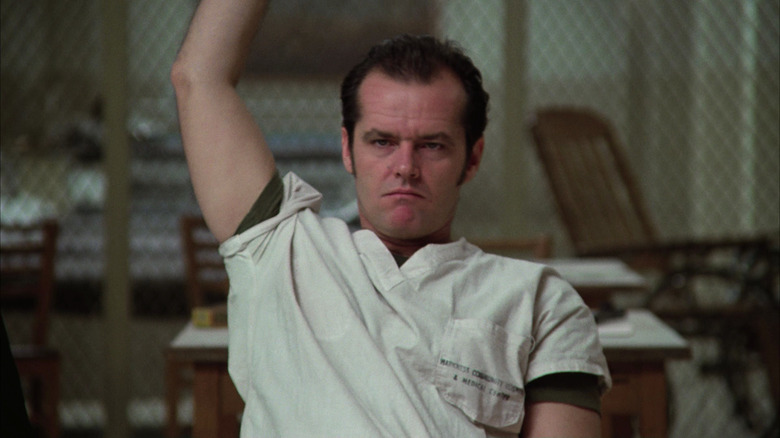
12 Jan 00:34

Hotel Chain Switches To Chrome OS To Recover From Ransomware Attack

by BeauHD
A Scandinavian hotel chain that fell victim to a ransomware attack last month said it took a novel approach to recover from the incident by switching all affected systems to Chrome OS. The Record reports: Nordic Choice Hotels, which operates 200 hotels across Northern Europe, fell victim to a ransomware attack on December 2, when hackers encrypted some of its internal systems using the Conti ransomware strain. The attack prevented staff from accessing guest reservation data and from issuing key cards to newly arriving guests, as one of the hotel's guests told The Record in an interview last month. But in a press release today, Nordic Choice said that instead of contacting the hackers and negotiating a ransom for the decryption key that would have unlocked the infected devices, the hotel chose to migrate its entire PC fleet from Windows to Chrome OS. "[I]n less than 24 hours, the first hotel was operating in the Chrome OS ecosystem from Google. And in the following two days, 2000 computers were converted all over the company consisting of 212 hotels in five different countries," the hotel chain explained. Kari Anna Fiskvik, VP Technology at Nordic Choice Hotels, said the hotel had already run a pilot program to test the tool before the attack as a way to save money by reusing old computers with a less-demanding OS. "So when we suddenly had to deal with the cyberattack, the decision to go all in and fasttrack the project was made in seconds," Fiskvik said. Nordic Choice said it plans to migrate another 2,000 computers to Chrome OS, on top of the 2,000 it migrated during the attack. The hotel chain said they expect to save $6.7 million by converting old computers to Chrome OS instead of buying new hardware.
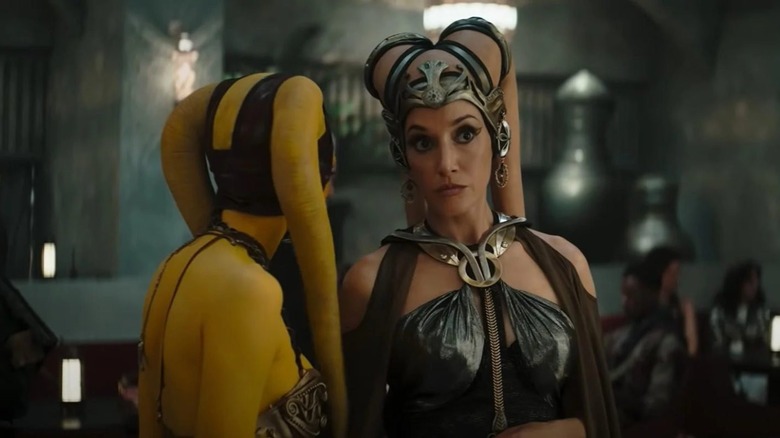
Read more of this story at Slashdot.

12 Jan 00:34

Dark Shadows - The Complete Original Series Review

by Great Hierophant

Dark Shadows is a landmark of classic television, introducing the concept of a supernatural, gothic horror soap opera to daytime television.  The series ran for 1,225 22-minute episodes from 1966-1971.  While I could wax on all day about the history of Dark Shadows and its significance, and have in the past, there are other sites on the internet which can do that in a more knowledgeable manner.  Today I am hear to talk about the epitome of Dark Shadows, the Complete Original Series boxset (DS:COS) and offer my review of it.  

Read more »
You say "obsessed" as if it is a bad thing.
12 Jan 00:33

Humble drops its monthly bundle prices (yay), introduces its own PC launcher (boo)

by Dustin Bailey
Humble drops its monthly bundle prices (yay), introduces its own PC launcher (boo)

Humble has been heavily experimenting with how to present its bundles since Humble Monthly was ended in favour of Humble Choice, and the response from long-time users of the store have been mixed. Now prices are dropping for that bundle starting in February, and as part of the revamp, Humble is trying to add yet another app to your ever-growing collection of PC game launchers.

Starting with the February bundle, the Humble Choice price is dropping to $11.99 USD, and that single price will get you access to every game in the collection. "The exact number of games might vary each month", but you will keep permanent access to any games you've picked up through the bundle. Keys for these games will continue to be provided through keys for platforms like Steam, Origin, Epic, and GOG.

Then there's the Humble app. Through this app, Humble will provide access to a Game Pass-style selection of games for the duration of your subscription, starting with Forager, Wizard of Legend, Dodgeball Academia, Unsighted, and Void Bastards. The old Humble Trove is becoming the Vault, which will continue to offer a selection of DRM-free bonus indie games, as always.

RELATED LINKS: Void Bastards gameplay, Best space games
12 Jan 00:33

Far Cry 6 Pagan: Control Released

by Blue
Ubisoft has released Pagan: Control for PC and consoles, offering the promised new content for Far Cry 6, the latest installment in the shooter series. The Windows edition is on the Epic Games Store...
12 Jan 00:32

Imagining a Better Online World: Exploring the Decentralized Web

by chrisfreeland

The World Wide Web started with so much promise: to connect people across any distance, to allow anyone to become a publisher, and to democratize access to knowledge. However, today the Web seems to be failing us. It’s not private, secure, or unifying. The internet has, in large part, ended up centralizing access and power in the hands of a few dominant platforms.

What if we could build something better—what some are calling the decentralized web?

In this series of six workshops, “Imagining a Better Online World: Exploring the Decentralized Web,” we’ll explore the ways in which moving to decentralized technologies may enhance your privacy, empower you to control your own data, and resist censorship. Join us to hear from experts in the leading peer-to-peer technologies, from identity to data storage. We’ll see demonstrations of how decentralized tech is being used in publishing, data management and preserving cultural assets. Learn how the decentralized web might yet create systems that empower individuals by eliminating central points of control.

This series is a partnership between Internet Archive, DWeb, Library Futures, and presented by the Metropolitan New York Library Council.

Sessions Include:

Colorful dashes dance across a black bacground. The Title "Decentralized Web: an Introduction" sits atop the image, in white text.

The Decentralized Web: An Introduction
What is the decentralized web, why is it important, and where is it along the path of development? What are the problems the decentralized web seeks to solve? Who are the players working to realize this vision? Why is the Internet Archive, a library, a leader in the decentralized web movement?
Thursday, January 27th, from 4:00pm to 5:00pm EST
Watch Video

In an Ever-Expanding Library, Using Decentralized Storage to Keep Your Materials Safe
Libraries understand the headache of storing materials. How do you create room for an ever-expanding collection? What if you don’t want to weed materials to make room? Enter decentralized storage—a network of P-2-P servers that store materials across a global network of storage nodes. What problems does this solve? What problems does this create? Where is the state of decentralized storage today? We ‘ll see media collections and how they are preserved in Storj, Filecoin, and beyond.
Thursday, February 24th, from 4:00pm to 5:00pm EST
Register

Keeping Your Personal Data Personal: How Decentralized Identity Drives Data Privacy
Want your FedEx package? Now you must allow the company to scan your ID. Check into a hotel? Hand over your passport. Rent an e-bike? Key in your driver’s license, which includes your address, birthdate, and weight. What if you could maintain control over your personal identity and share only what is needed? Enter decentralized or self-sovereign identity (SSI). In the future, we believe each person will hold an e-wallet and control his/her/their own personal information.
Thursday, March 31, from 4:00pm to 5:00pm EST
Register

Goodbye Facebook, Hello Decentralized Social Media? Can Peer-to-Peer Lead to Less Toxic Online Platforms?
Facebook, Twitter… we’ve seen them go awry when faced with the scourges of misinformation and trolling. In authoritarian regimes, entire platforms are easily blocked. Would decentralized social media, where there is no central controlling entity, be better? How do you take down damaging posts when there is no central command center? We walk you through some of the top decentralized social media platforms, from Matrix to Twitter’s Blue Sky initiative. Demonstrations of how to get on some of these systems.
Thursday, April 28, from 4:00pm to 5:00pm EST
Register

Decentralized Apps, the Metaverse and the “Next Big Thing”
Why did Facebook rename itself for the Metaverse? What is the metaverse & how are people experiencing it? How are artists, nonprofits, even the NBA are racking up seven-figure payouts for otherwise mundane pieces of media called NFTs (non-fungible tokens)? Why are they so despised? In this session, we look at the crazy breakthrough apps and items populating decentralized web. Plus demonstrations of how people are working, trading & creating in the metaverse.
Thursday, May 26, from 4:00pm to 5:00pm EST
Register

Ethics of the Decentralized Web & Uses for the Law, Journalism and Humanitarian Work
Web 1.0 and 2.0 started out full of idealism, too. What is to prevent the decentralized web from being corrupted by profit, market domination, and bad actors? What is the normative or social layer we need to build alongside the tech?
Thursday, June 30, from 4:00pm to 5:00pm EST
Register

The post Imagining a Better Online World: Exploring the Decentralized Web appeared first on Internet Archive Blogs.

12 Jan 00:32

Xbox head says Game Pass isn't about replacing game sales

by Graham Smith

Microsoft don't intend to do away with selling individual games anytime soon. That's the takeaway from Xbox head Phil Spencer's recent interview with the New York Times. "The retail market continues to be very strong and grow. So let’s make sure we offer our customers choice between subscriptions and transactions," says Spencer.

Read more

11 Jan 22:39

The Best Way to Figure Out How Much Wine You Need for a Party

by Meredith Dietz

There’s a good chance you were gifted a number of wine bottles over the holidays. There’s a greater chance that you’ve already worked your way through them, and it’s time to hit the wine store for your next event. Whether you’re hosting a fancy dinner party or you’ve been assigned “wine duty” for a casual…

Read more...

11 Jan 22:38

All the Things You Didn't Know Dish Soap Can Clean

by Sarah Showfety

We all know the glories of dish soap when used to fight hardened food, grease, and grime on our plates, pots, and utensils (y’all love your Dawn). But are you aware of its myriad potential other uses around the house? From stain-lifting to fruit fly control, behold the many blessed miracles of liquid dish detergent.

Read more...

11 Jan 22:37

The Hidden Dangers of Smartphone Car-Vent Mounts

by Joe Cason

Most of us use our phones for playing music or navigating with the GPS when we drive. Because of this, we need to mount our phone where we can see it when we're driving (hands-free, of course!).