Shared posts

11 Jan 22:36

The Daily Stream: The Daredevil Season 3 One-Take Prison Fight Scene Makes Me Nostalgic For Great Marvel Action

by Hoai-Tran Bui

(Welcome to The Daily Stream, an ongoing series in which the /Film team shares what they've been watching, why it's worth checking out, and where you can stream it.)

The Series: "Daredevil"

Where You Can Stream It: Netflix

The Pitch: Blinded in a chemical spill accident as a child, Matt Murdock gains heightened senses that allow him to see the world differently. He uses his abilities to moonlight as a vigilante while working as a lawyer by day. But he's also intensely Catholic. Like super Catholic. As in, will go to confession to ask forgiveness for the violence that he inflicts and the simmering anger that he cannot repress no matter how much he tries.

It's this bundle of nerves and rage and angst, all wrapped up in Charlie Cox's taut little body, that makes the magic that was Netflix's "Daredevil" the best thing to come out of the short-lived Netflix-Marvel partnership. Why am I talking about "Daredevil" four years after it was canceled by the streaming giant and apparently wiped from Marvel Cinematic Universe canon? Well, partly because the latter ended up not being so true — appearances by Cox in "Spider-Man: No Way Home" and Vincent D'Onofrio, who plays Daredevil's archenemy, Kingpin, in "Hawkeye" confirmed that "Daredevil" is in fact a part of the MCU. Or, at least, some version of it. Nevertheless, it piqued a lot of people's interest in the three-season Netflix show, and it reminded me that I never got around to "Daredevil" season 3. Finding myself with more free time than I've had in a while, I finally popped it on. And reader, am I glad I did.

Why It's Essential Viewing

Before I dive into the nitty-gritty of the greatness of "Daredevil" season 3, let me get those first two seasons of the show out of the way. The first season was the template for Netflix's Marvel shows — proof that you could do a gritty, hyperviolent, streetwise superhero series full of morally grey protagonists and bone-crunching action. It was imperfect, to be sure. Like many Netflix shows, it was five hours' worth of story stretched out over 13 episodes, was often too dark both literally and thematically, and the binge model left most of its plotting forgettable. But there was a moment in the second episode of "Daredevil" season 1 that put the series on the map, that made people sit up and pay attention: the hallway fight.

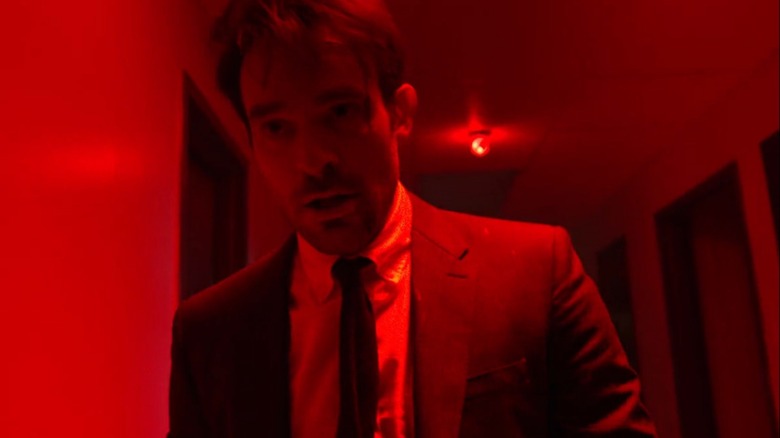
A visceral three-minute scene that appears to take place in one long take, the fight saw Charlie Cox's Matt Murdock, barely able to hold himself up after taking a brutal beating the night before, facing down an army of thugs, breaking down doors, throwing TVs, and throwing his body — and theirs — against the wall. It's an incredible sequence that, while obviously borrowing from Park Chan-wook's "Oldboy," demonstrated the show's commitment to that kind of tactile action that we were starting to see less and less in the MCU proper.

"Daredevil" would spend the rest of its run trying and often failing to live up to that hallway fight — though season 2 had a one or two really cool action sequences, namely Punisher's (Jon Bernthal) prison massacre — and even had the Defenders tried to replicate it in, um, "The Defenders." But good action couldn't be the only thing holding up a TV show, and "Daredevil" started to lose steam as its sophomore season fell victim to the plodding plot problems that had started to rear its head in season 1.

A Very Good Lawyer, An Even Better Fighter

But as we head into the fourth phase of the MCU, I've started to think: maybe good action is enough? Bad plotting in both "Daredevil" season 2 and the (very bad) team-up series "Defenders" is what killed my interest in finishing the third season about the Man Without Fear, but the lack of really interesting, exciting action has started to kill my excitement for the latest Marvel projects. When even the martial arts-forward MCU movie starts to feel weightless, or when every Disney+ show immediately becomes worse because of the obligatory third-act CGI fight fest, I'd started to wonder whether we took the days of those small-scale hallway fights in "Daredevil" for granted.

Reader, I'm here to tell you we did. First off, "Daredevil" season 3 was miles better than both seasons 1 and 2 — it didn't fix its plotting problems per se, but it was much improved and felt less like they spent three episodes wheel-spinning. The season wisely sheds the red suit (sorry comic book purists, but it looked bad!) in favor of the form-fitting black suit. Cox and Donofrio were as impeccable as ever (no wonder Marvel plucked them out of the show to bring over to the MCU), and I found myself happy to revisit Matt Murdock's perpetual angst and love for parkour all over again. But the scene that made my jaw drop was the latest and greatest "Daredevil" hallway fight, and perhaps the best showcase of action to come out of Marvel yet.

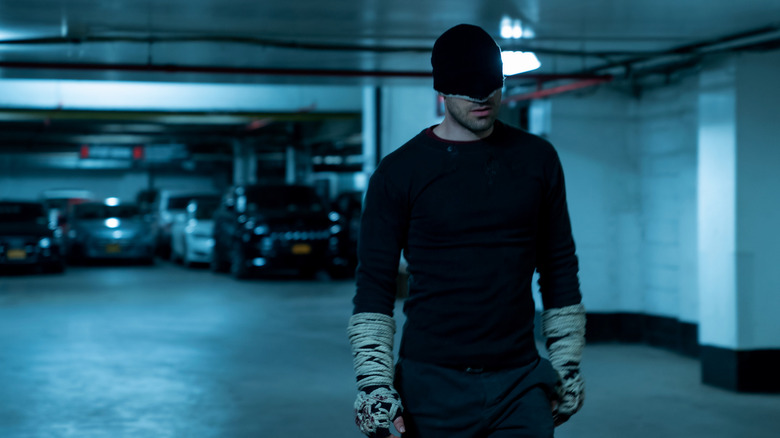
I'm talking, of course, about that 11-minute (!) long-take prison fight sequence, in which Cox's Matt Murdock drags his bloody body through a labyrinthine prison, all the while evading attackers with shanks and prison guards with guns. It's astonishing — it's actually two separate immaculately choreographed fight sequences, with a dialogue scene sandwiched in the middle, and never a camera cut can be seen. I know a lot of ink has been spilled about this sequence (not enough, I might say!) but it is all the more incredible how it feels like night and day after watching so many Disney+ Marvel shows with ho-hum action. It's like a kick in your teeth after being hopped up on nitrous oxide. Oh my god. Why did we ever satisfy ourselves with fight scenes that were CGI-ed to oblivion when we could have had this the entire time?

And the sad thing is, I don't think we'll have it again. Charlie Cox's Daredevil might be a part of the MCU (and maybe we'll even see him get his own Disney+ miniseries one day), but as committed as he is to the part, I don't know if Disney would ever be as committed to the action as Netflix and "Daredevil" showrunner Steven S. DeKnight were. I almost dread the day we get a longer Daredevil appearance devoid of those tactile thrills that made the Netflix series so good. My only hope is that Charlie Cox at least gets a better suit.

Read this next: The Daily Stream: Versailles Was The Sexy French Historical Drama That Was Ahead Of Its Time

The post The Daily Stream: The Daredevil Season 3 One-Take Prison Fight Scene Makes Me Nostalgic For Great Marvel Action appeared first on /Film.

11 Jan 22:33

The Best Way to Cook Seafood If You're Skittish About Cooking Seafood

by Claire Lower

I only have one fitness goal for 2022: Get real swole. This, of course, involves eating a lot of protein, and sea creatures are a great source. For most of my life, fish was something that was battered in cornmeal and deep fried. If I had to pick one fish to eat for the rest of my life, catfish, prepared as I’ve just…

Read more...

11 Jan 22:30

Best Office Chairs of 2024

by Megan Wollerton
Find the perfect chair for your office with a little help from our CNET experts.
11 Jan 22:28

Lenovo ThinkPad X1 Carbon Gen 10 vs Dell XPS 13 Plus: Classic or modern?

by João Carrasqueira

At CES 2022, both Lenovo and Dell came out swinging with a handful of new laptops powered by the latest hardware from Intel. Among its new laptops, Lenovo refreshed the ThinkPad X1 Carbon with more powerful specs and some new display options, while Dell introduced a fresh take on laptops with the sleek-looking XPS 13 Plus. The ThinkPad and XPS families already feature some of the best laptops out there, and these two laptops seem to reinforce that.

While they share some similarities on the inside, these two laptops are fundamentally different in terms of their design philosophy. The Lenovo ThinkPad X1 Carbon Gen 10 is a classic laptop with all the ThinkPad elements you know and love. The Dell XPS 13 Plus changes almost everything about the XPS lineup, and it’s a breath of fresh air for the lineup. Not only that, it’s one of the most modern-looking laptops we’ve seen in a long time.

The differences go deeper than, though. In this article, we’ll be comparing the ThinkPad X1 Carbon Gen 10 against with Dell XPS 13 Plus, so you can choose what you think fits your needs the most.

ThinkPad X1 Carbon vs Dell XPS 13 Plus: Specs

Lenovo ThinkPad X1 Carbon Gen 10 Dell XPS 13 Plus (9320)
Operating system
  • Windows 11
  • Ubuntu
  • Fedora
  • Windows 11
  • Ubuntu 20.04 (in Developer Edition)
CPU
  • Up to 12th Generation Intel Core i7 with vPro, U and P series, up to 14 cores
  • 12th Generation Intel Core i5-1240P (12-core, 16-thread, up to 4.4 GHz, 12MB cache)
  • 12th Generation Intel Core i7-1260P (12-core, 16-thread, up to 4.7 GHz, 18MB cache)
  • 12th Generation Intel Core i7-1270P (12-core, 16-thread, up to 4.8 GHz, 18MB cache)
  • 12th Generation Intel Core i7-1280P (14-core, 20-thread, up to 4.8 GHz, 24MB Cache)
Graphics
  • Intel Iris Xe
  • Intel Iris Xe
Display
  • 14-inch WUXGA 16:10 (1920×1200) IPS low-power, anti-glare, 400 nits, 100%sRGB
  • 14-inch WUXGA 16:10 (1920×1200) IPS low-power, anti-glare, touch, 400 nits, 100%sRGB
  • 14-inch WUXGA 16:10 (1920×1200) IPS low-power, anti-glare, touch, Privacy Guard, 500 nits, 100%sRGB
  • 14-inch 2.2K 16:10 (2240×1400) IPS anti-glare, 300nit, 100% sRGB
  • 14-inch 2.8K 16:10 (2880×1800) OLED, anti-glare, anti-reflection, anti-smudge, 400nit, 100% DCI-P3
  • 14-inch WQUXGA 16:10 (3840×2400) IPS low-power, anti-glare, 500nit, 100% DCI-P3, HDR400, Dolby Vision
  • 14-inch WQUXGA 16:10 (3840×2400) IPS low-power, touch, anti-glare, anti-reflection, anti-smudge, 500nit, 100% DCI-P3, HDR400, Dolby Vision
  • 13.4-inch FHD+ (1920 x 1200) InfinityEdge non-touch, 500-nit, anti-reflective
  • 13.4-inch FHD+ (1920 x 1200) InfinityEdge touch, 500-nit, anti-reflective
  • 13.4-inch UHD+ (3840 x 2400) InfinityEdge touch, 500-nit, anti-reflective
  • 13.4-inch 3.5K (3456 x 2160) InfinityEdge OLED touch, DisplayHDR 500, 400 nits, 100% DCI-P3 color gamut, anti-reflective, Corning Gorilla Glass Victus
Storage
  • Up to 2TB PCIe Gen 4 NVMe SSD
  • 256GB PCIe 4 SSD
  • 512GB PCIe 4 SSD
  • 1TB PCIe 4 SSD
  • 2TB PCIe 4 SSD
RAM
  • Up to 32GB LPDDR5
  • 8GB dual-channel DDR5 5200MHz
  • 16GB dual-channel DDR5 5200MHz
  • 32GB dual-channel DDR5 5200MHz
Battery
  • 57Whr battery
    • Up to 65W USB Type-C power adapter
  • 60Whr battery
Ports
  • 2 x Thunderbolt 4 (USB Type-C)
  • 2 x USB 3.2 Gen 1 Type-A
  • 1x HDMI 2.0b
  • 3.5mm headphone jack
  • Nano SIM slot
  • 2 Thunderbolt 4 (USB Type-C) ports
    • USB Type-C to Type-A adapter included
Audio
  • Dolby Atmos speaker system
  • Quad-array microphones
  • Quad stereo speakers (8W total output)
  • Dual-array microphones
Camera
  • 720p HD RGB webcam
  • 1080p Full HD RGB webcam
  • 1080p Full HD RGB + IR webcam
  • 1080p Full HD MIPI RGB + IR webcam with Computer Vision
  • 720p HD RGB webcam + IR webcam
Windows Hello
  • IR webcam (optional)
  • Fingerprint sensor
  • IR webcam
  • Fingerprint sensor
Connectivity
  • Intel Wi-Fi 6E
  • Bluetooth 5.2
  • Cellular options:
    • 5G sub-6 Cat2o
    • 4G LTE Cat16
  • Intel Wi-Fi 6E
  • Bluetooth 5.2
Color
  • Deep Black
    • Optional Carbon fiber weave cover
  • Platinum
  • Graphite
Size (WxDxH)
  • HD webcam: 315.6 x 222.50 x 14.95 mm (12.42 x 8.76 x 0.59 in)
  • Full HD webcam: 315.6 x 222.50 x 15.36 mm (12.42 x 8.76 x 0.60 in)
  • 295.3 × 199.04 × 15.28 mm (11.63×7.84×0.6 inches)
Dimensions Starts at 1.12kg (2.48 lbs) Starts at 1.24kg (2.73 lbs)
Price Starting at $1,639 Starting at $1,199

Right off the bat, there are some notable differences here, but let’s dive deeper into the differences and similarities. Performance should be similar between the two, so we’ll start with areas where the laptops differ more.

Display: Both laptops have fantastic screens

Starting with one of the areas you’re likely to notice the most, the display on these two laptops is quite different, but both are fantastic. The most noticeable difference right off the bat comes dow to the size, with ThinkPad X1 Carbon having a slightly larger 14-inch screen compared to the 13.4-inch panel of the XPS 13 Plus. However, both have a 16:10 aspect ratio, and both start with Full HD+ (1920 x 1200) resolution. That does make the Dell laptop slightly sharper, since it has the same resolution in a smaller area, but it’s not a huge difference.

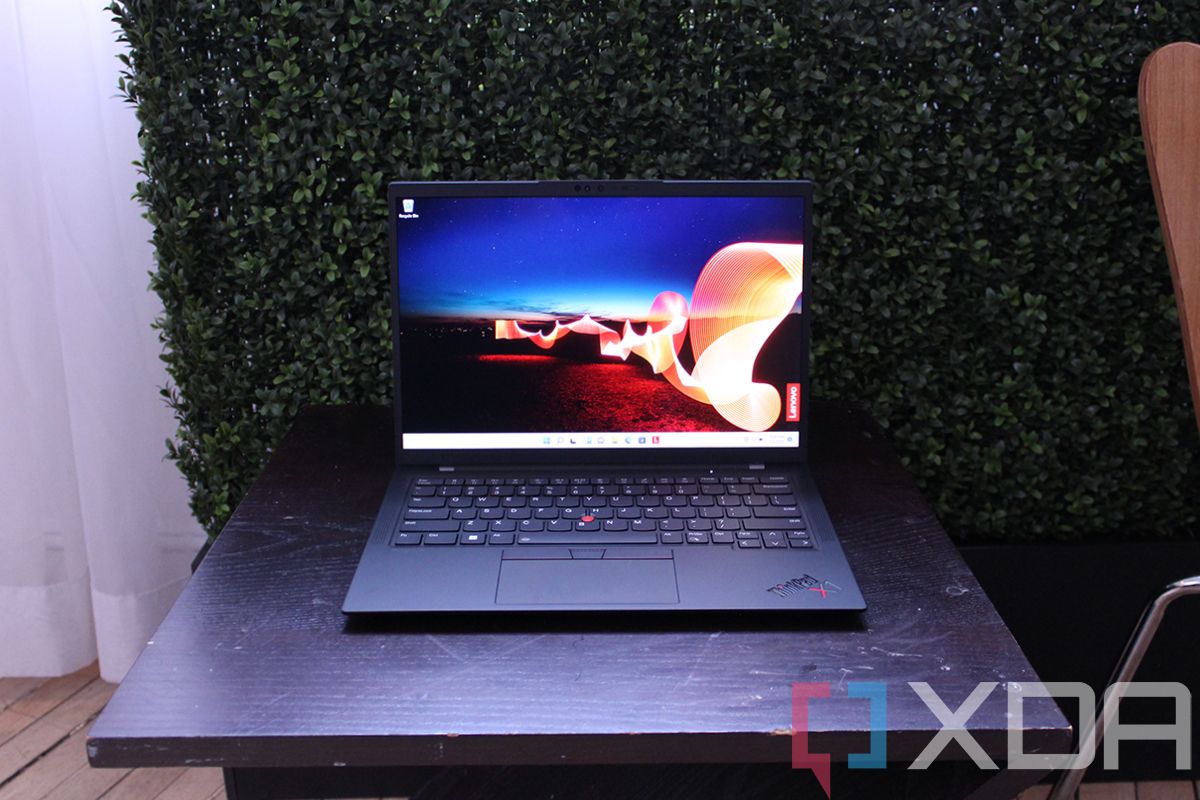
Front view of Lenovo ThinkPad X1 Carbon

The bigger differences start with brightness. With the Dell XPS 13 Plus, all the LCD panels have a maximum brightness of 500 nits, while many configurations on the ThinkPad X1 Carbon only reach 400 (with one only hitting 300 nits). That’s a benefit for outdoor visibility, though when it comes to the OLED panel options or the Ultra HD+ configurations (which both laptops offer), the brightness levels are similar – 400 nits in the OLED panel, 500 nits for the Ultra HD+ IPS display. Still, if you’re planning to get the cheaper panel option, Dell has the advantage here.

That OLED panel option is also quite different between the two laptops. Lenovo offers its ThinkPad X1 Carbon Gen 10 with a 2.8K (2880 x 1800) OLED panel, while the XPS 13 Plus comes with a sharper 3.5K (3456 x 2160) OLED display. The OLED model of the XPS 13 Plus also includes a touchscreen, which isn’t the case for the ThinkPad. In fact, all XPS 13 Plus models aside from the base configuration have touch support by default. With the ThinkPad X1 Carbon Gen 10, you have to choose the right model to get a touchscreen, and not every panel type supports it.

With that being said, the Lenovo ThinkPad X1 Carbon Gen 10 offers a total of seven different panel options, so you have a bit more room to choose something specifically for your needs. You can get a privacy screen to protect your information from people around you in a public space, for example. Overall, both laptops are great in terms of display, though the XPS 13 Plus focuses on giving you a great experience in every configuration, while the ThinkPad X1 Carbon makes more sacrifices in its lower tiers.

Lenovo takes the advantage when it comes to the webcam, though. Dell is sticking with a 720p camera above the display, and to its credit, the actual webcam has been separated from the IR camera for Windows Hello, which should result in better quality. However, Lenovo is giving you the option to add a Full HD 1080p webcam along with a separate IR camera, and you can even add computer vision as an optional add-on. This is so the camera can detect when you’re going to use the laptop and wake it up before you need to touch anything.

As for sound, the Dell XPS 13 Plus is likely to have a better speaker setup with four speakers and up to 8W of output. This should give you louder and more immersive audio for media consumption, assuming Lenovo uses the same speakers as last year’s X1 Carbon Gen 9. On the other hand, Lenovo has a more complex microphone array that could help you be heard better during a video call.

Design: The Dell XPS 13 Plus is the most modern-looking laptop out there

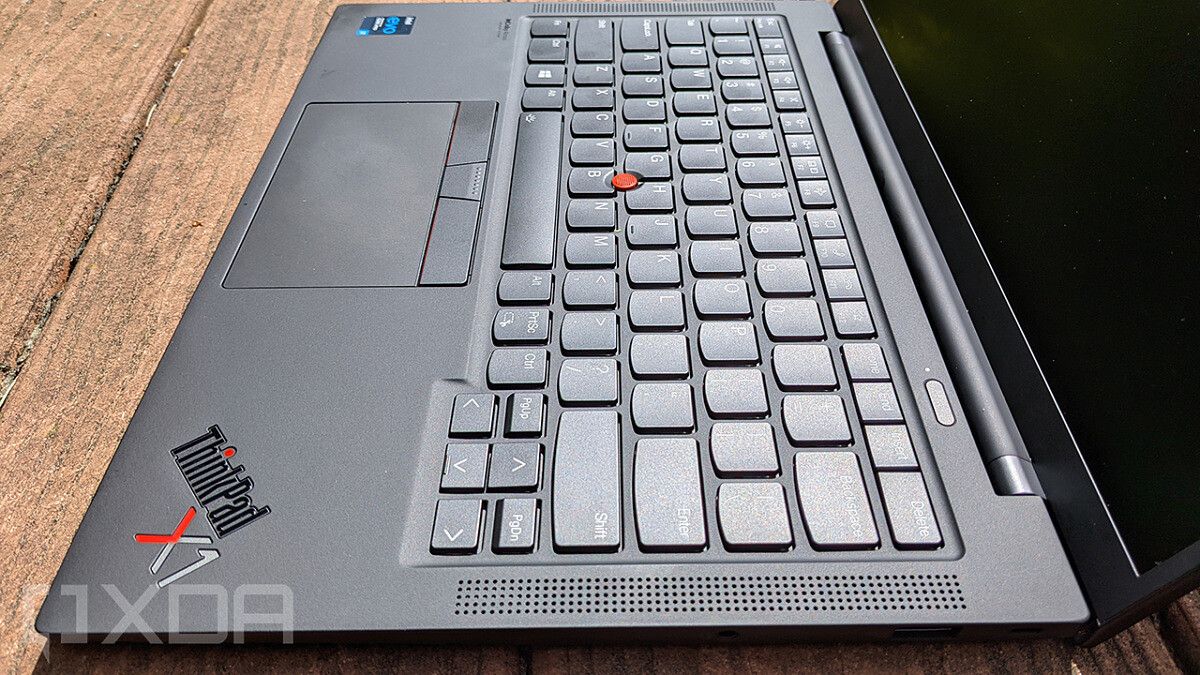
Comparing the design of these two laptops is much like comparing night and day. The Lenovo ThinkPad X1 Carbon Gen 10 carries all the iconic elements of ThinkPad design, and if you’re a fan of it, you’ll probably find it perfect. It has the classic black surface, the iconic red accents, and well-known features like rounded keys, a red TrackPoint, and duplicate mouse buttons above the touchpad. It’s still every bit a ThinkPad, and for some users, that might be all you want.

Side view of ThinkPad X1 Carbon keyboard

ThinkPad X1 Carbon Gen 9 (design is unchanged)

On the complete opposite side of the spectrum, the Dell XPS 13 Plus is a major shake-up in laptop design, not just for Dell, but laptops in general. A lot has changed in the Dell XPS 13 Plus compared to previous XPS laptops, starting with the fact that there’s no touchpad, at least not one you can see. The touchpad is completely seamless with the chassis of the laptop, so you can’t even feel where it is. You also can’t click on it, and instead, it uses haptic feedback to simulate clicks.

Another modern element of the XPS 13 is replacing the function row keys with touch buttons. All the function buttons are still there, and you can toggle between typical function keys and media controls using the Fn button as usual. But because the buttons are all digital, the labels simply change when you press the Fn button, so you can clearly see what touching a specific button will do. With typical keys, you first need to figure whether the laptop will use the function key or media control by default, but now, it’s obvious just looking at it. And speaking of the keys, the keyboard uses a completely edge-to-edge design and no spacing between keys. That adds to the modern and sleek look, though it might result in more typos because of how easy it is to press a neighboring key.

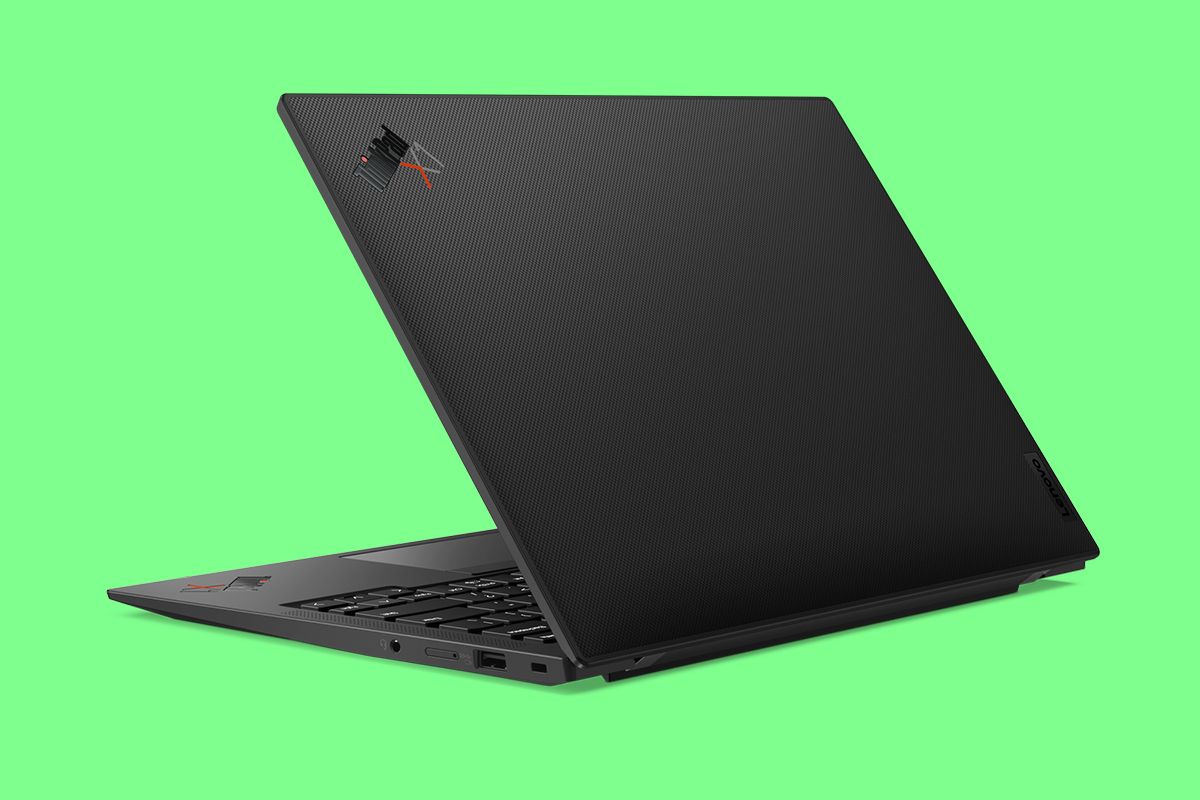
Despite being smaller, the Dell XPS 13 Plus is slightly thicker than the Lenovo ThinkPad X1 Carbon (with a 720p webcam), and it’s heavier, too. That gives Lenovo an edge in terms of portability, though the difference isn’t massive. As far as looks go, the Lenovo ThinkPad X1 Carbon is only available in deep black, though you can get a carbon fiber weave lid with some models. The Dell XPS 13 Plus comes in more modern Platinum or Graphite colors.

Ports and connectivity: The ThinkPad X1 Carbon is simply more capable

With its focus on being a modern laptop, the Dell XPS 13 Plus misses out on a lot of ports. That’s nothing new for the XPS lineup, but this time around, there’s not even a 3.5mm headphone jack. All you get is two Thunderbolt 4 ports and a USB Type-C to Type-A adapter. If you want more connectivity options, you’ll need a Thunderbolt dock, or use wireless peripherals where possible.

Angled view of black laptop

On the other hand, the Lenovo ThinkPad X1 Carbon Gen 10 has a wide range of ports. In addition to two Thunderbolt 4 ports, you get two USB Type-A ports, HDMI 2.0b, and a headphone jack. And, as an optional feature, you can add cellular network support, keeping you connected to the internet even when you’re away from Wi-Fi. This is an especially important feature for businesses, but anyone working on the road will likely appreciate the versatility.

Aside from that, both laptops support Wi-Fi 6E and Bluetooth 5.2, so there’s nothing surprising on that front.

Performance: They’re almost identical

We left performance for last because this is one area where the two laptops are pretty much identical. Aside from the fact that Dell has shared more details on specific SKUs, both laptops feature up to a 12th-generation Intel Core processor, up to a 28W P-series processor with 14 cores and 2o threads. We know there’s only one P-series processor with 14 cores, so the maximum configuration on both laptops will be identical.

The differences will be in the cheaper SKUs, especially because Lenovo says it’s still using 15W U-series processors in some models. These models will be ideal if you don’t need top-of-the-line performance and you value battery life more. In that regard, Lenovo actually gives you more options to choose what you prefer, but otherwise, the two laptops are similar. Graphics performance should also be the same since they both have integrated graphics, though again, 15W processors are likely not as fast, but save more power.

On that note, we don’t yet have details on battery life, but the batteries themselves are similar in size between laptops, with Dell pulling a small advantage. The XPS 13 Plus may also be more efficient on account of its smaller display, but otherwise, it’s up to individual optimizations from each company, as well as the configuration you choose. As we’ve already mentioned, 28W processors may result in shorter battery life compared to 15W models.

The similarities continue since both laptops support the new LPDDR5 RAM and PCIe Gen 4 SSD storage. In both cases, the RAM is soldered onto the motherboard, but you should be able to upgrade the storage in both. Neither company has specified whether this will be possible in these new models, but based on previous iterations, this is the most likely.

Bottom line: Do you want something modern or classic?

At the end of the day, the biggest deciding factor between these two laptops is what you want from a laptop in terms of design. The Dell XPS 13 Plus is potentially the most modern-looking laptop we’ve seen in years, and (in my personal opinion) looks absolutely stunning. It’s clean and sleek in a way that no laptop can match. On the other hand, the ThinkPad X1 Carbon Gen 10 keeps the same overall look we’ve seen from ThinkPads for years, and it does a great job of appealing to people who are already fans of ThinkPads.

Connectivity is one area where the ThinkPad X1 Carbon handily beats the Dell XPS 13 Plus, however, and if you don’t want to rely on dongles or docks, then that’s definitely your go-to. That’s one downside of the XPS 13 Plus design.

Aside from that, the differences that exist aren’t major. The Dell XPS 13 Plus has a brighter display in its cheapest configurations, but both have great display options to choose from, as well as solid audio (though, again, Dell likely pulls ahead here). Performance, too, isn’t too far off, unless you want to opt for a low-power 15W processor, which is only available on the ThinkPad X1 Carbon.

The last major difference is the price. The Lenovo ThinkPad X1 Carbon Gen 10 will officially start at $1,639 when it launches in March, while the Dell XPS 13 Plus will start at a much cheaper $1,199. That’s quite the difference, and it puts some of the downsides like the limited ports in a different perspective. Even adding a Thunderbolt dock doesn’t make up that difference, so you could be better off with the Dell XPS 13 Plus. Ultimately, it’s about balancing your personal priorities — personally speaking, considering the price difference and the benefits of the XPS 13 Plus, I’d go with the Dell laptop, but you might feel differently.

Regardless, neither laptop is available to buy just yet, so you have time to think things over. We’ll ve sure to add purchase links to this article once the laptops have launched. If you can’t afford to wait, we have lists of the best Dell laptops you can buy right now, as well as the best ThinkPads out there. There are plenty of great laptops on those lists, too.

The post Lenovo ThinkPad X1 Carbon Gen 10 vs Dell XPS 13 Plus: Classic or modern? appeared first on xda-developers.
11 Jan 22:28

8 Awesome Gadgets for Your Tiny House

by Marinel Sigue

No matter how organized you are, living in a small space poses its challenges. For starters, there isn't as much room for arranging your things. You’re forced to give up the conveniences of appliances (like your dishwasher or coffee machine) and live a minimalist lifestyle.

11 Jan 22:23

Grand Theft Auto V: Definitive Edition Graphics Overhaul Mod Introduces Massive Texture Improvements

by Francesco De Meo

Grand Theft Auto V: The Definitive Edition

The Grand Theft Auto V: The Definitive Edition graphics overhaul mod aims to improve the visuals of the open-world game developed by Rockstar by introducing new high-quality textures.

The mod, which is being developed by BadassBaboon, will eventually replace all of the game's environmental textures with 2K and 4K resolution textures. A comparison video that has been shared online highlights the differences with the vanilla game, which are quite big in some cases.

More information on the Grand Theft Auto V: The Definitive Edition graphics overhaul mod can be found on BadassBaboon's Patreon. The mod's beta version is currently available only to members.
Grand Theft Auto V is now available on PC, PlayStation 4, PlayStation 3, Xbox One, and Xbox 360. The game will hit PlayStation 5, Xbox Series X, and Xbox Series S later this year.

When a young street hustler, a retired bank robber and a terrifying psychopath find themselves entangled with some of the most frightening and deranged elements of the criminal underworld, the U.S. government and the entertainment industry, they must pull off a series of dangerous heists to survive in a ruthless city in which they can trust nobody, least of all each other.

Grand Theft Auto V for PC offers players the option to explore the award-winning world of Los Santos and Blaine County in resolutions of up to 4k and beyond, as well as the chance to experience the game running at 60 frames per second.

The game offers players a huge range of PC-specific customization options, including over 25 separate configurable settings for texture quality, shaders, tessellation, anti-aliasing and more, as well as support and extensive customization for mouse and keyboard controls. Additional options include a population density slider to control car and pedestrian traffic, as well as dual and triple monitor support, 3D compatibility, and plug-and-play controller support.

The post Grand Theft Auto V: Definitive Edition Graphics Overhaul Mod Introduces Massive Texture Improvements by Francesco De Meo appeared first on Wccftech.

11 Jan 22:12

NVIDIA AI Powered DLDSR Unveiled; Marty McFly’s Depth-Based Filters (Including Ray Tracing) Coming to GFE

by Alessio Palumbo

DLDSR

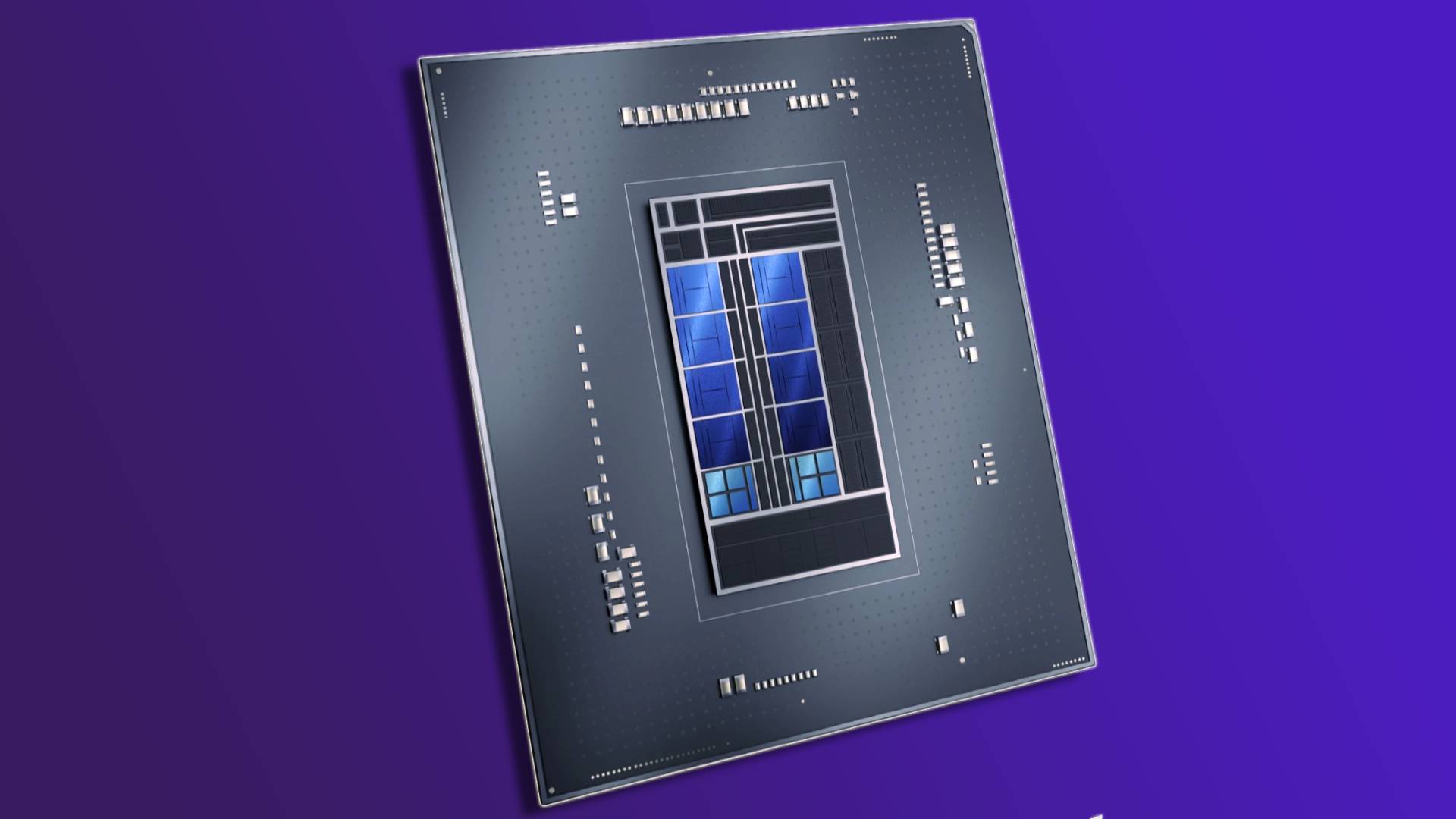
NVIDIA dropped some unexpected news on a few graphics-enhancing features that will go live with the next Game Ready driver, starting with DLDSR. It's exactly what it sounds like, an AI-powered version of the Dynamic Super Resolution or DSR that's been available via the Control Panel for several years.

According to NVIDIA, DLDSR could be up to twice as efficient while maintaining similar quality. In the example image, we can see Prey running at nearly the same frame rate of the native 1080p resolution, all the while actually rendering at 1620p resolution for crisper definition.

DLDSR will be available to GeForce RTX owners, as it is powered by the Tensor Cores, and should work in 'most' games.

Additionally, NVIDIA partnered with renowned ReShade modder Pascal Gilcher (also known as Marty McFly and often covered here on Wccftech) to implement modified versions of his depth-based filters through GeForce Experience's Freestyle overlay. That includes the popular ray-traced global illumination shader.

  • SSRTGI (Screen Space Ray Traced Global Illumination), commonly known as the “Ray Tracing ReShade Filter” enhances lighting and shadows of your favorite titles to create a greater sense of depth and realism.
  • SSAO (Screen Space Ambient Occlusion) emphasizes the appearance of shadows near the intersections of 3D objects, especially within dimly lit/indoor environments.
  • Dynamic DOF (Depth of Field) applies bokeh-style blur based on the proximity of objects within the scene giving your game a more cinematic suspenseful feel.

By combining DLDSR and depth-based filters such as SSRTGI, you could obtain a 'remastered' game as seen in the below image from Prey.

Of course, the aforementioned Game Ready driver update will also offer day-one optimizations for God of War, Rainbow Six: Extraction, HITMAN III, The Anacrusis, GRIT, and Monster Hunter Rise.

Last but not least, the G-SYNC Compatible Displays list will grow larger with the following models.

MANUFACTURER MODEL HDR SIZE LCD Type Resolution VRR Range
AOC AG275QG3R4B+ Yes 27" IPS 2560x1440 (QHD) 48-170Hz
AOC Q32G3WG3 Yes 32" IPS 2560x1440 (QHD) 60-165Hz
AOC AG275QXE Yes 27” IPS 2560x1440 (QHD) 48-170Hz
Dell G2723HN No 27" IPS 1920x1080 (FHD) 48-165Hz
HP OMEN 27i IPS No 27" IPS 2560x1440 (QHD) 48-165Hz
MSI MPG321UR-QD Yes 32" IPS 3840x2160 (4K) 60-144Hz
Philips 24M1N3200ZA No 24" IPS 1920x1080 (FHD) 48-165Hz
ViewSonic VX3220-4K-Pro Yes 32” IPS 3840x2160 (4K) 48-144Hz

The post NVIDIA AI Powered DLDSR Unveiled; Marty McFly’s Depth-Based Filters (Including Ray Tracing) Coming to GFE by Alessio Palumbo appeared first on Wccftech.

11 Jan 22:12

Days Gone 2 Would Have Focused on Deacon’s Marital Issues, Fixed Swimming and Stealth

by Nathan Birch

Days Gone 2

Days Gone has been in the headlines lately, as former Bend Studio director Jeff Ross has called Sony out for not supporting the franchise, despite his claims that it sold about as well as the much-lauded Ghost of Tsushima. Well, Ross didn’t stop there, providing more details of his experience at Sony Bend, and his rejected pitch for Days Gone 2, in an extensive interview with USA Today.

On the subject of Days Gone 2, Ross was eager to expand the systems introduced in the original game, with another “layer or two” of interactive elements, including more realistic wildlife. He was also planning to fix two things almost everybody found irritating – stealth and that damn insta-kill water (according to Ross, drowning was by far the most common cause of death in the game). As for where the story might have gone, it would have likely continued to follow the relationship of Deacon and Sarah, and given players more resources to play with…

Yeah, [Deacon and Sarah] are back together, but maybe they’re not happy. Well, what can we do with that? Okay, we were married before the apocalypse, but what about the future? We would have kept the heavy, strong narrative. We would have kept the bike, obviously. And I think we would have expanded the tone a little bit in a more technical direction, kind of like, "Alright, now we have all this NERO tech – what can we do with it?" The tone would have expanded one ring outward towards some of the new reality. I think this would have been a little bit more – I don’t want to say Avengers, but something where the player had resources, he had some sort of the remnants of whatever the government had.

Ross also got into why he’s no longer with Bend Studio (he left in late 2020) and where the team may be going. Following the departure of divisive creative director John Garvin, Bend Studio opted for a “flat structure” with no one creative leader and decisions made via committee, which Ross didn’t find productive. The studio reportedly was also experimented with “corridor shooters” and other more linear designs, which Ross felt wasted the work they had put in on Days Gone. Ultimately, it’s since been announced that Bend Studio is now working on a new IP that builds on the open-world systems they’ve developed, so hopefully, the legacy of Days Gone lives on.

Days Gone is available now on PC and PS4, and playable on PS5 via backward compatibility.

The post Days Gone 2 Would Have Focused on Deacon’s Marital Issues, Fixed Swimming and Stealth by Nathan Birch appeared first on Wccftech.

11 Jan 22:10

Piracy info forms a "curated list of arrrrrrrrr!"

by Rob Beschizza

Awesome Piracy is a comprehensive directory of information, links and resources to sites that report, discuss and even—look away!—encourage acts of software piracy. Igglybuff and 100 or so others:

Over the past couple of years, I've accumulated bookmarks, saved Reddit posts, and GitHub stars all related to piracy in some form or another.

Read the rest
11 Jan 22:10

Scientists want to treat Long Covid by zapping the brain with electricity

by Thom Dunn

Long Covid remains one of my personal biggest concerns about this pandemic. Who gets it? Why? Sure, I'm vaccinated, but I'm also already dealing with things like asthma and a neurodivergent brain. The thought of suffering from some perpetual low-grade mystery hangover (or worse) terrifies me. — Read the rest

11 Jan 22:10

Norway tells military to return their undies and bras after service so new members can enjoy them

by Carla Sinclair

In Norway, there's nothing new about men and women in the military returning their uniforms after serving 12 to 19 months so that new conscripts can wear them. But now they must also return their underwear, socks, and bras.

With a low stock of military undergarments, due in part to the pandemic, you'd think the simplest — not to mention less gross — solution would be to issue credit so that people could buy their own. — Read the rest

11 Jan 22:09

Oklahoma death row inmates pursue execution by firing squad

by David Pescovitz

Donald Grant and Gilbert Postelle, both on death row in Oklahoma, are seeking court approval of execution by firing squad instead of three-drug lethal injection. Their attorneys are hoping for their imminent executions to be delayed until a trial can determine whether lethal injection is unconstitutional. — Read the rest

11 Jan 22:07

The Best Meal-Planning Apps (for When You’re Sick of Doing It Yourself)

by Rachel Fairbank

We may earn a commission from links on this page.

Did you know you can customize Google to filter out garbage? Take these steps for better search results, including adding Lifehacker as a preferred source for tech news.


For as basic a necessity as it is, feeding yourself is a lot of work. What's more, feeding a household is even worse. There's the planning, then the shopping, the unpacking, the cooking, the storing, and finally, the cleaning, all of which has to be done over and over again forever. We all know what it's like to be faced with this task and just decide to open up Uber Eats and pay a bunch of fees to have someone do (most of) it for us. Apps are the saving grace when meal planning gets too daunting—but you're using the wrong apps. Forget Door Dash and Grub Hub: These apps can help you plan, shop for, and prepare meals on your own while still offloading some of the hard work on tech.

Here are some meal-planning apps that can suggest recipes based on your dietary preferences, put together shopping lists, and even walk you through the cooking. They can't box up leftovers or wash the dishes, but maybe one day in the future, we'll get there, too.

Best app for recipes: BigOven 

BigOven on browser
Credit: Lindsey Ellefson/BigOven

BigOven is a meal-planning app that grants you access over one million recipes—and new recipes are constantly being added. I like a few different things about it: First, you can input some of the ingredients you already have and get recipes based on those, reducing your grocery shopping and limiting how many of those million-plus recipes you need to scroll through. You can scan handwritten recipes in, too, and let the app turn them into recipes you can store there, preserving family traditions. Finally, I appreciate that it has a browser version, since that makes it easier to type, browse, and scroll. A few of the apps on this list also work on the browser. In general, I like to do a lot of my planning and work on the computer, then call in my phone at crunch time, just when I need to refer to a recipe.

The free version is nice, but limited. You get the ability to put together a grocery list and one free recipe scan. For more detailed meal planning, you’ll need to upgrade to its paid version for $2.99 per month or $24.99 for the year. Think of it like this: You'll save that much by skipping a delivery order or two.

Best app for family meal planning: Cozi 

Cozi in iOS
Credit: Lindsey Ellefson/Cozi

Cozi is a family organizer, so you might not think of food and recipes when you first hear about it—but don't be fooled. In addition to its daily calendar and to-do lists, Cozi provides space for you to keep a grocery list (which any family member can add to in real time) and even offers up recipes. Not only can you plan your meals' content, but you can schedule them for when everyone is available.

The basic version is free, but the premium version, which is $39.99 per year, offers more features, most of which have to do with the family management aspect (like birthday tracking and calendar searching). If you're using it for meal planning, you may not need to upgrade; I was able to build out an entire schedule of recipes without paying.

Best app for fitness and nutrition goals: Eat This Much 

Eat This Much in iOS
Credit: Lindsey Ellefson/Eat This Much

Eat This Much is really ideal for anyone with specific nutrition and fitness goals. It puts together plans based not only on your budget and personal preferences, but your nutritional plans, as well. You're prompted to enter in how many calories you'd like to eat in a day, as well as how many grams of protein and other nutrients you want to hit. It even doubles as a calorie tracker and comes with a database of nutritional information about restaurant and packaged food. If you're meal planning and prepping for fitness or health goals, this could be the one for you to really focus in on. (Relatedly, if you're in the market for a comprehensive calorie and nutrient tracker, I am a huge fan of Lifesum.)

Money comes into play if you want more features. For $8.99 per month, you can create meal plans for a week, used advanced search features, view your past meals, and generate reports on your eating habits, to name a few. A bump up to $59 per month unlocks bulk meal plans for over a week in advance, macro tracking, and a recipe database, among other things. That's not exactly a small cost, but if you're serious about meal prepping, give it a look.

Best app for when you're busy: Mealime 

Mealime in iOS
Credit: Mealime/Lindsey Ellefson

Mealime is widely recommended in forums for meal planners and caters to busier people because it's full of recipes that can be made in under half an hour. You can filter recipes by dietary restrictions or preferences, generate a grocery list, and get on with your day. It's a little bare-bones beyond that, but as a picky eater, I appreciate the ability to eliminate recipes that include the things I don't care for. If you ever catch me eating a single mushroom, call the authorities because I'm sending a distress signal.

You'll get plenty of recipes in the free version, but you'll notice some are labeled "Pro." To get those, as well as other features like the ability to add notes, you'll have to upgrade to the paid version for $2.99 per month. For its simplicity of use and fairly low cost, this is a favorite of mine.

Best app to relieve decision fatigue: eMeals

eMeals on browser
Credit: Lindsey Ellefson/eMeals

eMeals emphasizes that it's meal planning "made simple," and they mean that. You get pre-loaded, dietitian-curated menus that come in "themes." Themes can be kid-friendly, keto, quick, etc. The apps on this list with thousands of recipes to scroll through are great, but if you just want someone or something else to pick for you, start here.

eMeals also has partnerships with major grocery retailers, which makes creating your grocery list a little easier and more specific. Another on the list that has a robust browser component, this makes things almost too easy.

Best app for more recipe control: Plan to Eat

Plan to Eat in iOS
Credit: Lindsey Ellefson/Plan to Eat

Plan to Eat is for people who have a general sense of what they like or want to eat, but just need a little push on the organization. You can clip recipes from the internet or browse recipes in the app, add them to the built-in calendar, and create grocery lists that are specified by category, making shopping easier. The app's cooking view even comes with step-by-step instructions that include timers, walking you right through everything you need to do down to the minute.

You get a free two-week trial, then you'll pay $5 a month or $55 a year to access all the features.

11 Jan 22:03

Watch it, bub. This uncanny robot does not like being booped on the nose

by Carla Sinclair

Ameca, the humanoid robot created by UK-based Engineered Arts, doesn't take kindly to being touched on the nose (and who the hell does?).

Watch how it responds to an obnoxious human finger that waves around its face — first by perfectly tracking it with its eerily realistic eyes, then pulling its head back to avoid being touched, and finally, when its had quite enough, grabbing the human's arm and and pushing it away. — Read the rest

11 Jan 22:03

Honest Trailers tackles 'The Matrix Resurrections'

by Jason Weisberger

All I want is to hear Hugo Weaving say "Mr. Anderson" 1000x.

11 Jan 22:03

Out of frustration, Dr. Fauci calls GOP Senator Roger Marshall a "moron"

by Jason Weisberger

Wait for it, the very end of this exchange between Dr. Fauci and a GOP Senator who refuses to listen to a simple answer, while creating a completely false narrative, is just fantastic. The mic is left hot for just a second and we hear exactly what Dr. — Read the rest

11 Jan 22:02

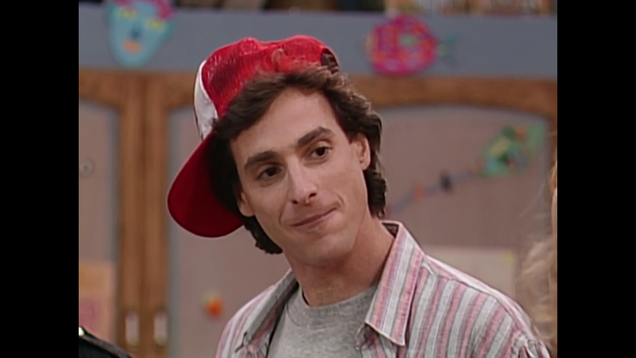
9 Roles That Revealed Bob Saget's Filthy Sense of Humor

by Ross Johnson

As beloved ‘80s/’90s sitcom dad Danny Tanner, Bob Saget dispensed wholesome wisdom with a smile, soaking in the “awwwws” from an audience who loved and appreciated the gentle hijinks of the Full House family. During the same era, he hosted America’s Funniest Home Videos, providing amusing commentary over…

Read more...

11 Jan 22:02

Dr. Fauci calls Sen. Marshall a "moron" on hot mic after Senator played stupid

by Carla Sinclair

Senator Marshall (R-KS) posed as a complete idiot during a Senate Health Committee hearing when he relentlessly pressed Dr. Fauci on financial disclosures.

"As the highest paid employee in the entire federal government, yes or no, would you be willing to submit to Congress and the public a financial disclosure that includes your past and current investments?" — Read the rest

11 Jan 22:00

The CDC shortens Moderna booster waiting period - CNET

by Jessica Rendall
Now people who got Moderna's (or Pfizer's) COVID-19 vaccine can get a booster shot five months after their second dose, instead of six.
11 Jan 21:57

5 Geeky Cutting Boards You Need in the Kitchen

by Noemi

We’ve seen some awesome geeky knives, so it makes sense that we look at geeky cutting boards today. After all, you can’t use those knives (or any knife for that matter) on something as ordinary as a kitchen counter.

Here are five geeky cutting boards that must be in everyone’s kitchen.

Geeky cutting boards

Game Cartridge Cutting Board

geeky cutting boards
Go old school and remember those days of blowing into a cartridge when the game doesn’t want to load. Best used for chopping up mushrooms.

GET IT HERE

Periodic Table Cutting Board

geeky cutting boards
Perfect for those who can make the occasional omelet with some chopped onions. Also available in plain rectangular shape.

GET IT HERE

Star Wars Yoda Cook You Must Engraved Cutting Board

Cook you must, because it’s safer and cheaper than eating out.

GET IT HERE

Star Trek Art Cutting Board

geeky cutting boards
Star Trek fans, if you have this and your friends don’t get it, forget them. You don’t need that kind of negativity in your life. Laser-engraved in bamboo, it looks really cool.

GET IT HERE

Don’t Blink Cutting Board

Saving the best for last…Not sure if it’s bigger on the inside as it doesn’t have an inside, but you never know if there’s a hidden button or latch in there. One thing’s for sure, you can use it to make fish fingers and custard. Just don’t blink, no matter what.

GET IT HERE

Put your geeky kitchen tools to use: Castles & Cooks: For Geeks Who Love Food

First published in 2015; updated 2022


The post 5 Geeky Cutting Boards You Need in the Kitchen appeared first on ForeverGeek.

11 Jan 21:55

How Can You Leave Log4J in 2021?

by noreply@blogger.com (The Hacker News)
With the last month of 2021 dominated by the log4J vulnerabilities discovery, publication, and patches popping up in rapid succession, odds are you have patched your system against Log4J exploitation attempts. At least some systems, if not all. You might even have installed the latest patch – at the time of writing, that is 2.17.1, but, if the last rapid patching cycle persists, it might have
11 Jan 21:48

Monster Hunter: Rise PC Reviews

by ValH

Capcom will be bringing Monster Hunter: Rise, the latest entry in their long-running co-operative action-RPG series, to PC on January 12, 2022. And ahead of that impending launch, we get a chance to check out a number of PC reviews that all seem to be positive, with some going so far as to call Rise the greatest entry in the series to date.

PC Gamer 90/100:

The sheer variety of Rise's bestiary and weapons means that, even as the game cracks on at enormous pace, it doesn't stop serving up new stuff for a very long time. There's so much to do here, and it's all laid-out and explained better than ever, with all of the little fiddly bits that used to annoy players just gone. Sure, this might be a Nintendo Switch game in origin, and visually it shows. But who cares, because it's hard to shake the feeling that Monster Hunter Rise is as good as this series has ever been. Which is to say: As good as it gets.

WCCFTech 9/10:

With the streamlining of some of the most annoying aspects of the Monster Hunter experience and some excellent additions to the formula like Wirebugs and Switch Skills, Monster Hunter Rise reaches the heights of the best entries in the series with ease. While not all of the changes and new features have been for the best, like Rampage Quests, their general quality level, and the amazing PC port, do make the game one that's worth playing for both long-time fans of the series and newcomers.

PCGamesN 9/10:

Nitpicks aside, Monster Hunter Rise is still my favourite in the series and, to my surprise, it’s just as much fun playing through a second time on PC as it was the first time on Switch. It takes the tactical, challenging combat that made Monster Hunter World so exhilarating and trims the fat to make its first few hours more accessible. What makes Rise that little bit better, however, is its coherent rural Japan-inspired setting, which is brought to life through countless details. Even after several hundred hours, I’m still finding new references to Japanese folklore in monster designs or hidden details in ruins that make me smile.

ScreenRant 5/5:

When comparing the two versions of Monster Hunter Rise, the Switch version only has the upper hand in terms of its local play option. It's the kind of game that would excel in a setting where people bring their consoles together, which hasn't exactly been an easy thing to do since the launch of Monster Hunter Rise. The PC version of Rise has the upper hand in every other aspect. Monster Hunter Rise looks better on PC, runs better on PC, has more control & online options on PC, and arrives with more content at its respective launch. Rise was one of the best games of 2021, and the improvements to the performance in the PC version are so pronounced that they make it hard to go back to the Switch version.

GodisaGeek 10/10:

In every conceivable way, this is the best version. Obviously you can’t play in handheld mode, although the release of the SteamDeck this year may remedy that one for some gamers, too. There’s several hundred hours of content here at launch, with more coming later this year when the Sunbreak expansion launches. If you’ve already invested a year’s worth of time in the Switch version, it’s a slightly harder sell. If you haven’t, this is a superb port of an already fantastic release.

RPGFan 92/100:

A hundred hours in, Rise does feel a little rote. The lack of quest variety and endgame options besides grinding for talismans has begun to wear on me somewhat. But the journey of getting to this point has been nothing short of an incredible experience. From zipping through the air to bludgeon monsters in the face to setting out on gathering runs with my trusty palamute, the minute-to-minute gameplay of Rise is impeccable. The only real issue with Rise is that there isn’t more of it, but with plenty of future updates and an entire expansion on the horizon, this is surely just the beginning of what this game has to offer.

TheSixthAxis 9/10:

Monster Hunter Rise on PC is the best place to play this incredible creature battler. If the series was looking for a permanent home, PC players would be more than happy to see it moving in.
11 Jan 21:45

Align your security and network teams to Zero Trust security demands

by Pooja Parab

The security community is continuously changing, growing, and learning from each other to better position the world against cyber threats. In the latest Voice of the Community blog series post, Microsoft Security Product Marketing Manager Natalia Godyla talks with Jennifer Minella, Founder and Principal Advisor on Network Security at Viszen Security about strategies for aligning the security operations center (SOC) and network operations center (NOC) to meet the demands of Zero Trust and protect your enterprise.

Natalia: In your experience, why are there challenges bringing together networking and security teams?

Jennifer: Ultimately, it’s about trust. As someone who’s worked on complex network-based security projects, I’ve had plenty of experience sitting between those two teams. Often the security teams have an objective, which gets translated into specific technical mandates, or even a specific product. As in, we need to achieve X, Y, and Z level security; therefore, the networking team should just go make this product work. That causes friction because sometimes the networking team didn’t get a voice in that.

Sometimes it’s not even the right product or technology for what the actual goal was, but it’s too late at that point because the money is spent. Then it’s the networking team that looks bad when they don’t get it working right. It’s much better to bring people together to collaborate, instead of one team picking a solution.

Natalia: How does misalignment between the SOC and NOC impact the business?

Jennifer: When there’s an erosion of trust and greater friction, it makes everything harder. Projects take longer. Decisions take longer. That lack of collaboration can also introduce security gaps. I have several examples, but I’m going to pick healthcare here. Say the Chief Information Security Officer’s (CISO) team believes that their bio-medical devices are secured a certain way from a network perspective, but that’s not how they’re secured. Meaning, they’re secured at a lower level that would not be sufficient based on how the CISO and the compliance teams were tracking it. So, there’s this misalignment, miscommunication. Not that it’s malicious; nobody is doing it on purpose, but requirements aren’t communicated well. Sometimes there’s a lack of clarity about whose responsibility it is, and what those requirements are. Even within larger organizations, it might not be clear what the actual standards and processes are that support that policy from the perspective of governance, risk, and compliance (GRC).

Natalia: So, what are a few effective ways to align the SOC and NOC?

Jennifer: If you can find somebody that can be a third partysomebody that’s going to come in and help the teams collaborate and build trustit’s invaluable. It can be someone who specializes in organizational health or a technical third party; somebody like me sitting in the middle who says, “I understand what the networking team is saying. I hear you. And I understand what the security requirements are. I get it.” Then you can figure out how to bridge that gap and get both teams collaborating with bi-directional communication, instead of security just mandating that this thing gets done.

It’s also about the culturethe interpersonal relationships involved. It can be a problem if one team is picked (to be in charge) instead of another. Maybe it’s the SOC team versus the NOC team, and the SOC team is put in charge; therefore, the NOC team just gives up. It might be better to go with a neutral internal person instead, like a program manager or a digital-transformation leadersomebody who owns a program or a project but isn’t tied to the specifics of security or network architecture. Building that kind of cross-functional team between departments is a good way to solve problems.

There isn’t a wrong way to do it if everybody is being heard. Emails are not a great way to accomplish communication among teams. But getting people together, outlining what the goal is, and working towards it, that’s preferable to just having discrete decision points and mandates. Here’s the big goalwhat are some ideas to get from point A to point B? That’s something we must do moving into Zero Trust strategies.

Natalia: Speaking of Zero Trust, how does Zero Trust figure into an overarching strategy for a business?

Jennifer: I describe Zero Trust as a concept. It’s more of a mindset, like “defense in depth,” “layered defense,” or “concepts of least privilege.” Trying to put it into a fixed model or framework is what’s leading to a lot of the misconceptions around the Zero Trust strategy. For me, getting from point A to point B with organizations means taking baby stepsidentifying gaps, use cases, and then finding the right solutions.

A lot of people assume Zero Trust is this granular one-to-one relationship of every element on the network. Meaning, every user, every endpoint, every service, and application data set is going to have a granular “allow or deny” policy. That’s not what we’re doing right now. Zero Trust is just a mindset of removing inherent trust. That could mean different things, for example, it could be remote access for employees on a virtual private network (VPN), or it could be dealing with employees with bring your own device (BYOD). It could mean giving contractors or people with elevated privileges access to certain data sets or applications, or we could apply Zero Trust principles to secure workloads from each other.

Natalia: And how does Secure Access Service Edge (SASE) differ from Zero Trust?

Jennifer: Zero Trust is not a product. SASE, on the other hand, is a suite of products and services put together to help meet Zero Trust architecture objectives. SASE is a service-based product offering that has a feature set. It varies depending on the manufacturer, meaning, some will give you these three features and some will give you another five or eight. Some are based on endpoint technology, some are based on software-defined wide area network (SD-WAN) solutions, while some are cloud routed.

Natalia: How does the Zero Trust approach fit with the network access control (NAC) strategy?

Jennifer: I jokingly refer to Zero Trust as “NAC 4.0.” I’ve worked in the NAC space for over 15 years, and it’s just a few new variables. But they’re significant variables. Working with cloud-hosted resources in cloud-routed data paths is fundamentally different than what we’ve been doing in local area network (LAN) based systems. But if you abstract thatthe concepts of privilege, authentication, authorization, and data pathsit’s all the same. I lump the vendors and types of solutions into two different categories: cloud-routed versus traditional on-premises (for a campus environment). The technologies are drastically different between those two use cases. For that reason, the enforcement models are different and will vary with the products. 

Natalia: How do you approach securing remote access with a Zero Trust mindset? Do you have any guidelines or best practices?

Jennifer: It’s alarming how many organizations set up VPN remote access so that users are added onto the network as if they were sitting in their office. For a long time that was accepted because, before the pandemic, there was a limited number of remote users. Now, remote access, in addition to the cloud, is more prevalent. There are many people with personal devices or some type of blended, corporate-managed device. It’s a recipe for disaster.

The threat surface has increased exponentially, so you need to be able to go back in and use a Zero Trust product in a kind of enclave model, which works a lot like a VPN. You set up access at a point (wherever the VPN is) and the users come into that. That’s a great way to start and you can tweak it from there. Your users access an agent or a platform that will stay with them through that process of tweaking and tuning. It’s impactful because users are switching from a VPN client to a kind of a Zero Trust agent. But they don’t know the difference because, on the back end, the access is going to be restricted. They’re not going to miss anything. And there’s lots of modeling engines and discovery that products do to map out who’s accessing what, and what’s anomalous. So, that’s a good starting point for organizations.

Natalia: How should businesses think about telemetry? How can security and networking teams best use it to continue to keep the network secure?

Jennifer: You need to consider the capabilities of visibility, telemetry, and discovery on endpoints. You’re not just looking at what’s on the endpointwe’ve been doing thatbut what is the endpoint talking to on the internet when it’s not behind the traditional perimeter. Things like secure web gateways, or solutions like a cloud access security broker (CASB), which further extends that from an authentication standpoint, data pathing with SD-WAN routing—all of that plays in.

Natalia: What is a common misconception about Zero Trust?

Jennifer: You don’t have to boil the ocean with this. We know from industry reports, analysts, and the National Institute of Standards and Technology (NIST) that there’s not one product that’s going to meet all the Zero Trust requirements. So, it makes sense to chunk things into discrete programs and projects that have boundaries, then find a solution that works for each. Zero Trust is not about rip and replace.

The first step is overcoming that mental hurdle of feeling like you must pick one product that will do everything. If you can aggregate that a bit and find a product that works for two or three, that’s awesome, but it’s not a requirement. A lot of organizations are trying to research everything ad nauseum before they commit to anything. But this is a volatile industry, and it’s likely that with any product’s features, the implementation is going to change drastically over the next 18 months. So, if you’re spending nine months researching something, you’re not going to get the full benefit in longevity. Just start with something small that’s palatable from a resource and cost standpoint.

Natalia: What types of products work best in helping companies take a Zero Trust approach?

Jennifer: A lot of requirements stem from the organization’s technological culture. Meaning, is it on-premises or a cloud environment? I have a friend that was a CISO at a large hospital system, which required having everything on-premises. He’s now a CISO at an organization that has zero on-premises infrastructure; they’re completely in the cloud. It’s a night-and-day change for security. So, you’ve got that, combined with trying to integrate with what’s in the environment currently. Because typically these systems are not greenfield, they’re brownfield—we’ve got users and a little bit of infrastructure and applications, and it’s a matter of upfitting those things. So, it just depends on the organization. One may have a set of requirements and applications that are newer and based on microservices. Another organization might have more on-premises legacy infrastructure architectures, and those aren’t supported in a lot of cloud-native and cloud-routed platforms.

Natalia: So, what do you see as the future for the SOC and NOC?

Jennifer: I think the message moving forward is—we must come together. And it’s not just networking and security; there are application teams to consider as well. It’s the same with IoT. These are transformative technologies. Whether it’s the combination of operational technology (OT) and IT, or the prevalence of IoT in the environment, or Zero Trust initiatives, all of these demand cross-functional teams for trust building and collaboration. That’s the big message.

Learn more

Get key resources from Microsoft Zero Trust strategy decision makers and deployment teams. To learn more about Microsoft Security solutions, visit our website. Bookmark the Security blog to keep up with our expert coverage on security matters. Also, follow us at @MSFTSecurity for the latest news and updates on cybersecurity.

The post Align your security and network teams to Zero Trust security demands appeared first on Microsoft Security Blog.

11 Jan 21:42

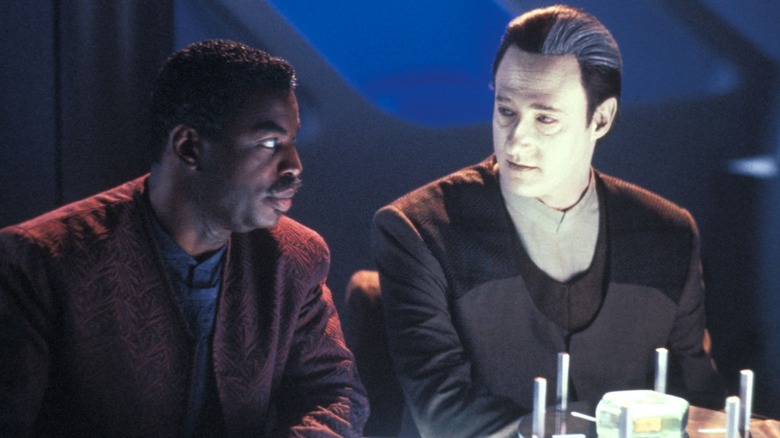
Why Brent Spiner Called His Time As Star Trek's Data A 'Double-Edged Sword'

by Witney Seibold

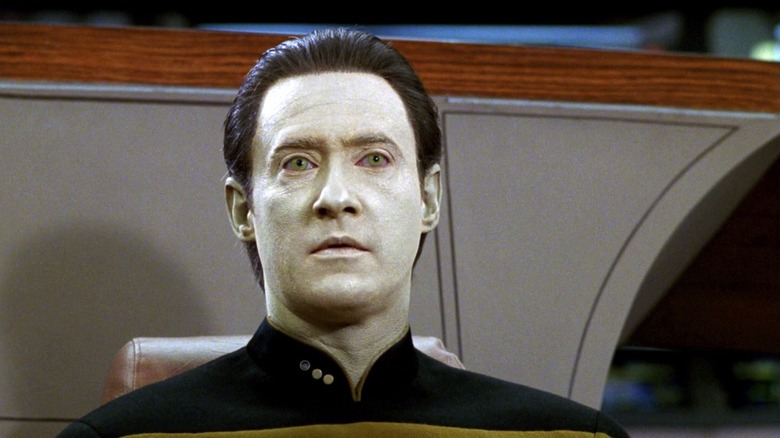
In October of 2021, actor Brent Spiner's "memoir," was published. Spiner is perhaps best known for playing the android Data on "Star Trek: The Next Generation," as well as Data's twin brother Lore, his prototype B-4, their creator Dr. Noonien Soong, an ancestor of theirs, Dr. Arik Soong, and a descendent of theirs, Dr. Altan Soong. Spiner has, of course, had a long acting career and has also appeared in films like "Independence Day," TV shows like "Night Court" and "Gargoyles," and voiced famous pop figures like the Riddler ... but Data will always appear at the top of his résumé. 

Spiner seems to be at peace with this, although with a note of ambivalence. In an interview he once gave in 1994, when "Star Trek: The Next Generation" was about to end its seven-year run, he acknowledged the mark that "Star Trek" leaves on any actor. He said that he could go on to win an Academy Award, but Data would still be mentioned first in his obituary.

In a recent interview with The Washington Post, Spiner mused on this notion further, and talked about how playing Data was a two-edged sword. 

But First, That Bonkers Memoir Idea

Spiner's memoir is not the typical approach. In the Post interview, he says that he initially intended to contribute as little as possible and claim a check. "I was going to tell [my ghost writer] a quick story, have a couple glasses of wine, and reap the benefits." Most celebrity memoirs, you'll find, are typically ghost-written, at least partially. When pandemic lockdowns began, however, Spiner's ghost writer Jeanne Darst consistently encouraged a weird idea he had to write a fictionalized account of his time working on "Stat Trek: The Next Generation" reimagined as a mystery story wherein he was being pursued by a fictional stalker. Jonathan Frakes, his wife, and other actors "play" themselves. The title is "Fan Fiction: A Mem-Noir - Inspired by True Events." You can pick up a copy here

The book is very much about the relationship an actor can have with their fans -- a blessing and a curse -- and their relationship with fame. 

The Two-Edged Sword

The double-edged sword Spiner refers to is how playing a popular role on a hit/cult sci-fi TV series can both cement your fame, but close off opportunities:

The larger part of that sword has been very positive. It's been a great job. On the other hand, what I was trained to do was to play as many different things as possible, so it has been limiting sort of in that way.

Typecasting can be a problem for actors who would like to demonstrate their range, and, as other "Star Trek" actors can attest, fame can cut one off from other roles. For example, Leonard Nimoy, trying to expand past his typecasting, wrote a memoir called "I Am Not Spock." Later, he came to peace with this position and wrote a second memoir called "I Am Spock." Spiner continued:

I think there are times maybe I haven't gotten a job because I am so identified with the character. I, frankly, like to think I've been typecast as the reason when I don't get jobs, because the alternative is that I'm just lousy. But all that being said with relation to character, if I had to have one character that I had to be typecast as, it would be this character. There is a feeling of trust people have in the character that he's incapable of hurting them.

There's also the matter of "Star Trek" offering Spiner a great deal of range as Data. Data may have been an emotionless character, but thanks to holodeck glitches and intergenerational shenanigans, he was offered a great range of characters to play:

But also, because I also got to play so many different things on the show as him, I got to try on the skin of all kinds of different types of humanity. I got to play his brother, his father, his uncle, his ancestors. It turned out to be a role that I was actually able to stretch a bit.

Spiner is generally positive about his time playing Data and he will no doubt continue to work, expand, and test himself as an actor, and while being at peace that he will, in the public eye, always be Data. And that's okay.

Read this next: Star Trek: The Next Generation's 10 Best Episodes

The post Why Brent Spiner Called His Time as Star Trek's Data a 'Double-Edged Sword' appeared first on /Film.

11 Jan 21:42

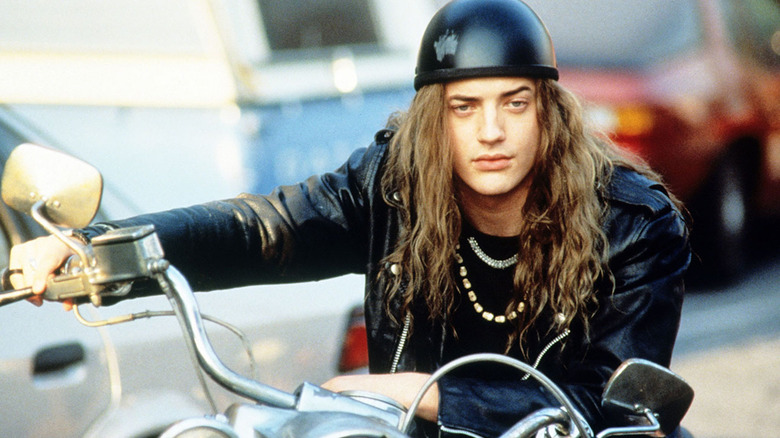
The 90s Cult Classic Brendan Fraser Missed Out On, But Would Have Been Perfect For

by Marisa Mirabal

Brendan Fraser is a cherished actor whose resume consists of iconic films from the '90s and early 2000's. After his heartbreaking retreat from the spotlight, he's now on the verge of a cinematic comeback — and we're all cheering him on. Many of us know Fraser from eccentric comedies like "Blast From the Past", "Encino Man", "Airheads" (my personal favorite, seen above), "The Mummy" franchise, and "Bedazzled". He's mostly known for playing characters that are fish-out-of-water types immersed into a new world-experiencing situations through a fresh (often innocent) perspective. With such a familiar and nostalgic film history, it's no surprise to learn that Fraser was considered for another iconic '90s film that millions of us still revisit and love today.

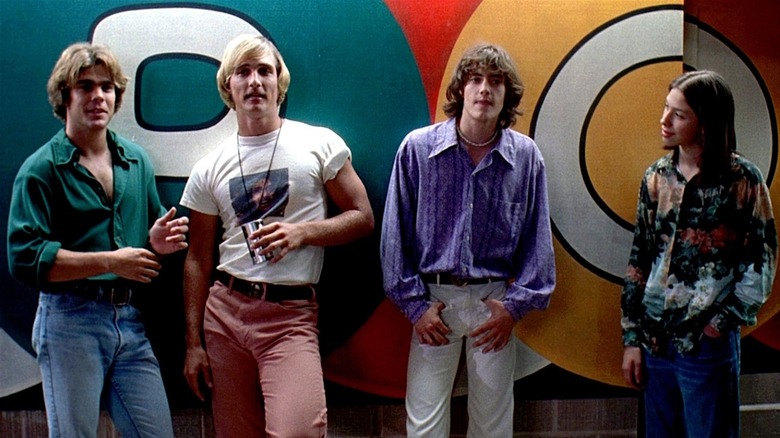
Speaking as a native Texan, Richard Linklater's stoner coming-of-age comedy, "Dazed and Confused" is not only a cult classic but also a way of life, especially down here in Austin. According to an article from Mental Floss, there are a lot of fun facts that many of us don't know about Linklater's 1993 gem. For one, a lot of popular celebrities auditioned for the roles that eventually went to actors like Matthew McConaughey, Parker Posey, Joey Lauren Adams, and Jason London. Casting director Don Phillips stated "every actor in [Los Angeles] wanted to be in it" and it's easy to understand why. Linklater wrote "Dazed and Confused" as a way to make the teenage experience feel more relatable than revolutionary and more laid back than urgent.

The line-up of contenders featured rising stars like Claire Danes, Elizabeth Berkley, Ashley Judd, and Vince Vaughn (who was up for the role of Fred O'Bannion that went to Ben Affleck instead). And yes, Brendan Fraser was among those who were considered for the film,  but he ultimately did not get invited to the party. While I would have loved to see Fraser among the students at Lee High School in 1976 getting stoned and celebrating the last day of school, Phillips knew what he was doing. The cast of "Dazed and Confused" each played their roles perfectly, and Phillips himself also assembled the crew for "Fast Times at Ridgemont High" and "Mallrats". Unfortunately, Phillips passed away in November of 2021, but his legacy for casting some of the most memorable teenage characters within the comedy genre remains unparalleled.  

It'd Be A Lot Cooler If You Did

Out of all the actors that were turned down for roles in "Dazed and Confused", Brendan Fraser is the most baffling. I can see him lighting up a joint in some tight blue jeans, his long hair hanging down past his shoulders, sporting a Led Zeppelin or Black Sabbath shirt and sipping a beer at the moon tower with his boys. I'd peg him for more of a contemplative and quiet type like Floyd as opposed to a prowler such as Don Dawson or Wooderson, whose primary objectives are to either get babes or beat some freshman ass. Fraser just as easily could have been a background character as he could a leading man. With those blue eyes and pouty lips? Come on. 

While it hasn't been disclosed what specific role Fraser was auditioning or considered for, I can't imagine him as one of the guys who is obsessed with hazing incoming freshman because there's this kind of purity about Fraser on screen. In a film that embraces the culture of sex, drugs, and rock n roll, it's hard to think that Fraser would fit in as a bully or villain. It's much easier to picture him rolling joints while hanging out at Pickford's house and listening to Dark Side of the Moon or pouring the popular girls a drink at a kegger.

Casting fact aside, there are a lot of cool behind-the-scenes tidbits about "Dazed and Confused" that make it just as special as the plot and characters itself. Linklater is all about the local Austin community and has a certain authenticity to his films while also giving back to the places where he films. Author Melissa Maerz recently published a book entitled "Alright, Alright, Alright: The Oral History of Richard Linklater's Dazed and Confused" that I've heard is fantastic and worth checking out. And if you ever find yourself in Austin one day, you can still visit many of the sites featured in the film. I would have loved for Brendan Fraser to be a part of this iconic piece of Texas film history and all the fun stories behind the camera. Alas, we'll soon get to see him on screen soon in films like Martin Scorsese's "Killers of the Flower Moon" and Darren Aronofsky's "The Whale," not to mention HBO Max's "Batgirl" movie. So, that's definitely something I'll raise a glass to. 

Read this next: The 15 Best '90s Comedies Ranked

The post The 90s Cult Classic Brendan Fraser Missed Out On, But Would Have Been Perfect For appeared first on /Film.

11 Jan 19:29

Hoai-Tran Bui's Top 10 Movies Of 2021

by Hoai-Tran Bui

2021 — a good year for movies! Though everything else pretty much sucks, we can at least be grateful that we had a good time at the cinemas, or on our couches, in 2021. For me, this year's best movies were about guys being dudes, wounded souls connecting or misconnecting, and our best working male auteurs saying, "Hey, men aren't s**t." It was a year of ghosts and knights, princesses and pigs, lads from Liverpool and Cate Blanchett's cigarette. It was the year that we were blessed with "Dune" memes, and we would never be as happy again.

Of course, more than 10 movies moved me, and challenged me, and consoled me this year. I wish I could write for thousands of words more about the striking animation of the refugee documentary "Flee," Dakota Johnson's hat and Olivia Colman's stormy expressions in Maggie Gyllenhaal's "The Lost Daughter," the overwhelming visual delights of Wes Anderson's "The French Dispatch," the laidback love story of Paul Thomas Anderson's "Licorice Pizza," the frustrating morality tale at the center of Asghar Farhadi's "A Hero," and more. But alas, all I can do is list out the rest of my honorable mentions: "The Tragedy of Macbeth," "Parallel Mothers," "C'mon C'mon," "The Last Duel," "Benedetta," "West Side Story," "Red Rocket," "Belle," "Titane," "Encanto," "Tick Tick... BOOM!", "Shiva Baby," "The Hand of God," and "CODA." 

And with that, here are my top 10 movies of 2021. Read on.

Petite Maman

In the year of the troubled mother, Celine Sciamma's "Petite Maman" is the film that does the least to try to unpack the complicated, flawed ambiguity of motherhood, instead choosing to tell a slice-of-life story of a young girl who finds herself transported back in time, where she meets a younger version of her mom. But less sometimes is more, especially in the case of this lovely 72-minute fable. How can we possibly wrap our heads around death and grief and depression, let alone explain it to our children, for whom these concepts are alien? "Petite Maman" doesn't try to answer that, and instead suggests that perhaps these huge, all-consuming feelings aren't meant to be explained. Perhaps they can only be made a little sense of by embracing the little moments and fleeting memories. By telling the story through the eyes of babes — in this case eight-year-old Nelly (Joséphine Sanz) and her new friend Marion (Gabrielle Sanz), who turns out to be her mother when she was the same age as her — "Petite Maman" achieves a kind of pure wisdom that acknowledges that mothers are complicated, but are deserving of love all the same.

The Power Of The Dog

"He's just a man ... only another man," Kirsten Dunst's Rose declares about Benedict Cumberbatch's charismatic rancher Phil Burbank, her new brother-in-law and the man who will terrorize her life for the next few years. But machismo, or at least the idea of it, is the real terror in Jane Campion's masterful Western drama "The Power of the Dog." Because Phil Burbank is actually a closeted gay man, who projects his deepest fears and insecurities onto Rose and her effeminate son Peter (Kodi Smit-McPhee), a promising young medical student who may or may not be a sociopath. It's between these people that the complicated sexual and psychological power plays unfold in "The Power of the Dog," which is the rare slow-burning drama that doesn't try to hold your hand, instead relying on the immaculate, nuanced performances by Cumberbatch, Dunst, Smit-McPhee, and Jesse Plemons, who plays Rose's somewhat hapless husband and Phil's long-embattled brother. But more than a performance vehicle for its incredible cast (Cumberbatch especially, who weaponizes the kinds of roles he's been typecast in for a truly singular cinematic villain), "The Power of the Dog" is a film that plays out in subtext — in the optical illusions we can or can't see, and the illusions we put on for others.

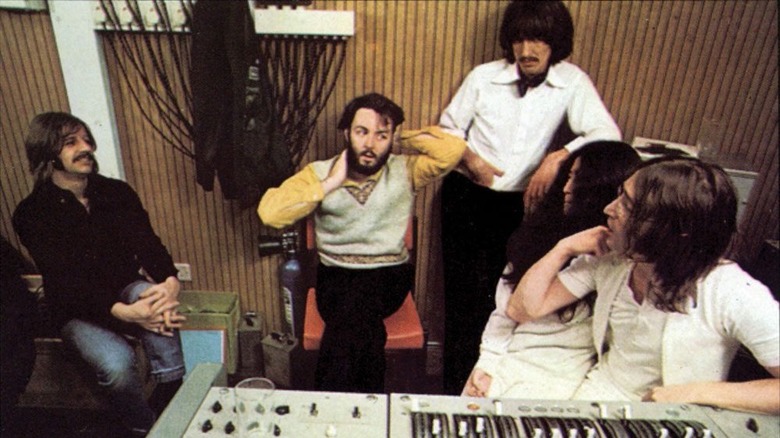
The Beatles: Get Back

I might get blowback for having this on my list, as it's technically not a movie but a three-episode docuseries that recycles old footage of The Beatles shot by Michael Lindsay-Hogg, director of the divisive 1970 documentary "Let It Be." But where "Let It Be" is considered by many fans to be a black mark on the Fab Four's legacy for its fixation on the break-up of the greatest pop band of all time, "The Beatles: Get Back" is an earnest celebration of guys being dudes, and of the grueling and cathartic process of creating something as a team. Genius has long been documented on the big screen, but there's something about "Get Back's" willingness to show the slow, arduous process of turning those sparks of genius — like the famous clip of Paul McCartney pulling the melody of "Get Back" out of the ether while noodling around on his guitar — and making something tangible with it. And it's hard; like any collaboration, it's full of tears, anger, compromise and, in the Beatles' case, lots of booze and fart jokes. But more so than being a rarefied glimpse of the creative process in all its ups and downs, "Get Back" is a snapshot of complicated male friendship, and of how fame and a director obsessed with getting the band in front of "2,000 Arabs, surrounded by torch light" can all start to wear away at the lads from Liverpool.

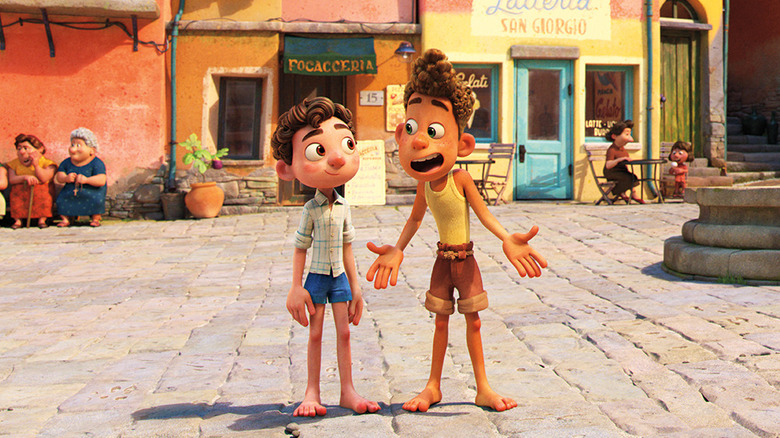
Luca

One of the things that has irked me most this year has been people writing "Luca" off as "charming" or "cute," two words that diminish the kind of rich and rewarding storytelling this deceptively simple Pixar film is pulling off. Yes, you could describe "Luca" as a Ghibli-lite twist on "Call Me By Your Name" (right down to the subtle LGBTQ allegory of Luca and Alberto's dynamic), but that's also what makes it so great. The movie's hilariously low-stakes plot — the whole movie is about trying to win a race! — gives way to a deep and bittersweet story of fleeting friendships and little betrayals. There's a kind of casual cruelty and bittersweet realism that is rare to see in a Pixar movie, let alone in a western animated film, where big ideas and mile-a-minute capers are the order of the day. Instead, "Luca" goes small and intimate and personal, and in doing so, gives us the best character writing that Pixar has ever done.

Nightmare Alley

There's something dark and disturbing at the heart of Guillermo del Toro's "Nightmare Alley." But then again, isn't that the case for us all? But del Toro's adaptation of  William Lindsay Gresham's 1946 novel of the same name is not so much an ode to the inner freak as it is a morality play, a cautionary tale, a modern American tragedy, and a cogent class commentary all at one. But most importantly, and most delectably, it is a lush and lascivious film noir. And how could it not be with its morally grey protagonist (Bradley Cooper, perfectly cast as a handsome, morally dubious con man), its dim lamplit halls, its seedy office dealings, and its ultimate femme fatale in the form of Cate Blanchett, scorching up the screen with cigarette in hand and smirk on her face? It may be another del Toro pastiche, but "Nightmare Alley" leans into those film noir trappings with such twisted glee that you cannot help but cheer when Blanchett's Dr. Lillith Ritter destroys a man with barely a twitch of her finger, while Cooper's swooning bad-boy proves he's no better than the rest of the men? It's all part of the dark magic that's at play in "Nightmare Alley," a film that del Toro has proudly stated is his first film without the supernatural, but which feels as intoxicatingly bewitching as his best genre films. 

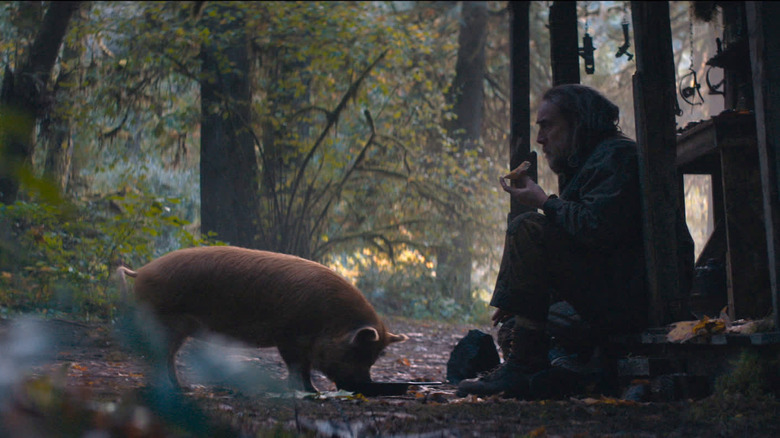
Pig

I've described "Pig" as a cross between Lynne Ramsay's "You Were Never Really Here" and the Anton Ego flashback in "Ratatouille," and I stand by it. All the comparisons to straightforward revenge flicks like "John Wick" completely miss the point of this haunting meditation on loneliness and grief, anchored by a tremendous Nicolas Cage. Cage gives a bruised and battered performance as Robin Feld, a former celebrated chef who retreats to a life of solitude hunting truffles after his wife dies, but is forced to return to the city he hates in order to find his stolen truffle pig. But rather than cutting a bloody swathe through Portland in a quest for vengeance, Robin silently trudges through memory lane, picking at the scabs of the life that he left and the people he left behind. There's something remarkable about the way that "Pig" doesn't care about the typical violent catharsis that comes from a revenge film, choosing instead to deconstruct the lone-wolf story and serve something much more interesting, much more empathetic, and much more bittersweet.

Drive My Car

I love the works of Haruki Murakami, in all his navel-gazing, frustratingly oblique glory. But the Japanese author has been notoriously difficult to adapt to the big screen, mostly because his stories are less plot than "a mood." But Ryusuke Hamaguchi's "Drive My Car," which is based on the Murakami short story of the same name, manages to capture the surreal textures of Murakami while conveying something much warmer and kinder. Director Ryusuke Hamaguchi — in direct contrast to Murakami — has a talent for writing character through dialogue, and in doing so, he gives us one of the most soulful character dynamics of 2021. Theatre actor and director Yusuke Kafuku (Hidetoshi Nishijima) is a widow hurting from the death of his cheating wife, while Misaki Watari is his stoic chaperone assigned to him by theatre program that has hired him. The two of them find kindred spirits in each other, both wounded by the traumas from their past — Yusuke by his wife's affairs, Misaki from her abusive mother — but rather than dwelling in the "misery loves company" of it all, Hamaguchi instead offers redemption. Perhaps in connecting with others, the regrets of the past can start to fade bit by bit.

Spencer

"Spencer" isn't a biopic at all in the traditional sense — like director Pablo Larraín's previous film "Jackie," "Spencer" chooses to follow a few days in the life of Diana Spencer, i.e. Princess Diana. And those days, the Christmas weekend in which Diana decides to divorce her husband Princes Charles, are mostly a fantasy. It's a ghostly impression of that pivotal weekend, that turning point in the life of a woman who has been simultaneously built up, torn down, and deified by the media. So it's fitting that "Spencer" plays out like a fairy tale writ as a ghost story, in which the beautiful castle comes crumbling down around the princess and all that's left is a ruined dress and bloody shoes. "Spencer" is essentially a horror movie, in which a mounting sense of dread leaves you feeling increasingly uneasy and trapped. And at the center of that trap is Kristen Stewart's Diana, a raw, visceral scream of a performance that can barely be stemmed by her stiff, trembling upper lip. It's a career-best performance from Stewart, and one that gives her a place among the annals of cinematic women on the edge.

Dune

"Dune" has been the 2021 film that I've had the most trouble speaking about, and also no trouble at all. It's the movie that I've described as a "vibe" that is scarily in tune with my own brain waves, a stupidly dense sci-fi movie that is made to appeal specifically to me. It's an imperfect movie, as it's only half a story and one that ends on a strangely anticlimactic note (not to mention the thorny MENA casting controversies). And yet, I can't stop thinking about "Dune," one of the strangest and nihilistic blockbusters we've been blessed with in recent years. Denis Villeneuve's film is aesthetically (all greys and blacks except for those bright shocks of desert) and thematically bleak — it's a film about a family doomed to fall from the start, and a savior brought up to be the bloody antithesis of the chosen one. It should be dour and stilted, and yet I found some curious joys (and yes, even humor) in "Dune," a film that gave us the all-timer casting of Jason Momoa as swaggering warrior Duncan Idaho, Timothée Chalamet as resigned hero Paul Atreides, a whispery Rebecca Ferguson in lots of headscarves and dresses, Oscar Isaac as the doomed noble lord, Javier Bardem spitting, and so much more. It may not be the next "Lord of the Rings" that many hoped it would be, but I can confidently say, this is my "Dune."

The Green Knight

Ah, but what could beat out "Dune" for the top spot on my list except for "The Green Knight," a perfect movie and David Lowery's haunting Arthurian masterpiece? I love its novel take on the coming-of-age story, in which the aspiring knight Gawain must kill his ego by accepting death. I love its bewildering and mesmerizing imagery — smoking battlefields strewn with bodies being scavenged by an unsettling Barry Keoghan, Gawain seeing his whole life flash before his eyes as he imagines his body becoming a skeleton left forgotten in the forest, a headless saint whose body lies rotting at the bottom of a lake, naked giants marching past the insignificant little humans, a Green Knight who seems like an Eldritch horror that has emerged from the deep. I love that it — like Lowery's meditative "A Ghost Story" — is actually about inevitability. The Green Knight is less an antagonist than a force of nature, one that — like nature and the passage of time itself — can't be changed or stopped. "Green is the only thing left when ardor fades," Alicia Vikander's Lady declares, and green is all that's left when Gawain and the rest of us are dead, moss growing over our bones and the dried blood.

Read this next: The Best Movies Of 2021

The post Hoai-Tran Bui's Top 10 Movies of 2021 appeared first on /Film.

11 Jan 13:55

PS2 emulator PCSX2 adds Vulkan support

by Dustin Bailey
PS2 emulator PCSX2 adds Vulkan support

While old games may be locked in the time they were developed, ways to play those old games are being improved all the time. A major update for the popular PlayStation 2 emulator PCSX2 has implemented support for the Vulkan API, offering an alternative to DirectX or OpenGL rendering that could bring better performance in many games.

"A lot of people were asking for a Vulkan renderer and courtesy of Stenzek it is finally here," the PCSX2 devs say in a tweet. "It performs better than OpenGL in a lot of cases on similar blending levels so it should make a couple of harder to run games much easier to play."

Stenzek is best known as the developer behind PlayStation 1 emulator DuckStation, and says the new Vulkan option should be more efficient, future-proof, and faster ("Vulkan can handle high blending loads where even Nvidia's GL driver struggles," Stenzek says) than the existing DirectX or OpenGL rendering.

11 Jan 13:55

Gaming PCs running Intel Alder Lake CPUs are now free from DRM issues

by Phil Hayton
Gaming PCs running Intel Alder Lake CPUs are now free from DRM issues

Intel's Alder Lake CPUs have proven their PC gaming worth, but DRM issues on Windows initially rendered 50 games unplayable. While this figure was drastically reduced to just three back in December, the company now says the processor is now completely free from the problems that plagued it at launch.

According to Intel's post, the company worked with game publishers and Microsoft to implement a fix for games affected by DRM issues. As a result, players won't have to use workarounds when playing games like Assassin’s Creed: Valhalla, Fernbus Simulator, and Madden 22 on an Alder Lake Windows machine.

Naturally, the blue team suggests updating the latest version of Windows 11 or 10 to ensure fixes are implemented. If you're still experiencing issues with either a new game or one from the list, you can reach out to Intel Customer Support, or try implementing the previously suggested Legacy Game Compatibility BIOS fix.

RELATED LINKS: Intel Core i9 9900K review, Intel Core i7 9700K review, Best CPU for gaming
11 Jan 13:54

The White Lotus Season 2 Displays Good Taste, Casts Aubrey Plaza

by BJ Colangelo

HBO, Mike White, and all of the rest involved with "The White Lotus" season 2 are clearly working overtime to ensure everyone comes back for more rich, entitled problems. After rumoring the return of icon Jennifer Coolidge for the second season, the show's creators announced the inspired casting of Michael Imperioli as one of the season's starring players. That was enough for plenty of fans to make their advanced reservations to revisit "The White Lotus," but if there's any second-guessers out there, today's announcement will surely entice you to join the rest of us at everyone's favorite luxury resort of drama. According to a report from TV Line, Aubrey Plaza of "Parks and Recreation," "Legion," "Black Bear," and the world's biggest deadpan, sardonic crush is joining the starring line-up for season 2. She is due to play a character named Harper Spiller, a woman on vacation with her husband and his friends.

Plaza is beloved for her ability to insult someone without blinking an eye, which means she will fit right in the satirical world of rich tightwads on "The White Lotus." I would pay to be insulted by Aubrey Plaza as she sips an overpriced cocktail poolside, and would thank her afterward for the privilege. "Euphoria" star Sydney Sweeney was the resident mean girl of season 1, but many easily dismissed her snark due to her character's teenage age. Aubrey Plaza is a full adult woman so if she's reading you to filth, it's a pointed decision and you probably deserved it.

Situations I Hope To See With Aubrey Plaza In Season 2

Just as I did with Michael Imperioli's casting decision, I'm here to fantasy book some White Lotus luxury resort specific scenarios that I'd absolutely love to see for Aubrey Plaza. Knowing that her character is on vacation with her husband and his friends, she is likely going to have to put up with a bunch of insufferable, rich, a-holes, and this vacation is going to be exactly what she needs to figure out the truth of who she is and what she wants out of life. Yes, I've made another list.

  • The tone for Harper's trip will be set after one of her husband's friends makes an offensive joke that does doesn't find funny and after her pathetic husband refuses to come to her defense, she starts a hot affair with whoever this resort's equivalent is of Austin Stowell's season 1 resort-based sex-worker character.
  • Some awful WASPy influencer mom who refuses to discipline her children under the guise of "gentle parenting" spills a big glass of Hawaiian punch on her expensive beach towels, so Harper strong-arm pushes the child into the pool when no one is looking.
  • I'm changing my prediction from last time -- Harper is the character that Michael Imperioli's character's son becomes fixated on, and because of her frequent emasculation of him for being such a pest, he develops an obsession with hot, mean women.
  • She kills someone. Hopefully her husband.

Again, not an exhaustive list, but if I'm allowed to have Aubrey Plaza terrorize rich people, I am shooting for the moon.

Read this next: Scarlett Johansson's Top Movies Ranked Worst To Best

The post The White Lotus Season 2 Displays Good Taste, Casts Aubrey Plaza appeared first on /Film.

11 Jan 13:53

Nicolas Cage Says Acting Is Like Mixed Martial Arts, Which Explains A Lot

by Jenna Busch

I would argue that there are few actors more entertaining to watch than Nicolas Cage. Frankly, I don't care what movie he's in or how good or bad it is. Just watching him act is pure joy and weirdness, and I love every second of it. Admit it; if "Superman Lives" starring Cage had actually happened, you would have done anything to watch it, no matter how bizarre it was. His acting style is certainly not typical, and that's why we love him so very much. 

Cage spoke during THR's annual Actor Roundtable (via CBR) about what he does, and compared his approach to acting to martial arts: 

"I would say there's no real style of acting. It's almost like a mixed martial art ... It can be whatever you want it to be. You can combine, you can create your Jeet Kune Do with acting. Don't get trapped in a style. Don't get trapped in naturalism, and be open to your dreams. Your imagination is your most important tool, and there are ways to augment your imagination, healthy ways to augment your imagination, so that you're not necessarily doing, you're being. Dreams. Dreams are important."

'Don't Get Trapped In Naturalism'

Jeet Kune Do is the martial arts style adapted and made famous by Bruce Lee. The line about not getting trapped in naturalism explains a whole lot about Cage's acting style. 

I love everything about this. You can't watch Cage in things like "Mandy," "Pig," or "The Wicker Man" without falling head over heels in love with this goofy, crazy, absolutely compelling nuttiness. Whatever you think of his acting, you can't argue that no one else in the world is like Nicolas Cage. Not a single person. 

I once got to speak to him on the set of "Ghost Rider: Spirit of Vengeance" and he was a delight. I don't have any memory of what he said about the movie, but somehow we got onto his love for mythology. His intensity about it was everything you could possibly hope for. 

His thoughts on his acting style are one of the things getting me pumped to see him play Dracula in Universal Pictures' "Renfield." Watching his wild version of the bloodsucker against Nicholas Hoult's titular Renfield is going to be the movie event of the year. Between Cage's signature delivery and Hoult's clippy wit (watch him in "The Great" if you want to see something really fun), this may be my most anticipated film of the next little while. 

You keep following your dreams, Mr. Cage. We will continue to watch you do it with the greatest joy. 

Read this next: Orson Welles' Directed Films Ranked Worst To Best

The post Nicolas Cage Says Acting is Like Mixed Martial Arts, Which Explains a Lot appeared first on /Film.