Shared posts

02 Mar 20:10

Ghostrunner Project_Hel DLC Review – Death is Not The End, Only a Transition

by Francesco De Meo

Ghostrunner Project_Hel

Even without a massive marketing push, 505 Games' Ghostrunner managed to become extremely popular, thanks to its excellent visuals and an action gameplay experience like few others on the market, partly thanks to its high challenge level. The developers at One More Level, 3D Realms, and Slipgate Ironworks continued working on the game to provide features that could make it more accessible without watering down the experience too much. Now they have delivered the very first proper expansion, Project_Hel D, which attempts to spice things up a little with a new playable character with slightly different abilities and some brand new stages.

In Project_Hel, players take control of the combat android Hel who players originally met in the main game as one of the main bosses. Taking place before the events of Ghostrunner unfold, Hel is activated by Mara to assist in an offensive against rebels at the bottom of the Tower, but the android has other plans, as she sees Mara as her true enemy, the captor that has enslaved her mind and body. In the new stages included in the expansion, Hel's character is further developed with dialogues that take place during gameplay, providing players with an additional incentive to overcome the new challenges offered by the DLC. It's not much, to be honest, but those who liked the main game's setting will undoubtedly enjoy the new story developments that Project_Hel provides.

When it comes to gameplay, the Ghostrunner Project_Hel expansion comes with some interesting tweaks that make the experience feel slightly different from that of the main campaign without significantly altering the core mechanics of Ghostrunner. As such, you will still be exploring some tightly designed locations via parkour abilities and taking down enemies using Hel's sword, but with some twists. Hel doesn't come with a grappling hook, for starters, so her basic jump covers way more distance. Additionally, while using Sensory Boost, it is possible to learn precisely where Hel will land with the jump, and her air dash covers way more distance. These tweaks are clearly made to make parkour a little easier, and they work pretty well, as they prevented platforming and parkour from being watered down to make the game more accessible.

Combat in Ghostrunner Project_Hel has also been tweaked a bit over the main game, which is not surprising, given how Hel is a combat android. Exclusive to the expansion is the Rage System, a new gameplay mechanic that grants Hell a ranged attack option called Surge, a Shield, and the ability to nullify enemies' blocking stances once activated. To fill the new gauge, players only need to kill enemies, although they need to do so quickly, as Rage quickly depletes. It's a design choice that makes tons of sense to keep the expansion's pace as quick as that of the main campaign.

Even though these additions do make the experience more accessible, don't think for a second that Ghostrunner Project_Hel is more forgiving than its predecessor. Parkour and combat are as challenging as ever, and you will die a lot the first time you go through the new levels as you try to jump from one place to another and face the four new enemy types. Two new bosses are also in, and they can be highly challenging just like the rest of the experience. The upgrade system, a tweaked version of the same one seen in the main campaign, can make certain sequences a little easier, so the expansion does provide some tools to help players make it to its end.

Ghostrunner Project_Hel doesn't offer much more outside of the features highlighted above. Even with the new mechanics, the expansion doesn't feel all that different from that of the main game, so those who did not like it in the first place will hardly change their opinion with Project_Hel. Those who did, on the contrary, will find plenty to enjoy, as it offers the same tightly designed experience of the base game. However, the expansion's price feels a little steep, considering it only includes five new stages that can be completed in a single session with enough patience. Sure, there are some optional collectibles like in the main game's stages that provide more information on the story, but they are not enough, in my opinion, to justify the price tag.

At the end of the day, Ghostrunner Project_Hel offers the same exhilarating first-person platforming experience of the original, with some tweaks that lower the learning curve and make everything more accessible. Even with the tweaks, though, it is basically just more of the same, so how worthy a purchase Ghostrunner Project_Hel is depends entirely on how much the player likes the base game. Naysayers will definitely not change their opinion with Project_Hel, so if you found Ghostrunner too difficult and frustrating, you'd better stay away from Hel.

PC version tested (review code provided by the publisher).

The post Ghostrunner Project_Hel DLC Review – Death is Not The End, Only a Transition by Francesco De Meo appeared first on Wccftech.

02 Mar 20:08

Aloy is no longer obsessed with her stash in 'Horizon Forbidden West'

by Igor Bonifacic

Elden Ring isn’t the only recent game with a new update out today. Guerrilla Games has released patch 1.06 for Horizon Forbidden West and it addresses a number of issues that have been part of the experience since it came out on February 18th. In particular, it resolves a handful of bugs that prevented players from completing the “Reach for the Stars” main quest. For instance, Varl won’t get stuck swimming anymore and therefore won’t prevent a prompt from showing up that you need to move the mission forward.

A separate fix resolves an infinite black screen bug that occurred when players stored the Champion’s Spear and then started a tutorial or a challenge in the Chainscrape Melee Pit. But the one particular change that caught our eye is that Aloy won’t mention her stash as frequently after installing the patch. That should make your adventures in Horizon Forbidden West a bit more meditative. You can read the full list of changes patch 1.06 makes to the game over on Reddit.

02 Mar 20:08

Scientists Seek To Solve Mystery of Why Some People Do Not Catch Covid

by msmash
Most people know someone who has stubbornly resisted catching Covid, despite everyone around them falling sick. Precisely how they do this remains a mystery, but scientists are beginning to find some clues. From a report: The hope is that identifying these mechanisms could lead to the development of drugs that not only protect people from catching Covid, but also prevent them from passing it on. Phoebe Garrett is not the only challenge trial participant to have avoided becoming infected. Of the 34 who were exposed to the virus, 16 failed to develop an infection (defined as two consecutive positive PCR tests) -- although around half of them transiently tested positive for low levels of the virus, often several days after exposure. Possibly, this was a reflection of the immune system rapidly shutting down an embryonic infection. "In our previous studies with other viruses, we have seen early immune responses in the nose that are associated with resisting infection," said Prof Christopher Chiu at Imperial College London, who led the study. "Together, these findings imply that there is a struggle between the virus and host, which in our 'uninfected' participants results in prevention of infection taking off." Some of them also reported some mild symptoms, such as a stuffy nose, sore throat, tiredness, or headache -- although, since these commonly occur in everyday life, they may have been unrelated to virus exposure.

Read more of this story at Slashdot.

02 Mar 20:07

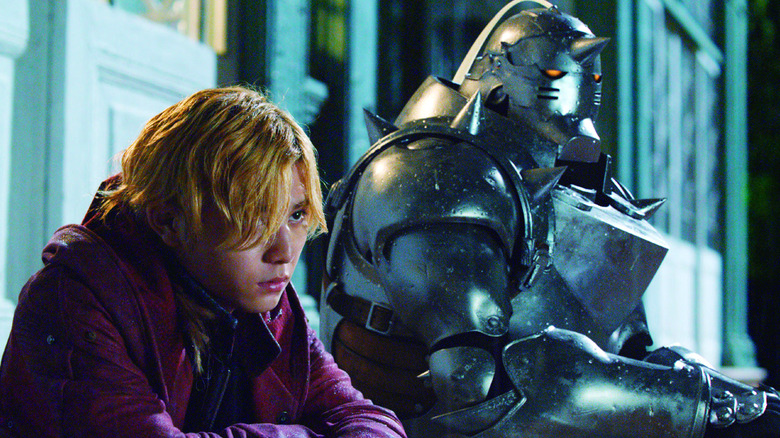
Fullmetal Alchemist Gets Two New Live-Action Films To Close Out The Series

by Debopriyaa Dutta

"Fullmetal Alchemist" is a staple for all anime/manga lovers, given that it is a coming-of-age tale about two brothers who come into their own while navigating a world founded on alchemical transmutation. The first foray into the story's live-action adaptation was made by 2017's "Fullmetal Alchemist," which was a disappointment on many fronts, from certain characters being miscast to emulating a comic book film (not in the best way).

Now, two new live-action films have been added to the "Fullmetal Alchemist" world to continue and close out the saga, namely "Fullmetal Alchemist: Final Chapter – The Avenger Scar" and "Fullmetal Alchemist: Final Chapter – The Last Transmutation" (via ComingSoon.net). These installments will be introducing new characters within the live-adaptation in-world, most notably Scar, who (initially) emerges as one of the primary antagonists in the "Fullmetal Alchemist" anime/manga.

Check out the trailer featuring footage from the live-action duology below.

'It's A Cruel And Random World...'

The trailer features the return of Ed (Ryōsuke Yamada) and Al (Atomu Mizuishi), who witness the mysterious burning down of the First Branch in an act of arson (this event takes place in the 2003 version of the anime). The narrative inevitably veers towards the return of Scar, an Ishvalan survivor who later turned into a lone killer/vigilante, targeting State Alchemists in order to enact revenge for the slaughter of his people. In both versions of the "Fullmetal Alchemist" anime, Scar's arc is integral to the storyline of the protagonists, as his presence unravels a massive web of covert conspiracies and revelations about Ed and Al's murky past.

While the first installment in the live-action trilogy was a miss for the most part, "Fullmetal Alchemist" fans can hope that the subsequent installments will be successful in overcoming the flaws of its predecessor. The first film massively underused Al's presence, which will hopefully be remedied in both "The Avenger Scar" and "The Last Transmutation," allowing more breathing room for developing the beautiful bond between the Elric brothers. The upcoming films will also be introducing the characters of King Bradley and Van Hohenheim among others, both being powerful figures who directly influence the course of events within the "Fullmetal Alchemist" world.

Here's a look at the official synopsis for both films:

"Ed and Al visit Central, where serial murders targeting only national alchemists occur. Although the criminal was unidentified, he was called "Scar" because he had a cross wound on his forehead. The brothers also fight for their lives, but the mechanical armor (automail) is destroyed. Will they be able to overcome this crisis and regain their original bodies? The mystery and truth that overlap are unraveled, and the story goes to the finale of the masterpiece."

"Fullmetal Alchemist: Final Chapter – The Avenger Scar" will be released on May 20, 2022, and "Fullmetal Alchemist: Final Chapter – The Last Transmutation", is expected to open on June 24, 2022.

Read this next: The Best Adult Animation Of 2021

The post Fullmetal Alchemist Gets Two New Live-Action Films to Close Out the Series appeared first on /Film.

02 Mar 20:07

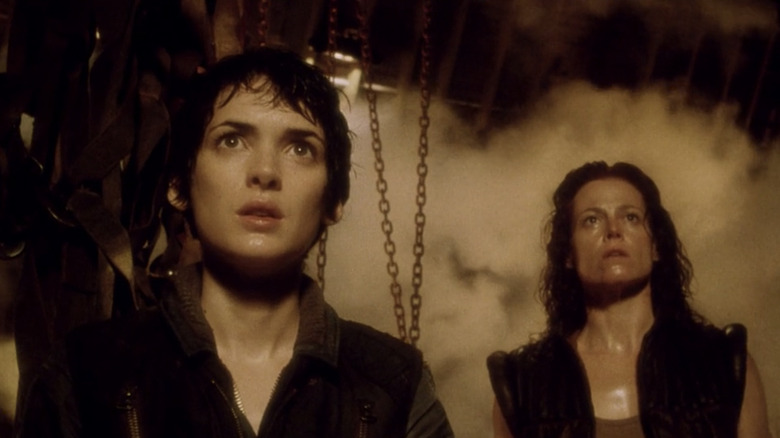
Why Joss Whedon's Original Endings For Alien: Resurrection Never Made The Cut

by Joshua Meyer

The "Alien" movie series has staged its action on a number of different planets and spaceships, but by the time it reached its fourth installment, "Alien Resurrection," it had already long since teased the idea of bringing its acid-blooded Xenomorph to Earth. An early trailer for the troubled "Alien 3," released before the film's script and setting were even finalized, had promised, "In 1992, we will discover, on Earth, everyone can hear you scream."

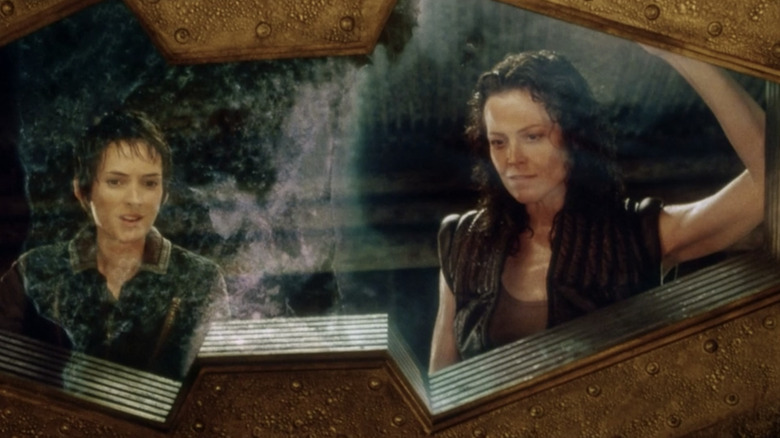
In "Alien Resurrection," we do get a view of Earth at the end, as Ellen Ripley's clone (Sigourney Weaver), the synthetic being Call (Winona Ryder), and the other surviving crew members of the Betty ship enter the planet's atmosphere. The ship flies in over the clouds and Call asks Ripley, "What happens now?" To which Ripley replies, "I don't know, I'm a stranger here myself."

That's as close as she ever got to Earth. The series never really touched down there — unless you count the 2004 Antarctica-set crossover, "Aliens vs. Predator," which received rotten reviews and is perhaps best left forgotten. By that time, Weaver had moved on from the role of Ripley, and in the 2010s, when we finally started getting "Alien" films again with "Prometheus" and "Alien: Covenant," the franchise went back into outer space.

However, screenwriter Joss Whedon's original "Alien Resurrection" endings, guided by notes from 20th Century Fox and director Jean-Pierre Jeunet ("Amelie"), would indeed have taken Ripley to Earth back in 1997. The reason moviegoers never saw any of these endings all came down to money. "Alien Resurrection" was already a $70 million movie, and since the climax involves preventing the Xenomorphs from reaching Earth, it was easier to conclude it that way rather than finance another elaborate set piece on Earth.

A Much Different Ending

According to Den of Geek, Whedon's first draft of "Alien Resurrection" has the Betty crash-landing in a forest, which becomes the setting for a fight between Ripley, Call, and the skull-faced human-Xenomorph hybrid, the Newborn. Ripley wields a grenade launcher and Call drives a flying harvester with threshing teeth. After that, Whedon rewrote the ending several times, with the final earthbound version shifting to a desert location. As he explained:

"The first [version] was in the forest with the flying threshing machine. The second one was in a futuristic junkyard. The third one was in a maternity ward. And the fourth one was in the desert. Now at this point this had become about money, and I said, 'You know, the desert looks like Mars. That's not Earth; that's not going to give people that juice.' But I still wrote them the best ending I could that took place in the desert."

Whedon was dead set on an Earth finale because he felt, "The reason people are here is we're going to do the thing we've never done; we're gonna go to Earth." However, the aforementioned budgetary concerns led to the abandonment of this and other ideas in the movie. What's left is a film that the screenwriter was unhappy with and that came in dead last in our ranking of the "Alien" movies.

In the intervening years since "Alien Resurrection," Whedon's career has itself crash-landed due to accusations of workplace harassment on the set of "Buffy the Vampire Slayer" and "Justice League." It's tough to say whether an earthbound ending for "Alien Resurrection" could have really redeemed the rest of the movie that came before it, but it would at least have given fans something they had never seen before.

Read this next: 20 Movies About Aliens That You Definitely Need To Watch

The post Why Joss Whedon's Original Endings For Alien: Resurrection Never Made The Cut appeared first on /Film.

02 Mar 20:06

The 15 Best Stoner Movies Ever Made

by Liam Gaughan

Hollywood sometimes deserves credit for being at the forefront of social issues. You wouldn't necessarily think of a "stoner comedy" as a particularly "progressive" genre, but some of the wackiest weed-related films were actually important moments in representation. The 1978 romp "Cheech and Chong's Up in Smoke" wasn't only the first modern stoner movie, but a film with two Mexican leads in an era of extreme discrimination. Decades later, the "Harold and Kumar" series had a similar impact with its Asian characters.

Stoners are often used as comedic side characters. Would "The Cabin in the Woods" be nearly as funny without Fran Kranz's "fool" Marty Mikalaski? Now imagine "Galaxy Quest" without Tony Shalhoub's Fred Kwan. The success of films like "Pineapple Express" has led to a greater acceptance of stoner characters in mainstream films, and there are many filmmakers who aren't shy about their favorite pastime. Kevin Smith hasn't only created iconic stoner characters, he's actually sold his own strains. Like any niche genre, a great weed movie should appeal to a wider audience than just smokers. You don't have to be a boxer to enjoy "Rocky," and you don't need any theater experience to appreciate "Singin' in the Rain." Similarly, even non-smokers are able to get a laugh out of the stoner classics. Here are the 15 greatest stoner movies ever made.

Clerks (1994)

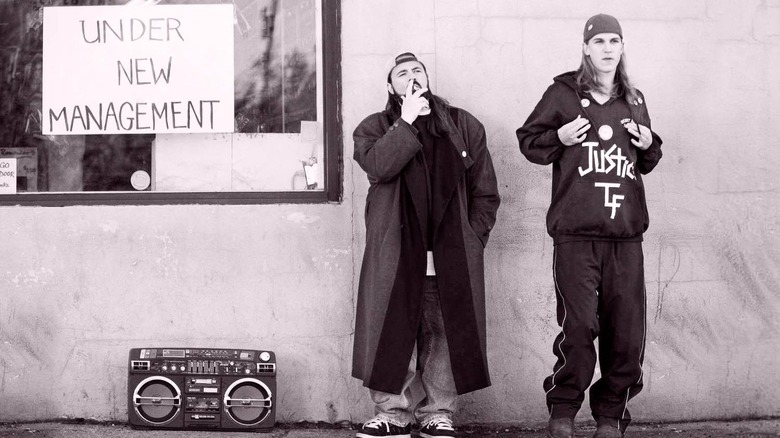
While some filmmakers have created stoner protagonists and even started recurring franchises, Kevin Smith has an entire cinematic universe of pothead characters. Dante Hicks (Brian O'Halloran), Randall Graves (Jeff Anderson), Holden McNeil (Ben Affleck), Alyssa Jones (Joey Lauren Adams), and of course Jay (Jason Mewes) and Silent Bob (Smith himself) have appeared in the interconnected "View Askewniverse" for nearly three decades. It's one of the strangest consistent franchises, and it's not set to conclude anytime soon. "Clerks III" is set for release later this year, and Smith has continued to develop "Twilight of the Mallrats."

However, the original "Clerks" was the one that started it all, and the film's production is a great underdog story in its own right. Smith maxed out his credit cards in order to shoot a low-budget black-and-white comedy at the same convenience store he was working at. Shot in three weeks by Smith and his friends (who had no prior filmmaking experience), the film became a sensation and even made its way to the Cannes Film Festival. "Clerks" has a brilliantly simple premise: It's about bored retail employees who pass the time by talking about "Star Wars," something many of us can relate to.

Bill & Ted's Excellent Adventure (1989)

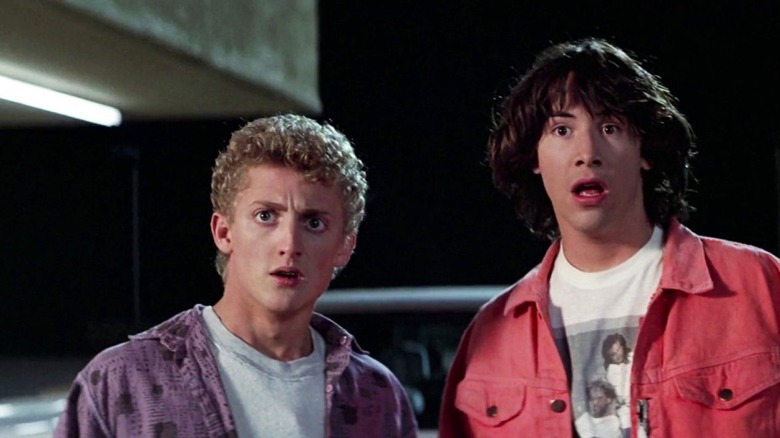
"Bill & Ted's Excellent Adventure" may have slipped by with a PG rating because the titular two heroes don't actually smoke on screen, but it doesn't take a genius to understand the implications. The two high school slackers and aspiring musicians share obvious characteristics with weedhead archetypes. The film's time travel premise certainly feels like it could be the result of a particularly hazy trip.

What makes "Bill & Ted" unique is that Bill S. Preston Esq. (Alex Winter) and Ted "Theodore" Logan (Keanu Reeves) actually seem like nice guys. Stoners are often characterized as obnoxious losers in films, and while Bill & Ted are quite funny, they're not always the butt of the joke. Neither of them is the brightest bulb, but they're well-intentioned and even well-mannered. Potheads are unfairly seen as lazy, but Bill & Ted have an actual goal in mind to become "Wyld Stallyns" and create music that brings people together. It's no wonder that they're the basis of a future utopian society, as the time traveler Rufus (George Carlin) explains to them.

Inherent Vice (2014)

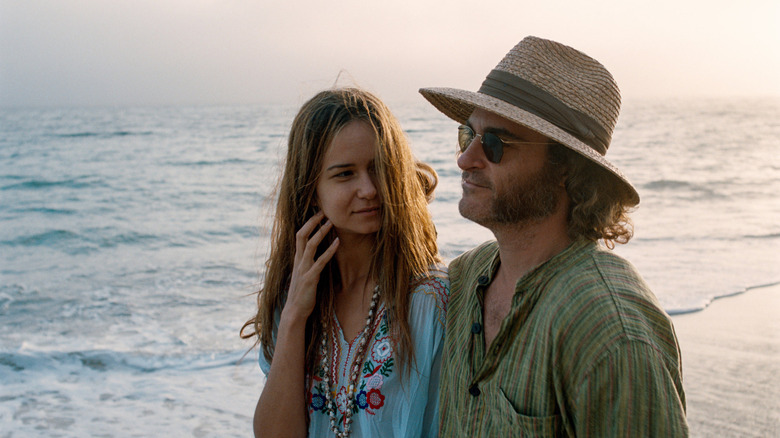
It may be easy to dismiss the "stoner movie" genre as nothing but a batch of lazy comedies, but some of the greatest filmmakers of our era have tried their hand at weed-related humor. Paul Thomas Anderson is one of the most celebrated filmmakers working today, and his 2014 neo-noir comedy "Inherent Vice" even earned him an Academy Award nomination for best-adapted screenplay. Anderson proved that the hard-boiled mystery genre is a lot more entertaining when your lead detective is so stoned he can hardly walk.

Joaquin Phoenix gives an incredible performance as the private eye Doc Sportello. Doc would rather sit around at home on Gordita Beach than get involved with a murder investigation, but he's burdened by his own inherent goodness. When his ex-girlfriend Shasta Fay Hepworth (Katherine Waterston) asks him for help searching for Mickey Wolfmann (Eric Roberts), he's helpless to do the right thing. Phoenix is absolutely hilarious, as Doc never seems like he entirely comprehends what's going on. This becomes even funnier as he gets wrapped up in the outrageous criminal underworld and his life in danger, completely oblivious to the violence that surrounds him. Anderson deconstructs the investigative genre through Doc's perspective. The conspiracy itself is convoluted to a hilarious degree, and the viewer is left just as confused as Doc is. Our lead simply wanders into situations without recognizing how they're connected and his good nature ends up saving the day.

Under The Silver Lake (2018)

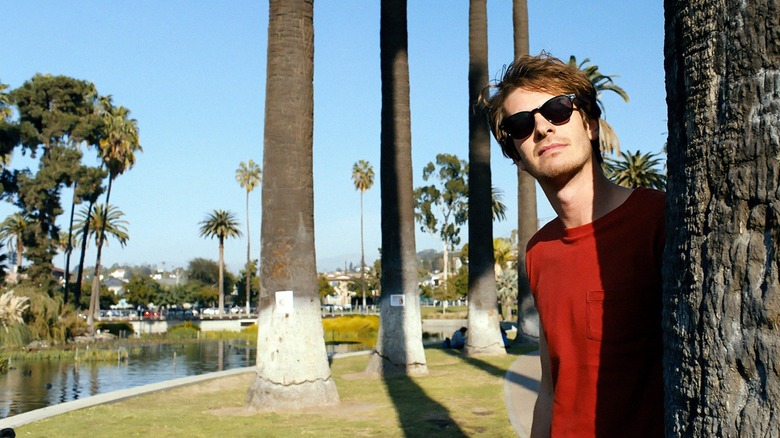
It's nice to see films like the "Bill & Ted" series and "Inherent Vice" that include more positive depictions of stoners, but not every film within the genre does the same thing. What's important about "Under the Silver Lake" is that Andrew Garfield's character Sam isn't a toxic character because he's a stoner; he's just a sexist jerk who happens to enjoy partaking. Weed guides Sam's journey in "Under the Silver Lake," but it's not used to explain why he's such a loser. The fact that he's stoned the whole time actually makes him a tolerable character.

"Under the Silver Lake" is a commentary on toxic masculinity and the seedy underbelly of the entertainment industry that's presented as an investigative mystery. Sam is an aimless, unemployed man living on the outskirts of Hollywood in Silver Lake, California. He's overdue on his rent, but a chance encounter with the enigmatic woman Sarah (Riley Keough) gives him a sense of hope. Sarah disappears after they spend one night together, and Sam is convinced that she's either been kidnapped or become involved in a larger conspiracy. He never stops to consider the possibility that she simply didn't want to see him again. Sam begins searching for subliminal messages in comic books and pop songs with the hope of tracking down Sarah. It's a remarkable performance from Garfield, who seems like one of the nicest actors in the industry in real life, but he completely transforms into this reprehensible character.

American Ultra (2015)

Smoking may empower some people, and in "American Ultra" that's literally the case. The film centers on the stoner Mike Howell (Jesse Eisenberg), who discovers that he's actually a CIA sleeper agent whose lethal abilities can only be activated by a series of code words. It's a comical take on a "Bourne Identity"-style premise if Matt Damon's ruthless assassin was higher than a cloud the whole time. Eisenberg is already an untraditional choice to be an action hero, so having him be perpetually stoned only increases the film's humor.

Eisenberg is also the perfect choice to play a stoner, as he's renowned for his fast-talking, nervous nature. Mike suffers from panic attacks and an overwhelming sense of anxiety, but these characteristics aren't dismissed only as quirks. Mike is struggling to overcome his fear of commitment and actually do something nice for his girlfriend Phoebe Larson (Kristen Stewart). He's not sure why she stays with him, so when their lives are threatened by the CIA conspirators, Mike has an actual goal and something to prove. He wants to be a hero in Phoebe's eyes and prove that her faith in him wasn't misplaced. It's a surprisingly sweet love story, and Eisenberg and Stewart treat the romantic moments with sincerity. "American Ultra" is also a surprisingly effective action movie, and director Nima Nourizadeh is able to blend physical humor in with the set pieces. Eisenberg does a great job showing Mike's confusion as he discovers his new abilities.

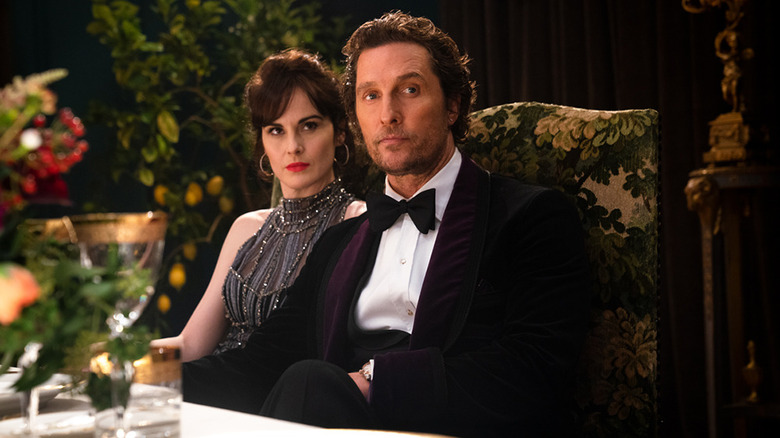
The Gentlemen (2019)

Guy Ritchie's "The Gentlemen" doesn't just feature great stoner characters; it's about the marijuana smuggling business itself. Ritchie epitomized the British gangster comedy with his 90s classics "Lock, Stock, and Two Smoking Barrels" and "Snatch," but in the past decade he's mostly directed blockbuster films. "The Gentlemen" saw Ritchie returning to his roots, but the weed-related humor distinguished it from his earlier films.

"The Gentlemen" is framed around a conversation between the eccentric tabloid journalist Fletcher (Hugh Grant) and the mafia enforcer Raymond Smith (Charlie Hunnam). Fletcher is trying to unravel the story of Raymond's employer, the marijuana kingpin Mickey Pearson (Matthew McConaughey). Mickey and his wife Rosalind (Michelle Dockery) form a temporary alliance with the Jewish investor Matthew Berger (Jeremy Strong) as they contend with a Chinese gangster known only as "Dry Eye" (Henry Golding). They're also warding off the threat of an underground gang led by the trainer Coach (Colin Farrell). Fletcher is struggling to keep track of these various players as he faces pressure from his own employer, the corrupt newspaper mogul Big Dave (Eddie Marsan). It's pretty difficult to keep track of how the stacked cast relates to each other and who is betraying who. Ritchie makes it clear that it's probably best enjoyed while you're high.

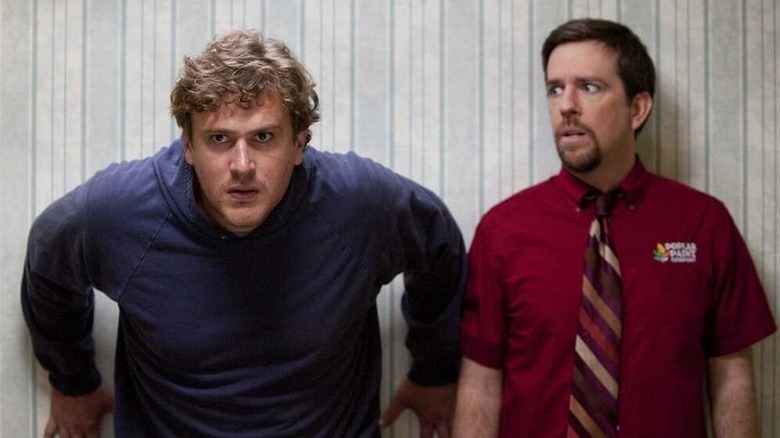
Jeff, Who Lives At Home (2011)

The mumblecore subgenre of indie comedies is perfectly suited for pothead characters. Mumblecore films tend to focus on naturalistic conversations, often improvised on set. There's rarely a consistent narrative arc, as these films are more focused on character relationships. Some viewers may even find the mumblecore style aimless or a wee bit pretentious. However, 2012's "Jeff, Who Lives At Home" is a great example of a mumblecore comedy that's creative, original, and surprisingly poignant.

"Jeff, Who Lives At Home" centers on Jason Segel's titular unemployed stoner, who as the title suggests still lives with his mother Sharon (Susan Sarandon) and struggles socially. Jeff rarely leaves the basement, but a mysterious phone call inspires him to go outside and track down the caller. He is reunited with his obnoxious brother Pat (Ed Helms), who fears that his girlfriend Linda (Judy Greer) is cheating on him. Pat forces Jeff to help him determine the truth, and the experience ends up bringing them closer together.

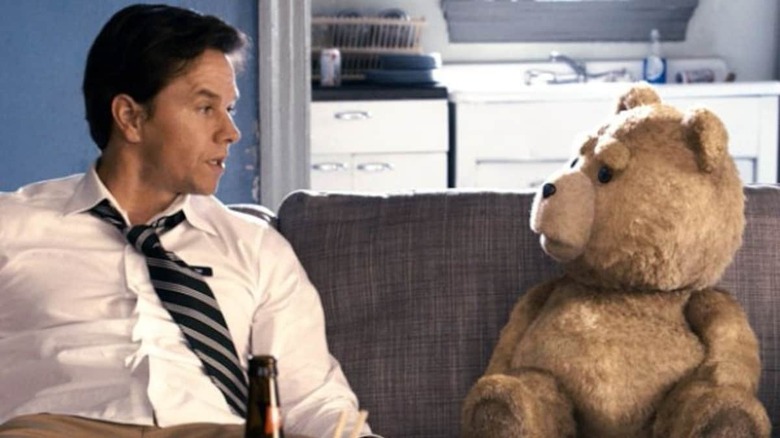
Ted (2012)

Seth MacFarlane is no stranger to weed humor, frequently featuring stoned characters on his animated shows "Family Guy," "American Dad," and "The Cleveland Show." Those series were foundational in the development of adult animated sitcoms, and the stoner humor helped distinguish them. When MacFarlane made his feature film directorial debut, he tackled another premise that wouldn't normally be associated with R-Rated humor.

The 2012 movie "Ted" has a charming opening that follows the young boy John Bennett throughout his difficult childhood. John is relentlessly bullied and dreams about having a best friend, and on one fateful Christmas morning he's delighted to find that his new teddy bear has come to life. The two become inseparable, but once they grow up John (Mark Wahlberg) must decide how to balance his relationship with Lori Collins (Mila Kunis) and his lifelong friendship with Ted (voiced by MacFarlane), who doesn't have any priorities beyond smoking and partying. Despite the raunchy premise, "Ted" is a surprisingly sweet story of friendship and growing up.

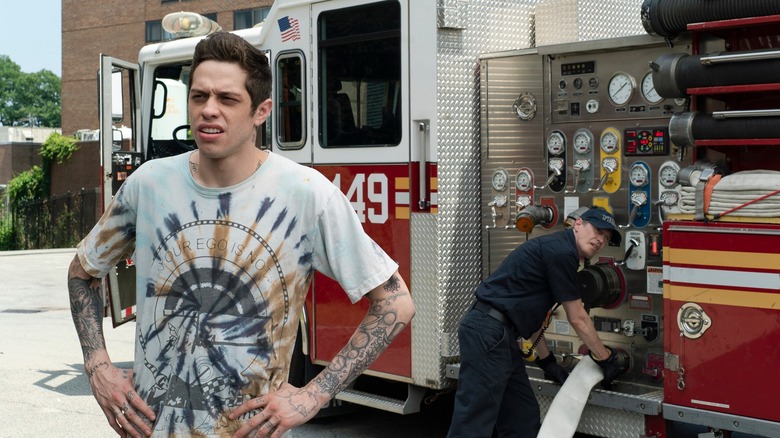
The King Of Staten Island (2020)

As with any sub-genre of comedy, a "stoner movie" can use humor as a gateway to tell a very personal story. Pete Davidson is among the most popular breakout stars in the recent history of "Saturday Night Live." His awkward, blunt humor frequently includes weed-related gags. "The King of Staten Island" tells the semi-autobiographical story of Davidson's life, as he co-wrote the screenplay with Dave Sirus and the film's director Judd Apatow.

Davidson's stand-in character is Scott Carlin, a tattoo artist who lives with his mother Margie (Marisa Tomei) and sister Claire (Maude Apatow). The latter is preparing to go to college, and Margie hopes that Scott will finally grow up and leave home so she can begin dating again. Scott is still coping with the death of his father, a firefighter killed during 9/11. He is forced to accept his trauma when his mother begins dating another firefighter, Ray Bishop (Bill Burr).

Knocked Up (2007)

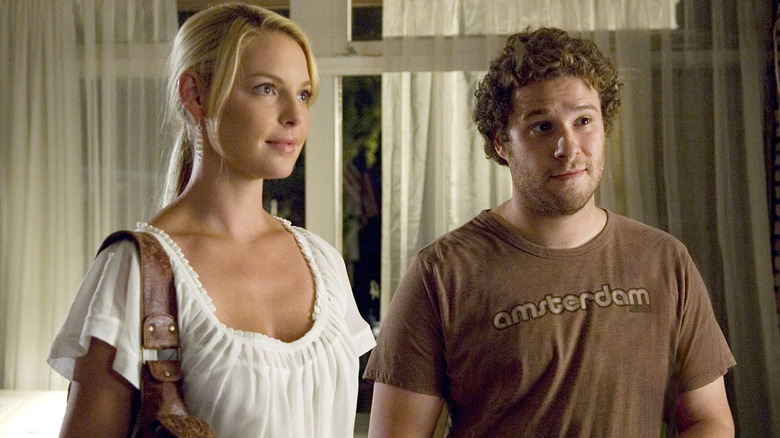
Stoner comedies like the "Cheech and Chong" or "Harold and Kumar" franchises focus on the wildest possible scenarios that could occur under the influence of marijuana, but Judd Apatow's 2007 film "Knocked Up" presented a very realistic one. After a drunken one-night stand, weed enthusiast Ben Stone (Seth Rogen) and television journalist Alison Scott (Katherine Heigl) part ways with no intentions of seeing each other again. They're forced to reunite when Alison realizes she is pregnant.

Ben can't even find a consistent job, so he's completely unprepared for the responsibilities of parenthood. Alison faces similar anxieties, as she knows that having a child is a major burden for a woman working in the media industry. While the film is a romantic comedy, a lot of the best jokes are stoner gags. Ben's pothead friends played by Jason Segal, Jonah Hill, Jay Baruchel, and Martin Starr add humorous commentary throughout his experiences.

Spring Breakers (2013)

Auteur writer/director Harmony Korine has a very unique style, but "Spring Breakers" is about as wild and experimental as films can get. Korine is able to create unique characters and authentic situations, and his humor can be both bizarre and disturbing. The film combines the stoner movie genre with crime, horror, social commentary, and an odd bit of existentialism.

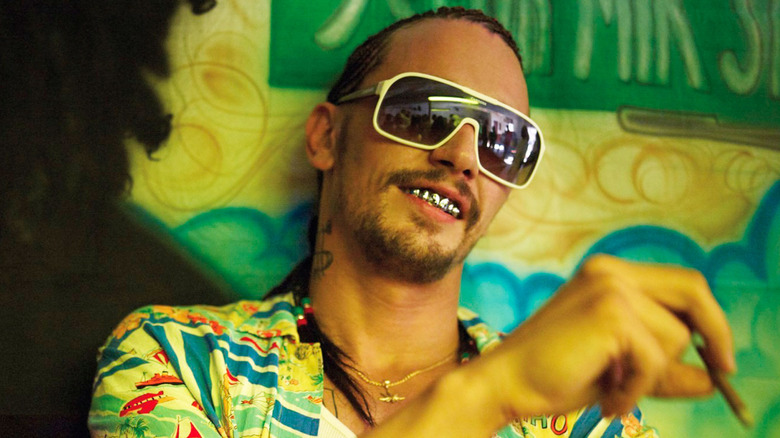
"Spring Breakers" centers on Faith (Selena Gomez), Brit (Ashley Benson), Candy (Vanessa Hudgens), and Cotty (Rachel Korine), four college girls that aim to escape their dull coursework with an exciting spring break adventure. When they find that they don't have enough money to afford the Florida vacation of their dreams, the girls decide to wear ski masks and rob a bank. They are introduced to an eccentric stoner and rapper only known as "Alien" (James Franco). In one of the best performances of his career, Franco creates a perpetually-blitzed character that is both hilarious and terrifying.

Dazed And Confused (1993)

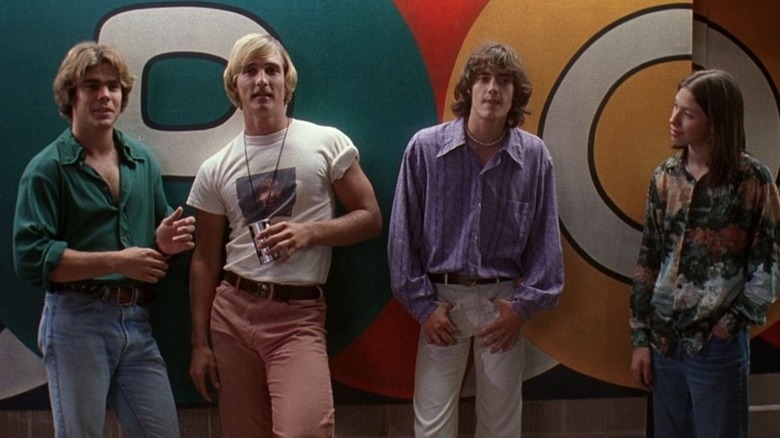
Sometimes the best thing to do while you're high is just hang out with friends. Writer/director Richard Linklater has mastered the art of the "hangout movie" thanks to his authentic dialogue, so his films feel like slices of life with characters so memorable that it's thoroughly enjoyable to just watch them have everyday conversations. Linklater's 1993 coming-of-age comedy "Dazed and Confused" is one of the greatest one-crazy-night hangouts ever put on film.

The '70s-set film centers on a group of incoming freshman boys attempting to survive their last day of high school in Austin (Linklater's hometown). Mitch Kramer (Wiley Wiggins) and his friends are avoiding the cruel senior class, who hunt them down for a yearly hazing ritual. Mitch escapes his pursuers early in the day, but after a baseball game he's cornered by the particularly evil Fred O'Bannion (Ben Affleck). Mitch is forced to grow up overnight as he begins partying, drinking, and smoking after he meets the senior Randall Floyd (Jason London).

Fast Times At Ridgemont High (1982)

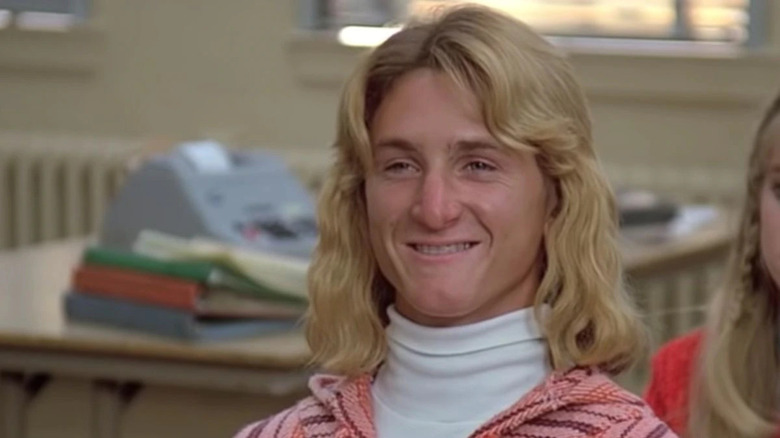
Sean Penn is one of the greatest dramatic actors of the past few decades, so it's somewhat surprising that his breakout performance was the role of eccentric stoner Jeff Spicoli in the 1982 coming-of-age classic "Fast Times At Ridgemont High." The film is far raunchier than most of the other high school films of the '80s. Despite the outrageous moments, "Fast Times At Ridgemont High" is very authentic. The film was written by Cameron Crowe (in an adaptation of his own novel), which is based on his experiences going undercover at Clairemont High School in San Diego.

The film centers on the awkward romantic experiences of the sophomores Stacy Hamilton (Jennifer Jason Leigh) and Mark Ratner (Brian Backer). While their experiences are very relatable, Spicoli is the most entertaining aspect of the film. He creates havoc in class, and the history teacher Mr. Hand (Ray Walston) desperately tries to punish him.

Pineapple Express (2008)

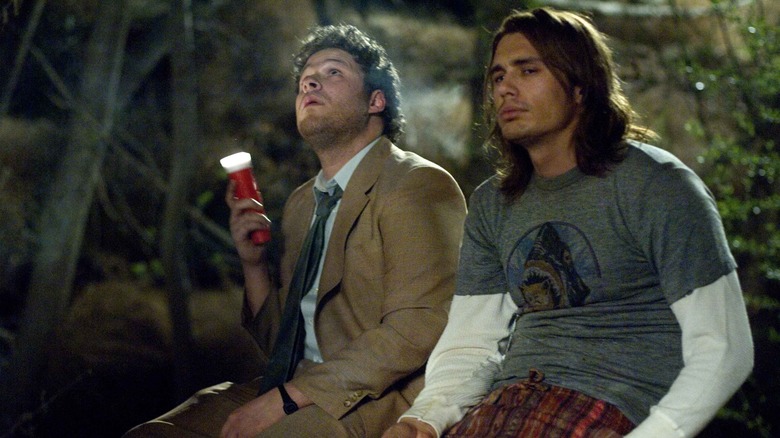
Many of the most famous stoner franchises such as "Cheech and Chong," "Harold & Kumar," and "Jay and Silent Bob" center on buddy duos. David Gordon Green's 2008 comedy "Pineapple Express" created a new weed bro duo worthy of these classics. The film follows the computer process server Dale Denton (Seth Rogen) as he goes to pick up marijuana from his supplier Saul Silver (James Franco). Dale may be lazy, but Saul has no motivation to do anything but sit in his apartment and smoke.

Dale accidentally witnesses a murder when he sees the drug lord Ted Jones (Gary Cole) and corrupt police officer Carol Brazier (Rosie Perez) shoot an unarmed civilian. He and his dealer (a joint Dale leaves at the crime scene leads back to Saul) are forced to go on the run as Ted's gang tries to track down and silence them. "Pineapple Express" is a surprisingly engaging action film, but having two perpetually stoned characters makes it even more hilarious.

The Big Lebowski (1998)

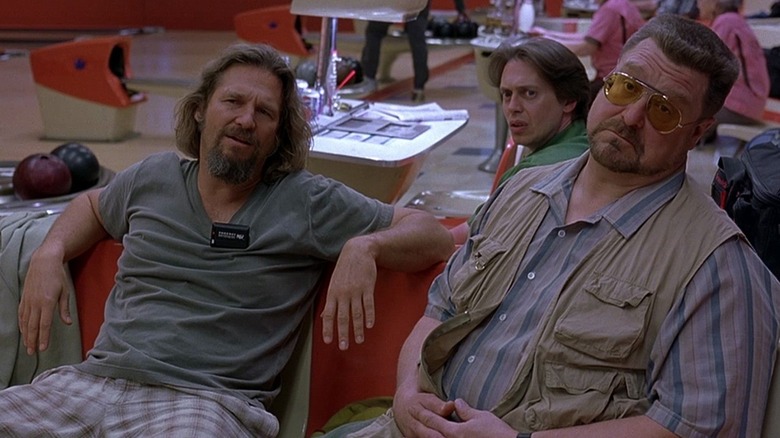
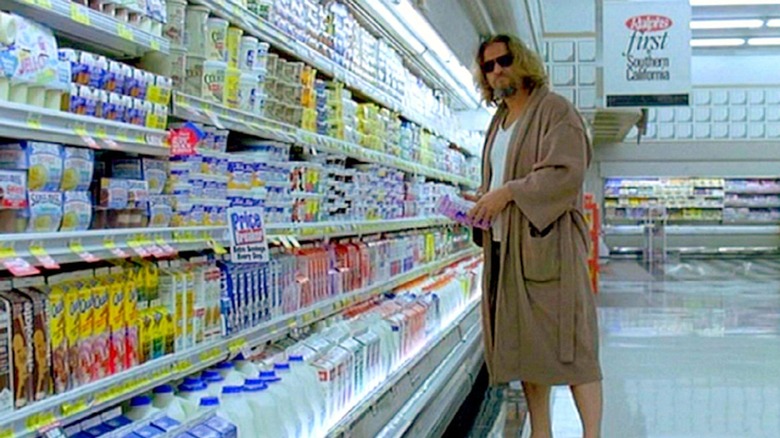
There aren't a lot of writer/directors who have created as many iconic characters as the Coen Brothers. Jeff Bridges' philosophical stoner "The Dude" from "The Big Lebowski" may be their greatest creation ever, as there aren't a lot of characters who have inspired an actual religion. The hilarious 1998 film launched a cult following and continues to spark wild theories and interpretations to this day. However, it's a very accessible film, and first-time viewers shouldn't have an issue connecting with the Coens' unique sense of humor.

The Dude and his best friends Walter Sobchak (John Goodman) and Donny Kerabatsos (Steve Buscemi) love to go bowling. Their relaxing pastime is interrupted when The Dude is mistaken for another man named Jeffrey Lebowski (David Huddleston), a millionaire they refer to as "The Big Lebowski." The Dude becomes wrapped up in a crime subplot after he's approached by The Big's wife Maude (Julianne Moore).

Read this next: 20 Underrated Comedy Movies You Need To Watch

The post The 15 Best Stoner Movies Ever Made appeared first on /Film.

02 Mar 20:05

Steam Deck interview: Valve devs on prioritising performance, future features and the boon of a bigger screen

by James Archer

A few days before Steam Deck preorders began shipping out, I called up Valve engineer Pierre-Loup Griffais and designer Jake Rodkin for a chat about the handheld PC. At this point I’d already been testing it for a while, and as you can now tell from my Steam Deck review, was already sold on both the promise and (mostly) the execution of this plastic go-anywhere gaming machine. Now, it was time to find out more about how it came to be, what new tricks we can expect in the future, and what work is already going to on ensure compatibility with as many Steam games as possible.

Read more

02 Mar 20:02

Samuel L. Jackson Should've Won An Oscar By Now, And He Knows It

by Sandy Schaefer

"Do the Right Thing." "Jurassic Park." "Pulp Fiction." "Unbreakable." (I could go on, but there are only so many hours in a day.) The only list longer than the one featuring every iconic film Samuel L. Jackson has co-starred in or headlined is the list of every other movie he's worked on during his prolific career. He's one of the rare Black actors to achieve that level of success in an industry that, until very recently, was unwelcoming at best, and more often than not outright inaccessible and hostile to artists of color. It's not like this is some kind of secret, either. It was even the basis for one of the best jokes in "Ted 2."

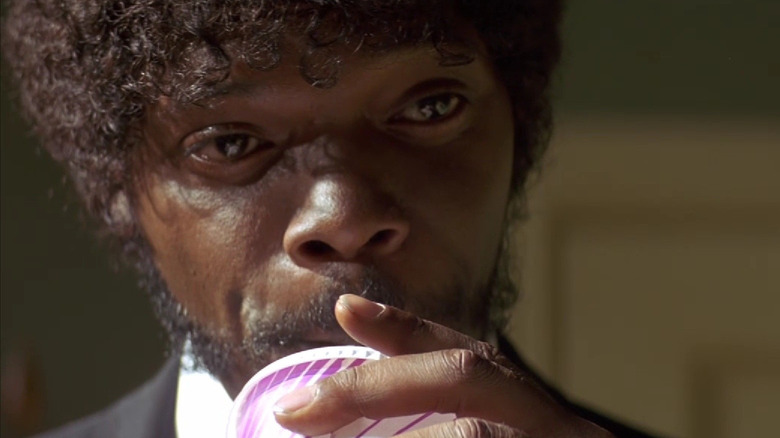
Rest assured, Jackson knows all-too-well he's long overdue some recognition from the Academy for his contributions to the art of motion pictures. In an interview with The Times (via Variety) to discuss the Honorary Oscar he's set to receive this year, it was brought up that Jackson has only received a single Academy Award nod for his acting to date, courtesy of his turn in "Pulp Fiction" as hitman Jules "Bad Mother F*****" Winnfield. "I should have won that one," Jackson replied. (He lost that year to Martin Landau for his supporting role as Bela Lugosi in "Ed Wood.")

Hold On To Your Butts, He's Not Done

Jackson added that he felt he also deserved an Oscar nod for his turn as the crack-addicted Gator in Spike Lee's 1991 joint "Jungle Fever," voicing his disbelief that the Academy instead awarded the crime biopic "Bugsy" with not one but two Best Supporting Actor Oscar nods in that year's race (for Ben Kingsley and Harvey Keitel's performances in the film):

"My wife and I went to see 'Bugsy.' Damn! They got nominated and I didn't? I guess Black folk usually win for doing despicable s*** on screen. Like Denzel [Washington] for being a horrible cop in 'Training Day.' All the great stuff he did in uplifting roles like 'Malcolm X?' No — we'll give it to this motherf*****. So maybe I should have won one. But Oscars don't move the comma on your check — it's about getting asses in seats and I've done a good job of doing that."

Recent minor improvements aside, the proof is in the pudding when it comes to Jackson's comments about the Academy and its poor track record when it comes to recognizing Black artists for their work on both sides of the camera. (Lest we forget, Spike Lee didn't get his first and, so far, only non-honorary Oscar until 2019, when Jackson himself announced he had won Best Adapted Screenplay for co-writing "BlacKkKlansman.") Again, things are slowly changing on that front, with Will Smith and Denzel Washington both in the running for Best Actor for their respective roles in "King Richard" and "The Tragedy of Macbeth" at the 2022 Oscars, but there's still a whole lot of room for improvement.

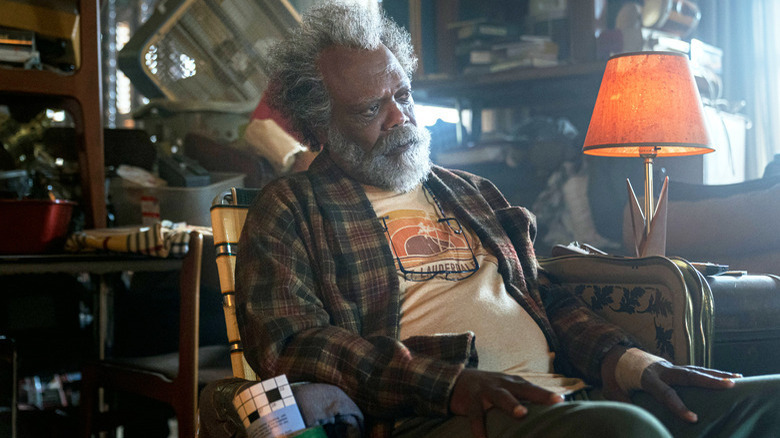
In the meantime, Jackson will continue to make his living by reprising his role as Nick Fury for Marvel's Disney+ show "Secret Invasion" and starring in the dramatic TV series "The Last Days Of Ptolemy Grey" for Apple TV+. He's also set to co-star in "The Piano Lesson," an upcoming film adaptation of the Pulitzer Prize-winning 1987 play of the same name by legendary playwright August Wilson ("Fences," "Ma Rainey's Black Bottom"). So who knows, he may yet land that Oscar he should've won years ago in the foreseeable future.

Read this next: Every Tim Burton Film Ranked From Worst To Best

The post Samuel L. Jackson Should've Won An Oscar By Now, And He Knows It appeared first on /Film.

02 Mar 20:01

Vladimir Putin has done something seemingly unheard of only a few short days ago... He has united every political party in the world together in seeking his destruction [Spiffy]

02 Mar 20:00

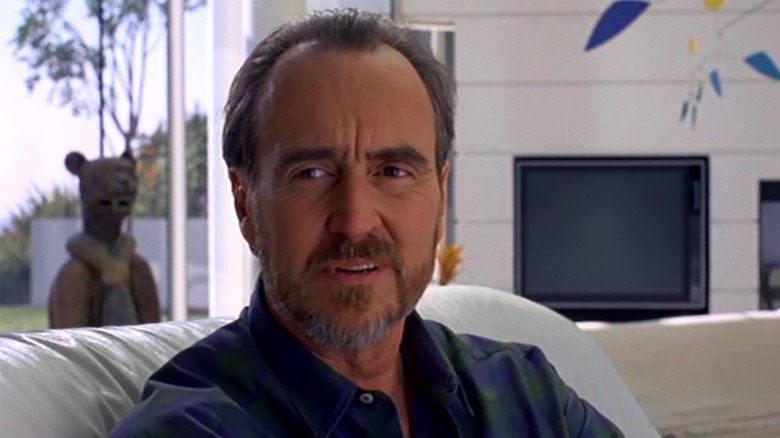
These Are Wes Craven's Favorite Horror Movies Of All Time

by Bill Bria

Wes Craven is the man behind some of the greatest and scariest horror movies ever made, so any film that could scare him must be pretty terrifying stuff. He was a bit of a soft touch for movies in general, however, having been denied the pleasure of moviegoing as a child due to an overly strict religious family. Craven's family "didn't think movies were a good thing—they thought they were the work of the devil," and as such Craven's cinematic education didn't begin until he had graduated college. Thanks to having access to "an art house in the town way upstate in New York" where he worked as a teacher, Craven got a crash course in the horror genre, becoming exposed to films that had a particular focus on the more thoughtful and thematic aspects of horror. It was these movies that influenced him the most, having an effect on both his work in the genre and his nightmares, which Craven often claimed fueled his movies. So let's dig into Wes Craven's favorite horror movies of all time!

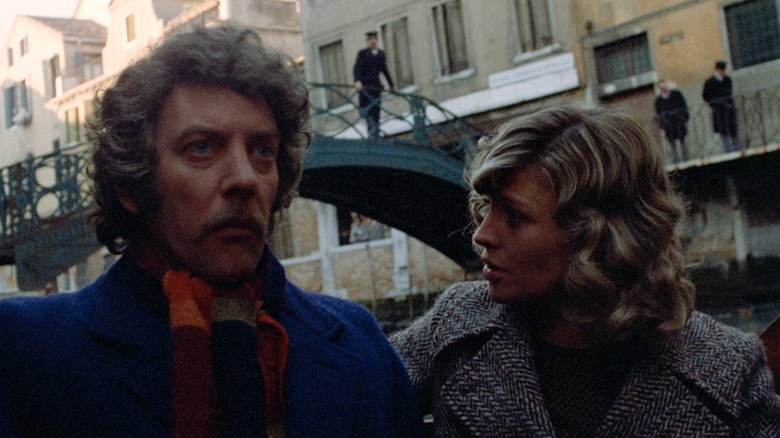
Don't Look Now (1973)

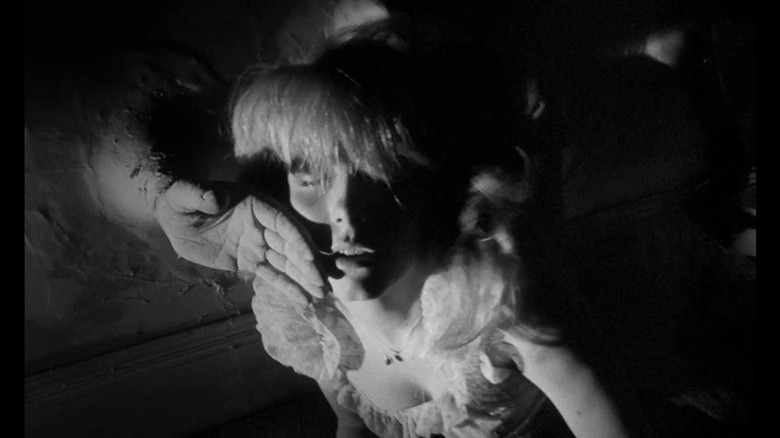
"Don't Look Now" is not the first (or last) horror movie about the ravages of grief, but it is easily one of the most hauntingly powerful. The film follows John Baxter (Donald Sutherland) and his wife Laura (Julie Christie) as they travel to Venice, Italy some time after their daughter has tragically drowned. While there, the Baxters encounter a series of characters who claim to be able to contact the couple's daughter in the beyond, and soon enough John begins seeing glimpses of a girl who seems to resemble her. The nightmarish dream logic of the film appealed to Craven, who remarked that director Nicolas Roeg's style demonstrated "a wonderful example... of being able to scare without showing blood." While Craven admittedly didn't quite follow that example, his mastery of the surreal was undoubtedly influenced by Roeg's film.

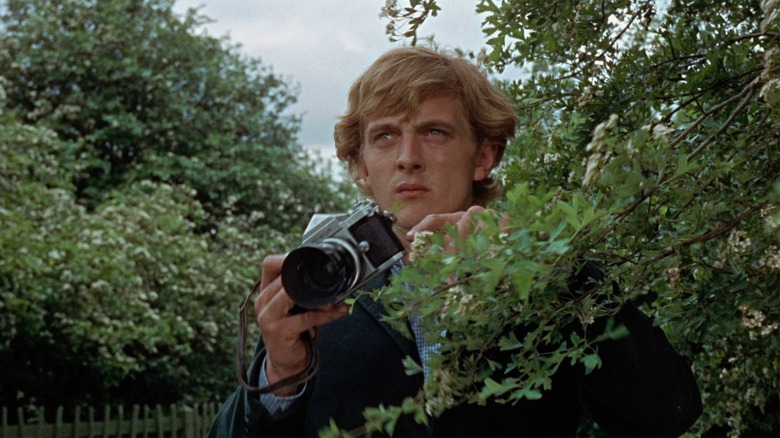
Blow-Up (1966)

The first of a couple films on Craven's list that aren't necessarily considered horror, Michelangelo Antonioni's "Blow-Up" is a paranoia thriller saturated in the mod culture of '60s London. In it, the swinging fashion photographer Thomas (David Hemmings) gallivants around sleeping with various women and getting his kicks in other ways, such as surreptitiously taking photos of a couple in the park. Thomas develops the film of those pictures, revealing that a third person was near the couple in the park with a gun. Thomas becomes obsessed with revealing the truth behind that encounter, putting himself in danger as a result. 

Craven found the film "masterfully constructed," with Antonioni providing a sense of "impending threat and doom" that was "almost surreal," a quality that Craven felt allowed him to explore "macabre visions" in 1984's "A Nightmare on Elm Street." In addition to that landmark work, Craven also used some of "Blow-Up" in 1988's "The Serpent and the Rainbow," telling a story about a man trapped in increasingly surreal and menacing events as he investigates a mystery.

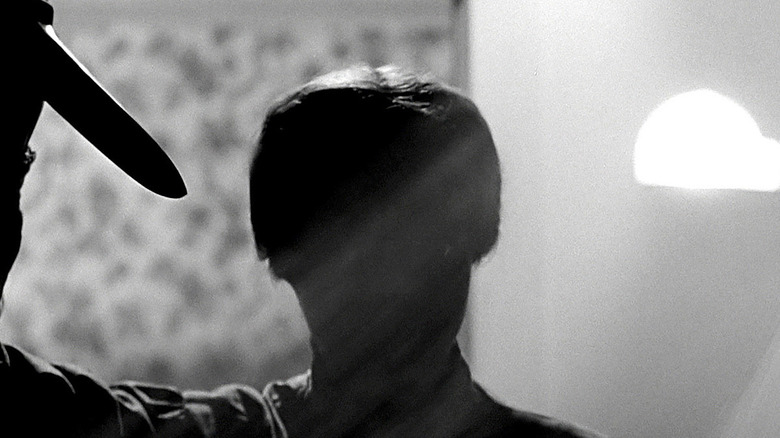
Psycho (1960)

Craven was not immune to the charms of Alfred Hitchcock's "Psycho," one of the most influential horror films ever made. A watershed movie that led to the establishment of the slasher subgenre, "Psycho" follows — at first — secretary Marion Crane (Janet Leigh), who steals thousands from her boss and blows town, stopping at an eerie roadside motel run by Norman Bates (Anthony Perkins). After Marion goes missing, a detective (Martin Balsam) investigates the motel, running into the murderous "Mrs. Bates." 

Craven found this scene the one that scared him the most, impressed at how "Hitchcock did a very surreal thing" in filming the detective's death with a stunt he'd used at least once before. Finding the sequence "dreamlike," Craven not only took inspiration from Hitchcock for the exploits of Freddy Krueger, but for the Ghostface(s) of the "Scream" series.

The Virgin Spring (1960)

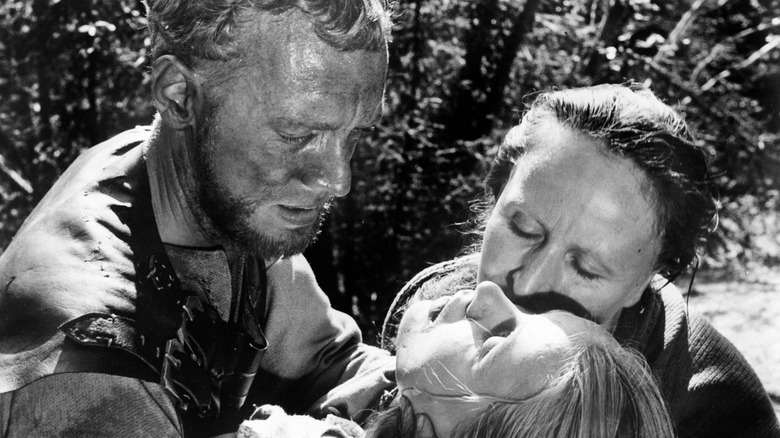
Ingmar Bergman isn't generally thought of as a horror filmmaker, but he wasn't afraid to dive into the darker side of human nature, and "The Virgin Spring" does just that. Adapted from a 13th-century Swedish tale, the film concerns a man (Max von Sydow) who asks his daughter (Birgitta Pettersson) to bring candles to a nearby church. Along the way, the daughter and her servant encounter some men who make unwelcome sexual advances toward them, with the daughter ending up raped and murdered. The father then unknowingly takes in his daughter's murderers when they seek shelter, and upon learning of their deed decides to take justice into his own hands. 

Craven effectively remade the film into his debut feature, 1972's "The Last House on the Left," which sets the tale in modern day and is much more explicit than Bergman's movie. He was especially disturbed by "The Virgin Spring" in its depiction of the father deciding to kill his daughter's assailants, the resulting murders being "the most terrifying because his revenge was done so graphically." Craven became fascinated by the notion that "revenge can itself be a murder of the innocence of the victims, how they can transcend from being normal people to being victims to being murderers themselves," a theme that appeared in his films throughout his entire career, up to and including his final movie, "Scream 4."

Repulsion (1965)

A few years before he made a splash in America with "Rosemary's Baby," director Roman Polanski made this similarly eerie and paranoid thriller about a young woman (Catherine Deneuve) who loses her grip on reality as her own sexual neuroses (coupled with constant advances from the men in her life) cause her to react violently. Making the movie from the woman's perspective gives Polanski license to use a lot of surreal, dreamlike imagery, resulting in scenes that influenced Craven so heavily they cropped up in his work on an unconscious level. 

In "Wes Craven's New Nightmare," the director's 1994 return to the Freddy Krueger mythos, Craven stages a scene where an earthquake causes a giant crack to appear in the home of Heather Langenkamp, indicating Freddy's emergence into the real world. The scene references a similar moment in "Repulsion," but Craven didn't realize it until he introduced a screening of Polanski's film years later. It's fitting that a film employing strong subconscious imagery would become an unconscious image itself for a director continually obsessed with the dream world.

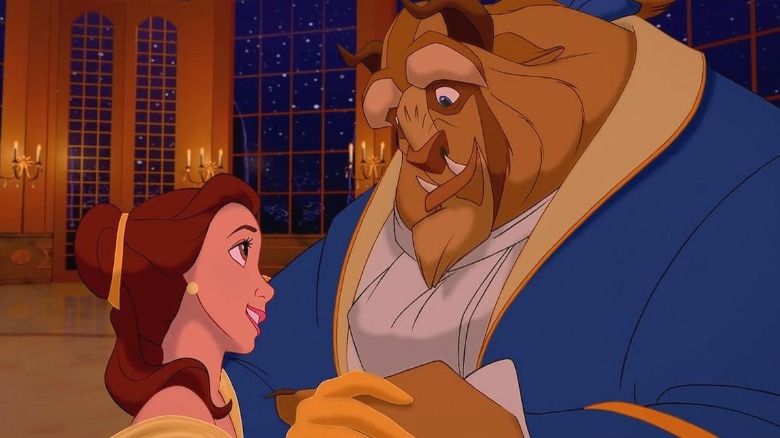
Beauty And The Beast (1946)

Jean Cocteau's adaptation of the classic Jeanne-Marie Leprince de Beaumont fairy tale tells essentially the same story as the numerous other versions of "Beauty and the Beast" made over the decades. A young maiden named Belle (Josette Day) is imprisoned and then enraptured by the Beast (Jean Marais), a victim of a magical curse. The lasting power of Cocteau's film lies in its hauntingly surreal imagery, presenting the Beast's castle as a place of ominous magic. 

Once again, Craven was taken with the film's surrealism, seeing the technique as "a sort of outlaw form of looking at the world as semi-mad." The image that troubled him the most is of the castle's hallway lights having hands for sconces, hands that would occasionally reach out at people as they walked by. Craven sought to recreate that image in several of his films, with moments from "The People Under the Stairs" and "The Serpent and the Rainbow" recalling "Beauty and the Beast's" reaching hallway hands (an image that also, perhaps not coincidentally, was used in Polanski's "Repulsion").

War Of The Worlds (1953)

Byron Haskin's film version of the classic H.G. Wells sci-fi novel, in which martians attack the Earth, is a sterling example of 1950s alien invasion horror with the terror stemming from the eerie unknowable threat of the invading forces. One of the few movies Wes Craven was able to see as a kid, the future horror director was "totally terrified" by art director Albert Nozaki's designs for the Martian war machines, which Craven described as having "goose-neck lamp material" that are "very serpentine with a kind of snakelike head" as they hunt for their human prey. Craven wasn't the only filmmaker haunted by the menace of these saucers — Steven Spielberg made sure to include an updated version in his 2005 remake.

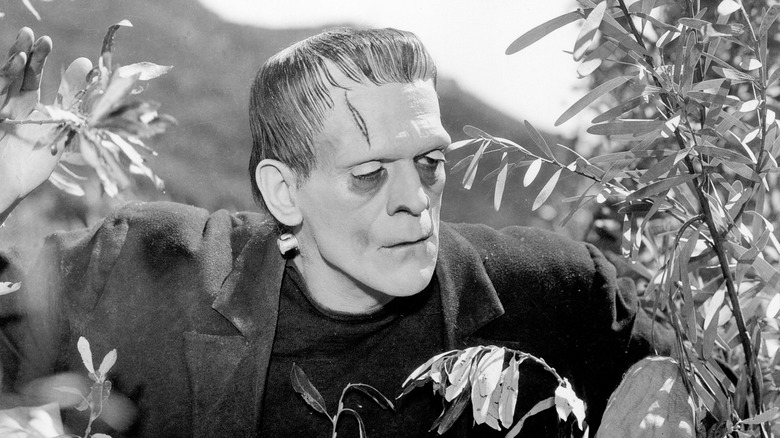
Frankenstein (1931)

James Whale's film version of Mary Shelley's immortal tale was primarily based on a stage play adaptation by Peggy Webling and John L. Balderston, one which revamped the man-made Monster (Boris Karloff) into a mute creature seeking acceptance from the humans surrounding him, especially his creator, Henry Frankenstein (Colin Clive). Whale's film became a foundational part of Universal Studios' horror cycle, causing a sensation in part because of how transgressive it was. Craven certainly thought so, shocked especially by the scene where the Monster attempts to befriend a little girl (Marilyn Harris) before accidentally killing her. 

Craven was moved by "that sense that a movie can show you something you just don't think a movie is going to show you," and while only a couple of his films put little children in danger, the bulk of his work involves young people in peril or worse, the director making a similar transgression to Whale's.

Nosferatu (1922)

F.W. Murnau's unauthorized adaptation of Bram Stoker's "Dracula" created one of the most iconic and indelible horror images: the hairless, toothy, rat-like visage of the vampire Count Orlok (Max Schreck). The film is built around that masterstroke of character design, with Murnau milking Orlok's every possible angle, including and especially his silhouette. Craven so loved the design for its uncanny qualities, looking to him "like it couldn't actually be a human actor in there." His love of that look of Orlok influenced his casting of actor Michael Berryman as the cannibal Pluto in 1977's "The Hills Have Eyes," the performer's numerous birth defects lending him "an extraordinary look."

The Bad Seed (1956)

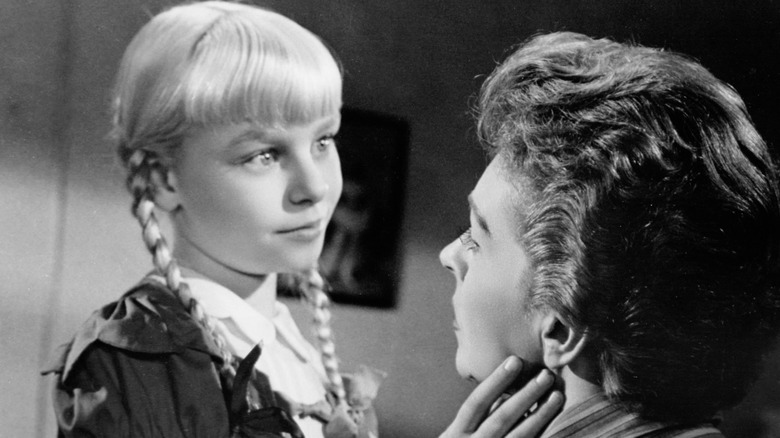
Mervyn LeRoy's adaptation of Maxwell Anderson's play centers on the precocious eight-year-old Rhoda (Patty McCormack) who begins to exhibit signs of sociopathy, eventually surreptitiously murdering a series of victims to her parents' horror. Coming into a cinematic landscape where child characters were generally seen as sacrosanct in addition to automatically innocent, Craven was delighted by the character, believing her to be "so revolutionary and so anti-American, where the nice little girl could never be bad." 

Despite being taken with the film, Craven never made a movie that directly homaged or remade it, but themes of hereditary sociopathy are all over his work, from "Shocker" to "My Soul to Take." There are also murderous female characters throughout his films, starting in "The Last House on the Left" and continuing through "Deadly Friend" and several "Scream" installments.

Read this next: Horror Movies That Even Horror Fans Could Hardly Finish

The post These Are Wes Craven's Favorite Horror Movies of All Time appeared first on /Film.

02 Mar 20:00

Protip: When abandoning your tank during an invasion, treat it like a rental car and grab your stuff before you go. In other news, 1/18 was when battle plans were approved, and Putin planned for 15 days [Interesting]

02 Mar 19:55

Ukraine Maximum Trolling: We foiled a plot to kill our president because the Russian FSB tipped us off because they do not want to take part in this bloody war [Amusing]

02 Mar 19:52

Microsoft Defender Takes Aim at Mid-Market

by Ionut Arghire

Microsoft this week announced the general availability of Defender for Business, an endpoint security solution aimed small- and medium-sized businesses (SMBs).

read more

02 Mar 19:52

With the Russian economy in freefall, oligarchs are calling for peace

by Mark Frauenfelder

Russian oligarchs and their families are facing severe repercussions from economic sanctions imposed on Russia. They are also calling for world peace and the safety of their Ukrainian brothers and sisters. That's so nice of them!

Russian billionaire Mikhail Fridman is chairman of Alfa Bank, Russia's largest private bank. — Read the rest

02 Mar 19:52

UN Watchdog Warns Russia Bombardment Endangers Ukraine's Nuclear Security, Calls for Restraint

by msmash
The U.N.'s nuclear watchdog on Wednesday warned Russia's onslaught of Ukraine is raising the risk of nuclear accidents, calling for restraint from all actions that could jeopardize the safe operations of Ukraine's nuclear facilities. From a report: It comes as Russia's war with Ukraine enters its seventh day, with fighting raging across the country. The International Atomic Energy Agency said Russia's invasion of Ukraine marks the first time a military conflict has taken place amidst the facilities of a large and established nuclear power program -- which in this case includes the site of the world's worst nuclear disaster at the Chornobyl Nuclear Power Plant in 1986. "The situation in Ukraine is unprecedented and I continue to be gravely concerned," IAEA Director General Rafael Mariano Grossi said in an introductory statement to the 35-nation Board of Governors. "The safety and security of nuclear facilities, and nuclear and other radioactive material, in Ukraine must under no circumstances be endangered."

Read more of this story at Slashdot.

02 Mar 19:51

The 15 Best Erotic Thrillers Ranked

by Joe Lipsett

Erotic thrillers are a tricky beast, running the gamut from trashy delights to straightforward dramas about infidelity to neo-noirs with femme fatales and the dumb marks who fall for them. These are films that explore the dangers of seeking a sexual thrill to break up the monotony of suburban life. Fascinatingly enough, there is an undeniable element of queer sexuality (and queer fear) underlying many of these popular texts. The reality is that like any subgenre there is a certain level of malleability in erotic thrillers that makes for a deep bench of diverse films. 

While we wait to see if Ben Affleck and Ana De Armas' new thriller "Deep Water" can revive the subgenre where Justice Smith and Sydney Sweeny's "The Voyeurs" failed, let's revisit 15 erotic thrillers that highlight the range and diversity of the subgenre (plus: a healthy splash of international titles). Let's dig in, shall we?

The Boy Next Door (2015)

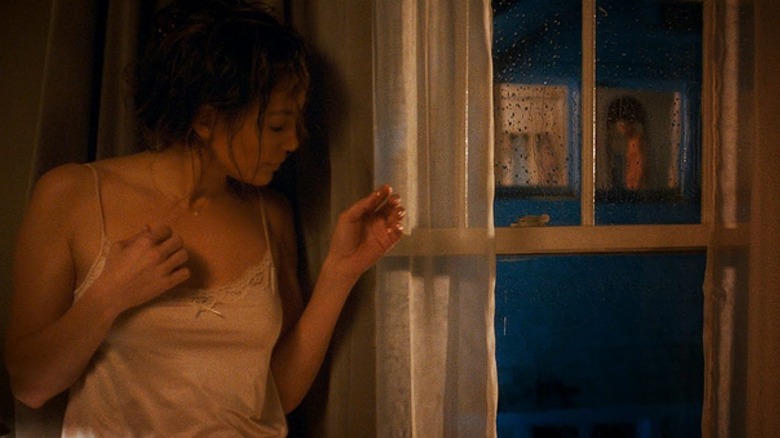
To some, erotic thriller simply connotes silliness, and this Jennifer Lopez film is the perfect embodiment of the phrase. The multi-hyphenate stars as Claire, a MILF high school English teacher who, while separated from her cheating ex (John Corbett), is seduced by Noah (Ryan Guzman), the incredibly hunky titular boy next door. Naturally, there's more to Ryan than meets the eye, as poor Kristin Chenoweth (playing Vicky the 'doomed to die' best friend) learns.

While "The Boy Next Door" isn't a good movie, it is a highly entertaining one. This is particularly true when the Rob Cohen-directed film inadvertently strays into camp territory. There are so many dumb parts of this guilty pleasure, including Noah's reference to Claire's "cookies" (a clear sexual euphemism), the repeated objectification of Guzman's twenty-something torso and chest, and a key plot point wherein Noah gifts Claire a first edition copy of the Iliad (?!?!). Bonus points for "The Fast and the Furious" director's inability to resist incorporating multiple car chases, as well as a climax featuring car parts as murder weapons. This erotic thriller is just pure dumb fun.

Wild Things (1998)

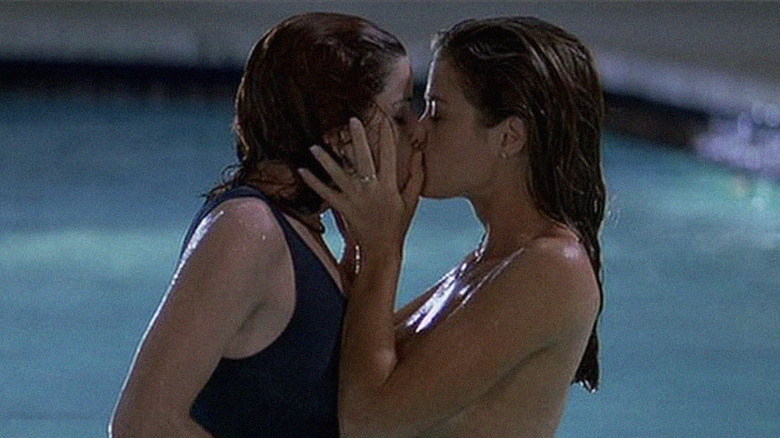
Speaking of dumb fun, here's a film that is so 1998 it could never be made nowadays. Not only is Matt Dillon's predatory guidance counselor Mr. Lombardo committing statutory rape, but Kelly (Denise Richards) and Suzie (Neve Campbell)'s fake rape plot has aged really badly. Plus the only significant character of color — Daphne Rubin-Vega's Detective Perez — is arguably the least likable character and the one saddled with all of the anti-women dialogue.

Politics aside, this slice of Florida trash is a delight. It's a film that's ridiculous enough to let Bill Murray's skeezy public defender slink around in a fake arm brace the whole film, or feature genre staple Theresa Russell as a boozy, gun-loving mom who is introduced mid-coitus before hitting on her daughter's teacher. Throw in Kevin Bacon's full-frontal nudity, a watery catfight-turned-make-out for the ages, and a plot so convoluted it requires a series of flashbacks doled out over the credits, and "Wild Things" is one helluva ride. Just don't take a shot every time you hear "Mr. Lombardo" if you want to live to read the rest of this list.

The Hand That Rocks The Cradle (1992)

In addition to being one of Julianne Moore's early roles, "The Hand That Rocks The Cradle" is notable for focusing less on the salacious cheating elements from other erotic thrillers in favor of targeting the heart of American domesticity. Peyton (Rebecca De Mornay, oozing malice) is less interested in sleeping with Michael (Matt McCoy) than imploding every aspect of Claire (Annabelle Sciorra)'s perfect family life, up to and including her white picket fence.

Peyton is a tricky character in that she's alternately presented as both a victim (widowed and miscarried) and a vengeful nanny from hell. Her evil plots include framing the mentally disabled gardener (Ernie Hudson) as a pedophile, gaslighting Claire into thinking Michael is having multiple affairs, and killing bestie Marlene (Moore) in the silver screen's finest greenhouse-related death trap. RIP Marlene: you were destined to die the minute you arrived onscreen having more fun and looking better than the lead

Single White Female (1992)

If there's one thing erotic thrillers love more than killing a best friend, it's murdering a beloved pet to highlight how unhinged the villain is. "Single White Female," the most "white lady in crisis" of the crop, isn't the most egregious example of the trope, but it's still a movie that punts a dog out the window of a New York high-rise.

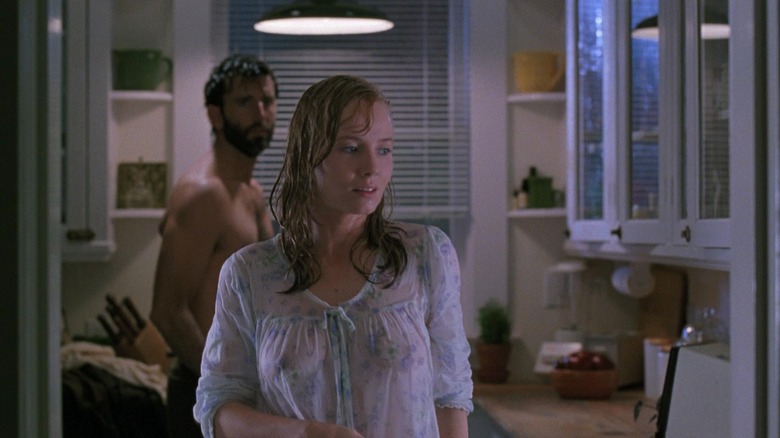
This 1992 Bridget Fonda vs Jennifer Jason Leigh joint features several other conventions of the subgenre, including a ridiculous death (Steven Weber takes a stiletto to the eye), a protracted finale (the garbage room brawl that never ends), house porn (Fonda's two-bedroom is larger than most houses), and a gay best friend (justice for Peter Friedman's Graham, who gets nothing to do). Classic elements aside, the film's success hinges on the committed performances of its two female leads, particularly Leigh who nails Hedy's manipulative obsessive stalker while maintaining a sense of vulnerability. If there is a single (heh) scene that defines the film, it is the moment that Hedy comes down the spiral staircase of the hair salon, featuring an identical orange bowl cut as Allie (Fonda). It's a definitive moment in the pantheons of queer film history, the gay gasp heard around the world.

In The Cut (2003)

Considering the fixation on women's bodies and sexuality, there's a disappointing disparity in how many erotic thrillers are directed by women. Aside from Katt Shea, who helmed "Stripped To Kill" in 1987, the subgenre's most notable female director is New Zealand's Jane Campion, whose "In The Cut" was critically derided by critics and commercially abandoned by audiences when it was released in 2003 (/Film highlighted the film as one of the greatest thrillers of the 21st century last year). Like many cult classics, the extremely hot and sexy film starring Meg Ryan and Mark Ruffalo has undergone a reappreciation of sorts in the last few years. In the early aughts, no one was ready for a sexually promiscuous Ryan to engage in incredibly graphic sex with a mustachioed Ruffalo.

What early reviews missed is just how clever "In The Cut" is at subverting the subgenre's typical "woman in danger" narrative. The film is far less interested in the serial killer who is preying on women than it is about the psychology of Ryan's Frannie, who falls for Ruffalo's Detective Malloy even as she suspects him of being the killer. "In The Cut" covertly uses genre trappings to deliver a beautifully shot character study about a sexually assertive woman embarking on a questionable romantic relationship. It's far from conventional, but what the film lacks in thrills it more than makes up for in heat and Ryan's committed performance.

Crash (1996)

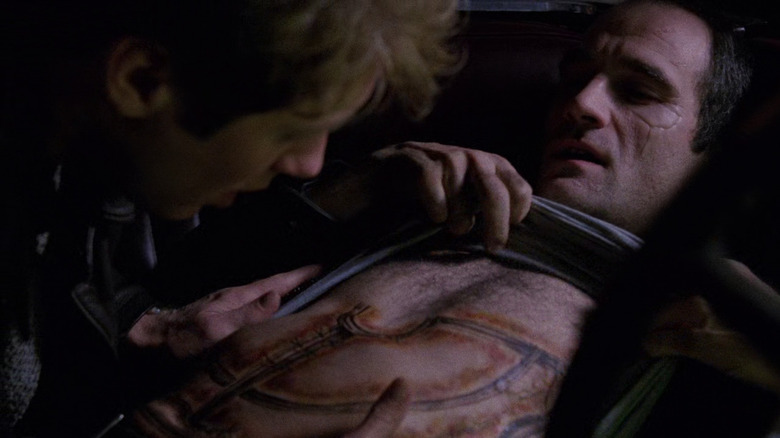
Using the word thriller to describe Canadian director David Cronenberg's 1996 adaptation of the J.G. Ballard novel "Crash" might be a little generous, but this tale of a husband and wife who fall in with car crash fetishists both contains and subverts a number of erotic thriller conventions.

The cold sterility of the mise-en-scene and the performances by Deborah Kara Unger, Holly Hunter, Elias Koteas, and lead James Spader (ranging from muted to deadpan) constantly lend the art-house film a discomforting vibe. While there's nothing bombastic about the car crash sequences, the sexual tension surrounding wrecked vehicles and bodies, the interrogation of vanilla turn-ons, and the inevitable creep into thriller territory as James (Spader) becomes fascinated (then stalked) by Vaughan (Koteas) dances around the margins of erotic thriller territory. Cronenberg's films rarely traffic in traditional notions of taste or normality, and "Crash" is no exception. The film exemplifies what can happen when auteurs challenge or pervert audience expectations about what is deemed controversial and scintillating. "Crash" is a daring and, yes, exciting film in every sense of the word.

The Last Seduction (1994)

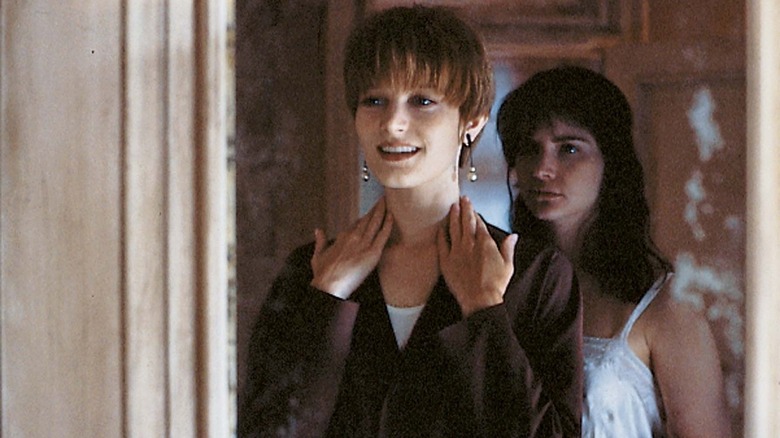
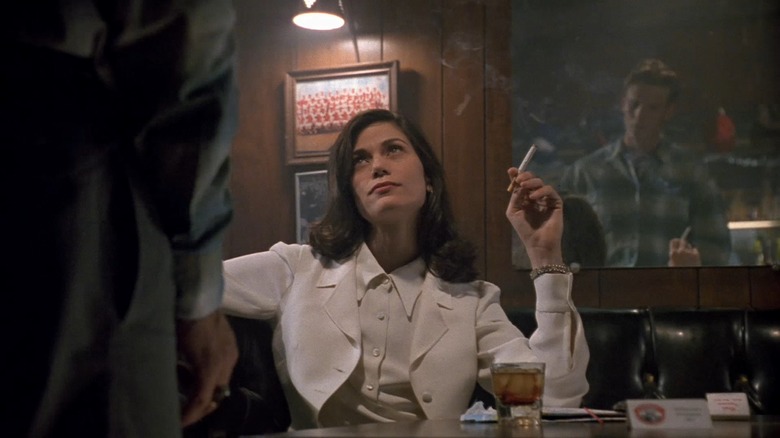
"The Last Seduction" is admittedly a bit more neo-noir than erotic thriller, but it's all semantics when you drill down into the film's DNA. Linda Fiorentino delivers a career-best performance as Bridget, a con-woman who steals $700K from her New York boyfriend Clay (Bill Pullman), then hides out in a small town where she shacks up with deluded local Mike (Peter Berg) as she waits for the heat to blow over.

What's so effective about "The Last Seduction" is how unapologetic Bridget is. She's in control of the entire film, manipulating the men in her life without a care for their feelings or emotions. Mike is a classic rube, a bewildered everyman who can't believe that a powerful sexy woman has taken an interest in him (his past is naturally tinged with homophobia because ... it's the '90s). Everything about Bridget, however, is delightful. She stomps around in high heels, smoking cigarettes and having sex with Mike wherever and however she pleases. The best aspect is the ending, which solidifies the film as a feminist text without the usual interest in morals or punishment. "The Last Seduction" is an underrated gem.

The Skin I Live In (2011)

This controversial pick is courtesy of famed Spanish auteur Pedro Almodóvar. While the queer director is mostly known for his female-centric melodramas, he has a strong stable of films that explicitly center on sex and violence, including early films "Matador," "Live Flesh," as well as "Bad Education" (another contender for this list).

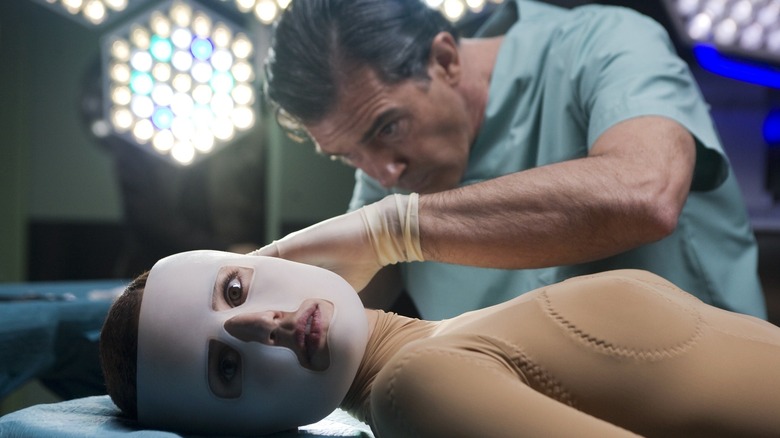
This 2011 adaptation of Thierry Jonquet's 1984 novella "Spider" tells the tale of Robert Ledgard (Antonio Banderas), a world-renowned plastic surgeon who, in his grief for his deceased daughter, abducts and imprisons a young woman, Vera (Elena Anaya). While the film's sexual politics have grown problematic in the last decade, Almodóvar's flashback-heavy narrative intricately weaves a tale of love, obsession, and madness in an incredibly compelling way. Adding to the film's beauty is a visual aesthetic composed of soft tan and taupe colors, which subtly contrasts the darkness of the tale. This is an underseen film by a director working at the top of his game.

Stranger By The Lake (2013)

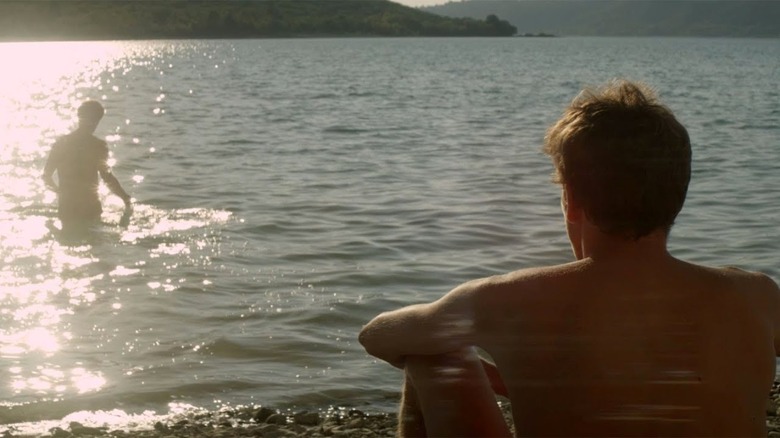
Alain Guiraudie's ode to cruising is also a compelling examination of the dangers of gay desire. "Stranger by the Lake" takes place at an unnamed nude beach in France where men anonymously hook up. The protagonist is Franck (Pierre Delandonchamps), an attractive young man who isn't interested in anything but casual sex. Despite his single-minded aims, Franck is befriended by Henri (Patrick d'Assumçao) an older, overweight man who is hesitant to engage in carnal activities.

The story surrounds Michel (Christophe Paou), a devastatingly handsome man who Franck falls for, despite seeing him drown a man in the lake after hours. Not unlike "In The Cut," "Stranger by the Lake" explores the thin line between sexual infatuation and danger: Franck can't help pursuing Michel, even when doing so could cost him, or Henri, their lives. Thanks to its gorgeous sun-drenched mise-en-scene and non-disclosed setting, "Stranger by the Lake" has a naturalistic, timeless quality to it. Add in several graphic sex scenes and this is the rare erotic thriller that is both exceedingly queer and extremely hot. It's a nice contrast to the usual deluge of bored suburban heterosexuals who typically dominate these films.

Black Swan (2010)

Erotic thrillers typically do not feature unreliable protagonists. From the audience's perspective, our noble hero is always trustworthy and the narrative usually involves convincing friends, parents, neighbors, and police that the danger is all-too real.

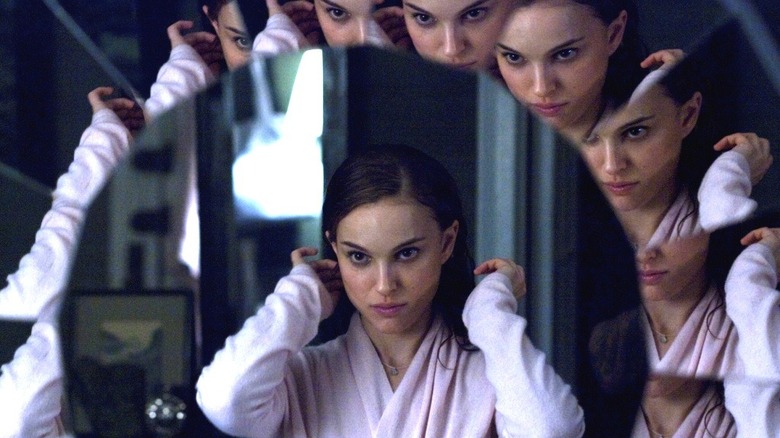
In Darren Aronofsky's psychological erotic thriller, this isn't the case. It's frequently unclear whether Nina (Natalie Portman) is having a mental breakdown under the intense pressure of her domineering mother Erica (Barbara Hershey) and manipulative instructor Thomas (Vincent Cassel) or if her rivalry — and attraction — to new star pupil Odile (Mila Kunis) is actually the cause. The questioning of reality, augmented by the film's extensive use of mirrors and cinematographer Matthew Libatique's camera movements is both masterful and incredibly harrowing. Portman's commitment to the role is nearly as impressive as her filmic alter ego. Watching Nina literally bleed for her craft is effective because Portman is so commanding in this unconventional sexually-charged thriller.

The Handmaiden (2016)

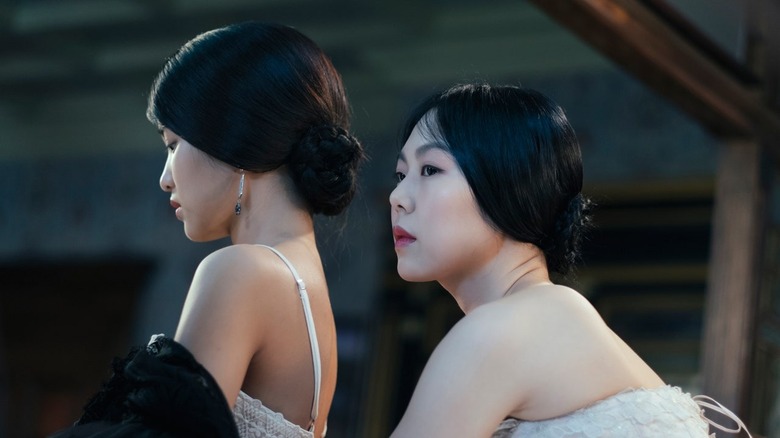
This is where the sex/heat quotient of the films begins to rise dramatically. While some would hesitate to classify Park Chan-wook's brilliant period drama as an erotic thriller, this twisty noir-infused tale of two women — Lady Hideko (Kim Min-hee) and her maid Sook-hee (Kim Tae-ri) — who plot the downfall of the abusive men in their lives checks all of the relevant genre boxes and then some.

In addition to featuring incredibly sultry sex scenes, the way in which the women orchestrate their scheme (brilliantly depicted in three sections that offer new context from different characters' perspectives) is a hallmark of the best erotic thrillers. Thanks to Park's masterful script and direction, which is augmented by Ryu Seong-hee's art direction and costumes by Jo Sang-gyeong, "The Handmaiden" is a prim and proper period drama with the beating heart of a sordid erotic thriller. No one said that classy can't be hot.

Basic Instinct (1992)

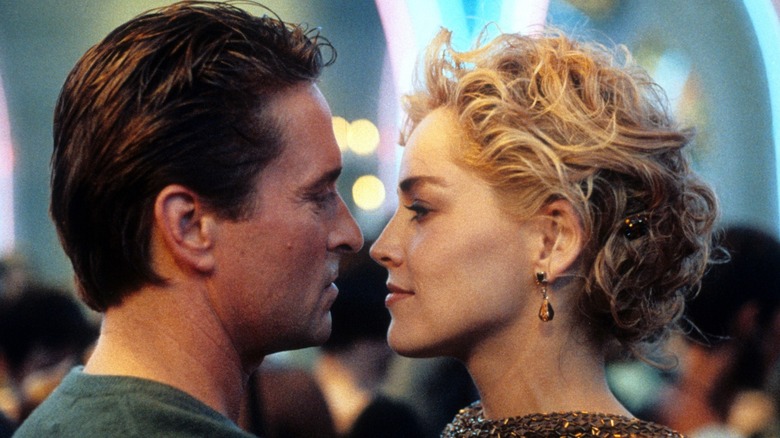
One of the most iconic erotic thrillers is 1992's "Basic Instinct," Paul Verhoeven's first collaboration with screenwriter Joe Eszterhas. The notorious film not only cemented Sharon Stone's star power, it marked the return of Michael Douglas in his first erotic thriller since "Fatal Attraction." The film follows Detective Nick Curran (Douglas) who ill-advisedly embarks on a sexual relationship with bestselling author - and murder suspect - Catherine Tramell (Stone). Naturally, the detective is in way over his head, leading to very hot sex and possibly his demise in the film's famed ambiguous end.

In addition to featuring a memorable murder weapon (a post-coitus ice pick), Catherine's bisexuality is reflective of '90s Hollywood fascination with female queerness, principally as a marketing tool for straight male audiences. Not unlike "Cruising" a decade earlier, the equation of queerness with murder sparked a controversy that led to the film being heavily protested by the LGBTQ community, which wound up helping the notorious film's bottom line, pushing the domestic gross to a dazzling $117 million.

Unfaithful (2002)

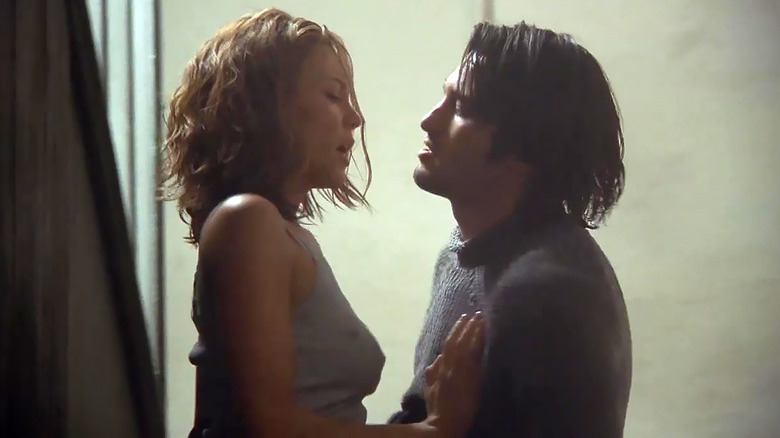
Where "Basic Instinct" is sensational, "Unfaithful" is thoroughly grown-up fare. This tale of adultery and murder marked the return of director Adrian Lyne ("Fatal Attraction") to the genre and gave stars Diane Lane and Richard Gere meaty, mature, and (yes) sexy roles.

Unlike other erotic thrillers, the tension in "Unfaithful" doesn't derive from the affair between Lane's Connie and Olivier Martinez's Paul Martel or even the threat of being caught. While that's certainly a part of the early section of the film, Alvin Sargent and William Broyles Jr.'s script is far more interested in teasing conflict out of the aftermath, when Gere's Edward becomes intimately involved and homicide enters the picture. "Unfaithful" asks the question, "Can this broken couple put their lives back together and move on?" In some ways "Unfaithful" is a neo-erotic thriller, a film that evolves the thematic concerns of the subgenre to suit changing times. By 2002, films of this kind were rare, but "Unfaithful" offers proof that there's still a way to do erotic thrillers and do them well, even if Hollywood was already shifting away from mid-tier adult fare.

Body Heat (1981)

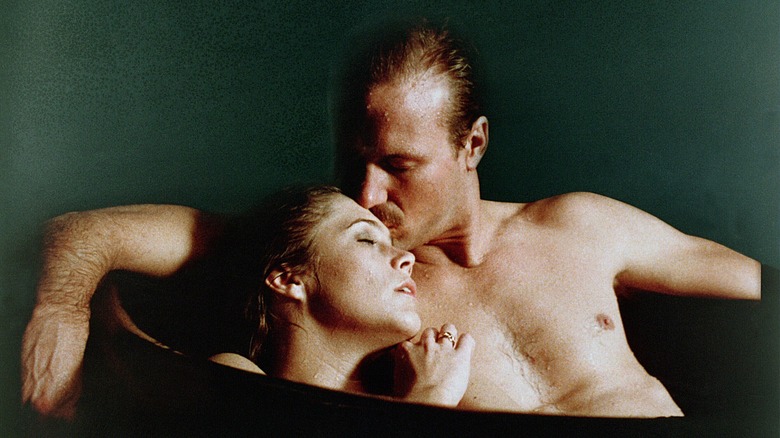
"Body Heat" is the perfect encapsulation of the intersection between noir and thriller. William Hurt stars as Ned Racine, a lawyer who falls for femme fatale Matty Walker (Kathleen Turner). Naturally, Ned's manly inclinations lead him completely astray and he winds up taking the fall for Matty's husband's murder in this sweaty Florida-set erotic thriller.

What makes "Body Heat" so successful is the chemistry between Hurt and Turner, which is electric. This is particularly true of the sex, which is both provocative and incredibly hot. One need only check out the risque bathtub scene (with its coded anal sex reference) for proof that films like this aren't made anymore. Besides the titular heat, the film's other key asset is Turner, whose uniquely husky voice has never been put to better use (aside from "Who Framed Roger Rabbit"). Matty is easily one of the silver screen's best femme fatales, second only to Barbara Stanwyck's Phyllis Dietrichson in "Double Indemnity."

Fatal Attraction (1987)

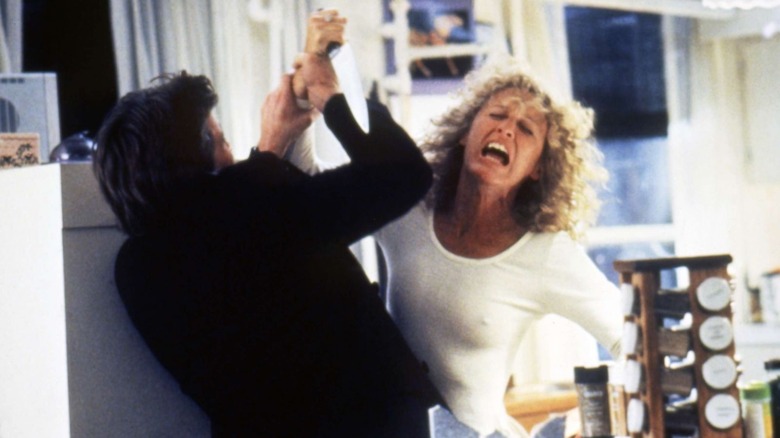
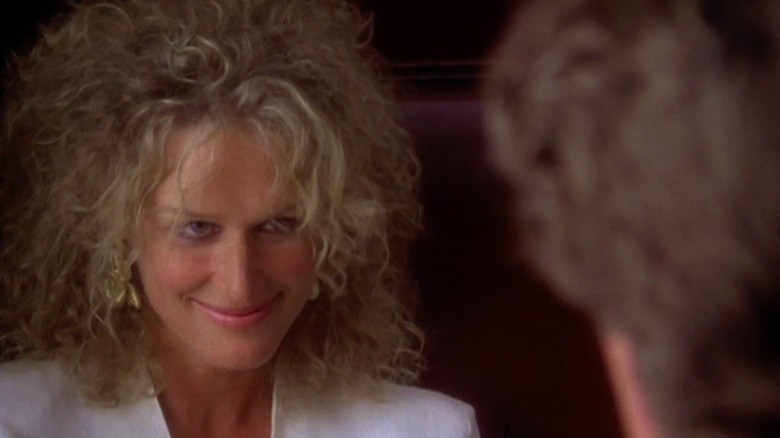
Michael Douglas turns up on this list twice because he's the undisputed king of erotic thrillers, capping his unofficial trilogy with 1994's "Disclosure." The reality is that Douglas brought a smarmy charm to many of his characters in the '80s and '90s, which is especially vital in this cautionary tale. Douglas is only as good as his co-stars, though, and no one exemplifies the sexy/threatening dichotomy as well as Glenn Close, whose performance as Alex Forrest is one for the ages. The film is the definitive erotic thriller because it checks all of the boxes: adultery, great chemistry between the leads, sexy sex, gorgeous '80s hair, a cute kid, animal murder (the bunny in the pot!), and a wildly violent ending.

"Fatal Attraction" does one thing better than the rest: Where other films glibly focus on the sexy shenanigans and demonize women, "Fatal Attraction" accepts that Dan is a cad who cheats on his wife Beth (Anne Archer) for no good reason, while simultaneously giving her a fair amount of screen time. It's refreshing for a film that ends by reconfirming the traditional heteronormative family to actually, you know, include the family in the plot.

Read this next: The 14 Greatest '80s Romantic Comedies Ranked

The post The 15 Best Erotic Thrillers Ranked appeared first on /Film.

02 Mar 19:49

BBC reporters watch Russian state-controlled TV and discover the obvious, that it's full of lies about what's going on in Ukraine [Obvious]

02 Mar 19:49

X-Men: First Class Was Almost A Magneto Prequel Instead

by Collier Jennings

I have a bit of a love/hate relationship with 20th Century Fox's "X-Men" film franchise. The "X-Men" comics contain some of my favorite superhero characters in history (most notably Kitty Pryde) and contain a wealth of material that would have been perfect on the silver screen. On the one hand, we've gotten great films including "X-Men: Days of Future Past" and "Logan," but on the other hand, there are films I'd love to have wiped from my memory Doctor Strange-style, especially "Dark Phoenix," which remains the perfect example of getting a second chance to do justice to a beloved story and completely botching it.

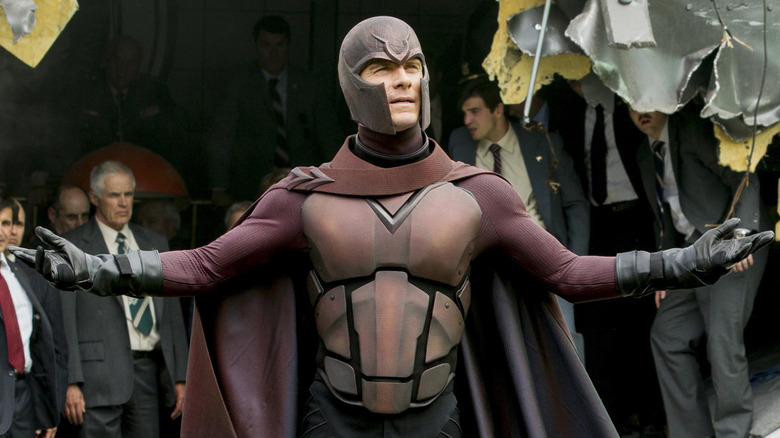
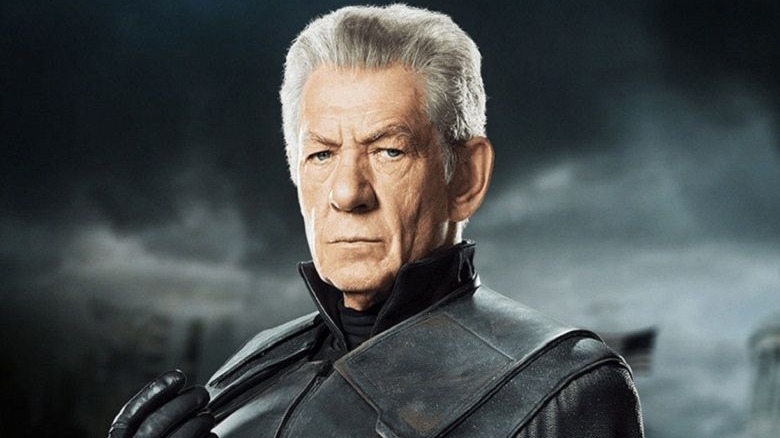
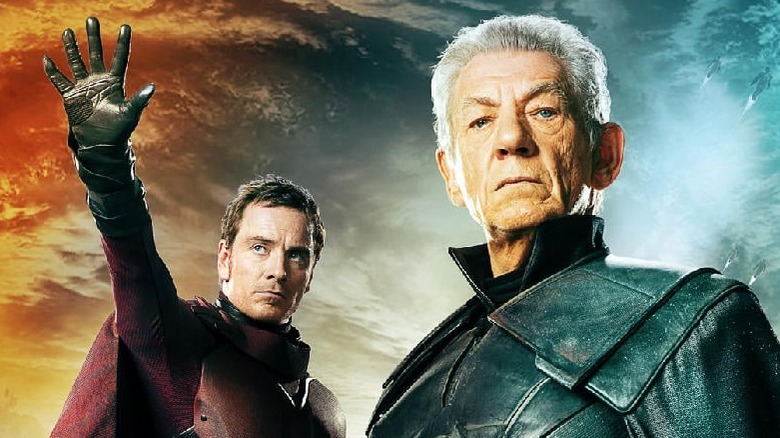
One of those aforementioned love/hate elements with the franchise is the fact that only a handful of mutants received the spotlight, despite the X-Men being one of the most vibrant and exciting ensembles in the comic book world. Though Wolverine was made the main star of the "X-Men" franchise, one of the characters who deserved more time in the sun is Erik Lensherr, better known as Magneto, who served as foe and circumstantial friend to the X-Men over the course of the franchise. In fact, the Master of Magnetism almost had his own solo film, but it soon evolved into the slick, snazzy "X-Men: First Class."

Magneto's Not-So-Secret Origins

The genesis of the Magneto standalone movie occurred during the making of "X2: X-Men United," with David S. Goyer ("Batman Begins)" and Sheldon Turner ("The Longest Yard") tapped as writer and director respectively. The film was slated to focus on Magneto's youth and his liberation from Auschwitz -- where he would have met a young Charles Xavier. Given that these events had been depicted briefly in the first "X-Men" film, it would have been amazing to see how Magneto went from a child to a man determined to protect mutantkind by any means necessary and how that fractured his friendship with Xavier.

Sadly, the film never came to be due to the poor reception of "X-Men Origins: Wolverine" -- and I'm not surprised, seeing as how that film was a hot mess. Fox instead decided to develop a "X-Men: First Class" film using elements from Turner's "Magneto" script. Bryan Singer, the man behind the first two X-Men films, was approached to direct; Josh Schwartz was slated to write the script but ultimately departed as he and Singer had different ideas on where the script should go

"I finished my draft. Bryan Singer came onboard the movie, who's the best possible guy to direct the X-Men movies, and he wanted to make a very different kind of movie. He's Bryan Singer. If he wants to make an X-Men movie, they make his X-Men movie. But it was a great experience and it was an honor to work on it."

Forging The First Class Of Mutants

Singer dropped out of "First Class" due to a combination of disagreements with Turner (although they both receive a "Story By" credit in the final version) and taking up directorial duties on "Jack the Giant Slayer", which ended up flopping at the box office. In a 2009 interview, Singer revealed that pieces of the "Magneto" prequel did end up in his original "First Class" treatment.

"This story would probably utilize some of the Magneto story because it deals with a young Magneto, so it might supersede that because this would explore that relationship between a young energetic professor and a disenfranchised victim of the Holocaust."

Those pieces wound up in the final film, including Erik Lensherr's friendship with Charles Xavier. In fact, said friendship is a driving force of the film which makes it hurt all the more when Magneto ends up paralyzing Xavier. 

Michael Fassbender was an excellent casting choice for the younger Magneto, as he captures the Master of Magnetism's fiery intensity, especially in the scene where he confronts a pair of Nazis in a bar. That sequence easily makes the "Top 10 Moments In Superhero Movie History" for me due to the rising tension and creative use of Magneto's superpowers. Lensherr says that he's Frankenstein's monster before he executes the last surviving Nazi, and it's an apt comparison; his relentless desire to protect mutantkind costs him multiple opportunities at a peaceful life throughout the film series. But like the man himself said, "Peace was never an option."

Read this next: Every Pre-MCU Marvel Movie Ranked

The post X-Men: First Class Was Almost a Magneto Prequel Instead appeared first on /Film.

02 Mar 19:45

Review: Netflix’s ‘Against the Ice’

by Abe Friedtanzer

By Abe Friedtanzer

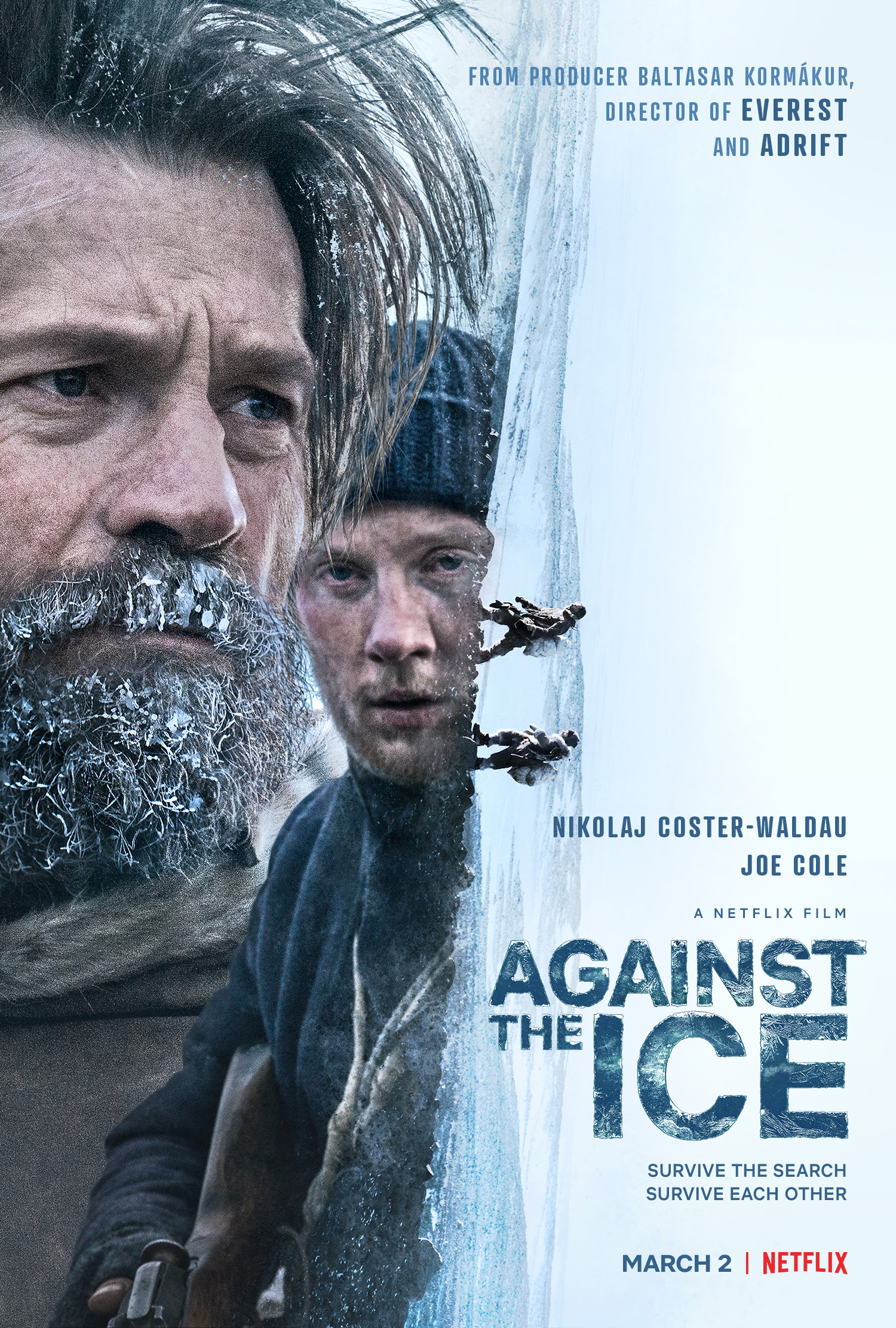
 Looking at the poster for today’s new Netflix release, you might first think of two possibilities. One is that it’s the latest Liam-Neeson-fights-wolves survival thriller, only Neeson wasn’t available. The other is that it’s a new project you haven’t heard about from Christopher Nolan where the characters defy gravity in their walks like in Inception and Tenet. It turns out it’s neither, but rather just a snow-set drama about a real-life explorer from Denmark.

Nikolaj Coster-Waldau, best known as Jaime Lannister from Game of Thrones, stars as Ejnar Mikkelsen, the captain of a 1909 Danish expedition whose express goal is to show his country’s claim to Northeast Greenland, which is being challenged by the United States...

02 Mar 12:05

Closest Black Hole to Earth Is Not a Black Hole at All. It's a Vampire Star System. - CNET

by Jackson Ryan
Astronomers thought they'd found Earth's nearest black hole. A new analysis provides a different explanation.
02 Mar 00:02

Cluster bomb, Cluster fark [News]

01 Mar 23:51

HBO Confirms Jennifer Coolidge Will Lead White Lotus Season 2

by Joshua Meyer

Last October, we reported that Jennifer Coolidge would be returning for season 2 of "The White Lotus." Several industry sources indicated that this would be the case, but HBO itself held off on making any official announcement to confirm Coolidge's return ... until now. The day after the Screen Actors Guild Awards, in which Coolidge lost the award for "Outstanding Performance by a Female Actor in a Television Movie or Limited Series" to Kate Winslet, HBO has confirmed (via Variety) that Coolidge is returning for "The White Lotus" season 2.

Podcast chatter prior to the awards had speculated that the reason HBO was taking so long to confirm Coolidge's return is that it did not want to disqualify her from the "Limited Series" award. Winslet won for "Mare of Easttown," and there's also been some speculation that show could return for a second season. However, HBO has already given "The White Lotus" an official season 2 order, with the action moving to a different location and focusing on a different set of characters. This is in keeping with the show's conceit of a chain of resort hotels called The White Lotus.

The series is going the anthology route, with the seven-episode second season relocating from Hawaii to Italy, where "The White Lotus" has now begun production in Sicily with a new cast that includes (in alphabetical order) F. Murray Abraham, Adam DiMarco, Meghann Fahy, Tom Hollander, Michael Imperioli, Theo James, Aubrey Plaza, Haley Lu Richardson, Will Sharpe, and Leo Woodall.

Other Characters Could Return In The Future

The resort-chain anthology format of "The White Lotus" would seemingly allow for other characters like Coolidge's Tanya McQuoid to pop up again in a different season on a different vacation. Series creator Mike White teased the approach he might take to TV Line last August, saying:

"I don't think you can credibly have [all the season 1 guests] on the same vacation again. But maybe it could be a Marvel Universe type thing, where some of them would come back. We only made one-year deals with the actors, so we'd have to find out who is even available."

It looks like Coolidge was indeed available to reprise her role, which has also earned her Golden Globe and Critics' Choice Television Award nominations.

Though she worked for a few years in Hollywood before that, Coolidge rose to more attention as Stifler's mom in "American Pie," a role that she described to Variety as "the original MILF." She went on to play Paulette Bonafonté opposite Reese Witherspoon in the "Legally Blonde" films and was more recently seen opposite Carey Mulligan in "Promising Young Woman." Now, you'll be able to see her in Sicily in HBO's "The White Lotus" season 2, which is currently in production.

Read this next: The 15 Best Anthology TV Series Ranked

The post HBO Confirms Jennifer Coolidge Will Lead White Lotus Season 2 appeared first on /Film.

01 Mar 23:47

The Texas Chainsaw Scene That Changed Elsie Fisher Forever

by Natalia Keogan

It's all too clear we're in the grip of a reboot/sequel ("requel," if you will) craze, with the latest edition to the canon being "Texas Chainsaw Massacre," the Netflix release directed by David Blue Garcia. Though the 2022 foray into the notorious killer Leatherface's bloodlust is far from the first installment in an arguably already bloated franchise, it is certainly not without appeal. In eschewing the convoluted storylines of previous installments and getting back to basics by being in direct conversation with the 1974 original from the late, great Tobe Hooper, "Texas Chainsaw Massacre" focuses on incorporating contemporary struggles of gentrification and towns all but abandoned by broader governmental infrastructure. While the film isn't without its (extremely pronounced) shortcomings, the marker of any horror film worth its salt is its ability to scare even the actors who are well-aware of the guise they are operating within. 

For actor Elsie Fisher, the discordant buzz of a whirring chainsaw never felt entirely safe — a scarring facet of production she shared in a recent interview.

A Little Bit Of Texas Chainsaw Background

The ghost town of Harlow, Texas seems to be the perfect place for young entrepreneurs to set up shop. The deserted storefronts and abandoned abodes beg to be transformed into trendy hot spots, such as swanky farm-to-table restaurants and white-walled art galleries. Spearheading this project are Melody (Sarah Yarkin) and Dante (Jacob Latimore), hailing from San Francisco and dragging along their respective younger sister (Elsie Fisher) and girlfriend (Nell Hudson). Unbeknownst to the group, Harlow has a pretty infamous ghoul among its ranks: Leatherface, the chainsaw-wielding product of murderous inbreeding, silently resides in this dusty old town. Clearly, Leatherface is both appalled and excited by the prospect of millennial newcomers moving onto his turf — more bodies mean more bloodshed.

However, the film's insistence on incorporating real-world issues — ranging from gentrification to gun control — is hardly given any sort of honest platform, instead serving as shoddy framework for propping up the horror against any semblance of social critique (writer BJ Colangelo really digs into this messiness). Luckily, "Texas Chainsaw Massacre" somewhat delivers in the time-honored tradition of slathering a horror film in guts and gore, and as such it also produced some pretty gnarly chase and kill sequences. In one such scene, Lila (Fisher) becomes Leatherface's target — and the actual shooting of this pursuit engaged the actor's real-life fight-or-flight response.

Just Imagine Being Chased By Leatherface

In a recent interview with Looper, Fisher stated that her character's fateful encounter with Leatherface was particularly spine-chilling for her to film, with much of her terror having to do with the nature of the chainsaw props on set:

"When I'm running away from [Leatherface], the chainsaw that they had on set [may have been] a real chainsaw, or at least had very realistic sounding noises. We had four different chainsaws, I think. There was a plastic one, one with just chains, one with just sounds, and then a real one. That was pretty terrifying."

The terrifying game of musical chainsaws notwithstanding, it's also worth noting that the actor who plays Leatherface, Mark Burnham, was specifically cast due to his large stature and build. In comparison, the five-foot-two, 18-year-old actress would have a lot to be intimidated by, even if the scenario is completely contrived and on-set safety coordinators are abound. This was perfectly clear to Fisher, who never felt unsafe during production, but this didn't mean that the very real call of the chainsaw didn't raise the hairs on the back of her neck.

"Everyone knew exactly what they were doing, thankfully. No one got hurt, and I never felt like I was going to get hurt, but that's instincts kick in. You're like, 'Oh crap. That's a chainsaw.' It was a lot fun."

Personally, any man chasing me with a chainsaw — real or not — is going to take over for my regularly scheduled sleep paralysis demon for the foreseeable future. Particularly with a film that up-stages the original in terms of violent bleakness during its final moments — though let's face it, no one will ever top OG final girl Sally's (Marilyn Burns) manic laughing-sob as Leatherface performs interpretive dance to the sound of his chainsaw — it's no wonder Fisher felt very real fear while filming. Unfortunately, it appears that the film's scariest moments may have happened behind the scenes as opposed to being fully realized on the screen. But hey, "Texas Chainsaw Massacre" is fully worth it, if only for the murky subplot involving Lila's brush with school shooting gunfire and a subsequent fascination with guns. If this country's abhorrent approach to culling gun violence won't lead to your premature death, it turns out that a now-geriatric serial killer just might do the trick!

Read this next: The 15 Best '70s Horror Movies Ranked

The post The Texas Chainsaw Scene That Changed Elsie Fisher Forever appeared first on /Film.

01 Mar 23:47

Ukraine* has been accepted into the EU. Suck it, Turkey (*'s application) [News]

01 Mar 23:47

Park Ji-Hu Reveals Her Biggest Regret About Her All Of Us Are Dead Role

by BJ Colangelo

The post-apocalyptic teenage zombie drama "All Of Us Are Dead" has continued the South Korean trend of becoming the most popular show on Netflix, following the trends set by Hwang Dong-hyuk's "Squid Game" and Yeon Sang-ho's "Hellbound." Based on the popular webcomic "Now At Our School," the Netflix show "All Of Us Are Dead" is a twelve-part series about a group of students at Hyosan High School as their science laboratory becomes ground zero for an outbreak of the manmade Jonas Virus, which transforms people into rage-filled monsters that act like the zombies of "Train to Busan" or "28 Days Later." Now, the students must deal with not only the typical drama that comes with being a teenager but also existing in a world gone mad after the government has left them for dead, which may require them to kill their friends to survive.

Nam On-jo, the female protagonist played by Park Ji-hu of "House of Hummingbird" and the upcoming Korean adaptation of "Little Women," is a fan-fave character on the webtoon, but people were disappointed with her on the show. Nam On-jo has feelings for Soo Hyuk (Park Solomon) and serves as the unrequited love interest of the show's main character, Cheong San (Yoon Chan-young). On-jo witnesses the first zombification of a classmate, making her zombie status highly debated, but many fans found her actions to be frustrating and passive, with some going as far as to call her a "nuisance character."

Park Ji-Hu Thinks Some Of The Complaints Are Valid

Park Ji-hu totally understands the criticisms audiences have made about her character's passivism and validated the unhappy fans in a recent interview with Koreaboo. "I can understand why people felt that way, though I didn't see it in that way while I was filming," she said. "However, it was when I watched the scenes after the filming was complete that I thought others might feel frustrated with it." A common critique has been that On-jo was too emotional on the show, which is an irritating comment to make about a teenage girl watching the world fall apart around her. "On-jo is a teenager and she's emotional, so if she loses her friends, she may have that kind of reaction," Ji-hu said.

While Ji-hu is undoubtedly proud of her work on "All Of Us Are Dead," she did express that there's one thing she regrets, even if it was out of her control. Despite being one of the lead characters, On-jo isn't involved in a lot of the heavy action sequences. Rather than explode into high-octane battle, On-jo can frequently be seen fleeing, running, or falling, and facing off with zombies in fear, not combat. "I thought to myself, 'I wish On-jo could have been braver because she would have been able to fight the zombies head-on,'" said Ji-hu. 

As the daughter of a firefighter, On-jo unquestionably has excellent survival skills. While fighting a zombie face-to-face may have been a more exciting move, On-jo's decision to flee from danger is still a solid strategy.

Park Ji-Hu Is Still A Teenager, After All

One of the strongest aspects of "All Of Us Are Dead" is that many of the actors playing the main cast were still teenagers (or close to it) during production. Park Ji-hu was a high school student at the time of filming and was even preparing for her university entrance exams while on set. Following her audition, she was given the choice to play Nam On-jo or the cruel Lee Na-yeon (played by "Squid Game'' actress Lee Yoo-mi). "I chose On-jo without any hesitation," Park said. She found herself drawn to the character's warm-heart and empathy, as well as the subplot with Yoon Chan-Young's Cheong San, which gave her the chance to play on-screen romance despite having never dated anyone in real life.

As a young performer, Park Ji-hu does recognize that she still has plenty to learn, and strives to continue perfecting her craft. "With the lessons and work that I have learned from 'All of Us Are Dead,' I wish to show my growth and development as an actor going forward," she said. While a second season of "All Of Us Are Dead" has yet to be announced, Nam On-jo is one of the lucky few survivors at the end of the first season, which means she'd likely return if Netflix chooses to renew. 

Regardless of how people feel about the character, it's clear that audiences loved Park Ji-hu's performance, as her social media following apparently spiked up "80 times higher," bringing her Instagram follower count to more than 3.8 million. She may have some regrets as every actor tends to, but it's clear her performance as Nam On-jo resonated with viewers across the globe.

Read this next: 20 Movies About Time Travel Ranked Worst To Best

The post Park Ji-hu reveals her biggest regret about her All of Us Are Dead role appeared first on /Film.

01 Mar 23:46

Amazon Luna is now available to everyone in the US, and it has new features

by João Carrasqueira

After launching in early access over one year ago, Amazon has announced that its Luna cloud gaming service is now available to everyone in the mainland United States. Since its initial launch, the service has expanded to more devices, now covering Windows, macOS, Chromebooks, iOS (via the web), Android (including Fire tablets), and Fire TV devices. Now, it’s also available to anyone who wants to try it, and it’s launching with some perks for Amazon Prime members. There are also some new features.

New Amazon Luna channels and pricing

Amazon is launching the Prime Gaming Channel, which is a new way to access games at no additional cost if you have an Amazon Prime membership. The selection of games available rotates, and it’s available initially with games that include Devil May Cry 5, Observer: System Redux, PHOGS!, and Flashback. From March 8th to March 14th, Ubisoft’s Immortals: Fenyx Rising will also be available as part of this channel.

There are two other new channels joining Amazon Luna today. First is the Retro Channel, which grants members access to old-school titles such as Street Fighter II Turbo: Hyper Fighting, Metal Slug 3, and Castlevania Anniversary Collection. Then there’s also the Jackbox Games Channel, with access to all of the Jackbox Party Packs (eight in total), each containing a variety of games that can be played with lots of people at a party. Each of these channels is its own subscription, costing $4.99 per month each.

All Amazon Luna channels and pricing

They also join the existing Luna+, Ubisoft+, and Family channels, each one being its own subscription. Those who subscribe to the Luna+ or Family channels before March 31st can enjoy a discounted price of $5.99 and $2.99 per month, respectively. That price will be permanent, as long as the subscription is not interrupted. If you subscribe after that date, prices will go up to $9.99 per month and $5.99 per month for each channel. The Ubisoft Channel costs $17.99 per month.

New Luna features

In addition to the new channels, Luna is also getting new features along with today’s launch. First off, there’s now a quick and easy way to stream your games on Twitch if you’re playing on Windows, macOS, or Fire TV. The new broadcast button lets you quickly start streaming your gameplay, including a webcam overlay and mic input. On Fire TV, you can use a QR code to connect your phone to use it as a webcam for the stream.

The other new feature is the Luna phone controller. If you want to give Luna a go on Fire TV and you don’t have a controller, you can connect your phone and use it as a controller to try out some games. It’s not the ideal way to play, but it can be a way to test if the service works for you before spending money on a controller.

If you want to try it out, you can visit the Amazon Luna website today to check out the service. We’re able to access the site without an Amazon US account, but games aren’t actually playable that way.


Source: Amazon

The post Amazon Luna is now available to everyone in the US, and it has new features appeared first on xda-developers.

01 Mar 23:46

The 15 Greatest Car Chases In Movie History Ranked

by Nick Bartlett

What makes a great car chase? Is it the sheer spectacle, heart-stopping stunts, or technical innovation? Car chases are among the most purely cinematic components of action movies. There's no dialogue necessary, no exposition. It's entirely spectacle and acts as a real test of a director's skill whether they can tell a story through images and editing alone. What makes car chases so unique is that each viewer brings their own preferences to them. One person might like the breakneck speed of the "Fast And The Furious" films or the goofiness of "Taxi," while someone else might appreciate the slow build of tension in something like "Duel."

Nowadays car chase scenes can feel a little rote, especially with the over-reliance on CGI and an increasingly formulaic approach to action sequences. They are too often reduced to a spectacle where you switch your brain off and just enjoy the visuals. This isn't always the case, though, and below is a selection of the very best speedy chases cinema has to offer, ranked.

The Spy Who Loved Me (1977)
Any number of James Bond films could occupy a place on this list, from the death-defying 180-degree spin in "The Man With the Golden Gun" all the way through to the epic chase in "No Time To Die." However, our pick is one that has everything: a car full of gadgets, gun-wielding henchmen, a murderous motorcyclist with an explosive sidecar, a particularly adept helicopter pilot, and even divers armed with spearguns, all of whom are dispatched with Roger Moore's trademark nonchalance and arched eyebrow. 

The helicopter segment is especially impressive, as it pivots on a dime in pursuit of Bond. For a moment it genuinely seems like there is no escape, that is until Bond drives his Lotus Esprit into the sea to demonstrate exactly what it can do. The Esprit is one of Bond's very best cars, with an incredibly cool design, and just as many gadgets as the Aston Martin, with the added benefit of being able to transform into a submarine! It's the quintessential Bond car chase, and even ends with the classic "man sees something unbelievable, double-takes then looks at his drink in disbelief" gag. What more could you want in a Bond film?

The Way Of The Gun (2000)
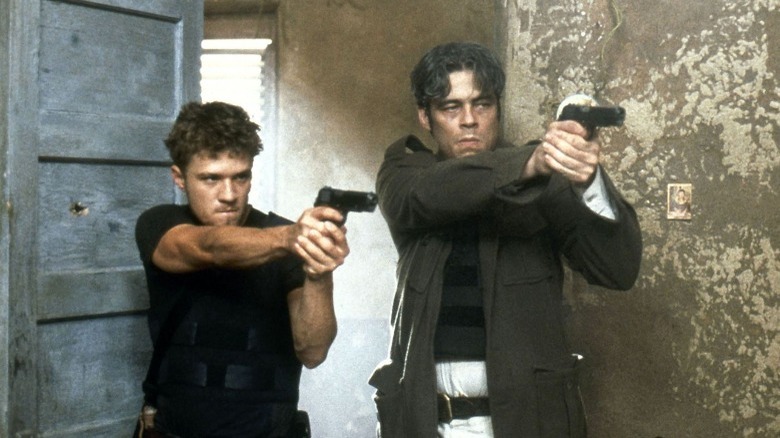
Proof (if need be) that a car chase doesn't need to be fast-paced to be intensely gripping, this sequence in Christopher McQuarrie's underrated thriller wins a place on our list for sheer inventiveness. After kidnapping the pregnant Juliette Lewis, career criminals Parker and Longbaugh (Ryan Phillippe and Benicio Del Toro) attempt to give the slip to the clinically professional hired guns (Taye Diggs and Nicky Katt) on their tail in a chase apparently inspired by an episode of Cops.

McQuarrie goes against convention in his depiction of the criminals throughout, and this scene is no exception. Parker and Longbaugh lead the pursuing bodyguards through a series of narrow alleys, slowing to a crawl and forcing them to stop and start, luring them out of their car only to quickly jump back into theirs and speed off again. They build a rhythm doing this time and again, until the bodyguards speed around a corner, where the kidnappers reverse straight into them, totaling the pursuing car and leaving the hapless bodyguards for the cops. It's a short, abrupt car chase that also features some bizarre imagery. The sight of Diggs and Katt propelling their car forward with their feet is a surreal detail that sticks in the memory, even if it doesn't make a huge amount of sense.

The Blues Brothers (1980)
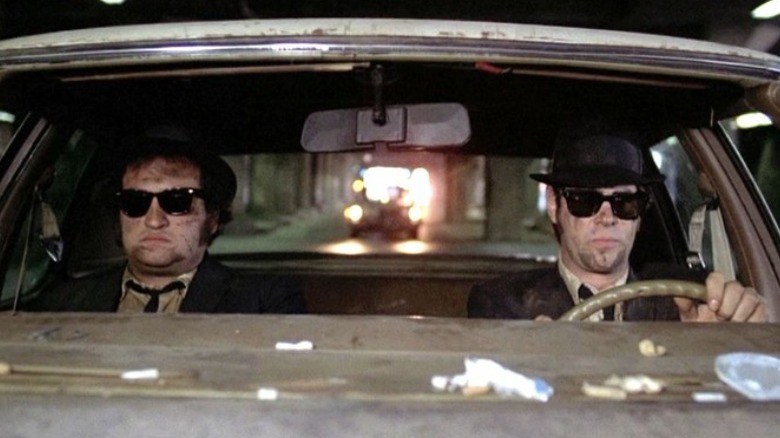
There's a long history of car chases in comedy films, going all the way back to Buster Keaton's "Sherlock Jr," but there's none more madcap than the finale of John Landis' "The Blue Brothers." A protracted chase that was all shot practically using 13 different Bluesmobiles and 60 police cars, shutting down city and suburban streets alike, with a final tally of 103 totaled cars.

The Blues Brothers, Jake (John Belushi) and Elwood (Dan Aykroyd), race to deposit the money they have raised in a Chicago bank, pursued all the way by the state police, country musicians, and Illinois Nazis. Landis fills his chase with visual gags and heart-stopping stunts. In one incredible moment, the Bluesmobile launches over a police cruiser, just clipping the siren light, something the stunt driver only attempted once Dan Aykroyd and John Belushi each offered him $1,000. The chase ends with the police cars in a literal pile up, the Nazis plummeting to their doom from an uncompleted motorway bridge, and the Bluesmobile falling apart the second the brothers shut the doors. It's the perfect punchline to one of the funniest, most anarchic chases ever committed to film.

The Italian Job (1969)
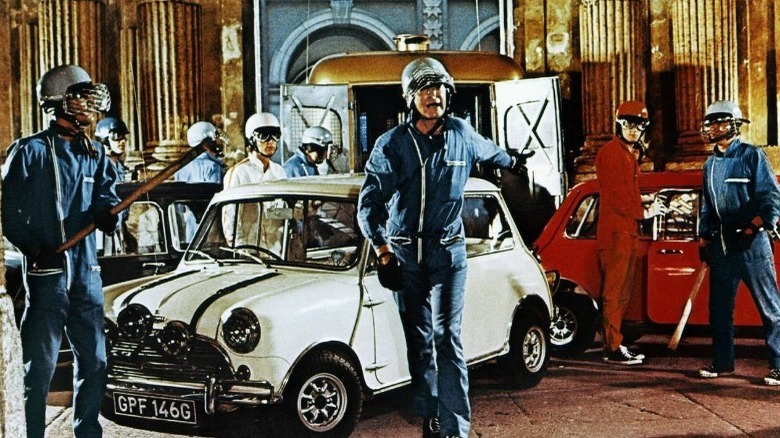
No list of car chases would be complete without this gem of British cinema. Everyone knows the literal cliffhanger ending of "The Italian Job," but the car chase that precedes it is one of the most fun sequences ever filmed. Michael Caine's gang leads the Italian police on a merry dance through the streets of Turin in three Mini Coopers as they try to get their stolen gold across the border into the Swiss Alps. It's a witty sequence, often feeling like something out of a Jacques Tati film. The Minis drive in and out of buildings, through a mall, and into a car showroom where they hide for a few seconds. In a spectacular moment driving onto the roof of the still-under-construction Torino Palavela, disappearing from sight at the top and then driving back down as the police struggle to get their cars turned around.

It would all be incredibly cool if it wasn't for the very British bickering going on inside the cars. Camp Freddie's line "I think you might make an effort to keep up with the others, Tony" is a wonderful corrective to the wordless stoicism we usually see in car chases. As it is, this is a truly fun chase, with some incredible stunt driving, and it never outstays its welcome.

The Road Warrior (1981)
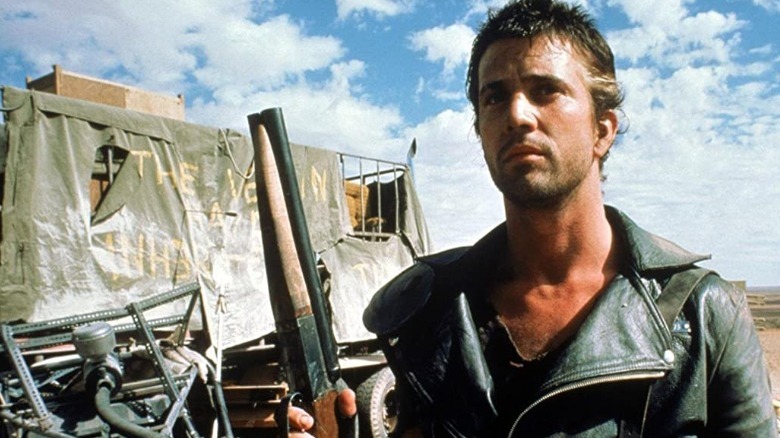
Until "Mad Max: Fury Road" made every post-apocalyptic action film redundant, the climactic pursuit in "The Road Warrior" was the definitive sci-fi car chase. As it is, it still mostly stands up as a brutally nihilistic sequence, with some truly jaw-dropping stunts. After months of being threatened by the Lord Humungus for their gasoline, the inhabitants of an isolated oil refinery make a break for it, driving an oil tanker away from their camp to give the rest of the group a chance to escape while they are pursued by Humungus' marauders. The misanthropic Max (Mel Gibson) drives the rig, which is defended by a handful of guards, all of whom are killed quickly and without fanfare. There's no noble final stands here, as characters are unceremoniously thrown under the vehicles' wheels. Max is left alone (aside from The Feral Kid) as Humungus' gang close in.

The dynamic camerawork is incredible as the bad guys overwhelm the rig, with the helicopter shots giving a perfect view of the action. The driving and crashes are largely done without huge explosions, but this only makes the stunts more impressive. One stuntman broke his legs during the chase, but George Miller kept it in the final film (unsurprisingly he's the guy who flies through the air flipping head over heels). "Fury Road" might be the better film, but there's a grittiness and sparseness to this chase that makes it a thrilling watch. 

Drive (2011)
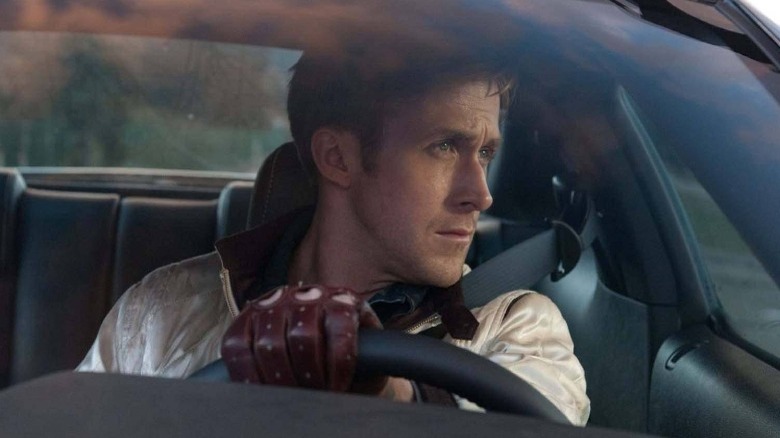
There are a number of chases in Nicolas Winding Refn's breakout Hollywood movie, but the opening sequence remains the slickest road work of the film. As direct a reference as possible to Walter Hill's "The Driver," we see the unnamed driver (Ryan Gosling) pick up a pair of thieves and navigate his way through the streets of LA, all the while listening in to the police radio to stay one step ahead of pursuing squad cars. 

It's an unconventional chase, and there's an admirable amount of restraint on display: Rather than engaging in death-defying stunts, the driver takes his time and hides underneath bridges to avoid police helicopters. It's telling that the most suspenseful moment might be when the car is completely stationary with its headlights off, just waiting for the squad cars to pass by. He's less interested in racing the cops than outwitting them ... the stunts come later. "Drive" does the unimaginable and actually improves upon the scene it's based on, and even more unthinkably, "Baby Driver" would again improve on it six years later. This sequence remains effortlessly cool, though, and sets up the driver's character perfectly, all set to a pulsing score from Cliff Martinez.

Terminator 2: Judgment Day (1991)
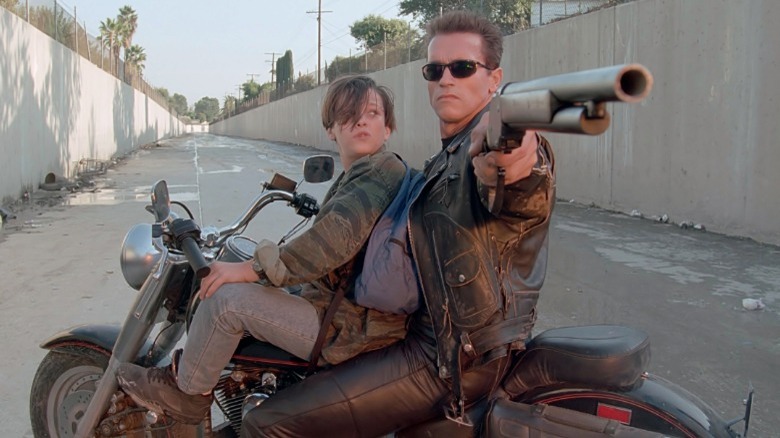
This is technically a truck/motorbike chase I suppose, but we're including it anyway because it's one of the most heart-stopping sequences of the series. The teenage John Connor (Edward Furlong) tries to escape on a dust bike, hotly pursued by the sinister T-1000 (Robert Patrick) driving a tow truck, who in turn is being chased by the Terminator (Arnold Schwarzenegger) on a Harley Davidson, cocking his rifle in a reference to John Wayne in "True Grit."

While the chase itself doesn't re-invent the wheel, what makes the scene work is the sheer intensity that director James Cameron brings to it. The grimly determined T-1000 smashes his truck through everything that lies in his path to catch Connor, gaining ground with every second. Meanwhile, the Terminator is following both from above on the freeway. His jump from the bridge down into the storm drain is magnificent, but even more impressive is the supremely tense moment he speeds alongside the truck and overtakes just fast enough to avoid being crushed into the wall. Arnie grabs Connor, blasting the truck and blowing it up with the T-1000 inside. It might be a temporary victory, but the final moments of the chase are still immensely satisfying.

The Driver (1978)
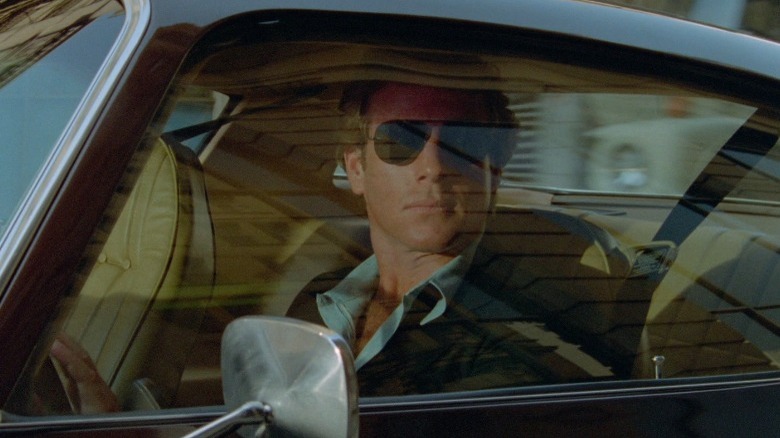
A pulpy mixture of "Le Samourai" and "The Getaway," Walter Hill's stripped-back neo-noir is as taciturn as Ryan O'Neal's lead character, with no character names and very little dialogue. Instead, Hill lets the action do the talking in a number of breathtaking chase sequences, most notably in a thrilling set piece where the Driver demonstrates his abilities by systematically smashing a car to pieces in a parking lot. 

The best chase of the film, though, comes right at the end as the Driver chases down the thief who has stolen the crucial key to the locker that contains his stolen money. It's an exhilarating, frenetically shot sequence as the Driver stays on the villain's tail from the freeway to a deserted parking lot and ends in an abandoned warehouse. In a supremely tense final showdown, the cars stalk each other through the warehouse in silence, until they face each other down in a thrilling game of chicken. Hill has gone on the record saying all his films are essentially westerns, and this is especially true of "The Driver" and its finale in particular. The climactic chase is effectively a classic western duel, only using cars instead of guns.

Mad Max: Fury Road (2015)
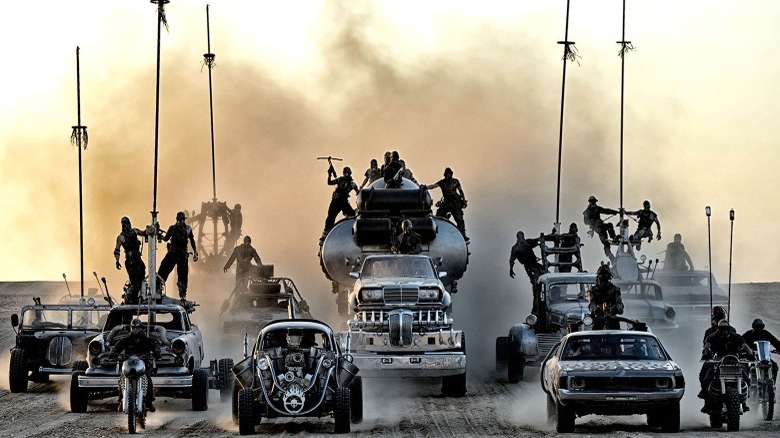
Upon seeing "Mad Max: Fury Road" for the first time, Steven Soderbergh commented

"I don't understand how they're not still shooting that film and I don't understand how hundreds of people aren't dead." 

These are both fair points, as George Miller's use of practical effects and stunt work is still pretty awe-inspiring, and it all contributes to what is potentially the best action film of the 21st century so far. It's difficult to single out any scene in particular, as the entire film is essentially one big car chase. Imperator Furiosa (Charlize Theron) liberates the wives of dictator Immortan Joe (Hugh Keays-Byrne) by stealing a War Rig, with the assistance of the captive Max (Tom Hardy), hotly pursued by Joe and his personal army.

Director George Miller manages to sustain the high octane energy level throughout the film without ever letting up. He introduces a whole bunch of set-ups which all pay off organically throughout the story, which is told almost entirely through the action with next-to-no expository dialogue. There are also some unique, vibrant visuals including Joe's henchmen swinging onto the rig on poles, the War Boys leaping from one vehicle to another, and the whole convoy driving straight into an oncoming storm are all images firmly embedded in our memories.

Baby Driver (2017)
So far there have been a ton of spectacularly constructed car chases, but they are all primarily staged as action sequences. Not so in Edgar Wright's "Baby Driver," where the car chases are choreographed more to resemble dance routines than anything else. There are a plethora of issues with the film as a whole, but Wright's technical prowess is never in doubt when it comes to the chases. The opening set piece is pretty much a perfect self-contained piece of vehicular mayhem, set to "Bell Bottoms" by the Jon Spencer Blues Explosion. 

Every movement Baby (Ansel Elgort) makes behind the wheel syncs up with the song, and as the robbers make their escape the sequence builds in scale along with the song, to the point where Baby is knocking police stingers around and gliding his car in perfect time with the music. Other films might have more spectacular stunts or higher stakes, but none can rival the fluid, almost balletic driving on display here. It's less a case of showing off than Wright demonstrating an inherently cinematic sequence. It's amazing to watch, though it's just a shame the rest of the film didn't live up to this scene.

Bullitt (1968)
This is arguably the coolest car chase in cinema history, and the incredible stunt driving of Bill Hickman set the standard for every subsequent scene like it. Detective Frank Bullitt (Steve McQueen) chases down a pair of hitmen (Hickman and Paul Genge) through the streets and hills of San Francisco. 

Lalo Schifrin's languid score sets up the scene perfectly, building tension as the bad guys become aware of the cop on their tail. In a nice little touch, Hickman surreptitiously fastens his seat belt just before making a break for it. Once the chase starts in earnest, the music cuts out completely and is replaced with the sounds of car engines and squealing tires as Bullitt chases the criminals through the hills of San Francisco and onto an open road in Santa Cruz. This is where the speed really ramps up. Despite the logistics of the chase making zero sense (the continuity is so bad, the same Volkswagen Beetle appears more than four times in various positions) it remains thrilling today and proved to be the car chase to beat. If Spielberg is indeed working on a remake, he's going to have his work cut out for him improving on this scene.

Ronin (1998)
John Frankenheimer's stylish spy thriller has aged incredibly well and is another film overdue for a reappraisal, especially for its immersive, suspenseful car chases. There's no reliance on CGI or camera tricks, just supremely talented stunt drivers and practical effects.

There is an abundance of scenes to pick from here (the central heist scene is also well worth a look), but best of all is the chase through Paris motorways with Sam (Robert De Niro) and Vincent (Jean Reno) which involved 300 stunt drivers. As the two cars eventually head the wrong way down a one-way motorway tunnel it becomes truly nail-biting stuff, made even more immersive by the POV shots Frankenheimer accomplished by mounting the camera on the car bonnets. Unlike many chases, this one feels as if the cars are genuinely going fast and often out of control, and a lot of that is because the cars were driving at around 120 miles an hour during these scenes, often with the actors sitting in the speeding cars. Those looks of apprehension and fear on their faces are very real!

To Live & Die In LA (1985)
In a neat inversion of the standard set up, this traumatizing chase has detectives Chance (William Petersen) and Vukovich (John Pankow) pursued by gangsters working for a psychotic forger (Willem Defoe). Shot at the very end of filming so if anything happened to the actors they would at least have the majority of the film completed, it's a 15-minute sequence that escalates and escalates to the point of near-hysteria.

Starting with a gloriously fluid shot where we track the detectives' car before lifting up to show the villains on the bridge above before both cars join the freeway and turn off for the chase to begin in earnest. Chance dodges through trucks in a yard before escaping their pursuer by outracing a moving freight train and exiting underneath the 6th Street Bridge, where it briefly turns into "Grand Theft Auto" with gangsters popping up and firing at the detectives, blasting the back windscreen and sending Vukovich into an all-too-believable breakdown (the terrified Pankow barely had to act). Chance finally gets back onto the freeway, only to be surrounded by gangsters, so he makes the unthinkable decision to drive straight into oncoming traffic, dodging and swerving to avoid the cars heading his way in a nail-biting scene that almost certainly inspired the similar chase in "Ronin."

What's Up Doc? (1972)
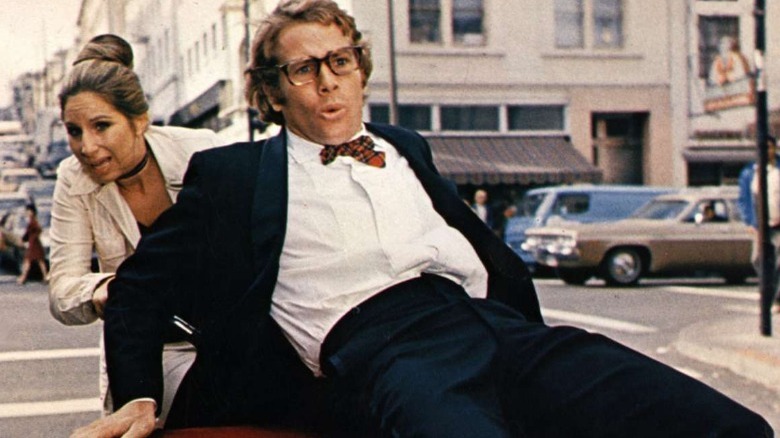
The late, great Peter Bogdanovich threw everything he could into this brilliant and breezy homage to classic screwball comedies. A disparate collection of oddballs try and get their hands on a specific plaid satchel bag, but there are four identical bags in circulation, leading to numerous mix-ups, culminating in one of the most chaotic, genuinely funny car chases of all time as the numerous cars hurtle down the hills of San Francisco.

The chase in "What's Up Doc?" impresses on pretty much every level. Bogdanovich reportedly spent a quarter of the film's budget on this chase, and it is money well-spent. The jokes are densely packed, and Bogdanovich manages to surprise his audience with every punchline, from the workmen gingerly carrying a glass panel across the street to a minivan getting gradually flattened as each car smashes into it, ending with the incredible stunt where one poor guy in a convertible puts his face through a canopy the entire length of the pier before diving off the end. It's a technical marvel, managing to be funny, exciting, and unpredictable all at the same time. It's reminiscent of Buster Keaton, with one overt reference to "Seven Chances" that serves as a nice rejoinder to the self consciously cool car chases that usually populate lists like this.

The French Connection (1971)
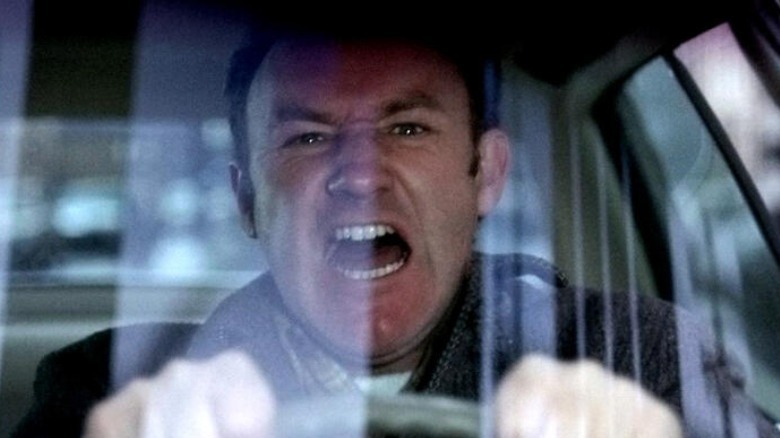
Well ... it had to be this one, didn't it? After narrowly surviving an assassination attempt, "Popeye" Doyle (Gene Hackman) chases after the hitman Pierre (Marcel Bozzuffi) who escapes on an L train. Undeterred, Doyle pursues the speeding train, absolutely thrashing his car as he attempts to catch it. The result is the rawest, most intense car chase of all time as Doyle screams and punches his dashboard in exasperation as various cars and bystanders dive out of his way. Legend goes that the first take of this chase was fairly lackluster, and director William Friedkin candidly told stunt driver Bill Hickman that he wasn't impressed. Hickman responded, "You get in the car with me, and I'll show you some driving." He then proceeded to drive through 26 blocks at 90-miles an hour, with Friedkin filming the entire time.

While now primarily known for his work in genre cinema, Friedkin made his name in documentary filmmaking, and his genre films work so well because they are all grounded in scarily authentic realism. Of course, this wasn't all by design. Friedkin shot the chase scene without the required permits and at one point it spilled out into actual traffic, leading to an unplanned collision which was kept in, giving the whole sequence a ragged, realistic feel that films are still struggling to capture today. It remains one of the most frenetic, exhausting sequences ever caught on film, and fully deserving of its iconic status.

Read this next: The 14 Greatest Action Movies Of The 21st Century

The post The 15 Greatest Car Chases In Movie History Ranked appeared first on /Film.

01 Mar 23:45

Amazon's Luna cloud gaming service officially launches in the US

by Jon Fingas

It took a year and a half, but Amazon's Luna cloud gaming service finally exists as more than an early access project. Amazon has formally launched Luna in the mainland US for Android, iOS, Chrome OS, macOS and Windows. The core Luna+ service with over 100 games will normally cost $10 per month, with the kid-friendly Family Channel and Ubisoft+ Channels available for a respective $6 and $18 per month. Amazon hopes to reel in newcomers by dropping the monthly fees of Luna+ and the Family channel to $6 and $3 for anyone who signs up during March. Existing users just have to maintain their subscriptions to lock in that pricing.

The official debut comes alongside some new channels. A Prime Gaming channel, as the name implies, gives Amazon Prime members a free, rotating mix of games. The March selection will include titles like Devil May Cry 5 and Flashback. Pay $5 per month for the Retro Channel and you'll get Capcom and SNK classics like Street Fighter II Hyper Fighting and Metal Slug 3, while a similar outlay for the Jackbox Games Channel provides access to all eight Jackbox Party Pack titles.

Luna's latest update also makes it simpler to stream gameplay from a Fire TV device, Mac or Windows PC on Twitch. You'll need a webcam and mic if you want to interact with viewers, but this might be an option if you're determined to broadcast and don't have a brawny-enough computer to play demanding locally-stored games.

Amazon's challenge, as with comparable services like Microsoft's Game Pass Ultimate, is to convince players that subscription-based game streaming is a good supplement or even replacement for conventional PC and console gaming experiences. You'll have the convenience of playing on seemingly every device you own, but you'll also be limited by what you can play and the quality of your internet connection. Amazon's main advantage is its ubiquity — it can make sure people are aware Luna exists, whether they're watching on Twitch or buying a Fire TV gadget for the living room.

01 Mar 23:31

This International Thriller Inspired Kill Bill's Animated Sequence

by Devin Meenan

Quentin Tarantino's films are built on homage. As you might've guessed, the director has a love of pulp fiction. Westerns, kung fu films, heist movies: Tarantino loves B-movies of all sorts and his movies remix those genres with loving, self-referential pastiche. "Kill Bill" is his homage to the samurai film, and he goes one step further in honoring the genre's Japanese roots by including a seven minute anime sequence. Like much of Tarantino's work, the inspiration for the sequence lies in the work of another.

The Origin Of O-Ren Ishii

"Kill Bill: Vol. 1's" anime sequence, which begins the film's Chapter 3, is a stunning moment among a sea of them. Beginning exactly 37 minutes into the film, the animation chronicles the brutal origin story of O-Ren Ishii/Cottonmouth (Lucy Liu). As a child, O-Ren witnesses her parents being killed by Yakuza boss Matsumoto while she hides under her bed. The sword that kills O-Ren's mother just barely misses O-Ren's head; the first drops of blood from her mother's corpse land on O-Ren's face.

Luckily for O-Ren, Boss Matsumato is a pedophile, and she easily gets close enough to kill him. Baptized by the blood of her parents' killer, O-Ren climbs to become one of the world's top assassins. The scene embodies the themes of "Kill Bill," from the destructive cycle of revenge to men's exploitation of women. The hyper-violence of the sequence, from a handgun bullet blowing a man's whole lower leg off or a geyser of blood erupting from Matsumato's chest, is barely exaggerated from the film's live-action parts.

The sequence was directed by Kazuto Nakazawa and produced by prolific anime studio Production I.G. Reportedly, Tarantino was a fan of I.G.'s previous films, "Ghost in the Shell" and "Blood: The Last Vampire." (Matsumoto's sword-wielding henchman also looks like a dark-haired version of Vicious from "Cowboy Bebop.") However, the scene wasn't only influenced by Japanese animation.

The Indian Film That Influenced "Kill Bill"

While interviewing Tarantino in Venice, Indian filmmaker Anurag Kashyap asked him "​​whether the Manga sequence in 'Kill Bill' was inspired from an Indian film and [Tarantino] excitedly remarked, 'Yes, I saw this Indian serial-killer film which showed violence as animated." Using his knowledge of his homeland's film industry, Kashyap was able to deduce the film Tarantino was referring to.

The film in question is "Aalavandhan" (English translation: "He Came To Rule"), a 2001 psychological thriller that, like "Kill Bill" later did, intercut between live-action and animation. Directed by Suresh Krissna, "Aalavandhan" was adapted from the 1984 novel "Dhayam" by Kamal Haasan; Haasan himself wrote the film's screenplay and starred as dual roles Major Vijay Kumar (Vijay) and Nandha Kumar (Nandhu). Unlike Tarantino's film, where animation displaces live-action for a single scene, "Aalavandhan" blurs the lines further; animated characters emerge from and fight rotoscoped across live-action footage more than once. This means that the "Aalavandhan" animation sequences are more disorienting -- which is fitting, since instead of being a narrated flashback, the animation in "Aalavandhan" is the product of a character's drug-fueled hallucinations. There's also less gore; even a scene where Haasan's lead stabs a woman and paints his arms and face with her blood pales compared to the gallons of spilled blood in "Kill Bill's" seven animated minutes. 

Kashyap's connection to Tarantino doesn't end there. The director's next film will be a Hindi-language remake of "Kill Bill," starring Bollywood actress Kriti Sanon in the role originated by Uma Thurman. Whether Kashyap's "Kill Bill" will blend live-action and anime together remains to be seen.

Read this next: The 14 Greatest Science Fiction Movies Of The 21st Century

The post This International Thriller Inspired Kill Bill's Animated Sequence appeared first on /Film.
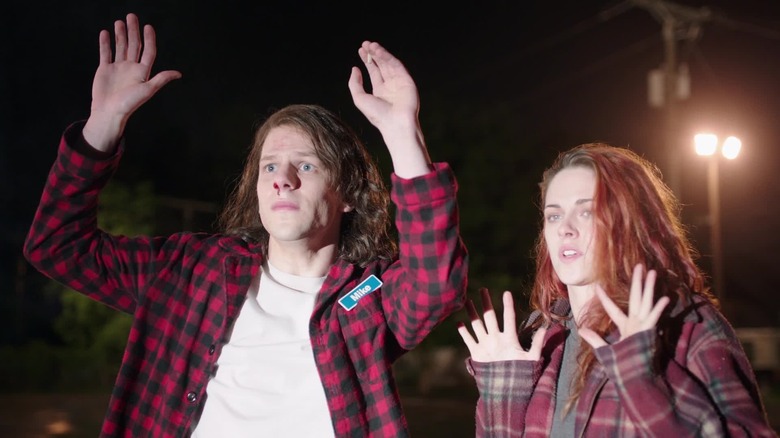
01 Mar 23:30

The 12 Most Influential Disney Movies Of All Time

by Margaret David

In 1923, Walt Disney and his brother Roy founded a studio that enjoyed modest success with a line of "Alice" shorts. It wouldn't be branded the Walt Disney Studio until 1926, and with that came the rise of Disney's first mascot, Oswald the Lucky Rabbit. Mickey wasn't long after, and neither was World War II. Disney's ambitions remained firm despite the nation's focus on the global conflict, and Disney continued to nurture his animation goals while they produced propaganda shorts for the war effort.

Since those tough times, Disney animators and effects crews have changed the landscape of modern cinema. From the quality of their animation to the integration of CGI effects, Disney has been a pioneer for nearly a century. Today Disney's parks thrive, Disney+ is a streaming juggernaut, and new techniques continue to be invented. It's a sour note that so many of Disney's works today have lost sight of the humble but powerful animation that gave them their start, but the Mouse endures. Disney changed the world, and here are 12 of their most influential movies.

Steamboat Willie (1928)

At less than eight minutes long, "Steamboat Willie," the first major film debut of Mickey Mouse is understated. It's pure slapstick. A hapless Mickey acts as the bulky Pete's crewmate aboard a steamer that's picking up cargo along the river, though he first presents himself (falsely) as its captain. Mickey's not exactly a dedicated worker, however. He's always running late, getting into trouble, and having singalongs with the animals down in the cargo bay.

It's a remarkable film for what it tries to accomplish, and how it succeeds. "Steamboat Willie" isn't the first short to have sound, as Walt Disney's competitor Fleischer Studios (home of "Betty Boop") had already tried to set their films to sound and music. It was hard to keep synch, though, much less charm the audience. That's where "Steamboat Willie" took the lead using a hidden tempo tracker, a bouncing ball in an unused corner of the screen to help the sound match up with the action. The result delighted audiences and critics alike, and that's how Disney became one of the biggest movers on the cartoon scene.

Snow White And The Seven Dwarfs (1937)

As the first full-length animated feature film, 1937's "Snow White and the Seven Dwarfs" isn't just a milestone of luscious, lively action. It pioneered certain animation techniques, including the vivacious red blush across Snow White's cheeks. That was achieved by a sole animator named Helen Ogger, not actual makeup like legend suggests. Ogger carefully stippled red dye on individual cells, ensuring continuity between sometimes frantic moments of animation. It was a technique so intensive and unique that "Snow White" remains the only film to attempt it.

Before that, Walt Disney had to fight to get his dream into production. A struggle referred to as "Disney's Folly" at the time, Walt desperately shopped around to get financing to create "Snow White." Regarded with derision, his luck changed when Joseph Rosenberg, a vice president at the Bank of America, chose to bankroll the expensive project. The result is movie history, the recipient of a unique Academy Award that was presented by Shirley Temple and designed to match Disney's first princess and her seven friends.

Fantasia (1940)

Shocking to think that "Fantasia," Walt Disney's glorious homage to the power of music, was first released in 1940. While "Fantasia 2000" was released in 1999, "Fantasia" feels so much more wild and alive, as if it were made no earlier than the '70s. A truncated franchise due to the economics of World War II, "Fantasia" premiered in stereo sound for the first time in movie history, with a brief theatrical run using specially-constructed Fantasound equipment to try and replicate the sound of a live orchestra.

The crowning gem of "Fantasia" is, naturally, "The Sorcerer's Apprentice." Mickey's antics slip the eye of his disapproving wizard master ⁠— Yen Sid, as "Kingdom Hearts" fans know ⁠— and eventually an army of broomsticks cause mayhem in the wizard's tower. For those that love shivery things, however, "Night on Bald Mountain" is the rockstar segment, with Slavic folklore providing the basis for the intimidating demon named Chernabog.

Bambi (1942)

It may be news to you that "Bambi," Walt Disney's fifth animated film, is also an adaptation of a classic tale. Based on the 1923 bestseller by Jewish Austrian author Felix Salten, both he and "Bambi" were introduced to Disney by the co-founder of Simon & Schuster, Max Schuster, who personally brought Selten to America, barely avoiding murder at the hands of the Nazis who were now marching towards world war.

"Bambi" is the first animated movie to feature no human roles, though human references were used for scenes like Thumper's ice-skating ballet. By necessity, it also became the first film to take the animators out of the studio to inspect the natural world. Frequent visits to the Los Angeles Zoo and a small stable of live animals kept at the studio allowed the artists to work. The Chinese artist Tyrus Wong's beautiful style helped inspire the backgrounds. "Bambi" is a timeless film, an earnest advocate for environmentalism that predates Studio Ghibli.

20,000 Leagues Under The Sea (1954)

Today, the Disney company is all about understanding its brand. Its family-friendly output is a gold standard, but it wasn't long before Walt Disney had some bigger ideas that his previous distributors would balk at. The answer was in creating Buena Vista Distribution, the first iteration of Disney's in-house film distribution system. Originally set up by Roy Disney over a dispute with RKO regarding a nature documentary, the science fiction epic "20,000 Leagues Under the Sea" became Buena Vista's first blockbuster release.

Starring Kirk Douglas as our hero Ned versus James Mason's reclusive and proud Captain Nemo, the film is a special effects masterclass. Jules Verne's novel provides not just some of the roots of steampunk, but a bombastic slap fight between man's new machines and a giant octopus. There are also traces of anti-colonialism and anti-war motifs, though it's all overpowered by Nemo's fierce loyalty to his people. The results are astounding and the movie still holds up today, with Mason's performance remaining one of the greatest depictions of Nemo to date.

Sleeping Beauty (1959)

Released in 1959, "Sleeping Beauty" looks like no other Disney film. There are a few reasons for that, and one is its angular, often luminescent style. Artist Eyvind Earle set the tone for the movie's production, leading to an unusually gothic aesthetic. It was one the house's animators often struggled with, leading to resentment and infighting. Yet the final result is stunning, with the villainous Maleficent becoming the unlikely standout. Years later she's the heroine of her own story in her self-titled franchise, as gothic and complex as Earle's own art.
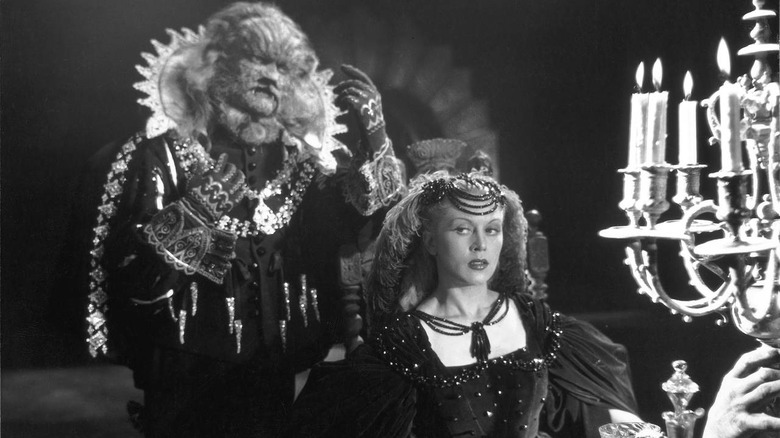
The other remarkable aspect of "Sleeping Beauty" is its (not to make a pun) aspect ratio. This was the first film to use a new 70mm widescreen format, Super Technirama 70. This new anamorphic ratio didn't overtake CinemaScope as the market leader, but the detailed results made "Sleeping Beauty" an event not to be missed at theaters capable of displaying this versus the standard 35mm format. Technirama would thrive for only a decade, but it also turned both "Spartacus" and "Zulu" into astonishing spectacles.

Mary Poppins (1964)

Before "Who Framed Roger Rabbit," there was "Mary Poppins." Though it's far from the first film to blend animation and live-action (the technique was used in short films since the '20s) it succeeds in making it feel natural. Winner of the Academy Award for special effects in 1965 (and best actress for Julie Andrews), the film's most ingenious segment is the penguin dance. Filmed against a white screen lit with a yellow vapor hue instead of the more common blue screen chroma key technique, the final result was so clear that Mary's transparent veil could pick up details of the composited background behind her.

"Mary Poppins" is also Walt Disney's crowning live-action achievement. It's the biggest film Disney would create in his lifetime, lauded by critics and beloved by audiences and the box office winner of the year. Unfortunately, it was also the last victory Walt would personally witness since he died in 1966, but the future legacy of his creation was now well-secured.

The Computer Wore Tennis Shoes (1969)

The story of Walt Disney's fascination with Kurt Russell in the final seconds of his life is somewhat true, but it's told in a way that buries the lede. Kurt was a 14-year-old with a list of television performances who'd only recently been signed to a ten-year contract with Disney on the day Walt died. No one knew what Walt's note meant, but the studio went all-in on its young new star anyway. 1969's "The Computer Wore Tennis Shoes" wasn't Russell's first gig under his new decade contract (that was a small role in "Follow Me, Boys!" in 1966), but the former film was his first starring role, the inaugeral step on his road to becoming Snake Plissken for John Carpenter in 1981's "Escape From New York."

"The Computer Wore Tennis Shoes" is a cute flick with secret continuity. Russell, as Dexter Reilly, attends Medfield College with his friends. Medfield is Disney's family-friendly Miskatonic University, the setting of the Flubber-iffic antics of "The Absent-Minded Professor." Like that franchise, science takes a turn for the weird as Dexter gets his brain scrambled up with a computer. Then a gambling ring gets involved. It's charming, it's messy, and teenage Kurt has dimples. The movie world would never be the same.

Tron (1982)

Computer-generated effects are the natural evolution of what the wizards of the movie industry have been creating since George Méliés filmed "A Trip to the Moon." CGI's on-screen roots are understated, their premiere outing being a few seconds of scrambled pixels in the original "Westworld." But 1982's "Tron" put CGI front and center, with a cornball plot that puts its hero Kevin Flynn (Jeff Bridges) in the minds of our machines.

It's not all CGI that brings the digital world to life, though. "Tron" uses about 20 minutes of CGI to flesh out its world of light cycles and sprawling cities. The rest is clever animation techniques, from rotoscoping to backlit animation, to make those lines of lights on everyone's suits pop. The world inside was filmed in black and white to make the process a little bit easier on animators, but not by much. Despite their work, the Academy declined to allow "Tron" to be nominated for its effects work, claiming that using computers was cheating. How the world has changed since. 

Who Framed Roger Rabbit (1988)

By the '80s, Disney sought to diversify its fare to include older audiences. Their family-friendly fame worked against them, though, and anything labeled "Disney" meant kiddie time. To combat this new problem, Disney created Touchstone Pictures. It's under this banner that director Robert Zemeckis released "Who Framed Roger Rabbit" in 1988, the first time Disney, Warner Bros., and a host of other classic animations (from Felix the Cat to Betty Boop) appear together on the big screen. A highlight of animation diplomacy, and a landmark moment.

For this film's blend of live-action and animation, the effects crew knew they had to go in hard. So they frequently went even harder. The gold standard for integrating animation effects is the film that codified "bumping the lamp." A small detail that hides technical complexity, the animated Roger Rabbit and the real Eddie Valiant (Bob Hoskins) are fumbling their way to freedom under the light of an unstable lamp. As the shadows roil and move, the animators ensured they strike Roger perfectly at every angle. Necessary? No. Awesome? Totally.

Beauty And The Beast (1991)

Like "Mad Max: Fury Road" proved, CGI isn't the new modern devil of filmmaking. Like a good spice, the key is in its proportion. Usually, the best way to hide big CGI effects and make them feel natural is to blend them with other effects work. This keeps the computerized stuff from overpowering the scene. "Beauty and the Beast" is a masterclass in how to do it, with its glorious ballroom sequence blending together multiple effects to create something special.

Legendary animator James Baxter led the way on the animation side, sketching out how Belle's dance with the gentle Beast would flow throughout the massive ballroom. CG supervisor James Hillin had to work in concert with the animation team to create their gilded background, uplifting but not overpowering the pair. The result is perfect harmony, and "Beauty and the Beast" became the first Disney animated film to receive a best picture nomination from the Academy. That's a long way from the derision "Tron" received.

Toy Story (1995)

Not content with their earlier breakthroughs with CGI effects, 1995 saw the first fully CGI feature film. "Toy Story" was Pixar's first full-length film, produced and distributed in concert with Disney, who would eventually buy the powerhouse studio in 2006. Though there's a different side to the success of "Toy Story," one told by traditional cel animators who've since struggled to find the support Disney once lent them, it's hard not to also respect the triumph "Toy Story" represents for the future of visionary new technologies.
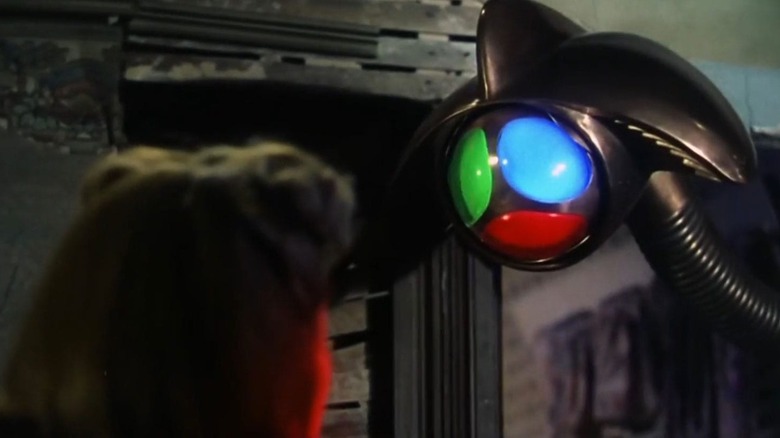
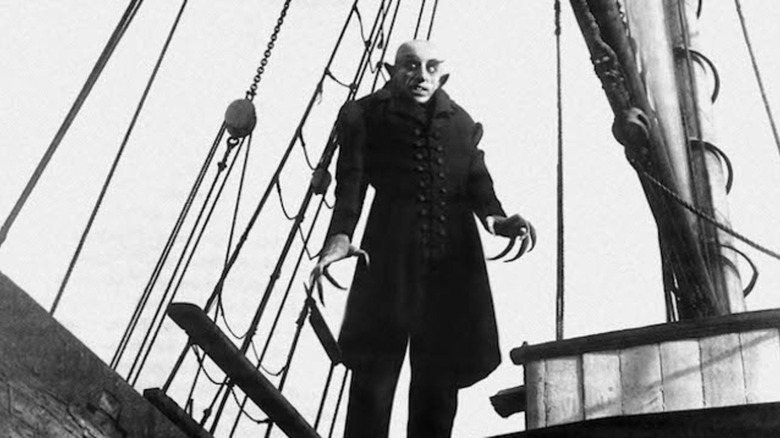
As a story, this groundbreaker works with its still-chunky animation style. There's no need to feel the uncanny valley when we see Woody and Buzz interacting. It's just a big 3-D playground, fired by a child's imagination. Since this film was first released, CGI productions have become the new norm, with new leaps in technical achievement every few years. For better or worse, "Toy Story" changed the world of animation. The next big leap is yet to be seen.

Read this next: All 58 Walt Disney Animation Studios Films Ranked From Worst To Best [Part One]

The post The 12 Most Influential Disney Movies Of All Time appeared first on /Film.