Read more of this story at Slashdot.
Read more of this story at Slashdot.
Facebook is changing a rule that prohibits users from calling for violence in response to Russia’s invasion of Ukraine. The change, which was first reported byReuters, allows people in Ukraine and a handful of other countries “to call for violence against Russians and Russian soldiers in the context of the Ukraine invasion.” People in Ukraine, Poland and Russia are also permitted to “call for death to Russian President Vladimir Putin or Belarusian President Alexander Lukashenko.”
Facebook spokesperson Andy Stone said in a statement that the company was "temporarily” allowing some posts that in the past would have been taken down under the company’s rules prohibiting inciting violence. He added that the company won’t allow “credible calls for violence against Russian civilians.” The company will also take down specific credible threats against Putin and Lukashenko, according to a memo reported by Reuters.
“As a result of the Russian invasion of Ukraine we have temporarily made allowances for forms of political expression that would normally violate our rules like violent speech such as ‘death to the Russian invaders,’” Stone said. “We still won’t allow credible calls for violence against Russian civilians.”
Russia has responded to the rule changing, saying that Washington must stop the "extremist activities" of Meta, Reuters has reported.
The change underscores just how much social media platforms are rushing to adapt their content policies amid Russia’s invasion of Ukraine. Facebook has already taken several steps to limit the influence of Russian state media outlets and took down a network of fake accounts boosting pro-Russia propaganda. The Russian government has responded by banning Facebook.
Update 3/10/2022 2:20 AM ET: The article has been updated with Russia's response to Meta's new rule, reported by Reuters.

For a billionaire, Donald Trump sure is cheap. First, he got a donor to loan him a private plane on Saturday to fly him from New Orleans to Mar-a-Lago in Florida. And when the plane lost an engine mid-flight shortly after takeoff and was forced to return him to Louisiana, he finagled another private freebie flight from a different donor, according to The Washington Post. — Read the rest

Gutters do an important job—they protect the foundation and structure of your home from water falling off the roof. But anyone who has ever owned a home also knows that traditional gutters have their drawbacks: They can become clogged with leaves, and in colder weather, they can cause ice dams. They can also crack and…
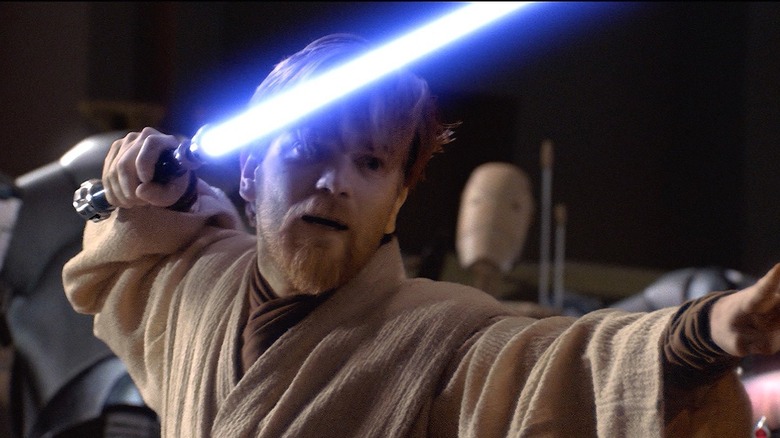
In the years since the "Star Wars" prequel trilogy wrapped up its mixed bag of a run in 2005 with "Revenge of the Sith," there has been something of a re-evaluation of those films and that era of the franchise in general. This is in no small part thanks to the generation that grew up with those films coming of age, not to mention "The Clone Wars" adding much depth to the characters and the stories being told in that time period. But at the time when the movies were coming out, it wasn't easy on the stars who were carrying a galaxy far, far away on their backs.
Ewan McGregor is finally set to return as Obi-Wan Kenobi in a new Disney+ series in May, simply titled "Obi-Wan Kenobi." We recently got a look at the first trailer and, in a new interview with Entertainment Weekly, the actor discussed what it was like dealing with the criticism levied at the likes of "The Phantom Menace" and "Attack of the Clones" at the time. It was difficult, for various reasons:
"I found it quite hard. For it to come out and get knocked so hard was personally quite difficult to deal with. And also, it was quite early in my career. I didn't really know how to deal with that. I'd been involved with things that just didn't make much of a ripple, but that's different from making something that makes a negative ripple."
McGregor has gone on to have a fantastic and varied career post-"Star Wars," having appeared in everything from the Oscar-winning "Beginners" to Mike Flanagan's "Doctor Sleep." Still, being able to return to this role and nail it down all these years later will surely provide a great deal of satisfaction.
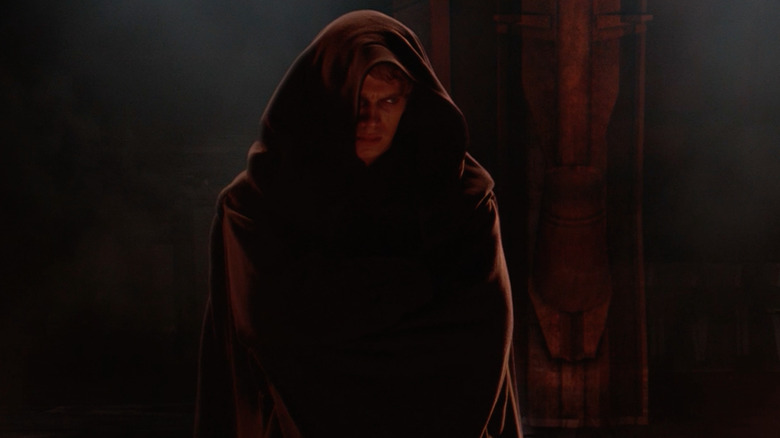
Another actor finally returning to the fold for "Obi-Wan Kenobi" is none other than Hayden Christensen, who is back in the saddle as Darth Vader. Christensen played Anakin Skywalker in "Attack of the Clones" and "Revenge of the Sith" before briefly appearing as Vader at the end of "Episode III." Now, he's getting the chance to be Vader in proper fashion. In the same article, the actor explained that the response to the prequels was equally hard on him, having invested a lot into the movies as an actor:
"When the films came out and the critics were very critical, of course that was a difficult thing — because you care so much about this thing that you've invested so much of yourself into. So, for sure, that's challenging."
"Obi-Wan Kenobi" feels like a show that literally every "Star Wars" fan is rooting for and, in the best-case scenario, it will provide both McGregor and Christensen with some redemption, even further altering the narrative of the prequel trilogy in the broader pop culture landscape. Fingers crossed.
"Obi-Wan Kenobi" debuts on Disney+ on May 25, 2022.
Read this next: 20 Movies About Time Travel Ranked Worst To Best
The post The Star Wars Prequel Backlash Was as Hard on Ewan McGregor as You'd Expect appeared first on /Film.
Read more of this story at Slashdot.
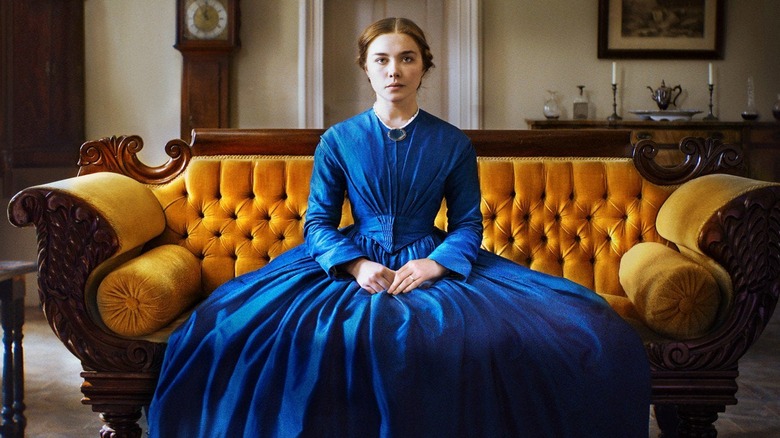
Denis Villeneuve is definitely walking the golden path. He petitioned hard for his "Dune" film to get a sequel (and even went as far as adding "Dune: Part One" to the movie's title card) and now it looks like he's blowing some big bucks on casting for the finally greenlit "Part Two." You can't deny his passion for the series, which fills every interview he does about the movie, and frankly, jumps right off the screen. If Villeneuve's star-studded casting of one of the most background characters in "Dune" is a sign of anything, it's that he's still got some sneaky tactics up his sleeves when it comes to convincing a studio to let him make a sequel. Essentially, it feels like he's gunning for more than two "Dune" movies. It's got big God Emperor energy.
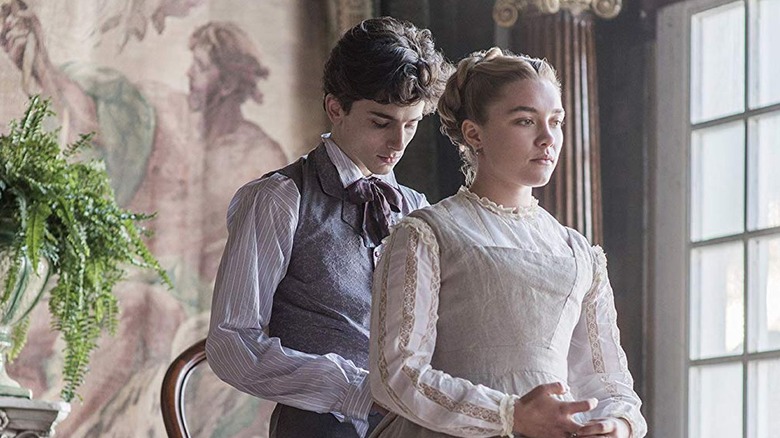
The "Dune: Part 2" casting news comes straight from THR, which reports that Florence Pugh ("Black Widow," "Little Women") is in talks to take on the role of Princess Irulan. While it sounds like an exciting role, the princess doesn't make much of an appearance in the first "Dune" novel until the very end of the story. Author Frank Herbert loves to end his books with a sweet reveal/cliffhanger, and while the princess is definitely involved, she's not quite an agent of change.
If her name sounds strangely familiar to you, it might be because her main contribution to the first book comes in the form of chapter quotes. Almost every chapter of "Dune" is introduced with a quote from one of a series of books written about Paul by the princess. There's the "Manual of Muad'Dib" and "A Child's History of Muad'Dib" and "The Humanity of Muad'Dib" and there are truly so many more I could list. Not off the top of my head, I 100% had to google that. It's just one of those fun and confusing "Dune" things. You start the book and you're like, "Who is this woman? Why is she telling me about a book within this book?" And by the end of the novel she feels like an old friend. Think of it this way, if you started "Dune" and quit halfway through chapter three, you've read her name at least three times!
"Dune Messiah" is another story. Princess Irulan has much more of a speaking role in the second "Dune" book and is intricately involved in the plot, both romantically and politically. Pugh is an incredibly talented and popular actress, casting her in a role that can be relegated to a background character, or one that could even be cut for a film adaptation, might be a waste. But giving her a sliver of time in a movie to tease her appearance in a subsequent film? Now that's a good marketing move. And a good creative move. It's just a good move in general.
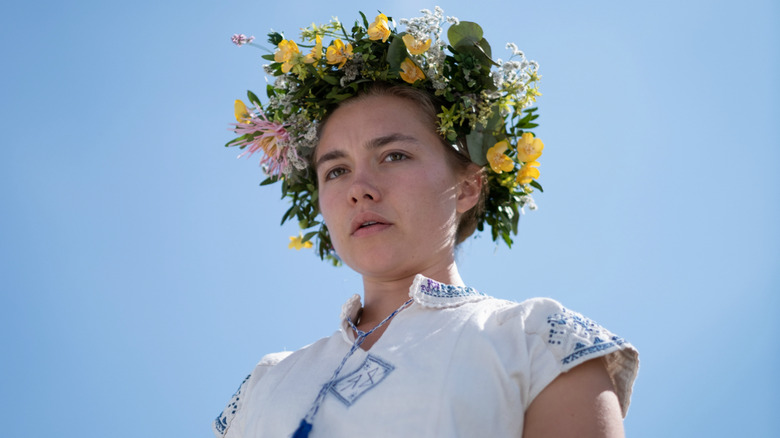
This isn't the first time Villeneuve has made his interest in adapting "Dune Messiah" known. Back when "Dune" was released in October 2021, Villeneuve told Entertainment Weekly:
I always envisioned three movies. It's not that I want to do a franchise, but this is "Dune", and "Dune" is a huge story. In order to honor it, I think you would need at least three movies. That would be the dream. To follow Paul Atreides and his full arc would be nice.
It makes sense that Villeneuve would want to see Paul's story arc through. The "Dune" series might stretch way beyond the confines of "Dune Messiah," but in many ways, the sequel wraps up Paul's grand storyline and strikes a darker, more adult tone. If the book "Dune" is a surreal coming of age tale, "Dune Messiah" is a severe reminder that growing up and having responsibilities absolutely sucks. And I'm not kidding, one of Herbert's prevailing themes is "Dune" is the deconstruction of the superhero archetype and the exploration of power's total corruption. With "Dune," Herbert extends the storyline of a typical hero's journey, and shows us what happens after everyone supposedly lives happily ever after. Turns out, there are far more giant worms involved than you thought.
As a fan and reader, I would love to see Villeneuve continue to get an insane budget to adapt a trilogy... But I've been thinking about this for a while, and hear me out here, why stop there? Let the man adapt them all. I want to see murder space tigers (not a spoiler) and worm presidents (also not a spoiler) and drug orgies (still not a spoiler) on the big screen! Let's ride this baby all the way to "Chapterhouse: Dune" and then let's stop there. I mean it. No more, no less.
Read this next: /Film's Top 10 Movies Of 2021
The post The Casting of Princess Irulan Suggests Denis Villeneuve is Gearing Up for Dune Messiah appeared first on /Film.
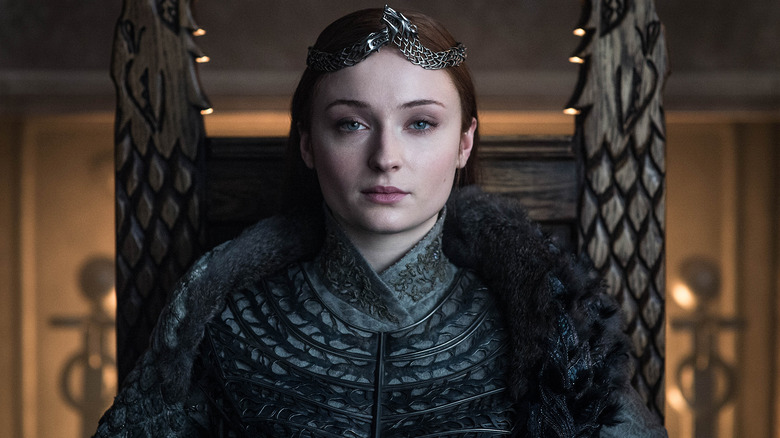
Fans of George R.R. Martin's "A Song of Ice and Fire" series have had a lot of wonderful things over the years. We got the "Game of Thrones" HBO series. We have several spin-offs on the way. Despite complaints about the final season (which was awful and I will fight you on that), the series as a whole was groundbreaking and enthralling. The thing is, because so many of us hated the ending — which was rushed, too dark, and did things with the characters that made little narrative sense — lots of us are waiting for the next book in the series, "The Winds of Winter." It won't be the last because "A Dream of Spring" is supposed to come after it, but I have serious doubts about that.
The last book in the series came out in 2011. I've written books, and I know they take a long time. Martin's books are very, very long, and that takes longer, but 11 years? Martin claims he's still working on it, as he said in a blog post on March 9, 2022. He said:
"Yes, of course I am still working on THE WINDS OF WINTER. I have stated that a hundred times in a hundred venues, having to restate it endlessly is just wearisome. I made a lot of progress on WINDS in 2020, and less in 2021... but "less" is not "none."
Is it wearisome, George? You seem upset about having stated that "a hundred times in a hundred venues," but it's been over a decade since the last book came out. It's been almost three years since the end of the series. It's not that I'm trying to be a jerk because this is a complex story with lots of twists and turns, but perhaps you can understand why fans would like to know what happened after the cliffhangers you wrote 11 years ago?
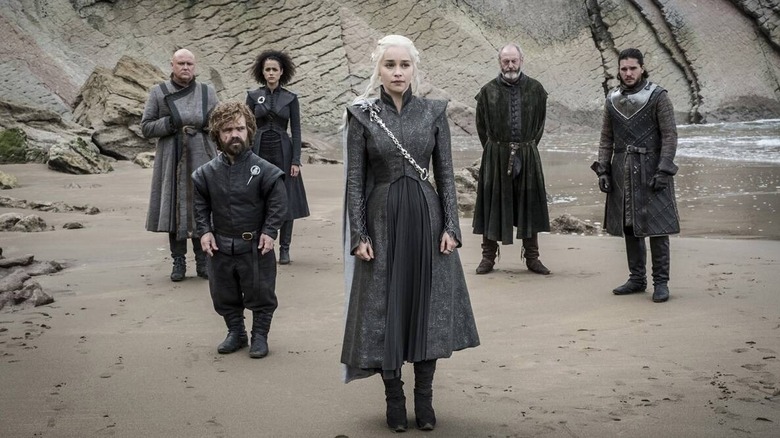
If Martin is going to do this, and get another book out, it's probably time to work on it more. He's 73 years old, and while I hope he lives to be 100, time isn't endless. I think what bothers fans (at least the ones I've spoken to over the last 11 years) is that he's working on other stories. He said in the same post:
"The world of Westeros, the world of A SONG OF ICE & FIRE, is my number one priority, and will remain so until the story is told. But Westeros has become bigger than THE WINDS OF WINTER, or even A SONG OF ICE & FIRE. In addition to WINDS, I also need to deliver the second volume of Archmaester Gyldayn's history, FIRE & BLOOD. (Thinking of calling that one BLOOD & FIRE, rather than just F&B, Vol 2). Got a couple hundred pages of that one written, but there's still a long way to go. I need to write more of the Dunk & Egg novellas, tell the rest of their stories, especially since there's a television series about them in development. There's a lavish coffee table book coming later this year, an illustrated, condensed version of FIRE & BLOOD done with Elio Garcia and Linda Antonsson (my partners on THE WORLD OF ICE AND FIRE), and my Fevre River art director, Raya Golden. And another book after that, a Who's Who in Westeros. And that's just the books.
He also said he's very involved in the new shows. I mean, that's great and all, and the show did suffer when it ran out of source material. I just want to know the end of this story before we go deeper into others. Even if it's the same universe, it's frustrating to have cliffhangers take this long to be resolved.
I'm whining, I know. It isn't easy to write epics or we'd have more of them. I just think that, when your work becomes part of the public consciousness, you have a responsibility to your readers. Particularly the ones who have remained loyal to you and bought your work since the first book came out back in 1996. That's 26 years ago. George, I would like to live to read the end of your series. I would like you to live to finish the series. I want to know your ending to the story and what you would have done with the characters instead of the crap we saw at the end of the show. I don't need a coffee table book as much as I need to know what happened to characters I care about.
Your story is part of our culture, and we'd like to see it finished by you. You have to understand that we as fans have dedicated our time to you and your storytelling. We've invested our hearts in your work. You've promised this book "a hundred times in a hundred venues." So please, stop working in the rest of it and finish telling this story. We love you, George, and we love your tale. Please finish it for us before WWIII, okay?
Read this next: 13 Fantasy Films That Never Got Sequels
The post George R. R. Martin Swears He's Still Working on The Winds of Winter appeared first on /Film.
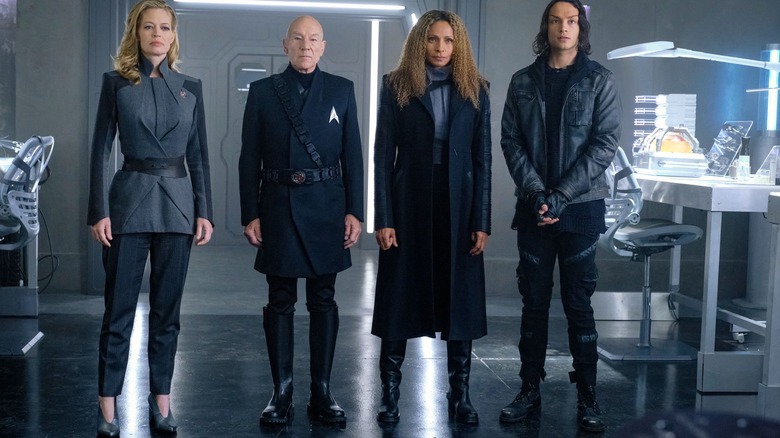
The 11th episode of the seventh season of "Star Trek: The Next Generation" was called "Parallels." In it, Worf (Michael Dorn) found himself unstuck in space-time, inadvertently leaping from one parallel universe to the next. Sometimes the changes to universes were small — Worf's quarters were merely rearranged — while in others, the changes were dramatic — Worf was suddenly married to Troi (Marina Sirtis) and had children with her.
Eventually, it was revealed that reality is splitting pretty constantly, with new parallel universes being formed every few seconds. This episode is pretty fun (although it does go a long way to ruin the specialness of the characters we're following, knowing that their actions are easily undoable via dimensional portals. See also: The MCU's Multiverse), and I suspect the show's writers conceived of it to take the piss out of the increasingly common parallel universe conceits that ran through "Star Trek" since the start.
But Trek is gonna Trek, and parallel universes are still common to this day. Indeed, the 2009 reboot would not have been as widely welcomed by audiences if they hadn't already intrinsically understood that parallel timelines were already a well-established element of the franchise. As such, a parallel universe is one of the central conceits of the second season of "Star Trek: Picard," a season that is setting itself up to be equal parts "Mirror Mirror," and "Star Trek IV: The Voyage Home." Allow this wizened old Trekkie to explain what those things are to the uninitiated.
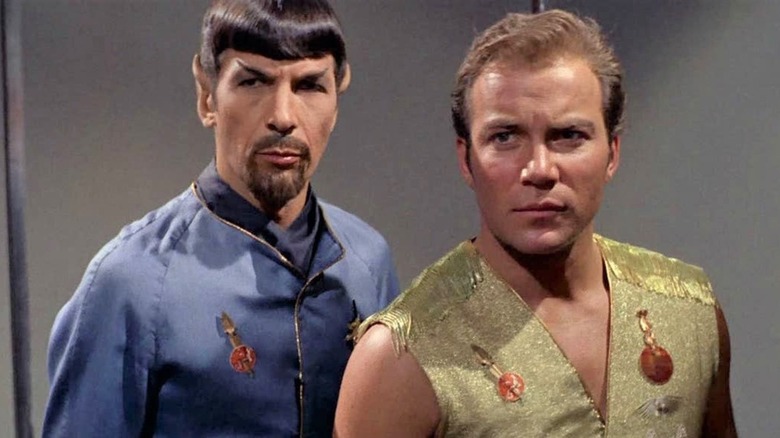
The fourth episode of the second season of "Star Trek" was called "Mirror, Mirror." It's one of the better-known episodes of the show, familiar to many who are otherwise unfamiliar with "Star Trek." In the episode, Kirk (William Shatner), Uhura (Nichelle Nichols), and Dr. McCoy (DeForest Kelley) transport through a spatial storm and find themselves on a parallel version of the Enterprise where assassination is common, and the Federation is an Imperial force dedicated to violence and conquest. Kirk, Uhura, and McCoy must find a way back to their home dimension before the evil characters around them (including Spock with a goatee) catch wise and imprison them.
The Mirror Universe is an unlikely conceit, playing more into classical fairy tale notions of mirror-image doppelgängers than anything to do with science (there is no palpable explanation as to why everyone is evil in the Mirror universe, but we accept the traditional "evil twin" conceit from ancient literature), but it was fun enough to be revisited several times. We saw the "Next Generation" crew visit the Mirror Universe in a tie-in novel, there were a few Mirror episodes of "Deep Space Nine," a wonderful two-part Mirror episode of "Enterprise," and the Mirror Universe played a major role in the first season of "Star Trek: Discovery."
While the newest season of "Star Trek: Picard" does not visit the same Mirror Universe seen in previous episodes (thanks to the events of "Deep Space Nine," we know that dramatic things have happened in that universe that preclude it from its evil), but something similar does happen. Q (John de Lancie), the trickster god, explains that humanity always possesses a tendency toward savagery and teleports Picard, and that show's cast, into a new parallel universe where — wouldn't you know it — everyone is evil. Q explains that something happened way back in the year 2024 to set humanity toward a future that included mass genocide of all known species, environmental disaster, and Picard himself being a violent, Nazi-like enforcer of humanity's murderous goals. Picard wears a black uniform and keeps the skulls of his more notable victims in his den.
This allows the characters to face their darkest selves, and have a few serious There-But-For-the-Grace-of-God moments. An "evil" universe may not be the most scientific thing, but it makes for an amusing philosophical exercise, allowing each of us to accept that our moral compass is perhaps more calibrated by our environment — and less by our personal will — than we like to think.
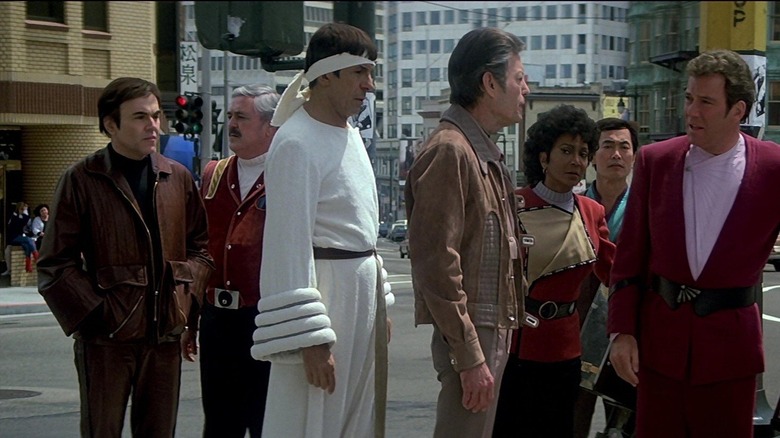
"Star Trek IV: The Voyage Home" was released in November of 1986 to enormous critical and box office success. Directed by Leonard Nimoy, the film followed our stalwart heroes back in time — on a rickety Klingon vessel — in order to retrieve a pair of humpback whales from the year 1986, bring them back to the future, and present them to a mysterious, powerful space vessel that has been draining Earth's oceans looking for them. Humpback whales are extinct in the future of "Star Trek," you see. "The Voyage Home" centered largely on the Enterprise crew lost in a time they don't understand, and much of the film's appeal comes from the fish-out-of-water humor that stems naturally from said scenario.
The second season of "Star Trek: Picard" not only repeats this premise, but mentions it in dialogue. In order to investigate the source of this evil timeline he is inhabiting, Picard — following Q's clues — must travel back in time to 2024 and investigate what went wrong with humanity. In order to do this, they need a mind as powerful as Spock's and hijack an imprisoned Borg Queen to that purpose. The U.S.S. Stargazer slingshots around the sun, and, lo, it's 2024. The third episode of "Picard" becomes a parallel of "The Voyage Home" as the crew has to solve a crisis in, essentially, the present day. "The Voyage Home" was set in San Francisco, and "Picard" is set in L.A., but the idea is the same.
Traversing the present day is also something "Trek" has done from time to time. There was a two-part episode of "Star Trek: Voyager," for instance wherein the title ship traveled back to L.A. in 1996 to catch the premiere of the movie "Fled" with Laurence Fishburne and One of the Baldwins. I mean ... match wits with a Bill Gates-like figure who is using future technology to invent CD-ROMs. That second part is real.
So the new season of "Picard" is blending the comedic and the heady into, one might hope, an intriguing story that forges its own path while hugging the conceits that made "Star Trek" what it is.
Read this next: The 25 Best Movie Robots Of All Time
The post Picard Season 2 is Mirror, Mirror By Way of The Voyage Home appeared first on /Film.

AMD appears to be ready to present a successor to FSR 1.0, and finally offer an AI-based upscaler that can compete with XeSS and DLSS 2.0. In a presentation spotted by Videocardz, we can see that AMD's Thomas Arcila and Colin Riley are going to be presenting "Next-Generation Image Upscaling for Games" on March 23 at GDC - something that sounds eerily close to an FSR successor (whatever AMD decides to call it).
FSR and machine-learning based AI upscaling solutions like XeSS and DLSS 2.0 are not alike. While XeSS and DLSS 2.0 are upscaling systems based on Deep Learning/Inference and use actual hardware to enable performance enhancement without any serious quality degradation - FSR is a simple spatial upscaler. The two classes of upscale are not even remotely comparable and is like resizing something in photoshop versus resizing something in Gigapixel AI. The latter is a far superior result.

All this, however, appears to change as AMD has a presentation scheduled on something that looks eerily similar to the first foundational presentation on FSR 2.0 (or whatever AMD decides to call it). To be clear, it's very unlikely they will launch the full presentation here but we might see the initial MVPs/development builds of AMD's new upscaling techniques.
"A little later in the morning Colin Riley and Thomas Arcila will take us through their talk on Next-generation image upscaling for games. This session will cover some of AMD’s latest research in image upscaling technology, as well as how this technology could help improve the gaming experience."
| AMD GDC 2022 Sponsored Sessions | ||
|---|---|---|
| Session | Speaker | Date/Time |
| A Guided Tour of Blackreef: Rendering Technologies in Deathloop | Lou Kramer (AMD), Gilles Marion (Arkane Lyon) | March 23rd 9:00am-10:00am PST |
| Next-Generation Image Upscaling for Games | Thomas Arcila (AMD), Colin Riley (AMD) | March 23rd 10:30am-11:30am PST |
| Performant Reflective Beauty: Hybrid Raytracing with Far Cry 6 | Stephanie Brenham (Ubisoft), Ihor Szlachtycz (AMD) | March 23rd 12:30pm-1:30pm PST |
Ray Tracing Performance Revealed. How to optimize your game with the Radeon Developer Tool Suite Developer Tool Suite |
Chris Hesik (AMD), Can Alper (AMD) | March 23rd 2:00pm-3:00pm PST |
| AMD Ryzen Processor Software Optimization |
Ken Mitchell (AMD) | March 23rd 3:30pm-4:30pm PST |
| Breaking Down the World of Athia: The Technologies of Forspoken | Aurelien Serandour (AMD), Teppei Ono (Luminous Productions) | March 23rd 5:00pm-6:00pm PST |

FSR 1.0 is an algorithmic spatial upscaler, DLSS 2.0 is a machine-learned quality inference system from lower-resolution input images. It uses a temporal feedback loop and is vastly more complex than standard spatial upscalers which have been around for decades in third-party plugins. To the discerning eye or someone from a computer science background, this makes all the difference in the world. Machine learning allows us to achieve results in certain situations which computationally infeasible to reproduce using traditional software architectures. This is one of the reasons why AMD FSR suffers particularly hard at lower resolutions (without inference, spatial resolution relies on the input details) and is pretty decent at bigger resolutions.
FSR has been a resounding success for AMD since they open-sourced it for everyone to use and adoption by game developers was significant. Considering the announcement was posted on GPU open as well, it is very likely that AMD could opensource the new version of FSR as well. Since Intel XeSS has already pledged to be open, this would be something that gamers and developers will readily expect of AMD - not to mention that its upcoming GPUs will have all of the hardware needed to support sophisticated upscaling techniques.
The post AMD Will Talk About Next Generation Image Scaling At GDC 2022 – Is This FSR 2.0? by Usman Pirzada appeared first on Wccftech.
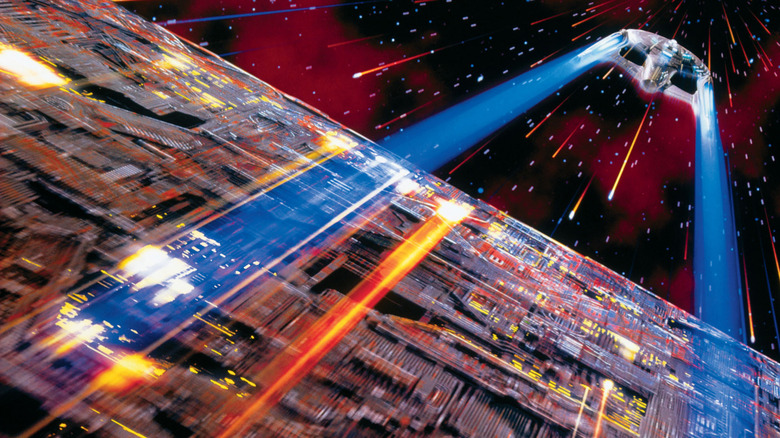
"Star Trek: First Contact" -- released in November of 1996, and the second "Star Trek" film to feature the "Next Generation" cast -- was the best-received of the NextGen-based "Star Trek" feature films. Boasting some pretty great special effects, a good deal of action, and a plot featuring fan-favorite villains the Borg, "First Contact" was a big hit (at the time, it became the second-highest grossing Trek film after "Star Trek IV: The Voyage Home"). Many responded to the film's high-octane action, which was a departure from the diplomacy and morality plays of the "Next Generation" TV series. It's like audiences just wanted something a little more exciting after the relatively turgid "Star Trek: Generations" from two years before.
As with many high-stakes studio features, "Star Trek: First Contact" went through its share of tinkering and re-working before finally ending on the story they had. Some of the original ideas for "First Contact" seems like they needed minor corrections, while others would have made the film far, far larger and way more expansive. Syfy Wire interviewed executive producer Ron D. Moore on the film's 25th anniversary in November of last year, and he revealed what some of those original ideas were, and why they eventually had to be cut from the final film.
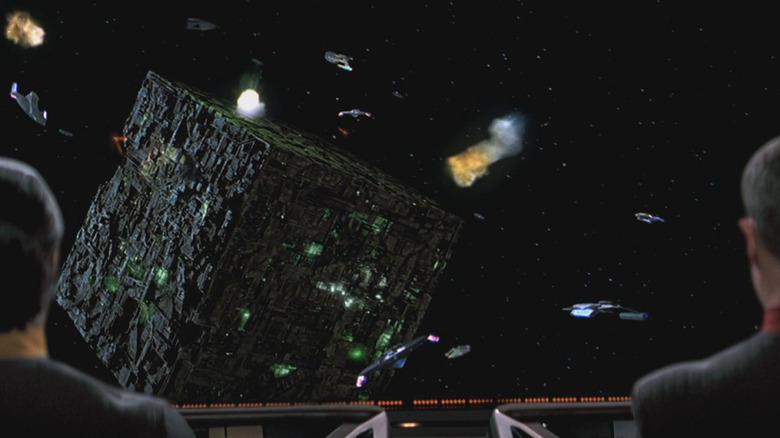
The first major plot point in "Star Trek: First Contact" is that the Borg -- a race of soulless cyborgs who kidnap people and assimilate them into their machine collective -- are about to invade Earth. While Picard and the Enterprise are eager to fight off the threat, they are expressly disinvited from the battle, as Picard's past with the Borg (he was once assimilated himself) may put others in danger. Picard immediately defies those orders and joins the fray anyway. In a very impressive sequence that still looks great to this day, there is a grand battle with the cube-shaped Borg ship.
Moore reveals that the battle was supposed to take up a much larger portion of the film, and was intended to be far more elaborate:
"We had, first, the big battle, then the Enterprise coming in, and then there were all these descriptions of this starship comes over and does this, and it takes that kind of hit and then this ship spins. And so there was a lot of just bells and whistles to it."
But, Moore laments, what the production crew was envisioning became mired down by budgetary concerns, and a few unfortunate habits leftover from when "Next Generation" was still budgeting for TV:
"Oh yeah. We kept having to cut down. I couldn't tell you what it was [exactly], but everything was broken down into discreet shots and sequences ... Over the course of production, you're just cutting and cutting and consolidating and begging and trying to scrape together money. Arguing why this one shot is the most important, or more important than this other one over here. And you do that just with everything, especially at that stage with the state of technology and CG at the time, it wasn't really a cheap conversation."
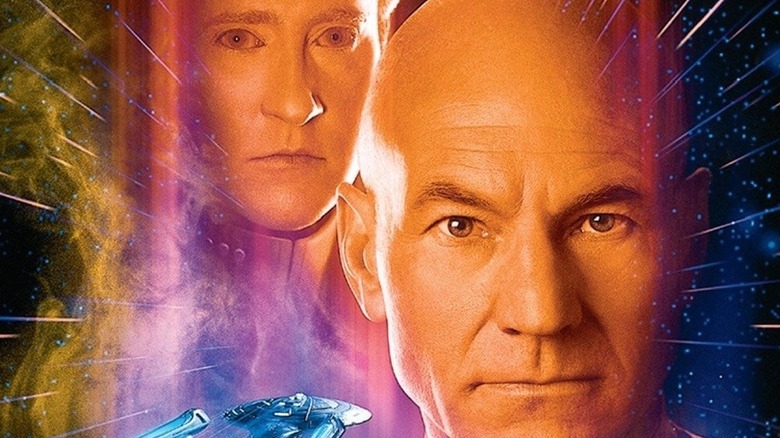
Moore had assumed that working on a feature film would have granted the filmmakers a lot more budgetary leeway when it came to envisioning certain sequences. This was, after all, a feature film meant to look bigger and slicker than the comparatively low-budget TV show on which it was based. It turns out, a lot of the penny-pinching inherent to a TV program was in full force on a feature:
"You have this tedious exercise in the production meeting where you are literally counting the shots: How many shots can work, how many can you shoot [onscreen], and how many times do you have to get, you know, 'Data's going to fire from off-camera' to save the production some cash. We had those on the show, too, a lot. And here, it was so excruciating because — you kind of felt that, once [we] got into the features, they were going to give us a bucket of money and we were not going to have those kind of conversations anymore. And we did end up have those same conversations, it was just, you added a zero to all the dollar figures because everything costs more at the feature level."
Mind you, this was in 1996, when ultra-expensive $175 million blockbusters weren't the norm. Even a large-scale genre film with a recognizable brand and a built-in audience wasn't going to get the kind of financial attention that an Avengers film might. This was all based on predictive bookkeeping and dry "Moneyball"-like calculations:
"Paramount's position at the time was: A Star Trek movie will make this amount of money. Therefore, we will give you this amount of money, so that we have this amount of profit. And it was very much a formula. I'm trying to even grasp it. I think it was like $75 million or something, including marketing. That's the budget. Period. End of story. Because these films don't earn more than this [amount], and the studio doesn't want to earn less that. So the studio is like: 'We shoved it through our system, there's your budget, be on your way.' And that was it."
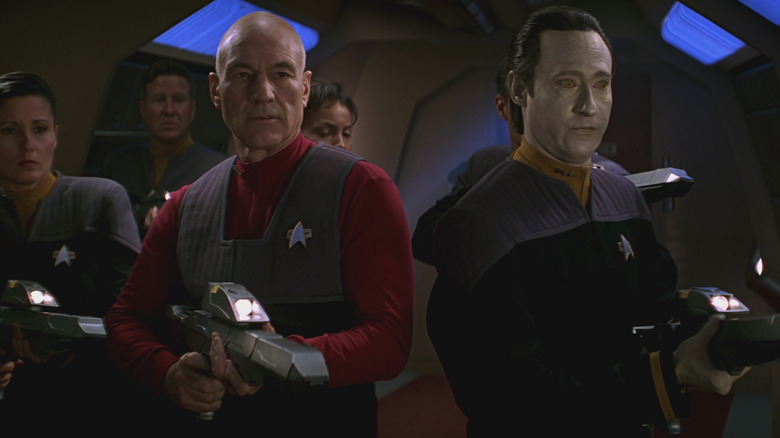
Until the release of the rebooted "Star Trek" film in 2009, "Star Trek: First Contact" was most certainly the most action-packed entry in the series. There was a fast-moving starship battle, a lot of phasers, and an action movie ending wherein Captain Picard melts the skin off of a villain with a tube of flesh-eating gas, all while he wore a tank top and showed off his biceps. A conceit of the movie is that the Borg have infiltrated the Enterprise, and are slowly assimilating it, and there are action sequences throughout the ship as Starfleet crew members try to abate the assimilation. The original vision was also to expand those action sequences to even more places on the ship, involve more witty banter between them, and involve even more characters:
"There were just expanded sequences. There was just more action in general, more fighting the Borg in the corridors, and going into different places on the ship. And I think there was more humor. A lot of the jokes got cut down. I think we had more fun with Troi (Marina Sirtis) and Cochran's relationship on Earth, where he gets her drunk. We had more to that sequence scripted and that was fun to write, too. [Executive Producer] Rick [Berman] might have made us cut it because he was always a little too ... he was always kind of worried that maybe the humor would be too corny or something."
There was even a conceived sequence -- never shot -- set in a turbolift shaft. The idea was that the shaft was so large, it had its own weather system, and Picard was going to manipulate the weather to best a team of Borg pursuers, including harnessing static electricity from interior clouds:
"[The turbolift sequence] was inspired by something I had read about the NASA vertical assembly building, which is this massive block where they assembled the Saturn V rocket. The interior space of that complex was so big, that it literally had its own weather system at the top. Like it would have its own moisture and would kind of rain in there. And I remember reading that and it stuck with me for years. I was always fascinated by that concept. And I always wanted to do something like that inside the Enterprise. It would have been great to do it for a movie, you'd think we would be able to, but..."
But it was never to be. Budgets were too small, time was too much of a factor, and 1990s sci-fi blockbusters weren't being assembled on the scale they would be 15 years later. The version of "First Contact" audiences never got to see is yet another story to put in the history books next to all the other films that didn't get to do things they way they wanted to.
Read this next: The 13 Best Animated Star Wars Moments
The post The Writers Had Much Grander Plans For Star Trek: First Contact appeared first on /Film.
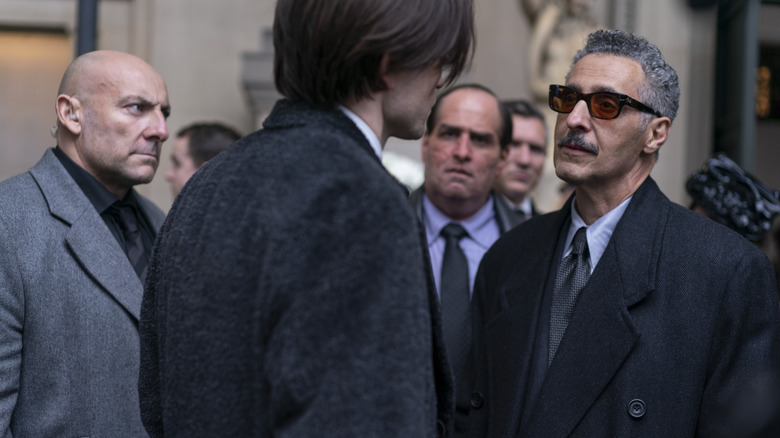
Although it's not quite an origin story, "The Batman" is very much about the shaping and development of Bruce Wayne's heroic identity. At the start of the film, Robert Pattinson's Bruce is kind of a misguided creep, and I actually loved this take on Batman precisely for that reason. Throughout the film, we get to see this melodramatic misanthrope gradually step out of the shadows and into the light as he comes to understand the true meaning of justice and heroism. Interestingly, a major catalyst for this journey is the fact that nearly everyone he encounters while donning his Batman persona has mad s*** to talk about Bruce Wayne and rich white guys like him.
If seeing the phrase "rich white guys" is troubling for you, this is your warning that I'll be using other potentially upsetting phrases in the following paragraphs, as I'm diving into the ways "The Batman" forces Bruce Wayne to confront his privilege, reject the dreaded "both sides" fallacy, and become a better ally and true hero in the process. You were warned.
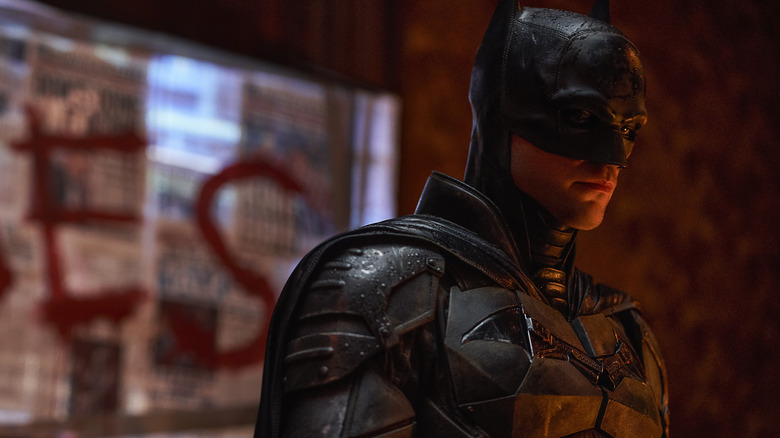
In the spirit of addressing people who will undoubtedly point out that Bruce Wayne/Batman is indeed a philanthropist in the comics, let me assure you that I already know. But remember: there are plenty of people who haven't read the comics, or don't know much about the classic hero beyond popular depictions in movies. There's an entire wealth of memes dedicated to humorously pointing out that Batman is a rich guy who beats presumably poor and mentally ill people rather than addressing the systemic issues that led to their becoming villains and criminals in the first place.
Even if this isn't true for every version of the character, we can't really be too angry at the assumption, because it's not like the most well-known and easily accessible depictions of Batman use his philanthropy and humanity as a focal point. With this in mind, "The Batman" makes a point to directly address the common criticism that Batman could remedy the systemic issues that contribute to Gotham's crime problem by using his wealth and influence rather than anonymity and violence.
Let me preface this by saying that I've been a Batman fan since I was like 5, starting with the campy live-action TV series starring Adam West, and "Batman: The Animated Series." I didn't engage with the "Batman" comics until much later in life, and that's okay, because I'm speaking specifically about "The Batman" movie. In the film, part of Batman's journey to becoming less of a weirdo with infantile views on right and wrong begins when people who have no idea that he's actually the orphaned billionaire and recluse Bruce Wayne begin to talk s*** about Bruce Wayne in his presence.
He doesn't defend himself, partially because it would arouse suspicion, and perhaps partially because he knows they aren't entirely wrong. Sure, he's putting on his high-tech custom gear to fight crime, but how much long-term good is he really doing? His reasons for being Batman at the start of the film aren't even particularly generous or noble. Instead, he's driven by his own desire for vengeance and his extremely limited worldview. He thinks that he alone is the answer to Gotham's crime epidemic, and he doesn't trust anyone. He doesn't stop to think about why people may turn to illegal or less than squeaky clean activities, failing to acknowledge the complexities and nuances of morality and ethics.
An example of this is when he more or less slut-shames Selina Kyle/Catwoman, dismissing her as though she's merely a greedy thief who sleeps around with Gotham's worst criminals in order to gain access to their funds. He is quick to judge her without actually considering the circumstances that pushed her to become a thief, and is clearly very ignorant about the lives of people who weren't lucky enough to be born into the wealth and privilege he willfully ignores. The point isn't that her actions are justified, but that ignoring the cause of the problem doesn't solve anything. At the time, Batman lacked the insight needed to become a more empathetic and effective hero. He failed to see just how much power he wields simply by being Bruce Wayne, to his detriment and the detriment of the city.
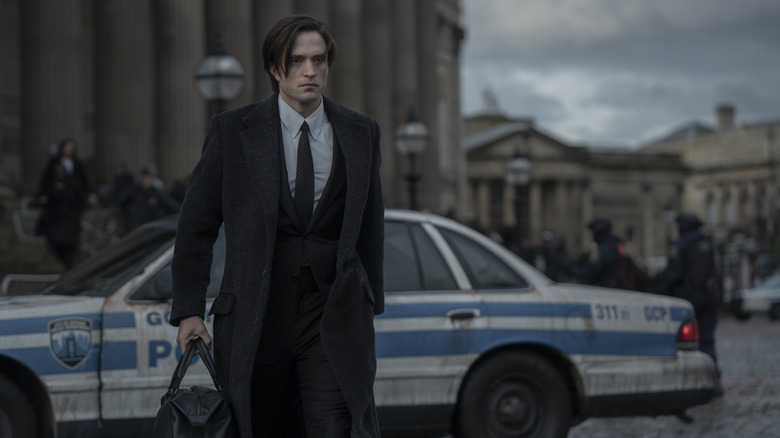
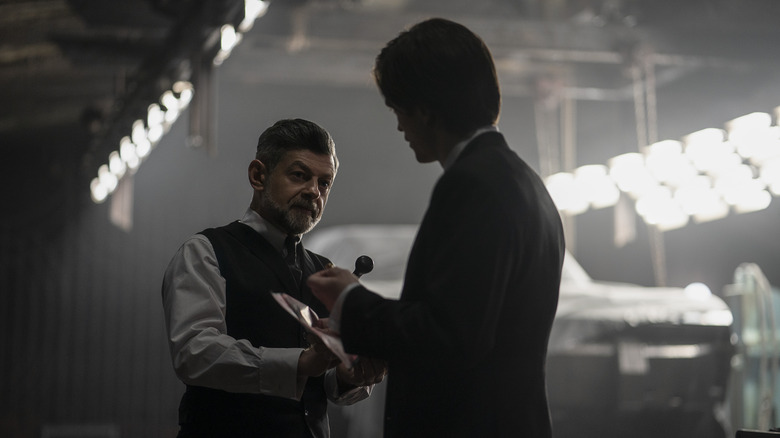
One of the first moments that illustrate how Batman begins to acknowledge this is when he goes back to the nightclub as Bruce Wayne, the rich white guy, rather than Batman, the vigilante. As Bruce, he's welcomed in and immediately given access to the city's most powerful crime lords as opposed to the way he was hassled and denied entry as Batman. This conscious decision to go out and gather information as Bruce Wayne rather than as Batman is the first sign that he's finally understanding the power of his wealth and status — things he neglected and ignored prior, as evidenced by his chat with Alfred at the beginning of the film, during which he declared that he didn't care about his wealth or about being Bruce Wayne.
This neglect also inadvertently contributed to the very same corruption he was fighting against in Gotham as Batman. At one point in the film, it is revealed that the Renewal Fund created by his late father was being abused to bankroll the organized crime that plagued the city. Had he been more willing to acknowledge his own status as Bruce Wayne rather than cosplaying a violent bat, he would have been able to catch the abuse of the Renewal Fund before it got any more out of hand. The money could have been used to help provide Batman's fellow orphans as intended if the now-adult Bruce Wayne had bothered to step up and realize that justice is more than just beating the s*** out of bad guys sooner.
He could have been doing more simply as Bruce Wayne, but he wouldn't listen to Alfred and was too consumed by his own selfish desire for vengeance. It wasn't until Batman was forced to listen to the harsh words of others and face reality in scenarios where he was unable to defend himself or dismiss criticism that he realized this. The lesson he learns through hearing people say many variations of "f*** Bruce Wayne, that rich bastard" is that the best heroes and allies are the ones who show up and use whatever resources at their disposal to do whatever good they can. Up until the third act of the movie Bruce Wayne was not present, and Bruce Wayne has access to spaces and resources that Batman doesn't. Any person in a position of relative privilege who claims to advocate for justice should be using it for good rather than ignoring or denying that they have it. Rather than commit to willful ignorance or engage in the selfish uselessness of feeling guilty, he begins to make changes to use his privilege in a meaningful way.
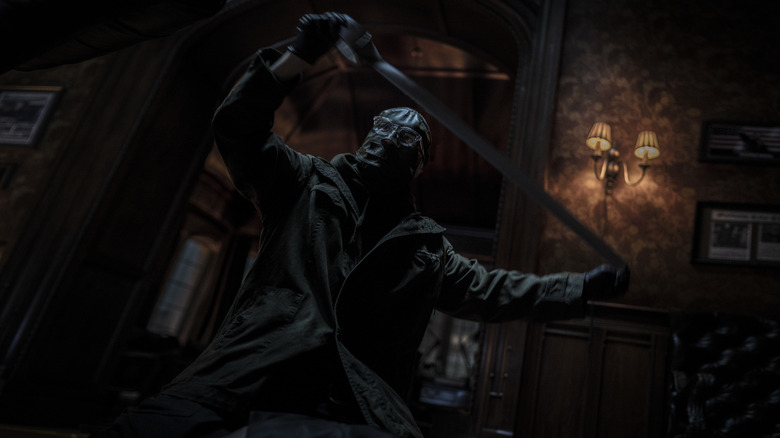
By the film's end, Batman's resolve to do better after learning this lesson the hard way is revealed in two major scenes. The first one occurs during his confrontation with the Riddler. Not only is it one of the best scenes in the movies thanks to Paul Dano's spectacular performance, but because of Batman's apparent horror and disgust at learning the parallels between himself and the Riddler. Riddler goes on a monologue about how he was one of the orphans who was left behind and abused when Thomas Wayne was murdered. Everyone was too busy focusing on "poor Bruce Wayne" to care about the kids at the orphanage — you know, the ones the Renewal Fund was supposed to help. Without any oversight, the funds were grossly misappropriated, leaving Riddler and other children at the orphanage vulnerable to abuse and poverty, lacking in resources.
The Riddler is a broken human being who became a monster. Sure, he's justifiably bitter and angry about the horrific circumstances that helped to set him down this dark path, but that doesn't excuse his sadistic serial killing and plans to completely destroy the city, even if he was mostly killing corrupt individuals. Unbeknownst to the Riddler, his bitterness and anger are similar to the feelings that drove Bruce Wayne to become Batman, although he still recognizes Batman as a potential ally because they worked in the same way. While Batman doesn't kill people, his idea of justice was characterized by lurking in the shadows and popping out like a ninja to rock people's s***. He hadn't curated an image that would make people feel safe, but rather one of intimidation and fear, so it unfortunately makes sense that the Riddler would pick up on these similarities and enlist Batman to aid in his psychotic crime spree.
This is illustrated at the beginning of the film when Batman saves a man from gang violence. After delivering multiple beatdowns to the gang members with startling technical efficiency, the would-be victim is still terrified — not of the criminals who have scattered to nurse their injuries, but of Batman. The Riddler, who is bats*** insane but still very observant, picked up on this, and was fair in thinking they could be friends. Rather than trying to level or reason with him, Batman/Bruce decides to completely reject the idea that they can ever be associates. It's one thing to acknowledge that people can be driven to illegal activity due to circumstances beyond their control, but it's another to use one's circumstances to justify the sadistic horrors the Riddler engaged in.
I loved that "The Batman" showed the difference between the appropriate time to be understanding and reach across the aisle (helping Catwoman), and the time to say "absolutely the f*** not" and stop letting excuses get in the way of real justice. The Riddler was too far gone and consumed with hatred to reason or level with. He was committed to doing harm, and there's really no negotiating, handholding, or looking the other way when someone crosses that line – particularly when they are unrepentant. In contrast, he's able to keep Selina Kyle from crossing a line by killing, and is able to better understand people in situations far worse than his so that he can help them before they're too far gone.
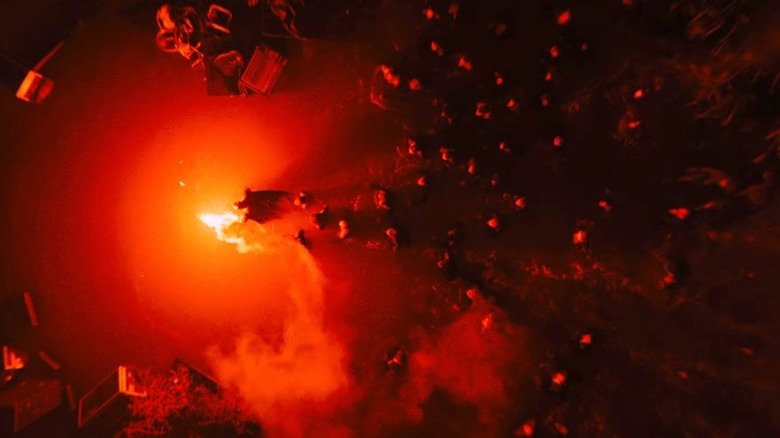
After his swift and definitive rebuke of the Riddler's hateful ideology and plans, Batman/Bruce Wayne engages in his first real act of selfless heroism towards the film's end. Rather than staying on higher ground when the city is flooded, he makes the decision to literally and figuratively descend from his place of safety and privilege to help the flood victims below. He plunges into the dangerous floodwaters, lights a flare, and leads the people to safety. It's a beautiful scene, both aesthetically and symbolically, and I'm getting teary-eyed just thinking about it. Everything he has learned and experienced concerning privilege, the nuances of justice, and what it really means to be a hero led to this beautiful moment. This point is driven home in the way that the injured woman he carries to safety at the end of the film is unafraid of him, seeing him as a symbol of hope and safety — as opposed to the man he rescued at the beginning of "The Batman," who regarded him with fear and apprehension.
For me, part of the brilliance of "The Batman" is that it cleverly addresses the prevalent criticism that Batman is just a rich white guy who beats up poor people and doesn't work to fight against the root causes of crime in Gotham. The film weaves a narrative through which Batman himself must reckon with that criticism in-world, ending with him choosing to become a real hero in the process. He has undergone gradual, realistic character development to become the most heroic live-action Batman we've seen to date.
Frankly, it would have been a bit too boring and too safe to create a world in which everyone already saw Batman as a hero, so I thoroughly enjoyed the result of the decision to show his maturation into one in a world that initially regarded both of his identities with suspicion and mistrust. It's easy to be kind to people who already like and trust you (or fear you, if they're bad guys); it's far more difficult to earn their trust and acknowledge your own shortcomings in the process. I'm deeply invested in seeing more of this Batman who learns and grows because while I'm not a rich white guy or an orphan, this particular Batman is extremely relatable.
Read this next: Batman Movies Ranked From Worst To Best
The post The Batman Finally Forces Its Hero to Confront His Own Privilege appeared first on /Film.
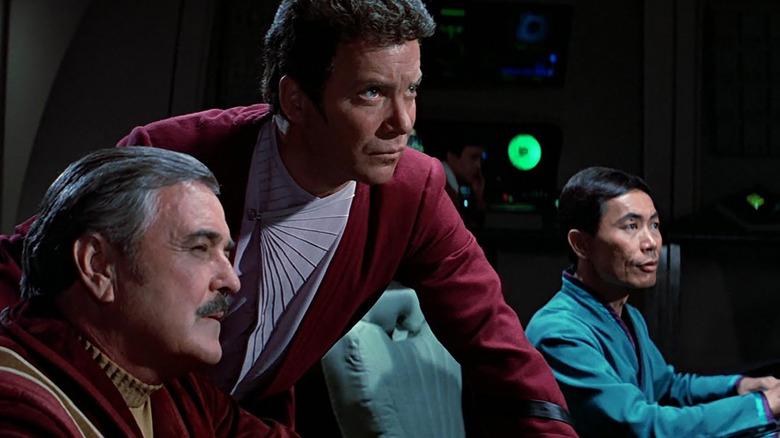
The Encyclopedia of Science Fiction speculates that the popularity of "Star Trek" came about because, compared to written science fiction of the time, "its exoticism was manageable and unthreatening." As someone who finds manageable and unthreatening entertainment to be dull, I can understand their reservations. But I think that the banality of "Star Trek" is actually what has allowed it to persevere over so many years.
The "Star Trek" formula, built for the constraints of television, lends itself to remixing far more elegantly than the rickety architecture of "Star Wars" expanded universe continuity. Rather than being burdened with telling part of one big story, a "Star Trek" narrative seems content to be one of many stories. Perhaps this is why the ranks of "Star Trek" tie-in novels include so many talented science fiction writers, such as "Young Wizards" series creator Diane Duane and community luminary Vonda N. McIntrye. While the novels themselves vary in quality, the best of them open small windows through which the reader can see what, in the mind of the writer, "Star Trek" could be.
As the minds of "Star Trek" fans were shaped by the series and spin-offs they loved, the creators of "Star Trek" themselves took influence from the wants and desires of their audience. So it only makes sense that Harre Bennett, the famous "Star Trek" film producer whose work spans from "The Wrath of Khan" to "The Final Frontier," claims that at a key moment while brainstorming "The Search for Spock" takes cues from an unexpected source: fan fiction. In "The Fifty-Year Mission," an oral history of "Star Trek" as a whole, Bennett discusses the challenges the team faced in devising a fitting ending for a trilogy built on improvisation and momentum. He says:
"Somewhere along the line I read a fan poem in one of the hundreds of fan magazines about Star Trek. It was first-person Kirk. It said, "I left you there. Why did I do that? I must come back to you, my friend." I thought, "That's it!" I suddenly had a thrust. It got a lot easier from that point."
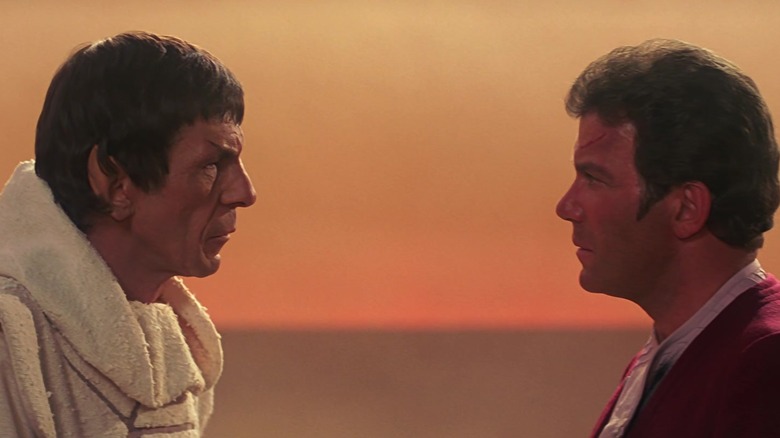
We don't know which poem gave Bennett what he needed to move forward with "The Search for Spock." The web of "Star Trek" content produced by fans is vast and intricate, sprawling across time and space. That said, we can make educated guesses. It's possible that the poem Bennett stumbled upon is "gen," an accessible piece of fan narrative meant to give greater context to the series. But the thrust of the piece, Kirk longing to return to Spock, suggests another possibility. Whether Bennett or the actual writer of the fan poem were aware of it, the poem's heart (and by extension, the heart of "The Search for Spock") may rest in the growing "slash" fiction community at the time — that being, fan fiction featuring explicit gay romance.
The most popular pairing in the "Star Trek" fandom, and by extension one of the most popular pairings in science fiction history, is between the headstrong Captain Kirk and his Vulcan comrade Spock. We know that fans were debating these characters and their relationship from as far back as 1969, the year in which "Star Trek" was canceled in the United States and began airing in the United Kingdom. But those fans kept discussion private, sharing stories among close-knit groups of friends. It took several years for work produced by this community to see the light of day.
First, in 1974, with the publication of Diane Marchant's "A Fragment Out of Time," was a brief sketch of tender physical contact. If the piece left names and even pronouns ambiguous, the illustrations at its beginning and end left no such illusions. Then, in 1976, zine creator Gerry Downes produced "Alternative: The Epilog to Orion," the first full zine highlighting the Kirk and Spock pairing. Also published that year was Leslie Fish's "Shelter," the first full-length, publicly available Kirk/Spock short story.
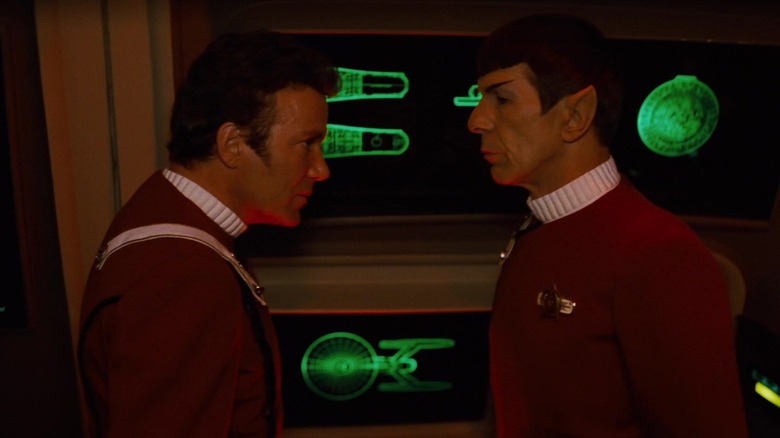
By 1979, the slash fiction community had established itself as a force to be reckoned with in the greater "Star Trek" fandom. When the novelization of that year's "Star Trek: The Motion Picture" revealed in a footnote that Kirk thought of Spock as a "t'hy'la" or "friend, brother or lover," there was a large and smart enough community to debate not just whether this meant Kirk/Spock was canon, but whether the term was nothing but a conciliatory gesture offered by folks without a real stake in the game. (Decades later, Disney would face similar accusations in its pursuit of "representation" detached from actual progressive politics.) This community would continue to expand as the "Star Trek" fandom made the jump from zines to the internet. Today, you can find thousands of their fan stories, poems and essays on Archive Of Our Own (AO3) which obtained them from the Kirk/Spock Fanfiction Archive via the Open Doors preservation project.
The majority of these fans were women, perhaps because they were not always welcome in the "Star Trek" fanbase. In a Polygon interview, the founder of the Kirk/Spock Fanfiction Archive remembers being locked out of a 1995 "Star Trek" convention by confused and angry fans. They apparently "barricaded the door and said, 'You girls are in the wrong place' ... They thought that we had just come by accident." Animosity exists, even today, between communities of fans who happily rewrite their favorite narratives and communities that adhere rigorously to canon and continuity.
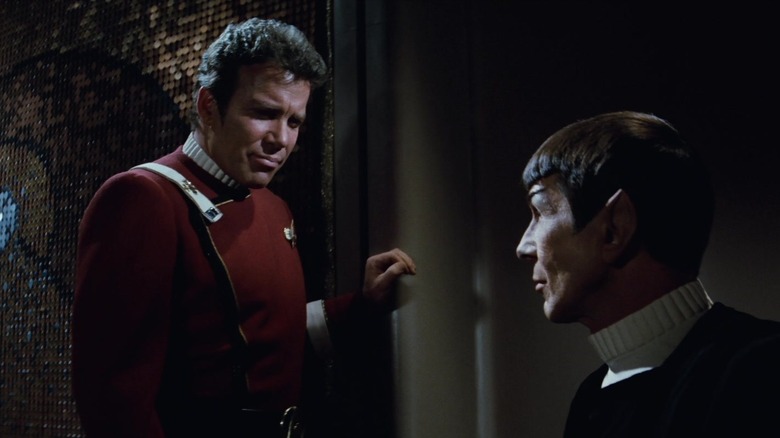
Even in the face of this adversity, women have historically played an important role not just in "Star Trek" fan culture but in fan culture as a whole. Across the ocean from the United States, "Mobile Suit Gundam" director Yoshiyuki Tomino stated in his characteristically blunt fashion that without its female fanbase, "Gundam" never would have survived. "Even if you make something mecha fans would like," he says, "it wouldn't necessarily be considered a piece of art."
The secret to the long-term appeal of both "Star Trek" and "Mobile Suit Gundam" aren't just the high-concept ideas or themes. It's the fact that those ideas and themes are bound in the service of exploring characters. Kirk and Spock (or in the "Gundam" world, Char and Amuro) might not be especially complex on their own, but they accumulate texture and depth through repetition and iteration. In this endless cycle of death and rebirth, fan writing and art plays as important a role in keeping those old stories vital as "canon" material.
Today, "Star Trek '' persists as television, film and even animation. The cast and crew deserve credit for their hard work engineering a future for a series long denied one. But when producer Harre Bennett took inspiration from that fan poem, was he creating the next chapter of "Star Trek" for the fans, or were the fans producing the next chapter of "Star Trek" through him? "Star Trek" is a story of many worlds, and the world as created by the cast and crew is just one of them. The rest sprawl infinitely, carved into the cosmos by the pens of a hundred slash communities.
Read this next: 12 Awesome Sci-Fi Movies That Never Got Sequels
The post How a Piece of Fan Fiction Became a Full-Fledged Star Trek Movie appeared first on /Film.
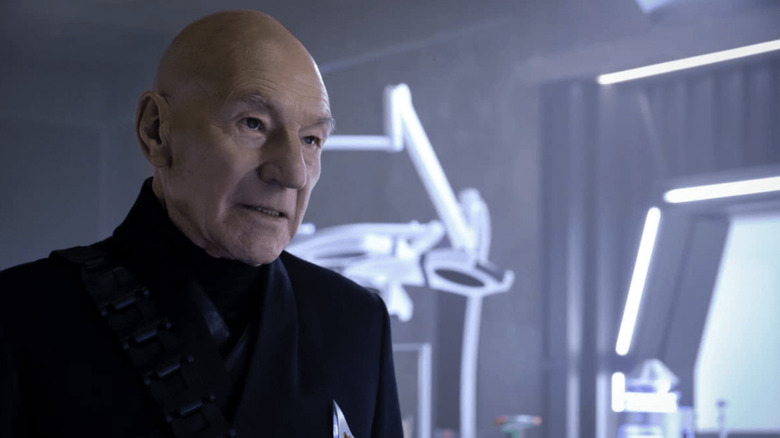
This post contains plot details about the second episode of "Star Trek: Picard" season 2.
"Star Trek" has a long memory. So do its fans. And so do the people making it.
With nearly 60 years worth of stories, characters, and canon, the "Trek" franchise is a buffet of goodness to draw upon, to reference, to reinvent, and to revisit. "Star Trek: Picard," which is currently streaming its second season on Paramount+, is very much a show about looking back on a life long-lived, so it's appropriate that it would reach back into "Star Trek" history for one of the most amusing canonical references in recent memory.
Due to reasons yet to be fully explained (the god-like alien Q and the ever-threatening Borg are somehow involved), the new season finds Jean-Luc Picard (Patrick Stewart) and his companions thrust into an alternate reality, one in which the Federation as we know it never existed and Starfleet became a xenophobic, war-mongering military force hellbent on conquering the galaxy.
So, what does a noble semi-retired starship captain do to save the day? Concoct a plan to go back in time to fix things, of course. But how does one go back in time without some kind of time machine immediately at the ready? Fly a ship at warp speed and slingshot around the sun and use the resulting forces to create a time warp, of course.
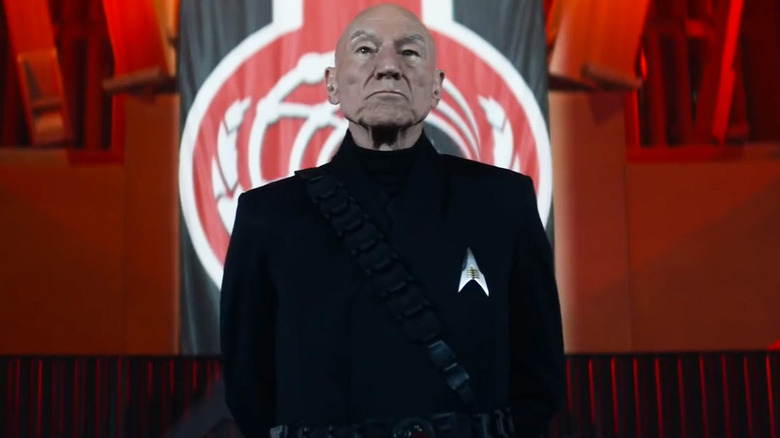
Does that sound a bit like nonsense? You bet. Classic Trek-nobabble. But it's not without precedent. This exact maneuver was pulled off by O.G. "Trek" hero Captain James T. Kirk, not once, but twice -- first in the original series episode "Tomorrow is Yesterday," and later in the movie "Star Trek IV: The Voyage Home." And just when a "Star Trek" fan is prepared to take note of this, Picard himself literally says it out loud to his astonished comrades. If Kirk could pull it off twice, surely they can do it!
It's a hilarious moment, a scene where "Picard" directly reaches into the past, suggesting that yes, a young Picard probably took entire courses about the life and adventures of Captain Kirk in his Starfleet Academy days. So I asked showrunner Akiva Goldsman about it.
To hear Goldsman describe it, the "Star Trek: Picard" writing staff was just trying to find a way to get the crew back in time and the solution came about naturally. After all, if you put a bunch of "Trek" nerds in a room together, this is probably the kind of thing you talk about by default anyway. As Goldsman told me over Zoom:
"Well, we were trying to figure out how to get back in time. We were in an alternate timeline that doesn't have time travel. They don't have access to much. So how has time travel worked in 'Star Trek' when you just have access to a ship? We went back to the original series. We all love the loop-de-loop around the sun. And it's very interesting because we police for that stuff in that we really only do it if it's dispositive in terms of plot, but super-delightful in terms of the veteran audience. So somebody who doesn't know 'Star Trek' would think you're just saying a name, and somebody who does know 'Star Trek' is super-happy about it. And that's when we try to do it. We don't let plot stand on it, but when it can be an Easter egg in the purest sense. And that one seemed just too low-hanging fruit to let sit on the vine."
"Star Trek: Picard" has been a blast so far (I've seen the first three episodes), and the new season's blend of "The Voyage Home"-style time travel hijinks and "Mirror, Mirror" alternate universe terror is a terrific blend of familiar territory and new ideas. And if that writer's room is going to whip out Kirk's old slingshot maneuver ... well, then I can't wait to see what other surprises are waiting in the wings.
Read this next: The 25 Best Movie Robots Of All Time
The post Star Trek: Picard Showrunner Akiva Goldsman Shares the Origin of Season 2's Nerdiest Reference appeared first on /Film.
Read more of this story at Slashdot.

VUSec security research group and Intel have revealed another Spectre-class speculative execution vulnerability called branch history injection, or BHI. The new exploit impacts all Intel processors released in the last several years and specific Arm core processors. Intel processors affected include the most recent 12th Gen Core Alder Lake CPUs. Surprisingly, AMD chips have shown no effect from the vulnerability at this time.
BHI is a proof-of-concept attack affecting vulnerable CPUs open to Spectre V2 exploits. The interesting part of this particular attack is that several mitigations were currently in place on the affected CPUs. BHI avoids the Intel Enhanced Indirect Branch Restricted Speculation (EIBRS) and the Arm ID_PFR0_EL1 CSV2 assignment. VUSec reports that BHI enables cross-privilege Spectre-v2 exploits, allowing kernel-to-kernel (intra-mode BTI) exploits and permitting attackers to place predictor entries into the global branch prediction history make kernel leak data. The result of the attack leaks arbitrary kernel memory on specific CPUs and could reveal hidden data such as passwords.
Intel reports that the company's processors starting with Haswell (introduced in 2013) and spread to the recent Ice Lake-SP and Alder Lake CPUs. Intel will release a security patch to mitigate the exploit.
Arm cores, such as the company's Cortex A15, A57, A72, Neoverse V1, N1, and N2, are reported to be affected. The company will also introduce five mitigations for their affected core series. It is currently unknown if custom series, such as the cores from Qualcomm using Arm's technology, are affected by the new exploit.
Linux systems have received mitigations for Spectre-BHB / BHI on Intel & Arm-based systems. There were added security measures for AMD systems that could potentially be affected.
Client and server machines should not be affected as long as those machines have the installed patches from the two companies. The impact the mitigations will have on performance on affected devices is unknown. Security researchers advise disabling unprivileged eBPF support to increase precaution from the attack.
The attack, as demonstrated by researchers, was previously mitigated by default in most Linux distributions. The Linux community has implemented Intel's recommendations starting in Linux kernel version 5.16 and is in the process of backporting the mitigation to earlier versions of the Linux kernel. Intel released technical papers describing further mitigation options for those using non-default configurations and why the LFENCE; JMP mitigation is not sufficient in all cases.
— Intel statement to website Phoronix
Sources: VUSec, ARM, Intel, Phoronix
The post Spectre V2 vulnerability strikes again in Intel Alder Lake & Arm CPUs, AMD chips unharmed by Jason R. Wilson appeared first on Wccftech.

One could call BJ McDonnell a jack of all trades. Director, camera operator, and overall badass, BJ has directed such films as the third installment of Adam Green’s Hatchet franchise, as well as directing music videos for the metal band, Slayer. In his latest film, STUDIO 666, he combines his love of horror with that of rock culture as he births a wild horror/comedy starring the legendary Foo Fighters.
In STUDIO 666, Rock & Roll Hall of Famers Foo Fighters move into an Encino mansion steeped in grisly rock history to record their much anticipated 10th album. Once in the house, Dave Grohl finds himself grappling with supernatural forces that threaten both the completion of the album and the lives of the band.
Recently, Nightmarish Conjurings’ Shannon McGrew chatted with director BJ McDonnell where they discussed everything from collaborating with the Foo Fighters, his love of 80s horror, and THAT surprise cameo.
Hey BJ, thank you so much for chatting with me today! Correct me if I’m wrong, but did the story for the film come from Dave Grohl himself? And jumping off of that, how was it working with the Foo Fighters on this project?
BJ McDonnell: He came up with the idea for it and we had two other writers Jeff Behuler and his wife, Rebecca Hughes. They’re the ones that actually wrote the script with the pitch Dave had. We all kinda got together and threw that together with ideas that I had wanted to do, ideas that Dave had, the ideas that they wanted to create in the script also with the kills that we did. It was a big collaboration on that end. I worked with a bunch of bands in the past doing a bunch of different stuff and you never know what you’re quite going to run into when you work with band guys. But honestly, the guys in the Foo Fighters made me feel like I was almost their friend from day one. And they did that with the crew and everybody else. It was just a really wonderful experience to be around, everybody was having a good time and accepting of everybody. It just made the whole experience so great.

Everyone seemed to be super stoked about this project and looked like they were having so much fun. When you were coming up with the look and feel of the film, there was an 80s vibe to it. Was there where you pulled a lot of inspiration from?
BJ McDonnell: I wanted to take the 80s horror stuff that I grew up with, the movies that I actually love, and the directors that I loved watching, like their work, but I also wanted to integrate the new school film, like the way movies look now. I wanted to make sure that our movie looked dead serious. Like, it’s a silly movie and we love it, but I wanted to have a certain tone and a look to the movie that I wanted to create. I felt like we did a good job with that because sometimes these movies….comedies can be a little too brightly lit. I wanted to make sure that when it’s funny and we’re in a light area, it’s light, but when it gets dark, we go dark. We go straight horror film.
STUDIO 666 has a banger of a cast. That being said, can we talk about the special cameo from the horror maestro himself, John Carpenter?
BJ McDonnell: Me and Dave specifically talked about John Carpenter in the pitches. When I was in kindergarten my parents didn’t really regulate what I could watch. I guess that was that generation. They just didn’t care. So I was so obsessed in kindergarten with Escape From New York, I always had that stupid theme song, it’s not stupid, it’s amazing, in my head as a kindergartner. I was so obsessed with this John Carpenter movie.
Then I started seeing more of the films that he did so it had a really big impact on me. I may not be getting the story straight, but I believe [Carpenter] took [composer/musician] Daniel Davies on tour with them on the road and he was helping out with doing stuff for them. When we talked about it Dave [Grohl] was like what if we try to reach out and get John to make us a song or do the score. And I was like if we can do it, let’s do it!
So we reached out to him and John remembered that Daniel helped [him]. And not only did he write our theme song for the movie, we then asked him if he would come on in a bit part. It was amazing when we got him there because honestly, I’m very into planning and what we were doing but when John got there, there was a part of me that goes, how the hell am I supposed to direct John Carpenter?
When he left it was almost like this weird feeling like, oh my god, I can’t believe that this happened. But then I thought about it and was like, well, this is life coming full circle, the kindergarten me listening to the “Snake Pistol” song. When we said it was a wrap on him I walked back to the house listening to the freakin Escape from New York theme in my head and almost passed out.

Touching upon the comedy aspect again, you have a lot of comedic geniuses in the film such as Will Forte and Leslie Grossman. Additionally, you also snagged up-and-coming actor, Jenna Ortega. How did they all come together for this film?
BJ McDonnell: I was a camera operator on MacGruber and that’s where I met Will. I got involved with doing other movies and Will kept popping up, and we all became friends. So he was one of my big picks to bring onto the job. I was like, “Dude, come do this movie. We are working with the Foo Fighters. It’s going to be amazing. We don’t need you too long. I know you’re busy. Can you just be this one person, this one part?” and he was like, “Yeah man, let’s do it, it’s gonna be awesome!”
Leslie Grossman, I worked with on “American Horror Story” and she was fantastic. I knew right away when the character came up that she was going to be great because she can be really funny, but she can go really sinister too. And I love that about her. It was really great to have her on board.
We got lucky with Jenna [Ortega]. It was funny because me and Adrienne, my wife, we watched all these audition tapes and… I wanted to open this movie where no one expects this movie to open. We saw her performance in “You” and I really wanted a strong actress to open the movie that could actually play the emotions like she does. And she took off. I hope we get the chance to work together again because she was fantastic.
One of my favorite aspects of this film was the use of practical effects, especially surrounding the kills. Was it important for you to execute those with as much practical work as you could?
BJ McDonnell: It was very important for me to be as practical as possible. When we talked about 80s movies, I come from the world of like what you see is what happens. I think if it gets too CGIish, it feels a little too fake like I’m looking for my controller for the PlayStation. I also love the craft of people making molds of people and the scars and the slice throats. I think it’s an amazing skill, a skill that’s so hard. We were really hell-bent on making sure that we kept this as practical as possible. Obviously, there’s a little bit of enhancement here and there but everything we did there was always some kind of practical something happening there.
Tony Gardner and the guys from Alterian and Adrienne were doing a bunch of that stuff too, which is always great when your wife’s there. The Slayer videos that I’ve done are the same crew as this. Tony and the guys knew Dave already. A lot of the kills were mostly Tony’s ideas. It was things that he wanted to create that he had not been able to do. It was basically like what kind of kills have you always wanted to do. So we got a batch of things that he wanted to do and we’re like all right, we’re going to pick a bunch of these out of the basket, and here we go!

Speaking more directly about the kills, do you have a favorite one? Mine is definitely the chainsaw kill in the bed.
BJ McDonnell: I love that one too, it’s actually really great. My main goal in that was to beat the amount of blood from A Nightmare on Elm Street, the one with Johnny Depp. I wanted that so bad. Obviously, we didn’t have an upside-down set and all that stuff, but we had so much blood in that scene that at the end of the day, and I’m not even kidding, there was a river of blood going down Encino. As I was going to my car, I wondered what the neighbors were thinking when they walked out and saw this, because it was a serious river of blood. It was insane.
You referenced A Nightmare on Elm Street, so are there any additional horror Easter Eggs that fans should look out for?
BJ McDonnell: There’s everything from Raiders of the Lost Ark to The Exorcist to The Burning to even The Fog. There are certain characters that you see in the movie that I wanted to kind of feel that way, too. There’s a lot of Easter Eggs in there, I mean the book… It’s the Necronomicon. If you’re going to make a book it’s going to be the Necronomicon, but ours has a little bit more of a twist to it in our version than the other versions. But you can’t beat [the original Necronomicon], it’s a masterful piece.
STUDIO 666 is now available in theaters. Stay tuned for more information regarding Digital and On-Demand offerings. To learn more about the film, check out our review!
The post [Interview] BJ McDonnell for STUDIO 666 appeared first on Nightmarish Conjurings.
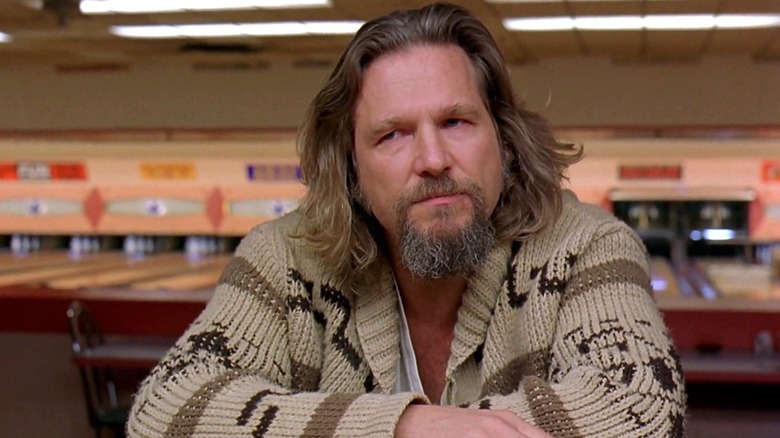
The Coen Brothers' 1998 film "The Big Lebowski" has become a cult hit of the highest order, inspiring annual conventions in both Louisville, KY (Lebowski Fest) and England (The Dude Abides). It's odd that such a nonchalant feature film should move so many to such passion -- surely the more appropriate response would be hole up with a White Russian (if you're over 21!) or an edible (if you're of age and they're legal in your area!) and try to get on the same lazy wavelength as The Dude.
This part is well known: The Dude (a.k.a. Jeffrey Lebowski), played by Jeff Bridges in the film, was inspired by producer/activist Jeff Dowd. Dowd was one of The Seattle Seven, and produced several Hollywood films prior to "The Big Lebowski." The character of Walter, portrayed brilliantly by John Goodman, was inspired by director John Milius, who wrote several notable films -- including "Magnum Force" and "Apocalypse Now" -- and who directed "Big Wednesday," "Conan the Barbarian," and "Red Dawn." Milius was a warmonger and a gun nut, and many of Walter's ravings about Vietnam were at least partially lifted from Milius' rants.
In terms of story, however, "The Big Lebowski" took much of its inspiration from a source that matches the film's genre, but not its tone: Raymond Chandler's classic hard-boiled detective novel "The Big Sleep."
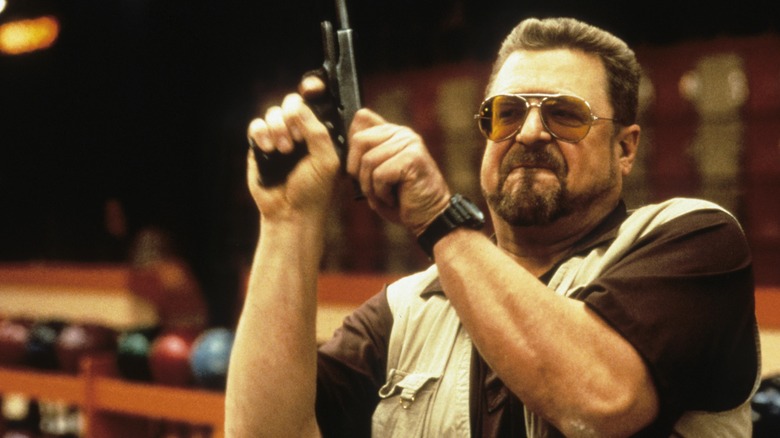
Raymond Chandler is often credited for inventing, or at least popularizing, "hardboiled" detective fiction. A poet and a journalist, Chandler is best known today for his seminal crime novels "The Big Sleep" (1939), "Farewell, My Lovely" (1940), and "The Long Goodbye" (1953). Chandler typically set his stories in Los Angeles, creating a dark myth of the city as well as popularizing L.A. as a setting for crime novels. In his introduction to the 1950 short-story collection "Trouble is My Business," Chandler wrote that the difference between hardboiled detective novels and Agatha Christie-style murder mysteries is that the latter are more meticulous and devoted to clues, allowing readers to potentially solve the mystery before the denouement. Hardboiled novels are more immediately emotional, focusing more on the confusion and danger of the situation than the details of the crime. Indeed, the mysteries at the center of hardboiled novels were often difficult to penetrate in any kind of meaningful way, leaving readers awash in mystery. "The ideal mystery was one you would read if the end was missing," he wrote.
Chandler also offered one of the best pieces of writing advice I've ever encountered: If you're suffering from writer's block, and you don't know where to take your story next, simply have two men with guns burst into the room. The action will continue apace.
Chandler's novels have been adapted for film many times, famously in the 1946 version of "The Big Sleep" with Humphrey Bogart and a 19-year-old Lauren Bacall. The 1973 Robert Altman adaptation of "The Long Goodbye," meanwhile, has more in common with "The Big Lebowski": It transposes the action to the present, and makes the novel's central detective Philip Marlowe into a laid-back character who's befuddled as often as he's on top of the case. (This approach would be tried again in 2014 with Paul Thomas Anderson's film "Inherent Vice," based on the novel by Thomas Pynchon.)
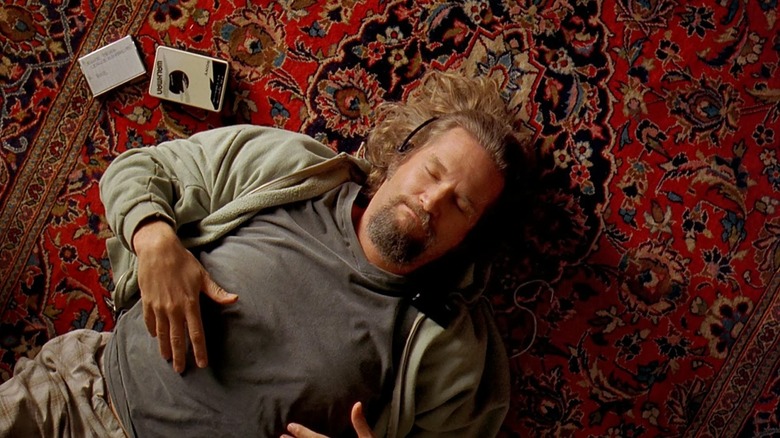
"The Big Lebowski" borrows only minor plot points from "The Big Sleep," and playfully mutates the sweaty, hard-boiled tone of the novel into, well, a stoner comedy. (In the film's opening scene, Sam Elliott's cowboy narrator muses that sometimes there's a man .... that ... and then loses his train of thought.) What "Lebowski" does take from Chandler is its setting, as well as the general sense that one is a little bit lost. Both genres are very much about being distracted and unable to focus on the mystery; in one, it's because you live in a morally empty world where heroes no longer exist and stopping crime and corruption will only be a temporary salve on the way to dusty death. In the other, it's because you've had some prime chronic.
"The Big Lebowski" was the Coen Brothers' third film based on works by a famed mystery author. Their debut, "Blood Simple," took its cues from James M. Cain ("Mildred Pierce," "Double Indemnity"), while their gangster film "Miller's Crossing" took its iconography from Dashiell Hammett ("The Maltese Falcon," "The Thin Man"). Those films, while each stylized in their own way, are more direct homages to their source material than "The Big Lebowski," which -- like its protagonist -- is comparatively loose.
"Lebowski" is about clues that never pan out, a murder that never happens, and a mystery that didn't really teach anyone anything. And yet, at the film's end, when The Dude is back to doing exactly what he was doing at the beginning of the film, there is a strange, meditative catharsis. There may be something to be said for abiding.
Read this next: The 15 Best '90s Comedies Ranked
The post The Classic Crime Novel That Inspired The Big Lebowski appeared first on /Film.
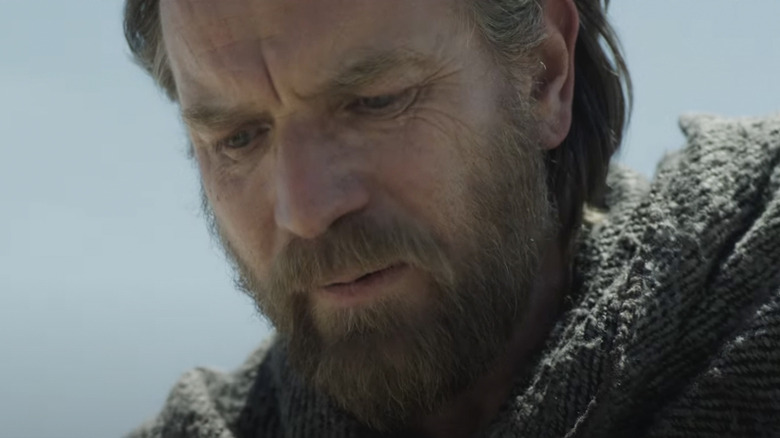
The Jedi may have the coolest weapons in the "Star Wars" galaxy, but they are one of the most corrupted, negligent, complacent orders in fiction. Their hubris led to the deaths of thousands, the end of the Jedi Order, and the rise of an evil Empire (OK, an Empire that lasted only about 30 years, but that's beside the point).
Though we knew from the very first "Star Wars" movie that Darth Vader helped hunt down all Jedi and drove them to extinction, it wasn't until the prequel trilogy that we discovered the truth: It wasn't some outside force that invaded and destroyed the Jedi, they were rotten from within. It is their greatest failure that they did not see the reckoning they were headed toward, and it is this failure that drives today's new trailer for "Obi-Wan Kenobi." Honestly, this is the first thing to make me excited for this show beyond pure nostalgia.
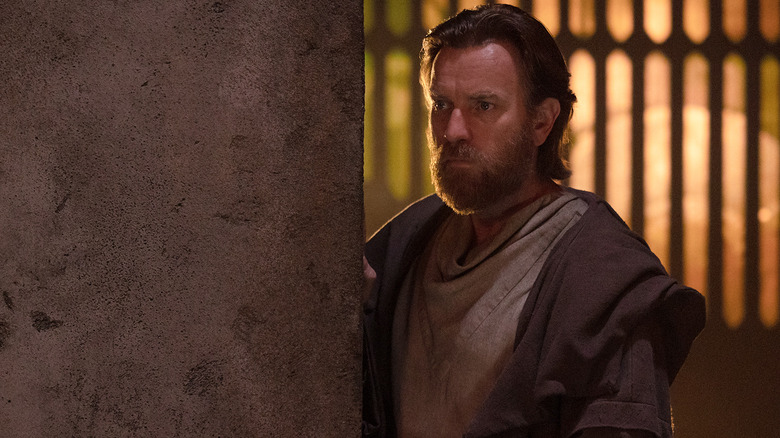
The trailer opens on a very familiar and tiresome desert planet, as a slightly-older-but-still-looking-great Obi-Wan Kenobi narrates, "The fight is done. We lost," while looking very sad. In a recent interview, Ewan McGregor said the show would find Obi-Wan "rather broken, and faithless, and beaten, somewhat given up."
This makes sense, of course, given that the person who led the Jedi Purge was Obi-Wan's best friend Anakin — a character who is also set to make an appearance on this show. Obi-Wan is right to feel broken and guilty, as he was always shown to be someone who recognized the flaws of the Jedi, but continued to support and believed in the Order. Sure, he fought Qui-Gon Jinn for disobeying the council, but he learned to recognize that the Jedi were not always what they were meant to be. He knew and protected Anakin's relationship with Padmé, he defended Ahsoka, he criticized the Clone Wars, and he recognized the part the Jedi played in every conflict.
The best thing "Obi-Wan Kenobi" can do, the best thing the trailer does, is to remind audiences that the Jedi failed. They failed to see the danger in taking kids away from their parents, they failed to see why a group of warrior monks becoming army generals at the behest of politicians was a terrible idea, and they failed to see that the government was led by a Sith Lord.
It is easy to see why not everyone was on board with the way the prequel trilogy portrayed the Jedi. To go from cool warrior monks to corrupted bureaucrats that sat around in board rooms all day while waiting for the government to grant them a permit to do anything is no fun. For those who grew up watching "Star Wars" and idolizing the Jedi, the prequels showed that anyone can be corrupted and hubris can make anyone fall.
With just one line of narration, the trailer for "Obi-Wan Kenobi" embraces the prequel trilogy's biggest contribution to the "Star Wars" mythos -- one that has had a very rocky reception and legacy.
George Lucas' decision to make an entire trilogy about the ineptitude of the Jedi changed everything about the "Star Wars" universe. It made Luke's victory all the greater, because he was someone who prioritized his friends and loved ones over the traditional, archaic rules of the Jedi Order. It also made the fall of Anakin more tragic.
"The Clone Wars" animated show expanded on the fall of the Jedi by focusing on smaller decisions and moments that showed why the Jedi were doomed to fail, but it was Rian Johnson's "Star Wars: The Last Jedi" that fully reckoned with the Jedi Purge. This was the first time a big piece of "Star Wars" media set post-Purge dealt with the failure of the Jedi, with Luke seeing his obsession with rebuilding the past and the failure of his Jedi academy as indicators that the Jedi should come to an end. It is a bold choice, but also the only logical step forward from Lucas' prequel trilogy, as you can't simply have Luke Skywalker trying to revive an Order that was responsible for the rise of a Sith Lord. But of course, just like "The Phantom Menace" got hatred for making the Jedi part of the bureaucratic machine, "The Last Jedi" got hatred for supposedly killing the ideal of Luke as an optimistic and cunning Jedi warrior.
It is very telling, then, that the next time we see Luke is as a younger, over-powered killing machine in "The Mandalorian," which is exactly what that subset of fans wanted but did not get from "The Last Jedi." Thankfully, "The Book of Boba Fett" did a lot to repair the damage by turning Luke into an obstinate, stubborn fanatic who is so set on bringing back the Jedi cult that he'd separate a child from his adopted father, in the same way his own father was separated from his parent. That we are seeing this same young Luke, who can go up against an army of Dark Troopers like the Jedi Knights of old, also be blind to how his actions reflect the errors of the past is very telling of the reverence (or lack thereof) that the "Star Wars" franchise is placing on the Jedi.
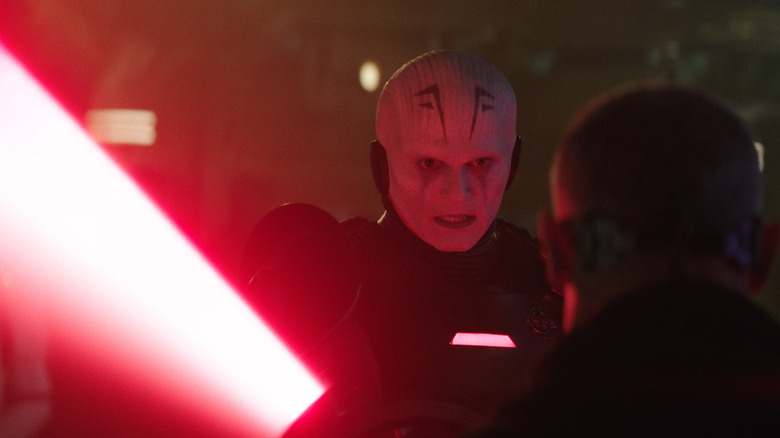
"Obi-Wan Kenobi" is not only being centered around a key player in the fall of the Jedi Order, but at a time when the Inquisitors are hunting down any surviving Jedi. This shows the franchise is not shying away from Lucas' portrayal of the Order, but doubling down on it. At a time when it is so easy to choose escapism and portray institutions as unbreakable and incorruptible, it is perhaps the greatest achievement of the prequel trilogy that it taught a generation of kids that to blindly trust traditions and institutions is to fall to the dark side. May "Star Wars" never forget that.
Read this next: The 13 Best Animated Star Wars Moments
The post The Obi-Wan Kenobi Series Looks Like It'll Explore the Failures of the Jedi – Good appeared first on /Film.
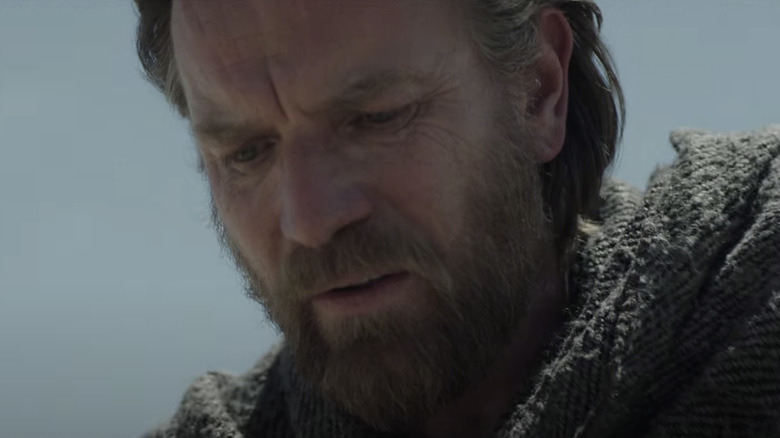
John Williams is the greatest living composer on earth. I'm not citing sources to back up that claim, because it's an irrefutable fact. How one human being has managed to generate so many works of musical brilliance that have become not just recognizable, but interwoven into the very fabric of American cinematic culture, is genuinely unbelievable. The music of "Jaws," "Jurassic Park," "E.T. the Extra-Terrestrial," "Harry Potter," "Home Alone," "Close Encounters of the Third Kind," the "Indiana Jones" films, "Superman: The Movie," the 1984 Summer Olympics, "NBC Sunday Night Football," "Catch Me If You Can," and the "Star Wars" films are all genuinely iconic, and this is but a small fraction of the work Williams has created spanning his over half-century career.
Picking a favorite piece of music by John Williams is like asking someone to pick between their children. We shouldn't have favorites, but we totally and absolutely do. As much as I'm a sucker for the roaring strings against the festive winds of "Something in My Memory" from "Home Alone," my favorite piece is and has always been "Duel of the Fates" from "Star Wars Episode I: The Phantom Menace." I was a lowly little eight-year-old choir dork when I went and saw the film in theaters for a birthday party, and the closest thing I'd ever felt to an out of body experience at that age came when Darth Maul flared up his lightsaber, and the London Symphony Orchestra and London Voices pummeled my little ears with the most incredible sound I'd ever heard.
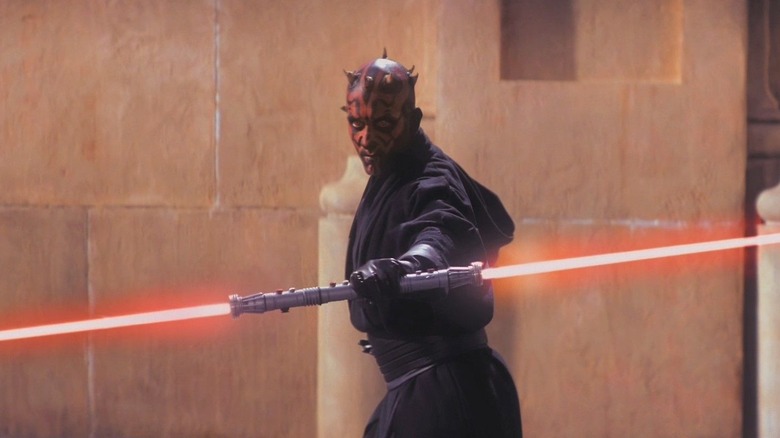
John Williams didn't need to go that hard with "Duel of the Fates," but he did that for us because that brilliant maestro wants to rock our collective world with his genius. The "Star Wars" prequel trilogy gets a lot of flak, but it's also home to some of Williams' best musical work in the whole franchise. "Duel of the Fates," in my humble opinion, might be his "Star Wars" magnum opus. Fortunately, I'm not alone. "Look, John Williams knows what he's doing," Dr Dan Golding, a Senior Lecturer in Media at Swinburne, the author of "Star Wars After Lucas," and the host of ABC Classic's Screen Sounds program said.
"Duel of the Fates" is brilliant because it combines both the orchestral work that Williams is known for, with a modernized choral arrangement taking clear inspiration from religious choral work typically reserved for Latin-based liturgy. The chorus absolutely blasts the Sanskrit translation of Welsh poet Cad Goddeu's "Battle of the Trees," a loose translation Williams arranged by ear, modifying syllables so the power of the stanza was prioritized over a perfect Sanskrit pronunciation.
In the special features of the film's DVD, Williams noted that he wanted the lightsaber duel to have a "religious, temple-like feel," and compared the setting of the battle to that of a pagan altar. He said the scene "seems like a dance or a ballet, a religious ceremony of some kind, probably ending in the death of one of the combatants."
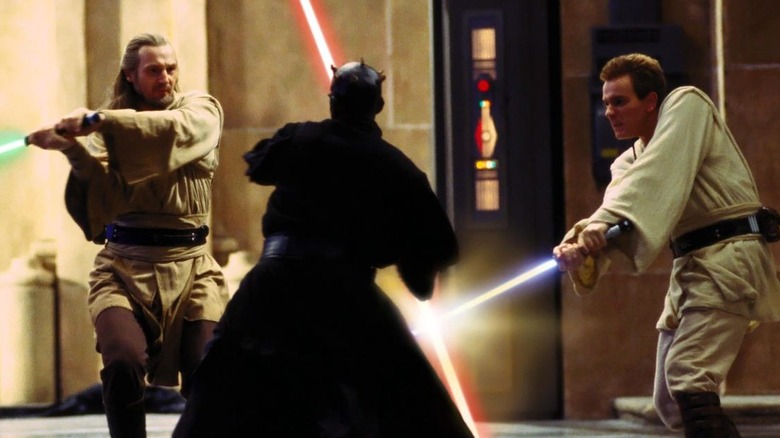
Outside of the outstanding choral work, "Duel of the Fates" contains some of Williams' most interesting orchestral work. The pulsing string ostinato, the bellowing notes of dark brass instruments, the fluttering low woodwinds, and the commanding sound of French horns, all join together to not only allow an absolutely killer score but to also tell a story in tandem with the battle.
Darth Maul's devilish face paired with the choir immediately feels reminiscent of hearing Jerry Goldsmith's "Ave Satani" from "The Omen," the melismatically chanting choir almost serving as a warning siren for the evil in front of our eyes. "Even more than any technical brilliance — which is there, by the way — it's the emotions that Williams captures that is important," said Golding. "His music makes you feel things; never mind the era, the style, the genre." It's a perfect piece of music to embody what director Dave Filoni ("Clone Wars," "Rebels," "Bad Batch," "The Mandalorian") views as one of the most important moments in the entire franchise.
The use of the ostinato (or a repeated sound) invokes a feeling of movement, and tricks our brains into anticipating something big is about to happen. For a contemporary comparison, think about the use of piano in "Clocks" by Coldplay or even the baseline in MC Hammer's "Can't Touch This." We hear it so frequently in the piece that our brain starts to anticipate what could possibly replace it when it finally does stop. Williams also plays with volume dynamics, pushing and pulling the audience through a feverish emotional journey from the soft build of Oboes into the full-on assault of sound at the piece's climax. Try watching Qui-Gon Jinn, Obi-Wan Kenobi, and Darth Maul battle it out on mute ... if your brain isn't immediately playing "Duel of the Fates" inside your head, the fight immediately loses intensity.
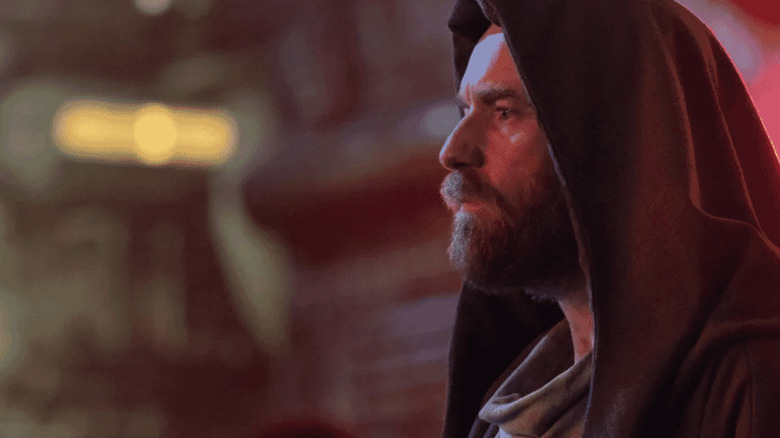
When Disney+ dropped the highly-anticipated trailer for "Obi-Wan Kenobi," we knew it was going to be cool. But when the Lucasfilm bumper card hit alongside "Duel of the Fates" at the 30 second mark? CHILLS. In less than two minutes, that teaser trailer kicked us square in the chest with "Battle of the Heroes," "Duel of the Fates," "Anakin's Dark Deed," and "The Force Theme." Knowing that John Williams returned for the "Obi-Wan Kenobi" series is even more exciting, because there's no way that Williams isn't going to return to the musical themes established in the prequels, and given a fresh bump of creativity.
Even today, "Duel of the Fates" is John Williams most streamed piece of music on Spotify*, and is the only classical piece of music to ever appear on MTV's "Total Request Live" (god, I'm old). Obviously, the "Star Wars Main Theme" and "The Imperial March" are absolutely iconic pieces of music that all of us will remember the tune to even after our brains have deteriorated into mush and leaking out of our ears, but "Duel of the Fates" will forever hit in a way that few pieces of music can. John Williams truly is the man.
*Technically his arrangement of "Carol of the Bells" from "Home Alone" is his most streamed track, but that's a classic Christmas song from 1914, not a Williams original.
Read this next: The 11 Best Star Wars Droids Ranked By Usefulness
The post The Obi-Wan Kenobi Trailer Reminds Us That Duel of the Fates is One of the Greatest Pieces of Star Wars Music appeared first on /Film.

Neon White (PC), Elden Ring (PS5, PC), Stuff that isn't games, and more!

Blueberries are a popular pancake inclusion. They’re a very breakfast-y fruit—there is literally a cereal called “Blueberry Morning”—and they add a nice pop of color to an otherwise beige dish. Also: They just taste good. They’re sweet and slightly sour, the perfect counterbalance to sweet, buttery pancakes. But…

CISOs struggling to fill their vacancies should take a closer look at the opportunities afforded by military veterans

107 years after it was cracked open by sea ice and abandoned by explorer Ernest Shackleton and his crew, the Endurance has been found under 3km of Antarctic water. To the delight of historians and archeologists, it's perfectly preserved.
— Read the rest"Without any exaggeration this is the finest wooden shipwreck I have ever seen – by far," said marine archaeologist Mensun Bound, who is on the discovery expedition and has now fulfilled a dream ambition in his near 50-year career.
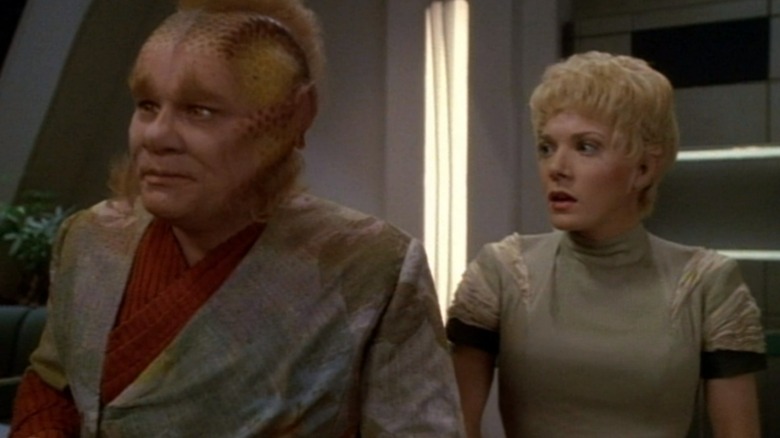
It wouldn't be very controversial to state that "Star Trek: Voyager" sits at an unusual crossroads in franchise history. Essentially functioning as an olive branch to fans who felt threatened by the more challenging and unconventional paths traveled by "Deep Space Nine," "Voyager" brought fans back to the safe confines of a much more familiar environment. An emphasis on exploration, a constantly roving starship with a traditional crew (aside from the very un-Federation-like Maquis half, at least), a noticeable lack of interpersonal conflicts among the crew in the early going, and heavily episodic adventures with little to no carryover from one episode to the next. If it weren't for the unique premise of the show, fans would be forgiven for thinking they'd somehow entered a spatial distortion or subspace rift that transported them back to the halcyon days of "Star Trek: The Next Generation."
Various growing pains (yes, the unofficial "Wait three seasons for the episodes to get good" rule of thumb remains alive and well here) and reactionary creative decisions aside, "Voyager" would eventually go on to inspire a sizable group of devoted fans and provide several classic moments in "Trek" lore ... and not just the controversial ones that even the most casual of fans will have undoubtedly head about.
One unexpected detail, in fact, continues to resonate with fans (and even cast members) of the series to this day. Of the many memorable characters on board the USS Voyager, lost in the faraway Delta Quadrant with little hope of a timely return to Earth, the Talaxian known as Neelix (Ethan Phillips) and the Ocampan named Kes (Jennifer Lien) quickly became integral (if somewhat divisive) parts of the crew. Romantically involved with one another right from the start, much of the early seasons of "Voyager" mined conflict and soap opera-esque drama from external obstacles such as jealous love triangles, placing one or the other in physical danger, or the built-in reality of Kes' naturally short lifespan encompassing only eight or nine total years. The largest change to the status quo, however, completely changed the tenor of their very relationship. The choice to split up the couple was a momentous enough move on its own, but doing so without even airing their actual break-up scene to give fans a more concrete sense of closure? That's a whole other level of "boldly going."
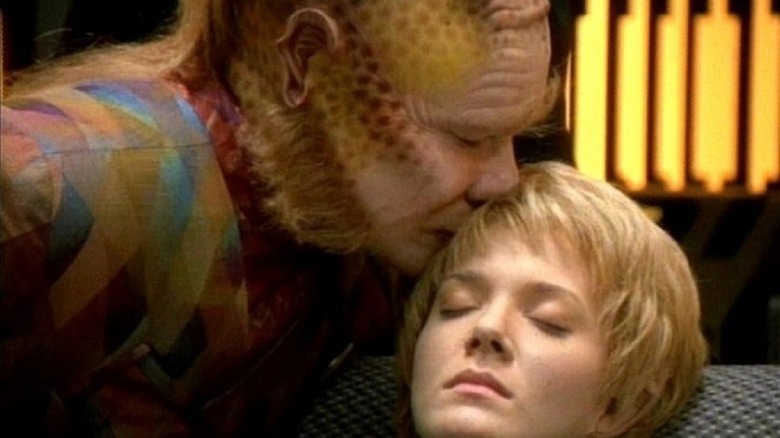
To be completely fair, we do get to see the moment of Kes and Neelix's separation in season 3 of "Voyager," in episode 10 titled "Warlord" -- though with very little in the way of actual set-up or much in the way of meaningful fallout. An early scene sees the two reach what seems like only a temporary impasse in their relationship, as Kes complains of the oftentimes clingy Neelix's suffocating needs and intense jealousy over who she chooses to spend her time with. Having never experienced a romantic relationship outside of this one, Kes understandably feels eager to see what else the universe has to offer and suggests a parting of ways ... or so we think. Of course, because this is "Star Trek," these relatively minor concerns are complicated by the fact that Kes has done all this while being possessed by a recently-deceased alien entity with tyrannical, warlord ambitions. Compelled to drive her closest friends away and escape from the ship, she spends the rest of the episode fighting to regain control of her own mental influence while her unwelcome intruder goes on the warpath. You know, run-of-the-mill "Trek" stuff.
Ultimately, however, the episode ends on a somber note as Kes grapples with the fact that her brief but violent rampage can't be undone and that she will, fundamentally, never be able to maintain the exact same relationships with the Voyager crew as she once did.
Episode 21, titled "Before And After," further doubles down on the Neelix/Kes breakup with another Kes-centric storyline. The episode introduces an unexpectedly moving time travel wrinkle (one that "Lost" and many other shows in its wake no doubt borrowed from) that opens a window into a hypothetical future where Kes is married to Tom Paris (Robert Duncan McNeill) and has started a family in her waning years. The actual mechanics of Kes starting the episode as an aged woman ("aged" being a relative term for a nine-year-old Ocampan, of course) and repeatedly jumping back to earlier points in this future timeline are unimportant, at least compared to the visceral impact of seeing Kes and Neelix's platonic, if somewhat awkward, new dynamic.
For such an episodic series, these two hours of "Voyager" did much of the heavy-lifting to incorporate such a dramatic shake-up to potentially skeptical viewers ... which brings us back to that unaired breakup scene.
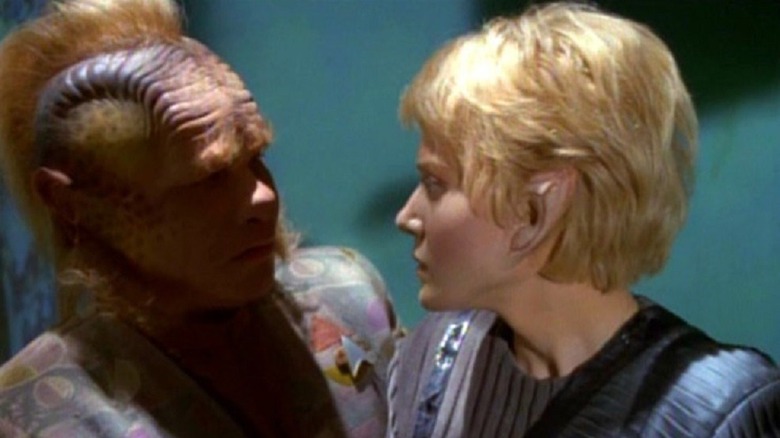
No matter the accepted consensus of any given "Star Trek" show, you can be sure that certain creative choices made on the series will continue to invite discussion and debate years down the line. The same applies to the short-lived Kes and Neelix romance. During an episode of "The Delta Flyers" podcast, co-hosted by Garrett Wang (who played ensign Harry Kim) and Robert Duncan McNeill (Tom Paris), actor Ethan Phillips opened up about this very topic.
As it turns out, a crucial scene directly addressing the impact of their separation was actually written and filmed ... but never made it to the air. While talking about a certain scene taking place between Neelix and Kes where their tumultuous history together isn't even acknowledged on any level whatsoever, Phillips points to a previous episode that could've featured an important moment of reckoning between them. Surprisingly, neither of Phillips' co-stars had even heard of this development. Adding that it was a "beautifully written scene," Phillips explains:
"...we did do a scene where we both acknowledge that we're not a couple anymore. We shot it in the science lab, which was a set we didn't use often. And Kes and I had a closure conversation where we said we want to be friends now and blah, blah, blah. And it was, it was quite a nice tag to the relationship. They never aired it ... it was a very good scene. It was easily a six or seven-page scene where we track what happened to us and what we think might have caused the split, but that we want to stay friends..."
The elephant in the room, however, can't fully be avoided. Phillips goes on to admit that the specifics of their relationship were never clarified and that pesky age difference became too glaring to ignore:
"It was a lot of ambiguity about that relationship to begin with. Was it platonic, wasn't romantic. And it was shaky, just the optics You know, I'm an older guy, and here's this very young girl who's ostensibly two years old in her race, and I think they weren't sure how to handle it so much. And so I think they just thought let's just move on, and maybe they'll forget about it."
"Trek" lore is littered with moments like these, but we'll never forget the saga of Kes and Neelix on "Voyager."
Read this next: 20 Movies About Aliens That You Definitely Need To Watch
The post Star Trek Fans Never Saw One Of Voyager's Most 'Beautiful' Scenes appeared first on /Film.
Filmmakers are often called auteurs, the sole author responsible for the overall look and feel of a movie. From the gritty realism of early Scorsese films to the vivid landscapes painted by Tim Burton, these become a filmmaker's "calling card." Sometimes directors take it a step further with Easter eggs in their films that contain a hidden meanings or references.
For example, Robert Zemeckis connects "Back to the Future" and "Death Becomes Her" with the date October 26, 1985. Quentin Tarantino references Antonio Margheriti as a film director in "Once Upon a Time in Hollywood" and an Italian alias in "Inglourious Basterds."
But perhaps no one has had more fun and made better use of Easter eggs than John Landis. The legendary filmmaker has left an indelible mark on Hollywood. His influential filmography spans six decades and includes comedy classics "National Lampoon's Animal House," "The Blues Brothers," "Three Amigos!" and "Coming to America." And if you look closely, you'll find something that continuously shows up in his films. What began as a running gag has evolved through pop culture into something much bigger.
In a 2018 interview, Landis discussed his first movie script, which was called "See You Next Wednesday," and whose title was inspired by Stanley Kubrick's "2001: A Space Odyssey." The phrase "See you next Wednesday" was the last line spoken by Frank Poole's father in a video letter from the character's parents in Kubrick's sci-fi epic. The innocuous line would become Landis' "calling card."
"See You Next Wednesday" was never produced, and Landis described his first screenplay as "terrible but with some really good ideas." Those good ideas would eventually incorporated into future movies. But "See You Next Wednesday" started showing up as a fictitious film within the director's movies, a running gag spanning years. Landis explained:
"And so first I referred to it in my first movie 'Schlock' as like this important movie, and then it sort of became very clear that it's never gonna be made. So any time I take a gag or an idea or something from that script, I can oblige that script all the time, I always give it a credit in the movie."
As a nod to his early work, Landis seemed to have as much fun with his fake movie as he would with his real comedies. The faux "See You Next Wednesday" would be re-cast in 10 of his films.
Landis wasted no time putting the gag to use, and the genre of the fake movie would evolve with each appearance. In Landis' first film, "Schlock," the fake flick would turn up as a monster movie. In "Kentucky Fried Movie," it appeared as the movie being watched during the "feel around" where a theater employee would help moviegoers feel what they are viewing on the screen.
It became a disaster movie in "The Blues Brothers," and then a porn film in "An American Werewolf in London." In "Trading Places," it would become a Hollywood Classical era film and then appear as a spy movie in both "Into the Night" and "Spies Like Us." In "Coming to America" it would morph into a "Barbarella"-inspired sci-fi film, and finally, in "Innocent Blood," it appears as a blink-and-you-miss-it movie marquee.
There are additional, less obvious references to the faux film in Landis' works. In the seminal music video for Michael Jackson's "Thriller," the phrase is spoken by a deputy in the movie Jackson and his girlfriend are watching. It would later appear in Jackson's "Black or White" music video as the name of a storage company. In "Twilight Zone: The Movie" an S.S. officer says, "See you next Wednesday" in German. In addition to the poster in "Spies Like Us," a U.S. Army recruiting poster is labeled "The Army can teach you skill. See you next Wednesday."
Hollywood caught on, as non-Landis "See You Next Wednesdays" began cropping up everywhere, beginning with the 1987 spoof film "Amazon Women on the Moon" as the label on a music cassette and a movie poster. It would go on to appear in other non-Landis films, video games, and television shows -- and even Michael Bublé's music video for "Hollywood." Not even Landis himself could have written a comeback story like this for the script so terrible it could never become its own movie.
Read this next: The 20 Best Dystopian Movies Of All Time
The post How A Throwaway Stanley Kubrick Line Became John Landis' Calling Card appeared first on /Film.

We’ve already covered why you should stop using dryer sheets—now it’s time to vanquish the next unnecessary step in your laundry routine: fabric softener. I know, you like how it makes your clothes feel! (And smell.) If you’re a longtime user, you’d be forgiven for thinking in fabric softener’s absence, all your…