Shared posts

22 Mar 23:43

Musk's Starlink is raising prices

by Bryan Menegus

It feels like the price of most things has increased lately — that's the rub with inflation. While many Americans who have experienced the rollercoaster of capitalism before have some familiarity with cost instability around staples like food and gas, inflation, SpaceX claims, is also behind some upcoming changes to its satellite internet provider, Starlink. 

"Due to excessive levels of inflation, the price of the Starlink kit is increasing from $499 to $549 for deposit holders, and $599 for all new orders, effective today," an email forwarded to Engadget states. "In addition, the Starlink monthly service price will increase from $99 to $110. The new price will apply to your subscription on 4/22/2022." 

The email reminds customers that, within their first year they can cancel and receive "a partial refund of $200," or a full refund if their equipment was received within the last 30 days. Several other customers have posted identical emails on Twitter, though the company has yet to respond to our request for confirmation, and for further details. We'll update if we hear back.

22 Mar 21:02

New Dell BIOS Bugs Affect Millions of Inspiron, Vostro, XPS, Alienware Systems

by noreply@blogger.com (Ravie Lakshmanan)
Five new security weaknesses have been disclosed in Dell BIOS that, if successfully exploited, could lead to code execution on vulnerable systems, joining the likes of firmware vulnerabilities recently uncovered in Insyde Software's InsydeH2O and HP Unified Extensible Firmware Interface (UEFI). Tracked as CVE-2022-24415, CVE-2022-24416, CVE-2022-24419, CVE-2022-24420, and CVE-2022-24421, the
22 Mar 21:01

Sony: We’ll Always Make Single Player Games, But Live Service Is Exciting

by Alessio Palumbo

Live Service PlayStation Studios

Sony announced its latest game developer acquisition yesterday, having agreed to purchase Jade Raymond's Montréal-based Haven Studios. Sony already had partnered with Haven to work on a triple-A live service multiplayer game, and this is clearly an additional step that shows the confidence in the project.

Speaking to GamesIndustry.biz in a fresh interview on the deal, Head of PlayStation Studios Hermen Hulst reassured fans that Sony will still keep making its highly acclaimed single player games, even while it pushes for an expanded lineup of live service titles.

Obviously we will always carry on making these single-player narrative-based games such as Ghost of Tsushima, The Last of Us, and Horizon Forbidden West. But you've spotted correctly that we have invested in live service games, because that's incredibly exciting for us.

We have quite a few now in development or conceptualisation, so yes we are setting up capabilities internally. But exactly for that reason, it is so exciting for us to welcome to the family a group of people who have a lot of experience with live service games. To have those central capabilities that we're setting up interact with people who have been doing it for a long time... that notion that demanding customers create great capabilities, that usually holds true in game development.

It's really exciting for our central services and technology groups. For these to be working with a world class outfit like Haven... that's great. And it is aligned with the strategy of diversifying the kinds of games we are offering to our fanbase.

In early February, as part of its Q3 2021 earnings call, Sony confirmed its plan to release ten live service games by March 2026. The lineup should include Bungie's new game, the long-anticipated The Last of Us standalone multiplayer experience, and projects from Deviation Games, Firewalk Studios, Insomniac Games, Guerrilla Games, Firesprite, London Studio, and of course, Haven itself.

At the same time, following Gran Turismo 7's mishandling of microtransactions, some users wonder if that's the type of monetization that can be expected in the upcoming Sony live service games. We can only hope that won't be the case.

The post Sony: We’ll Always Make Single Player Games, But Live Service Is Exciting by Alessio Palumbo appeared first on Wccftech.

22 Mar 20:56

Ubuntu 22.04 LTS Will Default To Wayland With NVIDIA For v510+ Driver

A change that had been expected but finally buttoned up in time for next month's Jammy Jellyfish release: Ubuntu 22.04 LTS will now default to using the GNOME Wayland session when running the NVIDIA proprietary driver. The caveat/limitation is that's only the case when using the NVIDIA 510 series driver or newer and not when using any of the older legacy driver branches...
22 Mar 20:56

SSE Company Skyhigh Security Emerges From McAfee Enterprise

by Eduard Kovacs

Private equity giant Symphony Technology Group (STG) on Tuesday announced the launch of a new security service edge (SSE) company named Skyhigh Security.

read more

22 Mar 20:53

High-Severity UEFI Vulnerabilities Patched in Dell Enterprise Laptops

by Ionut Arghire

Firmware security company Binarly this week disclosed the details of several vulnerabilities that impact the Unified Extensible Firmware Interface (UEFI) of multiple Dell enterprise laptop models.

read more

22 Mar 20:51

The 7 Best Power Banks to Charge Up Your Devices

by Rachel Scherer

Although some smartphones and electronic devices have impeccable battery life, they are likely to run out of power when you need them the most. Power banks keep your gadgets charged up when you don’t have access to a power outlet.

22 Mar 20:42

NVIDIA Reveals New Workstation GPUs For Desktops & Laptops, RTX A5500 A RTX 3080 Ti In Diguise

by Jason R. Wilson

NVIDIA is extending the scope of expert graphics cards from the RTX-A series for GTC 2022 with the RTX A5500 and several new graphics cards. For workstations it is put marginally under the premium RTX A6000, in the laptop as RTX A5500 integrated GPU it is itself the new leading model. Commonly, there is little likeness between the two.

NVIDIA RTX A5500 for workstations, using NVIDIA GeForce 3080 Ti technology to guide its ray tracing and more along with added support

The graphics cards of the RTX-A series, previously called Quadro, are utilized for 3D graphics rendering (with ray tracing), video altering, AI computations, and other workflows. They utilize extraordinary drivers and offer additional aid to users.

The NVIDIA RTX A5500 for workstations with a dual-slot cooling architecture involves a similar GA102 setup as the GeForce RTX 3080 Ti engineering samples and hence offers five percent fewer execution units than the past top model RTX A6000 with a full GA102 configuration. With 24 GB GDDR6 including ECC error correction, the graphics card offers half as much memory as the premium offering, memory interfacing and clock remain untouched. Two RTX A5500 can be interconnected by means of the company's proprietary NVLink.

The grouping makes sense of why NVIDIA is sending off a marginally more modest adaptation 18 months after the RTX A6000 and toward the finish of Ampere's term, basically with the strained delivery system. It is said NVIDIA couldn't convey an adequate number of graphics cards with GA102 full development and 48 GB GDDR6X and attempts to fulfill a portion of the closely involved SKUS with the option put beneath.

The new RTX A5500 graphics card is also available for mobile workstations as the RTX A5500 laptop GPU which corresponds to the configurations of the GeForce RTX 3080 Ti.

RTX A6000 RTX A5500 RTX 3090 RTX 3080 Ti  
Architecture amp
GPU GA102
process Samsung 8 nm custom process
Chip size 628.4mm²
Transistors 28.3 billion
GPC 7
SM 84 80 82 80
FP32 ALUs per SM 128
FP32 ALUs 10,752 10,240 10,496 10,240
RT cores 84 2nd gen 80 2nd Gen 82 2nd Gen 80 2nd Gen
RT cores + ALUs in sync Yes
Tensor cores 336 3rd Gen 320 3rd. gene 328 3rd Gen 320 3rd Gen
FP32 performance 38.7 TFLOPS ? 35.7 TFLOPS 34.1 TFLOPS
FP16 performance 38.7 TFLOPS ? 35.7 TFLOPS 34.1 TFLOPS
Texture units 336 320 328 320
ROPs 112
Storage 48GB GDDR6 + ECC 24GB GDDR6 + ECC 24GB GDDR6X 12GB GDDR6X
Memory speed 16.0 Gbps 16.0 Gbps 19.5 Gbps 19.0 Gbps
Memory interface 384 bits
Memory bandwidth 768 GB/s 936 GB/s 912 GB/s
L2 cache 6 MB
TDP 300 W -- 350 W 350 W
Slot connection PCIe 4.0 x16
MSRP $5,566.70* -- $1,652.70 $1,322.38
*Estimated market price

As between the GeForce RTX 3080 Ti and the GeForce RTX 3080 Ti notebook GPU, the distinction between the RTX A5500 and the RTX A5500 notebook GPU is additionally hefty. Of the 10,240 GA102-based shaders, there are as yet 7,424 GA103-based shaders left in the notebook. Along with the lower clock, the FP32's handling power drops by close to a third from 34.1 to 24.7 TFLOPS. The GDDR6 memory is 16 GB and, similar to all portable RTX-A models, doesn't uphold ECC standards.

The NVIDIA RTX A6000 is likewise accessible as an A40 without connections for display and with a passive cooler for assistance in the server. Such a variation is not anticipated for the RTX A5500. The new variations are also anticipated to see a discount by means of partners throughout the second quarter. As with the introduction of the more established models 18 months prior, NVIDIA didn't name a specific launch date.

Source: ComputerBase

The post NVIDIA Reveals New Workstation GPUs For Desktops & Laptops, RTX A5500 A RTX 3080 Ti In Diguise by Jason R. Wilson appeared first on Wccftech.

22 Mar 20:37

Why Does Windows 11 Need TPM 2.0?

by Matthew Wallaker

If your computer is five or six years old, there’s a chance you can’t upgrade to Windows 11 because of the TPM 2.0 requirement. But is TPM 2.0 really necessary or is it just a trick to make buy new hardware?

22 Mar 20:37

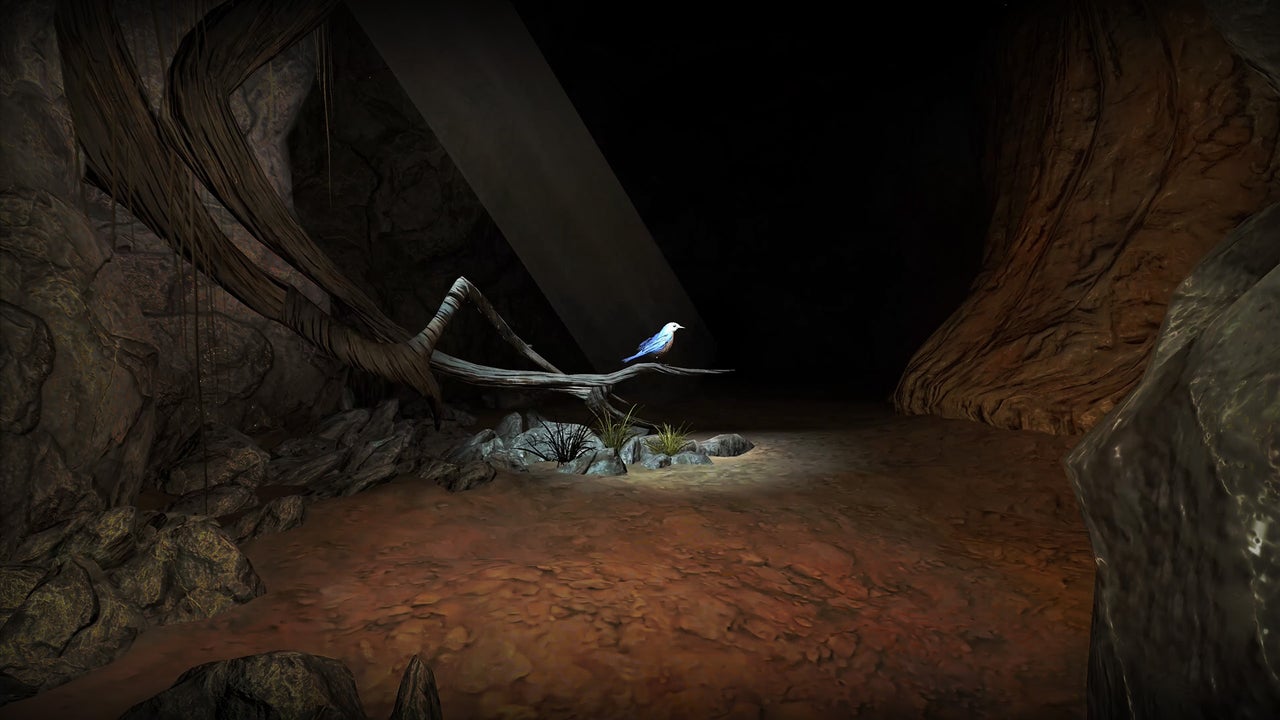
Colossal Cave Revisited… In VR. By Ken and Roberta Williams!

by Rampant Coyote

If you’ve followed me for a long (VERY LONG) time, you probably know that the great-granddaddy of text adventure games, the Colossal Cave Adventure, was quite an influence on me as a kid even when my first encounter with it wasn’t my own personal playthrough.

Well, it looks like legendary game developers Ken and Roberta Williams, pioneers of graphic adventure games, started playing with Unity during the pandemic, and pulled a team together to remake Colossal Cave in 3D. With VR support.

Yeah, naturally, I’m gonna be there. Even if it sucks, I’m going to check it out. Because… Colossal Cave. Ken and Roberta Williams. VR. That dragon had better be waiting for me on that frickin’ Persian rug.

It should be out this summer on Quest 2, PC, and Mac. Not sure if the PC version will have VR support yet, but it’d be a crime if they didn’t include SteamVR support.

More information at IGN.


22 Mar 20:26

This last-second Zelda: Breath of the Wild save is remarkable

by Chris Carter

Treasure Chests: the invincible faux equipment I can’t tell you how many near-misses I’ve had with Guardians in Zelda. One...

The post This last-second Zelda: Breath of the Wild save is remarkable appeared first on Destructoid.

22 Mar 20:24

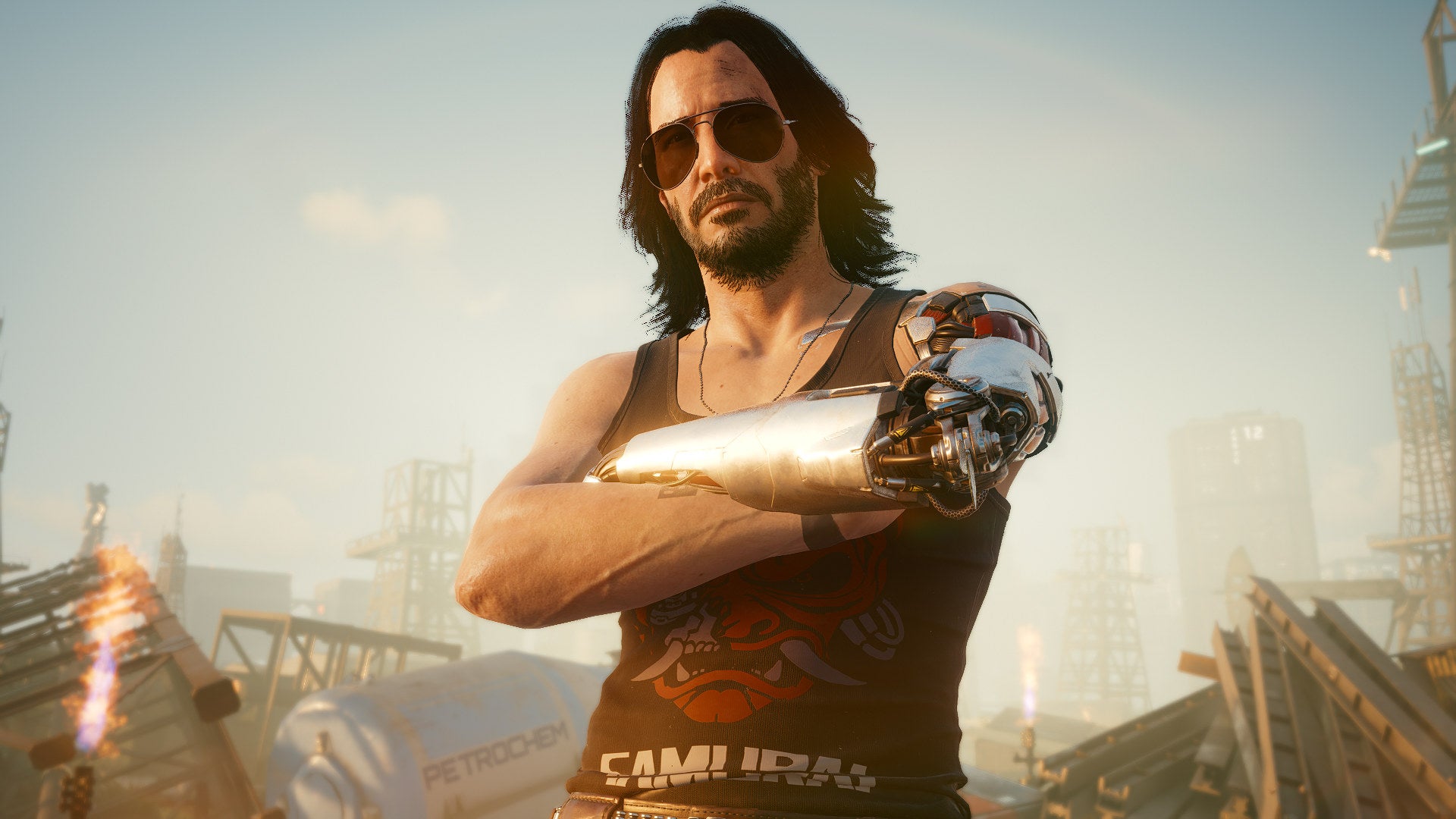
Cyberpunk 2077's 1.52 update mainly fixes quests, but includes smaller changes

by Jai Singh Bains

As is tradition by now, Cyberpunk 2077 has released its latest extremely long list of fixes. This time it focuses on cleaning up quests, and a miscellaneous number of other bugs.

Read more

22 Mar 20:12

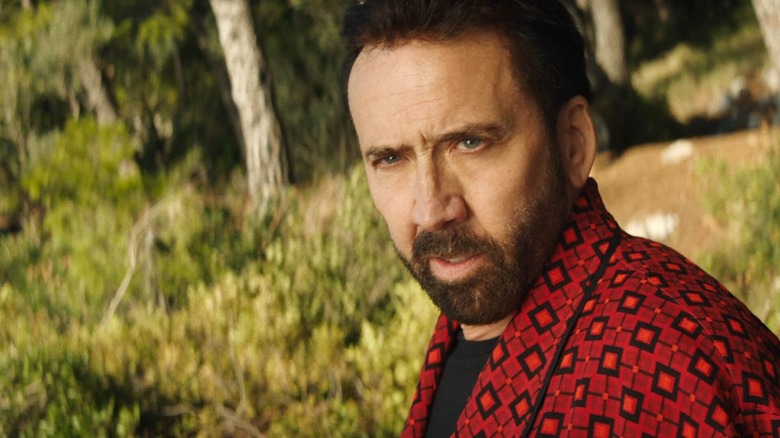
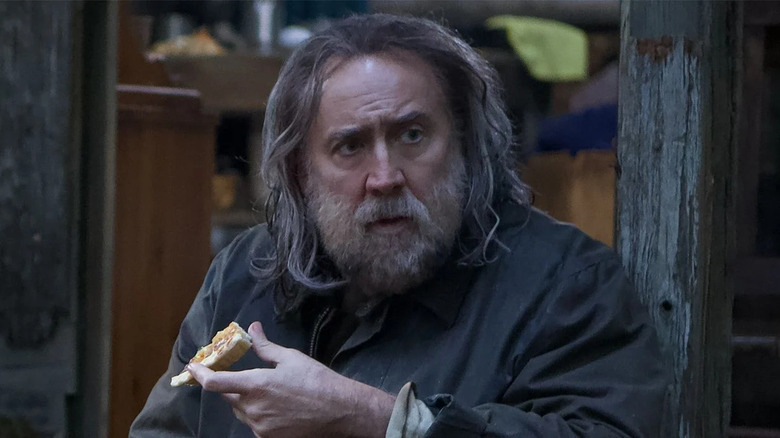
Nicolas Cage Has No Regrets About All Those Direct-To-Video Movies, Says He 'Never Phoned It In'

by Witney Seibold

Throughout the mid-to-late 2000s, reports began emerging of actor Nicolas Cage's massive landholdings. In 2005, he sold his home in Malibu — where property values are notoriously high — and purchased a new house, and a whole island, in the Bahamas. He also bought the Schloss Neidstein castle in Germany in 2006, and a massive estate in Rhode Island. In 2007, he bought Midford Castle in Somerset, England. Ultimately, he would be the owner of 25 mansions all over the world. He also secretly purchased a dinosaur skull at auction for $276,000, although When Cage learned that the skull had been stolen, he conscientiously returned it to the Mongolian government. He bought an expensive tomb for himself, got a nice Lamborghini, and even a pet octopus. He bought a copy of Action Comics #1," the first appearance of Superman, for $110,000. Why not be a wealthy movie star if you're not going to spend your fortune on fun, ostentatious things, right? 

In July of 2009, the IRS filed a tax lien on Cage to the tune of $6.2 million, and then an additional $6.7 million later that same year. The liens forced Cage to sell off most of his properties and revealed that he was in a great deal of debt. He was sued by one of the residents of one of his properties when he was forced to sell it out from under her. Cage's money handler was largely responsible for most of his land deals, leading to deflation and great financial losses. Cage ended up firing and suing his accountant to the tune of $20 million. 

Cage's financials weren't aided by the fact that many of his films from 2008 to 2011 were not enormously successful. "Sorcerer's Apprentice" wasn't a hit, "Ghost Rider: Spirit of Vengeance" attracted a passionate, but small, cult audience, and "Drive Angry," in Cage's words "came and went." To pay the bills, Cage became the face of multiple straight-to-video, lower-budget genre films. From 2014 to 2019, Cage accrued 29 acting credits. Because Cage's financial woes became a matter of public record, many audience members instantly saw Cage's acting output as cynical "doing it for the paycheck" jobs in which he couldn't possibly be invested as an actor. 

In a recent interview with GQ Magazine, however, the actor wanted to set the record straight, pointing out that, yes, he did need to work a lot to pay off his debts, but that he was also careful to choose roles that he could engage with creatively.

Fair-Weather Friends

In the interview, Cage admitted to how expensive life had become for him. The IRS was hounding him at the same time he was trying to keep his mother from being committed to a mental institution, and it was becoming overwhelming. Cage refused to file for bankruptcy throughout, however, and found the straight-to-video market was a great way to earn money quickly. The trade-off: He had to make at least four films a year. 

Although one might assume the increased volume of acting work would reduce Cage's capacity for being choosy, Cage only ever took projects that he could engage with:

"When I was doing four movies a year, back to back to back, I still had to find something in them to be able to give it my all ... They didn't work, all of them. Some of them were terrific, like 'Mandy,' but some of them didn't work. But I never phoned it in. So if there was a misconception, it was that. That I was just doing it and not caring. I was caring."

Cage also admitted that he preferred doing smaller films as opposed to the gigantic studio pictures anyway. In the GQ interview, he also admitted that Disney left him high and dry, abandoning a "National Treasure 3" right when he needed it the most, calling big studios mere "Fair-weather friends": 

"I enjoy making movies like 'Pig' and 'Leaving Las Vegas' more than I enjoy making movies like 'National Treasure.' When I talk about fair-weather friends in Hollywood, I'm not talking about Jerry Bruckheimer, I'm talking about Disney. They're like an ocean liner. Once they go in a certain direction, you've got to get a million tugboats to try to swivel it back around."

The Debt Is Paid Off

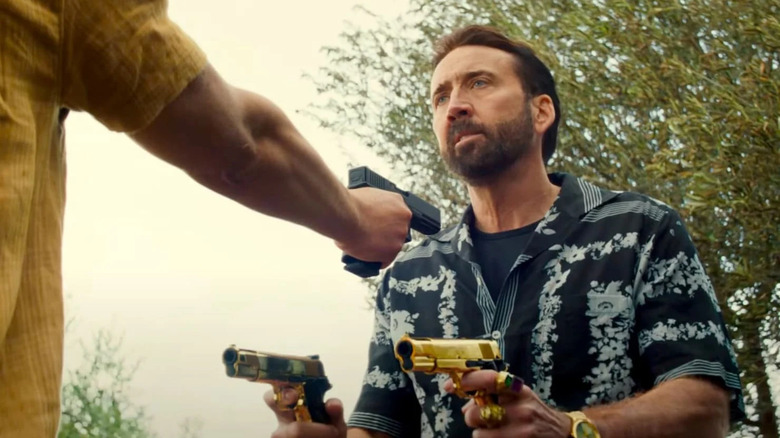
Shortly after accepting work on his film "The Unbearable Weight of Massive Talent," in which Cage plays a fictionalized version of himself, and is due in theaters on April 22, 2022, Cage's debts were officially paid off. 

Despite his involvement with lower-budget, VOD genre pictures, Cage has never once undersold a role or given anything less than his all. In 2016, he starred in a comedy film called "Army of One" directed by Larry Charles, and he is legitimately funny in that film, even giving himself a namecheck when his character, the real-life would-be vigilante Gary Faulkner, imagines himself as an action star. I admit I missed "Kill Chain," "Running with the Devil," "Between Worlds," "Grand Isle," "Arsenal," "Vengeance: A Love Story" and many of the other films made during Cage's VOD period, but, given what I know about Cage, I will not discount them out of hand. 

Cage continues to be attracted to odd, challenging projects, and is always interested in giving a good performance. In his next high-profile project, he will play Count Dracula in the horror-comedy "Renfield," directed by Chris McKay ("The Lego Batman Movie," "The Tomorrow War"). I'll repeat that for those sitting in the back: Nicolas Cage is playing Dracula. The film is due in theaters in April of 2023. One might say Cage is back, but we should perhaps instead acknowledge that Cage never went away.

Read this next: Butkus To Punchy: Ranking All 8 'Rocky' Movies From Worst To Best

The post Nicolas Cage Has No Regrets About All Those Direct-to-Video Movies, Says He 'Never Phoned It In' appeared first on /Film.

22 Mar 20:12

Every Batman Movie And The Real-World Fears They Highlight

by Kirk Boxleitner

Every era in history sees people become preoccupied with specific societal concerns, and fictional characters — including Batman and his adversaries — are often created to address certain broader societal issues. If those characters endure through enough successive historic eras, their stories can serve as a Rosetta Stone of what our most prevalent real-world fears were through each of these moments in time.

Whatever the politics, bigotries, or neuroses of a given historic period, and however serious or lighthearted any film depicting the Dark Knight might be, the odds remain better than average that Batman's previously confident beliefs are being challenged by Catwoman's "subversive" worldviews, his criminal interrogation techniques are unlikely to satisfy the ACLU, and he's found himself stuck with a bomb that he's struggling to get rid of.

Here are the real-world fears that Batman has helped us face over the past several decades of live-action films (apologies, "Batman: Mask of the Phantasm"). 

Batman (1943) & Batman And Robin (1949)
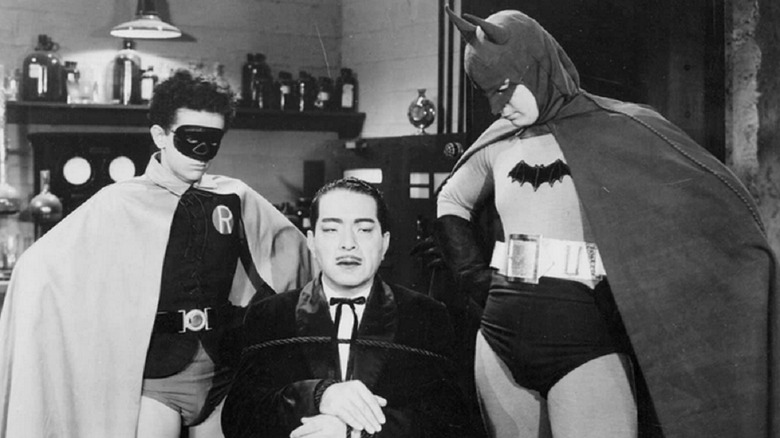
Few fans recall Batman's first big-screen appearance in Columbia Pictures' 15-chapter serial in 1943, which featured the first appearances of the Batcave and the trim, mustachioed version of Alfred, versus the portly buffoon who'd appeared in the comics.

In the "Batman" serial, both Batman and Robin are government agents who, in the wake of the Japanese attack on Pearl Harbor in 1941, become aware of a Japanese espionage and sabotage ring, led by Dr. Tito Daka, a prince in the same Imperial House of Japan as Hirohito and an agent of the Japanese government.

Daka has no direct antecedent in the comics, although "Detective Comics" did feature appearances by fellow "Yellow Peril" villains Fui Onyui from 1937-38, including the title's first-issue cover, and Fu Manchu from 1938-39. Daka is a mad scientist who recruits a fifth column of American businessmen, known as "The League of the New Order," reflecting World War II-era concerns over enemy collaborators. He also creates a mind-controlling "Electrical Brain," indicating America's emerging fears of its self-perceived scientific gap with Germany, Japan, and eventually Russia.

The first "Batman" serial proved commercially successful enough for Columbia to release the 15-chapter "Batman and Robin" in 1949, whose villain is able to remote-control cars during the post-WWII boom in automobile production. "Freeways" were introduced to our lexicon in 1930 by Edward Bassett, the pioneer of modern urban planning, and cars' growing prominence would cause President Eisenhower to sign the Federal Aid Highway Act of 1956 into law.

Batman: The Movie (1966)
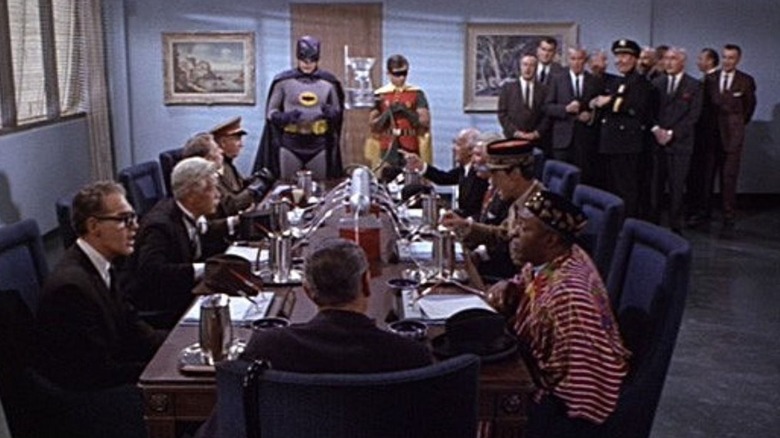
The 1966-68 "Batman" TV series was already haunted by the rise of youth counterculture during the Vietnam War, with Gotham's cops cast as squares old enough to have served in WWII or the Korean War. Batman's colorfully costumed villains came across as Andy Warhol-esque pop artists, whose henchmen often resembled hippies, beatniks, mods, and go-go dancers.

But 1966's "Batman: The Movie" explicitly tackles the Cold War, with the Penguin's war-surplus submarine firing what Robin identifies as a Polaris missile, four years after the Cuban Missile Crisis. Catwoman both woos and breaks Bruce Wayne's heart by posing as a Soviet journalist.

Van Williams even voices an unseen, glory-hounding U.S. president, whose Texas accent recalls Lyndon B. Johnson. Between the Pentagon not seeing through the Penguin's alias of "P. En Guin" when he purchases a submarine, and the squabbling of the "United World Organization's" (United Nations) Security Council, it's the adult authority figures who come in for a drubbing in this film.

The movie ends with the dehydrated, intermingled dust of the Security Council members reconstituted and alive, but each speaking languages, and exhibiting national stereotypes, other than their own. Batman muses "this strange mixing of minds" might do more good than harm, before the final title card transitions from "The End" to "The Living End?"

With the Space Race escalating America's fears of being outpaced technologically, 1966 also saw the Batcave gain a nuclear reactor and "Batcomputer," as Batman's gadgetry expanded to include Shark Repellent Bat-Spray.

Batman (1989)
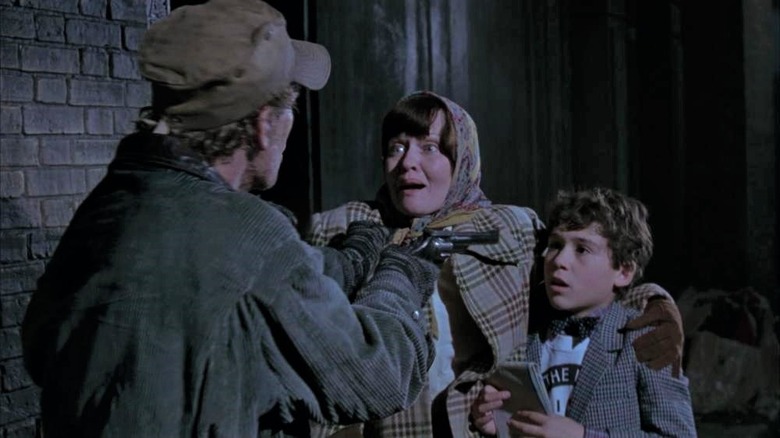
The 1966-68 "Batman" TV show made light of how Gotham was meant to be New York City, but director Tim Burton's first "Batman" film in 1989 cast an Ed Koch lookalike to play Gotham's Mayor Borg, a character who didn't exist in the comics. Koch was elected mayor of New York City in 1978, three years after President Ford's denial of a federal bailout to the nearly bankrupt NYC led to the New York Daily News' "Ford to City: Drop Dead" headline.

Perceptions of the city as a crime-ridden cesspool persisted through the end of Koch's tenure in 1989 when the murder rate did indeed reach a histor­ical high. The first paragraph of Sam Hamm's script described Gotham "as if Hell erupted through the sidewalks and kept on growing," and its boogeymen were the stereotypes of New York City crime through the 1970s-80s.

Pinstriped mafiosos from the '70s "Godfather" films bossed around multiracial gangs from the '80s "Death Wish" films, as squalid muggers preyed upon clean-cut out-of-town tourists in the first few minutes of Burton's "Batman."

Jack Nicholson's Joker begins as a dapper, unbalanced gangster, but his high dive into industrial chemicals — during a decade where concerns with toxic waste gave us 1984's "The Toxic Avenger" and "Teenage Mutant Ninja Turtles," — transforms him into a terrifyingly ingenious and remorseless "superpredator," to borrow the term criminologist and political scientist John J. DiIulio Jr. used for the since-discredited concept he foisted upon real-world law enforcement in the 1990s.

Batman Returns (1992)
Unsurprisingly, this sequel continues themes from Tim Burton's first "Batman" film, including its depiction of urban decay through Gotham City's gothic decrepitude, as early '90s pop culture made a show of atoning for the sins of the '80s.

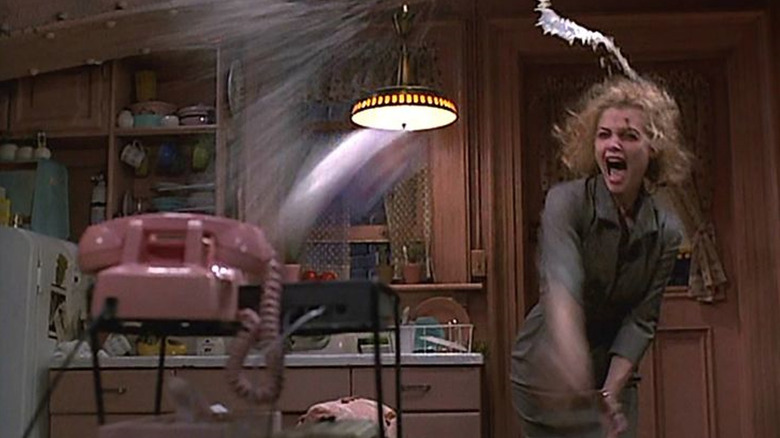
Burton made a gag out of TV news anchors looking ragged because they were forced to abstain from Joker-poisoned cosmetics and hygiene products in 1989's "Batman." He expands this anti-consumerist messaging in 1992's "Batman Returns," as Selina Kyle makes her debut as Catwoman by destroying the well-stocked department store owned by her boss, Max Shreck.

Shreck attempted to murder Selina in his office, but what finally triggered her fury was hearing a voicemail ad for Shreck's "Gotham Lady Perfume" on her home phone immediately afterward. Shreck is practically the ultimate 1980s-90s movie villain, as a corporate raider, slumlord, polluter, and sexual predator, whose physical intimidation of Selina, while she's still his mousy secretary, plays like a precursor to the #MeToo movement.

As Selina gains ownership of herself, she pushes Bruce Wayne to evolve beyond his extended pre-adolescence — well after the phrase "Peter Pan Syndrome" entered popular parlance in 1983 — so when he searches for Selina at the end, it's as Bruce, not Batman.

The gulf between rich and poor is underscored by the deformed Penguin, walking proof of the sins of the privileged, growing inhumane after being abandoned by his wealthy parents. His plot to murder all of Gotham's firstborn sons plays into America's child abduction and endangerment panic from the 1970s-80s.

Batman Forever (1995) & Batman & Robin (1997)
Warner Bros. replaced Tim Burton with director Joel Schumacher after "Batman Returns" drew letters from angry parents that made McDonald's squeamish about its Happy Meal and collector's cup tie-ins to the film. But Schumacher faced his own backlash when the Batsuit's nipples in 1995's "Batman Forever" were compounded by the Dynamic Duo's butt-shots in 1997's "Batman & Robin."

"Batman & Robin" vigilantly avoided alluding to potentially divisive real-world problems⁠, beyond reducing Poison Ivy to a strawman of cartoonishly extremist environmentalism, who seeks to wreak "Gaia's Vengeance" upon humanity. (Poison Ivy and Batgirl's depictions were already slightly gynophobic.)

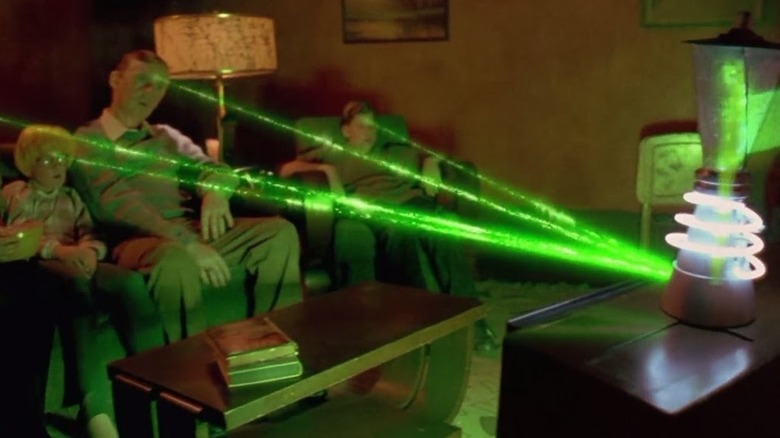
By contrast, the origins of "Batman Forever" as a self-consciously consumer-friendly product ironically made its messaging even more anti-consumerist than Burton's "Batman" films. The Riddler invents "The Box," which broadcasts 3D TV images directly into viewers' brains, but also siphons off their brainwaves to be absorbed by the villain.

When "The Box" becomes ubiquitous in Gotham's households, one newsreader reports: "Critics have claimed 'The Box' turns Gothamites into zombies, but Edward Nygma just shrugs: 'That's what they said when TV was invented.'"

Both the Riddler and Two-Face take seriously the showmanship of their roles, with Two-Face donning a circus ringmaster's outfit to conduct the attempted bombing that orphans Dick Grayson, which inspires Edward Nygma to brainstorm a succession of costumed aliases that culminates with "The Riddler." The Riddler speaks the mass-media patois of game shows and spectator sports, and critiques Two-Face on the audience engagement of his presentation.

Batman Begins (2005)
Just as Tim Burton's "Batman" was born in the long shadows of New York City's 1970s-80s crime wave, so are each of the three films in director Christopher Nolan's "The Dark Knight Trilogy" reacting to different aspects of the September 11, 2001, terrorist attacks' aftermath.

The mobsters and crooked cops of 1989's "Batman" are still present at the outset of 2005's "Batman Begins," but traditional organized crime, as represented by boss Carmine Falcone, is soon supplanted by the ideologically driven terrorism of Dr. Jonathan Crane as the Scarecrow. The villain weaponizes a combination of hazardous chemical agents and unsecured urban infrastructure against the city's civilian population.

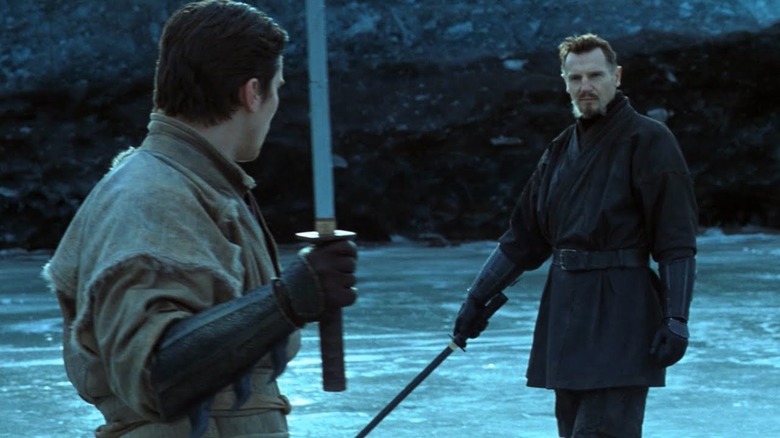
The post-9/11 metaphors become more explicit with Ra's al Ghul, leader of the League of Shadows. The film's co-writer, David S. Goyer, told Creative Screenwriting magazine, "We modeled him after Osama bin Laden," making his League of Shadows a less Middle Eastern al-Qaeda.

Irish actor Liam Neeson was cast to play Ra's al Ghul's French alias, Henri Ducard, who recruits Bruce into the League in Bhutan. In spite of this mix of European and Asian influences, the character retained his Arabic name from the comics, which translates to "Head of the Demon."

And just as post-9/11 conspiracy theories afford comfort by connecting the dots of a chaotic reality, Nolan cast the League as a singular culprit behind multiple historical upheavals: from the fall of Rome to the Black Plague's spread and even to the endemic crime of Gotham that killed Bruce Wayne's parents.

The Dark Knight (2008)
When the Joker (recast here as a domestic terrorist) steals from Gotham's gangs, the city's Italian, Black, and Chechen mob bosses agree to allow their Hong Kong accountant to hide their remaining funds, beyond the reach of both the Joker and Batman. Batman responds with "escalation" — ignoring international extradition laws to kidnap the accountant — which returning storyteller David S. Goyer deemed the sequel's biggest theme.

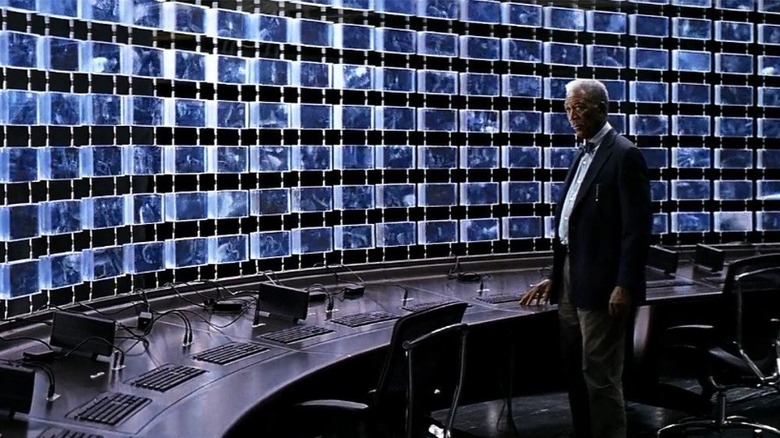
Bruce escalates further by tasking Wayne Enterprises CEO Lucius Fox with utilizing a mass surveillance system, using Gotham citizens' own mobile phone technology to spy on them; many pundits saw it as Christopher Nolan's commentary on President George W. Bush's approach to the "War on Terror."

In The Wall Street Journal, Andrew Klavan supported what he perceived as the film's endorsement of Batman's (and Bush's) extreme measures, arguing they have "to push the boundaries of civil rights to deal with an emergency, certain (they) will re-establish those boundaries when the emergency is past."

Cosmo Landesman's contrasting review for The Sunday Times condemned the film for "champion(ing) the anti-war coalition's claim that, in having a war on terror, you create the conditions for more terror." President Obama even used the film to justify America's fight against the Islamic State, which he likened to the Joker because both have "the capacity to set the whole region on fire."

Fans theorized the Joker, who repeatedly offers differing origin stories for his scars, was a war-wounded veteran with PTSD, which Patton Oswalt promoted and expanded upon.

The Dark Knight Rises (2012)
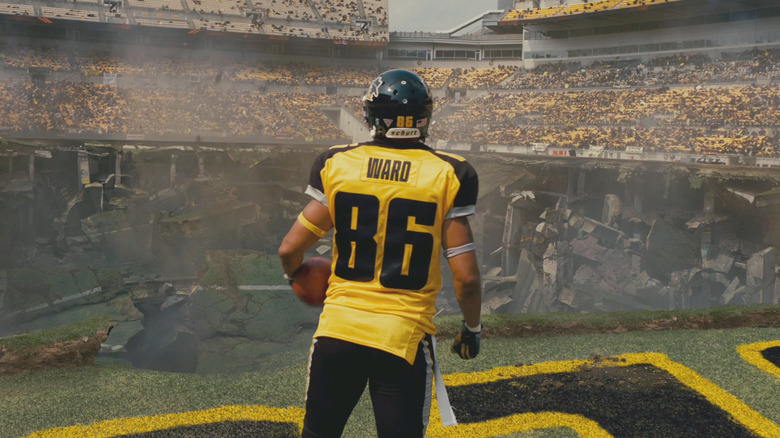
Bane was born in prison in the comics, and his takeover of Gotham City checks off a list of conservative fears about a domestic terrorist and/or foreign national takeover of America, as he isolates law enforcement without aid, blows up the city's professional sports stadium, separates Gotham from the rest of the United States, executes the head of its elected government, discredits one of its most respected authority figures, and releases its prisoners into the public after crashing the city's stock exchange.

Bane then institutes martial law⁠ — enforced by an armed neutron bomb, to hold the populace hostage⁠ — and a kangaroo court so his fellow terrorist, the Scarecrow, can pass judgment over the former elites of what remains of society. The Wall Street Journal and Entertainment Weekly spotted signs of a possible "Occupy Gotham" movement in the film's trailer, in which Selina Kyle remonstrated with Bruce Wayne for "liv(ing) so large, and leav(ing) so little for the rest of us."

Salon's progressive David Sirota characterized the full, completed film as a "backlash" to the "Occupy Wall Street zeitgeist," while conservative comics writer Chuck Dixon, who co-created Bane, described him as "far more akin to an Occupy Wall Street type if you're looking to cast him politically."

However, Christopher Nolan denied intending any anti-Occupy or other political commentary in his "Batman" films. David S. Goyer chalked up any similarities to Occupy to a lucky coincidence, after rumors of filming in Zuccotti Park, during the movement's protests, failed to transpire.

Batman V Superman: Dawn Of Justice (2016)
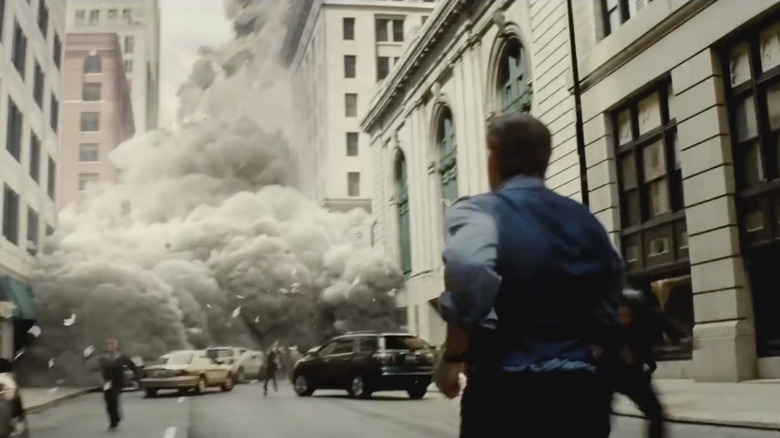
Director Zack Snyder and returning co-screenwriter David S. Goyer revisited their climactic Superman versus Zod fight in Metropolis from 2013's "Man of Steel" by providing a ground-level perspective on that unnatural disaster in 2016's "Batman v Superman: Dawn of Justice."

John Beifuss' review for The Commercial Appeal describes how Bruce Wayne "witnesses the collapse of one of his corporate skyscrapers, Wayne Tower, in a special effect of pancaking architecture and blossoming ash clearly designed to suggest the fall of a Twin Tower."

As a U.S. Senate subcommittee calls on Superman to account for such collateral damage, protestors outside the Capitol brandish picket signs reading: "Tell Us The Truth About Aliens," "Superman = Illegal Alien," "This Is Our World, Not Yours," "Aliens Doom Nations," "Earth Belongs To Humans," and "God Hates Aliens."

As such, Kaleem Aftab wrote for Vice that not only was "Batman v Superman" intended to critique "the popular reaction to 9/11," but Superman's cross-cultural experiences in that film were comparable to Aftab's own as a Muslim in America. Aftab credited "Dawn of Justice" with delivering "a condemnation of what America is becoming, a place where immigrants, especially those unfairly tainted because of the mass destruction caused by a few, are no longer part of a viable American dream."

Just as the battle of Metropolis made Bruce Wayne see Superman as an existential threat to humanity, Batman's brutal treatment of criminals inspires Clark Kent to expose him through The Daily Planet.

The Batman (2022)
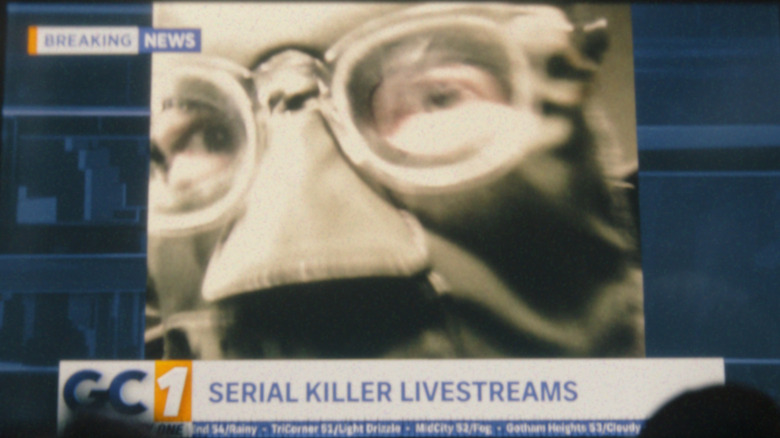
Writer-director Matt Reeves' "The Batman" parades familiar fears from previous "Batman" films, but with updates. The mobsters and crooked cops of 1989's "Batman," 2005's "Batman Begins," and 2008's "The Dark Knight" are showcased yet again, for example, but are joined by corrupt city officials, ranging from the mayor to the district attorney.

In terms of revealing the darker truths behind the facades of historic civic heroes, 2008's "The Dark Knight" and 2012's "The Dark Knight Rises" featured the coverup and exposure of Harvey Dent's sins as Two-Face. The 2022 film saw Bruce confronted with the secrets kept by the Wayne and Arkham families, including the true nature of his father's connection to mob boss Carmine Falcone.

Furthermore, the Scarecrow exploited the infrastructure of Gotham's water supply for terrorist purposes in "Batman Begins," but the Riddler's bombing of Gotham's seawall in "The Batman" opened the city to flooding, long after climate change had been proven to help accelerate rising sea levels. Reeves also micro-engineers class conflicts by establishing Batman, Catwoman, and the Riddler are all orphans, but each turned out differently partly due to their respective economic backgrounds. 

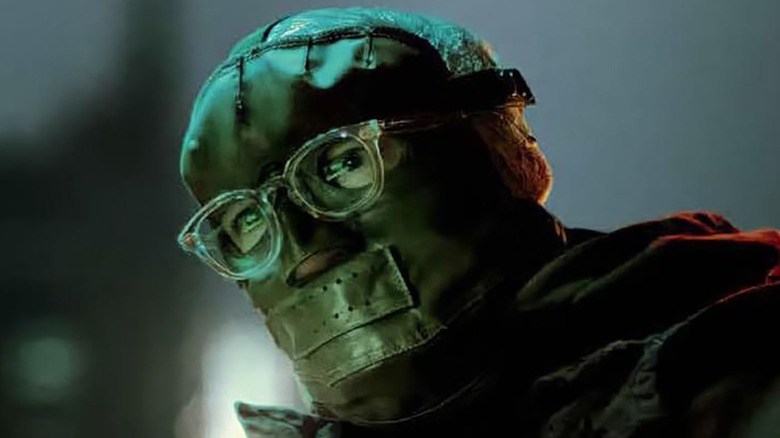
While other Batman villains have been recast as terrorists or serial killers, Reeves' Riddler is explicitly both. The character was inspired by the costume, insignia, and ciphers of the Zodiac Killer of 1968-69, while his crowdsourced crimes recall the conspiracy cult of QAnon.

"The Batman" even calls out its hero for inspiring more extreme acts of "vengeance" than his own, as he realizes he needs to offer hope as well by the end of his journey in the movie. 

Read this next: Batman Movies Ranked From Worst To Best

The post Every Batman Movie And The Real-World Fears They Highlight appeared first on /Film.

22 Mar 11:07

'US College Education Is Nearer To Collapsing Than It Appears'

by BeauHD
According to OpenAI CEO and former president of Y Combinator, Sam Altman, college education in the U.S. "is nearer to collapsing than it appears." He writes in a Twitter thread: Most of all, it's clearly a bad deal for many students, or we wouldn't have the student debt crisis. Cancelling student debt is good if it's tied to fixing the problem going forward, which means not offering it, or having the colleges be the guarantor, or ISAs, or something. But cancelling all student debt and then continuing to issue new debt to students that the university fails (i.e. by not putting them in a position to make enough money to easily pay it back) doesn't make sense. Tech jobs (I assume other jobs will follow) are increasingly willing to hire with no degree if an applicant can do well in an interview/on a test. It seems very clear that elite colleges discriminate against Asian-American students, and that the Supreme Court is going to find this. (One expert said no discrimination would result in around 65% Asian-American admits.) The fact that this has been so tolerated speaks volumes. Stopping standardized tests -- which are imperfect and correlated with socioeconomic status -- seems to be bad. Other items like the personal essay are surely more correlated and more hackable. I'm all for looking at test scores in context, but dropping entirely denies opportunity. (I wonder if this is correlated to the earthquake coming when colleges can no longer discriminate against Asian-American students.) Monocultures suck. It's hard to know how many of the stories about ridiculous stuff happening on campuses to believe, but even if a small fraction of them are true, these are clearly no longer places hyperfocused on learning. (A personal anecdote: I was invited a few years ago to speak at a college but I was asked to give a 'privilege disclaimer', essentially stating that if I didn't look like I did I wouldn't have been able to succeed... Although I understand the spirit and obviously I am privileged, I consulted with friends from different backgrounds and then declined: what kind of message does that send to listeners?) The list could go on for a long time, but the point is: What a time to start an alternative to college! The world really needs it.

Read more of this story at Slashdot.

22 Mar 00:11

The big Cyberpunk 2077 expansion is still coming

by Dustin Bailey
The big Cyberpunk 2077 expansion is still coming

CD Projekt Red has re-confirmed that a big Cyberpunk 2077 expansion is in development. As part of today's announcement of The Witcher 4 on Unreal Engine 5, CDPR has made its first mention in some time of the major Cyberpunk DLC.

"For the next instalment in The Witcher series of videogames we're moving from REDengine to Unreal Engine 5," the devs say in a tweet. "However, REDengine, the technology which powers Cyberpunk 2077, is still being used for the development of the upcoming Cyberpunk 2077 expansion."

It's no surprise that the DLC will remain on the same engine, but it's the first we've heard about the release in quite a while. Beyond the smaller pieces of free DLC which have already been arriving for Cyberpunk 2077, CDPR has not spoken in much explicit detail about what to expect from the larger expansions. The studio said prior to launch that Cyberpunk would receive "more" DLC than The Witcher 3, which received two major expansions, but we didn't hear much about the big DLC while CDPR was scrambling to get out the game's numerous patches.

RELATED LINKS: Cyberpunk 2077 review, Cyberpunk 2077 lore & universe, Buy Cyberpunk 2077
22 Mar 00:11

PCSX2 will drop 32-bit and add DirectX 12 support

by Dustin Bailey
PCSX2 will drop 32-bit and add DirectX 12 support

PlayStation 2 emulator PCSX2 is in line for a pair of major technical changes, with the addition of DirectX 12 support and the end of 32-bit support. Both these changes open the door to better performance in certain situations, though it means users of older PCs won't be getting the benefits of new PCSX2 versions.

The PCSX2 devs are already working to remove 32-bit support from the emulator. Old PCSX2 versions will still be available if you're looking to run the emulator on an ancient PC, but dropping 32-bit will allow the devs to focus on 64-bit development, and clean up the old code to allow for (potentially) better performance.

DirectX 12 support is also in the works courtesy of Stenzek, who previously added Vulkan support to PCSX2. As Stenzek explains on GitHub, DirectX 12 "seemed kinda redundant with the Vulkan renderer existing, until we found out that barriers were broken, and it was super unstable in the Intel drivers". As it stands, DirectX 12 can be faster than Vulkan even on AMD hardware.

22 Mar 00:09

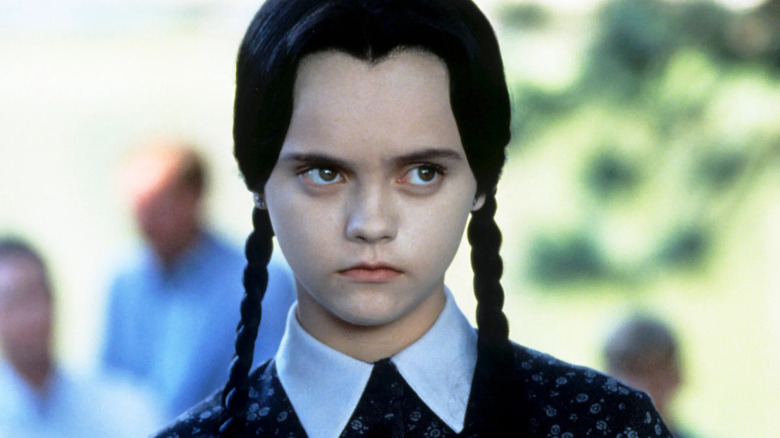
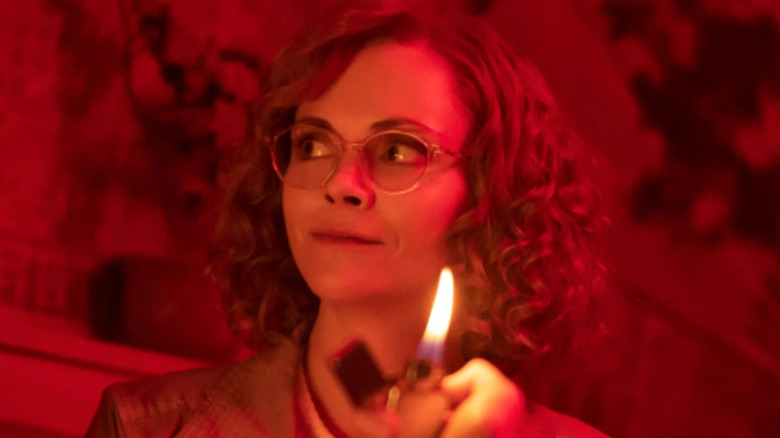
Christina Ricci Boards Netflix's Wednesday Addams Series As Mysterious New Character

by Shania Russell

The Ricci Renaissance continues with an exciting new development: Christina Ricci is returning to the character that started it all, Wednesday Addams — just not in the way you might think. After all, it wouldn't be an Addams Family experience without a few surprises here and there! Since news of the upcoming Netflix series "Wednesday" was first announced, Addams Family fans have been grumbling about the possibility of bringing Ricci back to the role, a dream quickly dashed when Tim Burton's live-action series was confirmed to follow the childhood days of everyone's favorite budding psychopath.

Young scream queen Jenna Ortega ("Scream," "X") is set to fill the title role of Wednesday, which Ricci played in the 1900s Barry Sonenfeld-directed "The Addams Family" franchise. But just because the role of "Wednesday" is taken, doesn't mean there isn't plenty of room for Ricci. As Netflix confirmed via Twitter, "the magnificent Christina Ricci is joining the cast of the new Wednesday Addams series as an exciting new character *snap snap*."

Details about Ricci's role are being kept under wraps, but she is confirmed to return in an entirely new role, rather than an older version of Wednesday. Ricci is reportedly a series regular and has been quietly working on "Wednesday" for weeks. Filming will continue, with the series slated to wrap in Romania at the end of the month.

Ricci Returns To The Addams Family

Mystery role or not, the thought of Christina Ricci being anywhere near "Wednesday" is thrilling. Even if the show doesn't acknowledge her as Wednesday, Ricci sharing the screen with Ortega will be one of those spine-tingling generations-colliding moments because we know that it's two Wednesdays at once! Then there's all the potential of who she's actually playing. Ricci recently appeared in Showtime's breakout hit series "Yellowjackets" as a very different kind of crazy, proving there's no shortage of ways she can unsettle a massive audience. Who's to say what kind of fun she'll get up to in the new series, which a been described as a "sleuthing, supernaturally infused mystery." The eight-episode series follows "Wednesday's attempts to master her emerging psychic ability, thwart a monstrous killing spree that has terrorized the local town, and solve the supernatural mystery that embroiled her parents 25 years ago — all while navigating her new and very tangled relationships at Nevermore."

In addition to Ortega and Ricci, the series stars Catherine Zeta-Jones as matriarch Morticia Addams and Luis Guzmán as patriarch Gomez Addams. The series also features Hunter Doohan ("Your Honor"), Georgie Farmer ("Treadstone"), Moosa Mostafa ("Nativity Rocks!"), Emma Myers ("Girl in the Basement"), Naomi J. Ogawa ("Skylin3s"), Joy Sunday ("Dear White People"), Percy Hynes White ("The Gifted"), Thora Birch ("The Walking Dead"), Riki Lindhome ("Knives Out") and Jamie McShane ("Mank"). The dark coming-of-age comedy comes from "Smallville" creators Al Gough and Miles Millar and director Tim Burton.

Read this next: All 59 Stephen King Movies Ranked From Worst To Best

The post Christina Ricci boards Netflix's Wednesday Addams Series as Mysterious New Character appeared first on /Film.

22 Mar 00:09

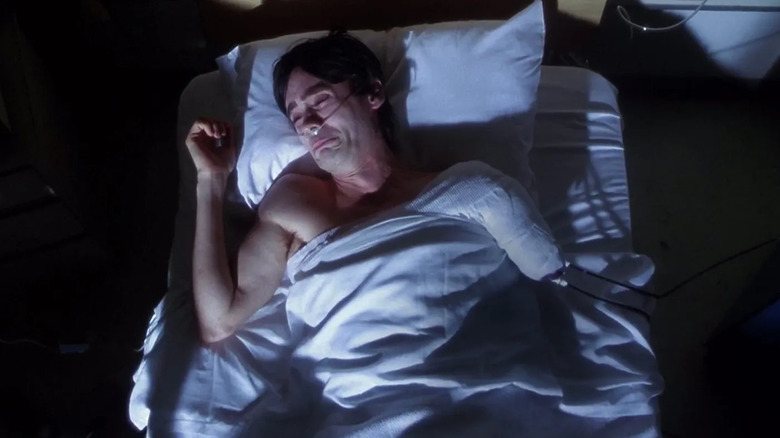
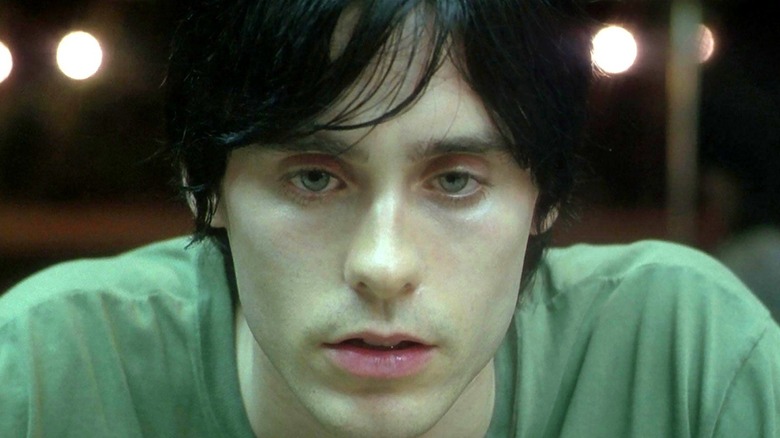
Jared Leto Was Never The Same After Requiem For A Dream

by Natalia Keogan

If there happened to be a general consensus regarding who holds the title of "most annoying living method actor," chances are Jared Leto would be unanimously voted as victor. The actor became particularly well-known for his ultra-immersive antics while filming 2016's "Suicide Squad," which included gifting co-star Margot Robbie a live rat and doling out used condoms as a cast-wide wrap present. According to Leto, these gestures were merely a symbol of how deeply committed he was to portraying the sick, twisted persona of the Joker — a practice that proved unnecessarily grandiose considering how limited the villain's role ultimately ended up being in the film.

Leto's manic obsession with "getting in character" didn't develop overnight, though. While he appeared in a slew of critically and commercially successful films during his early acting career — from "Fight Club" to "Girl, Interrupted" to "American Psycho"—it was his role in Darren Aronofsky's 2000 film "Requiem for a Dream" that really saw the actor push himself to his mental and physical limits, resulting in a long-term ailment that Leto found incredibly hard to shake.

Assimilating Among NYC Addicts

For those who are a bit rusty on the plot points of Aronofsky's edgy and upsetting psychological drama, let's recap "Requiem for a Dream." Based on the 1978 novel of the same name by Hubert Selby Jr. (who co-wrote the screenplay), the film follows a group of drug addicts as they become increasingly dependent on heroin, leaving their previous ambitions in the rear-view window. 

Leto plays the principal character, Harry Goldfarb, a recent college graduate from Brighton Beach, Brooklyn who sells heroin with his friend Tyrone (Marlon Wayans) and girlfriend Marion (Jennifer Connelly). Though they're ostensibly only dealing in order to fund their own personal dreams — Harry and Marion want to open a clothing boutique to show off her clothing designs, while Tyrone wants to get out of the low-income neighborhood he was raised in — it becomes clear that getting high off their own supply won't get them anywhere. This becomes especially true when a city-wide dope shortage renders their operation dry — and imminent withdrawal symptoms compound their desperation.

In order to understand the plight of New York heroin addicts, Leto claims to have completely immersed himself in this way of life, stating that "every night was an adventure." He recounts witnessing someone miss the vein in their arm and effectively poisoning themselves, as well as realizing that certain participants did not return due to their deaths from overdosing. But Leto's acceptance into this scene came with a literal price, as he was robbed once during his exploits in assimilating into the world of New York drug addicts.

Developing Body Dysmorphia

In order to play the role of Harry, Leto felt that he needed to lose a massive amount of weight in order to sell his character's experience. It reached a point where the actor said he felt "addicted to losing weight," a sign of an encroaching eating disorder and the hell of body dysmorphia that inevitably comes along for the ride. 

Though excessive weight loss and gain are no strangers to the world of method acting, the difference between bodily discipline and dysmorphia is an incredibly fine line, if not one that's entirely blurred. This is totally supported by the fact that Leto claims he kept looking in the mirror but didn't "see himself" as being thin enough, an incredibly common (and self-destructive) symptom of developing an eating disorder, especially when it's accompanied by what Leto called "a little voice in your head" that tells you it's always possible to lose more weight.

Thankfully, as the filming of "Requiem of a Dream" concluded, so did Leto's commitment to weight loss. Clearly suffering from disordered eating and unhealthy thoughts concerning his weight, the actor decided to check himself into a recovery program.

Leto's Road To Recovery

In true Jared Leto fashion, the institution he sought solace in during his recovery process ended up being a monastery in Portugal. During his tenure there, he finally began re-developing the relationship to food and eating that he once had — but this process was not quick, nor was it easy. 

Speaking to Albawaba, Leto recounts one specific meal as having been a major breakthrough: He successfully ate half of one single taco, which he considered an "incredibly large meal" at the time. Having previously only nourished himself with raw vegetables, this fully-cooked meal felt like an incredible feat to devour. Others in Leto's life even noticed how significant this attempt at feasting was, with one person directly applauding Leto by commenting on "how much food" the actor had just eaten — a significant departure from the few stalks of broccoli or slices of cucumber which previously comprised his entire diet.

While people are quick to clown on Jared Leto, his experience losing weight on "Requiem for a Dream" is a perfect example of just how easily body image issues can transform into full-blown eating disorders which require rigorous treatment and personal self-reflection. Sure, this one-off experience with suffering doesn't exactly redeem the fact that Leto is a bona fide method acting terrorist, gifting dead hogs and anal beads to his fellow cast members whenever the moment strikes him. However, in recognizing the reality of Leto's "very [emotionally] difficult" struggle with food, we might be able to kick the appeal of dangerously intense method acting once and for all. Pet rats everywhere, rejoice!

Read this next: Horror Roles That Changed Actors Forever

The post Jared Leto Was Never The Same After Requiem For A Dream appeared first on /Film.

22 Mar 00:08

US Senators Introduce SMART Copyright Act To Combat Piracy

by BeauHD
An anonymous reader quotes a report from TorrentFreak: U.S. Senators Thom Tillis and Patrick Leahy have introduced the SMART Copyright Act of 2022. The bill requires online hosting services to implement standard technical protection measures, designated by the Copyright Office. The general idea is to grant the Copyright Office the power to designate standard technical protection measures to be implemented by online hosting platforms. These STMs can be tailored to specific niches such as audio and video, which offers much more flexibility than the current regime under the DMCA. In short, the bill will give the government more tools to facilitate and encourage the implementation of anti-piracy mechanisms, while allowing online services to keep their safe harbors. The full text of the bill provides more details on how the approval process of a proposed protection measure works. In addition to hearing stakeholders, experts, and the public, the designated protection measures have to be weighed on factors such as cost and availability. They shouldn't create any major burdens for online services. Similarly, the rights of the public are taken into account as well. This includes the impact a technical measure may have on privacy and data protection, as well as on free speech issues such as criticism and news. Finally, it is worth noting that online services will be able to appeal officially designated protection measures in court. In addition, they can also choose not to implement them. However, that opens the door to lawsuits from copyright holders. The statutory damages amounts for services that fail to implement the designated technical protection measures are capped at $150,000 for a single violation, but that number can shoot up for repeat offenders. [...] Rightsholders see the proposal as a great step forward to protect creators, while opponents classify it as a filtering tool that will censor free speech.

Read more of this story at Slashdot.

21 Mar 21:16

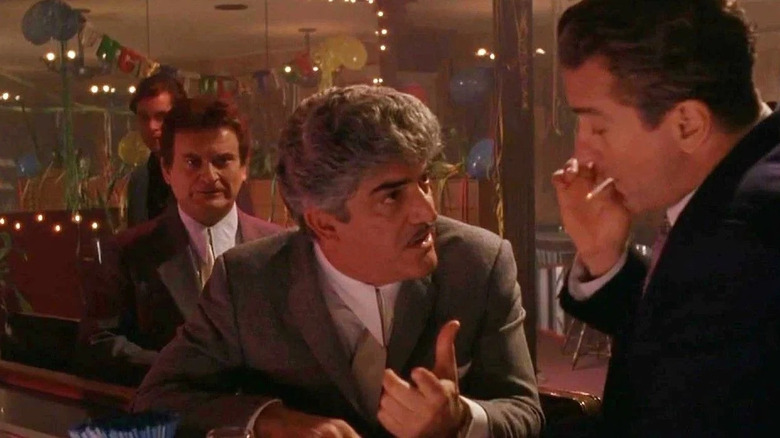
The Goodfellas Scene You Might Not Know Was Improvised

by Steven Ward

Joe Pesci is a funny guy — just don't tell him that. With roles ranging from mafia men to an inept burglar, the actor has made a career out of playing hilarious hot-heads. But not all Pesci characters are identical. They all might have short-tempers, but piss off the wrong one and instead of a comical outburst of nonsense swearing you just might end up in a hole in the ground. Few of Pesci's roles are as remembered for their slapstick sadism more than Tommy DeVito in Martin Scorsese's "Goodfellas." The tension in every scene that Pesci appears in is immediately heightened by his very presence, due to his character's unstable temper that often prompts brutal fits of violence against anyone that embarasses or angers him.

It's no surprise Pesci's combustive portrayal of DeVito, based on real-life Lucchese crime-family member Thomas DeSimone, earned him an Oscar for Best Supporting Actor. Even though the movie also stars Ray Liottta as wiseguy protagonist Henry Hill and Robert DeNiro as the ambitious Jimmy Conway, it's Pesci who is credited for conceiving one of the most quotable moments in "Goodfellas" with an improvisation taken directly from the pages of his own life.

Nothing Deadlier Than A Funny Guy

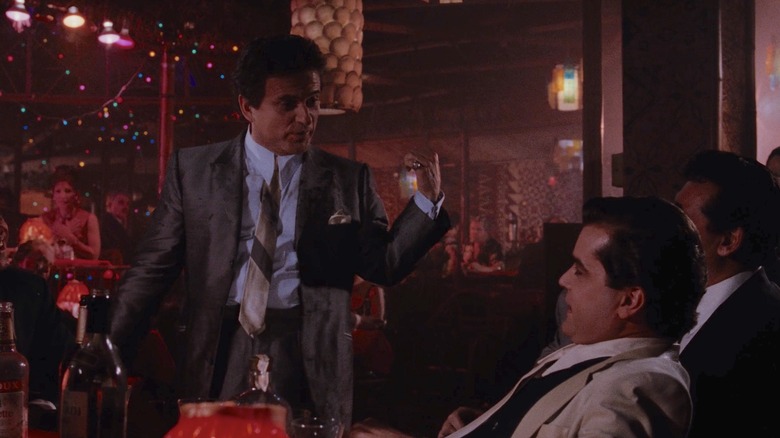
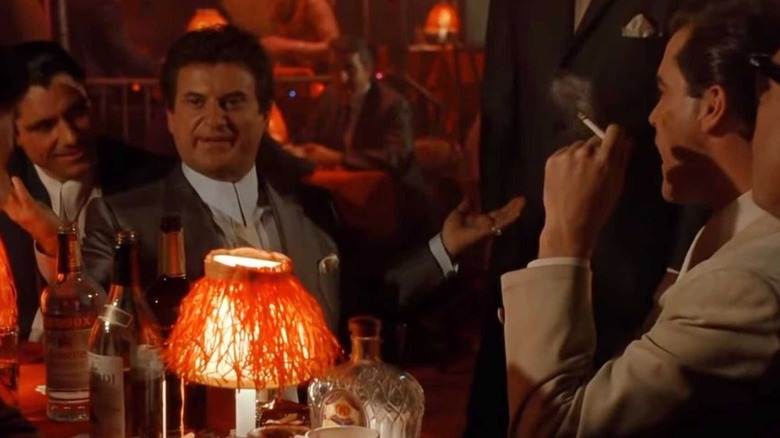
You're not that far into "Goodfellas" before you're given an unnerving example of Tommy's breakneck rage. After Tommy has left Henry Hill and company in stitches over one of his stories, Liotta's character makes the mistake of calling Pesci's Tommy a "funny guy." Immediately, words intended as a compliment are taken as an insult by Tommy, transforming a previously merry moment into a tense confrontation as one man demands the other to explain himself. And if the actors around both Pesci and Liotta look surprised, it's because they actually were.

As reported by Mental Floss, Pesci improvised the entire "funny how" inquiry during rehearsal with Liotta. Scorsese apparently loved the exchange, especially the way it illustrated how suddenly DeVito's mood could sour, and added it to the script without telling anyone else. Just as DeVito eventually reveals he's pulling Hill's leg, both actors conspired to pull the wool over the eyes of their co-stars. The next time the cameras were rolling the director made sure to get the reactions of everyone around them. But the only thing slightly more surprising than watching your co-stars riff on a fake fight and just run with it is the fact that Pesci didn't just supply the improv — he lived it.

A Young Pesci Gets Pesci-Style Wrath

Like Hill, Pesci learned the hard way that calling someone connected to the mafia funny was bad news. At the 2015 Tribeca Film Festival, Liotta revealed at a Q&A for the 25th anniversary of "Goodfellas" that Pesci had also told him the story:

"And Joe was telling me a story about what happened to him in Queens or wherever it was and he said to some guy... the guy said something who happened to be a connected guy and he said 'Well...you think I'm funny?'"

The incident happened while Pesci was working at a restaurant, an anecdote detailed in the book "The Ultimate Book of Gangster Movies." The story goes that the guy was indeed a mobster and didn't take a young waiter's words as a compliment. It's unclear if the man was just messing with the young waiter the whole time or really exploded on him, Pesci-style. Oddly enough, the actor's story also eerily mirrors Tommy DeVito's quarrel with the waiter Spider later in the movie — an incident that ends in a shooting rather than laughs. We're just glad waiter Joe Pesci made it out in one piece. If there's one takeaway from "Goodfellas" and Pesci's hard-won wisdom: never crack-wise with a wiseguy.

Read this next: 17 '80s Action Movies You Definitely Need To See

The post The Goodfellas Scene You Might Not Know Was Improvised appeared first on /Film.

21 Mar 21:03

Mesa's CPU-Based Software Vulkan Driver Now Exposes Vulkan 1.3

The recent work by Mike Blumenkrantz on getting Lavapipe to advertise Vulkan 1.3 has successfully landed within Mesa 22.1...
21 Mar 21:00

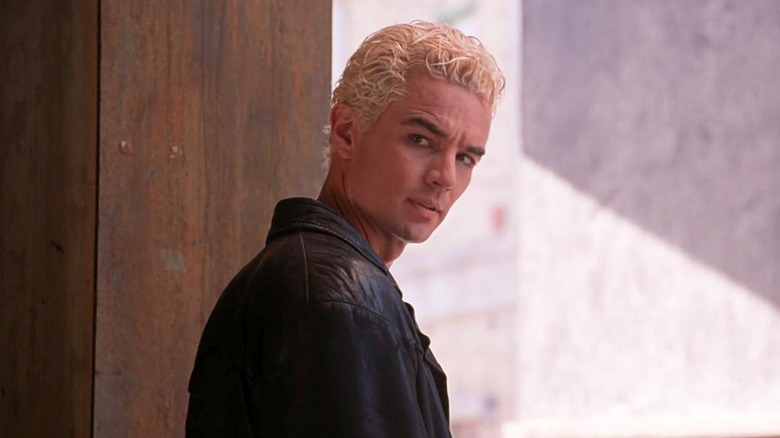
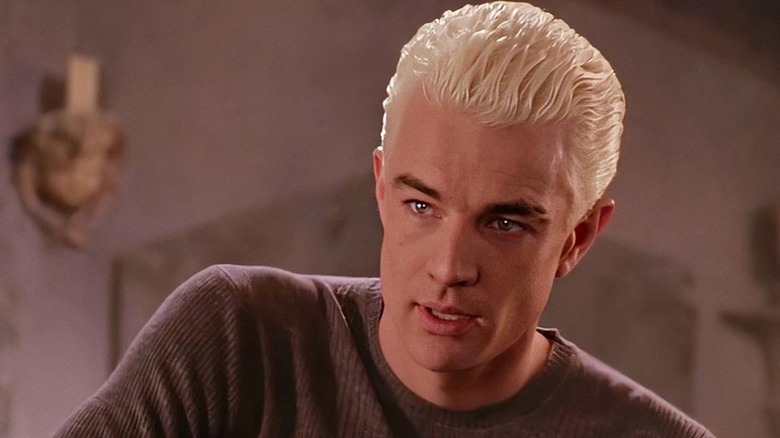
Buffy The Vampire Slayer's James Marsters Pulled Out All The Stops To Keep Spike Alive

by Jamie Gerber

"Buffy the Vampire Slayer" featured a cast of unforgettable characters. The seminal series, which just turned 25 years old, preferred to work in shades of grey rather than the simple binary of good vs. evil. All of the show's characters were flawed, complicated people, even the titular heroine. In fact, a fan-favorite character started out as a Big Bad who wasn't meant to last nearly as long as he did, let alone evolve into a character worth rooting for — though if we're all being honest, plenty of us were rooting for him even when he was a straight-up villain.

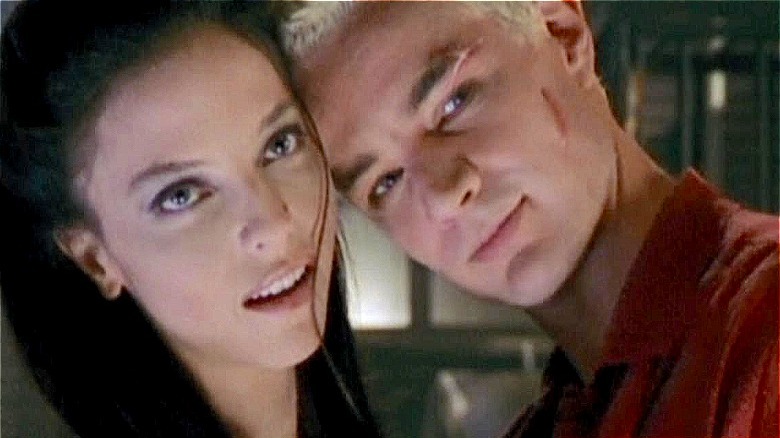
Also known as William the Bloody, Spike was introduced in season 2, episode 3, "School Hard." Brilliantly played by James Marsters, Spike rolled into Sunnydale with his girlfriend Drusilla (the equally excellent Juliet Landau) in the hopes of wreaking havoc in the Hellmouth town. Of course, Buffy Summers (Sarah Michelle Gellar) wasn't having any of it, and sent him packing on more than one occasion. However, the vampire was never supposed to be around that long in the first place.

Spike is hardly the only character series creator Joss Whedon planned to kill off early on. Several others, including Faith (Eliza Dushku), Anya (Emma Caulfield), and even Angel (David Boreanaz), all survived past their initial expiration dates, with the latter even starring in his own spin-off. However, Spike's longevity might be even more impressive considering the fact that Whedon apparently wasn't too happy about the character's popularity (via "Inside of You with Michael Rosenbaum"). So, how did an actor hired for a few episodes manage to stick around for practically the entire series?

The Other Vampire With A Soul

Marsters was originally hired for just five episodes of "Buffy the Vampire Slayer." He was intended to be one of Angelus' first victims after he lost his soul, leading to Buffy's former beau terrorizing Sunnydale with Drusilla. Things began to change when Spike quickly emerged as a fan-favorite, which is ultimately what wound up granting him a stay of execution. It can be difficult to predict which characters the audience will connect with, but there were no plans for Spike to be beloved by anyone. Despite that, Marsters has previously stated that he played Spike from the onset as though he had a soul, which likely added a depth to the character that resonated with fans. When asked about this, he told Observer:

"I was pulling out all the stops in order to not get killed off. Joss said, 'You are a soulless vampire. Vampires on this show are a metaphor for all the trials of being a teenager. I'm not interested in vampires that we feel for. That's why you guys are ugly and horrific when you bite someone and I don't want that to be a sensual moment. So you have no soul, that's your character.'"

This makes sense considering the only vampire who was even remotely close to being a three-dimensional character on the show prior to Spike and Dru was Angel — though he was much more fleshed out in his own series. However, Marsters had other ideas, pretty much undercutting Whedon's instructions from the start. He continued:

"I said, 'Yes, sir. No problem dude.' He turns his back and I'm like, 'No way in Hell.' If you play it like that, the audience has nothing to grab onto and there's no reason not to kill you off. I always say when you are doing anything in art, you got to find the love. It could be love denied, love twisted, it doesn't have to be sweet, but you have to find the love. Then you find the gold in the mountain, and then you have the rocket fuel and you can go anywhere."

Marsters even spoke specifically about a line from the season 2 episode "Innocence," in which Drusilla is telling him that she's naming all the stars. Spike responds by saying, "You can't see the stars, love. That's the ceiling. Also it's day." The line was meant to be delivered in a way that would make Spike seem unkind, but that wasn't Masters' interpretation. He explained:

"That line is actually the one I had to deal with the most. I decided to rest my chin on my hand like, 'You are so weird and that's what I love about you. My favorite thing about is [sic] you is that you are seeing the stars, but it's the ceiling. I just fell in love with you again.' But back then he was supposed to be kind of a jerk boyfriend, because he was going to get killed by Angel and she was going to take up with Angel, so Spike was being set up so the audience was not going to feel so bad when he got killed off."

Fans Fell Hard For Spike

While all of the recurring characters on "Buffy the Vampire Slayer" evolved quite a bit by the series' end, Spike's arc still stands out as one of the show's most compelling. His character development is even more impressive when you consider that he was meant to be a villain who was offed after a handful of episodes. He wasn't even planned as season 2's Big Bad. When looking back on Marsters' performance, it's easy to see that the actor portrayed the vampire with far more heart than the typical bloodsucker. This was even written into the script when the Judge notes that Spike and Dru "stink of humanity" in the season 2 episode "Surprise." Their deep connection is one of the things that made fans root for them, despite the fact that they were undeniably villains. As Marsters said, it gave viewers something to connect with. Had he played Spike the way the vampire was written (and intended), fans likely would've had a far less favorable reaction to him.

When Spike secretly teams up with Buffy in the season 2 finale, it's an exciting moment -- not just because viewers were rooting for Buffy to emerge victorious, but also because no one wanted the villainous vampire couple to be killed off. In fact, I was so in love with Spike and Dru together that it took me quite a while to come around the romance between Spike and Buffy. When Drusilla returned in the season 5 episode "Crush" only to be rejected by Spike, he broke my heart right along with hers.

Spike sped away from Sunnydale at the end of season 2, returning once for season 3, and Marsters was a series regular by the fourth year. He would remain so until the end of the show's run, with Spike even regaining his soul at the end of season 6. The vampire would also manage to cheat death yet again: After Spike sacrifices himself in the series finale "Chosen," he was quickly resurrected over on "Angel" for what sadly turned out to be that show's final season. 

Marsters left an indelible mark on "Buffy the Vampire Slayer." It's difficult to imagine what the series would look like had he been killed off in season 2 as originally intended. He gave us an incredible portrayal of a character that fans truly grew to love, even though that wasn't the intention of the show's creator.

Read this next: The 15 Best Horror TV Shows Of All Time

The post Buffy The Vampire Slayer's James Marsters Pulled Out All the Stops to Keep Spike Alive appeared first on /Film.
21 Mar 20:56

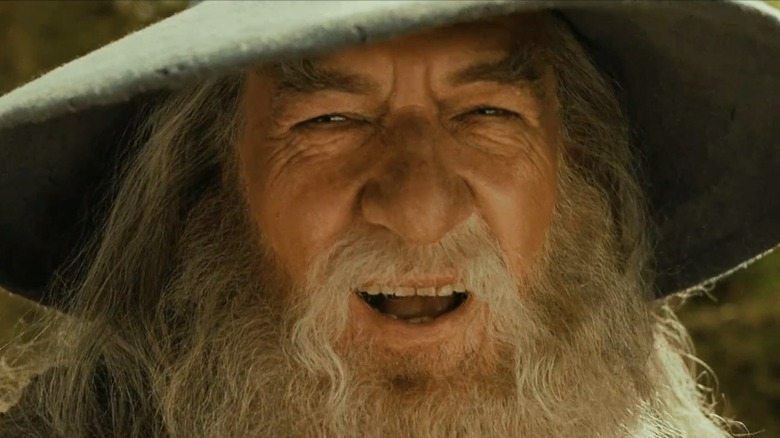
There's One Lord Of The Rings Prop Peter Jackson Will Never Find (Because Ian McKellen Took It)

by Jeremy Mathai

It's possible, if not probable, that we'll simply never get a cinematic trilogy the likes of "The Lord of the Rings" ever again. Even the most ardent and skeptical J.R.R. Tolkien scholar at the time couldn't have turned their nose up at the vast amount of resources and attention to detail paid to every aspect of the production back in the late 1990s. From concept artist extraordinaire John Howe to composer Howard Shore to costume designer and special effects wiz Richard Taylor to — oh yeah — that incredible ensemble cast, director Peter Jackson and the rest of the creative team went out of their way to recruit the absolute best and brightest talent in every facet of moviemaking to help make the definitive live-action adaptation of the beloved Middle-earth novels. Though the most vocal purists likely wouldn't be satisfied with any adaptation (stay tuned to find out how the consensus opinion of Amazon's "The Lord of the Rings: The Rings of Power" series turns out), the sweat, blood, tears, and passion that went into the creation of each set, visual effect, costume, makeup and prosthetic, and anything else you could possibly think of in both "The Lord of the Rings" and "The Hobbit" is nothing short of staggering.

Almost two decades of history to look back on in retrospect makes it easy — though no less overwhelming — to appreciate the impossibly hard work that went into the sprawling production. Yet with so many moving parts and various elements to keep track of, however, it's understandable that a few minor details happened to slip past anyone's notice. It's hardly unusual for actors to end up taking souvenirs from the set of certain movies as mementos and keepsakes of the time and effort they poured into the production, which they'll be able to look back on and treasure for the rest of their lives. After all, it's tough to beat how Viggo Mortensen famously adopted the horse that he rode in character as Aragorn during filming (though not entirely without risking life and limb).

But of all the various trinkets that made their way into the hands of those involved in bringing both Middle-earth trilogies to life, the story of Gandalf himself, Sir Ian McKellan, absconding with a certain prop (or props, we should say) is well worth recounting. Trust us!

Who's The Real Burglar, Anyway?

In both "The Lord of the Rings" movies and "The Hobbit" trilogy, Ian McKellan's wizard Gandalf is portrayed as wise, dignified, and an immensely powerful figure (if a little short-tempered). Much of those same attributes would easily apply to Ian McKellan as well (though based on his public persona, we have a hard time believing anything negative about his temperament), but with the addition of a very endearing sense of playfulness. This came into play when it came time to pick through the spoils of what to take home with him after filming both Middle-earth trilogies. That's no supposition on our part, mind you. This comes straight from the mouth (er, typing fingers?) of McKellan himself! It was revealed during a Reddit AMA (Ask Me Anything, via Looper), itself a time-honored and proven source of off-the-cuff anecdotes and revelations from countless actors in the past. 

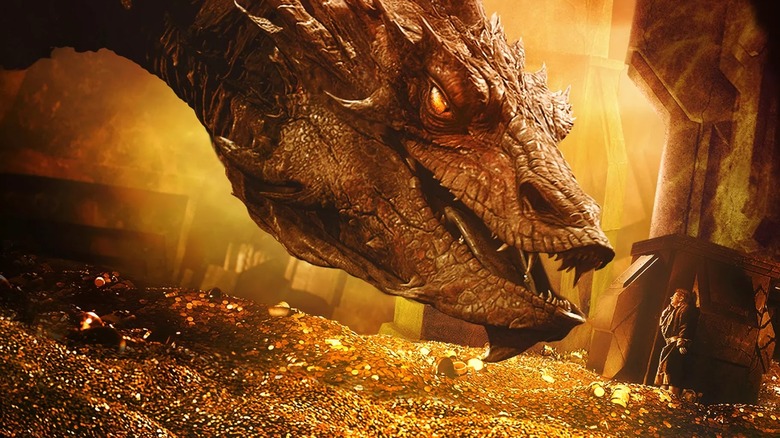
This one proved to be no exception, with the legendary actor shedding some light on how he did his best Bilbo Baggins, Burglar Extraordinaire impression and sneakily pilfered some choice items from one of director Peter Jackson's sets. First (and most harmlessly enough), McKellan copped to the fact that he couldn't resist making off with a couple of prop gold coins from the extensive set depicting the mountain hideout of the dragon Smaug, from "The Hobbit: The Desolation of Smaug." In response to a question about his favorite memory on set, he stated:

"Many. Many. Many. The scenery that was built in the studio was sensational. And I think my favorite set, that I didn't act in, was the golden [lair], where the dragon was hiding. Hundreds of thousands of golden coins, specially made."

His more dastardly act of thievery, however, came in the second half of his response.

"And if you don't tell anyone, I can tell you that I have some of those coins. Along with the [front] door key to Bag End, which I know Peter Jackson is looking for, but will never find."

Other than the late, great Ian Holm (who played Bilbo), McKellan is perhaps the one actor most intimately associated with the idyllic Bag End set. Though much of his performance was added in through digital trickery, McKellan certainly earned the honor of making off with the ornate key prop for the circular door. Here's hoping Jackson eventually learned that the key is in safe hands.

Read this next: The 20 Best Heist Movies Of All Time

The post There's One Lord of the Rings Prop Peter Jackson Will Never Find (Because Ian McKellen Took It) appeared first on /Film.
21 Mar 20:56

The UK Ratings Blunder That Traumatized A Generation

by Lee Adams

The early days of video rental in the United Kingdom was like the wild west of home entertainment. For people in the UK, at least. Long before Blockbuster arrived and edged out local outlets, you were just as likely to find a few shelves of VHS tapes behind a curtain at a petrol station or tucked away beside the meat counter in a grocery store. Without legislation covering video releases, it was a boom time for grotty low-budget horror movies, and the shelves were gory with lurid and sometimes very graphic cover art. I couldn't get enough of looking at those boxes, although I was too chicken to rent out anything much scarier than "Fright Night."

Eventually, the press and moral crusaders like Mary Whitehouse kicked up a stink and spoiled our fun, causing a massive backlash against the so-called "video nasties." The Director of Public Prosecutions (DPP) drew up their first list of offending movies in 1983, and in 1984 the Video Recordings Act was passed, with the British Board of Film Classification (BBFC) now responsible for both cinematic and home video releases. So it was goodbye to "Driller Killer" and "Zombie Flesh Eaters." See you on bootleg, "Cannibal Holocaust." Subsequent lists were published with varying severity of punishment for anyone distributing the titles, with legitimate classics like "The Evil Dead," "Tenebrae" and "Possession" caught up in the mix (via BFI).

It was all to protect the kids and teenagers, you see, to shield us from the corrupting influence of industrial-strength splatter, Naziploitation, and sordid rape revenge flicks. In many cases, they were probably right. There was some truly ghoulish trash out there, and only the most dedicated gorehound would miss half the sleazy, badly-made, sadistic junk on the lists. That wasn't the point though, was it?

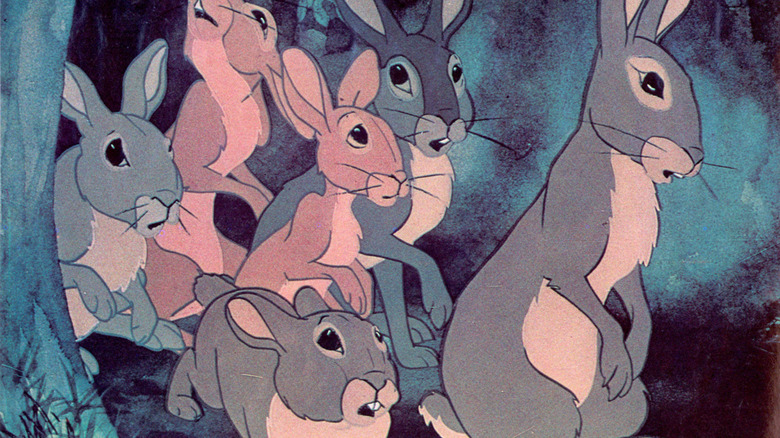
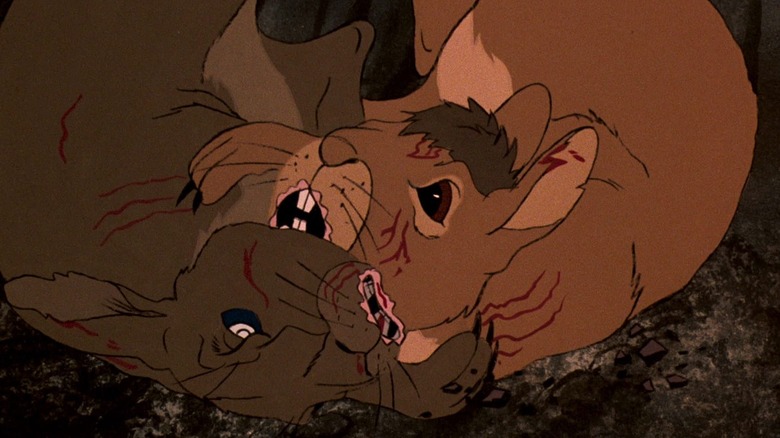
Especially since one movie out there was responsible for more nightmares than all of the video nasties put together. It didn't have "Zombie," "Cannibal," or "SS" in the title, and it carried the "U" certificate for Universal, meaning suitable for all. To the unwary, it looked like a nice cartoon about lovely fluffy bunny rabbits. That film was "Watership Down."

So What Happens In Watership Down?

Martin Rosen's "Watership Down" opens with a brilliantly animated piece of rabbit mythology explaining how the whole world became the lapine enemy. It really draws us into the world of the rabbit characters from the outset and gives us a little heads-up about some of the horrors to follow. Then we're off through the sedate English countryside while the gentle theme tune plays, across hills, fields, woods, and streams, the beautiful natural scene punctuated by the occasional sign of humans -- a churchyard, a row of pylons, a road flanked by hedgerows. 

We arrive outside Sandleford warren, where the rabbits are enjoying a little supper after two workmen have knocked off for the evening. We meet pragmatic Hazel (John Hurt) and his timid brother Fiver (Richard Briers), who will be our guides on this adventure. It's excellent casting, and the warm vocal performances from Hurt and Briers are instantly welcoming. Apart from those two, "Watership Down" has an embarrassment of vocal talent, including Ralph Richardson, Denholm Elliot, Nigel Hawthorne, Michael Hordern, and Zero Mostel in his last film performance.

Fiver is psychic, and he has a terrifying vision of the fields running with blood, a harbinger of the warren's imminent fate. The pair try to convince the Chief Rabbit (Richardson) that a "bad danger" is coming, but he doesn't believe them. With Fiver still spooked they decided to leave at night, accompanied by several other rabbits including Bigwig (Michael Graham Cox), formerly an enforcer of the Owsla, or the rabbit police. Together, they embark on a perilous adventure across the countryside to find a safer new warren.

It's a classic hero's journey on a small scale as the rabbits encounter many dangers along the way. Hawks, cats, dogs and snares are all bad enough, but those are nothing compared to the murderous threat of the sinister Efrafrans, a gang of thuggish rabbits headed by the ferocious, dead-eyed despot General Woundwort. Typing his name just gave me an involuntary shudder of fear.

Why Is Watership Down So Traumatic?

The origin of Richard Adams' source novel has a semi-mythic ring to it; like Lewis Carroll's trip down the rabbit hole, it began as stories spun to amuse two young girls. They were his daughters, demanding entertainment on car journeys. When Adams decided to set those stories on paper, he researched rabbit life meticulously. He based his rabbit society on "The Private Life of the Rabbit" by prolific writer and naturalist Ronald Lockley (via Country File) with whom he later took a trip across the Antarctic. As a result, the story had none of the cutesiness of Disney films, describing the rabbits and their environment in patient, detailed way; this might be a story involving a psychic rabbit, but it certainly doesn't shy away from the cruelties of nature and the harsh dangers faced by his lapine protagonists. Adams also developed an extensive society, mythology, and even a language for his rabbits, like a mini Middle Earth for cottontails.

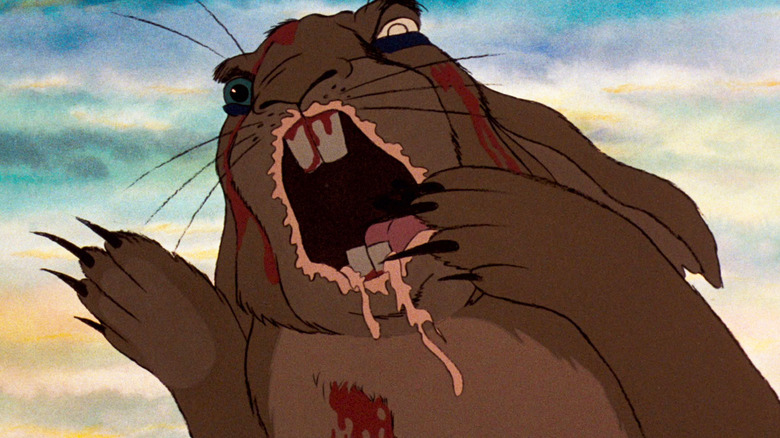
That seriousness of approach and lack of sentimentality translated into Martin Rosen's film adaptation. Although it was an animated feature with idyllic music and soft water color backdrops, it didn't hold back on the graphic violence and trippy nightmare sequences. Rabbits fight, claw each other, rip out chunks of fur, and brawl each other to a bloody standstill. One rabbit is snatched by a bird of prey while others are savaged by a dog. Bigwig gets caught in a snare and almost dies, while Hazel is shot and narrowly avoids a walk with the Black Rabbit of Inlé; even "Bright Eyes," the Art Garfunkel song from this sequence which sounds so mawkish in its pop single arrangement, is mysterious and haunting in its original context.

Then you've got the monstrous presence of General Woundwort and his henchmen waging war on our heroes, resulting in much bloody carnage. So much blood. And that's all before you take into account Fiver's disturbing visions and a psychedelic scene depicting the suffocating fate of the Sandleford rabbits who stayed behind. No wonder it was nightmare fuel for so many youngsters, lulled into a false sense of security by that innocuous "U" certificate.

The Aftermath Of The Watership Down Ratings Blunder

The origina examiner's report for "Watership Down" (available to download on the BBFC website) concludes:

"Animation removes the realistic gory horror in the occasional scenes of violence and bloodshed, and we felt that, while the film may move children emotionally during the film's duration, it could not seriously trouble them once the spell of the story is broken, and that a U certificate was therefore quite appropriate."

Try telling that to thousands of kids up and down the land who were exposed to the bunny mayhem, like Phil Hoad in his piece entitled "Watership Down: the film that frightened me the most," who describes (via The Guardian):

"Blood blotting a vast field, threatening to engulf them all. Skeletal tree outlines crack like veins through the insanguinated sods. Their branches twist and undulate with queasy malice. The horror, the horror! I was a kindergarten Kurtz; the toddler who had seen too much. It was like reality was melting. I have dim memories of fleeing from a dark cavern of a Newcastle cinema, desperate for bright air and parental comfort."

Despite what the examiner said, how many other family films feature "occasional scenes of violence and bloodshed," especially involving animals that most people in the UK regard as harmless pets? If it held a PG (Parental Guidance) certificate, parents may have approached the film with more caution before exposing their offspring to it. As it was, many probably thought it was just a nice cartoon to keep the kids quiet for a couple of hours.

I still remember watching aghast as a child. It was just about at my upper threshold for terror; one more rabbit bleeding out or another shot of General Woundwort launching himself into battle with teeth gnashing might have done it for me. But "Watership Down" was a film I went back to again and again, because once you're over the shock, it is what it is: a really terrific adventure story.

Watership Down Scaring New Generations Of Kids

The BBFC site states that "Watership Down" was most recently rated as a "U" in 2013, and you get the sense that they were determined to stick to their guns on this one (via BBFC):

"While the film has a happy ending and contains many positive messages for young audiences about bravery, friendship and the environment, younger or more sensitive viewers have found some scenes upsetting or worrying and over the years the BBFC has received numerous complaints about the suitability of Watership Down at U."

Notice that rather sniffy little "more sensitive viewers" in there? I reckon they knew they had screwed up and got very tired of being reminded about it for the next 40 years. David Austin, the current BBFC Chief Executive appointed in 2015, was forced to address the issue again the following year when UK's Channel 5 upset some viewers by screening the film on Easter Sunday afternoon. He admitted that if it was released today it would probably get a PG certificate (via The Mirror). Undeterred, the channel repeated the stunt the following year, provoking further outrage among parents who had somehow managed to avoid the child-scarring reputation of "Watership Down" for their whole lives (via Metro).

No doubt many seasoned "Watership Down" survivors were ready for old mental wounds to be re-opened when the BBC's CGI-animated remake dropped a few days before Christmas in 2018. Yet the general consensus was that the violence and horror from the original had been toned down, although IndieWire felt that one scene was "as emotionally horrifying as the massacre kicking off 'Saving Private Ryan.'" I can't judge that comment because I've yet to see it, partly put off by the ugly CG that makes it look like a feature-length PlayStation cutscene, with little of the original's pastoral beauty. Plus, when I actually considered watching it on Netflix with the kids, my other half intervened in no uncertain terms; "You're not bloody letting them watch that!" 

She saw the original as a little kid, too.

Read this next: The 13 Scariest Animated Movies

The post The UK Ratings Blunder That Traumatized a Generation appeared first on /Film.
21 Mar 20:55

Mod a Game Boy Your Younger Self Would’ve Spent Their Whole Allowance On

by Jake Peterson

Each iteration of the Game Boy brought something new to the table. The original made you feel like you had a true NES on the go; the Game Boy Color introduced 32,000 colors to mobile Nintendo gaming; and the Game Boy Advance improved upon both, combining great (for the time) graphics with a new aspect ratio and…

Read more...

21 Mar 20:52

Transform Your Outdoor Spaces With Up to 30% Off Govee Smart Lights - CNET

by Max McHone
Shop smart string lights, flood lights and and more on sale today only at Amazon
21 Mar 20:51

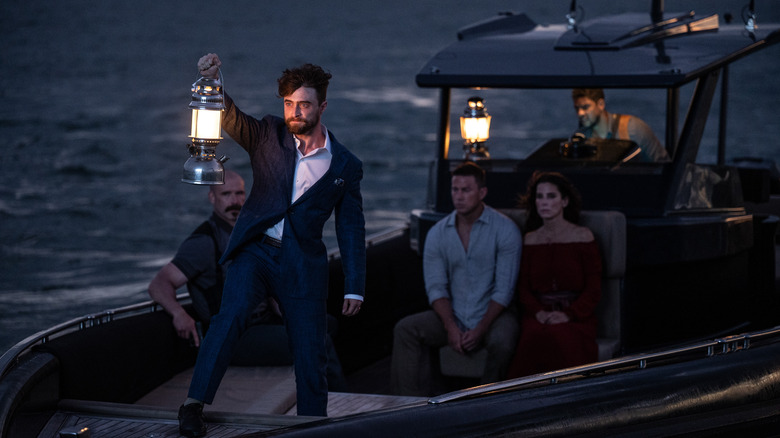
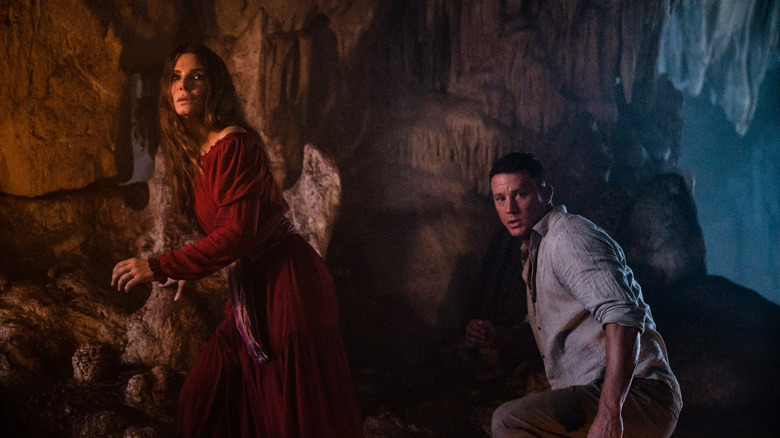
The Lost City Review: A Goofy Rom-Com Adventure Movie With Screwball Spirit And Himbo Charm

by Hoai-Tran Bui

Sandra Bullock is our reigning screwball queen and god help anyone who tries to take her crown away. No currently-working actress is as game as she is to pull off a pratfall — backward and in high heels and a ridiculously bedazzled jumpsuit, too! And Bullock pulls off plenty of pratfalls in "The Lost City," Adam and Aaron Nee's old-school romantic adventure comedy that plays like "Romancing the Stone" for the "21 Jump Street" generation.

But first, we need to get to the "Romancing the Stone" of it all. "The Lost City," which follows Bullock's romance novelist as she winds up on a swashbuckling adventure straight out of her books, is almost beat-for-beat the plot of "Romancing the Stone" with a few tweaks. There's a kidnapping, a dashing adventurer, even a scene-stealing short king. But of all the recent attempts to revive that mid-budget star-driven comedy, "The Lost City" is the most successful.

That's because you can't make a movie like this — with a flimsy plot and an even flimsier grasp on reality — without star power. And "The Lost City" has it in spades. Bullock is a guarantee — leveraging her "America's Sweetheart" status from the '90s to make the transition from rom-com queen to Oscar nominee back to rom-com queen amid the genre's last gasps — but Channing Tatum is just as much a draw, if not more so. As the cover model who graces all of the novels of Bullock's Loretta Sage, Tatum is at his "himbo" best here, radiating a sweet but dopey leading man charm that only he can really carry off. Pairing Tatum's hapless cover model and Bullock's secretly savvy novelist makes "The Lost City" more than just a tired "Romancing the Stone" redux; it's a good old time at the movies.

A Terrific Cast Marks The Spot

Loretta Sage (Bullock) is a best-selling romance novelist who has become a recluse in the wake of her husband's death. At the urging of her publicist, Beth (Da'Vine Joy Randolph), Loretta squeezes out one more book in her popular romance-adventure series and reluctantly agrees to go on a book tour with her longtime cover model Alan Caprison (Tatum), the dimwitted embodiment of her Fabio-haired hero, Dash McMahon. But the first stop ends disastrously. First, Loretta reveals to her dismayed audience and publicity team that she intends to kill off her hero before Alan subsequently tumbles off the stage when Loretta gets her smartwatch stuck in his wig. And then, Loretta is kidnapped. Worst of it all, she's stuck in heels and an expensive sparkly jumpsuit.

Who is the person responsible for kidnapping an impractically dressed romance novelist? None other than billionaire sociopath Abigail Fairfax (an absolutely unhinged, utterly hysterical Daniel Radcliffe, who enters every scene as if he just finished doing a line of coke in the bathroom), who believes that Loretta's latest novel, "The Lost City of D," actually holds the clues to finding a real ancient lost city on an unknown island somewhere in the Atlantic. And his belief may hold some water — before she became a romance novelist, Loretta was a Ph.D. graduate who translated dead languages with her archaeologist husband. Now, Abigail wants Loretta to translate what he believes is the final clue to the whereabouts of a priceless crown.

Alan witnesses the kidnapping and urgently suggests a rescue operation to the beleaguered Beth and her clueless social media assistant (Patti Harrison, making a meal out of a tiny role). With the police refusing to help, Alan turns to his meditation retreat friend, Jack Trainer (Brad Pitt, almost comically handsome and skilled as the hyper-masculine adventurer type), a former Navy Seal trainer who quickly agrees to help rescue Loretta. But Alan wants to join him to prove to Loretta, who he has harbored a crush on for a while now, that he's more than just a dumb cover model.

Screwball With A Screw Slightly Loose

All of these plot machinations fly by, because really, in a movie like this, who cares about the plot? "The Lost City" knows it's all about the hijinks between Bullock and Tatum, and rushes to bring the two of them together and plop them in the middle of the jungle. But it's to both the film's advantage and disadvantage that the rest of it doesn't really hold together, because when Bullock and Tatum aren't onscreen, the movie starts to sag. It's not that the supporting cast isn't up to the task — in fact, they're all more than game — but they're given precious little to do apart from serving up clichés. 

The movie does promise some depth with Loretta's grief over her husband's death, but it's not given quite the emotional oomph that it deserves. "The Lost City" ends up falling back on Bullock's slapstick skills (seriously, no one could make falling out of a hammock funnier) and Tatum's dopey charms, and for the most part, it works. Adam and Aaron Nee's script does have some bright spots as well, with clever one-liners and laugh-at-loud jokes that never feel mean or cheap. It's the first major Hollywood rom-com to have a sapiosexual gag, that's for sure.

Who said cliché should be a dirty word anyways? Some of the greatest appeals of romance novels are those clichés and tropes — enemies to lovers! There's only one bed! — and "The Lost City" embraces those wholeheartedly. There's a goofy sincerity to the movie even as it sends up better movies that came before it (complete with corny needle drops), and it retains that old Hollywood screwball spirit that gives it a timeless feeling. It's nothing new, and lord knows it's nothing groundbreaking, but boy, is it fun.

/Film Rating: 7.5 out of 10

Read this next: 20 Underrated Rom Coms You Need To Watch

The post The Lost City Review: A Goofy Rom-Com Adventure Movie With Screwball Spirit and Himbo Charm appeared first on /Film.
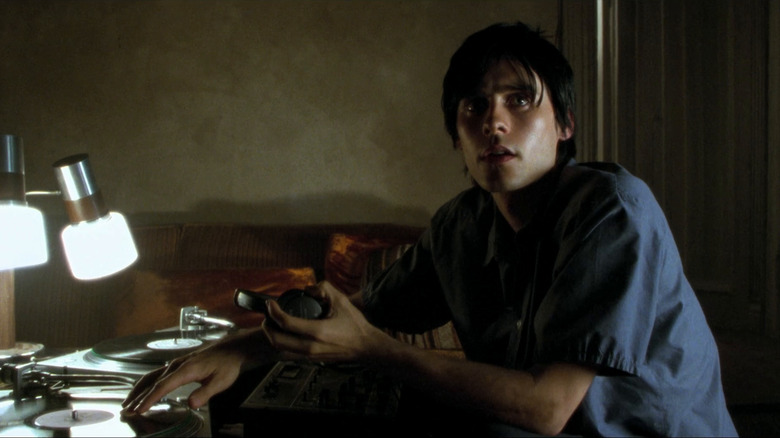
21 Mar 20:49

Spider-Man Star Jacob Batalon's Syfy Show, Reginald The Vampire, Is Now Set To Stream On Hulu And Amazon

by Joshua Meyer

"Reginald the Vampire," the upcoming Syfy dramedy series starring Jacob Batalon of "Spider-Man" movie fame, has found its streaming home. Two of them, actually. The 10-episode series, based on the book "Fat Vampire" by Johnny B. Truant, is gearing up for a summer debut and is reportedly wrapping production on its first season this week. Now, we have a better idea of where cord-cutters, re-watchers, vampire hunters, or just busy people who can't catch the show when it first airs on TV, will be able to see it.

Variety reports that Hulu "has acquired second-window U.S. rights" to "Reginald the Vampire," meaning you'll be able to stream it there eventually after it broadcasts on the Syfy network on television. Amazon, meanwhile, has scooped up the rights for the series in Canada, Australia, and New Zealand, so if you live in one of those countries, it will be your streaming destination for "Reginald the Vampire."

Cineflix Rights acts as the show's international distributor and is bringing it to MipTV's 59th Spring International Television Market in Cannes, Frances, early next month, where it will continue to shop the series around for more global partners. Batalon serves as a co-executive producer on "Reginald the Vampire," which hails from showrunner Harley Peyton. The first season will have episodes directed by Jeremiah Chechik, David Frazee, Lee Rose, and Siobhan Devine.

The Guy In The Coffin

"Reginald Baskin, not remotely a religious man, closed his eyes in his small cubicle and asked God for his money back."

This is the start of "Fat Vampire," which sounds a little less fat-shaming with its new TV title. Reginald wants to report God to the Better Business Bureau because he feels like he was a victim of false advertising. He survived high school, only to realize that people in the real world were not any kinder or less bullying.

Since it's the Year of the Vampire, and I'm a sucker (not to be confused with a bloodsucker) for anything Nosferatu-related, I listened to the "Fat Vampire" audiobook last year after we first reported on this show's development. In some ways, the book reminded me of FX's "What We Do in the Shadows." Instead of the energy vampire, Colin Robinson, roaming his office floor, draining life from people through boring conversations, you've got Reginald in his cubicle, fending off the whoopee-cushion pranks of his fit coworkers. There's even a Vampire Council that gets involved, putting our hero on trial for his life, similar to what happened with the vampires on the FX show.

In the world of "Fat Vampire," people have to undergo rigorous physical training before they turn into bloodsuckers, since they'll be stuck in whatever body they have for life (or un-death). Reginald upends everything when he becomes a vampire without any training. He's overweight, has no luck with attacking humans on the street, and is never going to match the Vampire Council's notion of the ideal physique. But with any luck, he'll be able to get by with a little help from his friends.

Truant has written a whole series of six books so there's seemingly no shortage of material when it comes to "Fat Vampire." For his part, Batalon has gained a new level of mega-exposure via "Spider-Man: No Way Home," which is now one of the highest-grossing films of all time. Tom Holland has had movies like "Uncharted" and Zendaya has had HBO's "Euphoria," so it's probably high time that Batalon, known for playing Spider-Man's "guy in the chair," Ned Leeds, got to headline his own project.

You'll be able to see Batalon as a guy in a cubicle, and perhaps coffin, when "Reginald the Vampire" comes to Syfy and later Hulu/Amazon.

Read this next: The 13 Best Comedy Shows On Amazon Prime Right Now

The post Spider-Man Star Jacob Batalon's Syfy Show, Reginald the Vampire, is Now Set to Stream on Hulu and Amazon appeared first on /Film.
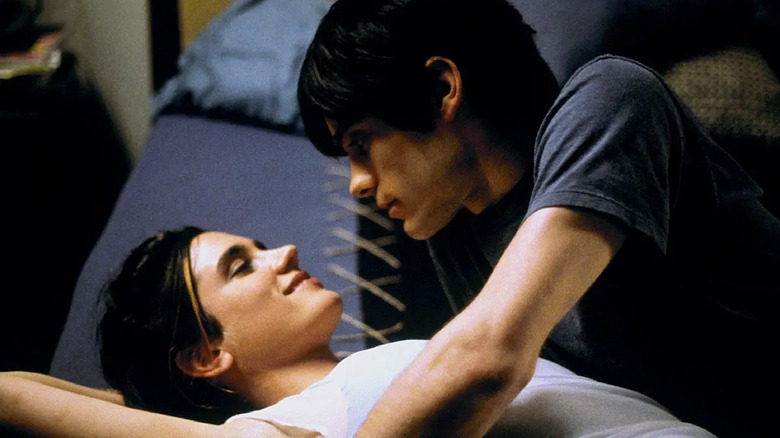
21 Mar 20:49

Fate Seemed Determined To Keep Mad Max: Fury Road Trapped In Development Hell

by Witney Seibold

Equal parts oil-slicked, dusty post-apocalyptic chase thriller, and half-forgotten ancient myth, "Mad Max: Fury Road" opened to enormous critical acclaim in 2015, and was quickly canonized into the action film firmament by its many fans. The film follows Max (Tom Hardy) as he is kidnapped by an evil car-obsessed cult led by a villainous harem-keeper, and who then becomes involved in a scheme by the heroic Furiosa (Charlize Theron) to rescue the harem-keeper's wives. 

Although considered something of a box office disappointment at the time (it opened at #2 behind the musical college comedy "Pitch Perfect 2"), it went on to be considered for multiple awards, including Best Picture and Best Director at the Academy Awards. It won Oscars for its editing, costumes, makeup, production design and sound mixing. It has played the midnight circuit in certain cities, and is often considered by pundits and fans as the best film in the series. 

Directed by George Miller, helmer of the previous three films in the series, "Fury Road" was only released in 2015 after what had proven to be a over a decade of development hell. The previous film in the "Mad Max" series, "Mad Max: Beyond Thunderdome" was released way back in 1985, and the road to "Fury Road" was a long, circuitous, and incredibly difficult one. Production was to be halted throughout the years by shifting financials, war, the bad behavior of the film's intended star, and unexpectedly good weather. 

In an oral history published by The New York Times in 2020, the cast and crew went over all the minutiae that prevented "Mad Max: Fury Road" from coming to the big screen, and what finally needed to happen to complete it. 

Genesis

Following the release of "Beyond Thunderdome," Miller was willing to put the "Mad Max" series to rest. The post-apocalypse he envisioned with "Mad Max," "The Road Warrior," and "Thunderdome" was, he felt thoroughly explored, and nothing more needed to be said. There was demand from fans to make a fourth film since the release of the third, so the series was always in his mind. Miller says that, while crossing a street in L.A. one day, he struck upon the idea to make a "Mad Max" film that was essentially one long chase, with a human being as the McGuffin. The iron was once again hot. 

This was in the late-1990s, and Miller and his producer Doug Mitchell began shopping the idea around. Uma Thurman was asked to star at one point, with Mel Gibson set to return to the role of Max, which he had played in the previous three films. Miller was to make the film for Fox, and shooting was initially scheduled to begin in a few years' time, in Namibia in March of 2003. 

The first major setback, however, was 9/11. Thanks to the events of that day, studios became incredibly skittish with their money, and were spending a lot more cautiously all of a sudden. The pre-production on "Fury Road" was halted, leaving much of the crew high and dry. The film's production designer Colin Gibson (no relation to Mel) recalls being in Namibia, in the middle of building the many elaborate cars and vehicles that were to be the centerpiece of "Fury Road," when he received the call from the studio to stop working. Gibson admitted that he figured the studio wanted to give their money elsewhere, but no explanation was given. 

Colin Gibson also reported getting a nervous e-mail from Mel Gibson's wife, who had been struck by a bolt of Islamophobic paranoia, worried that Mel Gibson might me in danger if he traveled to Namibia. (For the record, about 90% of the people in Namibia identify as Christian.) With production halted, George Miller shifted his focus to the animated film "Happy Feet," which would be released in 2006, and which would win Miller an Academy Award. "Fury Road" was to commence production soon thereafter.

Mel Gibson's Bad Behavior

In 2006, however, Mel Gibson would be arrested for a DUI (Gibson wrestled with alcoholism for decades), and would also be caught on record making anti-Semitic comments and sexual language to a cop. These anti-Semitic comments accentuated Gibson's own depiction of certain Jewish characters in his 2003 film "The Passion of the Christ." Many members of the public became aware of Gibson's ultraconservative views, and his comments in 2006 were proof positive of his lasting bigotry. Because of this event, not to mention the fact that Gibson was already in his 50s, Miller elected not to have the actor back as Mad Max, and auditions were held for a new leading man. 

After reworking the entire production, Miller finally settled on an Australian shoot in 2010. Tom Hardy had been cast as Max (although Jeremy Renner was in serious consideration), with Charlize Theron remaining on board, as she had already been a part of the production. Theron was, she admits, a big fan of the "Mad Max" movies, having watched them as a girl in South Africa. 

With the cast finally in place, and Australian shooting locations secured ("Fury Road" was to be filmed in Broken Hill where Miller shot the first two films), everything was set to go. Until nice weather ruined everything again. 

Too Many Flowers

Two weeks before shooting down under, the skies opened up, and a once-in-a-century downpour covered Queensland. The crew reported that they had never seen that kind of rain before. Following the rains, flowers began blooming all over the landscape — a symbol of hope and beauty that was the exact opposite of the dried wasteland that Miller wanted to film. After two weeks of unfortunately clement weather, the production was shut down entirely. 

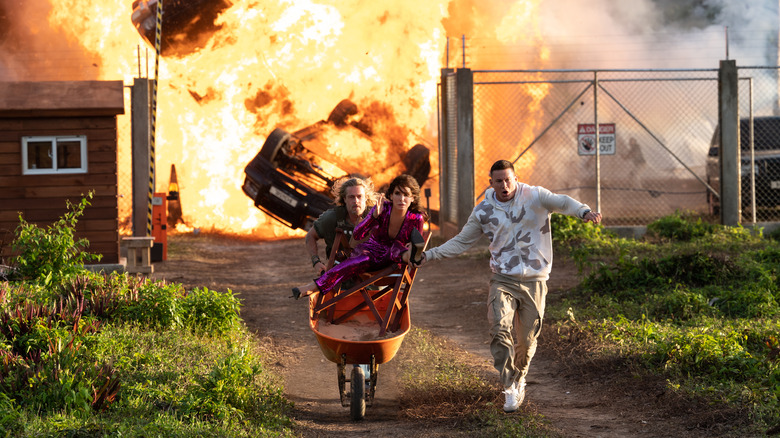
Miller, however, had become determined. He was not going to give up on "Fury Road." He suggested everyone wait a year to see if the desert dries up, and that they simply try again. While waiting, Miller grew impatient, and the production moved (again) back to Namibia. By July of 2012, principal photography finally began after nine years of bad luck and false starts. 

They weren't out of the weeds just yet, however. Because "Mad Max: Fury Road" involved so many cars and hot rods and trucks and other elaborate vehicles, the Namibian Coast Conservation and Management Project (NACOMA) became concerned that the local ecosystem was being torn up by all the tires and smoke on the set. After representatives were allowed to visit the set, all concerns were laid to rest. Miller was filming responsibly and was not doing any kind of undue damage to the local environment. 

Shooting on "Mad Max: Fury Road" wrapped in December of 2013, and the film was released in 2015. 

"Fury Road" had a dramatic path to the big screen, but it's important to remind readers that very few big-budget studio pictures have a clear path from the start. Problems and complications are going to arise on the set of any film, and last-minute changes need to be made constantly. Reshoots are common, as are mid-production rewrites that either clarify story or character moments or that just make for a cleaner narrative. "Mad Max: Fury Road" had a far more difficult than average production, of course, but, as history has proven out, sometimes the wait is worth it.

Read this next: The 14 Greatest Action Movies Of The 21st Century

The post Fate Seemed Determined to Keep Mad Max: Fury Road Trapped In Development Hell appeared first on /Film.